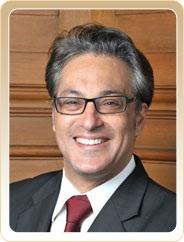
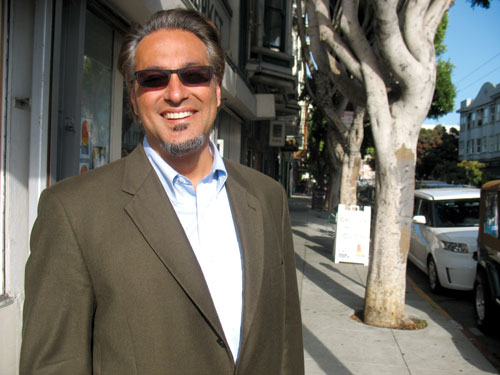
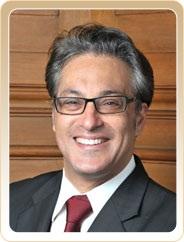
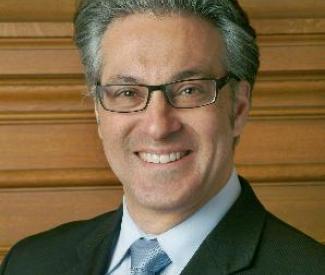
Sheriff

Guardian editorial: SF should go after mortgage criminals

16

EDITORIAL The mortgage crisis in San Francisco isn’t just devastating to homeowners and to the southeast neighborhoods where foreclosures are most common — it’s clear evidence that lenders and their affiliates are and have been acting illegally. This city ought to be taking the lead on pressing civil and criminal charges against the mortgage outfits.

City Assessor Phil Ting commissioned a report in February that showed that nearly every one of 382 foreclosures actions in the city between January 2009 and October 2011 had at least some irregularities. In more than 80 percent of the cases, the report identified direct violations of law.

It’s a stunning revelation: In nearly 100 percent of the cases studied, the mortgage companies did something wrong. Homeowners were not notified that they were in default. Properties were seized and sold by companies that didn’t have the proper title to them. Documents were backdated or signed by an entity that didn’t have the authority to sign. In some cases, it wasn’t clear who actually owned the mortgage, because the corporation that filed for foreclosure had never property taken title to the loan.

The report comes as Occupy protesters in San Francisco are moving aggressively to target banks that are tossing people out of their homes and at a time when county sheriffs in other parts of the country are refusing to execute foreclosure orders.

There may not be much San Francisco Sheriff Ross Mirkarimi can do — mortgage foreclosures in California can be done with almost no oversight and by the time the sheriff is called in there’s nothing left but an eviction. But the report makes clear that there were both violations of business regulations and crimes, in some cases felony crimes — and the San Francisco city attorney and district attorney should be moving as quickly as possible to take legal action.

Both City Attorney Dennis Herrera and District Attorney George Gascon have asked for more material from Ting’s office, although neither has announced a formal investigation. But every day that this goes on, more people lose their homes and more crimes are committed — and both offices should move as quickly as possible to take action.

There’s nothing in the federal settlement over fraudulent mortgage activity that prevents local officials from taking this sort of action. There’s nothing preventing Herrera from seeking an injunction against further foreclosures or preventing Gascon from indicting the lenders and their executives.

Meanwhile, Ting told us that he’s asking Attorney General Kamala Harris to investigate, because the pattern of violations almost certainly goes beyond San Francisco.

State Sen. Mark DeSaulnier has introduced a bill that would mandate transparency in foreclosures, so at least homeowners would know who to contact to seek a modification. That’s a good start. But holding these sleazy operators accountable would send a message that San Francisco isn’t going to let this sort of behavior continue.

Video admitted in Mirkarimi trial

90

A videotape and related statements that the prosecution said was critical to the domestic violence case against Sheriff Ross Mirkarimi will be admitted at a trial set to begin Feb. 28, Judge Garrett Wong has ruled.

The ruling allows prosecutors to show the roughly 50-second video in which Mirkarimi’s wife, Eliana Lopez, tearfully recounts the incident of New Years’s Eve, 2011 and shows a bruise on her arm.

“Without this evidence we have no legal recourse to completely move forward with this case,” prosecutor Elizabeth Aguilar-Tarchi told the judge, reflecting what observers have been saying for weeks: The case against the sheriff could hinge on how the trial judge interprets a complex part of the state’s Evidence Code.

At issue is whether a statement that would normally be excluded as hearsay can be allowed in court as a “spontaneous or excited utterance” — a statement made after a crime when a victim or witness hasn’t had time to reflect on the events or plan to fabricate or alter the story of what happened.

In this case, the video was made a day after the alleged violence, and Mirkarimi’s lawyer, Lidia Stiglich, argued that it was carefully scripted and staged for reasons that had little to do with Mirkarimi’s specific behavior the day before.

In fact, she said, Lopez and Ivory Madison, a neighbor who made the video, discussed how the information would only be used if Mirkarimi and Lopez divorced or had a custody fight over the couple’s two-year-old son, Theo.

Lopez was hardly still excited or emotional over the incident, Stiglich said: “There is evidence that Ms. Lopez went shopping, made phone calls, including two calls to Ms. Madison, and texted [Madison’s] husband.”

The video, Stiglich argued, “was the antithesis of a spontaneous statement” — it was made after Lopez had a day to calm down and was made specifically for evidence in a child-custody case, the attorney noted.

But Aguliar-Tarchi insisted that Lopez was sufficiently emotional that the time frame wasn’t the central issue — and Judge Wong agreed. “Time is a factor to consider, but not determinative,” he said from the bench. “What is crucial is the mental state of the speaker.”

The ruling complicates Mirkarimi’s defense: Photos released by the District Attorney’s Office from the video show a clearly upset Lopez showing the camera a bruise on her upper arm and saying that this wasn’t the first such incident.

If Wong hadn’t accepted the video, it’s likely that the District Attorney’s Office would have to drop the charges, since Lopez has refused to testify and the rest of the case is so thin and circumstantial that it would be hard to present it to a jury. “This is the focal point and crux of our case,” Aguilar-Tarchi said.

Now Mirkarimi will have to come up with a more compelling narrative as to why the story that his wife described to a camera wasn’t an accurate reflection of the facts. 

The ruling could certainly be grounds for appeal — based on the courtroom discussion, the video falls very close to the line in what can and can’t be admitted, and while the judge has broad discretion on these issues, criminal defendants have challenged such rulings in higher courts numerous times. But the jury — and the news media, and thus the public — will now be allowed to see what is by any definition a very damaging video that will hurt Mirkarimi’s political career, whatever the outcome of the trial.


Motion could cripple case against Mirkarimi if granted

162

(UPDATE 2/27: The judge today denied the defense motion to suppress this video. More details here.) The domestic violence case against Sheriff Ross Mirkarimi could be dealt a crippling blow if the judge approves yesterday’s defense motion to bar videotaped testimony that his wife, Eliana Lopez, gave to their neighbor, Ivory Madison. But even if Mirkarimi beats the criminal rap, his political future could still depend on finally offering a detailed explanation of exactly what happened during that New Year’s Eve incident.

Yesterday’s motions were the subject of a cover story in today’s San Francisco Examiner, but they were strangely buried on page C2 in the San Francisco Chronicle, which also chose not to provide details of the motion, which makes a fairly compelling case for barring the videotape that is the only evidence that Lopez may have had a bruise on her arm, allegedly inflicted by Mirkarimi.

The motion argues that the videotape is inadmissible hearsay evidence that doesn’t meet the legal standard of an immediate reaction to a crime. Not only was it recorded the next day, but both Lopez and Madison say on the tape that it was intended to be used only if Lopez left Mirkarimi and sought sole custody of their two-year-old son, Theo.

“The videotape itself was the product of a reflective and deliberate decision to create evidence for purposes of a custody proceeding,” Mirkarimi attorney Lidia Stiglich argued in her motion, citing caselaw that makes such considered actions inadmissible. As the Examiner noted, the motion suggested Lopez might have ulterior motives in such an instance, making it possible that she misrepresented to Madison what had happened. Lopez denies that Mirkarimi abused her and is not cooperating with the prosecution.

Madison is quoted in the motion as saying the video was being made in case there was ever a child custody case and that “I really don’t know” what happened that night, but she believed it wasn’t an isolated incident, allegedly telling police, “she definitely didn’t describe it as ‘he grabbed my arm one time and left this mark.’”

Stiglich told the Guardian that barring the videotape from admission would be huge: “It’s a significant piece of evidence.” Some legal observers have even said the entire case against Mirkarimi could crumble if that evidence is barred, and that the ruling on its admissibility could really go either way depending on which judge gets assigned to the case tomorrow.

“We are not suprised nor concerned with the motion filed by Mr. Mirkarimi’s attorney and we will continue to handle legal issues in the courtroom and not in the media,” District Attorney’s Office spokesperson Omid Talai told us. He wouldn’t characterize how important that evidence is to the case, but he did say, “Every case is filed based on the totality of evidence.”

Yet Stiglich said much of the case rests of that videotaped evidence, which she believes presents a distorted view of what happened. “These statements are essential to their case, and there are issues with that type of testimony,” Stiglich told us.

Yet if Mirkarimi beats the criminal rap by suppressing that evidence, it’s unlikely to help him in the court of public opinion. Neither Mirkarimi nor Lopez have provided a full explanation or alternative narrative of what happened that night, how the alleged injury occurred, or other crucial details, and Stiglich said she doesn’t think now is the time for that kind of tell-all.

“I don’t think anyone should be making factual statements outside the courtroom at this point,” Stigich told us, confirming that she has advised against Mirkarimi making those kind of public statements, although she said he has been anxious to do so.

Motions in the case could be heard as soon as tomorrow, but Stiglich said she doesn’t expect opening statements in the case to take place under the week after next. She estimates witness testimony in the case will take about a week.

Then, after it’s all over and the jury renders a verdict, we’ll all see how much Mirkarimi’s team discloses about what actually happened that night and with earlier instances where Mirkarimi allegedly got physical with Lopez and a previous girlfriend, Christina Flores, who prosecutors also hope to put on the witness stand.

And if there are still questions to be answered, then we can all push Mirkarimi for a fuller accounting, render our own judgments, and determine where we think the truth lies and what that says about the public officials involved in this case.

Occupy 4 Prisoners hits San Quentin

5

About 800 protesters marched to San Quentin’s East Gate in a day to protest what they called inhumane conditions in prison Feb. 20

Protesters called for an end to the practice of trying children as adults, three strikes laws, life sentences, life without the possibility of parole, and the death penalty.They did not call for the dismantling of the prison system or an end to the practice of incarceration, as Chip Johnson implies here.

In San Quentin– and in prisons across the country—inmates are subjected to solitary confinement, sometimes for decades. Kids as young as 13 are tried as adults and sometimes sentenced to life without the possibility of parole. In three-strikes states, people are sentenced to decades in prison for non-violent crimes that sometimes amount to less than a couple hundred dollars in damages. And in death penalty states, state-sponsored execution means that lives, sometimes innocent, are thrown away.

Twenty-four US states do not have three strikes laws, many countries cap prison sentences at 15 years regardless of the severity of the crime, and only one European country- Belarus- continues to impose the death penalty. The United States incarcerates its citizens at a rate that far surpasses any other country in the world; second on the list in Rwanda.

Conditions and laws like these have spurred decades of prison reform and prison abolition activism, both from inmates and supporters on the outside. Feb. 20, this movement joined with Occupy Oakland to protest outside San Quentin prison and demand that these issues be addressed.

As protesters arrived, organizers blasted music, hoping to reach the ears of prisoners. Dozens of prison guards and representatives from the Marin County sheriff’s department were stationed in front of the prison gate, and well as on hills looking down on the protest group.

The loud music continued with a performance from the Brass Liberation Orchestra, and subsequently a drumming ritual.

“As First Nations people, we’re no strangers to occupation. We’re also no strangers to prison. The first prisons were the reservation and the slave plantation,” said George Galvis, Executive Director of Communities United for Restorative Youth Justice.

“We have post-colonial stress disorder in our communities,” added Galvis.

Author, film producer (Redemption: The Stan Tookie Williams Story) and 2006 California gubernatorial candidate Barbara Becnel helped facilitate the event.

In her opening statements, Becnel praised the crowd, packed with Occupy activists, family members of incarcerated people, formerly incarcerated people, and others.

“We should really be proud of ourselves today. Because today, we are history makers. We have merged the prison rights movement with the Occupy movement,” said Becnel to an eruption of applause.

Throughout the program, speakers read solidarity statements addressed to Occupy Oakland from prisoners across the country, including Mumia Abu Jamal, Leanard Peltier, Kevin Cooper, and group statements from Pelican Bay human rights organizers, and those involved in state-wide prison strikes in Georgia.

A movement has coalesced around the claim that Cooper, a death row inmate at San Quentin since 1985, is innocent. Cooper was denied an appeal in 2009 in a ninth-circuit court case in which five judges dissented, declaring that, “the state of California may be about to execute an innocent man.” Their 103-page dissent statement includes descriptions of evidence tampering leading to Cooper’s conviction.

Cooper helped call for the Occupy 4 Prisoners day of action.

Speakers at the rally called for Cooper’s freedom, and for the end of death row entirely.

Becnel related a story about some prisoners, charged with life without the possibility of parole, that she had met while campaigning against the death sentence for Stan “Tookie” Williams.

The men, Becnel said, told her: “We only leave here in a casket also. We are also dead men walking.”

Speakers also decried the use of solitary confinement as a punishment in prisons.

Sarah Shourd, known for her imprisonment in Iran after accidentally crossing the border during a hike, spoke along with fellow imprisoned hikers Josh Fattal and Shane Bauer.

Shourd, who was held in solitary confinement for 14 months, related her experiences.

“After just two months my mind began to slip. I would spend large portions of my day crouched down by a small slot in my door, listening for any sounds from the outside that might distract me from the sheer terror of my isolation.”

A statement from a Texas prisoner, read by an Occupy Wall Street organizer, also addressed solitary confinement.

“We tend to think of man as a collection of individuals, each complete in himself, who just happen to come together to satisfy certain needs. Actually, however, there is nothing distinctly human that can be exhibited by an individual in isolation,” said the philosophical letter.

The Pelican Bay Hunger Strike last year highlighted solitary confinement, and prisoners demanded an end to the practice, in which inmates are held in isolated rooms with no sunlight for 23 hours a day, often for years on end. Some inmates at Pelican Bay have been held in these conditions for over 30 years.

Organizers of the hunger strike called it off when the California Department of Corrections promised to investigate the issue, but started to strike again several months later when no changes had been made to any of the conditions that they were protesting.

Kelly Turner, 42, who was sentenced to 25 years to life for writing a bad check for $146.16 in 1997, was also placed in solitary confinement for one year. However, she focused her speech at the rally on California’s three strikes law, the legislation that turned what would have been a three-year sentence for forgery into a possible life sentence for Turner. Turner said she was lucky that good pro bono lawyers defended her, and would likely still be in prison had they not; she now owns her own business.

Turner, who advocates for Families to Amend California Three Strikes (FACTS), urged the crowd to vote for an initiative to amend the law that is slated to appear on the California ballot this November. 

In her speech, Turner described meeting women in the Central California Women’s Facility is Chowchilla that were also serving decades-long sentences after having been charged with a third strike.

“I am here today for the woman that was on my dorm that had 27 years to life for drinking a 99 cent lemon line soda out of a store. Or the woman who stole a jar of Vaseline, a bottle of vitamins, two pairs of boxers,” said Turner.

Tatiana, a young prisoners rights advocate who spent time in juvenile hall, read a statement from incarcerated youth Veronica Hernandez.

Hernandez, 20, has been imprisoned since age 16.

She was tried as an adult, an outcome that she attributes to a public defender who did not do his best to fight for her.

“There are no law libraries or legal services at juvenile hall, so a juvenile, for better or for worse, is entirely dependent on his or her court-appointed attorney, and must trust that he or she will lead them in the right direction. Unfortunately for me, that direction was to adult court. I now face a life sentence should I be convicted,” said Hernandez in her statement.

No speaker argued for the dismantling of the prison system, instead focusing on what they saw as unjust sentencing and inhumane treatment in prisons.

In a statement calling for Occupy 4 Prisoners, Kevin Cooper connected a call to end the death penalty with struggle for correct racial and economic justice and an end police brutality:

“America has a deep-seeded philosophy in which it only allows for the execution of its poorest people. These seeds have taken root and have grown in such a way that no person who this system sees as a ‘have-not’ is safe from the death machine. Whether they are within (San Quentin) or on a BART platform.”

Bauer also expressed the importance of tying prison rights to the Occupy movement, saying, “This Occupy movement needs to permeate the prisons. God forbid one day some people here will be on the other side of this fence. But when movements get strong, people start getting locked up. We should know this. This happens in every country. Prisons are places where movements are killed. But at the same time, when movements successfully permeate prisons, a space built to break people down, the movement is at its strongest. This is true all over the world.”

Occupy Oakland organizers have already been hit with bizarre and seemingly invalid charges, such as “lyching,” “bike,” “boat,” and umbrella. In one of the most extreme cases, Khali, an Occupy Oakland protester, may face life in prison after being arrested for a allegedly taking a blanket out of a garbage can. Advocates for Khali say that he was denied prescription medications in jail for ten days before allegedly assaulting a police officer; his third strike.

Well-known prison rights advocate and former Black Panther Elaine Brown ended the program. After remarking that “there aren’t enough songs in this movement,” she sang Oh, Freedom as the crowd peacefully exited the site, as several volunteers picked up any trash that was left behind.

“Before I’ll be a slave, I’ll be buried in my grave, and go home to my comrades and be free,” sang Brown.

Would Sept. elections be better than RCV?

25

A proposal by Supervisors Sean Elsbernd and Mark Farrell to end San Francisco’s experiment with Ranked Choice Voting will come before the board Feb. 14, and RCV suporters are organizing to fight it. According to an email I just got from Steve Hill, one of the leaders in the RCV movement, “the vote is going to be close.”

The first version of the Elsbernd-Farrell legislation would have returned the city to the pre-RCV situation — the general election for city offices would take place in November, and runoffs in any race where nobody got a majority (almost every contested city race these days) would take place in December. 

The December turnout in Board of Supervisors races was always way lower that the turnout in the November election (although that hasn’t always been the case in mayoral races — more people voted in the Matt Gonzalez-Gavin Newsom runoff than voted in that year’s general election).

But the two conservative supervisors have backed off that plan and replaced it with another one: The first election (in effect, the primary) would be held in September, with the runoff in November.

Some years, that would be three elections in the city in five months — the normal June state election, a September city election, and a November general election.

I realize that a lot of people, including some of my friends on the left, aren’t thrilled with RCV. If the mayor’s race had a runoff, it would have been a head-to-head contest between Ed Lee and Dennis Herrera, and that would have been fun. (Where would David Chiu, who got stabbed in the back by Lee and who criticized him during the general election, have gone in the runoff? What about Leland Yee?)

But I have to say, a September election seems like a really terrible idea. When are the candidates going to campaign — during August, when about half of the city is out of town? Would the candidates all have to trek out to Burning Man? (You can’t send direct mail flyers to the playa.) Maybe you hold the election late in September — but then the absentee ballots would arrive when, over Labor Day weekend? Talk about low turnout.

The whole idea of RCV was to get more people involved in electing their representatives at City Hall. You can talk about whether it helps the left or the right or incumbents or whatever, but it’s really all about turnout. One election: More people vote. Two elections: Fewer people vote. September election: Very few people vote.

Then in November, when the turnout is highest, the choice will be lowest, because the candidates who did well in the low-turnout election (typically the more conservative candidates) will be the only ones on the ballot.

On balance, I’m sticking with RCV — but if you have to change it, why not make the primary election in June? There’s already a June election in even-numbered years, it’s no added expense — and there’s the additional value of forcing candidates for mayor and supervisor to declare their intentions and get in the race early on. No more Ed Lee August surprise.

I asked Elsbernd about it and he told me that New York City holds its primary in September, and that’s an effective model. And, he pointed out, there’s no June primary in the odd-numbered years, when the mayor, sheriff, city attorney, treasurer and public defender are on the ballot.

True — but if you’re going to have a special municipal election anyway, June makes more sense to me. People are used to voting in June. I worry about September.

An upside

0

le.chicken.farmer@gmail.com

CHEAP EATS I’ve been saving something for you. Something special. For a time just like this.

The 49ers have fizzled in the drizzle, and the spring season of dyke football is a long way off. Not to mention spring training. Not to mention Spring.

Sportswise we are left with the Warriors. And speaking of lose-lose situations, there’s the murky mess that our sheriff is in. Oh, and the Republican candidates for prez, whose collective aim is so untrue (also speaking of the Warriors) that even those of us who try and stay out of it are covered in mud and shit.

Is everyone sick and suicidal, or just sick?

Well, my dears, I have something for you, and it isn’t duck soup. It’s better. It’s butter corn ramen at Halu, which is my new favorite restaurant by 10 miles. Or at least thirty blocks.

Unfortunately, we aren’t the only ones who know about it. Halu isn’t open for lunch and doesn’t accept reservations for dinner. It’s a hole in the wall. So, unless you get there at five, expect a line.

And expect that line to be worth waiting in. (I rarely say that.)

About a year ago or so I started hearing about this place from all sides. Alice Shaw the Person gave me its business card. Which I lost. But I still recall her rhapsodic description of skewered scallops wrapped in bacon. We were getting ready to play soccer. “One of the best things I ever ate,” she said. “The scallops …” Her eyes fluttered and started to roll back under their lids, until I thought she might lose consciousness. Which would have sucked because we’d have had to forfeit.

Then Papa, my butcher, started in on it. “Pork jowls,” she kept saying. At football practice. In the huddle. Every time I saw her: “Pork jowls.”

When people say pork jowls, I listen. They only need to say it once. After three or four times, I start to dream cheeky things. So, long before I ever ate there, Halu was on my mind and under my skin.

I tried to go once with a big group, but at least one of us was too hungry to stomach the wait, so we wound up at the Burmese place around the corner on Clement.

Then, finally, last summer while Hedgehog and me were house sitting in the Richmond one week, we walked over right at five and sat right down and ordered all the wrong things. Lava ramen, which was the best and second-spiciest bowl of ramen I had ever had, but it wasn’t spicy butter corn ramen. Or, as they inexplicably call it, spicy corn butter ramen. Which, I would have to wait three more months to learn, is even better.

Amazingly tender roast pork, crisp kernels of fresh corn, and pats of butter melting into it as they bring the bowl to your table. The noodles taste homemade, and the broth has an insane amount of flavor to it.

I must not have looked at the menu the first time I was there, or I would have become a Halu addict sooner. But the lava ramen was on the wall, with a lot of other yummy sounding dishes, and all the Beatles posters and ’60s stuff — including a cool old bass and an even cooler acoustic guitar.

The yakitori menu is on the wall too, and every time I get my butter corn butter ramen butter fix, I sample one or two of these, on the side. So far I’ve had mochi bacon, which was divine, and of course the pork jowls, which were even diviner. Chicken livers. Good. The boneless short ribs were a little dry.

Oddly, since it was what sold me on the place in the first place, I have yet to try the bacon-wrapped scallops. (Sorry, Alice Shaw the Person.) Other didn’t-get-yets include asparagus bacon, enoki bacon, and eringi bacon, because in my opinion two of those things are mushrooms. But I do love asparagus.

One time we had karaage (fried chicken), by way of an appetizer. It was nothing special.

Otherwise, though: worth the wait. Way. Go say hi to Baseball Mary across the corner at Clement Street Bar and Grill. The game’ll be on, if there is one.

HALU

Tue.-Thu. 5-10 p.m.; Fri.-Sat. 5-11 p.m.; closed Sun.-Mon.

312 8th Ave., SF.

(415) 221-9165

MC/V

Beer and wine

Occupy Oakland inmates at Santa Rita attacked- developing story

153

(THIS STORY HAS BEEN UPDATED)

In the aftermath of the mass arrests of Occupy Oakland protesters– and whoever else happend to be on the wrong street at the wrong time– on Jan. 28 in Oakland, there have been loads of reports and rumors about brutality inflicted on those arrested. Most of those arrested were held in Santa Rita jail.


My observations:

I spent 20 hours in jail, and I saw some cruel treatment. I saw people suffering after being denied medication. I saw people with allergies to the food that was provided refused any substitute and unable to eat, sometimes for more than 24 hours. I saw people crammed into holding cells meant for groups a third their size, so that some people had to remain standing, sometimes for more than 24 hours. As many arrestees were wearing clothing coated in tear gas and pepper spray, those chemicals continued to waft through cells and affect all present.

Reports:

I have reports directly from sources of arrested occupiers being beat up in jail with police batons. At least 20 people were ziptied, meaning their hands were cuffed behind their backs– and more often than not, if they happen to be cuffed too tightly and their hands go numb and even blue, police won’t loosen them– for more than eight hours. I know that some people who were denied access to a restroom ended up sitting in their own vomit and urine for at least four hours in some cases.

UPDATE Another report from Joshua Clover, a professor of English at UC Davis, who was released Monday night, :
“I was held for 53 hours for a misdemeanor charge which every single person here, and there, knows will never be brought, and indeed which will be met with a class action suit for wrongful arrest that the city of Oakland will be compelled to settle. I have a perforated peptic ulcer. Early on in the stay I requested non—prescription care — liquid antacid, which the jail keeps on hand — when I began to have an ulcer attack, which is to say, when I began to bleed internally. I was not given such care until an attorney was able to intervene by phone many hours later. I received one capful, which was mildly effective for about three hours. Further requests were ignored. As many will know, a bleeding ulcer attack is both painful and potentially fatal”

UPDATE When I questioned Alameda County Sheriff’s Department Public Information Officer Sergeant JD Nelson about this, he responded that “[Clover] was obviously seen by a medical person, and they said that was enough medicine.”

But accoridng to Clover, via an email, “The one time that I received medication, a deputy came to the cell door accompanied by someone who may have been a nurse, holding a capful of antacid. I asked for more but was not given it.” And was Clover seen by a medical professional to determine the correct amount of medication? He says, “Definitely not.”

Also according to Clover, “Food was often not provided for periods of up to 14 hours. For a long period I shared a cell with 27 other people; it was about ten by ten feet. For a period I was in a cell labeled ‘Maximum Occupancy: Two.’ There were ten of us, three very sick. We stood. One of the people slumped over on the toilet, that being the alternative to standing.”

UPDATE

“Three people I know were denied medication for HIV infections while being held for multiple days, which is a life-threatening choice made by the county”

“two women were denied anti-depressants that they had with them when they went to jail”

UPDATE According to an anonymous source, “My 12×12 cell had 28 people. There was a toilet, a concrete bench, and enough hard floor space for three or four of us to sleep at a time. A girl in the cell across from ours told the guards she needed Lexapro or she would go into withdrawl. They ignored the request. One of my cellmates was HIV-positive. When I last saw him at 2 a.m. on Monday morning he had not yet been given his medications. As I exited the jail I saw a woman who had just been released lying on the floor. She was having a seizure and being tended to by a couple of firemen.”

UPDATE From Alyssa Eisenberg, who has multiple sclerosis:
“I take my medication at least twice a day…without it, the pain is, everything kind of goes numb and tightens up. Somtimes I can’t even see without it. When  had to sign the booking form about noon i couldn’t even see it, my vision was so blurry…I was told they don’t give meds to people that are going to be cited and released, only to people that are going to stay and get charged.”

Unconfirmed reports:

Daily Kos quotes an anonymous source who reports that “prisoners from the Oakland Commune were being denied medications (some had seizures) while the guards said they didnt care if they died. Some people were brutally beaten. The put tear gas in the vents of my cell twice.”
According to Occupy Oakland media spokesperson Omar Yassin, a report that someone was tear gassed in the jail’s hallway is likely credible.

Then there’s the peolpe who were injured during the protests Jan. 28. Also according to Yassin:

At least a dozen people had welts on their faces or bodies from being beaten by clubs or shot with rubber bullets. One woman was shot in both arms with rubber bullet; one man was shot in the face with rubber bullets while holding a video camera to document the events. Several protesters were shoved to the ground and received wounds on their faces while being arrested. Police raised their rubber-bullet rifles to the faces of protesters throughout the day, threatening attacks– a rubber bullet to the face can cause brain damage and blindness.


A spokesperson for the Alameda County Sheriff’s Department refused to comment, although she did say that they’ve “been bombarded with calls about this all day.” Shocker.

UPDATE According to Alameda County Sheriff’s Department Public Information Officer Sergeant JD Nelson, no complaints of mistreatment at Santa Rita have been filed.

Nelson said that peanut butter was made avaliable to vegans those allergic to meat, in direct contrast to what I witnessed in jail.

In response to reports that some detainees were held on buses in the Santa Rita parking lot for up to eight hours, during which time they were refused bathroom access and in some cases made to sit in their own urine and vomit, Nelson said that “Generally when they come to the jail the buses are unloaded fairly quickly. Obviously some people are going to go first, some last.”

He told me that detainees were denied medication because “We do we allow them to take their medication in jail. People will try to smuggle stuff in.”

When asked about reported beating in jail, Nelson replied, “I haven’t gotten any reports of any skirmishes between officers and those arrested. We would report it if  there was any use of force,”

According to Nelson, the Alameda County Sheriff’s Office has video footage of all of the areas in the jail where arrestees were held, and, unless there was a lawsuit preventing its release, he would make the footage available to me soon. For now he said, “I don’t even know if they’ve been developed.” (Is this 1984? Not in the Orwellian sense. In the technology sense.)

More on this soon. Send me information that you have, yael@sfbg.com

Why the public thinks government is fat

10

Polls from the PPIC are typically pretty accurate, so I have no reason to doubt the results of a recent one showing that a majority of Californnians still think government can be cut substantially without a reduction in services. It’s hard to fathom; as Brian at Calitics notes,


Cuts to government expenditures mean direct cuts to services. There is simply no way to provide the same level of services for an ever decreasing amount of money. Go take a look at your local government offices and then compare it to the offices of your local bank corporate office.  There are no fancy waterfalls and lavish breakrooms offering wide selections of Odwalla and Rice Krispies, there are just a dwindling level of state employees working ever harder to keep up.  


So, while most voters strongly support raising taxes on the rich, 59 percent also think that government can easily be cut just by eliminating waste. Even Arnold Schwarzenegger, who took office pledging the same thing, left saying there wasn’t much waste left to cut. And while I fully believe that any organization that spends $80 billion a year is going to have some things in the budget that don’t belong — it’s simply humanly impossible to run anything, public or private, that big without some employee sleeping in the supply room or somebody sneaking cookies on the company dime — it’s also the case that what’s missing in the California budget is more important than what’s being mis-spent.


Why don’t people get this? Part of the reason is a 30-year concerted campaign by the right wing to convince people that the public sector is a waste of money. But part of the reason is also that the news media, by its very nature, is much more likely to report on waste in government than similar (or worse) waste in the private sector.


For one thing, it’s easy: Government records are public. Figuring out how Enron, which kept its records private, stole $40 billion from the state of California is really, really hard. There’s also the (correct) notion that the government is spending OUR money, so we ought to watch where it goes.


And of course, corrupt politicians like Willie Brown give everyone in government a bad name, and there are plenty of them.


But remember: The government typically spends a lot of our money on private contracts with companies that don’t make their records public. How many employees of the contractors building the Central Subway are sleeping on the job, double-billing, charging fancy lunches and wasting the public’s dollars? That takes a lot more digging — weeks of investigative reporting — and it’s not the sort of stuff that can just pop up in a Matier and Ross column, the way a city worker who pulls in a lot of overtime can (and does).


I think there’s also a general lack of interest in exposing corporate wrongdoing. PG&E’s records are public, and all the money the company spends is OUR money (we’re ratepayers, and we have no choice). But how much do you see about overpaid PG&E executives compared to how much you see about (far less) overpaid city employees? PG&E has hundreds of executives making far more than the most bloated City Hall salaries, and they all have nice pensions — but you never hear about PG&E needing pension reform, or how the utility needs to tighten its belt to keep rates low in a recession.


When you’re bombarded day after day with stories about a deputy sheriff or a nurse who works a huge amount of overtime and takes home $150,000 a year, you can’t help but think that the public sector’s wasting your money. But the private sector does a lot worse.


And sure, under capitalism, a wasteful private company should pay the price in the marketplace — but we all know that a lot of the big private companies don’t really compete much (see: the financial sector), and when it comes to regulated utilities like PG&E, they don’t compete at all. You think ATM fees and checking account fees and all the other shit that banks hit us with isn’t in part a result of waste, fraud and bloated payrolls? Isn’t that my money, too?


Mirkarimi’s not going anywhere

107

Sheriff Ross Mirkarimi may be guilty of domestic violence, and if he is — as I’ve said repeatedly — it’s a serious crime and he should be held accountable. It will be very hard for him to remain in office with a DV conviction, even if it’s just a misdemeanor.


But right now, the charges are just that — charges. In the eyes of the law, he’s innocent until proven guilty. So I don’t see how Mayor Ed Lee can suspend him.


Lee’s under a lot of pressure, and under the City Charter, he has the sole authority to suspend an office holder for “official misconduct,” which is defined as “wrongful behavior by a public officer in relation to the duties of his or her office.” If there’s a suspension, the Ethics Commission and the Board of Supervisors would both have to vote to remove Mirkarimi permanently.


But here’s the thing: Lee has no evidence of official misconduct — not unless the district attorney decides to turn over to the mayor all of the files in the criminal case, at which point Ethics and the supes would be holding mini trials of their own on evidence that hasn’t been adjudicated in court (and a court may rule some of it inadmissable).


That doesn’t seem likely (and it would be very odd for the D.A. to join the mayor in what would amount to a second prosecution).


And all of this would be going on at a time when the actual criminal trial is only four weeks away.


The courts have interpreted “official misconduct” fairly narrowly. If Mirkarimi is convicted, then the city attorney can get into the argument over whether domestic violence has any “relation to the duties” of the Sheriff’s Office, and since he’s a law-enforcement officer, that might not be too hard to argue. Certainly the charge of influencing a witness would be subject to that interpretation. So after a conviction, Lee would be in a position to think seriously about suspension — if Mirkarmi didn’t step down on his own.


But right now, there’s no conviction. In terms of the court system (that would have to get involved) Mirkarimi isn’t guilty of anything yet.


Mirkarimi could decide to take a leave of absence, although he doesn’t seem inclined to do that. But whatever the merits of the case, and whatever the political arguments about whether the sheriff can do his job in the middle of this media circus, I — admittedly as a nonlawyer — can’t see how Lee could possibly invoke the suspension provisions of the Charter.


Maybe I’m missing something. 

More on the Mirkarimi case

172

I wrote up the Jan. 19 hearing on the domestic violence charges against Sheriff Ross Mirkarimi, but a few more points are worth thinking about as the embattled sheriff prepares for another court hearing Jan. 23.


For one, the stay-away order that Judge Susan Breall issued doesn’t allow Mirkarimi to have any contact with his two-year-old son for the next 45 days. That seems not only harsh but bad for the kid, who doesn’t understand why he can’t see his daddy and is, not surpisingly, confused and upset. There are no winners in this case (except the folks who would just as soon see Mirkarimi gone and replaced with a more traditional law-enforcement sheriff), but the biggest loser, the one I feel worst about, is the kid. If the judge was really worried about Mirkarimi being a danger to his son (which, frankly, seems like a huge stretch), then she could have authorized supervised visitation. That’s not at all unusual in these kinds of cases, and would at least give the child a chance to have contact and a relationship with his father during the period when all of this is being sorted out in adult court.


There’s not a lot of talk about the inherent conflicts of interest in this case, issues that come about from a sheriff who was once an investigator in the District Attorney’s Office facing criminal charges filed by that same office, which is now run by a former police chief who the sheriff clashed with repeatedly when he was a supervisor. I don’t know the law on this or how it could possibly play out, but there’s an interesting article about it all here.


It’s odd that the conflict piece ran in a publication that makes its living bashing local progressives, but everything about the media in this case is odd (except that fact that it’s become an international zoo). The one writer who has talked seriously about Mirkarimi’s right to be treated as innocent until proven guilty — and the only major voice in the media urging him not to step down — is the Chron’s conservative columnist Debra Saunders


Another interesting media tidbit: I don’t know Mirkarimi will enough to have any insight into his behavior in romantic relationships, but one person who really does — his longtime former girlfriend, journalist Evelyn Nieves — has been quoted only once in the bottom of a New York Times/Bay Citizen story, to wit:


“I was shocked when I read about it,” Evelyn Nieves, a journalist and a past partner of Mr. Mirkarimi’s, said in an e-mail. “Ross and I were together for the better part of a decade — eight years or so — and never once did he even come close to being physical during an argument.”


“It’s just not his way,” Ms. Nieves added. “He was way more prone to proposing that disagreements be talked out. He could talk and talk.”


Again: Doesn’t mean he’s not guilty. Doesn’t mean he hasn’t changed. Just interesting that only one publication has even tried to contact and get a quote from Nieves.


I’m not a lawyer, of course, but it seems to me that the defining moment in this case will not be the trial but the pre-trial hearing in which Mirkarimi’s lawyer tries to get a judge to rule that the videotape of Eliana Lopez talking about her injury and her fear of her husband can’t be used in court. Bob Egelko has an excellent piece here; he points out that if the video isn’t admissible as evidence, the case will collapse. If a judge rules (and the legal arguments seem to support it) that the prosecution can’t introduce the video or show it to the jury, then I suspect the district attorney will have to drop the charges; if Lopez refuses to testify against her husband, there’s nothing else to go on.


But this is a domestic violence case, and judges (no surprise) are political, and how many members of the local bench really want to be the one who ended such a high-profile case (and in effect, let the suspect walk) on what the media will call “a technicality?”


Plenty of drama at the Mirkarimi hearing

69

I’m glad I got to the courtroom early; by the time Judge Susan Breall called the case of People v. Ross Mirkarimi, there wasn’t a single seat available, and Her Honor wasn’t allowing standing room.

What followed was a quick “not guilty” plea to three misdemeanor charges – and then a session that lasted more than two hours, with a long interruption, as the prosecution and defense argued over whether Mirkarimi was such a threat to his wife and two-year-old son that he should be forced to stay away from them and avoid any form of contact until after what is expected to be an early March trial.

In the process, Mirkarimi’s wife, Eliana Lopez, made a passionate plea against the restraining order and Deputy District Attorney Elizabeth Aguilar-Tarchi introduced new evidence to support her claims that the newly elected Sheriff is not only guilty of domestic violence but too dangerous to allow into his own home.

In the end, Breall – who once worked as a prosecutor in domestic violence cases – issued the order forbidding the sheriff from any contact with his wife and child, and told Mirkarimi and his attorney, Robert Waggener, to return to court Jan. 23 to set a trial date.

Breall angered Lopez – and some courtroom observers – by saying she was concerned that the 36-year-old Venezuelan soap opera star was new to the country and lacked fluency in English and a family support system. Waggener noted that the length of time Lopez had lived in the United States and her language skills weren’t part of the evidence in the case and had nothing to do with the need for a protective order. He later told me that it was unusual for a judge to mention or consider that sort of information in a restraining order.

In fact, Breall noted that she had learned about Lopez’ background from reading the newspapers, leading Waggener to insist that the judge stick to the facts before her and not rely on news accounts that the attorney said were inaccurate.

At times, the proceedings turned bizarre: After Lopez had been identified by her full name and discussed at some length, her attorney noted that the last name and address of a domestic violence victim should not be in the public record. Breall agreed, and from then on referred to her only as “Eliana L.”

A little late for that, of course: The local news media have put her picture and full name on the front pages and the airwaves repeatedly in the past week.

Early in the proceedings, Breall asked if Lopez had seen a victim advocate in the District Attorney’s Office, noting that such a visit was part of standard procedure in these kinds of cases. Shortly afterward, Lopez left the courtroom; we later learned she had walked down the hall to the D.A.’s Office and met with the advocate.

Waggener asked repeatedly during the afternoon that statements from Lopez be taken in a closed courtroom, citing her privacy rights. Breall declined, and refused to put any documents under court seal.

After delaying the case for roughly an hour while Lopez had her meeting and Waggener read over the documents that had already been published in local newspapers but had only that day been provided to him, the judge came back and heard arguments on the stay-away order – and we learned more about the evidence that the D.A. will be presenting in the case.

Waggener noted that after reading the documents he had received, he saw nothing that would justify barring Mirkarimi from seeing his family. Aguilar-Tarchi started to discuss what the now-famous videotape that neighbor Ivory Madison made of Lopez showing a bruise and discussing a confrontation with her husband, but Lopez’s lawyer interrupted with an interesting new claim: She said that when Lopez had met with Madison, who is a lawyer, she believed that everything she said would be protected by attorney-client privilege and thus shouldn’t be admitted as evidence.

That will no doubt come up later – but for now, Breall wasn’t interested.

Then Lopez took the stand.

Speaking in English – relatively fluent English – she first chided the judge for the comments about her language skills and her residency in the U.S. “This idea that I’m a poor little immigrant is insulting,” she said. “It’s a little racist.”

She said that, rather than being adrift without a support system, she was someone who had been living on her own for 16 years, had her own career and her own apartment in Venezuela (one larger and nicer than her home in San Francisco). She said she’s spent time in Los Angeles and New York and had traveled in Mexico, London, Tibet, Europe and all over Latin America.

“I don’t need the support of my (extended) family,” she said. “I support my family.”

She also said that the press coverage, while unfair, was nothing she couldn’t handle: “I’ve been working in TV for 15 years,” she noted. “Check out the press in Venezuela. This is nothing.”

Then she got into her point: She saw no need for a protective order, didn’t fear her husband and found the whole idea abhorrent. “The violence against me is that I don’t have my family together,” she said. “This country is trying to pull my family apart, and that is the real violence.”

Aguilar-Tarchi wasn’t done, though. After Lopez finished, she repeated some of the allegations in the video, but then described text messages that Lopez had allegedly sent to Madison. “She told a neighbor that she was afraid,” the prosecutor said. “She asked if she could change the locks on the door. She asked if she would have to go to the police or if the police would come to her.”
The text messages also stated, Aguilar-Tarchi said, that Mirkarimi was scared and didn’t want the story to come out and that he had taken Lopez and their son, Theo, on a vacation to Monterey in an effort to prove that everything was fine. “My little Theo is so confused,” one of the messages allegedly said.

Waggener argued that the case wasn’t yet on trial and that much of the evidence was hearsay. And, he said, “in terms of what this court sees all the time, broken bones etc., this is on the low end.” He explained that the couple had been together from the day of the incident – New Year’s Eve – until the day the original protective order was issued, “with no complaints or evidence of violence.” He called the description of the videotape (which hasn’t been shown in court) “highly distorted.”

Breall said some nice (if somewhat condescending) things about Lopez, who she called “charming,” but wasn’t swayed. “I am going to treat this case like any other case,” she said, issuing the order that would keep Mirkarimi away from his wife and child until the end of the trial. Waggener later said he would come back to Breall to seek a modification in that order next week. Breall said the trial would start no later than March 5.

(In an interesting side note, the prosecution demanded that Mirkarimi give up the three guns in his possession. I never knew he kept guns in his house. At any rate, they’ve already been turned over to the authorities.)

I walked out thinking: This is just awful. There’s really nothing positive you can say about it.

I’ve known Ross Mirkarimi for years; I’ve never seen any hint of violence in his behavior. Of course, I’m not that close to him, and I don’t know anything about his marriage. Still, somebody who has been part of the progressive community for a long time has been accused of something really terrible, and it has a lot of us shaking our heads and, frankly, wondering what to think. You want to stand by a friend who’s in trouble (and lord knows, I have plenty of friends who’ve been arrested and charged with all manner of crimes, and some of them were guilty as sin, and they’re still my friends).

But I’ve also helped a close friend through episodes of domestic violence, and I can tell you it isn’t a minor deal, or a private family affair (as Mirkarimi foolishly and inappropriately stated). It’s a serious crime, and for many years, the cops and the courts didn’t treat it that way. And because it used to be really hard for women to get stay-away orders (and in some areas, it still is), women have been badly hurt and sometimes killed.

It’s only because progressive political leaders (the same progressives my blog trolls love trash at the slightest provocation) demanded changes in the law that the rules now allow for prosecution even if the alleged victim doesn’t cooperate. It’s only because of progressive reforms that a case like this is even in court.

And I agree with those reforms. As I’ve said before, there’s no excuse for intentionally injuring anyone – and there’s less than no excuse for injuring your spouse. If that’s what Mirkarimi did, he should be held accountable. It doesn’t matter what side of the political divide he’s on. If he’s guilty of domestic violence, I’m not going to make excuses for him.

More than a misdemeanor charge is on the line. All Mirkarimi has done professionally is progressive politics and law-enforcement, and by most accounts, neither one has much room for someone who has a DV rap. (Although I have to say – there are an awful lot of cops who have DV allegations against them and are still on duty.)

If Mirkarimi weren’t the elected sheriff, this case might well have been handled a lot differently. He could have accepted a misdemeanor plea, taken DV courses, gone into therapy, tried to put his marriage back together. That’s pretty standard in first-offense cases. But to do that would be to admit something he can’t easily admit to and remain in office.

So Mirkarimi knows his only real chance is to win a “not guilty” verdict and then try to rebuild his reputation. Given the stakes, I can’t imagine that he would so much as raise his voice half an octave against Lopez over the next few weeks; one more allegation it would be the end of everything. But Breall must be worried (as any modern judge would be in any prominent DV case) that if she refused to issue the restraining order and something bad did happen, her ass would be very much on the line. So she did the obvious thing.

And the media circus continues.

The only possible bright side (and I always look for a bright side) is that a lot of people who weren’t talking about domestic violence are now discussing it, on the front pages. They’re talking about how a lot of women are trapped by batterers, how they’re afraid to testify and can’t (or don’t want to) leave, how all of us, particularly the police and the courts, are responsible for protecting victims who can’t find a way to escape. And that’s a whole lot of women.

All of that said, we have to remember that Mirkarimi is still innocent until proven guilty. The mayor has no business removing him from office at this point; he hasn’t been convicted of anything. It’s only a few weeks until his trial (Mirkarimi has made it clear he wants this over as quickly as possible, so by law he has to face a jury within 45 days). After that, if he’s guilty, the mayor and the supervisors can worry about whether to vacate the Sheriff’s Office – unless Mirkarimi makes that decision himself.

Sheriff Mirkarimi charged with domestic violence

338

Sheriff Ross Mirkarimi has been charged with three misdemeanors in connection with an alleged domestic violence incident against his wife, Eliana Lopez, on New Year’s Eve, District Attorney George Gascón announced this afternoon. Gascón said a restraining order has been issued that bars Mirkarimi from contacting his wife and child and that bail has been set at $35,000, although he was unaware whether Mirkarimi had been booked yet.

Mirkarimi is being charged with one misdemeanor each of domestic violence battery, child endangerment, and dissuading a witness from testifying. Gascón said their young son, Theo, was present during the incident. Lopez has refused to speak with investigators, but she has publicly denied that her husband has ever abused her.

Mirkarimi has maintained his innocence, as he did again with Lopez by his side during a City Hall press conference held simultaneously with Gascón’s press conference at the Hall of Justice. “We believe that these charges are very unfounded and we will fight those charges. I’m confident in the end that we will succeed,” Mirkarimi said, according to the San Francisco Chronicle. It was unclear whether the appearance with Lopez violated the restraining order.

Gascón confirmed press reports that Lopez had communicated via text message about the incident with the neighbor who ultimately contacted police – although he refused to disclose or characterize the contents of the communications – and that there was a photo taken of an injury to Lopez’s arm. He also said there are indications that this was not an isolated incident and the investigation is continuing. “We have heard there have been other instances,” Gascón said.

The fact that the charges were misdemeanors wouldn’t require Mirkarimi’s removal from the office he assumed just last weekend if he’s convicted, but he has already been required to relinquish any weapons, including his service revolver. He faces a year in jail and three years probation on the charges.

“While we do not relish having to bring charges against a San Francisco elected official, I have taken an oath to uphold the laws of the state of California and as the chief law enforcement officer for the city and county of San Francisco it is my solemn duty to bring criminal charges when the evidence supports such action. No one is above the law,” Gascón said. “Whether this was the elected Sheriff or any other San Francisco resident, this type of behavior is inexcusable, criminal, and will be prosecuted.”

Gascón also said that while Lopez has refused to cooperate, he believes there is ample evidence to bring charges. “A case is always stronger if the victim is willing to testify. However, it is very common for victims to be uncooperative in domestic violence cases,” Gascón said, noting that his office filed 771 domestic violence cases last year. He also said, “Regardless of whether the victim supports a prosecution, it is the state’s and my office’s obligation to ensure the safety of the victim.”

Redrawing the map

43

tredmond@sfbg.com, steve@sfbg.com

The most important political change of 2012 may not be the appointment of a new District 5 supervisor or the inauguration of a new mayor and sheriff. A process moving slowly through a little-known city task force could wind up profoundly shifting the makeup, and balance of power, on the Board of Supervisors — and hardly anyone is paying attention, yet.

The Redistricting Task Force is in the process of drawing new lines for the supervisorial districts, as mandated every 10 years when new census data is available. The nine-member body is made up of three appointees each by the board, the mayor and the Elections Commission. While mandated to draw equal-sized districts that maintain “communities of interest,” the board has almost unchecked authority to decide which voters are in which districts.

While it’s difficult to draw 11 bad districts in San Francisco, it’s entirely possible to shift the lines to make it more difficult to elect progressives — something many groups out there are anxious to do.

VIEW THE CURRENT WORKING DRAFT MAP HERE


CONSOLIDATING THE LEFT

Downtown and pro-landlord groups are circulating their own draft maps, attempting to influence the outcome. Their goal is hardly a secret: If progressive voters can be concentrated in a small number of districts — say, districts 5, 6, and 9 — it’s more likely that a majority of the board will be moderates and conservatives.

The task force has looked at 10 “visualizations” prepared by a consultant, and each of them had some alarming aspects. For example, the visualizations mostly pushed such conservative areas as Seacliff and Presidio Heights into District 1, which is represented by progressive Sup. Eric Mar.

On Jan. 4, those drafts were replaced by a single working draft map, which is now on the task force’s hard-to-find website (www.sfgov2.org/index.aspx?page=2622) — and it’s not as bad as the earlier versions. The working draft keeps Seacliff and Presidio Terrace in District 2 — which share similar demographics.

“The working families in the Richmond don’t belong in the same community of interest as the millionaires with homes overlooking the ocean,” Mar told us.

But there are other changes that some may find alarming. The more conservative Portola neighborhood, which is now in District 9, would be included in District 11, while D9 would pick up the more liberal north Mission. That would make D9 an even safer progressive district — but make D11 harder for a progressive like the incumbent, John Avalos, to win.

The task force has been holding hearings on each of the districts — but there’s been little discussion about how the new lines will affect the makeup of the board, and the politics and policy of the city, as a whole.


POPULATION CHANGES

The driving force behind the changes in the districts is the rather dramatic population shift on the east side of the city. Most of the districts, census data show, have been relatively stable. But since 2000, 24,591 more people have moved into D6 — a nearly 30 percent increase — while 5,465 have moved into D10 (a 7.5 percent increase) and 5,414 into D11 (8.7 percent). D9 saw the biggest population decrease, losing 7,530 voters or 10.3 percent.

The huge growth in D6 has been the result of a boom in new high-end condos in the Rincon Hill and SoMa neighborhoods, and it’s changed the demographics of that district and forced the city to rethink how all of the surrounding districts are drawn.

No matter what scenario you look at, D6 has to become geographically smaller. Most of the maps circulating around suggest that the north Mission be shifted into D9 and parts of the Tenderloin move into districts 3 and 5. But those moves will make D6 less progressive, and create a challenge: The residents of the Tenderloin don’t have a lot in common with the millionaires in their high-rise condos.

As progressive political consultant David Looman noted, “The question is, how do you accommodate both the interests and concerns of San Francisco’s oldest and poorest population and San Francisco’s youngest, hippest, and very prosperous population?”

The working map is far from final. By law, the population of every district has to be within 1 percent of the median district population, or up to 5 percent if needed to prevent dividing or diluting the voting power of minority groups and/or keeping established neighborhoods together.

Under the current draft, eight of the 11 districts are out of compliance with the 1 percent standard, and District 7 has 5.35 percent more residents than the mean, so it will need to change. But task force Chair Eric McDonnell told the Guardian that he expects the current map to be adopted with only slight modifications following a series of public meetings over the next couple months.

“The tweaks will be about how we satisfy the population equalization, while trying to satisfy communities of interest,” McDonnell said, noting that this balancing act won’t be easy. “I anticipate everyone will be disappointed at some level.”


OUTSIDE INFLUENCES?

Some progressives have been concerned that downtown groups have been trying to influence the final map, noting that the San Francisco Board of Realtors, downtown-oriented political consultants David Latterman and Chris Bowman, and others have all created and submitted their own maps to the task force.

McDonnell said the task force considered solutions proposed by the various maps, but he said, “We won’t adopt wholesale anyone’s maps, but we think about what problem they were trying to solve.”

For example, some progressive analysts told us that many of the proposals from downtown make D9 more progressive, even though it is already a solidly progressive seat, while making D8 more conservative, whereas now it is still a contestable district even though moderates have held it for the last decade.

“It would be nice to see the Mission in one district, but it makes D8 considerably more conservative, so it’s a balancing act,” said Tom Radulovich, a progressive activist who ran for D8 supervisor in 2002.

Latterman told us he has a hard time believing the final map will be substantially similar to the current draft. “Once that gets circulated to the neighborhoods, I find that hard to believe it won’t change,” he said. “A lot of the deviations are big and they will have to change.”

He said that he approached the process of making a map as a statistician trying to solve a puzzle, and that begins with figuring out what to do with D6. “I fall back on my technician skills more than the political,” Latterman, who teaches political science at the University of San Francisco, said. “It’s a big puzzle.”

Latterman also disputed concerns that he or others have tried to diminish progressive voting power, saying that’s difficult to do without a drastic remaking of the map, something that few people are advocating.

“It’s hard to make major political changes with the other constraints we have to meet,” he said. “Unless you’re willing to scrap everything we have, it’ll be hard to make major political changes.”

Once the task force approves a final map in April, there’s little that can be done to change it. The map will go to both the Elections Commission and the Board of Supervisors, but neither can alter the boundaries.

“We are the final say,” McDonnell said. That is, unless it is challenged with a lawsuit, which is entirely possible given the stakes.

From prison bars to classroom stars

2

culture@sfbg.com

CAREERS AND EDUCATION Wearing a neatly-pressed army uniform in his office at City College of San Francisco Charles Moore, tells a Guardian reporter that he is a warrior for education.

Moore is the recruiter and outreach developer for the college’s Extended Opportunity Program and Services (EOPS) ex-offender counseling program, Second Chance. His team struggles with the fate of underserved refugees from an expanding state prison population (at last count, comprised of 132,887 adults) and the budget cuts that have dug deep into universities and community colleges across California.

Their battle? On a minuscule budget of $150,000 program staff must find a way to help ex-offenders break the incarceration cycle and get a college degree.

And by most counts, they’re winning. Second Chance is fueled by a surprising mix of personal experience, stretched resources, and a steadfast dedication to an underserved student population. It is one of very few such endeavors in the nation.

Moore says one of the recurring problems that ex-offenders face in the school system are Rip Van Winkel moments, inevitable occurrences after years of incarceration. The most minute-seeming technological changes in the world — an automatic-flush toilet for instance, or unfamiliar crosswalk signage — have shaken advisees, sometimes enough to prompt drop-outs.

This kind of culture shock is precisely what Second Chance works to combat, in addition to more traditional academic concerns. Staff wear a number of hats, answering students’ questions about financial aid and programs of study. Peer counselors are also crucial to the program, students who have themselves matriculated with the help of Second Chance and are available to assist those with questions.

“This is a community college,” says Moore. “And we need to be in touch with our community.”

“Second Chance and EOPS really set up a model for similar programs throughout the state and the country,” says Juanita Gray, the program secretary. She has worked from its beginnings as Project Scorpio to the program’s 1981 refashioning under EOPS’ then-director Bill Chin.

Gray remembers the days when inmates would file off the Sheriff Department’s bus and into EOPS, get their handcuffs unlocked, and complete student applications. Nowadays Second Chance, which boasted 120 students last year, sees ex-offenders arrive of their own accord, having already received essential information about the program in prison.

Moore works within Bay Area neighborhoods to spread the word, but more often than not, prospective students seek him out.

“The majority of our referrals come from word of mouth, from within the state’s prison system. People move to the Bay Area for Second Chance,” he says.

Many of the program’s small staff have made it through both a prison sentence and a degree at City College. As Second Chance students they, like their current advisees, received book vouchers, Muni passes, a basic meal plan, priority registration, and advisory support on their journey towards a college degree.

Moore is one of these graduates.

“Those who work in the program are often ‘been there, done that,’ — we understand the struggle of stepping onto a college campus after 25 years in prison,” says Moore.

Like several of his colleagues, Moore passed through California’s penal system multiple times. After one stint, he remembers, “I began to take a serious look at myself. I always had to start over again with nothing once I was released. Things had not changed in my environment.”

But then he found Second Chance. Moore sees the program in stark terms: “education as an alternative to incarceration.”

The program’s staff and tutors say adjusting to a school environment is a major obstacle for ex-offender-students. Jeffrey Masko, who volunteers with eight Second Chance participants each week, tutoring them in English and math, describes the basic challenges for students who are coming from prison time.

“[Second Chance students] sometimes only have one shot, an hour at a library computer, to do their work,” says Masko. “For a lot of these students, there is no ‘later’ — they have to do the work before they get on the bus home, or [maybe if] they have an hour before class [they can do it then].”

If the program’s longevity alone is not enough to prove its effectiveness, statistics help. In the fall 2010 semester, more than 80 percent of students in Second Chance were in good academic standing, according to a 2011 article by program director Ray Fong. Also in that year, students bent on further study transferred to San Francisco State University, University of California at Berkeley, and Mills College.

Second Chancers have gone on to work as drug counselors, social workers, and activists.

“There’s definitely a strange phenomenon [within the Second Chance student body] of giving back,” explains Masko. “Even though they may have spent 10 years in the penitentiary, they look for fields that they can make a contribution within.”

Alumnus Jason Bell heads San Francisco State’s Project Rebound, a similar program geared towards helping the ex-incarcerated towards college degrees. Rudy Corpuz Jr., another graduate, founded United Playaz in 1994 to combat youth violence.

In 2010, students earned certificates in violence intervention, emergency medicine, administration of justice, trauma prevention, and case management skills.

“I haven’t had one person in my office say they didn’t want to give back,” says Moore, “They say it each and every time. And I’m coming up on 15 years.”

Guardian editorial: Mixed report on Mayor Lee

21

EDITORIAL Mayor Ed Lee’s first big decision — the appointment of a District 5 supervisor — demonstrated something very positive:

The mayor knows that he can’t do what his predecessor did and ignore and dismiss the progressive community.

His inauguration speech demonstrated something else: That he has no intention of being a mayor who takes on and defies the interests of downtown.

Part of the reason Gavin Newsom was a failure as mayor is that he was constantly at war with the left. He ran the city as if his was the only way, as if there were no good ideas coming out of anywhere except his office — and as if anyone who disgreed with or voted against him was his enemy.

That didn’t work, and it doesn’t seem to be Lee’s style. He was under pressure to appoint a supervisor who would go along with him on key votes, but he also knew that a moderate or a lackey would deeply offend the voters in D5, who supported John Avalos for mayor and remain among the most progressive voters in the city. The choice of Christina Olague shows a willingless to accept that progressives play a significant role in San Francisco politics. (It also shows that he is better than any mayor in recent memory at keeping a secret — nobody outside of his inner circle had any idea who his choice was until he announced it Jan 9.)

Olague was, overall, an excellent planning commissioner, and has the potential to be an excellent supervisor. But she will need to make clear from the start that she is representing the district, not the person who gave her the job. Because on some of the key issues that will come before the board this spring, her constituents are well to the left of the mayor. If she can’t vote against his wishes, she’ll have trouble in November.

Olague also needs to be sure that some of the issues her predecessor, Sheriff Ross Mirkarimi, championed (public power and community policing, for example) don’t fall by the wayside. Her expertise in land use issues should be helpful as the board wrangles with waterfront development, affordable housing and the giant California Pacific Medical Center hospital project.

Lee’s inaugural speech was mostly a typical political speech for a new mayor, but it contained a nugget that’s worthy of note. He proclaimed that San Francisco should be a “city of the 100 percent,” a takeoff on the Occupy movement’s 99 percent slogan. And while that’s mostly rhetoric, it’s also a sign that the former housing activist is not going to be a mayor who wants to make a legacy of challenging the economic and political powers of San Francisco.

Working together is fine — but there are a small number of very wealthy and powerful people who have interests that are utterly opposed to the interests of the rest of us. Economic injustice is every bit as real in this city as it is elsewhere in the country — and that’s something the mayor didn’t even mention or acknowledge. Pacific Gas and Electric Co., the big real-estate developers, the landlords out at ParkMerced, the Chamber of Commerce,  and the Board of Realtors … they don’t want to work together. They want their way.

So it’s a mixed report for Mayor Lee — and over the next few months, he’s going to have to realize that everyone in the city can’t and shouldn’t work together, that there are battles where politicians have to take sides, and that all of us will be watching very closely to see where he draws the line.

BREAKING: Lee appointing Olague to D5 seat

20

Sources say Mayor Ed Lee will appoint Christina Olague, the Planning Commission president and longtime progressive, to the District 5 seat on the Board of Supervisors that was vacated by Sheriff Ross Mirkarimi. Formal announcement set for 10 am. More after the ceremony.

UPDATE 11:30 AM: Lee announced his decision and administered the oath of office to Olague this morning at City Hall before a large crowd of mostly progressive political activists who said they were pleasantly surprised to see one of their own get the nod, taking it as a positive gesture from a moderate mayor who has pledged to work with all sides.

In their remarks, both Lee and Olague talked about the need to get past political labels and stressed her detailed knowledge of planning and land use issues, which they hope will help with Lee’s main focus on job creation.

“This is not about counting votes, it’s about what’s best for San Francisco and her district,” Lee said. Olague echoed the sentiment: “I think this is an incredible time for our city and a time when we are coming together and moving past old political pigeonholes.”

She pledged to get right to work on pressing issues facing the city and with winning the “respect and trust” of voters in District 5, one of the city’s most progressive.

We’ll have more analysis and reaction to this appointment and Lee’s inaugural address yesterday in this week’s Guardian.

Mirkarimi takes the oath

181

The room was packed for the inauguration of Sheriff Ross Mirkarimi, and for the most part, the crowd wasn’t talking about what Mirkarimi referred to as the “cloud” hanging over the event. He mentioned the investigation into possible domestic violence only that once, then joked that he’d managed to get a lot of press to his event.


There was music, dancing, former Mayor Art Agnos administering the oath of office, a long, long Mirkarimi speech on criminal justice policy (please, Ross, 15 minutes would have been plenty). Most of Mirkarimi’s progressive colleagues (including supervisors John Avalos, David Campos, Jane Kim, and Eric Mar, state Sen. Mark Leno and Assemblymember Tom Ammiano) were on hand. And the press conference afterward was surprisingly mild.


Mirkarimi was asked what happened the night in question, and he declined to talk about it, saying the criminal justice system would work its way through the process. Then his wife, Eliana Lopez, interrupted, took the mike, and announced that this was a “family matter” and she would have no more to say – except that she has no complaints about her husband.


That was it. No shouted questions as the sheriff walked away, no 1000-watt camera flashes in his eyes, nothing to indicate that this is the gigantic scandal that it’s become in the daily papers.


But Mirkarimi did make one statement that’s worth mentioning: He said that there were forces in the department (I think he meant the Police Department) that didn’t want to see him as sheriff. That’s absolutely true.


Let me make a few points here.


First, for the record: There’s no excuse for assaulting anyone, and there’s less excuse for assaulting your wife. Domestic violence is a serious, under-reported problem, something all too often dismissed by the authorities – with catastrophic results. Women die because batterers are not held to account. I have close friends who have been in abusive relationships, and it’s not pretty and it’s not a joke and it’s not something to take lightly.


That said: I don’t know what happened that night at Mirkarimi’s house. But I do know that the minute the cops were brought in, it became political.


See, the cops, for the most part, are not Mirkarimi fans. He beat their guy, former Police Officers Association president Chris Cunnie, in the race for sheriff. He’s demanded changes in the department (including foot patrols, which a lot of old-timers don’t like). He also beat a sheriff’s captain. He’s a civilian who is going to run a law-enforcement agency as a civilian, which means he’s not part of the Fraternity.


The news reports about the incident were clearly leaked by the SFPD. So, I’m sure, was the search warrant (that’s a public document, but I honestly don’t think the Examiner tracked it down, I think it was delivered to the paper by a source in the department). Nothing wrong with that – cops (and politicians) tip reporters to stories all the time. I’m not blaming the Chron or the Ex for doing the story – it’s news, you have to report it.


And, of course, if the cops had ignored the case or downplayed it, they would have been criticized for covering up an incident involving the new sheriff.


Again: I’m not excusing Mirkarimi’s behavior (alleged behavior — we don’t know what actually happened). But the way the story and the details were leaked reflects the political reality that the cops don’t love the new sheriff, and a lot of them would be thrilled to take him down. That’s just political reality.


Which means Mirkarimi needs to be very, very careful – there are people watching every single move he makes, every day. And they’re not interested in policy debates.


PS: The D.A. and the cops managed to finish this particular investigation in record time. I wonder what’s happened to the investigation into possible vote fraud in the Ed Lee campaign. Months have passed. Nobody is facing any charges. There are no police leaks about anyone involved. Funny, that.

Ed Lee and District 5

12

It’s all gossip at this point because if anybody other than Ed Lee knows who Ed Lee is going to appoint to the District 5 seat, that person isn’t talking. It’s no surprise the Chuck Nevius, who really loves Mayor Ed, thinks it’s just fine and dandy that he’s taking his sweet time to name a replacement for Ross Mirkarimi, but a some people who live in the district aren’t so happy.

Here’s the thing: The new supervisor will hav to be appointed and take office pretty soon, since Mirkarimi is officially sworn in as sheriff Jan. 8, and so is effectively already off the Board of Supervisors. Either Lee makes his choice by Jan. 10, the next board meeting, or the supes will meet one member short — and the district will have no representation.

Not the end of the world, of course, but: No matter when Lee pulls the string now, the new person will have to hire a staff, make connections across the district, get up to speed on the issues and move into a difficult and complicated job without any transition time at all. No time for preparation, no time to meet with Mirkarimi or his staff to figure out what’s going on — nothing.

If Lee had made his choice a few weeks ago, that person could have been doing what Mirkarimi has been doing in the sheriff’s office — meeting with the outgoing office holder, going to briefings, assembling a team etc.

So Lee’s indecision isn’t just bad for the district; it’s bad for the person he appoints.

Oh, and by the way: Nevius has part of his analysis a little wrong. He claims that

The Guardian, the progressive playbook, has already made its pitch, twice writing that Planning Commission President Christina Olague would be acceptable.

Actually, we haven’t endorsed or promoted anyone for the job (and that’s probably just as well, since anyone I suggest will never get the mayor’s support). We did run an opinion piece by Gabriel Haaland saying that Olague would be acceptable to him. All we’ve done is described the profile we’d like to see:

It’s critical that the mayor appoint a District 5 supervisor who is a credible progressive, someone who supports higher taxes on the rich and better city services for the needy and is independent of Lee’s more dubious political allies.

Either way, it’s time for Lee to make a decision.

The unlikely sheriff

1

Michael Hennessey has served as San Francisco’s sheriff for half of his life, the longest such career in California history — and by all accounts the most progressive. Since taking office in 1980, Hennessey has been an island of liberal enlightenment in a political climate and law enforcement culture where tough-talking conservatism has been ascendant.

Yet in that era, Hennessey pioneered the creation of innovative programs to compassionately deal with drug abuse, violence, recidivism, and lack of education among jail inmates. He proactively brought unprecedented numbers of minorities, women, LGBT employees, and ex-convicts onto his staff. And he sometimes resisted carrying out evictions or honoring federal immigration hold orders, bold and risky social-justice stands.

His stances drew scorn from the local law enforcement community, which never endorsed him in contested elections, and criticism from political moderates and national media outlets. But San Francisco voters reelected him again and again, until he finally decided to retire as his current term ends next month.

He credits his success and longevity to the people of San Francisco, who have also bucked the harsh national attitude toward criminals and the poor. “San Francisco is still largely a liberal voting town,” he told us in his well-worn office at City Hall, “and not many liberals run for sheriff.”

That logic held up in this year’s election when progressive Sup. Ross Mirkarimi — Hennessey’s hand-picked successor — was elected to the post. Mirkarimi, who led a tribute to Hennessey at the Dec. 13 Board of Supervisors meeting, said he’s honored to be able to continue the legacy of someone he called “the most innovative sheriff in the United States.”


LONG RECORD

Hennessey was a 32-year-old Prisoner Legal Services attorney for the Sheriff’s Department in 1979 as he watched then-Sheriff Eugene Brown letting go of reform-minded staffers and ending his predecessor Dick Hongisto’s early experiment with a school in the jail. So Hennessey quit his job and focused on running for the office.

“I said to myself that I’m not sure if I’ll be a good sheriff or not, but I know I’m better than anyone else running,” he told us, later adding, “I certainly never expected to be sheriff for 32 years.”

Rank-and-file deputies — with whom Hennessey has periodically clashed throughout his career — always preferred one of their own in the job. “As seen in this election, they would like to see someone coming from their ranks,” said Hennessey, even though he notes that at this point, he has hired all but three of the department’s nearly 1,000 employees.

But Hennessey’s outsider status allowed him to deal with the inmate population in a way that the average San Franciscan appreciated, even if the average cop didn’t. “When you’re in law enforcement, all you see are criminals, victims, and people in law enforcement. But I would talk to all kinds of people in the community,” Hennessey said, noting that his experience as a jailhouse attorney gave him a holistic view of his job. “I worked in the jail and I got to know prisoners as people.”

They were people who had certain needs and problems, such as substance abuse, a common problem among criminals. And they were people who would be returning to society at some point, as Hennessey constantly reminded those who expected prisoners to be treated harshly or simply warehoused.

So he broke down the wall between the jail and the community, bringing the city’s social service providers and educators to work programs in the jails, and developing anti-recidivism and vocational programs that allowed ex-offenders to re-engage with the local community.

“Take the bold step of inviting the public in, not all the public, but those who can provide services and help address people’s problems,” Hennessey said. “Then we took the same concept and applied it to violent offenders, which is a little riskier.”

But it was a risk that has paid off as recidivism rates among jail inmates has dropped, and it’s been without any serious cases of inmates harming outsiders. Hennessey is particularly proud of the high school he created in the jail, which will graduate its next class on Jan. 3.

He said the school can truly transform those who end up behind bars. “It gives them a leg up and it’s like a booster shot,” Hennessey said. “They’re at the lowest point in their lives when the come to jail, and then they’re given an opportunity to accomplish something they haven’t been able to on the outside.”

One of many controversial moves during Hennessey’s storied career was his decision to allow female inmates to leave the jails and perform in theaters around San Francisco with the Medea Project, which was created by Rhodessa Jones and the Culture Odyssey art collective to turn the stories of female inmates into plays.

“Rhodessa is a very persuasive person who talked me into letting these women out of jail to perform,” Hennessey said, smiling at the memory. “It was very controversial.”


HIRING REFORMERS

Hennessey’s mentor in the Sheriff’s Department — the man who hired him, ran his first campaign, and then became his longtime chief-of-staff — was the late Ray Towbis, a tough activist whose social justice stands on behalf of tenants, prisoners, and other marginalized members of society would sometimes put Hennessey into difficult positions.

“Ray caused me aggravation many times,” said Hennessey, who nonetheless kept a life-sized cutout photo of Towbis in his office long after he was gone, a reminder to fight for the values he believed in.

There was the time when Towbis angrily flipped over a table and cursed at a panel of parole commissioners after failing to win the release of a model inmate, triggering a demand from the presiding judge that Hennessey fire Towbis, which the sheriff ignored.

Later, Towbis adopted a compassionate approach to the evictions that sheriff’s deputies are forced to perform, allowing deputies to spare tenants who were disabled or elderly and personally calling journalists to help publicize cases in which the parties bringing the eviction action might back off. That sensitivity stays with Hennessey today.

“That’s one of the tough spots I’m in is doing these foreclosure evictions,” Hennessey said, clearly troubled by his duty but also aware that it is one that he is required to perform, despite pressure from progressive groups urging him to refuse to carry them out.

As a lawyer, Hennessey said he must respect court orders and avoid being held in contempt of court, as Hongisto was in the mid-1970s for refusing to carry out evictions against tenants in the International Hotel.

Hennessey and his staff have always been willing to help tenants resist eviction. His office has an eviction assistance program, and Towbis would sometimes tip off the media to publicize certain unjust evictions. One time, Hennessey said Towbis even called hotel magnate Leona Helmsley and talked her out of allowing her company to evict an elderly ParkMerced resident. Instead, Helmsley allowed the woman to live rent-free for the rest of her life, an unlikely gesture of kindness from the “queen of mean” that Towbis helped publicize.

Hennessey draws the line at outright refusal to carry out a judge’s eviction order. “The sheriff shouldn’t be a law-breaker,” he says. Yet Hennessey’s lawyerly approach to complex issues also resulted in his recent policy of not honoring federal detention holds on undocumented immigrants in the jail, after discovering that the holds are administrative — different than arrest warrants — so defying them isn’t a crime.

The policy Hennessey created last year was to ignore ICE requests for prisoners who aren’t charged with felonies or domestic violence charges, noting that the latter charges are often brought but eventually dropped against people who are the victims of domestic violence.

Hennessey tapped federal and foundation grant money to fund his new treatment and educational programs, hiring an ex-convict to write his grant proposals, something that particularly irked many of his deputies.

But Hennessey believed that ex-offenders had something to offer the department so he didn’t back down in hiring them, going so far as to elevate Michael Marcum, who had gone to prison for killing his own abusive father, to the top position of undersheriff in 1993.

Police groups were outraged, but Hennessey said he had known Marcum for many years and valued his counsel and perspective on the criminal justice system. “It wasn’t hard because I knew him and I know of his integrity and loyalty,” Hennessey said.

Hennessy also irked conservative cop culture for aggressive efforts to make the department more diverse. “We wanted more minorities, we wanted more women, and we wanted gay people,” said Hennessey, who initiated outreach efforts to each of those communities.

In 1984, when he approved of an outreach event in Chaps, a gay leather bar in the Castro — complete with flyers around the Castro publicizing the event — it generated a furor that made headlines not just locally in the San Francisco Chronicle, but the National Enquirer tabloid as well.

Yet Hennessey was able to ride out each of the controversies, many of which happened to fall years away from his next reelection campaign. “Those are good times to make dramatic changes,” Hennessey said.

And because he also saw to some neglected basics in the Sheriff’s Department — such as improving training and the jails’ physical structures to prevent escapes and instituting policies to reduce violence between inmates and guards — Hennessey endured and became a beloved sheriff.


VICTORY OF PERSISTENCE

“I’ve always felt somewhat isolated in these beliefs,” said Hennessey, who said that the biggest failure of his career was not proselytizing those beliefs to a statewide and national audience more aggressively. Instead, he has focused on San Francisco, quietly turning the city into a national model for a different kind of policing.

Despite his progressive record, Hennessey has won plaudits and respect from across the political spectrum. In the last election, even the cops who sought to replace him and to undermine his endorsement of Mirkarimi — Chris Cunnie, Paul Miyamoto, and David Wong — all praised Hennessey and promised to continue his programs.

During the Dec. 13 board meeting, Sup. Mark Farrell — consistently one of the most conservative votes on the board — said he has known Hennessey almost his entire life (the sheriff and Farrell’s dad were law school classmates). “I cannot think of anyone with more integrity, a more trustworthy and honest person, than I’ve ever know in my life,” Farrell said.

Sup. David Campos said the immigrant community owes Hennessey a tremendous debt of gratitude. “You have been a tremendous champion for civil rights,” Campos said. “For that, history will judge you very kindly.”

It is a history that Mirkarimi pledges to continue. “Who’s going to fill his shoes? It’s impossible,” Mirkarimi said at the board meeting. “But we certainly have an incredible standard to try to live up to.”

As for Hennessey, he has a fairly clear idea of what he plans to do now that his long and unlikely run as one of the city’s top cops is over: “I’m going to goof around.” *


Lots of buzz and politicking around D5 appointment

65

There is eager speculation – and lots of public and private pressure being applied to Mayor Ed Lee – over the question of who he will appoint to fill the District 5 seat on the Board of Supervisors that is being vacated by Sheriff-elect Ross Mirkarimi.

Anti-progressive entities from the San Francisco Chamber of Commerce to the San Francisco Chronicle are urging Lee to appoint a fellow moderate to the solidly progressive seat, despite the outrage that would trigger on the left and the difficulty that appointee would likely have keeping the seat after the November election.

Chron columnist CW Nevius today published a weird little puff piece plugging London Breed – a moderate who wants the D5 seat, a fact he strangely didn’t mention – and her leadership of the African American Art & Cultural Center. Chron columnist Leah Garchik also pumped up Breed as a D5 appointee last week. Nevius’ column in particular seemed to be a thinly veiled attempt to influence the decision, despite the regular insistence by Nevius and others at the Chron that they never have a political agenda or try to influence City Hall. Yeah, right – at least we at the Guardian are honest about our advocacy for more progressive city leadership.

Breed is being strongly pushed by Willie Brown, the former mayor and current Chron columnist, as well as most of the city’s African American ministers, such as Revs. Amos Brown and Arnold Townsend, who showed up at last week’s Board of Supervisors meeting and followed Lee back to his office after his appearance before the board.

Sources connected to the ministers told us that Lee hadn’t returned their phone calls in recent weeks and they were angry about the snub, so they showed up to let him know and mau-mau him into appointing Breed. Indeed, Brown did get a private meeting with Lee after his followers wedged their way into the office.

Reporters had asked Lee about the D5 appointment just moments before and he said that he was in no hurry to make a decision. “I want to pay my respects to many groups in District 5,” Lee said.

While many names have been floated as D5 contenders, there are a few that rise to the top. Malcolm Yeung, public policy director of the Chinatown Community Development Center, is being pushed by Rose Pak, the Chinatown power broker who worked with Brown to get Lee into Room 200.

But given Lee will probably avoid simply choosing between the Brown and Pak choices – unless they can privately coalesce around someone, which is certainly a possibility – most City Hall speculation these days falls on Christina Olague. The Planning Commission president comes from the progressive camp but she also served as a co-chair of Progress for All, creators of the Run, Ed, Run campaign that persuaded Lee to run for a full term.

Speaking to the Guardian in October, Olague denied that her early endorsement of Lee had anything to do with the D5 seat, which she said she wasn’t seeking but would take if offered. “If we get progressives to support him early on, maybe we’ll have a seat at the table,” was how she explained her support for Lee.

On Friday, Olague showed up for Mirkarimi’s art opening and holiday party in his City Hall office, and she chatted with other possible contenders for the D5 seat, including Quintin Mecke, Julian Davis, Gabriel Haaland, Jason Henderson, and Michael O’Connor. Asked by the Guardian if she had any insights into how the appointment was going, she said all she knows is what she’s read online and in the newspapers.

And so we wait.

The lights are on in Santa Clara

1

It’s ironic that PG&E is trying to blame the (brief) power outages at Candlestick — seen live, nationwide, on what was otherwise a great Monday Night Football game — on San Francisco. Even by the utility’s biased admission (and let’s remember — these are the same folks who tried to duck blame for the San Bruno blast that killed eight people), the whole problem started when a line owned and operated by the private utility lost power.

But here’s the best part: One of the main reasons that Santa Clara has been able to finance a brand new stadium for the team, which will soon abandon poor, beat-up old Candlestick, is that the Peninsula city has its own public-power agency.

I’m not for using public money to build sports stadiums. The people who own NFL teams (with the exception of the Green Bay Packers) are not only part of the 1 percent; they’re part of the top one-tenth of the one percent. They’re very, very rich folks, who can pay for their own damn stadiums.

And I don’t think San Francisco will suffer greatly when the Niners move south — we never got much of an economic benefit from football games here, anyway.

But I’ll always remember the story Sheriff Mike Hennessey told me a few years back, when he was attending one of Mayor Gavin Newsom’s department-head meetings, and the mayor started complaining about Santa Clara’s efforts to woo the Niners, and how money from that city’s power agency was making it hard for S.F. to compete.

“Are you saying,” Hennessey asked the mayor, “that if San Francisco had public power, we might be able to keep the 49ers?”

Newsom didn’t respond.

SF supervisors urge city to defy federal immigration holds

57

The San Francisco Board of Supervisors yesterday (Tues/13) approved a resolution calling for the city to adopt stronger policies for resisting federal efforts to deport undocumented immigrants who live here. It is the latest move to support the city’s Sanctuary City status and counter the federal Secure Communities (S-Com) program, a new database that allows the feds to circumvent local policies protecting local immigrants who have been arrested but not convicted of any crimes.

The resolution urges the Sheriff’s and Juvenile Probation departments not to honor civil immigration detainer requests from U.S. Immigration and Customs Enforcement until there is a written agreement to have ICE pay for all local costs associated with the incarcerations. The Santa Clara County Board of Supervisors adopted a similar policy in October, a move also being pursued in Chicago, New York City, Washington DC, and other jurisdictions.

“It doesn’t make communities safer. In fact, it makes immigrant communities less safe,” Sup. Eric Mar, who authored the resolution, said of S-Com, noting that it makes immigrants less likely to report crimes or cooperate with police. “I urge you to support this message and to follow the lead of jurisdictions like Santa Clara and Chicago, Cook County.”

Sups. David Campos and Jane Kim asked to join Mar and Board President David Chiu as co-sponsors of the measure, which was then approved on an 8-3 vote, with Sups. Sean Elsbernd, Mark Farrell, and Carmen Chu in dissent. Members of the San Francisco Immigrant Right Defense Committee, who had lobbied hard for the resolution and who packed board chambers, erupted in a sustained standing ovation after the vote.

Angela Chan, an attorney with Asian Law Caucus who helped lead the effort, afterward told supporters, “It’s because of this group’s hard work that we got a lot more votes than we thought we’d get,” noting they only had six solid votes going in. “Thank you, happy holiday, and we have lots more work to do.”

Chan hopes the resolution will give political cover to Ross Mirkarimi – who supported the measure as a supervisor and who takes over as sheriff at the end of the month – to expand policies created this year by Sheriff Michael Hennessey to resist some immigration detainer requests. Mirkarimi hasn’t yet returned calls for comment on the issue.

San Francisco has a fraught recent history on how to handle undocumented immigrants accused of crimes. Two years ago, the board adopted a policy of refusing to report them to the feds until they had been convicted of serious crimes, approving the Campos-authored legislation on a veto-proof 8-3 vote, only to have then-Mayor Gavin Newsom refuse to enforce the policy. After that highly charged fight, the creation of the S-Com program allowed the feds to circumvent those restrictions by directly finding out whether local inmates are undocumented, making moot Mayor Ed Lee’s agreement to partially implement the Campos legislation.

As we report in this week’s paper, this is one of a number of issues related to local control and an overreaching police state where Bay Area communities such as Berkeley, San Francisco, Richmond, and San Jose are trying to push back on the federal government. Sup. Jane Kim is currently working on an ordinance to restrict the participation of San Francisco http://www.sfbg.com/2011/04/26/spies-blue. Advocates say she plans to introduce the measure next month, but Kim told us she’s have some difficulty getting sign-off from the City Attorney’s Office.

Occupy shuts down morning shift at Port of Oakland

Usually, when significant events related to the Occupy movement occur in the pre-dawn hours, it means an encampment has been raided. But this morning, Occupy protesters were the ones carrying out a strategic plan before the sun came up.

A main objective of today’s Port of Oakland shutdown — the second in two months initiated by Occupy Oakland — was to strike back against the police raids that dismantled their camps.

Protesters led by Occupy Oakland effectively shut down the morning shift at the Port of Oakland today, Dec. 12, as part of a Coordinated West Coast Port Blockade that Occupy groups from San Diego to Anchorage have been planning since Nov. 18, when Occupy Oakland’s General Assembly unanimously approved the call to action.

Several hundred activists met up at the West Oakland BART station at 5:30 a.m. and proceeded to march down Seventh Street to the sprawling shipping hub, where they formed picket lines outside terminal entrances to prevent workers from entering the gates for the 7 a.m. shift. Shortly after they began picketing, truckers waiting to load or unload cargo began turning around to exit port property.

There were several busloads of protesters in addition to those who traveled to the port on foot, as well as a bicycle contingent. While most protesters filed through the streets in an uncharacteristically quiet march that seemed muted due to a lack of sleep, a few displayed gusto with a sound system, shiny homemade flags, and flashy outfits. Some showed up toting a life-sized cut-out of Lt. John Pike, the University of California Davis officer who became notorious for dispersing teargas into student protesters’ eyes, with the face cut out so people could pose for photos.

Police arrived on the scene clad in riot gear, but did not attempt to prevent protesters from circling up around the gate entrances and forming picket lines. They stood in formations in front of the gates weilding batons and teargas launchers, though protesters had no intention of entering the gates and only sought to block them. Alameda County Sheriff buses circled the area as well.

Around 7 a.m., when the morning shift would have typically started, two ILWU dockworkers (who declined to give their names) stood near the Hanjin Shipping gate at berths 55 and 56, surveying the picket line. Past the gate, a cargo vessel which had likely come from Japan was berthed and waiting to unload.

“Ain’t nobody going to cross it,” one of the men offered. The other gestured toward protesters and said, “These are Americans wanting American jobs.” Asked how he felt about the picket, he responded, “We don’t support it, because it’s not in our contract — but I do see some issues, like we’re hurting, too.” The ILWU members said longshoremen turned away because of the picket line wouldn’t be paid for the day, because they’re only registered as having reported to work if they’re physically on the terminal. They also noted that there was a relatively light workload at Oakland terminals on this particular day.

The official objectives of the port blockade, aside from showing resistance against crackdowns on Occupy encampments, were to demonstrate Occupy’s solidarity with longshore workers and port truckers. The International Longshore & Warehouse Union (ILWU) Local 21, based in Longview, Wash., has been locked in a legal dispute with Export Grain Terminal (EGT) stemming from what workers characterize as union-busting practices.

Port truckers, particularly in Los Angeles, have been unable to unionize due to their employment classification as independent contractors, and protesters sought to highlight their struggle as well. Picketers held signs declaring solidarity with the ILWU and truckers against the one percent — global shipping companies owned in part by agribusiness giant Bunge, Ltd. and Goldman Sachs, respectively, who profit from their labor.

Speaking into a megaphone, organizer Barucha Peller announced that occupiers in southern Washington had shut down the Port of Longview, according to a text message from ILWU Local 21. Union members wanted to thank the movement for the show of support.

By around 10 a.m., an independent arbitrator had ruled that the picket posed a health and safety risk to longshore workers, so the dockworkers were sent home, effectively halting port activity for the first part of the day. “I’m really impressed that so many people got up at five o’clock in the morning,” Anthony Lavierge, a steward with ILWU, said into the megaphone. “It’s officially shut down. The longhshore labor is officially going home.” However, protesters planned to return to the port later on to prevent the start of an evening shift.

Following the announcement that workers had gone home for the day, protesters marched back to West Oakland BART station. A second march to the port is planned for 4 p.m., leaving from 14th and Broadway streets in downtown Oakland following a 3 p.m. rally. A third march to the port is scheduled to leave the West Oakland BART station at 5 p.m.