SF

Avast ye

3

CHEAP EATS Crawdad called me on speakerphone, like she does: in the car, with the childerns. “Will you tell us the story of Moby Dick?” she said.

“Moby Dick,” I said, about as meaningfully as one can say, into an Android, Moby Dick. As it happens, I had just hung up with my dad, who (as it further happens) is an actual, dyed-in-the-whale Melville scholar. Me, no. Not so much. I’ve read it, of course, but . . .

“Dang, is traffic that bad over there?” I asked.

“No. We’re going to get ice cream,” she said. As if that explained everything.

“OK,” I said. “Ice cream.”

I said, “Kids . . . listen up: Moby Dick.”

And while clearing the dishes I proceeded to abridge one of the substantialest-ever works of American literature into four sentences:

“This guy Ahab goes out in a boat to get some whales, and in particular this big old one name a Moby Dick. But Moby Dick is so big and so old that he outsmarts Ahab. Anyway, he outsizes him. He busts up Ahab’s boat and most if not all of his crew, The End.”

I forgot to mention Queemquack, or whatever his name was, but — no worries — I’m de la Cootersitting tomorrow, so I’ll have all day to bring them up to speed.

Poor kids. Even without any knowledge of Queemquack, they were speechless.

“Why did people fish for whales?” Crawdad asked.

“I think maybe they made lamp oil out of their fat, or something,” I said, rendering the kids even speechlesser.

“You have to understand, Chunks,” I added, “this was before the age of light bulbs. People couldn’t just flip a switch and see things; they had to go out and kill giant whales and split their heads open. There was this oil in there that they needed for their lamps, so they could stay up late and read Moby Dick.”

Without which — a century and a half later — my father would never have been able to feed his family. Which reminds me: I would love to tell you about the not-great hashbrowns and sold out “Millionaire’s bacon” at my new favorite restaurant in the Tenderloin, but after all I’m on strike, so …

CHEAP SPORTS

by Hedgehog

It’s been hard to rally any interest in the Giants lately in the Chicken Farmer and Hedgehog household, I’ll admit. It’s not that we wouldn’t be thrilled to hug and high five strangers on the street should they go All The Way, but it seems we left our baseball hearts in Oakland this season — somewhere under the cheap seats in the Coliseum.

It’s been looking like the Giants lost theirs somewhere other than San Francisco, too. Maybe in St. Louis? We went out tonight in search of a TV screen with 49ers on it, and at Hogs and Rocks on 19th they had two screens: one for the 49ers and one for the Giants.

By way of play-by-play, I eavesdropped on a conversation between a father and his small son, sitting across from us.

“The Giants have given up,” declared Father.

“What do you mean?” asked Son in an innocent little voice.

“They’re playing like a team that’s lost its heart,” Father said.

“There’s still time to win I know,” said Son (bottom of the seventh, Giants trailing 8-1). “I have never gaven up in baseball. Ever. I can steal home, it’s so easy. It’s how I make runs!”

I think maybe this kid has figured something out that grown-assed men who get paid way too much to play games haven’t. At least on this side of the bay.

Cheap Eats continued…

Yes, my dear, I just hope your cute little eavesdropee doesn’t grow up to be a whaler. Because in life as in Moby Dick, sometimes it is better to give up than to fight. Call me chicken.

No …

Call me Chicken Farmer.

TAYLOR STREET COFFEE HOUSE

Daily: 7am-2pm

375 Taylor St., SF

(415) 567-4031

MC,V

No alcohol


Japanese within reach

0

virginia@sfbg.com

APPETITE The nuances and clean lines of Japanese cuisine have long intrigued me. I grew up on the East Coast with my lifelong best friend, who is of Japanese descent, discovering authentic cuisine in her home and around New York City. I fondly recall the first time I had sushi, okonomiyaki, sake, and shabu-shabu. San Francisco boasts one of few Japantowns in the US — the oldest and largest Japantown in the country, in fact — one of the reasons to love living here. Sushi is one of my greatest cravings, and the izakaya pub-bar food wave seems to hit SF every few years, with a slew of openings.

Outside of these two dominant categories, we’re blessed with Kappou Gomi’s memorable small plates (buttered scallops, tempura crusted in macadamias and almonds), Kare-Ken and Muracci’s Japanese curry, intimate Minako for organic, unusual dishes, Macha Cafe and YakiniQ Cafe for matcha tea and sweet potato lattes, Kitchen Kura for an okonomiyaki menu, Delica for Japanese deli goods… the list goes on. These three younger Japanese restaurants offer comforting food at a reasonable cost.

CAMP BBQ

Opened this summer, Camp BBQ’s Japanese grilling takes its cues from Korea. The long space is lined in rustic Japanese woods, roomy tables surrounding individual grills. Like Korean BBQ, mini-bowls of dipping sauces such as house miso arrive, then platters of vegetables, including a “rainbow mix” ($6) of carrots, bok choy, onions, and garlic cloves wrapped in foil, ready for the grill. Scallops soak in garlic butter ($7), tender and buttery in foil. When it comes to meats, there are many options, sliced thin, generally tender — only the pork cheek, though juicy, was a little tough to bite. Kobe-style Kalbi chuck short rib ($13 for 3.5 ounces) and ox tongue ($8) are two worthy beef options, though I find the cheaper, savory qualities of spicy pork ($4) and pork cheek ($5) even more appealing. Portions are small enough to mix-and-match while sipping sake, Japanese beer, even pineapple or watermelon slushies. Moving away from the grill, cheese pockets ($5), essentially wontons supposedly filled with cream cheese and shrimp, are disappointingly empty. The setting is mellow with families and friends grilling and singing along to somehow appropriate dance pop tunes as backdrop.

4014 Geary, SF. (415) 387-1378, www.campbbqsf.com

SHABUWAY

Hot pot stylings of shabu-shabu are the basis for Shabuway, the first SF location of a local Bay Area chain that began in 2004 in San Mateo, growing to locations in Mountain View, San Jose, Union City, Santa Clara. Eiichi Mochizuki launched Shabuway using meats from animals fed on an all-vegetarian diet: Angus Prime, American Kobe, Niman Ranch lamb, Kurobuta Berkshire pork. The result translates into a fresher-than-average shabu experience. In keeping with the meaning of shabu-shabu (“swish-swish”), one selects thinly-sliced meat of choice, chooses spicy miso or seaweed broths, then swishes raw meats in boiling broth until done. Vegetables (cabbage, carrots, enoki mushrooms, etc.) and mini-bowls of soy and crave-inducing gomadare (an almost creamy sesame sauce) arrive, filled when running low, with add-ons like udon or ramen noodles a mere $1–$1.75. When you’re finished cooking the meats and veggies, flavor-rich broth is poured over rice, eaten soup-like as a finish. There is little besides shabu-shabu on the menu, an appreciated focus — but a special I’d recommend if you see it is takoyaki ($4.50), octopus dumpling balls topped in benito flakes, essentially okonomiyaki (the fantastic Japanese “pancake”) in bread-y ball form, dotted with customary mayo and savory-sweet okonomiyaki sauce.

5120 Geary, SF. (415) 668-6080, www.shabuway.com

KIRIMACHI RAMEN

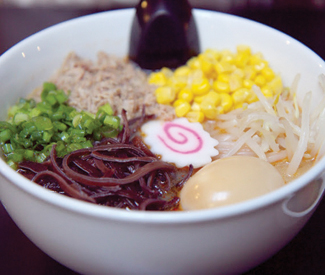
Ramen is akin to pho in Vietnamese food or other filling soups in Asian cuisine. Maybe it’s my craving for bold, pronounced flavors that have made me not so much averse to basic broth soups as just bored by them. I typically prefer udon or soba noodles when it comes to Japanese soups for more texture and emphasis on the noodles and may never be obsessed with ramen, pho, or the like. But Kirimachi Ramen, a month’s old spot tucked away in North Beach with 1950s diner chairs and laid back vibe, does well by the genre. All bowls are hefty at $10, with veggie, pork, or chicken as a base. The staff told me they haven’t found a reliable organic pork source yet, but use Marin Sun Farms chicken, focusing on fresh ingredients. I took to Sapporo-style miso ramen with chopped pork, Chinese chives, bean sprouts, corn, with additional toppings ($1) including kikurage mushroom, fish cake, and soft-boiled egg.

450 Broadway St., 415-335-5865, www.kirimachi.com

Subscribe to Virgina’s twice-monthly newsletter, The Perfect Spot, www.theperfectspotsf.com

Appetite: Portland cocktailing

5

More than 50 places in one week…  I may not have covered all of Portland this May, but I certainly made a dent. So much so that my Portland reviews are broken up in a four part series. Soaking wet half the week, I biked out to neighborhoods East, West, and North with my usual (if grumpy, cold, and irritable) tenacity to dig in and taste the soul and breadth of a place rather than its veneer. Join me as I drink, and eat, my way through the rainy town up north.

As cocktail bars are required to serve food in Portland, cocktails and food are intertwined – and strong – at many a locale. Though I separate out cocktails and restaurants, there are numerous places where both are worth making your way to so you’ll see some restaurants listed here and in next issue’s Portland restaurant article.

Brendan Wise of Beaker & Flask filled me in on a couple cocktail projects launching just after my visit: Corazon from Chris Israel (chef-owner at Gruner, which I review next issue), and the Beaker & Flask team created a drink menu for popular PIX Patisserie http://www.pixpatisserie.com/ featuring cocktails and sherries to go with their sweets.

RIFFLE NW

Visiting Riffle NW in its opening week, I was struck immediately with fresh seafood, friendly service and some of the best drinks of my Portland week. It was opened by Dave Shenaut (former president of the Oregon Bartender’s Guild) with bartenders Emily Baker (formerly of Rum Club), and Ricky Gomez (formerly of Teardrop Lounge) – SF bartender Brandon Josie of Bloodhound recently moved to Portland to take over as bar manager for Gomez who is moving on to a new project. Riffle’s spare, modern decor displays seafaring inspiration in wood ceiling panels made of reclaimed shipping docks, while the name refers to a rocky shoal or sandbar below the surface of a waterway.

I came for the drinks but was not disappointed in the food. Black bass tartare ($10) is punctuated with dill, squid Carbonara ($17) is meaty with guanciale, while an overflowing, fresh crab roll ($21), and a huge cut of rare Copper River sockeye salmon ($32) is grilled, its salty skin subtly sweet with a bourbon maple glaze.

Emily Baker offered the best service of my entire time in Portland. After I was there a couple hours, we began talking industry connections and drink, but long before she knew I was a writer, she went out of her way to ascertain our taste preferences and make sure we were comfortable at the bar.

On the menu, a Riffle Collins ($11), made of gin, lemon, lime, celery, absinthe, salt, is the perfect starter, garden bright, light and appropriately savory with celery and salt. Room D ($9) delighted with rye whiskey, the spice of Becherovka, while quinine and citrus imparted punch.

Off menu, Baker suggested and created just what I was craving: Art of Choke (a Violet Hour creation by Kyle Davidson), mixing Cynar, mint, Bacardi white rum, and Green Chartreuse. Herbaceous, bitter, and vibrant, it hit all the right notes. Similarly, a Self Starter (a Jamie Boudreau drink) balanced Lillet with Old Tom gin, absinthe and Orchard apricot. Not too musky but crisp, sweet, boozy. All around, hand cut ice perfects each drink.

It was a treat sampling Jack Rudy Tonic from Charleston, a bottle I noticed on ice behind the bar and had to inquire about. A small batch syrup (available in SF at Bi-Rite Market), it makes a lovely tonic, set apart with lemongrass and orange peel.

CLYDE COMMON

So much has been said about Clyde Common and Jeffrey Morgenthaler since opening that it’s almost needless to point it out as a Portland “best”. In fact, for one who almost never repeats places in the same trip (ever with an aggressive agenda), I returned to Clyde Common three times in one week. Morgenthaler was only there one of three stops, offering cheeky, impeccable service. But service was warm and accommodating both evenings I dropped in – only during a weekday visit did I experience lackluster, abrupt service from one bartender.

Cocktails are a reasonable $7-9. Morgenthaler’s famed barrel aged cocktails ($10)  – his Negroni and one of my all time favorite cocktails, an Old Pal – rotate but were completely out all three visits. What pleased most were his bottled and carbonated cocktails ($8).

Though I’ve seen a lot of these the past year  – one was a basic Americano (Campari, Dolin Sweet vermouth, water and orange oil) – the Broken Bike was possibly my top drink on the menu, fizzy and vivaciously bitter with Cynar, white wine, water, lemon oil. Both were well balanced, refreshing and more importantly, fun.

Elsewhere on the menu, a Kingston Club exhibited subtle balance of fruit and herbaceous notes with Drambuie, pineapple, lime, Fernet, Angostura, and orange peel. The Nasturtium cocktail was unexpectedly too sweet for me, Domaine de Canton ginger liqueur hitting heavier than the Dolin Blanc vermouth and Bonal. A Spiced Dark & Stormy is a brilliant idea – and went down all too easy. Rum (Gosling’s dark, in this case) infused with Chinese five-spice, a spicy, house-brewed ginger beer, finished with lime, made for another winning drink.

Clyde Common was the Portland bar that for me most upheld its reputation: centrally located, serving understated drinks, strong on precision.

BEAKER & FLASK

It goes without saying that Beaker & Flask, opened by Kevin Ludwig of Park Kitchen, has been one of Portland’s hottest cocktail bars since debuting in 2009. Despite large groups in the spacious restaurant, bar seats free up often, even on a weekend, and we were able to chat, unhurried, with the bartenders, lingering over drinks.

Menu cocktails ($9) like a soft, woody Walk in the Woods (Old Tom Gin, Stone Pine liqueur, lemon, sage syrup, egg white) and elegant Cricket Club (Pimm’s, rose port, Bonal, amargo bitters, cucumber soda) please but going off menu in the hands of talented Chicago transplant Brandon Wise (now President of Oregon Bartenders Guild) and Neil Kopplin, who also makes Imbue Vermouth, is where the real action is.

Wise mixed a Rose Americano cocktail, bright with Martin Miller’s Westbourne Gin and grapefruit, earthy-sweet with Amontillado sherry. Kopplin goes with a recipe from neighboring Rum Club, the Begonia, utilizing his Imbue vermouth, aged Novo Fogo cachaca, Benedictine and velvet falernum. Sweet, spiced apple notes hit first, with a beautifully subtle bitter on the finish.

Seek out Neil’s new product, Petal & Thorn, a gorgeous gentian liqueur using homegrown beets for Campari color, cinnamon, menthol, and other intriguing elements.

RUM CLUB

Depending on which direction you’re approaching, enter Rum Club either on the front or back side of Beaker & Flask. The cozy bar is roughly one year old, conceived by Beaker & Flask’s Kevin Ludwig and Michael Shea of Doug Fir. Affordable $5-10 cocktails, chic wallpaper, low wood ceiling, the bar in the center, and a small patio you can smoke in if you’re nowhere near the door, make it an appealing place to gather with friends until the wee hours.

Though packed and noisy, I was won over by well-crafted drinks like the Hi-Lo Split ($8), vivid with Old Grand-Dad Bonded whiskey, Cynar, lemon, passion fruit syrup, grapefruit bitters – a stunner, actually. Also by Road to Ruin ($8), with a rye whiskey base, dry vermouth and bitters, set apart by cardamom notes from Cardamaro Amaro and texture from lemon oil.

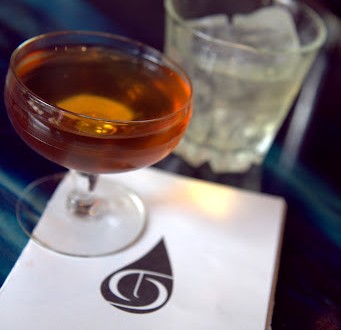
TEARDROP LOUNGE

Despite the widespread respect garnered for this chic, centrally located bar in downtown Portland, Teardrop Lounge was the one disappointment of my bar excursions. It’s long hyped as being one of PDX’s best, and depending on the bartender, I’m sure it could be. The space centers around a dramatic round bar, open air windows ushering in a gentle breeze on a nice day. Even with well-prepared drinks, I found touristy clientele and disinterested bartenders during my visit soured the experience.

The menu reads well, including a glossary of terms educating non-cocktail geeks on terms like oleo-saccharum (a traditional punch base of lemon peels macerated in sugar to extract oils) and Batavia Arrack (an early 16th century, palm sugar-distilled spirit tasting of spice, citrus, anise – often used in punches).

There’s sections of House Cocktails, Classics (like Sky Rocket from 1919 or a Morning Glory Fizz – from the Savoy Cocktail Book, 1933), and one called Friends highlighting bartenders’ drinks from other cities, including SF locals: Kevin Diedrich’s Whiskey Wallbanger and Ryan Fitzgerald’s Rodriguez).

Though intriguing, a Wanderlust ($12), made of Banks white rum, a house sherry blend, Marolo chamomile grappa, medjool date bitters, orange bitters, and flamed absinthe was musky sweet without the hoped-for layers jumping out. However, Of Praise for Tulips ($9), was a brightly elegant aperitif, floral with Clear Creek pear brandy, dry and bitter with Cocchi Americano, Dolin Dry vermouth, Barenjager, Boston bitters and Pacifique absinthe.

THE DRIFTWOOD ROOM

They had me at ’70s wood-paneled walls, cocktails ($9-12) named after classic actors (e.g. Sydney Poitier, Elizabeth Taylor), and old school, Rat Pack bar vibe. When asking bartenders at “mixology” havens around Portland where they liked to drink off hours, more than one of them said The Driftwood Room. Granted, it’s in Hotel deLuxe (opened in 1912 – the bar opened in the ‘50s) and forget catching a cab from the hotel any time after 11:30pm when the train isn’t running (apparently, neither are cabs), but for a mellow, retro vibe with boozy-but-crafted drinks, Driftwood is a welcome respite.

Both Bittersweet Symphony ($10 – Temperance bourbon, Punt e Mes vermouth, Pelinkovac http://www.wineglobe.com/13047.html, Peychaud’s and Angostura bitters) and Old Tom Cocktail ($11 – Ransom gin, Agwa de Bolivia coca leaf liqueur, Krogstad Aquavit, lime juice, barrel aged bitters) pack a punch while maintaining balance.

CIRCA 33

Another bartender off-hours favorite is Circa 33 in Southeast Portland. For me, flat screens and sports interfered with a vaguely retro, laid back vibe. A library-like wall of American whiskey and bottles line the back wall with wood ladder for easy access. Easy-going bartenders can create cocktail classics, even if they don’t know them. I requested a simple but perfectly classic Old Pal, executed solidly per instruction. It’s the hidden back bar that draws industry folk, an intimate space ideal for conversation.

KASK

Though not overwhelmed with creative vision at Kask, the newer sister bar to neighboring Austrian restaurant Gruner, I enjoyed the corner casual chic in a small space with welcoming bartenders. Here can linger with friends, actually hear each other, and savor solid cocktails ($9-12).

Though my favorite drink was an off menu Del Maguey mezcal/citrus creation, I tasted the gamut, from Rabo de Galo, utilizing Novo Fogo’s barrel aged cachaca (a spirit popping up often on Portland menus), Gran Classico, Carpano Antica sweet vermouth, and Brazilian coffee bitters. The Black Lodge covered the whiskey/vermouth/bitter side with Wild Turkey Rye, Punt E Mes sweet vermouth, Combier Rouge, Cynar, Regan’s orange bitters, while another off menu creation, Leather Canary (a Chevy Chase reference), mixed up that profile with tart/sour: Combier Pamplemousse  – a grapefruit liqueur, rye whiskey, Gran Classico, Punt E Mes vermouth.

Kask’s service and relaxed vibe make it one of the better hangouts for cocktailians in my downtown Portland explorations.

Subscribe to Virgina’s twice-monthly newsletter, The Perfect Spot

The ‘heightened sensitivity’ blues

74

OPINION 

“No one can deny that there is presently a particular sensitivity around domestic violence issues, and this may have been a contributing factor in their decision in this instance. I want to emphasize that I respect this heightened sensitivity and I will not criticize those allies of mine that have chosen to withdraw support.”

– Oct. 17 press statement from District 5 candidate Julian Davis

This is not a Julian Davis hit piece. Just as much as any young progressive in this town, I know the guy. He’s not a bad guy.

He can be a boor. But to be fair, he’s only doing what he’s been taught to do in this era of the San Francisco City Hall progressive scene.

Lemme take it back to my first assignment covering politics for the Bay Guardian (indulge me.) I was a culture intern.

I was assigned to the Democratic County Central Committee election-night party at the Great American Music Hall. I had the early shift, because those hours of the evening are boring enough to entrust to an intern with little background knowledge of the San Francisco political scene. While I was there, gamely interviewing the only person I recognized from the newspapers (a man who I’ve been told ad nauseum is a leader of the San Francisco progressive movement), a shrill -– to appropriate a term usually coded for women and gays –- elderly, straight male blogger approached us and inquired loudly if I was the politician’s escort.

Now, I am pro-sex worker. But as a young woman who was performing an important task for the first time, when a dinosaur implies that you are at a stone-dull political happening to solicit sexual favors for money -– well I’m sorry, brothers and sisters, but I was there to interview people for a newspaper. I don’t think this man’s query, shouted as it was over the crowd, implied a high degree of sex-positivity.

The progressive leader seemed unfazed. Who knows, maybe it happens all the time. He briefly made introductions and ninja-moved into the social melée, leaving me with old blogger, who commenced interrogating me rudely, on camera, from a distance close enough that I could smell him. It wasn’t a superlative scent.

Perhaps Kay Vasilyeva felt similarly six years ago when she went to Bill Barnes, who was serving as campaign manager for Chris Daly, the San Francisco progressive deity at whose campaign event she says the most egregious incident with Davis took place.

Davis groped her, she told Barnes. He told her she could report the incident to the police, and when questioned about the incident by Fog City Journal last week, he said “my memories that are most clear about that campaign were the political side of what was going on, not about the interpersonal issues.”

I’ve told my election night story a couple times over the last week since it stands out clearly as the moment I knew, for sure, I would never get involved in San Francisco politics.

More than one of my friends told me I was asking for this humiliation, what with having identified myself as a Guardian reporter. I’ll admit, that perhaps I could have expected such diminutive behavior. The paper’s, like, “controversial.” All the same, I told those friends, as respectfully as possible, to fuck off.

In the wake of the Ross Mirkarimi and Julian Davis debacles, and in the wake of reaction to said debacles (decidedly the more catastrophic happenings, even compared with the acts themselves), many are realizing that the dominant face of SF progressivism is that of a self-absorbed, hierarchy-enforcing man.

Perhaps some are making the cognitive leap to wonder about why we’re not exactly overwhelmed with progressive females in elected office.

Could it be that through sloppily coded language like that used in Davis’s email, the Barnes response, and my election night incident, an environment is systematically being created that no intelligent young women would ever sanely choose to take part in?

Tell me I’m too soft for politics. Sure you’re right. Tell me it’s equal opportunity assholery. Probs. Tell me that’s just how it is.

I’ll tell you this: being progressive is about more than voting in favor of rent control and raising teacher’s wages. Being pro-choice is not the end of one’s involvement in women’s issues. You can have all the right politics on paper, but if you make those who are different from you feel like shit when you’re two cocktails into election night, take a seat, wrench your eyes from their tits, and let someone else take the lead, because you’re the reason why the progressive movement, the labor movement, et. al., are stale and worn.

Convince all the young women and other people who are not the face of power in this country that they have no place and they will find a different place, and your slate will be all the dumber for it.

Beware, boorish men, when you blame the current spate of sexual abuse unmaskings on “political climate” or “interpersonal issues.” Denigrate actual justice as a “trend” or “gossip” and you will most certainly find yourself fighting for something that you really, really don’t want — the increased infirmity of the movement you claim to hold so dear.

“Heightened sensitivity” getting you down? Hit up a pharmacy, I bet they have a cream for that.

Dick Meister: Labor’s wise election choices

2

By Dick Meister

Dick Meister, former labor editor of the SF Chronicle and KQED-TV Newsroom, has covered labor and politics for more than a half-century. Contact him through his website, www.dickmeister.com, which includes more than 350 of his columns.

No issue on the November election ballot anywhere is of greater importance to working people and their unions than Proposition 32 on the California ballot.

As the State AFL-CIO notes in its call for an all-out campaign against Prop 32, it’s “a brazen power play” by billionaire corporate interests and other anti-union forces to all but silence labor’s political voice, while at the same time greatly increasing the political strength of labor’s wealthy opponents.

Prop 32’s corporate sponsors deceptively call their measure an even-handed attempt to limit campaign spending. Yet it would only limit – and severely limit – the political spending of unions. There would be no limit on the political spending of corporations and other wealthy interests.

A Prop 32 victory would have a serious national impact, since passage of the measure in the country’s largest state would certainly lead to attempts to enact similar measures elsewhere.

California Propositions 30 and 38 also could have major, though less direct, effects nationally.  Both measures would raise badly needed new funds for education.

Prop 30, which is widely supported by unions and a broad base of community organizations, would do it through a tax increase that would be levied on wealthy Californians with annual incomes of $250,000 or more.

But Prop 38, bankrolled by some of the same billionaire interests that are contributing heavily to the Yes on 32 campaign, would raise money by taxing everyone, including the poor. And while Prop 30 specifically calls for added education funds to go to schools at all levels, including the community colleges that train workers for jobs that are heavily unionized, Prop 38 does not apply to community colleges.

There are, of course, other state as well as local and national issues and candidates that are of particular interest to labor. That includes, as it very well should, labor-friendly President Obama and just about any other Democrat.

Although the odds are heavily against Democrats regaining control of the House or adding to their narrow margin in the Senate, that has not kept labor and its supporters from trying to beat the odds.

National Democratic strategists are relying on California to be a leader in raising funds to make that happen. They’re sending out an unprecedented barrage of requests to Californians for money for Democratic candidates in general and especially for candidates in battleground states.

Unions are playing an important role in that effort and in many local elections as well. That naturally includes the voting in San Francisco, long one of the country’s premier labor cities and national pacesetter for labor.

As usual, the SF Labor Council and SF unions generally have endorsed all of the Democrats running for national and state offices. It would be hard to quarrel with that or with most of labor’s other choices of who and what to back and oppose on the city’s election ballot.

Locally, labor is backing incumbent Supervisors Eric Mar (District One) and David Campos (District Nine) and newcomer F.X. Crowley, a longtime union leader and activist who’s running in District Seven. All have consistently supported labor.

Labor is rightly eager to defeat Crowley’s opponent, Mike Garcia, a candidate of the downtown interests that have consistently opposed labor.

Voters would be wise to follow the guidance of the teachers union on candidates for the SF Board of Education. The union has endorsed Matt Haney, Beverly Popek, Sam Rodriguez and Shamann Walton. All would be new to the board.

The teachers union and the Service Employees Union local that represent SF City College workers agree that the best candidates for the Community College Board that governs City College are Hanna Leung, Rafael Mandelman and incumbents Natalie Berg and Chris Jackson.

As far as local propositions go, labor’s support for a parcel tax to raise badly needed funds for City College (Prop A) and for a trust fund to help lower and middle income families secure affordable housing (Prop C) makes very good sense.

Unfortunately, labor did not take an official position on Prop G, the policy statement that calls for a Constitutional amendment to reverse the U.S. Supreme Court’s Citizens United decision that has allowed unlimited political spending by corporations and wealthy individuals.

Otherwise, however, labor has provided voters with an invaluable election guide.

Dick Meister, former labor editor of the SF Chronicle and KQED-TV Newsroom, has covered labor and politics for more than a half-century. Contact him through his website, www.dickmeister.com, which includes more than 350 of his columns.

Agnos and other progressives rally for Olague

72

A string of prominent local progressive leaders today offered their support to Sup. Christina Olague – including former Mayor Art Agnos, who announced his endorsement of her in the District 5 supervisorial race – in a rally on the steps of City Hall.

In the process, many voiced a need to broaden and redefine progressivism as valuing independence and diversity of perspective more than just stands on specific issues, traits they said Olague embodies. But more than anything, the rally seemed aimed to consolidating progressive support around Olague as the best hope to beat moderate London Breed in one of the city’s most progressive districts.

“District 5 is often referred to as the most progressive of San Francisco’s supervisorial districts. It includes a diversity of views and opinions on how to meet the challenges all our communities face,” Agnos said. “And it takes a supervisor who know how to listen, to hear and respect those differing views, while working for a resolution that moves us forward.”

Sup. David Campos made only a veiled, indirect reference to the problems some progressives (himself among them) have had with some of Olague’s stands since she was appointed to the job by Mayor Ed Lee, but he said, “Those of us who have worked with her know what’s in her heart…She has been the independent person we always knew she would be and I’m proud to stand with her today.”

Several speakers made reference to Olague’s working class roots, her perspective as a Latina and member of the LGBT community, and her history of progressive activism in San Francisco. Cleve Jones, Gabriel Haaland, Sandra Fewer, and Sup. Eric Mar were among those there to offer support.

“It was a big give by the Mayor’s Office to appoint someone who wasn’t always going to agree with him,” said Sup. Jane Kim, but that was about the only positive reference to the Mayor’s Office, which turned on Olague after she voted to reinstate Sheriff Ross Mirkarimi, setting the stage for her return to the progressive fold.

“To be a progressive is to share an ideology that understands and believes that the best decisions for our city require the participation of all of us, no matter who we are, where we live, or how big our checkbook is,” Agnos said. “As with so many who have endorsed her, that progressive label says she is a politician who understand this fundamental truth.”

SF Rising board member Alicia Garza kicked off the rally by saying, “We are here to set the record straight that the progressive movement is alive and well in San Francisco.” Later, she praise Olague’s history as a community organizer, saying that, “She understands deeply what it means to empower communities.”

Sup. John Avalos, another supervisor who hasn’t always agreed with Olague in the last nine months and just endorsed last week, commended her for the courage it takes to assert her values instead of simply supporting the mayor who appointed her. He said Olague recognizes that, “We live in a city of extremes, with extreme differences between the haves and have-nots.”

Another new progressive endorsement, coming in the wake of one-time progressive favorite Julian Davis’ troubles, was Quintin Mecke, who said he first worked with Olague on anti-gentrification issues 13 years ago. “I trusted her work then and I trust her work today,” he said. Activist Lisa Feldstein – like Mecke, a former D5 candidate – echoed the sentiment.

“I’m here because I really trust Christina and want to fight for her,” Feldstein said. “She comes from a place of integrity and compassion.”

When Olague finally took the podium, she said, “I am humbled by the heartfelt words of my colleagues.” She also tried to help define progressivism in San Francisco, said that it “isn’t about a cult of personality.”

Instead, she said it’s about working to building people’s capacity to create an inclusive and just city. “It’s about building a movement that can weather any storm,” Olague said, closing by saying she’ll ensure “the progressive voice is always strong in District 5 and I’ll keep working to make it heard until I’m blue in the face…I am the most progressive person in the race.”

Daly’s Buck Tavern, a progressive hangout, is closing

72

When leftist firebrand Chris Daly left the Board of Supervisors two years ago, amid political treachery that effectively ended a decade of progressive control over the body, the bar that he took over and operated – the Buck Tavern – became a gathering place for progressive activists. It was almost like a government in exile following a coup d’etat.

That changed a bit over the last year as Daly became the full-time political director of SEIU Local 1021 and dropped his regular bartending gigs, although the Buck still showcased community events. But as their lease was set to expire on Oct. 31, Daly and co-owner Ted Strawser were unable to negotiate a new one on terms they could afford, to find a new space, or to find a buyer that would keep the Buck running.

So the Buck Tavern, under the helm of a politico that the SF Weekly once-dubbed Captain Outrageous – in an article recognizing his role in getting a better deal for the city hosting the America’s Cup (and, of course, denying ours) – is set to sink at the witching hour on Halloween. That’s right, the Buck is going under.

“We’ve been able to do some really cool things with the space in terms of housing a community of people,” Daly told us. “We had a good run.”

That community is invited for a last hurrah at the Buck on Oct. 31, with nautical-themed costumes requested. So, ye scurvy dogs, come grab some grog and toast the motley crew that proudly sailed these stormy seas before they descend to Davy Jones locker. Arghhh!

Crucial sounds

0

MUSIC Can the declining sales from physical albums ever be replaced by digital music apps and services? Can an independent artist make a decent living from services such as Pandora radio, BAMM.TV, or SoundCloud? Will the starving musician finally get a good meal?

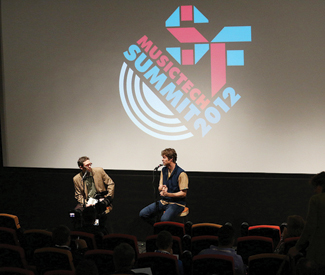
These questions may be answerless for now, but they maintained a heavy presence at the SF Musictech Summit hosted by the Hotel Kabuki — a semiannual conference dedicated to establishing a network among entrepreneurs, developers, record industry figures, and musicians in order to promote digital music business and find solutions for the issues plaguing the modern music industry.

Last week’s installment of the summit featured five talks — in panels with labels like “How Technology Destroyed the Music Industry” and “Artist Revenue Streams.”

It also brought some star power. Actor-musician Jared Leto’s interest with this budding industry brought him to the summit too. And despite the formal nature of the occasion, the 30 Seconds to Mars front person was besieged by attendees eager to get his take on the event, and his autograph. He told me that he’s “curious as to what solutions are being presented.”

But as the summit carried on, it became very became apparent that there are perhaps too many of these solutions being offered. In one of the early morning talks entitled “Artist Tools” moderator Hisham Dahud from Hypebot and Fame House kicked off the conversation by mentioning many of the new ways bands can distribute and promote their music and interact with their fans but also opined that “with new tools comes new responsibilities.”

http://www.youtube.com/watch?v=f7EaMxpKZZU

These new tools were well represented by David Dufresne of Bandzoogle, which designs web pages for bands, Matt Mason of file distributor BitTorrent, and David Haynes of the online audio platform SoundCloud. CEO of Global Digital Impact Taynah Reis and music industry veteran and Incubus manager Steve Rennie rounded out the panel.

During the discussion, Rennie’s stance was welcoming of the technological development, but later, when I asked him if the new digital music business could provide substantial income for the artist, he said, “I sure hope so. The fact is that more people are listening to music than ever but they are doing it different ways, including listening without buying…as people move to other formats like digital downloads and streaming services, we need more people to get comfortable with the idea that music has value and is worth paying for…We need to convince people that their favorite music is worth buying just as much as the beer they’ll spend $10 on at a concert or sporting event.”

The motivation and excitement to transform nearly every aspect of the music business was palpable at the summit. Elevator pitches were as ubiquitous as iPhones and Macbooks. However the fresh idealism was notably absent at the “Artist Revenue Streams” talk where musician Erin McKeown took center stage detailing the sobering situation independent musicians face, explaining that some obvious solutions aren’t so great

“Everyone keeps telling me to tour but the reality is that live performance revenue gets mostly eaten up by the costs and not to mention it’s also extremely taxing on my health”

But more importantly, McKeown emphatically addressed the one crucial issue that was sorely lacking attention throughout the conference: how are musicians suppose to keep up with and derive income from the rapidly evolving environment of music technology? Others on the panel brought up the fact that a lot of artists are unaware of nonprofits such as SoundExchange — an organization with the main goal of compensating artists for their royalties.

The Internet has been lauded as the great democratizer of this generation, and the adage was especially poignant for this specific realm of the digital world. Cellist and composer Zoë Keating, who spoke at the “Artists, Entrepreneurs & Technology,” panel expressed that digital music business caused her to be optimistic and it’s a more level playing field that’s “better for indie artists.” Keating has posted her 2011 income streams on her Tumblr to give her fans a glimpse of the financial situation her and other independent artists are grappling with.

No one seemed more interested in seeing the old music business vanquished than TuneCore founder (and former CEO) Jeff Price, who emphatically declared, “Artists never made any fucking money! What fucking world are you living in?!…The music industry is not collapsing, the traditional music industry is collapsing!” *


SF Stories: Mattilda Sycamore Bernstein

1

San Francisco was where I first learned to gasp and grasp at the possibilities of radical queer self-invention and communal care. This was 1992. I was 19: childhood meant suffocation, college was pointless shit. All around me, people were dying of AIDS and drug addiction and suicide, but finally I was finding other queer incest survivors, whores, vegans, runaways, anarchists, dropouts, drug addicts, sluts, activists and freaks trying not to disappear. We were scarred and broken and brutalized but determined to create something else, something we could live with, something we could call home or healing or even just help, I need help here, can you help?

Of course, we were not the first wave of queer migration to San Francisco in search of ways to cope and hope, visions of lust and love not bounded by convention, brazen challenges to the violence of status quo normalcy. But learning how to dream is always a difficult process. It’s what we needed one another for.

And yet, there is a certain kind of smugness in queer San Francisco, this sense that we have arrived, that we’ve done our work, that we’ve created something beyond the twin traps of gay assimilation and straight normalcy. The problem is that often a sophisticated rhetoric camouflages the same tired patterns of abuse and neglect, and this hurts more when it comes from those you believe in, right? I know that it has hurt me more.
Let me tell you about the friend who will always be there, no matter what. We met when I was 19: we held one another and broke apart walls. We tried to share everything about our lives, and then when we ran out of things to disclose we dug deeper. This relationship lasted for 16 years, but I lost it all when I told this friend he was the most important person in my life. I told him I felt confident about the longevity of our relationship, about our intimacy and our trust, but I never felt secure because of the five-year period when he lied about everything due to a disastrous alcoholism, a five-year period he kept telling me he’d gotten past. It’s true that he wasn’t drinking anymore. When I told him I still didn’t feel secure, I thought he would ask me what he could do, but instead he became enraged, and our relationship was over.

This is just one example of the gap between rhetoric and reality; there are too many. When I arrived in San Francisco in 1992, the city sheltered outsider queer cultures unimaginable in most places. Twenty years of gentrification, homogenization, and assimilation later, and yes, these cultures still exist in some form, even if they have been decimated in both density and imagination. Perhaps what’s changed the most for me is that now I need to live elsewhere in order to dream.

Mattilda Bernstein Sycamore (mattildabernsteinsycamore.com) is most recently the editor of Why Are Faggots So Afraid of Faggots?: Flaming Challenges to Masculinity, Objectification, and the Desire to Conform. Mattilda’s next book, The End of San Francisco, will be out in April 2013 from City Lights—it might break your heart.

UP Festival will locate urban engineering ideas within the best of the SF arts scene

0

Technology-driven “tactical urbanism” will be on display Sat/20 at the Urban Prototyping (UP) Festival. Presented by the Gray Area Foundation for the Arts, the Intersection for the Arts, Rebar, and global design firm IDEO, the UP Festival will feature over 20 projects whose creators hope will be at the forefront of urban innovation. The various projects will be showcased on the streets and in parking lots in a three-block zone centered on the corner of 5th Street and Mission, and soundtracked by a rather stellar lineup of local theater, live music, and DJs. The festival promises to be an explosion of DIY tech meets DIY civic engagement meets SF art scene.

Each digitized urban mashup venture presented will essentially be a miniature replica of the desired development. The projects will include public urinals, reimagined urban gardens, and glowing crosswalks. In addition, one particular display that caught our eye entitled “Faces,” is a facial recognition plan that takes pictures of passing pedestrians and projects them on a nearby wall. Scary? Cool?

Hip-hop collective Felonius performs with theater group Campo Santo this weekend

Expect to see an array of some the best entertainment in the Bay, too. Hot Pocket, the Latin-funk ensemble comprised of Bayonics members will perform, along with Jazz Mafia and a host of other live music groups. Festival goers will get the privilege of a performance by Intersection for the Art’s resident theater company Campo Santo who collaborate on a piece with hip-hop collective Felonius. The GAFTA stage will host DJs from Haceteria’s Tristes Tropiques to Honey Sound System’s DJ P-Play, latter doing a set with visuals by Gabriel Dunne. Kicking off the festivities will be a live graffiti battle, for which artists like Ricardo “Apex” Richey and Jan Wayne Swayze will spray up works of art as you watch (don’t get too close unless you dig aerosol-head.)

UP Festival Expo

Sat/20, free

Mint and Hallidie Plazas

5th St. between Mission and Market, SF

sf.urbanprototyping.org

Party Radar: Rrose, Osunlade, Daniel Wang, Odyssey, more

1

First of all, what the heck are you gonna be for Halloweeeeen?

I’m vacillating between being these amazing but creepy speakers made of artificial muscles — so many of my interests intersecting? — and DJ Paris Hilton (I’ll just stand there like a stunned gazelle with one headphone, and have someone pop up from under my minidress to fiddle with a mixer). In any case, let’s all agree that this can be our Halloween–costume-choosing retro kiki house theme song:

Second, I screwed up someting major in my Super Ego column in the paper this week: The wonderful Odyssey party is actually on FRIDAY (not Saturday as your wasted columnist stupidly put forth — hey at least I’m cute in the dark!) Come and spank me on the dancefloor, loves, it’s gonna be a great one.

Here are more parties.


>>OSUNLADE

Beautifully hypnotic global-tribal, jazzy-deep house from the spiritual master — he’ll be at another installment of Marques Wyatt’s Deep parties, IMHO the most excitingly diverse experiences in SF.

Fri/19, 10pm-4am, $15-$20. Mighty, 119 Utah, SF. www.mighty119.com


>>PEACHES

It’s time to re-up your degree in the teaches of Peaches. Berlin’s bad mama-jamma of electroclash performance art is back for a rare appearance, celebrating the 17th anniversary of local art-tech-music powerhouse Blasthaus.

Fri/19, 9pm, $22.50. Mezzanine, 444 Jessie, SF. www.blasthaus.com


>>RROSE

The mindbending deep techno entity known as Rrose obliterated pretty much everyone when she played here at Public Works several months ago — c’est la vie! Joining Rrose in the blessedly banging, re-abilified Club Six basement is Sensate Focus, another cerebellum twirler. I’m kind of scared, the good scared.

Sat/20, 10pm-late, $15-$20. Club Six, 101 Sixth St., SF. www.clubsix1.com


>>DANIEL WANG

He used to live here, now he lives in Berlin — the US is less cute without him 🙁 but he will be bringing his deliciously breezy underground house magic to Honey Soundsystem 🙂 

Sun/21, 10pm, $5. Holy Cow, 1535 Folsom, SF. hnysndsystm.tumblr.com

Nudity and tourism

69

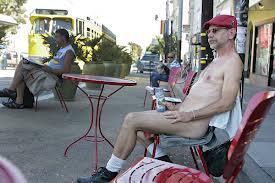
KQED’s Forum weighed in on Sup. Scott Wiener’s anti-nudity law Oct. 18, and I particularly enjoyed the attempts by all to avoid the use of the word “cockring.” I taped a show for KPFA’s morning mix (to air 7:30 am Oct. 19) and host John Hamilton told me that “cockring” wasn’t on the FCC list of unacceptable words and it was ok to use it, but that’s KPFA, not KQED. I also laughed at Michael Krasny confessing that he was beeing “lookist” when he said he’d heard that the men at Jane Warner Plaza weren’t all that good-looking.

At any rate, here’s the real story: A friend’s mom was visiting recently from Switzerland, and what did she want to do in San Francisco? She wanted to go to the Castro and see the naked men. Of course.

You see the buses going down Market Street with all the tourists, sticking their cameras out the window to get a shot? It’s a tourist attraction. 

Remember — when the sea lions first arrived at Fisherman’s Wharf about 20 years ago, and hauled themselves up on the docks, the city tried to get them to leave — they were loud and stinky and unappealing. But they wouldn’t go — and after a few weeks, the merchants realized how good they were for business.

I asked the Convention and Visitors Bureau, now known as SF Travel, if banning nudity might be bad for the tourist industry — and the local economy. The folks there haven’t gotten back to me. But I don’t know; maybe the city economist should study this nudity ban.

Living the dream of the 1840s

0

MUSIC There’s no better time for local composer Jake Heggie’s 2010 opera Moby-Dick to wash up on our shores, especially in terms of men’s fashion. Seriously — peacoats galore, henleys-and-suspenders perfection, button-up trousers, glorious galoshes, and perfectly nor’easter-tousled haircuts, not to mention a stubbly wealth of seafarin’ beards. The whole cast, outfitted by ace costume designer Jane Greenwood, might have dropped onto the stage from this fall’s All Saints Spitalfields lookbook. Forget the neoprene hoodies and double-breasted suitcoats of America’s Cup, here lies the real echo of San Francisco’s nautical past.

That echo emanates from Herman Melville’s water-logged epic of 1851, a massive compendium of American Romantic sensibility, arcane sea lore, fiery pagan-ecclesiastical poetry, and the archetypal thrashings of mad Ahab, captain of the Pequod, as he obsessively hunts his nemesis, the “great white fish” who nipped away with his left leg years ago, Moby-Dick. The book is also a full-throated exaltation of the culture of the North Atlantic whale trade, at its peak in the 1840s, and a furrowed-brow examination of humanity’s spooky morality, not to mention a rip-roaring, man’s-man adventure tale (complete enough homoerotic subtext to float a sperm whale).

Boiling all this down into an evening’s entertainment, even one as splashy and spectacle-drenched as opera can provide, is a bit like chasing a white whale itself. Fortunately, Heggie — who triumphed with 2002’s Dead Man Walking — and librettist Gene Scheer, along with a more-than-game San Francisco Opera cast and crew, dive right in.

Moby-Dick immediately grabs attention and grounds itself in the Bay Area (the production debuted at the Dallas Opera) with an eye-popping display of one of our native crafts, digital sorcery. Projection designer Eliane J. McCarthy’s gorgeous 3-D renderings of star-maps and ships’ masts engulf the curtain as Heggie’s roiling, swooning overture guides us into the story. The rest of the production and staging throughout this two-and-a-half hour work, directed by Leonard Foglia with set design by Robert Brill, is equally jaw-dropping, with mobile scrims doublings as sail, a web of rigging filling the stage, and ingenious use of a humongous hull-shaped wall.

Another of Moby-Dick‘s riveting special effects: the SF Opera chorus, in fine and lusty voice, vocally painting in the details of the story. That story contrasts the touching friendship of greenhorn whaler Ishmael and harpooner Queequeg, cannibal prince of fictional South Sea isle Kokovoko, with the contentious relationship between the driven Ahab and his first mate, Starbuck, a homesick family man and devout Quaker who sees the Devil’s work in Ahab’s doomed quest. One of the most affecting characters is Pip, the impetuous and mentally unformed ship’s mascot, whose unhinged ramblings after he’s saved from drowning serve as warped prophecy as the opera progresses.

There’s so many meaty possibilities for a composer in this story, but if you’re expecting “yo-ho-ho and a bottle of rum” performed by full orchestra you’re barking up the wrong mizzenmast. To be sure, Heggie’s cinematic, neo-Romantic instincts — he prefers the term “theatrical,” and sometimes we do drift into Les Miz territory — make hay with sea storms, crashing waves, drunken brawls, and the melancholy feel of life adrift on the ocean. (A goofy-cute waltz comes on when the ship’s tipsy crew realize they’ll just have to partner up if they want to party, one of the few funny bits.) Heggie’s white whale is a shimmering arabesque, breaching a swirl of strings and cresting horns, at one momentous climax exploding into an off-kilter samba.

The score is mostly atmospheric, however, its foreboding drama cranked up to eleven throughout, with little standout melody or tonal attenuation to help the characters’ souls drop anchor. Despite a few memorable moments of soaring vocal lines — a duet in praise of Kokovoko’s Edenic promise by Queequeg (Jonathan Lemalu, imposing) and Ishmael (Stephen Costello, cubbishly adorable), sung from neighboring masts ; Starbuck’s ode to homelife back in Nantucket (performed by wonderfully powerful baritone Morgan Smith); the occasional cryptic outbursts of Pip (spry soprano Talise Trevigne, who does a bit of magic with a tambourine) — you’ll have to cling to the singers’ voices and acting technique if you want to keep emotionally afloat.

This becomes a problem with Jay Hunter Morris in the Ahab role. Although strongly voiced and valiantly game, he didn’t connect with me as a man who was truly obsessed, yet who retained enough charisma and cunning to draw the rest of the crew into his singular madness. His role struck me more as “friends’ crazy Tea Party dad” than “scarily fascinating apocalyptic cult leader.”

This could be a wrinkle of the libretto, which retains some of the original’s poetry and blasphemy — a pagan hymn here, an anti-religion diatribe there — but strains to convey an engaging dramatic arc for the characters. (It barely registers when all is lost for the Pequod.) In its earnest bluster, this presentation of the opera also skims over Melville’s haunting metaphysics, the eerie pull of nihilistic depths, the ecstatic fog of moral derangement, that preternatural whistle in fate’s vast gale. I disembarked from the rousing Moby-Dick dazzled and exhausted, though neither questing nor blubbering.

MOBY-DICK through Nov. 2, various times, $10–$340. War Memorial Opera House, 301 Van Ness, SF. www.sfopera.com


Appetite: Tasting spirits

0

An array of new liquor tastes, and a Whiskyfest recap

NAVY STRENGTH GIN REACHES US SHORES

Unforgettable: my journey to the south of England town of Plymouth and its legendary distillery with Master Distiller Sean Harrison. Possibly the most beautiful distillery I’ve yet visited. I relished drinking Plymouth Navy Strength ($34.99) while in the UK, a bracing version of their classic gin at 57% ABV/114 proof, the preferred gin of the British Royal Navy.

Though still smooth like Plymouth gin, Navy Strength packs a greater botanical punch, enlivening cocktails. The good news is it finally arrived to the US merely weeks ago in September so drink up.

It’s radiant in a classic Pink Gin (2 parts Plymouth Navy Strength, 3-4 dashes of Angostura bitters, lemon twist to garnish), which I enjoyed in the hills above Plymouth made by Harrison using fresh drops of reservoir water from the reservoir we enjoyed tea alongside.

www.plymouthgin.com

RECAPPING WHISKYFEST 2012

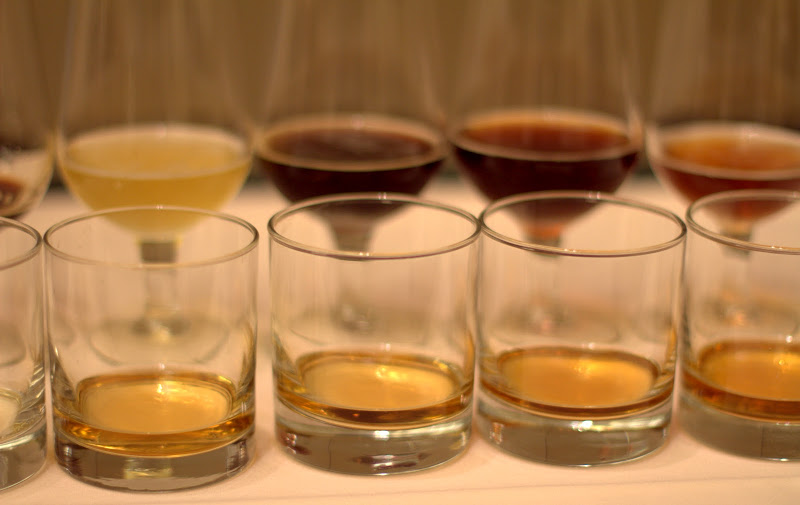
This year’s WhiskyFest was another memorable one. The hilarious Martin Daraz of Highland Park and the uber cool Beer Chicks, Christina Perozzi and Hallie Beaune (their book, The Naked Brewer, just released), killed it with their laughter-packed seminar. There wasn’t enough room for all who wanted to attend their tasting pairing Highland Park whiskies, all the way up to the glorious 30 year, with well-chosen craft beers selected by the Beer Chicks – a number of pairings went shockingly well together. This seminar should definitely return next year, giving all those who missed it a chance to partake of the joys.

Digging further into the independent distillery line of BenRiach whiskies with international Brand Ambassador Stewart Buchanan was a highlight, whether the affordable steal of 10 year Curiositas, a robust, elegant 1995 Pedro Ximenez Cask #7165 (at cask strength, 52.3%) or the otherworldly, perfectly balanced 25 yr. The BenRiach line is a nuanced alternative to an Islay Scotch. Though peaty, these whiskies corner balance, letting the peat shine alongside other layers.

On the American side, the standout was St. George’s 30th Anniversary XXX Single Malt Blend, a layered blend of whiskies from three generations of St. George distillers, Jörg Rupf, Lance Winters, Dave Smith. This new release (only 715 bottles) is a rare blend of whiskies: Winters’ first single malt distillation, his 1999 single malt aged in Rupf’s pear brandy barrels, a small portion of Lot 12 whiskey, and a whiskey distilled in 2007, aged in a port cask made of French oak. Pear notes shine in this bright whiskey as does ginger, butter, banana, hazelnut and orange peel.

Another Scotch standout was Classic Malts’ Glen Spey 21 year, a limited edition whisky maintaining a lively profile in spite of age from bourbon casks with notes of coconut, caramel, toffee.

THE FIRST SF CRAFT SPIRITS CARNIVAL

Held this past weekend in the massive Fort Mason, the first SF Craft Spirits Carnival was yet another opportunity for the consumer and industry to sample a wide range of international spirits. Though burlesque felt off in the middle of the vast space, acrobatics were more in line as we explored a US craft spirits-heavy selection with a good mix of Scotch, tequila, rum and the like from around the globe surrounded by gorgeous Bay and Golden Gate Bridge views.

While a number of my usual favorites were there (Highland Park, St. George, Old World Spirits, Charbay, Rhum Clement), there were quite a few new releases to taste. Charbay started importing beloved Tapatio tequila earlier this year, one of the best values out there for quality tequila, and at the Carnival, poured Tapatio’s just-imported Reposado and Anejo tequilas. Finally in the States, both are green, bright beauties thankfully allowing the agave to dominate over barrel wood.

Local distiller Don Pilar just released a refined Extra Anejo (aged a minimum of three years). Though I am typically not a big Extra Anejo – or sometimes even Anejo – fan when it masks agave properties with too much oak, Don Pilar manages complexity with agave liveliness.

Greenbar Collective’s http://www.greenbar.biz/ (aka Modern Spirits) spiced rum ($30) from downtown Los Angeles could have been too sweet – as their fruit liqueurs were for me – but the spiced rum is subtle, nearly dry, aromatic with allspice, clove, cinnamon, vanilla, and orange zest, redolent of fall.

Michter’s from Kentucky (I’ve long appreciated their 10 year bourbon and their rye) poured their two brand new releases out this month, a decent Sour Mash (86.6%) aged over 4 years, mixable more than sippable, and a robust, cask strength (114.2%) 20 year single barrel bourbon, aged over 20 years with a definite rye spice, although they can’t disclose any information whatsoever on the grain make-up or distilling location.

The tasting highlight of the weekend belonged to Rhum Clément. Already a fan of their elegant rhum agricoles from Martinique, I was pleased to see they just released a fresh, smoky 6 year old ($56), and a cinnamon, wood, vanilla-inflected 10 year old ($73), both aged in virgin and re-charred oak.

In addition, Rhum Cément Cuvee Homere is aged in French Limousin barriques and re-charred bourbon barrels, smooth with tastes of biscuits, almond butter, hazelnut, chocolate, black pepper, while the stately, pricey Clément XO Rhum, is a Cognac-reminiscent treat blending rhums from highly regarded vintages, like 1952, 1970, 1976, complex with fruitcake, toffee, tobacco, leather. My favorite ended up being a cask strength (though still reasonable under 100 proof) 10 year old Rhum J.M. Millesime 1997, unfolding with toasted nut, lemon, sage, passion fruit, white pepper, cinnamon.

Subscribe to Virgina’s twice-monthly newsletter, The Perfect Spot, www.theperfectspotsf.com

Win tickets to see The Foreign Exchange, Sat/20

0

Earshot Entertainment presents a night of some of the finest R&B, soul and progressive hip-hop with the hardest working band: the Grammy-nominated duo The Foreign Exchange along with Zo!, Sy Smith, Jeanne Jolly with live band, and DJs Platurn & B Bravo.

This promises to be one of the most-anticipated club performances of 2012, spotlighting cross-cultural global fusion and bringing rhythmic unity to a diverse audience, and is a must-attend event for fans of Eric Roberson, Little Dragon, Bilal, and the like.

Consisting of rapper/singer/songwriter Phonte and producer Nicolay, The Foreign Exchange came together via the online hip-hop community Okayplayer.com in 2002. After trading files through instant messenger for over a year, Nicolay (living in his native Holland at the time) and Phonte (a Raleigh, NC resident) completed their debut album Connected before they ever met each other in person and was praised by legendary DJ’s such as Jazzy Jeff, King Britt, and DJ Spinna for its inventive mix of hip-hop, R&B, and electronica.

Get your tickets to this event here. To win a pair of tickets, email your full name to sfbgpromos@sfbg.com with “Foreign Exchange” in the subject. Two winners will receive email confirmations at noon on Fri/20.

Saturday, October 20 at 10:30pm (9pm doors) @ Mezzanine, 444 Jessie, SF | $25 adv.

Tiny hats and Trannyshack: this year’s Masquerotica has something for everyone

1

What of the the sex expo? Hundreds of new pairs of fishnet stockings await this weekend’s Masquerotica at the Concourse Exhibition on Sat/13. They languish in their packages, yearning for the convention center-sized strut between rooms of Kink.com performers, contortionists, fetish wear booths, Trannyshack vamps, and Hard French DJs. For months now, we at the Guardian have been receiving tidings of the second annual Masquerotica’s impending onslaught, which, event PR folk assured us, was to be a true representative of SF sex culture. 

To fully prepare ouselves for the scantily-clad melees, we turned to event co-organizer Scott Levkoff for answers. Levkoff is the founded of Mission Control, that pansexual playground here in the city that hosts such swinger’s balls as Kinky Salon with his partner, Polly Pandemonium. He gave us an idea of what to expect, and unexpectedly extolled the virtues of tiny top hats and sexy nurse costumes.

SFBG: After Exotic Erotic went down in financial flames, why do you think it’s important to have these large scale sex events?

SL: Its one thing to explore freedom behind closed doors, to express and explore in small circles or at invite only events- but if you have ever participated with any of the larger events such as Folsom Fair and Pride, there is a feeling that you are amongst a majority and no longer a minority. 

The first time I went to events such as Folsom Fair, and even the now-defunct Exotic Erotic Ball, I marvelled at the sense of freedom and elation that I experienced. There is a weird sense of belonging that I feel at these large scale events, a sense of rightness regarding your choice to live and love the way you wish that is amplified by the sheer numbers present. In a practical sense, large scale events can model the behaviors necessary for the adoption and acceptance of progressive attitudes if done right.

SFBG: How do you think Masquerotica would be as an entry point for someone who is looking to explore their kinkyness?

SL: Masquerotica has been intentionally curated as a sort of smorgasbord of SF’s sexiest and most creative communities — think of the party like a sampler buffet of many sensual delights and treats. Guests newer and perhaps a bit timid in exploring these worlds will also find the party a great introduction. They’ll be welcomed by our trained event hosts courtesy of Mission Control, dubbed Masqueteers. They will greet guests at the front gate, present our basic house rules, such as: Be nice! Consent is sexy! No aggressive cruising — even if they are really cute! Please ask before touching! Etc.

SFBG: Can you tell me about some of the fashion that will be at the expo? 

SL: One will see a lot of Dark Garden corsets, Burning Man fashions, the ever perennial ‘tiny top hat’, animal costumes, and clothing from SF establishments such as Costume on Haight, Distractions, Piedmont Boutique, Fantasy Makers, Mr. S Leather, New York Apparel, Idol Vintage, Multi-Kulti and one of my faves-Decades of Fashion. We’re encouraging guests to put on what makes them feel sexy and playful, whether it’s Venetian carnival couture, leather, shiny latex, lingerie, corsets, uniforms, gothic Lolita, steampunk, high Victorian, Phantom of The Opera tuxedos, lace masks, see-through fabrics, bubble wrap — get creative! As always, I predict Legs Avenue costumes will make a strong showing as well. You can never have enough sexy cats, sexy nurses, and sexy witches at a party.

SFBG: I’ve gotten a lot of emails from the organization promoting Masquerotica as a sex-positive event, as compared to other massive sex expos that the city hosts. What about Masquerotica is different from XO Expo, etc.?

SL: There really is a science to creating sexy creative events where everyone feels safe and free to express themselves. Empowering guests to ‘step up their game,’ and following through with them when they don’t, is hugely important. Just saying that you support freedom and self-expression can unleash a Mardi Gras, free-for-all mentality. Foster creative community engagement, participation, and hearty dialogue with your brand. Also important: choosing good music, erotic art, and playful visuals that brings a good vibe. Embrace true diversity whenever possible and communicate your vision to your public constantly. And make sure your space smells good! Nothing says sexy like the scent of cow dung and wet asphalt! [editor’s note: sarcasm and the Internet have few happy meetings]

Masquerotica

Sat/20 8:30pm-3am, $55–$125

Concourse Exhibition Center

635 Eighth St., SF

www.masquerotica.com