SF

Chronicle taps Chiu, opening up the mayoral field

112

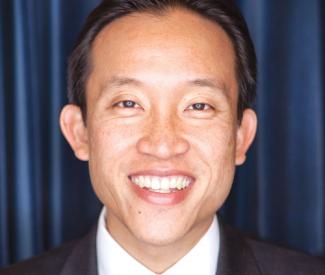
David Chiu has snagged the mayoral endorsement of the San Francisco Chronicle, beefing up his fairly paltry list of endorsers and giving his campaign something to trumpet with its hefty cash reserves in the final weeks. Most importantly, the endorsement opens up the race and probably hurts perceived frontrunner Ed Lee.

After the Examiner endorsed Lee as its top pick, it would have solidified the appointed incumbent mayor’s standing as the consensus pick of pro-business centrists – who always have a strong influence in the mayor’s race – if the Chron had also gone that way. But now, both that vote and the Chinese-American vote will be divided, with some of the latter also picked up by Leland Yee, who got the top endorsements of the Labor Council, Sierra Club, and other influential groups.

The Chronicle endorsement probably gives the biggest advantage to Dennis Herrera, who has placed second in most public opinion polls as well as many endorsements, including getting the second place nod in the Guardian, Examiner, Labor Council, Milk Club, San Francisco Democratic Party, and others – an impressive array that covers the full spectrum of San Francisco politics.

Lee, Herrera, and Jeff Adachi also got praised by the Chronicle in a companion editorial entitled “Three other candidates to consider,” and that will also help Adachi with his left-right punch and outsider appeal, making him another candidate who can’t be counted out just yet.

By opening up the mayor’s race and creating a more complicated calculus in the city’s ranked choice voting system, the varied list of endorsements and the dethroning of Lee as a done-deal could also be a boon to John Avalos, the consensus pick of the city’s left who has a long list of first place endorsements (including those of the Guardian, Milk Club, SF Democratic Party, and many others). Avalos could capitalize on the rising frustration with corporate America that is embodied to the Occupy movement, which he has been nearly alone among the mayoral field in actively supporting.

(You can read an Excel file of the endorsements of various San Francisco organizations, which we’ll periodically update, here.)

While the Lee campaign and the many independent expenditure groups that back him are expected to vastly outspend the rest of the field, obscene displays of corporate cash could end up backfiring this year, particularly against the backdrop of OccupySF and the business community’s raid on employee health care funds and deceptive surcharges on restaurant bills, which Chiu and Lee have been supporting.

Bottom line: with four weeks left until Election Day, the mayor’s race is still up for grabs.

Inside the occupation

20

Follow the Guardian’s complete Occupy SF coverage here.

Thursday morning, in gray seven o’clock fog, about 100 people asleep in front of the Federal Reserve building began to blink their eyes open. The bustling camp that had been there the day before — a small village of tents, tarps and easy-ups, shelves brimming with books, art supplies, and a display of hundreds of signs — was gone. The kitchen and all their food were missing, too.

“Wake up, everyone’s gotta wake up. Remember, sit/lie kicks in at seven,” urged a few protesters gently, winding their way through the maze of sleeping bags and blankets. No one was in the mood for legal trouble. All the people there, and a few hundred more who had gone home at two and three in the morning, had been a part of OccupySF’s first clash with the police. Someone pushed a cart full of fruit and granola bars. Breakfast. It was the camp’s first food donation since the incident, which had ended only four hours before. In the calm morning air, it was clear: the police could confiscate gear, but they could not stop the protest. It was only the beginning.

To say that OccupySF has grown in the past three weeks does not begin to describe it.

On Wednesday, Oct. 5, the camp was busy, clean, and what organizer Amy O proudly described as “jubilant.” Hundreds exchanged ideas, played music, and made signs and art. Two abundant snack tables providing free food to any and all were only the tip of the iceberg; the kitchen was piled so high that organizers had begun turning away food donations.

This scene contrasted starkly to the demonstration’s first night. Occupy SF started on Sept. 17, the same day as Occupy Wall Street, as one of the solidarity actions now reportedly numbering over 1,000. About 150 people gathered for the protest that first day and only a handful stayed the night. A week later, there was a devoted group of 10 campers. By Oct. 1, a good 40 people were camping and the kitchen and communications sections were set up. When the police showed up late Wednesday night, camp was 200 strong.


AS LONG AS IT TAKES

Spending time at the camp is addictive. Since my first night, I feel something constantly pulling me back. That night, Oct. 1, the camp was lively and half a block long. A big, hot pot of soup sat on the kitchen stove. Next door, the communications area was populated with organizers busily typing on laptops. The medical tent was next, kept pristine but as of yet untouched—its necessity, nonetheless, was evident after that week’s incident in New York when police pepper sprayed a group of young women.

At that point, the San Francisco Police Department had been courteous with OccupySF. They provided escorts on marches and didn’t bother the camp. Soon after arriving, Russell, a friendly 23-year-old from San Diego who has been camping since the first day, greeted me. He told me that there was a Gardening Committee meeting in a few minutes, and I planned to check it out. Next I saw Lesley Moore, 48, an Oakland resident with unrelenting energy and a knack for mediating misunderstandings at meetings.

She carried a clipboard and was compiling a massive list of food, supplies, and every imaginable resource the group might want. I learned that a flood of supporters, eager to donate, had requested info about what the camp needed. She planned to post the list on occupysf.com later that night.

Fifteen people climbed into a tent for the Gardening Committee meeting, keen to begin growing food for the camp. The donations were rolling in, and if there was a project we wanted to do, well, we probably could. We discussed what could grow in the winter and planting more in the spring. The mood was giddy with possibility but a bit uneasy— could we imagine we’d still be here then?

Many participants are determined to stay put. Jreds, a protester who had come from Chico, looked me in the eye and promised, “I’m staying as long as it takes.”

When asked his occupation, Jreds replied, “This is our occupation.”

After years of foreclosures and unemployment, no wonder so many people are motivated and available to work and sleep at a place like this. Wall Street’s unmitigated power has failed to trickle down into economic opportunities for the rest of us, and in this economy, “why don’t you just get a job” is starting to sound like “let them eat cake.”

As John Reimann, 65, a retired carpenter from Oakland, put it, “I’ve been waiting 10 years for something like this.” He helped start Occupy Oakland last week.

Protester Chris L, who says the community at the camp is the best part about it, also plans to stay indefinitely. Billy Gene Hobbs, a promoter from LA who can often be seen jumping and shouting to keep protest crowds pumped, came to visit San Francisco two weeks ago, found the camp, and hasn’t left. Since the police came through, almost 100 more people have joined.

The camp’s population is a source of ongoing discussion. Complaints of “too many hippies” usually die quickly when someone actually comes to camp, where the people they’re referring to are not the only ones and, moreover, are active and responsible organizers.

Others object that the protest is populated mostly with young people, especially white and male. There is active discussion on how to accommodate people with children as well as people with disabilities.

It seems everyone — including the many people of color, folks of all ages, and disabled people who have been organizers and participants in the movement — shares the view that oppressive institutions work hand in hand with the corporate corruption and power that the movement strives to end.


THE PEOPLE’S MIC

Camp life is dotted with calls for the People’s Mic, a tool developed at Occupy Wall Street, where using bullhorn or speakers is illegal. When someone yells “Mic check!” the crowd echoes in response. The person speaks his piece, sentence by sentence, as the crowd repeats. If a few people nearby can hear him, everyone can. For better or for worse, it tends not to amplify ideas people don’t have much taste for; at a recent meeting, when someone insisted that people who had been foreclosed on were greedy and foolish, the People’s Mic’s volume faded fast.

The People’s Mic requires no electricity, discourages rambling, a brilliant improvisation. But the central feature of Occupations throughout the country is the General Assembly. OccupySF has been holding General Assemblies every day at camp at 6 p.m. and on Saturdays at noon in Union Square. In the past week they have consistently boasted a couple hundred participants daily, but continue to practice consensus-based decision-making and participatory democracy. They’re long and often frustrating, but for many, as a standard rallying cry insists, “This is what democracy looks like!”

Many have stepped up at meetings to say that too many men, too many white people, or simply too many of the same voices are being heard. Solidarity efforts like Occupy the Hood, which declares the vital need that people of color make decisions and organize in and along with the occupations, have surfaced nationally.

On Oct. 5, after about 700 people marched on the Financial District with OccupySF, the General Assembly was particularly well attended. It was peppered with invitations and expressions of solidarity, conveyed by representatives of groups from throughout the Bay Area.

The week’s schedule slowly filled: Thursday’s anti-war march, the next day’s teach-in with activist Miguel Robles, a 7 am “Wake Up Action” with Unite-HERE Local 2 on Oct. 10, and plans to coordinate with the LGBT rights group Get Equal for a National Coming Out Day action the next day.

Carolyn DeRoo, a brightly charismatic BART station agent, reveled in the whoops and cheers when she announced that Amalgamated Transit Union Local 1555, the union that represents BART workers, had just voted to endorse Occupy SF. “I got an hour off work today so I could be in the march,” said DeRoo.

She expressed concern over the lack of coherent messaging, hoping it wouldn’t hurt the movement. “I was about to get on a plane to New York because of how badly I wanted to be a part of it,” she said. “I’m so glad it has started in SF.”


THE COPS ARRIVE

But on that fateful night, Oct. 5, meeting ideals were strained. High-tension and often angry debate filled the hours between being warned of police action and its onset, making consensus difficult. Some wanted to take down the camp, unable to risk arrest. There were campers from all walks of life present, including some homeless folks and travelers who would risk losing all or most of their possessions if the police confiscated them. Others didn’t want to see the camp’s growth stunted due to police intimidation.

Dierdre Anglin, 40, an Oakland resident who works in the nonprofit sector, was particularly calm amongst the chaos. “I think the energy got a little high,” she said, as protesters ran around taking down tents and preparing for the imminent police confrontation. “But we have decided to take the stance and to stay here.”

She added, “I personally feel that they are not going to do anything because it would make the police look quite bad. There’s a lot of support for us.” Anglin’s prediction about the cops’ actions, if not their public relations consequences, was mistaken. Police marched in around 1 am, and Department of Public Works employees began to fill their trucks with camp materials.

Billy Gene, ever energetic, raced to lie down on the street in front of trucks and was dragged away, yelling “Don’t be mean!” at police. Many sat and stood in front of trucks. Others could be seen shaking their heads at colleagues’ verbal attacks and murmuring, “that isn’t nonviolent.”

There was no property damage or physical violence on the part of the protesters, although one man was arrested for allegedly punching an officer in the face, which both sides cast as an aberration that didn’t reflect the tenor of the standoff.

At 3 am, protesters surveyed the damage. An organizer addressed the group: “We’re still here, and it’s time to rebuild.” The camp received a donation of blankets and sleeping bags at four o’clock that morning. At five, a small jam session and dance party broke out.

Police have since provided information on how to retrieve confiscated materials, and Police Chief Greg Suhr told us they’ve been actively trying to facilitate getting people their stuff back and allowing the occupation to continue (see accompanying article for more from Suhr).

In the days since, the mood has again turned jubilant. On Thursday afternoon, Oct. 6, about 120 people were gathered at the camp. Signs ranged from “student loan debt is slavery” to “grannies against war.” The next night, the mass of people had increased, and with it the group’s creativity. Protesters could be seen pedaling a stationary bike connected to a battery, powering laptops.

As the sun set Friday, 300 people at camp looked west. They erupted in cheers as a 500-person anti-war demonstration marched onto the site. Market between Main and Embarcadero was shut down as protesters rallied and then held General Assembly. A dozen police lined up near the sidewalk; one told me they were separating OccupySF from the march. The next second, the “march” erupted in chants of “We are the 99 percent,” the Occupy movement’s signature rallying cry. Attempts to divide were futile.

That the movement has no “one message” has in many ways worked to their advantage. It seems hundreds of thousands of people with varying issues and concerns can all agree that an elite class, embodied by Wall Street, has far too much power and money, and that the people must unite against the sorry state of this system. As I looked in the officers’ eyes, I wondered how long even their disconnect from the protesters will last. Most are, after all, the 99 percent too.

After the General Assembly held the street for an hour, police requested that they please move to the sidewalk. A consensus vote decided to oblige. An assembly member proclaimed, words booming with the roar of the People’s Mic, “Let us remember that we took this street, and we could have held it if we wanted to.”

This is the kind of power many haven’t felt in a long time. And I get the feeling that no one intends to relinquish it any time soon.

Style Paige: h.Naoto’s Gothic glam (finally) makes it to the States

0

For Nikki Azuma, Japanese fashion is a lifestyle. The 28-year-old  has been obsessing over Japanese fashion for years, admiring the clothing through fashion magazines and crafting outfits of her own. “It’s my identity,” Azuma said, dressed in a red and black striped tutu dress. 

It was Saturday and Azuma was attending the store opening of one of her favorite designer’s first U.S. store, in Japantown’s New People mall. Naoto Hirooka’s avant garde line h.Naoto is the leading Gothic brand for men and women in Tokyo. It’s worn by Japanese and American pop culture icons like X-Japan and Evanescence. The opening coincided with the brand’s 10th anniversary.

Azuma compared Hirooka’s brand to a good meal, one in which each bite works together to form a transcendent whole. “Everything about each piece [in his line] compliments each other. They’re not overworked,” she said.   

h.Naoto is a blend between Gothic, Lolita, and punk styles, mixing leather, lace, and chains. It’s a combination of hard and soft that might seem strange with those unacquainted with Japanese couture — but deeper inspection reveals a cohesive, original line. 

More blackness from the h.Naoto New People stock. Guardian photo by Paige A. Ricks

To commemorate the store opening on the second level of the New People mall – the space previously occupied by another Burton-esque line, Black Peace Now — there was an exhibit showcasing Hirooka designs once sported by celebrities. Mannequins were dressed quite strikingly; floor-length coats with large collars, pants held together with safety pins. 

Hirooka said he hopes San Franciscans feel inspired by his clothing. 

“When you wear my clothing, you can transform into someone else,” he said in the midst of his opening. “Each piece is unique and you can play a different character.” 

His designs do tend to encourage playacting – they’re structured and tailored, but splashed with white, pink, and turquoise, reflecting the current military and biker trends in Japan. Almost every piece in the store is black, but this colored edginess seems to most appeal to the designer’s young customers. 

Another of Hirooka’s admirers Susan Noh marveled at how the designer’s ability to take existing styles and subvert them into his own ideals. Noh used to order h.Naoto online, even traveling to Japan buy the clothing on occasion.

But now that there is a store in her backyard she’s excited to leave her suitcase empty. “I absolutely love everything,” she said of the New People collection.  

It’s cheaper than a ticket to Tokyo, but still not cheap. Because of the distinctiveness of h.Naoto, the clothing ranges from $100 to $300 for jackets, dresses, and blouses. (The store does sell less expensive items like t-shirts and tank tops.)


H.Naoto store

New People, second floor

1747 Post, SF 

www.newpeopleworld.com


Brown vetoes bicycle buffer zone

92

Anyone who has ever ridden a bicycle knows how scary and dangerous it is when cars pass too closely at high speed. So the California Bicycle Coalition made its top legislative priority for the year a bill, SB 910, to require drivers to give bicyclists a three-foot buffer or slow down to 15 mph. And even though the Legislature overwhelmingly approved this reasonable traffic safety measure, Gov. Jerry Brown vetoed it on Friday.

“His veto made no sense. We honestly can’t figure out why he vetoed the bill,” said CBC executive director Dave Snyder, a San Francisco resident who used to run the San Francisco Bicycle Coalition and who founded Transportation for a Livable City (now known as Livable City). “It’s not based on logic or public policy, but just based on politics.”

The California Highway Patrol and California Department of Transportation opposed the measure on the grounds that it could impede the flow of automobile traffic, and Brown cited their stand in his veto message. Indeed, keeping cars moving at high speed has long been the central goal of these agencies, even when it has high economic, environmental, or public safety costs.

But Snyder is right that Brown’s veto message is confusing and contradictory. He expresses support for the three-foot buffer, but expresses concern about slowing traffic to 15 mph, seemingly confused about the meaning of the word “or,” meaning drivers can provide the buffer or slow down to a safe passing speed if they’re unable to give bicyclists that much room.

People who don’t ride bikes tend to forget that automobiles are deadly weapons, and that a bicyclist’s brief swerve to avoid a pothole, broken glass, or other hazard can have disastrous consequences if a car is passing too closely. This veto follows another illogical one – Brown’s rejection of Sen. Mark Leno’s local vehicle license fee bill, which would have pumped $75 million into SF’s coffers and was almost universally supported by this year’s mayoral field – that gave undue deference to automobile owners.

Meanwhile, the San Francisco Police Department recently launched a crackdown on bicyclists in the city, issuing dozens of tickets on Market Street for running stop lights and on Townsend for briefly riding on the sidewalk en route to the Caltrain station – and ignoring the nearby cars parked in bike lanes and running those same red lights.

Now, before we get to the commenters’ tirade about scofflaws on bicycles – which come every time we write about bikes – let me note that people break the law on every form of transportation, everyday. Motorists speed, run stop signs and lights, and illegally edge past pedestrians (who themselves jaywalk with great regularity). And every Muni bus has several riders who haven’t paid. None of us are angels, so try not to get too worked up into a sanctimonious rage.

But if you want to truly understand why bicyclists can often be so flagrant in our disregard for the law, consider that we’re using a transportation system and abiding traffic laws that weren’t designed for us. Seriously, just ride a bike and you’ll quickly understand. We don’t need to stop at every stop sign or signal light to have a safe, smooth-flowing transportation system that doesn’t steal the right-of-way from drivers, who we can usually see and hear coming with plenty of time to stop. Idaho and other jurisdictions actually treat bikes differently than cars in this realm, with laws that don’t require cyclists to lose momentum by repeatedly coming to complete stops, and it works well.

The fact is, the bike buffer bill is the very minimum that we need to encourage cycling as a safe and appealing transportation option to more people, which would only help our environment, public health, and dependence on fossil fuels. And the fact that it was vetoed for petty, illogical reasons is incredibly frustrating.

Yet there may be a silver lining to this. Snyder said the CBC, which is just beginning to increase its reach and influence and to prepare a more ambitious agenda on behalf of California cyclists, will use this defeat as a launching pad for future efforts.

“The main benefit of the three-foot bill was the community organizing that we did to get is passed. So now we can leverage that for our next steps,” Snyder said. “California needs a lot more than a three-foot buffer to give people more safe transportation choices.”

The Performant: They Might be Giants

0

Stagewerx and SF Olympians Festival go big

It’s been a turbulent year for independent theatre and its venues. In truth, every year is. But there have been some notable successes too. Boxcar Theatre’s addition of a new studio space on Hyde Street. Bindlestiff Theatre’s move into a new permanent space. Pianofight’s acquisition of the old Original Joe’s in order to create a hybrid performance space-kitchen-bar right on the cutting edge of the downtown theatre district. 

And just in case you’d missed it, this is the month that Stagewerx, which has been occupying the literal theatrical underground in the basement of 533 Sutter since 2007, has opened the doors of its community-supported digs at 446 Valencia — the old Intersection for the Arts space. 

Following a big-ticket Kickstarter campaign* and months of hard labor, rebuilding one venue from scratch while running another, the Stagewerx crew’s labor of love has finally put down its expansive roots in the Mission District.

It was a low-key but convivial christening, a bevy of Stagewerx supporters and performers (and supporter-performers) poking around the nooks and crannies of the strangely familiar, yet revitalized space. The evening’s emcee, Mikl-em, presided over a variety show of musicians and comedians (and musician-comedians), including a special guest appearance from Carol Channing, as well as one by Sean Owens, who mysteriously often appears on the same bill as Channing. (It’s rumored they share a booking agent.) 

Other acts included Circus Finelli, Tom Sway from Undergroud Sound, Joe Klocek from Previously Secret Information, Tom Jonesing, Don Seaver, and Gerri Lawlor. No sooner was the party over, Stagewerx hit the ground running with a Monday performance of the Picklewater Clown Cabaret and a four-weekend whirlwind of sketch comedy dubbed PanderFest 2011, co-starring Pianofight’s Mission CTRL and Crisis Hopkins. 

Meanwhile downtown, another theatre festival of quietly epic proportions. The SF Olympians Festival, opened with staged readings of new full-length plays by Thunderbird Theatre Company and Megan Cohen and a veritable constellation of shorts, kicking off a four-weekend run of its own on the EXIT Theatre mainstage. 

In its second year, the SF Olympians Festival uniquely fuses ancient Greek mythology with modern-day theatre-making, with each play featuring a different mythological figure—from Andromeda to Zephyrus—and a different local playwright (there are 29 represented in this festival of 32 plays). 

On Friday, a three-play bill of two shorts and one full-length work debuted, thematically clustered around Orion, one of the most recognizable of all constellations. Claire Rice’s very short, “Dog Day”, starred Benji Cooper as Canis, who morphed into the narrator of stage directions for Megan Cohen’s full-length “Hunter and Hunted,” which turned the Orion myth into an updated crime noir. 

Starring Matt Gunnison as the beleaguered “Joe Ryan,” an old-school detective on the trail of the Scorpio gang, Cohen’s often humorous play turned the otherwise familiar streets of San Francisco, from North Beach to the Panhandle, into a giant playground for the infamous Scorpio gang. 

Rounding out the evening with a case of constellation envy was “Scorpio,” a short penned by Seanan Palermo, starring an exasperated John Lennon Harrison as the titular character, fruitlessly pursuing Orion across the deserts of Arizona. There’re still three weekends left of the festival, each night more ambitious than the last, and at just ten bucks a pop, repeat visits are not only possible, but recommended.   

*Full disclosure, the author of this piece made a kickstarter donation to the Stagewerx campaign.


PanderFest 2011

Through Oct. 29

Various times, $20

Stagewerx

446 Valencia, SF

www.stagewerx.org/446.html

www.panderexpress.com


SF Olympians Festival

Through Oct. 29

 Various times, $10

Exit Theatre

156 Eddy, SF

www.sffringe.org

www.sfolympians.com


Really living at the Life is Living Festival (and now there’s a stage show too!)

0

Every once in awhile, an festival comes along that seems so seamless, so positive, and so needed that it’s like it sprang from the Bay Area gods. Such an event is the Life is Living Festival, which took over West Oakland’s De Fremery Park last Sat/8 in big, happy puppy pile of art and kids and music. “We began this, but as you can see, it’s expanded so that it’s kind of everyone’s thing now,” says Marc Bamuthi Joseph, the founder of the Life is Living organization which has overseen the event’s growth into yearly happenings in Harlem, Houston, and Harlem. Bamuthi, who helped start the Bay’s pioneering spoken word nonprofit Youth Speaks, seemed as gleeful to be out in the Oakland sunshine as the kids flipping head over heels at the padded beginner’s parkour course set up in one side of the park.

In another corner, a spoken word stage pedal-powered by the velo-minded geniuses of Rock the Bike. In another, a simple floor set up on the grass where drummers pounded away for an all-are-welcome dance show-and-tell. A woman in her forties gyrated joyously in precisely free African patterns. A kid that didn’t go up to my waist breakdanced to thunderous applause, finally sitting down in a folding chair just offstage, rubbing the spot on the back of his head that had just been supporting his entire body in an upside-down spin. 

In between stellar sets by Panamanian-cum-Oaklanders Los Rakas and Questlove, a man took the stage to vocalize what it seemed like many in the crowd were already feeling — that this day, with its serenity and family-friendly vibes, was a big deal for West Oakland. He talked about how we were all standing on a corridor of public land. Across the street was a senior citizen’s center. It was a Saturday and its doors were locked. Was this, the man asked the crowd, acceptable? He encouraged us all to utilize public land as something that could nurture community, not to let it lie fallow. 

Such was the overall message of Life is Living — doing stuff with what we have, while we strengthen our voices to ask for more. What we had wasn’t too shabby — a food justice information area, a health and wellness zone that offered free HIV testing, shows from local hip-hop duo the Coup and Haitian dance troupe Ra Ra Loumen. 

Not to mention another of the festival’s major draws: the Estria Invitational Graffiti Battle. Around the country, Bay Area graff legend Estria Miyashiro has been organizing themed graffiiti contests. Competitors hear the word of the day’s showdown (Saturday’s was “proud”) and create vivid works of aerosol cleverness in an alloted time. When the panel of expert street artist-judges had tallied up their impressions Los Angeles artist Vyal received the day’s top honors for the second year in a row. 

The feel-good event of the year, I’m calling it. And community organizers are in luck: Life is Living directors and artists have come together to produce a performance piece about the festival that will combine its environmental agency, a call to arms for members of underserved communities across the country, and the festival’s graffiti art for visual punch. It starts on Thursday at the Yerba Buena Center for the Arts. Especially if you missed the message on Saturday, it’s a production that demands attention. 


“Red Black and Green: A Blues”

Thu/13-Sat/15 and Thu/20-Sat/22 7:30 p.m., $25 ($5 on Thursdays)

Yerba Buena Center for the Arts

701 Mission, SF

(415) 978-ARTS

www.ybca.org


Lovefoxxx makes SF love her at the Fillmore

1

By the end of last night at the Fillmore, CSS’s dynamic lead vocalist-party rioter Lovefoxxx was stripped down to a black tank top and ripped up jean shorts over fishnets, her raccoon eye makeup smeared across her face, fluffed pink hair electrified out of its sockets.

She had cartwheeled, stage-dove, danced through the crowd trailing the mic, spit liquids like a fizzing fountain across the stage/herself/the audience, and told us all  “I love you” a half dozen times, requesting that we should shout “I love you” back in manly intonations. For what started out as a calmer evening, with rumored low ticket sales, the show grew into a massive all-out punk rock dance party by evening’s close. My cheeks hurt from smiling.

Even openers MEN, who unfortunately had to work with a far smaller and less worked up audience in the early stages of the show, were working it it overtime, lead vocalist-electronics-shifter JD Samson hopped from mic to synth to laptop, and raised her tattooed arms, sporadically jumping into high-kicks to get the crowd going.

10 great bits about CSS and MEN at the Fillmore:
1. Lovefoxxx screaming “Fuck Everything” in a faux-growl before kicking off the jam, aptly titled “Fuck Everything” off the Brazilian rave-punk band’s new release, La Liberación, an album that takes one tiny baby step away from electro and one towards reggae-beat.
2. Before jumping in to (arguably, its biggest hit) “Music Is My Hot Hot Sex” off its self-titled debut, Lovefoxxx telling the crowd she’s single, and introducing her slightly-embarrassed guitarist-cowbellist Luiza Sá as also single.
3. The revelation that “Let’s Reggae All Night” is CSS’s least requested song. The band then ripping it open and tearing it apart, cementing its place as a future live request.
4. Before MEN’s song “Make Him Pay,” JD explaining “It’s about feminism and the economy.”
5. JD asking,  “Who here has eaten a burrito today?” Then seeing a show of hands. We do love our burritos, San Francisco.
6. Lovefoxxx grabbing the glasses of a toe-headed stranger (?) and trying them on for show.
7. The audience and artist call and response during MEN’s “Who Am I?” — “Who am I to feel so free?” “Who am I?”
8. The life-sized cartoon cut-outs of cute-dressed people (presumably odes to other collective members, including Johanna Fateman) on stage with MEN.
9. The kindergarten pink construction paper hearts attached to CSS’s amps, keyboards, and affixed to guitarist Ana Rezende’s shirted boobs.
10. Lovefoxxx. All of her. The glittered fox mask, stripping to fishnets and ripped shorts, constant mic swinging, drink-swilling, cartwheeling, butterfly-dancing, crowd-surfing punk princess goodness. She’s the electro-Brazilian Wendy O. Williams.

Lee backs crackdown; Avalos: “I stand with Occupy SF”

136

Mayor Ed Lee has just released a statement on last night’s police raid of the Occupy San Francisco encampment – claiming to basically support the movement but also support the harsh police crackdown and seizure of tents, food, and other personal property – that offers a sharp contrast to the position of his mayoral rival, John Avalos, who is condemning the SFPD’s actions.

Once again, as Lee also did this week in defending businesses that seize money set aside for employee health care costs, our “consensus and civility” mayor is showing that if you try to stand for everything, you end up standing for nothing. Yet Avalos understands that there are times when one side is simply wrong and that supporting the people means being willing to fight for them.

On both issues, Lee mouthed the meaningless “jobs” defense, claiming that he was trying to help working people by letting their employers raid their health care funds, allowing restaurants to fraudulently jack up their bills, or directing the police to seize their tents and food. That’s not just pandering, it’s insulting.

I’ve tried unsuccessfully to get Lee’s office to offer more detailed explanations of his positions, but they’re so far sticking to prepared statements that are riddled with contradictions. So we’re just going to run the full statements by Lee and Avalos and let you decide who makes more sense and best reflects San Francisco values.

Lee wrote:

“I understand and sympathize with the anxiety and frustration felt by so many in our country caused by a lingering recession and joblessness. That’s why I am doing everything I can to create jobs, get people back to work and make our families stronger here in San Francisco. I support the spirit of the Occupy Wall Street movement that calls for peacefully assembling to protest and bring national attention to disparity issues in our country.
“In San Francisco, protesters are acting within their First Amendment right to free speech and freedom to assemble. While allowing for peaceful protests, we also must ensure that our streets and sidewalks remain safe and accessible for everyone. I will continue to work closely with our Police Chief to ensure San Francisco responds appropriately to these demonstrations.  
“San Francisco is a city that embraces free speech and freedom to assemble like no other city.”

Indeed, no other city among the 60 or so that have followed the Occupy Wall Street example of occupying public spaces has sent police and trucks in to raid encampments in the middle of night, so San Francisco is indeed alone in its treatment of the movement that Lee shamelessly claims to support.

And now Avalos:

“Last night I gathered in solidarity with the protesters Occupying San Francisco. Like many people all over the country, I have been watching this protest gather strength and grow as more and more of us, more of the 99 percent, demand accountability from the corporations and people who are responsible for the destruction of our economy and devastation of our families.

“I came to down to observe the protest last night in response to summons from protesters and a notice from the police accusing their encampment of a number of minor infractions, ranging from open flames on a city street or sidewalk to serving food without a permit. I observed and negotiated with police in good faith to keep the peace and allow the encampment to remain, only to hear of a crackdown shortly after I left.

“This is not the San Francisco that I know. This is not the San Francisco I love. This City has served as a sanctuary for free speech and assembly for generations, and we must protect that legacy. With our unemployment rate nearing 10 percent, we have a responsibility to be a sanctuary for the 99 percent.

“Instead, last night we witnessed that 99 percent being detained, arrested, and intimidated with force.

“My vision is of a true sanctuary city – one that protects our right to free speech and assembly, and one that holds real criminals accountable. This should be a city for the rest of us – for the 99 percent. I stand with Occupy SF.”

Appetite: Two tastings to watch for

0

Two excellent yearly reasons to wet your whistle are coming to town this week. Whiskey and wine, anyone?

WhiskyFest

WhiskyFest happens tomorrow, a whisk(e)y university, extravaganza, and shit show rolled into one. Though the Marriott ballroom settings feel corporate, most of the world’s best distillers, brand ambassadors, and whisk(e)y experts are on hand with classes, offering pours and chatting with guests. I go every year to taste untasted whiskies, revisit favorites, and meet the world’s great whisk(e)y makers.

Fri/7 6:30 – 9:30 p.m., sold out

San Francisco Marriott Marquis

55 Fourth St., SF

www.maltadvocate.com


Wine and Spirits Top 100

Every year Wine and Spirits Magazine throws an annual large tasting honoring the 100 wineries that had the best showing in the publication. I’ve gone the last few years, finding it to be an event that’s more focused on sampling a honed list of wines from around the globe — including sparkling — than most tastings. There will also be bites from favorites like Dosa, Piccino, and Txoko, and historically there’s live jazz. I will miss the event being in the striking SF Design Center Galleria this year, but the City View space is dramatically engulfed by downtown high rises and should be memorable.

Wed/12 6:30 p.m., $105

City View at Metreon

101 Fourth St., SF

www.wineandspiritsmagazine.com/top100 

— Subscribe to Virgina’s twice monthly newsletter, The Perfect Spot

BREAKING: SFPD threatening to break up Occupy S.F. encampment

San Francisco city government is cracking down on the Occupy S.F. movement, with public officials waiting until around 11 p.m. on Oct. 5 to move in and try to clear out the camp.

Police appeared on the scene in front of the Federal Reserve at the foot of Market Street in downtown San Francisco where roughly 200 protesters were camped out as part of the Occupy SF movement, and threatened to make arrests if protesters did not clear out completely within 30 minutes. The protest was a peaceful affair and the encampment had been in place since Sept. 29. The protest was called to mirror the growing Occupy Wall Street movement to oppose corporate greed and highlight the role of financial institutions in an economic decline resulting in a rising wave of foreclosures, unemployment, and cuts to public services.

Yael Chanoff, who was at the encampment on behalf of the San Francisco Bay Guardian, phoned in to report that police officers had issued notices telling people that they had to clear out because they were in violation of local city ordinances such as public nuisance laws, rules requiring permits for temporary structures, and the newly adopted sit/lie ordinance. Officers were taking photographs of the camp, presumably for evidence. Trucks from the city’s Department of Public Works had lined up on the street, she said.

Roughly 50 police officers in standard uniform were there, carrying “stacks of zip ties,” she added. Alexandra List, a protester, said that a commanding officer on the scene had told her no one would be arrested if the structures were removed completely within 30 minutes. Chanoff estimated that there were about 20 structures.

Chanoff said protesters were meeting to try and find out how to proceed, but some had decided to begin taking down the tents.

UPDATE: The Guardian spoke with SFPD public information officer Albie Esparza, who told us, “the sidewalks are being cleared of debris,” and mentioned that protesters had been in violation of certain codes, such as a fire code prohibiting open flames that applied to outdoor cooking setups. “They have the right to protest as individuals, obviously,” he said. Asked why it was so urgent that these codes be enforced at 11 p.m. when the streets are virtually empty, Esparza said, “I don’t know what the reason was for the timing.”


Yael Chanoff contributed to this report.


Occupy SF marches on the banks again

5

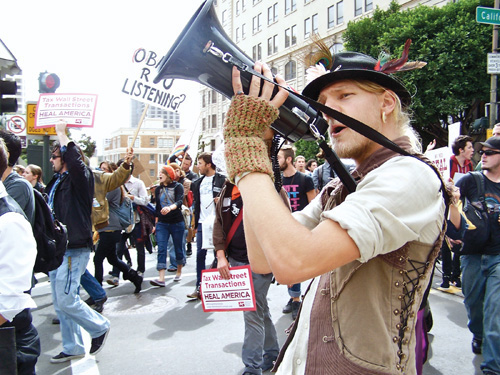
Occupy San Francisco — the local manifestation of the Occupy Wall Street movement that is spreading across the country — took to the streets today with a rally numbering in the hundreds. Marching up Market Street and through the heart of the Financial District, protesters met supportive car horns as often as tight-lipped disapproval. Today’s protest followed a similar one last week when six activists were arrested, with no arrests reported this time.

“We are the 99 percent!” was the most resounding chant, one that prompted several onlookers to join in. “We are 99 cents,” replied one man, walking through the crowd as they strode through the Tenderloin. Signs ranged from the plain – “Stop this” – to the hard-hitting: “Greedy Bastards!”

“I saw them on my way to get her immunization record,” related one woman, gesturing at a sleeping toddler in a stroller. “And I had to join in.” Visibly swelling in size throughout the two-hour march and stretching as far as six blocks at a time, the rally stopped in front of Wells Fargo, Chase Bank, and City Hall before ending back at the Federal Reserve Building where it began and where protesters have been camped out.

“Whose streets?” yelled a megaphone-toting activist. “Our streets!” the crowd bellowed back, spilling off the sidewalks and into the roadway. As rain threatened the Financial District, the protesters’ chants and shouts were not dampened.

Photos by Lucy Schiller

Period Piece: Life and death at the Columbarium

2

“This place scared the crap out of me,” says Emmitt Watson, caretaker, historian, and tour guide at the San Francisco Columbarium, the only nondenominational spot in San Francisco to be laid to rest. “When I opened the doors, the first thing I saw were two raccoons.”

The Columbarium is a remnant of an earlier era in San Francisco, an era when everything west of Laurel Heights was pretty much a huge graveyard. Built in 1898, the building with a stone rotunda was a landmark in a sea of headstones. 

As San Francisco expanded in physical size and population, the Western cemeteries became a contentious issue. Smell, crime, homeless encampments, and something referred to vaguely as the “putrefactive germ” in newspaper articles were all reasons that were cited to move the dead elsewhere and make room for the living.

So elsewhere it was. Colma, home to 16 cemeteries, became the destination for many a deceased San Franciscan. 

The large-scale digging-up and hauling-out took place over the course of the 1930s. Headstones were refashioned into Buena Vista Park’s gutters and a sea wall at Ocean Beach. Remains not claimed and paid for by family members were reburied in mass graves. No new cemeteries could be built within city limits, and in the midst of the literal upheaval, the Columbarium housed the cremated remains that were to stay. 

The building is endowed with a cathedral’s glory – all gleaming copper, huge archways, and light filtering down from a domed top. But the Columbarium spent almost half a century in utter neglect and abandonment before 1979. That’s when Watson’s employer, the Neptune Society (a cremation and funeral planning company), bought the property. Watson, responsible for this gleaming cache of human remains, struggled with cobwebs as big as his arm, broken stained glass windows, and feral animals. Now, the place is spotless, and smells faintly like a florist’s refrigerated stockroom.

The building sits abruptly at the end of a residential cul-de-sac. Emmitt Watson lives right next door. In a sense, his neighbors include Harvey Milk and Chet Helms, as well as at least 30,000 others (many stashed in the same urn). 

“Evidently it was meant for me,” says Watson of the Columbarium, and many San Franciscans apparently feel the same way. Glass cases along all three floors of the building display yellow “Reserved” signs. “Your niche in history,” reads a Neptune Society brochure. 


San Francisco Columbarium

Mon.-Fri., 8 a.m.-5 p.m.; Sat-Sun, 10 a.m.-3 p.m.

One Loraine, SF

(415) 752-7891

www.neptune-society.com


Feminist dance pop: Q&A with MEN’s JD Samson

0

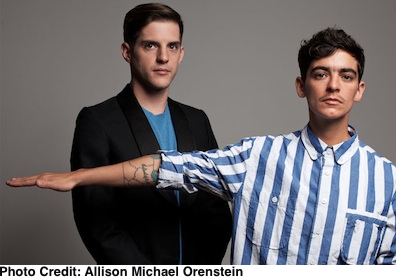
Just as she did with Le Tigre, JD Samson blurs the lines between feminist theory and modern pop music with her most recent musical endeavor, MEN. The experimental art-pop band, which began in 2007, is a collective with fellow Le Tigren Johanna Fateman – among others – that’s as subversive as it is danceable.

The New York band is currently on tour with Brazil’s CSS – the road show hits SF tomorrow at the Fillmore – and to celebrate, the groups released a tour-only split 7″ vinyl called “We Are Friends.” Earlier this week, I got the rundown on MEN, trashed humanity on the Web, and the possibility of another JD’s lesbian calendar:

San Francisco Bay Guardian: Where did the idea for MEN originate? What was the original concept and how has that changed?
JD Samson:
Well, that’s a complicated question because MEN’s original concept was a couple different concepts that kind of became enmeshed at a certain point. When Johanna and I started MEN as a remix/ production/ DJ/ Original music team. We kind of imagined that we wanted to continue making music together and wanted to make dance music. So we went for it. But then MEN combined with another project I was working on with Michael O’Neill, Emily Roysdon, and Ginger Brooks Takahashi. That project was called Hirsute and our concept was to creative an artist/music collective of people that came in and out of the project freely. I think both concepts show themselves at different points to us and work in harmony to give us what we want at any given time.
SFBG: Why name the band MEN?

JDS:
The idea for the name came out of a feminist confidence boosting philosophy that Johanna was teaching me. If you are in a club and the promoter is being a dick, don’t apologize to them, or feel guilty for existing. what would a man do? at the time she was telling me this, we were asked for a name for the project and we decided to go with MEN.
SFBG: How did you hook up with CSS? Can you tell me a little about the tour split record?

JDS:
I have known CSS for a while now. Luiza Sa and I are friends from NYC and I have hung out with the band several times at different festivals and stuff. Yhey asked us to go on tour and we were so so so excited and happy that they wanted us to support them. We had the idea for MEN and CSS to remix each other and to create a tour only 7 inch. Lovefoxx made one part of the artwork and I did the other. I’m super into how it turned outSFBG What is your song writing process like? Where do you most like to create?
SFBG What is your song writing process like?
JDS:
Usually our song writing starts with a sample or a beat and then moves forward into a melody and then words get thrown down. Either words that were already written or words that the song feels like. Michael and I do it all together actually, which is a cool process. We love completely changing songs after we have sat with one idea and it isn’t feeling perfect. It’s fun to remix ourselves.
SFBG: Can you tell me about making the videos for “Off Our Backs” and “Who Am I To Feel So Free”
JDS: Well its important to us to be involved in the conceptual arena of our work at all times. I am also a visual artist and MEN prides itself on existing within an art community so it is important to us to go to any lengths for this. Bryce Kass directed the “Off Our Backs” video and created magic from an idea I came up with on a phone call to him. Techa Noble and Paola Maorabito from Sydney did an amazing job with both the concept and follow through for the “Who am I” video. I have known Techa for years and she does amazing work so it was a dream of mine to work with her
SFBG In some ways, it seems like MEN would appeal to a wide audience because, while the lyrics and ethos are about sexual liberation, the sound is upbeat, it’s danceable pop — would you agree? Was this intentional?
JDS: I think we hoped we could appeal to a large audience, yes. We had no idea what to expect, and honestly didn’t expect too much. We were just ourselves. So it was a great experiment. Unfortunately I would say that I think we are still much a part of the gay ghetto in a lot of ways.
SFBG: Conversely, I see a lot of disheartening misogyny and homophobia in the Web comments — how do you combat those?
JDS: Well I don’t read the web comments, but thanks for the heads up! Ha. No. Seriously it rolls off my back. I’ve been looking like this for a long time. I’m proud of that at least. But in terms of the Internet. people say fucked up shit. That’s just the deal with not having to look someone in the eye and say something shitty. It’s cowardly and it’s all about trying to get attention and trying to be as cruel as possible. The internet has done wonders in some ways, but literally trashed humanity in another.
SFBG: Is music itself liberating?
JDS: I think music is whatever you want it to be. it can be inspiring and at the same time completely oppressive. I feel so free with music, and my body, and I wish to create a space where everyone can feel safe to do so.
SFBBG: Who inspires you musically and otherwise?
JDS: Talking Heads, Tearist, Das Racist.
SFBG: Is Le Tigre writing songs or planning any future albums?
JDS: Nope, not at this time, sorry. Kathleen [Hanna] is doing Julie Ruin again, which is rad!
SFBG Will you ever do another ‘JD’s Lesbian Calendar’?
JDS: Hmmm. maybe. I hope. If I feel good enough about myself. Ha.

MEN
With CSS
Thurs/6, 8 p.m., $35
Fillmore
1805 Geary, SF
www.thefillmore.com

Who Am I to Feel So Free:

Uncorking Jameson

0

virginia@sfbg.com

APPETITE Ireland is a green land of rolling hills, sheep, and craggy coastline, to be sure. The people enchanted even more: a generous, welcoming, hilarious lot. One of my favorite people in recent Ireland travels was Liam O’Leary, distillery operations manager at New Midleton Distillery in County Cork, near the southern coast of Ireland.

The name New Midleton may not mean a lot to some, but if you follow Irish whiskey, you know there are merely three distilleries producing publicly sold spirits in all of Ireland and this one’s the mother. Most famously, it’s the home to Jameson (founded in 1780 by John Jameson and originally produced in Dublin at the Old Jameson Distillery, which I also visited). New Midleton also produces numerous Irish whiskies including Midleton, Powers Gold Label, Tullamore Dew, Paddy, and smaller pot still brands like my longtime favorite Irish whiskey, Redbreast, and new love Green Spot. (Oh, that it would become available in the States).

Liam hosted the Renaissance Man and I on a private tour of the grounds. Spending pleasurable hours talking of whiskey and his 40-year history at Jameson (long before it was the huge company it is now), we soon delved into a subject dear to my heart, and, it seems, to every local I spoke to: music. We watched mass distilling in action, and finished with a hearty Irish lunch in the distillery restaurant.

The New Midleton facility is to date the most colossal, high production I’ve yet seen: towering stills, control panels, endless storage buildings stacked with barrels, and the world’s largest pot still (able to hold up to 125,000 liters, or roughly 33,000 gallons), which is no longer in use but is viewable in the Old Midleton museum. Numerous copper pot stills operate simultaneously, holding a massive 75,000 liters each. The facility whirs and buzzes continuously, recalling Ireland’s past, creating its future.

Exploring New Midleton, it was only fitting we talk Jameson. Possibly the highlight of my trip to Ireland — and there were many — was tasting Jameson 20-year whiskey straight from bourbon barrels (of which the majority of Jameson is aged in), and alongside it, 10-year whiskey in sherry barrels, both of which are blended into higher-end final product.

Both were superb, the purest forms of Irish whiskey I’ve tasted, particularly the golden, 20-year in bourbon barrels. Its layers kept unfolding: warm, honeyed and bright, spicy, fresh with grain and fruit. Already perfection, this stuff should be bottled at cask strength on its own. The sherry cask whiskey adds round, dark notes, giving it fullness and sensual depth.

As I taste through the Jameson line here at home, notes from those unforgettable barrels come back to me. I pick up various strains from the bourbon and sherry oak, all with that ever-present smoothness Irish whiskey is known for as it is generally triple-distilled. As the biggest selling Irish whiskey in the world, Jameson has done much to advance the category. Here are my tasting notes:

Jameson Rarest Reserve, $279: Rarest Reserve is the granddaddy of the line. Winning numerous awards (including this year’s Double Gold at the SF World Spirits Competition), it’s an expensive but truly special imbibement. After one explores the full-bodied aromas of ripe plum and spice, the taste impresses with toasted wood, dusty peach, dark chocolate, a hint of slate, leather, and earth. Here I find encompassed the approachable yet elevated possibilities inherent in Irish whiskey.

Jameson 18-year Limited Reserve, $86.99: The 18-year is another big award-winner, hitting my taste buds with an intense amount of peach. For me it evokes a golden summer freshness. Though I prefer it neat, it’s also lovely on the rocks. A couple drops of water allow other tastes to unfold, including orange marmalade, gentle spice, nuttiness, and biscuit. It’s soft yet bright, and could convert the non-whiskey drinker.

Jameson Gold Reserve, $60.99: Gold Reserve is a richer whiskey than the 12-year or Jameson Irish Whiskey. I get creamy apple on the nose, a gentle honey texture, and a peppery finish.

Jameson 12-year Special Reserve, $39.99: The 12-year won Gold this year at the SF World Spirits Competition. It’s sweet and spicy with sherry, wood notes. Oddly enough, I find its astringency is softened and rounded out with food.

Jameson Irish Whiskey, $24.99: The original Jameson has never been my Irish whiskey go-to. I find it a bit hot and thin, despite sweet fruit, vanilla and nuts. But this is the great global seller in Irish whiskey, often the first introduction many have to the category.

Subscribe to Virgina’s twice monthly newsletter, The Perfect Spot, www.theperfectspotsf.com


Shakin’ spines

0

marke@sfbg.com

LIT Once again, the raucous, two-week Litquake festival is set to liquidate our shores with the mighty crack and crash of living language. Dazed authors and reeling poets will grace our lesser known alleyways; literary agents and bookstore owners will awaken satisfied on the curbs of our better sex clubs. Kindles will be hijacked, asses will be signed. Some actual writing may get done.

And yet, while the larger events justly command the spotlight (opening party “The Devil’s Lexicon” on Fri/7, New Directions 75th anniversary party on Tue/11, infamously drunken unofficial closing blowout Litcrawl on Sun/15), there are a host of smaller and satellites events that tap into the true flavor of contemporary literature. Below are some attractive-looking ones. (Unless noted, more info can be found on these functions at www.litquake.org.)


OFF THE RICHTER SCALE

This two-part event is the quavering blood and guts of Litquake: an unabashed free showcase of some of the most cutting-edge talent on offer. Rhyming or Not: Bay Area Poetry (Sat/8, 1 p.m., free) shores up the verse side of things, while Golden Gate and Beyond (Sun/9, noon, free) props up the prose. This year’s theme is, “to explore writing in extreme circumstances and from deep within the mind—defined in terms spiritual, physical, or cybernetic.” I’m bringing popcorn.

Sat/8 and Sun/9, Variety Room, 582 Market, SF.


CHRISTINE BEATTY

OK, this isn’t officially a part of Litquake — but the ‘quake also spawns a slew of satellite events, so let’s just shake things up. Christine Beatty is tearing up the transsexual literature circuit with her memoir, “Not Your Average American Girl,” which tells her fascinating story from growing up hippie, serving in the military, hooking in the Tenderloin, engineering software, and much more. It’s a great slice of Northern Californiana.

Sat/8, 8 p.m., free. Center for Sex and Culture, 1349 Mission, SF. www.sexandculture.org


THAT’S MY F*CKING STOOL! WRITERS AT THE BAR

I know next to nothing about this night except that it takes place at one of my favorite bars, Vesuvio, and involves some very interesting writer-personalities, like Jack Boulware, Beth Lisick, Missy Roback, and Frances Stroh. I hope it’s Jell-O wresting, but I’ll be happy with a good ol’ round of slams and shots.

Sun/9, 4 p.m., free. Vesuvio, 255 Columbus, SF.


THE SECRET LIFE OF METAPHOR

Am I terrified of an expert on metaphors who is also a juggler, and who illustrates his points by “juggling balls as well as words”? I am kind of terrified of this person! And yet, I find the promise of respected writer James Geary’s lecture almost too tantalizing to resist. Should I let my prejudices keep me away, or should I let the wild carnival of knowledge commence? Right now, it’s a toss-up.

Sun/9, 4 p.m., $5–$7. Z Space, 450 Florida, SF.


TEENQUAKE: NOT YOUR MOTHER’S BOOK CLUB

You either have come to accept that teenagers are rightfully taking over this world, or you need to look up this little thing called the Internet. Of course, teens have maliciously kept most of the best recent fiction writing to themselves, via “young adult” books. (If I’m addicted to Hunger Games does that mean I’m young forever?) Popular teen fiction writers Simone Elkeles, Becca Fitzpatrick, Michelle Hodkin, and Moira Young come together to dish their secrets.

Mon/19, 7 p.m., free. Books Inc. Opera Plaza, 601 Van Ness, SF.


ORIGINAL SHORTS: FAILURE TO COMMIT

Will the six authors — including Ladipo Manyiko and Shawna Yang Ryan — who were asked to “look deep into the heart of the flaky soul and emerge with original short stories on the theme of failing to commit” even show up? Now that would be some performative literature right there. If you’re stood-up, you’ll at least have the Lone Palm’s excellent cocktails for succor.

Mon/10, 7 p.m., free. Lone Palm, 3394 22nd St., SF.


BARBERSHOP READING: A LITTLE OFF THE TOP AND OVER THE TOP

The gays do love to fuss about their tops! This party-slash-gathering of LGBT writers in the fab Joe’s Barbershop has already become a Litquake fixture for lit queens and their chasers, and proof that our community’s writing talent hasn’t been sucked into Grindr chats and Dinah missed connections.

Tue/11, 9 p.m., free ($5–$10 suggested donation). Joe’s Barbershop, 2150 Market, SF.


FIGURE FOUR CAPS LOCK: PRO WRESTLING MEMOIRS FROM CLASSY FREDDIE BLASSIE TO THE FABULOUS MOOLAH

Boxing, schmoxing — the real money melon for sports book fans of the last two decades have been professional reminiscences of flamboyant flings in the ring. I mean, c’mon, Rowdy Roddy Piper, people: what more titillation do you need (besides a kick in the rear from the Iron Sheik’s pointy-toed shoes?) Writers Alia Volz, Rick Luxury, Alan Black and many more cactus clothesline this important body of work with tributes and testimonials.

Fri/14, 7 p.m., $10. Hemlock Tavern, 1131 Polk, SF.


INVISIBLE CITY AUDIO TOURS: EVERYWHERE MAN

“Alternative self-guided walking audio tour” purveyors Invisible City combine music, words, sonic landscapes, and historical information to create realtime experiences that map the ethereal onto SF streets. Latest work “Everywhere Man” is a mystery that whose clues are divulged while participants ride cable cars throughout the city. This sounds too, too cool, especially for first-time visitors.

Sat/15, 2 p.m., pre-order accompanying map and podcast at www.invisiblecityaudiotours.org for $15. Meet at the cable car turnaround, Market and Powell, SF.


WORDS ON WAVES

The North Bay literary scene gets some incredible shine at this event, which takes place on the houseboats of Sausalito. Move from one houseboat to the next and experience samplings of such topics as “Rum, Sodomy, and the Lash: Tall Tales from the Boat Dwellers” on Boat #134, SMITH Magazine’s “Water, Fire, Rocks: Life in Six Words” on Boat #42, and “Vanda Marlow, Poetry Faerie” on Boat #12 (actually a restored World War II landing craft.) Get saucy, Sausalito. Literally.

Sat/15, 1 p.m., $25 advance. Private houseboat pier (for exact location email wotw@litquake.org), Sausalito.

Spreading smoke

0

caitlin@sfbg.com

HERBWISE When asked to describe herself, Green Cross Dispensary patient Nicole Williams laughs. “I work full time, I go to school, I care for my mom. My brother’s taking the LSATs on Saturday — what else should I say? Native San Franciscan, long time resident.”

She’s being interviewed by the Guardian to gauge the demand in the Excelsior neighborhood for a new business that’s relocating to the neighborhood where it will be the first of its kind: the Green Cross’ new marijuana dispensary walk-in facility. Currently, the company is the city’s sole licensed delivery-only dispensary.

The Green Cross is hoping to have a little more luck with 4218 Mission than it did with its first location, which opened in Noe Valley in 2004 as a more professional alternative to the stereotypical cannabis club with “long haired hippies behind the counter,” in the words of dispensary employee Caren Woodson.

But the idea attracted so many customers (some garnering complaints that marijuana was being sold on the street) that the city’s planning department rescinded owner Kevin Reed’s permit for the space. After a disappointing attempt to open a location in Fisherman’s Wharf, an aide to the Mayor encourage Reed to try for a delivery-only permit instead. Now, the dispensary hopes the third try’s the charm. A public hearing to discuss its application to re-open in the Excelsior is scheduled for Nov. 17.

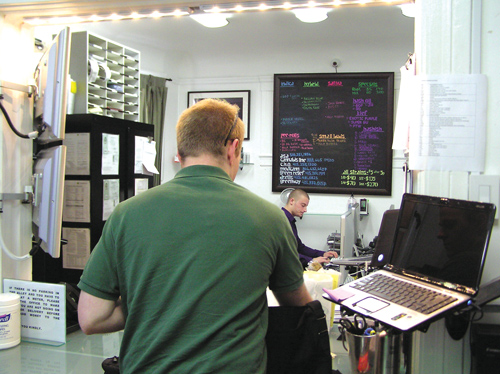
“We’re going to make sure we’re addressing the neighbors’ concerns,” Reed says, sitting on a stool in the Green Cross delivery and call center, which operates out of the front rooms of his comfortably-appointed SoMa apartment. In front of him are the flashing screens of 32 security cameras — a glaring reminder that Green Cross’ first commitment is to safety.

Green Cross employees dress in business casual — even, as this reporter witnessed, when they’re up to their elbows in bowls of weed nugs they’re breaking apart. Though currently located in a mostly residential building, Woodson claims that the business has never received a single neighborhood complaint.

The delivery service has now served over 3,000 clients. Having sunk a half million dollars into failed permitting procedures, Reed hopes he’s created a comprehensive plan that will pass the expectations of the various city agencies through which one must venture to open a weed dispensary.

The new location will necessitate a focus on discretion and security. Monroe Elementary School and the Mission YMCA are both a few blocks away. Plans include a wall that would block all view of the goings-on inside the dispensary. Plans do not include a space for on-site smoking, and members will have to sign a code of conduct that says they’ll be respectful of the surrounding neighborhood.

350 patients in the Green Cross’ database live in the proposed site’s 94112 zip code. Williams is one of them, and has been a patient since Green Cross’ Noe Valley days. She’s nowhere near the image of a troublemaking pothead, but it’s small wonder she was “pretty excited” to hear that she might be getting a new neighbor.

“You’re just looking for a safe place where you can get your medicine and go home.”

GREEN CROSS MANDATORY REVIEW HEARING

Nov. 17, time TBA

Room 400, City Hall

One Dr. Carlton B. Goodlett, SF

(415) 558-6377

www.sf-planning.org

www.thegreencross.org

Don’t say CANT

0

arts@sfbg.com

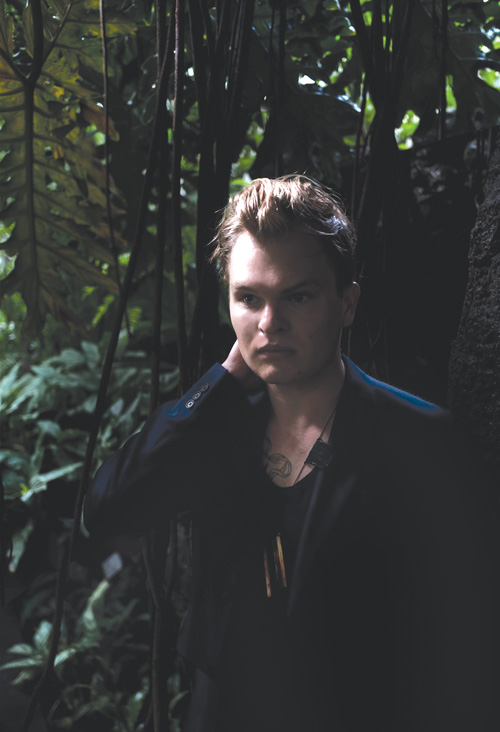
MUSIC It’s tough to pin down a busy bee like Chris Taylor — Grizzly Bear’s bassist, an in-demand producer, and now the leader of his own pack called CANT — but once you manage to, he’s as disarmingly engaging as his new dispatch from a darkling, excruciatingly personal plain, Dreams Come True, released on his own Terrible Records.

So it shocks him when he hears critics describe his music as cold, even chilly. “When people say it’s impersonal, it’s like, wow, man,” Taylor marvels from Portland, Ore. “If anything, you should be saying, ‘This record is too emo.’ That was what I was expecting, that people would say, ‘This guy is way too emotional. Go see a therapist and cool out.’

“I was intentionally trying to figure out the worst kind of fears, fears of falling in love and not being able to let go, or fears of losing it when you think you have it. Scary, unpleasant realities.”

But realities rendered far from heartlessly. A probing soulfulness runs throughout Dreams Come True, which often sounds more like a wrenching, pitch-black nightmare than a blissful reverie. Yet the LP teems with pleasures, and the deeper you penetrate, the harder its pull. It’s in the way that Taylor beautifully couples gristly, screeching scads of industrial noise, reminiscent of both Nine Inch Nails and horror-movie violins, with celestial synth in the title track and “Rises Silent.” Skittish electronic beats bang up against gamelan-like percussion in the echoey, prog-pop opening track, “Too Late, Too Far,” while Satie-esque (and Thom Yorke/Radiohead-like) impressionism is paired with an undercurrent of ’90s-era post-punk dissonance in “Bericht.” Brass that cues wee-hours soul bounces off elastic bass notes in “The Edge,” and a softly insinuating Velvet Underground-ish guitar vamp adds menace to “She Found a Way Out” — a song that makes one wonder if that way out was, akin to Joy Division’s “She’s Lost Control Again,” something like a permanent check-out.

“It’s about the sort of feeling you feel when the biggest love of your life walks out the door, and you deserve it, and she’s better off for it — it makes you want to scream,” explains Taylor with a rueful chuckle. “No, she didn’t die! She went to grad school. She’s getting smarter by the day.”

Taylor’s education into solo music-making began with his forays into singing with Grizzly Bear — CANT’s name plays off that definition, among angles. After completing production on Twin Shadow’s Forget (4AD/Terrible, 2010), he sat down with TS’s George Lewis Jr. for about two weeks to work on Dreams, playing most of the instruments themselves. Work continued after Lewis departed, contributing to the music’s sense of ratcheted-up intimacy. “I was by myself, and it’s just the worst, especially not having written lyrics before,” says Taylor. “You’re like, does this suck? And it’s just crickets.”

Songs such as “Answer” — with its pacing synth line, moodily ascending string sounds, and brooding refrain, “It’s been a while since you needed me / It’s been a while since I needed you, too” — spoke directly to old demons. “It’s about my ongoing and often difficult relationship with my dad — one of the more trying relationships in my life,” confesses Taylor, whose parents divorced when he was 5.

“It’s about feeling loved, and at the same time, there’s so much, like, meanness. It’s really confusing when a kid is told they’re loved and then treated so badly…” And it’s mystifying, and maybe a relief, that the track’s inspiration has no idea what role he played in its making — and that pain can be transformed so completely into pop. “I think,” says Taylor with disbelief, “when the song premiered on Pitchfork, [my dad] said, ‘I like that!'” CANT With Mirror Mirror and Blood Orange Wed/5, 8 p.m., $15 Independent 628 Divisadero, SF (415) 771-1422 www.theindependentsf.com

Guerrilla jazz

2

arts@sfbg.com

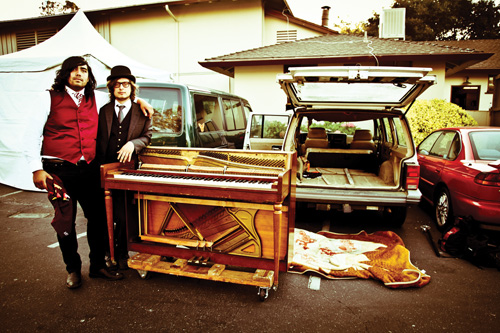
MUSIC When John Steven Morgan and John “Thatcher” Boomer III — who make up the John Brothers Piano Company — finished their last set at the 54th Annual Monterey Jazz Festival last month, my eyes weren’t watering alone. It wasn’t the barbecue smoke from the nearby food tents, or the too-bright afternoon fairgrounds sun. The John Brothers shake their listeners to the soul, because these piano-playing souls are shaking too. And MJF was their formal music venue debut.

Most other days, the John Brothers work together electrifying SF street corner audiences with skillful, joyous frenzies on one of their Craigslist-freebie upright Wurlitzer pianos. And they hope to soon bring their music to new cities. Over the course of the last year, they’ve compelled perhaps hundreds of local passersby to stop and watch. That’s gold for Morgan and Boomer, who say they want to give the listener the most visceral possible reaction. “I’d like to trigger a miscarriage,” Boomer deadpans.

The John Brothers put their own bodies into their art, hefting their piano to locations on a custom dolly, in and out of “the Contender,” a crumbling 1991 Jeep Cherokee. It’s not clear how much longer they’ll be hulking piano for a living. While their plan is to save up for a giant cargo van and tour around the U.S. just the two of them, by the end of the MJF they were in talks with a potential manager. “It’s just too much stress,” says Boomer of managing themselves, alluding to the CDs they forgot in Oakland on the trip to Monterey.

The CDs, which they sell out of a top hat, are filled with just one example of their repertoire. Morgan and Boomer’s original compositions are often mistaken for ragtime, but Morgan explains, “It’s not ragtime. Our influence comes mainly from the ’20s and the ’30s: Fats Waller, James B. Johnson, Art Tatum.” The two self-taught musicians have distinct styles, producing together a wild, organic, often playful mashup of classical, Morgan’s “gypsy stride,” Boomer’s blues, and a little jazz. Their ever-morphing reinterpretations oscillate from tender to eviscerating, raunchy to prim, mad to whimsical.

Local filmmaker Dan Reed of NextBooth.com, who accompanied the band to document their MJF appearance, met the John Brothers on the street, and asked immediately if he could use their music in his short films. “Other [musicians’] songs capture moments — their songs are full narratives,” he says. Reed used the John Brothers’ track “Computer Duster” as the soundtrack to his short Curious Chris, about an innocent man who gets bamboozled. The duo’s music both enlivens and takes new meaning from the film, as Morgan carries the listener from an expansive, melancholic opening, an unpopulated landscape with the delicate curiosity of a child, which blends into apprehension mixed with determination, building seamlessly to a swaggering, gypsy caravan staccato finale. Morgan says he’s eager to score future Reed films.

As the opening number for their first set at the jazz festival, Morgan, his broad shoulders bending over the keys, tore “Computer Duster” apart to create a novel Frankenstein of madness, thick shoulder-length hair swinging in his face, dissolving into chaos and in a moment resolving to the melody, the crowd simultaneously alienated and mesmerized; they were cheering by the end.

The John Brothers Piano Company perform regularly in San Francisco’s Union Square on Friday afternoons and evenings. 

THE JOHN BROTHERS PIANO COMPANY Fri/7, 5-8 p.m., free

Union Square, O’Farrell and Geary, SF

www.thejohnbrothers.com


Peter, Bjorn and John want to stuff you with treats

0

arts@sfbg.com

MAXIMUM CONSUMPTION Looking to gorge on super-sweet, Swedish-made indie pop? Peter, Bjorn, and John, the nearly-twee trio who made whistling cool again for a minute in 2006 with indie hit “Young Folks,” is returning to the States for a thematic “All You Can Eat” tour. The band’s food-friendly jaunt includes multiple nights in each city, and specialty food truck tie-ins. I spoke with John Eriksson via phone while he hovered near a grilled cheese truck:

San Francisco Bay Guardian: Where did the idea for “All You Can Eat” originate?

  John Eriksson: We wanted to make a tour for the fans, like when you were a kid and you came to your grandmother’s house and you could eat as much candy and cake as you wanted — that feeling. We wanted the fans to get as much as possible. In some cities like New York, we’re playing as much as six shows. So it’s more venues and they see it over and over again until they throw up almost.

Also, we have connected it with some food trucks. We have one here [in Miami] — it’s a grilled cheese food truck. The fans can go to the truck, say the right password, and they get something free. That came after the idea of the tour. We wanted to fill the fans with as much PB & J music and as much calories as possible. It’s not really connected with the music but it’s a fun thing to do — something different. And we love food. One of the most fun things when you’re out touring is trying to find good places to eat.

SFBG: What are the comfort meals of your childhood in Sweden?

JE: A lot of rustic Viking food. Food you’re supposed to eat after working 12 hours shoveling snow [laughs]. I come from a small town in the north of Sweden and we have a signature dish there called palt. It’s like a potato bun filled with the fat of the a pig. It’s very good actually. You put butter inside the ball of fat, which make it even better. That’s the only time I eat meat.

SFBG: Your most recent album ‘Gimme Some’ (Startime) had an interesting back story.

JE: We had an idea to make our 2.0 version of the history of pop and rock’n’roll. So we stole shit from all over the place, from all the music history, and put it together like some kind of Swedish version of American English pop. It’s our version of the history of pop rock and the future of pop rock.

SFBG: What songs are you playing on this tour?

JE: Keeping with this “All You Can Eat” thing, the idea was to play all the songs. When you have the opportunity to play in a city several nights in a row, you can play different songs every night. We’ve done six records so far, so it’s a cool mix of new and old songs. Of course we play “Young Folks,” some people like that, we play “Second Chance” from this record, which features a cowbell, which seems to drive people wild. 


With Hanni El Khatib

Thurs/6, 9 p.m., $20

Great American Music Hall

859 O’Farrell, SF

www.gamh.com


With Mister Loveless, DJ Nako

Fri/7, 9 p.m., $20–$25

New Parish

579 18th St., Oakl.

www.thenewparish.com


With Release the Bird

Sat/8, 9 p.m., $20

Slim’s

333 11th St., SF

www.slims-sf.com


Maximum Consumption is an unseasoned look at the increasingly overlapping fields of music and culinary arts. For more, visit the Noise blog on SFBG.com.

Rep Clock

0

Schedules are for Wed/5-Tues/11 except where noted. Director and year are given when available. Double and triple features are marked with a •. All times p.m. unless otherwise specified.

ARTISTS’ TELEVISION ACCESS 992 Valencia, SF; www.atasite.org. $6. “Other Cinema:” program on the politics of social media, with works by Dominic Gagnon, Hrman Asselbergh, and others, Sat, 8:30.

CASTRO 429 Castro, SF; (415) 621-6120, www.castrotheatre.com. $7.50-15. We Were Here (Weissman and Weber, 2011), Wed-Thurs, 7, 9:15 (also Wed, 2:30, 4:45). “Midnites for Maniacs: Monsters in Your Own Backyard:” •The Goonies (Donner, 1985), Fri, 7; The Hole 3D (Dante, 2009), Fri, 9:30; Gremlins 2: The New Batch (Dante, 1990), Fri, 11:59. Director Joe Dante in person; $15 for one or all three films. Pam Ann live performance, Sat, 7:30. This event, $35-30 at www.biggaycomedy.com. •Brighton Rock (Boulting Brothers, 1947) Sun, 1:15, 5:05, 9, and The Third Man (Reed, 1949), Sun, 3:05, 7. CHRISTOPHER B. SMITH RAFAEL FILM CENTER 1118 Fourth St, San Rafael; (415) 454-1222, www.cafilm.org. Mill Valley Film Festival, Oct 6-16. Tickets (most shows $13.50) and more info at www.mvff.com.

MECHANICS’ INSTITUTE 57 Post, SF; (415) 393-0100, rsvp@milibrary.org. $10 (reservations required as seating is limited). “CinemaLit Film Series: Discovering Myrna Loy:” The Animal Kingdom (Griffith, 1932), Fri, 6.

NINTH STREET INDEPENDENT FILM CENTER 145 Ninth St, SF; www.whatisloveproject.com. $10. “What Is Love Project Launch Party:” Who Leads and Love is Not Enough, Sat, 7:30.

PACIFIC FILM ARCHIVE 2575 Bancroft, Berk; (510) 642-5249, bampfa.berkeley.edu. $5.50-9.50. “Paul Sharits: An Open Cinema:” “Paul Sharits: Early Work” (1966-1971), Wed, 7:30. “A Theater Near You:” Went the Day Well? (Cavalcanti, 1942), Thurs, 7. “The Outsiders: New Hollywood Cinema in the Seventies:” Loose Ends (Morris and Wozniak, 1975), Fri, 7; Killer of Sheep (Burnett, 1977), Fri, 9; Badlands (Malick, 1973), Sat, 6:30; Mean Streets (Scorsese, 1973), Sat, 8:25. “UCLA Festival of Preservation:” Eve’s Leaves (Sloane, 1926), Sun, 4. “Anatolian Outlaw: Yilmaz Güney:” The Poor (Güney and Yilmaz, 1974), Sun, 5:35. “Kino-Eye: The Revolutionary Cinema of Dziga Vertov:” “Kino-Week Nos. 31-35” (Vertov, 1919), Tues, 7. ROXIE 3117 and 3125 16th St, SF; (415) 863-1087, www.roxie.com. $5-9.75. “TV Noir:” •”Test Flight: Program One,” Wed, 6:15, 9:45, and “Program Two,” Wed, 8; •”Sex, Drugs, and Dragnet,” Thurs, 6:15, 9:50, and “CrimeBusters!”, Thurs, 8. American Teacher (Roth, 2011), Oct 7-13, check website for showtimes. Sleep Furiously (Koppel, 2008), Oct 7-13 (no shows Tues/11), 7, 9 (also Sat-Sun, 3 and 5). “Bioneers Film Night:” !Women Art Revolution (Hershman Leeson, 2011), Tues, 8:15; YERT (Your Environmental Road Trip) (Dixon and Evans, 2011), Tues, 8:45. Tickets ($6.50-8) and more info at bioneers.org/conference. SAN FRANCISCO FILM SOCETY NEW PEOPLE CINEMA 1746 Post, SF; www.sffs.org. $15. “An Evening with Susan Orlean and Rin Tin Tin:” Clash of the Wolves (Smith, 1925), Sun, 7:30. Author Orlean in person with her book Rin Tin Tin: The Life and the Legend. VORTEX ROOM 1082 Howard, SF; www.myspace.com/thevortexroom. $5 donation. “The Vortex Incarnate:” •The Devil’s Rain (Fuest, 1975), Thurs, 9, and Invitation to Hell (Craven, 1984), Thurs, 11. YERBA BUENA CENTER FOR THE ARTS 701 Mission, SF; (415) 978-2787, www.ybca.org. $6-8. “Cruel Cinema: New Directions in Tamil Films:” Naan Kadavul (I Am God) (Bala, 2009), Thurs, 6 and Sun, 9; Subramaniapuram (Sasikumar, 2008), Sat, 7 and Sun, 4.