Science

Stage Listings

0

Stage listings are compiled by Guardian staff. Performance times may change; call venues to confirm. Reviewers are Robert Avila, Rita Felciano, and Nicole Gluckstern. Submit items for the listings at listings@sfbg.com. For further information on how to submit items for the listings, see Picks.

THEATER

OPENING

The Lisbon Traviata New Conservatory Theatre Center, 25 Van Ness, SF; www.nctcsf.org. $25. Opens Fri/22, 8pm. Runs Wed-Sat, 8pm; Sun, 2pm. Through March 24. New Conservatory Theatre Center performs Terrence McNally’s play, a mix of comedy and tragedy, about the relationship between two opera fanatics.

Steve Seabrook: Better Than You Marsh San Francisco, 1062 Valencia, SF; www.themarsh.org. $15-50. Opens Fri/22, 8pm. Runs Fri, 8pm; Sat, 8:30pm. Through March 22. Kurt Bodden’s San Francisco Best of Fringe-winning show takes a satirical look at motivational speakers.

BAY AREA

Dostoevsky’s The Grand Inquisitor Berkeley City Club, 2315 Durant, Berk; www.centralworks.org. $15-28. Previews Thu/21-Fri/22, 8pm. Opens Sat/23, 8pm. Runs Thu-Sat, 8pm; Sun, 5pm. Through March 31. Central Works performs Gary Graves’ adaptation of the story-within-a-story from The Brothers Karamazov.

My Recollect Time South Berkeley Community Church, 1802 Fairview, Berk; (510) 788-6415. $12-25. Opens Fri/22, 9pm. Runs Sat/23-Sun/24, Feb 28, March 2, 7, and 9, 8pm; March 1, 8, 9pm; March 3, 5pm. Through March 9. Inferno Theater performs Jamie Greenblatt’s play about the life of former slave Mary Fields.

ONGOING

Dear Harvey New Conservatory Theatre Center, 25 Van Ness, SF; www.nctcsf.org. $25-45. Wed/20-Sat/23, 8pm; Sun/24, 2pm. There’s always room in San Francisco for milk — Harvey Milk, that is, our very own out-and-proud crusader for equal rights for all, whose election as city supervisor in 1977 and assassination in 1978 galvanized the LGBT movement on a national level. Part history lesson, part memorial tribute, the Patricia Loughrey-penned Dear Harvey offers details of the extent of his influence, mostly in the realm of the political, collected from interviews with over 30 of Milk’s associates and friends. Interspersing testimonials with Bay Area Reporter headlines, fan mail, and projections of Daniel Nicoletta’s candid photos of the era, each member of the ensemble cast assumes multiple roles throughout the piece including Harvey’s activist nephew Stuart Milk, the "Queen Mother of the Americas" Nicole Murray-Ramirez, openly-gay politician Tom Ammiano, former youthful aide and prominent AIDS activist Cleve Jones, Milk’s spitfire campaign manager Anne Kronenberg, and even Milk himself. At its core, Dear Harvey plays out mainly like a talking head-style documentary, the disparate strands of monologue woven together providing a composite image of a single character. But as endearing in many ways that character is, it’s not enough to sustain the overall piece, which never develops its other, often fascinating, characters enough for the audience to feel much of a connection to the stage, no matter how much, personally, they might feel a connection to Milk himself. (Gluckstern)

Foodies! The Musical Shelton Theater, 533 Sutter, SF; www.foodiesthemusical.com. $30-34. Fri-Sat, 8pm. Open-ended. AWAT Productions presents Morris Bobrow’s musical comedy revue all about food.

God of Carnage Shelton Theater, 533 Sutter, SF; www.sheltontheater.org. $38. Thu-Sat, 8pm. Through March 30. Shelton Theater presents Yasmina Reza’s Tony-winning comedy about upper-middle-class parents clashing over an act of playground violence between their children.

Hedwig and the Angry Inch Boxcar Playhouse, 505 Natoma, SF; www.boxcartheatre.org. $25-40. Wed-Sat, 8pm (also Sat, 5pm). Through March 2. Hold onto your hairpiece, Boxcar Theatre is reprising their all-too short summer run of Hedwig and the Angry Inch, and just in case you think you saw it already, be forewarned — you ain’t seen nothing yet. Recast, redesigned, and re-vamped, this outcast-rock musical familiarly follows the misadventures of one Hedwig Robinson (né Hansel Schmidt) with glam, guts, and glitter. But unlike the movie version penned by and starring John Cameron Mitchell as the titular chanteuse, or other staged versions, director Nick A. Olivero splits the larger-than-life, would-be rock sensation into eight different characters, who are each given a solo turn as well as plenty of ensemble harmonizing during the course of the two hour-plus performance. The effect is often electric, and just as frequently hilarious, as when the four female actors playing the role stomp across the stage swinging imaginary dicks in the air to the lyric "six inches forward and five inches back, I got a, I got an angry inch!" Supported by a tight quartet of rock musicians led by Rachel Robinson, and the phenomenal Amy Lizardo as Hedwig’s beleaguered "man Friday" Yitzhak, Hedwig keeps on extending for what appears to be an indefinite run, employing the time-honored Thrillpeddlers’ tradition of rotating cast members and comeback performances, which means you could theoretically go multiple times and never see quite the same show twice. I certainly plan to. (Gluckstern)

Jurassic Ark Exit Theatre, 156 Eddy, SF; www.theexit.org. $15-25. Fri-Sat, 8pm. Through March 16. Writer-performer David Caggiano’s zany, well-executed solo play centers on a Christian televangelist who is unwaveringly bent on making a big-budget movie about a cowboy-like Biblical Noah, his Ark, and the largely lovable dinosaurs callously left out of the story — a project he sees delivering a decisive blow to the Darwinians, while turning cineplexes across the land into celluloid cathedrals. Brother Dallas and his proselytizing pitch eventually find receptive ears in a trinity of movie-industry heavies, whose collective business acumen demands a few changes to the script. Meanwhile, the intoxicating power of it all leads to a lapse in Brother Dallas’s righteousness and a scandal reminiscent of Hugh Grant’s career. Dallas rebounds from this bout with the Devil and sees his movie made — but surely only he is unaware that the Devil keeps a Hollywood address. Smartly directed by Mark Kenward, this low-frills production relies almost exclusively on Caggiano’s sturdy ability with quick-change characterizations (couched in Dylan West’s modest lighting design and a suggestive soundscape by sound editor–musician John Mazzei). The fitful satire trades in pretty orthodox caricature and, in Brother Dallas, lacks a very compelling or sympathetic central figure; but it unfolds with a very cinematic imagination that, while formulaic, is itself one hell of a movie pitch. (Avila)

The Little Foxes Tides Theatre, 533 Sutter, SF; www.tidestheatre.org. $20-38. Wed/20-Sat/23, 8pm. Tides Theatre Company performs a modern take on the Lillian Hellman classic.

The Motherfucker with the Hat San Francisco Playhouse, 450 Post, SF; www.sfplayhouse.org. $30-70. Tue-Thu, 7pm; Fri-Sat, 8pm (also Sat, 3pm). Through March 16. A fine cast makes the most of Stephen Adly Guirgis’s deceptively coarse, often amusing little play, The Motherfucker with the Hat, which receives its local premiere in a sure and rowdy production from SF Playhouse. Director and designer Bill English’s striking two-tier set almost belies the intimate nature of the quirky story, which concerns a hapless parolee and recovering alcoholic named Jackie (a winningly frazzled, bumptious Gabriel Marin) who retreats to his AA sponsor’s apartment to pine and plot revenge after he discovers a stranger’s hat in the bedroom of his longtime Puerto Rican girlfriend, Veronica (played vividly by an at once edgy and vulnerable Isabelle Ortega). But Ralph, his suave and persuasive sponsor (played with unctuous charm gilded by just a hint of ineptitude by an excellent Carl Lumbly), may not be the guy he wants in his corner. Not that Jackie can see that — he’s got a man-crush on Ralph that dwarfs his already ambivalent affection for much put-upon but stalwart cousin Julio (a sharply funny Rudy Guerrero) and blinds him to the warning signals from Ralph’s own disgruntled wife (a coolly disgusted Margo Hall). Throughout, these working-class New York borough dwellers display their wit and shield their soft underbellies with a rapid-fire barrage of creative swearing. English and cast display a real comfort with this kind of material (this is SF Playhouse’s fourth Girguis play), which drapes its soft heart in the intimations of violence more than the real thing. If the heat and imaginative cursing also seem to cover up for a play with little dramatic purpose beyond a gentle and somewhat pat exploration of loyalty, maturity, and trust, there’s pleasure to be had in the unfolding. (Avila)

Not a Genuine Black Man Marsh San Francisco, 1062 Valencia, SF; www.themarsh.org. $25-50. Fri/22, 8pm; Sat/23, 5pm. What, the unapologetically middle-class Brian Copeland asks, is the real meaning behind the phrase "a genuine black man"? By way of an answer, the stand-up comic and KGO radio host offers up a simultaneously funny and disarmingly frank story about growing up African American in the racist suburb that was San Leandro in the early 1970s. Letting his narrative bounce back and forth between his boyhood memories and a period of depression that overtook him as a parent in 1999 — and interlacing the autobiography with verbatim utterances from both sides of the fight his family joined to desegregate the city — Copeland brings admirable chops as a comedian to bear on some difficult and disturbing, if ultimately hopeful, material. Note: review from an earlier run of the same show. (Avila)

Sex and the City: LIVE! Rebel, 1760 Market, SF; trannyshack.com/sexandthecity. $25. Wed, 7 and 9pm. Open-ended. Lady Bear, Trixie Carr, Heklina, and D’Arcy Drollinger star in this drag tribute to the long-running HBO show.

The World’s Funniest Bubble Show Marsh San Francisco, 1062 Valencia, SF; www.themarsh.org. $8-50. Sun, 11am. Extended through March 17. The Amazing Bubble Man (a.k.a. Louis Pearl) continues his family-friendly bubble extravaganza.

You Know When the Men Are Gone Z Space, 450 Florida, SF; www.zspace.org. $30-55. Wed/20-Thu/21, 7pm; Fri/22-Sat/23, 8pm; Sun/24, 3pm. Word for Word mounts two related short stories from the titular collection by Siobhan Fallon about the home-front impact of warfare on the families of an American army base. In The Last Stand, an injured soldier (Chad Deverman) returns home to his young wife (Roselyn Hallett) to find she has decided to leave him. In Gold Star, a wife (Arwen Anderson) learns of her soldier husband’s (Ryan Tasker) death — the officer who died saving the life of the young soldier in the first story. Reeling from grief, she innocently hangs on the words of the young soldier (Deverman) as he comes to visit her. Beautifully designed — with shrewd use of Z Space’s large, potentially engulfing stage by Jacqueline Scott (set), Drew Yerys (lighting, sound), Delia McDougall (costume, props), and Andrea Weber (choreography) — directors Joel Mullennix (Last Stand) and Amy Kossow (Gold Star) show an imaginative command of the material that has made the company’s trademark verbatim staging of literature a viable theatrical undertaking in its own right, with much to admire and ponder in the juxtaposition of words, blocking, characterization, and imagery. Moreover, the ensemble (rounded out by Marilet Martinez and Armando McClain) is very strong, with standout turns from the mutually sympathetic but achingly at-odds characters played by Deverman and Hallett in the first half, and by Anderson’s shattered, erratic, yet highly attuned new widow in the second. As for the stories themselves, certain details of base life (such as the prime parking spaces eerily and crassly allotted widows of soldiers killed in combat) reveal the author’s firsthand knowledge as the wife of an active-duty soldier, adding a sense of authenticity to these intimate, heartfelt, and movingly told stories. Their essentially everyday tragedies, however, remain tightly focused on the subtleties of grief rather than any larger contextualizing of the immediate political and moral dimensions of the American imperial machine in which all characters ultimately serve. That leaves largely intact and unexamined the usual allusions to sacrifice, service, nationhood, duty, and traditional modes of male and female heroism in war, which is perhaps the most distressing thing about these otherwise quietly troubled stories. (Avila)

BAY AREA

The Fourth Messenger Ashby Stage, 1901 Ashby, Berk; www.thefourthmessenger.com. $23-40. Wed-Thu, 7pm (no show Wed/20); Fri-Sat, 8pm; Sun, 2pm. Through March 10. It’s been some time since a work by local playwright Tanya Shaffer last graced our stages, not since 2005 to be precise, and in keeping with her penchant for multicultural themes, her latest piece, The Fourth Messenger, is a reimagining of the Siddhartha story, written as a musical in collaboration with composer Vienna Teng. Raina (Anna Ishida), a "hungry" journalism intern with a secret agenda, pitches her first scoop — the debunking of a beatific guru named Mama Sid (Annemaria Rajala) — and embeds herself in a meditation retreat where she can get close to the famously private teacher and uncover her past. Neither as humorous or as merciless as Jesus Christ Superstar or as exuberant as Godspell (though the excellent song "Monkey Mind" crackles with wit and trenchant observation, and the tender "Human Experience" genuinely uplifts), Messenger does offer a fairly solid primer to the path of spiritual enlightenment including its all-too-human fallout and sacrifices. The white-on-wood set design by Joe Ragey frames the action in a deceptively delicate layer of gauze and mystery, and the capable ensemble inhabit their multiple roles with ease — from jaded newsies to loyal disciples. Which makes it doubly unfortunate that the jazzy, piano-driven score seems pitched just outside of most of the actor’s ranges, even those of the notably skilled Ishida and Rajala, an admitted distraction for the monkey-minded, which is to say most of us. (Gluckstern)

Our Practical Heaven Aurora Theatre, 2081 Addison, Berk; www.auroratheatre.org. $32-60. Tue and Sun, 7pm (also Sun, 2pm); Wed-Sat, 8pm. Through March 3. Anthony Clarvoe’s new play receives its world premiere as a 2011 prizewinner in Aurora’s Global Age Project (GAP), which cultivates new work addressing life in the 21st century. In the case of this labored and dull effort, the young century and its anxious outlook come refracted through three generations of women who gather for holidays at a seaside home whose own future is threatened by, first, financial and, ultimately, climatic conditions. Neurotic, self-absorbed Sasha (Anne Darragh) and capable businesswoman Willa (Julia Brothers) are middle-aged best friends forever who grew up in the home of Sasha’s mother (Joy Carlin) and late father. Joining Sasha’s two daughters by separate husbands, Suze (Blythe Foster) and Leez (Adrienne Walters), is Willa’s daughter, Magz (Lauren Spencer), who suffers from a debilitating disease. Despite many personal and generational differences — and a rising conflict over the house — all six women share in a traditional bout of bird watching in this fragile nature "refuge" for bird and human alike. While bird watching supplies the play’s operative metaphors, however, it does little to actually bring these characters together in any compelling or convincing way. In fact, respective backstories are pretty sketchy in general, dialogue strained and broadcasting, and performances correspondingly patchy. The three stage veterans in director Allen McKelvey’s cast — Brothers, Carlin, and Darragh — go furthest toward making Clarvoe’s leaden exposition somewhat buoyant, but the momentary pleasure they provide can’t stem the overall tide. (Avila)

PERFORMANCE/DANCE

"Analog: New Work by Katharine Hawthorne" Joe Goode Annex, 401 Alabama, SF; analogdance.eventbrite.com. Fri/22-Sat/23, 8pm. $15-25. A full evening of choreography inspired by the intersection of art and science.

BATS Improv Bayfront Theater, Fort Mason Center, Marina at Laguna, SF; www.improv.org. Sat/23, 8pm. $20. The company performs "Warp Speed: An Improvised Trek!"

"Comedy Night at the Presidio" Presidio Café and Golf Course, 300 Finley, SF; www.presidiocafe.com. Thu/21, 8pm. $10. With Will Durst, Andrew Holmgren, and host Justin Gomes.

"Dance and Diaspora" ODC Theater, 3153 17th St, SF; www.odctheater.org. Fri/22-Sat/23, 8pm. $25-30. Featuring the work of belly dance artist Jill Parker and Afro-Brazilian choreographer Tania Santiago.

"Fabulous Artistic Guys Get Overtly Traumatized Sometimes: The Musical!" CounterPULSE, 1310 Mission, SF; www.counterpulse.org. Thu/21-Sun/24, 8pm. $20-25. DavEnd’s performance extravaganza promises "singing pink cakes, dancing mirrors, and couture genitalia."

"Killing Me Softly With Jazz Hands" Stage Werx Theatre, 446 Valencia, SF; (415) 517-3581. Wed/20, 8pm. $10. Comedian Becky Pedigo performs.

"Megillah 3.0" Intersection for the Arts, 925 Mission, SF; www.killingmylobster.com. Sat/23, 7pm, $20. Killing My Lobster launches its online collection of original videos, music, and performance with a Purim carnival, featuring live sketch shows, KML comedy videos, and more.

"Our Voices, Our Stories Play Reading Festival" San Francisco Playhouse, 450 Post, SF; www.sfplayhouse.org. Mon/25, 7:30pm. Free. Readings of in-development works Without and Opportunity for Defense and Obeah.

"San Francisco Magic Parlor" Chancellor Hotel Union Square, 433 Powell, SF; www.sfmagicparlor.com. Thu-Sat, 8pm. Ongoing. $40. Magic vignettes with conjurer and storyteller Walt Anthony.

"Smack Dab" Magnet, 4122 18th St, SF; www.magnetsf.org. Wed/20, 8pm. Free. Open mic featuring Randy Alford.

"Solo Sundays: Family Blend, the Sweet and the Bitter" Stage Werx Theatre, 433 Valencia, SF; www.brownpapertickets.com. Sun/24, 7pm. $12. With Susan Ito, Lisa Marie Rollins, and Zahra Noorbakhsh.

Tanya Bello’s Project. B. and Karen Reedy Dance ODC Dance Commons, 351 Shotwell, SF; www.odcdance.org. Sat/23, 8pm; Sun/24, 7pm. $22. Featuring the world premiere of Bello’s Games We Play(ed).

BAY AREA

"One-Off Wednesdays (or sometimes Two-Off)" Marsh Berkeley, 2120 Allston, Berk; www.themarsh.org. Wed/20, 8pm. $15-50. This week: Wayne Harris in The Letter: Martin Luther King at the Crossroads.

Oil pipeline protest coming to San Francisco

Forward on Climate, an event billed as the largest climate rally in history, will have a presence in San Francisco on Feb. 17. With most activity centered in Washington, D.C., organizers of the nationwide mobilization hope to convince President Barack Obama to reject the development of the Keystone XL pipeline, an extension of a tar-sand oil pipeline that connects Alberta, Canada and multiple Midwest cities.

In San Francisco, protesters plan to surround the U.S. State Department building at One Market Plaza to demonstrate opposition the pipeline project. “Since the pipeline crosses the international boundary with Canada, the State Department has to approve the permit, so symbolically that’s why we chose it,” explained Taylor Hawke of 350 Bay Area.

More than 70 organizations are partnering to promote the event, including 350.org, the Sierra Club, the National Resources Defense Council, CREDO Action and others. Sup. John Avalos will join student groups, indigenous organization Idle No More, and others in speaking at the rally. Organizers expect a turnout of more than 2,000 with participants traveling to San Francisco from Chico, Sacramento, Santa Cruz and University of California campuses at Davis and Merced.

Jessica Dervin-Ackerman of 350 Bay Area says activists “intend to send a strong message to President Obama that immediate action is needed to stop climate disruption and to protect current and future generations,” and that “the U.S. needs to be an international leader in the diplomacy of cutting greenhouse-gas emissions.” A recent HSBC report underscored the role of national governments in fighting climate change, noting that 90 percent of the world’s oil and gas is held by governments or state-owned oil companies.

Some climate activists aren’t waiting until Feb. 17 to get their message across. Protestors from 350.org and the Sierra Club, along with many other organizations, sat outside the gates of the White House Feb. 13 in an act of civil disobedience meant to raise awareness about the Keystone XL pipeline extension. Many were arrested, including actress Daryl Hannah, and released the following day.

Bill McKibben, co-founder of 350.org, touched on Obama’s apparent contradiction on climate change in a recent Rolling Stones article. While the President has made promises to work on wind and solar energy, McKibben said, he’s also emphasized a goal of “producing more oil and gas here at home.” The pipeline would financially benefit the Canadian government, which is anxious to export its most lucrative commodity. The tar sands in Alberta contain as much as 240 gigatons of carbon, representing half the amount carbon scientists say can be “safely” burned by 2050.

Big oil companies stand to lose the most if the Forward on Climate movement succeeds. Oil reserves represent corporate assets that lay buried underground, and that’s where organizations like 350.org want them to stay. “The key to everything is this,” Hawke said: “From the latest science, we now know that the climate crisis is the greatest moral issue of our time.”

TransCanada, the pipeline developer, claims the project would provide tens of thousands of jobs, but the U.S. State Department estimates that it would be closer to five or six thousand temporary construction jobs. A more sustainable approach, says Frances Aubrey of 350.org, would be to create new jobs by investing in renewable energy. The only ones who will benefit from fossil fuels, she added, are the oil companies and the politicians whose campaigns they fund. “Oil companies are willing to change the planet beyond what people can survive,” says Aubrey, “to make a profit.”

Sundance 2013: what’s NEXT?

0

Earlier fest reports here, here, and here.

At Sundance 2013, no other category could compete with the NEXT programming. NEXT was initiated in 2010; its aim is to highlight “pure, bold works distinguished by an innovative, forward-thinking approach to storytelling. Digital technology paired with unfettered creativity proves the films selected in this section will inform a ‘greater’ next wave in American cinema.”

Matthew Porterfield’s I Used to Be Darker showcases Ned Oldham (brother of indie fave Will Oldham) as a father-husband-musician whose teenage daughter starts to drift away as his marriage dissolves. Wonderfully awkward and trying moments arise from every suburban-hipster angle, making Darker not only a disturbing blueprint of divorce among the indie-rock generation, but — with three fully performed songs — a reminder of why so much music from this time period remains utterly relatable. (Clearly, not everyone agrees; I overheard a group of SLC locals calling Darker their “least favorite movie of all time.”)

Yen Tan’s surprisingly powerful Pit Stop and “Best of NEXT” winner Chad Hartigan’s This is Martin Bonner both showcase quiet and emotionally implosive relationships; both also have such well-earned conclusions that I was confused as to why they weren’t in the Dramatic Competition category instead. Tan’s interwoven structure reminded me of Megan Griffiths’ overlooked gem The Off Hours (2010), while Hartigan’s slow burner was excitingly reminiscent of Paul Thomas Anderson’s Hard Eight (1998). Remember their names, because these filmmakers are about to have major breakthroughs.

But the two NEXT entries that have already achieved “major” status in my mind already are Andrew Bujalski’s Computer Chess (USA) and Alexandre Moors’s Blue Caprice (discussed in Thu/7’s post). Oddly enough both films inspired extremely aggressive Q&As, in which an audience member attacked the film and filmmaker with the very first question.

Mumblecore master Bujalski, who studied under minimalist Chantal Akerman (1975’s Jeanne Dielman), walked up onto the stage after his mind-numbing, purposefully janky, addictively hilarious, and ultimately transcendental psychedelic mind-fuck. First question right out of the gate: “Would you explain three or four concepts from your film, so I know what I just watched?” Though some audience members groaned, Bujalski made a valiant effort to respond. (After a few moments, he asked, “Is it okay if I come back to that one?” “No!” was the angry response.)

Bujalski shot the film on old Portapak video cameras from the late 1970s he’d purchased on eBay; he meticulously edited the video to look and feel as if it had been made on a linear editing system though it was done on Final Cut Pro. By trading in his beloved 16mm cameras from his previous three films — Funny Ha Ha (2002), Mutual Appreciation (2005), and Beeswax (2008) — he has captured the look and feel of the early video era.

Computer Chess not only gets its techie vocab right, it also captures the spirit of the entire era (aging hippies and emerging New Agers mingling with proto-nerds), and does so without being mean-spirited. In fact, it was so scientifically spot-on it won the Alfred P. Sloan Prize at this year’s festival — an award given to the best feature film that focuses on science or technology as a theme, or depicts a scientist, engineer, or mathematician as a major character. Computer Chess was also my favorite feature at this year’s Sundance Film Festival. I wanted to watch the film again as soon as it was over.

Finally, a way to get toxics out of furniture

1

Gov. Jerry Brown has finally done what the state Legislature refused for six years to do: He’s eliminating the requirement that household furniture and children’s cribs, car seats, and strollers be treated with toxic flame-retardant chemicals.

State Sen. Mark Leno has been working on this since 2006, and has introduced four different bills that were aimed at the chemicals that are known to cause serious health problems and are prevalent in coaches, chairs and other furniture. At one point, he simply sought to protect kids; he later gave up on banning the chemicals and sought simply to allow manufacturers to use other, less toxic forms of fire retardants. But the chemical industry launched a high-powered lobbying effort to protect the mandates, and all of his bills were defeated.

The standards that California uses were written 40 years ago, when state officials were worried about the danger of furniture fires, primarily started by smokers leaving lit cigarettes on a coach or chair. They’ve become a de facto national standard, since nobody wants to build furniture that can’t be sold in the nation’s biggest market.

But there’s now abundant evidence that the chlorinated and brominated chemicals used to treat polyurethane foam, which is prevalent in upholstery, are linked to cancer, reproductive problems and learning disabilities.

Alternatives to those chemicals are available — and, along with the emergence of self-extinguishing cigarettes and the widespread use of smoke detectors, the old rules have become obsolete.

Now Brown’s Department of Consumer Affairs has rewritten the regulations, allowing for a more effective standard that can be met without dangerous chemicals. The new regs are complicated (try reading this and making sense of it) but what they say, in essence, is that products designed for children no longer have to meet the old standards — and adult furnishing can meet a more modern standard that doesn’t require the use of chlorides and bromides.

“This is a landmark day,” Leno told us. “This will not only change the way California deals with fire safety; it will impact the rest of the country.”

Leno said that as soon as the new rules take effect, he will try to get the Legislature to adopt them as law, so a future governor can’t go backward.

The chemical industry tried to derail the governor’s effort, too — and enlisted the help of Leno’s colleague, state Sen. Leland Yee.

A Jan. 9th letter signed by 20 state Legislators urges Brown not to change the existing standards. Reading like a handout from the chemical industry, it refers to the “alleged chemical risks” and suggests that the governor instead have those chemicals further studied — a process that could delay any changes for some time.

That’s crazy: “Endless scientific studies (including a recently released report that makes a connection between exposure to flame retardants and reduced IQ and higher rates of autism) and every environmental advocacy group that these chemicals are known to be toxic and harmful to human health and development,” Leno said.

Yee is among the mostly conservative, pro-industry signatories.

We contacted Yee for comment more than a week ago, but he hasn’t called. His chief of staff, Adam Keigwin, told us the letter “it is consistent with his position that all chemicals should go through Green Chemistry Council to leave the conflicting science to the experts rather than politicians. In addition, it is consistent with the position of the all the major burn centers and doctors, including those in San Francisco, who believe this fire retardant is necessary to save lives.”

Actually, the science isn’t “conflicting” at all; it’s entirely consistent. And the state regulators have concluded that alternatives to toxic substances can provide even greater fire safety.

In fact, Andrew McGuire, one of the pre-eminent burn specialists in the country, told us Yee’s statement was off the mark. “I know that’s not what the doctors at San Francisco General think, and that’s where my office is,” he said. “The top burn doctors belong to the American Burn Association, and that group’s position is not in support of toxic flame retardants.”


City College forum questions new reforms as deadline looms

11

More than 300 of City College of San Francisco’s students and faculty piled into a meeting hall at the school’s Mission campus last night, Feb.7, all waiting to hear the answer to one question: What can we do to save City College?

CCSF failed to meet a list of six requirements to improve the school that the Accrediting Commission of Community and Junior Colleges gave it to complete in 2006, notably in measuring student learning outcomes and in managing its finances. Failing to meet those deadlines, the ACCJC told City College last June that it had until March 15, 2013 to fix their school, or it would face losing its accreditation — which means the college would lose state funding, and the degrees it offered from that point on would be almost worthless.

Concerned for the future of their college, a coalition of students, faculty and community members started “Save CCSF,” the group that organized the teach-in at Mission campus.

Students occupied every chair, standing shoulder-to-shoulder in the back of the hall. The meeting was about education, the first speaker announced, meant to inform students about the crisis. How did CCSF come under threat of closure? Who is the accreditation body that posed the threat? The answers were complicated, and filled with accusations against the ACCJC, and the school’s own Board of Trustees.

We do accept there are deficiencies at City College,” student Inder Grewal, 20, said to the crowd. “But the administration is making change at a pace that is hurting faculty and students at our school.”

Notable speakers came out to show their support for the diverse students at City College. Wisconsin State Senator Spencer Coggs, one of the “Wisconsin 14” who fled the state to deny Governor Scott Walker quorum in the senate over his union-busting legislation, spoke in his support of City College’s labor force.

We believe in justice for workers rights, correct?” he said to the crowd, to cheers. “You in California supported us in Wisconsin, we in Wisconsin support you in California.”

State Assemblyman Tom Ammiano, who represents San Francisco, sent a representative to show his support for the Save CCSF coalition. “We have been working on this issue,” Kimberly Alvarenga, Ammiano’s district director, said to the coalition supporters. “Last week we had a meeting with Assemblymember Ting, labor, and a rep from the [California Community College] state chancellor’s office to get a conversation started. We’re in solidarity with you.”

Just today, Ting held a press conference to support City College. Notably, CCSF faculty union leader Alisa Messer, staff union head Athena Steff, and SF Labor Council head Tim Paulson spoke as well, perhaps signaling Ting’s support of labor at the college.

At the press conference, college spokesperson Larry Kamer acknowledged the disagreements within the college, and offered to find middle ground.

There’s a lot we don’t agree on,” he said. “But one thing we do agree on is we want City College to remain accredited, we want people to recognize the work that’s been done, we want them to appreciate what we still have to do. But the headline today is we want people to enroll.”

Above, video of the press conference courtesy of The Guardsman, the newspaper of City College of San Francisco

The makeup of the crowd of currently enrolled students at the coalition meeting last night was a good indicator of exactly who stands to lose in City College’s shakeup. Easily half the room was filled with Latino students of every age and stripe, and many of them answered that they were English as Second Language students worried about their future.

I was a dishwasher, a janitor, everything,” said a man who wanted to be identified only as Jose because he is an undocumented student. Jose emigrated from El Salvador 10 years ago, and decided to take ESL classes at City College so he could get a new lease on life. He hasn’t decided on his major yet, maybe natural sciences, creative writing, or social science. The world is open to him, he said, because of his ESL classes.

If I hadn’t taken classes at City College, I couldn’t be talking to you now.”

He and other students were there for answers, and the answers they got were alarming.

Changes for the worse

The Save CCSF coalition urged the hundreds of students and faculty in attendance to bring anyone they could to rally at City Hall on March 14 — the day before City College is set to deliver its “show cause report” to the ACCJC. The report is a detailed report of the progress the college has made to address the ACCJC’s requirements for change. You can read the draft here.

In order to meet the ACCJC’s requirements, the board of trustees and administration have been making stark changes to the college, ones that the people in the meeting that night said were harming students.

Who’s been to the Bayview district?” Shanell Williams, associated students president, asked the crowd. Easily 30 hands went up. “There was a van students were using to get to their campus without getting shot, that the college cut out of the budget. It’s about access.”

The college is cutting funds wherever it can, and the private bus that shuttled students across gang lines in the Bayview was only the first of many changes. The Save CCSF coalition also told the crowd that they were fighting to restore the jobs of the over 30 classified staff and 50 faculty that weren’t rehired for this school year — essentially let go.

Use the Proposition A funds as promised,” Tarik Farrar, chair of African American studies said. He was referring to the language in Prop. A that went before San Francisco voters last November saying the $14 million parcel tax would be used to stop faculty layoffs at City College. “It’s explicit, not vague. The interim chancellor and special trustee does not have the right to use the money as they choose.”

Protecting labor isn’t strictly about protecting teachers because ultimately, the loss of faculty shrinks class offerings and class sizes.

Farrar was especially concerned that the belt tightening at the school would shrink the population it sets out to serve, something the college has already put into writing, by rewriting its mission statement.

“If you turn CCSF into a school of 20,000 students it will not be accessible,” he said. “The students that will be hurt disproportionately by this school will be the students I teach, people who look like this room, mostly.”

It is important to note that City College is still open, and is still accredited. The school is currently under-enrolled to the tune of about 3,000 students. The loss of that many students could possibly result in the state withdrawing funds for the school to the tune of at least $5 million, according to school officials in public meetings.

For further reading on the City College crisis from the students themselves, check out the following:

Can City College students transfer to SF State if the college closes
?

25 percent of community colleges in California are under sanction

Six pack

0

Antiviral (Brandon Cronenberg, Canada, 2012) Yes, that Cronenberg. The spawn of veteran filmmaker David makes an auspicious feature debut with this, uh, Cronenberg-esque body-horror tale. In the stark, gloomy near-future, celebrity worship has become so out of control that healthy people visit special clinics to be injected with diseases gathered from superstars. When he’s not offering “biological communion” via shared flu germs plucked from blonde goddess Hannah Geist (Sarah Gadon of Cronenberg Sr.’s 2012 Cosmopolis), medical technician Syd (Friday Night Lights’ Caleb Landry Jones) is working black-market deals on the side, peddling illnesses to a sketchy broker who works out of a butcher shop that sells steaks grown from celebrity muscle cells. And if that sounds gross, just know that as Antiviral‘s clever, sci-fi noir plot twists itself into ever-darker (and gorier) contortions, there’s plenty more stomach-turning mad science ahead. You done good, son. Sat/9, 7:15pm; Tue/12, 9:30pm, Roxie.

Berberian Sound Studio (Peter Strickland, UK, 2012) It’s the 1970s, and frumpy British sound designer Gilderoy (a flawless Toby Jones) has, somewhat inexplicably, been hired by a flamboyant Italian filmmaker to work on his latest lurid genre piece, The Equestrian Vortex — about a girl who realizes her riding academy is haunted by witches. Any resemblance to 1977’s Suspiria is entirely intentional, as writer-director Peter Strickland crafts a meta-horror film that’s both tribute to Argento and co. and a freaky number all its own, as Gilderoy begins to realize that the “vortex” he’s dealing with isn’t merely confined to the screen. Fans of vintage Euro horror will appreciate the behind-the-scenes peek at the era’s filmmaking process, as well as Strickland’s obvious affection for one of cinema’s most oddly addictive genres. Bonus points for the Goblin reference. Fri/8, 9:30pm; Feb. 13, 7:15pm, Roxie.

Bound By Flesh (Leslie Zemeckis, US, 2012) Following up her 2010 burlesque doc Behind the Burly Q, Leslie Zemeckis (wife of Robert, director of 2012’s Flight) tackles another subject sprinkled with the tarnished glitter of a bygone era: conjoined twins Violet and Daisy Hilton, vaudeville and film (1932’s Freaks) stars who were exploited from birth by a series of shady guardians. When they finally earned their freedom in a landmark emancipation trial, their triumph was short-lived; not only were they ill-equipped to negotiate the perils of show biz on their own, they also suffered from grown-up-child-star syndrome, having tasted a level of fame early in life that they’d never reach again, though not for lack of trying. And, of course, they were conjoined twins — so amplify every possible life obstacle by about a million. Though Bound By Flesh suffers a bit from its limited source materials — be prepared to see the same photos of the Hiltons used over and over throughout the film — it nonetheless tells a tragic, fascinating, and utterly unique tale. Feb. 16, 5pm; Feb/ 17, 2:45pm, Roxie.

Iceberg Slim: Portrait of a Pimp (Jorge Hinojosa, US, 2012) Ice-T presents this study of a man (real name: Robert Beck) whose early years dabbling in “the second oldest profession” led him first to prison, and then — rather improbably — to the top of best-seller lists, as books like Pimp: The Story of My Life and Trick Baby (which became a 1972 blaxsploitation film) achieved cult status. Though the film’s first 30 minutes lay on the hero worship a bit thick (yeah, pimps are cool cats as far as movies and hip-hop’s concerned, but the real Beck is described as someone who “got a thrill out of degrading women”), the author’s talkative first wife and three daughters soon appear to offer some perspective. Archival interviews with Beck, and a detailed examination of his publisher, Holloway House (which employed only whites but specialized in African American literature), only add to this vivid biography. Sat/9, 5pm; Mon/11, 7:15pm, Roxie.

The Life and Times of Paul the Psychic Octopus (Alexandre Philippe, US, 2012) Eight correct predictions, eight tentacled arms, millions of enraptured cephalopod admirers: who could forget Paul, whose apparent ESP earned him nearly as much vuvuzela-blaring fanfare as the 2010 World Cup itself? This “fairytale” from the director of 2010’s The People vs. George Lucas begins with Paul’s death — he was young for an oracle, but old for an octopus, explains an employee at Sea Life Oberhausen, Paul’s German home. The doc then doubles back to examine how a publicity stunt involving acrylic boxes with taped-on flags and food tucked inside, plus one hungry octopus, could incite a global frenzy: epic lines at the aquarium, scrambling bookmakers, a full-scale media blitz, death threats, a rich Russian offering to buy Paul for a cool million Euros, an “Ask the Octopus” app, YouTube tributes, and more. At 90 minutes the doc stretches a little thin (fellow psychic animal Punxsutawney Phil even puts in an appearance), but this is fun stuff nonetheless. Sat/9, 2:45pm; Sun/10, 5pm, Roxie.

Sightseers (Ben Wheatley, UK, 2012) Ooh, yes, it’s the US premiere of the latest from rising star Ben Wheatley, who exceeds even 2011’s very fine hitman-goes-bananas Kill List with the sick and hilarious Sightseers. Awkward, nerdy couple Tina and Chris (Alice Lowe and Steve Oram, comedians who wrote the script with Amy Jump) pile into an RV and burn rubber toward some of Britain’s lesser-known attractions: Crich Tramway Village, the Cumberland Pencil Museum, etc. But it’s clear from the start that all’s not well in this relationship, and it doesn’t take long before their “erotic odyssey” also includes screaming fights, dognapping, and multiple homicides. So wrong, and yet so right — the evocative Sightseers manages to invent, and perfect, its own genre: the serial-killer road-tip rom-com. Sat/9 and Mon/11, 9:30pm, Roxie. (Cheryl Eddy) *

SAN FRANCISCO INDEPENDENT FILM FESTIVAL

Feb 7-21, most shows $12

Roxie Theater

3117 16th St, SF

www.sfindie.com

Exploratorium Explainers educate while the city waits for new Pier 15 location

1

The Exploratorium is in the middle of an epic move to its new home at Pier 15 — its new location is set to open April 17th at 330,000 square feet, five times the size of its former digs at the Palace of Fine Arts. But while staff is busy nesting the Explainersthe museum’s science-savvy youth docents, have been hard at work. The volunteers have been hosting pop-up exhibits around the city. Needing a science fix, I stopped by their event last week at the Tenderloin National Forest.

There are two kinds of Explainers: the diverse group of high school Explainers, the museum’s youngest paid employees who engage visitors at exhibits, lead demonstrations, and help run various museum operations. Field trip Explainers perform the same tasks, but as experienced young educators, take more leadership roles.

Both were present on the afternoon of Jan. 31, when I enter the Tenderloin National Forest. I’m greeted to the slice of urban wilderness by the familiar Exploratorium logo printed on black flags, and by lots of friendly folks in orange vests — the Explainers themselves, who had transformed this pocket of urban wilderness into a wonderland of interactive science exhibits. 

The first thing that catches my eye was a fruit and flower dissection demonstration, meant to teach about the various parts of a plant. Senior field trip explainer Kat Stiff asks the students, “does anyone know what a flower is made out of?” One boy in the back proudly shouts, “Cauliflower?” 

Most of the students seem more interested in the giant magnifying glasses on the table than the lesson. As I watch Stiff’s demonstration, a girl with a magnifying glass comes up to me and starts to sift through my hair with her newfound tool. I ask her if she spots anything and to which she responds, “yes. Hair.”

Across from the plant dissection workshop is the outdoor cart – which has gone with the Explainers to most of their recent events. The cart bears a poster illustrating different clouds, and a plastic soda bottle that helps you create your own cumulus formations. Before I can get started on my own personal sky, high school Explainers Zakiya Percy and Terrance Gee quiz me on my cloud knowledge.

What is a cloud made of? I should definitely know this… I know that water is involved… After I fail to pick up on their hints for the other two ingredients, they reveal that a change in pressure and the inclusion of dust particles is also necessary.

Gee does a demonstration for me. With about a half-cup of water at the bottom of the plastic liter soda bottle, he lights a match, blows it out, and places it upside-down over the opening of the bottle. He does this, he says, to add dust particles to the water. Gee caps the bottle, and I help by pumping air into it until it’s about to pop. He takes the cap off, and dollhouse-sized clouds float out. I am then quizzed again on what type of cloud we just made. The answer: fog, because of our low elevation.

As I head towards the back of the forest, Phanna Phay, a high school Explainer supervisor, is sitting down doing card tricks. Smack dab in the middle of the space is a brick oven where Explainers are helping kids heat up pizza donated by Inner Sunset favorite Arizmendi Bakery. All the way in the back, kids paint wooden veggie cut-outs, which will to be used to decorate the nearby Hotel Senator’s rooftop garden.

These pop-up Explainer exhibits have appeared at the Ferry Building and Civic Center farmer’s markets, and even aboard a ferry bound for Jack London Square.

Senior field trip explainer Lia Frantti tells me about these previous events. “We were doing our fruit and flower dissection [at the farmer’s market], so that people who are shopping for those fruits and vegetables can stop and think about where they are coming from and how they are growing. We were on the ferry boat talking about navigation and finding north.” 

When I ask Frantti about the benefits these pop-up exhibits have brought to the Exploratorium she explains, “it’s been really nice because people often put us in this hole of a children’s museum – which we’re not. Adults and children can definitely have an equally amazing experience at the Exploratorium. At some of the other spots we’ve been at, we have had more adults stopping by. So that has been a little bit different to have less youth and more adults spending time with us.”

Looking forward to the museum’s new digs? When it re-opens, the Exploratorium will have triple the exhibition space, and double the number of classrooms. Acclaimed San Francisco chef Loretta Keller of Bon Appétit will head a sidewalk café on the west side of the pier, and there will be a waterfront café on the east side. The event in the Tenderloin was the last full scale Explainer exhibit until the Exploratorium settles into its new space. But the group will be holding outdoor events featuring the plant dissection table, mainly along the Embarcadero.

America’s new Progressive Era?

13

By Jeffrey D. Sachs
Jeffrey D. Sachs is Professor of Sustainable Development, Professor of Health Policy and Management, and Director of the Earth Institute at Columbia University. He is also Special Adviser to the United Nations Secretary-General on the Millennium Development Goals.

NEW YORK – In 1981, US President Ronald Reagan came to office famously declaring that, “Government is not the solution to our problem. Government is the problem.” Thirty-two years and four presidents later, Barack Obama’s recent inaugural address, with its ringing endorsement of a larger role for government in addressing America’s – and the world’s – most urgent challenges, looks like it may bring down the curtain on that era.

Reagan’s statement in 1981 was extraordinary. It signaled that America’s new president was less interested in using government to solve society’s problems than he was in cutting taxes, mainly for the benefit of the wealthy. More important, his presidency began a “revolution” from the political right – against the poor, the environment, and science and technology – that lasted for three decades, its tenets upheld, more or less, by all who followed him: George H. W. Bush, Bill Clinton, George W. Bush, and, in some respects, by Obama in his first term.

The “Reagan Revolution” had four main components: tax cuts for the rich; spending cuts on education, infrastructure, energy, climate change, and job training; massive growth in the defense budget; and economic deregulation, including privatization of core government functions, like operating military bases and prisons. Billed as a “free-market” revolution, because it promised to reduce the role of government, in practice it was the beginning of an assault on the middle class and the poor by wealthy special interests.

These special interests included Wall Street, Big Oil, the big health insurers, and arms manufacturers. They demanded tax cuts, and got them; they demanded a rollback of environmental protection, and got it; they demanded, and received, the right to attack unions; and they demanded lucrative government contracts, even for paramilitary operations, and got those, too.

For more than three decades, no one really challenged the consequences of turning political power over to the highest bidders. In the meantime, America went from being a middle-class society to one increasingly divided between rich and poor. CEOs who were once paid around 30 times what their average workers earned now make around 230 times that amount. Once a world leader in the fight against environmental degradation, America was the last major economy to acknowledge the reality of climate change. Financial deregulation enriched Wall Street, but ended up creating a global economic crisis through fraud, excessive risk-taking, incompetence, and insider dealing.

Maybe, just maybe, Obama’s recent address marks not only the end of this destructive agenda, but also the start of a new era. Indeed, he devoted almost the entire speech to the positive role of government in providing education, fighting climate change, rebuilding infrastructure, taking care of the poor and disabled, and generally investing in the future. It was the first inaugural address of its kind since Reagan turned America away from government in 1981.

If Obama’s speech turns out to mark the start of a new era of progressive politics in America, it would fit a pattern explored by one of America’s great historians, Arthur Schlesinger, Jr., who documented roughly 30-year intervals between periods of what he called “private interest” and “public purpose.”

In the late 1800’s, America had its Gilded Age, with the creation of large new industries by the era’s “robber barons” accompanied by massive inequality and corruption. The subsequent Progressive Era was followed by a temporary return to plutocracy in the 1920’s.

Then came the Great Depression, Franklin Roosevelt’s New Deal, and another 30 years of progressive politics, from the 1930’s to the 1960’s. The 1970’s were a transition period to the Age of Reagan – 30 years of conservative politics led by powerful corporate interests.

It is certainly time for a rebirth of public purpose and government leadership in the US to fight climate change, help the poor, promote sustainable technologies, and modernize America’s infrastructure. If America realizes these bold steps through purposeful public policies, as Obama outlined, the innovative science, new technology, and powerful demonstration effects that result will benefit countries around the world.

It is certainly too early to declare a new Progressive Era in America. Vested interests remain powerful, certainly in Congress – and even within the White House. These wealthy groups and individuals gave billions of dollars to the candidates in the recent election campaign, and they expect their contributions to yield benefits. Moreover, 30 years of tax cutting has left the US government without the financial resources needed to carry out effective programs in key areas such as the transition to low-carbon energy.

Still, Obama has wisely thrown down the gauntlet, calling for a new era of government activism. He is right to do so, because many of today’s crucial challenges – saving the planet from our own excesses; ensuring that technological advances benefit all members of society; and building the new infrastructure that we need nationally and globally for a sustainable future – demand collective solutions.

Implementation of public policy is just as important to good governance as the vision that underlies it. So the next task is to design wise, innovative, and cost-effective programs to address these challenges. Unfortunately, when it comes to bold and innovative programs to meet critical human needs, America is out of practice. It is time to begin anew, and Obama’s full-throated defense of a progressive vision points the US in the right direction.


Jeffrey D. Sachs is Professor of Sustainable Development, Professor of Health Policy and Management, and Director of the Earth Institute at Columbia University. He is also Special Adviser to the United Nations Secretary-General on the Millennium Development Goals.

Copyright: Project Syndicate, 2013.
www.project-syndicate.org

Nina Hartley mash notes, PETA gets naked, crafty vibes: Your week in sex events

0

Everyone survive the bused-in loads of pro-lifers prancing down Market Street last Saturday? Good. FYI, the Pope’s real happy with San Francisco right about now, so if you need to ask him for anything (to borrow clothes?) do it.

Real Talk forum: “Open Relationships”

Real talk: being happy in a polyamorous relationship doesn’t mean you don’t ever get jealous. Real Talk: a series of panel discussions organized by the San Francisco AIDS Foundation that explores the issues related to gay men having happy and healthy sexual lives. The last discussion focused on serosorting — this one’s for those interested in strengthening their open relationship by examining what makes us jealous, and how to work through the emotion. 

Wed/30, 6-8pm, free. LGBT Community Center, 1800 Market, SF. www.sfaf.org

American Apparel casting call/”Shop It Like It’s Hot”

Look pretty, sullen, and emaciated at this mega discount shopping event — in addition to slashed sales prices on lewks from Crossroads Trading Co., RoyalMint, Covet Boutique, Meggie, Violet Boutique, Thrifted and Modern, Alyssa Nicole, and Acrimony, American Apparel will be hawking their solid color essentials and looking for models. Enter IMCHICSF in when you buy your online ticket and you’ll get $10 off. Also: there will be a food cart.

Wed/30, 6-9pm, $20. 111 Minna, SF. www.111minnagallery.com

PETA jumps on Nude-In train

Really, the cwazy vegans over at PETA need little excuse to get naked, but we are glad that they chose this one: the cwazy nudiest are protesting cwazy Scott Weiner’s impending nudity ban (again), and they’re doing it on the steps of City Hall again, and PETA will be there drawing the correlation to the fur trade by hoisting protest signs in the buff. Of course! Insert some tounge-clicky, chuckling “only in San Francisco” condescension — then take your clothes off and join fray.  

Thu/31, noon, free. Outside City Hall, SF. www.peta.org

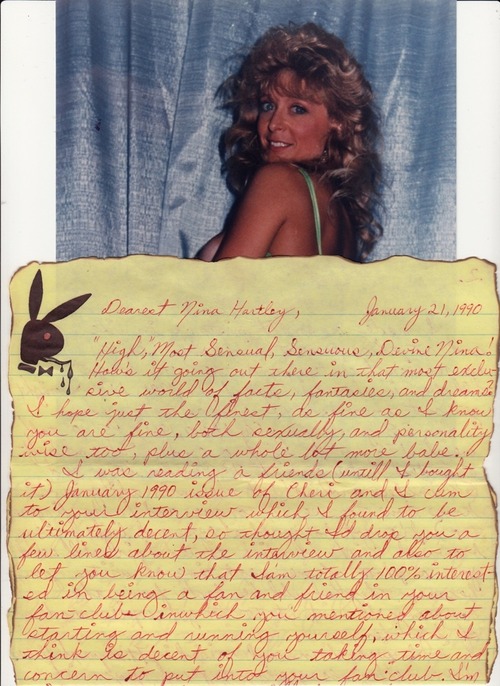
“Letters to a Porn Star: Nina Hartley Fan Mail”

First off, the Center for Sex and Culture has a Nina Hartley collection and that’s really exciting. Secondly, selections from said collection will be on display, in all their fawning/questioning/pervy glory, at the Center until mid-March. Tonight, take in the letters, gifts, and trinkets sent to the classically amazing pioneer feminist porn star — and check out a talk by Ingrid Olsen, a CSC fellow who has been elbow-deep in Nina land. 

Through March 18. Opening reception and talk: Fri/1, 7-10pm, free. Center for Sex and Culture, 1349 Mission, SF. www.sexandculture.org

Feelmore Fresh Fridays

Every last Friday, downtown Oakland adult store and sex culture hub Feelmore510 hosts an evening of naughty film at the recently-opened New Parkway. We guess tonight’s showing could be sexy, but in a deeply disturbing way: the film is 2010’s Venus Noire, a bio-pic of Saartjes Baartman, a woman from Southern Africa who was trotted about imperialist Britain billed as a Hottentot. Scientists examined her anatomy and proclaimed her the missing link between humans and apes, and she wound up dying from STDs and pnuemonia at 27. A valuble lesson about psuedo-science and sex, but you’ll probably be using that tissue to wipe away tears rather than any other bodily fluid.

Fri/25, 11:30pm, $10. New Parkway Theater, 474 24th St., Oakl. www.thenewparkway.com

Good Vibes vibrator bling contest

You’ve gotta buy a Good Vibes vibe to play the game (not end of world), but then with a little peacock feather, ornamental zipper, and g-l-i-t-t-e-r you can enter this Good Vibes sex toy crafting contest. The fancified vibrators will be on display at the Polk Street sex shop location during March, and winners of the competition will win gift certificates for the store. Deadline to enter your little friend (we assume they want them to be unused, but don’t let us impose our Puritanical values on your creativity)

Deadline to enter Feb. 28. Deliver by hand or mail to Good Vibrations, 1620 Polk, SF. www.goodvibes.com

Film Listings

0

Film listings are edited by Cheryl Eddy. Reviewers are Kimberly Chun, Dennis Harvey, Lynn Rapoport, and Sara Maria Vizcarrondo. For rep house showtimes, see Rep Clock.

OPENING

Beware of Mr. Baker This mesmerizing bio-doc about volatile, wildly talented drummer Ginger Baker (Cream, Blind Faith) begins with the 70-something musician clocking director Jay Bulger in the face. After this opening, Bulger — who also wrote a deeply compelling article about Baker for Rolling Stone last year — wisely pulls himself out of the narrative, instead turning to a wealth of new interviews (with Baker, his trademark red locks faded to gray, and many of his musical and personal partners, including Eric Clapton and multiple ex-Mrs. Bakers), vintage performance footage, and artful animation to weave his tale. Baker’s colorfully-lived, improbably long life has been literally all over the map; he overcame a hardscrabble British childhood to find jazz and rock stardom, and along the way jammed with Fela Kuti in Nigeria (where he picked up his fierce love of polo), broke many hearts (his own kids’ among them) and lost multiple fortunes, spent a stint in the US, and eventually landed at his current farm in South Africa. Two constants: his musical genius, and his frustratingly jerky behavior — the consequence of a naturally prickly personality exacerbated by copious drug use and bitterness. A must-see for musicians and those who love them. (1:30) Roxie. (Eddy)

Hansel & Gretel: Witch Hunters Jeremy Renner and Gemma Arterton star in this fairy-tale action film directed by Tommy Wirkola (2009’s Dead Snow). (1:41) California.

In Another Country This latest bit of gamesmanship from South Korea’s Hong Sang-soo (2000’s Virgin Stripped Bare by Her Bachelors) has Isabelle Huppert playing three Frenchwomen named Anne visiting the same Korean beachside community under different circumstances in three separate but wryly overlapping stories. In the first, she’s a film director whose presence induces inapt overtures from both her married colleague-host and a strapping young lifeguard. In the more farcical second, she’s a horny spouse herself, married to an absent Korean man; in the third, a woman whose husband has run away with a Korean woman. The same actors as well as variations on the same characters and situations appear in each section, their rejiggered intersections poking fun at Koreans’ attitudes toward foreigners, among other topics. Airy and amusing, In Another Country is a playful divertissement that’s shiny as a bubble, and leaves about as much of a permanent impression. (1:39) (Harvey)

Movie 43 An A-list ensemble cast (Hugh Jackman, Halle Berry, Kate Winslet) and multiple directors (Peter Farrelly, James Gunn, Bob Odenkirk) combine their star power for this 12-chapter comedy film. (1:37)

Parker "Jason Statham" is pretty much a distinct genre at this point, yeah? (1:58) Shattuck.

Quartet See "Smith Happens." (1:38) Embarcadero.

ONGOING

Amour Arriving in local theaters atop a tidal wave of critical hosannas, Amour now seeks to tempt popular acclaim — though actually liking this perfectly crafted, intensely depressing film (from Austrian director Michael Haneke) may be nigh impossible for most audience members. Eightysomething former music teachers Georges and Anne (the flawless Jean-Louis Trintignant and Emmanuelle Riva) are living out their days in their spacious Paris apartment, going to classical concerts and enjoying the comfort of their relationship. Early in the film, someone tries to break into their flat — and the rest of Amour unfolds with a series of invasions, with Anne’s declining health the most distressing, though there are also unwanted visits from the couple’s only daughter (an appropriately self-involved Isabelle Huppert), an inept nurse who disrespects Anne and curses out Georges, and even a rogue pigeon that wanders in more than once. As Anne fades into a hollow, twisted, babbling version of her former self, Georges also becomes hollow and twisted, taking care of her while grimly awaiting the inevitable. Of course, the movie’s called Amour, so there’s some tenderness involved. But if you seek heartwarming hope and last-act uplift, look anywhere but here. (2:07) Smith Rafael. (Eddy)

Argo If you didn’t know the particulars of the 1979 Iranian Revolution, you won’t be an expert after Argo, but the film does a good job of capturing America’s fearful reaction to the events that followed it — particularly the hostage crisis at the US embassy in Tehran. Argo zeroes in on the fate of six embassy staffers who managed to escape the building and flee to the home of the sympathetic Canadian ambassador (Victor Garber). Back in Washington, short-tempered CIA agents (including a top-notch Bryan Cranston) cast about for ways to rescue them. Enter Tony Mendez (Ben Affleck, who also directs), exfil specialist and father to a youngster wrapped up in the era’s sci-fi craze. While watching 1973’s Battle for the Planet of the Apes, Tony comes up with what Cranston’s character calls "the best bad idea we have:" the CIA will fund a phony Canadian movie production (corny, intergalactic, and titled Argo) and pretend the six are part of the crew, visiting Iran for a few days on a location shoot. Tony will sneak in, deliver the necessary fake-ID documents, and escort them out. Neither his superiors, nor the six in hiding, have much faith in the idea. ("Is this the part where we say, ‘It’s so crazy it just might work?’" someone asks, beating the cliché to the punch.) Argo never lets you forget that lives are at stake; every painstakingly forged form, every bluff past a checkpoint official increases the anxiety (to the point of being laid on a bit thick by the end). But though Affleck builds the needed suspense with gusto, Argo comes alive in its Hollywood scenes. As the show-biz veterans who mull over Tony’s plan with a mix of Tinseltown cynicism and patiotic duty, John Goodman and Alan Arkin practically burst with in-joke brio. I could have watched an entire movie just about those two. (2:00) 1000 Van Ness, Sundance Kabuki. (Eddy)

Broken City Catherine Zeta-Jones’ measured performance and killer wardrobe run away with this uneven political thriller about a made-up Manhattan with real(-ish) problems. Russell Crowe is only slightly improving his record post-Les Mis, as he plays another harried and morally confused agent "for the people." Here, he’s Mayor Hostetler, a swaggering politico with fingers in New York’s real estate cookie jar and the sort of "get shit done" directive that results in bodies lying in NYC’s overfilled gutters. Good thing he has Mark Wahlberg in his back pocket, a cop who slipped a murder wrap and now scrapes the bottom for gigs as a private detective. Seven years ago Billy Taggart (Wahlberg) was seeking vigilante justice for the victim of a rape-murder in the city’s biggest ghetto. The victim became a household name but the killer was let off, leading to cries about the validity of NY’s justice system and to allusions to the Central Park Five. Broken City is less about a broken City and more about broken Men, and there are certain elements that seem too subtle for a story built on such bald-faced and predictable strategy. Between a script that’s struggling to demonstrate moral compromise and integrity, and direction (by Allen Hughes) that’s as sensitive to nuance as a border collie, it’s hard to find much beyond Zeta-Jones’ shoe stylings to admire. (1:49) 1000 Van Ness, SF Center. (Vizcarrondo)

Cirque du Soleil: Worlds Away (1:31) Metreon.

Django Unchained Quentin Tarantino’s spaghetti western homage features a cameo by the original Django (Franco Nero, star of the 1966 film), and solid performances by a meticulously assembled cast, including Jamie Foxx as the titular former slave who becomes a badass bounty hunter under the tutelage of Dr. Schultz (Christoph Waltz). Waltz, who won an Oscar for playing the evil yet befuddlingly delightful Nazi Hans Landa in Tarantino’s 2009 Inglourious Basterds, is just as memorable (and here, you can feel good about liking him) as a quick-witted, quick-drawing wayward German dentist. There are no Nazis in Django, of course, but Tarantino’s taboo du jour (slavery) more than supplies motivation for the filmmaker’s favorite theme (revenge). Once Django joins forces with Schultz, the natural-born partners hatch a scheme to rescue Django’s still-enslaved wife, Broomhilda (Kerry Washington), whose German-language skills are as unlikely as they are convenient. Along the way (and it’s a long way; the movie runs 165 minutes), they encounter a cruel plantation owner (Leonardo DiCaprio), whose main passion is the offensive, shocking "sport" of "Mandingo fighting," and his right-hand man, played by Tarantino muse Samuel L. Jackson in a transcendently scandalous performance. And amid all the violence and racist language and Foxx vengeance-making, there are many moments of screaming hilarity, as when a character with the Old South 101 name of Big Daddy (Don Johnson) argues with the posse he’s rounded up over the proper construction of vigilante hoods. It’s a classic Tarantino moment: pausing the action so characters can blather on about something trivial before an epic scene of violence. Mr. Pink would approve. (2:45) Metreon, 1000 Van Ness, Sundance Kabuki. (Eddy)

Gangster Squad It’s 1949, and somewhere in the Hollywood hills, a man has been tied hand and foot to a pair of automobiles with the engines running. Coyotes pace in the background like patrons queuing up for a table at Flour + Water, and when dinner is served, the presentation isn’t very pretty. We’re barely five minutes into Ruben Fleischer’s Gangster Squad, and fair warning has been given of the bloodletting to come. None of it’s quite as visceral as the opening scene, but Fleischer (2009’s Zombieland) packs his tale of urban warfare with plenty of stylized slaughter to go along with the glamour shots of mob-run nightclubs, leggy pin-curled dames, and Ryan Gosling lounging at the bar cracking wise. At the center of all the gunplay and firebombing is what’s framed as a battle for the soul of Los Angeles, waged between transplanted Chicago mobster Mickey Cohen (Sean Penn) — who wields terms like "progress" and "manifest destiny" as a rationale for a continental turf war — and a police sergeant named John O’Mara (Josh Brolin), tasked with bringing down Cohen’s empire. The assignment requires working under cover so deep that only the police chief (Nick Nolte) and the handpicked members of O’Mara’s "gangster squad" — ncluding Gosling, a half-jaded charmer who poaches Cohen’s arm candy (Emma Stone) — know of its existence. This leaves plenty of room for improvisation, and the film pauses now and again to wonder about what happens when you pit brutal amorality against brutal morality, but it’s a rhetorical question, and no one shows much interest in it. Dragged down by talking points that someone clearly wanted wedged in (as well as by O’Mara’s ponderous voice-overs), the film does better when it abandons gravitas and refocuses on spinning its mythic tale of wilder times in the Golden State. (1:53) Metreon, 1000 Van Ness. (Rapoport)

A Haunted House (1:25) Metreon, 1000 Van Ness.

The Hobbit: An Unexpected Journey Make no mistake: the Lord of the Rings trilogy represented an incredible filmmaking achievement, with well-deserved Oscars handed down after the third installment in 2003. If director Peter Jackson wanted to go one more round with J.R.R. Tolkien’s beloved characters for a Hobbit movie, who was gonna stop him? Not so fast. This return to Middle-earth (in 3D this time) represents not one but three films — which would be self-indulgent enough even if part one didn’t unspool at just under three hours, and even if Jackson hadn’t decided to shoot at 48 frames per second. (I can’t even begin to explain what that means from a technical standpoint, but suffice to say there’s a certain amount of cinematic lushness lost when everything is rendered in insanely crystal-clear hi-def.) Journey begins as Bilbo Baggins (a game, funny Martin Freeman) reluctantly joins Gandalf (a weary-seeming Ian McKellan) and a gang of dwarves on their quest to reclaim their stolen homeland and treasure, batting Orcs, goblins, Gollum (Andy Serkis), and other beasties along the way. Fan-pandering happens (with characters like Cate Blanchett’s icy Galadriel popping in to remind you how much you loved LOTR), and the story moves at a brisk enough pace, but Journey never transcends what came before — or in the chronology of the story, what comes after. I’m not quite ready to declare this Jackson’s Phantom Menace (1999), but it’s not an unfair comparison to make, either. (2:50) Metreon, 1000 Van Ness, Sundance Kabuki. (Eddy)

How to Survive a Plague David France’s documentary chronicles the unprecedented impact political activism had on the course of AIDS in the U.S. — drastically curtailing its death toll within a few years despite considerable institutional indifference and downright hostility. As the epidemic here first surfaced in, and decimated, the gay male community, much of Reagan America (particularly in religious quarters) figured the death sentence was deserved. The President himself infamously refrained from even saying the word "AIDS" publicly until his final year of office, after thousands had died. Both terrified and outraged, the gay community took it upon themselves to demand treatment, education, and research. Most of this urgent 1980s overview is concerned with the rise of ACT-UP, whose angry young men successfully lobbied and shamed corporate, academic, medical, and pharmaceutical bodies into action, with the result that by the mid-90s new drugs existed that made this dreaded diagnosis no longer a necessarily terminal one. France is a journalist who’s been covering AIDS practically since day one, and his first feature (made with the help of numerous first-rate collaborators) is authoritative and engrossing. Just don’t expect much (or really any) attention paid to the contributions made by S.F. or other activist hotspots — like many a gay documentary, this one hardly notices there’s a world (or gay community) outside Manhattan. (1:49) Roxie. (Harvey)

The Impossible Spanish director Juan Antonio Bayona (2007’s The Orphanage) directs The Impossible, a relatively modestly-budgeted take on the 2004 Indian Ocean tsunami, based on the real story of a Spanish family who experienced the disaster. Here, the family (Naomi Watts, Ewan McGregor, three young sons) is British, on a Christmas vacation from dad’s high-stress job in Japan. Beachy bliss is soon ruined by that terrible series of waves; they hit early in the film, and Bayona offers a devastatingly realistic depiction of what being caught in a tsunami must feel like: roaring, debris-filled water threatening death by drowning, impalement, or skull-crushing. And then, the anguish of surfacing, alive but injured, stranded, and miles from the nearest doctor, not knowing if your family members have perished. Without giving anything away (no more than the film’s suggestive title, anyway), once the survivors are established (and the film’s strongest performer, Watts, is relegated to hospital-bed scenes) The Impossible finds its way inevitably to melodrama, and triumph-of-the-human-spirit theatrics. As the family’s oldest son, 16-year-old Tom Holland is effective as a kid who reacts exactly right to crisis, morphing from sulky teen to thoughtful hero — but the film is too narrowly focused on its tourist characters, with native Thais mostly relegated to background action. It’s a disconnect that’s not quite offensive, but is still off-putting. (1:54) SF Center, Sundance Kabuki. (Eddy)

Jack Reacher (2:10) Metreon.

The Last Stand With gun control issues dominating the news, what better time to release a movie that lovingly glorifies the wonders of excessive firepower? Fortunately for star Arnold Schwarzenegger, making his return to leading-man status after that little fling with politics, The Last Stand is stupidly enjoyable enough to make any such PC-minded realizations relatively fleeing ones. When a Mexican drug lord (who also happens to be an expert race-car driver) escapes from federal custody and begins speeding home in a super-Corvette, the lead FBI agent (Forest Whitaker, slumming big-time) realizes his only hope is a teeny Arizona border town that happens to be overseen by Sheriff Schwarzenegger. (Other residents include a couple of hapless deputies; an Iraq war vet; and a gun nut played by a cartoonishly obnoxious Johnny Knoxville.) Can this ragtag crew hold off first the drug lord’s advance team (led by a swaggering Peter Stormare), and then the head baddie himself? Duh. The biggest surprise The Last Stand offers is that it’s actually pretty fun — no doubt thanks to the combo of Korean director Kim Jee-woon (2008’s eccentric The Good, The Bad, and the Weird; 2003’s spooky A Tale of Two Sisters) and the heft of Schwarzenegger’s still-potent charisma. (1:47) Metreon, 1000 Van Ness. (Eddy)

The Law in These Parts Ra’anan Alexandrowicz’s documentary is a rather extraordinary historical record: he interviews numerous retired Israeli judges and lawyers who shaped and enforced the country’s legal positions as occupiers of Palestinian land and "temporary guardians" of a Palestinian populace living under foreign occupation. The key word there is "temporary" — in using here a different (military rather than civil) justice from the one Israeli citizens experience, Israel has been able to exert the extraordinary powers of an invading force in wartime. But what is "temporary" about an occupation that’s now lasted nearly 45 years? How can the state justify (under Geneva Convention rules, for one thing) building permanent Jewish settlements that now house about half a million Israelis on land that is as yet not legally Israel’s? By constantly changing the terms and laws of occupation, they do just that. If many policies have been perhaps necessary to control terrorist attacks, one can argue that they and other policies have created the climate in which oppositional fervor and terroristic acts were bound to flourish. That, of course, is a political-ethical judgement far beyond the public purview of the judges and others here, whose dry legalese admits no personal culpability — and indeed sometimes seems almost absurdly divorced from real-world ethics and consequence, which of course serves an increasingly rigid governmental stance just fine. Without preaching, The Law in These Parts raises a number of discomfiting questions about bending law to suit an agenda that in any other context would seem frankly unlawful. (1:40) Roxie. (Harvey)

Let Fury Have the Hour Though its message — that creative expression is a powerful, meaningful way to fight oppression — is a valuable one, Antonino D’Ambrosio’s Let Fury Have the Hour covers turf well-trod for anyone who has ever seen a documentary about punk rock and social justice. (Especially when it contains usual suspects like Ian MacKaye, Shepard Fairey, and Billy Bragg waxing nostalgic about how nonconformist they were in the 1980s.) In truth, Fury is more collage than doc, pasting together talking-head interviews (also here: Chuck D, John Sayles, Van Jones, Tom Morello, Boots Riley, and Wayne Kramer, plus a few token women, chiefly Eve Ensler) with a mish-mash of sepia-toned stock footage that more or less thematically compliments what’s being discussed at the time. A more focused examination of D’Ambrosio’s thesis might have resulted in a more effective film — like, say, an in-depth look at how Sayles’ politically-themed films (here, he reads from the script for 1987’s Matewan in a frustratingly brief segment) are echoed in works by contemporary artists and citizen journalists, particularly now that the internet has opened up a global platform for protest films. Listen: I admire what the film is trying to do. I am OK with watching yet another doc that contains the phrase "Punk rock politicized me." But with too much lip service and precious little depth, Fury‘s fury ends up feeling a bit diluted. (1:40) Balboa. (Eddy)

Life of Pi Several filmmakers including Alfonso Cuarón, Jean-Pierre Jeunet, and M. Night Shyamalan had a crack at Yann Martel’s "unfilmable" novel over the last decade, without success. That turns out to have been a very good thing, since Ang Lee and scenarist David Magee have made probably the best movie possible from the material — arguably even an improvement on it. Framed as the adult protagonist’s (Irrfan Khan) lengthy reminiscence to an interested writer (Rafe Spall) it chronicles his youthful experience accompanying his family and animals from their just shuttered zoo on a cargo ship voyage from India to Canada. But a storm capsizes the vessel, stranding teenaged Pi (Suraj Sharma) on a lifeboat with a mini menagerie — albeit one swiftly reduced by the food chain in action to one Richard Parker, a whimsically named Bengal tiger. This uneasy forced cohabitation between Hindu vegetarian and instinctual carnivore is an object lesson in survival as well as a fable about the existence of God, among other things. Shot in 3D, the movie has plenty of enchanted, original imagery, though its outstanding technical accomplishment may lie more in the application of CGI (rather than stereoscopic photography) to something reasonably intelligent for a change. First-time actor Sharma is a natural, while his costar gives the most remarkable performance by a wild animal this side of Joaquin Phoenix in The Master. It’s not a perfect film, but it’s a charmed, lovely experience. (2:00) 1000 Van Ness, SF Center. (Harvey)

Lincoln Distinguished subject matter and an A+ production team (Steven Spielberg directing, Daniel Day-Lewis starring, Tony Kushner adapting Doris Kearns Goodwin, John Williams scoring every emotion juuust so) mean Lincoln delivers about what you’d expect: a compelling (if verbose), emotionally resonant (and somehow suspenseful) dramatization of President Lincoln’s push to get the 13th amendment passed before the start of his second term. America’s neck-deep in the Civil War, and Congress, though now without Southern representation, is profoundly divided on the issue of abolition. Spielberg recreates 1865 Washington as a vibrant, exciting place, albeit one filled with so many recognizable stars it’s almost distracting wondering who’ll pop up in the next scene: Jared Harris as Ulysses S. Grant! Joseph Gordon-Levitt as Robert Lincoln! Lena Dunham’s shirtless boyfriend on Girls (Adam Driver) as a soldier! Most notable among the huge cast are John Hawkes, Tim Blake Nelson, and a daffy James Spader as a trio of lobbyists; Sally Field as the troubled First Lady; and likely Oscar contenders Tommy Lee Jones (as winningly cranky Rep. Thaddeus Stevens) and Day-Lewis, who does a reliably great job of disappearing into his iconic role. (2:30) 1000 Van Ness, SF Center, Sundance Kabuki. (Eddy)

LUV Baltimore native Sheldon Candis drew from his own childhood for this coming-of-age tale, which takes place in a single day as 11-year-old "little man" Woody (Michael Rainey Jr.) tags along with his uncle, Vincent (Common), recently out of jail and rapidly heading back down the criminal path. With both parents out of the picture, Woody’s been raised by his grandmother (Lonette McKee), so he idolizes Vincent even though it’s soon clear the short-tempered man is no hero. Of course, things go horribly awry, bloody lessons are learned, tears are shed, etc. Despite the story’s autobiographical origins, the passable LUV suffers greatly by inviting comparisons to The Wire — the definitive docudrama examining drug crime in Baltimore. Most blatantly, sprinkled into an all-star cast (Dennis Haysbert, Danny Glover, Charles S. Dutton) are supporting characters played by Wire icons Michael K. "Omar" Williams (as a cop) and Anwan "Slim Charles" Glover (as a meaner Slim Charles, basically). Perhaps if you’ve never seen the show this wouldn’t be distracting — but if that’s the case, you should really be watching The Wire instead of LUV anyway. (1:34) Metreon. (Eddy)

Mama From bin Laden to wild babes in woods, Jessica Chastain can’t seem to grab a break. Equipped with just the bare outlines of a character, however, she’s one of the few pleasures in this missed-opportunity of a grim, ghostly fairy tale. Expanding his short of the same name, director Andres Muschietti kicks off his yarn on a sadly familiar note in these days of seemingly escalating gun violence: little sisters Victoria and Lily have disappeared from their home, shortly after their desperate father (Game of Thrones‘ Nikolaj Coster-Waldau) has gone on a shooting spree. They repair to an abandoned cabin scattered with mid-century modern furniture. Five years on, the girls’ scruffy artist uncle Lucas (also Coster-Waldau) is still searching for them, supported by his punk rock girlfriend Annabel (Chastain). The little girls lost are finally found by trackers — and they appear to be hopelessly feral, with the angelic-looking Victoria (Megan Charpentier), acting as the ringleader and the younger, bedraggled Lily (Maya Dawe) given to sleeping under beds and eating on all fours next to the dog bowl. The arty couple take them in and move into a "test house" provided by the sisters’ enthralled therapist (Daniel Kash), obviously psyched to study not one but two Kaspar Hausers. The traumatized kids are clearly haunted by their experience — in more ways than one — as inexplicable bumps go off, night and day, and Misfits t-shirt-clad Annabel discovers the real meaning of goth while getting in touch with her seemingly deeply buried maternal urges. Unfortunately, despite possessing the raw material for a truly scary outing that plunges to the core of our primal instincts (what’s scarier than an unsocialized kid that’s capable of anything?) and showing off Muschietti’s occasional instances of cinematic flair (as when multiple rooms are shown using split-screens), Mama ends up running away from the filmmaker and is finally simply spoiled by its mawkishly sentimental finale. It doesn’t help that the inadequate script sports logic holes that a mama could drive a truck though. (1:40) Metreon, 1000 Van Ness. (Chun)

Les Misérables There is a not-insignificant portion of the population who already knows all the words to all the songs of this musical-theater warhorse, around since the 1980s and honored here with a lavish production by Tom Hooper (2010’s The King’s Speech). As other reviews have pointed out, this version only tangentially concerns Victor Hugo’s French Revolution tale; its true raison d’être is swooning over the sight of its big-name cast crooning those famous tunes. Vocals were recorded live on-set, with microphones digitally removed in post-production — but despite this technical achievement, there’s a certain inorganic quality to the proceedings. Like The King’s Speech, the whole affair feels spliced together in the Oscar-creation lab. The hardworking Hugh Jackman deserves the nomination he’ll inevitably get; jury’s still out on Anne Hathaway’s blubbery, "I cut my hair for real, I am so brave!" performance. (2:37) 1000 Van Ness, SF Center, Sundance Kabuki. (Eddy)

My Worst Nightmare First seen locally in the San Francisco Film Society’s 2012 "French Cinema Now" series, My Worst Nightmare follows icy art curator Agathe (Isabelle Huppert) as her airless, tightly-controlled world begins to crumble — thanks in no small part to an exuberantly uncouth, down-on-his-luck Belgian contractor named Patrick (Benoît Poelvoorde). (His obnoxious, freewheeling presence in Agathe’s precision-mapped orbit gives rise to the film’s title.) Director and co-writer Anne Fontaine (2009’s Coco Before Chanel) injects plenty of offbeat, occasionally raunchy humor into what could’ve been a predictable personal-liberation tale — the sight of classy dame Huppert driving through a bikini car wash, for instance. (1:43) Smith Rafael. (Eddy)

Parental Guidance (1:36) Metreon.

Promised Land Gus Van Sant’s fracking fable — co-written by stars Matt Damon and John Krasinski, from a story by Dave Eggers — offers a didactic lesson in environmental politics, capped off by the earth-shattering revelation that billion-dollar corporations are sleazy and evil. You don’t say! Formulated like a Capra movie, Promised Land follows company man Steve Butler (Matt Damon) as he and sales partner Sue (Frances McDormand) travel to a small Pennsylvania town to convince its (they hope) gullible residents to allow drilling on their land. But things don’t go as smoothly as hoped, when the pair faces opposition from a science teacher with a brainiac past (Hal Holbrook), and an irritatingly upbeat green activist (Krasinski) breezes into town to further monkey-wrench their scheme. That Damon is such a likeable actor actually works against him here; his character arc from soulless salesman to emotional-creature-with-a-conscience couldn’t be more predictable or obvious. McDormand’s wonderfully biting supporting performance is the best (and only) reason to see this ponderous, faux-folksy tale, which targets an audience that likely already shares its point of view. (1:46) SF Center. (Eddy)

The Rabbi’s Cat A rabbi, a Muslim musician, two Russians (a Jew and a boozy Christian), and two talking animals hop into an antique Citroën for a road trip across Africa. No, it’s not the set-up for a joke; it’s the premise for this charming animated film, adapted from Joann Sfar’s graphic novel (the author co-directs with Antoine Delesvaux). In 1930s Algiers, a rabbi’s pet cat suddenly develops the ability to talk — and read and write, by the way — and wastes no time in sharing opinions, particularly when it comes to religion ("God is just a comforting invention!") When a crate full of Russian prayer books — and one handsome artist — arrives at the rabbi’s house, man and cat are drawn into the refugee’s search for an Ethiopian city populated by African Jews. Though it’s not suitable for younger kids (there’s kitty mating, and a few bursts of surprising violence) or diehard Tintin fans (thanks to a randomly cranky spoof of the character), The Rabbi’s Cat is a lushly illustrated, witty tale of cross-cultural clashes and connections. Rockin’ soundtrack, too. (1:29) Smith Rafael. (Eddy)

Silver Linings Playbook After guiding two actors to Best Supporting Oscars in 2010’s The Fighter, director David O. Russell returns (adapting his script from Matthew Quick’s novel) with another darkly comedic film about a complicated family that will probably earn some gold of its own. Though he’s obviously not ready to face the outside world, Pat (Bradley Cooper) checks out of the state institution he’s been court-ordered to spend eight months in after displaying some serious anger-management issues. He moves home with his football-obsessed father (Robert De Niro) and worrywart mother (Jacki Weaver of 2010’s Animal Kingdom), where he plunges into a plan to win back his estranged wife. Cooper plays Pat as a man vibrating with troubled energy — always in danger of flying into a rage, even as he pursues his forced-upbeat "silver linings" philosophy. But the movie belongs to Jennifer Lawrence, who proves the chops she showcased (pre-Hunger Games megafame) in 2010’s Winter’s Bone were no fluke. As the damaged-but-determined Tiffany, she’s the left-field element that jolts Pat out of his crazytown funk; she’s also the only reason Playbook‘s dance-competition subplot doesn’t feel eye-rollingly clichéd. The film’s not perfect, but Lawrence’s layered performance — emotional, demanding, bitchy, tough-yet-secretly-tender — damn near is. (2:01) 1000 Van Ness, SF Center, Sundance Kabuki, Vogue. (Eddy)

Skyfall Top marks to Adele, who delivers a magnificent title song to cap off Skyfall‘s thrilling pre-credits chase scene. Unfortunate, then, that the film that follows squanders its initial promise. After a bomb attack on MI6, the clock is running out for Bond (Daniel Craig) and M (Judi Dench), accused of Cold War irrelevancy in a 21st century full of malevolent, stateless computer hackers. The audience, too, will yearn for a return to simpler times; dialogue about "firewalls" and "obfuscated code" never fails to sound faintly ridiculous, despite the efforts Ben Whishaw as the youthful new head of Q branch. Javier Bardem is creative and creepy as keyboard-tapping villain Raoul Silva, but would have done better with a megalomaniac scheme to take over the world. Instead, a small-potatoes revenge plot limps to a dull conclusion in the middle of nowhere. Skyfall never decides whether it prefers action, bon mots, and in-jokes to ponderous mythologizing and ripped-from-the-headlines speechifying — the result is a unsatisfying, uneven mixture. (2:23) Metreon, Sundance Kabuki. (Ben Richardson)

Texas Chainsaw 3D (1:32) Metreon.

This is 40 A spin-off of sorts from 2007’s Knocked Up, Judd Apatow’s This is 40 continues the story of two characters nobody cared about from that earlier film: Debbie (Leslie Mann, Apatow’s wife) and Pete (Paul Rudd), plus their two kids (played by Mann and Apatow’s kids). Pete and Debbie have accumulated all the trappings of comfortable Los Angeles livin’: luxury cars, a huge house, a private personal trainer, the means to throw catered parties and take weekend trips to fancy hotels (and to whimsically decide to go gluten-free), and more Apple products than have ever before been shoehorned into a single film. But! This was crap they got used to having before Pete’s record label went into the shitter, and Debbie’s dress-shop employee (Charlene Yi, another Knocked Up returnee who is one of two people of color in the film; the other is an Indian doctor who exists so Pete can mock his accent) started stealing thousands from the register. How will this couple and their whiny offspring deal with their financial reality? By arguing! About bullshit! In every scene! For nearly two and a half hours! By the time Melissa McCarthy, as a fellow parent, shows up to command the film’s only satisfying scene — ripping Pete and Debbie a new one, which they sorely deserve — you’re torn between cheering for her and wishing she’d never appeared. Seeing McCarthy go at it is a reminder that most comedies don’t make you feel like stabbing yourself in the face. I’m honestly perplexed as to who this movie’s audience is supposed to be. Self-loathing yuppies? Masochists? Apatow’s immediate family, most of whom are already in the film? (2:14) Metreon, 1000 Van Ness. (Eddy)

Wreck-It Ralph Wreck-It Ralph cribs directly from the Toy Story series: when the lights go off in the arcade, video game characters gather to eat, drink, and endure existential crises. John C. Reilly is likable and idiosyncratic as Ralph, the hulking, ham-fisted villain of a game called Fix-It-Felix. Fed up with being the bad guy, Ralph sneaks into gritty combat sim Hero’s Duty under the nose of Sergeant Calhoun (Jane Lynch), a blond space marine who mixes Mass Effect‘s Commander Shepard with a PG-rated R. Lee Ermey. Things go quickly awry, and soon Ralph is marooned in cart-racing candyland Sugar Rush, helping Vanellope Von Schweetz (a manic Sarah Silverman), with Calhoun and opposite number Felix (Jack McBrayer) hot on his heels. Though often aggressively childish, the humor will amuse kids, parents, and occasionally gamers, and the Disney-approved message about acceptance is moving without being maudlin. The animation, limber enough to portray 30 years of changing video game graphics, deserves special praise. (1:34) Metreon. (Ben Richardson)

Zero Dark Thirty The extent to which torture was actually used in the hunt for Osama Bin Ladin may never be known, though popular opinion will surely be shaped by this film, as it’s produced with the same kind of "realness" that made Kathryn Bigelow’s previous film, the Oscar-winning The Hurt Locker (2008), so potent. Zero Dark Thirty incorporates torture early in its chronology — which begins in 2003, after a brief opening that captures the terror of September 11, 2001 using only 911 phone calls — but the practice is discarded after 2008, a sea-change year marked by the sight of Obama on TV insisting that "America does not torture." (The "any more" goes unspoken.) Most of Zero Dark Thirty is set in Pakistan and/or "CIA black sites" in undisclosed locations; it’s a suspenseful procedural that manages to make well-documented events (the July 2005 London bombings; the September 2008 Islamabad Marriott Hotel bombing) seem shocking and unexpected. Even the raid on Bin Ladin’s HQ is nail-bitingly intense. The film immerses the viewer in the clandestine world, tossing out abbreviations ("KSM" for al-Qaeda bigwig Khalid Sheikh Mohammed) and jargon ("tradecraft") without pausing for a breath. It is thrilling, emotional, engrossing — the smartest, most tightly-constructed action film of the year. At the center of it all: a character allegedly based on a real person whose actual identity is kept top-secret by necessity. She’s interpreted here in the form of a steely CIA operative named Maya, played to likely Oscar-winning perfection by Jessica Chastain. No matter the film’s divisive subject matter, there’s no denying that this is a powerful performance. "Washington says she’s a killer," a character remarks after meeting this seemingly delicate creature, and he’s proven right long before Bin Ladin goes down. Some critics have argued that character is underdeveloped, but anyone who says that isn’t watching closely enough. Maya may not be given a traditional backstory, but there’s plenty of interior life there, and it comes through in quick, vulnerable flashes — leading up to the payoff of the film’s devastating final shot. (2:39) 1000 Van Ness, SF Center, Sundance Kabuki. (Eddy)

New steps

0

arts@sfbg.com

THEATER/DANCE Choreographer Mary Armentrout’s itinerant, site-specific performance installation, reveries and elegies, passed through CounterPULSE last weekend. A post-solstice meditation on dislocation and flux, it was also the harbinger of a striking new season at the SOMA performance incubator. In fact, reveries and elegies, true to its theme of displacement, can be considered the odd one out among programming whose defining structure is the duet.

A broad range of interpretation and subversion of that basic form comprises CounterPULSE’s Queer Series, running January through March and showcasing new work from artists as diverse and far-flung as New York’s Faye Driscoll, the Minneapolis-based BodyCartography Project, San Francisco’s Annie Danger, Berlin-based American Jeremy Wade, and conjoined local choreographic dynamo Jarry (aka Jesse Hewit and Laura Arrington).

If you’ve followed the vicissitudes of programming at CounterPULSE even intermittently, a glance at this year’s calendar prompts a double take for the careful concentration of work and the thematic consistency it evinces, in addition to its impressive international lineup. The rigorous queering of the duet structure underlined by the series, for instance, comes further elaborated through complimentary work like DavEnd’s well-received 2012 debut, F.A.G.G.O.T.S.: the Musical! (which turns on a duet of sorts with a wall mirror) as well as some rich auxiliary events.

The latter include a talk on gender by Judith Butler (on February 16) and, on February 28 (the eve of Danger’s genuflection to sexual healing and empowerment, The Great Church of the Holy Fuck), a screening of Community Action Center (2010), the aesthetically and politically astute, 69-minute, queer, trans, women-centered celebration/subversion of 1970s porn by A.K. Burns and A.L. Steiner. (That program includes a post-screening Q&A with Steiner, whose film was recently acquired by the Museum of Modern Art).

The duet form (and the act of reimagining it) is an apt metaphor for the programming model behind the season too, which represents something of a departure from business as usual.

CounterPULSE’s Julie Phelps, central in the development of the season and currently serving as interim artistic and executive director for Jessica Robinson Love (who is on sabbatical), explained that the Queer Series and the season as a whole had emerged from some serious rethinking at the organizational level.

“We were sort of primed to embark on this new season, which [comes directly] after our strategic planning process, where we really identified who we are, how we do what we do, and what limits we still have on our impact.”

Phelps says one limit they identified was a single-minded commitment to the bottom line that was keeping certain kinds of work almost permanently out of reach — for example, much work by touring artists from out of the state or country, for which there is relatively little foundational money available for tapping.

“We’re actually, financially, a very conservative organization,” says Phelps, “which has brought with it a lot of stability — very important especially in the young years of an organization, but ultimately stopping us from taking risk on vision. We were always on a break-even model. Either it needs to be some mix of foundation support or some other kind of funding with some tickets sales. The bottom line always has to equal zero. So we’ve been pushing ourselves to think bigger about the types of risks that we can take.”

That’s far from inviting recklessness, Phelps stresses, but it does mean modifying notions of financial success and failure, bringing them in line with an artistic spirit of experimentation and what might be thought of as the useful flop.

“Actually, failure is just as valid a result as success,” says Phelps. “When we had been building failure out of every income model we had, we’d also been building out risk from some of the artistic selections, and from the way we were making artistic selections. We’ve really only just recently moved into curating in the first place. Before we were like, we have a space, if you want to do a show, come ask us and we’ll work it out. [In this] season, every artist was someone we approached and worked with, found out ways that they could intersect with CounterPULSE, what was financially viable for us and for them, what was artistically interesting for us and for them — actually build something from the inside out, instead of the outside in.”

Despite the considerate design in the program, Phelps calls it more art than science and insists it’s all “still a very organic process,” noting that the queer label is at least partly one of sheer convenience.

“I mean, ‘queer’ is basically the only banner that you could fly over that season, and only because it is so indistinct — because actually each of these works is hugely different. So there’s still a patchwork element to it, but it’s a little bit more deliberate [than usual],” she explains, laughing at the metaphor carrying her away. “At least the patches were picked out, and the fabric was cut to shape before they were added to the quilt this time.” *

www.counterpulse.org


Film Listings

0

Film listings are edited by Cheryl Eddy. Reviewers are Kimberly Chun, Dennis Harvey, Lynn Rapoport, and Sara Maria Vizcarrondo. For rep house showtimes, see Rep Clock.

OPENING

Broken City It’s a tough guy-off when an ex-cop (Mark Wahlberg) dares to take on New York’s corrupt mayor (Russell Crowe). (1:49)

Hellbound? See "Damnation Investigation." (1:25) Yerba Buena Center for the Arts.

The Last Stand In Arnold Schwarzenegger’s first leading role since that whole Governator business, he plays a small-town sheriff doing battle with an escaped drug kingpin. (1:47) Shattuck.

The Law in These Parts Ra’anan Alexandrowicz’s documentary is a rather extraordinary historical record: he interviews numerous retired Israeli judges and lawyers who shaped and enforced the country’s legal positions as occupiers of Palestinian land and "temporary guardians" of a Palestinian populace living under foreign occupation. The key word there is "temporary" — in using here a different (military rather than civil) justice from the one Israeli citizens experience, Israel has been able to exert the extraordinary powers of an invading force in wartime. But what is "temporary" about an occupation that’s now lasted nearly 45 years? How can the state justify (under Geneva Convention rules, for one thing) building permanent Jewish settlements that now house about half a million Israelis on land that is as yet not legally Israel’s? By constantly changing the terms and laws of occupation, they do just that. If many policies have been perhaps necessary to control terrorist attacks, one can argue that they and other policies have created the climate in which oppositional fervor and terroristic acts were bound to flourish. That, of course, is a political-ethical judgement far beyond the public purview of the judges and others here, whose dry legalese admits no personal culpability — and indeed sometimes seems almost absurdly divorced from real-world ethics and consequence, which of course serves an increasingly rigid governmental stance just fine. Without preaching, The Law in These Parts raises a number of discomfiting questions about bending law to suit an agenda that in any other context would seem frankly unlawful. (1:40) Roxie. (Harvey)

Let Fury Have the Hour Though its message — that creative expression is a powerful, meaningful way to fight oppression — is a valuable one, Antonino D’Ambrosio’s Let Fury Have the Hour covers turf well-trod for anyone who has ever seen a documentary about punk rock and social justice. (Especially when it contains usual suspects like Ian MacKaye, Shepard Fairey, and Billy Bragg waxing nostalgic about how nonconformist they were in the 1980s.) In truth, Fury is more collage than doc, pasting together talking-head interviews (also here: Chuck D, John Sayles, Van Jones, Tom Morello, Boots Riley, and Wayne Kramer, plus a few token women, chiefly Eve Ensler) with a mish-mash of sepia-toned stock footage that more or less thematically compliments what’s being discussed at the time. A more focused examination of D’Ambrosio’s thesis might have resulted in a more effective film — like, say, an in-depth look at how Sayles’ politically-themed films (here, he reads from the script for 1987’s Matewan in a frustratingly brief segment) are echoed in works by contemporary artists and citizen journalists, particularly now that the internet has opened up a global platform for protest films. Listen: I admire what the film is trying to do. I am OK with watching yet another doc that contains the phrase "Punk rock politicized me." But with too much lip service and precious little depth, Fury‘s fury ends up feeling a bit diluted. (1:40) Balboa. (Eddy)

LUV Baltimore native Sheldon Candis drew from his own childhood for this coming-of-age tale, which takes place in a single day as 11-year-old "little man" Woody (Michael Rainey Jr.) tags along with his uncle, Vincent (Common), recently out of jail and rapidly heading back down the criminal path. With both parents out of the picture, Woody’s been raised by his grandmother (Lonette McKee), so he idolizes Vincent even though it’s soon clear the short-tempered man is no hero. Of course, things go horribly awry, bloody lessons are learned, tears are shed, etc. Despite the story’s autobiographical origins, the passable LUV suffers greatly by inviting comparisons to The Wire — the definitive docudrama examining drug crime in Baltimore. Most blatantly, sprinkled into an all-star cast (Dennis Haysbert, Danny Glover, Charles S. Dutton) are supporting characters played by Wire icons Michael K. "Omar" Williams (as a cop) and Anwan "Slim Charles" Glover (as a meaner Slim Charles, basically). Perhaps if you’ve never seen the show this wouldn’t be distracting — but if that’s the case, you should really be watching The Wire instead of LUV anyway. (1:34) (Eddy)
Mama Two long-lost children bring something supernatural home with them in this horror flick starring Jessica Chastain and Nikolaj "Jaime Lannister" Coster-Waldau. (1:40) California.

The Rabbi’s Cat A rabbi, a Muslim musician, two Russians (a Jew and a boozy Christian), and two talking animals hop into an antique Citroën for a road trip across Africa. No, it’s not the set-up for a joke; it’s the premise for this charming animated film, adapted from Joann Sfar’s graphic novel (the author co-directs with Antoine Delesvaux). In 1930s Algiers, a rabbi’s pet cat suddenly develops the ability to talk — and read and write, by the way — and wastes no time in sharing opinions, particularly when it comes to religion ("God is just a comforting invention!") When a crate full of Russian prayer books — and one handsome artist — arrives at the rabbi’s house, man and cat are drawn into the refugee’s search for an Ethiopian city populated by African Jews. Though it’s not suitable for younger kids (there’s kitty mating, and a few bursts of surprising violence) or diehard Tintin fans (thanks to a randomly cranky spoof of the character), The Rabbi’s Cat is a lushly illustrated, witty tale of cross-cultural clashes and connections. Rockin’ soundtrack, too. (1:29) Smith Rafael. (Eddy)

ONGOING

Amour Arriving in local theaters atop a tidal wave of critical hosannas, Amour now seeks to tempt popular acclaim — though actually liking this perfectly crafted, intensely depressing film (from Austrian director Michael Haneke) may be nigh impossible for most audience members. Eightysomething former music teachers Georges and Anne (the flawless Jean-Louis Trintignant and Emmanuelle Riva) are living out their days in their spacious Paris apartment, going to classical concerts and enjoying the comfort of their relationship. Early in the film, someone tries to break into their flat — and the rest of Amour unfolds with a series of invasions, with Anne’s declining health the most distressing, though there are also unwanted visits from the couple’s only daughter (an appropriately self-involved Isabelle Huppert), an inept nurse who disrespects Anne and curses out Georges, and even a rogue pigeon that wanders in more than once. As Anne fades into a hollow, twisted, babbling version of her former self, Georges also becomes hollow and twisted, taking care of her while grimly awaiting the inevitable. Of course, the movie’s called Amour, so there’s some tenderness involved. But if you seek heartwarming hope and last-act uplift, look anywhere but here. (2:07) Albany, Clay, Smith Rafael. (Eddy)

Anna Karenina Joe Wright broke out of British TV with the 9,000th filmed Pride and Prejudice (2005), unnecessary but quite good. Too bad it immediately went to his head. His increasing showiness as director enlivened the silly teenage-superspy avenger fantasy Hanna (2011), but it started to get in the way of Atonement (2007), a fine book didn’t need camera gymnastics to make a great movie. Now it’s completely sunk a certified literary masterpiece still waiting for a worthy film adaptation. Keira Knightley plays the titular 19th century St. Petersburg aristocrat whose staid, happy-enough existence as a doting mother and dutiful wife (to deglammed Jude Law’s honorable but neglectful Karenin) is upended when she enters a mutually passionate affair with dashing military officer Count Vronsky (Aaron Taylor-Johnson, miscast). Scandal and tragedy ensue. There’s nothing wrong with the screenplay, by Tom Stoppard no less. What’s wrong is Wright’s bright idea of staging the whole shebang as if it were indeed staged — a theatrical production in which nearly everything (even a crucial horse race) takes place on a proscenium stage, in the auditorium, or "backstage" among riggings. Whenever we move into a "real" location, the director makes sure that transition draws attention to its own cleverness as possible. What, you might ask, is the point? That the public social mores and society Anna lives in are a sort of "acting"? Like wow. Add to that another brittle, mannered performance by Wright’s muse Knightley, and there’s no hope of involvement here, let alone empathy — in love with its empty (but very prettily designed) layers of artifice, this movie ends up suffocating all emotion in gilded horseshit. The reversed-fortune romance between Levin (Domhall Gleeson) and Kitty (Alicia Vikander) does work quite well — though since Tolstoy called his novel Anna Karenina, it’s a pretty bad sign when the subsidiary storyline ends up vastly more engaging than hers. (2:10) Embarcadero, Opera Plaza, Shattuck. (Harvey)

Argo If you didn’t know the particulars of the 1979 Iranian Revolution, you won’t be an expert after Argo, but the film does a good job of capturing America’s fearful reaction to the events that followed it — particularly the hostage crisis at the US embassy in Tehran. Argo zeroes in on the fate of six embassy staffers who managed to escape the building and flee to the home of the sympathetic Canadian ambassador (Victor Garber). Back in Washington, short-tempered CIA agents (including a top-notch Bryan Cranston) cast about for ways to rescue them. Enter Tony Mendez (Ben Affleck, who also directs), exfil specialist and father to a youngster wrapped up in the era’s sci-fi craze. While watching 1973’s Battle for the Planet of the Apes, Tony comes up with what Cranston’s character calls "the best bad idea we have:" the CIA will fund a phony Canadian movie production (corny, intergalactic, and titled Argo) and pretend the six are part of the crew, visiting Iran for a few days on a location shoot. Tony will sneak in, deliver the necessary fake-ID documents, and escort them out. Neither his superiors, nor the six in hiding, have much faith in the idea. ("Is this the part where we say, ‘It’s so crazy it just might work?’" someone asks, beating the cliché to the punch.) Argo never lets you forget that lives are at stake; every painstakingly forged form, every bluff past a checkpoint official increases the anxiety (to the point of being laid on a bit thick by the end). But though Affleck builds the needed suspense with gusto, Argo comes alive in its Hollywood scenes. As the show-biz veterans who mull over Tony’s plan with a mix of Tinseltown cynicism and patiotic duty, John Goodman and Alan Arkin practically burst with in-joke brio. I could have watched an entire movie just about those two. (2:00) Embarcadero, Castro, 1000 Van Ness, Piedmont, Sundance Kabuki. (Eddy)

Cirque du Soleil: Worlds Away (1:31) Metreon, Shattuck.

Cloud Atlas Cramming the six busy storylines of David Mitchell’s wildly ambitious novel into just three hours — the average reader might have thought at least 12 would be required — this impressive adaptation directed (in separate parts) by Tom Twyker (1998’s Run Lola Run) and Matrix siblings Lana and Andy Wachowski has a whole lot of narrative to get through, stretching around the globe and over centuries. In the mid 19th century, Jim Sturgess’ sickly American notory endures a long sea voyage as reluctant protector of a runaway-slave stowaway from the Chatham Islands (David Gyasi). In 1931 Belgium, a talented but criminally minded British musician (Ben Whishaw) wheedles his way into the household of a famous but long-inactive composer (Jim Broadbent). A chance encounter sets 1970s San Francisco journalist Luisa (Halle Berry) on the path of a massive cover-up conspiracy, swiftly putting her life in danger. Circa now, a reprobate London publisher’s (Broadbent) huge windfall turns into bad luck that gets even worse when he seeks help from his brother (Hugh Grant). In the not-so-distant future, a disposable "fabricant" server to the "consumer" classes (Doona Bae) finds herself plucked from her cog-like life for a rebellious higher purpose. Finally, in an indeterminately distant future after "the Fall," an island tribesman (Tom Hanks) forms a highly ambivalent relationship toward a visitor (Berry) from a more advanced but dying civilization. Mitchell’s book was divided into huge novella-sized blocks, with each thread split in two; the film wastes very little time establishing its individual stories before beginning to rapidly intercut between them. That may result in a sense of information (and eventually action) overload, particularly for non-readers, even as it clarifies the connective tissues running throughout. Compression robs some episodes of the cumulative impact they had on the page; the starry multicasting (which in addition to the above mentioned finds many uses for Hugo Weaving, Keith David, James D’Arcy, and Susan Sarandon) can be a distraction; and there’s too much uplift forced on the six tales’ summation. Simply put, not everything here works; like the very different Watchmen, this is a rather brilliant "impossible adaptation" screenplay (by the directors) than nonetheless can’t help but be a bit too much. But so much does work — in alternating currents of satire, melodrama, pulp thriller, dystopian sci-fi, adventure, and so on — that Cloud Atlas must be forgiven for being imperfect. If it were perfect, it couldn’t possibly sprawl as imaginatively and challengingly as it does, and as mainstream movies very seldom do. (2:52) Castro. (Harvey)

Django Unchained Quentin Tarantino’s spaghetti western homage features a cameo by the original Django (Franco Nero, star of the 1966 film), and solid performances by a meticulously assembled cast, including Jamie Foxx as the titular former slave who becomes a badass bounty hunter under the tutelage of Dr. Schultz (Christoph Waltz). Waltz, who won an Oscar for playing the evil yet befuddlingly delightful Nazi Hans Landa in Tarantino’s 2009 Inglourious Basterds, is just as memorable (and here, you can feel good about liking him) as a quick-witted, quick-drawing wayward German dentist. There are no Nazis in Django, of course, but Tarantino’s taboo du jour (slavery) more than supplies motivation for the filmmaker’s favorite theme (revenge). Once Django joins forces with Schultz, the natural-born partners hatch a scheme to rescue Django’s still-enslaved wife, Broomhilda (Kerry Washington), whose German-language skills are as unlikely as they are convenient. Along the way (and it’s a long way; the movie runs 165 minutes), they encounter a cruel plantation owner (Leonardo DiCaprio), whose main passion is the offensive, shocking "sport" of "Mandingo fighting," and his right-hand man, played by Tarantino muse Samuel L. Jackson in a transcendently scandalous performance. And amid all the violence and racist language and Foxx vengeance-making, there are many moments of screaming hilarity, as when a character with the Old South 101 name of Big Daddy (Don Johnson) argues with the posse he’s rounded up over the proper construction of vigilante hoods. It’s a classic Tarantino moment: pausing the action so characters can blather on about something trivial before an epic scene of violence. Mr. Pink would approve. (2:45) Four Star, Metreon, 1000 Van Ness, Presidio, Sundance Kabuki. (Eddy)

Gangster Squad It’s 1949, and somewhere in the Hollywood hills, a man has been tied hand and foot to a pair of automobiles with the engines running. Coyotes pace in the background like patrons queuing up for a table at Flour + Water, and when dinner is served, the presentation isn’t very pretty. We’re barely five minutes into Ruben Fleischer’s Gangster Squad, and fair warning has been given of the bloodletting to come. None of it’s quite as visceral as the opening scene, but Fleischer (2009’s Zombieland) packs his tale of urban warfare with plenty of stylized slaughter to go along with the glamour shots of mob-run nightclubs, leggy pin-curled dames, and Ryan Gosling lounging at the bar cracking wise. At the center of all the gunplay and firebombing is what’s framed as a battle for the soul of Los Angeles, waged between transplanted Chicago mobster Mickey Cohen (Sean Penn) — who wields terms like "progress" and "manifest destiny" as a rationale for a continental turf war — and a police sergeant named John O’Mara (Josh Brolin), tasked with bringing down Cohen’s empire. The assignment requires working under cover so deep that only the police chief (Nick Nolte) and the handpicked members of O’Mara’s "gangster squad" — ncluding Gosling, a half-jaded charmer who poaches Cohen’s arm candy (Emma Stone) — know of its existence. This leaves plenty of room for improvisation, and the film pauses now and again to wonder about what happens when you pit brutal amorality against brutal morality, but it’s a rhetorical question, and no one shows much interest in it. Dragged down by talking points that someone clearly wanted wedged in (as well as by O’Mara’s ponderous voice-overs), the film does better when it abandons gravitas and refocuses on spinning its mythic tale of wilder times in the Golden State. (1:53) Metreon, 1000 Van Ness. (Rapoport)

The Guilt Trip (1:35) Metreon.

A Haunted House (1:25) Metreon, 1000 Van Ness.

Hitchcock On the heels of last year’s My Week With Marilyn comes another biopic about an instantly recognizable celebrity viewed through the lens of a specific film shoot. Here, we have Anthony Hopkins (padded and prosthetic’d) playing the Master of Suspense, mulling over which project to pursue after the success of 1959’s North by Northwest. Even if you’re not a Hitch buff, it’s clear from the first scene that Psycho, based on Robert Bloch’s true crime-inspired pulpy thriller, is looming. We open on "Ed Gein’s Farmhouse, 1944;" Gein (Michael Wincott) is seen in his yard, his various heinous crimes — murder, grave-robbing, body-part hoarding, human-skin-mask crafting, etc. — as yet undiscovered. Hitchcock, portrayed by the guy who also played the Gein-inspired Hannibal Lecter, steps into the frame with that familiar droll greeting: "Guhhd eevvveeeening." And we’re off, following the veteran director as he muses "What if somebody really good made a horror picture?" Though his wife and collaborator, Alma (Helen Mirren), cautions him against doing something simply because everyone tells him not to, he plows ahead; the filmmaking scenes are peppered with behind-the-scenes moments detailed in Stephen Rebello’s Alfred Hitchcock and the Making of Psycho, the source material for John J. McLaughlin’s script. But as the film’s tagline — "Behind every Psycho is a great woman" — suggests, the relationship between Alma and Hitch is, stubbornly, Hitchcock‘s main focus. While Mirren is effective (and I’m all for seeing a lady who works hard behind the scenes get recognition), the Hitch-at-home subplot exists only to shoehorn more conflict into a tale that’s got plenty already. Elsewhere, however, Hitchcock director Sacha Gervasi — making his narrative debut after hit 2008 doc Anvil: The Story of Anvil — shows stylistic flair, working Hitchcock references into the mise-en-scène. (1:32) Embarcadero, New Parkway. (Eddy)

The Hobbit: An Unexpected Journey Make no mistake: the Lord of the Rings trilogy represented an incredible filmmaking achievement, with well-deserved Oscars handed down after the third installment in 2003. If director Peter Jackson wanted to go one more round with J.R.R. Tolkien’s beloved characters for a Hobbit movie, who was gonna stop him? Not so fast. This return to Middle-earth (in 3D this time) represents not one but three films — which would be self-indulgent enough even if part one didn’t unspool at just under three hours, and even if Jackson hadn’t decided to shoot at 48 frames per second. (I can’t even begin to explain what that means from a technical standpoint, but suffice to say there’s a certain amount of cinematic lushness lost when everything is rendered in insanely crystal-clear hi-def.) Journey begins as Bilbo Baggins (a game, funny Martin Freeman) reluctantly joins Gandalf (a weary-seeming Ian McKellan) and a gang of dwarves on their quest to reclaim their stolen homeland and treasure, batting Orcs, goblins, Gollum (Andy Serkis), and other beasties along the way. Fan-pandering happens (with characters like Cate Blanchett’s icy Galadriel popping in to remind you how much you loved LOTR), and the story moves at a brisk enough pace, but Journey never transcends what came before — or in the chronology of the story, what comes after. I’m not quite ready to declare this Jackson’s Phantom Menace (1999), but it’s not an unfair comparison to make, either. (2:50) California, Metreon, 1000 Van Ness, Sundance Kabuki. (Eddy)

Hyde Park on Hudson Weeks after the release of Lincoln, Hyde Park on Hudson arrives with a lighthearted (-ish) take on Franklin D. Roosevelt’s 1939 meeting with King George VI (of stuttering fame) and Queen Elizabeth at FDR’s rural New York estate. Casting Bill Murray as FDR is Hyde Park‘s main attraction, though Olivia Williams makes for a surprisingly effective Eleanor. But the thrust of the film concerns FDR’s relationship with his cousin, Daisy — played by Laura Linney, who’s relegated to a series of dowdy outfits, pouting reaction shots, and far too many voice-overs. The affair has zero heat, and the film is disappointingly shallow — how many times can one be urged to giggle at someone saying "Hot dogs!" in an English accent? — not to mention a waste of a perfectly fine Bill Murray performance. As that sideburned Democrat bellows in Lincoln, "Howwww dare you!" (1:35) Albany, Embarcadero. (Eddy)

The Impossible Spanish director Juan Antonio Bayona (2007’s The Orphanage) directs The Impossible, a relatively modestly-budgeted take on the 2004 Indian Ocean tsunami, based on the real story of a Spanish family who experienced the disaster. Here, the family (Naomi Watts, Ewan McGregor, three young sons) is British, on a Christmas vacation from dad’s high-stress job in Japan. Beachy bliss is soon ruined by that terrible series of waves; they hit early in the film, and Bayona offers a devastatingly realistic depiction of what being caught in a tsunami must feel like: roaring, debris-filled water threatening death by drowning, impalement, or skull-crushing. And then, the anguish of surfacing, alive but injured, stranded, and miles from the nearest doctor, not knowing if your family members have perished. Without giving anything away (no more than the film’s suggestive title, anyway), once the survivors are established (and the film’s strongest performer, Watts, is relegated to hospital-bed scenes) The Impossible finds its way inevitably to melodrama, and triumph-of-the-human-spirit theatrics. As the family’s oldest son, 16-year-old Tom Holland is effective as a kid who reacts exactly right to crisis, morphing from sulky teen to thoughtful hero — but the film is too narrowly focused on its tourist characters, with native Thais mostly relegated to background action. It’s a disconnect that’s not quite offensive, but is still off-putting. (1:54) California, Piedmont, SF Center, Sundance Kabuki. (Eddy)

Jack Reacher (2:10) Metreon, 1000 Van Ness.

Life of Pi Several filmmakers including Alfonso Cuarón, Jean-Pierre Jeunet, and M. Night Shyamalan had a crack at Yann Martel’s "unfilmable" novel over the last decade, without success. That turns out to have been a very good thing, since Ang Lee and scenarist David Magee have made probably the best movie possible from the material — arguably even an improvement on it. Framed as the adult protagonist’s (Irrfan Khan) lengthy reminiscence to an interested writer (Rafe Spall) it chronicles his youthful experience accompanying his family and animals from their just shuttered zoo on a cargo ship voyage from India to Canada. But a storm capsizes the vessel, stranding teenaged Pi (Suraj Sharma) on a lifeboat with a mini menagerie — albeit one swiftly reduced by the food chain in action to one Richard Parker, a whimsically named Bengal tiger. This uneasy forced cohabitation between Hindu vegetarian and instinctual carnivore is an object lesson in survival as well as a fable about the existence of God, among other things. Shot in 3D, the movie has plenty of enchanted, original imagery, though its outstanding technical accomplishment may lie more in the application of CGI (rather than stereoscopic photography) to something reasonably intelligent for a change. First-time actor Sharma is a natural, while his costar gives the most remarkable performance by a wild animal this side of Joaquin Phoenix in The Master. It’s not a perfect film, but it’s a charmed, lovely experience. (2:00) New Parkway, 1000 Van Ness, Presidio, SF Center. (Harvey)

Lincoln Distinguished subject matter and an A+ production team (Steven Spielberg directing, Daniel Day-Lewis starring, Tony Kushner adapting Doris Kearns Goodwin, John Williams scoring every emotion juuust so) mean Lincoln delivers about what you’d expect: a compelling (if verbose), emotionally resonant (and somehow suspenseful) dramatization of President Lincoln’s push to get the 13th amendment passed before the start of his second term. America’s neck-deep in the Civil War, and Congress, though now without Southern representation, is profoundly divided on the issue of abolition. Spielberg recreates 1865 Washington as a vibrant, exciting place, albeit one filled with so many recognizable stars it’s almost distracting wondering who’ll pop up in the next scene: Jared Harris as Ulysses S. Grant! Joseph Gordon-Levitt as Robert Lincoln! Lena Dunham’s shirtless boyfriend on Girls (Adam Driver) as a soldier! Most notable among the huge cast are John Hawkes, Tim Blake Nelson, and a daffy James Spader as a trio of lobbyists; Sally Field as the troubled First Lady; and likely Oscar contenders Tommy Lee Jones (as winningly cranky Rep. Thaddeus Stevens) and Day-Lewis, who does a reliably great job of disappearing into his iconic role. (2:30) 1000 Van Ness, Presidio, SF Center, Shattuck, Sundance Kabuki. (Eddy)

Les Misérables There is a not-insignificant portion of the population who already knows all the words to all the songs of this musical-theater warhorse, around since the 1980s and honored here with a lavish production by Tom Hooper (2010’s The King’s Speech). As other reviews have pointed out, this version only tangentially concerns Victor Hugo’s French Revolution tale; its true raison d’être is swooning over the sight of its big-name cast crooning those famous tunes. Vocals were recorded live on-set, with microphones digitally removed in post-production — but despite this technical achievement, there’s a certain inorganic quality to the proceedings. Like The King’s Speech, the whole affair feels spliced together in the Oscar-creation lab. The hardworking Hugh Jackman deserves the nomination he’ll inevitably get; jury’s still out on Anne Hathaway’s blubbery, "I cut my hair for real, I am so brave!" performance. (2:37) Marina, 1000 Van Ness, SF Center, Shattuck, Sundance Kabuki. (Eddy)

Monsters, Inc. 3D (1:35) Metreon.

My Worst Nightmare First seen locally in the San Francisco Film Society’s 2012 "French Cinema Now" series, My Worst Nightmare follows icy art curator Agathe (Isabelle Huppert) as her airless, tightly-controlled world begins to crumble — thanks in no small part to an exuberantly uncouth, down-on-his-luck Belgian contractor named Patrick (Benoît Poelvoorde). (His obnoxious, freewheeling presence in Agathe’s precision-mapped orbit gives rise to the film’s title.) Director and co-writer Anne Fontaine (2009’s Coco Before Chanel) injects plenty of offbeat, occasionally raunchy humor into what could’ve been a predictable personal-liberation tale — the sight of classy dame Huppert driving through a bikini car wash, for instance. (1:43) Smith Rafael. (Eddy)

Not Fade Away How to explain why the Beatles have been tossed so many cinematic bon mots and not the Stones? The group’s relatively short lifespan — and even the tragic, unexpectedly dramatic passing of John Lennon — seem to have all played into the band’s nostalgia-marinated legend, while the Stones’ profitable tour rotation and shocking physical resilience have lessened their romantic charge. So it reads as a counterintuitive, and a bit random, that Sopranos creator David Chase would open his first feature film with a black and white re-creation of the Mick Jagger and Keith Richards meet-up, before switching to the ’60s coming-of-age of New Jersey teen geek Douglas (John Magaro), trapped in an oppressively whiny nuclear family headed up by his Pep Boy grouch of a dad (James Gandolfini) — at least until rock ‘n’ roll saves his soul and he starts beating the skins. Graduating to better-than-average singer after his band’s frontman Eugene (Boardwalk Empire‘s Jack Huston) inhales a joint, Douglas not only finds his voice, but also wins over dream girl Grace (Bella Heathcote). Sure, Not Fade Away is about sex, drugs, and rock ‘n’ roll — and much attention is dutifully squandered on basement shows, band practice, and politics, and posturing with wacky new haircuts and funny cigarettes, thanks to Chase’s own background in garage bands and executive producer, music supervisor, and true believer Steve Van Zandt’s considerable passion. Yet despite the amount screen time devoted to rock’s rites, those familiar gestures never rise above the clichéd, and Not Fade Away only finds its authentic emotional footing when Gandolfini’s imposing yet trapped patriarch and the rest of Douglas’s beaten-down yet still kicking family enters the picture — they’re the force that refuses to fade away, even after they disappear in the rear view. (1:52) Shattuck. (Chun)

Only the Young First seen locally at the 2012 San Francisco International Film Festival, this documentary from Elizabeth Mims and Jason Tippet is styled like a narrative and often shot like a fine art photograph (or at least a particularly bitchin’ Instagram), with an unexpectedly groovy soundtrack. It follows a pair of high schoolers with ever-changing hairstyles in dried-up Santa Clarita, Calif. — a burg of abandoned mini-golf courses and squatter’s houses, and a place where the owner of the local skate shop seems equally obsessed with tacos and Jesus. It’s never clear where Garrison and Kevin fall on the religious spectrum — though "the church" has a looming importance, influencing relationships if not wardrobe choices — but one gets the feeling all they really care about is skateboarding, with their own friendship a close second. Less certain are Garrison’s feelings about punky, tough-yet-sweet gal pal Skye — especially when they begin spending time with new flames. Only the Young‘s seemingly random choice of subjects works to its advantage, capturing the kids’ unaffected, surprisingly honest point of view on subjects as varied as cars, dating, college, the economy, and Gandalf Halloween costumes. (1:10) Roxie. (Eddy)

Parental Guidance (1:36) Metreon.

The Perks of Being a Wallflower Move over, Diary of a Wimpy Kid series — there’s a new shrinking-violet social outcast in town. These days, life might not suck quite so hard for 90-pound weaklings in every age category, what with so many films and TV shows exposing, and sometimes even celebrating, the many miseries of childhood and adolescence for all to see. In this case, Perks author Stephen Chbosky takes on the directorial duties — both a good and bad thing, much like the teen years. Smart, shy Charlie is starting high school with a host of issues: he’s painfully awkward and very alone in the brutal throng, his only friend just committed suicide, and his only simpatico family member was killed in a car accident. Charlie’s English teacher Mr. Andersen (Paul Rudd) appears to be his only connection, until the freshman strikes up a conversation with feline, charismatic, shop-class jester Patrick (Ezra Miller) and his magnetic, music- and fun-loving stepsister Sam (Emma Watson). Who needs the popular kids? The witty duo head up their gang of coolly uncool outcasts their own, the Wallflowers (not to be confused with the deeply uncool Jakob Dylan combo), and with them, Charlie appears to have found his tribe. Only a few small secrets put a damper on matters: Patrick happens to be gay and involved with football player Brad (Johnny Simmons), who’s saddled with a violently conservative father, and Charlie is in love with the already-hooked-up Sam and is frightened that his fragile equilibrium will be destroyed when his new besties graduate and slip out of his life. Displaying empathy and a devotion to emotional truth, Chbosky takes good care of his characters, preserving the complexity and ungainly quirks of their not-so-cartoonish suburbia, though his limitations as a director come to the fore in the murkiness and choppily handled climax that reveals how damaged Charlie truly is. (1:43) Opera Plaza.. (Chun)

Promised Land Gus Van Sant’s fracking fable — co-written by stars Matt Damon and John Krasinski, from a story by Dave Eggers — offers a didactic lesson in environmental politics, capped off by the earth-shattering revelation that billion-dollar corporations are sleazy and evil. You don’t say! Formulated like a Capra movie, Promised Land follows company man Steve Butler (Matt Damon) as he and sales partner Sue (Frances McDormand) travel to a small Pennsylvania town to convince its (they hope) gullible residents to allow drilling on their land. But things don’t go as smoothly as hoped, when the pair faces opposition from a science teacher with a brainiac past (Hal Holbrook), and an irritatingly upbeat green activist (Krasinski) breezes into town to further monkey-wrench their scheme. That Damon is such a likeable actor actually works against him here; his character arc from soulless salesman to emotional-creature-with-a-conscience couldn’t be more predictable or obvious. McDormand’s wonderfully biting supporting performance is the best (and only) reason to see this ponderous, faux-folksy tale, which targets an audience that likely already shares its point of view. (1:46) 1000 Van Ness, SF Center. (Eddy)

Rise of the Guardians There’s nothing so camp as "Heat Miser" from The Year Without a Santa Claus (1974) in Rise of the Guardians,, but there’s plenty here to charm all ages. The mystery at its center: we open on Jack Frost (voiced by Chris Pine) being born, pulled from the depths of a frozen pond by the Man on the Moon and destined to spread ice and cold everywhere he goes, invisible to all living creatures. It’s an individualistic yet lonely lot for Jack, who’s styled as an impish snowboarder in a hoodie and armed with an icy scepter, until the Guardians — spirits like North/Santa Claus (Alec Baldwin), the Tooth Fairy (Isla Fisher), and the Easter Bunny (Hugh Jackman) — call on him to join them. Pitch the Boogeyman (Jude Law) is threatening to snuff out all children’s hopes and dreams with fears and nightmares, and it’s up to the Guardians must keep belief in magic alive. But what’s in it for Jack, except the most important thing: namely who is he and what is his origin story? Director Peter Ramsey keeps those fragile dreams aloft with scenes awash with motion and animation that evokes the chubby figures and cozy warm tones of ’70s European storybooks. And though Pine verges on blandness with his vocal performance, Baldwin, Jackman, and Fisher winningly deliver the jokes. (1:38) Metreon. (Chun)

Rust and Bone Unlike her Dark Knight Rises co-star Anne Hathaway, Rust and Bone star Marion Cotillard never seems like she’s trying too hard to be sexy, or edgy, or whatever (plus, she already has an Oscar, so the pressure’s off). Here, she’s a whale trainer at a SeaWorld-type park who loses her legs in an accident, which complicates (but ultimately strengthens) her relationship with Ali (Belgian actor Matthias Schoenaerts, so tremendous in 2011’s Bullhead), a single dad trying to make a name for himself as a boxer. Jacques Audiard’s follow-up to 2009’s A Prophet gets a bit overwrought by its last act, but there’s an emotional authenticity in the performances that makes even a ridiculous twist (like, the kind that’ll make you exclaim "Are you fucking kidding me?") feel almost well-earned. (2:00) Embarcadero, Shattuck. (Eddy)

Searching for Sugar Man The tale of the lost, and increasingly found, artist known as Rodriguez seems to have it all: the mystery and drama of myth, beginning with the singer-songwriter’s stunning 1970 debut, Cold Fact, a neglected folk rock-psychedelic masterwork. (The record never sold in the states, but somehow became a beloved, canonical LP in South Africa.) The story goes on to parse the cold, hard facts of vanished hopes and unpaid royalties, all too familiar in pop tragedies. In Searching for Sugar Man, Swedish documentarian Malik Bendjelloul lays out the ballad of Rodriguez as a rock’n’roll detective story, with two South African music lovers in hot pursuit of the elusive musician — long-rumored to have died onstage by either self-immolation or gunshot, and whose music spoke to a generation of white activists struggling to overturn apartheid. By the time Rodriguez himself enters the narrative, the film has taken on a fairy-tale trajectory; the end result speaks volumes about the power and longevity of great songwriting. (1:25) Opera Plaza. (Chun)

The Sessions Polio has long since paralyzed the body of Berkeley poet Mark O’Brien (John Hawkes) from the neck down. Of course his mind is free to roam — but it often roams south of the personal equator, where he hasn’t had the same opportunities as able-bodied people. Thus he enlists the services of Cheryl (Helen Hunt), a professional sex surrogate, to lose his virginity at last. Based on the real-life figures’ experiences, this drama by Australian polio survivor Ben Lewin was a big hit at Sundance this year (then titled The Surrogate), and it’s not hard to see why: this is one of those rare inspirational feel-good stories that doesn’t pander and earns its tears with honest emotional toil. Hawkes is always arresting, but Hunt hasn’t been this good in a long time, and William H. Macy is pure pleasure as a sympathetic priest put in numerous awkward positions with the Lord by Mark’s very down-to-earth questions and confessions. (1:35) New Parkway, Opera Plaza. (Harvey)

Silver Linings Playbook After guiding two actors to Best Supporting Oscars in 2010’s The Fighter, director David O. Russell returns (adapting his script from Matthew Quick’s novel) with another darkly comedic film about a complicated family that will probably earn some gold of its own. Though he’s obviously not ready to face the outside world, Pat (Bradley Cooper) checks out of the state institution he’s been court-ordered to spend eight months in after displaying some serious anger-management issues. He moves home with his football-obsessed father (Robert De Niro) and worrywart mother (Jacki Weaver of 2010’s Animal Kingdom), where he plunges into a plan to win back his estranged wife. Cooper plays Pat as a man vibrating with troubled energy — always in danger of flying into a rage, even as he pursues his forced-upbeat "silver linings" philosophy. But the movie belongs to Jennifer Lawrence, who proves the chops she showcased (pre-Hunger Games megafame) in 2010’s Winter’s Bone were no fluke. As the damaged-but-determined Tiffany, she’s the left-field element that jolts Pat out of his crazytown funk; she’s also the only reason Playbook‘s dance-competition subplot doesn’t feel eye-rollingly clichéd. The film’s not perfect, but Lawrence’s layered performance — emotional, demanding, bitchy, tough-yet-secretly-tender — damn near is. (2:01) Four Star, Piedmont, Presidio, SF Center, Shattuck. (Eddy)

Skyfall Top marks to Adele, who delivers a magnificent title song to cap off Skyfall‘s thrilling pre-credits chase scene. Unfortunate, then, that the film that follows squanders its initial promise. After a bomb attack on MI6, the clock is running out for Bond (Daniel Craig) and M (Judi Dench), accused of Cold War irrelevancy in a 21st century full of malevolent, stateless computer hackers. The audience, too, will yearn for a return to simpler times; dialogue about "firewalls" and "obfuscated code" never fails to sound faintly ridiculous, despite the efforts Ben Whishaw as the youthful new head of Q branch. Javier Bardem is creative and creepy as keyboard-tapping villain Raoul Silva, but would have done better with a megalomaniac scheme to take over the world. Instead, a small-potatoes revenge plot limps to a dull conclusion in the middle of nowhere. Skyfall never decides whether it prefers action, bon mots, and in-jokes to ponderous mythologizing and ripped-from-the-headlines speechifying — the result is a unsatisfying, uneven mixture. (2:23) Metreon, Shattuck, Sundance Kabuki. (Ben Richardson)

Texas Chainsaw 3D (1:32) Metreon, 1000 Van Ness.

This is 40 A spin-off of sorts from 2007’s Knocked Up, Judd Apatow’s This is 40 continues the story of two characters nobody cared about from that earlier film: Debbie (Leslie Mann, Apatow’s wife) and Pete (Paul Rudd), plus their two kids (played by Mann and Apatow’s kids). Pete and Debbie have accumulated all the trappings of comfortable Los Angeles livin’: luxury cars, a huge house, a private personal trainer, the means to throw catered parties and take weekend trips to fancy hotels (and to whimsically decide to go gluten-free), and more Apple products than have ever before been shoehorned into a single film. But! This was crap they got used to having before Pete’s record label went into the shitter, and Debbie’s dress-shop employee (Charlene Yi, another Knocked Up returnee who is one of two people of color in the film; the other is an Indian doctor who exists so Pete can mock his accent) started stealing thousands from the register. How will this couple and their whiny offspring deal with their financial reality? By arguing! About bullshit! In every scene! For nearly two and a half hours! By the time Melissa McCarthy, as a fellow parent, shows up to command the film’s only satisfying scene — ripping Pete and Debbie a new one, which they sorely deserve — you’re torn between cheering for her and wishing she’d never appeared. Seeing McCarthy go at it is a reminder that most comedies don’t make you feel like stabbing yourself in the face. I’m honestly perplexed as to who this movie’s audience is supposed to be. Self-loathing yuppies? Masochists? Apatow’s immediate family, most of whom are already in the film? (2:14) Metreon, 1000 Van Ness, Shattuck, Vogue. (Eddy)

Wreck-It Ralph Wreck-It Ralph cribs directly from the Toy Story series: when the lights go off in the arcade, video game characters gather to eat, drink, and endure existential crises. John C. Reilly is likable and idiosyncratic as Ralph, the hulking, ham-fisted villain of a game called Fix-It-Felix. Fed up with being the bad guy, Ralph sneaks into gritty combat sim Hero’s Duty under the nose of Sergeant Calhoun (Jane Lynch), a blond space marine who mixes Mass Effect‘s Commander Shepard with a PG-rated R. Lee Ermey. Things go quickly awry, and soon Ralph is marooned in cart-racing candyland Sugar Rush, helping Vanellope Von Schweetz (a manic Sarah Silverman), with Calhoun and opposite number Felix (Jack McBrayer) hot on his heels. Though often aggressively childish, the humor will amuse kids, parents, and occasionally gamers, and the Disney-approved message about acceptance is moving without being maudlin. The animation, limber enough to portray 30 years of changing video game graphics, deserves special praise. (1:34) Metreon, Shattuck. (Ben Richardson)

Zero Dark Thirty The extent to which torture was actually used in the hunt for Osama Bin Ladin may never be known, though popular opinion will surely be shaped by this film, as it’s produced with the same kind of "realness" that made Kathryn Bigelow’s previous film, the Oscar-winning The Hurt Locker (2008), so potent. Zero Dark Thirty incorporates torture early in its chronology — which begins in 2003, after a brief opening that captures the terror of September 11, 2001 using only 911 phone calls — but the practice is discarded after 2008, a sea-change year marked by the sight of Obama on TV insisting that "America does not torture." (The "any more" goes unspoken.) Most of Zero Dark Thirty is set in Pakistan and/or "CIA black sites" in undisclosed locations; it’s a suspenseful procedural that manages to make well-documented events (the July 2005 London bombings; the September 2008 Islamabad Marriott Hotel bombing) seem shocking and unexpected. Even the raid on Bin Ladin’s HQ is nail-bitingly intense. The film immerses the viewer in the clandestine world, tossing out abbreviations ("KSM" for al-Qaeda bigwig Khalid Sheikh Mohammed) and jargon ("tradecraft") without pausing for a breath. It is thrilling, emotional, engrossing — the smartest, most tightly-constructed action film of the year. At the center of it all: a character allegedly based on a real person whose actual identity is kept top-secret by necessity. She’s interpreted here in the form of a steely CIA operative named Maya, played to likely Oscar-winning perfection by Jessica Chastain. No matter the film’s divisive subject matter, there’s no denying that this is a powerful performance. "Washington says she’s a killer," a character remarks after meeting this seemingly delicate creature, and he’s proven right long before Bin Ladin goes down. Some critics have argued that character is underdeveloped, but anyone who says that isn’t watching closely enough. Maya may not be given a traditional backstory, but there’s plenty of interior life there, and it comes through in quick, vulnerable flashes — leading up to the payoff of the film’s devastating final shot. (2:39) Balboa, Marina, 1000 Van Ness, SF Center, Sundance Kabuki. (Eddy)

On the Cheap Listings

0

On the Cheap listings by Caitlin Donohue. Submit items for the listings at listings@sfbg.com. For further information on how to submit items for the listings, see Picks.

WEDNESDAY 16

Lyrics and Dirges reading series Pegasus Books, 2349 Shattuck, Berk. www.pegasusbookstore.com. 7:30pm, free. A monthly reading series that mixes the talents of established and emerging writers, this edition of Lyrics and Dirges features Gulf War vet Sean McIain Brown, Stanford Ph.D. candidate Cam Awkward-Rich, creator of Sit Next to a Black Person Month Kwan Booth, and more.

THURSDAY 17

“Putting the Science of Emotion Into Ocean Conservation” Bay Model Visitor Center, 2100 Bridgeway, Sausalito. 7pm, $5 suggested donation. Wallace J. Nichols is of the mind that preserving our oceans is all in our heads. Really – his theory is that cognitive science (the human brain’s neurological response to the sea) could be the ticket to saving our waterscapes. Today, he’ll explain in this lecture.

Tilt: The Battle to Save Pinball lecture and movie Pacific Pinball Museum, 1510 Webster, Alameda. www.pacificpinball.org. Also Sun/20. 6pm, free. For pinball play, $15/adults, $7.50/kids. No one is in favor of less pinball machines, surely. But what is the reason for their gradual disappearance? Find out with filmmaker Jeff M. Giordano’s movie on the subject. After the showing, Giordano will lead a group discussion on the matter.

Mission Community Market returns Bartlett between 21st and 22nd Sts., SF. www.missioncommunitymarket.org. 4-8pm, free. “Small but mighty” is how the MCM planners characterize the newly-returned winter version of this Mission farmers market. Yummy treats from Blue House Farm produce to Coastside Farms smoked fish will be for sale, and Uni and her Ukelele will pluck from 6-8pm.

Third and 22nd Streets Microhood Event Third and 22nd Sts and surrounding neighborhood, SF. www.bolditalic.com. 6-8pm, free. The Bold Italic continues in its grand tradition of highlighting tiny slices of San Francisco where commercial activity is growing. Today, head to the Dogpatch for chocolate samples from Alter Eco, a photobooth at Orange Photography, wholesale prices on framed works at Oberon Design, wine tasting at Spicy Vine Wine, and new-to-the-area La Fromagerie’s cheese tasting.


SATURDAY 19

Thien Pham talks Sumo Cartoon Art Museum, 655 Mission, SF. www.cartoonart.org. 1-3pm, free. Bay Area comic book artist Thien Pham pens compulsively-readable odes to the Asian American experience. His newest release Sumo tells the story of a depressed football player cum sumo wrestling trainee – hear the inspiration behind the tale at this signing-discussion.

“Small Gems” print show Crown Point Press, 20 Hawthorne, SF. www.crownpoint.com. Small-scale prints by a host of artists including Dorothy Napangardi, Sol LeWitt, and William Bailey.

“Living the Dream: Status, Luxury, and America” Studio 17 Gallery, 3265 17th St., SF. www.studio17sf.com. 6-9pm, free. Artist Angie Crabtree and her 13-year-old daughter Jessie Rai join forces for this visual exhibit of their version of the American dream. Jessie sketched luxury foods, Angie finished portraits of USA icons like President Obama and Steve Jobs, in moss, sugar, and wood veneer.

“Periodic Calendar” Electric Works, 1360 Mission, SF. www.sfelectricworks.com. 2-3pm, free. Joey Sellers and art collective Ape Con Myth open up this exhibit featuring their take on the periodic table. Dates and time, remixed, are promised.

Fine Print Fair Fort Mason Conference Center, SF. www.ifpda.org. 10am-6pm, free. Also Sun/20 11am-5pm, free. 15 art dealers have brought prints ready to be collected, images created by artists near and far, beginning and long dead – one of the fair’s major draws is work by 16th to 19th century European masters.

SUNDAY 20

“Coffee and Sustainability” Port Authority Building, Ferry Building, 1 Sausalito, SF. www.bookpassage.com. 6pm, $5. Is our cumulative caffeine addiction getting in the way of our planet’s health? It doesn’t have to! Jitter over to the Ferry Building for this panel discussion, which features the founder of Blue Bottle, an environmental professor who specializes in coffee agricultural systems, and the author of Left Coast Roast, a West Coast guide to roasters and brewers.

MONDAY 21

Yerba Buena Gardens Martin Luther King Jr. Day celebration and parade March starts at CalTrain station at 11am, ends at Yerba Buena Gardens, Third St. and Mission, SF. www.norcalmlkfoundation.org. Health festival starts at 10:30am, music festival at 1:15pm. Every year, Yerba Buena Gardens is filled with the spirit of Dr. King. Freedom trains from all over the Bay Area will bring attendees to CalTrain for the start of a triumphant parade to the Yerba Buena Gardens, where the Richard Howell Quintet and the Latin Jazz Youth Ensemble will play, and health information and testing will be available all day. Area museums are free today, so there’s plenty of learning to be done and good times to be had in honor of the great man.

MLK Jr. Day Oakland celebration McClymonds High School, 2607 Myrtle, Oakl. (510) 652-5530, www.ahc-oakland.org. 10am-noon, donations welcome. Community violence prevention group Attitudinal Healing Connection is putting on this MLK Day program, which celebrates people who’ve made a difference in their neighborhoods. San Francisco State University Africana studies professor Wade Nobles provides the keynote address, and local choral and dance groups will perform.

Our Weekly Picks: January 9-15

0

WEDNESDAY 9

RADAR Reading Series

Like a literary-focused Parisian salon, but with vibrant SF genderfucking and homemade desserts, this monthly showcase of emerging, underground writers and artists is routinely the most enticing potpourri of need-to-know talent. The RADAR Reading Series is part of local treasure/Sister Spit(ter) Michelle Tea’s nonprofit, RADAR Productions. This time, there’s visual artist D-L Alvarez, Gaga Feminism author Jack Halberstam (who writes often of gender queerness, pop culture, and bad TV), transnational interdisciplinary artist and cultural organizer Favianna Rodriguez, and author Grace Krilanovich — whose 2010 debut novel, The Orange Eats Creep,was named one of Amazon’s top science fiction/fantasy books that year. With Tea hosting the follow-up Q&A, you know there will be cookies on hand. (Emily Savage)

6pm, free

San Francisco Public Library, Main Branch

Latino Reading Room

100 Larkin, SF

www.radarproductions.org


THURSDAY 10

“Unknown but Knowable States”

Dorothea Tanning’s surreal paintings provide a window into the female subconscious with as much style and punch as her male contemporaries. There will be a few of these crisp, symbolic painting in the upcoming exhibit, Known but Unknowable States, but it will also show a different side of her work — one that could easily fit in with ethereal figure painting seen in contemporary art. The most striking works are what she called “prism” paintings, which twist the female form into abstract visions with soft brushwork and unique color combinations. To go along with these will be some of her soft sculptures of strange creatures made of fabric, fur, and a sewing machine. (Molly Champlin)

Through March 2

Opening reception, 5pm, free

Gallery Wendi Norris

161 Jessie, SF

(415) 346-7812

www.gallerywendinorris.com


The Art and Legacy of Crime Photographer Weegee

It should come as no surprise that Eddie Muller took a shining to the work of 1930s and ’40s press photographer Arthur Fellig, a.k.a. Weegee. Muller’s the founder of the SF Noir Film Festival, whose hardboiled flicks go perfectly with Weegee’s steely-gazed shots of crime scenes. The photographer is widely credited with bringing aesthetic concern to crime scene photography. Today, Muller explains why the man’s work still matters now, in the era of Instagram and meme mania, with this talk, punctuated by video interludes. (Caitlin Donohue)

6:30-8pm, $5

Contemporary Jewish Museum

736 Mission, SF

(415) 655-7800

www.thecjm.org


FRIDAY 11

“Risk is This…”

If you want to see what Cutting Ball Theatre’s next season might look like, you’d do well to check out this season’s new experimental plays festival, “Risk is This….” Past festivals have foreshadowed full productions of some of Cutting Ball’s most memorable pieces including Marcus Gardley’s “…and Jesus Moonwalks the Mississippi” and Eugenie Chan’s “Tontlawald”, and this year’s lineup looks to be just as full of future potential, with new plays written by Sean San José, Dipika Guha, and Basil Kreimendahl, plus exciting new translations of Alfred Jarry’s “Ubu Roi” and the Capek brothers’ “Insect Play.” Presented over five weekends of staged readings, the five plays range topically from transgenderism to crack-cocaine to the corrupting influence of power — which certainly sounds like the very definition of risk to us. (Nicole Gluckstern)

Fridays and Saturdays through Feb. 9

8pm, free–$20 donation

EXIT on Taylor

177 Taylor, SF

(415) 525-1205

www.cuttingball.com


“Alfred Hitchcock: The Shape of Suspense”

Alfred Hitchcock is just coming off his best year in decades, with a biopic starring Anthony Hopkins and the news that his 1958 psychological drama Vertigo leapfrogged past the almighty Citizen Kane (1941) in at least one “best films of all time…ever…full stop” poll of influential film critics. Not bad for a guy who died in 1980. The Pacific Film Archive shines a well-timed spotlight on the prolific Master of Suspense with an extensive retrospective of works well-known (1954’s Rear Window, 1959’s North by Northwest, 1960’s Psycho, and — of course — Vertigo) and more obscure (1931’s Rich and Strange, 1937’s Young and Innocent, 1947’s The Paradine Case) — not to mention often-overshadowed underdogs like the series kick-off film, made by Hitch in his pre-Hollywood days: 1935’s The 39 Steps. (Cheryl Eddy)

Through April 24, 7pm, $5.50–$9.50

Pacific Film Archive

2575 Bancroft, Berk.

bampfa.berkeley.edu


Mister Lies

Nick Zanca played in several punk bands in high school until he was introduced to electronic music and production in college. This happened about a year ago. Since then he’s caused quite the stir, catching a record deal and tour as Mister Lies. The deep, almost spiritual electronica, or “experimental avant-garde pop” as he prefers, draws inspiration from diverse artists — spanning Steve Reich to Missy Elliot. His generally downtempo vibe might be better scheduled at four in the morning. But hey, there’s no right time to unwind your mind a bit, particularly when it’s Mister Lies’ gospel-infused sound paired with the smooth dream pop of San Francisco local, Giraffage. (Champlin)

With Some Ember

9:30pm, $12

Bottom of the Hill

1233 17th St., SF

(415) 621-4455

www.bottomofthehill.com


SATURDAY 12

“Rituals of Water”

The most recent work of local artist, Rodney Ewing, manages to distil a lot of history and ideas into a coherent show about water. This theme is embedded even in the creation of the art: the large scale paintings are made of ink, salt, and mostly, water. Through figures and words that seem to be dissolving on paper, he looks at four moments in the history of African American people, the transatlantic slave trade, baptism, civil rights, and Hurricane Katrina. Though his works are heavily political, they don’t seek to make a statement. Instead they perform a sort of ritual in which the viewer and artist strengthen African history by reclaiming memories and stories once lost through diaspora. (Champlin)

Through March 1

Opening reception, 6pm, free

IcTus Gallery

1769 15th St., SF

(510) 912-0792

www.ictusgallery.com


Mary Armentrout

Old Will wasn’t exactly thinking about installation pieces when he proclaimed, “all the world’s a stage.” Still there is something about the connection between “living” and “performing” that today many dance artists explore by stretching that fragile tie between the two. One way is by abandoning the proscenium theater for more flexible environments. Few, however, go as far as the ever adventuresome Mary Armentrout who is traveling her “reveries and elegies,” essentially a solo piece for herself, from two Oakland locations first to CounterPULSE this weekend, then (Feb. 23-24) to Bakers’ Beach. Each time she shows these “reveries,” she will do the same, of course, not at all. Ideally one would see the whole cycle but since Armentrout has assembled the piece from fragments, fragments is what we’ll get. And that’s OK. (Rita Felciano)

Also Sun/13, 4:15pm, $20

CounterPULSE

1310 Mission, SF

(510) 845-8604

www.eventbrite.com


Kicker

Newish Bay Area band Kicker features members of Neurosis, Filth, and Dystopia, and sounds like late ’70s anarcho-punk à la Subhumans. Which makes perfect sense, really, as lead vocalist Pete the Roadie grew up in England, went to the same school as Subhumans and Organized Chaos, and has been a part of the worldwide punk scene since that formative year of ’77. Really need another reason to go to this $5 Bender’s show? OK: Bad Cop/Bad Cop — the LA rock’n’roll band with members of Cocksparrer tribute act Cunt Sparrer — opens the whole thing up. (Savage)

With Pang!

10pm, $5

Bender’s

800 S. Van Ness, SF

(415) 824-1800

www.bendersbar.com


MONDAY 14

The Great American Pop-Up

The Great American Pop-Up is back. Because who wants to make dinner on a Monday night? At the first installment, patrons scarfed chocolate raspberry cookies, sustainable sushi, and salty spiced sausages. At this second round — again inside the iconic Tenderloin site, recently named one California’s most beautiful music venues — a few of those patron-pleasing vendors will return: sustainable sushi via Rice Cracker Sushi, Asian fusion dishes via Harro-Arigato and Ronin, along with Dora’s Donuts and Donna’s Tamales. The house Chef James Whitmore will be whipping up dishes, and there will be some crafty vendors including a Yes & Yes Designs booth, should you be in the market for one-of-a-kind jewelry made from recycled books as a delicious side dish to your sushi. DJs Children of the Funk will provide the background beats to your fine (club) dining experience. (Savage)

Great American Music Hall

859 O’Farrell, SF (415) 885-0750

www.slimspresents.com


TUESDAY 15

Shabazz Palaces

The retro-future of space hip-hop is here, in disparate senses among headliner Shabazz Palaces and opener Ensemble Mik Nawooj. Led by Palaceer Lazaro — formerly of jazz-rap group Digable Planets — and multi-instrumentalist Tendai “Baba” Maraire, Seattle’s Shabazz Palaces are part of a cosmic collective of forward-thinking artists, including Sub Pop labelmates, THEESatisfaction. Their latest release, 2011’s Black Up, was a vortex of jazz, soul, and rap with African percussion keeping the beat. And then there’s Ensemble Mik Nawooj, the East Bay crew behind that alternate universe chamber hip-hop opera, Great Integration, a similarly genre-busting production that follows five malevolent lords who control the physical world, and the assassin who slays them. Prepare to elevate your mind. Countdown to launch. (Savage)

With Ensemble Mik Nawooj, Duckwrth, DJ Orfeu

9pm, $15

New Parish

579 18th St., Oakl.

(415) 371-1631

www.thenewparish.com


The Guardian listings deadline is two weeks prior to our Wednesday publication date. To submit an item for consideration, please include the title of the event, a brief description of the event, date and time, venue name, street address (listing cross streets only isn’t sufficient), city, telephone number readers can call for more information, telephone number for media, and admission costs. Send information to Listings, the Guardian, 225 Bush, 17th Flr., SF, CA 94105; or e-mail (paste press release into e-mail body — no attachments, please) to listings@sfbg.com. Digital photos may be submitted in jpeg format; the image must be at least 240 dpi and four inches by six inches in size. We regret we cannot accept listings over the phone.

Film Listings

0

Film listings are edited by Cheryl Eddy. Reviewers are Kimberly Chun, Dennis Harvey, Lynn Rapoport, and Sara Maria Vizcarrondo. For rep house showtimes, see Rep Clock.

OPENING

Amour Arriving in local theaters atop a tidal wave of critical hosannas, Amour now seeks to tempt popular acclaim — though actually liking this perfectly crafted, intensely depressing film (from Austrian director Michael Haneke) may be nigh impossible for most audience members. Eightysomething former music teachers Georges and Anne (the flawless Jean-Louis Trintignant and Emmanuelle Riva) are living out their days in their spacious Paris apartment, going to classical concerts and enjoying the comfort of their relationship. Early in the film, someone tries to break into their flat — and the rest of Amour unfolds with a series of invasions, with Anne’s declining health the most distressing, though there are also unwanted visits from the couple’s only daughter (an appropriately self-involved Isabelle Huppert), an inept nurse who disrespects Anne and curses out Georges, and even a rogue pigeon that wanders in more than once. As Anne fades into a hollow, twisted, babbling version of her former self, Georges also becomes hollow and twisted, taking care of her while grimly awaiting the inevitable. Of course, the movie’s called Amour, so there’s some tenderness involved. But if you seek heartwarming hope and last-act uplift, look anywhere but here. (2:07) Clay. (Eddy)

California Solo Whatever happened to &ldots;? In a sense, Robert Carlyle — lost too long to US movie audiences while marooned on SGU Stargate Universe — might have found the ideal role in this soulful indie turn as a Scottish rock star on the decline. Lachlan (Carlyle) was once the guitarist in a Britpop-band-on-the-verge called the Cranks —now he’s grounding himself by working at a farm outside LA and doing his humble part in the music world with a podcast on spectacular rock ‘n’ roll deaths. But Lachlan’s attempts to hold steady are dashed when he’s slapped with a DUI and his immigration status is threatened. With few bucks saved and a life that has gone strictly solo for far too long, the free spirit is forced to reckon with his past — an old manager (Michael Des Barres), the ex-wife (Kathleen Wilhoite) and daughter (Savannah Lathem) he never sees — in an attempt to avoid getting deported. Echoes of both Dennis Wilson’s and Noel Gallagher’s rock histories reverberate through California Solo, as do 1983’s Tender Mercies, 2009’s Crazy Heart, and other music films about charismatic old reprobates coming to terms with their misdeeds. The intense, sexy Carlyle, however, makes it clear through the specifics of his performance that this story, and these sins, is his extremely flawed, charmingly self-absorbed character’s own. Will he or won’t he fabulously flame out rather than fade away, asks writer-director Marshall Lewy (2007s Blue State)? The more heroic path, according to California Solo, might be waking up to face yet another day. For a longer review of this film, see "The Damage Done." (1:34) Opera Plaza. (Chun)

Gangster Squad Ryan Gosling leads a fedora-wearing cast in this cops ‘n’ mobsters tale set in 1949 Los Angeles. (1:53)

A Haunted House Marlon Wayans stars in this spoof of the Paranormal Activity series and other "found footage" films. Mocking the trend means it’s on its way out, right? (1:25)

Only the Young First seen locally at the 2012 San Francisco International Film Festival, this documentary from Elizabeth Mims and Jason Tippet is styled like a narrative and often shot like a fine art photograph (or at least a particularly bitchin’ Instagram), with an unexpectedly groovy soundtrack. It follows a pair of high schoolers with ever-changing hairstyles in dried-up Santa Clarita, Calif. — a burg of abandoned mini-golf courses and squatter’s houses, and a place where the owner of the local skate shop seems equally obsessed with tacos and Jesus. It’s never clear where Garrison and Kevin fall on the religious spectrum — though "the church" has a looming importance, influencing relationships if not wardrobe choices — but one gets the feeling all they really care about is skateboarding, with their own friendship a close second. Less certain are Garrison’s feelings about punky, tough-yet-sweet gal pal Skye — especially when they begin spending time with new flames. Only the Young‘s seemingly random choice of subjects works to its advantage, capturing the kids’ unaffected, surprisingly honest point of view on subjects as varied as cars, dating, college, the economy, and Gandalf Halloween costumes. (1:10) Roxie. (Eddy)

ONGOING

Anna Karenina Joe Wright broke out of British TV with the 9,000th filmed Pride and Prejudice (2005), unnecessary but quite good. Too bad it immediately went to his head. His increasing showiness as director enlivened the silly teenage-superspy avenger fantasy Hanna (2011), but it started to get in the way of Atonement (2007), a fine book didn’t need camera gymnastics to make a great movie. Now it’s completely sunk a certified literary masterpiece still waiting for a worthy film adaptation. Keira Knightley plays the titular 19th century St. Petersburg aristocrat whose staid, happy-enough existence as a doting mother and dutiful wife (to deglammed Jude Law’s honorable but neglectful Karenin) is upended when she enters a mutually passionate affair with dashing military officer Count Vronsky (Aaron Taylor-Johnson, miscast). Scandal and tragedy ensue. There’s nothing wrong with the screenplay, by Tom Stoppard no less. What’s wrong is Wright’s bright idea of staging the whole shebang as if it were indeed staged — a theatrical production in which nearly everything (even a crucial horse race) takes place on a proscenium stage, in the auditorium, or "backstage" among riggings. Whenever we move into a "real" location, the director makes sure that transition draws attention to its own cleverness as possible. What, you might ask, is the point? That the public social mores and society Anna lives in are a sort of "acting"? Like wow. Add to that another brittle, mannered performance by Wright’s muse Knightley, and there’s no hope of involvement here, let alone empathy — in love with its empty (but very prettily designed) layers of artifice, this movie ends up suffocating all emotion in gilded horseshit. The reversed-fortune romance between Levin (Domhall Gleeson) and Kitty (Alicia Vikander) does work quite well — though since Tolstoy called his novel Anna Karenina, it’s a pretty bad sign when the subsidiary storyline ends up vastly more engaging than hers. (2:10) Albany, Embarcadero. (Harvey)

Argo If you didn’t know the particulars of the 1979 Iranian Revolution, you won’t be an expert after Argo, but the film does a good job of capturing America’s fearful reaction to the events that followed it — particularly the hostage crisis at the US embassy in Tehran. Argo zeroes in on the fate of six embassy staffers who managed to escape the building and flee to the home of the sympathetic Canadian ambassador (Victor Garber). Back in Washington, short-tempered CIA agents (including a top-notch Bryan Cranston) cast about for ways to rescue them. Enter Tony Mendez (Ben Affleck, who also directs), exfil specialist and father to a youngster wrapped up in the era’s sci-fi craze. While watching 1973’s Battle for the Planet of the Apes, Tony comes up with what Cranston’s character calls "the best bad idea we have:" the CIA will fund a phony Canadian movie production (corny, intergalactic, and titled Argo) and pretend the six are part of the crew, visiting Iran for a few days on a location shoot. Tony will sneak in, deliver the necessary fake-ID documents, and escort them out. Neither his superiors, nor the six in hiding, have much faith in the idea. ("Is this the part where we say, ‘It’s so crazy it just might work?’" someone asks, beating the cliché to the punch.) Argo never lets you forget that lives are at stake; every painstakingly forged form, every bluff past a checkpoint official increases the anxiety (to the point of being laid on a bit thick by the end). But though Affleck builds the needed suspense with gusto, Argo comes alive in its Hollywood scenes. As the show-biz veterans who mull over Tony’s plan with a mix of Tinseltown cynicism and patiotic duty, John Goodman and Alan Arkin practically burst with in-joke brio. I could have watched an entire movie just about those two. (2:00) Embarcadero, Castro, Piedmont, Sundance Kabuki. (Eddy)

The Central Park Five Acclaimed documentarian Ken Burns takes on the 1989 rape case that shocked and divided a New York City already overwhelmed by racially-charged violence. The initial crime was horrible enough — a female jogger was brutally assaulted in Central Park — but what happened after was also awful: cops and prosecutors, none of whom agreed to appear in the film, swooped in on a group of African American and Latino teenagers who had been making mischief in the vicinity (NYC’s hysterical media dubbed the acts "wilding," a term that became forever associated with the event). Just 14 to 16 years old, the boys were questioned for hours and intimidated into giving false, damning confessions. Already guilty in the court of public opinion, the accused were convicted in trials — only to see their convictions vacated years after they’d served their time, when the real assailant was finally identified. Using archival news footage (in one clip, Gov. Mario Cuomo calls the crime "the ultimate shriek of alarm that says none of us are safe") and contemporary, emotional interviews with the Five, Burns crafts a fascinating study of a crime that ran away with itself, in an environment that encouraged it, leaving lives beyond just the jogger’s devastated in the process. (1:59) Roxie. (Eddy)

Cirque du Soleil: Worlds Away (1:31) Metreon, 1000 Van Ness, Shattuck.

Cloud Atlas Cramming the six busy storylines of David Mitchell’s wildly ambitious novel into just three hours — the average reader might have thought at least 12 would be required — this impressive adaptation directed (in separate parts) by Tom Twyker (1998’s Run Lola Run) and Matrix siblings Lana and Andy Wachowski has a whole lot of narrative to get through, stretching around the globe and over centuries. In the mid 19th century, Jim Sturgess’ sickly American notory endures a long sea voyage as reluctant protector of a runaway-slave stowaway from the Chatham Islands (David Gyasi). In 1931 Belgium, a talented but criminally minded British musician (Ben Whishaw) wheedles his way into the household of a famous but long-inactive composer (Jim Broadbent). A chance encounter sets 1970s San Francisco journalist Luisa (Halle Berry) on the path of a massive cover-up conspiracy, swiftly putting her life in danger. Circa now, a reprobate London publisher’s (Broadbent) huge windfall turns into bad luck that gets even worse when he seeks help from his brother (Hugh Grant). In the not-so-distant future, a disposable "fabricant" server to the "consumer" classes (Doona Bae) finds herself plucked from her cog-like life for a rebellious higher purpose. Finally, in an indeterminately distant future after "the Fall," an island tribesman (Tom Hanks) forms a highly ambivalent relationship toward a visitor (Berry) from a more advanced but dying civilization. Mitchell’s book was divided into huge novella-sized blocks, with each thread split in two; the film wastes very little time establishing its individual stories before beginning to rapidly intercut between them. That may result in a sense of information (and eventually action) overload, particularly for non-readers, even as it clarifies the connective tissues running throughout. Compression robs some episodes of the cumulative impact they had on the page; the starry multicasting (which in addition to the above mentioned finds many uses for Hugo Weaving, Keith David, James D’Arcy, and Susan Sarandon) can be a distraction; and there’s too much uplift forced on the six tales’ summation. Simply put, not everything here works; like the very different Watchmen, this is a rather brilliant "impossible adaptation" screenplay (by the directors) than nonetheless can’t help but be a bit too much. But so much does work — in alternating currents of satire, melodrama, pulp thriller, dystopian sci-fi, adventure, and so on — that Cloud Atlas must be forgiven for being imperfect. If it were perfect, it couldn’t possibly sprawl as imaginatively and challengingly as it does, and as mainstream movies very seldom do. (2:52) Castro. (Harvey)

Django Unchained Quentin Tarantino’s spaghetti western homage features a cameo by the original Django (Franco Nero, star of the 1966 film), and solid performances by a meticulously assembled cast, including Jamie Foxx as the titular former slave who becomes a badass bounty hunter under the tutelage of Dr. Schultz (Christoph Waltz). Waltz, who won an Oscar for playing the evil yet befuddlingly delightful Nazi Hans Landa in Tarantino’s 2009 Inglourious Basterds, is just as memorable (and here, you can feel good about liking him) as a quick-witted, quick-drawing wayward German dentist. There are no Nazis in Django, of course, but Tarantino’s taboo du jour (slavery) more than supplies motivation for the filmmaker’s favorite theme (revenge). Once Django joins forces with Schultz, the natural-born partners hatch a scheme to rescue Django’s still-enslaved wife, Broomhilda (Kerry Washington), whose German-language skills are as unlikely as they are convenient. Along the way (and it’s a long way; the movie runs 165 minutes), they encounter a cruel plantation owner (Leonardo DiCaprio), whose main passion is the offensive, shocking "sport" of "Mandingo fighting," and his right-hand man, played by Tarantino muse Samuel L. Jackson in a transcendently scandalous performance. And amid all the violence and racist language and Foxx vengeance-making, there are many moments of screaming hilarity, as when a character with the Old South 101 name of Big Daddy (Don Johnson) argues with the posse he’s rounded up over the proper construction of vigilante hoods. It’s a classic Tarantino moment: pausing the action so characters can blather on about something trivial before an epic scene of violence. Mr. Pink would approve. (2:45) Four Star, Metreon, 1000 Van Ness, Presidio, Sundance Kabuki. (Eddy)

The Guilt Trip (1:35) Metreon, 1000 Van Ness, Shattuck.

Hitchcock On the heels of last year’s My Week With Marilyn comes another biopic about an instantly recognizable celebrity viewed through the lens of a specific film shoot. Here, we have Anthony Hopkins (padded and prosthetic’d) playing the Master of Suspense, mulling over which project to pursue after the success of 1959’s North by Northwest. Even if you’re not a Hitch buff, it’s clear from the first scene that Psycho, based on Robert Bloch’s true crime-inspired pulpy thriller, is looming. We open on "Ed Gein’s Farmhouse, 1944;" Gein (Michael Wincott) is seen in his yard, his various heinous crimes — murder, grave-robbing, body-part hoarding, human-skin-mask crafting, etc. — as yet undiscovered. Hitchcock, portrayed by the guy who also played the Gein-inspired Hannibal Lecter, steps into the frame with that familiar droll greeting: "Guhhd eevvveeeening." And we’re off, following the veteran director as he muses "What if somebody really good made a horror picture?" Though his wife and collaborator, Alma (Helen Mirren), cautions him against doing something simply because everyone tells him not to, he plows ahead; the filmmaking scenes are peppered with behind-the-scenes moments detailed in Stephen Rebello’s Alfred Hitchcock and the Making of Psycho, the source material for John J. McLaughlin’s script. But as the film’s tagline — "Behind every Psycho is a great woman" — suggests, the relationship between Alma and Hitch is, stubbornly, Hitchcock‘s main focus. While Mirren is effective (and I’m all for seeing a lady who works hard behind the scenes get recognition), the Hitch-at-home subplot exists only to shoehorn more conflict into a tale that’s got plenty already. Elsewhere, however, Hitchcock director Sacha Gervasi — making his narrative debut after hit 2008 doc Anvil: The Story of Anvil — shows stylistic flair, working Hitchcock references into the mise-en-scène. (1:32) Embarcadero, Four Star. (Eddy)

The Hobbit: An Unexpected Journey Make no mistake: the Lord of the Rings trilogy represented an incredible filmmaking achievement, with well-deserved Oscars handed down after the third installment in 2003. If director Peter Jackson wanted to go one more round with J.R.R. Tolkien’s beloved characters for a Hobbit movie, who was gonna stop him? Not so fast. This return to Middle-earth (in 3D this time) represents not one but three films — which would be self-indulgent enough even if part one didn’t unspool at just under three hours, and even if Jackson hadn’t decided to shoot at 48 frames per second. (I can’t even begin to explain what that means from a technical standpoint, but suffice to say there’s a certain amount of cinematic lushness lost when everything is rendered in insanely crystal-clear hi-def.) Journey begins as Bilbo Baggins (a game, funny Martin Freeman) reluctantly joins Gandalf (a weary-seeming Ian McKellan) and a gang of dwarves on their quest to reclaim their stolen homeland and treasure, batting Orcs, goblins, Gollum (Andy Serkis), and other beasties along the way. Fan-pandering happens (with characters like Cate Blanchett’s icy Galadriel popping in to remind you how much you loved LOTR), and the story moves at a brisk enough pace, but Journey never transcends what came before — or in the chronology of the story, what comes after. I’m not quite ready to declare this Jackson’s Phantom Menace (1999), but it’s not an unfair comparison to make, either. (2:50) California, Metreon, 1000 Van Ness, Sundance Kabuki. (Eddy)

Holy Motors Holy moly. Offbeat auteur Leos Carax (1999’s Pola X) and frequent star Denis Lavant (1991’s Lovers on the Bridge) collaborate on one of the most bizarrely wonderful films of the year, or any year. Oscar (Lavant) spends every day riding around Paris in a white limo driven by Céline (Edith Scob, whose eerie role in 1960’s Eyes Without a Face is freely referenced here). After making use of the car’s full complement of wigs, theatrical make-up, and costumes, he emerges for "appointments" with unseen "clients," who apparently observe each vignette as it happens. And don’t even try to predict what’s coming next, or decipher what it all means, beyond an investigation of identity so original you won’t believe your eyes. This wickedly humorous trip through motion-capture suits, graveyard photo shoots, teen angst, back-alley gangsters, old age, and more (yep, that’s the theme from 1954’s Godzilla you hear; oh, and yep, that’s pop star Kylie Minogue) is equal parts disturbing and delightful. Movies don’t get more original or memorable than this. (1:56) Roxie. (Eddy)

Hyde Park on Hudson Weeks after the release of Lincoln, Hyde Park on Hudson arrives with a lighthearted (-ish) take on Franklin D. Roosevelt’s 1939 meeting with King George VI (of stuttering fame) and Queen Elizabeth at FDR’s rural New York estate. Casting Bill Murray as FDR is Hyde Park‘s main attraction, though Olivia Williams makes for a surprisingly effective Eleanor. But the thrust of the film concerns FDR’s relationship with his cousin, Daisy — played by Laura Linney, who’s relegated to a series of dowdy outfits, pouting reaction shots, and far too many voice-overs. The affair has zero heat, and the film is disappointingly shallow — how many times can one be urged to giggle at someone saying "Hot dogs!" in an English accent? — not to mention a waste of a perfectly fine Bill Murray performance. As that sideburned Democrat bellows in Lincoln, "Howwww dare you!" (1:35) Albany, Embarcadero. (Eddy)

The Impossible Spanish director Juan Antonio Bayona (2007’s The Orphanage) directs The Impossible, a relatively modestly-budgeted take on the 2004 Indian Ocean tsunami, based on the real story of a Spanish family who experienced the disaster. Here, the family (Naomi Watts, Ewan McGregor, three young sons) is British, on a Christmas vacation from dad’s high-stress job in Japan. Beachy bliss is soon ruined by that terrible series of waves; they hit early in the film, and Bayona offers a devastatingly realistic depiction of what being caught in a tsunami must feel like: roaring, debris-filled water threatening death by drowning, impalement, or skull-crushing. And then, the anguish of surfacing, alive but injured, stranded, and miles from the nearest doctor, not knowing if your family members have perished. Without giving anything away (no more than the film’s suggestive title, anyway), once the survivors are established (and the film’s strongest performer, Watts, is relegated to hospital-bed scenes) The Impossible finds its way inevitably to melodrama, and triumph-of-the-human-spirit theatrics. As the family’s oldest son, 16-year-old Tom Holland is effective as a kid who reacts exactly right to crisis, morphing from sulky teen to thoughtful hero — but the film is too narrowly focused on its tourist characters, with native Thais mostly relegated to background action. It’s a disconnect that’s not quite offensive, but is still off-putting. (1:54) California, Piedmont, SF Center, Sundance Kabuki. (Eddy)

Jack Reacher (2:10) Metreon, 1000 Van Ness.

Killing Them Softly Lowest-level criminal fuckwits Frankie (Scoot McNairy) and Russell (Ben Mendelsohn) are hired to rob a mob gambling den, a task which miraculously they fail to blow. Nevertheless, the repercussions are swift and harsh, as a middleman suit (Richard Jenkins) to the unseen bosses brings in one hitman (Brad Pitt), who brings in another (James Gandolfini) to figure out who the thieves are and administer extreme justice. Based on a 1970s novel by George V. Higgins, this latest collaboration by Pitt and director-scenarist Andrew Dominik would appear superficially to be a surer commercial bet after the box-office failure of their last, 2007’s The Assassination of Jesse James By the Coward Robert Ford — one of the great films of the last decade. But if you’re looking for action thrills or even Guy Ritchie-style swaggering mantalk (though there is some of that), you’ll be disappointed to find Killing more in the abstracted crime drama arena of Drive (2011) or The American (2010), landing somewhere between the riveting former and the arid latter. This meticulously crafted tale is never less than compelling in imaginative direction and expert performance, but it still carries a certain unshakable air of so-what. Some may be turned off by just how vividly unpleasant Mendelsohn’s junkie and Gandolfini’s alchie are. Others will shrug at the wisdom of re-setting this story in the fall of 2008, with financial-infrastructure collapse and the hollow promise of President-elect Obama’s "Change" providing ironical background noise. It’s all a little too little, too soon. (1:37) New Parkway. (Harvey)

Life of Pi Several filmmakers including Alfonso Cuarón, Jean-Pierre Jeunet, and M. Night Shyamalan had a crack at Yann Martel’s "unfilmable" novel over the last decade, without success. That turns out to have been a very good thing, since Ang Lee and scenarist David Magee have made probably the best movie possible from the material — arguably even an improvement on it. Framed as the adult protagonist’s (Irrfan Khan) lengthy reminiscence to an interested writer (Rafe Spall) it chronicles his youthful experience accompanying his family and animals from their just shuttered zoo on a cargo ship voyage from India to Canada. But a storm capsizes the vessel, stranding teenaged Pi (Suraj Sharma) on a lifeboat with a mini menagerie — albeit one swiftly reduced by the food chain in action to one Richard Parker, a whimsically named Bengal tiger. This uneasy forced cohabitation between Hindu vegetarian and instinctual carnivore is an object lesson in survival as well as a fable about the existence of God, among other things. Shot in 3D, the movie has plenty of enchanted, original imagery, though its outstanding technical accomplishment may lie more in the application of CGI (rather than stereoscopic photography) to something reasonably intelligent for a change. First-time actor Sharma is a natural, while his costar gives the most remarkable performance by a wild animal this side of Joaquin Phoenix in The Master. It’s not a perfect film, but it’s a charmed, lovely experience. (2:00) 1000 Van Ness, SF Center. (Harvey)

Lincoln Distinguished subject matter and an A+ production team (Steven Spielberg directing, Daniel Day-Lewis starring, Tony Kushner adapting Doris Kearns Goodwin, John Williams scoring every emotion juuust so) mean Lincoln delivers about what you’d expect: a compelling (if verbose), emotionally resonant (and somehow suspenseful) dramatization of President Lincoln’s push to get the 13th amendment passed before the start of his second term. America’s neck-deep in the Civil War, and Congress, though now without Southern representation, is profoundly divided on the issue of abolition. Spielberg recreates 1865 Washington as a vibrant, exciting place, albeit one filled with so many recognizable stars it’s almost distracting wondering who’ll pop up in the next scene: Jared Harris as Ulysses S. Grant! Joseph Gordon-Levitt as Robert Lincoln! Lena Dunham’s shirtless boyfriend on Girls (Adam Driver) as a soldier! Most notable among the huge cast are John Hawkes, Tim Blake Nelson, and a daffy James Spader as a trio of lobbyists; Sally Field as the troubled First Lady; and likely Oscar contenders Tommy Lee Jones (as winningly cranky Rep. Thaddeus Stevens) and Day-Lewis, who does a reliably great job of disappearing into his iconic role. (2:30) 1000 Van Ness, Presidio, SF Center, Shattuck, Sundance Kabuki. (Eddy)

Les Misérables There is a not-insignificant portion of the population who already knows all the words to all the songs of this musical-theater warhorse, around since the 1980s and honored here with a lavish production by Tom Hooper (2010’s The King’s Speech). As other reviews have pointed out, this version only tangentially concerns Victor Hugo’s French Revolution tale; its true raison d’être is swooning over the sight of its big-name cast crooning those famous tunes. Vocals were recorded live on-set, with microphones digitally removed in post-production — but despite this technical achievement, there’s a certain inorganic quality to the proceedings. Like The King’s Speech, the whole affair feels spliced together in the Oscar-creation lab. The hardworking Hugh Jackman deserves the nomination he’ll inevitably get; jury’s still out on Anne Hathaway’s blubbery, "I cut my hair for real, I am so brave!" performance. (2:37) Balboa, Marina, 1000 Van Ness, SF Center, Shattuck, Sundance Kabuki. (Eddy)

Monsters, Inc. 3D (1:35) Metreon.

My Worst Nightmare First seen locally in the San Francisco Film Society’s 2012 "French Cinema Now" series, My Worst Nightmare follows icy art curator Agathe (Isabelle Huppert) as her airless, tightly-controlled world begins to crumble — thanks in no small part to an exuberantly uncouth, down-on-his-luck Belgian contractor named Patrick (Benoît Poelvoorde). (His obnoxious, freewheeling presence in Agathe’s precision-mapped orbit gives rise to the film’s title.) Director and co-writer Anne Fontaine (2009’s Coco Before Chanel) injects plenty of offbeat, occasionally raunchy humor into what could’ve been a predictable personal-liberation tale — the sight of classy dame Huppert driving through a bikini car wash, for instance. (1:43) Smith Rafael. (Eddy)

Not Fade Away How to explain why the Beatles have been tossed so many cinematic bon mots and not the Stones? The group’s relatively short lifespan — and even the tragic, unexpectedly dramatic passing of John Lennon — seem to have all played into the band’s nostalgia-marinated legend, while the Stones’ profitable tour rotation and shocking physical resilience have lessened their romantic charge. So it reads as a counterintuitive, and a bit random, that Sopranos creator David Chase would open his first feature film with a black and white re-creation of the Mick Jagger and Keith Richards meet-up, before switching to the ’60s coming-of-age of New Jersey teen geek Douglas (John Magaro), trapped in an oppressively whiny nuclear family headed up by his Pep Boy grouch of a dad (James Gandolfini) — at least until rock ‘n’ roll saves his soul and he starts beating the skins. Graduating to better-than-average singer after his band’s frontman Eugene (Boardwalk Empire‘s Jack Huston) inhales a joint, Douglas not only finds his voice, but also wins over dream girl Grace (Bella Heathcote). Sure, Not Fade Away is about sex, drugs, and rock ‘n’ roll — and much attention is dutifully squandered on basement shows, band practice, and politics, and posturing with wacky new haircuts and funny cigarettes, thanks to Chase’s own background in garage bands and executive producer, music supervisor, and true believer Steve Van Zandt’s considerable passion. Yet despite the amount screen time devoted to rock’s rites, those familiar gestures never rise above the clichéd, and Not Fade Away only finds its authentic emotional footing when Gandolfini’s imposing yet trapped patriarch and the rest of Douglas’s beaten-down yet still kicking family enters the picture — they’re the force that refuses to fade away, even after they disappear in the rear view. (1:52) Metreon, 1000 Van Ness, Shattuck. (Chun)

Parental Guidance (1:36) Metreon, 1000 Van Ness.

The Perks of Being a Wallflower Move over, Diary of a Wimpy Kid series — there’s a new shrinking-violet social outcast in town. These days, life might not suck quite so hard for 90-pound weaklings in every age category, what with so many films and TV shows exposing, and sometimes even celebrating, the many miseries of childhood and adolescence for all to see. In this case, Perks author Stephen Chbosky takes on the directorial duties — both a good and bad thing, much like the teen years. Smart, shy Charlie is starting high school with a host of issues: he’s painfully awkward and very alone in the brutal throng, his only friend just committed suicide, and his only simpatico family member was killed in a car accident. Charlie’s English teacher Mr. Andersen (Paul Rudd) appears to be his only connection, until the freshman strikes up a conversation with feline, charismatic, shop-class jester Patrick (Ezra Miller) and his magnetic, music- and fun-loving stepsister Sam (Emma Watson). Who needs the popular kids? The witty duo head up their gang of coolly uncool outcasts their own, the Wallflowers (not to be confused with the deeply uncool Jakob Dylan combo), and with them, Charlie appears to have found his tribe. Only a few small secrets put a damper on matters: Patrick happens to be gay and involved with football player Brad (Johnny Simmons), who’s saddled with a violently conservative father, and Charlie is in love with the already-hooked-up Sam and is frightened that his fragile equilibrium will be destroyed when his new besties graduate and slip out of his life. Displaying empathy and a devotion to emotional truth, Chbosky takes good care of his characters, preserving the complexity and ungainly quirks of their not-so-cartoonish suburbia, though his limitations as a director come to the fore in the murkiness and choppily handled climax that reveals how damaged Charlie truly is. (1:43) New Parkway, Opera Plaza.. (Chun)

Promised Land Gus Van Sant’s fracking fable — co-written by stars Matt Damon and John Krasinski, from a story by Dave Eggers — offers a didactic lesson in environmental politics, capped off by the earth-shattering revelation that billion-dollar corporations are sleazy and evil. You don’t say! Formulated like a Capra movie, Promised Land follows company man Steve Butler (Matt Damon) as he and sales partner Sue (Frances McDormand) travel to a small Pennsylvania town to convince its (they hope) gullible residents to allow drilling on their land. But things don’t go as smoothly as hoped, when the pair faces opposition from a science teacher with a brainiac past (Hal Holbrook), and an irritatingly upbeat green activist (Krasinski) breezes into town to further monkey-wrench their scheme. That Damon is such a likeable actor actually works against him here; his character arc from soulless salesman to emotional-creature-with-a-conscience couldn’t be more predictable or obvious. McDormand’s wonderfully biting supporting performance is the best (and only) reason to see this ponderous, faux-folksy tale, which targets an audience that likely already shares its point of view. (1:46) 1000 Van Ness, Presidio, SF Center. (Eddy)

Rise of the Guardians There’s nothing so camp as "Heat Miser" from The Year Without a Santa Claus (1974) in Rise of the Guardians,, but there’s plenty here to charm all ages. The mystery at its center: we open on Jack Frost (voiced by Chris Pine) being born, pulled from the depths of a frozen pond by the Man on the Moon and destined to spread ice and cold everywhere he goes, invisible to all living creatures. It’s an individualistic yet lonely lot for Jack, who’s styled as an impish snowboarder in a hoodie and armed with an icy scepter, until the Guardians — spirits like North/Santa Claus (Alec Baldwin), the Tooth Fairy (Isla Fisher), and the Easter Bunny (Hugh Jackman) — call on him to join them. Pitch the Boogeyman (Jude Law) is threatening to snuff out all children’s hopes and dreams with fears and nightmares, and it’s up to the Guardians must keep belief in magic alive. But what’s in it for Jack, except the most important thing: namely who is he and what is his origin story? Director Peter Ramsey keeps those fragile dreams aloft with scenes awash with motion and animation that evokes the chubby figures and cozy warm tones of ’70s European storybooks. And though Pine verges on blandness with his vocal performance, Baldwin, Jackman, and Fisher winningly deliver the jokes. (1:38) Metreon. (Chun)

Rust and Bone Unlike her Dark Knight Rises co-star Anne Hathaway, Rust and Bone star Marion Cotillard never seems like she’s trying too hard to be sexy, or edgy, or whatever (plus, she already has an Oscar, so the pressure’s off). Here, she’s a whale trainer at a SeaWorld-type park who loses her legs in an accident, which complicates (but ultimately strengthens) her relationship with Ali (Belgian actor Matthias Schoenaerts, so tremendous in 2011’s Bullhead), a single dad trying to make a name for himself as a boxer. Jacques Audiard’s follow-up to 2009’s A Prophet gets a bit overwrought by its last act, but there’s an emotional authenticity in the performances that makes even a ridiculous twist (like, the kind that’ll make you exclaim "Are you fucking kidding me?") feel almost well-earned. (2:00) Embarcadero, Shattuck. (Eddy)

The Sessions Polio has long since paralyzed the body of Berkeley poet Mark O’Brien (John Hawkes) from the neck down. Of course his mind is free to roam — but it often roams south of the personal equator, where he hasn’t had the same opportunities as able-bodied people. Thus he enlists the services of Cheryl (Helen Hunt), a professional sex surrogate, to lose his virginity at last. Based on the real-life figures’ experiences, this drama by Australian polio survivor Ben Lewin was a big hit at Sundance this year (then titled The Surrogate), and it’s not hard to see why: this is one of those rare inspirational feel-good stories that doesn’t pander and earns its tears with honest emotional toil. Hawkes is always arresting, but Hunt hasn’t been this good in a long time, and William H. Macy is pure pleasure as a sympathetic priest put in numerous awkward positions with the Lord by Mark’s very down-to-earth questions and confessions. (1:35) Opera Plaza. (Harvey)

Silver Linings Playbook After guiding two actors to Best Supporting Oscars in 2010’s The Fighter, director David O. Russell returns (adapting his script from Matthew Quick’s novel) with another darkly comedic film about a complicated family that will probably earn some gold of its own. Though he’s obviously not ready to face the outside world, Pat (Bradley Cooper) checks out of the state institution he’s been court-ordered to spend eight months in after displaying some serious anger-management issues. He moves home with his football-obsessed father (Robert De Niro) and worrywart mother (Jacki Weaver of 2010’s Animal Kingdom), where he plunges into a plan to win back his estranged wife. Cooper plays Pat as a man vibrating with troubled energy — always in danger of flying into a rage, even as he pursues his forced-upbeat "silver linings" philosophy. But the movie belongs to Jennifer Lawrence, who proves the chops she showcased (pre-Hunger Games megafame) in 2010’s Winter’s Bone were no fluke. As the damaged-but-determined Tiffany, she’s the left-field element that jolts Pat out of his crazytown funk; she’s also the only reason Playbook‘s dance-competition subplot doesn’t feel eye-rollingly clichéd. The film’s not perfect, but Lawrence’s layered performance — emotional, demanding, bitchy, tough-yet-secretly-tender — damn near is. (2:01) Piedmont, Presidio, SF Center, Shattuck. (Eddy)

Skyfall Top marks to Adele, who delivers a magnificent title song to cap off Skyfall‘s thrilling pre-credits chase scene. Unfortunate, then, that the film that follows squanders its initial promise. After a bomb attack on MI6, the clock is running out for Bond (Daniel Craig) and M (Judi Dench), accused of Cold War irrelevancy in a 21st century full of malevolent, stateless computer hackers. The audience, too, will yearn for a return to simpler times; dialogue about "firewalls" and "obfuscated code" never fails to sound faintly ridiculous, despite the efforts Ben Whishaw as the youthful new head of Q branch. Javier Bardem is creative and creepy as keyboard-tapping villain Raoul Silva, but would have done better with a megalomaniac scheme to take over the world. Instead, a small-potatoes revenge plot limps to a dull conclusion in the middle of nowhere. Skyfall never decides whether it prefers action, bon mots, and in-jokes to ponderous mythologizing and ripped-from-the-headlines speechifying — the result is a unsatisfying, uneven mixture. (2:23) Metreon, 1000 Van Ness, Shattuck, Sundance Kabuki. (Ben Richardson)

Texas Chainsaw 3D (1:32) Metreon, 1000 Van Ness.

Tchopitoulas Three adolescent brothers enjoy a dusk-to-dawn night in the Big Easy — New Orleans, baby — in this impressionistic documentary that blurs the line between staged and sampled lyricism. Bill and Turner Ross’ film sets the trio loose in the French Quarter and beyond, where they sample the company of various drunks, buskers, oyster shuckers, painted ladies, and so forth. No laws are conspicuously broken, though a few get bent — it’s safe to say these kids probably won’t be visiting several environs again until they’re of legal drinking age. The long night is an inebriate dream of color and sound, strange but seldom menacing. Like the "city symphony" movies of the 1920s and 30s, this is less nonfiction cinema in a strict vérité vein than a poetically contrived ode to life — a life that’s sturdier than it looks, since Tchoupitoulas finds NO back to the business of partying like Katrina never happened. If you’re looking for a harder-edged portrait of the burg’s status quo, there are plenty of other documentaries to choose from; the Ross’ provide a woozy mash note rather than a sober pulse-taking. You’ll definitely want to go bar-hopping afterward. (1:20) Roxie. (Harvey)

This is 40 A spin-off of sorts from 2007’s Knocked Up, Judd Apatow’s This is 40 continues the story of two characters nobody cared about from that earlier film: Debbie (Leslie Mann, Apatow’s wife) and Pete (Paul Rudd), plus their two kids (played by Mann and Apatow’s kids). Pete and Debbie have accumulated all the trappings of comfortable Los Angeles livin’: luxury cars, a huge house, a private personal trainer, the means to throw catered parties and take weekend trips to fancy hotels (and to whimsically decide to go gluten-free), and more Apple products than have ever before been shoehorned into a single film. But! This was crap they got used to having before Pete’s record label went into the shitter, and Debbie’s dress-shop employee (Charlene Yi, another Knocked Up returnee who is one of two people of color in the film; the other is an Indian doctor who exists so Pete can mock his accent) started stealing thousands from the register. How will this couple and their whiny offspring deal with their financial reality? By arguing! About bullshit! In every scene! For nearly two and a half hours! By the time Melissa McCarthy, as a fellow parent, shows up to command the film’s only satisfying scene — ripping Pete and Debbie a new one, which they sorely deserve — you’re torn between cheering for her and wishing she’d never appeared. Seeing McCarthy go at it is a reminder that most comedies don’t make you feel like stabbing yourself in the face. I’m honestly perplexed as to who this movie’s audience is supposed to be. Self-loathing yuppies? Masochists? Apatow’s immediate family, most of whom are already in the film? (2:14) Metreon, 1000 Van Ness, Shattuck, Vogue. (Eddy)

Tristana The morality tale rarely gets as twisted as it does in Luis Buñuel’s 1970 late-in-the-day beauty Tristana. Working with Benito Perez Galdos’s novel, the filmmaker gleefully picked up a thread entwining erotic politics and S&M — explored to exquisite effect in 1967’s Belle de Jour and again offset by the immaculate bone structure of anti-heroine Catherine Deneuve — while bringing a corrosive intimacy to his black-humored disembowelment of a self-serving aristocracy, hypocritical church, and Franco-era fascism. Today it feels like one of Buñuel’s most personal and Spanish films, with the director-cowriter basing the impressionable Tristana on his sister Conchita. The starting point is an archetypal innocent "strange flower" clad in black, Tristana (Deneuve). She has been placed in the care of the aristocratic Don Lope (Buñuel regular Fernando Rey), a dissolute "senorito" (akin to Buñuel’s own father) who lives off his inheritance and espouses a kind of anti-clerical, antiauthoritarian, albeit elitist, libertine lifestyle. The patriarch can hardly deny himself anything, let alone his gorgeous ward, who is confined to the house like a prisoner and learns at Don Lope’s feet to despise the man who admits he’s her father or her husband, depending on when it suits him. Enter a dashing young artist Horacio (Franco Nero, the original Django) to spirit the increasingly embittered Tristana away from the battered, mazelike streets of Toledo, Spain. But that feat is far from easy when the "fallen" woman’s daydreams of teaching piano pale in comparison to a recurring nightmare of Don Lope’s head at the end of a rather phallic church bell clapper. What follows — photographed with disciplined, earthy beauty by cinematographer Jose Aguayo and now restored to its dusky, lustrous good looks—is a de-evolution of sorts, as both an innocent and corruptor are defiled, though Tristana‘s psychosexual reverberations, which would have given both Freud and the Marquis de Sade palpitations, echo out beyond the closing montage, its tolling bell, and the repeated heavy thud of a prosthetic slamming into the floor. (1:38) Opera Plaza. (Chun)

Wreck-It Ralph Wreck-It Ralph cribs directly from the Toy Story series: when the lights go off in the arcade, video game characters gather to eat, drink, and endure existential crises. John C. Reilly is likable and idiosyncratic as Ralph, the hulking, ham-fisted villain of a game called Fix-It-Felix. Fed up with being the bad guy, Ralph sneaks into gritty combat sim Hero’s Duty under the nose of Sergeant Calhoun (Jane Lynch), a blond space marine who mixes Mass Effect‘s Commander Shepard with a PG-rated R. Lee Ermey. Things go quickly awry, and soon Ralph is marooned in cart-racing candyland Sugar Rush, helping Vanellope Von Schweetz (a manic Sarah Silverman), with Calhoun and opposite number Felix (Jack McBrayer) hot on his heels. Though often aggressively childish, the humor will amuse kids, parents, and occasionally gamers, and the Disney-approved message about acceptance is moving without being maudlin. The animation, limber enough to portray 30 years of changing video game graphics, deserves special praise. (1:34) Metreon. (Ben Richardson)

Zero Dark Thirty The extent to which torture was actually used in the hunt for Osama Bin Ladin may never be known, though popular opinion will surely be shaped by this film, as it’s produced with the same kind of "realness" that made Kathryn Bigelow’s previous film, the Oscar-winning The Hurt Locker (2008), so potent. Zero Dark Thirty incorporates torture early in its chronology — which begins in 2003, after a brief opening that captures the terror of September 11, 2001 using only 911 phone calls — but the practice is discarded after 2008, a sea-change year marked by the sight of Obama on TV insisting that "America does not torture." (The "any more" goes unspoken.) Most of Zero Dark Thirty is set in Pakistan and/or "CIA black sites" in undisclosed locations; it’s a suspenseful procedural that manages to make well-documented events (the July 2005 London bombings; the September 2008 Islamabad Marriott Hotel bombing) seem shocking and unexpected. Even the raid on Bin Ladin’s HQ is nail-bitingly intense. The film immerses the viewer in the clandestine world, tossing out abbreviations ("KSM" for al-Qaeda bigwig Khalid Sheikh Mohammed) and jargon ("tradecraft") without pausing for a breath. It is thrilling, emotional, engrossing — the smartest, most tightly-constructed action film of the year. At the center of it all: a character allegedly based on a real person whose actual identity is kept top-secret by necessity. She’s interpreted here in the form of a steely CIA operative named Maya, played to likely Oscar-winning perfection by Jessica Chastain. No matter the film’s divisive subject matter, there’s no denying that this is a powerful performance. "Washington says she’s a killer," a character remarks after meeting this seemingly delicate creature, and he’s proven right long before Bin Ladin goes down. Some critics have argued that character is underdeveloped, but anyone who says that isn’t watching closely enough. Maya may not be given a traditional backstory, but there’s plenty of interior life there, and it comes through in quick, vulnerable flashes — leading up to the payoff of the film’s devastating final shot. (2:39) Balboa, Marina, SF Center, Sundance Kabuki. (Eddy)

Film Listings

0

Film listings are edited by Cheryl Eddy. Reviewers are Kimberly Chun, Dennis Harvey, Lynn Rapoport, and Sara Maria Vizcarrondo. For rep house showtimes, see Rep Clock. Due to the New Year holiday, theater information was incomplete at presstime.

OPENING

Texas Chainsaw Massacre 3D The seventh film in the series, bolstered (maybe) by cameos by Marilyn Burns (from the 1974 original) and Bill Mosely (from its immortal 1986 sequel). (1:32)

Tchopitoulas Three adolescent brothers enjoy a dusk-to-dawn night in the Big Easy — New Orleans, baby — in this impressionistic documentary that blurs the line between staged and sampled lyricism. Bill and Turner Ross’ film sets the trio loose in the French Quarter and beyond, where they sample the company of various drunks, buskers, oyster shuckers, painted ladies, and so forth. No laws are conspicuously broken, though a few get bent — it’s safe to say these kids probably won’t be visiting several environs again until they’re of legal drinking age. The long night is an inebriate dream of color and sound, strange but seldom menacing. Like the "city symphony" movies of the 1920s and 30s, this is less nonfiction cinema in a strict vérité vein than a poetically contrived ode to life — a life that’s sturdier than it looks, since Tchoupitoulas finds NO back to the business of partying like Katrina never happened. If you’re looking for a harder-edged portrait of the burg’s status quo, there are plenty of other documentaries to choose from; the Ross’ provide a woozy mash note rather than a sober pulse-taking. You’ll definitely want to go bar-hopping afterward. (1:20) (Harvey)

Tristana Luis Buñuel’s 1970 drama starring Catherine Deneuve and Franco Nero (the original Django!) gets a restored re-release. (1:38)

Zero Dark Thirty See "Bigger Than Bigelow." (2:39)

ONGOING

Anna Karenina Joe Wright broke out of British TV with the 9,000th filmed Pride and Prejudice (2005), unnecessary but quite good. Too bad it immediately went to his head. His increasing showiness as director enlivened the silly teenage-superspy avenger fantasy Hanna (2011), but it started to get in the way of Atonement (2007), a fine book didn’t need camera gymnastics to make a great movie. Now it’s completely sunk a certified literary masterpiece still waiting for a worthy film adaptation. Keira Knightley plays the titular 19th century St. Petersburg aristocrat whose staid, happy-enough existence as a doting mother and dutiful wife (to deglammed Jude Law’s honorable but neglectful Karenin) is upended when she enters a mutually passionate affair with dashing military officer Count Vronsky (Aaron Taylor-Johnson, miscast). Scandal and tragedy ensue. There’s nothing wrong with the screenplay, by Tom Stoppard no less. What’s wrong is Wright’s bright idea of staging the whole shebang as if it were indeed staged — a theatrical production in which nearly everything (even a crucial horse race) takes place on a proscenium stage, in the auditorium, or "backstage" among riggings. Whenever we move into a "real" location, the director makes sure that transition draws attention to its own cleverness as possible. What, you might ask, is the point? That the public social mores and society Anna lives in are a sort of "acting"? Like wow. Add to that another brittle, mannered performance by Wright’s muse Knightley, and there’s no hope of involvement here, let alone empathy — in love with its empty (but very prettily designed) layers of artifice, this movie ends up suffocating all emotion in gilded horseshit. The reversed-fortune romance between Levin (Domhall Gleeson) and Kitty (Alicia Vikander) does work quite well — though since Tolstoy called his novel Anna Karenina, it’s a pretty bad sign when the subsidiary storyline ends up vastly more engaging than hers. (2:10) (Harvey)

Any Day Now In 1970s West Hollywood, flamboyant drag queen Rudy (Alan Cumming) and closeted, newly divorced lawyer Paul (Garret Dillahunt) meet and become an unlikely but loving couple. Their opposites-attract bond strengthens when they become de facto parents to Marco (Isaac Leyva), a teen with Down syndrome left adrift when his party-girl mother (Jamie Anne Allman) is arrested. Domestic bliss — school for Marco with a caring special-education teacher (Kelli Williams); a fledgling singing career for Rudy (so: lots of crooning, for Cumming superfans) — is threatened by rampant homophobia, so Rudy and Paul must conceal their true relationship from Paul’s overbearing boss and the other parents at Marco’s school. When the secret gets out, the fact that Marco is being well cared-for matters not to the law; he’s immediately shunted into a foster home while Paul and Rudy battle the court for custody. Actor-turned-director and co-writer Travis Fine (2010’s The Space Between) guides a veteran cast through this based-on-true-events tale, with sensitive performances and realistic characterizations balancing out the story’s broader strokes. (1:43) (Eddy)

Argo If you didn’t know the particulars of the 1979 Iranian Revolution, you won’t be an expert after Argo, but the film does a good job of capturing America’s fearful reaction to the events that followed it — particularly the hostage crisis at the US embassy in Tehran. Argo zeroes in on the fate of six embassy staffers who managed to escape the building and flee to the home of the sympathetic Canadian ambassador (Victor Garber). Back in Washington, short-tempered CIA agents (including a top-notch Bryan Cranston) cast about for ways to rescue them. Enter Tony Mendez (Ben Affleck, who also directs), exfil specialist and father to a youngster wrapped up in the era’s sci-fi craze. While watching 1973’s Battle for the Planet of the Apes, Tony comes up with what Cranston’s character calls "the best bad idea we have:" the CIA will fund a phony Canadian movie production (corny, intergalactic, and titled Argo) and pretend the six are part of the crew, visiting Iran for a few days on a location shoot. Tony will sneak in, deliver the necessary fake-ID documents, and escort them out. Neither his superiors, nor the six in hiding, have much faith in the idea. ("Is this the part where we say, ‘It’s so crazy it just might work?’" someone asks, beating the cliché to the punch.) Argo never lets you forget that lives are at stake; every painstakingly forged form, every bluff past a checkpoint official increases the anxiety (to the point of being laid on a bit thick by the end). But though Affleck builds the needed suspense with gusto, Argo comes alive in its Hollywood scenes. As the show-biz veterans who mull over Tony’s plan with a mix of Tinseltown cynicism and patiotic duty, John Goodman and Alan Arkin practically burst with in-joke brio. I could have watched an entire movie just about those two. (2:00) (Eddy)

The Central Park Five Acclaimed documentarian Ken Burns takes on the 1989 rape case that shocked and divided a New York City already overwhelmed by racially-charged violence. The initial crime was horrible enough — a female jogger was brutally assaulted in Central Park — but what happened after was also awful: cops and prosecutors, none of whom agreed to appear in the film, swooped in on a group of African American and Latino teenagers who had been making mischief in the vicinity (NYC’s hysterical media dubbed the acts "wilding," a term that became forever associated with the event). Just 14 to 16 years old, the boys were questioned for hours and intimidated into giving false, damning confessions. Already guilty in the court of public opinion, the accused were convicted in trials — only to see their convictions vacated years after they’d served their time, when the real assailant was finally identified. Using archival news footage (in one clip, Gov. Mario Cuomo calls the crime "the ultimate shriek of alarm that says none of us are safe") and contemporary, emotional interviews with the Five, Burns crafts a fascinating study of a crime that ran away with itself, in an environment that encouraged it, leaving lives beyond just the jogger’s devastated in the process. (1:59) (Eddy)

Chasing Ice Even wild-eyed neocons might reconsider their declarations that global warming is a hoax after seeing the work of photographer James Balog, whose images of shrinking glaciers offer startling proof that our planet is indeed being ravaged by climate change (and it’s getting exponentially worse). Jeff Orlowski’s doc follows Balog and his Extreme Ice Survey team as they brave cruel elements in Iceland, Greenland, and Alaska, using time-lapse cameras to record glacier activity, some of it quite dramatic, over months and years. Balog is an affable subject, doggedly pursuing his work even after multiple knee surgeries make him a less-than-agile hiker, but it’s the photographs — as hauntingly beautiful as they are alarming — that make Chasing Ice so powerful. Could’ve done without Scarlett Johansson crooning over the end credits, though. (1:15) (Eddy)

Cirque du Soleil: Worlds Away (1:31)

Citadel Irish import Citadel begins with terror: a young pregnant woman, on the verge of moving out of her soon-to-be-condemned high-rise, is attacked — while her husband, Tommy (Aneurin Barnard), looks on helplessly — by a pack of hoodie-wearing youths who inject her with a mysterious substance. Though the baby lives, the woman dies, and Tommy becomes a haunted, paranoid husk of a man. Not that you can really blame him; the housing project he lives in is nearly deserted, and those hoodie-wearing gangs seem to be increasing (and are increasingly interested in his infant daughter). After an ominous build-up, the darkly disturbing Citadel can’t quite keep the momentum going, though James Cosmo (Game of Thrones fans will recognize him even out of his Night’s Watch blacks) offers an amusingly over-the-top performance as a foul-mouthed priest. (1:24) (Eddy)

Cloud Atlas Cramming the six busy storylines of David Mitchell’s wildly ambitious novel into just three hours — the average reader might have thought at least 12 would be required — this impressive adaptation directed (in separate parts) by Tom Twyker (1998’s Run Lola Run) and Matrix siblings Lana and Andy Wachowski has a whole lot of narrative to get through, stretching around the globe and over centuries. In the mid 19th century, Jim Sturgess’ sickly American notory endures a long sea voyage as reluctant protector of a runaway-slave stowaway from the Chatham Islands (David Gyasi). In 1931 Belgium, a talented but criminally minded British musician (Ben Whishaw) wheedles his way into the household of a famous but long-inactive composer (Jim Broadbent). A chance encounter sets 1970s San Francisco journalist Luisa (Halle Berry) on the path of a massive cover-up conspiracy, swiftly putting her life in danger. Circa now, a reprobate London publisher’s (Broadbent) huge windfall turns into bad luck that gets even worse when he seeks help from his brother (Hugh Grant). In the not-so-distant future, a disposable "fabricant" server to the "consumer" classes (Doona Bae) finds herself plucked from her cog-like life for a rebellious higher purpose. Finally, in an indeterminately distant future after "the Fall," an island tribesman (Tom Hanks) forms a highly ambivalent relationship toward a visitor (Berry) from a more advanced but dying civilization. Mitchell’s book was divided into huge novella-sized blocks, with each thread split in two; the film wastes very little time establishing its individual stories before beginning to rapidly intercut between them. That may result in a sense of information (and eventually action) overload, particularly for non-readers, even as it clarifies the connective tissues running throughout. Compression robs some episodes of the cumulative impact they had on the page; the starry multicasting (which in addition to the above mentioned finds many uses for Hugo Weaving, Keith David, James D’Arcy, and Susan Sarandon) can be a distraction; and there’s too much uplift forced on the six tales’ summation. Simply put, not everything here works; like the very different Watchmen, this is a rather brilliant "impossible adaptation" screenplay (by the directors) than nonetheless can’t help but be a bit too much. But so much does work — in alternating currents of satire, melodrama, pulp thriller, dystopian sci-fi, adventure, and so on — that Cloud Atlas must be forgiven for being imperfect. If it were perfect, it couldn’t possibly sprawl as imaginatively and challengingly as it does, and as mainstream movies very seldom do. (2:52) (Harvey)

The Collection As soon as you behold the neon sign "Hotel Argento" shining over the grim warehouse-cum-evil dead trap, you know exactly what you’re in for — a wink, and even a little bit of a horror superfan’s giggle. In other words, to tweak that killer Roach Motel tagline: kids check in, but they don’t check out. No need to see 2009’s The Collector — the previous movie by director-cowriter Marcus Dunstan and writer Patrick Melton (winners of the third season of Project Greenlight, now with the screenplays for multiple Saw films beneath their collective belt) — the giallo fanboy and gorehound hallmarks are there for all to enjoy: tarantulas (straight from 1981’s The Beyond), a factory kitted out as an elaborate murder machine, and end credits that capture characters’ last moments. Plus, plenty of fast-paced shocks and seemingly endless splatter, with a heavy sprinkle of wince-inducing compound fractures. The Collection ups the first film’s ante, as gamine Elena (Emma Fitzpatrick) is lured to go dancing with her pals. Their underground party turns out to be way beyond the fringe, as the killer mows down the dance floor, literally, and gives the phrase "teen crush" a bloody new spin. Stumbling on The Collector‘s antihero thief Arkin (Josh Stewart) locked in a box, Elena releases him but can’t prevent her own capture, so killer-bodyguard Lucello (Oz‘s Lee Tergesen) snatches Arkin from the hospital and forces him to lead his team of toughs through a not-so-funhouse teeming with booby traps as well as victims-turned-insidious-weapons. All of which almost convinces you of nutty-nutball genius of the masked, dilated-pupiled Collector (here stuntman Randall Archer), who takes trendy taxidermy to icky extremes — even when his mechanism is threatened by a way smart last girl and a lock picker who’s adept at cracking building codes. Despite Dunstan’s obvious devotion to horror-movie landmarks, The Collection doesn’t turn out to be particularly original: rather, it attempts to stand on the shoulders — and arms and dismembered body parts — of others, in hopes of finding its place on a nonexistent drive-in bill. (1:23) (Chun)

Deadfall Thriller Deadfall, set amid a howling blizzard, has an all-star cast: Eric Bana and Olivia Wilde play a creepy-close brother-sister team who crash their getaway car after a successful casino heist; Sons of Anarchy‘s Charlie Hunnam plays a vengeful boxer just out of the slammer (with nervous parents played by Kris Kristofferson and Sissy Spacek); and Treat Williams and Kate Mara are an antagonistic father-daughter team of cops chasing after most of the above. Bana’s glowering performance is the high point of this noir-Western, though if the snowy landscape were a character, it’d be the most important part of the ensemble. (1:35) (Eddy)

Django Unchained Quentin Tarantino’s spaghetti western homage features a cameo by the original Django (Franco Nero, star of the 1966 film), and solid performances by a meticulously assembled cast, including Jamie Foxx as the titular former slave who becomes a badass bounty hunter under the tutelage of Dr. Schultz (Christoph Waltz). Waltz, who won an Oscar for playing the evil yet befuddlingly delightful Nazi Hans Landa in Tarantino’s 2009 Inglourious Basterds, is just as memorable (and here, you can feel good about liking him) as a quick-witted, quick-drawing wayward German dentist. There are no Nazis in Django, of course, but Tarantino’s taboo du jour (slavery) more than supplies motivation for the filmmaker’s favorite theme (revenge). Once Django joins forces with Schultz, the natural-born partners hatch a scheme to rescue Django’s still-enslaved wife, Broomhilda (Kerry Washington), whose German-language skills are as unlikely as they are convenient. Along the way (and it’s a long way; the movie runs 165 minutes), they encounter a cruel plantation owner (Leonardo DiCaprio), whose main passion is the offensive, shocking "sport" of "Mandingo fighting," and his right-hand man, played by Tarantino muse Samuel L. Jackson in a transcendently scandalous performance. And amid all the violence and racist language and Foxx vengeance-making, there are many moments of screaming hilarity, as when a character with the Old South 101 name of Big Daddy (Don Johnson) argues with the posse he’s rounded up over the proper construction of vigilante hoods. It’s a classic Tarantino moment: pausing the action so characters can blather on about something trivial before an epic scene of violence. Mr. Pink would approve. (2:45) (Eddy)

Flight To twist the words of one troubled balladeer, he believes he can fly, he believes he can touch the sky. Unfortunately for Denzel Washington’s Whip Whitaker, another less savory connotation applies: his semi-sketchy airline captain is sailing on the overconfidence that comes with billowing clouds of blow. Beware the quickie TV spot — and Washington’s heroic stance in the poster — that plays this as a quasi-action flick: Flight is really about a man’s efforts to escape responsibility and his flight from facing his own addiction. It also sees Washington once again doing what he does so well: wrestling with the demons of a charismatic yet deeply flawed protagonist. We come upon Whip as he’s rousing himself from yet another bender, balancing himself out with a couple lines with a gorgeous, enabling flight attendant by his side. It’s a checks-and-balances routine we’re led to believe is business as usual, as he slides confidently into the cockpit, gives the passengers a good scare by charging through turbulence, and proceeds to doze off. The plane, however, goes into fail mode and forces the pilot to improvise brilliantly and kick into hero mode, though he can’t fly from his cover, which is slowly blown despite the ministrations of kindred addict Nicole (Kelly Reilly) and dealer Harling (John Goodman at his most ebullient) and the defensive moves of his pilots union cohort (Bruce Greenwood) and the airline’s lawyer (Don Cheadle). How can Whip fly out of the particular jam called his life? Working with what he’s given, Washington summons reserves of humanity, though he’s ultimately failed by John Gatins’ sanctimonious, recovery-by-the-numbers script and the tendency of seasoned director Robert Zemeckis to blithely skip over the personal history and background details that would have more completely filled out our picture of Whip. We’re left grasping for the highs, waiting for the instances that Harling sails into view and Whip tumbles off the wagon. (2:18) (Chun)

The Guilt Trip (1:35)

Hitchcock On the heels of last year’s My Week With Marilyn comes another biopic about an instantly recognizable celebrity viewed through the lens of a specific film shoot. Here, we have Anthony Hopkins (padded and prosthetic’d) playing the Master of Suspense, mulling over which project to pursue after the success of 1959’s North by Northwest. Even if you’re not a Hitch buff, it’s clear from the first scene that Psycho, based on Robert Bloch’s true crime-inspired pulpy thriller, is looming. We open on "Ed Gein’s Farmhouse, 1944;" Gein (Michael Wincott) is seen in his yard, his various heinous crimes — murder, grave-robbing, body-part hoarding, human-skin-mask crafting, etc. — as yet undiscovered. Hitchcock, portrayed by the guy who also played the Gein-inspired Hannibal Lecter, steps into the frame with that familiar droll greeting: "Guhhd eevvveeeening." And we’re off, following the veteran director as he muses "What if somebody really good made a horror picture?" Though his wife and collaborator, Alma (Helen Mirren), cautions him against doing something simply because everyone tells him not to, he plows ahead; the filmmaking scenes are peppered with behind-the-scenes moments detailed in Stephen Rebello’s Alfred Hitchcock and the Making of Psycho, the source material for John J. McLaughlin’s script. But as the film’s tagline — "Behind every Psycho is a great woman" — suggests, the relationship between Alma and Hitch is, stubbornly, Hitchcock‘s main focus. While Mirren is effective (and I’m all for seeing a lady who works hard behind the scenes get recognition), the Hitch-at-home subplot exists only to shoehorn more conflict into a tale that’s got plenty already. Elsewhere, however, Hitchcock director Sacha Gervasi — making his narrative debut after hit 2008 doc Anvil: The Story of Anvil — shows stylistic flair, working Hitchcock references into the mise-en-scène. (1:32) (Eddy)

The Hobbit: An Unexpected Journey Make no mistake: the Lord of the Rings trilogy represented an incredible filmmaking achievement, with well-deserved Oscars handed down after the third installment in 2003. If director Peter Jackson wanted to go one more round with J.R.R. Tolkien’s beloved characters for a Hobbit movie, who was gonna stop him? Not so fast. This return to Middle-earth (in 3D this time) represents not one but three films — which would be self-indulgent enough even if part one didn’t unspool at just under three hours, and even if Jackson hadn’t decided to shoot at 48 frames per second. (I can’t even begin to explain what that means from a technical standpoint, but suffice to say there’s a certain amount of cinematic lushness lost when everything is rendered in insanely crystal-clear hi-def.) Journey begins as Bilbo Baggins (a game, funny Martin Freeman) reluctantly joins Gandalf (a weary-seeming Ian McKellan) and a gang of dwarves on their quest to reclaim their stolen homeland and treasure, batting Orcs, goblins, Gollum (Andy Serkis), and other beasties along the way. Fan-pandering happens (with characters like Cate Blanchett’s icy Galadriel popping in to remind you how much you loved LOTR), and the story moves at a brisk enough pace, but Journey never transcends what came before — or in the chronology of the story, what comes after. I’m not quite ready to declare this Jackson’s Phantom Menace (1999), but it’s not an unfair comparison to make, either. (2:50) (Eddy)

Hyde Park on Hudson Weeks after the release of Lincoln, Hyde Park on Hudson arrives with a lighthearted (-ish) take on Franklin D. Roosevelt’s 1939 meeting with King George VI (of stuttering fame) and Queen Elizabeth at FDR’s rural New York estate. Casting Bill Murray as FDR is Hyde Park‘s main attraction, though Olivia Williams makes for a surprisingly effective Eleanor. But the thrust of the film concerns FDR’s relationship with his cousin, Daisy — played by Laura Linney, who’s relegated to a series of dowdy outfits, pouting reaction shots, and far too many voice-overs. The affair has zero heat, and the film is disappointingly shallow — how many times can one be urged to giggle at someone saying "Hot dogs!" in an English accent? — not to mention a waste of a perfectly fine Bill Murray performance. As that sideburned Democrat bellows in Lincoln, "Howwww dare you!" (1:35) (Eddy)

The Impossible Spanish director Juan Antonio Bayona (2007’s The Orphanage) directs The Impossible, a relatively modestly-budgeted take on the 2004 Indian Ocean tsunami, based on the real story of a Spanish family who experienced the disaster. Here, the family (Naomi Watts, Ewan McGregor, three young sons) is British, on a Christmas vacation from dad’s high-stress job in Japan. Beachy bliss is soon ruined by that terrible series of waves; they hit early in the film, and Bayona offers a devastatingly realistic depiction of what being caught in a tsunami must feel like: roaring, debris-filled water threatening death by drowning, impalement, or skull-crushing. And then, the anguish of surfacing, alive but injured, stranded, and miles from the nearest doctor, not knowing if your family members have perished. Without giving anything away (no more than the film’s suggestive title, anyway), once the survivors are established (and the film’s strongest performer, Watts, is relegated to hospital-bed scenes) The Impossible finds its way inevitably to melodrama, and triumph-of-the-human-spirit theatrics. As the family’s oldest son, 16-year-old Tom Holland is effective as a kid who reacts exactly right to crisis, morphing from sulky teen to thoughtful hero — but the film is too narrowly focused on its tourist characters, with native Thais mostly relegated to background action. It’s a disconnect that’s not quite offensive, but is still off-putting. (1:54) (Eddy)

Jack Reacher See "No Headbutting?" (2:10)

Killing Them Softly Lowest-level criminal fuckwits Frankie (Scoot McNairy) and Russell (Ben Mendelsohn) are hired to rob a mob gambling den, a task which miraculously they fail to blow. Nevertheless, the repercussions are swift and harsh, as a middleman suit (Richard Jenkins) to the unseen bosses brings in one hitman (Brad Pitt), who brings in another (James Gandolfini) to figure out who the thieves are and administer extreme justice. Based on a 1970s novel by George V. Higgins, this latest collaboration by Pitt and director-scenarist Andrew Dominik would appear superficially to be a surer commercial bet after the box-office failure of their last, 2007’s The Assassination of Jesse James By the Coward Robert Ford — one of the great films of the last decade. But if you’re looking for action thrills or even Guy Ritchie-style swaggering mantalk (though there is some of that), you’ll be disappointed to find Killing more in the abstracted crime drama arena of Drive (2011) or The American (2010), landing somewhere between the riveting former and the arid latter. This meticulously crafted tale is never less than compelling in imaginative direction and expert performance, but it still carries a certain unshakable air of so-what. Some may be turned off by just how vividly unpleasant Mendelsohn’s junkie and Gandolfini’s alchie are. Others will shrug at the wisdom of re-setting this story in the fall of 2008, with financial-infrastructure collapse and the hollow promise of President-elect Obama’s "Change" providing ironical background noise. It’s all a little too little, too soon. (1:37) (Harvey)

A Late Quartet Philip Seymour Hoffman is fed up playing second fiddle — literally. He stars in this grown-up soap opera about the internal dramas of a world-class string quartet. While the group is preparing for its 25th season, the eldest member (Christopher Walken) is diagnosed with early stage Parkinson’s. As he’s the base note in the quartet, his retirement challenges the group’s future, not just his own. Hoffman’s second violinist sees the transition as an opportunity to challenge the first violin (Mark Ivanir) for an occasional Alpha role. When his wife, the quartet’s viola player (Catherine Keener), disagrees, it’s a slight ("You think I’m not good enough?") and a betrayal because prior to their marriage, viola and first violin would "duet" if you get my meaning. This becomes a grody aside when Hoffman and Keener’s violin prodigy daughter (Imogen Poots) falls for her mother’s old beau and Hoffman challenges their marriage with a flamenco dancer. These quiet people finds ways to use some loud instruments (a flamenco dancer, really?) and the music as well as the views of Manhattan create a deeply settled feeling of comfort in the cold —insulation can be a dangerous thing. When we see (real world) cellist Nina Lee play, and her full body interacts with a drama as big as vaudeville, we see what tension was left out of the playing and forced into the incestuous "family" conflicts. In A Late Quartet, pleasures are great and atmosphere, heavy. You couldn’t find a better advertisement for this symphonic season; I wanted to buy tickets immediately. And also vowed to stay away from musicians. (1:45) (Vizcarrondo)

Life of Pi Several filmmakers including Alfonso Cuarón, Jean-Pierre Jeunet, and M. Night Shyamalan had a crack at Yann Martel’s "unfilmable" novel over the last decade, without success. That turns out to have been a very good thing, since Ang Lee and scenarist David Magee have made probably the best movie possible from the material — arguably even an improvement on it. Framed as the adult protagonist’s (Irrfan Khan) lengthy reminiscence to an interested writer (Rafe Spall) it chronicles his youthful experience accompanying his family and animals from their just shuttered zoo on a cargo ship voyage from India to Canada. But a storm capsizes the vessel, stranding teenaged Pi (Suraj Sharma) on a lifeboat with a mini menagerie — albeit one swiftly reduced by the food chain in action to one Richard Parker, a whimsically named Bengal tiger. This uneasy forced cohabitation between Hindu vegetarian and instinctual carnivore is an object lesson in survival as well as a fable about the existence of God, among other things. Shot in 3D, the movie has plenty of enchanted, original imagery, though its outstanding technical accomplishment may lie more in the application of CGI (rather than stereoscopic photography) to something reasonably intelligent for a change. First-time actor Sharma is a natural, while his costar gives the most remarkable performance by a wild animal this side of Joaquin Phoenix in The Master. It’s not a perfect film, but it’s a charmed, lovely experience. (2:00) (Harvey)

Lincoln Distinguished subject matter and an A+ production team (Steven Spielberg directing, Daniel Day-Lewis starring, Tony Kushner adapting Doris Kearns Goodwin, John Williams scoring every emotion juuust so) mean Lincoln delivers about what you’d expect: a compelling (if verbose), emotionally resonant (and somehow suspenseful) dramatization of President Lincoln’s push to get the 13th amendment passed before the start of his second term. America’s neck-deep in the Civil War, and Congress, though now without Southern representation, is profoundly divided on the issue of abolition. Spielberg recreates 1865 Washington as a vibrant, exciting place, albeit one filled with so many recognizable stars it’s almost distracting wondering who’ll pop up in the next scene: Jared Harris as Ulysses S. Grant! Joseph Gordon-Levitt as Robert Lincoln! Lena Dunham’s shirtless boyfriend on Girls (Adam Driver) as a soldier! Most notable among the huge cast are John Hawkes, Tim Blake Nelson, and a daffy James Spader as a trio of lobbyists; Sally Field as the troubled First Lady; and likely Oscar contenders Tommy Lee Jones (as winningly cranky Rep. Thaddeus Stevens) and Day-Lewis, who does a reliably great job of disappearing into his iconic role. (2:30) (Eddy)

The Master Paul Thomas Anderson’s much-hyped likely Best Picture contender lives up: it’s easily the best film of 2012 so far. Philip Seymour Hoffman stars as Lancaster Dodd, the L. Ron Hubbard-ish head of a Scientology-esque movement. "The Cause" attracts Freddie Quell (Joaquin Phoenix, in a welcome return from the faux-deep end), less for its pseudo-religious psychobabble and bizarre personal-growth exercises, and more because it supplies the aimless, alcoholic veteran — a drifter in every sense of the word — with a sense of community he yearns for, yet resists submitting to. As with There Will Be Blood (2007), Anderson focuses on the tension between the two main characters: an older, established figure and his upstart challenger. But there’s less cut-and-dried antagonism here; while their relationship is complex, and it does lead to dark, troubled places, there are also moments of levity and weird hilarity — which might have something to do with Freddie’s paint-thinner moonshine. (2:17) (Eddy)

The Matchmaker In 2006, amid ongoing conflict with Lebanon, an Israeli novelist learns he’s received an unexpected inheritance from a man he knew in 1968, the summer before he turned 16. Most of Avi Nesher’s The Matchmaker takes place during those golden months in Haifa, when young Arik (Tuval Shafir) — lover of Dashiell Hammett, son of Holocaust survivors — takes a job working for a charismatic but vaguely shady matchmaker (comedian Adir Miller, who won the Israeli equivalent of a Best Actor Oscar), following potential clients to assure their quest for love is on the level. His exciting new gig whisks the budding writer out of middle-class monotony and introduces him to a wealth of colorful "Low Rent district" types; he also nurses a raging crush on his best friend’s free-spirited American cousin. Mostly a gently nostalgic tale, The Matchmaker also offers an unusual take on the Holocaust, viewing it from two decades later and using its looming memory to shape the characters who experienced it firsthand — as well as members of the younger generation, like Arik, who pages through The House of Dolls to learn more, even as he refers to the concentration camp where his father was held as simply "there." (1:52) (Eddy)

Les Misérables There is a not-insignificant portion of the population who already knows all the words to all the songs of this musical-theater warhorse, around since the 1980s and honored here with a lavish production by Tom Hooper (2010’s The King’s Speech). As other reviews have pointed out, this version only tangentially concerns Victor Hugo’s French Revolution tale; its true raison d’être is swooning over the sight of its big-name cast crooning those famous tunes. Vocals were recorded live on-set, with microphones digitally removed in post-production — but despite this technical achievement, there’s a certain inorganic quality to the proceedings. Like The King’s Speech, the whole affair feels spliced together in the Oscar-creation lab. The hardworking Hugh Jackman deserves the nomination he’ll inevitably get; jury’s still out on Anne Hathaway’s blubbery, "I cut my hair for real, I am so brave!" performance. (2:37) (Eddy)

Monsters, Inc. 3D (1:35)

My Worst Nightmare First seen locally in the San Francisco Film Society’s 2012 "French Cinema Now" series, My Worst Nightmare follows icy art curator Agathe (Isabelle Huppert) as her airless, tightly-controlled world begins to crumble — thanks in no small part to an exuberantly uncouth, down-on-his-luck Belgian contractor named Patrick (Benoît Poelvoorde). (His obnoxious, freewheeling presence in Agathe’s precision-mapped orbit gives rise to the film’s title.) Director and co-writer Anne Fontaine (2009’s Coco Before Chanel) injects plenty of offbeat, occasionally raunchy humor into what could’ve been a predictable personal-liberation tale — the sight of classy dame Huppert driving through a bikini car wash, for instance. (1:43) Smith Rafael. (Eddy)

Not Fade Away How to explain why the Beatles have been tossed so many cinematic bon mots and not the Stones? The group’s relatively short lifespan — and even the tragic, unexpectedly dramatic passing of John Lennon — seem to have all played into the band’s nostalgia-marinated legend, while the Stones’ profitable tour rotation and shocking physical resilience have lessened their romantic charge. So it reads as a counterintuitive, and a bit random, that Sopranos creator David Chase would open his first feature film with a black and white re-creation of the Mick Jagger and Keith Richards meet-up, before switching to the ’60s coming-of-age of New Jersey teen geek Douglas (John Magaro), trapped in an oppressively whiny nuclear family headed up by his Pep Boy grouch of a dad (James Gandolfini) — at least until rock ‘n’ roll saves his soul and he starts beating the skins. Graduating to better-than-average singer after his band’s frontman Eugene (Boardwalk Empire‘s Jack Huston) inhales a joint, Douglas not only finds his voice, but also wins over dream girl Grace (Bella Heathcote). Sure, Not Fade Away is about sex, drugs, and rock ‘n’ roll — and much attention is dutifully squandered on basement shows, band practice, and politics, and posturing with wacky new haircuts and funny cigarettes, thanks to Chase’s own background in garage bands and executive producer, music supervisor, and true believer Steve Van Zandt’s considerable passion. Yet despite the amount screen time devoted to rock’s rites, those familiar gestures never rise above the clichéd, and Not Fade Away only finds its authentic emotional footing when Gandolfini’s imposing yet trapped patriarch and the rest of Douglas’s beaten-down yet still kicking family enters the picture — they’re the force that refuses to fade away, even after they disappear in the rear view. (1:52) (Chun)

Parental Guidance (1:36)

The Perks of Being a Wallflower Move over, Diary of a Wimpy Kid series — there’s a new shrinking-violet social outcast in town. These days, life might not suck quite so hard for 90-pound weaklings in every age category, what with so many films and TV shows exposing, and sometimes even celebrating, the many miseries of childhood and adolescence for all to see. In this case, Perks author Stephen Chbosky takes on the directorial duties — both a good and bad thing, much like the teen years. Smart, shy Charlie is starting high school with a host of issues: he’s painfully awkward and very alone in the brutal throng, his only friend just committed suicide, and his only simpatico family member was killed in a car accident. Charlie’s English teacher Mr. Andersen (Paul Rudd) appears to be his only connection, until the freshman strikes up a conversation with feline, charismatic, shop-class jester Patrick (Ezra Miller) and his magnetic, music- and fun-loving stepsister Sam (Emma Watson). Who needs the popular kids? The witty duo head up their gang of coolly uncool outcasts their own, the Wallflowers (not to be confused with the deeply uncool Jakob Dylan combo), and with them, Charlie appears to have found his tribe. Only a few small secrets put a damper on matters: Patrick happens to be gay and involved with football player Brad (Johnny Simmons), who’s saddled with a violently conservative father, and Charlie is in love with the already-hooked-up Sam and is frightened that his fragile equilibrium will be destroyed when his new besties graduate and slip out of his life. Displaying empathy and a devotion to emotional truth, Chbosky takes good care of his characters, preserving the complexity and ungainly quirks of their not-so-cartoonish suburbia, though his limitations as a director come to the fore in the murkiness and choppily handled climax that reveals how damaged Charlie truly is. (1:43) (Chun)

Playing For Keeps Not a keeper: the marketing imagery that makes Gerard Butler look like an insufferable creep with bad hair. Dennis Quaid, seen in a small pic toward the base of the Playing For Keeps poster, gets that thankless role instead in this family-oriented rom-com, which is better than some while still being capable of eliciting very audible yawns from an audience supposedly primed for cutesy hijinks. Butler is George Dryer, a onetime pro soccer star now on the decline yet desperately seeking his next opening — a career as a sportscaster. To get there he has to run a networking gauntlet called coaching children’s soccer, which he gets roped into by ex Stacie (Jessica Biel) and spawn Lewis (Noah Lomax). The ankle biters are the least of his problems: more challenging are hot ‘n’ horny soccer moms like TV sports vet Denise (Catherine Zeta-Jones), cry-face Barn (Judy Greer), and desperate trophy housewife Patti (Uma Thurman), who’s saddled with all-American a-hole Carl (Dennis Quaid). The charisma-oozing George has to practically fight them off, while somehow shooting for that family-first goal. With its sex farce tendencies, rom-com DNA, and vaguely sour attitude toward hard-up moms, hot or not, I’m not sure who Playing For Keeps is really making a play for — perhaps married ladies looking for date-night possibilities and some shirtless Butler action? Projecting believability even under the most plausibility-taxing circumstances, Butler manages, as always, to be the best thing in the movie, though it seems like less of an achievement when his projects tend toward mediocrity. (1:46) (Chun)

Promised Land Gus Van Sant’s fracking fable — co-written by stars Matt Damon and John Krasinski, from a story by Dave Eggers — offers a didactic lesson in environmental politics, capped off by the earth-shattering revelation that billion-dollar corporations are sleazy and evil. You don’t say! Formulated like a Capra movie, Promised Land follows company man Steve Butler (Matt Damon) as he and sales partner Sue (Frances McDormand) travel to a small Pennsylvania town to convince its (they hope) gullible residents to allow drilling on their land. But things don’t go as smoothly as hoped, when the pair faces opposition from a science teacher with a brainiac past (Hal Holbrook), and an irritatingly upbeat green activist (Krasinski) breezes into town to further monkey-wrench their scheme. That Damon is such a likeable actor actually works against him here; his character arc from soulless salesman to emotional-creature-with-a-conscience couldn’t be more predictable or obvious. McDormand’s wonderfully biting supporting performance is the best (and only) reason to see this ponderous, faux-folksy tale, which targets an audience that likely already shares its point of view. (1:46) (Eddy)

Rise of the Guardians There’s nothing so camp as "Heat Miser" from The Year Without a Santa Claus (1974) in Rise of the Guardians,, but there’s plenty here to charm all ages. The mystery at its center: we open on Jack Frost (voiced by Chris Pine) being born, pulled from the depths of a frozen pond by the Man on the Moon and destined to spread ice and cold everywhere he goes, invisible to all living creatures. It’s an individualistic yet lonely lot for Jack, who’s styled as an impish snowboarder in a hoodie and armed with an icy scepter, until the Guardians — spirits like North/Santa Claus (Alec Baldwin), the Tooth Fairy (Isla Fisher), and the Easter Bunny (Hugh Jackman) — call on him to join them. Pitch the Boogeyman (Jude Law) is threatening to snuff out all children’s hopes and dreams with fears and nightmares, and it’s up to the Guardians must keep belief in magic alive. But what’s in it for Jack, except the most important thing: namely who is he and what is his origin story? Director Peter Ramsey keeps those fragile dreams aloft with scenes awash with motion and animation that evokes the chubby figures and cozy warm tones of ’70s European storybooks. And though Pine verges on blandness with his vocal performance, Baldwin, Jackman, and Fisher winningly deliver the jokes. (1:38) (Chun)

A Royal Affair At age 15 in 1766, British princess Caroline (Alicia Vikander) travels abroad to a new life — as queen to the new ruler of Denmark, her cousin. Attractive and accomplished, she is judged a great success by everyone but her husband. King Christian (Mikkel Boe Følsgaard) is just a teenager himself, albeit one whose mental illness makes him behave alternately like a debauched libertine, a rude two year-old, a sulky-rebellious adolescent, and a plain old abusive spouse. Once her principal official duty is fulfilled — bearing a male heir — the two do their best to avoid each other. But on a tour of Europe Christian meets German doctor Johann Friedrich Struenesse (Mads Mikkelsen), a true man of the Enlightenment who not only has advanced notions about calming the monarch’s "eccentricities," but proves a tolerant and agreeable royal companion. Lured back to Denmark as the King’s personal physician, he soon infects the cultured Queen with the fervor of his progressive ideas, while the two find themselves mutually attracted on less intellectual levels as well. When they start manipulating their unstable but malleable ruler to push much-needed public reforms through in the still basically feudal nation, they begin acquiring powerful enemies. This very handsome-looking history lesson highlights a chapter relatively little-known here, and finds in it an interesting juncture in the eternal battle between masters and servants, the piously self-interested and the secular humanists. At the same time, Nikolaj Arcel’s impressively mounted and acted film is also somewhat pedestrian and overlong. It’s a quality costume drama, but not a great one. (2:17) (Harvey)

Rust and Bone Unlike her Dark Knight Rises co-star Anne Hathaway, Rust and Bone star Marion Cotillard never seems like she’s trying too hard to be sexy, or edgy, or whatever (plus, she already has an Oscar, so the pressure’s off). Here, she’s a whale trainer at a SeaWorld-type park who loses her legs in an accident, which complicates (but ultimately strengthens) her relationship with Ali (Belgian actor Matthias Schoenaerts, so tremendous in 2011’s Bullhead), a single dad trying to make a name for himself as a boxer. Jacques Audiard’s follow-up to 2009’s A Prophet gets a bit overwrought by its last act, but there’s an emotional authenticity in the performances that makes even a ridiculous twist (like, the kind that’ll make you exclaim "Are you fucking kidding me?") feel almost well-earned. (2:00) (Eddy)

The Sessions Polio has long since paralyzed the body of Berkeley poet Mark O’Brien (John Hawkes) from the neck down. Of course his mind is free to roam — but it often roams south of the personal equator, where he hasn’t had the same opportunities as able-bodied people. Thus he enlists the services of Cheryl (Helen Hunt), a professional sex surrogate, to lose his virginity at last. Based on the real-life figures’ experiences, this drama by Australian polio survivor Ben Lewin was a big hit at Sundance this year (then titled The Surrogate), and it’s not hard to see why: this is one of those rare inspirational feel-good stories that doesn’t pander and earns its tears with honest emotional toil. Hawkes is always arresting, but Hunt hasn’t been this good in a long time, and William H. Macy is pure pleasure as a sympathetic priest put in numerous awkward positions with the Lord by Mark’s very down-to-earth questions and confessions. (1:35) (Harvey)

Silver Linings Playbook After guiding two actors to Best Supporting Oscars in 2010’s The Fighter, director David O. Russell returns (adapting his script from Matthew Quick’s novel) with another darkly comedic film about a complicated family that will probably earn some gold of its own. Though he’s obviously not ready to face the outside world, Pat (Bradley Cooper) checks out of the state institution he’s been court-ordered to spend eight months in after displaying some serious anger-management issues. He moves home with his football-obsessed father (Robert De Niro) and worrywart mother (Jacki Weaver of 2010’s Animal Kingdom), where he plunges into a plan to win back his estranged wife. Cooper plays Pat as a man vibrating with troubled energy — always in danger of flying into a rage, even as he pursues his forced-upbeat "silver linings" philosophy. But the movie belongs to Jennifer Lawrence, who proves the chops she showcased (pre-Hunger Games megafame) in 2010’s Winter’s Bone were no fluke. As the damaged-but-determined Tiffany, she’s the left-field element that jolts Pat out of his crazytown funk; she’s also the only reason Playbook‘s dance-competition subplot doesn’t feel eye-rollingly clichéd. The film’s not perfect, but Lawrence’s layered performance — emotional, demanding, bitchy, tough-yet-secretly-tender — damn near is. (2:01) (Eddy)

Skyfall Top marks to Adele, who delivers a magnificent title song to cap off Skyfall‘s thrilling pre-credits chase scene. Unfortunate, then, that the film that follows squanders its initial promise. After a bomb attack on MI6, the clock is running out for Bond (Daniel Craig) and M (Judi Dench), accused of Cold War irrelevancy in a 21st century full of malevolent, stateless computer hackers. The audience, too, will yearn for a return to simpler times; dialogue about "firewalls" and "obfuscated code" never fails to sound faintly ridiculous, despite the efforts Ben Whishaw as the youthful new head of Q branch. Javier Bardem is creative and creepy as keyboard-tapping villain Raoul Silva, but would have done better with a megalomaniac scheme to take over the world. Instead, a small-potatoes revenge plot limps to a dull conclusion in the middle of nowhere. Skyfall never decides whether it prefers action, bon mots, and in-jokes to ponderous mythologizing and ripped-from-the-headlines speechifying — the result is a unsatisfying, uneven mixture. (2:23) (Ben Richardson)

This is 40 A spin-off of sorts from 2007’s Knocked Up, Judd Apatow’s This is 40 continues the story of two characters nobody cared about from that earlier film: Debbie (Leslie Mann, Apatow’s wife) and Pete (Paul Rudd), plus their two kids (played by Mann and Apatow’s kids). Pete and Debbie have accumulated all the trappings of comfortable Los Angeles livin’: luxury cars, a huge house, a private personal trainer, the means to throw catered parties and take weekend trips to fancy hotels (and to whimsically decide to go gluten-free), and more Apple products than have ever before been shoehorned into a single film. But! This was crap they got used to having before Pete’s record label went into the shitter, and Debbie’s dress-shop employee (Charlene Yi, another Knocked Up returnee who is one of two people of color in the film; the other is an Indian doctor who exists so Pete can mock his accent) started stealing thousands from the register. How will this couple and their whiny offspring deal with their financial reality? By arguing! About bullshit! In every scene! For nearly two and a half hours! By the time Melissa McCarthy, as a fellow parent, shows up to command the film’s only satisfying scene — ripping Pete and Debbie a new one, which they sorely deserve — you’re torn between cheering for her and wishing she’d never appeared. Seeing McCarthy go at it is a reminder that most comedies don’t make you feel like stabbing yourself in the face. I’m honestly perplexed as to who this movie’s audience is supposed to be. Self-loathing yuppies? Masochists? Apatow’s immediate family, most of whom are already in the film? (2:14) (Eddy)

The Twilight Saga: Breaking Dawn – Part 2 The final installment of the Twilight franchise picks up shortly after the medical-emergency vampirization of last year’s Breaking Dawn – Part 1, giving newly undead Bella Swan (Kristen Stewart) just enough time to freshen up after nearly being torn asunder during labor by her hybrid spawn, Renesmee. In a just world, Bella and soul mate Edward Cullen (Robert Pattinson) would get more of a honeymoon period, given how badly Part 1‘s actual honeymoon turned out. Alas, there’s just enough time for some soft-focus vampire-on-vampire action (a letdown after all the talk of rowdy undead sex), some catamount hunting, some werewolf posturing, a reunion with Jacob (Taylor Lautner), and a few seconds of Cullen family bonding, and then those creepy Volturi are back, convinced that the Cullens have committed a vampire capital crime and ready to exact penance. Director Bill Condon (1998’s Gods and Monsters, 2004’s Kinsey) knows what the Twi-hards want and methodically doles it out, but the overall effect is less sweeping action and shivery romance and more "I have bugs crawling on me — and yet I’m bored." Some of that isn’t his fault — he bears no responsibility for naming Renesmee, for instance, to say nothing of a January-May subplot that we’re asked to wrap our brains around. But the film maintains such a loose emotional grip, shifting clumsily and robotically from comic interludes to unintentionally comic interludes to soaring-music love scenes to attempted pathos to a snowy battlefield where the only moment of any dramatic value occurs. Weighed down by the responsibility of bringing The Twilight Saga to a close, it limps weakly to its anticlimax, leaving one almost — but not quite — wishing for one more installment, a chance for a more stirring farewell. (1:55) (Rapoport)

We Are Legion: The Story of the Hacktivists (1:33) Roxie.

Wreck-It Ralph Wreck-It Ralph cribs directly from the Toy Story series: when the lights go off in the arcade, video game characters gather to eat, drink, and endure existential crises. John C. Reilly is likable and idiosyncratic as Ralph, the hulking, ham-fisted villain of a game called Fix-It-Felix. Fed up with being the bad guy, Ralph sneaks into gritty combat sim Hero’s Duty under the nose of Sergeant Calhoun (Jane Lynch), a blond space marine who mixes Mass Effect‘s Commander Shepard with a PG-rated R. Lee Ermey. Things go quickly awry, and soon Ralph is marooned in cart-racing candyland Sugar Rush, helping Vanellope Von Schweetz (a manic Sarah Silverman), with Calhoun and opposite number Felix (Jack McBrayer) hot on his heels. Though often aggressively childish, the humor will amuse kids, parents, and occasionally gamers, and the Disney-approved message about acceptance is moving without being maudlin. The animation, limber enough to portray 30 years of changing video game graphics, deserves special praise. (1:34) (Ben Richardson)


On the Cheap Listings

0

On the Cheap listings by Caitlin Donohue. Submit items for the listings at listings@sfbg.com. For further information on how to submit items for the listings, see Picks.

WEDNESDAY 2

Westin St. Francis sugar castle Westin St. Francis, 335 Powell, SF. www.westinstfrancis.com. Through Thu/3. 24 hours/day, free. There’s still time (until tomorrow, to be precise) to visit this sugar-spun site in the lobby of these venerable Union Square lodgings, a yearly tradition that for the first time this year features the movers and shakers of our times – Gavin Newsom and Lady Gaga are included, if not exactly within hand-shaking distance of each other.

Brooklyn Visits Heath Heath Ceramics, 2900 18th St., SF. www.heathceramics.com. Through Jan. 13. Today: 5-8pm, free. Brooklyn-based craftspeople have trundled their wares out to the West Coast for a six-week showing at Heath Ceramics’ SF location. An excellent chance to check out East Coast design, and to visit the venerable Sausalito ceramics company’s relatively new showroom in the Mission.

THURSDAY 3

Litquake’s Epicenter Tosca Cafe, 242 Columbus, SF. www.litquake.org. 7-8:30pm, $5-10 suggested donation. Looking for a cultured Thursday? This manifestation of the city’s favorite year-round lit fest should do the trick. Author Stuart Neville will be on hand to discuss Ratlines, his rip-roaring whodunnit featuring JFK, Jr., the Irish government, and a handful of dead Nazis.

FRIDAY 4

“Speak Your Peace” SOMArts Cultural Center, 934 Brannan, SF. www.somarts.org. Through Jan. 24. 6-9pm, free. Nathera Mawla’s take on sex and identity should not be missed at this group exhibition of Bay Area-based artists of all medias. The Iranian-born artist provides a much-needed perspective of a Persian women in an era when we hear more about Middle-Eastern femininity than from it.

SUNDAY 6

Free first Sunday at the Oakland Museum of California 1000 Oak, Oakl. www.museumca.org. Museum hours: 11am-5pm. The perfect day to enjoy art, natural science, and history under one soaring roof – today’s free admission to OMCA will gain you entrance to the California studio glass exhibit, the “we/customize” open studio workshop from 1-4pm, and of course, time to sit and reflect on the many wonders in the lovely little Blue Oak Cafe.

MONDAY 7

The Imperfectionists book club Commonwealth Club office, 595 Market, Second floor, SF. www.commonwealthclub.org. 5:30pm, free to members, $5 general public. The comic debut novel by Brit author Tom Rachman takes place in the offices an English language newspaper in Rome. Come prepared with discussion questions – the Commonwealth Club crowd at this book club meeting should be rife with the involved, informed sort of city-dweller.

TUESDAY 8

“Breaking News” SOMArts Cultural Center, 934 Brannan, SF. www.somarts.org. 7:30-9pm, $5. Have you heard The News? Kolmel WithLove’s year-old monthly exploration of queer artists is one of the most consistently unpredictable performance series in the city, which means that this extravaganza version curated by experimental performer Laura Arrington will be some kind of explosive. The list of artists reads as a who’s-who of queer SF art today, and includes some of our faves: drag monster Vain Hain, “No Fags on the Moon” provocateur Philip Huang, and 2012 Goldies winner Mica Sigourney.

The Debt-Free Spending Plan: An Amazingly Simple Way to Take Control of Your Finances Once and For All The Booksmith, 1644 Haight, SF. www.booksmith.com. 7:30pm, free. We love you, author Joannah Nagler. You have not only overcome the crushing ubiquity of debt in this American life, but written a to-the-point guide so that others can do the same. Today, you will share secrets in the charming back area of The Booksmith, and we can only hope you don’t throw too much math at us.


Film Listings and Reviews

0

Film listings are edited by Cheryl Eddy. Reviewers are Kimberly Chun, Dennis Harvey, Lynn Rapoport, and Sara Maria Vizcarrondo. For rep house showtimes, see Rep Clock. Due to the Christmas holiday, theater information was incomplete at presstime.

OPENING

My Worst Nightmare First seen locally in the San Francisco Film Society’s 2012 “French Cinema Now” series, My Worst Nightmare follows icy art curator Agathe (Isabelle Huppert) as her airless, tightly-controlled world begins to crumble — thanks in no small part to an exuberantly uncouth, down-on-his-luck Belgian contractor named Patrick (Benoît Poelvoorde). (His obnoxious, freewheeling presence in Agathe’s precision-mapped orbit gives rise to the film’s title.) Director and co-writer Anne Fontaine (2009’s Coco Before Chanel) injects plenty of offbeat, occasionally raunchy humor into what could’ve been a predictable personal-liberation tale — the sight of classy dame Huppert driving through a bikini car wash, for instance. (1:43) Smith Rafael. (Eddy)

Not Fade Away How to explain why the Beatles have been tossed so many cinematic bon mots and not the Stones? The group’s relatively short lifespan — and even the tragic, unexpectedly dramatic passing of John Lennon — seem to have all played into the band’s nostalgia-marinated legend, while the Stones’ profitable tour rotation and shocking physical resilience have lessened their romantic charge. So it reads as a counterintuitive, and a bit random, that Sopranos creator David Chase would open his first feature film with a black and white re-creation of the Mick Jagger and Keith Richards meet-up, before switching to the ’60s coming-of-age of New Jersey teen geek Douglas (John Magaro), trapped in an oppressively whiny nuclear family headed up by his Pep Boy grouch of a dad (James Gandolfini) — at least until rock ‘n’ roll saves his soul and he starts beating the skins. Graduating to better-than-average singer after his band’s frontman Eugene (Boardwalk Empire‘s Jack Huston) inhales a joint, Douglas not only finds his voice, but also wins over dream girl Grace (Bella Heathcote). Sure, Not Fade Away is about sex, drugs, and rock ‘n’ roll — and much attention is dutifully squandered on basement shows, band practice, and politics, and posturing with wacky new haircuts and funny cigarettes, thanks to Chase’s own background in garage bands and executive producer, music supervisor, and true believer Steve Van Zandt’s considerable passion. Yet despite the amount screen time devoted to rock’s rites, those familiar gestures never rise above the clichéd, and Not Fade Away only finds its authentic emotional footing when Gandolfini’s imposing yet trapped patriarch and the rest of Douglas’s beaten-down yet still kicking family enters the picture — they’re the force that refuses to fade away, even after they disappear in the rear view. (1:52) (Chun)

Promised Land Gus Van Sant’s fracking fable — co-written by stars Matt Damon and John Krasinski, from a story by Dave Eggers — offers a didactic lesson in environmental politics, capped off by the earth-shattering revelation that billion-dollar corporations are sleazy and evil. You don’t say! Formulated like a Capra movie, Promised Land follows company man Steve Butler (Matt Damon) as he and sales partner Sue (Frances McDormand) travel to a small Pennsylvania town to convince its (they hope) gullible residents to allow drilling on their land. But things don’t go as smoothly as hoped, when the pair faces opposition from a science teacher with a brainiac past (Hal Holbrook), and an irritatingly upbeat green activist (Krasinski) breezes into town to further monkey-wrench their scheme. That Damon is such a likeable actor actually works against him here; his character arc from soulless salesman to emotional-creature-with-a-conscience couldn’t be more predictable or obvious. McDormand’s wonderfully biting supporting performance is the best (and only) reason to see this ponderous, faux-folksy tale, which targets an audience that likely already shares its point of view. (1:46) (Eddy)

We Are Legion: The Story of the Hacktivists Documentary about the radical online community known as Anonymous — famed for their activist attacks on big business, corrupt governments, criminals, and other deserving targets. (1:33) Roxie.

ONGOING

Anna Karenina Joe Wright broke out of British TV with the 9,000th filmed Pride and Prejudice (2005), unnecessary but quite good. Too bad it immediately went to his head. His increasing showiness as director enlivened the silly teenage-superspy avenger fantasy Hanna (2011), but it started to get in the way of Atonement (2007), a fine book didn’t need camera gymnastics to make a great movie. Now it’s completely sunk a certified literary masterpiece still waiting for a worthy film adaptation. Keira Knightley plays the titular 19th century St. Petersburg aristocrat whose staid, happy-enough existence as a doting mother and dutiful wife (to deglammed Jude Law’s honorable but neglectful Karenin) is upended when she enters a mutually passionate affair with dashing military officer Count Vronsky (Aaron Taylor-Johnson, miscast). Scandal and tragedy ensue. There’s nothing wrong with the screenplay, by Tom Stoppard no less. What’s wrong is Wright’s bright idea of staging the whole shebang as if it were indeed staged — a theatrical production in which nearly everything (even a crucial horse race) takes place on a proscenium stage, in the auditorium, or “backstage” among riggings. Whenever we move into a “real” location, the director makes sure that transition draws attention to its own cleverness as possible. What, you might ask, is the point? That the public social mores and society Anna lives in are a sort of “acting”? Like wow. Add to that another brittle, mannered performance by Wright’s muse Knightley, and there’s no hope of involvement here, let alone empathy — in love with its empty (but very prettily designed) layers of artifice, this movie ends up suffocating all emotion in gilded horseshit. The reversed-fortune romance between Levin (Domhall Gleeson) and Kitty (Alicia Vikander) does work quite well — though since Tolstoy called his novel Anna Karenina, it’s a pretty bad sign when the subsidiary storyline ends up vastly more engaging than hers. (2:10) (Harvey)

Any Day Now In 1970s West Hollywood, flamboyant drag queen Rudy (Alan Cumming) and closeted, newly divorced lawyer Paul (Garret Dillahunt) meet and become an unlikely but loving couple. Their opposites-attract bond strengthens when they become de facto parents to Marco (Isaac Leyva), a teen with Down syndrome left adrift when his party-girl mother (Jamie Anne Allman) is arrested. Domestic bliss — school for Marco with a caring special-education teacher (Kelli Williams); a fledgling singing career for Rudy (so: lots of crooning, for Cumming superfans) — is threatened by rampant homophobia, so Rudy and Paul must conceal their true relationship from Paul’s overbearing boss and the other parents at Marco’s school. When the secret gets out, the fact that Marco is being well cared-for matters not to the law; he’s immediately shunted into a foster home while Paul and Rudy battle the court for custody. Actor-turned-director and co-writer Travis Fine (2010’s The Space Between) guides a veteran cast through this based-on-true-events tale, with sensitive performances and realistic characterizations balancing out the story’s broader strokes. (1:43) Smith Rafael. (Eddy)

Argo If you didn’t know the particulars of the 1979 Iranian Revolution, you won’t be an expert after Argo, but the film does a good job of capturing America’s fearful reaction to the events that followed it — particularly the hostage crisis at the US embassy in Tehran. Argo zeroes in on the fate of six embassy staffers who managed to escape the building and flee to the home of the sympathetic Canadian ambassador (Victor Garber). Back in Washington, short-tempered CIA agents (including a top-notch Bryan Cranston) cast about for ways to rescue them. Enter Tony Mendez (Ben Affleck, who also directs), exfil specialist and father to a youngster wrapped up in the era’s sci-fi craze. While watching 1973’s Battle for the Planet of the Apes, Tony comes up with what Cranston’s character calls “the best bad idea we have:” the CIA will fund a phony Canadian movie production (corny, intergalactic, and titled Argo) and pretend the six are part of the crew, visiting Iran for a few days on a location shoot. Tony will sneak in, deliver the necessary fake-ID documents, and escort them out. Neither his superiors, nor the six in hiding, have much faith in the idea. (“Is this the part where we say, ‘It’s so crazy it just might work?'” someone asks, beating the cliché to the punch.) Argo never lets you forget that lives are at stake; every painstakingly forged form, every bluff past a checkpoint official increases the anxiety (to the point of being laid on a bit thick by the end). But though Affleck builds the needed suspense with gusto, Argo comes alive in its Hollywood scenes. As the show-biz veterans who mull over Tony’s plan with a mix of Tinseltown cynicism and patiotic duty, John Goodman and Alan Arkin practically burst with in-joke brio. I could have watched an entire movie just about those two. (2:00) (Eddy)

The Central Park Five Acclaimed documentarian Ken Burns takes on the 1989 rape case that shocked and divided a New York City already overwhelmed by racially-charged violence. The initial crime was horrible enough — a female jogger was brutally assaulted in Central Park — but what happened after was also awful: cops and prosecutors, none of whom agreed to appear in the film, swooped in on a group of African American and Latino teenagers who had been making mischief in the vicinity (NYC’s hysterical media dubbed the acts “wilding,” a term that became forever associated with the event). Just 14 to 16 years old, the boys were questioned for hours and intimidated into giving false, damning confessions. Already guilty in the court of public opinion, the accused were convicted in trials — only to see their convictions vacated years after they’d served their time, when the real assailant was finally identified. Using archival news footage (in one clip, Gov. Mario Cuomo calls the crime “the ultimate shriek of alarm that says none of us are safe”) and contemporary, emotional interviews with the Five, Burns crafts a fascinating study of a crime that ran away with itself, in an environment that encouraged it, leaving lives beyond just the jogger’s devastated in the process. (1:59) Roxie. (Eddy)

Chasing Ice Even wild-eyed neocons might reconsider their declarations that global warming is a hoax after seeing the work of photographer James Balog, whose images of shrinking glaciers offer startling proof that our planet is indeed being ravaged by climate change (and it’s getting exponentially worse). Jeff Orlowski’s doc follows Balog and his Extreme Ice Survey team as they brave cruel elements in Iceland, Greenland, and Alaska, using time-lapse cameras to record glacier activity, some of it quite dramatic, over months and years. Balog is an affable subject, doggedly pursuing his work even after multiple knee surgeries make him a less-than-agile hiker, but it’s the photographs — as hauntingly beautiful as they are alarming — that make Chasing Ice so powerful. Could’ve done without Scarlett Johansson crooning over the end credits, though. (1:15) (Eddy)

Cirque du Soleil: Worlds Away (1:31)

Citadel Irish import Citadel begins with terror: a young pregnant woman, on the verge of moving out of her soon-to-be-condemned high-rise, is attacked — while her husband, Tommy (Aneurin Barnard), looks on helplessly — by a pack of hoodie-wearing youths who inject her with a mysterious substance. Though the baby lives, the woman dies, and Tommy becomes a haunted, paranoid husk of a man. Not that you can really blame him; the housing project he lives in is nearly deserted, and those hoodie-wearing gangs seem to be increasing (and are increasingly interested in his infant daughter). After an ominous build-up, the darkly disturbing Citadel can’t quite keep the momentum going, though James Cosmo (Game of Thrones fans will recognize him even out of his Night’s Watch blacks) offers an amusingly over-the-top performance as a foul-mouthed priest. (1:24) Roxie. (Eddy)

Cloud Atlas Cramming the six busy storylines of David Mitchell’s wildly ambitious novel into just three hours — the average reader might have thought at least 12 would be required — this impressive adaptation directed (in separate parts) by Tom Twyker (1998’s Run Lola Run) and Matrix siblings Lana and Andy Wachowski has a whole lot of narrative to get through, stretching around the globe and over centuries. In the mid 19th century, Jim Sturgess’ sickly American notory endures a long sea voyage as reluctant protector of a runaway-slave stowaway from the Chatham Islands (David Gyasi). In 1931 Belgium, a talented but criminally minded British musician (Ben Whishaw) wheedles his way into the household of a famous but long-inactive composer (Jim Broadbent). A chance encounter sets 1970s San Francisco journalist Luisa (Halle Berry) on the path of a massive cover-up conspiracy, swiftly putting her life in danger. Circa now, a reprobate London publisher’s (Broadbent) huge windfall turns into bad luck that gets even worse when he seeks help from his brother (Hugh Grant). In the not-so-distant future, a disposable “fabricant” server to the “consumer” classes (Doona Bae) finds herself plucked from her cog-like life for a rebellious higher purpose. Finally, in an indeterminately distant future after “the Fall,” an island tribesman (Tom Hanks) forms a highly ambivalent relationship toward a visitor (Berry) from a more advanced but dying civilization. Mitchell’s book was divided into huge novella-sized blocks, with each thread split in two; the film wastes very little time establishing its individual stories before beginning to rapidly intercut between them. That may result in a sense of information (and eventually action) overload, particularly for non-readers, even as it clarifies the connective tissues running throughout. Compression robs some episodes of the cumulative impact they had on the page; the starry multicasting (which in addition to the above mentioned finds many uses for Hugo Weaving, Keith David, James D’Arcy, and Susan Sarandon) can be a distraction; and there’s too much uplift forced on the six tales’ summation. Simply put, not everything here works; like the very different Watchmen, this is a rather brilliant “impossible adaptation” screenplay (by the directors) than nonetheless can’t help but be a bit too much. But so much does work — in alternating currents of satire, melodrama, pulp thriller, dystopian sci-fi, adventure, and so on — that Cloud Atlas must be forgiven for being imperfect. If it were perfect, it couldn’t possibly sprawl as imaginatively and challengingly as it does, and as mainstream movies very seldom do. (2:52) (Harvey)

The Collection As soon as you behold the neon sign “Hotel Argento” shining over the grim warehouse-cum-evil dead trap, you know exactly what you’re in for — a wink, and even a little bit of a horror superfan’s giggle. In other words, to tweak that killer Roach Motel tagline: kids check in, but they don’t check out. No need to see 2009’s The Collector — the previous movie by director-cowriter Marcus Dunstan and writer Patrick Melton (winners of the third season of Project Greenlight, now with the screenplays for multiple Saw films beneath their collective belt) — the giallo fanboy and gorehound hallmarks are there for all to enjoy: tarantulas (straight from 1981’s The Beyond), a factory kitted out as an elaborate murder machine, and end credits that capture characters’ last moments. Plus, plenty of fast-paced shocks and seemingly endless splatter, with a heavy sprinkle of wince-inducing compound fractures. The Collection ups the first film’s ante, as gamine Elena (Emma Fitzpatrick) is lured to go dancing with her pals. Their underground party turns out to be way beyond the fringe, as the killer mows down the dance floor, literally, and gives the phrase “teen crush” a bloody new spin. Stumbling on The Collector‘s antihero thief Arkin (Josh Stewart) locked in a box, Elena releases him but can’t prevent her own capture, so killer-bodyguard Lucello (Oz‘s Lee Tergesen) snatches Arkin from the hospital and forces him to lead his team of toughs through a not-so-funhouse teeming with booby traps as well as victims-turned-insidious-weapons. All of which almost convinces you of nutty-nutball genius of the masked, dilated-pupiled Collector (here stuntman Randall Archer), who takes trendy taxidermy to icky extremes — even when his mechanism is threatened by a way smart last girl and a lock picker who’s adept at cracking building codes. Despite Dunstan’s obvious devotion to horror-movie landmarks, The Collection doesn’t turn out to be particularly original: rather, it attempts to stand on the shoulders — and arms and dismembered body parts — of others, in hopes of finding its place on a nonexistent drive-in bill. (1:23) (Chun)

Deadfall Thriller Deadfall, set amid a howling blizzard, has an all-star cast: Eric Bana and Olivia Wilde play a creepy-close brother-sister team who crash their getaway car after a successful casino heist; Sons of Anarchy‘s Charlie Hunnam plays a vengeful boxer just out of the slammer (with nervous parents played by Kris Kristofferson and Sissy Spacek); and Treat Williams and Kate Mara are an antagonistic father-daughter team of cops chasing after most of the above. Bana’s glowering performance is the high point of this noir-Western, though if the snowy landscape were a character, it’d be the most important part of the ensemble. (1:35) (Eddy)

Django Unchained Quentin Tarantino’s spaghetti western homage features a cameo by the original Django (Franco Nero, star of the 1966 film), and solid performances by a meticulously assembled cast, including Jamie Foxx as the titular former slave who becomes a badass bounty hunter under the tutelage of Dr. Schultz (Christoph Waltz). Waltz, who won an Oscar for playing the evil yet befuddlingly delightful Nazi Hans Landa in Tarantino’s 2009 Inglourious Basterds, is just as memorable (and here, you can feel good about liking him) as a quick-witted, quick-drawing wayward German dentist. There are no Nazis in Django, of course, but Tarantino’s taboo du jour (slavery) more than supplies motivation for the filmmaker’s favorite theme (revenge). Once Django joins forces with Schultz, the natural-born partners hatch a scheme to rescue Django’s still-enslaved wife, Broomhilda (Kerry Washington), whose German-language skills are as unlikely as they are convenient. Along the way (and it’s a long way; the movie runs 165 minutes), they encounter a cruel plantation owner (Leonardo DiCaprio), whose main passion is the offensive, shocking “sport” of “Mandingo fighting,” and his right-hand man, played by Tarantino muse Samuel L. Jackson in a transcendently scandalous performance. And amid all the violence and racist language and Foxx vengeance-making, there are many moments of screaming hilarity, as when a character with the Old South 101 name of Big Daddy (Don Johnson) argues with the posse he’s rounded up over the proper construction of vigilante hoods. It’s a classic Tarantino moment: pausing the action so characters can blather on about something trivial before an epic scene of violence. Mr. Pink would approve. (2:45) (Eddy)

Flight To twist the words of one troubled balladeer, he believes he can fly, he believes he can touch the sky. Unfortunately for Denzel Washington’s Whip Whitaker, another less savory connotation applies: his semi-sketchy airline captain is sailing on the overconfidence that comes with billowing clouds of blow. Beware the quickie TV spot — and Washington’s heroic stance in the poster — that plays this as a quasi-action flick: Flight is really about a man’s efforts to escape responsibility and his flight from facing his own addiction. It also sees Washington once again doing what he does so well: wrestling with the demons of a charismatic yet deeply flawed protagonist. We come upon Whip as he’s rousing himself from yet another bender, balancing himself out with a couple lines with a gorgeous, enabling flight attendant by his side. It’s a checks-and-balances routine we’re led to believe is business as usual, as he slides confidently into the cockpit, gives the passengers a good scare by charging through turbulence, and proceeds to doze off. The plane, however, goes into fail mode and forces the pilot to improvise brilliantly and kick into hero mode, though he can’t fly from his cover, which is slowly blown despite the ministrations of kindred addict Nicole (Kelly Reilly) and dealer Harling (John Goodman at his most ebullient) and the defensive moves of his pilots union cohort (Bruce Greenwood) and the airline’s lawyer (Don Cheadle). How can Whip fly out of the particular jam called his life? Working with what he’s given, Washington summons reserves of humanity, though he’s ultimately failed by John Gatins’ sanctimonious, recovery-by-the-numbers script and the tendency of seasoned director Robert Zemeckis to blithely skip over the personal history and background details that would have more completely filled out our picture of Whip. We’re left grasping for the highs, waiting for the instances that Harling sails into view and Whip tumbles off the wagon. (2:18) (Chun)

The Guilt Trip (1:35)

Hitchcock On the heels of last year’s My Week With Marilyn comes another biopic about an instantly recognizable celebrity viewed through the lens of a specific film shoot. Here, we have Anthony Hopkins (padded and prosthetic’d) playing the Master of Suspense, mulling over which project to pursue after the success of 1959’s North by Northwest. Even if you’re not a Hitch buff, it’s clear from the first scene that Psycho, based on Robert Bloch’s true crime-inspired pulpy thriller, is looming. We open on “Ed Gein’s Farmhouse, 1944;” Gein (Michael Wincott) is seen in his yard, his various heinous crimes — murder, grave-robbing, body-part hoarding, human-skin-mask crafting, etc. — as yet undiscovered. Hitchcock, portrayed by the guy who also played the Gein-inspired Hannibal Lecter, steps into the frame with that familiar droll greeting: “Guhhd eevvveeeening.” And we’re off, following the veteran director as he muses “What if somebody really good made a horror picture?” Though his wife and collaborator, Alma (Helen Mirren), cautions him against doing something simply because everyone tells him not to, he plows ahead; the filmmaking scenes are peppered with behind-the-scenes moments detailed in Stephen Rebello’s Alfred Hitchcock and the Making of Psycho, the source material for John J. McLaughlin’s script. But as the film’s tagline — “Behind every Psycho is a great woman” — suggests, the relationship between Alma and Hitch is, stubbornly, Hitchcock‘s main focus. While Mirren is effective (and I’m all for seeing a lady who works hard behind the scenes get recognition), the Hitch-at-home subplot exists only to shoehorn more conflict into a tale that’s got plenty already. Elsewhere, however, Hitchcock director Sacha Gervasi — making his narrative debut after hit 2008 doc Anvil: The Story of Anvil — shows stylistic flair, working Hitchcock references into the mise-en-scène. (1:32) (Eddy)

The Hobbit: An Unexpected Journey Make no mistake: the Lord of the Rings trilogy represented an incredible filmmaking achievement, with well-deserved Oscars handed down after the third installment in 2003. If director Peter Jackson wanted to go one more round with J.R.R. Tolkien’s beloved characters for a Hobbit movie, who was gonna stop him? Not so fast. This return to Middle-earth (in 3D this time) represents not one but three films — which would be self-indulgent enough even if part one didn’t unspool at just under three hours, and even if Jackson hadn’t decided to shoot at 48 frames per second. (I can’t even begin to explain what that means from a technical standpoint, but suffice to say there’s a certain amount of cinematic lushness lost when everything is rendered in insanely crystal-clear hi-def.) Journey begins as Bilbo Baggins (a game, funny Martin Freeman) reluctantly joins Gandalf (a weary-seeming Ian McKellan) and a gang of dwarves on their quest to reclaim their stolen homeland and treasure, batting Orcs, goblins, Gollum (Andy Serkis), and other beasties along the way. Fan-pandering happens (with characters like Cate Blanchett’s icy Galadriel popping in to remind you how much you loved LOTR), and the story moves at a brisk enough pace, but Journey never transcends what came before — or in the chronology of the story, what comes after. I’m not quite ready to declare this Jackson’s Phantom Menace (1999), but it’s not an unfair comparison to make, either. (2:50) (Eddy)

Hyde Park on Hudson Weeks after the release of Lincoln, Hyde Park on Hudson arrives with a lighthearted (-ish) take on Franklin D. Roosevelt’s 1939 meeting with King George VI (of stuttering fame) and Queen Elizabeth at FDR’s rural New York estate. Casting Bill Murray as FDR is Hyde Park‘s main attraction, though Olivia Williams makes for a surprisingly effective Eleanor. But the thrust of the film concerns FDR’s relationship with his cousin, Daisy — played by Laura Linney, who’s relegated to a series of dowdy outfits, pouting reaction shots, and far too many voice-overs. The affair has zero heat, and the film is disappointingly shallow — how many times can one be urged to giggle at someone saying “Hot dogs!” in an English accent? — not to mention a waste of a perfectly fine Bill Murray performance. As that sideburned Democrat bellows in Lincoln, “Howwww dare you!” (1:35) (Eddy)

The Impossible Spanish director Juan Antonio Bayona (2007’s The Orphanage) directs The Impossible, a relatively modestly-budgeted take on the 2004 Indian Ocean tsunami, based on the real story of a Spanish family who experienced the disaster. Here, the family (Naomi Watts, Ewan McGregor, three young sons) is British, on a Christmas vacation from dad’s high-stress job in Japan. Beachy bliss is soon ruined by that terrible series of waves; they hit early in the film, and Bayona offers a devastatingly realistic depiction of what being caught in a tsunami must feel like: roaring, debris-filled water threatening death by drowning, impalement, or skull-crushing. And then, the anguish of surfacing, alive but injured, stranded, and miles from the nearest doctor, not knowing if your family members have perished. Without giving anything away (no more than the film’s suggestive title, anyway), once the survivors are established (and the film’s strongest performer, Watts, is relegated to hospital-bed scenes) The Impossible finds its way inevitably to melodrama, and triumph-of-the-human-spirit theatrics. As the family’s oldest son, 16-year-old Tom Holland is effective as a kid who reacts exactly right to crisis, morphing from sulky teen to thoughtful hero — but the film is too narrowly focused on its tourist characters, with native Thais mostly relegated to background action. It’s a disconnect that’s not quite offensive, but is still off-putting. (1:54) (Eddy)

Jack Reacher (2:10)

Killing Them Softly Lowest-level criminal fuckwits Frankie (Scoot McNairy) and Russell (Ben Mendelsohn) are hired to rob a mob gambling den, a task which miraculously they fail to blow. Nevertheless, the repercussions are swift and harsh, as a middleman suit (Richard Jenkins) to the unseen bosses brings in one hitman (Brad Pitt), who brings in another (James Gandolfini) to figure out who the thieves are and administer extreme justice. Based on a 1970s novel by George V. Higgins, this latest collaboration by Pitt and director-scenarist Andrew Dominik would appear superficially to be a surer commercial bet after the box-office failure of their last, 2007’s The Assassination of Jesse James By the Coward Robert Ford — one of the great films of the last decade. But if you’re looking for action thrills or even Guy Ritchie-style swaggering mantalk (though there is some of that), you’ll be disappointed to find Killing more in the abstracted crime drama arena of Drive (2011) or The American (2010), landing somewhere between the riveting former and the arid latter. This meticulously crafted tale is never less than compelling in imaginative direction and expert performance, but it still carries a certain unshakable air of so-what. Some may be turned off by just how vividly unpleasant Mendelsohn’s junkie and Gandolfini’s alchie are. Others will shrug at the wisdom of re-setting this story in the fall of 2008, with financial-infrastructure collapse and the hollow promise of President-elect Obama’s “Change” providing ironical background noise. It’s all a little too little, too soon. (1:37) (Harvey)

A Late Quartet Philip Seymour Hoffman is fed up playing second fiddle — literally. He stars in this grown-up soap opera about the internal dramas of a world-class string quartet. While the group is preparing for its 25th season, the eldest member (Christopher Walken) is diagnosed with early stage Parkinson’s. As he’s the base note in the quartet, his retirement challenges the group’s future, not just his own. Hoffman’s second violinist sees the transition as an opportunity to challenge the first violin (Mark Ivanir) for an occasional Alpha role. When his wife, the quartet’s viola player (Catherine Keener), disagrees, it’s a slight (“You think I’m not good enough?”) and a betrayal because prior to their marriage, viola and first violin would “duet” if you get my meaning. This becomes a grody aside when Hoffman and Keener’s violin prodigy daughter (Imogen Poots) falls for her mother’s old beau and Hoffman challenges their marriage with a flamenco dancer. These quiet people finds ways to use some loud instruments (a flamenco dancer, really?) and the music as well as the views of Manhattan create a deeply settled feeling of comfort in the cold —insulation can be a dangerous thing. When we see (real world) cellist Nina Lee play, and her full body interacts with a drama as big as vaudeville, we see what tension was left out of the playing and forced into the incestuous “family” conflicts. In A Late Quartet, pleasures are great and atmosphere, heavy. You couldn’t find a better advertisement for this symphonic season; I wanted to buy tickets immediately. And also vowed to stay away from musicians. (1:45) Smith Rafael. (Vizcarrondo)

Life of Pi Several filmmakers including Alfonso Cuarón, Jean-Pierre Jeunet, and M. Night Shyamalan had a crack at Yann Martel’s “unfilmable” novel over the last decade, without success. That turns out to have been a very good thing, since Ang Lee and scenarist David Magee have made probably the best movie possible from the material — arguably even an improvement on it. Framed as the adult protagonist’s (Irrfan Khan) lengthy reminiscence to an interested writer (Rafe Spall) it chronicles his youthful experience accompanying his family and animals from their just shuttered zoo on a cargo ship voyage from India to Canada. But a storm capsizes the vessel, stranding teenaged Pi (Suraj Sharma) on a lifeboat with a mini menagerie — albeit one swiftly reduced by the food chain in action to one Richard Parker, a whimsically named Bengal tiger. This uneasy forced cohabitation between Hindu vegetarian and instinctual carnivore is an object lesson in survival as well as a fable about the existence of God, among other things. Shot in 3D, the movie has plenty of enchanted, original imagery, though its outstanding technical accomplishment may lie more in the application of CGI (rather than stereoscopic photography) to something reasonably intelligent for a change. First-time actor Sharma is a natural, while his costar gives the most remarkable performance by a wild animal this side of Joaquin Phoenix in The Master. It’s not a perfect film, but it’s a charmed, lovely experience. (2:00) (Harvey)

Lincoln Distinguished subject matter and an A+ production team (Steven Spielberg directing, Daniel Day-Lewis starring, Tony Kushner adapting Doris Kearns Goodwin, John Williams scoring every emotion juuust so) mean Lincoln delivers about what you’d expect: a compelling (if verbose), emotionally resonant (and somehow suspenseful) dramatization of President Lincoln’s push to get the 13th amendment passed before the start of his second term. America’s neck-deep in the Civil War, and Congress, though now without Southern representation, is profoundly divided on the issue of abolition. Spielberg recreates 1865 Washington as a vibrant, exciting place, albeit one filled with so many recognizable stars it’s almost distracting wondering who’ll pop up in the next scene: Jared Harris as Ulysses S. Grant! Joseph Gordon-Levitt as Robert Lincoln! Lena Dunham’s shirtless boyfriend on Girls (Adam Driver) as a soldier! Most notable among the huge cast are John Hawkes, Tim Blake Nelson, and a daffy James Spader as a trio of lobbyists; Sally Field as the troubled First Lady; and likely Oscar contenders Tommy Lee Jones (as winningly cranky Rep. Thaddeus Stevens) and Day-Lewis, who does a reliably great job of disappearing into his iconic role. (2:30) (Eddy)

The Master Paul Thomas Anderson’s much-hyped likely Best Picture contender lives up: it’s easily the best film of 2012 so far. Philip Seymour Hoffman stars as Lancaster Dodd, the L. Ron Hubbard-ish head of a Scientology-esque movement. “The Cause” attracts Freddie Quell (Joaquin Phoenix, in a welcome return from the faux-deep end), less for its pseudo-religious psychobabble and bizarre personal-growth exercises, and more because it supplies the aimless, alcoholic veteran — a drifter in every sense of the word — with a sense of community he yearns for, yet resists submitting to. As with There Will Be Blood (2007), Anderson focuses on the tension between the two main characters: an older, established figure and his upstart challenger. But there’s less cut-and-dried antagonism here; while their relationship is complex, and it does lead to dark, troubled places, there are also moments of levity and weird hilarity — which might have something to do with Freddie’s paint-thinner moonshine. (2:17) (Eddy)

The Matchmaker In 2006, amid ongoing conflict with Lebanon, an Israeli novelist learns he’s received an unexpected inheritance from a man he knew in 1968, the summer before he turned 16. Most of Avi Nesher’s The Matchmaker takes place during those golden months in Haifa, when young Arik (Tuval Shafir) — lover of Dashiell Hammett, son of Holocaust survivors — takes a job working for a charismatic but vaguely shady matchmaker (comedian Adir Miller, who won the Israeli equivalent of a Best Actor Oscar), following potential clients to assure their quest for love is on the level. His exciting new gig whisks the budding writer out of middle-class monotony and introduces him to a wealth of colorful “Low Rent district” types; he also nurses a raging crush on his best friend’s free-spirited American cousin. Mostly a gently nostalgic tale, The Matchmaker also offers an unusual take on the Holocaust, viewing it from two decades later and using its looming memory to shape the characters who experienced it firsthand — as well as members of the younger generation, like Arik, who pages through The House of Dolls to learn more, even as he refers to the concentration camp where his father was held as simply “there.” (1:52) (Eddy)

Les Misérables There is a not-insignificant portion of the population who already knows all the words to all the songs of this musical-theater warhorse, around since the 1980s and honored here with a lavish production by Tom Hooper (2010’s The King’s Speech). As other reviews have pointed out, this version only tangentially concerns Victor Hugo’s French Revolution tale; its true raison d’être is swooning over the sight of its big-name cast crooning those famous tunes. Vocals were recorded live on-set, with microphones digitally removed in post-production — but despite this technical achievement, there’s a certain inorganic quality to the proceedings. Like The King’s Speech, the whole affair feels spliced together in the Oscar-creation lab. The hardworking Hugh Jackman deserves the nomination he’ll inevitably get; jury’s still out on Anne Hathaway’s blubbery, “I cut my hair for real, I am so brave!” performance. (2:37) (Eddy)

Monsters, Inc. 3D (1:35)

The New Jerusalem (1:34) Roxie.

Parental Guidance (1:36)

The Perks of Being a Wallflower Move over, Diary of a Wimpy Kid series — there’s a new shrinking-violet social outcast in town. These days, life might not suck quite so hard for 90-pound weaklings in every age category, what with so many films and TV shows exposing, and sometimes even celebrating, the many miseries of childhood and adolescence for all to see. In this case, Perks author Stephen Chbosky takes on the directorial duties — both a good and bad thing, much like the teen years. Smart, shy Charlie is starting high school with a host of issues: he’s painfully awkward and very alone in the brutal throng, his only friend just committed suicide, and his only simpatico family member was killed in a car accident. Charlie’s English teacher Mr. Andersen (Paul Rudd) appears to be his only connection, until the freshman strikes up a conversation with feline, charismatic, shop-class jester Patrick (Ezra Miller) and his magnetic, music- and fun-loving stepsister Sam (Emma Watson). Who needs the popular kids? The witty duo head up their gang of coolly uncool outcasts their own, the Wallflowers (not to be confused with the deeply uncool Jakob Dylan combo), and with them, Charlie appears to have found his tribe. Only a few small secrets put a damper on matters: Patrick happens to be gay and involved with football player Brad (Johnny Simmons), who’s saddled with a violently conservative father, and Charlie is in love with the already-hooked-up Sam and is frightened that his fragile equilibrium will be destroyed when his new besties graduate and slip out of his life. Displaying empathy and a devotion to emotional truth, Chbosky takes good care of his characters, preserving the complexity and ungainly quirks of their not-so-cartoonish suburbia, though his limitations as a director come to the fore in the murkiness and choppily handled climax that reveals how damaged Charlie truly is. (1:43) (Chun)

Playing For Keeps Not a keeper: the marketing imagery that makes Gerard Butler look like an insufferable creep with bad hair. Dennis Quaid, seen in a small pic toward the base of the Playing For Keeps poster, gets that thankless role instead in this family-oriented rom-com, which is better than some while still being capable of eliciting very audible yawns from an audience supposedly primed for cutesy hijinks. Butler is George Dryer, a onetime pro soccer star now on the decline yet desperately seeking his next opening — a career as a sportscaster. To get there he has to run a networking gauntlet called coaching children’s soccer, which he gets roped into by ex Stacie (Jessica Biel) and spawn Lewis (Noah Lomax). The ankle biters are the least of his problems: more challenging are hot ‘n’ horny soccer moms like TV sports vet Denise (Catherine Zeta-Jones), cry-face Barn (Judy Greer), and desperate trophy housewife Patti (Uma Thurman), who’s saddled with all-American a-hole Carl (Dennis Quaid). The charisma-oozing George has to practically fight them off, while somehow shooting for that family-first goal. With its sex farce tendencies, rom-com DNA, and vaguely sour attitude toward hard-up moms, hot or not, I’m not sure who Playing For Keeps is really making a play for — perhaps married ladies looking for date-night possibilities and some shirtless Butler action? Projecting believability even under the most plausibility-taxing circumstances, Butler manages, as always, to be the best thing in the movie, though it seems like less of an achievement when his projects tend toward mediocrity. (1:46) (Chun)

Rise of the Guardians There’s nothing so camp as “Heat Miser” from The Year Without a Santa Claus (1974) in Rise of the Guardians,, but there’s plenty here to charm all ages. The mystery at its center: we open on Jack Frost (voiced by Chris Pine) being born, pulled from the depths of a frozen pond by the Man on the Moon and destined to spread ice and cold everywhere he goes, invisible to all living creatures. It’s an individualistic yet lonely lot for Jack, who’s styled as an impish snowboarder in a hoodie and armed with an icy scepter, until the Guardians — spirits like North/Santa Claus (Alec Baldwin), the Tooth Fairy (Isla Fisher), and the Easter Bunny (Hugh Jackman) — call on him to join them. Pitch the Boogeyman (Jude Law) is threatening to snuff out all children’s hopes and dreams with fears and nightmares, and it’s up to the Guardians must keep belief in magic alive. But what’s in it for Jack, except the most important thing: namely who is he and what is his origin story? Director Peter Ramsey keeps those fragile dreams aloft with scenes awash with motion and animation that evokes the chubby figures and cozy warm tones of ’70s European storybooks. And though Pine verges on blandness with his vocal performance, Baldwin, Jackman, and Fisher winningly deliver the jokes. (1:38) (Chun)

A Royal Affair At age 15 in 1766, British princess Caroline (Alicia Vikander) travels abroad to a new life — as queen to the new ruler of Denmark, her cousin. Attractive and accomplished, she is judged a great success by everyone but her husband. King Christian (Mikkel Boe Følsgaard) is just a teenager himself, albeit one whose mental illness makes him behave alternately like a debauched libertine, a rude two year-old, a sulky-rebellious adolescent, and a plain old abusive spouse. Once her principal official duty is fulfilled — bearing a male heir — the two do their best to avoid each other. But on a tour of Europe Christian meets German doctor Johann Friedrich Struenesse (Mads Mikkelsen), a true man of the Enlightenment who not only has advanced notions about calming the monarch’s “eccentricities,” but proves a tolerant and agreeable royal companion. Lured back to Denmark as the King’s personal physician, he soon infects the cultured Queen with the fervor of his progressive ideas, while the two find themselves mutually attracted on less intellectual levels as well. When they start manipulating their unstable but malleable ruler to push much-needed public reforms through in the still basically feudal nation, they begin acquiring powerful enemies. This very handsome-looking history lesson highlights a chapter relatively little-known here, and finds in it an interesting juncture in the eternal battle between masters and servants, the piously self-interested and the secular humanists. At the same time, Nikolaj Arcel’s impressively mounted and acted film is also somewhat pedestrian and overlong. It’s a quality costume drama, but not a great one. (2:17) (Harvey)

Rust and Bone Unlike her Dark Knight Rises co-star Anne Hathaway, Rust and Bone star Marion Cotillard never seems like she’s trying too hard to be sexy, or edgy, or whatever (plus, she already has an Oscar, so the pressure’s off). Here, she’s a whale trainer at a SeaWorld-type park who loses her legs in an accident, which complicates (but ultimately strengthens) her relationship with Ali (Belgian actor Matthias Schoenaerts, so tremendous in 2011’s Bullhead), a single dad trying to make a name for himself as a boxer. Jacques Audiard’s follow-up to 2009’s A Prophet gets a bit overwrought by its last act, but there’s an emotional authenticity in the performances that makes even a ridiculous twist (like, the kind that’ll make you exclaim “Are you fucking kidding me?”) feel almost well-earned. (2:00) (Eddy)

The Sessions Polio has long since paralyzed the body of Berkeley poet Mark O’Brien (John Hawkes) from the neck down. Of course his mind is free to roam — but it often roams south of the personal equator, where he hasn’t had the same opportunities as able-bodied people. Thus he enlists the services of Cheryl (Helen Hunt), a professional sex surrogate, to lose his virginity at last. Based on the real-life figures’ experiences, this drama by Australian polio survivor Ben Lewin was a big hit at Sundance this year (then titled The Surrogate), and it’s not hard to see why: this is one of those rare inspirational feel-good stories that doesn’t pander and earns its tears with honest emotional toil. Hawkes is always arresting, but Hunt hasn’t been this good in a long time, and William H. Macy is pure pleasure as a sympathetic priest put in numerous awkward positions with the Lord by Mark’s very down-to-earth questions and confessions. (1:35) (Harvey)

Silver Linings Playbook After guiding two actors to Best Supporting Oscars in 2010’s The Fighter, director David O. Russell returns (adapting his script from Matthew Quick’s novel) with another darkly comedic film about a complicated family that will probably earn some gold of its own. Though he’s obviously not ready to face the outside world, Pat (Bradley Cooper) checks out of the state institution he’s been court-ordered to spend eight months in after displaying some serious anger-management issues. He moves home with his football-obsessed father (Robert De Niro) and worrywart mother (Jacki Weaver of 2010’s Animal Kingdom), where he plunges into a plan to win back his estranged wife. Cooper plays Pat as a man vibrating with troubled energy — always in danger of flying into a rage, even as he pursues his forced-upbeat “silver linings” philosophy. But the movie belongs to Jennifer Lawrence, who proves the chops she showcased (pre-Hunger Games megafame) in 2010’s Winter’s Bone were no fluke. As the damaged-but-determined Tiffany, she’s the left-field element that jolts Pat out of his crazytown funk; she’s also the only reason Playbook‘s dance-competition subplot doesn’t feel eye-rollingly clichéd. The film’s not perfect, but Lawrence’s layered performance — emotional, demanding, bitchy, tough-yet-secretly-tender — damn near is. (2:01) (Eddy)

Skyfall Top marks to Adele, who delivers a magnificent title song to cap off Skyfall‘s thrilling pre-credits chase scene. Unfortunate, then, that the film that follows squanders its initial promise. After a bomb attack on MI6, the clock is running out for Bond (Daniel Craig) and M (Judi Dench), accused of Cold War irrelevancy in a 21st century full of malevolent, stateless computer hackers. The audience, too, will yearn for a return to simpler times; dialogue about “firewalls” and “obfuscated code” never fails to sound faintly ridiculous, despite the efforts Ben Whishaw as the youthful new head of Q branch. Javier Bardem is creative and creepy as keyboard-tapping villain Raoul Silva, but would have done better with a megalomaniac scheme to take over the world. Instead, a small-potatoes revenge plot limps to a dull conclusion in the middle of nowhere. Skyfall never decides whether it prefers action, bon mots, and in-jokes to ponderous mythologizing and ripped-from-the-headlines speechifying — the result is a unsatisfying, uneven mixture. (2:23) (Ben Richardson)

This is 40 A spin-off of sorts from 2007’s Knocked Up, Judd Apatow’s This is 40 continues the story of two characters nobody cared about from that earlier film: Debbie (Leslie Mann, Apatow’s wife) and Pete (Paul Rudd), plus their two kids (played by Mann and Apatow’s kids). Pete and Debbie have accumulated all the trappings of comfortable Los Angeles livin’: luxury cars, a huge house, a private personal trainer, the means to throw catered parties and take weekend trips to fancy hotels (and to whimsically decide to go gluten-free), and more Apple products than have ever before been shoehorned into a single film. But! This was crap they got used to having before Pete’s record label went into the shitter, and Debbie’s dress-shop employee (Charlene Yi, another Knocked Up returnee who is one of two people of color in the film; the other is an Indian doctor who exists so Pete can mock his accent) started stealing thousands from the register. How will this couple and their whiny offspring deal with their financial reality? By arguing! About bullshit! In every scene! For nearly two and a half hours! By the time Melissa McCarthy, as a fellow parent, shows up to command the film’s only satisfying scene — ripping Pete and Debbie a new one, which they sorely deserve — you’re torn between cheering for her and wishing she’d never appeared. Seeing McCarthy go at it is a reminder that most comedies don’t make you feel like stabbing yourself in the face. I’m honestly perplexed as to who this movie’s audience is supposed to be. Self-loathing yuppies? Masochists? Apatow’s immediate family, most of whom are already in the film? (2:14) (Eddy)

The Twilight Saga: Breaking Dawn – Part 2 The final installment of the Twilight franchise picks up shortly after the medical-emergency vampirization of last year’s Breaking Dawn – Part 1, giving newly undead Bella Swan (Kristen Stewart) just enough time to freshen up after nearly being torn asunder during labor by her hybrid spawn, Renesmee. In a just world, Bella and soul mate Edward Cullen (Robert Pattinson) would get more of a honeymoon period, given how badly Part 1‘s actual honeymoon turned out. Alas, there’s just enough time for some soft-focus vampire-on-vampire action (a letdown after all the talk of rowdy undead sex), some catamount hunting, some werewolf posturing, a reunion with Jacob (Taylor Lautner), and a few seconds of Cullen family bonding, and then those creepy Volturi are back, convinced that the Cullens have committed a vampire capital crime and ready to exact penance. Director Bill Condon (1998’s Gods and Monsters, 2004’s Kinsey) knows what the Twi-hards want and methodically doles it out, but the overall effect is less sweeping action and shivery romance and more “I have bugs crawling on me — and yet I’m bored.” Some of that isn’t his fault — he bears no responsibility for naming Renesmee, for instance, to say nothing of a January-May subplot that we’re asked to wrap our brains around. But the film maintains such a loose emotional grip, shifting clumsily and robotically from comic interludes to unintentionally comic interludes to soaring-music love scenes to attempted pathos to a snowy battlefield where the only moment of any dramatic value occurs. Weighed down by the responsibility of bringing The Twilight Saga to a close, it limps weakly to its anticlimax, leaving one almost — but not quite — wishing for one more installment, a chance for a more stirring farewell. (1:55) (Rapoport)

Wreck-It Ralph Wreck-It Ralph cribs directly from the Toy Story series: when the lights go off in the arcade, video game characters gather to eat, drink, and endure existential crises. John C. Reilly is likable and idiosyncratic as Ralph, the hulking, ham-fisted villain of a game called Fix-It-Felix. Fed up with being the bad guy, Ralph sneaks into gritty combat sim Hero’s Duty under the nose of Sergeant Calhoun (Jane Lynch), a blond space marine who mixes Mass Effect‘s Commander Shepard with a PG-rated R. Lee Ermey. Things go quickly awry, and soon Ralph is marooned in cart-racing candyland Sugar Rush, helping Vanellope Von Schweetz (a manic Sarah Silverman), with Calhoun and opposite number Felix (Jack McBrayer) hot on his heels. Though often aggressively childish, the humor will amuse kids, parents, and occasionally gamers, and the Disney-approved message about acceptance is moving without being maudlin. The animation, limber enough to portray 30 years of changing video game graphics, deserves special praise. (1:34) (Ben Richardson) *
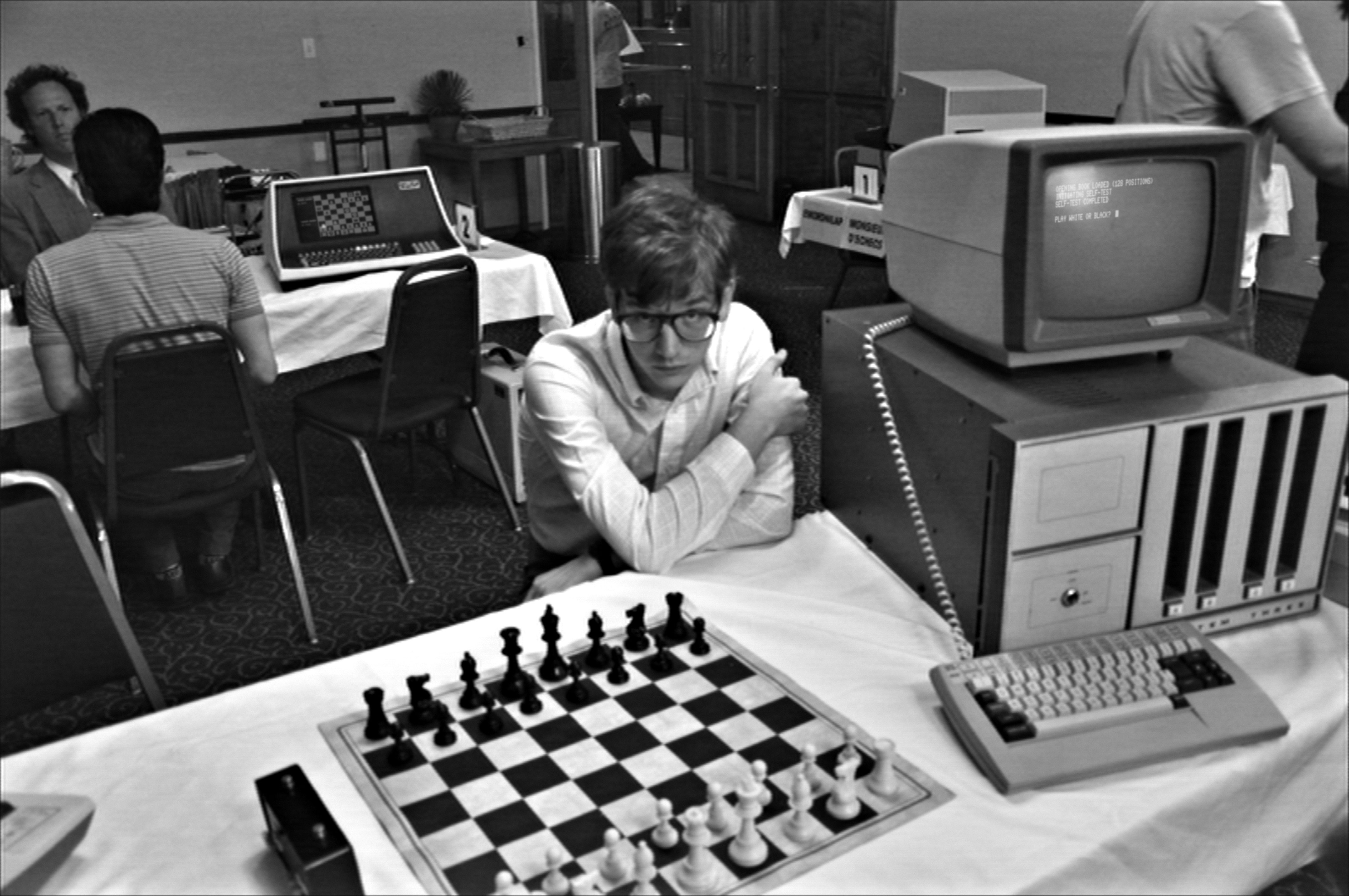
 

Honoring Edward Kennedy for defying and defeating political censorship in WWII

2

The campaign to award a posthumous Pulitzer Prize to Edward Kennedy, the Associated Press reporter who defied political censorship to break the story of the German surrender on May 7, 1945, was given a historic boost at the 135th annual meeting of the California Press Association on Dec. 7, 2012 at the Marines Memorial Building in San Francisco.

See the video of the Cal Press panel on Kennedy after the jump.

Honoring Edward Kennedy from The Intermountain News on Vimeo.

Video Credit: Craig Harrington, publisher of the Intermountain News in Burney

The association unanimously approved the first ever resolution by a news organization in support of Kennedy and it hosted the first ever panel discussion on Kennedy. Cal Press, as it is affectionately known in the newspaper business, is the oldest press organization west of the Mississippi and one of the oldest in the country. It was founded in 1876 at the Palace Hotel in San Francisco.

The resolution noted what happened to Kennedy after he broke the 36-hour embargo on the story. “Whereas the story made page one in nearly every newspaper, it angered General Dwight Eisenhower, the supreme allied commander, and all the other newsmen Kennedy had scooped. The military lifted his war correspondent’s credential, he was threatened with court martial and was fired by the Associated Press.”

The resolution explained that “unbeknownst to the reporters at the time, that suppression was the result of an agreement between U.S. President Harry Truman and British Prime Minister Winston Churchill to allow Russian Premier Joseph Stalin to hold a second surrender ceremony in Berlin.”

Kennedy broke the embargo, Cal Press explained, after “he learned that news of the German surrender was being broadcast to Germany from a radio station in Flensburg, Germany. He contacted military censors and said that since the story was being reported in Germany, the security of Allied troops was no longer an issue and he intended to defy censorship and report the news, which he proceeded to do by using a military phone line thereby registering the biggest scoop of the entire war.”

The resolution noted that Kennedy’s story is now the subject of two major efforts to “rectify the journalistic injustice by awarding him a Pulitzer Prize posthumously.” The resolution was written by Jim Ewert, general counsel of the California Newspaper Publishers Association.

One effort is a campaign launched from Modoc County by Ray A. March, editor of the Modoc Independent News monthly newspaper, to win a posthumous Pulitzer Prize for Kennedy’s hard news international reporting. March worked for Kennedy as a reporter on the Monterey Peninsula Herald a half century ago. Kennedy was the editor and associate publisher of the Herald until his death at age 58 in November 1963 when he was struck by a car while a pedestrian in Monterey.

The Kennedy campaign, the resolution stated, “is supported by 54 noteworthy professional reporters, editors, and photographers, that include San Francisco Chronicle editor Ward Bushee, Pulitzer-prize winning photographers Kim Komenich and Sal Veder, San Francisco Chronicle Science editor David Perlman, former San Francisco Bay Guardian owner Bruce Brugmann, former AP legal reporter Bob Egelko and Frank McCulloch, former senior editor at the Los Angeles Times and the Sacramento Bee, and Eric Brazil,  a retired Examiner and Chronicle reporter, who co-chairs the effort with March.”

The panel gave life and substance to the resolution. Brugmann introduced Bushee as the moderator, who read the eloquent Pulitzer nominating letter from McCulloch. Bushee introduced March, and Perlman, 93, who was a reporter for the old New York Herald-Tribune shortly after World War II,  and Julia Kennedy Cochran, Kennedy’s daughter who discovered her father’s unpublished memoir among his belongings after his death. She got the manuscript published as a major book by Louisiana State University Press. It is titled “Ed Kennedy’s War: V-E Day, Censorship, and the Associated Press.”

The LSU Press and Tom Curley, former AP president and CEO, entered the book in the Pulitzer competition on the basis of its literary qualities. Curley had issued a formal apology in 2011, saying that AP’s repudiation of Kennedy “was a terrible day for the AP. It was handled in the worst possible way…Kennedy did everything right.” In a later interview, he elaborated, “Once the war is over, you can’t hold back information like that. The world needed to know.”

Sixty seven years after Kennedy defied and defeated political censorship, the Cal Press sent its resolution to the Pulitzer board as a formal part of the Kennedy nomination. It said that Cal Press “honors Edward Kennedy for his distinguished example of reporting on international affairs and his courage in the face of potential personal and professional hardship to share with the world one of the most important events of the 20th century.”

 Cal Press concluded that it “applauds and endorses the efforts of Ray A. March, Eric Brazil, and the 54 noteworthy journalists and calls upon the Pulitzer Prize Board and Columbia University to recognize Edward Kennedy for journalistic excellence and posthumously award him with a Pulitzer prize for his groundbreaking coverage of the end of WWII in Europe.”

The 135th meeting of the California Press Association was an historic occasion with an historic pronouncement to right an historic wrong in American history. We’ll keep you posted.  B3


Preaching that the end is near

0

Rev. Billy Talen started off as a trickster, a performance artist, and a political activist appropriating the role of the evangelical preacher (a la Jerry Farwell or Jimmy Swaggert). He was the pastor of the Church of Stop Shopping, standing in front of the Disney Store in Times Square railing against the evils of sweatshops and consumerism.

That was more than 10 years ago, and Talen, his choir, and his flock have grown and evolved since then, although they retained their core tactic of invading the citadels of commerce to engage in performance art and civil disobedience. They renamed themselves the Church of Life After Shopping, wrote books and made a movie called What Would Jesus Buy?, and then became the Church of Earthalujah five years ago when their focus switched to climate change and environmental justice issues.

Along the way, their issues and concerns became more dire, the threats they were addressing elevated to matters of survival rather than social justice. So with the Dec. 21, 2012 date approaching, Talen returned to Times Square — this time fitting right in with its doomsday preachers — and wrote a new book called The End of the World, which he’ll release in Times Square on that auspicious date.

“I’ll be back with a science-based Armageddon,” Talen told me. “Now I’m looping all the way around the tracks back to Times Square where I started. But Hurricane Sandy makes this not so tongue-in-cheek.”

When Hurricane Sandy slammed into New York City and the surrounding coastline with the rare strength of superstorm that climatologists say will be more common in our warming world, Talen said it was a wake-up call for those insulated by that urban environment.

“New York doesn’t have climate, we have culture,” Talen said, but Sandy changed that perspective and brought the reality of climate change home, right into the heart of capitalism. “The idea that nature is beyond the city limits, that may be over now.”

Talen said there’s “ecosystem collapse going on everyday. Earth is a total ecosystem and Earth has a tipping point, just like local ecosystems have tipping points.” His latest book leans heavily on the research of Barnosky and his team, which Talen said dovetails perfectly with the Mayan prophecies and the hopes that the galactic alignment will spark a shift in global consciousness that wakes us up to pressing problems that demand immediate action.

“It allows us to have a stage for the question, a frame for the question. We have to ask very basic questions about our survival,” Talen said. “We have this uncanny mythic, prophetic calendar, this 5,000-year calendar ending and beginning. And we have the scientists saying the same thing, so where does that leave you?”