Scene

Past presence

0

arts@sfbg.com

LIT/MUSIC/VISUAL ART A present from the past — the paradox within that phrase is as close as one might get to pithily describing hauntology. The term was coined in 1993 by the French philosopher Jacques Derrida to describe utopian specters within capitalist society. But more recently, the music writer Simon Reynolds has specifically applied hauntology — literally, ghost logic — to music, using the term to describe the playfully eerie studio-as-séance-site releases on the British label Ghost Box, and similar recordings.

Since his early days as a journalist for Melody Maker, Reynolds has cannily related French theory to musical phenoms in practical and illustrative ways, whether applying the feminism of Hélène Cixous to Throwing Muses, ideas about jouissance to the sonic innovations of My Bloody Valentine, or Deleuze and Guattari to the jones for acceleration in rave culture. With the release of Reynolds’ most recent book, Totally Wired: Postpunk Interviews and Overviews (Soft Skull Press, 464 pages, $16.95), I thought the time was right to turn the tables and interview him about hauntology and the related library music genre — especially since the current Berkeley Art Museum exhibition “Hauntology” cites him while putting forth a hauntological theory of visual art.

SFBG What do you think about the current interest in library music as culture grows ever more digitized? To me it seems there’s an intrinsic push-pull between searches for rare objects in far reaches, and then their incorporation into digital or online spheres.

Simon Reynolds Certainly there are some music bloggers who specialize in library [music] and go about it in an extremely systematic manner — they aim to upload or share or post every single Bruton or Peer International Library or Chappell release. They work their way through the entire catalog, number by number. These are super-obscure records, and there doesn’t seem to be any kind of discography for a lot of the labels — I guess they weren’t precious about their own output. That must be both attractive and maddening (attractively maddening?) for a certain kind of obsessive-compulsive collector.

People are building a body of knowledge about library music, in the same way that reggae collectors did with the similarly chaotic and massive output of record labels in the ’70s. But it still has the aspect of an unmapped zone, a zone of discovery, which you can’t say about many other areas of music.

SFBG What aspects of library music appeal to you, and what aspects don’t?

SR I like the electronic stuff done by people moonlighting from the BBC Radiophonic Workshop, or by oddball figures like Ron Geesin. Or Eric Peters and Frederick G, who did stuff — electronic weirdness, or effects-laden goofy production-type tracks — for Studio G among other library labels. The Studio G stuff on the Trunk compilation G-Spots is just so luxuriant sounding.

In library music, the weird combination of anything-goes experimentation and un-precious functionalism creates good results, especially when you factor in brevity. Most library tunes are really short. So you get the same alien buzz as from experimental music, but without being detained for 20 minutes to an hour.

I also like the whole mythos and vibe around library music, the idea of all these studios in Wardour Street and thereabouts in central London churning stuff out, with top session players or underemployed composers earning a bit of dough on the side. And of course the packaging, with its uniform artwork for different series and wonderfully distilled evocative track descriptions (“pathetic, grotesque”; “relaxed swing-along”).

The downside is that some library music is just anodyne. A large proportion is sub-music, just splinters of mood or feeling that aren’t developed because they’re meant to underscore or mood-tint brief moments in a movie or TV show. I’m also less interested in the breaks end of library music, the “groovy scene in swinging discotheque” redolent tunes favored by some beat headz.

SFBG How would you characterize or define the relationship between library music and hauntology?

SR What people would consider the classic era of library music — the ’60s and ’70s, when there were groups of musicians in the studio, as opposed to the ’80s and thereafter, when it increasingly became one composer using a digital synthesizer to play all the parts — has heavy associations with the popular culture of that period. Especially TV programs and radio, and particularly children’s TV. Library music was used when there wasn’t a budget to get a soundtrack made, so you got this off-the-peg stuff.

If you’re a child of the ’60s or ’70s, this music has a potent memory-stirring effect, but in a nonspecific way. You hear certain kinds of lite-jazz chords, or melancholic orchestrations, or certain analog synth sounds, and it sets off reverberations inside you, but you can’t place them. (A later generation will probably have the same relationship with digital-era music — we’re maybe getting that with the vogue for video game sounds in a lot of dance music now.)

When hauntologist artists use this material, they can trigger all these emotions. They can also mess with the “science of mood” in library music by making emotions clash and mingle in strange combinations.

The formality and institutional vibe of library releases has a similar appeal to the “benevolent state” stuff that the hauntologist artists are into (like polytechnics, new towns, the BBC when it believed in elevating and educating the common man, etc.). Even though the library labels were commercial ventures, the aura of them is oddly similar to government or educational institutions: kind of stuffy and prim. The artwork relates to the way Penguin and Pelican books looked. It has that “lost Britain” quality.

SFBG Have you heard responses from theorists about your application of Derrida’s concept of hauntology to music?

SR No. I really just stole the word off Jacques because I liked the feel of it. It’s Mark Fisher of k-punk who’s done the more serious mapping of hauntology as a theory onto the music. I think there are definitely some parallels and connections, but Derrida’s thing seems very much bound up with Marxism and philosophy.

SFBG What is particularly hauntological about the Ghost Box label’s recordings, and what are some notable hauntological recordings over time?

SR The “haunty” aspect to the Ghost Box stuff relates to the reverberations I just described. They use samples from the era’s library or incidental music and TV or Radiophonic Workshop scores. Or (in the case of more composed-and-played recordings by Belbury Poly or The Advisory Circle) they write new melodies and motifs that are evocative of that era or in the style of that music.

I think there’s an intrinsic musical appeal and value to this stuff that works on people who don’t have the nostalgic connection. For instance, I know some quite young Americans who really like Ghost Box’s stuff. But if you are of the demographic, it has this extra layer of meaning and effect. It can be bound to a generation, and also to nationality. (Interestingly, it appeals to Australians, who get a lot of the TV from the U.K., and thus have a similar pop cultural matrix of memory).

The Ghost Box artists have a “haunty” aspect in the sense that they’re interested — in a simultaneously playful and serious way — in all kinds of pop culture to do with the supernatural and horror, from the Algernon Blackwood/Arthur Machen tales of cosmic horror, to the Hammer House of Horror movies, to Doctor Who, to ghost stories. Again, there’s a nostalgic aspect in the sense that these things, first encountered as a child, have a profound effect. British children’s TV had some really creepy and macabre stuff on it. In retrospect, you wonder, “What were they thinking broadcasting this stuff to under-10-year-olds?”

Ghost Box has fun with the cultural associations of all this stuff. There is a really pleasing clash of the campy and the genuinely disquieting in the way they handle it. It’s not some goth/industrial scary thing, which I think is where people get confused — they put on the Ghost Box records and discover they’re quite pleasant and enjoyable.

I like the main three Ghost Box groups very much — The Focus Group, Belbury Poly, and The Advisory Circle. And Roj made a cool album, The Transactional Dharma of Roj. The label’s most fully realized, brilliant record is Advisory Circle’s Other Channels. But in terms of individual peaks, I’d say certain tracks on Focus Group’s Hey Let Loose Your Love and Belbury Poly’s The Willows are among the most remarkable music of the past decade. For me they find this place between idyllic and eerie that just presses all my buttons, especially when you add the overall framework — the design and the concepts have this dry, poker-faced humor to them.

A similar vibe is going on in the records by Moon Wiring Club and Mordant Music, who are the other two central hauntologists for me. The Caretaker, a.k.a. Leyland James Kirby, has also done some really great stuff, but it’s more amorphous and drone-y.

SFBG Inside and outside of a deployment of library music, does hauntology appeal to you more than “retrofuturism” as an idea and a practice?

SR They are similar, or they overlap. The Ghost Box guys and Mordant Music are into the whole nostalgia for the future trip. Part of the appeal of something like the BBC Radiophonic Workshop is the futurism of it, the alien impact it had on impressionable ears, now inevitably filtered through a scrim of bygone charm and quaintness.

SFBG What future forms might hauntology take?

SR It may well be that every generation will come up with some kind of working-through of its recent past, the stuff that affected it most intensely as children. If you look at Ariel Pink and all the people he’s influenced who’ve come through recently, it’s bound up with a different memory-set: ’80s pop, MTV, and radio.

HAUNTOLOGY

Through Dec. 5

(Oct 29, 6-9pm “Hauntology at L@te Event with Interdisciplinary Intro Panel and musical performances Indignant Senility, Barn Owl, and Jim Haynes)

Berkeley Art Museum

2626 Bancroft Way, Berk.

(510) 642-0808
www.bampfa.berkeley.edu


Her band

0

arts@sfbg.com

MUSIC Mention the name Corin Tucker, and for many people, what comes to mind is a voice: the charged vibrato that was one of the signature elements of the sound of Sleater-Kinney. But before Tucker formed Sleater-Kinney, she’d sung differently in other bands, such as riot grrrl pioneers Heavens to Betsy, where her guitar was tuned lower in a manner that made it possible to tap into submerged feelings and experiences.

The new album by Corin Tucker Band, 1,000 Years (Kill Rock Stars), makes it clear that Tucker is more than just the tell-tale voice of Sleater-Kinney — she’s a songwriter who can add another wrinkle of emotion to a song with a change in tone, as on “It’s Always Summer,” where the annoyance that briefly grips her voice on the line “It’s always something” makes the hope in the chorus of the song that much sweeter. Working with producer-arranger-instrumentalist Seth Lorinczi and drummer Sara Lund, Tucker has fashioned a record that moves through different themes and sounds, evoking everything from Carole King piano ballads to acoustic Led Zep to Nuggets-worthy guitar riffage.

To a degree, the heart of 1,000 Years can be found just before the halfway mark with the one-two punch of “Handed Love” and “Doubt.” According to Tucker, the first song is the sort of just-divorced scenario Tracey Thorn explores in different ways on her recent solo album Love and Its Opposite (Merge). There’s something a little wilder and darker to Tucker’s approach to the subject, with the past’s failed pleasures as alluring as a drug, and a sense of menace in the spaces and silent moments around her voice’s quiet, minimalist dance with a keyboard. The same tension between restraint and abandon tells a different story in “Doubt,” a love song to rock ‘n’ roll that affirms that no worthy responsibility can fully kill off a love of the boogie and the beat. I recently talked with Tucker about the new album.

SFBG You’ve been based in Portland for around 15 years now. How has it changed?

CORIN TUCKER It’s so different. If you went down the street where I used to live, Alberta, it’s completely different. It’s unrecognizably built up. Sometime I wonder, how do people make their money here? The recession has been brutal in Portland and Oregon because we don’t make something concrete. The timber industry was our industry and that’s gone now. I guess we make Nike and Adidas.

But in terms of culture and film and arts, Portland is growing. The music scene has totally grown.

SFBG One thing the Sara Marcus book Girls to the Front (Harper Perennial, 384 pages, $14.99) re-reminded me of is the fact your lyrics with Heavens to Betsy had more of a storyline than a lot of riot grrrl recordings. While your new album doesn’t sound like Heavens to Betsy, it also feels rich in narrative.

CT That’s something I enjoyed about making this record. I relate to storytelling in songs and working on the lyrics to paint a little picture. That’s is sort of my natural songwriting style, and it’s something I return to easily.

SFBG Was it difficult to choose the sequencing of the songs? I wonder because the album moves through different terrain and different sounds, including your voice — you sing differently from song to song.

CT The record wound up having more variety than I expected when we began. I expected it to be quieter and acoustic — a straightforward solo album. But as Seth [Lorinczi] and I worked on it, we naturally drew on our different musical backgrounds.

SFBG In a way, the way the guitars were tuned in Sleater-Kinney seemed to place your voice in a certain elevated spot. On 1,000 Years you might have a wider ground to stand on as a singer.

CT I wanted to use different voices on the record. Not necessarily different characters, but different sides of my voice that I didn’t think people had heard before — or if they had, in Heavens to Betsy, that was so long ago. Part of the challenge and opportunity of making a solo record is figuring out how to give it enough variety so that you can take people through a journey.

SFBG One song I want to ask about is “Handed Love.” I like that it’s elliptical, and I get a dark feeling from it.

CT I think that might be one of my favorite songs. It has an interesting evolution. I started writing it on guitar and vocals, and it was pretty flat and straightforward. It was a mid-tempo rocker.

The song is sort of looking at relationships from the point of being a little bit older and being a female. I have a couple of friends who are newly divorced and I just kinda put myself in their shoes. It seemed like a difficult thing to navigate, when you have your heart broken and have to keep it together.

Seth had this idea [laughs], ‘What if we do this song with only ‘ooo’ vocals in the background?’ There’s this really beautiful choir part that comes in at the end, and that’s where we began recording it. He stripped away all the guitar and we had this vocal chorus and a drum machine. Then it kept evolving. Finally, he tried a Wurlitzer organ and I loved it.

SFBG That song and the follow-up track, “Doubt,” both have great moments where the sound is sort of stripped away. I get the sense that you had fun working with Seth.

CT It was a really enjoyable process. We just set it up as this project we were working on, and there was a lot of tinkering. The door was wide open in terms of what we could do and how we would look at things. He’s talented as a musician and as a producer and arranger.

SFBG Because it was a solo project and because you were working with him, was there a sense that songs could change as you worked on them?

CT Definitely. When I wrote “Half a World Away,” it was a ballad on guitar — very quiet and super slow. Seth had this idea that we should rock out. We started working on it, and he had this idea of taking the guitar parts and making them sparse and prickly and fast. Then when we started playing with Sara Lund, she brought a whole new dynamic to the song with the percussion. She brought in these African bells, because the song is about Lance [Bangs, Tucker’s husband] going away to Africa, and she had all these ideas about illustrating angst with percussion. That song became something I really love that is completely different from the original demo.

SFBG One other song I wanted to ask about is “Riley” because it has such a classic rock riff. Do you know a Riley?

CT No. He’s more of a fictional character.

SFBG I know a Riley.

CT You do? Is he down and out?

SFBG No, he’s a funny Filipino queen.

CT [Laughs] In 2007 and 2008, it just felt like such a dark time — so many friends had lost their jobs, or were getting divorced. Seth and I talked about Patti Smith literally every day while we were recording. Just Kids (Ecco, 320 pages, $16) came out while we were making the record, and she’s such a great inspiration. She’s one of those people who can write songs that are about friendship and helping your friends through something difficult. That song is really inspired by her and Lenny Kaye.

SFBG “Thrift Store Coats” starts out a lot like most people’s idea of what a solo recording would sound like — a voice and a pretty piano arrangement. But then suddenly it turns loud and powerful.

CT I have to give credit to Seth. He thought we could draw people into the story and the lyric and then have the whole band come to the stage and add power and a sense of protest.

SFBG I know your son is named Marshall in part because of Marshall Tucker Band — is Corin Tucker Band a nod to Marshall Tucker Band?

CT Yes, it is. The funny thing is that my daughter Glory thinks that every mom has her own band. At soccer practice the other day she started a band with her friend — who is one — called Glory Tucker Band.

CORIN TUCKER BAND

With the Golden Bears

Mon/11, 8 p.m., $17

859 O’Farrell, SF

(888) 233-0449

www.gamh.com

The family Yañez and their evolving altars

0

To hear father and son artistic team Rene and Rio Yañez talk about San Francisco’s Day of the Dead celebration is to realize how much the holiday has taken on its own light here in the city. “It’s about personal experience, but also politics,” Rene says. The duo have crafted another year of homage to the dead around us — and in so doing also reflect a shifting scene in San Francisco art.

No art event in the city reflects evolving tradition more than the Yañezs’ yearly exhibit of Dia de los Muertos altars at SOMArts Cultural Center (opening Fri/8). As the three of us sit in Rene’s office at SOMArts next to the cow brain in a mason jar on top of which the elder Yañez — the center’s director of special projects — has stacked a pair of headphones and a plush Taco Bell chihuahua, Rene tells his son and myself about the first public Day of the Dead celebration in San Francisco.

Rene, a seminal figure in the Mission art scene, held the first year of the altar installations in the early ’70s at his neighborhood community art hub from that time, Galería de la Raza. In an area full of Central and South American activists who had lost their home due to oppressive regimes and political exile, he and other artists figured it was time to start acknowledging the Mexican holiday of death, parody, and remembrance in their new community. 

In Mexico, Dia de los Muertos is celebrated by the gathering of family, of processions to the cemetery to mark loved ones’ graves with ofrendas of marigolds, sugar skulls, and refreshments. In the Mission, that feeling of community and import was to be replicated with a distinctly San Franciscan twist. “We talked about creating a ritual, ceremonial exhibit,” Rene says.

In those early days, it was mainly the Latinos that lived in the neighborhood that came to see the altars that Yañez and fellow artists created in the Galería. But soon, word of the popular exhibit spread, and it became a teaching moment for those outside the culture. School groups would come by for a field trip, occasions for which the Galeria printed out Day of the Dead lesson plans. 

Still, not every one immediately understood the holiday’s significance. “It’s not really a morbid holiday,” Rene tells me. “People use it to make fun of death, some people make political statements, some people use humor.” That approach “made some people preoccupied,” Rene says, a smile flickering over his face. “They were seeing skulls and things like that.” “It’s about celebrating death as a part of life,” Rio supplies.

Of course, things have changed over the last forty years. Nowadays, the esoteric procession that began in the Mission in the ’80s to mark the holiday has grown into a 15,000 person yearly event, and has been jokingly termed “Day of the Dead Gringos” and “Gringos Gone Wild” by some local blogs for the Burning Man-style theatrical costumes, stilting, and concept artwork contributed by those with nary a drop of Latino blood in their body.

Which, Rio Yañez says, is just fine. Rio – who dad Rene jokingly calls “a cholo hipster” – was born and raised in the Mission, watching his family stave off eviction notices during the dot com boom and beyond during times when rent prices in his neighborhood have soared. Unlike many of his childhood friends, he has chosen to remain in the Mission, and having graduated from CalArts, now partners with his father at SOMArts. 

In the Day of the Dead celebration’s cultural inclusivity, Rio finds a positive benefit for the city’s diverse tribes. “It’s a way of sharing culture – even with all the drunk hipsters just having a good time marching there’s still a community spirit.” When I ask him whether the Mission Latino community can still claim ownership of the procession, he replies diplomatically. “The neighborhood has changed so much — the parade is a reflection of that.”

Rene concurs. “I haven’t experienced a neighborhood that hasn’t changed,” he tells me.

That kind of cultural shift is reflected in the Yañez-curated SOMArts exhibition. Past years’ exhibits have paid homage to deceased family members, to the victims of disasters like Hurricane Katrina, and even to the artists themselves – last year one contributor passed away during the altar’s run at SOMArts, and her installation was augmented by fellow mourners to reflect the snuffing of a creative life. Although the papel picado and traditional iconography remain a part of the vast labyrinth of artists’ contributions at SOMArts, the things mourned and celebrated ring universal, hurts and hopes accessible to everyone present in the melting pot of the city.

This year, the Day of the Dead artists come from all over, and hail from all age groups. Some, like CJ Grossman, Susan Matthews, and Jos Sances have been working with Rene on the exhibit since the late ’80s. Others, like photographer Amanda Lopez, have been brought in by Rio, who is aiding in the transition to online culture, contributing his own photographic skills to the effort, and scouts talent from the younger artistic circles he runs in.

Which isn’t to say that Rene hasn’t taken advantage of some of today’s most cutting edge art technologies, including the Avatar-inspired mania for 3D. Before I leave SOMArts, he produces a sheaf of 3D renderings he’s created on the computer and a flashy pair of red and blue-lensed glasses – far more impressive than anything that I’ve been handed en route to Toy Story 3

I put them on, and a galaxy of Mexican masked wrestlers, women, and designs pop up at varying levels in front of my eyes. The images, Rene tells me, will be projected on the walls of the Day of the Dead exhibit to create a saturated visual experience. More evidence of tradition – and the family Yañez – gathering no moss in the name of art. 


Dia de los Muertos Exhibition: Honoring Revolution With Visions of Healing

(through Nov. 6)

Opening reception: Fri/8 6- 9 p.m., $5-10 sliding scale

SOMArts Cultural Center

934 Brannan, SF

(415) 863-1414

www.somarts.org


Music listings

0

Music listings are compiled by Paula Connelly and Cheryl Eddy. Since club life is unpredictable, it’s a good idea to call ahead to confirm bookings and hours. Prices are listed when provided to us. Submit items for the listings at listings@sfbg.com. 

WEDNESDAY 6

ROCK/BLUES/HIP-HOP

Aces Biscuits and Blues. 8 and 10pm, $15.

Caribou, Emeralds Regency Ballroom. 9:30pm, $22.

Child Abuse, Burmese, Death Sentence: Panda Elbo Room. 10pm, $7.

Continues, Felt Drawings, Bloody Snowman, Ssleeping DesiresS DNA Lounge. 9pm, $11.

Fences, Head and the Heart, Winter’s Fall Rickshaw Stop. 8pm, $10.

Fortune 500, Gem Tops, Barrel Riders Rock-It Room. 9pm, $8.

Lissie, Dylan LeBlanc Great American Music Hall. 8pm, $15.

Plastic Fantastic Lover, Jugtown Pirates, 21st Century Bottom of the Hill. 9pm, $8.

Raw Power, Irritones, Neon Maniacs, Corruptors Knockout. 9:30pm, $8.

Angus and Julia Stone, Bhi Bhiman Independent. 8pm, $16.

Hawksley Workman, Connie Lim, Sonia Rao Hotel Utah. 8pm, $10.

FOLK/WORLD/COUNTRY

Moh Alileche Yoshi’s San Francisco. 9pm, $7. With dance artist Rasa Vitalia.

DANCE CLUBS

Booty Call Q-Bar, 456 Castro, SF; www.bootycallwednesdays.com. 9pm. Juanita Moore hosts this dance party, featuring DJ Robot Hustle.

Hands Down! Bar on Church. 9pm, free. With DJs Claksaarb, Mykill, and guests spinning indie, electro, house, and bangers.

Jam Fresh Wednesdays Vessel, 85 Campton, SF; (415) 433-8585. 9:30pm, free. With DJs Slick D, Chris Clouse, Rich Era, Don Lynch, and more spinning top40, mashups, hip hop, and remixes.

Mary-Go-Round Lookout, 3600 16th St, SF; (415) 431-0306. 10pm, $5. A weekly drag show with hosts Cookie Dough, Pollo Del Mar, and Suppositori Spelling.

RedWine Social Dalva. 9pm-2am, free. DJ TophOne and guests spin outernational funk and get drunk.

Respect Wednesdays End Up. 10pm, $5. Rotating DJs Daddy Rolo, Young Fyah, Irie Dole, I-Vier, Sake One, Serg, and more spinning reggae, dancehall, roots, lovers rock, and mash ups.

Synchronize Il Pirata, 2007 16th St, SF; (415) 626-2626. 10pm, free. Psychedelic dance music with DJs Helios, Gatto Matto, Psy Lotus, Intergalactoid, and guests.

VG Plus Hemlock Tavern. 9pm, free. With DJ Skips N Pops and DJ Jessica B.

THURSDAY 7

ROCK/BLUES/HIP-HOP

Devotionals, Honeycombs Amnesia. 9pm, $3.

Ferocious Few, Oona Café Du Nord. 10pm, $10.

Flood, Cuzo, Glitter Wizard Eagle Tavern. 9:30pm, $6.

Glass Candy, Chromatics, DJ Mike Simonetti, Soft Metals, DJ Omar Rickshaw Stop. 9pm, $15.

Klaxons, Baby Monster Great American Music Hall. 9pm, $18.

Land of Talk, Besnard Lakes, Suuns Independent. 8pm, $15.

Aimee Mann Yoshi’s San Francisco. 8pm, $35.

Night Horse, Hot Lunch, Lecherous Gaze Hemlock Tavern. 9pm, $7.

Curtis Salgado Biscuits and Blues. 8 and 10pm, $18.

Tera Melos, Skinwalker, Glaciers Bottom of the Hill. 9pm, $10.

FOLK/WORLD/COUNTRY

Heather Combs, Ryan Auffenberg, Mike Gibbons, Walty Hotel Utah. 8pm, $8.

Dark Hollow Band Atlas Café. 8pm, free.

*Devotionals, David and Joanna Amnesia. 9pm, $8.

Grupo Fantasma Yoshi’s San Francisco. 10:30pm, $20.

Leni Stern Coda. 10pm, $10.

DANCE CLUBS

Afrolicious Elbo Room. 9:30pm, $10. DJs Pleasuremaker and Señor Oz spin Afrobeat, tropicália, electro, samba, and funk.

Caribbean Connection Little Baobab, 3388 19th St, SF; (415) 643-3558. 10pm, $3. DJ Stevie B and guests spin reggae, soca, zouk, reggaetón, and more.

Club Jammies Edinburgh Castle. 10pm, free. DJs EBERrad and White Mice spinning reggae, punk, dub, and post punk.

Drop the Pressure Underground SF. 6-10pm, free. Electro, house, and datafunk highlight this weekly happy hour.

Electric Feel Lookout, 3600 16th St, SF; (415) 431-0306. 9pm, $2. With DJs subOctave and Blondie K spinning indie music videos.

Good Foot Som., 2925 16th St, SF; (415) 558-8521. 10pm, free. With DJs spinning R&B, Hip hop, classics, and soul.

Holy Thursday Underground SF. 10pm, $5. Bay Area electronic hip hop producers showcase their cutting edge styles monthly.

Jivin’ Dirty Disco Butter, 354 11th St., SF; (415) 863-5964. 8pm, free. With DJs spinning disco, funk, and classics.

Koko Puffs Koko Cocktails, 1060 Geary, SF; (415) 885-4788. 10pm, free. Dubby roots reggae and Jamaican funk from rotating DJs.

Lacquer Beauty Bar. 10pm-2am, free. DJs Mario Muse and Miss Margo bring the electro.

Mestiza Bollywood Café, 3376 19th St, SF; (415) 970-0362. 10pm, free. Showcasing progressive Latin and global beats with DJ Juan Data.

Peaches Skylark, 10pm, free. With an all female DJ line up featuring Deeandroid, Lady Fingaz, That Girl, and Umami spinning hip hop.

Popscene 330 Rich. 10pm, $10. Rotating DJs spinning indie, Britpop, electro, new wave, and post-punk.

Solid Thursdays Club Six. 9pm, free. With DJs Daddy Rolo and Tesfa spinning roots, reggae, dancehall, soca, and mashups.

Studio SF Triple Crown. 9pm, $5. Keeping the Disco vibe alive with authentic 70’s, 80’s, and current disco with DJs White Girl Lust, Ken Vulsion, and Sergio.

FRIDAY 8

ROCK/BLUES/HIP-HOP

Abney Park, Vernian Process, Unextraordinary Gentlemen DNA Lounge. 9pm, $23.

Birdmonster, Nervous Wreckords, Kid Mud Café Du Nord. 9:30pm, $12.

Blank Tapes, Rad Cloud, Tall Tales and the Silver Lining, Ryan Parks Amnesia. 9pm, $5.

Bobby Joe Ebola and the Children McNuggits, Angel and Robot Show, Emily’s Army, Secretions Thee Parkside. 9:30pm, $8.

Dainty, Le Verita, Jon Bennett Brainwash Café, 1122 Folsom, SF; www.brainwash.com. 8pm, free.

Greg Dale, Stefan Grant, These Are Not My Ancestors Hotel Utah. 9pm, $10.

East Bay Grease, Switchbacks Hemlock Tavern. 10pm, $5.

*Fool’s Gold, Bitter Honeys, Soft White Sixties Rickshaw Stop. 8:30pm, $12.

Matt Hires, Drew Holcomb and the Neighbors, Cloud Nothings Bottom of the Hill. 10pm, $10.

Aimee Mann Yoshi’s San Francisco. 8pm, $35.

McCabe and Mrs. Miller, Bye Bye Blackbirds Make-Out Room. 7:30pm, $7.

Nighthawks Biscuits and Blues. 8 and 10pm, $20.

Sea Wolf, Sera Cahoone, Patrick Park Independent. 9pm, $15.

Tom Tom Club, Paul Ryder, Motion Potion Great American Music Hall. 9pm, $26.

JAZZ/NEW MUSIC

Amick Byram CEBC, 801 Silver, SF; www.eventbee.com/view/amickbyramsf. 8pm, free.

Marcus Shelby Orchestra’s MLK Jewish Community Center of San Francisco, 3200 California, SF; www.sfjazz.org. 8pm, $20-30.

Mike Dillon’s Go-Go Jungle, Earl and Mike Duo Coda. 10pm, $12.

Paula West with George Mesterhazy Quartet Herbst Theater, 401 Van Ness; www.sfperformances.org. 8pm, $30-50.

FOLK/WORLD/COUNTRY

Heather Ambler and Jim Goodkind Mercury Café, 201 Octavia, SF; (415) 252-7855. 7:30pm, free.

“Americana Jukebox” Slim’s. 8:30pm, $14. With Misisipi Rider, Whisky Richards, Belle Monroe and Her Brewglass Boys, and Bluegrass Revolution.

Meredith Axelrod and Craig Ventresco Amnesia. 7pm, free.

Grupo Fantasma Yoshi’s San Francisco. 10:30pm, $20.

World Percussion Arts Festival Dance Mission Theater, 3316 24th St., SF; (415) 826-4441. 8pm, $25.

DANCE CLUBS

Club Dragon Club Eight, 1151 Folsom, SF; www.eightsf.com. 9pm, $8. A gay Asian paradise. Featuring two dance floors playing dance and hip hop, smoking patio, and 2 for 1 drinks before 10pm.

Exhale, Fridays Project One Gallery, 251 Rhode Island, SF; (415) 465-2129. 5pm, $5. Happy hour with art, fine food, and music with Vin Sol, King Most, DJ Centipede, and Shane King.

Fat Stack Fridays Koko Cocktails, 1060 Geary, SF; (415) 885-4788. 10pm, free. With rotating DJs B-Cause, Vinnie Esparza, Mr. Robinson, Toph One, and Slopoke.

Fo’ Sho! Fridays Madrone Art Bar. 10pm, $5. DJs Kung Fu Chris and Makossa spin rare grooves, soul, funk, and hip-hop classics.

Fubar Fridays Butter, 354 11th St., SF; (415) 863-5964. 6pm, $5. With DJs spinning retro mashup remixes.

Garden Triple Crown. 9pm, $8. With DJs Inland Knights, M3, and Deron Delgado.

Good Life Fridays Apartment 24, 440 Broadway, SF; (415) 989-3434. 10pm, $10. With DJ Brian spinning hip hop, mashups, and top 40.

Heartical Roots Bollywood Café. 9pm, $5. Recession friendly reggae.

Hot Chocolate Milk. 9pm, $5. With DJs Big Fat Frog, Chardmo, DuseRock, and more spinning old and new school funk.

Rockabilly Fridays Jay N Bee Club, 2736 20th St, SF; (415) 824-4190. 9pm, free. With DJs Rockin’ Raul, Oakie Oran, Sergio Iglesias, and Tanoa “Samoa Boy” spinning 50s and 60s Doo Wop, Rockabilly, Bop, Jive, and more.

Singapore 60’s The Knockout. 5:30pm, free. DJ Sid Presley spinning rare pop, garage, and freakbeat from Singapore and SE Asia.

Some Thing The Stud. 10pm, $7. VivvyAnne Forevermore, Glamamore, and DJ Down-E give you fierce drag shows and afterhours dancing.

Strictly Video 111 Minna. 9pm, $10. With VDJs Shortkut, Swift Rock, GoldenChyld, and Satva spinning rap, 80s, R&B, and Dancehall.

Treat Em Right Elbo Room. 10pm, $5. Hip-hop, funk, reggae, and more with DJs B. Cause, Vinnie Esparza, and guest Goldmyne.

SATURDAY 9

ROCK/BLUES/HIP-HOP

Awesome Party, Serpent Crown, Evil Survives, Spellcaster Hemlock Tavern. 9:30pm, $6.

Cowboy Junkies, Watson Twins Bimbo’s 365 Club. 9pm, $35.

Ruth Gerson Hotel Utah. 8pm, $10.

Griffin House, Tyler James Swedish American Hall (upstairs from Café Du Nord). 8pm, $15.

Hard Girls, Ivy and Erick Amnesia. 7pm. Part of LitQuake, with readings by Blag Dahlia, Eric Lyle, and more.

Bruce Katz Biscuits and Blues. 8 and 10pm, $15.

LoCura, Manicato, DJ Funk-C Slim’s. 9pm, $16.

Moon Duo, Lilac Amnesia. 10pm, $8.

Particle Great American Music Hall. 9pm, $20.

Proj, Psychology of Genocide, Beet, MC Lynn Breedlove Thee Parkside. 9pm, $6.

Scene of Action, Felsen, Bird By Bird, Kindness and Lies Bottom of the Hill. 8:30pm, $12.

Bob Schneider, Bascom Hill, Smile Smile Independent. 9pm, $20.

Toro Ramire, Ideomeneo, Flash Bastards Thee Parkside. 3pm, free.

Wires in the Walls, Tenderloins Hotel Utah. 9:30pm, $8.

Zoo Station Blackthorn Tavern, 834 Irving, SF; www.blackthornsf.com. 9pm, $10.

JAZZ/NEW MUSIC

Amick Byram CEBC, 801 Silver, SF; www.eventbee.com/view/amickbyramsf. 8pm, free.

Anat Cohen and Avishai Cohen Congregation Sherith Israel, 2266 California, SF; www.sfjazz.org. 8pm, $25-50.

Dead Kenny Gs, Black Frames, Earl and Mike Duo Coda. 10pm, $12.

“On the Edge of Dark” Simm Series, Musicians Union Hall, 116 Ninth St, Sf; www.outsound.org. 8pm, $8-10. With Vinny Golia, Rent Romus, and the Lords of Outland.

Lavay Smith and Her Red Hot Skillet Lickers Café Du Nord. 9pm, $15. Performing the music of Duke Ellington.

Nikki Yanofsky Florence Gould Theatre, Legion of Honor, 100 Legion of Honor Dr, SF; www.sfjazz.org. 2pm, $25.

FOLK/WORLD/COUNTRY

World Percussion Arts Festival Dance Mission Theater, 3316 24th St., SF; (415) 826-4441. 8pm, $25.

DANCE CLUBS

Bar on Church 9pm. Rotating DJs Foxxee, Joseph Lee, Zhaldee, Mark Andrus, and Nuxx. Bootie vs. Booty Call DNA Lounge. 9pm, $6-12. Mash-ups with VJ Brewski, Smash-Up Derby, Adrian and Mysterious D, and Dada.

Cockblock Rickshaw Stop. 10pm, $5-7. Queer dance party with DJ Nuxx and friends.

Frolic Stud. 9pm, $3-7. DJs Dragn’Fly, NeonBunny, and Ikkuma spin at this celebration of anthropomorphic costume and dance. Animal outfits encouraged.

HYP Club Eight, 1151 Folsom, SF; www.eightsf.com. 10pm, free. Gay and lesbian hip hop party, featuring DJs spinning the newest in the top 40s hip hop and hyphy.

Industry Mighty. 10pm, $25. With DJ Dave Aude and Jamie J Sanchez celebrating Fleet Week.

Lacquer! Milk Bar. 10pm, $5. With DJ Mario Muse vs. DJs Blondie K and subOctave spinning indie dance, electro, new wave, and disco.

Rock City Butter, 354 11th St., SF; (415) 863-5964. 6pm, $5 after 10pm. With DJs spinning party rock.

Same Sex Salsa and Swing Magnet, 4122 18th St, SF; (415) 305-8242. 7pm, free.

Spirit Fingers Sessions 330 Ritch. 9pm, free. With DJ Morse Code and live guest performances.

Spotlight Siberia, 314 11th St, SF; (415) 552-2100. 10pm. With DJs Slowpoke, Double Impact, and Moe1.

Tormenta Tropical Elbo Room. 10pm, $15. Electro-cumbia with DJs El Guincho, El Hijo de la Cumbia, and DJs Disco Shawn and Oro 11.

SUNDAY 10

ROCK/BLUES/HIP-HOP

Anberlin, Crash Kings, Civil Twilight Regency Ballroom. 8pm, $20.

Frightened Rabbit, Plants and Animals, Bad Veins Fillmore. 8pm, $22.50.

Terry Hanck Biscuits and Blues. 8 and 10pm, $15.

Liz Phair Independent. 8pm, $25.

Rangers, Universal Studios Florida, Radiant Husk Hemlock Tavern. 8pm, $6.

“SF Bike Coalition Presents: Kestral Sound Review, Volume 2: Battle of the One-Man Bands” Café Du Nord. 8pm, $10. With A Magic Whistle, Mallard, Ricky Lee Robinson, Hanalei.

Slow Motion Cowboys, Virgil Shaw and the New Mid-City Band, Domestic Electrics Make-Out Room. 8pm, $7.

*Mark Sultan, Hunx and His Punx, Shannon and the Clams Rickshaw Stop. 8pm, $12.

Wannabe Texans, Mae McCoy and the Neon Stars Bottom of the Hill. 3pm, $10.

JAZZ/NEW MUSIC

Frank Jackson, Larry Vuckovich Bliss Bar, 4026 24th St, SF; (415) 826-6200. 4:30pm, $10.

“3rd Annual San Francisco Filipino American Jazz Festival” Yoshi’s San Francisco. 6pm, $45.

“On the Edge of Dark” Simm Series, Musicians Union Hall, 116 Ninth St, Sf; www.outsound.org. 7:30pm, $8-10. With Vinny Golia, Rent Romus, and the Lords of Outland.

FOLK/WORLD/COUNTRY

Meredith Axelrod and Craig Ventresco Atlas Café. 4pm, free.

Garett Brennan Bazaar Café, 5927 California, SF; (415) 831-5620. 6pm.

Calliope Amnesia. 7pm, free.

Quinn Deveaux Amnesia. 9pm, $7-$10.

Silver Threads, Merle Jagger Thee Parkside. 4pm, free.

World Percussion Arts Festival Dance Mission Theater, 3316 24th St., SF; (415) 826-4441. 6pm, $25.

DANCE CLUBS

Autobahn Koko Cocktails, 1060 Geary, SF; (415) 885-4788. 9pm, free. With DJs Shawn Ryan and Pat Les Stache and host Tristes Tropiques.

DiscoFunk Mashups Cat Club. 10pm, free. House and 70’s music.

Dub Mission Elbo Room. 9pm, $6. International dub summit with Subatomic Sound System vs. Dubblestandart, featuring Emch and Paul Zasky, plus Devon D and DJ Sep.

Gloss Sundays Trigger, 2344 Market, SF; (415) 551-CLUB. 7pm. With DJ Hawthorne spinning house, funk, soul, retro, and disco.

Fresh Ruby Skye. 6pm, $25. A Columbus Day weekend T-dance with DJ Paul Goodyear.

Honey Soundsystem Paradise Lounge. 8pm-2am. “Dance floor for dancers – sound system for lovers.” Got that?

Jock! Lookout, 3600 16th St, SF; (415) 431-0306. 3pm, $2. This high-energy party raises money for LGBT sports teams.

Kick It Bar on Church. 9pm. Hip-hop with DJ Zax.

Lowbrow Sunday Delirium. 1pm, free. DJ Roost Uno and guests spinning club hip hop, indie, and top 40s.

Mini Non Stop Bhangra Rickshaw Stop. Noon-3pm, $5-10. Kid-friendly world music dance party.

Out Loud Festival Wrap Party Thee Parkside. 12:30pm, $6. With DJs Brown Amy and Carnita.

Pachanga Coda. 5pm, $10. Salsa dance party with DJs Fab Fred and Antonio and Orquestra La Moderna Tradición.

Religion Bar on Church. 3pm. With DJ Nikita.

Remember the White Party Disco Glas Kat, 520 4th St., SF; (415) 495-6620. 6pm, $25. With DJ Jerry Bonham spinning Trocadero Transfer classics.

Stag AsiaSF. 6pm, $5. Gay bachelor parties are the target demo of this weekly erotic tea dance.

Swing Out Sundays Rock-It Room. 7pm, free (dance lessons $15). DJ BeBop Burnie spins 20s through 50s swing, jive, and more.

MONDAY 11

ROCK/BLUES/HIP-HOP

Capsula, Blammos Elbo Room. 9pm, $6.

Corin Tucker Band Great American Music Hall. 8pm, $17.

Eels Fillmore. 8pm, $27.50.

James, Ed Harcourt Regency Ballroom. 8pm, $28.

Remy Zero, Sanders Bohlke Café Du Nord. 8pm, $15.

*Valient Thorr, Red Fang, FlexXBronco Bottom of the Hill. 9pm, $12.

Brad Wilson and Rhythm Drivers Biscuits and Blues. 8pm, $12.

FOLK/WORLD/COUNTRY

Toshio Hirano Amnesia. 8:30pm, free.

DANCE CLUBS

Black Gold Koko Cocktails, 1060 Geary, SF; (415) 885-4788. 10pm-2am, free. Senator Soul spins Detroit soul, Motown, New Orleans R&B, and more — all on 45!

Death Guild DNA Lounge. 9:30pm, $3-5. Gothic, industrial, and synthpop with DJs Decay, Joe Radio, and Melting Girl.

Krazy Mondays Beauty Bar. 10pm, free. With DJs Ant-1, $ir-Tipp, Ruby Red I, Lo, and Gelo spinning hip hop.

M.O.M. Madrone Art Bar. 6pm, free. With DJ Gordo Cabeza and guests playing all Motown every Monday.

Manic Mondays Bar on Church. 9pm. Drink 80-cent cosmos with Djs Mark Andrus and Dangerous Dan.

Musik for Your Teeth Revolution Café, 3248 22nd St., SF; (415) 642-0474. 5pm, free. Soul cookin’ happy hour tunes with DJ Antonino Musco.

Network Mondays Azul Lounge, One Tillman Pl, SF; www.inhousetalent.com. 9pm, $5. Hip-hop, R&B, and spoken word open mic, plus featured performers.

Skylarking Skylark. 10pm, free. With resident DJs I & I Vibration, Beatnok, and Mr. Lucky and weekly guest DJs.

TUESDAY 12

ROCK/BLUES/HIP-HOP

All That Remains, Asking Alexandria, Unearth, And She Whispered Regency Ballroom. 7:30pm, $24.

Bettie Serveert, Foxtail Somersault Café Du Nord. 9:30pm, $15.

El Ten Eleven, Baths, Sister Crayon Bottom of the Hill. 9pm, $12.

Fat Tuesday Band Biscuits and Blues. 8 and 10pm, $15.

Audrey Howard, Kate Kilbane, Meredith Axelrod Club Waziema, 543 Divisadero, SF; (415) 346-6641. 8pm.

Passenger and Pilot, Drew Victor, Pirate Radio Viracocha, 998 Valencia, SF; (415) 374-7048. 8pm.

Platinum Live SF Coda. 9pm, $10.

PS I Love You, Gold Medalists, Downer Party Hemlock Tavern. 9pm, $7.

Teenage Fanclub, Radar Brothers Fillmore. 8pm, $26.50.

Devin Townsend, Project Tesseract Slim’s. 8pm, $16.

DANCE CLUBS

Eclectic Company Skylark, 9pm, free. DJs Tones and Jaybee spin old school hip hop, bass, dub, glitch, and electro.

Rock Out Karaoke! Amnesia. 7:30pm. With Glenny Kravitz.

Share the Love Trigger, 2344 Market, SF; (415) 551-CLUB. 5pm, free. With DJ Pam Hubbuck spinning house.

Womanizer Bar on Church. 9pm. With DJ Nuxx.


Stage listings

0

Stage listings are compiled by Guardian staff. Performance times may change; call venues to confirm. Reviewers are Robert Avila, Rita Felciano, and Nicole Gluckstern. Submit items for the listings at listings@sfbg.com.

THEATER

OPENING

Christian Cagigal’s Obscura: A Magic Show EXIT Cafe, 156 Eddy; (800) 838-3006, www.brownpapertickets.com. $15-25. Opens Thurs/7, 8pm. Runs Thurs-Sat, 8pm. Through Dec 18. Magician Christian Cagigal presents a mix of magic, fairy tales, and dark fables.

A Funny Thing Happened on the Way to the Forum Eureka Theatre, 215 Jackson; 255-8207, www.42ndstmoon.org. Previews Wed/6, 7pm; Thurs/7-Fri/8, 8pm. Opens Sat/9, 6pm. Runs Wed, 7pm; Thurs-Fri, 8pm; Sat, 6pm; Sun, 3pm (also Oct 16, 1pm). Through Oct 24. 42nd Street Moon presents the Sondheim musical farce, starring Megan Cavanagh.

Love Song Exit Theatre, 156 Eddy; (800) 838-3006, www.brownpapertickets.com. $20. Opens Fri/8, 8pm. Runs Thurs-Fri, 8pm; Sat, 3 and 8pm. Through Oct 23. An offbeat comedy by John Kolvenbach, directed by Loretta Janca.

Zombie Town Stage Werx Theatre, 533 Sutter; www.stagewerx.org. $24. (800) 838-3006, www.brownpapertickets.com. Opens Thurs/7, 8pm. Runs Thurs-Sat, 8pm (also Oct 31, 5pm). Through Oct 31. Catharsis Theatre Collective presents a documentary play about zombie attacks in Texas.

BAY AREA

Mary Stuart The Ashby Stage, 1901 Ashby, Berk; (510) 841-6500, www.shotgunplayers.org. $15-30. Previews Wed/6-Thurs/7, 8pm. Opens Fri/8, 8pm. Runs Thurs-Sat, 8pm; Sun, 5pm. (also Oct 20, Oct 27, Nov 3; 7pm). Through Nov 7. Shotgun Players presents Friedrich Schiller’s historical drama, directed by Mark Jackson.

Superior Donuts TheatreWorks at the Mountain View Center for the Performing Arts, 500 Castro; (650) 463-1960, www.theatreworks.org. $19-67. Previews Wed/6-Fri/8, 8pm. Opens Sat/9, 8pm. Runs Tues-Wed, 7:30pm; Thurs-Fri, 8pm; Sat, 2 and 8pm; Sun, 2 and 7pm. TheatreWorks presents Tracy Letts’ tale of friendship and redemption in a Chicago donut dispensary.


ONGOING

Absolutely San Francisco Phoenix Theatre, Stage 2, 414 Mason; 433-1235, www.absolutelysanfrancisco.com. $20-25. Fri-Sat, 8pm. Through Oct 23. A one-woman musical starring Karen Hirst, with book and music by Anne Doherty.

Aida War Memorial Opera House, 301 Van Ness, 864-1330, www.sfopera.com. $25-320. Wed/6, 7:30pm. San Francisco Opera presents Verdi’s classic, a co-production with English National Opera and Houston Grand Opera.

And Then They Came for Me: Remembering the World of Anne Frank New Conservatory Theatre Center, 25 Van Ness; 861-8972, www.nctcsf.org. Call for reservations. Mon-Thurs, 10 and 11:45am.; Sun, 2pm. Through Sun/10. YouthAware Educational Theatre presents a multimedia play by James Still, directed by Sara Staley.

Anita Bryant Died For Your Sins New Conservatory Theatre Center, 25 Van Ness; 861-8972, www.nctcsf.org. $24-40. Wed-Sat, 8pm; Sun, 2pm. Through Oct 24. New Conservatory Theatre Center presents a show by Brian Christopher Williams.

*The Brothers Size Magic Theatre, Bldg D, Fort Mason Center; 441-8822, www.magictheatre.org. $20-60. Dates and times vary. Through Oct 17. Magic Theatre presents the West Coast premiere of Tarell Alvin McCraney’s play, directed by Octavio Solis.

Cat on a Hot Tin Roof Actors Theatre, 855 Bush; 345-1287, www.actorstheatresf.org. $26-38. Wed-Sat, 8pm. Through Oct 22. Actors Theatre presents Tennessee Williams’ sultry, sweltering tale of a Mississippi family, directed by Keith Phillips.

Disoriented Off-Market Theater, 960 Mission; (800) 838-3006, www.brownpapertickets.com. $20. Sun/10 and Oct 17, 7pm (also Wed/6 at CounterPULSE). Through Oct 17. A trio of solo performances by Asian-American women.

*Faux Real Climate Theater at TJT, 470 Florida; (800) 838-3006, www.brownpapertickets.com. $15-20. Wed-Sat, 8pm (also Sat/9, 10pm). Through Sat/9. A drag queen stripped bare? Not on your life. But in baring some soul and some truth ("two lies" per), Fauxnique (aka Monique Jenkinson; aka a woman as a man as a woman&ldots;) does some productive and fascinating (re)working of this sly semi-confessional form. In a show that begins by asking, via David Bowie, "whatchya gonna say to the real me?", Fauxnique undresses drag by singing (very ably) as often as syncing and otherwise playing knowingly with the "reveals" inherent in the drag tradition, taking audiences back with her to high school in Denver in the 1980s for a herstory lesson like few others. Questions about identity and art mingle with hip, hilarious, wonderfully "haute," and seriously hardworking solo cabaret (assisted by transgresser-dresser and prop boy Kegan Marling). Originally unveiled in 2009, and fresh from a London debut, Faux Real returns for an extended but still too-brief run courtesy of the mighty little Climate Theater, currently ensconced in the Jewish Theatre’s luxurious little space. (Avila)

Futurestyle ’79 Off-Market Theater, Studio 250, 965 Mission; (800) 838-3006, www.brownpapertickets.com. $15-20. Wed, 8pm. Through Oct 27. A fully improvised episodic comedy played against the backdrop of SF in 1979.

Hamlet Alcatraz Island; 547-0189, www.weplayers.org. By donation. Sat-Sun, times vary. Through Nov 21. As part of an artistic residency, We Players presents an island-wide interactive performance of the Shakespeare play.

IPH… Brava Theater, 2781 24th St, 647-2822, www.brava.org. $15-35. Thurs-Sat, 8pm; Sun, 3pm. Through Oct 16. Brava Theatre and African-American Shakespeare Company present the US premiere of an adaptation of Iphigenia at Aulis.

*Jerry Springer the Opera Victoria Theatre, 2961 16th; www.jerrysf.com. $20-36. Wed-Sat, 8pm. Through Oct 16. Highbrow meets low in one big, boisterous mono-brow middle as one of the baser of daytime talk-show hosts meets his audience and maker—or anyway Jesus and Satan—in a TV show purgatory that really is purgatory. The form is operatic, the subject matter the stuff of soap, and the resulting tawdry spectacle all but irresistible in Ray of Light Theatre’s production of the 2003 British musical by Richard Thomas (music, book and lyrics) and Stewart Lee (book and lyrics). If the conceit feels a bit one-note, it’s a note taken very cleverly and ably for all its worth. A smart, smarmy and dyspeptic Patrick Michael Dukeman excels in the title role, as the chorus, meanwhile, comprised of Jerry’s rabid studio audience, puts the unbridled hooligan glee in glee club, lending Wagnerian weight to such key phrases as "step-dad" or "chick with a dick." The grand and just slightly sleazy Victoria Theatre makes the perfect venue for this fine irreverence, filling it charmingly with rafter-shaking vulgarity and mayhem.

Kiss of Blood Hypnodrome Theatre, 575 10th; (800) 838-3006, www.brownpapertickets.com. $25-35. Thurs-Fri, 8pm. Through Nov 19. Thrillpeddlers presents its signature Halloween show, with three one-act Grand Guignol terror plays.

Last Days of Judas Iscariot Gough Street Playhouse, 1620 Gough; (510) 207-5774, www.CustomMade.org. $10-30. Thurs-Sat, 8pm; Sun, 7pm. Through Oct 30. Custom Made Theatre presents Stephen Adly Guirgis’ meditation on the meaning of forgiveness.

Olive Kitteridge Z Space at Theater Artaud, 450 Florida; (800) 838-3006, www.zspace.org. $20-40. Wed-Thurs, 7pm; Fri-Sat, 8pm; Sun, 5pm. Through Sun/10. Page-to-stage company Word for Word takes on two chapters’ worth of Elizabeth Strout’s celebrated 2008 novel, comprised of a loosely connected set of stories surrounding the title character (played with cunning subtlety by Patricia Silver) and her immediate circle in a coastal town in Maine. In "Tulips," we find the thorny but shrewd Olive, a former math teacher, and her patient husband Henry (Paul Finocchiaro), the town’s longtime pharmacist, transitioning not so smoothly into their retirement years. Olive—itchy, cantankerous and vaguely at a loss despite her sharp wit—resents her grown son’s (Patrick Alparone) happily distant life in New York and battles with the neighbors until her husband’s stroke leaves her at sea, unexpectedly vulnerable and open to the kindness of neighbors and strangers alike (played by an ensemble that includes Jeri Lynn Cohen, Nancy Shelby, and Michelle Belaver). In "River," Olive, now a widow, begins a gradual, unlikely and bumpy romance with a recently widowed former academic (Warren David Keith). Director Joel Mullennix grabs hold of colorful details along the way—like the summer influx of rollerbladers and bicyclists—to further enliven the verbatim staging of these stories, but the effort can feel a little forced at times, as if betraying a sense that these well-acted, gently poetical and thoughtful stories and their complex protagonist do not always make for the most stimulating drama. (Avila)

A Picasso Royce Gallery, 2901 Mariposa; (866) 811-4111, www.apicassoonstage.com. $12-28. Thurs-Sat, 8pm. Through Sat/9. Expression Productions presents Jeffery Hatcher’s drama about the authenticity of three Picasso paintings.

Pinocchio Young Performers Theatre, Fort Mason Center, Bldg C, Third Floor, Room 300; 346-5550, www.ypt.org. $7-10. Sat-Sun, 1 and 3:30pm. Through Sun/10. Young Performers Theatre presents a new production of Carlo Collodi’s puppet tale.

*The Real Americans The Marsh MainStage, 1062 Valencia; (800) 838-3006; www.themarsh.org. $20-50. Wed-Fri, 8pm; Sun, 5pm. Through Nov 6. The fifth extension of Dan Hoyle’s acclaimed show, directed by Charlie Varon.

*Scapin American Conservatory Theatre, 415 Geary; 749-2228, www.act-sf.org. $10-90. Tues-Sun, times vary. Through Oct 23. Bill Irwin, the innovative former Pickle Family clown and neo-vaudevillian turned Broadway star, makes a San Francisco return at the helm—and in the title role—of American Conservatory Theater’s production of Moliere’s classic farce. It’s an excuse for some arch meta-theatrical high jinx as well as expert clowning, a love fest really, with many fine moments amid a general font of fun whose heady purity seems like it should fall under some FDA regulation or other—clearly, somebody has paid someone to look the other way, and for once the corruption is unreservedly welcome. Joining the fun is Irwin’s old comrade-in-arms and, here, sacks, Geoff Hoyle, as miserly and dyspeptic daddy Geronte. Other ACT regulars and veterans flesh out a winning cast, among them the ever versatile and inimitable Gregory Wallace as Octave, a flouncing Steven Anthony Jones as put-out patriarch Argante, René Augesen as boisterously unlikely "virgin" Zerbinette, and a wonderfully adept and scene-stealing Judd Williford in the role of Scapin sidekick Sylvestre. As for Irwin, his comedic sensibility shows itself scrupulously apt and timeless at once, and his sure, lithesome performance intoxicating and age-defying. As a director, moreover, he gives as generously to each of his fellow performers as he does to his adoring, lovingly tousled audience. (Avila)

The Secretaries Boxcar Playhouse, 505 Natoma; 255-7846, www.crowdedfire.org. $15-25 (pay what you can previews). Wed-Sat, 8pm. Through Sat/9. Crowded Fire revives the 1994 black comedy by New York’s Five Lesbian Brothers, a gleefully inappropriate bit of feminist satire that feels like the love child of John Waters and Valerie Solanas. Set in the front offices of the Cooney Lumber Mill in Big Bone, Oregon (delightfully rendered in Nick A. Olivero’s scenic design with New Yorker-like illustrations of the surrounding environs), the story follows narrator Patty (Elissa Beth Stebbins) as she recounts her initiation into a snappy coven of office ladies who not-so-secretly fell (rather than fall for) the town’s lumberjacks as if they were so much old growth forest. The mayhem and humor amuse, but probably seemed a lot fresher 16 years ago, making the simple plot seem thinly stretched. Nevertheless, the play’s details are nicely taken care of in artistic director Marissa Wolf’s fluid staging, featuring lots of play with fluids and a robust ensemble. In addition to Stebbins’s well-wrought and raunchy innocent, Leticia Duarte rocks her power-suit commandingly as no-nonsense supervisor and pack/pact-leader Susan; Eleanor Mason Reinholdt proves scarily endearing as the deceptively mincing, food-obsessed Peaches; Khamara Pettus has Norma Desmond eyes as Susan’s jealous onetime favorite Ashley; and Marilee Talkington approaches comic perfection in lovingly crafted twin roles: the boundingly predatory butch Dawn; and Patty’s hetero love interest and sexual-harassment-workshop–graduate, Buzz. (Avila)

The Shining: Live The Dark Room, 2263 Mission; 401-77891, www.darkroomsf.com. $7-10. Fri-Sat, 8pm. Through Oct 23. The Dark Room becomes the Overlook Hotel in this stage production of the horror classic.

BAY AREA

Angels in America, Part One Pear Avenue Theatre, 1220 Pear, Mtn View; (650) 254-1148, www.thepear.org. $15-30. Thurs-Fri, 8pm; Sat, 2 and 8pm; Sun, 2pm. Through Oct 16. Pear Avenue Theatre kicks off its fall "Americana" program with the Tony Kushner play.

*Compulsion Berkeley Repertory Theatre, Thrust Stage, 2025 Addison; (510) 647-2949, www.berkeleyrep.org. $29-85. Dates and times vary. Through Oct 31. Director Oscar Eustis of New York’s Public Theater marks a Bay Area return with an imaginatively layered staging of Rinne Groff’s stimulating new play. Compulsion locates the momentous yet dauntingly complex cultural-political outcomes of the Holocaust in the career of a provocative Jewish American character, Sid Silver, driven by real horror, sometimes-specious paranoia, and unbounded ego in his battle for control over the staging of Anne Frank’s Diary. A commandingly intense and fascinatingly nuanced Mandy Patinkin plays the brash, litigious Silver, based on real-life writer Meyer Levin, a best-selling author who obsessively pursued rights to stage his own version of Anne Frank’s story. The forces competing for ownership of, and identification with, Anne Frank and her hugely influential diary extend far beyond her father Otto, Silver, or the diary’s publishers at Doubleday (represented here by a smooth Matte Osian in a variety of parts; and a vital Hannah Cabell, who doubles as Silver’s increasingly alarmed and alienated French wife). But the power of Groff’s play lies in grounding the deeply convoluted and compromised history of that text and, by extension, the memory and meanings of the Holocaust itself, in a small set of forceful characters—augmented by astute use of marionettes (designed by Matt Acheson) and the words of Anne Frank herself (partially projected in Jeff Sugg’s impressive video design). The productive dramatic tension doesn’t let up, even after the seeming grace of the last-line, which relieves Silver of worldly burdens but leaves us brooding on their shifting meanings and ends. (Avila)

*East 14th: True Tales of a Reluctant Player Marsh Berkeley, 2120 Allston, Berk; www.themarsh.org. $20-50. Dates and times vary. Through Nov 21. Don Reed’s solo play, making its Oakland debut after an acclaimed New York run, is truly a welcome homecoming twice over. (Avila)

In the Red and Brown Water Marin Theatre Company, 397 Miller, Mill Valley; 388-5208, www.marintheatre.org. $32-53. Tues, 8pm; Thurs-Sat, 8pm; Wed, 7:30pm, Sun, 7pm. Through Oct 10. Marin Theatre Company presents the West Coast premiere of Tarell Alvin McCraney’s play.

*Loveland The Marsh Berkeley, 2120 Allston Way; (800) 838-3006, www.brownpapertickets.com. $20-50. Fri, 7pm; Sat, 5pm. Through Nov 13. Ann Randolph’s acclaimed one-woman comic show about grief returns for its sixth sold-out extension.

She Loves Me Lesher Center for the Arts, 1601 Civic Drive, Walnut Creek; (825) 943-7469, www.CenterREP.org. $36-45. Wed, 7:30pm; Thurs-Fri, 8pm; Sat, 2:30 and 8pm; Sun, 2:30pm. Through Sun/10. Center REPertory company presents a musical choreographed and directed by Robert Barry fleming.

PERFORMANCE/DANCE

Bijou Martuni’s, 4 Valencia; 241-0205, www.dragatmartunis.com. $5. Sun/10, 7pm. The live cabaret showcase celebrates Oktoberfest.

"Blue Room Comedy" Club 93, 93 9th St; 264-5489. Free. Tues/12, 10pm. A weekly series that takes comedy to new lows.

Dancing on Glass CounterPULSE, 1310 Mission. 626-2060, www.counterpulse.org. $20-25. Fri/8-Sat/9, 8pm; Sun/10, 7pm. A dark comedy about outsourcing, by Ram Ganesh Kamathan.

Drag Queens of Comedy Castro Theatre, 429 Castro. 254-3362, www.comedyinthecastro.com. $35-45. Sat/9, 10:30pm. A riotous extravaganza with performances by Miss Coco Peru, Jackie Beat, Lady Bunny, Heklina, and others.

Echo: A Poetic Journey Into Justice City of Refuge United Church of Christ, 1025 Howard; (800) 838-3006, www.brownpapertickets.com. $15. Sat/9, 7pm (also Oct 16, 7pm). Progeny Theater Project presents a drama about sex trafficking by Regina Y. Evans.

Fifi and Fanny Live at the Texas Whorehouse The Garage, 975 Howard; 518-1517, www.brownpapertickets.com. $15-20. Fri/8-Sat/9, 8pm. Fifi and Fanny take on the queers of Texas with music and comedy.

Filipino Comedy Improv The Garage, 975 Howard; 518-1517, www.brownpapertickets.com. $10. Wed/6, 8pm. The Garage and Bindlestiff Studio present sketch comedy.

A Funny Night for Comedy Actors Theatre, 855 Bush; (800) 838-3006, www.brownpapertickets.com. $10. Sun/10, 7pm. Natasha Muse and Ryan Cronin host a standup program with interviews.

How Can You Stay in the House All Day and Not Go Anywhere? Yerba Buena Center for the Arts, 701 Mission; 978-2787, www.ybca.org. $25-30. Thurs/7-Sat/9, 8pm. A new interdisciplinary performance work by Ralph Lemon.

Margaret Jenkins Dance Comedy Kanbar Hall, Jewish Community Center, 3200 California; 292-1233, www.jccsf.org. $18-26. Thurs/7, 8pm. The company celebrates its 37th anniversary with a preview of its latest work.

Standup Comedy Cafe Royale, 800 Post; 641-6033, www.caferoyale-sf.com. Free. Mon/11, 7pm. Cara Tramontano hosts a night of comedy.

Zaccho Dance Theatre Market Street (between Powell and First); 252-4638, www.sfartscommission.org. Free. Thurs/7-Sun/10, 1-5pm. The company presents a site-specific performance devoted to African-American contributions to SF.

BAY AREA

Circus Oz Zellerbach Hall, UC campus; (510) 642-9988, www.calperformances.com. $22-52. Thurs/7-Fri/8, 8pm; Sat/9, 2 and 8pm; Sun/10, 3pm. A new production by the Aussie steampunk group.

Drumline Live Marin Center, 10 Avenue of the Flags, San Rafael; www.marincenter.org. $25-45. Fri/8, 8pm. A 40-member stage performance created by the team behind the movie of the same name.

Freeland Berkeley Repertory Theatre, Roda Stage, Berk; (510) 601-0182, www.speakoutnow.org. Call for price. Fri/8, 8pm. A hip-hop journey from the streets of Oakland to the wild west, written and performed by Ariel Luckey and directed by Margo Hall.

Pilobolus Dance Company Marin Center, 10 Avenue of the flags, San Rafael; www.marincenter.org. $20-75. Sat/9, 8pm. A performance by the 40-year-old dance and performance company.

Crusader of the cables: Fannie Mae Barnes

0

Whoever said a cable car couldn’t be operated on woman power alone clearly had never met the steam engine on this grandmother. Fannie Mae Barnes of Oakland, California was the first woman ever to operate a cable car grip – not because it was a higher paying position, or an easier gig, but because she was told that women didn’t have the strength to do the job right.

Barnes started pumping iron, passed the 25-day grip operator training program notorious for its 80 percent drop out rate, and became a source of civic pride. She even drove the Olympic torch up the Hyde Street hill en route to the 2002 Winter Olympics. A documentary about her achievement, “Getting a Grip,” will be shown tonight at Lunafest, a traveling film festival that screens movies made by and about women to benefit the Breast Cancer Fund. We caught up with Barnes for a phone interview about knocking down one of the city’s diehard gender divisions of labor.


San Francisco Bay Guardian: What made you want to be a cable car operator?

Fannie Mae Barnes: It wasn’t about being a conductor, it was the grip up front, which is totally different from the conductor. In ’98 I went up front and became the first female ever to be certified as a grip. 


SFBG: What’s the difference?

FMB: The difference is this: on the cable car it takes two people to operate, you have the person in the rear that does the back break at any given time it’s needed and collect the fares. Up front you have the gripman that controls the cable car. There’s a huge device that weighs about 375 pounds and it’s called the grip and it grips the cable that’s underneath the ground that’s moving at nine and a half miles per cable speed. It’s a ITAL job. It’s very different from conducting.


SFBG: So you’re lifting a 375 pound weight to operate the cable car?

FMB: As far as pulling back, yeah. The cable car itself weighs eight tons, empty. It’s a miniature train. A lot of guys will try to muscle the grip, but it’s really more a finesse thing – you have to leverage it with your body weight. 


SFBG: How did you become the first woman to operate the grip?

FMB: Well they had said that they always need gripmen because it’s a difficult job. They had mentioned that it was a job that woman could not do because we lacked the upper body strength. So I said hey, come on now, you know, there’s absolutely nothing a woman can’t do. I mean if you can take care of a family, I mean, come on. This was in ’97 that this article came out. So in ’97 I decided I had to step up to the plate and be that woman, so I did it. I worked out extensively for six months to a year. I couldn’t let the year 2000 come into existence without a woman up front. So I did it, February 14th, 1997.


SFBG: What were you doing before you started working at the cable cars?

FMB: I was driving buses. I drove buses for 11 years. Some of my friends who had drove buses had left and were over in the cable cars division, so that’s what I did. And once I started working there I loved it. It’s a totally different scene, you know, you have a lot of tourists and they just want to ride and have fun.


SFBG: What kind of reaction did you get from the other cable car grips?

FMB: Well a lot of the guys were betting money against me that I would not make it. But then I had positive input too from some guys, so I went with the positive side. I knew that I was going to make it because I was training hard for it and it was something that I felt that I could do, and anytime you really apply yourself and it’s something that you want to do, you can do it.


SFBG: What gave you that conviction to know you could be that first woman? Is that something your family taught you?

FMB: Yeah, more or less. My mom always taught me growing up that whatever you want to do hon, you can do it, you just have to set your mind to it and go for it. 


SFBG: So what are you doing with your golden years of retirement?

FMB: I work with an organization, Ghana Women and Children of North America. We’ve only been existence for a year, we do non-profit work with organizations in Africa. We put electricity in a primary and secondary school, we bought them two computers, a printer, and we opened up the Internet for them. 


Lunafest

Featuring films Getting a Grip, Top Spin, and Tightly Knit

Thur/30 6 p.m., $20

Herbst Theater

401 Van Ness, SF

(415) 392-4400

www.lunafest.org


Getting our rocks off: a historical perspective

4

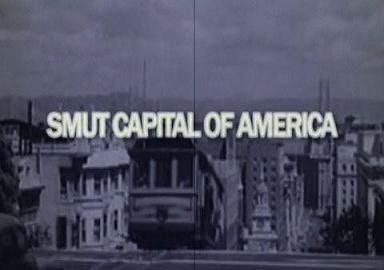
San Francisco is waiting for its Boogie Nights. Unbeknownst to Hollywood, our fair berg was the infant creche of hardcore pornography, spawning a subculture of porn theaters that thrived despite police harassment and political pressure.

We were number one! Luckily, a few brave men are resurrecting our porn golden age money shot – read on for a first look at documentary The Smut Capital of America and an interview with the director himself, Michael Stabile.


Smut Capital is by no means Stabile’s first porn rodeo. The co-editor of Gay Porn Blog, he and Smut Capital editor-cinematographer Ben Leon are both mainstays in the SF gay porn scene. The two were researching their upcoming doc on the life of gay smut powerhouse Falcon Studios founder Chuck Holmes when Stabile came across a New York Times article that inspired the title of their new project, which is a work in progress for which the team is fundraising in order to release the finished film in 2011.

“Until then I’d always thought of it as an industry that emerged from LA, but San Francisco was actually the city that birthed the porno theater. It was the beginning of the sexual revolution, and in a lot of ways these directors were documenting this newly found freedoms.” Stabile attributes the renaissance to hippie women “with really no hangups,” a progressive zeitgeist that had seized the city in the late sixties and early seventies, and film processing studios that were willing to develop sexually explicit material. By the era’s zenith in 1972, there were porno film theaters in neighborhoods across the city.

Not that everyone was down to get all that action on screen. Dianne Feinstein, first in her post as the city’s first female president of the Board of Supervisors and then as SF’s first female mayor, led a crusade focused on cleaning up the Tenderloin, which incidentally included sweeping the neighborhood free of its supply of adult movie houses. What ensued was an orchestrated harassment policy that different porn theaters dealt with in different ways.

Established theaters, Stabile says, actually benefited from the police and media persecution. “They’d come in with cameras, it’d be on the five o clock news and it would be great for them,” he says. “Advertising was very limited at the Chronicle. Feinstein would come in with her troops and would detail everything that was going on. Suddenly there was a way to talk about it, so people would flood into the theaters.” The Mitchell Brothers grew so adept at playing the cat and mouse game, he says, that they would post Feinstein’s office number on their marquee under the words “call for a good time.”

But not everyone prospered. Smaller theaters that depended on a few workers to operate, like Alex DeRenzy’s Screening Room, suffered when police would take key staffers on pointeless joyrides around town before booking them on charges of vice crime. Eventually factors like these, and more importantly the advent of video porn in the 1980s pulled the adult film business down to Los Angeles.

The move shifted the purpose of sex films away from their original role in the Sexual Revolution. Says Stabile “People were doing it here because they enjoyed it, because they wanted their own sexualities represented. It’s not like that in LA for the most part, where even a lot of the gay studios are owned by straight men looking to turn a profit.”

But don’t worry, the party’s not over. One of Stabile’s main goals with the film is not just to highlight good sex gone by, but that which cums and goes even today. When asked whether SF is still a presence in the world of porn, he had no equivocation. “Its one of the great untold stories in the local media – San Francisco has a huge porn presence. Raging Stallion, Falcon, Hot House – seven of the top ten gay porn studios are located up here, there’s Kink.com, porn writers like Violet Blue,” he says.

It appears that the tech savvy and sexual freedom that led to our capital crowning are still alive and well on these city streets. Phew! Now you may now go back to your regularly scheduled local porn browsing.

Our Weekly Picks: September 29-October 5, 2010

0

WEDNESDAY 29

MUSIC

Kylesa

The devil went down to Georgia, and sprinkled enough hoodoo in the water to cultivate quite a metal scene. But it ain’t just Mastodon and Baroness splitting ears in the town squares. Kylesa — you know, the band with the two drummers, the badass chick guitarist-vocalist (she’s one of two guitarists and one of three vocalists), and the coolest cover art in the biz — is about to drop its fifth full-length, Spiral Shadow. The title of lead track “Tired Climb” belies the album’s fierce riffs and heavy energy. But let’s stop pretending you weren’t going to this show anyway — local mighties High on Fire headlining the glorious Great American? With the added bonus of two ironclad openers? Can’t miss, hesher. (Cheryl Eddy)

With High On Fire and Torche

8 p.m., $20

Great American Music Hall

859 O’Farrell, SF

1-888-233-0449

www.gamhtickets.com


THURSDAY 30

DANCE

Mark Morris Dance Company

Just because his company has become a perennial audience favorite doesn’t mean we should ignore Mark Morris. After all, the acclaim is justified: there’s nobody else who — after 30 years of working — can still surprise and delight (and sometimes disappoint) us the way Morris can. This time he is bringing three West Coast premieres. If the buzz wafting in from the East Coast is any indication, the new Socrates set to Satie’s oratorio “Socrate” (piano and voice) should be outstanding. It will be performed with the stark Behemoth — Morris’ only no-music piece — and Looky, his bemused take on pretentious museum-going in which the inmates take over the show. (Rita Felciano)

Thurs/30–Sat/2, 8 p.m.;

Sun/3, 3 p.m., $34–$72

Zellerbach Hall

Bancroft at Telegraph, UC Berkeley, Berk.

(510) 642-9988

www.calperformances.org


DANCE

Lizz Roman and Dancers

San Francisco’s Gingerbread Danzhaus is the only venue in the city to provide dance studio space to professional companies while also serving as a nightclub in the after-hours. This weekend it will also be the seat of Lizz Roman and Dancers new site-specific work This Dance This Place, which aims to bring the architecture of Danzhaus to life through an interactive dance performance challenging viewers to really see the nooks and crannies of the space. With a live sound score, collaborative lighting and costume design, and dancers streaming from every danceable doorway, crevice, and ledge, this performance is sure to provoke thought on where and how dance is presented. (Emmaly Weiderholt)

Through Oct. 9

Thurs.–Sat., 8 p.m., $20

Danzhaus

1275 Connecticut, SF

www.lizzromananddancers.com


FRIDAY 1

DANCE

Nina Haft and Company

A few years ago, visitors to Zaccho Dance Theatre’s third-story performance space could look down onto San Francisco’s last working farm. The Bayside venue seems uniquely appropriate for Nina Haft’s site-specific Debris/Flows. Collaborating with German-born, Italian-trained Claudia Borna, the two women transformed this former warehouse space into a natural environment for 12 dancers to explore both outer and inner landscapes. In addition to watching the performance, audiences can contribute to Zaccho’s environment by planting seeds and eating food from local gardens. The dozen dancers will help you navigate the labyrinth. (Felciano)

Fri/1–Sat/2, 8 p.m. (also Sat/2, 6 p.m.);

Sun/3, 6 p.m., $12–>$18

Zaccho Dance Theatre

1777 Yosemite, Suite 330, SF

(510) 325-5646

www.brownpapertickets.com


MUSIC

Drums

A lot of the Drums’ music mines the sounds of the 1950s, smooshing it up with the more saccharine output of the Smiths and New Order, but there’s a lull halfway through the New York City band’s debut album where its intentions really become clear. A slower song than the rest of the album, “Down By The Water” mimics the believable earnestness of ’50s crooners completely without pretension. The Drums have been accused of lacking individualism, which is a fairly valid criticism considering you could drop some of their more upbeat tracks into a Smiths album and no one would bat an eye. But in latching onto eras where simplicity was something to be celebrated, the band succeeds by being sincere when tongue in cheek would have been way “cooler.” (Peter Galvin)

With the Young Friends

9 p.m., $15

Independent

628 Divisadero, SF

(415) 771-1421

www.theindependentsf.com


DANCE

SMUIN BALLET

Although the Smuin Ballet may be considered a relatively small ballet company, there’s nothing small about the renowned choreographers and kick-ass dancers Smuin attracts. Founded by Michael Smuin in 1994 and now under the artistic direction of Celia Fushille, the company presents classical ballet with a contemporary edge. It kicks off its 2010-11 home season with a fall program that includes the world premiere of Oh, Inverted World — set to the indie rock band the Shins and choreographed by the illustrious Trey McIntyre — as well as Michael Smuin’s twangy Bluegrass/Slyde and his more lyrical Brahms-Haydn Variations. (Katie Gaydos)

Through Oct. 9

8 p.m. (no show Mon/4);

Additional shows Sat/2–Sun/3, 2 p.m.), $20–$62

Palace of Fine Arts Theater

3301 Lyon, SF

(415) 978-2787

www.smuinballet.org


SATURDAY 2

FILM

The Incredible Shrinking Man

Ever get the feeling you’re being dwarfed by what’s going on around you in life? Well, that’s exactly what happens to the main character in the 1957 Jack Arnold sci-fi classic The Incredible Shrinking Man, in which a freak accident causes him to get smaller and smaller with every passing day. Featuring a host of inventive special effects and memorable scenes (among them his epic battle with a house spider), the movie screens tonight as part of the San Francisco Film Society’s annual “Film In The Fog” event. Let’s hope nature cooperates and offers up a little bit of a spooky mist to make for a cool and creepy early Halloween celebration. (Sean McCourt)

5 p.m. picnic, 7 p.m. film, free

Presidio, Moraga at Arguello, SF

www.sffs.org


MUSIC

The Sword

Austin, Texas, retro-metallers the Sword are in space. This summer, new album Warp Riders saw them rocket into full-fledged concept album territory, weaving a epic saga of interplanetary travel and mystical sci-fi warriors on a loom composed of Orange amplifiers. As fall descends, they’re taking the tunes and tales on the road, and their SF date marks the second stop on a grueling national run. Fans will be eager to bask in a bevy of new songs performed live, and the band’s adroit playing on the new record bodes extremely well for the experience. Prepare for blast-off! (Ben Richardson)

With Karma to Burn and Mount Carmel

8:30 p.m., $20

Regency Ballroom

1290 Sutter, SF

1-800-745-3000

www.theregencyballroom.com


FILM

American Splendor

Who is Cleveland’s most beloved figure? A few months ago the answer may have seemed obvious: superhuman baller LeBron James. At least until he got on the ESPN grandstand and announced he was going to Miami. Four days later Harvey Pekar died, and it put everything in perspective. A cranky file clerk who wrote wonderfully mundane comics about life’s pedestrian absurdities for more than 30 years, Pekar was an unlikely fit for the limelight (with legendary Letterman appearances to prove it). Fame found him nonetheless, culminating in this 2003 biopic featuring not only a suitable portrayal by the continually wincing Paul Giamatti, but also the inimitable figure himself. A fine entry into a persistent legacy. (Ryan Prendiville)

8:30 p.m., $5.50–$9.50

Pacific Film Archive

2575 Bancroft, Berk.

(510) 642-5249

www.bampfa.berkeley.edu


SUNDAY 3

EVENT

Estria Invitational Graffiti Battle

Graffiti’s outgrown furtive leaps over cyclone fencing and dark alley deployment. These days street art is a community builder, the old pros from the 1980s golden age having become teachers and respected figures in the art world. But that doesn’t mean it’s gotten stuffy. Case in point: Bay Area graff legend Estria Miyashiro’s free annual spray-off in the park. Names that are no strangers to the city’s bus stops, brick walls, and freight trains will be present to participate in and judge live painting: Nate1, Crayone TWS, and 2009’s champ Vogue TDK among them. Mix in stencil workshops, a youth sketchbook competition, and artist signings, and you’ve got a multi-generational homage to the art of aerosol. (Caitlin Donohue)

11 a.m.–5 p.m., free

DeFremery Park

1651 Adeline, Oakl.

(510) 895-5700

www.estriabattle.com


MONDAY 4

MUSIC

Guitar Wolf

In the future, anthropologists will study Guitar Wolf to calculate the speed of pop culture. The musical equivalent of Engrish, the trio channels Ramones-era punk rock (leather and all) to create Japanese “jet rock ‘n’ roll,” a louder, noisier, and enjoyably unintelligible hybrid. Tonight the band ends its first U.S. tour in five years, also the first since the death of bassist Billy. “However, it is not, not necessary to worry,” lead singer Seiji says on the band’s website. “New bassist player U.G.! U.G. is terrible! It is jet terrible! It fight! It fight rock! I will show Guitar Wolf is reborn to you!” (Prendiville)

With Hans Condor, Midnite Snaxxx, and DJ Classic Bar Music

9 p.m., $15

Bottom of the Hill

1233 17th St., SF

(415) 621-4455

www.bottomofthehill.com


TUESDAY 5

MUSIC

Guided By Voices

Ringleader Robert Pollard is rounding up the rest of indie rock giants Guided By Voices for a one-time reunion tour to commemorate Matador Records’ 21st anniversary. And this isn’t some half-ass reunion, either. This is the GBV lineup of the mid-1990s that spawned much-beloved albums such as Bee Thousand and Alien Lanes. Pollard’s been just as prolific on his own as he was before the group’s breakup in 2004, but there is just no comparing his solo work to GBV’s catalog. Don’t miss your chance to see one of the most influential indie rock bands of the past 20 years one last time. (Landon Moblad)

With Times New Viking

8 p.m., $24

Warfield

982 Market, SF

(415) 345-0900

www.thewarfieldtheatre.com 


The Guardian listings deadline is two weeks prior to our Wednesday publication date. To submit an item for consideration, please include the title of the event, a brief description of the event, date and time, venue name, street address (listing cross streets only isn’t sufficient), city, telephone number readers can call for more information, telephone number for media, and admission costs. Send information to Listings, the Guardian Building, 135 Mississippi St., SF, CA 94107; fax to (415) 487-2506; or e-mail (paste press release into e-mail body — no text attachments, please) to listings@sfbg.com. We cannot guarantee the return of photos, but enclosing an SASE helps. Digital photos may be submitted in jpeg format; the image must be at least 240 dpi and four inches by six inches in size. We regret we cannot accept listings over the phone.

Expansive roles

0

arts@sfbg.com

STAGE Ogun Size has shaped up into a complex, intriguing character across the first two plays staged so far in the Bay Area debut of Terrell Alvin McCraney’s The Brother/Sister Plays. The Magic Theater last week opened The Brothers Size, the second play in the celebrated trilogy, in an electric production sharply directed by Octavio Solis. Its choice minimalism (including a spare but evocative car garage set from scenic designer James Faerron and scenic/lighting designer Sarah Sidman) gives just the right lift to three fine, exuberant performances and full rein to the 20-something playwright’s delicate, volatile drama set in and around a Louisiana bayou housing project.

Ogun is an important but secondary character in the first play, In the Red and Brown Water (now up at Marin Theater Company, as part of an unprecedented three-company production that includes an offering by ACT in late October). That play focuses instead on his onetime love, Oya. Her dire fate gets alluded to in passing here, with understated pain, as Ogun (played by the impressively dynamic Joshua Elijah Reese) recounts neighborhood news to brother Oshoosi (a vital and wry Tobie Windham). Recently paroled, the excitable, silver-voiced, and perennially irresponsible Oshoosi is very reluctantly working alongside (and under the wary eye of) his older brother in the latter’s automotive repair shop.

Ogun’s wary eye soon also falls on Elegba (played with a magnetic, mercurial charm by a terrific Alex Ubokudom), the third and final character in a coiled little story of love, loyalty, jealousy, and desire that teases meaning from notions of brotherhood while brooding on the inevitable singularity and alienation at the heart of life. Elegba was already deemed complex by Oya in the first play, but here he is both more lifelike and ethereal, grounded in an almost preternatural obsession to have and control his former prison mate, Oshoosi. The jealous battle for Oshoosi that ensues is alternately boisterous, eerie, and wrenching. In the end, we watch Ogun Size grow larger — an expanse of feeling that increases the capacity of a heart bereft but open — as he finds himself, per force, alone again. Expanding like the universe itself, Ogun’s fate makes the infinity of his love still larger.

GOING OUT TO PLAY


A friend and I went to a restaurant the other day, and while it’s always a little like being in a play, this was ridiculous — also stimulating, and even quietly ecstatic. I won’t give you the intimate, somewhat bizarre details of our half-hour interaction. Not because it’s private, but because it’s up for grabs: you can have it yourself if you want, exactly as we did.

True, it was never going to be an ordinary lunch. We expected something unusual since, although we entered a real San Francisco eatery, it wasn’t a meal we were after but a performance, designed by the London-based experimental troupe Rotozaza. Etiquette, which runs through this weekend courtesy of Yerba Buena Center for the Arts, is participatory theater approaching some sort of outer limit: the audience goes Ark-like by twos (you can be paired up with another bewildered stranger or go with a friend) and performs the piece for one another. This takes place amid a roomful of unwitting patrons there strictly for the usual, namely a meal.

The first thing you notice is that this table doesn’t come with a menu, not even a bar list. There’s a glass of water, but you’ll hesitate to touch it. Instructions come via headsets. There are other intricacies best not revealed here, but as the encounter unfolds you find the lines between theater and "real life" dissolving, and your identity softening at the edges like a once-crusty crouton atop a bowl of soup. Meanwhile, the headphones, the concentration of your partner, the voice in your ear, the world of the tabletop, the knowledge that you are in a play, watching a play, and that, hell, you are the play — all this makes it surprisingly easy to shrug off any inhibition you might otherwise feel about making a "scene" in a restaurant.

The scene is your own in that you inhabit it, but then it is also dictated to you, bound by certain constraints. This tension is part of the delight generated by the piece. The audience-member-as-performer accepts, just as any actor does, the work of the playwright and instructions of the director. Within that there is room for individual choice and interpretation, but any action or decision comes circumscribed by the larger form. Day-to-day we all play our parts, of course, more or less self-consciously. But I never realized what a relief it might be to have your everyday encounters literally scripted for you. I suddenly thought I knew why pirates have parrots on their shoulders. I’d naively assumed it was the man feeding lines to the bird.

While Etiquette‘s parts are gender-specific, the participants might be of any sex, no matter the role. In fact, the idea of liberation from ascribed roles comes woven, in subtly layered fashion, into the very narratives unfolding and overlapping across the table. If the foundation of identity relies on the cultural and social forms we inherit, how liberating it is, even momentarily, to sit down in public and embrace play in all its forms.

THE BROTHERS SIZE

Through Oct. 17, $20–$60

Magic Theatre

Fort Mason Center, Bldg D, SF

(415) 441-8822

www.magictheatre.org

ETIQUETTE

Through Oct. 3, $8–$10

Yerba Buena Center for the Arts

701 Mission, SF

(415) 978-2787

www.ybca.org

Do it Clean

0

arts@sfbg.com

MUSIC For over 30 years now, the Clean have been at the forefront of the New Zealand rock scene. Despite some early lineup changes and temporary breakups, the core of the band — Robert Scott and brothers Hamish and David Kilgour — continue to tour together, work on solo or side projects, and occasionally release a new album. For special insight into Kiwi rock and all things Clean, I decided to get in touch with San Francisco expat Barbara Manning, who will be opening for the group at the Independent with her new band, the Rocket 69.

Welcoming me into her house in Chico, Manning pointed to a stack of vinyl and a couple dozen CDs she’d pulled out in a living room stocked full of records. She fancies herself as having one of the most thorough personal collections of New Zealand music around, and after just a quick glance it was easy to see why.

“We probably don’t have time for New Zealand Rock Music 101,” Manning said. “So I’ll just put some Clean stuff on.”

In Manning’s opinion, despite a well-developed and underrated rock music scene that has thrived since the late ’70s, New Zealand rock and roll can really be narrowed down to three essential contributors — the Bats, the Chills, and the Clean. While all three groups have enjoyed various degrees of success, the Clean’s appeal has extended far beyond the borders of their native home to impact everything from ’80s power pop to ’90s indie rock to contemporary garage sounds.

“People incorrectly think that the Clean started rock music in New Zealand,” Manning said. “But they were the first ones to make America notice.”

From the bouncy keyboard melody and chugging bass line of the 1981 hit “Tally Ho” to the more exploratory and expansive feel of some of their later work, the Clean have always excelled at combining a good pop song with a rough-around-the-edges “hypnotic groove,” as Manning put it. Pavement and Yo La Tengo have gone on record singing the group’s praises, and more recently, artists such as Kurt Vile and the late Jay Reatard have made Clean-like recordings.

“The Clean have an edge to them that was especially fresh in the ’80s, when there was a ton of crap out there,” said Manning. “It was great hearing good, urgent, jangly pop songs that cut away the fat.”

Despite loving their music for decades and recording songs for one of David Kilgour’s solo albums, Manning — who lived in San Francisco from 1986 to 1998 — has never seen the Clean perform live. When bassist Robert Scott called to make sure she was coming to the group’s Bay Area show, she jumped at the opportunity to get involved.

“I said, ‘I’ll be there,'<0x2009>” Manning remembered, “<0x2009>’and how ’bout I open for you?'<0x2009>”

Manning’s new project includes Maurice Spencer on guitar, Jonathan Stoyanoff on bass, and Marcel Deguerre on drums. She said that those in attendance can expect a “power pop-heavy” set made up of material from her songbook and a handful of covers. Both her band and the Clean inject a sinister irreverence into the sometimes cookie-cutter world of guitar-driven pop. As Manning put it, “It’s always nice to hear jangly pop music that’s not all paisley and flowery.”

THE CLEAN

With the Rocket 69

Mon/4, 8 p.m., $18–$20

The Independent

628 Divisadero, SF

(415) 771-1421

www.theindependentsf.com


The test of the Tenderloin

16

caitlin@sfbg.com

This is a story about love and money. Or a story about love, money, and location. — Rebecca Solnit, Hollow City (Verso 2000)

It’s a sunny day in the most maligned neighborhood in San Francisco. I’m walking down a busy sidewalk with an excited Randy Shaw, long-time housing advocate. He’s giving me a tour of his Tenderloin.

“There’s history everywhere you look here,” he notes as we rush about the dingy blocks of one of the city’s most densely populated, economically bereft communities. In a half-untucked navy button-down and square-frame glasses, Shaw reels off evidence of this legacy faster than I can write it down and still maintain our walking pace.

To our left, Hyde Street Studios, where the Grateful Dead recorded its 1970 album American Beauty. Across the street, a ramshackle building that once housed Guido Caccienti’s Black Hawk nightclub, where the sounds of jam-fests by the likes of Billie Holiday and John Coltrane would echo out onto the streets during its heyday in the 1950s. Throughout its history, the Tenderloin has been renowned for its nightlife: music, theater, sex work — and the social space that occurs between them.

Shaw came to the Tenderloin 30 years ago as a young law student and founded and built the Tenderloin Housing Clinic, a nonprofit agency that is now one of the largest property owners in the neighborhood and employs more than 250 full-time workers. Shaw has spent the last few decades fighting to improve conditions in the single-room occupancy hotels, or SROs, once notorious for malfunctioning heating systems and mail rooms that would dump the letters for their hundreds of low-income residents into a pile on the floor rather than fit them into personal lock boxes (which now line the walls of THC’s lobbies).

But that activism isn’t the reason for this tour. No, today Shaw is showing me why tourism can work in the Tenderloin. The heavy iron gate of an SRO is quickly buzzed open as the doorman recognizes him. Inside, working-class seniors mill about aided by walkers — this particular property is an old folks’ home — but over our heads, affixed to a majestically high ceiling, looms a triple-tiered glass and metal chandelier, evidence of the area’s architecturally important past.

“When I show people this,” Shaw smiles at my amazement at this bling in a nonprofit apartment building, “they’re amazed at the quality of the housing.” Further down the road, we peep in at a vividly Moorish geometric vaulted ceiling and a lobby that once housed a boxing gym where Miles Davis and Muhammad Ali liked to spar. Both are now home to the inner city’s poorest residents.

Of course, it’s not just tours that we’re talking when it comes to Shaw’s plans for the future. Shaw has acquired a 6,400-square-foot storefront in the Cadillac Hotel on the corner of Eddy and Leavenworth streets, where he plans to open the Uptown Tenderloin Museum in 2012. He says it will showcase the hood’s historical legacy as well as house a nighttime music venue in the basement. The increased foot traffic, he says, will do good things for public safety (a problem that has been identified as a high priority by the resident-run Tenderloin Neighborhood Association) and bring business to the neighborhood’s impressive collection of small ethnic restaurants.

An increased focus on the Tenderloin’s heritage and public image, Shaw says, will translate to more jobs and a better quality of life for the people who live here. “My goal is to have this be the first area in an American city where low income people have a high quality of life,” he says.

If Shaw is correct, it will indeed be a first. Many cities have attempted to transform low income areas with arts districts — and the end result has typically been the displacement of the poorer residents. Coalition on Homelessness director Jennifer Friedenbach described the process: “Gentrification follows a very specific path. First come police sweeps, then the arts, then the displacement. That’s the path that we’re seeing. Hopefully we’ll be able to avoid the displacement part,” she says.

It’d be great if the Tenderloin took the road less traveled — but will it?

Shaw’s best-case scenario seems unlikely, according to Chester Hartman, a renowned urban planning scholar and author of the numerous studies of San Francisco history and the activist handbook Displacement: How to Fight It (National Housing Law Project 1982). Hartman doubts the Tenderloin will remain a housing option for the city’s poor, given its central location and market trends. “The question is, what proportion will move and what will stay?” he said in a phone interview.

Earlier this summer, the National Endowment of the Arts awarded the SF Arts Commission $250,000 toward an arts-based “revitalization of the mid-Market neighborhood.” The area, which is adjacent to the Tenderloin, is considered by many to be the more outwardly visible face of the TL. In truth, the two neighborhoods share many of the same issues and public characteristics, including high density living and prominent issues with drugs.

Amy Cohen, Mayor Gavin Newsom’s director of neighborhood business development, said the Newsom administration is using the money “to implement arts programming that would have an immediate impact on the street. These activities would then build momentum for the longer-term projects.” At this point, plans for that “immediate impact” have started with the installation of lights on Market Street between Sixth and Eighth streets. Two other projects are also in effect: a city-sponsored weekly arts market on United Nations Plaza and an al fresco public concert series.

It’s hard to distinguish these moves from a general trend toward rebranding the image of the Tenderloin. These streets have already seen Newsom announce a historic preservation initiative that put $15,000 worth of commemorative plaques on buildings; it was also announced they would be added to the National Register of Historic Places, a move that allows property owners deep tax cuts for building renovations.

Cohen said her office has spent time trying to attract a supermarket (something the neighborhood, although flush with corner stores, currently lacks), but efforts seem to be faltering. “Grocery store operators and other retailers perceive that the area is unsafe and have expressed concerns about the safety of their employees and customers,” Cohen said. “The arts strategy makes sense because it builds on the assets that are there. Cultivating the performing and visual arts uses that are already succeeding will ultimately enhance the neighborhood’s ability to attract restaurants, retail, and needed services like grocery stores.”

These days, many of the small businesses in the area have window signs hyping “Uptown Tenderloin: Walk, Dine, Enjoy” over graphics of jazzy, people-free high-rises. Looking skyward, one observes the recent deployment of tidy street banners funded by the North of Market/Tenderloin Community Benefit District that pay homage to the number of untouched historic buildings in the neighborhood. The banners read “409 historic buildings in 33 blocks. Yeah, we’re proud.”

Figuring out who benefits from these new bells and whistles can seem baffling at times. Even the museum plan, which Shaw says will draw inspiration in part from New York’s Tenement Museum, has drawn criticism. A July San Francisco Magazine blog post was subtitled “An indecent proposal that puzzled even the San Francisco Visitors Bureau” and likened Shaw’s attempts to the “reality tourism movement” that takes travelers through gang zones in L.A. and poverty-stricken townships in South Africa.

This seems to be a misconstruction of what he’s attempting. “You know what no one ever calls out? The Mission mural tours, the Chinatown tours,” Shaw says.

And Shaw scoffs when I bring up that PR bane of the urban renewer: gentrification. He takes me through a brief rundown of the strict zoning laws in the Tenderloin, adding that many people don’t believe that poor people have the right to live in a high-quality neighborhood: “I haven’t been down here for 30 years to create a neighborhood no one wants to live in.”

Indeed, thanks to the efforts of Shaw and others, it would be hard for even the most determined developers to get rid of the SRO housing in the Tenderloin.

In the 1980s, community activists struggled to change the zoning designation of the neighborhood, which lacked even a name on many city maps. The area was zoned for high-rise buildings and was being encroached on by the more expensive building projects of tourist-filled Union Square, Civic Center, and the wealthier Nob Hill neighborhood. Their success came in the form of 1990s Residential Hotel Anti-Conversion Ordinance, which placed strict limits on landlords flipping their SROs into more expensive housing.

Hartman remains unconvinced of the efficacy of the protective measures activists have won in years past; indeed, even SRO rental prices have soared. According to the Central City SRO Collaborative, in the decade after the Anti-Conversion Ordinance, rental prices increased by 150 percent, not only pricing residents out of the Tenderloin but out of the city. “Where do they move?” Hartman asked. “It’s probably the last bastion of low-income housing in the city. That changes the class composition of the city.”

“The neighborhood has been changing slowly but steadily,” says District Six Sup. Chris Daly when reached by e-mail for comment on the Tenderloin’s future. He writes that rents in the neighborhood have been consistently rising and that several condo development proposals have crossed his desk. Daly has been involved in negotiating “community benefits” and quotas for low income housing in past mid-Market housing projects, but has been disappointed by subsequent affordable housing levels in projects like Trinity Plaza on the corner of Sixth and Market streets. In terms of the Tenderloin, he said, “it is untrue to say that the neighborhood is immune from gentrifying forces. It is shielded, but not immune.”

But some see the influx of art-based attention to the area as a possible boon to residents. Debra Walker, a San Franciscan artist who is running for the District 6 supervisor post, said she believes arts can be used “organically to resolve some of the chronic problems in the Tenderloin, street safety being the primary one in my mind.”

Though most of her fellow candidates expressed similar views when contacted for this story, western SoMa neighborhood activist Jim Meko said he thinks artists in the area are being used to line the pockets of the real estate industry. “The idea of creating an arts district is an amenity that the real estate dealers want to see because it makes the neighborhood less scary for their upper class audience” he says.

The area clearly has a rich legacy of nightlife, arts, and theater. The Warfield is here, as is American Conservatory Theater, the Orpheum, and the Golden Gate. So is the unofficial center of SF’s “off-off Broadway district,” which includes Cutting Ball Theater and Exit Theater. The Exit has been located in the TL since its first performance in 1983, held in the lobby of the Cadillac Hotel, and sponsors the neighborhood’s yearly Fringe Festival. There are art galleries and soup kitchens, youth and age, and more shouted greetings on the streets than you’ll hear anywhere else in the city.

No one is more aware of this diversity of character than Machiko Saito, program director of Roaddawgz, a TL creative drop-in center and resource referral service for homeless youth. I met Saito in the Roaddawgz studio, which occupies a basement below Hospitality House, a homeless community center that also houses a drop-in self-help center, an employment program, men’s shelter and art studio for adults in transition.

Despite its being empty in the morning before the open hours that bring waves of youth to its stacks of paints and silk-screens, Roaddawgz is in a glorious state of bohemian dishevelment that implies a well-loved space. It could be a messy group studio if not for the load-bearing post in the center of the room covered with flyers for homelessness resource centers and a “missing” poster signed “your Mom loves you.”

We talk about how important it is that the kids Saito works with have a place like this, a spot where they can create “when all you want to do is your art and if you can’t you’ll die.” A career artist herself, she cuts a dramatic figure in black, safety pins, and deep red lipstick painted into a striking cupid’s bow. Her long fingernails tap the cluttered desk in front of her as she tells me stories from the high-risk lives that Roaddawgz youth come to escape: eviction, cop harassment, theft, rape.

The conversation moves to some of the recent developments in the area. Saito and I recently attended an arts advisory meeting convened by the Tenderloin Economic Development Corporation’s executive director, Elvin Padilla, who has received praise from many of the TL types I spoke with regarding his efforts to connect different factions of the community. Attendees ranged from a polished representative from ACT, which is considering building another theater, for students, in a space on Market and Mason streets, to heralded neighborhood newbies Grey Area Foundation, to Saito and longtime community art hub Luggage Store’s cofounder Darryl Smith. Talk centered on sweeping projects that could develop a more cohesive “identity” for the neighborhood.

I ask Saito how it felt for her to be involved with a group whose vision of the neighborhood might be focused on slightly different happenings than what she lives through Roaddawgz. She says she’s been to gatherings in the past where negative things about the Tenderloin were highlighted. Of Padilla’s arts advisory meeting, she says, “I think that one of the reasons I wanted to go was that it’s important [for attendees] to remember that there’s a community out there. Things can get really complicated. It’s hard to come up with decisions that affect everyone positively. If we’re going to say, ‘The homeless are bad; the drug addicts are bad; the business owners that don’t beautify their storefronts…” She trails off for a moment. “I don’t want to lose the heart of the Tenderloin.”

In yet another Tenderloin basement — this one housing the North of Market-Tenderloin CBD, an organization that is known for its work employing ex-addicts and adults in transition — Rick Darnell has created the Tenderloin Art Lending Library. The library accepts donated works from painters and makes them available for use by Tenderloin residents, many of whom have recently moved into their SRO housing and are in need of a homey touch.

Darnell is rightfully ecstatic at the inclusive nature of his library, but has been hurt over its reception at an arts advisory meeting he attended to publicize its creation. “Someone whispered under their breath ‘I would never lend anything to anyone in the Tenderloin,’ ” he tells me. The exclusion that Saito and Darnell sometimes feel highlights the reality that the definition of the Tenderloin might well vary, even among those who are set on making it “a better place.” The arts community appears to suffer from fractures that appear along the lines of where people live, their organizational affiliation, their housing status, and how they think art should play a role in community building.

Sammy Soun is one Tenderloin resident who would welcome an increased focus on art in the Tenderloin. Soun was born in a Thailand refugee camp to Cambodian parents fleeing the civil wars in their country. He grew up in the Tenderloin, where his family lived packed into small studios and apartments.

But he was part of a community, with plenty of support, and lives in the neighborhood to this day, as do one of his four siblings and his daughter. Soun paints, does graffiti, draws — he’s considering transferring from City College to the San Francisco Art Institute. He has worked at the Tenderloin Boys and Girls Club for nine years, giving back to the kids he says “are the future. They’re going to be the ones that promote this place or keep it going — if they want to.” His sister, cousins, and uncles still live in the neighborhood. You might say he has a vested interest in the area’s future.

He finds the incoming resources for the Tenderloin arts scene to be a mixed bag. Soun has never been to the Luggage Store, although it’s one of the longtime community art hubs in the area. He can’t relate to the kinds of art done at the neighborhood’s recent digital arts center, Grey Area Foundation for the Arts, though he says the space has contacted him and friends to visit. His disconnect from the arts scene implies that future arts projects need to work harder on their community outreach — or even better, planning — with artists who call the Tenderloin home.

But Soun loves the new Mona Caron mural the CBD sponsored on the corner of Jones Street and Golden Gate Avenue. Well-known for her panoramic bike path mural behind the Church Street Safeway, Caron painted “Windows into the Tenderloin” after dozens of interviews and tours of the neighborhood with community members. Its “before and after” panels are a dummies’ guide for anyone seeking input on ways to strengthen the Tenderloin community — though the “after” does show structural changes like roads converted into greenways and roof gardens sending tendrils down the sides of buildings, the focal point is the visibility of families. Where children were ushered through empty parking lots single-file in the “before” section, the second panel shows families strolling, children running, a space that belongs to them.

Our interview is probably the first time somebody has asked Soun where he thinks arts funding in the Tenderloin should go. “For projects by the kids in the community,he said.

Truth be told, more art of any kind can only make the Tenderloin a better place — but if you’re trying to improve quality life, focus needs to be on plans that positively affect residents of all ages — art can be a vital part of that, but it should be one part of a plan that ensures rent control, safe conditions, and access to services. After all, if you’re going to rebrand the Tenderloin, you might want to look at the painting on the wall.

Stage listings

0

Stage listings are compiled by Guardian staff. Performance times may change; call venues to confirm. Reviewers are Robert Avila, Rita Felciano, and Nicole Gluckstern. Submit items for the listings at listings@sfbg.com.

THEATER

OPENING

Hamlet Alcatraz Island; 547-0189, www.weplayers.org. By donation. Opens Sat/2, call for time. Runs Sat-Sun, times vary. Through Nov 21. As part of an artistic residency, We Players presents an island-wide interactive performance of the Shakespeare play.

Kiss of Blood Hypnodrome Theatre, 575 10th; (800) 838-3006, www.brownpapertickets.com. $25-35. Opens Thurs/30, 8pm. Runs Thurs-Fri, 8pm. Through Nov 19. Thrillpeddlers presents its signature Halloween show, with three one-act Grand Guignol terror plays.

The Shining: Live The Dark Room, 2263 Mission; 401-77891, www.darkroomsf.com. $7-10. Opens Fr/1, 8pm. Runs Fri-Sat, 8pm. Through Oct 23. The Dark Room becomes the Overlook Hotel in this stage production of the horror classic.

ONGOING

Absolutely San Francisco Phoenix Theatre, Stage 2, 414 Mason; 433-1235, www.absolutelysanfrancisco.com. $20-25. Fri-Sat, 8pm. Through Oct 23. A one-woman musical starring Karen Hirst, with book and music by Anne Doherty.

Aida War Memorial Opera House, 301 Van Ness, 864-1330, www.sfopera.com. $25-320. Wed/29, 7:30pm; Sat/2, 8pm; Oct 6, 7:30pm. San Francisco Opera presents Verdi’s classic, a co-production with English National Opera and Houston Grand Opera.

And Then They Came for Me: Remembering the World of Anne Frank New Conservatory Theatre Center, 25 Van Ness; 861-8972, www.nctcsf.org. Call for reservations. Mon-Thurs, 10 and 11:45am. Through Oct 10. YouthAware Educational Theatre presents a multimedia play by James Still, directed by Sara Staley.

Anita Bryant Died For Your Sins New Conservatory Theatre Center, 25 Van Ness; 861-8972, www.nctcsf.org. $24-40. Wed-Sat, 8pm; Sun, 2pm. Through Oct 24. New Conservatory Theatre Center presents a show by Brian Christopher Williams.

The Brothers Size Magic Theatre, Bldg D, Fort Mason Center; 441-8822, www.magictheatre.org. $20-60. Dates and times vary. Through Oct 17. Magic Theatre presents the West Coast premiere of Tarell Alvin McCraney’s play, directed by Octavio Solis.

Cat on a Hot Tin Roof Actors Theatre, 855 Bush; 345-1287, www.actorstheatresf.org. $26-38. Wed-Sat, 8pm. Through Oct 22. Actors Theatre presents Tennessee Williams’ sultry, sweltering tale of a Mississippi family, directed by Keith Phillips.

*Etiquette Yerba Buena Center for the Arts, 701 Mission; 978-2787, www.ybca.org. $8-10. Thurs-Sat, noon, 1pm, 2pm, 3pm, 4pm, 5pm, 6pm, 7pm, 8pm; Sun, noon, 1pm, 2pm, 3pm, 4pm, 5pm, 6pm. Through Sun/3. Rotozaza presents a participatory performance piece for two people.

*Faux Real Climate Theater at TJT, 470 Florida; (800) 838-3006, www.brownpapertickets.com. $15-20. Wed-Sat, 8pm (also Sat/9, 10pm). Through Oct 9. A drag queen stripped bare? Not on your life. But in baring some soul and some truth (“two lies” per), Fauxnique (aka Monique Jenkinson; aka a woman as a man as a woman&ldots;) does some productive and fascinating (re)working of this sly semi-confessional form. In a show that begins by asking, via David Bowie, “whatchya gonna say to the real me?”, Fauxnique undresses drag by singing (very ably) as often as syncing and otherwise playing knowingly with the “reveals” inherent in the drag tradition, taking audiences back with her to high school in Denver in the 1980s for a herstory lesson like few others. Questions about identity and art mingle with hip, hilarious, wonderfully “haute,” and seriously hardworking solo cabaret (assisted by transgresser-dresser and prop boy Kegan Marling). Originally unveiled in 2009, and fresh from a London debut, Faux Real returns for an extended but still too-brief run courtesy of the mighty little Climate Theater, currently ensconced in the Jewish Theatre’s luxurious little space. (Avila)

Futurestyle ’79 Off-Market Theater, Studio 250, 965 Mission; (8008) 838-3006, www.brownpapertickets.com. $15-20. Wed, 8pm. Through Oct 27. A fully improvised episodic comedy played against the backdrop of SF in 1979.

IPH… Brava Theater, 2781 24th St, 647-2822, www.brava.org. $15-35. Thurs-Sat, 8pm; Sun, 3pm (also Mon/4, 8pm). Through Oct 16. Brava Theatre and African-American Shakespeare Company present the US premiere of an adaptation of Iphigenia at Aulis.

Jerry Springer the Opera Victoria Theatre, 2961 16th; www.jerrysf.com. $20-36. Wed-Sat, 8pm. Through Oct 16. Ray of Light Theatre presents the West Coast premiere of the operatic farce by Stewart Lee and Richard Thomas.

KML Holds the Mayo Zeum Theater, 221 4th St; www.killingmylobster.com. $10-20. Thurs-Fri, 8pm; Sat, 7 and 10pm; Sun, 7pm. Through Sun/3. Killing My Lobster presents its fall comedy show, directed by co-founder Paul Charney.

Last Days of Judas Iscariot Gough Street Playhouse, 1620 Gough; (510) 207-5774, www.CustomMade.org. $10-30. Thurs-Sat, 8pm; Sun, 7pm. Through Oct 30. Custom Made Theatre presents Stephen Adly Guirgis’ meditation on the meaning of forgiveness.

Olive Kitteridge Z Space at Theater Artaud, 450 Florida; (800) 838-3006, www.zspace.org. $20-40. Wed-Thurs, 7pm; Fri-Sat, 8pm; Sun, 5pm. Through Oct 10. Page-to-stage company Word for Word takes on two chapters’ worth of Elizabeth Strout’s celebrated 2008 novel, comprised of a loosely connected set of stories surrounding the title character (played with cunning subtlety by Patricia Silver) and her immediate circle in a coastal town in Maine. In “Tulips,” we find the thorny but shrewd Olive, a former math teacher, and her patient husband Henry (Paul Finocchiaro), the town’s longtime pharmacist, transitioning not so smoothly into their retirement years. Olive—itchy, cantankerous and vaguely at a loss despite her sharp wit—resents her grown son’s (Patrick Alparone) happily distant life in New York and battles with the neighbors until her husband’s stroke leaves her at sea, unexpectedly vulnerable and open to the kindness of neighbors and strangers alike (played by an ensemble that includes Jeri Lynn Cohen, Nancy Shelby, and Michelle Belaver). In “River,” Olive, now a widow, begins a gradual, unlikely and bumpy romance with a recently widowed former academic (Warren David Keith). Director Joel Mullennix grabs hold of colorful details along the way—like the summer influx of rollerbladers and bicyclists—to further enliven the verbatim staging of these stories, but the effort can feel a little forced at times, as if betraying a sense that these well-acted, gently poetical and thoughtful stories and their complex protagonist do not always make for the most stimulating drama. (Avila)

A Picasso Royce Gallery, 2901 Mariposa; (866) 811-4111, www.apicassoonstage.com. $12-28. Thurs-Sat, 8pm. Through Oct 9. Expression Productions presents Jeffery Hatcher’s drama about the authenticity of three Picasso paintings.

Pinocchio Young Performers Theatre, Fort Mason Center, Bldg C, Third Floor, Room 300; 346-5550, www.ypt.org. $7-10. Sat-Sun, 1 and 3:30pm. Through Oct 10. Young Performers Theatre presents a new production of Carlo Collodi’s puppet tale.

*The Real Americans The Marsh MainStage, 1062 Valencia; (800) 838-3006; www.themarsh.org. $20-50. Wed-Fri, 8pm; Sun, 5pm. Through Nov 6. The fifth extension of Dan Hoyle’s acclaimed show, directed by Charlie Varon.

*Scapin American Conservatory Theatre, 415 Geary; 749-2228, www.act-sf.org. $10-90. Tues-Sun, times vary. Through Oct 23. Bill Irwin, the innovative former Pickle Family clown and neo-vaudevillian turned Broadway star, makes a San Francisco return at the helm—and in the title role—of American Conservatory Theater’s production of Moliere’s classic farce. It’s an excuse for some arch meta-theatrical high jinx as well as expert clowning, a love fest really, with many fine moments amid a general font of fun whose heady purity seems like it should fall under some FDA regulation or other—clearly, somebody has paid someone to look the other way, and for once the corruption is unreservedly welcome. Joining the fun is Irwin’s old comrade-in-arms and, here, sacks, Geoff Hoyle, as miserly and dyspeptic daddy Geronte. Other ACT regulars and veterans flesh out a winning cast, among them the ever versatile and inimitable Gregory Wallace as Octave, a flouncing Steven Anthony Jones as put-out patriarch Argante, René Augesen as boisterously unlikely “virgin” Zerbinette, and a wonderfully adept and scene-stealing Jud Williford in the role of Scapin sidekick Sylvestre. As for Irwin, his comedic sensibility shows itself scrupulously apt and timeless at once, and his sure, lithesome performance intoxicating and age-defying. As a director, moreover, he gives as generously to each of his fellow performers as he does to his adoring, lovingly tousled audience. (Avila)

The Secretaries Boxcar Playhouse, 505 Natoma; 255-7846, www.crowdedfire.org. $15-25 (pay what you can previews). Wed-Sat, 8pm. Through Oct 9. Crowded Fire revives the 1994 black comedy by New York’s Five Lesbian Brothers, a gleefully inappropriate bit of feminist satire that feels like the love child of John Waters and Valerie Solanas. Set in the front offices of the Cooney Lumber Mill in Big Bone, Oregon (delightfully rendered in Nick A. Olivero’s scenic design with New Yorker-like illustrations of the surrounding environs), the story follows narrator Patty (Elissa Beth Stebbins) as she recounts her initiation into a snappy coven of office ladies who not-so-secretly fell (rather than fall for) the town’s lumberjacks as if they were so much old growth forest. The mayhem and humor amuse, but probably seemed a lot fresher 16 years ago, making the simple plot seem thinly stretched. Nevertheless, the play’s details are nicely taken care of in artistic director Marissa Wolf’s fluid staging, featuring lots of play with fluids and a robust ensemble. In addition to Stebbins’s well-wrought and raunchy innocent, Leticia Duarte rocks her power-suit commandingly as no-nonsense supervisor and pack/pact-leader Susan; Eleanor Mason Reinholdt proves scarily endearing as the deceptively mincing, food-obsessed Peaches; Khamara Pettus has Norma Desmond eyes as Susan’s jealous onetime favorite Ashley; and Marilee Talkington approaches comic perfection in lovingly crafted twin roles: the boundingly predatory butch Dawn; and Patty’s hetero love interest and sexual-harassment-workshop–graduate, Buzz. (Avila)

BAY AREA

Angels in America, Part One Pear Avenue Theatre, 1220 Pear, Mtn View; (650) 254-1148, www.thepear.org. $15-30. Thurs-Fri, 8pm; Sat, 2 and 8pm; Sun, 2pm. Through Oct 16. Pear Avenue Theatre kicks off its fall “Americana” program with the Tony Kushner play.

Bleacher Bums Contra Costa Civic Theatre, 951 Pomona, El Cerrito; (510) 524-9132, www.ccct.org. $18. Fri-Sat, 8pm; Sun, 2pm. Through Sun/3. A sports comedy conceived by Joe Mantegna, directed by Joel Roster.

La Cage Aux Folles San Mateo Performing Arts Center, 600 N. Delaware; (650) 579-5565, www.broadwaybythebay.org. $20-48. Dates and times vary. Through Sun/3. Broadway By the Bay presents the gay musical based on the play of the same title.

*Compulsion Berkeley Repertory Theatre, Thrust Stage, 2025 Addison; (510) 647-2949, www.berkeleyrep.org. $29-85. Dates and times vary. Through Oct 31. Director Oscar Eustis of New York’s Public Theater marks a Bay Area return with an imaginatively layered staging of Rinne Groff’s stimulating new play. Compulsion locates the momentous yet dauntingly complex cultural-political outcomes of the Holocaust in the career of a provocative Jewish American character, Sid Silver, driven by real horror, sometimes-specious paranoia, and unbounded ego in his battle for control over the staging of Anne Frank’s Diary. A commandingly intense and fascinatingly nuanced Mandy Patinkin plays the brash, litigious Silver, based on real-life writer Meyer Levin, a best-selling author who obsessively pursued rights to stage his own version of Anne Frank’s story. The forces competing for ownership of, and identification with, Anne Frank and her hugely influential diary extend far beyond her father Otto, Silver, or the diary’s publishers at Doubleday (represented here by a smooth Matte Osian in a variety of parts; and a vital Hannah Cabell, who doubles as Silver’s increasingly alarmed and alienated French wife). But the power of Groff’s play lies in grounding the deeply convoluted and compromised history of that text and, by extension, the memory and meanings of the Holocaust itself, in a small set of forceful characters—augmented by astute use of marionettes (designed by Matt Acheson) and the words of Anne Frank herself (partially projected in Jeff Sugg’s impressive video design). The productive dramatic tension doesn’t let up, even after the seeming grace of the last-line, which relieves Silver of worldly burdens but leaves us brooding on their shifting meanings and ends. (Avila)

*East 14th: True Tales of a Reluctant Player Marsh Berkeley, 2120 Allston, Berk; www.themarsh.org. $20-50. Dates and times vary. Through Nov 21. Don Reed’s solo play, making its Oakland debut after an acclaimed New York run, is truly a welcome homecoming twice over. (Avila)

In the Red and Brown Water Marin Theatre Company, 397 Miller, Mill Valley; 388-5208, www.marintheatre.org. $32-53. Tues, 8pm; Thurs-Sat, 8pm; Wed, 7:30pm, Sun, 7pm (also Sat/2, 2pm). Through Oct 10. Marin Theatre Company presents the West Coast premiere of Tarell Alvin McCraney’s play.

In the Wound John Hinkel Park, Berk; (510) 841-6500, www.shotgunplayers.org. $10 (no one turned away). Sat-Sun, 3pm. Through Sun/3. Shotgun Players’ annual free performance in Berkeley’s John Hinkel Park is this year an impressively staged large-cast reworking of the Illiad from playwright-director Jon Tracy. In the Wound is actually the first of two new and related works from Tracy collectively known as the Salt Plays (the second of which, Of the Earth will open at Shotgun’s Ashby stage in December). Its distinctly contemporary slant on the Trojan War includes re-imagining the epic’s Greek commanders as figures we’ve come to know and loath here in the belly of a beast once know by the quaint-sounding phrase, “military-industrial complex.” Hence, Odysseus (Daniel Bruno) as a devoted family man in a business suit with a briefcase full of bloody contradictions emanating from his 9-to-5 as a “social architect” for the empire; or Agamemnon (an irresistibly Patton-esque Michael Torres) as the ridiculously macho, creatively foul-mouthed redneck American four-star commander-clown ordering others into battle. While the alternately humorous and overly meaningful American inflections can feel too obvious and dramatically limiting, they’re delivered with panache, amid the not unmoving spectacle of the production’s energetic, drum-driven choreography and cleverly integrated mise-en-scène. (Avila)

*Loveland The Marsh Berkeley, 2120 Allston Way; (800) 838-3006, www.brownpapertickets.com. $20-50. Fri, 7pm; Sat, 5pm. Through Nov 13. Ann Randolph’s acclaimed one-woman comic show about grief returns for its sixth sold-out extension.

MilkMilkLemonade La Val’s Subterranean, 1834 Euclid, Berk; www.impacttheatre.com. $10-20. Thurs-Sat, 8pm. Through Sat/2. Impact Theatre presents Joshua Conkel’s off off Broadway play about a lonely gay man trapped in a chicken farm.

She Loves Me Lesher Center for the Arts, 1601 Civic Drive, Walnut Creek; (825) 943-7469, www.CenterREP.org. $36-45. Wed, 7:30pm; Thurs-Fri, 8pm; Sat, 2:30 and 8pm; Sun, 2:30pm. Through Oct 10. Center REPertory company presents a musical choreographed and directed by Robert Barry fleming.

Trouble in Mind Aurora Theatre, 2081 Addison, Berk; (510) 843-4822, www.auroratheatre.org. $10-55. Wed-Sat, 8pm; Sun, 2 and 7pm; Tues, 7pm. Through Sun/3. It’s old enough be considered a period piece, but at no time does Aurora Theatre’s production of Alice Childress’ 1955 comic drama Trouble in Mind feel dated. Set backstage on Broadway, Trouble depicts the rehearsals of a play entitled Chaos in Belleville—an anti-lynching melodrama penned by a white author. The often hilariously manic director, Al Manners (Tim Kniffin) alternately patronizes, bullies, and flatters the predominantly black cast into portraying the basest plantation stereotypes—right down to the names “Petunia” and “Ruby”—all the while touting the work as an important statement about race relations. But the real lessons in race relations and breaking through the color barriers occur as the rehearsals progress and the cast, middle-aged “character actress” Wiletta Mayer (Margo Hall) in particular, begin to question the veracity of the script and the directorial instincts of Manners. Trouble’s exceptional cast keeps the dialogue crackling and the pace urgent, save for a heart-breakingly deliberate reminiscence powerfully delivered by Rhonnie Washington. As for the timeliness of a piece which highlights among other things the dearth of strong theatrical roles for African-Americans, it’s interesting to note that actors Elizabeth Carter, Jon Joseph Gentry, Margo Hall, and Rhonnie Washington are all making their Aurora Theatre debut with this particular play. (Nicole Gluckstern)

PERFORMANCE/DANCE


“Best of the Fringe Encore Performances” EXIT Theatre, 156 Eddy; 673-3847, www.sffringe.org. Fri/1-Sat/2, 7 and 8:30pm; $20. Four highlights from this year’s SF Fringe Festival get repeat performances.

“Blue Room Comedy” Club 93, 93 9th St; 264-5489. Free. Tues/5, 10pm. A weekly series that takes comedy to new lows.

“Body and Sound Arts Festival Concert” Kunst-Stoff Arts, 929 Market; www.dancemonks.com. Fri/1, 7pm; $15-30. An interdisciplinary arts festival dedicated to improvisation.

“Clown Cabaret at the Climate” The Jewish Theater, 470 Florida; 704-3260, www.climatetheater.com. Mon/4, 7 and 9pm; $10-15. Rising star clowns and seasoned pro clowns perform.

“The Ethel Merman Experience” Martuni’s, 4 Valencia; 241-0205, www.dragatmartunis.com. Sun/3, 7pm; $5. Rock gets the brassy Merman treatment.

“Free Night of Theatre” Union Square; www.tixbayarea.com. Wed/29, 10-am-4pm and 6pm; free. A sixth anniversary kick-off performance celebration in which free theater tickets are distributed.

“Funny Girlz” Brava Theater, 2781 24th St; (800) 838-3006, www.brownpapertickets.com. Wed/29, 8pm; $25. Kung Pao Kosher Comedy presents a smorgasboard of female comedians.

Insides Out!/Indecision Collision Stage Werx, 533 Sutter; (800) 838-3006, wwwbrownpapertickets.com. Thurs-Fri, 8pm (Insides Out!); Sat, 8pm (Indecision Collision); $12-20. A pair of solo performances by Katie O’Brien.

“ODC/Dance: Architecture of Light” ODC Theater, 3153 17th St; www.odctheater.org. Thurs/30-Sat/2, 8pm; $20-500. ODC celebrates the opening of its new building with performances.

“Qcomedy Showcase” Martuni’s, 4 Valencia; www.Qcomedy.com. Mon/4, 8pm; $5-16. Karen Ripley, Zoe Dunning, Pippi Lovestocking, and others perform.

Lizz Roman and Dancers Danzhaus, 1275 Connecticut; 970-0222, wwwlizzromandancers.com. Thurs/30-Sat/2 (also Oct 7-9), 8pm; $20. A new performance by the local company, with lighting by Jenny B.

“The Romane Event” Make Out room, 3225 22nd; 647-2888, www.pacoromane.com.Wed/29, 7:30pm; $7. Paco Romane hosts Tim Lee, Harmon Leon, and others.

“Rotunda Dance Series” San Francisco City Hall; www.dancersgroup.org. Fri/1, noon; free. Performances by Joanna Haigood/ZACCHO Dance Theatre.

Smuin Ballet Palace of Fine Arts Theatre, 3301 Lyon; (415) 978-2787, www.smuinballet.org. Fri/1 (through Oct 9), 8pm; call for prices. The company kicks off a new season with two premieres by Trey McIntyre.

“Swan Lake: Ballet for the People By the People” CounterPULSE, 1310 Mission; (800) 838-3006, www.brownpapertickets.com. Fri/1-Sat/2, 8pm; $10-15. ArtFace Performance Group presents an unconventional take on a classic.

“Trine” The Garage, 975 Howard; 518-1517, www.975howard.com. Fri/1-Sat/2, 8pm; $10-20. RAW presents work by Paco Gomes and Dancers and Damage Control Dance Theater.

BAY AREA

Bay Area Playback Theatre Belrose Theatre, 1415 5th Ave, San Rafael; 499-8528, www.BayAreaPlayback.com. Sat/2, 7:30pm; $18. Stories told by audience members are turned into imrpov theater by a troupe.

“The Funniest Bubble Show on Earth” The Marsh Berkeley, 2120 Allston; (800) 838-3006, www.themarsh.org. Sun/3, 11am (through Nov 21); $8-11. The Amazing Bubble Man (aka Louis Pearl) returns with his show.

Mark Morris Dance Group Zellerbach Hall, UC campus, Berk; (510) 642-9988, www.calperfs.berkeley.edu. Thurs/20-Sat/2, 8pm; Sun/3, 3pm; $34-72. The acclimaed dance company returns with a triple-bill of premieres.

Matt Reeves on vampires, remakes, and “Let Me In”

3

When Let Me In — the film which dares an Americanized do-over of 2008 Swedish import Let the Right One In — was first announced, fans of the original film let rip synchronized screeches of “Whyyyyy?”, shortly followed by angry, ten-point arguments as to why Hollywood is really sucking balls lately. Consensus was that Let the Right One In, which picked up armloads of festival and critical awards (including the San Francisco Film Critics’ Circle’s Best Foreign Language Film honors), was not a film that deserved to be put through the remake machine. Sure, it only made a couple of million bucks stateside, but maybe it wasn’t the kind of film (unlike 2008’s similarly vampire-themed Twilight) that the masses were supposed to gobble up. After all, it had subtitles. Such a drag.

Matt Reeves, he of Cloverfield (2008) and Felicity fame, is aware of the fanboy-hater contingent that awaits his latest release. His Let Me In is a largely faithful retread, with some recognizable kid actors — Kodi Smit-McPhee (stronger here than he was in last year’s The Road) and tween It Girl Chloë Grace Moretz (Kick Ass) — and the lure of legendary British horror house Hammer (back in the producing biz after decades) helping him attract audiences. I suspect many people who’ll go see Let Me In may not have seen Let the Right One In — either because the original’s release wasn’t wide or lengthy enough, or because of that whole foreign-film bias. (Also, diehard fans of the first film may boycott the new version, just on principle. Hey, I did it with the recent A Nightmare on Elm Street, which in my mind NEVER HAPPENED).

Gotta say, though, Let Me In could have been worse than “faithful,” which is way better than “redundant” or “totally offensive.” Reeves, who penned the script from John Ajvide Lingqvist’s novel (Lindqvist himself wrote the script for the 2008 film) stays true to the material, shifting the action to the snowy New Mexico mountains and injecting some Cold War and new wave flair into the 80s setting. I spoke with him recently, just after the film’s screening at Austin, TX’s Fantastic Fest — coincidentally the very festival where Let the Right One In won the Jury Prize for Best Horror Feature in 2008. He kindly put up with my many remake-themed queries.

San Francisco Bay Guardian: How was Fantastic Fest?

Matt Reeves: It was great. It’s been fantastic (laughs). It’s really cool that they chose Let Me In to open the festival, because this is one of the places that Let the Right One In was incredibly well-received. I knew that there’d be a passionate audience for Lindqvist’s story here, and that also we’d have to past the test of being watched by people who really have a passionate love for Tomas Alfredson’s [2008] film. I thought, if we’re embraced here, and if we pass that test, then that will be a really big hurdle, and the screening went really, really well. It was very exciting.

SFBG: I didn’t realize until I was watching the movie that it was a Hammer Films production. How’d you get hooked up with them?

MR: Well, they got the rights to the film. I think that the Swedish producers met with lots of different places, and I think maybe they were drawn to the idea of being the first Hammer vampire film in over 30 years. But they were the ones who got the rights, is the answer. It’s interesting because I think a lot of people, in terms of their concern about this movie being a remake — there’s a lot of question about it being, “Oh, well, Hollywood comes in with a lot of money and ups the effects, and does all this stuff,” but Hammer is an independent company. And we didn’t have a lot of resources. It was a pretty small film, actually. It was definitely a labor of love, and one that we made in this kind of passionate way.

I think it’s pretty cool to be part of the relaunching of Hammer, especially since as a kid these are the kind of movies that terrified me (laughs). All of the Christopher Lee vampire films, I watched. But I was so afraid of them that my biggest memory of Hammer is actually watching them from behind a chair, late at night on local television. They’d show these Hammer films, and I’d come across them, and there’d be some kind of garish blood or lurid scene. I found them very disturbing! And there’s something ironic about the idea that, after they invaded my nightmares, now I’m somehow part of the relaunching. It’s cool but also kind of ironic.

SFBG: Why do you think vampires are such a consistently popular film subject, especially today?

MR: In the best genre films, you’re able to smuggle in something under the surface that you exploit through the metaphor. In this case, I think Lindqvist was really telling a story about the pain of adolescence and coming of age. But I think it really says something about the vampire myth that all of these vampire stories are so different: True Blood is different from Twilight, which is different from Let Me In. And it really does say something about what an incredibly durable myth that is, that you can translate it into so many different contexts. It can be about so many different things, even though on the surface they seem like they’re about the same subject. I don’t think those three versions of the story could be any more different, and that is very interesting, I think.

It’s always about what you use that metaphor for, and I think what attracted me to this one was that it was such a different way of presenting actually a very realistic story. It seems kind of contradictory to say, but it isn’t. He’s using this horror story, this vampire story, to describe how growing up, being bullied and having that difficulty, essentially feels like a horror story. It’s talking specifically about that kind of trauma, of growing up in that way and it feeling like a nightmare.

SFBG: You mentioned that the audience in Austin embraced the movie, but I feel like there’s been a lot of people, especially on the internet, who’ve been horrified by the idea of remaking Let the Right One In. What’s your response to that reaction?

MR: When I first got involved, it was almost a year before the movie was even released, and nobody had ever heard of it. When they showed it to me — I was trying to get a passion project of mine made, and they felt that it didn’t have an overt genre to it. It was more of kind of an independent character piece. And they said, “You know, right now it’s a challenging time to make this. We really love the writing, but we’re not going to make this. But we’d love to work with you, and we want to remake this film. We’re trying to get the rights to it.” After I watched it, I literally called them up the next day and said, “I don’t know if you should remake this movie. It’s great.” And they said, “Yeah, but we think there’s a way to bring it to an audience that won’t necessarily see a subtitled film, and we love this story. Think about it.”

The thing about it is, I so connected to that coming-of-age story, and then I found out it was based on a book. So I read Lindqvist’s book, and he had actually written the screenplay for Alfredson’s film. He did a very faithful adaptation of his book. And I kind of fell in love with the story even more. I ended up writing to Lindqvist, because I kind of saw this opportunity to take that story and translate it into an American context. He grew up in the 80s, I’m about his age, and he’s talking about this coming-of-age in Sweden. And I started thinking about that kind of story in the 80s America that I remember, the Reagan era. I thought that might be very interesting, and would be a film that essentially would be another interpretation of this story, as opposed to being anything that is trying to step on the toes of this beautiful film.

I entered it with that in mind: I wanted to find a way to do something that was personal and yet still faithful to this story. The level at which I was daunted at that point was just that I felt a responsibility that it had to be done in this way that was very personal, because I didn’t want in any way to seem to be, I don’t know, dissing that movie. I thought it was remarkable. And then when the movie came out, it earned such acclaim. I wasn’t surprised, because I thought, “Well, the movie’s a masterpiece. So of course it’s gonna get that kind of reaction.” But then I was sort of like, “Uh-oh. What did I do?” Because by that point I’d already written the screenplay and I was deeply committed to it. I thought, “Wow, I wonder if people will even give this film a chance.”

On the outside, I totally get it, because most remakes are horrendous, and they’re usually one of two approaches: there’s the soulless retread, where somebody goes through the motions but none of the passions or emotions come through, or the kind of run-roughshod bastardization version of the story, where you kind of use some piece of the story, but you kill all original intentions. I think those are both very dispiriting approaches, and they’re what people are used to from a lot of Hollywood remakes. When people were having that response, I couldn’t even say that I was like, “What’s the matter with them?” I put myself in their shoes and thought, “You know, I would think the same thing.” But I knew I was making it really as a labor of love, and it was a story I cared about. And I thought, well, we’ll see what happens. I know that I’m a fan. So if I’m a fan I feel, not the responsibility to the fans, I feel the responsibility as a fan. And so I was just trying to do as personal and committed version of the film as I could, and I knew the rest would have to take care of itself.

SFBG: Why do you think horror is the genre that’s been remade the most?

MR: That’s a good point. I think because the stories are incredibly visual, and people see a chance to take that kind of story —

SFBG: And make it 3D.

MR: I don’t know about making it 3D. It’ll be interesting to see if there’s more of that. Although now, I see that there is this feeling that adding 3D to something as a magic formula does not necessarily work either. I think [remakes happen] because horror movies are very cinematic, visual storytelling that works at a universal level, but there’s still this sense that, to reach a wider, English-speaking audience, that they could be [remade] in English. [Like the Japanese Ring movies, for example.] I think that people who see those movies, producers and studios, they see how that translation might work, because they see a visual medium, and they see those stories being told, and they think, “Oh, well we know that story works, and it’s not just about language.” I’m gonna guess that’s why, but to be honest with you, I have no idea.

SFBG: Do you think all of the horror ideas are used up? Why can’t people come up with original scripts?

MR: Oh, people can come up with original scripts. We should throw in the towel now if somebody can’t come up with an original script that isn’t a remake.

SFBG: Are there more remakes than there used to be?

MR: There have been remakes always in the history of Hollywood. But I will say, at the same time that there are probably just as many remakes, there are also fewer movies that were ever made than there were in the past. I think, percentage-wise, the amount of remakes is much higher. And it is dispiriting because you do want to see original ideas coming through. Part of me thinks and hopes that it’s cyclical. I know there will always be remakes, but I think that there are some great ones: I love John Carpenter’s The Thing. There are lots of remakes that I think are tremendous.

It comes down to, you understand why a studio or a producer is interested in remaking. You hope that they fall in love with the story first, but they certainly see an opportunity to sell a story to another audience. But it comes down to the intention of the filmmakers and their personal commitment, and if they are connected in a way that you can see their passion, and that there’s something expressed there that’s worthwhile, then that’s totally valid. I think that movies like that are great. And obviously that’s what I tried to do. But I’m totally with you: it’d be horrible if the only thing that happened was that we only saw things that were being remade. The thing is, though, if you’re not seeing a remake, you’re still oftentimes seeing movies are the same movie [as one that came before], with a different title, but the same story, the same plot. It is dispiriting. You want to see some vitality and risk-taking.

As ironic as it sounds, that was what I loved about this story: yes, it’s a remake, but it’s a very risky story. It’s a story on the shoulders of two 12-year olds. It’s an adult story with mixtures of tones. It’s got tremendously dark, adult things with really, really tender childlike stuff. That juxtaposition is quite powerful, and it’s certainly not an easy sell by any means. Who knows how we’ll even do. But I loved Lindqvist’s story, and I connected to it on a personal level. My druthers in life is not to go out and [do remakes]. In fact, I resisted even this one when it was first presented to me. But it was an opportunity to do something, ironically, that felt personal to me.

Let Me In opens Fri/1 in Bay Area theaters.

9/11 rescuers need rescuing

0

Dick Meister, former labor editor of the SF Chronicle and KQED-TV Newsroom, has covered labor and politics for a half-century. Contact him through his website, www.dickmeister.com, which includes more than 250 of his columns.

A new AFL-CIO report shows that more than 13,000 of the truly heroic firefighters, police and other rescuers who were the first to rush to the scene of the attacks on the World Trade Center in New York City on Sept. 11, 2001 are still being treated for the serious injuries they received.

They were exposed to a highly toxic mix of chemicals, jet fuel, asbestos, lead, glass fragments and other debris that caused a wide range of respiratory, intestinal and mental health problems. Also exposed were nearly 53,000 other first responders who are being monitored for signs of 9/11 related illness. Yet another 71,000 are being watched closely because they also were exposed to the extremely harmful toxins while helping clear debris.

The number of reported victims continues to grow. For example, another new study, from the Mount Sinai Medical Center, shows that some 70 percent of the 10,000 workers involved in the cleanup who were tested between 2000 and 2004, now say they have new or more serious respiratory illnesses.

In addition to firefighters and police, the victims include construction workers, residents of the area and school children, among others. The new report, by the AFL-CIO’s James Parks and Mike Hall, focuses in part on one of the first to reach Ground Zero — Vito Friscia, a Brooklyn homicide detective.  He was only a block away when the second of the Twin Towers fell. He rushed to the site through a dense cloud of toxins to seek – and to rescue – survivors.  Friscia spent a week helping with the rescue efforts.

Today, Detective Friscia has a deep cough that won’t go away, chronic sinus problems and shortness of breath.

“But I’m no hero,” he insists. “I was just doing my job.” Many others involved in the rescue efforts say pretty much the same thing – that they were just doing their jobs as police officers, firefighters or as other public service employees.

Frisia’s sister-in-law, Maria Pusteri, has produced a documentary film, “Vito After,” which takes a detailed look at what the detective has endured since his rescue efforts.  The film, first released in 2005, recently made its international debut in London.

What’s needed now, the AFL-CIO says, is to provide long-term medical care and careful monitoring of the tens of thousands of rescue and recovery workers and community members whose health remains at serious risk because of their exposure to contaminated materials.

The AFL-CIO rightly blames part of the problem on Republican opposition. For instance, the Bush administration refused to create or support a permanent research, monitoring and health care program for Ground Zero workers. And the administration also cut funding for health care related to the 9/11 cleanup.

 Just before the congressional recess in August, House Republicans managed to block a bill – the 9/11 Health and Compensation Act – that would provide $7.5 billion for long-term monitoring and health care of victims.

This prompted another of the ailing first responders, Greg Staub, to complain that “they told us if we did our job, they’d take care of us. We did our job. Now we’re sick and they don’t remember who we are anymore.” Staub was forced to retire from the New York City Fire Department last year because of chronic lung problems stemming from his rescue efforts.

The odds, however, are that the House Republicans will not be able to block passage of the proposed Health and Compensation Act when comes up for a second vote, which is expected soon.

Those who rushed to Ground Zero to help the 9/11 victims clearly need – and certainly deserve – lots of help, probably at least as much as provided by the bill. As one of those treating the 9/11 victims noted, “Our patients are sick, and they will need ongoing care for the rest of their lives.”

Providing that care is the very least we can do.

Dick Meister, former labor editor of the SF Chronicle and KQED-TV Newsroom, has covered labor and politics for a half-century. Contact him through his website, www.dickmeister.com, which includes more than 250 of his columns.

Fleur De Lis SF shares her spanks

8

Sex blogger Fleur De Lis SF is the friend whose gossip makes you weak in the knees. We published excerpts of an interview with her in this week’s Hot Sluts! Sex Issue, but the full text frontal was so juicy, we giving it to you (hard), as well as some salacious shots from her first domantrix session with the magnetic Lady Ripplee Severin. Fleur is your girl who recounts (to your squeals) stories of meeting men at the grocery store salad bar, only to be ravished by them that night after a day of dirty emails exchanged at the office. The one who is up for any sexual frisson, pleasure, situation, from Craig’s List Casual Encounters to BDSM clubs. What – you don’t have one of those? Well lucky you, Fleur Di Lis SF likes to share. The mysterious online personality — who professes to be a white collar wage slave during the day — is posting her illustrated voyages throughout the city’s sexual underground on the regular.


San Francisco Bay Guardian: How long have you been writing the blog and what inspired you to start it?

Fleur De Lis SF: I posted my first blog on August 6, 2010, a Friday.  The inspiration came from this glorious sexy city.  I went to a sex club and realized that SF has a huge sexual subculture.  So, I just started to explore every aspect of it.  It evolved into a collection of true stories.  It is all non-fiction and yes it all really happened.  In essence SF inspired me and so Fleur De Lis SF was created.  

SFBG: Can you give me a brief description of yourself and how you got involved in sex writing?

FDLSF: I did not ever intend to write about sex.  I sort of stumbled upon it in a way. I am an educated, funny, smart and sexual woman  I have always had an active sex life and I used to entertain my friends with my sexcapade stories.  I am a story teller and so I started to write them down just the way I would tell them aloud.  I realized that my stories would probably entertain more people than just my friends.  Mainly, I want to educate people to embrace sex and sexuality.  I want people to accept who they are and who are we are sexually is a huge part of who we are as people.

SFBG: Do you think there are a lot of misconceptions about women and sex?  

FDLSF: Yes, because I think the misconception is that women don’t want to have sex as much as men.  Women are just as sexual as men and they should own it. 

SFBG: Do you feel that, by talking about sex so openly, you’re making a statement?

FDLSF: I talk about sex openly because it’s nothing to be ashamed of.  Our society does not give people a platform to talk about sex.  Sex stories are always a secret, a taboo, something you hide.  Women should be proud about being sexual that is my statement  there is nothing wrong with being an independent, smart, sexual woman.  

SFBG: What are some of your favorite sexy things in the Bay Area right now?

FDLSF: That would encompass a lot of things.  To me SF is sexy in general.  The people, the vibration, the art and the sexual current that burns brightly throughout it.  SF welcomes every walk of life to be sexual and it provides you with a variety of venues to choose from. 

SFBG: As an observer of the local sex scene, what do you think overall? Is this a really sexy place to be right now? 

FDLSF: I think San Francisco is by far one of the sexiest cities in the world.  SF makes it ok for people to be different and doesn’t judge them along the way.  I think it is my great privilege to live in this beautiful city.  I have just scratched the sexual surface of San Francisco and I can’t wait to see more. 

Hot sluts!

59

culture@sfbg.com

SEX ISSUE Forget those uptight pricks: sluts are awesome. There’s no shame in harboring a voracious appetite for sexiness in all its myriad expressions. Combined with a well-developed ethical stance and safe practices, it’s one of the joys of being human. In honor of the enormous, charitable Folsom Street leather and fetish fair (Sun/26, 11 a.m.–6 p.m., donations requested. www.folsomstreetfair.org), we wanted to honor some of our favorite local sluts with the pervy attention they want and deserve. 

>>CLICK HERE FOR PICS OF OUR FAVORITE HOT SLUTS!

SLUTTIEST CELLULOID

You’ve always wanted to watch your neighbors bang, right? Well moan enthusiastically in honor of the Good Vibrations Indie Erotic Film Festival, which every year puts the call out for the cream of the amateur blue filmmaker crop, then assembles the spunkiest for your viewing pleasure at the Castro Theatre. You too can be in the audience, which will ooh and aah its approval to choose the sexiest, steamiest home-screw, the lucky winner receiving a $1,500 money shot. So how does SF get it on? This year’s 12 finalists include preggo smut (Jeannie Roshar’s “Bun in the Oven”), good old-fashioned wordplay like Benjamin Williams’ “The Filth Element,” and sci-fi sexin’ (“Orgasm Raygun” by Martin Gooch). The fest precedes a range of specialty nights around town coordinated by Good Vibes, including Lebso Retro: A Dyke Porn Retrospective (Wed/22 at the Women’s Building). It’s gonna be a hot ticket, so grab a seat, relax your rear, and revel in the sight of sexy San Francisco.

Thurs/23 pre party: 7 p.m., $10; screening: 8 p.m., $10. Castro Theatre, 429 Castro, SF. (415) 621-6120, www.gv-ixff.org


SLUTTIEST QUEEN

“I’m so honored to be named Sluttiest Queen,” inimitable alternative drag goddess Suppositori Spelling tells us. “It’s nice to see that my work hasn’t gone unnoticed. I have so many performances that require nudity that when I drop my skirt lately it’s often met with a wave of yawns from my audience. I think they’re more shocked by the presence of panties nowadays.” (Her audience, found at her raucous weekly drag show Cocktailgate — Sundays, 9 p.m., $5. Truck, 1900 Folsom St., SF. www.trucksf.com — sheds a few panties themselves when she’s on stage.) “I could tell you stories so dirty hot that this paper would burn like a Koran in Florida” she continues, “but I’m so shy and reserved. I will say this, though: as far as the queer sex scene in San Francisco goes, we seem to be in the flush of a renaissance. I keep stumbling upon things that even make me blush — like the gentleman who preferred a visible handjob on public transportation during rush hour as foreplay. But I encourage whatever floats your boat or creams your Twinkie. I just want to clarify, however, that “ouch” is not a safe word!”

Suppositori emcees the Seventh Street stage at Folsom Street Fair from 11 a.m.–2 p.m., followed by a special performance at 2:30 p.m., and then a “hanky code” themed Cocktailgate at its regular time.


SLUTTIEST BOYS

Dan and JD, a.k.a. Two Knotty Boys, are no strangers to the twists and loops of BDSM performance. Native San Franciscans both, they not only create mesmerizing stage shows in which they bind nubile flesh to their will, but also produce end results so visionary that you’d be excused for leaving off the “fetish” and dubbing it merely “fashion.” A ever-so-tightly cinched halter top of gleaming white cord, a barely there cobweb bikini that requires an expert hand to remove, overlays of skirts and dresses that hobble the wearer seductively and at the same time, show off the contours of the female body. It’s neat, it’s adjustable, it’s sexily professional work. It’s easy to see why the duo has filmed more than 100 video tutorials and taught countless workshops in the Bay and beyond for their eager fans: the Boys have tied up hundreds of women but, unlike some humiliation artists, they have never tied down their subjects’ beauty and comfort.

www.twoknottyboys.com


SLUTTIEST PARTIERS

Was it written on the rock hard abs of some San Franciscan sex god that all coital gatherings in this city have to be stark and stoic? Thankfully, the colorful gang over at Kinky Salon never got that memo. Creators Polly and Scott have created a swinger’s playland party in the pink and purple rooms of Mission Control whose focus is flair: playful costume themes have focused on everything from kitty cats (the upcoming Pussyfest) to undersea adventure and fairy tale characters. You’ve never lived, it would seem, until your Snow White costume has been peeled off on the couch in the Harem Room by Tinkerbell and Captain Hook. More recently, the team has created a new magazine to celebrate the vast array of sexualities that their partygoers lay claim to: San Fran Sexy. The rag includes erotic history lessons from sexologist Dr. Carol Queen, memoir pieces from Bawdy Storytelling’s Dixie De La Tour, photos from recent Kinky Salon soirees, and news of sensual events to come.

www.kinkysalon.com


SLUTTIEST ROCKERS

“If the Meat Sluts were a Pink Lady, we’d be Rizzo! We ain’t no prudes like Sandy!” says BB Rumproast of rockin’ band the Meat Sluts (www.myspace.com/themeatsluts). In a world of vegan dogs, her XXX-chromosomed trash rock-punk explosion is an all-beef foot long. The four women are cookin’ on stage — literally. In addition to the occasional back up steak dancing alongside their guitar licks and growls, the Meat Sluts have shared space at shows with a live hot dog-maker and a meat grinder flinging sausage and baloney onto hungry fans. It’s messy, carnivorous fun — the perfect expression of the group’s embrace of hedonistic appetite that could care less about what’s considered “ladylike” at the table of the musical establishment. “We are loose and crazy and not ashamed of it! We love man meat! We love weenies! Beef baloney, Slim Jims, T-bones, bring it ON!” says Rumproast. To quote the Sluts’ rager rally cry “Johnny Con Carne,” that’s what we call makin’ bacon.

The Meat Sluts play Dodgyfest 3, Oct 2, 7 p.m., $10. Thee Parkside, 1600 17th St., SF. www.theeparkside.com


SLUTTIEST BLOGGER

Fleur De Lis SF has a bone to pick with the way hot and horny females are portrayed. “Women are just as sexual as men and they should own it,” the blogger tells us. Need proof? Check out the blog she started this summer — just make sure your hands are free and you’ve got a little privacy while you do so. Her posts are missives from a professional woman’s enthusiastic exploration of sensual subcultures in “one of the sexiest cities in the world.” Though her identity is clad in secrecy, Fleur De Lis SF’s escapades with Craig’s List Casual Encounters, BDSM clubs, and randy run-ins at the grocery store will leave you slicker than a Slip ‘N Slide in 90 percent humidity. Erotic inspiration notwithstanding, what we love about this new It slut is her candor and assertiveness. “Mainly, I want to educate people to embrace sex and sexuality,” she says. “I want people to accept who they are, and who are we are sexually is a huge part of who we are as people.”

fleurdelissf.wordpress.com


SLUTTIEST MAN ACTION

For the past few years, hunky leatherman cruisers have been blessed with the return of a SoMa bar crawl, which, while hardly rivaling the infamous Miracle Mile of the 1970s and ’80s, at least offers hide-lusting bar-hoppers an array of options. Truck, Hole in the Wall, Powerhouse, the Eagle, Lone Star — all make for a daisy chain of fellow cock-seekers. But the piece de resistance is surely Chaps II, which gives itself wholly over to man-action bliss. The original Chaps, owned by Chuck Slaton and Ron Morrison, was notorious for its Crisco-minded shenanigans, and Chaps II, opened in 2008 by David Morgan, continues the proudly perverse tradition, with parties devoted to rope play, piss play, fisting, and sports gear aficionados, as well as regular nights simply dedicated to the Holy Grail of slutty manhood: cheap ass. (For those unfamiliar — cheap ass tastes like chicken parmesan.) Kudos to you, Chaps II, for keeping the BDSM spirit alive — and serving a healthy round of Jäger shots to boot.

1225 Folsom, SF. (415) 255-2427, www.chapsbarsanfrancisco.com


SLUTTIEST ROBOTS

Drilldo, Intruder MK II, the Satisfyher, Scorpion, the Little Guy, Annihilator, the Octapussy — these are some of the friendly, dripping sex robots you’ll meet at FuckingMachines.com, part of the Kink.com kingdom. The machines put a bevy of heaving beauties through the motions with their dildo-studded fingers and pulsating hacksaw thrusts. Designed by lucky site users, who submit their moving-parts fantasies, and the fiendishly clever sex-elves at the Fucking Machines workshop (with many of the machines fabricated on site at Kink’s HQ in the Mission Armory), these fascinating thingamabobs range from devilishly dirty to actually kind of cute. There’s even one modeled on Johnny 5 from Short Circuit, albeit renamed Fuckzilla and outfitted with a huge silicone phallus. The whole shebang is overseen by the enthusiastic Tomcat, who drives the point home that, yes, a chainsaw outfitted with 20 fake tongues “challenges the whole idea that women need someone to buy them dinner to get pleasure.” Fucking machines themselves have been around since the 1960s, he notes, “but when we started in 2001, we wanted to capitalize on the tech wave, while approaching the machine construction like sculpture.” Good thing the Fucking Machine bubble didn’t burst.


SLUTTIEST SLÜT

Burlesque heroine Baroness Eva Von Slüt knows what she’s got, and she’s happy to show it to you. The inked, buxom platinum blonde dove into burlesque in 2002, but she’s never been afraid of flaunting her dangerous curves onstage. “Whatever the thing is that women have that they hate their bodies, I just don’t have it. I don’t compare myself to other people because I know I look good.” Von Slüt produces her own burlesque shows, plays party-jumping jams with partner DJ Mod Days, and heads up the vocals for no less than two sexy bands — Thee Merry Widows, an all-girl psychobilly explosion of fishnets, red lipstick, and leather dresses, at whose shows Von Slüt will bust out in pasties and sequined panties, and the White Barons, a stripped down, hard-edged punk outfit in which Von Slüt lets her rebel growl loose. So what gets this freight train whistling? Purrs the lady, “Self-confidence and kindness. Also, I am a bit of a cougar, so gentlemen 10 years younger. I’m not opposed to men my age or older, but gosh they’re just so sweet when they’re young!”

Catch Von Slüt’s DJ session on Wednesday, Oct. 13 at Butter, 354 11th St., SF. www.myspace.com/missevavonslut


SLUTTIEST FREE-FOR-ALL

There are a lot of gay musclemen at the Folsom Street Fair, and there are a lot of steamy, shirtless gay man-parties surrounding the event (causing quite a few Monday morning tragedies). But what about everyone else? “I was talking to my friends at Kink,” says Folsom organizer Demetri Moshoyannis, “and they said that once the fair ended, all the leathermen had a place to go, but everyone at the Kink booth just had to go home. So this year we teamed up with them to change that.” The result? A glorious-sounding omnisexual dance party called Deviants that’s open to everyone. The acknowledgment that gay muscle men aren’t the only ones who can get down and dirty into the wee hours is refreshing. But so is the musical lineup — the Juan Maclean, Zach Moore from Space Cowboys, Australia’s Stereogamous — which offers something beyond the carnival circuit-music at many of the other parties. Musclemen are welcome, too, of course, as long as they’re willing to shake their chains on the dance floor.

Sun/26, 6 p.m.–2 a.m., $30 advance. 525 Harrison, SF. www.folsomstreetfair.org/deviants


SLUTTIEST PIE

It’s not too many harems that offer you 40 different ways to satisfy your cravings. But hot, lip-smacking loving can be yours — in three different locations or for delivery, no less! — whenever that urge to do something naughty hits, whether you like it on your lunch hour or for a post-bar dirty stopover. Oh, Pizza Orgasmica, you sure do know what gets us going. The local chain has umpteen big, salacious pies with nookie-themed names for your perusing. And although the Ménage à Trois, with it’s cuddle puddle of five salty cheeses, will leave you panting, and the Latin Lover’s barbeque sauce, chicken, zucchini, onions, and cilantro make for a meaty, spicy affair, the sluttiest pie award has got to go to the Farmer’s Daughter. She looks like a demure little milkmaid (after all, you can find her on the vegetarian menu) — but once her drizzles of creamy bianca cheese hit your tongue, and her fresh corn and broccoli fill your mouth … it’s a tumble in the hay you won’t soon forget. Old MacDonald would be scandalized.

Various locations, www.pizzaorgasmica.com


SLUTTIEST CLOWN

When it comes gender-bending sexual escapades, we landlubbing bipeds tend to give short shrift to our finned, feathered, and multi-legged Earthmates. That’s why we’re giving a hearty bottoms up to the California Academy of Science’s Amphiprion ocellaris. The showy orange and white striped fish, whose common name is clownfish, is best known as the aquatic brat in Finding Nemo. But we don’t care about Nemo’s celebrity — or his billions. We salute him for his ability to shift from male to female when needed, giving her access to the entire spectrum of fishy sexuality. One of the planet’s rare sequential hermaphrodites, all clownfish are born male (protandrous hermaphrodites) but become female when the female in a breeding pair dies. You may never look at a clownfish the same way again — and you should certainly go and look at them at the Cal Academy aquarium (www.calacademy.org), where the San Franciscan clownfish ride tiny fixies, design websites, and sip Blue Bottle. Kidding! But maybe we should rethink always calling them “Nemo.” How about Nema for a change? Or Nemo-ma. Or, oh goddess of LGBT fish love, Nemaphrodite.


SLUTTIEST BUFFET

It’s lunchtime Friday and you need a juicy thigh in your mouth: Gold Club is there. And no, we’re not talking about the lovely ladies popping, dropping, and locking it all over the SoMa strip club’s pleasure poles. Carnal urges take on new meaning when it comes to the joint’s $5 all you can eat Friday buffet, an omnivorous affair stuffed with roast beef, lasagna, fresh veggies, hummus, brownies, and their signature breasts (or as one Yelper so memorably dubbed them, “fried chicken tit-tays!”) The spread attracts a diverse crowd of office workers and lap-dance connoisseurs of all genders, endowed with an appetite for crispy skin and jiggling glutei maximi alike. So pair your plate with a $4 happy hour cocktail — available until 7 p.m. — and don’t forget to share your savings with the working women up front.

Gold Club’s all you can eat buffet Fridays 11 a.m.– 2 p.m., $5. 650 Howard, SF. (415) 536-0300, www.goldclubsf.com

Slutty profiles written by Marke B., Caitlin Donohue, Johnny Ray Huston, and Diane Sussman.

Horns of plenty

0

art@sfbg.com

MUSIC Shaun O’Dell is best known for his visual art work — work that has earned him a Goldie from the Guardian, a SECA Award from San Francisco Museum of Modern Art, and more recently the Tournesol Award at Headlands Center for the Arts. Less known is O’Dell’s work in music, likely because over the years the artist has distanced himself from the scene, its attendant clash of egos, and the oft-inevitable creative tussles. “I’d been in bands before,” he says by phone. “That’s part of the reason I went into visual art. I didn’t want to collaborate with people anymore — it just got weird and stressful.”

So when old friend and Thee Oh Sees leader John Dwyer — for whom O’Dell played sax on an early Coachwhips recording — asked the painter to try his hand at his latest project with Randy Lee Sutherland (Vholtz, Murder Murder) a couple years ago, O’Dell obviously wasn’t planning on major sand scuffles or gladiatorial touring.

The three started playing together, and lo, “it worked.” Meaning, the trio might play a little before a performance and then bring it all together live, while improvising. “It wasn’t rehearsed music — it was more build-up-a-language music,” as O’Dell puts it. “The energy was really about the live thing, but there was a lot of energy between the three of us whenever we played. It was good that way — no hassles.”

“We played shows a lot of times with noise bands, and we weren’t trying to make noise — we weren’t trying to make chaos. We were basically searching through the chaos to find these common places for us to make harmonic things happen or melodic things happen or rhythmic things coalesce,” O’Dell recollects. “I think the music was interesting to me because both those guys were committed to communicating but not afraid to explore and have the music fall apart at times, and I think on the record you can hear that.”

You can hear that sense of play, exploration, and driving pulse on Sword and Sandals’ studio debut, Good & Plenty (Empty Cellar). O’Dell and Sutherland, both on alto sax, weave in and out of each other’s lines, calling like exotic birds, while Dwyer picks up such unexpected instruments as the flute on the untitled second track. Dwyer and Sutherland took turns on drums, O’Dell played tenor and Sutherland bass clarinet, and all three played keyboards, with Dwyer, and on one track, Anthony Petrovic of Ezee Tiger, interjecting with electronics and a ramshackle Moog at engineer Lars Savage’s Mission District studio.

Tracked live during one all-day Ben Hur of a session, sans overdubs, Good & Plenty‘s improvisations pull at the ear insistently, with one foot lodged in the warehouses of SF’s post-punk/-hardcore experimental music scene and another in the wild, woolly outback of improv. “All three of us have played music enough to commit to playing off the top of our heads and listening enough to make something work,” observes O’Dell. “I think that’s what made it different.”

It’s all different now: after two years with Sword and Sandals, two 2007 live CD-Rs, and a track on a Zum TwoThousandTapes compilation earlier this year, O’Dell has left the band. Instead O’Dell and Sutherland are carrying on as a duo dubbed WR/DS, playing the S&S release-show-of-sorts at Viracocha and O’Dell’s book release party at Park Life Gallery. O’Dell hopes to incorporate a string section at Park Life, wryly describing WR/DS repetitive, sometimes-Terry-Reilly-inspired experiments as “art gallery music. It means we like to do it in spaces that make acoustic music sound good. It’s kind of a joke — but kind of not a joke.”

Not that Sword and Sandals wasn’t touched or touched by the art realm as well. “For me, it became a good outlet for trusting in the unknown, as far as it was related to my art practice,” explains O’Dell. “I was overdoing it for years and years, and I’ve gotten to the point where I’m interested in the places I don’t know about so much.

“It’s a different thing playing music,” he continues, “but your brain is doing the same thing — just letting go and not judging yourself and playing and not judging other people you’re playing with and finding space to make music.”

WR/DS

With Up Died Sound, Pillars and Tongues, and Joseph Childress

Wed/22, 8 p.m., call for price

Viracocha

998 Valencia, SF

(415) 374-7048

viracochasf.com

Also Sept. 30, 6–8 p.m., free

Park Life Gallery

220 Clement, SF

(415) 386-7275

www.parklifestore.com

alt.sex.column: Think Mulder

0

Dear Andrea:

My girlfriend and I have been talking about fisting (vaginal). She wants to do it to me. I’m interested, I guess, but it seems kind of impossible. Is it really going to fit? Is there anything I can do that will help? Is it going to hurt?

Love,

Unbeliever

Dear Un-

I think I promised readers a “stuff up your butt” column this week, to make up for all the medical columns. Yours will have to do.

Now. Fisting (vaginal) is indeed possible — even fairly easy — for many-to-most vaginas to achieve. But as a beginner, it may help you to channel a bit of Fox Mulder: you have to want to believe. One way to coax such belief along is to see the thing with your own eyes, and I would suggest that you have another vagina and at least four hands at your immediate disposal, but I’m going to assume that if your girlfriend wanted to offer hers up for the greater good, she would already have done so.

How about a little educational porn? Or you may want to drop by your local girl-friendly sex-stuff purveyor, make some popcorn, and call your girlfriend in for movie night. As my mother might say, although not about this, “It couldn’t hurt.”

Which brings us to our next question: will it hurt? Maybe. I mean, it shouldn’t oughtta hurt in an “ow take it out OMG that hurts never do it again” sort of way. If it does, you (collectively) are doing it wrong. But there is a good chance of your encountering, at least in passing, a sensation intense enough to be described as pain. If you don’t like it, don’t do it again.

Here’s the scene: après a bunch of satisfying, preferably sloppy sex, you have had a couple orgasms but are open to the idea of more. You’re much lubed up (I really like silicone for this) and there is plenty more on hand. You relax and lean back against some pillows. She hunkers down there by your knees and slowly, carefully, commences intromission, but from then, you’re moving yourself onto her at least as much as she’s trying to get into you. Stop when you need to, or just to feel what you’re feeling. There’s no point in doing this just to do it, you know?

Put the girly-porn back on and watch carefully. See the way the top is rotating a bit at the wrist? That little twist is what’s going to let her slip in there past the knuckles, under your pubic bone. You’re going to have to do some work then, too, and if it’s going to hurt it’s going to hurt RIGHT THEN. Pause for lube, final push, and she’s in past the hard part and on to the fun, finding a rhythm and a pressure that’s good for you.

Honestly, you’re just going to have to take it from here. It may take time, and you may not even like it. But to even get there at all, remember, think of Mulder (even if Scully is normally more your type): I WANT TO BELIEVE.

Love,

Andrea

Got a question? Email Andrea at andrea@mail.altsexcolumn.com

The Other kind of SF comedy makes a comeback

0

“The stage used to be right here.” Bob Ayres, founding partner of the classic Haight-Ashbury stand up comedy club, The Other Café, is sitting in his old yuckster stomping grounds, now a neighborhood crepery. He’s gesturing to the corner of the restaurant, roughly where we’re sitting, and where his small stage used to host everyone from Robin Williams to Jerry Seinfeld. Now in its place it’s just me and Bob and a guy eating a sandwich two tables down. Could a desire for resurrection be driving Ayres’ Other Café reunion show this weekend (Sat/25)?

Ayres, fresh back from living in Nevada City (“I missed my peeps”) is now rocking an impressive Jew ‘fro and a distinctive pendant under a partially unbuttoned shirt.  Over a bottle of mineral water and a cup of coffee we chat about just what San Francisco misses about the scene at The Other, which he opened with partner Steve Zamek in 1977. It was initially a place for bluegrass shows as well as the comedy it eventually chose to specialize in. 

Located in a neighborhood known for its progressive values – “the Haight was ground zero for that,” Ayres tells me — the club gained a reputation for comedians that avoided berating their audience and using swear words or “take my wife” jokes as a cheap crutch for laughs. Eschewing liquor sales and smoking inside the club doors (perhaps the first venue in California to do so), the team cultivated an environment that was less a meat market, bar-like ambience, and more a place where people came to hear consistently good jokes. 

A generation of comedians with sitcoms built around their act would come up from L.A. to play the cafe, agents sent up their big name clients to practice their material for the Tonight Show in front of an audience that could appreciate clean jokes. When the club first opened, the glut of comedy now available on cable was merely a glimmer in the distance, long before the 1990 merger of the Ha! Channel and Comedy Central that brought stand up into living rooms from San Francisco to San Antonio. Clubs like these were where comedy lovers came to see everyone who was new and hot. “It became the hottest thing around for three to four years,” says Ayres.

A young Jay Leno holds the mic to his chin at the Other, circa 1980

With an official crowd capacity of 49, the Other would regularly squeeze in 180 comedy fans for local favorites like Dana Carvey, who pioneered his “Church Lady” character right where I’m sipping my cup of soy milk and medium roast. “Our doorman was always on the lookout for the fire marshall,” Ayres tells me. So you could squeeze everyone out the back door real quick if he came? “We didn’t have a back door. That was another problem,” he laughs.

A community of sorts formed around the Other, whose staff was dedicated to promoting unique, non-repetitive shows that they themselves would watch. Some employees were more passionate about punchlines than others – Paula Poundstone washed dishes in the Other Café’s kitchen before she made the leap to the stage, knowing the neighborhood well enough to even time comments about the perennially empty 10 p.m. #37 Corbett Muni bus, which would thunder past the club each evening when the headliner was onstage. 

One such night, Poundstone stopped her set, strode out the door and boarded the bus, leaving club staff to cover the mid-set interruption. Slightly uncomfortable for those left behind, yes, but indicative of a place where comedians felt comfortable experimenting with their act. “That was a time when it was more funny to tell the story later,” Ayres tells me. That said, he relished those moments when the stars would go off script into moments of improv. “That’s usually when they were the best.”

I ask him what makes good comedy, and he answers with a story about his “hero,” Steve Martin. Before shows, Ayres says, Martin would stuff baloney into his shoes “so if he didn’t get laughs he could always think of the baloney.” The point being that if you can make yourself laugh, you stand a good chance of making your audience laugh as well. “I think that plays out in every part of life,” Ayres counsels me.

So what does he miss most about the days of fire code violations and impromptu sets? “Knowing there’s a great comedian in your club that night, and inviting all your friends and family. After you see a good comedy show you are happy.” Ayres remembers standing at the front door on Cole and Carl after such a night’s performance, watching smiling faces leave the club. “Then you’re high. You’re, like, doing something good for the people.”

But when I ask Ayres what young comedians he recommends for a night on the town like the ones he’s reminiscing about, he demurs to name a single one, telling me that he’s not well enough acquainted with the scene today. Look for that coyness to change: Ayres is setting up young comedian showcases in Boston, Chicago, and New York over the next year. He says he’ll be checking out possible acts for upcoming shows he’ll be putting together in the Bay Area. 

“It’s clear to me that we have a following: an older crowd who wants a more focused, comfortable setting,” he tells me with an air of a man who knows that he knows what he knows. Look to his reunion show this weekend, then, not just for a look at once was, but possibly what will be for San Francisco comedy.

The Other Café reunion show

Sat/25 7:30 p.m., $70

Palace of Fine Arts

3601 Lyon, SF

(415) 563-6504

www.theothercafe.com