Scene

Heads Up: 6 must-see concerts this week

0

It’s likely your first full week back to work after the holidays – and just how does that feel? Painful? Like a dull, numbing pain creeping up your neck? Fix it with fun, like the kind you’ll have seeing former Das Racist, Kool A.D. at Elbo Room, doom folk friends Chelsea Wolfe and King Dude at the Great American Music Hall, or producer Jerome LOL at Rickshaw Stop, punk act Kicker at Bender’s, or club night Push the Feeling’s one-year anniversary show at Underground SF.

Cheer up, Bay Area. There’s plenty to hear in 2013.

Here are your must-see Bay Area concerts this week/end:

Kool A.D.
Fresh off that announcement that his group, Das Racist, broke up (though it technically fizzled months earlier), Kool A.D., a.k.a Victor Vazquez, seems to be reinvesting himself in Bay life. The rapper-producer grew up here, and in 2012, he reconnected with his roots: releasing a mixtape (51) recorded in Oakland, littered with Bay notables and local references. Here’s to new projects on 2013.
With Safe, Trill Team 6, Trackademicks
Wed/9,  9pm, $10
Elbo Room
647 Valencia, SF
www.elbo.com
https://www.youtube.com/watch?v=ycPbYqLDq4w

Jerome LOL
Remember when Rihanna played SNL and transformed the stage into an IRL URL with a green screen of floating GIFs and animated graphics while singing “Diamonds?” And around the same time Azealia Banks (recently involved in more controversy) released a ’90s-copping video for “Atlantis” as a seapunk mermaid priestess riding a Lisa Frank-like digital dolphin? Those aesthetics were largely reminiscent of LA’s Jerome LOL and his kind of early web archeologist-producers. Jerome has since come out as saying those takes on his flashy style were complimentary, though perhaps not the right formats, as they are void of substance and context. If you want to see the cursor starting point, you’ll make it to his show tonight. Plus, he does a chirpy club remix of “Diamonds.”
With RL Grime, popscene DJs
Thu/10, 9:30pm, $13-$15
Rickshaw Stop
155 Fell, SF
www.rickshawstop.com
https://www.youtube.com/watch?v=oCxkuoRPQJA

Chelsea Wolfe
Ah, the tormented love song. Chelsea Wolfe does it well. Vocally, she transfixes, sometimes sounding like she’s calmly wringing every ounce of blood from a relationship totem, at other points whispering cries of help from a enveloping darkness, the vibrations of the plucked-hard guitar strings reverberating in the distance. This rush of gloom and pain, in a genre she’s past described as “doom folk,” came forth in a fierce package in 2011’s electric Apokalypsis, and steadily zigzags beautifully through 2012’s meandering Unknown Rooms: A Collection of Acoustic Songs.
With King Dude
Fri/11, 9pm, $15
Great American Music Hall
859 O’Farrell, SF
www.slimspresents.com
https://www.youtube.com/watch?v=mgWb1d001FI

Push the Feeling with Yacht (DJ set)
Push the Feeling, Kevin “epicsauce” Meenan’s affordable dance night at Underground SF – which I profiled in last year’s “Post-Everything” cover story – is turning one-year-old this weekend. Over the past 12 months the Lower Haight party has seen live performances and DJ sets from the likes of Les Sins (Toro Y Moi), High Places, Shock, Blackbird Blackbird, Heathered Pearls, Silver Hands, Yalls, and Chautauqua. This time, there’s a Yacht DJ set, and a live Jeffrey Jerusalem along with resident DJs YR SKULL and epicsauce.
Fri/11, 9pm, $5-$8
Underground SF
424 Haight, SF
facebook.com/pushthefeeling
https://www.youtube.com/watch?v=vHNtMWKqMeg

Mister Lies
“Nick Zanca played in several punk bands in high school until he was introduced to electronic music and production in college. This happened about a year ago. Since then he’s caused quite the stir, catching a record deal and tour as Mister Lies. The deep, almost spiritual electronica, or “experimental avant-garde pop” as he prefers, draws inspiration from diverse artists — spanning Steve Reich to Missy Elliot.“ — Molly Champlin
With Some Ember
Fri/11, 9:30pm, $12
Bottom of the Hill
1233 17th St., SF
(415) 621-4455
www.bottomofthehill.com
http://www.youtube.com/watch?v=xc1u9X4HFAE

Kicker
Newish Bay Area band Kicker features members of Neurosis, Filth, and Dystopia, and sounds like late ’70s anarcho-punk à la Subhumans. Which makes perfect sense, really, as lead vocalist Pete the Roadie grew up in England, went to the same school as Subhumans and Organized Chaos, and has been a part of the worldwide punk scene since that formative year of ’77. Really need another reason to go to this $5 Bender’s show? OK: Bad Cop/Bad Cop — the LA rock’n’roll band with members of Cocksparrer tribute act Cunt Sparrer — opens the whole thing up.
With Pang!
Sat/12, 10pm, $5
Bender’s
800 S. Van Ness, SF
(415) 824-1800
www.bendersbar.com
http://www.youtube.com/watch?v=2MPFQE5h-lE

“Weren’t they all circus shots?” Weegee’s crime scene photography

1

In a slight departure from his job as founder of the Noir City film festival (coming up at the Castro Theater Jan. 25-Feb. 3), Eddie Muller pays homage to a dark auteur of a different medium with a talk at the Contemporary Jewish Museum on Thu/10. The object of Muller’s affection is famed crime scene photographer Arthur Fellig, a.k.a. Weegee. Weegee introduced artistry — often by way of extra-journalistic manipulation — into the documentation of extra-legal happenings during the 1930s and ’40s, so perhaps Muller’s fascination with the subject should come as no surprise. We caught up with Muller via the Interwebs to find out more about why he wants to draw upon Weegee’s dark arts in this week’s presentation.

San Francisco Bay Guardian: Why Weegee? What initially drew you into his work?

Eddie Muller: It’s about time I paid some public lip service to the guy. I’ve been fascinated by his images and the man himself since I was in high school and first saw his work — about the same time I became interested in film noir. The initial attraction to his photos is their grotesque aspect, the death, and the despair. But when you wise up a little and look deeper into the images, you see the incredible humanity … and the humor. And for many years unseen work would surface, so he’s remained fascinating. 

“Their First Murder” by Weegee

SFBG: How were his shots different from those of other crime scene photographers at the time?

EM: He was a storyteller. Other shooters were just looking for the cold facts, a documentary record of an event. Weegee was on the prowl for stories, ones you could grasp in a glance — and of course he wasn’t above manufacturing a news photo to get the story he wanted. There is a lot of editorializing in his work, so he wasn’t lying when he described himself as an artist. I love that bit in The Public Eye — in which Joe Pesci essentially plays Weegee in a film noir version of his career — he’s shooting a murder victim and he tells the cop “put the guy’s hat in picture. People like to see the dead guy’s hat.” He was a newspaper photographer whose singular style brought out the deeper meaning in his images. That was his art. What’s curious is that when he quit journalism to focus exclusively on his art, the work became less interesting, less humane.

“The Critic” by Weegee

SFBG: What about his circus shots? How would you characterize the kinds of themes that Weegee worked with?

EM: Weren’t they all circus shots? His nocturnal images of Manhattan are evidence of high-wire acts gone wrong. Not a bad description of life in the big city at 3am. I think his theme, if you want to call it that, was capturing the dread and danger lurking right below the surface of everyday life — but his genius was focusing as often on the people around the murder, the suicide, the tenement fire. The observers, the survivors. That’s where you see the courage, the determination, and the humor in “Weegee’s People.”

SFBG: Do you think he’s had a lasting impact on photography? How so?

EM: Absolutely! More than practically any photographer I can think of. Weegee was doing irony way ahead of that curve. He wasn’t only influencing news photography, he was influencing movie cinematography. I believe his vision of the big city after dark has a direct impact on the development of film noir in Hollywood. And not just on the camerawork, but on writers. He influenced the way other artists looked at the city, and the people in it. And he brought an entirely new attitude along with the good eye. He was a poor street kid who didn’t trust the rich and wanted to rub their noses in all the stuff they’d find impolite and inappropriate for public consumption. I think his attitude, the acceptance of humor and grace and grit amongst the horror and despair has been a huge cultural influence, as much on writing as on any other medium. Weegee was a writer, of sorts. Here’s a thumbnail of how he’d work: he wanted the perfect photo of street drunk, so he’d always be on the lookout for guys passed out in the gutters. But it had to be perfect! One night he finds a guy, flat on his back, under the awning for a funeral home. He gets the shot, and of course titles it: Dead Drunk. That’s not a news photographer at work. That’s not an artist with a camera—the picture isn’t even that good. That’s a writer—one who uses a camera, not a pen.

“Eddie Muller on the Art and Legacy of Weegee”

Thu/10, 6:30pm, $5 museum admission

Contemporary Jewish Museum

736 Mission, SF

www.thecjm.org

Eviction of activist/gardener squatters follows HANC’s eviction

55

About 20 activist gardeners were thrown out of the old Haight Ashbury Neighborhood Council (HANC) Recycling Center space today, when Sheriff’s Department deputies and four park rangers surrounded the old HANC site and ordered them to leave.

It’s the second eviction on the same site this winter, as the recycling center that has been there for over 30 years before being ousted by city officials responding to neighborhood complaints about low-income recyclers. HANC was initially evicted on Dec. 27. In the wake of its closure, about 20 or so renegade gardeners set up a campground with their own urban gardening center in the space — with free seeds, soil, mulch and borrowable gardening tools for the community. 

The gardeners, wrapped in sleeping bags and inside tents, had a rude awakening this morning around 6am. At least 30 members of the Sheriff’s Department, led by Sheriff Ross Mirkarimi, announced that they were trespassing and had five minutes to leave. 

“It was right at sun-up, and I was in my sleeping bag,” said Joash Bekele, a 28 year old environmental activist. “We thought they were coming [yesterday], we were up all night — worrying that they’d come.”

They didn’t have long to gather their gear, and a lot of their tools were left in the now locked HANC site, said Ryan Rising, one of the key organizers of the group. Most importantly, they lost their newly built miniature greenhouse, which they constructed themselves.

“A lot of this is about food justice,” Rising said. It’s a better alternative to the community garden that the Recreation and Parks Department (RPD) plans to build in the space, he said, because it would encourage community input in everything they do. 

“It would be a neighborhood space,” he said. 

RPD officials did not respond to emails before press time (UPDATED BELOW).

The group is now out on the sidewalk beside HANC, on Frederick Street. Along the fence of the old recycling center sits bags of soil and mulch, books on gardening, and a sign that reads “Welcome to the Golden Gate Recology Center.” 

The now-evicted gardeners answered questions about gardening from passers by, and offered tips on sustainable cooking and gardening to anyone who happens by with a question.

The group of “renegade gardeners” are meeting tonight to discuss their next plan of action, which may include staying on the sidewalk outside HANC, or finding a new space altogether, Rising said. 

The Sheriffs Department didn’t reach us by press time for comment (UPDATED BELOW), nor did Mirkarimi. A park ranger at the site, William Ramil, said that the eviction was a peaceful, orderly one.

As Ramil described the scene, we stood outside the locked gate to HANC. Three cars pulled up, a Lexus, a Saturn, and a Honda Hybrid, all customers looking for the recycling center.

Andrew Herwitz, behind the wheel of the Saturn, was surprised to see HANC closed. “Having places that are community-run are so important,” he said.

He said he was heading to the Safeway on Market Street with his recycling now, begrudgingly.

UPDATE 1/7: Sheriff’s Department spokesperson Kathy Gorwood disputed reports that there were about 30 deputies at the scene, but confirmed that the evictions were peaceful and with no arrests made, declining further comment. RPD spokesperson Sarah Ballard told us, “The Department is pleased to be moving forward with the neighborhood-supported plan for a community garden at the site.”

A tale of police priorities

116

By Anh Lê

On Friday afternoon, November 9th, as I was walking on Howard St. near 3rd, I was physically assaulted twice by a Caucasian man walking with an accomplice, an African American woman. I was punched in the jaw the first time while I was still on the sidewalk; the assailant followed me into the street traffic to punch me in the jaw again. Many people passed by, yet none stopped to help. 

I called 911 from the a nearby restaurant. The first oSan Francisco police officer to arrive ordered me to sit down, and then quickly left. Then two other officers arrived, one of whom told me that he was already on assignment at the Moscone Convention Center. Even though I had an eyewitness, and we both provided the officers with a description of the assailant and his accomplice, and I told the officers that the two were still in the vicinity on Howard St., the police did nothing. One of the cops told me, “I think the guy looks like someone from the Tenderloin.”

Compare that to another incident and you get a sense of the city’s police priorities.

On Thursday afternoon, December 13, at the Muni island bus stop on Market St. at 5th, I saw two young African American men in handcuffs. They were detained by an SFPD officer, and two Muni fare inspectors. Both African American men were calm, poised, and respectful in their behavior.

One of the handcuffed men had a cell phone in his mouth while the police officer was questioning him. I thought that it was an odd situation, since the officer could have assisted him by removing the cell phone from his mouth.  I also thought that the dynamics of the situation seemed degrading and demeaning to this young man.

Within five minutes, several additional SFPD officers arrived on the scene, and then several more arrived in an unmarked large black SUV. Nearly all of the police officers were Caucasian. None was African American. 

One of the officers unzipped the second detainee’s backpack.  He calmly said to the officer, “I don’t have any weapon in there.” I could see that the situation involved a simple Muni fare situation. Yet I saw more than ten SFPD officers responding.

I spoke with two of the passengers waiting at the bus stop to ask them what they had seen. Semetra Hampton and Laversa Frasier told me that they saw the two young males handcuffed, and that these young men never acted in any aggressive manner.

I spoke with the two young men, Wayne Price and Jamal Jones. Each received citations, one for paying a youth fare as an adult, the other for misuse of a Clipper card. Hardly serious crimes.

I contacted Officer Michael Andraychak in the Media Relations Unit at SFPD and Paul Rose, spokesperson for San Francisco Municipal Transit Authority to ask why so many officers were involved in such a minor incident.

Rose emailed to tell me that transit fare inspectors saw that the men were using youth passes and asked for identification. When they refused, the fare inspectors contacted police. Andraychack said a Muni fare inspector tried to detain the suspects, but they refused to comply and ran onto the Muni bus island. The inspectors flagged down a nearby police officer, who radioed his location and told dispatch that he was being summoned by Muni personnel for an undetermined problem. Additional officers heard this radio transmission and responded to the scene.

He noted that “Fifth Street / Market is on the border of Tenderloin and Southern Districts. Officers from both districts patrol this area and the MTA K9 officers routinely patrol the Market Street Muni Metro Stations and surface transit stops.”

I appreciate the efforts by Rose and Andraychack to provide me with the information requested.  However, their statements only tell part of the story. Some of their information does not match what I observed, nor what the eyewitnesses told me at the Muni bus stop.

I was there; I counted more than ten SFPD officers who descended on these two young men. Neither of them had done anything violent to anyone, yet their fare evasion elicited massive response.

On the other hand, there was no diligent effort by SFPD to locate, apprehend, and arrest the assailant who assaulted me, on November 9th when he and his accomplice were still in the vicinity of the attack.

Mayor Ed Lee recently proposed a policy permitting police officers to detain and search certain individuals on the street if police deemed it necessary. After vigorous protests from San Franciscans and the Board of Supervisors on the grounds that such a policy would encourage racial profiling, the mayor withdrew the plan.

Still, I have to wonder: Is sending that many officers to handle a simple Muni fare situation involving two young African American males necessary — or is it racial profiling at its extreme? Is this how we as San Franciscans want to see our tax dollars spent — and wasted?

Appetite: 12 reasons to love Nevada City and Grass Valley

22

Imagine if the Wild West collided with a European village. There might be winding, narrow streets through neighboring towns, plotting through pine trees. Old West saloons, wood sidewalks and columns, classic homes in walkable small towns. Not far from Lake Tahoe, at the foothills of the Sierra Mountains, there are two such tiny towns. The Gold Country towns of Grass Valley, a charming, relaxed Old West town, and its sister merely four miles away, Nevada City, the smaller, more funky-artsy and visually striking of the two. Historically, I’d trek 30 minutes off the 80 on the way back from Lake Tahoe to spend an afternoon in these towns, particularly when fall leaves are at their peak. This fall, I decided to spend the weekend here instead of Tahoe – and a restorative weekend it was.

While you’re in Grass Valley, foodies and cooks don’t miss Tess’ Kitchen Store, three floors of every cooking accoutrement you can think of, and Back Porch Market, a small but well-curated gourmet deli of cheese, salumi, wine and gourmet foods (P.S. inhaling the house pasta sauce cooking as you enter is intoxicating).


In Grass Valley, Big A Drive In may look a little forlorn, a historic drive-in serving freezes, malts, burgers and hot dogs, but their cheeseburger is unexpectedly classic and satisfying – some even say the best in the area. If there in the fall, take the slower but lovely drive along Colfax Highway at least one way to and from the 80 freeway so you can stop off at Bierwagen’s Donner Trail Fruit & Farm Market, an idyllic apple farm selling jams, pies, an array of seasonal produce, and, yes, apples.

Between nature, architecture, food, and even unexpected nightlife, here are just a few reasons to love these Gold Country towns.

1. NEW ENGLAND VIBRANT FALL COLORS AND CHRISTMAS CELEBRATIONS – When friends from New England told me this was THE spot they’d go for equally radiant fall colors, I was skeptical. But from my first visit in November years past, I walked through neighborhoods of old Victorians and 1800s homes, awash in the brilliant reds, yellows and oranges of my favorite season, dramatically cast against the green of mountain pines.

Besides warm fall days, crisp mountain nights and stunning fall colors, winter is a festive time in these two towns that pull out all the stops for Christmas. There’s a Victorian Christmas street festival complete with horse-drawn carriages and wandering carolers, and the Sierra Foothills Christmas Festival, known locally as Cornish Christmas, as the early, late 1800s population of Grass Valley was predominantly Cornish. Now just wish for snow for added magic.

2. ROADHOUSE EXTRAORDINAIRE: THE WILLO The Willo has been around for decades, a roadhouse on Highway 49, about 15 minutes drive from Grass Valley. Part redneck party in the rowdy bar, part retro dream with neon sign shining like a beacon from a dark, two-lane road in the middle of the pines, it is easily my favorite restaurant in the region.

Locavores and dainty eaters beware. This place is about thick cuts of NY steak (you cook or they cook on the big grill between the restaurant and bar) and local character. For less than $20, one can pig out on hearty, old school fare. Although requested “cheese” with a $1.85 baked potato is a deli slice, taste does not suffer here. When you ask for medium rare steak, you get it: juicy, delicious.

In fact, after numerous meals at more modern restaurants in the area, even those with local ingredients and attention to produce and meat sources, most were highly inconsistent and well behind  even average big city standards. With The Willo, I felt like I got exactly what I came for: local flair, delicious food appropriate for bracing mountain air. We brought our own bottle of wine ($10 corkage), well worth it considering what was on offer, although the festive bar was doing just fine with big name liquor brands and country on the jukebox.

The dated, wood-paneled dining room is lined with Elvis, The Duke (John Wayne), and scripture verse clocks, while a Friday night only special of BBQ pulled pork sandwich ($12) is surprisingly good ‘que, and hard-working waitresses ensure you’re right at home with a “hon” and a smile. Dining at this packed roadhouse felt like the kind of meal my grandparents would have enjoyed, of the celebratory, unfussy kind in my childhood.

3. UNEXPECTED NIGHTLIFE AND MUSIC SCENE – Though I struggled to find strong restaurants outside of The Willo or Sushi in the Raw, Nevada City nightlife, though not in the same breath as a big city, can get surprisingly rowdy. Being here days before Halloween meant Day of the Dead parties, concerts at historic Miners Foundry with everyone in costume, revelers wandering the streets, reminiscent of raucous nights in party towns like Savannah and New Orleans.

There wasn’t an evening I didn’t catch street musicians singing along the streets, a few of them exceptional, like a girl with a soulful, R&B voice belting along to one guy beatboxing, the other with a guitar. On sleepier nights, the historic Mine Shaft Saloon is the dive bar in town. Crusty bartenders, chatty locals, plenty of personality, and bowls of hot and sour soup arrive through the swinging door at next door’s Fred’s Szechuan Chinese Restaurant.

4. WINE COUNTRY – As with many parts of California, the Sierra Foothills is home to a strong community of wineries. The best afternoon of my recent weekend was spent driving around local vineyards, off scenic country roads, tucked in between valleys and mountain views. My other afternoon highlight was an hour tasting wine with Alex Szabo of Szabo Vineyards in his downtown Nevada City tasting room. With big personality and opinionated passion for wine, he’s lived in Europe and San Francisco, now winemaking here. He knew every local who came through the door, his friendly repartee and stories of his Hungarian family with winemaking roots back to 1780 particularly engaging – he grew up taking “a few pulls of wine from the jug” in his Grandpa’s basement.

His tasting room is full of hand-crafted pieces like a striking bar made from red gum eucalyptus trees salvaged in Berkeley’s Tilden Park after a fire. Launching Szabo in 2003 with 40 acres (15 of them vines, the rest sustainable forest), Szabo’s winemaking style is “balanced wines that you can still grab onto.” He mentioned being the only winemaker in area growing all his own grapes on premises, and his wines do represent balance rather than merely bold fruit. Tasting through a flight ($6), I noted the pleasant funkiness of a 2010 Grenache ($23 a bottle) which he describes as a “dusty Spanish road”, but was surprised to find I preferred the Zinfandel, a varietal I rarely gravitate towards ($18 a bottle). Though there are intense blackberry notes, there’s no residual sugar and the berry is balanced by tannins and an earthiness. Balance is also found in a sweet dessert wine, an off-dry 2011 Muscat redolent of orange blossom with a creamy mouthfeel. Best of all, his Voila, at $28 a bottle, is the highest priced of any of Szabo wine.

5. GOURMET ICE CREAM – Every time I’m in Nevada City, I don’t miss ice cream at Treats. Gourmet flavors hit the mark, like plum shiso or saffron rose pistachio. Childhood favorites like Swiss orange chip, and a handful of daily gelatos (such as chocolate cherry), are made with big city-quality and standards.

6. CORNISH HISTORY
– With over 60% of Grass Valley’s population being Cornish in the late 1800’s, the influence of Cornwall, England, can be felt in the fact that this small town has more than one pasty shop. But there is only one you need to visit: Marshall’s. These flaky, filled pastries are certainly old school – even the tiny shop evokes 1970’s. Marshall’s has been churning them out for decades, with your choice of vinegar or ketchup alongside a classic beef and potato or sweet, spiced apple in sugary vanilla sauce.

7. CAFFEINE FIX
– Hipsterization has even reached this small foothills town, but it’s a pleasure at Curly Wolf, an espresso house with Victorian wallpaper and couches on Nevada City’s main street. This form of retro/Old World hipster feels right home off wood sidewalks, serving properly prepared cappuccinos, coffees, cold brew iced coffee, even a chocolate orange espresso reminiscent of a Caffe Nico at LA’s Caffe Luxxe.

In Grass Valley, Caroline’s Coffee Roasters is a roaster and shop of the old school kind, not necessarily a coffee geek’s dream. But when in Grass Valley, it’s where locals congregate on a Saturday morning talking arts and sports (the SF Giants, naturally) over bracing cups of coffee.

8. SUSHI HOTSPOT – One doesn’t expect to find a sushi haven in towns this small. In fact, I’ve been to bigger towns around the country that lack a sushi restaurant as good as Sushi in the Raw. The fish is fresh and pristine and the environment in a converted Victorian boasts quirky charm, feeling like a hidden big city gem.

That being said, sushi aficionados and purists, while delighting at house pickled ginger and only sustainable fish will also notice an excess of sauce on or with most sushi, a “no-no” many a hardcore sushi master from Japan has warned us against. Though wishing I could taste the cleanness of fish apart from muddles of sauce (and this is coming from a sauce fanatic), Sushi in the Raw is still one of the better meals to be found in the area, though good luck getting a reservation. You MUST call ahead no matter the night of the week – they book weeks in advance. Husband/wife owners, Susan Frizzle and Executive Chef Kaoru “Ru” Suzuki, have created that small town rarity: a coveted hot spot everyone seems dying to get into.

Octopus/tako salad ($11.50), though thoughtfully presented, was surprisingly bland  drowning in spicy sauce with kelp, carrots and shredded nori, and the popular black truffled sashimi ($10/17), made with “best fish of the day” (each piece was different: salmon, yellowtail, kanpachi, albacore, trout) was overwhelmed by Italian black truffle, truffle salt, soy vinaigrette and French black truffle oil (tasting a number of truffle sashimi dishes over the years, a light hand is needed). While a sashimi platter arrives with five different bright cuts of fish, again, one is served a generous side of three sauces… with sashimi! So the drowning continues.

Rolls/maki are solid, like the Susan Roll ($14.50) of avocado, mango, smelt roe, crab mix, green onion, ginger, while scallop shooters ($3 each or $4 “drunken”) are vividly fresh with green mussel, mango and quail egg, particularly fun ordered drunken with a shot of shochu. On the drink side, a plum refresher ($4) is a lovely way to go with organic plum wine, lightened but not diluted by lemon, ice and sparkling water. “Ru’s pick” for sake, Kikusui KaraKuchi Dry ($5.50 glass/$33 bottle) is a crisp, pleasant accompaniment.

9. JUICE CENTRAL – As with a number of small California towns, you’ll find a healthy dose of hippies and back-to-the-earth folk. In Nevada City, Fudenjuce is a blissed out roadside hut with outdoor picnic tables, serving wraps, salads and rice bowls – but go for the juice. Though you may reek afterwards, a garlic heavy Immune Enhancer is an eye-opener with carrot, apple, parsley, spinach, ginger, while Planet Favorite is tart with lots of lemon, carrot, apple. Unlike most juice shops, everything, even 24 oz. pours, are affordably under $7. Only downside is that wheatgrass shots tasted sickly sweet – I like wheatgrass for that fresh-cut grass taste and wished it had been noted that it was sweetened so I could opt out. http://www.fudenjuce.com

Flour Garden Bakery
is mainly a bakery but also whips up a few fresh (and a couple thankfully green) juices in the Neal Street shopping center location of downtown Grass Valley.

10. GRAB A PINT – Though far from my top California brewery, Ol’ Republic Brewery is the first local brewery in town. The sterile, low ceiling space does have a front patio and Saturday nights draw live bands and crowds. The IPA English Ale strikes a fine balance of hoppy notes, and their range includes Bavarian Black Lager, Dead Canary (German lager), Celtic Red, Schwarzbier and Export Stout. Pretty much across the street from Ol’ Republic, Jernigan’s Tap House & Grill has a rotating draft selection of beers from around California.

11. AND ONE MORE ROADHOUSE: THE OLD 5 MILE HOUSE – Just follow the bikers (motorcycles parked out front) who congregate at The Old 5 Mile House, an 1890 roadhouse and former stagecoach stop off forested Highway 20 just 5 miles out of Nevada City. You’ll find a cozy, dark wood respite with fireplace, bocce area and back patio under massive trees. It’s a bar with decent beer selection and surprisingly tart, tasty margaritas, and a restaurant with far better-than-expected food. Recommended dishes: Piadine (aka pizza crust topped with salad) – the arugula version with tender skirt steak, chimichurri sauce, red onions and blue cheese ($14.99), the pizzas (some are better than others), and hearty 5 Mile Corned Beef Hash ‘n Eggs ($10.99).

12. HOT TUBBING UNDER THE STARS
– Though my room felt a bit cavelike on the bottom floor with only one small window and minimal light at Grass Valley Courtyard Suites (ask for an upstairs room with more windows), the room was otherwise comfortable, the owners and service exceptionally friendly, with an unexpectedly pleasant hotel breakfast in a cozy dining room, a day spa and comfortable gym,  easily walkable in old town Grass Valley, and best of all, the hot tub next to the pool was the ideal way to unwind every night. The stars appeared in all their glory and crisp foothill air invigorated as I relaxed in soothing, hot waters. http://www.gvcourtyardsuites.com

Subscribe to Virgina’s twice-monthly newsletter, The Perfect Spot, www.theperfectspotsf.com

Capo’s

9

virginia@bayguardian.com

APPETITE Tony’s Pizza Napoletana reigns for my favorite all-around pizza experience, because of its range of impeccable pies, from New York to Neapolitan. I’m no stranger to these categories, especially after years of living in what’s become a damn great pizza town. As an 11-time world pizza champion, Tony Gemignani has done the impossible: win 2007’s World Champion Pizza Maker prize at Italy’s World Pizza Cup, the only American and non-Neapolitan to do so. What makes Tony’s special is painstaking detail to which each style is prepared, right down to flour and ovens used, whether authentic versions of Detroit pizza cooked in a 550 degree gas oven, or a Jersey tomato pie that could make one weep with its garlic and tomato purity.

Enter Capo’s (“boss” in Italian), Gemignani’s new Chicago pizza endeavor. Consulting four scions of Chicago’s legendary pizza families (Marc Malnati of Lou Malnati’s, Leo Spitziri of Giordano’s, Jeff Stolfe from Connie’s, Tony Troiano of JB Alberto’s), he chose three ovens — one wood-fired and two brick, heated to different degrees depending on recipe — and is the only West Coast restaurant using Ceresota flour from one of Illinois’ oldest mills, a staple of Chicago’s most revered pizzerias.

Capo’s Prohibition-era setting (pressed tin ceiling included) is entirely my scene. From the doorman to a stylish host, it evokes a decades-old North Beach haunt, not a newcomer. Red leather booths named after Chicago mobsters, a functioning 1930’s telephone booth, a restored, 1960’s panoramic painting (found in the floor boards) of Adolf Restaurant once housed in the space… Capo’s is an ode to Chicago and San Francisco’s rich Italian-American immigrant history.

Sweet-spicy house Calabrese sausage ($18) in roasted peppers, caramelized onions, and light tomato cream sauce is dreamy. An antipasti platter ($12) feels sparse compared to antipasti “salads” of my New Jersey youth, dense with meat and cheese, but meats here are hand-sliced daily on an antique slicer in Capo’s front window. I rarely seeing Chicago specialties mostaccioli or conchiglie ($12 in pesto or tomato sauce, $13.50 in meat sauce) on West Coast menus; Tony’s mostaccioli is a beaut. Appropriately cheesy, baked in a wood-fired oven, red meat sauce seals the deal. Capo’s signature dish, quattro forni ($13), is limited to 20 a day due to the preparation required and well worth ordering. Like a glorified garlic bread, or as a waitress described it, doughnut, puffed bread is cooked four times in different ovens, doused in tomato sauce, mozzarella, garlic. If you have room and a warm whiskey crisp is available for dessert, get it.

Then there’s the pizza. While I’ve savored excellent thin crust in Chicago, even after multiple tries at original locations of legendary chains or solo favorites, I’ve yet to find deep dish remotely comparable to Capo’s or Bay Area deep dish havens, Zachary’s and Little Star. I won’t give up the hunt, but thus far for me eating deep dish here is better than going to Chicago (though I’d happily eat my way through Chicago any day).

Appropriate for a Chicago-influenced spot, there are four types of pies: deep dish, cast iron pan, stuffed, and cracker-thin ($17-35). You can’t go wrong. Meat blissfully dominates most pies (unless you build your own), whether folds of Italian beef, thinly shaved in authentic Chi-town fashion, or house Calabrese, fennel, or Italian sausages, shown off in the likes of the Sam Giancana or Old Chicago pies. Italian Stallion pizza, which I prefer in cracker-thin form, showcases Italian beef, heightened by a drizzle of horseradish cream and insanely good sweet-hot peppers you’ll find on a number of Capo’s pies. Flour-based crust gets texture and complexity from a dusting of cornmeal, while Tony reveals a key to its perfection: European butter and a bit of lard. Fresh cheese oozes, unlike chewy wads of low-quality mozzarella I’m faced with in some of Chicago’s venerable deep dish houses.

Elmer Mejicanos heads up a whiskey-centric bar program, housing over 100 American-dominant whiskies, while Tony mentions finding a few antique whiskey bottles dating back to the 1920s in the basement (when are we pouring?) Building your own Old Fashioned is a key menu focus, alongside a short-but-sweet cocktail list ($12). After trying every one on the menu, I’ve re-ordered only The Silencer. Carpano Antica takes the form of ice cubes melting in Campari, Seltzer Sister Soda and crystals of brandy — an ideally bitter, bright aperitif. A glass of Chianti or Montepulciano is well-suited to all that red sauce: Tony’s longtime business partner Marni McKirahan runs the wine program, also highlighting rare Midwest wineries.

If I seem to be gushing, perhaps I am. Visiting three times in the first month alone, I’ve sampled almost every listed pizza and cocktail. Some new openings are exciting, fresh, visionary. A spare few respect the past, even perfect it.

641 Vallejo, SF. (415) 986-8998, www.sfcapos.com

Subscribe to Virgina’s twice-monthly newsletter, The Perfect Spot, www.theperfectspotsf.com


Wait!

1

le.chicken.farmer@gmail.com

CHEAP EATS Anna Yamo has been trying to catch me for it seems like a year now. When she calls it says Restricted Number and that’s how I know it is her, but I am always in New Orleans or Seattle or the bathroom.

“Restricted Number,” it said.

I was sitting on my couch. San Francisco!

“Hello?” I said. This time.

“Danielle!” she said, with her characteristically loaded laugh, which tells me I’m a hard person to catch hold of. And in her characteristic accent, which is, of course, Thai: “When we have lunch?”

“Sunday?”

“Where you want to eat?” she said, then (also characteristically) she told me where: at this crepe place on Valencia, across from City College. News to me.

“It’s a date,” I said, thinking that — who knows — maybe there’d be a check for $3,300 in my mailbox, and I’d be going back to work. Stranger things have happened, although admittedly they usually involve badgers.

Anna and I hadn’t seen each other in over a year and there were so many things I wanted to talk to her about: her son’s restaurant and did she think we could shoot a short movie there … would she teach me how to make duck noodle soup … and why doesn’t she move to Youngstown, Ohio, the town of my birth and the last US city of any size to not have a Thai restaurant in it.

Let the record also show: I love crepes, and these ones were very very very


CHEAP SPORTS

by Hedgehog

The rain. That’s all I have to say about sports this week. Jesus H. Christ is in a mother fucking raft, as my mother always proclaimed He would be. And even He is standing in line for Tartine. Or floating. I know what you’re thinking: He doesn’t need the raft, for He can walk on water, but even our Lord and savior likes a good sit-down now and again (see the Book of Mark, 16:19. Also, the Book of Eames, 12:34).

Neverminding the weather, I’m sick of the line at Tartine. I never go in because I refuse to stand in it. I stood in it once. (Once!)

And not for the stupid goddamn morning rolls (which have too much orange zest in them), but for a sandwich. This was back when I ate things like sandwiches, so you know; it was awhile ago.

Anyway, Chicken Farmer had introduced me to the Tartine pastrami sandwich without making me stand in that god-awful line and I wanted to repay the favor by going and getting them the next time. So I “queued up” (as they would say on Downton Abbey) and 30 minutes later, it was finally my turn to exchange money for goods. But the peopleperson behind the counter cut me off, mid-order, to inform me that they don’t take sandwich orders until 11:30.

It was 11:17.

It was a Five Easy Pieces moment if ever I’ve had one, and I’m all for making a scene, but the 30 minutes of anticipation and herd-member-like treatment backfired and the rage shut down my brain. We got takeout from Pakwan instead.

So when I say “I’m sick of the line at Tartine” (like I just did, up there somewhere), what I mean is, “I’m sick of looking at the line at Tartine.”

We have big windows. And a lovely window seat. Overlooking the line at Tartine.

On Christmas day, after we blew the candles out on the pot roast and dished up the traditional Brussels sprouts, our rag-tag group of holiday orphans were entertained for hours by the comings and nose-pressings and then forlorn goings of a steady stream of Tartinian acolytes. Behold: even Thine Holier Than Thou Bakery is closed on this day.

But the day after, it was busy-ness, as usual. Can you see us in the windows, looking down judgmentically at you from our ellipticating albatross?

Well, enough about what’s-their-faces. We got a Christmas tree! And it nearly caused us to divorce before we could even marry. But that’s neither eats nor sports, so…

R.A. Dickey is now a Toronto Blue Jay.


CHEAP EATS CONTINUED

Wait a minute! I like Tartine, and — being a people peopleperson, love looking at the line. Though I agree their morning buns are overrated. 

DOWNTON ABBEY

www.pbs.org

Film Listings

0

Film listings are edited by Cheryl Eddy. Reviewers are Kimberly Chun, Dennis Harvey, Lynn Rapoport, and Sara Maria Vizcarrondo. For rep house showtimes, see Rep Clock. Due to the New Year holiday, theater information was incomplete at presstime.

OPENING

Texas Chainsaw Massacre 3D The seventh film in the series, bolstered (maybe) by cameos by Marilyn Burns (from the 1974 original) and Bill Mosely (from its immortal 1986 sequel). (1:32)

Tchopitoulas Three adolescent brothers enjoy a dusk-to-dawn night in the Big Easy — New Orleans, baby — in this impressionistic documentary that blurs the line between staged and sampled lyricism. Bill and Turner Ross’ film sets the trio loose in the French Quarter and beyond, where they sample the company of various drunks, buskers, oyster shuckers, painted ladies, and so forth. No laws are conspicuously broken, though a few get bent — it’s safe to say these kids probably won’t be visiting several environs again until they’re of legal drinking age. The long night is an inebriate dream of color and sound, strange but seldom menacing. Like the "city symphony" movies of the 1920s and 30s, this is less nonfiction cinema in a strict vérité vein than a poetically contrived ode to life — a life that’s sturdier than it looks, since Tchoupitoulas finds NO back to the business of partying like Katrina never happened. If you’re looking for a harder-edged portrait of the burg’s status quo, there are plenty of other documentaries to choose from; the Ross’ provide a woozy mash note rather than a sober pulse-taking. You’ll definitely want to go bar-hopping afterward. (1:20) (Harvey)

Tristana Luis Buñuel’s 1970 drama starring Catherine Deneuve and Franco Nero (the original Django!) gets a restored re-release. (1:38)

Zero Dark Thirty See "Bigger Than Bigelow." (2:39)

ONGOING

Anna Karenina Joe Wright broke out of British TV with the 9,000th filmed Pride and Prejudice (2005), unnecessary but quite good. Too bad it immediately went to his head. His increasing showiness as director enlivened the silly teenage-superspy avenger fantasy Hanna (2011), but it started to get in the way of Atonement (2007), a fine book didn’t need camera gymnastics to make a great movie. Now it’s completely sunk a certified literary masterpiece still waiting for a worthy film adaptation. Keira Knightley plays the titular 19th century St. Petersburg aristocrat whose staid, happy-enough existence as a doting mother and dutiful wife (to deglammed Jude Law’s honorable but neglectful Karenin) is upended when she enters a mutually passionate affair with dashing military officer Count Vronsky (Aaron Taylor-Johnson, miscast). Scandal and tragedy ensue. There’s nothing wrong with the screenplay, by Tom Stoppard no less. What’s wrong is Wright’s bright idea of staging the whole shebang as if it were indeed staged — a theatrical production in which nearly everything (even a crucial horse race) takes place on a proscenium stage, in the auditorium, or "backstage" among riggings. Whenever we move into a "real" location, the director makes sure that transition draws attention to its own cleverness as possible. What, you might ask, is the point? That the public social mores and society Anna lives in are a sort of "acting"? Like wow. Add to that another brittle, mannered performance by Wright’s muse Knightley, and there’s no hope of involvement here, let alone empathy — in love with its empty (but very prettily designed) layers of artifice, this movie ends up suffocating all emotion in gilded horseshit. The reversed-fortune romance between Levin (Domhall Gleeson) and Kitty (Alicia Vikander) does work quite well — though since Tolstoy called his novel Anna Karenina, it’s a pretty bad sign when the subsidiary storyline ends up vastly more engaging than hers. (2:10) (Harvey)

Any Day Now In 1970s West Hollywood, flamboyant drag queen Rudy (Alan Cumming) and closeted, newly divorced lawyer Paul (Garret Dillahunt) meet and become an unlikely but loving couple. Their opposites-attract bond strengthens when they become de facto parents to Marco (Isaac Leyva), a teen with Down syndrome left adrift when his party-girl mother (Jamie Anne Allman) is arrested. Domestic bliss — school for Marco with a caring special-education teacher (Kelli Williams); a fledgling singing career for Rudy (so: lots of crooning, for Cumming superfans) — is threatened by rampant homophobia, so Rudy and Paul must conceal their true relationship from Paul’s overbearing boss and the other parents at Marco’s school. When the secret gets out, the fact that Marco is being well cared-for matters not to the law; he’s immediately shunted into a foster home while Paul and Rudy battle the court for custody. Actor-turned-director and co-writer Travis Fine (2010’s The Space Between) guides a veteran cast through this based-on-true-events tale, with sensitive performances and realistic characterizations balancing out the story’s broader strokes. (1:43) (Eddy)

Argo If you didn’t know the particulars of the 1979 Iranian Revolution, you won’t be an expert after Argo, but the film does a good job of capturing America’s fearful reaction to the events that followed it — particularly the hostage crisis at the US embassy in Tehran. Argo zeroes in on the fate of six embassy staffers who managed to escape the building and flee to the home of the sympathetic Canadian ambassador (Victor Garber). Back in Washington, short-tempered CIA agents (including a top-notch Bryan Cranston) cast about for ways to rescue them. Enter Tony Mendez (Ben Affleck, who also directs), exfil specialist and father to a youngster wrapped up in the era’s sci-fi craze. While watching 1973’s Battle for the Planet of the Apes, Tony comes up with what Cranston’s character calls "the best bad idea we have:" the CIA will fund a phony Canadian movie production (corny, intergalactic, and titled Argo) and pretend the six are part of the crew, visiting Iran for a few days on a location shoot. Tony will sneak in, deliver the necessary fake-ID documents, and escort them out. Neither his superiors, nor the six in hiding, have much faith in the idea. ("Is this the part where we say, ‘It’s so crazy it just might work?’" someone asks, beating the cliché to the punch.) Argo never lets you forget that lives are at stake; every painstakingly forged form, every bluff past a checkpoint official increases the anxiety (to the point of being laid on a bit thick by the end). But though Affleck builds the needed suspense with gusto, Argo comes alive in its Hollywood scenes. As the show-biz veterans who mull over Tony’s plan with a mix of Tinseltown cynicism and patiotic duty, John Goodman and Alan Arkin practically burst with in-joke brio. I could have watched an entire movie just about those two. (2:00) (Eddy)

The Central Park Five Acclaimed documentarian Ken Burns takes on the 1989 rape case that shocked and divided a New York City already overwhelmed by racially-charged violence. The initial crime was horrible enough — a female jogger was brutally assaulted in Central Park — but what happened after was also awful: cops and prosecutors, none of whom agreed to appear in the film, swooped in on a group of African American and Latino teenagers who had been making mischief in the vicinity (NYC’s hysterical media dubbed the acts "wilding," a term that became forever associated with the event). Just 14 to 16 years old, the boys were questioned for hours and intimidated into giving false, damning confessions. Already guilty in the court of public opinion, the accused were convicted in trials — only to see their convictions vacated years after they’d served their time, when the real assailant was finally identified. Using archival news footage (in one clip, Gov. Mario Cuomo calls the crime "the ultimate shriek of alarm that says none of us are safe") and contemporary, emotional interviews with the Five, Burns crafts a fascinating study of a crime that ran away with itself, in an environment that encouraged it, leaving lives beyond just the jogger’s devastated in the process. (1:59) (Eddy)

Chasing Ice Even wild-eyed neocons might reconsider their declarations that global warming is a hoax after seeing the work of photographer James Balog, whose images of shrinking glaciers offer startling proof that our planet is indeed being ravaged by climate change (and it’s getting exponentially worse). Jeff Orlowski’s doc follows Balog and his Extreme Ice Survey team as they brave cruel elements in Iceland, Greenland, and Alaska, using time-lapse cameras to record glacier activity, some of it quite dramatic, over months and years. Balog is an affable subject, doggedly pursuing his work even after multiple knee surgeries make him a less-than-agile hiker, but it’s the photographs — as hauntingly beautiful as they are alarming — that make Chasing Ice so powerful. Could’ve done without Scarlett Johansson crooning over the end credits, though. (1:15) (Eddy)

Cirque du Soleil: Worlds Away (1:31)

Citadel Irish import Citadel begins with terror: a young pregnant woman, on the verge of moving out of her soon-to-be-condemned high-rise, is attacked — while her husband, Tommy (Aneurin Barnard), looks on helplessly — by a pack of hoodie-wearing youths who inject her with a mysterious substance. Though the baby lives, the woman dies, and Tommy becomes a haunted, paranoid husk of a man. Not that you can really blame him; the housing project he lives in is nearly deserted, and those hoodie-wearing gangs seem to be increasing (and are increasingly interested in his infant daughter). After an ominous build-up, the darkly disturbing Citadel can’t quite keep the momentum going, though James Cosmo (Game of Thrones fans will recognize him even out of his Night’s Watch blacks) offers an amusingly over-the-top performance as a foul-mouthed priest. (1:24) (Eddy)

Cloud Atlas Cramming the six busy storylines of David Mitchell’s wildly ambitious novel into just three hours — the average reader might have thought at least 12 would be required — this impressive adaptation directed (in separate parts) by Tom Twyker (1998’s Run Lola Run) and Matrix siblings Lana and Andy Wachowski has a whole lot of narrative to get through, stretching around the globe and over centuries. In the mid 19th century, Jim Sturgess’ sickly American notory endures a long sea voyage as reluctant protector of a runaway-slave stowaway from the Chatham Islands (David Gyasi). In 1931 Belgium, a talented but criminally minded British musician (Ben Whishaw) wheedles his way into the household of a famous but long-inactive composer (Jim Broadbent). A chance encounter sets 1970s San Francisco journalist Luisa (Halle Berry) on the path of a massive cover-up conspiracy, swiftly putting her life in danger. Circa now, a reprobate London publisher’s (Broadbent) huge windfall turns into bad luck that gets even worse when he seeks help from his brother (Hugh Grant). In the not-so-distant future, a disposable "fabricant" server to the "consumer" classes (Doona Bae) finds herself plucked from her cog-like life for a rebellious higher purpose. Finally, in an indeterminately distant future after "the Fall," an island tribesman (Tom Hanks) forms a highly ambivalent relationship toward a visitor (Berry) from a more advanced but dying civilization. Mitchell’s book was divided into huge novella-sized blocks, with each thread split in two; the film wastes very little time establishing its individual stories before beginning to rapidly intercut between them. That may result in a sense of information (and eventually action) overload, particularly for non-readers, even as it clarifies the connective tissues running throughout. Compression robs some episodes of the cumulative impact they had on the page; the starry multicasting (which in addition to the above mentioned finds many uses for Hugo Weaving, Keith David, James D’Arcy, and Susan Sarandon) can be a distraction; and there’s too much uplift forced on the six tales’ summation. Simply put, not everything here works; like the very different Watchmen, this is a rather brilliant "impossible adaptation" screenplay (by the directors) than nonetheless can’t help but be a bit too much. But so much does work — in alternating currents of satire, melodrama, pulp thriller, dystopian sci-fi, adventure, and so on — that Cloud Atlas must be forgiven for being imperfect. If it were perfect, it couldn’t possibly sprawl as imaginatively and challengingly as it does, and as mainstream movies very seldom do. (2:52) (Harvey)

The Collection As soon as you behold the neon sign "Hotel Argento" shining over the grim warehouse-cum-evil dead trap, you know exactly what you’re in for — a wink, and even a little bit of a horror superfan’s giggle. In other words, to tweak that killer Roach Motel tagline: kids check in, but they don’t check out. No need to see 2009’s The Collector — the previous movie by director-cowriter Marcus Dunstan and writer Patrick Melton (winners of the third season of Project Greenlight, now with the screenplays for multiple Saw films beneath their collective belt) — the giallo fanboy and gorehound hallmarks are there for all to enjoy: tarantulas (straight from 1981’s The Beyond), a factory kitted out as an elaborate murder machine, and end credits that capture characters’ last moments. Plus, plenty of fast-paced shocks and seemingly endless splatter, with a heavy sprinkle of wince-inducing compound fractures. The Collection ups the first film’s ante, as gamine Elena (Emma Fitzpatrick) is lured to go dancing with her pals. Their underground party turns out to be way beyond the fringe, as the killer mows down the dance floor, literally, and gives the phrase "teen crush" a bloody new spin. Stumbling on The Collector‘s antihero thief Arkin (Josh Stewart) locked in a box, Elena releases him but can’t prevent her own capture, so killer-bodyguard Lucello (Oz‘s Lee Tergesen) snatches Arkin from the hospital and forces him to lead his team of toughs through a not-so-funhouse teeming with booby traps as well as victims-turned-insidious-weapons. All of which almost convinces you of nutty-nutball genius of the masked, dilated-pupiled Collector (here stuntman Randall Archer), who takes trendy taxidermy to icky extremes — even when his mechanism is threatened by a way smart last girl and a lock picker who’s adept at cracking building codes. Despite Dunstan’s obvious devotion to horror-movie landmarks, The Collection doesn’t turn out to be particularly original: rather, it attempts to stand on the shoulders — and arms and dismembered body parts — of others, in hopes of finding its place on a nonexistent drive-in bill. (1:23) (Chun)

Deadfall Thriller Deadfall, set amid a howling blizzard, has an all-star cast: Eric Bana and Olivia Wilde play a creepy-close brother-sister team who crash their getaway car after a successful casino heist; Sons of Anarchy‘s Charlie Hunnam plays a vengeful boxer just out of the slammer (with nervous parents played by Kris Kristofferson and Sissy Spacek); and Treat Williams and Kate Mara are an antagonistic father-daughter team of cops chasing after most of the above. Bana’s glowering performance is the high point of this noir-Western, though if the snowy landscape were a character, it’d be the most important part of the ensemble. (1:35) (Eddy)

Django Unchained Quentin Tarantino’s spaghetti western homage features a cameo by the original Django (Franco Nero, star of the 1966 film), and solid performances by a meticulously assembled cast, including Jamie Foxx as the titular former slave who becomes a badass bounty hunter under the tutelage of Dr. Schultz (Christoph Waltz). Waltz, who won an Oscar for playing the evil yet befuddlingly delightful Nazi Hans Landa in Tarantino’s 2009 Inglourious Basterds, is just as memorable (and here, you can feel good about liking him) as a quick-witted, quick-drawing wayward German dentist. There are no Nazis in Django, of course, but Tarantino’s taboo du jour (slavery) more than supplies motivation for the filmmaker’s favorite theme (revenge). Once Django joins forces with Schultz, the natural-born partners hatch a scheme to rescue Django’s still-enslaved wife, Broomhilda (Kerry Washington), whose German-language skills are as unlikely as they are convenient. Along the way (and it’s a long way; the movie runs 165 minutes), they encounter a cruel plantation owner (Leonardo DiCaprio), whose main passion is the offensive, shocking "sport" of "Mandingo fighting," and his right-hand man, played by Tarantino muse Samuel L. Jackson in a transcendently scandalous performance. And amid all the violence and racist language and Foxx vengeance-making, there are many moments of screaming hilarity, as when a character with the Old South 101 name of Big Daddy (Don Johnson) argues with the posse he’s rounded up over the proper construction of vigilante hoods. It’s a classic Tarantino moment: pausing the action so characters can blather on about something trivial before an epic scene of violence. Mr. Pink would approve. (2:45) (Eddy)

Flight To twist the words of one troubled balladeer, he believes he can fly, he believes he can touch the sky. Unfortunately for Denzel Washington’s Whip Whitaker, another less savory connotation applies: his semi-sketchy airline captain is sailing on the overconfidence that comes with billowing clouds of blow. Beware the quickie TV spot — and Washington’s heroic stance in the poster — that plays this as a quasi-action flick: Flight is really about a man’s efforts to escape responsibility and his flight from facing his own addiction. It also sees Washington once again doing what he does so well: wrestling with the demons of a charismatic yet deeply flawed protagonist. We come upon Whip as he’s rousing himself from yet another bender, balancing himself out with a couple lines with a gorgeous, enabling flight attendant by his side. It’s a checks-and-balances routine we’re led to believe is business as usual, as he slides confidently into the cockpit, gives the passengers a good scare by charging through turbulence, and proceeds to doze off. The plane, however, goes into fail mode and forces the pilot to improvise brilliantly and kick into hero mode, though he can’t fly from his cover, which is slowly blown despite the ministrations of kindred addict Nicole (Kelly Reilly) and dealer Harling (John Goodman at his most ebullient) and the defensive moves of his pilots union cohort (Bruce Greenwood) and the airline’s lawyer (Don Cheadle). How can Whip fly out of the particular jam called his life? Working with what he’s given, Washington summons reserves of humanity, though he’s ultimately failed by John Gatins’ sanctimonious, recovery-by-the-numbers script and the tendency of seasoned director Robert Zemeckis to blithely skip over the personal history and background details that would have more completely filled out our picture of Whip. We’re left grasping for the highs, waiting for the instances that Harling sails into view and Whip tumbles off the wagon. (2:18) (Chun)

The Guilt Trip (1:35)

Hitchcock On the heels of last year’s My Week With Marilyn comes another biopic about an instantly recognizable celebrity viewed through the lens of a specific film shoot. Here, we have Anthony Hopkins (padded and prosthetic’d) playing the Master of Suspense, mulling over which project to pursue after the success of 1959’s North by Northwest. Even if you’re not a Hitch buff, it’s clear from the first scene that Psycho, based on Robert Bloch’s true crime-inspired pulpy thriller, is looming. We open on "Ed Gein’s Farmhouse, 1944;" Gein (Michael Wincott) is seen in his yard, his various heinous crimes — murder, grave-robbing, body-part hoarding, human-skin-mask crafting, etc. — as yet undiscovered. Hitchcock, portrayed by the guy who also played the Gein-inspired Hannibal Lecter, steps into the frame with that familiar droll greeting: "Guhhd eevvveeeening." And we’re off, following the veteran director as he muses "What if somebody really good made a horror picture?" Though his wife and collaborator, Alma (Helen Mirren), cautions him against doing something simply because everyone tells him not to, he plows ahead; the filmmaking scenes are peppered with behind-the-scenes moments detailed in Stephen Rebello’s Alfred Hitchcock and the Making of Psycho, the source material for John J. McLaughlin’s script. But as the film’s tagline — "Behind every Psycho is a great woman" — suggests, the relationship between Alma and Hitch is, stubbornly, Hitchcock‘s main focus. While Mirren is effective (and I’m all for seeing a lady who works hard behind the scenes get recognition), the Hitch-at-home subplot exists only to shoehorn more conflict into a tale that’s got plenty already. Elsewhere, however, Hitchcock director Sacha Gervasi — making his narrative debut after hit 2008 doc Anvil: The Story of Anvil — shows stylistic flair, working Hitchcock references into the mise-en-scène. (1:32) (Eddy)

The Hobbit: An Unexpected Journey Make no mistake: the Lord of the Rings trilogy represented an incredible filmmaking achievement, with well-deserved Oscars handed down after the third installment in 2003. If director Peter Jackson wanted to go one more round with J.R.R. Tolkien’s beloved characters for a Hobbit movie, who was gonna stop him? Not so fast. This return to Middle-earth (in 3D this time) represents not one but three films — which would be self-indulgent enough even if part one didn’t unspool at just under three hours, and even if Jackson hadn’t decided to shoot at 48 frames per second. (I can’t even begin to explain what that means from a technical standpoint, but suffice to say there’s a certain amount of cinematic lushness lost when everything is rendered in insanely crystal-clear hi-def.) Journey begins as Bilbo Baggins (a game, funny Martin Freeman) reluctantly joins Gandalf (a weary-seeming Ian McKellan) and a gang of dwarves on their quest to reclaim their stolen homeland and treasure, batting Orcs, goblins, Gollum (Andy Serkis), and other beasties along the way. Fan-pandering happens (with characters like Cate Blanchett’s icy Galadriel popping in to remind you how much you loved LOTR), and the story moves at a brisk enough pace, but Journey never transcends what came before — or in the chronology of the story, what comes after. I’m not quite ready to declare this Jackson’s Phantom Menace (1999), but it’s not an unfair comparison to make, either. (2:50) (Eddy)

Hyde Park on Hudson Weeks after the release of Lincoln, Hyde Park on Hudson arrives with a lighthearted (-ish) take on Franklin D. Roosevelt’s 1939 meeting with King George VI (of stuttering fame) and Queen Elizabeth at FDR’s rural New York estate. Casting Bill Murray as FDR is Hyde Park‘s main attraction, though Olivia Williams makes for a surprisingly effective Eleanor. But the thrust of the film concerns FDR’s relationship with his cousin, Daisy — played by Laura Linney, who’s relegated to a series of dowdy outfits, pouting reaction shots, and far too many voice-overs. The affair has zero heat, and the film is disappointingly shallow — how many times can one be urged to giggle at someone saying "Hot dogs!" in an English accent? — not to mention a waste of a perfectly fine Bill Murray performance. As that sideburned Democrat bellows in Lincoln, "Howwww dare you!" (1:35) (Eddy)

The Impossible Spanish director Juan Antonio Bayona (2007’s The Orphanage) directs The Impossible, a relatively modestly-budgeted take on the 2004 Indian Ocean tsunami, based on the real story of a Spanish family who experienced the disaster. Here, the family (Naomi Watts, Ewan McGregor, three young sons) is British, on a Christmas vacation from dad’s high-stress job in Japan. Beachy bliss is soon ruined by that terrible series of waves; they hit early in the film, and Bayona offers a devastatingly realistic depiction of what being caught in a tsunami must feel like: roaring, debris-filled water threatening death by drowning, impalement, or skull-crushing. And then, the anguish of surfacing, alive but injured, stranded, and miles from the nearest doctor, not knowing if your family members have perished. Without giving anything away (no more than the film’s suggestive title, anyway), once the survivors are established (and the film’s strongest performer, Watts, is relegated to hospital-bed scenes) The Impossible finds its way inevitably to melodrama, and triumph-of-the-human-spirit theatrics. As the family’s oldest son, 16-year-old Tom Holland is effective as a kid who reacts exactly right to crisis, morphing from sulky teen to thoughtful hero — but the film is too narrowly focused on its tourist characters, with native Thais mostly relegated to background action. It’s a disconnect that’s not quite offensive, but is still off-putting. (1:54) (Eddy)

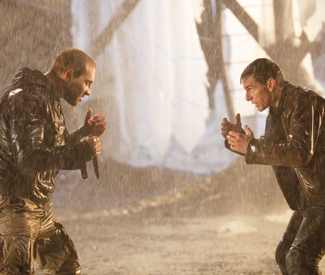
Jack Reacher See "No Headbutting?" (2:10)

Killing Them Softly Lowest-level criminal fuckwits Frankie (Scoot McNairy) and Russell (Ben Mendelsohn) are hired to rob a mob gambling den, a task which miraculously they fail to blow. Nevertheless, the repercussions are swift and harsh, as a middleman suit (Richard Jenkins) to the unseen bosses brings in one hitman (Brad Pitt), who brings in another (James Gandolfini) to figure out who the thieves are and administer extreme justice. Based on a 1970s novel by George V. Higgins, this latest collaboration by Pitt and director-scenarist Andrew Dominik would appear superficially to be a surer commercial bet after the box-office failure of their last, 2007’s The Assassination of Jesse James By the Coward Robert Ford — one of the great films of the last decade. But if you’re looking for action thrills or even Guy Ritchie-style swaggering mantalk (though there is some of that), you’ll be disappointed to find Killing more in the abstracted crime drama arena of Drive (2011) or The American (2010), landing somewhere between the riveting former and the arid latter. This meticulously crafted tale is never less than compelling in imaginative direction and expert performance, but it still carries a certain unshakable air of so-what. Some may be turned off by just how vividly unpleasant Mendelsohn’s junkie and Gandolfini’s alchie are. Others will shrug at the wisdom of re-setting this story in the fall of 2008, with financial-infrastructure collapse and the hollow promise of President-elect Obama’s "Change" providing ironical background noise. It’s all a little too little, too soon. (1:37) (Harvey)

A Late Quartet Philip Seymour Hoffman is fed up playing second fiddle — literally. He stars in this grown-up soap opera about the internal dramas of a world-class string quartet. While the group is preparing for its 25th season, the eldest member (Christopher Walken) is diagnosed with early stage Parkinson’s. As he’s the base note in the quartet, his retirement challenges the group’s future, not just his own. Hoffman’s second violinist sees the transition as an opportunity to challenge the first violin (Mark Ivanir) for an occasional Alpha role. When his wife, the quartet’s viola player (Catherine Keener), disagrees, it’s a slight ("You think I’m not good enough?") and a betrayal because prior to their marriage, viola and first violin would "duet" if you get my meaning. This becomes a grody aside when Hoffman and Keener’s violin prodigy daughter (Imogen Poots) falls for her mother’s old beau and Hoffman challenges their marriage with a flamenco dancer. These quiet people finds ways to use some loud instruments (a flamenco dancer, really?) and the music as well as the views of Manhattan create a deeply settled feeling of comfort in the cold —insulation can be a dangerous thing. When we see (real world) cellist Nina Lee play, and her full body interacts with a drama as big as vaudeville, we see what tension was left out of the playing and forced into the incestuous "family" conflicts. In A Late Quartet, pleasures are great and atmosphere, heavy. You couldn’t find a better advertisement for this symphonic season; I wanted to buy tickets immediately. And also vowed to stay away from musicians. (1:45) (Vizcarrondo)

Life of Pi Several filmmakers including Alfonso Cuarón, Jean-Pierre Jeunet, and M. Night Shyamalan had a crack at Yann Martel’s "unfilmable" novel over the last decade, without success. That turns out to have been a very good thing, since Ang Lee and scenarist David Magee have made probably the best movie possible from the material — arguably even an improvement on it. Framed as the adult protagonist’s (Irrfan Khan) lengthy reminiscence to an interested writer (Rafe Spall) it chronicles his youthful experience accompanying his family and animals from their just shuttered zoo on a cargo ship voyage from India to Canada. But a storm capsizes the vessel, stranding teenaged Pi (Suraj Sharma) on a lifeboat with a mini menagerie — albeit one swiftly reduced by the food chain in action to one Richard Parker, a whimsically named Bengal tiger. This uneasy forced cohabitation between Hindu vegetarian and instinctual carnivore is an object lesson in survival as well as a fable about the existence of God, among other things. Shot in 3D, the movie has plenty of enchanted, original imagery, though its outstanding technical accomplishment may lie more in the application of CGI (rather than stereoscopic photography) to something reasonably intelligent for a change. First-time actor Sharma is a natural, while his costar gives the most remarkable performance by a wild animal this side of Joaquin Phoenix in The Master. It’s not a perfect film, but it’s a charmed, lovely experience. (2:00) (Harvey)

Lincoln Distinguished subject matter and an A+ production team (Steven Spielberg directing, Daniel Day-Lewis starring, Tony Kushner adapting Doris Kearns Goodwin, John Williams scoring every emotion juuust so) mean Lincoln delivers about what you’d expect: a compelling (if verbose), emotionally resonant (and somehow suspenseful) dramatization of President Lincoln’s push to get the 13th amendment passed before the start of his second term. America’s neck-deep in the Civil War, and Congress, though now without Southern representation, is profoundly divided on the issue of abolition. Spielberg recreates 1865 Washington as a vibrant, exciting place, albeit one filled with so many recognizable stars it’s almost distracting wondering who’ll pop up in the next scene: Jared Harris as Ulysses S. Grant! Joseph Gordon-Levitt as Robert Lincoln! Lena Dunham’s shirtless boyfriend on Girls (Adam Driver) as a soldier! Most notable among the huge cast are John Hawkes, Tim Blake Nelson, and a daffy James Spader as a trio of lobbyists; Sally Field as the troubled First Lady; and likely Oscar contenders Tommy Lee Jones (as winningly cranky Rep. Thaddeus Stevens) and Day-Lewis, who does a reliably great job of disappearing into his iconic role. (2:30) (Eddy)

The Master Paul Thomas Anderson’s much-hyped likely Best Picture contender lives up: it’s easily the best film of 2012 so far. Philip Seymour Hoffman stars as Lancaster Dodd, the L. Ron Hubbard-ish head of a Scientology-esque movement. "The Cause" attracts Freddie Quell (Joaquin Phoenix, in a welcome return from the faux-deep end), less for its pseudo-religious psychobabble and bizarre personal-growth exercises, and more because it supplies the aimless, alcoholic veteran — a drifter in every sense of the word — with a sense of community he yearns for, yet resists submitting to. As with There Will Be Blood (2007), Anderson focuses on the tension between the two main characters: an older, established figure and his upstart challenger. But there’s less cut-and-dried antagonism here; while their relationship is complex, and it does lead to dark, troubled places, there are also moments of levity and weird hilarity — which might have something to do with Freddie’s paint-thinner moonshine. (2:17) (Eddy)

The Matchmaker In 2006, amid ongoing conflict with Lebanon, an Israeli novelist learns he’s received an unexpected inheritance from a man he knew in 1968, the summer before he turned 16. Most of Avi Nesher’s The Matchmaker takes place during those golden months in Haifa, when young Arik (Tuval Shafir) — lover of Dashiell Hammett, son of Holocaust survivors — takes a job working for a charismatic but vaguely shady matchmaker (comedian Adir Miller, who won the Israeli equivalent of a Best Actor Oscar), following potential clients to assure their quest for love is on the level. His exciting new gig whisks the budding writer out of middle-class monotony and introduces him to a wealth of colorful "Low Rent district" types; he also nurses a raging crush on his best friend’s free-spirited American cousin. Mostly a gently nostalgic tale, The Matchmaker also offers an unusual take on the Holocaust, viewing it from two decades later and using its looming memory to shape the characters who experienced it firsthand — as well as members of the younger generation, like Arik, who pages through The House of Dolls to learn more, even as he refers to the concentration camp where his father was held as simply "there." (1:52) (Eddy)

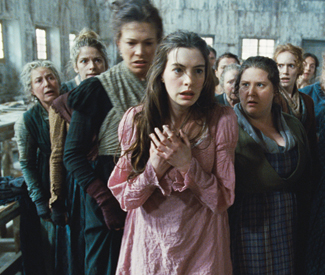
Les Misérables There is a not-insignificant portion of the population who already knows all the words to all the songs of this musical-theater warhorse, around since the 1980s and honored here with a lavish production by Tom Hooper (2010’s The King’s Speech). As other reviews have pointed out, this version only tangentially concerns Victor Hugo’s French Revolution tale; its true raison d’être is swooning over the sight of its big-name cast crooning those famous tunes. Vocals were recorded live on-set, with microphones digitally removed in post-production — but despite this technical achievement, there’s a certain inorganic quality to the proceedings. Like The King’s Speech, the whole affair feels spliced together in the Oscar-creation lab. The hardworking Hugh Jackman deserves the nomination he’ll inevitably get; jury’s still out on Anne Hathaway’s blubbery, "I cut my hair for real, I am so brave!" performance. (2:37) (Eddy)

Monsters, Inc. 3D (1:35)

My Worst Nightmare First seen locally in the San Francisco Film Society’s 2012 "French Cinema Now" series, My Worst Nightmare follows icy art curator Agathe (Isabelle Huppert) as her airless, tightly-controlled world begins to crumble — thanks in no small part to an exuberantly uncouth, down-on-his-luck Belgian contractor named Patrick (Benoît Poelvoorde). (His obnoxious, freewheeling presence in Agathe’s precision-mapped orbit gives rise to the film’s title.) Director and co-writer Anne Fontaine (2009’s Coco Before Chanel) injects plenty of offbeat, occasionally raunchy humor into what could’ve been a predictable personal-liberation tale — the sight of classy dame Huppert driving through a bikini car wash, for instance. (1:43) Smith Rafael. (Eddy)

Not Fade Away How to explain why the Beatles have been tossed so many cinematic bon mots and not the Stones? The group’s relatively short lifespan — and even the tragic, unexpectedly dramatic passing of John Lennon — seem to have all played into the band’s nostalgia-marinated legend, while the Stones’ profitable tour rotation and shocking physical resilience have lessened their romantic charge. So it reads as a counterintuitive, and a bit random, that Sopranos creator David Chase would open his first feature film with a black and white re-creation of the Mick Jagger and Keith Richards meet-up, before switching to the ’60s coming-of-age of New Jersey teen geek Douglas (John Magaro), trapped in an oppressively whiny nuclear family headed up by his Pep Boy grouch of a dad (James Gandolfini) — at least until rock ‘n’ roll saves his soul and he starts beating the skins. Graduating to better-than-average singer after his band’s frontman Eugene (Boardwalk Empire‘s Jack Huston) inhales a joint, Douglas not only finds his voice, but also wins over dream girl Grace (Bella Heathcote). Sure, Not Fade Away is about sex, drugs, and rock ‘n’ roll — and much attention is dutifully squandered on basement shows, band practice, and politics, and posturing with wacky new haircuts and funny cigarettes, thanks to Chase’s own background in garage bands and executive producer, music supervisor, and true believer Steve Van Zandt’s considerable passion. Yet despite the amount screen time devoted to rock’s rites, those familiar gestures never rise above the clichéd, and Not Fade Away only finds its authentic emotional footing when Gandolfini’s imposing yet trapped patriarch and the rest of Douglas’s beaten-down yet still kicking family enters the picture — they’re the force that refuses to fade away, even after they disappear in the rear view. (1:52) (Chun)

Parental Guidance (1:36)

The Perks of Being a Wallflower Move over, Diary of a Wimpy Kid series — there’s a new shrinking-violet social outcast in town. These days, life might not suck quite so hard for 90-pound weaklings in every age category, what with so many films and TV shows exposing, and sometimes even celebrating, the many miseries of childhood and adolescence for all to see. In this case, Perks author Stephen Chbosky takes on the directorial duties — both a good and bad thing, much like the teen years. Smart, shy Charlie is starting high school with a host of issues: he’s painfully awkward and very alone in the brutal throng, his only friend just committed suicide, and his only simpatico family member was killed in a car accident. Charlie’s English teacher Mr. Andersen (Paul Rudd) appears to be his only connection, until the freshman strikes up a conversation with feline, charismatic, shop-class jester Patrick (Ezra Miller) and his magnetic, music- and fun-loving stepsister Sam (Emma Watson). Who needs the popular kids? The witty duo head up their gang of coolly uncool outcasts their own, the Wallflowers (not to be confused with the deeply uncool Jakob Dylan combo), and with them, Charlie appears to have found his tribe. Only a few small secrets put a damper on matters: Patrick happens to be gay and involved with football player Brad (Johnny Simmons), who’s saddled with a violently conservative father, and Charlie is in love with the already-hooked-up Sam and is frightened that his fragile equilibrium will be destroyed when his new besties graduate and slip out of his life. Displaying empathy and a devotion to emotional truth, Chbosky takes good care of his characters, preserving the complexity and ungainly quirks of their not-so-cartoonish suburbia, though his limitations as a director come to the fore in the murkiness and choppily handled climax that reveals how damaged Charlie truly is. (1:43) (Chun)

Playing For Keeps Not a keeper: the marketing imagery that makes Gerard Butler look like an insufferable creep with bad hair. Dennis Quaid, seen in a small pic toward the base of the Playing For Keeps poster, gets that thankless role instead in this family-oriented rom-com, which is better than some while still being capable of eliciting very audible yawns from an audience supposedly primed for cutesy hijinks. Butler is George Dryer, a onetime pro soccer star now on the decline yet desperately seeking his next opening — a career as a sportscaster. To get there he has to run a networking gauntlet called coaching children’s soccer, which he gets roped into by ex Stacie (Jessica Biel) and spawn Lewis (Noah Lomax). The ankle biters are the least of his problems: more challenging are hot ‘n’ horny soccer moms like TV sports vet Denise (Catherine Zeta-Jones), cry-face Barn (Judy Greer), and desperate trophy housewife Patti (Uma Thurman), who’s saddled with all-American a-hole Carl (Dennis Quaid). The charisma-oozing George has to practically fight them off, while somehow shooting for that family-first goal. With its sex farce tendencies, rom-com DNA, and vaguely sour attitude toward hard-up moms, hot or not, I’m not sure who Playing For Keeps is really making a play for — perhaps married ladies looking for date-night possibilities and some shirtless Butler action? Projecting believability even under the most plausibility-taxing circumstances, Butler manages, as always, to be the best thing in the movie, though it seems like less of an achievement when his projects tend toward mediocrity. (1:46) (Chun)

Promised Land Gus Van Sant’s fracking fable — co-written by stars Matt Damon and John Krasinski, from a story by Dave Eggers — offers a didactic lesson in environmental politics, capped off by the earth-shattering revelation that billion-dollar corporations are sleazy and evil. You don’t say! Formulated like a Capra movie, Promised Land follows company man Steve Butler (Matt Damon) as he and sales partner Sue (Frances McDormand) travel to a small Pennsylvania town to convince its (they hope) gullible residents to allow drilling on their land. But things don’t go as smoothly as hoped, when the pair faces opposition from a science teacher with a brainiac past (Hal Holbrook), and an irritatingly upbeat green activist (Krasinski) breezes into town to further monkey-wrench their scheme. That Damon is such a likeable actor actually works against him here; his character arc from soulless salesman to emotional-creature-with-a-conscience couldn’t be more predictable or obvious. McDormand’s wonderfully biting supporting performance is the best (and only) reason to see this ponderous, faux-folksy tale, which targets an audience that likely already shares its point of view. (1:46) (Eddy)

Rise of the Guardians There’s nothing so camp as "Heat Miser" from The Year Without a Santa Claus (1974) in Rise of the Guardians,, but there’s plenty here to charm all ages. The mystery at its center: we open on Jack Frost (voiced by Chris Pine) being born, pulled from the depths of a frozen pond by the Man on the Moon and destined to spread ice and cold everywhere he goes, invisible to all living creatures. It’s an individualistic yet lonely lot for Jack, who’s styled as an impish snowboarder in a hoodie and armed with an icy scepter, until the Guardians — spirits like North/Santa Claus (Alec Baldwin), the Tooth Fairy (Isla Fisher), and the Easter Bunny (Hugh Jackman) — call on him to join them. Pitch the Boogeyman (Jude Law) is threatening to snuff out all children’s hopes and dreams with fears and nightmares, and it’s up to the Guardians must keep belief in magic alive. But what’s in it for Jack, except the most important thing: namely who is he and what is his origin story? Director Peter Ramsey keeps those fragile dreams aloft with scenes awash with motion and animation that evokes the chubby figures and cozy warm tones of ’70s European storybooks. And though Pine verges on blandness with his vocal performance, Baldwin, Jackman, and Fisher winningly deliver the jokes. (1:38) (Chun)

A Royal Affair At age 15 in 1766, British princess Caroline (Alicia Vikander) travels abroad to a new life — as queen to the new ruler of Denmark, her cousin. Attractive and accomplished, she is judged a great success by everyone but her husband. King Christian (Mikkel Boe Følsgaard) is just a teenager himself, albeit one whose mental illness makes him behave alternately like a debauched libertine, a rude two year-old, a sulky-rebellious adolescent, and a plain old abusive spouse. Once her principal official duty is fulfilled — bearing a male heir — the two do their best to avoid each other. But on a tour of Europe Christian meets German doctor Johann Friedrich Struenesse (Mads Mikkelsen), a true man of the Enlightenment who not only has advanced notions about calming the monarch’s "eccentricities," but proves a tolerant and agreeable royal companion. Lured back to Denmark as the King’s personal physician, he soon infects the cultured Queen with the fervor of his progressive ideas, while the two find themselves mutually attracted on less intellectual levels as well. When they start manipulating their unstable but malleable ruler to push much-needed public reforms through in the still basically feudal nation, they begin acquiring powerful enemies. This very handsome-looking history lesson highlights a chapter relatively little-known here, and finds in it an interesting juncture in the eternal battle between masters and servants, the piously self-interested and the secular humanists. At the same time, Nikolaj Arcel’s impressively mounted and acted film is also somewhat pedestrian and overlong. It’s a quality costume drama, but not a great one. (2:17) (Harvey)

Rust and Bone Unlike her Dark Knight Rises co-star Anne Hathaway, Rust and Bone star Marion Cotillard never seems like she’s trying too hard to be sexy, or edgy, or whatever (plus, she already has an Oscar, so the pressure’s off). Here, she’s a whale trainer at a SeaWorld-type park who loses her legs in an accident, which complicates (but ultimately strengthens) her relationship with Ali (Belgian actor Matthias Schoenaerts, so tremendous in 2011’s Bullhead), a single dad trying to make a name for himself as a boxer. Jacques Audiard’s follow-up to 2009’s A Prophet gets a bit overwrought by its last act, but there’s an emotional authenticity in the performances that makes even a ridiculous twist (like, the kind that’ll make you exclaim "Are you fucking kidding me?") feel almost well-earned. (2:00) (Eddy)

The Sessions Polio has long since paralyzed the body of Berkeley poet Mark O’Brien (John Hawkes) from the neck down. Of course his mind is free to roam — but it often roams south of the personal equator, where he hasn’t had the same opportunities as able-bodied people. Thus he enlists the services of Cheryl (Helen Hunt), a professional sex surrogate, to lose his virginity at last. Based on the real-life figures’ experiences, this drama by Australian polio survivor Ben Lewin was a big hit at Sundance this year (then titled The Surrogate), and it’s not hard to see why: this is one of those rare inspirational feel-good stories that doesn’t pander and earns its tears with honest emotional toil. Hawkes is always arresting, but Hunt hasn’t been this good in a long time, and William H. Macy is pure pleasure as a sympathetic priest put in numerous awkward positions with the Lord by Mark’s very down-to-earth questions and confessions. (1:35) (Harvey)

Silver Linings Playbook After guiding two actors to Best Supporting Oscars in 2010’s The Fighter, director David O. Russell returns (adapting his script from Matthew Quick’s novel) with another darkly comedic film about a complicated family that will probably earn some gold of its own. Though he’s obviously not ready to face the outside world, Pat (Bradley Cooper) checks out of the state institution he’s been court-ordered to spend eight months in after displaying some serious anger-management issues. He moves home with his football-obsessed father (Robert De Niro) and worrywart mother (Jacki Weaver of 2010’s Animal Kingdom), where he plunges into a plan to win back his estranged wife. Cooper plays Pat as a man vibrating with troubled energy — always in danger of flying into a rage, even as he pursues his forced-upbeat "silver linings" philosophy. But the movie belongs to Jennifer Lawrence, who proves the chops she showcased (pre-Hunger Games megafame) in 2010’s Winter’s Bone were no fluke. As the damaged-but-determined Tiffany, she’s the left-field element that jolts Pat out of his crazytown funk; she’s also the only reason Playbook‘s dance-competition subplot doesn’t feel eye-rollingly clichéd. The film’s not perfect, but Lawrence’s layered performance — emotional, demanding, bitchy, tough-yet-secretly-tender — damn near is. (2:01) (Eddy)

Skyfall Top marks to Adele, who delivers a magnificent title song to cap off Skyfall‘s thrilling pre-credits chase scene. Unfortunate, then, that the film that follows squanders its initial promise. After a bomb attack on MI6, the clock is running out for Bond (Daniel Craig) and M (Judi Dench), accused of Cold War irrelevancy in a 21st century full of malevolent, stateless computer hackers. The audience, too, will yearn for a return to simpler times; dialogue about "firewalls" and "obfuscated code" never fails to sound faintly ridiculous, despite the efforts Ben Whishaw as the youthful new head of Q branch. Javier Bardem is creative and creepy as keyboard-tapping villain Raoul Silva, but would have done better with a megalomaniac scheme to take over the world. Instead, a small-potatoes revenge plot limps to a dull conclusion in the middle of nowhere. Skyfall never decides whether it prefers action, bon mots, and in-jokes to ponderous mythologizing and ripped-from-the-headlines speechifying — the result is a unsatisfying, uneven mixture. (2:23) (Ben Richardson)

This is 40 A spin-off of sorts from 2007’s Knocked Up, Judd Apatow’s This is 40 continues the story of two characters nobody cared about from that earlier film: Debbie (Leslie Mann, Apatow’s wife) and Pete (Paul Rudd), plus their two kids (played by Mann and Apatow’s kids). Pete and Debbie have accumulated all the trappings of comfortable Los Angeles livin’: luxury cars, a huge house, a private personal trainer, the means to throw catered parties and take weekend trips to fancy hotels (and to whimsically decide to go gluten-free), and more Apple products than have ever before been shoehorned into a single film. But! This was crap they got used to having before Pete’s record label went into the shitter, and Debbie’s dress-shop employee (Charlene Yi, another Knocked Up returnee who is one of two people of color in the film; the other is an Indian doctor who exists so Pete can mock his accent) started stealing thousands from the register. How will this couple and their whiny offspring deal with their financial reality? By arguing! About bullshit! In every scene! For nearly two and a half hours! By the time Melissa McCarthy, as a fellow parent, shows up to command the film’s only satisfying scene — ripping Pete and Debbie a new one, which they sorely deserve — you’re torn between cheering for her and wishing she’d never appeared. Seeing McCarthy go at it is a reminder that most comedies don’t make you feel like stabbing yourself in the face. I’m honestly perplexed as to who this movie’s audience is supposed to be. Self-loathing yuppies? Masochists? Apatow’s immediate family, most of whom are already in the film? (2:14) (Eddy)

The Twilight Saga: Breaking Dawn – Part 2 The final installment of the Twilight franchise picks up shortly after the medical-emergency vampirization of last year’s Breaking Dawn – Part 1, giving newly undead Bella Swan (Kristen Stewart) just enough time to freshen up after nearly being torn asunder during labor by her hybrid spawn, Renesmee. In a just world, Bella and soul mate Edward Cullen (Robert Pattinson) would get more of a honeymoon period, given how badly Part 1‘s actual honeymoon turned out. Alas, there’s just enough time for some soft-focus vampire-on-vampire action (a letdown after all the talk of rowdy undead sex), some catamount hunting, some werewolf posturing, a reunion with Jacob (Taylor Lautner), and a few seconds of Cullen family bonding, and then those creepy Volturi are back, convinced that the Cullens have committed a vampire capital crime and ready to exact penance. Director Bill Condon (1998’s Gods and Monsters, 2004’s Kinsey) knows what the Twi-hards want and methodically doles it out, but the overall effect is less sweeping action and shivery romance and more "I have bugs crawling on me — and yet I’m bored." Some of that isn’t his fault — he bears no responsibility for naming Renesmee, for instance, to say nothing of a January-May subplot that we’re asked to wrap our brains around. But the film maintains such a loose emotional grip, shifting clumsily and robotically from comic interludes to unintentionally comic interludes to soaring-music love scenes to attempted pathos to a snowy battlefield where the only moment of any dramatic value occurs. Weighed down by the responsibility of bringing The Twilight Saga to a close, it limps weakly to its anticlimax, leaving one almost — but not quite — wishing for one more installment, a chance for a more stirring farewell. (1:55) (Rapoport)

We Are Legion: The Story of the Hacktivists (1:33) Roxie.

Wreck-It Ralph Wreck-It Ralph cribs directly from the Toy Story series: when the lights go off in the arcade, video game characters gather to eat, drink, and endure existential crises. John C. Reilly is likable and idiosyncratic as Ralph, the hulking, ham-fisted villain of a game called Fix-It-Felix. Fed up with being the bad guy, Ralph sneaks into gritty combat sim Hero’s Duty under the nose of Sergeant Calhoun (Jane Lynch), a blond space marine who mixes Mass Effect‘s Commander Shepard with a PG-rated R. Lee Ermey. Things go quickly awry, and soon Ralph is marooned in cart-racing candyland Sugar Rush, helping Vanellope Von Schweetz (a manic Sarah Silverman), with Calhoun and opposite number Felix (Jack McBrayer) hot on his heels. Though often aggressively childish, the humor will amuse kids, parents, and occasionally gamers, and the Disney-approved message about acceptance is moving without being maudlin. The animation, limber enough to portray 30 years of changing video game graphics, deserves special praise. (1:34) (Ben Richardson)


No headbutting?

0

tredmond@sfbg.com

LIT/FILM The folding travel toothbrush is a central element in every Jack Reacher novel. It’s his only possession, the only thing the wandering ex-military cop takes with him when he throws away his old clothes and buys new ones, the only thing that ties him directly to his old life in the U.S. Army. It’s part of the Reacher formula, one that consistently works through 17 books by Lee Child.

It’s not in the Jack Reacher movie.

That was the first sign that one of the best trash-lit characters to come on the scene since John D. MacDonald invented Travis McGee hasn’t translated so well to the big screen. (McGee never did, either; the only McGee movies ever made were disasters, and MacDonald hated all of them.)

But the esoteric musings of McGee, on everything from Florida real-estate development to the demise of San Francisco, were the charm that held those modest plots together. Child, who has a background in television production, offers more action-packed stories with all the elements that ought to make a great movie.

Like MacDonald, though, Child goes a bit deeper than the traditional trashy thriller writer. His books have themes of violence and redemption, of freedom and responsibility, of wanderlust and homesickness that can’t just be shoehorned into a fast-paced screenplay with Tom Cruise. This may not be Shakespearean literature, but it isn’t Mission Impossible, either.

To make it more challenging, there are long periods of silence in the Reacher book, and those don’t work will in today’s mainstream cinema — but without them, the pacing is all wrong.

I showed up at the movie ready to be let down. The diminutive and emotional Cruise seemed all wrong as the tall, taciturn Reacher; I was hoping for a more Daniel Craig approach. Child, on the other hand, was totally down with the casting, so I was ready to give it a shot. (Or, as the book title from whence this flick emerged put it, One Shot.)

The book is a classic of the Reacher oevre, with a tiny bit of 2007’s Shooter mixed in. There’s a former Army sniper named James Barr (Joseph Sikora) who gets charged with an apparently random killing spree; the evidence is overwhelming, the cops have him nailed, and the execution-mad district attorney tells him if he doesn’t confess, he’s going to get the death penalty.

Barr refuses to talk; he just takes a legal pad and writes “Get Jack Reacher.” Which turns out to be tricky; Reacher has no address, no credit cards, no car, no driver’s license … nothing to pin him down. He’s almost impossible to find.

But he shows up on his own — not to help save Barr but to tell the cops that the guy once murdered a bunch of civilian contractors in Iraq. Reacher had him nailed, but the Army, for political reasons, let the case go. He’s ready to send the guy to the chair, if he doesn’t kill him with his own hands first.

But then the DA’s daughter, Helen Rodin (Rosamund Pike), who is representing Barr, convinces Reacher to take another look, and together they discover a fiendish plot involving an 80-year-old mob capo from the old Soviet Gulag.

Nice movie plot. And the film version doesn’t take too many liberties with the general idea of the book.

But there’s no headbutting, which is Reacher’s trademark fighting technique. And he never has sex with the female protagonist, which is disappointing.

That and the fact that the movie’s about 20 minutes too long — and the car chase scene alone is about five minutes too long (and car chases are not part of the Reacher mix) and there’s an embarassing scene where Cruise takes his shirt off just so we can see him with his shirt off left me wondering: did Lee Child really sign off on this screenplay?

So that’s the bad news. The good news is that the film is entertaining, Cruise does the best he can under the circumstances, and he delivers the key lines nicely. Pike does a fine job of being sexy without being movie-star beautiful. The fight scenes are lively and fun and not too overdone.

And Werner Herzog is just spectacular as the evil Zec, a man so tough that he chewed his fingers off in prison to avoid getting gangrene. Watching Herzog sneer and be scary, horrible, and fascinating at the same time is worth the price of admission.

No nudity. Five people beaten near death. Three cops cars destroyed. Sniper porn. Fight to the death in the pouring rain. Not a great tribute to a great character, but I’ll take it. *

JACK REACHER is now playing in Bay Area theaters.

The Performant: How Grinches save Christmas

0

Jeff Garrett and Will Franken overcome holiday saccharine.

Is that a collective sigh of relief in the air as another frenzied holiday season winds down to its usual end and whatever apocalypse was scheduled to go down seems to have spared at least our physical reality?

As we drift back into the routines of our regularly scheduled lives, the brief illumination of whatever lessons we were meant to be learning on the eve of our potential destruction and the supposed birthday of our salvation, flickers out without so much as a whimper. It’s a bit of a stretch anyhow, to weight a single stretch of calendar with so much cosmic significance, yet we do it year after year, grasping superstitiously at the shimmering notion of redemption, the hidden catalyst underlying our frantic excess.

It’s no wonder that the literature of the season is so full of characters in need of said redemption. The curmudgeons of Christmas have populated the landscape since long before jolly old St. Nick appeared on the scene, all the way back to the mean-spirited innkeeper of biblical infamy, who forced history’s holiest matriarch to give birth to her saintly son in a stable. Next to his casual crime, our own feckless peccadilloes seem so tame in comparison. And almost no act of pernicious revenge we could practically carry out quite stacks up to the hilarious inventiveness of the Grinch’s Christmas-in-reverse plot, and the wisdom we can glean from such a tale is twofold. Firstly, that if redemption is possible for such miserable wretches, then it’s certainly within our own grasp, and secondly, we have a collective need for these bad boys of winter to balance out the more saccharine elements of the holidays and keep them palatable, even plausible.

Thus spending an evening with a misanthrope so iconic his moniker is also a descriptor, is as seasonally-appropriate as trimming a tree or eating Chinese food. That misanthrope, of course, is one Ebenezer Scrooge, and in Jeff Garrett’s solo rendition at Boxcar Studio (“Scrooge, the Haunting of Ebenezer”), he undergoes the preordained transformation with a fearsome intensity that spills over the modestly appointed black box stage that struggles to contain him and the multitudes (more than twenty characters worth) he portrays. Judiciously edited down into a lean hour, stripped of the sumptuous Victorian accoutrements of big budget/big cast renditions, Garrett’s version, directed by Peter Ruocco, clearly revels in its dark origin—that of a ghost story, predating the trend of scary movies at Christmastime by almost a hundred and fifty years. True, the compressed timeline makes the eventual reformation of the reprobate seem a little hasty, but not to the extent that one would begrudge him his exultant transformation.

A more modern Christmastide tradition for San Francisco’s orphans and miscreants, is Will Franken’s annual holiday foray, an evening which rarely has much to do overtly with the actual holidays, but much to do with the need to distract ourselves from their inevitability. At Saturday’s edition, Franken’s signature stream-of-(sub)consciousness vignettes featured a bevy of characters in patently absurdist situations: a 39 year-old man without health insurance attempting to rediscover penicillin in time to cure his own strep throat, an Irish construction crew foreman left shorthanded by a few actors (Liam Neeson, Colin Ferrell), authors (Oscar Wilde, James Joyce), and Bono, a murder trial defendant confessing to murder in order to be allowed to smoke a cigarette, an obnoxious professional eavedropper with a broad Scottish accent plying his trade on the train, a talkative Southerner cursed with the rare condition of “jelly feet”. Scant attention was paid by Franken, or his many manic onstage personalities, to the pending festivities (despite being flanked onstage by a plywood Christmas Tree and hearth), offering a welcome respite from the otherwise continuous onslaught of holi-mania, and a tradition well worth hanging on to.


They see me rollin’

0

arts@sfbg.com

YEAR IN FILM Two of 2012’s finest, most philosophical, and most frustrating movies share a setting of sorts. Although one film takes place in New York, the other in Paris, both films’ protagonists spend a lot of time in their white stretch limousines. The limo: an ostentatious symbol of status and wealth, a home away from home.

In David Cronenberg’s unsettling Don DeLillo adaptation Cosmopolis, it’s superwealthy magnate Eric Packer (a defanged Robert Pattinson) who eats, fucks, and talks business in a limo, trapped in ever-worsening NYC traffic. For Monsieur Oscar (Denis Lavant) in Leos Carax’s Holy Motors, the limousine is also place of business. When I first saw Holy Motors, I noted the “limo-as-liminal-space” — Oscar’s limousine is his dressing room, a place of transformation for the chameleonic arch-performer.

>>Read more from our Year in Film 2012 issue here.

This common factor, though coincidental, is not accidental. The limousine as symbol and space is crucial to the structure of both films, which I’ve taken half-facetiously to calling “limo operas.” In both, white stretch limos are distinctive cells in the secret circulatory system of late capitalist society. Their passengers have a privileged viewpoint — they can see out, but others can’t see in. When the camera joins the passengers inside the limo, the city becomes an almost unreal backdrop for the private activities within.

In Cosmopolis, there’s an ongoing, ambivalent dialogue about the dispersal of all things into data; everything is getting smaller, faster, swept away by the flow of “cyber-capital.” But Eric Packer, whose vast wealth is about to collapse due to minute changes in the value of the yuan, is obsessed with large, worldly purchases. He has two private elevators with specialized soundtracks, and a Soviet bomber plane that he keeps in a hangar. He’s insistent that he wants to buy the Rothko Chapel, despite its nature as a public artwork. And he describes his limo as a car sawed in half and expanded. He’s had his limo “Prousted” — lined with soundproof cork like Marcel Proust’s bedroom — which he describes as “a gesture … a thing a man does.” The soundproofing doesn’t work, though. His limousine is a performance of his ego, and of its futility.

It’s also an object in the movie’s central dialogue about systems that operate beyond perception. Much like units of encrypted economic information, limos push through the city announcing the self-importance of their passengers. They might be carrying a president or a celebrity, but one of Packer’s employees reminds him that limos also connote “kids on prom night, or some dumb wedding.” And then they go away. Packer asks, “Where do all these limos go at night?” and he finally gets an answer from his limo driver — there are underground garages — they slumber beneath the city. Even his driver’s description of the garages reinforces the weird information-value of the vehicle — “a marketplace of limos.”

Oscar’s limo in Holy Motors is perhaps less of a grand statement to the public, but it’s still a sort of grandiose contradiction on wheels. Oscar is an actor who fulfills “appointments” — enigmatic, prearranged convergences with other lives, where he transmutes into elaborately conceived new beings, for an audience of no one and everyone. When another strange figure, the critic to Oscar’s artist, appears in the limo, Oscar explains his less convincing performances as a result of technological progress: “I miss the cameras. They used to be heavier than us. Then they became smaller than our heads. Now you can’t see them at all.” And so he prepares for his appointments in an eminently visible, garishly substantial machine. In the world of Holy Motors, white stretch limos are apparently markers of Oscar’s trade — when his limo collides with another, it is coincidentally also carrying a performer, his old flame, en route to her own appointment.

In contrast to Cosmopolis, Carax’s film gives a glimpse inside the occluded space of the garage where limos sleep — literally. In its amusing and crucial final scene, Holy Motors returns to the titular motor pool, and eavesdrops on the after-hours gossiping of an entire fleet of sentient limousines. One laments that they’ll soon all be junked, and another agrees: “Men don’t want visible machines anymore.” But visible machines are precisely what Oscar wants, so he makes his office in a limo.

Both Packer and Oscar are aging, battling obsolescence while stubbornly clinging to old operating procedures. In these two films, deeply entrenched in commenting on the withering progress of postmodern life, the stretch limo is a loud, defiant holdout. You might even call it a relic — it is, after all, a holy motor. *


Read more from Sam Stander at hellascreen.blogspot.com


SAM STANDER’S TOP 15 OF 2012


1. Margaret (Kenneth Lonergan, US, 2011)

2. The Turin Horse (Béla Tarr and Ágnes Hranitzky, Hungary/France/Germany/Switzerland/US, 2011)

3. Cosmopolis (David Cronenberg, Canada/France/Portugal/Italy)

4. Moonrise Kingdom (Wes Anderson, US)

5-6. [tie] Cabin in the Woods (Drew Goddard, US, 2011)/The Avengers (Joss Whedon, US)

7-8. [tie] Haywire (Steven Soderbergh, US/Ireland, 2011)/Magic Mike (Steven Soderbergh, US)

9. Whores’ Glory (Michael Glawogger, Germany/Austria, 2011)

10. Holy Motors (Leos Carax, France/Germany)

11. Pina (Wim Wenders, Germany/France/UK, 2011)

12. The Master (Paul Thomas Anderson, US)

13. The Color Wheel (Alex Ross Perry, US, 2011) 14. This Is Not A Film (Jafar Panahi, Iran, 2011) 15. Kill List (Ben Wheatley, UK, 2011)

This ain’t a wrap

0

YEAR IN FILM Perhaps the backlash was inevitable. Any film that so flawlessly wows its initial audience in turn begins to receive a lot more scrutiny down the line, and there are definitely things about This Ain’t California to scrutinize. Billed as a documentary, yet centered around a character who may not actually exist, This Ain’t California details the unlikely rise of a rebellious East German skateboarding scene hidden from view behind the Iron Curtain.

An exuberant mischung of archival and new video footage, a brash and punkish soundtrack, animated sequences, and compelling, little-explored subject matter, the film made irreverence its watchword, from storyline to storyboard. And although the sheer scale of this irreverent approach, including the filmmakers’ unorthodox methods of framing their story, raised serious questions about This Ain’t California‘s self-definition as documentary, what was undeniable was the movie’s greatest success — its flawless capture of a zeitgeist, not just of a specific place and time, but of the irrepressible vitality of youth cultures everywhere.

>>Read more from our Year in Film 2012 issue here.

Screened first at the 2012 Berlinale in February (and in San Francisco at the Berlin and Beyond Film Festival in October), This Ain’t California won the coveted “Dialogue en Perspective” prize for young filmmakers, an award given with this statement that foreshadowed the controversy to come: “We’ve rarely been so splendidly manipulated.” While the jury in Berlin was referring to the dynamic editing job spearheaded by 23-year-old Maxine Gödecke, as the film won more awards around the festival circuit — including “Best Documentary” at the Cannes Independent Film Festival — details about its unconventional creation began to emerge in the press. That much of the so-called “archival” video footage was recreated by a slew of modern-day skaters disguised in touchingly hilarious GDR-era hairdos and aggressively mismatched stripes. That all of the footage of the central character Denis “Panik” Paraceck was actually that of Berlin-based skater-model, Kai Hillebrandt. That Denis Paraceck (who, according to the film, died in Afghanistan in 2011) might actually never have existed, let alone been the impetus behind the film’s modern-day reunion of the now-adult skaters (and at least a couple of hired actors, including David Nathan and Tina Bartel).

German news weekly Der Spiegel condemned it as a glorified advertisement for skate culture, bloggers such as Berlin-based Joseph Pearson of The Needle decried the dangerous folly of Germans rewriting their own history, and the filmmakers themselves have been cagey about admitting to the extent of their subterfuge.

“[It’s] so much more fun to keep that secret,” director Martin Persiel explains to me via email when asked to comment.

But lest the naysayers condemn the film as pure hoax, it should be noted that there most definitely was an underground skate scene in East Germany, in addition to other outlaw scenes, including break dancers, punk rockers, and heavy metal bands. Plenty of the film’s old-school skate rats are verifiable as such, and some of the most frankly unbelievable details of the film, such as a compatriot with a Finnish passport being tapped to smuggle boards in from the West, appear to be corroborated independently by academic Kai Reinhart, who has been researching sports history and GDR funsportart since 2005.

“As a filmmaker there is a huge responsibility to truthful depiction of your subject,” Persiel insists. “[And] as far as feedback from the skaters from the East goes, we did do justice to their story.”

On the controversy over allowing a partially fictitious film win awards in the documentary category (against presumably less colorful and more rigorously fact-based films), Persiel remains silent, though he does theorize that the definition of “documentary” is expanding and evolving all the time.

“I call This Ain’t California a ‘documentary tale’,” he explicates, adding his own micro-category. It’s an explanation that probably won’t placate his detractors, but whatever side of the definition of “documentary” the film winds up being relegated to, the definition of “best” will still apply. No matter what, it’s a movie well worth seeing, and controversies aside, a movie well worth having been made — for truly we have been splendidly manipulated. *


2012’S TOP SELF-CURATED DOUBLE FEATURES (A.K.A. TWO-DOLLAR WEDNESDAY AT LOST WEEKEND IS MY JAM)


More in common than you’d expect Delicatessen (Marc Caro and Jean-Pierre Jeunet, France, 1991) and Deliverance (John Boorman, US, 1972)

William H. Macy is underrated Edmond (Stuart Gordon, US, 2005) and The Cooler (Wayne Kramer, US, 2003)

All about men A Single Man (Tom Ford, US, 2009) and A Serious Man (Ethan Coen and Joel Coen, US/UK/France, 2009)

Post-Prometheus Ridley Scott-a-thon Blade Runner (Ridley Scott, US/Hong Kong/UK, 1982) and Alien (Ridley Scott, US/UK, 1979)

Noomi vs. Rooney The Girl with the Dragon Tattoo (David Fincher, US/Sweden/Norway, 2011) and The Girl with the

Dragon Tattoo (Niels Arden Oplev, Sweden/Denmark/Germany/Norway, 2009)

Please kill me Dancer in the Dark (Lars von Trier, various, 2000) and Black Swan (Darren Aronofsky, US, 2010)

Gay follies Paris is Burning (Jennie Livingston, US, 1990) and The Birdcage (Mike Nichols, US, 1996)

Dark days Capturing the Friedmans (Andrew Jarecki, US, 2003) and Deliver Us from Evil (Amy Berg, US, 2006)

The masochism tango The Piano Teacher (Michael Haneke, Austria/France/Germany, 2001) and Secretary (Steven Shainberg, US, 2002) Let’s get physical Boogie Nights (Paul Thomas Anderson, US, 1997) and Magic Mike (Steven Soderbergh, US, 2012)

Ficks’ picks

0

1. Cosmopolis (David Cronenberg, Canada/France/Portugal/Italy) During the five times I watched this brilliantly slow-burning, transcendental flick, I saw dozens of audience members fall asleep, walk out early, and complain all the way down the corridor of the Embarcadero Center Cinema hallways. I had to watch it that many times (plus read the book and have countless late-night discussions) just to try and wrap my brain around this era-defining exploration of what it means to be a (hu)man in the Y2Ks. Robert Pattinson proved he’s a truly spectacular actor, Paul Giamatti has never been better, and David Cronenberg is only getting better as he gets older.

2. In the Family  (Patrick Wang, US, 2011) Self-distributed due to its length (169 minutes), this is a stunningly haunting and devastating work. Viewers with the patience to stick with it are rewarded with a genuinely achieved emotional volcano that I can only relate to John Cassavetes’ greatest films. A truly landmark film, in both style and content.

3. The Master  (Paul Thomas Anderson, US) Of all the films that Anderson has boldly attempted, audaciously experimented with, and (perhaps most importantly) been critically embraced for, The Master is a balanced period piece that combines both poetic and historical elements with a couple of truly profound performances by Joaquin Phoenix and Philip Seymour Hoffman. This is not a film only about Scientology, or about just one master. This is a film that asks many questions, but supplies few answers.

4. The Comedy (Rick Alverson, US) Perhaps containing the most mean-spirited characters of the decade, this harrowingly insightful satire of the hipster generation’s compulsion to heap irony upon irony inspired many an audience member to exit mid-film. But the many who dared to remain (including fans of the film’s lead actor, Tim Heidecker, from Tim and Eric Awesome Show, Great Job!) may have found themselves forced to question their own heartless (and even sociopath) tendencies.

Director Rick Alverson’s perceptive use of a contemporary antihero is quite comparable to the counterculture characters of the 1970s: Robert De Niro in Taxi Driver (1976), Peter Falk in Husbands (1970), and Jack Nicholson in Five Easy Pieces (1970). And since The Comedy was not necessarily made to be enjoyed, it will probably, sadly, take 20 years for people to recognize that there is no finer film to define this generation.

5. Florentina Hubaldo CTE (Lav Diaz, Philippines) With this six-hour film, Lav Diaz has created yet another minimalist masterpiece that few will even attempt to watch — 20 people started out in the Yerba Buena Center for the Arts’ screening, and only 10 finished it. Diaz has a monumental goal in mind for his character, and his film’s length is a major part of achieving it. I am not sure if there will ever be a time when six-hour character studies will be all the rage, but until then, Diaz is paving an uncharted road for others to follow.

6. Shanghai (Dibakar Banerjee, India) This Hindi remake of Costa-Gavras’ monumental political thriller Z (1969) may not have French New Wave cinematographer Raoul Coutard behind the camera, but Shanghai‘s director of photography Nikos Andritsakis adds his own brand of raw intensity. For his part, writer-director Banerjee creates an even more complicated look at the state of politics in the age of the modern terrorist. Seemingly inspired by fellow director Ram Gopal Varma’s career of gritty political dramas, Banerjee is an international director to watch.

7. Holy Motors (Leos Carax, France) The perfect companion to David Cronenberg’s Cosmopolis, this film contains a tour de force performance by the almighty Denis Lavant (of Claire Denis’ 1999 Beau Travail), with Michel Piccoli, Eva Mendes, Édith Scob, and Kylie Minogue in supporting roles. Unique, surreal, and completely inspired, this day-in-the-life journey will make you want to watch it again as soon as it ends.

8. The Grey  (Joe Carnahan, US) The best existential “animal attacking human” flick since David Mamet’s 1997 cult classic The Edge. It’s a film that showcases Liam Neeson as he tapes glass to his fists to battle a pack of giant wolves — and manages to be emotionally stirring at the same time. Make sure to keep watching all the way through the credits.

9a. Your Sister’s Sister (Lynn Shelton, US, 2011) Lynn Shelton’s follow-up to her genre-defining bromance Humpday (2009) is a pitch-perfect indie that attempts to dig deep within its dark and confused characters. Depressed and confused thirtysomething Jack (played by Mark Duplass, master of casual awkwardness) heads off to a remote island to figure out his life. The only trouble: his best friend (a mesmerizing Emily Blunt) also has a lesbian sister (Rosemarie DeWitt) who is already there doing her own soul searching. With this contemplative, honest, and hilarious film, Shelton is turning out to be quite a splendid voice for our current generation of progressive pitfallers.

9b. Jeff, Who Lives At Home (Jay Duplass and Mark Dupass, US) They’ve done it again! With Jeff, the mumblecore masters (2005’s The Puffy Chair; 2010’s Cyrus) construct a stoner comedy-existential trip for the man-child generation. While inspiring outstanding performances from Jason Segal and Ed Helms (both the best they’ve ever been), playing brothers, a poignantly performance by Susan Sarandon as their mother raises this wonderfully earned sentimental indie flick to the ranks of family dramas like Jodie Foster’s Home for the Holidays (1995) and her most recent overlooked gem, The Beaver (2011).

10. Lotus Community Workshop (Harmony Korine, US) His next film, Spring Breakers (due out next year), is poised to become Harmony Korine’s most accessible film to date; it’s a T&A-filled exploitation film, led by James Franco as a grimy, gold-grilled-grinning, dreadlocked drug dealer who lives to prey on bikini-clad young girls. But 30-minute meta-masterpiece Lotus Community Workshop, which played the San Francisco International Film Festival earlier this year (as part of omnibus film The Fourth Dimension), is maybe Korine’s greatest film to date. The almighty Val Kilmer plays a dirt bike-riding, fanny-pack wearing, roller-rink guru named Val Kilmer — and yep, it’s as mind-blowing as it sounds.

11. ParaNorman  (Chris Butler and Sam Fell, US) This stop-motion animated film surprised parents who felt its PG rating should have been PG-13 — and it inspired gasps and even yells (from adults!) in every screening I attended. Daringly shot on a Canon 5D Mark II DSLR Camera and released in a fully utilized 3D, this ode to midnight movies is a kids’ film that will stand the test of time and should rank right alongside Shaun of the Dead (2004) and Army of Darkness (1992): horror parodies that transcended their own self-awareness and become classics themselves.

12-14 [tie]. A Simple Life (Ann Hui, Hong Kong, 2011), Amour (Michael Haneke, Austria/France/Germany), The Turin Horse (Béla Tarr and Ágnes Hranitzky, Hungary/France/Germany/Switzerland/US, 2011) Ann Hui’s simple, straightforward tale of a woman’s choice to check herself into a retirement home after suffering a stroke will probably get overshadowed by Michael Haneke’s wonderfully minimalist approach to an elderly couple’s decline after one of them experiences the same ailment. Meanwhile, Béla Tarr’s final film is for acquired tastes only; it’s a cyclical journey with a rural couple, who eat potatoes, are isolated in a stormy darkness, and care for their horse. All three films lay out a terrifyingly realistic blueprint of old age.

15. Compliance  (Craig Zobel, US) No film at the 2012 Sundance Film Festival encountered as much controversy as Compliance. At the first public screening, an all-out shouting match erupted, with one audience member yelling “Sundance can do better!” You can’t buy that kind of publicity. Every screening that followed was jam-packed with people hoping to experience the most shocking film at the fest. And it doesn’t disappoint: Zobel unleashes an uncomfortable psychological mindfuck on the viewer all the way through to the stunning final 15 minutes, which are even more shocking than all the twists and turns that came before.

16. The Kid With a Bike (Jean-Pierre Dardenne and Luc Dardenne, Belgium/France/Italy, 2011) Can these Belgian brothers make a bad film? Seriously? Like their Palme D’Or winners Rosetta (1999), The Son (2002), and L’enfant (2005), Kid is yet another hypnotic, neo-realist portrait of modern-day youth. Every character makes unexpected yet inevitable decisions. No moment is false. The Dardennes create movies that make life feel more real.

17. Beasts of the Southern Wild ( Benh Zeitlin, US) Fantastical special effects created by 31 students at San Francisco’s own Academy of Art University (yes, I am biased), plus star Quvenzhané Wallis as Hushpuppy, a precocious six-year-old searching to understand a world post-Katrina, post-race, and more importantly post-childhood. Combining David Gordon Green’s George Washington (2001), Spike Jonze’s Where the Wild Things Are (2008) and perhaps even Julie Dash’s Daughters of the Dust (1991), Zeitlin has created a haunting enigma for modern audiences that deserves multiple viewings. But even though it won multiple prizes at the 2012 Sundance Film Festival, will it get the Oscar attention it deserves?

18. Universal Soldier: Day of Reckoning (John Hyams, US) When Jean-Claude Van Damme started this franchise back in 1992, it was a nice little combo of First Blood (1982), The Terminator (1984) and Robocop (1987). Twenty years later, the series’ fourth entry is co-written, co-edited, and directed by John Hyams, the son of Peter Hyams, who directed JCVD classics Timecop (1994) and Sudden Death (1995) — and man oh man does he deliver a tough and gritty little action sci-fi film. Van Damme takes on an even darker role than his scene-stealing turn in Expendables 2; with a cleverly subversive script, eloquently choreographed fight scenes (one of which gives Dolph Lundgren some pretty priceless moments), and a denouement that has to be seen to be believed, you may be rooting for this VOD released genre film as much as I am — not to mention Indiewire, which called it “One of the Best Action Movies of the Year!”

19. John Carter (Andrew Stanton, US) With a budget of $250 million, this epic based on Edgar Rice Burroughs stories brought the Walt Disney company to its knees by only making $73 million back. If you saw the film in 3D, you might be confused as to why no one bothered to see it. In my opinion (having watched it twice), John Carter achieves everything James Cameron’s Avatar (2009) did, as far as sci-fi extravaganzas go, but it also has an inspired story and a charming cast: Taylor Kitsch, Lynn Collins, Samantha Morton, and Willem Dafoe. This is possibly this generation’s Ishtar (1987), and like Elaine May’s infamous still-unavailable bomb, John Carter is actually enjoyable; it’ll need a decade or two for audiences to find it as one of the most enjoyable CGI spectacles in recent years.

20. The Dark Knight Rises (Christopher Nolan, US) [SPOILER ALERT!] I found The Dark Knight Rises hard to dismiss as just another money-making super-hero adaptation. After multiple viewings, I’ve come to think of the conclusion to the trilogy as the finest of the three. I’ve also had time to puzzle over the film’s intricate plot.

While many fellow critics seemed to find the film’s political handlings of Bane’s Occupy/French Revolution movement to be flimsy and even irresponsible, I would argue that the film works in a more complicated way toward politics. If Bane’s misguided revolution fell flat, then it would be important to look at Catwoman’s anarchist ways. And about that — did she put her selfishness aside to start over with a broke Bruce Wayne, or is the closing sequence just Alfred’s fantasy? (And if the latter is true, did Batman actually blow himself up in the end?)

And then there’s Blake, who bests the pathetic Deputy Commissioner, then turns his back on the well-meaning yet lying-to-the-people Commissioner Gordon. Though Blake knows he has to quit the police force amid such corruption, he can’t dismiss his urge to help the helpless and downtrodden — after all, he’s an orphan from the streets — and Robin is born. He’s alone (no butlers down in that cave anymore …), and will need to figure out what to do in Gotham City — a town that’s always wild at heart and weird on top.

(Note: list compiled prior to viewing Zero Dark Thirty or Les Misérables.)

Best Actor of 2012
Matthew McConaughey for Bernie (Richard Linklater, US, 2011), Killer Joe (William Friedkin, US, 2011), Magic Mike (Steven Soderbergh, US, 2011), and The Paperboy (Lee Daniels, US)

Best Unreleased Films of 2012

The Act of Killing (Joshua Oppenheimer, Christine Cynn, and Anonymous, Denmark/Norway/UK)

Black Rock (Katie Aselton, USA)

Berberian Sound Studio (Peter Strickland, UK)

Pilgrim Song (Martha Stephens, US)

The Lords of Salem (Rob Zombie, US)

Jesse Hawthorne Ficks programs the Midnites for Maniacs series, which emphasizes dismissed, underrated, and overlooked films. He is the Film History Coordinator at Academy of Art University.

Reports from the end of the world

6

TULUM, MEXICO — Sometimes you need to just listen to the universe and the many ways she conspires to set your path. That seems particularly true while visiting the Yucatan to cover the end of the Mayan calendar, the galactic alignment, and the winter solstice. Things at the grand festival that was supposed to be happening did not go according to plan — to say the least.

I was supposed to be Chichen Itza, attending the Synthesis 2012 Festival and perhaps the Ascendance party. But several factors lined up to keep us in Tulum, miles away from the Mayan pyramid where the much-awaited festivities were to take place.

For one thing, there was my sweetie’s bout with bad ceviche. But there was also the general disorganization of an event that was supposed to bring thousands of people, many of them Americans, to a part of the world not exactly set up for mass tourism.

The shuttle service from Tulum to the festival essentially fell apart. Our hotel room at the festival also disappeared, along with rooms offered to performers at the festival by organizers who overbooked and overpromised, apparently too optimistic in this moment’s power to provide.

They also seemed to have a little too much confidence in the welcome they would receive from locals: The sound system delivery crew was turned away and threatened with violence. The show eventually went on after organizers found a sound system provided by a local vendor — but the scene was chaotic.

I tried to get more information about the sound system truck, but the festival organizers ignored my request for a copy of the email describing the incident that was sent to performers. Musician Jeff Scroggins told me he’d been informed that the truck was pulled over by locals, who told the crew to go away and said they’d be shot if they returned.

My press contact minimized the incident, which left the festival without amplified sound for its first day. But the incident does seem to get at an inherent tension between local life in a small Mexican town and the hopes and ambitions of outsiders who came to layer a big festival onto this sacred moment.

Festival organizers seemed pretty overwhelmed by the fact that, as one musician taking a break from the madness told us, “everything that could go wrong did go wrong.” Or as media spokesperson Candice Holdorf told me, “It’s kind of like radical self-reliance,” borrowing a phrase from Burning Man.

On the other hand, the Mayans that I’ve talked to about the end of their Long Count calendar on this trip, like my cab driver yesterday in Tulum and someone we met a few days ago in Playa del Carmen, mostly just shrug when I ask about 12/21.

Perhaps we’re all projecting lots of our first-world hopes and desires onto this occasion. When I interviewed Peter Mancina — a cultural anthropologist who studies Maya culture (and who works as a board aide to Sup. David Campos) — he emphasized to the modern Mayan people are still plentiful and have diverse viewpoints on the world. Similarly, author John Major Jenkins told me that he didn’t want to see the Mayan people and their needs get lost in this moment.

It’s been amazing to watch the rapid transformations of space taking place all around us as this once-pristine beachfront develops ever-more amenities for the visiting tourists.

The Yogashala hotel across the road from our Pico Beach cabanas had a new roadside room and sign added over the last two days. Next door, an Italian couple opened a roadside juice bar two weeks ago. On the other side of that, Jaguar Restaurante was staffed mostly by people who have been here for weeks, months tops. And as I write these words, a new beach is being rapidly built right before my eyes.

But tourism is still tourism, and there is certainly a reverence and respect for the Mayan culture being expressed by all the festival goers that I’ve talked to, even if this may be one in a series of culture moments that are part of this age of transformation and the creation of values that are different than the ones we’ve inherited from older generations.

As astrologer Rob Breszny told me, people are emotional beings, and there’s something about transformation festivals that mark a moment and allow us to build on it, from the days of Woodstock through the annual exercise in community building that is Burning Man. And with this log thrown onto the fire, perhaps those interested in transformation will burn a little brighter.

Tulum is still pretty close to paradise, with its white sands beaches, warm clean seas, chill happy people, and wonderful off-the-grid abundance. Here, it’s easy to commune with the natural world, which seems to be what this day calls for. Whether its the symbols in the sky created by the outlines of unfamiliar birds, or the dots of bioluminous organism on the beach as we celebrated the arrival of Dec. 21, they all seem portentous of something better.

Our Weekly Picks

0

WEDNESDAY 26

San Francisco Kwanzaa Celebration

The celebration of Nguzo Saba (“The Seven Principles”) was created by Dr. Maulana Karenga in 1966 as a way for the African American community to reaffirm its values. Accordingly, concepts that we all should live by are the focus of each day’s worth of Kwanzaa events at City Hall this year. Today’s candle-lighting, feast, and live entertainment pay homage to unity — in the days following, self determination, collective responsibility, cooperative economics, purpose, creativity, and faith will be the program’s focus. (Caitlin Donohue)

Events through Jan. 1

Unity celebration: noon, free

City Hall

1 Dr. Carlton B. Goodlett Place, SF

www.kwanzaasanfrancisco.com


THURSDAY 27

Sepalcure

In 2011, producers Machinedrum (a.k.a. Travis Stewart) and Braille (a.k.a. Praveen Sharma) teamed up for the self-titled Sepalcure, a genre cross-stepping album that brought together past and present sounds of house, garage, and dubstep. Take standout track “Pencil Pimp,” where solemn keys progress with gospel moans that share space against hyped “heys” and light, energizing percussive beats. It’s an evocative emotional balance that puts them in league with contemporaries Tomas Barfod and Shlohmo — the latter providing support for this show, which will feature live visuals created by designer Sougwen Chung (a.k.a. Sharma’s girlfriend) for the 2011 MUTEK festival in Mexico City. (Ryan Prendiville)

9pm, $25 Independent 628 Divisadero, SF (415) 771-1421 www.theindependentsf.com


FRIDAY 28

We are Legion: The Story of the Hacktivists

When Israel threatened to shut down all Internet communication into and out of Gaza, Anonymous responded by taking down Israeli sites and providing instructional “care packages” for the case of outages. When Westboro Baptist Church announced plans to protest Connecticut’s legalization of gay marriage at vigils for the Sandy Hook Elementary School victims, Anonymous responded by shutting down the church’s site, godhatesfags.com, and the releasing names and information of church leaders. The group is relatively new but has had a huge impact with over a hundred raids in the last few years. This is the Story of the Hacktivists. The film’s director, Brian Knappenberger, interviews members of the online community in order to spark conversations about tactics, motives, and whether these illegal activities are the work of vigilantes, power-trippers, or just what we needed. (Molly Champlin)

7pm, $10

Roxie

3117 16th St., SF

(415) 863-1087

www.roxie.com


Cherub

Do we need another electro-pop, falsetto-laden act to follow the likes of Passion Pit and MGMT? Listening to Cherub, the answer is a resounding, “absolutely.” For one thing, this band is a bit sexier than the others (aspiring towards that pan-sexual prowess of Prince.) The duo — made up of Jason Huber and Jordan Kelley — is from Nashville, Tenn., but a respect for mac’n’cheese as a vegetable is about as far as their Southern roots extend. There’s no twang found here. Huber and Kelley’s layered, upbeat guitar, vocals, and synth meld in an energetic show that will demand you dance. (Champlin)

With Battlehooch and Rappers

9:30pm, $12

Bottom of the Hill

1233 17th St., SF (415) 626-4455

www.bottomofthehill.com


X

Legendary Los Angeles punk act X has always distinguished itself from other bands of its time and genre, with the rock solid drumming of DJ Bonebrake, the guitar virtuosity of Billy Zoom, and the poetic lyrics and intimate vocal interplay of John Doe and Exene Cervenka. Currently celebrating its 35th anniversary — which is hard to believe, considering X’s material sounds as fresh as ever, and it sounds better than ever live — the iconic group is traveling up the West Coast on a mini “X-mas 2012” tour where fans are sure to hear all of their favorite tunes, as well as a couple of revved-up holiday favorites thrown in for good measure. (Sean McCourt)

Also Sat/29, 9pm, $32

Slim’s

333 11th St., SF

(415) 255-0333

www.slimspresents.com


Wintersalt 2012

It took us a few head-scratching minutes to get the pun on sommersault (I think we get it?), but the two-night Wintersalt festival is sure to bring a little tumble of sunshine into our nightlives. Headliners include that tropical beat-appropriating genius, Diplo; our own atmospheric vinyl cut-up legend DJ Shadow, fresh from infamously getting booted off the decks at Miami douche palace the Mansion for being “too future”; a wee hip-hop rainbow of local adored MCs — Lyrics Born and Lateef, K.Flay, and Goldenchyld. Oh yes, there will also be EDM of the pop monster kind from Zedd and Dillon Francis — ensuring that at least the first night of this 18+ event will be flooded with fun-loving, neon-Raybanned, un-shirted younger brothers and sisters. Travis Barker and Mixmaster Mike will also be there, pumping the retro-’90s live drum-turntable alchemy they’re experts at. (Marke B.)

Also Sat/29

7pm-2am, $50-$160

Fort Mason Festival Pavillion

Marina Blvd, SF

www.wintersaltsf.com


SATURDAY 29

Lee Burridge

On “Lost in a Moment,” the 2012 track by Matthew Dekay and Lee Burridge, a snake-charming synth befitting of Vangelis winds around a hazy, beguiling vocalist who seems thoroughly entranced by the beat. The result is hypnotically effective and typical of Burridge, a much loved globe-trotting DJ who has created a dedicated following by transforming sets into moments to remember. Just Youtube his rapturous sunrise performances atop Robot Heart, or ask anyone who caught the last time he came through Public Works, and reportedly kept things going until 5am. (Prendiville)

With Rooz, Bo, Ben Seagren, Atish, and Brian Bejarano

9:30pm, $18–$25

Public Works

161 Erie, SF

(415) 932-0955

www.publicsf.com


SUNDAY 30

PRIMUS

Got plans for New Year’s Eve? Want to go Sailing The Seas Of Cheese? Do you plan on serving up some Frizzle Fry? Imbibing some Pork Soda? Any way you look at it, the two club shows this week by musical boundary-busting Bay Area rock favorites Primus are a rare treat for local fans to see the band up close and personal. You can party with Les Claypool and company on Sunday night, or ring in the New Year with them on Monday, either way, you’re guaranteed quite a night as these special “Frankenstein’s Masquerade” shows are part of Primus’ new 3D Tour, complete with stereoscopic visuals and quad surround sound. (McCourt)

Also Mon/31, 9pm, $47.50–$75

Warfield

982 Market St., SF

www.thewarfieldtheater.com


MONDAY 31

Sea of Dreams NYE 2013: LunaSea

The biggest pain about NYE is coordinating all your friends, not to mention their inseparable dates. The annual SOD event is a big tent experience, with wide-ranging musical choices and live, body-warping spectacles to please just about everyone. (Okay, maybe not your roommate’s boyfriend — he should just stay home.) Best of all, it’s broken up into distinct areas to prevent the oppressing, cramped feel of a “massive.” Check out the headliners, with the added bonus of having both Opulent Temple and Dirtybird DJs under one roof. (Prendiville)

With Gogol Bordello, Shpongle’s Quixotic Masquerade, The Glitch Mob (DJ set), Trentemoller (DJ Set), Diego’s Umbrella, Pumpkin, Robert Delong, and more 8pm-4am, $79–$145 SF Concourse Exhibition Center 635 8th St., SF www.seaofdreamsnye.com


Remones

Dec. 31 generally cost a lot of money. It’s just this weird, ingrained fact of the day that with the slow, chilly shifting of years comes the jacking up of prices. Hey, here’s an additional $20–$40 tacked on for a glass of bubbly! Sure, some of those crazy pricey shows are probably worth it — the big-name bands, the packed lineups with sparklers, dancers, and holiday accoutrement. But if you’re just in it for the basic, primal fun of fun, here’s a show that’s totally free: the Remones, a Ramones cover band (duh) playing the Riptide. Because really, all you want to do on NYE is gather with friends in a warm, Bay Area environment, drink copious amounts of liquor, and watch live, sing-along punk songs. Hey ho, let’s go. (Emily Savage)

9:30pm, free

Riptide

3639 Taraval, SF (415) 681-8433

www.riptidesf.com


The New Parish: The People NYE Ball

The People Party was started in 2007 by a group of artists who thought that the East Bay was being overlooked by Bay Area taste-makers (wow, how time flies). Though Oakland has been saturated in attention in the last few years, the event still stands out in the area’s nightlife scene. The multidimensional dance party attracts a creative group of people. It’s a chance for local artists to show their work in a fun environment, and from samples of organic tea to dripping, bright acrylic paint, there is plenty to see. Headlining to celebrate the end of the year will be poet, DJ, and producer, Rich Medina, livening up the evening with his unique connections between spoken word, hip-hop, afrobeat, and jazz. (Champlin)

New Parish

9pm, $20

579 18th St., Oakl.

(510) 444-7474

www.thenewparish.com


TUESDAY 1


No Way Back New Years Day Disco

There’s a few places to head if you went all night long and want to keep going all day strong. But to start the year off with a certain fresh feeling (and avoid an entire crowd of socket-eyed, gurning zombies), head over to Monarch. With No Ways Back’s reputation of infallible parties and quality music — in this case including Brooklyn’s Justin Vandervolgen (responsible for a double set on Beats in Space earlier this year) and local disco veteran James Glass — there are likely to be a fair number of people skipping the night altogether, and setting their clocks and krups for this one. (Prendiville) With Justin Vandervolgen, Sunny Side Up, Solar, Conor, 40 Thieves, and James Glass 6am, $15–$20 Monarch 101 Sixth St., SF (415) 284-9774 www.monarchsf.com


The Guardian listings deadline is two weeks prior to our Wednesday publication date. To submit an item for consideration, please include the title of the event, a brief description of the event, date and time, venue name, street address (listing cross streets only isn’t sufficient), city, telephone number readers can call for more information, telephone number for media, and admission costs. Send information to Listings, the Guardian, 225 Bush, 17th Flr., SF, CA 94105; or e-mail (paste press release into e-mail body — no attachments, please) to listings@sfbg.com. Digital photos may be submitted in jpeg format; the image must be at least 240 dpi and four inches by six inches in size. We regret we cannot accept listings over the phone.

Film Listings and Reviews

0

Film listings are edited by Cheryl Eddy. Reviewers are Kimberly Chun, Dennis Harvey, Lynn Rapoport, and Sara Maria Vizcarrondo. For rep house showtimes, see Rep Clock. Due to the Christmas holiday, theater information was incomplete at presstime.

OPENING

My Worst Nightmare First seen locally in the San Francisco Film Society’s 2012 “French Cinema Now” series, My Worst Nightmare follows icy art curator Agathe (Isabelle Huppert) as her airless, tightly-controlled world begins to crumble — thanks in no small part to an exuberantly uncouth, down-on-his-luck Belgian contractor named Patrick (Benoît Poelvoorde). (His obnoxious, freewheeling presence in Agathe’s precision-mapped orbit gives rise to the film’s title.) Director and co-writer Anne Fontaine (2009’s Coco Before Chanel) injects plenty of offbeat, occasionally raunchy humor into what could’ve been a predictable personal-liberation tale — the sight of classy dame Huppert driving through a bikini car wash, for instance. (1:43) Smith Rafael. (Eddy)

Not Fade Away How to explain why the Beatles have been tossed so many cinematic bon mots and not the Stones? The group’s relatively short lifespan — and even the tragic, unexpectedly dramatic passing of John Lennon — seem to have all played into the band’s nostalgia-marinated legend, while the Stones’ profitable tour rotation and shocking physical resilience have lessened their romantic charge. So it reads as a counterintuitive, and a bit random, that Sopranos creator David Chase would open his first feature film with a black and white re-creation of the Mick Jagger and Keith Richards meet-up, before switching to the ’60s coming-of-age of New Jersey teen geek Douglas (John Magaro), trapped in an oppressively whiny nuclear family headed up by his Pep Boy grouch of a dad (James Gandolfini) — at least until rock ‘n’ roll saves his soul and he starts beating the skins. Graduating to better-than-average singer after his band’s frontman Eugene (Boardwalk Empire‘s Jack Huston) inhales a joint, Douglas not only finds his voice, but also wins over dream girl Grace (Bella Heathcote). Sure, Not Fade Away is about sex, drugs, and rock ‘n’ roll — and much attention is dutifully squandered on basement shows, band practice, and politics, and posturing with wacky new haircuts and funny cigarettes, thanks to Chase’s own background in garage bands and executive producer, music supervisor, and true believer Steve Van Zandt’s considerable passion. Yet despite the amount screen time devoted to rock’s rites, those familiar gestures never rise above the clichéd, and Not Fade Away only finds its authentic emotional footing when Gandolfini’s imposing yet trapped patriarch and the rest of Douglas’s beaten-down yet still kicking family enters the picture — they’re the force that refuses to fade away, even after they disappear in the rear view. (1:52) (Chun)

Promised Land Gus Van Sant’s fracking fable — co-written by stars Matt Damon and John Krasinski, from a story by Dave Eggers — offers a didactic lesson in environmental politics, capped off by the earth-shattering revelation that billion-dollar corporations are sleazy and evil. You don’t say! Formulated like a Capra movie, Promised Land follows company man Steve Butler (Matt Damon) as he and sales partner Sue (Frances McDormand) travel to a small Pennsylvania town to convince its (they hope) gullible residents to allow drilling on their land. But things don’t go as smoothly as hoped, when the pair faces opposition from a science teacher with a brainiac past (Hal Holbrook), and an irritatingly upbeat green activist (Krasinski) breezes into town to further monkey-wrench their scheme. That Damon is such a likeable actor actually works against him here; his character arc from soulless salesman to emotional-creature-with-a-conscience couldn’t be more predictable or obvious. McDormand’s wonderfully biting supporting performance is the best (and only) reason to see this ponderous, faux-folksy tale, which targets an audience that likely already shares its point of view. (1:46) (Eddy)

We Are Legion: The Story of the Hacktivists Documentary about the radical online community known as Anonymous — famed for their activist attacks on big business, corrupt governments, criminals, and other deserving targets. (1:33) Roxie.

ONGOING

Anna Karenina Joe Wright broke out of British TV with the 9,000th filmed Pride and Prejudice (2005), unnecessary but quite good. Too bad it immediately went to his head. His increasing showiness as director enlivened the silly teenage-superspy avenger fantasy Hanna (2011), but it started to get in the way of Atonement (2007), a fine book didn’t need camera gymnastics to make a great movie. Now it’s completely sunk a certified literary masterpiece still waiting for a worthy film adaptation. Keira Knightley plays the titular 19th century St. Petersburg aristocrat whose staid, happy-enough existence as a doting mother and dutiful wife (to deglammed Jude Law’s honorable but neglectful Karenin) is upended when she enters a mutually passionate affair with dashing military officer Count Vronsky (Aaron Taylor-Johnson, miscast). Scandal and tragedy ensue. There’s nothing wrong with the screenplay, by Tom Stoppard no less. What’s wrong is Wright’s bright idea of staging the whole shebang as if it were indeed staged — a theatrical production in which nearly everything (even a crucial horse race) takes place on a proscenium stage, in the auditorium, or “backstage” among riggings. Whenever we move into a “real” location, the director makes sure that transition draws attention to its own cleverness as possible. What, you might ask, is the point? That the public social mores and society Anna lives in are a sort of “acting”? Like wow. Add to that another brittle, mannered performance by Wright’s muse Knightley, and there’s no hope of involvement here, let alone empathy — in love with its empty (but very prettily designed) layers of artifice, this movie ends up suffocating all emotion in gilded horseshit. The reversed-fortune romance between Levin (Domhall Gleeson) and Kitty (Alicia Vikander) does work quite well — though since Tolstoy called his novel Anna Karenina, it’s a pretty bad sign when the subsidiary storyline ends up vastly more engaging than hers. (2:10) (Harvey)

Any Day Now In 1970s West Hollywood, flamboyant drag queen Rudy (Alan Cumming) and closeted, newly divorced lawyer Paul (Garret Dillahunt) meet and become an unlikely but loving couple. Their opposites-attract bond strengthens when they become de facto parents to Marco (Isaac Leyva), a teen with Down syndrome left adrift when his party-girl mother (Jamie Anne Allman) is arrested. Domestic bliss — school for Marco with a caring special-education teacher (Kelli Williams); a fledgling singing career for Rudy (so: lots of crooning, for Cumming superfans) — is threatened by rampant homophobia, so Rudy and Paul must conceal their true relationship from Paul’s overbearing boss and the other parents at Marco’s school. When the secret gets out, the fact that Marco is being well cared-for matters not to the law; he’s immediately shunted into a foster home while Paul and Rudy battle the court for custody. Actor-turned-director and co-writer Travis Fine (2010’s The Space Between) guides a veteran cast through this based-on-true-events tale, with sensitive performances and realistic characterizations balancing out the story’s broader strokes. (1:43) Smith Rafael. (Eddy)

Argo If you didn’t know the particulars of the 1979 Iranian Revolution, you won’t be an expert after Argo, but the film does a good job of capturing America’s fearful reaction to the events that followed it — particularly the hostage crisis at the US embassy in Tehran. Argo zeroes in on the fate of six embassy staffers who managed to escape the building and flee to the home of the sympathetic Canadian ambassador (Victor Garber). Back in Washington, short-tempered CIA agents (including a top-notch Bryan Cranston) cast about for ways to rescue them. Enter Tony Mendez (Ben Affleck, who also directs), exfil specialist and father to a youngster wrapped up in the era’s sci-fi craze. While watching 1973’s Battle for the Planet of the Apes, Tony comes up with what Cranston’s character calls “the best bad idea we have:” the CIA will fund a phony Canadian movie production (corny, intergalactic, and titled Argo) and pretend the six are part of the crew, visiting Iran for a few days on a location shoot. Tony will sneak in, deliver the necessary fake-ID documents, and escort them out. Neither his superiors, nor the six in hiding, have much faith in the idea. (“Is this the part where we say, ‘It’s so crazy it just might work?'” someone asks, beating the cliché to the punch.) Argo never lets you forget that lives are at stake; every painstakingly forged form, every bluff past a checkpoint official increases the anxiety (to the point of being laid on a bit thick by the end). But though Affleck builds the needed suspense with gusto, Argo comes alive in its Hollywood scenes. As the show-biz veterans who mull over Tony’s plan with a mix of Tinseltown cynicism and patiotic duty, John Goodman and Alan Arkin practically burst with in-joke brio. I could have watched an entire movie just about those two. (2:00) (Eddy)

The Central Park Five Acclaimed documentarian Ken Burns takes on the 1989 rape case that shocked and divided a New York City already overwhelmed by racially-charged violence. The initial crime was horrible enough — a female jogger was brutally assaulted in Central Park — but what happened after was also awful: cops and prosecutors, none of whom agreed to appear in the film, swooped in on a group of African American and Latino teenagers who had been making mischief in the vicinity (NYC’s hysterical media dubbed the acts “wilding,” a term that became forever associated with the event). Just 14 to 16 years old, the boys were questioned for hours and intimidated into giving false, damning confessions. Already guilty in the court of public opinion, the accused were convicted in trials — only to see their convictions vacated years after they’d served their time, when the real assailant was finally identified. Using archival news footage (in one clip, Gov. Mario Cuomo calls the crime “the ultimate shriek of alarm that says none of us are safe”) and contemporary, emotional interviews with the Five, Burns crafts a fascinating study of a crime that ran away with itself, in an environment that encouraged it, leaving lives beyond just the jogger’s devastated in the process. (1:59) Roxie. (Eddy)

Chasing Ice Even wild-eyed neocons might reconsider their declarations that global warming is a hoax after seeing the work of photographer James Balog, whose images of shrinking glaciers offer startling proof that our planet is indeed being ravaged by climate change (and it’s getting exponentially worse). Jeff Orlowski’s doc follows Balog and his Extreme Ice Survey team as they brave cruel elements in Iceland, Greenland, and Alaska, using time-lapse cameras to record glacier activity, some of it quite dramatic, over months and years. Balog is an affable subject, doggedly pursuing his work even after multiple knee surgeries make him a less-than-agile hiker, but it’s the photographs — as hauntingly beautiful as they are alarming — that make Chasing Ice so powerful. Could’ve done without Scarlett Johansson crooning over the end credits, though. (1:15) (Eddy)

Cirque du Soleil: Worlds Away (1:31)

Citadel Irish import Citadel begins with terror: a young pregnant woman, on the verge of moving out of her soon-to-be-condemned high-rise, is attacked — while her husband, Tommy (Aneurin Barnard), looks on helplessly — by a pack of hoodie-wearing youths who inject her with a mysterious substance. Though the baby lives, the woman dies, and Tommy becomes a haunted, paranoid husk of a man. Not that you can really blame him; the housing project he lives in is nearly deserted, and those hoodie-wearing gangs seem to be increasing (and are increasingly interested in his infant daughter). After an ominous build-up, the darkly disturbing Citadel can’t quite keep the momentum going, though James Cosmo (Game of Thrones fans will recognize him even out of his Night’s Watch blacks) offers an amusingly over-the-top performance as a foul-mouthed priest. (1:24) Roxie. (Eddy)

Cloud Atlas Cramming the six busy storylines of David Mitchell’s wildly ambitious novel into just three hours — the average reader might have thought at least 12 would be required — this impressive adaptation directed (in separate parts) by Tom Twyker (1998’s Run Lola Run) and Matrix siblings Lana and Andy Wachowski has a whole lot of narrative to get through, stretching around the globe and over centuries. In the mid 19th century, Jim Sturgess’ sickly American notory endures a long sea voyage as reluctant protector of a runaway-slave stowaway from the Chatham Islands (David Gyasi). In 1931 Belgium, a talented but criminally minded British musician (Ben Whishaw) wheedles his way into the household of a famous but long-inactive composer (Jim Broadbent). A chance encounter sets 1970s San Francisco journalist Luisa (Halle Berry) on the path of a massive cover-up conspiracy, swiftly putting her life in danger. Circa now, a reprobate London publisher’s (Broadbent) huge windfall turns into bad luck that gets even worse when he seeks help from his brother (Hugh Grant). In the not-so-distant future, a disposable “fabricant” server to the “consumer” classes (Doona Bae) finds herself plucked from her cog-like life for a rebellious higher purpose. Finally, in an indeterminately distant future after “the Fall,” an island tribesman (Tom Hanks) forms a highly ambivalent relationship toward a visitor (Berry) from a more advanced but dying civilization. Mitchell’s book was divided into huge novella-sized blocks, with each thread split in two; the film wastes very little time establishing its individual stories before beginning to rapidly intercut between them. That may result in a sense of information (and eventually action) overload, particularly for non-readers, even as it clarifies the connective tissues running throughout. Compression robs some episodes of the cumulative impact they had on the page; the starry multicasting (which in addition to the above mentioned finds many uses for Hugo Weaving, Keith David, James D’Arcy, and Susan Sarandon) can be a distraction; and there’s too much uplift forced on the six tales’ summation. Simply put, not everything here works; like the very different Watchmen, this is a rather brilliant “impossible adaptation” screenplay (by the directors) than nonetheless can’t help but be a bit too much. But so much does work — in alternating currents of satire, melodrama, pulp thriller, dystopian sci-fi, adventure, and so on — that Cloud Atlas must be forgiven for being imperfect. If it were perfect, it couldn’t possibly sprawl as imaginatively and challengingly as it does, and as mainstream movies very seldom do. (2:52) (Harvey)

The Collection As soon as you behold the neon sign “Hotel Argento” shining over the grim warehouse-cum-evil dead trap, you know exactly what you’re in for — a wink, and even a little bit of a horror superfan’s giggle. In other words, to tweak that killer Roach Motel tagline: kids check in, but they don’t check out. No need to see 2009’s The Collector — the previous movie by director-cowriter Marcus Dunstan and writer Patrick Melton (winners of the third season of Project Greenlight, now with the screenplays for multiple Saw films beneath their collective belt) — the giallo fanboy and gorehound hallmarks are there for all to enjoy: tarantulas (straight from 1981’s The Beyond), a factory kitted out as an elaborate murder machine, and end credits that capture characters’ last moments. Plus, plenty of fast-paced shocks and seemingly endless splatter, with a heavy sprinkle of wince-inducing compound fractures. The Collection ups the first film’s ante, as gamine Elena (Emma Fitzpatrick) is lured to go dancing with her pals. Their underground party turns out to be way beyond the fringe, as the killer mows down the dance floor, literally, and gives the phrase “teen crush” a bloody new spin. Stumbling on The Collector‘s antihero thief Arkin (Josh Stewart) locked in a box, Elena releases him but can’t prevent her own capture, so killer-bodyguard Lucello (Oz‘s Lee Tergesen) snatches Arkin from the hospital and forces him to lead his team of toughs through a not-so-funhouse teeming with booby traps as well as victims-turned-insidious-weapons. All of which almost convinces you of nutty-nutball genius of the masked, dilated-pupiled Collector (here stuntman Randall Archer), who takes trendy taxidermy to icky extremes — even when his mechanism is threatened by a way smart last girl and a lock picker who’s adept at cracking building codes. Despite Dunstan’s obvious devotion to horror-movie landmarks, The Collection doesn’t turn out to be particularly original: rather, it attempts to stand on the shoulders — and arms and dismembered body parts — of others, in hopes of finding its place on a nonexistent drive-in bill. (1:23) (Chun)

Deadfall Thriller Deadfall, set amid a howling blizzard, has an all-star cast: Eric Bana and Olivia Wilde play a creepy-close brother-sister team who crash their getaway car after a successful casino heist; Sons of Anarchy‘s Charlie Hunnam plays a vengeful boxer just out of the slammer (with nervous parents played by Kris Kristofferson and Sissy Spacek); and Treat Williams and Kate Mara are an antagonistic father-daughter team of cops chasing after most of the above. Bana’s glowering performance is the high point of this noir-Western, though if the snowy landscape were a character, it’d be the most important part of the ensemble. (1:35) (Eddy)

Django Unchained Quentin Tarantino’s spaghetti western homage features a cameo by the original Django (Franco Nero, star of the 1966 film), and solid performances by a meticulously assembled cast, including Jamie Foxx as the titular former slave who becomes a badass bounty hunter under the tutelage of Dr. Schultz (Christoph Waltz). Waltz, who won an Oscar for playing the evil yet befuddlingly delightful Nazi Hans Landa in Tarantino’s 2009 Inglourious Basterds, is just as memorable (and here, you can feel good about liking him) as a quick-witted, quick-drawing wayward German dentist. There are no Nazis in Django, of course, but Tarantino’s taboo du jour (slavery) more than supplies motivation for the filmmaker’s favorite theme (revenge). Once Django joins forces with Schultz, the natural-born partners hatch a scheme to rescue Django’s still-enslaved wife, Broomhilda (Kerry Washington), whose German-language skills are as unlikely as they are convenient. Along the way (and it’s a long way; the movie runs 165 minutes), they encounter a cruel plantation owner (Leonardo DiCaprio), whose main passion is the offensive, shocking “sport” of “Mandingo fighting,” and his right-hand man, played by Tarantino muse Samuel L. Jackson in a transcendently scandalous performance. And amid all the violence and racist language and Foxx vengeance-making, there are many moments of screaming hilarity, as when a character with the Old South 101 name of Big Daddy (Don Johnson) argues with the posse he’s rounded up over the proper construction of vigilante hoods. It’s a classic Tarantino moment: pausing the action so characters can blather on about something trivial before an epic scene of violence. Mr. Pink would approve. (2:45) (Eddy)

Flight To twist the words of one troubled balladeer, he believes he can fly, he believes he can touch the sky. Unfortunately for Denzel Washington’s Whip Whitaker, another less savory connotation applies: his semi-sketchy airline captain is sailing on the overconfidence that comes with billowing clouds of blow. Beware the quickie TV spot — and Washington’s heroic stance in the poster — that plays this as a quasi-action flick: Flight is really about a man’s efforts to escape responsibility and his flight from facing his own addiction. It also sees Washington once again doing what he does so well: wrestling with the demons of a charismatic yet deeply flawed protagonist. We come upon Whip as he’s rousing himself from yet another bender, balancing himself out with a couple lines with a gorgeous, enabling flight attendant by his side. It’s a checks-and-balances routine we’re led to believe is business as usual, as he slides confidently into the cockpit, gives the passengers a good scare by charging through turbulence, and proceeds to doze off. The plane, however, goes into fail mode and forces the pilot to improvise brilliantly and kick into hero mode, though he can’t fly from his cover, which is slowly blown despite the ministrations of kindred addict Nicole (Kelly Reilly) and dealer Harling (John Goodman at his most ebullient) and the defensive moves of his pilots union cohort (Bruce Greenwood) and the airline’s lawyer (Don Cheadle). How can Whip fly out of the particular jam called his life? Working with what he’s given, Washington summons reserves of humanity, though he’s ultimately failed by John Gatins’ sanctimonious, recovery-by-the-numbers script and the tendency of seasoned director Robert Zemeckis to blithely skip over the personal history and background details that would have more completely filled out our picture of Whip. We’re left grasping for the highs, waiting for the instances that Harling sails into view and Whip tumbles off the wagon. (2:18) (Chun)

The Guilt Trip (1:35)

Hitchcock On the heels of last year’s My Week With Marilyn comes another biopic about an instantly recognizable celebrity viewed through the lens of a specific film shoot. Here, we have Anthony Hopkins (padded and prosthetic’d) playing the Master of Suspense, mulling over which project to pursue after the success of 1959’s North by Northwest. Even if you’re not a Hitch buff, it’s clear from the first scene that Psycho, based on Robert Bloch’s true crime-inspired pulpy thriller, is looming. We open on “Ed Gein’s Farmhouse, 1944;” Gein (Michael Wincott) is seen in his yard, his various heinous crimes — murder, grave-robbing, body-part hoarding, human-skin-mask crafting, etc. — as yet undiscovered. Hitchcock, portrayed by the guy who also played the Gein-inspired Hannibal Lecter, steps into the frame with that familiar droll greeting: “Guhhd eevvveeeening.” And we’re off, following the veteran director as he muses “What if somebody really good made a horror picture?” Though his wife and collaborator, Alma (Helen Mirren), cautions him against doing something simply because everyone tells him not to, he plows ahead; the filmmaking scenes are peppered with behind-the-scenes moments detailed in Stephen Rebello’s Alfred Hitchcock and the Making of Psycho, the source material for John J. McLaughlin’s script. But as the film’s tagline — “Behind every Psycho is a great woman” — suggests, the relationship between Alma and Hitch is, stubbornly, Hitchcock‘s main focus. While Mirren is effective (and I’m all for seeing a lady who works hard behind the scenes get recognition), the Hitch-at-home subplot exists only to shoehorn more conflict into a tale that’s got plenty already. Elsewhere, however, Hitchcock director Sacha Gervasi — making his narrative debut after hit 2008 doc Anvil: The Story of Anvil — shows stylistic flair, working Hitchcock references into the mise-en-scène. (1:32) (Eddy)

The Hobbit: An Unexpected Journey Make no mistake: the Lord of the Rings trilogy represented an incredible filmmaking achievement, with well-deserved Oscars handed down after the third installment in 2003. If director Peter Jackson wanted to go one more round with J.R.R. Tolkien’s beloved characters for a Hobbit movie, who was gonna stop him? Not so fast. This return to Middle-earth (in 3D this time) represents not one but three films — which would be self-indulgent enough even if part one didn’t unspool at just under three hours, and even if Jackson hadn’t decided to shoot at 48 frames per second. (I can’t even begin to explain what that means from a technical standpoint, but suffice to say there’s a certain amount of cinematic lushness lost when everything is rendered in insanely crystal-clear hi-def.) Journey begins as Bilbo Baggins (a game, funny Martin Freeman) reluctantly joins Gandalf (a weary-seeming Ian McKellan) and a gang of dwarves on their quest to reclaim their stolen homeland and treasure, batting Orcs, goblins, Gollum (Andy Serkis), and other beasties along the way. Fan-pandering happens (with characters like Cate Blanchett’s icy Galadriel popping in to remind you how much you loved LOTR), and the story moves at a brisk enough pace, but Journey never transcends what came before — or in the chronology of the story, what comes after. I’m not quite ready to declare this Jackson’s Phantom Menace (1999), but it’s not an unfair comparison to make, either. (2:50) (Eddy)

Hyde Park on Hudson Weeks after the release of Lincoln, Hyde Park on Hudson arrives with a lighthearted (-ish) take on Franklin D. Roosevelt’s 1939 meeting with King George VI (of stuttering fame) and Queen Elizabeth at FDR’s rural New York estate. Casting Bill Murray as FDR is Hyde Park‘s main attraction, though Olivia Williams makes for a surprisingly effective Eleanor. But the thrust of the film concerns FDR’s relationship with his cousin, Daisy — played by Laura Linney, who’s relegated to a series of dowdy outfits, pouting reaction shots, and far too many voice-overs. The affair has zero heat, and the film is disappointingly shallow — how many times can one be urged to giggle at someone saying “Hot dogs!” in an English accent? — not to mention a waste of a perfectly fine Bill Murray performance. As that sideburned Democrat bellows in Lincoln, “Howwww dare you!” (1:35) (Eddy)

The Impossible Spanish director Juan Antonio Bayona (2007’s The Orphanage) directs The Impossible, a relatively modestly-budgeted take on the 2004 Indian Ocean tsunami, based on the real story of a Spanish family who experienced the disaster. Here, the family (Naomi Watts, Ewan McGregor, three young sons) is British, on a Christmas vacation from dad’s high-stress job in Japan. Beachy bliss is soon ruined by that terrible series of waves; they hit early in the film, and Bayona offers a devastatingly realistic depiction of what being caught in a tsunami must feel like: roaring, debris-filled water threatening death by drowning, impalement, or skull-crushing. And then, the anguish of surfacing, alive but injured, stranded, and miles from the nearest doctor, not knowing if your family members have perished. Without giving anything away (no more than the film’s suggestive title, anyway), once the survivors are established (and the film’s strongest performer, Watts, is relegated to hospital-bed scenes) The Impossible finds its way inevitably to melodrama, and triumph-of-the-human-spirit theatrics. As the family’s oldest son, 16-year-old Tom Holland is effective as a kid who reacts exactly right to crisis, morphing from sulky teen to thoughtful hero — but the film is too narrowly focused on its tourist characters, with native Thais mostly relegated to background action. It’s a disconnect that’s not quite offensive, but is still off-putting. (1:54) (Eddy)

Jack Reacher (2:10)

Killing Them Softly Lowest-level criminal fuckwits Frankie (Scoot McNairy) and Russell (Ben Mendelsohn) are hired to rob a mob gambling den, a task which miraculously they fail to blow. Nevertheless, the repercussions are swift and harsh, as a middleman suit (Richard Jenkins) to the unseen bosses brings in one hitman (Brad Pitt), who brings in another (James Gandolfini) to figure out who the thieves are and administer extreme justice. Based on a 1970s novel by George V. Higgins, this latest collaboration by Pitt and director-scenarist Andrew Dominik would appear superficially to be a surer commercial bet after the box-office failure of their last, 2007’s The Assassination of Jesse James By the Coward Robert Ford — one of the great films of the last decade. But if you’re looking for action thrills or even Guy Ritchie-style swaggering mantalk (though there is some of that), you’ll be disappointed to find Killing more in the abstracted crime drama arena of Drive (2011) or The American (2010), landing somewhere between the riveting former and the arid latter. This meticulously crafted tale is never less than compelling in imaginative direction and expert performance, but it still carries a certain unshakable air of so-what. Some may be turned off by just how vividly unpleasant Mendelsohn’s junkie and Gandolfini’s alchie are. Others will shrug at the wisdom of re-setting this story in the fall of 2008, with financial-infrastructure collapse and the hollow promise of President-elect Obama’s “Change” providing ironical background noise. It’s all a little too little, too soon. (1:37) (Harvey)

A Late Quartet Philip Seymour Hoffman is fed up playing second fiddle — literally. He stars in this grown-up soap opera about the internal dramas of a world-class string quartet. While the group is preparing for its 25th season, the eldest member (Christopher Walken) is diagnosed with early stage Parkinson’s. As he’s the base note in the quartet, his retirement challenges the group’s future, not just his own. Hoffman’s second violinist sees the transition as an opportunity to challenge the first violin (Mark Ivanir) for an occasional Alpha role. When his wife, the quartet’s viola player (Catherine Keener), disagrees, it’s a slight (“You think I’m not good enough?”) and a betrayal because prior to their marriage, viola and first violin would “duet” if you get my meaning. This becomes a grody aside when Hoffman and Keener’s violin prodigy daughter (Imogen Poots) falls for her mother’s old beau and Hoffman challenges their marriage with a flamenco dancer. These quiet people finds ways to use some loud instruments (a flamenco dancer, really?) and the music as well as the views of Manhattan create a deeply settled feeling of comfort in the cold —insulation can be a dangerous thing. When we see (real world) cellist Nina Lee play, and her full body interacts with a drama as big as vaudeville, we see what tension was left out of the playing and forced into the incestuous “family” conflicts. In A Late Quartet, pleasures are great and atmosphere, heavy. You couldn’t find a better advertisement for this symphonic season; I wanted to buy tickets immediately. And also vowed to stay away from musicians. (1:45) Smith Rafael. (Vizcarrondo)

Life of Pi Several filmmakers including Alfonso Cuarón, Jean-Pierre Jeunet, and M. Night Shyamalan had a crack at Yann Martel’s “unfilmable” novel over the last decade, without success. That turns out to have been a very good thing, since Ang Lee and scenarist David Magee have made probably the best movie possible from the material — arguably even an improvement on it. Framed as the adult protagonist’s (Irrfan Khan) lengthy reminiscence to an interested writer (Rafe Spall) it chronicles his youthful experience accompanying his family and animals from their just shuttered zoo on a cargo ship voyage from India to Canada. But a storm capsizes the vessel, stranding teenaged Pi (Suraj Sharma) on a lifeboat with a mini menagerie — albeit one swiftly reduced by the food chain in action to one Richard Parker, a whimsically named Bengal tiger. This uneasy forced cohabitation between Hindu vegetarian and instinctual carnivore is an object lesson in survival as well as a fable about the existence of God, among other things. Shot in 3D, the movie has plenty of enchanted, original imagery, though its outstanding technical accomplishment may lie more in the application of CGI (rather than stereoscopic photography) to something reasonably intelligent for a change. First-time actor Sharma is a natural, while his costar gives the most remarkable performance by a wild animal this side of Joaquin Phoenix in The Master. It’s not a perfect film, but it’s a charmed, lovely experience. (2:00) (Harvey)

Lincoln Distinguished subject matter and an A+ production team (Steven Spielberg directing, Daniel Day-Lewis starring, Tony Kushner adapting Doris Kearns Goodwin, John Williams scoring every emotion juuust so) mean Lincoln delivers about what you’d expect: a compelling (if verbose), emotionally resonant (and somehow suspenseful) dramatization of President Lincoln’s push to get the 13th amendment passed before the start of his second term. America’s neck-deep in the Civil War, and Congress, though now without Southern representation, is profoundly divided on the issue of abolition. Spielberg recreates 1865 Washington as a vibrant, exciting place, albeit one filled with so many recognizable stars it’s almost distracting wondering who’ll pop up in the next scene: Jared Harris as Ulysses S. Grant! Joseph Gordon-Levitt as Robert Lincoln! Lena Dunham’s shirtless boyfriend on Girls (Adam Driver) as a soldier! Most notable among the huge cast are John Hawkes, Tim Blake Nelson, and a daffy James Spader as a trio of lobbyists; Sally Field as the troubled First Lady; and likely Oscar contenders Tommy Lee Jones (as winningly cranky Rep. Thaddeus Stevens) and Day-Lewis, who does a reliably great job of disappearing into his iconic role. (2:30) (Eddy)

The Master Paul Thomas Anderson’s much-hyped likely Best Picture contender lives up: it’s easily the best film of 2012 so far. Philip Seymour Hoffman stars as Lancaster Dodd, the L. Ron Hubbard-ish head of a Scientology-esque movement. “The Cause” attracts Freddie Quell (Joaquin Phoenix, in a welcome return from the faux-deep end), less for its pseudo-religious psychobabble and bizarre personal-growth exercises, and more because it supplies the aimless, alcoholic veteran — a drifter in every sense of the word — with a sense of community he yearns for, yet resists submitting to. As with There Will Be Blood (2007), Anderson focuses on the tension between the two main characters: an older, established figure and his upstart challenger. But there’s less cut-and-dried antagonism here; while their relationship is complex, and it does lead to dark, troubled places, there are also moments of levity and weird hilarity — which might have something to do with Freddie’s paint-thinner moonshine. (2:17) (Eddy)

The Matchmaker In 2006, amid ongoing conflict with Lebanon, an Israeli novelist learns he’s received an unexpected inheritance from a man he knew in 1968, the summer before he turned 16. Most of Avi Nesher’s The Matchmaker takes place during those golden months in Haifa, when young Arik (Tuval Shafir) — lover of Dashiell Hammett, son of Holocaust survivors — takes a job working for a charismatic but vaguely shady matchmaker (comedian Adir Miller, who won the Israeli equivalent of a Best Actor Oscar), following potential clients to assure their quest for love is on the level. His exciting new gig whisks the budding writer out of middle-class monotony and introduces him to a wealth of colorful “Low Rent district” types; he also nurses a raging crush on his best friend’s free-spirited American cousin. Mostly a gently nostalgic tale, The Matchmaker also offers an unusual take on the Holocaust, viewing it from two decades later and using its looming memory to shape the characters who experienced it firsthand — as well as members of the younger generation, like Arik, who pages through The House of Dolls to learn more, even as he refers to the concentration camp where his father was held as simply “there.” (1:52) (Eddy)

Les Misérables There is a not-insignificant portion of the population who already knows all the words to all the songs of this musical-theater warhorse, around since the 1980s and honored here with a lavish production by Tom Hooper (2010’s The King’s Speech). As other reviews have pointed out, this version only tangentially concerns Victor Hugo’s French Revolution tale; its true raison d’être is swooning over the sight of its big-name cast crooning those famous tunes. Vocals were recorded live on-set, with microphones digitally removed in post-production — but despite this technical achievement, there’s a certain inorganic quality to the proceedings. Like The King’s Speech, the whole affair feels spliced together in the Oscar-creation lab. The hardworking Hugh Jackman deserves the nomination he’ll inevitably get; jury’s still out on Anne Hathaway’s blubbery, “I cut my hair for real, I am so brave!” performance. (2:37) (Eddy)

Monsters, Inc. 3D (1:35)

The New Jerusalem (1:34) Roxie.

Parental Guidance (1:36)

The Perks of Being a Wallflower Move over, Diary of a Wimpy Kid series — there’s a new shrinking-violet social outcast in town. These days, life might not suck quite so hard for 90-pound weaklings in every age category, what with so many films and TV shows exposing, and sometimes even celebrating, the many miseries of childhood and adolescence for all to see. In this case, Perks author Stephen Chbosky takes on the directorial duties — both a good and bad thing, much like the teen years. Smart, shy Charlie is starting high school with a host of issues: he’s painfully awkward and very alone in the brutal throng, his only friend just committed suicide, and his only simpatico family member was killed in a car accident. Charlie’s English teacher Mr. Andersen (Paul Rudd) appears to be his only connection, until the freshman strikes up a conversation with feline, charismatic, shop-class jester Patrick (Ezra Miller) and his magnetic, music- and fun-loving stepsister Sam (Emma Watson). Who needs the popular kids? The witty duo head up their gang of coolly uncool outcasts their own, the Wallflowers (not to be confused with the deeply uncool Jakob Dylan combo), and with them, Charlie appears to have found his tribe. Only a few small secrets put a damper on matters: Patrick happens to be gay and involved with football player Brad (Johnny Simmons), who’s saddled with a violently conservative father, and Charlie is in love with the already-hooked-up Sam and is frightened that his fragile equilibrium will be destroyed when his new besties graduate and slip out of his life. Displaying empathy and a devotion to emotional truth, Chbosky takes good care of his characters, preserving the complexity and ungainly quirks of their not-so-cartoonish suburbia, though his limitations as a director come to the fore in the murkiness and choppily handled climax that reveals how damaged Charlie truly is. (1:43) (Chun)

Playing For Keeps Not a keeper: the marketing imagery that makes Gerard Butler look like an insufferable creep with bad hair. Dennis Quaid, seen in a small pic toward the base of the Playing For Keeps poster, gets that thankless role instead in this family-oriented rom-com, which is better than some while still being capable of eliciting very audible yawns from an audience supposedly primed for cutesy hijinks. Butler is George Dryer, a onetime pro soccer star now on the decline yet desperately seeking his next opening — a career as a sportscaster. To get there he has to run a networking gauntlet called coaching children’s soccer, which he gets roped into by ex Stacie (Jessica Biel) and spawn Lewis (Noah Lomax). The ankle biters are the least of his problems: more challenging are hot ‘n’ horny soccer moms like TV sports vet Denise (Catherine Zeta-Jones), cry-face Barn (Judy Greer), and desperate trophy housewife Patti (Uma Thurman), who’s saddled with all-American a-hole Carl (Dennis Quaid). The charisma-oozing George has to practically fight them off, while somehow shooting for that family-first goal. With its sex farce tendencies, rom-com DNA, and vaguely sour attitude toward hard-up moms, hot or not, I’m not sure who Playing For Keeps is really making a play for — perhaps married ladies looking for date-night possibilities and some shirtless Butler action? Projecting believability even under the most plausibility-taxing circumstances, Butler manages, as always, to be the best thing in the movie, though it seems like less of an achievement when his projects tend toward mediocrity. (1:46) (Chun)

Rise of the Guardians There’s nothing so camp as “Heat Miser” from The Year Without a Santa Claus (1974) in Rise of the Guardians,, but there’s plenty here to charm all ages. The mystery at its center: we open on Jack Frost (voiced by Chris Pine) being born, pulled from the depths of a frozen pond by the Man on the Moon and destined to spread ice and cold everywhere he goes, invisible to all living creatures. It’s an individualistic yet lonely lot for Jack, who’s styled as an impish snowboarder in a hoodie and armed with an icy scepter, until the Guardians — spirits like North/Santa Claus (Alec Baldwin), the Tooth Fairy (Isla Fisher), and the Easter Bunny (Hugh Jackman) — call on him to join them. Pitch the Boogeyman (Jude Law) is threatening to snuff out all children’s hopes and dreams with fears and nightmares, and it’s up to the Guardians must keep belief in magic alive. But what’s in it for Jack, except the most important thing: namely who is he and what is his origin story? Director Peter Ramsey keeps those fragile dreams aloft with scenes awash with motion and animation that evokes the chubby figures and cozy warm tones of ’70s European storybooks. And though Pine verges on blandness with his vocal performance, Baldwin, Jackman, and Fisher winningly deliver the jokes. (1:38) (Chun)

A Royal Affair At age 15 in 1766, British princess Caroline (Alicia Vikander) travels abroad to a new life — as queen to the new ruler of Denmark, her cousin. Attractive and accomplished, she is judged a great success by everyone but her husband. King Christian (Mikkel Boe Følsgaard) is just a teenager himself, albeit one whose mental illness makes him behave alternately like a debauched libertine, a rude two year-old, a sulky-rebellious adolescent, and a plain old abusive spouse. Once her principal official duty is fulfilled — bearing a male heir — the two do their best to avoid each other. But on a tour of Europe Christian meets German doctor Johann Friedrich Struenesse (Mads Mikkelsen), a true man of the Enlightenment who not only has advanced notions about calming the monarch’s “eccentricities,” but proves a tolerant and agreeable royal companion. Lured back to Denmark as the King’s personal physician, he soon infects the cultured Queen with the fervor of his progressive ideas, while the two find themselves mutually attracted on less intellectual levels as well. When they start manipulating their unstable but malleable ruler to push much-needed public reforms through in the still basically feudal nation, they begin acquiring powerful enemies. This very handsome-looking history lesson highlights a chapter relatively little-known here, and finds in it an interesting juncture in the eternal battle between masters and servants, the piously self-interested and the secular humanists. At the same time, Nikolaj Arcel’s impressively mounted and acted film is also somewhat pedestrian and overlong. It’s a quality costume drama, but not a great one. (2:17) (Harvey)

Rust and Bone Unlike her Dark Knight Rises co-star Anne Hathaway, Rust and Bone star Marion Cotillard never seems like she’s trying too hard to be sexy, or edgy, or whatever (plus, she already has an Oscar, so the pressure’s off). Here, she’s a whale trainer at a SeaWorld-type park who loses her legs in an accident, which complicates (but ultimately strengthens) her relationship with Ali (Belgian actor Matthias Schoenaerts, so tremendous in 2011’s Bullhead), a single dad trying to make a name for himself as a boxer. Jacques Audiard’s follow-up to 2009’s A Prophet gets a bit overwrought by its last act, but there’s an emotional authenticity in the performances that makes even a ridiculous twist (like, the kind that’ll make you exclaim “Are you fucking kidding me?”) feel almost well-earned. (2:00) (Eddy)

The Sessions Polio has long since paralyzed the body of Berkeley poet Mark O’Brien (John Hawkes) from the neck down. Of course his mind is free to roam — but it often roams south of the personal equator, where he hasn’t had the same opportunities as able-bodied people. Thus he enlists the services of Cheryl (Helen Hunt), a professional sex surrogate, to lose his virginity at last. Based on the real-life figures’ experiences, this drama by Australian polio survivor Ben Lewin was a big hit at Sundance this year (then titled The Surrogate), and it’s not hard to see why: this is one of those rare inspirational feel-good stories that doesn’t pander and earns its tears with honest emotional toil. Hawkes is always arresting, but Hunt hasn’t been this good in a long time, and William H. Macy is pure pleasure as a sympathetic priest put in numerous awkward positions with the Lord by Mark’s very down-to-earth questions and confessions. (1:35) (Harvey)

Silver Linings Playbook After guiding two actors to Best Supporting Oscars in 2010’s The Fighter, director David O. Russell returns (adapting his script from Matthew Quick’s novel) with another darkly comedic film about a complicated family that will probably earn some gold of its own. Though he’s obviously not ready to face the outside world, Pat (Bradley Cooper) checks out of the state institution he’s been court-ordered to spend eight months in after displaying some serious anger-management issues. He moves home with his football-obsessed father (Robert De Niro) and worrywart mother (Jacki Weaver of 2010’s Animal Kingdom), where he plunges into a plan to win back his estranged wife. Cooper plays Pat as a man vibrating with troubled energy — always in danger of flying into a rage, even as he pursues his forced-upbeat “silver linings” philosophy. But the movie belongs to Jennifer Lawrence, who proves the chops she showcased (pre-Hunger Games megafame) in 2010’s Winter’s Bone were no fluke. As the damaged-but-determined Tiffany, she’s the left-field element that jolts Pat out of his crazytown funk; she’s also the only reason Playbook‘s dance-competition subplot doesn’t feel eye-rollingly clichéd. The film’s not perfect, but Lawrence’s layered performance — emotional, demanding, bitchy, tough-yet-secretly-tender — damn near is. (2:01) (Eddy)

Skyfall Top marks to Adele, who delivers a magnificent title song to cap off Skyfall‘s thrilling pre-credits chase scene. Unfortunate, then, that the film that follows squanders its initial promise. After a bomb attack on MI6, the clock is running out for Bond (Daniel Craig) and M (Judi Dench), accused of Cold War irrelevancy in a 21st century full of malevolent, stateless computer hackers. The audience, too, will yearn for a return to simpler times; dialogue about “firewalls” and “obfuscated code” never fails to sound faintly ridiculous, despite the efforts Ben Whishaw as the youthful new head of Q branch. Javier Bardem is creative and creepy as keyboard-tapping villain Raoul Silva, but would have done better with a megalomaniac scheme to take over the world. Instead, a small-potatoes revenge plot limps to a dull conclusion in the middle of nowhere. Skyfall never decides whether it prefers action, bon mots, and in-jokes to ponderous mythologizing and ripped-from-the-headlines speechifying — the result is a unsatisfying, uneven mixture. (2:23) (Ben Richardson)

This is 40 A spin-off of sorts from 2007’s Knocked Up, Judd Apatow’s This is 40 continues the story of two characters nobody cared about from that earlier film: Debbie (Leslie Mann, Apatow’s wife) and Pete (Paul Rudd), plus their two kids (played by Mann and Apatow’s kids). Pete and Debbie have accumulated all the trappings of comfortable Los Angeles livin’: luxury cars, a huge house, a private personal trainer, the means to throw catered parties and take weekend trips to fancy hotels (and to whimsically decide to go gluten-free), and more Apple products than have ever before been shoehorned into a single film. But! This was crap they got used to having before Pete’s record label went into the shitter, and Debbie’s dress-shop employee (Charlene Yi, another Knocked Up returnee who is one of two people of color in the film; the other is an Indian doctor who exists so Pete can mock his accent) started stealing thousands from the register. How will this couple and their whiny offspring deal with their financial reality? By arguing! About bullshit! In every scene! For nearly two and a half hours! By the time Melissa McCarthy, as a fellow parent, shows up to command the film’s only satisfying scene — ripping Pete and Debbie a new one, which they sorely deserve — you’re torn between cheering for her and wishing she’d never appeared. Seeing McCarthy go at it is a reminder that most comedies don’t make you feel like stabbing yourself in the face. I’m honestly perplexed as to who this movie’s audience is supposed to be. Self-loathing yuppies? Masochists? Apatow’s immediate family, most of whom are already in the film? (2:14) (Eddy)

The Twilight Saga: Breaking Dawn – Part 2 The final installment of the Twilight franchise picks up shortly after the medical-emergency vampirization of last year’s Breaking Dawn – Part 1, giving newly undead Bella Swan (Kristen Stewart) just enough time to freshen up after nearly being torn asunder during labor by her hybrid spawn, Renesmee. In a just world, Bella and soul mate Edward Cullen (Robert Pattinson) would get more of a honeymoon period, given how badly Part 1‘s actual honeymoon turned out. Alas, there’s just enough time for some soft-focus vampire-on-vampire action (a letdown after all the talk of rowdy undead sex), some catamount hunting, some werewolf posturing, a reunion with Jacob (Taylor Lautner), and a few seconds of Cullen family bonding, and then those creepy Volturi are back, convinced that the Cullens have committed a vampire capital crime and ready to exact penance. Director Bill Condon (1998’s Gods and Monsters, 2004’s Kinsey) knows what the Twi-hards want and methodically doles it out, but the overall effect is less sweeping action and shivery romance and more “I have bugs crawling on me — and yet I’m bored.” Some of that isn’t his fault — he bears no responsibility for naming Renesmee, for instance, to say nothing of a January-May subplot that we’re asked to wrap our brains around. But the film maintains such a loose emotional grip, shifting clumsily and robotically from comic interludes to unintentionally comic interludes to soaring-music love scenes to attempted pathos to a snowy battlefield where the only moment of any dramatic value occurs. Weighed down by the responsibility of bringing The Twilight Saga to a close, it limps weakly to its anticlimax, leaving one almost — but not quite — wishing for one more installment, a chance for a more stirring farewell. (1:55) (Rapoport)

Wreck-It Ralph Wreck-It Ralph cribs directly from the Toy Story series: when the lights go off in the arcade, video game characters gather to eat, drink, and endure existential crises. John C. Reilly is likable and idiosyncratic as Ralph, the hulking, ham-fisted villain of a game called Fix-It-Felix. Fed up with being the bad guy, Ralph sneaks into gritty combat sim Hero’s Duty under the nose of Sergeant Calhoun (Jane Lynch), a blond space marine who mixes Mass Effect‘s Commander Shepard with a PG-rated R. Lee Ermey. Things go quickly awry, and soon Ralph is marooned in cart-racing candyland Sugar Rush, helping Vanellope Von Schweetz (a manic Sarah Silverman), with Calhoun and opposite number Felix (Jack McBrayer) hot on his heels. Though often aggressively childish, the humor will amuse kids, parents, and occasionally gamers, and the Disney-approved message about acceptance is moving without being maudlin. The animation, limber enough to portray 30 years of changing video game graphics, deserves special praise. (1:34) (Ben Richardson) *
 

Waiting for the end of the world (2)

19

TULUM — So rather than taking the 2:45pm bus today from Tulum to Chichen Itza for the Synthesis 2012 Festival and tomorrow’s end of the Mayan Long Count calendar as planned, my sweetie’s bout with some bad ceviche has delayed us by a day.
And frankly, I can’t say that I’m disappointed as I hear the stories flowing back from the festival. The universe does indeed seem to give us what we need.

The promised shuttles from here and other Yucatan cities have been “wonky” at best, says my festival contact. Performers and others promised rooms by the festival say they’ve been given away. Even the sound system for the festival’s DJs, bands, and speakers was turned around by locals threatening violence, the performers say they were told yesterday.

(The festival’s Candice Holdorf told me: “Apparently another sound system was found locally so festival is proceeding as planned.”)

“If it’s a mess, we’ll come back here and make the best of it,” Jeff Scroggins, a musician with Minneapolis-based Earthshake World Rhythm Ensemble (whose drums don’t need amps), told me as he related the lowdown while waiting for a private shuttle they arranged.

He wants to be in Chichen Itza for the big day, but he says he’s perfectly happy to just come back to Tulum if they aren’t feeling the Synthesis scene. “We’ve been staying on the beach all week and just manifesting gigs. We’ll be fine.”

So will I. There’s either the wonky morning shuttle, or our afternoon tickets on the luxurious Ado bus to Chichen Itza. Or there are various festivals in Tulum, Playa del Carmen, and other Yucatan spots celebrating the Mayan moment, winter solstice, and galactic alignment.

Whatever it happens, I plan to just be present for this moment and let energies of the universe take me where they will.

Waiting for the end of the world (1)

31

TULUM, MEXICO — The Yucatan is filled with Americans and Europeans who have come for the Dec. 21 end of the Mayan Long Count calendar and/or the end of 2012 next week, and those looking to spend time in paradise before the end have come to Tulum.

Boca Paila Road runs along about 10 miles of pristine Carribean beaches, lined with lodging ranging from camping  and small affordable cabañas (our thatched roof spot at Pico Beach, booked through Airbnb, is amazing) to expensive luxury hotels, all nestled into verdant tropical foliage.

On south end is the biosphere and biggest cenotes (little lagoons with underwater caves), and on the north is the main Mayan temple and archaeological site in the area, a well-preserved coastal fortress crawling with visitors.

Bay Area residents are well-represented on the beaches of Tulum, and most that we’ve talked to a headed to the Synthesis 2012 Festival in Chichen Itza today or tomorrow. I’m still not sure what to expect from the scene there, but I’m excited to find out to report back tomorrow when the festival begins.

Film Listings

0

Film listings are edited by Cheryl Eddy. Reviewers are Kimberly Chun, Dennis Harvey, Lynn Rapoport, and Sara Maria Vizcarrondo. For rep house showtimes, see Rep Clock.

OPENING

Cirque du Soleil: Worlds Away The fanciful, high-flying circus troupe hits the big screen in 3D. (1:31)

Citadel See “Holiday Movie Massacre.” (1:24) Roxie.

Deadfall See “Holiday Movie Massacre.” (1:35) Opera Plaza.

Django Unchained See “Holiday Movie Massacre.” (2:45) Four Star, Presidio.

Five and Six Hundred and Sixty-Six The Vortex’s apocalyptic December continues with two offbeat end-of-the-world dramas, one obscure and the other really, really, really obscure. Five (1951) was one of the few features written and directed by Arch Oboler, whose next (1952’s Bwana Devil) would have the (sole) distinction of kicking off that decade’s short-lived 3D craze. This black and white tale is less historically important but a lot more interesting thematically and otherwise. The title refers to the number of survivors whose paths cross after nuclear war presumably wipes out the rest of humanity (they’d each happened to be in lead encased surroundings when it the bomb hit). Beardo Michael (William Phipps) says good riddance: “I’m glad it’s dead, cheap honkytonk of a world.” However, his attitude turns around once pregnant Rosanne (Susan Douglas Rubes) shows up, then others. Unfortunately, their modest attempts to restart civilization are threatened by the fact that arrival number five (James Anderson) has a German accent and a Nazi attitude to go with it. Sans FX, this psychodrama uses sci-fi to ask some basic questions about existence and humanity; it may not be wildly sophisticated, but it’s surprisingly void of cliché and progressive in ideas (notably racial ones, as the villain’s most loathsome quality is his attitude toward Charles Lampkin’s genial African American ex-soldier). Five is one of the first and also best of its era’s many films about man’s potential self-destruction. Co-feature Six Hundred and Sixty-Six, by contrast, is pretty torturous — an endless talkfest among male staffers (and one female-voiced master computer) in a government installation deep underground that they can’t leave when total war extinguishes all life on the surface above. As they slowly suffocate to death, there is much debate about Biblical prophecies and Satan (who regrettably does not put in an appearance). While the combination of sci-fi suspense and religious proselytizing might sound irresistible, this extremely rare production from the “Evangelical Christian Research Foundation” is perhaps the dullest of all early ’70s dystopian indies. Vortex Room. (Harvey)

The Guilt Trip Seth Rogen and Barbra Streisand play a mother and son driving across the country. (1:35) Marina, Presidio.

The Impossible See “Holiday Movie Massacre.” (1:54)

Jack Reacher Tom Cruise: kickin’ ass, taking names, doing Tom Cruise things. (2:10)

Les Misérables See “Holiday Movie Massacre.” (2:37) Balboa, Marina.

Monsters, Inc. 3D Pixar’s 2001 hit about good-natured monsters returns in 3D form. (1:35)

The New Jerusalem Will Oldham stars as an Evangelical Christian in Rick Alverson’s drama. (1:34) Roxie.

Parental Guidance Billy Crystal and Bette Midler star as babysitting grandparents in this family comedy. (1:36)

Rust and Bone See “Holiday Movie Massacre.” (2:00) Embarcadero.

This is 40 See “Holiday Movie Massacre.” (2:14) Four Star, Marina.

ONGOING

Anna Karenina Joe Wright broke out of British TV with the 9,000th filmed Pride and Prejudice (2005), unnecessary but quite good. Too bad it immediately went to his head. His increasing showiness as director enlivened the silly teenage-superspy avenger fantasy Hanna (2011), but it started to get in the way of Atonement (2007), a fine book didn’t need camera gymnastics to make a great movie. Now it’s completely sunk a certified literary masterpiece still waiting for a worthy film adaptation. Keira Knightley plays the titular 19th century St. Petersburg aristocrat whose staid, happy-enough existence as a doting mother and dutiful wife (to deglammed Jude Law’s honorable but neglectful Karenin) is upended when she enters a mutually passionate affair with dashing military officer Count Vronsky (Aaron Taylor-Johnson, miscast). Scandal and tragedy ensue. There’s nothing wrong with the screenplay, by Tom Stoppard no less. What’s wrong is Wright’s bright idea of staging the whole shebang as if it were indeed staged — a theatrical production in which nearly everything (even a crucial horse race) takes place on a proscenium stage, in the auditorium, or “backstage” among riggings. Whenever we move into a “real” location, the director makes sure that transition draws attention to its own cleverness as possible. What, you might ask, is the point? That the public social mores and society Anna lives in are a sort of “acting”? Like wow. Add to that another brittle, mannered performance by Wright’s muse Knightley, and there’s no hope of involvement here, let alone empathy — in love with its empty (but very prettily designed) layers of artifice, this movie ends up suffocating all emotion in gilded horseshit. The reversed-fortune romance between Levin (Domhall Gleeson) and Kitty (Alicia Vikander) does work quite well — though since Tolstoy called his novel Anna Karenina, it’s a pretty bad sign when the subsidiary storyline ends up vastly more engaging than hers. (2:10) Albany, Metreon, Piedmont, Sundance Kabuki. (Harvey)

Any Day Now In 1970s West Hollywood, flamboyant drag queen Rudy (Alan Cumming) and closeted, newly divorced lawyer Paul (Garret Dillahunt) meet and become an unlikely but loving couple. Their opposites-attract bond strengthens when they become de facto parents to Marco (Isaac Leyva), a teen with Down syndrome left adrift when his party-girl mother (Jamie Anne Allman) is arrested. Domestic bliss — school for Marco with a caring special-education teacher (Kelli Williams); a fledgling singing career for Rudy (so: lots of crooning, for Cumming superfans) — is threatened by rampant homophobia, so Rudy and Paul must conceal their true relationship from Paul’s overbearing boss and the other parents at Marco’s school. When the secret gets out, the fact that Marco is being well cared-for matters not to the law; he’s immediately shunted into a foster home while Paul and Rudy battle the court for custody. Actor-turned-director and co-writer Travis Fine (2010’s The Space Between) guides a veteran cast through this based-on-true-events tale, with sensitive performances and realistic characterizations balancing out the story’s broader strokes. (1:43) Embarcadero, Shattuck, Smith Rafael. (Eddy)

Argo If you didn’t know the particulars of the 1979 Iranian Revolution, you won’t be an expert after Argo, but the film does a good job of capturing America’s fearful reaction to the events that followed it — particularly the hostage crisis at the US embassy in Tehran. Argo zeroes in on the fate of six embassy staffers who managed to escape the building and flee to the home of the sympathetic Canadian ambassador (Victor Garber). Back in Washington, short-tempered CIA agents (including a top-notch Bryan Cranston) cast about for ways to rescue them. Enter Tony Mendez (Ben Affleck, who also directs), exfil specialist and father to a youngster wrapped up in the era’s sci-fi craze. While watching 1973’s Battle for the Planet of the Apes, Tony comes up with what Cranston’s character calls “the best bad idea we have:” the CIA will fund a phony Canadian movie production (corny, intergalactic, and titled Argo) and pretend the six are part of the crew, visiting Iran for a few days on a location shoot. Tony will sneak in, deliver the necessary fake-ID documents, and escort them out. Neither his superiors, nor the six in hiding, have much faith in the idea. (“Is this the part where we say, ‘It’s so crazy it just might work?'” someone asks, beating the cliché to the punch.) Argo never lets you forget that lives are at stake; every painstakingly forged form, every bluff past a checkpoint official increases the anxiety (to the point of being laid on a bit thick by the end). But though Affleck builds the needed suspense with gusto, Argo comes alive in its Hollywood scenes. As the show-biz veterans who mull over Tony’s plan with a mix of Tinseltown cynicism and patiotic duty, John Goodman and Alan Arkin practically burst with in-joke brio. I could have watched an entire movie just about those two. (2:00) Embarcadero, Four Star, 1000 Van Ness, Presidio, SF Center, Sundance Kabuki. (Eddy)

The Central Park Five Acclaimed documentarian Ken Burns takes on the 1989 rape case that shocked and divided a New York City already overwhelmed by racially-charged violence. The initial crime was horrible enough — a female jogger was brutally assaulted in Central Park — but what happened after was also awful: cops and prosecutors, none of whom agreed to appear in the film, swooped in on a group of African American and Latino teenagers who had been making mischief in the vicinity (NYC’s hysterical media dubbed the acts “wilding,” a term that became forever associated with the event). Just 14 to 16 years old, the boys were questioned for hours and intimidated into giving false, damning confessions. Already guilty in the court of public opinion, the accused were convicted in trials — only to see their convictions vacated years after they’d served their time, when the real assailant was finally identified. Using archival news footage (in one clip, Gov. Mario Cuomo calls the crime “the ultimate shriek of alarm that says none of us are safe”) and contemporary, emotional interviews with the Five, Burns crafts a fascinating study of a crime that ran away with itself, in an environment that encouraged it, leaving lives beyond just the jogger’s devastated in the process. (1:59) Shattuck. (Eddy)

Chasing Ice Even wild-eyed neocons might reconsider their declarations that global warming is a hoax after seeing the work of photographer James Balog, whose images of shrinking glaciers offer startling proof that our planet is indeed being ravaged by climate change (and it’s getting exponentially worse). Jeff Orlowski’s doc follows Balog and his Extreme Ice Survey team as they brave cruel elements in Iceland, Greenland, and Alaska, using time-lapse cameras to record glacier activity, some of it quite dramatic, over months and years. Balog is an affable subject, doggedly pursuing his work even after multiple knee surgeries make him a less-than-agile hiker, but it’s the photographs — as hauntingly beautiful as they are alarming — that make Chasing Ice so powerful. Could’ve done without Scarlett Johansson crooning over the end credits, though. (1:15) Embarcadero, Shattuck. (Eddy)

Cloud Atlas Cramming the six busy storylines of David Mitchell’s wildly ambitious novel into just three hours — the average reader might have thought at least 12 would be required — this impressive adaptation directed (in separate parts) by Tom Twyker (1998’s Run Lola Run) and Matrix siblings Lana and Andy Wachowski has a whole lot of narrative to get through, stretching around the globe and over centuries. In the mid 19th century, Jim Sturgess’ sickly American notory endures a long sea voyage as reluctant protector of a runaway-slave stowaway from the Chatham Islands (David Gyasi). In 1931 Belgium, a talented but criminally minded British musician (Ben Whishaw) wheedles his way into the household of a famous but long-inactive composer (Jim Broadbent). A chance encounter sets 1970s San Francisco journalist Luisa (Halle Berry) on the path of a massive cover-up conspiracy, swiftly putting her life in danger. Circa now, a reprobate London publisher’s (Broadbent) huge windfall turns into bad luck that gets even worse when he seeks help from his brother (Hugh Grant). In the not-so-distant future, a disposable “fabricant” server to the “consumer” classes (Doona Bae) finds herself plucked from her cog-like life for a rebellious higher purpose. Finally, in an indeterminately distant future after “the Fall,” an island tribesman (Tom Hanks) forms a highly ambivalent relationship toward a visitor (Berry) from a more advanced but dying civilization. Mitchell’s book was divided into huge novella-sized blocks, with each thread split in two; the film wastes very little time establishing its individual stories before beginning to rapidly intercut between them. That may result in a sense of information (and eventually action) overload, particularly for non-readers, even as it clarifies the connective tissues running throughout. Compression robs some episodes of the cumulative impact they had on the page; the starry multicasting (which in addition to the above mentioned finds many uses for Hugo Weaving, Keith David, James D’Arcy, and Susan Sarandon) can be a distraction; and there’s too much uplift forced on the six tales’ summation. Simply put, not everything here works; like the very different Watchmen, this is a rather brilliant “impossible adaptation” screenplay (by the directors) than nonetheless can’t help but be a bit too much. But so much does work — in alternating currents of satire, melodrama, pulp thriller, dystopian sci-fi, adventure, and so on — that Cloud Atlas must be forgiven for being imperfect. If it were perfect, it couldn’t possibly sprawl as imaginatively and challengingly as it does, and as mainstream movies very seldom do. (2:52) Elmwood, SF Center. (Harvey)

The Collection As soon as you behold the neon sign “Hotel Argento” shining over the grim warehouse-cum-evil dead trap, you know exactly what you’re in for — a wink, and even a little bit of a horror superfan’s giggle. In other words, to tweak that killer Roach Motel tagline: kids check in, but they don’t check out. No need to see 2009’s The Collector — the previous movie by director-cowriter Marcus Dunstan and writer Patrick Melton (winners of the third season of Project Greenlight, now with the screenplays for multiple Saw films beneath their collective belt) — the giallo fanboy and gorehound hallmarks are there for all to enjoy: tarantulas (straight from 1981’s The Beyond), a factory kitted out as an elaborate murder machine, and end credits that capture characters’ last moments. Plus, plenty of fast-paced shocks and seemingly endless splatter, with a heavy sprinkle of wince-inducing compound fractures. The Collection ups the first film’s ante, as gamine Elena (Emma Fitzpatrick) is lured to go dancing with her pals. Their underground party turns out to be way beyond the fringe, as the killer mows down the dance floor, literally, and gives the phrase “teen crush” a bloody new spin. Stumbling on The Collector‘s antihero thief Arkin (Josh Stewart) locked in a box, Elena releases him but can’t prevent her own capture, so killer-bodyguard Lucello (Oz‘s Lee Tergesen) snatches Arkin from the hospital and forces him to lead his team of toughs through a not-so-funhouse teeming with booby traps as well as victims-turned-insidious-weapons. All of which almost convinces you of nutty-nutball genius of the masked, dilated-pupiled Collector (here stuntman Randall Archer), who takes trendy taxidermy to icky extremes — even when his mechanism is threatened by a way smart last girl and a lock picker who’s adept at cracking building codes. Despite Dunstan’s obvious devotion to horror-movie landmarks, The Collection doesn’t turn out to be particularly original: rather, it attempts to stand on the shoulders — and arms and dismembered body parts — of others, in hopes of finding its place on a nonexistent drive-in bill. (1:23) Metreon. (Chun)

Flight To twist the words of one troubled balladeer, he believes he can fly, he believes he can touch the sky. Unfortunately for Denzel Washington’s Whip Whitaker, another less savory connotation applies: his semi-sketchy airline captain is sailing on the overconfidence that comes with billowing clouds of blow. Beware the quickie TV spot — and Washington’s heroic stance in the poster — that plays this as a quasi-action flick: Flight is really about a man’s efforts to escape responsibility and his flight from facing his own addiction. It also sees Washington once again doing what he does so well: wrestling with the demons of a charismatic yet deeply flawed protagonist. We come upon Whip as he’s rousing himself from yet another bender, balancing himself out with a couple lines with a gorgeous, enabling flight attendant by his side. It’s a checks-and-balances routine we’re led to believe is business as usual, as he slides confidently into the cockpit, gives the passengers a good scare by charging through turbulence, and proceeds to doze off. The plane, however, goes into fail mode and forces the pilot to improvise brilliantly and kick into hero mode, though he can’t fly from his cover, which is slowly blown despite the ministrations of kindred addict Nicole (Kelly Reilly) and dealer Harling (John Goodman at his most ebullient) and the defensive moves of his pilots union cohort (Bruce Greenwood) and the airline’s lawyer (Don Cheadle). How can Whip fly out of the particular jam called his life? Working with what he’s given, Washington summons reserves of humanity, though he’s ultimately failed by John Gatins’ sanctimonious, recovery-by-the-numbers script and the tendency of seasoned director Robert Zemeckis to blithely skip over the personal history and background details that would have more completely filled out our picture of Whip. We’re left grasping for the highs, waiting for the instances that Harling sails into view and Whip tumbles off the wagon. (2:18) 1000 Van Ness, SF Center. (Chun)

Hitchcock On the heels of last year’s My Week With Marilyn comes another biopic about an instantly recognizable celebrity viewed through the lens of a specific film shoot. Here, we have Anthony Hopkins (padded and prosthetic’d) playing the Master of Suspense, mulling over which project to pursue after the success of 1959’s North by Northwest. Even if you’re not a Hitch buff, it’s clear from the first scene that Psycho, based on Robert Bloch’s true crime-inspired pulpy thriller, is looming. We open on “Ed Gein’s Farmhouse, 1944;” Gein (Michael Wincott) is seen in his yard, his various heinous crimes — murder, grave-robbing, body-part hoarding, human-skin-mask crafting, etc. — as yet undiscovered. Hitchcock, portrayed by the guy who also played the Gein-inspired Hannibal Lecter, steps into the frame with that familiar droll greeting: “Guhhd eevvveeeening.” And we’re off, following the veteran director as he muses “What if somebody really good made a horror picture?” Though his wife and collaborator, Alma (Helen Mirren), cautions him against doing something simply because everyone tells him not to, he plows ahead; the filmmaking scenes are peppered with behind-the-scenes moments detailed in Stephen Rebello’s Alfred Hitchcock and the Making of Psycho, the source material for John J. McLaughlin’s script. But as the film’s tagline — “Behind every Psycho is a great woman” — suggests, the relationship between Alma and Hitch is, stubbornly, Hitchcock‘s main focus. While Mirren is effective (and I’m all for seeing a lady who works hard behind the scenes get recognition), the Hitch-at-home subplot exists only to shoehorn more conflict into a tale that’s got plenty already. Elsewhere, however, Hitchcock director Sacha Gervasi — making his narrative debut after hit 2008 doc Anvil: The Story of Anvil — shows stylistic flair, working Hitchcock references into the mise-en-scène. (1:32) California, Embarcadero, Metreon, Piedmont, Sundance Kabuki. (Eddy)

The Hobbit: An Unexpected Journey Make no mistake: the Lord of the Rings trilogy represented an incredible filmmaking achievement, with well-deserved Oscars handed down after the third installment in 2003. If director Peter Jackson wanted to go one more round with J.R.R. Tolkien’s beloved characters for a Hobbit movie, who was gonna stop him? Not so fast. This return to Middle-earth (in 3D this time) represents not one but three films — which would be self-indulgent enough even if part one didn’t unspool at just under three hours, and even if Jackson hadn’t decided to shoot at 48 frames per second. (I can’t even begin to explain what that means from a technical standpoint, but suffice to say there’s a certain amount of cinematic lushness lost when everything is rendered in insanely crystal-clear hi-def.) Journey begins as Bilbo Baggins (a game, funny Martin Freeman) reluctantly joins Gandalf (a weary-seeming Ian McKellan) and a gang of dwarves on their quest to reclaim their stolen homeland and treasure, batting Orcs, goblins, Gollum (Andy Serkis), and other beasties along the way. Fan-pandering happens (with characters like Cate Blanchett’s icy Galadriel popping in to remind you how much you loved LOTR), and the story moves at a brisk enough pace, but Journey never transcends what came before — or in the chronology of the story, what comes after. I’m not quite ready to declare this Jackson’s Phantom Menace (1999), but it’s not an unfair comparison to make, either. (2:50) Balboa, California, Cerrito, Marina, Metreon, 1000 Van Ness, Presidio, Sundance Kabuki. (Eddy)

Hyde Park on Hudson Weeks after the release of Lincoln, Hyde Park on Hudson arrives with a lighthearted (-ish) take on Franklin D. Roosevelt’s 1939 meeting with King George VI (of stuttering fame) and Queen Elizabeth at FDR’s rural New York estate. Casting Bill Murray as FDR is Hyde Park‘s main attraction, though Olivia Williams makes for a surprisingly effective Eleanor. But the thrust of the film concerns FDR’s relationship with his cousin, Daisy — played by Laura Linney, who’s relegated to a series of dowdy outfits, pouting reaction shots, and far too many voice-overs. The affair has zero heat, and the film is disappointingly shallow — how many times can one be urged to giggle at someone saying “Hot dogs!” in an English accent? — not to mention a waste of a perfectly fine Bill Murray performance. As that sideburned Democrat bellows in Lincoln, “Howwww dare you!” (1:35) Clay, Embarcadero. (Eddy)

Killing Them Softly Lowest-level criminal fuckwits Frankie (Scoot McNairy) and Russell (Ben Mendelsohn) are hired to rob a mob gambling den, a task which miraculously they fail to blow. Nevertheless, the repercussions are swift and harsh, as a middleman suit (Richard Jenkins) to the unseen bosses brings in one hitman (Brad Pitt), who brings in another (James Gandolfini) to figure out who the thieves are and administer extreme justice. Based on a 1970s novel by George V. Higgins, this latest collaboration by Pitt and director-scenarist Andrew Dominik would appear superficially to be a surer commercial bet after the box-office failure of their last, 2007’s The Assassination of Jesse James By the Coward Robert Ford — one of the great films of the last decade. But if you’re looking for action thrills or even Guy Ritchie-style swaggering mantalk (though there is some of that), you’ll be disappointed to find Killing more in the abstracted crime drama arena of Drive (2011) or The American (2010), landing somewhere between the riveting former and the arid latter. This meticulously crafted tale is never less than compelling in imaginative direction and expert performance, but it still carries a certain unshakable air of so-what. Some may be turned off by just how vividly unpleasant Mendelsohn’s junkie and Gandolfini’s alchie are. Others will shrug at the wisdom of re-setting this story in the fall of 2008, with financial-infrastructure collapse and the hollow promise of President-elect Obama’s “Change” providing ironical background noise. It’s all a little too little, too soon. (1:37) Elmwood, Metreon, 1000 Van Ness. (Harvey)

A Late Quartet Philip Seymour Hoffman is fed up playing second fiddle — literally. He stars in this grown-up soap opera about the internal dramas of a world-class string quartet. While the group is preparing for its 25th season, the eldest member (Christopher Walken) is diagnosed with early stage Parkinson’s. As he’s the base note in the quartet, his retirement challenges the group’s future, not just his own. Hoffman’s second violinist sees the transition as an opportunity to challenge the first violin (Mark Ivanir) for an occasional Alpha role. When his wife, the quartet’s viola player (Catherine Keener), disagrees, it’s a slight (“You think I’m not good enough?”) and a betrayal because prior to their marriage, viola and first violin would “duet” if you get my meaning. This becomes a grody aside when Hoffman and Keener’s violin prodigy daughter (Imogen Poots) falls for her mother’s old beau and Hoffman challenges their marriage with a flamenco dancer. These quiet people finds ways to use some loud instruments (a flamenco dancer, really?) and the music as well as the views of Manhattan create a deeply settled feeling of comfort in the cold —insulation can be a dangerous thing. When we see (real world) cellist Nina Lee play, and her full body interacts with a drama as big as vaudeville, we see what tension was left out of the playing and forced into the incestuous “family” conflicts. In A Late Quartet, pleasures are great and atmosphere, heavy. You couldn’t find a better advertisement for this symphonic season; I wanted to buy tickets immediately. And also vowed to stay away from musicians. (1:45) Albany, Smith Rafael. (Vizcarrondo)

Life of Pi Several filmmakers including Alfonso Cuarón, Jean-Pierre Jeunet, and M. Night Shyamalan had a crack at Yann Martel’s “unfilmable” novel over the last decade, without success. That turns out to have been a very good thing, since Ang Lee and scenarist David Magee have made probably the best movie possible from the material — arguably even an improvement on it. Framed as the adult protagonist’s (Irrfan Khan) lengthy reminiscence to an interested writer (Rafe Spall) it chronicles his youthful experience accompanying his family and animals from their just shuttered zoo on a cargo ship voyage from India to Canada. But a storm capsizes the vessel, stranding teenaged Pi (Suraj Sharma) on a lifeboat with a mini menagerie — albeit one swiftly reduced by the food chain in action to one Richard Parker, a whimsically named Bengal tiger. This uneasy forced cohabitation between Hindu vegetarian and instinctual carnivore is an object lesson in survival as well as a fable about the existence of God, among other things. Shot in 3D, the movie has plenty of enchanted, original imagery, though its outstanding technical accomplishment may lie more in the application of CGI (rather than stereoscopic photography) to something reasonably intelligent for a change. First-time actor Sharma is a natural, while his costar gives the most remarkable performance by a wild animal this side of Joaquin Phoenix in The Master. It’s not a perfect film, but it’s a charmed, lovely experience. (2:00) Balboa, 1000 Van Ness, SF Center, Sundance Kabuki. (Harvey)

Lincoln Distinguished subject matter and an A+ production team (Steven Spielberg directing, Daniel Day-Lewis starring, Tony Kushner adapting Doris Kearns Goodwin, John Williams scoring every emotion juuust so) mean Lincoln delivers about what you’d expect: a compelling (if verbose), emotionally resonant (and somehow suspenseful) dramatization of President Lincoln’s push to get the 13th amendment passed before the start of his second term. America’s neck-deep in the Civil War, and Congress, though now without Southern representation, is profoundly divided on the issue of abolition. Spielberg recreates 1865 Washington as a vibrant, exciting place, albeit one filled with so many recognizable stars it’s almost distracting wondering who’ll pop up in the next scene: Jared Harris as Ulysses S. Grant! Joseph Gordon-Levitt as Robert Lincoln! Lena Dunham’s shirtless boyfriend on Girls (Adam Driver) as a soldier! Most notable among the huge cast are John Hawkes, Tim Blake Nelson, and a daffy James Spader as a trio of lobbyists; Sally Field as the troubled First Lady; and likely Oscar contenders Tommy Lee Jones (as winningly cranky Rep. Thaddeus Stevens) and Day-Lewis, who does a reliably great job of disappearing into his iconic role. (2:30) Cerrito, 1000 Van Ness, Presidio, SF Center, Shattuck, Sundance Kabuki. (Eddy)

The Master Paul Thomas Anderson’s much-hyped likely Best Picture contender lives up: it’s easily the best film of 2012 so far. Philip Seymour Hoffman stars as Lancaster Dodd, the L. Ron Hubbard-ish head of a Scientology-esque movement. “The Cause” attracts Freddie Quell (Joaquin Phoenix, in a welcome return from the faux-deep end), less for its pseudo-religious psychobabble and bizarre personal-growth exercises, and more because it supplies the aimless, alcoholic veteran — a drifter in every sense of the word — with a sense of community he yearns for, yet resists submitting to. As with There Will Be Blood (2007), Anderson focuses on the tension between the two main characters: an older, established figure and his upstart challenger. But there’s less cut-and-dried antagonism here; while their relationship is complex, and it does lead to dark, troubled places, there are also moments of levity and weird hilarity — which might have something to do with Freddie’s paint-thinner moonshine. (2:17) Elmwood. (Eddy)

The Matchmaker In 2006, amid ongoing conflict with Lebanon, an Israeli novelist learns he’s received an unexpected inheritance from a man he knew in 1968, the summer before he turned 16. Most of Avi Nesher’s The Matchmaker takes place during those golden months in Haifa, when young Arik (Tuval Shafir) — lover of Dashiell Hammett, son of Holocaust survivors — takes a job working for a charismatic but vaguely shady matchmaker (comedian Adir Miller, who won the Israeli equivalent of a Best Actor Oscar), following potential clients to assure their quest for love is on the level. His exciting new gig whisks the budding writer out of middle-class monotony and introduces him to a wealth of colorful “Low Rent district” types; he also nurses a raging crush on his best friend’s free-spirited American cousin. Mostly a gently nostalgic tale, The Matchmaker also offers an unusual take on the Holocaust, viewing it from two decades later and using its looming memory to shape the characters who experienced it firsthand — as well as members of the younger generation, like Arik, who pages through The House of Dolls to learn more, even as he refers to the concentration camp where his father was held as simply “there.” (1:52) Opera Plaza, Shattuck. (Eddy)

The Perks of Being a Wallflower Move over, Diary of a Wimpy Kid series — there’s a new shrinking-violet social outcast in town. These days, life might not suck quite so hard for 90-pound weaklings in every age category, what with so many films and TV shows exposing, and sometimes even celebrating, the many miseries of childhood and adolescence for all to see. In this case, Perks author Stephen Chbosky takes on the directorial duties — both a good and bad thing, much like the teen years. Smart, shy Charlie is starting high school with a host of issues: he’s painfully awkward and very alone in the brutal throng, his only friend just committed suicide, and his only simpatico family member was killed in a car accident. Charlie’s English teacher Mr. Andersen (Paul Rudd) appears to be his only connection, until the freshman strikes up a conversation with feline, charismatic, shop-class jester Patrick (Ezra Miller) and his magnetic, music- and fun-loving stepsister Sam (Emma Watson). Who needs the popular kids? The witty duo head up their gang of coolly uncool outcasts their own, the Wallflowers (not to be confused with the deeply uncool Jakob Dylan combo), and with them, Charlie appears to have found his tribe. Only a few small secrets put a damper on matters: Patrick happens to be gay and involved with football player Brad (Johnny Simmons), who’s saddled with a violently conservative father, and Charlie is in love with the already-hooked-up Sam and is frightened that his fragile equilibrium will be destroyed when his new besties graduate and slip out of his life. Displaying empathy and a devotion to emotional truth, Chbosky takes good care of his characters, preserving the complexity and ungainly quirks of their not-so-cartoonish suburbia, though his limitations as a director come to the fore in the murkiness and choppily handled climax that reveals how damaged Charlie truly is. (1:43) Bridge, Shattuck. (Chun)

Playing For Keeps Not a keeper: the marketing imagery that makes Gerard Butler look like an insufferable creep with bad hair. Dennis Quaid, seen in a small pic toward the base of the Playing For Keeps poster, gets that thankless role instead in this family-oriented rom-com, which is better than some while still being capable of eliciting very audible yawns from an audience supposedly primed for cutesy hijinks. Butler is George Dryer, a onetime pro soccer star now on the decline yet desperately seeking his next opening — a career as a sportscaster. To get there he has to run a networking gauntlet called coaching children’s soccer, which he gets roped into by ex Stacie (Jessica Biel) and spawn Lewis (Noah Lomax). The ankle biters are the least of his problems: more challenging are hot ‘n’ horny soccer moms like TV sports vet Denise (Catherine Zeta-Jones), cry-face Barn (Judy Greer), and desperate trophy housewife Patti (Uma Thurman), who’s saddled with all-American a-hole Carl (Dennis Quaid). The charisma-oozing George has to practically fight them off, while somehow shooting for that family-first goal. With its sex farce tendencies, rom-com DNA, and vaguely sour attitude toward hard-up moms, hot or not, I’m not sure who Playing For Keeps is really making a play for — perhaps married ladies looking for date-night possibilities and some shirtless Butler action? Projecting believability even under the most plausibility-taxing circumstances, Butler manages, as always, to be the best thing in the movie, though it seems like less of an achievement when his projects tend toward mediocrity. (1:46) Metreon, 1000 Van Ness, Shattuck. (Chun)

Red Dawn A remake of a 1984 movie that seemed a pretty nutty ideological throwback even during the Reagan Era’s revived Cold War air conditioning, Red Dawn should have come out a couple years ago, having been shot late 2009. But in the meantime MGM was undergoing yet another seismic financial rupture, and as the film sat around for lack of the means needed for distribution and marketing, it occurred that perhaps it already had a fatal, internal flaw. You see, this update re-cast our invaders from Russkies to People’s Republicans, tapping into the modern fear of China as debtor and international bully. But: China is also a huge fledgling market for Hollywood product. So a tortured makeover of the remake ensued; scenes were added, re-shot, and digitally altered to impose a drastic narrative change. The new villain is absurd it gets acknowledged as such by dialogue: “North Korea? It doesn’t make any sense!” Yup, in the new Red Dawn a coastal Washington state burg is the first attack point in a wholesale invasion of the U.S. (pop. 315 million) by the Democratic People’s Republic (pop. 25 million). It’s football season, so a Spokane suburb’s team — Wolverines!! — lends its name as battle cry and its revved up healthy young flesh as guerilla martyrs to the fight for, ohm yeah, freedom. Do they drink beer? Do they rescue cheerleader girlfriends from concentration camps? Do they kick North Korean ass? Do you really need to ask? (1:34) Metreon. (Harvey)

Rise of the Guardians There’s nothing so camp as “Heat Miser” from The Year Without a Santa Claus (1974) in Rise of the Guardians,, but there’s plenty here to charm all ages. The mystery at its center: we open on Jack Frost (voiced by Chris Pine) being born, pulled from the depths of a frozen pond by the Man on the Moon and destined to spread ice and cold everywhere he goes, invisible to all living creatures. It’s an individualistic yet lonely lot for Jack, who’s styled as an impish snowboarder in a hoodie and armed with an icy scepter, until the Guardians — spirits like North/Santa Claus (Alec Baldwin), the Tooth Fairy (Isla Fisher), and the Easter Bunny (Hugh Jackman) — call on him to join them. Pitch the Boogeyman (Jude Law) is threatening to snuff out all children’s hopes and dreams with fears and nightmares, and it’s up to the Guardians must keep belief in magic alive. But what’s in it for Jack, except the most important thing: namely who is he and what is his origin story? Director Peter Ramsey keeps those fragile dreams aloft with scenes awash with motion and animation that evokes the chubby figures and cozy warm tones of ’70s European storybooks. And though Pine verges on blandness with his vocal performance, Baldwin, Jackman, and Fisher winningly deliver the jokes. (1:38) Metreon, 1000 Van Ness. (Chun)

A Royal Affair At age 15 in 1766, British princess Caroline (Alicia Vikander) travels abroad to a new life — as queen to the new ruler of Denmark, her cousin. Attractive and accomplished, she is judged a great success by everyone but her husband. King Christian (Mikkel Boe Følsgaard) is just a teenager himself, albeit one whose mental illness makes him behave alternately like a debauched libertine, a rude two year-old, a sulky-rebellious adolescent, and a plain old abusive spouse. Once her principal official duty is fulfilled — bearing a male heir — the two do their best to avoid each other. But on a tour of Europe Christian meets German doctor Johann Friedrich Struenesse (Mads Mikkelsen), a true man of the Enlightenment who not only has advanced notions about calming the monarch’s “eccentricities,” but proves a tolerant and agreeable royal companion. Lured back to Denmark as the King’s personal physician, he soon infects the cultured Queen with the fervor of his progressive ideas, while the two find themselves mutually attracted on less intellectual levels as well. When they start manipulating their unstable but malleable ruler to push much-needed public reforms through in the still basically feudal nation, they begin acquiring powerful enemies. This very handsome-looking history lesson highlights a chapter relatively little-known here, and finds in it an interesting juncture in the eternal battle between masters and servants, the piously self-interested and the secular humanists. At the same time, Nikolaj Arcel’s impressively mounted and acted film is also somewhat pedestrian and overlong. It’s a quality costume drama, but not a great one. (2:17) Opera Plaza, Smith Rafael. (Harvey)

Searching for Sugar Man The tale of the lost, and increasingly found, artist known as Rodriguez seems to have it all: the mystery and drama of myth, beginning with the singer-songwriter’s stunning 1970 debut, Cold Fact, a neglected folk rock-psychedelic masterwork. (The record never sold in the states, but somehow became a beloved, canonical LP in South Africa.) The story goes on to parse the cold, hard facts of vanished hopes and unpaid royalties, all too familiar in pop tragedies. In Searching for Sugar Man, Swedish documentarian Malik Bendjelloul lays out the ballad of Rodriguez as a rock’n’roll detective story, with two South African music lovers in hot pursuit of the elusive musician — long-rumored to have died onstage by either self-immolation or gunshot, and whose music spoke to a generation of white activists struggling to overturn apartheid. By the time Rodriguez himself enters the narrative, the film has taken on a fairy-tale trajectory; the end result speaks volumes about the power and longevity of great songwriting. (1:25) Elmwood. (Chun)

The Sessions Polio has long since paralyzed the body of Berkeley poet Mark O’Brien (John Hawkes) from the neck down. Of course his mind is free to roam — but it often roams south of the personal equator, where he hasn’t had the same opportunities as able-bodied people. Thus he enlists the services of Cheryl (Helen Hunt), a professional sex surrogate, to lose his virginity at last. Based on the real-life figures’ experiences, this drama by Australian polio survivor Ben Lewin was a big hit at Sundance this year (then titled The Surrogate), and it’s not hard to see why: this is one of those rare inspirational feel-good stories that doesn’t pander and earns its tears with honest emotional toil. Hawkes is always arresting, but Hunt hasn’t been this good in a long time, and William H. Macy is pure pleasure as a sympathetic priest put in numerous awkward positions with the Lord by Mark’s very down-to-earth questions and confessions. (1:35) Elmwood, Four Star, Opera Plaza. (Harvey)

Silver Linings Playbook After guiding two actors to Best Supporting Oscars in 2010’s The Fighter, director David O. Russell returns (adapting his script from Matthew Quick’s novel) with another darkly comedic film about a complicated family that will probably earn some gold of its own. Though he’s obviously not ready to face the outside world, Pat (Bradley Cooper) checks out of the state institution he’s been court-ordered to spend eight months in after displaying some serious anger-management issues. He moves home with his football-obsessed father (Robert De Niro) and worrywart mother (Jacki Weaver of 2010’s Animal Kingdom), where he plunges into a plan to win back his estranged wife. Cooper plays Pat as a man vibrating with troubled energy — always in danger of flying into a rage, even as he pursues his forced-upbeat “silver linings” philosophy. But the movie belongs to Jennifer Lawrence, who proves the chops she showcased (pre-Hunger Games megafame) in 2010’s Winter’s Bone were no fluke. As the damaged-but-determined Tiffany, she’s the left-field element that jolts Pat out of his crazytown funk; she’s also the only reason Playbook‘s dance-competition subplot doesn’t feel eye-rollingly clichéd. The film’s not perfect, but Lawrence’s layered performance — emotional, demanding, bitchy, tough-yet-secretly-tender — damn near is. (2:01) Piedmont, Presidio, SF Center, Shattuck. (Eddy)

Sister Twelve-year-old Simon (Kacey Mottet Klein) looks like any other kid vacationing with a family on the slopes of a Swiss ski resort. That’s a big plus, because he’s not one of them — he’s a local living “downhill” in an anonymous high-rise apartment block, sustaining himself and his pretty but irresponsible older sister Louise (Léa Seydoux) by stealing expensive sports equipment and clothes from the oblivious guests. He has no guilt about what he does, but then why should he? Those people are rich, he’s not, and sis’ short attention span toward jobs and boyfriends isn’t going to pay the rent. Ursula Meier’s French-language second feature isn’t heavily plot-driven, though it doesn’t feel like a second is wasted. The casual, somewhat furtive relationships that develop between Simon and stray adults who glean enough to worry about him — a seasonal restaurant worker (Martin Compston), a maternal resort guest (Gillian Anderson), Louise’s better-than-usual new beau (Yann Tregouet) — come and go but are toeholds on stability for him. It’s the contrast between Simon’s aggressively take-charge premature adulthood and his unaddressed needs as a child that ultimately make Sister rather devastating. It’s been aptly compared to the Dardenne Brothers’ similar dramas, but Meier lets her film’s heart beat a little more in open empathy with its protagonist while aping those Belgians’ brisk surface objectivity. (1:37) Elmwood. (Harvey)

Skyfall Top marks to Adele, who delivers a magnificent title song to cap off Skyfall‘s thrilling pre-credits chase scene. Unfortunate, then, that the film that follows squanders its initial promise. After a bomb attack on MI6, the clock is running out for Bond (Daniel Craig) and M (Judi Dench), accused of Cold War irrelevancy in a 21st century full of malevolent, stateless computer hackers. The audience, too, will yearn for a return to simpler times; dialogue about “firewalls” and “obfuscated code” never fails to sound faintly ridiculous, despite the efforts Ben Whishaw as the youthful new head of Q branch. Javier Bardem is creative and creepy as keyboard-tapping villain Raoul Silva, but would have done better with a megalomaniac scheme to take over the world. Instead, a small-potatoes revenge plot limps to a dull conclusion in the middle of nowhere. Skyfall never decides whether it prefers action, bons mots, and in-jokes to ponderous mythologizing and ripped-from-the-headlines speechifying — the result is a unsatisfying, uneven mixture. (2:23) Metreon, 1000 Van Ness, Shattuck, Sundance Kabuki. (Ben Richardson)

The Twilight Saga: Breaking Dawn – Part 2 The final installment of the Twilight franchise picks up shortly after the medical-emergency vampirization of last year’s Breaking Dawn – Part 1, giving newly undead Bella Swan (Kristen Stewart) just enough time to freshen up after nearly being torn asunder during labor by her hybrid spawn, Renesmee. In a just world, Bella and soul mate Edward Cullen (Robert Pattinson) would get more of a honeymoon period, given how badly Part 1‘s actual honeymoon turned out. Alas, there’s just enough time for some soft-focus vampire-on-vampire action (a letdown after all the talk of rowdy undead sex), some catamount hunting, some werewolf posturing, a reunion with Jacob (Taylor Lautner), and a few seconds of Cullen family bonding, and then those creepy Volturi are back, convinced that the Cullens have committed a vampire capital crime and ready to exact penance. Director Bill Condon (1998’s Gods and Monsters, 2004’s Kinsey) knows what the Twi-hards want and methodically doles it out, but the overall effect is less sweeping action and shivery romance and more “I have bugs crawling on me — and yet I’m bored.” Some of that isn’t his fault — he bears no responsibility for naming Renesmee, for instance, to say nothing of a January-May subplot that we’re asked to wrap our brains around. But the film maintains such a loose emotional grip, shifting clumsily and robotically from comic interludes to unintentionally comic interludes to soaring-music love scenes to attempted pathos to a snowy battlefield where the only moment of any dramatic value occurs. Weighed down by the responsibility of bringing The Twilight Saga to a close, it limps weakly to its anticlimax, leaving one almost — but not quite — wishing for one more installment, a chance for a more stirring farewell. (1:55) Metreon, 1000 Van Ness. (Rapoport)

Wreck-It Ralph Wreck-It Ralph cribs directly from the Toy Story series: when the lights go off in the arcade, video game characters gather to eat, drink, and endure existential crises. John C. Reilly is likable and idiosyncratic as Ralph, the hulking, ham-fisted villain of a game called Fix-It-Felix. Fed up with being the bad guy, Ralph sneaks into gritty combat sim Hero’s Duty under the nose of Sergeant Calhoun (Jane Lynch), a blond space marine who mixes Mass Effect‘s Commander Shepard with a PG-rated R. Lee Ermey. Things go quickly awry, and soon Ralph is marooned in cart-racing candyland Sugar Rush, helping Vanellope Von Schweetz (a manic Sarah Silverman), with Calhoun and opposite number Felix (Jack McBrayer) hot on his heels. Though often aggressively childish, the humor will amuse kids, parents, and occasionally gamers, and the Disney-approved message about acceptance is moving without being maudlin. The animation, limber enough to portray 30 years of changing video game graphics, deserves special praise. (1:34) Metreon, 1000 Van Ness, Shattuck. (Ben Richardson)


Stage might

1

arts@sfbg.com

YEAR IN THEATER In addition to Christmas lights, the seasonal landscape would not be the same without a thick, shiny coating of awards. We reflect on some highs (and a few lows) from the year in theater with a nod of appreciation here, a nod of respect there, or just a nod, short and involuntary, before the house lights jolt us awake again.

Best theme, or, the year of living nervously Every year it seems like an unplanned, unintentional theme emerges from the collective theatrical hive mind, and this year it was definitely our ever-uneasy relationship with technology. From Mugwumpin’s Future Motive Power, an electric ode to the oft-overlooked genius of inventor Nikola Tesla; to Josh Costello’s dynamic adaptation of Cory Doctorow’s tech-age YA novel Little Brother at Custom Made Theatre Co.; to a stunning revival of Philip Glass’ 1976 opera Einstein on the Beach — technology’s omnipresence seeped onto the stage.

An incomplete list of other plays that variously explored this theme in 2012: Machine at the Crucible, FWD: Life Gone Viral at the Marsh, The Hundred Flowers Project at Crowded Fire, Status Update at Center REP, She Was a Computer by Cara Rose DeFabio, Zombie Vixens From Hell by Virago Theatre Company, and a quintet of newly-translated August Strindberg chamber plays at Cutting Ball Theater. (Nicole Gluckstern)

Best ensemble Choreographer-performer Keith Hennessy’s experimental project Turbulence (a dance about the economy) was the most unusual and fascinating piece to appear this year, hands down, and it featured a deceptively chaotic eruption of performances by a highly skilled ensemble of artist-generators whose sheer present-mindedness made me toss out my zafu in frustration. (Robert Avila)

Best “The Peasants are Revolting!” Just like a case of herpes, you just can’t keep a good revolution down, and who better to tackle the over-the-top outrageousness and poke-to-the-establishment’s-eye of Peter Weiss’ Marat/Sade than the wild and wily Thrillpeddlers? Set in a dilapidated insane asylum spray-painted with “Occupy” slogans and bathroom humor, starring the Marquis de Sade (Jeff Garrett) and a fully engaged complement of rabble and aristocracy, and stuffed with show tunes and moments of questionable taste, Marat/Sade played out like it was written expressly for the notoriously ribald and exhibitionistic Thrillpeddlers, right down to the “copulation pantomime.” (Gluckstern)

Pithiest acronym for a musical: Actor-musician-playwright DavEnd’s rowdy and saucy and smart new musical F.A.G.G.O.T.S. the Musical, directed by D’Arcy Drollinger, had a very long title (Fabulously Artistic Guys Get Overtly Traumatized Sometimes: The Musical!) but all too short a run when it premiered this year at CounterPULSE — so it was great to learn it’s coming back in February 2013. (Avila)

Best armchair cultural revolution The experience of watching The Hundred Flowers Project at Crowded Fire was like being trapped in a distilled version of Mao’s Great Proletarian Cultural Revolution, and all its ostentatious unpredictability. An unstable yet mesmerizing territory of shifting alliances and heightened paranoia, implicating even the colluding silent majority of the audience, Christopher Chen’s epic sprawl created a landscape of Big Brother totalitarianism with the deceptively innocuous building blocks of social media technology and theatricality. A recurring theme in the piece is that of zeitgeist, and Chen admirably captured the nervous implications of our own. (Gluckstern)

Best couple to give George and Martha a run for their money Megan Trout and Joe Estlack as Beth and Jake in Sam Shepard’s A Lie of the Mind at Boxcar Theatre. Trout and Estlack were powerhouses, terrifying and devastating by turns, but director Susannah Martin’s production was a winner all around, fitting nicely into Boxcar’s generally outstanding four-play Sam Shepard festival. (Avila)

Most glam-infused baker’s dozen Another from Boxcar: its summertime take on beloved rock musical Hedwig and the Angry Inch was certainly the most vibrant live production of it I’ve ever seen. Filling the stage with 12 Hedwigs and one very kickass Yitzhak (Anna Ishida), director Nick A. Olivero enhanced the rock club vibe with his unique line-up of “fractured” Hedwigs in skintight gear dripping with sweat and glitter, a guest DJ, and plenty of interaction with the rowdy Hed-heads who packed the house. (Gluckstern)

Best supporting cast Rami Margron in Precious Little at Shotgun. A fine three-member ensemble (also featuring Zehra Berkman and Nancy Carlin) was made to seem much larger thanks especially to Margron’s nimble work as, alternately, a streetwise graduate student, the nebbishy daughter of an aging research subject, a chirpy medical counselor, a relentlessly talkative little girl, and an entire crowd of visitors to the zoo. (Avila)

Most pleasurable peeks behind the mask Although the subject matter of each play were completely different, what The Elaborate Entrance of Chad Deity (at Aurora Theatre) and Truffaldino Says No (at Shotgun Players) had in common was their unmasking of traditionally disguised figures whose role in life is to entertain: professional wrestlers and commedia dell’arte stock characters. Masks off, a pair of truly memorable characters emerged — fall guy in the ring Macedonio “Mace” Guerra (Tony Sancho), and Truffaldino (William Thomas Hodgson), set to follow in the pratfalling footsteps of his father, the famous Arlecchino (Stephen Buescher). While neither play was entirely without flaw, these winsome protagonists bore their respective identity crises with wit, bravery, and heart. (Gluckstern)

Most prescient debut Mojo Theatre. It was in the immediate aftermath of Hurricane Sandy, many miles away from the storm’s path, in an obscure upstairs theater of the old Redstone Building on 16th Street, that Lost Love, a little jewel of an existentialist comedy from director-playwright Peter Papadopoulos, marked the San Francisco debut of impressive newcomers Mojo Theatre — and prefigured the day’s events with humane intelligence and uncanny meteorological instincts. (Avila)

Best example of “I might as well have slept in and just read the press release” The art of the interview is a delicate balance of research and serendipity, and just as important as knowing what questions to ask is knowing when to let the subject take the lead — which made interviewing the truly legendary playwright Eve Ensler on her newest piece, Emotional Creature (performed at Berkeley Rep), so frustrating. She never deviated from her well-worn script with any fresh insights, to the point where it didn’t seem to matter what my questions were. My only consolation is the fact that every other interview I’ve read with Ensler on the topic has unfolded almost word-for-word the same as my own — so at least I know I’m not alone. (Gluckstern)

Sexiest scene in which the actors don’t move (but the stage does) Alex Moggridge and Marilee Talkington at a slowly rotating pub table in Mark Jackson’s Salomania at Aurora. Eros and Thanatos seemed in a slow dance with each other in this striking flirtation between a jaded frontline soldier and a war widow recently liberated from stultifying domesticity. (Avila)

Most graceful bow Becoming Grace at the Jewish Theatre. Naomi Newman’s potent solo play, built from the words and writing of author Grace Paley, closed the 34th and final season of San Francisco’s esteemed Jewish Theatre (formerly Traveling Jewish Theatre). (Avila)

Best musical theater collaboration The Ratcatcher at the Imaginists. This Santa Rosa company is a must see for lovers of smart, intimate, community-based theater, and their latest, a re-telling of the Pied Piper of Hamelin legend, is a pitch-perfect dystopian fairytale featuring a memorable cast and an irresistible musical score by full-partners in the production, the Crux. It’s worth the drive, but here’s hoping they bring it down to SF sometime. (Avila)

Best death scene Michael Zavala in Phaedra’s Love at Bindlestiff Studio. Do It Live!’s worthy production of Sarah Kane’s reworking of the Hippolytus myth climaxes with Hippolytus (a hipster hedonist in Zavala’s capable rendering), castrated and disemboweled, but finally interested in life. (Avila) *


Short takes by Robert Avila:

Best impersonation of a pervy authority figure Sara Moore as Mr. Roper in Three’s Company at Finn’s Funhouse

Best argument for going color blind Red at Berkeley Rep

Best approximation of a teenager Ann Lawler as Theresa in 100 Saints You Should Know, at Theater Rhino

Worst approximation of teenagers Jesus in India, at the Magic Theatre

Best actual teenagers Director Nick A. Olivero’s excellent, age-appropriate cast in Dog Sees God at Boxcar

Most existentially satisfying use of a digital delay Sara Kraft’s TRUTH++ at the This Is What I Want festival at SOMArts

Best lounge act without a lounge Anne McGuire (and Anne McGuire) and Wobbly in Music Again at San Francisco Museum of Modern Art

Holiday movie massacre!

0

cheryl@sfbg.com

FILM To paraphrase Christmas Vacation (1989), 2012 is poised to deliver the biggest late-December film glut since Bing Crosby tap-danced with Danny Fucking Kaye. From Wednesday, December 19 to Tuesday, December 25, no less than 12 new movies are opening in the Bay Area, doomsday be damned.

Because I would not want to steer you wrong in this most wonderful time of the year — and since the movie everyone’s buzzing about, Zero Dark Thirty, doesn’t open in San Francisco until January 4; trust me, it’s worth the wait — I’m taking a cue from the man with the bag and making a list, checking it twice, etc. Who’s naughty, and who’s nice? Read on for my rundown of this year’s holiday movies.

Top of the food chain: Er, unchained. Django Unchained (out Tue/25), that is. Quentin Tarantino’s spaghetti western homage features a cameo by the original Django (Franco Nero, star of the 1966 film), and solid performances by a meticulously assembled cast, including Jamie Foxx as the titular former slave who becomes a badass bounty hunter under the tutelage of Dr. Schultz (Christoph Waltz). Waltz, who won an Oscar for playing the evil yet befuddlingly delightful Nazi Hans Landa in Tarantino’s 2009 Inglourious Basterds, is just as memorable (and here, you can feel good about liking him) as a quick-witted, quick-drawing wayward German dentist.

There are no Nazis in Django, of course, but Tarantino’s taboo du jour (slavery) more than supplies motivation for the filmmaker’s favorite theme (revenge). Once Django joins forces with Schultz, the natural-born partners hatch a scheme to rescue Django’s still-enslaved wife, Broomhilda (Kerry Washington), whose German-language skills are as unlikely as they are convenient. Along the way (and it’s a long way; the movie runs 165 minutes), they encounter a cruel plantation owner (Leonardo DiCaprio), whose main passion is the offensive, shocking “sport” of “Mandingo fighting,” and his right-hand man, played by Tarantino muse Samuel L. Jackson in a transcendently scandalous performance.

And amid all the violence and racist language and Foxx vengeance-making, there are many moments of screaming hilarity, as when a character with the Old South 101 name of Big Daddy (Don Johnson) argues with the posse he’s rounded up over the proper construction of vigilante hoods. It’s a classic Tarantino moment: pausing the action so characters can blather on about something trivial before an epic scene of violence. Mr. Pink would approve.

A disaster movie to make you rethink your tropical vacation: Spanish director Juan Antonio Bayona (2007’s The Orphanage) directs The Impossible (Fri/21), a relatively modestly-budgeted take on the 2004 Indian Ocean tsunami, based on the real story of a Spanish family who experienced the disaster. Here, the family (Naomi Watts, Ewan McGregor, three young sons) is British, on a Christmas vacation from dad’s high-stress job in Japan.

Beachy bliss is soon ruined by that terrible series of waves; they hit early in the film, and Bayona offers a devastatingly realistic depiction of what being caught in a tsunami must feel like: roaring, debris-filled water threatening death by drowning, impalement, or skull-crushing. And then, the anguish of surfacing, alive but injured, stranded, and miles from the nearest doctor, not knowing if your family members have perished.

Without giving anything away (no more than the film’s suggestive title, anyway), once the survivors are established (and the film’s strongest performer, Watts, is relegated to hospital-bed scenes) The Impossible finds its way inevitably to melodrama, and triumph-of-the-human-spirit theatrics. As the family’s oldest son, 16-year-old Tom Holland is effective as a kid who reacts exactly right to crisis, morphing from sulky teen to thoughtful hero — but the film is too narrowly focused on its tourist characters, with native Thais mostly relegated to background action. It’s a disconnect that’s not quite offensive, but is still off-putting.

A disastrous movie to make you rethink procreation: A spin-off of sorts from 2007’s Knocked Up, Judd Apatow’s This is 40 (Fri/21) continues the story of two characters nobody cared about from that earlier film: Debbie (Leslie Mann, Apatow’s wife) and Pete (Paul Rudd), plus their two kids (played by Mann and Apatow’s kids). Pete and Debbie have accumulated all the trappings of comfortable Los Angeles livin’: luxury cars, a huge house, a private personal trainer, the means to throw catered parties and take weekend trips to fancy hotels (and to whimsically decide to go gluten-free), and more Apple products than have ever before been shoehorned into a single film.

But! This was crap they got used to having before Pete’s record label went into the shitter, and Debbie’s dress-shop employee (Charlene Yi, another Knocked Up returnee who is one of two people of color in the film; the other is an Indian doctor who exists so Pete can mock his accent) started stealing thousands from the register. How will this couple and their whiny offspring deal with their financial reality? By arguing! About bullshit! In every scene! For nearly two and a half hours! By the time Melissa McCarthy, as a fellow parent, shows up to command the film’s only satisfying scene — ripping Pete and Debbie a new one, which they sorely deserve — you’re torn between cheering for her and wishing she’d never appeared. Seeing McCarthy go at it is a reminder that most comedies don’t make you feel like stabbing yourself in the face. I’m honestly perplexed as to who this movie’s audience is supposed to be. Self-loathing yuppies? Masochists? Apatow’s immediate family, most of whom are already in the film?

For theater geeks only: By contrast, the audience Les Misérables (Tue/25) hopes to reel in is abundantly clear. There is a not-insignificant portion of the population who already knows all the words to all the songs of this musical-theater warhorse, around since the 1980s and honored here with a lavish production by Tom Hooper (2010’s The King’s Speech).

As other reviews have pointed out, this version only tangentially concerns Victor Hugo’s French Revolution tale; its true raison d’être is swooning over the sight of its big-name cast crooning those famous tunes. Vocals were recorded live on-set, with microphones digitally removed in post-production — but despite this technical achievement, there’s a certain inorganic quality to the proceedings. Like The King’s Speech, the whole affair feels spliced together in the Oscar-creation lab. The hardworking Hugh Jackman deserves the nomination he’ll inevitably get; jury’s still out on Anne Hathaway’s blubbery, “I cut my hair for real, I am so brave!” performance.

For Marion Cotillard fans disappointed by The Dark Knight Rises: Hathaway’s Dark Knight co-star also has a new movie out this week. Unlike Hathaway, Rust and Bone (Fri/21) star Marion Cotillard never seems like she’s trying too hard to be sexy, or edgy, or whatever (plus, she already has an Oscar, so the pressure’s off). Here, she’s a whale trainer at a SeaWorld-type park who loses her legs in an accident, which complicates (but ultimately strengthens) her relationship with Ali (Belgian actor Matthias Schoenaerts, so tremendous in 2011’s Bullhead), a single dad trying to make a name for himself as a boxer.

Jacques Audiard’s follow-up to 2009’s A Prophet gets a bit overwrought by its last act, but there’s an emotional authenticity in the performances that makes even a ridiculous twist (like, the kind that’ll make you exclaim “Are you fucking kidding me?”) feel almost well-earned.

For those who are more Black Christmas (1974) than The Christmas Story (1983): Yes, Virginia, even smaller genre flicks get Christmas release dates. Irish import Citadel (Fri/21 at the Roxie) begins with terror: a young pregnant woman, on the verge of moving out of her soon-to-be-condemned high-rise, is attacked — while her husband, Tommy (Aneurin Barnard), looks on helplessly — by a pack of hoodie-wearing youths who inject her with a mysterious substance.

Though the baby lives, the woman dies, and Tommy becomes a haunted, paranoid husk of a man. Not that you can really blame him; the housing project he lives in is nearly deserted, and those hoodie-wearing gangs seem to be increasing (and are increasingly interested in his infant daughter). After an ominous build-up, the darkly disturbing Citadel can’t quite keep the momentum going, though James Cosmo (Game of Thrones fans will recognize him even out of his Night’s Watch blacks) offers an amusingly over-the-top performance as a foul-mouthed priest.

Thriller Deadfall (Fri/21), set amid a howling blizzard, has an all-star cast: Eric Bana and Olivia Wilde play a creepy-close brother-sister team who crash their getaway car after a successful casino heist; Sons of Anarchy‘s Charlie Hunnam plays a vengeful boxer just out of the slammer (with nervous parents played by Kris Kristofferson and Sissy Spacek); and Treat Williams and Kate Mara are an antagonistic father-daughter team of cops chasing after most of the above. Bana’s glowering performance is the high point of this noir-Western, though if the snowy landscape were a character, it’d be the most important part of the ensemble.

And the rest: Tom Cruise plays Lee Child’s taciturn ex-military investigator in action thriller Jack Reacher (Fri/21) — featuring a villainous Werner Herzog; Sulley and company return in Pixar’s enhanced re-release of its 2001 animated hit, Monsters, Inc. 3D (Wed/19); more 3D in acrobatic fantasy Cirque du Soleil: Worlds Away (Fri/21); a son (Seth Rogen) and mother (Barbra Streisand) drive cross-country in comedy The Guilt Trip (Wed/19); and Billy Crystal plays a harried grandpa on babysitting duty in Parental Guidance (Tue/25).