San Francisco

Mirkarimi running for sheriff

17

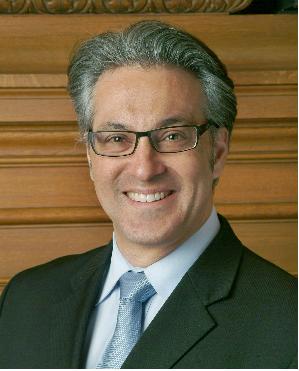
Sup. Ross Mirkarimi is going to file papers today (Feb 22) to begin his campaign for sheriff.

Mirkarimi told us he wants to continue the progressive legacy of Mike Hennessey and to work to reduce recidivism. “Eventually, almost everyone who’s incarcerated comes back to the community,” he said, noting that more than 60 percent of people released from the county jail are re-arrested at some point. “We have to work on re-entry programs to lower that number,” he said. “It’s about keeping communities safe.”

Hennessey, long regarded as one of the city’s most progressive elected officials, has served as sheriff for 31 years. He’s been a national leader in progressive law-enforcement programs, and last year made headlines by fighting the federal mandate that local authorities turn over to immigration offices anyone arrested in the city without proper documentation. He announced recently that he won’t seek another term in November.

Since nobody else has announced an interest in the job — and nobody with Mirkarimi’s record and name recognition is even being mentioned — he becomes the instant front-runner. But it won’t be an easy campaign — the last thing downtown wants is another progressive in citywide office — particularly someone who, like Mirkarimi, could one day use the sheriff’s office as a platform to run for mayor.

Mirkarimi is a graduate of the San Francisco Police Academy and former investigator in the district attorney’s office. He’s been a champion of community policing and antiviolence programs — but as someone who has never been part of the local law-enforcement community, he comes to the race with political independence.

“One of the greatest successes of Mike Hennessey was that he was an independent sheriff,” Mirkarimi noted.

We’ll have more details in the Feb. 23 issue.

Owning it: Kyle Abraham in fast and slow motion

0

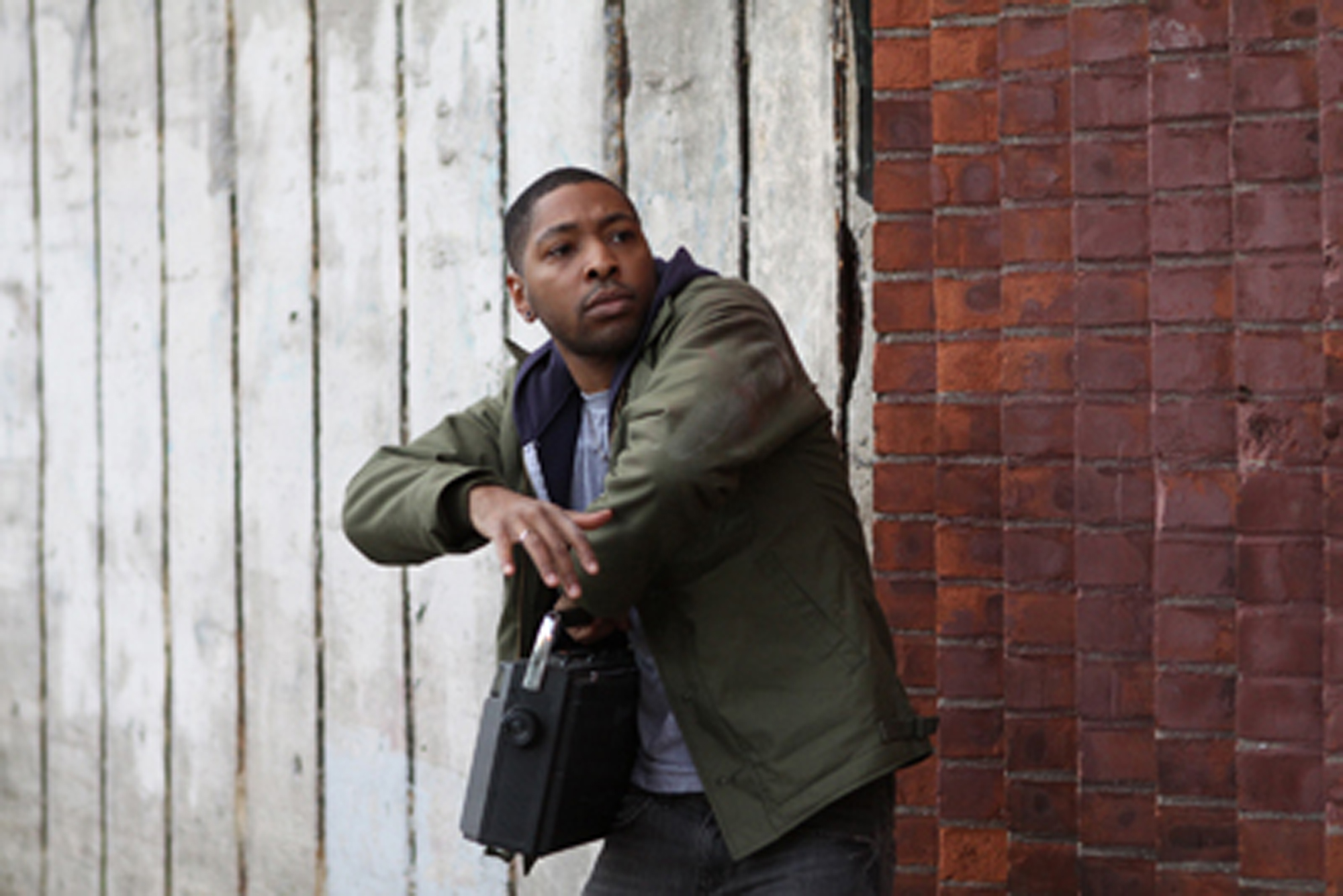
Dance artist and choreographer Kyle Abraham isn’t going on vacation anytime soon and he admits his next day off will be in August. “I try to work really really hard, I never take days off, which I need, but I’d rather get work done,” says Abraham. His work is paying off. Originally from Pittsburgh, PA, and now based in New York City, Abraham visits San Francisco this weekend to perform two solos in the Black Choreographers Festival at the ODC Theater.

“The first one is part of a new group work that I premiere in December 2011 at The Kitchen in New York, and I recently performed it in a program called American Realness in January. The second work is composed of excerpts from solos that I performed in the “Heartbreaks and Homies” show at Joe’s Pub last weekend in New York.” says Abraham. “The first is from a new work called Live!:The Realest MC. It’s in some ways a play on Pinocchio, but instead of a quest to be a real boy, it is a quest for realness in terms of using a gay vernacular and looking at hip-hop culture as a pinnacle of masculinity, and at the adoration of hip-hop personalities. So this character wants to own that in some way. The other solo is just love songs.” 

For the recent performance at the intimate Joe’s Pub, Abraham enlisted choreographers Faye Driscoll and David Dorfman (with whom he has performed for the last five years) to share the evening. “I have my idols for sure,” says Abraham. “Kevin Wynn has been a huge idol for me, and Ralph Lemon, so I’m always intrigued and inspired by the work that they do. I still am trying to get a grasp on all that kind of stuff. I also talk to Reggie Wilson a lot.”

Abraham danced with Bill T. Jones immediately after completing undergrad at SUNY Purchase College in 2000. In the years since, he’s earned his MFA from New York University and has built a company, Abraham in Motion. Gaining momentum, he recently receiving a “Bessie” award (New York Dance and Performance Award) for his work The Radio Show, and this summer, he takes part in Jacob’s Pillow Dance Festival for the fourth year in a row, to perform a joint evening with Camille A. Brown.

“What I like to do,” Abraham says, “is present the work in Pittsburgh before it goes anywhere else. I feel like it’s something about being from there. All of the work is always inspired in some way from my life experience, so for me it’s great to have it first be shown there before it goes out somewhere else.” A residency at the Kelly Strayhorn Theater in Pittsburgh helped Abraham develop the first sketches of The Radio Show, which will tour the country next year. He looks forward to returning to his hometown this May for a performance at the August Wilson Center.

Hip-hop enlivens Abraham’s life experience and his work. “I was born in ‘77, and hip-hop was in that pocket, so it has always been ingrained in me. My first concert was Slick Rick,” he says. “It’s always been organic for me, and then over the years, studying various dance forms, all of those things later influence the movement. If I’m making phrase work, there’s always going to be some kind of hip-hop or urban aesthetic that’s going to come out naturally.” It certainly comes out in the solos at the Black Choreographers Festival, along with stunning explosions of limbs and quick switches back to calm and control.

Part of Abraham’s creative practice is to see a lot of work and be inspired by who and what surrounds him, including this trip to San Francisco. “I first came to San Francisco to find a nice transition between not dancing and coming back into dance and trying to figure out what I wanted to do next,” he says. “So coming here [again], even though I’m performing, still has a lot of vacation energy in a way, because I can clear my mind a lot and think about what I’m going to do next.”

7th ANNUAL BLACK CHOREOGRAPHERS FESTIVAL: HERE AND NOW
Sat./19, 8 p.m.; Sun./20, 7 p.m.; $10-$20
ODC Theater
351 Shotwell, SF
www.odcdance.org


“My girlfriend is a hacker”: Inside the EFF party

2

On our way to the Electronic Frontier Foundation’s 21st Birthday party, my programmer friend explained to me why, if it weren’t for the work of the good folks over at EFF, neither eBay nor WikiLeaks could do their thing.

See, it’s all about encryption, a topic my friend is slightly obsessed with. It used to be illegal for anyone but the government to send encrypted information through electronic channels, he explained, using technology that’s now commonplace and used in any website that requires a log in. In the 1990s, the EFF came along with a lawsuit to open up the ability to offer a secure transfer of information to the masses. The tech law firm prevailed, and soon it became possible to securely log in to a website and enter your credit card information without fear that it would be intercepted. Hence, the trail was blazed for online shopping.

From minds far more subversive than that of Meg Whitman sprang a very different use of the technology. Utilizing encryption software, WikiLeaks designed a way for whistleblowers to securely submit classified documents to an online repository.

That’s just one of many accomplishments that EFF could point to at its Feb. 16 celebration. A nonprofit, EFF “fights for freedom primarily in the courts,” according to its website, taking on the US government and major corporations on issues that threaten Internet freedom and digital rights. EFF boasts more than 61,000 contacts through its Action Center, which it uses to beat back bad legislation and raise awareness.

Just in the last few weeks, EFF has taken on the FBI over its plan to expand federal surveillance laws, weighed in on net neutrality, fended off against attacks from Congress over its aggressive protection of online privacy, and spearheaded a program that allows web users to surf secure all the time.

The EFF staged its 21st bash at Bricks and Mortar Media (BAMM.tv), a “content creation factory” in SoMa.

The place was adorned with festive, futuristic hacker art, from a flat-screen monitor displaying a word cloud, to a stage setup featuring an aerial array of computer bits and video game controllers.

One room featured a live video feed projected onto the wall with a strobe-light effect, and partygoers delighted in throwing kung-fu kicks in front of it and watching themselves flicker on screen like action figures seconds later.

In true tech-pioneer fashion, the night featured live nerdcore performances. What’s nerdcore? Let me put it this way. When the star of Dual Core shouts into the mic, “Throw your hands in the air if you’ve got mad skills,” the people he’s addressing really do have mad skills – like programming, web design, developing apps for mobile devices, managing vast databases, creating video games, and yes, even hacking. One of Dual Core’s raps included the line, “My girlfriend is a hacker.” He’s clearly smitten.

Several chiptune artists also performed, including Crashfaster  — “a chip musician, retro remixer, and low-bit concert promoter whose outreach has galvanized the Bay Area’s vibrant chiptune community,” according to EFF – and Trash80, “the eminent chip musician behind ArduinoBoy — software that helps integrate the Nintendo Game Boy into any existing electronic music arsenal.”

I had the honor of chatting with Doctor Popular, described on EFF’s site as a “professional yo-yoer, nerdcore artist, and innovator.” The good doctor makes music using only an iPhone, iPad, and some wires. He told me he writes songs using a handful of apps while riding CalTrain from San Francisco to San Mateo for his day job at a company that makes video games.

And oh, the nerdy crowd! The knowing glint in their eyes, those people who really understand how to manipulate technology. They program software, develop apps, eat, sleep and breathe online communication, whip out iPhones and Droid phones and talk about video games, latest versions of browsers and operating systems, and other matters that this reporter could not quite comprehend, because they were using acronyms.

They were gracious. “Sorry,” some one said to me after launching into a paragraph of alphabet-soup gibberish to my programmer friend. “Sometimes I forget, and then I notice people’s eyes glazing over.”

And yet, when you hang out with hardcore nerdcore fans, you learn the most fascinating things. For example, how when you begin typing “Torrent” into a Google search engine, the word “torrent” will not show up in the automatic feed that suggests search terms. Why? Well, there are theories.

The children

0

Robert Moses may not know it, but he is a pied piper. The ability to hold the attention of 200 hormone-packed middle school students at 9 a.m. on a Wednesday in early February must qualify as some kind of superhuman ability.

But Moses, choreographer and artistic director of Robert Moses’ Kin, defers to his own pied piper, the one on stage who immortalized the German city of Hamelin. As the fabled character, Dexandro “D” Montalvo twitches, churns, and first commands the rats; then, with beckoning index fingers, he mesmerizes the “children” to follow him who knows where.

The Sunset District students may not have known the story of the Pied Piper of Hamelin, who was cheated out of his justly earned wages and took awesome revenge. But they surely recognized the popping moves Montalvo so skillfully threaded into his character. One way or another, the kids were hooked. For close to an hour, they sat quietly and took in what Moses and his dancers had to show them from their upcoming world premiere, Fable and Faith.

As a kid, I was terrified by the Pied Piper story. No good grades or cleverness — usually assigned to boys anyway in fairy tales — were going to get me out of this scenario. No prince was coming, and there was no happy ending. I was going to be locked in that mountain. The adults had royally messed up. My mother assured me that “it’s just a story.” Well, mom, you were wrong.

Myths, fables, and fairy tales tell us about the way the world works. “Actions”, Moses explains after the performance, “have consequences. The stories talk about life, adversity and perseverance through hard times.” He admits that some of them can be problematic. Stepmothers, for instance, get a “major bum rap.”

Perhaps that’s what initially drew Moses to last year’s The Cinderella Project, which will be performed with the new Fable and Faith before going on tour later in the spring. Cinderella Project, his first collaboration with writer/actor Anne Galjour, who also wrote and performs the text for Fable and Faith, was informed by interviews with contemporary constructed families rooted in love, not blood. “Still, tough as it was,” Moses notes, “Cinderella stuck to who she was and it turned out alright.”

In the 1950s, there was a move underfoot to clean up some of these old tales; the thinking was that children’s psyches would be damaged by so much darkness and uncertainty. Fortunately, the stories have survived, though it’s good to know that Rapunzel no longer gets locked up in the tower because she was pregnant — it was just the evil deed of a jealous witch.

Moses takes a common sense, “age-appropriate” approach when he reads to his own two children, ages five and three. It was this fatherly task of sharing an imaginary world — everything from Dr. Seuss and the Brothers Grimm to African American folktales and Greek mythology — that got him to think about the contemporary resonance of some of these once-upon-a-time tales.

“Think of it,” he says. “Children are being abducted. Or today we talk about ‘the wolf at the door.’ ” In Fable and Faith, the wolf (Montalvo) goes to see a psychiatrist (Katherine Wells) to find out why he is behaving the way he does. The back-and-forth exchange in words and movement ends on a note of real poignancy.

Formally, Moses and Galjour decided on a structure “in which stories clash into each other.” The setting, they felt, had to be a village. “It’s where life happens,” Moses says. Elaine Buckholtz, who started lighting with Contraband and who has become a magician of visual installation, will do the honors on Fable and Faith. To keep a child’s presence at the forefront of these adult dances, Moses is partnering with the San Francisco Boys Chorus. They will perform, among other selections, the “Lacrimosa” from Mozart’s Requiem.

As the students were leaving for their classes, a teacher turned to me and whispered, “We have been very lucky this morning.”

FABLE AND FAITH

Fri.18-Sun./20, 2 p.m.; $25–$35

Yerba Buena Center for the Arts, Novellus Theater

701 Mission, SF

(415) 978-2700

www.ybca.org

Onek to SFPD Chief turned D.A. Gascon: release records of officers cleared in shootings

3

Calitics has a revealing letter from David Onek, a senior fellow at the Berkeley Center for Criminal Justice, a former member of the San Francisco Police Commission and a candidate in the 2011 District Attorney’s race, demanding greater transparency from the D.A.’s office when it comes to explaining why officers have been cleared in officer-related shootings.

“After spending my career working to identify and implement the most effective public safety strategies, I have seen one constant – the community is safest when the police and prosecutors earn and keep the public’s trust,” Onek writes in a letter that is guaranteed to turn up the ante in an already intriguing race. “That’s why I read with real concern that the San Francisco District Attorney’s office would not produce reports related to officer-involved shootings pursuant to a recent public records request from NPR-affiliate KALW.”

(The KALW report shows that the person in the D.A.’s office who penned the letter denying its request for records was Paul Henderson, D.A. Kamala Harris’ chief of staff and her preferred pick as replacement D.A. before Gavin Newsom appointed former SFPD Chief George Gascón as his last act as mayor, shocking just about everyone except Willie Brown, especially when it came out that Gascón used to be a Republican and is not philosophically opposed to the death penalty. And while Gascón, who was registered in recent years as decline-to-state, promptly turned around and registered as a Democrat, he also filed papers in the D.A.’s race that cite the phone number of notorious campaign attorney Jim Sutton.)

In his post on Calitics, Onek notes that as a former Police Commissioner, he was briefed in closed session on the details of officer-involved shootings, and he often heard complaints from community members about how little public information was released about officer-involved shootings.
“This lack of transparency breeds distrust,” Onek observes.

Onek acknowledges that in all officer-involved shootings, the DA’s office conducts an independent review to determine if there is criminal liability, and that if such liability is found, the DA presses charges, which are public. “But when the DA determines that there is no liability, it is equally important that the DA publicly explain the reasons for its decision,” Onek states.

In short, he believes the D.A.’ office should issue a very detailed report on every officer-involved shooting in which it does not file charges and should make the report publicly available on its website. “The report should detail the facts, the law and the reasons for the decision not to file charges,” Onek says, arguing that complete transparency would make the job of police and prosecutors much easier by building trust between law enforcement and the community, making it more likely that community members will work in partnership with police and prosecutors, and that victims and witnesses will come forward to testify.

“Publishing detailed reports that clear officers when they acted within the law can dispel public misconceptions about what actually happened,” Onek concludes. “Of course, officers’ privacy rights need to be respected and investigations cannot be compromised. But once an investigation is complete, and an officer has been cleared, it is imperative that the District Attorney’s office share its findings with the public. “

And as Onek points out, this standard is already in place in communities in California. “The District Attorney’s office in San Diego, hardly a bastion of liberalism, actually lists these cases on its website,” Onek states. “Many other counties – including Los Angeles, Orange and Fresno – also make them matters of public record and available on request. Building trust with the community is the key to enhancing public safety. Let’s not violate that trust by refusing to release documents that the public has the right to see.”

I’ve got a call into D.A. Gascón’s office to learn more about the rationale for denying KALW’s request, and I’ll be sure to post his reply here, so stay tuned.

Planned Parenthood calls for support against GOP attack

6

As the struggle to keep the doors open at the legendary women’s clinic, Lyon-Martin Health Services, continues here in San Francisco, yet another blow to women’s health care at the national level has advocates sounding the alarm. Planned Parenthood has issued a call for help defeating a federal bill it’s calling “the most dangerous legislative assault on women’s health and Planned Parenthood in our 95-year history.”

Congress is gearing up to vote on the Title X Abortion Provider Prohibition Act, which would eliminate federal funding for all health-care services provided by any clinic that offers abortion services. The legislation places Planned Parenthood, a leading national provider of reproductive health care serving primarily low-income and uninsured women, squarely in the crosshairs.

The bill was proposed by Rep. Mike Pence (R-IL), who apparently has serious beef with Planned Parenthood.

While Pence has sought to convince lawmakers that the bill would eliminate federal funding only for abortions, its reach is actually much broader than that, and it would deliver a devastating blow to basic reproductive health services for millions of women.

“This bill would eliminate all federal funding for Planned Parenthood health centers — including funding for birth control, cancer screenings, HIV testing, and more,” notes a statement on Planned Parenthood’s website. “The consequences of this bill are clear — and they would be devastating. More women would have unintended pregnancies. Cancer would develop, undiagnosed, in countless women. There is no doubt: cutting off millions of women from care they have no other way to afford places them at risk of sickness and death.”

Even Cosmo has weighed in, noting that this federal funding is helping millions of women stay healthy or detect early stages of disease: “Last year, that money (which would dry up completely if the bill is passed) went towards 2.2 million Pap tests, 2.3 million breast exams, and over six million tests for STDs.”

City Attorney Dennis Herrera has joined in the calls for defense of Planned Parenthood, issuing an email blast as part of his mayoral campaign asking voters to sign a petition against the Pence legislation. “New efforts by the far right to eliminate funding from all Planned Parenthood health centers nationwide pose a dangerous and immediate threat to women’s health,” Herrera wrote in the campaign message.

A number of other online petitions are circulating on this issue as well. Go here or here to learn more.

No more San Brunos!

13

For decades, the Guardian has done story after story on PG&E’s deteriorating service, terrible maintenance record, continuous stonewalling and coverups, emphasis — not on safety — but on jacking up executive salaries and putting tens of millions into fighting community choice aggregation in San Francisco and Marin, and on the granddaddy of monopoly moves (last year’s Prop 16). The San Francisco Chronicle, to its immense credit, has come through with a series of stories laying out PG&E’s virtually criminal behavior in the San Bruno pipeline explosion.

Now TURN, the consumer watchdog over utilities, is putting forth an excellent way to fight back with a  tough petition and spreading the word. TURN says, “PG&E charged its customers $5 million to fix a gas pipeline under San Bruno in 2009, but delayed the work citing other priorities. The company then spent $5 million on executive bonuses.”

Take action to demand PG&E make customer safety its top priority, and pay for the costs of this tragedy with its own profits, not our pockets.

Sign the petition here, and tell the PUC, “No more San Brunos.”

Warren Hellman: The rich are undertaxed

31

I couldn’t reach financier Warren Hellman before I wrote my column in this week’s paper talking about the employee pension discussions. But he called me yesterday (Feb. 16) after he’d seen it, and I expected he’d give me some shit.


Wrong.


In fact, Hellman had only one problem with my analysis: “Your article is didn’t go far enough.” Turns out he thinks I was a bit too easy on the billionaires.


“When you compare upper-echelon tax rates [in America] to any developed country in the world,” Hellman said, “the rich pay very low taxes here. You’re article is exactly correct — the wealthy are undertaxed.” He told me that he’s stopped trying to amass more personal wealth (“it’s all going into a foundation”) because he realizes that he couldn’t possibly spend all the money he has “and all that happens if you leave it all to the next generation is that you spoil your kids.” 


Quite a statement coming from one of the city’s richest and most influential business leaders.


Of course, putting all the money in a foundation isn’t the only answer.   The only way to address the wealth gap, and the decline in social, education and infrastructure spending, to for the government to get more involved — and that means collecting more tax money from the people who can afford to pay it. Hellman told me that he’s not about to accept a reduction in his lifestyle — but we both agreed that he doesn’t have to. He could pay a lot more in taxes and still be really, really rich.


So we talked about my proposal, which goes like this:


I’ve got a suggestion for the pension reform negotiators. Why not talk a little about parity.


 Yes, pensions have to be fixed; let’s start at the top. Maybe nobody should have a pension of more than $100,000 a year; certainly, a former police chief shouldn’t get $250,000 a year for life. Maybe the highest-paid city employees should have to pay more into the pension system to protect the pensions of the people who make less. I could easily support progressive pension reform that would save the city money.


 I just think tax reform should also be part of the equation.


 Hellman wants $300 million in pension savings? Good — how about pairing it with $300 million in new taxes on the wealthy? How about big business and rich people give up something this time around, instead of all of the cuts falling on public employees and poor San Franciscans?


And Hellman, to his credit, didn’t disagree with the concept. His problem he said, was with the politics. “Taxes are the third rail of politics,” he said. “I’ve gotten my head handed to me three times now when I’ve supported tax increases.” 


But I still think there’s a way to move forward here. The city employee unions agree to some sort of pension reform, which starts with a pension cap and higher payments from higher earners (not with what amounts to a pay cut for lower-wage employees who have already taken pay cuts in the past few years). Then Hellman, Mayor Ed Lee and Sup. Sean Elsbernd agree to support a progressive tax measure that would bring in badly needed revenue for public services and education.


It’s possible that the tax measure would have to wait until Nov. 2012, when it would only require a 50 percent vote. Maybe both measures go on that ballot. And Hellman, Elsbernd and Lee use their clout with downtown to push the Chamber of Commerce and the Commitee on JOBS to at least stay neutral and cut off any big-money campaign against the tax measure. Then they all agree to help raise money and campaign to pass it. And labor agrees to work for both measures.


Hellman said he feared that “one would kill the other” and both measures might fail. But I believe the people of San Francisco are willing to support new taxes — progressive new taxes — if they don’t think the money’s going to waste. And pairing pension refrom with new taxes sends a strong message: We’re all sharing the pain. Particularly if Hellman, Elsbernd and Lee can sell the tax package part of the deal to the business community.


It’s worth a try. Because otherwise, we’re going to have another Prop. B battle, both sides are going to spend a ton of money, and nobody’s going to walk away happy.


“It’s worth thinking about,” Hellman told me. I hope so.

The Performant: Enter the Platypus

0

French “Art” and Fringe wins at the EXIT Theatre

Of all the theatre companies in the Bay Area currently operating, the most specifically focused may well be our premiere (or rather only) amateur Francophone company Le Theatre Platypus. Though the Goethe-Institut sometimes hosts touring productions, such as Bridge Marklund’s “Faust in the Box” which will play in the Institut auditorium March 3 and The Mission Cultural Center hosts occasional Spanish-language plays such as Dolores Prida’s “Coser y Cantar” (playing March 17-19), dedicated multi-lingual local troupes are unfortunately scarce. This makes going to see a Platypus play more than just a night out, but a bona-fide cultural immersion experience.

Thursday night at The EXIT Theatre Mainstage is not usually where you’d expect to find a sold-out house, but Platypus pulled it off with their French language presentation of Yasmina Reza’s “Art” a satirical look at the world of art commerce as well as an exploration of the relationship between three friends whose differing feelings about an art piece underscores the divide in their characters.

There are many things about watching the play in French that are just the same as watching it in English—or any other translation. The appearance-driven shallowness of Serge (Michel Tassetto) is no less shallow in French than in English, and the zealous arguments against “the modern” of his acerbic buddy Marc (Arnaud Merceron) are no less self-righteous. The insecure hypochondriac Yvan (Thomas Marigne), who wobbles between trying to placate the feelings of both and obsessing over his pending marriage, is no less a schlub en Francais, and the piece of art in question—a $40,000 canvas painted all in white—is no less an eyesore.

The difference definitely lay in the crowd, half of whom appeared to be bona-fide expats, half of whom appeared to be French American International School scholars out for extra credit, and all of whom most certainly appeared to be having a great time. It surprises me that there aren’t more dedicated non-English Language theatre companies in the Bay Area, considering our diverse population, and while the Bay Area is a breeding ground for new translations, it’s interesting to consider what sort of impact these same companies might have mounting a non-translated work.

Because it’s never too early to start obsessing over the San Francisco Fringe Festival, which will be celebrating it’s 20th year in September, a hard-core crew gathered at the EXIT café on Saturday to witness the annual lottery — the process by which all entrants are chosen. This year 25 out-of-town companies, 10 of whom were alternates, and 35 locals, ditto, were drawn out of the “hat” by Christian “Nothing-up-my-sleeves” Cagigal and Michelle Talgarow. The San Francisco Fringe, as well as all Fringe Festivals part of the Canadian Association of Fringe Festivals are 100% non-curated, which means literally anything goes. Working titles of this year’s chosen productions include “Hamlet vs. Zombies,” by The Skinny Improv, “Hitler’s L’il Abomination,” by Annette Roman, and “I Love You, We’re F*#ked,” by Kevin J. Thornton, worthy Fringe titles all. The only question now—how do I wait six more months to see them?

Lion dancer takes off his mask

1

Another year and another ferocious super-natural lion symbolically rips and spits out heads of lettuce along the storefronts of Kearny Avenue. This is the lion dance, a highly visceral and visually unique performance that is a centerpiece in the city’s Southwest Airlines Chinese New Year parade, a 150-year old event that draws the participation of over 100 community groups. 

Although each performance is different, one thing stays the same: the lion dancers’ faces are never revealed and their identity stays behind the mask. We were lucky enough to speak with one veteran lion dancer about growing up with the parade and his time inside the lion.

Wilson Mah is a native San Franciscan. He teaches lion dancing at Loong Mah Sing See Wui, or the Dragon Horse Lion and Dragon Dance Association, a non-profit dedicated to teaching the lion dance to its 100 young members between the ages of four and 19. Mah’s organization is one of the main lion dance troupes in this year’s Chinese New Year parade.

In his own youth, Mah was afforded an education about Chinese culture that he spends his adulthood passing on. “When I grew up, it was very common for kids to go to Chinese school right after our public elementary school let out,” Mah says. “The school that I went to was inside of a Methodist church called Hip Wo, I got involved in the parades through my school and the church while I was growing up.”

Mah remembers being affected by the lion dancers at an early age. “I was a baby and I remember being held by my father and watching the lions. I was terrified! For me, that was no paper-mâché symbolic lion. That was a lion that had made its way through heaven and down through the portals to Victory Hall on Stockton Street.”

Mah maintains that it is this unmatched, supernatural quality about the lions which makes them part of a rich Chinese cultural heritage worth holding onto. “When you see that lion and you watch it perform, you see how visceral and tenacious it is. That, contrasted with the idea that they bring good luck, is very powerful. I’m a fourth generation American and I can’t think of anything else equivalent to that.”

Nowadays, Mah uses the strength and tenacity of the lion to empower the youth in his group, encouraging them to manifest the best qualities of the lion both in and out of his class. Mah’s teaching experience dates way back. After dodging the Vietnam War, he set out to do community-based work and helped to establish The Kearny Street Workshop, a historic Asian American arts organization in SoMa. The road that eventually led Mah to teach the lion dance continued smoothly until the early ‘90s, when Mah and his family struggled after their house suffered significant damage from a fire. Mah decided to make something out of the rough situation. “While I was waiting for my house to be rebuilt I wanted to do something constructive.”

He’s been teaching the lion dance ever since. Although the group performs the lion dance at special events and celebrations throughout the year, he says the Chinese New Year Parade is an important opportunity for his dancers to showcase their hard work and cultural pride to the rest of the city. “We do it for the San Francisco community at large,” Mah says. “I still have cultural sensitivities, I’ve gone through racial intolerance growing up. I think it’s important to show the public the beauty of Chinese arts and culture. We want to bring a lot of these things to a positive light.”


SF Chinese New Year Parade

Sat/19, 5:30 p.m., free

Starts at Second Street and Market, SF

(415) 986-1370

www.chineseparade.com


Mad science

2

Is the Bay Area’s experimental beat scene finally coming together? After a few years of lagging behind the explosion of beat conductor talent in Los Angeles, and suffering a steady exodus of potential down south, the Bay Area’s time for creating a forward leaning psychedelia — composed from the bass-infused backbone of instrumental hip-hop — might have arrived.

This week, San Francisco’s DJ veteran Mophono releases his debut full-length, Cut Form Crush, on his upstart CB Records. It’s a colossal experiment in deconstructed percussive patterns and warped synth keys, washed with distorted textures, panning effects, and field recordings. Since 2006, Mophono has hosted the weekly party Change the Beat, guided by only one principle: blow up the soundsystem with unlikely combinations of sounds.

Last week, Change the Beat resident and SF mainstay Salva also dropped his first full-length effort, Complex Housing (Friends of Friends), an excellent dance record that glides across an array of genres infatuated with the interplay of bass, groove, and melody: hip-hop, house, UK funky, Chicago juke, and ghetto-tech all get equal treatment.

Here’s the rub: Although Salva insists that the Bay is still home, especially through his SF-grounded imprint Frite Nite, which supports bubbling acts like Ana Sia and B.Bravo, he was practically unpacking boxes in his new L.A. crib when I spoke to him on the phone before writing this article. On the other hand, another L.A. force of sonic gravity, Low End Theory — Daddy Kev’s acclaimed weekly, which helped form the social fabric that pushed Flying Lotus, the Gaslamp Killer, and Daedalus, among many others, to international attention — has kicked off a monthly residence in San Francisco. Ultimately, both cities can benefit from creative exchange, so let’s just say that California’s got it going on.

Born Benji Illgen, Mophono has been rocking parties in the Bay Area for nearly 20 years as DJ Centipede. His early obsession with digging for records — one that’s amassed a vinyl vault of around 6,000 records — defied genre and era for a love of percussion in all its forms, including conspicuous absence. “I’m drawn to rhythm, both as a DJ and as this metronome-carrier-guy who maintains turntables,” Illgen tells me over the phone, as raucous noise and strange bangs reverberate in the background.

Cut Form Crush could be called a study of drums: percussive patterns unfold and disappear, giving rise to new formations set on their own uneasy path toward self-dissolution. While the drums, crunchy and multilayered, degenerate, a barrage of synth noise and warped textures dance frenetically around the pockets of space jarred open by the percussive momentum. This record alarms as much it disorients.

In many ways, Cut is the product of all the music Illgen has absorbed over the course of the past two decades. From closely following the development of hip-hop and U.K. electronic genres and digging into psychedelic rock, musique concrète, jazz-funk, Kosmische, and post-punk, Illgen became interested in the way imaginative music is made through improvisation. “Bands in the ’60s would get in these zones, really rhythmic areas, and they would tap into a minimal expression,” says Illgen. “I’m interested in those minimal, odd breakdowns, when these cats just jam out on some craziness.”

Rather than just sampling loops and bits from these sources, Illgen decided to reproduce the creative environments that shaped their genesis. “I’d get groups and musicians together in my little studio who aren’t necessarily band mates but are involved in the same sort of music community,” says Illgen. “Then we’d just vibe out. We’d create these recordings that later I’d access and reconfigure the sounds.”

One of the outcomes of this recording process is the dizzying song “Cut Form Crunch,” extracted from multiple sessions with Flying Lotus and later edited into a condensed can of musical psychosis. Thick-bodied synth keys vibrate over muddled bass thumps and compressed percussive claps as if dubstep’s basic components were thrown together into a washing machine, cycling in rotation. “Electric Kingdom” maneuvers through dubstep’s signature helicopter wobble, curdling an off-kilter rhythm with sequenced claps and blips. In “Cut Form Crush Groove,” Illgen reworks the early disco breaks that established the basic framework of hip-hop in circa-1980s South Bronx. A Vocoder-dissimulated MC channels the cosmic frequency of Afrika Bambaataa, calling us to respect the foundation. But even these more conventional drum patterns and familiar vocal refrains wisp away into static and gurgling fuzz.

What Illgen emphasizes in his recording technique is a preference for textural environment over the clarity and crispness often associated with quality. “I see experimentation as an open-minded direction to making music,” he says. “I don’t know what I’m going to find, but if I open my ears, I’ll find something. And I’ll let that dictate where the music goes.”

Paul Salva takes a similar improvisational approach to music production. “Without all the theory and formal training, I have to relish this time where I’m feeling out the instruments and learning what to do with them,” he says. “As amateurs, and coming from a place of ignorance, kids are doing amazing shit — by accident.”

Despite his Chicago upbringing, Salva initially gravitated to West Coast backpacker hip-hop and the East Coast stylings of the Diggin’ In The Crates (DITC) crew before taking an interest in his hometown-bred house and its ghetto-tech offspring. “Record store culture really helped solidify my eclecticism,” he says. “Through working at Gramaphone Records in Chicago and also in Miami, I got into IDM, drum ‘n’ bass, and whatever else caught my ears.” Recently, as genre allegiances have begun to dissolve among young musicians and listeners, Salva grew comfortable with the idea of consolidating his diverse tastes and producing a record on his own terms. Although Complex Housing takes influences from a flux of emerging ideas and sounds across the spectrum of today’s future bass and beat scene innovators, it finds an enduring coherence in being, very simply, a well-crafted dance record.

“Wake Ups” has Salva showing his chops on the synthesizer and the drum machine, layering lush boogie-funk chords over a skittering rhythmic grind. In “Keys Open Doors,” he anchors dirty disco arpeggios with poly-percussion pilfered from the odd-shuffle of UK funky and grime. In these songs, the gritty underside of club music — recalling its many places of origin and evolution in abandoned warehouses and neon-lit bars, juiced from electric outlets in public parks and now the outer zones of the Internet — emerges from layers of shimmering production. The record reaches toward its apex with “I’ll Be Your Friend,” a future-funk rendition of Robert Owens’ early ’90s house classic of the same title. Salva edits Owens’ longing hook into a repetitive chant, spliced around a minimal rhythmic knock and atmospheric washes of sound that delicately grow and just as softly decay.

What consistently stands out within the record is Salva’s ability for crafting effusive melodies over rolling bass lines. It’s an absolutely seductive combination that hinges on a resilient tension in the music: a mechanistic but unsteady beat underpins the expressive quality of the chord progressions. Salva owes this effect at least in part to his recording technique of combining live instrumentation on the keyboard with laptop robotics. “When I’m making music with live instruments, I have more of an open palette,” he says. “When I’m in the computer, in the sequencer — the options are nearly limitless — anything goes. And because of that, my creativity can be stifled if I don’t place restrictions on myself.”

Salva and Mophono both figure out surprising and compelling ways to tap into the elusive formula of creativity. In the end, the search for the future beat is more of a mad science than an exact one.

FIX UP PRESENTS: SALVA COMPLEX HOUSING RELEASE PARTY

With Shlomo, B.Bravo, Epcot, and more

Thurs./17, 9 p.m.; $8

222 Hyde

222 Hyde, SF

(415) 345-8222

www.222hyde.com


CB RECORDS PRESENTS: MOPHONO CUT FORM CRUSH RELEASE PARTY

With Gaslamp Killer and Citizen Ten

Sat./19, 10 p.m.; call for price

SOM

2925 16th St., SF

(415) 558-8521

www.som-bar.com

Adachi and Ballard’s pension reform gloves come off

64

Yesterday, I talked to Public Defender Jeff Adachi about the latest efforts to address pension reform in San Francisco. Readers may remember that Adachi roused the ire of the labor unions last year, with the ultimately unsuccessful Proposition B. At the time, most folks felt Adachi’s measure didn’t have a snowball’s chance because it asked public employees to bear the brunt of the city’s ballooning retirement and health plan costs. Yet, they all praised Adachi as a great city leader who has been on the right side of many other battles in this city’s rich political history.
But the pension reform issue hasn’t gone away, and now that Adachi is threatening to introduce another measure this fall, the gloves have apparently come off, as witnessed by a Bay Citizen article that reported that union leaders don’t want Adachi to be part of a pension-reform working group at City Hall
In that Bay Citizen article, Nathan Ballard, who served as communications director for former Mayor Gavin Newsom from 2007 to 2009, said, “Inviting Jeff Adachi to our talks would be like inviting Sarah Palin to speak at the Democratic convention.”
The Bay Citizen characterized Ballard as “a Democratic strategist who has been involved in the working group since its inception.” And it noted that Mayor Lee had reached out to Adachi—an effort that it framed as a “complicating move.”
But it didn’t get Adachi’s thoughts on Ballard’s comments. So, I asked Adachi how he felt about being compared to Sarah “Moose in the headlights” Palin.
“It’s ironic that a spokesperson from Burson-Marsteller, which is headed by Republican operatives such as President Bush’s former press secretary (Dana Perino) and represents some of the most reactionary corporate interests, such as USA Blackwater, is accusing me of being a Republican for trying to solving our city’s pension crisis,” Adachi replied, referring to the fact that Burson-Marsteller, a global public relations firm, appointed Ballard as a managing director in March 2010.
“This is a company that is known for representing the worst corporate criminals in modern history,” Adachi continued. “They organized a campaign against civil rights in Argentina, supported a government massacre in Indonesia and tried to justify the killing of over 2,000 people in India’s Bhopal disaster. You have a hired mouthpiece, Nathan Ballard, who’s been paid $50,000 out of union member dues deciding who can attend meetings at City Hall. “
Asked for his thoughts on Adachi’s response, Ballard replied, “Burson-Marsteller employs talented operatives from both sides of the aisle. Although I won’t speak to the specifics of Jeff Adachi’s allegations, Burson is well known as the world’s go-to firm for crisis communications, and that tends to involve handling high-stakes disputes for controversial clients. As a criminal defense lawyer, Jeff Adachi should resist the temptation to assign blame to an advocate for accusations made against a client.”

So, buckle your seats, ladies and gentlemen. The pension reform battle is ON. And if the exchange posted above is any indication, it’s only going to get uglier

Muni looks for money — but not downtown

12

The San Francisco Municipal Transportation Agency is looking for new ways to bring in money, which is a fine thing. I think taxes for transportation make perfect sense. And while not everything in government gets better when you throw money at it, Muni generally does. Some of the ideas are pretty sound and take a progressive approach; it’s hard to argue against a vehicle impact fee, since private cars on the road increase traffic and slow down the buses. I’m all for higher parking rates, and an off-street commercial parking fee is a great idea (even though the Guardian, which owns a building that has a small parking lot, would have to pay the fee).


But the list is missing the most obvious and the most fair element: A special tax assessment for downtown commercial property. We know, because the city has done numerous reports on this, that office developers don’t pay anywhere near the real cost of providing Muni service to their buildings. We know that most of the Muni lines, and certainly the ones with the heaviest traffic, exist to take commuters downtown. We know that decent transit is critical to the success of the entire central office district.


So why is there nothing on this list to address that? Why not an annual fee per square foot of commercial office space in the area zoned C-3-0 (highrise offices)? That ought to be part of any Muni funding plan.


I tried to get the folks at Muni to respond to my question, but I haven’t heard back. I’ll update as soon as I do.

Ammiano goes after tax cheats

3

Assemblymember Tom Ammiano is moving to close a huge tax loophole that costs state and local government millons — and while his last attempt failed, this year he has a much better shot. The measure will probably make it out of the Legislature (hard to argue against something that doesn’t raise taxes at all but just makes sure nobody cheats) and I can’t imagine Jerry Brown deciding to veto it.


The bill, AB 448, would force companies that sell or transfer propetry to report it as an ownership change, which triggers a new assessment under Prop. 13. It’s one of the oldest loopholes in the book: I create a corporation or LLC to hold a piece of property, and when I want to sell, I simply transfer stock in the corporation or membership in the LLC to the buyer — and the property deed isn’t changed.


The California Tax Reform Association tracks this stuff, and you can see some examples here.


Ammiano’s been working with San Francisco Assessor Phil Ting, who told me “it’s a simple issue of fairness. Homeowners face reassessment when they buy property; why shouldn’t corporations?”


The stakes are high. It’s impossible to say how much San Francisco would pick up every year, but over time, it could be many millions of dollars (and about 57 percent of property tax revenue goes to the General Fund, the rest to the state, which returns most of it it the public schools).


Perhaps the Democrats should simply include this projected revenue in their budget; that way, Brown would have an even greater incentive to sign it.

Work the throne: Interviews with the San Francisco Empress 2011 candidates

25

Update: Saybeline has been crowned the new Empress. Congratulations to both the outstanding candidates, and warm wishes for the future.

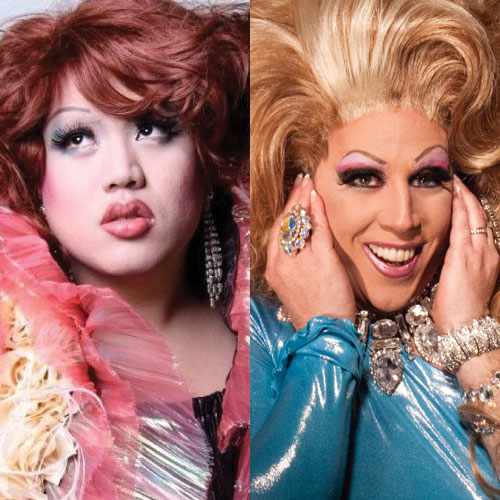
In this week’s Super Ego column in the paper, I give a grateful nod to our esteemed – if little acknowledged — Imperial Court system, an incredible, drag-based 45-year-old institution that raises tens of thousands of dollars for charitable Bay Area causes. (Really, do yourself a historical favor and check out the recently revamped Imperial website.) Below are my full interviews with the candidates, Saybeline and Monistat.

The annual elections for Empress of San Francisco are coming fast upon us (Sat/19, free. Noon–7 p.m. at Castro Muni Station, Castro and Market, and 11 a.m.–6 p.m. at Project Open Hand, 730 Polk, SF.) The winner will devote the next year of her life to raising funds and repping SF — after she graciously endures a daylong coronation ceremony on Sat/26, one of the city’s true mind-blowing spectacles. (The winner will be announced at Coronation.)

I emailed a series of questions to both candidates in order to get a better sense of who they are and why we should vote for them. They each bring a different, welcome perspective to the competition that ultimately helps refresh this cherished local tradition.

SFBG  What is your Empress platform?

MONISTAT My mission to become Empress is to bridge communities together. We all know that Marlena’s [Bar in Hayes Valley] is the seat of power for the Imperial Court of San Francisco, and I being the outsider candidate promise to outreach to the members of this community. As Empress, I will be the Empress of San Francisco, not just the Castro, but the entire city. There are so many great facets of this town, and so much talent that I can use at my disposal to do some really good work! Being part of an amazing club scene in this town, I have been fortunate enough to work with some of the best promoters, DJs, performance artists, and venues, so why not refresh their eyes and give them something a little different.

SAYBELINE First and foremost, I offer an experienced continued commitment to service in our community. Additionally, I offer a continued commitment to honoring the 45-year history and traditions of the Imperial Council of San Francisco and the many Empresses and Emperors that have paved the way for many like myself, making a difference and serving in our community. Most importantly, my motivation comes from wishing to take on an expanded leadership role spearheading much needed grass roots community fundraising for our local network of diverse community based charitable organizations struggling to make ends meet.

I have actively been involved (both as a gay man and the persona of Saybeline Fernandez) in some way serving the LGBT community of San Francisco for over two decades. In those 20-plus years, I have giving my own money and served the community volunteering on the front lines for our LGBT political and human rights causes, volunteering for HIV/AIDS support services, services for our LGBT youth and services for our marginalized diverse communities. Additionally, I have lent my professional experience in event-planning to many fundraising events that have raised thousands of dollars and awareness, supporting and serving San Francisco. I also feel that one of the biggest differences in this campaign is that I have the ability and experience to energize and engage younger members of our community to become more actively involved in serving the community.

SFBG What would your first act as Empress be?

MONISTAT OMG Coronation is usually six hours long, and ends at midnight with the crowning of the new Empress. Its a long-held tradition. But of course win or lose, I’ll be out that night after the ball partying my brains out, to thank myself for finishing this amazing campaign. I will probably never sleep that night if I win, because usually I have to cart myself to all the bars that have sponsored me with the crown on my head, then have to be up and ready by 7am to go the Emperor Norton’s Cemetery all the way in Colma, in full mourning drag, with a veil on and everything (I secretly love all this pomp and circumstance). Then after a round of partying for three more days, I have to get working on my official Investiture, which naturally will be a fundraiser.

SAYBELINE This is easy for me. It’s sooo important to me that we get more younger members of our community actively involved in serving our community…. So many want to be involved but don’t know how. We have to open the doors, and engage and encourage them to have a greater presence in being of service.

SFBG How long have you wanted to be Empress?

MONISTAT What a loaded question. I believe that every queen is royalty and should be treated that way. The title of Empress just means you have to be in drag more than everyone else. I went to coronation last year. I’ve never won a title in my entire my life — all of my friends have kind of created their own niches and scenes in the city, so I thought, “Hey, why not do something my friends will never do?” So after talking to my closest pals, I decided to go for it and take the bull by the horns. Trust me, running for Empress is harder than most people think.. and it has taught me a lot of lessons about myself and growing up. It’s incredibly challenging to be put under a microscope 24/7 when everyone is watching you and every mistake you make is blown up 20,000 percent.

SAYBELINE I have been actively involved with the Imperial Council of San Francisco for a little over five years. And the thought of becoming Empress first crossed my mind some three years ago. As much as I may have wanted to run in previous years, I knew it was important to gain more experience within the court of San Francisco and the International Court System. Being Empress means both making a large personal financial committment and an expanded committment of one’s personal time. One has to have both in place in order to be successful. And after planning and getting things in order personally, the timing was finally right for me to throw my hat in and become a candidate and with the support of our community hopefully become the next elected Empress.

SFBG In one sentence, why should we vote for you as empress?

MONISTAT I’m young — my youthful energy combined with fresh ideas and the willingness to learn, plus my hands-on approach to things, is the perfect cure to a traditional court that needs to be shaken up a bit. My experience as a club promoter and my connections in this city will make for a great year as Empress. the Imperial Court is nearing its 50th year, there is need for new blood. I’m that queen. Oh yeah, I was also voted Best Drag Queen by the readers of SF Bay Guardian, enough said.

SAYBELINE A vote for Saybeline Fernandez is a vote for someone that offers leadership and experience — and someone committed to welcoming and encouraging younger members of our community to become more actively involved serving the community, raising much-needed funding for our local network of community-based charitable organizations.

Noise Pop 2011 short takes

0


DAN DEACON

Don’t take drugs before a Dan Deacon concert — it’s a waste of your perfectly good toxins, because even sober attendees will feel totally fucked up after a show with the holy Jesus of electronic madness. Crawl! Spin! High fives! Jump! Close your eyes. Spin! Imagine you’re running in a forest, etc. You’ll leave a wolf. With Ed Schrader’s Music Beat, Oona, and Altars, Tues./22, 8 p.m., Independent. Also with Ed Schrader’s Music Beat, Sister Crayon, Lily Taylor. Wed./23, 8:30 p.m., Rickshaw Stop. (Amber Schadewald)


VERSUS, TELEKINESIS

Live through this — be it heartbreak, hearing loss, or the heavy-duty poker sessions in the basement of Lost Weekend Video. Versus’ Richard Baluyut has moved on from his gig at the invaluable Mission video store, but he hasn’t lost his way with a moody rocker: Versus’ On the Ones and Threes (Merge, 2010), its first album in a decade, finds beauty in the darkness — and in the return of old compatriots like original member (and Richard’s bro) Edward Baluyut and engineer Nicolas Vernhes (Deerhunter). Elsewhere on this insurmountable bill: Michael Benjamin Lerner of Telekinesis has grappled with hearing loss by way of a cryptic disease and coped with the demise of the relationship that inspired his debut. Sounds like he’s rising above, beautifully, via the gritty, grumble-y, bass-wrought numbers of 12 Desperate Straight Lines (Merge). With The Love Language, Burnt Ones. Wed./23, 8 p.m., 21+, Cafe Du Nord. (Kimberly Chun)


THE EXTRAORDINARY ORDINARY LIFE OF JOSE GONZALEZ

If the trailer is any indication, this portrait of the singer-songwriter and Junip member uses animation and some Idiots-like live action to illustrate his music. “The best stuff is generally an unexpected twist while still maintaining a thread,” he says in voice-over, as directors Mikels Cee Karlsson and Frederik Egerstrand show him trying to write, slumped over a desk in a dark room. Wed./23, 9 p.m., Roxie Theatre. (Johnny Ray Huston)


WAY BEHIND THE MUSIC

Anthony Bedard of Hank IV and the Hemlock Tavern hosts as Mark Eitzel, Thao Nguyen, Beth Lisick, Linda Robertson, Michelle Tea, Bucky Sinister, Jesse Michaels, Paul Myers, and Tom Heyman read from some of the most bizarre American music memoirs. This showcase includes the words of Justin Bieber, Jewel, Gene Simmons, George Jones, Marilyn Manson, Tori Amos, Vince Neil, and Denise McLean (mother of Backstreet Boy A.J. McLean), among others. Thurs./24, 7:30 p.m., Make-Out Room. (Jen Verzosa)


APEX MANOR

Terrible-two Spoon meets newborn Dinosaur Jr.? Apex Manor, the latest project from Ross Flournoy, brings such post-punk pack leaders to mind, as the effortless strains of jingle-jangle bliss and well-hooked-up rock ‘n’ roll course out of the new Year of Magical Drinking (Merge). But, really, it must have been Flournoy’s passionate, punchy performance on “Under the Gun,” coupled with a bitchin’ guitar solo, that captured Carrie Brownstein’s heart and won her NPR challenge to write and record a song in one weekend. That’s all gravy, though, considering that the exercise succeeded in busting Flournoy out of a lousy case of writer’s block after the breakup of his underrated Broken West. With Film School, Gregory and the Hawk, Melted Toys. Thurs./24, 8 p.m., 21+, Cafe Du Nord. (Chun)


SHANNON AND THE CLAMS

Hey freak, you know you’re one of us. The wait has been long, but the time is coming soon for Shannon and the Clams to release Sleep Talk on 1-2-3-4-Go! Records. Get ready to be blown away by Shannon Shaw’s voice, one of the great untamed forces-of-nature of rock ‘n’ roll, and my vote for the best pure sound you can hear at this year’s fest. With Jake Mann and the Upper Hand, Wet Illustrated. Fri./25, 5 p.m., 21+, Benders Bar. (Huston)


NICK ZINNER’S 1001 IMAGES

While most noted as the guitarist for the Yeah Yeah Yeahs, Nick Zinner is making a name for himself as a talented photographer. (He has four books of images to his name, including his latest, Please Take Me Off The Guest List.) In this exhibition of 1,001 photographs, the Bard College-educated, four-time Grammy nominee captures intimate moments of his world travels as a member of an iconic art rock and garage pop trio. Fri./25, 5 p.m., 21+, Public Works. (Versosa)

YOUNG PRISMS

Thick, super-gooey reverb-smothered toast, crunchy and burnt and totally delicious. Young Prisms is a group of five San Francisco residents who roast gritty shoegaze tracks straight over the fire while living together in a house that apparently feels like an “extended camping trip.” You can’t take small bites of Young Prisms — this sound is meant for inhaling. With Big Lights, Seventeen Evergreen, DJ Britt Govea. Fri./25, 8 p.m., 21+, Independent. (Schadewald)


TAMARYN, THE SOFT MOON

Noise Pop broods with this bill, which presents an opportunity to hear the widescreen songs from Tamaryn’s The Waves (my fave: “Dawning) in live form, and find out how they’ll translate to Cafe Du Nord’s close-quarters basement setting. Luis Vasquez is a busy guy — in addition to his band the Soft Moon, he also plays with the Lumerians, who’ll be putting out an album this spring. With the Black Ryder, Wax Idols. Fri./25, 8 p.m., 21+, Cafe Du Nord. (Huston)


BATTLEHOOCH, EXRAY’S, DOWNER PARTY, NOBUNNY

Whether playing impromptu shows on street corners or headlining Noise Pop at Bottom of the Hill, Battlehooch is a San Francisco five-piece with a brilliant manic-depressive sound that flips from indie pop to experimental noise rock. Joining Battlehooch are: Exray’s, an SF duo whose song “Hesitation” was handpicked for use in the blockbuster Social Network; pop-punk trio The Downer Party, which dazzles audiences with its songs of teenage angst; and Nobunny, a psychobilly-meets-garage rock force of nature. Fri./25, 9 p.m., Bottom of the Hill. (Verzosa)


HUNX AND HIS PUNX

Hunx masters songs of love and death — whether they be teen-death love anthems or odes to his late father — on the upcoming Too Young to Be in Love, with tremendous help from Punkette Shannon Shaw of Shannon and the Clams. (He’s also just recorded some “straight”-ahead classic rock-pop solo songs that will make it less possible for dunderheads to pigeonhole him as a gay comic novelty.) I’d tell you exactly what’s rad — as in truly radical — about the interplay between Hunx’s and Shaw’s voice, but I’m going to wait until the album comes out. Why don’t you find for yourself? With Best Coast, Wavves, Royal Baths. Sat./26, 8 p.m., Regency Ballroom. (Huston)


NO AGE

Yes, age — maturity has been good to the L.A. duo. Beyond the walls of grinding distortion lies Everything in Between (Sub Pop, 2010), and such raging jewels as “Fever Dreaming,” a hell-bent, hardcore-fed hurl through sheet-metal noise and bemused but anthemic Joey Ramone-style vocals. Somehow the twosome has reclaimed the epic poetry in art punk, scratching through the ethereal rubble of “Skinned” and the mournful crunch and glimmer of “Positive Amputation.” With Grass Widow, Rank/Xerox, Crazy Band. Sat./26, 8:30 p.m., Rickshaw Stop. (Chun)

Noise Pop 2011 highlights

0

MUSIC The 2011 edition of Noise Pop finds the festival stretching the definition of noise pop ever further outward in order to swallow excellent sounds. Back in 1993, when Noise Pop originated, muted My Bloody Valentine-derivative bands with lowercase names evocative of junior-high lunch were the norm. This year, the fest taps into the recent, more sharp-edged shoegaze revival and the current California garage rock zeitgeist, while also making room for hip-hop, freak folk, and deep funk. It’s safe to say that, unlike the character assassinated in Steely Dan’s “Hey 19,” Noise Pop at 19 knows about the queen of soul. Here’s our guide to some of the event’s best lineups.

>>Read more of our Noise Pop 2011 picks here


PEANUT BUTTER WOLF AND DÂM-FUNK: THE DISCOVERERS

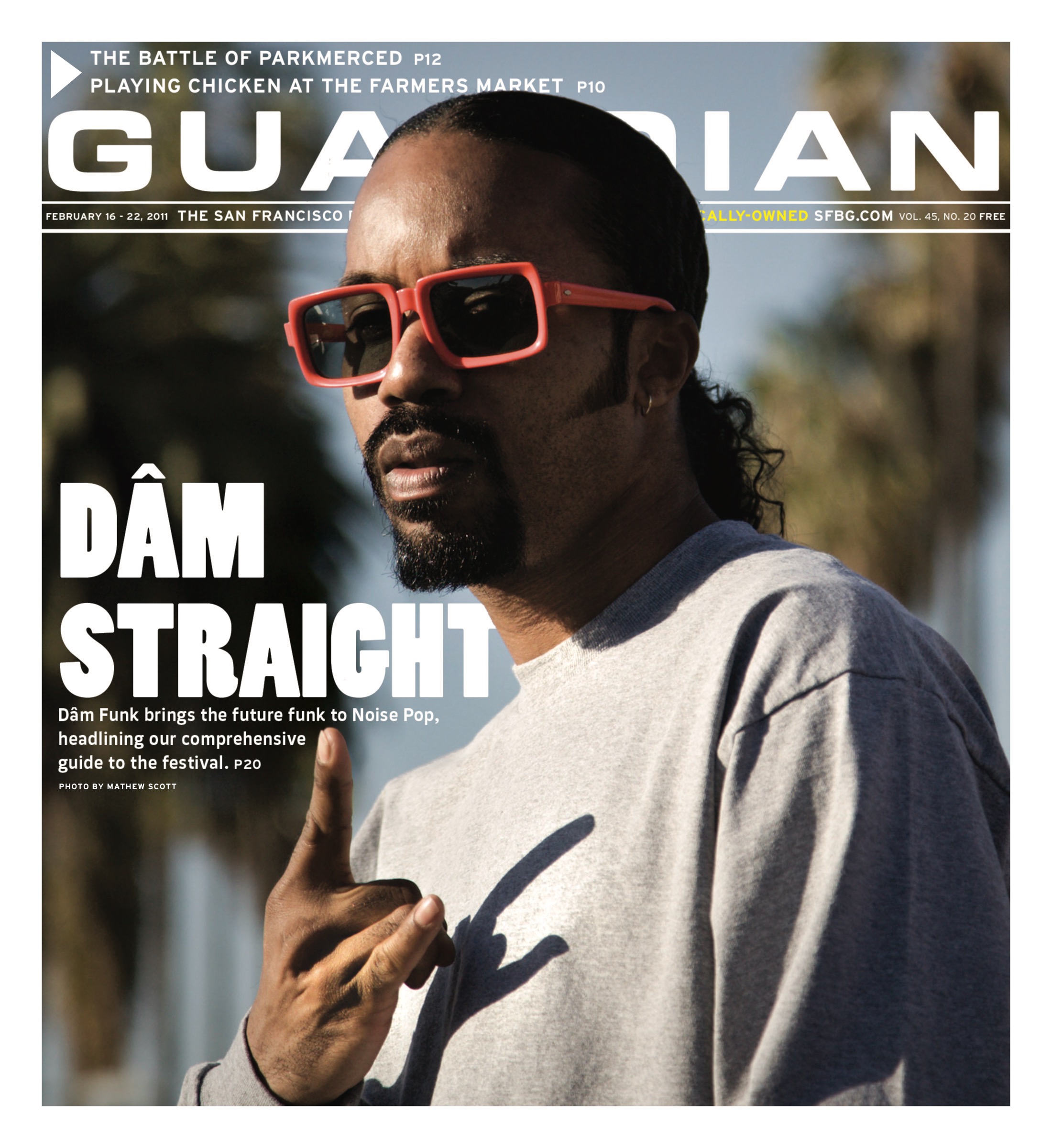
It’s the midnight hour on Valentine’s Day in Portugal when I reach Dâm-Funk, a.k.a. Damon Riddick, on the phone. He’s just outside of Lisbon, his surroundings are “phenomenal,” and he’s ready to wax enthusiastic about his longtime partner in funk Peanut Butter Wolf. “Me and Chris [Manak, a.k.a. Peanut Butter Wolf] connect on that sound because we remember and we revere,” he says, when I ask about their shared love of soul, hip-hop, and funk. “We knew what it was like before cable television and the Internet existed, we remember everything from those early VHS tapes to the way the sun set.”

As the sun is still rising on Valentine’s Day, in L.A., the man Dâm-Funk calls “Wolf” for short shows similar brotherly love. “When Dâm met me, we had a mutual respect,” says Manak. “He saw my record collection and vice-versa. When we discover songs, we’ll say, ‘Check this out.'” In turn, this shared enthusiasm, and the positive response to Dâm-Funk’s albums Toeachizown and Adolescent Funk — both released on Manak’s label, Stones Throw – has recharged funk sounds in Los Angeles and SF, and led to new discoveries of soulful and funky treasures from the recent past.

One such gem is Jeff Phelps’ 1985 Magnetic Eyes, a Tascam Portastudio 244 bedroom recording with sensational vocals by Antoinette Marie Pugh, who stars in a terrific no-budget video for the album’s “Hear My Heart” currently up on YouTube. “That album is something I’ve known about for a long time,” Dâm-Funk says, when I mention Magnetic Eyes and its hand-drawn yet futuristic cover art. “It’s a great project.”

Another great project is Tony Cook’s Back to Reality (Stones Throw), a collection of mid-1980s recordings by a musician who got his start as James Brown’s drummer. Taking on the role of executive producer, Manak has added some extra pop to the already formidable strut of Cook songs such as “Heartbreaker,” even drafting in Dâm-Funk to contribute new vocals to one track, “What’s On Your Mind.” “You’d think they were 24-track recordings, but he [Cook] only worked on an 8-track,” marvels Manak. “He was a good musician and producer – when you’re bouncing tracks, you have to know what you’re doing. In those days it was hard to achieve a full sound like that.”

These days, both Dâm-Funk and Peanut Butter Wolf know what they’re doing — and that’s a damn lot. Reflecting his Gemini nature, Dâm is planning to explore the dark side on an EP with that title before venturing into the light on his next LP. He’s also remixed Nite Jewel and is collaborating with her on a project, Nite Funk. He’s producing music by Steve Arrington for Stones Throw, and he wants to put out another chapter of his archival venture Adolescent Funk, with him choosing the tracks instead of Manak. As for the man Dâm calls “Wolf,” he’s got Stones Throw’s 15th anniversary on his hands, including a 7-inch box set, and a series of live-to-vinyl performances by the label’s artists in L.A. These guys are busy, but — fortunately for Noise Pop, and for SF — that doesn’t mean they don’t have time to throw a 45 party. (Johnny Ray Huston)

PEANUT BUTTER WOLF, DAM-FUNK

With Guillermo (Sweater Funk), Hakobo (Fresco)

Sat./26, 9 p.m., $15 (21+)

Public Works

161 Erie, SF

(415) 932-0955

www.publicsf.com


DOMINANT LEGS: LOST IN LOVE

Whether he’s raging in the streets alongside fellow Giants maniacs or musically lost between the sheets, Dominant Legs’ Ryan Lynch sounds like he’s sweet to the core—and even more. “I didn’t have anything to do with setting the mattress on fire, but I was there,” says the SF musician of SF’s impromptu World Series throw-downs. “But I wasn’t stopping anybody from celebrating.”

Lynch also rolls with the love when it comes to music. “I don’t really listen to much music that would be characterized as aggressive,” he continues, on one of those sunny Bay afternoons that make it easy to float away on blue skies and daydreams. “I listen to pop music and, honestly, mostly KISS FM.” His favorite song on this crisp, creamy day is R. Kelly’s “Lost in Your Love.” “It’s all about him wanting to bring love songs back to the radio,'” Lynch adds. “And that’s sort of what I also aspire to—not that we get any radio play!”

But, oh, a girl — or a boy who once was a Girl (until recently, Lynch was Girls’ touring guitarist) — can dream. And dreams have been coming true for Lynch, a longtime Giants follower who recently contributed “Finally Champions” to a digital-only benefit comp of Giants tribute songs released by True Panther. Meanwhile Dominant Legs continues to pick up steam—and members.

Once the repository of Ryan’s solo singer-songwriter imaginings away from longtime band Magic Bullets, Dominant Legs found favor when the Redwood City-bred musician was laid off from his job as mail clerk-receptionist at a law firm. He didn’t sink his sparse funds into job retraining classes or the like; instead he bought a cheap Casio keyboard and drum machine. “I shouldn’t have been spending any money,” he recalls now. “But the direction of the music really took off after acquiring those pieces of musical equipment.” Friend Hannah Hunt, who had just graduated from college, offered to help out at a 2009 show at Amnesia and ended up sticking around.

“She brought a softness, and delicacy, which made the songs more delicate since her voice is so different from mine,” he observes. “I think her voice is easier on the ear than mine.” For Noise Pop, the two have acquired a few more legs to help them on their way: drummer Rene Solomon, bassist Andrew Connors, and guitarist Garrett Godard, the latter once the drummer for Girls.

They’ll be filling out the already intoxicating pop bounding off Dominant Legs’ 2010 EP, Young at Love and Life (Lefse), which has inspired music bloggers to go wild, tossing out scattershot, albeit flattering allusions to Orange Juice and Belle and Sebastian, Kelley Polar and Arthur Russell—and even Dave Matthews. Feeling lost again? Just listen to the earnestly lovelorn, gently bopping, synth-popping tunes like the title track and “Clawing Out at the Walls,” with its curious admixture of sweetness and self-doubt. Kindred spirits and modern lovers such as Jeremy Jay and Camera Obscura, also given to such exquisitely anxious reveries, would understand. “The only thing I’ve heard is that [the EP] is too heavily influenced by the ’80s,” says Lynch. “But I don’t see that as a problem.” (Kimberly Chun)

DOMINANT LEGS

With How to Dress Well, Shlohmo, Chelsea Wolfe

Sat./26, 8 p.m., $12–$14

Café Du Nord

2170 Market, SF

(415) 861-5016

www.cafedunord.com


ADMIRAL RADLEY: LIFE AFTER GRANDADDY

Jason Lytle has never been shy in revealing the frustrations leading up to Grandaddy’s demise. Exhaustion from middling success, a love/hate relationship with his lifelong home of Modesto, and a diminished interest in making music with others resulted in a move to Montana to focus on a solo career in 2006. Enter Admiral Radley, a collaboration with members of indie-pop group Earlimart and Grandaddy drummer Aaron Burtch that has him not only playing in a band again, but touring Japan and singing about his former home on songs such as the sarcastic “I Heart California.” Lytle took some time out from a snowy day of magazine shopping at Borders in his new hometown of Bozeman to talk about the project.

SFBG Rumors of a collaboration between you and Earlimart date back to the Grandaddy days. What led to you guys finally working together?

Jason Lytle It was really an excuse to hang out at [Aaron Espinoza’s] studio and just have people coming in and playing parts. We set aside a week as a fun little project. Maybe somebody else had other plans for it, but at the time, I was convinced it was just gonna be a cool opportunity to make a record and be done with it.

SFBG Were you guys surprised by the amount of excitement surrounding the project?

JL Yeah. Then it turned into, alright, we gotta name this record something, and give the band a name, and pretty soon it was this real entity. The Japan thing started off as a joke, and then became more of, “Let’s give this a go, and if it winds up getting us to Japan, we can call it good” — and the whole thing was worth it.

SFBG And how were the Japan shows?

JL They were really scrappy. The places were just dumps. I kept joking with Aaron, saying, “If we weren’t in Japan right now, and if these weren’t exceptional circumstances, there’s no way I’d be putting up with this.”

SFBG You’d expressed some skepticism about playing in bands again after Grandaddy split. Has this experience changed your opinion?

JL My place in Admiral Radley is totally different from what my situation was with Grandaddy. I’m getting off easy. Aaron is a great organizer and knows that a big appeal for me joining the band was not dealing with a lot of the day-to-day crap I used to deal with. I feel like I’m a piece of a puzzle with this band, which after all these years is something I’ve never really experienced. So it’s been kind of neat.

SFBG Both you and Aaron like being hands-on with production in your work. How was the collaborative process on this album?

JL That part was pretty effortless. Aaron and I share a lot of the same philosophies on production and making albums sound a certain way. I definitely sat in on some of the mixing, but there was a lot of it where I was just able to trust what he was going to do, knowing that it probably wouldn’t be too far off from what I’d do myself.

SFBG Was it strange writing lyrics about California now that you’ve been gone for almost five years?

JL I’ve definitely had a renewed perspective. Every time I visit or I’m there doing some work, I’m thrust right into the shit. Like right into L.A. or SF, rather than adjusting or letting it sink in slowly. So, usually it’s pretty jarring for me just because the pace is a lot more relaxed and different here. Having a bit of that outside perspective now allows me to look at things a bit differently. (Landon Moblad)

ADMIRAL RADLEY

With Typhoon, Social Studies, Fake Your own Death

Wed./23, 8 p.m., $12 (21+)

Bottom of the Hill

1233 17th St., SF

(415) 621-4455

www.bottomofthehill.com


GEOGRAPHER: EARTH PEOPLE

The dress code doesn’t include a finely-pressed lab coat, and the toolbox isn’t filled with fragile beakers, but a geographer is indeed a scientist, one who pours himself into the earth and bleeds across its surfaces to observe and categorize its residents. I haven’t asked the members of the San Francisco synth-pop trio Geographer if this occupation has had any inspiration on its sound, but there’s reason to believe the answer may be a humble yes.

Geographer has discovered new ground in the electronic realm. Its unique ménage a trois of music-making contraptions — drums, synth and cello — produces audible scenery that simultaneously calms and energizes the senses. Luscious forests of synth share habitats with rushing bass and guitar. The cello adds a sneaky-smooth layer that easily melts between or melds the more jagged sounds.

Behind the sweet scenery resides a less than pretty picture. Themes of loss and inevitable change creep through their sun-stained melodies, pulling at the roots of the band’s core. In 2005, Michael Deni fled his home in New Jersey, after the unexpected deaths of two family members. He landed in SF, and his instruments became a source of comfort and release while he wandered the new, unfamiliar territory. After a period of searching and surveying, Deni met and began collaborating with Nathan Blaz and Brian Ostreicher. In 2008, Geographer self-released its debut full-length, Innocent Ghosts, a far more relaxed collection that showcases Deni’s round, patient voice.

The landscapes on 2010’s Animal Shapes (Tricycle) are majestic, but far more celebratory. Things are tighter spun, beats kick harder and there’s a cohesive exploratory factor. Specifically fabulous: “Kites,” a track that strikes gold with a lustrous synth party. Deni’s sincere vocals float high above the mountainous bass vibrations, but mingle ever so courteously with the shrill, twinkling electronic additions. Enter the romantic cello and the song is a straight-up gem.

Now is a good time to button up your favorite white jacket and take some notes on the current environment in which you reside. Whether you’re into earth science or not, Geographer is a swell listen that goes well with salty pretzels and an adventure around your own neighborhood. Animal Shapes on repeat will keep you in step with eyes and ears open. And listen carefully: there’s good word on the street about these Geographer guys in the live form. (Amber Schadewald)

GEOGRAPHER

With Butterly Bones, K Flay, Funeral Party

Wed./23, 8 p.m., $13–$15

The Independent

628 Divisadero, SF

(415) 771-1421

www.theindependentsf.com


PSYCHIC FRIEND: PIANO POWER

Will Schwartz and the piano go way back, to when he was nine. “I’ve been attracted to the C chord and to A minor since I was a kid,” he says from L.A., where he’s living in Los Feliz. “I learned to play piano by ear, and it was always based on [starting with] a C major and going from there.”

You could say Schwartz played his first gigs on the instrument. “We had this two-story living room in our house in New Jersey with a little balcony, and the piano was up on the balcony,” he says with a laugh. “I would imagine I was playing for people down below. I would put on shows for the living room furniture.”

In his new band Psychic Friend, Schwartz updates California chamber or piano pop for today’s era, with contributions by Hole drummer Patty Schemel and instrumentalist-producer Bo Boddie. The result is a fresh chapter in Schwartz’s musical story, one that has ranged from the guitar-rock of Imperial Teen to the D.I.Y. choreographed pop of Hey Willpower, which involved contributions from videomaker Justin Kelly, DJ Chelsea Starr, and musician Tomo Yasuda.

Crisp and clean, in a way Psychic Friend sounds like the moment Schwartz has found his voice, or unknown heights or depths of it. The pounding “Once a Servant” revives the spirit of Jobriath. “Water Sign” has a Serge Gainsbourg undercurrent. “Shouldn’t Have Tried Again”‘s rendering of the repeat failure of a relationship matches the plaintive sunshine-y yearning of Harry Nilsson’s sublime covers of Randy Newman.

You could say Psychic Friend is new Californian pop. The piano-based melodic immediacy of the group’s sound has a kinship to Carole King’s solo work, or Burt Bacharach and some of his hits for psychic and other friends, yet both the sound and the lyrical content is very contemporary, not retro. It also isn’t Rufus Wainwright showboating — tracks like “We Do Not Belong” allow Schwartz’s voice a freedom and resonance it hasn’t had before, but he doesn’t run away with himself. “The nature of playing a piano and writing melodic songs, it almost brings you back to ’70s songwriting,” Schwartz observes.

“I just found this place in my voice that feels very connected, actually, that comes from playing the piano, and it feels good,” he adds, simply.

Schemel’s powerful drumming and Boddie’s hit-making skills have a role in this shift. “It’s like an Eddie and the Cruisers feeling,” Schwartz says, “where you start to play something, and by the end it sounds like a finished song.” (Huston)

PSYCHIC FRIEND

With The Concretes, Birds and Batteries, Magic Bullets

Fri./25, 8:30 p.m., $13–$15

Rickshaw Stop

155 Fell, SF

(415) 861-2011

www.rickshawstop.com

Crazy like a Mission homeboy

1

caitlin@sfbg.com

LIT Benjamin Bac Sierra, San Francisco City College English composition and literature professor and author of Barrio Bushido, an ode to Mission District vato locos, picks me up in his cherry red-and-black 1972 Chevy Monte Carlo low rider. As an academic who started selling weed in the Army Street projects when he was 10, Bac Sierra is well aware that he has an attention-getting car. As it turns out, it nicely represents his world view.

“I’m not supposed to be driving a Monte Carlo. I’m not supposed to be talking to you like this,” he tells me, his conversation inflected with casual swear words and a rhythm like that of an evangelist preacher, or maybe just a man who feels what comes out of his mouth. “A lot of people go into education and think they have to choose: am I going to be square or am I going to be how I used to be? But you can be intellectual and homeboy-homegirl at the same time.”

Barrio Bushido, Bac Sierra’s first novel, follows the story of three young men who ricochet from romance to brutal gang beatings, PCP leños, larceny, and neglect. Lobo, Santo, and Toro’s world has made them wild gangsters. Author Maxine Hong Kingston has compared Bac Sierra’s prose to that other chronicler of the underground man in uncertain times, Dostoyevsky. Although it hardly glorifies the protagonists, an honor and a beautiful-crazy logic to their deeds does emerge. Bac Sierra holds that the impulsiveness, that locura, needn’t be forgotten when someone leaves the street hustling lifestyle.

“I want to make a line between being a homeboy and the negativity. Craziness is a power — you can’t learn that in a book,” he reflects. We drive by his brother’s old house on Treat and 21st streets — Bac Sierra hears that a PayPal executive lives there now. After Bac Sierra’s father died, his brother, charismatic and clever, brought him up — until his brother wound up in jail and died young.

When Bac Sierra was 17, years after he had dropped out high school and begun dealing angel dust, he had a choice. He could continue his lifestyle, possibly ending up dead or in jail, or “retreat” into the Marines, which represented an honorable discharge, as it were, from the barrio.

Bac Sierra’s experience in the Marines followed the same lines as Toro’s, his headstrong and loyal Barrio Bushido character — to a point. Both of them cleaned up and were promoted to squad leader because of their sheer “craziness.” And both saw serious front line action during the Gulf War. Bac Sierra manned a machine gun as part of the first wave of Marines to land in Kuwait City in 1991. He also began writing in the military, letters home that he would revise “maybe 10 times — I wanted to be heard.” Although he doesn’t specifically recommend military service to young people, he recognizes the value of the discipline learned in the armed forces. “A lot of homeboys don’t do shit,” he says flatly.

After serving, he retained his strong ties to the Mission and his family there. Before his brother died, he was the one who motivated Bac Sierra to get his college degree, not to stop at his master’s in creative writing from UC Berkeley, but to continue on to law school. “Hood logic,” Bac Sierra calls it, the idea that a degree in a concrete field was far better than one writing. Although he hated every day of law school, he can now appreciate the experience and the knowledge it brought him.

He pulls the Monte Carlo over to speak with an older man on the corner across the street from his brother’s old house. “Yo escribí un libro, señor, en honor de mi hermano,” he calls out the window, inviting the man to his upcoming book release party at Mission Cultural Center. Many of his friends from the old neighborhood (he now lives in Richmond, where he is raising two of his four children, Margarita, nine, and Benny, six) are Barrio Bushido‘s biggest supporters. I ask him if it makes him sad, how much the neighborhood has changed since when he grew up. “This is the world. Economics knows no friends.”

I recognize the last line from Barrio Bushido. Its characters speak with an urgent poetry, moving through scenes influenced by Dostoyevsky and Miguel Ángel Asturias, with Gabriel Garcia Márquez-like magical realism. Bac Sierra wants the book to be taught in schools and has set a goal of having it adopted into 50 class sections by next semester.

Other things he hopes for: first, that readers be taken on a journey. “It doesn’t have to be stuffy. I want them to be amazed with the language.” Second, he wants the book to show that life is full of choices. “Start living here in this world,” as he puts it.

His last hope is for a “homeboy resurgence” in the Mission, the neighborhood that was once the center of Latino culture in Northern California. Thursday’s party at the Mission Cultural Center is a start. Bac Sierra is planning a low-rider show, Aztec dancers, a reading, and live music for the event — the positive parts of homeboy culture, like Bac Sierra himself. “I’m fucking straight homeboy,” he says. “I am very efficient. I am always inventing things.” 

BARRIO BUSHIDO BOOK PARTY

Thurs/17 7 p.m., free

Mission Cultural Center for Latino Arts

2868 Mission, SF

(415) 643-5001

www.missionculturalcenter.org

Not forgotten

0

arts@sfbg.com

HAIRY EYEBALL Around 500 people a day pass through the long corridor that bisects San Francisco City Hall’s lower level: supervisors dashing to the café for a quick lunch; tour groups of elementary school children; aides making a post office run; the occasional member of a wedding party looking for the bathroom.

It is also one of the last places where you’d expect to find a politically vital art installation, which is what makes San Francisco Art Commission gallery director Meg Shiffler’s decision to hang its current exhibit, “Afghanistan in 4 Frames,” in such a public and heavily-trafficked area so gutsy. Though the SFAC regularly puts on three to four art shows a year in the City Hall space, none in recent memory have resonated so powerfully with the dynamics of the venue itself.

The “4 Frames” exhibit presents a ground-level (no pun intended) portrait of the country through the lenses of four photojournalists who, over the past five years, have embedded themselves with various military forces and units stationed there. Though each photographer varies in style and background, their work — presented as photo-essays — shares a focus on the day-to-day, intersecting lives of civilians and soldiers off the battlefield.

James Lee, a U.S. Marine Corps veteran and current San Francisco State University graduate student whose move to photography from writing was a recent one, captures in crisp color the downtime faced by young Afghan National Security Force soldiers stationed near the Pakistan border.

In contrast to the all-male environment Lee documents, Lynsey Addario’s series “Women at War” focuses on the experience of female U.S. troops and their engagement with female civilians. The Pulitzer Prize-winning photographer has a knack for taking a picture at the moment her subjects are at their most unguarded, whether sharing a laugh with each other or shaving their legs in the barracks.

Addario’s photos are pointedly hung on a wall across from Bay Area photographer Eros Hoagland’s slightly more testosterone-driven series, “Siege Perilous.” The high contrast black and white photos depicting British military forces in the Korengal Valley and Helmand Province practically crackle with tension.

Another veteran photographer, Teru Kuwayama, is the only one who works with actual film, and his grainy, black and white Holga and Leica portraits of rural clans and armed mercenaries feel as if they are from another era. Kuwayama’s most timely work on Afghanistan actually resides offsite and online: his Web reporting initiative, Basetrack, links deployed Marines with life at home through images and video created by embedded journalists (although just last week military brass asked the embeds to leave).

Afghanistan made front pages again last summer after WikiLeaks uncovered 90,000 pages of classified materials chronicling a five-year window in the U.S. military’s long slog there. But “4 Frames” reminds those who encounter it — as well as those who seek it out — that regardless of the headlines, there will always be an ongoing, human side to what has been so often dubbed “the forgotten war.” And forgetting is not a luxury we can afford.


THE ATROCITY EXHIBITION

Although a vastly different beast from “Afghanistan in Four Frames,” SFMOMA’s current juggernaut of a thematic survey “Exposed: Voyeurism, Surveillance and the Camera Since 1870” offers a pointed study in contrast, demonstrating how not to curate a photography show with clarity of vision or regard to what could be called an ethics of representation.

As proclaimed by its title, “Exposed,” which was organized by SFMOMA and the Tate Modern in London, where it originally premiered, attempts to track — across various eras, technologies, and milieu — what the introductory wall text calls the “voyeuristic impulse” in modern and contemporary photography: “an eagerness to see a subject commonly considered taboo.”

With such an open-ended criteria, the curators have essentially given themselves carte blanche to include everything from early 20th-century “detective cameras,” Walker Evans’ portraits of unknowing New York City subway passengers, Ron Galella’s paparazzi snaps of Jackie O., Nick Ut’s iconic image of a crying Kim Phuc in Vietnam (as well as his 2007 picture of a crying Paris Hilton), Robert Mapplethorpe’s BDSM pictures, surreptitious documentation of the liberation of Nazi concentration camps, and Trevor Paglen’s near-abstract renderings of distant military sites.

The 200 or so pieces are arranged in thematically-grouped galleries (“Celebrity and the Public Gaze,” “Witnessing Violence”) that wind through half of the museum’s fifth floor. By the time you’ve made it through the lengthy, final “Surveillance” section of the show, “Exposed” feels more like a photography catalog that become the genesis for an exhibit, and not the other way around.

Such tidy categorization has the negative effect of creating closed systems rather than allowing different pieces to speak to each other. For example, two harrowing, anonymously-attributed lynching photos belong next to one of the most moving selections in “Exposed,” Oliver Lutz’s Lynching of Leo Frank, which hangs in another gallery. At the same time, the very proximity of death images and paparazzi shots cheapens both.

When presenting highly-charged, difficult images, many of which document humankind at its most brutal and unsavory, the context they are displayed in becomes as crucial as the images themselves. “Exposed,” which feels like the result of several unseemly Google image searches rather than a decade of curatorial sweat, disappoints in this regard.

Atrocity. Murder. Fame. Kinky sex. It’s all here! The question no one seemed to ask is: does it need to be? “Exposed” is simply too much. *

AFGHANISTAN IN 4 FRAMES

Through May 13, free

City Hall

1 Dr Carlton B. Goodlett Place (ground floor), SF

(415) 554-6080

www.sfartscommission.org/gallery

EXPOSED: VOYEURISM, SURVEILLANCE, AND THE CAMERA SINCE 1870

Through April 17; free–<\d>$18

San Francisco Museum of Modern Art

151 Third St., SF

(415) 357-4000

www.sfmoma.org


Empress yourself

0

marke@sfbg.com

SUPER EGO It certainly has not escaped my attention that this whole amazing Arab youth uprising thing is taking place during Fashion Week. It’s a mitzvah! But while Hunky Beau and I have been busily rooting through Reuters for inspiring pics of various hipster Egyptsters and Tunisians turnin’ in out (or, conversely, signs of any uprising under the Manhattan tents — watch out for Joseph Altuzarra, y’all), I’ve tried to have more than fast-forward fashionistas in my forethoughts and yummy Yemenis on the Bahrain.

Specifically: gay democracy. It’s time once again for an annual event that still remains charmingly underground here, yet has a heavy impact on San Francisco’s charitable community and global gay image. For serious, the wigs alone weigh like 20 pounds. Yes, it’s time to elect a new Empress of San Francisco — and this year the candidates have come out fighting, but graciously.

If you’re unfamiliar with our nearly 50-year-old Imperial Court system, which originally took ironic inspiration from beloved-yet-deranged San Francisco scallywag Joshua Norton, who in 1859 declared himself Emperor of the United States — and which first found full flower in 1965 with majestic Absolute Empress Jose Sarria I, The Widow Norton, while later helping to lead the community through gay liberation and the AIDS crisis — then hie thee ho to the newly revamped www.imperialcouncilsf.org website for a highball full of essential history.

Empress 2011 will wholly dedicate the next year of her life raising tens of thousands of dollars for good causes through nightlife affairs and traveling to regally represent our fair burg at Imperial Courts around the world. And this year’s candidates make for a feisty ballot: Saybeline, glamorous longtime luminary of the LGBT fundraising scene, and rousing dark horse Monistat, the party promoter voted Best Drag Queen in the Guardian’s Best of the Bay poll.

If elected, the youthful Monistat promises to tap her extensive database of “promoters, DJs, performance artists, and venues” to “refresh” the institution. She also invokes her considerable party stamina, promising to give us night after night (after night) of fundraising in face.

Saybeline vows to throw “open the doors to younger members of our community” and to “engage and encourage them” to become more involved in community service. She puts forth her “two decades of experience in volunteering and organizing fundraising events” as one of the main reasons to grant her the crown.

The crown is stunning, btw.

There are two great guys running for emperor as well, Frankie Fernandez and Ray MacKenzie, and voting should be hot and heavy. Everyone 21+ who lives in San Francisco, Marin, and San Mateo is welcome to vote. So hit the polls and enjoy our freedoms while we wait for that exhilarating youth uprising to finally spread to Iraq! Oh wait …

SAN FRANCISCO EMPRESS 2011 VOTING DAY Sat/19, free. Noon–7 p.m. at Castro Muni Station, Castro and Market, and 11 a.m.–6 p.m. at Project Open Hand, 730 Polk, SF. www.imperialcouncilsf.org

>>Read Marke B.’s full interviews with the Empress 2011 candidates here


SLUMPFEST

“Slumps” = Cali-meets-Detroit (a.k.a. Calitroit) hip-hop beats. And this massive charitable beat battle, featuring two dozen future underground hitmakers, will surely tease out more than a few sublime J. Dilla apostles.

Fri/18, 9 a.m., $10 or $7 with can of food. Club Six, 60 Sixth St., SF. www.clubsix1.com


HOTTUB

Gotta give shouties to my fave Oakland female electro-hop terrors, rapping us up in cataclysmic Four Loko bliss. They’ll demolish the stage with the Tenderlions, Kool Karlo, and Frite Nite DJs.

Fri/18, 10 p.m.–3 a.m., $5 before 11 p.m., $10 after. Public Works, 161 Erie, SF. www.publicsf.com

A jaundiced proposal

0

news@sfbg.com

An ordinance to ban unsolicited print Yellow Pages across San Francisco, proposed Feb. 1 by Board of Supervisors President David Chiu, seeks to reduce waste and save money.

“Phone books are a 20th-century tool that doesn’t meet the business and environmental needs of the 21st century,” Chiu said as he introduced the measure in board chambers.

The ordinance would establish a three-year pilot program starting Oct. 1 in which the city would reduce the mass distribution of phone books, making them available only at distribution centers or to residents or businesses that request them.

A rally in support of the ban before the meeting included Rainforest Action Network’s founder Randall Hayes and California Sen. Leland Yee (D-San Mateo), who proposed legislation that failed to gain steam last year for making it easier for Californians to opt out of receiving phone books.

But the Yellow Pages Association refuses to be thrown out with the rest of yesterday’s trash. YPA Vice President of Public Policy and Sustainability Amy Healy said her group opposes the proposal but that she was encouraged that Chiu and his staff say they are open to working with the association.


BY THE NUMBERS

Chiu introduced the ordinance, which is cosponsored by Sup. Scott Wiener, because of the potential effect it could have on reducing city waste, both in the city’s garbage bins and its treasury.

According to Chiu’s office, San Francisco receives about 1.5 million phone books a year. At an average weight of 4.33 pounds per book, the current distribution system creates about 7 million pounds of waste. If the production were cut in half for the city, it would save nearly 6,180 metric tons of carbon dioxide emissions a year from polluting the air.

But it isn’t just the environmental cost that is wearing on the city.

Phone books are tough to recycle. With plastic inserts, bulky design, and low-grade paper, the books have to be presorted and recycled manually. It costs Recology, the company contracted with the city for waste disposal, $300 per ton to dispose of the city’s unused phone books, which in turn costs taxpayers about $1 million a year for their disposal.


OPT IN VS. OPT OUT

The YPA has been sensitive to the environmental concerns, recently launching a website that allows a person to opt out of receiving a phone book.

But it is also suing the Seattle City Council over its Feb. 1 approval of a plan to charge Yellow Pages a 14-cent publisher’s fee per book and create an opt out system for the city, arguing the Seattle ordinance violates the First Amendment’s free speech protections.

According to a statement by YPA President Neg Norton, the association believes that “if don’t want a phone book, you shouldn’t have to get one.”

But YPA opposes the ban on unsolicited books, citing the jobs it would cost, the business community’s desire to “generate leads and revenue from ready-to-buy consumers,” and claiming the First Amendment “prohibits government from licensing or exercising advance approval of the press and from directing publishers what to publish and to whom they may communicate.”

Wiener has a different take on the matter, a stand he said he has already received lots of criticism for, including from some constituents who compared it to the board vote to ban Happy Meals last year. But he said this issue is very different.

“An enormous number of books dumped all over the city is a bad thing, and we should do something to address the issue,” he told the Guardian, noting that the ability to opt out isn’t good enough. “It’s not like the do-not-call list where it is directly annoying and people are more likely to take action … Stacks sit in apartment lobbies, and people don’t decide to opt-out.”

But YPA is also citing the public’s apathy as a reason the ban is unfair. “People don’t take the time to respond to e-mails,” Healy said. “It’s an unreasonable barrier to have a stranger knock on your door and ask you to take something.” The YPA claims that “seven in 10 adults in California use print Yellow Pages, so we do not believe a system that puts a burden on the majority of people to opt in is the best path for choice.”


ARE THEY USEFUL?

Do people still value the Yellow Pages?

Healy believes they do, stating that advertising with the Yellow Pages gives businesses a “high return on their investment.” We asked some city businesses that still advertise in the Yellow Pages what they thought about the potential ban.

Barbara Barrish, manager of Barrish Bail Bonds, doesn’t see her customers using the Yellow Pages anymore. “We used to swear by the Yellow Pages. Now young people use the computers, or their Blackberries and phones.”

Although she has an ad in the print edition, Barrish said she wouldn’t advertise with the directory again and only did so this time because it slashed its prices. “It used to cost a lot more, but it cut its advertising costs by a third,” she said. “They gave me a good deal.”

When asked if she would request a copy if the ban goes through, she said she probably would. “I might grab a phone book if the computer is down.”

Daniel Richardson, an immigration attorney who advertised in the Yellow Pages until 2008, predicted the business community would kill or water down the ordinance. “You are talking about going up against AT&T and other major businesses,” he told the Guardian with a chuckle.

Richardson said he stopped advertising in the Yellow Pages because he didn’t get enough business. He believes people look to the Yellow Pages for criminal or personal injury lawyers, but not immigration attorneys.

Even pizza places, a staple of advertising in the Yellow Pages, are ho-hum about the usefulness of the Yellow Pages. Junior Reyes, who is in charge of advertising for Go Getter Pizza on Gough Street, believes the restaurant gets most of its customers from online. “We do a lot of advertising with other places and online,” he said. “The Yellow Pages isn’t our main source.”

But what about people who do use the Yellow Pages, particularly groups that are not big Internet users. Would they miss it?

David Bolt is the dean for academic affairs at Expression College for Digital Arts in Emeryville and producer of the PBS series The Digital Divide. He believes that banning the Yellow Pages may be a problem for certain groups, including the elderly, recent immigrants, and the poor — groups with the least access to Internet, particularly in urban centers.

“We should err on the side of giving as much information to the greatest numbers of people, especially to groups that may not be technologically literate,” he said. “Society should think about how groups could be impacted by this decision.”

But Barbara Blong, executive director of the Senior Action Network, said older people are becoming more tech savvy. She said computer classes and other resources have put many of the city’s seniors online. She questioned the concept that seniors are one of the largest groups affected by the digital divide, noting that seniors oppose wastefulness as much as anyone.

“We are against having a lot of Yellow Pages laying around,” she said. Blong also mentioned that seniors who do not use the Internet for contacts can use the public library or senior centers that have phone books on hand. “I don’t see it as a ban, but moving on so we don’t have a great deal of waste,” she said.

The ordinance also exempts foreign language phone directories, further diluting the divide argument. The legislation wouldn’t ban the Chinese Yellow Pages or Momento (Spanish Yellow Pages) because they are distributed through community centers, not residences.

The ordinance is expected to have its first public hearing around the end of the month. The YPA will continue to tout its opt out website to the board in hopes it might be enough to persuade the city to forgo the opt in system. The group also hasn’t ruled out a lawsuit.

But YPA’s Healy said he hopes the coming dialogue will be productive. “We share the same goal — we don’t want to print directories that are unwanted.”

Dense in the west

9

rebeccab@sfbg.com

A marathon special meeting of the San Francisco Planning Commission on Feb. 10 demonstrated a clear split over Parkmerced, a $1.2 billion private development project that will rebuild an entire existing neighborhood on the west side of San Francisco.

While some expressed strong enthusiasm for moving forward with the ambitious plan, many residents turned out to voice vehement opposition, citing concerns about traffic congestion, noise, dust, and the demolition of affordable apartments that some Parkmerced tenants have occupied for decades.

The votes to certify the project’s environmental analysis and send the plan onto the Board of Supervisors with a commission endorsement were split 4-3, with Commissioners Christina Olague, Hisashi Sugaya, and Kathrin Moore dissenting.

Those who voted no were appointees of the Board of Supervisors, while the four commissioners who voted in favor were appointees of former Mayor Gavin Newsom, suggesting a break along clear political lines. State Assemblymember Tom Ammiano also submitted a letter urging commissioners not to approve the project.

While Parkmerced Investors LLC, the project sponsor, eagerly awaits groundbreaking, spokesperson P.J. Johnston noted that they weren’t there yet. “First,” he said, “we have to break ground at the Board of Supervisors.”


IS IT GREEN?

The Parkmerced redesign has been touted as an ecological and sustainable beacon for urban development and, indeed, some features of the grand plan read as if they were plucked from a checklist from the U.S. Green Building Council’s Leadership in Energy and Environmental Design (LEED) green-neighborhood standards.

Walkable, bikeable streets with proximity to transit? Check. Water-efficient landscaping? Check. Energy-efficient dwellings? Check. Project sponsors claim that through dramatic reductions in per capita resource consumption, three times as many residents would consume the same amount of water and electricity as Parkmerced’s current population does today.

Johnston emphasized how adding new units to the west side of the city also helped contribute to “density equality,” since most new projects tend to be concentrated in the eastern neighborhoods.

Johnston was particularly jazzed about an innovative storm-water discharge system envisioned for the plan, which he described as a design that could “regenerate and repair the environment.” It would recirculate rainwater through a naturally filtrating system of ponds and bioswales to recharge Lake Merced, a water body that has been slowly shrinking due to being choked off from its natural watershed by a concrete urban barrier.

Green points might be awarded for plans for an on-site organic garden, but Commissioner Michael Antonini, who said he lives less than a mile from Parkmerced, cautioned that developers shouldn’t get too attached to that idea. After all, he said, many kinds of vegetables won’t thrive in that part of the city.

Meanwhile, the wholesale destruction of existing units is decidedly not eco-chic. The Green Building Council’s LEED neighborhood standards insist that “historic resource preservation and adaptive reuse” is always preferable in a green development — and that’s the point that Aaron Goodman, an architect who previously lived at Parkmerced, has been driving at for more than a year. Proponents maintain that Parkmerced’s wartime construction meant it was built with inferior materials, and that property owners have battled dry rot and other infrastructure problems.

Another not-so-green Parkmerced project feature has also raised eyebrows: parking. While proponents portray the redesign as a switch from a suburban, love-affair-with-the-automobile style to an enlightened departure from car-centrism, plans nonetheless include a parking space for every single unit.

That creates the potential for more than 6,000 new cars on the road in that area, and the 19th Avenue corridor is already notorious for traffic snarls. According to calculations by the Environmental Protection Agency, the typical American motorist generates more than five metric tons of carbon dioxide by driving in a given year.


REPLACING WHAT’S THERE

Before the Planning Commission meeting, residents from the Parkmerced Action Coalition — a relatively new residents’ group formed to oppose the redevelopment and a wholly different entity from the Parkmerced Residents’ Organization — made a public show of their dissatisfaction outside City Hall. Holding signs with slogans such as “Don’t Bulldoze Our Homes,” residents sang protest songs and chanted, “We are Parkmerced!”

With the dramatic makeover, Parkmerced would expand to around 8,900 units, tripling the number of residents who could be accommodated. Existing 1940’s-era garden apartments would be razed to make way for higher, denser housing. The plan comes at a time when neighboring San Francisco State University is undergoing its own phase of expansion.

“This project in its current state is a vision that is not in harmony with the people, place, or the environment,” charged Cathy Lentz, an organizer with the Parkmerced Action Coalition, in a vociferous plea to the commissioners. “It is a narrow vision, a corporate vision … a true vision would be inclusive of present dwellings, inclusive of animals, trees, and present environment.”

One resident lamented the pending loss of his garden courtyard, noting how much his children had enjoyed the green space growing up and listing the different kinds of birds that would surely be driven away by heavy-duty construction and tree removal. For many, the point was not so much what developers intended to build, but what would be lost to make way for it. One speaker dismissed the plan as “architectural clear-cutting.”

Commissioner Moore, an architect, sounded a similar note when she rejected the notion that the Parkmerced redevelopment should be hailed as infill, a desirable development concept that curbs sprawl by utilizing space efficiently. “Urban infill housing is defined as infill on vacant sites,” Moore said, “not sites that have become vacant by demolition.” She added that she believed the environmental impact review “fails to sufficiently examine why housing demolition is even necessary.”

In Moore’s view, “the only reasonable alternative is a significantly redesigned … project.”


WORKING-CLASS NEIGHBORHOOD

Unlike a luxury condominium development, the Parkmerced plan emphasizes built-in economic diversity — yet critics point out that as it stands, the housing complex is already inclusive of many lower-income, working-class residents.

The plan will incorporate several hundred below-market rate units, in accordance with the city’s inclusionary zoning ordinance. Commissioner Antonini also emphasized the boost to city coffers from tax revenue associated with the project.

Meanwhile, questions are still arising on the issue of rent control. “We do not believe it is appropriate for the City and County of San Francisco to be displacing rent-controlled residents,” noted Michael Yarne, a mayoral development advisor. A binding agreement between Parkmerced Investors LLC and the city of San Francisco, which will be linked to the land, promises that new units will be made available to rent-controlled tenants at the same monthly rate they now pay, with rent control intact (See “Weighing a Landlord’s Promise,” Dec. 21, 2010).

Yet Polly Marshall, a commissioner on the San Francisco Rent Board, noted that she still didn’t believe tenant protections were adequate. She also spoke to the pitfalls of tearing down and redoing an entire neighborhood.

“The proposed Parkmerced development is the kind of development that I normally would support. It’s the kind of thing I work on in my profession,” noted Marshall, an attorney who has worked on redevelopment projects. “What’s different about this project is that it involves an existing community. It requires devastation of that community. It reminds me of the old-style redevelopment projects that went on in the Fillmore that destroyed existing neighborhoods. Look around that area now … there’s high density housing there, but that’s about all. The community — the networks of the people — was destroyed decades ago.”

Marshall took it a step further, offering her analysis on why Parkmerced was targeted. “It’s because it’s a working-class neighborhood of renters,” she said. “That’s why we’re going to destroy Parkmerced.”