San Francisco

Delta fish may not be “too far gone” after all

0

The San Francisco Chronicle had this dire environmental pronouncement on its front page last week: “Delta fish may be too far gone to save, plan hints.”

Summarizing a report released by the Delta Stewardship Council, the article suggested that California’s salmon and Delta smelt — a delicate creature that’s sort of an aquatic equivalent to a canary in a coal mine — might be going the way of the dodo due to longterm environmental impacts. Even worse, it didn’t sound as if there was anything conservationists, state agencies, nor anyone else could do about it.

Aside from being downright depressing, that narrative sounded a little, er, fishy. No one disputes that the Delta has been dramatically impacted by environmental problems, and concerns about diminishing fish populations are well founded. Fights over pumping freshwater out of the Delta have been dragging on for years, pitting environmentalists and commercial fishermen against powerful water districts in arid regions.


But the notion that there’s no longer any point in trying to save these Delta fish seemed hard to swallow. To take a cynical view, it would be rather convenient for certain powerful interests if the time, money, and water dedicated toward saving the salmon and smelt were freed up for other purposes.

Not being experts ourselves, however, we phoned Zeke Grader, who really knows his fish. Grader is the executive director of the Pacific Coast Federation of Fisherman’s Associations, a San Francisco-based trade association that represents commercial fishermen from Alaska to San Diego. Grader told us he was unwilling to accept the idea that it’s too late to save the salmon and the smelt.

“There may be some species … that are so far gone that it’s going to be impossible to save them, but I don’t think that’s the case with the salmon,” he said.

For once, Grader had some good news about the dramatically impacted salmon population. “This year, we had returns for the first time in 60 years upstream of the San Joaquin, now that we’ve got water back in it,” he said, referring to federally mandated increases in freshwater pumping into the Delta in recent years. “That clearly shows that after a couple years of restoring fish flows to it, that we’re getting fish back. That’s very encouraging, and we still have a lot to do, but I think we are going to be able to save the salmon.”

It might not be too late for the smelt, either, in Grader’s view. “I think we can save the Delta smelt. I think what was being said in the Delta Stewardship Council report has been either misinterpreted or misreported, because that’s simply not the case,” he added. “Maybe this is something that the water guys would like to create that myth, that well, we can’t restore, therefore don’t protect them — which is utter nonsense.”

Grader attributed the improvements to programs that truck fish around the Delta in an effort to avoid water pumps, which can fatally impact salmon, as well as increased freshwater flows.

He added that he didn’t see how the Delta Stewardship Council could proceed with a plan working with the assumption that extinction of certain species is inevitable. “Unless they just decided to ignore the Clean Water Act, ignore the Endangered Species Act, ignore … all of our water laws, I don’t see why there’s any reason that we can’t recover a lot of these,” he said.

No San Bruno rate hike for PG&E

0

EDITORIAL In a Feb. 18 message to shareholders, Pacific Gas and Electric Co. announced that the projected costs of the San Bruno pipeline explosion could exceed $700 million. Now the company wants to get some of that back from ratepayers. That will be a huge test for Gov. Jerry Brown and the California Public Utilities Commission, and send a signal about how the new governor will deal with the rogue utility. The outcome should be simple: every penny of the costs of cleaning up the mess, repairing and upgrading the pipelines, and setting damage claims and lawsuits should be paid out of PG&E profits.

Let’s review the facts.

The CPUC gave PG&E $5 million to upgrade the pipeline under San Bruno in 2009, but the company decided to spend the money instead on executive bonuses.

PG&E officials fought bitterly to prevent the federal government from cracking down on natural gas pipeline inspections.

PG&E never conducted serious inspections of a line that was past its rated use and had been poorly constructed in the first place.

PG&E intentionally inflated gas pressure in that line beyond what regulators say was safe.

It took PG&E more than an hour to shut off the gas after the explosion, making the resulting fire much harder to contain and quite possibly contributing to some of the eight deaths and destruction of more than 30 houses.

That’s not the sort of record that suggests that the pipeline disaster was an unavoidable accident. It certainly wasn’t caused by a natural disaster. It was corporate error — misuse of money, irresponsible monitoring of a dangerous piece of equipment, intentional efforts to blunt public oversight. The damage was PG&E’s fault.

The problem is that so far, the company hasn’t been held accountable. As John Weber, editor of The Bay Citizen, pointed out in a Feb. 5 column: “What consequences have PG&E and its executives faced for these blunders? None. The stock is doing just fine. The California Public Utilities Commission has awarded the company almost $30 million in bonuses for energy-saving targets that weren’t achieved. The company plans to hire a new gas operations executive, but no one has lost his job — except a hapless manager who thought it would be smart to spy on the online discussions of smart-meter opponents.”

Ideally, the CPUC and the federal regulators ought to levy the heaviest possible fines on the company and mandate far stricter maintenance oversight. At the very least, the commission needs to make it clear that no ratepayer money will go for San Bruno-related expenses.

The pressure should be on at every level of government. The San Francisco supervisors should pass a resolution calling on the CPUC to reject any rate hike that would force PG&E customers to pay for the accident. State Sen. Leland Yee (D-SF) has already issued a statement denouncing any rate hike. But the Legislature ought to go further and pass a bill that would state that no utility can charge its ratepayers for costs related to an accident that was clearly the utility’s fault.

Otherwise, the utility that killed eight people and destroyed an entire neighborhood will emerge unaccountable and unscathed. P.S. Go to TURN.org to sign the Utility Reform Network’s anti rate hike petition.

Who’s next?

39

steve@sfbg.com and tredmond@sfbg.com

The seven serious candidates who have announced plans to run for mayor extends from moderate to conservative at this point, but it’s an unusual field for San Francisco: there is no clear progressive standard-bearer, and no clear downtown candidate.

But it probably won’t stay that way. Sources say others are likely to join the lackluster race in the coming months, and there’s a strong likelihood that some progressive candidate will decide to the take plunge.

Also unlike the last few mayor’s races, there appears to be no clear frontrunner — either in fundraising or in having a clear constituency base — a new dynamic that creates an unpredictability that will be exacerbated because this is the first contested mayor’s race using the ranked-choice voting system and public financing of candidates.

There was a weak field of challengers to Gavin Newsom in 2007 and no one qualified for public financing or presented a strong threat. But this time City Attorney Dennis Herrera and former Sup. Bevan Dufty already have indicated they will take public financing, and others are expected to follow suit.

In addition to Herrera and Dufty, the field includes Sen. Leland Yee, Assessor-Recorder Phil Ting, venture capitalist Joanna Rees, and former Sups. Tony Hall and Michela Alioto-Pier. Those close to Board President David Chiu also say he is “seriously considering” jumping into the race and talking to friends and supporters about that possibility now.

But so far none come from the progressive political community that has controlled the Board of Supervisors for the past decade. Although Chiu is the only candidate in the field to self-identify as a progressive, he has adopted a more moderate governing style that has frustrated many progressive activists and supervisors. So that leaves voters on the left without a candidate right now.

“If a credible progressive candidate doesn’t get into the race, then we’ll see the top-tier candidates — which so far Leland Yee and Dennis Herrera — try to make friends with progressive San Francisco. And it would appear they have a lot of work to do,” Aaron Peskin, the former board president who chairs the San Francisco Democratic Party, told us.

Both Yee and Herrera have taken some progressive positions, and Yee has consistently endorsed more progressive candidates than anyone else in the mayoral field, but they have also taken many positions that have alienated them from progressives. And both have been taking in lots of campaign cash from interests hostile to the progressive base of renters, environmentalists, and advocates for social and economic justice.

“Nobody who has put their hats in the ring is really exciting anyone, so there is plenty of room for new entrants,” Peskin said, noting the progressives are actively discussing who should run. Peskin wouldn’t identify whom they’re courting, but some of the names being dropped are Sups. John Avalos, Ross Mirkarimi, and David Campos, as well as former Sup. Chris Daly and Peskin.

But Mirkarimi shifted some of that talk this week when he announced that he intends to run to replace the retiring Mike Hennessey as sheriff.

Political consultant Jim Stearns, who is representing Yee, also expects others to get into the race. “I don’t think the field is complete yet. Historically, the strong self-identified progressive candidate has come in late or surged late, like [Tom] Ammiano and [Matt] Gonzalez,” Stearns said.

Ammiano launched his write-in mayoral bid in September 1999 and Gonzalez jumped into the race just before the filing deadline in August 2003, so there’s plenty of time for progressive candidates to get in. “It’s never too late in San Francisco,” Stearns said. And unlike those two races when the upstarts were seriously outspent by the well-heeled frontrunners, Stearns said this year’s field will likely be on a fairly even financial footing.

“It’s likely every candidate will have $1.5 million to $2 million to spend,” he said. That means the keys to the race are likely to be name ID with voters and “which campaign can do the most with the least dollars,” Stearns said.

Already, some of the candidates who will be running to the center are looking for progressive support. Yee, for example, has given substantial amounts of money to progressive groups and candidates and has endorsed progressives for office.

Yee told us he’s positioning himself as “the candidate of the regular folks of San Francisco — the people who are trying to raise their families and live in this city.” He added: “To the extent that the progressive agenda fits that, we’ll be part of it.”

But he already has the endorsement of the Building Trades Council, which has often been at war with progressives, particularly over development issues.

Yee said he hasn’t yet weighed in on the local budget, but he agreed that new revenue “shouldn’t be off the table.” He said he thinks the current pension reform discussions at City Hall, involving Mayor Ed Lee, Sup. Sean Elsbernd, financier Warren Hellman, and union representatives are “the right way to go.”

Herrera said he’s going to run on his record — which includes a long list of progressive legal actions (along with his gang injunctions, which a lot of progressives question). He also told us that he’s involved in the pension reform discussions but thinks that new revenue absolutely ought to be a part of the budget debate.

Meet the new boss

3

news@sfbg.com

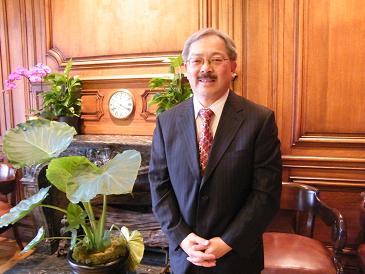
The Guardian hasn’t been invited into City Hall’s Room 200 for a long time. Former Mayor Gavin Newsom, who frequently criticized this newspaper in his public statements, had a tendency to freeze out his critics, adopting a supercilious and vinegary attitude toward any members of the press who questioned his policy decisions. So it was almost surreal when a smiling Mayor Ed Lee cordially welcomed two Guardian reporters into his stately office Feb. 15.

Lee says he plans to open his office to a broader cross-section of the community, a move he described as a way of including those who previously felt left out. Other changes have come, too. He’s replaced Newsom’s press secretary, Tony Winnicker, with Christine Falvey, former communications director at the Department of Public Works (DPW). He’s filled the Mayor’s Office with greenery, including giant tropical plants that exude a calming green aura, in stark contrast to Newsom — whose own Room 200 was sterile and self-aggrandizing, including a portrait of Robert Kennedy, in whose footsteps Newsom repeatedly claimed to walk.

When it comes to policy issues, however, some expect to see little more than business-as-usual in the Mayor’s Office. Democratic Party chair Aaron Peskin, a progressive stalwart, said he sees no substantive changes between the new mayor and his predecessor. “It seems to me that the new administration is carrying forward the policies of the former administration,” Peskin said. “I see no demonstrable change. And that makes sense. Lee was Willie Brown and former Mayor Gavin Newsom’s handpicked successor. So he’s dancing with the guys that brought him in.”

Sup. David Campos, viewed as part of the city’s progressive camp along with Peskin, took a more diplomatic tack. “So far I’ve been very pleased with what I’ve seen,” Campos noted. “I really appreciate that he’s reached out to the community-based organizations and come out to my district and done merchant walks. I think we have to wait to see what he does on specific policy issues.”

But while Lee has already garnered a reputation for being stylistically worlds apart from Newsom, he still hews close to his predecessor’s policies in some key areas. In our interview, Lee expressed an unwillingness to consider tax-revenue measures for now, but said he was willing to take condo conversions into consideration as a way to bring in cash. He was unenthusiastic about community choice aggregation and dismissive of replacing Pacific Gas & Electric Co. with a public-power system. He hasn’t committed to overturning the pending eviction of the Haight Ashbury Neighborhood Council’s recycling center, and he continued to argue for expanding Recology’s monopoly on the city’s $206 million annual trash stream, despite a recent Budget and Legislative Analyst’ report that recommended putting the issue to the voters.

Public Defender Jeff Adachi, who met Lee in 1980 through the Asian Law Caucus, said Lee would be facing steep challenges. “It’s a fascinating political karmic outcome that he is now our appointed mayor. He didn’t seek it out, as he says, but the opportunity he has now is to focus his efforts on fixing some of the problems that have gone unaddressed for decades, pension reform being one of them. I think he realizes he has a limited time to achieve things of value. The question I and others have is, can he do it?”


THE RELUCTANT MAYOR

Lee identified as a non-politician, patently rejecting the notion that he would enter the race for mayor. In meetings with members of the Board of Supervisors at the end of 2010, he said he didn’t want the job.

Yet while vacationing in Hong Kong, Lee became the subject of a full-court press. “When the lobbying and phone calls started … clearly they meant a lot to me,” Lee told us, adding that the choice “was very heavy on my mind.” He finally relented, accepting the city’s top post.

Although rumors had been circulating that Lee might seek a full term, he told the Guardian he’s serious about serving as a caretaker mayor. “If I’m going to thrust all my energy into this, I don’t need to have to deal with … a campaign to run for mayor.”

Adachi offered an interesting take on Lee as caretaker: “Somewhere along the way, [Lee] became known as the go-to guy in government who could take care of problems,” Adachi said, “like the Wolf in Pulp Fiction.”

Sounding rather unlike Harvey Keitel’s tough-talking character, Lee noted, “One of my goals is to rebuild the trust between the Mayor’s Office and the Board of Supervisors. I think I can do that by being consistent with the promises I make.”

Lee’s vows to keep his promises, mend rifts with the board, and stay focused on the job could be interpreted as statements intended to set him apart from Newsom, who was frequently criticized for being disengaged during his runs for higher office, provoking skirmishes with the board, and going back on his word.

The new mayor also said he’d be willing to share his working calendar with the public, something Newsom resisted for years. Kimo Crossman, a sunshine advocate who was part of a group that began submitting requests for Newsom’s calendar in 2006, greeted this news with a wait-and-see attitude. “I’ve already put in a request,” Crossman said. “Politicians are always in support of sunshine — until they have to comply with it.”


THE ELEPHANT IN THE ROOM

Pointing to the tropical elephant-ear plants adorning his office, Lee noted that elephants are considered lucky in Chinese culture. With the monstrous issues of pension reform and a gaping budget deficit hitting his mayoral term like twin tornadoes, it might not hurt to have some extra luck.

Pension reform is emerging as the issue du jour in City Hall. A round of talks on how to turn the tide on rising pension costs has brought labor representatives, Sup. Sean Elsbernd, billionaire Warren Hellman, City Attorney Dennis Herrera, labor leaders, and others to the table as part of a working group.

Gabriel Haaland, who works for SEIU Local 1021, sounded a positive note on Lee. “He’s an extraordinarily knowledgeable guy about government. He seems to have a very collaborative working style and approach to problem-solving, and he is respectful of differing opinions,” Haaland said. “Where is it going to take us? I don’t know yet.”

Lee emphasized his desire to bring many stakeholders together to facilitate agreement. “We’re talking about everything from limiting pensionable salaries, to fixing loopholes, to dealing with what kinds of plans we can afford in the health care arena,” he noted. Lee said the group had hashed out 15 proposals so far, which will be vetted by the Controller’s Office.

A central focus, Lee said, has been “whether we’ve come to a time to recognize that we have to cap pensions.” That could mean capping a pension itself, he said, or limiting how much of an employee’s salary can be counted toward his or her pension.

Since Lee plans to resume his post as city administrator once his mayoral term has ended, he added a personal note: “I want to go back to my old job, do that for five years, and have a pension that is respectable,” he said. “At the same time, I feel others who’ve worked with me deserve a pension. I don’t want it threatened by the instability we’re headed toward and the insolvency we’re headed toward.”


BRACING FOR THE BUDGET

If pension reform is shaping up to be the No. 1 challenge of Lee’s administration, tackling the city budget is a close second. When Newsom left office, he passed Lee a budget memo containing instructions for a 2.5 percent reduction in most city departments, part of an overarching plan to shave 10 percent from all departments plus another 10 percent in contingency cuts, making for a bruising 20 percent.

Lee said his budget strategy is to try to avert what Sup. David Chiu once characterized as “the typical Kabuki-style budget process” that has pitted progressives against the mayor in years past. That means sitting down with stakeholders early.

“I have opened the door of this office to a number of community groups that had expressed a lot of historical frustration in not being able to express to the mayor what they feel the priorities of their communities are,” Lee said. “I’ve done that in conjunction with members of the Board of Supervisors, who also felt that they weren’t involved from the beginning.”

Affordable-housing advocate Calvin Welch said Lee’s style is a dramatic change. “I think he’s probably equaled the total number of people he’s met in six weeks with the number that Newsom met in his seven years as mayor,” Welch said.

Sup. Carmen Chu, recently installed as chair of the Budget & Finance Committee, predicted that the budget will still be hard to balance. “We are still grappling with a $380 million deficit,” Chu told us, noting that there are some positive economic signs ahead, but no reason to expect a dramatic improvement. “We’re been told that there is $14 million in better news. But we still have the state budget to contend with, and who knows what that will look like.”

Sup. John Avalos, the former chair of the Board’s powerful Budget Committee, said he thinks the rubber hasn’t hit the road yet on painful budget decisions that seem inevitable this year — and the outcome, he said, could spell a crashing halt to Ed Lee’s current honeymoon as mayor.

“We are facing incredible challenges,” Avalos said, noting that he heard that labor does not intend to open up its contracts, which were approved in 2010 for a two-year period. And federal stimulus money has run out.


DID SOMEONE SAY “CONDO CONVERSIONS”?

Asked whether he supported new revenue measures as a way to fill the budget gap, Lee initially gave an answer that seemed to echo Newsom’s inflexible no-new-taxes stance. “I’m not ready to look at taxes yet,” he said.

He also invoked an idea that Newsom proposed during the last budget cycle, which progressives bitterly opposed. In a conversation with community-based organizations about “unpopular revenue-generating ideas,” Lee cautioned attendees that “within the category of unpopular revenue-generating ideas are also some that would be very unpopular to you as well.”

Asked to explain, Lee answered: “Could be condo conversion. Could be taxes. I’m not isolating any one of them, but they are in the category of very unpopular revenue-generating ideas, and they have to be carefully thought out before we determine that they would be that seriously weighed.”

Ted Gullicksen, who runs the San Francisco Tenants Union, said tenant advocates have scheduled a meeting with Lee to talk about condo conversions. Thanks to Prop. 26’s passage in November 2010, he said, any such proposal would have to be approved by two-thirds of the board or the voters. “It’s pretty clear that any such measure would not move forward without support from all sides,” Gullicksen said. “If anyone opposes it, it’s going to go nowhere.”

Gullicksen said he’d heard that Lee is willing to look at the possibility of significant concessions to renter groups in an effort to broker a condo conversion deal, such as a moratorium on future condo conversions. “If, for example, 1,000 TICs [tenants-in-common] became condos under the proposal, then we’d need a moratorium for five years to minimize and mitigate the damages,” Gullicksen explained.

More important, some structural reform of TIC conversions may be on the table, Gullicksen said. “And that would be more important than keeping existing TICs from becoming condos.”

Gullicksen acknowledged that Lee has the decency to talk to all the stakeholders. “Newsom never attempted to talk to tenants advocates,” he said.


GREEN, WITHIN LIMITS

Lee’s two children are in their early 20s, and the mayor said he takes seriously the goal of being proactive on environmental issues in order to leave them with a more sustainable San Francisco. He trumpeted the city’s green achievements, saying, “We’re now on the cutting edge of environmental goals for the city.”

Leading bicycle activist Leah Shahum of the San Francisco Bicycle Coalition had praise for Lee on bike issues. “I’m really encouraged by his very public support of the new green separate bikeways on Market Street and his interest and commitment to creating more,” she said. “I believe Mayor Lee sees the value of connecting the city with cross town bicycle lanes, which serve a wide range of folks, including business people and families.”

Yet some proponents of green causes are feeling uncertain about whether their projects will advance under Lee’s watch.

On the issue of community choice aggregation (CCA), the ambitious green-energy program that would transfer Pacific Gas & Electric Co. customers to a city-run program with a cleaner energy mix, Lee — who helped determine rates as city administrator — seemed lukewarm. “I know Mr. [Ed] Harrington and his staff just want to make sure it’s done right,” he said, referring to the general manager of the city’s Public Utilities Commission, whose tepid attitude toward the program has frequently driven him to lock horns with the city’s chief CCA proponent, Sup. Ross Mirkarimi.

Lee noted that CCA program goals were recently scaled back. He also said pretty directly that he opposes public power: “We’re not in any day getting rid of PG&E at all. I don’t think that is the right approach.”

The controversial issue of the Haight Ashbury Neighborhood Council Recycling Center’s pending eviction from Golden Gate Park still hangs in the balance. The Recreation and Park Commission, at Newsom’s behest, approved the eviction despite overwhelming community opposition.

Lee said he hadn’t looked at the issue closely. “I do know that there’s a lot of strong debate around the viability, what that operation attracts and doesn’t attract,” he said. “I had the owner of HANC here along with a good friend, Calvin Welch, who made a plea that I think about it a bit. I agreed that I would sit down and talk with what I believe to be the two experts involved in that decision: Melanie Nutter at the Department of the Environment and then Phil Ginsburg at the Rec and Park.” Nutter and Ginsburg supported HANC’s eviction.

Welch, who is on the board of HANC, noted that Lee could be swayed by his staff. “The bunch around Newsom had old and bad habits, and old and bad policies. In dealing with mayors over the years, I know how dependent they are on their staff. They’re in a bubble, and the only way out is through a good staff. Otherwise, Lee will come to the same conclusions as Newsom.”

HANC’s Jim Rhoads told the Guardian he isn’t feeling reassured. “He said he would keep asking people about it. Unfortunately, if he asked his own staff, it would be a problem because they’re leftovers from Newsom.”

Speaking of leftovers, Lee also weighed in on the debate about the city’s waste-management contract — and threw his support behind the existing private garbage monopoly. Campos is challenging a perpetual waste-hauling contract that Recology has had with the city since 1932, calling instead for a competitive-bidding process. When the Department of the Environment recommended awarding the city’s landfill disposal contract to Recology last year, it effectively endorsed a monopoly for the company over managing the city’s entire waste stream, at an estimated value of $206 million per year.

The final decision to award the contract was delayed for two months at a February Budget & Finance Committee hearing. Campos is contemplating putting the issue to the voters this fall, provided he can find six votes on the Board.

“I know that Sup. Campos had given his policy argument for why he wants that revisited,” Lee said. “I have let him know that the Recology company in its various forms has been our very dependable garbage-hauling company for many, many decades. … I feel that the company has justified its privilege to be the permit holder in San Francisco because of the things that it has been willing to do with us. Whether or not we want to use our time today to revisit the 1932 ordinance, for me that wouldn’t be a high priority.”


UNFINISHED BUSINESS

In the last week of 2010, Avalos pushed through groundbreaking local-hire legislation, without the support of then Mayor Gavin Newsom or his chief of staff, Steve Kawa, who wanted Avalos to back off and let Newsom takeover the task.

With Lee now in Room 200, things appear to be moving forward on local hire, in face of misleading attacks from Assemblymember Jerry Hill (D-San Mateo), who wants to make sure no state money is used on local-hire projects, presumably because the building trades are upset by it. And Kawa, whom Lee has retained as chief of staff, doesn’t really support the legislation. Indeed, Kawa’s presence in the Mayor’s Office has his detractors believing that the new boss in Room 200 is really the same as the old boss.

“I feel like things are moving forward in the right direction around local hire, though a little more quietly than I’d like,” Avalos told the Guardian. Avalos noted that he is going to hold a hearing in March on implementing the legislation that should kick in March 25.

Welch said he believes that if Lee starts replacing staff wholesale, it could indicate two things: he’s a savvy guy who understands the difficulties of relying on Newsom’s chief of staff Steve Kawa for a budget, and he’s not ruling out a run for mayor.

“If I was in his position, the first thing out of my mouth would be, ‘I’m not running.’ I think he’s very focused in the budget. And it’s going to make or break him. But if he starts overriding Kawa and picks staff who represent him … well, then I’d revisit the question of whether he’s contemplating a run for mayor, say, around June.”

A call to do your (jury) duty

0

By Ken Maley

OPINION For decades San Franciscans concerned and interested in the workings — and malfunctions — of city government have turned to the Guardian for insights and possible solutions. Guardian readers have developed a reputation for being community activists, and to those activist-minded readers, I encourage you to apply to serve on the San Francisco civil grand jury.

Few citizens understand that the California Constitution requires all counties to impanel a civil grand jury each year. The San Francisco grand jury has researched and issued many important findings — most recently, pertinent reports on the enormous, and growing, city employee retirement obligations threatening to consume our city’s general fund and possibly bankrupt the city in the next five years if not resolved.

Each year the San Francisco Superior Court accepts applications from citizens who want to serve on the jury. Thirty screened applicants are selected, and from those 30, 19 are impaneled as that year’s civil grand jury. Jurors serve for a one-year term, from June to July.

The full jury discusses various issues of interest, selects issues that gain 12 of the 19 votes, spends a year investigating, then writes and releases reports. The panel can investigate any function of city government — contracts, corruption, spending, tax policy .. the mandate is very broad. And the jury has tremendous power, including the ability to subpoena records and force city officials to testify. No pertinent information may be withheld once the judge approves the request.

But the dilemma confounding the court is the lack of qualified applicants. In 2009, the number of applicants was so low we were nearly unable to impanel a jury at all. What a disgrace, in activist San Francisco.

I find it so disheartening that in a city renowned for community interest and participation in almost every aspect of government activity, we have such a small number of citizens willing to make the time to serve.

So I appeal to Guardian readers to direct your interest in the workings of our city government, to consider putting your knowledge and commitment to better city governance by serving on the San Francisco civil grand jury.

Your contribution of time and energy as a juror will be well spent and personally rewarding.

To learn more about the civil grand jury, how you can do your civic duty and apply, go to www.sfgov.org, click on agencies, scroll down to civil grand jury. Applications are due by April 15 for the 2011-12 jury. 

Ken Maley was a member of the 2008-09 civil grand jury and is media committee chair of the San Francisco Civil Grand Jury Association.


Mirkarimi runs for sheriff

2

tredmond@sfbg.com

Sup. Ross Mirkarimi filed preliminary papers to run for sheriff Feb. 22, altering the shape of the mayor’s race and giving progressives another shot at electing a candidate to citywide office.

His move also guarantees that law enforcement will be part of the discussion on the left this fall and it opens the door for a progressive sheriff to succeed retiring Mike Hennessey and continue the sorts of policies that have made him a national example of alternative ways to approach crime and punishment.

Mikarimi, a graduate of the San Francisco Police Academy and a former District Attorney’s Office investigator, has law enforcement experience and has made violent crime a key issue as a district supervisor. But he’s not part of the city’s public safety establishment.

“One of the greatest successes of Mike Hennessey was that he was an independent sheriff,” Mirkarimi told us. “That allowed him to take a progressive approach to his job.”

Mirkarimi had been talking about the job of sheriff for some time now, but he had been waiting to hear whether Hennessey would seek another term after 31 years on the job. When the sheriff announced last week that he was planning to retire, Mirkarimi moved quickly, contacting potential supporters and setting up a campaign plan.

The supervisor becomes the immediate front-runner in a race where there’s no other high-profile candidate. But that doesn’t mean he’s going to walk into the job — the last thing downtown wants is a progressive of Mirkarimi’s stature holding a high-profile citywide office that could be a springboard to a future run for mayor.

“This is going to be a top-of-the-ticket race,” Mirkarimi said. “We don’t want it to be a setback by losing the Hennessey legacy.”

Mirkarimi pushed hard for community policing as a supervisor, demanding more foot patrols in areas like the Western Addition, where the homicide rate was high. As sheriff, he told us, he would work to expand on Hennessey’s efforts at curbing recidivism.

“Eventually, almost everyone who’s incarcerated comes back to the community,” he said. “Our recidivism rate for the county jails is above 60 percent, and we have to work on reentry programs to lower that. It’s really about keeping communities safe.”

If a strong progressive gets into the mayor’s race — and somebody whom the left can support runs for district attorney — there’s the prospect of a slate of candidates who can work together, share resources, and mount a concerted campaign.

It’s likely Mirkarimi will get the support of at least five or six supervisors and other high-profile political figures. Hennessey hasn’t said anything about his successor, but if he supports Mirkarimi — which is entirely possible — the supervisor will be in strong position for November.

But the likelihood of at least one downtown-backed candidate, and possibly several law-enforcement types, in the race will make it challenging. With ranked-choice voting, Mirkarimi will not only have to win most of the first-place votes, but reach out beyond the progressive community to get enough seconds and thirds to hold on to victory.

But if he can pull it off, he’ll have done something no other solid progressive has done in years: win an open race for a citywide office.

Where were you?

1

marke@sfbg.com

FILM Amid the worshipful bromides that attended the 100th birthday of zombie Ronald Reagan on Feb. 6, gay blogger Joe.My.God. helped bring back to light a transcript of a 1982 press briefing Q&A session between Reagan administration spokesman Larry Speakes and journalist Lester Kinsolving. It’s the first known time that AIDS was brought up at the White House.

Lester Kinsolving: Larry, does the president have any reaction to the announcement — the Centers for Disease Control in Atlanta, that AIDS is now an epidemic and have over 600 cases?

SPEAKES: What’s AIDS?

LK: Over a third of them have died. It’s known as “gay plague.” (Laughter.) No, it is. I mean it’s a pretty serious thing that one in every three people that get this have died. And I wondered if the president is aware of it?

SPEAKES: I don’t have it. Do you? (Laughter.)

LK No, I don’t …

SPEAKES: How do you know? (Laughter.)

LK: In other words, the White House looks on this as a great joke?

The answer, as the briefing spiraled into hysterics, was yes. It’s long been a source of bitterness that Reagan didn’t publicly refer to AIDS until 1987, after the disease had officially killed 20,849 Americans, been identified in 113 countries, and started to be “normalized” by the infection of young white children and closeted Hollywood superstars. But it was the laughter as gays lay dying that brought an angry population together, and that still rings in the ears of those who survived.

Reagan isn’t mentioned in David Weissman’s important and moving new documentary about San Francisco’s early response to the AIDS epidemic, We Were Here — although his communications director Pat Buchanan and Moral Majority leader Jerry Falwell get split-second references, as does the heinous Proposition 64, the heroically defeated 1986 California ballot measure that could have led the way to quarantining gays. We Were Here isn’t a political polemic about the lack of governmental support that greeted the onset of the disease. Nor is the film a kind of cinematic And the Band Played On, exhaustively laying out all the historical and medical minutiae of HIV’s dawn. (See PBS Frontline’s engrossing 2006 The Age of AIDS for that.) There’s no mention of crystal meth, the Internet, the HIV denialist movement, protease inhibitors, depression, or survivor guilt. ACT-UP and the AIDS quilt are discussed only briefly. And you’ll find virtually nothing about the infected world outside the United States or the ongoing fight against the disease.

A satisfying 90-minute documentary couldn’t possibly cover all the aspects of AIDS, of course, even the local ones. Instead, Weissman’s film, codirected with Bill Weber and full of often astonishing tidbits, concentrates mostly on AIDS in the 1980s and tells a more personal and, in its way, more controversial story. What happened in San Francisco when gay people started mysteriously wasting away? And how did the epidemic change the people who lived through it?

The first question provides the narrative framework of the film. In the beginning, we’re introduced to five quintessentially San Franciscan characters, identified only by their first names: Ed, Paul, Daniel, Guy, and Eileen. As they tell their stories about how and why they came to San Francisco, and familiar-yet-still-striking archival photos of an unfettered 1970s Castro District fill the screen, you begin to realize Weissman’s impressive canniness in choosing to focus on these wise and almost preternaturally calm people, who turn out to be major players in the horror that slowly engulfs the film. (And We Were Here is indeed structured like a horror flick, with subtle early notes of discord foreshadowing the graphic images to come. The only thing missing is the screaming.)

Guy, for example, is Guy Clark of the legendary Guy’s Flowers in the Castro. He leads the story from the “San Francisco (Be Sure to Wear Flowers in Your Hair)” era through the flower-bedecked funerals of the stricken — touching for a moment on the reaction in SF’s African American community — before bearing witness to a recent miraculous recovery, a man actually rising from a wheelchair to walk again. Other participants tell the stories of SF General Hospital’s groundbreaking AIDS Ward 5B/5A, the Shanti Project, Visual AIDS, and the “San Francisco model” of multifaceted, compassionate care for people with AIDS* before contemporary treatments became available.

The tales are well told and expertly woven together, as in Weissman’s earlier doc The Cockettes. Most of these people necessarily focused on the daily work of trying to help in order to stay sane. But where We Were Here really hits home is in its foregrounding of many unspoken or buried truths about that specific AIDS period that are in danger of being lost (one of which is that people who lived with HIV back then were often scaldingly candid about what was happening to their bodies.)

AIDS was annoying — it just went on and on. Participant Ed talks honestly about how he had to give up caring for patients out of exhaustion. AIDS got gay people where it really hurt: their vanity. The whole thing really fucked with your look. AIDS was bewildering. Suddenly people who had dropped out and run away to the Gay Mecca had to become medical experts, their recreational chemicals replaced with excruciating concoctions of exotic panic treatments. And women actually existed during AIDS. One of the most touching stories is about how the lesbian community rushed to donate blood.

The biggest act of emotional archeology, however, is the acknowledgement that some good came of AIDS. Not just in the well-known sense that it brought a marginalized community together and showed gay people as humans. It also personally transformed the narrators. Most of them found their calling, maybe lifelong satisfaction, during the AIDS crisis. We Were Here will affect viewers on a deep level, perhaps allowing many to weep openly about what happened for the first time. But it’s no mere sobfest. (My dead friends would have hated that.) It’s a testament to the absolute craziness of life, and the strange places it can take you — if you survive it.

WE WERE HERE OPENING PARTY with Rufus Wainwright Fri/25, 7:30 p.m., $25. Castro Theatre, 429 Castro, SF. Film plays the Castro Theatre through March 3. www.castrotheatre.com, www.wewereherefilm.com

*An earlier version of this article used the term “AIDS victims” to refer to those who had passed away from the disease. That term has a long and derogatory history, and still offended some readers, even when not used to refer to persons living with AIDS (PWAs), so we have replaced it above. It’s good evidence of how this film is re-enlivening debates. 

Pony up, kids

0

le.chicken.farmer@gmail.com

CHEAP EATS From Crawdad’s house in Berkeley, you can see Golden Gate Fields racetrack. I take her kids to the soccer pitch next door, to watch and run, and I walk their dog along the water behind the track.

When I was little, I used to circle my favorite-named horses in the sports section, then check back the next day to see how much I’d won. My uncles and aunts played the ponies. Punker and Gatorgator, they play the ponies. I have been invited. And invited.

I associate three of my favorite writers with horse racing, but have never been, not even once, to the track. Until last Saturday.

Damon Runyon, Charles Bukowski, Mike DeCapite, and now me. Finally, finally I can say with authority that I pulled a kazoo out of the septic in the sixth at Fair Grounds to show and he did! He seconded, paying 51-1.

Now, Hedgehog had a Li’l Loveable visiting from her hometown and this ‘un was marking her daughter’s 21st birthday by redefining herself, running a half marathon, eating weird things, and just getting a tattoo. Loveable was the only one of us with prior track experience, except, I think, that Hedgehog might have been once or twice too. A succincter way of saying this might be that I was the only one without track experience.

And therefore the only winner. Yep, after dropping tacos in the fourth and fifth on a couple of popular pinstripes who failed to impress, let alone deliver, I thought I would change majors — which was good timing because a can-do named Mayo was odds-on incumbent just then, and … yuck!

Hedgehog head-cheesed Mayo, and I — being a world renowned mayophobe — looked for the oppositest entrée, which was the horse called Crispy. Crispy was 20-1 when I placed my taco, but by gate was 51-1. Or, more than twice as losery in the imagination of the wagering public.

But the hard part was I couldn’t even scream as my quantum leap long-shotted across the finish line because we watched that inning from the field announcer’s booth, Hedgehog being the wig that she is. Our host was on mic, and that meant we had to be perfectly quiet, for the sake of the sport, while the unthinkable dreamed itself before my very blinkers. I bit my tongue real hard.

The integrity of horse racing thus preserved, I windowed up to collect my Cheerios. Come to think of it, I’m surprised more of my San Francisco friends didn’t come visit me in New Orleans once they got wind of the kind of column inches I was ethering home to this rag. Just Kayday, and I don’t even think she reads me.

Anyway, she was waiting at her hotel piano bar, so I nut-jobbed my winnings, kissed Hedgehog, high-fived her townie, and went. We had a two-dinner, three-bar date with Frenchmen Street, whereas Hedgehog and the Loveable were updressing for some gala or something. Oh, I was invited, but didn’t have anything to wear. Since Kayday ain’t my fairy godmother, the Cinderella story ends right there.

Things we ate that night included grilled oysters wrapped in bacon, fried crawfish, fried pickles, mac ‘n’ cheese with meatballs, and gumbo. So probably the ball-goers didn’t have anything on us, save maybe a higher dry-cleaning bill.

The next night I cooked for everybody, and the day after that, Kayday’s last, we thought we would go up to Riverbend, get a bucket of crawfish, and sit on the levee, which, my little master’s mama assured us, would be “the right thing to do.”

Except they didn’t have boiled crawfish at Cooter Brown’s, so we got raw oysters and pecan pie and that was when I blew my New Orleans food fuse. “I’m done. Tell me about home, Kayday,” I said, sitting on the grass, on the levee, watching barges on the Mississippi.

She said she had the best burger ($10.50) she ever had at Chez Maman in Potrero Hill. She said the waiter said everything in French, then English. She said the frites … the burger! she said.

“Was there peanut butter on it?”

“No,” she said.

Next week I write you from France.

CHEZ MAMAN

Mon.–Fri. 11:30 a.m.–11 p.m.;

Sat.–Sun. 10:30 a.m.–11 p.m.

1453 18th St., SF

(415) 824-7166

MC/V

Beer and wine

L.A. Confidential

0

arts@sfbg.com

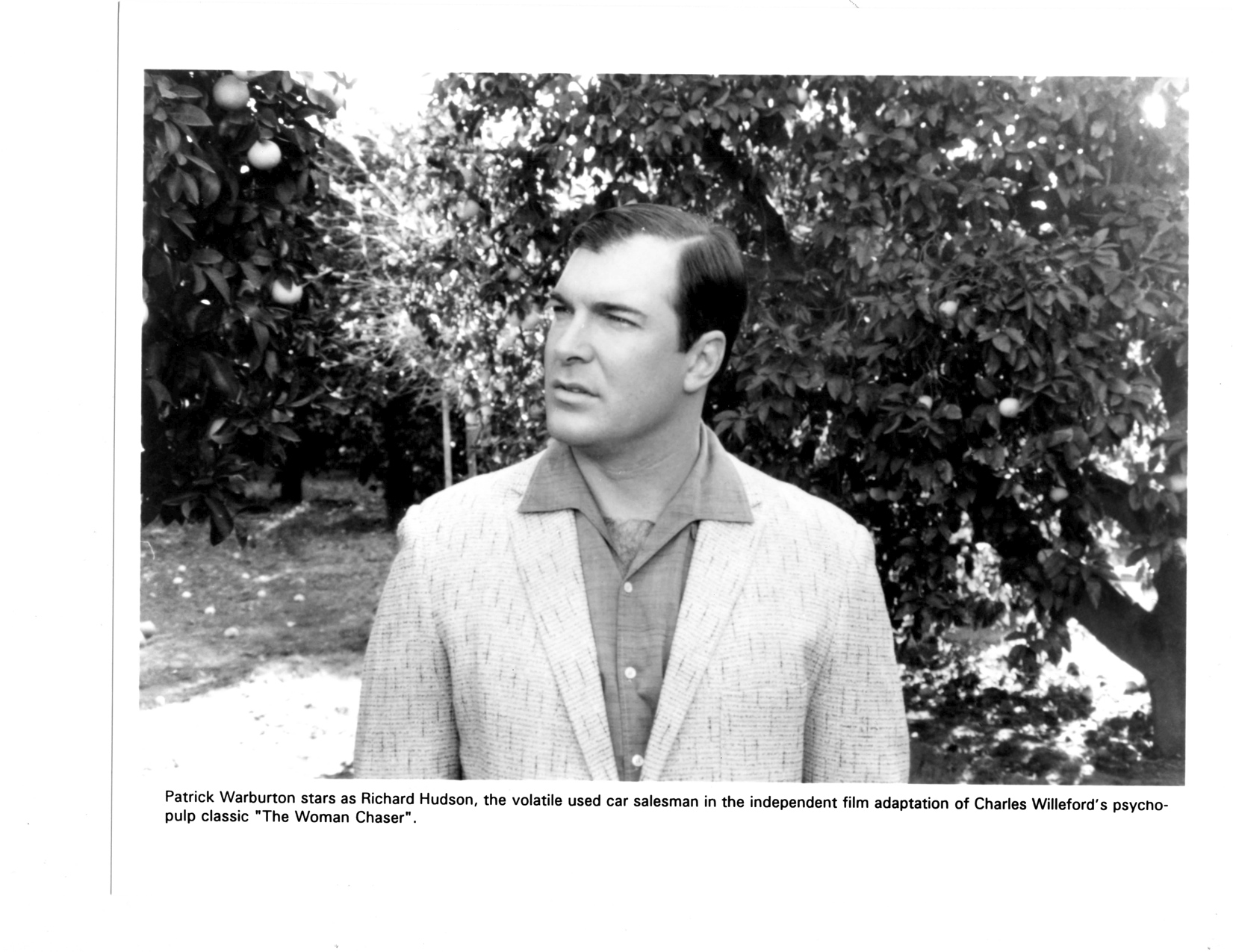
FILM Patrick Warburton occupies his own special niche. He is a big (6 feet, 3 inches), hirsute, square-jawed kinda white guy — the kind who saved screaming ingénues from gorillas or Martians in 1950s B flicks — who’s flourished parodying macho blowhards. Who doesn’t love Warburton? People who don’t know who he is, obviously.

They probably know him regardless, if not by name. First widely noted as Elaine’s emotionally deaf boyfriend on Seinfield, in recent years he’s starred in successful network sitcoms Rules of Engagement and Less than Perfect. They followed The Tick, a short-lived Fox superhero parody series everyone loved but the viewing public. He’s voiced various characters on Family Guy (a man’s gotta work), as well as loftier ‘toons including The Venture Bros., Kim Possible, and Scooby-Doo! Mystery Incorporated, playing Buzz Lightyear in Toy Story spinoffs, as well as endearing villain Kronk in The Emperor’s New Groove (2000).

The Emperor’s New Groove reunited him with Eartha Kitt, also a costar in his screen debut: 1987’s WTF Mandingo (1975) rip-off Dragonard, in which he played a race traitor Scottish hunk on an 18th century Caribbean slaving isle populated by such punishing extroverts as boozy Oliver Reed, chesty Claudia Uddy, and creaky Pink Panther boss Herbert Lom. This campsterpiece features steamy sex intercut with chicken sacrifice, a character called “Manroot,” appalling homosexual caricatures, much library music, and other incitements to drinking-game joy. (Start trolling eBay for used VHS copies now.)

These days, Warburton is promoting a past project he’d rather remember: 1999’s The Woman Chaser, billed as both his leading-role debut (hello! Dragonard!!) It was definitely the first feature for Robinson Devor (2005’s Police Beat, 2007’s Zoo), one of the most stubbornly idiosyncratic and independent American directors to emerge in recent years.

Derived from nihilist pulp master’s Charles Willeford 1960 novel, this perfect B&W retro-noir miniature sets Warburton’s antihero to swaggering across vintage L.A. cityscapes. Sloughing off an incestuously available mother and other bullet-bra’d she cats, his eye on one bizarre personal ambition, he’s a vintage man’s man bobbing obliviously in a sea of delicious, droll irony. Warburton appears with Devor at the Roxie for The Woman Chaser‘s theatrical-revival opening night. I caught up with the actor via phone last week.

SFBG Did The Woman Chaser have a significant impact on your career?

Patrick Warburton It should have. We debuted at the New York Film Festival, an amazing experience, then went to Sundance. The film got a nice little art house release in 15 or 20 cities. But after that, there were ownership issues, [and] it never went to DVD. So the audience has been extremely limited.

SFBG Yet a whole lot of people here seem to know and love it.

PW Of course I’ve always known San Francisco and its residents to possess far more beauty and art and culture than this desolate hell-hole we call Los Angeles.

SFBG Were you at all familiar with Charles Willeford before?

PW No, my first peek was Rob Devor’s screenplay adaptation, which was originally entitled King Size, then went back to the original [novel’s] title.

SFBG: A strange title, because the hero isn’t chasing women. In fact, he’s completely self-absorbed and alarmingly misogynist.

PW No, this isn’t about a guy chasing women. I guess that’s the way you sold a pulp novel back then, putting a man with a topless woman in a convertible on the cover of a paperback with a title like The Woman Chaser — even though Willeford’s interests were much more psychological. I was [36] years old, playing this role had my sexual interest at an all-time low. I didn’t get it. Meanwhile the actor, Patrick Warburton, was probably knocking one off in his dressing room once a day back then.

SFBG: Once?

PW Well, I was eating whatever the fuck I wanted, cuz this guy is a chain-smoking, whiskey-drinking car salesman. I got heavier than I’d ever been in my life, about 250 pounds. My wife was not pleased. [This character] was certainly an odd fellow, a misogynist.

SFBG How did you get involved?

PW My agent said “Here’s a script,” I met Rob, and we clicked. What’s interesting is it was right after the ninth season of Seinfeld. Anything else coming my way was because of that. But [Devor] had never seen an episode — I still don’t know if he has.

SFBG The movie does an incredible job recreating 1960 L.A. on a budget.

PW It was a grind. We’d procured a handful of permits, but mostly just ran into locations with our guerilla crew and stole shots. Rob really did have a vision. When you’re working long hours, you’re not getting paid a dime, you’re working with a director who has such a specific idea what he wants — he’s going to be a little bit of a pain in the ass. But it’s an experience I’ve come to appreciate over time. Because I’ve been on the other side, where you can’t believe what a piece of garbage you’re a part of. That movie was what it was wholly because of Rob. He’s truly an artist. You don’t get such opportunities very often in this business. We’ve talked about [working together] again, and the right thing hasn’t come up. But I would love that more than anything.

SFBG: On another subject, I must quote 12 words of dialogue: “Sometimes being a slave is a man more dignity than being free!” So ungrammatical, for starters. Please reveal every last thing about Dragonard.

PW Oh, God. It was the first thing I ever did, and I knew after that experience … well. You have to be able to accept it. The most you can ask for [in this industry] are experiences where you learn and in the end get a great product. Like doing The Dish (2000) in Australia was great. I spent quality time with Sam Neill and Geoffrey Wright, then this delightful film came out of it. But with something like Dragonard, if you’re going to grow as an actor, you’ve got to just shit it out. You’ve got to say, not only is this the most awful movie ever made, but I am the worst thing in it.

THE WOMAN CHASER

Feb. 25–March 3, 7 and 9:15 p.m. (also Sat/26, 2 and 4:30 p.m.), $$5–$9.75

Roxie

3117 16th St., SF

(415) 863-1087

www.roxie.com


Health class, without the STD slideshow

0

caitlin@sfbg.com

RENEW For a brief moment, we here at the Guardian are taking a break from listing the best places to host more damage to your liver to give some soapbox time to a health care professional. Meet Dr. Julie Chen, who has a private practice in San Jose that specializes in integrative medicine, an approach combining conventional Western health knowledge with holistic care options. That’s right, just like Tron‘s Kevin Flynn, Chen is able to operate in multiple dimensions when it comes to your physical well-being. We asked her some big-kid questions about health and her innovative brand of medicine that you should probably know the answers to.

SFBG What’s the most commonly held misconception about integrative medicine?

Julie Chen The fine line between “alternative” and “conventional” medicine is frequently erased and redrawn. For example, fish oil used to be “alternative.” So was vitamin D supplementation. But now we have Lovaza and vitamin D prescription versions that insurance companies will pay for.

Integrative medicine is frequently seen as “alternative medicine,” but — especially if the physician is fellowship-trained and board-certified — it is heavily evidence-based, just like “conventional” medicine. We utilize clinical research as a basis for treatment plans that integrate aspects of conventional and complementary medicine like supplements and herbs, energy medicine, manual therapy, acupuncture, and hypnotherapy. It’s not about one or the other, it’s about utilizing all appropriate modalities available out there to achieve optimal health outcome.

SFBG You’re an expert on stress-reducing mind-body exercises, so let’s get practical here. Recommend one for people sitting on Muni or at a computer.

JC Breath work is relatively unobtrusive and inconspicuous, as is meditation or self-hypnosis. You may even try abridged versions of progressive muscle relaxation: tightening shoulder and upper back muscles, then relaxing; tightening hands and arms, then relaxing; tightening gluteal muscles, then relaxing; tightening leg and feet muscles, then relaxing.

For people who say they can’t sit still long enough to do meditation or self-hypnosis, this exercise may be an option — it offers something active to focus on.

SFBG Eating healthy is hard. What are some ways people eat wrong?

JC Patients frequently think they have to make all the right changes all at once with their diet, and then feel defeated when they can’t sustain them. I’m a big fan of setting smaller, more attainable goals, and using positive reinforcement that helps you to move onto the next.

I’m also a big fan of mixing foods if you’re not ready for a complete change. For people who don’t like brown rice, mix brown and white or use less white rice and mix it with vegetables. That way you can increase complexity of the food you are eat and decrease simple carbohydrate intake with food that is still palatable. Many patients also think that as long as they eat vegetables at one main meal, that’s enough for the day. But our bodies function better if we can provide those phytonutrients and flavonoids all day long. That means that we should incorporate healthy foods like whole grains and vegetables into every meal.

SFBG We live in an age of health info oversaturation. With all the conflicting theories out there, how can we tell if we’re living healthily or not?

JC This is a great question. First, it’s important to educate ourselves about what’s considered “healthy.” At the end of the day, we physicians do not go home with you. Your readers should know that they are the most important member in their health care team, and that they should utilize their doctors as informational tools. Second, our bodies usually will tell us if we are living as healthy as we can. If you feel chronically fatigued, or have insomnia, or a “foggy” mind, there are probably steps you can take to improve your overall health by evaluating and maximizing aspects of your lifestyle, nutritional intake, or health status.

SFBG What should someone do if the advice they are getting from their HMO differs from or conflicts with what is prescribed by their holistic health care provider?

JC In this situation, it would be beneficial for the physician to speak with the holistic health care provider. The extent of training among holistic care providers can be vastly different — it can range from those who have taken weekend courses or are self-taught versus those who are board-certified or fellowship-trained. By increasing communication between physicians and holistic practitioners, it provides an additional level of protection for the patient in case the holistic provider is suggesting something medically dangerous. On the other hand, if the treatment plan from the holistic provider is medically appropriate, then it provides an opportunity for the physician to learn more about holistic care and how it can augment conventional care.

SFBG Are there real health benefits to going vegetarian?

JC There are tremendous benefits to a vegetarian or vegan diet. Plant-based diets tend to be much more anti-inflammatory and thus are more beneficial. The trick is to make sure that the diet is high in plant-based proteins, minerals, vitamins, and phytonutrients, and not processed or fried fatty foods. If the vegetarian or vegan diet is composed of things like steamed vegetables, legumes, and whole grains, it has tremendous health benefits like improving cholesterol levels, insulin sensitivity, and decreasing inflammation.

SFBG Are there positive health benefits of living in a big city?

JC San Francisco is one of the healthiest cities in America — access to healthy, organic, and diverse foods allows us to eat well throughout the year. Another tremendous benefit of living in San Francisco is the easy access to hiking, biking, and other forms of outdoor exercise. Even for those who aren’t interested in outdoor activities, the simple act of getting around the city allows us to get in regular exercise thanks to the hilly streets.

Hoop dreams

2

culture@sfbg.com

RENEW Christabel Zamor moves like a snake — eyes fixed, lithe body writhing, hips rippling back and forth — which isn’t really surprising, considering the number of times she’s shed her skin.

Zamor is a hoopdancer — one of those sylph-like sirens who show up at parties and raves and on the playa in order to make the men drool and the women vow to do sit-ups. She credits hooping as the secret to her sensuous shape — but if you’re thinking of getting out your snake charmer’s flute, let’s get one thing straight: in this case, it’s the sexy serpent who’s charming you.

Zamor is magnetic and incredibly talented, but what sets her apart from other Bay Area hoopers is her avid following, cultivated by Hooping! The Book!, an array of instructional DVDs and 72-hour teacher training program that has certified 570 instructors in 16 countries. Zamor is HoopGirl® — a persona that not only has allowed her to whittle her waist and tone her tummy but to explode into a fitness franchise.

An erstwhile doctoral student and one-time “heavy-set, shy academic,” Zamor says she transformed her life — and her body — through hooping’s calorie-burning workouts and confidence-building powers. She now travels the world as a fitness trainer and empowerment coach, teaching people that they can do the same thing.

“I wasn’t really looking for hooping,” she says. At 27, Zamor was a UC Santa Barbara PhD student struggling to find academic support for her interest in ethnomusicology and drumming. Frustrated, she dropped out from her program after receiving a master’s degree, traveled to Senegal to study djembe, returned to the States, enrolled in Pacifica Graduate Institute’s master’s program in mythology and depth psychology, and began working as a personal assistant. Amid the confusion, she says she didn’t have the power to envision a life outside her studies. “I wanted to be a healer but didn’t know it,” she says.

But a simple circle changed all that. At a Gathering of the Tribes conference in Los Angeles, Zamor fortuitously picked up her first hoop — and HoopGirl was set in motion.

Zamor claims she never had a hula hoop as a child, but from the first instant she picked up the plastic ring and it clattered uncooperatively to the ground, she was hooked. Despite the initial “experience of not succeeding,” she was captivated by the hoopers around her — “beautiful nymphs undulating gorgeously” — and she was determined to become one.

“I got a hoop and started practicing in the park, in rhythm with high-energy trance or electronic music,” she says, and crowds “just started gathering.” When a newspaper reporter wrote a story on her weekly spin sessions, “100 people showed up wanting to hoop.”

Hooping has provided Zamor with a means of transformation, for her physical body as well as her spiritual self. She describes hooping as the portal that awakened her to underground subcultures like the circus-arts scene and artistic communities like Burning Man.

Zamor found that she could hoop for six hours at a time and that it catalyzed a level of physical and spiritual presence she describes as a “quickening” of the body. She interprets the orbital motion of the hoop as “intrinsically about coming back to your center,” a practice that stills mental chatter.

Hooping also began to fill in for the cultural activity that Zamor had so desperately wanted to study at UCSB. She had sought to understand how tribal rituals played a role in society, but she realized that dissecting a cultural form appropriated from the third world brought up questions of co-optation that she didn’t want to wrestle with. Hooping provided the same rhythmic, percussive, ritualistic aspects and counted as an indigenous rite in California in the early aughts, when its popularity was exploding. Burning Man was where Zamor tapped into hooping as a “sacred, transcendent experience,” one that she ultimately felt empowered to interpret for a national audience.

Now 10 years later, Zamor has performed at events for Warner Bros., Universal Pictures, and Cirque du Soleil. She has been hired to represent fitness brands and health club chains. She is licensing HoopGirl® Workout teachers across Canada, England, Australia, and the United States, where her hoop regimen has been certified by the Aerobics and Fitness Association of America.

At 38, she is a fitness guru and the leader of a profitable exercise business. In her books and DVDs, she maintains a bubbly exuberance in describing her physical transformation. “My unwanted extra fat just disappeared and was replaced by gorgeous muscle,” she crows, describing her journey. But she leaves out transcendence at Burning Man in favor of the elation of calories burned.

Zamor admits that she has had to be a chameleon to market herself and her hooping. Unlike other elite hoopers who began to develop the art form around the same time or even earlier, Zamor hasn’t been content to limit herself to a part of the San Francisco subculture. She hopes to bring legitimacy to hooping, which sometimes means talking abs and aerobics. “To spread hooping, I have to be able to spread the lingo. I gain respect by speaking a language that people respect.”

But when she is training HoopGirl dancers, she says she still refers to hooping as a spiritual practice. Her mantra — hooping is sexy! — is as much about a sense of self-worth as a satisfying session in the sack. The once “introverted loner” has been able to use hooping to help shed her old self, literally — and she’s eager to show us that results are replicable at home.

“The hoop adheres better to bare skin,” she explains, “so I started wearing less clothing. Showing my arms, showing my legs — it’s like the hoop was asking me to take those things off. I started to feel like I didn’t have to hide who I was.”

Flipping through pages of toned hotties in her book, or watching the bootie-shorted babes in her DVDs, it might be difficult to believe that the sexiness of hooping isn’t about, well, sex. But Zamor says there is something deeply and inherently feminine about the hoop — and it’s not just that the ladies look better shakin’ it.

After two surgeries for endometriosis, Zamor is convinced that the “soothing gyrations” of the hoop against her pelvis have helped heal her. “Hooping provided the insight I needed to slow down and focus on my body,” she says, explaining that it’s also a way to strengthen her core and reproductive organs, bringing fresh blood to the pelvic region and awakening her libido. Now, six years since her last surgery, she emphasizes that her doctor was amazed at how quickly she healed by hooping through the ordeal.

Next up, Zamor will be working on bringing that whole-body healing to women who may not be willing to step inside the hoop. She has expanded her business to include empowerment classes that honor the “divine, delicious feminine” and that will help women become a more supple, radiant, and luminous version of themselves, she says.

These classes in “hooping outside the hoop” are geared toward helping others uncover the empowerment and sense of self-worth that Zamor has found through HoopGirl. Of course, unless Zamor is planning on turning out hundreds of successful fitness revolutionaries with profitable book deals of their own, it’s hard to say whether her personal transformation will be replicable. But with one irresistible smile from Zamor, it’s easy to see that the hoop has worked for her — and difficult to resist the urge to run out and buy one for oneself.

Renew yourself

2

culture@sfbg.com

So 2011 is a couple months in, and already your new year’s resolution list reads like so many dreams deferred? Chuck it in the flames — not all rebirths neatly coincide with the Gregorian calendar. This spring, rejuvenate your inner and outer workings with some of these excellent opportunities to renew everything from your chi, to your core strength, to the sweetness of your swagger.


HEAR THE CRY OF THE MIDNIGHT DOWN-DOG

Tripped the light cataclysmic a time too many? The toxic Fernet fumes ooze from your pores, and you’ve left not only your debit, but your credit, library, and frequent bagel-buyer card in various watering holes about time? Time to purge. Take a night off from tippling and toddle to Laughing Lotus, where Friday night’s midnight yoga class (each week from 10 p.m.-midnight) soothes abused chakras — and livers, need be. Each week even features a different live musician: Fri/25’s class will be home to the didgeridoo and sound-healing savasana of Amber Field.

Laughing Lotus, 3271 16th St., SF. (415) 355-1600, www.laughinglotus.com


PARTICIPATE IN A GROUP POKING

What’s community acupuncture, you ask? Small groups of patients are treated in recliners in a quiet, calm room. During the hour-long sessions, those waiting for their pokes receive staggered personalized care (needles are inserted into one’s limbs, face, and head: no disrobing necessary) from a licensed acupuncturist. Learned how to share in kindergarten? Perfect, because the cooperative method means that a single session will only run you $25–$45, including the initial visit’s paperwork fee. Circle Community Acupuncture, 1351 Harrison, SF. (415) 864-1070, www.circleca.com


ALKALINIZE!

Fasting, ugh. It has its place, but not eating anything is a bitter pill in the land of street tacos and gourmet coffee grounds. If you’re asking our opinion, a day of cleanse is best accessorized with Lydia’s raw green soup, a tangy elixir of kale, cucumber, dulse seaweed, avocado, ginger, and other green delicious majicks. Lydia’s sells neatly packaged soup servings, resplendent kale chips, and other yummy raw treats are favorites at the city’s crunchiest festivals, and you can pick them up at health food stores too.

Available at various SF grocery stores, www.lydiaslovinfoods.com


SWEAT IT OUT

Hidden behind hippie-wear emporium P-Kok is a small green garden and a sauna where tired city souls retreat for the store’s patchouli-heavy full moon ceremonies, complete with vibrational sauna singing. Starting in March, the hidden space will go holistic and become Tall Tree Tambo Wholeness Center. Monthly memberships (to encourage the use of the space as a healthy community hub) will be available for $100–$125 including coed and single-sex sauna access, healing events facilitated by other members, and the center’s four on-site healing arts practitioners, small-group classes in spiritual alignment, yoga, and the ever-popular full moon rites.

776 Haight, SF. (415) 430-8285, www.talltreetambo.org


TAKE INSPIRATION FROM A FEMALE FIGHTER

Forget Rocky. For true Bay Area boxing spirit, you couldn’t do better than checking out the super bantamweight championship boxing match of Ana “the Hurricane” Julaton vs. Franchesca “the Chosen One” Alcanter on Fri/25. Julaton, a Daly City and Bayview raised Filipina American, is looking to regain her standing in the pro world after a disappointing loss last year. Regardless of who walks with the belt, the ring’s high-powered punching — and rock hard musculature — is worth checking out if you’re in need of some gym motivation.

Fri/25 6 p.m., $35–$360. Craneway Pavilion, 1414 Harbour, Richmond. www.brownpapertickets.com


SWEAT TO BOLLYWOOD BREAKS

Of course, you could saddle up your most comfortable heels and get your werqout in the club. Should you try this tactic, you could hardly do better than the rum-tum-tum stylings of Non-Stop Bhangra, a night that’s been teaching San Franciscans how to circle wrists and move hips in pure Punjabi mode since 2004. Nights begin with a hour-long class on Bollywood-style dance, continues with ample time to practice to beats by resident DJs and guest scratchers, and now attract a diverse following of races, ages, and ahem, physical aptitudes. Calorie burn and culture learn at the same time, perfect.

Next show: March 19 9 p.m., $10–$20. Rickshaw Stop, 155 Fell, SF. (415) 861-2011, www.nonstopbhangra.com


READ ABOUT OTHER, HEALTHIER PEOPLE

Maria Arellano was gunning for a healthier lifestyle, so she decided to blog about it. “Accountability,” the chipper office manager e-mailed us when we asked her about Oh Healthy Day‘s providence. “Posting your workouts and healthy eating habits with others is a great way to stay motivated.” Her short, addicting posts and sunny photos of her ongoing journey to fitness are also great ways to hold us accountable — how are you going to down that family-sized bag of corn chips after reading Arellano’s upbeat prose about her delicious protein and veggie dinners or inspiring Crossfit workout? Answer: you’re not.

www.ohhealthyday.com


REACH FOR THE SKY

While the spectacularly cool House of Air has added a valuable component to San Francisco’s kid’s-activity-starved landscape (little ones can’t help but explode with glee at the very sight of the humongous “Bounce House”), there’s trampin’ for adults as well. Specifically, the Air Conditioning workout is a 50-minute fly-through that promises to “leave your cheeks just as sore as your quads from smiling so much.” At $16 for a 50-minute session, it’s not a huge leap to “yes.”

926 Mason, SF. (415) 345-9675, www.houseofairsf.com


BUFF YOUR BRAINPOWER

Feel the burn all you want in your thighs, but no fitness program would be complete without a stretching your mind. At vibrantBrains, you’ll exercise that flabby cerebellum in what amounts to a workout for your brain. Improve your memory, tackle abstractions, and fast-track your alertness, literacy, and comprehension skills with programs like “Neurobics,” “Mind Evolve,” “NeoCORTA,” and “Posit Science Cortex with InSight.” Each program concentrates on a different area of mental agility using a combination of cutting edge techniques and personal attention. Even reading about the various vibrantBrains offerings makes us feel smarter.

3235 Sacramento, SF. (415) 775-1138, www.vibrantbrains.com


IMMERSE YOURSELF IN EGGHEAD

Holy smarty-pants, Batman, there’s a ton of intellectually stimulating stuff going down at the Mechanics’ Institute. Any given day you might enjoy a screwball comedy from the 1940s, a talk by a famous fantasist-cartographer, a book club discussion centering on the Harlem Renaissance, a class in beginner Excel, or intensive chess instruction at any level. It’s also a library! The 1854 Mechanics’ Institute building is a mind-blow in itself — but with a wide-ranging and welcoming program of creatively exhilarating (and very inexpensive) events, you may not even notice your intriguing surroundings.

57 Post. # 415, SF. (415) 393-0110, www.milibrary.org


STROKE SOME FUR

Next time you’re about to calculate your checkbook in your head or cry because your (ex-)drummer stole your boyfriend, head over to the Little Farm petting zoo in Berkeley’s Tilden Regional Park. This fully-loaded snuggle gang of cows, goats, rabbits, chickens, and pigs will have you back to your cute self — because petting zoos are restorative for small, whiny children, but they also work for midsized, whiny adults.

Little Farm petting zoo, Tilden Regional Park, Central Park Drive, Berk. (510) 525-2233, www.ebparks.org


MEDITATE STUPA-SIDE

If you want to change your outlook, pay a visit to the Peace Pagoda in Japan Center, an underrated San Francisco landmark. Designed by artist and architect Yoshiro Taniguchi, the pagoda and its subtly Op Art-tinged interpretation of a Buddhist stupa made their debut in the year of the Summer of Love. Walk around and even step inside Taniguchi’s 100-foot-high, five-tiered, many-passaged structure to meditate from an infinite variety of angles. Or better yet, play a quick game of hide and seek with someone you love. 24-7.

1704 Post, SF. (415) 775-1817, www.sfjapantown.org


LET YOUR SPIRIT WANDER

Sometimes the best way to refresh yourself is to get a little lost. When things begin to spiral out of control, let the ancient spiritual meditative paths of the three Bay Area labyrinths lead you to a calmer place. Take a natural journey to the mysterious Eagle Point Labyrinth (Lands End, Sutro Heights Park, SF.). Experience transcendence — and a spectacular quiet zone — with the Labyrinth at Grace Cathedral (1100 California, SF. www.gracecathedral.org). Or amble with playful tots along the colorful circle of the Scott Street Labyrinth near Duboce Park (Scott between Duboce and Waller, SF).


MULTITASK YOUR RETRO BEAUTY FIX

If you want to feel new, sometimes there’s only one thing to do: get a fresh hairdo at Down at Lulu’s. The bass is thumpin’, the clothes are cheap and sexy, and the pop culture treasures and creative energy are abundant at this self-described “hair salon-vintage clothing-record store-junk shop” co-owned by Tina Lucchesi and Seth Bogart, where you can get hot highlights, cuckoo color jobs, and perms with panache.

6603 Telegraph, Oakl. (510) 601-0964, www.downatlulus.com.


PUT CUTE AT YOUR FINGERTIPS

You’ll break your lease in the land of not-so-fresh after an introduction to wonders of kawaii nail art. Let Trang Bui, the manager of Crystal Nail, facilitate your escape from the days of dull French manicures with her signature collage talons of glitter, jewels, and — so popular you should book and specify you want them well in advance — Hello Kitty 3-D art. Don’t be shocked at the price tag — a full acrylic set with designs and tip will run around $65. Worth it for such blingy digits, no? Next challenge: learning to type with horizontal fingers.

2347 Clement, SF. (415) 752-4425


STICK A FEATHER IN YOUR COIF

Still rocking the all-natural look? Shame that — freshen up your do with some feather hair extensions, slim bursts of hue that’ll set you apart from the other land-locked long hairs, but don’t involve the same commitment as a jar of Manic Panic (though they can last for months). You can get a natural or neon-colored bundle of up to four feathers for $30 or single plumes for $10 each at the Mission’s Pretty Parlor. Move fast — once these hit Dolores Park, the trend’s gonna blow up.

Pretty Parlor. 3150 18th St., SF. (415) 556-2883, www.prettyparlorsf.com

Naughty girls (need love too)

0

SCANDAL! Flaubert’s Madame Bovary is one of those pillars of French culture whose dismissal might well get you deported. (Deservedly.) It has inspired innumerable adaptations and co-optations, including a Hindi musical, a VeggieTales episode, and a postmodernist novel posing as a nonfiction memoir-literary homage (Julian Barnes’ Flaubert’s Parrot). Its film incarnations have been reset everywhere from Portugal to Argentina to Rye, N.Y., attracting directors as celebrated as Jean Renoir and Vincente Minnelli and actresses as disparate as emotional heavy-lifter Pola Negri and chilly, twiggy Isabelle Huppert.

A few notches below that lofty company is 1969’s The Sins of Madame Bovary, a German-Italian coproduction with the era’s requisite mixture of dubbed multinationals — none very well remembered now — which is being issued this month by South San Francisco’s CAV Distributing. Despite its lurid title, this is a fairly faithful, if uninspired, version of the novel directed by journeyman Hans Schott-Schöbinger, whose less-than-illustrious prior credits included something called The Pastor with the Jazz Trumpet (1962).

It was a last career stop for him, but just the beginning for star Edwige Fenech, an Algerian-born beauty contest winner of Maltese and French extraction who would be the face that launched a thousand European exploitation movies — well, a lot of them anyway — over the next decade-plus. (Never entirely retired, she recently had a cameo in 2007’s Hostel: Part II.) Through all her giallos and sex comedies, Fenech, a brunette with a jones for heavy mascara, gamely deployed her beauty in various stages of undress, revealing a curvy figure with considerably less discretion than Flaubert allowed the tragic ninny he both pitied and ridiculed.

It’s probably on the shelf of every junior-high library now, but the original Madame Bovary was hugely scandalous — not just in her fictive world of bourgeois discontent, but in the salons, government offices, and courts of actual mid-19th century France. Couched in the most exquisite prose, her hapless infidelities — spurred by the fatal error of having married a nice, very dull country doctor — brought charges of immorality against author and original publisher (when it was serialized in a magazine) that came close to throwing the future pal to George Sand, Turgenev, and Emperor Napoleon III in prison.

Who knows how many titillated readers tried to emulate Emma B.’s suggested shag in a closed horse-drawn carriage only to discover their design in that era would in all likelihood make that exercise conducive to unpleasant contortions and muscle cramps? Perhaps that was another of Flaubert’s little jokes — as a many-mistress’d lifelong bachelor who’d explored the length of the Kinsey Scale (yet never truly moved out of his mother’s house) and had the venereal souvenirs to show for it. Yet one suspects he would have found the subsequent graphic sexualities of later banned books Lady Chatterley’s Lover, Ulysses, Tropic of Cancer, etc. to be merely vulgar.  


Police Commission braces for another Taser debate

The San Francisco Police Department, police commissioners, and community advocates are gearing up for another debate about whether or not SFPD officers should carry and use Tasers. The hearing will be held at tomorrow’s Feb. 23 police commission meeting.

Interim Police Chief Jeff Godown — carrying forward a plan that originated with his predecessor, former police chief George Gascon — called for a hearing on the Taser proposal, according to a Police Commission spokesperson. If it wins approval, the SFPD will begin conducting research to develop training and policy guidelines for the SFPD to implement Tasers. The issue has ignited fierce debate in the past, and resistance is likely to be revived on this go-round.

Last year, the commission rejected Gascon’s proposal to add Tasers to police officers’ use-of-force options. Now, Commissioner Angela Chan, who was appointed last year by the San Francisco Board of Supervisors after the proposal had been defeated, is emerging as a voice of dissent.

Chan submitted a handful of reports published by American Civil Liberties Union (ACLU), Amnesty International, and other sources critical of Tasers for commissioners to review prior to the meeting. She’s also preparing a 45-minute presentation highlighting concerns about the weapons.

The SFPD will give its own 45-minute presentation to try and convince commissioners that it should be allowed to move forward with the plan this time. “It’s another tool for officers to use when encountering violent persons,” noted Sgt. Mike Andraychak, a police spokesperson.

Andraychak said it was too soon to provide any details about whether the Taser proposal would take the form of a pilot program, or be implemented all at once. He did not have specific information about how training would be developed, how the department planned to solicit input from various communities, or how long the department expected to be working on a draft policy if the police commission granted approval. Chak did note that if the SFPD moves forward, it may host town hall meetings about Tasers.

The Feb. 23 police commission meeting is likely to bring vociferous community opposition. The Coalition on Homelessness (COH) and a number of other community-based organizations are encouraging people to attend the meeting and speak during public comment.

In a letter submitted to the police commission, Asian and Southeast Asian Societies, Causa Justa (Just Cause), The Harvey Milk LGBT Democratic Club, COH, and other community advocates point out that Tasers have been declared a form of torture by a UN torture panel, and cite a University of Calfornia San Francisco study finding that police shootings more than doubled in the first full year of Taser implementation.

The community organizations also pointed out that Tasers are manufactured in Scottsdale, Ariz. — and San Francisco is still boycotting Arizona for enacting SB 1070, a bill that has drawn widespread criticism for encouraging racial profiling. Meanwhile, in a lean budget year, the cost of implementing Tasers is estimated at around $2 million, according to the letter.

Despite being turned down last time, the department has revived its Taser proposal in the wake of two officer-involved shootings early this year, including one that struck a mentally ill, wheelchair-bound man who was brandishing a knife. That case came under scrutiny after it was caught on a phone camera and posted to YouTube.

Following that incident, Gascon suggested that the outcome may have been different if officers had the option of deploying Tasers.

Yet Allen Hopper, police practices director at the ACLU, questions the idea that deploying a Taser would have been the correct response in that circumstance — especially in light of a recent Police Commission vote to strengthen SFPD practices when encountering people with mental illness. The Commission recently directed the SFPD to establish a Crisis Intervention Team (CIT), based on a policing model that emphasizes deescalation. Yet Hopper says deploying a Taser would achieve just the opposite.

“We think it’s putting the cart before the horse to give the police Tasers before they put that plan into effect,” Hopper said. People with mental-health problems, he added, are more likely to be on strong medication, or prone to excited emotional states and rapid heart rates — all of which could place them at a higher risk for serious injury or even death if struck with a Taser.

Counted among a class of weapons called conducted energy devices, Tasers deliver a painful electric jolt when deployed, temporarily immobilizing a subject by disrupting the central nervous system and causing involuntary muscle contractions. While they tend to be hailed by law enforcement as non-lethal alternatives to firearms, human-rights organizations have criticized Tasers because accidental deaths have been linked to their use. According to a report by Amnesty International, more than 330 people were reported to have died in the last decade after being struck by police Tasers. While not all of those deaths were directly attributed to the Tasers in coroners’ reports, many of the people who died were found to be in “excited states of delirium” or under the influence of illegal drugs or prescription medications when they were Tasered.

Is Adachi’s pension reform a Tea Party initiative?

54

With all eyes on Wisconsin, local labor leaders are suggesting that Public Defender Jeff Adachi’s proposed retirement/health plan reforms are really Tea Party initiatives, even as Adachi threatens to place another Measure B-like initiative on the fall ballot if city leaders can’t agree on a fix for the city’s fiscal problems

Last fall, Adachi started a war with the local labor movement when he placed Measure B on the November ballot. Measure B proposed increasing employee contributions for retirement benefits, decreasing employer contributions for heath benefits for employees, retirees and their dependents, and changing rules for arbitration proceedings about city collective bargaining agreements,

Measure B ultimately failed, but not after both sides spent a ton of cash. And now labor is refusing to have Adachi sit in on their pension reform talks with Mayor Ed Lee, former SEIU President Andy Stern is describing the fight in Wisconsin as a ’15 state GOP Power grab,” and SEIU Local 1021 leader Gabriel Haaland is pointing to Wisconsin as a reason for excluding Adachi from pension reform talks

“Adachi’s obviously scapegoating a group that’s part of a national agenda,” Haaland said, noting that in the states where Republicans gained statehouse control in 2010, there’s talk about eliminating collective bargaining, and ending defined benefit plans and paycheck protection.

“The problem is that pension reform has been blowing on the anti-public sector worker winds that are blowing in Wisconsin and other states, whether progressives want to acknowledge it or not,” Haaland continued. “There is a reason that Adachi got so much money last year, and the corporate interests behind him are part of this effort to bash public sector workers.”

Prop. B’s campaign finance records show the campaign raised $1.125 million in 2010, and that the lion’s share came from wealthy individuals.

Billionaire venture capitalist, former Google board member and Obama supporter Michael Moritz gave $245,000. Author Harrier Heyman, Moritz’ wife, donated $172,500. financial analyst Richard Beleson donated $110,000. George Hume of Basic American Foods donated $50,000. Gov. Schwarzenegger’s former economic policy advisor David Crane gave $37,500. Philanthropist Warren Hellman donated $50,000. Republican investor Howard Leach, who co-hosted a Prop. B fundraiser with former Mayor Willie L. Brown, gave $25,000. Investor Joseph Tobin gave $15,750. Maverick Capital partner David Singer gave $15,000. JGE Capital Partners donated  $15,000; Bechtel owner  Stephen Bechtel Jr gave $10,000: Matthew Cohler, a general partner of Benchmark Capital, donated $10,000; the California Chamber of Commerce donated $5,000 and philanthropist Dede Wilsey gave $1,000.

But records also show that Measure B opponents, which included San Francisco Firefighters, SF Police Officers Association, SF First Responders, the California Nurses Association, United Educators, San Francisco Gardeners, San Francisco Teachers, Library Workers, laguna Honda Workers, donated over $1 million in their successful bid to squash Adachi’s reform. And that just about every elected Democrat, including Assemblymember Tom Ammiano, then mayor Gavin Newsom, Sheriff Mike Hennessey, and Board President David Chiu, came out against Adachi’s original plan.
 
Haaland acknowledged that the argument could be made that the progressives’ version of the hotel tax didn’t pass and less attention was paid to the district elections last fall, because labor focused primarily on defeating Adachi’s Measure B.

“But at the end of the day, we did get the real estate transfer tax and we defeated Measure B,” Haaland observed. “So, we need to keep fighting anti-worker pressure. It’s challenging times, but I feel like the connections need to be made.”

Adachi was swift to refute Haaland’s claim that his Measure B pension reform is and was a Tea Party initiative.
“What’s not been reported is the fact that there are all these people supporting pension reform who are progressive Democrats,” Adachi said, pointing to Moritz, Crane and former Board President and Green Party member Matt Gonzalez, who all supported Measure B last fall.

“You are talking about saving basic services and that’s a progressive cause,” Adachi continued. “You might argue that pension reform isn’t a progressive solution. But then you are saying that the needs of one group of workers are subservient to the needs of other workers. And even if you raised every tax in the city, you’d not be able to keep up with pension and healthcare costs.”

“Even if we could raise parking tickets to $200 a pop, and tax folks who make more than $100,000 a year, that still wouldn’t solve the problem, because the problem is so huge,” Adachi added. “When you look at this crisis, you can’t simply redbait and say, you are a Republican, or Sarah Palin. Matt Gonzales has always spoken for progressive values, but because he supports pension reform, he’s suddenly a member of the Tea Party? At a certain point, it begins to become absurd.”

Haaland countered that he’s  “challenged by the notion that thousands show up in Wisconsin to fight some of the same people behind Measure B, but our discourse has lowered to whether or not Jeff Adachi is a good guy.”

And Adachi expressed doubt that Mayor Ed Lee can come up with a suitable pension reform plan.

“I’ve heard Lee say there has to be a solution involving pension reform and underfunded healthcare benefits that would save $300 million to $400 million in annual savings, and that corresponds with the solution he needs to come up with to close the budget deficit,” Adachi said.

Adachi said that he has met with Lee on his own to discuss pension reform, but the new mayor did not list specifics.
“He didn’t tell me what his plan was,” Adachi said, “The Prop. B supporters have a plan, but Lee did not ask what that was. But he said he sincerely wants to solve that problem, and that his preference would be one ballot initiative that everyone would agree on. And I fully support a solution that is going to truly solve the problem. I’ve always believed it’s important for the public to understand the gravity of the situation. For too long, it’s been the elephant in the room and there hasn’t been enough public information.”

Adachi said he had a beef with the idea of “groups of labor unions holding meetings at City Hall and deciding who can participate.”

“It’s also troubling that there is no information publicly available about what the ideas on the table are, no explanation of how they got there, and no documenting of the extent of the problem,” Adachi continued. “And that’s what got us here in the first place: a lack of transparency, and voters being asked to weigh in without the full information.”

Adachi said he has an upcoming meeting with Lee, the Department of Human Resources and Sup. Sean Elsbernd about pension reform that is separate from the working group that includes labor and philanthropist Warren Hellmann.

And Elsbernd told the Guardian he believes the pension reform process would go smoother if Adachi were at the table.
“I have no problem with Jeff at the table, it makes sense to have him there to avoid two ballot measures,” Elsbernd said.

Elsbernd added that it was too early to cite numbers when it comes to talk of capping pensions.
“It’s a mistake to pick a number right now because you don’t know what it’s worth,” he said, noting that the pension reform working group has sent a bunch of different scenarios to retirement actuaries to crunch the numbers to see how much they would save the city.

“I can see a case being made for asking the highest paid city workers to contribute higher amounts for healthcare benefits,” Elsbernd said. “But I’m not sure that’s equitable on retirement benefits, though I could see a situation where safety pays more, regardless, because they have better pensions.”

L.A. confidential: Patrick Warburton on “The Woman Chaser” — and “Dragonard”

0

Patrick Warburton occupies his own special niche. He is a big (6 feet, 3 inches), hirsute, square-jawed kinda white guy — the kind who saved screaming ingénues from gorillas or Martians in 1950s B flicks — who’s flourished parodying macho blowhards. Who doesn’t love Warburton? People who don’t know who he is, obviously.

They probably know him regardless, if not by name. First widely noted as Elaine’s emotionally deaf boyfriend on Seinfield, in recent years he’s starred in successful network sitcoms Rules of Engagement and Less than Perfect. They followed The Tick, a short-lived Fox superhero parody series everyone loved but the viewing public. He’s voiced various characters on Family Guy (a man’s gotta work), as well as loftier ’toons including The Venture Bros., Kim Possible, and Scooby-Doo! Mystery Incorporated, playing Buzz Lightyear in Toy Story spinoffs, as well as endearing villain Kronk in The Emperor’s New Groove (2000).

The Emperor’s New Groove reunited him with Eartha Kitt, also a costar in his screen debut: 1987’s WTF Mandingo (1975) rip-off Dragonard, in which he played a race traitor Scottish hunk on an 18th century Caribbean slaving isle populated by such punishing extroverts as boozy Oliver Reed, chesty Claudia Uddy, and creaky Pink Panther boss Herbert Lom. This campsterpiece features steamy sex intercut with chicken sacrifice, a character called “Manroot,” appalling homosexual caricatures, much library music, and other incitements to drinking-game joy. (Start trolling eBay for used VHS copies now.)

These days, Warburton is promoting a past project he’d rather remember: 1999’s The Woman Chaser (opening Fri/25 at the Roxie), billed as both his leading-role debut (hello! Dragonard!!) It was definitely the first feature for Robinson Devor (2005’s Police Beat, 2007’s Zoo), one of the most stubbornly idiosyncratic and independent American directors to emerge in recent years.

Derived from nihilist pulp master’s Charles Willeford 1960 novel, this perfect B&W retro-noir miniature sets Warburton’s antihero to swaggering across vintage L.A. cityscapes. Sloughing off an incestuously available mother and other bullet-bra’d she cats, his eye on one bizarre personal ambition, he’s a vintage man’s man bobbing obliviously in a sea of delicious, droll irony. Warburton appears with Devor at the Roxie for The Woman Chaser‘s theatrical-revival opening night. I caught up with the actor via phone last week.

SFBG Did The Woman Chaser have a significant impact on your career?
Patrick Warburton It should have. We debuted at the New York Film Festival, an amazing experience, then went to Sundance. The film got a nice little art house release in 15 or 20 cities. But after that, there were ownership issues, [and] it never went to DVD. So the audience has been extremely limited.

SFBG Yet a whole lot of people here seem to know and love it.
PW Of course I’ve always known San Francisco and its residents to possess far more beauty and art and culture than this desolate hell-hole we call Los Angeles.

SFBG Were you at all familiar with Charles Willeford before?
PW No, my first peek was Rob Devor’s screenplay adaptation, which was originally entitled King Size, then went back to the original [novel’s] title.

SFBG A strange title, because the hero isn’t chasing women. In fact, he’s completely self-absorbed and alarmingly misogynist.
PW No, this isn’t about a guy chasing women. I guess that’s the way you sold a pulp novel back then, putting a man with a topless woman in a convertible on the cover of a paperback with a title like The Woman Chaser — even though Willeford’s interests were much more psychological. I was [36] years old, playing this role had my sexual interest at an all-time low. I didn’t get it. Meanwhile the actor, Patrick Warburton, was probably knocking one off in his dressing room once a day back then.

SFBG Once?
PW Well, I was eating whatever the fuck I wanted, cuz this guy is a chain-smoking, whiskey-drinking car salesman. I got heavier than I’d ever been in my life, about 250 pounds. My wife was not pleased. [This character] was certainly an odd fellow, a misogynist.

SFBG How did you get involved?
PW My agent said “Here’s a script,” I met Rob, and we clicked. What’s interesting is it was right after the ninth season of Seinfeld. Anything else coming my way was because of that. But [Devor] had never seen an episode — I still don’t know if he has.

SFBG The movie does an incredible job recreating 1960 L.A. on a budget.
PW It was a grind. We’d procured a handful of permits, but mostly just ran into locations with our guerilla crew and stole shots. Rob really did have a vision. When you’re working long hours, you’re not getting paid a dime, you’re working with a director who has such a specific idea what he wants — he’s going to be a little bit of a pain in the ass. But it’s an experience I’ve come to appreciate over time. Because I’ve been on the other side, where you can’t believe what a piece of garbage you’re a part of. That movie was what it was wholly because of Rob. He’s truly an artist. You don’t get such opportunities very often in this business. We’ve talked about [working together] again, and the right thing hasn’t come up. But I would love that more than anything.

SFBG On another subject, I must quote 12 words of dialogue: “Sometimes being a slave is a man more dignity than being free!” So ungrammatical, for starters. Please reveal every last thing about Dragonard.
PW Oh, God. It was the first thing I ever did, and I knew after that experience … well. You have to be able to accept it. The most you can ask for [in this industry] are experiences where you learn and in the end get a great product. Like doing The Dish (2000) in Australia was great. I spent quality time with Sam Neill and Geoffrey Wright, then this delightful film came out of it. But with something like Dragonard, if you’re going to grow as an actor, you’ve got to just shit it out. You’ve got to say, not only is this the most awful movie ever made, but I am the worst thing in it.

http://www.youtube.com/watch?v=OKKWHkMlzPc

SFBG It doesn’t even sound like your speaking voice in that film.
PW I tell people I was dubbed.

SFBG You were?
PW No. I just say that to minimize all responsibility. Going down to South Africa at age 22 for my first movie … my very first day was with Oliver Reed, drunk on whiskey as usual at 10 a.m., doing a sword fight. Terrifying. I decided hey, I’m in prime drinking condition, I’ll try to keep up, though I refused to start before 5 p.m. I ended up going on pretty much a two-month bender with him.

SFBG Plus Dragonard had the late Eartha Kitt, another famously trying person to work with.
PW Eartha Kitt was a fascinating woman. When I got back from South Africa, she was performing [in concert] and I went to see her. Afterwards she invited me to her hotel room. I really didn’t know what the fuck I was doing there. I’m on the couch, she’s on the bed, petting one of her cats like Cruella de Vil. “How are you daaahling.” I must have been shaking. Years later we worked together in [Disney cartoon] The Emperor’s New Groove. Looking at the relationship between [her evil queen] Yzma and [his clueless musclehead sidekick] Kronk in that, I had to laugh. It’s so strange sometimes, how life imitates art, or art imitates life.

SFBG I believe there’s an actual website for devotees of onscreen flogging, and you are the absolute champ. [Warburton’s character is lashed for an onscreen eternity.]
PW I guess that was one way they figured to keep the budget down. “Hey, let’s just kill five minutes watching this guy get whipped!”

SFBG It’s funny, because making fun of the kind of heroic jocktard Dragonard takes seriously turned became your metier. Did you always see comedy as your strength, or did it just evolve that way?
PW No, it pretty much just evolved that way. After Dragonard I thought, “No one is ever going to take you seriously as an actor again — do something else!” [In recent years] I’ve watched it, with friends, after a lot of drinks. It definitely takes a few beers. But for a long time, I hoped every copy of that movie had been lost or destroyed, more than Paris Hilton or whoever wishes their sex tapes were just erased. Or maybe they don’t … anyway, I kinda went into hiding after that movie and thought: “OK, you asshole, are you going to be an actor or not?”

SFBG Yet you perservered.
PW I did. I did persevere.

THE WOMAN CHASER
Feb. 25–March 3, 7 and 9:15 p.m. (also Sat/26, 2 and 4:30 p.m.), $5–$9.75
Roxie
3117 16th St., SF
(415) 863-1087
www.roxie.com

On the Cheap Listings

0

WEDNESDAY 2

Hasan Elahi solo exhibition Intersection for the Arts, 925 Mission, SF; (415) 626-2787, www.theintersection.org 7-9pm, free. After being falsely accused of involvement in the 9/11 terrorist plot, Elahi took the route of total transparency, personally tracking everything from his daily comings and goings via GPS, foods eaten, bank data, and other seemingly mundane information for his solo exhibition “Hiding in Plain Sight,” a series of snippets from the banal realities of everyday life that makes its debut in SF tonight. This show is Elahi’s latest installment of a much larger online project called “Tracking Transience” that began in 2004 and provocatively blurs the line that separates life and art.


THURSDAY 3

Mark Twain Project Mechanics’ Institute, 57 Post, SF; (415) 393-0100, www.mililibrary.org. 6pm, free-$12. Finally, 100 years after his death, UC Press is publishing as promised the memoirs of Mark Twain, compiled from 5,000 pages of notes and jam-packed into just three volumes of even more candid humor, as well as insights into his personal relationships and the truth behind his fiction. Volume one is hot off the presses, so come celebrate the life and work of an American icon as Benjamin Griffin, associate editor, presents part one of this literary milestone. Become a member of the institute, and you can attend this event as well as future literary events for free.

Sun Yat-sen in pictures Pacific Heritage Museum, 608 Commercial, SF; (415) 399-1124. 6-8pm, free. Follow the life of Sun Yat-sen, the father of the Chinese Revolution and one of the most influential figures of the 20th Century, from his childhood and rise to guiding his people toward democratic change, told through the numerous photographs taken of him throughout his life. Present will be speakers — including noted journalist, professor and author Orville Schell — as well as Sue Lee from the Chinese Historical Society and Prof. Tai-chun Kuo of Stanford University.


FRIDAY 4

Seed swap Ecology Center, 2530 San Pablo, Berk. www.ecologycenter.org/basil 7-9pm, free-$10. Join local urban agrarians for a night of celebrating seed diversity with a potluck dinner and music, ho-down style. This is the 12th annual seed swap put on by a growing network of concerned community farmers and fellow horticulture nerds who are committed to preserving the genetic diversity of the world’s seed stock. They have also created a library of seeds that will be made free to the public. Yee-haw! Bring a dish to share or seeds to swap, and get in for free.


SATURDAY 5

Performance of The Prospect Bear Cartoon Art Museum, 655 Mission, SF; (415) CAR-TOON, www.cartoonart.org. 1 and 2pm, free with museum admission. Join the Cartoon Art Museum and DJ Scientific for a unique live performance of The Prospect Bear, the super cute children’s “music book” about a curious cub who follows her dream to become a DJ. The show will feature live music and narration with projected images, as well as a couple of educational presentations on Black Bears and the unique instruments used in the show.

Bay Area Now 6 conversation series Yerba Buena Center for the Arts, 701 Mission, SF; (415) 978-2787, www.ybca.org. 1-4pm, free. Bay Area Now 6 is the sixth installment of YBCA’s celebration of local artists, and usually kicks off with conversations about Bay Area culture and diversity. This time around, expect to hear thought-provoking discussions with Marina Gorbis of the Institute for the Future, Neal Gorenflo of Sharable Magazine, and BAN6 artists on the possible economic paradigms for a sustainable environment in “Upward Spirals: New Economic Models for a Thrivable Future.”


TUESDAY 8

Conversations with radical thinkers The Green Arcade, 1680 Market, SF; (415) 431-6800, www.thegreenarcade.com. 7pm, free. Tonight, Sasha Lilly and Andrej Grubacic discuss the new book, Capitalism and Its Discontents for those of you concerned with a thawing planet, the market-driven ideologies of neo-liberalism, the inherent vulnerabilities of a capitalist system and other current pressing issues. The book is a series of conversations with radical thinkers such as co-presenter Andrej Grubacic, as well as Noam Chomsky, Leo Panitch, Tariq Ali, and more, so expect some heavy content, with definite inspiration and hope for the future.

Suong Yangchareon opening reception Paul Thiebaud Gallery, 645 Chestnut, SF. www.paulthiebaudgallery.com. 5-7pm, free. Check out new works by Los Angeles-based artist Suong Yangchareon at the opening reception for his San Francisco show, “Suong Yangchareon: Paintings,” that features the artist’s established brand of realism depicting the kitsch and splendor of LA’s urban landscape. Working from his own photographs and inspiration from the likes of Hopper and Diebenkorn, Yangchareon’s work beautifully illustrates a melancholy stillness rarely found in metropolitan areas.


On the Cheap listings are compiled by Jackie Andrews. Submit items for the listings at listings@sfbg.com. For further information on how to submit items for the listings, see Picks.

Stage Listings

0

THEATER

ONGOING

The Dog and Pony Show The Marsh, 1062 Valencia; 826-5750, www.themarsh.org. $15-35. Thurs, 8pm; Sat, 8:30pm; Sun, 7pm. Through Sun/27. No horses in this show, actually, and no people either, just dogs. That’s the claim anyway. But while she manages to largely steer clear of ponies, in her new solo show, Michigan-based performance artist and NEA Four alum Holly Hughes ultimately segues not so subtly from her lifelong obsession with dogs to the life lessons we might glean from them. Treats along the way can take the form of amusing personal observations about Dorothy and Toto’s misadventure in the Wizard of Oz, a clip of the Obamas wagging the White House dog on Barbara Walters, or Hughes and her partner of 16 years at home in cozy domesticity—just two women, nine animals, and one sectional sofa. Her own family’s love for animals developed in the absence of much love for anyone else, Hughes tells us. Fortunately her monologue, directed by Dan Hurlin, resists being a bummer thanks to Hughes’ indomitable good nature. It’s her very cute and talented Norfolk terrier who steals the show, however, via a video segment at a Michigan dog competition. Maybe that’s as it should be in this unabashed bow to the bowwow. (Avila)

*Farragut North NOHSpace, 2840 Mariposa. www.opentabproductions.com. $25. Thurs-Sat, 8pm. Through March 5. Former Howard Dean speechwriter Beau Willimon’s formulaic but solidly crafted 2008 play about backroom politics and the seamy side of what’s euphemistically called the American democratic process seems like it’d make a good George Clooney movie. George Clooney thought so too. He’s making it now under the title The Ides of March. You can see it sooner and without all those goddamn movie stars in this low-budget, high-octane staging by OpenTab Productions (Fishing). Stephen (Ben Euphrat) is a 25-year-old wiz of a press secretary for a “maverick” governor heading into a major primary battle on the road to the White House. But an unexpected phone call leads “idealistic” power-lover Stephen into temptation, even as it reveals the real dynamics of the electoral system he thought he’d mastered. A battle for career survival ensues with his former boss (Alex Plant), in which loyalty is a password and decency the first sandbag to drop. Opening night had one or two timing issues and some actors lost in shadow, but director Dave Sikula builds the action well and gets strong performances from an uneven but generally winning cast. Particularly nice work comes from a convincingly unraveling Euphant, a coolly compassionate Carla Pauli (as precocious intern–turned–unwitting pawn), and the formidable Nathan Tucker as Stephen’s slickly conniving counterpart and Mephistopheles of the moment.

*The Last Night of the Barbary Coast SOMArts,934 Brannan; (800) 838-3006, www.brownpapertickets.com. $20. Thurs-Fri, 8pm; Sat, 5 and 9pm. Through Sat/26. A fresh theatrical breeze blows in from the rank and churlish alleyways of Gold Rush San Francisco’s notorious red light district in writer/director Jessa Brie Berkner and Idora Park Theatre Company’s beautifully detailed musical tale. Set on and around a gorgeous rotating roulette-wheel stage (crafted by Simon Cheffins and Jack Ruszel, and hauntingly illuminated by lighting designer Zoltan DeWitt), Last Night of the Barbary Coast tells the story of a young Midwestern woman (Tristan Cunningham) who joins a traveling troupe of vaudevillians, searching for an unknown freedom in the chaotic landscape of the Old West as a performer and prostitute. A set of 49er archetypes (smartly outfitted by costumer Lucid Dawn) overflow the ample SOMArts stage with the all the flouncing brawn, sashaying bodices and boozy bluster of a saloon floorshow, alongside live musical accompaniment from vocalist-instrumentalist Freddi Price’s lush and moody nine-piece Alchemical Orchestra. Told in snatches of dialogue, song and pantomime (smooth choreography by Ena Dallas), Berkner weaves an inspired narrative from personal family legend and characters derived from the tarot deck’s Major Arcana. The result is a dynamically staged, alternately somber and spirited exploration of the precarious freedom possible in life and art. (Avila)

Party of 2 – The New Mating Musical Shelton Theater, 533 Sutter; (800) 838-3006, www.partyof2themusical.com. $27-29. Sun, 3pm. Open-ended. A musical about relationships by Shopping! The Musical author Morris Bobrow.

*Pearls Over Shanghai Thrillpeddlers’ Hypnodrome, 575 Tenth St; 1-800-838-3006, www.brownpapertickets.com. $30-69. Sat, 8pm. Through April 9. Thrillpeddlers’ acclaimed production of the Cockettes musical continues its successful run.

Treefall New Conservatory Theatre Center, 25 Van Ness; 861-8972, www.nctsf.org. $24-40. Call for dates and times. Through Sun/27. New Conservatory Theatre Center presents a tale of erotic attraction by Henry Murray.

What We’re Up Against Magic Theatre, Fort Mason Center, bldg D; 441-8822, www.magictheatre.org. Wed-Fri, 8pm; Sat, 2:30 and 8pm; Sun, 2:30pm; Tues, 7pm. Through March 6. Following the popularity of Theresa Rebeck’s Mauritius in 2009, Magic Theatre brings the New York playwright back for the world premiere of a decidedly flimsy comedy about sexual discrimination at a busy architecture firm. Eliza (Sarah Nealis) is the bright and brash new employee who finds herself shut out by an old boys network. Sodden boss Stu (Warren David Keith) resents her heartily for her competence and ambition, while ass-kissing power-jockey Weber (James Wagner) uses the leverage for all its worth. Gender solidarity with sole (but soulless) sister Janice (Pamela Gaye Walker) doesn’t get Eliza very far either. One guy at the firm, Ben (Rod Gnapp), alone knows better (among what amounts to an unbelievably inept staff). Eliza, meanwhile, crafts a form of revenge from her well-guarded solution to the otherwise stymieing “duct problem” in the plans for a new mall, a major account hitting the skids. Ben’s obsession with ducts is something of a key joke here, which ends up being characteristic of a play that stretches its not-very-new conceits thinly over two acts. The glass ceiling, ducts and all, is a bit too transparent in this bloodless production (helmed by artistic director Loretta Greco), leaving precious little to wonder or worry about. (Avila)


BAY AREA

The Agony and the Ecstasy of Steve Jobs Berkeley Rep, Thrust Stage, 2025 Addison, Berk; (510) 647-2949, www.berkeleyrep.org. $14.50-73. Call for dates and times. Through Sun/27. In his latest monologue (playing in repertory with another, The Last Cargo Cult), Mike Daisey explores the deeper implications of his own, and our, obsession with technology through a parallel look at the career of Apple’s megalomaniacal founder, and Daisey’s own reconnaissance trip to Apple’s manufacturing center in southern China. The story is well-crafted, Daisey’s delivery dependably expert—even if his humor occasionally strays into the more obvious, belabored humor of the office water-cooler wag—and the real-world vision of hell he paints in a behemoth suicide-ridden factory called Foxconn (apt if understated name there) all too salient. But the story gives us back as revelation what we already know, surely, about the horrifying labor system behind our various electronic gizmos and much else besides. It’s a kind of liberal conceit to play along with the indignation and head back out into the world fully willing to do battle against corporate capital, or at least sign an online petition. As a performer, meanwhile, Daisey has not budged from the formula he originally borrowed from Spalding Gray but made it even more his own. Indeed, to call his approach “indebted” to Gray is like saying the black market iPhone knock-offs he describes are merely an homage to Apple’s product. Beside his professed love for the latest high tech wizardry comes this uncanny attachment to the utterly low-tech, analog-monologue style of the late master.

Collapse Aurora Theatre, 2081 Addison, Berk; (510) 843-4822, www.auroratheatre.org. $34-55. Wed-Sat, 8pm; Sun, 2 and 7pm; Tues, 7pm. Through March 6. Aurora Theatre presents a comedy by Allison Moore.

Seagull Wed, 7:30pm, Thurs-Sat, 8pm; Sun, 7pm; Tues, 8pm. Through Sun/27. Marin Theatre Company presents a new translation of Chekhov’s great play from former Oregon Shakespeare Festival artistic director Libby Appel. The translation feels crisp and lucid, but artistic director Jasson Minadakis’s production remains fairly unmoving despite some effective moments among a skilled cast, including the dependably charismatic Howard Swain (as the doctor). The surprising lack of connection or spark between the principal characters—especially the jaded writer (Craig Marker) and the infatuated, soon-to-be-ruined Masha (an otherwise vivacious Liz Sklar)—results in a dutiful production without that pent-up Chekhovian atmosphere that should envelop and follow you for hours if not days to come. (Avila)

World’s Funniest Bubble Show The Marsh Berkeley, 2120 Allston Way, Berk; (800) 838-3006, www.themarsh.org. $8-11. Sun, 11am. Through April 3. The Amazing Bubble Man extends the bubble-making celebration.

PERFORMANCE/DANCE

BAY AREA

Marga’s Funny Mondays The Cabaret at The Marsh Berkeley, 2120 Allston; (800) 838-3006, www.themarsh.org. Mon/28, 8pm. $10. Marga Gomez hosts a Monday night comedy series.


Stage listings are compiled by Guardian staff. Performance times may change; call venues to confirm. Reviewers are Robert Avila, Rita Felciano, and Nicole Gluckstern. Submit items for the listings at listings@sfbg.com. For further information on how to submit items for the listings, see Picks. For complete listings, see www.sfbg.com.


Rep Clock

0

As David Fincher prepares to collect his Social Network (2010) Oscar (place your bets at one of the assorted Oscar parties listed below), the Castro screens his 2007 Zodiac Wed/23.

Schedules are for Wed/23–Tues/1 except where noted. Director and year are given when available. Double and triple features are marked with a •. All times are p.m. unless otherwise specified.

ARTISTS’ TELEVISION ACCESS 992 Valencia, SF; www.atasite.org. $6-10. “Fog Tropes,” film and live experimental sound pieces, Thurs, 8. “Noise Pop Film Festival:” Pool Party (Aala, 2010), Fri, 7; Tom Zé: Astronauta Libertado (González, 2010), Fri, 9; Ivory Tower (Gonzales, 2010), Sun, 2; Miroir Noir: Neon Bible Archives (Morisset, 2009), Sun, 4.

ASIAN ART MUSEUM 200 Larkin, SF; www.asianart.org. Free with museum admission ($7-17). On Wayang: My Life With Shadows (2011), and Shadow Master (1979), Sun, 1:30.

BALBOA THEATRE 3630 Balboa, SF; www.balboamovies.com. $10. “Balboa’s Unique Oscar Party,” Sun, 3:30.

CASTRO 429 Castro, SF; (415) 621-6120, www.castrotheatre.com. $7.50-12. •Zodiac (Fincher, 2007), Wed, 12:30, 6:15, and The Dark Knight (Nolan, 2008), Wed, 3:25, 9:10. •Chinatown (Polanski, 1974), Thurs, 1:45, 7, and L.A. Confidential (Hanson, 1997), Thurs, 4:10, 9:25. We Were Here (Weissman, 2011), Fri, 7:30 (benefit premiere; tickets, $25); Feb 26-March 3, 7, 9:15 (also Sat-Sun and Wed, 2:30, 4:45). Director David Weissman in person after the premiere, 7 p.m. shows, and both Sat-Sun early shows.

CHRISTOPHER B. SMITH RAFAEL FILM CENTER 1118 Fourth St, San Rafael; (415) 454-1222, www.cafilm.org. $6.50-15. Even the Rain (Bollaín, 2010), call for dates and times. The Illusionist (Chomet, 2010), call for dates and times. Nora’s Will (Chenillo, 2009), Feb 25-March 3, call for times. “Oscar Night America,” Sun, 3:30. This event, $55.

HUMANIST HALL 390 27th St, Oakl; www.humanisthall.org. $5. The End of Poverty? (Diaz, 2008), Wed, 7:30. To Dream of Falling Upwards (Alli, 2011), Fri, 8.

JEWISH COMMUNITY CENTER OF THE EASY BAY 1414 Walnut, Berk; (510) 848-0237, www.brownpapertickets.com. $6-8. Father’s Footsteps (Carmel, 2007), Thurs, 7:30.

MECHANICS’ INSTITUTE 57 Post, SF; (415) 393-0100, rsvp@milibrary.org. $10. “CinemaLit Film Series: New Year’s Revolutions:” This Gun For Hire (Tuttle, 1942), Fri, 6.

PACIFIC FILM ARCHIVE 2575 Bancroft, Berk; (510) 642-5249, www.bampfa.berkeley.edu. $5.50-9.50. “Film 50: History of Cinema: Fantasy Films and Realms of Enchantment:” “Silly Symphonies,” (Walt Disney Productions, 1931-1937), Wed, 3:10. “Cinema Across Media: 1920s:” Rien que les heures (Cavalcanti, 1926), Wed, 7:30; L’Inhumaine (L’Herbier, 1924), Thurs, 7; “Silent Comedies of the 1920s,” Fri, 7. “Suspicion: The Films of Claude Chabrol and Alfred Hitchcock:” Merci pour le chocolat (Chabrol, 2000), Fri, 9:05. Shoah, Part 1 (Lanzmann, 1985), Sat, 5; Shoah, Part 2 (Lanzmann, 1985), Sun, 1.

RED VIC 1727 Haight, SF; (415) 668-3994; www.redvicmoviehouse.com. $6-10. White Material (Denis, 2009), Wed, 2, 7:15, 9:20. “Cinematic San Francisco: A Benefit for the Red Vic Movie House,” multi-media event with Rebecca Solnit, Christian Bruno, Sam Freen, and more, Thurs, 7:30. This event, $20. Gumby (Clokay, 1995), Sat, 2. The Adventures of Mark Twain (Vinton, 1985), Sat, 4. Meet the Feebles (Jackson, 1989), Fri-Sat, 7:15, 9:15. The Muppet Movie (Frawley, 1979), Sun-Mon, 7:15, 9:20 (also Sun, 2, 4). Megamind (McGrath, 2010), March 1-3, 7:15, 9:20 (also March 2, 2).

ROXIE 3117 and 3125 16th St, SF; (415) 863-1087, www.roxie.com. $10. “Noise Pop Film Festival:” This is Noise Pop (Werbach, 2011), Wed, 7; The Extraordinary Ordinary Life Of José González (Karlsson and Egerstrand, 2010), Wed, 9. “Laurel Nakadate: Fever Dreams” (Nakadate, 2009-2010), Thurs, 7, 9:40. The Woman Chaser (Devor, 1999), Feb 25-March 3, 7, 9:15 (also Sat, 2, 4:30). “Up the Oscars Benefit Bash,” Sun, 3:45. This event, $15. “Brushes With Fame Presented by Porchlight,” Tues, 7:30. This event, $10.

ST. AIDAN’S CHURCH 101 Gold Mine, SF; www.brownpapertickets.com. $10-15. Lesson Plan (Neel, 2011), Sat, 8.

VIZ CINEMA New People, 1746 Post, SF; www.vizcinema.com. $10. “Noise Pop Film Festival:” Look at What the Light Did Now (Seck, 2010), Thurs, 7; The Family Jams (Barker, 2009), Thurs, 9. YERBA BUENA CENTER FOR THE ARTS 701 Mission, SF; (415) 978-2787, www.ybca.org. $6-8. “Volume 14: Middle East,” nine videos focusing on the Middle East compiled by ASPECT: The Chronicle of New Media Art, Jan 13-March 27 (gallery hours Thurs-Sat, noon-8; Sun, noon-6). Uncle Boonmee Who Can Recall His Past Lives (Weerasethakul, 2010), Wed, 7. “Around the World in 33 Films: The Jeonju Digital Project,” Thurs and Sat, 7, 9; Sun, 2, 4.

Music Listings

0

WEDNESDAY 23

ROCK/BLUES/HIP-HOP

Admiral Radley, Typhoon, Social Studies, Fake Your Own Death Bottom of the Hill. 8pm, $14. Part of Noise Pop.

Chuckle Berries, Shrouds, Hondettes, Elvis Christ Knockout. 9pm, $6.

Coronas, Jamestown Revival Slim’s. 8pm, $13.

Dan Deacon, Ed Schrader’s Music Beat, Sister Crayon, Lily Taylor Rickshaw Stop. 8pm, $15. Part of Noise Pop.

Geographer, Butterfly Bones, K. Flay, Funeral Party Independent. 8pm, $15. Part of Noise Pop.

New Monsoon Yoshi’s San Francisco. 7pm, $16.

No Babies, Havarti Party, Arms N’ Legs Hemlock Tavern. 9pm, $5.

+One Trio, Danny Heines, Los Angeles Television Milk Bar. 9pm, $5.

Pendulum, Innerpartysystem Fillmore. 8pm, $25.

Skinwalkers, Necronauts, Electric Shepherd El Rio. 8pm, $5.

Sweet Chariot, Travor Childs and the Beholders, Love Dimension Hotel Utah. 9pm, $6.

Trampled Under Foot Biscuits and Blues. 8 and 10pm, $20.

Versus, Telekinesis, Love Language, Burnt Ones Café Du Nord. 8pm, $16. Part of Noise Pop.

JAZZ/NEW MUSIC

Cat’s Corner with Christine and Nathan Savanna Jazz. 9pm, $10.

Dink Dink Dink, Gaucho, Michael Abraham Amnesia. 7pm, free.

Ben Marcato and the Mondo Combo Top of the Mark. 7:30pm, $10.

Paula West and George Mesterhazy Quartet Rrazz Room. 8pm, $35.

DANCE CLUBS

Club Shutter Elbo Room. 10pm, $5. Goth with DJs Nako, Omar, and Justin.

Booty Call Q-Bar, 456 Castro, SF; www.bootycallwednesdays.com. 9pm. Juanita Moore hosts this dance party, featuring DJ Robot Hustle.

Cannonball Beauty Bar. 10pm, free. Rock, indie, and nu-disco with DJ White Mike.

Hands Down! Bar on Church. 9pm, free. With DJs Claksaarb, Mykill, and guests spinning indie, electro, house, and bangers.

Jam Fresh Wednesdays Vessel, 85 Campton, SF; (415) 433-8585. 9:30pm, free. With DJs Slick D, Chris Clouse, Rich Era, Don Lynch, and more spinning top40, mashups, hip hop, and remixes.

Mary-Go-Round Lookout, 3600 16th St, SF; (415) 431-0306. 10pm, $5. A weekly drag show with hosts Cookie Dough, Pollo Del Mar, and Suppositori Spelling.

No Room For Squares Som., 2925 16th St, SF; (415) 558-8521. 6-10pm, free. DJ Afrodite Shake spins jazz for happy hour.

Respect Wednesdays End Up. 10pm, $5. Rotating DJs Daddy Rolo, Young Fyah, Irie Dole, I-Vier, Sake One, Serg, and more spinning reggae, dancehall, roots, lovers rock, and mash ups.

Synchronize Il Pirata, 2007 16th St, SF; (415) 626-2626. 10pm, free. Psychedelic dance music with DJs Helios, Gatto Matto, Psy Lotus, Intergalactoid, and guests.


THURSDAY 24

ROCK/BLUES/HIP-HOP

*”Eighth Annual Johnny Cash Birthday Tribute” Knockout. 8pm, $10. With Royal Deuces, B Stars, Misisipi Mike’s Midnight Gamblers, Gold Diggers, Los High Tops, and Careless Hearts.

Everest, Red Cortez, All Smiles Hotel Utah. 9pm, $8.

Film School, Apex Manor, Gregory and the Hawk, Melted Toys Café Du Nord. 8pm, $14. Part of Noise Pop.

*Floating Goat, Begotten, Hornss Hemlock Tavern. 9pm, $6.

Guitarmageddon Blues Ball Slim’s. 9pm, $13.

Hood Internet, Database Rickshaw Stop. 9pm, $21. Part of Noise Pop.

Led Zepagain Yoshi’s San Francisco. 8pm, $16.

Leftover Crack, Rockfight, DHC Thee Parkside. 9pm, $12.

Ted Leo, AB and the Sea, Kevin Seconds, Angel Island Bottom of the Hill. 8pm, $12. Part of Noise Pop.

Pixel Memory, Kodacrome, Sex Admirals El Rio. 8pm, $5.

Johnny Rawls Biscuits and Blues. 8 and 10pm, $20.

Stone Foxes, Voxhaul Broadcast, Ferocious Few, Soft White Sixties Independent. 8pm, $12. Part of Noise Pop.

JAZZ/NEW MUSIC

Shelani Alix Café Royale, 800 Post, SF; (415) 641-6033. 8pm, free.

Derek Smith Latin Jazz Band and Dee Spencer SFSU Student Bands Savanna Jazz. 7:30pm, $5.

Organism featuring Jim Gunderson and “Tender” Tim Shea Bollyhood Café. 6:30-9pm, free.

Stompy Jones Top of the Mark. 7:30pm, $10.

Paula West and George Mesterhazy Quartet Rrazz Room. 8pm, $40.

FOLK/WORLD/COUNTRY

Bhi Bhiman and Justin Farrin Revolution Café, 3248 22nd St, SF; (415) 642-0474. 8:30pm, free.

Bluegrass and old-time jam Atlas Café. 8-10pm, free.

DANCE CLUBS

Afrolicious Elbo Room. 9:30pm, $5. DJs Pleasuremaker and Señor Oz plus guest Ohmega Watts spin Afrobeat, tropicália, electro, samba, and funk.

Caribbean Connection Little Baobab, 3388 19th St, SF; (415) 643-3558. 10pm, $3. DJ Stevie B and guests spin reggae, soca, zouk, reggaetón, and more.

Drop the Pressure Underground SF. 6-10pm, free. Electro, house, and datafunk highlight this weekly happy hour.

Guilty Pleasures Gestalt, 3159 16th St, SF; (415) 560-0137. 9:30pm, free. DJ TophZilla, Rob Metal, DJ Stef, and Disco-D spin punk, metal, electro-funk, and 80s.

Funktastique Tunnel Top, 601 Bush, SF; (415) 986-8900. 10pm, free. Rare grooves, funk, and electro-swing with Dr. Musco.

Jivin’ Dirty Disco Butter, 354 11th St., SF; (415) 863-5964. 8pm, free. With DJs spinning disco, funk, and classics.

Mestiza Bollywood Café, 3376 19th St, SF; (415) 970-0362. 10pm, free. Showcasing progressive Latin and global beats with DJ Juan Data.

1984 Mighty. 9pm, $2. The long-running New Wave and 80s party has a new venue, featuring video DJs Mark Andrus, Don Lynch, and celebrity guests.

Peaches Skylark, 10pm, free. With an all female DJ line up featuring Deeandroid, Lady Fingaz, That Girl, and Umami spinning hip hop.

Red Bull Thre3style DNA Lounge. 8pm, $10-15. DJ contest with a closing set by DJ Jazzy Jeff.

Thursday Special Tralala Revolution Café, 3248 22nd St, SF; (415) 642-0474. 5pm, free. Downtempo, hip-hop, and freestyle beats by Dr. Musco and Unbroken Circle MCs.


FRIDAY 25

ROCK/BLUES/HIP-HOP

Aesop Rock, Kimya Dawson Great American Music Hall. 8pm, $20. Part of Noise Pop.

Apache, Vanishing Breed, Fangs Hemlock Tavern. 9:30pm, $6.

Battlehooch, Nobunny, Exray’s, Downer Party Bottom of the Hill. 9pm, $12. Part of Noise Pop.

*Black Cobra, Futur Skullz, Hazzard’s Cure El Rio. 10pm, $8.

Blisses B, Fierce Bad Rabbit, Hurricane Roses, Jonathan Meek and the Mutes Kimo’s. 9pm, $5-7.

Concretes, Birds and Batteries, Magic Bullets, Psychic Friend Rickshaw Stop. 8pm, $15. Part of Noise Pop.

Death, Zolar X Slim’s. 9pm, $16.

Leftover Crack, Vacuum, Sharp Objects Thee Parkside. 9pm, $12.

Lisa Loeb Yoshi’s San Francisco. 8pm, $30.

Janiva Magness Biscuits and Blues. 8 and 10pm, $22.

Josh Ritter, Scott Hutchinson Fillmore. 9pm, $25.

Tamaryn, Black Ryder, Soft Moon, Wax Idols Café Du Nord. 8pm, $13. Part of Noise Pop.

Young Prisms Independent. 8pm, $13. Part of Noise Pop.

JAZZ/NEW MUSIC

Black Market Jazz Orchestra Top of the Mark. 9pm, $10.

Sameer Gupta’s Namaskar Red Poppy Art House. 8pm, $15.

Suzanna Smith and group Savanna Jazz. 7:30pm, $8.

Paula West and George Mesterhazy Quartet Rrazz Room. 8pm, $45.

FOLK/WORLD/COUNTRY

Albino!, Russ Liquid Elbo Room. 10pm, $10.

“Americana Jukebox” Plough and Stars. 9:30pm, $6-10. With Magnolia Row, Snap Jackson, and Knock On Wood Players.

Baxtalo Drom Amnesia. 9pm, $7-10.

Makru Revolution Café, 3248 22nd St, SF; (415) 642-0474. 9pm, free.

DANCE CLUBS

Afro Bao Little Baobab, 3388 19th St, SF; (415) 643-3558. 10pm, $5. Afro and world music with rotating DJs including Stepwise, Steve, Claude, Santero, and Elembe.

CNY With Monsters of Bass Tour 103 Harriet, 103 Harriet, SF; www.1015.com. 9pm, $15. With MartyParty, FreQNasty, and Opiuo.

DJ Dtek Medjool, 2522 Mission, SF; www.medjoolsf.com. 10:30pm, $10.

Duniya Dancehall Blue Macaw, 2565 Mission, SF; (415) 920-0577. 10pm, $10. With live performances by Duniya Drum and Dance Co. and DJs dub Snakr and Juan Data spinning bhangra, bollywood, dancehall, African, and more.

Exhale, Fridays Project One Gallery, 251 Rhode Island, SF; (415) 465-2129. 5pm, $5. Happy hour with art, fine food, and music with Vin Sol, King Most, DJ Centipede, and Shane King.

Fubar Fridays Butter, 354 11th St., SF; (415) 863-5964. 6pm, $5. With DJs spinning retro mashup remixes.

Good Life Fridays Apartment 24, 440 Broadway, SF; (415) 989-3434. 10pm, $10. With DJ Brian spinning hip hop, mashups, and top 40.

Hot Chocolate Milk. 9pm, $5. With DJs Big Fat Frog, Chardmo, DuseRock, and more spinning old and new school funk.

Hubba Hubba Revue: Around the World in 25 Girls DNA Lounge. 9pm, $10-15. Burlesque performances.

Psychedelic Radio Club Six. 9pm, $7. With DJs Kial, Tom No Thing, Megalodon, and Zapruderpedro spinning dubstep, reggae, and electro.

Rockabilly Fridays Jay N Bee Club, 2736 20th St, SF; (415) 824-4190. 9pm, free. With DJs Rockin’ Raul, Oakie Oran, Sergio Iglesias, and Tanoa “Samoa Boy” spinning 50s and 60s Doo Wop, Rockabilly, Bop, Jive, and more.

Some Thing Stud. 10pm, $7. VivvyAnne Forevermore, Glamamore, and DJ Down-E give you fierce drag shows and afterhours dancing.

Teenage Dance Craze: The Number One Twisting Party in the Universe Knockout. 10pm, $4. With DJs Russell Quan, dX the Funky Gran Paw, and guest Mr. Okie Oran.

Vintage Orson, 508 Fourth St, SF; (415) 777-1508. 5:30-11pm, free. DJ TophOne and guest spin jazzy beats for cocktalians.


SATURDAY 26

ROCK/BLUES/HIP-HOP

Max Bemis, Trophy Fire, Westwood and Willow, Dave Smallen Bottom of the Hill. 8pm, $15. Part of Noise Pop.

Best Coast, Wavves, Hunx and His Punx, Royal Baths Regency Ballroom. 8pm, $22. Part of Noise Pop.

Cody Chesnutt Yoshi’s San Francisco. 8 and 10pm, $25.

Dan Band, Diamond Dave Independent. 9pm, $25.

*Death Angel, Lazarus A.D., Bonded By Blood Slim’s. 8pm, $23.

East Bay Grease, Black, Touch-Me-Nots Hemlock Tavern. 9:30pm, $7.

Haberdasher, Love Dimension, Chelsea TK El Rio. 6pm, free.

Headslide Thee Parkside. 3pm, free.

JGB with Melvin Seals Great American Music Hall. 9pm, $25.

Joe Buck Yourself, Hooten Hallers Thee Parkside. 9pm, $8.

Kicker, Meat Sluts Bender’s, 800 S. Van Ness, SF; www.bendersbar.com. 10pm, $5.

Linda Kost Savanna Jazz. 7:30pm, $8.

No Age, Grass Widow, Rank/Xerox, Crazy Band Rickshaw Stop. 8pm, $15. Part of Noise Pop.

Santos! Knockout. 10pm, $10. With DJs Daniel and dX the Funky Gran Paw.

Earl Thomas Biscuits and Blues. 8 and 10pm, $22.

JAZZ/NEW MUSIC

Paula West and George Mesterhazy Quartet Rrazz Room. 8pm, $45.

FOLK/WORLD/COUNTRY

Eliyahu and the Qadim Ensemble Red Poppy Art House. 8pm, $15-20.

Go Van Gogh Revolution Café, 3248 22nd St, SF; (415) 642-0474. 9pm, free.

“Rogues of the Barbary Coast” Hotel Utah. 9pm, $8. With Mad Maggies, Shark Alley Hobos, and Brian Belknap.

“Songbird Festival and Con Brio Present: Music to Freak To” Amnesia. 9pm. With Kelly McFarling, Con Brio, and Ben Flax.

Craig Ventresco and Meredith Axelrod Atlas Café. 4pm, free.

DANCE CLUBS

Afro Bao Little Baobab, 3388 19th St, SF; (415) 643-3558. 10pm, $5. Afro and world music with rotating DJs including Stepwise, Steve, Claude, Santero, and Elembe.

Bar on Church 9pm. Rotating DJs Foxxee, Joseph Lee, Zhaldee, Mark Andrus, and Nuxx.

Bootie SF: Request Night DNA Lounge. 9pm, $6-12. Mash-ups with Adrian and Mysterious D.

Breath Control, DJ Pickpocket, Dominique Leone, Ben Bracken, Damon Palermo Lab, 2948 16th St, SF; (415) 864-8855. 8pm, $7-12.

DJ Nik Medjool, 2522 Mission, SF; www.medjoolsf.com. 10:30pm, $10.

4OneFunktion Elbo Room. 10pm, $5-10. Hip-hop with guest Jeremy Sole and residents B. Cause, Mista B, A-Ron, and a performance by F.A.M.E.

Frankie Knuckles, David Harness Mighty, 119 Utah, SF; www.mighty119.com. 10pm.

Go Bang! Deco Lounge, 510 Larkin, SF; (415) 346 – 2025. 9pm, $5. Recreating the diversity and freedom of the 70’s/ 80’s disco nightlife with DJs Steve Fabus, Tres Lingerie, Sergio, and more.

HYP Club Eight, 1151 Folsom, SF; www.eightsf.com. 10pm, free. Gay and lesbian hip-hop party, featuring DJs spinning the newest in the top 40s hip hop and hyphy.

Reggae Gold Club Six. 9pm, $15. With DJs Daddy Rolo, Polo Mo’qz, Tesfa, Serg, and Fuze spinning dancehall and reggae.

Rock City Butter, 354 11th St., SF; (415) 863-5964. 6pm, $5 after 10pm. With DJs spinning party rock.

Martin Solveig Ruby Skye, 420 Mason, SF; www.rubyskye.com. 9pm, $15.

Spirit Fingers Sessions 330 Ritch. 9pm, free. With DJ Morse Code and live guest performances.


SUNDAY 27

ROCK/BLUES/HIP-HOP

“Battle of the Bands” DNA Lounge. 5:30pm, $12. With Younger Dryas, Death of a Legend, Heap of Stone, and more.

Biffy Clyro, Moving Mountains, Bird By Bird Rickshaw Stop. 8pm, $12.

Fresh and Onlys, Growlers, Pleasure Kills, Wrong Words Bottom of the Hill. 1pm, $12. Part of Noise Pop.

Ben Gibbard, Zach Rogue Great American Music Hall. 8pm, $25. Part of Noise Pop.

Glassjaw, These People, Tidal Arms Regency Ballroom. 8pm, $25.

JAZZ/NEW MUSIC

Ernie Small Memorial Big Band Savanna Jazz. 7:30pm, $5.

Elaine Lucas Bliss Bar, 4026 24th St., SF; www.blissbarsf.com. 4:30pm, $10.

Shana Morrison Rrazz Room. 7pm, $25.

Aaron Priskorn Revolution Café, 3248 22nd St, SF; (415) 642-0474. 8pm, free.

“Women in Jazz” Yoshi’s San Francisco. 7pm, $20. With Ruth Davies, Roberta Donnay, Brenda Wong Aoki, and Destiny Muhammad; benefit for the Jazz Heritage Center.

FOLK/WORLD/COUNTRY

Country Casanovas Thee Parkside. 2pm, free.

David Friedman Unity San Francisco, 222 Bush, SF; www.unitysf.com. 2pm, $27. Benefit for UnitySF.

DANCE CLUBS

Dub Mission Elbo Room. 9pm, $6. Dub, roots, and classic dancehall with DJ Sep, Ludachris, and guest DJ Crazy Baldhead.

45Club: 100 Yards of Funky Soul Records Knockout. 10pm, free. With Dirty Dishes, English Steve, and dX the Funky Gran Paw.

Gloss Sundays Trigger, 2344 Market, SF; (415) 551-CLUB. 7pm. With DJ Hawthorne spinning house, funk, soul, retro, and disco.

Honey Soundsystem Paradise Lounge. 8pm-2am. “Dance floor for dancers – sound system for lovers.” Got that?

Kick It Bar on Church. 9pm. Hip-hop with DJ Zax.

La Pachanga Blue Macaw, 2565 Mission, SF; www.thebluemacawsf.com. 6pm, $10. Salsa dance party with live Afro-Cuban salsa bands.

Religion Bar on Church. 3pm. With DJ Nikita.

Swing Out Sundays Rock-It Room. 7pm, free (dance lessons $15). DJ BeBop Burnie spins 20s through 50s swing, jive, and more.


MONDAY 28

ROCK/BLUES/HIP-HOP

Brilliant Colors, Hot New Mexicans, Homeowners El Rio. 7pm, $6.

Hellogoodbye, Jukebox the Ghost, Gold Motel, Now Now Every Children Slim’s. 7:30pm, $16.

John Popper and the Duskray Troubadours, Lisa Bouchelle Independent. 8pm, $20.

Stone Fox, Bangs Make-Out Room. 8pm, $5-10.

Steve Smith and Vital Information Yoshi’s San Francisco. 8pm, $20.

Trifles, Twinks, Danger Babes Knockout. 9pm, $10-20. Benefit for KUSF.

DANCE CLUBS

Death Guild DNA Lounge. 9:30pm, $3-5. Gothic, industrial, and synthpop with Joe Radio, Decay, and Melting Girl.

Krazy Mondays Beauty Bar. 10pm, free. With DJs Ant-1, $ir-Tipp, Ruby Red I, Lo, and Gelo spinning hip hop.

M.O.M. Madrone Art Bar. 6pm, free. With DJ Gordo Cabeza and guests playing all Motown every Monday.

Manic Mondays Bar on Church. 9pm. Drink 80-cent cosmos with Djs Mark Andrus and Dangerous Dan.

Network Mondays Azul Lounge, One Tillman Pl, SF; www.inhousetalent.com. 9pm, $5. Hip-hop, R&B, and spoken word open mic, plus featured performers.

Sausage Party Rosamunde Sausage Grill, 2832 Mission, SF; (415) 970-9015. 6:30-9:30pm, free. DJ Dandy Dixon spins vintage rock, R&B, global beats, funk, and disco at this happy hour sausage-shack gig.

Skylarking Skylark. 10pm, free. With resident DJs I & I Vibration, Beatnok, and Mr. Lucky and weekly guest DJs.

Under Raps Showdown, 10 Sixth St, SF; www.showdownsf.com. 9pm, $3. Hip-hop open mic with hosts BPos and live beats by Optik.

Valencia: 1995 Elbo Room. 9pm, $5. Michelle Tea hosts this 90s party to benefit Valencia: The Movie(s), with DJs Pink Lightning and Junkyard, films by Justin Kelly, and more.


TUESDAY 1

ROCK/BLUES/HIP-HOP

Emilie Autumn Bottom of the Hill. 9:30pm, $13.

Fat Tuesday Band Biscuits and Blues. 8 and 10pm, $15.

Odd Owl, Laura Meyer El Rio. 7pm, free.

Shannon and the Clams, Guantanamo Baywatch, Uzi Rash, Boom Hemlock Tavern. 9pm, $7. Swans, Wooden Wand Regency Ballroom. 8pm, $34. JAZZ/NEW MUSIC Aaron Goldberg Trio, Hip-Bones Yoshi’s San Francisco. 8pm, $16. Conscious Contact Revolution Café, 3248 22nd St, SF; (415) 642-0474. 8:30pm, free. Ricardo Scales Top of the Mark. 6:30pm, $5. DANCE CLUBS Bombshell Betty and Her Burlesqueteers Elbo Room. 9pm, $10. Burlesque performers with live music by Fromagique. Eclectic Company Skylark, 9pm, free. DJs Tones and Jaybee spin old school hip hop, bass, dub, glitch, and electro. Extra Classic DJ Night Little Baobab, 3388 19th St, SF; www.bissapbaobab.com. 10pm. Dub, roots, rockers, and reggae from the 60s, 70s, and 80s. Share the Love Trigger, 2344 Market, SF; (415) 551-CLUB. 5pm, free. With DJ Pam Hubbuck spinning house.


Alerts

0

THURSDAY 24

Benefit for Bradley Manning

Raise funds to support U.S. Army soldier and accused WikiLeaks whistleblower Bradley Manning at this events, which features discussions, updates, and special guests, including Daniel Ellsberg and former Sen. Mike Gravel of Alaska.

7–9 p.m., $5–10 donation

Berkeley Fellowship of Unitarian Universalists

1924 Cedar, Berk.

www.couragetoresist.org


Eyewitness to Egyptian revolt

Ahmed Shawki, editor of the International Socialist Review and a Cairo native, shares his eyewitness account of the revolution that toppled Egyptian President Hosni Mubarak.

7:30–9 p.m., free

The Women’s Building Auditorium

3543 18th St., SF

Facebook: Eye-Witness to the Egyptian Revolution in SF


FRIDAY 25

Progressive senator in town

Vermont Sen. Bernie Saunders, an independent and arguably the most progressive U.S. senator, will give an overview of his work, from his historic filibuster against the continuation of George H. Bush-era tax cuts for the rich to his fight against big money interests in Washington.

7–9:30 p.m., $15

First Unitarian Universalist Church

1187 Franklin., SF

www.brownpapertickets.com/event/156941


SATURDAY 26

Iraqi solidarity

Stand in peaceful solidarity with the people of Iraq, including the many who are protesting the Maliki regime, and call for an end the U.S. occupation and demand that our troops come home.

2:30–3:30 p.m., free

Ferry Building

Embarcadero and Market, SF

www.codepinkalert.com


Coffee Party meeting

The progressive answer to the widely publicized Tea Party, this nonpartisan grassroots movement calls for more accountability from our corporate-sponsored, conflict-based political system. This meeting will focus on organizing outreach strategies and the proposed landfill in the San Francisco Bay. But anything goes, so come and exchange ideas over coffee and help take back the democratic process.

11 a.m.–12:30 p.m., free with drink purchase

Cafe La Tartine

830 Middlefield, Redwood City

www.coffeepartyusa.com


Panel discussion on censorship

This public forum titled “Censorship in the Arts: A Trend or Just a Passing Fad” is about exploring the current rise in censorship and the renewed threats to defund the National Endowment for the Arts, the National Endowment of the Humanities, and the Public Broadcasting Service. Join the panelists and learn about the recent efforts toward censorship in the arts.

2:30 p.m.-5:30 p.m., free

Performance Art Institute

575 Sutter, SF

www.theperformanceartinstitute.org


SUNDAY 27

Who inspires you?

Attend the fourth round of the Bay Area Inside the Activists’ Studio, where you will surely be inspired by the many change-makers and leaders of local Jewish social organizations on the panel. Celebrate the many ways change that can be brought about through skill-building workshops, panel discussions, and more. A catered lunch will be provided.

10:30 a.m.–4:30 p.m., $8–$18 sliding scale

Contemporary Jewish Museum

736 Mission, SF

www.pursueaction.org

Mail items for Alerts to the Guardian Building, 135 Mississippi St., SF, CA 94107; fax to (415) 437-3658; or e-mail alert@sfbg.com. Please include a contact telephone number. Items must be received at least one week prior to the publication date.

Wisconsin, unions, and defunding the left

21

Mother Jones mag this month has a GREAT story about the battle in Wisconsin, the history of unions and the Democratic Party, and the real aim of the move to bust public-sector unions. Writer Kevin Drum notes:

In the past, after all, liberal politicians did make it their business to advocate for the working and middle classes, and they worked that advocacy through the Democratic Party. But they largely stopped doing this in the ’70s, leaving the interests of corporations and the wealthy nearly unopposed. The story of how this happened is the key to understanding why the Obama era lasted less than two years.

He describes the history of the post-War era and the rise of the New Left, explains how the rift between big labor and the hippie/radical/antiwar folks culminated in the AFL-CIO refusing to endorse George McGovern in 1972, the decline of private-sector union membership and power and thed shift rightward of the Democratic Party.

At one point, he explains, unions were the only organized force with the resources to act as a counterforce to corporate America in political campaigns. Once that went away, the Dems had no choice:

In the real world, political parties need an institutional base. Parties need money. And parties need organizational muscle. The Republican Party gets the former from corporate sponsors and the latter from highly organized church-based groups. The Democratic Party, conversely, relied heavily on organized labor for both in the postwar era. So as unions increasingly withered beginning in the ’70s, the Democratic Party turned to the only other source of money and influence available in large-enough quantities to replace big labor: the business community.

You can blame the Sixties radicals for not understanding the importance of labor (and you’d be right). you can blame George Meany and the AFL-CIO folks for not realizing that those acid-abortion-gay rights folks were their real allies (and you’d be right). But in the end, the bad guys took advantage of the split, and of sweeping changes in the economy, and now we live in the most economically unequal society in the Western world. (Remember: Unions bring up wages and improve working conditions not just for their own members but for everyone else, too.)

So now the only major sector where organized labor is healthy and growing is the public sector — and that’s why the Republicans want to get rid of public-sector unions. In San Francisco, it’s often the case that the city employee unions (excluding police and fire) are the major donors to progressive causes — and are often the only institutional base with the kind of money to counter the Chamber of Commerce/Committee on JOBS/downtown developer bloc. Bust that up and you get corporate hegemony.


Dick Meister: Shades of the Thirties

4

Dick Meister, formerly labor editor of the SF Chronicle and KQED-TV Newsroom, has covered labor, politics and other matters for a half-century.

By now, there’s can be no doubting it: What’s happening in Wisconsin is one
of the most important labor developments in decades. It’s of major
importance to unions and their members, of major importance to working
people generally ­ of major importance to us all.

In  many ways, it’s the 1930s again. Just as then, workers and their
political allies and other  supporters are demonstrating, picketing,
marching, striking and otherwise forcefully demanding the basic civil right
of collective bargaining ­ the unfettered right for workers’ representatives
to negotiate with employers on setting their wages, hours and working
conditions.

Eventually, workers and their millions of supporters won the 1930s struggle.
Congress, acting closely with President Franklin D. Roosevelt, granted the
legal right of collective bargaining to most workers. Farm workers,
domestics and a few other groups were excluded from the law, but all others
finally had that vital right.

The 1930s struggle arose primarily because of the economic pressures of the
Great Depression that led to massive protests, just as today’s struggle can
be traced to the pressures of the Great Recession that also have led to
massive protests.

There are key differences between then and now, however. In the thirties,
the struggle was to win union rights for workers in the face of strong
opposition from large financial interests, powerful conservative politicians
and other anti-labor forces. Today, the struggle is to keep union rights
from being taken away from workers by today’s anti-union forces. Their main
targets are public employees and the pensions and other benefits they won in
past bargaining with their government employers.

The governments’ aim, of course, is to use the savings from that to make up
for budget shortfalls resulting from the recession and, in many cases, from
poor government management.

But there’s another important reason: Public employees have become the
vanguard of the labor movement. Their numbers and the percentage of them
belonging to unions have been growing steadily, while the number and
percentage of unionized workers in private employment have been shrinking.
That’s caused anti-union forces to shift their major efforts into attempting
to curb the escalating spread of unionization among public employees.

Which explains what’s happening in Wisconsin, where Republican Gov. Scott
Walker has moved to all but eliminate the bargaining rights of most state
employees.
Walker is pushing bills through the GOP-controlled Legislature that would
bar state employees from bargaining on anything except their pay, and limit
any pay increases to the level of Consumer Price Index increases.

Employees would have no say in determining  their benefits or working
conditions, although most would have to increase their contributions to
pension and health care funds by up to 50 percent. What’s more, their
contracts would have to be re-negotiated yearly, and union dues could no
longer be deducted from employee paychecks.  It’s hard to imagine a union
surviving under such restraints.

The pay and benefits of Wisconsin state workers may be too high, or too low,
depending on who’s measuring. But that could be addressed through
negotiations between Gov. Walker and union representatives. But like some
petty dictator, Walker insists, “I don’t have anything to negotiate.”

Peaceful negotiations are how it’s done in civil societies, but that’s not
the style of union-busting Walker and his cohorts.  And if anyone doesn’t
like Walker’s approach, look out! He’s alerted the National Guard to be
armed and ready should Wisconsin state workers strike, disrupt state
services or otherwise rise in protest.

Shades, again, of the 1930s. In fact, the last time the Guard was called out
to quell a labor dispute in Wisconsin was during a United Auto Workers
strike in 1934.

Workers eventually won that and many other struggles of the thirties, thanks
to their courage and fierce determination and the broad public support they
inspired. And that’s precisely what it will take to overcome today’s
anti-worker onslaught by Walker and others like him.

The good news ­ and it’s very good news ­ is that such help is here and
growing fast. Crowds of as many as 70,000 labor supporters have been
gathering daily outside the Wisconsin State Capital in Madison to demand
that Walker and his fellow reactionaries return to the 21st century.

But give Walker this: Like the anti-labor politicians of the 1930s, he has
aroused public outrage that has brought important new strength and
solidarity to the cause of working people and their unions nationwide.

Certainly they’ll need all the strength they can muster, with major efforts
similar to Walker’s in Wisconsin underway in at least 17 other states.  In
more than a dozen. , Republican anger over labor’s strong support for
Democrats in last year’s elections have led directly to measures curbing
union political activities.

President Obama is correct. There is indeed a nationwide “assault on
unions.” But as the assaults increase, so will the public outrage that’s
winning unions the broad support they so badly need ­ and so richly deserve.

Dick Meister is a San Francisco-based columnist who has covered labor and
politics for a half-century as a reporter, editor, author and commentator.
Contact him through his website, www.dickmeister.com