San Francisco

Green Bay Packers’ Desmond Bishop drops in on Lee

3

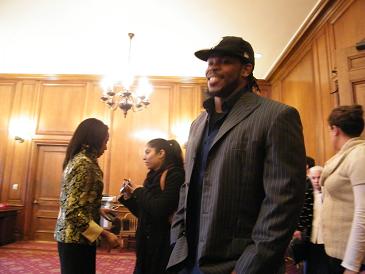
So, there I was sitting in the Mayor’s Office with fellow Guardian reporter Rebecca Bowe waiting to see Mayor Ed Lee when in walks Green Bay Packers linebacker and D10 native Desmond Lamont Bishop, who helped win the Super Bowl XLV, this month.

Turns out Bishop was there to see Lee, shortly before D10 Sup. Malia Cohen honored Bishop during the Board’s Black History month commendations’ ceremony.

We didn’t get a chance to interview Bishop (he was whisked into Lee’s office super quick), but Bowe and I surfed the web while waiting for our appointment with Lee and soon learned that Bishop was born in San Francisco on July 24, 1984, is 6 feet 2 inches tall, weighs 238 pounds, and was at Cal in 2005/06, before being drafted by the Packers in 2007, where he wears jersey number 55.
 
Cohen later confirmed that Bishop was born in Hunters Point and went to Visitacion Valley Junior High, before going to high school in Fairfield, and then returned to San Francisco to attend City College before heading to the University of California.

“Desmond is also deeply involved in his community,” Cohen said in a press release, which notes that Bishop started the Desmond Bishop Football Camp and participates in programs to help kids to be healthy and learn to read, including the Boys and Girls Club.“The Bishop family moved to San Francisco over 50 years ago, and Desmond’s grandfather still lives in Bayview Hunters Point.”

Too bad we didn’t have a chance to get Bishop’s autograph, but hopefully next time…

A better option for trash

6

EDITORIAL One of the biggest, most important municipal contracts in San Francisco is never put out to bid. It’s awarded to the same company, automatically, and has been since 1932. Recology Inc. (formerly known as Sunset Scavenger, Envirocal, and Norcal Solid Waste Systems) is the only outfit licensed to pick up trash in the city. It’s also the only company that has a monopoly guaranteed in the City Charter. Its residential rates are set every five years by an agency almost nobody’s ever heard of, the Refuse Collection and Disposal Rate Board, which consists of the city administrator, the controller, and the general manager of the San Francisco Public Utilities Commission. Commercial rates are set by Recology alone; there’s no appeal or oversight.

San Francisco is the only major city in the United States that contracts out solid waste collection to a private company. And it may be the only city of any size that does it without competitive bidding.

Now that city officials are discussing where the garbage should go — that is, what landfill should hold it — there’s a perfect opportunity to open up the 1932 deal, amend the charter, and fix this.

Sups. David Campos and Ross Mirkarimi are working on a measure that would mandate competitive bidding for the contract to pick up commercial and residential trash. “It’s not in the interest of the ratepayers to have a monopoly,” Campos told us.

It’s true that Recology has worked with the city on reducing the waste stream and developing a curbside compost and recycling plan. And Recology is an employee-owned company.

But that doesn’t mean the city or its residents and businesses are getting the best possible deal. Could another company do the same job better — and for less? Maybe. Would the prospect of a competitive bid drive Recology to improve service and cut rates? Absolutely. That why most municipal contracts are put out to bid on a regular basis.

But there’s a larger question here, one that the supervisors also should consider. Why does San Francisco have private garbage collection anyway? All over the country, cities handle that task as a part of the function of government.

There are several distinct advantages to evaluating a public option for refuse. For starters, the city is in desperate need of money — and Recology is making a nice profit off its local gig. It’s entirely possible, even likely, that the city could take over garbage collection, keep the rates at the same level, and bring in millions to the general fund. It’s also possible that city officials would decide to forego some of that income and cut rates to make life easier for residents and businesses.

Since the 1932 charter provision is getting a new look anyway, the supervisors at least ought to look at the possibility of ending private garbage collection. A fairly basic study should be able to establish how much revenue Recology takes in, what expenses are involved, and whether it’s worth pursuing municipalization.

Editor’s Notes

1

tredmond@sfbg.com

In a heartwarming Valentine’s Day blog, Paul Krugman, the Nobel Prize-winning economist, talks about an old cartoon that ran in the 1980s showing Democrats trying to develop a centrist economic policy that cut spending on social programs. “How is this different from Republicans?” one Democrat asks. The answer: “We care about the victims of our policies.”

That, Krugman says, “is pretty much my reaction to the Obama budget.” The president talks about how awful the cuts will be, how programs he cares about will have to go, how painful this all is for him. Not that he’s going to miss any meals or wind up homeless, but whatever: we can all feel his pain.

It’s also pretty much my reaction to The Bay Citizen report that ran in The New York Times Feb. 13 on the pension reform negotiations going on at City Hall and in the office of billionaire financier Warren Hellman.

Hellman, Mayor Ed Lee, Sup. Sean Elsbernd, and some labor leaders are talking about how to avoid another bruising ballot measure fight this fall. Hellman backed off from supporting Public Defender Jeff Adachi’s Proposition B last year after some labor folks convinced him they could come up with a better plan.

Hellman’s new bottom line: the group needs to find between $300 million and $400 million in savings. He is quoted as saying: “I hate that it comes out of the hide” of city workers. “It is going to be really painful.”

Warren Hellman’s not a bad guy. I’ve met him, he’s polite and friendly, sometimes even almost sort of a liberal on some issues, and I think he does feel bad about cutting the pensions of low-level city employees. I even agree with him that the pension system needs reform.

But here’s the problem: nothing ever comes out of the hides of the rich.

Over the past five years, San Francisco has cut hundreds of millions in city spending. City employees have given back many millions more in concessions. Nonprofits have cut back services to the poor, the disabled, the sick.

But we haven’t asked big business and wealthy people to give up anything. Hellman hasn’t had to tighten his belt. Corporate executives in the city still make huge salaries. They’re not closing the swimming pool at the Olympic Club.

I could support pension reform — if Hellman, Elsbernd, and Lee would support tax reform. Then we can all feel each other’s pain. For once.

Playing chicken

27

news@sfbg.com

The Heart of the City farmers market in U.N. Plaza may not exude the bourgeois foodie reputation of the Ferry Plaza farmers market. It doesn’t sell micro-roasted coffee or artisan cheeses, and its fountain may sometimes double as a public shower, but it does offer one product that no other San Francisco farmers market does: fresh, live poultry.

Raymond Young has sold live chickens here for two decades, showing up at dawn to set up shop and peddle his poultry to an eager throng of customers, mostly Chinese, who happily take home upwards of 600 birds per day.

But a group of animal rights activists is saying that the poultry stand is inhumane, violates health codes, and that Young’s employees have infringed on their civil rights as protestors. Since April 2010, members of LGBT Compassion have been showing up in the wee hours of the morning next to Young’s stand with banners, brochures, and signs promulgating the alleged cruelty of his business and seeking to block the sale of live birds. In January, protesters upped the ante when they slapped Young and the HOC market with a lawsuit alleging continuous abuse and negligence by those who supervise the market.

“For me, it was as simple as seeing the animal cruelty,” said Andrew Zollman, 43, the founder and organizer of LGBT Compassion. “The cages are dilapidated and cramped, there are feces everywhere, and the chickens are shoved in plastic bags, two at a time, while they scream in fear or pain. It was like walking down the street and seeing a dog beaten — and it’s really frustrating to see it happen here in San Francisco.”

Zollman and fellow protester Alex Felsinger, 25, filed the lawsuit with San Francisco attorney Matt Gonzalez after months of attempts to get city officials to intervene.

The allegations have Young and market management squawking, saying that the activists are opposing a practice that is both legal and routine. They claim the protesters are overly sensitive to the treatment of the chickens simply because they can see it, and decry their tactics as an attack on a small business and cultural traditions since almost all of his customers are Asian.

“These people just don’t seem to like other people’s culture of selling live chicken,” Young said. “”I think that what I do is right. I abide by all the health codes and animal care codes. I try to do everything I can to satisfy everyone. These protesters think they can override the law because they don’t like what they see.”


THE PATH TO COURT

Zollman and Felsinger have been encouraging the city to investigate Young’s stall, regularly sending videos and photos taken at Young’s stall to the Department of Public Health and Animal Care and Control. But their quest to protect the chickens has been complicated by the lack of city oversight and an inability to enforce animal cruelty laws due to provisions exempting poultry.

The clash between the vociferous vegans and the poultry purveyors reached its pinnacle in late December 2010, when Felsinger claimed he was punched in the side of the head, wrapped up in a tarp, and had the memory card from his camera stolen by one of Young’s employees. As painful as the altercation was, Felsinger’s scuffle has helped him garner support.

Felsinger doesn’t have footage of the December attack, but he and Zollman have documented several instances of alleged verbal and physical abuse by Young’s employees, including anti gay statements from Young’s daughter, which was the subject of a complaint to the Human Rights Commission.

“There is a long list of things being done to us over the past year,” Felsinger said. “I never expected them to take such a violent act against me. It’s not how I wanted to go about it. But it might have the end result we’re looking for.”

Christine Adams, manager of the HOC market since it first opened in 1981, has consistently defended Young and called the lawsuit “completely outrageous.”

“This is a market, and if they (Young’s crew) were illegal, they would have been booted,” she said. “I have done nothing wrong; Raymond has done nothing wrong. I’m not worried at all about the lawsuit.”

Adams said that while she had not been personally affected by the protesting in the past, she did not approve of Zollman and Felsinger’s actions and attributed a decline in live poultry sales to their presence.

“Their sales have gone down considerably,” Adams said. “They used to sell more than 1,000 birds a day and now it’s more like 600 or 700. I think it’s definitely because of the protesters. People don’t like to be followed through a market and have a camera shoved in their face just because they bought a live chicken.”


GATHERING EVIDENCE

Almost every market day, Zollman and Felsinger would show up to protest and take video and still photography of Young’s stall. They have posted numerous videos and photos to their group’s website (lgbtcompassion.org) — the same ones they say they send to DPH and ACC — documenting the conditions at Young’s stall.

The DPH makes routine inspections twice per year to the market. In November, Zollman, Young, and Adams held a meeting with principal environmental health inspector Lisa O’Malley to address issues of sanitation, handling, and guidelines for bringing live animals near food. The department says the vendor is operating within guidelines.

“There were some problems in the past, but they’ve been fixed,” O’Malley told us, naming a few instances of inadequate removal of chicken feces from the area and improper hand-washing as past problems. She said the challenge was maintaining the guidelines, the most difficult of which is making sure people do not walk through the market after purchasing their birds. Health codes prohibit animals from being within 20 feet of food. The primary concern is contamination from fecal matter, which could cause illnesses such as Salmonella poisoning.

O’Malley walks by the market regularly because of its proximity to her office and says all operations seem compliant. At the same time, official enforcement and inspection is limited to the Public Health Department’s semi-annual visits. This means the only people watching over the operations of the stall and customers are the security guards, who don’t start working until two and half hours after the market opens, long after prime time for buying live chickens.


CULTURE CLASH

Young stands by his actions and said he is not guilty of any wrongdoing. The activists criticize him for practices such as cutting off the tips of the chickens’ beaks, but Young said he only does this to prevent fighting injuries sustained when they are caged for transport and sale, a common practice for any chicken farmer.

In their pamphlets and the lawsuit, the activists claim that the poultry is a “collection of ‘spent’ live chickens (those who are no longer productive egg layers) from large Central Valley farms,” according to the suit. But Young contests that characterization and the activists can’t produce credible evidence of the birds’ age or origins.

“They don’t know how old my birds are. They don’t know how I care for them,” Young said, refusing to tell us how old the chickens are. “They just assume. What’s the difference between Safeway chicken and my chicken? They were all alive at one time, but you see mine.”

Young has three farms listed on his permit — in Modesto, Sacramento, and Manteca — that he runs with the help of his children and a few employees. Adams has visited his Modesto facility and reported that the chickens are free-range, seem to be in good health, and are treated no differently than they would be at any other farm. She also supported the accusation that the protests undermine cultural norms.

“How can it not be cultural? All their customers are Asian!” she said. “And why is it only the chicken man they harass? There is a guy who sells quail and pheasants and they aren’t bothering him.”

Zollman, Felsinger, and Gonzalez call that cultural criticism a diversionary tactic. “I don’t even want to dignify culture and race as an issue in this,” Zollman said. “I understand that people want to buy live chickens. Animal cruelty issues aside, this isn’t a live animal market like they have in most of Asia.”

Young and Adams stressed that Zollman could not possibly know about operations on the farm, and that his suggestion that the operation is extremely profitable is absurd. “Do you know how hard it is to work on a farm?” asked Young, a single father of three. “You don’t make any money except to put food on the table or send your kids to school. And now I have to pay for a lawyer.”


ARE CHICKENS ANIMALS?

Although the activists oppose factory farms and live animals for sale for human consumption in general, they have focused their attention on the HOC market because it is permitted by the city.

Gonzalez said the lawsuit aims to address three different issues. The first is violating his client’s free speech rights by Young and HOC market. The second seeks to compel the city to better identify and enforce alleged health code violations. The third and trickiest aspect deals with animal cruelty laws, which the activists hope will force more humane treatment of the birds.

Penal Code 597 outlines animal cruelty provisions, defining the word “animal” as “frogs, turtles, and birds sold for human consumption, with the exception of poultry.” That law was adopted in the early 1900s. Elsewhere the code defines animals as “every dumb creature.” But in 2000, the Fourth District California Court of Appeals analyzed the section and deemed that the definition should include birds.

But Gonzalez and ACC say city officials have allowed the poultry exemption to stick. “[The law] refers to live animals and makes a specific exemption for poultry,” Rebecca Katz, director of the Department of Animal Care and Control, told us. “I would venture to guess that poultry lobby was very strong at that time.”

The ACC, prompted by the protests, inspected Young’s facilities and cited him for 700 different violations, according to the lawsuit. Katz mentioned a few instances in which they observed chickens suffering to the point where they had to be euthanized. But most of the citations were for inadequate water supply or holding birds improperly.

“A lot of people eat animals for food, and that’s what it is,” Katz said. “I’m not a vegetarian, but the way they are being kept is not the way we would recommend they be cared for. Do we think there is some cruelty? Probably. But there is nothing we can do at this time until the law changes.”

Like his predecessors, newly appointed District Attorney George Gascón seems to believe that chickens are not protected by state law, regardless of perceived cruel treatment.

“To date, our position has been that there is a clear exception under the law for live poultry being sold for human consumption,” said Gascón spokesperson Erica Derryck. “As much as it appears that the treatment of these animals is inhumane, there is nothing we can do to prosecute these allegations under the current laws in California.”

Gonzalez disagrees, and his office referenced similar cases in the state in which poultry was protected from cruelty. “Frankly, it’s kind of embarrassing that they are taking the position they are taking,” Gonzalez told us. “They are trying to avoid a topic that would compel them to do what they need to do. Many in the Asian community and Mexican community see this as an attack on their cultural traditions, and that’s not the issue. We see it as a straight matter of misinterpretation.”


DAILY OPERATIONS

On a recent visit to the market, the stall appeared clean and the chickens were out of view. The stall features prominent signage in English and in Chinese languages of the ban on bringing live animals into the market, with additional signs throughout the plaza, but customers routinely step directly into the market after buying their chickens.

“This is not easy,” security guard Diana Ybarra said while trying to point a man carrying a bag with two chickens in the right direction. “Nobody wants to listen — most of them don’t speak English. Everyone wants to take a shortcut right back through the market.”

Ybarra and her coworker, Washington (who chose to be identified only by his last name), said that their entire day is consumed trying to get customers to abide by this rule. Prior to the November meeting, no signage was posted and customers just “walked all over the place as if it didn’t matter at all,” Ybarra said.

“Chinese New Year was bad,” Washington added.

The guards see enforcing the rule as an unnecessary waste of time that takes their focus off tasks such as preventing theft. Both said shoving birds in sacks was “messed up,” but they were also quick to criticize the protestors.

“Why are they bothering this man? This is a family business and people have to make money,” Washington said. “Those protestors came in and fucked everything up, if you ask me.”

Young said he resents getting caught up in this controversy. “We are so loyal to this city and to this market,” he said. “We have put up with drug dealers and crime just so we can serve the people. Maybe these protesters think differently.”

For now the activists are more focused on the lawsuit than remaining vigilant in their protests, hoping it will accomplish their goal.

“I wasn’t always so adamant about getting rid of them, it was having people notice something that is animal cruelty,” Felsinger said. “It had been good in some ways to have people exposed to this cruelty in San Francisco because it gave us a platform to speak on animal rights. These are egregious offenses and it’s hard to ignore when it is right in your back yard.”

Gleaming the Cubist

1

RARE SILENT FILM In the 1920s — avant-garde heyday for so many forms of media — ascendant youth culture, “machine age” fetishism, the off-leash romping of bob-haired women, and myriad other factors induced fierce resistance to much now considered of crucial historical and artistic import.

Not to say all this contested art was necessarily good. But much was arguably hated beyond reason. A major case in point plays in Feb. 24 as part of the Pacific Film Archive’s “Cinema Across Media: The 1920s” series. Marcel L’Herbier’s 1924 L’Inhumaine, “a fairy story of modern decorative art,” is a remarkable time capsule of avant-garde trends at their temporal and geographic peak — even if Paris then wasn’t having it.

These were heady times. Privileged intellectual L’Herbier was a heady guy, missing World War I combat service because an angry lover shot off his finger. Attracted to film’s possibilities after mulling career paths from composing to diplomacy, he began directing in 1918. Some soon hailed him as France’s greatest contributor to the medium. Cinema being bandied about then as the ultimate art form combining all before it, such praise was bound to induce hubristic abandon.

L’Herbier’s taste for rarefied experimentation was shared by close friend Georgette Leblanc, an operatic soprano famed for her Carmen and for originating other musical and acting roles. She was long-term muse to Symbolist playwright Maurice Maeterlinck, the millennial stage’s leading innovator. By 1924 that relationship was over, as was her singing career. Not one to be left behind, Leblanc proposed bankrolling a film that she would star in, directed by L’Herbier.

L’Herbier was amenable. He’d started his own production company to avoid the financial problems of prior lofty projects, but only sank deeper in hock. L’Inhumaine was to be a cinematic summit of prominent avant-gardists, its cubist sets alone the work of four designers including painter Fernand Léger and architect Robert Mallet-Stevens. A key sequence at the Théatre des Champs-Elysées called on all Leblanc and L’Herbier’s fashionable connections to impersonate some 2,000 concert-goers whipped into a near riot by the heroine’s infamy and artistry.

Unfortunately, actual public response to their end-product was equally rowdy. Critics heaped scorn; box office was catastrophic; and Leblanc did not deign to grace the silver screen again. It is easy to view L’Inhumaine as her fault: a teetering monument to an Olympian ego.

She plays Claire Lescot, “famous singer, bizarre woman,” who reigns over a salon of great minds and power-mongers enslaved by the fickle attentions that have branded her “inhuman.” When a young engineer (Jaque Catelain) announces he’ll kill himself if she doesn’t give him some sugah, she harrumphs “If you destroy your life so easily, it can’t be worth much.” He promptly plunges a race car off a cliff.

Squat, heavy in war paint and emotional lifting, 50-year-old Leblanc is clearly the most fascinating woman in the world here by write-in vote of one. L’Inhumaine‘s ungainly mix of vanity showcase, modern art trappings, and sci-fi eventually sees our songbird — not silent cinema’s most vivid profession — conquer tout le monde via a radio-television transmission. Which strangely also allows her to see les misérables briefly elevated by her art around the globe. When a jealous rajah poisons her, her “modern magician” scientist lover allows conquering Death itself in a cacophony of machinery and montage.

L’Inhumaine reflects its moment as much as the next year’s Battleship Potemkin (1925). That it was received more like 1923’s Salome — the infamous Rudolf Valentino-funded Art Nouveau version of Oscar Wilde’s play, which for reasons both credible and malicious was branded a “riot” of homosexual aesthetics — laid in the extreme disconnect between cutting-edge techniques and woozily old-hat theatrical content. There’s no denying the film is whopping camp, albeit camp curated (as L’Herbier intended) to complement the hugely influential International Exhibition of Modern Industrial and Decorative Arts opening in Paris in 1925.

This failure must have been tough, but the director persevered. His 1928 Zola update L’Argent (recently revived by the San Francisco Silent Festival) integrated modernist design and conventional storytelling far more successfully. While his sound-era films were considered less innovative, he remained a significant industry force, moving into producing cultural programs for TV.

When L’Herbier died in 1979, even L’Inhumaine had been partly rehabilitated, its ultramodernism treated (as is so often the case) more kindly in retrospect. Fifty years had transformed La Lescot’s grandiosity from ridiculous affectation to charming folly. 

L’INHUMAINE

Feb. 24, 7 p.m., $6.50–$9.50

Pacific Film Archive

2575 Bancroft, Berk.

(510) 642-5249

www.bampfa.berkeley.edu

Our Weekly Picks: February 16-22

0

WEDNESDAY 16

MUSIC

Dum Dum Girls

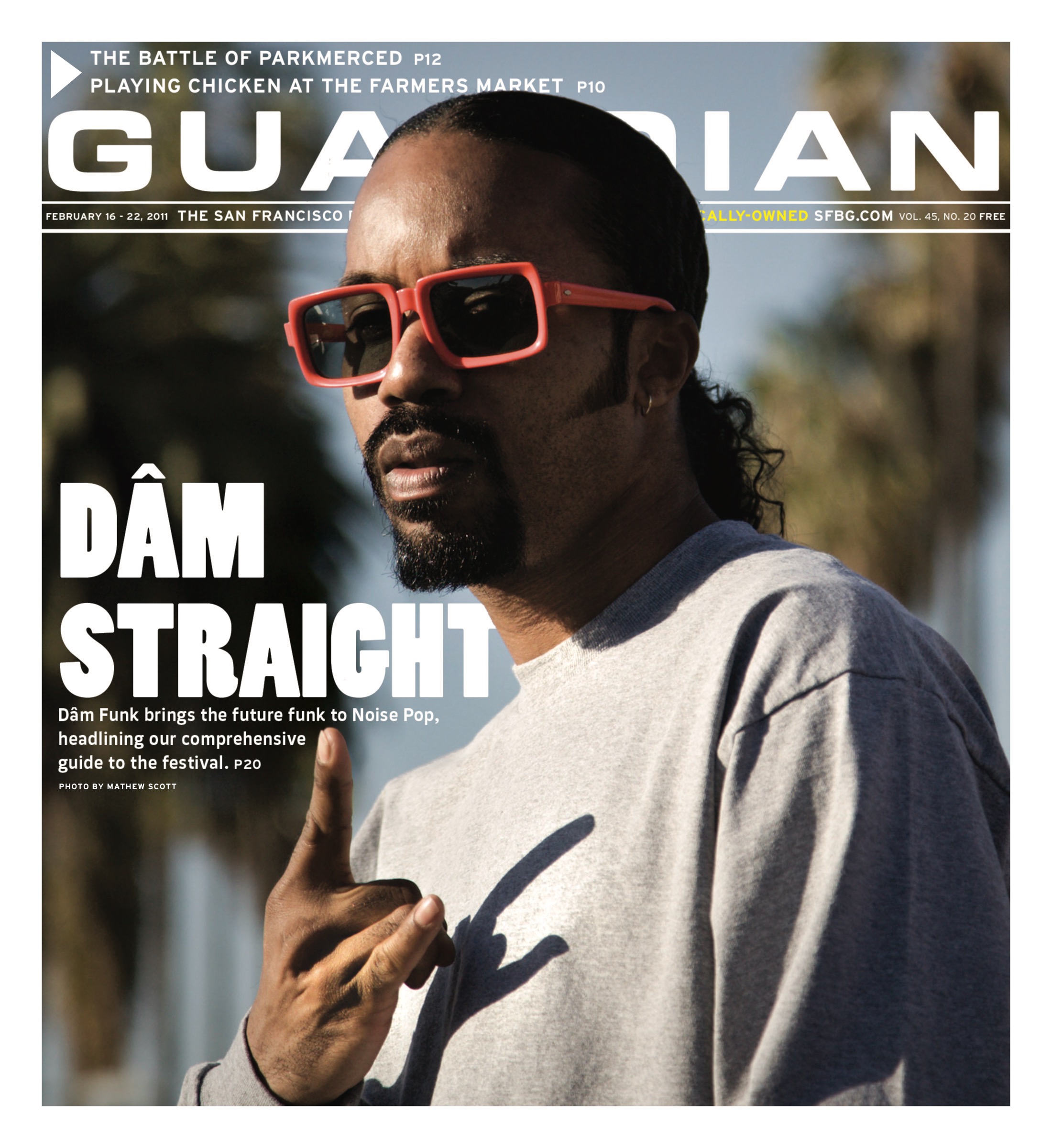
Dee Dee, bandleader of Dum Dum Girls, a 1960s pop-meets-early punk, all-girl four piece, is no dummy. Named not for the lollipops, but after the Vaselines’ album Dum-Dum and the Iggy Pop song “Dum Dum Boys,” DDG was initially a solo project on Dee Dee’s DIY record label, Zoo Music. To take her music beyond her bedroom, she called on the help of her friends: Jules (guitar and vocals), Bambi (bass), and Sandy (drums and vocals). DDR’s most recent album, Sub Pop release I Will Be, features Nick Zinner of the Yeah Yeah Yeahs, Crocodiles’ Brandon Welchez, and Los Angeles musician Andrew Miller. (Jen Verzosa)

With Minks and Dirty Beaches

9 p.m., $12

Bottom Of The Hill

1233 17th St., SF

(415) 621-4455

www.bottomofthehill.com


THURSDAY 17

EVENT

The Tribes of Burning Man

Either you are or you aren’t: I’m an aren’t. As in, not a Burning Man person. But that won’t stop me from trumpeting the release of The Tribes of Burning Man, the end result of six years of work by Steven T. Jones, known around the Guardian as Steve the City Editor and on Burning Man’s playa as “Scribe.” Chances are you’ve seen Jones’ Burning Man coverage in the Guardian’s pages over the years; his new book examines the history and philosophy of the annual event, as well as the ways that Burning Man has become a year-round lifestyle for some and a (counter-) cultural touchstone for hundreds of thousands of desert-goers. The Tribes launch party features readings by Jones and appearances by Burning Man leader Larry Harvey, circus performers Fou Fou Ha, beat boxer Kid Beyond, and other colorful characters from the book. (Cheryl Eddy)

7 p.m., $5 ($20 with book)

Project One

251 Rhode Island, SF

www.p1sf.com


MUSIC

3 Inches of Blood

Though it has endured many lineup changes, 3 Inches of Blood is always instantly recognizable, thanks to the falsetto assault of vocalist Cam Pipes (his real name). Drawing on power metal and thrash but hewing closely to the classic sounds of the New Wave of British Heavy Metal, Pipes and his Vancouver-based band have plied their rock the world over. Fire Up the Blades (2007) experimented with polished, immaculate production, with Slipknot drummer Joey Jordison producing, but 2009 release Here Waits Thy Doom stripped away the gloss, returning the band to its raw, urgent roots. Now that it’s coming to town, you won’t have to wait for your doom any longer. (Ben Richardson)

With Eluveitie, Holy Grail, System Divide

7:30 p.m., $20

Slim’s

333 11th St., SF

(415) 255-0333

www.slims-sf.com


FILM

“Around the World in 33 Films: The Jeonju Digital Project”

The still-young Jeonju International Film Festival is exceptional for privileging film culture over film markets. To take one significant example of this emphasis, for each edition the festival commissions three half-hour digital films by major auteurs. It’s almost impossible to imagine an American festival apportioning funds in this internationalist, art-first manner. Yerba Buena Center for the Arts screens all 33 Jeonju commissions from 2000-10 over the next two weeks. It’s an ambitious — and, one imagines, costly — program, so make it count. This first show features an especially strong class of 2010 (James Benning, Denis Côté, and Matías Piñeiro), with works by the new century’s preeminent film artists (Pedro Costa, Apichatpong Weerasethakul, Jia Zhangke, etc.) waiting in the wings. (Max Goldberg)

Feb 17–27 (2010 program: tonight, 7:30 p.m.), $8

YBCA Screening Room

701 Mission, SF

(415) 978-2700

www.ybca.org


FRIDAY 18

MUSIC

Chromeo

At first listen, Chromeo’s music would seem to run the risk of being a little tough to take seriously — if only it wasn’t so damn well-executed. Instead, the Montreal-based electro-funk duo creates perfectly retro-minded jams that skimp refuse to scrimp on creative songcraft or purely visceral dance floor diversion. The fantastic talk box solos don’t hurt either. Taking its cues from classic era funk, Hall and Oates-style blue-eyed soul, and modern synthpop, Chromeo’s 2010 album Business Casual has led to a slew of strong reviews, festival appearances, and a top 10 slot on Billboard’s dance/electronic chart. (Landon Moblad)

With MNDR and the Suzan

8 p.m., $25

Fox Theater

1807 Telegraph, Oakl.

(510) 548-3010

www.thefoxoakland.com


MUSIC

Bart B More

How old is Bart B More? In videos from his recent Asian tour, he’s got the pallid complexion that my friends did in high school. Maybe a result of the DJ lifestyle, spending too much time in clubs around 2 a.m. (or being Danish). The rest of Bart B’s existence, from what I can tell, consists of lifting weights and looking at Lamborghinis. Ah, to be an international beat maker, an up-and-comer who’s reputedly worth checking out. Anyway, Blasthaus resident Nisus has proven himself a reliable dance floor driver, delivering a binaural set at the Treasure Island Music Festival and excellently setting up the Twelves earlier this month. (Ryan Prendiville)

With Nisus and Tron Jeremy

9 p.m., $12.50

Rickshaw Stop

155 Fell, SF

(415) 861-2011

www.rickshawstop.com


MUSIC

Mark Growden

Back from another long stretch of touring and recording, wandering minstrel Mark Growden lands at the Brava Theatre with a brand new album Lose Me in the Sand and a posse of old-school Tucson troubadours as the backing band. Less sweepingly-thematic than 2010’s Saint Judas, the new album combines oddments of philosophy, romance, humor, and reminiscence, covering familiar tunes in startlingly unfamiliar ways, plus a handful of originals including a breakneck-paced courting song “Settle in a Little While” and a sepia-toned hometown lament “Killing Time.” Growden’s long-time collaborator and Porto Franco labelmate Seth Ford Young opens and also releases his eponymous debut album. (Nicole Gluckstern)

With Seth Ford Young

Fri/18–Sat/19, 8 p.m., $20–$50

Brava Theatre

2781 24th St., SF

(415) 641-7657

www.brava.org


PERFORMANCE

Move Thru Me

“I’m with the band” may sound smoother than “I’m with the dance company,” although either could be stated by the performers of Move Thru Me, a collaboration of Christine Cali’s Cali & Co Dance and Matthew Langlois’ the Welcome Matt band. A hybrid of rock ‘n’ roll and modern dance, the performance responds to the pursuit of a creative life and ongoing artistic practice. Prior to joining forces, Cali and Langlois each worked as independent artists for more than 15 years. The work includes a soundtrack of original music as well as online dance videos. As with any good concert tour — T-shirts! (Julie Potter)

Fri/18–Sat/19, 8 p.m. (also Sun/20, 5 p.m.), $10–$20

Dance Mission Theater

3316 24th St., SF

(415) 826-4441

www.dancemission.com


SATURDAY 19

EVENT

“From Produce to Production: New Traditions in Bay Area Food Culture”

Bay Area Now (BAN6), a triennial celebrating local artists from diverse disciplines, begins with a series of Bay Area-centric conversations about food, environmentalism, futurism, community activism, radical identities, and technology. The first roundtable discussion addresses new practices for growing, preparing and shopping for food, during which YBCA Executive Director Ken Foster will speak with food luminaries Bryant Terry, eco-chef and activist from Oakland and author of Vegan Soul Kitchen; Novella Carpenter, journalist, farmer and author of Farm City; and Leif Hedendal, a self-educated chef at San Francisco’s Greens and Oakland’s Citron restaurants, whose Bay Area culinary events combine art and food. (Potter)

1 p.m., free

Yerba Buena Center for the Arts

701 Mission, SF

(415) 987-2787

www.ybca.org


EVENT

The Fortune Cookie Chronicles

Planning on consuming a little New Year’s nosh during this weekend’s bunny-fueled festivities? Then you might be interested to know that the Japanese — not Chinese — invented the fortune cookie; Chinese takeout cartons can be found everywhere but China; and chop suey may or may not be an elaborate American hoax. I see all you smartphone nerds plinking “chop suey” into snopes.com right now, but save yourselves the trouble: New York Times reporter and author of The Fortune Cookie Chronicles Jennifer 8. Lee is here to unravel the history of Chinese cookery — and just in time for the Chinese New Year. The book is also seasoned with a healthy smattering of SF history to spice things up. (Emily Appelbaum)

2:30–4 p.m., free

San Francisco Public Library

Chinatown Branch

1135 Powell, SF

(415) 557-4400

www.sfpl.org


SUNDAY 20

EVENT

“San Francisco Mixtape Society presents Guilty Pleasures”

Listening to Ke$ha on repeat? Excited about Britney Spears’ upcoming release, Femme Fatale? Love to share music? Then the San Francisco Mixtape Society has you covered. It presents “Guilty Pleasures,” a night of music mixtape exchanges. Assemble a mixtape according to the theme in any format — cassette, CD, or USB — and leave with a fellow attendee’s mixtape; they’ll be exchanged throughout the evening via a raffle. Those who come armed with tunes will receive a free drink — and all the joy guilty pleasures can provide. (Verzosa)

4–6 p.m., free

Make-Out Room

3225 22nd St., SF

(415) 647-2888

www.sfmixtapesociety.com


MONDAY 21

EVENT

“The Cleveland Confidential Book Tour”

As the guitarist for Rocket from the Tombs and the Dead Boys, Cheetah Chrome helped write the sonic blueprint for punk rock — and now he’s written an autobiography, Cheetah Chrome: A Dead Boy’s Tale From The Front Lines of Punk Rock, which chronicles his explosive life and his role in one of the most infamous movements in modern pop culture. Joining him for “The Cleveland Confidential Book Tour” are Mike Hudson from the Pagans and Bob Pfeifer from Human Switchboard; don’t miss your chance to hear the story straight from the mouths of a triumvirate of punks’ founding fathers. (Sean McCourt)

Tonight, 6 p.m., $10

Hemlock Tavern

1131 Polk, SF

(415) 923-0923

www.hemlocktavern.com.

Tues/22, 7 p.m., free

Moe’s Books

2476 Telegraph, Berk.

(510) 849-2087

www.moesbooks.com

Feb. 23, 7 p.m., free

Gallery Fifty24

218 Fillmore, SF

www.noisepop.com


TUESDAY 22

MUSIC

Odd Future

The Internet has birthed yet another rap group with disturbing lyrics (see also: Die Antwoord), but this time there’s no doubt regarding the collective’s genuine intentions. Members of Los Angeles hip-hop skate crew Odd Future Wolfgang Kill Them All (OFWKTA) range in age from 16 to 23 and wax philosophical about typical teenage concerns, from school and love to murder and bondage. Sometimes the music comes off like a hip-hop parallel to horror metal, but ultimately Odd Future is less about fetishizing violence than it is about offering an unfettered forum for the group’s personalities. Though their ages imply novelty, listening to the sharp, dense flow of Earl Sweatshirt or the lo-fi contorted funk of Tyler the Creator confirms there can be no doubt that these kids are headed for big, big things. (Peter Galvin)

9 p.m., $16

Slim’s

333 11th St., SF

(415) 255-0333

www.slims-sf.com

The Guardian listings deadline is two weeks prior to our Wednesday publication date. To submit an item for consideration, please include the title of the event, a brief description of the event, date and time, venue name, street address (listing cross streets only isn’t sufficient), city, telephone number readers can call for more information, telephone number for media, and admission costs. Send information to Listings, the Guardian Building, 135 Mississippi St., SF, CA 94107; fax to (415) 487-2506; or e-mail (paste press release into e-mail body — no text attachments, please) to listings@sfbg.com. Digital photos may be submitted in jpeg format; the image must be at least 240 dpi and four inches by six inches in size. We regret we cannot accept listings over the phone.

Stage Listings

0

THEATER

ONGOING

Clue Boxcar Playhouse, 505 Natoma; 776-1747, www.boxcartheatre.org. $15-35. Wed-Fri, 8pm; Sat, 7 and 10pm. Through Sat/19. A play based on a film based on a board game is just the kind of tangled genealogy much goodtime theater is made of these days. So there’s nothing too new about Boxcar’s stage adaptation of the manic 1985 comedy derived from a once popular Parker Bros. diversion. In fact, it’s at least the second stage adaptation of same to be offered in San Francisco. (Impossible Productions remounted its version at the Dark Room just last year.) Nevertheless, led by adapter-director Nick A. Olivero, Boxcar’s production pursues its vision like a mad yen, with a loving fidelity and self-referential glee that are not so much inspired as just plain zealous (although Olivero’s scenic design does reach new heights: a TV-toned board-game set that the audience peers down on from six-feet-high balconies ringing the stage). Performances are dutiful and solid for the most part, with especially nice work from Brian Martin (as the butler) and J. Conrad Frank (as Mrs. Peacock). Although there’s something vaguely and not unpleasantly hypnotic about it all, groups of cult-film line-gleaners may be the best audience for this one. (Avila)

*Farragut North NOHSpace, 2840 Mariposa. www.opentabproductions.com. $25. Thurs-Sat, 8pm. Through March 5. Former Howard Dean speechwriter Beau Willimon’s formulaic but solidly crafted 2008 play about backroom politics and the seamy side of what’s euphemistically called the American democratic process seems like it’d make a good George Clooney movie. George Clooney thought so too. He’s making it now under the title The Ides of March. You can see it sooner and without all those goddamn movie stars in this low-budget, high-octane staging by OpenTab Productions (Fishing). Stephen (Ben Euphrat) is a 25-year-old wiz of a press secretary for a “maverick” governor heading into a major primary battle on the road to the White House. But an unexpected phone call leads “idealistic” power-lover Stephen into temptation, even as it reveals the real dynamics of the electoral system he thought he’d mastered. A battle for career survival ensues with his former boss (Alex Plant), in which loyalty is a password and decency the first sandbag to drop. Opening night had one or two timing issues and some actors lost in shadow, but director Dave Sikula builds the action well and gets strong performances from an uneven but generally winning cast. Particularly nice work comes from a convincingly unraveling Euphant, a coolly compassionate Carla Pauli (as precocious intern–turned–unwitting pawn), and the formidable Nathan Tucker as Stephen’s slickly conniving counterpart and Mephistopheles of the moment.

Next to Normal Curran Theatre, 445 Geary; (888) SHN-1799, www.shnsf.com. $30-99. Call for dates and times. Through Sun/20. Diana Goodman (Alice Ripley) is a woman too restlessly witty and big-souled to sit easy in the suburban home she shares with her husband (Asa Somers), 16-year-old daughter (Emma Hunton), and 18-year-old son (Curt Hansen). What’s worse, the 18-year-old died as a baby about 17 years ago, and has not been taking the news lying down. A mother’s grief winds through this sometimes clever, mostly sappy, and ultimately tedious Broadway rock musical about a bipolar woman and the impact of her illness on her family. Director Michael Greif’s (Rent) kinetic staging takes place across a three-level industrial-box set that houses musicians in its outer corners as well as the stereotypical family dwelling in its center. The set’s outer façade (moving panels featuring giant eyes and mouth) meanwhile suggests the whole thing as a model of the mind we’re witnessing come apart. The 2008 musical by Brian Yorkey (book and lyrics) and Tom Kitt (music) won a Pulitzer for its supposedly bold depiction of mental illness. But despite reasonable scoffing at the paternalistic, pharmacologically fueled regime of mainstream treatment (embodied by Jeremy Kushnier’s various doctors), neither Tony-winner Ripley’s jagged performance nor Yorkey’s book transcends a stultifying and finally grating set of narrative clichés, which the driving, mostly generic-sounding score only makes more obvious. A Woman Under the Influence this isn’t. (Avila)

Party of 2 – The New Mating Musical Shelton Theater, 533 Sutter; (800) 838-3006, www.partyof2themusical.com. $27-29. Sun, 3pm. Open-ended. A musical about relationships by Shopping! The Musical author Morris Bobrow.

*Pearls Over Shanghai Thrillpeddlers’ Hypnodrome, 575 Tenth St; 1-800-838-3006, www.brownpapertickets.com. $30-69. Sat, 8pm. Through April 9. Thrillpeddlers’ acclaimed production of the Cockettes musical continues its successful run.

Spalding Gray: Stories Left to Tell Gough Street Playhouse, 1620 Gough; (510) 207-5774, www.custommade.org. $10-25. Thurs-Sat, 8pm. Through Sat/19. Originally conceived as a one-off benefit show by Gray’s widow, Kathleen Russo and director Lucy Sexton, Spalding Gray: Stories Left to Tell intersperses segments of some of Gray’s most famous works—Swimming to Cambodia, Gray’s Anatomy, Monster in a Box—with excerpts from his journals, the stories left to tell. The original concept to have five actors representing five aspects of Gray’s words—adventure, career, family, journals, and love—seems to have been crafted with the specific purpose of allowing several people the opportunity to “speak for” Spalding, without actually performing “as” Spalding, appropriate enough for a celebratory memorial, but hard to accept as a capital-P play. It’s a conundrum that Custom Made Theatre cannot solve. Half the cast convey by their tone and manner the casual ease of campfire story-tellers, while the other half take a more performative approach to their recitations, particularly a smooth Patrick Barresi as “Career” and the likable Richard Wenzel as “Love.” The stories themselves are often hilarious, including Gray’s turns as a “Bowery Bum,” a jailbird in Nevada, and a sweat lodge initiate, while the stories that are not side-splittingly funny are poignant, painful, and even unflinchingly sentimental, especially in regards to his young sons. But as a work of theatre, they underwhelmed. (Gluckstern)

Treefall New Conservatory Theatre Center, 25 Van Ness; 861-8972, www.nctsf.org. $24-40. Call for dates and times. Through Feb 27. New Conservatory Theatre Center presents a tale of erotic attraction by Henry Murray.

What We’re Up Against Magic Theatre, Fort Mason Center, bldg D; 441-8822, www.magictheatre.org. Wed-Fri, 8pm; Sat, 2:30 and 8pm; Sun, 2:30pm; Tues, 7pm. Through March 6. Following the popularity of Theresa Rebeck’s Mauritius in 2009, Magic Theatre brings the New York playwright back for the world premiere of a decidedly flimsy comedy about sexual discrimination at a busy architecture firm. Eliza (Sarah Nealis) is the bright and brash new employee who finds herself shut out by an old boys network. Sodden boss Stu (Warren David Keith) resents her heartily for her competence and ambition, while ass-kissing power-jockey Weber (James Wagner) uses the leverage for all its worth. Gender solidarity with sole (but soulless) sister Janice (Pamela Gaye Walker) doesn’t get Eliza very far either. One guy at the firm, Ben (Rod Gnapp), alone knows better (among what amounts to an unbelievably inept staff). Eliza, meanwhile, crafts a form of revenge from her well-guarded solution to the otherwise stymieing “duct problem” in the plans for a new mall, a major account hitting the skids. Ben’s obsession with ducts is something of a key joke here, which ends up being characteristic of a play that stretches its not-very-new conceits thinly over two acts. The glass ceiling, ducts and all, is a bit too transparent in this bloodless production (helmed by artistic director Loretta Greco), leaving precious little to wonder or worry about. (Avila)


BAY AREA

The Agony and the Ecstasy of Steve Jobs Berkeley Rep, Thrust Stage, 2025 Addison, Berk; (510) 647-2949, www.berkeleyrep.org. $14.50-73. Call for dates and times. Through Feb 27. In his latest monologue (playing in repertory with another, The Last Cargo Cult), Mike Daisey explores the deeper implications of his own, and our, obsession with technology through a parallel look at the career of Apple’s megalomaniacal founder, and Daisey’s own reconnaissance trip to Apple’s manufacturing center in southern China. The story is well-crafted, Daisey’s delivery dependably expert—even if his humor occasionally strays into the more obvious, belabored humor of the office water-cooler wag—and the real-world vision of hell he paints in a behemoth suicide-ridden factory called Foxconn (apt if understated name there) all too salient. But the story gives us back as revelation what we already know, surely, about the horrifying labor system behind our various electronic gizmos and much else besides. It’s a kind of liberal conceit to play along with the indignation and head back out into the world fully willing to do battle against corporate capital, or at least sign an online petition. As a performer, meanwhile, Daisey has not budged from the formula he originally borrowed from Spalding Gray but made it even more his own. Indeed, to call his approach “indebted” to Gray is like saying the black market iPhone knock-offs he describes are merely an homage to Apple’s product. Beside his professed love for the latest high tech wizardry comes this uncanny attachment to the utterly low-tech, analog-monologue style of the late master.

Collapse Aurora Theatre, 2081 Addison, Berk; (510) 843-4822, www.auroratheatre.org. $34-55. Wed-Sat, 8pm; Sun, 2 and 7pm; Tues, 7pm (also Feb 19, 2pm). Through March 6. Aurora Theatre presents a comedy by Allison Moore.

Grapes of Wrath Marion E. Green Black Box Theater, 531 19th, Oakl; www.theatrefirst.com. $10-30. Thurs-Sat, 8pm; Sun, 2pm. Through Sun/20. TheatreFIRST presents Frank Galati’s stage adaptation of the John Steinbeck novel.

Heartbreak House Live Oak Theatre, 1301 Shattuck, Berk; (510) 649-0999, www.berkeleyrep.org. $12-15. Fri-Sat, 8pm (also Thurs/17, 8pm). Through Sat/19. Actors Ensemble of Berkeley presents the George Bernard Shaw comedy set just before World War I.

The Last Cargo Cult Berkeley Repertory Theatre, Thrust Stage, 2025 Addison, Berk; (510) 647-2949, www.berkeleyrep.org. $14.50-73. Call for dates and times. Through Sun/20. As fans of J. Maarten Troost have learned, life on an island “paradise” is far less idyllic than the imagination yearns to believe. So it’s hardly surprising that Mike Daisey’s monologue The Last Cargo Cult begins with a white-knuckle ride in a prop plane piloted by a man with a milky eye. Daisey’s destination, the Pacific island of Tanna, is the location of one of the world’s last so-called “cargo cults”, and their big celebration “John Frum Day” is approaching. Daisey’s intention to hang out at the festivities smacks a little of entitled voyeurism, but the parallel he manages to draw between the complexities of a religion dedicated to a mythical cargo of “awesome shit”, and our own dedication to the acquisition of same, is a striking one. From our almost blind faith in the value of basically valueless currency, to our even blinder faith that indenturing ourselves by debt will enrich us, the foundations of our own “cargo cult” are revealed smartly by Daisey to be just as precarious as if built at the base of a volcano as in Tanna. Still, I found the most revealing thing about the evening to be the moment when the couple next to me took off with a $100 bill they’d acquired free-of-charge at the door, to which I can’t help but ask them: “Did you get your money’s worth?” (Gluckstern)

Not a Genuine Black Man The Marsh Berkeley, TheaterStage, 2120 Allston, Berk; 826-5750, www.themarsh.org. $20-50. Fri, 8pm. Through Fri/18. Brian Copeland brings back his long-running solo show.

Seagull Wed, 7:30pm, Thurs-Sat, 8pm; Sun, 7pm; Tues, 8pm. Through Feb 27. Marin Theatre Company presents a new translation of Chekhov’s great play from former Oregon Shakespeare Festival artistic director Libby Appel. The translation feels crisp and lucid, but artistic director Jasson Minadakis’s production remains fairly unmoving despite some effective moments among a skilled cast, including the dependably charismatic Howard Swain (as the doctor). The surprising lack of connection or spark between the principal characters—especially the jaded writer (Craig Marker) and the infatuated, soon-to-be-ruined Masha (an otherwise vivacious Liz Sklar)—results in a dutiful production without that pent-up Chekhovian atmosphere that should envelop and follow you for hours if not days to come. (Avila)

Strange Travel Suggestions The Marsh Berkeley, Cabaret, 2120 Allston Way, Berk; (800) 838-3006, www.themarsh.org. $15-35. Thurs-Fri, 8pm; Sat, 5pm. Through Sat/19. Jeff Greenwald stars in a one-man show about the vagaries of wanderlust.

World’s Funniest Bubble Show The Marsh Berkeley, 2120 Allston Way, Berk; (800) 838-3006, www.themarsh.org. $8-11. Sun, 11am. Through April 3. The Amazing Bubble Man extends the bubble-making celebration.

PERFORMANCE/DANCE

BAY AREA

Marga’s Funny Mondays The Cabaret at The Marsh Berkeley, 2120 Allston; (800) 838-3006, www.themarsh.org. Mon/14, 8pm. $10. Marga Gomez hosts a Monday night comedy series.


Stage listings are compiled by Guardian staff. Performance times may change; call venues to confirm. Reviewers are Robert Avila, Rita Felciano, and Nicole Gluckstern. Submit items for the listings at listings@sfbg.com. For further information on how to submit items for the listings, see Picks. For complete listings, see www.sfbg.com.


Rep Clock

0

Schedules are for Wed/16–Tues/22 except where noted. Director and year are given when available. Double and triple features are marked with a •. All times are p.m. unless otherwise specified.

ARTISTS’ TELEVISION ACCESS 992 Valencia, SF; www.atasite.org. $5-10. “OpenScreening,” Thurs, 8. For participation info, contact ataopenscreening@atasite.org. An Island (Moon, 2010), Fri, 8.

BERKELEY FELLOWSHIP OF UNITARIAN UNIVERSALISTS 1924 Cedar, SF; www.bfuu.org. Donations requested. The Economics of Happiness, Thurs, 7.

CASTRO 429 Castro, SF; (415) 621-6120, www.castrotheatre.com. $7.50-12. •Fight Club (Fincher, 1999), Wed, 2, 7, and Insomnia (Nolan, 2002), Wed, 4:35, 9:35. •McCabe and Mrs. Miller (Altman, 1971), Thurs, 2:20, 7, and Pat Garrett and Billy the Kid (Peckinpah, 1973), Thurs, 4:35, 9:15. “Midnites for Maniacs: King of the Hood” •Beverly Hills Cop (Brest, 1984), Fri, 7:30; The Warriors (Hill, 1979), Fri, 9:45; The Last Dragon (Schultz, 1985), Fri, 11:59. The Leopard (Visconti, 1963), Sat-Mon, 2:30, 7.

CHRISTOPHER B. SMITH RAFAEL FILM CENTER 1118 Fourth St, San Rafael; (415) 454-1222, www.cafilm.org. $6.50-15. The Illusionist (Chomet, 2010), call for dates and times. Even the Rain (Bollaín, 2010), Feb 18-24, call for times.

GOETHE-INSTITUT SAN FRANCISCO 530 Bush, SF; (415) 263-8760. $7. “From the Wild West to Outer Space: East German Films:” Chingachgook: The Great Snake (Groschopp, 1967), Thurs, 7.

HUMANIST HALL 390 27th St, Oakl; www.humanisthall.org. $5. The Panama Deception (Trent, 1992), Wed, 7:30.

MECHANICS’ INSTITUTE 57 Post, SF; (415) 393-0100, rsvp@milibrary.org. $10. “CinemaLit Film Series: New Year’s Revolutions:” Adam’s Rib (Cukor, 1949), Fri, 6.

PACIFIC FILM ARCHIVE 2575 Bancroft, Berk; (510) 642-5249, www.bampfa.berkeley.edu. $5.50-9.50. “Film 50: History of Cinema: Fantasy Films and Realms of Enchantment:” Le Million (Clair, 1931), Wed, 3:10. “Radical Light: Alternative Film and Video in the San Francisco Bay Area:” “Abstraction in Film,” Wed, 7:30. “African Film Festival 2011:” “Contemporary African Short Films,” Thurs, 7. “Suspicion: The Films of Claude Chabrol and Alfred Hitchcock:” Betty (Chabrol, 1992), Fri, 7; La Cérémonie (Chabrol, 1995), Fri, 9; The Swindle (Chabrol, 1998), Sat, 8:50. “Cruel Cinema: New Directions in Tamil Film:” Naan Kadavul (Bala, 2009), Sat, 3. “Cinema Across Media: The 1920s:” The Complete Metropolis (Lang, 1926), Sat, 6. Shoah (Lanzmann, 1985), part one Sun, 11:30am; part two Sun, 5:15.

RED VIC 1727 Haight, SF; (415) 668-3994; www.redvicmoviehouse.com. $6-10. Four Lions (Morris, 2010), Wed-Thurs, 7:15, 9:20 (also Wed, 2). Harry Potter and the Deathly Hallows Part One (Yates, 2010), Fri-Sat, 5, 8 (also Sat, 2). Inside Job (Ferguson, 2010), Sun-Tues, 7, 9:30 (also Sun, 2, 4:30). White Material (Denis, 2009), Feb 22-23, 7:15, 9:20 (also Feb 23, 2).

ROXIE 3117 and 3125 16th St, SF; (415) 863-1087, www.roxie.com. $5-9.75. San Francisco Independent Film Festival, Wed-Thurs. See www.sfindie.com for more info. Modern Romance (Brooks, 1981), Fri, call for times; Lost in America (Brooks, 1985), Sat, call for times. Henri-Georges Clouzot’s Inferno (Bromberg and Medre, 2009), Sun-Tues, call for times.

VIZ CINEMA New People, 1746 Post, SF; www.vizcinema.com. $12. Breath (Kim, 2007), Sat, 5. Gantz (Sato, 2011), Sat, 7:15. YERBA BUENA CENTER FOR THE ARTS 701 Mission, SF; (415) 978-2787, www.ybca.org. $6-8. “Volume 14: Middle East,” nine videos focusing on the Middle East compiled by ASPECT: The Chronicle of New Media Art, Jan 13-March 27 (gallery hours Thurs-Sat, noon-8; Sun, noon-6). “Around the World in 33 Films: The Jeonju Digital Project,” Thurs, 7:30; Sat, 7 and 9; Sun, 2 and 4. 

Music Listings

0

WEDNESDAY 16

ROCK/BLUES/HIP-HOP

Cake Fillmore. 8pm, $36.50.

Dum Dum Girls, Minks, Dirty Beaches Bottom of the Hill. 9pm, $12.

Miguel Independent. 8pm, $20.

Newfangled Wasteland, Dead Winter Carpenters Café Du Nord. 9pm, $10.

Pryor Baird and the Deacons Biscuits and Blues. 8 and 10pm, $15.

Angie Stone Yoshi’s San Francisco. 8 and 10pm, $45.

Stymie and the Pimp Jones Love Orchestra, Selector DJ Kirk Elbo Room. 9pm, $8.

Sunbeam Rd., Spiro Agnew, Red Blue Yellow Hemlock Tavern. 9pm, $6.

JAZZ/NEW MUSIC

Cat’s Corner with Christine and Nathan Savanna Jazz. 7:30pm, $5.

Dink Dink Dink, Gaucho, Michael Abraham Amnesia. 7pm, free.

Ben Marcato and the Mondo Combo Top of the Mark. 7:30pm, $10.

Michael Parsons Revolution Café, 3248 22nd St, SF; (415) 642-0474. 8:30pm, free.

Paula West and George Mesterhazy Quartet Rrazz Room. 8pm, $35.

DANCE CLUBS

Booty Call Q-Bar, 456 Castro, SF; www.bootycallwednesdays.com. 9pm. Juanita Moore hosts this dance party, featuring DJ Robot Hustle.

Hands Down! Bar on Church. 9pm, free. With DJs Claksaarb, Mykill, and guests spinning indie, electro, house, and bangers.

Jam Fresh Wednesdays Vessel, 85 Campton, SF; (415) 433-8585. 9:30pm, free. With DJs Slick D, Chris Clouse, Rich Era, Don Lynch, and more spinning top40, mashups, hip hop, and remixes. Mary-Go-Round Lookout, 3600 16th St, SF; (415) 431-0306. 10pm, $5. A weekly drag show with hosts Cookie Dough, Pollo Del Mar, and Suppositori Spelling.

No Room For Squares Som., 2925 16th St, SF; (415) 558-8521. 6-10pm, free. DJ Afrodite Shake spins jazz for happy hour.

Respect Wednesdays End Up. 10pm, $5. Rotating DJs Daddy Rolo, Young Fyah, Irie Dole, I-Vier, Sake One, Serg, and more spinning reggae, dancehall, roots, lovers rock, and mash ups.

Synchronize Il Pirata, 2007 16th St, SF; (415) 626-2626. 10pm, free. Psychedelic dance music with DJs Helios, Gatto Matto, Psy Lotus, Intergalactoid, and guests.

THURSDAY 17

ROCK/BLUES/HIP-HOP

Cake Fillmore. 8pm, $36.50.

Dogpatch Retox Lounge. 9pm.

*Eluveitie, 3 Inches of Blood, Holy Grail, System Divide Slim’s. 7:30pm, $20.

Everest, Carl Broemel, Infantree Hotel Utah. 9pm, $10.

Gift of Gab, Lance Herbstrong Independent. 9pm, $17.

Manzanita, Sporting Life, Bleached Palms Red Devil Lounge. 8pm, $6.

Popa Chubby Biscuits and Blues. 8 and 10pm, $20.

Spandex Tiger, Disastroid, Fever Charm Bottom of the Hill. 9pm, $8.

Angie Stone Yoshi’s San Francisco. 8 and 10pm, $45.

21st Century, LadyCop, Yearling El Rio. 8pm, $3.

Twilight Singers Amoeba, 1855 Haight, SF; www.amoeba.com. 6pm.

JAZZ/NEW MUSIC

Derek Smith Latin Jazz Band and Andres Speight’s SFSU student bands Savanna Jazz. 7:30pm, $5.

Stompy Jones Top of the Mark. 7:30pm, $10.

Paula West and George Mesterhazy Quartet Rrazz Room. 8pm, $40.

FOLK/WORLD/COUNTRY

Shareef Ali and the Radical Folksonomy Grant and Green. 9pm, free.

Just Desserts Revolution Café, 3248 22nd St, SF; (415) 642-0474. 8:30pm, free.

Leif Karlstrom and Jordan Klein Atlas Café. 8pm, free.

Whisky Richards, Misisipi Rider, Lady A and Her Heel Draggers, West Nile Ramblers Café Du Nord. 8:30pm, $15. Part of the San Francisco Bluegrass and Old Time Festival.

DANCE CLUBS

Afrolicious Elbo Room. 9:30pm, $7. DJs Pleasuremaker and Señor Oz spin Afrobeat, tropicália, electro, samba, and funk and guests Afromassive and DJ Mr. Chatman.

Caribbean Connection Little Baobab, 3388 19th St, SF; (415) 643-3558. 10pm, $3. DJ Stevie B and guests spin reggae, soca, zouk, reggaetón, and more.

Club Jammies Edinburgh Castle. 10pm, free. DJs EBERrad and White Mice spinning reggae, punk, dub, and post punk.

Drop the Pressure Underground SF. 6-10pm, free. Electro, house, and datafunk highlight this weekly happy hour.

Guilty Pleasures Gestalt, 3159 16th St, SF; (415) 560-0137. 9:30pm, free. DJ TophZilla, Rob Metal, DJ Stef, and Disco-D spin punk, metal, electro-funk, and 80s.

Jivin’ Dirty Disco Butter, 354 11th St., SF; (415) 863-5964. 8pm, free. With DJs spinning disco, funk, and classics.

Mestiza Bollywood Café, 3376 19th St, SF; (415) 970-0362. 10pm, free. Showcasing progressive Latin and global beats with DJ Juan Data.

Nightvision Harlot, 46 Minna, SF; (415) 777-1077. 9:30pm, $10. DJs Danny Daze, Franky Boissy, and more spinning house, electro, hip hop, funk, and more.

1984 Mighty. 9pm, $2. The long-running New Wave and 80s party has a new venue, featuring video DJs Mark Andrus, Don Lynch, and celebrity guests.

Peaches Skylark, 10pm, free. With an all female DJ line up featuring Deeandroid, Lady Fingaz, That Girl, and Umami spinning hip hop.

Popscene Rickshaw Stop. 9pm, $10. Emerging artist showcase with Eulogies and Mother Mother, plus DJ Aaron Axelsen.

FRIDAY 18

ROCK/BLUES/HIP-HOP

Beach House Fillmore. 9pm, $22.50.

Estranged, Spectres, Young Offenders, Airfix Kits El Rio. 10pm, $7.

Rick Estrin and the Nightcats Biscuits and Blues. 8 and 10pm, $20.

Mark Growden, Seth Ford Young Brava Theater, 2781 24th St, SF; www.brava.org. 8pm, $20-50.

K-Ci and JoJo Yoshi’s San Francisco. 8 and 10pm, $35.

Lloyd’s Garage, Blackstone Heist, Whiskey Pills Fiasco Café Du Nord. 9:30pm, $10.

Monkey, Gogo 13, Chase Long Beach, Skank Agents, MC Tazy Phyllipz Bottom of the Hill. 8:30pm, $12.

Mustache Harbor, Sean Tabor Band, Oceanroyal Slim’s. 9pm, $13.

Real Nasty, Buxter Hoot’n, Steve Pile Band Hotel Utah. 9pm, $8.

Star Fucking Hipsters, Static Thought Thee Parkside. 9pm, $8.

Stockholm Syndrome Independent. 9pm, $22.

“Streep Tease: An Evening of Meryl Street Monologue and Song” Great American Music Hall. 8pm, $25. All-male cast including Shawn Ryan, Bruce Vilanch, and more.

Ana Tijoux, Yung Mars Project, DJ C-Funk Elbo Room. 10pm, $10.

Wild Thing, Culo, School Jerks Hemlock Tavern. 9:30pm, $6.

JAZZ/NEW MUSIC

Benn Bacot Savanna Jazz. 7:30pm, $8.

Black Market Jazz Orchestra Top of the Mark. 9pm, $10.

Emily Anne’s Delights Revolution Café, 3248 22nd St, SF; (415) 642-0474. 9pm, free.

Messenjah Selah, Woven Roots, Seed N Soil Blue Macaw, 2565 Mission, SF; www.thebluemacawsf.com. 9pm, $10-15.

Paula West and George Mesterhazy Quartet Rrazz Room. 8pm, $45.

FOLK/WORLD/COUNTRY

Boombox, Boctok-Zapad, DJ Stranger Café Cocomo. 8pm, $38.

Earl Brothers, Henhouse Prowlers, BrownChicken BrownCow Plough and Stars. 9pm, $10-15. Part of the San Francisco Bluegrass and Old Time Festival.

DANCE CLUBS

Afro Bao Little Baobab, 3388 19th St, SF; (415) 643-3558. 10pm, $5. Afro and world music with rotating DJs including Stepwise, Steve, Claude, Santero, and Elembe.

Bart B More, Nisus Rickshaw Stop. 9pm, $12.50.

Dirty Rotten Dance Party Madrone Art Bar. 9pm, $5. With DJs Morale, Kap10 Harris, and Shane King spinning electro, bootybass, crunk, swampy breaks, hyphy, rap, and party classics.

Exhale, Fridays Project One Gallery, 251 Rhode Island, SF; (415) 465-2129. 5pm, $5. Happy hour with art, fine food, and music with Vin Sol, King Most, DJ Centipede, and Shane King.

Fubar Fridays Butter, 354 11th St., SF; (415) 863-5964. 6pm, $5. With DJs spinning retro mashup remixes.

Good Life Fridays Apartment 24, 440 Broadway, SF; (415) 989-3434. 10pm, $10. With DJ Brian spinning hip hop, mashups, and top 40.

Hot Chocolate Milk. 9pm, $5. With DJs Big Fat Frog, Chardmo, DuseRock, and more spinning old and new school funk.

Radioactivity 222 Hyde, SF; (415) 440-0222. 6pm. Synth sounds of the cold war era.

Rockabilly Fridays Jay N Bee Club, 2736 20th St, SF; (415) 824-4190. 9pm, free. With DJs Rockin’ Raul, Oakie Oran, Sergio Iglesias, and Tanoa “Samoa Boy” spinning 50s and 60s Doo Wop, Rockabilly, Bop, Jive, and more.

Some Thing Stud. 10pm, $7. VivvyAnne Forevermore, Glamamore, and DJ Down-E give you fierce drag shows and afterhours dancing.

Trannyshack Stevie Nicks Tribute DNA Lounge. 9:30pm, $15. Heklina, Anna Conda, and more pay tribute to the Gold Dust Woman.

Vintage Orson, 508 Fourth St, SF; (415) 777-1508. 5:30-11pm, free. DJ TophOne and guest spin jazzy beats for cocktalians.

SATURDAY 19

ROCK/BLUES/HIP-HOP

Scott H. Biram, Ralph White, Shovelman Bottom of the Hill. 10pm, $12.

Clorox Girls, Midnite Snaxxx, Cigarette Burns, Mermaid Bones Hemlock Tavern. 9pm, $7.

Con Brio Revolution Café, 3248 22nd St, SF; (415) 642-0474. 9pm, free.

Gang of Four, Hollerado Fillmore. 9pm, $32.50.

Gliss, Here Come the Saviours, Spyrals El Rio. 9pm, $8.

Mark Growden, Seth Ford Young Brava Theater, 2781 24th St, SF; www.brava.org. 8pm, $20-50.

Jackie Payne Band Biscuits and Blues. 8 and 10pm, $20.

Keeping Score, Five Fingers of Death Thee Parkside. 2pm, free.

Todd Snider, Elizabeth Cook Great American Music Hall. 9pm, $21.

Stockholm Syndrome Independent. 9pm, $22.

JAZZ/NEW MUSIC

Robert Gastelum Amnesia. 7pm.

Gina Harris and Torbie Phillips Savanna Jazz. 7:30pm, $8.

Ronnie Laws Quartet Yoshi’s San Francisco. 8 and 10pm, $16-25.

Tom Shaw Trio with Sheelagh Murphy Martuni’s, Four Valencia, SF; www.dragatmartunis.com. 7pm.

Paula West and George Mesterhazy Quartet Rrazz Room. 8pm, $45.

FOLK/WORLD/COUNTRY

Foghorn Stringband, Knuckle Knockers Swedish American Hall (upstairs from Café Du Nord). 8pm, $15. Square dance extravaganza with caller Bill Martin. Part of the San Francisco Bluegrass and Old Time Festival.

Forro Brazuca Red Poppy Art House. 8pm, $10-15.

Whitney Nichole, Leftcoastspecial Cajun Band El Rio. 6pm, free.

Pine Box Boys, Old Man Markley, Kemo Sabe, Hang Jones Café Du Nord. 8:30pm, $15. Part of the San Francisco Bluegrass and Old Time Festival.

Craig Ventresco and Meredith Axelrod Atlas Café. 4pm, free.

DANCE CLUBS

Afro Bao Little Baobab, 3388 19th St, SF; (415) 643-3558. 10pm, $5. Afro and world music with rotating DJs including Stepwise, Steve, Claude, Santero, and Elembe.

Bar on Church 9pm. Rotating DJs Foxxee, Joseph Lee, Zhaldee, Mark Andrus, and Nuxx.

Blowoff Slim’s. 10pm, $15. With host-DJs Bob Mould and Rich Morel.

Bootie SF: The Evolution Control Committee DNA Lounge. 9pm, $6-12. Mash-ups.

Cock Fight Underground SF. 9pm, $7. Gay locker room antics galore with electro-spinning DJ Earworm, MyKill, and Dcnstrct.

Fringe Madrone Art Bar. 9pm, $5. Indie music video dance party with DJs Blondie and subOctave.

Full House Gravity, 3505 Scott, SF; (415) 776-1928. 9pm, $10. With DJs Roost Uno and Pony P spinning dirty hip hop.

Industry Factory, 525 Harrison, SF; www.industrysf.com. 10pm, $40. With Ralphi Rosario and Abel.

Non Stop Bhangra Rickshaw Stop. 9pm, $15. Bhangra beats with the Dholrhythms Dance Troupe.

Rock City Butter, 354 11th St., SF; (415) 863-5964. 6pm, $5 after 10pm. With DJs spinning party rock.

Saturday Night Soul Party Elbo Room. 10pm-2am, $5. DJs Lucky, Paul Paul, and Phengren Oswald spin butt-shakin’ ’60s soul on 45.

Spirit Fingers Sessions 330 Ritch. 9pm, free. With DJ Morse Code and live guest performances.

SUNDAY 20

ROCK/BLUES/HIP-HOP

Arboretum, Endless Boogie, Hiking Hemlock Tavern. 9pm, $8.

Brainbow, Passion Killers, Trip the Light Fantastic El Rio. 6pm, $5.

Trace Bundy Café Du Nord. 8pm, $18.

Frustrators, Phenomenauts, Kepi Ghouli Band, Bryan McPherson, Bobby Joe Ebola and the Children McNuggets Rickshaw Stop. 8pm, $12.

Richard Cheese and Lounge Against the Machine Bimbo’s 365 Club. 9pm, $39-60.

Marijuana Deathsquads, Skoal Kodiak, Slapping Purses Bottom of the Hill. 9pm, $12.

Tad Worku Yoshi’s San Francisco. 8:30pm, $20.

JAZZ/NEW MUSIC

Dan Berg Revolution Café, 3248 22nd St, SF; (415) 642-0474. 8pm, free.

Paula West and George Mesterhazy Quartet Rrazz Room. 7pm, $40.

Savanna Jazz Trio and jam session Savanna Jazz. 7:30pm, $5.

FOLK/WORLD/COUNTRY

Highway Robbers Thee Parkside. 2pm, free.

Peter Rowan Bluegrass Band Slim’s. 8pm, $18. Part of the San Francisco Bluegrass and Old Time Festival.

DANCE CLUBS

Call In Sick Skylark. 9pm, free. DJs Animal and I Will spin danceable hip-hop.

DiscoFunk Mashups Cat Club. 10pm, free. House and 70’s music.

Dub Mission Elbo Room. 9pm, $. Dub, roots, and classic dancehall with DJ Sep and guests Habitat Sound featuring Prince Zohar, David Hurley, and Selector Eddir Turbo.

Gloss Sundays Trigger, 2344 Market, SF; (415) 551-CLUB. 7pm. With DJ Hawthorne spinning house, funk, soul, retro, and disco.

Honey Soundsystem Paradise Lounge. 8pm-2am. “Dance floor for dancers – sound system for lovers.” Got that?

Kick It Bar on Church. 9pm. Hip-hop with DJ Zax.

La Pachanga Blue Macaw, 2565 Mission, SF; www.thebluemacawsf.com. 6pm, $10. Salsa dance party with live Afro-Cuban salsa bands.

Play T-Dance: Pajama Party DNA Lounge. 5pm, $35. With DJ Steve Sherwood and DJ Sean Mac.

Religion Bar on Church. 3pm. With DJ Nikita.

Swing Out Sundays Rock-It Room. 7pm, free (dance lessons $15). DJ BeBop Burnie spins 20s through 50s swing, jive, and more.

MONDAY 21

ROCK/BLUES/HIP-HOP

Big Sam’s Funky Nation Yoshi’s San Francisco. 8pm, $15.

*Man or Astro-Man? Independent. 9pm, $15.

DANCE CLUBS

Death Guild DNA Lounge. 9:30pm, $3-5. Gothic, industrial, and synthpop with Joe Radio, Decay, and Melting Girl.

Krazy Mondays Beauty Bar. 10pm, free. With DJs Ant-1, $ir-Tipp, Ruby Red I, Lo, and Gelo spinning hip hop.

M.O.M. Madrone Art Bar. 6pm, free. With DJ Gordo Cabeza and guests playing all Motown every Monday.

Manic Mondays Bar on Church. 9pm. Drink 80-cent cosmos with Djs Mark Andrus and Dangerous Dan.

Network Mondays Azul Lounge, One Tillman Pl, SF; www.inhousetalent.com. 9pm, $5. Hip-hop, R&B, and spoken word open mic, plus featured performers.

Sausage Party Rosamunde Sausage Grill, 2832 Mission, SF; (415) 970-9015. 6:30-9:30pm, free. DJ Dandy Dixon spins vintage rock, R&B, global beats, funk, and disco at this happy hour sausage-shack gig.

Skylarking Skylark. 10pm, free. With resident DJs I & I Vibration, Beatnok, and Mr. Lucky and weekly guest DJs.

TUESDAY 22

ROCK/BLUES/HIP-HOP

Awol One and Factor, Ceschi, Cars and Trains, Kirby Dominant, Megabusive Elbo Room. 9pm, $10.

Drift, CJ Boyd, High Wolf Hemlock Tavern. 9pm, $6.

Justin Townes Earle Great American Music Hall. 8pm, $17.

Brandon Leonard and the Nobodys, Palafox El Rio. 7pm, free.

Lydia Pense and Cold Blood Yoshi’s San Francisco. 8pm, $20.

Trampled Under Foot Biscuits and Blues. 8 and 10pm, $20. Rocky Votolato, Laura Gibson, Piss Pissedofferson Bottom of the Hill. 9pm, $14. JAZZ/NEW MUSIC Graham Connah Revolution Café, 3248 22nd St, SF; (415) 642-0474. 8:30pm, free. Ricardo Scales Top of the Mark. 6:30pm, $5. DANCE CLUBS Alcoholocaust Presents Argus Lounge. 9pm, free. “Stump the Wizard” interactive DJ game with DJ the Wizard and DJ What’s His Fuck. Eclectic Company Skylark, 9pm, free. DJs Tones and Jaybee spin old school hip hop, bass, dub, glitch, and electro. Extra Classic DJ Night Little Baobab, 3388 19th St, SF; www.bissapbaobab.com. 10pm. Dub, roots, rockers, and reggae from the 60s, 70s, and 80s. Share the Love Trigger, 2344 Market, SF; (415) 551-CLUB. 5pm, free. With DJ Pam Hubbuck spinning house. Womanizer Bar on Church. 9pm. With DJ Nuxx

Music listings are compiled by Cheryl Eddy. Since club life is unpredictable, it’s a good idea to call ahead to confirm bookings and hours. Prices are listed when provided to us. Submit items for the listings at listings@sfbg.com. For further information on how to submit items for the listings, see Picks.


Mayor Ed Lee willing to disclose work calendar

1

Among the many issues that rankled progressives under Mayor Gavin Newsom’s administration was Newsom’s unwillingness to turn over his work calendar to members of the public who formally requested it. Beginning in 2006, a group of sunshine activists routinely submitted public-information requests for the mayor’s daily schedule in hopes of finding out who Newsom was meeting with, what events he attended, and just how he spent his time on the job as mayor of San Francisco. After years of battle, Newsom finally agreed to release a watered-down calendar containing very little information.

On this matter, it does not seem as if Interim Mayor Ed Lee will follow in the footsteps of his predecessor.

In an interview with Guardian reporters today, Mayor Lee indicated that he would be willing to make his calendar available to the public. “Sure,” he said when we asked him about it. “I have no problem with that.”

Lee noted that he has complied with similar requests in the past. “I’ve had those already reviewed as the City Administrator, so I’m used to it,” Lee said.

He added that while he was willing to share his work-related calendar, “I may not want to share where I privately go every night.”

That’s OK. Thanks to former Mayor Willie Brown, we already know Lee went out to dinner in North Beach the other night with Brown, Rose Pak, and several others.

Editorial: Better options for garbage

9

One of the biggest, most important municipal contracts in San Francisco is never put out to bid. It’s awarded to the same company, automatically, and has been since 1932. Recology Inc. (formerly known as Sunset Scavenger, Envirocal, and Norcal Solid Waste Systems) is the only outfit licensed to pick up trash in the city. It’s also the only company that has a monopoly guaranteed in the City Charter.

Its residential rates are set every five years by an agency almost nobody’s ever heard of, the Refuse Collection and Disposal Rate Board, which consists of the city administrator, the controller, and the general manager of the San Francisco Public Utilities Commission. Commercial rates are set by Recology alone; there’s no appeal or oversight.

San Francisco is the only major city in the United States that contracts out solid waste collection to a private company. And it may be the only city of any size that does it without competitive bidding.

Now that city officials are discussing where the garbage should go — that is, what landfill should hold it — there’s a perfect opportunity to open up the 1932 deal, amend the charter, and fix this.

Sups. David Campos and Ross Mirkarimi are working on a measure that would mandate competitive bidding for the contract to pick up commercial and residential trash. “It’s not in the interest of the ratepayers to have a monopoly,” Campos told us.

It’s true that Recology has worked with the city on reducing the waste stream and developing a curbside compost and recycling plan. And Recology is an employee-owned company.

But that doesn’t mean the city or its residents and businesses are getting the best possible deal. Could another company do the same job better — and for less? Maybe. Would the prospect of a competitive bid drive Recology to improve service and cut rates? Absolutely. That why most municipal contracts are put out to bid on a regular basis.

But there’s a larger question here, one that the supervisors also should consider. Why does San Francisco have private garbage collection anyway? All over the country, cities handle that task as a part of the function of government.

There are several distinct advantages to evaluating a public option for refuse. For starters, the city is in desperate need of money — and Recology is making a nice profit off its local gig. It’s entirely possible, even likely, that the city could take over garbage collection, keep the rates at the same level, and bring in millions to the general fund. It’s also possible that city officials would decide to forego some of that income and cut rates to make life easier for residents and businesses.

Since the 1932 charter provision is getting a new look anyway, the supervisors at least ought to look at the possibility of ending private garbage collection. A fairly basic study should be able to establish how much revenue Recology takes in, what expenses are involved, and whether it’s worth pursuing municipalization.


Hellman and Obama feel your pain

29

The Bay Citizen has a detailed report on the backroom discussions taking place around pension reform, and there aren’t any real surprises. The cops and firefighters seem to be leading the talks from the public-employee union perspective, although the other unions are there, and Mayor Lee has taken over the gavel from financier Warren Hellman. Sean Elsbernd is involved, but they’ve kept Jeff Adachi out. (And what the hell is Nathan Ballard doing in this mix?)


But what got me when I read the story this weekend was the quote from Hellman:


In an interview Thursday afternoon, Hellman said the group must come up with annual savings of $300 million to $400 million. (Proposition B was to have saved the city $120 million.)


“I hate that it comes out of the hide” of city workers, particularly those making modest salaries, Hellman said. “It is going to be really painful.”


It reminds me of Obama’s comments on his budget cuts: They’ll be painful and he hates to do it, but these tough decisions have to be made for the good of all of us.


My question: Why doesn’t anything ever come out of the hides of the billionaires?


From the start of this recession, working-class people, public employees and the poor have taken huge hits. Nothing — nothing — has happened to the top echelon of society. If anything, they’ve only gotten richer. The bankers who destoryed the economy with financial instruments even they didn’t understand? They’re not in the poor house. They haven’t had their homes foreclosed. They’re all doing just fine.


In fact, the United States government just kindly allowed them to keep their tax cuts for another two years.


Obama isn’t going to miss any meals. His kids will still have their fancy private school. He won’t have to worry about his pension vanishing or eating cat food in his old age. Same goes for Hellman; there’s nothing in the world that he could possibly want to buy that he can’t have.


So it makes me really mad to hear them talk about feeling bad about budget cuts and reducing pensions. If they feel bad, then why not do something about it?


Hellman’s not a bad guy. I’ve met him, he’s pleasant and polite and sincere about wanting to help the city. I couldn’t reach him on the phone today, but I’ll keep trying, because I have a question:


Over the past five years, city employees have given back hundreds of millions of dollars in wage and benefit concessions. Social programs have been cut by hundreds of millions more. And the rich in this town have given back nothing. Mr. Hellman: Is that fair?


I’ve got a suggestion for the pension reform negotiators. Why not talk a little about parity.


Yes, pensions have to be fixed; let’s start at the top. Maybe nobody should have a pension of more than $100,000 a year; certainly, a former police chief shouldn’t get $250,000 a year for life. Maybe the highest-paid city employees should have to pay more into the pension system to protect the pensions of the people who make less. I could easily support progressive pension reform that would save the city money.


I just think tax reform should also be part of the equation.


Hellman wants $300 million in pension savings? Good — how about pairing it with $300 million in new taxes on the wealthy? How about big business and rich people give up something this time around, instead of all of the cuts falling on public employees and poor San Franciscans?


I’m good with pension reform, really I am. And I’m not involved in the negotiations. But I’m a San Francisco progressive who will have to vote on the ultimate outcome. Give me something to work with here, guys.


Dad, Millennium. Millennium, Dad

0

San Francisco is composed of many worlds: in one, men and women wear suits and whiz up high-speed elevators to the top of the Transamerica building (until recently, I held to the belief that the uppermost floor is built entirely from Lindor truffles and boasts a wine fountain). In a cross-town galaxy, “Transamerica” might be a documentary on one’s downstairs neighbor.  

But the great thing about the city is that its various worlds frequently overlap – in laundromats, at last call, and in the occasional rare dining experience that leaves everyone happy and full, even in the wallet. Case in point: Millennium, an artful mash-up of hippie and high class.

This weekend, I experienced just such a coalescence when my father, a venerable business-type, flew in for a meeting and informed me that the highest occupiable floor of the Transam Pyramid is just an inconveniently small conference room. After introducing him to my roommate Bella Donna (formerly Donald), I wanted to treat him to a taste of the city that would satisfy his unabashedly carnivorous appetite, impress him with SF’s classy culture, and yet not leave me scrambling to find a menu item that didn’t involve au jus.

I settled on Millennium, a veggie-only venue in the Hotel California, and shuffled my old man out the door before he could ask what kind of cuisine we were headed for. We’d already de-cabbed (traveling in style being one of the many perks of dining with Pop) in front of the restaurant when he finally weaseled it out of me.

“Vegetarian? Vegetarian!” he spluttered, looking genuinely shocked that I, his own flesh and blood, would so betray and deprive him of some other animal’s skin and bone. I almost felt bad as he plopped into his seat, not at all trying not to sulk.

The décor was the first thing to soothe his spirit: rich, heavy woodwork; black-and-white tiled floor á la French bistro, and an ornate, substantial zinc-topped bar may have reassured him that his meal, too, would be a satisfyingly substantial one. Even when I informed him that the restaurant’s interior had been recently redesigned with sustainability in mind (Charles de Lisle of Your Space Interiors chose curtains from recycled plastic bags, chandeliers that started life as paper grocery sacks, and earth-toned interior paints) he seemed at home in the cozy, cruelty-free faux leather booth – or at least sufficiently insulated from SF’s raging counter-culture, viz. a heavy tattooed specimen one table over. 

Conscious, not crunchy – Millennium’s classic décor is father-approved. Photo by Alison Bagby

Our server Justin was polite, just the right amount of chatty, and swift to suggest an array of dishes that would please my flesh-craving father, who at this point was becoming sort of embarrassed by his insistence on animal, given that the restaurant’s staff seemed to be nice folk.  

(“I don’t eat that much meat,” he squirmed. I reminded him that he grew up working in a meat-packing plant, the son of its branch manager. And that his eyes turn red when he goes too long without a steak.)

The first dish to come out was the housemade tortellini ($12.75) with black chanterelle and chestnut filling and an array of accoutrements that risked sounding prissy (“carrot butter, saffron-spring onion-white wine broth, braised sunchoke and spigarello kale”) but that actually rounded the plate out with a delightful and necessary balance of flavors and textures. From the dense, sweet cubes of sunchoke to the delicate crisp breadcrumbs topping the dish, each element melted lusciously into the whole, while somehow holding on to its own identity. Dad took one bite and then made haste to safely locate his portion of the dish to his plate: half, or actually, a fair bit more than half.

Next up was the black bean torte – Justin’s suggestion – stuffed with caramelized plantains ($10.75). In truth, I thought the bean filling was a bit pasty and bland, and that it didn’t do the plantains justice. But the pumpkin-habañero papazul more than supplied the needed kick, and the accompanying cashew “sour cream” was satisfyingly rich, tart, and abundant. Here, Dad broke out with a “this is totally vegetarian?” He scraped his fork across his already-clean plate and licked it. In other words, success.

From there, things just got better. We were surprised when oyster mushrooms ($11 in most circumstances) crusted with chickpea flour and thyme landed on our table, courtesy of the kitchen, simply because we commented that they sounded good. In truth, they were fantastic. Entrees included the seared sweet potato griddle cake ($23.25) with cauliflower, winter greens, and cilantro and lime chutney, which was crowned by an extravagant mound of sweet onion pakora. Resembling nothing so much as a bouffant-like mound of playafied burner-dreadlocks, the elaborate heap had my dad ready to rave. “This,” he said, waving his fork in the air. “This. This is… better than meat.” Whoa.

His awe and appetite carried us right through a Oaxacan green corn arepa ($24.75, billed as hearty fare to sate the meat-eaters among us), the chewiness and density of which was a slight disappointment to only me.  Furthermore, it carried the now-expected array of plays on texture and contrasting tastes: poblano chiles, grapefruit, avocado and roasted butternut squash frolicked in complete harmony.  

Three appetizers and two entrees later, and despite the generous portions, we were so charmed that we committed to a slice of chocolate almond midnight torte ($9.25). By the time it came out, my dad had been converted to a vociferous proponent of vegetarian cuisine and, eager to show his approval he said, “Great! I can’t wait to try this! I can’t believe they even make vegetarian dessert!”

Though I’m pretty sure my father hasn’t imbibed too many authentic mincemeat tarts or lard-and-suet pie crusts, I refrained from pointing out the slackmindedness of his statement. I just smiled into my vegetarian cappuccino, feeling wholly content and victorious.

So deeply entrenched was my father in the afterglow of a great gourmet experience that he didn’t even mind the mingled smells of urine and weed that wafted us along through the Tenderloin. “That was the only meal you could completely gorge on and still want to take a stroll afterwards,” he commented as we wandered, now cab-less, through the San Francisco streets.


Millennium

Sun-Thurs 5:30 p.m. – 9:30 p.m.;  Fri-Sat 5:30 p.m. – 10:30 p.m.

580 Geary, SF

(415) 345-3900

www.millenniumrestaurant.com

Beer, Wine and Full Bar

AE/DC/MC/V

Quiet

Wheelchair accessible


Political activists still oppose Chiu’s handbill regulation

12

Progressive political activists and First Amendment advocates continue to have concerns about how Sup. David Chiu’s legislation to regulate handbill distribution will affect low-budget political campaigns, despite Chiu’s efforts to address the criticism.

Two weeks ago, he delayed deliberation on the measure, saying it wasn’t his intention to curtail political speech. The measure returns to the Board of Supervisors tomorrow (Tues/15), but the activists are asking that it be sent back to committee for more work.

Chiu and the Department of Public Works Menu and Flyer Littering Task Force introduced the legislation in an effort to clean up littering and to effectively penalize handbill distribution that doesn’t meet the new regulations of securing literature and ensuring it does not become litter. The new law would require handbills to be securely fastened on doorways or placed under doormats preventing them from becoming litter on the sidewalks and streets.

“You can’t just throw something on a stoop that can be blown away,” Catherine Rauschuber, one of Chiu’s legislative aides who worked on the measure, told us. Handbills can be anything from a menu for a local restaurant to a flyer promoting a community event to campaign advertising and political information. Newspapers are exempt.

But critics of the measure, including California First Amendment Coalition Director Peter Scheer, say it needs a lot more work to pass constitutional muster and safeguard free speech rights.

“The proposed amendment to the San Francisco ordinance is not a ‘reasonable’ regulation of handbills and leaflets because it leaves the distributor of such constitutionally protected materials in doubt as to how to comply,” he told the Guardian. “Specifically, the materials are required to be ‘secured.’ However, the most efficient means of doing so—using tape or other adhesive—is itself prohibited.”

Littering a neighborhood with unsecured handbills is already a criminal infraction, one that is rarely enforced, and Chiu’s legislation would make it an administrative penalty managed at the discretion of DPW. Rauschuber said the penalty would usually be a fine of around $100.

The DPW requested the authority to administer the penalties because it wasn’t a priority of the District Attorney’s Office to prosecute violators, and DPW officials said it would be more effective in lowering the instances of littering, Rauschuber told us.

Political activists such as Karen Babbitt worry about the effect the new legislation will have on grassroots campaigns. She believes that the language of the ordinance creates a disadvantage to political candidates with low-budget campaigns.

“If you place a piece of literature under a doormat and it still somehow ends up on the sidewalk, the campaign can be fined,” she told the Guardian. “I can’t think of a way that I, as a volunteer, could prove that I’d initially placed the piece of lit securely. I try to place them securely, but the wind sometimes still blows them away—especially in windy neighborhoods like Diamond Heights.”

The board’s Land Use and Economic Development Committee approved the measure on Jan. 24, and while political activists say it needs more work, those concerned about litter welcome the change.

Dawn Trennart, a member of the Middle Polk Neighborhood Association and the Menu and Flyer Littering Task Force, saw the handbills become a litter problem in her neighborhood last spring and brought it to Chiu’s attention.

“It is a litter and security problem,” said Trennart said. “The handbills get stuck in doors and cannot lock properly.”

The law would also allow buildings to post a smaller “no handbills” sign with 30-point font, instead of the current requirement of eight square inches, to prohibit distribution. Babbitt believes the ordinance is superfluous to the efforts political volunteers already make.

“Most folks I’ve volunteered with over the years already try to place pieces of literature in ways that keep them from blowing away. It makes your candidate look bad, after all, to have her or his literature blowing all over the neighborhood,” she said.

But she and other activists complain that the new law would presume the campaigns are guilty without offering proof. Scheer also pointed to a 1943 U.S. Supreme Court ruling in the case of Martin v. City of Struthers, which found that litter is not a compelling enough argument to regulate handbill distribution.

Scheer believes that, in order to satisfy the First Amendment, the ordinance should not only state what handbill distributors cannot do, but also state what they can do to avoid penalties, which is commonly called a “safe harbor” provision.

Still, political activists complain that they were not involved in the drafting of the ordinance. While the Sierra Club, ACLU, SF Labor Council, and other groups that distribute political handbills were not consulted, the activists note that Golden Gate Restaurant Association and other business groups were brought in to help shape the legislation.

By asking for the measure to be sent back to committee, where public testimony is taken, the political activists hope their concerns will finally be addressed.

It’s a sign: MUNI passsenger angst

7

It’s raining for the first time in weeks, and you know what that means. Somewhere in San Francisco, someone is standing on an outdoor MUNI platform and wondering why those stylish, clear sloping roofs fail so miserably when it comes to keeping the rain out. And while MUNI drivers should not take the blame for this and other transit-system flaws, we cannot help but feel the pain of the passenger who vented their frustration by leaving this bombastic complaint at the T-Third 20th Street station.

Obama’s going to screw California

6

The giant cuts proposed by the Obama Administration (and worse ones suggested by the GOP) will hurt the economic recovery, hurt the poor, hurt the nation’s future — and hurt California. Let’s remember, as Brian Leubitz notes at Calitics, we live in a net donor state — for every dollar Californians send to Washington, the state gets 80 cents back. And now the president wants to make cuts that will further mess up the state budget — and since Gov. Jerry Brown is sending a lot of Sacramento’s work back to the counties, the shit will keep rolling downhill.


It’s true that Obama is also talking about tax hikes, but that’s going to be hard to get through the House. And even if he gets his higher taxes on oil and gas producers and high-income individuals, he still wants to cut spending — that is, non-military spending.


So over the next few months, as Washington politicians try to out-cut each other and talk about “living within our means” (except for wars that nobody wants to pay for but we keep fighting anyway), look for the budget crisis in Sacramento and San Francisco to get worse.


One ray of hope: If Jerry Brown is willing to back up his “local-government-does-it-better” campaign by giving local government the right to raise taxes abit more easily, then he’ll support Sen. Mark Leno’s bill to allow counties to raise the Vehicle License Fee. That might even come close to saving SF what Washington and Sacramento take away.

We are worse than Egypt

5

The revolution in Egypt was about a demand for democracy and resistance to repression — but it was also spurred in part by legions of angry young people who have no economic opportunity. And since the dramatic inequalities in Egypt were a factor in a stunning popular uprising, it’s worth noting an interesting fact:


Things are even worse here. According to Richard Eskow at the Campaign for America’s Future:


Here’s the reality: Income inequality is actually greater in the United States than it is in Egypt. Politicians here have close financial ties to big corporations, both personally and through their campaigns. Corporate lawbreakers often do go unpunished. Poverty and unemployment statistics for US minorities are surprisingly similar to Egypt’s.


Now, I’m not saying that poverty in the U.S. is worse than Egyptian poverty — the poor in Cairo are way worse off than the poor in New York or San Francisco. But when you compare the two countries, you get some disturbing similarities:


19.6% of Egyptians and 14.5% of Americans live below the poverty line. 21% of Egyptians are considered “near poor,” and 40% of Americans will fall below the poverty line at some point in their lives. One in six American children lives in poverty. So do one in four African Americans, which means the poverty rate for African Americans is greater than it is for Egyptians.


So why aren’t we out marching in the streets and demanding change? (Oh, wait, we did that two years ago, when we elected President Obama.)

Free jeans! — A Q&A with Caleb Nichols of Grand Lake

0

Hailing from San Luis Obispo, Calif. by way of Oakland, Grand Lake has become an art rock darling among the hip, not only because of its applauded 2010 LP Blood Sea Dream (Hippies Are Dead), but also for its cover of the theme song from The Adventures of Pete and Pete, originally done by Polaris. In March, the group is releasing an EP on Hippies Are Dead. In the interim, you can listen to the its take on Radiohead’s “The Tourist,” below. It was recorded in an art gallery in San Luis Obispo, and all of the reverb on the track comes from the room itself — nothing is digital. Grand Lake is set to rock out with Yuck and with Smith Westerns on Sun./13 at Bottom of The Hill. In advance of the show, I caught up with Grand Lake bandleader (and Port O’Brien alum) Caleb Nichols by email.

SFBG At your last show in San Francisco, Grand Lake performed as a duo. It was just you and John [Pomeroy]. But Grand Lake is usually a trio: you, John Pomeroy, and Jameson Swanagon, right? How did you three meet to form the band?
Caleb Nichols These days, Grand Lake is me plus various people – usually my boyfriend John, sometimes Jameson, and now my friend Josh Barnharn — also formerly of Port O’Brien — is working with us a bit. In the future I’m sure there will be other people involved too. I want some celebs. I have Bieber Fever.

SFBG What was your transition from Port O’Brien to Grand Lake like?
CN It was interesting. I went from playing big shows and touring all over the place to playing small rooms and warehouses in Oakland — not a bad change actually, except that I miss getting free jeans and stuff. I keep hoping to play Noise Pop, and then get invited to play a Diesel or Levi’s event, just so I can get some new pants. I don’t think I’ll feel like I’ve ‘made it’ again until somebody gives me stupidly expensive free jeans. Help.

Grand Lake “The Tourist” by elpuma70

SFBG Why the moniker “Grand Lake”?
CN Nothing to it. I was thinking up band names while driving to Oakland from L.A. This one sounded nice and easy.

SFBG Without referencing the names of genres, how would you describe the music Grand Lake puts out?
CN Our newer stuff is steeped in the coastal woods by our house. Birds. I’m listening to a lot of M. Ward, Microphones, Little Wings, even early Port O’Brien — getting back to the roots, you know?

SFBG Do you have a favorite Grand Lake song, and if so, what’s the background story behind it?
CN I really like “It Takes A Horse To Light A House.” The phrase was lifted from a flash card in the household of Mr. Van Pierszalowski. I think it has something to do with physics.

SFBG What’s your songwriting process like? What things/people/places do you draw inspiration from?
CN I write them in my head, and then I begrudgingly sit down and record demos. I’m an intuitive type of writer, and I dig minimalist poetry, especially Joseph Massey.

SFBG Describe Grand Lake (i.e., the music, its members, its overall vibe, etc.) in 10 words or fewer.
CN   Leaves are
        fall
        ing
        perfect
        ly.

SFBG You have a show coming up on Sunday, the 13th, yeah? So, what are you working on now? Anything in the pipeline?
CN Yes, indeed — we are grateful to be opening for Yuck and the Smith Westerns at Bottom of the Hill, one of my favorite places to play in SF. We’re releasing two EPs this year on Hippies Are Dead. The first one comes out this spring, and the second probably in the fall.

SFBG Any last words?
CN Please, somebody, give me some pants.

GRAND LAKE
With Smith Westerns, Yuck
Sun./13, 9 p.m.; $12
Bottom of the Hill
1233 17th St., SF
(415) 621-4455
www.bottomofthehill.com

Hyatt targeted as labor impasse drags on

0

Hundreds of Hyatt hotel workers and supporters represented by the UniteHere Local 2 union continued their 18-month long struggle against the Hyatt Corporation yesterday (Thu/10) by protesting outside the Hyatt Regency Hotel near the Embarcadero.

The Hyatt Regency was one of six hotels where demonstrations took place in a National Day of Action against Hyatt management. Local 2 said many issues still need to be negotiated, such as decreasing the current health care costs of $200 a month for a family plan, raising pensions from $900 to $1200 a month, and taking steps to reduce injuries to Hyatt employees.

“We want to draw attention to the injury rate that Hyatt has been witness to,” Local 2 spokeswoman Riddhi Mehta-Neugebauer said.

The protest, which started at 4:30 p.m., surrounded the front entrance of the Hyatt Regency on Drumm and Market Streets, with protestors sitting in front of its turnstile doors. About two dozen protestors were arrested, cited and released on charges of misdemeanor trespassing.

The Hyatt Corporation’s statement on yesterday’s actions tried to turn the blame on the union, stating they haven’t been willing to come to the bargaining table. “Once again, the leadership of UniteHere Local 2 is putting its own agenda ahead of the needs of its members,” the statement said.

Cynthia Reed, a telephone operator with the Hyatt for 22 years, who was a part of the protest, was angered that she has been without a fair contract since August 2009.

“I feel as though we are being oppressed,” she told the Guardian. “We, the workers, are living off $38,000 a year with $12,000 in taxes. We can’t live like this in San Francisco. We just want a living wage.”

Reed noted that some of her co-workers include parents of multiple children and cancer patients, while others are over retirement age. “If the union doesn’t stand up for us, who will?” Reed asked. “Why patronize these facilities when all the money is going to a few at the top?” she wondered before going back to a line of picketers chanting, “Union bustin’ is disgustin’!”

Peter Hillan, a spokesman that represents the Hyatt, was at the scene to give the corporation’s point of view. “It’s street theater,” he said of the event. “It’s taking revenue away from the business that could be going to the employees.”

Hillan said that over the past 18 months, the protests and the union’s call to boycott the hotels have taken about $10 million of convention business away from San Francisco’s Hyatts.

A meeting to discuss contract negotiations with the Hyatt Corporation and Local 2 is set for Feb. 24.

“He will probably drown in his beer hat”: the post-punk vegan hits SF

0

Isa Chandra Moskowitz is a believer in the power of baketivism. Emerging from the wilds of Food Not Bombs mass meals and the New York City punk scene, Moskowitz started a community access TV show, The Post Punk Kitchen in 2003. Since then she’s gotten five animal product-free cookbooks published, starting with the seminal Vegan Cupcakes Take Over the World (Da Capo, 168 pages, $15.95) and progressing to her latest, Appetite for Reduction (Da Capo, 336 pages, $19.95) — a collection of low-fat recipes (a couple of which we featured over the holidays), the result of Moskowitz’s doctor’s suggestion she cut back on fat after being diagnosed with a hormone imbalance.

 She’s vegging out in SF this weekend — you can catch her doing a cooking demonstration and book signing at the Ferry Plaza Farmer’s Market on Sat/12 — and hell, read that bio again, awesome. So we interviewed her and now we know where to get vegan cheese that actually tastes good, among other highly salient points.


San Francisco Bay Guardian: When and why did you become a vegan?

Isa Chandra Moskowitz: My vegan journey began over 20 years ago, when I was 16. Yes, it’s a journey, just like on the “Bachelorette.” It was pretty simple for me, I just couldn’t see any reason to eat animals. I’ve always been an animal lover and the thought of any animal suffering or being killed just drives me nuts. I didn’t want any part of it. 


SFBG: Have you seen a change in the animal product substitutes offered in stores since your early vegan days?

ISM: Yes, and what’s even more drastic is how widely available vegan meat substitues are. I’ll be honest, I don’t really care for many of the products — I prefer to cook whole foods. But I appreciate that the subs exist and there are some yummy ones out there, like the Field Roast sausages [editor’s note: soy-free, yay!] and Tofurkey slices, which make great sandwiches in a pinch. In terms of pastries and sweets it’s like we’re living in a completely different world. Sweet & Sarah Marshmallows are to die for, and there are so many awesome cookie companies that they’re too numerous to count. And ice cream is much better, especially the coconut milk varieties. 


SFBG: Do you think the US qualifies as a vegan-friendly country now? Where, in your eyes, are the best places for vegan dining?

ISM: Yeah, for sure. I mean, it’s such a big country. Of course there are more vegan-friendly places than others. The best places are probably pretty similar to the best places for food in general – NYC, Portland, and here in San Francisco. Those are also the places where I most often find myself, so go figure!


SFBG: What (if any) has been the most compelling argument you’ve heard NOT to be a vegan?

ISM: I honestly haven’t heard anything that sounded like a good argument. The only thing that makes sense to me is when people are like ‘well, I don’t really care.’ I mean, at least it’s honest! 


SFBG: When I became a vegan, I had to deal with a lot of flack from family and friends, even those that were totally cool with my ten years of vegetarianism. Did you run into that when you decided to go animal product-free? Why do you think people get so crazy about the dietary choices of others?

ISM: I hear this type of thing a lot and I have to say I did not experience it at all. I mean, there’s always that annoying guy who’s like ‘PETA means People Eating Tasty Animals!!! Guffaw! Snort!’ but he’s not my friend and he will probably drown in his beer hat so I’m not too worried about it. But in terms of friends and family, people either didn’t think anything of it or didn’t get into it with me. 


SFBG: What’s the best vegan cheese you’ve run into out there? I’m having issues with that one.

ISM: I am not crazy about any of the US cheeses on the market at the moment, but I had the most amazing vegan cheese from Switzerland called Vegusto. It’s not available here, unfortunately, but if anyone is listening and wants to make a million dollars, strike some sort of deal with that company and bring it to the US. It will change your life. In any case it’s good to know that a delicious creamy vegan cheese is possible, hopefully it will exist here someday. 


SFBG: It seems like a lot of vegan cooking revolves around processed animal product substitutes. How do you feel about that?

ISM: Ha, this whole interview was about products and processed food and yeah, in all my books I pretty much make it clear that I’m not into that. I cook with whole foods. 


SFBG: Finally, where/what are you planning on eating in SF?

ISM: I’m definitely going to eat a couple million burrito spots, but also Millenium, Cha-Ya, Gracias Madre and hopefully a kind soul will bring me something from Cinnaholic because I don’t think I’m going to make it over to the East Bay. I already went to Papalote tonight and then had the tiramisu at Cafe Gratitude so I’m happy.


Isa Chandra Moskowitz

Sat/12 11:45-12:30 p.m., free

Ferry Plaza Farmer’s Market

One Ferry Building, SF

(415) 391-3276

www.cuesa.org


Jerry Hill grandstands on local hire

15

Assemblymember Jerry Hill — who’s facing term limits and reapportionment — has launched a pretty silly attack on San Francisco’s local hire law. He wants to make sure that no state money is used on local-hire projects (because the San Mateo County folks are mad about it.)


But the law doesn’t apply to projects funded with state money anyway, and it only mandates 50 percent local hire, and Hill’s bill will probably go down the crapper because the San Francisco legislators, who have a fair amount of clout up in Sacramento these days, aren’t going to support it. Assemblymember Tom Ammiano and state Sens. Mark Leno and Leland Yee have all signed a letter supporting the city’s local hire law.


And, of course, the Hill bill could mess with local hire efforts elsewhere.


Looks like a cheap publicity stunt to me.


Also in the Chron’s news briefs: A plan to raise the salaries of School Board members may make it to the ballot in San Francisco. I’ve been pushing this for years. It’s crazy to pay $500 a month to people who oversee a half-billion budget and do one of the most important jobs in the city — a job that by any account is a full-time-occupation. Yeah, it seems crazy to spend money on school board salaries when the district is laying off teachers, but some very good board members have quit because they can’t afford to have a job, a family and a seat on the School Board, and that’s nuts.


To the bone

0

DANCE/MUSIC There are a lot of interesting things in Brontez Purnell’s room. Giant self-made posters of Josephine Baker (“The most famous black party kid ever,” he says), Arthur Evans’ Witchcraft and the Gay Counterculture, and the legendary Harlem Renaissance publication Fire!!. An arrangement of Polaroid Instamatic nude shots of old flames and interview subjects from his zine, Fag School. A few more Instamatic shots – of him and his mom and grandmother. A framed letter from Kathleen Hanna. An autographed copy of the Go-Go’s’ Talk Show. A typewriter. Effects pedals. On a window ledge, a CD by his uncle, the late blues guitarist J.J. Malone. On his bed, a well-worn paperback of Lady Sings the Blues, next to a Teenage Mutant Ninja Turtles pillow. But the most interesting presence in the room is Brontez himself.

“I grew up with a strong Southern Baptist influence,” Brontez says, when I ask about the role of ritual in his dance projects. “These days I’m not as likely to disregard what that did to me and how it set my way of thinking about the world into motion. I talk to my mom, who is a devout Christian and also totally wild-ass, every day. But for the first 15 years of my life, I was at a place where, every Sunday, the most conservative people could scream their heads off. It wasn’t pretentious, it was to the bone. It’s part of the reason I’ve never had trouble dancing at [rock] shows or getting into the energy of the moment.”

Long before Brontez burned up the stage as a key member of Gravy Train!!!!, he was the talk of the Bay Area rock scene because of his uninhibited energy. “Sometimes, in Gravy Train!!!!, or especially when I was younger, people would sexualize me in this way that was weird to me,” he recalls. “I just felt like I was being more punk than sexy. Sometimes I’d jump in the crowd and people would finger me, or rip off my underwear, and I was put off or taken aback. I felt like I was this baby with whiplash.”

No longer a baby with whiplash, the Brontez of today is still punk rock, but also well-read – and a dancer. This Friday, he’s debuting a trio of live dance pieces, and a trio of dance films (The Beats are Falling Down, Itxel, and Free Jazz) made with Gary Gregerson, as part of a Berkeley Art Museum program curated by Betty Nguyen. Shot in black-and-white and kindred in spirit with works by Yvonne Rainer (“Her ideas about task-oriented choreography, and choreography that deals with the everyday, are so fact-based,” he says), the movies are a natural extension from the dynamic dance video that Irwin Swirnoff made for “Sha-Boo Lee,” by Brontez’s band, Younger Lovers. They’ve got an electric charge — they’re inspiring.

“What I like about Gary [Gregerson] and Irwin [Swirnoff] is that there is always a sense of naturalness with them,” says Brontez. “In the Bay Area, there can be this cult of clutter – everyone has their Cockette thing going, and everything has to be splattered with glitter and fuzzy purple rhinestones. With the art I make, there isn’t a lot of high concept and high camp going on. I’m literally trying to tell a story that I want to let breathe. Both Gary and Irwin are respectful of that.”

This directness is present in Rock Flawless (Bachelor), the latest Younger Lovers album, which features contributions from Bare Wires’ Matthew Melton and drummer Taaji Malik (who is also present in Gregerson’s films), as well as bandmate Mateo Corona. Recorded next door to Aunt Charlie’s Lounge at a studio on the corner of Turk and Taylor in SF, Rock Flawless trades the vagaries of romance for the truth. “When I wrote about a boy on [2008’s] Newest Romantic, it was ‘la la la’ and flowery, but on Rock Flawless I’ll write about a specific boy, in a specific neighborhood – like the Lower Haight – that fucked me over.”

Brontez also throws in a killer cover, of “Heartbroken,” by T2 featuring Jodie Aysha. He’s typically candid about its inspiration. “I first heard [the song] during this Adam4Adam trick,” he says. “I went to this guy’s house and he was a total freak. He had this way-too-close relationship with his dog. I hugged him and the dog ran off the bed and he said, ‘She hates when you take my energy away like that.’ We were fucking and he had on his Pandora and that song came on, and I was like, ‘What is this? This is what’s up!’”

What’s up for Brontez today? For starters, his neighborhood in West Oakland, where warehouse spaces like Sugar Mountain, Ghost Town, and Copland are putting on shows. “On the weekend, you see so many white kids it’s like Woodstock,” he laughs. “What’s happening here isn’t going on in San Francisco. But during the weekdays, you see the nice cars that drive by to get heroin and crack, and the regular neighborhood people.”  

What’s also going on is a strong dedication to making things happen, and making dance. “My biological clock is ticking, ticking, going ‘What have you done, girl?’,” Brontez jokes. “It’s nice to sit around waiting on boys to love you, but in the meantime…” In the meantime, he’s reading up on Rainer, Katherine Dunham, and Martha Graham. He’s watching AXIS Dance Company rehearsals. He’s drawing on his studies with choreographers Eric Kupers and Nina Haft. He’s getting set to act with Jesse Hewit and others in a film by Travis Mathews. He’s leading dance workshops. And he’s giving any “fucking squares” in dance a loving “a kick in the ass,” flyering shows punk rock-style, and choreographing pieces involving witch dancers and preachers, with titles like Whenever I Hit the Floor, I’m Like a Fucking Hurricane.

“Thank god I also read a lot of rock ‘n’ roll autobiographies,” Brontez says. “Because all of my favorite artists say the same thing: ‘They did not love me enough.’ This year, I’m going to find out who my brothers and sisters are, so we can start doing shows together.”

L@TE FRIDAY NIGHTS AT BAM/PFA: BRONTEZ WITH BRILLIANT COLORS
7:30 p.m. (DJ Myles Cooper at 6:30 p.m.), $7
Berkeley Art Museum, Gallery B
2626 Bancroft, Berk.
(510) 642-0808

bampfa.berkeley.edu