San Francisco

The Rapture and the National League West

1

For all the talk of the Rapture (and frankly, I’d take a 8.5 earthquake and fire if it meant all the Christian fundamentalists left the Earth), there’s a critical topic that hasn’t been discussed:


How will this affect the Giants?


I mean, Tim Lincecum and Brian Wilson clearly aren’t getting Raptured; they’ll be left behind with the rest of us sinners. But what about Buster Posey and Cody Ross? Are they going up to heaven? What happens to the middle of the lineup?


Are there more Saved Souls on the Rockies than the Giants? Will the fact that San Francisco is be definition a City of Sin help keep some of the more borderline types safely in the game?


What about the Phillies? How much of the starting rotation vanishes?


I’ve got money on the Giants (again) this year. This whole Jesus thing could really screw up the odds. And none of the bookies I know are willing to take bets on how the Rapture could change the alignment in the National League.

Chronicle pushes fake campaign to “draft” Ed Lee

83

Downtown is clearly nervous about not having a reliable horse in the mayor’s race, so much so that a few power brokers are using the Chronicle to drum up a fake “campaign” to convince Mayor Ed Lee to break his word and run to keep the job. And the fact that these liars – those who just six months ago earnestly argued we need a caretaker mayor who won’t run for the office – are pushing this with a front-page, above-the-fold “news” story shows just how shameless they are.

Say what you will about this year’s field of mayoral candidates, but they do represent a broad range of constituencies and they include several seasoned politicians who are well-qualified to be mayor. Sen. Leland Yee has served in a variety of public offices for decades, Sup. John Avalos is a reliable progressive intimately familiar with the workings of City Hall, Dennis Herrera and Phil Ting each hold citywide offices to which the Mayor’s Office is the logical next step, Michela Alioto-Pier is a consistent supporter of ruling class interests, and David Chiu has proven his political skills by engineering his reelection as board president and installing Lee as mayor.

So why exactly do people want to convince Lee to go back on his word, as well as giving up the city administrator position that the board just cleared the way for him to return to with an ethics exemption? Well, the Chronicle article doesn’t really make that clear, all it makes clear is that’s what Willie Brown and Rose Pak – as well as their errand boys, former Sup. Michael Yaki and downtown consultant Jim Ross – want.

And why do they want Lee to remain in the Mayor’s Office? Because they’re the ones who put him there and he has done nothing to challenge the corrupt status quo at City Hall, where corporate desires trump people’s needs every time. Chief-of-staff Steve Kawa is still calling the shots, Brown’s clients and developer buddies are still getting what they want, and Pak still gets to be the de facto leader of Chinese-American interests in City Hall.

They desperately fear that Yee will win the mayor’s race and clean house, kicking out Kawa and all of the Brown and Pak cronies, greatly reducing their power in San Francisco. And the rest of the candidates are too independent and broad-based to guarantee the continued power of Brown and Pak and the downtown interests they represent. Their only hope is that they can cut some kind of deal with Chiu to maintain their influence in the next administration by applying pressure through this article and the others likely to follow in this fake draft-Lee campaign.

To his credit, Sup. Sean Elsbernd isn’t taking part in this shameless charade, instead sticking by the statements he made when he nominated Lee to be mayor, telling the Chronicle that in a year with tough political decisions on the budget, pension reform, and other pressing issues, “this city desperately needed someone who wasn’t going to play election-year politics,” and that, “if he files papers to run for mayor, all that goes away.”

That’s true, along with any illusions that Lee and those who back him have any integrity.

Perception of lost integrity costs police

1

Reporting by Sarah Phelan. Photograhy by Luke Thomas.

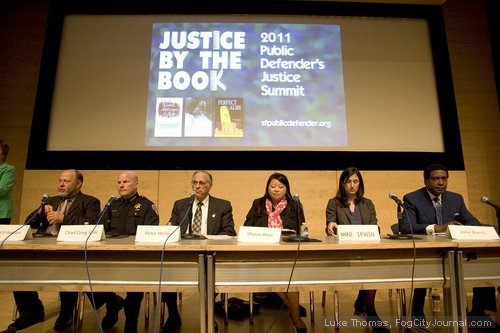
At the San Francisco Public Defender’s Office’s May 18 Justice Summit, the ethics of law enforcement were a central topic. And not surprisingly, the latest incidents of alleged police conduct in which SFPD officers are caught on surveillance video, which the Public Defender’s Office released, as they apparently steal personal property from suspects whose homes in the Julian Hotel they searched for drugs under possibly illegal circumstances, were on everyone’s minds, along with the crime lab and Henry Hotel scandals.

Asked if District Attorney George Gascón, who was Chief of Police until January, is considering a special prosecutor to look into these latest incidents, Sharon Woo, the D.A.’s Chief Assistant of Operations, said the D.A. looks into each case as it comes in. “We are trying to enhance the videos that came in from the Public Defender’s Office,” Woo said in a pre-summit interview. “Some are not as clear as we’d like.”

Earlier this year, when Gascón first became aware of the allegations against officers at the Henry Hotel, he directed the D.A.’s office to open an investigation into the officers and their alleged conduct. The move got David Onek, who is running against Gascón in the D.A.’s race, urging Gascón to turn the investigation over to an independent prosecutor.

But for a week, Gascón maintained that there was no conflict, and when he did finally announce that he was turning the investigation over to the to the U.S. Attorney’s Office – he claimed it was about “resources”. “New information has come to light that indicates it is better to turn over this investigation to the FBI,” Gascón said. “I have spoken to the U.S. Attorney, Melinda Haag, and she has agreed to take over the full investigation. We will of course cooperate fully with the FBI, and provide whatever assistance they need from us.”

At the time, Onek noted that Gascón’s decision was correct step. But he criticized Gascón for not making it his policy to recuse himself from any investigations that relate to his own tenure as chief. And Alameda Assistant D.A. Sharmin Bock, who recently sprung into the D.A.’ race, described Gascón’s situation on this matter as being “between a rock and a hard place.”

But yesterday, Woo noted that while it’s true that Gascón was SFPD Chief when many of the recent misconduct scandals occurred, Mayor Gavin Newsom had already appointed him D.A. when the Julian Hotel incidents occurred in February.

And Peter Herley, former chief of the Tiburon Police Department, told the Guardian that there “is always the Attorney General” to refer cases if D.A.’s feel conflicted. “George Gascón is a very upstanding individual who has also worked for the Los Angeles Police Department and was Chief of Meza, Arizona, and has done a good job in every place he’s been,” Herley said during a pre-summit interview. “So, if he sees a conflict arise, he’d probably recuse himself. It’s the public perception that’s key, that’s paramount.”

During the summit’s panel on ethics, retired San Francisco Superior Court judge Lee Baxter grilled panelists with incisive questions—as befits any self-respecting judge, retired or otherwise–on whether police misconduct is the product of a departmental culture. Noting that there had been a seemingly non-stop string of alleged police misconduct scandals in the Bay Area from drug thefts, dirty D.U.I cases, stolen drugs and setting up a brothel, Baxter observed, “If I saw a movie that included all those things, I’d think that this is not realistic.”

And there was a perhaps surprising amount of stated consensus about what needs to happen next from panelists Woo, Herley, defense attorney Stuart Hanlon, newly sworn-in SFPD Chief Greg Suhr, Anne Irwin, an attorney at the Public Defender’s Office, and John Burris, an Oakland-based civil rights attorney who is renowned for representing plaintiffs in police brutality cases.

Baxter asked the panelists why abuse of power happens, and whether, when we see media accounts of alleged police misconduct, we see the most extreme cases.

Hanlon kicked off by referring to the case of Elmer “Geronimo” Pratt, a former high ranking member of the Black Panther Party, who was tried and convicted of the kidnap and murder of Caroline Olsen in 1972, and spent 27 years in prison, eight in solitary confinement, until 1997 when his conviction was vacated on the grounds that the prosecution concealed evidence that might have exonerated him. In particular, the government had not disclosed that a key witness against Pratt, Julius Butler, was an informant for both the FBI and the LAPD. Pratt eventually received $4.5 million as settlement for false imprisonment—the city of L.A. paid $2.75 million, the U.S. Department of Justice paid $1.75 million.

“We learned that law enforcement officers had hidden evidence, let people commit perjury, and destroyed evidence to convict someone who was innocent, “ Hanlon recalled, noting how when he first worked on the case, folks wondered if Pratt’s claim of innocence was simply part of a big conspiracy theory. “But it was not, it was men and women who thought the ends justified the means” Hanlon said, noting that the “bad apples” theory is typically trotted out during investigations into alleged police misconduct. “But officers see people who they think are bad people, and they feel they must whatever it takes,” Hanlon continued. “Primarily, most law enforcement people are good, but sometimes you get good cops lying to protect bad cops. It’s a dilemma, this concept of ‘what we do we need to do, this ‘us versus them’ concept.”

Hanlon claimed that officers don’t think citizens who live in SROs (single room occupancy hotels) have the same rights as folks in Pacific Heights.
“They think it’s OK to break down doors because these are drug dealers,” he said. And he noted that the recent string of back-to-back scandals are unusual in their proximity but are not unusual, generally speaking. “I’m not an apologist for (Chief) Suhr or the D.A., but I’ve seen these problems forever, and without trust law enforcement doesn’t work,” Hanlon concluded.

Next, Baxter put Suhr in the hot seat by asking him what to do about the “ends justify the means concept”. At which point Suhr, who has been Chief for less than two weeks, observed that the summit, which was packed to the gills with defense and civil rights attorneys, was “a bit of an away game for me, but it’s O.K., I can handle it.” He noted that only 1 in 11 applicants make it through the SFPD Police Academy, where folks undergo 1,100 hours of training, including sessions on abuse of power and responsibilities. “But if something is proven, it’s my intention not to have those officers in the SFPD any more,” Suhr said.

Retired Tiburon Chief Pete Herley revealed that during his decades-long police career, he blew the whistle when three officers nearly beat a gay man to death. “I suffered the consequences for many years,” he said. “It’s very lonely getting death threats, it’s very lonely when you don’t get the backing of fellow officers.”

Herley claimed times have changed a lot. “Change starts in the Academy and the selection of officers, and you have no other law enforcement officers that get more scrutiny, background checks m psychological checks and an 18-month probation period,” he said.

He noted that police chiefs inherit a departmental culture, whether they come into the post from the inside or the outside of the department. And that while the number of officers involved in misconduct is small, “it makes good press.” 

“I really feel one needs to be more loyal to integrity than to people,” Herley continued, noting that his parents were Holocaust survivors, and that his father was aghast when he decided to become a police officer. “But I had certain values and I don’t expect anything less from other people. I expect that every department has something in their rules and regulations that directs their officers that if they see misconduct, it’ll be stopped and the action will be reported immediately to the Chief.

Baxter asked Woo what the D.A. should do, if there is a problem.“All we are is our integrity, our ability to communicate and put forth evidence to juries “ Woo observed, noting that she has been on the frontlines as allegations about the crime lab, the Henri Hotel, and now potential theft, surfaced. “We find ourselves very reactive,” Woo observed, noting that if officers are not being truthful, the D.A.’s office has to look at all the cases they were involved in. “So it really impacts public safety and how all of us view the criminal justice system,” Woo said, noting that officers involved in the Henri Hotel allegations taken off the street.“But we have no interest in prosecuting individuals if it’s not based on solid evidence,” Woo said.

She recommended proactive steps like getting involved in Police Academy training on the law, and what officers can and cannot do, and giving officers tools to make good decisions and arrests, so there is integrity in the system. “If there isn’t, we all lose, not just the criminal justice system, but the entire community,” Woo observed, noting that as SFPD Chief, “Gascón instituted lots of policies to make sure people are doing an appropriate level of review.”

Baxter asked Anne Irwin, an attorney in the Public Defender’s Office, about their office’s role in bringing abuse of power to the attention of the public. “The Public Defender has a unique and natural role as a messenger,” Irwin replied. “We have more meaningful interaction with the victims of police misconduct than anyone else in the criminal justice system. We get into the intimate details of their lives, we develop a relationship of trust, so they confide their stories about police misconduct. And those stories are commonplace.”

Irwin noted that these stories include a disrespect for the Fourth Amendment, perjury and theft. “When you hear those stories over and over, there’s a ring of truth, a consistency,” Irwin said, noting that this is not the first time officers have been captured on camera. “We didn’t say, let’s amass a bunch of evidence. We just basically did our job. Residents told us what someone said in a report is not what happened, so we got videos from Dec. 23 and Jan. 5, and lo and behold, every word was true, two for two.”

Irwin noted that there are many good officers in the SFPD, but questioned whether a culture develops in certain departments, including the plain-clothes units, that allows misconduct to happen. “Without the videos officers would not have had to answer for their conduct,” she observed.

Baxter asked Suhr what it is about the culture that makes some cops go rogue. “Did they work there too long, were the temptations too much?” she asked.

Suhr replied that he worked in narcotics for a long time, and recovered $1.4 million in cash from an apartment in the Western Addition. “I never took a dime, and I am confident that the officers I worked with were of the highest caliber,” he said. “To paint a 2,000-person organization with a broad brush is unfair,” he added. “In the legal profession, every once in a while, you see ugly stories there too.”

Burris, who filed a $25 million wrongful death claim against BART on behalf of Oscar Grant’s family, noted that he has been involved in about 1,000 police misconduct cases in the Bay Area. “A culture exists about how you treat minority communities, “ he said, noting that he had represented black and brown clients for over 20 years. “A culture where you beat people and nothing is done, and you get away with it.”

Burris believes the problem lies in how policies are imposed, as he claimed that when officers join departments they are told to forget what they were taught in the Academy.“This is what you do on the streets,” he said.

Baxter observed that she has seen movies about the code of silence and wondered if it actually exists in police departments. “I don’t think so generally,” Suhr said. “There’s peer pressure to be sure. A regular citizen has a right not to self incriminate, and in the Police Department you can say that, but you are immediately sent to Internal Affairs, where you are told, tell me what happened or you are fired. So, today, the light is shining on us 100 percent of the time.”

Herley noted that his concern lay with situations in which officers see something, but don’t say anything. “I never thought I’d sit here and agree with every word John Burris says, but it starts at the top, and has to be enforced throughout the organization.”

Herley said the two best tools to prevent indiscretions and ensure responsibility are tape recorders and video cameras. “There’s certification of exactly what happened.” As for questions of how much it would cost to outfit officers with this recording equipment, Herley said, “ What is the cost of a lawsuit, the cost the perception of a loss of integrity to a department?”

Where’s Gascon on Ammiano’s pot bill?

4

Some very good news from Sacramento (and since good news from that part of the world is rare these days, let’s celebrate it). Assembly Member Tom Ammiano has a bill that would eliminate the mandatory felony charges for marijuana cultivation and allow district attorneys to charge some pot farmers with misdemeanors. And it’s cleared committee and is headed to the Assembly floor. The Bay Citizen has a decent wrapup on the politics (including the fact that the prison guards union isn’t going to like it — less customers).


It’s likely the Senate will go along with the bill, too — particularly since most of the district attorneys in Pot Country are supporting it. Mendocino DA David Eyster is the main sponsor. His colleagues in Humboldt, Del Norte and Lake Counties are all on board.


Oddly enough, the California District Attorneys Association still opposes the bill. The board of this august group seems to be dominated by the more conservative counties, but still: The DAs who have to deal with this issue regularly all want the bill passed. What’s up with that? Well, the spokesman for the group, Cory Salzillo, told me that the bill “send the wrong message with controlled substances generally” and that it would also give not only a prosecutor but a judge the ability to turn a potential felony into a misdemeanor. “We’re concerned about that judicial discretion,” he said.


Which seems, frankly, a little nuts — again, the four DAs who are most involved in charging people for cultivation of marijuana — the folks on the front lines, so to speak — want the bill to pass. So who decided the association position?


Salzillo says there’s a legislative committee, but since this one was controversial, it went to the full board. And guess what? There’s a San Francisco rep. on the board — Assistant D.A. Jerry Coleman. I called him to ask how the vote went down. Here’s our conversation:


Me: Hi, Mr. Coleman, I understand you’re on the board of the California DAs association and I wanted to talk to you about why that group is opposing the Ammiano marijuana bill, which the DAs of the north counties that deal with the issue all support.


Coleman: “I’m not the spokesman for that association.”


Me: Yes, but you’re on the board and I’m wondering if you voted in favor of opposing AB 1017.


Coleman: “I can’t give you an answer to that. I won’t discuss any vote. I don’t remember this one, but if I did I wouldn’t talk to you about it anyway.”


That was helpful.


Meanwhile, where’s Coleman’s boss, the San Francisco DA, George Gascon? This is a city that supports medical marijuana, has perhaps a few growers living in its city limits — and if I had to guess, about, maybe, 93 percent of the voters would agree that marijuana cultivation shouldn’t be an automatic felony. Why isn’t Gascon’s name on the list of supporters?


I dunno. His office hasn’t called me back. I’ll let you know when they do.

“Unadulterated, uncensored kids”: Youth Speaks’ grand slam is back

0

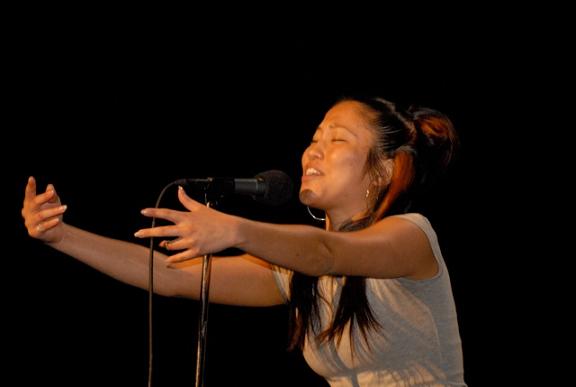
When the then-17 year old Erica McMath-Sheppard became one of our Best of the Bay Local Heroes last year, she hadn’t just earned the distinction – she had taken it as her own. What else could we have done when we heard about her winning presence onstage at the Youth Speaks grand slam spoken word finals?

And from her firey performance sprang something greater – Erica, a foster child, was able to cast a light on a system that is royally messed-up but largely unseen, since the main people who have to deal with its fall-out are young, voiceless.

All this is to say that the Youth Speaks grand slam is taking place once again this Fri/30, and that you should be there if you really want to hear what’s up with today’s youth. Screw the evening news, turn off your MTV, get real.

“To me, it’s the voice of 21st century America. Unadulterated, uncensored kids.” Youth Speaks executive director James Kass was a Jewish kid from New York who was a little discouraged with the lack of diversity in his MFA program at SF State. And “I was sick of boring poetry readings.”

So he started a slam himself, featuring people who are many things, but never boring: high school kids. The first month, the slam attracted 70 people. With the help of spoken word artist Justin Chin, traditional competition rules were subverted to make them more kid-friendly – judges’ ratings of each contestant were done in private, rather than putting developing artists on blast in front of a crowd. It’s its second month of existence, the slam sold out. Kass realized that a place for kids to nuture their poetry skills just didn’t exist in San Francisco — and (roughly)that is the Youth Speaks school program was born. 

Now, the non-profit works with 30,000-40,000 Bay Area kids a year, by Kass’ count. Yep. Many of those kids are attendees of the group’s assembly programs, but narrow that down to the students who participate in the slams (including Queeriousity, YS’ popular queer slam series), afterschool programs, one-on-one partnerships with adult working artists, and in-house youth publishing label, First Word Press, and that number is still a solid 3,000-4,000.

Who are these kids? Kass says they come from the suburbs, the city, all socioeconomic levels, races, and represent the gamut of teenage sexualities. “It really is representative of the demographics of the Bay Area.”

Poetry slams reward the innate literacy in all of us, our fervent desire to be heard and share thoughts. You don’t need to be a Spellbound letter savant to spit a pentameter that’ll make people shift in their seats, or leave that night beaming. But performing can inspire those who have found success onstage to hone their craft off of it. “As a first step into literacy, spoken word removes barriers,” says Kass, who also points out that most world cultures have strong oral poetry traditions.

Plus, stand-up poetry fits the dramatic arch of the life of an adolescent today, their ability to believe two completely different things – passionately – from one day to the next. “The kids can, and literally do, write a poem on the bus on the way to [a slam.]. It’s super-fresh and they can get feedback on it right away. Sometimes that urgency translates to something a lot of people will relate to.”

Should you need more proof of the way kids take to spoken word, one need only look at the brief history of Brave New Voices, the national championship that Kass organized back in 1998, he says, “with one other teacher from Connecticut,” the only other place he found organized youth spoken word programs at the time.

It’s thrived. Recently, Brave New Voices was the subject of an HBO-Russell Simmons reality series (Kass comments: “we struggled with HBO at first about how they wanted to define the kids,” but that the finished product turned out pretty good).

This year, Brave New Voices will feature 550 kid champions from 53 parts of the world – including the brave new voices that win this weekend’s Bay Area slam. Those kids, incidentally, will be your home team. On July 20-23, the competition will be held in the Bay for the first time ever. Check them out this weekend at the YS grand slam to witness one step in their rise to glory – or just to hear what the young adults of the Bay Area have to say these days. 


Youth Speaks 15th annual Grand Slam Finals

Fri/20 7 p.m., $6-50

Davies Symphony Hall

201 Van Ness, SF

www.youthspeaks.org

www.cityboxoffice.com 


After-party featuring guest DJ will.i.am

Fri/20 10 p.m.-1 a.m., free with grand slam ticket purchase

Brick and Mortar Music Hall

1710 Mission, SF

www.brickandmortarmusic.com

Your summer guide to art escapes

0

Living in San Francisco means having the richness of art in a major city, and the natural beauty of California all in one fell swoop. Here’s your guide to enjoying urban escapes and art and live performance – at the same time! – this summer. Also, check out our guides to the season’s falls and festivals, movies, music, and best adventures you can go on without a car.


WITHIN THE CITY 

Yerba Buena Gardens Festival

With three stages of free performances, this festival is perfect for a dose of culture and fresh air during your lunch hour with music, dance, theater, and readings. There’s weekend concerts too: the SF Mime Troupe performs Aug. 21, SF’s local songbird Meklit Hadero on Aug. 27, and SF’s pluckiest free ring wraiths, Circus Bella return to the lawn for the weekend of July 1-2.

May through September, free. www.ybgf.org


Stern Grove Festival

Stern Grove’s eucalyptus tree surroundings create a pretty magical summer stage for free performances. The experience gets even better when you pack a tasty picnic spread to enjoy — but leave your umbrellas and high-back chairs at home to keep the peace with those who didn’t snag the primo front row spots. In addition to the annual appearances of the San Francisco Ballet, Opera and Symphony, the concert lineup features Sharon Jones and The Dap-Kings, the Jazz Mafia Symphony, Neko Case, Afrocubism, The English Beat, Aaron Neville, and Javier Limon and Buika.

Sundays, June 19-August 21, free. www.sterngrove.org


San Francisco Mime Troupe at Dolores Park 

Enjoy palm trees and revolutionary spirit with your Tecate: with this historic troupe of not-mimes – forget the pantomime, this is socially relevant theater in the park.

July 2, 3, 4, free. www.sfmt.org


San Francisco Symphony in the Park

This year’s concert, which will be performed in Sharon Meadow, features conductor Michael Francis and pianist Valentina Lisitsa on a program of Mussorgsky’s A Night on Bald Mountain, Rachmaninoff’s Piano Concerto No. 2, and Beethoven’s Symphony No. 5.  

July 10, 2 p.m., free. www.sfsymphony.org


Shakespeare in the Park, The Presidio

Bring the whole family for this year’s performance of  Cymbeline at the Presidio’s Main Post Parade Ground Lawn.

September 3, 4, 5, 10, 11, 17, 18, 24, 25, free. Sharon Meadow, Golden Gate Park, SF. www.sfshakes.org


Opera in the Park

This year’s annual concert, also in Sharon Meadow, features a special musical program commemorating the tenth anniversary of September 11, 2001.

September 11, 1:30 p.m., free. Sharon Meadow, Golden Gate Park, SF. www.sfopera.com


AND BEYOND…

Oliver Ranch

Seventy miles north of San Francisco in Sonoma County, Oliver Ranch boasts scenic acres and 18 site-specific installations by artists such as Bruce Nauman and Richard Serra, as well as Ann Hamilton’s distinct tower where commissioned dance, poetry, theater, and music performances unfold. The tower structure – defined by two staircases built in a double helix form that accommodate the audience on one staircase and the performers on the other — suits a range of sensory projects and performances hosting artists like Meredith Monk and the Kronos Quartet. Limited capacity allows for only 100 visitors, making this ticket a splurge — but it’s all good, each concert in the tower benefits a non-profit organization. June appearances include Pauline Oliveros and Terry and Jo Harvey Allen. Should you be lucky enough to get tickets, be sure to bring some water and sunscreen and make a day of it visiting all the nearby wineries.

Various dates in June, prices vary. 22205 River, Geyserville. (510) 412-9090, www.oliverranchfoundation.org


Headlands Center for the Arts open house 

Just across the bridge in the rugged Golden Gate National Recreation Area, the Headlands Center for the Arts synthesizes natural and urban environments in a cluster of historic, 1900s military buildings at Fort Barry among hills, cliffs, coves, and beaches. At the center’s summer open house, artists open their studios to the public to show their works-in-progress and talk with visitors about their creative process in a variety of disciplines. Catch one of the many performances and readings scheduled throughout the day and then head to the mess hall, which is transformed into a café serving delicious homemade snacks at down-home prices for the event. While you’re there, a hike through the windy Headland hills is a must-do.

July 24, 12-5 p.m., free. 944 Fort Barry, Sausalito. (415) 331-2787, www.headlands.org


Robert Mondavi Winery Summer Music Festival

One of the first wineries in the Napa Valley, the Robert Mondavi Winery offers much more than sipping, swilling, and spitting. A concert series scheduled for Saturday nights in July features music in an open-air setting and this summer’s lineup includes Gavin DeGraw, Colbie Caillat, David Foster, Chris Isaak, K.D. Lang, and the Siss Boom Bang. Mondavi’s grounds also include an art gallery open daily from 10 a.m. to 4 p.m., with artifacts and paintings as well as a sculpture collection focused on the work of San Francisco artist, Beniamino Bufano, displayed in the main courtyard surrounded by rows of vines. Head here for a fancy summer night of outdoor music and wind down after an afternoon of tastings.

Saturdays in July, $75-$105. 7801 St. Helena Hwy., Oakville. (888) 766-6328, www.robertmondavi.com


Finally, a prosecutor leaps into D.A.’s race

73

From the moment I walked into Sharman Bock’s District Attorney campaign launch and saw the roomful of “signs proclaiming, “A prosecutor for District Attorney”, I realized that Bock isn’t the type of candidate to hold her punches. And that makes perfect sense, because unlike the other candidates in the D.A.’s race, Bock, 48,  is a seasoned prosecutor.


Bock, as I soon found out, is also a longtime San Francisco resident, who moved here from Iran when she was four and has lived in the city for more than four decades. She went to high school here, returned after graduating cum laude from Georgetown University Law Center, and earned a clerkship with the Hon. D. Lowell Jensen of the Northern District of California, before starting her prosecutorial career in Alameda County, where she has served as an Assistant D.A. since 1989.  And she continues to live in San Francisco, where she is currently raising two kids with her husband in the Richmond District.


Joined by Congressmember Jackie Speier, Lulu Flores, President of the National Women’s Political Caucus, and Shronda Wallace, whose mother was brutally murdered in 1989, Bock made no bones about why she has decided to spring into the race.


“I’m running for San Francisco District Attorney because this is a job that requires a seasoned prosecutor who knows what it takes to put the most violent and dangerous criminals behind bars and keep them there,” Bock said. “I am a professional prosecutor. I want to give voters a real choice. No other candidate in this race has prosecuted even a single criminal case. This is no job for rookies. The stakes are too high and rookies make mistakes.”


When Bock noted that her conviction rate is over 90 percent, and that she has never lost a serious or violent jury trial, I wondered how successful the other main contenders–former SFPD Chief George Gascón, who Mayor Gavin Newsom appointed as D.A. in January, and former San Francisco Police Commissioner David Onek, are going to be when it comes to downplaying the fact that neither, as Bock wasn’t afraid to remind reporters, “has ever prosecuted a criminal case.”


“This is not a managerial, police or career job,” Bock continued, confronting head-on the arguments Gascón and Onek have already tossed out in response to questions about how they can be D.A. given their complete lack of prosecutorial experience.


“It’s certainly not a job for a rookie, and with 22 years of experience, I’m ready,” Bock commented.


“To lead an office of trial lawyers, you’d have to walk a mile in their shoes,” Bock added, noting that currently she is doing just that. “I’m responsible for supervising extremely experienced trial lawyers each day,” she said, referring to her job as Assistant D.A. in Alameda County.


Praising the record of former D.A. Kamala Harris, who was elected Attorney General in November, Bock observed that San Francisco “sets the national standard. Kamala did a good job, and I’d like to keep the momentum going. We can’t lose it.”


Next, Bock outlined some of the highlights of her prosecutorial career.


A national expert on efforts to combat human trafficking, Bock leads the Human Exploitation and Trafficking (HEAT) Unit, which prosecutes complex trafficking cases. In fact, Bock actually prosecuted the first human trafficking case in California.


Based on her expertise with DNA and other forensic evidence, Bock was tapped to lead the Cold Case Unit, which focuses on solving old murder and sexual assault cases.


Bock also oversees other specialized felony units, including Public Integrity, Child Sexual Assault, Sexually Violent Predator and Restitution, which recovered more than $15 million for victims of violent crime last year.


In 2009, Bock received the Fay Stender Award from the California Women’s Lawyers Association for her “ability to affect change and her commitment to representing the underprivileged. And in 2010, the California Legislature recognized Bock as “Woman of the Year” for her groundbreaking work to stop human trafficking.


“American children are being sold for sex in our own backyard,” Bock warned, as she talked about what she has learned from her decades as a prosecutor. She said solving cold cases “provides closure that is priceless for families of victims” and is part of keeping the community safe. She talked about the fact that she is an independent prosecutor, who won’t be conflicted by police misconduct and crime lab scandals, unlike our current D.A. And she wrapped up by voicing her desire to serve—and remain in—San Francisco. “I am committed to giving back and serving the city I love,” Bock said.


Meanwhile, across the city, D.A. Gascón had just a neighborhood prosecution program in the Bayview and Mission districts. According to a Gascón press release, the program, “brings immediacy to the resolution of crimes that diminish the livability of local communities by employing a restorative justice model” and “brings the D.A.’s Office into the community, positioning the office to be more directly and immediately responsive to the needs of community members.”


Gascón promised that the program will engage “residents in the process of determining an appropriate sanction focused on repairing the harm done to the community and setting the offender on the path to long-term productivity. This approach will bring a swifter and more certain resolution to offenses that have repeatedly gone unchecked for too long.”


The idea is that designated Assistant D.A’s will be assigned to  local police station to pre-screen eligible individuals and determine if the offenses they have been cited for by police are suitable to be heard in neighborhood courts. “Under the supervision of the District Attorney’s Office local residents are trained in restorative justice to adjudicate matters, instead of having cases charged and heard in criminal courts,” Gascón stated. “The adjudicators represent a wide swath of the community and include merchants, home owners retirees and students.”


Gascón says a range of non-violent offenses, including drinking in public, vandalism and petty theft, fit the criteria for matters that can be reviewed in the neighborhood court.“Eligible individuals cannot be under the supervision of the criminal justice system,” he stated. “Individuals who volunteer to have their matters heard in the neighborhood courts agree to abide by the prescribed outcomes that focus on restoring both the community and the offender. Individuals who are successful in meeting the terms avoid the blight of a mark on their criminal record. By taking this restorative justice approach, the program seeks to break the cycle of crime. It increases the accountability of the offenders to the community and the community’s stake in the offenders’ rehabilitation.”


Gascón claimed the program saves money by significantly shortening the length of time it takes to resolve offenses. “Typically the offenses being heard in a neighborhood court in one to two weeks from the time a citation is written would take nine months to a year to be heard in a criminal court,” he stated. “The average cost of having these cases charged and heard in a traditional criminal court would be $1500 per misdemeanor compared to $300 in a neighborhood court.”


Gascón concluded by noting that this new neighborhood prosecution program will operate under the direction of the newly-formed Collaborative Courts Division of the D.A.’s Office and is scheduled to spread citywide. “The Bayview and Mission district launches are part of D.A. Gascón’s initiative to increase accountability and integration of the former Community Court programs,” Gascón’s press release stated. “The neighborhood prosecution program model will eventually be adopted and employed city-wide, district by district as a replacement for the former model.”


Bock for her part seemed less than impressed by the fairness of Gascón’s program. “People dealing with quality of life crimes deserve a District Attorney,  a defense attorney and a judge,” she said. “You can’t shortchange justice “


And she wasn’t shy about sharing her thoughts on the conflict of interest Gascón faces when dealing with the ongoing police misconduct and crime lab scandals.“George Gascón is between a rock and a hard place,” Bock said. “He was in charge of the police district during that time period,” she observed. “And it’s important that the police don’t get thrown under the bus in the process.”


And unlike Gascón, Bock is personally opposed to the death penalty.“I will oppose any effort to further that law, and I would support ballot measures to change it,” Bock said. “It hasn’t had a deterrent effect, it doesn’t make the community safer, but it is the law of the state.”


As D.A., Bock would implement the same procedures that former D.A. Kamala Harris had in place—a committee where each case is reviewed in fact and law, and not reflective of a personal opinion. “I would look at each case,” Bock said.


“I want to make this city as safe to live in as I have fought in Oakland to achieve,” Bock continued, noting that when she graduated, she faced a choice of a corporate job or public service. “I chose public service,” she said.


Unlike Gascón, Bock does not think the city’s recently enacted sit-lie legislation has resolved anything. “Sit-lie is a perfect example of why political hot-button measures don’t work,” Bock said. “People should be able to use the sidewalks. But at the same time, there are people with serious mental health issues. Sit-lie hasn’t solved any problem. And the good news about me is that I am not a politician.”


Congressmember Jackie Speier enthusiastically endorsed Bock. “This is a very important race for San Francisco, and it’s not a political race,” Speier said. “It’s a race about safety and prosecution and making sure we have a District Attorney who is going to be here for thecommunity.”


Speier noted that Bock has worked for some of the finest law firms, has dedicated more than 20 years of her life to prosecuting heinous criminals, has deep roots in San Francisco, and is on the board of numerous non-profits.


“She has been successful in over 1,000 cases—tough cases, including murder, torture and sex trafficking,” Speier continued. “She is someone who has the capacity to handle this job like no one I’ve ever seen. Her passion for her work knows no bounds.”


“And she is truly committed to San Francisco,” Speier added. “It’s no secret that the present occupant of the D.A.’s office is interested in being a highly placed person in the F.B.I. I think Gaston will be good in some respects should he seek that.”


“Politics is a funny thing, the process works the way it does, but the people of San Francisco have an opportunity to compare and contrast—and this is a stark contrast,” Speier concluded, pointing to Bock’s “impeccable credentials and proven track record in the prosecution of criminals,” and describing her as “the best and brightest” as she lauded Bock’s leadership skills and talent as a prosecutor.


Lula Flores, who flew in from Washington, D.C. to announce the National Women’s Political Caucus early endorsement of Bock, described Bock as a “progressive forward-thinking candidate.”


“We need more women in leadership safety positions,” Flores said, noting that Bock “represents diversity and is the most qualified and most experienced candidate.”


“She will do the best job,” Flores continued. “San Francisco is home to a myriad of leaders, it is the place that has grown so many of our national leaders.”


And Shronda Wallace recalled how her mother’s 1989 murder had been “all but forgotten, but then Sharman Bock took charge.”
Wallace described how, using DNA from the crime, Bock “re-created the scene, identified the killer, proved he intended to kill my mother, convicted him, and put him in prison without parole for the rest of his life. Through her determined and relentless prosecution of this cold case, not only did Sharman Bock make me feel safer, but she brought me desperately needed closure, and that is something I will never forget.”


Summer fairs and festivals

0

ONGOING

Young At Art Festival de Young Museum, Golden Gate Park, SF. (415) 695-2441, www.youngatartsf.com. Through May 22, free. The creative achievements of our city’s youth are celebrated in this eight day event curated and hosted by the de Young Museum.

* Oakland Asian Cultural Center Asian Pacific Heritage Festival Oakland Asian Cultural Center, 388 Ninth St., Oakl. (510) 637-0462, www.oacc.cc. Through May 26. Times and prices vary. Music, lectures, performances, family-friendly events in honor of Asian and Pacific American culture and traditions.

DIVAfest Exit Theatre, 156 Eddy, SF. (415) 931-2699, www.theexit.org. Through May 28. Times and prices vary. Bastion of the alternative, EXIT Theatre showcases its 10th annual buffet of fierce women writers, performers, and directors. This year features two plays, beat poetry, musical exploration, and more.

* Yerba Buena Gardens Festival Yerba Buena Gardens, Mission and Third St., SF. (415) 543-1718, www.ybgf.org. Through Oct. 31. Times vary, free. A series of cultural events, performances, activities, music, and children and family programs to highlight the green goodness of SoMa’s landscaped oasis.


May 18-June 5

San Francisco International Arts Festival Various venues. (415) 399-9554, www.sfiaf.org. Times and prices vary. Celebrate the arts through with this mish-mash of artistic collaborations dedicated to increasing human awareness. Artists included hail from around the world and right here in the Bay Area.


May 21

* A La Carte & Art Castro St. between Church and Evelyn, Mountain View. (650) 964-3395, www.miramarevents.com. 10am-6pm, free. With vendors selling handmade crafts, microbrewed beers, fresh foods, a farmers market, and even a fun zone for kids, there’s little you won’t find at this all-in-one fun fair. Asian Heritage Street Celebration Larkin and McAllister, SF. www.asianfairsf.com. 11am-6pm, free. This year’s at the country’s largest gathering of APA’s promises a Muay Thai kickboxing ring, DJs, and the latest in Asian pop culture fanfare — as well as tasty bites to keep your strength up.

Freestone Fermentation Festival Salmon Creek School, 1935 Bohemian Hwy, Sonoma. (707) 479-3557, www.freestonefermentationfestival.com. Noon-5pm, $12. Learn about the magical wonders of fermentation with hands-on and mouth-on demonstrations, exhibits, and tasty live food nibbles.

Uncorked! San Francisco Wine Festival Ghirardelli Square, SF. (415) 775-5500, www.ghirardellisq.com. 1-6pm, $45-50 for tasting tickets, free for other activities. Uncorked! brings you the real California wine experience with tastings, cooking demonstrations, and even a wine 101 class for those who are feeling not quite wine-refined.


May 20-29

SF Sex Worker Film and Art Festival Various venues, SF. (415) 751-1659, www.sexworkerfest.com. Times and prices vary. Webcam workshops, empowering film screenings, shared dialogues on plant healing to sex work in the age of HIV: this fest has everything to offer sex workers and the people who love ’em.


May 22

Lagunitas Beer Circus Lagunitas Brewing Co., 1280 N McDowell, Petaluma. (303) 447-0816, www.craftbeer.com. Noon-6pm, $40. All the wonders of a live circus — snake charmers, plate spinners, and sword swallowers — doing their thing inside of a brewery!


May 21-22

* Maker Faire San Mateo County Event Center, 2495 South Delaware, San Mateo. www.makerfaire.com. Sat, 10am- 8pm; Sun, 10am-6pm, $5-25. Make Magazine’s annual showcase of all things DIY is a tribute to human craftiness. This is where the making minds meet. Castroville Artichoke Festival Castroville, Calif. (831) 633-0485, www.artichokefestival.org. Sat., 10am- 6pm; Sun., 11 am- 4:30 p.m., free. Pay homage to the only vegetable with a heart: the artichoke. This fest does just that, with music, parades, and camping.


May 28-29 

San Francisco Carnaval Harrison between 16th and 22nd St., SF. 10am-6pm, free. The theme of this year’s showcase of Latin and Caribbean culture is “Live Your Fantasy” — bound to bring dreams alive on the streets of the Mission.


June 3-12

Healdsburg Jazz Festival Various venues, Healdsburg. (707) 433-463, www.healdsburgjazzfestival.org. Times and prices vary. Bask in the lounge-lit glow of all things jazz-related at this celebration in Sonoma’s wine county.


June 3-July 3 

SF Ethnic Dance Festival Zellerbach Hall, Berk. and Yerba Buena Center for the Arts, SF. www.worldartswest.org. Times and prices vary. A powerful display of world dance and music taking to the stage over the course of five weekends.


June 4

* Berkeley World Music Festival Telegraph, Berk. www.berkeleyworldmusicfestival.org. Noon-9pm, free. Fourteen world music artists serenade the streets and stores of Telegraph Avenue and al fresco admirers in People’s Park.

Huicha Music Festival Gundlach Bundschu Winery, 2000 Denmark St., Sonoma. (707) 938-5277, www.gunbun.com/hmfevent. 2-11pm, $55. Indie music in the fields of a wine country: Fruit Bats, J Mascis of Dinosaur Jr, Sonny and the Sunsets, and more.


June 4-5

Union Street Eco-Urban Festival Union from Gough to Steiner and parts of Octavia, SF. (800) 310-6563, www.unionstreetfestival.com. 10am-6pm, free. Festival goers will have traffic-free access to Cow Hollow merchants and restaurant booths. The eco-urban theme highlights progressive, green-minded advocates and products.

The Great San Francisco Crystal Fair Fort Mason Center, Building A., SF. (415) 383-7837, home.earthlink.net/~sfxtl/index.html. Sat., 10am-6pm; Sun., 10am-4pm, $6. Gems and all they have to offer: beauty, fashion, and mysterious healing powers.


June 5

* Israel in the Gardens Yerba Buena Gardens, SF. (415) 512-6420, www.sfjcf.org. 11am-5pm, free. One full day of food, music, film, family activities, and ceremonies celebrating the Bay Area’s Jewish community and Israel’s 63rd birthday.


June 10-12

Harmony Festival Sonoma County Fairgrounds, 1350 Bennett Valley, Santa Rosa. www.harmonyfestival.com. 10am-10pm, $45 one day, $120 for three day passes. This is where your love for tea, The Flaming Lips, goddess culture, techno, eco-living, spirituality, and getting drunk with your fellow hippies come together in one wild weekend.

Queer Women of Color Film Festival Brava Theater. 2789 24th St., SF. (415) 752-0868, www.qwocmap.org. Times vary, free. A panel discussion called “Thinkers and Trouble Makers,” bisects three days of screenings from up-and-coming filmmakers with stories all their own.


June 11-12

* Live Oak Park Fair 1301 Shattuck, Berk. (510) 227-7110, www.liveoakparkfair.com. 10am-6pm, free. This festival’s 41st year brings the latest handmade treasures from Berkeley’s vibrant arts and crafts community. With food, face-paint, and entertainment, this fair is perfect for a weekend activity with the family.


June 11-19 

San Mateo County Fair San Mateo County Fairgrounds. 2495 S. Delaware, San Mateo. www.sanmateocountyfair.com. June 11, 14, 18, and 19, 11am-10pm; all other days, noon-10pm, $10 for adults. It features competitive exhibits from farmers, foodies, and even technological developers — but let’s face it, we’re going to see the pig races.


June 12

Haight Ashbury Street Fair Haight between Stanyan and Ashbury, SF. www.haightashburystreetfair.org. 11am-5:30pm, free. Make your way down to the grooviest corner in history and celebrate the long-standing diversity and color of the Haight Ashbury neighborhood, featuring the annual battle of the bands.


June 16-26

Frameline Film Festival Various venues, SF. www.frameline.org. Times and prices vary. This unique LGBT film festival comes back for its 35th year showcasing queer documentaries, shorts, and features.


June 17-19 Sierra Nevada World Music Festival Mendocino County Fairgrounds. 14400 CA-128, Boonville. (916) 777-5550, www.snwmf.com. Fri, 6pm-midnight; Sat, 11am-midnight; Sun, 11am-10pm, $60 for Friday and Sunday day pass; $70 for Saturday day pass, $150 three day pass. Featuring Rebulution, Toots and the Maytals, and Jah Love Sound System, this fest comes with a message of peace, unity, and love through music.


June 18 

Summer SAILstice Encinal Yacht Club, 1251 Pacific Marina, Alameda. (415) 412-6961, www.summersailstice.com. 8am-8pm, free. Boat building, sailboat rides, sailing seminars, informational booths, music, a kid zone, and of course, wind, sun, and water.

Pinot Days Festival Pavilion, Fort Mason Center, SF. (415) 382-8663, www.pinotdays.com. 1-5pm, $50. Break out your corkscrews and head over to this unique event. With 220 artisan winemakers pouring up tastes of their one-of-a-kind vino, you better make sure you’ve got a DD for the ride home.


June 18-19

North Beach Festival Washington Square Park, SF. (800) 310-6563, www.northbeachchamber.com. Sat, 10am-6pm; Sun, 10am-6pm, free. Make your way down to the spaghetti capital of SF and enjoy food, music, arts and crafts booths, and the traditional blessing of the animals.

Marin Art Festival Marin Civic Center, San Rafael. (415) 388-0151, www.marinartfestival.com. 10am-6pm, $10. A city center designed by Frank Lloyd Wright plays host to this idyllic art festival. Strolling through pavilions, sampling wines, eating grilled oysters, and viewing the work of hundreds of creative types.


June 20-Aug 21

Stern Grove Music Festival Stern Grove. Sloat and 19th Ave., SF. (415) 252-6252, www.sterngrove.org. Sundays 2pm, free. This free outdoor concert series is a must-do for San Francisco summers. This year’s lineup includes Neko Case, the SF Symphony, Sharon Jones, and much more.


June 25-26

San Francisco Pride Celebration Civic Center Plaza, SF; Parade starts at Market and Beale. (415) 864-FREE, www.sfpride.org. Parade starts at 10:30am, free. Gays, trannies, queers, and the rest of the rainbow waits all year for this grand-scale celebration of diversity, love, and being fabulous. San Francisco Free Folk Festival Presidio Middle School. 450 30th Ave., SF. (415) 661-2217, www.sffolkfest.org. Noon-10pm, free. Folk-y times for the whole family — not just music but crafts, dance workshops, crafts, and food vendors too.


June 29-July 3

International Queer Tango Festival La Pista. 768 Brannan, SF. www.queertango.freehosting.net. Times vary, $10-35. Spice up your Pride (and Frameline film fest) week with some queer positive tango lessons in culturally diverse, welcoming groups of same sex couples.


June 30-July 3

High Sierra Music Festival Plumas-Sierra Fairgrounds, Quincy. www.highsierramusic.com. Gates open at 8am Thursday. $205 weekend pass, $90 parking fee. Yonder Mountain String Band, My Morning Jacket, and most importantly, Ween. Bring out your sleeping bags for this four day mountaintop grassroots festival.


July 2

Vans Warped Tour Shoreline Amphitheatre, Mountain View. www.vanswarpedtour.com. 11am, $46-72. Skating, pop punk, hardcore, screamo, and a whole lot of emo fun.


July 2-3

Fillmore Jazz Festival Fillmore between Jackson and Eddy, SF, 1-800-310-6563, www.fillmorejazzfestival.com. 10am-6pm, free. Thousands of people get jazzed-up every year for this musical feast in a historically soulful neighborhood.


July 4

City of San Francisco Fourth of July waterfront celebration Pier 39, Embarcadero and Beach, SF. (415) 709-5500, www.pier39.com. Noon-9:30pm, free. Ring in the USA’s birthday on the water, with a day full of music and end up at in the city’s front row when the fireworks take to the sky.


July 9-10

Renegade Craft Fair Fort Mason Festival Pavilion. Buchanan and Marina, SF. (312) 496-3215, www.renegadecraft.com. 11am-7pm, free. Put a bird on it at this craft fair for the particularly indie at heart.


July 14-24

Midsummer Mozart Festival Various Bay Area venues. (415) 627-9141, www.midsummermozart.org. Prices vary. You won’t be hearing any Beethoven or Schubert at this midsummer series — the name of the day is Mr. Mozart alone.


July 16-17

Connoisseur’s Marketplace Santa Cruz between Camino and Johnson, Menlo Park. (650) 325-2818, www.miramarevents.com. 10am-6pm, free. Let the artisans do what they do best — you’ll polish off the fruits of their labor at this outdoor expo of artisan food, wine, and craft.


July 21-Aug 8

SF Jewish Film Festival Various Bay Area venues. www.sfjff.org. Times and prices vary. A three week smorgasbord of world premiere Jewish films at theaters in SF, Berkeley, the Peninsula, and Marin County.


July 22-Aug 13

Music@Menlo Chamber Music Festival Menlo School, 50 Valparaiso, Atherton. (650) 330-2030, www.musicatmenlo.org. Classical chamber music at its best: this year’s theme “Through Brahms,” will take you on a journey through Johannes’ most notable works.


July 23-Sept 25

 SF Shakespeare Festival Various Bay Area venues. www.sfshakes.org. Various times, free. Picnic with Princess Innogen and her crew with dropping a dime at this year’s production of Cymbeline. It’s by that playwriter guy… what’s his name again?


July 30

Oakland A’s Beer Festival Eastside Club at the Oakland-Alameda Coliseum, 7000 Coliseum Way, Oakl. www.oakland.athletics.mlb.com. 4:05-6:05pm, free with game ticket. Booze your way through the Oakland A’s vs. Minnesota Twins game while the coliseum is filled with brewskies from over 30 microbreweries, there for the chugging in your souvenir A’s beer mug.


July 30-31

 Berkeley Kite Festival Cesar Chavez Park, 11 Spinnaker, Berk. www.highlinekites.com. 10am-5pm, free. A joyous selection of Berkeley’s coolest kites, all in one easy location.


July 31

Up Your Alley Dore between Folsom and Howard, SF. www.folsomstreetfair.com. 11am-6pm, $7-10 suggested donation. Whether you are into BDSM, leather, paddles, nipple clamps, hardcore — or don’t know what any of the above means, this Dore Alley stroll is surprisingly friendly and cute once you get past all the whips!


Aug 1-7

SF Chefs Various venues, SF. www.sfchefs2011.com. Times and prices vary. Those that love to taste test will rejoice during this foodie’s paradise of culinary stars sharing their latest bites. Best of all, the goal for 2011’s event is tons of taste with zero waste.


Aug 7

SF Theater Festival Fort Mason Center. Buchanan and Marina, SF. www.sftheaterfestival.org. 11am-5pm, free. Think you can face about 100 live theater acts in one day? Set a personal record at this indoor and outdoor celebration of thespians.


Aug 13

San Rafael Food and Wine Festival Falkirk Cultural Center, 1408 Mission, San Rafael. 1-800-310-6563, www.sresproductions.com. Noon-6pm, $25 food and wine tasting, $15 food tasting only. A sampler’s paradise, this festival features an array of tastes from the Bay’s best wineries and restaurants.


Aug 13-14

Nihonmachi Street Fair Post and Webster, SF. www.nihonmachistreetfair.org. 11am-6pm, free. Founded by Asian Pacific American youths, this Japantown tradition is a yearly tribute to the difficult history and prevailing spirit of Asian American culture in this SF neighborhood.


Aug 20-21

Oakland Art and Soul Festival Entrances at 14th St. and Broadway, 16th St. and San Pablo, Oakl. (510) 444-CITY, www.artandsouloakland.com. $15. A musical entertainment tribute to downtown Oakland’s art and soul, this festival features nationally-known R&B, jazz, gospel, and rock artists.


Aug 20-22

* SF Street Food Festival Folsom St from Twenty Sixth to Twenty Second, SF. www.sfstreetfoodfest.com. 11am-7pm, free. All of the city’s best food, available without having to go indoors — or sit down. 2011 brings a bigger and better Street Food Fest, perfect for SF’s burgeoning addiction to pavement meals.


Aug 29-Sept 5

Burning Man Black Rock City, Nev. (415) TO-FLAME, www.burningman.com. $320. This year’s theme, “Rites of Passage,” is set to explore transitional spaces and feelings. Gather with the best of the burned-out at one of the world’s weirdest, most renowned parties.


Sep 10-11

* Autumn Moon Festival Street Fair Grant between California and Broadway, SF. (415) 982-6306, www.moonfestival.org. 11am-6pm, free. A time to celebrate the summer harvest and the end of summer full-moon, rejoice in bounty with the moon goddess.


Sept 17-18

SF International Dragon Boat Festival California and Avenue D, Treasure Island. www.sfdragonboat.com. 10am-5pm, free. The country’s largest dragon boat festival sees beautiful man-powered boats take to the water in 300 and 500 meter competitive races.


Sept 23-25

SF Greek Food Festival Annunciation Cathedral. 245 Valencia, SF. www.sfgreekfoodfestival.org. Fri.-Sat., 11am-10pm; Sun., noon-9pm, free with advance ticket. Get your baba ghanoush on during this late summer festival, complete with traditional Greek dancing, music, and wine.


Sept 25

Folsom Street Fair Folsom between 7th and 12th St., SF. www.folsomstreetfair.org. 11am-6pm, free. The urban Burning Man equivalent for leather enthusiasts, going to this expansive SoMa celebration of kink and fetish culture is the surest way to see a penis in public (you dirty dog!).


Sept 30-Oct 2

Hardly Strictly Bluegrass Speedway Meadows, Golden Gate Park, SF. www.strictlybluegrass.com. 11am-7pm, free. Pack some whiskey and shoulder your banjo: this free three day festival draws record-breaking crowds — and top names in a variety of twangy genres — each year.


Items with asterisks note family-fun activities.



A tale of two cocktail trends

0

virginia@sfbg.com

In the shifting sea of drink menus around San Francisco, one of the world’s leading cocktail cities, excellent cocktails have long been the standard rather than the stand-out. Keeping up on trends can be exhausting — but staying abreast of a great mixology culture can be well worth the hefty bar tabs. This week, we examine two new shakes to the cocktail scene that hail from outside city limits — and have us asking the bartender for another round.


BARREL AGING

Thanks to Jeffrey Morgenthaler of southeast Portland, Ore.’s Clyde Common restaurant, the barrel-aged cocktail phenomenon has taken off over the past year. If you’re new to the aging scene, here’s the gist: take an already brilliant drink — Morgenthaler finds his muse in a classic negroni — and age it in a barrel for weeks or months, letting the flavors meld into a more integrated whole.

And barrel-aged cocktails have made it to the Bay Area in a big way. Joel Teitelbaum of Zero Zero launched a barrel-aged negroni of his own earlier this spring. Made with Beefeater gin, Campari, sweet vermouth, and aged in an American oak barrel for three months, it’s a sexy, lush version — even deeper than an iconic negroni when you taste the two side by side. Still thirsty? Head in a slightly different direction with Teitelbaum’s negroni bianco: Leopold’s gin, infused Cocchi, and white vermouth.

On a recent trip across the bay to Oakland’s forward-thinking Adesso, I tried a house barrel-aged martini made with Karlsson’s Gold vodka, an already unusual (read: flavorful and high quality) spirit. The white vermouth and vodka meld into a sophisticated, layered martini.

If you see a barrel-aged cocktail on a menu, order it — and quickly, since a bar’s stock of these beauties can run out rapidly. Even better, sample one next to its young version to fully comprehend the difference a little oak aging can make. It’s a trend whose novelty may pass eventually, but the barrel aging technique can put a new spin on your favorite cocktail.


WINE COUNTRY RISING

Sonoma County has long had one of the best bartenders in the country in Scott Beattie, formerly of Cyrus and now at Spoonbar, even if wine country on the whole continues to be far better known for, well, the wine. But a cocktail renaissance seems to be on the rise.

In early 2009, a wave of new restaurants debuted, including Bardessono in Yountville, whose farm-fresh cocktail menu was assembled by SF experts like Thad Vogler. Around the same time, old school-spirited Jack & Tony’s opened in Santa Rosa, heavy on boozy cocktail classics and whiskey selections. Sweeping change did not follow; nor has the wine country become a cocktail mecca. Yet slowly, steadily, it has been gaining momentum.

Healdsburg’s Spoonbar serves some of the best cocktails anywhere. Recently, beloved culinary destinations like Terra opened a more casual bar focused around — you guessed it — cocktails. At Bar Terra, you can get a Jack Rose or a Rob Roy as easily as a glass of Cep Vineyards rosé.

One of the best places for cocktails in Sonoma county is Medlock Ames’ Alexander Valley Bar. It’s a winery, but if you arrive after 5 p.m., walk around to the back side of the tasting room. There you’ll find a retro-casual bar with design touches of Prohibition and the Wild West mingling with a vintage photo booth and a bar lined with herbs and citrus. Cocktails like the Verdant Virtue/Vice exemplify the garden fresh harvest of ingredients from Medlock’s own backyard. Hendrick’s Gin and green Chartreuse are amplified with mint, basil, rosemary, cucumber, and lime to yield refreshing beauty. A nocino manhattan plays heavier and muskier with Buck Bourbon, Carpano Antica, and the nuttiness of nocino walnut liqueur.

And while wine still reigns in Napa and Sonoma counties, contests like Charbay and Perfect Puree’s second annual wine country cocktail competition, held May 16, showcase the increasing array of talent in both counties. It may not be up with the big cities yet, but the region has caught onto the cocktail renaissance, infusing it with its fresh local flair. It would seem that the wine country is not just for winos anymore. 

Subscribe to Virginia’s twice monthly newsletter, the Perfect Spot.


Slick

0

“Surface, surface, surface.” Patrick Bateman’ pithy summation of the dominant aesthetic of his times in American Psycho could easily serve as a subtitle for Takeshi Murata’s colorful still lifes currently hanging at Ratio 3 (Murata’s computer animated short, I, Popeye, which plays in the gallery’s backroom, merits less discussion despite its gallows humor).

Seemingly random groups of objects — fruit, knickknacks, VHS cassette tapes of cult films such as Dario Argento’s Opera or Dawn of the Dead, a cow skull, cans of Coors, and what appear to be forlorn, soft-sculpture likenesses of brass instruments and a tea kettle — are arranged against neutral backgrounds and dramatically lit from a variety of angles.

Murata’s images are large and crisp. Their flawless, hermetically sealed perfection recalls certain advertising photography from (to return to American Psycho) the 1980s. Or, to go back a few years earlier, some of the album art created by British design firm Hipgnosis. The catch is that these images aren’t actually photographs of anything; they aren’t even photographs. Murata created these pigment prints — to call them by their proper name — with a computer, individually rendering each object, light source, shadow, and reflection.

The fact that there’s no there there shouldn’t be alarming. Open any lifestyle magazine and you’ll find countless examples of pictorial illusion promising the world. Murata’s images replicate the logic behind the shell game that advertising firms call doing business and Marxists call commodity fetishism. None of the objects in his compositions really make sense together syntactically, but bathed in the glow of a nonexistent photo studio each thing appears as strangely covetable as it does out of place.

This is not say that Murata’s compositions can’t simply be enjoyed for their pleasing arrangements of shape and color, or for the ways the objects play off each other (in Art and the Future, a replica of the Terminator’s chrome skull is paired with a copy of Douglas Davis’ 1975 treatise of the same name). Rather, these carefully orchestrated moments out of time complicate that enjoyment, asking us to reconsider the pleasures we take in looking at and staging displays of taste.


TAKE ME TO THE FAIR

Starting tomorrow through the rest of the weekend, San Francisco will become home to not one, not two, but three — count ’em, three — art fairs. The largest is the San Francisco Fine Art Fair, which returns to Fort Mason’s cavernous Festival Pavilion after its inaugural run last year. Then there are the two newcomers: ArtMRKT San Francisco at the Concourse Exhibition Center, the first Bay Area event put on by the Brooklyn-based art fair organizers of the same name, and the smaller scale, locally-based ArtPad SF, which takes over the rooms, patio, and even the pool of the Phoenix Hotel.

Art fairs are many things: commercial ventures, networking hubs, forums for and targets of critique, and socio-aesthetic petri dishes in which artists, dealers, gallerists, curators, critics, collectors, and gawkers all rub shoulders and share drinks. This kind of close proximity can be rare in San Francisco, which given its size, has a lot of different places to see art and a lot of different kinds of art to see. Sure, individual openings are their own kind of mixers, but not on the scale or with as diverse an audience as an art fair.

Almost every local gallery worth its salt, along with plenty of out-of-town exhibitors, will have a presence at one of the fairs (and to make taking it all in that much easier ArtMRKT and ArtPadSF will be sharing a shuttle service between venues on Saturday and Sunday). ArtMRKT and ArtPad SF, in particular, have also made it a point to involve community arts orgs and nonprofits. Black Rock Arts Foundation is ArtPad SF’s opening night beneficiary and ArtMRKT is hosting MRKTworks, an online and live auction set to benefit several other local arts nonprofits. ArtPAD SF will also host panel discussions on California art and collecting street art with a who’s who of notable locals and feature live performances and video pieces throughout the weekend.

What this confluence of big events means for the state of art-making and consuming in San Francisco remains up for discussion. Art fairs are one indicator of market growth — or at least of the organizer’s belief in a market’s potential, which in San Francisco’s case would mean having to address the fact that local artists have historically outnumbered local collectors. The proof, I suppose, will be in the attendance records and sales figures.

On the other hand, you can view these fairs as a sign of evolutionary development within the larger ecosystem of San Francisco’s art scene. Before last year’s SF Fine Art Fair, there hadn’t been a comparable event in the city for close to two decades. Maybe these are the sort of events SF needs to slough off of the self-deprecatory framework that regards what is made and what goes on here as “provincial” compared to Los Angeles or New York City. After all, “boosterism” needn’t be a dirty word.

I hope to expand on these issues in the next Eyeball, after I’ve had a chance to make the rounds and cool my feet in the Phoenix’s pool. 


TAKESHI MURATA: GET YOUR ASS TO MARS

Through June 11; free

Ratio 3

1447 Stevenson

(415) 821-3371

www.ratio3.org


ARTMRKT SAN FRANCISCO

Thurs/19– Sun/22; $25 (single day), $45 (3-day)

Concourse Exhibition Center

620 Seventh St., SF

(212) 518-6912

www.art-MRKT.com/sf


ARTPAD SF

May 19–May 22

Phoenix Hotel; $10

601 Eddy, SF

(415) 364-5465

www.artpadsf.com/


SAN FRANCISCO FINE ART FAIR

May 20 –22; $20 (single day), $30 (3-day)

Festival Pavilion

Fort Mason Center, SF

(800) 211-0640

www.sffineartfair.com


Police officers accused of theft in videotaped incidents

4

In the two such incidents exposed in less than a week by the San Francisco Public Defenders Office, San Francisco Police officers have been caught on surveillance videotape appearing to steal personal property from suspects whose homes were searched for drugs, searches that were also likely to be considered illegal.
“We’re very concerned that these officers are still active, still on the streets, and still testifying in court,” Public Defender Jeff Adachi said during a press conference today, later adding, “We have a pattern of illegal searches and seizures that are occurring.” He called the undocumented property nabs “thefts” and raised doubts about whether officers were actually given permission by the suspects to enter the rooms, as they claimed in their reports.
During Adachi’s press conference, Police Chief Greg Suhr – who was shown the latest video footage on Friday – issued a statement saying the charges were being investigated and the officers involved were being taken off plainclothed duty pending the outcome.
Two officers, Ronaldo Vargas and Richard Guerrero, were involved in both of the videotaped incidents that Adachi released in the last week. In the latest — from a Feb. 25 incident involving 65-year-old Jesus Reyes in which he was stopped in a van and police then searched his apartment at the Julian Hotel, where officers say they found a small amount of methamphetamines – the pair can be seen entering empty-handed and leaving with bags that Reyes says contained his video camera and his nephew’s laptop computer. Neither item was booked into evidence and they remain missing.
In the earlier incident, the officers were accused of stealing a duffel bag during a Dec. 30 raid on a room at the Jefferson Hotel. Adachi has also released four other videotaped police raids in recent months that all seem to show officer misconduct and false statements in their subsequent police reports. And the recent spate of revelations follows a scandal last year in which police and prosecutors withheld information on officer misconduct from the Public Defenders Office and other defense attorneys, despite legal requirements that they share that information. Judges have now dismissed hundreds of criminal cases because of the misconduct by police and prosecutors, and Adachi said the FBI is also investigating the pattern of behavior by SFPD officers.
The drug charges against Reyes were dropped when Guerrero failed to show at the hearing despite being subpoenaed by defense attorneys. But Guerrero was actually on the stand yesterday testifying as a prosecution witness in an unrelated case, raising question about why the DA’s office and SFPD would allow the testimony of someone whose credibility has now been called into serious question.
Reyes said it was his first arrest and that he has no criminal background, but Adachi said that a couple years ago, Vargas was disciplined by the Police Commission after slashing a suspect’s face with a broken pipe.

Kinetic changes

0

arts@sfbg.com

In 1810, according to the U.S. Census Bureau, Americans were divided between white and black (free and slave). In 1910 “mulatto” and “other” were added. Last year’s respondents had the choice among 15 racial categories, in addition to a space for ones not listed. Assigning people to predetermined slots is becoming so complicated — and controversial — that it’s hard not to wonder what the census form will look like in 2050 when more than 50 percent of the population will be “mixed.”

It’s a question that Raissa Simpson grapples with in her new dance installation piece Mixed Messages, running at San Francisco’s Museum of the African Diaspora (May 21-28). Choreographed for the six dancers of her Push Dance Company and youngsters from the 3rd Street Youth Center and Clinic and beyond, the work uses a sound score by El Kool Kyle that includes comments from multiracial people who face the perennial question, from others and from within themselves, “What are you?”

Simpson is comfortable with multiple identities: ballet, jazz, hip-hop, modern. “For a while, I was greedy — I wanted it all,” she says. At home she grew up eating Filipino food but once she went to college, she took “a lot of African American history and identity classes.” Among her friends, “mixed” is what she calls a form of “friendly street-slang’ in the sense of “Oh, you are mixed. I am a … ” Part of the inspiration for Messages came from a comedy act in which the performers talked about their multiracial heritage. “It was hilarious and absurd,” she remembers. “Everyone started with, ‘Guess what I am?’ “

Yet when she began to explore the subject, she found a lot of resistance from people who didn’t want to talk about it. It simply was too painful. For many, the word “mixed” still resonates with violence, pain, and something forced on them and their ancestors. Being defined — often by what is still the dominant culture — simply by the way they look, infuriates others. Some also consider multiple backgrounds a loss of cultural identity and pressure to choose one over the other. Simpson insists that “it doesn’t have to be that way.”

As a choreographer, Simpson developed her voice locally by dancing with Robert Moses’ Kin and Joanna Haigood’s Zaccho Dance Theatre, two companies that couldn’t be more different from each other. Her five years with Moses, she says, taught her a strong work ethic as well as “the possibilities of movement and how to build a work.” From Haigood, with whom she still performs, she learned “to go deep into a subject matter. Diving into something helped me edit myself as an artist.”

But she has not finished learning from others. During her 2010 Chime fellowship — the Margaret Jenkins mentorship program that pairs younger dancers with more experienced choreographers — she worked with choreographer and cofounder of the WestWave Dance Festival Cathleen McCarthy, also a graduate of the SUNY Purchase dance department. Choreographing her hip-hop opera, Black Swordsman Saga, Simpson credits McCarthy with “knowing how to tell a story” and “how to bring out hidden mysteries and emotions.”

As a dancer, Simpson is still fearless and fierce, the kind of performer who is unstoppable. Her 2008 whirlwind solo, the appropriately named Judgment in Milliseconds, performed in a straight-hair and Afro wig, thrives on split-second emotional and kinetic changes. Most recently, Simpson danced in Haigood’s The Monkey and the Devil, as painful a work about the soul-destroying effect of racism that I have seen. “In order to perform hate, you first have to be friends,” Simpson explains about the difficulties of performing such unremittingly antagonistic choreography.

Watching this dynamo in rehearsal is a surprise. Soft-spoken, calm, and focused, at times she seems almost reticent, perhaps thinking aloud. As she demonstrates an across-the-stage sequence, she tells the dancers exactly what she wants even as she encourages them to find their own way through the phrasing. At one point, she asks for more articulated details that have to run current-like through the whole body. “I am a quiet person,” she tells them, “but I like loud dancers.” 


PUSH DANCE COMPANY: MIXED MESSAGES

Sat., 2 and 4 p.m.; Sun., 1 and 3 p.m.,

Through May 29

Museum of the African Diaspora

685 Mission, SF

www.moadsf.org


Homecoming for an accidental choreographer

0

arts@sfbg.com

Choreographer Barak Marshall knows a thing or two about what he calls “umbilical whiplash.” The son of Yemenite-Israeli choreographer Margalit Oved, Marshall happened upon his dance voice while accompanying his mother for a 1994 visit with the Inbal Dance Company in Israel. Since then, Marshall has been creating his own dances, working as the first house choreographer for Ohad Naharin’s Batsheva Dance Company in 1999, and more recently arriving with his own company at the Suzanne Dellal Centre in Tel Aviv, the beating heart of the Israeli dance community. The choreographer, who grew up in Los Angeles, enjoys a homecoming to California this week, presenting his work for the first time in the United States with a tour of Monger. The work will be performed Thursday, May 19 at the Marines Memorial Theatre as part of the 2011 San Francisco International Arts Festival.

“I basically spent the majority of my childhood bopping around on a red school bus with 10 to 15 dancers touring as a company throughout the United States … I slept more on the floors of performance halls than in my own bed at home in L.A.,” Marshall recalled. Growing up in the middle of a dance company was one reason Marshall never wanted to dance. It was his mother’s thing. “She is the most prolific dance creator I’ve ever met and also the most powerful performer I’ve ever seen onstage. I have an enormous amount of respect for her.

“And we have the natural tension that goes along with a mother-son relationship,” he added. “She’s incredibly supportive and also critical. She helps me get better, so it’s a good relationship.”

After breaking his leg in 2000, Marshall took a hiatus from choreography, which makes Monger his first work in eight years. “Coming back at a more mature age has allowed me to honestly pursue the stories and the languages and make the statement I want to make. I’m also a little more brave. Monger is about people who do not have any control over their own destiny. The struggle for self-determination. It addresses the issue of how much of our lives are controlled by others.” The narrative work is set to a collage of music that includes works by Taraf de Haidouk, Balkan Beat Box, the Yiddish Radio Project, Margalit Oved, Handel, and Verdi.

Marshall’s culture, as well as his studies in social theory and philosophy at Harvard University, continue to influence the content of his work. “For me it really is genetic and unavoidable to use my ethnic resources — my Yemenite heritage and my Israeli heritage — as a basis for the movement language. I’m excited to constantly go back and research these stories as a fertile resource.” In an effort to develop a distinct vocabulary, Marshall builds his own movement, often teaching it to a single dancer to get a general sense of structure. He then sets sections on a larger group to play with and refine the choreography.

Reflecting on his time as the house choreographer for Ohad Naharin’s Batsheva Dance Company, Marshall said, “A wonderful thing I learned there is the totality of the Batsheva dancer, of the Israeli dancer, that is so much a signature of that company. Ohad as a mentor was wonderful. He really allows you to figure it out with very kind nudges and challenging questions.”

Marshall is thrilled to be involved in Tel Aviv’s thriving dance scene. “Israeli dance is flourishing — I think it’s known especially in Europe as being a hot spot for dance. And it really is amazing the per capita of dance we have and the success rate of these choreographers abroad, from Inbal Pinto Dance Company, Batsheva Dance Company, Kibbutz Dance Company, Emanuel Gat Dance, and Vertigo Dance Company to a lot of other choreographers. We don’t have a long history, so the choreographers are not following a certain genre or style. But they’re very ‘chutzpah-tic’ — bold and unique voices — and I’m excited to be a part of the community.” 


BARAK MARSHALL COMPANY: MONGER

Part of the San Francisco International Arts Festival

Thurs/19, 8 p.m., $12–$20

Marines Memorial Theatre

609 Sutter, SF

(415) 399-9554

www.sfiaf.org

2,000 years in the waking

0

arts@sfbg.com

One night in 2009 I found myself climbing a stairwell to the second floor of the Grotowski Institute’s historic roost at Rynek-Ratusz 27 in downtown Wroclaw, Poland, with maybe 30 or 40 other people hailing from a variety of countries. We entered a modestly large room, plain and hushed like a Quaker meetinghouse, with several ascending rows of benches against opposite walls — the same room where Jerzy Grotowki’s Laboratory Theatre had performed Akropolis in 1965, someone whispered. I was jet-lagged and might have been the one whispering, for all I could make of this somnambulant excursion. But when the performance began, all sleepiness dropped away and one of the most memorable encounters, in a trip filled with impressive theatrical events, began to unfold.

The encounter was with Teatr ZAR, a Wroclaw-based ensemble company founded in 2002 by Jaroslaw Fret (also since 2007 director of the Grotowski Institute) whose unique work arises from years-long investigations into primordial music from the Orthodox Christian world — some of the oldest examples of polyphonic music, culled from a series of research trips to Eurasia and North Africa, including early Christian sites in Armenia, Bulgaria, Corsica, Egypt, Georgia, Greece, and Iran.

“Zar” is the name of the 2000-year-old funeral songs still sung by the Svaneti tribe in the remote reaches of the Caucasus Mountains in northwestern Georgia, which Fret and company visited between 1999 and 2003. Fret and Teatr ZAR rigorously absorb such ancient and distinct religious music (via cultural exchange with practitioners and the adoption or invention of various techniques of notation and transmission that would likely merit an advanced degree in musicology) and then thoughtfully rework it amid movement and themes (some text-derived if not exactly text-based) over a significant gestation period. This concerted ensemble practice, in line with Grotowski’s own “laboratory theatre” approach, has produced three startling theatrical pieces, each lasting roughly one hour, grouped as a triptych under the title Gospels of Childhood.

Many of us in the room that night had come to Wroclaw by special invitation of Philip Arnoult’s Baltimore-based Center for International Theater Development in conjunction with the Grotowski Institute, which was hosting the Grotowski Year 2009, on the 10th anniversary of the death of the internationally renowned Polish prophet of “poor theatre.” (Under the auspices of UNESCO, the Grotowski Year coincided with two major theater festivals, including one built around the EU’s prestigious European Theatre Prize, that year bestowed on the great Polish director Krystian Lupa.) We had all, therefore, been treated to the same buzz about an unusual company working with ancient songs. But it would have been difficult to anticipate the effect on the audience of the intoning voices and thrilling harmonies that filled the room, or for that matter the moody intensity, bounding athleticism, brooding and ecstatic movement, and the quasi-liturgical atmosphere of these exceptionally deft and well-crafted performances.

In a remarkable Bay Area debut this week, the entire Gospels of Childhood Triptych is being performed six times as a must-see showcase of the eighth annual San Francisco International Arts Festival.

The first piece, Overture, which was the original inspiration for the group, is a gorgeously subdued, candle-lit, almost ceremonial work, arising from a shimmering chorus of voices and invoking the cycle of life and death in its fleet and lithesome choreography. It developed from Fret’s interest in Gnostic thought and intertwines the story of Lazarus from the perspective of his two sisters with the testimony of Mary Magdalene, who holds a particular place in Gnostic traditions.

The second piece, Caesarean Section: Essays on Suicide, is a physically and emotionally powerful work whose raw, wild energy animates prodigious feats of dance amid another intoxicating arrangement of music, now accompanied by live instrumentation. It amounts to an emotionally wide-ranging exploration of freedom and the human condition on the brink of self-annihilation.

Finally, the third piece, Anhelli: The Calling (which was still being developed when I saw it in 2009) is inspired in part by Polish Romantic poet Juliusz Slowacki and his journey from Naples to the Holy Land, in which the ensemble made use of a large white sheet in its evocation of an expanse as forbidding as it was liberating.

These pieces, which can be seen on separate nights or all in one go between two venues on Potrero Hill (the perfectly suited St. Gregory of Nyssa Episcopal Church hosting parts one and three, and the nearby Potrero Hill Neighborhood House hosting the more volatile and frenetic Caesarean Section), stir up a range of feeling with their arresting amalgam of liturgical song (with a smattering of modern airs from the likes of Erik Satie) and the power and precision of ZAR’s accomplished ensemble. Use of natural light, live instrumental accompaniment, and simple stage properties (simple but strikingly arranged, as in a glowing shaft of broken glass that cuts across the floor in Caesarian Section) meanwhile train a low-tech, premodern set of theatrical elements toward addressing the fundamental facts of life and death. The deep relationship between theater and religion rarely feels this palpable.

But it starts with the music, which as Fret told me in Poland in 2009, gives the path to all that follows, both as a direction and foundation. “Every single action [in Gospels of Childhood] was put on a solid footing because the music was very solid; music is so precise, a structure of breathing. “

That structure, says Fret, is a tool applied to life, just as theater is a tool. “In the extraordinary vibratory qualities of the zar, we saw a column of breathing. It is 2,000 years old. Even the Svaneti people don’t understand it — in that there is no [semantic] meaning — but they have not forgot the ritual function of it, related to the funeral ceremony, to saying farewell, to fulfilling that moment when the coffin is lowered into the earth, sending the soul somewhere. For a moment a society breathes together. This is the most important and central function of singing, to breathe together. The main message of life and of art is a pattern of breathing. We can use emotion to direct our breathing. We can also use some tools, like song, to harmonize, not only in terms of technique but also with what’s inside. The performance is a huge ‘partitura,’ or score, of breathing.” 


TEATR ZAR: THE GOSPELS OF CHILDHOOD TRIPTYCH

Part of the SF International Arts Festival

Thurs/19–Sat/21 and Mon/23–May 25;

7 p.m.(part one); 8:15 p.m. (part two); and 9:30 p.m. (part three)

$12–$25 ($48 for all three parts)

St. Gregory of Nyssa Church (parts one and three)

500 De Haro, SF

Potrero Hill Neighborhood House

953 De Haro, SF

(800) 838-3006

www.sfiaf.org


Into the Vortex, part two

0

The second half of the Vortex Room’s May retrospective of movies about crazy (or just beleaguered) artists is heavy on 1970s Eurosleaze — a status surely we all aspire to.

First up is a Thurs/19 double bill of a famous classic and, until recently, a extremely hard-to-find cult obscurity. The classic is none other than Michelangelo Antonioni’s 1966 English-language debut Blow-Up, which as we recently learned from best-tribute-honoree-ever Terence Stamp at the San Francisco International Film Festival, was originally cast with himself and Joanna Shimkus (who gave up a brief acting career for a still-extant marriage to Sidney Poitier) in the leads. The inscrutable Italian fired them without warning or explanation, casting David Hemmings and Vanessa Redgrave instead.

Blow-Up is one of the most austere, enigmatic films ever to have enjoyed great popular success — somehow it hit the “Swinging London” nerve internationally despite being utterly (if fascinatingly) obtuse. Hemmings plays a decadent mod fashion photographer who accidentally captures images that might be related to a murder in a public park. Or might not. This led to Antonioni’s crash ‘n’ burn second English language feature Zabriskie Point, a 1970 disaster with some unforgettable sequences. But that’s another story.

The photographer as spy on illicit matters was taken further in 1973’s Baba Yaga, a late entry in the annals of European features based on adult targeted comic books. This second and last feature by Corrado Farina — the first was even harder-to-find 1971 occult capitalism = cannibalism story They Have Changed Their Face — is a baroque fantasia in which bob-haired photog Valentina (Isabelle De Funès) is lured into the orbit of seemingly lesbian “witch” Baba Yaga (expatriate American star Carroll Baker), who casts a spell on her camera to the distress of various friends and collaborators.

They include Valentina’s boyfriend, played by George Eastman (a.k.a. Luigi Montefiori) — an underappreciated one-man treasure hunk of Italian cinema lore. He sparked deliciously onscreen and as occasional scenarist for directors ranging from Fellini, Bava, and Pupi Avati to prolific, bottom dweller Joe D’Amato (who journeyed from respected 1973 Klaus Kinski giallo Death Smiles on a Murderer to such telltale titles as 1981’s Porno Holocaust, 1995’s 120 Days of Anal, and 1999’s Prague Exposed).

Often encouraged toward one extreme or another (robber-kidnapper-rapist in 1974’s Rabid Dogs, homicidal monster in 1980’s gory Antropophagus, “Big Ape” in 1983’s dystopian sci-fi knockoff After the Fall of New York), he gets a rare romantic lead role here. Briefly shirtless in Baba Yaga, he merits deployment of that timeless phrase: woof.

The Vortex’s final May program features two commercially failed turn-of-the decade (several decades ago) takes on fashionable kink. Massimo Dallmano’s 1970 The Secret of Dorian Gray stars Helmut Berger — presumably taking an angry vacation from lover Luciano Visconti, who refused to cast him in 1971’s Death in Venice as a much-younger love object — plays Oscar Wilde’s antihero in a “modern allegory” wherein he despoils a whole roster of 1960s Eurobabes. This being Berger, however, his heterosexual passion is about as persuasive as his three-piece salmon-hued suede suit is natural, in retrospect. Stabs at swinging relevance include our protagonist visiting discotheque “The Black Cock Club.” The film gets correspondingly gayer as it goes along.

Finally there’s its cofeature De Sade (1969), a rare big-budget effort from American International Pictures — and a huge flop, though that didn’t stop them from investing further in invariably doomed “A” pictures beyond their usual drive-in range through the mid-1970s. (Trivia note: De Sade was the last film to play Berkeley’s late, beloved UC Theatre in 2001, when its ebbing repertory-theater fortunes finally ran out.)

De Sade is a P.O.S., but an ambitious such. It copies opening-credit graphics from Saul Bass; a theatrical framework and wannabe visuals from the Fellini of 8 1/2 (1963); presumes that lots of slo-mo toplessness will convey limitless intellectual perversity, accompanied by the kind of now-corny audio and visual FX that made Roger Corman’s The Trip (1967) so datedly trippy.

In the title role, Keir Dullea does his best to act seriously — as he had in 1962’s David and Lisa, let alone 1968’s 2001: A Space Odyssey — but this ludicrous stab at Fellini-esque decadent carnivalia is dreadfully betrayed by cheesebag director Cy Endfield and writer Richard Matheson — though their work was apparently much interfered with. The results reduce a famous literary and philosophical anarchist-tyrant to a misunderstood victim of unfair political and familial circumstance. Whaaah. It’s lavish and trivial — ask anyone who’s actually waded through The 120 Days of Sodom, which remains the toughest literary slog this side of the collected works of Bret Easton Ellis. 


ART, OBSESSION, AND FILM CULT

Thurs/19 and May 26, 9 and 11 p.m., $5

Vortex Room

1082 Howard, SF

www.myspace.com/thevortexroom


Hooked in

0

culture@sfbg.com

There is no water cooler. There are no memos. In most cases, sex workers aren’t walking into an office on Monday mornings — or even late Saturday nights — to punch in and gab with coworkers about the last shift. Sex work is a umbrella term pertaining to a multitude of professions, including but not limited to prostitution, porn, burlesque, modeling, and stripping. Most sex workers are independent contractors, freelancers, and individuals running their own businesses.

So in a way, the seventh San Francisco Sex Worker Film and Arts Festival (May 20-29) serves as the city’s whore company party, run with the intention of unifying a community in an ironically isolating line of work. Because whatever your profession, talking to a coworker about the daily grind is always extra-satisfying.

All but a select number of events during the festival are open to the public — we’re not talking about an exclusive trade show here. Organizers have packed nine days with musicals, cabarets, workshops, and parties, so whether you’re in the business, out of the business, curious, or supportive, this sex fest will do the trick.

The decision to base the festival around this kind of openness was intentional. Once the workday is done, where does a sex worker go to compare notes, swap secrets, laugh, or cry? The stigma around sex work can make talking to friends and family who don’t pole dance or film masturbation for pay awkward.

Chloe Camilla, a member of the festival’s planning committee, is still relatively new to the sex industry. She’s been doing a mix of porn and modeling for the past few years and remembers how intimidated she felt in the beginning.

“It’s strange — you’re shooting your first anal scene and you just want to ask somebody, ‘Uh, what do I do? Who do I talk to? Where’s the handbook?'” She and her friends have been talking about putting together a training manual with chapters on things like how to file your taxes, develop a marketing campaign, and learn screen tricks. “There should be a ‘Welcome to porn, here’s what to expect when you show up on set’ book.”

Camilla will be teaching “The Art of Webcamming”, a workshop she put together in response to peer requests. Webcams are a great introduction to the sex industry: cheap, easy, and gatekeeper-free — the Internet is an equal opportunity employer.

“Everyone can find their own market and niche. There’s room for all bodies and genders out there,” Camilla says, hoping her class will get people online and making money fast.

Festival founder Carol Leigh, a.k.a. longtime pro-sex activist, sex worker, and performance artist Scarlot Harlot, started the festival in 1999 to help foster supportive peer relationships while simultaneously urging hookers to use their collective voice to speak out on their own behalf and fight marginalization.

“I’m basically Grandma Scarlot Harlot now,” she smiles, her crimson lips matching the shiny paint on her fingernails. After years of marching up and down capitol steps, Leigh realized the creative potential of the people rallying around her.

It’s what she calls the “whore’s eye view:”

“As a group that’s oppressed with a stigma, there’s a kind of wisdom that grows from that stigmatization. Because we’re not accepted, we might not necessarily buy into mainstream values. Therefore, we do and see things differently,” Leigh says. Through art or film, sex workers can find their voice — even if they can’t be open about their profession because of child custody laws or a conservative day gig.

Now 60, with more than 30 years of advocating for sex workers’ rights behind her, Leigh says the festival’s relevance has expanded to respond to the community’s current needs. The back-to-back workshops at SomArts Cultural Center on May 27 most accurately reflects this year’s current list of hot topics: self-care and eco-sex, building bonds between male sex workers, and love advice for partners and pals of sex workers.

Although parts of the city’s sex worker community are tight-knit, festival organizer Erica Fabulous admits that closeness can depend on where you work and whom you work with. Getting politically active sex workers to attend is a snap, but festival organizers hope to reach past clubs and into the streets, pulling in workers from every corner of the industry.

“Sex work is raced and classed just like anything else — that’s why I’m so proud of the diversity of viewpoints that will be represented during the festival,” says Laure McElroy, the festival’s film curator.

Nearly 40 sex-worker-themed flicks will play at this year’s festival during a one-day marathon. Stories from Canada, Holland, Germany, Cambodia, and the U.S. will lay bare the work and lives of strippers, whores, masseuses, peep show gals, erotic performance artists, survival street workers, and escorts.

The diverse viewpoints echo another of the festival’s underlying missions: “These films are a glimpse of what’s happening out there — the people who are out there,” McElroy says. “I want people to walk away from this festival knowing that there isn’t just one way to think or talk about sex work.” 


Summer movie madness!

0

cheryl@sfbg.com

‘Tis the season for big, loud, making-zillions-opening-weekend-then-dropping-off-into-oblivion fare. Summer 2010 was one of the shittiest in years (Iron Man 2, we hardly knew ye). Summer 2011 has the usual array of superhero sequels and remakes, but there are a few seemingly bright spots on the blockbuster schedule. And if giant robots aren’t your thing, there’s plenty more in store beyond the multiplex. All release dates are subject to change.

Superheroes! As always, there are plenty of superdudes (and ancillary dudettes) to choose from. Thor is already out, but anticipation is high for X-Men: First Class (June 3) — a prequel potentially poised to breathe new life into the series after 2006’s meh X-Men: The Last Stand; and The Green Lantern (June 17), which stars Ryan Reynolds and will probably confuse people who thought it came out in January (that was The Green Hornet). There’s also Transformers: Megan Fox Has Been Replaced — er, Dark of the Moon (July 1), and endgame Harry Potter and the Deathly Hallows, Part 2 (July 15). (Harry’s a superhero by now, even with the glasses.) Though the wizard king will prob make the most dough, look for Captain America: The First Avenger (July 22) to bring the most noise. Red Skull in the house!

Manmeat! Ah, but the boy’s club doesn’t end there! The Hangover Part II (May 26) reunites the stars of the 2009 comedy hit for a sure-to-be-memorable trip to Thailand (the cast list includes a “drug-dealing monkey”). J.J. Abrams’ Super 8 (June 10) looks like a more menacing version of producer Steven Spielberg’s E.T.: The Extra-Terrestrial (1982). Pirates of the Caribbean: On Stranger Tides (May 20) tests my theory that every movie should, in some way, feature Blackbeard as a character. But the most intriguing title in this pile is obviously Cowboys & Aliens (July 29): Han Solo and James Bond gunslinging amid interplanetary rabble-rousers in the Wild West? Could this be something resembling an original idea? Hooray for Hollywood?

Indie intrigue! So you’d rather eat a wadded-up copy of Us Weekly than go to the Metreon. Fear not — summer 2011 also means the release of dozens of movies with budgets smaller than what it cost to make one pant leg of the Green Lantern suit. Just a few: from fake trailer to real cinema is the cult-hit-in-the-making Hobo With a Shotgun (May 27); master filmmaker Terrence Malick releases his latest, the Brad Pitt-starring The Tree of Life (June 3); and quirky Norwegian import The Troll Hunter (June 17) and documentarian Errol Morris’ Tabloid (July 15) open after local debuts at the San Francisco International Film Festival.

Keepin’ it repertory! Rep houses are also ideal summer hangouts for movie fans who don’t need everything that passes through their retinas to be in RealD. The Castro kicks off the season with an Elizabeth Taylor series (May 27-June 1). Berkeley’s Pacific Film Archives offers up tributes to director Arthur Penn (June 10-29) and local heroes George and Mike Kuchar (June 10-25), plus an extensive “Japanese Divas” program (June 17-Aug. 20). Closure rumors be damned (let’s hope!) — the Red Vic has an online calendar posted through early July, featuring everything from Wim Wenders to Woody Allen to the Muppets. The Roxie’s summer slate includes Rainer Werner Fassbinder’s newly restored 1973 World on a Wire (July 29), also a recent SFIFF selection.

Summer fests! Speaking of festivals — if you want ’em, the Bay Area’s got ’em. The big two are Frameline (June 16-26), now in its 35th year of showcasing LGBT films, and the 31st San Francisco Jewish Film Festival (July 21-Aug. 8), but stay tuned to the Guardian for updates on mini-fests, super-specialized niche fests, outdoor film series, and more. Example: the Four Star is currently traveling through 36 chambers of Asian Movie Madness, encompassing everything from Jet Li’s fists to magic swords, monsters, and erotica (series runs every Thursday through July 28). Happy movie-going, and yes, that is me carrying a boat-sized bucket of popcorn into Shark Night 3D (Sept. 2). 


Sounds of summer

1

arts@sfbg.com 

 Live music in the Bay Area this summer is bracketed by festivals, from the lowercase indoor venue indie pop of the San Francisco Pop Fest on Memorial Day weekend to the outdoor mid-August convergence of Outside Lands. The guide below aims to name some highlights from a wide variety of genres, with an emphasis on rare and first-time appearances in the Bay Area. 


MAY 25-29 

San Francisco Pop Fest The lineup includes groups and songwriters from the post-punk (The Undertones) and C86 (14 Iced Bears, Phil Wilson) eras, the Sarah Records’ band Aberdeen, some indie pop faves of the present (Allo Darlin’, The Beets), and more than a few local groups (The Mantles, Brilliant Colors, Dominant Legs, Terry Malts, The Art Museums). Various venues, www.sfpopfest.com


MAY 29 

Mobb Deep The East Coast rap duo hits the stage in SF for the first time in years. Mezzanine, www.mezzaninesf.com


JUNE 2-3 

Architecture in Helsinki The band of five Australian multi-instrumentalists tours in support of its fourth album (and first on Modular). Great American Music Hall and Slim’s; www.gamh.com , www.slims-sf.com


JUNE 3-4 

Bluegrass for the Greenbelt Presented by Slim’s, an overnight concert — with more music on the second day — benefiting the Greenback Alliance, with camping for up to 200 people who bring tents. Dunsmuir-Helman Estate, Oakl.; www.slims-sf.com


JUNE 7 

Omar Souleyman After releases on Sublime Frequencies, the Dabke idol brings the sounds of Syria to SF, with a Björk collaboration set for release. Mezzanine, www.mezzaninesf.com

Orange Goblin The veteran UK stoner metal act headlines, with support from beefy Indiana doom band Gates of Slumber, who just released a crushing new eight-song album entitled The Wretch and a DJ set by Rob Metal. Bottom of the Hill, www.bottomofthehill.com


JUNE 8 

Matmos Now based in Baltimore, Drew Daniel and M.C. Schmidt come back to the Bay Area. Bottom of the Hill, www.bottomofthehill.com


JUNE 10 

Timber Timbre, Marissa Nadler The trio tour in support of a follow-up album, while Nadler moves past black metal back to solo ventures with a self-titled album. Swedish American Hall, www.cafedunord.com


JUNE 22 

Kid Congo Powers and The Pink Monkey Birds He’s been a major force within a handful of all-time great punk and post-punk bands, and Kid Congo Powers has a new album out on In the Red that taps into sounds ranging from glam to ’60s Chicano rock. Rickshaw Stop, www.rickshawstop.com


JUNE 23-25 

Jackie Greene In conjunction with the release of his sixth album, the singer-songwriter plays a trio of concerts. Swedish American Hall, www.cafedunord.com

Bill Orcutt The guitarist has just released a tour 7-inch single, and the bill includes fellow locals Date Palms. Hemlock Tavern, www.hemlocktavern.com


JUNE 24-25 

2011 US Air Guitar Championships San Francisco Regionals Two nights of air shredding, with special performances by past champions Hot Lixx Hulahan and C-Diddy and at least 20 local competitors. The Independent, www.independentsf.com


JUNE 25 

Blackalicious From Solesides to Epitaph, Gift of Gab and Chief Xcel have spanned decades and still throw down live. Mezzanine, www.mezzaninesf.com


JULY 5 

Quintron and Miss Pussycat Shannon and the Clams and the Younger Lovers open for the New Orleans’ husband-and-wife duo. Bottom of the Hill, www.bottomofthehill.com


JULY 6 

Darwin Deez New Yorker Darwin Smith’s pop songs have found a large audience in the UK, but for now, he’s still playing smaller venues here. Bottom of the Hill, www.bottomofthehill.com

Maus Haus The group moves past krautrock into other electronic territory on Lark Marvels, and co-headlines with Swahili Blonde on a California tour. Rickshaw Stop, www.rickshawstop.com

Seefeel The vanguard postrock group recently reunited and put out an album on Warp. Great American Music Hall, www.gamh.com


JULY 7-9 

The Reverend Horton Heat The Reverend goes back to country music’s past on Laughin’ and Cryin’, and is joined by locals the Swingin’ Utters. The Independent, www.independentsf.com


JULY 9 

Washed Out Since he first visited the Rickshaw Stop, Ernest Greene’s music has been used in Portlandia, and his first full album is coming out on Sub Pop. Great American Music Hall, www.gamh.com


JULY 14-15 

Three Day Stubble’s Nerd Fest The group is celebrating three decades of nerd rock, with four additional acts on each night. 

Tinariwen Live desert blues from the current touring version of the Tuareg band. Bimbo’s 365 Club, www.bimbos365club.com


JULY 26 

Thurston Moore, Kurt Vile An East Coast rock twofer. Great American Music Hall, www.gamh.com


JULY 30-31 

Woodsist Festival 2011 The festival returns to Big Sur, with Nodzzz, Thee Oh Sees, and Woods (also playing songs from the new Sun and Shade) joining the Fresh & Onlys to form a bigger band. Fernwood and Henry Miller Library, Big Sur; www.folkyeah.com


August 12-14 

Outside Lands This year’s lineup includes Erykah Badu, and Big Boi, with local contributions from Tamaryn, The Fresh & Onlys, Ty Segall, and Diego’s Umbrella. Golden Gate Park, www.sfoutsidelands.com .


Held underwater

1

sarah@sfbg.com

Since the recession began four years ago, 2,000 homes have been lost to foreclosure in San Francisco. These numbers sound insignificant compared to other counties in the Bay Area, but they primarily have hit communities of color already struggling to remain in this expensive city.

As panelists at a recent seminar on foreclosures noted, the first wave hit the Bayview and the Excelsior, while the second hit the Richmond and the Sunset. And as the recession drags on and more borrowers go underwater, another 2,000 foreclosures are on the local horizon.

Although foreclosures continue to destabilize communities and drain resources from local governments, the banking lobby continues to oppose legislative reforms that would allow more people to remain in their homes. And this deep-pocketed resistance has labor, religious, and educational organizations forming the New Bottom Line coalition in an effort to find grassroots solutions to the crisis.

“Foreclosures are the new f-word,” said Regina Davis, CEO of Bayview’s San Francisco Housing Development Corporation, at SFHDC’s April 29 foreclosure seminar.

Sups. John Avalos and Malia Cohen illustrated that there is no shortage of horror stories about predatory lending and dual tracking, in which borrowers apply for loan modifications while the bank continues to pursue foreclosure. Representatives for Sup. Ross Mirkarimi and Assessor-Recorder Phil Ting noted that the banking lobby has blocked even the most modest reforms, even as uncertainty continues to devastate the housing market.

Avalos said his family underwent a housing crisis in 2009, when his wife left her job to home school their special-needs daughter. “We tried to get a loan modification and were told we could only get it by going into default,” he said, recalling how Mission Economic Development Agency (MEDA) helped them navigate the process. “If this could happen to an elected official, it could happen to anyone.”

Cohen, who lost her condo in the Bayview to foreclosure earlier this year, described foreclosure as “an incredible beast that has ravaged and wrecked the finances of many Latino, African American, and Asian communities who were sold the American dream of homeownership but then had the rug pulled away.”

Mirkarimi aide Robert Selna, a former San Francisco Chronicle reporter, said the banking industry spent $70 million last year to kill legislation by state Sen. Mark Leno (D-SF) and Senate President Darrell Steinberg (D-Sacramento) to end dual tracking. This year, the industry has been opposing SB729, Leno and Steinberg’s latest attempt to require banks to give people a definitive answer on loan modification, identify who owns the loan, and give borrowers legal recourse if banks don’t take these steps.

“SB729 gets to the heart of helping to keep people in their homes, but it’s difficult to combat the spending power of the banking industry,” Selna said.

Ben Weber, an analyst in the Assessor-Recorder’s Office, said approximately 277,000 homes in California are going through the foreclosure process; an estimated 1.8 million California residents are underwater on their mortgage; and California is sixth in “negative equity” nationwide. “Negative equity is one of the best indicators of foreclosures — so can we expect another 1.5 million to 1.6 million foreclosures statewide?” he asked.

Weber noted that Ting is supporting AB 1321 by Assemblymember Bob Wieckowski (D-Fremont), which would require that all mortgage assignments be recorded within 30 days of their execution; prevent notices of default from being recorded until 45 days after any deed of trust has been recorded; and provide consumers with better transparency about who owns their debt. Yet Ting’s office reports that the banking industry has lobbied against this and other foreclosure-related legislation

Weber said the legislation is a response to problems with the industry’s Mortgage Electronic Registration System (MERS), which was introduced 15 years ago. “The mortgage industry wanted to expedite the transfer of mortgages between entities so that they could be sold and resold on Wall Street,” Weber said, noting that the system also allowed the industry to avoid paying recording fees to counties.

MERS records an average of 6,700 deeds of trust annually in San Francisco, and MERS deeds of trust are usually transferred two to four times, Weber observed. “So MERS members avoided — conservatively — $134,000 per year in fees.”

Grace Martinez of Alliance of Californians for Community Empowerment noted that the banking lobby already killed AB935 by Assemblymember Bob Blumenfield (D-Northridge), which sought to charge a $20,000 fee to compensate for the estimated cost of a foreclosure to local government. “That money would have gone back to the city,” she said.

In an April 14 letter, the banking lobby claimed Blumenfield’s bill was a tax that increases the costs of homeownership for new borrowers. “It also serves to discourage the importation of capital into California at a time when the federal government is winding down their involvement in mortgage finance and protracts and complicates California’s economic recovery,” stated the letter, which the California Bankers Association, the California Chamber of Commerce, and other business groups signed.

But Dan Byrd, research director at Berkeley’s Greenlining Institute, reminded the mostly black and brown crowd at SFHDC’s foreclosure seminar that declining property values due to foreclosures have drained $193 billion from African American and $180 billion from Latino communities nationwide. “Folks from these communities who had credit good enough to qualify for a prime loan were given subprime loans with adjustable mortgage rates,” he said

Byrd stressed that homeowners facing foreclosures need to be more financially literate. “A lot of loan documents are written in language that people can’t understand, and they don’t have the money to hire a lawyer,” Byrd said, as he urged politicians to fund organizations that provide financial counseling and education. “Our elected federal officials just cut the budget that supports SFHDC and similar groups.”

SFHDC housing counselor Ed Donaldson said appraisal values make it hard to sell the below-market-rate units that are coming online. “So if we don’t do something about the foreclosure problem, the housing market will continue to unwind,” he said, urging people to protests banks and show up at City Hall and in Sacramento to support reform.

The Rev. Arnold Townsend, vice president of the local branch of the National Association for the Advancement of Colored People, said San Francisco likes to pretend that the foreclosure crisis didn’t really affect the city. “But it did,” he said. “It badly hit people of color that the city, by its policies, doesn’t seem to care if they leave.”

Attorney Henri Norris noted that bankruptcy can be an alternative to foreclosure. “A bankruptcy can stop a foreclosure, at least temporarily,” Norris said. He recommends that people make their loans current and try to get a loan modification approved. “But it’s going to take running a marathon.”

Avalos, who is running for mayor, noted that the city does not fund enough affordable housing and he proposed an affordable housing bond that would include assistance for mortgage assistance, ownership downpayment, seismic retrofitting, and energy efficiency. “I understand that voters see no personal benefit, but it would raise wealth in property values,” he said.

Cohen observed that the federal Homeowners Affordable Modification Program (HAMP), which President Obama unveiled in March 2009, “hasn’t worked” and that most of the important reform proposals are “happening at the state level.” She encouraged people to show support for SB729, but wasn’t ready to declare support for Avalos’ housing bond.

“I want to make sure the climate is ripe, that Sups. Carmen Chu and Eric Mar are included, because their districts will be impacted by foreclosures, and that the support is broad-based,” she said. “But folks can divest from banks that have not treated us right.”

Noting that divestment was the most effective way to end apartheid in South Africa, SFHDC’s Davis invited seminar participants to a free screening of Charles Ferguson’s documentary Inside Job, which shows how subprime loans, dual tracking, and mortgage bundling triggered the 2008 financial meltdown — and how many of the main players are still calling the shots.

But despite SFHDC’s informative seminar and the New Bottom Line campaign’s May 3 protest at Wells Fargo’s annual shareholder meetings in San Francisco, SB729 failed to make it out of committee May 4, when Sen. Alex Padilla (D-Van Nuys) announced he would introduce an alternative dual tracking bill. In addition, Wieckowski turned his MERS reform into a two-year bill, suggesting the votes weren’t there to approve it.

Paul Leonard, California director of the Center for Responsible Lending, observed that SB729 supporters include a broad array of consumer, civil rights, labor, faith-based groups, and homeowners, but the only groups in opposition were the California Bankers Association, the Mortgage Bankers Association, and the Chamber of Commerce.

“I find it remarkable that after the exposure of deep-seeded scandals about robo-signing and the systematic shortcomings of mortgage loan service operators, none of the bills intended to address these issues got out of their first committee hearing,” Leonard said.

In an April 20 letter, the banking lobby claimed that SB729 was “unnecessarily complex,” could overlap and contradict actions by federal regulators and state attorneys general, and promote strategic defaults that would negatively affect communities and cloud title for a year following a foreclosure, leaving properties vacant.

Dustin Hobbs of the California Mortgage Bankers Association claims the average time for a foreclosure is more than 300 days. “This would have dragged it out further, and the last thing we need is more vacant homes and more homes in foreclosure,” he said.

Ting noted that Wieckowski made the call to turn AB1321 into a two-year bill. “But you would have thought we were offering the end of home ownership,” Ting said, noting that the banking industry was shocked when advocates produced a MERS memo that encourages banks to record documents and pay fees. “It basically recommended our legislation,” Ting observed.

“Assignments out of MERS name should be recorded in the county land records, even if the state law does not require such a recording,” a Feb. 16 MERS memo said.

Ting describes MERS as “a Wall Street set-up, the ultimate in smoke and mirrors.”

“We did a little poking around in MERS and found that it would help if the name of the loan owner was recorded,” Ting said, noting that the confusion MERS created is bad for consumers, the real estate industry, and homeowners.

“Part of the problem is computer systems doing what banks used to do,” Ting said. “It ended up with robo-signing and foreclosures being sent to the wrong people. I thought AB1321 was a no-brainer, but we had to take it to five or six legislators before anyone would pick it up. This is a prime example of how a particular industry has made a huge amount of money and is unwilling to bend any rules to give consumers any recourse.”

But CMBA’s Hobbs described AB1321 as “part of a broader attack on MERS.” And an April 21 opposition letter from the banking industry describes it as “creating impediments for attracting capital to California’s mortgage marketplace and imposing significant new workloads on county recorders and clerks.”

Ting says he has heard lobbyists make that argument. “But my assessor recorders organization supported it — and they are mostly not elected officials,” he said, noting the group usually doesn’t get involved in promoting legislation.

Ting admits that it’s hard to get the national reforms that are needed. “San Francisco still has a big part to play. And our legislators are still very powerful, so we have no excuse not to be fighting in Sacramento where the Democrats have a supermajority. I mean, how could these bills not get out of committee? It’s not like we didn’t take amendments, but no level of amendments would have made anything happen.”

“Foreclosures typify this financial and political era,” he continued. “They are about all the things we should have seen coming — and some of us did. But even then, and now, there is political amnesia. For all the families that lost their homes, shouldn’t we do something to make sure this doesn’t happen again? Wall Street was bailed out two years ago, but Main Street is still waiting.”

Gascón’s essential conflict

0

The latest video of a police arrest in a Tenderloin hotel room — this one apparently showing police officers entering a room without a warrant, attacking an unarmed bystander, and stealing a resident’s duffle bag — has set off a wide range of investigations. But what’s really disturbing is that the video is all too typical of what seems to be business as usual among undercover narcotics detectives. In fact, a series of recent security videos show San Francisco cops doing one thing — and reporting something else.

“We’ve yet to run across a single video that matches up with what the police swear to in their report,” noted Chief Public Defender Attorney Matt Gonzalez.

We’re not talking about one police station, one crew, or one rogue cop. This is, to all available evidence, a pattern of rotten behavior in the department. It’s impossible to believe that these are just a few isolated incidents — or that the problems are concentrated in the lower ranks. If command-level officers didn’t know what was going on, then they’re incompetent. If they knew — which is far more likely — then they were covering up.

That’s nothing new in the old boy’s club that is the San Francisco Police Department. While the criminal cases against senior cops in the Fajitagate scandal went nowhere, the evidence strongly suggested that a cover-up had been ordered and executed at all levels.

In that case, Terence Hallinan, the district attorney, took the lead in trying to hold the cops accountable. But now the person running the D.A.’s Office — former Police Chief George Gascón — is politically paralyzed. Gascón can’t investigate systemic corruption in a department that until recently he was running. He can’t, at this point, even seem to figure out which cases he can take and which he can’t. He hasn’t adopted and made public a conflict of interest policy for himself and his office. And any honest policy would make it impossible for him to get involved in any action involving his former employees.

This is, to put it mildly, the exact reason why police chiefs don’t become district attorneys, why Gavin Newsom’s parting shot to the city has badly damaged the credibility of local law enforcement. It’s also the strongest argument possible for the election of a new district attorney.

David Onek, one of the candidates challenging Gascón, has called for a conflict of interest policy saying, “The people of San Francisco deserve and demand a district attorney who will avoid clear conflicts of interest as a matter of policy — rather than personal whim.” That’s a no-brainer. But the problem goes deeper. As Sharmin Bock, a veteran Alameda County prosecutor who is also running for Gascón’s job, noted, there’s no policy that can address this problem. If Gascón punts all investigations of the SFPD to the FBI or the state attorney general, he’s not only giving up local jurisdiction, he’s vastly increasingly the likelihood that nothing will ever happen. The FBI has limited jurisdiction; the Attorney General’s Office isn’t set up to do this kind of work.

“The only answer,” she said, “is a different D.A.”

Gascón needs to deal with this situation immediately, publicly, and credibly. Perhaps the city needs an independent special prosecutor, someone outside Gascón’s office but with full authority to seek indictments (paid for out of Gascón’s budget, since he created this mess.) Because if he can’t find a solution, he’s going to have a hard time convincing anyone he deserves to stay on the job. 


Editor’s notes

0

tredmond@sfbg.com

When California Senate President Darrel Steinberg introduced a bill this spring that would allow local government agencies to impose a wide range of new taxes, I didn’t think anyone would take it seriously (including the author). It seemed, unfortunately, to be a piece of political theater and possibly some high-stakes poker. With a simple majority vote, the Democrats could infuriate Republicans by finding a back-door way to raise taxes. Maybe that would bring the recalcitrant, obstructionist GOP to the budget table.

Instead, an amazing thing has happened: SB653 is moving forward, and community groups, politicians, and the news media are all getting involved in a critical debate: how should a state with almost 40 million people whose representatives can’t even agree on a basic vision for anything be managed and governed?

Gov. Jerry Brown, in one of his populist streaks, says he wants government to be closer to the people — that is, let local agencies run things. That runs counter to the liberal agenda of the past half-century or so, a time when the federal government stepped in to ensure civil rights in the South, the state government stepped in to mandate educational equality, and all of us wanted to be sure that poor areas got their share of the social wealth. Segregationists wanted “states rights.” Rich conservatives wanted local control over school funding.

But the world goes around and around, and the reality on the ground and in the political air changes, and these days the crucial issue, the defining issue, in the United States is wealth inequality and taxation — and the hard-right GOP has a stranglehold on both Washington and Sacramento. Meanwhile, cities are leading the way on civil rights issues — San Francisco, for example, defied both state and federal law to allow same-sex marriage and continues to fight for a saner immigration policy, even if that means opting out of a federal law-enforcement program.

The San Francisco Chronicle ran an editorial May 15 opposing SB653, arguing that it will benefit wealthier counties (which, oddly enough these days, elect pro-tax Democrats) at the expense of poorer counties (which elect conservative Republicans). That may be true, but there’s another way to look at it.

I’m not suggesting that the state cut spending in rural and low-income areas, and neither is Steinberg. The idea is that the state’s support for local government should be a floor — a solid floor — but not a ceiling. I’m fine with some of my tax money going to areas with a lower tax base and serious economic problems, even if the people who live there elect Neanderthals to the state Legislature. But if those of us in more liberal communities want to pay more for better services, why shouldn’t we have that option?

And if some of us think this state is too big to govern anymore and ought to be split up anyway, this seems an excellent way to start having that discussion. 


Fear the beard

12

rebeccab@sfbg.com

Christopher Hanson, a 38-year-old single father who lives in Albany, doesn’t have one of those scraggly, runaway beards that one might associate with jam bands or train hopping. He keeps his goatee neat and trimmed, sometimes using scissors to clip back the mustache. Yet Hanson says he got fired last month because his facial hair was deemed a violation of his company’s employee appearance policy. Now, he’s fighting back.

Hanson worked as an audio-video technician for Swank Audio Visuals, a company that does conferences and events at major hotels throughout the Bay Area, including the Westin St. Francis, the Claremont, and the Four Seasons. On the day he was fired, he was on his hands and knees taping down a power cord for an event that was about to start at the Claremont when his supervisor asked to have a word with him. Having spoken with his boss about the beard situation before, he got a funny feeling.

“I just knew what he was going to say,” Hanson recalled. “I thought: are these guys really going to push this, this far?”

For Hanson, having a beard is not a matter of personal expression; nor is it related to religious reasons. He has psoriasis, which prevents him from being able to shave. About a week before he was let go, his dermatologist sent a note to Swank’s human resources department explaining that although he was undergoing treatment, she had counseled him never to shave his beard. It could exacerbate the disease, she explained. Shaving the affected area could cause pain, redness, and irritation on a daily basis, as well as unsightly rash. The doctor urged Swank to grant a medical exception for Hanson.

Hanson says he reminded his boss, Ken Reinaas, and Reinaas’ boss, Todd Liedahl, about that letter when he was approached for their final conversation about the beard. “I said, ‘I have a medical condition,” Hanson recalled. But he says the response he got was, “I’m sorry, but that’s the way it is.” Hanson says he didn’t yell or let himself become agitated. “I just kind of stood there and tried to keep a calm and humble mannerism,” he said.

About a week later, Swank’s human resources department issued a letter at Hanson’s request explaining why he’d been fired. It stated: “The reason for [sic] end of your employment is due to the fact that we are unable to accommodate your medical request not to shave because this is a standard of our company appearance policy.” Swank did not return multiple Guardian requests for comment.

The job, which had a strict dress code requiring AV techs to wear ties and shirts with collars, paid around $15 an hour. With a teenage daughter to support, Hanson needed every cent to make ends meet. He also had taken on substantial debt to finance an education at Ex’pression College for Digital Arts — a for-profit school in Emeryville with a tuition rate of $11,200 per semester for full-time students — and he needed to be able to pay back the student loans.

Hanson began to suspect that his former employer might have broken the law, so he sought legal representation. According to a complaint filed May 12 on Hanson’s behalf by attorney Albert G. Stoll Jr., the Claremont Hotel — which houses the Swank office where Hanson was based — has no employee restrictions against facial hair. “The manager of hotel banquets had a goatee; one of the hotel banquet employees had a goatee; another hotel banquet employee had a mustache; and at least two other employees had facial hair,” the lawsuit points out.

However, Swank employees were barred from having facial hair because company policy was pegged to the most conservative hotel employee appearance policy in the region, Hanson said.

In the case of the Bay Area, that hotel is the Four Seasons. Before being hired as a full-time AV tech based in Berkeley, Hanson took on part-time gigs for Swank to set up for hotel events as far north as Sausalito and as far south as San Jose. He says that when he was first hired, nobody informed him of the no-beard policy — and he had sported the goatee at the time he was offered the job.

The first time he learned there was a problem was when he was called on to do a job at the Four Seasons in San Francisco. He completed the first job without incident, yet when he was asked to go back a second time, Reinaas told him he would have to shave. He said it was impossible to do that, so the job went to someone else.

When the Guardian phoned the San Francisco Four Seasons to find out just what its employee appearance policy was — and to ask whether exceptions are granted for individuals who cannot shave due to medical or religious reasons — assistant director of human resources Jason Brown said he could not comment.

Months later, after Hanson had been hired as a full-time staff member based at the Claremont, Hanson says he was informed that Swank was ramping up enforcement of its no facial hair policy. He was told he’d have to comply even though he was willing to opt out of work at the Four Seasons. He asked his dermatologist to send the letter urging the company to grant an exception, and shortly after, he was fired.

The lawsuit charges that it was illegal for Swank to fire Hanson because the Fair Employment and Housing Act forbids employers from discharging an employee for designated reasons, including disability. Since Hanson’s psoriasis is a disability, the argument goes, his termination constitutes a form of illegal discrimination.

However, not all medical conditions are considered disabilities in the court of law. Under state law, a disability is considered a serious medical condition that limits a major life activity. If Hanson is successful in proving that psoriasis constitutes a disability, Swank could be ordered to make a reasonable accommodation — such as retaining him as an AV tech while allowing him to opt out of work at the Four Seasons. Hanson’s lawyer Tim Phillips describes this case as being “on the cutting edge of discrimination law.”

There have been similar face-offs over appearance policies in the past, but none that fit Hanson’s circumstance exactly — and, ironically, it seems that he might have an easier time arguing his case in court if he is unable to shave for religious reasons, or if he belongs to a racial minority that is disproportionately affected by a particular medical condition.

Not all cases brought against employers with similar policies in the past have been successful. In 1984, a Sikh machinist working for Chevron refused to shave his beard, in violation of a company policy, and wound up getting demoted to a lower-paid job as a janitor. Chevron’s no-beard rule was created to ensure that employees had a gas-tight seal on respirators worn to protect against exposure to toxic gases, but the machinist could not shave for religious reasons. The Sikh man sued Chevron and lost.

In 1999, Sunni Muslim police officers in Newark sued when they were required to shave their beards to comply with an officer appearance policy, and the court ordered the police department to create an exception for those who couldn’t shave for religious reasons.

Meanwhile, a spate of cases have been brought against no-beard policies at fire departments around the country by African American men suffering from a common skin condition called pseudofolliculitis barbae. The condition, which disproportionately affects African Americans, leaves pimply bumps on the beard area after shaving and can cause scarring over time — and the 100 percent effective cure is to refrain from shaving. No-beard policies in fire departments are borne out of the need for firefighters to wear respirators when battling infernos. While the results of those cases varied from city to city, some plaintiffs were able to show that the policies were a form of racial discrimination because they had a disparate impact on African Americans.

Meanwhile, staff attorney Linda Lye of the American Civil Liberties Union (ACLU) of Northern California was willing to weigh in. There are no laws banning no-beard policies on the state or federal level, Lye said, yet courts have ordered employers to make exceptions for religious reasons and to prevent racial discrimination in the case of the black firefighters. She added that certain municipalities such as Santa Cruz have enacted employment laws that prevent discrimination in appearance policies. In general, Lye noted, the ACLU is “troubled whenever employees are penalized because of medical conditions, race, sexual orientation, or other similar factors.”