San Francisco

Editorial: Gascón’s essential conflict

0


The latest video of a police arrest in a Tenderloin hotel room — this one apparently showing police officers entering a room without a warrant, attacking an unarmed bystander, and stealing a resident’s duffle bag — has set off a wide range of investigations. But what’s really disturbing is that the video is all too typical of what seems to be business as usual among undercover narcotics detectives. In fact, a series of recent security videos show San Francisco cops doing one thing — and reporting something else.

“We’ve yet to run across a single video that matches up with what the police swear to in their report,” noted Chief Public Defender Attorney Matt Gonzalez.

We’re not talking about one police station, one crew, or one rogue cop. This is, to all available evidence, a pattern of rotten behavior in the department. It’s impossible to believe that these are just a few isolated incidents — or that the problems are concentrated in the lower ranks. If command-level officers didn’t know what was going on, then they’re incompetent. If they knew — which is far more likely — then they were covering up.

That’s nothing new in the old boy’s club that is the San Francisco Police Department. While the criminal cases against senior cops in the Fajitagate scandal went nowhere, the evidence strongly suggested that a cover-up had been ordered and executed at all levels.

In that case, Terence Hallinan, the district attorney, took the lead in trying to hold the cops accountable. But now the person running the D.A.’s Office — former Police Chief George Gascón — is politically paralyzed. Gascón can’t investigate systemic corruption in a department that until recently he was running. He can’t, at this point, even seem to figure out which cases he can take and which he can’t. He hasn’t adopted and made public a conflict of interest policy for himself and his office. And any honest policy would make it impossible for him to get involved in any action involving his former employees.

This is, to put it mildly, the exact reason why police chiefs don’t become district attorneys, why Gavin Newsom’s parting shot to the city has badly damaged the credibility of local law enforcement. It’s also the strongest argument possible for the election of a new district attorney.

David Onek, one of the candidates challenging Gascón, has called for a conflict of interest policy saying, “The people of San Francisco deserve and demand a district attorney who will avoid clear conflicts of interest as a matter of policy — rather than personal whim.” That’s a no-brainer. But the problem goes deeper. As Sharmin Bock, a veteran Alameda County prosecutor who is also running for Gascón’s job, noted, there’s no policy that can address this problem. If Gascón punts all investigations of the SFPD to the FBI or the state attorney general, he’s not only giving up local jurisdiction, he’s vastly increasingly the likelihood that nothing will ever happen. The FBI has limited jurisdiction; the Attorney General’s Office isn’t set up to do this kind of work.

“The only answer,” she said, “is a different D.A.”

Gascón needs to deal with this situation immediately, publicly, and credibly. Perhaps the city needs an independent special prosecutor, someone outside Gascón’s office but with full authority to seek indictments (paid for out of Gascón’s budget, since he created this mess.) Because if he can’t find a solution, he’s going to have a hard time convincing anyone he deserves to stay on the job.<0x00A0><cs:5>2<c


Our Weekly Picks: May 18-24, 2011

0

WEDNESDAY 18

EVENT

Larry Flynt

To some, Larry Flynt is crass smut peddler. For many others, he is a champion for the First Amendment who has engaged in a variety of legal battles defending the freedom of speech since the 1970s, perhaps most infamously against the late Rev. Jerry Falwell. The legendary Hustler publisher comes to the city to discuss his new book, One Nation Under Sex, in which the now 68-year-old media mogul examines the world of politicians and sex scandals — and their impacts on American history. In addition to a book signing, Flynt’s coauthor, Columbia University professor David Eisenbach, will join him in conversation with the San Francisco Chronicle’s Phil Bronstein. (Sean McCourt)

6:30 p.m., $7–$45

Commonwealth Club

595 Market, SF

(415) 597-6700

www.commonwealthclub.org


THEATER

Tales of the City

Armistead Maupin’s San Francisco spirit gets a musical makeover courtesy of American Conservatory Theater in the new production Tales of the City, directed by Jason Moore, with libretto by Tony Award-winning writer Jeff Whitty, music and lyrics by John Garden and Jake Shears of the Scissor Sisters, and choreography by Larry Keigwin. Based on Maupin’s two novels set in 1970s San Francisco, Tales of the City and More Tales of the City, the author’s memorable characters navigate the foggy skies, disco clubs, and legendary 28 Barbary Lane. As A.C.T.’s biggest undertaking ever, the grand musical boasts a large cast and celebrates the glorious oddities of San Francisco. Previews start this week! (Julie Potter)

Through July 10

Check website for dates and times, $35–$98

American Conservatory Theater

405 Geary, SF

(415) 749-2228

www.act-sf.org


MUSIC

Light Asylum

Last year, James Murphy explained that by disbanding LCD Soundsystem, he would free more time to make coffee and produce for bands like Arcade Fire, the Flaming Lips and, er … Light Asylum? With a single EP recalling the goth side of New Wave, Light Asylum has made a strong impression. Bruno Coviello’s synths tend to come in first, playing tight loops that speed up the heart rate, priming it for the emotional impact of Shannon Funchess’ deep, brooding voice. (Drawing Grace Jones comparisons, if you imagine her covering Depeche Mode or Ian Curtis.) It’s ultimately captivating, accompanied by a fog machine and a dark dance floor. (Ryan Prendiville)

With Water Borders, Boyz IV Men, WhITCH, Nako, and Richie Panic

9 p.m., $10

Public Works

161 Erie, SF

(415) 932-0955

www.publicsf.com


THURSDAY 19

PERFORMANCE

Kunst-Stoff arts/fest

Join local dance artists Mary Carbonara, Jesse Hewit, Christy Funsch, Stephen Pelton, Julia Stiefel, Marina Fukushima, and Daiane Lopes da Silva for a robust installment of Kunst Stoff arts/fest, a multi-weekend festival of cross-disciplinary performances selected by Kunst-Stoff artistic director Yannis Adoniou. Recently relocated to Civic Center, the new Kunst-Stoff space offers an intimate venue for performance and continues to champion experimental voices in the field. Come back next week for additional programs by Kunst-Stoff, Rob Bailis, Laura Arrington, Abby Crain, and Margit Galante. Performances range from works in process and improvisations to full completed works, demonstrating a broad range of contemporary expressions. (Potter)

Thurs/19–Sat/21 and May 26–28, 8:30 p.m., $15

Kunst-Stoff Arts

1 Grove, SF

(415) 777-0172

www.kunst-stoff.org


EVENT

“Great Expectations: The Opulence of Alone”

Loneliness is a lot of things, but most folks wouldn’t say that it’s opulent. That’s why Bay Area artists Hannah “Daddy” Cairns, Kari “iamMom” Koller, Angela “MYSDIX” Dix, and Najva Sol are not like most folks. These boundary-bending queers and friends present an interactive gallery spectacle aimed at embracing Alone. Presented in conjunction with SF and New York City collective the Lowbrow Society for Arts (and part of the 100 Days of Spring series at local community space the Schoolhouse) this event promises encounters with life-size Victorian doll-people and wandering portrayals of Mrs. Havisham (that spinster chick from Great Expectations). Plus: video projections of bloody cow-heart romance, an uncanny photo booth, provocative poetics, a try-on costume chest, and overall enchantingly dark vibes that will make you want to go home and listen to Kate Bush alone in your bathrobe. (Hannah Tepper)

Thurs/19–Fri/20, 7 p.m., $3 suggested donation

Schoolhouse

1592 Market, SF

(240) 505-8665

www.lowbrowsociety.org


DANCE

“8x8x8”

Dancers are peripatetic, and not just on stage. Like the wandering minstrels of old, they travel to take their art to the people rather than sitting at home lamenting the absence of audiences. One of the more adventurous along those lines is Rande Paufve’s six-year-old “8x8x8,” which brings dancers, eight at time, to unusual performance venues (clubs, bars) with stages about eight-feet square. This year Paufve and her troupers are offering downtown dance — witty, urban, smart, small-scale — to patrons of Oakland’s Uptown, who will see choreography by Paufve as well as other locals Janet Das, Melecio Estrella and Andrew Ward, Abigail Hosein, Dandelion Dancetheater, Navarette x Kajiyama, Lisa Townsend, and (from Oregon) Gregg Bielemeier. And in the end they’ll be invited to join the dance — drink in hand. (Rita Felciano)

8:30 p.m., $8

Uptown

1928 Telegraph, Oakl.

www.paufvedance.org


EVENT

“San Francisco Cinematheque at 50”

Five decades and thousands of screenings later, San Francisco Cinematheque is having a party. The long itinerant experimental film series dates its anniversary back to the summer afternoon in 1961 when Bruce Baillie rigged a projection space in the East Bay redwoods. Canyon Cinema eventually came down from the hills and split into a distribution co-op and the Cinematheque. Neither is profitable; both are essential. Help pitch in at this festive benefit featuring films by Larry Jordan, Paul Clipson, and Kerry Laitala; live performances by garage rockers Primary Structures and longtime Beastie Boys collaborator Money Mark; and a silent art auction featuring artwork by several first-rate experimental filmmakers. (Max Goldberg)

8 p.m., $25–$45

111 Minna Gallery

111 Minna, SF

(415) 552-1990

www.sfcinematheque.org


DANCE

Oakland Ballet

The renewal of ballet in Oakland seems well on its way. In December the new Artistic Director Graham Lustig’s Nutcracker was a charmer of wit and sentiment. Now he is presenting his first season with choreography by two smart, talented dance-makers. Sonja Delwaide choreographed Mozart’s enchanting glass harmonica music; Amy Seiwert adapted and enlarged her splendid 2009 “Response to Change.” In addition to a new duet, Lustig presents the entirety of his reconstituted Oakland Ballet Company through his “VISTA” with music from the Lounge Lizards. The Laney Foyer is given over to four local artists’ visual responses to watching the dancers at work. Sounds good, all of it. (Felciano)

Thurs/19–Sat/21, 8 p.m. (also Sat/21, 3 p.m.), $15–$38

Laney College

900 Fallon, Oakl.

1-866-711-6037

www.oaklandballet.org


FRIDAY 20

EVENT

Endangered Species Day

Aside from cockroaches, humans are one of the least imperiled species, by sheer numbers at least, on the planet. Which — combined with our big brains, opposable thumbs, and raging self-consciousness — means we have the power and the intelligence to help those less fortunate, right? The Golden Gate National Recreation Area, stretching from Point Reyes to Pacifica, has more plants and animals in federally-listed dire straits than Yosemite, Yellowstone, Sequoia, and King’s Canyon National Parks combined. Join volunteer habitat restoration projects in the Presidio, Muir Beach, and San Mateo’s Milagra Ridge to honor the Senate-designated Endangered Species Day. Save the world? Save yourself? Is there a difference? You are the environment, sweet pea! (Kat Renz)

 Fri/20, 1–4 p.m.; Sat/21, 9 a.m.–1 p.m., free

Various locations

(415) 561-3077

www.parksconservancy.org


SATURDAY  21

EVENT

“World War II: Fighting the War With Ink and Paint”

When the United States was drawn into World War II in December, 1941, the Walt Disney studio began contributing to the war effort in a variety of ways — making training videos for soldiers, designing insignias and logos for different branches of the military, and of course, making cartoons, albeit this time to bolster public morale. Beloved characters such as Mickey, Donald, and Pluto all did their part to comfort and encourage Americans during that difficult time. Disney historian Paul F. Anderson will be on hand for “Fighting the War With Ink and Paint,” a multimedia presentation about that fascinating and important era in the Disney legacy. (McCourt)

3 p.m., $9–$12

Walt Disney Family Museum Theater

104 Montgomery, Presidio, SF

(415) 345-6800

www.waltdisney.org


SUNDAY 22

MUSIC

“Twang Sunday”

Want the most twang for your buck? Pedal or lap steel guitar, an electric or acoustic, or p’haps a banjo or piano? Git ’em all — the strings’ll be vibrating aplenty at Thee Parkside’s weekly dose of variations on the country music theme. The Careless Hearts are up from San Jose, weaving stories through harmonized drawls while blending rock ‘n’ roll, indie, folk, and of course, country, with dusty grace. Locals the GoldDiggers offer alt-country expertise, and Rick McCulley, with a throat of rocks reminiscent of a male Lucinda Williams, is power pop with an Americana edge. The music is free — and for just $5, you can get your tummy in sync with the tunes by chowing down on some pulled-pork barbecue. Yeehaw! (Renz)

4 p.m., free

Thee Parkside

1600 17th St., SF

(415) 252-1330

www.theeparkside.com


MONDAY 23

MUSIC

Bomba Estereo

A specific type of ignorant American, I can’t understand Spanish. But if I did, I probably still wouldn’t know what Liliana Saumet is saying on the mic. Hailing from Bogotá, Colombia, Bomba Estereo combines electro and cumbia to create a sublimely tropical psychedelia. But when singer Saumet really starts to rip, and the staccato drum beats seem to stand still behind her pace, a serious hip-hop element unavoidably shines through. One of the band’s last stops on their North American tour is at the extremely intimate New Parish. (Please: if the lyrics are the Colombian equivalent of the Black Eyed Peas’, don’t tell me.) (Prendiville)

8:30 p.m., $18

New Parish

579 18th St., Oakl.

www.thenewparish.com 


The Guardian listings deadline is two weeks prior to our Wednesday publication date. To submit an item for consideration, please include the title of the event, a brief description of the event, date and time, venue name, street address (listing cross streets only isn’t sufficient), city, telephone number readers can call for more information, telephone number for media, and admission costs. Send information to Listings, the Guardian Building, 135 Mississippi St., SF, CA 94107; fax to (415) 487-2506; or e-mail (paste press release into e-mail body — no text attachments, please) to listings@sfbg.com. Digital photos may be submitted in jpeg format; the image must be at least 240 dpi and four inches by six inches in size. We regret we cannot accept listings over the phone.


Stage Listings

0

Stage listings are compiled by Guardian staff. Performance times may change; call venues to confirm. Reviewers are Robert Avila, Rita Felciano, and Nicole Gluckstern. Submit items for the listings at listings@sfbg.com. For further information on how to submit items for the listings, see Picks.

THEATER

OPENING

Nobody Move Intersection for the Arts, 925 Mission, Golden Gate; 626-2787, www.brownpapertickets.com. $20-35. Opens Thurs/19, 8pm. Runs Thurs-Sat, 8pm; Sun, 3pm. Through June 12. Intersection for the Arts and Campo Santo present a play based on the novel by Denis Johnson.

Little Shop of Horrors Boxcar Theatre Playhouse. 505 Natoma; www.boxcartheatre.org. $20-50. Previews Fri/20-Sat/21, Sun/22, 7pm; Tues/24, 8pm. Opens Wed/25, 8pm. Runs Tues-Sat, 8pm; Sun, 2pm. Through June 26. Boxcar Theatre presents a new version of the musical.

The Stops New Conservatory Theatre Center, 25 Van Ness; 861-8972, www.nctcsf.org. $24-40. Previews Fri/20-Sat/21, 8pm; Sun/22, 2pm; May 25-26, 8pm. Opens Fri/27, 8pm. Runs Wed-Sat, 8pm; Sun, 2pm. Through June 25. New Conservatory Theater Center presents a musical comedy set in San Francisco.

BAY AREA

Care of Trees Ashby Stage, 1901 Ashby, Berk; (510) 841-6500, www.shotgunplayers.org. $17-26. Previews Wed/18, 7pm; Thurs/19-Fri/20, 8pm. Opens Sat/21, 8pm. Runs Thurs-Sat, 8pm; Sun, 5pm. Through June 26. Shotgun Players presents a play about love and belief by E. Hunter Spreen, directed by Susannah Martin.

Distracted 529 South Second St, San Jose; (408) 295-4200, www.cltc.org. $15-35. Opens Thurs/19, 8pm. Runs Thurs-Sat, 8pm (also May 29, 7pm; June 5, 12, and 19, 2pm). Through June 19. City Lights Theater Company of San Jose presents a drama written by Lisa Loomer and directed by Lisa Mallette.

ONGOING

*Lucky Girl EXIT Studio, 156 Eddy; (800) 838-3006, www.brownpapertickets.com. $10-25. Thurs-Sat, 8pm; Sun, 3pm. Through May 28. Honey (Cheryl Smith) talks about “the shoes” first, the shoes repeatedly, against even her analyst’s power to retain a common interest in the footwear of her attacker. Why should she so concern herself with this detail of the man who assaulted her, wounding her in ways too subtle and deep to measure—unless through the wayward precision of the poetical imagination some measure might actually be taken. That is the force and beauty of Lucky Girl, a notable new stage adaptation by Tom Juarez of poet Frances Driscoll’s 1997 collection, The Rape Poems, which premieres as part of Exit Theatre’s DIVAfest 2011. Juarez crafts an engagingly dynamic and delicate narrative arc from Driscoll’s thematically joined but otherwise disparate poems, gorgeously formulated verses that delve into a devastating subject with an unexpected range of humor, insight, and compassion. This supple range is acutely grasped and exquisitely interpreted by Smith, whose gripping performance (keenly directed by Kathryn Wood) eschews anything remotely sentimental for a complex and moving portrait of the enduring aftermath of terror. (Avila)

Reborning SF Playhouse, 533 Sutter; 677-9596. www.sfplayhouse.org. Tues-Wed, 7pm; Thurs-Fri, 8pm; Sat, 3 and 8pm. Through Jun 11. Though emphatically fictional, Zayd Dohrn’s play Reborning, currently receiving its world premiere at the SF Playhouse, provides an intriguing introduction to a decidedly fringe occupation. That of reborning: the art of crafting photo-realistic doll children commissioned by collectors, and sometimes by grieving parents. The play opens with an act of creation, as Kelly (Lauren English) tidies up a closed eye with a sculptor’s blade while a joint burns in the ashtray beside her. Enter Lorri Holt as Emily, a crisp, efficient businesswoman, and a client, come to check on the progress of her “baby” Eva. Things start to go South when Emily suggests some modifications and Kelly’s own obsession with the project eventually spirals out of control. Amiable foil, Alexander Alioto as Kelly’s boyfriend Daizy, exudes eager, golden retriever-like loyalty, but as Emily coolly observes, has “nothing to offer someone who is drowning.” All three actors are top-notch and do a fine job processing thoroughly uncomfortable moments, and the crack design team set the stage and mood precisely. Unfortunately the script itself skews towards melodrama and certain themes (dildo-design, drug abuse, “the dumpster darling”) imbue Reborning with an almost seedy, Jerry Springer vibe that seems inconsistent with director Josh Costello’s strictly straightforward approach to the charged material. (Gluckstern)

Risk is This…The Cutting Ball New Experimental Plays Festival EXIT on Taylor, 227 Taylor; (800) 838-3006, www.cuttingball.com. $20-50. Fri-Sat, 8pm. Through June 25. Cutting Ball Theater closes its 11th season with a festival of experimental plays, including works by Eugenie Chan, Rob Melrose, and Annie Elias.

*Vice Palace: The Last Cockettes Musical Thrillpeddlers’ Hypnodrome, 575 10th St; (800) 838-3006, www.brownpapertickets.com. $30-35. Fri-Sat, 8pm; Sun, 7pm. Through July 31. Hot on the high heels of a 22-month run of Pearls Over Shanghai, the Thrillpeddlers are continuing their Theatre of the Ridiculous revival with a tits-up, balls-out production of The Cockettes’ last musical, Vice Palace. Loosely based on the terrifyingly grim “Masque of the Red Death” by Edgar Allan Poe, part of the thrill of Palace is the way that it weds the campy drag-glamour of Pearls Over Shanghai with the Thrillpeddlers’ signature Grand Guignol aesthetic. From an opening number set on a plague-stricken street (“There’s Blood on Your Face”) to a charming little cabaret about Caligula, staged with live assassinations, an undercurrent of darkness runs like blood beneath the shameless slapstick of the thinly-plotted revue. As plague-obsessed hostess Divina (Leigh Crow) and her right-hand “gal” Bella (Eric Tyson Wertz) try to distract a group of stir-crazy socialites from the dangers outside the villa walls, the entertainments range from silly to salacious: a suggestively-sung song about camel’s humps, the wistful ballad “Just a Lonely Little Turd,” a truly unexpected Rite of Spring-style dance number entitled “Flesh Ballet.” Sumptuously costumed by Kara Emry, cleverly lit by Nicholas Torre, accompanied by songwriter/lyricist (and original Cockette) Scrumbly Koldewyn, and anchored by a core of Thrillpeddler regulars, Palace is one nice vice. (Gluckstern)


DANCE

Dancing Earth Marines Memorial Theatre, 609 Sutter; (800) 838-3006, www.sfiaf.org. Fri/20, 8pm. $16-25. The Native American dance ensemble presents Of Bodies of Elements, in conjunction with the SF International Arts Festival.

Here Now Dance Collective The Garage, 975 Howard; 518-1517, www.975howard.com. Wed/18-Thurs/19, 8pm. $10. The company produces The Apology Project, an installation with live performance that will move from room to room.

Hope Mohr Dance and FACT/SF Southside Theatre, Fort Mason Center, Bldg D, third floor; (800) 838-3006, www.sfiaf.org. Fri/20-Sat/21, 7pm; Sun/22, 2pm. $16-25. Hope Mohr Dance presents Plainsong and FACT/SF presents The Consumption Series.

Jo Kreiter/Flyaway Productions Sunnyside Elementary School Yard Wall, 250 Foerster; 333-8302, www.flyawayproductions.com. Sat/21, 11am and 2pm; Sun/22, 2 and 4pm; Mon/23, 6pm; Tues/24, 11am and 6pm (through May 26). Free. The dance company presents Wall Ball / throw yourself in, a free, site-specific work.

Push Dance Company Museum of the African Diaspora, 685 Mission; www.moadsf.org. Sat/21, 2 and 4pm; Sun/22, 1 and 3pm (through May 29). $5-12. The company and the Museum of the African Diaspora present the world premiere of choreographer/director Raissa Simpson’s Mixed Messages.

Doug Varone and Dancers Novellus Theater, Yerba Buena Center for the Arts, 700 Howard; 392-2545, www.sfperformances.org. $30-50. San Francisco Performances presents Chapters From a Broken Novel, by the resident company at New York’s 92nd Street Y Harkness Dance Center.

Scott Wells and Dancers counterPULSE, 1310 Mission; (800) 838-3006, www.sfiaf.org. Fri-Sun, 8pm; also May 29, 2pm (through May 29). $16-25. The world premiere of A Walk in the Parkour.

BAY AREA

Berkeley Ballet Theater Julia Morgan Center for the Arts, 2640 College, Berk; (510) 830-9524. Fri/20, 7pm; Sat/21, 2pm and 7pm; Sun/22, 2 and 6pm. $6-25. The company presents a spring showcase with new work by KT Nelson and Damara Ganley.

Cuba Caribe Festival of Dance and Music Malonga Casquelourd Center for the Performing Arts, 1428 Alice, Oakl; 273-4633, www.cubacaribeorg. Fri/20-Sat/21, 8pm; Sun/22, 3pm. $10-24. “El Agua: Transatlantic Tongues,” with Marc Bamuthi Joseph, Aguas Da Bahia, Grupo Experimental Nagó, Muriel Johnson, and Liberation Dance Theater. Oakland Ballet Company Laney College Theater, 900 Fallon, Oakl; www.OaklandBallet.org. Thurs/19-Fri/20, 8pm; Sat/21, 3 and 8pm. $15-60. The company presents a world premiere by Graham Lustig and work by Amy Seiwert and Sonya Delwaide. 

Rep Clock

0

Schedules are for Wed/18–Tues/24 except where noted. Director and year are given when available. Double features are marked with a •. All times are p.m. unless otherwise specified.

ARTISTS’ TELEVISION ACCESS 992 Valencia, SF; www.atasite.org. $6-7. “Other Cinema:” “Graham Connah Combo’s Travelogue Tone Poems,” Sat, 8:30.

BALBOA 3620 Balboa, SF; www.balboamovies.com. $20. “Opera, Ballet, and Shakespeare in Cinema:” Don Quixote, Wed, 7:30. Performed by the Bolshoi Ballet.

CASTRO 429 Castro, SF; (415) 621-6120, www.castrotheatre.com. Regular programming $7.50-10. The Women (Cukor, 1939), Wed, 2:30, 5:15, 8. •Raising Arizona (Coen, 1987), Thurs, 7, and The Big Lebowski (Coen, 1998), Thurs, 8:50. Pirates of the Caribbean: On Stranger Tides (Marshall, 2011), May 20-26. This film, $10-12.

CHRISTOPHER B. SMITH RAFAEL FILM CENTER 1118 Fourth St, San Rafael; (415) 454-1222, www.cafilm.org. $6.50-15. Potiche (Ozon, 2010), call for dates and times. The Princess of Montpensier (Tavernier, 2010), call for dates and times. Queen to Play (Bottaro, 2009), call for dates and times. The Double Hour (Capotondi, 2010), call for dates and times. 13 Assassins (Miike, 2010), May 20-26, call for times. My Brother Mike (Sheridan), Thurs, 7:15. This event, $15; benefit for Bukelew Programs. “Shorts in Brief: A Family Film Festival,” Sun, 2. The Power of the Powerless (Taylor, 2009), Sun, 7.

CITY COLLEGE OF SAN FRANCISCO Diego Rivera Theater, 50 Phelan, SF; www.cityshorts.tumblr.com. Free. “City College of San Francisco’s Cinema Department Presents: City Shorts Film Festival,” Thurs, 7.

FOUR STAR 2200 Clement, SF; www.lntsf.com. $10. “Asian Movie Madness:” •Tempation Summary (Ho, 1990), and Dirty Doll, Thurs, call for times.

MECHANICS’ INSTITUTE 57 Post, SF; (415) 393-0100, rsvp@milibrary.org. $10. “CinemaLit Film Series: Elizabeth Taylor, Tribute to a Star:” Who’s Afraid of Virginia Woolf? (Nichols, 1966), Fri, 6.

111 MINNA 111 Minna, SF; www.sfcinema.org. $25-45. “SF Cinematheque: Cinematheque at 50,” screening and benefit party, Thurs, 8.

PACIFIC FILM ARCHIVE 2575 Bancroft, Berk; (510) 642-5249, www.bampfa.berkeley.edu. $5.50-9.50. Programming resumes June 10.

PARAMOUNT 2025 Broadway, Oakl; 1-800-745-3000, www.ticketmaster.com. $5. A Streetcar Named Desire (Kazan, 1951), Fri, 8.

RED VIC 1727 Haight, SF; (415) 668-3994; www.redvicmoviehouse.com. $6-10. Dead Man (Jarmusch, 1996), Wed, 2, 7, 9:25. Big in Bollywood (Meehan and Bowles, 2011), Thurs, 7:15, 9:15. Paul (Mottola, 2011), Fri-Sat, 7:15, 9:30 (also Sat, 2, 4:15). Corner Store (Bruens, 2010), Sun-Tues, 9:15 (also Sun, 2, 4:15; Mon, 7:15). The Annual (Gillane, 2011), Tues, 7:15. Tuesday screenings benefit the Red Vic.

ROXIE 3117 and 3125 16th St, SF; (415) 863-1087, www.roxie.com. $5-9.75. “I Wake Up Dreaming 2011: The Legendary and the Lost!:” •Whispering City (Otsep, 1947), Wed, 6:10, 9:55, and Ruthless (Ulmer, 1948), Wed, 8; •Smooth as Silk (Barton, 1947), Thurs, 6:40, 9:30, and Customs Agent (Friedman, 1950), Thurs, 8; •Café Hostess (Salkow, 1940), Fri, 6:40, 9:40, and Dangerous Blondes (Jason, 1943), Fri, 8; •I Love Trouble (Simon, 1948), Sat, 2, 5:45, 9:30, and Ride the Pink Horse (Montgomery, 1947), Sat, 3:45, 7:30; •The Web (Gordon, 1947), Sun, 2, 5:45, 9:30, and 711 Ocean Drive (Newman, 1950), Sun, 3:45, 7:30; •Dance Hall Racket (Tucker, 1953), Mon, 6:40, 9:20, and The Violent Years (Morgan, 1956), Mon, 8; •Chain Gang (Friedman, 1950), Tues, 6:30, 9:30, and Cell 2455, Death Row (Sears, 1955), Tues, 8. “Sex Worker Movies,” Sat, 2-midnight. This event, $8-10; for programming info, visit www.sexworkerfest.com.

VICTORIA 2961 16th St, SF; www.countercorp.org. Visit website for ticket info. “Tipping Man 6: Anti-Corporate Film Festival,” Thurs-Sat.

VIZ CINEMA New People, 1746 Post, SF; www.newpeopleworld.com. $10-25. Eatrip (Nomura, 2009), Sat, 3, 5, 7.

VORTEX ROOM 1082 Howard, SF; www.myspace.com/thevortexroom. $5 donation. •Blow-Up (Antonioni, 1966), Thurs, 9, and Baba Yaga (Farina, 1973), Thurs, 11. YERBA BUENA CENTER FOR THE ARTS 701 Mission, SF; (415) 978-2787, www.ybca.org. $6-8. “Three-Way: A Trilogy of Vintage Erotica:” Camille 2000 (Metzger, 1969), Thurs and Sat, 7:30; A Labor of Love (Flaxman and Goldman, 1976), Fri, 7:30 and Sun, 2; The Wild Pussycat (Dadiras, 1969), May 26, 7:30.

On the Cheap Listings

0

On the Cheap listings are compiled by Jackie Andrews. Submit items for the listings at listings@sfbg.com. For further information on how to submit items for the listings, see Picks.

WEDNESDAY 18

Nerd alert! Rickshaw Stop, 155 Fell, SF; www.sf.nerdnite.com. 8pm, $8. Dust off your pocket protectors and Casio watches and get ready to nerd it up for the first anniversary of Nerd Nite — which just so happens to be the coolest lecture series around — with DJs, booze, and brainy babes. For this installment, Michael Epstein argues the new-found hipness of museum audio tours, Indre Viscontas gets meta with his discussion of how memory obscures truth, and Luigi Anzivino talks about the science of magic. Speaking of magic, where are all the Juggalos when you need them?

“May Fairs” opening reception Project One, 251 Rhode Island, SF; www.p1sf.com. 8pm, free. Beauty, confidence, and empowerment are a few of the themes present in the new works on display by Charmaine Olivia, Angela Simone, Megan Wolfe, and Chelsea Brown. Often dreamy and sometimes surreal, these ladies make magic happen with a variety of media. Plus, Project One has been known to throw a good party or two, with DJs and a full service bar.

THURSDAY 19

Badbadbad is goodgoodgood Fivepoints Arthouse, 72 Tehama, SF; www.fivepointsarthouse.com. 7-10pm, free. Badbadbad creator Jesús Ángel García presents his transmedia novel about sex, God, rock ‘n’ roll and the social web, while combining traditional print with a soundtrack of original songs and film clips for a unique literary-audio-visual experience. Special Guests include Tony Dushane, Lauren Becker, Odessa Chen, Burlesque goddesses, and others.

Homegrown Potluck and skillshare Hayes Valley Farm, 250 Laguna, SF; www.homegrown.org. 6-8pm, free. Shepherdess Cornelia is in town for Make Magazine’s annual D.I.Y.-fest known as the Maker Faire (Sat/21 & Sun/22, San Mateo County Event Center, 1346 Saratoga Drive, San Mateo) and will be joining Homegrown for a potluck and skillshare. Meet fellow food enthusiasts, trade tips, learn new skills, share a potluck meal, and together make self watering planters, seed bombs, and more.

FRIDAY 20

El Tecolote benefit art auction Minna Street Gallery, 111 Minna, SF; www.eltocolote.org, 5-9pm, free. What started out as a La Raza studies course at San Francisco State as a means to usher young Latin Americans into the field of journalism is now in its 40th year, and is also the longest running Spanish-English bilingual newspaper in California. Attend this art auction and benefit to ensure that this pillar of advocacy journalism remains a voice for the Mission District and Latino communities throughout California for at least another 40 years. Artists include Yolanda Lopez, Calixto Robles, Kate Connell, and dozens more.

Documentary double dose Recology, 900 Seventh St., SF; www.insearchofgoodfood.org, www.thegreenhorns.net. 6-10pm, free. Check out these two great documentaries about food – In Search of Good Food chronicles Antonio Roman-Acala’s quest for sustainable food systems in California (does he find any?) and The Greenhorns is a film tour of the non-profit of the same name that seeks to recruit, promote, and support young farmers around the country. A double feature about food is sure to make your mouth water, so Bi-Rite Market is thoughtfully providing popcorn and other munchies to satiate all of the revolutionary foodies and urban homesteaders in attendance.

SATURDAY 21

American fashion history de Young Museum, Koret Auditorium, 50 Hagiwara Tea Garden Drive, Golden Gate Park, SF; www.deyoung.famsf.org. 10am, $5/$10. Kaye Spilker, resident fashion historian at the Los Angeles County Museum of Art, will share her wealth of knowledge about the evolving careers of American fashion designers from the 1930s to the 1960s, the same time period that the Balenciaga fashion house – on display right now at the de Young, by the way – was actively producing couture looks in France. France gets all the glory when it comes to fashion, but a distinctive American style emerged out of both the seductive power and glamour of Hollywood and the active lives of the everyday woman who often worked outside of the home. Learn about the designers that paved the way for this new American style.

SUNDAY 22

DooF-a-Palooza Jack London Square, 70 Washington, Oakl.; www.foodbackwards.com. 10am-5pm, free. To clarify, “doof” is “food” spelled backwards and the infamous DooF-balls from this Berkeley non-profit are determined to get you and your family to explore food from every possible perspective — backwards, forwards, sideways, upside-down and inside-out — at this play-with-your-food festival. Kind of like an Exploratorium with food, this all day event features everything from meatball catapulting, to stop-motion vegetable movie-making, and pizza dough tossing, as well as pony rides, a Ferris wheel, and so much more!

Alerts

0

WEDNESDAY 18

Sex and public opinion

Legendary Hustler publisher Larry Flynt — smut peddler or trailblazing hero? You be the judge at this special presentation by the man himself, whose Supreme Court case, Hustler Magazine vs. Jerry Falwell, ended with a landmark ruling protecting satire. Flynt recently teamed up with historian David Eisenbach to coauthor the book One Nation Under Sex: How the Private Lives of Presidents, First Ladies and Their Lovers Changed the Course of American History, which tackles the hypocrisy of our sexual mores and the role of the media in shaping public opinion.

6:30-8 p.m., $25–$45 ($15 for members)

Commonwealth Club

595 Market, SF

www.commonwealthclub.org


SATURDAY 21

NAMIWalk fundraiser

Just in time for National Mental Health Month, you can help raise funds to benefit much-needed free mental health programs just by taking a walk. These 5K and 1.5K walks benefit several National Alliance on Mental Illness (NAMI) affiliates in the San Francisco Bay Area, as well as educating the public and helping to remove the stigma associated with mental illness. Preregistration required.

9 a.m., free

Lindley Meadow

Golden Gate Park, SF

www.namiwalksfbay.org


Community forum on Mexico

Attend this discussion on the crises in Mexico, which include organized crime, border patrols, and labor struggles, and the role of U.S. intervention there. Speakers Elvira Villescas Sanchez, founding member of Las Hormigas; Frank Lara, May Day Coalition and ANSWER Coalition organizer; and David Bacon, renowned journalist and documentarian of the immigrant and labor struggles in Mexico and the U.S., will all be on hand.

7–9 p.m., $5–$10 donation

ANSWER Coalition

2969 Mission, SF

www.balasc.org

www.answersf.org


Walk to end poverty

Show support for those at-risk and living in poverty in Oakland with a walk and rally around Lake Merritt. Demand that the issue of poverty stays on the national agenda and help raise awareness about the conditions of more than 76,000 people in Oakland currently living in poverty. Afterward, attend a community services fair with community heroes and live multicultural entertainment for the whole family. Also, be sure to bring nonperishable food items to donate to the Alameda County Community Food Bank — the first 500 people to do so will receive a free T-shirt.

9 a.m.–1 p.m., free

Lake Merritt Bandstand

666 Bellvue, Oakl.

(510) 326-3553

www2.oaklanndnet.com/Government/o/DHS 

Mail items for Alerts to the Guardian Building, 135 Mississippi St., SF, CA 94107; fax to (415) 437-3658; or e-mail alert@sfbg.com. Please include a contact telephone number. Items must be received at least one week prior to the publication date.

Civil Grand Jury report rips Parkmerced plan

One week before the massive Parkmerced redevelopment project is slated to go before the Board of Supervisors for a second shot at approval, the San Francisco Civil Grand Jury has issued a scathing critique of the plan in a report titled “The Parkmerced Vision: Government-by-Developer.” The assessment charges that the project’s development agreement fails to guarantee adequate rent-control protections for current tenants whose homes will be razed and replaced with new units as part of the ambitious, 20-to-30 year overhaul.

The Civil Grand Jury report charges that the development agreement “is fundamentally unable to deliver such assurances because of overarching state laws that are changeable and subject to court interpretation. Through its call for demolition of existing units, the agreement eliminates existing statutory rights of tenants, replaces them with a contractual agreement from the owner/developer, and bypasses due process in the face of eviction.”

The report appears to reject the claim that the tenant protections are “ironclad,” an assurance that was repeated often in public hearings by representatives of the developer and the city’s Office of Economic and Workforce Development. “As it is stated, the agreement claims it can cause newly constructed units to be protected under the same rent stabilization ordinance previously applied to the demolished dwellings,” the report notes. “In reality, current laws appear to contravene this claim.”

When a discussion about Parkmerced was continued several weeks ago at a Board of Supervisors meeting, several members of the board voiced concerns that they did not have enough clarity on the question of whether renter protections could be guaranteed for tenants who reside in the complex’s 3,221 rent-controlled units, some of whom have lived there for decades.

“Never before has a redevelopment project of this size and length been undertaken in San Francisco in an existing community where more than 9,000 people live,” the report notes. It acknowledges the enormous tax revenues that the city stands to gain from the development, but cautions that “this windfall, no matter how promising, should not come at the expense of citizens’ legal rights.”

To remedy the flawed agreement, the Civil Grand Jury recommends that the city “enact legislation prior to signing the Development Agreement that adequately assures the statutory rights of existing tenants to remain at Parkmerced and enjoy undisturbed continued tenancy,” and goes onto suggest language providing that “If a landlord demolishes residential property currently protected under the City’s Rent Stabilization and Arbitration Ordinance, and builds new residential rental units on the same property within five (5) years, the newly constructed units are subject to the San Francisco Rent Stabilization Ordinance.”

Meanwhile, Parkmerced spokesperson P.J. Johnston has already issued a response the hot-off-the-presses report, sending out a press release calling it “flawed,” and charging that the Civil Grand Jury is “calling for a solution to a problem San Francisco has already solved.”

Johnston contends that San Francisco already has a provision in the local municipal code that would do exactly what the Civil Grand Jury is asking city government to enact as a remedy for the shortcomings of the development agreement. Is Johnston’s interpretation of the local ordinance an accurate assessment? Not being lawyers ourselves, the Guardian phoned the office of the City Attorney to find out. We’ll post a response as soon as we receive one.

Johnston criticized the Civil Grand Jury report as “a highly political stink bomb,” saying, “I believe we’ve been able to address those concerns over the past several weeks, and I hope our leaders are able to see past this kind of last-minute distraction.” Johnston, who previously served as former Mayor Willie Brown’s press secretary, added, “This reeks of the nasty side of San Francisco politics.”

**UPDATE** The Guardian just received a call from an official from the City Attorney’s office, who said they did not want to be quoted because Parkmerced is a highly politicized issue. This person confirmed that the existing code Johnston pointed to does in fact do just what the Civil Grand Jury was asking for, and added that the local law had been referenced in a Parkmerced board file from last week. Seems the Civil Grand Jury didn’t have that information when it issued the report.

Appetite: Island bites, part four

0

I spent some brilliant days — and the first three of five installations in my Hawaiian series — exploring Oahu. But based on what every traveler I’d ever met had told me, I knew it could only get better with Kauai. This time around, let’s talk the restaurant scene on Kauai – next time, I’ll feature its hotels and drink. 

But first, the ugly: traffic jams are jarring shocks on the island’s east side near Lihue, particularly in Kapaa. One-lane roads at a dead stop along stetches of strip malls are downright irritating. I almost missed my flight home when it took one hour to go 10 miles from Kapaa to Lihue Airport (the day before the same route took 10 minutes).

But on the South and North shores there was little to no traffic. Even in Lihue, where the main airport is based, mountains and fields surround the tiny town. Kauai is imminently more laid back than the already relaxed Oahu — a distinction I savored, even if Honolulu is clearly the leader in food and dining.

A helicopter ride over the famed Napali Coast and around the entirety of Kauai is nothing short of magical. Though you will spend roughly $350 per person, it’s worth it. It cost $250 when we payed in cash at Inter-island Helicopters – whose friendly, fun staff and pilot gave us a wonderful, hour-long tour, just take note: those shiny, red copters on the website are not the ones we rode, ours was more like an old army helicopters, with open air, no doors — terrifying to take off in, but one quickly acclimates to the feeling.

You’ll need a helicopter ride to take in the Napali Coast, sans blisters

I can honestly say this was one of the best travel adventures of my life, and I’ve traveled to five continents. Views are breathtaking, yes, but getting up close and personal is the real thrill.

On a less windy day, our pilot flew close into craters and mountain niches, through the gorgeous Waimea Canyon, over blowholes and coffee plantations, and along the coastline. We covered the entire island, smelled rain from the highest peaks, and took in the pristine blue of the ocean.

Whatever you do on Kauai, do this. Next time I will try an ocean boat ride, the only other way to actually see the Napali Coast without hiking it (an arduous journey meant for the hardcore and even then, limited paths mean you can’t hike it in its entirety). I’m sure a boat ride can be full of thrills, but it can’t give the all-encompassing view of the entire island you can see via air.

But no matter how you see it, see Kauai at least once in your life. It’s incredible how a tiny island can enchant. Even for a big city girl like myself, Kauai had a way of wrapping my days up in its mellow spell.


CHEAP EATS

Mark’s Place, Lihue:

Mark’s Place musubi, for those who like their Hawaiian snacks authentic

My favorite plate lunch of the trip, Mark’s Place is a true local’s gem. It’s a clean hole-in-the-wall with creative daily specials and desserts and salads on top of traditional loco moco, beef stew, and chicken katsu.

Specials were not just ultra-fresh, they were gourmet. I loved a dish of blackened mahi mahi ($8.95) gently drizzled in a lilikoi (passion fruit) mustard sauce, served over quinoa and sauteed spinach. A green salad in papaya seed dressing accompanied the fish.

At that price, the dish was a steal, and you’d expect it to shine in any restaurant setting – only you order it as take-out in an industrial neighborhood frequented by blue collar workers, with whom you’ll be sharing one outdoor picnic table. Mark’s Place’s simple, fresh musubi ($2.25), particularly the teriyaki beef variety, makes a fine snack.


Kountry Kitchen, Kapaa: 

Kountry Kitchen was my top breakfast on Kauai. Packed with locals, my eyes widened at the sight of what must have been the most massive pancakes I’ve seen (and I’ve had some gigantic ones). Good thing I saw them before ordering two — it’s a mere $6-8 for two pancakes, which could feed a few tourist between them.

Macadamia nut pancakes are a popular pick at Kountry Kitchen, but I couldn’t resist the day’s special: Elvis pancakes. Yes, this means peanut butter and bananas, the King’s beloved combo. Accompanied with awesome housemade coconut syrup, they were perfection.


Shrimp Station, Waimea:

If you’re going to Waimea, don’t miss this classic shrimp window with outdoor picnic tables, reminiscent of the shrimp trucks and window fronts on Oahu’s North Shore. Shrimp Station serves killer coconut shrimp, plus beer-battered, garlic, or sweet chili garlic.

A basket of coconut shrimp was juicy and savory with ginger-papaya tartar sauce. Our pace was slow while we lingered at the picnic tables in this sleepy little town. Quintessential southern Kauai.


Koloa Fish Market, Koloa: 

An authentic, plate lunch take-out only shop, Koloa Fish Market is beloved in southern Kauai. It serves heaps of Kalua pork, lau lau (shredded pork wrapped in a taro leaf), and all kinds of poke, from raw ahi to octopus. Ordering food and taking it back to our Grand Hyatt porch with a bottle of wine was a pleasure.

Though cheap and plentiful, I found Koloa’s flavors not particularly impressive. I’m crazy about fish (raw, cooked, any which way), but this is no pristine poke experience. Fresh as it is, I find eating at similar hole-in-the-walls around Hawaii, authenticity seems to mean hunks of seafood drowning in oil — well-prepared but lacking that ultra-fresh, of-the-sea taste. I find plenty to love in local Hawaiian cooking, but personally find more flavor and finesse with raw fish in other culinary styles.

Salty, fall-apart pork (in lau lau or Kalua styles) was better than the seafood but not as satisfying for me as pulled pork barbecue from the South. 


Papalani Gelato, Koloa: 

It’s no Italian gelato or San Francisco ice cream (à la Humphry or Bi-Rite), but Papalani Gelato is organic, with straightforward island flavors like lilikoi, mango, papaya, and macadamia nut. It’s the go-to local ice cream shop (as opposed to sugary, lower quality cream at the shop a couple doors down – I tried both).


Mermaids Cafe, Kapaa:

Mermaids Cafe is about one thing: ahi nori wraps ($9.45). Basically a giant burrito made with a green tortilla with a layer of nori, or seawood, they come stuffed with seared ahi tuna tossed in wasabi cream, pickled ginger, and rice.

This hippie-spirited walk-up counter isn’t quite what I’d call gourmet – there is something slightly amateur about the food (are things cooked in burnt oil?) But the cafe does bring fresh, vegetarian-oriented food and hippie clientele to the island — and those factors hardly mask its Hawaiian spirit. Plus, you can fill up for $10.


MID-RANGE

22 North, Lihue: 

Maybe the best meal I had in Kauai, and certainly the most creative, 22 North is on the grounds of Kilohana Plantation. Kilohana, if you squint past the touristy jewelry shops and such, is among the last remaining glimpses of the sugar glory days of Hawaii. The 1930s spirit prevails, lazy breezes blowing through the original house (where a few rooms still showcase ’30s decor), while whiffs of whole pig roasting underground in expectation of a luau intoxicate.

Tourist trappings aside, I enjoyed an hour and a half ride on the plantation’s 1939 Whitcomb diesel engine train, taking in 50 varieties of fruits and vegetables growing alongside the tracks that ran through the working farm. The best part was stopping to feed bread to a herd of pigs.

Afterwards, I sat in the courtyard of the plantation house for a meal at 22 North. Farm fresh is no exaggeration here — many ingredients come straight from the surrounding fields. 

The playful, contemporary hand given to many a dish is reason enough to dine here. But 22 North’s cocktails were the best I had on Kauai. Intriguingly, one was unlike any other I’ve had before – a rare occurrence for me anywhere, much less in a region not known for cocktails. Blue Rhum ($8) impressed me with its light rum, home-grown Kilohana pineapple, lime, and a stunning frond of African blue basil – it was aromatic and sophisticated. 

The rest were a mixed bag. The Paloma Fresca ($8) was unable to find a harmony between its tequila and grapefruit, but it benefited from local citrus and Kiawe honey. Fried Green Tomatoes ($11) gave a nod to the Southern United States with tomatoes from the farm encrusted in cornmeal, served with a romaine salad in a Maui onion buttermilk chive dressing.

22 North’s burger ($11) was satisfyingly juicy, made with local meat (rotates between beef, lamb, and veal). The cubano sandwich ($9) was pulled pork and house-cured ham laden with homemade pickles and mustard. The restaurant serve gougères ($5) made with fennel honey butter, baccala fritters ($7) with macadamia nut romesco, and sesame-crusted tuna ($28) poached in carrot, ginger, and white wine with a “forbidden rice cake.”

Dessert (all $8) is another highlight here. Local fruit pie benefits from even more home-grown produce, served warm, enclosed in a surprisingly French pie crust that was flaky and buttery, and topped with a scoop of Kauai’s own Lappert’s vanilla ice cream.

22 North has four different “adult floats” ($12) all made with ice cream and beer or spirits — oddly delightful. Though I’ve had beer floats before, I’ve never had one with the refreshing tang of the coconut porter float made with Maui Brewing Co. coconut porter and toasted coconut.

All around, this meal was the most uniquely satisfying of my Kauai visit, and the one that best represents local bounty.


EXPENSIVE

Tidepools, Koloa:

Tidepools at the otherworldly Grand Hyatt captures the magic of its setting in a Disneyland-esque way. It almost feels fake: tiki torches light up a lagoon as you dine under open-air, thatched-roof huts listening to frogs croak. Idyllic.

Certainly the menu reads old school – and there is a dated air about the place, but there are culinary surprises that hold the spell of the setting. It’s $32-55 for entrees and a more reasonable $9-15 for appetizers. You’re right: in the scheme of fine restaurants, it’s not worth that high price tag. But you’re in Kauai and this is one of the best meals you’ll have there, in an environment that helps that cost go down more easily.

Salads (like $9 Manoa lettuce with a creamy Maui onion-garlic dressing and shaved manchego cheese) and sashimi starters (like $15 ahi with Hawaiian hearts of palm and shiso leaf) are fresh and pleasing. Brandt Farms organic prime NY strip steak ($48) is shockingly juicy when cooked medium-rare, and packed with flavor. The other surprise is the crowd-pleasing macadamia nut mahi mahi ($32): lightly encrusted in nuts over coconut jasmine rice in a tropical rum buerre blanc. It tastes of Hawaii: redolent of the sea, gently sweet, with a nutty goodness.


— Subscribe to Virgina’s twice monthly newsletter, The Perfect Spot


The problem with the yellow pages

5


Editors note: We ran an opinion piece this week opposing Sup. David Chiu’s proposal to limit delivery of yellow pages phone books. It’s gotten a lot of comments. Chiu asked if his supporters could respond.


By Michelle Myers and Janet Pomeroy
 
Tired of getting stacks of yellow pages books delivered to your front steps every year when you didn’t ask for them? Most people are.
 
Phone companies distribute 1.6 million phone book directories in San Francisco every year, which is two for every man, woman and child – producing 3,600 tons of waste annually, and costing residents as much as $1 million dollars a year. There are approximately 350,000 residential units in San Francisco and 80,000 businesses. If we had a single phone book in every home and office we would only need a third of what is currently being produced. That doesn’t even take into account the fact that many individuals no longer use the yellow pages to get information, and non-English language speakers don’t use the English print directory.
 
Does anyone in San Francisco need two five-pound yellow pages phone books delivered every year? No. So why does the industry do this? According to the Green Chamber of Commerce and independent research, the companies do it to pump up ad sales, which are based on inflated circulation numbers.
 
San Francisco’s attempt to restrict the mass over distribution of yellow pages, and to force an honest look at the industry, marks some of the most important environmental legislation of the last several years.
 
Supervisor David Chiu’s Yellow Pages legislation is supported by the Sierra Club, Rain Forest Action Network, The Green Chamber of Commerce, the Product Stewardship
Institute, Californians Against Waste, Senior Action Network, numerous small businesses, the San Francisco Small Business Commission, homeowners, tenants, and landlords.
 
The San Francisco city economist did an independent economic impact analysis of the legislation and found that this pilot program was good for business, good for the environment and would create 111 jobs while pumping $12 million dollars back into the local economy. The legislation is considered a no-brainer by serious economists, climate change experts and environmentalists who have examined it.
 
If you oppose this simple legislation, you are inviting a major corporation to come in, dump garbage on our front steps, and then volunteer to pay for the clean up. The financial loss of cleaning up over produced yellow pages is passed down to the residents and businesses of the city. And since the yellow pages are not produced locally the majority of the economic benefit of this industry accrues elsewhere.
 
The legislation will create a three year pilot program to reduce the waste of unwanted yellow page phone books. Under this legislation, anyone who wants a yellow page book can get one — but those who don’t want one won’t be responsible for the disposal of the books. Because this innovative and historic legislation is being set up as a test pilot for the nation, if San Franciscans see any negative impact we can adjust the program or end it altogether.
 
The paper industry is a massive polluter. It is the single largest consumer of water, has a toxic by-product, destroys trees we need to absorb carbon, and is the fourth largest manufacturing source of carbon dioxide in the United States. If we only distributed half as many yellow pages in San Francisco – to the people who actually need and want them — we would save 6,180 metric tons of carbon dioxide emissions each year.
 
Rather than being a good steward of the environment, the yellow page industry is producing far beyond the demand for their product. The companies do this as a way of inflating the amount they charge to the businesses that advertise with them. Today, this business model is wasteful and unnecessary. It is time to demand that these paper directories are only distributed to the people that want and need them.


Michelle Myers is with the Sierra Club and Janet Pomeroy is with the Green Chamber of Commerce.

SFBG Radio: Is San Francisco un-American?

3

The last car dealership selling U.S.-made vehicles has closed in San Francisco, and Johnny wonders: Is this yet another reason for people to think San Francisco is unAmerican? (I don’t think so. Although I do hate America right now. Listen to me tell him why after the jump).

SFhatesAmerica by endorsements2010

The case for local taxes

8

When state Sen. Darrell Steinberg introduced SB 653, a bill that would allow cities to impose an income tax, a car tax and excise taxes, I called his press office and asked if the senator was serious. Me, I thought this was one of the best ideas I’d ever heard of out of Sacramento, but I couldn’t believe Steinberg was actually going to push it.


After all, Steinberg has been in heated discussions with the Republicans over the state budget, and they’ve been refusing to bend, even an inch, on new revenue. And the Democrats can’t pass a budget alone; the two-thirds requirement for new taxes means at least four members of the recalictrant GOP have to go along.


But if Steinberg could threaten the jerks with a bill that requires only a majority vote but would open the door to all kinds of new taxes up and down the state, maybe they’d start to come around. That seemed like the theory.


But his staff told me that he was entirely serious — and to my astonishment (and perhaps his) the bill is moving forward. We did an editorial endorsing it two weeks ago, and all of a sudden, it’s getting a lot of attention. And it’s exposed a fascinating political debate in the state and raised a lot of questions that ought to be part of the political conversation.


Jerry Brown’s been talking for months about “realignment” — sending more state services back to local government. It’s part of the populist side of the guv, and it flies in the face of 50 years of liberal thought. The federal government used to be our friend — the feds enforced civil rights laws in the racist South. The feds put money into inner cities. The state of California enforced equality, too — the famous Serrano v. Priest decision, in state court, guaranteed that public schools in all areas, not just rich ones, had the resources to provide a quality education to all. “State’s rights” was the cry of segregationists; rich people in conservative communities wanted school funding to be a local decision.


But things are different now, and the political stars are realigned. The most important civil rights moves are coming from cities (see: San Francisco, same-sex marriage) and progressive communities are defying the feds on issues from immigration to medical pot. (The flip side is also happening, see: Arizona and SB 1070).


Right now, today, the single most important issue in the United States (with the possible exception of stupid foreign wars) is the wealth gap and taxation. So much flows from that — the collapse of social services, the cost of health care, unemployment, the crisis in state budgets, the decline in public education … name an issue, and it has at least some roots in the way the nation handles money. And two things have happened in the last 15 years or so, at least at the national level:


1. The Republican Party has been taken over by the far right.


2. The Democratic Party has been taken over by Wall Street.


So nothing good’s going to happen in Washington. And in California, thanks to our two-thirds rule, nothing good’s going to happen in Sacramento as long as a tiny minority of really bad Republicans can hold the state hostage.


Which means that the only hope for progressive economic policy is going to come from local government — and the best thing the Democrats can do in the state Legislature is to stand back and allow it to happen. Which is exactly what the Steinberg bill would do.


Now, the San Francisco Chronicle has come out against the Steinberg bill, saying it would


mark a regrettable retreat from the notion that Californians of many lifestyles and cultures – city dwellers, beach-goers, farmers, ranchers, techies, loggers, entrepreneurs – share a common bond. The delegation of a greater tax burden and government duties to 58 counties and hundreds of cities would only compound the disparities that make this state nirvana for some and Appalachia for others.


The problem is, that notion — that romantic vision of One California — is already gone. California isn’t one state any more; it’s too big to be a state, and it ought to be at least three states. The Democrats control both houses of the Legislature and the governor’s office — and it’s almost impossible even to pass a state budget. There’s nothing resembling a political consensus in California, and we might as well admit it.

I understand the problem of economic disparity — but you can’t address it under the current system. There are, indeed, a few counties that have very little tax base, and that will need substantial state aid; I’m good with that. I’m happy to have my tax money go to the poorest counties. But I’m not seeing the Steinberg bill as a reason to cut state spending; I think we ought to increase state spending. I just think that what comes out of Sacramento should be a floor, not a ceiling. If people in San Francisco want to spend more on their public schools — and do it in a progressive way — what’s wrong with that?

The problem with local taxes is that the most progressive, fair revenue solutions aren’t available to cities. Income taxes are far better than sales taxes; ad valorem property taxes are better than parcel taxes. But cities can’t impose traditional income taxes, and are hobbled by Prop. 13 on property taxes. So when cities DO try to impose their own taxes, the results aren’t fair — the poor pay more than the rich.

Interestingly, Dan Walters of the SacBee, who is by no means considered a liberal, likes the Steinberg bill:

California’s experiment in centralized budgeting, the unintended consequence of Propostition 13’s approval in 1978, has been an abject failure. California is simply too diverse for one-size-fits-all decision making from Sacramento, especially when the Capitol can’t even decide what that size should be.

And City Attorney Dennis Herrera, who is running for mayor, likes the idea, too:


California communities that view government as a needless intrusion into people’s lives are morally entitled to limit their local government, and to pay less for fewer services.   Conversely, California communities that see government’s potential to improve the lives of their residents deserve to fully realize the benefits of the public services they’re paying for.


But the notion that we must bind the fate of 37 million Californians to the governance of lowest common denominator is absurd. 


Steinberg’s bill isn’t perfect — it doesn’t include corporate income taxes. But it’s a lot better than what we have now.

I realize that we’re in tricky territory here — should counties where 80 percent of the voters want mandatory prayer in schools and a curriculum that says God doesn’t like homosexuality have the right to overrule state and federal law and ignore the Constitution in the name of local control? Of course not.

But I think you can argue that local government, after meeting the basic federal and state requirements, has the right to go a step further in the pursuit of civil and Constitutional rights. Just as cities, after receiving their minimum allotment of stae money, have the right to raise more. And do it in a fair way.

At the very least, the bill creates a discussion that we all ought to be having. Cuz the way we’re running the state right now isn’t working.

Supervisors and activists decry businesses that deny wages to low-income workers

13

For one of this country’s first government hearings regarding wage theft yesterday (Thurs/12), San Francisco activists, public employees, and politicians alike were determined to find ways to address issues surrounding low-income workers who are paid below minimum wage or otherwise deprived of money they’re entitled to.

Wage theft may involve a number of different violations including payment below the minimum wage, obligation to work off the clock, and denial of overtime and sick pay. Low-income jobs such as construction work, hospitality and domestic care are the most cited types of employment for wage theft and wage theft disproportionately affects communities of color and those with language barriers.

“We are not going to allow any worker in San Francisco to be exploited,” said Sup. David Campos said on the steps of City Hall, later presiding over the Government Audit and Oversight Committee hearing on the issue. “Wage theft affects the lowest wage workers and their ability to make a living and survive in these tough economic times.”

The pre-hearing protest and the meeting was comprised of workers with emotional stories of poverty and injustice. Other speakers included Donna Levitt, the director of the Office of Labor Standards Enforcement, the agency in charge of overseeing claims of employers withholding wages, and Rajiv Bhatia, the director of Occupational and Environmental Health at the San Francisco Department of Public Health.

Levitt said that 500 claims of wage theft have been addressed by the OLSE since the minimum wage law’s inception in 2003. Dan Goncher of Harvey M. Rose Associates, which does budget analysis for the city, cited data showing that the OLSE takes significantly longer to go through the hearing process for back wages than other agencies. However, Levitt mentioned that 97 percent of cases are settled and never go to the City Attorney’s Office for a hearing.

“Very little thought from our policymakers was made on how this was going to be enforced,” Levitt said of the current minimum wage law.

The coalition of community organizations including Young Workers United, Filipino Community Center, Chinese Progressive Association, San Francisco Tenants Association, Unite Here Local 2, Mujeres Unidas y Activas, and others joined together for the protest in order to raise awareness of some proposed amendments to the current minimum wage enforcement law.

Co-sponsored by Campos and Sup. Eric Mar, the amendments would add additional penalties such as raising the fine for employers from $500 to $1,000 for retaliating against workers exercising rights under the current law, the ability to interview employees and inspect payroll records at places of business, the requirement of notifying employees when an employer is being investigated, and to posting of a public notice when an employer fails to comply with a settlement agreement.

“We want to see the city taking a stronger commitment to addressing the issue of wage theft,” said lead organizer of the Chinese Progressive Association Shaw San Liu. “We don’t want this to be a one-day publicity stunt.”

One of the workers, who spoke about his experience of wage theft, recalled working long hours without the assurance of payment. “We would wait for hours for them to come back pay us but they never came,” Jose Cruz, a day laborer and client of La Raza Centro Legal, said about one of his jobs.

Bhatia explained to the supervisors and crowded audience in the committee hearing room that in the last week, 26 percent of the nation’s low wage workers were paid less than minimum wage. He also outlined different steps such as tracking chronic violators and training health inspectors to make referrals to local enforcement agencies in cases of non-compliance, so the SFDPH could support the community efforts in decreasing wage theft.

In addition, both Campos and Board President David Chiu made a point of speaking about how wage theft also detrimentally affects businesses.

“Most businesses play by the rules and those businesses are at a disadvantage when we allow businesses to not follow the rules,” said Campos.

“This is not about workers versus businesses,” Chiu said. “The issue of wage theft effects workers and workers’ families across the city.”

5 Things: May 12, 2011

0

>>SCOBY SNACKS Lest you think that only barbarians and Bear Grylls eat their food alive, consider the case of fermentation. Sauerkraut, kombucha, bleu cheese, and kim chee are all living foods whose microbial make-ups diversify the tiny critters that live inside you (and we all know diversity is a good thing!) If we didn’t just freak you out, this week is an optimal time to learn more about making and snarfing fermented foods. House Kombucha, Omnivore Books, Cafe Gratitude, and Happy Girl Kitchen are all hosting workshops to teach you the power of a biodiverse kitchen. But the kicker is the Ferment Change festival (May 14-22), a full week of East Bay bike tours to homebrewing abodes, cocktail parties, culture swaps, and appearances by the anointed god of Planet Fermenation, Sandor “Sandorkraut” Katz himself.

>>WHO’S IN CHARGE? We’re big-time boosters of Ride Your Bike to Work Day, so once again we rode, we schmoozed, we accumulated swag — most of it aimed at luring more of us onto the streets with the promise of bigger, better, safer, kinder, gentler bike lanes. Which is why we had to wonder at the cover of the Connecting the City pamphlet, a happy-talk scenario showing a smiling woman and two darling kiddies riding along a reimagined bike lane on Market Street. Sweet — until you notice that the woman (the mother?) isn’t wearing a helmet. And neither is the woman staring off into stage-left space behind her. And that group of huddled people in black hoodies — are they supposed to be chess players? With big plastic bags of garbage at their feet? And what about that guy who appears to be rifling through the garbage? Why do we feel like the sell just got harder.

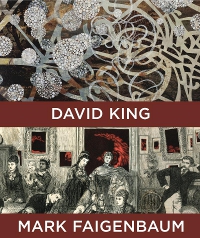
>>ASSEMBLAGE Collage artist David King was awarded a grant from the Pollock-Krasner Foundation last year, and he’ll be showing new work later this month at the Visual Aid booth at the San Francisco Fine Art Fair, one of three different art showcases taking place in SF during the third weekend of May. He’s also showing work, along with Mark Faigenbaum, at Inclusions Gallery from Saturday, May 14 through June 19. The opening reception is this Saturday from 6 to 8 p.m.

>>CHUCK IT We are all well aware that our days are numbered, and that they are going to be pretty well filled up doing more loads of laundry, cleaning the cat box, working, etc. What we really don’t have time for are any more bucket lists taunting us with 100 more things we have to do, see, eat, and ponder before the old dust to dust thing takes place. That’s why we were disheartened to see that there’s a new bucket list just for Giants fans: Bill Chastain’s 100 Things … . We have nothing against Chastain, but we do wish his publisher had come up with a better marketing scheme than this tired, gimmicky genre. Besides, with post World Series prices what they are, we can barely even afford to cross off item 39, “Attend a Game at AT&T Park,” let alone item 40, “Attend a Spring Training Game in Scottsdale.”

>>THE OUT-OF-TOWNERS If there’s one thing that separates the rubes from the natives, it’s pronunciation. Only a rube-and-proud-of-it would risk the derisive sniggering of Manhattanites by asking directions to Houston Street, pronounced like that city in Texas, or the rolled eyeballs of Show-Me Staters by rhyming the last syllable of their great state with “misery.” That’s why we are mystified that Muni hired such a collection of rubes (who may even be robotic rubes) to announce pending stops on its bus lines. Who approved “Di-VEYE-sa-dero”? And who signed off on “Valen-CHA”? Yo, Muni, you never heard the phrase “hire local”?

Small Business Awards Ceremony wrap-up

2

The Bay Guardian’s annual Small Business Awards party packed the upper room at Public Works May 11, with the winners and assorted friends and allies (including Sup. Ross Mirkarimi) enjoying the celebration of entrepreneurship and community. The hit of the night was Virginia Ramos, the Tamale Lady, winner of the Spirit of the Streets Award, who had the room spellbound as she talked of her life and her love for San Francisco. And it was clear that the diverse group of individuals and businesses all shared a strong belief that small, locally owned businesses make San Francisco great.

A Weekend homecoming

0

San Francisco’s Weekend is scheduled to hit up The Independent next Thurs/19, after a spell touring with the legendary post-punk band Wire. With fuzzed-out reverb-laden guitars, pounding rhythms, haunting vocals, and bass melodies that would make Peter Hook blush, this band has been all over the indie radar, drawing praises from every corner of the blogosphere. Pitchfork rated the trio’s 2010 Slumberland release Sports an 8.2/10, to which friends the Young Prisms twatted — excuse me, tweeted — in response, “Weekend was robbed. Should’ve been an 18.2.” Can we get an Amen?

Here’s a little taste of what’s in store for your eardrums:

http://www.youtube.com/watch?v=HNNdOPOTndI

http://www.youtube.com/watch?v=VJk41jsE_YQ

WEEKEND

With Clipd Beaks and Jealousy
Thurs./19 8 p.m., $12
Independent
2170 Market, SF
(415) 771-1421
www.independentsf.com


City officials pedal and praise on Bike to Work Day

6

photos by Luke Thomas/Fog City Journal

Almost every top city official pedaled up to City Hall this morning for the 17th annual Bike to Work Day, all pledging their support for expanding safe cycling opportunities in San Francisco and declaring the bike to be a vital part of the city’s transportation infrastructure that will only grow in importance in the coming years.

“We should all feel proud that we have more to celebrate than ever in the history of Bike to Work Day,” said Leah Shahum, executive director of the San Francisco Bicycle Coalition, which sponsored the event and facilitated the rides by city officials, including riding Sups. Jane Kim and Carmen Chu to work on tandem bikes. Shahum praised the city for rapidly expanding the network of bike lanes and facilities over the last year.

Shahum accompanied Mayor Ed Lee on a ride along JFK Drive in Golden Gate Park (which Lee announced will soon get the city’s next separated green bikeway), along car-clogged Fell and Oak streets, through the Wiggle, and along Market Street toward City Hall.

Lee told us, “I feel good, exhilarated,” as he neared City Hall, where he and officials gave speeches praising bikes and calling for improvements to the system. “I want to experiment with ways to have detached bike lanes on Fell and Oak,” Lee said to the applause of cyclists familiar with competing with cars on those fast-moving streets.

Lee also declared his support for the goals of SFBC’s Connecting the City initiative, which calls for a system of safe, crosstown bikeways, connecting the bay to the ocean and the northern waterfront to the south side of the city. He also called for continuing the green bike lanes on Market Street all the way to the Ferry Building and said, “I’m dedicated to it.”

Board President David Chiu, who sponsored the legislation that set the goal of achieving 20 percent of all vehicle trips by bicycle by the year 2020, said he was proud to see so many bikes on the streets today. “Thank you for showing the world how we roll,” he told the crowd, also voicing his support for the crosstown bike route plan. “We have to imagine safe enough conditions for 8- and 80-year-olds to bike.”

“It makes us a healthier, happier, and more vibrant city when we bike together,” Sup. Eric Mar told the gathering.

Sup. Sean Elsbernd was the only member of the board not to bike today, but his fellow fiscal conservative Sup. Mark Farrell biked in from District 2 and told the gathering that improving the city’s bicycling infrastructure “is critical to our future.”

Chu doesn’t ride a bike, but she hoped on a tandem bike with SFBC board member Amandeep Jawa and told him, “Thanks for helping me see San Francisco in a new way,” noting her new appreciation for the sights, smells, and small details that opened up along a route to work that she usually drives.

Sup. Ross Mirkarimi called his District 5 the “epicenter” for cycling in the city and declared, “It’s time that we take back Masonic Boulevard…to make sure it’s safe for bicyclists and pedestrians.”

Sup. Jane Kim told the crowd, “I grew up a city girl and I never learned how to ride a bike,” but said that former SFBC director Dave Snyder and others have been trying to teach her recently. In her ride in on the back of a tandem bike, “I got to feel how unsafe it is to have cars and buses jostle around you.”

Sup. Scott Wiener told the gathering, “This was my first Bike to Work Day and it’s not going to be my last.”

Sup. David Campos told us he really enjoyed his ride up Valencia Street, where the stoplights are timed to the pace of bicyclists. “It’s the best ride in the city. If we can make more streets like Valencia we’d be in better shape,” Campos told us.

In his speech, Campos said, “We have so much happening around bicycling, bu we also have a long way to go.”

Sup. Malia Cohen said she biked the longest way in to City Hall, all the way from 3rd Street and Thomas, and that she was happy about both the bike infrastructure improvements and carfree events like Sunday Streets. “I want to encourage you all to come out to the Bayview for Sunday Streets [on June 12],” she said.

For all the celebration and improvements to the system, Sup. John Avalos said it’s important to continue establishing respect on the roads for bicyclists. “We have to change many minds about biking in San Francisco,” he said.

To illustrate the increasingly important role that bicycling is playing in San Francisco, SFMTA Commissioner Cheryl Brinkman cited city studies showing a 58 percent increasing in the number of cyclists on the streets of San Francisco over the last four years, noting a comparable increase in Muni ridership or in motorists on the roads would have resulted in gridlock in those systems.

“It’s a good lesson for us,” Brinkman said, voicing support for the goal to creating 100 miles of dedicated bikeways throughout the city in order to promote safe cycling.

Let ’em know, Vieux Farka Touré

0

Sunny, fresh spring days like these make me want to grab my Nishiki and ride out to — screw work — dappled country roads. For this kind of idyllic impetuousity, one could ask for no better soundtrack than the thoroughly African, thoroughly rock ‘n’ roll riffs of Vieux Farka Touré, heir apparent to the dad Ali Farka Touré’s indigo Malian blues throne.

To mark the release of The Secret, a recent relase featuring traditional African instruments like the n’goni and vocal stylings by — Dave Matthews? (He is — South — African, after all, and Touré calls his voice “diabolical,” which we hope is a good thing.) Touré is making a much-anticipated voyage to the Bay Area that will kick off this weekend with a concert at the Independent (Sun/15). But perhaps most exciting of all, he’ll be teaching an African blues guitar master class the next day at St. Cyprian’s Church. Crib some of his skills and you can be on the guest list for my next backroads cruise (does your six string fit in your pannier?). 

We caught him via electronic mail for a chat about teaching, and having a kickass dad. 

San Francisco Bay Guardian: I’m interested in this guitar class you’re giving next week. What can you really teach someone in a single day about playing an instrument?  

Vieux Farka Touré: Of course I can’t teach more than the basic idioms of playing Malian blues. But I can show some basic styles and methods that open up the guitar to African style improvisation. There are several differences, technical and mental, between playing African music and Western music. So we’ll explore those difference and I’ll offer a few “secrets.”   


SFBG: Have you taught many other classes? Why do you spend time teaching?  

VFT: I have students in Mali a lot, including Americans. In life, one must always be a student and a teacher. It does good for humanity.   


SFBG: Was your dad your teacher growing up? What was that like learning from a musical legend? 

VFT: I was not aware of my father’s international fame until I traveled with him to France when I was a teenager. Of course, I knew how he was respected in Mali. But anyways, I didnt really learn guitar from him (though I learned so many other lessons about life from him). It was my uncle Afel Bocoum who brought me into music in niafunke when I was young, and then I studied at the Arts Institute in Bamako. Then both Toumani Diabate and my father began teaching me things. I am very lucky to have had these mentors. They hold wisdom of hundreds of years in their fingers.   


SFBG: At this point in your career, what are you still learning about on the guitar? 

VFT: I am always learning. I’m learning different styles, different scales and modes, and above all control. You can never have 100 percent control of your instrument, but you can also get closer to 100 percent.   


SFBG: You’re getting the chance to share your music all over the world — and learn from the rest of the world in return. How is that opportunity affecting your music? 

VFT: I think you can hear that in my albums and in my live show. There is a consistent base, like the base of a soup, but thrown in are rock, funk, reggae, Arabic styles, even hip-hop sometimes. All together they make my personal sound and make me a new branch on the tree of Malian music.


Guitar master class with Vieux Farka Touré

Mon/16 7 p.m., $40

St. Cyprian’s Church

2097 Turk, SF

(415) 259-1658

www.brownpapertickets.com/event/171012


Upcoming concerts:  

Sun/15 8 p.m., $15

The Independent

628 Divisadero, SF

(415) 771-1421

www.theindependentsf.com


Tues/17 8 p.m., $21

Mystic Theatre

23 Petaluma Blvd. North, Petaluma

(707) 765-9211

www.mystictheatre.com

City’s local power program will be greener, but not so local, at first

The San Francisco Public Utilities Commission (SFPUC) is in negotiations with Shell Energy North America to purchase power for a new version the city’s community-choice aggregation (CCA) program that will be smaller — but greener — than what city officials had originally envisioned.

While the forward momentum and the prospect of offering 100 percent renewable energy seems to have ushered in a rare moment of harmony among the players in City Hall who are crafting the program, not all the grassroots advocates were fully sold on the idea, saying they were still waiting to see how committed the city was to moving ahead with a plan to build municipal green energy facilities which could ultimately bolster the local economy and create jobs.

The new plan for CleanPower SF was unveiled by the SFPUC at a May 6 meeting of the Local Agency Formation Commission (LAFCo), which has been working with the city’s utility commission for half a decade to implement CleanPower SF. Emerging after a false start last year, the new plan would target 75,000 electricity customers at the outset – far less than under the original idea of enrolling all of San Francisco’s Pacific Gas & Electric Co. customers while providing the chance to opt out.

The CCA would offer 100 percent renewable power right off the bat, instead of the 51 percent renewable target that was previously envisioned. That fully green product offering is possible because the city would hire a contractor, most likely Shell, to purchase the green energy on the open market. The energy mix could be derived from sources within California or out of state.

“We’re having productive discussions,” noted Mike Campbell, who directs the CCA program for the SFPUC, but noted that it would be awhile yet before all the terms of the deal were cemented. Shell also contracts with the Marin Energy Authority for its CCA program, which San Francisco is looking to as a model.

The new scheme abandons a prior goal of meeting or beating PG&E electricity rates, but the SFPUC justified this switch by pointing to market research suggesting that the higher price would not necessarily subvert the program’s success.

Campbell said the new model came to fruition after poll results identified a core segment of San Franciscans who would be willing to stick with the green power program even if the price was slightly higher. “There’s such a strong segment of folks who are eager to do something about global climate change,” he said.

Campbell added that estimated generation fees could climb from around 7 cents to 13.5 cents per kilowatt-hour, amounting to a roughly $10 monthly utility bill increase on average. Since PG&E is expected to increase rates for customers who use less energy, “it’s going to help make it more attractive,” Campbell noted.

The new plan seemed to sit well with Ross Mirkarimi, a longtime advocate for community choice who chairs the Local Agency Formation Commission, which is tasked with overseeing the SFPUC’s implementation of the program. “The new program has great potential and goes where PG&E can’t or won’t,” Mirkarimi told the Guardian. “Carving out a customer niche that delivers a true green load is strategically more beneficial to the longevity of CCA in San Francisco. Once we establish an economic foundation for CCA, we then are positioned to build a renewable energy infrastructure as originally envisioned.”

Mirkarimi noted that the forward momentum had changed the dynamic in a historically fractious process, since, after years of being at loggerheads, the SFPUC and LAFCo finally seemed to be on the same page.

Both Campbell and Mirkarimi acknowledged that they expected PG&E to put up a fight, as it did when Marin County rolled out its CCA using a similar model to the one San Fransico now plans to adopt. Since PG&E will still be in charge of customer billing, it could employ tactics such as artificial spikes as it did in Marin to try and scare off CCA customers. “We do expect PG&E to do everything it can think of to try and encourage customers not to participate,” Campbell said.

Meanwhile, organizers from the San Francisco Green Party and the Local Clean Energy Alliance, who have closely tracked the process and held meetings with the SFPUC, say they’re supportive of the general concept but are still waiting to see whether the city is fully dedicated to laying the groundwork for building city-owned energy generating facilities.

Over time, this aspect of the program — which has been part of the plan all along — could supply green energy locally, gradually replacing the energy supply that Shell would be purchasing from elsewhere. San Francisco Green Party organizer Eric Brooks also pointed out that over time, city-owned generating facilities and local energy-efficiency upgrades could enable the SFPUC to bring down the cost of the green power to make it competitive with PG&E.

Campbell noted that the city would move ahead with the build-out, but “it certainly won’t be in the first year.”

Unless the build-out aspect of CCA moves ahead with a strong level of commitment, said Al Weinrub of the Local Clean Energy Alliance, the social-justice goals of creating new jobs and bringing generation costs down to make green power accessible to everyone may not be realized.

“We have a commitment from staff that they will pursue studies” to move ahead with the build-out, noted Weinrub. “The problem … is that they’re really dragging their feet.” He added, “We’ll have a lot of trouble supporting CleanPower SF is there’s no local build-out.”

Organizers also voiced concerns that without moving forward with this second element, the CCA could end up catering exclusively to an upper-middle class, predominately white customer base.

At the LAFCo meeting, the SFPUC delivered a presentation explaining the results of the poll that had been conducted to determine who would purchase green electricity from CleanPower SF. A longer version of that presentation, delivered to grassroots advocates in a separate meeting and provided to the Guardian by Brooks, showed that on average, CleanPower SF customers were expected to have higher levels of education and higher income levels — individuals making more than $100,000 per year had the greatest enthusiasm for the program. Those results also showed that 67 percent of survey respondents representing African American, Asian / Pacific Islander, or other communities of color indicated that they would not be interested in enrolling in CCA when they were given information about the program and the estimated rates.

Weinrub said this demographic profile of the initial CCA customer base would be problematic if it represented the only customers who would ever subscribe, because the whole notion of CCA from the start had been to create an accessible, community-owned power source that benefited San Franciscans across the board and offered an alternative to PG&E. But he said he believed the program could have more widespread appeal and grow its customer base if there was a sound strategy to bring down rates over time by employing local energy generation and energy-efficiency projects. “Our whole pitch is, what about everybody else?” he said. “We feel pretty strongly that with a well designed build-out program, you can offer very competitive services.”

From the bike lane to the bed, ride like a messenger

5

Bulging thighs pump, shiny parts glimmer and sweaty bodies pedal between the loins of the city. Is Bike To Work Day getting you all hot and bothered, too? Steer the excitement of the bike lane straight into the bedroom and take style notes from the ultimate ride professionals: bike messengers. 

Not all bike messengers are the same, but one thing remains true for any and all that claim the profession: these people are sex on two wheels. Average bikers are hot, too, but messengers are the porn stars of bike culture. Badass, fast, and cocky seem like fair stereotypes, perfect characteristics for tending to spring urges. Hop on the saddle and get ready to romp and ride with messenger mentality. 

Be brave: Biking in San Francisco can be terrifying. Muni tracks, lazy drivers, and mean taxis are real threats, but bike messengers puff up their chests and let adrenaline take the reins. Get adventurous in the sack and shake your fears of the unknown. If you’ve got a pre-planned route, veer off and take a backroad. Try role playing the part of a sleazy bike mechanic and service your lover’s bod. Remember: the customer is always right!


mess1

San Francisco Bicycle Messenger Series at www.BerylFine.com


Be assertive: Messengers make decisions on the fly. If you second guess your instincts, you may end up with road rash or an awkward stall in play. Read the signs and listen for your partner’s directions.

Be healthy: Biking is real good for the body. All those miles keep your heart in great shape and keep blood flowing to all the right spots. They make drink a lot of beer, but messengers work it all off on their route. Talk about stamina. Get some exercise to make sure your organs are up to speed and can perform at their full potential. 

Be hard: That ass! Those thighs! Bike bods rock; their extra-toned areas are prime for spanking, grabbing, cupping, riding, and thrusting. Get your own in gear.


mess_2


Be eco-sexy: Dependency on fossil fuels isn’t hot. Do as the messengers do and pedal instead of drive. Take a romantic ride or race to a secluded spot with your fuck buddy for a naked picnic. 

Be dirty: Sweat and grime is a consequence of the job. Don’t be afraid to get rough and smelly under the sheets. Who cares. Lick it up. 

Be safe: Some messengers probably think they’re too cool for helmets, but no penis is too cool for a condom. Unless you really know the road, it’s always better to be cautious and avoid running your tires through a muddy pothole or STD.


mess_3


And finally…

Be prepared: Messenger bags are big for a reason: you can fit all kinds of fun party favors in there. Booze, toys, lube, Advil, kneepads, clean underwear, and anything you could ever need can fit into one of those back sacks. Stock up your stash at home, in the car, the office, your purse, and wherever else you might want some spontaneous spunk. 


Will SF follow Portland on FBI spy concerns?

1

The Human Rights Commission and the Police Commission will hold a May 18 joint hearing at City Hall to discuss a recently released memo between the SFPD and the FBI that suggests that SFPD officers assigned to the FBI’s Joint Terrorism Task Force are under the control & rules of the FBI. The concern is that the memo allows SFPD officers to circumvent local intelligence-gathering policies, departmental orders and California privacy laws that prevent spying on people without any evidence of a crime. And the hearing comes a few weeks after Portland’s City Council unanimously approved a resolution that Portland Mayor Sam Adams introduced to clarify that Portland and FBI have decided not to enter into a Memorandum of Understanding (MOU) for the JTTF, but that the City will be cooperating with the JTTF according to the terms of Adams’ resolution.

During Portland’s public hearing, the American Civil Liberties Union (ACLU) of Oregon testified in support of the resolution, while raising concerns about the current and past practices of the FBI and the need to ensure that City personnel comply with Oregon laws.

“The Mayor’s proposal represents a thoughtful framework that should meet the City’s and the FBI’s needs to keep our community safe while also ensuring that Portland police stay within the confines of the Oregon Constitution and Oregon Charge of such violations, and a public annual report on the work the Portland Police Bureau does with the FBI JTTF,” ACLU Legislative Director Andrea Meyer stated.

“It is not a question of if but when, our officers will be asked to engage in investigative activities in violation of Oregon law,” Meyer testified. “To guard against this, we expect that there will be appropriate training of PPB personnel not just on Oregon law but on the FBI guidelines and the minimal criteria necessary for them to be able to engage in assessments and preliminary inquiries so that our PPB officers will be equipped to ask the right questions and refuse to participate and report this to the Chief and, in turn, the Commissioner-in-Charge.”
 
During Portland’s hearing, Mayor Adams stressed that the FBI’s standard JTTF MOU (which is similar to the agreement SFPD officers have operated under since March 2007) —is neither clear nor adequate in terms of addressing local civil rights concerns. And that’s why he sought and won federal consent for a non-MOU arrangement with Portland participating on a limited basis, on its own terms, with local civilian oversight and involvement from the City Attorney.  

“The question pending in SF is whether local officials — from the Police Commission, to City Attorney, to Mayor, will eventually insist on a similarly protective arrangement here, “John Crew of the ACLU of Northern California told the Guardian. “Right now, Portland shows what’s possible, and what the federal government will accommodate. I don’t know why Bay Area cities would not insist on at least something this strong.”

San Francisco’s joint hearing takes place May 18, 5:30 p.m. – 8:30 p.m. in Room 250 at City Hall.

California: The old, the rich and the poor

4

California is getting older and poorer. That’s what the new census data shows. And everyone knows the combination is a troubling mix:


“We have a longevity revolution happening, and in San Francisco we’re calling it ‘the silver tsunami,’ ” said Valorie Villela, director of the 30th Street Senior Center. “It’s hitting hard, and once again our society is not prepared.”


She said her research shows that by 2025 in San Francisco, 1 in 5 people will be older than 65 and the number of people older than 85 will have doubled. That trend is coming at a time when the state has been running huge deficits year after year, forcing cuts to services such as adult day care and Medi-Cal.


It’s particularly intriguing since one out of every five billionaires in America lives in California. So we don’t have enough money to take care of our seniors, and things are just going to get worse — but there’s a vast amount of wealth in the state. You wonder.


If the state had four million people between the ages of 18 and 25 who had no money, no prospects, not enough to eat and no place to live while a handful of billionaires were living fat and happy and controlling an outsized portion of the state’s wealth, that would be a recipe for, well, fighting in the streets.


Seniors tend to vote more than kids, but they don’t, so far, tend to march and riot and break things and threaten the security of the wealthy (and the politicians who cater to them). But the next wave of seniors is different; the baby boomers know all about taking it to the streets. And they’re living longer and healthier. Your average 65 year old today can carry a torch and a pitchfork just fine. Some of them can even throw rocks and bottles and shout “Eat the Rich!” (Hey, they’ve been there and done that already. Still got the notes.)


So I think it’s safe to say that this current trend ain’t sustainable. And even the Republicans up in Sacramento ought to get that. Nothing is worse for plutocracy than a crowd of hungry, angry seniors who spent their college years in the SDS.

Draft Kucinich to run against Pelosi

20

Bay Area progressives are constantly searching for a solid candidate to run against Rep. Nancy Pelosi, an Establishment figure who has helped lead this country down a disastrously unsustainable path, but nobody has ever been able to mount a serious challenge to this powerful incumbent. So here’s an idea: how about recruiting Dennis Kucinich, the representative from Ohio whose principled politics have made him a hero to progressives.

As Kucinich himself confirmed today in an email blast to supporters, there’s an effort underway in Ohio right now to carve up his district through reapportionment and he is actively looking from a new base of operations should that come to pass. While he’s rumored to be considering a move to Washington state, which will get another seat in Congress, I can’t imagine a better ideological fit for Kucinich than San Francisco.

So what do you say, comrades, is it time to launch a campaign to lure Kucinich to the Bay Area?

His message — entitled “My next move?” — follows:

You may have heard some rumors over the past week, so I wanted to set the record straight with you: While I’m committed to representing the 10th District of Ohio, I will not rule out a run elsewhere should my district be eliminated or radically altered through redistricting.

From Afghanistan to workers rights, Libya to climate change, there’s simply too much at stake for our voice to be eliminated. We cannot let a group of downstate politicians silence me and our movement – they would like nothing more than to stop hearing our calls for peace over violence and the people’s interests over corporate handouts.

So, no, we’re not going to quietly fade away, and let the corporate interests and status quo have its way. Instead, we’re gearing up for a long and difficult campaign in 2012 – wherever that may be. I know it’s worth it, and I know we can prevail. But I’ll need your help. Can you donate $25, $50, or $100 dollars today?

http://kucinich.us/contribute

I’ve been approached by supporters across the country – from Washington to Maine – to explore options outside Ohio should redistricting force me out of my current district. It has been truly humbling to see the support that has been expressed for me to continue my work in Congress. Right now, my efforts and focus remain on representing my constituents in the 10th District and fighting for peace and justice, but as we plan for our movement’s future, I will consider all of these ideas to keep our voice in Congress.

And I say the same to you right now. Do you have a comment or idea I should consider? Is there a option you would like me to explore? If so, let me know by clicking here: options@kucinich.us

Thanks for being with me.

With respect,

Dennis Kucinich