San Francisco

Stage Listings

0

Stage listings are compiled by Guardian staff. Performance times may change; call venues to confirm. Reviewers are Robert Avila, Rita Felciano, and Nicole Gluckstern. Submit items for the listings at listings@sfbg.com. For further information on how to submit items for the listings, see Picks. For complete listings, see www.sfbg.com.

THEATER

OPENING

Gilligan’s Island: Live On Stage! 2011 Garage, 975 Howard, SF; www.brownpapertickets.com. $10-20. Opens Sat/6, 8pm. Runs Sat-Sun, 8pm. Through Aug 28. Moore Theatre and SAFEhouse for the Performing Arts presents this updated, ribald take on TV’s classic castaways.

A Midsummer Night’s Dream Steve Silver Theater, 1101 Eucalyptus (on the Lowell High School campus), SF; www.bathwater.org. $20. Opens Thurs/4, 7:30pm. Runs Thurs-Sat, 7:30pm. Through Aug 20. Bathwater Productions performs an acrobatic version of the Shakespeare classic.

Peaches en Regalia Stage Werx, 533 Sutter, SF; www.wilywestproductions.com. $12-24. Opens Thurs/4, 8pm. Runs Thurs-Sat, 8pm. Through Aug *7. Wily West Productions performs company director Steve Lyons’ quirky comedy.

BAY AREA

“2011 New Works Festival” TheatreWorks at Lucie Stern Theatre, 1355 Middlefield, Palo Alto; (650) 463-1960, www.theatreworks.org. $19-29. Schedule varies; runs Aug 7-21. TheatreWorks presents its annual festival of new musicals and plays, performed in workshop or staged-reading form, plus a panel discussion.

ONGOING

Act One, Scene Two SF Playhouse, Stage Two, 533 Sutter, SF; (415) 869-5384, www.un-scripted.com. $10-20. Thurs-Sat, 8pm. Through Aug *0. Un-Scripted Theater Company hosts a different playwright each night, performing the first scene of an unfinished play and then improvising its finish.

“AfroSolo Arts Festival” Various venues, SF; www.afrosolo.org. Free-$100. Through Oct *0. The AfroSolo Theatre Company presents its 18th annual festival celebrating African American artists, musicians, and performers.

American Buffalo Actors Theatre of San Francisco, 855 Bush, SF; (415) 345-1*87, www.actorstheatresf.org. $26-38. Wed-Sat, 8pm. Through Sept 3. Actors Theatre of San Francisco performs the David Mamet crime classic.

Billy Elliot Orpheum Theater, 1192 Market, SF; www.shnsf.com/shows/billyelliot. $35-200. Tues-Sat, 8pm (also Wed, 2pm); Sun, 2pm. Through Aug 21. As a Broadway musical, Billy Elliot proves more enjoyable than the film. The movie’s T. Rex score may have been a major selling point, but it was a bit maudlin for a story that needed no help in that department. The musical naturally has a sentimental moment or three, but it’s much more often funny, muscular in its staging (with repeatedly inspired choreography from Peter Darling), and expansive in its eclectic score (Elton John) and well-wrought book and lyrics (Lee Hall). Moreover, Stephen Daldry (who also directed the *000 film) plays up bracingly the too-timely class politics of the modest 1980s English mining town besieged by Margaret Thatcher’s neoliberal regime in the latter’s ultimately successful bid to crush the once-powerful miners union. The cast is likewise very strong. The second act is not as strong as the first, but as crowd-pleasing entertainment the musical burrows deep and more often than not comes up with gold. (Avila)

Country Club Catastrophe Exit Theatre, 156 Eddy, SF; www.brownpapertickets.com. $20. Thurs-Sat, 8pm. Through Aug 13. Back Alley Theater Company performs its first original production, a farcical comedy set at a country club.

Left-Handed Darling Exit Theatre, 156 Eddy, SF; www.brownpapertickets.com. $15-30. Fri-Sat, 8pm. Through Aug 13. Foul Play Productions perfomrs the world premiere of Nikita Schoen’s Dust Bowl-era drama.

Tigers Be Still SF Playhouse, 522 Sutter, SF; www.sfplayhouse.org. $30-50. Tues-Wed, 7pm; Thurs-Sat, 8pm (also Sat, 3pm). Through Sept 10. SF Playhouse performs Kim Rosenstock’s quirky comedy.

What Mamma Said About Down There SF Downtown Comedy Theater, 287 Ellis, SF; www.sfdowntowncomedytheater.com. $15. Thurs-Sat, 8pm. Through Aug 20. Sia Amma returns with her solo comedy.

BAY AREA

Communicating Doors Live Oak Theatre, 1301 Shattuck, Berk; www.aeofberkeley.org. $12-15. Fri-Sat, 8pm; Aug 14, 2pm. Through Aug 20. Actors Ensemble of Berkeley performs Alan Ayckbourn’s “time-travel-battle-of-the-sexes comedy.”

The Complete History of America (abridged) Dominican University of California, Forest Meadows Amphitheater, 1475 Grand, San Rafael; (415) 499-4488, www.marinshakespeare.org. $20-35. Performance times vary; check website for schedule. Through Sept. 25. Marin Shakespeare Company performs Adam Lon, Reed Martin, and Austin Tichenor’s three-person romp through American history.

East 14th: True Tales of a Reluctant Player Marsh Berkeley, 2120 Allston, Berk; www.themarsh.org. $20-50. Sat/6, 8:30pm; Sun/7, 7pm. Don Reed’s hit solo comedy receives one last extension before Reed debuts his new show (a sequel to East 14th) in the fall.

Fly By Night Lucie Stern Theatre, 1305 Middlefield, Palo Alto; (650) 463-1960, www.theatreworks.org. $19-69. Tues-Wed, 7:30pm; Thurs-Sat, 8pm (also Sat, 2pm); Sun, 2 and 7pm. Through Aug 13. TheatreWorks performs the world premiere of Kim Rosentock, Michael Mitnick, and Will Connolly’s musical, set in 1965 New York.

Macbeth Dominican University of California, Forest Meadows Amphitheater, 1475 Grand, San Rafael; (415) 499-4488, www.marinshakespeare.org. $20-35. Performance times vary; check website for schedule. Through Aug 14. Marin Shakespeare Company takes on the Scottish play.

Madhouse Rhythm Cabaret at Marsh Berkeley, 2120 Allston, Berk; (415) 282-3055, www.themarsh.org. $15-35. Thurs, 7:30pm. Through Aug 25. Joshua Walters performs his hip-hop-infused autobiographical show about his experiences with bipolar disorder.

A Midsummer’s Night Dream This week: Rengstorff House, 3070 N. Shoreline, Mtn View; www.womanswill.org. Free (donations requested). Sun/7, 2pm. Performances continue at Bay Area parks through Aug 21. Woman’s Will performs the Shakespeare favorite.

Not a Genuine Black Man Marsh Berkeley, TheaterStage, 2120 Allston, Berk; 1-800-838-3006, www.themarsh.org. $20-50. Sat, 5pm (also Sept 8 and 22, 7:30pm). Through Sept 24. This is it: the final extension of Brian Copeland’s solo show about growing up in (nearly) all-white San Leandro.

Reduction in Force Berkeley City Club, 2315 Durant, Berk; (510) 558-1381, www.centralworks.org. $14-25. Thurs-Sat, 8pm (also Aug 20 and 27, 5pm); Sun, 5pm. Through Aug 28. Central Works performs “an economic comedy about back-stabbing, ass-kissing, and survival of the sneakiest.”

The Road to Hades John Hinkel Park, Southampton Ave, Berk; (510) 841-6500, www.shotgunplayers.org. $10 (suggested donation; no one turned away for lack of funds). Sat-Sun, 3pm. Through Sept 11. Shotgun Players presents a new comedy written by and starring veteran comedian and clown Jeff Raz.

Strange Travel Suggestions Cabaret at Marsh Berkeley, 2120 Allston, Berk; (415) 282-3055, www.themarsh.org. $20-50. Fri, 8pm; Sat, 5pm. Through Aug 27. Jeff Greenwald returns with a new version of his hit show of improvised monologues about travel.

2012: The Musical! This week: Lakeside Park, Bellevue and Perkins, Oakl; www.sfmt.org. Free. Wed/3-Thurs/4, 7pm. Peacock Meadow, Golden Gate Park, SF. Sat/6, 2pm. Glen Park, Bosworth and O’Shaughnessy, SF/ Sun/7, 2pm. Continues through Sept. 25 at various Bay Area venues. San Francisco Mime Troupe mounts their annual summer musical; this year’s show is about a political theater company torn between selling out and staying true to its anti-corporate roots.

PERFORMANCE/DANCE

DanceWright Project and Labayan Dance/SF Dance Mission Theater, 3316 24th St, SF; www.brownpapertickets.com. Fri-Sat, 8pm; Sun, 7pm, $18. The companies share the stage to present their joint 2011 summer/fall season.

“Fireside Storytelling: Spectacular Injuries” Jellyfish Gallery, 1286 Folsom, SF; www.jellyfishgallery.com. $10. Storytelling with Quintin Mecke, Chris Spurrell, Lori “Switch” Ayres, Damian Chacona, and more.

“Five Funny Females Festival” Purple Onion, 140 Columbus, SF; www.5funnyfemales.eventbrite.com. Fri-Sat, 8 and 10pm. $22. This fest’s format hightlights five different female comedians during each set, with host Susan Alexander.

Live stand-up comedy and belly dancing Four Star, 2200 Clement, SF; (415) 666-3488. Thurs, 8pm. $7. Variety show with Johnny Steele, Kurt Weitzmann, and other comedians, plus magician Charlie Martin, Rasa the belly dancer, and more.

“Previously Secret Information” Stage Werx Theatre, 533 Sutter, SF; www.previouslysecretinformation.com. Sun, 7 and 9:30pm. $25-35. This month’s edition of the storytelling series features Greg Proops, Joe Klocek, and Dhaya Lakshminarayanan.

“The Unbearable Lightness of Raya (The *011 Remix)”/”Halloween! The Ballad of Michele Myers” CounterPULSE, 1310 Mission, SF; 1-800-838-3006, www.counterpulse.org. Fri-Sun, 8pm. $15-20. Drag superstar Raya Light stars in her San Francisco Fringe Festival hit musical, with updates, in a performance paired with a drag (and musical) take on slasher films.

Film Listings

0

Film listings are edited by Cheryl Eddy. Reviewers are Kimberly Chun, Michelle Devereaux, Max Goldberg, Dennis Harvey, Louis Peitzman, Lynn Rapoport, Ben Richardson, and Matt Sussman. For rep house showtimes, see Rep Clock.

SAN FRANCISCO JEWISH FILM FESTIVAL

The 31st San Francisco Jewish Film Festival runs through August 8 at the Christopher B. Smith Rafael Film Center, 1119 Fourth St., San Rafael; Oshman Jewish Community Center, 3921 Fabian Way, Palo Alto; and Roda Theatre at Berkeley Rep, 2025 Addison, Berk. For tickets (most shows $12) and a full schedule, visit www.sfjff.org.

OPENING

*Between Two Worlds See “Whose Voice?” (1:10) Roxie.

The Change-Up This brom-com just might go down as the one where Ryan Reynolds proves his acting chops by playing a creepy Peter Pan and an upstanding family man with Jason Bateman’s physical tics. And it’s almost good enough to wipe out those terrible memories of Reynolds’ dances with CGI in Green Lantern. Yet 2011 summer movies’ MVP Bateman still manages to steal all the best scenes as both the straight man and the kidult-in-a-grown-up’s-body: namely those R-pushing moments he’s changing diapers and taking a face full of baby poo, coming on like a pink-Polo’d jackass at a big-money meeting, and watching the woman of his dreams saunter into the can to cope with backfiring Thai grub. It’s the stuff of fantasy — as well as some clever writing and considerable buddy-buddy chemistry — when career-climbing, do-right lawyer Dave (Bateman) and perpetual playa Mitch (Reynolds) voice envy for each other’s lives while pissing into a magical fountain. The old switcheroo inexplicably occurs the next morning when each chum find himself in the other’s body. Fortunately the Freaky Friday (1976) kookiness that ensues rises a bit above the safe norm by plunging headlong into all the cringey discomfort that comes with watching babies toy with cleavers and electrical outlets. The Change-Up is completely ludicrous, fo’ sho’, and never really strays from the reassuring confines of its story arc, but the laughs accompanying its morning-afters will satisfy more than any new Hangover. (1:52) (Chun)

*Crime After Crime See “Time Served.” (1:33) Elmwood, Roxie, Smith Rafael.

The Devil’s Double Lee Tamahori directs Dominic Cooper in this 80s-set drama about Saddam Hussein’s sinister son Uday and his reluctant body double. (1:48)

The Guard Irish police sergeant Gerry Boyle (Brendan Gleeson) is used to running his small town on his own terms — not in a completely Bad Lieutenant (1992) kind of way, though he’s not afraid to sample drugs and hang with hookers. More like, he’s been running the show for years, and would prefer that big-city cops stay the hell out of his village. Alas, a gang of drug smugglers is doing business in the area, so an officious group of investigators from Dublin (horrors!) and America (in the form of an FBI agent played by Don Cheadle) soon descend. His mother’s dying, his brand-new partner’s missing, and between all the interlopers on both sides of the law, Boyle’s having a hard time having a pint in peace. Good thing he’s not as simple-minded as all who surround him think he is. Writer-director John Michael McDonagh (brother of playwright Martin, who directed 2008’s In Bruges — also starring Gleeson) puts an affable Irish spin on what’s essentially a pretty typical indie comedy, with some pretty typical crime-drama elements layered atop. Boyle’s character is memorably clever, but the film that contains him never quite elevates to his level. (1:36) Embarcadero. (Eddy)

*Magic Trip How to bottle the lysergic thrills and chills of a monumental road trip that marked the close of the Beat Generation era and the dawn of the hippie years? Remarkably, Ken Kesey and his Merry Pranksters did just that — and with the help of directors-writers Alison Ellwood and Alex Gibney, their efforts have been retrieved from the swamps of yesterday. You don’t have to be a Summer of Love easy rider, Kesey reader, Deadhead, or acid gobbler to appreciate the freewheeling energy and epoch-making antics of Magic Trip, which arrives well-outfitted in much invaluable, real-deal-y footage and audio of Kesey, driver Neal Cassady, and the proto-Merry Pranksters, shot during their 1964 trip from La Honda to the World’s Fair in NYC, off, on, and hovering 10 miles above the paint-strewn school bus named Further. Already viewed through the lens of Tom Wolfe’s The Electric Kool-Aid Acid Test, the trip unfolds in all its truly weird, silly, LSD-laden, improvised, awkward, flailing, freeing glory, as the filmmakers gracefully sidestep the audio sync problems that drove Kesey to give up on assembling the film himself. Instead Ellwood and Gibney contextualize the hijinks with voice-over interviews from Pranksters prepped to look back on the journey’s consciousness-expanding trips, both good and bad, and imaginatively animate memorable asides, including a tape recording of Kesey’s first LSD experiments as a Stanford student. “What long, strange trip,” indeed — and this affectionate document viscerally, wonderfully conveys why it changed lives as well. (1:47) Embarcadero. (Chun)

*Pianomania You think your job is detail-oriented, your bosses fussy? Walk a mile in the shoes of Stefan Knupfer, a Steinway technician — i.e. “piano tuner” — who must attend every minute aspect of each instrument’s inner workings, surrounding physical spaces, and their temperature fluctuations, idiosyncratically demanding players, etc. when preparing for either a live performance or studio session. “When I see the kind of life pianists have, I am very happy I can get off the stage when the public comes,” Knupfer explains. Nonetheless, he’s so dedicated to his job he has regular nightmares about strings breaking. His good-humored expertise and ingenuity make for engaging company on a multi-city itinerary, during which we meet a roll call of world-class virtuosi. Following this affable, unflappable protagonist over a year’s course, with an important Bach recording project at its end, this beautifully assembled documentary (a rare one these days shot on 35mm) by Lilian Franck and Robert Cibis should fascinate even those not especially attuned to classical music. (1:33) Opera Plaza. (Harvey)

Rise of the Planet of the Apes Fun fact: according to this origin story starring James Franco, the first supersmart apes were bred right here in San Francisco. (1:50)

Sarah’s Key Kristen Scott Thomas stars as a journalist in France who becomes deeply involved in a story she’s researching about the Jewish family forced by Nazis to vacate the home she now lives in. (1:42) Embarcadero.

ONGOING

Another Earth After serving a prison sentence for a youthful drunk-driving incident that killed two passengers in another car, Rhoda (Brit Marling) emerges no longer a blithe party girl but a haunted loner who prefers working as a high school janitor. Obsessed by her crime, she starts spying on the man it had left widowed and childless, a onetime composer (William Mapother) who like her has retreated into a solitary shell of depression. She finds a way to integrate herself (without revealing her identity) into his threadbare current existence, the two of them bonding over fascination with a newly discovered planet that appears the exact duplicate of Earth — complete with the possibility of our doubles living a parallel existence there. You can take Mike Cahill’s modestly scaled U.S. indie feature (cowritten with actor Marling) as a familiar drama about grief and repentance with a novel gloss of sci-fi, or as a sci-fi story with unusual attention to character emotions and almost no need of fantasy FX. Either way, it’s earnest, well-acted and interesting if not quite memorable; as has been noted elsewhere, the material could have fit just as effectively into a half-hour Twilight Zone episode. (1:32) Embarcadero, Sundance Kabuki. (Harvey)

*Attack the Block The Goonies go to a South London projects, with more gore, guts, and gumption? With good reason, writer, director, and Edgar Wright/Simon Pegg cohort Joe Cornish’s own project, Attack the Block, has been getting raves at fests for its effortless, energetic originality, discernible through its thick, glottal stop-chomping, Jafaican-draped local brogue. The question posed, ever so entertainingly: what happens when you pit the toughest kids on the block against a ferocious pack of outer-space critters — not quite out to serve man but rather sever him limb from limb? We start out seeing this gang of at-risk, risk-taking youth through the peepers of a vulnerable female mugging victim and neighbor, Sam (Jodie Whittaker)—they seem as scary as any alien invader and she wants to bring down the full force of the law on them. But the pack, led by Moses (John Boyega, who charismatically scowls like a young 50 Cent), has more pressing matters at hand: a mysterious creature has come crashing down from out of the sky, and naturally, being nasty terrors, they kill it, bringing down a intergalactic shit storm of trouble. Their favorite refuge: the top-floor weed room overseen by Ron (Pegg sidekick Nick Frost), where they attempt to suss out why they’ve become the prime prey for wolfish aliens out for blood. Throw in chills, bike chases, a resourceful use of elevators and dumpsters, and an epic, eerie dubstep theme by Basement Jaxx, and you have a very fun horror-thriller that declines to preach but manages to bring home a message reminiscent of Night of the Living Dead (1968). Consider this a whole-hearted, double-fisted antidote to the fearful vigilantism of films like 2009’s Harry Brown. (1:28) Metreon. (Chun)

*Beginners There is nothing conventional about Beginners, a film that starts off with the funeral arrangements for one of its central characters. That man is Hal (Christopher Plummer), who came out to his son Oliver (Ewan McGregor) at the ripe age of 75. Through flashbacks, we see the relationship play out — Oliver’s inability to commit tempered by his father’s tremendous late-stage passion for life. Hal himself is a rare character: an elderly gay man, secure in his sexuality and, by his own admission, horny. He even has a much younger boyfriend, played by the handsome Goran Visnjic. While the father-son bond is the heart of Beginners, we also see the charming development of a relationship between Oliver and French actor Anna (Mélanie Laurent). It all comes together beautifully in a film that is bittersweet but ultimately satisfying. Beginners deserves praise not only for telling a story too often left untold, but for doing so with grace and a refreshing sense of whimsy. (1:44) Elmwood, Lumiere. (Peitzman)

Bride Flight Who doesn’t love a sweeping Dutch period piece? Ben Sombogaart’s Bride Flight is pure melodrama soup, enough to give even the most devout arthouse-goer the bloats. Emigrating from post-World War II Holland to New Zealand with two gal pals, the sweetly staid Ada (Karina Smulders) falls for smarm-ball Frank (Waldemar Torenstra, the Dutchman’s James Franco) and kind of joins the mile high club to the behest of her conscience. The women arrive with emotional baggage and carry-ons of the uterine kind. As the harem adjusts to the country mores of the Highlands, Frank tries a poke at all of them in a series of sex scenes more moldy than smoldery. This Flight, set to a plodding score and stuffy mise-en-scene, never quite leaves the runway. Not to mention the whole picture, pale as a corpse, resembles one of those old-timey photographs of your great grandma’s wedding. These kinds of pastoral romances ought to be put out to, well, pasture. (2:10) Opera Plaza. (Ryan Lattanzio)

Buck This documentary paints a portrait of horse trainer Buck Brannaman as a sort of modern-day sage, a sentimental cowboy who helps “horses with people problems.” Brannaman has transcended a background of hardship and abuse to become a happy family man who makes a difference for horses and their owners all over the country with his unconventional, humane colt-starting clinics. Though he doesn’t actually whisper to horses, he served as an advisor and inspiration for Robert Redford’s The Horse Whisperer (1998). Director Cindy Meehl focuses generously on her saintly subject’s bits of wisdom in and out of a horse-training setting — e.g. “Everything you do with a horse is a dance” — as well as heartfelt commentary from friends and colleagues. In the harrowing final act of the film, Brannaman deals with a particularly unruly horse and his troubled owner, highlighting the dire and disturbing consequences of improper horse rearing. (1:28) Opera Plaza. (Sam Stander)

*Cameraman: The Life and Work of Jack Cardiff Cameraman: The Life and Work of Jack Cardiff is to a large extent exactly what is sounds like: a well-made documentary on one of cinema’s most prolific and well-regarded cinematographers. Featuring interviews with the elderly Cardiff himself as well as with Martin Scorsese, Kirk Douglas, Lauren Bacall, and others, Cameraman examines Cardiff’s career, from his beginnings in 1918 as a child actor through his early innovations with color film, his mastery of lighting, and his brief transition into directing. As much as this is a film about Cardiff, though, it’s also about the collaborative process of filmmaking and the artistry of cinematography. With big-name directors and actors soaking up the headlines, it’s easy to forget the talent behind the camerawork. Cardiff, who passed away in 2009 at the age of 94, was a true artist, as at ease with a lens as with a paintbrush. (1:30) Balboa, Smith Rafael. (Cooper Berkmoyer)

Captain America: The First Avenger OK, Marvel. I could get behind 2008’s Iron Man (last year’s Iron Man 2, not so much), but after Thor and now Captain America, I’m starting to get cynical about this multi-year build-up to the full-on Avengers movie, due in May 2012. Can even a superhero-stuffed movie directed by Joss Whedon live up to all this hype? There’s plenty of time to ponder, and maybe worry a little, with Captain America’s backstory-explaining picture now in theaters. Chris Evans stars as the 90-pound weakling who morphs into a supersoldier, thanks to the World War II-era tinkerings of a scientist (Stanley Tucci) and an inventor (Dominic Cooper as Howard Stark, a.k.a. Iron Man’s dad). The original plan for the musclebound shield-bearer (fighting Nazis, natch) gets waylaid a bit when the newly famous Captain America becomes a PR prop for the U.S. government; it’s abandoned entirely when a worse-than-Hitler foe, in the guise of power-obsessed Red Skull (Hugo Weaving), threatens the world. Directed by Spielberg cohort Joe Johnston, Captain America is gee-whiz enjoyable enough, but it’s very nearly the same movie as Thor, which no amount of Tommy Lee Jones (as a sarcastic army colonel) wisecracks can conceal. And here’s an anti-spoiler: there’s no post-credits surprise in this one, so you can bolt as soon as they start to roll. (2:09) Cerrito, Empire, 1000 Van Ness, SF Center, Sundance Kabuki. (Eddy)

Cars 2 You pretty much can’t say a bad thing about a Pixar film. Cars 2 is by no means Ratatouille (2007) or Wall-E (2008), but the sequel to the 2006 hit Cars offers plenty of sleek visuals and one-note gags under its hollow hood. If nothing else, Pixar seems to have overcome the dingy, dark glaze that plagues 3-D films. Directors John Lasseter and Joe Ranft return to beloved autos Lightning McQueen (Owen Wilson) and the “extremely American” Mater (Larry the Cable Guy). This time around, secret agents Finn McMissile (Michael Caine) and Holley Shiftwell (Emily Mortimer) come along for the ride while working to expose sabotage in the alternative fuel industry. Compelling chase sequences, explosions and more than a few jabs at cultural stereotypes follow suit. This is the lightest, silliest Pixar film to date, but you probably don’t have any business seeing it unless you’ve got a kid in tow. (1:52) SF Center. (Lattanzio)

Cowboys and Aliens Here ’tis in a nutshell: the movie’s called Cowboys and Aliens — and that’s exactly, entirely what you’ll get. Director Jon Favreau may never best 2008’s Iron Man (actor Jon Favreau will prob never top 1996’s Swingers, but that’s a debate for another time), but that doesn’t mean he won’t have a good time trying. Cowboys is a genre mash-up in the most literal sense; as the title suggests, it pits Wild West gunslingers (Harrison Ford as a crabby cattleman, Daniel Craig as an amnesiac outlaw) against gold-seeking space invaders who also delight in kidnapping and torturing humans. As stupidly entertaining as it is, this is a textbook example of a pretty OK movie that could have been so much better … if only. If only the alien characters had a little bit more District 9-style personality. If only the story had a shred of suspense — look ye not here for “spooky” and “mysterious;” this shit is 100 percent full-on explosions. If only Craig’s comically fine-tooled physique didn’t outshine his wooden acting. And so forth. (1:58) Balboa, 1000 Van Ness, SF Center. (Eddy)

Crazy, Stupid, Love Keep the poster’s allusion to 1967’s The Graduate to one side: there aren’t many revelations about midlife crises in this cleverly penned yet strangely flat ensemble rom-com, awkwardly pitched at almost every demographic at the cineplex. There’s the middle-aged romance that’s withered at the vine: nice but boring family man Cal (Steve Carell) finds himself at a hopeless loss when wife and onetime teenage sweetheart Emily (Julianne Moore) tells him she wants a divorce and she’s slept with a coworker (Kevin Bacon). He ends up waxing pathetic at a slick nightclub where he catches the eye of the well-dressed, spray-tanned smoothie Jacob (Ryan Gosling), who appears to have taken his ladies man stance from the Clooney playbook. It’s manly makeover time: GQ meets Pretty Woman (1990)! Cut to Cal and Emily’s babysitter Jessica (Analeigh Tipton), who is crushing out on Cal, while the separated couple’s tween Robbie (Jonah Bobo) hankers for Jessica. Somehow Josh Groban worms his way into the mix as the dullard suitor of Hannah (Emma Stone) in a hanging chad of a storyline that must somehow be resolved in this mad, mad, mad, mad — actually, the problem with Crazy, Stupid, Love is that it isn’t really that mad or crazy. It tries far too hard to please everybody in the theater to its detriment, reminding the viewer of a tidy, episodic TV series (albeit a quality effort) like Modern Family more than an actual film. Likewise I yearned for a way to fast-forward through the too-cute Jessica-Robbie scenes in order to get back to the sleazy-smart, punchy complexity of Gosling, playing adeptly off both Carrell and Stone. (1:58) 1000 Van Ness, SF Center, Sundance Kabuki. (Chun)

*Friends With Benefits If you see only one romantic comedy this summer about a sex-sans-pair-bonding pact between a girl and a guy saddled with intimacy issues — well, chances are, if you tend to see movies with premises like this, you probably already saw No Strings Attached. In which case, poor unlucky Friends with Benefits may be filed away in your brain as that other movie about fuckbuddies, the one in which Ashton Kutcher is played by Justin Timberlake and Natalie Portman (in a slightly eerie cosmic echo of last year’s Black Swan) is played by Mila Kunis. But if you see two such movies this summer, and admit it, you probably might, you’ll likely agree that FWB kicks NSA‘s booty call, particularly in the areas of scriptwriting ingenuity, pacing, and the casting subcategory of basic chemistry between romantic leads, with points possibly taken off for shark-jumping use of flash mobs and the fact that the maddeningly sticky song “Closing Time” will now be with you from closing credits ’til doomsday. This is not a searing, psychologically nuanced portrayal of two young people’s struggles to grapple with modern-day sexual mores and their own crippling pathologies — rather, the pair’s emotional baggage mostly seems to be stuffed with packing peanuts, and scenes in which they catalog their sexual proclivities in a humorously businesslike, gently raunchy fashion reveal them to be hearteningly adept at the art of communication. But such moments keep us entertained as the film, salted with light jabs at the genre’s worn-down touchstones yet utterly complicit, depicts the inevitable stages of a non-relationship relationship. (1:44) 1000 Van Ness, Sundance Kabuki. (Rapoport)

*Harry Potter and the Deathly Hallows Part 2 Chances are you aren’t going to jump into the Harry Potter series with Harry Potter and the Deathly Hallows Part 2. So while the movie is probably the best Harry Potter film yet, it’s more a fitting conclusion than a standalone film. For fans of the books, there are no real surprises — this is a close adaptation. And for those Harry Potter movie fans who haven’t read the books, shame on you, and kudos if you managed to not get spoiled. It’s hard for me to offer a serious critical analysis of Part 2, because it represents the end of a long and very emotional journey. (Everyone in that audience was crying. Everyone.) I will say that, as was the case in the book, there are a few overdone, schmaltzy moments that aren’t really necessary. But in the context of the series, they’re forgivable — this may not be the great cinematic event of our generation, but Harry Potter as a whole is sure to be one of our most enduring cultural icons. (2:10) Cerrito, Empire, 1000 Van Ness, Sundance Kabuki. (Peitzman)

Horrible Bosses Lead by a clearly talented ensemble of comic actors, Horrible Bosses is yet another example of a big-budget summer comedy with a promising conceit (see: Bad Teacher) that fails to deliver anything but crude alms to the lowest common denominator. Seth Gordon directs Jason Bateman, Jason Sudeikis, and Charlie Day as three pals fed up with their evil employers (Kevin Spacey, Colin Farrell and Jennifer Aniston, respectively) so they hatch a plan to have them killed. Because the answer to their problem obviously lies in a dive bar in the “bad part of town,” Jamie Foxx plays Motherfucker Jones, their murder consultant and the film’s most likable character-stereotype. In the tradition of The Hangover (2009) and its ilk of beer-guzzling, frat-boy cousins, Horrible Bosses is a disastrous pile-up of idiocy that’s more vapid than vulgar despite a few amusing performances. See it for no other reason than Michael Bluth and Charlie Kelly on coke. (1:33) Elmwood, 1000 Van Ness, Sundance Kabuki. (Lattanzio)

Life, Above All It’s tough enough to simply grow up, let alone care for a parent with AIDS and deal with the suspicions and fears of the no-nothing adults all around you. Rising above easy preaching and hand-wringing didacticism, Life, Above All takes as its blueprint the 2004 best-seller by Allan Stratton, Chandra’s Secrets, and makes compelling work of the story of 12-year-old Chandra (Khomotso Manyaka) and her unfortunate family, unable to get effective help amid the thicket of ignorance regarding AIDS in Africa. After her newborn sister dies, Chandra finds her loyalty torn between her bright-eyed best friend Esther (Keaobaka Makanyane), who’s rumored to hooking among the truck drivers in their dusty, sun-scorched rural South African hometown, and her mother (Lerato Mvelase), who listens far too closely to her bourgie friend Mrs. Tafa (an OTT Harriet Manamela), for her own good. Cape Town native director Oliver Schmitz sticks close to the action playing across his actors’ faces, and he’s rewarded, particularly by the graceful Manyaka, in this life-affirmer about little girls forced to shoulder heart-breaking responsibility far too soon. (1:46) Sundance Kabuki. (Chun)

Life in a Day (1:30) Balboa.

Midnight in Paris Owen Wilson plays Gil, a self-confessed “Hollywood hack” visiting the City of Light with his conservative future in-laws and crassly materialistic fiancée Inez (Rachel McAdams). A romantic obviously at odds with their selfish pragmatism (somehow he hasn’t realized that yet), he’s in love with Paris and particularly its fabled artistic past. Walking back to his hotel alone one night, he’s beckoned into an antique vehicle and finds himself transported to the 1920s, at every turn meeting the Fitzgeralds, Gertrude Stein (Kathy Bates), Dali (Adrien Brody), etc. He also meets Adriana (Marion Cotillard), a woman alluring enough to be fought over by Hemingway (Corey Stoll) and Picasso (Marcial di Fonzo Bo) — though she fancies aspiring literary novelist Gil. Woody Allen’s latest is a pleasant trifle, no more, no less. Its toying with a form of magical escapism from the dreary present recalls The Purple Rose of Cairo (1985), albeit without that film’s greater structural ingeniousness and considerable heart. None of the actors are at their best, though Cotillard is indeed beguiling and Wilson dithers charmingly as usual. Still — it’s pleasant. (1:34) Embarcadero, 1000 Van Ness, Sundance Kabuki. (Harvey)

*The Names of Love Arthur (Jacques Gamblin) is a 40-ish scientist being interviewed about the threat of a bird flu epidemic when his radio broadcast is interrupted by 20-something Baya (Sara Forestier), who denounces him on-air as a “fascist” for frightening the public. But then, Baya tends to use that label rather indiscriminately, applying it to anyone who might conceivably have views to the right of the dial — and Arthur is in fact a solid liberal, which means she can bed him for love. As opposed to the many, many other men she beds as a self-described “political whore,” seeking out conservative types in order to seduce them and hopefully induce an idealogical shift by whispering sweet nothings (“Not all Arabs are thieves,” etc.) as they orgasm. Raised by parents whose emotions are so tightly wound his mother won’t acknowledge her parents were Jews killed at Auschwitz, Arthur has a hard time adjusting to a relationship with a lover who is faithful emotionally but sees promiscuity as her propagandic gift to the world. Meanwhile Baya’s largely Algerian family treats garrulous political argument as the very air they breathe. This odd-couple story written by Baya Kasmi and director Michel Leclerc deals with serious issues in both humorous and respectful fashion, making for one of the more novel, delightful and depthed French romantic comedies in a long time. Added plus: lots of antic gratuitous nudity. (1:42) Clay, Smith Rafael. (Harvey)

*NEDs There is bleak, and there is Scottish bleak. Weighed down by class and roundly ignored by apathetic institutions, the non-educated delinquent is the star of writer-director Peter Mullan’s wrenching but delightful NEDS (2010), a dark and curiously fanciful tale of youth in the housing estates of 1970s Glasgow. John McGill (Conor McCarron) is a bright and talented student with high hopes for a future at university until abuse by peers and teachers alike leads him down the well worn path of drinking, fighting, and gang life with the Young Car-Ds, his older brother Benny’s (Joe Szula) crew. The quiet John can’t escape the tide of history that society has set him upon and soon he’s joined the fray, abandoning his academic promise for a life of Doc Martens and concealed blades. As J. McGill so eloquently explains: “Youse want a NED? I’ll gie youse a fucking NED!” (2:03) Balboa. (Berkmoyer)

*Page One: Inside the New York Times When Andrew Rossi’s documentary premiered at Sundance this January, word of mouth on it was respectable but qualified, with nearly everyone opining that it was good … just not what they’d been led to expect. What they expected was (in line with the original subtitle A Year Inside the New York Times) a top-to-bottom overview of how the nation’s most respected — and in some circles resented — arbiter of news, “style,” and culture is created on a day-to-day as well as longer term basis. That’s something that would doubtless fascinate anyone still interested in print media, or even that realm of web media not catering to the ADD nation. But that big picture and the wealth of minute cogs within isn’t Page One‘s subject. Instead, Rossi focuses on the Gray Lady’s wrestling with admittedly fast-changing times in which newspapers and any other information source on paper seem to constitute an endangered species. This particular Times, however, is such a special case that that crisis might better have been explored by training a camera on a less fabled publication, perhaps one of the many that have succumbed to a once unthinkable, market-shrunk mortality in recent years. The film finds its colorful protagonist in David Carr, an ex-crack addict turned media columnist who retains his cranky, nonconformist edge even as he defends the Times itself from the same out-with-the-old cheerleaders who 15 years ago were inflating the dot-com boom till it burst. Facing one particularly smug champion of the blogosphere at a forum, Carr notes that without a few remaining outlets — like the Times — doing the hard work of serious research and reportage, the web would have nothing to purloin or offer but its own unending trivia and gossip. Page One does what it does entertainingly well, but if you’re looking for insight toward this not-dead-yet U.S. institution as a whole, you’d be better off simply picking up this week’s Sunday edition and reading every last word. (1:28) Opera Plaza. (Harvey)

The Smurfs in 3D (1:43) 1000 Van Ness.

*Tabloid Taking a break from loftier subjects, Errol Morris’ latest documentary simply finds a whopper of a story and lets the principal participant tell her side of it — one we gradually realize may be very far from the real truth. In 1978 former Miss Wyoming Joyce McKinney flew to England, where the Mormon boy she’d grown infatuated with had been posted for missionary work by his church. What ensued became a U.K. tabloid sensation, as the glamorous, not at all publicity-shy Yankee attracted accusations of kidnapping, imprisonment, attempted rape and more. Her victim of love, one Kirk Anderson, is not heard from here — presumably he’s been trying to live down an embarrassing life chapter ever since. But we do hear from others who shed considerable light on the now middle-aged McKinney’s continued protestations that it was all just one big misunderstanding. Most importantly, we hear from the lady herself — and she is colorful, unflappable, unapologetic, and quite possibly stone-cold nuts. (1:28) Lumiere. (Harvey)

Transformers: Dark of the Moon I’ll never understand the wisdom behind epic-length children’s movies. What child — or adult, for that matter — wants to sit through 154 minutes of assaultive popcorn entertainment? It’s an especially confounding decision for this third installment in the Transformers franchise because there’s a fantastic 90-minute movie in there, undone at every turn by some of the worst jokes, most pointless characters, and most hateful cultural politics you’re likely to see this summer. But when I say a fantastic movie, I mean a fantastic movie. It took two very expensive earlier attempts before director Michael Bay figured out that big things require a big canvas. Every shot of Dark of the Moon‘s predecessors seemed designed to hide their effects by crowding the screen. Finally we get the full view — the scale is now rightly calibrated to operatic and ridiculous. The marquee set pieces are inspired and terrifying, eliciting a sense of vertigo that’s earned for once, not imposed by the editing. The human hijinks are less consistent but ingratiatingly batshit, and without resorting to preening self-awareness and elaborately contrived mea culpas. But unfortunately Bay is too unapologetic even to walk back the ethnic buffoonery that not only upsets hippies like me but also seems defiantly disharmonious with the movie he’s trying to make. Bay is like that guy at the party who thinks amping up the racism will prove he’s not a racist. It’s that kind of garbage (plus, I guess, some universal primal hatred of Shia LaBeouf that I don’t really get) that makes people dismiss these movies wholesale. This time it’s just not deserved. I wouldn’t want to meet the asshole who made this thing, but credit where credit is due. It’s a visual marvel with perfectly integrated, utterly tactile, brilliantly choreographed CG robotics — a point that’ll no doubt be conceded in passing as if it’s not the very reason the movie exists. As if it’s not a feat of mastery to make a megaton changeling truck look graceful. (2:34) 1000 Van Ness. (Jason Shamai)

The Tree of Life Mainstream American films are so rarely adventuresome that overreactive gratitude frequently greets those rare, self-conscious, usually Oscar-baiting stabs at profundity. Terrence Malick has made those gestures so sparingly over four decades that his scarcity is widely taken for genius. Now there’s The Tree of Life, at once astonishingly ambitious — insofar as general addressing the origin/meaning of life goes — and a small domestic narrative artificially inflated to a maximally pretentious pressure-point. The thesis here is a conflict between “nature” (the way of striving, dissatisfied, angry humanity) and “grace” (the way of love, femininity, and God). After a while Tree settles into a fairly conventional narrative groove, dissecting — albeit in meandering fashion — the travails of a middle-class Texas household whose patriarch (a solid Brad Pitt) is sternly demanding of his three young sons. As a modern-day survivor of that household, Malick’s career-reviving ally Sean Penn has little to do but look angst-ridden while wandering about various alien landscapes. Set in Waco but also shot in Rome, at Versailles, and in Saturn’s orbit (trust me), The Tree of Life is so astonishingly self-important while so undernourished on some basic levels that it would be easy to dismiss as lofty bullshit. Its Cannes premiere audience booed and cheered — both factions right, to an extent. (2:18) Empire, Lumiere. (Harvey)

*The Trip Eclectic British director Michael Winterbottom rebounds from sexually humiliating Jessica Alba in last year’s flop The Killer Inside Me to humiliating Steve Coogan in all number of ways (this time to positive effect) in this largely improvised comic romp through England’s Lake District. Well, romp might be the wrong descriptive — dubbed a “foodie Sideways” but more plaintive and less formulaic than that sun-dappled California affair, this TV-to-film adaptation displays a characteristic English glumness to surprisingly keen emotional effect. Playing himself, Coogan displays all the carefree joie de vivre of a colonoscopy patient with hemorrhoids as he sloshes through the gray northern landscape trying to get cell reception when not dining on haute cuisine or being wracked with self-doubt over his stalled movie career and love life. Throw in a happily married, happy-go-lucky frenemy (comic actor Rob Brydon) and Coogan (TV’s I’m Alan Partridge), can’t help but seem like a pathetic middle-aged prick in a puffy coat. Somehow, though, his confused narcissism is a perverse panacea. Come for the dueling Michael Caine impressions and snot martinis, stay for the scallops and Brydon’s “small man in a box” routine. (1:52) Bridge. (Devereaux)

Winnie the Pooh (1:09) Elmwood, 1000 Van Ness.

*World on a Wire The words “Rainer Werner Fasbinder” and “science fiction film” are enough to get certain film buffs salivating, but the Euro-trashy interior décor is almost reason enough to see this restored print of the New German Cinema master’s cyber thriller. Originally a two-part TV miniseries, World on a Wire is set in an alternate present (then 1973) in which everything seems to be made of concrete, mirror, Lucite, or orange plastic. When the inventor of a supercomputer responsible for generating an artificial world mysteriously disappears, his handsome predecessor must fight against his corporate bosses to find out what really happened, and in the process, stumbles upon a far more shattering secret about the nature of reality itself. Riffing off the understated cool of Godard’s Alphaville (1965) while beating 1999’s The Matrix to the punch by some 25 years, World on a Wire is a stylistically singular entry in Fassbinder’s prolific filmography. (3:32) Roxie. (Sussman)


 

Rep Clock

0

Schedules are for Wed/3–Tues/9 except where noted. Director and year are given when available. Double features are marked with a •. All times are p.m. unless otherwise specified.

BALBOA 3620 Balboa, SF; www.balboamovies.com. $7.50-20. Cameraman: The Life and Work of Jack Cardiff (McCall, 2010), Wed, 2; Thurs, 4:30, 7. “From Britain with Love:” In Our Name (Welsh, 2010), Wed, 4:30; Africa United (Gardner-Paterson, 2010), Wed, 7; Third Star (Dalton, 2010), Wed, 9; A Boy Called Dad (Percival, 2009), Thurs, 2; Neds (Mullan, 2010), Thurs, 9.

CASTRO 429 Castro, SF; (415) 621-6120, www.castrotheatre.com. $7.50-13. “Legendary Composer Max Steiner (1888-1971):” •The Big Sleep (Hawks, 1946), Wed, 2:50, 7, and Key Largo (Huston, 1948), Wed, 4:55, 9:05; •King Kong (Cooper and Schoedsack, 1933), Thurs, 2:40, 7, and The Searchers (Ford, 1956), Thurs, 4:35, 9. “Midnites for Maniacs: Dance Till the Cows Come Home Triple Feature:” Flashdance (Lyne, 1983), Fri, 7:30; Dirty Dancing (Ardolino, 1987), Fri, 9:30; The Apple (Golan, 1979), Fri, 11:45. Moulin Rouge! (Luhrmann, 2001), Sat, 2, 4:30, 7, 9:30.

CHRISTOPHER B. SMITH RAFAEL FILM CENTER 1118 Fourth St, San Rafael; (415) 454-1222, www.cafilm.org. $10.25. The Names of Love (Leclerc, 2010), call for dates and times. Cameraman: The Life and Work of Jack Cardiff (McCall, 2010), Wed-Thurs, 7. Crime After Crime (Potash, 2011), Aug 5-11, call for times.

“FILM NIGHT IN THE PARK” This week: Creek Park, 451 Sir Francis Drake, San Anselmo; (415) 272-2756, www.filmnight.org. Donations accepted. Gasland (Fox, 2010), Fri, 8; Toy Story 3 (Unkrich, 2010), Sat, 8.

JACK LONDON SQUARE 66 Franklin, Oakl; www.jacklondonsquare.com. Free. “Waterfront Flicks:” Ratatoullie (Bird and Pinkava, 2007), Thurs, sunset.

PACIFIC FILM ARCHIVE 2575 Bancroft, Berk; (510) 642-5249, www.bampfa.berkeley.edu. $5.50-9.50. “John Musker on the Art of Animation:” “The Animator’s Art: Lecture and Clips,” Wed, 6:30; The Princess and the Frog (Musker and Clements, 2009), Thurs, 6:30; Pinocchio (Ferguson, Hee, Jackson, Kinney, Luske, Roberts, and Sharpsteen, 1940), Sun, 3. “Hands Up: Essential Skolimowski:” Four Nights With Anna (2008), Fri, 7 and Sun, 5; King Queen Knave (1972), Fri, 8:50. “Japanese Divas:” Equinox Flower (Ozu, 1958), Sat, 6:30. “Bernardo Bertolucci: In Search of Mystery:” Besieged (1998), Sat, 8:55.

PARAMOUNT 2025 Broadway, Oakl; 1-800-745-3000, www.ticketmaster.com. $5. Back to the Future (Zemeckis, 1985), Fri, 8.

ROXIE 3117 and 3125 16th St, SF; (415) 863-1087, www.roxie.com. $5-9.75. World on a Wire (Fassbinder, 1973), Wed-Thurs, 7. Crime After Crime (Potash, 2010), Aug 5-11, 7, 9 (also Sat-Sun, 3, 5).

2969 MISSION 2969 Mission, SF; (415) 8*1-6545, www.answersf.org. $5-10 (no one turned away for lack of funds). The End of Poverty? (Diaz, 2009), Thurs, 7.

YERBA BUENA CENTER FOR THE ARTS 701 Mission, SF; (415) 978-2787, www.ybca.org. $6-8. “Smut Capital of America: San Francisco’s Sex Cinema Revolution:” “Hard Shorts,” introduced by pre-1986 American hardcore cinema expert Joe Rubin, Thurs, 7:30; The Meatrack (Stockton, 1968), Fri, 7:30.

Our weekly picks: Aug. 3-11, 2011

0

WEDNESDAY 3

FILM

“John Musker on the Art of Animation”

For the latest in its “Behind the Scenes: The Art and Craft of Cinema” series, the Pacific Film Archive turns to Disney animator John Musker, part of the writing-directing team for several of the studio’s new-revival hits, including 1989’s The Little Mermaid, 1992’s Aladdin, and 2009’s The Princess and the Frog. Musker’s three-day event kicks off with a clip show and discussion, sure to be jam-packed with insidery info (like, how much was Robin Williams’ Aladdin genie scripted, anyway? And how do animators deal with actors who like to improvise?). Next, he’ll introduce the most recent entry into Disney’s fairy tale arsenal, The Princess and the Frog, and Sunday brings a screening of 1940 classic Pinocchio — still magical, even without the benefit of newfangled 3D or CGI. (Cheryl Eddy)

Wed/3-Thurs/4, 6:30 p.m.; Sun/7, 3 p.m., $5.50–$9.50 Pacific Film Archive, 757 Bancroft, Berk. www.bampfa.berkeley.edu


THURSDAY 4

MUSIC

Exhumed

Exhumed could most assuredly provide the soundtrack if we were ever faced with a zombie apocalypse. As the still living population struggled in vain to escape dismemberment and ran screaming through the blood-soaked streets, blast beats and frenzied shredding would seal their doom. The goregrind pioneer from San Jose, Calif. has more than enough lyrical content to describe the ensuing mayhem and its ferocious riffs speak volumes on their own. Long dormant, Exhumed has returned with a new album and new line-up but retained its dependable brutality. Supporting Exhumed is the equally dependable Cephalic Carnage to unleash a further grind beat-down and aurally describe a world in which intestines pave the roads. (Cooper Berkmoyer)

With Macabre, Cephalic Carnage, and Withered

8 p.m., $16 Slim’s 333 11th St., SF. www.slims-sf.com


MUSIC

Shit Robot

When I last saw Shit Robot, the DJ was in a tin foil rocket ship in the 200s section of Madison Square Garden, performing during LCD Soundsystem’s “final” show. While thousands of people can say they were there for the end, Shit Robot a.k.a. Irish musician Marcus Lambkin is one of two who were there at the beginning, having reportedly swapped records with and introduced James Murphy to good dance music. Murphy would later return the favor, lending production and vocals to Shit Robot’s 2010 LP From the Cradle to the Rave. Featuring vocals from LCD’s Nancy Whang and Hot Chip’s Alexis Taylor, it was a long-awaited debut and distillation of electro, house, and (another result of that trade) rock. (Ryan Prendiville)

With Hands, and Popscene DJs 9 p.m., $10–$13 Rickshaw Stop 155 Fell, SF. www.rickshawstop.com


FRIDAY 5

MUSIC

Bastard Noise

Earlier this summer in East LA, Bastard Noise celebrated the 84th birthday of Grandpa, a longtime presence in the punk underground. Now they’re helping Amy Lawless, a DJ at Radio Valencia and ceaseless DIY supporter of local hardcore and metal, pummel into her 45th (her thrash heavy band, Voetsek, is playing too). Twenty years ago, Bastard Noise spawned from the legendary Man is the Bastard, which pioneered the aesthetics of powerviolence: fast, political, hectically tempo changing, dual basses yet no guitar, custom-crafted electronics. Perhaps their newest vocalist, Aimee Artz, and Landmine Marathon’s Grace Perry will team up for a growling version of “Happy Birthday.” “And many [deep breath]: Mmmooooorrrrre!” (Kat Renz)

With Landmine Marathon, Voetsek, Hosebeast 8 p.m., $10 Sub/Mission 2183 Mission, SF.  www.sf-submission.com


MUSIC

KMFDM

If ever there were a band synonymous with industrial music, KMFDM would be it. Buzzing guitars and a mechanical assault of synthesizers and drum machines have for over 20 years laid the groundwork for KMFDM’s unique sound. Add to that political overtones, German accents, and the ever-evolving vision of Sascha Konietzko, KMFMD’s founding member and front man, and you’d be hard pressed to find better music to lace up combat boots to. The live show is part Head Bangers Ball and part rave: a confluence of industrial beats, driving riffs, and performance art; the latter of which has diminished in recent years but continues to influence KMFDM’s endlessly mimicked aesthetic. (Berkmoyer)

With Army of the Universe, 16volt, and Human Factors Lab. 9 p.m., $14 Regency Ballroom 1300 Van Ness, SF (415) 673-5716 www.theregencyballroom.com


MUSIC

Low End Theory

Top billing for this stellar monthly has gone to Syd, one of OFWGKTA’s ancillary producers and (apparently) only female member. While that acronym brings out a contingent of hyped up little bros shouting “Swag!” until raw, tha Kyd has shown potential for a less posturing, honestly sexy sound on solo tracks. Next on this stacked deck are locals Secret Sidewalk, crafting beats live in a way reminiscent of the Glitch Mob. Also, Virtual Boy should be making a triumphant return (having killed at Public Works in the fall) and if you haven’t caught a set by regular the Gaslamp Killer (who DJs like a psychedelic Muppet come alive) you really should. (Ryan Prendiville)

With Mux Mool, Daddy Kev, DJ Nobody, D-Styles, and MC Nocando 10 p.m., $15 103 Harriet St., SF. www.1015.com


MUSIC

Think and Die Thinking Festival

Is San Jose finally . . . cool? The Bay Area’s largest city is held by many to also be its most boring: a suburban sprawl without the thriving radical-youth culture of it’s metropolitan neighbors. A close-knit community of D.I.Y. enthusiasts, however, is waging a battle to save their city’s soul and the Think and Die Thinking festival is as promising an opening sortie as any. The three-day festival will feature Grass Widow, Broken Water, Sourpatch, Brilliant Colors, and more as well as local arts, crafts, literature, and resources like the Billy DeFrank Center (which will receive some of the proceeds from the festival). Maybe one day soon, you’ll even want to live in San Jose. With an average daily temperature of 73 degrees and festivals like this one, who wouldn’t? (Berkmoyer)

With Grass Widow, Broken Water, Brilliant Colors, Sourpatch, and more Fri/5 — Sun/7, $7 — $10 Various locations, San Jose thinkanddiethinking.tumblr.com


SATURDAY 6

MUSIC

San Frandelic Summer Fest

Whatever you may find lacking in San Francisco, garage rock definitely isn’t going to be on that list. It makes sense that the city that gave the world the Mummies would be responsible for more lo-fi stripped down rocking than almost any other, although Oakland is fast overtaking SF in terms of the sheer volume of leather jackets and frayed jeans. San Frandelic Summer Fest is an opportunity for long hairs from both sides of the bay to join forces in bestowing fuzz, with acts such as Bare Wires and Nectarine Pie representing the East Bay, and Poor Sons and Outlaw, the west. The Groggs are coming all the way from Santa Cruz, and over ten bands is total will take part in the all day event. (Berkmoyer)

With Bare Wires, the Groggs, Nectarine Pie, Poor Sons, and more. 8 p.m., $10 Thee Parkside 1600 17th St., SF. www.theparkside.com


MUSIC

Kill Moi

San Francisco’s Kill Moi sets itself apart from other indie rock bands in the local and national scene with a mature mix of beautiful melodies, hypnotic rhythms, and a healthy sprinkling of trombone and trumpet accents. Led by Ryan Lambert, whose long musical journey not only includes a stint with local favorites Elephone, but reaches back all the way to his childhood, when he was a cast member on the ’80s TV show Kids Incorporated, Kill Moi celebrates the release of its brand new, debut full length album Hold Me, Motherfucker at tonight’s show. (Sean McCourt)

With Sioux City Kid and Tiny Television 10 p.m., $10 Bottom of the Hill 1833 17th St., SF. www.bottomofthehill.com


MUSIC

Big Business

There’s no mistaking the distinctive tones of Big Business. Drummer Coady Willis’ kit sounds like a shopping cart full of kitchenware careening down a stairwell. Singer-bassist Jared Warren sports an outraged yowl, like an otherwise mild-mannered man getting a mustard stain on his favorite t-shirt. Though Big Business added a guitarist, Toshi Kasai, in 2008, and then another, Scott Martin, in 2010, the six-string effect on the band is minimal. New EP Quadruple Single is still powered by bass, drums and vocals, although it may well be named in honor of the band’s new four-person line-up, which is referred to, hilariously, as a “power quartet.” No quibbling there — this band is powerful. (Ben Richardson)

With Torche, Thrones 9 p.m., $15 Slim’s 333 11th St., SF. www.slims-sf.com


MONDAY 8

COMEDY

Comedy Returns to El Rio!”

You can’t beat a night out at El Rio: cheap drinks, a huge patio, douchebag-free crowds, and a huge range of affordable entertainment, from metal bands to queer DJ nights to burlesque performers. Tonight, hit up the Mission District venue for five comedians, including local favorites Joe Klocek, Nick Leonard, and host Lisa “Kung Pao Kosher” Geduldig, a prolific event producer who got her start telling jokes on El Rio’s stage over 20 years ago. Also in the mix are SF native Carla Clayy and new local Karinda Dobbins, whose bio explains she’s “fluent in three languages: English, Lesbian Lingo, and Corporate-Speak.” (Eddy)

8 p.m., $7–$20 El Rio 3158 Mission, SF. www.koshercomedy.com


TUESDAY 9

MUSIC

Imelda May

Although many of her American fans may have gotten their first live stateside glimpse at Irish chanteuse Imelda May on The Tonight Show last month, the dervish from Dublin has been rocking stages for well over a decade in the UK. Taking the sounds of traditional rockabilly and giving them an injection of her own infectious energy and style, May’s sultry and sumptuous voice can make listeners swoon at a ballad or jump to attention on the searing rockers that pepper her set. May comes to the city tonight in support of her latest album Mayhem — catch the rising star in an intimate setting while you still can. (McCourt)

With Dustin Chance and the Allnighters 8 p.m., $10 Independent 628 Divisadero, SF. www.independentsf.com


The Guardian listings deadline is two weeks prior to our Wednesday publication date. To submit an item for consideration, please include the title of the event, a brief description of the event, date and time, venue name, street address (listing cross streets only isn’t sufficient), city, telephone number readers can call for more information, telephone number for media, and admission costs. Send information to Listings, the Guardian Building, 135 Mississippi St., SF, CA 94107; fax to (415) 487-2506; or e-mail (paste press release into e-mail body — no text attachments, please) to listings@sfbg.com. Digital photos may be submitted in jpeg format; the image must be at least 240 dpi and four inches by six inches in size. We regret we cannot accept listings over the phone.

Keith Olberman is back — and he’s mad as hell about four hypocrisies in Washington

1

It’s good to see Keith Olberman is back and in time to cover the end of the debt limit crisis. He’s on Current TV (Al Gore is chairman and Keith interviewed him Monday night) at 8 p.m. five days a week on Channel 170 in San Francisco.  Here’s his summing up of the crisis on his Monday night show.


A song and dance at City Hall

It was a lively scene on the steps of City Hall Aug. 2, as back-to-back press events featured live performances, lots of cheering, and support for new legislation that supporters hope will benefit low-wage workers, small businesses, and musicians.

Spirits were high at the Progressive Workers’ Alliance (PWA) rally, as organizers anticipated strong support for an ordinance they helped craft which aims to prevent wage theft by strengthening the powers of the city’s Office of Labor Standards & Enforcement (OLSE).

The Wage Theft Prevention Ordinance would double fees for employers who retaliate against employees seeking to have labor laws enforced, impose a timeline in which employee complaints must be addressed, and create new penalties for employers who fail to adhere to local labor standards. During the rally, workers speaking in various languages described their experiences of working long hours without receiving minimum wage or overtime pay.

Organized under PWA as part of a number of organizations including the Chinese Progressive Association, Young Workers United, the Filipino Community Center, the San Francisco Day Laborer’s Program, and others, the crowd of PWA members crammed into the Board Chambers and exploded into applause when the board voted unanimously to pass the ordinance on first reading.

Following a noon rally, youth with the Chinese Progressive Association’s high school program treated supporters and members of the press to a dance performance.

http://www.youtube.com/watch?v=X7CVb4K3tcw

Directly afterward, District 5 Supervisor Ross Mirkarimi appeared at the podium to drum up support for legislation he’d proposed to create a more affordable permit for cafes and restaurants wishing to host live performances in their establishments. He described it as a business-friendly idea that could “put musicians to work,” adding that more music in smaller venues could help dispel the notion that San Francsico isn’t as supportive of the arts as Chicago, Boston, New York, or even Paris. A preliminary survey found that some 700 restaurants could benefit from having access to less expensive live performance permits, he said.

Supervisors showed unanimous support for Mirkarimi’s idea, but Sups. David Chiu and Mark Farrell each added amendments to ensure that live performances couldn’t go past 10 p.m. in certain neighborhoods in their districts.

Mirkarimi invited Jazz Mafia to play a tune before the board meeting started. Here’s what they sounded like.

http://www.youtube.com/watch?v=WjRbGBTEdMk

Videos by Rebecca Bowe

The crucial question: why didn’t Obama invoke the 14th amendment and seize the day?

7

For me, the crucial question for President Obama is why he didn’t take the advice of former President Bill Clinton, Rep. John Garamendi, and others who urged him to invoke  the 14th Amendment and its “validity of the public debt” point and then unilaterally raise the debt ceiling.

The Tea Party Republicans had manufactured a phony crisis with the debt ceiling, linked it to their wrongway issue of tax reduction, and then held the nation hostage to their  maniacal demands for trillions of  cuts to domestic programs.
Armageddon was nigh.

Yet Obama, after caving on single payer health care, the public option,  restoring the Bush tax cuts, on and on, and after negotiating  the debt crisis on Republican turf with many of their arguments and much of their language, refused to take the one crucial  step that could have saved the day for him  and the country that will suffer further under Teapartyism.
 
Sure, Republicans would have screamed bloody murder. Tough.  They  forced Obama to the brink,  and public opinion would have supported him fighting it out for once and  taking this understandable position of executive authority under these draconian circumstances.

The legal experts I read and heard on television said that they didn’t think that Congress could have  been able to subvert this decision.  And consider the campaign issue: Obama took on the Teaparty Republicans and beat them at their own game. Instead, he allowed them to win the battle and allowed Speaker of the House John Boehner to claim that he had gotten 98 per cent of what he wanted.

And what did Obama and the Democrats get?  The prospect of  a Republican tax-cutting disaster moving in agonizing stages that will most likely deepen the recession, stunt job growth even further,  keep unemployment rising, and give the Republicans an armory full of ammunition to knock him out.

Shakespeare has a phrase for this in his sonnet 73:  Obama and his adminstration were  “consumed by that with which it was nourished by.”  B3

P.S. Paul Krugman was right. The MSNBC lineup has done a wonderful job of covering the crisis and laying out the issues with passion and not Beltway “objectivity.”  Cbris Matthews, Ed Schultz, Rachel Maddow, Lawrence O’Donnell and the guy who started it all, Keith Olberman now on Current TV on Channel 170 in San Francisco. Thomm Hartmann and Randi Rhodes did good work on Green 960.

Moonhearts beam a hazy summer light on Total Trash Fest 3

0

In the Wed/3 Guardian you can read the tale of Total Trash Fest 3, and what exactly it takes to be a trash band. Here I present another example of the Total Trash type: Moonhearts.

The band includes vocalist-bassist Mikal Cronin, who also has a solo album out — he’ll play two Trash Fest sets Sunday, August 28 (one with Moonhearts in the afternoon, and later that night by himself). On top of that, he occasionally tours with his friend, local garage rock wizard Ty Segall, who is in Traditional Fools, also set to play Total Trash. It’s a freaky web those trash types weave.

“We’ve played with a lot of those bands [in the fest] before,” Cronin says, adding with a laugh, “I guess we’re pretty trashy, but we try to keep it under control.”

But Moonhearts represents a newer side of trash, veering slightly away from the punk and more toward a dreamy California surf sound. (Don’t worry, the band definitely keeps up the noisy garage ethos of the genre.) It’s a modern, more distorted version of those psychedelic Nuggets box sets, which introduced a generation (whether it admits it or not) to bands like the Seeds and Strawberry Alarm Clock.

Some Moonhearts tracks, such as “I Said” off its eponymous 2010 album on Tic Tac Totally, evoke those bands more directly, while other songs veer toward a more straightforward Dick Dale and the Del-Tones style with the classic, wave-like reverb.

The trio grew up in Laguna Beach, Calif., discovering surfing first, and rock ‘n’ roll second. All three attended Laguna Beach High School and it was there that Cronin first met Segall. The pair started a band, a first for them both, which Cronin describes as a “Laguna Beach party band.”

After high school Cronin went away to college in Portland, Ore., but returned to the coastal Orange Country town in 2006 and started up Moonhearts. “Growing up, we were all obsessed with surf records, so [our music] seemed appropriate. We’ve never talked directly about it, but it seems to permeate everything we do.”

The band was originally called Charlie and the Moonhearts, after drummer Charlie Mootheart, the youngest member of the group, but it has since dropped the “Charlie.” In name only, though — Mootheart, who now lives in San Francisco, continues to play with Cronin and Moonhearts guitarist Roland Cosio, though they both live in Southern California. That’s about to change: Cronin and Cosio are planning to move to the Bay Area as soon as possible.

Moonhearts
With Pangea, King Lollipop, and Si Si Si
Aug. 28, 2 p.m., $7
Hemlock Tavern
1131 Polk, S.F.

Mikal Cronin
With Mouthbreathers, Cosmonauts
Aug. 28, 9 p.m., $7
Hemlock Tavern
1131 Polk, S.F.
www.hemlocktavern.com
Facebook: Total Trash Fest 3

Straightening out planking

0

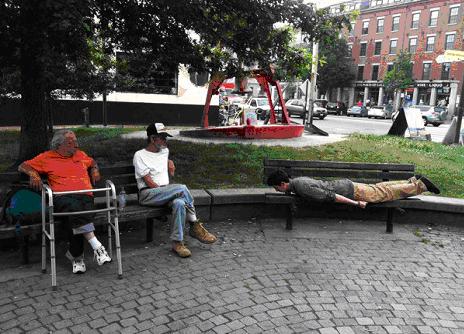
The newest international pastime involves lying face down on the ground with the ultimate goal of remaining as stiff as possible. I’d lump it in with parkour, mosh pits, and the car and phone booth stuffing competitions from the late 1950s and early ‘60s on account of its baffling physical appeal. For those of you unaware of this global craze and perhaps had no clue as to why Rosario Dawson was lying on a table on Jimmy Kimmel Live… they call it planking.

Although planking’s popularity has taken off this summer in the U.S, the trend goes back as far as 1994. It stayed under the radar as an underground hobby in Australia and Europe forever before its newfound seismic popularity.  

A written description of planking sounds neither amusing nor enticing. The goal of the practice is to find the most complex, unorthodox structure around and “plank” atop it, making sure to assume proper planking position — stiff as a board, arms at your sides. Planking is driven by a particular kind of oneupsmanship. Anything from fences to basketball hoops, forklifts to flagpoles, (yes flagpoles) plankers manage to find a way to remain as stiff as possible while their buddies quickly snap a photo of their latest feat. The higher the physical risk the better. 

But are bragging rights worth your life? 

On May 13, a man was arrested in Queensland, Australia for allegedly planking on top of an Australian police car. And sadly on May 15, a 20-year old Australian man made worldwide headlines after his failed attempt to plank on  a building’s balcony seven stories high resulted in the trend’s first casualty.

But for many, planking is nothing but clean harmless fun. Ryland Webb, an 18-year old from San Francisco, not only likes planking’s fun times — he also uses it as an opportunity to make a statement. 

Webb says he first started planking out of curiosity. “The first time I planked was with some friends on a long afternoon. We didn’t really know what to do so we gave [planking] a shot.”

While in Portland, Maine, Webb says that he used planking as a way of interaction. “We were in a different city and we viewed planking as an alternative way to interact with the natives. You really don’t know a place until you pretend you’re a board on its horizontal surfaces.”

“As times progressed we started to view the activity as our own innocent way of fucking shit up,” Webb says. “Planks began to be fashioned either to provoke reactions from bystanders, or symbolize some abstract form of youth rebellion.” He and his friends planked bike racks, benches, cars, newspaper stands, and fences.

And it’s not a trend if famous people aren’t doing it. Basketball players like Dwight Howard and former Golden State Warrior Gilbert Arenas, as well as mainstream artists like Katy Perry, Chris Brown, and Usher have all taken a plank now and then. 

But since planking’s breakout, there has been a growing amount of critics wary of the game’s origins and intentions. Some believe it to be an insulting representation of the horrific stacking of slaves atop wooden planks which took place during the Middle Passage. The idea of planking has sparked outrage from many; including Alvin Nathaniel Joiner IV, better known as rapper Xzibit, who tweeted “Planking is THE dumbest shit ever. #Planking was a way to transport slaves on ships during the slave trade, it’s not funny. Educate.”

It’s hard to say what the true intentions of planking really are. The game which has taken on many various monikers in the past, including “the lying down game”, “playing dead”, “extreme lying down,” and “facedowns.” 

But it does appear that the trend is sticking around, for the moment at least. Don’t be surprised if — on your next coffee run or hamster walk — you see someone lying face down atop of a bike rack or a public mail box. Planking may just be one of those things we’ll have to take lying down.


Editorial: Step up to save CCA and take on PG&E

110

Two things became abundantly clear at the San Francisco Public Utilities Commission meeting July 26th: The Community Choice Aggregation program is off track — and General Manager Ed Harrington has no interest in making in work. The supervisors need to move aggressively to save CCA.

Since 2007, when a draft implementation plan was released, the goals of the program — which is supposed to offer a cleaner alternative to Pacific Gas and Electric Co. — have shifted fairly dramatically. No longer does the plan seek to meet PG&E’s rates. No longer is it aimed at the entire city. And the PUC is putting most of its effort into a short-term contract to buy green power from Shell Energy North America — and all-but ignoring the more important moves to build a publicly owned energy-generation infrastructure.

CCA, which allows cities to buy power in bulk and resell it (along existing private utility lines) to customers, is a step in the right direction. The program now before the PUC would put San Francisco in the public power business — to a degree. But as the financial projections for the program demonstrate, the real savings and the real revenue won’t come until San Francisco replaces PG&E as the owner and operator of the local grid. A full-scale public power system would allow the city to both increase renewable power and cut rates — and would bring hundreds of millions into the treasury in the process (see “Mud Money,” 6/26/08).

Still, CCA offers many benefits — including the chance for the city to build local renewable energy facilities. And that’s where the PUC’s efforts ought to be focused.

During discussion of the proposed contract July 26th, Harrington was largely negative and talked repeatedly as if he didn’t think the original program could work. He kept saying that renewable power was more costly (true, today — but not after the city starts building its own facilities). He said that the goals the “advocates” (who include a majority of the Board of Supervisors) have demanded were unrealistic. And most of the commissioners seemed clueless.

That’s a terrible way to launch one of the most important environmental and financial initiatives in modern San Francisco history. Marin County is already well on the way to creating a working CCA system. Other counties are moving forward. And San Francisco, the only city in the nation with a federal mandate for public power, can’t get its civic act together.

The supervisors need to get involved, quickly. The Local Agency Formation Commission, which is overseeing this project, should haul Harrington in for a hearing as soon as possible. Among other things, the LAFCO members should ask why Harrington is so determined that the project won’t work; why his proposal is geared to a small number of residents and businesses who would face higher rates for power; and what his plans are to create a local energy generation infrastructure that over the long run would be dramatically cheaper and greener than anything PG&E will be able to offer.

The problems with CCA reflect the immense challenges of putting this program in the hands of a commission a majority of whose members were appointed by a mayor who opposed public power, managed by someone who has never supported municipalization efforts. Harrington and the SFPUC appear to be setting CCA up to fail. The supervisors need to step in before that happens.


Ethics Commission to discuss Progress for All

San Francisco Chronicle reporter John Cote’s scoop highlighting how Recology executives were working behind the scenes under pressure from Chinatown power broker Rose Pak to encourage Mayor Ed Lee to seek a full term is just the latest development for a committee that’s raised eyebrows already, and it may be just the beginning.

Five mayoral candidates — board President David Chiu, City Attorney Dennis Herrera, state Sen. Leland Yee, former Supervisor Michela Alioto-Pier, and businesswoman Joanna Rees — have teamed up to encourage the San Francisco Ethics Commission to investigate whether Progress for All has run afoul of local election laws, rallying behind an effort spearheaded by Democratic County Central Committee Chair Aaron Peskin in a July 28 letter to commissioners.

At the heart of the issue is whether Lee or any of his representatives have been coordinating with agents of Progress for All. If they are, Progress for All would have to be considered Lee’s own, candidate-controlled committee, Peskin asserts in the letter.

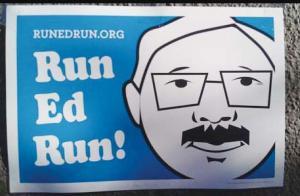
“Given the close relationship between Ms. Pak, the Mayor, and Progress for All, it is very possible that the committee has ‘consulted’ or ‘coordinated’ with the Mayor, and therefore its expenditures should be deemed to be made ‘at his behest,'” Peskin’s letter to the Ethics Commission argues. A City Hall insider told the Guardian that Pak — a primary driver behind the Run, Ed, Run campaign — is regularly observed going to and from the mayor’s office.

“If Progress for All or any of these other committees has been acting on Mayor Lee’s behalf, those committees may have violated the $500 contribution limit and prohibitions against accepting corporate, union or city contractor money, restrictions that apply to all candidate committees,” the letter states.

Financial disclosure filings for committees fundraising for the Nov. 8 election are due Monday.

Aside from the question of whether there is coordination between Lee, who has not yet announced that he will run for mayor, and Progress for All, concerns have been raised about city contractors aiding in the efforts of the campaign. Under the city’s Campaign Finance Reform Ordinance, contractors doing business with the city are not allowed to make political contributions.

(Given the revelations that Recology executives’ signature gathering efforts were done in violation of company policy, it’s no wonder Recology executives become bashful when approached by reporters who ask tough questions.)

Meanwhile, Recology might not be the only city contractor that Pak has encouraged to support Run, Ed, Run. A column that former Mayor Willie Brown published recently in the San Francisco Chronicle suggests that this isn’t the first conversation of this kind.

“One thing you can say about Chinatown powerhouse Rose Pak, she is not shy,” Brown’s column begins. “Holding court at the party for the opening of the new airport terminal, Rose was seated at the table with interim Mayor Ed Lee and his wife, Anita, and a host of other local officials. ‘I want every one of you to call his office and tell him he should run for mayor,’ Rose told the table. ‘And do it right away so that there’s no misunderstanding.’ Then she turned to the architect David Gensler. ‘Didn’t you do this terminal?’ she asked. ‘Yes,’ he said. ‘Didn’t you remodel this terminal before?’ ‘Yes,’ he said. ‘Then your firm should raise a million dollars for his election campaign.'”

While Brown may not be a visible player in the Run, Ed, Run campaign, he’s certainly been at the table with a key driver behind it and Lee himself — and he’s using his platform in the Chronicle to get the word out about Lee’s potential mayoral campaign.

“The specific revelations of unethical and possibly illegal activity are very troubling and need to be fully investigated by the Ethics Commission as soon as possible,” Chiu told the Guardian.

Political consultant Jim Stearns, whose firm is managing Sen. Yee’s mayoral campaign, joined the chorus in calling for an investigation. “If you think about the fact that these guys still, according to press reports, are eating together once a week, and there’s not supposed to be any coordination … You have this committee that is essentially operating in complete disregard of the campaign law,” he said. “It’s sort of like there’s a crime being committed, and where’s the police?”

The San Francisco Ethics Commission will hold a policy discussion about how to treat Progress for All at its Aug. 8 meeting, Ethics director John St. Croix told the Guardian.

“We’ve told the committee that we believe they’re a primarily form committee, which is an independent expenditure committee on behalf of a candidate for office or a ballot measure,” St. Croix explained. “They’re claiming that there’s no candidate, so they can’t be that committee, even though they’re acting pretty much exactly like one would.”

As things stand, Progress for All has filed as a general purpose committee, he added. “A general purpose committee is what you would think of as a [political action committee]. They usually represent an organization or elected group of individuals, they tend to exist for a long period of time, and they contribute to multiple campaigns, whereas a primarily formed committee is created to support or oppose a single candidate or a single ballot measure in a single election,” he explained. Another key distinction: “Independent expenditure committees don’t have contribution limits the way that candidate committees do. Candidate committees have a $500-per-contributor contribution limit.”

Peskin, meanwhile, hinted that there may be more to come. “There’s a lot of it,” he said, “and I think there are many people who have stories to tell.”

The Crash Pad Series celebrates episode 100 with a list of San Francisco pleasures

0

Fierce femmes, bashful bois, fisting, wrestling, squirting, and squealing, The Crash Pad is one fictional apartment that any voyeur would love to call neighbor. Lucky for all, the key to this hotbed of locally produced, randy queer porn is under the mat and everyone is invited to crack the door and peek inside at the Pad’s celebration for hitting the triple digits.

The Crash Pad Series started in 2007 as the genius creation of Pink & White Productions, a film company that prides themselves on “beautifully fucked and beautifully produced” explorations in queer sex. The simple premise of the series keeps things hot and honest, nothing cheesy and nothing fake; the authenticity of pleasure is a big bonus in viewing quality. The rotating cast of characters are just as diverse as the sex itself and site subscribers can watch their favorites in action, scan stills from the shoot, and hear all the dirty details from performers in the behind the scenes interviews. Pink & White’s owner Shine Louise Houston chose genderqueer pornstar Jiz Lee and feminist porn icon Nina Hartley, (who many will recognize from Boogie Nights and a large collection of instructional videos popular in the ’90s) to hash it out for number 100. There’s a whole lot of chemistry between the daring duo and they waste little time before taking off the boots and getting down to the good stuff: saucy cock-sucking, female ejaculation, strap-ons, breath control, and impact play. 

“No poop, no blood, no glitter,” the only rules of the Pad, says performer Jiz Lee. “The first two are because the Credit Card company won’t allow it. The last is because the stuff is impossible to clean up.” Letting the pornstars control of the actions always turns out to be a major turn on. 

In honor of the show’s big birthday, The Guardian asked some of the Crash Pad’s regular performers to put-out and offer up their favorite San Francisco pleasures. 


SFBG: Name 5 things in San Francisco that turn you on.

Nina Hartley: Center for Sex and Culture, Good Vibrations, Greens restaurant, Colibri restaurant, and Absinthe restaurant.

Jiz Lee: My bicycle, El Rio’s back patio, Muir Beach, community gardens, and swimming.

Minax: Kabuki Spa, SF Citadel, my private play space, yoga with Skeeter, Bi-Rite!

James Darling: Mr. S Leather, ice cream from Bi-Rite, Vixen dildos, Eros, and the Center for Sex and Culture.


SFBG: What 4 places in the Bay would make hot Crash Pad field-trip episodes?

Stealth Machine: Sutro Baths, Marin Headlands, the grave yard at Mission Dolores (sacrilege!) and El Rio!

Scarlett Chaos: Dolores Park, the Lex, [somewhere with] the Golden Gate bridge in the background, the pier, the Armory.  

Kitty Stryker: Sutro Baths (mmm, outdoor cruising), the Looking Glass dungeon, a warehouse space in Oakland (Nimby, perhaps?), the Albany [Bulb].

Madison Young: The Lexington, Wicked Grounds, the Center for Sex and Culture, and Mojo Café. 


SFBG: Who are 3 of the sexiest San Franciscans you know?

Stealth Machine: Lance Holman (Mr SF Leather 2010), Annie Danger, and Storm Miguel Florez.

Minax: Jiz Lee, Carol Queen, and Annie Sprinkle.

Madison Young: Princess Donna, Syd Blakovich, and Ceci Dolores.

Ian Sparks: Jiz Lee, Nic Switch, Vid Tuesday (oops, he just moved to Oakland).


SFBG: Where are 2 great places for outdoor sex in the Bay? 

Jiz Lee: Dolores Park, Travel Lodge roof top.

Syd Blakovich: Sutro Baths and handjobs on the F line from Fisherman’s Wharf to the Castro.

Kitty Stryker: I love having sex on top of Twin Peaks looking out over the city! Tilden Park is nice for foresty fun.

Tristan Crane: On the rooftop of our apartment buildings, in the middle of Folsom Street during the street fair. Sort of dirty, but also a rite of passage. 


SFBG: If San Francisco had a signature sex position or kind of play, what would it be?

Nina Hartley: Pansexual play parties.

Jiz Lee: San Francisco’s signature sex position would be a big, throbbing, wet, FIST.

James Darling: Gangbang with friends.

Maxine Holloway: Is a big queer orgy kitten pile a position?


The Performant: Serf’s Up!

0

The Weill Project and Will Kaufman’s Woody Guthrie sing out.

“A pamphlet, no matter how good, is never read more than once, but a song is learned by heart and repeated over and over.” –Joe Hill

As this year’s annual LaborFest draws to an end, and the organized labor movement is facing an uncertain future as exemplified by the recent Republican victory in Wisconsin regarding collective bargaining, and the disappointing conclusion to the Mott’s strike of 2010, it does the socialist spirit good to soothe the savage breast with music created with an ulterior motive. Political convictions as entertainment have had their misses, but it’s the hits we remember more, whether “learned by heart,” or not.

Though probably best known for the unrepentantly dark murder ballad “Mack the Knife,” Bertolt Brecht collaborator Kurt Weill was a staunch socialist firmly on the side of the underdog. The two pioneered theatrical works about and for the working class, and critical of “business as usual,” in life as well as in theatre. Under the direction of Allan Crossman and Harriet Page-March, the Weill Project, explored a set of seafaring songs from familiar Brecht/Weill musicals like “The Threepenny Opera” to more obscure tunes such as “Youkali: Tango Habanera,” which made an orchestral appearance in a mostly forgotten Weill side-project called “Marie Galante.”

“Marie,” sung in French by soprano Sibel Demirmen, was one of the evening’s most striking offerings. Another was mezzo-soprano Meghan Dibble’s rendition of “Pirate Jenny,” a song which exemplifies the divide between the working classes and their careless capitalist oppressors. Two other vocalists, Harriet March Page and Justin March rounded out the vocal mix, ably accompanied by Martha Cooper on piano and John Bilotta on accordion. Presented as part of Stage Werx Theatre’s <www.stagewerx.org> new music series, Underground Sound, the Weill Project set the bar high for shows to come, and is an ensemble to watch out for.

A staunch socialist closer to home, one Woody Guthrie, came to life in the hands of Will Kaufman whose solo performance “Woody Guthrie: Hard Times and Hard Travellin’” (as well as his book, Woody Guthrie: American Radical) followed the dusty road of Guthrie’s political awakening through music.

A mean finger-picker, Kaufman played not just Guthrie tunes such as “I Ain’t Got No Home” and “So Long, It’s Been Good to Know You” as he described Woody’s visits to the migrant camps and the extra-legal liberties taken by the LAPD and a slew of union-busting vigilantes, but also songs that inspired him towards reaction. Songs like Joe Hill’s “The Preacher and the Slave,” Agnes Cunningham’s “How Can You Keep Movin’ (Unless You Migrate Too),” and Irving Berlin’s “God Bless America” — a song that galled Guthrie so much he wrote an angry counterpoint “God Blessed America,” which became his best known song, sans the political verses, as “This Land is Your Land.”

Kaufman, an American living in England, was inspired to tackle Woody Guthrie as a subject back in 2006 during a time when “George Bush and Dick Cheney were speaking for America,” in an attempt to connect with and portray an all-American voice closer to his own point of view. I can’t speak to whether or not he’s got the British convinced, but in San Francisco, his sentiments were welcome.

Police say they’ve recovered gun used by Harding

The San Francisco Police Department issued a statement this afternoon announcing that the gun that fired the fatal shot at Kenneth Wade Harding Jr. has been found.

“After a weeklong community effort, a neighborhood resident led officers from Bayview Police Station to the gun used by Kenneth Harding,” the SFPD statement says. “The gun, an AMT .380 caliber semi-automatic pistol, was matched through ballistic tests conducted by the San Francisco Police Department Crime Lab,” the official announcement goes on. “These tests confirmed that this was the same gun that fired the fatal .380 caliber bullet.” 

The police describe the weapon as a “small silver and black handgun,” and notes that it was “seen on the widely viewed cell phone video of the incident” and “picked up from the crime scene by an individual during the chaotic aftermath of the shooting.” 

One YouTube video showing the scene of the aftermath is titled, “Aftermath of Bayview gun battle in San Francisco,” and it has had 96,897 views so far.

At around 1 minute and 23 seconds into that video, an individual in a gray hooded sweatshirt reaches down and picks up an object off the sidewalk (which doesn’t look like a gun), but at another point in the clip, a gun-shaped object can be seen lying on the ground.

Lt. Troy Dangerfield, of the SFPD’s media relations unit, would not say whether the man in the hooded sweatshirt had anything to do with recovering the gun. Nor would he say whether an arrest had been made when the gun was turned over to police. “I can’t get into who turned over the gun, or whether that’s where we got the gun from,” he said, but asserted that ballistics testing had confirmed that it was the gun that fired the shot.

“We’re not speaking as to whether fingerprints are on it,” he added when asked if Harding’s fingerprints had been detected on the firearm. He said he did not know whether Harding’s cell phone had been recovered.

There are four separate investigations relating to the officer-involved shooting that occurred in connection with Harding’s death, Dangerfield said. They are being carried out by the District Attorney, the Office of Citizen Complaints, SFPD Homicide Unit and SFPD Internal Affairs.

Asked why SFPD officers did not move in quickly to snap up an unsecured weapon lying on the ground if a suspect had just fired and a crowd of alarmed bystanders was forming around them, Dangerfield said that the police had to prioritize officer safety — and in this case, he asserted, that meant keeping their weapons trained on a suspect who could still potentially pull out a gun and shoot at them. According to training protocol, “crime scene preservation” is a lower priority, he said. Asked if officers were trained to shoot to kill, he said, “we don’t shoot to kill, we shoot to stop the threat.”

Dangerfield went on to say that the video in which Harding is shown to still be moving while police stand with weapons trained on him would make a great police training video. “You do not remove yourself from the target until the target is no longer a threat to you,” he said, indicating that a suspect who is still moving is still perceived as a threat.

However, it was this aspect of the widely viewed video — that police continued to stand with weapons trained on Harding rather than calling for medical assistance after he’d been shot — that seemed to most inflame residents and protesters who’ve condemned the police response in the aftermath.

Dangerfield confirmed that data from SpotShotter revealed that a single bullet was fired, and then multiple rounds fired in succession 1.9 seconds later. The explanation that police have given for this, he confirmed, was that Harding fired a single shot and then police opened fire.

Assuming it’s true that Harding shot himself, as police have said, this suggests that the two police officers on the scene responded to a suspect shooting himself by firing eight rounds, just one of which entered through the leg. Asked why officers would respond to a self-inflicted shot in that way, Dangerfield said, “If you are a police officer and you’re running and chasing … and then shots are fired, what do you think?” He emphasized, “They’re trained to return fire.”

Appetite: Plans of attack for SF Chefs

0

SF Chefs year three starts this Monday, an event that has become San Francisco’s biggest food and drink showcase – our “food and wine classic”, if you will — utilizing much of the Bay Area’s best talent. (You can check out my coverage of the event from last year here).  

The event takes over Union Square for a week with events, classes, grand tastings, and nightly parties. There’s something magical about a tented Union Square, especially with the cable cars gliding by and tourists casually wondering what kind of fun is going on. After hours of tastings and music, one can walk to afterparties atop the Westin or other nearby locales, taking in the city lights until the wee hours with dancing and yes, more impeccable food and drink.

But with a week full of events, how does one begin to choose what to attend? I have covered a lot of ground every year I’ve attended and have some specific advice on what to make sure you don’t miss, depending on your preferences. Oh, and don’t forget to allow your stomach some recovery time.

If you’re a cocktail hound or celebrity chef follower

Don’t miss Friday night’s opening celebration and grand tasting (6:30-10 p.m.). Sure, the chef line-up is impressive. Everyone from Michael Mina to Tyler Florence will be there serving creative tastes of their food. There will be more food than you’ll ever be able to fit in one stomach, especially if you attempt to sample from the over 35 chefs who’ll be there.

On the cocktail front, you’ll work double-time to keep up with the amazing bartenders and bars represented as they shake up special event cocktails. There’s fine bartenders at many SF Chefs events, but Friday night particularly showcases a larger number of our city’s best bars in one place.

There’s also plenty of wine, beer, and spirits. You won’t suffer from choices. Chef Joey Altman and the Soul Peppers provide the live blues backdrop. Oh, did I mention that all tastes are unlimited with price of admission? That way you can keep going back for your favorites, if you do happen to pack stomach No. 2. 


If you want all this — and dancing too

Saturday night is another big shindig in “Union Square: Decadence After Dark” (7-10:30pm), again with over 35 chefs plus spirits, wine, beer, cocktails. Again, all unlimited. There will be dancing (if you’re still mobile) along with eats from chefs like David Bazirgan of Fifth Floor and Thomas McNaughton of flour + water.

Save room for the after parties. Friday night’s mayhem happens 10 p.m.-1 a.m. in private rooms at the City Club. With sponsors like Cigar Aficionado and Wente Vineyards, there’s cigars given out and Wente wines flowing along with cocktails, beer, chocolates, coffee, caviar, oysters, and desserts from Pastry Chef Leena Hung (The Restaurant at Wente Vineyards). Best of all, Hubert Keller will be stationed at the turntable. That man does everything.  

Saturday night offers a second afterparty option, this one hosted by Top Chef All-Stars winner Richard Blais and SF-based Skyy Spirits, the latter of whose portfolio includes beloved classics Campari and Wild Turkey, as well as the delightful Espolon Tequila. Chef Blais heads up a team of former Top Chef contestants (Fabio Viviani, Jen Biesty, Marisa Churchill, Mattin Noblia, Ryan Scott) for bites to go with cocktail creations by the Bon Vivants. There’s even more food from Dennis Lee (Namu) and Ryan Farr (4505 Meats) and music from Hot Pocket – a quintet comprised of members of the Best of the Bay winning group Bayonics – and DJ Dojah so you can dance it all off.


If you want demos, classes, and unlimited tastings 

There’s individual classes during the week, but for a full feast included, hit up the grand tasting tent all afternoon Saturday or Sunday. Both days feature food from over 30 big-name chefs like Hubert Keller and Elizabeth Faulkner. But there’s also ongoing demos from chefs like Martin Yan, NY’s Cesare Casella, Fabio Viviani, and Gary Danko, while cocktail experts such as H. Joseph Ehrmann and Charlotte Voisey school you on spirits and cocktails. Watch for a Negroni cart where top bartenders will mix you a classic negroni, a sbagliato (basically a sparkling negroni… with prosecco), or a negroni variation of your choice (even better, Campari is donating $200 per hour the cart is in operation to support USBG’s Bartenders Relief Fund).


If you want to get up close and personal

Choose from an array of classes, demos and meals taking place in the Westin for a more intimate focus than you’ll get in bustling Union Square during the Grand Tasting Tent and evening parties. You could watch Chris Cosentino (Incanto) and Elizabeth Falkner (Citizen Cake & Orson) take on Dominique Crenn (Atelier Crenn) and Russell Jackson (Lafitte) in a chef’s challenge. Maybe you want to attend a demo with Tyler Florence, a bartender’s cocktail breakfast, a Wine Spectator pinot noir panel, “Secrets of the Sommeliers” with Rajat Parr and Jordan Mackay, or a family cooking demo led by chefs Michael Mina, Craig Stoll (Delfina), Gerald Hirigoyen (Piperade), and their kids.

Another winning night last year was Thursday’s ‘Sugar and Spice” party. Smaller than Union Square events, tastes cover palate extremes, while cocktails from key bartenders and local wineries are featured. The line-up is strong (including Hoss Zaré of Zaré at Flytrap and Mourad Lahlou of Aziza), but it’s manageable and memorable in the stunning mezzanine ballroom of the Westin.


SF Chefs

Mon/1-Sun/7, $25-150

Various SF venues

www.sfchefs2011.com


— Subscribe to Virgina’s twice monthly newsletter, The Perfect Spot


Civil Grand Jury: Parkmerced tenant protections ‘just talk’

The Board of Supervisor’s Government Audit & Oversight Committee heard from members of the San Francisco Civil Grand Jury this morning about a report it issued on the Parkmerced redevelopment.

“When you read this report, nowhere in this report does it say, ‘do not develop,'” said Michael Golrick, a juror with the civil grand jury. Yet he noted that the primary concern highlighted in the document was a perceived lack of tenant protections for residents living in rent-controlled units.

The assurances in the development agreement — that tenants will be moved into new units after their  existing units are demolished, with the same rent-control protections they had before — can’t be guaranteed due to unresolved legal questions, he said. “It is aspirational and inconclusive. Tenants will live under a cloud of uncertainty, possibly for years.” He added, “Until a court decides, it’s all just talk.”

Jennifer Matz of the Office of Economic and Workforce Development and John Rahaim, director of the San Francisco Planning Commission, both noted that the Civil Grand Jury report was hitting on a legal issue, so the city’s formal responses will be prepared in concert with City Attorney Dennis Herrera’s office.

Matz also noted that the draft of the Development Agreement which the Civil Grand Jury had based its assessment on had changed since the Civil Grand Jury report was issued, with new provisions to shore up tenant protections. She also charged that the report “fails to understand certain aspects of the Development Agreement.”

Meanwhile, residents organized under the Parkmerced Action Coalition are still hoping they may have a chance to reverse the Board’s decision to approve the Parkmerced overhaul by placing a referendum on the Nov. 8 ballot to ask voters whether the zoning for the project should be approved. The group of tenants, organized under the “Committee to Stop Mass Demolition of Housing,” submitted 18,487 signatures on July 8. The Department of Elections is still verifying them and so far, the referendum has not yet qualified for the ballot.

Those crazy San Franciscans

63

Joe Eskenazi has an SF Weekly piece that pretty much repeats what he’s been saying for years: That San Francisco has too much government. This time he goes after all the boards, task forces and commissions — and yeah, there are a lot of them, and yeah, some of them might not be necessary. I could also argue, though, that San Francisco is one of the most politically active cities in the world, and that having a whole lot of ways for residents to plug in to what’s going on in their city isn’t a bad thing at all.


Whatever. Here’s the stuff that drives me nuts:


Last month, the volunteer body appointed by the Board of Supervisors advocated curtailing all pet sales in the city — including guppies, goldfish, and live rodents meant as snake food. Coming on the heels of a proposed criminalization of circumcision, San Francisco was, once again, reduced to an international punchline — many were left to wonder whether a ban on circumcising goldfish is our logical next step. Disbelieving articles poured in from around the globe. Perhaps none was as caustic as a piece in London‘s Telegraph titled “San Francisco goldfish ban exposes the pathology of America’s bourgeois liberal nutjobs.”


Ah, yes, Joe: Those crazy San Francisco liberals and their madcap ideas.


I’m not for banning pet sales (although I think banning puppy mills — also a wacky idea that came out of the Animal Control and Welfare Commission — is a fine thing). And I’m not for the circumcision ban (although, geez, it has lead to some interesting commentary that gives new meaning to the term “dick face.”)


But every time I hear somebody talk about how San Franciscans should stop it with the nutty ideas, I think about a few I’ve followed over the years — and how they’ve changed the way the entire nation thinks. Let me suggest a few for Eskanazi to look at:


“Those crazy San Franciscans don’t want to build freeways.” Yep — in the late 1950s and early 1960s, while the rest of the country (and in particular, California) was rushing to build freeways as fast as possible, people in this city decided to say No. The freeway revolt and the movement that grew out of it changed the way Americans view cities. Wacky shit.


“Those crazy San Franciscans think homosexuals should have the same rights as married people.” Yep, back in the 1970s San Franciscans started talking not only about nondiscrimination — they actually said that gay people who live together should have health insurance benefits. Imagine that.


“Those crazy San Franciscans think that women should make the same amount of money as men.” When then- Sup Nancy Walker introduced legislation in 1985 making “comparable worth” (the notion that men and women who do jobs that require comparable skills should be paid the same) it made headlines all over the country — and was universally derided by the same set that now complain about “liberal nutjobs.” It cost the city a lot of extra money (money that the Eskinazi crew of the day said was too much for a broke city) and led to all sorts of comments about social engineering. San Francisco was the first to push the issue, and it’s now considered mainstream employment policy.


“Those crazy San Franciscans think we ought to give bicycles the same rights as cars.” All the way back in the mid-1980s, bicycle advocates were talking about bike lanes, bike maps, bike racks and alternatives to the automobile. What were they drinking?


“Those crazy San Franciscans think that transgender people ought to get health benefits.” This was as recent as 1993 — and if you think circumcision and pets put SF in the right-wing-talk-show and late-night-comedy targets, imagine when the city decided “to use taxpayer dollars to fund sex-change operations,” as the detractors insisted. Guess what? It turned out to be a major step forward for transgender rights.


“Those crazy San Franciscans think gay people should be allowed to get married.” We did. We do. We were first. The rest of the country is following.


“Those crazy San Franciscans want to ban plastic bags.” We did. For good reason. So did L.A. In another few years, it will be national policy.


“Those crazy San Franciscans want to ban happy meals.” Guess what — McDonald’s got the message. 


I could list plenty more.


Yeah, we’re ahead of the curve. Yeah, sometimes our shit seems crazy. But it’s the crazy shit that makes the world change — and over time, the world catches up to San Francisco. And if we weren’t doing it, the world would get better just a little more slowly.


Tango at the symphony? Take a whirl

0

Feeling some half-priced symphony and live tango dancing? It’s a mash-up of culture this Thursday, July 28 at Davies Symphony Hall. The San Francisco Symphony will performs Antonio Vivaldi’s classic Four Seasons along with a punchier, more colorful take on the four seasons by Astor Piazzolla, Estaciones Porteñas (also known as The Four Seasons of Buenos Aires), beginning at 8 p.m.


The Four Seasons is Vivaldi’s most widely recognized work, with each of the four concertos including sounds and evoking the moods of winter, spring, summer and fall. Piazzolla’s Estaciones Porteñas is a set of four tango compositions that were originally conceived as separate pieces, not meant to be played in once cycle as Vivaldi’s. During the SF Symphony performance, Lara St. John will play The Four Seasons with interweaving movements from  Estaciones Porteñas.

In addition to the symphony, there will be pre-concert and intermission tango demonstrations in the upstairs lobby, backed by the live music of Tango Revolution Orchestra. The orchestra is made up of young musicians: students and graduates from conservatories, universities, and community music schools.

Known as a “milonga,” it’s an informal social dance gathering for tango dancers. And audience members will have the opportunity to get in on the tango; Argentine tango teacher Sonja Riket will be on hand to lead informal instruction.

It’s a momentous occasion too: Riket says the event marks the first collaboration between the symphony and Tango Revolution Orchestra.

The Four Seasons
and “Milonga de Symphonia”
Thurs/28, 7 p.m., $15-$70 (half off with promo code “July50off”)
Davies Symphony Hall
(415) 864-6000
www.sfsymphony.org

Enviro justice groups spar with SFPUC on power program

A Pew Research Center analysis based on the latest U.S. Census data has found that Latino and African American households weathered deeper blows in the economic recession, driving the wealth gap between whites and minorities to an historic high. As things stand under current economic conditions, the Washington Post reports, the median net worth of a white family is now 20 times that of a black family, and 18 times that of a Latino family — roughly twice the gap that existed before the recession, and the biggest gap ever since 1984.

Meanwhile, a report issued yesterday by the Natural Resources Defense Council hit on another alarming trend, outlining the water-related challenges coastal cities will face as climate change takes its toll. The report highlights sea level rise, land erosion, saltwater intrusion, flooding, impacts to fisheries, and more frequent and intense storm events. (That’s to say nothing of wildfires.)

In San Francisco, a small group of environmental justice advocates has been working for the better part of a decade to help craft a municipal energy program with the aim of turning the tide, at least on a small local scale, to promote greater economic equality and fend off the worst impacts of climate change. Advocates from groups such as Global Exchange, the Local Clean Energy Alliance, the Sierra Club, the Brightline Defense Project, the San Francisco Green Party, and others have long envisioned CleanPower SF as a way to bolster local job creation, particularly for people who reside in the city’s low-income neighborhoods. The twin goal of CleanPower SF, also known as community choice aggregation (CCA), is to launch a local response to climate change by offering San Franciscans the option of purchasing clean electricity generated from local, renewable energy sources such as wind and solar.

At a July 26 meeting of the San Francisco Public Utilities Commission (SFPUC) in City Hall, however, it became clear that this overarching vision for the program wasn’t gaining traction with the agency that is tasked with implementing it. As the program inches closer to a review by the Board of Supervisors, advocates have reached an impasse with SFPUC staff as to how the whole endeavor should proceed.

Grassroots advocates raised concerns that the latest proposal for CleanPower SF amounted to a setup for failure, unless there was a concerted effort to plan for robust development of local green-energy sources. While SFPUC staff indicated that the current proposal would result in new jobs at call centers, advocates said more needed to be done to plan for installing local energy-generating sources which could truly bolster local job creation.

Yet SFPUC General Manager Ed Harrington said that what the advocates were asking for wasn’t realistic. He dismissed the original vision for CCA, articulated in a 2007 board-approved ordinance, as “not a realistic goal.” And he spoke in a condescending tone about the grassroots stakeholders, saying, “People saw that they would like green power to be cheaper, and therefore they believed that it was.”

Under the proposal that the SFPUC described to commissioners July 26, monthly electricity rates under CleanPower SF would be at least $7 more than estimated PG&E rates. That’s a key difference from the original draft implementation plan, hammered out in 2007, to “meet or beat” rates offered by the investor-owned utility.

The new proposal has also been scaled down considerably since 2007. As planned, CleanPower SF would contract with Shell Energy North America to begin offering 30 megawatts of 100 percent green power to just 75,000 municipal customers by the spring of 2012. That’s assuming most of the 229,000 residential account holders who will initially be enrolled will opt out; and SFPUC media relations representative Charles Sheehan noted that the full customer base would eventually roll up to the original goal of 340,000 customers. Still, the target at the outset represents just a fraction of the 360 megawatts of power for 340,000 customers originally called for, with a 51 percent renewable energy mix. Under this new scheme, electricity would be purchased through Shell on the open market, with long-term plans to develop local sources but no solid short-term goals for achieving that end.

SFPUC Commissoner Francesca Vietor asserted that SFPUC staff should continue working closely with the grassroots stakeholders and find a way to seriously plan for building local renewable sources, which could ultimately serve to drive municipal rates down and make the program more viable and competitive. “I think local build-out is a really exciting and important opportunity, and a critical piece of the CCA program,” she said.

Commissioners continued the decision on whether to approve parameters for a term sheet and submit it to the full board, pushing the discussion back until September unless a special meeting is called. Several commissioners raised concerns about the financial risk to the city, since the program would have higher rates than PG&E and is designed in such a way that a bulk of power would have to be purchased up front before the agency can determine how many customers will opt out.

“I was actually glad to hear a lot of commissioners raise a lot of concerns, especially about the financials,” Eric Brooks, a long-time CCA advocate speaking on behalf of the Green Party and an organization called Our City, told commissioners. “The more of a local build-out … the lower your price, and the lower you can get in terms of the risks.”

June Brashares, green energy director at Global Exchange, echoed Brooks’ comments in a telephone interview with the Guardian. “The proposal they’re doing now is really vulnerable,” because the higher rates will make the alternative power program less competitive, she said. “The whole reason for CCA — yes, we want cleaner energy — but the real key is the building of local energy sources to create an economic boost, and local green careers. And that’s not at the core of what the SFPUC is doing.”

This article has been corrected from an earlier version.

What’s next for San Francisco’s small theaters? The Roxie has an idea…

1

The Red Vic closed this week, and a recent SFgate.com article reported that Balboa Theater owner Gary Meyer will be leaving the Richmond District landmark at the end of the summer. What’s a small, independent movie theater to do in these troubled times?

The Roxie, San Francisco’s oldest continually operating theater (it’s had a few different monikers, but the Mission District space opened in 1909; it became a non-profit in 2008), has a plan, according to a press release that landed in my inbox this morning. It boils down to a four-letter word: BEER.

According to the release, “At a spry 102-years-young, the Roxie Theater has applied for a permanent beer license. Over the past year, the Roxie has used its non-profit status to obtain day use permits for on-site alcohol, and the response was so overwhelmingly positive that we’re trying to make it permanent. Our application is in! The Roxie hopes to add beer sales as part of its mission statement to make the theater a place of gathering and celebration, as well as a business model for the survival of neighborhood theaters.”

The release goes on to explain that the programming won’t change (have you seen World on a Wire yet?), and there will still be kid-friendly events planned to balance out the 21-and-over-only screenings. Also: “It has not yet been decided if beer will be offered every day, just weekends or just special events.”

Cross your popcorn butter-stained fingers that the Roxie finds success with this new endeavor, and in the name of all that is (cinematically) holy — get out there and see a movie! Check out the Roxie’s upcoming programming here.

Taking out the trash

1

sarah@sfbg.com

A controversial city waste disposal contract appeared primed for final approval by the Board of Supervisors on July 26 (after Guardian press time) — despite being challenged by a lawsuit and initiative campaign — after two progressive supervisors rescinded their initial vote in a July 20 committee hearing and supported awarding the contract to Recology.

City staff had recommended awarding the 10-year, $112-million landfill disposal and facilitation agreement to Recology (formerly NorCal Waste Systems, Inc.), which has grown from a locally based company to the 10th largest waste management firm in the US, with $652 million in annual revenue, according to Waste Age magazine.

If the full board follows the unanimous recommendation of its Budget & Finance Committee, the vote will authorize Recology to transport and dispose up to 5 million tons of the city’s solid waste at the company’s Ostrom Road landfill in Wheatland, Yuba County. The contract will take effect when San Francisco’s disposal agreement at Waste Management Inc.’s Altamont landfill in Livermore expires — estimated to occur in 2015.

The deal will cement Recology’s control, at least for a 10-year period, over all aspects of the city’s solid waste stream, at a cost of about $225 million per year, even as the company faces significant challenges, many related to the city’s 1932 refuse collection and disposal ordinance.

That law, approved during the Great Depression to prevent conflict between competing garbage haulers, has resulted in Recology’s exercising complete control over trash collection and transportation in San Francisco, without having to bid on those contracts or pay the city franchise fees.

During the negotiations over the city’s next landfill contract — the only aspect of San Francisco’s waste stream put out to bid — this 79-year-old law was invoked to explain why Recology has the sole authority to transport trash and compostables to Wheatland, which is 130 miles from San Francisco.

The move also comes as Yuba County is contemplating significantly increasing dumping fees at the landfill — from $4.40 per ton to $20 or $30 per ton — a hike that could erase the $100 million that the Department of the Environment (DoE) claims the Recology deal would save over a competing bid by Waste Management Inc. WM is the largest waste firm in the U.S., according to Waste Age, with about $12.5 billion in annual revenues.

On July 18, WM filed a lawsuit in San Francisco Superior Court to prevent the city from approving the agreements with Recology on the grounds that they violate the city’s competitive bid laws.

“The Department of the Environment inappropriately and unlawfully expanded the scope of its 2009 ‘request for proposal for landfill disposal capacity’ and, therefore, violated the city’s competitive procurement laws,” WM alleges in the suit.

WM has long held that DoE inappropriately issued a tentative contract award for both the transportation and disposal of solid waste to Recology without soliciting any other transportation bids. But DoE, which gleans $7 million annually (to operate recycling, green building, and environmental justice programs and long-term planning for waste disposal) from rates that Recology’s customers pay, ruled last year that WM’s objections are “without merit.”

Now WM is asking the court to require DoE to scrap its award to Recology and issue a new request for proposals to comply with competitive bidding requirements.

“There is ample time for the department to issue a new RFP,” WM stated July 18, noting that there is plenty of room at its Altamont landfill to accommodate the city’s waste after the contract expires.

That same week, a coalition led by retired Judge Quentin Kopp, community activist Tony Kelly, and Waste Solutions CEO David Gavrich announced that it had submitted enough signatures to qualify an initiative on the June 2012 ballot requiring competitive bidding and franchise fees from any company that seeks to win any aspect of the city’s solid waste business.

Kelly says his group was unable to collect enough signatures in time for the November election because Recology hired the city’s two biggest signature-gathering firms to circulate what he calls a “phony petition” in support of Recology’s performance in San Francisco. And signature gatherers say they were harassed by Recology boosters while trying to petition citywide.

“But I believe the question of whether candidates support competitive bidding will continue to be a defining issue this fall,” Kelly said.

The board’s decision on the landfill agreements has already been delayed several months, following a February 2011 Budget and Legislative Analyst report recommending that the board consider submitting a proposition to the voters to repeal the 1932 refuse ordinance so that future collection and transportation services be put to bid. The report also recommended that future residential and commercial refuse collection rates be subject to board approval.

But with two progressive supervisors running in citywide elections this fall, and with Recology exerting massive pressure on elected officials, the Kelly coalition could not find four supervisors to place such a charter amendment on the November ballot, forcing them to launch their own initiative.

And at the July 20 meeting of the board’s Budget and Finance Committee, Sup. Ross Mirkarimi, who is running for sheriff, and Sup. Jane Kim rescinded their initial decision to send the agreements to the full Board without recommendation. Instead, after the committee had moved on to other business, they joined Chair Carmen Chu, one of the most conservative supervisors, in forwarding the Recology agreements to the full board with unanimous support.

Mirkarimi interrupted the committee’s next discussion to rescind the landfill vote. “I think there was some misunderstanding a little bit in wrapping up the landfill agreements with Recology, ” Mirkarimi said. He said that he asked for the vote to be rescinded, “so we can accurately reflect some of the sentiments being articulated here. I think we just learned some things on the fly.”

In many respects, the switch by Kim and Mirkarimi made sense: prior to their initial vote, they made positive statements about the proposed agreements, but also stated an interest in exploring the appropriateness of the city’s 1932 law.

“Overall, I think this was a good contract,” Kim said. But she noted that, thanks to the 1932 ordinance, the city doesn’t get franchise fees. And she claimed that it only gets half of what other Bay Area cities get from their waste contractors. “So, I’m really interested in continuing that conversation, but I think it’s a separate conversation,” she said.

Mirkarimi said it was his concerns that led the committee to “put a pause” on the Recology agreements until it could “undertake more homework.” He also noted that his office “held a number of meetings” and he tried to “leverage this opportunity to reanimate activity at the Port.”

“I was hoping that we might be able to arrive at something much more deliverable,” Mirkarimi said, presumably referring to the fact that these efforts resulted in DoE unveiling an amendment to include two “possible changes” to operations and facilities at the Port of San Francisco in the agreements.

These changes involve utilizing other modes of transportation, including barges, as alternatives to the rail-haul plan proposed in the agreement. They also call for developing new facilities at the Port for handling waste, recyclables, organics, and other refuse. The cost of such alternatives would be passed onto the rate payers.

“I think that, cost-effectively, we may be able to insert the Port into this equation, but it’s not ready for prime-time yet,” Mirkarimi said. He concluded by saying that Recology has been innovative in reducing the city’s waste stream.

“This should be a front-burner conversation,” Mirkarimi said, noting that former Mayor Gavin Newsom focused on making San Francisco “the greenest city” in the United States. He added that San Francisco claims to have a 77 percent diversion rate, the highest in the U.S., and said, “That comes at a cost, it doesn’t come for free.”

After the meeting, DoE deputy director David Assmann said that the City Attorney’s Office is reviewing WM’s filing. “But it’s too soon to comment,” Assmann said.

He also claimed that, thanks to the 1932 ordinance, “there was no practical way” for another company to transport San Francisco’s waste to its designated landfill, “other than building a second transfer station outside the city.”

But Kelly continued to express concerns that the agreements are not competitive, and that the city lacks a contract and ensuing franchise fees. “They are running this as if it’s still the 1950s,” he said.

Kelly claimed that Recology Vice President John Legnitto, who is the 2011 chair of the SF Chamber of Commerce’s Board of Directors, recently told him that Recology has been in negotiations with City Hall around a $4 million franchise fee, but that the money would now be spent opposing Kelly’s competitive bidding initiative.

Anger erupts over police shootings

11

rebeccab@sfbg.com

As the murky details of two recent police shootings emerge, a palpable anger surging through targeted communities points to a deeper issue than the particular circumstances surrounding each of these deaths. Simply put, many Bay Area communities are fed up with police violence.

For many activists who descended on transit stations to protest the fatal BART police shooting of Oscar Grant III, the 20-year-old unarmed Hayward man who was killed on New Year’s Day 2009, an upwelling of rage was rekindled after BART cops shot and killed a homeless man named Charles Blair Hill on July 3 in Civic Center Station.

Then, on July 16, San Francisco police officers in the Bayview shot 19-year-old Kenneth Wade Harding Jr. multiple times after he ran from the T-Third train platform because he’d been stopped for fare evasion, leaving him dead on the sidewalk.

The recent officer-involved shootings occurred under two different law enforcement bodies, and both incidents remain under police investigation with many questions still unanswered. BART police say Hill was brandishing a knife; the San Francisco Police Department (SFPD) said its response was justified because Harding fired at officers first. The investigation in Harding’s case took a bizarre twist July 21 when SFPD issued a press release based on a medical examiner’s report stating that Harding had died not from rounds fired by police, but a self-inflicted gunshot wound.

But among communities distrustful of the police, the particulars of each case seemed to matter less than the perception that officers are too quick to escalate conflicts into deadly standoffs. Both incidents provoked intense anger because they resulted in marginalized transit passengers suffering sudden, violent deaths following interactions that were initiated by police. The shootings sparked angry protests, prompting standoffs at Civic Center BART Station, along the T-Third line in the Bayview, on Valencia Street, in Dolores Park, inside the Castro Muni Station, and at the cable car turnaround on Powell Street.

A group of activists staged protests in the Mission following the Bayview police shooting, snaking through the streets as they disrupted traffic and public transit service. “The march began at Dolores Park where nearly 200 of us departed,” an anonymous post on the anticapitalist Bay of Rage website recounted, describing the events of a July 19 protest that resulted in 43 arrests. “Upon reaching the Castro Muni Station, all hell broke loose…. What had now become a mob moved effortlessly past the bewildered cops … Trash was set alight and thrown down onto the tracks below … ticket machines, the fare checkpoints, and the agent booth were all smashed with hammers and flags — totally ruined. Smoke bombs and fireworks were thrown throughout the station.”

This display occurred just eight days after protesters shut down BART stations in downtown San Francisco during rush hour to condemn the fatal shooting of Hill, the homeless BART passenger.

The message from outraged Bayview residents at a chaotic and emotionally charged community forum staged July 20 at the Bayview Opera House was not that people were upset that this had happened to Harding, a Washington state resident, in particular. Instead, people expressed outrage that police had gunned down yet another African American youth, and that unless some complicated and long-standing issues were addressed, it could happen again, to anyone. The forum was organized in partnership with the SFPD and clergy members from the Bayview. Police had prepared a PowerPoint presentation, but never managed to get that far.

At the meeting, Police Chief Greg Suhr tried to provide an explanation for the July 16 shooting. “During this foot pursuit, at some point in time, the suspect … fired at the officers, and the officers returned fire. This is the account that we have so far,” he said. “I cannot tell you how badly that I feel … as captain of this station for two years,” Suhr continued, as an angry crowd shouted him down.

Police escorted Suhr out of the meeting before everyone who had signed up to speak had a chance to be heard. Once outside, the police chief told reporters that he planned to return.

After Suhr and other city officials departed from the meeting, District 10 Supervisor Malia Cohen stayed at the Bayview Opera House and addressed the crowd that remained, she later told the Guardian, and engaged in discussion with Bayview homeowners, merchants, and other community stakeholders.

“We had a very thoughtful conversation,” she said. “People had questions about [Municipal Transportation Agency] policy over the SFPD riding the bus. We talked about the importance of attending Board of Supervisors meetings, Police Commission meetings, and giving public comment. And there will be future conversations, without obstruction.”

Many who attended the meeting voiced concerns that went well beyond the July 16 incident. Several said they believed youth were unduly harassed by law enforcement over Muni fares on a regular basis. Elvira Pollard spoke about how her son was shot 36 times by police and killed seven years ago. Another woman complained that police had used abusive language when she was arrested in the Bayview four years ago.

Mayor Ed Lee told the Guardian that a bigger police presence at the Oakdale/Palou stop on the T-Third line was part of the city’s strategy to prevent violence in that area. “I actually asked the chief to pay more attention to areas that had a history of gun violence and shootings and other kinds of violence … and it just so happens that this particular area, Third and Palou, is a place where there’s a lot of violence,” Lee said. “So we had more uniformed officers on that specifically at not only my request, but with the understanding of the police chief, too.”

Responding to acts of violence by sending in more police sounds simple enough, yet it seems a toxic environment has arisen out of a heightened police presence in a community where tensions between police and residents already run high, fueled by anxiety and bad past experiences. Add to this dynamic a trend of youth who lack other transportation alternatives riding public transit even if they don’t have enough money to pay the fare, and the situation feeds ongoing strife, particularly when fare evaders are asked for identification and searched by police.

Lee, in partnership with Cohen, called a meeting in City Hall July 19 with leaders of the Bayview community. The press was not allowed to attend, but participants said later that officials gave a presentation about the shooting and played an audio of gunfire from the SFPD’s SpotShotter program to offer evidence that Harding had fired first. Later that day, the SFPD reported that gunshot residue had been detected on Harding’s hand, supporting the police account of what happened. Yet the July 21 press release, suggesting that Harding had shot himself because a .380-caliber bullet that police said could not have come from SFPD firearms had entered the right side of Harding’s neck, made it even less clear what really happened.

By July 22, confusion was still swirling over why a gun hadn’t immediately been recovered from the scene of the shooting, and there still wasn’t any clarity on whether an online video of a passerby removing a silvery object from the sidewalk showed a person who retrieved Harding’s firearm after the shooting, as police have claimed. Police recovered a gun that was initially believed to be Harding’s, but later reported that the gun could not have been the same weapon that discharged a .380 caliber round into the victim’s head.

Chris Jackson, a Bayview resident who sits on the board of City College of San Francisco and ran for District 10 supervisor in 2010, said after the City Hall meeting that he felt it had amounted to little more than a lecture from the city’s top officials. Jackson said he perceived a need for a policy shift in terms of how to deal with fare evasion and violence prevention. “We need a better approach,” he said. “We cannot address this with more cops on the T line.”

After Harding’s death, it came to light that the 19-year-old Washington state man had served time for attempting to promote prostitution, and had been named as a person of interest in connection with the fatal shooting of a 19-year-old Seattle woman. Yet a widely circulated online video showing him writhing on the sidewalk in a pool of blood after being shot, while a handful of officers continued to stand around with weapons drawn, sparked outrage. Once the forum at the Bayview Opera House had broken up, LaDonna Callaway condemned the police response, saying, “They didn’t have to shoot him as many times as they did.”

Angelique Mayhem, a Bayview resident who stood nearby, told the Guardian that she didn’t think the meeting had solved anything. “A boy gets gunned down. We don’t know if there was a gun there, but we do know that for 40 damn years, people have been getting gunned down in this community,” Mayhem said. “People are angrier now than when they were when they walked in the door. We’re a community that’s truly in pain, that’s truly frustrated, and really needs some respect.”

Rep Clock

0

Cameraman: The Life and Work of Jack Cardiff opens Fri/29 at the Balboa.

Schedules are for Wed/27–Tues/2 except where noted. Director and year are given when available. Double features are marked with a •. All times are p.m. unless otherwise specified.

BALBOA 3620 Balboa, SF; www.balboamovies.com. $7.50-20. Make Believe (Tweel, 2011), Wed-Thurs, call for times. Cameraman: The Life and Work of Jack Cardiff (McCall, 2010), July 29-Aug 4, call for times. “From Britain with Love:” Toast (Clarkson, 2011), Fri, 9; Sun, 2; Tues, 7; A Boy Called Dad (Percival, 2009), Sat, 7 and Tues, 4:30; Africa United (Gardner-Paterson, 2010), Fri, 4:30 and Mon, 2; In Our Name (Welsh, 2010), Fri, 2 and Sun, 9; Neds (Mullan, 2010), Sat, 9 and Tues, 2; Third Star (Dalton, 2010), Sun, 7 and Mon, 4:30. The Red Shoes (Powell and Pressburger, 1948), Sat, 4:30; Mon, 9.

CASTRO 429 Castro, SF; (415) 621-6120, www.castrotheatre.com. $7.50-13. San Francisco Jewish Film Festival, Wed-Thurs. Check www.sfjff.org for complete schedule and ticket info. “Legendary Composer Max Steiner (1888-1971):” •Mildred Pierce (Curtiz, 1945), Fri, 3, 7, and The Letter (Wyler, 1940), Fri, 5, 9:05; •Casablanca (Curtiz, 1942), Sat, 2:30, 7, and Treasure of the Sierra Madre (Huston, 1948), Sat, 4:30, 8:55; •Gone With the Wind (Fleming, 1939), Sun, 2, 7; •Now, Voyager (Rapper, 1942), Mon, 2:40, 7, and Dark Victory (Goulding, 1939), Mon, 4:55, 9:10; •White Heat (Walsh, 1949), Tues, 2:50, 7, and Angels With Dirty Faces (Curtiz, 1938), Tues, 5, 9:05.

CHRISTOPHER B. SMITH RAFAEL FILM CENTER 1118 Fourth St, San Rafael; (415) 454-1222, www.cafilm.org. $10.25. Buck (Meehl, 2011), call for dates and times. Page One (Rossi, 2011), call for dates and times. Road to Nowhere (Hellman, 2010), call for dates and times. The Tree of Life (Malick, 2011), call for dates and times. The Trip (Winterbottom, 2010), call for dates and times. The Names of Love (Leclerc, 2010), July 29-Aug 4, call for times. Finding Joe (Solomon, 2011), Sun, 7.

EXPLORATORIUM McBean Theatre, 3601 Lyon, SF; www.exploratorium.edu. Free. “Marker XC: Three Times Thirty:” •The Sixth Side of the Pentagon (Marker and Reichenbach, 1967), The Embassy (Marker, 1973), and Be Seeing You (Marret and Marker, 1968), Thurs, 7:30.

“FILM NIGHT IN THE PARK” This week: Creek Park, 451 Sir Francis Drake, San Anselmo; (415) 272-2756, www.filmnight.org. Donations accepted. Dirty Dancing (Ardolino, 1987), Fri, 8; Casablanca (Curtiz, 1942), Sat, 8.

FOUR STAR 2200 Clement, SF; www.lntsf.com. $10. “Asian Movie Madness” •Lady Chatterley in Tokyo (Fujii, 1977), and Mariko, Thurs, call for times.

PACIFIC FILM ARCHIVE 2575 Bancroft, Berk; (510) 642-5249, www.bampfa.berkeley.edu. $5.50-9.50. “Bernardo Bertolucci: In Search of Mystery:” The Path of Oil (1967), Wed, 7; Tragedy of a Ridiculous Man (1981), Fri, 7; The Last Emperor (1987), Sun, 7. “Hands Up: Essential Skolimowski:” Walkover (1966), Thurs, 7; Barrier (1966), Sun, 5. “Going South: American Noir in Mexico:” Touch of Evil (Welles, 1958), Fri, 9:15. “Japanese Divas:” Throne of Blood (Kurosawa, 1957), Sat, 6:30; The Face of Another (Teshigahara, 1966), Sat, 8:35.

ROXIE 3117 and 3125 16th St, SF; (415) 863-1087, www.roxie.com. $5-9.75. Cockfighter (Hellman, 1974), Wed, 9:20. Happy (Belic, 2011), Wed-Thurs, 7, 8:45. Road to Nowhere (Hellman, 2011), Thurs, 7, 9:20. Two-Lane Blacktop (Hellman, 1971), Wed, 7. World on a Wire (Fassbinder, 1973), July 29-Aug 4, 7 (also Sat-Sun, noon; part one only, Thurs/28, 4:30; part two only, Fri/29, 4:30). VORTEX ROOM 1082 Howard, SF; www.myspace.com/thevortexroom. $5 donation. “The United States of Vortex:” •Linda Lovelace for President (1975), Thurs, 9, and Joe (1970), Thurs, 11.