San Francisco

The Real Ed Lee story

14

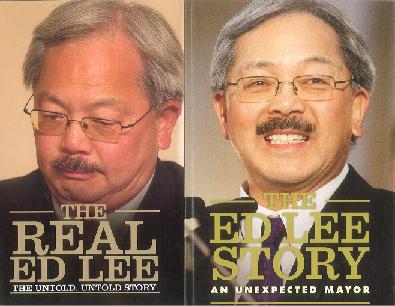
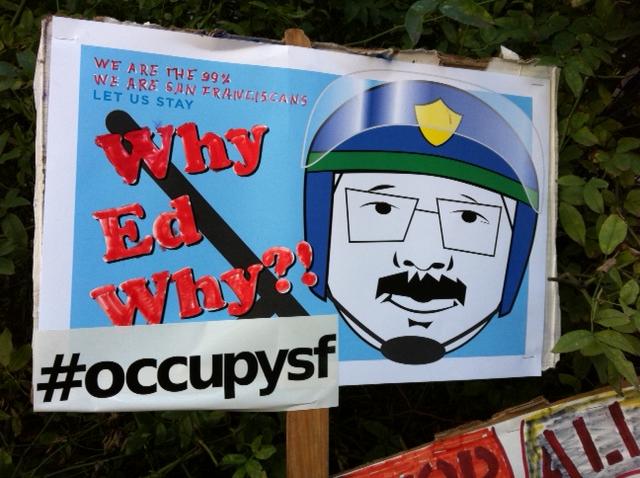
The Ed Lee Story has some much-needed competition. The boring, patronizing (to readers) and over-the-top hagiography of the interim mayor was just sitting there waiting for a parody, and now the Leland Yee campaign has obliged.

The Real Ed Lee, written by the Yee team, has a serious political point, but it’s actually funny, sometimes really funny, and it’s much easier to read than the plodding “Ed-Is-Greater-Than-God” prose of the original. A section titled “San Francisco’s Future, Ed Lee Style” notes that if the incumbent is elected to a full term

The Golden Gate Bridge will be now called the PG&E/Recology Golden Gateway to Corruptville. Make sure to show your employee badge at the the toll botth for your discounted rate (wink, wink).

HealthySF will be renamed the Endangered Restaurant Protection Act. You will be charged an additional 42 % on your bill. Please note — no health care will be provided.

Muni buses will now be operated by GO Lorries. Surprisingly, service will remain generally the same.

David Chiu is now District Attorney. Oh, wait ….

The book goes through the details of how Lee rose through the ranks at City Hall, along the way approving a couple of fraudulent vendors and getting caught up in Willie Brown’s sleaze. It discusses how his campaign is taking credit for other people’s work and ideas. It describes how he promised over an over not to run, then went ahead and did it anyway. It’s got a great picture of him steering a 139-foot yacht with the caption “I’m on a boat.”

I don’t know how well this will work, but it’s clear that Lee is falling in the polls and the cumulative impact of his mistakes and the attacks on him by the other campaigns is taking its toll. And for once, we have a campaign piece that made me laugh instead of crying.


Guardian editorial: Leave the occupiers alone!

2


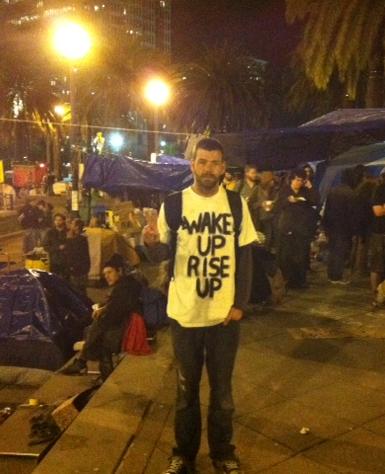
As the world watches, San Francisco and Oakland should set the standard by supporting  Occupy San Francisco and Occupy Oakland and supporting  their goals and peaceful tactics.  B3

 With all of the police raids and arguments over messages and demands and tactics, it’s easy to forget that the Occupy Wall Street movement has a clear political point — and it’s right.

The movement is about the devastating and unsustainable direction of the American economy, about the fact that a tiny elite controls much of the nation’s wealth, that virtually all of the income growth over the past 20 years has gone to the very top, about the collapse of the middle class and the rise of economic inequality that would have been unthinkable a generation ago. Those are the central issues facing the United States, the state of California and the cities of San Francisco and Oakland today — and instead of trying to crack down on the protests, city officials ought to be endorsing the occupy movement and talking about cracking down on the financial institutions and the wealthy.

A few things worth noting:

1. The protesters are almost entirely nonviolent. Although there have been a few isolated incidents in Oakland and SF, the overwhelming majority of the thousands of people at Justin Herman Plaza and Frank Ogawa Plaza are actively promoting and insisting on nonviolence. This is not a crowd that is a threat to anyone.

2. There’s a precedent for long-term political protest camps in San Francisco. The AIDS Vigil remained at U.N. Plaza — with tents, tarps, and cooking gear — for ten years, from 1985 to 1995.

3. The city of San Francisco’s citations — reported without question in the daily newspapers — about health and sanitation problems are way overblown. The OccupySF protesters are making extraordinary efforts to keep the place clean. When the city failed to live up to its promise to provide portable toilets, the protesters ordered (and paid for) their own. As state Sen. Leland Yee (not known as a crazy radical) noted after a visit Oct. 26: “While hundreds gathered, there was not one incident of violence. If the interim mayor thinks there are health issues, I certainly didn’t see them.” We visited Oct 31, and the place was clean and peaceful.

4. The cat-and-mouse game with the San Francisco police is the equivalent of psychological warfare; protesters have to be on edge at all times for fear of a crackdown that may or may not come.

5. Mayor Jean Quan made a bad mistake sending in the cops to roust Occupy Oakland. Nothing good at all can come of any further police eviction action.

Frankly, we don’t see why the protesters — who are well-behaved, represent no threat to anyone, and are doing a huge civic and national service by bringing attention to an issue that the powers that be in Washington, Sacramento and (sadly) San Francisco have largely ignored — can’t stay where they are. If there are health issues, let the Department of Public Health work with the occupiers. If there’s a problem with a portable kitchen, let the Fire Department show the protesters how to run it safely and legally (there are portable cooking devices at every street fair, in dozens of food trucks and in probably 100 other places around town).

The people at OccupySF and Occupy Oakland have done an amazing job of building a safe, respectful and inclusive community. They are the political heroes of 2011. If there’s anyplace in America where the movement ought to be allowed to grow and thrive, it’s here in the Bay Area.


Survey shows Lee aligned with tenant advocates only half the time

The results of a mayoral candidates’ survey created by the Council of Community Housing Organizations (CCHO) offered some surprises. Based on candidates’ responses, venture capitalist Joanna Rees, one of the more conservative contenders, came across as a stronger advocate for affordable housing and tenants’ rights than interim Mayor Ed Lee, who previously defended tenants as an attorney with the Asian Law Caucus.

The survey posed 25 yes-or-no questions to mayoral hopefuls, formulated by CCHO, the San Francisco Tenants Union, and the Housing Rights Committee. A “Yes” answer meant the candidate was aligned with the housing advocates’ standpoint, a “No” response was frowned upon as contrary to advocates’ housing agenda, and a “?” signified the response, “I’ll consider it.”

All told, Lee responded “No” to six questions, “I’ll consider it” to seven questions, and “Yes” to 12 questions, demonstrating consistency with the housing advocates’ agenda about half the time. Rees, on the other hand, responded “No” to three questions, and “Yes” to every other question.

Other respondents included Public Defender Jeff Adachi, Sup. John Avalos, green party candidate Terry Joan Baum, Board President David Chiu, former Sup. Bevan Dufty, City Attorney Dennis Herrera, and Sen. Leland Yee.

Candidates who answered in the affirmative to every survey question were Avalos, Baum, and Yee. Dufty responded “No” to eight questions, and “I’ll consider it” to one. Chiu responded “Yes” to most questions and “I’ll consider it” to four questions, though there was some confusion as his response wasn’t listed every time.

There you have a summary of the scorecards. So what were the questions?

Every single candidate answered “Yes” to this one: “To make up for the huge State and Federal cutbacks in affordable housing funding, will you commit to placing a dedicated affordable housing funding measure on the November 2012 ballot of at least $100 million?”

So no matter who’s elected, housing advocates will have an opportunity to advance this idea.

Among the more divisive issues was the question of reforming condo conversion laws to regulate tenancies-in-common conversions, in order to stem depletion of affordable housing stock. Lee, Rees, and Dufty responded that they would not seek such reforms; Yee, Avalos, Adachi, and Baum said they would. Herrera declined to answer.

Candidates were also divided on whether the San Francisco Rent Board, which mitigates disputes between tenants and landlords, ought to be reformed to “increase tenant representation and balance appointments between the Mayor and Board of Supervisors?” Yee, Lee, Dufty, and Adachi rejected that idea.

And Lee stood alone in answering “no” to this question: “Will you enforce a balance between market-rate housing and affordable housing that fulfills the City’s adopted housing goals, even if such a linkage slows down the overproduction of luxury condos until a minimum level of affordable and middle income housing catches up?”

All others said they would, except Chiu, who said, “I’ll consider it.”

View the full results of the survey here.

Superviors and labor leaders challenge Lee’s OccupySF stance

41

Mayor Ed Lee has put the city and its police force on a collision course with not only OccupySF, but also several members of the Board of Supervisors and top labor leaders who support the movement and want the city to allow its encampment to continue.

They spoke at a special hearing of the City Operations and Neighborhood Services Committee that was convened by Chair John Avalos this morning, supporting a resolution that Avalos created to allow OccupySF to have tents and other infrastructure that Lee opposes. The resolution – which is co-sponsored by Sups. Eric Mar, David Campos, and Jane Kim – was approved by the committee and is set to be considered by the full Board of Supervisors tomorrow (Tues/1).

“It is something I am wholeheartedly supporting because it is an expression of great frustration and concern about the economic system,” Avalos said. “We need to speak with a greater voice about changing our economic system so it works for the many and not just the few,” Avalos said, explaining why he is “wholeheartedly supporting” the OccupySF movement.

But Avalos said he’s been frustrated that Lee and the police have raided the camp twice and are threatening more, something that Avalos has been trying to mediate since the first raid on Oct. 5. He also said the city should learn from Oakland that using the police force to stop the movement only makes it stronger.

“If we were to try to stop it from happening, it would just encourage more people to take part in it,” he said, noting that more midnight raids are dangerous for both police and protesters. “We have to figure out as a city how we’re going to facilitate, encourage, and accommodate this movement.”

But instead, Avalos said Lee’s stand against allowing tents or an kind of encampment, while claiming to support the message OccupySF, has created a tense standoff. “I’ve seen very mixed messages come out of this administration,” Avalos said, adding that nobody believes police statements that the massing of SFPD cops in riot gear on Oct. 26 was only a training exercise.

Mar said OccupySF deserves tremendous credit for holding the space and being responsive to the health and safety concerns raised by city officials. “I’ve seen a transformation in the movement in the last three weeks that is truly impressive,” Mar said. “I’ve also seen, during the General Assemblies, an incredible exercise in democracy.”

He also disputed accusations that the camps are dirty and that the movement is unfocused. “Don’t believe the hype from the mainstream media but look at the messages coming out of this movement,” said Mar, who was wearing a “We are the 99 percent” sticker.

“We should allow OccupySF to do what they’re doing,” Campos said. “It’s good for San Francisco.”

Campos also called out Lee and Oakland Mayor Jean Quan for ordering violent raids on the peaceful encampment, disputing the idea that “somehow it’s okay for us to spend the limited resources we have on these kinds of police actions…I hope we don’t have Mayors Quan and Lee wasting resources that could be better spent elsewhere.”

During the public comment portion of the hearing, each of the more than two dozen speakers supported the resolution.

“What this resolution does is it calls on the other supervisors and the mayor to decide how they want to deal with OccupySF,” said Gus Feldman of SEIU Local 1021.

Representatives of several labor unions and the San Francisco Labor Council that have voted to endorse OccupySF spoke at the hearing, include Ken Tray with United Educators of San Francisco, who gave a rousing speech in support of the movement.

“The times have changed and the political landscape has shifted,” Tray said, ticking off a long list of reasons for supporting the movement, from San Francisco’s long tradition of advocating for progressive change to the fact that “the schoolchildren of San Francisco are being denied resources because the 1 percent refuse to pay their fair share.”

Frank Martin del Campo of the SF Labor Council displayed the bruises on his arm inflicted by police during the raid on the Occupy Oakland, saying “this was an attempt to criminalize dissent…It represents the politicization of the police.”

Labor Council Executive Director Tim Paulson said, “I just want to be clear that we are the 99 percent….We want Occupy San Francisco to be there 24/7.” He and others say the Occupy movement is highlighting deep economic inequities that the labor movement has long been raising as well. “OccupySF has called the question on really important issues we’ve been struggling with for years,” said Gabriel Haaland of SEIU Local 1021

“Here is a peaceful protest being answered with violence,” said Pilar Schiavo of California Nurses Association, which has been supporting the occupations. This is an important political struggle, she said, and “It’s time for the mayor to decide what side he’s on.”

Many speakers focused their criticism on Lee, such as Brad Newsham, who said, “Any official who would send in the riot police to deal with this camp does not deserve to be mayor of San Francisco.” He said the city should set an example for the country by formally allowing the encampment to continue, and he turned to the young protesters in the room and said, “Hold your ground and we’ll try to get your back.”

Sean Semans, an active member of OccupySF since the beginning, thanked Avalos and the other progressive supervisors for “saving us when nobody would,” and he expressed frustration with the Mayor’s Office.

“The mayor still doesn’t recognize us, he won’t come down and see the work we’re doing,” Semans said. “We can do all kinds of work when we’re not fighting to protect our First Amendment rights.”

He was part of an OccupySF delegation that met with Lee last week, and Semans said the mayor offered to help get the protesters rooms in SRO hotels or meals from local soup kitchens, showing that he has a fundamental misunderstanding about what this occupation is about.

As Semans said, “It shows what we’re dealing with here.”

The Hangover: Oct.23-28

0

Fever dreams and wardrobe malfunctions: all about Halloween Weekend 2011 (and it’s still not over!)

**It’s a little nerve-wracking going out in costume for a show when it’s not  quite yet Halloween. What if no one else dresses up and it’s a scene out of  Legally Blonde? Luckily the bands at Brick and Mortar (Zulus, Uzi Rash, Apache, Nobunny, Ty Segall)  were slated to perform costumed covers, so I figured it would be safe. (Plus, I  spent enough money making the damn thing to ensure I’d be living with my dad for an additional month — so I was gonna milk it.) Still, when I got inside the venue, I scouted to find some other outfits among black  clothes and leather. A guy was wearing a 1994 USA Olympic Dream Team  windbreaker (“Carl Mullen” he told me, pointing to one of the figures  with a basketball) and a still priced-tagged Batman cap, so I assume that he was the first of many Tyler the Creators, despite his refusal. Another guy was dressed as Middle Aged Business Man Who Has Too Much To Drink, Tries To Mosh Too Early, And Is Never Seen Again, but this was easily topped by the best costume of the night: Totally Trashed Crazy Girl (Ryan Prendiville)

**If you were in the back of the Prospector in Long Beach, Calif. on Saturday night, you likely saw my glowing light saber sharking through moshing bodies up front for the Shitfits, a Misfits cover band (actually, the members of now-defunct math rock act the Valley Arena) that comes together just once a year at this special time. The musicians, who are now spread out across the U.S. in San Francisco, New York City, and Long Beach, have been dressing up as the Shitfits for the past six or so Halloweens, though they claimed this perhaps could be their last. My saber disappeared sooner than I’d hoped, when an angry, long-haired, ratfink tried to start some shit in the pit. This is Halloween, man, we’re here to celebrate ghoulish punk, not incite brocious pummeling. No matter, the sweaty set tore it up, kicking off with “Where Eagles Dare” and ending bittersweetly with “Last Caress. (Emily Savage) 

** South by Southwest favorites White Denim helped draw a sizable crowd in support of Manchester Orchestra to the Regency Ballroom on the Friday before Halloween. The Austin, Texas locals did not, however, save for a few ripping solos and a lap around the stage that coincided with some lyrics about running (I think), perform memorably for the sparsely costumed audience. White Denim played jammy, hip indie rock with, albeit, some interesting twists and breakdowns, and certainly with no lack of musicianship, but the set failed to deliver any standout moments. Instead, it seemed to fade into a background noise of other, similar bands with able musicians at the helm playing decent rock’n’roll to the Coachella generation. (Cooper Berkmoyer)

**There were art shags aplenty (and some lovely folks haven’t shown their faces on the nightlife scene in a while) at the tongue-through-cheek orgiastic spectacle that was Thursday’s “Ann Magnuson plays David Bowie and Jobriath, or, the Rock Star as Witch Doctor, Myth Maker, and Ritual Sacrifice” at the SF MoMA’s Halloween installment of its nighttime Now Playing series. While the live show featuring the beloved New York performance artist and Bongwater singer — backed by a fantastic four-piece live band — wasn’t quite as long as its title, it did covera whole lot of ground. Practically David Bowie’s entire career catalog got a glance, refracted through a bloody Mayan-type ritual enactment, with piñata even. But that was just the first bit. Jobriath, revered gay glam rock cult star who burnt out early and later died of AIDS, was resurrected and his tunes reverently trotted out by the always mesmerizing Ann. But in the end it was Beelzebub, the half-naked gogo “acolyte” dancing onstage throughout the entire show, who won. Imagine a wide-eyed Eyeore on ecstacy and you’re halfway there. (Marke B.)

**Santa Cruz did what it does best this weekend: dress up like crazies. Also: Peewee Herman! And motorcycle riders. And a Goldigger (why is that still a costume?). They had to, so that the surfers could be distracted from the fact that the Santa Cruz Coldwater Classic hit a weekend of sub-par waves in front of the town’s lighthouse. Not disappointing at all: the grin on eventual winner, Brazilian Miguel Pupo. Or the fish taco truck. No lines! (Caitlin Donohue)

**The season was in full effect Friday night at Kimo’s, with three costumed bands and quite a few creatively-attired audience members, including a dead-on Jack White. (It seemed all of Polk Street was in the Halloween spirit, for that matter, though the girls dressed as “slutty Teenage Mutant Ninja Turtles” really should’ve known better.) Anyway, rockers Heavy Action — with ghostly back-up dancer — took the stage first with a raft of 70s covers (including “Boris the Spider,” complete with a prop spider), followed by punk-band-with-songs-about-Van-Damme-movies Dalton (all members were dressed as Wayne’s World characters). Headliners Street Justice moonlighted as “Sesame Street Justice” for the night. Turns out that in addition to teaching children about friendship, Bert and Ernie are also capable of throwing down big time. Who knew?(Cheryl Eddy)

**Trannyshack Halloween: A Party was OK on Saturday. Most of the drag numbers were recycled and a little tired, although a neatly choreographed dance number by several of our finest Asian zombie queens, the Rice Rockettes, to “Heads Will Roll” was cuuute. Hostesses Peaches Christ and Heklina seemed to be in a bad mood — and when secret guest costume contest judge Tommy Lee failed to show up, their wrath exploded. Playing his apology voicemail over the PA (he claimed he had “a show tomorrow so really need my rest … rock on, ladies!”) they could barely conceal their disappointment. And usually ace retro DJ Omar seemed a bit on autopilot — although Oingo Boingo’s “Dead Man’s Party” sounds great right now, and Mary J. Blige’s first album is really making a comeback through a wide variety of DJs. Some of the costumes were dope and we still danced to the wee hours. (Marke B.)


Gear up: Trevor Traynor’s lowrider captures cruise into the Mission

1

Photographer Trevor Traynor is moved by lowriders. And he says he’s not the only one.

“Lowriders move people,” he wrote to the Guardian in an email interview. “Literally and figuratively. When you’re cruising people smile, wave, they take pictures. The cars connect people of all walks of life and the clubs enjoy it as well. It keeps people productive with a strong passion in cars.”

You can tap into his love for the low on Thu/3, when Traynor’s photo show “Low Life” opens at The Summit SF in the Mission.

Though the Mac-sprouting coffeeshop might seem like an odd venue for a show that celebrates the Mission’s Latino car clubs, the San Francisco-based shutterbug’s exhibition will be hanging just a few blocks away from where his passion for lowriders was first spawned on Cinco de Mayo in 2010. 

“As a native New Yorker, seeing 30-plus lowriders cruising low and slow, hopping on three wheels down Mission Street was something new and exciting and the energy [could] not be ignored,” Traynor recalls. The sight was enough to get him in a ride. “I remember hanging out of the back of a mint 1969 yellow [author’s note: he’s also described it as “flan-colored”] Buick Skylark Convertible while Lexxx from the Padrinos Car Club drove nice and slow for me to steady my camera.”

Traynor’s body of work has tended to specialize in hip-hop culture — he’s shot everyone from Mos Def and E-40 to Lil’ B and N.E.R.D. over the years. But since that Cinco, Traynor has ridden with a score of Bay Area clubs: The Inspirations (the only cars people are stoked to see when Sunday Streets hits the Mission), Padrinos, Pachuco, Aztecas, Excandalow, Frisco’s Finest, Bay Riders, and Fo’ Fifteen Car Club among others. The images from the show come from outside the Bay, too — places like Santa Fe and Sacramento make appearances. On opening night, they’ll be accompanied by shifting motion visuals from John Coyne, and DJs bumping lowrider anthems from the Summit sound system.  

It’s clear from looking at the shots of the cars and their riders that result that he digs the aesthetic (craziest thing he’s ever seen airbrushed on a ride: “A nude angel goddess holding two smoking guns riding a fire-breathing dragon above the pits of hell”) but he insists that these are more than just pretty machines. 

“Lowriders hold history in the Chicano community. [The cars’ purpose is] a sense of pride, passion, and respect. Car clubs are a small community, a family, a group of friends that are all car-loving aficionados.” He’s even seen car clubs that do youth outreach programs and toy drives. 

“Some people wake up on a sunny Sunday and go golfing, go to the park, go to the courts, go hiking. Car clubs cruise. Lowriding is a lifestyle.”


“Low Life”

Through Dec. 1

Opening reception: Thu/3 7-10 p.m., free

The Summit

780 Valencia, SF

(415) 861-5330

www.thesummit-sf.com


CHP menaces the Halloween Critical Mass ride

14

The California Highway Patrol seems to be on high alert and itching to fight the people in the street, at least if a bizarre incident at last night’s Critical Mass is any indication. And that’s a scary prospect in the Bay Area, where the ongoing standoffs between police and the Occupy movements in San Francisco and Oakland are potential powder kegs that require cool heads on both sides.
Critical Mass was rolling through the warm streets of San Francisco, as it’s been doing on the last Friday of the month for 19 years, and it was a glorious night. The weather was nicer than it’s been in years for the Halloween ride and most of the large crowd wore costumes, many of them playing off Occupy Wall Street themes, from zombie bankers to the Glass Seagull (a reference to the gutted banking regulation Glass-Steagall Act).
Best of all, the San Francisco Police Department seemed to be standing down and allowing the ride to self-regulate, which it did with a minimum of conflicts with drivers. The mood was buoyant and many riders said it was the best Critical Mass they’d been on in a long time.
Then suddenly, as the ride headed up Market Street toward the Castro, crossing Octavia Boulevard, about a dozen CHP officers on motorcycle rapidly descended on the ride, aggressively cutting the dense ride in half to clear Octavia. Some used their motorcycles to push the cyclists back and tensions flared.
Angry words were exchanged back-and-forth between the cyclists and cops, some of whom seemed to be itching for a fight. One in particular pursued the cyclists up Market Street, playing the provocative tough guy or using his motorcycle to try to corral and menace the ride, long after the standoff had ended with enough green lights for the ride to get past Octavia and his fellow officers left.
This battle over public space and freedom of assembly isn’t going away anytime soon. There are resentments building and there will be bad apples on both sides of the barricades in the days and weeks to come. That’s one reason why Mayor Ed Lee is playing a dangerous game by threatening to raid OccupySF at any moment, and why the SFPD’s approach to this ride was far better than the CHP’s.
Just stand down and let the people police themselves.

Potrero Hill History Night: a special occasion for a special neighborhood

3

Scroll down for Potrero Hill History Night photos

And so Country Joe McDonald ambled on to the stage Saturday night at the International Studies Academy on Potrero Hill and told an full auditorium full of history night groupies  that since he was playing in a school he would open with a spelling lesson.

“Give me an F,” he roared,  and the audience roared back with an F.

“Give me a U, give me a C, give me a K,” and the audience roared back again and again  with knowledge of the lyrics of the anti-war song “I Feel Like I’m Fixing To Die” that Country Joe made famous during the Vietnam war and has been singing as his trademark song ever since.

He would pause and the audience would continue on with the words. Country Joe was in top form, the audience loved him, and it was a stunning beginning to the 12th annual Potrero Hill History Night.  And the fact that Occupy SF and Occupy Oakland were fixing to explode sooner or later in nearby neighborhoods  only gave some timely poignancy to the occasion.

But Country Joe wasn’t at History NIght to perform as a singer or political activist. He explained that he was there as a turnaround artist to interview Joel Selvin, the veteran San Francisco Chronicle pop culture reviewer and author of “Smart Ass,” a collection of 40 years of Selvin’s music journalism. Significantly, Selvin also happens to be a longtime Potrero Hill resident. The latter phrase is the key, because the point of History Night is to focus on the rich history and colorful personalities of Potrero Hill and put them together into a lively program. In this segment, Joe the performer interviewed Joel the reviewer/reporter who had been writing about Joe for years.

The two made a splendid team and it turned out that Joel was as good onstage in this format as Country Joe. It was good fun, instructive at times, particularly with the stories about Bill Graham’s antics and angry outbursts and how each dealt with him. The audience had fun trying to figure out through questions just how rock n’ roll and Country Joe from Berkeley connected to the hill. Well, one answer was that Jann Wenner, the founder of Rolling Stone magazine, claimed three different addresses on Rhode Island Street.

The program this year was the best ever. A barbecue outside the building serviced by a platoon of History Night  groupies on a warm and wondrous Potrero Hill evening. And a program featuring a formal presentation of a chunk of goat hoofprints embedded in concrete, an interview with the woman who tended the goats decades ago, a surprise appearance by the lady who found and preserved the hoofprints for years, and a starring role by Phillip DeAndrade of Goat Hill Pizza who was given the goat hill hoofprints as a surprise gift because he once had goats in the back of his Goat Hill pizza parlor and because, well, he’s Phil DeAndrade.

DeAndrade is a Potrero Hill version of the Scarlett Pimpernel (he’s here, he’s there, he’s everywhere). For this evening, he was doing triple duty as the worthy receiver of goat hoofprints in concrete, as master of ceremonies, and as the Hot Interviewer of the Colorful Potrero Hill Veteran, the key finale of every history night event.

DeAndrade was specially eloquent in explaining the importance of history night. It is, he said, a special event (nobody else in town has one) that showcases Potrero Hill.as a special place and its people as special people who live in a special neighborhood with a special culture and a special history and such institutions as the Neighborhood House built in the 1920s  with Julia Morgan as the architect.

The goat hoofprints in cement  made his special point. The artifact dates from 1925 or so and was found and preserved by Rose Marie Ostler, a Potrero Hill native. She kept the hoofprints for years and then decided they should go to DeAndrade of Goat Hill for his historic connection with goats.  She presented them at the ceremony, with help from Dr. Frank Gilson, a local chiropractor wearing a Halloween type goat hill mask.

This year’s Potrero Hill veteran was Josephine Firpo Alioto, who was born on Potrero Hill 90 years ago, and now lives in San Jose.  She married Frank Alioto, son of Police Capt Calogero and Vincenza Alioto.  The Alioto family moved to 755 Carolina St. around 1930, just around the corner from Josephine’s house. There were no houses on the cornerin those days,  so they had a clear view of one another’s houses. Josephine and Frank were friends for 80 years and married for 65 and a half years.  They were married at nearby St. Theresa’s Church.  With expert coaching from DeAndrade, she was most articulate and provided the details of life and times of growing up on the hill in the 1920s and 1930s.

Perhaps the most “newsworthy” comment came when she took the audience by surprise when she mentioned that her cousin, Luis  Firpo, known as the Raging Bull of the Pampas in Argentina, knocked Jack Dempsey out of the ring in a  championship fight. (My google check showed she was right. Firpo did knock Dempsey out of the ring in the  famous 1923 heavyweight championship fight at the Polo Grounds in New York City and Dempsey’s head hit a reporter’s typewriter. But Dempsey got back in the ring on a contested long count and won the fight in the third round in what many think is the greatest fight of all time. It was Dempsey’s last successful defense of his title. The fight is on UTube and googleable under Firpo.)

As is the history night custom, there were lots of Firpos and Aliotos in the audience to help fill in Josephine Alioto’s story and answer questions from the audience and provide the evidence of a very special neighborhood.

All in all, it was a most memorable event and all to the credit of Peter Linenthal, the founder and impresario of Potrero Hill History Night. His event even got a nice writeup in Leah Garchik’s Chronicle column. UCSF at Mission Bay was the sponsor of the event and the Parkside, Chat’s Coffee, and Bottom of the Hill donated to the barbecue.  Linenthal  is also the curator of the Potrero Hill Archives project, assisted by Abigail Johnston. The two co-authored an excellent book on Potrero Hill.  For more on the archives project, go to potreroarchives.com.  You may find out more about Potrero Hill than you need to know.

I think Linenthal has done what every impresario dreams of doing:  making his event so special and so memorable that it will live on and on.  B3

history night 2

Rose Marie Ostler formally  presents the goat hoofprints in cement to Goat Hill Phi.

history night 4

The audience of History Night groupies.

history night 5

Selvin expands, Country Joe listen.

history night 6

Josephine and Phil,  a dynamic duo, 

history night 7

Josephine and Phil, getting ready for prime time.

history night 8

The Apollo  jazz group in concert at History Night.

history night 9

A student from the International Studies Academy selling tickets for the barbecue.  The money goes to the ISA student travel program.


LGBT leaders denounce attack on Herrera by the Chronicle

20

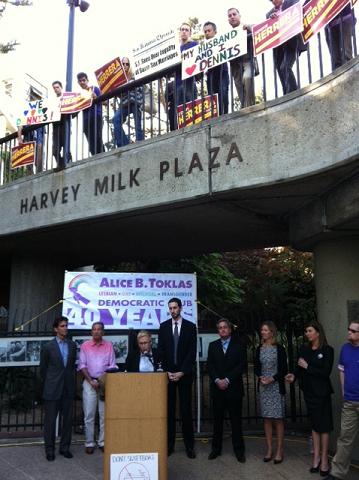
Leaders of the LGBT community from across the political spectrum yesterday denounced the San Francisco Chronicle and the anonymous sources it relied on to question City Attorney Dennis Herrera’s early support for legalizing same-sex marriage, calling the paper’s front page article a thinly veiled political hit piece designed to hurt Herrera’s mayoral campaign.

That strong showing of support in the LGBT community and the view offered by many that the attack came from supporters of Mayor Ed Lee – including top former Newsom Administration officials, some of whom now work for Lee – could not only mitigate damage from the article but further sully a Lee election effort that is already marred by allegations of vote tampering, money laundering, and deceptive campaign tactics.

“Those who are saying this now anonymously are as cowardly as Dennis and Gavin were courageous back then,” said Deputy City Attorney Theresa Stewart, the lead attorney who defended San Francisco’s decision in 2004 to unilaterally issue marriage licenses to same-sax couples, in defiance of state and federal law, which eventually led to the legalizing of such unions. “We can’t have our community turn on us for petty political gain.”

“WTF, Chronicle?” was how Assemblymember Tom Ammiano began his speech, going on to lay blame for the attack on surrogates for Lee. Ammiano also called out the mayor for campaign finance violations by his supporters, for undermining the Healthy San Francisco program that was created by Ammiano’s legislation, and for repeatedly ordering police raids on the OccupySF encampment.

“How about some fucking leadership?!” Ammiano said.

Cleve Jones, an early gay rights leader who marched with Harvey Milk, also denounced Lee and his supporters for cronyism, vote tampering, money laundering, and the “fake grassroots” efforts of the various well-funded independent expenditure campaigns, which he said have fooled the Chronicle.

“To the Chronicle and that reporters – really? – this is what you do two weeks before the election? You should be ashamed of yourself,” Jones said. “How stupid do you think we are?”

Yet Chronicle City Editor Audrey Cooper defended the article and disputed the political motivations of its sources. “Clearly, I disagree [with the criticisms],” she told the Guardian. “I personally vetted every one of the sources and I’m confident everything we printed is true.”

Beyond criticizing the obvious political motivations behind the attack, speakers at the rally called the article bad journalism and said it was simply untrue to suggest that Herrera didn’t strongly support the effort to legalize same-sex marriage from the beginning.

“I can tell you that Dennis never once shrank from this fight. I was there, I know,” Stewart said, calling Herrera “a straight ally who’s devoted his heart and soul to this community.”

Sen. Mark Leno, who introduced the first bill legalizing same-sex marriage to clear the Legislature, emphasized that he isn’t endorsing any candidates for mayor and that he didn’t want to comment on the details of the article’s allegations. But he noted that even within the LGBT community, there were differences of opinion over the right timing and tactics for pushing the issue, and that Herrera has been a leader of the fight for marriage equality since the beginning.

“I am here to speak in defense of the character and integrity of our city attorney, Dennis Herrera,” Leno said, later adding, “I do not appreciate when the battle for our civil rights is used as a political football in the waning days of an election.”

Ammiano also noted that even if Herrera raised doubts in early meetings, that was entirely appropriate given his role as city attorney. “Even if there are some questions, they’re about helping, not hurting,” he said, expressing disgust at the Newsom Administration officials for turning on someone who was instrumental to defending the decision: “In my day, you valued your friendships.”

Molly McKay, one of the original plaintiffs in the civil lawsuit that followed San Francisco’s actions, teared up as she described the ups and downs that the case took, working closely with Herrera throughout. “But this is one of the strangest twists I can imagine,” she said of the attack by the Chronicle and its anonymous sources. “It’s ridiculous and despicable.”

Representatives for both the progressive Harvey Milk LGBT Democratic Club and fiscally conservative Alice B. Toklas LGBT Democratic Club also took to the microphone together, both saying they often disagree on issues, but they were each denouncing the attack and have both endorsed Herrera, largely because of his strong advocacy for the LGBT community.

Sup. Scott Wiener called Herrera, “One of the greatest straight allies we’ve every had as a community.”

When Herrera finally took the microphone, he thanked mayoral opponents Joanne Rees and Jeff Adachi for showing up at the event to help denounce the attack and said, “This is bigger than the mayor’s race. It’s bigger than me.”

He criticized those who would trivialize this issue for petty political gain and said, “It was my pleasure and honor to have been a part of this battle from the beginning – from the beginning – and I’ll be there in the end.”

Poet of dissonance: Anna Moschovakis at Meridian Gallery

0

I bought Oprah’s O Magazine in March — my first — after learning it had 24 glossy pages to honor (or degrade, depending on how you look at it) National Poetry Month. In the issue, among other things, was a photo spread of eight female poets modeling the latest spring fashion. “Spring Fashion Modeled by Rising Young Poets” was one of those rare occasions when mainstream culture and poetry awkwardly attend the same party. It’s the kind of thing that makes poets and scholars blink in disbelief and send heavy sighs over the Internet. One of the poets featured in O was Anna Moschovakis: the author of two books of poems, a translator, and an editor at Ugly Duckling Presse. (Moschovakis, who lives between Brooklyn and Delaware County, NY, reads at San Francisco’s Meridian Gallery Sat/29.) She was modeling a pink Candela dress ($359) and an Haute Hippie jacket ($995). 

It started something of an Internet brawl.

David Orr for the New York Times: “It’s impossible to say what Moschovakis was thinking during this shoot — I certainly hope one of her thoughts was ‘I better get to keep this damn jacket’.”

Jessica Winter for Slate Magazine: “How have eight lady poets and their outfits managed to put Orr in such a despondent frame of mind?”

Orr’s criticism of Moschovakis was warranted in some respects. Her latest book of poems, You and Three Others Are Approaching a Lake (Coffee House Press 2011), which was awarded the 2011 James Laughlin Poetry Prize, is a critique of gluttonous contemporary culture — a culture she arguably sold into.

So, naturally, you do wonder what she was thinking. In the stark, analytical poems that make up You and Three Others Are Approaching a Lake, Moschovakis assualts materialism, waste, and the internet and repossesses elements of that culture in her poems — Craigslist ads, Wikipedia articles, and MySpace posts — in such a way that proves how demoralizing it can all be. Her style is somewhat similar to Rae Armantrout’s. Both poets are infinitely curious, and not only do they approach each poem with a question, but they often end the poem with a question. There’s rarely a straight answer. Nonetheless, the poems manage to tear down our comfortable preconceptions anyway. Here’s an excerpt from “The Tragedy of Waste”:
  
Human wants:

First the necklace of bone
then the shift of leather

tea, tobacco, and gambling

in other words

Ten men could live on the corn
where only one can live on the beef

Emily Warn, writing for the Poetry Foundation blog, called Moschovakis to ask her about the feature in O Magazine and to see whether Moschovakis could resolve her “cognitive dissonance.”

Warn writes: “[Moschovakis] asks whether ‘cognitive dissonance’ — mine or Orr’s — is necessarily a bad thing, if it might lead us to be more critical of our assumptions.” In essence, this is what Moschovakis’ poems do: challenge our assumptions. A quote from the poet by her photo in O reads: “Poems allow us to hold two ideas that don’t hold up.”
 
Perhaps this doesn’t resolve the overwhelming question. I myself cannot say for certain what Moschovakis was thinking. But I enjoy and appreciate her philosophically bent poetry, her austere use of language, and the sense of violence that charges her poems. She is always second-guessing herself and I like that, too. Besides, dark times call for a dark poet like Moschovakis.

With John Sakkis
Sat/29, 7:30 p.m., $10
Meridian Gallery
535 Powell, SF
(415) 398 7229
www.meridiangallery.org

Spellbound

0

Harry Houdini: the name conjures up a multitude of images and ideas about what a magician and escape artist should be. The Contemporary Jewish Museum in San Francisco is currently celebrating that rich and long-lasting legacy with Houdini: Art and Magic, a new exhibit featuring a collection of vintage photographs, event posters, archival film, original props, art installations, and more, focusing on the world’s most famous magician — who died in 1926, on Halloween.

“The genesis for the show was just really seeing how Houdini’s relevance still remains today in popular culture, and how despite being born in 1874, he still is so visible in the culture, visible in contemporary art. His celebrity has really transcended three centuries,” says CJM curator Dara Solomon.

The exhibition was originally put together by the Jewish Museum in New York, with the CJM also getting involved early on in the process, as local organizers felt that there would be a strong interest in Houdini from the Bay Area — after all, the legendary icon had performed in San Francisco several times; he appeared at the Orpheum Theater, broke out of locked box lowered into the bay at Aquatic Park, and hung off the side of the Hearst Building to perform his famous straitjacket escape stunt.

Tracing Houdini’s life from his birth as Erich Weiss in Budapest in 1874 and following his family’s immigration to the United States, his upbringing as the son of a rabbi, and the eventual evolution of his performing talents and ascension to the world stage, the exhibit tells Houdini’s story through displays of rarely-seen personal photographs, handwritten journals, and what may be the biggest draws for fans — a trunk, milk can, straitjacket, and handcuffs that actually belonged to the magician and were used in his shows.

What visitors to the exhibit won’t see are any explanations or descriptions revealing Houdini’s secrets — something that organizers wanted to avoid.

“It would be seen as the ultimate sort of betrayal if the exhibition set out to reveal Houdini’s tricks,” says Solomon. “He worked so hard at making his body this sort of instrument to do these performances, he was in such amazing physical shape — that was what really allowed him to do these amazing feats of strength.”

Another aspect to the exhibit is the exploration of the impact of Houdini and his mystique on contemporary artists — paintings and other installations from artists such as Deborah Oropallo and Raymond Pettibon add to the survey of his legacy.

“So many artists in the past 20 or 25 years have really been taken by Houdini as inspiration and as a model for how an artist works; they find this real connection with the art of the magician and the art that they make, that they are both illusionists,” says Solomon.

For 10 years after his death, Houdini’s widow Bess conducted séances on Halloween attempting to contact and communicate with him from beyond the grave — with his ever-growing popularity, and a new fan base with each new generation, somebody, somewhere in the world will undoubtedly be trying to do the same on Monday night.

“I think that there has been nobody else like him — he was such a master of communications and a marketing genius that he ensured that he left this incredible legacy,” says Solomon. “When people think of the world of magic, he is still the one and only.”


HOUDINI: ART AND MAGIC

Through Jan. 16, 2012

Thurs., 1-8 p.m.; Fri.-Tues., 11 a.m.-5 p.m.

$5–<\d>$12 (18 and under free)

Contemporary Jewish Museum

736 Mission, SF

(415) 655-7800

www.thecjm.org

Progressive group stands out as the lone Lee endorser

86

Mayor Ed Lee’s support by the wealthy power brokers and his checkered history with the Willie Brown administration has caused most progressive groups to shun him in this election, with one notable exception. San Francisco Rising Action Fund, a grassroots organization for working class people of color, gave Lee its second place endorsement, right after progressive favorite John Avalos. It’s the only slate that the two political opposites appear on together.

The San Francisco Democratic Party, Sierra Club, San Francisco Labor Council, the Bay Guardian, and other progressive groups have all issued endorsement slates that generally include Avalos, Dennis Herrera, and sometimes Leland Yee. But Lee has been almost entirely shut out on the left – except for a third place endorsement by the San Francisco Bicycle Coalition, which is generally left but mostly single issue – making SFRAF the rare exception.

Alex Tom, one of the directors of SFRAF, clarified that its endorsement “ is not about Ed, but about the larger progressive movement.” Going against the endorsement grain, he said SFRAF consolidates the Asian, Latino, and Black communities— a strategy to compensate the divided nature in the political left.

“We need to step back in general and have a conversation with how people of color engage with politics and the progressive movement,” Tom told us.

Like many liberal groups, SFRAF is at the front lines of OccupySF and supports progressive bills like the Health Care Security Ordinance, which was the subject of Lee’s first veto this week, angering progressive groups who sought to close a loophole that lets businesses raid the health savings accounts of their employees.

But Tom points out that “there is an assumption in SF that to get progressive things passed you need to go to District 5, 6, and 9— you don’t go to the Southeast,” or other lower income neighborhoods. SFRAF is trying to reframe the broad spectrum of progressives, to “civically engage [voters of color and lower incomes] and [include them] in the electorate.”

Voters of color don’t engage in the same spaces that other progressive do. “We are not insiders, we are not even inside the progressive circle,” Tom says.

SFRAF’s Board of Directors includes Joel Aguilar, who recently left SF Day Labor Program; Chelsea Boilard with Coleman Advocates for Children and Youth; Antonio Diaz of People Organized to Demand Environmental and Economic Rights; Ariana Gil of Mujers Unidas y Activas; Adam Gold of Causa Justa: Alex Tom with the Chinese Progressive Association; and Steve Williams of People Organized to Win Employment Rights (POWER).

The Directors promote Ed Lee’s platforms on local hire, summer school, fight against wage-theft, and facilitating equitable budget process. Lee’s a viable candidate for a new type of progressive, says SFRAF, who doesn’t “agree with the insider game” in regards to Rose Pak and Willie Brown, Lee’s closest associates.

SFRAF doesn’t believe the company Lee keeps makes him untrustworthy. While many progressives see a politician’s connections as good indicators of their future actions and allegiances, SFRAF doesn’t seem to place much emphasis on this. Indeed, Lee seems to be an obstacle to much of the group’s agenda.

Take the SFRAF’s 10-point platform, which is diametrically opposed to many of Lee’s recent actions. In the matters of health care, SFRAF’s promotes, “policies that require employers to provide quality, affordable healthcare coverage to their employees and their families,” something that Lee’s recent veto seemed to weaken, letting businesses take about $50 million per year that city law required them to set aside for employee health care.

The next day, Lee faced the same groups he voted against— at a labor union rally— and explained his veto was an act of diligence to protect jobs. But the sponsor of the vetoed legislation, Sup. David Campos, said the veto was an setback for workers’ rights and consumer protection. “It’s a defining issue for us at City Hall,” Campos told us.

But Tom disagrees with progressive assessments that “pay to play” is a major force in City Hall politics, although to did say it is important to “acknowledge your power structure.” To SFRAF, the progressive sector cannot duplicate a city run by a few insiders— a fear SFBG expects to be a reality with Ed Lee as mayor. Instead, he says a progressive City Hall must bring a “multi-sectored” people into the decision-making process.

And he think Lee will be an ally in doing so.

Steven T. Jones contributed to this report.
Kamala Harris likes Bob Marley and Chris Cunnie

3

My Sublime station on Pandora just got interupted by California Attorney General Kamala Harris, telling me that she likes Jay Z, Bob Marley, and Chris Cunnie.

It was sponsored by the latter’s Sheriff campaign. I’m not surprised by the Cunnie part, but Bob Marley? With that kind of musical taste, you’d think Kamala would take a stronger stand in defense of California’s medical marijuana laws.

Bob would certainly be disappointed that she’s not standing up for our rights — and he’d probably back Ross Mirkarimi, who created San Francisco’s successful framework for dealing with the pot clubs.

Mayor Lee still moving toward showdown with OccupySF

22

Mayor Ed Lee continues to insist that OccupySF break down its encampment in Justin Herman Plaza and threaten to send in riot police if that doesn’t happen, even as this week’s violent police raid on Occupy Oakland has sparked international outrage, condemnation, and solidarity with other occupations.

Reporters packed into the Mayor’s Office for a photo op with a good samaritan who recently helped rescue an injured truck driver, clearly waiting for the chance to interview Lee and Police Chief Greg Suhr about last night’s aborted police raid on the OccupySF encampment, asking repeated questions seeking to clarify Lee’s confusing political doublespeak before his communication staff shuffled him out of he room after about 10 minutes.

“I, like all of you, were watching in somewhat of very big deep concern as I saw things unveiled in Oakland, certainly in constant communication with not only our chief of police, Chief Suhr, but also all of our departments to say that’s not what we want to happen in San Francisco,” Lee began. “We’re trying to enforce all the laws here, and of course it’s public health stuff that we’re emphasizing. We need to make sure our public spaces are clean and healthy, and to protect their First Amendment rights. But we didn’t want to get into a situation where we’re just busting heads because then it’s all lost.”

Yet neither Lee nor Suhr could articulate why they think Oakland’s raid turned so violent or how to guard against a similar fate here in San Francisco, particularly because they reiterated their position that the encampment must go and held open the possibility that another police raid – there have been two so far, the second more violent than the first, and the camp has only grown in size since then – could come at any moment.

They also offered shifting explanations for last night’s massing of SFPD troops in riot gear in buses on Treasure Island, which protesters believe was turned back only because of the huge presence in the camp, which included five members of the Board of Supervisors and various labor leaders, a group that Lee says he would be meeting with shortly after the event (“We’re seeing if they’d like to propose some additional solutions,” Lee said).

When asked about plans for yesterday’s raid, Suhr initially said it was simply a normal Wednesday evening training exercise. “There were that many police amassed last Wednesday, there will be that many police amassed next Wednesday. Wednesday is a standard training day for the Police Department,” Suhr said.

But when reporters expressed skepticism – many aware of the busloads of police in riot gear massing on Treasure Island, the last minute changes in police staffing schedules, and the notices of possible police activity sent to businesses around Justin Herman Plaza – Suhr said police were preparing to either assist in Oakland or deal with trouble from OccupySF.

“Out of deference for what was going on in Oakland, we felt that the more pressing need was whether we needed to assist Oakland and/or whether that situation was going to come to us,” Suhr said. “I didn’t say it was a training exercise, we took advantage of the presence on what was training day and to train to what we may have to do down the line.”

Lee also raised the concern that violent agitators might come to San Francisco: “They had to get ready for what they saw in downtown Oakland. They had to get ready for hundreds of people coming to San Francisco, either walking over the bridge or coming through the BART system. So they were trying to get ready for that particular activity because we didn’t know what was going to happen. We saw a lot of anger and a lot of frustration by people who wanted to come over to San Francisco and we didn’t know what their intention was.”

But reporters noted that Lee ordered OccupySF to take down its encampment two weeks ago, that he told reporters this week that they must do so “within days,” and that Suhr circulated a memo in the camp yesterday entitled “You are Subject to Arrest” if they didn’t heed city codes regarding overnight camping. Given all that, we again asked if there was any intention to go into the camp last night?

“That was not our intention, but I’ve always asked the chief to be ready. I’ve been insistent that we have to be ready to enforce our laws so he’s been under that instruction for quite some time. But the tactical decisions are the chief’s responsibilities,” Lee said.

Yet later in the press conference, after Lee had left the room, Suhr made it clear that the decision about if and when to stage another raid on OccupySF is the mayor’s. “Make no mistake about it, Mayor Lee is in charge of this situation,” Suhr said.

In fact, when we asked Suhr about this constant threat of a violent police raid in the middle of the night hanging over the protesters – which is a wearying distraction from the main economic justice purpose at best, and at worst what some protesters told us was akin to psychological warfare – Suhr said that even he didn’t know when a raid might come.

“There’s nobody more anxious that I am because I don’t know when the raid is coming either, so I can attest to the fact that it makes me anxious. We are working painstakingly and patiently to make sure that area is safe and sanitary,” Suhr said.

But while Lee insists that dialogue and compromise could still avert another crackdown, he refuses to accept that occupation is a tactic that protesters aren’t likely to abandon anytime soon. So Lee’s insistence that the camp be broken down seems to be putting the city and OccupySF on a collision course that most members of the Board of Supervisors – including those sponsoring resolution urging the city to allow overnight camping – fear could be a disastrous stain on the city.

“Our message to OccupySF is we’re still wanting you to comply,” Lee said. “That’s been the consistent message we’ve been sending clearly these last couple weeks…We’re trying to ensure that [the ban on] overnight camping is still enforced, but also respecting their rights to protest.”

I and other reporters tried to push Lee on the potentially harmful standoff he was creating, and he tried to make it sound as if the OccupySF movement could avoid another police crackdown, something he said depends on protesters submitting to his demands.

“It’s optimistic on our part that we would get some sensible minds who want to help us find a way to clean up the area, because that ultimately what we want to do,” he said.

But for all his statements of support for the Occupy Wall Street movement and stated desire to avoid the violent confrontation in Oakland, he refuses to allow tents on the site.

“There’s a fine line between occupying public space within your First Amendment rights and sleeping overnight and causing health conditions that we’ve been very concerned about. So we’re going to take it step by step,” Lee said. When asked about whether tents would still be allowed if the camp was clean and otherwise compliant, he said, “We’re still saying no tents.”

So then when and how will you be enforcing that, reporters kept asking.

“Let’s see what can voluntarily be done through the dialogue that trying to establish. We’ve given them a lot of notices. I want to be sure that if we have to do things to enforce our laws, that we’re quite justified and that everybody knows,” Lee said.

Yet that was the same stance that Oakland Mayor Jean Quan took, and it’s one that she is reportedly backtracking on in the wake of the violence and international condemnation. And Lee couldn’t explain how a crackdown might go differently in San Francisco, particularly none that OccupySF has grown larger and more empowered by defying Lee’s edict for so long.

“Everyone agrees that we don’t want to Oakland situation to happen here,” Lee said, at which point Press Secretary Christine Falvey said he would take only two more questions.

“We’re putting a responsible burden on the occupiers to work with us so we can avoid situations like Oakland,” Lee said. “They have to take responsibilities for what they’ve done.”

“Frankly, it sounds like you’ve said nothing, and I think some other reporters are feeling the same way,” KCBS reporter Barbara Taylor, the senior journalist stationed at City Hall, said with a tone of exasperation. “So can you just outline, when you say to do the right thing, what is the right thing? Do you expect them to voluntarily take down the tents, clean up the camp, only be there within certain hours?”

“Yes. The right thing for them to begin showing responsibility,” Lee responded.

“But what does that mean?” Taylor persisted.

Lee said they need to clean up the camp, saying that “cleanliness has been our number one concern….They have to show signs that they’re willing to work with us.” But the protesters have been diligent about regularly cleaning the camp, and they have complied with other city requests such as no open flames. And when the city refused to make porta-potties available at night, supporters of the camp rented four of their own after the city and its daily newspapers complained about public urination and defecation.

“I’ve said all along that public safety is our number one concern,” Lee said.

Fire Chief Joanne Hayes-White reinforced Lee’s point, complaining about open flames, car batteries, and generally “unhealthy and unsafe conditions.” When we noted that the protesters have already addressed and abated many of these issues in recent days, she admitted that she hasn’t been to the site recently, but said, “The tarps and the tents are not something we’re going to tolerate.”

Suhr made it clear that police action would be done in support of other city departments who ordered hazards to be abated. As for when and how officers would do so: “If we believe we could go into the camp safely, if we think we can go in and support the agencies that will be doing the cleanup, without having to go past a measured response, we would do that,” Suhr said. “That opportunity did not present itself last night.”

And so the standoff continues.

Guardian editorial: Let OccupySF and Oakland stay

5

With all of the police raids and arguments over messages and demands and tactics, it’s easy to forget that the Occupy Wall Street movement has a clear political point — and it’s right.The movement is about the devastating and unsustainable direction of the American economy, about the fact that a tiny elite controls much of the nation’s wealth, that virtually all of the income growth over the past 20 years has gone to the very top, about the collapse of the middle class and the rise of economic inequality that would have been unthinkable a generation ago. Those are the central issues facing the United States, the state of California and the cities of San Francisco and Oakland today — and instead of trying to crack down on the protests, city officials ought to be endorsing the occupy movement and talking about cracking down on the financial institutions and the wealthy.

A few things worth noting:

1. The protesters are almost entirely nonviolent. Although there have been a few isolated incidents in Oakland and SF, the overwhelming majority of the thousands of people at Justin Herman Plaza and Frank Ogawa Plaza are actively promoting and insisting on nonviolence. This is not a crowd that is a threat to anyone.

2. The city of San Francisco’s citations — reported without question in the daily newspapers — about health and sanitation problems are way overblown. The OccupySF protesters are making extraordinary efforts to keep the place clean. When the city failed to live up to its promise to provide portable toilets, the protesters ordered (and paid for) their own. As state Sen. Leland Yee (not known as a crazy radical) noted after a visit Oct. 26: “While hundreds gathered, there was not one incident of violence. If the interim mayor thinks there are health issues, I certainly didn’t see them.”

3. The SF Mayor’s Office and the police have made no serious effort to work with or negotiate with the protesters. Even the five supervisors who arrived Oct. 26 (and good for them) when there were rumors of a police action, had no idea what the cops were up to — and Police Chief Greg Suhr wasn’t responding to their phone calls. It’s the equivalent of psychological warfare; protesters have to be on edge at all times for fear of a crackdown that may or may not come.

4. Mayor Jean Quan made a bad mistake sending in the cops to roust Occupy Oakland. Nothing good at all can come of any further police eviction action.

Frankly, we don’t see why the protesters — who are well-behaved, represent no threat to anyone, and are doing a huge civic and national service by bringing attention to an issue that the powers that be in Washington, Sacramento and (sadly) San Francisco have largely ignored — can’t stay where they are. If there are health issues, let the Department of Public Health work with the occupiers. If there’s a problem with a portable kitchen, let the Fire Department show the protesters how to run it safely and legally (there are portable cooking devices at every street fair, in dozens of food trucks and in probably 100 other places around town).

The people at OccupySF and Occupy Oakland have done an amazing job of building a safe, respectful and inclusive community. They are the political heros of 2011. If there’s anyplace in America where the movement ought to be allowed to grow and thrive, it’s here in the Bay Area.

Guardian editorial: Let OccupySF and Oakland stay

18

With all of the police raids and arguments over messages and demands and tactics, it’s easy to forget that the Occupy Wall Street movement has a clear political point — and it’s right.

The movement is about the devastating and unsustainable direction of the American economy, about the fact that a tiny elite controls much of the nation’s wealth, that virtually all of the income growth over the past 20 years has gone to the very top, about the collapse of the middle class and the rise of economic inequality that would have been unthinkable a generation ago. Those are the central issues facing the United States, the state of California and the cities of San Francisco and Oakland today — and instead of trying to crack down on the protests, city officials ought to be endorsing the occupy movement and talking about cracking down on the financial institutions and the wealthy.

A few things worth noting:

1. The protesters are almost entirely nonviolent. Although there have been a few isolated incidents in Oakland and SF, the overwhelming majority of the thousands of people at Justin Herman Plaza and Frank Ogawa Plaza are actively promoting and insisting on nonviolence. This is not a crowd that is a threat to anyone.

2. The city of San Francisco’s citations — reported without question in the daily newspapers — about health and sanitation problems are way overblown. The OccupySF protesters are making extraordinary efforts to keep the place clean. When the city failed to live up to its promise to provide portable toilets, the protesters ordered (and paid for) their own. As state Sen. Leland Yee (not known as a crazy radical) noted after a visit Oct. 26: “While hundreds gathered, there was not one incident of violence. If the interim mayor thinks there are health issues, I certainly didn’t see them.”

3. The SF Mayor’s Office and the police have made no serious effort to work with or negotiate with the protesters. Even the five supervisors who arrived Oct. 26 (and good for them) when there were rumors of a police action, had no idea what the cops were up to — and Police Chief Greg Suhr wasn’t responding to their phone calls. It’s the equivalent of psychological warfare; protesters have to be on edge at all times for fear of a crackdown that may or may not come.

4. Mayor Jean Quan made a bad mistake sending in the cops to roust Occupy Oakland. Nothing good at all can come of any further police eviction action.

Frankly, we don’t see why the protesters — who are well-behaved, represent no threat to anyone, and are doing a huge civic and national service by bringing attention to an issue that the powers that be in Washington, Sacramento and (sadly) San Francisco have largely ignored — can’t stay where they are. If there are health issues, let the Department of Public Health work with the occupiers. If there’s a problem with a portable kitchen, let the Fire Department show the protesters how to run it safely and legally (there are portable cooking devices at every street fair, in dozens of food trucks and in probably 100 other places around town).

The people at OccupySF and Occupy Oakland have done an amazing job of building a safe, respectful and inclusive community. They are the political heros of 2011. If there’s anyplace in America where the movement ought to be allowed to grow and thrive, it’s here in the Bay Area.
 

The Performant: Baring all

0

The Trial of Lucullus at CounterPULSE and Shazia Mirza at the Punchline

Open rehearsals are a hot topic in the theatre world, with compelling arguments on both sides of the debate about how much of the “process” in the creation of theatre should be public? On the one hand, the argument goes, the demystification of the process can only help audiences to understand a piece better, and connect more deeply with the finished production. On the other hand, the counter-argument proposes, so much is subject to change during rehearsal, that judging the potential merits of a future work based on an unfinished version may not be in the best interests of either audience or company.

My feeling is that transparency in art, as in life, enhances our experiences—and open rehearsals, like staged readings, can afford an audience a rare look at a work stripped down, naked, unencumbered by the dazzle of tech design and polish. To this end, during a special edition of the Shaping San Francisco Public Talk series at CounterPULSE, a group of San Francisco Sate University students performed an open rehearsal of Bertolt Brecht’s “The Trial of Lucullus,” which opens on the 27th for a weekend-long run.

For Joel Schechter, who co-directed the piece with fellow SFSU professor Barbara Damashek, the chance to test drive the work in front of an audience who probably won’t make the trek to SFSU for the finished production is definitely of value for the students. An ensemble cast of undergrads took the CounterPULSE stage to enact this little-performed Brecht play, which was originally written for the radio, and later staged as an opera with music by Paul Dessau.

Casey Robbins played the Roman General Lucullus on trial in the Underworld for his worldly deeds, the decision to send him to Hades or to the Elysian Fields in the hands of a panel of five jurors, commoners, whose ilk have not fared particularly well at the hands of fighting men. With movement, song, and somber monologue, the trial proceeds to its end, a plea for peace, as timely now as when Brecht wrote the play in 1939, and even as far back as 57/56 BC, when Lucullus himself passed away.

Are there any performers more naked than stand-up comedians? Those mercurial characters whose success so often comes at the expense of familial harmony. Friends, lovers, siblings, and parents are all perfect fodder for the stand-up comedian’s wry outlook and devastating observations, and the better the comedian, the less separate their “private” life becomes.

Shazia Mirza, who hails from Birmingham, England, the eldest daughter of devout Pakistani Muslims, has a wealth of family anecdotes to draw upon, many of which center around her parents’ desire to marry her off, or at least reap grandchildren from her. When Mirza points out laconically that for grandchildren to happen she “needs cock” for it to work, her mother apparently agrees. “Fine, have cock, have five cocks!”

Mirza, who also writes a column entitled “Diary of a Disappointing Daughter” for the Guardian (the UK Guardian), has a seemingly endless treasure trove of such stories, and during her set at the Punchline last Tuesday, she put a number of them on display. Naked. Beguiling. Human. Hilarious.

The Trial of Lucullus
Oct. 27-28, 2 p.m. and Oct 29-30, 2 p.m.
$5
SF State Studio Theatre
(415) 338-2467
creativearts.sfsu.edu/events/3086/trial-lucullus

How about Scott Olsen Plaza?

14

Occupy Oakland changed the name of Frank Ogawa Plaza; it’s time for OccupySF to do the same.

The place where the protesters are gathered is named for Justin Herman, the notorious director of San Francisco’s Redevelopment Agency in the terrible days of the 1950s and 1960s, when “redevelopment” meant removing black people from the Western Addition and removing poor people, particularly Filipinos, from South of Market and later the International Hotel. Herman once famously said that the SOMA land where he wanted to build hotels was “too valuable to permit poor people to park on it.”

In the 1960s, the battle against redevelopment was one of the defining political struggles in San Francisco, bringing Asians, African Americans, white progressives, young community organizers, affordable housing and tenant activists, poverty and civil rights lawyers … just about the whole spectrum of the city’s left. It’s been the subject of books and movies. The people who fought Justin Herman are part of a long political thread in San Francisco — as is OccupySF today.

I’ve always thought it was an abomination to have a downtown plaza named after a guy who did so much to destroy San Francisco. Maybe from now on we should all call it Scott Olsen Plaza.

Hot sexy events: October 27-November 1

0

Friday evening of the Folsom Street Fair saw a throng gathered in a second-story SoMa apartment for an art opening. The space was owned by a one Mark I. Chester, a man who counts as one of the city’s many hubs of sex culture. Chester tends towards the art side of rough sex — regularily hosting drawing sessions where men pose in various states of disarray — a harness here, a dog mask there, and not much else. But tonight, the crowd was more diverse. It was there to witness the opening of “Fear No Art,” the sex and power exhibition that you watch close its doors on Sun/30 this week.

Black-and-white photographs hung densely on Chester’s walls, but the opening party was 3D. On”stage” (the front of the living room), a man in a gold lamé thong performed comedic showtunes describing his life as a D-List porn star. Soliciting audience interaction, he neatly displayed his aptitude for deep-throating. Lucky banana. 

Any lingering effects of his levity was appreciated for the next act (at least, your hemophobic reporter appreciated them). Next up was Leland of the San Francisco girls of Leather, who announced to the crowd that she’d be etching the exhibition’s name onto the back of the helper she’d brought to the front of the cramped room with her. 

“Don’t be afraid to move in closer, it’s actually really quite beautiful,” she counseled the audience. A handful of art lovers obliged, pushing in for a closer look at her razor-thin lines that blossomed into strips of blood before their eyes as the woman who the back belonged to squirmed in agony — particularly when Leland went back over the lines for a more pronounced look. 

“Fear No Art” advises you in a similar manner — not to be afraid to look at sex in all its forms, and to consider what every kind of eroticism says about us as humans. It closes Sun/30, an excellent chance to take in 2D representations of human beauty, lust, and love. 


Naked Girls Reading: Neil Gaiman edition

So lit-sexy it’s scary, this regular reading event — hosted by the area’s hottest female sex activists in their alltogether — welcomes to its featured artist slot Rain DeGrey, professional bondage rigger, Kink.com star, and sex educator. She and the regular crew of NGR will be reading from the works of Neil Gaiman, a novelist whose children’s book featured a young orphan being raised by a graveyard, if that gives you any idication of the creepiness of his canon of work. C. Theodore Walker will perform a “half play, half ritual” based on the works of Aleister Crowley.

Thu/27 8-10:30 p.m., $15

Center for Sex and Culture

1349 Mission, SF

www.sexandculture.org


Steam’s one-year anniversary party

Powerhouse kicks off Halloween weekend with the 12-monther of its bathhouse revival shindig, Steam. It’ll be garaunteeing that the ghouls drop their sheets with a wet towel contest (winner gets $100, which will buy a zombie Amy Winehouse-sized load of vodka-Red-Bulls. Go-gos, power showers, hot boys — oh, boo. 

Fri/28 10 p.m.- 2 a.m., $5

Powerhouse

1347 Folsom, SF

www.powerhouse-sf.com


XXX Haunted Fun House

Halloween at Mission Control is like Christmas Day in Santa’s Workshop — all the work from around the year pretty much leads up to this one big spectacular. Do these swingers have mad flair game? Obviously. Pack more than a sheet with holes in it when you go to this two-night extravaganza featuring performances to fuck to from DJs Jocelyn and Cyril Noir, seances, zombie strippers, and virgin sacrifices (yeah right). 

Fri/28 10 p.m.-late, $25-$35 free membership required

Mission Control

www.missioncontrolsf.org


“Building Our Own White Picket Fences”

In a sex events column gone by we talked about Femina Potens’ plans for an art exhibit that re-envisioned what family and home meant in the alt sex-LGBT community. It’s opening on Fri/28, a multi-media presentation featuring artists Midori, Monica Canilao, Harrison Bartlett, Mev Luna, Amelia Reiff Hill, and Madison Young. Go to reflect on your own notion of what the future holds, and be inspired by the imaginings of others. 

Fri/28 7:30 p.m., free

Michele O’Connor gallery

2111 Mission, SF

www.feminapotens.org


“Fear No Art” closing party

“Things I Have Fucked Someone With: An Incomplete Collection” is photographic round-up of just those things by Patti Beadles. It looks like one of those kitchen posters that show you all the different kinds of chili peppers, and at this sex art exhibition she also displays a similarly-configured of things she has not fucked anyone with (shape seems to be the defining factor between the two). Pair this with Jim Duvall’s BDSM romance novel cover of a woman being used as a harp by a lover, Shilo McCabe’s pussy-baring fetish art, and others and you have yourself a panoramic view of human sexuality at local sex luminary Mark I. Chester’s SoMa apartment. 

Sun/30 2-5 p.m., donations suggested

1229 Folsom, SF

www.markichester.com