San Francisco

Pre-Occupied

0

arts@sfbg.com

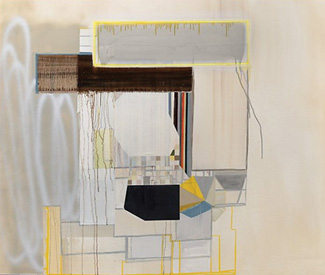
YEAR IN VISUAL ART “Occupy the Empty,” Amanda Curerri’s 2010 solo show at Ping Pong Gallery (now Romer Young Gallery), seems about as appropriate a tag line as any for this past year. It’s not just Curerri’s prescient title that resonated with the occupations at Zucotti Park, Frank Ogawa Plaza, and the Mario Savio steps at U.C. Berkeley’s Sproul Hall, as well as the populist expressions of protest seen throughout the Arab Spring that many involved with the Occupy movement looked to, not always unproblematically, as sympathetic precedents.

“Occupy the Empty” took seriously the question of how art and aesthetics can create a more democratic society, testing the tensions inherent within the question’s very terms by asking viewers who entered Curerri’s deconstructed courtroom to become witnesses. The efficacy of the entire enterprise was predicated on individuals taking the stand, but also placing their testimony against and alongside those who had spoken before about a form of speech no less personal and performative: last words.

Similarly, the tension of the individual voice in relation to the collective it contributed to has been the engine motor of the Occupy movement. At the encampments no one could speak for anyone else and yet everyone was, at the very least, in agreement on the necessity of being present, a message often relayed (without an apparent sense of irony) back to the assembled, via a re-presentational strategy known as “the human microphone.”

One could also point to the whimsical criers and peddlers of Allison Smith’s “Market Day,” a public performance event held on and around Market Street in June as part of her Southern Exposure exhibit “The Cries of San Francisco,” or Stephanie Syjuco’s “Shadow Shop,” a mom-and-pop-style art market that resided for five months at SFMOMA, as other examples of participatory artistic practice that aimed to insert alternative forms of democratic exchange into public life, in some ways anticipating much of the discussions around aesthetics and politics that Occupy generated.

Whether this exploratory, incessantly present dynamic will — or can — continue to “trickle up” further through the art world remains to be seen. Major museums largely played it safe this year going with tried and true blockbusters (locally, Picasso and Impressionism) or spectacular spectaculars that had critics alternately swooning or pointing at the naked emperor’s relentless march, as in the recent retrospectives of Mauricio Catalan and Carsten Höller in New York.

Certainly, the likes of Charles Saatchi grumpily lecturing about cultural capital and the “vulgarity” of new super-elite art collectors in the pages of the UK Guardian doesn’t make the one percent look necessarily any more “in touch.” (Not that any of the moneyed gawkers I encountered at Art Basel Miami would care.) On the other hand, Alice Walton’s recently opened Crystal Bridges Museum of American Art in Arkansas, funded with Wal-Mart cash, can be seen as presenting both a possible new model and a grim augury about how art’s public future will rely even more transparently but no less troublingly on private beneficence. Why must we travel to a major urban center to see outstanding art? Then again, why donate to a museum when you can build you own?

ADDENDA

Although I don’t do regrets, I believe that putting out something “for the record” should still count as as a positive — despite constant abuse of the phrase by those publicly scandalized for their private moral failings. So, following in the tradition of last year’s “year in art” column, here is an incomplete rundown of art, exhibits, and, institutions that didn’t entirely make it in for myriad reasons, none of which had to do with the work itself.


KATHYRN VANDYKE “PAINT” AT STEPHEN WIRTZ GALLERY, MAR. 16-APRIL 23

Who said non-representational collage was done for? VanDyke’s colorful, mixed media mash-ups of paint and paper flaunted the grain of their materials and the elegance of their compositional logics with the disciplined flourish of a master flamenco dancer.


SFMOMA PUBLIC PROGRAMMING

Whereas SFMOMA’s track record in regard to exhibitions has been mixed this year (cheers to the recent Richard Serra and Francesa Woodman retrospectives; good riddance to the slog that was “Exposed”), its public programming has brought an invigorating mix of poets, musicians, performers, and audiences to the institution, making that word seem an awfully staid descriptor for a venue that has consistently hosted such unexpectedly engaging and fun events.


“BALENCIAGA AND SPAIN” AT THE DE YOUNG MUSEUM OF FINE ART, MAR. 26-JULY 4

The sculptural, late 1960s pieces in this quiet stunner of a show highlighted the influence of Spain’s many forms of national costume upon its most gifted native sons, couturier Cristobal Balenciaga — and should shush the grousing of anyone upset over the rise of fashion and textile exhibits at major art institutions. To appropriate a nugget of praise once paid to Yves Saint Laurent, we can debate whether or not fashion is art until the cows come home, but there is no doubt that Balenciaga was an artist. Bring on the Gaultier!


DAVID IRELAND AT GALLERY PAULE ANGLIM, NOV. 2-26

Ireland’s early ’70s canvases of cement, dirt, and rock are slices of time, fragments of place. They are numinous, fragile reminders of being, as well one piece of the legacy of this late, great Bay Area artist.


PACIFIC STANDARD TIME, VARIOUS VENUES, LOS ANGELES

If you haven’t already planned a weekend around the Getty’s massive, multi-institution survey of postwar California art (www.pacificstandardtime.org), you owe it to yourself to head south ASAP. Many of the participating exhibits close in late January, so get!

Curtain calls

2

arts@sfbg.com

YEAR IN THEATER With a grateful nod to former colleague Brad Rosenstein, we re-inaugurate a system of accolades and nah-ccolades celebrating some memorable highs and lows of the rapidly closing year in theater and performance.


Most Memorable Food Fight

A Three Little Dumplings Adventure

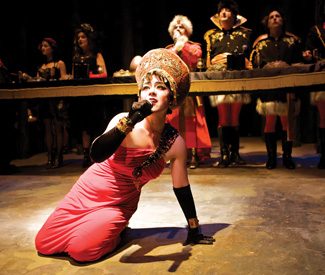
Within seconds of the appearance of the three titular protagonists of Megan Cohen’s A Three Little Dumplings Adventure — a hot pink and powder blue hurricane wreaking havoc on the subdued prison of a suburban living room — it was impossible not to get sucked into their chaotic orbit. Alternating between being patently obnoxious, emotionally unanchored, and frankly homicidal, the “three little dumplings” played by Sarah Moser, Molly Holcomb, and Megan Trout teased, baited, jabbed, and wrestled each other across the stage, culminating in Moser pinning Trout to the floor threatening to eat her (“dumpling” being no tidy euphemism here, but a physiological condition). Presented at the Bay One Acts Festival, it was definitely the year’s best meta-cannibalistic food frenzy, and it whetted our appetite for more. (Nicole Gluckstern)


Best Drug Story

Greg Proops at “Previously Secret Information”

Admittedly the best highs are often hard to remember. Kudos to the seemingly rock-hard memory of otherwise mellow-ab’d comedian Greg Proops, who recalled prodigious intake and takeout as a Chicken Delite delivery boy in 1970s San Carlos for an edition of Joe Klocek’s storytelling series, “Previously Secret Information.” (Robert Avila)


Best Political-Historical Thesis Disguised as a Wildly Funny and Louche “Songplay”

Beardo

Their own prior hit, 2008’s Beowulf: A Thousand Years of Baggage, was going to be a hard act to follow. But Banana Bag & Bodice and producers Shotgun Players made playwright Jason Craig and composer Dave Malloy’s take on Rasputin look like child’s play — very precocious child’s play — where performances, music, costumes, mise-en-scène, themes, and dialogue all contributed to another hirsute masterpiece. (Avila)


Most Inscrutable Triumvirate

Mimu Tsujimura, Lily Tung Crystal, and Katie Chan in Songs of the Dragons Flying to Heaven

Speaking of frankly homicidal, the otherwise nameless characters “Korean 1, 2, and 3” in the joint Crowded Fire/Asian American Theater Company production of Young Jean Lee’s Songs of the Dragons Flying to Heaven were as outrageously bloodthirsty a collection of countertypical characters as ever graced the Thick House stage. By turns violent, ecstatic, girlish, and demented, the eclectic trio played by Mimu Tsujimura, Lily Tung Crystal, and Katie Chan skewered every tradition-bound Asian stereotype in the book. Clad in the dazzle camouflage of their flowing silk dresses, rendering their monologues in their respective “mother” tongues, not spoken by this or many other audience members, the fiercely energetic characters expertly revealed themselves by not revealing a thing. (Gluckstern)


Best Lighting Design

Allen Willner for inkBoat’s The Line Between

Willner’s worked wonders before, not least with longtime collaborators inkBoat (Heaven’s Radio), but he outdoes himself in this wild and excellent production, making the lighting design a full member of the ensemble with a world of shifting moods and ideas. (Avila)


Best Tentative Revival of a Theatrical Artform

Puppetry

Where have all the puppets gone? It seemed like for a few years there they all went into hiding, perhaps barricading themselves in little puppet bunkers, awaiting the end times. But a modest slew of puppet-driven performances resurfaced over the course of 2011, reigniting our hopes for a full-blown revival in the future. A shortlist of memorable puppets encountered this year include Lone Wolf Tribe’s dark circus of clowns and war veterans in Hobo Grunt Cycle; a beleaguered Orson Welles puppet manipulated by Nathanial Justiniano’s sociopathic Naked Empire Bouffon Company alter ego Cousin Cruelty; Thomas John’s “hard-boiled” egg puppets who populated his Humpty Dumpty noir thriller The Lady on the Wall; the over-the-top awesomeness of a trio of Audrey Jrs. in Boxcar Theatre’s Little Shop of Horrors, and the silently suffering soldier of Aurora Theatre’s A Soldier’s Tale. Here’s hoping this miscellany foreshadows the triumphal return of the missing puppets, to as opposed to their last hurrah. (Gluckstern)


Nicest timing

The Agony and the Ecstasy of Steve Jobs

Just before public figures across the spectrum wailed their approval of a fallen business idol, Seattle-based monologist Mike Daisey, at Berkeley Rep, not-so-quietly reminded people of what a corporation is. Then Occupy Wall Street happened. (Avila)


Most Polarizing Descent Into the Reptilian Complex

Chekhov Lizardbrain

Whether you loved it or loathed it, Pig Iron’s touring production of Chekhov Lizardbrain was certainly one of the year’s most striking. Performing as part of foolsFURY’s Fury Factory, the Philadelphia-based Pig Iron spearheaded an expedition into the inner workings of one man’s brain beset by shifting vagaries of memory and truth. Combining a series of pompously-referenced “rules” of drama, stock Chekhovian alter-egos, and the dual personalities — internal and external — of an undersocialized protagonist (James Sugg) struggling to shape his memories into a recognizable narrative, Chekhov Lizardbrain elicited the most polarized reaction from its sold-out houses I saw all year. From a standing ovation to a fair number of disgruntled walk-outs, this dark-edged exploration inspired a panorama of strong responses in its audience, a solid sign of success in my book. (Gluckstern)


Best Labor of Love

The Companion Piece

Inspired by a concept by Beth Wilmurt, who was inspired by a book about the biological roots of human emotions (A General Theory of Love), Mark Jackson directed Wilmurt and fellow “vaudevillians” Christopher Kuckenbaker and Jake Rodriguez at Z Space in one of the most inspired pieces of devised theater all year (with a close second going to Jackson’s own SF State production of the blissful Wallflower). (Avila)


Best Conversation Starter

The closure of a “remixed” Little Shop of Horrors

Another polarizing moment in Bay Area theater occurred this summer when Boxcar Theatre’s ambitious remix of the cultish Alan Menken and Howard Ashman musical Little Shop of Horrors was shut down by Music Theatre International due to admitted violations of its licensing agreement. The debate inspired by both the violations and the show’s subsequent closure was as passionate and considered as the production that inspired it, from both perspectives of the situation. Without taking sides, I found the conversation about artistic freedom vs. artists’ rights to their own works to be as stimulating and thought-provoking as any night in the theater could strive to be. It seems unlikely that Boxcar Theatre knowingly set out to become the vanguard for open-source theater-making, but here’s hoping it’s a banner they are willing to carry a little longer. (Gluckstern)


Best Part of Getting Old

Geezer at the Marsh

I’m glad I lived long enough to see Geoff Hoyle live long enough to produce this solo piece extraordinaire. (Avila)


Best Couch-Surfing Opportunity

“Home Theater Festival”

Sometimes it’s hard to leave the comfort of one’s home to gamble on the capricious vicissitudes of a theater outing. Gambling in the comfort of someone else’s home was, on the other hand, really easy. (Avila)


Best Ostentatious Design Overload

The Lily’s Revenge

Watching the four-and-a-half-hour epic performance mash-up that was Taylor Mac’s The Lily’s Revenge at the Magic Theatre was in parts harrowing, exhausting, and transcendentally fabulous, but what stuck with me long after the vague twists of plot and character had mostly faded from my memory were indelible images of the seriously overwhelming design. From dazzling, sequined flower costumes by Lindsay W. Davis, to four complete sets built to accommodate five acts designed by Andrew Boyce, to the extravagant lighting by Sarah Sidman, The Lily’s Revenge could have been subtitled The Tech Crew’s Revenge, which would have been a fitting description of the glorious fantasia created by the uniformly top-notch production team. (Gluckstern)


Best Jump on George Clooney

Farragut North

North is better known to multiplex crowds as The Ides of March. But Bay Area theatergoers were first to get a former Howard Dean speechwriter’s fictionalized story of real-deal electoral politics in a so called democracy — and in a nimble low-budge production from OpenTab Productions at Noh Space that made it all the sweeter for not being Hollywooden. (Avila)


Best Planned Revitalization of a Theater District Linchpin

PianoFight at Original Joe’s

When the venerable, family-run Original Joe’s at 144 Taylor burned down in 2007 it was a catastrophic blow to the neighborhood — especially to all the theaters in the area who had adopted it over the years as a go-to post-show hang-out. It even served as a San Francisco Fringe Festival off-site venue for several years, hosting the likes of RIPE Theatre and Dan Carbone. So it was wonderful news on many levels when the turbo-charged PianoFight theater company signed a ten-year lease with the Duggan family to turn the old Original Joe’s into the new home of PianoFight. In addition to rebuilding the restaurant and bar, PianoFight plans to house two theaters, offices, and rehearsal spaces under the same roof — a huge boost to the neighborhood and greater theatrical community both. (Gluckstern)


Worst-Attended Theatrical Gem

Hobo Grunt Cycle at the Exit Theater

I’m not sure why there were so few people in the audience for this stunning cri de coeur against warfare by Kevin Augustine’s rightly acclaimed New York–based puppet theater ensemble, Lone Wolf Tribe. As hard as it can be to look at the real face of war, this piece brilliantly insisted on the need to do just that: manipulated with consummate grace by one or more black-clad puppeteers, Augustine’s life-sized puppets remained strikingly sentient, heartbreakingly damaged beings you absolutely could not take your eyes off. (Avila)


Classiest Beginning to a Final Bow

In the Maze of Our Own Lives

Playwright-director Corey Fischer’s sleekly staged, prescient take on the radically influential Group Theatre ensemble of the thoroughly agitated 1930s, In the Maze of Our Own Lives, which lead off the Jewish Theatre’s 34th and last season. (Avila)

Best Reason to Cross the Bridge: SQUART at Headlands Center for the Arts This 24-hour, all-stops-pulled-out version of choreographer Laura Arrington’s shrewd experimental series in collaborative performance-making capped a residency at the Headlands with a well-attended set of four sneaky, astonishing pieces by a multi-talented ensemble of harried sleep-deprived creator-conspirators. Why isn’t art always made this way? (Avila)

Worst Gas-to-Show Ratio Lolita Roadtrip at San Jose Stage A surprisingly unmoving outing from otherwise quick playwright Trevor Allen, who indeed quickly bounced back with a remounting of his popular solo, Working for the Mouse. (Avila)  

Strangest Encounter Between “Performer” and “Audience” Robert Steijn Steijn questioned everything, including what the hell he was doing onstage in front of the people assembled to see the famed Dutch performer at Joe Goode’s new annex in the Mission. They were all good questions, and the micro-choreography of physical and psychic states to which they pointed charged the room with a delicate intensity that encouraged many thoughtful beers afterward. (Avila)

Short takes: Biggest Dick: Kevin Spacey as Richard III. With balls and chops to match.  

Best Beefcake Ham and Cheese on Wry for under $100: Hugh Jackman at the Curran.

Best use of salvia: Philip Huang at “Too Much!”  

Best medicine for complacency: Cancer Cells, selections from late works and words by Harold Pinter by Performers Under Stress.  

Biggest site-specific punch (with gloves on or off): Peter Griggs’ one-man show, Killer Queen: The Story of Paco the Pink Pounder, at Michael the Boxer Gym and Barbershop.

Most intellectually stimulating drag lecture: David Greenspan reading Gertrude Stein’s Plays at the Contemporary Jewish Museum. (Avila)

Rep Clock

0

Schedules are for Wed/21-Tues/27 except where noted. Director and year are given when available. Double and triple features are marked with a •. All times p.m. unless otherwise specified.

BALBOA 3630 Balboa, SF; www.brownpapertickets.com. $17.50-20. “Opera and Ballet at the Balboa Theatre:” The Nutcracker, performed by the Royal Ballet and the orchestra of the Royal Opera House, Wed, 7:30.

CASTRO 429 Castro, SF; (415) 621-6120, www.castrotheatre.com. $7.50-10. •Drive (Winding Refn, 2011), Wed, 3, 7, and The American (Corbijn, 2010), Wed, 4:50, 8:50. The Tree of Life (Malick, 2011), Thurs, 2, 5, 8. “Joyous, Jolly, Jingles: San Francisco Gay Men’s Chorus 22nd Annual Home for the Holidays,” Sat, 5, 7, 9. •Meet Me in St. Louis (Minnelli, 1944), Mon, 2:30, 7, and The Band Wagon (Minnelli, 1953), Mon, 4:40, 9:10. •Bye Bye Birdie (Sidney, 1963), Tues, 2:40, 7, and Pal Joey (Sidney, 1957), Tues, 4:45, 9:05.

CHRISTOPHER B. SMITH RAFAEL FILM CENTER 1118 Fourth St, San Rafael; (415) 454-1222, www.cafilm.org. $6.75-10.25. The Gold Rush (Chaplin, 1925), Dec 23-29, call for times. Restored 35mm print. My Reincarnation (Fox, 2011), Dec 23-29, call for times.

EXPLORATORIUM McBean Theater, 3601 Lyon, SF; www.exploratorium.edu. Free with admission ($10-15). “Holiday Animation Film Festiva,” Mon-Fri, noon, 2, 4.

PACIFIC FILM ARCHIVE 2575 Bancroft, Berk; (510) 642-5249, bampfa.berkeley.edu. $5.50-9.50. Theater closed through Jan 11.

ROXIE 3117 and 3125 16th St, SF; (415) 863-1087, www.roxie.com. $6.50-10. Footprints (Peros, 2011), Wed-Thurs, 7, 8:45. Paul McCartney: The Love We Make (Maysles and Kaplan, 2011), Wed-Thurs, 7, 9. My Reincarnation (Fox, 2011), Dec 23-29, 7, 8:45 (also Sat/24-Sun/25, 3:15, 5).

SFFS | NEW PEOPLE CINEMA 1746 Post, SF; www.sffs.org. $10-11. Rare Exports: A Christmas Tale (Helander, 2010), Fri, 10:30. Silent Souls (Fedorchenko, 2010), Dec 23-31, 3, 5, 7, 9 (Sat/24, 2 and 4 only; no shows Sun/25).

Our Weekly Picks: December 21-27

0

WEDNESDAY 21

Krafty Kuts

Before closing out the year with the Sea of Dreams NYE blowout, the party people at Sunset Promotions (along with Metrowize.com) are throwing a community appreciation show and bringing out the U.K.’s Krafty Kuts. He’s best known for his 2006 album Freak Show and a Fabriclive release in 2007, but is largely building a reputation as an international, multiple award-winning breakbeat DJ and turntablist through live performances. Krafty Kuts’ most recent mix — for his November Canadian tour — unrelentingly shifts between the likes of Beastie Boys, Wolfgang Gartner, Fast Crew, and Bart B More. Like the best of breakbeat, Krafty Kuts plays a high wire act, always keeping energy up without growing tiresome nor ADD addled. (Ryan Prendiville)

With DJ Zeph, Motion Potion

9 p.m., free with RSVP; $5 at door

www.krafty-xmas.eventbrite.com

Mighty

119 Utah, SF

(415) 762-0151

www.mighty119.com


How The Grinch Stole Christmas: The Musical!

First published in 1957, Dr. Seuss” How The Grinch Stole Christmas was adapted into an animated film in 1966, featuring the unforgettable narration of Boris Karloff, and a bevy of now-classic songs such as “You’re A Mean One, Mr. Grinch,” belted out by Thurl Ravenscroft. Fans of all ages can relive the beloved holiday special this month when How The Grinch Stole Christmas: The Musical! brings the classic tale to life on stage with colorful costumes and amazing sets that recreate the magical world of Whoville and the inspirational events that transpire there. (Sean McCourt)

Through Dec. 29, times vary, $25–$85

Golden Gate Theatre

1 Taylor, SF

(888) 746-1799

www.shnsf.com


THURSDAY 22

“Nutcracker”

There is something about the shortest days of the year that invites you to become hopeful about what lies ahead. Perhaps it is that we know that the sun will be back. So you don’t have to be a Christian or hooked on family traditions to celebrate what is an extraordinary, though yearly occurring season. “Nutcracker,” often for sentimental reasons, is part of that feeling. Graham Lustig’s 2000 version, now part of Oakland Ballet Company, has plenty of sentiments but little sentimentality. No whiff of Victorian attitudes inhabits this family’s turn of the 20th century modernity. The home is what was considered high-tech at the time: tile, steel, concrete, and huge expanses of glass that invite the sunny, snow-covered outside in. The very fact that the Oakland Ballet Company exists again, is a sign of hope. (Rita Felciano)

Through Dec. 24; 2 and 7 p.m., $15–$59.50

Paramount Theater

2025 Broadway, Oakl.

(800) 745.3000

www.ticketmaster.com


“RitLab: Hanukkah-Houdini”

The Contemporary Jewish Museum’s RitLab (Ritual Laboratory) series stretches the idea of what can be done with such a space as the CJM. Often museums host children’s interactive events, but RitLab is more like afterschool activity time for adults too — I once learned how to make my own spicy pickles at a RitLab event, m’kay? For this Hanukkah-Houdini version, there will be very-mature holiday crafting (magic card wallets, monkey-fist key chains, thaumatropes), a dreidel spin-off, and perhaps most importantly, a performance by Conspiracy of Beards — a local a capella Leonard Cohen cover group. It’ll be fun for kids of all ages, especially those who dig magic and Cohen. (Emily Savage)

6-8 p.m., free with admission (admission is $5 after 5 p.m.)

Contemporary Jewish Museum

736 Mission, SF

(415) 655-7800

www.thecjm.org


Dan the Automator

Popscene is bringing home someone special for its Xmas Gala. An innovative hip-hop and electronic producer, Dan “the Automator” Nakamura needs little introduction. Collaborating with Kool Keith, Del the Homosapien, Prince Paul, Damon Albarn, and Mike Patton on projects such as Dr. Octagon, Deltron, Handsome Boy Modeling School, Gorillaz, and Lovage (to name a few), Automator always looms large. He’s recently produced albums for English rockers Kasabian and locals Dredg, while contributing to Albarn’s Kinshasa One Two charity project along with the likes of Totally Enormous Extinct Dinosaurs and Jneiro Jarel. (And yes, continuing to tease the long awaited follow-up, Deltron 3040.) (Prendiville)

With DJs Omar, Miles the DJ

10 p.m., $10–$12

Rickshaw Stop

155 Fell, SF

(415) 861-2011

www.rickshawstop.com


FRIDAY 23

Rare Exports: A Christmas Tale

“The Coca-Cola Santa Clause is a hoax,” little Pietari tells his friend. He hands him a picture he’s torn from an old book — St. Nicholas with goatish antlers, dropping a child into a boiling cauldron. “The real Santa Clause, he tears naughty kids to pieces.” Rare Exports: A Christmas Tale (2010) directed by Jalmari Helander and based on ancient Scandinavian mythology — might make the kids sooner want Freddy Kruger coming down the chimney on Christmas rather than Santa. When an archeology dig coincides with a bizarre series of events (slaughtered reindeer, missing children, stolen blow dryers), Pietari knows that the real Santa has been unearthed. Rare Exports is a dark tale that’s full of unsuspecting and outlandish surprises. You’ll never see Santa the same way again. (James H. Miller)

10:30 p.m., $9–$11

SF Film Society Cinema

1746 Post, SF

(415) 561-5000

www.sffs.org


Charlie Chaplin’s 1925 The Gold Rush

You loved The Artist, and now you’re obsessed with seeing every silent movie you can jam into your sockets. The San Francisco Silent Film Festival isn’t until next summer, but you can check out one of the genre’s very best this week at the Smith Rafael: Charlie Chaplin’s 1925 The Gold Rush, a delightful comedy even Buster Keaton 4-Lyfe Fan Club members can get behind. Unspooling in a snazzily restored 35mm print (with Chaplin’s own 1942 score as accompaniment, arranged by composer Timothy Brock), this film follows the Little Tramp as he tries his luck prospecting in the frozen Yukon. As the Smith Rafael notes point out, “it’s the one in which Chaplin eats his boot” and contains “The Dance of the Rolls,” an iconic bit of playing-with-one’s-food familiar to fans of 1993’s Benny & Joon — and the current Muppets movie. (Cheryl Eddy)

Through Dec. 29, call for times, $6.75–$10.25

Christopher B. Smith Rafael Film Center

1118 Fourth St., San Rafael

(415) 454-1222

www.cafilm.org


Jazz Mafia

Jazz Mafia is a Bay Area institution. With its eclectic influences, cutting edge genre crossovers are this musical collective’s forte. Jazz Mafia has featured a ton of talented players, with founding member and trombonist-bassist Adam Theis contributing to no less than 10 acts since its inception. The Shotgun Wedding Quintet is a dynamic hip-hop and jazz hybrid fronted by exceptionally cool lyricist Dublin. Brass Mafia is a weird and wonderful New Orleans-y brass ensemble that covers songs from the likes of Skatalites and the Rolling Stones. And, well, there are simply too many incredible acts to list. It’s Jazz Mafia’s 11th anniversary, and I’m sure this San Francisco family has plenty of surprises in store. (Frances Capell)

With Adam Theis and the Jazz Mafia String Quartet, Joe Bagale, and more

9 p.m., $8–$12

Brick & Mortar Music Hall

1710 Mission, SF

(415) 371-1631

www.brickandmortarmusic.com


“Kung Pao Kosher Comedy”

For those who don’t celebrate Christmas — or those who do, but could use a good laugh after spending the day with family — “The 19th Annual Kung Pao Kosher Comedy” show is a sure-fire bet for entertainment while much of the rest of the city shuts down for the holiday. With a line-up featuring Elayne Boosler, Avi Lieberman, Jeff Applebaum, and Lisa Geduldig, what better way to spend the night than with a bit a bit of Jewish comedy — and what better location than in a Chinese restaurant! (McCourt)

Through Sun/25; 6 and 9:30 p.m. Fri.-Sat.; 5 and 8:30 p.m. Sun.; $42–$62.

New Asia Restaurant

772 Pacific, SF

(415) 522-3737

www.koshercomedy.com


SATURDAY 24

Tony! Toni! Toné!

There’s no expression of love more pure than early 1990s-era R&B. And in the golden age of sensual R&B, few could compete with Oakland’s Tony! Toni! Toné!. During the late ’80s and early ’90s, this trio cranked out the jams, climbed the Billboard charts, and provided the soundtrack for countless moments of passion and romance. Did you slow dance with your high school sweetheart to “(Lay Your Head On My) Pillow?” Did you bump and grind to “Whatever You Want?” The holidays are a time for nostalgia; a time for showing our loved ones how much we care. Why not spend Christmas Eve with Tony! Toni! Toné!? (Frances Capell)

8 p.m., $26

Yoshi’s

510 Embarcadero West, Oakl.

(510) 238-9200

www.yoshis.com/oakland


SUNDAY 25

“Death Guild: X-Mess Night”

Undeniably, the holiday season is an adorable one — children point in store windows and glow; Dads are donned in gay apparel; It’s A Wonderful Life airs without end on basic cable; bells a-ringing, figgy pudding, fa la la la la and what have you. However, for some of us around this time of year, it feels like we’re being smothered by a hand knit stocking. Thankfully Death Guild’s “X-Mess Night” is here for anyone who prefers leather corsets instead of holiday turtle necks, The Sisters of Mercy over Bing Crosby, and of course, gin and tonics, not milk and cookies. DJs Decay, Melting Girl, Daniel Skellington, Sage, and Lexor spin gothic, industrial, synth pop and more. (Miller)

9 p.m., $5

DNA Lounge

375 Eleventh, SF

(415) 626-1409

www.dnalounge.com


“It’s a Jewish Christmas”

Christmas day falls on the fifth night of Hanukkah. It’s also the Make-Out Room’s “It’s a Jewish Christmas,” which means Jews and Gentiles both face a dilemma. In the case of us Jews, it comes down to either enduring Grandpa Eshkol, or shooting over to the Mission for a Woody Allen film festival, Chinese food, and a salacious game of strip dreidel. With all that being offered, I doubt old Eshkol would blame you for schlepping out without him. Hosted by none other than Broke-Ass Stuart, the travel writer behind the recent IFC documentary, Young, Broke & Beautiful, “It’s a Jewish Christmas” also features the sounds of DJs J Dub and M.O.T. Mazz. Ah Freilichen Chanukah! (Miller)

5 p.m., $10

Make-Out Room

3225 22nd St., SF

(415) 647-2888

www.makeoutroom.com


TUESDAY 27

Pal Joey

Set amongst the swingin’ nightclubs of San Francisco, 1957’s Pal Joey stars Frank Sinatra as a womanizing singer who dreams of one day owning his own club — and plans to seduce a wealthy widow (portrayed by Rita Hayworth) to secure the funding. Things begin to go awry, however, when he meets Kim Novak’s character, and starts to fall for her instead. Featuring the iconic tune “The Lady Is A Tramp,” the film earned Ol’ Blue Eyes a Golden Globe for Best Actor (in a Musical), and remains a shining example of why he was the king of the crooners. (McCourt)

Double feature with Bye Bye Birdie, which screens at 2:40 and 7 p.m.

4:45 and 9:05 p.m., $7.50–$10

Castro Theatre

429 Castro, SF.

(415) 621-6120

www.castrotheatre.com

Stage Listings

0

Stage listings are compiled by Guardian staff. Performance times may change; call venues to confirm. Reviewers are Robert Avila, Rita Felciano, and Nicole Gluckstern. Submit items for the listings at listings@sfbg.com. For further information on how to submit items for the listings, see Picks.

THEATER

ONGOING

Absolutely San Francisco Alcove Theater, 414 Mason, Ste 502, SF; (415) 992-8168, www.thealcovetheater.com. $32-50. Thurs, 8pm. Through Dec 29. Not Quite Opera Productions presents Anne Nygren Doherty’s musical about San Francisco, with five characters all portrayed by Mary Gibboney.

The Golden Girls: The Christmas Episodes Victoria Theatre 2961 16th St, SF; www.trannyshack.com. $30. Thurs/22-Fri/23, 8pm. Despite the unseasonably warm weather, it was beginning to feel a lot like Christmas, circa 1987, thanks to the return of four luminous drag queens and a little TV-to-stage holiday special that, after six years, can safely be called a San Francisco tradition. Heklina (Dorothy), Pollo Del Mar (Rose), Matthew Martin (Blanche), and Cookie Dough (Sophia) are the older ladies of Miami, delivering verbatim two episodes of the famed sitcom, each with a special gay yuletide theme — fleshed out by special guests Laurie Bushman (as Blanche’s gay kid brother Clayton) and Manuel Caneri (as thinly disguised lesbian Jean). (Opening night also saw special appearances by morning-radio personalities and emcees Fernando Ventura and Greg Sherrell.) Of course, a Word for Word production this isn’t. Knowing drag mischief and unflappable performances allow a certain welcome latitude in attitude, not to mention costuming, which is wonderful in that Pasadena estate sale way: a veritable bazaar of ’80s bizarre. (Avila)

*On the Air Pier 29 on the Embarcadero (at Battery), SF; (415) 438-2668, love.zinzanni.org. $117 and up (includes dinner). Wed/21, Fri/23, Tues/27, Dec 28-30, 6:15pm (also Dec 28, 11:30am); Sat/24, 11:30am; Dec 31, 8:30pm. Teatro ZinZanni’s final production at its longtime nest on Pier 29 is a nostalgia-infused banquet of bits structured around an old-time radio variety show, featuring headliners Geoff Hoyle (Geezer) and blues singer Duffy Bishop. If you haven’t seen juggling on the radio, for instance, it’s pretty awesome, especially with a performer like Bernard Hazens, whose footing atop a precarious tower of tubes and cubes is already cringingly extraordinary. But all the performers are dependably first-rate, including Andrea Conway’s comic chandelier lunacy, aerialist and enchanting space alien Elena Gatilova’s gorgeous “circeaux” act, graceful hand-balancer Christopher Phi, class-act tapper Wayne Doba, and radio MC Mat Plendl’s raucously tweeny hula-hooping. Add some sultry blues numbers by raunchy belter Bishop, Hoyle’s masterful characterizations (including some wonderful shtick-within-a-shtick as one-liner maestro “Red Bottoms”), a few classic commercials, and a healthy dose of audience participation and you start to feel nicely satiated and ready for a good cigar. Smoothly helmed by ZinZanni creative director Norm Langill, On the Air signals off-the-air for the popular dinner circus — until it can secure a new patch of local real estate for its antique spiegeltent — so tune in while you may. (Avila)

*Period of Adjustment SF Playhouse, 533 Sutter, SF; (415) 677-9596, www.sfplayhouse.org. $20-50. Tues-Thurs, 7pm (also Wed/21-Thurs/22, 2pm); Fri-Sat, 9pm (also Sat, 3pm; no show Sat/24). Through Jan 14. A nervous young man with an unaccountable tremor, George Haverstick (a compellingly manic Patrick Alparone) has waited until his honeymoon to finally call on his old Korean War buddy, Ralph (a stout but tender Johnny Moreno) — only to drop his new bride, Isabel (the terrifically quick and sympathetic MacKenzie Meehan), at the doorstep and hurry away. As it happens, Ralph’s wife of five years, Dorothea (an appealing Maggie Mason), has just quit him and taken their young son with her, turning the family Christmas tree and its uncollected gifts into a forlorn monument to a broken home — which, incidentally, has a tremor of its own, having been built atop a vast cavern. Tennessee Williams calls his 1960 play “a serious comedy,” which is about right, since although things end on a warm and cozy note, the painful crises of two couples and the lost natures of two veterans — buried alive in two suburbs each called “High Point” — are the stuff of real distress. SF Playhouse artistic director Bill English gets moving but clear-eyed, unsentimental performances from his strong cast — bolstered by Jean Forsman and Joe Madero as Dorothea’s parents—whose principals do measured justice to the complex sexual and psychological tensions woven throughout. If not one of Williams’s great plays, this is an engaging and surprisingly memorable one just the same, with the playwright’s distinctive blend of the metaphorical and concrete. As a rare snowfall blankets this Memphis Christmas Eve, 1958, something dark and brooding lingers in the storybook cheer. (Avila)

A Tale of Two Genres SF Playhouse, 533 Sutter, SF; (415) 869-5384, www.un-scripted.com. $10-20. Wed/21, 8pm. Un-Scripted Theater Company presents an improvised musical inspired by Charles Dickens.

Xanadu New Conservatory Theatre Center, 25 Van Ness, SF; (415) 861-8972, www.nctcsf.org. $25-45. Wed-Sat, 8pm (no show Sat/24); Sun, 2pm (no show Sun/25 or Jan 1). Through Jan 15. New Conservatory Theatre Center performs the retro roller-skating musical.

BAY AREA

*God’s Plot Ashby Stage, 1901 Ashby, Berk; (510) 841-6500, www.shotgunplayers.org. $18-27. Wed-Thurs, 7pm; Fri-Sat, 8pm; Sun, 5pm (no shows Wed/21-Sun/25). Through Jan 15. Playwright-director Mark Jackson excavates a bit of deep history for Occupy USA, an episode in the annals of colonial American theater and jurisprudence that played, and plays, like a rehearsal for a revolution — this time with music. Capping Shotgun Players’ 20th anniversary season of new work, God’s Plot comically animates and literally underscores (through song, and irresistible banjo and bass accompaniment courtesy of Josh Pollock and Travis Kindred) the story surrounding “Ye Bare and Ye Cubb,” a play performed in 1665 Virginia but now lost. The legal battle that engulfed this satire of the English crown and its economic and political domination of the colonies was an early instance of the close but little acknowledged relationship between art and politics in proto-American society, with much too of religious conflict in the mix (personified here by a powerfully smoldering John Mercer as closet-Quaker Edward Martin). The playwright, a brash self-inventor named William Darby (a sure, charismatic Carl Holvick-Thomas), colludes with a disgruntled merchant (Anthony Nemirovsky) and a former indentured servant climbing the social ladder as a new tenant hand (Will Hand). Darby, meanwhile, is secretly wooing — and even more, being wooed by — Tryal Pore (an ebullient, magnetic Juliana Lustenader), a young woman even braver and more outspoken than he. As an expression of her novel and unbridled spirit, Tryal alone breaks into song to express her feelings or observations. Her temperament is meanwhile a source of worry to her father (a comically deft Kevin Clarke) and mother (Fontana Butterfield), but also attracts an unwitting suitor (a compellingly serious Joe Salazar). The play’s overarching narrative of nationalist ferment, which reaches an overtly stirring pitch, thus comes mirrored by the tension in two dramatic triangles whose common point is the precocious, golden-throated Tryal Pore. More of the private drama might have served the overall balance of the play, but a good part of the achievement of director Jackson and his generally muscular cast is making a complex play of enduring ideas and conflicts look so effortless and fun. (Avila)

The Secret Garden TheatreWorks at Lucie Stern Theatre, 1305 Middlefield, Palo Alto; (650) 463-1960, www.theatreworks.org. $19-72. Wed/21, 2 and 7:30pm; Thurs/22-Fri/23, 8pm; Sat/24, 1 and 6pm; Dec 27-28, 7:30pm; Dec 29-30, 8pm (also Dec 30, 2pm); Dec 31, 2pm. TheatreWorks performs the Tony Award-winning musical adaptation of Frances Hodgson Burnett’s novel.

*The Wild Bride Berkeley Repertory Theatre, Roda Theatre, 2015 Addison, Berk; (510) 647-2949, www.berkeleyrep.org. $14.50-73. Tues, Thurs-Sat, 8pm (also Thurs and Sat, 2pm); Wed and Sun, 7pm (no show Sun/25). Through Jan 1. In the first act of Kneehigh Theatre’s The Wild Bride, the destinies of an innocent girl (Audrey Brisson), her moonshine-making father (Stuart Goodwin), and a predatory devil in a cheap suit (Stuart McLoughlin) become inextricably entwined by an ill-fated bargain. Steeped in European fairytale logic and American folk and blues music, Bride is inventively staged at the base of a giant tree, combining mime, puppetry, dance, live music, Cirque du Soleil-style vocals, acrobatics, and taut verse into a swooping, expressionistic fable. Accidentally promised to the devil by her doting but drink-dulled dad, “The Girl” suffers first the creepy indignity of being perved on by her preternatural suitor, and secondly the horror of having her hands chopped off by her own father, actions which drive her to flee into the woods, morphing into a character known only as “The Wild” (played by Patrycja Kujawska). After a stint as an unlikely, Edward Scissorhands-esque queen, The Wild too is driven from comfort and morphs a second time into a third character “The Woman” (Éva Magyar), an experience-toughened mother bear who kicks the devil’s ass (literally), and triumphs over adversity, without even uttering a single word. At turns dark, dexterous, fanciful, and fatal, Bride rises above the usual holiday fare with a timeless enchantment. (Gluckstern)

The World’s Funniest Bubble Show Marsh Berkeley, TheaterStage, 2120 Allston, Berk; (415) 826-5750, www.themarsh.org. $8-50. Sun and Dec 26-30, 11am (no show Sun/25). Through Dec 31. Louis “The Amazing Bubble Man” Pearl returns with this kid-friendly, bubble-tastic comedy.

PERFORMANCE/DANCE

“Cut the Crap! With Semi-Motivational Guru, Clam Lynch” Dark Room, 2263 Mission, SF; www.darkroomsf.com. Jan 6 and Jan 13, 8pm. $15. Get motivated with self-help-guru-satirizing comedian Clam Lynch.

“Dieter und Shiela at the San Francisco International Youth Hostel” Eureka Theatre, 215 Jackson, SF; www.combinedartform.com. Wed-Fri, 9:30pm, $20. Will Franken presents his latest solo, multi-character comedy.

“Forking II: A Merry FORKING Christmas” StageWerx, 446 Valencia, SF; www.pianofight.com.Wed/21-Fri/23 and Dec 25-30, 8pm. $25-35. Well holy forking shit, it’s been three years already since Daniel Heath’s A Merry Forking Christmas debuted at PianoFight’s old Off-Market Theater digs, and in that time a few new faces have been added to the cast, and a few loose ends tied up in a bow, rendering the overall package a ho-ho-holiday treat worth indulging in. Hate the holidays? Not nearly as much as Goth girl morgue assistant Charlotte (Leah Shesky); her buddy Monique (Emma Shelton), a frustrated culinary genius selling pot cookies to stressed-out shoppers; Adam (Jed Goldstein), a disaffected Jew hired on as a Mall Santa from a temp agency; or Charles (Alex Boyd), an effete metrosexual dangerously enervated by his fiancée’s perfectionist vigor (Nicole Hammersla). Hilariously guided by Ray Hobbs and Gabrielle Patacsil, who play a variety of bit roles (Headbanger vs. Bible Banger, embattled parents fighting over the last coveted “Meat Panda,” feral children), the audience periodically gets to vote over the next permutation of plot, the “forks” alluded to in the title. According to artistic director Rob Ready (also featured in the cast as “Old Ben”), there are 362,880 possible combinations, and yes, the actors have memorized them all. Question is, will you? (Gluckstern)

“Kung Pao Kosher Comedy” New Asia Restaurant, 772 Pacific, SF; (415) 522-3737, www.koshercomedy.com. Fri-Sat, 6 and 9:30pm; Sun, 5 and 8:30pm. $42-62. Now in its 19th year, this night of “Jewish comedy on Christmas in a Chinese restaurant (where else?)” features headliners Elaine Boosler, Avi Liberman, Jeff Applebaum, and Lisa Geduldig.

Mark Foehringer Dance Project | SF Children’s Creativity Museum, 221 Fourth St, SF; www.brownpapertickets.com. Wed-Fri, 11am and 2pm. $20-35. The contemporary ballet company performs Mark Foehringer’s Nutcracker Sweets.

“Santaland Diaries” Eureka Theatre, 215 Jackson, SF; www.combinedartform.com. Thurs/22-Sat/24 and Dec 26-30, 8pm (also Fri/23-Sat/24, 3pm). $20-50. Combined Artform presents David Sedaris’ holiday comedy.

Smuin Ballet Yerba Buena Center for the Arts, 701 Mission, SF; www.smuinballet.org. Wed-Fri, 8pm (also Wed, 2pm); Sat, 2pm. $65. The company performs its acclaimed tribute to the holidays, The Christmas Ballet.

“Tenderloin Christmas Hustler: Occupy the ‘Loin!” Phoenix Theater, 414 Mason, Sixth Flr, SF; www.tenderloinxmashustler.com. Wed-Fri, 8pm. $20-25. Mash-up Christmas parody, complete with sock puppet Jesus at intermission.

“Welcome to Boswick’s House” SF Playhouse, 533 Sutter, SF; www.boswick.net. Thurs-Fri and Mon-Tues, 11am. $19. Boswick the Clown performs a goofy holiday show aimed at kids ages 4-8 years old.

“Yes Sweet Can” Dance Mission Theater, 3316 24th St, SF; (415) 225-7281, www.sweetcanproductions.com. Dec 27-29, 2:30 and 4:30pm; Dec 30, 4 and 8pm; Dec 31-Jan 1, 2pm. $15-60. Sweet Can Productions presents an hourlong extravaganza of circus arts for the holidays.


The bottom of the top

0

YEAR IN GAMER One of the most exciting release windows in recent memory, this year’s fall gaming onslaught is officially behind us. And while most gamers are quick to rank the marquee experiences — battling dragons (The Elder Scrolls V: Skyrim), thwarting diabolical clowns (Batman: Arkham City), and riding giant birds in a green tunic (The Legend of Zelda: The Skyward Sword), it’s only when you approach the bottom half of a critic’s top 10 that the real debate begins.

So let’s skip ahead, past Uncharted 3 and Portal 2, which round out the established top five games of the year, and delve into the bottom half of the top 10. Any one of the following games might have taken home top honors in years past. As it stands, you may have overlooked one or two. And that’s what Christmas is for.

6. Rayman Origins

2D platforming in 2011 takes place in one of two venues: the games marketplace, like PSN or XBLA, or on your phone. Rayman Origins‘ greatest disadvantage is that it looks like something you can get on your phone for a buck but it costs full price. Don’t be fooled, a dollar will never get you as much content as you’ll find in Rayman, with its more than 60 levels of hand-drawn animation, four-player co-op, and star limbless thingamajig. Rayman isn’t just a re-skinned Mario; it’s a brighter, sillier and more rhythm-based experience than the Italian plumber, with a similar level of polish.

7. Dark Souls

It feels strange to be recommending a game that I’m often too afraid to play. Dark Souls is a brutal action RPG wherein you play a sort of zombie that most enemies can kill with a single hit. Save points are sparse and taking a break respawns any enemies that you might have killed already. (If you’re an old-school gamer, you’re screaming “all games used to be like this!”) Dark Souls employs an amazing level design that intricately connects its diverse dungeons and features a unique multiplayer system that allows other players to either leave tips for you or invade your game and make life even harder. You know that snotty friend who says today’s games are too easy or too much like movies? Get him this game.

8. L.A. Noire

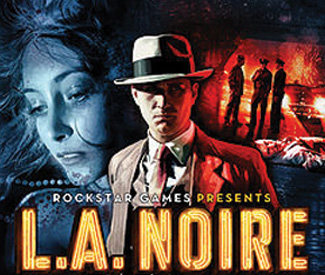
Dismissed by some as a hackneyed attempt to marry Rockstar Games’ Grand Theft Auto with a point and click adventure, L.A. Noire may not be the perfect joining of genres we all hoped it would be, but it’s a wonderful homage for aficionados of 1940s crime movies. A sordid tale of an ex-Marine turned policeman rising through the ranks of the LAPD, L.A. Noire is well paced and acted, with a fully fleshed-out story — which can be hard to find in video games. Though it ultimately made more headlines for the developers’ harsh working environment, L.A. Noire remains a unique and expansive take on an under-represented genre.

9. Driver San Francisco Do you like driving fast cars but find yourself overwhelmed with the intricacies of real-life simulations? More racing games are contextualizing their in-game courses with a bit of drama and back story, and Driver San Francisco takes the cake when it comes to unique storytelling. You play an SF cop in a coma who can enter the bodies of other drivers on the road and drive like a maniac without consequence. He uses this amazing power to help teenagers win street races, freak out driver’s ed instructors and save the city from a terrorist attack that may or may not exist at all. Driver SF is less than polished, and local residents will notice some discrepancies in the city’s geography, but for pure entertainment few games take risks like these.

10. Super Mario 3D Land

After a bit of an embarrassing year for Nintendo, and the 3DS in particular, Super Mario 3D Land marks the first game to make the troubled console truly worth owning. A jump-in-and-play good time, Mario 3D highlights both the 2D platforming of New Super Mario Bros. and the fluid 3D exploration of Mario Galaxy, creating something that’s more than a throwback, it’s a refinement of everything that makes the 25-year franchise so popular. It’s not innovative enough to be worth buying a 3DS for, but early adopters finally have a game to call their own.

On the Cheap Listings

0

Submit items for the listings at listings@sfbg.com. For further information on how to submit items for the listings, see Picks.

WEDNESDAY 21

Cartoonist-palooza gift sale and concert Mercury Café, 201 Octavia, SF. www.stevelafler.net. 6-9 p.m., free. Lloyd Dangle, a longtime deft lampooner of the one percent in his Troubletown comic strip, headlines a night of comic-oriented holiday offerings and live music. Mats!?, Jeff Roysdon, Steve Lafler, and the Dick Nixon Experience (responsible for the one-and-only “Oaxacabilly” sound) join.

Winter Solstice celebration Muir Woods Visitor Center, 1 Muir Woods Rd., Mill Valley. www.parksconservancy.org. 3-8 p.m., free. You can spend the longest night of the year spent underneath the longest trees around. Solstice crown-making, musical performances, and luminaria-guided jaunts along Muir Woods trails light up the night.

THURSDAY 22

Objectified screening Phyllis Wattis Theater, SFMOMA, 151 Third St., SF. www.sfmoma.org. 7 p.m., $5. From the very same folks who examined glyphs and serifs in the film Helvetica comes a film on the design of some of our most mundane objects. Potato peelers and toothbrushes will both be under discussion.

Animation Workshop Rock Paper Scissors Collective, 2278 Telegraph, Oakl. www.rpscollective.org. 6-8 p.m., sliding scale. Before gifs, there was the even simpler stuff: cut-out and stop-motion animation. Rock Paper Scissors holds monthly workshops on such styles of yore. Eager would-be animators are invited to come and create their own short films.

FRIDAY 23

Berlin-Style Ping-Pong Project One, 251 Rhode Island, SF. 9 p.m., $5. With two whole reasons to celebrate (the first being that it’s Friday, the second that it’s Christmas Eve-Eve), there’s absolutely no excuse to pass up the latest match of “Berlin-style” ping-pong, the paddled craze sweeping the city. Join the frantic runners-round-the-table.

SATURDAY 24

Mittens and Mistletoe Dance Mission Theater, 3316 24th St., SF. www.dancemission.org. Also Sun/25. 2 p.m. and 4 p.m., $7.50 on www.brownpapertickets.com. Directed by two bonafide clowns, Coventry and Kaluza, the winter-themed variety show re-imagines trashcans, brooms, and similarly ordinary objects with the help of slack lines, acrobatics, and the usual circus magic.

SUNDAY 25

Free admission day Contemporary Jewish Museum, 736 Mission, SF. www.thecjm.org. 11 a.m.-4 p.m., free. Sure, there’s Chinese food and the Cineplex. But for those Christmas Day wanderers looking for cultural enlightenment, the CJM opens its doors for a day of spinning top-making and guided tours (including one of that sweet Houdini exhibit).

“It’s a Jewish Christmas” Make-Out Room, 3225 22nd St., SF. www.makeoutroom.com. 5-11 p.m., $10. Strip dreidel, a real-deal Chanukah bush, alternating works of neurotic brilliance by Woody Allen and Larry David, and a lavish spread of chow mein make this the best un-Christmas ever.

Schlitz and free country music Bender’s, 806 South Van Ness, SF. www.bendersbar.com. 9 p.m., free. Two dollars for the beer that made Milwaukee famous is great enough, but add the twanging grooves of local group the Dead Westerns and you may never make it out of Bender’s.

MONDAY 26

Kwanzaa in San Francisco Through Jan. 1. Various times and places, SF. www.kwanzaasanfrancisco.com. Celebrate the African holiday of faith, self-determination, unity, and other universally clutch principles with these seven days of free events. Highlights: the Mon/26 keynote speech by City College trustee Dr. Brenda Wade, Dec. 28’s one-woman play on the life of Harriet Tubman, and feasts every night of the festivities.

Holiday Animation Film Festival McBean Theater, Exploratorium, 3601 Lyon, SF. www.exploratorium.edu. Noon, 2, and 4 p.m., free with museum admission. Even if you start watching a holiday-themed short screened as part of the holiday animation festival and it doesn’t tickle your fancy, chances are you’ve only got about a minute or two left to go before it’s over, Scrooge. Hand-painted paper scraps, stop-motion animation, and stuffed animals headline the show.

Small town values

0

caitlin@sfbg.com

HERBWISE When we arranged to meet Fairfax (population 7,500) councilperson Larry Bragman, he suggested a rendezvous at “the coffeeshop.” When asked to be more specific, he clarified he meant Fairfax Coffee Roastery. “But you’ll see it, it’s right there.”

Bragman is a San Francisco-educated attorney who began coming to the small Marin County town decades ago. He’s been on town council — whose members pass around the title of mayor every year — since 2003. He was mayor in November, when the four-member council passed Resolution No. 11-58.

Bragman’s voice clogs a little with emotion when asked why the resolution was passed. “I don’t understand how you can justify a policy that denies help for patients that are going through that kind of hardship and suffering.”

The only medical marijuana dispensary in Fairfax, which is located in the county with the breast cancer rate in women is nearly 50 percent — closed its doors last weekend. The Department of Justice’s Melinda Haag sent a letter to the Marin Alliance for Medical Marijuana’s landlord, the likes of which are all too familiar to the medical cannabis industry nowadays.

The dispensary was located in a school zone. Landlord Fred Ezazi had 45 days to evict the dispensary, it said, or he would face up to 45 years in prison or civil forfeiture. (See 12/14/11’s Herbwise column “For the kids?” about an SF dispensary that received a similar notice)

“It feels like a violation,” says Bragman when asked how it feels to be a small town politician being railroaded by federal agencies. Resolution No. 11-58 supports the Alliance and other California dispensaries’ right to continue business. San Francisco’s Board of Supervisors passed a similar resolution in October.

Bragman insists that the policies his city developed to regulate the Alliance were exemplary. When the dispensary was founded by longtime marijuana activist Lynette Shaw shortly after Proposition 215 passed, Fairfax “had the foresight and courage to create the first use permit in the state of California [for a marijuana dispensary],” says Bragman. When called for comment, the city’s finance director Michael Vivrette said the Alliance was one of the top ten sales tax contributors in a town struggling with budgetary woes.

Later, we walk the three blocks to the Alliance, which is (was) located on a quiet street next to a Little League field in a non-descript office building. You have to walk up a flight of stairs and peer inside its windows to even know what it is.

A few despondent marijuana patients lingered in the waiting room, sadfaced and bewildered that the space would soon be gone. “I thought that a press blackout meant that we wouldn’t talk to press,” a woman spits at me when I ask the man at the front desk when they would be closing. It was hard to be frustrated with her truculence.

Bragman went so far as to call Haag to try to reason with her letter’s logic. “I said ‘you’re going to encourage the black market traffickers which we all know are a threat to the community. It’s unbelievable. It’s just so stupid.”

Correction: An earlier version of this article identified the Marin Alliance for Medical Marijuana as Marin County’s only cannabis dispensary. It is not, and we regret the error

The right way to rebuild CPMC

9

OPINION As 2011 comes to an end, San Francisco witnesses yet another year with community stakeholders and city officials mired in conflict over Sutter Health’s plans to rebuild its massive CPMC hospital system. In what has proven over the years to be an intensely complicated, politicized, and polarizing issue, one important point has been left out of the public dialogue — this conflict is entirely resolvable.

Very few parties have stated outright opposition to Sutter’s CPMC project. In fact, the unifying demand of a city-wide coalition with nearly 60 community and labor organizations is to “Rebuild CPMC, the Right Way.”

What exactly is the “right way?”

It’s simple: There’s a proven tool used in cities across America known to resolve complex standoffs such as this one — a community benefits agreement (CBA).

A CBA would bring this project to a resolution in two ways. First, it would provide direct accountability between the community and CPMC. A CBA is a legally binding contract between a developer and community and labor organizations that can be enforced on an ongoing basis without city involvement. And a CBA gives valuable assurances to developers that community and labor organizations will not politically or legally oppose the project — and in many cases, results in these groups providing public support.

Community stakeholders are often positioned to negotiate a stronger agreement than the city. They best understand the needs that have to be met in their neighborhoods and the adverse consequences that have to be avoided. And the city isn’t legally allowed to address any labor issue subject to a collective bargaining agreement — but a CBA is an independent agreement that can bring unions to the table in a meaningful way to resolve basic workers’ rights issues.

A recently released study by Hastings College of the Law cites the enormous profits made by CPMC ($744 million from 2006 to 2010), yet points out that the organization spends proportionally far less on charity care for poor residents than other private nonprofit hospitals. At a time when the 99 percent are standing up to corporate profiteering, a strong CBA can be a tool to help address the growing inequality in this city.

Among other things, a strong CBA should include:

Appropriate mitigation fees to address the full impact CPMC’s new workforce will have on one of the nation’s most expensive housing markets. CPMC estimates the project will increase demand for San Francisco housing by 1,440 new households.

More job opportunities for San Franciscans. CPMC is projecting an increase of over 4,100 new jobs by 2030, but the city has only negotiated a promise that 40 permanent jobs a year for the first five years will go to San Francisco residents.

Basic worker’s rights, including the right for current CPMC employees who are displaced to transfer to comparable jobs at new facilities and the right for workers at the new Cathedral Hill campus to join a union of their choosing without management intimidation.

Stipulation of key community clinics for CPMC to partner with. Although CPMC says it will increase its Medi-Cal service, it currently refuses to link its new hospital to any of the major clinics Medi-Cal patients use to access services.

A stronger guarantee to operate St. Luke’s Hospital over the long term. CPMC has agreed to a 20-year guarantee but has insisted on a “trigger” clause that will release it from this obligation, of which the details are unknown right now.

Without a CBA, the ongoing struggle between CPMC and affected communities across San Francisco will continue to delay this project. CPMC should meet with community stakeholders before any development agreement is approved and negotiate a community benefits agreement.

Steve Woo is a Community Organizer with Tenderloin Neighborhood Development, Emily Lee is a Lead Organizer at Chinese Progressive Association, and Gordon Mar is Executive Director of Jobs with Justice.

Making CleanPowerSF work

4

EDITORIAL The way the San Francisco Chronicle describes it, the city’s new green power program “won’t come cheap.” That’s a line that Pacific Gas and Electric Co. will use over and over again in the next few months as the city finally prepares to get into the retail electricity business, 98 years after Congress mandated public power for San Francisco. Clean Power SF will offer 100 percent clean energy — and yes, right now, this spring, it will cost a little bit more than buying nuclear and coal power from PG&E.

But that price differential will change dramatically in the next few years — if the city goes forward not just with buying and aggregating power from the commercial market but developing renewable energy on its own.

That’s the key to the future of CleanPowerSF — and as a proposed contract to get the system up and running comes to the Board of Supervisors, the need for a city build-out of at least 210 megawatts of energy generation capacity is, and must be, an essential part of the plan.

The fact that the city, at long last, is moving toward implementing this program is a testament to the work of Sup. Ross Mirkarimi, who pushed it for years, and Sup. David Campos, who more recently took over the lead role. Both deserve immense credit for their work.

As Rebecca Bowe reports in this week’s issue, there’s some disagreement about the contract proposed by the San Francisco Public Utilities Commission. The deal with Shell Energy North America would have the energy giant buy green power wherever it can, deliver it to San Francisco customers along PG&E’s lines — and charge enough to pay for the power and overhead expenses. That, initial reports say, could raise the bill of an average customer somewhere between $7 and $50 a month, depending on use. For most residential customers, the increase is going to be on the low end.

The problem is that the PUC estimates from the start that two-thirds of the potential customers will drop out of the program and stick with PG&E. That’s an abysmal projection, reflecting in part the PUC’s long reluctance to take the program seriously, in part a failure to plan an aggressive marketing campaign — and in part the lack of a long-term vision for the program.

The bottom line is simple: As long as the city is buying energy from somebody else, there are going to be problems. Right now, renewable energy demand exceeds supply, so prices are high. That’s going to fluctuate over the next decade.

But it’s entirely possible for the city to build its own renewable infrastructure and generate power that will beat PG&E’s prices in the short-term future — and will be far, far less expensive a decade down the road. Clean Power SF will never work to its full potential unless the city owns a significant part of the generation system. (Ultimately, the city will never see the full economic benefits of public power until it buys out PG&E or builds its own delivery system.)

The PUC included — at the demand of public-power advocates — a clause in the contract stating that a city build-out was part of the plan. The proposal before the board only includes the contract with Shell — but the final deal should include specific plans for how much local power will be generated, how it will be funded — and how it will ultimately replace the power Shell is providing. The city should start right now looking for sites (there’s lots of surplus city land) and seeking bids for construction, and if the PUC can’t come up with enough revenue-bonding money, the board should put a comprehensive clean energy bond on the November ballot.

The Local Clean Energy Alliance estimates that building 210 megawatts of clean power in San Francisco would generate nearly 1,000 direct jobs and as many as 4,300 indirect jobs. That sort of program would be a boost to the economy and guarantee the city stable energy sources for the future. And it would allow the PUC to market Clean Power SF not as a plan that will cost consumers more today — but as a plan that the city can all-but guarantee will save you money, substantial amounts of money, over the next 10 years.

Editor’s notes

2

steve@sfbg.com

Hugely influential political figures died in the last week: Czech playwright-turned-president Vaclav Havel, North Korea’s “dear leader” Kim Jong-Il, and writer Christopher Hitchens, who shaped perceptions of war and religion. But it was the death of investment banker Warren Hellman that has most affected me and the rest of San Francisco.

It wasn’t just because I knew and greatly respected the man, but it was how I came to know Warren and the unique role that he played in this polarized city. Up until 2007, I saw Hellman as just another wealthy Republican power broker pumping money into conservative campaigns that the Bay Guardian and progressives were constantly fighting.

Even before Occupy coined that new paradigm, I saw him as part of the one percent working to keep the 99 percent down, and I bitterly resented what the very rich were doing to San Francisco. But increasingly, Hellman began to break with his downtown allies, partnering with bicyclists, burners, and music lovers on various pursuits. So I decided to do an in-depth profile of this courageously independent man (see “Out of downtown,” 5/19/07) and that evolved into an ongoing relationship.

Like everyone else, I appreciate what Warren has done for San Francisco, particularly his creation of the Hardly Strictly Bluegrass Festival, the Bay Citizen, the San Francisco Foundation, and other important institutions. He felt an obligation to use his wealth for the common good.

But even more striking was his humble and cooperative approach. He believed luck matters more than ability in people’s socioeconomic status. So Warren brought goodwill and real curiosity to all his interactions — he wanted to learn from San Franciscans of all kinds, to let them shape him and this city. I can think of no better example to follow during this holiday season and the fraught political year that follows.

Holiday greetings and good cheer from the Guardian

0

After 45 years of printing the news and raising hell for good causes in San Francisco and beyond. B3 


Catholic Church rejects LGBT ministers

32

I grew up in the Catholic Church, and it pretty much drove me away from religion. I could never quite get the basic contradictions between a message of love for all people and a politics of intolerance. (Jesus loves his children, except the women, who have to be second-class citizens, and the homosexuals, who are going to burn in Hell.)

Then there was the general wackiness: Every Sunday, we had to pray for “the Jews” in the hope that they would see the light of Jesus and be saved. I once asked our head parish priest, who was also the “Christian Doctrine” teacher at my Catholic school, what that was all about; the Jewish people I knew seemed to be doing fine on their own. They believed their thing, we believed ours, and so what? Were these folks all really going to suffer eternal damnation? That seemed so, you know, harsh.

The priest was very direct: Our way, the Catholic way, was the only way. Everyone else was wrong and would pay for it. People who didn’t believe the same things we did were doomed to hideous torture in the flames of Hades until the end of time and beyond. Too bad for them.

Oh, and by the way: It wasn’t just a sin to have sex, even with yourself — it was a sin to think about it.Later, Father.

Before the blog comments start, let me acknowledge that there are many wonderful Catholics who have done wonderful things for the world. I have nothing but respect for them and they way they live their lives. The nuns who live next door to my mom in Philadelphia are really sweet and helpful to her, and they were great when my dad was dying. I’m a proud atheist, but whatever turns your spirit on is fine with me. Just don’t tell me I have to agree with you.

That said, the dodos who run the organizational part of the Church have always been a bit of a problem.

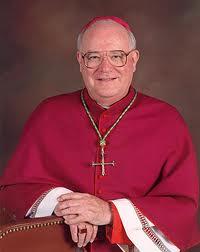
For example: this is San Francisco, and there are a decent number of gay Catholics, and a lot of them go to Most Holy Redeemer Church in the Castro, which is about as welcoming to gay people as any Catholic institution can ever be. And what does the Great and Exalted Archbishiop, Geroge Niederauer, do? According to a nice scoop by Cythina Laird in the BAR, he kicks a few lesbian and gay ministers out of an Advent service:

At least three gay and lesbian clergy members were disinvited from participating in Advent services at Most Holy Redeemer Catholic Church in the Castro, the Bay Area Reporter has learned. … “The basic reason is that Archbishop Niederauer felt the themes for vespers should better reflect the themes of Advent,” Wesolek told the B.A.R.

The “themes of Advent?” The only “theme of Advent” I know is that it celebrates the upcoming feast of the birth of Christ, who, at the time of his miraculous arrival into this world, hadn’t said a single thing about homosexuals.

Let’s be serious: This isn’t a religious statement, it’s a political statement about same-sex marriage. The archbishop can’t tolerate the idea that people — even respected religious people who also believe in Jesus, one of them a damn bishop, for Christ’s sake  — who happen to disagree with his teachings on marriage might share the stage with his holy crew:

Charles was the Episcopal bishop of Utah and was married to a woman for many years. After his retirement in 1993, he came out as a gay man, divorced his wife, and moved to San Francisco. In October 2008 he married Felipe Sanchez-Paris, Ph.D. in a civil ceremony in San Francisco. The couple had a church wedding in 2004 that was covered in the San Francisco Chronicle .

He told the B.A.R. that he received a call the night before his scheduled appearance “indicating that my participation in a liturgical service was unacceptable to the Chancery (in all likelihood, the archbishop): presumably, my participation as the first openly out gay bishop, legally married according to the laws of the state of California, might suggest approval of gay marriage.”

Kind of hard to believe. Or not.

I wish the folks at the archdiocese would talk to me about this, but they haven’t returned my calls.

UPDATE: George Wesolek, spokesperson for the archdiocese, just called me. He acknowledged that the archbishop had decided to disinvite the three ministers on the grounds that “it appeared they might be going to talk about topics with agendas. Advent is not the time for politicizing this, for divisive issues, it’s a time to bring people together.”

In other words: If you want to talk about same-sex marriage, shut up.


Lots of buzz and politicking around D5 appointment

65

There is eager speculation – and lots of public and private pressure being applied to Mayor Ed Lee – over the question of who he will appoint to fill the District 5 seat on the Board of Supervisors that is being vacated by Sheriff-elect Ross Mirkarimi.

Anti-progressive entities from the San Francisco Chamber of Commerce to the San Francisco Chronicle are urging Lee to appoint a fellow moderate to the solidly progressive seat, despite the outrage that would trigger on the left and the difficulty that appointee would likely have keeping the seat after the November election.

Chron columnist CW Nevius today published a weird little puff piece plugging London Breed – a moderate who wants the D5 seat, a fact he strangely didn’t mention – and her leadership of the African American Art & Cultural Center. Chron columnist Leah Garchik also pumped up Breed as a D5 appointee last week. Nevius’ column in particular seemed to be a thinly veiled attempt to influence the decision, despite the regular insistence by Nevius and others at the Chron that they never have a political agenda or try to influence City Hall. Yeah, right – at least we at the Guardian are honest about our advocacy for more progressive city leadership.

Breed is being strongly pushed by Willie Brown, the former mayor and current Chron columnist, as well as most of the city’s African American ministers, such as Revs. Amos Brown and Arnold Townsend, who showed up at last week’s Board of Supervisors meeting and followed Lee back to his office after his appearance before the board.

Sources connected to the ministers told us that Lee hadn’t returned their phone calls in recent weeks and they were angry about the snub, so they showed up to let him know and mau-mau him into appointing Breed. Indeed, Brown did get a private meeting with Lee after his followers wedged their way into the office.

Reporters had asked Lee about the D5 appointment just moments before and he said that he was in no hurry to make a decision. “I want to pay my respects to many groups in District 5,” Lee said.

While many names have been floated as D5 contenders, there are a few that rise to the top. Malcolm Yeung, public policy director of the Chinatown Community Development Center, is being pushed by Rose Pak, the Chinatown power broker who worked with Brown to get Lee into Room 200.

But given Lee will probably avoid simply choosing between the Brown and Pak choices – unless they can privately coalesce around someone, which is certainly a possibility – most City Hall speculation these days falls on Christina Olague. The Planning Commission president comes from the progressive camp but she also served as a co-chair of Progress for All, creators of the Run, Ed, Run campaign that persuaded Lee to run for a full term.

Speaking to the Guardian in October, Olague denied that her early endorsement of Lee had anything to do with the D5 seat, which she said she wasn’t seeking but would take if offered. “If we get progressives to support him early on, maybe we’ll have a seat at the table,” was how she explained her support for Lee.

On Friday, Olague showed up for Mirkarimi’s art opening and holiday party in his City Hall office, and she chatted with other possible contenders for the D5 seat, including Quintin Mecke, Julian Davis, Gabriel Haaland, Jason Henderson, and Michael O’Connor. Asked by the Guardian if she had any insights into how the appointment was going, she said all she knows is what she’s read online and in the newspapers.

And so we wait.

The lights are on in Santa Clara

1

It’s ironic that PG&E is trying to blame the (brief) power outages at Candlestick — seen live, nationwide, on what was otherwise a great Monday Night Football game — on San Francisco. Even by the utility’s biased admission (and let’s remember — these are the same folks who tried to duck blame for the San Bruno blast that killed eight people), the whole problem started when a line owned and operated by the private utility lost power.

But here’s the best part: One of the main reasons that Santa Clara has been able to finance a brand new stadium for the team, which will soon abandon poor, beat-up old Candlestick, is that the Peninsula city has its own public-power agency.

I’m not for using public money to build sports stadiums. The people who own NFL teams (with the exception of the Green Bay Packers) are not only part of the 1 percent; they’re part of the top one-tenth of the one percent. They’re very, very rich folks, who can pay for their own damn stadiums.

And I don’t think San Francisco will suffer greatly when the Niners move south — we never got much of an economic benefit from football games here, anyway.

But I’ll always remember the story Sheriff Mike Hennessey told me a few years back, when he was attending one of Mayor Gavin Newsom’s department-head meetings, and the mayor started complaining about Santa Clara’s efforts to woo the Niners, and how money from that city’s power agency was making it hard for S.F. to compete.

“Are you saying,” Hennessey asked the mayor, “that if San Francisco had public power, we might be able to keep the 49ers?”

Newsom didn’t respond.

Localized Appreesh: the Cosmo Alleycats

10

Localized Appreesh is our weekly thank-you column to the musicians that make the Bay. Each week a band/music-maker with a show, album release, or general good news is highlighted and spotlit. To be considered, contact emilysavage@sfbg.com.

Snap your fingers – jazzy San Francisco swingsters the Cosmo Alleycats have officially released their debut album, The Late Late Show. It’s the kind of story you love to hear: talented local band makes good, a group that formed as a weekly venue houseband makes the leap to fully-realized recording act. And that record beams with tinkling piano, hearty sax, the thumping backbone of upright bass, and a mix of soulful jazz numbers, vintage R&B, and poppy upbeat swing. 

Celebrating their new retro-tinged album this week, the Cosmo Alleycats play two local release shows; one at Le Colonial, at which they were hatched, and then another at Blondie’s Bar & No Grill – there’ll be a special “Alleycat Cosmo” cocktail available at the second event, here’s hoping there’s good booze contained within.

Year and location of origin: January 2010 on Cosmo Alley in SF
Band name origin: Mike: Booze & lack of foresight. Steve & Emily: A couple of us were asked to pull together a band to fill in for Kim Nalley at Le Colonial while she was on vacation for a month. Assuming that there would only be four performances, we wanted the band name to reflect the venue location. Since Le Colonial is on Cosmo Alley, “The Cosmo Alleycats” seemed like a natural fit. Soon after, we were hired as the full time Wednesday night band and started doing gigs all around the Bay Area. The name just stuck.
Band motto: Steve: Get people dancing; Mike: Don’t ask Noam about his hair; Emily: Create fun!
Description of sound in 10 words or less: Emily: Modern vintage R&B and boogaloo swing – we defy classification!; Mike: twang, honk, bang, thump, tinkle, hum.
Instrumentation: Vocals (Emily Wade Adams), Sax (Pete Cornell), Piano (Noam Eisen), Upright Bass (Steve Height) and Drums (Mike Burns). The album also features Nick Rossi on guitar and David Kellerman on keys.
Most recent release: The Late, Late Show (2011)
Best part about life as a Bay Area band: Emily: Loyal, enthusiastic, supportive fans (many of whom wow us with their secret swing dancing skills) and the opportunity to play a range of excellent venues from fun dive bars to hallowed music halls, awesome festivals, and gorgeous winery weddings; Steve: There are so many people here that love seeing live music and are tremendously loyal to bands that they enjoy; Mike: Playing in my home town.
Worst part about life as a Bay Area band: Steve: Bridge traffic; Mike: DJs; Emily: Trying to park to load in!
First record/cassette tape/or CD ever purchased: Mike: Herman’s Hermits; Emily: Oh God. My first tape was either Madonna’s “You Can Dance” or George Michael’s “Faith”. First CD was Soul II Soul’s Club Classics Volume 1. When I was three, I’d listen to the Beatles’ Magical Mystery Tour record over and over, looking at all the pretty pictures in the booklet that came with the record and wondering why all these old dudes were dressed up in costumes. I had no clue that drugs were involved until I was about 20.”
Most recent record/cassette tape/CD/or Mp3 purchased/borrowed from the Web: Emily: Other than our own? The latest releases from Amy Winehouse and the Black Keys; Mike: Arann Harris and the Farm Band.
Favorite local eatery and dish: Steve: Le Colonial’s brussels sprouts; Mike: Cordon Blue, California @ Hyde, menu #5; Emily: Where to begin? The food trucks at Off the Grid are ridiculous. I’m addicted to Curry Up Now’s chicken tikka masala burrito. Also, the veggie burger at the Plant Organic is to die for. And I love my Thursday night ‘liquid dinners’ with the band at Blondie’s Bar & No Grill.”

Cosmo Alleycats
Wed/21, 7-10 p.m.
Le Colonial
20 Cosmo Place, SF
www.lecolonialsf.com

Thurs/22, 9 p.m.-12:30 a.m.
Blondie’s Bar & No Grill
540 Valencia, SF
www.blondiesbar.com

Guardian editorial: Making Clean Power SF work

1

EDITORIAL The way the San Francisco Chronicle describes it, the city’s new green power program “won’t come cheap.” That’s a line that Pacific Gas and Electric Co. will use over and over again in the next few months as the city finally prepares to get into the retail electricity business, 98 years after Congress mandated public power for San Francisco. Clean Power SF will offer 100 percent clean energy — and yes, right now, this spring, it will cost a little bit more than buying nuclear and coal power from PG&E.

But that price differential will change dramatically in the next few years — if the city goes forward not just with buying and aggregating power from the commercial market but developing renewable energy on its own.

That’s the key to the future of Clean Power SF — and as a proposed contract to get the system up and running comes to the Board of Supervisors, the need for a city build-out of at least 210 megawatts of energy generation capacity is, and must be, an essential part of the plan.

As Rebecca Bowe reports in the Guardian, there’s some disagreement about the contract proposed by the San Francisco Public Utilities Commission. The deal with Shell Energy North America would have the energy giant buy green power wherever it can, deliver it to San Francisco customers along PG&E’s lines — and charge enough to pay for the power and overhead expenses. That, initial reports say, could raise the bill of an average customer somewhere between $7 and $50 a month, depending on use. For most residential customers, the increase is going to be on the low end.

The problem is that the PUC estimates from the start that two-thirds of the potential customers will drop out of the program and stick with PG&E. That’s an abysmal projection, reflecting in part the PUC’s long reluctance to take the program seriously, in part a failure to plan an aggressive marketing campaign — and in part the lack of a long-term vision for the program.

The bottom line is simple: As long as the city is buying energy from somebody else, there are going to be problems. Right now, renewable energy demand exceeds supply, so prices are high. That’s going to fluctuate over the next decade.

But it’s entirely possible for the city to build its own renewable infrastructure and generate power that will beat PG&E’s prices in the short-term future — and will be far, far less expensive a decade down the road. Clean Power SF will never work to its full potential unless the city owns a significant part of the generation system. (Ultimately, the city will never see the full economic benefits of public power until it buys out PG&E or builds its own delivery system.)

The PUC included — at the demand of public-power advocates — a clause in the contract stating that a city build-out was part of the plan. The proposal before the board only includes the contract with Shell — but the final deal should include specific plans for how much local power will be generated, how it will be funded — and how it will ultimately replace the power Shell is providing. The city should start right now looking for sites (there’s lots of surplus city land) and seeking bids for construction, and if the PUC can’t come up with enough revenue-bonding money, the board should put a comprehensive clean energy bond on the November ballot.

The Local Clean Energy Alliance estimates that building 210 megawatts of clean power in San Francisco would generate nearly 1,000 direct jobs and as many as 4,300 indirect jobs. That sort of program would be a boost to the economy and guarantee the city stable energy sources for the future. And it would allow the PUC to market Clean Power SF not as a plan that will cost consumers more today — but as a plan that the city can all-but guarantee will save you money, substantial amounts of money, over the next ten years.


Warren Hellman, the 1 percent exception

103

San Francisco lost a piece of its soul when Warren Hellman died last night. In a deeply polarized city, where Occupy’s paradigm of the 99 percent versus the 1 percent resonates more than anywhere, Hellman showed how an extremely wealthy investment banker could champion the interests of all San Franciscans.

I first got to know Warren in 2007 when I did a series of in-depth interviews with him for a Guardian cover story. Before that, he had been a bit of a villain to progressives as he worked with his downtown friends, such as the late Gap founder Don Fisher, to fund political initiatives and groups that aggressively pushed a pro-business agenda, from the Committee on Jobs to the parking garage under Golden Gate Park.

Born into the family that founded Wells Fargo Bank, he became the youngest partner to join Lehman Brothers before founding one of San Francisco’s largest investment banking firms, Hellman was solidly in the 1 percent. But he was a curious man with a good heart, compassionate soul, nimble mind, and strong sense of integrity.

So when the progressives he previously battled over the parking garage pushed for more car-free hours in the park – something Hellmann and his allies had pledged to support if the garage was built – he joined them and battled with his former garage allies who had abandoned that pledge, eventually forcing a compromise when it seemed the car-free crowd was headed for defeat.

That was the reason I got to know him and the focus on my “Out of downtown” story, but it was only the beginning. I came to know about how he was spending his money to help the schools and the poor, about his generous/selfish gift of the Hardly Strictly Bluegrass Festival, and about his belief that George W. Bush and other neo-conservatives – those who so shamelessly and short-sightedly helped consolidate this country’s wealth in fewer and fewer hands – were sullying his Republican Party.

So we stayed in touch and had early morning breakfasts together every six months or so, talking about the issues of the day. We talked about Burning Man, an event he loved and one I was covering and writing a book about. He listened as I complained about my shrinking staff at the Guardian and how the contraction of journalism was bad for San Francisco, and we talked through some possible solutions.
It bothered Warren to see the San Francisco Chronicle being decimated by an out-of-town corporation, and he wanted to help. So he took that kernel of an idea, mulled it, and discussed it with a wide variety of people who had expertise on the topic, just as he would do with his myriad investment banking ideas.

And with that steady heat that he applied to this kernel, he popped it into The Bay Citizen, a non-profit professional newsroom that has already done a great service to San Francisco, and which owes its existence to Hellman, who subsidized it with millions of dollars of his own money and encouraged his rich friends to give millions more. That is among his many legacies, although he was probably most proud of the Hardly Strictly Bluegrass Festival, probably the country’s best free concert. Warren loved that music, and he told me it was mostly because it told the stories of common people so beautifully. “The kind of music is the conscience of our country,” he told me. The San Francisco Board of Supervisors last week offered a bit of appreciation for Warren’s gift, renaming the main venue of Speedway Meadows as Hellman’s Hollow.

I’ll let the Bay Citizen and other media outlets write Warren’s full obituary. What I’m choosing to think about now is the man, and he is someone who I will truly miss. San Francisco just won’t be the same place without the example he set, but I hope it lives on in the hearts and minds of those in a position to help San Francisco find its heart and realize its potential.


Have we seen the last California execution?

19

A judge in Marin has tossed out the current execution protocol, putting all executions in the state on hold — and potentially delaying any more state-sponsored killing until after November, when the voters will have a chance to end the death penalty for good.

So it may be that this gruesome and pointless farce has come to an end. It may be that California is ready to join the civilized world. It may be that the state is ready to save billions (yes, I said billions) of dollars by replacing death with life without parole. Which is effectively what we have now — the number one cause of death on Death Row is old age.

State Sen. Mark Leno noted at the San Francisco Tomorrow holiday party Dec. 14 that life without parole “means exactly that” — since that sentence has been adopted, not one person facing LWOP in California has ever been released. The one exception: People who turned out to be innocent. Fortunately, innocent people serving life sentences can still have a chance.

Revolutionary bedfellows: What Occupy has in common with the sex-positive movement

2

Guardian reporter Yael Chanoff embedded at the Occupy SF and Occupy Oakland encampments during the months-long protest. Here, she reflects on the non-monogamy movement and what it could mean for the 99 percent

Temperatures were running high at Occupy San Francisco. After a day of hard work, the protesters were decompressing. Talented musicians shared their instruments with friends and strangers in impromptu jam sessions. 

The evening in question took place during Occupy SF’s early stages, back when police would swarm at the first sign of a tent being propped up, and all of the 200 or so people who camped out that night mingled and slept in the open air. I sat with two young women and three young men who were all topless, leaning on each other and using laps as pillows. 

Another occupier, who said he had arrived that day, wandered by. “So,” he asked, “Is this thing about free love?”

“I don’t know” the guy next to me replied. He shrugged at the newcomer. “But we’re definitely doing that.”

RADICAL INTIMACY

One week later, I was sitting in the midst of a very different kind of alternative community. We were inside the Supperclub nightclub, in a hot room scattered with beds. The event’s attendees wore sparse Adam and Eve-themed costumes and glittery pasties winked here and there. A video of bonobos copulating was playing. 

It was a “second base” party, one of the many social calendar offerings of San Francisco’s sex-positive community.  The night – dubbed “Sex at Dawn” after author Christopher Ryan’s book by the same name that explores the historical roots of non-monogamy – would feature a panel discussion with several of the leading lights in the alternative, kinky, political sex community. 

Among the night’s speakers: Dossie Easton, Carol Queen, Philippe Lewis, people who have devoted their lives to creating intellectual and physical spaces where free love is unquestioningly ‘what it’s about.’

Their passion notwithstanding, the party that would follow their talk was not a sex party, strictly speaking. Event producers and Club Exotica founders Philippe “Fuzzy” Lewis and Jocelyn Agloro describe their gatherings as “co-created pieces of temporary social art,” places “for people to explore intimacy, relationships, sensuality, and sexuality — in community.” 

In some ways, the two nights were similar. But in other ways, they were quite different. The cost of admission, for example (Occupy SF: free; Club Exotica’s party: $10-35). And the numerous beds. But I couldn’t help being struck by the similarities. 

Both spaces were populated by humans whose need for connection wasn’t being met anywhere else, humans brought together by an experiment in revolutionary ways of relating to each other based on sharing and compassion. 

As I see it, the two communities have important lessons to share with each other.

THE FUTURE OF LOVE?

Occupy SF’s merry encampment is just a memory now. Justin Herman Plaza is empty these days, and somewhat unsettling – a grim square of concrete, bocce courts, and dead grass where 200 thrilled, at times confused, yet fiercely committed individuals spent two month trying to make a better world. 

But the movement is not over. It’s just in the process of reinventing itself. Forums on “Occupy 2.0” are happening around the country.

And as I think back on that night with those free loving campers, I have to wonder, will Occupy hook up with the sexual liberation movement?

When it comes to sex at Occupy, experiences varied among the individuals I interviewed. One young man who has been involved in polyamorous relationships for several years said he didn’t see anything of the sort at camp. “People have met and started dating here,” he said, “but it’s usually monogamous.”

Be that as it may, more than a few people assured me that “there’s been at least one orgy in the tents.” 

Two campers who had been occupying since late September told me that they were in a polyamorous relationship with a third occupier, and knew of other of other threesomes that had developed at camp. One of them, a calm, smiling young man, said the Occupy SF camp was an environment that definitely encouraged this kind of free love.

“I think it’s because you’re around each other all the time, in this rapid exchange of revolutionary ideas, and that’s another way you connect.”

But is sexual revolution part of the Occupy ethos?

The calm man’s partner was an energetic twenty-year-old known to start dance parties at 4 a.m. when camp was still around. She didn’t think so. 

“I mean, we talk about it with each other,” she said. “But it’s not really a part of the political side of the movement.”

Others found that Occupy had at least encouraged more sexual license, albeit unaccompanied by sex-positive theory. With wide-eyed disbelief one long-time camper told me, “I don’t understand it. I’ve been with more women since I’ve been here, homeless, than I ever did when I was housed.” 

It appeared that societal notions of monogamy were being sloughed off at Occupy SF – but without any of the underlying theories of polyamory espouses by the city’s sex-positive community. Many occupiers I spoke had never heard of any theory of non-monogamy, and agreed that a workshop teaching about alternative relationship models at camp could have helped sort out a lot of their ambiguous sexual experiences. 

Ironically, some of the city’s most qualified teachers might have been in the tent next door to these potential students.

SEXPERTS IN THE TENTS

Joani Blank, founder of Good Vibrations and longtime sexual liberation activist, spent time at Occupy Oakland. She told me that she saw ideas of love, sharing, and interpersonal connection brewing in that camp. 

Said Blank, “the camps encouraged love and acceptance and egalitarianism. With Occupy, there’s been a significant opportunity for the nature of love and friendships to change and be more open, and a lot of people [are] relating to other people who are very much not the same as they are. A variety of relationships are being encouraged and supported because everybody’s united.”

Blank thinks that the camps bred sexual experimentation. “[The occupiers] will jump into sexual experiences they’ve never had. So, for them it’s very liberating. I felt that energy myself the night I stayed there, and it translates easily into other kinds of excitement.”

In the ambiguity that surrounds Occupy’s future, one thing seems clear: this movement won’t survive unless it’s built on our love for our peers. That’s the focus of parties like “Sex At Dawn,” where attendees are not allowed to have intercourse, but instead are encouraged to open up sensually to those around them. 

The quest to open up in ways not traditionally encouraged within the bounds of capitalism was seen by many as a keystone of Occupy. The viral video-upcoming documentary The Revolution is Love focuses on Occupy and protesters’ search to replace consumerism with intimacy. 

Polly Pandemonium, founder of sex club Mission Control and its popular swinger’s party Kinky Salon told me that “the sexual liberation movement and the Occupy movement…we are all working towards the same future. It’s homo sapiens natural predisposition to share rather than hoard and fight. The mutual goal is to help people realize that it’s safe to share, and that they won’t be left out in the cold, and to create a culture which supports and rewards that kind of behavior.”

Even in its current transition phase, Occupy continues to capture the imagination of millions, including many involved in our sexual liberation movement right here in San Francisco. With a new, restless crowd of thousands who saw how community sharing could be applied to sexual relationships at the Occupy camps, some new sexual revolution may be stirring. 

For now, Occupy and the sexual liberation movement are just getting acquainted. But if activists stick with the core notions of sharing and love, we might be seeing the start of a beautiful relationship. 


End war, bring that money home — a controversial proposition, even in SF?

9

A substantial majority of Americans support ending the war in Afghanistan, decreasing the military budget, and redirecting that money to domestic needs, a position held even more strongly in liberal San Francisco. Yet three members of the Board of Supervisors this week still opposed a resolution in support of that position, a resolution that was mocked on the cover of today’s San Francisco Examiner.

So-called political “moderates” here love to deride progressives and label them out-of-touch with the rest of the country or with what they consider the “real world.” But how sensible and fiscally responsible is it to continue spending more than half of the federal budget on the military, a dollar amount that has more than doubled since Bill Clinton left the White House, when domestic conditions are so bad that tens of thousands of people across the country have been willing to spend months occupying their town squares?

The resolution approved Tuesday on a 8-3 vote – with Sups. Sean Elsbernd, Mark Farrell, and Carmen Chu, consistently the board’s most conservative members, in dissent – was similar to resolutions approved in dozens of jurisdictions across the country, most recently in Los Angeles and Pittsburgh, Penn. In May, a similar resolution was also approved by the U.S. Conference of Mayors, the first such action since the Vietnam War.

The resolution calls for members of Congress to “reduce the military budget, end the wars in Iraq and Afghanistan, and redirect the savings to domestic needs.” In support of that position, it notes that we’re spending almost $1 trillion per year on the military and war debt, more than 50,000 U.S. troops have been killed or injured in the two conflicts, and that everything from schools to public services to the country’s infrastructure needs are severely underfunded.

“It’s a way to signal to the federal government – in this case, particularly [Reps.] Nancy Pelosi and Jackie Speier – that people are fed up with their local economies being plundered to support war,” Janet Weil, who works on resolution like this as part of Code Pink’s Bring Our War Dollars Home campaign, told us. San Francisco’s resolution was developed by the New Priorities Campaign, a nationwide coalition that includes Code Pink.

But during this week’s approval of the measure – which included no discussion and lasted less than a minute – Elsbernd rolled his eyes as the measure came up and then voted against it. Afterward, I asked him why, and he gave a two-pronged answer. He generally opposes local resolutions on international issues, and on this one, he said that pulling all troops out of Afghanistan is an unrealistic position that is out of the national mainstream.

“Is this the appropriate forum to discuss how many troops we should have in Afghanistan? Probably not,” he said.

Yet most people clearly see the connection between lack of resources at home and trying to fight two simultaneous wars and maintain a military presence in 63 countries, something that Weil said has fed the Occupy movement around the country, where signs and public statements have repeatedly made that connection.

“I visited OccupySF and I saw very eloquent anti-war messages on dozens of signs, and that had nothing to do with organizing by Code Pink or other anti-war groups,” Weil said. “For a lot of people, it’s such a no-brainer that people don’t even bring it up.”

Yet she said that many politicians and mainstream media outlets have been out-of-touch with that reality. For example, while there has been some popular outcry over this week’s approval of a provision in the latest defense authorization bill that allows for indefinite military detentions of suspected terrorists captured on U.S. soil, the fact that the bill principally authorizes a whooping $662 billion in new military expenditures has gotten less attention.

“But the Occupy movement has pulsed energy and people into the anti-war movement across the country,” Weil said, predicting that the connection between domestic needs and wasteful military spending will put increasing pressure on the federal government to address the issue.

As for whether local resolutions will help with that process, even moderate political consultant Jim Ross – who mocked this week’s anti-war resolution in the Examiner article – correctly noted that San Francisco helped lead the international effort to boycott South Africa and end its apartheid regime, a movement that began with a resolution approved by the San Francisco Board of Supervisors.

Or, to put it in the bumper sticker mentality that conservatives seem to appreciate: think globally, act locally.