San Francisco

Stage Listings

0

Stage listings are compiled by Guardian staff. Performance times may change; call venues to confirm. Reviewers are Robert Avila, Rita Felciano, and Nicole Gluckstern. Submit items for the listings at listings@sfbg.com. For further information on how to submit items for the listings, see Picks.

THEATER

OPENING

Act One, Scene Two Phoenix Arts Association Theatre, 414 Mason, Ste 601, SF; www.un-scripted.com. $10-20. Previews Thu/12-Sat/14, 8pm. Opens April 19, 8pm. Runs Thu-Sat, 8pm. Through May 12. Un-Scripted Theater Company performs the beginning of a new, unfinished play by a local author — and creates an ending on the spot once the script runs out.

It Is What It Is and The Watchtower Exit Theater, 156 Eddy, SF; www.myadultland.com. $20. Opens Fri/13, 8pm. Runs Sat/14, April 19-21, and 27-28, 8pm; Sun/15 and April 29, 3pm. Through April 29. Short plays by Diane Karagienakos and Christopher Barranti, presented on the same stage with a brief intermission.

Thunder Above, Deeps Below Bindlestiff Studio, 185 Sixth St, SF; www.brownpapertickets.com. $20-25. Opens Thu/12, 8pm. Runs Thu-Sat, 8pm. Through May 5. Bindlestiff presents A. Rey Pamatmat’s dramatic comedy about three homeless young adults.

BAY AREA

John Brown’s Truth La Peña Cultural Center, 3105 Shattuck, Berk; www.brownpapertickets.com. $10-15. Opens Sun/15, 7:30pm. Runs Sun, 7:30pm. Through April 29. The story of abolitionist John Brown comes to life via William Crossman’s script-libretto, plus dance, spoken word, and a variety of improvised music styles.

ONGOING

*The Aliens SF Playhouse, 533 Sutter, SF; (415) 677-9596, www.sfplayhouse.org. $20-70. Tue-Thu, 7pm; Fri-Sat, 8pm; Sun, 3pm. Through May 5. On the heels of Aurora Theatre’s production of Body Awareness, SF Playhouse introduces local audiences to another of contemporary American playwright Annie Baker’s acclaimed plays, in a finely tailored West Coast premiere directed by Lila Neugebauer. The Aliens unfolds in the days just around July 4, at slacker pace, in the backyard of a Vermont café (lovingly realized to palpable perfection by scenic designer Bill English), daily haunt of scruffy, post-Beat dropouts and sometime band mates Jasper (a secretly brooding but determined Peter O’Connor) and KJ (a charmingly ingenuous yet mischievous Haynes Thigpen). New employee and high school student Evan (a winningly eager and reticent Brian Miskell) is at first desperate to get the interlopers out of the "staff only" backyard but is just lonely enough to be seduced into friendship and wary idolatry by the older males. What unfolds is a small, sweet and unexpected tale of connection and influence, amid today’s alienated dream-sucking American landscape — same as it ever was, if you ask Charles Bukowski or Henry Miller, both points of reference to Jasper and KJ, who borrow Bukowski’s poem The Aliens for one of their many band names. An appropriate name for the alienated, sure, but part of the charm of these characters is just how easy they are to recognize, or how much we can recognize ourselves in them. Delusions of grandeur reside in every coffee house across this wistful, restless land. It’s not just Jasper and KJ who may be going nowhere. A final gesture to the young and awkward but clearly capable Evan suggests, a little ambiguously to be sure, that there’s promise out there yet for some. But more than that: the transaction makes clear by then that there are no fuck-ups, really; not among people with generous and open hearts — never mind how fucked up the country at large. (Avila)

Any Given Day Magic Theatre, Fort Mason Center, Marina at Laguna, SF; www.magictheatre.org. $20-60. Opens Wed/11, 8pm. Runs Wed-Sat, 8pm (also April 21, 2:30pm); Sun, 2:30pm; Tue, 7pm. Through April 22. Magic Theatre performs Linda McLean’s Glasgow-set play about modern, urban life.

*The Caretaker Curran Theater, 445 Geary, SF; www.shnsf.com. $25-175. Tue-Sat, 8pm (also Wed and Sat, 2pm); Sun, 2pm. Through April 22. Harold Pinter’s 1960 drama gets its first major revival since the death of the playwright in 2008 in this touring English production featuring Jonathan Pryce in the ambiguous title role. Set in a worn and cluttered attic apartment amid a triangular power play between its seemingly nonchalant tenant, Aston (the excellently vacant, vaguely creepy Alan Cox), an older homeless man he’s just rescued named Davies (a shifty, richly detailed Pryce), and the tenant’s younger brother and landlord Mick (a tightly coiled yet comically skittish Alex Hassell). The story is minimal, the tensions and pivoting interpersonal dynamics all. The spookier aspects of the play are toned down, meanwhile, though not necessarily to bad effect. While the opening scenes are played with somewhat unexpected levity, director Christopher Morahan ensures a subtle shift midway through into a more threatening and serious tone that is perhaps all the more palpable for being less foreseen — as Davies, egged on by the hyper Mick’s persuasive vision of remaking the dumpy room into an elegant penthouse, makes an ill-considered play for dominance over his seemingly gentle but inscrutable host. (Avila)

*Fool For Love Boxcar Studios, 125A Hyde, SF; www.boxcartheatre.org. $25. Wed/11-Sat/14, 8pm. Another installment of Boxcar Theatre’s epic Sam Shepard repertory project, Fool for Love inaugurates their newest performance space within their Hyde Street Studios location. A depressingly realistic reproduction of a claustrophobic motel room, the tiny jewel-box theatre provides no refuge for the actors, and certainly not for the audience, each trapped beneath the pitiless gaze of the other. And if that too-close-for-comfort intimacy doesn’t get to you, the intentionally difficult subject matter — a "typical" Shepardian foray into alcohol-fueled ranting, violence, incest, and casual cruelty — probably will. Shepard’s strength in monologue shows itself off to meaty effect from May’s (Lauren Doucette) melancholy description of her mother’s love affair with the Old Man (Jeff Garrett) to Eddie’s (Brian Trybom) candid admittance to May’s timid suitor Martin (Geoffrey Nolan) that he and May are not cousins at all but half-siblings who have "fooled around" with each other. In addition to the reliably strong performances from each of the actors, Fool features a notably clever bit of staging involving the Old Man who appears not as a specter wandering the periphery of the stage, but as a recurring figure on the black-and-white television, interrupting the flow of cheesy Westerns with his garrulous trailer park wisdom and an omnipresent Styrofoam cup filled, one suspects, with something stronger than just coffee. (Gluckstern)

*Glengarry Glen Ross Actors Theatre of San Francisco, 855 Bush, SF; (415) 345-1287, www.brownpapertickets.com. $26-40. Wed-Sat, 8pm. Extended through April 28. Actors Theatre of San Francisco and director Keith Phillips offer a sharp, spirited production of the 1984 play by David Mamet in which four real estate agents (Mark Bird, Sean Hallinan, John Krause, and Christian Phillips) jockey and scheme for advantage in their Chicago office in a landscape of insecurity and fierce competition symbolized by the selective doling out of the best leads by manager and company man John (Frank Willey). Clients (like the gullible young husband played by Randy Blair), meanwhile, are just witless marks for the machinations of the predatory salesman, no more meaningfully human than the "muppets" targeted by Greg Smith’s Goldman Sachs. If the scenic design is a little shabby, the strong cast makes that hardly an impediment to a story that feels especially timely in its sharply etched, not to say angry portrait of the ruthless and corrosive business mentality to which egos, livelihoods, and lives — not to mention the culture at large — are enthralled. (Avila)

Goodfellas Live Dark Room Theater, 2263 Mission, SF; www.darkroomsf.com. $20. Fri-Sat, 8pm. Through April 26. The Dark Room offers a comedic take on Scorsese’s gangsters.

*Hot Greeks Hypnodrome Theatre, 575 10th St, SF; www.brownpapertickets.com. $30-35. Thu-Sat, 8pm. Through May 5. Cheap thrills don’t come much cheaper or more thrilling than at a Thrillpeddlers musical extravaganza, and their newly remounted run of Hot Greeks affords all the glitter-dusted eye-candy and labyrinthian plot points we’ve come to expect from their gleefully exhibitionist ranks. Structured as loosely as possible on Aristophanes’ Lysistrata, Greeks appropriately enough follows the trials and tribulations of a college sorority tired of "losing" their boyfriends to the big football match every year (Athens U vs. Sparta Tech). Pledging to withhold sex from the men unless they call off the game results in frustration for all, only partially alleviated by the discovery that sexual needs can be satisfied by "playing the other team," as it were. But like other Cockettes’ revivals presented by the Thrillpeddlers, the momentum of the show is carried forward not by the rather thinly-sketched narrative, but by the group song-and-dance numbers, extravagant costuming (and lack thereof), ribald wordplay, and overt gender-fuckery. In addition to many TP regulars, including a hot trio of Greek columns topped with "capital" headdresses who serve as the obligatory chorus (Steven Satyricon, Ste Fishell, Bobby Singer), exciting new additions to the Hypnodrome stage include a bewigged Rik Lopes as stalwart sister Lysistrata, angelically-voiced Maggie Tenenbaum as the not-so-angelic Sodoma, and multi-faceted cabaret talent Tom Orr as heartthrob hunk Pendulum Pulaski. (Gluckstern)

It’s All the Rage Studio Theater, Marsh San Francisco, 1062 Valencia, SF; (415) 282-3055, www.themarsh.org. $15-50. Thu/12, 8pm; Sat/14, 8:30pm, Sun/15, 7pm. Longtime comedian and radio host Marilyn Pittman’s solo play wrestles with the legacy of her parents’ violent deaths in a 1997 murder-suicide initiated by her father. It’s disturbing material that Pittman, a stout middle-aged woman with a gregarious and bounding personality, approaches indirectly via a good deal of humor — including recounting the first time she did her growing-up-lesbian bit before her mother in a DC comedy club. But the pain and confusion trailing her for 13 years is never far behind, whether in accounts of her own battle with anger (and the broken relationships it has left in its wake) or in ominous memories of her too complacent mother or her charming but domineering father, whose controlling behavior extended to casually announcing murderous dreams while policing the boundaries of his marriage against family interference. A fine mimic, Pittman deploys a Southern lilt in playing each parent, on a stage decorated with a hint of their Southwestern furnishings and a framed set of parental photographs. In not exactly knowing where to lay blame for, or find meaning in, such a horrifying act, the play itself mimics in subtler form the emotional tumult left behind. There’s a too brief but eerie scene in which her veteran father makes reference to a murder among fellow soldiers en route to war, but while PTSD is mentioned (including as an unwanted patrimony), the 60-minute narrative crafted by Pittman and director David Ford wisely eschews any pat explanation. If transitions are occasionally awkward and the pace a bit loose, the play leaves one with an uncomfortable sense of the darker aspects of love, mingled with vague concentric histories of trauma and dislocation in a weird, sad tale of destruction and staying power. Note: review from the show’s 2009 run at the Marsh San Francisco. (Avila)

*A Lie of the Mind Boxcar Playhouse, 505 Natoma, SF; www.boxcartheatre.org. $25. Wed/11-Sat/14, 8pm. Sam Shepard’s three-act drama is streaked with humor, horror and heartbreak, all of it arising from the most mundane but also extraordinary of things, love and family. That’s Shepard territory, of course, as surely as is the rowdy backwater of the American West where much of the play unfolds. But seeing the exceptionally sharp and powerful production currently up at Boxcar Theatre under direction of Susannah Martin — in the midst of Boxcar’s mostly terrific four-play Shepard fest that includes his better known Pulitzer-winner, Buried Child (1979) — suggests 1985’s Lie may cut deeper than most. It begins in the immediate aftermath of a vicious episode of domestic abuse, from which the married couple of Beth (Megan Trout) and Jake (Joe Estlack) flies apart and back into the ambivalent arms of their mutually dysfunctional families (played wonderfully by Carolyn Doyle, Marissa Keltie, Tim Redmond, Katja Rivera, Josh Schell, and Don Wood). Trout’s brain-damaged Beth is a wrenching figure, not merely for her confusion and vulnerability but more so for the certainty and determination that make their way from her heart through the prison bars of her hampered mind. As Jake, Estlack is doing some of his finest work, convincingly incarnating a veritable beast whose roaring, roiling emotions sound the loneliest and most desolate of souls within. Martin’s intelligent staging — aided by Steve Decker’s beautifully spare wood-plank set, Lucas Krech’s moody lighting, and a choice, eerie sound design by Teddy Hulsker — adds tangible weight and texture to the play’s radiant dialogue and engrossing characters, realized by one of the finest ensemble casts all year. (Avila)

Maple and Vine American Conservatory Theater, 415 Geary, SF; (415) 749-2228, www.act-sf.org. $10-95. Tue-Sat, 8pm (also Wed and Sat, 2pm); Sun, 2pm (Sun/15, show at 7pm). Through April 22. ACT performs the West Coast premiere of Jordan Harrison’s play about a 21st century couple drawn into a community of people who live as if it’s the 1950s.

The Real Americans Marsh Studio Theater, 1062 Valencia, SF; (415) 282-3055, www.themarsh.org. $25-50. Fri/13, 8pm; Sat/14, 5pm. Dan Hoyle revives his hit solo show about small-town America.

Waiting for Godot New venue: SF Playhouse Stage Two, 533 Sutter, SF; (415) 336-3522, www.tidestheatre.org. $20-32. Thu/12, 7pm; Fri/13-Sat/14, 8pm. The fuchsia papier-mâché tree and swirling grey-on-white floor pattern (courtesy of scenic designer Richard Colman) lend a psychedelic accent to the famously barren landscape inhabited by Vladimir (Keith Burkland) and Estragon (Jack Halton) in this production of the Samuel Beckett play by newcomers Tides Theatre. The best moments here broadcast the brooding beauty of the avant-garde classic, with its purposely vague but readily familiar world of viciousness, servility, trauma, want, fear, grudging compassion, and the daring, fragile humor that can look it all squarely in the eye. (Avila)

The Waiting Period MainStage, Marsh San Francisco, 1062 Valencia, SF; (415) 282-3055, www.themarsh.org. $15-50. Fri, 8pm; Sat, 5pm. Extended through April 27. Brian Copeland (comedian, TV and radio personality, and creator-performer of the long-running solo play Not a Genuine Black Man) returns to the Marsh with a new solo, this one based on more recent and messier events in Copeland’s life. The play concerns an episode of severe depression in which he considered suicide, going so far as to purchase a handgun — the title coming from the legally mandatory 10-day period between purchasing and picking up the weapon, which leaves time for reflections and circumstances that ultimately prevent Copeland from pulling the trigger. A grim subject, but Copeland (with co-developer and director David Ford) ensures there’s plenty of humor as well as frank sentiment along the way. The actor peoples the opening scene in the gun store with a comically if somewhat stereotypically rugged representative of the Second Amendment, for instance, as well as an equally familiar "doood" dude at the service counter. Afterward, we follow Copeland, a just barely coping dad, home to the house recently abandoned by his wife, and through the ordinary routines that become unbearable to the clinically depressed. Copeland also recreates interviews he’s made with other survivors of suicidal depression. Telling someone about such things is vital to preventing their worst outcomes, says Copeland, and telling his own story is meant to encourage others. It’s a worthy aim but only a fitfully engaging piece, since as drama it remains thin, standing at perhaps too respectful a distance from the convoluted torment and alienation at its center. (Avila)

BAY AREA

Anatol Aurora Theatre, 2081 Addison, Berk; www.auroratheatre.org. $30-55. Previews Wed/11, 8pm. Opens Thu/12, 8pm. Runs Tue and Sun, 7pm (also Sun, 2pm); Wed-Sat, 8pm. Through May 13. Aurora Theatre Company performs a world premiere translation of Arthur Schnitzler’s drama about the love life of an Viennese philanderer.

Cabaret Larkspur Café Theater (American Legion Hall Post 313), 500 Magnolia, Larkspur; www.brownpapertickets.com. $25-45. Fri/13-Sat/14, 8pm; Sun/15, 7pm. Independent Cabaret Productions and Shakespeare at Stinson move their production of the Kander and Ebb classic from Fort Mason to the North Bay.

The Coast of Utopia: Voyage Ashby Stage, 1901 Ashby, Berk; www.shotgunplayers.org. $20-30. Wed-Thu, 7pm; Fri-Sat, 8pm; Sun, 5pm. Through April 29. Shotgun Players present Tom Stoppard’s riff on pre-revolutionary Russia.

Hairspray Fox Theatre, 2215 Broadway, Redwood City; www.broadwaybythebay.org. $20-48. Thu/12 and Fri-Sat, 8pm (also Sat, 2pm); Sun, 2pm. Through April 22. Broadway By the Bay opens its 47th season with the John Waters-based, Tony-winning musical.

*The Kipling Hotel: True Misadventures of the Electric Pink ’80s New venue: Marsh Berkeley, 2120 Allston, Berk; (415) 282-3055, www.themarsh.org. $20-50. Sat, 8:30pm; Sun, 7pm. Extended through May 6. This new autobiographical solo show by Don Reed, writer-performer of the fine and long-running East 14th, is another slice of the artist’s journey from 1970s Oakland ghetto to comedy-circuit respectability — here via a partial debate-scholarship to UCLA. The titular Los Angeles residency hotel was where Reed lived and worked for a time in the 1980s while attending university. It’s also a rich mine of memory and material for this physically protean and charismatic comic actor, who sails through two acts of often hilarious, sometimes touching vignettes loosely structured around his time on the hotel’s young wait staff, which catered to the needs of elderly patrons who might need conversation as much as breakfast. On opening night, the episodic narrative seemed to pass through several endings before settling on one whose tidy moral was delivered with too heavy a hand, but if the piece runs a little long, it’s only the last 20 minutes that noticeably meanders. And even with some awkward bumps along the way, it’s never a dull thing watching Reed work. (Avila)

Of Mice and Men TheatreWorks at Mountain View Center for the Performing Arts, 500 Castro, Mtn View; (650) 463-1960, www.theatreworks.org. $19-69. Tue-Wed, 7:30pm; Thu-Sat, 8pm (also Sat, 2pm); Sun, 2pm. Through April 29. TheatreWorks performs the Steinbeck classic.

Red Berkeley Repertory Theatre, Thrust Stage, 2025 Addison, Berk; (510) 647-2949, www.berkeleyrep.org. $14.50-83. Tue and Thu-Fri, 8pm (also April 26, 2pm; no show April 27); Wed, 7pm; Sat-Sun, 2pm (also Sat, 8pm; no 8pm show May 12; Sun, 7pm). Extended through May 12. Mark Rothko (David Chandler) isn’t the only one painting with a broad brush in this labored and ultimately superficial two-hander by John Logan, enjoying a competent but underwhelming production by outgoing Berkeley Rep associate artistic director Les Waters. Set inside the late-1950s New York studio of the legendary abstract expressionist at the height of his fame, the play introduces a blunt and brash young painter named Ken (John Brummer) as Rothko’s new hired hand, less a character than a crude dramatic device, there first as a sounding board for the pompous philosophizing that apparently comprises a good chunk of the artist’s process and finally as a kind of mirror held up to the old iconoclast in challenging proximity to a new generation that must ultimately transcend Rothko’s canvases in turn. The dialogue holds up signs announcing intellectual and aesthetic depths but these remain surface effects, reflecting only platitudes, while the posturing tends to reduce Rothko to caricature. Much of the self-consciously reluctant filial interaction here smacks of biographical sound bites or heavy-handed underscoring of theme, and tends toward the outright hokey when touching on the credulity-bending subject of Ken’s murdered parents — with the attendant shades this adds to Rothko’s and the play’s chosen color palette. (Avila)

The World’s Funniest Bubble Show Marsh Berkeley, TheaterStage, 2120 Allston, Berk; (415) 826-5750, www.themarsh.org. $8-50. Extended run: May 5-27 (Sat-Sun, 11am); June 3-July 15 (Sun, 11am). Louis "The Amazing Bubble Man" Pearl returns with this kid-friendly, bubble-tastic comedy.

PERFORMANCE/DANCE

Alonzo King LINES Ballet Yerba Buena Center for the Arts, Novellus Theater, 700 Howard, SF; (415) 978-2787, www.ybca.org. Wed-Thu, 7:30pm; Fri-Sat, 8pm; Sun, 5pm. Through April 22. $30-65. The company performs Triangle of the Squinches (Thu/12-Sun/15) and Scheherazade (April 18-22).

BATS Improv Bayfront Theater, Fort Mason Center, Marina and Laguna, SF; www.improv.org. Fri/13 and April 27, 8pm: "Theatresports Madness,"$20. Sat/14, April 21, and 28, 8pm: "Improvised Hitchcock," $20.

"The Collection" Exit Stage Left, 156 Eddy, SF; www.brownpapertickets.com. Wed/11-Fri/13, 8pm. $20-50. Theatrical magician Christian Cagigal debuts his brand-new, top-secret show.

"Comedy SuperPAC: Promoting Good Comedy and Great Causes Since 2012!" Hemlock Tavern, 1131 Polk, SF; www.hemlocktavern.com. Mon, 7pm. Through May 7. $5. Nate Green and W. Kamau Bell present this ongoing comedy showcase; this week’s performers are Chris Garcia, Brendan McGowan, Jeff Kreisler, and Brandie Posey.

Jorge Rodolfo De Hoyos Garage, 975 Howard, SF; www.brownpapertickets.com. Sat/14-Sun/15, 8pm. $10-20. As part of the MOVE(MEN)T5 festival of men’s choregraphy, De Hoyos performs Departing Things.

"Elect to Laugh" Studio Theater, Marsh San Francisco, 1062 Valencia, SF; (415) 282-3055, www.themarsh.org. Tue, 8pm. Ongoing through Nov 6. $15-50. Will Durst and friends perform in this weekly political humor show that focuses on the upcoming presidential election.

"Heart and Soul: The Music of Diana Ross, Dionne Warwick, and Whitney Houston" Rrazz Room, 222 Mason, SF; www.therrazzroom.com. Sat/14, 7 and 9:30pm. $35-45. Cabaret show paying homage to three of music’s most beloved divas.

"Love/Hate" ODC Theater, 3153 17th St, SF; www.odctheater.org. Thu/12 and Sat/14, 8pm; Sun/15, 7pm. $35-65. In association with the San Francisco Opera Center, ODC Theater presents the world premiere of a chamber opera by Jack Perla and Rob Bailis.

Natasha Carlitz Dance Ensemble Cowell Theater, Fort Mason Center, Marina at Laguna, SF; www.carlitzdance.org. Fri/13-Sat/14, 8pm. $14-24. The company performs With a Little Help From My Friends.

"Previously Secret Information" Stage Werx, 446 Valencia, SF; www.eventbrite.com. Sun/15, 7pm. The comedic storytelling series celebrates its second anniversary with performances by Joe Klocek, Dhaya Lakshminarayanan, and Nina G.

"Qcomedy Presents Bear Comedy Night" Stage Werx, 446 Valencia, SF; www.qcomedy.com. Mon/16, 8pm. $8-20. With Bob "Bobaloo" Koenig, Nick Leonard, and more.

Sing for America Herbst Theater, 401 Van Ness, SF; (415) 392-4400, www.singforamerica.org. Tue/17, 8pm. $30. Amateur singers in the SFA chorus perform alongside the San Francisco Boys’ Chorus and professional soloists; ticket proceeds benefit Bay Area arts organizations.

Tim Rubel Human Shakes Garage, 975 Howard, SF; www.brownpapertickets.com. Thu/12-Fri/13, 8pm. $10-20. As part of the MOVE(MEN)T5 festival of men’s choregraphy, the company performs We Have (Not).

"Uhane" Children’s Creative Museum Theater, Yerba Buena Gardens, 221 Fourth St, SF; www.creativity.org. Fri/13-Sat/14, 8pm; Sun/15, 2pm. $25. Purple Moon Dance Project founder and artistic director Jill Togawa leads this ten-women dance piece in her last San Francisco performance.

BAY AREA

"All Agita All the Time" Ashby Stage, 1901 Ashby, Berk; www.shotgunplayers.org. Mon/16, 8pm. $10. Shotgun Cabaret presents First Person Singular’s family-style reading of The Sopranos‘ pilot episode.

Dimensions Dance Theater Malonga Casquelourde Center, 1428 Alice, Oakl; www.brownpapertickets.com. Sat/14, 8pm. $15-25. The company performs Down the Congo Line.
On the Cheap Listings

0

On the Cheap listings are compiled by Soojin Chang. Submit items for the listings at listings@sfbg.com. For further information on how to submit items for the listings, see Picks.

WEDNESDAY 11

“The End of the Line” film screening and topical food conversation 18 Reasons, 593 Guerrero, SF. (415) 568-2710, www.18reasons.org. 7pm-9pm, $8 for students; $10 for members; $12 general admission. Have a “halibut” time getting a wake-up call on how our self-fish tastes impact marine life. The film follows Charles Clover to the Straits of Gibraltar through the Tokyo fish market and exposes over-fishing as a global issue that we shouldn’t simply skate around. Mullet over in a discussion with sustainable seafood experts after the film screening.

THURSDAY 12

Lee Ranaldo of Sonic Youth Amoeba, 1855 Haight, SF. (415) 831-1200, www.amoeba.com. 6pm, free. Ranaldo’s newly released album Between the Times and The Tides is a blissful synthesis of saturated melodies and superstar cameos. Produced by longtime Sonic Youth producer John Agnello, the record is interwoven with the guitar strums of Wilco’s Nels Cline as well as nostalgic collabs with a number of the Sonic Youth alumna.

FRIDAY 13

West Portal Avenue’s sidewalk arts and crafts show 236 West Portal, SF. (415) 566-3500, www.pacificfinearts.com. Through Sun/15. 10 am- 5pm, free. Take a stroll through West Portal’s vibrant neighborhood as it becomes colorfully adorned with photography, paintings, ceramics, and jewelry for its three-day artwalk.

“Zen Monster” poetry, art, and political journal launch event San Francisco Zen Center, 300 Page, SF. (415) 863-3136, www.sfzc.org. 7:30 p.m., $5–<\d>$10 donation suggested. Tri-coastal community of poets, writers, artists, and activists inaugurate their third magazine issue. Edited by Buddhists but aesthetically liberated from any particular artistic ideology, “Zen Monster” is intellectually, artistically, and politically-engineered by thinkers committed to the working middle class.

“Rusted Souls” 1AM Gallery, 1000 Howard, SF. (415) 861-5089, www.1amsf.com. 6:30pm-9:30pm, free. Machine versus Man takes a visceral turn in 1AM Gallery’s newest conceptual art exhibit. The future illustrated in this tragic yet eerily beautiful exposition revolves around the concept of a life in which technology eliminates rather than benefits mankind. The Rusted Souls are the seven gifted artists who use their extrasensory powers to lead humanity back from this hypothetical darkness.

“Five Creative Energies: a Tribute to the Muse” a.Muse Gallery, 614 Alabama, SF. (415) 279-6281, www.yourmusegallery.com. Opening reception 6pm-9pm, free. Roman lyrical poet Horace claimed that the muses gave the Greeks their genius. As part of the spring Open Studios day in the Mission, five artists of Art, Wine, and Dine celebrate the people and ideas that spark inspiration and creativity in our contemporary world through an abstract and surrealistic group show.

SATURDAY 14

45th Annual Cherry Blossom Festival Japantown, Post at Buchanan, SF. (415) 563-2313, www.nccbf.org. Through Sun/15. 11am-5pm, free. Cherry blossoms are flourishing just in time for the double weekend extravaganza celebrating the works of local Asian American artists. The Japan Center and its adjacent blocks will be embellished with costumed performers, kendo experts, massive taiko drums, and community-sponsored food bazaars. Classes and demonstrations on flower arranging, ink painting, bonsai, origami, and doll-making are offered throughout.

“Taste 2012: Cultivar” Root Division, 3175 17th St., SF. (415) 863-7668, www.rootdivision.org. Through Sat/28. Gallery hours Wed.-Sat., 2pm-6pm, free. Cultivar is a multi-disciplinary project that incorporates visual, performance, and interactive pieces that communicate the importance of environment sustainability and social practice. Artists blur distinctions between art and life, and strive to expand the urban agricultural evolution through their creative work.

SUNDAY 15

Sunday Streets 2012 spring edition Great Highway route through Golden Gate Park, SF. www.sundaystreetssf.com. 11am-4pm, free. Have you ever walked through Golden Gate Park, mesmerized by its beauty, only to have the rapturous moment destroyed by the sight and sound of passing cars? To celebrate spring in all its natural glory, an extensive route through the park and along the coast to the zoo will be vacated of all automobile traffic.

“World’s Longest chain of Skaters” world record challenge Skatin’ Place, Sixth Ave., SF. (415) 412-9234, www.cora.org. 10am-3pm, $15 includes skate rental. The California Outdoor Rollersports Association cordially invites you to assist in breaking the Guinness World Record for the longest chain of roller skaters and/or the longest skating serpentine. With miles opened up for non-motor vehicles, this Sunday marks an opportune moment for all competition-addicts.

Vegan cooking demonstration Whole Foods Market, 230 Bay Place, Oakl. (510) 834-9800, www.oaklandveg.com. 12:30pm-1:30pm, free. Life without dairy is definitely a daunting notion for first-timers to grasp. Join Allison Rivers Samson of Allison’s Gourmet as she reinvents omnivorous meals and learn how normally and appetizingly life can resume sans gouda.

MONDAY 16

“Aging Gracefully” member-led forum Commonwealth Club Office, 595 Market, SF. (415) 597-6700, www.commonwealthclub.org. 5:15pm, free for members; $20 general admission; $7 for students. Liz Lemon harshly describes the dilemma of aging as having two roads: the youth-clinging lane of Madonna, or the poised, dignified path of Meryl Streep. The folks at Commonwealth Club believe that aging gracefully doesn’t have to involve such diabolically opposed decisions, and that the key is lifestyle changes that can help personally prepare you to keep enjoying life to the fullest.

TUESDAY 17

“Sky Train: Tibetan Women on the Edge of History” City College of San Francisco, Ocean Campus, 50 Phelan, SF. (415) 239-3000, www.canyonsam.com. Noon-1pm, free. Writer and activist Canyon Sam explores the history of Tibet through the lens of its women. The memoir encompasses 20 years of personal interactions with Tibetan families, life stories of the people she met on the Beijing-to-Lhasa train, and profound conversations of Tibet’s courage and resilience.

“Can Sex Save the Planet?” Good Vibrations, 1620 Polk, SF. (415) 648-3392, www.savenature.org. 5:30pm-7:30pm, free. We have always thought so, but now it’s definite that sex can save the world. Good Vibrations is partnering up with SaveNature.Org to teach the public about the allure of safe sex while simultaneously raising funds to help global wildlife.

If I could do it all over

2

If had to re-start your academic career today, what would you study? In this era of budget cuts to education and general economic miasma, some Bay Area academics would be reconsidering their options, some would stay their course — and some have important advice for today’s budding scholars. 

MELINDA STONE, UNIVERSITY OF SAN FRANCISCO ASSOCIATE PROFESSOR

FILM STUDIES

I would first take some time off from school, jump into the world, and try it out for a year or two. I would WWOOF (Willing Workers on Organic Farms) around the country and around the world. Once I had some out of school experience, I would be ready and willing to pursue a higher education — not just because my parents or society said it was the thing to do, but because I was excited and eager to learn more. I would study urban agriculture — funnily enough, my colleagues and I just created an urban agriculture program at USF. We need to be thinking and engaging critically and creatively to shape our urban spheres into sustainable systems. Programs like urban agriculture are doing just that.

JAMES MARTEL, SAN FRANCISCO STATE UNIVERSITY PROFESSOR

POLITICAL SCIENCE

I’d ideally do exactly what I am doing now: studying political theory. I really love my job and feel very grateful that I get paid to do this. However, I don’t think that I could have had the career I had if I was starting out today.

What I’d probably do is to bolster my study of political theory with more courses in continental philosophy and critical thinking, that way I could present myself to more kinds of jobs and broaden my reach. I also think it would help to focus on something concrete — an area study, a specific tradition, a specific thinker, because I think generalists don’t do so well these days. In graduate school I would concentrate more on publishing and going to conferences than I did when I was getting my own Ph.D.

When I was in grad school, the belief was that we lived in a meritocracy and good work would get good jobs; even then (the mid-’90s), the profession was changing, but I didn’t pay any attention and got lucky. Not that I had it that easy, I was a visiting professor at three universities before I got a tenure track job. Even so, I don’t think a newly minted Ph.D. can have the same luxury anymore. Today you can’t hide in your ivory tower. My younger peers are much less starry-eyed about academia than I was at their age. Maybe that is one small silver lining to the horrendous academic job market.

VINCENT BARLETTA, STANFORD UNIVERSITY ASSOCIATE PROFESSOR

IBERIAN AND LATIN AMERICAN CULTURES

At the end of Don Quijote, the eponymous main character emerges from his book-induced delirium, renounces chivalry, and dies. I’m not ready to die, so I’m reluctant to imagine a career course other than the wholly quixotic, book-filled one that I chose over two decades ago. The Quijote teaches us that all imagining has consequences. If I begin to imagine another less difficult life, what will become of me? Will this life begin to crack and splinter? While I’m not simple enough to believe that flirtations and daydreams can hasten death, why tempt fate?

If imagination is a lethal pin, history is a cushion. When I was a kid growing up in the East Bay, an aluminum bat under my bed and a stack of bootlegged Elvis Costello cassettes in a shoebox, I dreamed of being lots of things: a private eye in Honolulu, a blade runner, the president. I dreamed of a playing guitar like Marc Ribot. Of being rich. Does Barack Obama play guitar? If so, he’s realized all of my adolescent dreams, and I hope they make him happy. As for my life, Don Quijote was born only for me, and I for him.

DINA IBRAHIM, SAN FRANCISCO STATE UNIVERSITY ASSOCIATE PROFESSOR

BROADCAST AND ELECTRONIC COMMUNICATION ARTS

If I were starting my career all over again, I would still get a bachelor’s degree in journalism with a minor in international relations. I would also get a master’s degree in Middle East studies, followed by a Ph.D. in journalism. The only thing I would change is making up my mind a little faster. I was undeclared during my freshman year, with no clue what I wanted to study. I met a bunch of cool kids who were working at the college newspaper and as I began hanging out in the newsroom, suddenly it all made sense. I was naturally nosy, I love writing, and get a huge kick out of talking to strangers and telling stories. Journalism was the perfect career for me. I always had a fascination with global politics so I looked forward to attending every IR class. I’m glad I didn’t get a master’s in journalism, because I don’t think that would have advanced my career at all. But the Middle East studies degree gave me an in-depth understanding of the region’s history, societies, economies and political systems. It was an excuse to read a lot about subjects I was passionately interested in, and being required to read and write papers kept me in line and gave me the discipline I needed. I got the Ph.D. because I wanted to teach at the university level, and I enjoyed learning to do research. 

I tell my students all the time that it is really important to study what you love, but I know it isn’t easy to figure out what that is, and whether they can actually make a decent living out of it. I often begin advising sessions by asking my student “what’s your dream job?” and if they give me a specific answer, it makes it much easier to help them pick the right classes that they are paying a lot of money for. I knew I wouldn’t necessarily get rich as a journalist, but I knew it would be fun and rewarding. My parents are both medical doctors and wanted me to be a physician as well. I have no regrets whatsoever, because I know I would have made a great doctor, and definitely made more money than I do now, but I would have been miserable. A college degree is increasingly expensive, and it is crucial that a lot of thought and consideration goes into choosing a field of study that is a good investment. A good degree of study should train you to acquire actual skills that you can use to market yourself in today’s competitive job market.

Heading East: The musician

0

This week’s Guardian takes a look at San Francisco versus Oakland — and asks whether the big city may have lost its caché to the East Bay

tredmond@sfbg.com

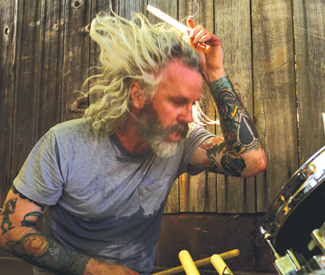
Andy Duvall arrived in San Francisco in 1995, moved with some friends into a flat where his rent was $250 a month. It was a great town for musician, and for 15 years, he was part of the local scene.

Then he looked around in 2010 and realized that he was paying $750 a month for a tiny room with a housemate he barely knew. “It was so hard to find a place I could afford,” Duvall, the former Zen Guerilla drummer who is now part of the experimental band Carleton Melton, told us.

So he packed up and moved across the Bay — and he’s never looked back. “When I moved out, I was afraid I’d totally miss SF,” he said. “But I got to Oakland, and now even if I could I wouldn’t move back.”

Duvall lives in a 900-square-foot place off 40th Street with his girlfriend; they split the $900 rent. “It just seems like there are more artistic and musical people around here,” he said. “I’m surrounded by musicians, instead of worrying that the person downstairs is going to try to get me kicked out of the building.”

Duvall’s main worry now? He sees the pattern that drove him out of San Francisco happening again. “In five years, the same thing is going to happen to Oakland,” he said. “This neighborhood is just exploding. It’s good, I guess — but it’s bad for the artists and musicians.”

Heading East: The photographer

7

This week’s Guardian takes a look at San Francisco versus Oakland — and asks whether the big city may have lost its caché to the East Bay

caitlin@sfbg.com

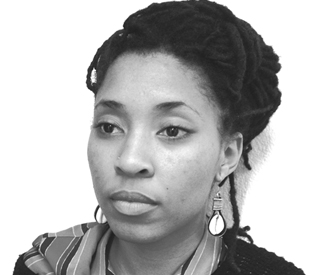
Sasha Kelley grew up in the East Bay. The 22-year old photographer moved to San Francisco for the love of art — but she moved back East for the same reason.

“I was expecting [SF] to be this free-loving, accepting, encouraging place where anything can happen and everything would be welcomed.” Kelley told the Guardian through a series of phone and email interviews. “But it’s a place that is already established, the different art scenes have been formed and branded. Unless you are fortunate enough to have your own space, you are almost forced to fall into line with the given formula.”

That wasn’t the kind of artistic guidelines Kelley was looking for when she moved to the Tenderloin to study at the Academy of Art. While in San Francisco, she started C Proof (c-proof.org), a site she uses to explore African American life.

But she was having trouble finding the black arts community in the city. Besides MoAD, “the big exception,” as she put it, “the voice of the black artist just wasn’t there.”

And the call of home was a BART ride away. After three years in SF, Kelley decided to move away from the cramped studio she shared with two other people to Oakland in the summer of 2011.

“Right now in Oakland there is a little more wiggle room for experimentation,” she said. “There is still a lot of room to grow, to hold space, and establish new norms.”

One day, attending a general assembly meeting of Occupy Oakland, she met artist Githinji Mbire, who was opening up Omiiroo, a community gallery just one block from the 12th Street BART station (400 14th St., Oakl.) Kelley spent eight hours there the first time she visited.

“We just talked about art,” Kelley said. “A vision of a community space where people could just be and where it’s not about the formal aspects of it, it’s just really the work and reaching out to people.”

Now, Kelley hosts Sunday dinners at Omiiroo to bring together local artists. It’s become a drop-in creative space where Mbire crafts his multimedia maps of Africa. Local vegan food activist Bryant Terry stops by to sell his tea and talk to passers-by during the neighborhood’s thriving monthly Art Murmur. Kelley thinks such a space is possible in SF, but it would depend on finding an investor. “It’s a lot easier to sustain yourself in the East Bay,” she said.

The problem with Laura’s Law

9

OPINION Mental health conditions and mental illness are issues that bring passionate people to the table from all sides of the spectrum. Individuals who have lived with the experience of mental-health conditions, clinicians, family members, researchers, and advocates all have a lot to say.

But as a March 11 San Francisco Chronicle piece, “Laura’s Law likely to save lives,” suggests, people can be fueled by pain and emotion, rather than logic and information. It’s in such a hot zone that AB 1421 emerged, after the tragic death of a young woman at the hands of a violent man who also happened to be dealing with mental health conditions.

The so-called Laura’s Law passed the state Legislature in 2002, and counties have a choice whether to implement it locally. If enacted in San Francisco, AB 1421 would mandate outpatient treatment for some people with mental illness — and those out of compliance would get a 72-hour hold under lock and key at the hospital, and would be at risk of being thrown into the revolving door of the criminal justice system.

The public support for AB 1421 and similar involuntary measures outlines the pervasive misunderstanding that comes when emotion rules the fray over common sense and dignity. And more dangerously, it promotes the long-debunked myth that mental illness is related to violence. In fact, individuals with mental illness are one percent less likely to commit violence than other individuals.

Often, the very people whose voices are left out of the decision making process in legislation such as AB 1421, are the ones who are directly affected personally by mental illness and mental-health conditions. That’s due in large part to the lasting impact of stigma, which deprives people of dignity, individual choice, and the empowerment to seek their own goals and paths in life.

What we know is this: voluntary treatment that is accessible in community settings and centered on individual strength is by far the best option for recovery from mental health conditions and the path for a rewarding, enriched life.

San Francisco typically leads the state in the number of involuntary commitments for people in acute psychiatric crisis. That’s proven to be not only a colossal waste of resources but also the wrong approach. Many of those who are involuntarily detained are accessing the mental health system for the first time—in restraints. This leads to further mistrust and trauma for those dealing with mental health challenges.

When it comes to embracing laws such as AB 1421, California voters know better. After the passage of that measure, California voters passed the landmark Mental Health Services Act in 2004. It is the principles of MHSA—voluntary, community-driven treatment, and full inclusion of individuals with mental health conditions as decision-makers—that should guide our efforts in recovery from mental health conditions and eliminating the pervasive stigma and bias that are the true culprits in causing pain and trauma in our society. MHSA provides funding for innovative, alternative approaches to Treatment As Usual.

Michael Gause is deputy director of the Mental Health Association of San Francisco.


San Francisco’s loss

116

news@sfbg.com

San Francisco is increasingly losing its working and creative classes to the East Bay and other jurisdictions — and with them, much of the city’s diversity — largely because of policy decisions that favor expensive, market-rate housing over the city’s own affordable housing goals.

“It’s definitely changing the character of the city,” said James Tracy, an activist with Community Housing Partnership. “It drains a big part of the creative energy of the city, which is why folks came here in the first place.”

>>Is Oakland cooler than San Francisco? Oaklanders respond.

Now, as San Francisco officials consider creating an affordable housing trust fund and other legislative changes, it’s fair to ask: Does City Hall have the political will to reverse the trend?

Census data tells a big part of the story. In 2000, the median owner-occupied home in San Francisco cost $369,400, and by 2010 it had more than doubled to $785,200. Census figures also show median rents have gone from $928 in 2000 up to $1,385 in 2010 — and even a cursory glance at apartment listings show that rents have been steadily rising since then.

Tracy and other affordable housing activists testified at an April 9 hearing before the Board of Supervisors Land Use and Economic Development Committee on a new study by the Budget and Legislative Analyst, commissioned last July by Sup. David Campos, entitled “Performance Audit of San Francisco’s Affordable Housing Policies and Programs.”

“There’s a hearing right now at City Hall about our housing stock and how it’s been skewing upward toward those with higher incomes,” Board President David Chiu told us, noting that it is sounding an alarm that, “Creative individuals that make this place so special are being driven out of the city.”

Oakland City Council member Rebecca Kaplan said that San Francisco’s loss has been a gain for Oakland and other East Bay cities, which are enjoying a new cultural vibrancy that has so far been largely free of the gentrifying impacts that can hurt a city’s diversity.

“You can add more people without getting rid of anybody if you do it right. Most of development is looking at places that are now completely empty like the Lake Merritt BART station parking lot, empty land around the Coliseum, and the West Oakland BART station,” Kaplan told us. “We have to commit to revitalization without displacement.”

Yet the fear among some San Franciscans is that we’ll have just the opposite: displacement that actually hinders the city’s attempts at economic revitalization. “What’s at stake is the economic recovery of the city,” Tracy said. “You can’t have such a large portion of the workforce commuting into the city.”

TOO MANY CONDOS

A big part of the problem is that San Francisco is building plenty of market-rate (read: really expensive) housing, but not nearly enough affordable housing. The report Campos commissioned looked at how well the city did at meeting various housing construction goals it set for itself from 1999 to 2006 in its state-mandated Housing Element, which requires cities to plan for the housing needs of its population and absorb a fair share of the state’s affordable housing needs.

The plan called for 7,363 market-rate units, or 36 percent of the total housing construction, with the balance being housing for those with moderate, low, or very low incomes. Developers built 11,293 market rate units during that time, 154 percent of what was needed and 65 percent of the total housing construction. There were only 725 units built for those with moderate incomes (just 13 percent the goal) and just over half the number of low-income units needed and 83 percent of the very low-income goal met.

“We have to do a better job of monitoring and evaluating each project,” Chiu said. “Every incremental decision we make determines whether this will be a city for just the wealthy.”

The situation for renters is even worse. From 2001-2011, the report showed there were only 1,351 rental units built for people in the low to moderate income range, people who make 50-120 percent of the area median income, which includes a sizable chunk of the working class living in a city where about two-thirds of residents rent.

“The Planning Commission does not receive a sufficiently comprehensive evaluation of the City’s achievement of its housing goals,” the report concluded, calling for the planners and policymakers to evaluate new housing proposals by the benchmark of what kind of housing the city actually needs. Likewise, it concluded that the Board of Supervisors isn’t being regularly given information it needs to correct the imbalance or meet affordable housing needs.

Policy changes made under former Mayor Gavin Newsom also made this bad situation even worse. Developers used to build affordable housing required by the city’s inclusionary housing law rather than pay in-lieu fees to the city by a 3-1 ratio, but since the formulas in that law changed in 2010, 55 percent of developers have opted to pay the fee rather than building housing.

Also in 2010, Newsom instituted a policy that allowed developers to defer payment of about 85 percent of their affordable housing fees, resulting in an additional year-long delay in building affordable housing, from 48 months after the market rate project got permitted to 60 months now.

Tracy and the affordable housing activists say the city needs to reverse these trends if it is to remain diverse. “It’s not even debatable that the majority housing built in the city needs to be affordable,” Tracy said.

Mayor Ed Lee has called for an affordable housing trust fund, the details of which are still being worked out as he prepares to submit it for the November ballot. Chiu said that would help: “I will require a lot of different public policies, but a lot of it will be an affordable housing trust fund.”

GROWTH AND DIVERSITY

San Francisco’s problems have been a boon for Oakland.

“With much love and affection to my dear SF friends, I must say that Oakland is more fun,” Kaplan told us. “Also I think a lot of people are choosing to live in Oakland now for a variety of reasons that aren’t just about price. We have a huge resurgent art scene, an interconnected food, restaurant, and club scene, a place where multicultural community of grassroots artists is thriving, best known from Art Murmur.”

There is fear that Oakland could devolve into the same situation plaguing San Francisco, with rising housing prices that displace its diverse current population, but so far that isn’t happening much. Oakland remains much more racially and economically diverse than San Francisco, particularly as it attracts San Francisco’s ethnically diverse residents.

“We’re not looking at a situation where the people moving into town are necessarily predominantly white,” Kaplan said. “We’re having large growth in quite a range of communities, including growing Ethiopian and Eritrean and Vietnamese populations…If you don’t want to live in a multicultural community, maybe Oakland’s not your cup of tea.”

According to the 2010 census, a language other than English is spoken at home in 40.2 percent of Oakland households, compared to 25.4 percent in San Francisco. “Almost every language in the world spoken in Oakland,” Kaplan said.

African Americans make up 28 percent of Oakland’s population, compared to only 6.1 percent in San Francisco, and 6.2 percent of the population of California. In San Francisco, the number of black-owned businesses is dismal at 2.7 percent, compared to 4 percent statewide and 13.7 percent in Oakland. The census also finds that 25.4 percent Oaklanders are people of Latino origin, compared to San Francisco at 15.1 percent and 37.6 percent statewide. San Francisco is 33.3 percent Asian, compared to Oakland at 16.8 percent and all of California at 13 percent.

Both cities are less white than California as a whole; the state’s white population is 57.6 percent, compared to 34 percent in Oakland and 48.5 percent in San Francisco.

Gentrification shows its face differently depending on the neighborhood. Some say Rockridge, a trendy Oakland neighborhood where prices have recently increased, has gone too far down the path.

“Rockridge has been ‘in’ for a long time, but the prices are staggering and it isn’t as interesting any more,” Barbara Hendrickson, an East Bay real estate agent, told us.

The nationwide foreclosure crisis didn’t spare Oakland and may have sped up its gentrification process. “The neighborhoods are being gentrified by people who buy foreclosures and turn them into sweet remolded homes,” observed Hendrickson.

Yet Kaplan said many of these houses simply remain vacant, driving down values for surrounding properties and destabilizing the community. “I think we need a policy where the county doesn’t process a foreclosure until the bank has proven that they own the note,” said Kaplan, who mentioned that the city has had some success using blight ordinances to hold banks accountable for the empty buildings.

And as if San Francisco didn’t have enough challenges, Kaplan also noted another undeniable advantage: the weather. “The weather is really quite something,” she said. “I have days with a meeting in San Francisco and I always have to remember to bring completely different clothing. Part of why I wanted to live in California was to be able to spend more time outdoors, be healthy, bicycle, things like that. So that’s pretty easy to do over here in Oakland.”

Heading East: The flight from San Francisco

13

EDITORIAL There is no simple free-market solution to gentrification and displacement. There’s no way a crowded city like San Francisco can simply rely on the forces of supply and demand to protect vulnerable populations. And there’s no way the city’s flawed housing policy can prevent the loss of thousands of San Franciscans — particularly young, creative people who help keep a city lively — from fleeing to a town where they can actually afford the rent.

Richard Florida, the famous social and economic theorist who coined the term “creative class” argues that artists and writers and geeks and musicians are the forces that drive modern economies. His pioneering 2002 essay in the Washington Monthly was titled “Why cities without gays and rock bands are losing the economic development race.”

Florida’s something of an elitist and he ignores the contributions that tens of thousands of others (including retired people, union members and nonprofit workers) make a community. He idolizes tech culture and often ignores issues like class and race.

But he’s got a point: Nobody who’s doing anything cool wants to live in a city where everyone is rich and everything is clean and boring. And that’s the danger San Francisco faces.

Just go over to Oakland for a few days and talk to all the people who were once part of this city’s cultural scene. They’ll tell you what anyone with any sense knows: You don’t attract creative people to a city by giving out tax breaks for corporations and building fancy office space. The rock bands that Florida talks about aren’t going to stay in a city because it has high-end jobs for people with advanced degrees. Artists need a place where they can afford the rent.

San Francisco is still a great urban center, by any possible standard, and has all the qualities of diversity, openness, energy, politics and fun that have made generations of immigrants from all over the world want to make it their home. But at a certain point, housing becomes more important than all of the other development issues that local government can address.

Take Andy Duvall, a musician we interviewed who was part of San Francisco for 15 years before he was literally priced out of town. For half of what he was paying in the Mission, Duvall has more than twice the space in Oakland — and the situation is just getting worse. While most of the country is still mired in a deep housing slump (and parts of San Francisco are facing a foreclosure crisis), rents in this town are soaring, beyond the affordability of almost anyone who currently lives here. According to the city’s own statistics, only about 10 percent of San Franciscans can afford the rent on a median market-rate apartment. That means if they’re evicted or lose their homes, they have to leave town.

The supervisors held a hearing April 9 on affordable housing, and the message was profound: “Affordable housing preserves the neighborhood in more ways than one; residents are the foundation on which the economy is built. From any angle, if we can’t afford to live here, there is no city,” observed Val Sinckler, a Western Addition resident.

But while the mayor is working to attract companies that will pay high-end salaries to people who can afford to pay far more rent than the average San Franciscan, he’s a long way from coming up with the money to even begin to mitigate the problem.

An effective policy to preserve San Francisco requires strict regulation (to prevent evictions and displacement), a mandate that commercial developers build housing for their workforce and that residential developers meet the needs of low- and moderate-income residents — and a large investment of public money in affordable housing. If Lee isn’t willing to talk serious about those three crucial elements, then he’s presiding over the decline of one of the world’s coolest cities.

In their words: Oakland locals from this week’s Guardian cover

24

This week, the Guardian examines the issue of whether San Francisco is experiencing a cultural and economic exodus to the East Bay, especially Oakland. Our cover features creative folks from all over Oakland proper. They were asked the question “Is Oakland cooler than San Francisco?” and in return we got some pretty surprising answers (though, spoiler alert: the general consensus was “Hell Yes!”). Have a listen to their responses…

(Photos by Matthew Reamer)


Ali “Chief Saba” Ar Rasheed, Business Manager Easy Bay Dragons Motorcycle Club
“People often call Oakland ‘gritty’ compared to San Francisco… what I think they actually mean is more working-class.”


Adam Hatch, Owner Hatch Gallery/Co-founder Starline Project
“San Francisco is a visually appealing city but as far as where I’d want to live it’s Oakland.”


HOTTUB, Disco/Rap band (Clockwise from left: Jaysonik, Ambreezy, Lolipop, Funky Finger Mark, and CoCo Machete)
“Oakland in some ways is overshadowing San Francisco because artists can afford to live here,” Jaysonik.

Austin Barber, Guitarist and vocalist for Saviours
“I’ve always been more attracted to Oakland, mostly because of the music.”


Jessica Hobbs, Co-founder Flux Foundation
“I’ve found more openness to the art that I do… San Francisco is kind of a pain in the butt!”


Tanya Holland, Chef and Owner, Brown Sugar Kitchen/B-Side BBQ
“You actually know your neighbors which is a different experience than I had in San Francisco.”


Alfonso Dominguez, Architect/Owner Tamarindo Restaurant and Era Art Bar and Lounge
“It’s like comparing apples and pomegranates.”


Sam Strand, Artist/Co-founder Starline Project
“It’s a little rougher… but the fight is what makes it cooler. It’s like Detroit.”


Tyranny Allen, CEO of Marketing Kings
“We’ve got a lot more going on in Oakland. It’s the ultimate place to be in the Bay Area.”

Editorial: The flight from San Francisco

23

EDITORIAL There is no simple free-market solution to gentrification and displacement. There’s no way a crowded city like San Francisco can simply rely on the forces of supply and demand to protect vulnerable populations. And there’s no way the city’s flawed housing policy can prevent the loss of thousands of San Franciscans — particularly young, creative people who help keep a city lively — from fleeing to a town where they can actually afford the rent.

Richard Florida, the famous social and economic theorist who coined the term “creative class” argues that artists and writers and geeks and musicians are the forces that drive modern economies. His pioneering 2002 essay in the Washington Monthly was titled “Why cities without gays and rock bands are losing the economic development race.”

Florida’s something of an elitist and he ignores the contributions that tens of thousands of others (including retired people, union members and nonprofit workers) make a community. He idolizes tech culture and often ignores issues like class and race.

But he’s got a point: Nobody who’s doing anything cool wants to live in a city where everyone is rich and everything is clean and boring. And that’s the danger San Francisco faces.

Just go over to Oakland for a few days and talk to all the people who were once part of this city’s cultural scene. They’ll tell you what anyone with any sense knows: You don’t attract creative people to a city by giving out tax breaks for corporations and building fancy office space. The rock bands that Florida talks about aren’t going to stay in a city because it has high-end jobs for people with advanced degrees. Artists need a place where they can afford the rent.

San Francisco is still a great urban center, by any possible standard, and has all the qualities of diversity, openness, energy, politics and fun that have made generations of immigrants from all over the world want to make it their home. But at a certain point, housing becomes more important than all of the other development issues that local government can address.

Take Andy Duvall, a musician we interviewed who was part of San Francisco for 15 years before he was literally priced out of town. For half of what he was paying in the Mission, Duvall has more than twice the space in Oakland — and the situation is just getting worse. While most of the country is still mired in a deep housing slump (and parts of San Francisco are facing a foreclosure crisis), rents in this town are soaring, beyond the affordability of almost anyone who currently lives here. According to the city’s own statistics, only about 10 percent of San Franciscans can afford the rent on a median market-rate apartment. That means if they’re evicted or lose their homes, they have to leave town.

The supervisors held a hearing April 9 on affordable housing, and the message was profound: “Affordable housing preserves the neighborhood in more ways than one; residents are the foundation on which the economy is built. From any angle, if we can’t afford to live here, there is no city,” observed Val Sinckler, a Western Addition resident.

But while the mayor is working to attract companies that will pay high-end salaries to people who can afford to pay far more rent than the average San Franciscan, he’s a long way from coming up with the money to even begin to mitigate the problem.

An effective policy to preserve San Francisco requires strict regulation (to prevent evictions and displacement), a mandate that commercial developers build housing for their workforce and that residential developers meet the needs of low- and moderate-income residents — and a large investment of public money in affordable housing. If Lee isn’t willing to talk serious about those three crucial elements, then he’s presiding over the decline of one of the world’s coolest cities.


Localized Appreesh: The Buttercream Gang

5

Localized Appreesh is our weekly thank-you column to the musicians that make the Bay. To be considered, contact emilysavage@sfbg.com.

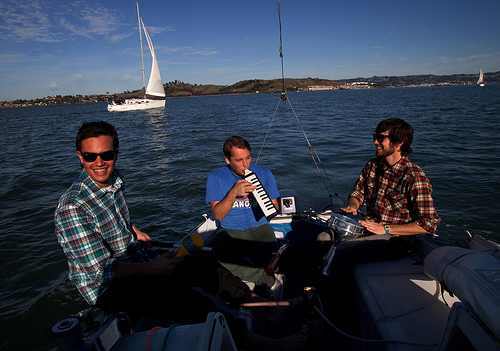
The Buttercream Gang is pretty much based on good deeds. That is, the San Francisco-based, Napa-born group initially formed as a loosely defined do-gooder crew (read all about that below) and this week, it does another mitzvah: the band will play a benefit for the San Francisco Food Bank at CELLspace.

The Gang’s music is feel-good as well, a playful mix of upbeat sun-soaked California indie pop with jangly guitar, jumpy African inspired percussion, and multi-part harmonies. There’s even some sax in there – the ultimate party instrument, at least, according to ’80s movies. Sonically, it’s somewhat in line with pals (and fellow Localized Appreesh-ers) Waterstrider, and has gained a few worthy comparisons to the likes of Vampire Weekend and others leading the celebrated Afro-pop charge.

So now that you’re versed, lick the sugary frosting off your lips, because it’s Buttercream Gang time.

http://www.youtube.com/watch?v=oKE1VQYrCWM

Year and location of origin: We formed in a garage in Napa in 2003. We had a different name then and were just a cover band. About a year and a half later we were writing original music and changed our name (for better or for worse) to The Buttercream Gang. Our first show was on New Years, we played Devo’s “Whip It”.

Band name origin: The Buttercream Gang was a movie that our group of friends thought was really funny in high school. We formed our own real life version of The Buttercream Gang and did a couple half-assed good deeds, in imitation of the protagonists of the film. We decided on The Buttercream Gang because, in a weird way, we see playing music as the good deed that we supply to listeners.

Band motto: We make ya move an twist with the flick of a wrist.

Description of sound in 10 words or less: Infantile adults dancing aimlessly to the sounds of the world.

Instrumentation: Pete Davies, Bobby Renz, Robinson Kuntz, and added to the band in 2011 for our album release were Max Bonick and Alex Garcia. We are all multi-instrumentalists and rotate around drums, guitars, bass, organ, keys, percussion, vocals, saxophone.

Most recent release: Our third full length album, Polite Men. Working towards releasing new material by the end of summer.

Best part about life as a Bay Area band: There are many good bands to be inspired by.

Worst part about life as a Bay Area band: Getting noticed amongst so many good bands.

First album ever purchased: Pete: Kris Kross – Totally Krossed Out; Bob: Green Day – Dookie cassette tape; Robinson: MC Hammer – Please Hammer, Don’t Hurt ‘Em; Max – Beastie Boys – License to Ill.
Most recent album purchased/downloaded: Pete: Tanlines – Mixed Emotions; Bob: Chantells – Waiting in the Park ; Rob: Wye Oak – Civilian ; Max: Rahsaan Roland Kirk – Rip, Rig, Panic.

Favorite local eatery and dish: Pete: French Laundry; Bob & Robinson: San Tung’s Dry Fried Chicken Wings; Max: The pastor burritos from Tacos Labamba in Sonoma
 
Vupes, Vulpes – a Silverfox Concert for Good
With the Buttercream Gang, Mahgeetah, Sun Life
Thu/12, 7pm, Use the code “SFBG” for $20 entry (50% off),
includes open bar
CELLspace
2050 Bryant, SF
vulpesvulpes.eventbrite.com

And just for kicks, here’s some clips from the direct-to-video movie that inspired the band name:
http://www.youtube.com/watch?v=AOWW-r0AWr8

Social liberalism beats economic populism?

13

Eric Alterman, who writes on media for The Nation, has a book out on the history of liberalism in America and a fascinating essay in The New York Times on how progessives lost the economic war. It’s hard to make a case this complicated in a few hundred words, so he sounds as if he’s somewhat downplaying the importance of civil rights. And American history is, of course, complicated and the post-War era one of the most confusing times to understand and analyze. But Alterman seems to come down on the side of those who argue that the fight for what he calls the “rights agenda” undermined the battle for economic equality:

In other words, economic liberalism is on life-support, while cultural liberalism thrives. The obvious question is why. The simple answer is that cultural liberalism comes cheap. Supporting same-sex marriage or a woman’s right to choose does not cost the wealthy anything or restrict their ability to become wealthier.

He also disses incompetence, always an easy target, since the economic crises that post-War liberals addressed — from inner-city and rural poverty to energy prices and inflation — defied easy solutions and there were bound to be mistakes. But here’s his basic hit:

“The great liberal failing of this time,” Daniel Patrick Moynihan observed as early as 1968, was “constantly to over-promise and to overstate, and thereby constantly to appear to under-perform.” This not only alienated key constituencies, but it also diminished the trust between the governing and the governed that previous generations of liberals had worked so hard to earn.

Caught in the crosswinds of so many simultaneous crises — I have not even mentioned Vietnam — many liberals chose to focus, rather perversely, on a “rights” agenda and the internecine fights it engendered within their increasingly fractured coalition. They lost sight of the essential element that had made the coalition possible in the first place: the sense that liberalism stood with the common man and woman in their struggle against economic forces too large and powerful to be faced by individuals on their own.

In other words, if we’d just been willing to throw the gays and the women under the bus (or do what so many “liberals” so often suggested, and move more slowly on things like abortion rights, comparable worth and same-sex marriage, which are so easy for the Right to use as wedge issues) we might have held on to the coalition that was able to wage the War on Povery under LBJ.

Okay, that’s not fair — Alterman is a lot more nuanced than that. And I agree with him entirely that it’s easy (particularly in a place like San Francisco) to support same-sex marriage, and that cultural issues can give fiscal conservatives cover with a left-leaning electorate. It drives me nuts. And I completely agree that Obama needs to return liberalism to an economic populist agenda.

And a lot of this discussion has been done before, starting with Thomas Frank and What’s the Matter with Kansas?

But would we really be better off in the long run if we’d abandoned the “rights” agenda in favor of economic equality? Or is it possible that the Right is losing steam on the Culture War and in the process discrediting its economic ideas? Do women who heard Rush Limbaugh call a law student a “slut” start questioning what he says about taxes?

I dunno. Interesting questions.

So you want to be a time traveler!

0

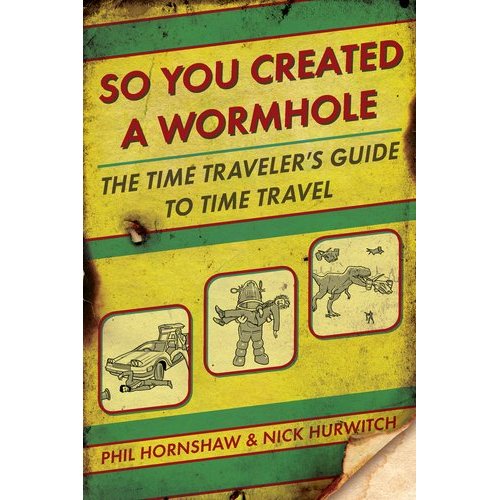
If you’re an aspiring time traveler, you need to pick up a copy of the brand-new how-to book So You Created a Wormhole: The Time Traveler’s Guide to Time Travel (Berkley Trade, 326pp., $15). If you are already a time traveler, you should probably pick up a copy, read it, then go back in time till before you time-traveled in the first place, and use your new knowledge wisely.

Wait, does that make any sense? Time travel is some intense and tricky stuff. I got ahold of authors and time-travel experts Phil Hornshaw and Nick Hurwitch for further intel on the matter.

SFBG The book contains several film references (Back to the Future, Bill and Ted’s Excellent Adventure, The Terminator, etc). In your opinion, which film offers the most accurate depiction of time travel? Which is the least accurate?

Phil Hornshaw Back to the Future is a pretty reliable resource for the perils of time travel, even if it does take a few liberties in the service of being awesome. Granted, you can’t go into the future and find yourself there — how could you be there in the future if you left from the past? — but the ideas of timelines being corrupted and for the most part, of needing antecedents in the past in order to create the future, is handled pretty deftly in Back to the Future.

http://www.youtube.com/watch?v=2SrV13F3x7Y

McFly: accurate.

Conversely, Terminator is a pretty terrible time travel movie, even though evil robots are super-cool, because of the problem of Kyle Reese going back, creating John Connor, and then getting sent back by John Connor in order to create John Connor in order to get sent back by John Connor. Those kinds of stories can work, but they make your brain ache. And that’s just not very nice, James Cameron. But really, there’s not really a “worst” time travel movie because they’re pretty universally terrible at being time travel movies. That was a big reason for the Time Traveler’s Guide in the first place.

Nick Hurwitch Agreed. You can’t go wrong with the Holy Trilogy — that’s Back to the Future, not Star Wars, kids. But the time travel movies that always bug me are those that send their characters to the era during which the film was made for the rest of the movie. For example, in Time After Time, the movie starts out in the late 19th Century, but the hero and the villain are quickly sent to San Francisco, 1979. The movie was made in, you guessed it, 1979.

That’s to say nothing of all the hundreds of movies and television shows that get time travel completely wrong — but at a minimum, don’t be lazy. Hopefully after reading this guide, the audience at large will have a better grasp of what works in a time travel movie and what doesn’t.


SFBG The book points out that time travel can have catastrophic results when executed improperly. Which rule of time travel is the most important?

NH You should never, under any circumstances, visit yourself in the past. History is easy enough to screw up simply by hopping around through time, but any interactions with other versions of yourself increase the risk of paradoxes exponentially. You could prevent yourself from traveling back in the first place, get yourself killed, be mistaken for yourself, or, more often than not, engage in hand-to-hand combat to the death with yourself. If you’re going to mess up time for the rest of us, at least stick to stepping on butterflies.

PH Yeah, that’s a good one. Also don’t make out with your mom or dad. That actually applies all the time. You don’t have to be a time traveler to apply that to your life.


SFBG Is time travel an activity suited for beginners? What kind of pre-training do you recommend, and will a montage be necessary?

PH The biggest danger of time travel is getting killed within the first 10 minutes of your arrival, so if there’s one thing a novice time traveler should be good at, it’s running. We also recommend bringing along a firearm, so if you’re looking for a montage, I’d recommend track-running and then gunplay. We don’t recommend them at the same time as that’s generally frowned upon no matter what time you’re visiting, but both are useful skills.

NH Many idiots less prepared and less intelligent than your readers have shot off through spacetime and managed to make it back alive, or at least only partially maimed. That’s a crapshoot, though. The best way to get your feet wet (or singed by electricity, as the case may be) is to sign up for the Qualified Users And Negotiators of Time Travel Universal Ministry (QUAN+UM) internship program, WEDGIE (the Wormhole Educational Development and Guided Internship Experience). It’s the bottom rung of time travel, sure, but you learn the ins and outs of quantum physics, proper shotgun etiquette, laboratory-mopping, and sandwich-making. 


SFBG Two of the most obvious reasons to attempt time travel are the “do-over” — re-living some important past event — and the “betting on sports games/lotteries in the past after learning the final score/winning number in the future.” The book strongly discourages both. Can you elaborate on why?

PH Do-overs never go all that well. When you head to the past to do over something you already did, you have your past-self to deal with. He or she is, you know, there doing the thing. Doing it poorly, usually. How do you get rid of yourself in order to do something over? You can’t kill them or really remove them from the situation because you risk further complications. Plus, you’re Old You and they’re Younger You and it gets all complex and confusing. It’s generally inadvisable. As for time gambling, it has to do with the Biff’s World Effect which is that acquiring a bunch of money through time travel generally makes you a jerk.


SFBG If a time traveler finds your book mid-journey, which is the first chapter he or she should read?

NH That of course depends on what era they find themselves in. The survival guide portion of the book is organized by era, so should they be in Prehistory in need of shelter or a dino pal, then the Prehistory chapter is for them. Or, if they’re next up to joust at the Renaissance Festival an actual festival during the Renaissance the chapter on medieval times might just get them out alive. For general panic on the run, however, Chapter IV: The Perplexing Pandemic of Potential Paradoxes, is your one-stop shop for things you’re likely about to screw up.

PH There’s a lot of generalized knowledge right at the front of the Survival Guide portion of the book. Really, though, you should never time travel without reading the whole book. And you should always have a copy. And a backup copy. As many copies as you can comfortably carry. The more copies you have, the safer you probably are. We have no science to back that up.


SFBG Which do you prefer, traveling forward in time or backward? Why? And what is the time and place of your favorite or ideal destination?

PH There’s a period right before the Robot Uprising and subsequent Robopocalypse when things are pretty great. Robotic butlers, plenty of technology, food for everyone generally, everything is beaches and mai tais. Immediately after this comes the Robot Uprising, life underground and the near destruction of humanity, and after that comes peace between robots and humans, immediately after which aliens arrive and subjugate Earth for quite a while. But after that things are pretty cool. Especially if you like space adventures, which everyone does, obviously.

NH Riding dinosaurs is one of the most underrated facets of human existence, sadly underserved due to a lack of time travel. It’s also pretty neat using just a single leaf as a blanket. But if you put a gun to my head, nothing beats forming a ragtag team of castoffs and space aliens and bounding around the universe as a smuggler and/or freedom fighter.


SFBG QUAN+UM is a mysterious entity often referenced in the book. What are you at liberty to reveal about the organization? Why are the official colors purple and orange?

NH Only that they have the best damned bowling team this side of the Cretaceous. As for the colors: it’s a science-y thing. You wouldn’t understand.

PH Purple and orange are great colors for intern time travel test jumpsuits because they stand out when you’re trying to recover bodies, but have you seen them together? It’s so horrific, it has been known to drive people insane. Also, as it happens, purple and orange are radioactive when combined.


SFBG Do you think time travel will ever be an option for uber-rich tourists like Richard Branson and Ashton Kutcher, a la space travel? Would this be a disastrous business venture that would ultimately require a hero or machine-man to travel back from the future to prevent?

NH If we learned anything from Jurassic Park, and we did, it’s that tourism and playing God with science do not mix.

http://www.youtube.com/watch?v=g5gbNtYw9KA

“Hold onto your butts.”

PH QUAN+UM exists because of jerks with money and crazy people in their basement, making radioactive mini-fridges and trying to ride in them to visit the Wild West. We’re not really supposed to talk about it, but to answer your questions, yes. And yes. Repeatedly. In fact, that’s kind of what we’re doing in 2012 right now. We won’t say who needs a strict talking to, however. He knows what he did.


SFBG What’s the most dangerous foe (dinosaurs, wizards, Nazis, alien overlords, etc.) one might encounter while traveling through time? What’s the most important thing to know about them?

NH Yourself. No other foe is as dangerous to you or to the sanctity of the timeline. The most important thing to know about them is that they know everything about you. The second most important thing to know about them is that they will turn hostile, inevitably. It’s best to be unpredictable and use moves and tactics that you would never use, otherwise they’ll have a leg up in the battle. Or … a leg even, anyway.

PH Also dragons.

***

Bonus round:

SFBG This sign appeared last year outside of the Guardian offices. Please advise.

NH Uh-oh. What was the date, exactly? Looks like another intern is trying to “take matters into his own hands.”


Check out Hornshaw and Hurwitch’s web site for more info on So You Created a Wormhole: The Time Traveler’s Guide to Time Travel, which contains extended discussions on riding dinosaurs, the Robot Uprising, and other topics.

Burning Man awards art grants and resolves final ticket issues

14

It’s been a tough year for Black Rock City LLC (aka the Borg), the SF-based company that stages Burning Man, particularly with its ticket fiasco, the heaps of criticism that followed, and uneasiness about what this year’s event will look and feel like. As word of its annual art grants has gotten out over these last couple weeks, the grumblings of discontent have returned, this time mixed with early twinges of excitement about the event.

On the positive side, the Borg is giving away more than $700,000 – its most ever and a $100,000 increase over last year – to 47 art projects, many of them to Bay Area artists such as Michael Christian, Zac Carroll, Gregg Fleishman, Krysten Mate/Jon Sarriugarte, Otto Von Danger (whose Burn Wall Street project was inspired by the Occupy Wall Street movement), Flux Foundation (whose 2010 Temple of Flux we profiled), and David Best (the original Temple-builder who will do this year’s Temple after a three-year break).

Yet with 349 applicants seeking almost $5 million, there are lots of great local projects and artists that didn’t make the cut who will now be forced to aggressively raise money or consider scaling back or abandoning their plans. Among those are longtime artist Charlie Gadeken, Marco Cochrane (who for two years has been trying to complete Truth is Beauty, his follow-up to the spectacular Blissdance, the 40-foot tall nude woman who currently dances on Treasure Island), and the all-hands-on-deck Bottlecap Gazebo project that has been the subject of near-constant work by dedicated teams in San Francisco and Oakland.

The Bottlecap Gazebo crew has already been tapping its communities to collect and process about 100,000 beer bottle caps that are being smashed, stitched, and shaped into an ornate gazebo that incorporates the caps’ colors into its swirling design. Now they also need cash to complete the project, which you can give here.

Same thing with Cochrane, who is offering a unique opportunity tonight for you to help and watch how this amazing artist works. “Art & Politics: A Fundraiser for Truth is Beauty and Alix Rosenthal” will feature Cochrane doing a live sculpture of Rosenthal, with proceeds split between the project and Rosenthal’s DCCC campaign (she’s also a longtime burner, Borg volunteer, and friend of mine). Such sculptures are the first step in making his larger pieces, like Blissdance and his new 60-foot-tall nude woman. The event, which also features some great burner DJs, is 7pm-midnight at Project One.

Bettie June, who runs the Artery program for the Borg, said they had some very hard choices to make this year. “We had a huge jump in the number of people who applied for art grants, and the quality was really high. They were really strong and well thought out proposals,” she told us.

The Borg should be officially announcing its grants anytime now, but the applicants have all heard. My Flux family is hurriedly finishing other projects in its bay at American Steel in Oakland so it can focus on Zoa, which will combine fire-spewing steel seedpods with a wooden exterior that will burn away (in truly colorful and spectacular fashion, I hear) halfway through the week to reveal the inner core, which will go through it own metamorphosis, making it three sculptures in one. Yet, like most of the funded projects, they still have fundraising to do to cover the full project cost, and they currently have a Kickstarter campaign underway.

Bettie June singled out Zoa as one of the pieces she’s most excited about, also mentioning Burn Wall Street, Pier 2 (a bigger version of last year’s Pier by Carnelian Bay artist Matt Schultz, which this year will have a galleon crashed into it, which visitors can explore), Universe Revolves Around You (the latest kinetic project by Zachary Coffin using large boulders), and Circle Of Regional Effigies (35 installations by regional groups, up from 23 last year, that will burn simultaneously on Thursday night).

Some of the projects that got funded this year are updates and modifications of existing artworks, including Carroll’s Front Porch and Serpent Twins by Mate/Sarriugarte, although Bettie June said both have great new features (the latter project, a pair of mythical serpents that travel the playa, will have new lighting and sound systems to better tell the story of their interactions with one another).

“It was a big discussion and we’re pretty pleased with the results,” Borg board member Marian Goodell said of the art grants. “They’re funding a lot of great art.”

As for her other major preoccupation of the year – dealing with the fallout of a new ticketing system that left many veteran burners without tickets – Goodell said they’ve been sorting out that situation as well: distributing the final 10,000 tickets, which were going to be sold generally, through established theme camps.

Some sources have told us that demand from the theme camps had actually been less than anticipated, but Goodell said they still need to get tickets to various performers, volunteers, and art car crews. “We have a lot of people to take care of,” she said.

She also said that she’s been pleasantly surprised by the number of tickets that are being sold through the STEP ticket resale system that the Borg hurriedly established to redistribute tickets, with more than 500 being offered so far. “It’s a trickle, but it’s not stopping,” she said.

Yet there could still be a bit of grumbling to come over the tickets. The final decision for the Borg to make was whether to require ticket holders to register by name to control scalping – a decision it would need to make before tickets are mailed out in June – and sources say the Borg has decided not to do so.

With demand for tickets far exceeding anyone’s expectations this year, tickets selling out for the first time last year, and with a new system that many said could easily be gamed by scalpers, the unknown factor is how many were snapped up by scalpers who are charging exorbitant prices. The Borg has maintained that they think that number is fairly small, but we’ll see this summer.

Nonetheless, it’s good to see the anguish over tickets now starting to give way to excitement about the art projects now getting underway throughout the Bay Area, many of which are still looking for help. So go make some art.


Steven T. Jones, aka Scribe, is the author of The Tribes of Burning Man: How an Experimental City in the Desert is Shaping the New American Counterculture. He’ll be doing a reading and leading a discussion on the state of Burning Man from 6-7:30 pm on April 25 at the Bay Guardian office, 135 Mississippi St., SF.  


Here’s the complete list of this year’s funded art projects:  

Project Name

Artist Name

Hometown

Almost

michael christian

Berkeley, CA

Arc Harps

Jen Lewin

Boulder, CO

bapteme de feu 2.0

Anton Vidtiz-Ward

Telluride, CO

Bicycle Arpeggio

George Rahi

Bellingham, WA

Burn Wall Street

Otto Von Danger

Oakland, CA

Char Wash

Christopher Schardt

Oakland, CA

City of Lights

Gary Long

Los Angeles, CA

Dragon Smelter

Daniel Macchiarini

San Francisco, CA

EGO

Laura Kimpton & Michael Garlington

Vineburg, CA

Front Porch

Zac Carroll

Mill Valley, CA

Fusion Fire

Team What-Dat-Do

Seattle, WA

Harmonic Fire Pendula

Matthew Dockrey

Seattle, WA

Labyrinth of Colorful Cloud

Rob Fischer

Brooklyn, NY

Luminous Passage 2.0

Predock/Frane Architects vs Anderson/Predock

San Francisco, CA

Lune & Tide

Sarah Cockings, Laurence Symonds

London (UK)

Man Pavilion Pistil

Gregg Fleishman

Oakland, CA

MetaMorph

Chelsea Jenkins

Alta Loma, CA

Mooving Sculpture

David Boyer

Reno, NV

Murmuration

Jeff Maguire

Santa Monica, CA

Neverwas Haul

Shannon O’Hare

Vallejo, CA

Otic Oasis 2.0

Gregg Fleishman (Artist) and Melissa Barron (Conceptor)

Oakland, CA

Perception in the Absence of Reality

David Clay (Playa Name: Egg Shen)

Seattle, WA

Pier 2

Matt Schultz/ The Pier Group

Carnelian Bay, CA

Pins

Tom Woodall

Kennewick, WA

Pyropodium

Noah Rosenthal and Nathan Clark

Cleveland Heights, OH

Remembering Cap’n Jim

Dave Power

Pagosa Springs, CO

Reno Star

Mark Szulgit

Sebastopol, CA

Serpent Twins 

Jon Sarriugarte , Kyrsten Mate

Oakland, CA

Singularity Transmissions

Troy Stanley and TEAM RX/TX

Houston, TX

Star Seed

Kate Raudenbush

New York, NY

Starport 2.012 (Cafe Portal)

Carey Thompson

Novato, CA

sub-Sonarium

Benjamin Carpenter / Daniel Yasmin

Oakland, CA

Sun Bugs

Adel Kerpely

Brooklyn, NY

Super Street Fire

Seth Hardy & Site 3 coLaboratory

Toronto (CANADA)

Tesseract

James Reinhardt, Scott Chico Raskey

Seattle, WA

The Temple of Juno

David Best

Petaluma, CA

Third Space at Burning Man

ALEXANDER REHN & GREUTMANN & BOLZERN

San Francisco, CA

Through the Gorilla Glass

GUILD — Spencer Rand, Johnathan Wong, Andrea Ling, Patrick Svilans and Jonah Humphrey

Toronto (CANADA)

Timing is Everything

Charlie Smith

Atlanta, GA

Transcendental Cube

Joseph Quinn

Los Angeles, CA

Tree of Transformation

Dadara

Amsterdam (NETHERLANDS)

Tree of Transmutation

Kevin Christman

Talent, OR

Universe Revolves around You

Zachary Coffin

Atlanta, GA

Yoga Robot

Scott Harris

Telluride, CO

Zoa

Flux Foundation

San Francisco, CA

Zonotopia and the Two Trees

Rob Bell

San Francisco, CA

Was the cyclist who killed a pedestrian reckless?

215

San Francisco’s bicycling community is bracing for a backlash following the second recent case of a cyclist hitting and killing a pedestrian, particularly given a callous online posting by someone claiming to be the cyclist, whose 71-year-old victim this week died of injuries sustained a week ago at the intersection of Castro and Market streets.

The case was a hot topic at last night’s monthly Carfree Happy Hour, a gathering of cyclists, transportation professionals, and alternative transportation activists, many of whom had unearthed new information about a case they’re all grappling with. And the consensus opinion was that the cyclist seemed reckless and may deserve to face criminal charges.

Yet activists also sought to place this case in context, noting that an average of almost three pedestrians are hit by cars everyday in San Francisco, even though that rarely makes headlines. There were 220 pedestrians killed in San Francisco from 2000-2009, the vast majority hit by cars whose drivers rarely faced criminal charges. In fact, the same week that Sustchi Hui was killed there was another pedestrian killed by a motorist and another one by a Muni bus.

But that doesn’t lessen the importance of this latest bike-vs.-pedestrian fatality, which is sure to make news precisely because it’s so rare, and because it comes just weeks after 23-year-old Randolph Ang pled guilty to vehicular manslaughter for running a red light at Embarcadero and Folsom Street in July 2001, hitting a 68-year-old woman who later died from her head injury.

San Francisco Police Department won’t identify the cyclist in the latest incident unless he’s charged with a crime, and its investigation is still ongoing, said SFPD spokesperson Albie Esperanza. “It’s a tragic accident,” he told us, noting that the cyclist was cooperating with the investigation. Once the investigation is complete, the District Attorney’s Office will decide whether to bring criminal charges against the cyclist.

Someone who identified himself as Chris Bucchere posted a note on the Mission Cycling Google group on the afternoon of the incident, March 29, describing an accident that apparently took place at the same time and place. And the description that Bucchere gave of the accident is not likely to garner much public sympathy for him (We contacted Bucchere by e-mail and telephone, we’re waiting to hear back for him, and we can’t independently confirm the authenticity of the message or its contents).

“I wrecked on the way home today from the bi-weekly Headlands Raid today. Short story: I’m fine. The pedestrian I clobbered? Not so much,” the message began.

The post then goes on to describe the incident, which matches the details of other reported accounts of the fatal crash: “Around 8 am I was descending Divisidero Street southbound and about to cross Market Street. The light turned yellow as I was approaching the intersection, but I was already way too committed to stop. The light turned red as I was cruising through the middle of the intersection and then, almost instantly, the southern crosswalk on Market and Castro filled up with people coming from both directions. The intersection very long and the width of Castro Street at that point is very short, so, in a nutshell, blammo.”

Another member of the Carfree Happy Hour group who is a regular competitive cyclist said that Bucchere was a member of the website strava.com, which tracks minute-by-minute data of cyclists for training purposes. And this source said he was able to use the site to determine that Bucchere was traveling through the intersection – which is at the bottom of a steep hill – at approximately 35 mph at the time of the collision.

Bucchere’s message continued: “The quote/unquote ‘scene of the crime’ was that intersection right by the landmark Castro Theatre – it leads from a really busy MUNI station to that little plaza where The Naked Guy always hangs out. It was commuter hour and it was crowded as all getup. I couldn’t see a line through the crowd and I couldn’t stop, so I laid it down and just plowed through the crowded crosswalk in the least-populated place I could find.

“I don’t remember the next five minutes but when I came to, I was in a neck brace being loaded into an ambulance. I remember seeing a RIVER of blood on the asphalt, but it wasn’t mine. Apparently I hit a 71-year old male pedestrian and he ended up in the ICU with pretty serious head injuries. I really hope he ends up OK.

“They asked me a bunch of stupid easy questions that I couldn’t answer, so they kept me for a few hours for observation, gave me a tetanus shot and sent me on my way.

“Anyway, other than a stiff neck, a sore jaw/TMJ, a few bruises and some raspberries, I’m totally fine. I got discharged from the hospital during the lunch hour. The guy I hit was not as fortunate. I really hope he makes it.

“The cops took my bike. Hopefully they’ll give it back.

“In closing, I want to dedicate this story to my late helmet. She died in heroic fashion today as my head slammed into the tarmac. Like the Secret Service would do for a president, she took some serious pavement today, cracking through-and-through in five places and getting completely mauled by the ragged asphalt. May she die knowing that because she committed the ultimate sacrifice, her rider can live on and ride on. Can I get an amen?

“Amen.

“The moral of this little story is: WYFH”

Several members of the newsgroup took issue with the lesson Bucchere claims to have learned : WYFH, or “Wear Your Fucking Helmet.” One poster wrote, “I’m not sure that’s the moral of the story,” to which several others agreed. Another poster wrote: “What were you thinking ? As a 15 year sf resident and a 10 year cyclist and a pedestrian at that intersection every weekday .. I’m kind of embarrassed to wear my mc kit anywhere nearby now. I truly hope you’ve learned your lesson but I’d have to say this is not the end of the story for you, and yes you should get yourself a lawyer.”

Recent studies have shown that San Francisco is a dangerous city for pedestrians, but not as dangerous as many other cities on a per capita basis given our density and high pedestrian populations. A study released in January by the Alliance for Biking & Walking concludes San Francisco has the third highest biking and walking levels among major US cities, but ranks eighth in bicycle and pedestrian fatality rates.

A 2011 study by the group Transportation for America, “Dangerous by Design,” analyzed factors associated with pedestrian deaths – some of which seem to be at play in this case – and concluded, “Especially when combined with unsafe street and road design, vehicle speed presents a deadly threat to pedestrians.”

Dick Meister: The temples of baseball

1

By Dick Meister

Dick Meister is a San Francisco-based columnist and former semi-professional baseball player. You can contact him through his website, www.dickmeister.com.

Baseball season again. Time to re-enter the temples of baseball. Temples? Yes, temples.

To most people, baseball is merely a game. But to some others, it’s virtually a religion, a game played in temples – the temples of baseball, be they Major League stadiums or any other baseball park at any level from the Major Leagues to the little parks at much lower levels where I played in hopes of making it big as a professional. But that’s another story.

Of course baseball is a game. But it is indeed a game that is played in temples. Baseball parks are places of myth, superstition and legend, no less than the temples where the great myths, superstitions and legends of religion hold sway. Even the most casual fan is likely to know the myths and legends that make up baseball’s storied history – Babe Ruth’s called-shot home run in the 1932 World Series, for example. His whole career, in fact.

Temples are places of tradition and veneration, and ritual and order, of wisdom being passed from generation to generation, in baseball’s temples from older players and managers to younger players.

Temples are also places in which to pay reverence to beauty. And what’s more beautiful than the graceful motion and timing of baseball, its unique rhythm, the exquisite ebb and flow of action and anticipation, action and thought.

A ballpark also is very much like a temple in that it’s a place to demonstrate faith – faith that your team can win, that there’s always a chance of winning, whatever the odds. No Major League team, anyway, has ever lost all of the games it has played. Nor have many teams at baseball’s lower levels, though I’ve played on some teams that came close.

So, those entering the temples of baseball know there’s always a chance for their team to win. They can legitimately believe t it could happen. Fans know that the games are not over until the very last out of the very last inning, that the innings and the game can go on for as long as the players perform well.

The commandments in baseball’s rule book promise that. There are no clocks measuring off quarters and halves, no point during a game when there is not enough time left to win, no rule saying how long it should take to make three outs and complete an inning, or how long it should take to win or lose a game.

Certainly life outside the temples of baseball may not offer quite so much hope. But if it did, who’d need religion? Who’d need baseball?

Dick Meister is a San Francisco-based columnist and former semi-professional baseball player. You can contact him through his website, www.dickmeister.com.


Guest opinion: It’s not about Mirkarimi, it’s about us

70

Virtually unmentioned in the torrent of words that have flowed over the Ross Mirkarimi false imprisonment, suspension and pending vote to determine his removal by the Board of Supervisors is any reference to what should now be the most important issue to be considered as the sad saga unfolds: the fact that Mirkarimi was, just four months before his removal, elected by a majority vote and his removal from office would simply set aside that vote, diminishing all of our cherished beliefs about “majority rule.”

Mirkarimi didn’t just win, he won big. He beat the second place candidate by nearly 19,000 votes, winning outright without the need for the magic of instant run-off. Mirkarimi got more first place votes than did Ed Lee (70,204 vs. 59,663). Moreover, Mirkarimi’s election was without controversy, complaint or charge of illegality, unlike Ed Lee’s, which resulted in a total of 25 misdemeanor convictions for illegal campaign contributions by a city contractor with a pending contact before a commission appointed by the mayor.

Since the 5-4 vote of the Supreme Court to give George Bush the election in 2000 after Al Gore won a majority of the popular vote, there has been a distressingly frequent willingness by the media to accept executive and judicial actions that set aside popular votes. The conservative governor of Michigan has simply taken over local governments that he deems financially “irresponsible” setting aside the votes of local residents. In California, a tiny minority of Republican legislators, elected by a comparative handful of voters, yearly stymie the overwhelmingly majority elected legislators, forcing deeply unpopular budget cuts — and the media simply goes along.

Majority rule, the very bedrock of representative democracy, seems unnervingly easy to set aside now days. Majority rule is our bedrock because it’s the only way in which our system has to define the political will of the people. Let’s be clear, the very City Charter that is being used to remove Mirkarimi from office rests on the power given by “the people of the City and County of San Francisco,” (Preamble to the Charter) and was itself adopted by a majority vote. Setting aside majority votes is a dangerous business for us all; it risks substituting the will of a few insiders for the will of the people.

The political riskiness of the move has been entirely incorrectly cast by the San Francisco Chronicle, the main voice to overturn the expressed will of the people. The Chronicle asserts the political risks as now falling on the supervisors who most vote to sustain the mayor’s action with nine votes. Indeed, the ace vote counter at the “Comical,” former Mayor Willie Brown, who went zero-for-ever in the last four years of his term in votes at the board, confidently predicts that the vote will be 11-zip to sustain the mayor because of the fear of voter retribution.

But facts indicate that “fear” will play the other way. Last November Mirkarimi won in six of the 11 supervisorial districts (D3, D5, D6, D8, D9 and D10) . In two of them (D8 and D10), he won more first-place votes than the current supervisor. In these same six districts he outpolled Ed Lee by some 18,000 votes. By what measure, other than the huffing and puffing of ex-Mayor Willie, C(onsistenly) W(rong) Nevius, and the two stooges, Matier and Ross, does any political risk fall on these supervisors to vote with their constituents?

Chances are nine votes will NOT be there and that Mirkarimi will remain sheriff, where the people put him.We will have gone through a divisive fight addressing none of our deep problems, Mayor Lee will squander the good will of the supervisors and voters for nothing and we will be exactly where we are now.

We have a way to remove Mirkarimi from office that is far better for our democracy. It’s one of the great inventions of the Progressive Era. It’s called recall, and it puts the matter where it should be: before the people. It’s really not about Mirkarimi anymore. Its about us, the meaning of our votes, and the responsibility of supervisors to understand in whose name they govern. All power to the people!

Calvin Welch lives, works and plays in San Francisco.

Young man’s death commemorated at City Hall rally, vigil this evening

1

Family, friends and community members grieving for the life of Lawrence Richardson will meet on Fillmore and Eddy at 6:15 tonight for a candle light vigil. Richardson, 21, was shot and killed on Eddy April 2.

His death marks the 18th homicide in San Francisco this year.

At a rally at City Hall marking the 44th anniversary of the assassination of Martin Luther King, Jr, Amos Brown, president of the San Francisco chapter of the NAACP, mourned the young man’s death.

Brown, who has been Pastor at San Francisco’s Third Baptist Church since 1976, said Richardson was enrolled in his church’s after school program Back on Track. The murder occurred four blocks from the church.

“We are sad today to report that we have not become a harmonious society. That there is great dissonance of violence, there is great dissonance of destruction, in the land today,” said Brown, referencing Martin Luther King’s 1964 speech at the University of Dayton in which he said that “every man, from a bass black to a treble white, is significant on God’s keyboard.”

The vigil is organized in part by The Healing Circle for the Soul Support Group, a group for those who have lost a loved one due to violence.

No arrests have been made in Richardson’s murder.

Guardian exclusive: the health-care scam chart

17

We’ve always found it a bit annoying when restaurants charge an additional fee to pay for Healthy San Francisco, the law that mandates health care for workers. If the cost of eggs goes up, there’s no “special breakfast cost pass-along surcharge.” So it seems to us more like a political statement in opposition to the law than a business expense.

That said, we’re happy to pay an extra 3 percent for a nice meal — if it means the people who cook and serve it get health insurance.

But it’s more than annoying to find that a lot of restaurants charge a special HSF fee — but it never goes for employee healthcare. Attached is an Excel file, based on data from the San Francisco Department of Labor Standards Enforcement, that shows which restaurants charge extra for health care — and how much of that money actually goes to employees.

We’ve also pulled out a list of the top 10 offenders — the restaurants who put the lowest percentage of their Health Savings Account money into actual employee health care. A caveat: Some of these places may just be lucky — maybe none of their employees got sick all year. But still, they’re collecting a surcharge for employee health care, and that’s not where the money’s going.

>>CLICK HERE FOR OUR EXCLUSIVE CHART OF RESTAURANTS WITH SURCHARGES — AND WHERE THE MONEY GOES (xls)

TOP 10 RESTAURANT OFFENDERS
 
Eagle Café

Surcharge: 3%

Reimbursement plan (total allocated): $ 55, 768

Reimbursement plan (total reimbursed): $425.00

 
Tres Agraves

Surcharge: 4%

Reimbursement plan (total allocated): $ 103,503.00

Reimbursement Plan (total reimbursed): $1,497

 
Amici’s

Surcharge: 4.85%

Reimbursement plan (total allocated): $ 125,763.00

Reimbursement plan (total reimbursed): $1,995

 
Blue Plate

Surcharge: 4%

Reimbursement plan (total allocated): $ 41,859.00

Reimbursement plan (total reimbursed): $723

 
Park Chow

Surcharge: 2%

Reimbursement plan (total allocated): $ 93,072.00

Reimbursement plan (total reimbursed): $1,680

 
2223 Restaurant

Surcharge: 4%

Reimbursement plan (total allocated): $79, 817

Reimbursement plan (total reimbursed): $ 1,687

 
Johnny Foleys Irish House

Surcharge: 4%

Reimbursement plan (total allocated): $73, 133

Reimbursement plan (total reimbursed): $ 1,550

 
MarketBar

Surcharge: 3%

Reimbursement plan (total allocated): $ 76,404.00

Reimbursement plan (total reimbursed): $1,673

 
Andalu

Surcharge: 3%

Reimbursement plan (total allocated): $ 122,742.00

Reimbursement plan (total reimbursed): $3,762

 
Wayfare Tavern

Surcharge: 3.5%

Reimbursement plan (total allocated): $ 60,114.00

Reimbursement plan (total reimbursed): $2,403

Alerts

0

yael@sfbg.com


WEDNESDAY 4

Occupy the Dream

The SF Interfaith Allies of Occupy call for a rally to end racism, stop foreclosures, protect jobs, and hold corporations and financial institutions accountable. “At a time when Jews and Christians celebrate the ancient stories of liberation let us name the Caesars and Pharaohs of today,” say organizers of this latest event as part of Occupy the Dream. The event also commemorates the assassination of Martin Luther King, Jr on April 4, 1968.

11:30am, free

City Hall

1 Dr. Carlton B. Goodlett Place, SF


SATURDAY 7

Bill McKibben speaks

Bill McKibben is a leading figure in the fight against global warming. He started in 1989 with his book The End of Nature and went on to found 350.org, which has coordinated 15,000 rallies against climate change since 2009. He will speak about where to go next in the climate change crisis as well as discussing the current struggle against the Keystone XL pipeline.

10am, $15 in advance and $18 at the door

First Unitarian Universalist Church

1187 Franklin, SF

www.postcarbon.org/event/776185-progressive-perspectives-presents-bill-mckibben-in


SUNDAY 8

Birding by bike

The SF Bike Coalition hosts this tour of the birds of Lake Merced and Golden Gate Park. San Francisco could always have more bike routes, but the ones it does have provide an excellent pathway for this birding trip, in which participants don’t need to leave the city to observe both resident and migrating species. David and Annie Armstrong host birding by bike; David is an amateur ornithologist who has been birding and leading bike trips in San Francisco for 12 years. Bring your bike and binoculars.

8:45am, free

Vélo Rouge Café

798 Arguello, SF

www.sfbike.org/?chain#4876


TUESDAY 10

Remembering Bataan

On April 9, 1942, Filipino and American soldiers surrendered to Japanese forces after more than four months of holding their ground in the forest of Bataan, a large Philippine province; 15,000 then died en route to prisoner of war camps in what became known as the Bataan Death March. Students and faculty at Cal State University-East Bay will commemorate its 70th anniversary with a night of voices and perspectives from the battle. The event will feature a screening of the documentary Forgotten Soldiers, as well as speakers from the Philippine Scouts Heritage Society, Battling Bastards of Bataan, Bay Area Civilian Ex-Prisoners of War and the U.S. Armed Forces of the Far East, the the Philipine-American Student Alliance, who will present research on American film depictions of Filipino soldiers at the time and the stories of Bataan Death March survivors.

4pm, free

Cal State University- East Bay Theater

25800 Carlos Bee Blvd, Hayward

(510) 885-3000


“Your Money, and How Wells Fargo Gets Away With It”

To prepare for the April 24 Wells Fargo shareholders’ meeting in San Francisco, the International Forum on Globalization’s plutonomy program is sponsoring this teach-in and training. David Solnit from the Occupy SF direct action work group will be leading a workshop on nonviolent action, and people from across the social spectrum will be speaking on how irresponsible corporate banking has adversely affected their lives — from janitors to students, families to immigrant rights advocates. 

6pm-9pm, free

San Francisco State University

Humanities Building, Room 587

1600 Holloway, SF

www.moveon.org

Fact: your heart will go on if you skip ‘Titanic 3D’

0

We already made fun of Titanic 3D last week (spoiler alert: Kate aged better than Leo), and the only other big Hollywood cheese opening this week is American Reunion (spoiler alert: Alyson Hannigan‘s career has aged better than Jason Biggs‘).

Of slightly more urgent, politically relevent, Celine Dion-less note, check out Sam Stander’s review of This Is Not a Film, a movie by embattled filmmaker Jafar Panahi that was literally smuggled out of Iran on a flash drive hidden in a cake. It opens Fri/13 at the SF Film Society Cinema (a zone soon to be taken over by the upcoming San Francisco International Film Festival, kicking off April 19).

If you’re an artist yourself, possibly one who looks spiffy in a pair of chaps, the Folsom Street Fair (which has a new date this year!) has put out a call to independent filmmakers interested in working on a planned documentary on “the grandaddy of all leather events.” From the Folsom Street Events press release:

“Demetri Moshoyannis, Executive Director, said, ‘As Folsom Street Fair approaches its 30th anniversary, Folsom Street Events is seeking an independent filmmaker to help document our rich, diverse, and sometimes salacious history. With so much film talent in California, across the U.S., and even abroad, we believe that the development of Folsom Street Fair is a compelling story that must be shared.’ Jacob Richards, Board President, added, ‘The Board of Directors has agreed to provide support for the project in the form of a very modest grant (if requested), fundraising appeals to its donor base, access to historical documents and agency contacts, and more. We are hoping to receive a broad range of proposals from diverse filmmakers.'”

Head to www.folsomstreetevents.org for more info.

And if you’re simply looking for a new movie to see (The Hunger Games has grossed $373,330,642 worldwide … so far. Katniss Everdeen, you’ll never go hungry again!), you can geek out with Morgan Spurlock‘s fun doc Comic-Con IV: A Fan’s Hope; check out Moroccan filmmaker Ismaël Ferroukhi’s latest, Free Men; see a couple of American Reunion cast members moonlight in the hockey flick Goon; and learn more about the recently-in-the-news-for-hopeful-reasons-for-once country of Myanmar in doc They Call it Myanmar: Lifting the Curtain. Reviews follow.

http://www.youtube.com/watch?v=ZN41gXXUlLI

Comic-Con IV: A Fan’s Hope When what is now known as the San Diego Comic-Con International launched in 1970, attendance consisted of a couple hundred comic-book fans. Now, it’s a huge event thronging with hundreds of thousands of geek-leaning movie, TV, video game, and — oh, yeah — comic-book fans; it’s also become an essential part of the hype-building machine for every major pop-culture property. Super Size Me (2004) director Morgan Spurlock’s lively doc examines the current state of Comic-Con with input from those who’ve ridden the nerd train to fame and fortune (Joss Whedon, Guillermo Del Toro, Stan Lee) — but the film’s most compelling sequences zero in on a handful of ordinary folks obsessed with the event for a variety of reasons. There’s the proprietor of a Denver comics shop, a 38-year Comic-Con veteran, faced with the chilling prospect of having to sell his most valuable (and most beloved) comic in order to keep his business afloat; the Carrie Brownstein look alike who spends the entire year crafting incredibly detailed costumes for Comic-Con’s annual masquerade contest; the soldier and family man who dreams of drawing comics for a living; and the sweetly dorky young man nervously planning to propose to his girlfriend … during a Kevin Smith panel. To its credit, Comic-Con IV never mocks its subjects, and it manages to infuse its many storylines with surprising emotional depth. Extra points for the clever, comics-inspired transitions, too. Director Spurlock appears in person for post-film Q&As Sun/8 at 5 and 7:30pm shows. (1:26) Vogue. (Cheryl Eddy)

http://www.youtube.com/watch?v=-bXghcORxHo

Free Men Amid moderate hoopla for Casablanca‘s 70th anniversary, it’s a good time for something that was a whole lot more common back then — a wartime drama not about battle or victimization, but espionage intrigue crossing the lines between military, diplomatic, and civilian sectors. Arrested for participating in the black market in the occupied Paris of 1942, North African émigré Younes (Tahar Rahim from 2009’s A Prophet) evades prison or deportation by agreeing to spy on a local mosque suspected by the Nazis of harboring and smuggling out Jews. His clumsy efforts are quickly found out by a visiting imam (Michael Lonsdale), with the result that Younes — whose brother (Farid Larbi) is already a committed fighter in the Resistance underground — winds up playing double-agent, pretending to serve the police and SS while actually working against them. En route he becomes entangled in the disparate agendas of others including Leila (Lubna Azabal), who’s secretly involved in the Algerian liberation movement, and Salim (Mahmud Shalaby), an apolitical, bisexual singer whose career ambitions blind him to the personal dangers he risks. Ismaël Ferroukhi’s handsome, twisty drama won’t have you white-knuckling the armrests, but it’s an intelligent, satisfying throwback to the colorful characters and narrative intricacies of another era’s cinematic melodramas — with the welcome update of making non-white players our protagonists rather than “exotic” support players. (1:39) Lumiere, Shattuck. (Dennis Harvey)

http://www.youtube.com/watch?v=sytVoTYFT08

Goon An amiable Massachusetts bar bouncer who’s the odd one out within his highly-educated, high-achieving Jewish family (led by Eugene Levy), Doug Glatt (Seann William Scott) can punch your lights out as easily — and with as little malice — as he’d flip a light switch. That skill looks useful to a local hockey team in need of an enforcer to disable relevant members of the opposing team when needed, then sit in the penalty box. Soon “Doug the Thug’s” burgeoning reputation brings him to the relative big leagues of Halifax, where his main job for the Highlanders is protecting a star (Marc-André Grondin) who’s been skittish since his serious bruising at the hands of “Ross the Boss” (Liev Schreiber), our hero’s veteran equivalent. Based very loosely on Doug “The Hammer” Smith’s memoir, this latest from director Michael Dowse (2004’s It’s All Gone Pete Tong) and co-scenarist Jay Baruchel (who also plays Doug’s incredibly crass best friend) is a cut above most Canadian hockey comedies — which, trust me, is not saying much. But it is indeed rather endearing eventually as an exercise in rude, pretty funny yet non-loutish humor about oafish behavior. A lot of its appeal has to do with Scott, who is arguably miscast and somewhat wasted as this “Hebrew Dolph Lundgren” — the actor’s forte being manic, impulsive, near-lunatic rather than slow-witted characters — yet who helps Goon maintain a no-foul friendliness in inverse proportion to its face-mashing action on ice. The writing could be sharper, but apparently there is only room for one smart hockey satire in our universe, and that spot was taken by Slap Shot 35 years ago. (1:30) Lumiere. (Harvey)

http://www.youtube.com/watch?v=TPDbdEN-XcM

They Call it Myanmar: Lifting the Curtain Recent elections signal that Myanmar’s status as “the second-most isolated country on the planet,” per Robert H. Lieberman’s doc, may soon be changing. With that hopeful context, this insightful study of Myanmar (or Burma, depending on who’s referring to it) is particularly well-timed. Shot using clandestine methods, and without identifying many of its fearful interviewees — with the exception of recently-released-from-house-arrest politician Aung San Suu Kyi, a Nobel Peace Prize winner — They Call it Myanmar offers a revealing look at a country largely untouched by corporate influences and pop culture. Myanmar’s military dictatorship is the opposite of a cult of personality; it’s scarier, one subject reflects, because “it’s a system, not an individual,” with faceless leaders who can be quietly be replaced. The country struggles with a huge disconnect between the very rich and the very poor; it has a dismal health care system overrun by “quacks,” and an equally dismal educational system that benefits very few children. Hunger, disease, child labor — all prevalent. Surprisingly, though the conditions that surround them are grim, Myanmar’s people are shown to be generally happy and deeply spiritual as they go about their daily lives. A highlight: Lieberman’s interactions with excited Buddhist pilgrims en route to Kyaiktiyo Pagoda, with an up-close look at the miraculously teetering “Golden Rock.” (1:23) Bridge. (Eddy)

And if none of the above are weird or insane enough for your tastes, the new series at the Vortex Room, “Starship Vortex,” will not, we repeat not, in no way, shape, or form, let you down. Blast off!

Reject the CPMC deal

0

EDITORIAL For most of the past year, Mayor Ed Lee had been taking a tough line with California Pacific Medical Center, the health-care giant that wants to build a state-of-the-art 555-bed hospital on Cathedral Hill. The mayor had been telling a stunningly recalcitrant CMPC management that the outfit would have to put upwards of $70 million into affordable housing and spent millions more on transit, neighborhood and charity-care programs to mitigate the impacts of the massive project.

But late in March, something happened. Under immense pressure from the Chamber of Commerce and other big business groups, the mayor buckled and agreed to a deal with woefully inadequate mitigation measures. The supervisors should reject the plan and force CPMC to do better.

The biggest problem with a project this size is the mix of jobs and housing. Lee is properly concerned about creating jobs in a city where unemployment in some neighborhoods is stubbornly high. But the proposed deal only guarantees a tiny fraction of the 1,500 permanent new jobs for San Francisco residents.

That means a city that has almost zero vacancy in affordable housing is going to have to absorb a workforce much of which won’t be able to buy or rent anything at current market rates. That means more competition for scarcer housing and higher rents and home costs for everyone.

By any basic planning logic, CPMC should be on the hook for providing enough affordable housing for at least some reasonable percentage of its workforce. Instead, the hospital chain is offering about $33 million, only $3 million of which will be paid up front. That won’t even address half of the housing impact. Besides, the jobs will be there when construction starts, and more when the hospital opens; the limited affordable housing money will come much later. The highest-paid doctors and administrators may be able to afford the pricey new market-rate condos the city is madly approving — but where, exactly, are the nurses, orderlies, clerks, janitors and other health-care workers going to live?

CPMC has agreed to provide charity care at the same level is currently does — which is abysmally low, among the lowest of all nonprofit hospital chains in California. So that’s not an advantage.

And it has promised to keep open St. Luke’s Hospital in the Mission — the only full-service hospital other than SF General in the southeast part of town. But the proposal calls for cutting the number of beds by nearly two-thirds, from 229 to 80. And it allows for the closure of that hospital if CPMC’s system-wide operating margin falls below 1 percent (something that will be hard for the city to challenge, since CPMC handles the books).

It’s cynical how CPMC is using this critical medical facility in an underserved area as a bargaining chip. Already, hospital lobbyists are warning that St. Luke’s will be shut down if they don’t get what they want on Cathedral Hill.

Meanwhile, CPMC has labor trouble and is refusing to guarantee that existing employees at facilities that will be demolished will be able to keep their jobs and seniority at the new hospital.

We realize that CPMC needs to build a new facility to replace aging and seismically unsafe structures elsewhere in town. But the hospital chain also has a responsibility to address the impacts this project will have on San Francisco. And right now, it’s not a good deal.