San Francisco

Pushing back

0

Dexter Cato has no right to be here.

He’s standing on the corner outside the house he bought in 1990. His four kids, still teenagers, grew up here. He was living here when his wife, Christina, passed away following a car accident in 2009. Next door is the house he grew up in, having spent all his life on Quesada Avenue, in the wide streets and residential friendliness of the Bayview.

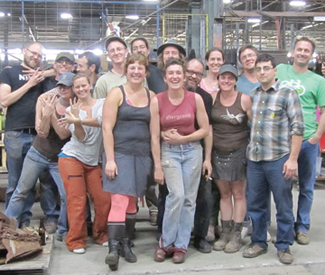
Still, the bank says Cato doesn’t belong here anymore, evicting him when his home went into foreclosure in August 2010. Yet Cato and his community not only fought back and reoccupied the home last month, they have turned it into a community center and base of operations from which to fight other foreclosures in the area.

The house, at the corner of Quesada and Jenning, is draped with banners, such as “Banks: no foreclosures!” and “keep families in our homes!” In the rain on March 16, when they were unfurled on the property that has remained vacant for nearly two years, surrounded by neighbors and friends, Cato moved back in. It was a gamble and an act of civil disobedience. Now they feel festive; it’s been a month, and no one has shown up to tell Cato he has to leave.

It has become a home base for a who’s who list of “foreclosure fighters,” the name taken on by Cato and others who have, in recent months, gone to extreme means to prevent banks from foreclosing on their homes. There’s Vivian Richardson, who got her foreclosure rescinded after 1,400 emails to her loan servicer. There’s Alberto Del Rio, who was ignored and told that his paperwork was lost during a Kafka-esque two-year loan modification attempt, only to win a meeting with top Wells Fargo executives last month after Occupy Bernal got behind his cause. There’s Carolyn Gage, who took a cue from protesters downtown and occupied her Bayview home in November.

Those taking on the foreclosure crisis certainly have a big task ahead of them. Since the market collapsed in 2008, there have been 12,410 foreclosures in San Francisco, according to data from RealtyTrac as compiled by the Alliance of Californians for Community Empowerment (ACCE). The neighborhoods with the most foreclosures are Ingleside-Excelsior/Crocker Amazon, Visitacion Valley/Sunnydale, and Bayview-Hunters Point, with more than 1,000 in each neighborhood. But the number of home foreclosures are in the hundreds in every neighborhood in San Francisco.

Despite the pandemic, many San Francisco residents say they felt distinctly alone in the events surrounding receiving notice of default.

“I’ve lived in Noe Valley since 1972,” said Kathy Galvess, an activist we spoke to Cato’s basement. “I didn’t know anybody who had been foreclosed on.”

When she got her eviction notice and, hooking up with ACCE and Occupy Bernal, faced her situation and the extent of the crisis, she wondered if her neighbors knew something she didn’t.

“I asked around the neighborhood, no one had any idea,” she said. “That’s how the banks get away with it. We suffer in silence.”

Carolyn Gage echoed that sentiment. “A while ago, foreclosure was shameful. But now it shouldn’t be. It’s happening in a systemic way, so people are getting over that shame,” she told me and several neighbors March 24 during a barbecue at Cato’s house.

This shame came in part from the illusion that the onslaught of seemingly affordable home loans from the housing bubble’s height were, in fact, affordable.

“The easy money fueled the ability for people to refinance every one or two years. A lot of people did that and just lived on it. Certain people used it, some abused it, others got caught up in it,” said CJ Holmes, a real estate broker in Santa Rosa who became interested in understanding the meanings of the crisis when the value of property she owned plummeted in 2008.

While President Bush signed on to Troubled Asset Relief Program (TARP) in 2008, and bailouts to Fannie Mae and Freddie Mac continued to roll out well into the Obama presidency, foreclosures were steadily clearing San Francisco of longtime residents, not to mention property tax and home values on foreclosure-stricken blocks.

There were advocates working on the behalf of those getting evicted. The Alliance of Californians for Community Empowerment looked into cases and worked to discern the complex chain of entitlement, talk to the right people, and try to get loans modified. HUD-certified organizations like the Mission Economic Development Agency (MEDA) and the San Francisco Housing Development Corporation (SFHDC) counseled homeowners and waded through paperwork.

“The modification process takes an average of 12 months to complete,” said Jose Luis Rodriguez, a foreclosure counselor with MEDA, in an email. The loan modification process can make or break a homeowners chances of keeping their home, leaving them in what he called “purgatory.”

Assessor-Recorder Phil Ting later concluded that in 84 percent of foreclosure cases, there was some kind of faulty paperwork.

“We’d fax documents to banks and they would habitually lose documents. We’d have to fax them sometimes up to 10 times,” said Jonathan Segarra, director of communications for MEDA.

Alberto Del Rio had the same issue. During his loan modification struggle, “we kept having to sign up for a new case,” Del Rio told me. “About every three months. Generally because they lost paperwork, or paperwork wasn’t properly transmitted.”

“There was no callback on their part,” he said. “We would have to call to get updates and they would say: oh, it’s closed, you have to start over with the paperwork now.”

But this lost paperwork epidemic, an emblem of the carelessness that ran rampant through the mad expansion of the subprime mortgage industry, has more than one face. It is likely due to lost paperwork, for example, that Cato has been living in the home that is, technically, no longer his.

No one seems to have the title.

At the time of sale, it was owned by Wells Fargo. According to transaction records, the foreclosure is being serviced by American Home Mortgage Servicers; they get a portion of the money, but do not own it. According to Wells Fargo representatives, that bank is now the trustee of the mortgage, also known as the beneficiary.

ACCE has claimed that Wells Fargo “sold the house back to itself,” and that American Home Mortgage Services, the company currently servicing the loan, is a subsidiary of Wells Fargo. Ruben Pulido, a Wells Fargo spokesperson, denies this.

“That’s incorrect. American Home mortgage services is completely different and separate from Wells Fargo,” Pulido told us.

But Martinez believes that “they’re different entities in that they work separately, but they’re the main servicer for Wells Fargo, they only service for Wells Fargo.”

Calls and emails to American Home Mortgage Services went unanswered.

Last fall, as an angry mass suddenly emerged from the American public, cries of “banks got bailed out, we got sold out” rang through the streets. Occupy Bernal and ACCE have had success in the city government, gaining support from Sups David Campos and John Avalos, who represent some of the hardest hit districts, helping facilitate meetings between Wells Fargo representatives and homeowners with foreclosure horror stories, with some success.

Activists also went for more civil disobedience-style tactics. These were on display Feb. 22, when dozens of supporters showed up at Monica Kenney’s Excelsior home. Kenney was in the midst of dealing with a foreclosure that didn’t seem right. She had received a forbearance agreement and made the first payment on it June 27, then was surprised to learn that, June 28, her house had been sold at auction.

“At this point I wrote Wells Fargo and I said, I have this paperwork, and I want you to honor it and rescind the foreclosure,” Kenney explained when she came to speak with us at the Guardian offices. She gave us copies of the forbearance agreement.

“Their response was, we did nothing wrong and the foreclosure will stand,” she said. “So at that point I decided I would fight to retain my home.”

After dishing out most of her savings in a lawsuit and eviction stays, the fight looked grim, and her house was slated for eviction. The plan — the last line of defense — was to simply bring as many people as possible to Kenney’s home and hope they could fend off eviction. Kenney remembers her nerves, huddled up that cold morning with veteran foreclosure fighter Vivian Richardson, worried that no one would show up.

“Then, at six in the morning, I had foreclosure fighters, neighbors, friends, Occupy Bernal, Occupy folks period, they just started showing up at the house, and just sat down, hunkered down with me and said, we’ll do whatever we can to at least dissuade the sheriff,” she recalls

It worked. And it hasn’t stopped working. Many people who have joined with Occupy Bernal and ACCE are still in their homes thanks to everything from lobbying politicians to civil disobedience. Some were evicted despite the protest movement’s best efforts but, thanks to newfound community, they avoided homelessness.

Kathy Galvess wasn’t able to keep her home, but her experience was made much more pleasant by Occupy Bernal. “Stardust got the moving truck and helped me move, out of the goodness of his heart,” she told me. “And if it wasn’t for Vivian, me and my sister would be wandering the streets in these storms we’ve been having.”

It’s that community, it’s that tireless work, it’s that victory in the midst of a sea of ongoing challenges that was celebrated at the barbecue at Cato’s house. It’s hard to know the future of the occupied home. The goal of the coalition supporting it was to keep it until April 24, the day of a Wells Fargo shareholders meeting that a large coalition of advocates are determined to shut down.

But for now, the place has become a community center and a symbol of hope and defiance. Politicians have certainly taken note. The Board of Supervisors passed a resolution last week urging banks to suspend foreclosures in San Francisco.

“It’s great,” Cato said. “That’s what the house is useful for right now. Everyone’s coming in and asking, how can we be a part of this, how can we help.”

Free Muni for kids makes sense

0

EDITORIAL San Francisco is a transit-first city that has spent millions of dollars over the years trying to convince people to ride Muni. And yet, one of the best and most effective ways to get people out of their cars is facing surprising opposition.

Sup. David Campos has been pushing for months to get Muni to allow young people to ride free. It makes immediate sense: The school district, perpetually short on funds, is cutting back bus service (which is preferable to cutting back classroom instruction). For low-income families, the disappearance of a yellow school bus, which offered transportation free of charge, is a financial obstacle — and the last thing anyone needs is another obstacle to keep kids out from coming to school.

Reduced-fare youth passes are already available — but they aren’t easy to get. Parents need to show up in person, during the day, with a birth certificate, passport or other government ID; that’s hard for a lot of working parents. The school district ought to be able to sell the passes, but right now nobody has the resources to make that happen.

It’s possible to create a system to identify and offer free service to low-income families, but again, unless it’s done through the schools, where that data is already kept (for reduced-price lunches), we’re talking about creating a complicated bureaucracy that isn’t remotely necessary.

According to Campos, the cost of providing free service for all youth is only $8 million a year — and he’s identified regional transit funds to pay for much of it. Muni has a deep budget deficit already, and anything that costs more money has to be carefully evaluated, but there are so many ways to cover the price tag. (Why is Muni still paying the Police Department tens of millions of dollars to get cops on the buses when that’s part of the department’s job already?)

And this goes beyond Ethe very clear needs of low-income families. Getting young people onto the buses is an excellent way to convince the next generation of San Franciscans that it’s not necessary to own and operate a motor vehicle in the city. The message is already getting out — according to an April 5, 2012 study by the Frontier Group, the number of car miles driven by people between 16 and 34 dropped 23 percent between 2001 and 2009. That trend crosses class lines — in fact, among young people who earned more than $70,000 a year, public transit use rose 100 percent over the decade and biking by 122 percent.

In other words, it’s proving to be a massive challenge to get older people out of their cars, but the kids are already moving in that direction. With a little help and push, San Francisco could make giant strides in the next few years.

And a significant reduction in car use would more than pay for the cost of free Muni for youth. Every car off the road means less road maintenance, less air pollution — and perhaps more important, less congestion to slow down the buses. Faster buses means more riders and more fares (and less money spent paying drivers to sit in traffic).

So it’s a great idea that pays for itself and helps the environment. And yet some city officials (led by Sup. Scott Wiener) still resist. They should back off; the city should move to approve this plan immediately.

Localized Appreesh: Grandma’s Boyfriend

1

Localized Appreesh is our weekly thank-you column to the musicians that make the Bay. To be considered, contact emilysavage@sfbg.com.

Not only does San Francisco punk act Grandma’s Boyfriend have the best name ever, but the group took it upon itself to add its own questions to the Localized Appreesh survey. Truly, a band after my own heart.

While it doesn’t have any shows this week (check back in early May for a house show in Oakland, and a show June 7 at Knockout, plus July 3 at El Rio), Grandma’s Boyfriend is celebrating a milestone: the release of brand new six-song seven-inch EP on Loglady Records, which can be downloaded here.

It’s agile power pop/snot-punk joy, the Romantics meet FYP, with darker lyrical themes straddling anxiety, fear, love, and redemption. Check out the EP, then check out their answers below.  Just make sure to hide the octogenarians.

Year and location of origin: Grandma’s Boyfriend (originally RubberThumbFoolAroundRachelSweat) formed in San Francisco in October 2009. George joined summer 2010. Thea joined in February 2012. We are all San Francisco natives.

Band name origin: While visiting a friend of ours’ parents, that said friend asked us if we’d met her grandma’s boyfriend. We said “no.”

Band motto: “Fuck if I know.” That’s what it is.

Description of sound in 10 words or less: Rock ‘n’ roll sensori.

Instrumentation: Mike: rhythm guitar and vox; Malcolm: drums; George: bass and vox; Thea: lead guitar

Most recent release: Our self-titled seven-inch. For some reason a lot of them are about getting killed and lost love and girls that just take things too far. It’s being released on Loglady Records later this month (pre-orders up now!!!).

Best part about life as a Bay Area band: The fog.

Worst part about life as a Bay Area band: Bands that form in San Francisco and then move to New York and still try to claim SF.
Interesting tour story: While touring in Japan two summers ago, we arranged to take an overnight bus from Yokohama to Kobe. One of the bands we just played with in Yokohama took us out for “all you can drink” at some restaurant. After drinking and eating for two hours, we were in a rush to get to our bus before it left. Our new friends kept assuring us there was a bathroom on board. There wasn’t. We tried to sleep it off because we weren’t sure when we’d get to a rest stop. I remember waking up in the back row of the bus in the pouring rain to George pissing into a water bottle between Malcolm and myself.

First album ever purchased: Mike: It’s Time to See Who’s Who, Conflict; Malcolm: Rocket to Russia, Ramones; George: Bad Hair Day, Weird Al; Thea: Nevermind, Nirvana

Most recent album purchased/downloaded: Mike: Slave to Love, Symbolick Jews; Malcolm: I vacuumed the floor at Recycled Records for a Smashing Pumpkins tape; George: A copy of Born in the USA Mike found in a box of tapes; Thea: Received a mixtape from a friend of Reigning Sound, True Widow, and the Parting Gifts

What do you see when you look in the mirror?: Mike: Catholic guilt; Malcolm: I’m not answering this. This is question is dumb; George: Fuck if I know; Thea: Solitude, tranquility and balance

Favorite local eatery and dish: Mike: Golden Era – everything; Malcolm: El Castillito on Church & Duboce – burrito; George: Brother’s Pizza – pizza; Thea: El Toro – baby super prawn burrito, no lettuce, no tomato!

Editorial: Free Muni tickets for kids makes sense

5

San Francisco is a transit-first city that has spent millions of dollars over the years trying to convince people to ride Muni. And yet, one of the best and most effective ways to get people out of their cars is facing surprising opposition.

Sup. David Campos has been pushing for months to get Muni to allow young people to ride free. It makes immediate sense: The school district, perpetually short on funds, is cutting back bus service (which is preferable to cutting back classroom instruction). For low-income families, the disappearance of a yellow school bus, which offered transportation free of charge, is a financial obstacle — and the last thing anyone needs is another obstacle to keep kids out from coming to school.

Reduced-fare youth passes are already available — but they aren’t easy to get. Parents need to show up in person, during the day, with a birth certificate, passport or other government ID; that’s hard for a lot of working parents. The school district ought to be able to sell the passes, but right now nobody has the resources to make that happen.

It’s possible to create a system to identify and offer free service to low-income families, but again, unless it’s done through the schools, where that data is already kept (for reduced-price lunches), we’re talking about creating a complicated bureaucracy that isn’t remotely necessary.

According to Campos, the cost of providing free service for all youth is only $8 million a year — and he’s identified regional transit funds to pay for much of it. Muni has a deep budget deficit already, and anything that costs more money has to be carefully evaluated, but there are so many ways to cover the price tag. (Why is Muni still paying the Police Department tens of millions of dollars to get cops on the buses when that’s part of the department’s job already?)

And this goes beyond the very clear needs of low-income families. Getting young people onto the buses is an excellent way to convince the next generation of San Franciscans that it’s not necessary to own and operate a motor vehicle in the city. The message is already getting out — according to an April 5, 2012 study by the Frontier Group, the number of car miles driven by people between 16 and 34 dropped 23 percent between 2001 and 2009. That trend crosses class lines — in fact, among young people who earned more than $70,000 a year, public transit use rose 100 percent over the decade and biking by 122 percent.

In other words, it’s proving to be a massive challenge to get older people out of their cars, but the kids are already moving in that direction. With a little help and push, San Francisco could make giant strides in the next few years.

And a significant reduction in car use would more than pay for the cost of free Muni for youth. Every car off the road means less road maintenance, less air pollution — and perhaps more important, less congestion to slow down the buses. Faster buses means more riders and more fares (and less money spent paying drivers to sit in traffic).

So it’s a great idea that pays for itself and helps the environment. And yet some city officials (led by Sup. Scott Wiener) still resist. They should back off. The city should move to approve this plan immediately.


Outside Lands 2012 announced: Stevie Wonder, Metallica, Jack White

0

Holy cow, the Outside Lands lineup is out and it is packed full of major, big name acts. How long ’till San Francisco festival season? More thoughts on this to come. But for now, confirmed Outside Lands 2012 lineup is below:

 
Stevie Wonder
Metallica
Neil Young & Crazy Horse
Jack White
Foo Fighters
Beck
Skrillex
Sigur Ros
Justice
Norah Jones
Dispatch
The Kills
Regina Spektor
Passion Pit
Andrew Bird
Grandaddy
Big Boi
Bloc Party
Explosions In The Sky
Franz Ferdinand
Mstrkrft
Rebelution
Die Antwoord
Fitz and The Tantrums
Portugal. The Man
Amadou & Mariam
Wolfgang Gartner
Fun.
Dr. Dog
The Walkmen
Washed Out
City and Colour
Two Gallants
Of Monsters and Men
Mimosa
Alabama Shakes
Reggie Watts
Trampled By Turtles
Tame Impala
Jovanotti
The Be Good Tanyas
Geographer
Sharon Van Etten
Yacht
Sean Hayes
Bomba Estereo
Dirty Dozen Brass Band
Big Gigantic
Thee Oh Sees
Wallpaper
Tennis
Zola Jesus
White Denim
Allen Stone
The M Machine
Michael Kiwanuka
Tanlines
Father John Misty
Electric Guest
Caveman
Yellow Ostrich
Papa
Honey Island Swamp Band
Animal Kingdom
 
Even more bands will be announced in the coming weeks.

The festival takes place Aug. 10-12, 2012. Three-day $195-$225 tickets (and $495 VIPs) go on sale this Thu/19 (April 19) at noon PST.

Heads Up: 7 must-see concerts this week

0

Lots of big name, sold-out shows this week. Swedish indie folk sister duo First Aid Kid at Slim’s is officially out of tickets, as expected. As is Pulp and Refused (separate shows) at the Warfield, and Childish Gambino and Danny Brown (same show) at the Fox. SBTRKT at the Independent, M83 at the Fillmore, Bon Iver, and the following day, Wiz Khalifa with A$AP Rocky, at the Bill Graham Civic Auditorium are all full – and sure to be packed, sticky houses.

Though you do still have a chance to see awkwardly sincere Peter Gabriel-Sting lovechild Gotye, who whispered through the first half of “Somebody That I Used To Know” on Saturday Night Live this weekend and starred in one of the few funny sketches (albeit, a digital short, most endearing thanks to Terran Killam’s cherubic painted cheeks). He’s also at the Bill Graham Civic Auditorium this week.

So that pretty much wraps up the megawatts, old and new. In the still available, and mighty worthwhile, must-sees column I’m leaning pretty heavy on the punk this time around, along with the somewhat arbitrary legend/icon status, but that’s the way the vegan cookie crumbles. (In my fantasy world, all cookies are vegan and all bands have a punk icon at the helm.)

Here are your must-see Bay Area concerts this week/end:

Godspeed You! Black Emperor
Okay it’s true; half of these shows are also sold out (sorry), but Canadian post-rock legends Godspeed (tiresome masters of the long-slow crescendo) and GAMH prepared for that by booking nearly a week of nightmarish classical explosions.
Tue/17-Fri/20, 8pm, $21
Great American Music Hall
859 O’Farrell, SF
(415) 885-0750
www.slimspresents.com
http://www.youtube.com/watch?v=q8kgu6rf0Ek

Wanda Jackson
The fact that this 74-year-old rockabilly queen – who more than a few times bedded greased pomp heyday Elvis Presley – is still making titillating new music (This Party Ain’t Over with Jack White) and touring off it is reason enough to check in on her fiery live show.
With Sallie Ford and the Sound Outside
Tues/17, 8pm, $30-$40
Regency Ballroom
1300 Van Ness, SF
(415) 673-5716
www.theregencyballroom.com
http://www.youtube.com/watch?v=fdNIatMbhOk

Wild Flag
Led by the Sleater-Kinney/Portlandia powerhouse Carrie Brownstein out front – truly wailing on guitar, high-kicking past your shoulders, and noodling sexily with Helium’s Mary Timony – the quartet bleeds down dirty rock’n’roll “Romance.”
With EMA
Wed/18, 8pm, $20
Fillmore
1805 Geary, SF
www.livenation.com
http://www.youtube.com/watch?v=olFRhgpeVRQ

Sonny & the Sunsets
The big news here isn’t so much that local garage rock icon/visual artist/man-about-town Sonny Smith is playing, it’s that his band is playing the relatively intimate stage at Amnesia. Should make for a very San Francisco evening.
With Range of Light Wilderness, Nightgowns
Thurs/19, 8pm, $8-$10
Amnesia
853 Valencia, SF
(415) 970-0012
www.amnesiathebar.com

Buzzcocks
Do I really need to explain influential British ‘70s power-punk, “Orgasm Addict”-s, Buzzcocks, to you? I didn’t think so, so let’s all save some brain cells. Just listen for the moans.
With Images, Emily’s Army
Fri/20, 9pm, $35
Uptown
1928 Telegraph, Oakl.
www.uptownnightclub.com
http://www.youtube.com/watch?v=uwAtifCoB3I

Birds & Batteries
This experimental local indie pop act (part synth, part folk) should be riding high on the release of indescribably sublime new EP Unfold. Get into it. Not legendary –  yet.
With Mwahaha, oWNERSHIP
Sat/21, 9:30pm, $12
Bottom of the Hill
1233 17th St., SF
(415) 621-4455
www.bottomofthehill.com
http://www.youtube.com/watch?v=csbVoyIvr98

Noh Mercy
To celebrate the release of new LP, Noh Mercy’s Esmeralda and Tony Hotel will play their first show together in more than 30 years, which makes this show a rather rare opportunity. And the minimalist punk duo, which often performed at influential, long-gone SF venue Mabuhay Gardens, was once know for its intense bursts of costumed energy.
With Erase Errata
Sun/22, 7:30pm, $12
Cafe Du Nord
2170 Market, SF
(415) 861-5016
www.cafedunord.com
http://www.youtube.com/watch?v=jBfTDRzn-VM

I get by with the help of my local DIY classes

0

What would the ultimate DIY day look like? There’s heaps of classes you can take in the Bay Area to make yourself more handy and sustainability-minded. Here’s a hypothetical 24 hours using the skills you can cull from those courses — scroll to the end of the article for details on where you can take each class concerned.

It’s Saturday! Wake up to the smell of coffee you roasted yourself (“Home Coffee Roasting”). Pour in your homemade almond milk for a nutty kick. (“Everyday Nut Milks and Cheeses”) For breakfast, you’re having toast with the jam you preserved (“Basics of Food Preservation and Jam-Making”) and fresh honey from your backyard beehive. (“Backyard Beekeeping”) Say hello to the chicken peeping outside, and thank your favorite hen as you enjoy that plate of scrambled eggs. (“Intro to Backyard Chickens”)

Mosey out to your freshly-landscaped garden, picking your way past the brand-new bank of sprightly succulents. (“Strategies in Urban Permaculture”) Admire your new water-saving irrigation system — she’s a real looker. (“Greywater, Rainwater Catchment, Earthworks”)

Time to primp for your day. Wash your body with the soap you made from scratch (“Cold Process Soap Making”) and afterwards, spritz yourself with handcrafted perfume. (“Making Natural Perfumes”) Head to your closet and pick out the fresh new frock you sewed (“Patternmaking and Design”), adorning yourself with those homemade earrings and pendant. (“Stitch DIY Class: Jewelry Making”)

After running a few errands around town, return to your garden to enjoy a cup of seasonal tea. It’s perfectly steeped — no need for artificial sweeteners. (“Tea and Food Pairing”) For lunch, you’re thinking crab ravioli with tomato cream sauce. (“Using Your Noodle”) Sprinkle fresh herbs gathered from your garden onto your plate for that extra kick. (“Starting an Herb Garden”)

Your out-of-town friends have been eating out every day of their trip, so you invite them over for a home-cooked meal. You remember hearing one of them saying that he craved sushi — sounds like the perfect night for nigiri and maki. (“We Be Sushi Workshop”) The handsome wooden table you built last weekend (“Wood and Metal”) makes the perfect centerpiece over which to catch up on each other’s lives.

The evening is going smoothly. Until, that is, one of your guests bumps into a burning candle on her way to the bathroom. The fire spreads quickly, but what do you know, those skills you copped from San Francisco’s firefighters save the day. (“Disaster Preparedness Training”)

Singe avoided, you and your friends get in the car to head to a mutual friend’s art show. Snap — the car sputters out! But you dodge an evening of tow trucks and mechanics’ waiting rooms. That auto repair class (“Essentials of Auto Maintenance”) taught you everything you need to save the day. Again.

You drift off to a deep sleep wrapped in a warm nest of your favorite knitted blankets. (“Knitting 101”) Sweet dreams, most capable person ever. 

“Home Coffee Roasting” May 3, 6pm-9pm, $30–$60. Modern Coffee, 411 13th St., Oakl. (510) 927-3252, www.iuhoakland.com

“Everyday Nut Milks and Cheeses” May 2, 6pm-8:30pm, $40-65. Instructor’s private home in Oakland, www.rawbayarea.com

“Basics of food preservation and jam-making” Fri/20, 6:30pm-8pm, $10. Pot and Pantry, 593 Guerrero, SF. (415) 206-1134, www.potandpantry.com

“Backyard beekeeping” Tue/24, 6pm-9pm, $35. Sticky Art Lab, 1682 University, Berk. (510) 655-5509, www.biofueloasis.com

“Intro to Backyard Chickens” Sun/15, 2pm, $35. Mill Valley Chickens, 106 Lomita, Mill Valley. (415) 389-8216, www.millvalleychickens.com

“Strategies in Urban Permaculture” Sun/15, noon-5pm, $25. Hayes Valley Farm, 450 Laguna, SF. (415) 753-7645, www.hayesvalleyfarm.com

“Greywater, Rainwater Catchment, Earthworks” basics of home irrigation Sun/29, 10am-1pm, $15. EcoHouse, 1305 Hopkins, Berk. (510) 548-2220, www.ecologycenter.org

“Cold Process Soap Making” Fri/20, 6pm-9pm, $65. Nova Studio, 24 West Richmond, Point Richmond. (510) 234-5700, www.thenovastudio.com

“Making Natural Perfumes” May 6, 10 am-5 p.m., $125. Nova Studio, 24 West Richmond, Point Richmond. (510) 234-5700, www.thenovastudio.com

“Patternmaking and Design” Four weekly classes, $175. Apparel Arts, 2325 Third St. Suite No. 406, SF. (415) 436-9738, www.apparel-arts.com

“Stitch DIY Class: Jewelry Making” Sat/14, 2:30pm-3:30pm, free. Indie Industries Castro Store, 2352 Market, SF. (415) 861-1150, 5titch.eventbrite.com

“Tea and Food Pairing” Tue/17, 7pm-8:30pm, $85. Tea Time Room, 542 Ramona, Palo Alto. (650) 328-2877, www.tea-time.com

“Using Your Noodle” 5/1, 6:30pm-9:30pm, $45-60. Marina Middle School,104A, 3500 Fillmore, SF. (415) 749-3495, www.ccsf.edu/continEd

“Starting an Herb Garden” May 5, 10:30am, $39. Common Ground Organic Garden Supply and Education Center, 559 College, Palo Alto. (650) 493-6072, www.commongroundinpaloalto.org

“We Be Sushi Workshop” Sat/14 and Sat/21, 10am-1pm, $65-80. We Be Sushi, 538 Valencia, SF. (415) 565-0749, www.ccsf.edu/continEd

“Wood and Metal” April 23 through July 2, Mon. 6pm-9pm, 10 sessions for $520. The Crucible, 1260 Seventh St., Oakl. (510) 444-0919, www.thecrucible.org

“Disaster preparedness training” Tues/17, 6:30pm-9:30pm, free. Valencia Gardens Community Room, 390 Valencia, SF. (415) 970-2024, www.sf-fire.org

“Essentials of Auto Maintenance” Sat/14, 11am, $60. Metric Motors, 1480 Howard, SF. (415) 295-4486, www.thedistilledman.com

“Knitting 101” Weekly instruction hours Mon. and Wed., 7 p.m.-9pm; Sat., 8:30am-10:30am, $66. Imagiknit, 3897 18th St., SF. (415) 621-6642, www.imagiknit.com


Bon voyage

0

THEATER Bay Area audiences set off for The Coast of Utopia with Shotgun Players’ production of Voyage, the first play in Tom Stoppard’s celebrated 2002 trilogy based on the lives and careers of certain radical Russian émigrés in 19th century Europe. With artistic director Patrick Dooley at the helm of a large cast, the local launch of Stoppard’s sweeping, pageant-like history play proves a smooth and articulate one, although so much is being set up in Voyage — which takes place inside Russia ahead of a departure to revolutionary Europe by one of its principal characters, future anarchist Mikhail Bakunin (an exuberantly confident Joe Salazar) — that the dramatic ball feels like it’s just getting rolling. (Unfortunately, audiences will have to wait until 2014 before Shotgun has all three plays, including Shipwreck and Salvage, up and running in repertory).

Stoppard’s play is both consistently witty and a bit glossy — in the sense of being both too sleek and too superficial to feel very deep. But it is not without a political point of its own. Here, the heady ideas and exchanges of real historical actors like Bakunin or literary critic Vissarion Belinsky (Nick Medina) mingle with family tensions, romantic entanglements, careerism, and political intrigues, all amid some seismic shifting of history. That the ideas in play are often fodder for comedy underscores the discrepancy here between high ideals and lived experience — and the emphasis on a compromised but happy present over long-term struggle for a new society. The trilogy will make the deeply interesting figure of Alexander Herzen (played in Voyage by an able Patrick Jones) the charmingly sympathetic carrier of this not very satisfying liberal through line.

Funny the work comedy can do. A few days and two pretty long plane rides after seeing Voyage, I arrived in Moscow in time to see some real Russians pretending to be from Belarus, in a theater production that also leveraged comedy to explore urgent political themes. Two in Your House, which is among the 15 productions making up the Russia Case program of the 2012 Golden Mask theater festival, is smart, dead-pan absurdist theater based on actual events and documents stemming from the 2010 house arrest of Belarusian poet, activist, and presidential candidate Vladimir Neklyaev.

http://www.youtube.com/watch?v=CiGbfNz3IyY

The action unfolds on a small stage in front of an audience crammed into a house with maybe 60 seats in all. Five actors recreate a situation in which Neklyaev (played with a gentle, almost serene philosophical air by a Russian actor who is himself a writer in real life) and his wife must share their small apartment with two KGB officers. The set is minimal, though a backdrop giving the diagram and dimensions of the actual flat neatly underscores both the fidelity to details and the suffocating invasion of intimate space suffered by the couple. Their vulnerability before two male strangers (and a third who rotates in during shift changes) comes across viscerally at the outset, but the tables are soon turned as Mrs. Neklyaev begins a fearless (and frankly hilarious) campaign of harassment to retake her home from the invaders — thus dissolving once and for all the illusory line between public and private spheres in the face of an invasive authoritarian regime.

Even without benefit of the simultaneous translation offered English speakers in the audience, the deft physical comedy and its Mrozek-like humor in the face of an outrageous as well as preposterous situation speaks volumes about political realities, the web of systemic violence that ultimately snares everyone, including the KGB agents (here played not unsympathetically as reluctant and increasingly miserable lackeys of the state). The comedy in this way comes as illuminating, subversive gloss on the hard facts of the case.

The company responsible for this unexpectedly wry bit of documentary theater is named Teatr.doc (pronounced “Theater Doc”). Led and financed by Elena Gremina, it’s one of Moscow’s scrappy independent theaters (as opposed to the state-subsidized repertory theaters employing full ensembles of actors and theater artists).

There are still several days of plays ahead at the time of this writing, but it’s clear already that the independent theater has an important presence in this festival. Of the 15 productions selected for the 2012 Russia Case by curator and critic Elena Kovalskaya, the majority tends toward the experimental and more politically outspoken fare of the small independents. Three come from Teatr.doc; two more come from Moscow’s Praktika Theatre, devoted exclusively to new drama. Other noteworthy names in the lineup include St. Petersburg’s AKHE Engineering Theatre (two-time guests of the San Francisco International Arts Festival, who are currently collaborating with SF’s own Nanos Operetta on a new work to premiere at SFIAF next year).

That evening after Two in Your House came an off-program production of famed director Dmitry Krymov’s Ta-Ra-Ra Boom-De-Boom. Krymov (whose In Paris, featuring Mikhail Baryshnikov, opens at the Berkeley Rep this month) offered up a spectacular, carnivalesque processional employing 80 actors in resplendent, sometimes wild costumes and a very long conveyor-belt stage to meditate on Chekhov and the impossible century since his death, as well as a kind of relentless attempt to grapple with or transcend both.

Moscow alone has something like 115 theaters, and the variety of work on display is predictably large. Only a handful of independent theaters take on overtly political subject matter, but these have a disproportionate influence today. The premiere of Two in Your House, for example, coincided with the recent massive street protests against Putin in the wake of elections overwhelmingly perceived as rigged. Its Belarusian subject matter thus chimed effortlessly with this political moment in Russia, especially for the younger 20-something Muscovites who are the bulk of the audiences for independent theater as well as the vast majority making up the recent street demonstrations.

THE COAST OF UTOPIA: VOYAGE

Through April 29

Wed-Thu, 7pm; Fri-Sat, 8pm; Sun, 5pm, $20-$30

Ashby Stage, 1901 Ashby, Berk.

www.shotgunplayers.org


Justice for Trayvon organizers react to Zimmerman murder charges

3

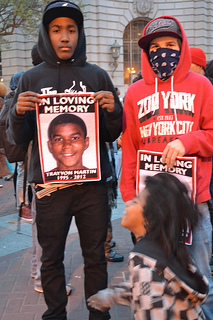
The Bay Area joined cities across the country in holding protests and rallies demanding justice for Trayvon Martin, a 17-year-old shot and killed by 28-year-old George Zimmerman in Sanford, Florida Feb. 26. 700 wore hoodies and marched downtown March 21. An “emergency scream-out” held March 26 outside of the Hall of Justice and jail at 850 Bryant called for justice for Martin as well as victims of police violence such as Ramarley Graham, an unarmed 18-year old Bronx man who was killed in his home by police. A “hoodies and hijabs” march last week in Oakland commemorated Martin’s death alongside the death of Shaima Al-Awadi, a 32-year old mother of five who was killed in a potential hate crime in her El Cajon home last month.

Speakers at these protests expressed outrage that Zimmerman had not been charged with any crime.

Now he has. On April 11, Zimmerman was charged with murder in the second degree.

I asked local activists- is this justice?

“I’m not jumping up for joy that this murderer has finally been arrested. I hope we can question what took so long,” said Tiny Gray-Garcia, creator of POOR magazine, who helped organize the scream-out.

She compared the case to that of Oscar Grant and his killer, Johannes Mehserle. After protest erupted demanding that Mehserle be charged with Grant’s killing, he became the first police officer in the history of California to be charged with murder. He was convicted of involuntary manslaughter and served eleven months in prison. 

“In the same way that Mehserle was finally charged, will Zimmerman eventually get a slap on the wrist?” asked Gray-Garcia. 

The March 26 scream-out was “not only for our young brother Trayvon. It was for Oscar Grant, Ramarley Graham, it was for Idress Stelley, Aiyana Jones, all the victims of police terror,” said Gray-Garcia

Unlike Graham, Stelley, and Jones, Martin was not killed by a police officer. But Gray-Garcia believes that his death can be atttibuted to “police culture.”

“Trayvon was murdered by a volunteer vigilante,” said Gray-Garcia of the neighborhood watch captain who had aspirations of becoming a police officer. “He was part of a violent police culture.”

If police and prison culture is a problem, is Zimmerman’s arrest- by police- justice?

In the media storm that followed the incident, some writers, such as this one at the Crunk Feminist Collective, have grappled with the question.

“How can I demand a criminal conviction for Zimmerman when I am opposed to prisons?” asks the Crunk Feminist Collective writer. “How do I reconcile these things?  I’m not sure yet.  But what I do know is that this really is not about the prison, but about a prison state that targets black and brown bodies in problematic ways.  It’s about a system of policing and surveillance, in which some bodies are always under the eye of the state.”

Isaac Ontiveros of the Oakland-based Critical Resistance, a group whose “vision is the creation of genuinely safe, healthy communities that respond to harm without relying on prisons and punishment,” has also struggled with this issue.

“That’s a challenging question for everybody,” said Ontiveros. “Part of it is, how can we start to dislodge the logic of neighborhood watches? You look at neighborhood watch associations and who are they watching, what do they mean by neighborhood, and who is considered suspicious?”

After Martin’s death, protests across the country were unrelenting calling for Zimmerman’s arrest. Days before the arrest and charge were made, a group of students who had marched 40 miles to Sanford from Daytona Beach “occupied” the Sanford police station, condemning how the case had been handled and demanding the termination of Sanford police Chief Bill Lee Jr. Police had declined to press charges against Zimmerman, saying that he had acted in self-defense.

On March 23, almost a month after the Feb. 26 shooting, Florida governor Rick Scott appointed special prosecutor Angela Corey to investigate the case. Zimmerman was charged with murder and taken into custody April 11.

“We do not prosecute by public pressure or petition. We prosecute based on facts and the laws of Florida,” said Corey at the time.

“She contends that neither petitions or media pressure influenced her decision, when we know too well that without it, nothing would have happened to Zimmerman,” said Mesha Irizarry, another scream-out organizer. Irizarry’s son, Idriss Stelley, was killed by police in 2001. 

The incident has put a national spotlight on racism in the United States. In Sanford, the NAACP held a town hall meeting for African American residents to air their frustrations with profiling in their own lives; hundreds attended

“If you’re black and you’re shot, particularly by someone who’s not black, that it is not viewed as seriously,” Sanford City Manager Norton Bonaparte told Reuters.

He added: “that’s why some feel that Mr. Zimmerman was allowed to just go on his way while Mr. Martin went to a morgue. And certainly if it was reversed, and Zimmerman had been black, he would have been detained and arrested.”

The same sentiment was expressed by protesters in San Francisco March 21. The speakers that day were family members of black teens who had been killed and whose murders had, they said, not been thoroughly investigated.

“Personal justice would be to open up all these other cases,” said Gray-Garcia.

Why free Muni for youth makes sense

62

Supervisor Scott Wiener has gone out of his way to dis the plan to let kids ride Muni for free. His oped in the Chron April 9 argued that the city just doesn’t have the money ($8 million):

We need to increase access to transportation for low-income youth, but a new and expensive obligation for Muni – at a time when Muni cannot pay for its basic operational needs and is expanding parking meters and increasing parking fines – is a bad idea.

But that misses the point — and People Organized to Win Employment Rights is mounting a petition campaign to get Wiener back on track.

The Municipal Transportation Agency, which oversees Muni, failed to approve the plan the first time around, but the vote was tied with Commission Chair Tom Nolan absent, so it’s still possible to move it forward. And on April 17, Sup. David Campos, who proposed the plan, and his allies will try again.

Yes, Muni is (perpetually) broke, and yes, deficits and cuts mean declines in service. But Campos has identified money to pay for the program without damaging operating and maintenance funds. Oh, and the parking meters get dragged in again:

The understandable public perception is that Muni is expanding parking meters to Sundays, adding new meters, and raising ticket prices not to pay for improvements to the system but rather to fund free Muni for all youth, even those who don’t need the subsidy.

And the problem with that is … what? People with cars ought to subsidize transit riders — young, old and everything in between. It’s really not that expensive to park at a meter in San Francisco, and now that most of them take credit cards, you don’t have to carry $5 in quarters around with you. I drive a car myself, to ferry my kids around. I have no sympathy for people who pay to have a large motor vehicle in a transit-first city and don’t want to pay for the impacts.

(Besides, what are all those religious people complaining about — nobody pays to park for Sunday church anyway. They just park in the middle of the street.)

But put all of that aside for a minute and think about this: San Francisco spends all kinds of money, directly and indirectly, trying to convince people to ride Muni instead of driving. And one of the best ways to get new riders is to get kids started as transit users as soon as their parents decide they’re old enough to get on the bus.

For us, that was sixth grade, when we bought my son a clipper card and told him we weren’t leaving work early to pick him up (in the car) after school any more. I showed him how to find the Muni map on the web, showed him how to connect to NextBus on his phone, gave him a pat on the head (not really) and sent him off to explore the wonders of San Francisco public transit. It’s worked like a charm: He takes the bus to his martial arts class, takes the bus to Cards and Comics to buy Magic Cards, takes the bus to the mall and to visit friends … and now he knows more about the system than I do. He can navigate on his own anywhere in town — and he loves it. It’s freedom. Suburban kids have to wait until they’re 16 and can get a driver’s license to even begin to get that sense that they don’t need parents in tow to go where they want to go.

Most of the teenagers I know in this city don’t bother to learn to drive any more. They bike and they take the bus. That’s a wonderful thing — and San Francisco should do everything possible to encourage it.

And a great way to start is to invest a modest amount of money — less than one percent of Muni’s budget — in training kids that the way to travel is by bus and train. Make it easy; make it free. Hell, half the middle-school kids who ride Muni never pay the fare anyway; they go in the back door and pocket the money that their parents gave them for bus fare so they can buy something they aren’t supposed to have. It’s the way of the world.

This isn’t just a subsidy for kids who can’t afford Muni, although that’s a great thing and I’m all in favor. It’s an investment in the future, a cheap step toward a future day when turning 16 isn’t all about going to the DMV, and travel doesn’t mean car travel — and the streets of San Francisco are cleaner, safer, less crowded and better for all of us. Isn’t that worth the money?

Come on, Tom Nolan; you’re the swing vote. Make this happen.


Photo of lightning striking the Bay Bridge

0

Audrey Cole, from her perch on Potrero Hill, passes along this once-in-a-liftime photo of lightnng striking the San Francisco Bay Bridge.
b3

Hot sexy events: April 13-19

0

Kink.com is getting its star turn in the mainstream media – everyone’s favorite historic-building-cum-porn-palace served as the shooting locaiton for the movie that Stephen Elliott and Kink star Lorelei Lee penned, Cherry (trailer here). The flick, which makes its San Francisco debut at the SF International Film Festival (April 24, 27, 28) stars James Franco and Heather Graham, who plays a female director at a porn company.

It isn’t Kink in the movie, exactly — it’s not a BDSM company, for one. And I met up with Lee at Thieves Tavern this week and she told me that despite the vocation of Cherry‘s protagonist, she didn’t consider it a movie based in sex-positive activism.

“You can really destroy a movie by making it too political,” said the NYU student and star of multiple Kink sites, over a glass of red wine. Lee says she and co-writer Elliott wanted to write a story with a happy ending (er, spoiler alert.) “I think it’s a complicated story that doesn’t try to sell you on anything.” Of course, showing happy, functioning sex workers should be considered activism in and of itself these days.

Theirs isn’t the only project that uses the Armory as a backdrop for for an upcoming non-NSFW film. Filmmaker Simone Jude has been shooting a documentary on the lives of Kink’s women – Lee, Isis Love, and Princess Donna primarily — for the last four years. The trailer looks fucking awesome, and Jude needs your Kickstarting help funding the final editing process. 

The three women portrayed are total badasses, and it’d be great if this film could recieve the same kind of exposure that Cherry, which picked up IFC as its distributor and is being slated for a limited-city release, is enjoying. With all the sex-negative politicking going on these days, we could use some more high profile looks at women who refuse to let conservative social norms guide their views of fucking. People need to be exposed to that kind of stuff. Or at least, as Lee told me “I hope that they leave the theater feeling like they’ve watched a movie about real people.”

And now for your week in sex events.

“A Taste for Brown Sugar: The History of Black Women in American Pornography”

Rad lecture alert: University of California Santa Barbara professor Mireille Miller-Young will be giving a talk about her much-needed manuscript examining the history of black women in porn this afternoon. Miller-Young’s work tends to focus on race, gender, and sexuality as it appears in sex work and popular culture and she is also currently collaborating with sex-positive author Tristan Taormino and others on The Feminist Porn Book: The Politics of Producing Pleasure. 

Fri/13 4-7 p.m., free

California College of the Arts

1111 Eighth St., Room GC7, SF

(415) 703-9500

www.cca.edu

Writers With Drinks with Rachel Kramer Bussel and Curvy Girls

Rachel Kramer Bussel is the editor of Curvy Girls: Erotica For Women, which I recently had the pleasure of reading and is real hot. The stories are all about voluptuous women getting it on – in restaurant kitchens with the head chef, with the house sittee’s relative, with the guy that sold them those hot boots. The erotica follows curves like a racecar, and is a phenomenal piece of work for anyone who is looking for a re-up on body image – no matter what their measurements. Tonight, Bussel is reading at the much-loved Writers With Drinks event, so expect to get nicely liquored and hear her talk about sexy, body-positive couplings. 

Sat/14 7:30 p.m., $5-$10 sliding scale

The Make-Out Room

3225 22nd St., SF

www.writerswithdrinks.com

“A Taste of Rope”

The perfect opportunity to sample wines from around the globe while training your obedient submissive, this Femina Potens event has an value-added feature: different models from rope companies Maui Kink, Twisted Monk, Bind Me, Lover’s Knot, and Jugoya will be on hand, and wrist, and ankle, and ribs so that you can see the difference that quality and texture can make in your play. There’s limited space available here, so you should get on this quick-like.

Sat/14 9-10:30 p.m., $40-99 per couple

Location disclosed upon purchase

www.feminapotens.org

Bawdy Storytelling: Master and Servant

The pervy storytelling series goes on a power trip, with six kinky souls going on the record about their BDSM power play good-times. 

Thu/19 7-10:30 p.m., $12-$15

The Uptown 

1928 Telegraph, Oakl.

www.bawdystorytelling.com

Pre-boarding call: Jorge De Hoyos’s “Departing Things”

0

In the last few years, Los Angeles–born and San Francisco–based dancer-choreographer Jorge De Hoyos has worked with Sara Shelton Mann and Meg Stuart, traveled with Keith Hennessy’s Turbulence project, performed in Laura Arrington’s supersized SQUART marathon at Headlands Center for the Arts, and much, much more — including projects by Christine Bonansea, Sommer Ulrickson, Erika Chong Shuch Performance Project, Jesse Hewit/Strong Behavior, Pearl Marill/Pump Dance Theater, Naked Empire Bouffon Company, and Jenny McAllister. You may also have been one of the 25 or so lucky souls who traipsed after him in Golden Gate Park when he and Macklin Kowal went about in delirious Euro-drag for Bonjour le matin.

The guy has been everywhere. But his own work has been only sparingly seen since STICK, his intense debut, which premiered at the old Mama Calizo’s Voice Factory’s back in 2009. What has shown up here and there since then has continued to be very intriguing, though, including a short piece De Hoyos put up for one night as a guest artist alongside Miguel Gutierrez, during the three-night run last summer at the Garage of the New York choreographer’s solo, Heavens What Have I Done. De Hoyos’s memorably spare and freshly intelligent contribution was reportedly a bit of fast work, and one De Hoyos says had its limitations for him. If that’s the case, it makes one all the more eager to see what he does with more time and exploration.
 
This weekend comes just such an opportunity as De Hoyos premieres Departing Things, a work made in close collaboration with fellow dancers Emily Leap and Kevin O’Connor.

This is an evolving but already advanced and, according to De Hoyos, very intense and special collaboration. A “performance experiment” he calls it. Subtitled “an ambitious dance of constant departures,” it’s also a pretty apt theme given this is one of the last chances to see this distinctive and restless young artist before he flies off for the summer to Europe and Russia for more gigs with Hennessy and Shelton Mann, respectively.

Departing Things
Sat/14-Sun/15, 8pm, $10-$20
Garage
975 Howard, SF

www.brownpapertickets.com

Even more King Buzzo

0

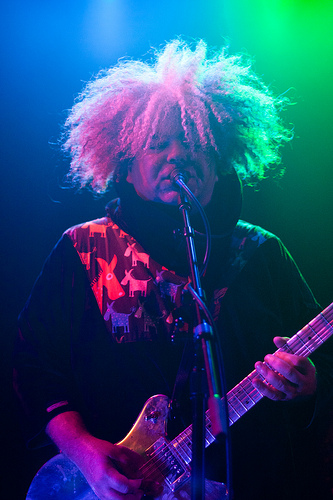
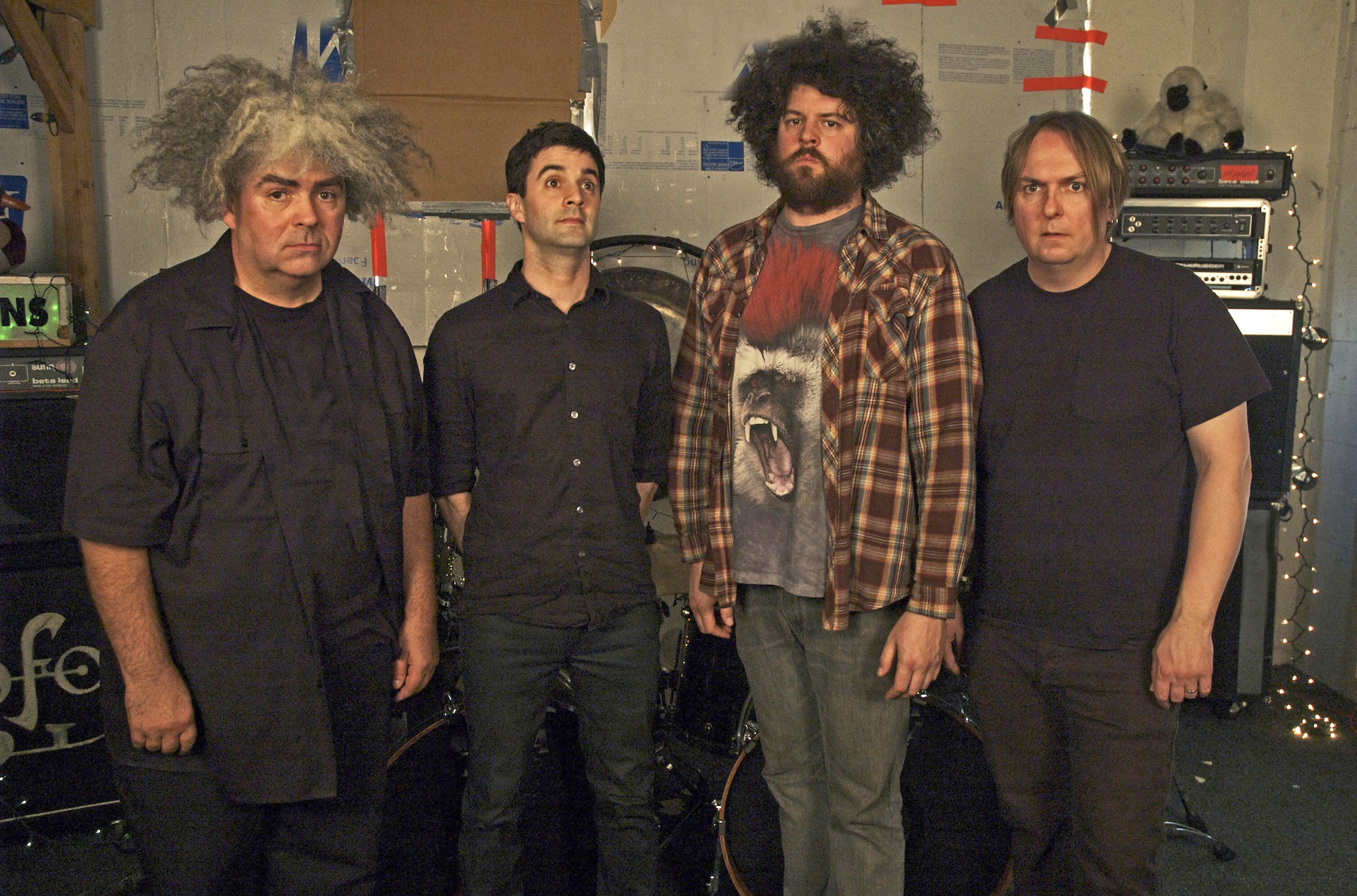
Punk icon King Buzzo of the Melvins is an amusing conversationalist. Veering toward the inane, he adds quirk to the boring, everyday topics, and clearly has the years of experience to casually offer words of wisdom without the inherent bitterness so often boiling in the belly of longtime touring musicians.

With such a propensity for fun chatter, naturally the maximum word count limit for the print article on Buzzo in this week’s issue had to leave some things out. Below are a few lost gems from a conversation last week:

SFBG: After living here for seven years before moving to LA, does [San Francisco] feel totally different when you visit?
Buzz Osborne: I’m not really sentimental along those lines, I’m not too much of a ‘good old days’ type of person, I’m more of a ‘what have you done lately’ type of person. So, I liked living there but I’ve moved on. I like California! I don’t hate LA, people hate LA. I always find that interesting. Nobody in LA hates anybody else! People don’t talk about how much they hate New York or San Francisco, that’s just crazy. Plenty of people talking shit about LA, but I can’t figure it out.

But I like San Francisco, don’t get me wrong. Like I said, if my wife didn’t live here, I probably would’ve stayed there.

SFBG: Speaking of what-have-you-done-lately, what does the title of [your upcoming LP] ‘Freak Puke’ mean?
BO: What does it mean? I don’t know what it means. Freak puke! Freaky puking. It’s a freak that pukes. It’s a freakish puke. It’s puke that becomes freaky. It just sounds good together. FREAK. PUKE. They work great.

I’m not sure where it came from? I write down stuff all the time that I hear, and like. It could’ve come from a wide variety of sources. Let’s say, let me make something up. Let’s say it came from a Bob Dylan poem I read. It’s not true, but we’ll say it is for today.

We’ll start the rumor! Bob Dylan.

SFBG: Huge proponent of freak puke.

BO: He was speaking of it when he was speaking in terms of protest songs, how about that? And I thought it was great. And I love to protest. If there’s one thing I love doing, it’s protesting. I’ll protest about anything you got. There. That sounds good, right?

SFBG: Yep, sounds punk.
BO: Yeah punk, it’s all about punk. And since now that you can buy our t-shirts at Hot Topic…

SFBG: Is that true?
BO: At least they sell them on their website.

SFBG: Does that not go through you?
BO: The guy that makes our shirts sells them to a wide variety of places, Hot Topic is just one of them. I’m fine with that. I think our stuff belongs in malls! Absolutely. I think everyone should own all of our records, [ages] 8 to 80. We make our music for the masses, not for the elite few. Just because the masses don’t like, it doesn’t mean it’s not made for them.

http://www.youtube.com/watch?v=xZxK5iP-5q8&feature=related

SFBG: Have you found any good new local bands in LA?
BO: Yes. My favorite band in LA, other than Big Business of course, is this band called Tweak Bird

We did some work with the singer recently, [that’s] going to come out at some point so…more and more stuff! It never ends. We did some recordings that are coming out but I don’t really want to tell you what they are because I don’t want anyone to know the secret!

It’s very mysterious. It’s not that big of a deal. We worked with a wide variety of people but I’m not going to tell you who they are.

Cyclists gain an unlikely defender against the backlash

53

After yesterday’s media pile-on – with the Examiner’s cover story and the Chronicle leading both its front page and Bay Area section with stories bashing bicyclists in the wake of a pedestrian death – it was refreshing to read today’s level-headed Examiner editorial “Rare pedestrian death exploited by bike foes.”

When I posted last week on the fatal cyclist-vs.-pedestrian collision (one of the first to report disturbing new details of the incident), I noted that the cycling community was braced for a backlash. And it came in the form of calls for police crackdowns, angry anti-cyclist diatribes, proposals for elaborate bike regulatory and re-education programs, and other opportunistic jabs.

The Examiner – which, under new ownership, has abandoned its nutty old right-wing stances – not only called out those critics as predictably lacking in perspective, but the editorial even took that next step of tying them to the pro-car reactionaries who get so lathered up about paying for street parking or losing any street turf they now control.

“There is an audience out there — mostly older, mostly cranky — that loves to marinate in the notion that drivers in The City are victimized by political correctness run amok,” the Examiner wrote. “This idea of two-wheeled liberalism is an attitude that is pandered to by the likes of curmudgeonly columnists at San Francisco newspapers.”

Yeah, git ’em, Ex 2.0! It’s amazing how the most privileged and entitled members of our society – such as rich white motorists – are so quick to play the victim card these days, a tactic popularized by Rush Limbaugh that has become the standard reaction to any perceived imposition on their comfort and convenience.

“Transportation policy and budget priorities are complex, especially in tough times. It is easy to sit back and paint in broad strokes about issues, but that does nothing to truly advance the conversations that need to be happening,” the Ex wrote (in sharp contrast to Chron’s reactionary, ridiculous editorial stance).

Mayor Ed Lee and SFMTA chief Ed Reiskin deserve credit for supporting the controversial proposal to put in new parking meters and begin charging on Sundays – an issue on which former Mayor Gavin Newsom pandered to the mob and showed a real lack of leadership – but that’s just the beginning of doing what needs to be done to create a 21st century transportation system.

The death of this pedestrian is a horrible accident that has reminded the cycling community of our responsibility to other road users, and it has prompted discussions and realizations that are probably overdue. We get it. But we shouldn’t lose sight of the fact that cars create more pressing and widespread problems – in terms of being deadly, costly, bad for the environment, and dominating public space – than do bikes. That’s not judgment, just perspective.

Or as the Examiner says, “Bicyclists can be rude — they certainly ride through red lights or on the sidewalk and are rarely punished, in part because on the scale of criminality, this is fairly minor. But the one thing they almost never do is kill someone. We shouldn’t let this incident distort our approach to traffic laws or add fuel to the apparently endless battle of the bike and the car.”

Activists hope to turn resolution into real foreclosure suspension

3

On April 10, the Board of Supervisors unanimously passed a resolution calling for a temporaray suspension on foreclosures in San Francisco.

The resolution “urges city contractors and all mortgage and banking institutions to suspend foreclosure activities and related auctions and evictions until State and Federal measures to protect homeowners from unfair and unlawful practices and provisions for principle reductions are in place.”

This comes after a report from Assessor-Recorder Phil Ting found that 84 percent of foreclosures in San Francisco in the past three years involved faulty paperwork and, likely, fraud.  

The resolution does not require anything, but instead urges the city to work on behalf of constituents swept up in the foreclosure crisis. 

It urges all city departments, “including but not limited to, the offices of the Mayor, the Assessor-Recorder, the City Attorney, the District Attorney, and the Sheriff, to take proactive steps and measures to ensure that the City and County of San Francisco prevents and protects its resident form illegal foreclosures, auctions, and evictions.”

“The controller is supposed to audit every case beyond what was in Phil Ting’s report. Based on that information the glaring illegal activity for the banks, the district attorney and city attorny should sue the banks and file an injunction to stop foreclosures. I think those are some of the steps we could take,” said Julien Ball, an anti-foreclosure activist with Occupy Bernal

The resolution also “urges the Mayor to direct…our city lobbyists in the California State Capital to prioritize support for California Homeowners Bill of Rights state bills.”

This series of bills, proposed by state attorney general Kamala Harris, would include efforts to stop dual tracking- when homeowners still in the process of a loan modification are simultaneously tracked for foreclosures. The package also includes a ban on robosigning and other practices that can constitute fraud in foreclosure proceedings. 

Sups. Avalos and Campos sponsored the resolution, and Kim, Mar, Olague and Cohen co-sponsored. 

Occupy Bernal’s goal remains a city-wide moratorium on foreclosure, and towards that end, the resolution represents an important step.  It puts San Francisco on record as being against unfair foreclosures and related evictions,” said Ball, “and its something we can use to put pressure on the banks and public officials to act.”

“That involves exposing and shaming banks through public protests, blasting them with phone calls, calling out their board members, its necessary if we have to stand in front of somebody’s home to stop them from being evicted we’ll do that to,” said Ball.

They plan to escalate these tactics April 24, when a coalition of groups has declared that it will “shut down” an April 24 Wells Fargo shareholders meeting in San Francisco.

Heading East: Artists in flux

28

San Francisco isn’t an easy place to live for artists and others who choose to fill their souls at the expense of their bank accounts, particularly with the comparatively cheap and sunny East Bay so close. And with more of these creative types being lured eastward, Oakland and its surroundings are getting ever more hip and attractive — just as San Francisco is being gentrified by dot-com workaholics.

It’s a trend I’ve been noticing in recent years, one that I saw embodied during regular trips to make Burning Man art with the Flux Foundation (see “Burners in Flux,” 8/31/10) and hundreds of others who work out of the massive American Steel warehouse.

At least once a week, I would take BART to the West Oakland station and cycle up Mandela Parkway, a beautiful and inviting boulevard, riding in the wide bike lane past evocative public art projects in weather that was always warmer than my neighborhood in San Francisco.

Since then, I’ve watched waves of my Flux friends moving from San Francisco to the East Bay, pushed by the high cost of living and pulled by the allure of a better and more sustainable lifestyle, a migration of some of the most interesting and creative people I know, some of the very people that have made San Francisco so cool.

“I love San Francisco, but it’s just not an affordable place anymore,” said Jessica Hobbs, one of the Flux founders who last year moved with two other women from the crew into what they call the Flux Meow House in a neighborhood near the intersection of Oakland, Berkeley, and Emeryville.

Hobbs has long worked in the East Bay and “I’ve never been one of those who has that bridge-phobia” — that resistance to cross over into other cities for social gatherings — “but the most interesting culture of San Francisco is starting to move to the East Bay.”

In the last 10 years, workspaces for burners and other creative types have proliferated in the East Bay — including the Shipyard, the Crucible, NIMBY Warehouse, Xian, Warehouse 416, and American Steel — while the number in San Francisco has stayed static or even shrunk. That’s partly a result of SF’s dwindling number of light industrial spaces, but Hobbs said the influx of artists in the East Bay supported and populated these new workspaces and fed the trend.

“They were making space for that to happen, so we came over here,” Hobbs said. “There’s more willingness to experiment over here.”

There have been code-compliance conflicts between these boundary-pushing art spaces and civic officials, including Berkeley’s threats to shut down the Shipyard and Oakland’s issues with NIMBY, but Hobbs said both were resolved in ways that legitimized the spaces. And then events such as Art Murmur, a monthly art walk in downtown Oakland, put these artists and their creations on proud display.

“Oakland and the East Bay have been very welcoming,” Hobbs said. “They want us.”

As we all talked on April 5, Karen Cusolito was throwing a party celebrating the third anniversary of American Steel, a massive workspace she formed for hundreds of artists and a gathering space for her extended community. Cusolito had working in the East Bay since 2005, commuting from Hunters Point before finally moving to Oakland in 2010.

“I moved here with such great trepidation because I thought I’d be bored,” she said. “But I’ve found a more vibrant community than I could have imagined, along with an unexpected sense of calm.”

Reflecting on the third anniversary of American Steel, Cusolito said, “On one hand, I’m astonished that it’s been three years. On the other hand, I’m surprised that this hasn’t always existed,” she said. “I have an amazing community here. I’m very blessed.”

Hobbs’ roommate, Rebecca Frisch, lost her apartment in Hayes Valley last year and decided to seek some specific things that she felt her soul seeking. “I wanted more light and space and a garden. I had a long wish list and nearly all of it came true,” she said. “I cast my net as far north as Petaluma and even Sebastapol. It’s really about a home and setting that felt good and suited my wish list.”

The space they found was spacious and airy, almost suburban but in a neighborhood that is lively and being steadily populated with other groups of their friends who have also been moving from San Francisco, gathered into three nearby homes.

“It was a great space with this huge yard. It’s got sun all day long, fruit trees everywhere, and we now have an art fireplace. You don’t find that in San Francisco,” Hobbs said.

As much as Hobbs and Frisch have been pleased with East Bay living, they each felt finally pressured to leave San Francisco, which makes them wonder what the future holds for the city.

“It’s made me sad because it’s apparent there’s no room for quirky, creative individuals. It’s only for the super rich,” Frisch said. “I feel horrible for families and people with fewer options that I have. I wondered if I would mourn the city I loved, and it’s been just the opposite. I really love it here.”

There have been a few challenges and tradeoffs to living in the East Bay, Hobbs said, including a lack of late-night food offerings and after hours clubs. “With anything, there will be a balance between positives and convenience,” she said.

Not everyone from Flux is flowing east — that balance tips in different ways for different people at different times. Monica Barney recently moved to San Francisco from Oakland and she’s enjoying the more dense urban living.

“I got sick of living in the East Bay,” she said. “I didn’t like that you have to drive everywhere. It changes the tone of the neighborhood when you can get around without a car.”

Yet for most of the couple hundred artsy people in the Flux Foundation’s orbit, the East Bay is drawing more and more people. Jonny Poynton moved to West Oakland three years ago after living in San Francisco for nine. He appreciates the sense of community he’s found in Oakland, and he doesn’t feel like he’s given up much to attain it.

“One of the things I like about West Oakland is how close it is to the city,” he said.

Flux’s latest transplant is Jason DeCook, who works in the building trades and moved from San Francisco to just down the street from Poynton on April 7.

“I moved because of the usual reasons that most have, larger space for the same rent, but also the sunshine and proximity. I’ve been hella reluctant to do this for the past few years but thought about it a couple of times. Now the issue has been forced with all the art this year,” DeCook said.

In addition to working on art at American Steel, DeCook says he’s excited to have a yard and storage areas to work on his own projects.

“I’m a blue collar, hands-on kind of guy and it’s easy for me to feel connected to a lot of the people that live around me or are beginning to visit the area. It’s exciting to be in a place that has been ignored for so long by money, because a group of us can come up with a project or I can on my own and get to doing it with little red tape and it will be appreciated by the neighbors for making the place a little bit better,” DeCook said.

In many ways, he thinks that West Oakland and other East Bay pockets are on a similar trajectory as many of San Francisco’s coolest neighborhoods decades ago, many of which are now getting too expensive for the artists to live.

“Earlier today I was considering how, in the past, like the early ’60s when so many artists and musicians were drawn to the Haight and other places, they did so because it was cheap and close to opportunity,” he said. “I think West Oakland is seeing that happen to it. It is a furnace of creativity, and I am helping however I can to stoke that.

You’re gonna need to upsize that popcorn

0

Guess how many movies are opening in the Bay Area Fri/13? Sixteen. Sixteen, y’all. That might be an all-time Ultimate Grand Supreme record. So in this saturated situation, what’s worth seeing, considering this is your last weekend before the San Francisco International Film Festival sets up shop and dominates all your moviegoing brain cells?

First, check out Dennis Harvey’s feature-length review of Applause, imported from Denmark and featuring “a flamboyant, arresting, faultless star turn” from Paprika Steen, a megastar in her home country.

Seeking more? Here are five (out of 16, remember — true fiends can check out our complete film listings if five ain’t enough) to get you through the weekend.

A buzzed-about doc on the (unfortunately) hot topic of teen bullying:

http://www.youtube.com/watch?v=LzhVdc7aQv8&feature=related

Bully Anyone who’s ever been a kid on the wrong side of a bully — or was sensitive and observant enough not to avert his or her eyes — will be puzzling over the MPAA’s R rating of this doc, for profanity. It’s absurd when the gory violence on network and basic cable TV stops just short of cutting characters’ faces off, as one blurred-out bus bully threatens to do to the sweet, hapless Alex, dubbed “Fish Face” by the kids who ostracize him and make his life hell on the bus. It’s a jungle out there, as we all know — but it’s that real, visceral footage of the verbal (and physical) abuse bullied children deal with daily that brings it all home. Filmmaker Lee Hirsch goes above and beyond in trying to capture all dimensions of his subject: the terrorized bullied, the ineffectual school administrators, the desperate parents. There’s Kelby, the gay girl who was forced off her beloved basketball team after she came out, and Ja’Maya, who took drastic measures to fend off her tormenters — as well as the specters of those who turned to suicide as a way out. Hirsch is clearly more of an activist than a fly on the wall: he steps in at one point to help and obviously makes an uplifting effort to focus on what we can do to battle bullying. Nevertheless, at the risk of coming off like the Iowa assistant principal who’s catching criticism for telling one victim that he was just as bad as the bully that he refused to shake hands with, one feels compelled to note one prominent component that’s missing here: the bullies themselves, their stories, and the reasons why they’re so cruel — admittedly a daunting, possibly libelous task. (1:35) Piedmont, Shattuck. (Kimberly Chun)

A horror spoof so good we don’t dare spoil it for you. Not even posting the trailer, that’s how serious we are:

The Cabin in the Woods If the name “Joss Whedon” doesn’t provide all the reason you need to bum-rush The Cabin in the Woods (Whedon produced and co-wrote,  with director and frequent collaborator Drew Goddard), well, there’s not much more that can be revealed without ruining the entire movie. In a very, very small nutshell, it’s about a group of college kids (including Chris “Thor” Hemsworth) whose weekend jaunt to a rural cabin goes horribly awry, as such weekend jaunts tend to do in horror movies (the Texas Chainsaw and Evil Dead movies are heavily referenced). But this is no ordinary nightmare — its peculiarities are cleverly, carefully revealed, and the movie’s inside-out takedown of scary movies produces some very unexpected (and delightfully blood-gushing) twists and turns. Plus: the always-awesome Richard Jenkins, and in-jokes galore for genre fans. (1:35) California, Presidio. (Cheryl Eddy)

The only movie involving Luc Besson you need to worry about this week (we’ve seen the Besson-produced and co-written Lockout, which could skate by on action-movie silliness if it didn’t so blatantly rip off John Carpenter, a.k.a. The Great One):

http://www.youtube.com/watch?v=SMYAzQC3UjI
 

The Lady Luc Besson directs Michelle Yeoh — but The Lady is about as far from flashy action heroics as humanly possible. Instead, it’s a reverent, emotion-packed biopic of Nobel Peace Prize winner Aung San Suu Kyi, a national hero in Burma (Myanmar) for her work against the country’s oppressive military regime. But don’t expect a year-by-year exploration of Suu’s every accomplishment; instead, the film focuses on the relationship between Suu and her British husband, Michael Aris (David Thewlis). When Michael discovers he’s dying of cancer, he’s repeatedly denied visas to visit his wife — a cruel knife-twist by a government that assures Suu that if she leaves Burma to visit him, they’ll never allow her to return. Heartbreaking stuff, elegantly channeled by Thewlis and especially Yeoh, who conveys Suu’s incredible strength despite her alarmingly frail appearance. The real Iron Lady, right here. (2:07) Bridge, Shattuck. (Cheryl Eddy)

The last of 2012’s Best Foreign Language Film nominees to open locally, after Bullhead, Footnote, In Darkness, and eventual winner A Separation:

http://www.youtube.com/watch?v=gjNCkxnT-xE

Monsieur Lazhar When their beloved but troubled teacher hangs herself in the classroom — not a thoughtful choice of location, but then we never really discover her motives — traumatized Montreal sixth-graders get Bachir Lazhar (Fellag), a middle-aged Algerian émigré whose contrastingly rather strict, old-fashioned methods prove surprisingly useful at helping them past their trauma. He quickly becomes the crush object of studious Alice (Sophie Nelisse), whose single mother is a pilot too often away, while troublemaker Simon (Emilien Neron) acts out his own domestic and other issues at school. Lazhar has his own secrets as well — for one thing, we see that he’s still petitioning for permanent asylum in Canada, contradicting what he told the principal upon being hired — and while his emotions are more tightly wrapped, circumstances will eventually force all truths out. This very likable drama about adults and children from Quebec writer-director Philippe Falardeau doesn’t quite have the heft and resonance to rate among the truly great narrative films about education (like Laurent Cantet’s recent French The Class). But it comes close enough, gracefully touching on numerous other issues while effectively keeping focus on how a good teacher can shape young lives in ways as incalculable as they are important. (1:34) Albany, Embarcadero, Smith Rafael. (Dennis Harvey)

And The Three Stooges: The Movie. Wait, no. Actually…

The Turin Horse Hungarian auteur Béla Tarr’s final cinematic statement is extrapolated from a climactic episode in the life of Friedrich Nietzsche, wherein the philosopher tearfully intervened in the beating of a horse on the streets of Turin. Tarr, working with frequent collaborators Ágnes Hranitzky and László Krasznahorkai, conjures the lives of a horseman and his daughter as they barely subsist amid a windswept wasteland. This glacial Beckettian dirge of a film, shot in black and white and composed of Tarr’s trademark long takes, doesn’t so much develop these two characters as wear them down. Their stultifying daily routines — cleaning the stable, fetching water from the well, changing and cleaning their numerous layers of clothing — occupy much of the film, so it is all the more unsettling when this wretched lifestyle is torn asunder by the whims of nature. (2:26) SF Film Society Cinema. (Sam Stander)

Found in translation

4

Ludwig Wittgenstein once said “the limits of my language mean the limits of my world.” So for the sake of expanded horizons, let’s say thank you to professional translators, the diligent souls who dedicate their lives to the subtleties of language. When interpreters dissolve linguistic barriers, we are able to peer into the worlds articulated in literature of distant lands to understand them as our own.

But how do they do it? Surrealist Japanese author Haruki Murakami’s translators Jay Rubin and J. Philip Gabriel have taken apart prose, sentence by sentence. Without their efforts, Murakami’s mystic, cryptic worlds could not have become available to audiences in the United States and elsewhere. Rubin and Gabriel spoke with the Guardian in a phone interview preceding their Center for the Art of Translation presentation on the art of translation last week at 111 Minna.

San Francisco Bay Guardian: How were you introduced to Haruki Murakami?

Jay Rubin: By an American publisher in 1989. I was absolutely knocked out by him and stopped reading everyone else for a good 10 years after that. I was just so swept up in Murakami’s world.

J. Philip Gabriel: I was living in Japan and a friend recommended his work. I became interested in translating his short stories, and one of the translations was published in The New Yorker a few years later. I became a regular translator from then on.

SFBG: How do you align yourself with the author so that even the subtlest aspects of their work are communicated?

JR: Maybe I’m not doing that. You never know, do you? I’m always saying that people shouldn’t read translated literature, they should learn the language themselves. One way you can build up trust is by reading the translation and feeling to see if it moves you in the same recognizable ways as reading in your native language. There’s never a guarantee that you’re getting the unalloyed original. But if a piece of literature is able to make you afraid or delighted in some way, it’s fairly likely that there’s something in the original that does that too.

JPG: I work with writers who are fortunately still alive. I have the option of asking a question for clarification. Murakami’s English is really good, and he is a translator himself, so he understands the challenges at hand and is happy to give suggestions.

SFBG: Humor often becomes diluted between languages, especially since a lot of humor is word-based. How do you retain the original comic flow?

JR: When you have languages as different as Japanese and English, it’s virtually impossible to preserve a pun. You just simply have to make up wordplay that seems to work in a similar way. And since Murakami has obviously been influenced by Western literature, his humor is not too hard to convey.

JPG: Japanese culture has a huge appreciation for humor, but translated literature often ends up being serious or dark. You do the best you possibly can when translating humor, but it’s difficult. In Kafka on the Shore, there’s a set expression in Japanese, which means, “I’m so busy I would like a cat to lend a hand.” This is especially funny because the story is about a guy who has the ability to talk to cats. I came up with a pun by using the word “paws” instead of “pause,” and saying, “I would like you to take a paws in your busy schedule.”

SFBG: One challenge in translating East Asian languages to English is that there are certain expressions that could be said more concisely in the former than in the latter. How do you overcome linguistic differences without compromising style?

JR: Brevity is a problem because you’re so tempted to explain things the reader might miss. You always have to engage in a judgment to keep the verbiage as tight as it is in the original, and try not to overwhelm your reader with explanatory prose. After all, you’re not trying to explain the original, but recreate it so that it works in all the same gut levels.

JPG: I try to preserve the basic rhythm of the prose, alternating between long and short sentences. But the sentence structure itself is so different — verbs are at the end of a sentence in Japanese — and when you move the verb to the front, it’s like giving away the punch line.

SFBG: How was your experience translating 1Q84 together?

JR: 1Q84 was so damn long. Sheer stamina was what I needed, above all. I was so grateful when Phil decided to translate the last volume. The editor spent months going through in extreme detail to give it consistency, and there wasn’t a huge gap in style because we both kept close to the original.

JPG: Any two translators, like any two writers, are going to have a different style, and it’s hard to go beyond that. But the editor did a great job to have the final translation read smoothly.

SFBG: Did you face any challenges when conveying cultural differences in a text?

JR: Murakami actually references a lot of American and European culture, so he’s very approachable for someone with a fairly normal American background.

JPG: Stoicism in Japanese culture causes certain climaxes to be very low-key, and I had to underscore scenes for an American audience. We go through the trouble of translating works because we want to learn about the culture, but it turns out that culture is the hardest thing to translate.

Lee veto protects the SFPD’s ability to spy on you

15

Mayor Ed Lee yesterday vetoed legislation that would have banned San Francisco Police Department officers working with the FBI from conducting covert surveillance on law-abiding citizens. Not terrorists, not criminals, not foreign spies, but people like you (well, people like you who are Muslim, protesters, visitors to certain websites, or people who otherwise have caught the attention of the FBI) who are not even suspected of criminal activity.

While Lee says he will support a so-called “consensus ordinance” introduced yesterday by Sup. Jane Kim, the sponsor of the vetoed measure, his veto letter makes clear that he wants San Francisco to reserve the right to spy on whoever the FBI wants to, echoing post-9/11 fear-mongering and right-wing bait-and-switch tactics while still trying to placate civil libertarians with his rhetoric.

“This ordinance intends to amend the Administrative code to require the San Francisco Police Department to either terminate a counterterrorism Memorandum of Understanding with the Federal Bureau of Investigation or materially restrict the interaction between the two law enforcement bodies,” his veto letter begins.

That MOU with the FBI is the one that the SFPD secretly entered into back in 2007 (which was exposed last year by the American Civil Liberties Union after a long public records court battle) that placed SFPD officers under FBI control without recognizing state and local privacy and civil rights restrictions. The resulting scandal caused the SFPD to apologize and work with the Police Commission on a general order clarifying that local officers must obey those restrictions, which Lee, Police Chief Greg Suhr, and some supervisors have maintained is good enough.

But six members of the Board of Supervisors didn’t agree with this “trust us” approach, noting that future chiefs and Police Commissioners can change the policy at any time, and saying protecting the privacy and civil rights of city residents and visitors is an important enough issue to be formally codified in local law.

John Crew, the police practices expert for the ACLU, has said that the only reason to oppose the ordinance is if officials want to reserve the right to spy on law-abiding citizens, and Lee seemed to signal as much by writing “the restrictions it places on our Police Department overly constrain their ability to protect our City from very real threats.” And he enumerated those “threats” by equating those being spied on for their political beliefs or because of their ethnicity with terrorists who want to blow us up.

“Recently, the United States Department of Homeland Security raised San Francisco’s risk rating – we are now considered the fourth-highest terrorism target risk in the nation along with cities like New York and Washington, DC. Protecting San Franciscans is the most important responsibility I have as Mayor. This goal, however, does not justify a trampling of constitutionally protected principles, and we have a government structure in place to ensure this dichotomy never materializes,” Lee wrote.

See what he did there? There was nothing in this measure that limited the FBI or SFPD’s ability to monitor suspected terrorists, which they’re already free to broadly define, particularly since 9/11 and the USA Patriot Act and other police state changes, including the very creation of the Orwellian-named Department of Homeland Security. But civil libertarians have been trying to hold the line and prevent the FBI – which has a long and sordid history of spying on law-abiding citizens and using that intel for political sabotage – from going after anyone who looks different or criticizes this country’s leaders or policies.

It’s great that Lee, who was a civil rights attorney decades ago, gives lip service to that concern and says he’s willing to work with the Coalition for a Safe San Francisco on legislation that would allow a hearing by the Police Commission of any future JOAs with the FBI after it’s been signed. But Kim’s statement that, “It’s a compromise that essentially will accomplish the same thing” just isn’t true, as the activists who pushed this tell us. The vetoed measure was already a compromise, with Kim making many amendments at the request of Suhr and repeatedly delaying final consideration of the measure so any other concerns could be addressed.

The JOA should have been suspended and rewritten, as the city of Portland, Oregon did when these same concerns were raised there, with no detriment to its relationship with the FBI. But even that request to suspend our JOA had already been removed from the watered down ordinance that Lee vetoed. “When we work together to create solutions that represent our shared values, we make San Francisco a safer, better City together,” Lee piously wrote, glossing over his unwillingness to work with the coalition before vetoing the measure. “He won’t even meet with civil rights groups on this,” Crew told me last week, as the Coalition was trying to talk with Lee to head off a veto.

Activists like Shahid Buttar, executive director of Bill of Rights Defense Committee and a member of the Coalition, are trying to look on the bright side and they say they’re happy that Lee now wants to work with activists on the issue. But the compromise and consensus are what’s been happening over the last several months – now, it’s simply Lee bowing to the SFPD rather than trying to regulate it and trying to save face on a bad veto.

As Buttar told us, “It’s disappointing that Mayor Lee would choose to overrule the voice of residents of the city and their representatives on the Board of Supervisors.”

Alerts

0

FRIDAY 13

Born N Raised in Frisco Eric Quesada Center for Culture and Politics, 518 Valencia, SF, 6:30pm, free www.tinyurl.com/poormagevent. A celebration of the end of the People Skool/Escuela de la Gente Winter 2012 session’s course, entitled Born N Raised in Frisco. This class concerned the “stories, poetry, music and media of people who have undergone the trauma of eviction, removal, gentriFUKation, displacement and/or forced migration out of San Francisco due to poverty, redlining, and/or re-devil-opment” and is part of the Uncle Al Robles Living Library project. People Skool, presented by POOR Magazine, lets the voices of San Francisco be heard, and this graduation party will continue the mission of POOR Magazine- to provide “poor people-led/indigenous people-led, grassroots, arts familia creating media, education and art on poverty, racism, disability, indigenous resistance and im/migraiton locally and globally.” 

SATURDAY 14

Just Cause Direct Action Training Lake Merritt United Methodist Church, 1330 Lakeshore, Oakland, 9am-6pm, free. Register at www.tinyurl.com/99springoakland. Around the country, a huge coalition of organizations moveon.org, Green For All, Code Pink, Jobs With Justice, UNITE HERE, and dozens of others have joined forces to present the 99% Spring action training. Their goal is true train 100,000 people in non-violent direct action and this is the week. In the Bay Area, a community-wide training will be led by Causa Justa / Just Cause, Mujeres Unidas y Activas (MUA), the School of Unity and Liberation (SOUL), and the Ruckus Society. The first part of the day will be a lesson on the current political economy, the second part a training in nonviolent direct action “open to people who are organizing with local organizations, Occupy groups, or who want to get involved in actions this Spring.” Smaller trainings in San Francisco will also take place at Million Fishes gallery and the UNITE HERE Local 2 headquarters.

Occupy Oakland Patriarchy BBQ and Speakout Rainbow Park, 5800 International Blvd, 1-5pm, free, www.tinyurl.com./OOpatriarchy. Occupy Oakland continues its weekly Saturday barbecues, meant to engage those who have been occupying with other Oakland residents, share free food, and build community. Last week, they commemorated the anniversary of the death of Black Panther Party icon Lil Bobby Hutton with a celebration of black power; this week, the theme is a speak-out on issues ranging from cuts to schools and services to low wages to racist policing. As organizers say, “the cycle of violence that currently exists attacks poor people, people of color, and women, and is specifically designed to keep us weak so we will passively accept our place in society.”

SUNDAY 15

Youth Theater Project Mission Cultural Center for Latino Arts, 2868 Mission, SF, 4/14 7pm and 4/15 2pm, free, www.tinyurl.com/youththeaterproject. The San Francisco Mime Troupe presents theater written by and about youth in San Francisco. The play comes after an eight-week workshop, and according to the Mime Troupe “The Project promotes artistic expression, discipline, and cross-cultural understanding as creative alternatives to drugs, gangs, prejudice, hostility and violence.” 

Green shopping guide: 6 earth-conscious fashion outposts

21

We’ve been shopping green for a week now — check out our previous guides to housewares, kid’s stuff, gardening resources, and local beauty

Let’s face it. Finding an oversized sweater in your mom’s closet that looks good on you tends to make you feel better than purchasing one at a corporate retail store because (a) you hate homogeneity, (b) you like saving money, (c) you’re rocking something straight out of the 80s, and (d) you’re relieved of the guilt associated with buying an item produced overseas. Here are a few suggestions on where to shop locally for you tree-hugging, fashion-conscious souls.

Static

Static showcases an extensive collection of vintage clothing, shoes, and accessories from the 1920s to today. We’ve never seen so many fur-lined jeans jackets, wearable pieces of grandma jewelry, and rad, antiquated boots in one spot.

Sunday-Thursday 12pm-7pm; Friday-Saturday noon-8pm. 1764 Haight, SF. (415) 422-0046, www.staticvintage.com

No

If you’re looking for a vintage sweater that says, “I just threw this on haphazardly because I don’t really care how I look” (but you actually look awesome in a mysteriously sexy, I’m post-showing cleavage way) look no further than No. This is one of those places where you take 15 things into the dressing room and, annoyingly, like most of them. 

Monday-Sunday 11am-7pm. 389 Valencia, SF. (415) 252-9982

Foggy Notion

Alissa Anderson of mittenmaker opened the doors of her Inner Richmond shop last month. She sells her own eco-conscious creations as well as green products from other, mostly Western United States-based designers and craftspeople — like Captain Blankenship fragrances made with local biodynamic grape alcohol and Daughter of the Sun recycled leather crystal pendants. 

Wednesday, Thursday, Sunday 11am-6pm; Friday-Saturday 11am-7pm. 275 Sixth Ave No. 101, SF. (415) 683-5654, www.foggy-notion.com

Mystery Mister

The apparel and accessories at this Haight Street gem span the eras between Victorian and ’80s. You may feel the urge to buy a lace-trimmed bonnet. Indulge it. 

Monday-Sunday 11am-7pm. 1506 Haight, SF. (415) 552-4226, www.mysterymister.com

Retro Fit Vintage

An ideal place to piece together a costume for Halloween, Bay to Breakers, or your average Friday night in San Francisco. 

Sunday, Monday, Wednesday, Thursday 12pm-7pm; Friday-Saturday noon-9 pm. 910 Valencia, SF. (415) 550-1530, www.retrofityourworld.com

General Store

A carefully curated clothing and handmade craft shop located in the Outer Sunset. Locally made items include Tellason denim, Joshu+Vela backpacks, and Tanya Maydoff natural fiber wool caps and hand warmers. 

Monday-Friday 11am-7pm; Saturday-Sunday 10am-7pm. 4035 Judah, SF. (415) 682-0600, www.visitgeneralstore.com

Rep Clock

0

Schedules are for Wed/11-Tue/17 except where noted. Director and year are given when available. Double and triple features are marked with a •. All times pm unless otherwise specified.

ARTISTS’ TELEVISION ACCESS 992 Valencia, SF; www.atasite.org. $6. "Other Cinema:" "Psychedelia:" analog-synthesizer subculture works by John Davis, Lori Varga, David Cox, Matthew Bate, and more, Sat, 8:30. "Brazilian Voices of Cinema:" O Dragão da Maldade contra o Santo Guerreiro (Rocha, 1969), Sun, 8.

BERKELEY FELLOWSHIP OF UNITARIAN UNIVERSALISTS 1606 Bonita, Berk; www.bfuu.org. $5-10. Queen of the Sun: What Are the Bees Telling Us? (Siegel, 2010), Thurs, 7.

CASTRO 429 Castro, SF; (415) 621-6120, www.castrotheatre.com. $7.50-10. •Young Adult (Reitman, 2011), Wed, 3:05, 7, and Juno (Reitman, 2007), Wed, 5, 8:55. "Midnites for Maniacs: Growing Up Too Fast Triple Bill:" •Lost in Translation (Coppola, 2003), Fri, 7:15; Battle Royale (Fukasaku, 2000), Fri, 9:30; and House (Ohbayashi, 1977), Fri, 11:45. Admission $13 for one or three films. •2046 (Wong, 2004), Sat, 2:30, 8:55; Days of Being Wild (Wong, 1991), Sat, 5; and In the Mood for Love (Wong, 2000), Sat, 7. •Sutro’s: The Palace at Lands End (Wyrsch, 2011), Sun, 1; Remembering Playland (Wyrsch, 2010), Sun, 3. •The Manchurian Candidate (Frankenheimer, 1962), Sun, 6:30, and The Parallax View (Pakula, 1974), Sun, 8:55.

CHRISTOPHER B. SMITH RAFAEL FILM CENTER 1118 Fourth St, San Rafael; (415) 454-1222, www.cafilm.org. $6.75-10.25. The Deep Blue Sea (Davies, 2011), call for dates and times. The Island President (Shenk, 2011), call for dates and times. Jiro Dreams of Sushi (Gelb, 2011), call for dates and times. The Salt of Life (de Gregorio, 2010), call for dates and times. Monsieur Lazhar (Falardeau, 2011), April 13-19, call for times. "World Ballet on the Big Screen:" Romeo and Juliet from the Royal Ballet, London, Sun, 10am; Tues, 6:30. Positive Negatives: The Photography of David Johnson (Steiner, 2011), Sun, 4:15.

ELMWOOD 10070 San Pablo, El Cerrito; www.rialtocinemas.com. Free. "Community Cinema:" Hell and Back Again (Dennis, 2011), Wed, 7.

KADIST ART FOUNDATION 3295 20th St, SF; (415) 738-8668. Free. Kippenberger: The Film (Kobel, 2005), Wed, 7.

PACIFIC FILM ARCHIVE 2575 Bancroft, Berk; (510) 642-5249, bampfa.berkeley.edu. $5.50-9.50. "Film 50: History of Cinema, Film and the Other Arts:" Playtime (Tati, 1967), Wed, 3:10. With a lecture by Marilyn Fabe. "Documentary Voices:" 24 City (Jia, 2008), Wed, 7. "Cine/Spin:" The Blood of a Poet (Cocteau, 1930), Thurs, 7:30. With accompaniment by UC Berkeley student DJs. "Dark Past: Film Noir by German Emigrés:" Caught (Ophuls, 1949), Fri, 7; Criss Cross (Siodmak, 1949), Fri, 8:50; Dark City (Dieterle, 1950), Sun, 6:15. "The Library Lover: The Films of Raúl Ruiz:" Tres Tristes Tigres (1968), Sat, 6; The Suspended Vocation (1977), Sun, 4. "Howard Hawks: The Measure of Man:" Rio Bravo (1959), Sat, 8; El Dorado (1967), Tues, 7.

ROXIE 3117 and 3125 16th St, SF; (415) 863-1087, www.roxie.com. $6.50-10. The Ballad of Genesis and Lady Jaye (Losier, 2011), Wed, 8:45. Better Than Something: Jay Reatard (Hammond and Markiewicz, 2011), Wed-Thurs, 7:30, 9:30. The Hunter (Pitts, 2010), Wed, 7. San Francisco International Women’s Film Festival, Fri-Sun. For more info, visit www.sfiwff.com. Bad Fever (Guy-Defa, 2011), April 13-19, 7.

SF FILM SOCIETY CINEMA 1746 Post, SF. $10-11. This Is Not a Film (Panahi, 2011), Wed-Thurs, 1, 3, 5, 7, 9. The Turin Horse (Tarr, 2011), April 13-19, 2, 5:30, 8:30.

SF PUBLIC LIBRARY Koret Auditorium, 100 Larkin, SF; www.sfpl.org. Free. "Bay Area Community Cinema Series:" Hell and Back Again (Dennis, 2011), Tues, 5:45.

"SONOMA INTERNATIONAL FILM FESTIVAL" Various North Bay locations; www.sonomafilmfest.org. More than 130 independent films from around the world, plus a tribute to legendary filmmaker John Waters, Wed-Sun.

VORTEX ROOM 1082 Howard, SF; www.myspace.com/thevortexroom. $7 donation. "Starship Vortex:" •Flash Gordon (Hodges, 1980), Thu, 9, and Barbarella (Vadim, 1968), Thu, 11.

YERBA BUENA CENTER FOR THE ARTS 701 Mission, SF; (415) 978-2787, www.ybca.org. $6-8. "Great Directors Speak:" •Robert Bresson: Without a Trace (Weyergans, 1965), and Chantal Akerman by Chantal Akerman (Akerman, 1996), Thu, 7:30.

Weird me out

0

emilysavage@sfbg.com

MUSIC Here is a partial list of not quite idioms, butchered sayings, and quasi heartfelt beliefs the Melvins’ Buzz “King Buzzo” Osborne peppered throughout a conversation during a phone call last week from his home in Hollywood.

“We can’t be lion tamers all the time.” “You can accuse me of a lot of things, being lazy isn’t one of them.” “When in fear, or in doubt, run in circles, scream and shout.” “Treat me right, I’ll be your best friend. Treat me wrong, you don’t exist.”

At least one of those deserves to be crocheted on a throw pillow. Or screenprinted on a Melvins backpatch.

“WE CAN’T BE LION TAMERS ALL THE TIME.”

Singer-guitarist Osborne met his longtime collaborator, drummer Dale Crover, in 1984, Aberdeen, Wash., one year after the Melvins had formed and were performing mostly Cream covers. Crover was also in a bad cover band, but Osborne knew he could play well, so he invited him to join his band.

“There’s a fine line between genius and stupidity for both of us. I like playing with him, one way or another,” Osborne says of their continued relationship. “And it seems to work, no reason to quit — until he gives me a reason, then that will be it.” Osborne’s speech patterns raise often with sarcasm; in person that signature fuzzy grey ‘fro of his is likely shaking, punctuating each joke.

After that first shaky year, the Melvins got an early foothold in the blending of punk and metal, influenced by first round Black Flag (The band would go on to influence scores of musicians itself, recently, Mastodon).

“Somehow I realized even then that I needed to work on writing my own music, not relying on playing cover songs — even though we love to play cover songs, and we still do. But I started writing music pretty quickly. Sometimes we still play those first songs I ever wrote.”

“YOU CAN ACCUSE ME OF A LOT OF THINGS, BEING LAZY ISN’T ONE OF THEM.”

In the past some 29 years, the Melvins — which is made up of a rotating lineup, save for Osborne and Crover — have recorded 19 full-length albums, and that’s not counting countless other releases (singles, EPs, comps).

Since the end of December, the band recorded more than 50 songs, Osborne notes proudly as his Jack Russell Terriers scream in the background. Included in that batch is The Bulls & the Bees EP, released for free download through Scion last month and the Freak Puke LP, which will be out in June on Ipecac.

“WHEN IN FEAR, OR IN DOUBT, RUN IN CIRCLES, SCREAM AND SHOUT.”

The head bang-worthy The Bulls & the Bees is five classic Melvins cuts, thundering drums, doomy guitar, and Osborne’s low octave howl, it’s drum-happy sludge rounded out by frequent Melvins players Jared Warren and Coady Willis from stoney LA band Big Business.

Up next, there’s the upcoming Freak Puke, which is being touted as Melvins Lite. In this record, the band is a trio: Osborne, Crover, and Trevor Dunn of Mr. Bungle and Fantomas fame on stand-up bass.

Freak Puke is similarly dense and dark, so that’s not the reason for the ‘Lite’ attached to the name. Is it? Osborne explains: “You be the judge. We’ve always done lighter stuff. I’ll just say it’s Melvins lighter in weight, as in, our weight is less with three guys in it, as opposed to four. That record just has a different vibe.”

He’s, of course, right, it’s more the vibe of the record that sets it apart. The frenzied plucking of strings that kick off “Baby, Won’t You Weird Me Out” take the Melvins even further down the strange hybrid wormhole they’ve long been building out of mud — yet not so far that we can’t recognize their inimitable sound.

“TREAT ME RIGHT, I’LL BE YOUR BEST FRIEND. TREAT ME WRONG, YOU DON’T EXIST.”

After Osborne moved from Aberdeen, but before his trek to LA to be with his wife (and now, their many dogs), he lived for seven years in the Richmond District of San Francisco, near the Presidio. And while he claims to not be sentimental about the past (“I’m more of a ‘what have you done lately’ type of person”) he mentions that he remains loyal to the promoters at Slim’s and Great American Music Hall, where the Melvins four-piece/non-lite will be performing all the tracks off the new EP later this week. “As long as those people want to continue doing shows with us, we’re there.” 

MELVINS

With Unsane

Thu/12, 9pm, sold out

Great American Music Hall

859 O’Farrell, SF

(415) 885-0750

www.slimspresents.com