San Francisco

Tobacco tax tightens up

0

Whoa — with 10 percent of the state reporting, the tobacco tax, Prop. 29, is tightening up. It’s now 51.3 yes, 48.7 no. But I’ve checked the counties that have reported in, and they’re mostly the no-tax conservative areas. Only 5 percent of Los Angeles is in, and San Francisco hasn’t even reported to the state yet. So not time to worry yet.

In CD2, Norman Solomon has pulled to within 2.5 points of the Republican in the race for second place and a slot on the November ballot. I think he’s going to pull it off.

Statewide results: Tobacco tax close, term-limits change leading

0

The statewide results are very early, very limited and most likely very conservative, because they represent only absentees that have come from the few counties already reporting. Here’s what I can draw from them: The change in term limits, Prop. 28 — promoted by opponents of the current term-limits law but described as reducing the amount of time a legislator can serve — is going to win handily. It’s ahead 66-34. It doens’t mean voters are turning against term limits (sadly); there wasn’t a huge campaign on either side, so it’s mostly about the actual ballot language, and the sponsors were careful to say it “limits legislators terms in office.” Still, it’s good news for people like San Francisco Assessor Phil Ting, who is likely to head up to Sacramento for the first time and will be eligible to serve in the Assembly for 12 years.

The cigarette tax is also winning, despite about $40 million in spending by the tobacco companies. That one’s closer — 53-47 — but since absentees are usually more conservative than election-day votes, that’s a good sign. If things hold up the way they normally do, the gap will widen and both measures will win handily.

In the Congressional D2 race, Jared Huffman is, as expected, well in the lead with more than 40 percent of the vote. The second-place Dem is Norman Solomon, but he’s trailing the top Republican, Daniel Roberts, by three points. If Solomon does well with today’s voters, he may wind up in the November final.


Time’s on his side

1

arts@sfbg.com

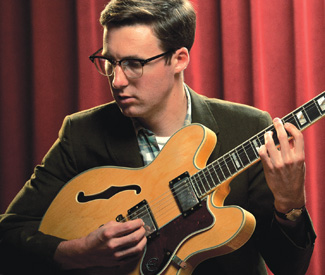
MUSIC Nick Waterhouse no longer calls San Francisco home, but the city’s fingerprints are all over Time’s All Gone, his effortlessly fun, debut LP. The retro-minded songwriter-producer crafts perfect little tributes to the punchy 1950s R&B sounds he’s been drawn to since he was a kid, all steeped with an endearing reverence for old-school record culture and recording techniques.

“We cut as live as possible, so a lot of the record is eight people in one room playing at the same time,” he explains. “Everybody’s gotta feel it together, and if they don’t, you really don’t have a song, in my opinion.”

As a Southern California kid growing up in the Costa Mesa area, Waterhouse approached his music listening from a studious angle, soaking up the Van Morrison and John Lee Hooker records of his parents, along with the Descendents and Sonic Youth albums he found. The well-rounded sonic diet can be heard within the frayed edges and garage rock appeal that Time’s All Gone has in spades.

“I listened to everything I could because I wanted to gain as much experience as possible,” he says. “I was the kid staying up for hours with the radio under the covers.”

By 18, Waterhouse had moved to San Francisco and quickly jumped headfirst into the DJ scene, spinning and building a network of like-minded cohorts at the Knockout’s Oldies Night and Saturday Night Soul Party at the Elbo Room, which brought him in touch with folks like Ty Segall and Mikal Cronin. No connection, however, would become as important to him as his relationship with Rooky Ricardo’s, the Dick Vivian-owned oldies-R&B-soul-centric gem of a record store in the Lower Haight.

“Rooky Ricardo’s informed a lot of how I developed as a person, and it’s all in the spirit of the place,” he says. “It’s got that clubhouse feel.”

http://www.youtube.com/watch?v=mJruQmdlU10

Waterhouse recorded the saxophone-propelled blast of “Some Place” in the summer of 2010, an undertaking that he says was fueled more by a desire to sell vinyl copies to friends and fellow Rooky’s shoppers than to start a full-fledged music project.

“I really had no interest in it at the time,” he explains. “I figured I’d just keep making these 45s for fun and no one would even know who I was.”

After some nagging by friends to put something together for live shows, however, he caved and began recruiting players for the beginnings of what is now the Tarots, his perfectly complementary backing band. Together with Waterhouse’s guitar playing and expressive croon, the group uses horns, piano, drums, and female backing vocals to pay tribute to soulful R&B without ever falling victim to hollow mimicry or self-conscious irony. This is warm music made by passionate people with only the purest of intentions.

When it came time to record an LP, Waterhouse did what anyone who’s heard his music might expect and found an all analog studio in Costa Mesa called the Distillery to work out of. With the use of vintage gear, old ribbon mics, and classic recording techniques, he says that Time’s All Gone was constructed entirely with vinyl in mind.

“I can’t lie and pretend that as somebody born in the late-1980s I haven’t had moments of discovery because of digital music,” he says. And while yes, he has found music digitally over the years, he doesn’t have any vivid, concrete memories of those discoveries, the way he does with physical records. “I can still remember what listening station at Rooky’s I was at when I first heard a record, or what weird flea market I found something at. Having something tangible in front of you helps you associate.”

Waterhouse recently moved back to Southern California due to his quickly escalating, hectic tour schedule, but the plan has always been to officially release his album in San Francisco. In a beautiful bout of planning, Wednesday night’s show will not only mark the release of Time’s All Gone, but will also serve as a celebration for the 25th anniversary of the day Rooky Ricardo’s first opened its doors. Expect the dance party to start early and run late, as Waterhouse has enlisted the help of some of his favorite local DJs to spin before and after his set.

“In my mind, my album was born out of Rooky’s and out of a specific period of time in San Francisco more than anything else,” he says. “So this is my party for all the people and things that really mattered to me there.”

NICK WATERHOUSE

With DJs Carnita, Primo, Matt B, Lucky

Wed/6, 8pm, $12 sold out

Verdi Club

2424 Mariposa, SF (415) 861-9199

www.verdiclub.net


Revival signs

1

emilysavage@sfbg.com

MUSIC A few musicians with slick hair and black-frame glasses are seen setting up their equipment in Chicago’s Hi-Style Studio: amps, a mustard Telecaster, glittering gold drums, a huge stand-up bass, and vintage condenser microphones. What year is this?

The drum hits crack and the bass strings ripple with heavy plucks. The finger-snapping beat is unavoidable, almost cloying in its blitheness. Potent vocals reminiscent of Little Richard suddenly overpower it all. It’s Broken Arrow, Oklahoma’s JD McPherson — singing so hard a craggy vein in his otherwise smooth forehead bulges — in the video for the single that has brought him this far: “North Side Gal.”

It’s due to be inescapable this summer. “The Chicago Cubs have actually been playing that song at the stadium during games,” McPherson says during a phone call from his car, where the singer-songwriter-occasional vegetarian is waiting on an order of red pepper tofu. “It’s really exciting. There’s really no other team I’d rather have that song associated with. It’s the ultimate old ballpark, underdog team.”

Like contemporaries Nick Waterhouse (who, coincidentally, is also playing San Francisco this week, and un-coincidentally is also profiled in this issue) and Nick Curran and the Lowlifes, McPherson is tackling the invigorating rock’n’roll power and bluesy vocals of early R&B and 1950s rock, exploring retro record-making processes,while nonchalantly dressing the part.

It’s another revival, likely to sell well across the mainstream in the Heartland, but also appeal to the underground listeners throughout rockabilly pockets. Though this is beyond classic rockabilly’s precise replications of the past, past kitsch and overwhelming aesthetics. These band leaders with undeniable guitar skills and a very modern drive have something that can only be described, apologetically, as star power. Out of the smoky clubs and into the mind’s eye.

And while rockin’ McPherson may have the sound, the side-parted hair, and the analog recording process back-story like the others in this current resurgence, his own background is fairly different; if the more soulful California boy Waterhouse is Rat Pack wool suits, McPherson is dusty rolled denim.

McPherson was raised on a cattle farm in Buffalo Valley, Southeast Oklahoma — dutifully feeding the cows before school — but later fell into a nearby punk scene, and met his wife (and mother to his two young daughters) at a new wave-goth club night in Tulsa; wearing a Smiths shirt herself, she approached him to say,”You look like a Smiths fan.” She’s now his biggest supporter, sitting patiently while he runs by new guitar parts or song lyrics. She’s also the original “North Side Gal.”

But before all that, before his interest in punk and new-wave, before the wife and kids, and long before the release of his modern reinterpretation of early rock’n’roll record, Signs and Signifiers, he was just a 13-year-old kid in the Midwest learning to play the guitar.

His much older brothers showed him their ’70s-era Lynyrd Skynyrd, Allman Brothers, and Jimi Hendrix records. He grew obsessed with Led Zeppelin then Van Halen, and later, Nirvana, which led to searches for punk origins records by the Stooges and the Ramones. As a late teen, he discovered early rock’n’roll, the backbeat to all those spinning vinyl dreams.

“I found the Decca recordings of Buddy Holly, and that sort of seemed to marry the exuberance of the Ramones, with the country Arcadian aesthetic that I was growing up around. It made sense…and it got me.”

His teenage punk band began interjecting Buddy Holly’s “Rocking Around with Ollie Vee” into their sets; the sound had a pervasive pull, and he fell backwards, deeper into the roots of rock’n’roll — Screamin’ Jay Hawkins, blues artists his Alabama-born dad loved such as Muddy Waters and John Lee Hooker, and early jazz musicians.

He looked to Little Richard in particular, to whom he has garnered favorable comparisons (see the beginning of this story). Because of his style, and, perhaps, his skin color, he’s also seen comparisons to Elvis. “I love Elvis, I mean, I lo-ove Elvis,” he stretches out the “of” sound in the word “love” with an endearingly twangy accent. “I don’t know if there’s a huge musical similarity between us and Elvis, maybe instrumentation-wise, but we’re way more Specialty Records than Sun Records.”

“Little Richard is my favorite recording artist,” he continues, “[I’m] way more interested in Elvis’ black counterparts and predecessors. I do love rockabilly, but we don’t interject a lot of hillbilly sounds into our rhythm and blues the way Elvis did.”

In the ’90s Midwest, pop-country was taking over the airwaves, Billy Ray Cyrus and the like — it’s what all McPherson’s high school classmates were popping in the tape decks. It wasn’t for him. Perhaps this is why he shies away from any hillbilly sounds, those that can lead to psychobilly when mixed with the punk roots. Not that he disparages rockabilly.

“There’s a subculture of all these bands that have no intention of doing anything other than just really faithfully reproducing these sounds, there’s a lot more rockabilly and Western swing bands doing that thing, [yet] these are folks that are putting out quality music.”

But in those scenes and beyond he saw a shortage of the more straight-forward rock’n’roll he loved. That’s why he and musical partner Jimmy Sutton (the gray fox thumping those stand-up bass strings in the “North Side Gal” video) decided to make the DIY, all-analog Signs and Signfiers album in the first place. “So our record basically was almost like an art project, like ‘let’s just make this record and do what we always wanted to do.'”

The drummer on the album was Alex Hall, who doubled as the engineer. Now he’s still “in the family,” often playing keyboards with the band; drummer Jason Smay is on the current tour. During the recording process, McPherson and Sutton would run through a song then Hall would head into the control booth to mix. He’d set the levels, start the tape, run in, then get behind the drums. “That was kind of the magic of it, it was essentially mixed as we recorded it. Real fast, instant gratification. It’s the best way to record.”

Like contemporary Waterhouse noted, McPherson of course has his own connections with modern technology and has used digital recording processes in the past, but he prefers the analog way, to extract that authentic sound. “I’ve seen the amazing things you can do in a digital environment, but there’s some special thing to getting a band live in the studio and recording an actual performance. And then you know, the equipment sounds amazing too.”

While the record was originally released in 2010 on Sutton’s tiny Hi-Style label, the “North Side Gal” single and album have really started picking up this year. With the homemade video as the ultimate calling card, Rounder Records signed the band and rereleased the album this spring. The video has gained half a million views as of press time, and the band’s television debut is tonight on Conan. Despite all that, they’re still relatively unknown in the US, but McPherson and his band have a huge following in the UK — they regularly play sold-out shows and festivals, and have daily rotation on BBC Radio.

During the recording process, and up until the end of the 2011 school year, McPherson was still employed in a local Broken Arrow middle school as a computer and arts teacher (he went to college for fine arts). When he was laid off last summer he says he told the band, “well, I’m getting a paycheck through the summer, so let’s tour and try to make some money while I look for another job.” They’ve been touring consistently ever since.

Perhaps this batch of ’50s-inspired rockers and analog R&B crooners will move beyond the past, and into the future musical pantheon, gaining elusive mainstream success. Or maybe they’ll remain lovable underdogs. Only time will tell. For your McPherson fix now, you could always take in a Cubs game. Check back at the end of summer ’12.

JD MCPHERSON

With Toshio Hirano

Thu/7, 8pm, $21

Great American Music Hall

859 O’Farrell, SF

(415) 885-0750

www.slimspresents.com


Dream not deferred

0

yael@sfbg.com

On Monday, June 4, students at the Meadows-Livingstone School rehearsed for their annual end-of-the-year performance. It was bleak and rainy out, but the small, essentially one-room schoolhouse that houses the private elementary school was bursting with energy.

Twenty kids, first through sixth graders, were practicing: they sang Wade in the Water and a welcoming song in Swahili. During The Greatest Love of All, a seven-year old crooned her solo: “People need someone to look up to, I never found anyone who fulfilled my needs.” But then the kids broke out into the Neville Brothers’ Sister Rosa, (“Thank you Miss Rosa, you are the spark! You started our freedom movement!”) and then a rap about Malcolm X.

At this school, located at Potrero and 25th streets, those needs are fulfilled.

This end-of-the-year performance will showcase what the children have learned all year in an elementary school education built around lessons on African and African American history and culture. As Gail Meadows, the school’s founder and principal, puts it: “We have an Afro-centric school. We have a classical African Civilization class, and have books, videos, games, focused on African Americans. The kids learn African songs, they learn African American field songs.”

Meadows says is offers more than the cursory black history that is usually taught: “At most schools, you’ll learn about Rosa Parks and Martin Luther King, and that’s it.”

All of the children at Meadows-Livingstone are of African descent. “We’re not nationalists,” Meadows says. “The kids understand the world is of many colors, and you can’t live in this world by yourself.”

But spending some crucial elementary school time specifically for African Americans, Meadows believes, does wonders for her students’ abilities to navigate that world.

As Meadows tells it, she’s motivated partly because she didn’t get the same experience as a child. “I lived in a small campus town and went to an all-white school. My mother used to say that she had to undo everything that was done.”

Her education included books shaped by her parents to include black children (“They would search tirelessly for children’s books representing people of color, or they would just change the stories”) and distrust of television (“My father would say, why watch something that doesn’t validate you as a child?”). At her school, she recalls being in “a play that included a line, ‘Don’t drink coffee. It will make you black, and that’s bad.'”

For children in San Francisco today, Meadows says this feeling of belonging is as important as ever. “There’s an exodus of people of color out of San Francisco,” she says. “That means children of color are in classrooms with people who are not educated about African American culture. And they’re educated by a media that gives them a skewed view of who they are.”

This lack of education can often lead to racist bullying. a large reason why many students transfer to Meadows’ school.

“There are students that transfer into my school after having bad experiences, and they don’t know how to confront the person who said something offensive to them,” says Meadows. “In my school they learn to confront. An angry confrontation isn’t productive. It should be direct, they should be able to explain, here’s the real story about that stereotype.”

This education helps when kids leave the Meadows-Livingstone school for middle schools across the city.

“People ask them questions like, are you in a gang? Do you have a house? All these stereotypes they’ve read about, all of a sudden they’re right there,” Meadows says. “If you know who you are, you can live through that. Its easier.”

At a recent visit to the school, some students described their own experiences.

“Sometimes, when I was at my old school, they talked about blacks badly,” said one student. “They said they were stupid and dumb. And I still didn’t believe it, but now I learned about my heritage and I learned that we’re stronger and we have more spirit.”

Or, as he said, “Black power makes me feel strong.”

A 12-year-old who would be leaving the school soon told me a story of how the school influenced. “One of the kids in my neighborhood, he said, ‘We’re all niggers,'” he explained. “I said, ‘No we’re not. We’re regular black kids.'”

As another child put it, “Black power means that you have strength and nobody can push you around, like, like you’re just a little duck and everyone else is a coyote.”

From a long line of teachers, Meadows’ life work has been dedicated to educating and empowering young people. She taught her first class at age 10, before studying education at Kansas State University. She was teaching at Montessori schools when she decided to start her own.

Meadows-Livingstone school came out of a wave of alternative education informed by 1960s liberation movements. The Black Panther party, a part of the history that the children Meadows-Livingstone learn, had a 10-point platform laying out the ways that racism intersects with inequality in education, along with housing, treatment by the justice system, and other facets of society.

Point five says, “We believe in an educational system that will give to our people a knowledge of the self. If you do not have knowledge of yourself and your position in the society and in the world, then you will have little chance to know anything else.”

Meadows-Livingstone continues this part of the Panther legacy, and not just ideologically.

“At one point in our school we had maybe 15 kids whose relatives had been Panthers,” says Meadows.

“We have a grandfather who brings fruit every week,” she says, continuing the spirit of the Free Breakfast Program. “And he was a Panther.”

The children also learn about prominent Panthers. “They play a Panther tag game, and they would cry if they couldn’t be Angela Davis or Huey P. Newton,” she said.

On Fridays, the children read poetry. “They really like to recite poems written by African Americans, it gives them hope. They’re stuck on Langston Hughes, they like Gwendolyn Brooks too.”

The school costs $700 a month, but many of the students are subsidized by The Basic Fund, a private foundation.

Meadows also uses partnerships with city institutions to enhance the curriculum. The children spend time every week swimming at Garfield public pool on Treat Street, and playing tennis, and partnering with Acrosports for tumbling lessons. The swimming lessons hold a particularly strong symbolism, as generations of African Americans in Jim Crow states were denied opportunities to swim.

Tributes to Black historical figures decorate the school’s walls. Children’s art on “Black Inventors” and “Louis Armstrong, the king of jazz” are displayed, along with a large version of the iconic photograph of John Carlos and Tommie Smith doing the Black Power salute at the 1968 Olympics.

When asked about Malcolm X, 20 hands shot up to talk about a figure important to their studies.

As one child explained it: “Malcolm X, he said if somebody’s hits you or hurts your family, he’s not going to turn the other cheek. He’s going to fight back. He’s like, you hurt my family, I’ll hurt yours. Martin Luther King, he said if a white person hits you, don’t fight back, make peace.”

“That’s nonviolence” another chimed in.

When listing their personal heroes, many kids included King and Malcolm. “Muhammad Ali, Yele, and you, Gail!” one exclaimed, the middle hero referring to the school’s drumming and African Civilization teacher, Akinyele Sadiq.

In the summer, most of the students go off to Camp Winnarainbow, the hippie-circus camp that Meadows calls “almost like an extension of our school.” Many of the children have parents who attended the school, and when I ask if they’re excited to graduate, all the kids frown and one says, “I don’t want to leave!” Others are more calm at the question. The school provides a safe haven for bullied kids and a source of ethnic pride. One 12-year-old tells me that when he goes to middle school next year, he’ll make new friends but, “I won’t follow them if they do something bad.” He sighs when I ask if he will be sad to leave. “Yeah,” he says, “But we all have to move on.”

Mayor Lee’s priorities are wrong

0

By Margaret Brodkin

OPINION There was much back slapping at City Hall last week as officials congratulated themselves on what was described as a welcome “philosophical shift” in San Francisco politics.

The beneficiary of the acclaim and virtual political consensus was Mayor Ed Lee’s proposed budget, the largest in history — including an unexpected windfall of new revenue. The budget’s signature element, described in glowing terms by the San Francisco Chronicle’s C.W. Nevius and warranting its own special mayoral press conference, is the expansion of the police and fire budgets — an $82 million increase over two years.

Amid last week’s ovations was an unsettling silence from voices normally willing to cut through obscure numbers and rhetoric. Not one official commented that the best way to ensure public safety is to build strong children, families, and communities.

The cumulative impact of the devastating state budget and years of inadequate funding on families and children should not permit celebration. In light of millions in unanticipated revenue, politicians should not be satisfied with addressing urgent needs simply by sparing a few city departments from cuts, as appeared to be the case. Here’s what they should be thinking about:

• Our schools face the worst budget cuts ever, with SFUSD preparing to lay off 400 employees, reduce the already-too-short school year, increase class size, eliminate most school bus lines and all high school after-school programs, and under-fund everything from food to special education.

• Our childcare system is being gutted by the state, with $20 million in losses this year on top of $9 million from last year. This will impact thousands of families and result in the closure of centers and family childcare homes. Many fewer parents will be eligible for childcare subsidies (no one with two kids earning more than $37,500 a year will qualify) — pushing parents out of work and onto “welfare,” and children out of quality care and into unsafe settings.

• Support systems for children with disabilities are being eliminated and reduced through simultaneous cuts in multiple agencies.

• Young people entering community colleges or state universities face years of uncertainty — including whether their campuses will even exist. Already, the majority of SF students who enter City College are unable to graduate — stymied by costs, lack of educational support, or the inability to get classes they need.

It appears that little of the new millions will address these problems. The mayor’s budget does not even fully fund the voter-approved Public Education Enrichment Fund, passed in 2004 to provide essential services to public schools and preschools. Funding falls short by more than $10 million. Providing schools the funds to which they are legally entitled is the least we can do when the city lands millions in new resources.

Let’s be clear: crime is at historic lows — and has gotten that way with 200 fewer officers than the mayor is now advancing. There is little rationale to suddenly swell the ranks, at a cost of $140,000 per officer. The Fire Department’s inefficiencies have been well documented by city budget experts, and many cost-saving recommendations have yet to be implemented.

Before signing off on a budget they have not yet discussed in public (as it appeared to last week), the Board of Supervisors must evaluate fiscal options in full view. Private meetings with the mayor are no substitute for a robust debate now that the revenue facts are known. This is the city’s first two-year budget, and its policy direction will impact us all for years to come.

What looks to Nevius like a positive “drama-free, signature moment” for San Francisco, looks to many advocates for children and families like an abdication of responsibility.

Margaret Brodkin is a former executive director of Coleman Advocates for Children, director of the Department of Children, Youth and their Families and New Day for Learning, and a veteran of numerous budget processes

The circus begins

199

steve@sfbg.com

Mayor Ed Lee and his attorneys are presenting a voluminous yet largely speculative case against suspended Sheriff Ross Mirkarimi in their effort to remove him for official misconduct, broadening the case far beyond their most damning core accusation -– that Mirkarimi dissuaded witnesses from telling police that he bruised his wife’s arm during an argument on Dec. 31. And so far, there’s no evidence to support that key allegation.

In fact, Mirkarimi and his attorneys insist there was no effort to dissuade witnesses, one of many unsupported aspects to a case they say should never have been filed without stronger evidence. And they say the mayor’s team is now compensating for the weakness of its case by piling on irrelevant accusations and witnesses in an effort that amounts to character assassination.

There are even signs that the city is nervous about its case. Knowledgeable sources told the Guardian that the City Attorney’s Office last week offered to settle the case with Mirkarimi, offering a substantial financial settlement if he would agree to resign, an offer that Mirkarimi rejected.

It was one of a series of rapidly unfolding developments that also included a raucous Ethics Commission hearing, the disclosure of phone records by Mirkarimi’s side, a new list of charges, and the city’s release of the video Mirkarimi’s wife, Eliana Lopez, made with neighbor Ivory Madison, documenting the bruise in case of a child custody battle over their son.

Lopez has maintained that Mirkarimi never abused her and that she’s been hurt most by the efforts to prosecute him and remove him from office.

“I hope they realize after reflection that what they have done is irreparable and perpetually damaging to me and my family,” Lopez said in a statement condemning the city’s release of a video that she fears will remain online for her children and grandchildren to see.

Yet all indications are this spectacle is only going to grow more sordid, divisive, and sensational as it moves forward — belying the statement Lee made last week as he introduced his annual budget: “As many of you know, I’m a person who does not like a whole lot of drama.”

SIMPLE OR COMPLEX?

The May 29 Ethics Commission hearing to begin setting standards and procedures for the official misconduct proceedings against Mirkarimi illustrated two sharply divergent views on when elected officials should be removed from office. It also displayed the increasingly bitter acrimony and resentments on each side, emotions only likely to grow more pronounced as the hearings drag on for months against the backdrop of election season.

Both sides would like to see the decision as a simple one. Lee and his team of attorneys and investigators say Mirkarimi’s bruising of his wife’s arm and his unwillingness to cooperate with their investigation of what followed make him unfit for office. Mirkarimi and his lawyers admit his crime, but they say that’s unrelated to his official duties and that the rest of Lee’s charges against him are speculative and untrue.

Yet there’s nothing simple about this official misconduct case — or with the implications of how each side is trying to counter the others’ central claims. So despite the stated desires of some Ethics commissioners to narrow the scope of their inquiry and limit the number of witnesses, San Franciscans appear to be in for a long, dramatic, and divisive spectacle, with Mirkarimi’s fate decided by the Board of Supervisors just a month or so before the five supervisors who have been his closest ideological allies face reelection. Nine of 11 votes are required to remove an official.

The Mayor’s Office wants to call the most witnesses and present an elaborate (and expensive) case that includes a number of outside experts on law enforcement and domestic violence, painting a portrait of Mirkarimi as a serious wife-batterer whose past and future actions can be divined from that malevolent distinction, making him obviously unable to continue as San Francisco’s chief law enforcement officer.

“The extent of the abuse was far greater than what Mr. Mirkarimi has testified to,” claimed Deputy City Attorney Peter Keith, going on to say “there were attempts to control what she ate,” an apparent reference to Mirkarimi’s decision not to take Lopez to a restaurant for lunch on Dec. 31 because they were having a heated argument. He also repeatedly referred to Mirkarimi as a batterer and said “batterers behave in a certain way.”

Mirkarimi attorney Shepard Kopp calls that portrayal exaggerated and unfair, ridiculing the Mayor’s Office claims that its domestic violence expert, attorney Nancy Lemon, can predict Mirkarimi’s behavior based on grabbing his wife’s arm once: “Apparently she’s some kind of clairvoyant in addition to being an expert,” Kopp told the commission as he unsuccessfully sought Lemon’s removal from the witness list.

Ethics Commission Chair Benedict Hur took the lead role in trying to limit the witness list, focusing on stripping it of the various law enforcement experts who plan to describe how different agencies might react to dealing with Mirkarimi. “What I don’t understand is how his ability to do his job relates to whether he committed official misconduct,” Hur said.

Mirkarimi’s team says its case could be very simple, with only Lee and Mirkarimi called as live witnesses — but the attorneys reserved the right to offer testimony to counter false or damaging claims made by the Mayor’s Office.

Hur tried to limit the case to just witnesses and arguments that relate to Mirkarimi’s actions, but he was outvoted by those who wanted to let the city argue how those actions would affect perceptions of Mirkarimi by the many people that a sheriff must interact with.

In the end, the commissioners agreed to trim the eight expert witnesses sought by the mayor down to three and to cut its 17 proposed fact witnesses down to 12, calling 15 total witnesses. Mirkarimi’s team will call 10 witnesses, down from an initial 17. All witnesses will submit written declarations and then be subjected to live cross-examination if any of their testimony is disputed.

EVIDENCE AND SPECULATION

The speculative and prejudicial nature of some of the city’s case was attacked at the hearing by Mirkarimi’s attorneys and the large crowd that came to support him.

Commissioner Paul Renne asked the Mayor’s Office attorneys why they hadn’t summarized the expected testimony of their expert witnesses and “How are any of those opinions relevant to the issues in this case?”

“I have not had time to work with the witnesses to see what their opinions are,” replied Deputy City Attorney Sherry Kaiser, prompting Kopp to incredulously note, “The mayor is preparing the expert witnesses without knowing what their testimony will be. How can I respond to that?”

The issues of bias and conflicts of interest also came up surrounding what sources should be called as witnesses. Mirkarimi’s team wanted longtime Sheriff Michael Hennessey, Mirkarimi’s predecessor, while the Mayor’s Office pushed for Acting Sheriff Vicki Hennessy to convey how the Sheriff’s Department should function.

“Vicki Hennessy was a political appoint of Mayor Lee,” Waggoner objected, although the commission decided to use that appointee.

On several critical procedural questions, the commission sided with the Mayor’s Office, ruling that the commission decision needn’t be unanimous, that guilt could be established based on a preponderance of the evidence rather than beyond a reasonable doubt, and that normal rules of evidence won’t apply, with some hearsay evidence allowed on a case-by-case basis.

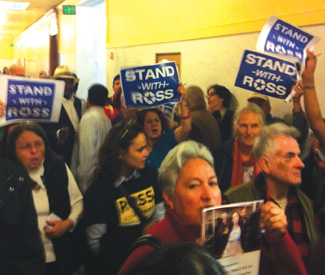
The pro-mayor decisions angered the roughly 200 Mirkarimi supporters who packed the commission hearing and an overflow room, many bearing blue “We stand with Ross” stickers and flyers, which had “Respect Eliana” on the flip side. There were only a couple of Mirkarimi critics at the hearing wearing white “I support Casa de las Madres” stickers, referring to the domestic violence group that has been calling for Mirkarimi’s removal since shortly after the incident went public.

Mirkarimi got a rousing welcome from the crowd when he arrived at the hearing, his voice choking up and eyes welling with tears as he said, “I cannot tell you, on behalf of me and my family, how grateful we are.”

The crowd was boisterous during the proceedings, loudly reacting to some claims by the deputy city attorneys and offering comments such as “Ed Lee is the one you should put on trial,” with Hur finally recessing the hearing after an hour and having deputies warn audience members that they would be removed for speaking out.

Renne, a career litigator and the District Attorney’s Office appointee to the commission, raised the most doubts about both the standard of guilt and rules of evidence being lower than in criminal proceedings, telling his colleagues, “I have some reservations.”

PHONE LOGS

Mirkarimi’s team also released to the Chronicle and the Guardian redacted phone records from Mirkarimi, Lopez, and Linnette Peralta Haynes — a family friend and social worker who served as Mirkarimi’s last campaign manager. The city has sought to portray Haynes, who has not been cooperating with the investigation, as a conduit to Mirkarimi’s efforts to dissuade Lopez and Madison from going to the police on Jan. 4.

Mirkarimi previously told the Guardian that he was unaware that Lopez had told Madison about the abuse incident or that they had made a video of her injury until several hours after Madison had called the police and they had come to the house to talk to Lopez, during which time Mirkarimi was in a series of meetings at City Hall.

The phone records seem to support that claim. They show that Lopez and Haynes — who is close to Lopez and recently went to Venezuela to visit her — exchanged a series of telephone calls on Jan. 4 starting at 11am. Their longest conversation, nearly 40 minutes, occurred at 11:18am.

Neither woman could be reached to describe the substance of that call. At 12:24pm, Lopez sent Madison — with whom she had been communicating by phone and text over the previous couple days — a text message indicating that she didn’t want Madison to report the incident to police, but that she would instead go to her doctor to document the injury.

A minute later, Madison called the police to report that Lopez had been abused by Mirkarimi.

Starting an hour later, the records show, Haynes and Lopez called each other but didn’t connect until 3:31, when they had a nearly 14-minute phone conversation, presumably discussing the fact that police had visited the house, with Lopez reportedly giving the phone to Madison at one point so Haynes could talk to her.

Yet the phone records indicate that neither Lopez nor Haynes tried to reach Mirkarimi until after that conversation, despite the city’s claims that Mirkarimi “or his agents” used his power to dissuade witnesses, most notably Lopez and Madison. The first attempt to reach Mirkarimi was at 3:46pm when Haynes called him twice but didn’t connect. Lopez then sent Mirkarimi a text message at 3:53pm asking “Where are you and where is the car,” but she got not reply. She texted him again at 4:18pm to say “Call me. It’s an emergency.”

Lopez made one last appeal to Madison in a 4:18pm phone conservation that lasted four minutes and 27 seconds and then she finally reached Mirkarimi by phone at 4:23pm. Mirkarimi and attorney David Waggoner say this is the first time that he became aware that Lopez had talked to neighbors and that the police had been called. Their conversation lasted a little more than five minutes.

Mirkarimi called Haynes at 5:12pm and they spoke for seven minutes. At 5:51pm, an increasingly panicked Lopez sent a text to Mirkarimi saying, “You have to call [Sheriff Michael] Hennessey and stop this before something happen. Ivory is giving the investigators everything. Use your power.” To which Mirkarimi responded 10 minutes later, “I cannot. And neither can he. You have to reject Madison’s actions. We both do. I cannot involve new people.”

NEW CHARGES

On June 1, the city released an amended list of charges against Mirkarimi that was intended to be a more specific list of accusations, as Waggoner requested during the May 29 Ethics Commission hearing. In it, the city asserts that the charter language essentially gives the city two avenues by which to remove officials, defining distinct “wrongful behavior” and “required conduct” clauses. Violation of either, they contend, is enough to remove an official.

“Official misconduct means any wrongful behavior by a public officer in relation to the duties of his or her office, willful in its character, including any failure, refusal or neglect of an officer to perform any duty enjoined on him or her by law…,” begins the charter language. This “wrongful behavior” section has long been in the charter, referring to specific actions by public officials to neglect their duties.

The second “required conduct” clause of this sentence — which was created in 1996, never vetted by the courts, and which Mirkarimi’s attorneys say is unconstitutionally vague — continues, “…or conduct that falls below the standard of decency, good faith and right action impliedly required of all public officers and including any violation of a specific conflict of interest or governmental ethics law.”

In trying to indict Mirkarimi for actions before he was sworn in as sheriff, the city attempts to argue that his official duties really began with his election, claiming that in this interim period he “had the duty and the power in his official capacity as Sheriff-Elect to work with the Sheriff’s Department and its officials to prepare himself to assume the full duties of Sheriff.” And if that’s not enough, the city argues that he was chair of the Board of Supervisors Public Safety Committee during that same Nov. 8-Jan. 8 time period, further subjecting his actions to official misconduct scrutiny.

The “wrongful actions” charges against Mirkarimi were listed in the document as domestic violence, abuse of office, impeding a police investigation, and “crime, conviction, and sentence,” while the “breach of required conduct” charges were listed simply as his sheriff and supervisorial roles.

The document then attempts to paint an expansive portrait of the Sheriff’s official duties, going beyond the narrow construction of the charter to include the general law enforcement duties listed in state law, interactions with various government and nonprofit groups, administrative responsibilities as a city department head, and passing mentions in the California Family Code that police officers “must enforce emergency protective orders in domestic violence cases.”

Yet the promise that the rest of the document would detail Mirkarimi’s wrongful actions with greater specificity than the previous list of official charges doesn’t seem to be met by this document, which repeats the same narrative of actions that Waggoner had criticized for vagueness.

For example, on the pivotal charge that he dissuaded witnesses and impeded the police investigation, the new charges say that during the period from Dec. 31-Jan. 4, “Sheriff Mirkarimi participated in and condoned efforts to dissuade witnesses from reporting this incident to police and/or cooperating with police investigators,” without describing any specific witnesses or actions that he took.

And by the mayor’s team’s own admissions, the prosecutors don’t know what Mirkarimi did to dissuade witnesses, which they hope to learn through future testimony.

The closest the new document comes to directly tying Mirkarimi’s actions to the official misconduct language is with Mirkarimi’s plea to a misdemeanor false imprisonment charge: “False imprisonment of a spouse is a crime of domestic violence. The California Penal Code considers spousal abuse to be a ‘crime against public decency and good morals.'”

Mirkarimi disagrees with that interpretation, noting that he and his attorneys specifically considered whether pleading to false imprisonment -– a general charge with many possible meanings -– would violate the city’s official misconduct provisions, and he told the Guardian that he was assured by his attorneys it didn’t. Mirkarimi told us he would not have entered the plea and would have instead fought the charges in court if he thought it would disqualify him from serving as sheriff.

Waggoner told us that “The Mayor’s Amended Charges are further evidence that this entire ordeal is a political hatchet job reminiscent of a Soviet show trial. Far from being a careful analysis of any actual evidence, the new charges are vague, redundant, and conflate the offices of Sheriff and Supervisor.”

But ultimately, the case against Mirkarimi is a political one, not a legal case subjected to the normal standards of evidence and procedure. And whether Mirkarimi keeps his job will be a decision made by politicians based on a variety of factors, some of which have little relation to whatever happened on Dec. 31 and Jan. 4.

What’s next: the Ethics Commission will meet on June 19 to rule on more of the outstanding issues in the case and begin hearing testimony. To review the long list of documents from the case, visit www.sfethics.org.

Rites of passage

0

arts@sfbg.com

FILM It’s commonly said of Nathaniel Dorsky’s films that they are beautiful beyond words. Which is true as far as it goes, but then the same could be said of many poems and they are words. What’s clear is that Dorsky is absorbed with a classical fulfillment of form, and as such his films do better with poetics than interpretation (he has himself supplied a fine entry point with his slim volume Devotional Cinema). Poetics in this context means respecting the mystery and proceeding gingerly with gesture, metaphor, and detail. No one ever says of a Dorsky film, “I liked it the more I thought about it.” Conversely, watching a second or third time one marvels to find the beauty springing to life with the same force, subtler and lovelier now for this trick of renewal. No one ever says of a sunset, “I’ve seen this one before.”

A three-part retrospective at the Pacific Film Archive beginning June 10 retraces the last decade of Dorsky’s work. The Return (2011) and August and After (2012) receive local premieres this weekend, accompanied by the delicate Pastourelle (2010). June 17 brings his “Quartet,” to my mind a signal achievement of the young century. The series concludes June 24 with three earlier films confirming Dorsky’s mastery of an open (sometimes called polyvalent) form of montage: Song and Solitude (2006), Threnody (2004), and The Visitation (2002). How fitting that these films should be spaced out over consecutive days of rest! They will be shown on 16mm because that is what they are (last I checked the museums still show the Old Masters in paint).

It’s our good fortune to share a city with Dorsky: opportunities to see the films with him as a guide come a little more frequently, and the phenomena that supply his visual repertoire are that much more familiar. Here are the blossoms, the Chinatown lanterns, the drifting Muni trains, the ocean skies, and the seasons as we only dare to see them in deepest reverie.

Dorsky began making movies under the influence of people like Stan Brakhage and Gregory Markopoulos, filmmakers who strove for an intrinsic cinematic language (while the auteurists chiseled out an essential cinema, they sought cinema’s essence). After relocating to San Francisco in 1971, he reemerged with Hours for Jerome (1980-1982), a dense exercise in spiritual autobiography culled from pastoral years in New Jersey. The films began arriving with greater regularity after Triste (1998) and continue apace even after the desertion of his beloved Kodachrome.

The silence of Dorsky’s films is lush, providing intoxicating accompaniment to the slowed projection of 18 frames per second which dips the photographic action just out of the flow of representation. The crescendos that surge past the finish of his films invariably leave me surprised that I haven’t been listening to music, as the black of the theater seems clarified in the same way silence is after an expressive composition. Pushing the analogy further, the relationship between movement and stillness in his films is akin to that of sound and rest in music, the two leaved together as intonation. We really need a new word to describe the juddering movement of branches and buds that punctuate Dorsky’s films. “Quiver” is close, but it doesn’t capture the spring in the frame, like dancers on a stage.

A couple of months ago, Dorsky showed something called Kodachrome Dailies from the Time of Song and Solitude (Reel 1) at Lincoln Center: Song and Solitude-era footage in the chronological order in which it was shot. The material had a completely distinct character viewed this way. Dorsky talked of it as a journal. The loose form made it easier to relate to his eye being grasped by something in the world, and yet one missed the justice of the cuts.

If pressed for a defining quality of these films, I would say rightness —each shot developing to its fullness, tuned to what comes before and after. The fact that this formal refinement is itself the focus of the films creates a suspension of time which, after all, is a basic condition of paradise. Certainly the films are colored by experience, as August and After for instance is clearly marked by grief, yet this is never what they are “about.” Trust is placed in the self-expression of the film stock — its luster and dusk.

Dorsky’s films will reintroduce you to what branches make of the sky and how the grass gladdens when the sun reappears from its shade. I think this is what people are talking about when they say the films remind them of childhood. “A child said What is the grass? fetching it to me with full/hands;/How could I answer the child? I do not know what it is any/more than he./I guess it must the flag of my disposition, out of hopeful/green stuff woven.” We could choose many lines of verse to say the same, but Whitman’s will do. There is something mystical in Dorsky’s slightly ajar illuminations of worldly objects and features. And yet so too is there something altogether sensible and almost courtly in their formal arrangements. The shots of dogs make us chuckle because we’re in a position to recognize our own recognition, all too human.

On first viewing The Return struck me as a deeply melancholy work, its darkly reflecting surfaces and doublings bearing the impression of lost sleep. August and After, on the other hand, is more immediate in its effect and a superior example of how Dorsky’s style can serve distinct emotional structures (threnody here). Tender impressions taken near the end of George Kuchar’s life, the filmmaker surrounded by family and friends, are framed in the light of long afternoons. Everything that follows is touched by these pictures of intimacy: two workers sliding down a skyscraper, a distant glass door sweeping a ray of light across a café, agitated steps into bramble. A rhythmic montage focuses on packages and fruits carried down the street, the actual things transfigured into pure color. When the film’s ship finally sails, it does so with such grace as to say love without saying.

“AFTERIMAGE: THREE NIGHTS WITH NATHANIEL DORSKY”

June 10, 17, and 24, 7:30pm, $5.50-$9.50

Pacific Film Archive

2575 Bancroft, Berk.

(510) 642-5249

bampfa.berkeley.edu

Turnout light in SF; eyes on Wisconsin

0

My usual limited polling sample — my precinct in Bernal Heights — suggests what everyone pretty much knew: Turnout in San Francisco will be very low. Control of the local Democratic Party, and its endorsements, will be determined by a small fraction of the eligible voters.

On the national front, since the presidential primaries are long over and California has long been irrelevant, everyone’s looking at Wisconsin, where the battle to recall Gov. Scott Walker will have national implications. Walker’s trying to survive by blaming public employees for the state’s economic woes; since he ended collective bargaining, he said today, the state budget is running a surplus and property taxes are down.

If by some chance he’s thrown out of office — and it doesn’t look good right now — labor will have one of its greatest victories in years. If he becomes the first governor in US history to survive a recall, he’ll portray it as a confirmation that the public supports his attack on unions. The right-wing types have poured millions into this race — and if they get their way, a lot of labor folks are going to be asking why President Obama (who will be in San Francisco to raise money at Clint Reilly’s office building June 6) didn’t make an appearance in Wisconsin.

Labor came in big for the president in 2008, and this one is hugely important — and the White House has been entirely missing in action. And he may have to answer for it if Walker survives and GOP governors across the country take up the call and attack public-sector unions as the start of a larger attack on organized labor.

In California, I don’t care how much money the tobacco companies spent — Prop. 29, the cigarette tax, is going to win. And I think the term-limits measure squeaks through, too. Locally, we all know that Prop. A will lose under a barrage of Recology money; I hope Prop. B survives the strange last-minute money blitz.

We may not know for days how the Democratic County Central Committee races are shaking out. If it’s close, and control of the panel hangs on a couple of tight races, the absentee votes that get counted over the next few days will make the difference.

We’ll be posting updates all evening.

Don’t water down campaign laws

2

EDITORIAL The San Francisco Ethics Commission, which is hardly aggressive about cracking down on campaign-finance violations, has suggested some rule changes that would water down the city’s ethics laws. The supervisors should reject most of the suggestions — and start talking about real reform.

The commission has asked Sup. Scott Wiener to bring the changes to the board, and Wiener told us that he has problems with some of them and is going to be working with his colleagues, particularly Sup. David Campos, to fix the package.

It will need a lot of amendments to be acceptable.

The current proposal would make life easier for campaigns and big donors, but would make it harder for the public to figure out who’s putting up the money and where it’s going. For example, it would exempt from the spending cap all money spent complying with the ethics laws. That sounds fair at first glance — but the amounts involved are huge. For a mayoral race, as much as $147,000 would be exempted. That’s a lot of money for “compliance.”

More important, the ethics proposal would eliminate the restrictions on how much a single donor can give in an election season. Right now, the cumulative limit is $500 for each office on the ballot, which limits the impact that a handful of big-money contributors can have on an election. Under the new rule, a wealthy person who wants to make sure that every politician in town owes him or her can donate the maximum to a long list of candidates, giving more power to a few.

Wiener says that under ranked-choice voting, donors should be able to give to more than one candidate for a single office. Fine — but the cap doesn’t have to be eliminated. It could easily be amended to account for RCV.

The plan would somewhat loosen the reporting requirements in the last days of a campaign, eliminating weekend disclosures. It would decrease the transparency rules for campaign committees that shuffle money back and forth to hide its true source. It would aalow more spending by independent committees with less disclosure.

In other words, it would undermine the ability of the voters to know who is funding which candidates and initiative campaigns. There’s no reason to do any of that.

The problem with the current law is not that it requires too much disclosure — it’s that, in many ways, the controls on political money are too weak. And if the supervisors are serious about reform, there’s plenty to be done.

Ethics laws currently bar anyone who is seeking a city contract from donating to local officials. But it’s still perfectly legal for someone seeking a permit or zoning change to throw around cash. And there are endless problems with developers who need city officials on their side. Extending the contribution ban to anyone seeking special zoning or permit approval for any project with construction costs above a certain threshold — say, $10 million — would exclude, say, homeowners who want to build a new deck, but would limit the role of real-estate money in campaigns.

The amendments need eight votes to pass; before it even gets to the full board, the Rules Committee ought to ship this mess back to the Ethics Commission and tell the supposed watchdogs to try again.

Namu Gaji

0

virginia@sfbg.com

APPETITE Although Asian outpost Namu Gaji is brand new, the presence of Namu restaurant itself and owners the Lee brothers — Dennis, David and Daniel — has been felt in San Francisco for years. Since 2006, the Lees have been weaving Korean, Japanese, and other Asian cuisines with California spirit in the original, now shuttered Richmond restaurant and eventually Namu’s Ferry Building farmers market stand on Tuesdays and Saturdays. In early April, the brothers opened their Mission incarnation, Namu Gaji.

Its kitchen is in direct view of the small dining room, as Dennis Lee and Chef de Cuisine Michael Kim (Craft Los Angeles, SPQR) cook at a grill fired with bincho-tan, a low smoke, Japanese charcoal. The Lee brothers’ aunt, direct from Korea, will oversee a house fermenting program, bringing with her bacteria strains from the family’s Korean village. The chefs do the usual sourcing from local farms but, in an unusual slant, have commissioned farmer Kristyn Leach to grow exclusively for them on a one-acre plot at Baia Nicchia Farm in Sunol, where she’s raising rare Korean chiles and herbs — quite a treat.

I already miss the chic, spare Richmond dining room compared to the cramped Mission space, despite its striking communal table and tree branch sculpture weaving dramatically from the ceiling. Granted, the Dolores Park location is prime real estate, particularly when it comes to daytime takeout, perfect for picnicking in the park, possibly my favorite way to enjoy Namu Gaji. But the Mission is saturated with hip dining destinations in a way the Richmond, one of our great underrated neighborhoods, is not. This was an understandably strategic move, but the new space gets progressively warmer and noisier as an evening evolves. For those who don’t enjoy yelling through dinner, I’d suggest dining early, although do note the actual dinner menu doesn’t start until 6pm.

In multiple early visits, truly unique dishes flow from the kitchen. The menu is grouped in categories like raw, broth, salad, crispy, grill, and comfort, with a handful of key choices under each heading. The “raw” section is pricey ($18), but raw King salmon, topped with pickled red onion, a dollop of whipped yuzu cream, and shiso (Japanese herb from the mint family) is generously portioned, bright sashimi. Uni sure is fantastic fried — what isn’t? — as tempura ($14) alongside fried shiso leaf, lemon zest, and market veggies, which on a recent visit were fava beans and a yellow onion. Grilled octopus ($14) is a tad bland compared to other grilled octopus dishes around town, though pleasingly plated with English peas, spring onion, fried garlic, and that fabulously pungent Korean chili paste, gochujang.

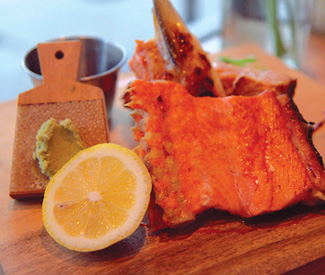
It gets exciting with an off-menu special of buckwheat gnocchi, pan seared in black garlic gastrique, with English peas and pea shoots (can you tell peas are in season?) This non-traditional gnocchi is earthy, lively, playful. “Fish parts” ($18) arrive on a wood slab, generously portioned and artfully arranged, more hearty than fussy. The fish parts change, but one night I dined on impeccable wild salmon belly and spine, with caramelized, crispy-sweet skin. Its partner requires a more adventurous palate: ahi tuna roe, cured and grilled. A dining companion bluntly called this large hunk of meat what it was: a giant egg sac. If you didn’t know, however, you’d think the pink, meaty fish a more savory, funky cut of salmon. Either way, I was delighted to be served something I’d never had before.

One evening after a 90-minute dinner, I waited nearly 30 minutes after all dishes had been served (and eaten) for a dessert which my sweet, adept server kept informing us was about to arrive. Though next time I’ll skip dessert under those conditions, I was pleased with shaved ice ($8), or shave ice as it’s known in Hawaii, which you can order doused in Four Barrel coffee and cocoa crumbles. My top choice is in coconut cream with coconut crumble and strawberries. The ice is creamy soft, feathery… and quickly devoured.

The brothers’ Korean heritage shines best in their street food-style dishes, available at the Ferry Building Farmers Market as well as during the day at Namu Gaji, ideal taken across the street to Dolores Park. Their beloved nori “tacos” ($3) and okonomiyaki ($10 lunch, $16 dinner) still delight, while BBQ belly and Korean BBQ-style marinated chicken thigh ($10) are packed into pan de mie bun layered with Swiss cheese, soy glazed onions, pickled daikon, aioli, Dijon mustard — a buttery, fatty pleasure of a sandwich. Gamja fries ($10), essentially organic fried potatoes piled with short ribs, kimchee relish, gochujang, kewpie mayo, and green onions, are the fast food of your dreams. KFC ($12) is a quarter of a Marin Sun Farms chicken tossed in sweet and tangy sauce with dashi gravy. Each of these heartwarmers not only satiate but illuminate best why the Lee brothers have become an SF staple.

NAMU GAJI

499 Dolores, SF

(415) 431-6268

www.namusf.com

Subscribe to Virgina’s twice-monthly newsletter, The Perfect Spot: www.theperfectspotsf.com


Stage Listings

0

Stage listings are compiled by Guardian staff. Performance times may change; call venues to confirm. Reviewers are Robert Avila, Rita Felciano, and Nicole Gluckstern. Submit items for the listings at listings@sfbg.com. For further information on how to submit items for the listings, see Picks.

THEATER

OPENING

Aftermath Stagewerx, 446 Valencia, SF; www.brownpapertickets.com. $25. Previews Thu/7, 8pm. Opens Fri/8, 8pm. Runs Thu-Sat, 8pm. Through June 30. Theatre, Period presents Jessica Blank and Erik Jenson’s docu-drama, based on interviews with Iraqi civilians forced to flee after the US military’s arrival in 2003.

Lips Together, Teeth Apart New Conservatory Theatre Center, 25 Van Ness, SF; www.nctcsf.org. $25-45. Previews Wed/6-Fri/8, 8pm. Opens Sat/9, 8pm. Runs Wed-Sat, 8pm; Sun, 2pm. Through July 1. New Conservatory Theatre Center performs Terrence McNally’s play about two straight couples spending July 4 amid Fire Island’s gay community.

Reunion SF Playhouse, Stage Two, 533 Sutter, SF; (415) 677-9596, www.sfplayhouse.org. $20. Previews Wed/6-Thu/7, 7pm; Fri/8, 8pm. Opens Sat/9, 8pm. Runs Wed-Thu, 7pm; Fri-Sat, 8pm. Through June 30. SF Playhouse presents a world premiere drama by local playwright Kenn Rabin.

“Risk Is This…The Cutting Ball New Experimental Plays Festival” Exit on Taylor, 277 Taylor, SF; (415) 525-1205, www.cuttingball.com. Free ($20 donation for reserved seating; $50 donation for five-play reserved seating pass). Opens Fri/8, 8pm. Runs Fri-Sat, 8pm. Through July 14. Cutting Ball’s annual fest of experimental plays features two new works and five new translations in staged readings.

Vital Signs Marsh San Francisco, 1062 Valencia, SF; (415) 282-3055, www.themarsh.org. $15-50. Previews Fri/8 and June 15, 8pm; Sat/9, 8:30pm. Opens June 16, 8:30pm. Runs Sat, 8:30pm; June 22, 8pm. Through July 21. The Marsh San Francisco presents Alison Whittaker’s behind-the-scenes look at nursing in America.

BAY AREA

Wheelhouse TheatreWorks at the Mountain View Center for the Performing Arts, 500 Castro, Mtn View; (650) 463-1960, www.theatreworks.org. $19-69. Previews Wed/6-Fri/8, 8pm. Opens Sat/9, 8pm. Runs Tue-Wed, 7:30pm; Thu-Sat, 8pm (also Sat, 2); Sun, 2 and 7pm. Through July 1. TheatreWorks’ 60th world premiere is a musical created by and starring pop-rock trio GrooveLily.

ONGOING

A Behanding in Spokane SF Playhouse, 533 Sutter, SF; www.sfplayhouse.org. $20-70. Tue-Thu, 7pm; Fri-Sat, 8pm (also Sat, 3pm). Through June 30. If Garth Ennis had been asked to write a comic book about a one-handed sociopath with a dark obsession, he might well have written something similar to Martin McDonagh’s A Behanding in Spokane. And admittedly, approached from that angle, a lot of the script’s dramatic flaws are more easily forgiven. There’s not a whole lot of subtle context or languid metaphor to be found in McDonagh’s criminal caper about the little-known “hand-dealing” trade, but as in Ennis’ best known work, Preacher, the pretty girl (Melissa Quine) is the smartest one in the room; the sociopath (Rod Gnapp) is interested in enacting as vicious a revenge on all humanity while spewing as many blatantly offensive invectives as possible; the boyfriend (Daveed Diggs) has some arrested development issues to work out; and the receptionist (Alex Hurt) takes the caricature of man-child to a whole new level. In fact, while all four actors deliver rock-solid performances of their mostly unsympathetic characters, it’s Hurt’s that impresses most. His spooky intensity and goofily tone-deaf determination plays like a combination of Adam Sandler and Arno Frisch, and if there’s a real sociopath in the room, the evidence suggests it’s probably him. Ultimately though the piece relies too heavily on hollow one-liners to remain interesting — a 20-minute farce stretched to 90 minutes — and quite unlike an Ennis comic, it does not leave one wanting more. (Gluckstern)

The Full Monty Eureka Theatre, 215 Jackson, SF; www.roltheatre.com. $25-36. Thu-Sat, 8pm (also Sat, 2pm); Sun, 2pm. Through June 30. In desperate times, how far would you go to turn a buck? The central premise of the 1997 movie and its namesake musical comedy The Full Monty, the answer to this question is right in the title, which limits the suspense, but amps up the expectations. Set not in Sheffield, England as in the movie, but the similarly economically challenged climate of Buffalo, New York circa the late nineties, the comical romp follows a group of unemployed steel workers who decide, rather optimistically, that spending one night as exotic dancers will solve their immediate financial woes. Banish all notions of a Hot Chocolate sing-along; the soundtrack of the stage musical has little in common with its cinematic predecessor, but there are a couple of toe-tappers, particularly the songs writ for the ladies: a belter’s anthem for their spry but elderly accompanist Jeanette (Cami Thompson), a snarky commentary on male beauty, “The Goods,” for the ensemble. On opening night, Ray of Light’s production ran about 15 minutes long after a late start, and the tempo seemed sluggish in parts, but once it hits its stride, The Full Monty should provide a welcome antidote to the ongoing, we’re-still-in-a-recession blues, red leather g-strings and all. (Gluckstern) Fwd: Life Gone Viral Marsh San Francisco, 1062 Valencia, SF; (415) 282-3055, www.themarsh.org. $20-50. Thu/7, 8pm; Sat/9, 8:30pm; Sun/10, 7pm. The internet becomes comic fodder for creator-performers Charlie Varon and Jeri Lynn Cohen, and creator-director David Ford.

100 Saints You Should Know Thick House, 1695 18th St, SF; www.therhino.org. $10-30. Wed-Thu, 7:30pm; Fri-Sat, 8pm; Sun, 3pm. Through June 17. Theatre Rhinoceros performs Kate Fodor’s comedy-drama about family love, homosexuality, and adolescence.

Othello Phoenix Theatre, 414 Mason, SF; www.brownpapertickets.com. $15-18. Thu/7-Sat/9, 8pm. Ninjaz of Drama performs Shakespeare’s classic in a contemporary setting.

Slipping New Conservatory Theatre Center, 25 Van Ness, SF; www.nctcsf.org. $25-45. Wed-Sat, 8pm; Sun, 2pm. Through July 1. New Conservatory Theatre Center performs Daniel Talbott’s drama about a gay teen who finds new hope after a traumatic breakup.

Tenderloin Exit on Taylor, 277 Taylor, SF; (415) 525-1205, www.cuttingball.com. $10-50. Extended run: June 14 and 21, 7:30pm; June 15-16 and 22-23, 8pm (also June 16 and 23, 2pm); June 18 and 24, 5pm. Annie Elias and Cutting Ball Theater artists present a world premiere “documentary theater” piece looking at the people and places in the Cutting Ball Theater’s own ‘hood.

The Waiting Period MainStage, Marsh San Francisco, 1062 Valencia, SF; (415) 282-3055, www.themarsh.org. $15-50. Fri, 8pm; Sat, 5pm. Extended through July 7. Brian Copeland (comedian, TV and radio personality, and creator-performer of the long-running solo play Not a Genuine Black Man) returns to the Marsh with a new solo, this one based on more recent and messier events in Copeland’s life. The play concerns an episode of severe depression in which he considered suicide, going so far as to purchase a handgun — the title coming from the legally mandatory 10-day period between purchasing and picking up the weapon, which leaves time for reflections and circumstances that ultimately prevent Copeland from pulling the trigger. A grim subject, but Copeland (with co-developer and director David Ford) ensures there’s plenty of humor as well as frank sentiment along the way. The actor peoples the opening scene in the gun store with a comically if somewhat stereotypically rugged representative of the Second Amendment, for instance, as well as an equally familiar “doood” dude at the service counter. Afterward, we follow Copeland, a just barely coping dad, home to the house recently abandoned by his wife, and through the ordinary routines that become unbearable to the clinically depressed. Copeland also recreates interviews he’s made with other survivors of suicidal depression. Telling someone about such things is vital to preventing their worst outcomes, says Copeland, and telling his own story is meant to encourage others. It’s a worthy aim but only a fitfully engaging piece, since as drama it remains thin, standing at perhaps too respectful a distance from the convoluted torment and alienation at its center. (Avila)

BAY AREA

Black n Blue Boys/Broken Men Berkeley Repertory Theatre, Thrust Stage, 2025 Addison, Berk; www.berkeleyrep.org. $14.50-73. Tue, Thu-Sat, 8pm (also Sat, 2pm); Wed and Sun, 7pm (also Sun, 7pm). Through June 24. Berkeley Rep presents a world premiere from writer-performer Dael Orlandersmith (a Pulitzer finalist for 2002’s Yellowman).

Crevice La Val’s Subterranean, 1834 Euclid, Berk; www.impacttheatre.com. $10-20. Thu/7-Sat/9, 8pm. Just in case you were feeling panicked about the persistently recessed state of the economy and what might be your own less than ideal place in it, the Impact Theatre and Playground co-presentation of Lauren Yee’s Crevice might help to put your woes into perspective. That’s because slacker sibs Liz (Marissa Keltie) and Rob (Timothy Redmond) are only slightly exaggerated representatives of Generation Next whose penchant for making lackluster life choices has sentenced them to an indefinite prison term of couch-surfing and Teen Mom marathons in their childhood home. Naturally, they desire change, but it’s not until their mother (Laura Jane Bailey) starts having a hot fling with a younger man that things do. In an egregious breach of the TMI line, it appears that Mom’s orgasms open a “crevice” into an alternate reality that Rob and Liz subsequently fall into. Thus removed from the entropy of their former reality they begin testing the parameters of their new one, quickly coming to the realization that sometimes the alternatives to what you already have are even worse. Getting home again is a convoluted, not fully mapped-out process, but in the interim, their navigation of their erstwhile wonderland offers most of the play’s best lines as well as the uncomfortably effective transformation of Reggie D. White from Liz’s nerdish best buddy to multi-lingual Mafia killer and casual sadist. (Gluckstern)

God of Carnage Marin Theatre Company, 397 Miller, Mill Valley; www.marintheatre.org. $34-55. Tue and Thu-Sat, 8pm (also June 16, 2pm); Wed, 7:30pm; Sun, 2 and 7pm. Through June 17. Marin Theatre Company performs Yasmina Reza’s Tony-winning comedy about two sets of parents who meet after their children get into a schoolyard fight.

The Great Divide Ashby Stage, 1901 Ashby, Berk; www.shotgunplayers.org. $20-30. Wed-Thu, 7pm; Fri-Sat, 8pm; Sun, 5pm. Through June 24. Shotgun Players performs Adamn Chanzit’s drama about the hot topic of fracking, inspired by Ibsen’s An Enemy of the People.

Not Getting Any Younger Marsh Berkeley, 2120 Allston, Berk; (415) 282-3055, www.themarsh.org. $15-50. Fri, 8pm; Sat, 5pm. Extended through June 30. Marga Gomez is back at the Marsh, a couple of too-brief decades after inaugurating the theater’s new stage with her first solo show — an apt setting, in other words, for the writer-performer’s latest monologue, a reflection on the inevitable process of aging for a Latina lesbian comedian and artist who still hangs at Starbucks and can’t be trusted with the details of her own Wikipedia entry. If the thought of someone as perennially irreverent, insouciant, and appealingly immature as Gomez makes you depressed, the show is, strangely enough, the best antidote. Note: review from the show’s 2011 run at the Marsh San Francisco. (Avila)

The Odyssey Angel Island; (415) 547-0189, www.weplayers.org. $40-76 (some tickets include ferry passage). Sat-Sun, 10:30am-4pm (does not include travel time to island). Through July 1. We Players present Ava Roy’s adaptation of Homer’s epic poem: an all-day adventure set throughout the nature and buildings of Angel Island State Park.

The Tempest Bruns Amphitheater, 100 California Shakespeare Theater Way, Orinda; (510) 809-3290, www.calshakes.org. $35-71. Tue-Thu, 7:30pm; Fri-Sat, 8pm (also June 23, 2pm); Sun, 4pm. Through June 25. California Shakespeare Theater opens its season with this dance-filled interpretation of the Bard’s classic tale.

The World’s Funniest Bubble Show Marsh Berkeley, TheaterStage, 2120 Allston, Berk; (415) 826-5750, www.themarsh.org. $8-50. Fri, 6pm; Sun/10, June 16, 24, and 30, 11am. Through June 30. Louis “The Amazing Bubble Man” Pearl returns with this kid-friendly, bubble-tastic comedy.

PERFORMANCE/DANCE

American Foundation for Equal Rights benefit Bayfront Theater, Fort Mason Center, Marina at Laguna, SF; www.brownpapertickets.com. Mon/11, 8pm. $25-50. BATS Improv and Tom Bruett of marriageequalityplays.com present short plays by local playwrights, plus an improvised short play, on the theme of marriage equality.

“Beef Cake Comedy Show” Deco Lounge, 510 Larkin, SF; www.decosf.com. Sun/10, 8pm. $10. Comedy music group Saw Dem Eyes headlines this night of “straight guys telling jokes with their shirts off.”

“The BY Series” ODC Theater, 3153 17th St, SF; www.odcdance.org. Thu-Sat, 8pm; Sun, 2pm. Through June 17. $25. Robert Moses’ Kin Dance Company presents work by guest choreographers Molissa Fenley, Ramon Ramos Alayo, and Sidra Bell, plus the world premiere of Moses’ Scrubbing the Dog.

“Elect to Laugh” Studio Theater, Marsh San Francisco, 1062 Valencia, SF; (415) 282-3055, www.themarsh.org. Tue, 8pm. Ongoing through Nov 6. $15-50. Will Durst and friends perform in this weekly political humor show that focuses on the upcoming presidential election.

“Elementary, My Dear Watson, It Was Crack” Purple Onion, 140 Columbus, SF; (415) 956-1653. Thu/7, 9pm. $20. Comedian Will Franken performs his latest one-man sketch comedy show.

“A Funny Night for Comedy” Actors Theatre of San Francisco, 855 Bush, SF; www.natashamuse.com. Sun/10, 7pm. $10. Natasha Muse and Ryan Cronin host a comedy talk show, followed by “A Funny Night for Improv” at 9pm.

“Feel the Power of the Dork Side” Exit Theatre, 156 Eddy, SF; www.brownpapertickets.com. Fri/8-Sat/9, 8pm. $15. Engineering professor by day, stand-up comedian by night: Dr. Pete Ludovice performs his solo show.

“Get In Front” Herbst Theater, 401 Van Ness, SF; www.getinfront.org. Wed/6, 7pm. $35-250. A benefit for Cancer Prevention Institute of California, this event features performances by principal dancers from San Francisco Ballet, Alonzo King LINES Ballet, ODC/Dance, and more.

“House of Matter” Dance Mission Theater, 3316 24th St, SF; www.brownpapertickets.com. Fri/8-Sat/9, 8pm; Sun/10, 7pm. $15-25. Nicole Klaymoon’s Embodiment Project presents its latest installment of urban dance theater.

“Idina Menzel: Barefoot at the Symphony” Davies Symphony Hall, 201 Van Ness, SF; (415) 864-6000. Thu/7, 8pm. $69.50-125. The Tony winner performs a show of Broadway and modern pop songs.

“Kunst-Stoff Arts/Fest 2012” Kunst-Stoff Arts, One Grove, SF; kunststoffartsfest2012.eventbrite.com. Thu/7-Sat/9 (Program One) and June 14-16 (Program Three), 8:30pm; Tue/12, 8pm (Program Two). $15. Program one: Dance Elixir and Kunst-Stoff Dance Company; program two: Silvia Girardi performing multimedia theater work All I Wanted to Say; program three: Bruno Augusto and Meisha Bosma.

“Performance Night at the Strand” Strand Theater, 1127 Market, SF; maryarmentroutdancetheater.com. Fri/8, 8:15pm. Free (donations accepted). Mary Armentrout Dance Theater, Oakland’s Milkbar, and Paz de la Calzada present an evening of site-specific performances and installations inspired by de la Calzada’s mural on the shuttered Strand Theater.

“R16 North American B-Boy Championships” Palace of Fine Arts Theater, 3301 Lyon, SF; www.r16usa.com. Sat/9, 2-6pm. $10-25. Come check out dancers popping, locking, and otherwise vying to represent North America at the Supreme World Championship finals in South Korea.

San Francisco Ethnic Dance Festival de Young Museum, 50 Hagiwara Tea Garden, Golden Gate Park, SF; www.worldartswest.org. Sat/9, 2pm. $15. Artist dialogue with “American Tribal Style Belly Dance” creator Carolena Nericcio, followed by a performance by FatChanceBellyDance. Also Sun/10, 2pm, Asian Art Museum, 200 Larkin, SF; www.worldartswest.org. Sun/10, 2pm. Free with museum admission ($7-12). Shamanic dance performace by Korean dance master Il Hyun Kim.

“Sex and the City: Live!” Rebel, 1760 Market, SF; www.brownpapertickets.com. Tue, 7 and 9pm. Through June 26. $25. Heklina, D’Arcy Drollinger, Lady Bear, Trixxie Carr play the fab four in this drag-tastic homage to the HBO series.

“Talkies” Artists’ Television Access, 992 Valencia, SF; www.atasite.org. Fri/8, 8pm. $6. Stand-up comedy and short comedic films hosted by Anna Seregina and George Chen.

“Voca People” Marines’ Memorial Theatre, 609 Sutter, Second Flr, SF; www.marinesmemorialtheatre.com. Tue-Fri, 8pm; Sat, 6:30 and 9:30pm; Sun, 3 and 6pm. Through June 17. $49-75. A capella from outer space.

“X” Garage, 715 Bryant, SF; www.brownpapertickets.com. Wed/6-Thu/7, 8pm. $10-20. Australian performer Sunny Drake presents his new show in conjunction with the National Queer Arts Festival.

BAY AREA

“Jazz Hams” Odell Johnson Performing Arts Center, Laney College, 900 Fallon, Oakl; www.brownpapertickets.com. Sat/9, 8pm; Sun/10, 1pm. $10. The plus-sized performers of Big Moves present a new, full-scale production featuring an array of dance styles.

Stage Listings

0

Stage listings are compiled by Guardian staff. Performance times may change; call venues to confirm. Reviewers are Robert Avila, Rita Felciano, and Nicole Gluckstern. Submit items for the listings at listings@sfbg.com. Complete listings are located at www.sfbg.com.

THEATER

OPENING

Aftermath Stagewerx, 446 Valencia, SF; www.brownpapertickets.com. $25. Previews Thu/7, 8pm. Opens Fri/8, 8pm. Runs Thu-Sat, 8pm. Through June 30. Theatre, Period presents Jessica Blank and Erik Jenson’s docu-drama, based on interviews with Iraqi civilians forced to flee after the US military’s arrival in 2003.

Lips Together, Teeth Apart New Conservatory Theatre Center, 25 Van Ness, SF; www.nctcsf.org. $25-45. Previews Wed/6-Fri/8, 8pm. Opens Sat/9, 8pm. Runs Wed-Sat, 8pm; Sun, 2pm. Through July 1. New Conservatory Theatre Center performs Terrence McNally’s play about two straight couples spending July 4 amid Fire Island’s gay community.

Reunion SF Playhouse, Stage Two, 533 Sutter, SF; (415) 677-9596, www.sfplayhouse.org. $20. Previews Wed/6-Thu/7, 7pm; Fri/8, 8pm. Opens Sat/9, 8pm. Runs Wed-Thu, 7pm; Fri-Sat, 8pm. Through June 30. SF Playhouse presents a world premiere drama by local playwright Kenn Rabin.

“Risk Is This…The Cutting Ball New Experimental Plays Festival” Exit on Taylor, 277 Taylor, SF; (415) 525-1205, www.cuttingball.com. Free ($20 donation for reserved seating; $50 donation for five-play reserved seating pass). Opens Fri/8, 8pm. Runs Fri-Sat, 8pm. Through July 14. Cutting Ball’s annual fest of experimental plays features two new works and five new translations in staged readings.

Vital Signs Marsh San Francisco, 1062 Valencia, SF; (415) 282-3055, www.themarsh.org. $15-50. Previews Fri/8 and June 15, 8pm; Sat/9, 8:30pm. Opens June 16, 8:30pm. Runs Sat, 8:30pm; June 22, 8pm. Through July 21. The Marsh San Francisco presents Alison Whittaker’s behind-the-scenes look at nursing in America.

BAY AREA

Wheelhouse TheatreWorks at the Mountain View Center for the Performing Arts, 500 Castro, Mtn View; (650) 463-1960, www.theatreworks.org. $19-69. Previews Wed/6-Fri/8, 8pm. Opens Sat/9, 8pm. Runs Tue-Wed, 7:30pm; Thu-Sat, 8pm (also Sat, 2); Sun, 2 and 7pm. Through July 1. TheatreWorks’ 60th world premiere is a musical created by and starring pop-rock trio GrooveLily.

ONGOING

The Full Monty Eureka Theatre, 215 Jackson, SF; www.roltheatre.com. $25-36. Thu-Sat, 8pm (also Sat, 2pm); Sun, 2pm. Through June 30. Ray of Light Theatre performs the hit musical.

Fwd: Life Gone Viral Marsh San Francisco, 1062 Valencia, SF; (415) 282-3055, www.themarsh.org. $20-50. Thu/7, 8pm; Sat/9, 8:30pm; Sun/10, 7pm. The internet becomes comic fodder for creator-performers Charlie Varon and Jeri Lynn Cohen, and creator-director David Ford.

100 Saints You Should Know Thick House, 1695 18th St, SF; www.therhino.org. $10-30. Wed-Thu, 7:30pm; Fri-Sat, 8pm; Sun, 3pm. Through June 17. Theatre Rhinoceros performs Kate Fodor’s comedy-drama about family love, homosexuality, and adolescence.

Othello Phoenix Theatre, 414 Mason, SF; www.brownpapertickets.com. $15-18. Thu/7-Sat/9, 8pm. Ninjaz of Drama performs Shakespeare’s classic in a contemporary setting.

Slipping New Conservatory Theatre Center, 25 Van Ness, SF; www.nctcsf.org. $25-45. Wed-Sat, 8pm; Sun, 2pm. Through July 1. New Conservatory Theatre Center performs Daniel Talbott’s drama about a gay teen who finds new hope after a traumatic breakup.

The Waiting Period MainStage, Marsh San Francisco, 1062 Valencia, SF; (415) 282-3055, www.themarsh.org. $15-50. Fri, 8pm; Sat, 5pm. Extended through July 7. Brian Copeland (comedian, TV and radio personality, and creator-performer of the long-running solo play Not a Genuine Black Man) returns to the Marsh with a new solo, this one based on more recent and messier events in Copeland’s life. It’s a worthy aim but only a fitfully engaging piece, since as drama it remains thin, standing at perhaps too respectful a distance from the convoluted torment and alienation at its center. (Avila)

BAY AREA

Black n Blue Boys/Broken Men Berkeley Repertory Theatre, Thrust Stage, 2025 Addison, Berk; www.berkeleyrep.org. $14.50-73. Tue, Thu-Sat, 8pm (also Sat, 2pm); Wed and Sun, 7pm (also Sun, 7pm). Through June 24. Berkeley Rep presents a world premiere from writer-performer Dael Orlandersmith (a Pulitzer finalist for 2002’s Yellowman).

Crevice La Val’s Subterranean, 1834 Euclid, Berk; www.impacttheatre.com. $10-20. Thu/7-Sat/9, 8pm. Just in case you were feeling panicked about the persistently recessed state of the economy and what might be your own less than ideal place in it, the Impact Theatre and Playground co-presentation of Lauren Yee’s Crevice might help to put your woes into perspective. Slacker sibs Liz (Marissa Keltie) and Rob (Timothy Redmond) are only slightly exaggerated representatives of Generation Next; when their mother (Laura Jane Bailey) starts having a hot fling with a younger man, her orgasms open a “crevice” into an alternate reality that Rob and Liz fall into. Their navigation of their erstwhile wonderland offers most of the play’s best lines as well as the uncomfortably effective transformation of Reggie D. White from Liz’s nerdish best buddy to multi-lingual Mafia killer and casual sadist. (Gluckstern)

Not Getting Any Younger Marsh Berkeley, 2120 Allston, Berk; (415) 282-3055, www.themarsh.org. $15-50. Fri, 8pm; Sat, 5pm. Extended through June 30. Marga Gomez is back at the Marsh, a couple of too-brief decades after inaugurating the theater’s new stage with her first solo show — an apt setting, in other words, for the writer-performer’s latest monologue, a reflection on the inevitable process of aging for a Latina lesbian comedian and artist who still hangs at Starbucks and can’t be trusted with the details of her own Wikipedia entry. If the thought of someone as perennially irreverent, insouciant, and appealingly immature as Gomez makes you depressed, the show is, strangely enough, the best antidote. Note: review from the show’s 2011 run at the Marsh San Francisco. (Avila)

The Odyssey Angel Island; (415) 547-0189, www.weplayers.org. $40-76 (some tickets include ferry passage). Sat-Sun, 10:30am-4pm (does not include travel time to island). Through July 1. We Players present Ava Roy’s adaptation of Homer’s epic poem: an all-day adventure set throughout the nature and buildings of Angel Island State Park.

Key lime hair with a side of porno: the Brande Baugh story

3

“My job is really weird. I think about that all the time.”

The Mission is a neighborhood accustomed to eccentric individuals. One would think Brande Baugh’s key lime hair and vintage Misfits t-shirt would make her fit right in. Yet her presence in a neighborhood cafe still elicited several stares when she walked in — with her perfectly-curated face, pastel pink lipstick, and evenly-powdered face, Baugh looked like one of Warhol’s Marlyn Monroe silkscreens. Though Baugh stays pretty busy living and working in Los Angeles, she also has regular gigs at Kink, a San Francisco-based pornography website that specializes in bondage and BDSM

I’ve often imagined what it would be like to be a fly on the wall at Kink, so my talk with Baugh was particularly illuminating. Sample quote: “I’m about five inches away from a person’s face. People start to break down their barriers and tell me things. And when you work with people in the sex industry all bets are off. People just say anything.”   

San Francisco Bay Guardian: How did you start doing makeup at Kink?

Brande Baugh: It started off as a fluke. I did makeup for Pink and White’s first episode of the Crash Pad Series. A talent on that production was starting to work at Kink. The talent identified more with a butch aesthetic and needed to do a femme look for her shoot. So she asked me to do her makeup. After the shoot, Princess Donna, a director at Kink, asked who did the talent’s makeup. The next thing you know, they were calling me in for an interview.

For my interview I did Princess Donna’s makeup. She told me to go all out, so I made her look like a drag queen. Donna said she loved it. It’s really funny in retrospect because I would never do someone in porn’s face like that now. I’m sure Donna in part really liked me. In her mind I was hired, and I could have probably done anything.  

SFBG: What is it like doing makeup for porn stars?

Brandy’s girls: Kink.com looks by Baugh

BB: There are simple differences in doing makeup for a porn production as opposed to a mainstream movie. A lot of the porn shoots I do are gonzo. I don’t have to stay on set all day, and it’s ok for people to see the makeup degrade over time. It seems like people feel like that’s more real. Also, I have to be really conscious about the makeup products I use. I have to use gloss lipstick and things that wear for a long time. I couldn’t use red lipstick. You have to keep in mind where this person’s lips are going to go. My job is really weird. I think about that all the time. 

I have found people in the sex industry to be very open and non-judgemental. I can say whatever I want while I’m at work. We can talk about the type of sex we like, our sexuality, and our gender freely. There is so much less ego in porn. That’s not to say there aren’t some divas. There are a wide range of people who work in porn. Some of the people go to school, some are moms, some are teachers. I’m doing makeup to make them look like they are all the same type of person, but they are all very different. Porn stars are producing something that there is an audience and a large market for, and it’s crazy how much shit they take for doing that.

SFBG: Where does sexuality and makeup intersect?

BB: As a makeup artist I’m creating characters who play out fantasies. Several of the people who work in porn are not the characters they portray. So I have to help transform themdon’t think most people would recognize porn stars if they saw them in the grocery store. There is a certain safety and anonymity behind having people wear this mask of makeup, and there are some porn stars who actually do look like porn stars. There are a lot of ways everyday people use makeup to express their sexuality as well. Sometimes you have to throw on a little red lipstick because it makes you feel sexy.

SFBG: Are you currently working on any other projects?

BB: Yeah, I’m working on a television show called Hollywood Nailz. It’s a show about my friend, a hair stylist, and I, and our interactions with all the people we meet in the beauty industry. We will finish filming at the end of June. I’m really excited.


Hollywood Nails: A different shade of Brandy.


SFBG: How do you identify with your gender?

BB: Well I’m a girl. I’m a lady. I’m a real butchy femme. I feel like I can be anything — I mean I’m a makeup artist, and I also went to school to be a mechanic. I like that dynamic quality. 

SFBG: What does creating a sex-positive space mean for you?

BB: For me, it’s a place where you can be whomever and not feel judged. People in a sex-positive space are interested in being progressively more open and aware. It’s about educating one another, but never in a negative way.

The Performant: All you can eat

0

Wild Food Walks and Bal Littéraire satisfy imaginative appetites.

“First, the bad news,” says our guide and frequent forager Kevin Feinstein. “Foraging in the Bay Area is illegal.”

Well, swell, I guess it’s a good thing that I packed snacks. “If the land is private, and you have permission from the owners, you can forage,” Feinstein amends, which still doesn’t help me in planning my lunch, but good to know for future reference. I’m attending one of ForageSF’s “Wild Food Walks,” along with about 15 others, hoping to graze upon that freest of foodstuffs, the weeds in our backyards — and yours.

The tour kicks off on the perimeter of Golden Gate Park, and without even taking a step, we’re summarily introduced to common mallow, miner’s lettuce, and stinging nettles. After another reminder about the illegality of *picking* the plants in the park, Feinstein exhaustively details each plant’s properties — their nutritional content, the edible parts of each, identification and preparation tips. Mallow is mucilaginous and anti-inflammatory, and the seed pods or “cheese wheels” can be eaten as well as the leaves, stalks, and everything else. Miner’s lettuce, which looks a bit like a land-locked lily-pad, is native to California, high in Omega-3s, and never gets bitter, even when older. Nettles do sting (which one curious child found out the hard way), but not when crushed or cooked. Extremely high in various minerals and vitamins, nettles are also easily cultivated, making them a good bet for amateur urban farmers as well as foragers.

“One five-gallon nursery pot grows more nettle than one person can handle,” promises Feinstein as visions of pestos and cream soups begin to creep into our collective consciousness.

Two hours and a dozen plants later, we’re all a little overwhelmed, but there’s excitement in it, like people are going to go home immediately and weed the garden, not for the usual reasons, but to make a salad. It almost makes one want to trade one’s wallet for a foraging basket, until reminded that urban foraging has its share of downsides — legal issues, contaminated soil, plant misidentification. Even so, I’m betting that hardly anyone in that group will be able to pass by a big clump of hilltop-dwelling nasturtiums or wild radish without checking for their crunchy, spicy seed pods, or slipping a few leaves in their bag for later.

Another new taste I was introduced to over the weekend was San Francisco’s first ever “Bal Littéraire,” a Parisian concept imported over as part of the French-American translation exchange, the Des Voix Festival. Though I’d been given an idea of the concept ahead of time — an ephemeral, collaborative work created by six playwrights, using pop songs to tie the scenes together and turning the floor into a giant dance party — nothing could have prepared me for the high-spirited spectacle it became.

Seeing a “typical” Bay Area theatre crowd getting down and dirty to hyphy hit “Fast (Like a Nascar)” in the middle of a French-accented, surrealistic serial romantic comedy featuring Liz Duffy Adams as a tough-talking, Jackie-of-all-trades stalking a middle-aged French divorcee, and Marcus Gardley as an octogenarian in drag, was a taste of contemporary France mixed with a Bay Area spice that titillated a cosmic palate, and won’t soon be forgotten. Here’s hoping that either Playwrights Foundation or the Consulate General of France find a way to keep this new theatrical tradition going in SF for years to come.

The funny money against Prop. B

19

Credit where it’s due: My competitor and sometimes journalistic adversary Joe Eskenazi has a nice little piece on the weird money behind the campaign against Prop. B, a policy statement about the privatization of Coit Tower. He points out that such varied groups as the California Dental Association and the San Manuel Band of Mission Indians have coughed up money to protect the right of San Francisco officials to close Coit Tower to the public and rent it out for fancy corporate parties.

And how exactly did that happen?

Well, Eskenazi manages to tie Willie Brown into it. (He also calls this “Nimby against the Swells,” which isn’t quite fair — I don’t think the supporters of Prop. B are trying to keep anything out of their back yards. If anything, they want more noisy tourists and fewer quiet, subdued rich-people events. And I don’t think the “swells” are against it as much as the mayor, his Rec-Park director and big businesses that generally back the privatization of public resources.)

But there’s another interesting twist: I’m not sure the folks who gave to the Golden State Leadership Fund Political Action Committee, which is running a No on B independent expenditure, had any clue where their money was going.

Sure, the Chamber of Commerce and BOMA know what’s up, and it’s pretty clear why they like the idea of raising money for the parks by holding exclusive private events instead of by raising taxes. But the Indians? And the dentists? By what possible stretch do they care about a San Francisco ballot measure that has nothing to do with Native American rights or oral health?

Eskenazi may be right — maybe Brown called the Indians and asked, and they threw the money his way to help his buddy the mayor (while keeping the mayor’s fingers out of this particular political pie). But the Golden State Leadership PAC, through which all this money flowed, has been around for years and gives money to candidates all over the state. (It’s definately something of a slush fund for local races — files in the Secretary of State’s office show that in 2008, money from Pacific Gas and Electric Co. flowed in and out of the PAC as it ran a campaign against the San Francisco public-power measure, Prop. H. PAC money went to David Chiu, Phil Ting and Ed Lee for mayor.) It’s based in West Hollywood and the treasurer is a guy named William Molina.

I called the San Manuel Band of Mission Indians and the California Dental Association and asked them why there were helping fund a campaign against Prop. B in San Francisco. The press person at the dental group apparently had no idea what I was talking about and asked for more details about the contribution. I gave her the date and the PAC and I haven’t heard back.

The Indians didn’t seem to clear on Prop. B, either. Kenneth Shoji, a spokesperson for the group, told me by email:

The San Manuel Band of Mission Indians made a contribution of $25,000 to the Golden State Leadership Fund PAC with the expectation of helping to support candidate(s) for public office in the 2012 elections.  We do not control where or how the PAC might extend its support beyond that.

In other words: This Coit tower thing is news to us.

UPDATE: I got essentially the same message from the dentists. Alicia Malaby at the CDA writes:

 When an organization such as CalDPAC contributes to an independent expenditure committee, that committee may spend money on races and issues that CalDPAC supports, but may also spend money on other campaigns. CalDPAC does not control how those committees spend money, and in this case, CalDPAC has no interest in and no position on Proposition B.

UPDATE TWO: Ron Cottingham at PORAC just called me and said his group has no position on or interest in Prop. B. The money that went to the PAC was earmarked to support Rob Bonta for Assembly in the East Bay. Presumably the PAC folks keep track of such things.

Maybe not. Maybe Willie or someone else made a call. It happens all the time.  I mean, somebody clearly was raising money for this PAC, which right now isn’t doing a hell of a lot besides No on B in San Francisco. (Oh, I called Brown, too. He hasn’t called back. He never does. I still always try.)

Either way, it’s a classic San Francisco political story — and it reflects how muddy and corrupt local politics can still be, even in an era of electronic disclosure and ethics laws. Why, if the dentists and Indians don’t like Prop. B, didn’t they (or any of the others in the PAC) create a No on B committee, disclose who was behind it and let the voters know a little more about the real money trail? Why funnel all this cash through a little-known Southern California PAC?

And for that matter, why is there a sudden influx of late money in this race? Has the mayor and the Chamber types suddenly discovered that Prop. B might pass — and might set a precedent against future privatization efforts?

June 5 is Election Day. Vote early and often.


Vote yes on Prop A for competitive bidding for garbage and against Recology monopoly

12

As a reporter for the old Redwood City Tribune in 1965 or so, I got a call one day from the late  Luman Drake, then an indefatigable environmental activist in Brisbane.  “Bruce,” he said, “you are good at exposing scandals on the Peninsula, but you have missed the biggest scandal of them all. Garbage, garbage in the Bay off Brisbane, garbage alongside the Bay Shore going into San Francisco.”

He then outlined for me, his voice rising in anger, how the scavengers of an early era had muscled through a longtime contract to dump San Francisco’s garbage into the bay alongside the Bay Shore freeway.  And, he said, they are still doing it. Why can’t you fight it? I asked naively.

“Fight it, fight it,” he replied. “The scavengers are the most powerful political force in San Francisco and there’s not a goddamn thing we can do about it.” I checked out his story, then and through the years, and he was right.  Everyone driving in and out of San Francisco could watch with horror  for years as the scavengers kept dumping San Francisco garbage into a big chunk of the bay.  (Note the oral history from Drake and then Mayor Paul Goercke and others who fought the losing fight for years to kick out the scavengers from Brisbane.) http://legendarymarketingenius.com/oralhistorySBMW.html)

Five decades later, the scavengers are still a preeminent political power in San Francisco. The scavengers (now Recology) have operated since 1932 without competitive bidding, without regulation of its high residential and commercial rates, without a franchise fee, and without any real oversight. Finally, after all these years as king of the hill, Recology’s monopoly is being challenged by Proposition A, an initiative aimed at forcing Recology for the first time to undergo competitive bidding and thereby save city residents and businesses millions of dollars  in rates and service.

Let me say up front that I salute former State Senator and retired Judge Quentin Kopp and Tony Kelly, president of the Potrero Hill Boosters and the Guardian’s candidate for District l0 election (Potrero Hill/BayView/Hunters Point). They have taken this measure on when nobody else would, without much money or resources, and up against  a $l.5 million campaign by Recology and enormous, nasty political pressure.  I also salute those who publicly signed on to their brochure: Coalition for San Francisco Neighborhoods, San Francisco Tomorrow, SF Human Services Network, David Bisho,Walter Farrell, George Wooding, Irene Creps, Alexa Vuksich, the San Francisco Examiner, SF Appeal.com, and the Guardian. 

I was delighted to get a Yes on A brochure at my house in West Portal and find that Kopp and Kelly et al had money enough to make a strong statement in a strong  campaign mailer.  Kopp and Kelly persuasively summarized the key points for A and against more galloping  Recology monopoly in the brochure.  Meanwhile, the  Recology forces have been  using  gobs of money, a massive mail campaign, robot calls, and deploying the kind of political muscle their predecessors used to keep dumping garbage in the bay off Brisbane for decades. Since the Yes on A camp has trouble cutting through the cannonading and the flak, let me lay out the A  arguments verbatim from its brochure.

Question in the brochure:  “Why is Recology spending millions to buy this election? Recology has contributed $l,580,292.70 against Prop A. (Form 460 SF Ethics Commission.” Answer in the brochure;  “So they can raise your garbage rates after the election! ‘San Francisco Prepares For Recology to Raise Garbage Rates’ (Contract is Proof Recology Plans to Hike Garbage Rates Following Election’”) Then they laid out l0 reasons to vote Yes on A.

1. “71 Bay Area cities have competitive bidding or franchise agreements for garbage services. Because San Francisco doesn’t, residential trash collection rates have increased 136% in the last 11 years, with another massive increase coming after the election! We pay more than twice as much for garbage and recycling as San Jose, a city with twice the land and about 400,000 more people.

2. “The garbage collection/recycling monopoly now grosses about $220 million per year from the city’s residents and businesses, without any regulation of commercial rates.

3. “How did we end up paying so much? In 2001 the monopoly requested a 52% rate increase, Department of Public Works staff recommended 20% and the then DPW director (now Mayor) Ed Lee granted a 44 %rate increase. That’s why the Examiner said: ‘no-bid contracts generally make for dirty public policy, and this includes…The City’s garbage collection monopoly…’

4. “Don’t believe the monopoly’s 78% recycling rate claim backed only by its puppet city department. A former Recology recycling manager has testified under oath that fraudulent reporting, excessive state reimbursements and even kickbacks to and from Recology employees are behind this bogus claim.  Another ‘whistleblower’ has revealed that even sand removal from the Great Highway was included in this 78%.

5. “With a far smaller population, Oakland receives $24 million each year as a franchise fee, which supports city services and prevents other tax and fee increases.  San Francisco receives zilch from the monopoly holder in franchise fees for our General Fund.

6. “Proposition A is on the ballot through citizen/ratepayer time and effort, in the face of intimidation and harassment by the monopoly’s agents and its multi-million dollar campaign against it.

7. “Proposition A is simple: it authorizes the Director of Public Works and the Board of Supervisors’ Budget Analyst to prepare competitive bidding regulations for residential and commercial collection, recycling, and disposal, by modifying an outdated 1932 ordinance.

8. “Like all other competitive-bid city contracts, the winning garbage service bid will be ratified by the Board of Supervisors without any political tinkering.  The winning bid will contain the best deal for city ratepayers.

9. “If the monopoly is truly the corporation portrayed in its expensive campaign to defeat Prop A, it would easily win every bid.  As the Examiner stated last year, ‘…contracts won by competitive bidding are always better for the public in the long run.’

10. And then the list of endorsers ‘and tens of thousands of other ratepayers.’”

Kopp and Kelly et al are providing a major public service by challenging an arrogant monopoly of an essential public service and keeping alive the concept of competitive bidding on city contracts in San Francisco.   I drink to them from a pitcher of Potrero Hill martinis. Vote early and often for Prop A.  B3

Election turnout expected to be less than 40 percent

2

If they held an election and nobody noticed, would it still count? Because that’s what this Tuesday’s presidential primary election is starting to feel like: the election that everyone ignored.

Okay, okay, not everyone is ignoring this election. San Francisco Elections Director John Arnst tells us that his department has received about 55,000 mail-in ballots so far out of the nearly 217,000 they sent out, a turnout of about 25 percent. And 1,110 voters have cast their ballots in person during early voting at City Hall as of this afternoon, a level lower than the 2010 or 2008 primaries “by quite a bit,” Arnst said.

That’s not really surprising given that both major political parties have already chosen their presidential candidates, there are no other offices being seriously contested, and the rest of the ballot consists of the Democratic County Central Committee (and its Green and Republican parties counterparts) races and a pair each of ho-hum statewide and local ballot measures. The most interesting one is Proposition A, which seeks to break Recology’s waste collection monopoly in San Francisco by requiring competitive bidding.

“If the garbage issue is the most exciting issue on the ballot, you know it’s the most boring election ever,” says Tony Kelly, who is leading the campaign for Prop. A.

With the exception of a press conference that Kelly and other Prop. A supporters held last week to accuse Recology of being complicit in an alleged recycling kickback scheme by some of its employees, there’s been little to indicate Prop. A has much chance of success given that almost every endorsing group (except the Guardian) opposes the measure.

“Goliath doesn’t lose very often, and we’re being outspent 100 to one,” Kelly said, expressing hopes that the measure can at least garner 35-40 percent of the vote to send a message that Recology should work with the city to allow competitive bidding on some of its contracts.

But with turnout expected to be low, Recology isn’t taking any chances. Its political consultant, Eric Potashner, says the campaign has been assembling up to a couple hundred volunteers and its SoMa headquarters each weekend and “we’re doing the full grassroots outreach.” He expressed confidence that the measure will be defeated: “Folks have been well educated on this issue.”

Arnst estimates that this will be a historically low turnout election: “Top end right now, comparing the last three presidential primaries, I’m looking at 40 percent as the top turnout possible.”

But you know what that means, right? Your vote could be more decisive than ever, particularly for the 24 members of the DCCC, the outcome of which could move the ideological center of that body before its important endorsements in the fall Board of Supervisors races. So click here to take a look at the Guardian’s endorsements and don’t forget to vote.

Chevron meets amid angry shareholders, liability, and environmental disasters

3

About 40 gathered outside Chevron’s San Francisco offices yesterday to mark its annual shareholder meeting. The demonstration was organized by OccupySF’s environmental justice working group, and used art and street theater to criticize Chevron’s involvement in hydraulic fracturing, a natural gas extraction process that may threaten parts of California’s water supply.

The afternoon protest came after a larger group showed up to Chevron’s world headquarters in San Ramon for the shareholder meeting that morning. According to Ginger Cassady of Rainforest Action Network (RAN), who helped organize the protest, it was a “big, colorful demonstration” with “over 100” in attendance.

Groups like the True Cost of Chevron and RAN’s Change Chevron campaign have been pressuring the company for years on a variety of issues. This year, workers and residents in areas where Chevron operates from Ecuador, Brazil, Angola and Nigeria travelled to San Ramon to voice their concerns. These ranged from oil-contaminated land in the Ecuadorian Amazon to an explosion on an oil rig off the shore of Nigeria in January. In that explosion, two workers were killed and more than 100 local people left the city for fear of contamination and other health risks caused by a fire that burned for months before going out on its own, despite Chevron’s efforts to contain the flames.

About 30 activists from around the world entered the meeting with proxy votes, according to Cassady. None interrupted the meeting, instead waiting their turn to speak. There were no arrests.

Some people with proxy votes, however, were not allowed access to the meeting. João Antonio de Moraes, national coordinator of Brazil’s United Federation of Oil Workers (FUP), was not allowed access, along with two representatives from United Steel Workers. Another worker, at the meeting to present in support of a resolution for worker safety, was initially blocked from entering but allowed access after a dispute, but had his presentation notes confiscated.

At the meeting, Chevron CEO John Watson announced “tremendous performance momentum” for the company, with “earnings of $26.9 billion” in the past year, according to a press release.

“Watson reinforced Chevron’s long-standing culture of safety and environmental stewardship, and resulting industry-leading performance,” the press release states. “He also highlighted Chevron’s commitment to partnerships that address health, education and economic development issues in the communities where the company operates, and Chevron’s global social investments of approximately $1 billion over the past six years.”

But Chevron is also suffering financially due to liability following oil spills, explosions, and contamination, a concern protest organizers say Watson failed to address. Representatives from Chevron did not return calls for comment.

The company recently settled with plaintiffs in Ecuador after an appeals court there ordered that they pay $18 billion in fines for spilling and deliberately dumping a total of 345 million gallons of crude oil in the Amazon rainforest of northeastern Ecuador.

Stockholders in attendance voted on eleven proposals, including seven submitted by shareholders, at the meeting. All of the votes went with the recommendation of the Board of Directors- including a proposal to reform the Board of Directors itself. That proposal asked that the Board of Directors find an independent Chair to head it up, as the current Chair is Chevron’s CEO, John Watson. The Board of Directors has the authority to incentivize and, if necessary, fire CEOs.

“We believe this presents a conflict of interest that can result in excessive management influence on the board of weaken the board’s management oversight,” read the proposal.

The proposal, along with several others, mentioned the Ecuador lawsuit, saying “we believe that independent board leadership is key at Chevron, given the questions raised about the oversight by the board of the CEO’s management and disclosure to shareholders of the financial and operational risks to the company from the $18 billion dollar judgment in the Ecuadorian courts in 2011.”

“With all these major legal liabilities that Chevron is facing a lot of people are concerned,” said Cassady.  “Chevron is profitable at the expense of worker safety, the environment, human rights and our economy.”

Other stockholder proposals dealt with safety, transparency, and the environmental impacts of Chevron’s international operations. A proposal asking Chevron to disclose money spent on lobbying received approximately 23 percent of votes, a proposal asking for a report on what the company has done to reduce the risk of accidents like the Niger Delta explosion received only eight percent of the vote, and a proposal that Chevron nominate a new board member with environmental expertise failed as well with 23 percent of votes cast.

Shareholders also voted on a proposal that Chevron release a report on the financial, environmental, and community impacts of hydraulic fracturing, the focus of the afternoon protest in San Francisco. The proposal received about 27 percent of the vote.

Hydraulic fracturing, or fracking, is the process of extracting natural gas by injecting dense underground rock formations with a pressurized mixture of water, sand and chemicals. It has been hailed as an environmentally friendly alternative to oil drilling, as natural gas burns cleaner than oil.

But protest movements have coalesced around fracking practices in the Appalachian mountains region and above the Marcellus Shale, as residents report toxic chemicals in their water supplies, endangering drinking water as well as water used for raising livestock and growing food.

The 2010 documentary Gasland included now notorious footage of residents near a Pennsylvania fracking operations whose tap water bursts into flames.

Fracking operations in California are less well known. The protest outside of Chevron’s San Francisco offices yesterday drew attention to this issue- and the extensive list of chemicals present in fracking solution.

“It’s happening in California, but it’s not really talked about” said Ellen Osuna. Osuna now lives in San Francisco, but moved from New York, where she says she worried about her water supply since it comes from aquifers near the Marcellus Shale.

The protest featured an 180-foot banner, painted by artist Ruthie Sakheim. The banner listed more than 70 chemicals found in fracking fluid, in alphabetical order.

“It’s not even halfway through the A’s” said Sakheim.

She also handed out bottles of water oil-colored water labeled “Frackelicious Frackwater Unsustainable Energy Drink.” The label listed some of the more toxic chemicals involved in the process under “ingredients” along with “no preservatives, no artificial flavors, 100 percent poison.”
 
According to a report released by the Congressional Committee on Energy and Commerce, fracking fluid contains 750 chemicals, which “ranged from generally harmless and common substances, such as salt and citric acid, to extremely toxic substances, such as benzene and lead” as well as many carcinogens, according to the report.

These chemicals, along with gas itself, can enter water supplies when the casing on wells cracks or when wastewater containers spill.

The Safe Drinking Water Act of 2005 specifically exempts hydraulic fracturing, a lack of regulation known as the Halliburton Loophole.

Fracking currently takes place in nine California counties, including Sacramento, Los Angeles, Santa Barbara and Monterey.  But the extent of hydraulic fracturing in California isn’t well known, and yesterday, the California Senate rejected SB1054, which would have required energy companies to notify landowners before using hydraulic fracturing on or near their land.

In between chants of  “ban fracking now!” Sakheim told me that she spent several months painting the banner, and plans to continue the project of listing the chemicals involved in fracking in artistic form.

“I have three kids,” said Sakheim. “I really worry about what will happen to them with these corporations having so much control to influence government.”