San Francisco

Just ignore the Chamber of Commerce

35

The Chronicle made a big deal of the fact that the Chamber of Commerce has a “21-point advocacy agenda” that “could weaken” the city’s “boundry pushing legislation and pro-labor policies.”

But really, nobody should even care.

The Chamber’s been pretty irrelevant to local politics for years now, and there’s no way six members of the Board of Supervisors are going to take the backward-thinking group up on its efforts to contract out city services and slow down cutting-edge proposals.

Actually, most of the “21-point agenda” is pretty tame. The Chamber, for example, wants to “Work with city government and advocacy groups to improve the ability of residents and visitors to move efficiently around the City by car, transit, bike and taxis.” And it hopes to “Continue to promote San Francisco’s small businesses through formulating favorable public policies and providing ample networking opportunities.” Wow. Hold the front page.

As for the things that might actually matter, forget it. Contracting out comes up almost every year at budget time; every year, a unified labor community shoots it down. This year will be the same. And nobody’s going to get City Attorney Dennis Herrera to release a public analysis of every piece of legislation before it’s approved.

Herrera’s better than his predecessors, by far, but he’s a lawyer, and lawyers don’t like to share with anyone the advice they give their clients. I often wish Herrera’s office would release more than it does, but unless the supervisors declare that they no longer want confidential advice from their attorney (which has its charm, to be sure, but also some real downsides) then the current policy will continue. Herrera will privately tell board members that there might be legal risks to some of their bills; the elected supervisors will decide whether to take those risks or not.

While I’m always an advocate of open government, the city attorney is not the Supreme Court. In the really bad old days, a city attorney named George Agnost used to routinely shut down progressive legislation by announcing that it was unconstitutional, leaving even conservative members of the board to denounce him. When the supes pass something, it’s a presumptively valid law. If you don’t like it, you can sue. The courts — not the city attorney — decide what’s legal and what isn’t.

And I have no idea where the Chamber’s Jim Lazarus came up with this:

But prior to Herrera and his predecessor, Louise Renne, city attorneys regularly issued public opinions, said Lazarus, a deputy city attorney in the 1970s who lost to Herrera in the 2001 election.

That’s completely untrue. I know; when Agnost was city attorney (in the 1970s and early 1980s) I tried constantly to get copies of his legal opinions. The vast majority were never released. That office was so secretive the city attorney wouldn’t even tell you his name if it wasn’t written on the door. When I pushed the issue, Agnost told me that copies of every non-confidential opinion he’d ever written were available at the public library. I went there. There were exactly three opinions on file, all of them noncontroversial and unrelated to any pending legislation.

Look, we all know that Gavin Newsom pushed the boundries of law when he approved same-sex marriages. But the California Supreme Court, faced with San Francisco’s civic disobedience, changed the law and said marriage was a basic right. And the US Supreme Court is about to do the same thing. Is the Chamber arguing that Newsom was wrong?

The Chamber is yesterday’s news. I don’t even know why we pay attention any more.


Noise Pop 2013: The Crystal Ark at the Mezzanine

0

“Dude, a satchel? That’s the gayest shit I’ve ever seen.”
“What?” I asked.
“Your purse,” he said, pointing to my camera bag, as his apparent girlfriend giggled and tried to cover his mouth. “That’s so fucking gay. Are you from America?”
“Thank you,” I said, as I finished putting in my ear plugs, mostly disinterested but half curious what he made of the two guys making out 10 feet across the dance floor.

Given that the last time I was in this situation, at Mezzanine to see NYC’s disco band the Crystal Ark supported by “San Francisco’s coveted queer DJ collective” Honey Soundsystem, was during Pride weekend, this was an odd encounter. But I’d already expected the crowd to be a little off, given that it was seemingly a late addition to the Noise Pop Festival and had to compete with packed, sold-out events in the vicinity.

Maybe the couple came out for the free Toro y Moi/Washed Out club night/email farm going on over at 1015 Folsom, and got turned off by the massive line. Maybe they were just visiting from out of town, and Mezzanine was close to their hotel. In any case, a short time into the band’s set, I couldn’t see them around, and presumed they left early.

Whatever. The Crystal Ark would be pretty central in a Venn diagram of my musical tastes. Gavin Russom is easily the fifth most significant member of now-defunct LCD Soundsystem, which doesn’t mean much except for obsessives (guilty.) With The Crystal Ark, he combines his synth expertise with Latin percussion and a trio of female singers in a way that recalls both ESG and Fania All-Stars. Plus, an additional utopian/spacey theme that suckers me.

http://www.youtube.com/watch?v=P3X2NAqqUCM

Still, to be honest, the first time I saw the band I was a little disappointed. Mainly because it seemed to take at least a half an hour before it livened up and built into the kind of fluid groove you want from a group like that. Friday, the Crystal Ark seemed much improved. Coming to the stage with the slight awkwardness that comes with being the headlining band with no real opener, Russom proceeded with introductions, saying that they were glad to be back at Mezzanine, noting that “This is a wild city. I’ve only been two blocks, but I’ve seen a lot of wild shit.” (Presumably arriving via Sixth Street rather than Mint Plaza.)

But a few minutes into their new single “Rain,” the band seemed ready to go, with the chorus “C’mon, and show me what’s the best you got,” being an obvious challenge to the small crowd.

This time around the band was also smaller, consisting of Russom, a single percussionist and a group of singers-dancers led by Viva Ruiz. But the performance and connection to the audience was improved.

Throughout the night Ruiz would alternate between English and Spanish, at one point dedicating what I’d failed to realized was a pro-immigration song, “We Came To (Work)” to her father and “We the fucking people.”

Despite the smaller size, the sound was bigger and more synchronized. After finishing with the appropriate “Ascension” and the refrain “the time has come,” it was a little disappointing seeing the club shut down – opposed to last time where the Pride crowd and Honey Soundsystem kept things going – and Russom was packing up his gear. When I complimented him on the show, he attributed it to having released their album and having more time to focus on performing. Now they just have to find the right crowd.

Noise Pop 2013: The Thermals and Dirty Ghosts at Rickshaw Stop, Bender’s happy hour

0

I first learned of the Thermals in 2005 from the DVD series, Burn to Shine, in which bands play a house that’s set to be demolished. In an unlucky Portland, Oreg. home, the pop punk trio – by then together for just under three years – bounding with energy, played exclusive single “Welcome to the Planet.” That particular Burn to Shine installment also featured live, untouched performances by Sleater-Kinney, Mirah, the Decemberists, and the Gossip. A basic slice of life in Portland that year, all under one soon-to-be-gone roof.

Friday’s Noise Pop show at the Rickshaw Stop celebrated the 10th anniversary of the Thermals’ very first album, More Parts Per Million (2003, Sub Pop). And while it’s now all these years later, and the band has since released a decade’s worth of records building to 2013’s Desperate Ground, the Thermals have maintained a joyful, power-pop exuberance and nasally shine. The Rickshaw crowd pogo’d off its feet to every song, nearly in unison, matching the excitement of the band on stage, even causing a brief kerfuffle near the end.

“This week is the 10th anniversary of our first record,” said lead singer-guitarist Hutch Harris, “I hope you like it because we’re going to play most of it.”

http://www.youtube.com/watch?v=uWjeAnnckKs

And the sold-out room did enjoy it. Despite the band’s relative longevity, the audience seemed mostly on the younger side; I’d guess at least half were under 21, and spotted those inked giant Xs on many a pumping fist (maybe they were just straight-edge? Do kids still do that?). That could also be due to the fact that the show was 18 and over, and the Rickshaw generally attracts a younger set.

The show opened with experimental San Francisco pop trio Ev Kain, which had a confusing, dense sound peppered with echoing duel vocal harmonies, expert, off-time drumming, angular guitars, and upbeat ska melodies. At different points, it was reminiscent of the early aughts math-rock and dance punk explosions, a welcome change from standard SF garage acts, at other moments the roaring lead vocals were distracting from the drumming (though I always am drawn to a drummer who sings). I overheard comparisons to both Radio 4 and Fishbone thrown out among the attendees up on balcony. See? Confusing.

All-teenage, all-girl beach pop group the She’s (ahem, our recent cover stars for the On the Rise issue) followed and impressed with those breezy harmonies and technical skills. The quartet opened with “Picture of Houses,” in which three of the four harmonize, “picture of houses in my life/grey skies and warm sand/it’s al-ri-ght” – that last “it’s alright” being repeated in a dreamy Beach Boys ode.

Pretty much everyone around me was smiling during the She’s set, especially when lead singer-guitarist Hannah Valente dedicated a song to her dad, saying “Happy birthday, dad!” before launching into a brand new track.

Next up, Dirty Ghosts brought out the Flying “V” guitars and classic, hard-hitting rock’n’roll. The band, another trio from San Francisco, seems to be getting tighter and brighter every year – perhaps it has just been too long since I’ve seen them live. They blew my mind like it was the first time.

http://www.youtube.com/watch?v=4Lu9ydAkXzY

Led by the hair-shaking guitarist Allyson Baker and bassist Erin McDermott (who sported a beer tap strap and a Faith No More shirt), Dirty Ghosts played songs off last year’s Metal Moon, and seven-inch “Katana Rock/Eyes of a Stranger” (2012). They killed with “Eyes of a Stranger,” which, as they noted, is in the classic 1980s film, Valley Girl (a.k.a my all-time favorite movie), and also with gritty single “Ropes that Way,” during which Baker and McDermott walked toward each other and did that noodling rock star move they’re so good at.

An audience interaction I dug during the set: whenever Baker mentioned Canada, or talked at all really, a smaller cluster of ladies near me screamed, whooped, danced, and repeatedly called back to the stage banter (old friends from Baker’s native land of Toronto?). Either way, they were feeling it, and it was contagious.

The next day, I stopped by Noise Pop’s free happy hour show at Bender’s and caught the awesomely hard, deep-fried Southern ’70s rock’n’roll act Wild Eyes SF  (with electric singer-tambourine shaker Janiece Gonzalez wearing an American flag denim vest, naturally, and drummer Ben Richardson, who, full disclosure, is a sometimes Guardian contributer), along with “[Black] Sabbath-worshiping” rock band Owl, and some delicious deep-fried tater tots dipped in ketchup. The greasy daytime show, packed with tall dudes with long hair and black shirts, was the perfect antidote to the poppy preceding night, and ended my Noise Pop 2013 week with a bang and a belly ache.

http://www.youtube.com/watch?v=P25oXVQPqYM
(Video shot by Guardian arts editor Cheryl Eddy)

Two noteworthy SF benefits this weekend

0

After reading about these benefits for two important San Francisco figures – and with pretty awesome line-ups to boot – you may have a difficult time deciding how to satisfy your altruistic urges this Sun/3.

Benefit for SF Firefighter Steve Miller


Steve Miller, who by the way is not the Space Cowboy, is a 24-year veteran of the San Francisco fire department and an avid surfer and kite surfer at Ocean Beach. On January 4, 2013 while driving on the Great Highway, he suffered an aneurysm which, in turn, caused him to crash his truck. He was rushed to UCSF where the aneurysm was diagnosed. He is now recovering but still hospitalized. It’s going to be a long road back, but because of his healthy lifestyle and the support of his family and friends, his prognosis is good. We hope this benefit can help out, maybe just a little, financially and more importantly, give Steve positive energy in the coming months.

With Final Last Words, Push, and Dance Party Boys. For more information and to purchase tickets, follow this link.

Sunday, March 3 at 8pm @ Slim’s, 333 11th St., SF | $15


TomFest: a tribute to Tom Mallon


In the 1980s, few musicians could record music in their living rooms, and inexpensive recording devices were primitive and inadequate. iPads hadn’t been invented. It was difficult to get affordable studio time; recording was expensive, and bands saved for months – or years – just to be able to scrape together enough money to record a demo or an album.

Tom Mallon, a native New Yorker who opened his own studio in San Francisco in 1976, changed that for dozens of Bay Area bands and hundreds of musicians. At his Tom Mallon Studios, until 1998, he provided the highest quality equipment, a welcoming environment, professional production, and his own sage, valuable advice and feedback for musicians at the lowest cost he could possibly afford. Tom’s ethos and generous approach enabled hundreds of Bay Area musicians to pursue their music, their passion, and their dreams, and to develop as musicians.

On Sunday, dozens of these musicians, who formed the core of San Francisco’s seminal punk and pop music scene of the 1980s and 1990s, are gathering from all over the country to perform and pay tribute to Tom Mallon, who was recently diagnosed with brain cancer. TomFest is a benefit for Tom and his family and the SF Brain Tumor Support Group at UCSF.

Featuring: Flying Color, Toiling Midgets, members of American Music Club, The Muskrats, Frightwig, Blue Movie, Ugly Stick, Penelope Houston and the Honey Badgers, Peter Case, Chuck Prophet, and special guest. For more information and to purchase tickets, follow this link.

Sunday, March 3 at 7:30pm @ Great American Music Hall, 859 O’Farrell, SF | $25

CCSF board approves report to accreditors amid heavy criticism

164

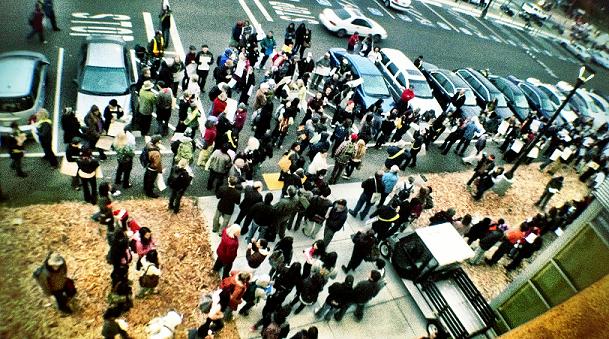
Windsong, a 21-year-old City College student, held a sign that read “I love CCSF” while standing along Ocean Avenue last evening, as cars rolled by honking their support for the embattled school.

“I love learning while not being bound by the four-year school structure,” she said. She’s an artist in residence at a local elementary school, and was protesting to make sure City College of San Francisco could give her students the same opportunities she had.

“This place is in my heart,” she said. And she wasn’t alone.

Nearly 200 protesters lined the building outside of City College’s board of trustees meeting last night as the CCSF Board of Trustees approved the school’s “Show Cause” report, which is a 220-page document detailing what the college has done to meet its accreditation requirements — accreditation is required for a college degree to have worth, and for a school to receive state funding.

In short, it’s a document arguing what the college has done to improve since it was hit with sanctions last October, and why it should stay open and accredited. The report is due to the accreditation commission on March 15.

The Accrediting Commission of Community and Junior Colleges hit City College with a “show cause” sanction, citing a lack of progress in six problem areas the school was supposed to address since its last accreditation review six years before. When the accrediting commission came back to check on the school, it concluded City College had yet to address key areas, including measuring Student Learning Outcomes, and adequately funding their reserve, a “rainy day fund” the college leans on in hard times.

City College said that it has now met the challenge of those key problem areas. “We were deferring maintenance, and deferring (upgrading) technology,” said board president John Rizzo. “We’re required to spend money, and this gives us a plan going forward.”

But the shouting protesters outside the meeting and the angry students inside disagreed with some points of the plan. Proposition A was a parcel tax measure approved by voters in November that would raise somewhere between $14-16 million City College annually, which the board wanted to use to beef up the college’s reserve fund, one of the key areas where they were knocked by the accrediting commission.

California Federation of Teachers president Joshua Pechthalt implored the board to use Prop A funds for current teachers. “The men and women who work in this college spent many hours taking money out of their pockets to pass Prop A,” Pechthalt said in public comment to the board. The audience of about a hundred or so faculty and students cheered. “I would ask you to work closely with faculty and staff, that you work collaboratively with them.”

Pechthalt was there at the behest of Alisa Messer, the president of City College’s American Federation of Teachers Local 2121. Teachers at City College have had wage freezes for years, and most recently had an 8.8 percent wage reduction just this past month.

Part-time teachers were hit too, as nearly 40 of them were “not rehired” for the current semester, as well as 18 counselors and 30 members of the college’s staff..

Student Martin Madrigal, a 29-year-old mathematics major at CCSF, said he also supported using the Prop A funding to prevent layoffs and wage reductions.

“I missed class to come to this fight,” Madrigal said to the board. “But if I didn’t come here there wouldn’t be a class to miss.”

One by one, faculty and students implored the board to use Prop A funds to buffer the college’s wage reductions and layoffs. At one point, student Eric Blanc, a member of the protest group Save CCSF, came to the podium to speak in public comment and was cut off by the board. Ten or so other students and faculty had yet to speak, and were told there was no longer time.

Blanc then demanded of the board his time to speak. The campus police chief, Andre Barnes, and an officer approached Blanc and tried to remove him from the room. The tension in the room mounted as the audience started chanting “let him speak, let him speak!”

Trustee Rafael Mandelman diffused the situation, asking for silence and calmly explaining that the board needed time to conduct its business. Tensions rose again though as the topic of the college’s reserve fund came up — the reserve is now at $4 million, but the school is planning to boost it to $13 million by 2014, and $18 million by 2019.

It’s a needed safety net, the trustees argued, for a school with a budget hovering at more than $200 million a year and an economy that’s in the tank.

“Tomorrow the sequestration will begin, and it will impact California spending and our communities,” Trustee Steve Ngo said. “This [money] is going to faculty and staff, but in the future. Faculty and staff would not have to take cuts in wages, if we had funded the reserve.”

Ultimately, the board voted to approve its long term reserve fund plan, using Prop A funds to help buffer the reserve for the future. Blanc told the trustees that they had denied themselves other options, like suing the accreditation commission, or asking for emergency funding from City Hall.

“I think behind the rhetoric of this are thousands of people being shut out,” he said.

Vice Chancellor Peter Goldstein, who handles college finance, said that some of the claims of the protesters were inaccurate.

“I keep hearing people talking about cutting classes,but that’s not our plan for [fiscal year] 13-14,” he said. “In fact, this college is putting together a budget for next year that will have more classes than this year.”

The college may not be cutting classes, but it is asking everyone to do more with less. Teachers to teach with less salary, students to fit into larger classrooms, and for classes soon to fit into fewer campuses.

Whether those are improvements or dire straits depends on who you ask.

Video by Joe Fitzgerald:

http://www.youtube.com/embed/pMXeECCvVTs

http://www.youtube.com/embed/L5To6k2uU60


Save CCSF plans to march to City Hall to demand aid to CCSF and to protest austerity cuts at the college on March 14. For more information visit http://www.saveccsf.org/.

Click here to read City College’s 220 page “Show Cause” report: http://www.ccsf.edu/ACC/Preliminary_Final_Draft_Show_Cause_Report_Feb_26.doc.

Family of teen shot in Alice Griffith still waiting for Housing Authority help

14

Aireez Taylor, a 15-year-old Mission High School student and a resident of the Alice Griffith public housing project in Bayview, was shot seven times on Dec. 29.

It happened around 6:30 p.m. She was with several friends at a house just a few blocks from her home in Alice Griffith, also known as Double Rock. They were standing on the porch talking, her mother, Marissa, told the Guardian. Then two men armed with guns hopped out of a parked car. One of Aireez’s friends, a 17-year-old boy who lived at the house with his family, saw them coming. He ran for the door and was shot once in the foot. Aireez, fleeing after him, was shot seven times.


Residents of Alice Griffith interviewed by the Guardian described an intensification in the violent crime at and around their community in recent months. Several attributed the violence to a conflict between African American and Samoan gang members. Whatever the cause, the shooting of a 15-year-old girl stands as evidence of the ongoing danger in San Francisco’s public housing developments. Aireez’s father, Roger Blalark, said that his daughter wasn’t the intended target of the shooting. She was in the wrong place at the wrong time, he said.

But for Aireez, who survived the attack, the wrong place at the wrong time is her home in Alice Griffith. Her parents have applied for emergency relocation with the San Francisco Housing Authority, but after two months—and amid the recent scandal surrounding Director Henry Alvarez and federal reports that have rated the agency as one of the worst in California—they are still waiting for the agency to locate and repair a unit in a new housing development. In the meantime, Roger and Marissa continue to fear for their daughter’s life. “What if they find the guy and ask her to testify?” asked Roger.

Aireez made a steady recovery from the gunshot wounds inflicted upon her in the December attack. But the trauma of the event has not been as easily healed. She spent three weeks at San Francisco General Hospital. During that time, an unknown intruder tried to snap a photo of her as she lay in her hospital bed, Roger said. Later, a man claiming to be her father came to inquire about her, while Roger himself was at her bedside.

A police officer met with Roger and Marissa on the Monday following the attack. Aireez reportedly had not seen the shooters. An investigation is underway, though no arrests have been made and the police have no suspects, according to SFPD spokesperson Gordon Shyy.

The journey home from the hospital was a return to the place where she had nearly been killed, a community where the shooters presumably were still at large. “She gets shakes, every time she comes home,” said Roger. “She has to come by the corner where she got shot.”

SFPD Bayview District Captain Robert O’Sullivan said that relocation is an important part of protecting the victims of violent crimes. Ultimately, the choice to relocate a tenant rests with the Housing Authority. “There needs to be an assessment done when something like a shooting occurs in public housing,” said O’Sullivan. Alice Griffith, he pointed out, has a significant number of people in a relatively small space.

“It’s always something that is in the front of people’s mind, anyone that has a stake in this, in investigating or assisting—is this going to be a risk for this person or their family in continuing to stay here?” O’Sullivan said.

Marissa and Roger applied for an emergency transfer on Jan. 2. There was paperwork to fill out, then the Housing Authority had to search for a vacant unit that could accommodate a family of their size. Housing Authority spokesperson Rose Marie Dennis said that she could not give out confidential information regarding specific tenants, but confirmed that the majority of the Housing Authority’s holdings are studios, one-, or two-bedroom apartments.

Roger and Marissa needed something bigger. A unit that could accommodate their family was finally located in another housing development by the third week of January. Marissa was initially told that the unit would be ready in two weeks. But two weeks turned into five, and now six, and Marissa still doesn’t know the status of the unit or when it will be ready for move in.

Dennis told us the Housing Authority tries to accommodate all requests for relocation, and prioritizes tenants with emergencies. Victims of a violent crime that request a transfer are moved as soon as possible, she said. But the process of relocating a victim is often hindered by a variety of factors, including Housing Authority’s ability to allocate resources toward fixing up vacant units. The length of the wait is a matter of resources and cooperation between all the parties involved in preparing the new unit. Once a suitable place has been found, teams of custodians and craftsmen and women must work to clear, clean, and repair the unit. Preparing a unit for move in costs on average $12,000, she said.

The problem is not that there aren’t empty units. According to Dennis, vacant housing stock is in a constant state of flux, with the current occupancy rate estimated to be 96.3 percent. Since the Housing Authority manages a total of 6,476 units over 45 development projects, that would indicate that as many as 240 units now lie empty. Dennis said that some units are kept vacant by the Housing Authority for a variety of reasons, while many others are only made available as the agency finishes the repairs and renovations necessary to make the units livable by the U.S. Department of Housing and Urban Development’s (HUD) strict standards.

Roger and Marissa’s experiences would appear to dovetail with recent media scrutiny that suggests the Housing Authority has reached a critical state of dysfunction. The agency made the U.S. Department of Housing and Urban Development’s list of troubled agencies after it received a 54 out of 100 on their latest evaluation. Scandal has dogged the agency’s leadership—three lawsuits alleging discrimination and retaliation were recently filed against Alvarez, who was also accused in a lawsuit of steering contracts to political allies. And it’s long-term capital outlook is looking increasingly bleak, as buildings accumulate decades of wear and tear and infrastructure becomes obsolescent. Stuck with a federal budget that remains constant, the Housing Authority is put in the position of maintaining outdated infrastructure that would, in the long run, be more cost effective to replace, said Dennis.

But Dennis nevertheless assured the Guardian that the agency addresses emergencies as quickly as possible—irrespective of larger, structural financial deficits. “We get bogged down in anecdotes that aren’t reflective of what’s ahead of us,” said Dennis. “We don’t have time for politics, that really doesn’t add up to positive change.”

So what is positive change for the residents of San Francisco’s public housing? With Alvarez on leave, Mayor Ed Lee has stated his intention to revamp the agency’s leadership and has appointed five new commissioners to oversee the city’s public housing.  “Being on a constant treadmill of troubled lists and repair backlogs that are structurally underfunded is not working for our residents or our City,” Lee said in a press release.

Lee spoke of a “better model” through HOPE SF, a massive redevelopment plan that began under former Mayor Gavin Newsom and which hinges on public-private partnerships. Alice Griffith is one among several sites that is being rebuilt as part of HOPE SF, with construction scheduled to begin in 2014. The plan is to create mixed-income neighborhoods where 256 new affordable rental units are interspersed in a larger community of market-rate homes.

But in the meantime, the day-to-day reality of the violence and dysfunction faced by tenants continues. “It’s not about tearing down the projects, you got to revitalize what’s already here,” said Roger.  

Roger knows that a relocation won’t necessarily solve their problems. He worries about the persisting presence of gang members at the new housing development, about the fact that he will be trying to protect his family in a community that he is much less familiar with. At Alice Griffith, Roger has connections within the community. He helps direct the Run, Ball & Learn Program, which provides basketball and tutoring programs for community youth. So they wait.

“They’re gonna have their own process,” says Marissa. “In the meantime we’re still sitting here.”

Sunday Streets hits the Embarcadero March 10

0

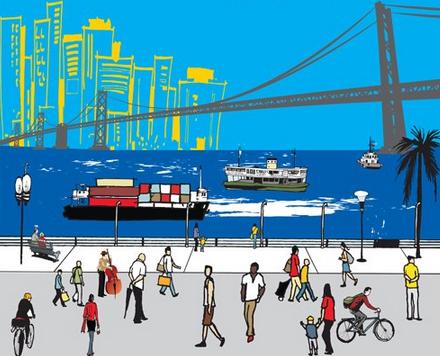
We love the ocean breezes of Sunday Streets Great Highway, the jampacked activities of Sunday Streets Mission, the general feeling of being on the main thoroughfare of a neighborhood you don’t usually hang out on with thousands of your city neighbors. Once again, the car-free family day is taking over the Embarcadero for its March 10 season opener.

More centrally located than the beach, more of a novelty than the at-times Mission version — this could be a good one, and it’s high time to re-acquaint yourself with the strip in these last days before America’s Cup swoops in, anyway. Here’s five ways to spend your SS Embarcadero:

– Chances are good that you’ll spend most of your time at the Exploratorium On the Move fest. They’ll have live music going on all day — the last set, El Radio Fantastique, goes on at 9pm — which may end up playing a supporting role to the joys of aquatic cars, motorized Mission Pony horses (see below), a mechanized Burning Man octopus, and the San Francisco Lowrider Council, among other Exploratorium offerings like cow eye and heart dissections. Eek! 

“Mom, Dad, you look foolish.”

– Pay a visit to Capt’n Jack Spareribs‘ noon, 1:20pm, and 2:40pm shows at Pier 39’s “Sunday Streets Treasure Hunt” — pirate festivities like arrrr. 

This =/= Johnny Depp (Capt’n Jack Spareribs!)

– Check out the yoga, hip-hop classes, rock climbing wall, roller disco, and ditch-the-training-wheels lessons that Sunday Streets is orchestrating like Michael Tilson Thomas.  

– Lounge in the 60 degree weather. 

– Grab dinner and stick around to check out “Bay Lights”, the Bay Bridge’s ludicrously elaborate new light installation, which will be illuminated for the first time on March 5. 

Sunday Streets Embarcadero

March 10, 11am-4pm, free

Embarcadero between Fisherman’s Wharf and Pier 52, SF

www.sundaystreetssf.com

Noise Pop 2013: !!!, White Arrows, the Mallard at Great American Music Hall

0

It’s hard to be Nic Offer. Not because he’s a tortured artist struggling with celebrity or some other cliche, but because he busts it on stage in a way that’s difficult to match. A couple songs into !!!/Chk Chk Chk‘s Noise Pop show at the Great American Music Hall last night, the lead singer and number one dancer hustled along the row of tables between the crowd and the stage. “I need my catwalk,” he said, picking up all the glasses, water cups, and beer bottles along the way.

Anyone who has seen a !!! show knows that Offer is hyperkinetic. (He comes prepared to dance, dressed in a t-shirt and short shorts, a combination that reminds me of drummer Pat Mahoney, who would be similarly attired for endurance pushing set with LCD Soundsystem.)

This time around, Offer seemed especially energized, probably because the band was debuting material from the upcoming album Thr!!!er, including “One Girl / One Boy” and “Except Death.” The funky, acid-house infused “Slyd” was supposedly played by the band for the first time in a live setting, and Offer and company seemed pleased to pull off the sample-heavy track.

The singer made a big deal of it, but it was just one of many things he made look relatively easy. Perhaps a little too easy: near the end of !!!’s performance, the hyped up bass player from White Arrows hopped on stage. As the cocktail table toppled, the stage dive became a corgy flop.

Openers:
White Arrows – its pseudo psychedelic pop is getting better all the time, although the band no longer seems to be coordinating thrift store Hawaiian shirts. The drummer has a nice predilection for irregular, semi-tribal beats, and the keyboardist’s falsetto sounded nice harmonizing with the singer’s drawl near the end of the set.

The Mallard – “hell of a screeching, bass-pumping build for an opener” is what I initially wrote down, seconds after the San Francisco band got going. Then it built and built, with lead singer Greer McGettrick seemingly telling a story in a way reminiscent of “The Gift.” The mix was off in a way that lost the narrative, but sonically it was interesting, complete with a kind of drone I’d never heard before via a live horn.

It was also assaultive; next to the speaker it felt like the back of my throat was full of Rice Crispies and Pop Rocks. By the end, stretching across the Mallard’s whole set, I started to pick up more of the lyrics – 911 calls and sirens – as McGettrick started eerily circling the crowd, intoning “There’s been a muhmuhmuhmuhmuh-murdah.” More Noise than Pop, it was the kind of opening that makes you super excited to hear the second song, and desperately hoping it doesn’t sound like the first. Which was probably why the trio camped out next to the stage with their fingers in their ears looked relieved when it turned out to be the band’s only one for the night. [Ed. note: apparently the Mallard was doing an extended cover of Throbbing Gristle last night]

The Yellow Dogs – the band looked like the Iranian Strokes, sounded like a speedier version of the Rapture crossed with a little Mars Volta, and sang wildly like the B-52s. They supposedly drove four days to get to the show, only to break down an hour away. They said it was worth it to perform with their favorite band, and the way the singer moved, I believe it.

Big waterfront projects prompt study of new transportation ideas

18

The massive development projects being proposed along San Francisco’s central waterfront – from the proposed Warriors Arena at Pier 30 through the Giants’ housing/retail project at Pier 48 down to Forest City’s sprawling proposal around Pier 70 – will create huge challenges for the city’s already overtaxed transportation system.

Nobody is more aware of that issue than Warriors President Rick Welts as he seeks approval to build a 17,500-seat arena with just a smattering of parking spaces. “We’re investing a billion dollars in this property, and if people aren’t comfortable getting to it and leaving it, we have a problem,” Welts told a gathering of the California Music and Culture Association on Tuesday night, responding to a local resident who raised the concern. “We have to get that right, it’s at the top of our list.”

With Muni and BART already at capacity during peak hours, and thousands of new housing units being built in the coming years both along the waterfront and from nearby SoMa down through the Eastern Neighborhoods Plan area, city transportation planners are trying to get ahead of potential problems created by the development boom.

“We’re now taking a step back and looking at the long-term needs from the Exploratorium down to Pier 70,” says San Francisco Municipal Transportation Agency planner Peter Albert, who is leading a comprehensive waterfront transportation study that will inform the environmental studies done for each of these projects. “What we get is an environmental review that is much smarter because we have all this advanced planning….EIRs are important, but they aren’t really planning.”

Albert is looking at everything from working with various transportation agencies to beef up bus, train, and ferry services to the area; using these projects to complete the ambitious but underfunded and long-stalled Blue-Greenway bicycle path along the waterfront; accelerating capital projects that are already in the SFMTA’s queue; and exploring a dozen or so new ideas.

“What’s also coming out of this are new ideas we’re coming up with, things we weren’t even thinking of that may make sense,” Albert told us, noting that he’ll be doing his first presentation of some of these ideas to the SFMTA Board of Directors on March 5.

They include extending new streetcar service along the Embarcadero to the Caltrain station at 4th and King or possibly all the way out to the Anchor Steam Brewing-anchored project at Pier 48 (which would probably involve construction of new streetcar turn-arounds); better integrating the Central Subway project into Mission Bay and the Embarcadero with new bus and rail connections around 20th and 3rd streets; and expansion of the Embarcadero BART station to increase its peak capacity.

Welts said BART will be an important connector to the new Warriors Arena, noting that the walking distance from Pier 30 to the Embarcadero station is actually about the same distance as the Coliseum BART station is from the entrance to the Warriors’ current arena. He said that he’s excited about Albert’s work and wants to cooperate with helping the city meet its transportation needs: “We have a lot of process to go through and we’re embracing that process.”

Funding the needed improvements will be a challenge, particularly because new development projects generally don’t pay for their full impacts to the transportation system, as SFMTA head Ed Reiskin and Sup. Scott Wiener have told the Guardian. On Monday, Wiener amended the Western SoMa Community Plan to increase how much developers would pay in transportation impact fees.

Albert said funding for the needed improvements to the area’s transportation system would come from a combination of mitigation fees from the developers, reprioritizing the SFMTA’s existing capital budget, and securing state and federal transportation grants by developing impactful projects that are shovel-ready, thanks to this advanced planning effort.

These three waterfront development projects alone could have huge impacts. The Warriors Arena would host more than 200 concerts and sporting events per year, drawing anywhere from a few thousand to more than 17,500 people. The Giants’ Pier 48 proposal involves 27 acres of new development, including retail, office, Anchor Brewing, and about 1,500 homes. And Forest City’s proposal for Pier 70 involves about 1,000 homes, 2.2 million square feet of office space, and 275,000 square feet of retail and light manufacturing.

Addressing the waterfront’s transportation challenges, Board of Supervisors President David Chiu told the Guardian, “It is possibly the most difficult and important question surrounding the Warriors project, and I’ve encouraged all parties to make sure they get it right.”

PROMO: Win tickets for Rojai and E.Live release party!

0

Soul and funk crooner Rojai Vargas, lead singer of San Francisco’s beloved Bayonics crew, has teamed up with producer and multi-instrumentalist Eli “E.Live” Hurwitz. The duo released their Hard Pressed EP on February 26. Available on iTunes, it is spreading like wildfire on the streets and in the blogosphere. Check out the official video for the track “Anything is Possible” below: 

The collaboration puts forth melodies, lyrics and compositions that carry inherent respect for the funk and soul greats that inspire their craft. The album is a modern throwback worthy of that title. To celebrate the record release, the crew is throwing a party at Monarch with a little help from their friends – no doubt keeping people funking on the dance floor ‘til the lights come on.

With Starship Connection (Frite Nite) and J Boogie (OM Records), and presented by Earshot Entertainment and Zatoon.  For more info and to purchase tickets, follow this link. Rally the masses here.

To win a pair of tickets to the event, email your full name to sfbgpromos@sfbg.com with “Anything is Possible” in the subject by Wed/6 at 5pm. Winners will be notified by email while supplies last.

Thursday, March 7 at 9pm @ Monarch SF, 101 6th Street | $10

Public broadband works; why not here?

42

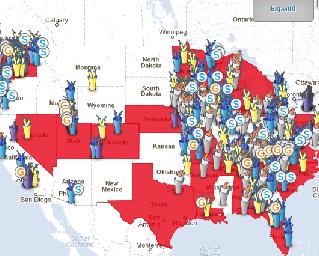
There’s a fascinating new map that the Institute for Local Self Reliance has put together that shows how 342 communities around the United States are now offering publicly owned, cheap, reliable broadband and cable service to local residents and businesses. Check it out here. Then check out why the fastest networks in the nation are built by local governments:

“It may surprise people that these cities in Virginia, Tennessee, and Louisiana have faster and lower cost access to the Internet than anyone in San Francisco, Seattle, or any other major city,” says Christopher Mitchell, Director of ILSR’s Telecommunications as Commons Initiative. “These publicly owned networks have each created hundreds of jobs and saved millions of dollars.”

Then sit back and ask yourself why you’re paying so much money every month for the rotten service you get from Comcast and AT&T. Ask your friends, ask around work; is anyone really happy with their broadband service? Do you think you’re getting a good deal for the price?

When I saw the map I called Mitchell, and he told me that every one of the cities and towns on his map has been successful with public ownership. “Within five years, everyone is either making money for the general fund or breaking even and offering really low rates,” he said. “The real benefit is lower prices, which leaves residents with more money in their pockets, which tends to get spent in their communities where it helps local business.”

Most of the cities that have muni broadband (and cable TV!) also have municipal electric power systems, which makes the whole thing easier. But Santa Monica did it bit by bit, installing fiber every time one of the streets was torn up for plumbing, sewers, etc. and gradually building out a network that so far only connects businesses but can be expanded as the money comes in. San Francisco streets are torn up all the time, and will be torn up regularly as water and sewer lines are replaced. The biggest expense of laying cable is cutting open and repaving streets; the cable itself is fairly cheap.

In some states, the big private telecoms have pushed through state legislation banning muni broadband — but not in California. San Francisco has every legal right to get into this business.

So why aren’t we doing it already? “What’s missing,” Mitchell said, “is the political will to really piss off Comcast and AT&T.”

I was just looking at the map when I got an email alerting me to this lovely discussion between Mayor Ed Lee and the head of PG&E, talking about the private utility’s plans to invest $1.2 billion in local infrastructure (more on that in a future blog post). That’s going to involve a lot of digging up streets. So what does Mayor Lee say? Maybe we could allow PRIVATE companies to lay fiber at the same time.

I want to throw up.


Noise Pop 2013: Cruel Summer, Lake, and the Blank Tapes at Hemlock

0

It’s a low-key kind of Noise Pop year compared to the past three or four, without the huge, attention-grabbing headliners of yore  (looking at you, Flaming Lips at Bimbo’s), but Wednesday’s show at the Hemlock Tavern could have been nuzzled in nicely in any very early NP lineups, which is what made it feel authentically true to the inherent spirit of the festival.

No pomp or glitz, no big names or sold-out, packed-to-the-gills chaos. I initially went to see Olympia, Wash.’s Lake, a twee, lo-fi indie pop quartet with great hooks, but found much enjoyment out of the two bands that sandwiched that act (Cruel Summer and Blank Tapes), perhaps even more so?

I arrived early in Cruel Summer‘s set; I’m told the jangly San Francisco act had only played a few songs to the neatly packed in Hemlock crowd. There were casually smiling faces stretching from the front of the stage back to the sound guy, however there wasn’t that trademark Hemlock hot stink just yet. You could stretch your legs out without knocking into a sweaty mess. Though I detected a wafting hippie scent. 

Cruel Summer, which consists of two hard-rocking ladies out front (bespectacled lead singer-guitarist Thea Chacamaty and bassist Chani Hawthorn), along with guitarist Josh Yule and bassist Sean Mosley, created a rolling wave of reverb and noise  – so loud it drowned out the vocals – in a “dreamy gazey noisey hazy wavey gravy” way, as the band is wont to describe it. During the loud-sound-wave a few heads in the audience bopped and jerked hard, meeting each thundering drum hit with a nod of approval. Cruel Summer’s been around since 2011, but could easily fit in with ’80s shoegaze scenes or ’90s K Records stock.

The latter goes for second band Lake as well. Actually, Lake is currently on the K roster. And it fits right in. An aside: when I was first learning there was music being made beyond pop radio (‘sup KIIS-FM?) in my early, impressionable tweens, I had a friend with an older sister who was of the super cool girl alternative guild. She and her friends were in to riot grrrl, and twee, and K, and Kill Rock Stars, and the like. They wore cardigans, boat stripes, short skirts with nubby tights, and thick-framed glasses, and had glittery Fenders and drum kits. I feel like the older sis and her crew would’ve dug both Cruel Summer and Lake.

http://www.youtube.com/watch?v=wO4ZA7ezlEg&feature=youtu.be

Anyway, Lake played mostly new songs last night, some that had sexy Bossa nova bass lines – the bass was noticeable after Lake asked the crowd if anything needed to be turned up louder. Some got so funky a few people noodled along to the beat. The four band members switched instruments a few times during the set, and three traded off covering male/female lead vocals, including Eli Moore and his wife, the sweet-voiced Ashley Eriksson, who also played keyboards.

Next up was the Blank Tapes; the trio also traded off male/female harmonies and pop hooks, but with a garage-rooted rock’n’roll edge – that was also due in part to standing drummer Pearl Charles smacking just two drums, a floor tom and a snare, often with a mighty thwack. This is also when the scent changed from hippie to pizza, as someone brought in a delicious-smelling pie, and I got jealous.

The dynamic between Charles and Blank Tapes pied-piper/multi-instrumentalist Matt Adams reminded one of my show-going companions of the famed Lee Hazlewood-Nancy Sinatra collaboration. Though on looks alone, it could’ve been Lindsay Weir and Ginger Baker. The band – which has the advantage of a rotating lineup and addresses in both LA and SF – sounded great, alive and full of energy, pumping up an already pleased crowd with crackling beach garage songs like bubbly “Coast to Coast” (a new single on Oakland’s Antenna Farm Records), a song I feel like must be called “Beach Party,” and tracks off 2012’s Sun’s Too Bright (Burger Records) tape. Live, the songs seemed far less relaxed than recorded versions.

It’s the way I imagine Noise Pop began, 21 years back, with talented, eclectic, lo-fi, noise-pop-genre-specific acts from up and down the West Coast huddled in a favorite little local venue, beating the shit out of their instruments. No fuss, no muss.

Gentrification’s simple math

66

Chuck Nevius is big into gentrification these days. He thinks it’s a dandy thing and “no longer a dirty word,” says the even longtime residents of the Mission love it, and has a nice photo of a person walking in Dogpatch, where two really cool dive bars just shut down — thanks to the gentrication that’s such a great thing.

Nevius quotes Randy Shaw, who has a bizarre statement:

In the ’70s and ’80s there was massive displacement of residents in the Haight, Noe Valley and the Castro,” says Randy Shaw, executive director of the Tenderloin Housing Clinic. “But now you are seeing a massive influx of upper-income people into previously unoccupied areas.”

What? “Previously unoccupied?” Like the Mission and Soma and Dogpatch? Unoccupied by the wealthy, maybe, but there are people living in almost every square inch of San Francisco, and in some parts of town, they are low-income people, and richer people force them out. That’s happening on the same scale today that it did in the 1980s, except worse: In the 80s, if you werer priced out of the Haight or Noe Valley or the Castro you could move to the Western Addition or the Mission or Soma. Now prices are so high everywhere in town that your only move is out of San Francisco altogether.

And while ol’ Chuck does admit there are downsides, he seems to think that somehow you can move wealthier people and more upscale establishments into existing lower-income areas without anything bad happening, as long as you respect “the delicate balancing act.”

But it isn’t a balancing act at all — it’s a zero-sum game. There’s finite space in this city, and when when something or someone comes in, something or someone has to leave. (Yes, you could build a lot more housing, but nobody’s building housing for working-class people.) But you can’t build more storefronts on Valencia or Mission; force out the existing community serving businesses and they have noplace else to go.

San Francisco has failed spectacularly at the fundamental challenge facing a city under this kind of pressure. First, before you allow more development, more upscaling, more of what C.W. Nevius loves, you have to protect existing vulnerable populations. That’s not a balancing act; that’s a mandate. If you don’t do it, you lose the character of the city and San Francisco becomes another sterile, corporate community.

Jesus. Why is this so hard to understand? I’ve lived through it several times, these booms that people like Mayor Lee and Nevius always celebrate, and every time, the pattern has been the same, the city has been damaged, and community institutions have been lost. I’m not one of those preservationists opposed to all change, but again: First protect existing vulnerable populations.


The Performant: An expedition report from the All Worlds Fair

0

A visitor to the inter-dimensional, pan-galactic celebration known as the All Worlds Fair has to be prepared to fulfill the bureaucratic requirements, which are, by Earth standards, unusually rigid. In order to enter this portal into a unique realm which contains all possible and alternate realities under one roof, travelers must fill out both a visa application and an immigration form and additionally agree to adhere to the more-or-less strictly enforced dress code (black-and-white) and no-digital device accord.

Ushered first into a tented holding area of the sort that will seem familiar to seasoned travelers waiting to embark on a voyage across international waters, travelers are urged to fill out an additional form, as a bevy of extraterrestrial functionaries in matching red-and-black dresses and pillbox hats topped with twitching antennae, scuttle to-and-fro, monitoring progress.

Travelers are then funneled through passport control and given that most essential of documents, embossed gold on red, with plenty of pages for exhaustive stamp collectors. Upon entering the portal to the Fair, aka the side entrance of San Francisco’s Old Mint, the route taken and wonders encountered by each explorer will be effectively unique, as a dozen different directions and dimensions become immediately possible in the cramped warren of small brick rooms that make up the first level of the historic “Granite Lady.”

I am whisked down to the far end of the hall by a brusque docent in a bellhop’s uniform who ushers me into a room full of giant plushy mustaches on rockers and urges me to take a ride. Just outside, a more titillating ride awaits—a trip on the “time-folding” massage chairs of Wrinkle Inc. The friendly proprietors offer me a handful of official AWF currency — “genuine” Emperor Norton banknotes — and wish me luck with me “upcoming appendectomy.” Clairvoyance, it seems, is a side effect of time travel, or maybe it’s actually appendicitis that is. A tentacled oracle further predicts my future, the Aixiodimensional Adventure company offers me brochures for the Planet Ckikyuu and Urataint, a destination recommended “only for hardy, experienced dimension-jumpers.”

I’m temporarily kidnapped by mermaids, challenged to a cardboard cutlass duel by a lusty wench, serve on the jury of the All World’s Court, and undergo the necessary formality of the Open Secret Cabaret, where all the esoteric and practical knowledge assembled by permanent Fair inhabitants is presented in lulling sing-song interspersed by manic outbursts of a caged studio musician. I’m told later of wonders such as a penny arcade, an endless tea party, and a Merkin Tile where Norton bucks can be exchanged for goods, but hustled up to the second level too soon, I can only hope to experience these in another point along the time-space continuum.

The Upper Floor contained, among other wonders, the splendid collection of “Wrongitudinal Flora” at the Botanarium, including the delicious-looking fried egg plant and a pair of comfy, deciduous sofas, an interactive “live sculpture garden” and solemn retelling of the horror story (and intergalactic bestseller!) that is the Book of Revelations, and the centerpiece of the event: a dance performance imported all the way from the Andromeda Galaxy, which combined familiar elements of earthly disciplines such as Butoh, polyrhythmic percussion, occasional throat-singing, and acrobatics in a strobe-lit, rooftop spectacle as well as a more intimate portion performed in rooms filled with clouds, enigmatic musicians, and writhing bodies dressed in their traditional garb of white-on-white layers (the Andromedans have no developed sense of color).

This energetic display regrettably marked the end of the All World’s Fair for another eternity (give or take a few millennium), and with hardly a moment to regroup, we were whisked out of the building and deposited back onto Fifth Street, where gravity and the Gregorian calendar conspired to anchor us firmly back to Earth. And thus concludes my expedition report, at least within this dimension.

*End Transmission*

Here, here

1

STREET SEEN As the author of a style column, I spend time trawling the city for innovative new local designers. Clothes that are made here, cute ones. Let me hear about them, I’ll put it in print, swear down.

But there’s not… that much of them. Speaking historically, of course. In the heyday of garment manufacturing, San Francisco churned out mountains of readywear — more than any other city in the country besides New York and Los Angeles.

Then we started to export our business overseas. You’ve heard about how Levi-Strauss used to have a factory on Valencia Street — not just the artsy pop-up shop they opened in 2010? Your jeans aren’t made here anymore guys, unless you’re copping from newbie “Kickstarter brand” Gustin (www.weargustin.com), Holy Stitch (www.juliandash.com), Self Edge (www.selfedge.com), or one of the other small local lines that have popped up in the denim giant’s wake.

These companies cater to locavore customers who “expect their clothing labels to read like restaurant menus,” as Modern Luxury put it in a 2011 article about the state of the SF garment industry. Making clothes locally means less turnaround time, less environmental impact — not to mention the sweet San Francisco cache that locally made palazzo pants hold.

Problem is, the garment factories that the industry needs have been greatly reduced in number.

In a Hayes Valley cafe, Gail Baugh sits at her laptop, shutting it with a morning-time, capable air when I sit at her table. Her outfit says boardroom, accented with exceptions. A beautifully-patterned scarf, and large brooch-like earrings suit this no-nonsense type with a degree in chemistry of textiles, 35 years of experience in the garment industry, and a byline on the book on fashion. Really, Baugh’s The Fashion Designer’s Textile Directory is a best-seller in its particular category on Amazon, she tells me.

She is the president and one of five founding members of PeopleWearSF (www.peoplewearsf.org), a Bay Area garment industry trade association that was formed in 2011 to fill the vacuum left by SF Fashion Industries, which played the role for 75 years before the garment industry collapse. PeopleWearSF’s members flip up to $25 million in yearly sales volume, though it also includes rank beginners in the clothes game.

“If you want a vibrant economy, you have to make stuff,” Baugh tells me matter-of-factly. Her organization — and SFMade (www.sfmade.org), the no-fee membership group who represents local producers and whose cheery stickers adorn a host of local retailers’ windows and product labels here in the city — provide networking opportunities to their members. These include 40-some brands, including outdoor label Triple Aught, longtime Mission District purveyor of pretty Weston Wear, and Babette, the flowing line of neutral-toned women’s wear based out of an Oakland warehouse. Those three manufacture locally, but not all PeopleWearSF members do.

Both trade associations work with public policy — specifically, through the Mayor’s FashionSF Economic Development Initiative — to provide more resources to the garment factories that were once much more prevalent in San Francisco. Efforts to keep the sew-shops open have to operate through a multi-pronged approach. It’s not just soaring rents that close the factories’ doors, but a dwindling high-skilled workforce pool that’s willing to work for the wages typically offered by the factories.

“Sharing resources, communicating issues — it’s a good business policy,” says Steven Pinksy, whose wife started Babette in 1968 and who was also a founding member of PeopleWearSF. Joiners, in other words, are welcome.

Those looking to jumpstart their Bay fashion career could do worse than attend tonight’s Renaissance Entrepreneurship Center’s panel discussion on starting small in fashion, featuring experts from PeopleWearSF, Apparel Wiz, Sheila Moon Apparel, and CBU Productions.

“Manufacturing Micro” Wed/27, 6-9pm, $20. Renaissance Entrepreneurship Center, 275 Fifth St., SF. tinyurl.com/manufacturingmicro

Localized Appreesh: The Dandelion War

0

Localized Appreesh is our thank-you column to the musicians that make the Bay. To be considered, contact emilysavage@sfbg.com.

Sigur Rós, Explosions in the Sky, Radiohead, the Antlers – Oakland’s the Dandelion War has received some outsized, and crazy positive, comparisons and reviews during its four short years of existence, particularly thanks to 2012’s excellent, ambient We Were Always Loyal to Lost Causes (Deep Elm) LP.

All of it’s accurate, by the way. The Dandelion War makes mood music for the brain. The post-rock five-piece boasts the build ups and crescendos of Explosions, the alien echoing otherworldliness of mid-career Radiohead, the pleasing falsetto and hypnotic soundscapes of the Antlers, and tiny pulsing heartbeat and cave-deep reverb of a dewy Sigur Rós.

Check tracks “Drifters” and “The Devil’s Black Wool” off We Were Always Loyal to Lost Causes.

So now you need to see it live, right? The Dandelion War plays an enviable opening slot for the final Noise Pop show of this very Noise Poppy week, with Caspian at Bottom of the Hill Sun/3. First up, it took the Localized Appreesh challenge:

Year and location of origin: 2008, San Francisco (currently based in Oakland).

Band name origin: the name was taken from the title of a book by Richard Rosenthal.

Band motto: Good enough for government work.

Description of sound in 10 words or less: “It’s dreamy, shoegazey, and brimming with pathos: in short, lovely” (stolen from Inforty).

Instrumentation: Vocals (Larry), Guitar and Keys (Jeff), Guitar (Mikey), Drums (Julius), Bass (Chris).

Most recent release: We Were Always Loyal to Lost Causes (Deep Elm, 2012).

Best part about life as a Bay Area band: The Bay Area has some incredible local bands and we love being part of that scene.

Worst part about life as a Bay Area band: Cities on the West Coast are so spread out that it’s really hard to tour.

First album ever purchased: (various answers from various band members, names withheld to preserve our dignity) A Hard Day’s Night by the Beatles, Burn Out by Slick Shoes, Appetite for Destruction by Gn’R

Most recent album purchased/downloaded: (same) News from Nowhere by Darkstar, Optica by Shout Out Louds, Glowing Mouth by Milagres

Favorite local eatery and dish:
 Fonda (Albany) for duck tacos, Babalous Mediterranean (Walnut Creek) for the deluxe falafel, El Novillo Taco Truck (Oakland) for the chicken torta

The Dandelion War
With Caspian, Native, Boyfrndz
Sun/3, 5pm, $12
Bottom of the Hill
1233 17th St., SF
www.bottomofthehill.com
www.noisepop.com

Our Weekly Picks: February 27- March 5, 2013

0

WEDNESDAY 27

Lisa Fagan and Alison Williams

At the Garage, you get to see a lot of choreography in progress, which is a pleasure in itself because you can imagine what the final product might be like. Not this time. Lisa Fagan and Alison Williams — friends and colleagues, who first met during that hotbed of incubation, ODC’s Pilot Programs — are offering finished work. The evening, about an hour of choreography, comes with a bonus. Fagan calls her trio, Full Grown Baby Lemon, “a dance work of fiction,” and it has a definitely odd set of characters. Williams’ Edit promises to be rollicking duet between pop and geology. That’s where the bonus comes in. Her music will be live and includes an after-performance dance party where you can dive into dubstep. (Rita Felciano)

8pm, $10–$20

Garage

715 Bryant, SF

www.brownpapertickets.com


Fresh and Onlys

Noise Pop borrows its name from a mid-1980s genre that merges contradictions. Noise is edgy and gritty; pop is sunny and easily digestible. The Fresh and Onlys, a San Francisco band that has taken off since its ’08 formation, represents a ’13 incarnation of these oppositions. In “20 Days and 20 Nights,” the opener of last fall’s Long Slow Dance, “I cry” repeats over and over against bright harmonies and an upbeat piano hook, leaving the listener to bop along to the singer’s misery. It is an intriguing sensation caused by the balanced mix of grit and sunshine that continues throughout the vibrant album. The band invites you to bop along to its Noise Pop contradictions at Bottom of the Hill. (Laura Kerry)

With R. Stevie Moore, Plateaus, Burnt Ones

8pm, $14

Bottom of the Hill

1233 17th St., SF

(415) 621-4455

www.bottomofthehill.com


Ceremony

Through the progression of its three studio albums, Rohnert Park’s Ceremony has evolved from unbridled, no-nonsense bursts of hardcore punk to a more slow-burning and equally devastating aggression. While it’s certainly not unusual for punk bands to shine on stage rather than on recordings, Ceremony’s live show takes the cake. Vocalist Ross Farrar is reminiscent of Ian Curtis as he lurches, jerks, and occasionally collapses across the stage, moaning, howling, and screeching as guitarist Anthony Anzaldo and bassist Andy Nelson leap and high-kick around him. The result is a cacophonous and tightly-coiled energy that is deliciously cathartic and at times transcendent in the pissed-off way only a punk band from the suburbs can produce. (Haley Zaremba)

With Terry Malts, Comadre, Perfect Ruin, Synthetic ID

8pm, $12

Rickshaw Stop

155 Fell, SF

(415) 861-2011

www.rickshawstop.com


THURSDAY 28

Other Minds 18

Noise Pop isn’t the only contemporary music and art festival rolling into town this week. Other Minds, an annual event that invites composers and artists to share their avant-garde work, launches its 18th year on Thursday with performances of music from far-away places such as Denmark and India. Each of the three nights includes a panel discussion and a performance to fully engage the world of music outside the mainstream. Don’t come to Other Minds expecting the same finger-snapping tunes as the other festival in town; do come to hear some innovative music and to learn something along the way. (Kerry)

Through Sat/2, 7pm, $30-$115 (festival pass)

Jewish Community Center

3200 California, SF

(415) 292-1200

www.otherminds.org


Punk in Africa

How much do you know about origins of global underground punk scenes? Beyond the live shows, Noise Pop always shows a handful of creative takes on the usual music doc; Punk in Africa is no exception. It explores a too-infrequently examined continent’s aggressive punk roots, from “the underground rock music of early 1970s Johannesburg, the first multi-racial punk bands formed in the wake of the Soweto Uprising and the militant anti-apartheid hardcore and post-punk bands of the ’80s to the rise of celebratory African-inspired ska bands, which sprang up from Cape Town to Maputo in the democratic era of the ’90s.” It also spotlights current acts battling political bombs with explosive lyrics and pounding drumbeats in Zimbabwe and South Africa. (Emily Savage)

7pm, $10

Artists’ Television Access

992 Valencia, SF

(415) 824-3890

www.atasite.org


FRIDAY 1

Peter

Following last November’s potent For the Love of Emptiness (danced by Jorge De Hoyos), San Francisco-based choreographer Sara Shelton Mann presents the second solo in her fascinating “Eye of Leo Series.” Peter reteams the long esteemed, ever-searching Mann with video-light designer David Slaza, joined by composer Robbie Beahrs and performer Jesse Hewit. In these highly dynamic collaborations, Mann is wont to hover on the fringes, interacting variously with the performance space. “I open the ground and track it as a guide and follow the progress of the terrain chosen by the individual,” explains Mann. “Some chose the difficult path, some chose the surreal dream of extinction, some the practice of perfection. . . . I have chosen and I do not choose. People find me. I have become a hermit in a cage and those who find me have to find the key to the door.” (Robert Avila)

Through Sat/2, 8pm, $15

Joe Goode Annex

499 Alabama, SF

www.brownpapertickets.com

www.sarasheltonmann.org


Shih Chieh Huang: Synthetic Seduction

If a work of art had a spirit soundtrack, what would it be? Considering the use of industrial materials such as plastic bags, electrical sensors, and colored lights, one would expect Shih Chieh Huang’s installations to play to the the robotic pop of Daft Punk. Past pieces, though, including one at the National Museum of Natural History, achieve an organic quality that recalls the sound of being submerged in water. Continuing to explore the creation of technological landscapes while engaging in the theme of psychedelia, the artist’s Yerba Buena Center for the Arts installation conjures the image of a Jimi Hendrix solo played backwards over a heart monitor. Huang’s art certainly dances to the beat of its own drummer. (Kerry)

Through June 30 Noon, $10

Yerba Buena Center for the Arts

(415) 978-2700

www.ybca.org


SATURDAY 2

“Voices of Afghanistan”

Ustad Farida Mahwash and Homayoun Sakhi — both legends in their own right — will return to Cal Performances tonight (for the first time in two years) for a pleasant and educational evening of live traditional and contemporary Afghan music. Mahwash, a popular vocalist in her home country known as “the voice of Afghanistan,” will sing over rubâb virtuoso Sakhi and his ensemble in Wheeler Auditorium. The Sakhi Ensemble is a quartet employing instruments such as the harmonium, tula, doyra, tabla, and Sakhi’s rubâb — a lute-like instrument played with a bow that’s one of Afghanistan’s national instruments; it’s likely the sound you imagine when you think of mesmerizing Middle Eastern music. (Savage)

8pm, $36

Wheeler Auditorium, UC Berkeley Campus

Bancroft Way at Telegraph, Berk.

(510) 642-9988

www.calperformances.org


Sonny and the Sunsets

San Francisco’s Sonny Smith has already done more in the past few years than most of us will accomplish in our lifetime. The singer-songwriter-illustrator-playwright has more side projects than Jack White and a seemingly bottomless reserve of creative energy. In 2010, Smith released 200 songs at once that he had recorded for his 100 Records exhibition, and instead of swearing off music for a period like an exhausted person might, he soon began writing the next Sunsets album, worked on 100 Records: Vol. 3 (released this January) and began planning another exhibition, basing songs off protest signs. This project, tentatively titled “Protest Factory,” is still gestating, but last year saw the release of the Sunsets’ third full-length album, which carried on Smith’s tradition of engaging narrative lyrics, though with a surprisingly fantastic country twist. (Zaremba)

With Magic Trick, Cool Ghouls, Dune Rats

Bottom of the Hill

9pm, $12

1233 17th St., SF

(415) 626-4455

www.bottomofthehill.com


SUNDAY 3

“Balboa Birthday Bash”

San Francisco is all about celebrating the newest, hottest place — that pizza restaurant where you wait a full hour for a gourmet pie; that bar where each drink is hand-crafted using 11 exotic ingredients. So why not tip your top hat to an 87-year-old veteran: the Balboa Theatre, keeping the avenues cinematically rockin’ since Feb. 7, 1926? The party gets started at 4pm today with a 35mm screening of the 1924 silent version of Peter Pan, featuring live accompaniment by Frederick Hodges; come to the evening show for a repeat screening, plus a live vaudeville show, birthday prizes, and treats. Roaring Twenties attire encouraged! (Cheryl Eddy)

4 and 7pm, $10

Balboa Theatre

3630 Balboa, SF

www.cinemasf.com


“Tom Fest” Benefit for Tom Mallon

While he may not be a household name, Tom Mallon had a huge influence and impact on the San Francisco music scene, beginning the mid-1970s. As a musician, Mallon has performed with American Music Club and Toiling Midgets among others, and as a producer and engineer, he provided acts with low-cost studio time and guidance that helped document the work of countless artists. A host of musicians he has worked with over the years are performing tonight at “TomFest,” a special tribute and benefit concert for Mallon and his family (along with the SF Brain Tumor Support Group at UCSF), including Chuck Prophet, Toiling Midgets, Fright Wig, Penelope Houston, Ugly Stick, Peter Case, members of American Music Club, and many more. (Sean McCourt)

7:30pm, $25

Great American Music Hall

859 O’Farrell, SF

(415) 885-0750

www.slimspresents.com

Stage Listings

0

Stage listings are compiled by Guardian staff. Performance times may change; call venues to confirm. Reviewers are Robert Avila, Rita Felciano, and Nicole Gluckstern. Submit items for the listings at listings@sfbg.com. For further information on how to submit items for the listings, see Picks.

THEATER

OPENING

Assistance NOHspace, 2840 Mariposa, SF; www.opentabproductions.com. $20. Opens Sat/2, 8pm. Runs Thu-Sat, 8pm; Sun, 6pm. Through March 30. Leslye Headland’s comedy about assistants is loosely based on her experiences working for Harvey Weinstein.

Inevitable SF Playhouse, 533 Sutter, SF; www.sfplayhouse.org. $20. Previews Thu/27-Fri/1, 8pm. Opens Sat/2, 8pm. Runs Thu-Sat, 8pm. Through March 23. SF Playhouse’s "Sandbox Series," enabling new and established playwrights to stage new works, kicks off its third season with Jordan Puckett’s drama about a woman trying to make sense of her life.

Just One More Game Exit Theatre, 156 Eddy, SF; www.tripleshotprodutions.org. $25. Opens Fri/1, 8pm. Runs Thu-Sat, 8pm; March 10 and 17, 2pm. Through March 30. Triple Shot Productions presents Dan Wilson’s video game-themed romantic comedy.

Pageant: The Musical! Victoria Theatre, 2961 16th St, SF; www.brownpapertickets.com. $25. Opens Thu/28, 8pm. Runs Thu-Sat, 8pm. Through March 9. Robbie Wayne Productions presents this "drag-tastic adventure through the hilarious world of beauty contests."

The Voice: One Man’s Journey Into Sex Addition and Recovery Stage Werx Theater, 446 Valencia, SF; thevoice.brownpapertickets.com. $10-18. Previews Sun/3, 7pm. Opens Tue/5, 8pm. Runs Fri-Sat, 8pm. Through April 6. Ticket sales for David Kleinberg’s autobiographical solo show benefit 12-step sex addiction recovery programs and other non-profits.

ONGOING

Foodies! The Musical Shelton Theater, 533 Sutter, SF; www.foodiesthemusical.com. $30-34. Fri-Sat, 8pm. Open-ended. AWAT Productions presents Morris Bobrow’s musical comedy revue all about food.

God of Carnage Shelton Theater, 533 Sutter, SF; www.sheltontheater.org. $38. Thu-Sat, 8pm. Through March 30. Shelton Theater presents Yasmina Reza’s Tony-winning comedy about upper-middle-class parents clashing over an act of playground violence between their children.

Hedwig and the Angry Inch Boxcar Playhouse, 505 Natoma, SF; www.boxcartheatre.org. $25-40. Wed/27-Sat/2, 8pm (also Sat/2, 5pm). Hold onto your hairpiece, Boxcar Theatre is reprising their all-too short summer run of Hedwig and the Angry Inch, and just in case you think you saw it already, be forewarned — you ain’t seen nothing yet. Recast, redesigned, and re-vamped, this outcast-rock musical familiarly follows the misadventures of one Hedwig Robinson (né Hansel Schmidt) with glam, guts, and glitter. But unlike the movie version penned by and starring John Cameron Mitchell as the titular chanteuse, or other staged versions, director Nick A. Olivero splits the larger-than-life, would-be rock sensation into eight different characters, who are each given a solo turn as well as plenty of ensemble harmonizing during the course of the two hour-plus performance. The effect is often electric, and just as frequently hilarious, as when the four female actors playing the role stomp across the stage swinging imaginary dicks in the air to the lyric "six inches forward and five inches back, I got a, I got an angry inch!" Supported by a tight quartet of rock musicians led by Rachel Robinson, and the phenomenal Amy Lizardo as Hedwig’s beleaguered "man Friday" Yitzhak, Hedwig keeps on extending for what appears to be an indefinite run, employing the time-honored Thrillpeddlers’ tradition of rotating cast members and comeback performances, which means you could theoretically go multiple times and never see quite the same show twice. I certainly plan to. (Gluckstern)

Jurassic Ark Exit Theatre, 156 Eddy, SF; www.theexit.org. $15-25. Fri-Sat, 8pm. Through March 16. Writer-performer David Caggiano’s zany, well-executed solo play centers on a Christian televangelist who is unwaveringly bent on making a big-budget movie about a cowboy-like Biblical Noah, his Ark, and the largely lovable dinosaurs callously left out of the story — a project he sees delivering a decisive blow to the Darwinians, while turning cineplexes across the land into celluloid cathedrals. Brother Dallas and his proselytizing pitch eventually find receptive ears in a trinity of movie-industry heavies, whose collective business acumen demands a few changes to the script. Meanwhile, the intoxicating power of it all leads to a lapse in Brother Dallas’s righteousness and a scandal reminiscent of Hugh Grant’s career. Dallas rebounds from this bout with the Devil and sees his movie made — but surely only he is unaware that the Devil keeps a Hollywood address. Smartly directed by Mark Kenward, this low-frills production relies almost exclusively on Caggiano’s sturdy ability with quick-change characterizations (couched in Dylan West’s modest lighting design and a suggestive soundscape by sound editor–musician John Mazzei). The fitful satire trades in pretty orthodox caricature and, in Brother Dallas, lacks a very compelling or sympathetic central figure; but it unfolds with a very cinematic imagination that, while formulaic, is itself one hell of a movie pitch. (Avila)

The Lisbon Traviata New Conservatory Theatre Center, 25 Van Ness, SF; www.nctcsf.org. $25. Wed-Sat, 8pm; Sun, 2pm. Through March 24. New Conservatory Theatre Center performs Terrence McNally’s play, a mix of comedy and tragedy, about the relationship between two opera fanatics.

The Motherfucker with the Hat San Francisco Playhouse, 450 Post, SF; www.sfplayhouse.org. $30-70. Tue-Thu, 7pm; Fri-Sat, 8pm (also Sat, 3pm). Through March 16. A fine cast makes the most of Stephen Adly Guirgis’s deceptively coarse, often amusing little play, The Motherfucker with the Hat, which receives its local premiere in a sure and rowdy production from SF Playhouse. Director and designer Bill English’s striking two-tier set almost belies the intimate nature of the quirky story, which concerns a hapless parolee and recovering alcoholic named Jackie (a winningly frazzled, bumptious Gabriel Marin) who retreats to his AA sponsor’s apartment to pine and plot revenge after he discovers a stranger’s hat in the bedroom of his longtime Puerto Rican girlfriend, Veronica (played vividly by an at once edgy and vulnerable Isabelle Ortega). But Ralph, his suave and persuasive sponsor (played with unctuous charm gilded by just a hint of ineptitude by an excellent Carl Lumbly), may not be the guy he wants in his corner. Not that Jackie can see that — he’s got a man-crush on Ralph that dwarfs his already ambivalent affection for much put-upon but stalwart cousin Julio (a sharply funny Rudy Guerrero) and blinds him to the warning signals from Ralph’s own disgruntled wife (a coolly disgusted Margo Hall). Throughout, these working-class New York borough dwellers display their wit and shield their soft underbellies with a rapid-fire barrage of creative swearing. English and cast display a real comfort with this kind of material (this is SF Playhouse’s fourth Girguis play), which drapes its soft heart in the intimations of violence more than the real thing. If the heat and imaginative cursing also seem to cover up for a play with little dramatic purpose beyond a gentle and somewhat pat exploration of loyalty, maturity, and trust, there’s pleasure to be had in the unfolding. (Avila)

Sex and the City: LIVE! Rebel, 1760 Market, SF; trannyshack.com/sexandthecity. $25. Wed, 7 and 9pm. Open-ended. It seems a no-brainer. Not just the HBO series itself — that’s definitely missing some gray matter — but putting it onstage as a drag show. Mais naturellement! Why was Sex and the City not conceived of as a drag show in the first place? Making the sordid not exactly palatable but somehow, I don’t know, friendlier (and the canned a little cannier), Velvet Rage Productions mounts two verbatim episodes from the widely adored cable show, with Trannyshack’s Heklina in a smashing portrayal of SJP’s Carrie; D’Arcy Drollinger stealing much of the show as ever-randy Samantha; Lady Bear as an endearingly out-to-lunch Miranda; and ever assured, quick-witted Trixxie Carr as pent-up Charlotte. There’s also a solid and enjoyable supporting cast courtesy of Cookie Dough, Jordan Wheeler, and Leigh Crow (as Mr. Big). That’s some heavyweight talent trodding the straining boards of bar Rebel’s tiny stage. The show’s still two-dimensional, even in 3D, but noticeably bigger than your 50" plasma flat panel. (Avila)

Steve Seabrook: Better Than You Marsh San Francisco, 1062 Valencia, SF; www.themarsh.org. $15-50. Fri, 8pm; Sat, 8:30pm. Through March 22. Kurt Bodden’s San Francisco Best of Fringe-winning show takes a satirical look at motivational speakers.

The Waiting Period Marsh San Francisco, 1062 Valencia, SF; www.themarsh.org. $25-50. Fri, 8pm; Sat, 5pm. Through March 30. Brian Copeland (comedian, TV and radio personality, and creator-performer of the long-running solo play Not a Genuine Black Man) returns to the Marsh with a new solo, this one based on more recent and messier events` in Copeland’s life. The play concerns an episode of severe depression in which he considered suicide, going so far as to purchase a handgun — the title coming from the legally mandatory 10-day period between purchasing and picking up the weapon, which leaves time for reflections and circumstances that ultimately prevent Copeland from pulling the trigger. A grim subject, but Copeland (with co-developer and director David Ford) ensures there’s plenty of humor as well as frank sentiment along the way. The actor peoples the opening scene in the gun store with a comically if somewhat stereotypically rugged representative of the Second Amendment, for instance, as well as an equally familiar "doood" dude at the service counter. Afterward, we follow Copeland, a just barely coping dad, home to the house recently abandoned by his wife, and through the ordinary routines that become unbearable to the clinically depressed. Copeland also recreates interviews he’s made with other survivors of suicidal depression. Telling someone about such things is vital to preventing their worst outcomes, says Copeland, and telling his own story is meant to encourage others. It’s a worthy aim but only a fitfully engaging piece, since as drama it remains thin, standing at perhaps too respectful a distance from the convoluted torment and alienation at its center. Note: review from an earlier run of the same production. (Avila)

The World’s Funniest Bubble Show Marsh San Francisco, 1062 Valencia, SF; www.themarsh.org. $8-50. Sun, 11am. Extended through March 17. The Amazing Bubble Man (a.k.a. Louis Pearl) continues his family-friendly bubble extravaganza.

BAY AREA

Dostoevsky’s The Grand Inquisitor Berkeley City Club, 2315 Durant, Berk; www.centralworks.org. $15-28. Thu-Sat, 8pm; Sun, 5pm. Through March 31. Central Works performs Gary Graves’ adaptation of the story-within-a-story from The Brothers Karamazov.

The Fourth Messenger Ashby Stage, 1901 Ashby, Berk; www.thefourthmessenger.com. $23-40. Wed-Thu, 7pm; Fri-Sat, 8pm; Sun, 2pm. Through March 10. It’s been some time since a work by local playwright Tanya Shaffer last graced our stages, not since 2005 to be precise, and in keeping with her penchant for multicultural themes, her latest piece, The Fourth Messenger, is a reimagining of the Siddhartha story, written as a musical in collaboration with composer Vienna Teng. Raina (Anna Ishida), a "hungry" journalism intern with a secret agenda, pitches her first scoop — the debunking of a beatific guru named Mama Sid (Annemaria Rajala) — and embeds herself in a meditation retreat where she can get close to the famously private teacher and uncover her past. Neither as humorous or as merciless as Jesus Christ Superstar or as exuberant as Godspell (though the excellent song "Monkey Mind" crackles with wit and trenchant observation, and the tender "Human Experience" genuinely uplifts), Messenger does offer a fairly solid primer to the path of spiritual enlightenment including its all-too-human fallout and sacrifices. The white-on-wood set design by Joe Ragey frames the action in a deceptively delicate layer of gauze and mystery, and the capable ensemble inhabit their multiple roles with ease — from jaded newsies to loyal disciples. Which makes it doubly unfortunate that the jazzy, piano-driven score seems pitched just outside of most of the actor’s ranges, even those of the notably skilled Ishida and Rajala, an admitted distraction for the monkey-minded, which is to say most of us. (Gluckstern)

My Recollect Time South Berkeley Community Church, 1802 Fairview, Berk; (510) 788-6415. $12-25. Thu/28, Sat/2, March 7, and 9, 8pm; Fri/1, March 8, 9pm; Sun/3, 5pm. Through March 9. Inferno Theater performs Jamie Greenblatt’s play about the life of former slave Mary Fields.

Our Practical Heaven Aurora Theatre, 2081 Addison, Berk; www.auroratheatre.org. $32-60. Wed/27-Sat/2, 8pm; Sun/3, 2 and 7pm. Anthony Clarvoe’s new play receives its world premiere as a 2011 prizewinner in Aurora’s Global Age Project (GAP), which cultivates new work addressing life in the 21st century. In the case of this labored and dull effort, the young century and its anxious outlook come refracted through three generations of women who gather for holidays at a seaside home whose own future is threatened by, first, financial and, ultimately, climatic conditions. Neurotic, self-absorbed Sasha (Anne Darragh) and capable businesswoman Willa (Julia Brothers) are middle-aged best friends forever who grew up in the home of Sasha’s mother (Joy Carlin) and late father. Joining Sasha’s two daughters by separate husbands, Suze (Blythe Foster) and Leez (Adrienne Walters), is Willa’s daughter, Magz (Lauren Spencer), who suffers from a debilitating disease. Despite many personal and generational differences — and a rising conflict over the house — all six women share in a traditional bout of bird watching in this fragile nature "refuge" for bird and human alike. While bird watching supplies the play’s operative metaphors, however, it does little to actually bring these characters together in any compelling or convincing way. In fact, respective backstories are pretty sketchy in general, dialogue strained and broadcasting, and performances correspondingly patchy. The three stage veterans in director Allen McKelvey’s cast — Brothers, Carlin, and Darragh — go furthest toward making Clarvoe’s leaden exposition somewhat buoyant, but the momentary pleasure they provide can’t stem the overall tide. (Avila)

PERFORMANCE/DANCE

"Cabaret Showcase Showdown, Year #4: Best Singer/Songwriter" Martini’s, 4 Valencia, SF; (415) 241-0205. Sun/3, 7pm. $5. Contestants compete in front of a panel of judges, including Katy Stephan (who also performs).

"Hand to Mouth Comedy" Dark Room Theater, 2263 Mission, SF; www.handtomouthcomedy.com. Fri/1, 10pm. $8. With stand-up comedians Trevor Hill, James Fluty, Lydia Popovich, Cameron Vannini, Kelly Anneken, and more.

"Mike Tyson: Undisputed Truth" Orpheum Theatre, 1192 Market, SF; www.shnsf.com. Thu/28-Sat/2, 8pm. $50-310. The controversial former boxer performs his Spike Lee-directed solo show.

"The News with Fembot and Friends" SOMArts Cultural Center, 934 Brannan, SF; somarts.org/thenews. Tue/5, 7:30pm. $5. New and experimental queer performance.

Elaine Page Venetian Room, Fairmont San Francisco, 950 Mason, SF; www.bayareacabaret.org. Fri/1, 8pm. $47. The musical theater icon performs.

"Pamtastic’s Comedy Clubhouse Presents: A Comedy Showcase" Mutiny Radio, 2781 21st St, SF; www.mutinyradio.org. Fri/1, 9pm. $5-20. Live podcast recording with Zorba Jevon, Glamis Rory, Luna Malbroux, and more, hosted by DJ Eddie Winters.

"Rotunda Dance Series: ODC/Dance" City Hall, Van Ness at McAllister, SF; www.dancersgroup.org. Fri/1, noon. Free. Dancers’ Group and World Arts West host a monthly free dance performance under City Hall’s rotunda. This month: KT Nelson’s Transit.

"San Francisco Magic Parlor" Chancellor Hotel Union Square, 433 Powell, SF; www.sfmagicparlor.com. Thu-Sat, 8pm. Ongoing. $40. Magic vignettes with conjurer and storyteller Walt Anthony.

BAY AREA

"The Buddy Club Children’s Shows" JCC of the East Bay Theater, 1414 Walnut, Berk; www.thebuddyclub.com. Sun/3, 1pm. $8. Daniel DaVinci, "the Juggling Genius," performs. Also Sun/3, 1pm, $8, Kanbar Center for the Performing Arts, 200 North San Pedro, San Rafael. Juggler and physical comedian Unique Derique performs.

"I Like Everything About You (Yes I Do!)" Taoist Center, 3824 MacArthur, Oakl; ww.crosspulse.com. Sat/2, 10:30am, $5-10 (family, $25). Also Sun/3, 4pm, $6-12, Dance Palace, 503 B St, Point Reyes. Celebrate body music with this kid-friendly show that’s "part international drill team, part polycultural rhythm section."

"One-Off Wednesdays (or sometimes Two-Off)" Marsh Berkeley, 2120 Allston, Berk; www.themarsh.org. Wed/27 and March 6, 8pm. $15-50. This week: Roy Zimmerman in Wake Up Call.

"PoRazone Love Project" Musically Minded Academy, 5776 Broadway, Oakl; www.musicallyminded.com. Sun/3, 3pm. $12-15. Raz Kennedy and Pollyanna Bush present original song, storytelling, theater, video, and dance.

Why labor should oppose the pipeline

0

OPINION As pressure from the fossil-fuel industry, conservative Canadian and US politicians, and some construction unions mounts on President Obama to greenlight the controversial Keystone XL Pipeline project, a growing coalition has a different message.

On February 17, tens of thousands rallied against the pipeline in cities across the US, including San Francisco — a testament to the climate movement, ranchers and farmers, First Nations leaders, most Canadian unions, some US unions (including my nurses’ organization), transport and domestic workers, and young people who are rightfully alarmed over the global impact of Keystone XL.

For nurses, who already see patients sickened by the adverse effects of pollution and infectious diseases linked to air pollutants and the spread of water and food borne pathogens associated with environmental contaminants, Keystone XL presents a clear and present danger.

First, extracting tar sands is more complex than conventional oil drilling, requiring vast amounts of water and chemicals. The discharge accumulates in highly toxic waste ponds and risks entering water sources that may end up in drinking water, as is already occurring.

Second, the corrosive liquefied bitumen form of crude the pipeline would carry is especially susceptible to leaks that can spill into farmland, water aquifers and rivers on route, threatening an array of adverse health outcomes.

Public health costs from fossil-fuel production in the US through contaminants in our air, rivers, lakes, oceans, and food supply are already pegged at more than $120 billion every year by the National Academy of Sciences. The Environmental Protection Agency warns that exposure to particulate matter emitted from fossil fuel plants is a cause of heart attacks, long term respiratory illness including asthma, cancer, developmental delays and reproductive problems. Global-warming inducted higher air temperatures can also increase bacteria-related food poisoning, such as salmonella, and animal-borne diseases like the West Nile virus.

That’s just the tip of the melting iceberg given the planet altering consequences of rising sea levels, intensified weather events including droughts, floods and super storms already in evidence, and mass dislocation of coastal populations and starvation that may well follow our failing to stem climate change.

Far more jobs would be created by converting to a green economy. As economist Robert Pollin put it in his book Back to Full Employment, every $1 million spent on renewable clean energy sources creates 16.8 jobs, compared to just 5.2 jobs created by the same spending on fossil-fuel production.

And, as one person acerbically commented on a recent New York Times article, there are no jobs on a dead planet.

Further, stumping for the pipeline puts labor in league with the many of the most anti-union, far right corporate interests in the U.S., such as the oil billionaire Koch Brothers and energy corporations, abetted by the politicians who carry their agenda.

The future for labor should not be scrambling for elusive crumbs thrown down by corporate partners, but advocating for the larger public interest, as unions practiced in the 1930s and 1940s, the period of labor’s greatest growth and the resulting emergence of a more egalitarian society.

Deborah Burger is a registered nurse and co-president of National Nurses United, the nation’s largest organization of nurses.