San Francisco

Stage listings

0

Stage listings are compiled by Guardian staff. Performance times may change; call venues to confirm. Reviewers are Robert Avila, Rita Felciano, and Nicole Gluckstern. Submit items for the listings at listings@sfbg.com. For further information on how to submit items for the listings, see Picks.

THEATER

OPENING

The Bus New Conservatory Theatre Center, 25 Van Ness, SF; www.nctcsf.org. $32-45. Previews Wed/27-Fri/29, 8pm. Opens Sat/30, 8pm. Runs Wed-Sat, 8pm; Sun, 2pm. Through April 28. NCTC performs James Lantz’s tale of two young men whose meeting place for their secret relationship is a church bus.

The Happy Ones Magic Theatre, Fort Mason Center, Bldg D, Third Flr, SF; www.magictheatre.org. $22-62. Previews Wed/27-Sat/30, 8pm; Sun/31, 2:30pm; Tue/2, 7pm. Opens April 3, 8pm. Runs Wed-Sat, 8pm (also Sat, 2:30pm; no matinee April 20); Sun, 2:30pm; Tue, 7pm. Through April 21. An Orange County appliance store owner finds his life turned upside down in Julie Marie Myatt’s drama at Magic Theatre.

reasons to be pretty San Francisco Playhouse, 450 Post, Second Flr, SF; www.sfplayhouse.org. $30-100. Previews Wed/27-Fri/29, 8pm. Opens Sat/30, 8pm. Runs Tue-Thu, 7pm; Fri-Sat, 8pm (also Sat, 3pm). Through May 11. San Francisco Playhouse’s tenth season continues with Neil LaBute’s romantic drama.

Tinsel Tarts in a Hot Coma: The Next Cockettes Musical Hypnodrome, 575 10th St, SF; www.thrillpeddlers.com. $30-35. Previews Thu/28-Sat/30, 8pm. Opens April 4, 8pm. Runs Thu-Sat, 8pm. Through June 1. Thrillpeddlers’ sixth annual Theatre of the Ridiculous Revival presents a restored version of the Cockettes’ 1971 Art Deco-inspired musical extravaganza.

BAY AREA

The Whipping Man Marin Theatre Center, 397 Miller, Mill Valley; www.marintheatre.org. $36-57. Previews Thu/28-Sat/30, 8pm; Sun/31, 7pm. Opens Tue/2, 8pm. Runs Tue-Sat, 8pm (also April 6 and 20, 2pm; April 11, 1pm); Wed, 7:30pm; Sun, 2 and 7pm. Through April 21. Marin Theatre Company performs the Bay Area premiere of Matthew Lopez’s Civil War drama.

ONGOING

Assistance NOHspace, 2840 Mariposa, SF; www.opentabproductions.com. $20. Thu/28-Sat/30, 8pm. Over the past three years, things we’ve come to expect from plucky OpenTab Productions — whose annual offerings deal in aggressively contemporary themes such as media spin, business fraud, and job (in)security — include tight ensemble acting, minimal tech, and snappy direction, and in all these regards, Assistance does not disappoint. A crew of desperate office drones whose lives basically revolve around the abuse dished out by their unseen employer, Daniel Weisinger (who may or may not resemble playwright Leslye Headland’s old boss, Harvey Weinstein), hold down their airless fort, fielding calls at 11 p.m. and shirking responsibility whenever possible. Though Headland doesn’t do much to make her emotionally and professionally stunted characters palatable, the capable cast and director Ben Euphrat do manage to wring something resembling humanity out of them. From Nick (Tristan Rholl,) the frustrated slacker supervisor, to Nora (Melissa Keith), the-new-girl-turned-cynical-old-hand, to Justin (Nathan Tucker), the unctuous winner of the title of "last man standing," to Jenny (Michelle Drexler) a pragmatic yet annoyingly bubbly Brit, what stands out in each performance are the perfectly captured quirky nuances and barely-concealed neuroses of people caught in the process of losing their souls. Nothing about Assistance is likely to change your view of the business world, but if you’ve yet to experience the frenetic fun of an OpenTab show, it’s a perfect primer to the madness behind their method. (Gluckstern)

The Chairs Exit on Taylor, 277 Taylor, SF; www.cuttingball.com. $20-45. Thu, 7:30pm; Fri-Sat, 8pm (also Sat, 2pm); Sun, 5pm. Extended through April 7. In Rob Melrose’s new translation of Eugene Ionesco’s The Chairs, an elderly couple sit in the austere parlor of their lonely lighthouse, chortling over a spate of private wordplay and reminiscing of sprightlier times, until their initially frantic and disjointed dialogue settles into a smooth flow, well-polished by decades of endearments and gentle bickering. Possibly the last two survivors of a not entirely explained apocalypse, the isolated nonagenarians (magnificently played by David Sinaiko and Tamar Cohn) nevertheless make it known that important guests are expected to arrive at any moment in order to hear a hired orator (Derek Fischer) deliver the Old Man’s "message," which he has spent a lifetime honing. As the doorbell begins to ring, a jarring squall, and invisible guests and dozens of mismatched chairs begin to crowd their peaceable empire in claustrophobia-inducing numbers, their companionable seclusion is shattered for good. Director Annie Elias manages to coax both gravitas and decorum out of this little-produced, yet influential absurdist relic, imbuing her protagonists with a depth of character that belies their farcical circumstances, while Theodore J.H. Hulsker’s murmuring sound design of crashing waves, angry winds, and the strident doorbell could almost be another character in the play, so thoroughly does it set the tone in ways that Ionesco might not have approved of, but is all the better for. (Gluckstern)

The Couch Tides Theatre, 533 Sutter, Second Flr, SF; www.3girlstheatre.org. $30. Thu-Sat, 8pm; Sun/31, 4pm; April 7, 2pm. Extended through April 7. As the centerpiece of its second annual festival of plays in honor of Women’s History Month, 3Girls Theatre, devoted to Bay Area women playwrights, revives Lynne Kaufman’s fitful but enjoyable 1985 dramatic comedy about the inception of the famous sexual and psychiatric triangle between Carl Jung (Peter Ruocco), wife Emma Jung (Courtney Walsh), and his mistress and analysand Toni Wolff (Maggie Mason). In this, her first play, Kaufman (whose most recent play, Acid Test, explores the life of Ram Dass) folds in Carl’s critical 1912 break with mentor Sigmund Freud (Louis Parnell) for an action-packed day Chez Jung. (Also on the scene is the Jung’s precocious daughter Katherine, played by a sure and animated Hattie Rose Allen Bellino). Amy Glazer directs a solid cast who convincingly blends the farcical aspects of the dialogue with its meatier and more dramatic ones, as new ties and power dynamics are sometimes roughly, other times genteelly negotiated. The former is usually the stuff of high comedy, as when Freud goes apoplectic upon learning Jung is not necessarily the disciple and "son" he had thought him to be. And Jung’s (proto-) New Agey leanings only add fuel to the fire: When Carl turns to the I Ching to decide on the best course of action for his career going forward, Freud erupts, "You idiot! You’re playing tiddlywinks with the human race!" But it is ultimately the politics of love and the household that take center stage, with Walsh’s vulnerable yet ever dignified Emma emerging as, if not the greatest psychiatrist, perhaps the greatest strategist of them all. (Avila)

Eurydice Gough Street Playhouse, 1622 Gough, SF; www.custommade.org. $25-30. Thu-Sat, 8pm (no shows Thu/28-Fri/29); Sun, 7pm. Through April 14. Custom Made Theatre Co. performs Sarah Ruhl’s inventive take on the Orpheus and Eurydice myth, exploring the story through the heroine’s eyes.

Foodies! The Musical Shelton Theater, 533 Sutter, SF; www.foodiesthemusical.com. $30-34. Fri-Sat, 8pm. Open-ended. AWAT Productions presents Morris Bobrow’s musical comedy revue all about food.

God of Carnage Shelton Theater, 533 Sutter, SF; www.sheltontheater.org. $38. Thu/28-Sat/30, 8pm. Shelton Theater presents Yasmina Reza’s Tony-winning comedy about upper-middle-class parents clashing over an act of playground violence between their children.

Just One More Game Exit Theatre, 156 Eddy, SF; www.tripleshotprodutions.org. $25. Thu/28-Sat/30, 8pm. With the rise of the programmer as pop culture hero, it was probably inevitable that we’d start writing plays about them too. In local playwright Dan Wilson’s Just One More Game our programmer protagonist is Kent (Christopher DeJong) whose mission is to find love, and his co-player is Marjorie (Linda-Ruth Cardozo), who wields her own geek credentials like a Mortal Kombat wrath hammer. Where Wilson’s comedy excels is in the witty gamer banter that defines much of their attraction and commonality — references to Zork, Oregon Trail, Dungeons and Dragons, and The Secret of Monkey Island abound, while a series of meticulous video game animations (also Wilson’s) lend colorful counterpoint to the action on the stage. DeJong plays his role of emotionally-inhibited loner with a degree of laconic detachment that unfortunately eliminates all traces of chemistry between him and Cardozo, who is especially good at capturing the cheerfully aggressive awkward of a woman accustomed to being "one of the boys" because there was nothing about "the girls" she could relate to. Both the comedy and pace flag by the time the first NPCs (non-player characters) enter the room, broadly clichéd parents yammering for grandchildren and obnoxious college buddies armed with too many baby photos, who conspire to stunt the growth of Kent and Marjorie’s relationship and wind up stunting the growth of the play. If the quest for love is a game, as the title suggests, it’s one that could use a little more back-end development, and a much greater degree of playfulness. (Gluckstern)

Sex and the City: LIVE! Rebel, 1760 Market, SF; trannyshack.com/sexandthecity. $25. Wed, 7 and 9pm. Open-ended. It seems a no-brainer. Not just the HBO series itself — that’s definitely missing some gray matter — but putting it onstage as a drag show. Mais naturellement! Why was Sex and the City not conceived of as a drag show in the first place? Making the sordid not exactly palatable but somehow, I don’t know, friendlier (and the canned a little cannier), Velvet Rage Productions mounts two verbatim episodes from the widely adored cable show, with Trannyshack’s Heklina in a smashing portrayal of SJP’s Carrie; D’Arcy Drollinger stealing much of the show as ever-randy Samantha (already more or less a gay man trapped in a woman’s body); Lady Bear as an endearingly out-to-lunch Miranda; and ever assured, quick-witted Trixxie Carr as pent-up Charlotte. There’s also a solid and enjoyable supporting cast courtesy of Cookie Dough, Jordan Wheeler, and Leigh Crow (as Mr. Big). That’s some heavyweight talent trodding the straining boards of bar Rebel’s tiny stage. The show’s still two-dimensional, even in 3D, but noticeably bigger than your 50" plasma flat panel. (Avila)

Steve Seabrook: Better Than You Marsh San Francisco, 1062 Valencia, SF; www.themarsh.org. $15-50. Fri/29, 8pm; Sat/30, 8:30pm. Starting April 4, runs Thu, 8pm; Sat, 8:30pm. Extended through May 18.

Self-awareness, self-actualization, self-aggrandizement — for these things we turn to the professionals: the self-empowerment coaches, the self-help authors and motivational speakers. What’s the good of having a "self" unless someone shows you how to use it? Writer-performer Kurt Bodden’s Steve Seabrook wants to sell you on a better you, but his "Better Than You" weekend seminar (and tie-in book series, assorted CDs, and other paraphernalia) belies a certain divided loyalty in its own self-flattering title. The bitter fruit of the personal growth industry may sound overly ripe for the picking, but Bodden’s deftly executed "seminar" and its behind-the-scenes reveals, directed by Mark Kenward, explore the terrain with panache, cool wit, and shrewd characterization. As both writer and performer, Bodden keeps his Steve Seabrook just this side of overly sensational or maudlin, a believable figure, finally, whose all-too-ordinary life ends up something of a modest model of its own. (Avila)

The Voice: One Man’s Journey Into Sex Addition and Recovery Stage Werx Theater, 446 Valencia, SF; thevoice.brownpapertickets.com. $10-18. Fri-Sat, 8pm. Through April 6. Ticket sales for David Kleinberg’s autobiographical solo show benefit 12-step sex addiction recovery programs and other non-profits.

The Waiting Period Marsh San Francisco, 1062 Valencia, SF; www.themarsh.org. $25-50. Fri/29, 8pm; Sat/30, 5pm. Brian Copeland (comedian, TV and radio personality, and creator-performer of the long-running solo play Not a Genuine Black Man) returns to the Marsh with a new solo, this one based on more recent and messier events` in Copeland’s life. The play concerns an episode of severe depression in which he considered suicide, going so far as to purchase a handgun — the title coming from the legally mandatory 10-day period between purchasing and picking up the weapon, which leaves time for reflections and circumstances that ultimately prevent Copeland from pulling the trigger. A grim subject, but Copeland (with co-developer and director David Ford) ensures there’s plenty of humor as well as frank sentiment along the way. The actor peoples the opening scene in the gun store with a comically if somewhat stereotypically rugged representative of the Second Amendment, for instance, as well as an equally familiar "doood" dude at the service counter. Afterward, we follow Copeland, a just barely coping dad, home to the house recently abandoned by his wife, and through the ordinary routines that become unbearable to the clinically depressed. Copeland also recreates interviews he’s made with other survivors of suicidal depression. Telling someone about such things is vital to preventing their worst outcomes, says Copeland, and telling his own story is meant to encourage others. It’s a worthy aim but only a fitfully engaging piece, since as drama it remains thin, standing at perhaps too respectful a distance from the convoluted torment and alienation at its center. Note: review from an earlier run of the same production. (Avila)

BAY AREA

The Coast of Utopia: Voyage & Shipwreck Ashby Stage, 1901 Ashby, Berk; www.shotgunplayers.org. $20-35. Shipwreck previews Wed/27-Thu/28, 7pm; Fri/29, 8pm. Opens Sat/30, 8pm. Runs Wed-Thu, 7pm; Fri-Sat, 8pm; Sun, 5pm. Through May 5. Voyage previews Wed/27, 7pm. Opens April 3, 3pm. Runs April 13, 20, 27, and May 4, 3pm. Shotgun Players perform the first two parts of Tom Stoppard’s revolutionary trilogy.

Dostoevsky’s The Grand Inquisitor Berkeley City Club, 2315 Durant, Berk; www.centralworks.org. $15-28. Thu/28-Sat/30, 8pm; Sun/31, 5pm. Central Works performs Gary Graves’ adaptation of the story-within-a-story from The Brothers Karamazov.

Fallaci Berkeley Repertory Theatre, 2015 Addison, Berk; www.berkeleyrep.org. $29-89. Tue, Thu-Sat, 8pm (also Sat, 2pm); Wed and Sun, 7pm (also Sun, 2pm). Through April 21. Berkeley Rep performs Pulitzer-winning journalist Lawrence Wright’s new play about Italian journalist Oriana Fallaci.

The Mountaintop Lucie Stern Theatre, 1305 Middlefield, Palo Alto; www.theatreworks.org. $23-75. Wed/27, 7:30pm; Thu/28-Sat/30, 8pm (also Sat/30, 2pm); Sun/31, 2pm. Starting April 3, runs Wed-Thu, 11am (also Thu, 8pm); Sat, 8pm; Sun, 2pm. Through April 7. TheatreWorks performs Katori Hall’s play that re-imagines the events on the night before Dr. Martin Luther King, Jr.’s assassination.

The Real Americans Marsh Berkeley, 2120 Allston, Berk; www.themarsh.org. $25-50. Fri, 8pm; Sat, 5pm. Through April 6. Dan Hoyle shifts his popular show about small-town America to the Marsh’s Berkeley outpost.

PERFORMANCE/DANCE

BATS Improv Bayfront Theater, Fort Mason Center, Marina at Laguna, SF; www.improv.org. $20. "Theatresports," Fri/29, 8pm. "Double Feature," Sat/30, 8pm.

"Dream Queens Revue" Aunt Charlie’s Lounge, 133 Turk, SF; www.dreamqueensrevue.com. Wed/27, 9:30pm. Free (reservations suggested: dreamqueensrevue@gmail.com). Fab drag with Colette LeGrande, Diva LaFever, and more.

"Madame Ho" Commonwealth Club of San Francisco, 595 Market, Second Flr, SF; www.commonwealthclub.org. Mon/1, 6pm. Free. Magic Theatre’s 2013 Martha Heasley Cox Virgin Play Series concludes with this staged reading of Eugenie Chan’s Barbary Coast drama.

"Mission Position Live" Cinecave, 1034 Valencia, SF; www.missionpositionlive.com. Thu, 8pm. Ongoing. $10. Stand-up comedy with rotating performers.

"New Works by Artists in Residence" CounterPULSE, 1310 Mission, SF; www.counterpulse.org. Thu/28-Sun/31, 8pm. $20-30. With richien (Rowena Richie and Jennifer Chien) performing Twindependent, and Sense Object (Miriam Wolodarksi) performing Of Limb and Language.

"The News: Out of the Box with Bernadette Bohan of the Box Factory" SOMArts Cultural Center, 934 Brannan, SF; www.thenewsperformance.eventbrite.com. Tue/2, 7:30pm. $5. SOMArts wraps up its experimental performance series.

"A Night of Utopian Gestures" Yerba Buena Center for the Arts, 701 Mission, SF; www.ybca.org. Sat/30, 7-10pm. Free. Interactive celebration of exhibit "Without Reality There Is No Utopia," featuring Israeli artist Dana Yahalomi, Futurefarmers’ Michael Swaine, live music, and more.

"Picklewater Clown Cabaret Benefit for Judy Finelli" Stage Werx, 446 Valencia, SF; www.brownpapertickets.com. Mon/1, 8pm. $15. Clowning for a good cause: SF School for Circus Arts co-founder Finelli, who has multiple sclerosis.

"The Romaine Event Comedy Show: Eight Year Anniversary Show" Make-Out Room, 3225 22nd St, SF; www.pacoromane.com. Wed/27, 8-10pm. $10. Celebrate with Ngaio Bealum, Paco Romane, Kaseem Bentley, David Gborie, and Anna Serengina, plus music by DJ Specific.

"San Francisco Magic Parlor" Chancellor Hotel Union Square, 433 Powell, SF; www.sfmagicparlor.com. Thu-Sat, 8pm. Ongoing. $40. Magic vignettes with conjurer and storyteller Walt Anthony.

"The Secret History of Love" Dance Mission Theater, 3316 16th St, SF; www.seandorseydance.com. Thu/28-Sun/31, 8pm (also Sat/30-Sun/31, 4pm). $10-25. Sean Dorsey Dance makes a local stop on the company’s 20-city national tour with this performance inspired by Dorsey’s work on the National LGBT Elders Oral History Project.

"Sing-Along Jesus Christ Superstar" Victoria Theatre, 2961 16th St, SF; www.brownpapertickets.com. Fri/29, 7pm. $15-35. The Sisters of Perpetual Indulgence ring in the Sisters’ Annual Easter Weekend with this festive sing-along, plus the debut of the Chunky Jesus Contest.

BAY AREA

"The Divine Game" Ashby Stage, 1901 Ashby, Berk; www.shotgunplayers.org. Mon/1, April 15, and 29, 8pm. $20. First Person Singular and Shotgun Cabaret present this dramatic re-enactment of Nabokov teaching at Cornell in the 1950s.


FEAST: Fave leaves

0

What to do when printing the news and raising hell leaves you with an appetite for healthy greens? Let the Guardian staff guide your salad steps.

SLANTED DOOR’S GRAPEFRUIT AND JICAMA SALAD

Can a salad be declared a cult classic? Mention the Slanted Door to a veggie-loving type and inevitably, the grapefruit and jicama Salad is the first thing off his or her lips. It’s so popular it’s on the lunch menu, the dinner menu, and is offered for takeaway or casual noshing at Out the Door, next to the Ferry Building restaurant. Since when do people go to a fancy, critically-beloved restaurant serving all manner of Vietnamese cuisine and walk out raving about a humble salad? And maybe go back the next day ’round noon for the to-go version? Since Chef Charles Phan created this mélange of grapefruit, jicama, red cabbage, pickled carrots, and candied pecans, apparently. (Cheryl Eddy)

1 Ferry Building, No. 3, SF. www.slanteddoor.com

HARD KNOX CAFÉ’S BLACKENED SHRIMP SALAD

Peruse the soul food offerings at San Francisco’s mouthwatering Hard Knox Cafe and you will likely be tempted to go all-in. Three-piece fried chicken? BBQ pork spareribs? Mac ‘n’ cheese? You could go there. Or, you could exit this delightful Southern homestyle-cooking establishment without plunging into a food coma directly afterward. Go with the blackened shrimp salad and you won’t be disappointed. The shrimp is cooked to tender perfection and coated in delicious Cajun seasoning with just enough bite. Paired with mixed greens, iceberg lettuce, tomatoes, mushrooms, red onions, and slivers of pepperoncini, we recommend trying it with the vinaigrette dressing. The waitress told us the salad has changed up a bit from the way they used to make it, so you may have to adjust if it’s already an old favorite. (Rebecca Bowe)

2526 Third Street, SF. 448 Clement Street, SF. www.hardknoxcafe.com

CHA CHA CHA’S WARM SPINACH SALAD

This isn’t the salad to order when you’re looking to cut back on calories, but goddamn it is good. Pretty much all of Cha Cha Cha’s New World cuisine gets five stars in my book, but just the thought of its warm spinach salad is enough to make me drool. The dish consists of thick bacon chunks, bits of mushroom, and green onion tossed in a warm Dijon mustard-sherry wine cream dressing. The dressing is cool enough to keep the leaves from wilting and warm enough to encourage you to dig in while it’s hot. (Cortney Clift)

1801 Haight, SF. 2327 Mission, SF. www.cha3.com

THE PLANT’S DINO KALE SALAD

Dino kale is all the rage. And why shouldn’t it be? It’s a hearty, richly-vitamin-packed dark leafy green. Plus, it has the word “dino” in it, which gives it a super cool edge. Likewise, the Plant Cafe, with locations at the Embarcadero, Financial District, and Marina, is known for a more decadent, and thus more exciting, take on the healthier side of lunch. Put those together, and you get the delicious, vegan, and gluten-free dino kale salad, with the aforementioned leafy green, avocado, red quinoa, almonds, cucumbers, tomato, and a fresh and tangy lemon cumin vinaigrette — that cumin packs the wallop. It’s the dish a Yelper recently described as the “best salad on earth.” I’m not about to disagree. (Emily Savage)

Various SF locations. www.theplantcafe.com


Do we care?

77

steve@sfbg.com

Teresa Molina faced abusive, belittling treatment on the job.

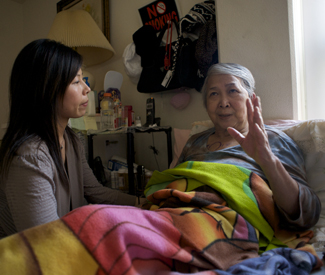
The 52-year-old immigrant from Sinaloa, Mexico, says she was paid $500 a month to provide 24-hour, live-in care to a girl in a wheelchair and her family. She wasn’t allowed regular breaks. She couldn’t eat what she wanted. Even her sleep was disrupted.

“I spoke up a couple times, but when I did, my employer told me I was dumb and good for nothing,” Molina, speaking Spanish through a translator, told us. “She would ask my immigration status, and I said that was not important, but she used that as a threat.”

Molina is a domestic worker — one of the only two professions (the other being farm work) exempt from federal labor standards.

Her experience, a common one among immigrant women in California, prompted Molina to get involved in last year’s California Domestic Worker Bill of Rights campaign, part of national effort that resulted in the first-ever protections being signed into law in New York in 2010.

Gov. Jerry Brown vetoed the California version of the bill late on the night of Sept. 30, 2012, the deadline for signing legislation, citing the paternalistic concern that better pay and working conditions might translate into fewer jobs or fewer hours for domestic workers.

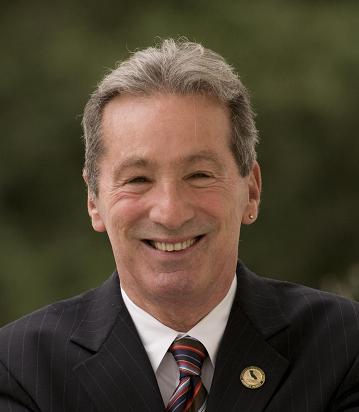
“I was offended by how he did it, in the middle of the night on the last day, and he basically trivialized it,” Assembly member Tom Ammiano (D-SF), who sponsored the measure, told us. “Here in California, it’s a major workforce, but there’s no rules and there’s a documented history of abuses.”

But if anything, Brown’s veto has energized local activists, who say the battle for domestic worker rights is part of a much larger issue that women, children, immigrants, and their supporters are struggling against as they try to get society to value one of the most basic of social and economic functions: caring and caregiving.

Those in the caregiving professions are used to such defeats, but this one seems to be galvanizing and uniting several parallel movements — most of which have a strong presence here in the Bay Area — that want to apply human values and needs to an economic system that has never counted them.

It is, economists and policy experts say, a profoundly different way to measure economic output — and if the domestic workers and their allies succeed, it could have long-term implications for national, state, and local policy.


CARING DOESN’T COUNT

There are endless examples of how society undervalues caring and caregiving and other labor that has long been deemed “women’s work.” They range from nurses fighting for fair contracts to in-home support service workers fighting for their jobs. Many are jobs that have traditionally been done in the home — and in some cases, not counted at all as part of the Gross Domestic Product.

Social work, teaching, administrative support, caring for children or seniors, community organizing, and other jobs held predominantly by women and people of color are consistently among the lowest paid professions.

But the demand for those jobs is increasing — and the price of under-investing in education, caregiving, and child development is decreased productivity and increased crime and other costs for decades to come — so activists say they are critical to the nation’s future.

“It’s a different perspective. Caregiving isn’t transactional the way we think about other jobs,” said Alicia Garza, executive director of People Organized to Win Employment Rights (POWER), which has joined with other organizations nationwide for a Caring Across Generations campaign. “We’re a nation that has a growing aging population with no plan for how we’re going to take care of these people.”

In California today, caregivers find themselves under attack. Despite playing an important role in electing Brown as governor and in keeping Kaiser Hospital in Oakland and CPMC’s St. Luke’s Hospital in San Francisco open to the low-income residents they serve, the California Nurses Association is still stuck in a years-long contract impasse with those huge hospital corporations.

“We don’t think of ourselves first, we think of others first,” says Zenei Cortez, a CNA co-president who has been a registered nurse for 33 years, noting that patient care and advocacy standards have been key sticking points in their negotiations.

During each year with a budget shortfall, in-home support services for the sick, elderly, and disabled have been placed on the budgetary chopping block in California and many of its counties — including San Francisco, which has about 21,000 such workers — saved only by political organizing efforts and a longstanding lawsuit against the state (which was just settled on March 20 and will result in an 8 percent across-the-board cut in services).

“This program has been under assault for a full decade,” says Paul Kumar, a public policy and political consultant for the National Union of Healthcare Workers, calling that attack short-sighted, in both fiscal and human terms. “People get better care in a home setting.”


UNDERVALUED, ACROSS THE BOARD

If people generally act in their financial self interest, as economic theory holds, Oakland resident Lil Milagro Martinez would oppose the Domestic Workers Bill of Rights and its requirement that she pay her nanny at least minimum wage and allow for breaks and sick days.

After all, Milagro and her family are barely scraping by, with her husband working four jobs as she balances care for their infant son with coursework as a theology graduate student. Instead, Milagro said, she offers their nanny a living wage, benefits, and good working conditions.

“I wanted to feel that we were affirming her rights, so she would pass on that level of respect to my son,” Milagro told us. “If I can do this, and there are companies out there saying they can’t afford to do the right thing, that angers me.”

She was also angry when Brown vetoed the Domestic Workers Bill of Rights. She’s been working with a domestic worker employer group called Hand in Hand, a part of the larger National Domestic Worker Coalition.

“Our goal is to bring people together to create the kinds of worker relationships they want with people in their homes,” Danielle Feris, the national director of Hand in Hand, told us. “There will just be more and more people that need care in the home, so this touches all families.”

Milagro and other domestic worker employers say their stand is about much more than enlightened self-interest. They say this is an important step toward recognizing the important contributions that women and minority groups make to society and creating an economy focused on addressing human needs.

“Care, we can say, is undervalued across the board,” Feris said.

In addition to reintroducing the bill in Sacramento this year, the coalition is pushing similar legislation in Massachusetts and Illinois.

“I think the domestic workers have done a fantastic job at organizing across the country,” Ammiano said. “Making a movement of something isn’t easy, but once it gets traction then it’s tough to ignore.”

Like Milagro and Ammiano, Molina said she was bitterly disappointed by Brown’s veto, although all say it only strengthened their resolve to win the fight this year. “I felt very sad, depressed, and betrayed,” Molina said. “But we will win this…And I think the movement for women, workers, and immigrants will only grow from us winning.”

Domestic Workers Coalition campaign coordinator Katie Joaquin noted that the campaign is about triggering a cultural shift as much as it’s about winning legal protections, as important as they may be. “Once this bill passes and we have basic protections doesn’t mean the abuses will stop,” she said, noting that this is really about valuing care work.

“It’s bringing people together around the care we need,” Joaquin said. “These are conversations that are breaking new ground. The bill is really something that gets the ball rolling.”

Once some household work gets recognized, it’s not a big step toward a conversation about valuing all kinds of caring work and including that in our measures of economic progress.

“We definitely support the idea of valuing all care work, both paid and unpaid,” Feris said. “We all have something to gain by valuing each other.”


THE REAL WEALTH OF NATIONS

Author and researcher Riane Eisler has been a leading thinker and advocate for creating a more caring economy for decades, work that resulted in her seminal 1988 book The Chalice and the Blade, which sold half a million copies and was lauded as a groundbreaking analysis of the gender roles in ancient and modern history. She followed that with The Real Wealth of Nations in 2007, and the creation of the Center for Partnership Studies (CPS) and the Caring Economy Campaign.

Eisler takes issue with what most people call “the economy,” a wasteful and incomplete system that doesn’t actually economize in connecting what we have to what we need. She persuasively argues that it makes sense in both human and fiscal terms to value caring and caregiving, for one another and the natural world, providing myriad examples of countries, cultures, and companies that have benefited from that approach.

“In a way, the concepts are very simple. What could be more simple than saying the real wealth of nations isn’t financial? It consists of the contributions of people and nature,” Eisler told us by phone from her home in Monterey.

On March 20, Eisler gave a Congressional Briefing (attended by members and staffers in the Rayburn House Office Building) entitled “The Economic Return From Investing in Care Work & Early Childhood Education,” presenting a report on the issue that CPS and the Urban Institute released in December: “National Indicators and Social Wealth.”

“I think this is extremely timely,” Eisler told us, noting that the Republican Party’s currently aggressive fiscal conservatism must be countered with evidence that meeting people’s real needs is better economic policy than simply catering to Wall Street’s interests.

Her address to Congress followed ones that Eisler has given to the United Nations General Assembly and other important civic organizations around the world, and it was followed the next day by an address she gave to the State Department entitled: “What’s Good for Women is Good for World: Foundations of a Caring Economy.”

While Eisler said “there are people who are very excited about it,” she admits that her ideas have made little progress with the public even as the global economy increasingly displays many of the shortcomings she’s long warned against. “This is still very much on the margins.”

But that could be changing, particularly given the political organizing work that has been done in recent years around the rights of domestic workers and immigrants and on behalf of the interests of children and the poor, some of it drawing on the work of liberal economists such as Paul Krugman and Joseph Stiglitz.

“The Gross Domestic Product is a very poor measure of economic health,” she told us, noting that it perversely counts excessive healthcare spending, rapid resource depletion, and the cleanups of major oil spills as positive economic activity.

Erwin de Leon, a Washington DC policy researcher, opens “National Indicators and Social Wealth” with a quote from a speech that Robert F. Kennedy gave in 1968 criticizing GDP as a bad measure of progress: “It measures neither our wit nor our courage, neither our wisdom nor our learning, neither our compassion nor devotion to our country, it measures everything, in short, except that which makes life worthwhile.”

De Leon then writes: “An urgent need met by measuring a nation’s social wealth is identifying the attributes of a society that make it possible to create and support the development of the full capacities of every individual through the human life span. Social wealth indicators identify these drivers, with special focus on the economic value of caring for and educating children and the contributions of women and communities of color.”

The carefully documented report makes an economic argument that investment in caregiving and early childhood development more than pays for itself over the long run in terms of increased productivity and decreased costs from crime and other social ills, creating a happier and more egalitarian society in the process.

“Nobody talks about the work that immigrant women do and how it contributes to productivity. They free us up to do other things, but we don’t count it,” De Leon told us in a phone interview. “We put lots of value on numbers and the views of economists. The problem with the numbers is it’s an economic number that just values production.”

Eisler’s approach is neither liberal nor conservative, and she takes equal issue with capitalism and socialism as they’ve been practiced, labeling them both “domination-based” systems (as opposed to the “partnership-based” systems she advocates) that devalue caregiving and real human needs.

In fact, she seems to be even harder on progressives than those on the other end of the ideological spectrum, given the Left’s stated concern for women and communities of color. It was a point that Ammiano echoed: “There’s a lot of liberal guilt, but the follow-through has yet to happen.”

“What this entails is re-examining everything,” Eisler told us. “It starts with examining the underlying beliefs and values.”


INSTITUTIONAL SEXISM

Even in supposedly enlightened San Francisco, things are getting worse. On March 26, following a battle with SEIU Local 1021 that began last fall, the city’s Department of Human Resources submitted to a labor mediator its proposal to lower the salaries for new hires in 43 job categories, including vocational nurses, social workers, and secretaries.

The rationale: Those workers were paid more than market rates based on a survey of other counties. But it’s also true that those positions are disproportionately held by women and minorities. In the 1980s, San Francisco made a policy decision to raise the pay of what were traditionally female-dominated professions, part of a nationwide campaign to erase decades of pay inequity.

“The city is rolling back decades of historic work on pay equity in this city,” SEIU Political Director Chris Daly told us. “We were concerned about equal treatment of workers who were disproportionately women and people of color.”

DHS spokesperson Susan Gard told us, “The city is committed to that principal, equal pay for equal work, and we don’t think our proposal erodes that.” But she couldn’t explain why that was true. In reality, the move will lower the salaries for women that come to work for the city.

Those involved in the Domestic Workers Bill of Rights campaign mince no words when it comes to seeing the long history of sexism in political and economic institutions as one of the main obstacles they face.

“In so many ways, domestic work is women’s work, and women’s work has always been undervalued and underpaid,” Milagro said.

She even saw it growing up as child when she accompanied her father when he did housekeeping work, when he was treated “as nonentity, not human,” abuse and mistreatment that was exacerbated by the twin facts that he was an immigrant doing women’s work.

“Sexism has undervalued care work,” Feris said.

Ammiano likened the current struggle to the gay rights movement, and he said that when he started as a teacher back in the 1970s and wanted to teach in the early primary grades, he was told that was for women.

“It’s the feminization of labor,” Ammiano said. “When you have institutional sexism, you have to peel it back layer by layer.”

Eisler is equally direct: “We’ve all been taught to marginalize anything connected to the feminine,” she said.

She noted the vastly disproportionate global poverty rates of women compared to men and said “it’s because most are full or part-time caregivers,” work that isn’t often compensated.

Eisler said the current economic system “marginalizes and dehumanizes half the population,” asking how that could ever be considered ethical or equitable. She dismisses arguments that we can’t afford to value caregiving or work done in the home, noting that “there’s always money for the masculine values” of war and economic expansion.

Ammiano said the cultural blinders that prevent people from seeing how society discriminates against women and the work they do makes the problem more insidious and tougher to solve.

“If they’re doing it deliberately, it’s almost better because you can sink you teeth into it, but if it’s not deliberate then it’s tougher to corral,” he said.

Yet there could be subtle but important changes underway in how people value the roles of men and women in society.

There are indications that substantial majorities of people increasingly see men and masculine values as a big part of the problems the people of the world are facing. Author John Gerzema, whose forthcoming book is entitled Athena Doctrine: How Women (And the Men Who Think Like Them) Will Rule the Future, revealed some of the extensive polling research behind his book in a recent TED Talk.

Much of it points to what he called a “global referendum on men,” with strong majorities in countries around the world — with Canada the only exception — agreeing with the statements “I’m dissatisfied with the conduct of men in my country” and “The world could be better if men thought more like women.”

He and his research partners also had the tens of thousands of people they surveyed rate a list of traits as either masculine or feminine, and then later he had respondents state the traits they most wanted to see in their political leaders, finding that people around the world have begun to strongly prefer feminine traits to male ones in their leaders.

His conclusion: “Femininity is the operating system of 21st Century progress.”


THE SILVER TSUNAMI

The “silver tsunami” — Baby Boomers reaching old age and about to need more care — is about to break.

POWER, Senior Action Network, and many other San Francisco-based organizations in the Caring Across Generations campaign are part of a national push to increase access to and investment in caregiving, from early childhood development through care for those with disabilities to elder care.

“The caregiver industry is something we should invest in,” said POWER’s Garza. “We believe in a society that values care and we want to value that work.”

Yet with short-term, bottom-line thinking guiding the decisions, that requires a bold paradigm shift. Instead, the popular state In-Home Support Services program — which provides some compensation for caregivers of those with disabilities — is now facing an 8 percent cut as part of the recent settlement to lawsuits filed to prevent the 20 percent cut that then-Gov. Arnold Schwarzenegger had proposed.

The SF-based lawyer who filed the lawsuit, Stacey Leyton, told us this was the best settlement possible given the current political climate and the risk of deeper cuts if the Ninth Circuit Court of Appeals ruled in the state’s favor. But she thinks any IHHS cuts are short-sighted: “Any cuts to home care may balance the budget ledger now, but they can cause more costs later in the form of nursing home care and emergency room visits.”

James Chionsini, a community organizer with the Senior and Disability Action (SDA, formerly Senior Action Network), tells us that in addition to the sheer size of the “silver tsunami” coming through — which will require a huge influx of caregivers — efforts by the federal and state governments to contain medical costs could hurt the “upper-poor,” who are required to somehow pay a share of their MediCal health care costs.

That’s one reason why SDA, POWER, and other groups are supporting several campaigns aimed at creating a more caring society, from the Domestic Workers Bill of Rights to Caring Across Generations to basic, bread-and-butter political organizing efforts.

“Organizing is so important,” Garza said, while Chionsini said, “It’s about raising the profile of people who are providing care.”

Milagro said that if the immigrant women who do domestic work score a major victory, that could empower other marginalized groups. “It’s about a change in consciousness,” she said. “This can show a path for other movements to build, strengthen, and work together.”

Garza agrees that important, foundational changes are already underway, even though they will require lots of hard organizing work to bring them to fruition.

“There is a groundswell. This is happening,” she said, noting that it revolves around asking important questions. “How do you look at an economy not rooted in patriarchy? What would it look like if we had to compensate mothers?”

Next week: Part II, Do we care about the natural world?

Caring: The Shanti project

0

In 1974, Charles Garfield was working in the acute care facility of the newly founded UCSF Cancer Center. A psychologist, Garfield had a patient named Jim Dees who had been diagnosed with Guillain Barré Syndrome. Dees’ body was rapidly deteriorating, and his prognosis was uncertain.

Garfield met with Dees for an evaluation. He quickly realized that Dees had no pathologies, no phobias — nothing for a mental-health professional to treat. He was simply “an extraordinarily aware man facing an ugly death,” Garfield later wrote.

Instead of leaving his care to physicians and nurses, Garfield ontinued to meet with Dees — not so much as a trained psychologist, but as a peer. He became someone Dees could talk to and share his fears, someone he could rely on for practical support after he was discharged from the hospital.

Dees was the first client of what Garfield would call the Shanti Project, and the basis for the sort of peer-to-peer, volunteer caregiving that has become a model for an estimated 600 organizations all over the world. It’s an organization that’s been a crucial thread in the fabric of San Francisco’s history. When the AIDS epidemic struck in the 1980s, the city asked Shanti to step in. In the early years of the epidemic, basically every person with AIDS had some form of contact with Shanti, Garfield estimates.

“If you had taken what we did away, I have no idea what many of those folks would have done,” says Garfield. “The catastrophe would have been unimaginable.”

Kaushik Roy, a former volunteer who is now the organization’s executive director, notes: “We do for our clients what you or I might do if one of our family or close friends got sick. It’s the difference between having one person there for you, or none at all.”

The Pope’s political sins

1

news@sfbg.com

OPINION I still remember when I was removed from solitary confinement into the general inmate population of Tres Alamos — one of the infamous concentration camps of Chilean dictator Augusto Pinochet -– and the special welcome given to us 30 or so freshly arrived detainees by the commander of the camp, Conrado Pacheco.

He was dressed in his best military attire. I will never forget the clattering of his black shiny boots, his watery eyes, his mouth salivating like a predator before a feast.

The bloody military rule was in full swing. It was the end of 1975, a time when one of the fiercest repressions was unleashed against the left, the supporters of the ousted Salvador Allende’s government — and the progressive wing of the Catholic church, lead mostly by Jesuit priests.

Next to me was a tall dirty man with a somber yet authoritative look behind his glasses. A bold lawyer who later became president of Amnesty International, Jose Zalaquett’s unclenched look made Conrado Pacheco uneasy. The curas buenos — the good priests Patricio Gajardo and US citizen Daniel Panchot — were also standing in the line.

The roughed up lawyer and priests were from the Comité Pro Paz. Created a few months after the military coup of 1973 the Committee for Peace was the only organization that, under the protection of a sector of the Catholic Church, was defending and giving sanctuary to the thousands of victims of human rights violations.

The welcoming speech of the commander waxed Nazi-like verbose about nationalism, order, communist evil, Che Guevara, and sarcastic references about God. “Mister lawyer here,” I remember him saying while looking at Zalaquett, “since he should be outside and not inside … I’m not sure what he can do to defend you all.” And pointing at the priests, the scoundrel said, “since we have two distinguished representatives of God, you all now know where to go in case you have some pending debts with the Lord, you all fucking sinners!”

All these memories flooded back to me when I learned about the ascent of Jorge Mario Bergoglio as Pope Francis I, and the stories dripping out of Argentina about his collusion with the military during the guerra sucia, dirty war.

Horacio Verbinsky, an Argentinean investigative journalist who has written extensively about the church and the military, wrote in his 1995 book, The Silence, that Bergoglio gave information to the Argentinean secret police about the activities of the Jesuit priests Francisco Jalics and Orlando Yorio, after they refused to stop working with the poor in Buenos Aires’ shanty towns. Bergoglio dropped their protection, a sort of immunity offered to the Jesuit society by the military, which eventually lead to their arrest. Both were brutally tortured and dumped drugged and naked on a wasteland.

Bergoglio also befriended General Emilio Massera, a member of the Argentinean military junta, who was later accused of crimes against humanity and of stealing the babies of disappeared political prisoners to be raised by military families.

Jalics, Yorio, and those two fathers I came to know in prison, Gajardo and Panchot, were among those priests who followed to the letter the teachings of Christ to protect the helpless, to feed and be with the needy and did not capitulate in silence.

The Vatican has recognized that Bergoglio asked “a request for forgiveness of the Church in Argentina for not having done enough at the time of the dictatorship …” But the statement, read by Vatican spokesman Father Federico Lombardi March 15, falls short.

The Sumo Pontífice, the Pope Francis l, the one who will lead more than 1.1 billion people, must come clean and respond to all the testimony that is fogging his character. He must side with truth and justice; the only door that can lead us to reconciliation. After all, forgiveness, after the truth comes out, has always been an option in the Catholic Church.

Fernando Andrés Torres is a San Francisco writer

Alerts

0

Submit political events to be listed in Alerts at alert@sfbg.com or tweet us @SFBG_alerts.

WEDNESDAY 3

Protest Obama fundraiser outside the Getty mansion 2870 Broadway, SF. tinyurl.com/c2mkope. 5:30pm, free. Environmentalists opposing the Keystone XL oil pipeline will protest in San Francisco’s wealthy Pacific Heights neighborhood, where President Barack Obama will dine with the city’s upper crust for a Democratic Party fundraiser. Credo Action – the advocacy arm of telecom Credo Mobile – is mobilizing the protest in tandem with the Sierra Club, 350.org and Friends of the Earth.

Community meeting to save City College Pitcher Room, City College Southeast Campus, 1800 Oakdale, SF. info@saveccsf.org. 6pm, free. Students and community supporters who are engaged in the ongoing fight to save City College of San Francisco as an affordable and accessible educational resource are planning major actions in coming weeks. Join them for this informational and strategy session to preserve this important institution.

THURSDAY 4

Public forum with David Graeber Namaste Hall, California Institute for Integral Studies, 1453 Mission, SF. 7pm, free. An anthropologist from the University of London, author David Graeber is credited with helping to lay the intellectual framework underlying the Occupy Wall Street movement. His work includes Debt: The First 5000 Years, a tome exploring wealth inequality through the ages. Graeber’s talk will be on “Austerity and its Discontents.”

FRIDAY 5

Panel talk on global affirmative action Room 132, UC Berkeley School of Law, 215 Boalt Hall, Berk. tinyurl.com/ckc6qdu. 4-6pm, free. RSVP. Many fear that an upcoming Supreme Court ruling will spell the end of affirmative action admission programs for public colleges and universities. This panel will discuss global affirmative action law, with presenters from the European Commission, the University of Sydney School of Law, and Berkeley Law.

Forum with Dr. Ignacio Chapela Niebyl Proctor Library, 6501 Telegraph Ave, Oakl. SpeakOut-Now.org. 7pm, $3 donation. Dr. Ignacio Chapela, Associate Professor of Microbial Ecology at UC Berkeley, has been studying the impact of genetically modified plants and the misuse of science and its impact on our planet. Join this Speak Out Now forum to hear Chapela’s vision for how science could be used for more positive ends.

SUNDAY 7

Book talk: Beyond Walls and Cages Modern Times Bookstore Collective, 2919 24th St, SF. www.occupyu.org. 6pm, free. As part of Modern Times’ ongoing Occupy U workshop series, this book discussion will explore how prisons, criminalization and militarization facilitate wealth and power inequalities. Join editors Jenna M. Loyd, Matt Mitchelson, and Andrew Burridge in discussion of their book, Beyond Walls And Cages: Prisons, Borders, and Global Crisis.


The Performant: Life is but a dream…

0

Bouffonery and W. Kamau Bell’s stand-up at Stagewerx

Theater history is full of stories of legendary shows that caused riots at their opening night, difficult to imagine in these more apathetic times. We go to the theatre to be entertained, more rarely to be provoked, and more rarely yet, to be stirred to an action greater than the act of merely applauding at the end.

But the theater of Bouffon turns that theater-going complacency on its head. The entertainer in the room is not the curious creature onstage with exaggerated buttocks and an evil smile, but the squirming oddience stuck in the crosshairs of its merciless gaze.

When Eric Davis, a.k.a. the Red Bastard tumbles onto the stage, imitating the slightly baffled faces that gaze up at him in a brilliant, Tourettic flash, a slight tingle of danger vibrates around the room. A dawning awareness, there’s no place to hide. Even those of us who have cleverly ensconced ourselves in the back can tell we’re being scrutinized in the dim lighting of the anonymous warehouse space we’re crammed together in.

“As an audience, you have absolutely no presence,” the Bastard complains. Backs straighten. Chins raise. Challenge us will he? That wobbling, unitard-wearing freak stuffed suggestively with balloons and venom. Of course he will. That’s the whole point.

Red Bastard mocks us. He cajoles. He flirts. He leads the group in a series of physical exercises, dividing the room in two and forcing us to compete, exhorting us to GO BIG. He sticks his bulbous, balloon-stuffed bottom in the face of a pretty girl and makes her dig around for a five-dollar bill. What price dignity. He hocks a loogey onstage and calls it “art” — later he sits in it, “fucking art.” And just at the point where he could become just another one-trick provocateur, he softens the schtick and turns inward. Pressing the buttons of our emotional vulnerability as easily as he pushed our sense of outrage just moments before.

“The more you risk, the more you are rewarded,” he counsels. “If you can’t articulate your desires, you can’t achieve them.” Encouraging the crowd to shout out their deepest desires (“sail around the world,” “naked scuba,” “have a dog,” “fall in love”) he fills an invisible bag with them and pushes it up a “dream mountain” chanting “sissy fuss sissy fuss.”

“What’s difficult about falling in love?” he demands. What’s difficult, he insinuates, about achieving any of our dreams? What indeed.

The ultimate provocation comes when he urges a disgruntled worker bee to call her boss up and quit on the spot, which she gamely attempts but is foiled by the lack of cell phone reception in the room. “T-Mobile,” she explains, as we nod sympathetically. But the seed has been planted, and who knows what fruit it will bear later on.

Then, like the Buddha you kill on the road, Red Bastard sends us away, filled, if only for a moment, with the feeling we truly own our own destiny, a feeling worth every bit of humiliation it took for us to get there.

******

Speaking of owning our own destiny, and following our dreams, local comedian-making-good W. Kamau Bell performed a sold-out weekend at Stagewerx, his spiritual San Francisco home. The theme of much of the show spoke mainly to the heady weirdness of the nature of “celebrity”. Even the kind of ground-level celebrity of having a new television show (Chris Rock-produced Totally Biased on FX) comes with a set of unexpected side effects. Being forced onto The View, auditioning for a spot on The Howard Stern Show, moving to a non-gentrified part of Brooklyn from the Inner Sunset, it’s all fuel for the funny as life’s most awkward moments so frequently are. He’s still the same Kamau, and thank goodness. But the dream, and the comedy, has grown.

Mike Shine’s “Flotsam’s Harvest” at White Walls

2

By Molly Champlain

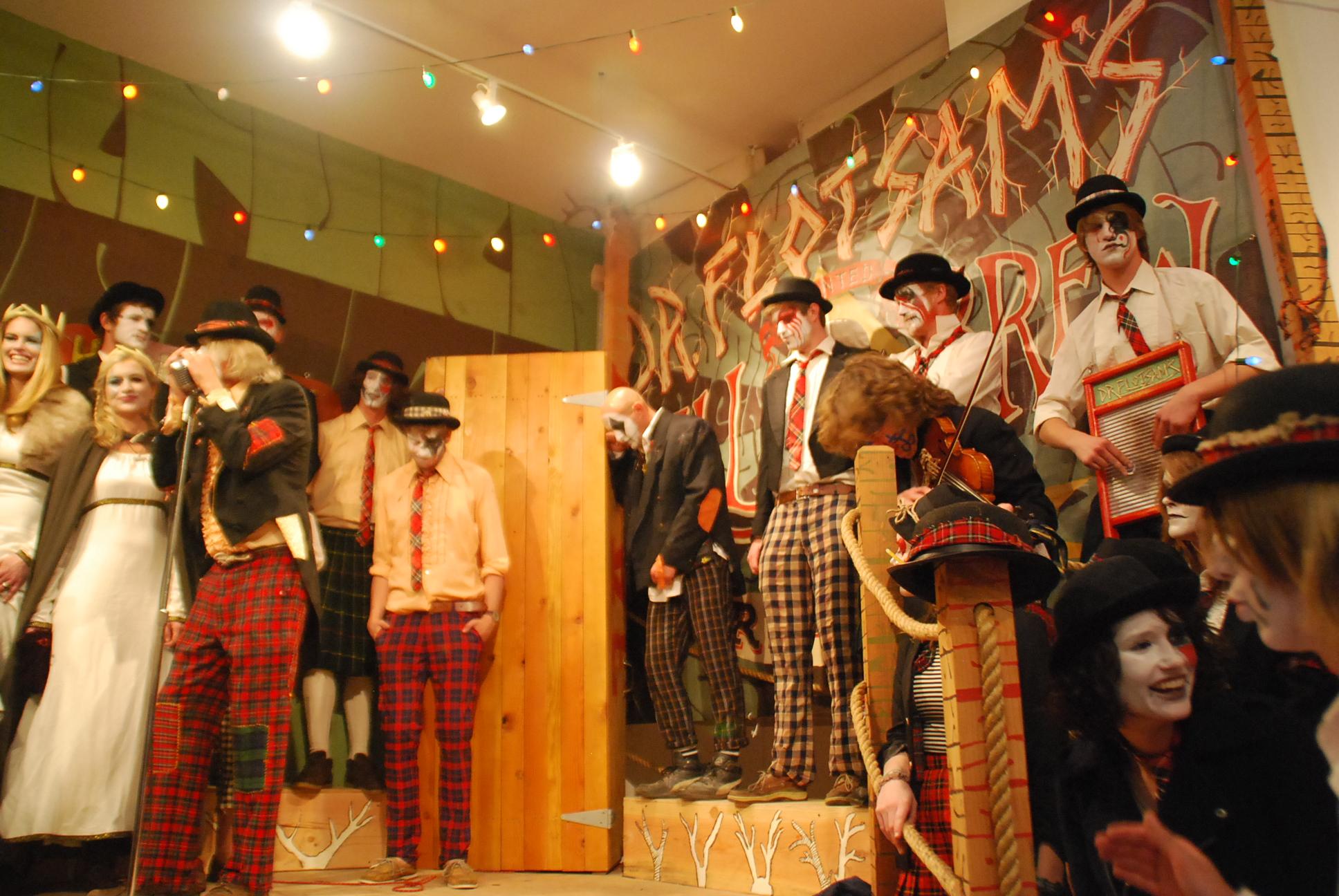
A promise that all our ailments will disappear and our wildest dreams will come true … for a small price. Or for the price of your soul? Dr. Flotsam and his self-described “crew of carny bastards,” sprung from the wild mind of San Francisco artist Mike Shine, ask us the worth of that exchange. The question is scattered through the paintings, performance, and graphic novel of his show, “Flotsam’s Harvest,” up now through April 6 at White Walls.

According to the show’s press release:

“‘Flotsam’s Harvest’ will be a sweeping installation of street art, paintings, films, a medicine show performance and the launching of Shine’s graphic novella. Each aspect of the show will provide different coded tips and hints, offered to help viewers solve the dark ‘World Riddle’ posed by Friedrich Nietzsche in his book, Thus Spake Zarathustra.”

Intrigued? The opening at White Walls Sat/16 had enough stimulation to dissolve even the hardest anti-consumerist into clapping, grinning, and Irish drinking-song singing. But the mystical “Hell Brew” the medicine show promoted wasn’t for sale. Whether it was ploy to sell the art or vice versa is still up for debate.

Shine’s devilish paintings of animals and figures fuse illustration and graffiti styles. Their rustic colors are blockish and thickly lined like cartoons, while the dripping paint, stray marks, collaged tickets, and spray paint give an urban art feel. These hip but simple paintings are enhanced by frames carved with animal figures and hung on walls painted with radiating text that’s as inscrutable as gang tags. Similar murals are also painted around in the city with Banksy-esque portraits of the “carny bastards.” But despite how cool they are, the artworks were not the selling point for me.

Shine’s opening night performance (similar to those he has done at Outside Lands and SFMOMA), was equally as rich and cryptic. It began in some form of Gaelic or Old English with subtitles on cards and continued with Dr. Flotsam selling his mystical tonic in a thick, comical accent. We all knew the audience volunteer selected to test the brew was a plant (in the form of YouTube dance star takesomecrime): he hobbled on stage but was “cured” after swigging from Dr. Flotsam’s flask, and began shuffling to electro swing by Skewiff.

This wildly entertaining evening can’t be isolated as the meat of what Shine has made either, but it began to make sense of what was going on. The sense of irony was ripe when Dr. Flotsam noted that the government doesn’t permit medicine shows because they “lie to you.” (This sense of danger in the promise was deepened in his disclaimer that you can have your widest dreams come true, if you’re willing to part with your soul.)

A similar theme emerges in the accompanying graphic novel, in which Dr. Flotsam intervenes in the lives of people who have notably impacted history, like the caveman who made fire, Jesus, or the inventor of penicillin. But each one pays a heavy price for the advice they receive. The conflation of good and bad creates a wild sense of anarchy which gives reason for, and holds the key to, the intense and scattered information Shine draws upon for his work.

In a culture where added dimension in art and immersive stimulation in film are often confused with creative quality, Shine has created a show which uses both to convey his meaning. But after the whole experience puzzling out the riddle, I was left wanting. The entertaining trail of information ended in a simple answer, but opened up a number of new questions: was it about merging the body and soul by processing his art in order to gain a stronger sense of identity? Or about how commodities are sold with flair and gusto, but in their mass production fail to truly appeal to the individual? Or is Shine just trying to fuck with people? Maybe you should take a look at the riddle and figure it out for yourself.

Mike Shine, “Flotsam’s Harvest”

Through April 6

White Walls Gallery

886 Geary, SF

www.whitewallssf.com

“It just gets different”: Ali Liebegott on her third book ‘Cha-Ching!’

1

When you’ve spent long, smelly months in a bus traveling the world sharing words with pockets of alternative community, the issue of place takes the fore. As she releases her third book Cha-Ching!, and as her decades-old Sister Spit collective embarks upon yet another tour of spoken word, queer revelry, and cramped living conditions, author Ali Liebegott is getting academic about it.

“I’m kind of obsessed with how artists can live,” she tells me in a SoMa coffeehouse. She had texted me for clarification the night before on whether it was okay to look “scummy” at our interview, but she looks pretty neat in her white tee, motorcycle helmet sitting next to her on a bench. “And how queer people can live. I always think, where would I live if I couldn’t live in San Francisco or New York?”

Liebegott teaches Sarah Schulman’s Gentrification of the Mind — a book that looks at how economic displacement changes our brain’s wiring — in her fiction class at Mills College. And in Cha-Ching!, the economy is an ever-present force, guiding protagonist Theo into shitty apartments in both NY and SF neighborhoods where there are few out gay people. (Not to mention a ludicrously depressing janitor job at a junk mail factory.) The book is Liebegott’s third after The Beautifully Worthless and The IHOP Papers

When I ask whether they’re getting easier to write as time goes on she just laughs. “If I had been a plumber, I’d be able to fix things in my sleep. It doesn’t get easier, it just gets different.”

Liebegott reads from Cha-Ching! at City Lights in October

In an ever-more-caffeinated manner, she and I discuss how those higher rents are coinciding with an era in which publishing houses are more hesitant about what they throw their weight behind. “[Queer literature] is the first to go,” Liebegott says. “All the queer books at Barnes and Noble are behind a potted plant, there’s like four of them, and one of those is Best Lesbian Erotica 1994.”

So it’s good that, as poor queers and creatives and poor creatives and queers get kicked out of their urban homes and prime shelf space, Sister Spit is on the rise. Once restricted to queer female writers, the tour now includes a variety of genders, and different kinds of artists.  

Liebegott’s book is one of the first to come out on the imprint that the group’s founder Michelle Tea was able to start through City Lights Books in the fall of 2012 — The Beautifully Worthless was also released through the imprint, as well as the amazing Sister Spit anthology from earlier this year. Tea’s fantastical young adult novel Mermaid in Chelsea Creek, set to drop this summer, is delicious. The collective’s gig at the main library on Sun/31 is in advance of yet another of its fabled tours. This time the path lies up and down the coasts, up to Canada, and into the Mid-West. 

>>LISTEN TO CITY LIGHTS BOOKS’ RECENT PODCAST INTERVIEW WITH ALI LIEBEGOTT 

Along the way, the Sister Spit artists will meet audience members in places where there is no queer community, places where people fundraised to get them there. 

“I don’t want to say we’re a beacon of hope, but it is nice to give people this connection that they might not have,” Liebegott says. 

And that connection, more and more, may not be associated with any specific urban area. San Francisco, for example, would be beyond Liebegott’s reach as a home if it weren’t for her and her girlfriend’s rent control. “I kind of feel like we’re headed towards hell,” Liebegott muses, taking in our swank, caffeinated surroundings. “I feel like we’re already there.”

Regardless, art. Cha-Ching! deals in gambling addiction, drug addiction, poverty, ennui, animal abuse, powerlessness — but nonetheless, can be laugh out loud funny even, especially, when characters hit their low points.

She’s already planning her next book, about a war vet obsessed with feeding ducks. “I feel like I’m so mired in depressing things!” Liebegott says. “My threshold for that is much higher than most people.”

Cha-Ching!‘s ending, though, leaves room to hope that queers can triumph over today’s adversities. Or does it? At any rate, you have ample chances to buy the book at this week’s readings (Liebegott is one of the featured artists at the Sister Spit reading on Sun/31 as well.)

In other news, Liebegott’s big into Sizzler. She told me to write that.

Ali Liebegott’s Cha-Ching! release party

Wed/27, 7pm, free

City Lights Bookstore

261 Columbus, SF

www.citylights.com


Sister Spit tour kick-off reading

Sun/31, 2-5pm, free

San Francisco Main Library

100 Larkin, SF

www.sfpl.org

Behind the Chron’s paywall

24

I wish the Chronicle luck at its experiment with a “paywall.” Once upon a time, we used to call that a “subscription” — that is, you pay money and someone delivers to you something worthwhile to read. Since nobody much likes to pay to read anything any more, it’s considered risky and a bit radical for a newspaper to charge money for access to the work that it pays a staff a fair amount of money to produce.

Let’s do the nice thing here, shall we, and set aside the question of whether the journalism the Chron produces is of such high quality that people ought to pay a premium for it. I have my gripes with the Chron, and always have, but seriously: Having a local newspaper that tells you what’s going on in town — even if it doesn’t always do it well — is worth a dollar a day. Which is what the print version costs.

Writers need to get paid. Reporters are necessary to the function of democracy, and if they can’t make a living doing the job, it’s not going to get done. Since most young people aren’t used to paying to read anything these days, the only option has been selling (more and more) ads.

That’s actually a model the alternative press has followed for decades, and it’s worked fine. In the days before cable, that’s how TV worked, too — it comes in free, and you pay for it by watching (annoying) ads.

But it’s a problem on the web, where ads don’t bring in the revenue they once did in print, so everyone’s scrambling to find a way to pay the bills. If you’re Markos over at Daily Kos, you build a huge, huge community that loves what you’re doing, and keep the staff fairly modest, and sell enough ads and bring in enough donations to pay for it all. If you’re Nick Denton’s Gawker Media Empire, you keep costs very low by hiring very limited staff (certainly not a lot of reporters) and sell ads ads ads everywhere, including “sponored posts.”

But if you’re the San Francisco Chronicle, with 280-plus reporters who need health care, and lots of editors and executives, and the Hearst Corp. demanding impossible profits, you’re kind of SOL.

Thus: Paywall.

These things don’t tend to work very well. Sfgate had a paywall for “premium content” years ago, and it just sort of faded away. The Wall Street Journal and the Business Times pubs get away with it, because people who read biz pubs are used to paying for information. I’m not sure how many truly loyal Chron readers there are who are willing to pay to read Matier and Ross and Chuck Nevius on the web. Most of those people already pay for a print subscription.
The other problem is that it’s really unclear what the identities of the two sites, sfgate and sfchronicle, will be. They look different (sfgate looks like a newsy website, sfchronicle looks like a print newspaper), but where do you go every day for news? If you read sfgate, you’re missing stuff that only appears on sfchronicle, but if you read sfchronicle, you’re missing stuff that appears on sfgate. It’s not like you get a “premium” edition of the paper in one place; you have to check two sites to get your local news, not one.

For example, today you can get The Chron’s own Carolyn Lochhead on the same-sex marriage case at sfgate. If you pay extra, you can go to sfchronicle and get an AP story that’s not exclusive and will run in lots of papers.

Why does this make me want to pay?

So I don’t know; it’s going to take a lot of evolving to make this work. Again, I wish them luck; anyone who’s trying to find a way to keep paying a news staff deserves credit. But at this point, it seems like a pretty dubious plan.

Willie Brown and Ammiano’s pot bill

35

Assemblymember Tom Ammiano’s new medical marijuana bill seems pretty straightforward. Almost everyone in the medpot biz thinks there ought to be some sort of statewide regulations for a growing industry that operates in a mish-mash of local jurisdictions with no overall rules. If nothing else, consumer-protection policies ought to be in place. And, of course, the more the dispensaries accept, and follow, reasonable regs, the easier it is to win the mainstream political support necessary to get the feds off all of our backs and ultimately follow Colorado and Washington.

All good, right?

So Ammiano, who has been on this issue for years, is proposing that the state’s Department of Alcoholic Beverage Control — which for all its problems has experience regulating mind-altering substances — draft and oversee medpot rules.

But the industry that makes a lot of money off the legalization of medicinal weed is famously fractured — and the politics of Sacramento are often nasty. Add in former San Francisco Mayor Willie Brown — who has his fingers in all sorts of business opportunities these days — and the story turns downright weird.
Ammiano’s been talking about Califonria and pot for years. He proposed legalization before the other states did, but frankly, this current state Legislature’s never going to have that kind of courage.

But he continues on with the effort. Last year, he tried to put pot under the Department of Consumer Affairs, which clearly didn’t want it; his bill died in the state Senate.

Normally, when new regulations are proposed for an industry, the Legislature holds what’s called a Sunrise Hearing, to bring all the stakeholders into a room and talk about what issues ought to be addressed. So Ammiano a few months back asked for a hearing in the Senate Business, Professions, and Economic Development Committee. No problem, said the chair, Curren Price, a Los Angeles Democrat.

But in February, five days before the hearing was set, Curran called the whole thing off. Turns out that the Governor’s Office and the Attorney General’s Office wanted no part of it, so it was hard to round up the essential players. Also, Curran was running for an open LA City Council seat and probably didn’t want the publicity. As Ammiano said at the time, “What’s up with marijuana? You can’t even have a hearing?”

Even without a hearing, he’s moving a new bill, AB 473, which would create under ABC a Division of Medical Cannabis Regulation and Enforcement. The bill is modeled on a successful effort in Colorado that has kept the feds at bay. Washington is also putting marijuana regulation under its liquor control authority.
“We’ve had not one federal intervention,” in Colorado, Matt Cook, a consultant who help write the rules in that state, said.

But just as Ammiano was preparing to line up support for his measure, another bill mysteriously appeared, in the state Senate. A “spot bill” with no actual content, the measure was set as a medical marijuana regulation placeholder. The authors: Senate President Darrell Steinberg and San Francisco’s Mark Leno.

Now: Leno’s been a big supporter of medical pot for years — but the bill wasn’t his idea. “Darrell told me he was going to do something about marijuana regulations, and he asked me if I would join him,” Leno told us.

What Leno didn’t know: Steinberg had been approached and asked to carry a bill by Willie Brown. Brown contacted the Senate president, sources tell us, and said that Ammiano was the wrong person to carry pot legislation.

Why? Who knows. Brown wouldn’t return my calls. But I can tell you with absolute certainty that Brown has been looking for ways to discredit Ammiano since 1999, when the then-supervisor challenged the mayor’s re-election in a legendary write-in campaign that galvanized the city’s left and created the momentum for the complete rejection of Brown’s politics and endorsed candidates a year later, in the first district elections.

And yes: Willie Brown carries a grudge. So it’s possible that he would go out of his way to make sure that Ammiano didn’t get credit for leading the way on what will evenutally be a huge sea chance in how California handles pot.

Now: This sort of thing isn’t viewed very highly in the hallowed halls of the state Leg, where people take their bills — and their history on issues — very seriously. Ammiano was furious, and talked to Steinberg, who (properly) apologized for stepping on his toes. Leno told us he had no intention of undermining his San Francisco colleague, that he had immense respect for Ammiano and all of his efforts, and that he wouldn’t move forward with any bill that didn’t have Ammiano’s input and support.

But it raises the question: Why is Brown even involved in medical marijuana? The only answer I can come up with is that he’s making money off it. Not as a dispensary owner or a grower, but as, in effect, a lobbyist.

When I heard Brown was messing around with the industry, I called Steve DeAngelo, who runs Harborside Health Center, the $22 million a year dispensary in Oakland. DeAngelo’s a promient leader on medical marijuana issues, and has built a respected business that pays taxes to Oakland, provides quality product, and is in many ways a model for what a dispensary should look like.

We talked for a while about Ammiano’s bill, and DeAngelo said he wants to be sure there’s community consensus. “The most important thing is that whatever passes addresses the issues and has broad supoprt in the industry,” he said. He agreed that regulation is needed, but stopped short of endorsing Ammiano’s bill, saying “there still needs to be further discussion.”

Then I asked him if he knew why Brown was talking to the state Senate president, and he told me:

“Willie Brown has been a political advisor to Harborside.”

I asked him if Harborside was paying Brown for his advice. He refused to say.

Okay then. But Brown doesn’t have much of a history of working on this issue pro bono, and is not known for serving as a “political advisor” (or doing much of anything else in the way of work) for free.

What does Brown think about the Ammiano bill? “He thinks,” DeAngelo said, “that it’s important it have a broad base of support.”

Willie Brown is not popular with the voters of California. His history of questionable (at best) ethics was among the reasons the voters approved terms limits for the Legislature. Hardly anyone on the left trusts him. A medical marijuana regulatory bill that has his fingerprints isn’t going to do much for “consensus” or “broad-based support.”

So maybe the best thing Brown could do for his client is stay the hell out of Sacramento.

Artists respond to hate-speech ads with “fabulous” alterations

When it comes to countering hate speech, there’s nothing like creative expression mixed with direct action. Activists affiliated with art collectives Bay Area Art Queers Unleashing Power (BAAQUP) and Street Cred declared yesterday to be “Hate Free Monday,” and celebrated by modifying hate speech ads recently plastered on Muni buses.

Purchased by the pro-Israeli American Freedom Defense Initiative (AFDI), the ads contain bigoted, inflammatory quotations directed at LGBT people, attributed to prominent Muslims. Although city officials have condemned the advertisements, they were nevertheless allowed to be displayed because Muni determined them to be within First Amendment guidelines.

Headed by conservative blogger Pamela Geller, AFDI has been deemed a hate group by the Southern Poverty Law Center and the Anti-Defamation League. Geller herself is the target of the activists’ handiwork.

“We believe that all public spaces, including public transit, should be welcoming and safe for all members of our community,” the artists, who did not give their names, wrote to the Guardian in a statement sent from baqupower@gmail.com. “The hate-filled messages purchased by Pamela Geller’s AFDI defame and vilify Muslims and are harmful and offensive to residents and visitors in San Francisco, both Muslim and non-Muslim. 
Since the city will not take action against these ads on city buses, we have.”

To read BAAQUP’s full description of the motivations behind their action, go here.

Their statement concludes: “As long as these advertising outrages continue to appear on our streets, we will continue to reconstitute them to reflect something more truthful, just, and ideally fabulous.”


Downright ‘Deviant’ — the sexy new video from Double Duchess

0

Feast your eyes on the latest offering from San Francisco electro-hop duo Double Duchess – a gritty, glammy, pulsing new video for the single, “Deviant,” off its forthcoming EP, due out this summer on Oakland’s Le Heat Records. There may or may not be a purple dildo in there somewhere.

And Double Duchess – said to be influenced by “Baltimore club, booty breaks, ballroom house…couture fashion!” – knows a thing or two about provocative videos, remember last year’s “Bucket Betch” off the duo’s debut EP, Hey Girl! Just killer. 

This time it’s all hot clothes, neon hair, chain-link fences, glossy leather masks, subliminal block lettering, baroque furniture in ’90s rave warehouses, strobe-lights, glitter-spitting goodness. And for a split second, you might spot Guardian culture editor Caitlin Donohue in there, looking fancy, and preening in pink hair. 

Check the band live next at the Elbo Room, April 5, with Micahtron, HussyClub, and DJs BeyondADoubt and Jaysonik. www.elbo.com


Rally and vigils for marriage equality in S.F. this week

The U.S. Supreme Court will hold back-to-back hearings this week as justices consider Prop 8 and the Defense of Marriage Act (DOMA), setting the stage for historic discussions concerning LGBT civil rights. Tonight, hundreds are expected to gather at Castro and Market streets for a 6:30 p.m. rally, followed by a march to City Hall. Prop 8, a state constitutional amendment banning same-sex marriage, passed in California with 52 percent of the vote in November of 2008. Challenges to the discriminatory law have been working through the court system ever since.

LGBT activists also plan to mark Tuesday and Wednesday evenings with vigils outside the California Supreme Court building. The vigils will coincide with about 150 events scheduled throughout the country, organized to demonstrate support for marriage equality.

Shortly after longtime gay rights activists Cleve Jones and David Mixner put out the call to local activists that the Supreme Court would be hearing arguments on Prop 8 and DOMA, Patrick Connors started helping to organize the rally, march and vigils in tandem with activists Greg Chasin, Billy Bradford, Aaron Baldwin and others, Connors said. Over the past several weeks, they’ve been posting fliers, Tweeting to get the word out and urging support for marriage equality as the historic twin hearings get underway in D.C. 

“We’re cautiously optimistic that there will be hundreds of people in the Castro” for the Monday night rally, Connors told the Guardian. About 200 have also signalled interest in attending the vigils March 26 and 27.

San Francisco has been at the epicenter in the battle for marriage equality. Just after Prop 8 passed, it was immediately challenged in parallel court proceedings by same-sex couples and the city of San Francisco, with City Attorney Dennis Herrera leading the charge with support from other California municipalities.

Connors and his husband, Robert Dekoch, were initially married in February of 2004, but their marriage was invalidated after the California Supreme Court held that city officials lacked the authority to issue marriage licenses to same-sex couples. Following a subsequent court victory that opened the gates for same-sex couples to be married in San Francisco City Hall once again, Connors and Dekoch returned and were re-married in August of 2008.

Although Prop. 8 passed the following November, banning same-sex marriage, “our marriage, along with 18,000 others, is recognized by the state of California,” Connors explained. Yet their marriage still isn’t recognized at the federal level, so “there’s the potential of what could happen” during out-of-state travel, he said.

In May of 2009, Connors was arrested along with some 200 protesters who took to the streets following a California Supreme Court decision upholding Prop 8. “A whole bunch of us sat in the middle of Van Ness,” he recounted, “And blocked traffic for hours until the paddy wagons came.”    

Heads Up: 8 must-see concerts this week

1

Sometimes, “world music” takes on an entirely different meaning. This week, the bands and musicians and producers will come from all over the (European) map: there’s Grecian psych punk, UK goth pop, Irish deep house and space disco, plus one-half of the first all-female electronic DJ group of Chicago, a KUSF-in-Exile benefit, and a soul clap dance-off.

I’m exhausted just thinking about the travel time it’ll take all those acts – Acid Baby Jesus, Veronica Falls, Mano Le Tough, Jonathan Toubin, Texas is the Reason, Colette and DJ Heather, and so many more – to arrive in our foggy city by the bay.

Treat them right upon arrival, and partake in the live music madness. And don’t forget to boost up the locals like Carlton Melton and Disappearing People at that SF radio blowout benefit. 

Here are your must-see Bay Area concerts this week/end:

Acid Baby Jesus
Greek garage punk? Sure, why not. Acid Baby Jesus has been described as “Athens, Greece’s answer to the Black Lips” (and yes, they’ve toured with Black Lips) and that’s enough for me. Plus, this past November, Acid Baby Jesus released an experimental split record with Hellshovel, another band on the Hemlock bill tonight. Tribal, psychedelic Voyager 8 is the joint project of both acts, with a few swirly, tripped-out songs created together, and new tracks from each band – so there’s likely to be some cool stuff on that merch table tonight.

Tue/26, 8:30pm, $8
Hemlock Tavern
1131 Polk, SF
www.hemlocktavern.com

http://www.youtube.com/watch?v=QuwLPWeIQAQ

Veronica Falls
Veronica Falls recently released Waiting for Something to Happen (Slumberland Records) — the follow up to 2011’s emotional rollercoaster self-titled debut. That first record, which opened with deliciously moody “Found Love In A Graveyard” was a melancholy goth pop masterpiece. Waiting for Something to Happen has been described as “the work of an undead ’60s girl group,” which stood out to me as the ideal combination, like if the Angels’ ’63 song “My Boyfriend’s Back” had instead been about a zombie lover in a leather jacket, revving up his motorcycle (as with the schlocky ’90s film of the same name, which I had completely forgotten about until now). Vroom.
With Brilliant Colors, Golden Grrrls
Tue/26, 8pm, $12-$14
Rickshaw Stop
155 Fell, SF
www.rickshawstop.com

http://www.youtube.com/watch?v=9le2Fq7FwI0

“KUSF-In-Exile’s Blown-Out, Blowout Benefit II”
“As the group Save KUSF transitions into San Francisco Community Radio (its nonprofit identity) the costly legal quest continues with an FCC-level appeal of 90.3 FM’s sale still waiting to be ruled on. So what’s a group of rogue DJs to do when their sojourn on the web waves appears as if it’s becoming permanent? They throw another springtime blowout of mind-melting music to raise cash for their cause. Carlton Melton delivers the psychedelic, stoner-drone, Disappearing People emerges out of Oakland with experimental punk, and from the same neck of the woods, the one and only Yogurt Brain rides in with some catchy jangle and an occasional monster riff thrown in.” — Andre Torrez
Fri/29, 8pm, $5–$10
Lab
2948 16th St., SF
www.thelab.org
http://www.youtube.com/watch?v=WEtguJ31h3c

Texas is the Reason
“Texas is the Reason’s only full-length Do You Know Who You Are? remains a touchstone album in the post-hardcore canon and is considered to be one of the primary kick-starters of the ’90s emo movement. Just as the band was about to burst from underground notoriety to a mainstream record label, however, it collapsed due to internal tensions. After just three years of existence and one beloved album, Texas is the Reason was done. Other than a two-show reunion in 2006, this year marks the band’s first and only tour since its disintegration a decade and a half back. This spring, the band unveiled two new songs and a brief tour — its last ever.” — Haley Zaremba
With the Jealous Sound
Fri/29, 9pm, $20
Bimbo’s 365
1025 Columbus, SF
www.bimbos365club.com
http://www.youtube.com/watch?v=9TIppgZBGC0

Mano Le Tough
“Having proved himself a more than capable in long form (popping up on this year’s Resident Advisor Top 100 poll and a recent Boiler Room set) and short (contributing remixes for Midnight Magic, Roisin Murphy, and Aloe Blacc) Ireland’s Mano Le Tough needed only to release a solid album to complete the producer trifecta. With Changing Days, he’s done just that, and it’s an assured, spaced out collection of deep house and future disco, organic, airy sounds alternating at times with ray-gun zaps. Throughout, Mano expands on the calmly emotive vocal style earlier heard on “In My Arms” and the glistening Stories EP.” — Ryan Prendiville
With Bells and Whistles, Joey Alaniz
Fri/29, 9pm, $8–$15
Monarch
101 Sixth St., SF
www.monarchsf.com
http://www.youtube.com/watch?v=Vinxtt8AOIk

“Soul Clap and Dance-Off”
After a freak accident in late 2011 (a car plowed into his hotel room), revered New York Night Train DJ Jonathan Toubin is back with his feverish ’60s soul freak out party. The winner of the dance-off gets 100 bones, the guest selector is DJ Primo, and full disclosure, I’m one of the contest judges this time around.
Sat/30, 9pm, $8
Rickshaw Stop
155 Fell, SF
www.rickshawstop.com

Colette and DJ Heather
“Around 16 years ago, four young female DJs united to form the formidable quartet known as the SuperJane Collective. Feeding off Chicago’s potent house music scene, DJ Heather, Colette, Lady D, and Dayhota laid claim to being the first all-female electronic DJ group. The groundbreaking foursome have since separated, both musically and geographically, but they are scheduled for a Sweet Sixteen reunion in Chicago in June. In the meantime, Colette and DJ Heather are coming in hot off their appearance at Austin’s SXSW. Expect deep grooves, funkiness, and improvisational live vocals from Colette.” —  Kevin Lee
With Pink Mammoth
Sat/30, 10pm, $15–$20
Mighty
119 Utah, SF
www.mighty119.com
http://www.youtube.com/watch?v=xTBGiMxGyQM

Widowspeak
“Eudora Welty once said, “Every story would be another story, and unrecognizable if it took up its characters and plot and happened somewhere else.” It is no surprise then that Widowspeak recorded its second album, Almanac, in a 100-year-old barn in the Hudson River Valley. Setting creeps in, the soft singing of frontperson Molly Hamilton ringing like a ghostly whisper from a rural past, which sits in beautiful tension with the sometimes jangly rock instrumentals that seem reflective of the band’s Brooklyn base. At the Chapel show, though, it might be more apt to say that the atmospheric folk-pop of the band creates a setting of its own” — Laura Kerry
With SISU
Sun/31, 9pm, $12
Chapel
777 Valencia, SF
www.thechapelsf.com
http://www.youtube.com/watch?v=1-5BBADOBAc


Mr. Marina steals our hearts

7

I couldn’t get a goddamn one of my friends to go with me to the triumphant return of the Mr. Marina pageant, held for the first time this year at that mecca of San Francisco nightlife Ruby Skye. Fools! Luckily, one of them did volunteer their preppy friend Johnny, who picked me up in a Beamer, bought my drinks for the night, wore a seersucker blazer, and after the pageantry was done brought me to an after-party at Ottimista Enoteca where multiple Mr. Marina runners-up were in attendance.

It was basically the perfect evening and my favorite contestant won the damn thing. As he said in our exclusive dressing room interview shortly before recieving his trophy and ceremonial Mr. Marina sash, “you gotta come hang out with guys like us.”

These girls were awesome. They were really hot, were wearing customized Mr. Marina tees, and as far as I’m concerned, were the most memorable part of Jason De La Del Grande’s stab at the throne. 

Here’s Johnny, with our drinks from the open bar during the first hour doors were open at Ruby Skye. He’s launching his campaign for Mr. Marina 2014 and I think he’s an early frontrunner for the honor. By the way, those are the “94123” house cocktails made from Sprite and Skyy Infusions Moscato Grape, which as the Daily News will tell you, was inspired by the newfound popularity of moscato wines in the “urban community.”

But only one candidate had people carrying around cut-outs of their face on a stick and that was Ishmail “Ish” Simpson, who pretty much had already won the competition based on the viral video of him making Jay-Z SOMETHIGN. Simpson played football for Stanford, was the only person of color in the whole pageant, and is frankly adorable. Trigger warning: the following clip contains denigrating statements made towards the Mission.


Just some crowd style shots. That’s madras, for the Philistines among you. 

This is NOT a cravat, Johnny told me. It is an ascot. It’s wearer is Baldwin Cunningham, who started what is basically a dating website between people who want to be sponsored and companies like Pabst Blue Ribbon who want to sponsor people. Get you some. 

Did I mention Mr. Marina is all about fighting cancer? The pageant raised $91,000 for the Leukemia and Lymphoma Society, to be donated through a little booster club named Slap Cancer, a moniker that embodies the charming side of the Marina. The gentleman above is wearing a tuxedo Speedo for the swimwear segment of the evening, which was by far the best segment of the evening. 

In the photo above, Alex Schmitt betrays his brutal hotness with the worst talent segment I’d seen up to that point (having watched the rest of the competition, I have now seen much worse.) Mr. Marina expert Andrew Dalton’s sum-up of the contest has many of these other lowlights in his reportage on the evening. Check out Dalton’s missive on last year’s competition for a historical perspective on the event. 

Thank goodness for Ish. His performance of “99 Problems (But an Ish Ain’t One)” was not as good as his video, but as you can see from the dollar bills littering the stage at his feet, who cares. 

More talent segment atrocities. I was pleased, however, that this particular number rescued my perfect record of never going to a San Francisco pageant that did not include a drag queen. 

Shortly after I shot this, the blow-up dolls were made out with, cruelly flung away into the audience and “Ice, Ice Baby” began to play. Obviously.

After that I was so terrified Johnny and I fled to the dressing room, where I got to hear from these two gentleman about how they had bought the exact same pair of white slim-cut H&M jeans to sport in the evening’s final challenge: the impromptu question/Marinawear segment. 

Ish’s blazer apparently made my camera freak out but how goddamn adorable is he? I took this opportunity to sit down with him for a pre-victory one-on-one. He’s really good at interviews, and I found out he moved to the Marina four years ago and now works in tech in the South Bay. In an abridged version:

SFBG Why did you want to be Mr. Marina?

Ishmail Simpson I remember last year I was like, what are you people talking about? And then everyone started telling me I should run. I had all these friends be like ‘Ish, you should do it.’ I had no reason to say no — I mean if I said no that would have been lazy.

SFBG I never really get down to the Marina

IS You gotta come down! Hang with guys like us. (smiles. Swoon.)

SFBG What do you like about the Marina?

IS Number one, the people. We all like the same stuff. All the guys like sports. And the women!

SFBG Would you ever live in a different San Francisco neighborhood?

IS Of course I would. Do I want to? No.

SFBG I asked the people who are carrying your face around on sticks why you should win and they mentioned something about purple pants.

IS (laughs) I always wear colored pants! I probably have pants in a dozen colors. Purple, white, salmon. They must just be remembering the purple.

When Ish was subsequently asked, in his impromptu question spotlight, to finish the sentence “I know I’m in the Marina when…,” he responded: “I know I’m in the Marina when I hear ‘Ish!’ ‘Hey look everybody it’s Ish!” I doubt anyone in the audience doubted the sincerity of that statement. Fate = sealed.

These are all things that Mr. Marina wins but I guess for simplicity’s sake it leaves out:

Complimentary bottomless mimosas at Bin 38 Sunday Brunch for the year of his reign

A pair of Chubbies shorts for every season

Reservations for the back patio at Lightening Tavern with a $250 bar tab

An afterparty at HiFi with a $300 bar tab

$100 to Tacolicious, $100 to Brixton and $100 to Mas Sake

A Mr. Marina drink (shot + beer) of his choice on the menu at Brick Yard

12 months worth of Argoz argyle socks

$250 credit for Ski Tickets from Liftopia

$100 to Ace Wasabi + a round of sake bombs

Basically, when you win Mr. Marina, life becomes worth living. 

When Ish was sashed up (sorry no photos, my camera was hopped up on testosterone and moscato vodka by evening’s end), he thanked “every single man and woman who lives in the 94123,” and shook the judges’ hands. Yes, Mr. Marina 2012, the earnest woman from the Leukemia and Lymphoma Society, the former Dallas Cowboys cheerleader, and Ms California 2004 (fourth runner-up, please note, to Ms USA 2004.)


Afterwards, spirits were high. #MrMarina neon tanktops were donned, the photobooth got a workout, cancer was slapped.

I’ll leave you with this. ‘Til next year, Mr. Marina. I raise my Skyy moscato-and-Sprite to you. 

Does Mayor Lee support Airbnb dodging its $1.8 million tax debt to SF?

185

My story in this week’s Guardian about how Airbnb appears to be refusing to pay the hotel taxes it owes to the city has gotten a lot of attention. But I’m still getting stonewalled by representatives from the company and Mayor Ed Lee, who apparently refuses to take a public stand against corporate tax evasion, even when it means thousands of San Franciscans could get stuck with an unexpected tax bill.

How much money are we talking about? According to a study that Airbnb commissioned and publicized late last year, its hosts in San Francisco collect $12.7 million from their guests every year. That means that if the company was charging the 14 percent Transient Occupancy Tax – as the Tax Collector’s Office last year ruled that it must – it would be paying the city nearly $1.8 million annually.

But that doesn’t seem to be happening, although only Airbnb can say for sure, which is why its spokespeople have been dodging my questions for more than a week. As I reported, taxpayer privacy laws prevent city officials from disclosing how much individual businesses pay in local taxes, but we do know Airbnb doesn’t add the TOT to the online transactions it facilitates or specifically encourage its San Francisco hosts to collect the taxes (even though the tax codes make the hosts and Airbnb jointly responsible for this growing debt to city coffers). And with the company charging 6-12 percent per transaction, it’s a safe bet that it isn’t simply paying the taxes itself.

What makes this particular case of corporate tax dodging even more interesting is the fact that Mayor Lee has a close connection to this particular San Francisco-based corporation. Venture capitalist Ron Conway is a top investor in both Airbnb and Mayor Lee’s political campaigns, creating a potential conflict-of-interest in Room 200. Last year, Mayor Lee personally lobbied against the interpretation by the Tax Collector’s Office, and now he appears to be silently backing Airbnb’s resistance to paying its taxes.

Last week, when I was trying to get a comment for Lee spokesperson Francis Tsang on Airbnb’s apparent tax dodge, he replied, “It’s an incorrect assumption that Airbnb and hosts haven’t been paying any transient occupancy tax..” Of course, because of the taxpayer privacy laws, Tsang can’t actually support that statement and I responded by laying out the evidence that the city is getting stiffed by Airbnb.

Then, he and Airbnb simply stopped responding to my questions, even though I’ve made repeated inquiries and asked only whether Mayor Lee was willing to make a public statement calling for a major San Francisco corporation to meet its local tax obligations. And in the interests of fully transparency, I’ll close with the email that I sent to spokespersons for Airbnb and the Mayor’s Office on Wednesday as my story came out, along with their emails in case you want to push for answers yourself.

kim@airbnb.com, francis.tsang@sfgov.org, christine.falvey@sfgov.org.

Dear Airbnb and mayoral spokespeople,

Since I couldn’t get responsive answers from any of you about why Airbnb isn’t collecting the Transient Occupancy Tax from its guests, I wanted to forward the link to my story on the topic in our latest issue (http://www.sfbg.com/2013/03/19/airbnb-isnt-sharing) and to let you know that I will continue covering this issue in the Guardian and our sister newspapers until you address it publicly.

Because of privacy laws that limit the Tax Collector’s Office from addressing this directly, only Airbnb can say whether they’re paying any of the hotel taxes that the city last year conclusively ruled that they owe. As I reported in my story, that tax obligation is shared jointly by Airbnb and its hosts, who don’t appear to have been warned of this by the company, making this an issue of consumer protection as well as corporate greed.

Will the Mayor’s Office make a public statement opposing tax evasion? Will it stand up for San Franciscans who may be unwittingly stuck with the tax bill by Airbnb? Or will Mayor Lee stick up for a tax-dodging corporation funded by the same billionaire that funds his political campaigns? And how will people feel about San Franciscans and the city treasury paying for his political ambitions?

These are all questions that I plan to air and explore in the Guardian, and I think that our readers and the general public deserve answers to those questions. If there are reasons why Airbnb guests aren’t being charged the TOT, some other arrangement that has been made, or some other complex reasons why Airbnb feels it can’t comply with last year’s ruling by the Tax Collector’s Office, I’ll be happy to hear it and let you make your case to our readers. But I don’t think that continuing to stonewall me is going to be a viable strategy for any of you. I hope to hear from you soon.

Fine Arts Museums management blasted in colorful anonymous letter

Ever since the Guardian reported on recent firings and allegations of improper behavior by senior staff at the Fine Arts Museums of San Francisco (FAMSF), we’ve received a great deal of correspondence relating to the museums. The barbs continue to fly as current and former museum staff members describe an intimidating internal atmosphere within the city’s charitable trust departments, which Curator Emeritus Robert Flynn Johnson has termed “Orwellian dysfunction.” Just this afternoon, another letter arrived — with no return address.

Dated March 20, it was addressed to Richard Benefield, Deputy Director of the de Young. Here’s the text in full, with our own links inserted to clarify the issues the writer is referencing:

“What a ridiculous and absurd Dept. Head Meeting yesterday!

“Aside from the competent I.T. report … how could you expect even a singular response regarding the recent media attention when everyone in the room has been completely intimidated and muted into silence?

“You, sir, are operating with the same delusion as our board president.

“‘Orwellian Dysfunction’ doesn’t even begin to describe the underlying rage, resentment, and disloyalty among most of us still employed by this institution.”

The letter goes on to name three top-ranking museum staff members, calling them “the greatest threat to this museum’s future function and credibility. If Colin Bailey cannot swiftly address these problem individuals, provide the city and public with a transparent accounting of its operating budget, reinstate board president term limits, and modify the draconian time clock surveillance system for our once dedicated hourly workers, then its [sic] certain that the probing press will only continue.”

Additional recipients were listed as San Francisco Mayor Ed Lee; Colin Bailey (rumored to have been selected as the new director of the de Young); FAMSF Board of Trustees President Diane “Dede” Wilsey; San Francisco Chronicle reporter Jesse Hamlin (who managed to get Wilsey on the phone; she ignored Guardian requests for an interview); New York Times reporter Patricia Cohen and arts journalist Lee Rosenbaum.

The Guardian left a message for Ken Garcia, spokesperson for the museums, to share the contents of the letter and request comment. So far, he has not responded.

The human price of Catholic conservatism

2

A new book by local historian William Issel explains the key role the Catholic Church played in funding and supporting progressive causes in 20th Century San Francisco, and Randy Shaw’s take on it is accurate: For a while, in the 1970s and 1980s, the Church funded a lot of the tenant advocacy and poverty work in this city. The other side of that is a piece of the debate over the new Pope that we’re not hearing much.

As John Paul II moved the Church to the right, he also shifted its focus — away from concerns with economic justice and towards issues like same-sex marraige and abortion (oh, and covering up sex crimes by priests). In the process, not only did vast numbers of Western Catholics start to lose faith in their church — the money and focus that used to help local activists fight for the poor went away.

The new Pope Francis I is known for his work on poverty — but not for his advocacy of progressive organizations that take that fight out of the pulpit and into the streets, where material good is done.

There’s a human cost to the conservatism of the Catholic Church, and it goes way beyond the altar.