Restaurants

Two on the rise

0

virginia@sfbg.com

APPETITE Age is good thing: for wine, whiskey, cheese, wisdom, sense of self… Age deepens, fills out, matures. In the scheme of things, these two restaurants are youngsters — Bar Tartine has been successful since opening in 2005, Txoko was the new kid on the block in 2011. But they’ve steadily improved: what was exceptional at times last year is now more consistently so. 

BAR TARTINE

Bar Tartine has long been notable. Now it has become exciting. Last year I wrote of new chef Nick Balla, fresh from Nombe, who launched a Hungarian-influenced menu acknowledging his roots. Eastern European touches render the food unique yet exude down-home goodness.

Tripe strikes fear in the hearts of many. I don’t mind it, but only at Oliveto’s 2010 Whole Hog dinner had I found it delicious. Balla’s grilled tripe ($12) stands as the best tripe dish I’ve ever tasted. Silky (not slimy) strips of tripe fill a bowl aromatically entwined with fennel, cabbage and paprika. Beets, an ingredient we’ve been inundated with in recent years, are electrifying in an ensalada rusa ($12) with celery root, dill, chili, peppercress, and plenty of lime. This invigorating expression stands above the best beet dishes. An entree winner is Hungarian farmer’s cheese dumplings, nokedli ($17). Sunchoke (Jerusalem artichoke) and wild onion meld with doughy, slightly cheesy, dumplings: sheer comfort.

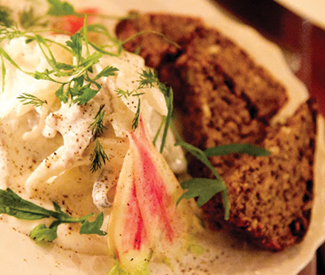
Puffy, fried Hungarian potato bread, langos ($10), remains the must-order menu item upon every visit, drizzled with sour cream and dill — it is blissfully garlicky. Not since my travels through the Hungarian countryside have I seen this addictive bread. Here’s hoping when cherry season hits, we’ll witness the return of Balla’s fantastic version of Hungarian chilled sour cherry soup, meggyleves.

The wine list persists in quality, a recent example being two Riesling beauties set in contrast: a dry, elegant, German 2009 Keller Von der Fels Trocken Riesling alongside a lively, unusual-but-refined Santa Barbara 2008 Tatomer Vandenberg Riesling.

Balla’s proven addition to Bar Tartine’s expanded, inviting, glowing space, confirms the restaurant as a personal favorite — and one of the best in town.

8561 Valencia, SF. (415) 487-1600, www.bartartine.com

TXOKO

With so little Basque cuisine in our city, I was delighted when Txoko (pronounced “choko”) opened in the spacious space that was once home to Enrico’s, promising Basque influence. (See Paul Reidinger’s August 2011 review.) Lots of small plates and just a few larger ones appealed with an opportunity to try more. Early visits last year yielded delectable small bites, while I found larger plates less exciting. When the menu recently changed to a more traditional appetizer and entree format, I feared it would lose its uniqueness. Pleasingly, however, Txoko’s menu has been rounded out, entrees keeping pace with starters. I do sense the Basque influence is looser than it was before, however, and would rather not see that aspect fade.

Txoko’s Wednesday night, four-course foie gras dinners ($55) are arguably the best way to ride out the remaining months until June when the California foie gras ban takes effect (Txoko owner Ryan Maxey is a foie defender.) The menu varies weekly though typically finishes with buttery foie gras ice cream. One week I savored silky foie gras torchon on a flaky puff pastry, in a lavender golden raisin sauce redolent with thyme. My main was a gorgeous foie gras a la plancha (grilled), savory and meaty on a mound of beluga lentils, mirepoix, and chorizo, surrounded by strips of duck jamon, topped with crispy chicharrones.

On the regular menu, two dishes left an impression. Warm lamb’s tongue salad ($11) is a surprisingly light salad of lamb mixed with poached potatoes, manchego cheese, shishito peppers and frisee, surrounded by smoked tomatoes. Different and delightful. A heartwarming dish of grilled venison Denver leg ($29) is served medium rare, draped over mashed yams in blood orange endive marmelata, dotted with crispy sage leaves and pine nuts. Each dish is artfully presented and generously portioned.

Drink options are vibrantly varied, with choices like a bone dry 2009 Isastegi Basque cider ($6) and wines like an earthy, plum and berry-inflected 2001 Senorio de P. Pecina Reserva Rioja. Txoko has a full bar with commendable cocktails ($10), such as a playful, refreshing Cool Hand Luke Fizz utilizing Fighting Cock bourbon, Peychaud’s bitters, and egg whites for froth, made vivacious with Mexican Coke.

Finishing the evening with moist, Spanish-style bread pudding ($8), sweetened with prunes, olive caramel, and candied marcona almonds is a pleasure. I look forward to Txoko’s continued evolution, keeping up its refreshing change of pace in North Beach, and, indeed, the city.

504 Broadway, SF. (415) 500-2744, www.txokosf.com

Subscribe to Virgina’s twice-monthly newsletter, The Perfect Spot, www.theperfectspotsf.com


Guardian exclusive: the health-care scam chart

17

We’ve always found it a bit annoying when restaurants charge an additional fee to pay for Healthy San Francisco, the law that mandates health care for workers. If the cost of eggs goes up, there’s no “special breakfast cost pass-along surcharge.” So it seems to us more like a political statement in opposition to the law than a business expense.

That said, we’re happy to pay an extra 3 percent for a nice meal — if it means the people who cook and serve it get health insurance.

But it’s more than annoying to find that a lot of restaurants charge a special HSF fee — but it never goes for employee healthcare. Attached is an Excel file, based on data from the San Francisco Department of Labor Standards Enforcement, that shows which restaurants charge extra for health care — and how much of that money actually goes to employees.

We’ve also pulled out a list of the top 10 offenders — the restaurants who put the lowest percentage of their Health Savings Account money into actual employee health care. A caveat: Some of these places may just be lucky — maybe none of their employees got sick all year. But still, they’re collecting a surcharge for employee health care, and that’s not where the money’s going.

>>CLICK HERE FOR OUR EXCLUSIVE CHART OF RESTAURANTS WITH SURCHARGES — AND WHERE THE MONEY GOES (xls)

TOP 10 RESTAURANT OFFENDERS
 
Eagle Café

Surcharge: 3%

Reimbursement plan (total allocated): $ 55, 768

Reimbursement plan (total reimbursed): $425.00

 
Tres Agraves

Surcharge: 4%

Reimbursement plan (total allocated): $ 103,503.00

Reimbursement Plan (total reimbursed): $1,497

 
Amici’s

Surcharge: 4.85%

Reimbursement plan (total allocated): $ 125,763.00

Reimbursement plan (total reimbursed): $1,995

 
Blue Plate

Surcharge: 4%

Reimbursement plan (total allocated): $ 41,859.00

Reimbursement plan (total reimbursed): $723

 
Park Chow

Surcharge: 2%

Reimbursement plan (total allocated): $ 93,072.00

Reimbursement plan (total reimbursed): $1,680

 
2223 Restaurant

Surcharge: 4%

Reimbursement plan (total allocated): $79, 817

Reimbursement plan (total reimbursed): $ 1,687

 
Johnny Foleys Irish House

Surcharge: 4%

Reimbursement plan (total allocated): $73, 133

Reimbursement plan (total reimbursed): $ 1,550

 
MarketBar

Surcharge: 3%

Reimbursement plan (total allocated): $ 76,404.00

Reimbursement plan (total reimbursed): $1,673

 
Andalu

Surcharge: 3%

Reimbursement plan (total allocated): $ 122,742.00

Reimbursement plan (total reimbursed): $3,762

 
Wayfare Tavern

Surcharge: 3.5%

Reimbursement plan (total allocated): $ 60,114.00

Reimbursement plan (total reimbursed): $2,403

End the health-care scam

15

OPINION Last year, after receiving data from San Francisco, the Wall Street Journal reported on an investigation into the use of health reimbursement accounts by several local restaurants. It showed a group of employers evading the city’s health care law while charging their customers a “Healthy San Francisco” surcharge that is never actually spent on employees’ health care.

Rather than providing health coverage to their workers, as customers are led to believe, the restaurants are allocating funds for HRAs — and taking back the funds before they can be used.

The numbers speak for themselves: Of the $62 million that was set aside for health care accounts in 2010, more than $50 million was kept by employers.

>>WHO’S GAMING THE SYSTEM? CLICK HERE FOR OUR COMPLETE GUIDE TO RESTAURANTS WITH SURCHARGES — AND WHERE THE MONEY GOES

Workers spoke about never being notified about the accounts; being forced to jump through numerous, often onerous hoops to receive reimbursements or never receiving reimbursements; facing severe restrictions on use of the funds; and fearing retaliation for seeking to access the funds. It was clear that as long as employers can take back unspent funds they have a large incentive to restrict workers’ access.

In response, Supervisor Campos drafted an amendment to the Health Care Security Ordinance (known as Healthy San Francisco) that would have closed this loophole, which was being exploited by a small number of employers. The Chamber of Commerce, accompanied by the San Francisco Chronicle, made hysterical claims about impending job loss and business closures, and after the Board of Supervisors approved the legislation on a 6-5 vote, Mayor Ed Lee vetoed it.

Supervisors Malia Cohen and David Chiu then authored “compromise” legislation that actually didn’t address the problem. Their version merely allowed employers to take back workers’ health care dollars after two years instead of one. This cosmetic change did, however, provide enough window dressing to please the Chamber, so the supervisors approved it and Mayor Lee signed it into law.

Now, just a few months later, an article in the Public Press showed exactly why we opposed the Cohen/Chiu amendment in the first place: It doesn’t really close the loophole. Employers can still take money back from the HRAs. This creates a clear incentive to choose HRAs over insurance — the worst option for workers. Furthermore, the loophole leaves responsible businesses that provide health coverage to employees through insurance or HSF competing against employers that exploit it by paying less into HRAs.

We find it unconscionable that there are businesses charging customers a health-care surcharge and then keeping the money for profit. What is more unconscionable is that City Hall passed an amendment that continues to let it happen.

The Department of Labor Standards Enforcement compliance data for 2011 will be available next month — and if that continues to show abuse of the HRA provision, then it’s time for the Board of Supervisors to end the charade and truly close the loophole once and for all. Healthy San Francisco is about providing health care for workers — not creating additional profit for businesses.

Assemblymember Tom Ammiano represents the 13th District. Supervisor David Campos represents District 9.

Cooking without borders

0

By Cynthia Salaysay

arts@sfbg.com

VISUAL ARTS The aura of old wars was in the room. Sock-footed, sitting on the floor eating bowls of ramen in the old barracks of the Marin Headlands, we were cozy and well-defended from the coastal fog. Once, these barracks were used to keep the Japanese out. But now we were welcoming them in, with every slurp of soup.

This was an art event about food and Japan. OPENrestaurant, an art collective of restaurateurs and cooks from the community around Chez Panisse, has been hosting events like these for the past four years. It’s the Alice Waters ethos applied to social practice art — creating food happenings where participants forge new connections, and a deeper understanding of food can hopefully occur.

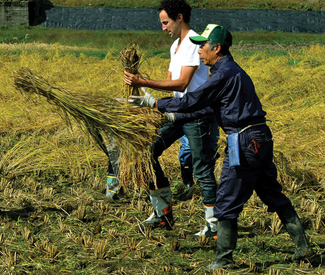
This particular night, a foggy one at the Marin Headlands Center for the Arts, was a quiet one — no pigs butchered, or poultry running amok. It was a show-and-tell of the collective’s OPENharvest project of last fall, in which members — such as Jeremy Tooker from Four Barrel, Kayoko Akabori of Umamimart, and Sam White and Jerome Waag (current head chef) of Chez Panisse — met with people from the Tokyo food scene, to cook and eat beside them during rice harvest season.

Scattered throughout the room were mementos of the trip that spoke of the commonalities and the strange differences between the two cultures. eatlip gift: Cook book for Cooking People showed page after page of Saveur-esque snapshots of food — but no text. A stack of Café Sweet magazines sat next to the Four Barrel coffee cart, one of which featured photos from the Four Barrel café on Valencia. A small bottle of extra virgin olive oil was labeled in traditional Japanese brush script.

Ramen was served, the meaty broth spiked with Meyer lemon, and topped with gushy, soft-boiled egg. So were Japanese whiskey highballs, ubiquitous in Tokyo bars.

“There is this parallel community of people out there, who appreciate art and food in the way we do,” said White, a principle organizer of OPENharvest. “In the Bay Area it’s like preaching to the choir, people appreciate foodie-artsy-whatever. But to take it to a different culture, with a different food style, plug in some of our philosophy and have it work — that was super rewarding.”

During their trip, they made collaborative dinners with local chefs. Making bouillabaisse involved fishing in Tokyo Bay and calling farms for produce — an uncommon practice there. Local olive oil and wine was used. Dishes combined Japanese and California influences, for example using chestnuts, and kabocha squash as a stuffing for ravioli. Wild deer was butchered in front of their guests, and served.

“Everything tasted sweeter there,” said Waag.

Jonathan Waters, wine director at Chez Panisse, also took part. “The Japanese approached wine with an open palate. They were not conditioned to attach flavors to a construct — like dry or sweet. They were more open to the ethereal, mysterious qualities in wine.”

The Japanese were just as receptive to learning from OPEN members. “It seemed like it was a good time in the psyche of their country to talk about food,” said White. Sourcing of ingredients take on new meaning in a country dealing with the effects of radiation on agricultural areas.

But, said White, “Our Japanese friends said to us, ‘We don’t want to make this [event] a memorial to Japan.’ They didn’t want it to be just about radiation. That definitely exists, that’s a real thing, but there’s also a whole country with a future, stuff to hope for, and work towards.”

Last fall’s trip continues to have socio-cultural impact. The restaurants they worked with continue to call farmers directly for produce. And Japanese chefs and artists have since come to learn, cook, and do projects here in the Bay Area.

“Part of me feels like it’s not over,” said White. “Because what happened was we opened a door.” 

www.openharvestjapan.com


End the healthcare scam

7

OPINION Last year, after receiving data from San Francisco, the Wall Street Journal reported on an investigation into the use of health reimbursement accounts by several local restaurants. It showed a group of employers evading the city’s health care law while charging their customers a “Healthy San Francisco” surcharge that is never actually spent on employees’ health care.

Rather than providing health coverage to their workers, as customers are led to believe, the restaurants are allocating funds for HRAs — and taking back the funds before they can be used.

The numbers speak for themselves: Of the $62 million that was set aside for health care accounts in 2010, more than $50 million was kept by employers.

Workers spoke about never being notified about the accounts; being forced to jump through numerous, often onerous hoops to receive reimbursements or never receiving reimbursements; facing severe restrictions on use of the funds; and fearing retaliation for seeking to access the funds. It was clear that as long as employers can take back unspent funds they have a large incentive to restrict workers’ access.

In response, Supervisor Campos drafted an amendment to the Health Care Security Ordinance (known as Healthy San Francisco) that would have closed this loophole, which was being exploited by a small number of employers. The Chamber of Commerce, accompanied by the San Francisco Chronicle, made hysterical claims about impending job loss and business closures, and after the Board of Supervisors approved the legislation on a 6-5 vote, Mayor Ed Lee vetoed it.

Supervisors Malia Cohen and David Chiu then authored “compromise” legislation that actually didn’t address the problem. Their version merely allowed employers to take back workers’ health care dollars after two years instead of one. This cosmetic change did, however, provide enough window dressing to please the Chamber, so the supervisors approved it and Mayor Lee signed it into law.

Now, just a few months later, an article in the Public Press showed exactly why we opposed the Cohen/Chiu amendment in the first place: It doesn’t really close the loophole. Employers can still take money back from the HRAs. This creates a clear incentive to choose HRAs over insurance — the worst option for workers. Furthermore, the loophole leaves responsible businesses that provide health coverage to employees through insurance or HSF competing against employers that exploit it by paying less into HRAs.

When the landmark Healthy San Francisco legislation passed five years ago, it never occurred to us that some businesses would be so obvious in their attempts to game the system. We find it unconscionable that there are businesses charging customers a healthcare surcharge and then keeping the money for profit. What is more unconscionable is that City Hall passed an amendment that continues to let it happen.

The Department of Labor Standards Enforcement compliance data for 2011 will be available next month — and if that continues to show abuse of the HRA provision, then it’s time for the Board of Supervisors to end the charade and truly close the loophole once and for all. Healthy San Francisco is about providing healthcare for workers — not creating additional profit for businesses.

Assemblymember Tom Ammiano represents the 13th District. Supervisor David Campos represents District 9.

Lost at sea

3

cheryl@sfbg.com

AMERICA’S CUP Clear your mind, if you can, of brawls over San Francisco piers and other obscenely expensive parcels of waterfront real estate. Focus solely on the inevitability of the 34th annual America’s Cup.

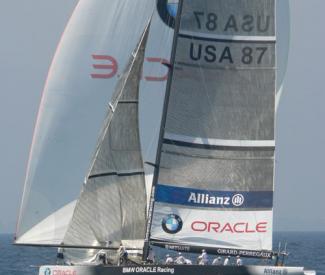
Summer 2013, it’ll rip into town, offering self-described “adrenaline sailing at its best” to jet-setting yachting enthusiasts. In 2010, the 33rd contest was won in Spanish waters by Oracle Racing, headed up by billionaire Larry Ellison. In 2013, Ellison plans to defend his trophy as the competition (ironically, dealing with its own financial struggles; the San Francisco Business Times reported March 23 that America’s Cup officials laid off half their staff) makes its San Francisco Bay debut.

Of course, average San Franciscans — often found ransacking their couch cushions to scare up burrito funds — couldn’t give a rat’s ass about an event blatantly catering to the one percent. But they should, and here’s why: unless we want to see all those Top-Siders stride directly to wine country after each day of racing concludes, we need to give the visitors (estimates vary on the numbers: 10,000? 200,000?) a reason to hang out in SF, visit its neighborhoods, and spend money locally.

One idea: organize an arts festival with programming complementary to the America’s Cup races. Such an event would potentially offer a huge boost to the local arts scene.

The most passionate supporter of an America’s Cup arts festival has got to be Andrew Wood, executive director of the San Francisco International Arts Festival. Last fall, he announced the 2013 SFIAF would shift its dates from May, when it usually takes place, to July through September. That way, SFIAF could coincide with the race — and be a component in what he envisions as a much larger, citywide event.

“We first contacted the America’s Cup about including an arts component before they even confirmed San Francisco as the venue,” Wood remembers. “They’ve never really had a strong arts component to the America’s Cup before, but they’ve never tried to do anything like they’re trying to do here.”

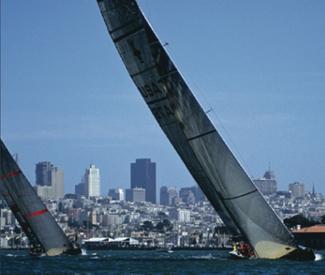
He’s referring to this particular race’s unique appeal for “a land-based audience.” Geographically speaking, some America’s Cup races are viewable only to television audiences and anyone who happens to have a boat hanging out within sight of the course; the San Francisco Bay obviously offers far more viewing opportunities for landlubbers.

“If you do either of the two largest sporting events in the world — the Olympics and the World Cup — an arts festival is mandatory. You can’t even bid on the Olympics unless you have a festival that’s going to run alongside it,” Wood explains. “[The event will then] appeal to more people. People will stay in the locale longer and spend more money — [especially important for] the America’s Cup, where there’s only racing for an hour a day.”

Money is always a factor when planning for an arts festival of any size, particularly something large enough to entertain 200,000-ish people.

“We can raise a lot of our own money, but what we need is some type of agreement that says we can go out and raise it as the name ‘America’s Cup’,” Wood says, noting that he’s already broached the subject of fundraising with some of the consulates representing countries with boats entered in the race. He’d like to bring artists from all of the participating countries (so far: Italy, Spain, France, South Korea, New Zealand, China, and Sweden) to San Francisco to perform alongside Bay Area arts groups. His grand vision includes theme weeks for each country revolving around the various holidays that happen to fall within the race dates — for example, France’s Bastille Day, July 14.


AN IMPOSSIBLE DREAM?

Wood was optimistic after his first meeting with Mark Bullingham, then the America’s Cup director of marketing, in April 2011.

“Then I jumped into SFIAF in May,” Wood remembers. “When I came back in June or July, he’d resigned. We were never able to get traction with the America’s Cup after that.”

As time for fundraising grows short — and the America’s Cup deal shrinks and evolves as development plans are tinkered with; the latest incarnation was presented to the San Francisco Board of Supervisors March 27 — Wood holds out hope that an arts festival will be included in the deal. A little bit of hope.

“If they let the deal be signed without including an arts component — or even just mentioning ‘Well, we’ll have a future conversation around this’ — then Larry Ellison can do what he wants. Oracle can have some entertainment if they wish, or they can cut the entertainment if they wish,” he says. “The way the actual America’s Cup legislation is written at the moment, the city is going to let the America’s Cup Event Authority escape without having to commit to any type of arts program whatsoever.”

From the city’s point of view, that’s not entirely true. San Francisco’s Office of Economic and Workforce Development acknowledged the importance of having an arts component in a memo titled “America’s Cup Neighborhood Engagement Strategy” presented to the Board of Supervisors February 22, 2012 — though so far, that’s been the only official word on the subject.

“We’re still trying to get our approvals here so we haven’t really moved much beyond [what’s in the memo],” says the OEWD’s Jane Sullivan, Communications Director for the America’s Cup project. “I think what we in the mayor’s office are concentrating on is trying to make sure the economic benefits spread across the city, and probably using the neighborhoods as a focus of how to do that. But certainly that would include the arts component in the neighborhoods and maybe beyond.”

One promising idea outlined in the memo is to use a smart phone app to help alert visitors to neighborhood activities, including arts events.

“There’s an app that exists right now called Sfarts.org that is a project between the [San Francisco] Arts Commission and Grants for the Arts,” Sullivan explains, noting that working with the San Francisco Travel Association would be a way to market the app to visitors.

Though discussions are “ongoing,” Sullivan says the city is focused on “coordination and promotion, and then helping to develop or further develop a robust technology platform to support that.”

When asked if she thinks an official, large-scale arts festival would make its way into the America’s Cup deal, she’s straightforward: “I do not think that’s going to happen.”


X GAMES 2.0

Tony Kelly — facilities manager at Bindlestiff Studio, and a longtime participant in San Francisco’s arts and political scenes — believes that arts events are “the only way to save the America’s Cup” in terms of reaping any of the event’s promised neighborhood economic impact.

“It’s not just having arts events, it’s putting them in places to draw people to the neighborhoods,” he says. “If people go to the races in the afternoon, then you draw them out into the neighborhoods for arts events in the evening, then they actually stay in the city longer. They go to restaurants, bars, hotels, and merchants.”

However, he cautions, “If you think this many people are showing up, you better have things for them to do. If you don’t think this many people are showing up, you better create things so that people do show up. Either way.”

He’s concerned about the city’s strategy of promoting existing arts events without offering additional support to arts groups.

“If the city pretends that we have this ongoing international arts festival any weekend of the year, and therefore we’ll just promote what we already have, and that’ll be our festival during the America’s Cup, that essentially works as a budget cut,” Kelly says. “There’s a certain amount of funding that dribbles down to the arts right now. It is what it is. And then they’re like, ‘We’re gonna add this whole other thing, and we hope you guys can add capacity to handle this stuff, because here come all these people. But no, we’re not going to support it at all.’ That’s a classic unfunded mandate. ‘Oh, you can take this on too.'”

Kelly, Wood, and other members of the arts community have brainstormed a hypothetical list of festival events: an America’s Cup-themed parade, allowing Sunday Streets on Market Street throughout the weeks of racing, outdoor musical performances, an art walk along the Embarcadero, and more, tapping into publicly-owned venues around the city. A sample budget was also drafted.

“It is definitely an example of what could be done fairly quickly and efficiently in this year’s budget, if anyone at City Hall chose to do so,” Kelly says.

Unsurprisingly, Wood shares Kelly’s frustration with the city’s let’s-promote-what’s-in-place plan. “San Francisco has this enormous arts infrastructure that it isn’t using properly,” he says. “Why not hotwire the system to create a program of events that would also complement [arts events which are] already going on? There’s been no real effort to try and corral what’s going on and figure out how it fits together, so that’s what we’ve been trying to do.”

Kelly remains skeptical that the America’s Cup will even draw the promised crowds; he suspects its actual impact on the city will more resemble the X Games — which San Francisco hosted in 1999 and 2000 — than an event “as big as multiple Super Bowls.”

He also views the city’s reluctance to support an arts festival as part of a larger, long-standing problem.

“San Francisco is this great, hip, fun, creative city — why is that? It’s because of the artists. But housing prices keep going up, so more artists have to leave,” he says. “However, when there’s an event that’s counting on us to actually deliver this stuff to the neighborhoods, there’s no support for it. Push is coming to shove and has for a number of years now, and this is just one more obvious, obvious example of it.”

Appetite: The very latest in LA cocktails

0

After years of hunting, the day finally came when I could find proper cocktails in LA, even if the scene itselfwas years behind NYC or SF. I’ve covered LA cocktail bars in recent years as the quality has rapidly grown, with my latest visit yielding the most consistent drinks yet. The LA cocktail renaissance is indeed coming into its own.

There have still been a few hyped-up letdowns, like Next Door Lounge in Hollywood, which is a fantastic space: roomy, mellow, old world, with comfy leather couches, friendly service, and classic Powell and Loy movies playing on a big screen. I absolutely loved the environment which it made it even more disappointing in sampling four expensive drinks ($12-14) to find them unbalanced and generally unappetizing.

Perhaps Next Door’s execution will improve to match the interior. In the meantime, here are some spots worth checking out down south.

Italian and Peruvian pleasures:
SOTTO, Culver City

My favorite drinks this visit were served by my favorite bartender Kate Grutman at Sotto restaurant. She exudes style and panache, while keeping customer service and comfort foremost. In a spacious building housing Picca Peruvian Cantina upstairs, Sotto’s low ceilings and buzzy vibe are the backdrop for Neapolitan pizzas and Italian pleasures like sardines or house lardo on toast.

Both restaurants opened just under a year ago with menus created and bars managed by Julian Cox, well known for his cocktail menu at Rivera in downtown LA. He poured rare Italian amari from Sotto’s vibrant collection, while Kate served cocktails exhibiting restraint, balance, and sheer drinkability. At Sotto, amaro is king and in cocktails is given a range of interpretations.

I particularly adored Kate’s off-menu creation of Junipero gin, Suze, house sage and parsley bitters, Angostura bitters, and vermouth infused with pineapple and thyme. The drink hit all the right herbaceous, bitter, aromatic notes, shining as an aperitif or dinner accompaniment.

More amaro fun was had with a Carroll Gardens, typically made with rye, amaro, and maraschino liqueur. Instead, Kate used Averna, maraschino liqueur, and Cocchi for a bitter brightness. Menu stand-outs include a spiced Amaro Daiquiri: Fall Redux (rhum agricole, lime, Averna, allspice dram), a subtle, soft Smart & Fennel (London dry gin, lemon, house bitter orange marmalade, fennel-scented egg, fennel frond), a boozy but elegant Bicycle Thief (Scotch, Holland gin, vermouth, West Indian orange bitters), and a vivid Il Cavallo Bianco (reposado tequila, pineapple/thyme-infused dry vermouth, Cocchi, grapefruit peel).

PICCA, Culver City

Upstairs from Sotto is the aforementioned bustling Picca. While impeccable Peruvian food is reason to visit, the bar is a destination on its own for South of the Border spirits. Mezcal, tequila, pisco and cachaca are showcased here. There are infusion shots ($6), like pisco with coconut, pineapple or Concord grapes, or mezcal with rocoto pepper.

Cocktails are once again by Julian Cox, while the friendly bartending crew exhibit a love for the spirits they work with. After two visits, my top drink is Zarate’s Tomahawk # 15 ($12). It utilizes my beloved mezcal, infusing it with rocoto peppers, shaken with lemon juice, agave, and huacatay (Peruvian black mint), topping it with a soft cucumber foam. Heat, citrus tart, pepper, smoke and silky sweet weave into a balanced whole.

Boots with Fur ($12) shows off Italia-varietal pisco in a Tiki-inspired drink. Brightly spiced with bonded apple brandy, lime, and ginger, orgeat and falernum offer texture and nuttiness. It’s served over crushed ice in a copper mug, the most playful presentation on the menu. Texture rules in Avocado Project ($12), blending fresh avocado with the excellent Banks 5 Island white rum, lime, agave, ascorbic acid for balance, and a bit of salt for a sweet, salty, vegetal imbibement.

A bartender said actress Frida Pinto (Slumdog Millionaire) was just in days before and they served her their Slumdog Chamomillionaire ($11). Subtle Quebranta pisco earthiness  marries well with red grape cardamom black pepper coulis, balanced by lemon and evaporated cane sugar. Picca’s bar menu is as lively and vivid as its food.

Rum and cigar havens:
CANA RUM BAR, Downtown

Cana Rum Bar transports. Yes, you need a membership to enter, but it’s merely $20 for a whole year. I find this seemingly pretentious charge at the door actually keeps out “riff raff” (allow me to digress for a moment and explain my apparent snobbery. By riff raff, I mean vodka tonic partiers who ruin the setting at some of the more craft cocktail bars. There’s nothing more frustrating for those of us who really care about quality and a relaxed space to imbibe than to have that space overrun by those uninterested in craft and there to get drunk – they can do so at any of the hundreds of bars and clubs around that cater to exactly that crowd. There’s far less quality cocktail havens than party dens, so even more reason we pine for a few civilized spots in which to savor a well-made drink and conversation.)

Don’t worry: the place is sans attitude. Mellow on my visit with roaring patio fireplace, embracing glow, and cozy booths, Cana makes many a night a party with funky DJs and celebrations like Bob Marley’s birthday.

General Manager Allan Katz knows his rum… and his cocktails. Though not as encyclopedic as our own Smuggler’s Cove menu, rum geeks will delight in a well-curated menu grouped by island and continent. There are also tasting flights and cigar pairings.

I’m delighted with cocktails like Tennessee Isle ($12) made with Prichard’s Fine Rum, overripe mango-infused absinthe (subtle), and coconut Peychaud’s bitters. The menu describes it best: “This is what a sazerac would taste like if the wicked witch of the west overtook Kansas and sent Tennessee to the Caribbean via flying monkey.”

On the low alcohol front is a Trader Vic recipe adapted by bartender Danielle, an Angostura Fizz ($13): a full shot of bitters with house pomegranate reduction, lemon, cream. It’s a bitter, frothy, elegant beauty. An Actual Apple Martini ($12) changes the game for a typically dreadful drink using apple-infused Plymouth and Death’s Door gins, Pommeau de Normandie (a marriage of Calvados and fresh apple juice), Dolin Dry Vermouth, and Bitter Truth Creole Bitters. No fake green apple pucker here.

In keeping with Cana’s vibe, the drinks are refined yet entirely approachable.

LA DESCARGA, Hollywood

La Descarga is mobbed when live burlesque and Cuban jazz are scheduled, while bartenders in the main bar seemed disinterested and “too cool” to engage. But in an open air back room (appears to be closed but is vented around the ceiling), I encountered two delightful bartenders who knew their rum. Only a couple basic cocktails are served in this room, otherwise, it’s straight rum and cigars. I truly appreciate that you can bring your own cigar or purchase one from their selection. In the main bar, I made my usual off-menu request and was served a Mr. Boston classic, the Chet Baker cocktail (named after the swoony musician), using Zacapa 23 rum, Punt e Mes, Angostura bitters, honey.

Though I slipped away for live jazz in the body-to-body main room, Renaissance Man and I were more than content to linger in the smooking room over rum and a cigars, savoring La Descarga’s musty, Old World ambiance.

I was delighted with each rum pour selected by back room bartenders:

– A light brown Martinique agricole (French West Indies rhum made from sugar cane juice vs. molasses): lovely Clement Rhum Vieux http://www.ministryofrum.com/rumdetails.php?r=755 exudes minerality with apple brandy and fig notes.
– Vascaya 21yr Cuban-style rum http://www.vizcayarum.com/ from Dominican Republic has whispers of vanilla cream soda.
– Pot-stilled beauty Plantation 1990 https://www.klwines.com/detail.asp?sku=1058663 from Guyana is earthy, even slightly smoky, alongside vanilla and soft spice.

La Descarga evokes Old World Havana: divey, dim, a little run down. Despite the beautiful Hollywood crowd, this is not merely a hipster haven but a true rum bar.

Note: make a reservation (email via the website).

Along Hollywood Blvd.:
LIBRARY BAR, Hollywood

Returning to Library Bar in the Hollywood Roosevelt Hotel confirms thoughts in my review last year: creative, farmers market cocktails remain impeccable, some of the best LA has to offer, but I missed the higher level of service given by Matt Biancaniello in prior visits. Clientele was as frustrating as before, asking for basic, vodka tonic-type cocktails or coffee, packing out the intimate, chic bar the longer we were there, turning it into a pick-up scene.

Despite these downsides, a full farmers market spread and bartender creations (be aware: there is no menu) resulted in more winning drinks. Simple and sweet, Barsol Pisco was perky with mint, agave, lime, and grapefruit.

Mezcal mixed happily with jalapeno heat, herbaceous thyme, and agave for gentle sweetness. Another creation of Basil Hayden bourbon with plump cherry tomatoes, fresh basil, and lemon, defined “garden fresh.”

The best cocktail of the night was bartender Chris Hughes’ Controlada (he also provided best service of the night). Hughes blends five chiles with two of my top agave spirits: Del Maguey’s Chichicapa mezcal and Fortaleza Blanco tequila. Additionally, he adds ginger lemon honey, arbol chile-infused St. Germain elderflower liqueur, red and yellow peppers. It may sound like too many ingredients but balance is spot on. Spice, color and brightness shine, while the overall effect is vivacious and refreshing.

Just be ready for a NYC-priced bill of about $16 per cocktail at the end.

WOOD & VINE, Hollywood

Packed crowds mar the scene at Wood & Vine – I wouldn’t recommend going out of your way for it. But if you’re in the area and on a mild LA night, Wood & Vine’s back patio and laid back staff are inviting.

Late night happy hours keep prices low and though there are only a few cocktails, there’s a solid spirits and beer selection and classic drinks like a Bee’s Knees or classic Daiquiri.

Their own creations vary in quality, from a Millennium, surprisingly delightful with softly bitter Cocchi, gin, and white creme de cacao, to a Kentucky Cashmere, with dominant spice from chai vanilla-infused bourbon, Jelinek Fernet, and chocolate chili bitters, which ultimately felt off balance.

Drinks with a view:
HOTEL WILSHIRE ROOFTOP BAR, Mid-City West

Staying at the new boutique Hotel Wilshire was a welcome respite from busy LA streets. Spending each sunset on their rooftop bar by the pool was a pleasure. Surrounded by LA hills and high rises, it’s a gorgeous urban view and peaceful place from which to take in rosy-pink LA sunsets.

The drinks menu is fairly basic but there is care in the details. They make their own ginger beer, which is delicious on its own or makes a vivid Dark & Stormy, garnished with candied ginger. Also of note, the hotel’s restaurant chef is Eric Greenspan of Next Iron Chef fame.

And you can’t beat that view.

Subscribe to Virgina’s twice-monthly newsletter, The Perfect Spot, www.theperfectspotsf.com

Spring fairs and festivals

1

culture@sfbg.com

MARCH

SF Flower and Garden Show, San Mateo Event Center, 495 S. Delaware, San Mateo. (415) 684-7278, www.sfgardenshow.com. March 21-25, 10am-6pm, $15–$65, free for 16 and under. This year’s theme is “Gardens for a Green Earth,” and features a display garden demonstrating conservation practices and green design. Plant yourself here for thriving leafy greens, food, and fun in the sun.

The Art of Aging Gracefully Resource Fair, Jewish Community Center of San Francisco, 3200 California, SF. (415) 292-1200, www.jccsf.org. March 22, 9:30am-2:45pm, free. Treat yourself kindly with presentations by UCSF Medical Center professionals on healthy living, sample classes, health screenings, massages, giveaways and raffles.

California’s Artisan Cheese Festival, Sheraton Sonoma County, 745 Sherwood, Petaluma. (707) 283-2888, www.artisancheesefestival.com. March 23-25, $20–$135. Finally, a weekend given over to the celebration of cultures: semi-soft, blue, goat, and cave-aged. More than a dozen award-winning cheesemakers will provide hors d’oeuvres and educational seminars.

15th Annual Rhone Rangers Grand Tasting, Fort Mason Festival Pavilion, Buchanan and Marina, SF. (800) 467-0163, www.rhonerangers.org. March 24-25, $45–$185. The largest American Rhone wine event in the country, with over 2,000 attendees tasting 500 of the best Rhones from its 100 US member wineries.

Whiskies of the World Expo, Hornblower Yacht, Pier 3, SF. (408) 225-0446, www.whiskiesoftheworld.com. March 31, 6pm-9pm, $120–$150. The expo attracts over 1400 guests intent on sampling spirits on a yacht and meeting important personages from this fine whiskey world of ours.

Bay Area Anarchist Book Fair, SF County Fair Building’s Hall of Flowers, Golden Gate Park, SF. (415) 431-8355, bayareaanarchistbookfair.wordpress.com. March 31-April 1, free. This political book fair brings together radical booksellers, distributors, independent presses, and political groups from around the world.

Monterey Jazz Festival’s Next Generation Festival Monterey Conference Center, One Portola Plaza, Monterey. (831) 373-3366, www.montereyjazzfestival.org. March 30-April 1, free. 1200 student-musicians from schools located everywhere from California to Japan compete for the chance to perform at the big-daddy Monterey Jazz Festival. Free to the public, come to cheer on the 47 California ensembles who will be playing, or pick an away team favorite.

APRIL

Argentine Tango Festival, San Francisco Airport Marriot Hotel, 1800 Old Bayshore Highway, Burlingame. www.argentinetangousa.com. April 5-8, $157–$357. Grip that rose tightly with your molars — it’s time to take the chance to dance in one of 28 workshops, with a live tango orchestra, and tango DJs. The USA Tango championship is also taking place here.

Salsa Festival, The Westin Market Street, 50 Third St., SF. (415) 974-6400. www.sfsalsafestival.com. April 5-7, $75–$125. Three nights of world-class performances, dancing, competition and workshops with top salsa instructors.

Union Street Spring Celebration and Easter Parade, Union between Gough and Fillmore, SF. (800) 310-6563, April 8, 10am-5pm, parade at 2pm, free. www.sresproductions.com/union_street_easter. A family festival with kids rides and games, a petting zoo, and music.

45th Annual Northern California Cherry Blossom Festival, Japan Center, Post and Buchanan, SF. (415) 567-4573, www.sfjapantown.org. April 14-15 and 21-22, parade April 22, free. Spotlighting the rich heritage and traditional customs of California’s Japanese-Americans. Costumed performers, taiko drums, martial arts, and koto music bring the East out West.

Bay One Acts Festival, Boxcar Theatre, 505 Natoma, SF. www.bayoneacts.org. April 22 — May 12, 2012, $25–$45 at the door or online. Showcasing the best of SF indie theater, with new works by Bay Area playwrights.

Earth Day, Civic Center Plaza, SF. (415) 571-9895, www.earthdaysf.org. April 22, free. A landmark day for the “Greenest City in North America,” featuring an eco-village, organic chef demos, a holistic health zone, and live music.

Wedding and Celebration Show, Parc 55 Wyndham, 55 Cyril Magnin, SF. (925) 594-2969, www.bayareaweddingfairs.com. April 28, 10:00am-5:00pm. Exhibitors in a “Boutique Mall” display every style of product and service a bride may need to help plan his or her wedding.

San Francisco International Beer Festival, Fort Mason Center, Festival Pavilion, SF. www.sfbeerfest.com. April 28, 7pm-10pm, $65. The price of admission gets you a bottomless taster mug for hundreds of craft beers, which you can pair with a side of food from local restaurants.

Pacific Coast Dream Machines Show, Half Moon Bay Airport, 9850 Cabrillo Highway North, Half Moon Bay. www.miramarevents.com/dreammachines. April 28-29, 9am-4pm, $20 for adults, kids under 10 free. The annual celebration of mechanical ingenuity, an outdoor museum featuring 2,000 driving, flying and working machines from the past 200 years.

May:

San Francisco International Arts Festival Various venues. (415) 399-9554, www.sfiaf.org. May 2-20, prices vary. Celebrate the arts, both local and international, at this multimedia extravaganza.

Cinco de Mayo Festival, Dolores Park, Dolores and 19th St, SF. www.sfcincodemayo.com. May 5, 10am-6pm, free. Enjoy live performances by San Francisco Bay Area artists, including mariachis, dancers, salsa ensembles, food and crafts booths. Big party.

A La Carte and Art, Castro St. between Church and Evelyn, Mountain View. May 5-6, 10am-6pm, free. With vendors selling handmade crafts, micro-brewed beers, fresh foods, a farmers market, and even a fun zone for kids, there’s little you won’t find at this all-in-one fun fair.

Young at Art Festival, De Young Museum, 50 Hagiwara Tea Garden Drive, SF. (415) 695-2441. www.youngatartsf.com. May 12-20, regular museum hours, $11. An eight-day celebration of student creativity in visual, literary, media, and performing arts.

Asian Heritage Street Celebration Larkin and McAllister, SF. www.asianfairsf.com. May 19, 11am-6pm, free. Featuring a Muay Thai kickboxing ring, DJs, and the latest in Asian pop culture, as well as great festival food.

Uncorked! San Francisco Wine Festival, Ghirardelli Square, 900 North Point, SF. (415) 775-5500, www.ghirardellisq.com. May 19, 1pm-6pm, $50 for tastings; proceeds benefit Save the Bay. A bit of Napa in the city, with tastings, cooking demonstrations, and a wine 101 class for the philistines among us.

Maker Fair, San Mateo Event Center, San Mateo. www.makerfaire.com. May 19-20, $8–$40. Make Magazine’s annual showcase of all things DIY is a tribute to human craftiness. This is where the making minds meet.

Castroville Artichoke Festival, Castroville. (831) 633-2465 www.artichoke-festival.com. May 19-20, 10am-5pm, $10. Pay homage to the only vegetable with a heart. This fest does just that, with music, parades, and camping.

Bay to Breakers, Begins at the Embarcadero, ends at Ocean Beach, SF. www.zazzlebaytobreakers.com. May 20, 7am-noon, free to watch, $57 to participate. This wacky San Francisco tradition is officially the largest footrace in the world, with a costume contest that awards $1,000 for first place. Just remember, Port-A-Potties are your friends.

Freestone Fermentation Festival Salmon Creek School, 1935 Bohemian Hwy, Sonoma. (707) 479-3557, www.freestonefermentationfestival.com. May 21, Noon-5pm, $12. Answer all the questions you were afraid to ask about kombucha, kefir, sauerkraut, yogurt, and beer. This funky fest is awash in hands-on demonstrations, tastings, and exhibits.

San Francisco Carnaval Harrison and 23rd St., SF. www.sfcarnaval.org. May 26-27, 10am-6pm, free. Parade on May 27, 9:30pm, starting from 24th St. and Bryant. The theme of this year’s showcase of Latin and Caribbean culture is “Spanning Borders: Bridging Cultures”. Fans of sequins, rejoice.

June:

Union Street Eco-Urban Festival Union Street between Gough and Steiner, SF. (800) 310-6563, www.unionstreetfestival.com. June 2-3, 10am-6pm, free. See arts and crafts created with recycled and sustainable materials and eco-friendly exhibits, along with two stages of live entertainment and bistro-style cafes.

Haight Ashbury Street Fair, Haight between Stanyan and Ashbury, SF. www.haightashburystreetfair.org. June Date TBD, 11am-5:30pm, free. Celebrating the cultural history and diversity of one of San Francisco’s most internationally celebrated neighborhoods, the annual street fair features arts and crafts, food booths, three musical stages, and a children’s zone.

San Mateo County Fair, San Mateo County Fairgrounds, 2495 S. Delaware, San Mateo. www.sanmateocountyfair.com. June 9-17, 11am-10pm, $6–$30. Competitive exhibits from farmers, foodies, and even technological developers, deep-fried snacks, games — but most importantly, there will be pig races.

Queer Women of Color Film Festival Yerba Buena Center for the Arts, 701 Mission, SF. (415) 752-0868, www.qwocmap.org. June 8-10 times vary, free. Three days of screenings from up-and-coming filmmakers with unique stories to tell.

Harmony Festival, Sonoma County Fairgrounds, 1350 Bennett Valley, Santa Rosa. www.harmonyfestival.com. Date TBA. One of the Bay Area’s best camping music festivals and a celebration of progressive lifestyle, with its usual strong and eclectic lineup of talent.

North Beach Festival, Washington Square Park, SF. (415) 989-2220, www.northbeachchamber.com. June 16-17, free. This year will feature over 150 art, crafts, and gourmet food booths, three stages, Italian street painting, beverage gardens and the blessing of the animals.

Marin Art Festival, Marin Civic Center, 3501 Civic Center Drive, San Rafael. (415) 388-0151, www.marinartfestival.com. June 16-17, 10am-6pm, $10, kids under 14 free. Over 250 fine artists in the spectacular Marin Civic Center, designed by Frank Lloyd Wright. Enjoy the Great Marin Oyster Feast while you’re there.

Sierra Nevada World Music Festival, Mendocino County Fairgrounds Booneville. (916) 777-5550, www.snwmf.com. June 22-24, $160. A reggae music Mecca, with Jimmy Cliff, Luciano, and Israel Vibration (among others) spreading a message of peace, love, and understanding.

Gay Pride Weekend Civic Center Plaza, SF; Parade starts at Market and Beale. (415) 864-FREE, www.sfpride.org. June 23-24, Parade starts at 10:30am, free. Everyone in San Francisco waits all year for this fierce celebration of diversity, love, and being fabulous.

Summer SAILstice, Encinal Yacht Club, 1251 Pacific Marina, Alameda. 415-412-6961, www.summersailstice.com. June 23-24, 8am-8pm, free. A global holiday celebrating sailing on the weekend closest to the summer solstice, these are the longest sailing days of the year. Celebrate it in the Bay Area with boat building, sailboat rides, sailing seminars and music.

Stern Grove Festival, Stern Grove, 19th Ave. and Sloat, SF. (415) 252-6252, www.sterngrove.org. June 24-August 26, free. This will be the 75th season of this admission-free music, dance, and theater performance series.

July:

4th of July on the Waterfront, Pier 39, Beach and Embarcadero, SF. www.pier39.com 12pm-9pm, free. Fireworks and festivities, live music — in other words fun for the whole, red-white-and-blue family.

High Sierra Music Festival, Plumas-Sierra Fairgrounds, Lee and Mill Creek, Quincy. www.highsierramusic.com. July 5-8, gates open 8am on the 5th, $185 for a four-day pass. Set in the pristine mountain town of Quincy, this year’s fest features Ben Harper, Built To Spill, Papodosio, and more.

Oakland A’s Beer Festival and BBQ Championship, (510) 563-2336, www.oakland.athletics.mlb.com. July 7, 7pm, game tickets $12–$200. A baseball-themed celebration of all that makes a good tailgate party: grilled meat and fermented hops.

Fillmore Street Jazz Festival, Fillmore between Jackson and Eddy, SF. (800) 310-6563, www.fillmorejazzfestival.com. July 7-8, 10am-6pm, free. The largest free jazz festival on the Left Coast, this celebration tends to draw enormous crowds to listen to innovative Latin and fusion performers on multiple stages.

Midsummer Mozart Festival, Herbst Theater, 401 Van Ness, SF (also other venues in the Bay Area). (415) 627-9141, www.midsummermozart.org. July 19-29, $50. A Bay Area institution since 1974, this remains the only music festival in North America dedicated exclusively to Mozart.

Renegade Craft Fair, Fort Mason Center, Buchanan and Marina, SF. (415) 561-4323, www.renegadecraft.com. July 21-22, free. Twee handmade dandies of all kinds will be for sale at this DIY and indie-crafting Mecca. Like Etsy in the flesh!

Connoisseur’s Marketplace, Santa Cruz and El Camino Real, Menlo Park. July 21-22, free. This huge outdoor event expects to see 65,000 people, who will come for the art, live food demos, an antique car show, and booths of every kind.

The San Francisco Shakespeare Festival, locations TBA, SF. (415) 558-0888, www.sfshakes.org. July 23-August 28, free. Shakespeare takes over San Francisco’s public parks in this annual highbrow event. Grab your gang and pack a picnic for fine, cultured fun.

Gilroy Garlic Festival, Christmas Hill Park, Miller and Uvas, Gilroy. (408) 842-1625, www.gilroygarlicfestival.com. July 27-29, $17 per day, children under six free. Known as the “Ultimate Summer Food Fair,” this tasty celebration of the potent bulb lasts all weekend.

27th Annual Berkeley Kite Festival & West Coast Kite Championship, Cesar E. Chavez Park at the Berkeley Marina, Berk. (510) 235-5483, www.highlinekites.com July 28-29, 10am-5pm, free. Fancy, elaborate kite-flying for grown-ups takes center stage at this celebration of aerial grace. Free kite-making and a candy drop for the kiddies, too.

Up Your Alley Fair, Dore between Howard and Folsom, SF. (415) 777-3247, www.folsomstreetfair.org. July 29, 11am-6pm, free with suggested donation of $7. A leather and fetish fair with vendors, dancing, and thousands of people decked out in their kinkiest regalia, this is the local’s version of the fall’s Folsom Street Fair mega-event.


Nightlife: Fun plus jobs

8

By Supervisor Scott Weiner

OPINION We all know the cultural benefits of nightlife. It’s fun. We get to meet people — friends, lovers, and all the rest. We build community. We hear great music. We dance. We spend time outside on our streets. For LGBT people, we meet other LGBTs and keep our community strong. The list goes on: Without a strong entertainment scene, including bars, clubs, live music venues, arts venues, night-time restaurants, and street fairs, our city would be a less interesting and less diverse place.

But the undisputed cultural importance of nightlife isn’t the whole story. Nightlife is a significant economic contributor to San Francisco. It creates jobs, particularly for working-class and young people. It generates tax revenue that helps fund Muni, health clinics, and parks. It allows creative entrepreneurs to start businesses. It generates tourism. It draws foot traffic into neighborhoods to the benefit of other neighborhood businesses.

This is all pretty intuitive. Yet, as a city, we’ve never actually measured the economic impact of our nightlife scene. One of my first acts a member of the Board of Supervisors was to request the city economist to conduct an economic impact study doing just that.

The study is almost done, and we already have a few preliminary results. Nightlife in San Francisco generates $4.2 billion a year in spending, with $1 billion of that amount coming from bars, clubs, performance venues, and art spaces. Some 48,000 people are employed in nightlife businesses, and these businesses contribute $55 million a year in local taxes. On March 5, we’ll announce the full results of the study at a hearing of the Land Use and Economic Development Committee.

This data will help us make smart public policy around nightlife. In the past, those decisions frequently have been driven by anecdote and over-reaction to isolated events. Trouble near a small number of nightclubs? The city responds by making it difficult for all nightclubs to operate, even those with excellent safety records and despite the dramatic improvement in the Entertainment Commission’s oversight. Or, the city goes even further and proposes requiring all clubs, even small ones, to scan ID cards of everyone who enters. (That proposal, thankfully, was roundly rejected.)

When we make these decisions, we should do so with a full understanding not just of the downsides of nightlife but of the positives, including cultural and economic benefits.

Entertainment is under pressure in San Francisco. There are neighborhoods with significant friction between housing and nightlife. Some of that friction results from a small number of problem venues. Other times, a good venue is jeopardized for simply conducting its business within the limits of San Francisco law — for example, a single neighbor got Slim’s shut down for a few weeks for noise, despite the club’s compliance with our noise ordinance.

We also continue to have bizarre Planning Code restrictions that undermine entertainment, such as the Mission Alcohol Special Use District, which makes it difficult or impossible to start creative new businesses in the Mission if alcohol is involved. This provision almost prevented a new bowling alley from locating at 17th and South Van Ness. Similarly, some are concerned that the Western SoMa Plan, as currently written, will undermine nightlife on 11th Street by surrounding clubs with new housing and by reducing the number of venues.

A thriving nightlife scene is key to our city’s cultural identity and economic future. Now that we have the data on its benefits, we can take a more balanced and thoughtful approach.

Supervisor Scott Wiener represents District 8 on the Board of Supervisors. The March 5 hearing will start with a noon rally on the steps of City Hall followed by the hearing at 1 p.m. in City Hall Room 263.


What’s wrong with the America’s Cup deal? A lot

21

Let’s start out with a premise that even Larry Ellison’s minions have come to accept: The race is happening here. Too late now to move it to another city. Worst-case scenario, according to Stephen Barclay, the point person for the world’s sixth-richest man: “If we don’t meet those dates, the teams will be forced to relocate to other places around the bay.”

That’s right — the teams will relocate to other places around the bay. The host city will still, for all practical purposes, be San Francisco; the races will happen off SF’s waterfront (where the Coast Guard is willing to allow them and the conditions are right) and the rich tourists will stay here, not in Burlingame or Fremont.

If Ellison decides the city’s not giving him enough, he won’t put up $55 million to fix up some of the waterfront piers. The city may decide that a development deal of some sort with him makes economic sense. But it’s a real-estate deal at this point, not a deal for the race. At least, that’s what the Ellison team seems to be confirming.

And I fear that the real-estate deal that the Board of Supervisors Finance Committee sent forward yesterday, 2-1, is a bad deal for the city.

The terms are really complicated, and it makes my head hurt just trying to figure it all out — and still, the supes are expected to vote on the 120-plus-page document Feb. 28. Here’s what we do know, though:

The supervisors originally came to a deal with the America’s Cup Event Authority back in December. The concept was — and is — pretty straightforward, the same sort of deal the city has done (or, certainly, the Redevelopment Agency has done) many times in the past. In exchange for putting cash into renovating several piers, Ellison’s group would get long-term leases and development rights on the property. The idea: The city can’t afford to fix the piers. Ellison’s organization can. And once the property is renovated, the developer can make back that initial investment, and a profit, by building commercial space, condos and whatever else the Port decides to allow.

In a perfect world, San Francisco (and the state and the feds) would tax the hell out of people like Ellison, and there’d be public money to rebuild the waterfront as public open space, recreational facilities and the like. And wouldn’t that be utterly cool? Wouldn’t this city have the most awesome waterfront in the world?

But no: The only way the piers are going to anything but a place to park cars until they fall into the bay is if some private developer gets the rights to build something that I won’t like.

Supervisors Jane Kim and Mark Farrell, who don’t agree on a lot of things, both agreed with my basic analysis of the politics here: We shouldn’t let the excitement over the prospect of a boat race get in the way of analyzing this for what it is: A financing tool for the Port to get its infrastructure fixed up. Without a private investor, “they just don’t have the capacity to do that,” Kim told me.

So let’s just stipulate for a moment that this is the best, maybe the only way the city can restore the Port. Then it comes down to the real issue: Has the Mayor’s Office negotiated a good enough deal? Is San Francisco getting enough out of this? Or is everyone so hyper-buzzed about fancy carbon-fiber boats in the water (and I admit, they’re pretty cool) and free-spending tourists in the hotels and restaurants that we’re letting Mr. Ellison — who didn’t get so stinky rich by being a weak negotiator — walk away with most of the cookies?

Remember: Ellison’s not doing the city any favors. He’s only fixing up the piers that he will effectively own (as least for most of the rest of this century).

Back in December, the rough outlines looked like this: A corporation set up by Oracle, called the America’s Cup Event Authority, would put $55 million into repairing and renovating piers, then would get  66-year leases and development rights on piers 30-32, 26 and 28, as well as seawall lot 330, across the Embarcadero, which Ellison’s team wants to turn into more condos for rich people. If that’s not enough to pay for Ellison’s investment, Ellison’s heirs or successors get half the rent for the piers for another 15 years. That’s 81 years.

The original deal mandated that the city would collect a 1 percent fee on the re-sale of the new condos. It also had a requirement that Ellison share with the city any profits he made by flipping the long-term leases.

That’s a big deal, because almost nobody in the city actually holds onto development entitlements anymore. A developer wins the right to build an office building — and next week, he or she sells that right to somebody else. It’s almost certain that at some point, Ellison — whose sole goal here is going to be making a profit off city land — will decide that the best way to make money is to cash out. He’ll keep his 66-year leases for a few years, maybe lobby his way to approvals for office, condos, time-shares (gasp! yeah, they’ll do that if it’s legal) restaurants or whatever — then sell the remaining time on the leases, plus the development rights, to somebody else. And because he’s Larry Ellison, he’ll wind up making a nice tidy profit.

That used to be what happened with Port property (see: Pier 39) but lately, the Port’s gotten a bit wiser and has, in some cases, insisted that part of the profit from flipping a lease goes back to the city. In the original discussions, Ellison was going to have to pay the Port 15 percent of any net gains he made from the almost inevitable sale of the valuable leases.

But that’s gone now. After the board approved Newsom’s deal, the former mayor — who was always terrible at negotiation with the rich and powerful and always gave away the store — went back and monkeyed around with it. He and Sup. David Chiu insisted that the changes were just technical, not substantive enough to require a new board vote — but the current deal has no 15 percent cut for the Port, and the 1 percent levy on condo sales only applies after the second owner sells — which will be years down the road.

Then there’s the part where the city has to reimburse Ellison if the cost of renovating the piers exceeds what’s expected (oh, and we have to pay him 11 percent interest, which is about ten times what I get on my bank account; how about you?) There’s no cap on what the city might have to pay. And Ellison gets to develop a new marina.

And while Pier 29 is no longer a part of the deal, the city has to give Ellison $12 million — or rights to a pier to be named later. (Maybe Ellison figures that in a few years the people who opposed Pier 29 development will be out of office and he can convince the new mayor and supervisors to give Pier 29 back. It’s not legally excluded.)

Kim told me she’s going to insist that the final deal include a local-hire provision, which the rest of the board would be crazy not to support (and which Ellison, despite his company’s problems with local labor laws in the past, would be crazy not to accept).

But overall, Kim — who with Sup. Carmen Chu was part of the 2-1 majority sending the package to the full board — told me she thought the city got a good deal. “It took me a while,” she said. “But [Port Director] Monique Moyer convinced me that this was good for them.”

Sup. John Avalos, the dissenting vote on the Finance Committee, isn’t convinced. He’s got a long list of concerns, starting with the fact that he thinks the projected attendance and economic benefits are a bit delusional. “The figures seem farfetched,” he told me. “I’m seeing a lot of pumped up numbers. And those numbers drive whether this is a good deal for the city or not.”

He’d like to see the 1 percent rule apply to the second condo sale, not the third. He’d like to see the Port get 15 percent of the profits from any sale. And he’d like a cap on the reimbursements the city has to give to Ellison.

But here’s the problem: When the development agreement comes before the board, sitting as a Committee of the Whole Feb. 28, it will be hard to put any of that back in the agreement. This is a contract, and while the board can pass a resolution asking for more, in the end, it’s a matter of voting it up or down.

Vote yes and it’s done — more or less as is — although Kim says there will be another chance to make changes down the road, since the board and the Planning Commission will have to sign off on whatever type of development Ellison wants to do. The problem with that scenario? Ellison’s lawyers will wave this development agreement around like a Giants victory towel and proclaim that it binds the city and limits any ability to demand any more changes later. That’s how these people operate.)

Vote no and the ball goes back to Larry’s Court: His group can sit down with the Mayor’s Office and make some changes, or they can walk away (and build their boat sheds in …. where? Oakland? Foster City? Who’s got waterfront that can handle this?)

When the Finance Committee send the package to the full board, Avalos said, “we pretty much lost our ability to influence the agreement. Now we have to decide if we want to call [Ellison’s] bluff.”

PS: One of the lingering issues is whether the America’s Cup Organizing Committee can raise the $30 million-odd that is needed to make the numbers pencil out. If I were a rich person and Mark Buell, the ACOC point person, called me for money, here’s what I’d say:

How much is Larry Ellison contributing?

See, Ellison’s improvements on the waterfront aren’t charity. He’s looking to make a buck off everything he does. In past eras, the great robber baron capitalists would donate civic monuments — libraries and museums and stuff — and by any traditional standard of great wealth, Ellison ought to be writing a personal check for that $30 million. Or at least for some of it.

But so far, he hasn’t given a penny. The sixth richest man in the world isn’t actually donating anything to San Francisco. Yeah, he’s gracing us with his lordly presence, but cash? Nada.

Good luck with that one, Mark.

PPS: This whole concept that the city needs to fix the “crumbling” piers ought to be examined. First of all, nobody’s ever said that Pier 29 was in anything but fine shape. But beyond that, the Bay Conservation and Development Commission considers piers to be bay fill, and in the long term, wants San Francisco to get rid of some of them. “Maybe it’s a good thing if some of the piers fall into the bay,” former Sup. Aaron Peskin told me. “Then we’ll have more leeway with BCDC when we want to fix up some of the others.”

Research assistance by Royce Kurmelovs

Brews you can use

0

caitlin@sfbg.com

BEER Even if your hankering for a beer paunch pales in comparison, say, to your desire to fit into your Valentine’s Day party dress, you have a responsibility to indulge during SF Beer Week. It’s not just a gustatory pleasure — consider yourself stumping for a burgeoning local industry. From Feb. 10-19, the fest will stage everything from urban beer hikes to beer-and-chocolate pairing events, beer-and-cheese couplings to a showcase of the finest in local bitter ales. Recently, the Guardian had the pleasure of a one-on-one (via email) with David McLean, the mastermind behind the superlative suds at Magnolia Brewery. He is also a member of the SF Brewer’s Guild, the organizing entity behind Beer Week. McLean shared with us his can’t-miss picks for hobnobbing and hops during this year’s festival. And yes, they include an stout made with Hog Island oysters.

SFBG: How has the beer scene changed over the past year in the Bay Area? Has there been a profound expansion? 

DM: Here and everywhere. We started in 2011 with about 1,700 breweries in the country. We are creeping up on 2,000 a year later and there are something like 800 or so known to be in planning. It’s safe to say craft beer is exploding right now. In the Bay Area, some notable highlights are Southern Pacific, Elevation 66, Dying Vines, Pacific Brewing Laboratories, and Heretic Brewing. There are plenty more on the way in 2012.

SFBG: Anyone new on the scene whose brews you’re excited to sample? 

DM: After many delays (all par for the course) it is super-exciting to have Southern Pacific Brewing Company open just in time for Beer Week. As the first new brewery built in San Francisco in many years — close to 10 — that one leads the pack in terms of excitement level. Another SF company just getting off the ground is Pacific Brewing Laboratories, which is starting to get its Squid Ink IPA and a couple of other beers into bars and restaurants. Almanac’s latest seasonal release, Winter Wit, should be hitting the streets just in time for Beer Week too, and it’s worth hunting down.

SFBG: A food-beer pairing event you think is a can’t-miss?

DM: Some pairings are just so perfect as to be timeless. They’re less about being creative and more about flavors that need no help fitting together. A personal favorite is oysters and beer, particularly oysters and certain kinds of stout, especially dry stouts. We go a step further at Magnolia with an oyster stout we make using Hog Island Sweetwater oysters in the beer. The effect is subtle, and maybe it is gilding the lily, but a few freshly-shucked Sweetwaters and a glass of that beer, Oysterhead Stout, is about as good as it gets. We’ll be spending all day on Valentine’s Day shucking a variety of oysters and serving them with that stout and some other good oyster-pairing beers until the oysters run out. If I were free on Mon/13, you might find me at the “Butcher and the Beer at the Beast and the Hare” — it’s a dinner with [4505 Meats butcher] Ryan Farr and Almanac Beer.

SFBG: Your tip for making it through Beer Week — how do you survive such a strenuous schedule?

DM: The well-timed vacation waiting on the other side of Beer Week helps maintain my sanity during Beer Week. With multiple events to work everyday, it’s a definitely a marathon and not a sprint. But it is also one of the premier celebrations of craft beer in the country and the sense of enthusiasm, camaraderie, and support from the beer community is more than enough to help us all get through the week. It’s energizing, actually. But don’t forget to hydrate.

SF BEER WEEK OPENING CELEBRATION

Fri/10 6-10 p.m., $65

Concourse Exhibition Center

635 Eighth St., SF

www.sfbeerweek.org


Maximum Consumption: Bay Area bands choose their favorite eateries

0

I know, it’s so close to the weekend that you can taste it. But before you sign off for the day, your peepers sore and fingers trembling, here’s a comprehensive list – sure to get your tummy rumbling – of Bay Area bands’ favorite local restaurants, food trucks, and eateries. I compiled these answers from our On the Rise questionnaire (results of which are in this week’s issue) and my ongoing Localized Appreesh column. Enjoy.

San Francisco Bay Guardian: So local Bay Area musicians, what’s your favorite local eatery and dish?

DJ Theory: Cubano sandwich and sangria from Parada 22 in Upper Haight.

Dirty Ghosts: I don’t wanna be boring and say the super burrito at Cancún which is my real answer, so the margarita pizza at Una Pizza Napoletana

Metal Mother: Tacubaya in Berkeley, all the vegetarian dishes are amazing. My favorite is probably the ‘seasonal vegetable’ tamales.

Main Attrakionz: Buffet Fortuna in Downtown Oakland; chow fun noodles

Seventeen Evergreen: So many options here but let’s nominate the Chilaquiles at the farmer’s market in the Ferry Building or a number of places in the Mission for the same.

Jhameel: Cheeseboard Pizza in Berkeley. Perfect vegetarian pizzas.

http://www.youtube.com/watch?v=dPLYLsVDG8w

Future Twin: Secret Spot has delicious bagels, fresh squeezed juice, and homegrown greens.

Terry Malts: The #6 at Turtle Tower, best for hangovers.

Tycho: Thai Time — Red Chicken Curry (or anything else there).

Black Cobra: 1. Cathead’s Barbecue. Cornmeal crusted tofu is killer!
2. The Submarine Shop on West Portal. Italiano center sub with a Coke.

Silver Swans: El Metate Mexican Veggie burrito, the vegetables are roasted and always fresh. Everything there is delicious and on the cheap, right down to their alfajore cookies, I fully endorse the entire menu.

Le Vice: Broken Record — fresh organic soul food in a grimy-ass dive bar. Tasty as fuck. Hipster bling.

Ash Reiter: House of Curries – chicken tikka masala with potato nan.

Magic Touch: Ken Ken Ramen – Japanese ramen + veggie up.

The Fucking Buckaroos:
Mission’s Kitchen – Breakfast Burrito.

Prize: Millenium for overall vegetarian dining experience, and the garlic spread from Stinking Rose for the best actual thing to put in my mouth.

Swiftumz: Fresh Dungeness crabs!

Buffalo Tooth:
Morty’s in the TL, Chicken BLT.

Cosmo  Alleycats: Steve: Le Colonial’s brussels sprouts; Mike: Cordon Blue, California @ Hyde, menu #5; Emily: Where to begin? The food trucks at Off the Grid are ridiculous. I’m addicted to Curry Up Now’s chicken tikka masala burrito. Also, the veggie burger at the Plant Organic is to die for. And I love my Thursday night ‘liquid dinners’ with the band at Blondie’s Bar & No Grill.

Mental 99: Joe: Iwashi (sardine) at Tataki South (Church and 29th). Dawn: It’s hard to go wrong in SF – so many good places to eat. But the veggie burrito at Taqueria Cancún is pretty tasty – and close by, especially if you just played El Rio.

Uni & Her Ukelele:
Green Chili Kitchen.

Symbolick Jews:
The Philly cheese steak at Mission Kitchen is forged in the fires of gastro-intestinal hell, and I stand by its superiority over any other cheese steak in the city.

G-Eazy: Gordo’s on College Ave in Berkeley, without a doubt.

The Spyrals: That’s a tough one. Probably Los Compadres. It’s a family owned Taqueria in South City, near where we rehearse. Damn good carnitas.

TurbonegrA: Esperpento. It’s cheap and fast – like us!

The Sandwitches: Chevys and fried chicken.

http://www.youtube.com/watch?v=1871NoR6IMQ

Debbie Neigher: Plantain black bean burrito at Little Chihuahua.

Violet Hour: Sausages at Rosamunde’s on Haight

Waterstrider:
We frequent Taqueria La Familia. It is the best Mexican food in Berkeley. Their veggie burritos or chile rellenos do the trick for me.

Dreams: Shakin’ Jesse at Rudy’s Can’t Fail Cafe. Guinness, espresso, and ice cream – can’t go wrong with that.

The 21st Century: Al Pastor at El Metate–dynamite.And the Cold House Noodles at Yamo.

Rank/Xerox: Golden Gate Indian Cuisine and Pizza on Judah. Best restaurant in the city, eat everything but the Italian dishes.

The Jauntying Martyrs: Lucca Foods on Irving and 20th.  Best deli in SF, baby. Get the Billy Filly. (You can only get it when Billy’s working).

Religious Girls: Bake Sale Betty’s fried chicken sandwich

America’s cup: What does Larry get?

8

The development agreement for the America’s Cup comes out next week, although the project is already under way. But there’s some concern that the number of visitors (and thus the revenue to the city) might not be as high as projected.

The project EIR is more conservative about the possible number of visitors than city officials had been at first, and now the Bay Citizen reports that “doubts are growing about the number of spectators who will actually come to the city this year and next.” Apparently the prelims in San Diego have been a bit of a bust — and there aren’t as many teams signing up for the challenge.

So here’s the question: If the city winds up taking in less money than expected, does Larry Ellison take a bath, too?

Of course, it’s not that simple: Ellison’s getting a lot from the city, but it’s not based on any revenue the city will get from the cup; it’s based on the investment he’s putting into the port. He’s getting a sweet deal from San Francisco — way too sweet in my mind. The guy’s the sixth-richest person in the world; he doesn’t need all the goodies the city’s handing over, and I’m not sure I want the arrogant, aggressive CEO of Oracle determining the future of a large part of the San Francisco waterfront. But in theory, since he’s renovating property that’s falling apart, he gets something in return.

And, as Jane Sullivan, the spokesperson for the America’s Cup project at City Hall, points out, the fewer the visitors, the lower the city’s costs.

She also told me that “we don’t think the number of competitors will affect the number of visitors,” which is probably true — people will come for the spectacle, and Oracle will hype it beyond imagination, and nobody knows who any of these other teams are anyway. (The one team that might have gotten some press, aside from Oracle, wasn’t allowed to put in an application.)

But here’s the thing: This entire project, and the motivation to give Larry Ellison a bunch of really valuable city property, was the economic impact the cup is supposed to have on the city. The Mayor’s Office has been throwing around numbers like $1.4 billion in economic impact — that’s new jobs, full hotel rooms, packed restaurants, spillover employment benefits — and, of course, more tax revenue to the city coffers.

What it we give away the store to the Oracle pirates and we wind up getting a lot less money than we were hoping for? Nothing against the Cup; I love boats, and I love a big party (although I try to make sure that when the party’s over, I’m not completely broke). But it seems to me that the city’s the only one taking the risk on the downside. Larry gets everything he wants no matter how this all turns out.

We won’t know all the details until we see the agreement, but am I the only one worried about this?


But doubts are growing about the number of spectators who will actually come to the city this year and next to watch the races of experimental catamarans. Preliminary races held on 45-foot vessels in San Diego and elsewhere are failing to attract expected crowds or sponsors.

Source: The Bay Citizen (http://s.tt/15upW)

Baumé

0

virginia@sfbg.com

APPETITE There are meals that live on in memory: dioramas of conversation, heartwarming food, and that misty glow from a fine bottle of wine. Then there are those that are game-changers, the food an elaborate tapestry, weaving complex threads of creativity into an unexpected whole as impacting on the taste buds as to the eye. It borders on art.

Baumé (pronounced “bo-meh”) in Palo Alto vies for the latter category at a level not seen enough in the Bay Area. Foams may be long over, but for an adventurous food lover, to sit down for three hours with merely a list of ingredients and almost 20 bites and courses, is an exciting event. I’d call Baumé one of our best fine dining restaurants. It is artful, employing molecular processes alongside classic French technique. A list of menu ingredients like vadouvan, Calvados, kabocha, caviar, and the like tease, but essentially give little intimation as to what lies ahead.

Naming Baumé one of 2010’s best new restaurant openings in both the Guardian and my Perfect Spot newsletter, I found chef Bruno Chemel’s vision inspiring, even as the restaurant was still discovering itself. Returning at the end of 2011, it is coming into its own. Prices reflect this “sense of self.” Formerly just over $100 per person, it’s now a whopping $168 without drink. Add on wine pairings and it’s $288 (or $368 if you desire the premium wine pairing). It’s one mighty expensive night out. But there are more courses than there were before, more intermezzos, bites, and delights at every turn. If you’re going to splurge, Baumé is one of the more experimentally satisfying options.

The setting is understated, modern, but still a little staid, even museum-like. Thankfully, intimacy and bright orange and brown tones keep it from being cold, with one small room of four or five tables and additional individual tables behind curtains. Service is seamless — although with this many courses, expect to see waitstaff often throughout the meal. I am always impressed when I can ask even a server filling my water about ingredients and all are well-versed on each dish. This level of care is crucial in a place like Baumé.

Even a menu of expensive aperitifs (four, ranging from $15-28) has been elevated since my last visit. A Baumétini ($18) is dramatically presented with sparkling sake poured over liquid nitrogen lilikoi and passion fruit “ice,” a frosty haze erupting from the glass. The taste is tart, intense, palate-cleansing.

On a white, indented ceramic block sits a round roll of fig pistachio “focaccia” — the bread course. Looking more akin to mochi, the warm, green roll perks up in yuzu glaze with salt flecks. This was followed by juicy beets and onions in panko crumbs with a potent shot of celery beet juice. In 2010, Chef Chemel’s most memorable dish was a 62-degree egg. This is the only dish I recognize from the year before, silky as ever, though its presentation is different over lentils in a vermouth sabayon, topped with tiny sage leaves and toasted garlic bread crumbs.

Chemel shines at produce: a delicate autumn salad is one of the most beautiful and finest tasting dishes. It combines bits of apple, pear, squash, and vivid red leaves with acorn wafers. The dish blossoms with a gorgeous pairing of 2005 Domaine des Baumard Clos du Papillion Savennieres from the Loire, a 100 percent Chenin Blanc that surprises with orchard fruit contrasted by mineral earthiness.

Other stand-out moments included the add-on course (yes, for even more money) of Alba white truffles from Piemonte, Italy, in season and available for a matter of days. The staff generously shaved a luxurious truffle over cauliflower tapioca risotto, pairing it with 2006 Morey-Coffinet Morgeot Chassagne-Montrachet 1er Cru from Burgundy.

Fatty suckling pig in crispy skin is a winning main with braised endive and ginger foam. Apple plays prominently in both freeze-dried green apple slices and a sauce of balsamic Calvados (French apple brandy). A bright, acidic 1999 Heitz Cellars Trailside Vineyard Cabernet from Napa alternately displays a raisin richness reminiscent of port, making it an ideal apple-pork companion.

Dessert comes in four parts, but it’s a liquid shot that leaves an impression: fizzy young coconut water soda with a creamy lychee float. After dessert, I was served house eggnog with nutmeg foam in an egg shell. Perfect for December, it was a playfully refined statement to end a nearly three-hour feast. 

BAUMÉ

201 S. California Ave., Palo Alto

(650) 328-8899

www.baumerestaurant.com

Subscribe to Virgina’s twice-monthly newsletter, The Perfect Spot, www.theperfectspotsf.com


An expert’s pour: What and where to drink during SF Beer Week

0

Now that Drynuary has basically curled up into a ball and died (take that, seasonal sobriety!), it’s time to turn our gaze to SF Beer Week. 10 days of heavyweight gourmet beer drinking lie ahead of us, Bay Area. Even if your hankering for a beer paunch pales in comparison, say, to your desire to fit into your Valentine’s Day party dress, you have a responsibility to indulge.

For Beer Week is not just a gustatory pleasure — it supports what has burgeoned in SF into a thriving biz. Breweries sized from nano to Anchor are filling a six pack near you. Feb. 10-19 will conjure everything from urban beer hikes to beer-and-chocolate pairing events, beer-and-cheese couplings to the finest in bitter ales. Quite recently, we had the pleasure to one-on-one (via email) with David McLean, the mastermind behind all the brews at Magnolia Brewery. This isn’t his first time talking with the Guardian about the miracles of local boozing, but this time we’ve captured his can’t-miss picks for hobnobbing and hops that will take place Feb. 10-19 (and yes, they include an stout made with Hog Island oysters).

San Francisco Bay Guardian: In general, what are your top picks for Beer Week this year? 

David McLean: There are still so many incoming events in the queue to be posted to the schedule that I’m not sure we’ve even been exposed to half of what 2012’s SF Beer Week has to offer. But what I think we are starting to see is a more developed, organic process of brewers and other food-beverage professionals coming together in all kinds of great collaborations. This being the fourth year, my sense is that everyone’s creativity is much better developed following a few years of trying things out, seeing what works, seeing what other people are doing, and so forth. I’m not sure events like the SpeakeasySchmaltzNinkasiHomebrew Chef [tasting dinner with circus performers at the Elk Lodge] or the Trumer and Bols dinner at Comstock Saloon could have happened in year one, for example. And, the big opening celebration (Feb. 10) got a lot bigger this year, having moved to a new venue for us — the Concourse Exhibition Center. [Plus, we’ve] partnered with Noise Pop for the music and Off the Grid and other great vendors for the food. 

SFBG: Anyone new on the scene whose brews you’re excited to sample?

DM: After many delays (all par for the course) it is super-exciting to have Southern Pacific Brewing Company open just in time for SF Beer Week. As the first new brewery built in San Francisco in many years (close to 10), that one leads the pack in terms of excitement level. But the big story in craft beer this year is growth and newcomers to the industry — there are a number of other new beers and brewing companies in the Bay Area that are all worth trying. Another SF company just getting off the ground is Pacific Brewing Laboratories, which is starting to get its Squid Ink IPA and a couple of other beers into bars and restaurants. Almanac’s latest seasonal release, Winter Wit, should be hitting the streets just in time for Beer Week too, and it’s worth hunting down.

SFBG: A new release from a well-established local brewery you’re excited about?

DM: There are a handful of interesting collaborations among established breweries timed for Beer Week releases, but the one I am most excited about is the SF Strong Ale event that all members of the SF Brewers Guild collaborated on (and which was brewed at Speakeasy). It will debut at the opening celebration and then will be available in a very limited draft release around San Francisco (including at all Guild brewpubs).

SFBG: A food-beer pairing event you think is a can’t-miss?

DM: The creativity now happening in the world of beer dinners is something to behold. To me, the range of pairing dinners throughout Beer Week is one of its most impressive strengths. But some pairings are just so perfect as to be timeless — they’re less about being creative and more about flavors that need no help fitting together. A personal favorite is oysters and beer, particularly oysters and certain kinds of stout (especially dry stouts). We go a step further at Magnolia with an oyster stout we make using Hog Island Sweetwater oysters in the beer. The effect is subtle, and maybe it is gilding the lily, but a few freshly-shucked Sweetwaters and a glass of that beer (Oysterhead Stout) is about as good as it gets. We’ll be spending all day on Valentines Day shucking a variety of oysters and serving them with that stout and some other good oyster-pairing beers until the oysters run out. But, if I was free on February 13, you might find me at the Butcher and the Beer at the Beast and the Hare – it’s a dinner with Ryan Farr and Almanac Beer.

SFBG: Your tip for making it through Beer Week — how DO you do it?

DM: The well-timed vacation waiting on the other side of Beer Week helps maintain my sanity during Beer Week. I think many of us are already buried in Beer Week-related planning and work and the week hasn’t even started yet. With multiple events to work everyday, some near, some far, it’s a definitely a marathon and not a sprint. But it is also one of the premier celebrations of craft beer in the country and the sense of enthusiasm, camaraderie, and support from the beer community is more than enough to help us all get through the week. It’s energizing, actually. But don’t forget to hydrate.

SFBG: Has there been an increase in Bay Area craft breweries over the past year? What are the new ones?

DM: Here and everywhere. We started in 2011 with about 1,700 breweries in the country. We are creeping up on 2,000 a year later and there are something like 800 or so known to be in planning. It’s safe to say craft beer is exploding right now, and consumers have never had more quality choices for their beer drinking. In the Bay Area, some notable highlights are Southern Pacific, Elevation 66, Dying Vines, Pacific Brewing Laboratories, and Heretic Brewing. But, there are plenty more on the way in 2012.

For a full list of SF Beer Week events, head over to www.sfbeerweek.org


Supervisors make the Chamber of Commerce happy

7

You want a sense of what’s happened to politics at City Hall? Here you go: the San Francisco Chamber of Commerce is thrilled.


The Chamber just released its 2011 voting scorecard on the Board of Supervisors (which it calls the “Paychecks and Pink Slips Scorecard,” as if most of the stuff the Chamber supports had anything to do with actual job creation), and guess what? The board is more pro-downtown than it has been in a while:


The 2011 year-end scorecard reveals marked improvement in city’s efforts to create jobs and grow the economy. Overall, the Board of Supervisors received a score of 82 percent (equivalent to a B – grade), up from 60 percent (or a D – grade) in 2010. Individual rankings also improved, with five supervisors increasing their scores by at least 15 percent since last year. In 2011, a solid majority of supervisors voted in favor of jobs, the economy and government efficiency more than 75 percent of the time.


The top performer: Sup. Scott Wiener, who voted with the Chamber 88 percent of the time. Second best: Supervisor David Chiu (82%). The worst (or best, depending how you see downtown’s agenda of low taxes, reduced public services and minimual regulations) was Sup. John Avalos, who scored 56%.


The reality is that some of the Chamber’s key votes were relatively noncontroversial things that everone on the board supported — for example, a law sponsored by Sups. Ross Mirkarimi, Eric Mar, David Campos and Wiener making it easier for small cafes and restaurants to host live music and a measure restricting restaurant waste, both of which passed unanimously. There were some votes where nearly everyone opposed the Chamber — the cell phone disclosure requirements and the ban on yellow pages. And on a couple of them, even Chamber darlings Sean Elsbernd and Mark Farrell were on the wrong side — they voted against a tax exclusion for stock options because they wanted even greater tax reductions.


But on the key votes, you can see where the majority of the board lies: Six, sometimes seven votes with downtown, five, sometimes four with the rest of us. Not exactly a progressive majority. 

Wall played

0

Also in this issue, Guardian writer Matt Sussman on who got the hype — and who earned it — in the galleries at Art Basel Miami 2011

VISUAL ART The popular face of Miami is made of aqua blue views and chrome rims, but the parts of Wynwood that haven’t been covered by murals yet look more like asphalt and the muted tones of low-cost rentals. Since the 1950s it’s been largely a Puerto Rican neighborhood. It’s also where many African Americans moved when they got priced out of the Overtown neighborhood to the south, where they were originally relegated by Jim Crow laws.

But, in a high-low art tornado last month, Wynwood is also where I learn that the popular legend labeling the Mission District the neighborhood with the most densely-packed street art in the world is total bunk.

Wynwood’s main drag Second Avenue is Clarion Alley on acid. Having come straight from Miami International Airport, my rental car barely inches down the strip, so omnipresent are the weaving, goggling packs of urban art voyeurs in oversized silk shirt-dresses and vertiginous wedge heels or where’d-you-get-’em sneakers. The only sign of the neighborhood’s year-round residents are the sporadic flaggers in self-bought orange vests waving cars into parking spots.

Angry sharks, Persian cat-women, color-washed streetcars, and owls sitting shotgun in convertibles — sometimes layered on top of each other — grace walls here. Designs pour off walls and onto the sidewalk. Here, the fairytale nymphs and walking houses of Os Gemeos on a fancy restaurant; there, a massive black-and-white photo wheatpaste by JR of bulging, watching eyes that echo the look of passers-by. I nearly break my neck on Mexico City artists Sego and Saner’s horned beetle-men, who clutch amulets and wear fanged leopard masks on the backs of their heads. Absolut Vodka has occupied a parking lot with a temporary open-air club, dotting it with human-sized aerosol cans and fencing it off with chainlink. It’s enough to make any street art fan lose their shit, or at least the rental car.

I’ve parachuted into the middle of Miami’s yearly art inferno, a.k.a. the week that the Art Basel art fair comes to town. Since 2002, this Swedish import has filled Miami Beach Convention Center with astronomically-priced works from over 260 international galleries. Umpteen ancillary art and design fairs populate deco hotel-land and its surrounds during this time — the city becomes one largely, loudly turned-out gallery opening.

Wynwood, with its surplus of 80-foot blank walls, hosts many an art collection — but it’s most visible contribution to the scene is its dense network of murals. Of these, the undisputed center is a compound of buildings grouped around a courtyard of marquee works dubbed Wynwood Walls. The properties were purchased by (in)famous neighborhood rejuvenator Tony Goldman in 2004. Many hold Goldman responsible for the gentrification of Soho, South Beach, and city center Philadelphia.

Wynwood Walls is his carefully orchestrated attempt to use the allure of street art to change the area’s economic fortune. Shortly before Art Basel 2011, Goldman produced a series of YouTube shorts dubbed “Here Comes the Neighborhood,” in which longtime graffiti photographer Martha Cooper cheerfully opines “Now we’ve got something [street art] that people are calling the biggest art movement in history of the world. And it just might be.”

The night of my arrival, the amount of in-progress murals at which the crawling traffic gives one an opportunity to gawk is striking. At least a dozen artists labor within a four-block radius, greeting fans, drinking beers and staring up at their half-finished creations contemplatively.

Such was the mood in which I find Buenos Aires street artist Ever, who along with an assistant is completing a massive wall featuring two disembodied heads emitting his signature riotously colorful cognitive mapping hives, which in the past he’s painted emerging from the brains of Mao Tse-Tung and his own younger brother. Ever was flown up by a community-based Atlanta street art festival, Living Walls, to paint a Second Avenue parking lot wall as part of the festival’s first project outside of Georgia.

It’s not his first international street art festival, but Ever is among the artists under-impressed with the Basel-time scene in Wynwood.

“It’s like the alcohol. I hate the shit — but one drink more!” We talk when the dust of Basel has long settled; Ever, fellow street and gallery artist Apex, and I perched around Apex’s studio in a Market and Sixth Street garment factory building.

Apex, who has been to Miami during Basel week four times, and twice to paint the crystallized, color-saturated “super burner” murals he is known for, explains that for him, the problem is exploitation. Street artists typically paint walls for a pittance or for free, in a neighborhood where businesses are making boatloads of money off spectators that come to marvel.

“You have, like, Tony Goldman, he gives a certain amount of money, property owners make money, but artists, a few make money,” Apex explains. “The rest, no. Artists get caught in the excitement of it. But who is getting paid off of it?”

“Who wins,” Ever adds.

“If someone is making money off of it, you should know who that is,” concludes Apex.

But the two artists agree that Art Basel week is an excellent education in the workings of the high art world for aspiring professionals, and that the camaraderie that flourishes between street artists can be important, inspirational.

And of course, the parties. Basel is known for them — 2011 featured everything from the $200-a-ticket “Fuck Me I’m Famous” David Guetta show to surprise kudos for the partykids from Pharrell onstage at Yelawolf’s Saturday night gig at a castle-shaped outdoor club in Wynwood. On my first night in town, the whole Living Walls gang — organizers, artists, errant alternative journalist from San Francisco — pile into cars and hit the Design District to check out the opening of the group show of Primary Flight, a local collective that got its start commissioning murals wall-by-wall in Wynwood.

“We started noticing we weren’t the breadwinners of the galleries,” Primary Flight founder Books Bischof tells me in a phone interview. “It was like fuck you, we’re going to take to the streets. We’re all curators in a sense, so we might as well get up and be seen.” Bischof logged time connecting with local graffiti crews and Wynwood’s homeless population to make sure he had community support for bringing the art crowd into the neighborhood during Basel week. He somewhat resents Goldman’s “just buy it” approach. “When we learned about [his Wynwood building purchases] we were like, well that’s kind of fucked.” (Though officially the two camps exist amicably, Goldman told me he upon arriving in the neighborhood he found Primary Flight’s piecemeal approach to its murals “helter-skelter.”)

But along with Wynwood’s art scene, Primary Flight has grown. In addition to its mural program — through which Apex painted his 2011 Miami wall — attendees at the collective’s gallery space could take in traditional paintings and sculptures, but also Mira Kum’s “I Pig, Therefore I Am” installation featuring the artist in the nude, living with two pigs in a small enclosure for 104 hours. “We represent artists with a street art, fuck you swagger,” comments Bischof.

Things are much more established now in Wynwood, which by most counts serves as Miami’s arts district year-round. There are expensive coffeeshops and bars, fine restaurants, precious florists, and blocks of galleries selling accessible art. (During Art Basel week, one of these is given over to an artist who specializes in kawaii food art printed onto affordable decals and posters. An entire wall is covered in swirly-topped ice cream cones in a hundred color options.)

Though professional street art certainly existed prior to his engagement, this upscaling can largely be attributed to Goldman’s speculative interest. Goldman’s PR agency sends me press materials dubbing Wynwood “the next great discovery in the Goldman Properties portfolio.” His company’s general methodology is to buy up historic buildings in socioeconomically depressed neighborhoods and fill them with upscale businesses that attract more pedestrian traffic.

There is little doubt that Goldman envisions the future of Wynwood as a place where housing units rent for far more than many of its current residents can afford. His team has spent considerable time and effort working with Miami’s city council on creating live-work zoning in Wynwood (not unsimilar to the type of zoning that loaded San Francisco’s SoMa with high cost condos). After the Basel hangover has dissipated, I get a chance to talk with him.

“When I went to Wynwood and I had boxy warehouse buildings, it was a much different challenge for me,” says Goldman during our decorous phone interview. “Now I could be free. Some people would look at ugly buildings and empty parking lots and loading zones — what I saw was an international outdoor street art museum. Huge canvas opportunities.” He bought six of those buildings in the center of the neighborhood, two of which now house spendy restaurants run by his son and daughter.

Goldman is not completely without street art cred. Since 1984, he has owned a massive wall on Manhattan’s Bowery and Houston Streets that has hosted murals from Keith Haring, Barry McGee, and Shepard Fairey. “[Street art] is freer in a lot of ways than walking in a museum, which a lot of street artists consider graveyards,” he says. “Not that I agree with them, not that I disagree with them either. I think Wynwood Walls is one place that has validated the art form as an important contribution to contemporary art.”

But Wynwood Walls also serves as the main attraction to an area in which Goldman Properties has monetarily invested. “It [is] a center place that the arts district really didn’t have, a town square, a centerpiece that was defined architecturally,” reflects Goldman. “It served its purpose.”

But perhaps this use of street art as tool of gentrification is not so incongruous. After all, most if not all professional street artists are able to create murals only by selling gallery-ready pieces. Ever tells of painting a mural for Coca-Cola with studiomate Jaz, only to use his paycheck to create three more public walls. “The reality of art is you always need a rich person,” he says.

Which is, more or less, to say that even in Wynwood, professional street art is not entirely soulless. Take for example one of Ever’s favorite Wynwood pieces, done by Spanish artist Escif. The wall was so popular, in fact, it merited a cameo in a “Here Comes the Neighborhood” episode. And not for its bright colors or revolutionary design; it’s just black capital letters on a flat white background.

But it does have a pretty direct message for good-intentioned folks in Wynwood. It says: “Remember, u’re not doing it for the money.”

Residents slam proposal for more parking meters

65

Nothing makes people more angry than when the city tries to take away their free street parking. The San Francisco Municipal Transportation Agency was reminded of that fact at a City Hall hearing this morning when residents and business owners unleashed a storm of angry criticism over a proposal to install new parking meters in Potrero Hill, Dogpatch, Mission Bay, and parts of the Mission District.

The plans for this pilot program, which were released on Dec. 20, are intended to address the increased demand for parking in the “Mission Bay Parkshed” from development now underway in the area, as well as concerns about increased demand for street spaces once the parking lot at Folsom and 17th Street is converted into a park.

As with previous SFMTA proposals for extended parking meter hours – which were also met with angry criticism – the idea is to encourage increased use of transit and to free up more street parking space for business customers by discouraging local residents from taking up street parking spots for extended periods of time.

But even people who support that idea in concept say that the SFMTA plans are badly designed and don’t take into account the conditions on the ground, largely because they say planners did an abysmal job of outreach and gathering community input before creating the plans.

“I’m urging a cooling off period,” said Tony Kelly, president of the Potrero Boosters Neighborhood Association. He wants to see more active parking management of that neighborhood, but said planners need to better consult local residents. “We’ve earned that right in our neighborhood and you have not earned our trust.”

And that was among the more mild criticisms at this sometimes raucous hearing, where there were standing room only crowds in the main hearing room and an overflow room showing the hearing on television. Officials were accused of hostility to working families, incompetence, arrogance, and with trying to drive businesses out of town.

“Are you insane?” asked one commenter, while another asked, “How do you look at yourself in the mirror?” Several business owners said they would leave the city in the plans were implemented, and one said half of his employees were driven to tears over the proposals. “I don’t hear anyone asking for meters,” said one commenter. “I don’t hear anyone saying this is good.”

But there are those who say the city shouldn’t be expected to supply free parking to residents who choose to own cars, particularly given the SFMTA’s tight budget situation and the role that drivers searching for limited street parking spaces play in increasing traffic congestion in the city, thus slowing down Muni.

“On behalf of Livable City (and as a Mission District resident), I want to express our support for the expansion of SFpark meters into the Mission Bay, 12th and Folsom, and 17th and Folsom neighborhoods,” Livable City Executive Director Tom Radulovich wrote in a recent letter to the SFMTA. “Each of these areas is seeing intensified activity – new residents, new businesses, and new restaurants, bars, and entertainment venues – and each is badly in need of intelligent parking management. The expansion of metered spaces will provide the parking turnover that neighborhood-serving businesses need. SFpark metering and pricing will also reduce cruising for parking in these neighborhoods.”

But the opinions expressed at the hearing were almost uniformly critical, saying the plans actually call for meters on streets that are mostly residential and that they need more work. We’ll have more detailed analysis of the proposals and related issues in upcoming issues of the Guardian.

Shining season

0

virginia@sfbg.com

APPETITE In its opening weeks, AQ in SoMa* reminds me of lauded Commonwealth and Sons and Daughters. At all three restaurants, precision marries inventiveness — at a reasonable cost. AQ’s starters are $9 or $13, while entrees are $24. After dining in cities the world and country over, I can vouch that it is rare to see this level of skill and creativity at this price.

Seasonal menus are a dime a dozen here, but how often do you see seasonal trees and plants with seasonal bar glassware, and a seasonally changing bar top? As AQ’s bar morphs from copper to Italian marble for the winter and fall leaves enliven, the space exudes celebratory beauty. There’s exposed brick, funky whisk lighting, open kitchen, and a ridiculously cool basement lounge with mid-century lamps and couches viewable from a mini-bridge walkway at the restaurant’s entrance.

Then there’s the food. Owner-executive chef Mark Liberman combines New York and San Francisco sensibilities with Mediterranean and French influences. But when it comes to style and ingredients, he’s decidedly Californian. (Liberman has cooked on both coasts, as well as in France and Napa, and with Daniel Boulud and Joël Robuchon in Vegas). Nuance prevails without getting mired in overwrought fussiness. Starters are small, but entrees are as filling as they are complex.

All this comes into focus when you taste Monterey squid and charred avocado ($9). Parsnips and grapefruit add brightness, while black sesame char over silky avocado ushers in a dish rich, earthy, unusual. A delicate starter, it is rife with flavor.

I adore boudin noir (blood sausage or black pudding, depending on if you’re from the US or UK-Ireland) and Liberman’s version is a thrill. A warm, spiced pile of tender meat (not in a sausage casing) is companion to chestnuts done three ways ($9): raw, confit, and as a cream sauce. With quince and sorrel, the dish pops. At this point, I’m catching my breath at the level of detail and sapidity, recalling countless basic salads or sandwiches I’ve had for the same price.

Not as revelatory as the charred avocado or boudin noir, a toasted barley and Dungeness crab dish ($13) tossed with mushrooms and Douglas fir, still pleased, as did the cauliflower ($9) in various iterations from charred to raw, doused in vadouvan spices with golden raisins. In the Autumn spirit, roasted pumpkin ($10) sits alongside carrots, ancho cress greens, with a heaping scoop of mascarpone cream. Even a little gem salad in buttermilk dressing ($10) fends off typicality with poppy seeds, watermelon radish, and cured sardines.

On the entree front, one witnesses Liberman’s range in a juicy, utterly satisfying slow-cooked veal breast (all entrees $24), subtly candied in orange, accompanied by unfried, plump sweetbreads and broccoli. He does not leave vegetarians in the shadows with Kohlrabi “Bourguignon.” Kohlrabi, a brawny German turnip, stands stoically in the center of the plate, a root sprouting from the dish with flair. Notes of horseradish and star anise peek out, but it’s the red wine sauce that must be lapped up.

Desserts ($8) are equally expert in detail but didn’t wholly captivate. I enjoyed ginger cake with Asian pear and salted toffee, cooked in Amaro Montenegro, and a devil’s chocolate cake dusted in coffee and smoked streusel, with shavings of roasted white chocolate — although I could have used more smoked streusel to bring out the earthiness of the cake.

A winning team of talented bartenders, helmed by Timothy Zohn, is worth a visit alone and should be a new go-to for cocktailians. (All menu cocktails are $10.) Winter’s chill diminishes when sipping a New Amsterdam # 1: raisin-infused Bols Genever, maple syrup, Old Fashion bitters, and a splash of apple cider. Head south with Mexican Piano: Espolon blanco tequila, huckleberry syrup, lime, and tarragon, topped with a torched bay leaf. The menu contains lovely aperitif and digestif cocktails, many amaro based, with a section of classics given seasonal treatment, like a sazerac of date-infused Russell’s Reserve Rye, sugar, and Peychaud’s winter bitters. (The vintage glassware is gorgeous)

Already, AQ feels like “the whole package.”

AQ

Mon.-Sun. 5:30 p.m.-11 p.m., Sunday brunch 11 a.m.-2 p.m.,

1085 Mission, SF.

(415) 341-9000

www.aq-sf.com

MC/Visa

Full bar

Subscribe to Virgina’s twice-monthly newsletter, The Perfect Spot, www.theperfectspotsf.com

*Due to an editing error, AQ’s location was misstated in the paper as being in the Mission. Since the time of this review, AQ has since discontinued the lunch service referred to in the paper edition. 


10 places to eat and drink on Christmas Day

3

Because you and yours might be itching for something other than ham, sweet potatoes, and intense family time, we here present a list of restaurants that will be open Christmas Day providing non-holiday-oriented dinners and desserts. Relish in the savory bite-sized flavors of dim sum, or skip the solid food entirely and head to a downtown lounge for a cocktail with friends or solo.


Chouchou

Now this French restaurant is just plain cute. Perfect for dinner, or if you just want to grab a glass of wine and a chocolate pear tart while everyone else is doing the presents thing. Start off with an organic salad of mixed greens, red chard, tomatoes, goat cheese, apples, and pistachios. Then, enjoy the spot’s infamous homemade French onion soup. Still hungry? Request the Camembert apple tart, caramelized with honey.

Open Sun/25 5:30 p.m.-9:30 p.m.

400 Dewey, SF

(415) 242-0960

www.chouchoubistro.com


Mangia Tutti Ristorante

For over a decade Mangia Tutti Ristorante has been a local favorite offering a comfortable, casual atmosphere for inexpensive homestyle Italian food. Located in the Financial District, Mangia Tutti Ristorante serves garlic pastas with Italian sausage and prawns, homemade ravioli, and spaghetti. Even the bread is too good for words. And of course there are a wide variety of red wines to choose from — how else are you suppose to enjoy Italian food?

Open Sun/25 5:00-9:30 p.m.

635 Clay, SF

(415) 788-2088

www.mangiatuttisf.com


PPQ Dungeness Island

Although its often very busy for dinner, the cuisine here is worth the wait. Garlic noodles, peppercorn crab, and crab-fried rice are just a few of this Vietnamese restaurant’s mouth-watering selections. Its prices are very reasonable, and after all that holiday shopping you did it will be nice to eat on a budget.

Open Sun/25 1:00 a.m.-10:00 p.m.

2332 Clement, SF

(415) 386-8266


Top of the Mark

Feeling fancy? Feeling romantic? Take your love to Top of the Mark for that breathtaking view and fawning service. Top of the Mark has been a San Francisco landmark since the late 1930s, when the 19th floor penthouse apartment of the Mark Hopkins Hotel was converted into a cocktail lounge. With over 100 cocktails to choose from you can get a little holiday buzz and wonder at the gorgeous views of downtown San Francisco.

Open Sun/25 10:00 a.m.-1:00 p.m.

Mark Hopkins San Francisco

1 Nob Hill, SF

(415) 616-6916

www.topofthemark.com


Boboquivari’s

Yes, there is a restaurant in the city where there is free valet service. After handing over your keys you can bite into a savory steak and a twice-baked baked potato. Boboquivari’s has been mentioned in over a dozen “top restaurants in San Francisco” lists, so you should definitely treat yourself to a wonderful Christmas Day dinner. Wash down your filet mignon with its Basil Hayden’s bourbon martini, the “bohattan,” because an unconventional Christmas meal calls for a cocktail. 

Open Sun/25 5:00 p.m.-10:00 p.m.

1450 Lombard, SF.

(415) 441-8880

www.boboquivaris.com


M’s Café

It’s Christmas Day and you’re in a pickle. You shouldn’t have taken those last shots of tequila the night before at the Christmas Eve party and now you’re in desperate need of a cure-my-hangover-quick breakfast before heading to Mom and Dad’s house. When it comes to breakfast and brunch, M’s Café has got you covered. Try its corned beef hash (to die for!), its French toast (amazing!), and its black and white pudding (yum!). Mom will never know of the debauchery that took place the night before.

Open Sun/25 7:00 a.m.-4:00 p.m.

1376 Ninth Ave., SF

(415) 665-1821


Chabaa Thai Cuisine

Celebrate Christmas Day with the rich flavors of the Far East. Its colorful curries and Thai spices make its feasts succulent and tender. You have the option of spicy or veggie dishes, red, yellow, and green curry, and of course panaeng. This Outer Sunset restaurant will even deliver to your home, so if you really can’t step away from that basketball or football game before halftime, no worries, just order online.

Open Sun/25 11:00 a.m.-1:00 a.m.

2123 Irving, SF

(415) 753-3347

420 Geary, SF

(415) 346-3121

www.chabaathaicuisine.com 


Great Eastern Restaurant

What’s better than dim sum on a Sunday? Dim sum on Christmas Day. Located in the heart of Chinatown, this Chinese restaurant’s food will make you want to return every Christmas just for their Peking spareribs, clams with black bean sauce, and variety of dumplings. Invite the gang to a filling and tasty meal (for cheap).

Open Sun/25 9:00 a.m.-nidnight

649 Jackson, SF

(415) 986-2500


Waterfront Restaurant

Pier 7 houses an elegant seafood restaurant perfect for groups on this holiday. With dishes like crab mashed potatoes and lobster risotto, everyone’s tastebuds will be pleased. If you have relatives visiting from out-of-town they will love the beautiful view of the Bay Bridge through the restaurant windows. For dessert, order the sticky pudding with caramel ice cream that has a perfect cake-to-ice cream ratio.

Open Sun/25 11:30 a.m.-10: 00 p.m.

Pier 7, SF

(415) 391-2696

www.waterfrontsf.com


Aslam’s Rasoi

Probably one of the best Pakistani and Indian restaurants in the city, Aslam’s is open every day, every holiday. This Mission spot has a staff that is friendly and engaging, so don’t be afraid to ask questions or for recommendations. Its most popular dishes are the goat cheese naan, lamb korma, and chicken tikka masala. With a broad palette of Pakistani flavors, the chef and owner — Aslam himself — blends cuisines for a healthy dining meal.

Open Sun/25 5-11 p.m.

1037 Valencia, SF

(415) 695-0599

www.aslamsrasoi.com

10 places to eat and drink on Christmas Day

1

Because you and yours might be itching for something other than ham, sweet potatoes, and intense family time, we here present a list of restaurants that will be open Christmas Day providing non-holiday-oriented dinners and desserts. Relish in the savory bite-sized flavors of dim sum, or skip the solid food entirely and head to a downtown lounge for a cocktail with friends or solo.


Chouchou

Now this French restaurant is just plain cute. Perfect for dinner, or if you just want to grab a glass of wine and a chocolate pear tart while everyone else is doing the presents thing. Start off with an organic salad of mixed greens, red chard, tomatoes, goat cheese, apples, and pistachios. Then, enjoy the spot’s infamous homemade French onion soup. Still hungry? Request the Camembert apple tart, caramelized with honey.

Open Sun/25 5:30 p.m.-9:30 p.m.

400 Dewey, SF

(415) 242-0960

www.chouchoubistro.com


Mangia Tutti Ristorante

For over a decade Mangia Tutti Ristorante has been a local favorite offering a comfortable, casual atmosphere for inexpensive homestyle Italian food. Located in the Financial District, Mangia Tutti Ristorante serves garlic pastas with Italian sausage and prawns, homemade ravioli, and spaghetti. Even the bread is too good for words. And of course there are a wide variety of red wines to choose from — how else are you suppose to enjoy Italian food?

Open Sun/25 5:00-9:30 p.m.

635 Clay, SF

(415) 788-2088

www.mangiatuttisf.com


PPQ Dungeness Island

Although its often very busy for dinner, the cuisine here is worth the wait. Garlic noodles, peppercorn crab, and crab-fried rice are just a few of this Vietnamese restaurant’s mouth-watering selections. Its prices are very reasonable, and after all that holiday shopping you did it will be nice to eat on a budget.

Open Sun/25 1:00 a.m.-10:00 p.m.

2332 Clement, SF

(415) 386-8266


Top of the Mark

Feeling fancy? Feeling romantic? Take your love to Top of the Mark for that breathtaking view and fawning service. Top of the Mark has been a San Francisco landmark since the late 1930s, when the 19th floor penthouse apartment of the Mark Hopkins Hotel was converted into a cocktail lounge. With over 100 cocktails to choose from you can get a little holiday buzz and wonder at the gorgeous views of downtown San Francisco.

Open Sun/25 10:00 a.m.-1:00 p.m.

Mark Hopkins San Francisco

1 Nob Hill, SF

(415) 616-6916

www.topofthemark.com


Boboquivari’s

Yes, there is a restaurant in the city where there is free valet service. After handing over your keys you can bite into a savory steak and a twice-baked baked potato. Boboquivari’s has been mentioned in over a dozen “top restaurants in San Francisco” lists, so you should definitely treat yourself to a wonderful Christmas Day dinner. Wash down your filet mignon with its Basil Hayden’s bourbon martini, the “bohattan,” because an unconventional Christmas meal calls for a cocktail. 

Open Sun/25 5:00 p.m.-10:00 p.m.

1450 Lombard, SF.

(415) 441-8880

www.boboquivaris.com


M’s Café

It’s Christmas Day and you’re in a pickle. You shouldn’t have taken those last shots of tequila the night before at the Christmas Eve party and now you’re in desperate need of a cure-my-hangover-quick breakfast before heading to Mom and Dad’s house. When it comes to breakfast and brunch, M’s Café has got you covered. Try its corned beef hash (to die for!), its French toast (amazing!), and its black and white pudding (yum!). Mom will never know of the debauchery that took place the night before.

Open Sun/25 7:00 a.m.-4:00 p.m.

1376 Ninth Ave., SF

(415) 665-1821


Chabaa Thai Cuisine

Celebrate Christmas Day with the rich flavors of the Far East. Its colorful curries and Thai spices make its feasts succulent and tender. You have the option of spicy or veggie dishes, red, yellow, and green curry, and of course panaeng. This Outer Sunset restaurant will even deliver to your home, so if you really can’t step away from that basketball or football game before halftime, no worries, just order online.

Open Sun/25 11:00 a.m.-1:00 a.m.

2123 Irving, SF

(415) 753-3347

420 Geary, SF

(415) 346-3121

www.chabaathaicuisine.com 


Great Eastern Restaurant

What’s better than dim sum on a Sunday? Dim sum on Christmas Day. Located in the heart of Chinatown, this Chinese restaurant’s food will make you want to return every Christmas just for their Peking spareribs, clams with black bean sauce, and variety of dumplings. Invite the gang to a filling and tasty meal (for cheap).

Open Sun/25 9:00 a.m.-nidnight

649 Jackson, SF

(415) 986-2500


Waterfront Restaurant

Pier 7 houses an elegant seafood restaurant perfect for groups on this holiday. With dishes like crab mashed potatoes and lobster risotto, everyone’s tastebuds will be pleased. If you have relatives visiting from out-of-town they will love the beautiful view of the Bay Bridge through the restaurant windows. For dessert, order the sticky pudding with caramel ice cream that has a perfect cake-to-ice cream ratio.

Open Sun/25 11:30 a.m.-10: 00 p.m.

Pier 7, SF

(415) 391-2696

www.waterfrontsf.com


Aslam’s Rasoi

Probably one of the best Pakistani and Indian restaurants in the city, Aslam’s is open every day, every holiday. This Mission spot has a staff that is friendly and engaging, so don’t be afraid to ask questions or for recommendations. Its most popular dishes are the goat cheese naan, lamb korma, and chicken tikka masala. With a broad palette of Pakistani flavors, the chef and owner — Aslam himself — blends cuisines for a healthy dining meal.

Open Sun/25 5-11 p.m.

1037 Valencia, SF

(415) 695-0599

www.aslamsrasoi.com

Gifted: A $25 three-course meal at the Cliff House

0

Sure, the menu isn’t exactly on the cutting edge of cuisine. But I’ll tell you what, any buddy that turns down a three-course meal at the Cliff House? Clearly, the two of you need to have a talk. Preferably, over ocean views, cheese ravioli, baby spinach salad, and bread pudding.We consider the Cliff House one of SF’s premier destination restaurants. It clearly has one of the more epic locations. Perched on the crags overlooking the ruins of the Sutro Baths and that one creepy cave everyone walks through, it appears to be the gatekeeper to the roiling greyness that the Pacific usually is this time of year. It’s just about the perfect length of a bike ride down through the park (say hi to our freshly acquired baby bison, thanks Dick Blum, husband of Senator Diane Feinstein!), with a couple 100 feet of monster hill climb at the end, so you’re guaranteed to be hungry by the time you get there. 

And now you can take your roommate to the Cliff House’s fancy dining room, the Bistro, for 25 lousy bucks! (Just tell them in advance that they’re paying for their own drinks, unless you’ve been leaving your dirty dishes out recently) Every Wednesday, a different three-course meal beckons you out to where the avenues reach the sea, just north of where the Murphy Windmill’s vanes wait to turn, expensively

Hey, today is Wednesday! What’s on offer at the Bistro? Glad you asked… 


This week’s menu:

Course the first: Baby spinach salad with satsuma tangerines, candied walnuts, ricotta salata, and white balsamic vinaigrette

Course the second: Cheese ravioli with sautéed wild mushrooms in pomodora sauce and Parmesano-Reggiano

Course the third: Persimmon and white chocolate bread pudding with cinnamon crème anglaise


Incredible, yes? Scoop up your lucky holiday honey and celebrate not being at the mall. 


Cliff House

1090 Point Lobos, SF

(415) 386-3330

www.cliffhouse.com

Do drop in

0

le.chicken.farmer@gmail.com

CHEAP EATS I am not my new favorite restaurant’s new favorite customer. No. If restaurants could review the people who eat at them, I would be roasted and raked right now. Or deep-fried.

Really, I deserve worse.

We were dining with people we hadn’t dined with before and didn’t know especially well: our landlordladypersons. They were kind enough to sublet their amazing li’l cottage to us, and to share with us their amazing li’l tomatoes, and sunshine and garbage collection in general. And, oh, we love it here in the Oakland foothills. Therefore, we invited them out to dinner. Not the foothills; the people, these beautiful two foothillbillies who have roofed our heads until the end of the year.

Which is fast approaching, so we figured we’d go somewhere close. First, though: a cocktail. It was so cute: like we were all on a first double-date together. Which, I guess, we kind of were. We live in these people’s back yard, but we went around to the front door and knocked very formally.

They showed us in, sat us down, and popped a bottle of champagne.

I’m not making excuses. I mean, I am making excuses, but I’m not. I don’t handle my alcohol very well. Still, I did manage to have a polite glass of champagne and a handful of home-roasted almonds without ruining very much of their furniture or saying anything particularly stupid.

We talked about where we were all from, and accordions.

Then we walked to the restaurant. The Bay Leaf! Home of fantastic fried things, and even some fantastic other things, too. My new favorite restaurant was the first place I saw the first time I wandered around my new neighborhood. It’s at the corner of MacArthur and 38th, in the Dimond District. But they’re not open for lunch, or I would have fallen in love with them a lot sooner.

Cold night, warm place. Friendly waitressperson. We ordered two fried oyster dinners, a fried chicken dinner, and a fried catfish dinner. With greens, greens, yams, yams, mac & cheese, fried cabbage, and fried okra by way of sides.

The idea being to share it all, so in addition to the regular dinner plates of fried things, they also brought four empty plates. For sharing.

Luck would have it, waitressperson set the fried catfish in front of me. Being a good citizen, I immediately cut it into four equal pieces, and — being a bad citizen — elected to serve myself first. You know me: I was starving.

So, while everyone else was doling out everything else in no particular order that I knew of, I scooped some mac & cheese from my plate onto my other plate, a piece of fish, and in the process of passing the plate along to Hedgehog, I didn’t dump it in my lap so much as throw it across the restaurant.

It’s not for no reason that Hedgehog calls me Graceful Little Flower. It’s for sarcasm, which is as noble a cause as any, my book. I walk into things. I trip over things that are just barely there, like a color.

And, finally, I drop things — in sometimes (such as this one) spectacular fashion.

It landed face-down behind me, fried catfish and creamy mac & cheese grinding into the carpet. (Yes, my new favorite restaurant is carpeted.) And while I buried my face in my hands out of equal parts embarrassment and loss, a different very nice waitressperson came and cleaned up my mess, and my dining companions swung into suicide-watch mode, there-there-ing and graceful-little-flowering me with sentiments meant to help me fathom that I might not be the clumsiest fucking idiot in the history of the world.

There was plenty of great food, for example, that was still on the table! The fried oysters were the best I’ve had in the Bay Area since the Gravy days. The fried chicken wings were great. That quarter of a catfish fillet on my other plate, the still-plated one, was out of this world …

But saying so only makes me miss the three quarters of it that left this world even earlier. *

THE BAY LEAF

Wed.-Sat.: 3-9 p.m.; Sun. 1-7 p.m. Closed Mon.-Tue.

2000 MacArthur Blvd., Oakl.

(510) 336-2295

MC/V

Beer and wine