Restaurants

The test of the Tenderloin

16

caitlin@sfbg.com

This is a story about love and money. Or a story about love, money, and location. — Rebecca Solnit, Hollow City (Verso 2000)

It’s a sunny day in the most maligned neighborhood in San Francisco. I’m walking down a busy sidewalk with an excited Randy Shaw, long-time housing advocate. He’s giving me a tour of his Tenderloin.

“There’s history everywhere you look here,” he notes as we rush about the dingy blocks of one of the city’s most densely populated, economically bereft communities. In a half-untucked navy button-down and square-frame glasses, Shaw reels off evidence of this legacy faster than I can write it down and still maintain our walking pace.

To our left, Hyde Street Studios, where the Grateful Dead recorded its 1970 album American Beauty. Across the street, a ramshackle building that once housed Guido Caccienti’s Black Hawk nightclub, where the sounds of jam-fests by the likes of Billie Holiday and John Coltrane would echo out onto the streets during its heyday in the 1950s. Throughout its history, the Tenderloin has been renowned for its nightlife: music, theater, sex work — and the social space that occurs between them.

Shaw came to the Tenderloin 30 years ago as a young law student and founded and built the Tenderloin Housing Clinic, a nonprofit agency that is now one of the largest property owners in the neighborhood and employs more than 250 full-time workers. Shaw has spent the last few decades fighting to improve conditions in the single-room occupancy hotels, or SROs, once notorious for malfunctioning heating systems and mail rooms that would dump the letters for their hundreds of low-income residents into a pile on the floor rather than fit them into personal lock boxes (which now line the walls of THC’s lobbies).

But that activism isn’t the reason for this tour. No, today Shaw is showing me why tourism can work in the Tenderloin. The heavy iron gate of an SRO is quickly buzzed open as the doorman recognizes him. Inside, working-class seniors mill about aided by walkers — this particular property is an old folks’ home — but over our heads, affixed to a majestically high ceiling, looms a triple-tiered glass and metal chandelier, evidence of the area’s architecturally important past.

“When I show people this,” Shaw smiles at my amazement at this bling in a nonprofit apartment building, “they’re amazed at the quality of the housing.” Further down the road, we peep in at a vividly Moorish geometric vaulted ceiling and a lobby that once housed a boxing gym where Miles Davis and Muhammad Ali liked to spar. Both are now home to the inner city’s poorest residents.

Of course, it’s not just tours that we’re talking when it comes to Shaw’s plans for the future. Shaw has acquired a 6,400-square-foot storefront in the Cadillac Hotel on the corner of Eddy and Leavenworth streets, where he plans to open the Uptown Tenderloin Museum in 2012. He says it will showcase the hood’s historical legacy as well as house a nighttime music venue in the basement. The increased foot traffic, he says, will do good things for public safety (a problem that has been identified as a high priority by the resident-run Tenderloin Neighborhood Association) and bring business to the neighborhood’s impressive collection of small ethnic restaurants.

An increased focus on the Tenderloin’s heritage and public image, Shaw says, will translate to more jobs and a better quality of life for the people who live here. “My goal is to have this be the first area in an American city where low income people have a high quality of life,” he says.

If Shaw is correct, it will indeed be a first. Many cities have attempted to transform low income areas with arts districts — and the end result has typically been the displacement of the poorer residents. Coalition on Homelessness director Jennifer Friedenbach described the process: “Gentrification follows a very specific path. First come police sweeps, then the arts, then the displacement. That’s the path that we’re seeing. Hopefully we’ll be able to avoid the displacement part,” she says.

It’d be great if the Tenderloin took the road less traveled — but will it?

Shaw’s best-case scenario seems unlikely, according to Chester Hartman, a renowned urban planning scholar and author of the numerous studies of San Francisco history and the activist handbook Displacement: How to Fight It (National Housing Law Project 1982). Hartman doubts the Tenderloin will remain a housing option for the city’s poor, given its central location and market trends. “The question is, what proportion will move and what will stay?” he said in a phone interview.

Earlier this summer, the National Endowment of the Arts awarded the SF Arts Commission $250,000 toward an arts-based “revitalization of the mid-Market neighborhood.” The area, which is adjacent to the Tenderloin, is considered by many to be the more outwardly visible face of the TL. In truth, the two neighborhoods share many of the same issues and public characteristics, including high density living and prominent issues with drugs.

Amy Cohen, Mayor Gavin Newsom’s director of neighborhood business development, said the Newsom administration is using the money “to implement arts programming that would have an immediate impact on the street. These activities would then build momentum for the longer-term projects.” At this point, plans for that “immediate impact” have started with the installation of lights on Market Street between Sixth and Eighth streets. Two other projects are also in effect: a city-sponsored weekly arts market on United Nations Plaza and an al fresco public concert series.

It’s hard to distinguish these moves from a general trend toward rebranding the image of the Tenderloin. These streets have already seen Newsom announce a historic preservation initiative that put $15,000 worth of commemorative plaques on buildings; it was also announced they would be added to the National Register of Historic Places, a move that allows property owners deep tax cuts for building renovations.

Cohen said her office has spent time trying to attract a supermarket (something the neighborhood, although flush with corner stores, currently lacks), but efforts seem to be faltering. “Grocery store operators and other retailers perceive that the area is unsafe and have expressed concerns about the safety of their employees and customers,” Cohen said. “The arts strategy makes sense because it builds on the assets that are there. Cultivating the performing and visual arts uses that are already succeeding will ultimately enhance the neighborhood’s ability to attract restaurants, retail, and needed services like grocery stores.”

These days, many of the small businesses in the area have window signs hyping “Uptown Tenderloin: Walk, Dine, Enjoy” over graphics of jazzy, people-free high-rises. Looking skyward, one observes the recent deployment of tidy street banners funded by the North of Market/Tenderloin Community Benefit District that pay homage to the number of untouched historic buildings in the neighborhood. The banners read “409 historic buildings in 33 blocks. Yeah, we’re proud.”

Figuring out who benefits from these new bells and whistles can seem baffling at times. Even the museum plan, which Shaw says will draw inspiration in part from New York’s Tenement Museum, has drawn criticism. A July San Francisco Magazine blog post was subtitled “An indecent proposal that puzzled even the San Francisco Visitors Bureau” and likened Shaw’s attempts to the “reality tourism movement” that takes travelers through gang zones in L.A. and poverty-stricken townships in South Africa.

This seems to be a misconstruction of what he’s attempting. “You know what no one ever calls out? The Mission mural tours, the Chinatown tours,” Shaw says.

And Shaw scoffs when I bring up that PR bane of the urban renewer: gentrification. He takes me through a brief rundown of the strict zoning laws in the Tenderloin, adding that many people don’t believe that poor people have the right to live in a high-quality neighborhood: “I haven’t been down here for 30 years to create a neighborhood no one wants to live in.”

Indeed, thanks to the efforts of Shaw and others, it would be hard for even the most determined developers to get rid of the SRO housing in the Tenderloin.

In the 1980s, community activists struggled to change the zoning designation of the neighborhood, which lacked even a name on many city maps. The area was zoned for high-rise buildings and was being encroached on by the more expensive building projects of tourist-filled Union Square, Civic Center, and the wealthier Nob Hill neighborhood. Their success came in the form of 1990s Residential Hotel Anti-Conversion Ordinance, which placed strict limits on landlords flipping their SROs into more expensive housing.

Hartman remains unconvinced of the efficacy of the protective measures activists have won in years past; indeed, even SRO rental prices have soared. According to the Central City SRO Collaborative, in the decade after the Anti-Conversion Ordinance, rental prices increased by 150 percent, not only pricing residents out of the Tenderloin but out of the city. “Where do they move?” Hartman asked. “It’s probably the last bastion of low-income housing in the city. That changes the class composition of the city.”

“The neighborhood has been changing slowly but steadily,” says District Six Sup. Chris Daly when reached by e-mail for comment on the Tenderloin’s future. He writes that rents in the neighborhood have been consistently rising and that several condo development proposals have crossed his desk. Daly has been involved in negotiating “community benefits” and quotas for low income housing in past mid-Market housing projects, but has been disappointed by subsequent affordable housing levels in projects like Trinity Plaza on the corner of Sixth and Market streets. In terms of the Tenderloin, he said, “it is untrue to say that the neighborhood is immune from gentrifying forces. It is shielded, but not immune.”

But some see the influx of art-based attention to the area as a possible boon to residents. Debra Walker, a San Franciscan artist who is running for the District 6 supervisor post, said she believes arts can be used “organically to resolve some of the chronic problems in the Tenderloin, street safety being the primary one in my mind.”

Though most of her fellow candidates expressed similar views when contacted for this story, western SoMa neighborhood activist Jim Meko said he thinks artists in the area are being used to line the pockets of the real estate industry. “The idea of creating an arts district is an amenity that the real estate dealers want to see because it makes the neighborhood less scary for their upper class audience” he says.

The area clearly has a rich legacy of nightlife, arts, and theater. The Warfield is here, as is American Conservatory Theater, the Orpheum, and the Golden Gate. So is the unofficial center of SF’s “off-off Broadway district,” which includes Cutting Ball Theater and Exit Theater. The Exit has been located in the TL since its first performance in 1983, held in the lobby of the Cadillac Hotel, and sponsors the neighborhood’s yearly Fringe Festival. There are art galleries and soup kitchens, youth and age, and more shouted greetings on the streets than you’ll hear anywhere else in the city.

No one is more aware of this diversity of character than Machiko Saito, program director of Roaddawgz, a TL creative drop-in center and resource referral service for homeless youth. I met Saito in the Roaddawgz studio, which occupies a basement below Hospitality House, a homeless community center that also houses a drop-in self-help center, an employment program, men’s shelter and art studio for adults in transition.

Despite its being empty in the morning before the open hours that bring waves of youth to its stacks of paints and silk-screens, Roaddawgz is in a glorious state of bohemian dishevelment that implies a well-loved space. It could be a messy group studio if not for the load-bearing post in the center of the room covered with flyers for homelessness resource centers and a “missing” poster signed “your Mom loves you.”

We talk about how important it is that the kids Saito works with have a place like this, a spot where they can create “when all you want to do is your art and if you can’t you’ll die.” A career artist herself, she cuts a dramatic figure in black, safety pins, and deep red lipstick painted into a striking cupid’s bow. Her long fingernails tap the cluttered desk in front of her as she tells me stories from the high-risk lives that Roaddawgz youth come to escape: eviction, cop harassment, theft, rape.

The conversation moves to some of the recent developments in the area. Saito and I recently attended an arts advisory meeting convened by the Tenderloin Economic Development Corporation’s executive director, Elvin Padilla, who has received praise from many of the TL types I spoke with regarding his efforts to connect different factions of the community. Attendees ranged from a polished representative from ACT, which is considering building another theater, for students, in a space on Market and Mason streets, to heralded neighborhood newbies Grey Area Foundation, to Saito and longtime community art hub Luggage Store’s cofounder Darryl Smith. Talk centered on sweeping projects that could develop a more cohesive “identity” for the neighborhood.

I ask Saito how it felt for her to be involved with a group whose vision of the neighborhood might be focused on slightly different happenings than what she lives through Roaddawgz. She says she’s been to gatherings in the past where negative things about the Tenderloin were highlighted. Of Padilla’s arts advisory meeting, she says, “I think that one of the reasons I wanted to go was that it’s important [for attendees] to remember that there’s a community out there. Things can get really complicated. It’s hard to come up with decisions that affect everyone positively. If we’re going to say, ‘The homeless are bad; the drug addicts are bad; the business owners that don’t beautify their storefronts…” She trails off for a moment. “I don’t want to lose the heart of the Tenderloin.”

In yet another Tenderloin basement — this one housing the North of Market-Tenderloin CBD, an organization that is known for its work employing ex-addicts and adults in transition — Rick Darnell has created the Tenderloin Art Lending Library. The library accepts donated works from painters and makes them available for use by Tenderloin residents, many of whom have recently moved into their SRO housing and are in need of a homey touch.

Darnell is rightfully ecstatic at the inclusive nature of his library, but has been hurt over its reception at an arts advisory meeting he attended to publicize its creation. “Someone whispered under their breath ‘I would never lend anything to anyone in the Tenderloin,’ ” he tells me. The exclusion that Saito and Darnell sometimes feel highlights the reality that the definition of the Tenderloin might well vary, even among those who are set on making it “a better place.” The arts community appears to suffer from fractures that appear along the lines of where people live, their organizational affiliation, their housing status, and how they think art should play a role in community building.

Sammy Soun is one Tenderloin resident who would welcome an increased focus on art in the Tenderloin. Soun was born in a Thailand refugee camp to Cambodian parents fleeing the civil wars in their country. He grew up in the Tenderloin, where his family lived packed into small studios and apartments.

But he was part of a community, with plenty of support, and lives in the neighborhood to this day, as do one of his four siblings and his daughter. Soun paints, does graffiti, draws — he’s considering transferring from City College to the San Francisco Art Institute. He has worked at the Tenderloin Boys and Girls Club for nine years, giving back to the kids he says “are the future. They’re going to be the ones that promote this place or keep it going — if they want to.” His sister, cousins, and uncles still live in the neighborhood. You might say he has a vested interest in the area’s future.

He finds the incoming resources for the Tenderloin arts scene to be a mixed bag. Soun has never been to the Luggage Store, although it’s one of the longtime community art hubs in the area. He can’t relate to the kinds of art done at the neighborhood’s recent digital arts center, Grey Area Foundation for the Arts, though he says the space has contacted him and friends to visit. His disconnect from the arts scene implies that future arts projects need to work harder on their community outreach — or even better, planning — with artists who call the Tenderloin home.

But Soun loves the new Mona Caron mural the CBD sponsored on the corner of Jones Street and Golden Gate Avenue. Well-known for her panoramic bike path mural behind the Church Street Safeway, Caron painted “Windows into the Tenderloin” after dozens of interviews and tours of the neighborhood with community members. Its “before and after” panels are a dummies’ guide for anyone seeking input on ways to strengthen the Tenderloin community — though the “after” does show structural changes like roads converted into greenways and roof gardens sending tendrils down the sides of buildings, the focal point is the visibility of families. Where children were ushered through empty parking lots single-file in the “before” section, the second panel shows families strolling, children running, a space that belongs to them.

Our interview is probably the first time somebody has asked Soun where he thinks arts funding in the Tenderloin should go. “For projects by the kids in the community,he said.

Truth be told, more art of any kind can only make the Tenderloin a better place — but if you’re trying to improve quality life, focus needs to be on plans that positively affect residents of all ages — art can be a vital part of that, but it should be one part of a plan that ensures rent control, safe conditions, and access to services. After all, if you’re going to rebrand the Tenderloin, you might want to look at the painting on the wall.

Benefits: Sept. 22-Sept 28

0

Ways to have fun while giving back this week


Friday, Sept. 24

Art for AIDS
Attend this charity art auction featuring paintings, sculpture, photography, and jewelry along with food and drink from Bay Area restaurants, caterers, wineries, and breweries. There will also be live music and an auction for travel and adventure prizes. Proceeds to benefit the UCSF AIDS Health Project.
5:30 p.m., $100
The Galleria
101 Henry Adams, SF
www.artforaids.org

Bollywood Disco Ball
If you need an excuse to wear a flashy disco outfit, head to this fundraiser featuring a night of Bollywood disco music video mash ups, live performances, live art, Indian food, and more. Proceeds to benefit Project Ahimsa, a global effort to empower youth through music that distributes music education grants in 14 countries, including programs in the Bay Area.
9 p.m., $125
111 Minna Gallery
111 Minna, SF
www.projectahimsa.org

Concert for Pakistan
Join classical music lovers and others interested in helping victims of this summer’s flood in Pakistan for a night of classical chamber music performed by the San Francisco Academy Orchestra, the Calvary Presbyterian Church chior, and other Bay Area musicans. All donations given during the concert will go to Presbyterian Disaster Assistance: Pakistan.
8 p.m., donations encouraged
Calvary Presbyterian Church
2515 Fillmore, SF
(415) 346-3832

Sunday, Sept. 26

Race for the Cure
The Susan G. Komen Race for the Cure® Series is one of the largest 5K run and fitness walk in the world, raising funds and awareness for the fight against breast cancer, celebrating breast cancer survivors, and honoring those who have lost their battle with the disease. Participate by running, walking, or just donating and help provide breast health research, diagnostics, screening, treatment, services and education for uninsured or underinsured women
9 a.m., $10+
Start and finish at Ferry Building
Embarcadero at Market, SF
www.komensf.org

Support the Red Vic
Join Surfpulse.com for a benefit for the Red Vic, a worker owned and operated movie house since 1980, featuring free food, surf films, DVDs for sale, and a $5 raffle for a Las Olas surfboard and other prizes. $1 from all Sierra Nevada beer sales and a portion of the bar and tips will all be donated to the Red Vic.
6 p.m., free
Joxer Daly’s Irish Pub
46 West Portal, SF
www.surfpulse.com

Appetite: 3 twists on the Caprese salad

0

The purity and simplicity of a caprese salad, or insalata caprese as it is known in Campania, Italy, where it originated, is hard to outdo. Silky buffalo mozzarella, red tomatoes and fresh basil are drizzled with olive oil and salt. When I eat a quality caprese, I am immediately transported to Italia, eating lunch alongside glimmering water, maybe the canals of Venice or the expanse of Lake Como, the juice of the tomatoes dripping down my chin and a glass of Sangiovese in hand. That this experience could be improved upon is doubtful, but what of variations in a caprese’s perfection? A few local San Francisco restaurants have taken its key elements of tomatoes and mozzarella and created something unexpected… 

ROCKETFISH’S FARMERS TOMATO SALAD — Rocketfish, Potrero Hill’s newest sushi lounge, also deals in Japanese small plates. In this izakaya spirit, the kitchen serves what seems to be a simple farmers tomato salad ($7). Caprese elements create the base: heirloom tomatoes and buffalo mozzarella. But it takes on a whole new dimension sprinkled with honey balsamic and ume salt, then given a bit of crisp with caramelized fennel crumbled over the top. It works so well, it almost outshines the sushi. 

JARDINIERE’S HEIRLOOM TOMATO SALAD — Pop into Jardiniere‘s bar or sit down for a meal and start with its heirloom tomato salad ($16). You’ve seen all this before: plump, gorgeous heirloom tomatoes over arugula with croutons for crunch. But wait: interspersed in the arugula are Padron peppers and Castelvetrano olives. Sweet tomatoes, salty olives, and piquant peppers hint of a marriage between Italy and Spain, one officiated by California. The combo feels so natural, you’ll wonder why you don’t see it more often. 

BAR CRUDO’S LOBSTER SALAD — A recent visit to the ever brilliant crudo haven of Bar Crudo yielded salad loaded with chunks of lobster and creamy burrata (the pinnacle of mozzarella… with cream) topped with mache leaves. While some nights they make it with gold and chiogga beets ($17), my last visit entailed a load of plump tomatoes with the lobster and burrata ($18), again elevating the basics of a caprese to luxury salad level. 

Izakaya Sozei

0

paulr@sfbg.com

DINE A specter is haunting America — the specter of deflation, according to the worthies at the Fed, who, having played no small role in conjuring said specter, are now kind enough to warn us of it. Let the excellent adventure begin, but first, a stop at Sozai (full name: Izakaya Sozai), a twice-reinvented Japanese restaurant in the mid-Sunset, where the crush of youth is so massive that even the most slithery of specters would have a tough time worming their way in.

One tends to associate youth-crushed restaurants with Valencia Street, those droves of 30-year-olds in jeans and black shoes with disposable incomes adequate to support restaurant-going as a form of entertainment. Irving Street would hardly seem to be a serious competitor to the Mission extravaganza, and Sozai looks demure from the sidewalk: Japanese-style screens over the large windows and modest signage. But once inside, it’s all energy. The space seats only a few dozen, and as we all remember from high-school physics, compression produces heating.

The clientele is substantially Asian, which makes for a complex comment on the food. Despite the name, Sozai is far from a traditional Japanese restaurant. Its nearest relation is Namu, which stitches together Korean, Japanese, and Californian influences into a new piece of small-plate cloth. At both places, overflow spills onto the sidewalk, where wait-listers can be observed in deep communion with their smart phones, fingers jabbing away.

Sozai’s menu does offer a base of recognizably Japanese dishes, including otsumami, sashimi, nimono, and yakitori. The kitsune udon ($7) — fat wheat noodles in broth — is wonderful, despite a difficult-to-eat block of tofu floating on top. But the more exciting action is posted on the chalkboard; there the dishes can slide away from categories, and in some cases from Asian influences altogether.

An octopus ceviche ($8) served in a martini glass, for instance, with a gap-toothed fence of tortilla chips ranged around the lip, was like something you’d find in tony Peruvian or pan-Latino restaurants. The marinade was splendidly tangy; the octopus itself tough. But where would you look to find chunks of boneless, slightly fatty duck meat ($6) grilled on skewers after a bath in blueberry port? The port was vanishingly unpresent, while the meat itself was gamy and chewy, neither pleasant nor unpleasant. Equally oddball were skewers of brussels sprouts ($5) wrapped in bacon and grilled. I am a big believer in both grilling and combining bacon and cruciferous, but here the method — which left the vegetable in a semi-raw state while failing to crisp the bacon — did not impress.

Pulled-pork croquettes ($5) resembled a pair of whole-wheat English muffins but lacked any crust or crispness and, worse, were seriously underseasoned. If it hadn’t been for the side dish of ginger-charged hoisin sauce, we might not have finished them. The bed of daikon threads did offer a subtle heavenly quality and some texture, but no flavor.

The kitchen’s best dishes seem to be the simplest and the most Japanese, and maybe this shouldn’t surprise us. Mackerel, or aji, tataki sashimi ($10) was about as straightforward as it gets, a low heap of fish strips with skin still attached. It looked like a gathering of eels.

A salad of yuzu-dressed mozuku seaweed ($4) couldn’t have been improved upon while acquiring a sheen of elegance from the martini glass it was served in. And a plate of blanched baby yellow carrots ($4) needed only a shallow dish of lumpy miso paste on the side to offer a complete, and remarkably vivid, experience.

Taking chances does raise the risk of failure, and Sozai’s kitchen takes more chances than most, perhaps with the understanding that even serious culinary failures are almost sure to fall well short of inedible disaster. But one of the desserts, fig tempura ($5) arguably crossed the line. It consisted of halved figs, dipped in a light tempura batter and fried just enough to be crisp (why couldn’t the croquettes have been this crunchy?) and arranged around a helmet of vanilla ice cream.

The figs were neither sweet nor mealy inside, so call that a draw. The ice cream was fine. But why oh why drizzle everything with a too-tart balsamic reduction? It looked nice, like chocolate syrup, but knocked the dessert off balance. If not for the ice cream, the figs and balsamic could have been served as an hors d’oeuvre. As a dessert, it left us deflated.

IZAKAYA SOZAI

Dinner: Wed.-Mon., 5:30–11 p.m.

1500 Irving, SF

(415) 742-5122

www.izakayasozai.com

Beer and wine

MC/V

Noisy

Wheelchair accessible


Appetite: 2 delicious food events on the horizon

1

8/21 LA COCINA SF STREET FOOD FESTIVAL: Everyone who was there last year recalls the nightmare that was the SF Street Food Festival: three hour waits for a bite, only to find much of it gone by the time you reached the front of the line. I went at the 11am start time last year, yet still only got to try two vendors in two hours. At least I was able to hang out in the cocktail and beer garden awhile, as I heard that, too, was an impossible wait before long.

The organizers of the event are intent on making it different this year. Only time will tell, but the physical space is seven times larger, with four times as many vendors. I have long been a fan of La Cocina as a community treasure, and there are some new people behind the scenes this year who have a good track record with organizing large events. I’m hopeful… but you’ll still find me there at 11am, just in case.

Yes, beer, wine and spirits gardens have returned. You know I’m looking forward to cocktails by bartenders from Rye, The Alembic, and Beretta. There’s an eating contest hosted by none other than Pepto-Bismol (oh, the irony!) How about a scavenger hunt and silent auction? Or an after party at Cocomo with live salsa, dancing and street food? La Cocina will host the first annual San Francisco Street Food Conference on August 22-23 following the festival, with panelists discussing the political, economic, and social impact of street food vending.

At the festival, expect 40 food vendors and restaurants, plenty of drink and a celebration of all things street food in SF. Whether you’re eating street food treats from stellar restaurants like Aziza, Nombe or Flour+Water, from actual street carts and trucks like Curry Up Now or Kung Fu Tacos, or La Cocina greats such as Kika’s and El Huarache Loco, you should not leave hungry.

Saturday, August 21, 11am-7pm
In the Mission at Folsom from 24th-26th Sts., 25th from Shotwell-Treat Sts., Treat St. from 25th-26th Sts.; Garfield Park
Passports for eating range from $25-$150 can be purchased in advance, or bought a la carte the day of
www.sfstreetfoodfest.com

8/27-29 EAT REAL FESTIVAL IN JACK LONDON SQUARE: I also attended Oakland’s three-day Eat Real Festival last year and, being in a much bigger space with more vendors, it was considerably easier to navigate than the SF Street Food Festival. In fact, I tried well over a 15 vendors last year, finding many exciting eats and drinks from SF and East Bay purveyors. About five hours into Saturday, the heat and lines became unbearable, but I got in five great hours of eating first, with no body-to-body crowds.

Eat Real Fest focuses on sustainably produced products and regional food producers and farmers. With 80 street food trucks and carts comes a limitless amount of eating possibilities. There’s also an Urban Homesteading Zone highlighting DIY food acts like canning and preserving, cheesemaking, animal husbandry, and vertical gardening – with contests, in case you want to enter your own wares. Try fermentation tasting stations with kombucha, wine, handcrafted beer, iced teas and lemonades. There’s an outdoor short film fest, a literary portion of the festival with Bay Area writers talking food, and an entertainment stage with music, sure, but also pizza tossing, noodle pulling and a Flying Knives butchery contest.

Friday-Sunday, 8/27-29, 2pm-9pm (Fri), 10:30am-9pm (Sat), 10:30am-5pm (Sun)
Jack London Square, Oakland
Food and drink tickets will be sold on-site
www.eatrealfest.com

Hunan Chef

1

paulr@sfbg.com

DINE Many of us would probably agree that a certain sort of Chinese restaurant tends to be rather plain on the inside, with lots of linoleum, severe fluorescent lighting, and chairs that look like they were bought for 25 cents each from San Quentin Prison’s annual garage sale. Hunan Chef, on Cortland Avenue in Bernal Heights, gives us a variation on this familiar theme — it is ugly on the outside. It is, in truth, in a building so ugly, so faceless and phlegm-colored, that we are left to wonder how such a structure could have been conceived, let alone built.

The good news is that Hunan Chef is reasonably appealing inside. Once there, you don’t have to look at the outside anymore, so that’s a plus right off the bat. A friendly aquarium with languid gourami burbles near the front door, and an array of tchotchkes are arrayed around the dining room, including, toward the rear, a poster for Budweiser cerveza tacked onto the wall, for a hint of college-dorm nostalgia in multi-culti guise.

The better news is that Hunan Chef serves pretty wonderful food at modest prices. Most remarkable, the table service is friendly and efficient despite the bustling takeout service. This you hardly ever see, in my experience. Takeout takes priority in the same way a telephone call trumps a customer actually standing at the counter in a hardware store. If I see takeout bags being taken out in large numbers, I usually resign myself to slow, erratic service. But not at Hunan Chef.

The long menu includes many standards, and for the most part they don’t disappoint. Only the scallion cakes ($3.95) left us feeling a little deflated; the cakes — actually a single cake cut into triangles like a pizza — suffered from dryness, which can be a symptom of having been made beforehand and then left sitting around too long.

Potstickers ($4.95 for six) more than compensated. They were as big as a baby’s fist and juicy. Roasted duck wonton soup ($6.50) was also richly satisfying, a broad bowl of golden, oily broth backfilled with chunks of roasted duck and a wealth of wrinkly, pork-filled wontons. The soup alone would have made a meal for a single (takeout?) diner.

Generally I steer clear of curry dishes in Chinese restaurants. There is a yellow harshness I associate with curry powder spooned from a can. Hunan Chef’s Singapore rice noodle ($6.50) did have the golden hue that suggests the presence of turmeric, but the curry flavor was smooth and mellow, not at all metallic. Also, there were plenty of other colorful attractions on the plate, including shrimp, shreds of barbecue pork, broccoli florets, carrot slivers, lengths of scallion, bamboo shoots, chunks of green bell pepper, and threadings of egg, which looked like ganglia as seen under a microscope.

Cabbage beef ($7.50) didn’t look like much at all: pale gray-green cabbage leaves wok-fried with chunks of beef. But if ginger zing had a color, it would have been among the most colorful items on the menu. Carrot slivers helped, a little. Cabbage is a wonderful, supple vegetable that does suffer some from drabness and a reputation as poor-people food. As a boy, I hated it; now I seek it out.

The restaurant offers a range of what might be called signature dishes — dishes with “Hunan” in the name — among them Hunan chicken ($7.50). Here we found, along with chunks of boneless flesh, swaths of bok choy, button mushrooms, broccoli florets, carrot slivers, and whole dried red chilis. These last implied a sauce with some heat — Hunan being, along with Szechuan, among the spicier of China’s regional cooking styles — and there was indeed a hint of heat in the marvelous, garlicky red sauce. This was the kind of sauce that left you wishing Chinese restaurants brought you a basket of bread so you’d have a means of sopping it up. An alternative to bread is to have the leftovers boxed up. Once you’re in the privacy of your own home, you can do as you see fit.

Service was excellent. The serving of dishes was well-paced, empty plates were removed promptly, and water glasses never ran dry. I was reminded, as I so often am at Chinese restaurants, of the prep time involved in virtually every dish, the dicing, chopping, and shredding — an expense of human effort and energy that reduces cooking times and therefore the need for scarce fuel. As the child of an energy-hogging culture that burns fossil fuels to blow leaves from the sidewalk so the wind can blow them back again, I can’t help but be impressed by this.

HUNAN CHEF

Mon.–Sat., 11 a.m.–9:30 p.m.;

Sun., 4–9 p.m.

525 Cortland, SF

(415) 648-3636

Beer and wine

MC/V

Not noisy

Wheelchair accessible


Shot therapy

0

le.chicken.farmer@gmail.com

CHEAP EATS Deevee and me were eating polenta with all the colorful vegetables in the world sauced up on top, and meatballs, complaining about shit. Mostly, I confess, it was me doing the complaining, but Deevee and the meatballs were getting in on it too. We all have problems.

Where some of us are better off than others is in the solutions department. For example, meatballs and me just exist, as in: do what we do. We beat our heads and hearts against brick walls and dumbass dudes and dykes then complain about the lumps … and simmer in a sauce and taste real good, respectively.

“You know what I’m going to do?” Deevee said, after dinner, after dishes, after tea. She was making chocolate chip cookies with butterscotch chips. “I’m going to buy a BB gun.”

“That sounds reasonable,” I said.

“I’m going to bring it to your barbecue on Saturday,” she said, “and we’re going to shoot cans.”

“That sounds great,” I said. It sounded, in fact, better than great. It sounded like just the thing. However, had I anticipated (and I should have, really) that shooting cans with BB guns would make Deevee want to have back her pink straw hillbilly cowboy hat that she’d technically given me, my enthusiasm for the idea would have been less unbridled. Or more bridled — however you say that.

Another thought would have been to hide the pink hat before she showed up with her hot shit new BB gun and truly brilliant ideas. But I was at a rehearsal for a 20-minute rock opera about sea monkeys that I had accidentally gotten involved with, and the rehearsal ran late, and Deevee arrived at my shack before I did with a fold-up camping chair, some beers, and, yes, the gun.

The hat, her hat my hat her hat, was sitting outside on an oil drum, where I’d left it, and — even I had to admit — it accessorized the beer, BB gun, and fold-up chair to a T.

T for treachery! I’m kidding. We’re in our 40s. We have a long history, as friends, as sister-in-laws (or sisters-in-love, as we used to say, because she and my brother were never quite married) and then as friends again. Only better. Sisterly friends, like this: If something looks better on one than the other, they can have it. And this pink straw hillbilly cowboy hat most definitely looks better on her, even without the beer can and BB gun. I freely admit this.

I was too busy making food, because people were coming over, including children and dogs, but Deevee and the Jungle set up cans under the apple trees by the street, and were shooting from the log at the edge of the driveway. Some of my guests were afraid at first to turn in. They thought they had the wrong place.

Until they smelled the baby back ribs with blueberry barbecue sauce and hickory smoke. I’m not bragging. I’m just saying. In fact, the chickens came out better than the ribs this time, I thought. As far as I know, everyone got nervous but no one got sick, which is just the way I want it, when the meat’s on me. I want it to be not only on my dime, but on my conscience.

Deevee slept over, I had nightmares, and the next morning I got to shoot cans too, which was almost as therapeutic as therapy, only 10 times more so. Then, while she and the Jungle went skinny dipping in the hippie compound pond down the road, I made breakfast: bacon, eggs, and leftovers.

In fact, I’ve been eating leftovers ever since, so you’re lucky I have anything at all to say about restaurants. Which I do, which is this:

Earl Butter’s new favorite restaurant is Kome, the enormous sushi buffet in Daly City. I went there with him, but it wasn’t for me. Cheaper than SF sushi buffets, yes ($12-ish lunch, $20-ish dinner), but not a lot of things were great there, and some were downright yucky. Plus: it’s popular! Lines! Why???

Ol’ Earl thought Kome was going to change my life, and he meant well, but was wrong. Cans did.

KOME
Mon.-Fri. 11 a.m.-9:30 p.m.;
Sat.–Sun. 10:30 a.m.-9:30 p.m.
1901 Junipero Serra Blvd., No. A
(650) 992-8600
AE/D/MC/V

Burmese Kitchen

1

paulr@sfbg.com

DINE Burma isn’t quite as isolated as North Korea, but it did take a new name about 20 years ago and isn’t exactly on the beaten path these days. Since I am an admirer of David Lean’s 1957 movie The Bridge on the River Kwai, starring Alec Guinness, I still think of that faraway land as Burma, not Mynanmar.

Even under authoritarian military rule, Burma/Myanmar has no real hope of matching North Korea in dreadfulness since, if nothing else, it has better food. You can find nice examples of Burmese cooking at a pair of longtime restaurants just a few blocks from each other in the Inner Richmond — Burma Superstar and Mandalay — but last year saw the arrival of a new entrant, Burmese Kitchen, a reinvented deli along a run of Larkin Street from the Civic Center to Geary densely populated with Asian restaurants.

Burmese cooking is distinctive, at least to this occidental person, in its blending of the effects of the southeast Asian peninsula and Indian subcontinent. So you will find ong no kau swer ($5.50), a marvelous soup based on coconut milk with diced chicken and fat wheat noodles. It’s as if a bowl of udon and tom kha gai had an impetuous liaison and produced, as a love child, an east Asian version of chicken-noodle soup.

On the other hand, you have a dish like chicken chana dal ($6.50), a piece of boneless chicken set on a coarse berm of yellow split peas, with a gentle hint of what we might call curry flavor. The use of legumes here seemed to be a nod to the west, toward India, land of legumes. If I’ve ever come across a lentil or other legume in Thai or Vietnamese cooking, I don’t remember it.

Burmese Kitchen also offers a version of the baked-rice dish known in India as biryani. Here it’s called dan pauk ($8.95) and is heavily laced with flaps of beef — not, maybe, the protein you’d be most likely to find in an Indian biryani.

Several of the dishes feature ingredients I hadn’t come across before. A tea-leaf salad ($5.95) included cabbage, tomato, fried garlic, and a heavy shower of sesame seeds and peanuts — the salad’s chief effects were crunch and tartness. But while the tea leaves themselves laid there docilely while we ate them, we felt their avenging presence later, in the middle of the night. Tea leaves might not have the caffeine charge of coffee beans, but they have enough to make themselves known.

Then there’s the prawn and sour leaf salad ($6.50). The owner, Dennis Lin, personally recommended this, and one taste revealed why. The salad (which includes bamboo shoots and sliced onions, along with tamarind leaves for sour power) was powerfully tart in a way unlike that of either vinegar or lemons and limes, our most common sources of tongue-curling acidity. If the sourness reminded me of anything, it was of verjus, the unfermented wine-grape juice the French sometimes use in vinaigrettes.

Lin, incidentally, roams the dining room like an Italian patrone, checking, recommending, chatting, confirming. When the owner of a restaurant actually does this, you are made aware of how few actually do it. It’s the restaurant-owners equivalent of boots on the ground, and there’s no substitute for it if the owner wants to know how a place is running and how people feel about the food and, indeed, the whole experience. And most diners tend to feel better about a place if the owner is at hand.

We did find a few dishes that flew slightly wide of the mark. The pork with pickled mango ($6.50), touted by Lin, had a muddy look that affected the way we perceived its taste. A sprig of something green would have been a simple corrective. And the fish with tamarind sauce ($6.50) seemed underpowered, the sauce tasting more of soy sauce than anything else, with just a suggestion of fruitiness.

Yet one is hard-pressed to think of a dish anywhere that overachieves as spectacularly as Burmese Kitchen’s fried golden tofu ($4.95). It sounds like something someone would bring to a hippie Thanksgiving potluck. But tofu need not be gelatinous and white; here it was made with yellow split peas, and when cut into wafers and fried, the result was something like polenta sticks. The spicy dipping sauce was so good that I finished it off like a shot of espresso after the tofu was gone. Did the owner catch this small affront to good manners? If so, he was too polite to say anything.

BURMESE KITCHEN

Mon., 10:30 a.m.–3 p.m.;

Tues.–Sat., 10:30 a.m.–8:30 p.m.

452 Larkin, SF

(415) 474-65569

www.burmesekitchen.com

Beer and wine

MC/V

Average noise

Wheelchair accessible


A different lit: Another kind of Castro sex store

0

“It’s really one of the only places in the Castro that isn’t focused on drinking or shopping,” says events coordinator Oscar Raymundo of his book nook on the neighborhood’s main drag, A Different Light. Ambling down Castro Street, one really doesn’t see too much geared towards the intellectual pursuit – punnily-named beauty salons, cheap bars, and spendy restaurants are far more evocative of the enclave’s milieu. Raymundo would be the first to admit, however, that the bookstore where he works deals in a theme that plays a central role in Castro life: sexuality, and the varying ways in which the LGBT community lives the theme.

Inside the Light, you see the true meaning of this last sentence. A bin of DVDs cheerfully promising vivid anal sex scenes at quite reasonable prices. Evocative postcards, prints on the wall – and for the more literary minded among us, the books themselves. Raymundo says that A Different Light attempts to find “the stories that aren’t told as often. A lot of books fall into this Chelsea, West Hollywood kind of scene – we want to find the stories that are more off the beaten track.”

So for those that are looking for a less mainstream version of gay sex, there is a chapter here for you. Tales of love in the urban rural south, the vagaries of a more-or-less polygamous marriage. There is lesbian lit as well, how-tos for a healthy, sex-positive life like The Ethical Slut and The Bottoming Book. Hell, should everything in A Different Light be considered fodder for lust and liaison, the store has tales for even the most esoteric of arousals: a volume of Harry Potter, captured on audio for to make possible the most effusive sort of literary enjoyment. 

Raymundo says that the store wants to be considered a sort of “community hub,” a sentiment that is fostered by a steady stream of authors that make their way to the small store for readings and signings of books by grateful fans. America’s favorite drag queen appeared here earlier in the year to promote Workin’ It: RuPaul’s Guide to Life, Liberty, and the Pursuit of Style (sans “face,” to the consternation of fans who had lined up around the block to bask in her bleached blonde light), and recent appearances have included Axel Ironrod, creator of Tarquin and Paul, the studly protagonists of Ironrod’s series Leather Masters and Slaves, as well as David Jedeikin, who talked about his book Wander the Rainbow, a self published account of the author’s foray through the sex tourism capitals of the world (sort of like Eat, Pray, Love without the womenfolk or aestheticism.)

A favorite event of the event coordinator himself? Raymundo harkens back to the day when Aiden Shaw, “the most highly paid male porn star of the ’90s,” lent his spark to A Different Light upon the release of the actor’s fourth memoir. “He was surprising, really eloquent,” Raymundo says. 

Johnnie Waters ups the freaky celeb factor at his A Different Light author signing

Of course, reality TV hosts and porn stars do not a “community hub” make. To this end, A Different Light is partnering with the Magnet, the SF AIDS Foundation gallery-lounge around the corner from the bookstore whose lobby offers free Internet access and a chance for neighborhood gay men to connect on matters besides $2 well drinks and $200 designer denim. The two organizations have created a bi-monthly book club (second and fourth Tuesdays of the month 7:30 p.m. at the Magnet) to dish on the stories that come to life within the walls of A Different Light. Again, still sexy. Most of the selections to date have been from authors making stops in the bookstore: John Waters, dashing through with his odd little ode to those that made him how he be, Role Models, made a stop through, and next week the gang’ll be discussing Insignificant Others, a novel of the unraveling of a polygamous Boston couple (those exist?) by Stephen McCauley.


Upcoming author appearance:

Del Shores and the cast of TV’s Sordid Lives

Fri/13 7 p.m., free

A Different Light

489 Castro, SF

(415) 431-0891

www.adol-books.blogspot.com


New debate surrounds New Mission Theater

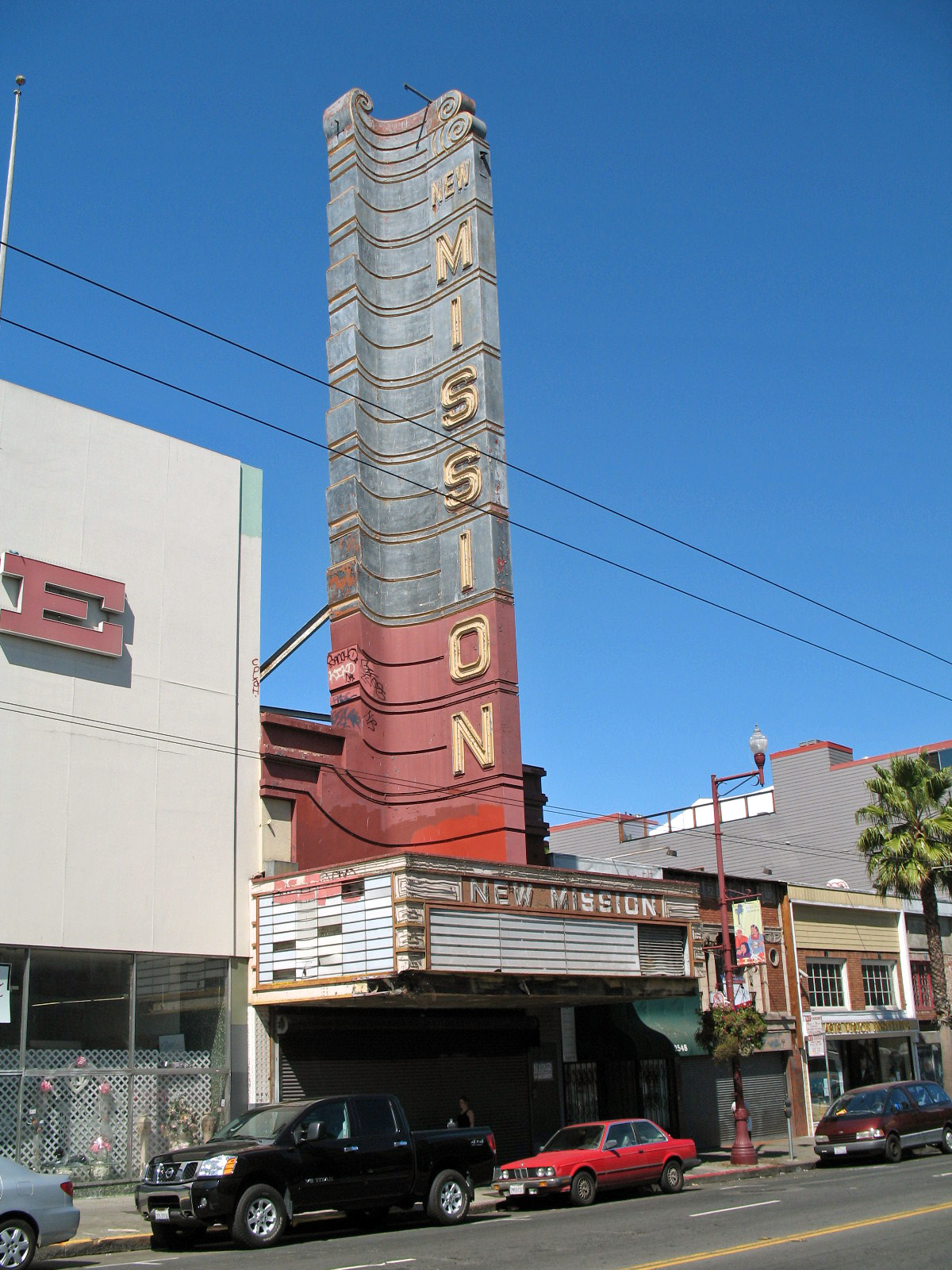
The New Mission Theater, a dilapidated landmark that sits on the 2500 block of Mission Street, has been vacant for years, but controversy surrounding its fate is alive as ever and will be discussed at this afternoon’s July 29 City College of San Francisco Board of Trustees meeting.

In 2004, the city designated the theater as historically significant for its ties to the Mission’s early 20th century “vaudeville and movie house district.” Once upon a time, patrons regularly circulated through its palacial interior, which features Art Deco-syle ornamental metalwork at the ballustrades, plaster moldings imprinted with Greek key motifs, etched Art Deco glass panel doors, ceiling ornaments with floral motifs, and a balcony adorned with a frieze of garlands and urns, according to a landmark designation file.

Plans to restore and reopen the theater have been in the works for several years, and a 100-percent affordable housing development adjacent to the theater could move forward if everything falls into place. That’s turning out to be a big ‘if.’

In 2005, CCSF sold the theater, along with an adjacent shuttered Giant Value store, to Gus Murad — Medjool restaurant owner and a former small business commissioner appointed by Mayor Gavin Newsom — for $4.35 million, according to CCSF counsel Greg Stubbs. Now, CCSF is considering initiating foreclosure proceedings against Murad due to nonpayment. He owes more than $2 million on the property, according to notice of default issued June 21. During open and closed sessions at the July 29 Board of Trustees meeting, trustees will decide whether to proceed with taking back the property from Murad or grant him a 120-day extension. Murad is expected to offer his pitch for an extension at the meeting.

CCSF board member John Rizzo told the Guardian he was fed up with the missed payments. “Gus Murad keeps assuring us, oh yes, it’s going to happen, we’re on the verge,” Rizzo said. “But the affordable housing is not being built,” he said. If CCSF took the property back, “we wouldn’t sell it for market-rate housing,” he added. “We would want to see affordable housing.”

P.J. Johnston, a spokesperson for Gus Murad, declined to answer questions about possible foreclosure but told the Guardian that the central goal is to create 85 to 100 affordable units in the heart of the Mission. “We’ve been working with Mission Housing and hopefully are very close to a reaching an agreement with Mission Housing and the Mayor’s Office of Housing, which would obviously be a chief funder of the project,” he said.

Securing financing and reaching a deal with Mission Housing and the Mayor’s Office of Housing would allow Murad to square things away with CCSF, get the ball rolling on the development, and get something out of his investment.

Murad initially planned to develop market-rate housing on the lot curently occupied by the Giant Value storefront, but switched to an affordable housing project 1.5 years ago, Johnston said. Plans have always included rehabbing the theater. Negotiations with Bernal Housing came close to a deal, but ultimately fell through, he said. Now, Murad is hopeful that CCSF will grant a 120-day extension and a deal with Mission Housing can be secured in time.

“It has been a challenging time for the economy as it relates to land use,” Johnston said. “And it’s been a very difficult couple of years for restaurants.”

Mayor’s Office on Housing Director Doug Shoemaker declined to comment for this story.

Chris Jackson, a trustee, said he worried that if CCSF were to move ahead with foreclosure, “it’ll probably scuttle the affordable housing project. I’d rather wait an extra four months to bring affordable housing than just put the screws to the guy,” Jackson said. “If it was a market-rate project, I’d be like no, give us the money.” Jackson said under state law, any funds generated by a sale of the property — which was originally purchased with bond money — would have to go back into the capital project fund, and couldn’t go into college’s operations budget. “It won’t go to save one class at City College,” he explained. “It just goes into capital project reserves.”

Rizzo noted that certain “political forces” aligned with Newsom had been contacting board members in advance of the meeting to try and persuade trustees to grant an extension for Murad, who will clearly benefit if he is allowed to hold onto the property. Murad has hosted campaign fundraisers for Newsom in the past and has contributed to campaigns of the mayor’s political allies. It isn’t the first time the New Mission Theater development has generated political buzz.

When an earlier incarnation of Murad’s plans for the New Mission Theater and adjacent lot came before the Board of Supervisors in Feburary of 2009, it generated some controversy. Murad had won approval from planning staff for a 20-foot height extension that would have brought his housing project to 85 feet, but that was rejected by the Board of Supervisors. In an odd twist, a typo kept the 85-foot limit intact, so the Board was required to vote again to bring it down to the 65 feet they approved. When Mayor Newsom vetoed the board’s second vote, Sup. Chris Daly lambasted Newsom for engaging in “pay-to-play politics.”

Our Weekly Picks: July 28-August 3, 2010

0

WEDNESDAY 28

VISUAL ART

“(Por)trait Revealed: A Juried Exhibition of Portrait Photography”

The latest RayKo offering runs the gamut of portraiture in American photography: Elvis impersonators, Arbus-esque twins (potentially Kubrick-esque too), among others. Combining You Are What You Eat by Mark Menjivar and Fritz Liedtke’s Skeleton in the Closet, this exhibit looks up and down the non-proverbial food chain and an obsession with keeping up appearances: the ectomorphic, the body-dysmorphic, and finally, the contents of the American fridge. This raw size-up of eating disorders and trends might leave you hungry, so I found several nearby restaurants (Supperclub, La Briciola, Chaat Café) with decent reviews on Yelp to make you feel better –– or possibly worse –– about yourself. (Ryan Lattanzio)

Through Sept. 10

Reception 6 p.m., free

RayKo Photo Center

428 Third St., SF

(415) 495-3773

www.raykophoto.com


THURSDAY 29

COMEDY

Tracy Morgan

Getting his first major mainstream exposure on the TV show Martin in the mid-1990s, Tracy Morgan quickly went on to join the cast of Saturday Night Live based on the strengths of his hilarious comedic talents. On SNL he created classic characters such as the moonshine-swilling “Uncle Jemima” and performed a host of side-splitting celebrity impersonations. Now turning the tables, in a manner of speaking, he pokes fun at his own celebrity on the hit NBC show 30 Rock in the guise of “Tracy Jordan” — Morgan has proven on the air that anything is possible, so expect nothing less when he hits the stage in front of a live audience. (Sean McCourt)

Thurs/29–Sat/31, 8 p.m. (also Fri/30–Sat/31, 10:15 p.m.);

Sun/1, 7:30 p.m., $40.50

Cobb’s Comedy Club

915 Columbus, SF

(415) 928-4320

www.livenation.com


DANCE

Napoles Ballet Theater

Napoles Ballet Theater might be considered a newbie in terms of other dance companies in the Bay Area, but this ballet-based modern dance company has a Cuban flair that says: NBT is here to stay. Under the artistic direction of Cuban choreographer Luis Napoles, NBT’s “First Home Season” features six different ballets by Napoles and includes the world premiere of his newest work, Lecuona. Reinventing classical ballet with elements of Afro-Cuban dance, contemporary movement, theater, and jazz, it wouldn’t be surprising if NBT’s first full-length performance in SF marks the first of many seasons to come. (Katie Gaydos)

Thurs/29-Sat/31, 8 p.m.; Sun/1, 4 p.m., $20

Dance Mission Theater

3316 24th St., SF

(415) 273-4633

www.napolesballet.org


FRIDAY 30

DANCE

“ODC’s Summer Sampler”

If you’re in the mood for modern dance but not sure if you can commit to sitting through a full-length performance, contemporary dance company ODC has what you want. With wine sampling, hors d’oeuvres, and a one-hour showing of some of ODC’s best works, its fourth annual “Summer Sampler” will satisfy your appetite without overloading your senses. The dance portion of the evening includes choreography by ODC artistic directors Brenda Way and KT Nelson, with audience favorites such as Nelson’s Stomp a Waltz (2006), Way’s John Somebody (1993), and ODC’s most recent premiere: Way’s sassy satire on feminine manners, Waving Not Drowning (A Guide to Elegance). (Gaydos)

Through Sat/31

6:30 p.m. (also Sat/31, 4:30 p.m.), $20

ODC Dance Commons

351 Shotwell, SF

www.odcdance.org


MUSIC

Zola Jesus

Opera is hardly the musical language of the young, but 21-year-old Nika Roza Danilova is as suited to the form as any goth kid from Madison, Wis/, can be. Danilova’s opera is no Carmen after all; she uses the techniques but favors atmospheric noise and murky echo, letting those sounds take the foreground over her powerful voice. As a sometime member of the band Former Ghosts and one-half of the synth-pop duo Nika + Rory (where she makes a significant case for the benefits of Auto-Tune), Danilova seems primed to find herself the catalyst for a new generation of opera singers — and fans. (Peter Galvin)

With Wolf Parade and Moools

8 p.m., $27.50

Fox Theatre

1807 Telegraph, Oakl.

1-800-745-3000

www.thefoxoakland.com


DANCE

Man Dance

His experiences running Central Dancer Theater in Nebraska had taught Man Dance Company founder Bryon Heinrich that audiences like theme-based programs. So for the company’s (sold-out) opening season last year, he let himself be inspired by ballet. This time he looked to romance in ballroom dancing. Joining his own company of seven men — women appear as guest artists — are ballroom professionals Roby Tristan, Chelsea Wielstein, and Eric Koptke. The first half of the evening offers mixed choreography, including young Alec Guthrie’s award-winning trio which he will perform in pointe shoes. The second half, “It Takes Two to Tango,” is a love story for ballroom and ballet dancers. (Rita Felciano)

Through Sat/31

8 p.m., $25–$45

San Francisco Conservatory of Music

50 Oak, SF

1-800-838-3000

www.mandance.org


VISUAL ART

“Between Currencies”

Texas-raised artist Erik Parra’s collage works prominently feature photographic images with an abiding retro aesthetic (probably because they appear to be actual old photographs), dappled with blobs or confetti-like clouds of color. The appealing result is vibrant and surprising, humorous but also a bit eerie, as colors creep into a black-and-white plane like so many stills from a forgotten, more austere version of Pleasantville (1998). Though perhaps it’s irrelevant to the ideas behind Parra’s art, this critically skewed lens on images of the not-so-distant past seems curiously complementary to the recent premier of Mad Men‘s fourth season. The gallery show opens today, but the official reception happens a week later. (Sam Stander)

Through Sept. 11

Reception Aug. 6, 5–8 p.m., free

Johansson Projects

2300 Telegraph, Oakl.

(510) 444-9140

www.johanssonprojects.com


SATURDAY 31

EVENT

Mama Calizo’s Voice Factory wake for 1519 Mission

Mama Calizo’s Voice Factory, having a few years ago taken over the space formerly occupied by the Jon Sims Center for the Arts, has carried forward nearly three decades of work by queer artists at 1519 Mission St. MCVF (and its new but unaffiliated off-shoot, THEOFFCENTER) promises to continue the mission of incubating queer performance, but the traditional Mission Street incubator must close its doors at the end of the month. A search for a new permanent home is underway, but in the meantime, MCVF will hold a “final performance and wake” on Saturday night to mourn, remember, and celebrate. (Robert Avila)

8 p.m., free

Mama Calizo’s Voice Factory

1519 Mission, SF

www.mcvf.org

www.theoffcenter.org


MUSIC

Swingin’ Utters

San Francisco’s street-punk stalwarts the Swingin’ Utters have steadily built a loyal following since they formed back in the late ’80s in Santa Cruz, and the band is back in action with a new seven-inch titled “Brand New Lungs.” Teeming with all the working-class attitude and piss and vinegar that fueled their early releases, the three-track single features Johnny Bonnel’s wonderfully ragged vocals once again mixing with Darius Koski’s searing guitars and the jackhammer rhythms of the rest of the group. A new full-length album, Here, Under Protest, is due in October, so catch them now before they hit the road for extended U.S. and European tours. (McCourt)

With Cute Lepers and Stagger and Fall

9 p.m., $16

Slim’s

333 11th St., SF

(415) 255-0333

www.slimstickets.com


EVENT

25th Annual Berkeley Kite Festival

Only in Berkeley do the world’s largest octopi fly through the sky in a giant octopile. No, the East Bay is not home to a freak show aquarium (as far as I know) — but it does host the annual Berkeley Kite Festival. So bust out your most impressive kites — bigger is not always better (especially when you’re trying to avoid kite-on-kite collisions) — and head over to Berkeley Marina. This might be your only chance to watch 30,000 square feet of creature kites take flight, eat corn on the cob at the kite ballet, and cheer on the Berkeley Kite Wranglers in the West Coast Kite Championships. (Gaydos)

Through Sun/1

10 a.m.–5 p.m., free

(free shuttle service to and from North Berkeley BART, 11 a.m.–5:30 p.m.)

Berkeley Marina, Cesar Chavez State Park

www.highlinekits.com


FILM

“Midnites for Maniacs: Macho Man-iacs Quadruple Feature”

In typical Castro Theatre tradition, Midnites For Maniacs unites Bay Area movie geeks with esoteric tastes and a palate for the weird and cult-y. Saturday is “Macho Man-iacs,” the quinto-mother of all manly movies with Stallone-starring Nighthawks (1981), Jean Claude Van Damme’s breakout film Bloodsport (1986), and two gems from the mine of John Carpenter B-movie bliss: They Live (1988) and Big Trouble in Little China (1986). Finally, this testosterone-charged program, with no X chromosomes in sight, concludes with a “Secrete Midnite Film.” All we know is it’s from 1989, not on DVD, and as the website insists, “You won’t believe there’s a 35mm print of this!” I’d bet money it’s a low-budget action flick starring a retrosexual with bad hair. (Lattanzio)

Films start at 2 p.m., $10

Castro Theatre

429 Castro, SF

(415) 621-6120

www.castrotheatre.com


MONDAY 2

MUSIC

Bomb the Music Industry!

If punk rock’s traditional values are DIY and egalitarianism, then Jeff Rosenstock of Bomb the Music Industry! is a stone cold reactionary. He’s known for blurring the line between fans and bandmates until it’s more or less invisible — bring a guitar or horn to a BTMI show, and there’s a good chance you’ll be invited onstage. Unswerving as the band’s commitment to aesthetic integrity might be, however, nobody could ever accuse BTMI of taking itself too seriously. Like their labelmates Andrew Jackson Jihad, Rosenstock and company leaven their scathing social commentary with lighthearted wit and eminently pogo-worthy arrangements. (Zach Ritter)

With Shinobu and Dan Potthast

9 p.m., $8

Bottom of the Hill

1233 17th St., SF

(415) 621-4455

www.bottomofthehill.com


TUESDAY 3

THEATER

MacHomer: The Simpsons Do Macbeth

Two of the most influential cultural icons ever, Shakespeare and The Simpsons, and two of art’s saddest sacks, Homer and Macbeth, finally arrive together on one stage, and in the form of one actor, in MacHomer: The Simpsons Do Macbeth. This solo show puts the Bard in Bart as Canadian import Rick Miller performs a daunting feat of incantation –– aside from that bewitching incantation “Double, double, toil and trouble” –– with voice impressions of more than 50 characters from the animated series. Miller is damn’d spot on, in both his display of an uncanny vocal talent and a commitment to making Shakespeare more accessible for younger audiences. (Lattanzio)

Through Aug.. 7

8 p.m. (also Aug. 6–7, 10:30 p.m.), $30–$40

Bruns Amphitheater

100 California Shakespeare Way, Orinda

(510) 548-9666

www.calshakes.org 

The Guardian listings deadline is two weeks prior to our Wednesday publication date. To submit an item for consideration, please include the title of the event, a brief description of the event, date and time, venue name, street address (listing cross streets only isn’t sufficient), city, telephone number readers can call for more information, telephone number for media, and admission costs. Send information to Listings, the Guardian Building, 135 Mississippi St., SF, CA 94107; fax to (415) 487-2506; or e-mail (paste press release into e-mail body — no text attachments, please) to listings@sfbg.com. We cannot guarantee the return of photos, but enclosing an SASE helps. Digital photos may be submitted in jpeg format; the image must be at least 240 dpi and four inches by six inches in size. We regret we cannot accept listings over the phone.

Best of the Bay 2010 Editors Picks: Food and Drink

1


Best of the Bay 2010 Editors Picks: Food and Drink


BEST PERKS FOR PROUD PERVERTS

A Web search for every cafe, a cafe for every Web search? All well and good, but what if your search is for the best goldarn double-sided dildo there is — and you’re sick of that uptight suit over there eyeing your Googles? Proudly pervy surf-and-sippers, you officially have a kick-it spot. Kink café and boutique Wicked Grounds not only brews steamy cups of Ritual coffee, but hosts regular meet-and-munches where you can warm up to your next dom, sub, or whatever you’re into these days. The welcoming staff can be easily convinced to serve coffee from a dog bowl for the right slave. (Caution: contents may be hot!) They might also be able to help out with that just-right vibe hunt: shelves by the front counter stock all the finest gear in Super Sexy Toyland.

289 Eighth St., SF. (415) 503-0405, www.wickedgrounds.com


BEST EFA DOSE ON TOAST

When it comes to sardines, you have to think outside the earthquake shelter. On the flavor-ometer, the tinned food of last resort (served on tarps in the shelter with Saltines and stale water) bears no resemblance to its freshly grilled or roasted self. Not only are the little silver herrings tasty, they pack a megadose of essential fatty acids, the stuff nutritionists keep nagging us to eat more of. But no one needs to tell this to the Italian-inspired chefs who created the sardine sandwich at Barbacco Eno Trattoria, the more casual relation of Perbacco in the Financial District. Unlike restaurants that play it safe with sardines by smothering them in mayonnaise and lemon juice, Barbacco tops its sardines with seared calamari. Not most people’s first choice, perhaps, but the two get along swimmingly, especially when served on an Acme torpedo roll and slathered with arugula and “roasted tomatoe condimento.”

220 California, SF. (415) 955-1919, www.barbaccosf.com


BEST HOLE IN ONE

When people start trash-talking donuts, it’s hard not to imagine a life in which the person was weaned on Hostess or Entenmann’s and maybe stepped up to Dunkin’ or Krispy Kreme on special occasions. In other words, we’re talking a lifetime of mass production, where the only donuts these people have encountered spent their nasty, brutish, and short lives being callously blended in giant vats and stuffed into huge ovens, untouched — nay, unkneaded! — by human hands. Not so at Dynamo Donuts & Coffee, the small, open-air stand in the Mission that is diligently working to give donuts a good name. Each day the artisanal bakery makes seven to 10 types of donuts, all by hand. Standouts include the maple-glazed bacon apple, spiced chocolate, and lemon Sichuan filled with lemon curd and Dynamo’s incomparable “dredge.”

2670 24th St., SF. (415) 920-1978, www.dynamodonut.com


BEST FOWL TO TABLE

Which came first: the chickens or the eggs? At Stable Cafe, what probably came first was a commitment to fresh, local, sustainable food, which led to its farm in Santa Rosa, which led to its chickens, which led to its eggs, which led to its egg and cheese breakfast sandwich, which is a savory, molten marvel of scrambled egg and cheddar on thick, toasted Acme bread. But this light, airy Mission District cafe, beautifully renovated by architect Malcolm Davis in one of SF’s original carriage houses, brings that kind of integrity to everything it does. Its credo seems to be, do a small number of things well (know thy chickens; bake thy own muffins) — and adhere it does. And if you want to pay homage to the laying lovelies who created your eggs, Stable has their photos on the wall.

2128 Folsom, SF. (415) 552-1199, www.stablecafe.com


BEST CZECHVARS WITH A TWIST OF BOHEMIA

For a city with such a strong bohemian reputation, San Francisco has surprisingly few spaces that capture some of the flavor of the actual place. Yes, Virginia, there really is a Bohemia — and its capital is Prague. (One prefers the emphatic German spelling: PRAG. No lazy French vowels trailing behind, doing nothing!) And, speaking of nothing, nothing says Prague quite like a mug of the beer known to the Czechs as Budvar but to us, we of the North American market — perhaps because of a potential conflict with Budweiser — as Czechvar. A splendid place to enjoy said beer, whatever its name, is at the aptly named Café Prague. The feel inside is wonderfully Mitteleuropean, while the calorie-rich food emphasizes such basics as starch, meat, and fat. You probably won’t leave hungry, or sober.

2140 Mission, SF. (415) 986-0269


BEST CULINARY MULTIPLE PERSONALITY

Photo by Ben Hopfer

Don’t be deceived; Red Crawfish isn’t some kind of Red Lobster knockoff. The name is (we guess) a sly joke, and the restaurant does offer crawfish. But neither the jokey name nor the serving of crawfish is what makes the restaurant special. No, the reason you’ll remember Red Crawfish is because of its split personality. And although in human beings, split personalities are generally problem personalities, it’s different — and better — with restaurants (in this case, all Jeckyll and no Hyde). By day, Red Crawfish is an ordinary-looking Tenderloin restaurant that lays out an agreeable east Asian menu. But when the sun goes down, the place morphs smoothly into a Cajun spot whose gumbo is superb. Good gumbo doesn’t exactly grow on trees in these parts, so for this dish alone, let us all give thanks to Red Crawfish, whichever one it may be.

611 Larkin, SF. (415) 771-1388


BEST MEXICAN LESSON

If Mexican cooking is underrated in this country, part of the reason must be that we’ve been exposed to fast-food chain tacos and, even in our very own Mission District, overexposed to the burrito — which isn’t even authentically Mexican. God save the burrito anyway; it gives a lot of bang for the buck, and that’s important in these shriveled times for starving students and plenty of others. But there’s a real education to be had as well in the foods of Mexico, and a good place to audit the class is Nopalito, an offshoot of the highly regarded Nopa. The care taken about ingredients matches that of the nearby mothership, and the menu ranges nimbly across regional specialties, many of which are unfamiliar. The carnitas are recognizable, but they are also spectacular. It will be as if you’ve never had them before.

306 Broderick, SF. (415) 437-0303, www.nopalitosf.com


BEST PUPUSAS AND GOOOAAAALLL!!!S

Football and food take on more global connotations at Balompié, and that’s just bueno. The restaurant is well-hung with huge flat-screen televisions showing soccer matches from around the world, and the food is splendidly Salvadorian at a modest cost. This means lots of pupusas and pasteles, along with exotica like pacaya (pickled date palm blossoms), and — to rinse down all this bounty — the Salvadorian beer Regia, which comes in bottles that resemble howitzer munitions. But the best thing about Balompié is that at its heart it’s a sports bar. Men like to watch sports on big TVs while drinking beer, and it doesn’t matter whether they’re speaking Spanish, drinking Regia, or pulling for Costa Rica, pupusas in hand.

3349 18th St. (also at 525 Seventh St. and 3801 Mission), SF. (415) 648-9199 (558-9668, 647-4000)


BEST CREPE ME UP BEFORE YOU GO-GO

What do we miss most about Paris in the spring? The hip-hop boys with their gold chains and exposed biceps, the gamine girls in strappy heels, the constant elusive threat of rain, the crowds at Paris-Plages, laden with beer bottles, acoustic guitars, and joie de vivre. But above all, we can’t help reminiscing about those street crepes, fresh off the griddle, just the ticket for staving off those inopportune late-night hunger pangs, and great for soaking up any excess vin ordinaire in the bargain. Hooray! The 11th Street corridor’s Crepes A Go Go serves up the best street crepes this far side of the Maginot line. Starting at just $2.50, each crepe is made to order, and filled to oozing point with a decidedly Californian array of savory or sweet options. Open until 4 a.m. on weekends, with complimentary French hip-hop and comfy street-side sofa seating in the bargain. Take that, bacon-wrapped hotdog cart.

350 11th St. and other locations, SF. (415) 503-1294


BEST SCONES WITH A SIDE OF ASIMOV

Do you remember when the venerable coffee shop was a place people gathered to hang out instead of network? Where gamers would shuffle their Magic decks, writers would swap paragraphs, readers would sit quietly for hours with a good book and a pot of tea, and caffeine-fueled college kids would cram like the dickens? Welcome to Borderlands Café, the newest darling of the Valencia Street corridor. An offshoot of the classic Borderlands Books sci-fi bookstore, it’s already attracted quite a cross-section of trend-spotting caffiends and café nostalgists who just want to converse without being shushed by perfectly-coiffed app-oholics. And with a huge selection of magazines, comfy chairs, and scrumptious cheddar cheese and onion scones, Borderlands has a lot to offer even the solo café dweller. Except for Wi-Fi, which is actually our favorite perk of the place.

Borderlands Café, 870 Valencia, SF. (415) 970-6998, www.borderlands-cafe.com


BEST MOUTHWATERING MAYAN

It’s not situated in a chic location, unless you’re looking for snazzy new rims or a car wash. But Poc Chuc is well worth a trip down a less-bustling stretch of 16th Street for its unique Spanish-Mayan fusion cuisine. Open for lunch and dinner five days a week, the small, unadorned restaurant offers an array of dishes that inject an ancient, mouthwatering twist into standard Latin American fare. (Think plenty of smoked turkey, grilled tomatoes, pickled onions, and, of course, maize in several iterations.) A platillo Maya appetizer platter combines some of its tastiest, bite-sized creations, with plenty to share among a group — but no fighting over the pork empanadas or turkey salbutes! Main dishes include the signature Poc Chuc — grilled citrus-marinated pork topped with grilled tomatoes — and a reliable daily specials menu. Go for the mole!

2886 16th St, SF. (415) 558-1853, www.pocchuc.com


BEST GOOEY MAGIC (NO ELVES REQUIRED)

If you don’t like cookies, feel free to skip ahead. But if you were born with taste buds and an appreciation for delicious gooeyness, you’d do well to hit up Anthony’s Cookies. There is indeed an Anthony — likely you’ll see the man himself when you stumble into his Valencia Street shop, lured by the prospect of fresh, hot, calories-be-damned treats. And if Anthony looks like the happiest guy on planet Earth, he probably is — he bakes cookies for a living, after all — using only natural ingredients. Who’s magical now, Keebler Elves? Flavors include the usual suspects, plus variations on chocolate chip (semisweet, with walnut, using white chocolate … ) done to soft-meets-crisp perfection, plus inspired creations like cookies and cream and whole wheat oatmeal.

1417 Valencia, SF. (415) 655-9834, www.anthonyscookies.com


BEST XXX

Sink happily into the dark brown booths at Baker and Banker for a memorable Cal cuisine dinner — sweet corn bisque with a plump lobster hush puppy, maybe, or sausage-stuffed quail in a coffee-molasses glaze. Husband and wife chef duo Jeff Banker and Lori Baker get it right with each dish. But you could visit for dessert alone with Lori’s ever-changing wonderland of a dessert menu. In fall, dessert might be pumpkin cobbler, steaming hot with a crunchy top and cooled with candied pumpkin seed ice cream. In summer, a cherry tarte tatin accented by salted caramel and amaretti rules. Awesomely, the Baker and Banker’s XXX triple-dark chocolate layer cake is a constant. This orgiastic slice stands tall with a bottom layer of dark, dense flourless chocolate. Not to be outdone, the middle is a tangy chocolate cheesecake, while the top finally gives you a density break with traditional chocolate cake. One of the more satisfying threesomes in town.

1701 Octavia, SF. (415) 351-2500, www.bakerandbanker.com


BEST FRESH KASHI PAN

Sandbox Bakery is a pocket-sized cafe in Bernal Heights serving Ritual Roasters and De La Paz coffee with classic pastries like Valhrona chocolate croissants or orange currant scones. But it doesn’t end there. Owner and pastry chef Mutsumi Takehara’s background ranges from Slanted Door to La Farine, and her creations span a world of taste. Sandbox’s Japanese sweet bread, or kashi pan, is a lightly sweet brioche filled with the likes of melon or yuzu marmalade with sage. Or, in its savory form, it comes challah-like with negi-miso, curry or red bean paste filling. Daily special sandwiches often express a fusion of cuisines: Thai chicken croque-monsieur; an apple, smoked gouda, and rosemary spread over fresh baguette, or a teriyaki chicken rice burger with sticky rice as bun. A Zen-like experience with Parisian spirit.

833 Cortland, SF. (415) 642-8580 , www.sandboxbakerysf.com


BEST HOT HAKKA

Not familiar with Hakka cuisine, the regional cooking style of Southeast China that’s got food bloggers in a hot lather? It’s time you became acquainted. Head to the Outer Richmond and get schooled at Hakka Restaurant. Hakka looks like any other nearby Chinese joint, but there’s a legitimate pride in the service and an uncommon freshness to the food. Dishes include salt-baked chicken, fried strips of pumpkin coated in salted egg, crisp Chinese broccoli sautéed in rice wine, and ngiong tew foo, or stuffed tofu cubes. Kiu nyuk, a beloved Hakka dish, has two known versions, the more common served here: fatty pork belly layered over preserved mustard greens and mushrooms in a dark and complexly herbal sugar-soy sauce. Slice through layers of skin and fat to the tender anise-scented meat and you’ll be hooked on Hakka.

4401-A Cabrillo, SF. (415) 876-6898 BEST FRIENDLY YEMENI

This spring, on the western edge of the Tenderloin, a humble little restaurant opened quietly: Yemeni’s. Owner Ali Abu Baker and his staff convey a warmth almost equal to that of the piping Yemeni bread coming from the oven (useful for sopping up hummus with strip steak). Shawerma, baba ganoush, tabbouleh, and other Middle Eastern favorites are available. But the real draws are traditional Yemeni dishes like salteh, the country’s national dish: a meat stew topped with hilbeh — a tomato-based, chutney-like dip spiced with fenugreek, garlic, and cardamom — and zhug/sahaweq, a hot pepper sauce. Sip Yemeni coffee accented with a spice mix called hawayij. Baker shares his passion for his native country’s food at prices that encourage feasting for mere dollars. Stop into neighboring Queen of Sheba market for Middle Eastern groceries to complete your culinary journey.

1098 Sutter, SF. (415) 441-8832, www.yemenirestaurant.com


BEST SLAMMIN’ KOREAN STEAK SANDWICH

Rhea’s Deli is an unassuming, even demure, counter hidden inside a Mission District convenience store. But then the bad-ass $8 Korean steak sandwiches come out and the gloves come off. You’ll be fighting for — or at least gladly waiting up to 30 minutes in line for — a chance to sink your teeth into one of these babies. (Smart steakers call ahead and preorder). Once you’ve scored, it’s tempting to wolf down this mountain of tender, spicy Korean beef, shredded cabbage, red onions, and cheddar cheese on a crunchy baguette. Avoid this animal urge and take it slow, allowing the pleasure to last. Rhea’s offers an array of other savory lunchables as well, from a katsu sandwich with pork loin fried in Japanese breadcrumbs to a 19 Street sandwich with roast beef, Vermont cheddar, pepper jack, avocado, and pickled jalapenos. But, you know, steak.

800 Valencia, SF. (415) 282-5255


BEST BEELZEBUB BREW

The appropriately named Coffee Bar offers a double whammy of appeal: it occupies an impeccably cool industrial-looking space for laptop workaholics and serves some truly eye-opening coffee. Mr. Espresso coffee beans provide the kick in bracing espressos and cappuccinos; an ultra-expensive, ultra-shiny Clover machine dispenses perfect single cups. Unlike chain-like offerings of watered-down, cloyingly sweet mochas and “specialty” coffees, the additional drink menu items here are crafted with punch. Vietnamese or Havana coffees (conveniently hot or iced for those variable summer days) are sure things. But our taste buds go up in flames for Coffee Bar’s El Diablo. A devilishly smooth mix of espresso, chipotle-infused milk, and Guittard chocolate, the robust brew marries a hint of cocoa sweetness to subtle heat. Yes, we’re probably going to hell for worshipping El Diablo. But at least we’ll be awake for it.

1890 Bryant, SF. (415) 551-8100, www.coffeebar-usa.com


BEST OCCASIONAL KANGABURGER

Trek to a mellow stretch of Clement Street and enter the “five-star dive” environs of Tee Off Bar & Grill. You might assume it’s all right for a beer and little else — but you’d be wrong. The place is comfortably worn, sure. But regulars and staff soon feel like old friends, often sharing one of their spare Bronx Bombers (fiery BBQ chicken wings) or beer-battered mushrooms. The next surprise comes when you exit the dim interior to a sunny back patio with picnic tables and random paraphernalia from popular pirate parties (ask your bartender). A chalkboard reveals weekend specials. Wait! Is that a $20 kangaroo burger? After you’ve balked at the price, you can’t pass up this adventurous challenge, especially when the burger is plumped up with fried onions and kiwi relish. Make sure you call ahead, since Tee Off only serves it on occasional weekends and until supplies run out. If the roo’s already hopped, other worthy eats like ostrich burgers or Paul’s Crafty mac ‘n’ cheese, a four-cheese blend with pancetta blessed by Guy Fieri himself, will satisfy.

3129 Clement, SF. (415) 752-5439, www.teeoffbarandgrill.com


BEST DEVILED DELIGHT

When the rustic-chic Marlowe first opened, it offered a seemingly straightforward menu of bistro staples like steak frites and cheesy cauliflower gratin that seemed anticlimactic. But chef Jennifer Puccio’s faith in the classics and elegant marshaling of simple ingredients soon paid off: raves began to roll in — especially for the jaw-widening burger loaded with caramelized onions, horseradish aioli, and bacon. But the burger isn’t the only star on the lunch menu. Diving into Marlowe’s deviled egg sandwich is not settling for second best. Simple in presentation, it’s one of the finest egg sandwiches out there, an open-faced beauty with a layer of crisp, meaty bacon, aged provolone, pickled chilis, and horseradish aioli on the side (perfect for accompanying fries). Order addictive brussels sprout chips and let the office know you won’t be back for a while. The only proper way to wrap up such a heartwarming lunch is to take a nap.

330 Townsend, SF. (415) 974-5599, www.marlowesf.com


BEST SOUS-VIDE SOUS-BUDGET

One expects to shell out a pretty penny to partake of gourmet cooking techniques like sous-vide, or vacuum-packed slow cooking. But Berkeley’s eVe defies such expectations with a palate-tickling, surprisingly filling two-course prix fixe menu for $25 that includes several sous-vide items. The set menu offerings change often (additional items are steadfastly priced at $11 each), but husband-and-wife chef team Christopher and Veronica Laramie always keep it lively, highlighting the tastes of Veronica’s native Peru. Grilled squid ink risotto gets a tart kick from candied kumquats and yuzu. Diver scallops are brightened by lime leaf, edamame, mint, and delicate salmon roe. A sizable piece of fatty-licious pork belly pairs with a warm watermelon radish, chive flower, and a paper-thin slice of candied Buddha’s hand. Dessert might be goat brie sweetened with apricot, red wine, and a welcome contrast of shallots and flax seeds. In other words, world-class gastronomie d’avant-garde priced to appeal to ramen-weary students.

1960 University, Berk. (510) 868-0735, www.eve-berkeley.com


BEST BAR BRUNCH WITH BUNNY CHAO

It is with humor and reverence that one dines at Three Papayas, a pop-up Sunday brunch from 12 p.m.-4 p.m. at Doc’s Clock bar. Mismatched Michael Jackson placemats abound, and Bibles and porn-laced comic books act as menu-holders. Creative chef Ta-Wei Lin emphasizes fresh and funky Vietnamese and Thai flavors. His menu of four or five changing items per week (everything is $8) might include pan-fried rabbit, Filipino sisig, chicken or vegan Vietnamese crepes, or viet banh canh with clams and coconut sauce. If it’s available, hop on the unusual Bunny Chao, a hollowed-out loaf of bread — filling piled neatly on the side — overflowing with green lentils, veggies, and cardamom pods. Chef Lin garnishes with seasonal fruits like figs, passion fruit, and, of course, papayas, making his plates fun to behold, but even better to eat. In the lovably grungy Doc’s setting, pair your food with a peppery bloody mary, and join your fellow dive-tastic brunchers in a round of hallelujahs.

2575 Mission, SF. (415) 824-3627, www.docsclock.com


BEST BIG EASY OVER EASY

Morning at Brenda’s French Soul Food: where to start? Grillades and grits or crawfish beignets? Fried shrimp po’boy or sloppy Josephine? Eggs and andouille? Oui, Oui! This wee spot on Polk Street — open for breakfast, brunch, and lunch — is a showcase of the strikingly huge flavors of New Orleans-style French and Creole cuisines. The portions are big, the atmosphere strikes a note between quaint and cosmopolitan, and wonderfully named Filipino-Creole chef (and New Orleans native) Brenda Buenviaje keeps the flavor flowing. The only drawback, besides having to brave the tiny curbside riots to get in, is having to choose among the many dreamy menu items on offer. Make sure, however, to wash down Brenda’s must-try gumbo with a glass of sweet watermelon iced tea before proceeding to the next steaming dish.

652 Polk, SF. (415) 345-8100, www.frenchsoulfood.com


BEST SLICE OF SPICE

From slammin’ New Mexican resto Green Chile Kitchen comes Chile Pies, a low-key dessert café offering a spicy paradise of crave-inducing organic sweets. Seriously, if you thought Southwestern desserts were frozen in a sticky Bimbo-landia of saturated fats, this joint will blow your buds. Blue corn waffle cones, Straus Family soft-serve, Café Gratitude raw vegan ice cream, and fantastic floats (ginger ale with cardamom ice cream, anyone?) are just a few of the tasty treats at the Panhandle hot spot. The main draw is the rotating cast of daily pie specials, from the simple, like banana cream, to the sophisticated, like a tangy green chile apple with walnuts and red chile honey drizzle. Can’t decide between a scoop of Three Twins Ice Cream or a slice of chocolate peanut butter pie? No problem, have both in the form of a frosty pie shake. And then there’s Chile’s piece de resistance: a classic Frito Pie, with organic Niman Ranch beef and Mexican red chile. You can have pie for dinner and dessert.

601 Baker, SF. (415) 614-9411, www.greenchilekitchen.com/chilepies


BEST GIANT FEAST FOR GIANTS FANS

Do thoughts of those wallet-demolishing $9 beers at AT&T Park leave you with a sinking feeling in your stomach? There’s no need to get shut out of lunch or dinner plans around game time — hightail it to nearby Hard Knox Café for a true meal steal. Heaping soul food plates of smothered pork chops, Cajun meatloaf, barbecued spare ribs, and chicken and waffles, available at super-affordable prices, will last you all 54 outs and then some. Hard Knox’s no-nonsense shrimp po’boys and hot link sandwiches to go will keep you doing the wave through extra innings at a fraction of ballpark prices. Better yet, order a perfectly battered pile of fried chicken, settle into one of the comfy booths, and watch the entire game on the flat screen. You can order round after round from Hard Knox’s stellar selection of microbrews without missing a minute of the action.

2526 Third St., SF. (415) 648-3770, www.hardknoxcafe.com


BEST VIRGIN KICK

Don’t know about you, but we periodically have these Jack Nicholson Five Easy Pieces chicken salad sandwich moments at oyster bars, where we want to say, “We’ll have an order of oysters with lemon, cocktail sauce, and horseradish. Now hold the oysters — and bring me the lemon, cocktail sauce, and horseradish.” That’s why whenever we order a virgin Mary at Rose Pistola in North Beach, we get the spooky feeling that the bartenders have read our mind. The secret of their piquant housemade mix is, according to several staff members, secret (although one staffer did divulge that the bartenders add horseradish to the traditional tomato juice-Tabasco-Worcestershire combo). On top of this, Rose Pistola adds a green olive, pickled onion, and slice of lemon. You won’t even miss the vodka — or the oysters.

532 Columbus, SF. (415) 399-0499, www.rosepistolasf.com


BEST MIX MASTER, WITH MARMALADE

Photo by Ben Hopfer

A tucked away, speakeasy-like space on the second floor of the Crescent Hotel, minus the masses and snobbery: that’s where you’ll find the Burritt Room and its founder, master mixologist Kevin Diedrich. In the brick-walled space accented with sparkly chandeliers, black and red couches, and white piano, Diedrich shakes and stirs from a reasonably-sized menu of 18 rotating cocktails. He doesn’t just craft the classics, though there are plenty of those. Diedrich also creates inventive new drinks — often featuring marmalade — like the sparkling Hitachino Sour with bourbon, orange marmalade, lemon, sugar, and orange bitters, topped with Hitachino White beer. His experience lies in some of the country’s greatest bars from East to West. Diedrich sets a welcoming, unpretentious tone, has assembled a tight team of bartenders, and will take you on tasteful journeys nostalgic and new.

417 Stockton, SF. (415) 400-0500, www.crescentsf.com


BEST VEGAN CHARCUTERIE

Oh, if all our utopias were this dreamily delish. Ideally situated on green perch of reclaimed woodland on the edge of the UC Berkeley campus, halcyon eatery Gather offers seasonally minded, meticulously sourced food (complete with a sizable, possibly TMI volume, available to diners, detailing all providers and particulars). Vegetarians and vegans will be pleased to know that former Millennium sous chef Sean Baker has given much thought to its selections: the menu is 50 percent vegetarian, the star of which is undoubtedly the artisanal vegan “charcuterie” platter, which might include the most delicate tofu-skin tower or an Tuscan Rose eggplant with cashew “ricotta” and fennel-top pesto. Expect biodynamic and organic California wines, as well as piquant cocktails like the Secret Breakfast, composed of smoked peach scotch, bacon cello, spicy honey, and egg whites.

2200 Oxford, Berk. (510) 809-0400, www.gatherrestaurant.com


BEST BOW TO THE ANCIENT BACON GODS OF CATALUNYA

With or without you, we’re set to indulge our love of refined yet pleasure-minded Catalan cooking — and the pitch-perfect Contigo, which translates as “with you,” has us murmuring “Bon profit!” like a native of the land of Gaudi and Dali. The crowds have made this industrial-moderne Noe Valley restaurant the most popular spot in the hood for its wonderfully authentic Catalan tapas, artisanal Spanish and stateside hams, and fresh Catalan flatbreads — studded with wild nettles and porcinis (add a farm egg, anchovies, or Fatted Calf bacon). Aficionados of whole-critter eating won’t shy away from the tripe and chorizo and chickpeas or the oxtail-stuffed piquillo peppers, all sourced from local organic providers. And everyone, including the finicky ankle-biters, will want the albondigas, or pork and ham meatballs. For here the pig reigns supreme, even on the cookie plate, which includes a piglet-shaped peanut butter and bacon number.

1320 Castro, SF. (415) 285-0250, www.contigosf.com


BEST ITTY BITTY TREATS FOR TWI-HARDS

Moist and addictive, this blood-red baby is so tiny it’s totally OK to sink your fangs into a foursome and not break the Eternal Oath of Your Diet. Sure, his type wasn’t born yesterday, but damn, the way he stares at you, his skinny jeans, that whipped topping that glistens in the sun … the Rich Red Velvet cupcake at Cups and Cakes Bakery, named for its deep, vampire-luring color and smooth, timeless flavor is enough to blow our Team Edward minds. (Jacobites can tear into other flavors on offer, like Pretty Pretty Princess and Rainbow Bright. Just sayin’.) Did we mention the rich swirl of cream cheese and the crimson sprinkles? Que bella! Step into Jennifer Emerson’s beckoning SoMa bakery and drool over the perfectly constructed cuppies therein. And don’t worry, these beauties won’t make you wait three sequels for your first bite.

451 Ninth St., SF. (415) 437-2877, www.cupsandcakesbakery.com


BEST AL FRESCO FEEL-GOOD

Nestled amid boxy-lofty tech startups and the frenetic energy of AT&T Park lies the small green courtyard wonderland of Crossroads Cafe. The sprightly enterprise is a component of the Delancey Street Foundation, one of the country’s most innovative self-help organizations for the homeless, which has filled up this quiet little SoMa block with 370,000 square feet of housing, vocational schools, and the well-regarded Delancey Street Restaurant. But at Crossroads, all that is readily apparent of this commendable social enterprise is the distinct impression that the staff — composed mostly of Delancey residents learning workforce skills — wants to create the best darn cafe ever. Proceeds from the large menu go toward resident education and support. Pass through the small bookstore and grab Michael Chabon’s new bestseller, order a housemade waffle or scoop of coconut ice cream, and settle into a seat on the garden patio for a little soul sunshine.

699 Delancey, SF. (415) 512-5111, www.delanceystreetfoundation.org


BEST MICROBREW MUTINEERS

You’re always down for a 40 on the corner, a Bud on the stoop, or a PBR from your purse on Corona Heights. But sometimes you want an actual beer. You know, the kind that doesn’t taste like you wrung out a hipster’s legwarmers in your mouth. You’ve considered venturing into the labyrinth of microbrews, but microbrew culture turns you off — kind of snobby, kind of midlife-crisis-y, definitely confusing. Relax and revolt: Beer Revolution, downtown Oakland’s new grade-A beer store, will guide you into superlative suds with deep knowledge and just the right amount of edge. Staff connoisseurs offer tastes of recommended nectars, and a generous deck studded with picnic tables encourages kicking up your Doc Martens and glugging with abandon. Besides bottled bounty, there’s a spirited band of ever-rotating, ever-satisfying selections on tap, like Meantime Scotch Ale, Caracole Nostradamus, and Alagash Black. Slip on a balaclava and pop a few caps at bland brewskis.

464 3rd St., Oakl. (510) 452-2337, www.beer-revolution.com


BEST SWEET BEWILDERMENT

You know those foodies (maybe you’re one) — so up on the blogs and culinary porn rags they think they’ve tasted everything under the sun. Well, unless these epicurean explorers have logged some serious hours at 100% Sweet Dessert Café in the Outer Richmond, they’ve surely left some sugary stones unturned. You simply will not find a menu that covers more enticing and bewildering acreage — at least 10 massive pages illustrated with a complex grid system that showcases a dazzling plethora of Asian desserts. Two you might want to sample: crystal rolls (clear rice paper sachets of sweet sugary goo and fresh mangos and strawberries) or a selection from the extensive jelly drink section of the menu. Sure, the many of the sample photos look like fairy tale versions of your saltwater aquarium’s decorative fauna, but your fish seem to lead delicious lives, right?

2512 Clement, SF. (415) 221-1628


BEST TOTALLY WORTH-IT TOOTHACHE

Photo by Ben Hopfer

When Jamie Kasselman hands you a box on your birthday, you better be stoked. Presentation is key. Before opening her candy store in the Marina, she was famous for her impeccable flair for arranging sweets on designer dishes — a clear inspiration for the achingly sweet décor at Sweetdish. Kasselman has it well stocked with classic candies, designer chocolates hailing from mouth-wateringly diverse locales ranging from Colombia to Ghana, and even some treats made closer to home. (Kasselman makes her own line of fantastic homemade flavored marshmallows. Want-want-want!) It can be difficult to decide between all the fanciful bulk candy options — we’re naturally drawn to all the strawberry and lemon goodies — but the pretty salesgirls will feed you samples of from bags of irregulars behind the counter if you ask … sweetly.

2144 Chestnut, SF. (415) 563-2144, www.thesweetdish.com


BEST VIRTUAL VEGGIE GURU

Vegetarian goddess Heidi Swanson started her essential 101 Cookbooks blog way back in the ancient year of 2003. It was a way to start putting her massive cookbook collection to use, combining her love of cooking with her interest in photography. The result is a comprehensive vegetarian go-to guide for making simple, delicious recipes infused with her own San Francisco flair. Swanson focuses on natural, whole foods and ingredients, frequenting SF’s many farmers markets and organic foods stores. Then she tells readers how to whip up gems like chile blackberry syrup, Tuscan ribollita, and Rajasthani buttermilk curry. Each post walks you through her experiences with colorful photos and descriptions, substitution suggestions, and cooking tips. She’s since published two meat-free meatspace cookbooks of her own — mere amuses bouches to her blog, which contains reams of virtual veggie lore. If you ever wondered what the name of that funny squash is or what to do with halloumi cheese, give her a click.

www.101cookbooks.com


BEST PICKLED PLEASURE REVIVAL

Oh, pickled egg! Like your glass-jarred, vinegar-soaked, bar-top cousins the pig’s foot and the giant gherkin, you have for years endured the tipsy sneers and simulated gagging of drinkers who never gave you a chance. Once the prince of any bar worth its salt, an easy snack for barflies and hofbrauistas alike, you slipped into ovoid obscurity. Now one bar has resurrected your sweet purple form by giving it a gourmet spin. Who’d pass up a go at pickled quail eggs at the Alembic in this age of adventurous eating? It just goes to show that if you repackage something, provide the proper ambience, and price something at $2, you can get someone to eat just about anything. Perfect with Alembic’s saucy cocktails, you’re a hit with highbrow tipplers. Now please put in a good word for your forgotten cousins.

1725 Haight, SF. (415) 666-0822, www.alembicbar.com


BEST CUTE CUBANO

Any eatery can slap some pulled pork and pickles on a panini and call it a Cuban sandwich. But true Cuban food connoisseurs venture to Market Street’s upper climes to dig in at the tiny Chan Chan Café Cubano, a cute café by day that at night becomes a paradise of traditional dishes prepared with a gourmet touch. Entrees like ropa vieja and pollo en hoya are spectacular, but you may just pack them up to go after feasting your way through the well-priced tapas menu, which includes scrumptious croquetas, hongos, and camarones criollos. Plus, hello, a couple pitchers of sangria. With true Cuban flair — when the electricity goes out, as it sometimes does, a rewarding fever of culinary improvisation descends — and a laidback, handsome staff (yes, you may have to wait a bit for your order to come out of the one-stove kitchen, but you’ll have plenty to look at), Chan Chan is indeed one of those “hidden gems.”

4690 18th St., SF. (415) 864-4199


BEST DAMN CIOPPINO

Photo by Ben Hopfer

Best cioppino? Them’s fightin’ words in San Francisco, where the thick, rich seafood stew originated. But we’re serious. As certified fish freaks always eager for a fix of this blues-obliviating local delicacy, we’ve tried our fair share. And we can safely say that the home-style cioppino at Sotto Mare is the best. The key — besides the incredible tang of the smoky tomato broth and flawlessly fresh crab and fish chunks, scallops, mussels, and shrimp loaded within — is the atmosphere. Run by beloved, no-nonsense North Beach legend Gigi Fiorucci (don’t squeeze that lemon wedge over your superbly grilled sand dabs or he’ll reprimand you), Sotto Mare has a true family feel, a bustling business of diverse diners, and a haphazard décor that recalls San Francisco’s ramshackle maritime past. When that steaming cioppino tureen, more than enough for two, is placed on the table by the gregarious waitstaff, you feel a delicious connection to SF history.

552 Green, SF. (415) 398-3181, www.sottomaresf.com


BEST WIENERAMA

Never mind the ubiquitous fancy food carts or “third wave” coffee shops springing up in back alley garages — wieners were everywhere this past year. The explosion of gourmet and not-so-gourmet hot dog stands, joints, and full-on restaurants worked to balance all the epicurean exotica with some down-home comfort for those who were raised in a broke-down Chevy on televised baseball and McDonald’s apple pies. All were worthy, but one in particular consistently heated our buns: Showdogs. This “emporium of sausages” keeps it classy with a spotless, tin-tiled interior and organic ingredients like wild boar and merguez, while still appealing to the everyday eater with a sporty sense of humor — we’re suckers for the 49er, an all-beef Schwartz dog with housemade mustard, arugula, and, gasp, real sauerkraut. Add some barbecue fries and a Trumer Pils, and this hearty barker wins best in show.

1020 Market, SF. (415) 558-9560, www.showdogssf.com


BEST PLACE TO HORK DOWN HALF A BIRD

“I just ate half a chicken.” That declaration is written on a Post-it stuck to a cubicle at the Guardian offices. The sticky piece of pastel paper has since been signed by other people besides the original chicken lover. What can you say? Unless you’re the staunchest vegetarian, sometimes you just get the urge to eat half a chicken. Thai BarBQ in Potrero Hill was ideal for such moments, but it’s flown the coop. Luckily, Baby Blues BBQ is here to satisfy those extra-intense and voracious aviary cravings. The restaurant’s Marion County slow-smoked yard bird is served with a tangy barbeque sauce, but be sure to ask for the special Sassy Molassy molasses sauce. Add in corn bread and a choice of two fixins (sautéed okra, mac ‘n’ cheese and corn on the cob are some of the best options) and at a grand total of $15, you’ve got a deal only a fool would cluck-cluck at.

3149 Mission, SF. (415) 896-4250, www.babybluessf.com


BEST RAMEN PHENOMENON

We all know about chicken soup for the soul, how about delicious soup for the skin? Because its pork bone broth contains collagen and calcium, tonkotsu ramen has a rep as the genuinely edible version of a spa facial. There are some delicious tonkotsu ramens in Vancouver and San Francisco, but they’re all matched and even superceded by the subtle one at Asuka Ramen, which manages to be rich and light within a single spoon-size sip. Ramen establishments have popped up all over the city in the last year or two, but Asuka steers clear of trendy trappings and delivers the low-priced goods. Tantanmen is Asuka’s go-to dish, but if you don’t confuse greasy strong flavor with deliciousness, its pork-and-egg laden tonkotsu is the type for you.

883 Bush, SF. (415) 567-3153


BEST BEEF LULU

If life was little more than vodka and pastries (with no hangovers), we’d be in heaven, and the best place to shop would be Royal Market & Bakery. Even here on this mortal playground, Royal Market and Bakery is in the running for greatest shop. Why? Tasty marinated quail, excellent caviar, homemade hummus, fresh fruit, savory eggplant rolls with cheese, dark Russian chocolates, Turkish coffee, a tremendous selection of chilled vodkas and other liquor, an overflowing nook of flaky pastries, and last but not least, Beef Lulu. A special seasoned dish of ground meat, Beef Lulu is as enjoyable as its name is funny. At a time when the city is being overrun by generic chain supermarkets, Royal makes the case for individuality devoted to regional cuisine. And the prices are better, too.

5335 Geary, SF. (415) 221-5550


BEST BASKET OF UBE

On a busy street south of San Francisco lies a little land of leavened love where all your Filipino baked goods needs are met with a sweet smile and an even sweeter pandecoco. We won’t require 20 questions to tell you where: the place is Bread Basket, a starkly outfitted bakery famed for its thrillas from Manila. The neighborhood favorite is BB’s pandesal, swiped fresh out of the ovens while the packs of the bun-like lovelies are still aromatically steamy. Need to bring home a little something for dessert? The joint has cornered the market on delights made from the meat of the ube, or purple yam, which Bread Basket magically transforms into the bun fillings and feathery, marzipan-like candies that sit alongside its more familiar cookies and breads.

7099 Mission, Daly City. (650) 994-7741, www.breadbasketca.com


BEST QUE SYRAH, HURRAH

Tucked in a sliver of a space in the West Portal commercial strip is the tantalizing Que Syrah wine bar, founded and presided over with skill and affection by the team of Stephanie and Keith McCardell. Que Syrah is the perfect place to savor a glass of wine in a friendly neighborhood setting: quiet, unpretentious, and specializing in unusual wines from small production wineries from all over the world. Stephanie and Keith serve by the glass or in intriguing flights and provide expert notes about the wine, the winemakers, and the regions involved. Every Thursday night, an array of delectable tapas enliven the tastings — chef Val Desuyo takes inspiration from his regular trips to the restaurants of Barcelona. Plus: quarterly paella parties! Seafood paella and a glass from Penedès? Sì, sì!

230 West Portal Ave., SF. (415) 731-7000, www.quesyrahsf.com


BEST LOBSTER ROLLIN’

Whatever queasy misgivings you may harbor about the phrase “mobile seafood shack” will instantly be dispelled once you’ve palmed (or tried to palm) a hefty Maine lobster roll from Sam’s Chowdermobile. We were turned on to this tender, brimming-over prize when one of our East Coast-native amigos texted “lobster roll = real deal” from Golden Gate Park, where you can find the edible aquarium on wheels most weekends. So we tried one for ourselves, and yep. Great lobster rolls at a reasonable price are surprisingly hard to come by ’round these Left Coast parts — we’re crabby that way. Luckily Sam’s, the mobile unit of Half Moon Bay resto Sam’s Chowder House delivers the goods. (The roll proper is enough to feed two — order a single-serving “shortie” if you want one all to yourself.) Prep yourself for crustacean heaven with a bowl of Sam’s New England chowder and a side of Old Bay fries for a true Eastern experience.

www.samschowdermobile.com

 

On the cheap listings

0

On the Cheap listings are compiled by Paula Connelly. Submit items for the listings at listings@sfbg.com.

WEDNESDAY 28

System Administrator Appreciation Party DNA Lounge, 375 11th St., SF; (415) 626-1409. 6pm, free. It’s System Administrator Month and Open DNS is celebrating by inviting overworked system administrators to a networking, RnR party featuring music, stiff drinks, and the company of other hard working people who spend 24 hours a day keeping the world’s networks up and running.

THURSDAY 29

David Choe SFMOMA, Atrium, 151 3rd St., SF; www.sfmoma.org. 6:30pm, free. Meet gallery and street artist David Choe while he signs copies of his new book, a selection of images narrated by Choe throughout the book including graffiti, murals, paintings, sketchbook pages, photographs, toys, t-shirts, collages, and artwork.

SATURDAY 31

“Am I Illegal? /Am I Endangered?” Time Zone Gallery, 717 Leavenworth, SF; www.timezonesf.com. 7pm, free. Attend the opening reception for a new exhibit from Arizona artist Mike Frick titled, “Am I Illegal?,” and local artists Amelia Lewis titled, “Am I Endangered?.” Frick explores issues related to the recent immigration legislation and Lewis questions whether humans are endangered.

Indonesia Day Union Square, Powell at Geary, SF; www.indodaysf.com. 11am-4pm, free. Featuring traditional and contemporary Indonesian dance and music performances from various Indonesian islands, most notably Bali, Java, Sulawesi, Sumatra and Kalimantan, with well known singers, dancers and musicians from Indonesia joined by local performers. Indonesian cuisine from local restaurants will be available.

Laborfest Closing Party Nap’s 3, 3152 Mission, SF; www.laborfest.net. Celebrate the last day of the month long festival that promoted the legacy of labor issues past and present throughout our San Francisco community. Featuring live performances by the Angry Tired Band, AT&T, and more.

Renegade Craft Fair Fort Mason Center Festival Pavilion, Buchanan at Beach, SF; www.renegadecraft.com. Sat.-Sun. 11am-7pm, free. Attend this craft, art and design, DIY spectacular featuring over 250 indie-crafters selling and exhibiting their wares all weekend, workshops, DJs from Amoeba Music, cash bar, and more.

SUNDAY 1

BAY AREA

Oakland Museum First Sunday Oakland Museum of California, 1000 Oak, Oakl.; www.museumca.org. 11am-5pm, free. Check out the newest exhibit, “Pixar: 25 Years of Animation,” with over 500 works from Pixar artists, including drawings, paintings, and sculptures illustrating the creative process behind computer animated films. Or browse the museums permanent collection with art, design, historical collections, and natural sciences area.

For Lit, Talks, and Benefits listings, visit the Pixel Vision blog at www.sfbg.com/pixel_vision.

Appetite: NYC Food Cheat Sheet, part two

0

During my latest visit to my beloved New York, I spent eight days gleefully eating my way around the city, as I have done in countless trips past. I am continually asked for NY recommends as many of us in the Bay Area are either East Coast transplants, do business in both cities, or are savvy frequent travelers. Check out my Perfect Spot newsletter-archives for much more NY food and drink, but now I bring you part two. (Check out part one here.) A mini-list of great eats in varying categories:

GREEK SEAFOOD in QUEENS
Taverna Kyclades – You won’t regret trekking to Astoria, Queens, for an unforgettable Greek seafood feast at Taverna Kyclades. The humble, convivial space feels like a casual seafood/fish house, which in fact, it is, serving family-style platters of Greek food. House bread arrives piping hot, addictive with olive oil or one of their house dips, like yogurt-garlic-cucumber ($5.50). Peasant salad ($7.50 small; $10.95 large) is plenty large, even as a small. Plump, red tomatoes, heaping amounts of onions and olives, and a big slab of  fresh feta cheese… a beautiful salad. Mythos beer washed down grilled sardines ($14.95) and lemon potatoes, tasting vividly lemony but with an almost unnatural yellow hue. Filet of sole stuffed with crab meat (19.75) was the one ok dish: old school, not the freshest crab, reminding me of the 1950’s style of seafood entrees you find at SF’s Tadich Grill. The piece de resistance is grilled octopus ($11.95), a succulent spread of plump invertebrates, envigorated by a squeeze of lemon. Opa!

Lookin’ good at Luke’s

CHEAP, AUTHENTIC LOBSTER ROLLS
Luke’s Lobster Shack – In the heart of the East Village you’ll find Luke’s Lobster Shack, a humble hole-in-the-wall with a couple stools, take-out Maine seafood and a second location on the Upper East Side. Operating on principles of sustainability and New England authenticity, the prices are “cheap” for NY and for lobster rolls: get a whole Lobster Roll for $14 or an ideal “snack size” for $8. Loaded with buttery lobster from Maine and a light coating of mayo, it may not be my beloved (and the ultimate seafood stop) Pearl’s in the Village, but it’s a tasty steal. For an extra $2, get the roll with Maine Root Soda, Miss Vickie’s chips and a pickle.

Aquavit’s aquavit.

SCANDINAVIAN FEAST
Aquavit Bistro – Aquavit, the restaurant through which chef Marcus Samuelsson left a mark on modern Scandinavian cooking, has become one of the great Scandinavian restaurants, a cuisine not easy to find in the US. I adore the region’s focus on fresh fish, salmon, caviar, herring and, of course, the namesake spirit, aquavit. Looking for deals, I dined in the spare, upscale IKEA bistro, versus the more stuffy, pricey dining room. Quality does not suffer in the bistro, while service is gracious and well-orchestrated. I ordered a $17 flight of three (or $7 each) of the house-infused aquavits, though narrowing down flavors was problematic, as all three were all lovely, from a crisp cucumber, hot mango-lime-chili, to my favorite: horseradish. Each dish delights and portions are generous. Gravlax is heaping slices of bright, cured salmon in hovmastar (a mustard/white vinegar based sauce) with dill and lemon. I equally fell for matjes herring: thin slices of herring with finely diced yellow beets, red onions and sour cream. Swedish meatballs were the best I’ve ever had, redolent with cinnamon and gentle spicing in the meat, piled next to whipped potato puree, pickled cucumbers, sweet lingonberries, and addictive cream sauce. This is a New York favorite and I’m more than a little sad not to have a place like it here in SF.

Shayna Steele embraces her soul passion

0

By Lilan Kane

Jazzy, sultry, soulful, and smooth, Shayna Steele — performing at Coda on Sat/17 — has a voice and style that is causing quite the buzz. With a background in Broadway (she starred in Rent and Hairspray) and influence from the jazz greats, she had a major break with her vocal feature on Moby’s number one dance hit “Disco Lies.” On her latest record I’ll Be Anything (Highyella Lowbrown), she truly shows that she can sing anything.

Opening the record, “Alright” is driven by funky guitar riffs, “Wishing” is more R&B and even tinged with latin rhythms and percussion, and closes with an elegant jazz ballad “We’ve Already Been Here Before.” Shayna should be considered one of the most promising and versatile up and coming R&B singers, right up there with Rachelle Ferrell and Ledisi. I got a chance to interview her over email aboiut Broadway, Billboard, and the Jazz Mafia.

Shayna Steele with the Jazz Mafia All-Stars
Sat/17, 10pm, $10
Coda
1710 Mission, SF
(415) 551-2632
www.codalive.com

SFBG: How would you describe the Shayna Steele sound?

Shayna Steele: New York subway grit, covered in a buttery and rich jazz gravy with a pinch of Mississippi soul.

SFBG:Tell me about your new album, I’ll Be Anything. What was the writing process?

Steele: I’ll Be Anything covers many styles, musically and vocally, as far as how I interpret the music. My voice changes with how the song makes me feel. My writing process changes with each song…but mostly I write on the subway, in bars and restaurants when I’m alone and when I’m listening to music, mostly jazz. Jazz inspires me most… Miles, Coltrane, Herbie Hancock. The truth.

SFBG: You started on Broadway performing in Rent, Hairspray, and Jesus Christ Superstar. Do you miss the theatre?

Steele: My connections and my professional stage experience started on Broadway with Rent. It certainly opened a ton of doors for me in music, because Rent, at the time and still today has such a profound impact on theatre. It was a historical moment and I was so grateful to be a part of it. The people in the Broadway community will always be family, but for the record, I don’t miss it when I’m doing my own music. It was certainly more constant and stable, but my heart and gut never ached with such passion for theatre as it does for jazz and soul music. My music runs through my veins now. It is part of me and you can see that when I perform live. The Broadway community, I’m certainly very much involved with charity work and live performances through my Broadway connections, such as Broadway Impact (I’m running the NYC marathon on their behalf) and the Broadway Inspirational Voices.

SFBG: When did you know that you wanted to move on from Broadway to your solo career?

Steele: When I did my first gig in 2003 with my band. It changed everything for me. I had a lot of support when I decided to leave and some people were confused as to why I was walking away. I walked away, because I have mucho respect for theatre, therefore I believe in not taking a place that does not belong to me. The “Broadway actress,” position needed to be opened up for someone who craves it, like I crave music.

SFBG: You sang on Moby’s hit song “Disco Lies” in 2008 that went #1 in the U.S. Billboard Dance charts.  Would you ever consider recording another dance song like that?

Steele: If the opportunity came up, absolutely. It’s not something I sought out.  It kinda found me.

SFBG: What can people expect to see at your show at Coda this Saturday?

Steele: Passion! A killin’ band (The Jazz Mafia All-Stars) and strong vocals. I try and surround myself with amazing musicians who love their instrument and dig my music. I’m here to tell a story. It’s an experience. I mean, that’s what people say about me.

Pera

0

paulr@sfbg.com

DINE If books and movies can have subtitles, then why not restaurants? A subtitle is like a bit of extra seasoning, a way of emphasizing certain meanings, and this is particularly important at a time when restaurant names can seem increasingly whimsical or obscure.

Pera’s subtitle (printed at the top of the bill and on its website) is “a Mediterranean affair,” which makes it sound like a cheesy movie about poor, doomed Princess Grace of Monaco. “Turkish cuisine” would be a bit more exact, but “Mediterranean affair” certainly sounds a romantic note, and Pera does have its low-key atmospherics, especially on summer evenings when elongated twilight stretches over the north face of Potrero Hill and glints through Pera’s windows.

Pera opened last November, under the auspices of Irfan Yalcin and his wife, in a space held by the Chinese restaurant Eliza’s since the early 1990s. (Eliza’s still exists at its longtime California Street location.) Turkish cuisine seems to be enjoying something of a boomlet around here in recent years, and why this is so is nearly as great a mystery to me as why we have so few Greek restaurants.

As it happens, and despite the long-term tensions between Greece and Turkey, Greek and Turkish cuisines are plainly related. Pera, whose menu tilts toward foods from Turkey’s Aegean coast, even offers versions of pastitsio, the baked pasta dish that is Greece’s answer to lasagne, and moussaka, the pastitsio-like dish of layered eggplant. But chef Muhammet Culha also turns out items I haven’t seen before on Turkish (or Greek!) menus around town.

Conspicuous among these is the talas boregi ($16), whose closest relation in the American food lexicon is probably chicken pot pie. The dish arrived as a triangle of phyllo wading in a shallow pool of coconut curry sauce (I had never before come across coconut milk in Turkish cooking). Within the pastry envelope was a piece of smoked, boneless chicken breast, while elsewhere on the plate lay a garnish of green apple, sliced thin, and some currants. In a sense, this dish was the philosophical opposite of that other great Mediterranean cuisine, Italy’s. The Italian kitchen emphasizes simplicity, directness, and the primacy of a particular ingredient or seasoning. By contrast, Pera’s talas boregi orchestrated a diverse cast of characters into a bewitching harmony, a sum greater than its parts.

But Turkish cooking can be just as direct and simple as Italian. Sometimes, in fact, it can seem Italian, as with spanaki ($6.50), spinach sautéed with garlic and pine nuts just as it is in Sicily. (“Spanaki,” we should note, is the Greek word for spinach — the Turkish word is “ispanak” — and Sicily was settled by Greeks in pre-Roman times.) The condiment consisting of yogurt, cucumbers, dill, garlic, and olive oil, whether called tzatziki or cacik ($2.50) is also about as basic as it gets and shares a deep and obvious root with the Indian yogurt sauce raita.

You can get the tzatziki, along with a host of treats to dunk in it, as part of the meze platter ($14), which is a sampler and therefore irresistible. The ensemble includes dolmades (stuffed grape leaves), saksuka (roasted eggplant with bell pepper, potato, and caramelized onion in a garlic tomato sauce — a lot like caponata), and zucchini cakes, along with olives, feta cheese, and triangles of warm pita.

Since the Aegean is a sea, we might expect to find seafood on the menu, and we do, including wonderful fish patties, or balik kofte ($10), a pair of hamburger-flat disks presented with concasse tomatoes and mango dice. (Do the Turks grow mangoes?) Also quite nice was a filet of grilled salmon ($18), topped with a Meunière-like sauce of white wine, lemons, garlic, and capers and plated with vegetables and what the menu card called (in Greek) patates tiganites, or fried potatoes — sautéed cubes, really.

For dessert you can have baklava, if you like your phyllo drenched with honey, but the more compelling choice is yogurt with honey ($6), which must be counted as a dessert that is actually, definitely good for you. (Both yogurt and honey are fermented foods, rich in probiotics.) Yogurt from the eastern Mediterranean is especially creamy and rich, as here — almost like tangy-sour cake frosting. One small surprise: no cherries on the menu, for dessert or otherwise, though the cherry is profoundly — or we might even say majorly — associated with Asia Minor.

PERA

Dinner: nightly, 5–10 p.m.

Lunch: daily, 11:30 a.m.–2:30 p.m.

1457 18th St., SF

(415) 796-3812

www.perasf.com

Beer and wine

AE/DS/MC/V

Manageable noise

Wheelchair accessible


Appetite: Don’t forget to remember — Mission Beach Cafe

0

In the wake of last year’s closings, at the beginning of the year I began reflecting on those neighborhood spots or classic restaurants we often forget are there but don’t want to lose. From time to time, I share reviews of places we’d do well to re-visit… or get to for the first time. They might be receiving a fresh infusion of flavor from recent chef or menu changes, or remain noteworthy, despite floods of new openings and (over)hyped hot spots.

Mission Beach Cafe, aka MBC, a welcoming corner restaurant many go to for brunch or incredible baked goods and Blue Bottle coffee in the morning, has maintained a rare level of quality through a handful of chef changes. I am amazed at how delicious dinners here remain: from chef Thomas Martinez (see my 2009 review at The Perfect Spot) to heartwarming Pot Pie Tuesdays. For about six months, they’ve had a new chef, Trevor Ogden, who most recently worked at Umami, at the now defunct Frisson and with Stephanie Izzard in Chicago. Though young, like former Chef Martinez, there’s inventive maturity in Ogden’s work.

A recent visit yielded literally one pleasurable dish after the other:

– MBC has thankfully kept their killer flatbread of the day ($14) on the menu. Ogden prepared ours with a goat gouda infused with hops (yes, you heard right), layered with crisp corn, caramelized ramps, chicken and two pepper purees (red pepper and padron).

– One of the stand-outs in a stand-out meal, is tea-smoked albacore tuna ($14) topped with quail eggs, caviar, chili creme fraiche and dotted with crispy lemon-saffron risotto. A visual work of art and a lightly seductive pleasure to the palate.

– Mixed baby lettuces ($10) are shaped into bowl cupping mounds of avocado, red spring onions, toybox tomatoes, herbed tofu and walnuts in a creamy cabernet vinaigrette.

Artful smokes and grilled Hodo tofu

– I’m so not a vegetarian, but one of two vegetarian entrees was a favorite of mine: smoked and grilled Hodo tofu ($17) is in good company with zucchini, toybox summer squash, eggplant, grilled corn and forbidden black rice. A little sweet comes in the form of strawberries and strawberry rhubarb glaze.

– Organic pork tenderloin ($23) is comforting with roasted German butterball potatoes, cipollini onions, baby carrots and sugar snap peas. But when it’s cooked in rosemary brown butter and drizzled with white peach pork jus, it’s downright luxurious.

– Pan-seared branzino ($25) arrives stacked over shaved fennel, summer squash and pea tendrils. The fish is delicate but the skin adds crisp and saltiness. Most addictive is the Vidalia onion/Yukon gold soubise and tomato-lemon verbena broth accenting the dish.

– Those truffle fries resting under shaved parmesan ($5) are as fabulous as they ever were.

– Alan Carter holds the crown of pastry chef extraordinaire and his pies ($6.50-7 a slice) are still mama’s home cooking and a long-awaited holiday rolled into one. It’s like coming home to his banana butterscotch cream or chocolate pecan pies, but I was especially entranced with my beloved rhubarb (thank you, summer!) in his strawberry rhubarb pie.

Alan Carter’s magnificent pies

I am happy to (continue) to say, do not forget to return to Mission Beach Cafe.

198 Guerrero Street (at 14th Street)
(415) 861-0198
www.missionbeachcafesf.com

Sunday Streets creates public benefits from private labors

2

By Kristen Peters

San Francisco locals will take to the streets this weekend as main roads in the Mission neighborhood are closed to automobiles for the sixth installment of Sunday Streets. On July 11, a three-mile route from 17th and Valencia to Dolores Park to Potrero Avenue will be car-free from 10 am until 3pm.

Taken from Bogota’s weekly ciclovía, in which nearly 100 miles of city streets are reserved for pedestrians and other recreationalists, Sunday Streets began in San Francisco almost two years ago. Since then, the tradition has made its way to other California cities including Los Angeles and Oakland.

“In San Francisco we have our own unique style,” event coordinator Susan King, who works for the nonprofit group Livable City, said. “We have different routes and we hit different neighborhoods year after year. In each neighborhood, the featured events have their own flair.”

This Sunday, revelers can look forward to performances by Grupo Azteca as well as capoeira and salsa dancing lessons, not to mention the countless restaurants in the area opening their doors early to the public. While the event has some support from the city and its San Francisco Municipal Transportation Agency, mostly in the form of permit fee waivers, it is run by Livable City and funded from corporate donations.

“Our corporate sponsors provide everything from durable goods, in-kind donations and cold, hard cash,” King said.

City officials have even curtailed helping with hanging “no parking” signs, leaving that task to volunteers from the SF Bicycle Coalition. That job was usually designated to the San Francisco Department of Parking and Traffic, but they have now stopped providing that service to an event that Mayor Gavin Newsom trumpets as something he’s bringing to the people. But King still calls Sunday Streets a good example of a public-private partnership.

“Everybody brings something to the table,” King said. “It’s a real cooperative entity with everyone pulling together to produce something really special.”

According to King, the benefits are widespread. Not only is it refreshing for the public to ditch their cars for a few hours, but it also reinvigorates the local economy. “It’s a real boom for the city,” King said. “Lots of people on the street means lots of eating. It’s good for business and good for the community.”

Acting executive director for the SF Bicycle Coalition Renee Rivera said that the Mission in particular has benefited from the crowds at Sunday Streets. “Everyone is enjoying the outdoor activities the event has to offer but, at the same time, are going to get ice cream, stopping for tacos or getting to enjoy all the merchants on 24th and Valencia,” Rivera said.

There are three more Sunday Street events following the Mission neighborhood closure. The Great Highway and areas of Golden Gate Park will be closed on August 22 followed by the Western Addition on September 19. The series will conclude on October 24 with the closure of the Civic Center and Tenderloin areas.

Appetite: Rogue wines and hearty burgers

0

B3 — or B-cubed, as in “Bottles, Burgers and Bites” — should finally see the light of day on July 20 (call to confirm as this is the hoped-for grand opening). I had the privilege a couple months ago of being part of a test dinner for B3, which set up shop in the former Senses space on Valencia, redone in warm, neutral tones. I’m delighted to give you the preview scoop (see original details in The Perfect Spot), as I have been following this concept since inception.

Basically, B3 is part wine tasting spot, part full-service restaurant with a burger and sausage emphasis as well as a retail wine source. You taste wines as if you were at a tasting room (don’t call it a wine bar!) and can purchase what you’re tasting by the bottle or case at retail prices rather than at restaurant mark-up.

Rogue wines for days. Photo by Virginia Miller

Wine guys Johnny Gato and Ron Elder invested personal passion into a hand-selected list of affordable local bottles difficult to procure from small-production winemakers — most don’t even have a wine tasting facility. Many are influenced by Old World technique with modern interpretations. Just start talking to Gato and Elder and you’ll begin to discover all kinds of Wine Country gems you had no idea were there… not your typical California wines. Initially the focus will be Napa and Sonoma producers, but they eventually plan to showcase wines (roughly 50 on hand at any given time) from regions like Dundee Hills, Willamette Valley, or Santa Barbara, with a goal to rotate wines monthly.

The wine aspect of B3 is called the Winemakers’ Speakeasy, an idea in development since 2008, referring to the underground status of the type of wines they want to share with the consumer… truly “small batch”, without wine tasting facilities, “by appointment” tours, or major distributors. In many cases, you wouldn’t be able to try the kind of wines served here unless you bought a bottle at one of the few restaurants or shops that carry them. They’re what Gato calls “rogue” or “punk rock” wines.

Through Gato, who has worked at Moussy’s and Bouchon in Napa, I’ve discovered incredible wineries such as Napa’s Forlorn Hope, bittersweetly named after the term used to describe the front line of soldiers in a high-risk military operation. I’m smitten with their floral, bright ‘08 La Gitana Torrontes, fabulously layered ‘07 Nacre Semillion, and ‘05 Gascony Cadets Petit Verdot. Then there’s Poem Cellars in Yountville, who’s wines are often sold out completely, particularly their light and spicy 2006 Tastevin Napa Valley Red (only 140 cases produced). Or Beaucanon’s ‘07 Cabernet Franc, Y. Rousseau’s ‘08 Russian River Valley Colombard and ‘08 ‘Milady’ Mount Veeder Chardonnay, Peripolli’s ‘06 Sauvignon Blanc. Just ask Gato, who has followed these wineries closely in his Napa years with a dream to bring them “on the road” to the general public, and he’ll tell you about the wine itself but also stories behind winemakers and wineries. Each glass becomes something personal, fascinating.

Chef Kevin Ahajanian, who worked with Gato at Bouchon, is keeping it solid with a burger and sausage menu. If the test dinner and initial menu is any indication, you won’t suffer on the food front. You can top your burger with everything from a fried Petaluma egg to Humboldt Fog cheese. There’s lush salads, like a B-Cubed cobb with chicken breast confit, bourbon brown sugar Hobbs bacon and Point Reyes blue cheese.

Yep, there’s some luscious salad in there, too. Photo by Virginia Miller

Or maybe you want a Boudin Noir (aka blood) sausage with choice of pineapple salsa, roasted apples, roasted red peppers or house slaw on top? Ahajanian doesn’t leave vegans and vegetarians out — there will be burgers for them. He has fun with the details, like making his own ketchup, blanching fresh-cut potatoes in rice bran oil, or serving sausages in buns layered with mashed potatoes. In a nod to all things local, dessert is Humphry Slocombe ice cream (including those addictive foie gras ice cream sandwiches), Mission Mini cupcakes or Recchiuti chocolates.

The B3 crew eventually plans to launch lunch and weekend brunch, becoming a go-to for wine lovers and a pre and post-shift source for industry types to stop in for a bite or drink. Though wine is clearly the focus, they’ll also offer six beers on tap, another 8-10 by the bottle. And with a twice nightly happy hour, it’s going to be an unusual wine and burger spot where you can meet lovingly-made, truly small batch wines… and even take them home with you.

Tue-Sun, 3pm-2am (wine happy hours: 3-6pm, 10pm-12am)
1152 Valencia, SF.
415-401-7258
Reservations: should have Open Table reservations by opening date

Osteria Stellina

0

paulr@sfbg.com

DINE If you think food Valhalla is the Ferry Building, you haven’t been to Point Reyes Station lately. The Ferry Building is just a building full of food — a nice building with interesting food, I concede — whereas Point Reyes Station is basically a village consecrated to food, Foodville USA. It’s full of produce markets, butchers, bakeries, creameries, and restaurants, seemingly to the exclusion of everything else. The village, which sits on Highway 1 near the foot of Tomales Bay in the far west of Marin County, is just a few blocks’ square, but those blocks are chockablock with people wandering on foot from one little food heaven to the next.

If Marin County doesn’t make my list of favorite places, it’s mainly because of the dense population corridor along U.S. 101 in the east. To the west, though, beyond the Mercedes-clogged tracts of Fairfax and San Anselmo, the land relaxes into open, rolling country plied by cyclists and dotted with stands of oak trees and boutique agricultural concerns, many carrying the “Marin Organic” label. And the capital of this peaceable (if kingless) kingdom is Point Reyes Station.

Given the bucolic setting, I was a little surprised to step into Osteria Stellina, one of the newer and most heralded restaurants, and find myself in a rather plain gunmetal-gray dining room. It was like being in the officers’ mess on a battleship. Gray is a nice color for flannel suits, but on the walls of a restaurant — a restaurant, moreover, serving a Cal-Ital menu that bursts with flavor — it struck me as overcautious.

Still, the nautical hint isn’t entirely misplaced. Point Reyes Station was once a port, and nearby Tomales Bay produces a wealth of farmed oysters. Naturally, Osteria Stellina offers these (from Hog Island) raw, and also (from Drake’s Bay Family Farms) atop a pizza ($18). This was as improbable a home for oysters as I’ve ever come across, but it did work. It helped that the rest of the pie was liberally spread with leeks braised in cream (from neighboring Straus Creamery), lemon thyme, and parsley — a tasty, green-yellow paste like a less manic gremolata. A small downside: the paste made the crust slightly soggy.

Damp bread isn’t always a disaster. We were smitten with Stellina’s version of panzanella ($18), the salad whose key ingredient is stale bread, moistened with vinegar and proof that thrift need not be dull nor otherwise feel like deprivation. This panzanella was the kind the king might be served, if west Marin had a king; it was made with heirloom tomatoes and (non-stale but perhaps toasted) Brickmaiden sourdough bread and further fortified with shreds of local chicken, Point Reyes mozzarella, greens, olives, and a balsamic vinaigrette. Panzanella is irresistibly flavorful, easy to make and share, and wonderfully redolent of both summer and elegant frugality, and I wonder why we don’t see it offered more often on menus.

Another Italian favorite that seems underrepresented in this country is the combination of cannellini beans and tuna. At Stellina this dish ($13) was made with conserved tuna (which I supposed to have been poached in olive oil), and it took an additional charge from celery and organic baby fennel, along with lemon quarters to squeeze over the top.

Even something as unassuming as a grilled-cheese sandwich ($14) can become special if it’s made with superior bread and interesting cheeses (fontina and, from Valley Ford, Estero Gold) and plumped up with braised veal shanks and caramelized onions. A kind of osso buco sandwich.

Stellina’s desserts have an artisanal intensity. The strawberry “pop tarts” ($10), a pair of shortbread-like pastry squares wrapped around a layer of fruit preserves, were enhanced by a scoop of lemon-buttermilk ice cream. This dessert was a whimsical reimagining of a Saturday-morning breakfast favorite from the 1960s. The fig crisp ($10), on the other hand, was direct and powerful — mostly fruit (including some blackberries) with just enough pastry and ground almonds to give context through texture.

The wine list is neither too long nor too short, and it offers local and Italian wines at moderate prices. Organic house wines (sauvignon blanc and zin) are available on tap, and all the wines except the sparkling are available in carafe or bottle. I was thrilled to find a greco di tufo, an obscure Italian varietal grown mainly on the far side of Mount Vesuvius. It goes well with oysters, and pizza too.

OSTERIA STELLINA

Dinner: nightly, 5–9 p.m.

Lunch: Mon.–Fri., 11:30 a.m.–2:30 p.m.

Brunch: Sat.–Sun., 10 a.m.–2:30 p.m.

11285 Hwy. 1, Point Reyes Station

(415) 663-9988

www.osteriastellina.com

Wine and beer

DS/MC/V

Somewhat noisy

Wheelchair accessible


To barflys

1

le.chicken.farmer@gmail.com

CHEAP EATS I went into the liquor store and bought a bottle of Extra Strength Excedrin, that was all.

“Bag?” the guy behind the counter said. Like the rest of the store, he was aflicker with fluorescence.

I was afraid to shake my head. “No thank you,” I said, very very softly.

He gave me a bag. I decided to look at it like this: I had a bag! I could fold it up and keep it in my purse, I could recycle it, write a poem on it, make a funny hand-puppet for the kids, pack a lunch … a small brown paper bag has many uses. I remembered my mother leaning forward in a soft chair in a darkened room, her eyes rimmed in red, breathing into just such a bag.

The rest of the family had found better things to do — playing outside, getting married — but I sat cross-legged on the living room carpet, a discreet distance away, watching my broken-down mother breathe into a paper bag, and learning loneliness.

Outside the fluorescent liquor store 30 years later was a bright, lovely day, and I knew I had to get out of it. I unhitched my bike, then rehitched it, walked five or six parking meters down the street, and ducked into a dark bar with two old guys and a bartender.

I sat between the two old guys. One was reading a newspaper, the other was just blinking.

“What can I get you, young lady?” the bartender asked, though my guess is I’m older than him.

“A Coke and a glass of water.” I smiled at the old man who wasn’t reading the newspaper, and he blinked. Maybe he was trying to focus. If so, we had that in common.

I opened my new bottle of pills, popped two, drank some water, drank half my Coke, and the bartender said, and I quote, “Headache?”

I nodded. I love bars. I wish I loved to drink, too. I would spend more time in bars, and then my life would be different. I met Crawdad de la Cooter in a bar, and a lot of great people in bars. People I didn’t meet in bars include: the German asshole, an Argentinean asshole, that Canadian one, and a whole lot of home-grown crap.

“I have a date for dinner,” I said, after we had discussed print media vs. electronics, children, the neighborhood, Proposition 8, and sports. I’m talking about me and the bartender. The newspaperman was only interested in his newspaper, and the man who blinked had left, his mood no doubt ruined by young women and Cokes and such.

“Oh yeah, where are you going?” the bartender said.

So then we got to talk about neighborhood restaurants. The neighborhood was Rockridge, but where we ended up eating was in Temescal, at the tapas place across the street from Pizzaiolo, which was closed.

And, no offense to the tapas, but I wish I had cancelled that date instead of curing my headache with a Coke and Excedrin beforehand. My mom, for example, doesn’t believe in Western medicine, not even aspirin. She thinks your body can take care of itself, and now I have to wonder if sometimes my headaches are trying to tell me something: “Stay in this bar, with these friendly and harmless people, and with at least 15 TVs to look at,” my headache was saying. “Eventually it will be tomorrow morning and soccer will come on.” Or: “Go home and go to sleep.”

Also, I remember now what I love about sports — fandom, I mean, in this case. It brings people together. In sports bars and stadiums and living rooms, where there are things to eat and drink.

At the Phoenix, where I managed to watch a lot of the soccer that I watched during this World Cup, I sometimes ran into people I knew, and sometimes sat and twitched or stood and cheered with people I didn’t. It was crowded in there, always. And people stood on the sidewalk on Valencia Street, looking in.

More important, bangers and mash: two big smoke-tinged sausages that were soft like butter inside, baked beans, smasheds, and a great Guinness gravy drenching everything. New favorite bar:

THE PHOENIX

Mon.–Fri. 11 a.m.–2 a.m.; Sat.–Sun. 10 a.m.–2 a.m.

811 Valencia, SF

(415) 695-1811

D/MC/V

Full bar


Appetite: More intriguing June openings

0

It’s been an exhausting, thrilling whirl of new openings this month (check out last week’s Appetite). As usual, I hit most new SF openings right away, then continue to revisit as they settle in (if they are worth revisiting, which is often the case). Here’s an initial take on more recent openings. For further details, check out my upcoming July 1st issue of The Perfect Spot)

SKOOL – On a sunny, Potrero Hill afternoon during Skool’s (soft) opening week, June 21, I wandered over to this new fish haven run by husband and wife duos, Toshihoro and Hiroko Nagano (of my beloved Bushi Tei) and Andy and Olia Mirabell (of Blowfish Sushi to Die For). The Zen-peace of the patio, enclosed in gorgeous Japanese foliage, is brightened by orange Aperol umbrellas. Inside it’s sleek, Japanese minimalism in the form of warm, brown woods and gentle lighting. I’m already plotting another visit this week and anticipating their addition of dinner once they get their liquor license (lunch only at the moment). They make good sans alcohol with fine teas, Illy coffee and virgin drinks like Teacher’s Pet ($4): apple juice, honey water, topped with ginger foam and a basil leaf. I almost don’t miss a cocktail.There’s hefty “lunch box” sandwiches, like Dungeness crab ($13) tossed in a light mayo with yuzu whole grain mustard, topped with avocado, butter lettuce, tomato, and a poached free range egg; or a Washugyu Sandwich ($15) with coffee-marinated washu-beef, mozzarella and Parmesan cheese, caramelized onion, pepper cress and wasabi aioli. Dessert offers a seductively jiggly Lavender Panna Cotta ($6), surprisingly light, delicately drizzled with a honey vanilla bean sauce. I definitely see a Bushi Tei freshness and creativity at work here. And how can you not fall in love with that patio?

1725 Alameda, SF
(415) 255-8800
www.skoolsf.com


SPICE KIT — Just opened June 28, this airy, high-ceilinged take-out spot with a few tables inside and out on a patio in the shadow of SoMa high-rises, Spice Kit keeps its menu simple. Choose a ssam (stuffed Korean rice paper wrap), Vietnamese banh mi or salad with five-spice chicken, beef shortrib, roasted pork or seared/braised organic tofu. Sides are simple (crispy lotus chips, grilled pork belly buns), as are drinks (Calamansi Limeade, Vietnamese iced coffee), and prices happily under $8. Spice Kit may not exactly be Momofuku West, but it does have hints of that ethos, opened by two self-proclaimed French-trained Asian guys who cooked at restaurants you may have heard of: The French Laundry and Per Se? I wouldn’t say travel across town for it, but if you work nearby, it’ll most likely be added to your lunch rotation.

405 Howard, SF.
(415) 882-4581
www.spicekit.com


ROAM ARTISAN BURGERS — I’ve tasted through all four burgers at Cow Hollow’s new burger joint, which opened on June 21: grass-fed beef, bison (lean, meaty), turkey, and veggie. All come with various topping choices, whether fried egg or Southwestern veggies, but the veggie burger especially impressed. Veggie burgers never taste like (or replace) meat burgers for me, but this is a unique, veggie sandwich with patties made primarily of quinoa and beets, loaded with avocado. Straus Creamery (http://www.strausfamilycreamery.com) shakes are lush in flavors like Salted Caramel and Matcha Green Tea. Kombucha on tap is refreshingly smooth. But Sweet Potato Fries cooked in maple syrup may have been my favorite item at this casually chic burger lounge.
 

1785 Union Street
(415) 440-7626
www.roamburgers.com

Supreme Court rejects Healthy SF challenge

1

The U.S. Supreme Court has decided not to consider a challenge to the Healthy San Francisco program that provides low-cost health coverage to city residents, partially funded by employers who refuse to provide health insurance for their employees, a mandate that prompted a lawsuit from the Golden Gate Restaurant Association.

The decision was a big victory for low-wage workers in the city, as well as California Assembly member Tom Ammiano, who was the driving force behind the program as a member of the Board of Supervisors, taking abuse from the business community for almost a year and holding firm on the need for employers to take responsibility for their employees. Without that mandate, Ammiano successfully argued, businesses that didn’t offer health benefits would enjoy a competitive advantage and their employees’ health care costs would often end up be paid by city taxpayers.

“Today’s Supreme Court decision is an affirmation of San Francisco’s landmark efforts to provide affordable health care to the uninsured. With over 50,000 people receiving health care services and prescription drugs, Healthy San Francisco is a national model for what can be accomplished when the public and private sector work in partnership towards a common goal”, Ammiano said in a prepared statement.

Mayor Gavin Newsom was eventually persuaded to support the mandate and he worked with Ammiano in crafting the final program, which he has since trumpeted as his own while campaigning for governor and then lieutenant governor, for which he won the Democratic nomination.

“The Supreme Court’s rejection of the challenge to Healthy San Francisco is a victory for the 53,000 San Franciscans who have healthcare today through our groundbreaking universal healthcare program. Healthy San Francisco is a model for healthcare reform that works. The High Court’s decision today ensures we can continue providing health care coverage to thousands who would otherwise go without care,” Newsom said in a prepared statement.

Newsom is a former restauranteur and GGRA member, but he did little to dissuade the group from bringing the lawsuit or in urging them to drop it. Many restaurants in San Francisco have taken to adding surcharges on customers’ bills, explicitly citing the increased cost of offering health insurance. But no restaurants that I know of include explicit surcharges for the membership dues they pay to GGRA or the extra contributions some restaurants made to continue pushing this lawsuit after the Ninth Circuit Court of Appeals ruled in the city’s favor.

City Attorney Dennis Herrera, who personally lobbied the Obama Administration to change the federal government stance on whether employer mandates violate federal law, also released a statement thanking the relevant players and singling out businesses that opposed the GGRA lawsuit: “I applaud Assemblymember Tom Ammiano and Mayor Gavin Newsom for their leadership in crafting this policy.  We should be very thankful to the Ninth Circuit Court of Appeals, too, whose thorough decision powerfully affirmed our arguments that Healthy San Francisco’s spending provisions were reasonable, fair and legal.  I would finally express my gratitude to all those from the business community who voiced their support for this program — especially Zazie and Medjool Restaurants, and Nibbi Construction, which filed amicus briefs on our behalf.”