Restaurants

Best restaurant openings of 2010, San Francisco

0

In a ridiculously rich year of new restaurant openings, the most prolific I’ve seen yet, it is harder than ever to name the top ones. There are many noteworthy places, from the “Mad Men”-esque vibe of Thermidor, to the stratospheric prices and fabulous snapping turtle veloute at Benu. Some of our best cafes (Ma’velous) and cocktail bars (Burritt Room) were added to the SF scene. Gourmet comfort food is a worn-out trend but places like Citizens Band and Grub infused it with new life.

As ever, my goal is to include cheaper and upscale openings, making it trickier to list every worthy candidate within the limits of 2010. The good news is, our already incredible dining scene only continues to explode, despite trying economic times. We have some of the most affordable, high-caliber food in the world, as Michelin Guide’s director noted. Here’s to more creativity, diversity and fine meals with good friends in 2011.

**The first 10 restaurants are in San Francisco proper — a part two highlighting the Bay Area can be found here. Restaurants are in alphabetical order.**

COMMONWEALTH. Photo by Virginia Miller

>>BAKER AND BANKER Baker and Banker technically is a 2009 opening (11/09), but I include it as an exemplary destination neighborhood restaurant. With dark brown walls and booths, the space exudes a modern, warm elegance. Husband-and-wife team, Jeff Banker and Lori Baker, get it right from start to finish with his dishes, like vadouvan curry cauliflower soup or brioche-stuffed quail in a bourbon-maple glaze, and her memorable desserts, like famed XXX triple dark chocolate layer cake (awarded a 2010 Guardian Best of the Bay) or warm pumpkin cobbler with candied pumpkin seed ice cream. Since the debut of their bakery next door, you can get Baker’s goods all day long.

>>BARBACCO Yes, Barbacco is usually obnoxiously noisy and crowded. But it improves upon its parent restaurant, Perbacco, with gourmet quality at a great value ($3-14 per dish). Reminiscent of enotecas I’ve dined in throughout Italy, heartwarming food and a thoughtful wine list make it an ideal urban trattoria. Order a glass of Lambrusco, fried brussels sprouts, and raisin/pine nut-accented pork meatballs in a tomato sugo, then marvel at the minimal bill.

>>COMMONWEALTH Anthony Myint and chef Jason Fox are re-inventing fine dining, along with a few key players in San Francisco (see Sons and Daughters below). Myint was one of the masterminds behind Mission St. Food and Mission Chinese Food, but at Commonwealth delves into molecular gastronomy. Taste your way through deliciously experimental creations for a fraction of the price at comparable restaurants – no dish is over $15. Dine on goat cooked in hay while sipping a liquid nitrogen aperitif, finish with porcini thyme churros with huckleberry jam. You may be packed in tight in the spare, modern space, but you’ll leave glowing from stimulating flavors and presentation.

COMSTOCK. Photo by Virginia Miller

>>COMSTOCK SALOON The Barbary Coast comes alive in this bar/restaurant gem that feels like a timeless classic. From Victorian wallpaper and wood-burning stove, to restored dark woods, the spirit and history of the space charm immediately. Filling up on rich beef shank/bone marrow pot pie or bites like whiskey-cured gravlax on rye toasts with dill sour cream is happy respite on chilly nights. Pair with a perfect Martinez cocktail or a barkeep’s whimsy (bartender’s creation based on your preferences). Comstock exemplifies the best of what a modern-day saloon (with old world sensibilities) can be.

>>CURRY VILLAGE When husband-and-wife owners Kamal Barbhuyan and Nimmi Bano left the Tenderloin’s Little Delhi, I mourned the loss of their divine butter chicken and made-from-scratch eats. Thankfully, this year brought them to the Inner Sunset with Curry Village. With the highest concentration of great Indian food in the ‘Loin, it feels right to spread the love across the city. Whether it’s daal (lentils) enriched with spiced beef, or the ultimate eggplant curry, baingan bharta, this couple prepares what could otherwise be standard Indian fare with love and lush flavor.

>>HEIRLOOM CAFE The menu (less than ten starters and entrees) is so simple I’m almost bored reading it. But upon first visit to the Victorian, country kitchen dining room (circa the Mission 2010), each dish was so well-executed as to diminish scepticism. Reminding me more than a little of Chez Panisse in ethos, ultra-fresh, pristine ingredients make a basic dish a revelation. Take a mountain of Heirloom tomatoes piled over toasted bread with pickled fennel, cucumbers and feta, or a flaky bacon onion tart loaded with caramelized onions. Heirloom’s added strength is owner Matt Straus’ thoughtfully chosen wine lists covering wines from Lebanon to Spain.

SONS & DAUGHTERS. Photo by Virginia Miller

>>PROSPECT Though I’m not won over by the semi-corporate look of Prospect’s large space, this hot newcomer shines in everything that passes through your lips: wine, cocktails and food. Chef Ravi Kapur’s exploratory dishes reveal impeccable technique with funky attitude. Garlic-roasted quail with roasted almonds, preserved lemon and Black Mission figs is exemplary, while Summer beets meld with vadouvan yogurt, candied pistachios and onion rings. Pair with a glass of wine recommended by wine director Amy Currens or bar manager Brooke Arthur’s elegantly layered cocktails and you have a meal that is the whole culinary package.

>>THE SYCAMORE
I feel like a kid again eating The Sycamore’s “famous” roast beef sandwich. A glorified Arby’s roast beef on grocery store-reminiscent sesame buns with BBQ sauce and mayo, the sandwich tributes the native Bostonian owners’ roots. But this humble Mission eatery, which doubles as a cozy beer and wine bar, doesn’t only shine there. Pork belly-stuffed donut holes in Maker’s Mark bourbon glaze are pretty near orgasmic. A slab of pan-fried Provolone cheese is enlivened by chimichurri sauce and roasted garlic bulb. I applaud all-day hours and $9 being the most expensive menu item.

>>SONS & DAUGHTERS
Like Commonwealth (above), Sons and Daughters is another opening where young, visionary chefs create molecular, fine dining-worthy fare at reasonable prices ($48 for four course prix fixe, a la carte from $9-24). Though service can be unfortunately erratic, the intimate black and white space evokes a romantic European bistro with youthful edge. Dishes are inventive and ambitious, like an acclaimed eucalyptus herb salad of delicate curds and whey over quinoa, or seared foie gras accompanied by a glass of tart yogurt and Concord grape granite.

>>UNA PIZZA NAPOLETANA Pre-opening hype could easily have made the debut of Una Pizza a letdown. Pizzaiolo Anthony Mangieri closed his beloved New York institution, moving cross-country to a mellow SoMa street. As in NY, Una Pizza is a one-man show with Mangieri solely crafting each pie, explaining the no take-out policy and long waits. Though this may make it hard to frequent Una Pizza, when you go, you are rewarded with doughy heaven. With only five vegetarian pies available, I dream of the Filetti: cherry tomatoes soaking in buffalo mozzarella, accented by garlic, extra-virgin olive oil, basil, sea salt. New York’s loss is certainly our gain.

–Subscribe to Virgina’s twice monthly newsletter, The Perfect Spot.

Parada 22

0

paulr@sfbg.com

Out at the west end of Haight Street, what do we find? Not a pot of gold, sadly, though plenty of pot, whose haze hovers fragrantly above the pavement like hippie ground fog. Also: a McDonald’s, complete with parking lot. This has always faintly depressed me. Across the street, an emerging Whole Foods (with parking lot), while a block to the east, the old I-Beam has been obliterated in favor of condos.

In the midst of all this corporate commotion, it would be easy to overlook Parada 22, a tiny restaurant that opened last spring serving Puerto Rican food. The western run of Haight Street, while rich in places to eat, has never really been known for its restaurants, yet Parada 22 is worth seeking out. If I hesitate to describe it as a destination restaurant, it’s only because that label might raise expectations to curse (in the sense of “hex”) level.

We are talking, after all, about a restaurant with concrete floors, crayon drawings, and old newsprint on the walls (including the San Francisco Chronicle’s unforgettable reporting on the outbreak of the Spanish-American War), no host’s station, and a table set just inches from the front door, the better for the people seated at it to be buffeted by winter drafts as diners come and go.

But we look closer and find grace notes. Each table holds a flickering candle, along with an old coffee can supplied with utensils and napkins. Even better: one of the chefs, on a cold evening, brings everyone a little cup of pork and vegetable soup, made from a pork leg roasted earlier in the day (and with stock made from the roasted bones). You might call this an amuse-bouche — if it was more whimsical and less sustaining. I warmed my hands with the cup, since concrete floors can make a place seem cold even if it isn’t.

Puerto Rican cooking involves versions of and variations on foods that are characteristic of the Caribbean basin. It’s on the rustic side, with plenty of beans and rice, roasted plantains, and cassava root (an appealing alternative to the potato that has never found much traction in our own potato-involved cuisine). The root stars in a salad ($7) that, when warmed, provides a strong contrast to the chilled greens, carrot tabs, and tomato dice. (The advertised avocado was a no-show.)

There’s also plenty of meat, at least as Parada 22’s kitchen prepares the cuisine, with an emphasis on pork. Pork’s cultural meaning is complex; pigs are fecund scavengers that thrive across a wide range of habitats, which means they are efficient producers of protein and therefore a boon to human populations in less than bountiful circumstances. And pork, along with wine, is about as closely associated as a comestible could be with Latin Christianity. Eating it — or not eating it — can be a powerful assertion of cultural identity.

I love pork as a cook would love it, for its compatibility with so many different treatments and seasonings, its modest cost, and its relative ease of handling. Parada 22’s pernil asado ($12), which reached the table as a heap of oval slices, reminded me of how good pork can be even when lightly adorned (with garlic and oregano) and simply roasted: the meat juicy and giving a hint of ropiness for texture. As, perhaps, an echo of humankind’s ancient fear of going hungry, the plate was finished with failsafe heaps of Spanish rice (studded with bits of ham), white beans (simmered with potato, carrot, and winter squash), and a green salad. Even without the pork, there would have been a meal.

Just as meal-worthy was a pot of red beans ($3.50) simmered in a spicy red sauce with bits of ham and chunks of cassava root. If you had only a fiver in your pocket, you could go to the McDonald’s a few blocks away and end up with God knows what, or you could have Parada 22’s red beans — a stew, really — and be much more genuinely nourished.

The menu card also offers several sandwiches, including a Cuban version with pork (Puerto Rican and Cuban foods seem much more alike than not) and a beef edition ($9), with mats of meat whose toughness belied their thinness. Caramelized onion and melted white cheese lent a Philly-cheesesteak effect. The baguette was adequate, but the whole thing would have been better if the bread had been toasted.

For dessert there was, fittingly, rum cake ($3.25), a neat square of yellow sponginess under a cap of whipped cream. It looked quite demure and innocent but did have DUI alcohol breath. In that respect, it reminded me of tiramisù, except much less soggy and therefore more coherent. Bust averted.

PARADA 22

Tues.–Sun., 11:30 a.m.–10 p.m.

1805 Haight, SF

(415) 750-1111

www.parada22.com

Beer and wine

MC/V

Tolerable noise


Appetite: Last minute foodie gifts

0

I’ve shared with you come of my recommended gifts for foodies and for cocktailians, but for those still searching for presents that appeal to the palate, here are some more.

SAM ADAMS INFINIUM:  There are many who would be more jazzed to toast in the new year with a fine beer rather than champagne. What if there was a drink that combined the best elements of both? Venerable Sam Adams comes out with a special holiday brew every year, but this year’s is unique. Infinium ($19.99) released this month as a two-year collaboration between Sam Adams brewer/founder Jim Koch and Dr. Josef Schrädler of Weihenstephan Brewery in Germany. It’s the first new German beer style created under the Reinheitsgebot in over a hundred years (sometimes called the German Beer Purity Law, limiting the production of beer to four ingredients – water, barely, hops, yeast). While this beer sticks to Reinheitsgebot standards, it pushes boundaries with an acidic, bubbly profile. It’s dry and tart like a champagne, malty, rich as a beer, bracing at 10.3% alcohol by volume. You can find it at many local specialty beer stores.

PURE DARK CHOCOLATE POP-UP SHOP: In the true spirit of last minute gifts, Pure Dark, a popular new New York artisan chocolate line, heads West for the first time with a pop-up shop opening December 22nd at 1775 Union Street (at the corner of Octavia). With plans to remain open until at least March 2011, they’ll sell their chocolates (slabs, bark, rounds), chocolate-dipped fruits and nuts, cocoa nibs for cooking, and holiday gift sets, including samplers. Their product has a global/roots feel, whether in gift packaging of burlap sacks or hand-woven African baskets, or in three cacao “levels”: Striking (level 1 – 60% cacao), Serious (level 2 – 70%), Stunning (level three – 80%). Opt for plain dark or go for chocolate laced with the likes of caramelized nibs, mango, cherries, macadamia nuts. This is chocolate for the hardcore: earthy, intense, robust in flavor, rustically modern in it’s rugged slabs.

HAPPY GIRL KITCHEN: Central Coast-based Happy Girl Kitchen is one of those special, family-run companies both current and vintage in their approach to canning and preserving foods from their farm. Simple packaging appeals but the real joy is the quality and taste of products from owners Todd and Jordan Champagne. A jar of Happy Girl ($5-10) is a fine representation of the boundless wealth of California produce for family or friends further afield. Happy Girl’s pickles please the pickle-obsessed. But venture beyond with spicy carrots or pickled beets, lush jams, crushed heirloom tomatoes, and seasonal offerings like preserved Bing cherries. There’s convenient samplers ($37-$43) to give a range. Find Happy Girl at the Ferry Plaza Farmers Market or order online.

ZAGAT’S SMARTBOX: TABLE FOR TWO: I’ve been a Zagat member for years. Though some bemoan their lists not being the most up-to-date, paid memberships weed out some of the yahoos you get posting “reviews” on free-for-all sites (plus I like to feverishly mark up their books with my own notes). Recently landed on my desk? Zagat Smartbox, which operates as choose-your-own-dining experience or a $99 gift card in a box. A booklet details 39 eligible Bay Area restaurants and what each offers with the card: all include at least three courses for two people, some offer four or add on drinks. For one who dines out as much as I do, I’d prefer more restaurants and no menu limitations (some have them, some do not). But for the indecisive, or to give your recipient a range of options, Smartbox narrows down and even highlights under-the-radar gems locals would do well to visit, like Saha, Albona Ristorante, Matterhorn, or Lolo. There’s also Bay Area restaurants such as the winning Central Market in Petaluma, or Camino and Mezze in Oakland. P.S. There’s a Smartbox for NY, LA, Chicago and DC.

–Subscribe to Virgina’s twice monthly newsletter, The Perfect Spot

UM alert!

1

le.chicken.farmer@gmail.com

CHEAP EATS While we waited for our tacos, I crammed pickled jalapeños, carrots, and onions into a cup to take to the bar with us. Coach was riffling through the pile of rolled up complimentary calendars on the shelf above, muttering, “Hot babes hot babes hot babes.”

“What are you doing?” I said.

“Do you need a calendar?”

I thought: new year new year new year. “Yes,” I said. More than ever, I needed a calendar. You only get one picture with this kind; that’s why they’re free. I didn’t care about the pic. It was the new number I wanted, 2011, and all those clean, square, tear-away one-through-31s.

“Well,” Coach said, “do you want a hot babe, or the Virgin Mary?”

The ease with which I made my decision surprised me. I mean, 365 days is a lot of days to look at a picture. Albeit I intend to do other things as well, next year. “Virgin Mary,” I said.

And that was that. Well, when I got home four hours later, not so much drunk as oniony, and unrolled my Taqueria Virgin on the kitchen table, I was surprised to find that the Mother of God looked mighty fine in her own right. She wasn’t by any stretch a hot babe, like many of the angels surrounding and adoring her. But she seemed a little bored, bemused, and all-in-all like someone I might like to kiss.

Whether this makes me Catholic or a lesbian I don’t know, but anyway this ends the first part of the story.

The second part takes place next afternoon. I had four hours to kill between gigs, and thought I would spend at least most of that time contemplating barbecue. There’s this new one in Alameda, see, not so awfully far from where Boink and Popeye live.

It was the meat of the afternoon, and I wasn’t particularly hungry except that I’m always pretty hungry. So instead of erring on the side of lunch, I erred on the side of dinner. Check it out: $13-fucking-75 for pulled pork, comes with two sides and cornbread. I figured I would probably end up taking half of it home, making two meals out of it, or — dare I dream — three.

I had a book. It’s a pretty comfortable place, not crowded at all, midafternoon on a weekday, two TVs showing sports talk and highlights. Sweet tea refills. I took off my coat and scarf and made myself comfortable.

The sweet tea came. It was barely sweet at all.

Then the food. “I hope you’re hungry!” the waitressperson said on her way to my table. She said this with a knowing smile, which I took at first to be in my best interest.

“Oh, I’m hungry all right,” I said. “I might need a takeout container,” I added, for the sake of realism, “but I’m hungry.”

“Good,” she said, proudly sliding my plate before me.

For a moment I just stared. My brain went fuzzy, and then I wanted to cry. “Um,” I managed to sort of say. Then, when I found my vocabulary again, “What is this on my pork?”

First of all, it was the smallest portion of pork I have ever seen. Most place have sandwiches with twice as much meat on them as this dinner did. More urgently, however … what little meat there was snowcapped in an entirely creepy, pinkish creamy thing.

Now I’ve given a lot of benefits of a lot of doubts to a lot of restaurants in my day, but, as you may know, there is one thing I can neither tolerate nor forgive, and that is um … well, it’s UM: Unannounced Mayonnaise. You learn to ask, with sandwiches, salads, and even sushi. But … barbecue?

Sure enough, that’s what it was, a mixture of barbecue sauce and (gag, puke, spit) mayo, thus the pink. Oh, they remade my plate for me, but it came back with even less pork than before. The greens were okay, the fried okra was good, and their barbecue sauces were great, but the cornbread muffin was inedibly dry from either overcooking or staleness, or both.

I couldn’t fathom, let alone eat, the cornbread, but otherwise cleaned my plate. Counting tea and tip, it was a $20 snack. At my new least-favorite restaurant. *

BONNIE’S SOUTHERN STYLE BBQ

Mon.–Thu. 11 a.m.–9 p.m.; Fri. 11 a.m.–10 p.m.;

Sat. 9 a.m.–10 p.m.; Sun. 9 a.m.–9 p.m.

1513 Park., Alameda

(510) 523-7227

MC,V

No alcohol

Appetite: Blue Ribbon classics

0

Two of the nicest chefs you’ll ever meet, Bruce and Eric Bromberg (brothers), spread the warmth of their NY Blue Ribbon Restaurants globally. I have happy memories of late nights at the original Blue Ribbon Sushi on Sullivan Street long before Blue Ribbon grew to multiple restaurants around NYC. As I write, they are on their way to Las Vegas to open their first restaurant outside NY. They are also touring the world to launch their Blue Ribbon Classics menu at Renaissance Hotel bars… a brief menu of some of the most popular plates and cocktails from their NY restaurants. In SF, the menu just launched at the Stanford Court on Nob Hill, a recently remodeled, chic lobby bar with a youthful hipness (not your typical Nob Hill).

None of this sounds particularly down-to-earth, I’ll admit. During a media dinner last week, I went in expecting a tasting and brief “meet and greet” with the chefs. I took stairs down to the now-defunct but historic Fournou’s Ovens, an intimate space with the famous stoves lining one wall where whole ducks were roasted daily. The Bromberg bros happily recall their dad bringing them here as kids. There was a long table glowing with candles and fruits, as if at a friend’s intimate dinner. The Bromberg’s oldest brother was present, as was their dad, cousins, and childhood friend (they grew in New Jersey, so we have that in common). As media, we spent an engaging couple hours with the chefs themselves.

The titular ovens from now-closed Fournou’s Ovens

As for the menu, it is glorified bar food, including white bean hummus toasts ($10) drizzled with lemon oil, and their famed fried chicken in the form of wings ($12) with their own Mexican honey. I do have three words I want you to utter when at the Stanford Court bar: pork chip nachos ($6). These are not nachos but tender chicharrones. Yes, it’s a pile of pork rinds, soaked ever so subtly, giving the usual crisp a melting factor, tossed with queso fresco, red onion, cilantro and jalapeno. Addictive. Sip a bright Michelada ($10) using Napa Smith pilsner, fresh lime, hot sauce, garnished with a red and green chile, and you have yourself a happy hour indeed.

Pick up the Bromberg Brother’s recent cookbook to create their elevated comfort food recipes yourself, like their popular spicy egg shooters (also on the menu at the Stanford Court), baked blintz souffle with brown sugar bananas, or “really good brisket”. As the brothers spoke of their mission when founding the first restaurant many years ago, the Blue Ribbon name came from a desire to treat each person, whether a diner or staff, as ‘first place’: important, welcome, cared for. With some restaurateurs, this could come across disingenuous, and not entirely realistic. As I experienced the way we were treated that night by the Bromberg family, I can see they have not only built their success on this philosophy but that they mean every word.

–Subscribe to Virgina’s twice monthly newsletter, The Perfect Spot: http://theperfectspotsf.com

Miss SaiGon

0

paulr@sfbg.com

DINE There really is a Miss Saigon inside of Miss SaiGon, but she seems to be made of plastic, if — to quote Groucho Marx — I’m any judge of horseflesh. With her motionless good cheer, the big doll looks like salvage from some airline’s marketing campaign, circa 1968. Next to her stands a kind of aqueous sculpture, with sheets of water rippling down a long glass panel.

Such kitschy drama, and we’re barely inside this Vietnamese restaurant (not to be confused with the musical of the same name). The semi-cavernous dining room — weirdly reminiscent of a dance floor in some mid-list gay bar — is screened from the street by a barricade of translucent draperies that hang from floor to ceiling with lacey, lingerie-like suggestiveness. It feels like an after-hours, members-only sale at a Victoria’s Secret warehouse.

Yet behind the bar, the wall is painted a nervy lime green — a hue that will be powerfully reminiscent (to the restaurant-minded) of Mangosteen. Mangosteen is part of the new wave of Vietnamese and Southeast Asian restaurants that have opened along Larkin Street, on the north side of Market, in recent years, while Miss SaiGon stands just steps away from old-guarder Tu Lan, which Julia Child is said to have admired. One evening, on my way to Miss Saigon, I peeked inside Tu Lan and wondered how Child even fit inside, let alone enjoyed herself, and whether the oft-told tale of her admiration might be apocryphal.

Miss SaiGon, slightly more two years old, belongs to the post-Child era, but I would guess the old doyenne would find the newer place eminently acceptable. The interior is attractive without being overbearing, the social tone is comfortable, with lots of younger people among the clientele (laptops glowing on tabletops in front of them — but aren’t laptops quaint now?), and the extensive menu is mostly excellent.

If brevity is the soul of wit as well as menu-writing, then a vast menu like Miss SaiGon’s, with so many items that they have to be numbered (including No. 4, kimchee, a ringer from Korea), is generally best approached with caution. The more dishes a kitchen has to master, the more likely it is the chefs’ attention will be diluted or that ingredients for the less-loved dishes will sit around too long — that something will go awry, in other words.

But the execution at Miss SaiGon is sharp and assured, the flavors properly balanced and amplified, like rich sound. The only exception, to my mind, was an unlikely one: slices of pork stir-fried with lemon sauce and vegetables ($9.50). The vegetables were ordinary — celery and carrots, mainly — and the lemon sauce was MIA. Instead, the dish was dominated by an unannounced walk-on: pineapple, in chunks. Pineapple is fine in piña coladas and as a supplement to lubricious activity, but as an accompaniment to pork here it was too sweet, too overwhelming, and too obvious.

Neither too sweet nor too obvious was the papaya salad ($6.50), which resembled a nest of glass shards and was fortified with shrimp and ground pork. Ground peanuts added texture, leaves of fresh mint brought their bewitching breath, and — best of all — the salad was dressed with some version of nuoc mam, the salty-tangy-sweet blend of fish sauce and vinegar that is one of Vietnamese cuisine’s signature condiments.

The prospect of cold noodles — sesame ($3.95) — on a cold night caused some consternation around the table, but there turned out to be something sufficiently warming, or at least sustaining, in the fatness of the noodles to muffle the disquiet. Sesame can have a sharpness that verges on the unpleasant, but the potentially harsh edge was blunted by the plush saltiness of fish sauce.

Even better were garlic noodles ($8.95), stir-fried with bits of boneless chicken, basil, and lemongrass — a lovely little symphony of melody and harmony, and hot to boot. Bun cha gio ($7.50) — a huge bowl filled with vermicelli noodles, egg rolls, and lettuce, with a side of nuoc mam sauce laced with carrot threads and crushed peanut — was a duet of hot (the egg rolls) and cold (everything else). And that was just fine. When it’s chilly out, you don’t quibble about whatever form warmth chooses to take, even if it’s the eternal smile on the face of a life-sized plastic doll, waving hello and goodbye to all and sundry.

MISS SAIGON

Mon.–Sat., 11 a.m.–9:30 p.m.

100 Sixth St., SF

(415) 522-0332

www.misssaigonsf.com

Beer and wine

MC/V

Somewhat noisy

Wheelchair accessible


Is your food fair?

0

caitlin@sfbg.com

FAIR FOOD We’ve all worked in a restaurant, haven’t we? I know I have — many — and gosh if they aren’t tricky little employment situations. Overtime, what? Breaks, really? And health care — well who the hell gets health care at a restaurant?

But this being San Francisco, restaurant workers are entitled to all these things courtesy of our hard-won labor laws. Which of course doesn’t mean that workers get them all the time, but that they should. And the bars and eateries that provide these benies — along with job safety, respect, and other luxuries — should be the ones that get the business of the conscientious diner.

Until recently the identity of these decent restaurants was only obtainable by sneaking back into the kitchen to chat. But the advocacy group Young Workers United (www.youngworkersunited.org) is changing that. Its guide to SF restaurants, Dining With Justice, is now in its second year of publication, teaching those who want to know where they can get a nice meal served by someone who is happy and secure in their job.

“It’s kind of a counter to Zagat and Yelp,” YWU organizer Edwin Escobar tells me. Escobar just got done talking about his group’s campaign to a room full of City College of San Francisco students at the school’s “Turn the Tables” teach-in last week. The event was sponsored by CCSF’s labor and community studies program and featured presentations from community groups and SF’s Office of Labor Standards Enforcement.

To research the guide, YWU members interviewed 250 employees at 32 restaurants. The 58-question survey ranked businesses in five fields: compliance with wage and working hours laws, job mobility, job satisfaction, health and safety, and job security. Only nine businesses received stars in three or more the categories; none received five out of five.

“People think, oh, it’s San Francisco, all the workers get treated well. But that’s not the case. Restaurants and retail businesses get away with murder,” Escobar says. His organization provides labor law education and advocacy for low-wage workers around the city in an attempt to stem workplace violations.

Recently, YWU shed some light on some of the troubles faced by workers in a struggle with one of the city’s most beloved type of snack stop: the taqueria. The group helped the Latino staff of the Taqueria Azteca chain (which has locations in the Castro and Noe Valley) recoup more than $2 million in back pay from owners who had cheated them of overtime compensation and even minimal control over their schedules. Escobar says one mother involved in the legal proceedings had been given a choice by management: return to work one week after giving birth or lose her job.

“The workers who get cheated the most in San Francisco are Asian immigrants,” says Shaw San Liu, another speaker at “Turn the Tables.” Liu is a lead organizer with the Chinese Progressive Association (www.cpasf.org), which since 1970 has worked to empower the Chinatown community to deal head on with social inequities. Earlier this year, the association released a report on the state of employment in Chinatown restaurants based on one-on-one interviews with 435 workers. The results were disheartening: 50 percent had worked under-minimum wage jobs; 80 percent had been cheated out of overtime; 64 percent had received no on-the-job training; a majority had been injured on the job; and more than half were paying all medical costs out of pocket.

That’s just not cool in a town that nominally protects workers against all these things by law. Liu says CPA would like to publish a guide similar to Dining With Justice to reward responsible restaurants but has run into cultural stumbling blocks. Law-abiding businesses didn’t want to be singled out as such because, owners said, it would make their neighbors look bad. “Everyone knows minimum wage in Chinatown is $1,000 a month,” says Liu. “They didn’t want to be known as the goody two-shoes.”

There are clear challenges to improving the lot of the person serving you your brunch, burritos, and dim sum. But everyone has a part to play in making it happen. “At this point, we’re just asking consumers to be aware,” Liu says.

Efforts like Dining With Justice are a real step in the right direction. YWU plans to expand its scope next year into other city neighborhoods. “Surely there are more than just nine restaurants treating their workers right in this city. We want to know about them,” YWU organizer Tiffany Crain tells the room of students assembled before her. Crain added that if anyone in attendance works for a good employer, they should call her — just as they should call her if they are getting cheated out of wages or a healthy working environment.

“You want to make money?” Liu asked SF restaurant owners. “You’re going to make money if people think you’re a good employer.” In San Francisco, diners like to think they’re eating sustainably: organic, local, and fair to workers. Also, a chef who is happy in his or her job makes for a better dining experience.

Here are restaurants that scored four stars in Dining With Justice.

Arizmendi Bakery

1331 Ninth Ave.; (415) 566-3117, www.arizmendibakery.com

Arlequin

384 Hayes; (415) 626-1211

The Corner

2199 Mission; (415) 875-9258, www.thecornersf.com

Frjtz

590 Valencia; (415) 863-8272 and 581 Hayes; (415) 864-7654, www.frjtzfries.com

Mission Pie

2901 Mission; (415) 282-1500, www.missionpie.com

Poesia

4072 18th St.; (415) 252-9325, www.poesiasf.com

Zazie

941 Cole; (415) 564-5332, www.zaziesf.com

Sip Snack and Shop on Chestnut Street

0

The Marina Merchants Association & The San Francisco Bay Guardian Present:

Sip Snack & Shop on Chestnut Street

Thursday, December 2nd from 6-9PM — Start your holiday shopping this season in the Marina, woo! There’ll be great deals and yummy treats all evening.

Ticket includes:
Tastings from over 20 restaurants and more than 25 beverage sponsors! Raffles & discounts of 15% or more at all participating businesses. Live Entertainment!


$30 Tickets available at http://sipsnackshop.eventbrite.com

Ticketed guests may pick up your wristbands, wine glass, and program guide at either of these locations on Dec. 2nd starting at 6PM:
Eastside West – 3154 Fillmore Street (at Greenwich)
Wells Fargo – 2197 Chestnut Street
Kelly Keiser Splendid Interiors – 2381 Chestnut St.

*All proceeds benefit the Marina Merchants Association.

Participating Businesses
The Animal Connection II | Arbonne International | Benefit | Bin 38 | Books Inc. | Circa | City Optix | Crunch Fitness | E’Angleo | Eastside West | eCosway | GAP | Heritage Row | Isa |J’s Galleria | Jack’s | Judy’s Café | Kara’s Cupcakes | Kelly Keiser Splendid Interiors | Marina & Kebab | Marine Layer | Mezes | Monkey on Chestnut | Pacific Catch | Paper Source | Patxi’s Chicago Pizza | The Plant | Pluto’s | Pottery Barn | Pure Beauty | Rabat | The Republic | Ristorante Parma | San Francisco Optics on Chestnut | SusieCakes | Toss Designs | Two Skirts | Wandering Vet | We Olive | Wells Fargo | Y&I Clothing Boutique

Sponsors
Artesa | Bear Flag | Black Star | Blue Moon | Brugal Rum | Chateau Potelle | DeLoach | Don Pilar | FIJI Water | Haamonii | Honest Tea | Hope & Grace | Hotel Del Sol | Long Meadow Ranch | M Squared | Magners | Millesime Cellars | Pale Moon | Peroni | Pretzel Crisps | Red Bull | Rock Sake | Solerno | Spring Mountain Vineyard | St. Supery | Svedka | Tres Agaves | Trumer | Vivid Bliss | Y. Rousseau

Partners
The Bachelors of San Francisco | Crawl SF | Marina Community Association | PinchIT | San Francisco Ballet | SF City Dish | Spinsters of San Francisco | Urbanis | Yelp

Entertainment
The Clef Divers | The Lollipop Guild, a San Francisco Gay Men’s Chorus ensemble | Marina Middle School Band

For a family-friendly affair on the next night check out Chestnuts on Chestnut: http://www.face

The America’s Cup rip-off

10

EDITORIAL Gigantic international sporting events tend to be great fun for the people who attend. They make great promotional videos for the host city. They can generate big revenue and profits for some private businesses.

But when the party’s over and the bills come due, these extravaganzas aren’t always a boon to the municipal treasury. And at a time when San Francisco can’t afford to pay for teachers and nurses and recreation directors, the supervisors ought to be giving much greater scrutiny to the deal that could bring the America’s Cup yacht races to the bay.

In 2009, as the city of Chicago was preparing an unsuccessful bid for the 2016 Olympics, the Chicago Tribune took a look at what the 1996 games had meant to another U.S. city, Atlanta. The Trib’s conclusion: lots of private outfits and big institutions did well — the Atlanta Braves got a new baseball stadium and the Georgia Institute of Techology got a new swimming and diving center — but the city itself didn’t get much money at all.

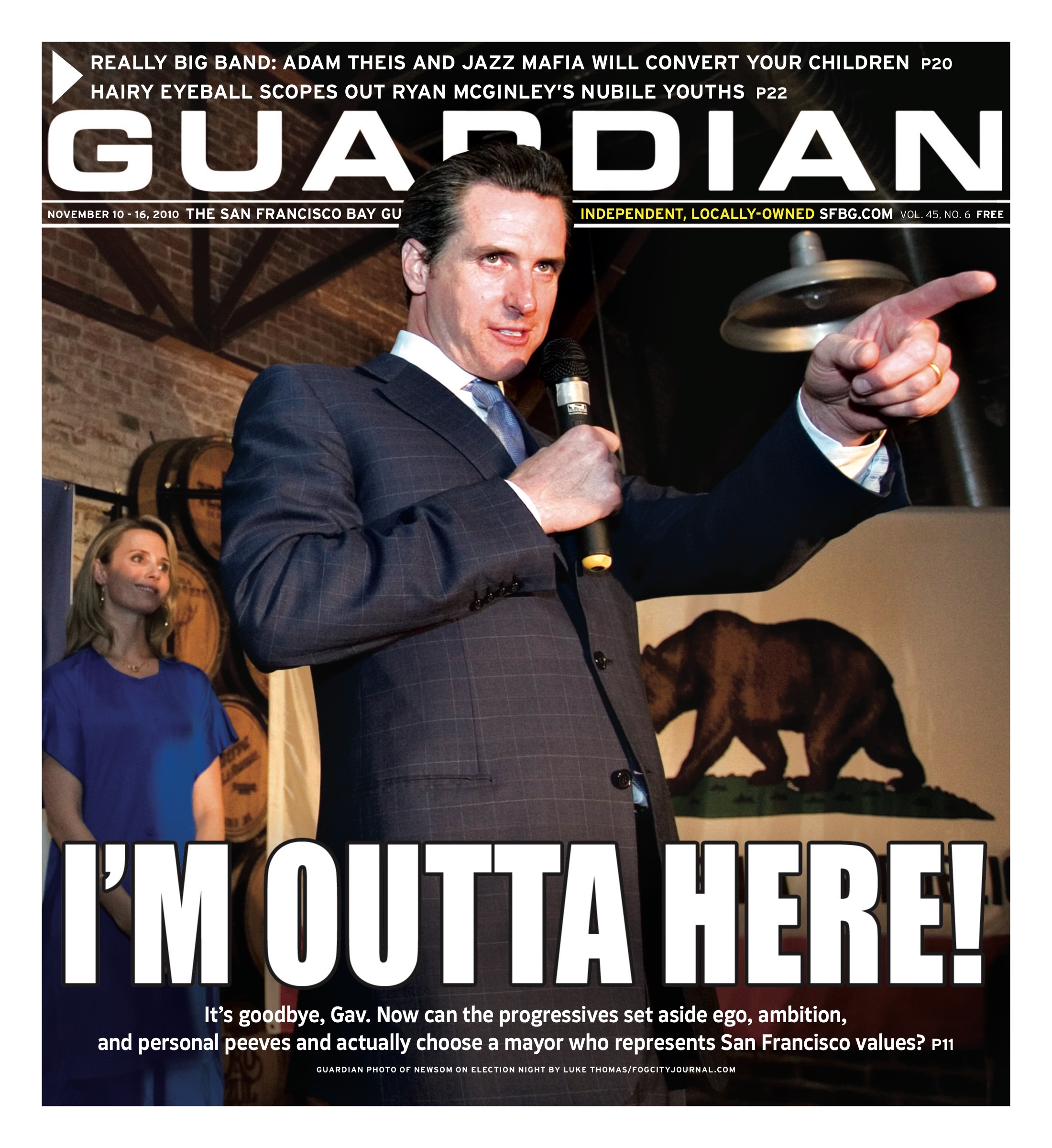
That’s exactly the way the deal that Mayor Gavin Newsom negotiated with Larry Ellison, the multibillionaire database mogul and yachtsman, is shaping up. A shadowy new corporation controlled by Ellison would get control of more than 30 acres of prime waterfront land worth hundreds of millions of dollars. The city could lose $42 million, and possibly as much as $128 million.

We don’t dispute the huge economic impact of holding an event that could attract more than 1 million visitors to the Bay Area. Those people will spend money in bars, restaurants, shops, and hotels. The waterfront improvements and increased tourism will create, according to economic reports, 8,840 jobs.

But as the Board of Supervisors budget analyst points out, those are not permanent, full-time jobs; much of the increased employment needs would be met by increased productivity (bartenders and waiters handling more customers than usual), overtime, and temporary jobs. And again: Most of the benefits will go to the private businesses in the tourist industry. The city’s increased tax revenue won’t be nearly enough to cover the expenses. Even if the America’s Cup group raises $32 million — and that’s not guaranteed in the deal — the city would still be down $10 million.

So in effect, San Francisco is preparing to spend $42 million of taxpayer money (and to forego as much as $86 million more by giving away waterfront land that could be developed) to benefit the sixth-richest person in the world, a new company he’s going to create and control, and the tourist-related businesses in town.

Oh, and to make it even juicier: the city is promising to seek state approval for Ellison to build condos or a hotel on the waterfront — something nobody else can legally do.

This doesn’t strike us as a terribly good deal.

It looks worse when you consider how the negotiations proceeded: The mayor and other city officials insisted they were scrambling to give Ellison everything he wanted to make sure that San Francisco beat out two other competitors. But as Rebecca Bowe reports on page 12, there were no other formal bids; Ellison’s team, based at the Golden Gate Yacht Club, was only negotiating with one city, San Francisco.

There are alternative proposals. The Telegraph Hill Dwellers Association wants to see the race complex moved from the Central Waterfront to the Northern Waterfront, and there may be ways of saving money. And Sup. Ross Mirkarimi points out that if Ellison wins the races in 2013 and comes back again the next time around, San Francisco could become what Newport, R.I., once was: a repeat host to an event that will bring more and more benefits as time goes on. That, however, involves a number of risks and variables that are far from certain at this point.

We’d like to know a lot more about what Ellison’s development plans are. We’d like to know who, exactly, will be running his new corporation that will get development rights for a couple of nice waterfront parcels.

But before the supervisors sign off on any deal, they need to set a bottom line: this can’t cost the city any net revenue. The San Francisco city treasury and local taxpayers shouldn’t be subsidizing an event created by and for the very wealthy.


Bodies and bacon

3

le.chicken.farmer@gmail.com

CHEAP EATS My new friends are young and queer and, most important, bikers, so I get to hang out at Benders where the burgers have whiskey and bits of bacon in them. Many of my new friends are vegetarian, which saves me from the awkwardness of having big fat crushes on them. My crushes are small and skinny and eat veggie burgers.

We’re starting a team in the girls football league. Remember, I wrote about them a few years back? I used to go to games on Sundays, and it was inspiring and scary. So scary that I tried to get on a team, but they never called me.

I can’t wait to play that team! It will be a made-for-TV movie made in heaven.

Probably, because I grew up in Ohio, I will have to start out at one of the so-called “skill positions,” such as running back or wide receiver, where I will bide my time making diving one-hand catches and long, slash-and-burn touchdown runs (yawn). But once I have earned everyone’s respect with my off-the-field poetry and appreciation for opera, maybe then they will move me to the offensive line.

Which is, as anyone who has ever played electric football knows, the most important position on the field.

Our coach, whom we call Coach, is such a consummate athlete that she doesn’t need to eat meat or rice. Fueled by air and eagerness, and maybe sometimes whiskey, she routinely wins bike races! And if anyone else enters, she comes in third. She lives in the Mission and owns at least three bikes that I know of, yet dates a motor vehicle. Coach jokes about never leaving the neighborhood, which is bullshit because I met her in a pond in Sonoma County. Interestingly, we were skinny dipping.

Or, I don’t know, maybe that’s not interesting.

How about if I described all my new friends’ bodies in full detail? This way everyone in the world will want to go skinny-dipping with me from now on! I’m kidding, of course. Respectfulness may not be my strong suit, let alone my swimsuit, but there are some lines I know better than to cross.

I’ll only describe Coach’s body — because our friendship I think can handle it, and anyway she’ll be on a three-week bike ride by the time this comes out, somewhere between here and San Luis Obispo, far far from newsstands.

How she does this shit — without fettuccini, I mean — I will never know. But the other day I ate Chinese food with Coach and Fiver, and I swear that all the rice on the table, and all but maybe one or two of the noodles wound up in me. The meat goes without saying.

The restaurant was Mission Chinese Food, which everyone has been singing about since I moved back to the neighborhood. It’s the restaurant inside the restaurant (Lung Shan) on Mission at 18th Street. You can believe what people are singing. It’s pretty special, despite its name.

I mean, where else can you get “thrice-cooked bacon” or “tingly lamb noodle soup”? And the bacon can be vegan, and still damn good, and the soup comes in a “numbing lamb broth.”

Which … they mean it. It’s a Szechwan spice, or herb, that literally numbs your mouth, and it was in the pickled beans and pickled pickles too. I don’t like that. I loved the flavor of everything I ate, even the fake bacon, but I’m sorry, I just don’t understand the point of numbness, except with respect to dentistry.

Folks, I want to feel what I eat. The not-at-all-fake lamb belly in the sizzling cumin lamb, for example, was a heavenly blend of crispy, tender, salty, peppery, game-flavored meat outside with an interior layer of soft, buttery, clouds of juicy joy.

Now I know what you’re thinking: No! There is no way that she’s that sexy.

I’m just saying. My job is to review restaurants. Your job, if you drive a car in California, is to go slow, watch the road, and see bicycles. Thanks for reading.

MISSION CHINESE FOOD

Mon.–Sat.: 11 a.m.–10:30 p.m.;

Sun.: noon–10 p.m.

(inside Lung Shan Restaurant);

2234 Mission, SF

(415) 826-2800

MC,V

Beer and wine

The high harvest

0

caitlin@sfbg.com

CULTURE “There was some sweet in there and some spice — it was like finger food, you could eat it like chips.” Larry Medders, 11-year resident of the Cecil Williams Glide Community House, is showing off the new rooftop garden, installed by the San Francisco Zen Center, on top of his nine-story supportive housing complex. He’s talking about his introduction to kale.

Medders cooks for himself in his studio apartment and used to stick to the same meals. He likes pasta and herbal teas, which he now brews with the mint and chamomile growing upstairs. An older man from the South endowed with a becoming drawl, he comes up once a day “to water and make sure everything’s in its place.” At the opening ceremony for the new green space, Medders tried the iron-rich greens for the first time. “Now I’m hooked,” he says.

If a once-bare Tenderloin rooftop seems like an incongruous spot to grow spinach, carrots, lemons, blueberries, parsley, onions, and tomatoes (a few of the nascent crops at the Community House), it shouldn’t. The buzzing streets below Medders’ feet offer sparse play areas for children, occasional safety risks, and few places to buy fresh veggies.

The city has tried to attract grocery stores to the area, so far unsuccessfully. “Grocery store operators and other retailers perceive that the area is unsafe and have expressed concerns about the safety of their employees and customers,” says Amy Cohen, director of neighborhood business development. TL residents largely must content themselves with corner stores for neighborhood shopping trips — a bummer for low-income seniors who live in the area.

For the residents of Community House’s 55 units — many dealing with life post-addiction and homelessness and all low income — the roof was already a place to gather. Building barbeques were common. But they knew the rooftop could be much more. “I just wanted to see more greenery, because it really is beautiful,” Medders says.

Enter the San Francisco Zen Center (www.sfzc.org). The center has operated in tandem with Muir Beach’s Green Gulch Farm since the early 1970s, providing a green dojo for meditation students and producing organic produce for restaurants such as Greens in Fort Mason. Says Zen Center vice president Susan O’Connell, “the color green alone is calming, the oxygen and the sense of being surrounded by life.” Gardening can aid in one’s quest for enlightenment, she says. “Zen takes a lot of different forms, it’s not just sitting down.”

Taking inspiration from a garden next door on top of Glide Church, the Zen Center pledged to fill Community House’s communal space with veggies. Now 15 planter boxes built by construction training nonprofit Youth Builds stand at different heights so children and residents in wheelchairs can work them. There are compost bins, shaded tables, chairs, a sink where cooking classes will be held once a local artist finishes painting a mural on the surrounding wall.

The roof’s design, plotted by ex-Green Gulch apprentice Jamie Morf, is laid out so residents can socialize (when Medders and I toured the roof, three children were eating a late lunch on one of the round tables) as well as sit and be thoughtful in nooks designed with peace in mind. “One of the most important precursors to being able to meditate is called taking refuge. But that’s really hard for people in the Tenderloin,” O’Connell says.

We are joined by Patty Rose and Arlinda Van Brunt, two other long-term residents who, with Medders, have stepped up to form the core gardening group. The three teach me about the challenges of running a plot that belongs to every one of the residents living in a nine-story building, including many who have never tended a kitchen garden before. The learning curve can include beginner’s missteps, like overpicking a hardy green onion plant that the trio laments.

“Look at this,” Van Brunt, an energetic woman whose father’s landscaping career left her with a severe aversion to seeing mistreated plants, is pointing at a vertical potato cage that doesn’t seem to be producing the same bushy green leafs as its neighbor. “They overwatered it! It’s our first year, we’re still finding a lot of things out.”

But these kinds of small setbacks show that the garden is being used — and often, they lead to new discoveries in and of themselves. The aforementioned rotting potato cage attracted the notice of the roof’s nightcrawlers, which must have scooted the 10 feet between their two massive bins to the cage, where they were discovered by Van Brunt.

The composting process in the worm bins is now one of her favorite parts of the garden. With the aid of Medders, she lifts the heavy metal lid of one of the bins and pulls aside the shredded newspaper piled on top of the composting material. Underneath, there is a teeming, squirming mass of pink worms. Van Brunt tenderly fingers a handful of them. “Look at that, are they really breeding in there? The nastier it is, the more they like it,” she says, exhibiting the satisfaction of a woman who has taken charge of her food system.

Ragazza

0

paulr@sfbg.com

DINE Ragazza is the younger sorella of Sharon Ardiana’s Gialina in Glen Park and, as is so often the case with siblings, the two restaurants do and do not resemble each other. Much of the differences are traceable to the respective neighborhoods. Glen Park (where we find Gialina) has in recent years become an annex of city’s baby belt, whose big, shiny buckle is just over the hill in Noe Valley. Kids like pizza, and Gialina has fine pizza, along with a selection of pastas, a roast or two, and a selection of contorni. Eating at Gialina is a little like waiting to check in for a flight on Southwest Airlines: the environment is lively, lighthearted, and swarming with small children. (Shouldn’t shrieking children be flown on their own airline, perhaps Screaming Babies Airways, with a big screaming baby head painted on the tail of every plane. But if they want to eat at Gialina, okay.)

Ragazza, by contrast, brings haute pizza culture to a vortex of the Haights (lower and upper) and NoPa that so far shows few signs of turning into kiddieland. The restaurant opened recently in a space that’s worn quite a few masks over the past decade; 10 years ago, it was a bistro called Metro Café, then became a fine Nepalese restaurant called Metro Kathmandu, reverted briefly to Metro Café, and now this.

There is nothing distinctive about the mid-block, storefront setting. The glowing red paint scheme of the Kathmandu era has been dialed back to milder earth tones. Otherwise, the look of the restaurant is little different. (In this aesthetic continuity, too, Ragazza differs from its older sibling, whose neglected space was heavily made over before its opening in early 2007.)

Ragazza’s menu is somewhat less pizza-pie-centric than Gialina’s. The new place offers a number of antipasti choices and small plates, along with several roasted items. (Gialina offers one antipasto and one roast.) You could make do very nicely here without having a pizza at all. But the bulk of the clientele seems to understand Ragazza to be a pizzeria at heart, and so the pies emerge from the kitchen in a steady stream, with at least one seeming to turn up on virtually every table. It’s like watching a quarterback spread the ball around to eight different receivers.

Although Ragazza doesn’t offer Gialina’s fabled chili-bomb pizza, the aptly named atomica, it does have a spicy pie of its own, the moto, fired with Calabrian chilis. (These have an aromatic fume all their own and haven’t really been given their due.) The amatriciana pizza ($16), festooned with a sunny-side-up egg, also offered a noticeable nasal kick. And even the pies that aren’t armed with chili heat tend to be bracingly fragrant — a potato version ($15), for instance, topped with red onion and gorgonzola cheese and liberally laced with thyme. No hint of starch overload here, despite the potentially smothering presence of the spud.

Herbal perfumes, along with chili heat, are a recurrent theme. We were particularly aware of the oregano breath wafting from a crock of corona beans ($6) simmered with oven-roasted tomatoes. Oregano is the quintessential pizza smell, but I’d never come across corona beans before and, from their pale chubbiness, would have guessed them to be cannellini or flageolet. They’d been cooked just right and still offered nominal tooth resistance before yielding an interior creaminess.

Purely creamy, on the other hand, was the soft polenta ($9). Polenta can be bland, and it is sometimes enlivened by sautéed mushrooms and gorgonzola — and given Ragazza’s obvious gusto for big flavors, I wouldn’t have been surprised to find those players here. Instead the boost came from a medallion of tomato mascarpone cream, freighted with basil and set atop the polenta like a rosette.

The real test of any restaurant’s food is whether it can hold your attention even if, say, Mark Zuckerberg is sitting at the next table, making moony eyes with a comely ragazza. Was that really Mark Zuckerberg at the next table, an actual person as opposed to the character in the movie The Social Network and the subject of far too much quacking in the key of same from The New York Times’ waddling line of op-ed ducks? We weren’t sure. Zuckerberg is said to live in the wilds of the Peninsula, sleeping on a mattress on the floor of some faceless apartment, just as Jerry Brown did during his first go-round as governor. Yet there he was — maybe — in Ragazza, having come for the girl and stayed for the (pizza) pie. He didn’t friend us, alas, alack. *


RAGAZZA

Dinner: Sun.–Thurs., 5–10 p.m.;

Fri.–Sat., 5–10:30 p.m.

311 Divisadero, SF

(415) 255-1133

www.ragazzasf.com

Beer and wine

AE/MC/V

Noisy

Wheelchair accesssible

Paradise Pizza & Pasta

0

paulr@sfbg.com

DINE The current pizza vogue reminds us that pizza is always in vogue. Pizza is timeless; have you ever met anyone, or even heard of anyone, who doesn’t like it? Yet the welter of new and ballyhooed pizzerias, in all their worthiness, can sometimes make us overlook the older, time-tested spots like Cathy and Sal Alioto’s Paradise Pizza and Pasta at the edge of West Portal.

Paradise has been “family owned and operated since 1989,” according to the menu card, and that’s a lot of restaurant years. (Restaurant years are even briefer and more brutal than dog years, which is saying something.) The restaurant also claims to offer the “best crust in the city.” This is a complex matter in which personal taste inevitably figures, as we shall see.

But first, the setting. It’s clean and modernish, with a semi-exhibition kitchen and bright green tabletops illuminated by a small spotlight in the ceiling — a mercy for those of us who were born before, oh, let’s say 1989, and now have difficulty reading menus by the dim light in so many of our more au courant restaurants. The interior design does contain one oddity, and that is the large fish composed of pizza pans mounted above the kitchen. It looks like some sort of Christian symbol while implying that the restaurant is some sort of seafood house, which it isn’t.

Which isn’t to say there aren’t glimpses of seafood on the menu. There are, including sautéed shrimp, fettuccine with shrimp, and shrimp on a pizza. Ahi even turns up occasionally, in tissue-thin flaps, almost like prosciutto — on a plate of bruschetta ($10.95) in the company of caramelized onions and juicy, late-season tomatoes.

The pizza crusts strike a nice balance between anorexic (in vogue at the moment) and foccacia-puffy, which I have always found to be bloating as well as flaccid when soggy. Paradise’s crusts are thin and crisp enough to hold a firm point (with good chewiness) while flashing some well-blistered puff along the edges.

As for toppings: they come pre-bundled for your convenience, under a variety of alluring names (all containing the word “paradise”), or you can put together your own consortium, starting from $10.95 and rising in increments from $1 to $1.50 per extra topping, depending on the size of the pizza. The ingredients, although not exotic, are fresh and vivid, the Italian sausage in particular, which skillfully balances the assertiveness of its two principal players, garlic and fennel seed.

The triumph of the pizza over the calzone in this country is something of a mystery to me. Does it have to do with the comparative ease of cutting up a pizza into slices for sharing, whereas a calzone is usually too big to be a finger or hand food? Paradise’s calzoni (all $12.95) are splendid to look at, each a sizable mezzaluna bulging with tasty goodies and with a subtle sheen, like that of a good (if blistered) brioche, on the outside. The salsiccia edition, filled with crumbled Italian sausage, chopped mushrooms, and mozzarella and ricotta cheeses, would pretty easily be enough for two people, especially if preceded by a starter course of some kind.

One such course we weren’t impressed with was a cream of artichoke soup ($4). The soup was certainly creamy — indeed, it seemed to be nothing but creamy, as though the kitchen had poured a carton of half and half into a pan and gently heated it. We did detect a faint hint of lemon in all that unorganized richness, but of the headlining ingredient … bupkes.

Paradise does a lively takeout business, which — as at every other such place I’ve ever been to — does slow the sit-down service. The servers themselves are attentive, knowledgeable, and prompt, but because the kitchen is busy baking pizzas for an unseen host as well as for the people sitting at tables, there can be a bit of a wait. But the beers and wines are moderately priced by city standards, and the crowd is spectation-worthy, a true neighborhood potpourri ranging from greatest-generation couples out for a simple dinner to packs of high school boys in their Giants regalia — black and orange, so reminiscent of Halloween. Halloween has just passed, but, like pizza, it never goes out of vogue in our town.

PARADISE PIZZA & PASTA

Daily from 4:30 p.m.

393 West Portal, SF

(415) 759-1155

www.paradisepizzaandpasta.com

Beer and wine

DC/DS/MC/V

Moderately noisy

Wheelchair accessible


FEAST: 5 sardinerias

0

When it comes to sardines, you have to think outside the earthquake shelter. On the flavor-o-meter, the tinned food of last resort (served on tarps with Saltines and stale water) bears no resemblance to its wild, fresh self. Even a humble sardine doesn’t deserve to be jammed in like a sardine, oil slicked, and left to age in the farthest reaches of the cupboard.

As several San Francisco eateries are ably proving, sardines, when treated with respect, are a tasty addition to the dining table. And healthy. And sustainable (they’re on the Monterey Bay Aquarium’s Super Green list!) Everyone from Andrew Weil to the Italian grandmother we all wish we had proclaim the virtues of the pungent silver herring. And with good reason: its tiny, 25-calorie body is packed with essential fatty acids, iron, protein, and calcium.

Let’s face it, the good people of Sardinia didn’t get their beautiful skin and convivial personalities from eating schweinebraten on spätzle. They’re all high on EFAs. Sardine EFAs.

PESCE

Pesce was one of the first and finest restaurants to introduce San Franciscans to the joys of sardine cuisine. The casual Russian Hill restaurant offers small plates of fish, pasta, and vegetables (and please, can we call it cicchetti, as they do, instead of “Italian tapas”?) patterned on the cooking of Venice. Pesce serves its sardines (all from Monterey Bay) simply — grilled, on a bed of mixed greens and pickled vegetables with a wedge of lemon. The result is tart, briny, and clean. If you’re still on the fence about sardines, Pesce is the place that will convert you to a bona fide a-fishyanado.

2227 Polk, SF. (415) 928-8025. www.pescesf.com

RAGAZZA

In Provence, shmear means aoli. They put it on meat; they put it on vegetables; they put it on fries; they put it on fish. Heck, they probably put it on ice cream. At Ragazza, the new relative of Glen Park’s Gialina Pizzeria on Divis, the chefs splat a huge dollop of it on its sardines. Apart from the aoli, Ragazza takes an Italianesque approach, stuffing them with an earthy mixture of breadcrumbs, olive oil, garlic, oregano, and onion and baking them in the restaurant’s gas-fired Wood Stone oven. The result is a crispy exterior over sardines that almost melt away on the fork. Add some mixed greens and a robust Italian red and you can practically feel your arteries unclogging. Oh, Ragazza also has pizza.

311 Divisadero, SF. (415) 255-1133. www.ragazzasf.com

NOPA

There’s locavore, 100-mile radius locavore, and there’s ultra-loca, five-mile radius locavore. While most of the city’s sardine-serving restaurants get their sardines from Monterey Bay, Nopa gets its from our very own San Francisco Bay. This is great news because our local sardines nearly went extinct in the 1950s. And — sardine cognoscenti consider the Pacific sardine as flavorful as those on the Sardinian coast (take that, overpriced cans from Norway). Speaking of flavorful, Nopa serves the little San Franciscans baked in its wood-fire oven with fingerling potatoes and frisee. The only thing missing is an order of flatbread, a gems salad, wine, and the burnt honey crème brulee.

560 Divisadero, SF. (415) 864-8643. www.nopasf.com

BARBACCO ENO TRATTORIA

You have to give Barbacco credit. Unlike most of the restaurants that have rediscovered the sardine, Barbacco doesn’t seem to be operating on the principle that sardines are an after-5 p.m.-only food. Although not exactly in the let’s-have-herrings-for-breakfast! camp, Barbacco at least believes that noon is a perfectly reasonable time to start the jonesing. The bustling, suits-heavy Financial District eatery is the creator of what may be the city’s only sardine sandwich (if this isn’t true, we’d like to know). Barbacco also breaks the don’t-get-too-weird-with-sardines taboo, pairing its sardines with a hefty piece of seared calamari. Not most people’s first choicem perhaps, but the two get along swimmingly, especially when served on an Acme torpedo roll and slathered with arugula and Barbacco’s housemade “roasted tomatoe condimento.”

220 California, SF. (415) 955-1919. www.barbaccosf.com

FERRY PLAZA SEAFOOD

When you don’t want others dictating what you can and can’t have on your sardines, duck into Ferry Plaza Seafood. This celebrated purveyor of all things aquatic sells wild, locally caught sardines (and by this we mean our our SF as well as Monterey bay) when available. “We love sardines,” said one salty staffer. “Especially the local ones. They just glisten.” They recommend bringing out the glisten by brushing with olive oil, salt, and pepper; grilling a few minutes on each side; and dressing with lemon. Call first for availability, these guys swim in and out of supply.

One Ferry Building, #11B, SF. (415) 274-2561. www.ferryplazaseafood.com 


Appetite: Director Jean-Luc Naret dishes on SF Michelin Guide 2011

0

Hubbub‘s the word in the food world this week surrounding the release of the 2011 Michelin Guide San Francisco, the restaurant ranking organization’s fifth Bay Area edition. The venerable food institution is entering into its 111th year, having gained a strong following in New York and San Francisco and anticipating an upcoming launch in Chicago (next time, LA).

Hot topics around the champagne cooler? Chez Panisse losing its star and The Restaurant at Meadowood achieving the rare feat of gaining three stars (making it and French Laundry the only Bay Area ‘straunts to make the grade). Read on for Michelin Jean Luc Naret’s reflections and a list of the Bay’s Michelin-honored restaurants for 2011.

I chatted with Naret — a charming Frenchman based in Paris who generally spends three weeks out of every month traveling around the globe — over espresso at the Slanted Door yesterday. On an idyllic October day, the nostalgic glow on the Bay was befitting — Naret is departing Michelin in January after seven years with the company, though he’ll stay tied to its future in a consulting role.

Naret describes San Francisco as “one of the finest culinary regions in the world… I love this place. It’s a region where I spend a lot of time”. He hints that he’s considering getting a place in Marin, maybe Tiburon, laughingly adding, “So, if anyone is listening?” 

What does the arbiter of taste see as our unique contribution in the food realm? Naret names categories where the Bay Area excels: technique (“You don’t burn anything anymore” he jokes, I think) and produce. He claims the general culinary mindset changed here in large part due to the “willingness of chefs” to grow or source every kind of produce locally, not to mention the development of talent that was necessary “to make it perfect”. 

“Fifteen years ago in France we never heard the word ‘organic'”, Naret says. “That came from here. [The Bay Area] has a big influence — similar to Japan — where seasonality is also very important”. 

Successfully launching Michelin in America was one of Naret’s key accomplishment during his years as director, so what does he see as the US’ greatest culinary strength? In one word: “Diversity”. He mentions the myriad of cuisines available. “You can get anything in New York,” he says, adding that the breadth of food culture in our great cities enriches the dining world.  

Looking back on the last seven years, Naret shared that his biggest surprise came when he joined Michelin from the outside, one of only six directors to do so since 1900. He pushed boundaries in the company by asking questions like: “Why not go to the States? To Asia?” 

He’s delighted to see that seven years later — he planned on acting in the post for no longer than five — he’s managed to leave a legacy that feels complete. “Everything we said we’d do, we’ve done. We’ve reached new territories.” He says the future of Michelin includes the ranking system’s continued expansion to other cities — along with growth in technology output like the global spread of Michelin iPhone apps already common in Europe. 

All signs show that the world is ready. Heads of state and people from Michelin-less countries — Singapore among them — have contacted Naret him to ask when their cities will be getting their own guides. In Tokyo (which now stands as the city with the most three star restaurants in the world) the area’s first Michelin guide sold 150,000 copies in a shocking 24 hours. It would appear that the massive influence Michelin has long held in Europe has a firm grasp on epicures around the world. 

Naret keeps mum about the mysterious business venture he’ll launch promptly after leaving Michelin after a mere two weeks vacation. On this October day, he’s in reflection mode: “I’m very happy to leave a beautiful legacy”. 

The 2011 SF Michelin Guide officially releases today. Michelin Guide New York 2011 debuted Oct. 6 and the very first Chicago guide will be released November 17. Subscribe to Virgina’s twice monthly newsletter, The Perfect Spot.

*****

Bay Area restaurants awarded coveted Michelin stars in its 2011 edition

(N = new to this year’s guide)


THREE STARS: Exceptional cuisine, worth a special journey

The French Laundry

The Restaurant at Meadowood (N)


TWO STARS: Excellent cuisine, worth a detour

Coi

Cyrus

Manresa


ONE STAR: A very good restaurant in its category

Acquerello

Alexander’s Steakhouse (N)

Ame

Applewood (N)

Auberge de Soleil

Aziza

Baumé (N)

Bouchon

Boulevard

Campton Place (N)

Chez TJ

Commis

The Dining Room at the Ritz Carlton

Dio Deka (N)

étoile

Farmhouse Inn & Restaurant

Fleur de Lys

Frances (N)

Gary Danko

La Folie

La Toque

Luce

Madera (N)

Madrona Manor

Masa’s

Mirepoix (N)

Murray Circle

One Market

Plumed Horse

Quince

Redd

Saison (N)

Santé

Solbar

Spruce (N)

Terra

Ubuntu

The Village Pub

Wakuriya (N)


Whiskeyfest 2010 highlights, part two

0

Earlier on sfbg.com, Virginia Miller turned WhiskyFest into Whisky Week, meeting with seven different distillers who’d come to attend the Fest from such far-flung booze berths as Kentucky and Scotland. Here’s part one of her scotch-heavy Whisky Week highlights. Read on for part two: conversations with bourbon and rye distillers.

10/8 COFFEE WITH JIMMY RUSSELL OF WILD TURKEY – The morning before WhiskyFest I learned about a company that’s been a Kentucky mainstay since 1855, and met with its master-distiller since 1954. Jimmy Russell comes from a family of distillers: grandad, dad — who worked for him at Wild Turkey in the early years — and now Russell is distilling with his son, Eddie. Jimmy could not be more charming. An older Southern gentleman, he’s soft-spoken, with an adorable sense of humor that I discovered as we chatted over coffee.

Russell makes Wild Turkey bourbons and ryes “the old-fashioned way” and says he doesn’t even tell his son all of his distilling secrets. They use barrels charred four times and made of white oak mainly from Missouri, Kentucky and the Ozarks of Arkansas. Their basic bourbons are a blend of six, eight and ten year-aged, with a lower proof than some bourbons, generally 108-110 proof. He explains lower proof is actually more costly as there is more water added to dilute higher proof bourbons. 

The distiller’s yarns about his town of Lawrenceburg, KY are fascinating, particularly because it’s in a mostly dry county where no drinks are allowed in restaurants and bars do not exist. “We’re not dry, we’re moist”, he says, as there are a few limited options to purchase drink in the area. It was only a couple years ago they secured a souvenir liquor license, one of many complicated hoops to jump through to in order to allow tastings in their actual distillery. Russell says he adheres to the Southern Baptist tradition that one only drinks hard liquor for medicinal purposes. He qualifies in a gentle, Southern drawl, “I keep a cough pretty much most of the time”.

10/7 SIPPIN’ WHEATED BOURBON WITH PARKER BEAM – Amidst the annoying happy hour din at Bloodhound last Thursday night, distilling legend Parker Beam was hanging out with the Heaven Hill crew and a few of their whiskeys. They pulled out a bottle of brand new Parker’s Heritage Wheated Bourbon, an earthy, wood-laced wheat beauty whose mix blends in corn and malted barley.

Parker raised a glass as we attempted to chat above the din. Hearing took some effort as the delightful Parker speaks in a slow, Southern drawl that lulls one into a real enjoyment of the moment. His passion for distilling shines in his calm demeanor. He’s distilled for decades, both with father, Earl and son, Craig. And yes, he’s related to “that” Beam. His grandfather and namesake, Park Beam’s, brother was the storied Jim Beam (aka James Beauregard Beam). Parker is part of a royal distilling heritage. I asked if his son had any children who might next enter the fray. “My son has five daughters, so no,” he surmised. “But who knows? Maybe we’ll have the first female bourbon distiller someday.” It wouldn’t be the first noteworthy accomplishment in the Beam family’s rich history.

10/10 BACON BRUNCH WITH KEITH KERKHOFF OF TEMPLETON RYE – Setting: Reza Esmaili’s Long Bar. Food: delectable spread from chef Erik Hopfinger. Heaping bacon piles of Eden Farms Berkshire Pork — And don’t forget the rye. Templeton Rye from Templeton, Iowa, to be exact. The brunch was in celebration of this delightful rye — previously restricted for sale to Illinois and Iowa — finally becoming available in San Francisco.

Templeton is so small batch that you won’t find it in any Bay Area shops outside of SF, where our usual suspects, like Cask, Jug Shop, and K&L all stock the brand. Assistant master-distiller Keith Kerkhoff (I wrote about a Whiskies of the World seminar with their president, Scott Bush earlier this year) and brand manager Michael Killmer hosted us for a relaxed, festive brunch where the coffees were spiked with the rye and topped with Fernet whipped cream. Welcome to SF, Templeton.

Waxing poetic with Maker’s Mark at The Alembic

10/10 DIPPING WAX WITH KEVIN SMITH OF MAKER’S MARK — At The Alembic, Kevin Smith, the master distiller of Maker’s Mark, spent a couple hours with a small group, tasting through various ages of the bourbon from white dog to pours that were years older than the finished Maker’s product, so that we could get an idea of when a spirit is ready. From a somewhat neutral base cut down to 90 proof, the bourbon gained most of its flavor from barrel aging, and we sampled a woody 12-year version that came off astringent and tannic, though not unpleasant. Smith used the two to highlight their choice of the smoother, rounder balance of the fully matured final product which is aged roughly years.

We finished with Maker’s 46, their first new product in 50 years. I’ve had it a few times and it makes sense Kevin said the inspiration was rye whiskey with advanced spicing, toasty oak and that “cinnamon bite.” It’s certainly my preferred Makers. Thanks to The Alembic for serving us a gorgeous, bright Maker’s 46 cocktail: sweet vermouth, absinthe, maraschino and a mint garnish. But the session wasn’t over until we had hand-dipped glasses in Maker’s signature red wax, a tradition established from the chemist wife of Bill Samuels, Sr. (Maker’s original owner). She loved brandy and wanted the bottle shape and wax to imbue Maker’s with a brandy elegance.

Interestingly, California just surpassed Kentucky as Maker’s number one-selling US market. Raise a glass, shall we, to the pioneers and tastemakers who brought love of spirits to share during this past whirlwind week of whisky.

Subscribe to Virgina’s twice monthly newsletter, The Perfect Spot

East Bay endorsements 2010

31

BART BOARD DISTRICT 4

ROBERT RABURN

Incumbent Carole Ward Allen has been a disappointment, part of the moribund BART establishment that wastes money on pointless extensions, ignores urban cores, and can’t control its own police force. Robert Raburn, a bicycle activist with a PhD in transportation and urban geography, would be a great replacement. If he’s elected, and Bert Hill wins in San Francisco, BART will have two more progressive transit activists to join Tom Radulovich. Vote for Raburn.


BERKELEY CITY AUDITOR

ANN-MARIE HOGAN

Hogan’s running unopposed and we see no reason not to support her for another term.


BERKELEY CITY COUNCIL

DISTRICT 1

LINDA MAIO

Maio in the past has had a decent progressive track record, but lately she’s been something of a call-up vote for Mayor Tom Bates. We’re not thrilled with her more recent positions years (against raising condo conversion fees and for new high-rises downtown), but she has no strong credible opponents. Green Party Jasper Kingeter has never run for elective office before and needs more seasoning.

DISTRICT 4

JESSE ARREGUIN

Arreguin and Kriss Worthington hold down the progressive wing on the City Council. He’s pushed the Berkeley police to stop impounding the cars of undocumented immigrants and is a foe of the development-at-all costs mentality of the mayor.

DISTRICT 7

KRISS WORTHINGTON

It’s disappointing that Mayor Tom Bates and his allies are trying to get rid of Worthington, who by our estimation is the best, hardest-working, and most progressive member of the City Council. He’s been willing to stand up to the mayor when he’s wrong — and has managed to force developers to build more affordable housing. He’s against the mayor’s downtown plan, but sees a way forward to a compromise that includes all the positive elements without big high-rises. Vote for Worthington.

DISTRICT 8

STEWART JONES

Gordon Wozniak, the incumbent, is the most conservative member of the City Council and has been a bad vote on almost everything. He’s going to be tough to beat in this district, but we’re giving the nod to Jones, a teacher, Green Party member, and neighborhood activist. He lacks experience, but almost anyone would be better than Wozniak.


BERKELEY RENT BOARD

ASA DODWORTH

LISA STEPHENS

JESSE TOWNLEY

PAM WEBSTER

DAVE BLAKE

KATHERINE HARR

There’s a six-person tenant slate running, with endorsements from Worthington, Arreguin, and other progressive leaders. The members couldn’t find an easy mnemonic, so they’ve used the last letters of their last names, which, in the right order, add up to SHERRY. We’ve listed them in the order they’ll appear on the ballot.


OAKLAND CITY AUDITOR

COURTNEY RUBY

Ruby’s moved the office forward a bit, and we don’t see any argument to replace her.


OAKLAND MAYOR

1. REBECCA KAPLAN

2. JEAN QUAN

The danger in this race is Don Perata, the former state Senate president, longtime power broker, and friend of developers who has, at the very least, a checkered ethical record that led at one point to a five-year federal corruption investigation (the investigation ended with no charges filed). Perata wants to use the mayor’s office to continue his role as a regional kingpin, and he has the support of Pacific Gas and Electric Co. and the big developers. No thanks.

Two strong progressive challengers are taking him on. Our first choice is Rebecca Kaplan, an at-large City Council member who is full of great, innovative ideas for Oakland. She wants to enforce an Oakland-first hiring law, work on transit-oriented development, and encourage small businesses that can attract some of the $2 billion a year Oakland loses in retail sales from local residents who shop out of town.

Kaplan told us she thinks that if Proposition 19 passes and local government has the right to regulate legal marijuana, Oakland is perfectly situated to take advantage of the new law. By combining pot sales and possibly on-site consumption with new restaurants, bike lanes, and street-level amenities, the city could revitalize neighborhoods and bring in significant new tax revenue.

She’s a big bicycle advocate, would consider a progressive city income tax, and is a strong supporter of public power. She also has a practical sense of how to solve problems.

Jean Quan has been active in Oakland politics for decades. She served 12 years on the school board, eight on the City Council, and has the experience, skills, and vision to run the city. She’s also almost tied in the polls with Perata, despite being outspent dramatically (and being the subject of some nasty, inaccurate Perata hit pieces). She told us she wants to be a cheerleader for the public schools, to work with local businesses, expand the high school internship program, and add city wrap-around services to public schools. She’s had a long, impressive record on environmental issues (she worked with San Francisco on a plastic bag ban and wrote Oakland’s Styrofoam ban). She recognizes that much of the city’s budget problem comes from the police department and police pensions. But she’s a little less aggressive than Kaplan about raising new revenue, and while she fully supports Prop. 19 and the Oakland plan for allowing commercial marijuana operations, she is, in her own words, “relatively conservative” on how far Oakland should go to allow sales and use in the city.

Kaplan’s got more of the cutting-edge progressive vision. Quan’s got more experience and a longer track record. They’re the two choices to beat Perata and save Oakland’s future, and we’re happy that ranked-choice voting allows us to endorse them both.


OAKLAND CITY COUNCIL

DISTRICT 2

JENNIFER PAE

Patricia Kernighan is among the most conservative votes on the council. She’s also representing a wealthy, conservative hills district and will be hard to beat. We’re endorsing Jennifer Pae, community outreach director for the East Bay Voter Education Consortium. She has the backing of progressives like Supervisor Keith Carson and Berkeley City Council Member Kriss Worthington (as well as the Alameda County Green Party). She’s a long shot, but better than the incumbent.

DISTRICT 4

DANIEL SWAFFORD

The front-runners in this race are probably Libby Schaaf, a former aide to Ignacio de la Fuente; Melanie Shelby, a small business owner; and Daniel Swafford, a business consultant. Schaaf is too close to her old boss. We liked Shelby, but she’s awfully vague on solutions to Oakland’s problems — and she voted for Prop. 8. She now says her position on same-sex marriage is “evolving,” and she supports equal rights for all couples. But that’s an awfully big issue to have taken an awfully wrong stand on just two years ago.

This leaves Swafford, a neighborhood activist who grew up in Oakland and was City Council Member Jean Quan’s appointee to the Neighborhood Crime Prevention Council and is a strong advocate of community policing. He gets the nod.

DISTRICT 6

JOSE DORADO

Conventional wisdom says Desley Brooks is almost certain to get reelected to this seat. Her only competition comes from Nancy Sidebotham, whose platform is all cops all the time, and Jose Dorado, a bookkeeper with little political experience. Brooks is a fierce advocate for her district and has been tough on banks and good on pushing local hiring, but has too many ethical problems to merit our endorsement. She has never denied that she kept her boyfriend’s daughter on as a $5,000-a-month aide while the young woman was a full-time student at Syracuse University in New York. When San Francisco Chronicle columnist Chip Johnson challenged some of her ethical lapses, she sued him for libel (the case was dismissed).

Dorado is a neighborhood activist who is running a grassroots campaign and, while he needs more experience, he’s raising good issues (like public financing of elections). And unlike Sidebotham, he’s supporting the revenue measures on the ballot.


East Bay Ballot Measures

BERKELEY MEASURE H

SCHOOL FACILITIES TAX

YES

The East Bay cities have done a much better job than San Francisco at using parcel taxes — a poor substitute for property taxes but still a relatively progressive form of revenue — to support schools and other public services. Measure H would continue an existing tax on residential and commercial buildings — 6.3 cents per square foot on residences and 9.4 cents on businesses — to pay for maintenance on public school buildings. Vote yes.


BERKELEY MEASURE I

SCHOOL BONDS

YES

Measure I is a $210 million bond act to expand and upgrade the public schools. Vote yes.


BERKELEY MEASURE T

CANNABIS PERMITS

YES

Measure T is on the ballot as part of Berkeley’s effort to implement Prop. 19, the statewide pot-legalization measure. Berkeley and Oakland are both ahead of San Francisco in planning for legal marijuana. Prop. T would allow six medical cannabis clinics with cultivation permits, but restrict future industrial pot uses to industrial districts. Vote yes.


OAKLAND MEASURE L

SCHOOL TAX

YES

Another parcel tax for schools, this one $195 a year for 10 years, essentially to offset state cuts. There’s an exemption for low-income taxpayers. Vote yes.


OAKLAND MEASURE V

CANNABIS TAXES

YES

If Oakland goes ahead with its plans to allow large-scale cultivation and passes this tax hike on pot sales (to $50 per $1,000 of gross revenue for medical pot and $100 per $1,000 for recreational pot) the city could take in as much as $30 million a year — almost enough to offset the budget deficit. Vote yes.


OAKLAND MEASURE W

PHONE LINE TAX

YES

Another creative — if imperfect — way to raise some revenue, Measure W puts a modest $1.99 a month tax on phone lines to raise money for the general fund. Vote yes.


OAKLAND MEASURE X

POLICE PARCEL TAX

NO

We typically support any reasonable tax on property to pay for public services, but we can’t back this one. Measure X would impose a fairly high ($360 a year) parcel tax on single-family homes — entirely to pay for cops. The police union has been intractable, refusing to give back any of its generous pension benefits to help solve the budget deficit. We can’t see raising taxes for that department alone when so much of Oakland is hurting for money.


OAKLAND MEASURE BB

POLICE FUNDING

YES

Measure BB would allow Oakland to continue collecting violence-prevention money under a previous ballot measure even if the police department falls below a mandated staffing level. It would give the City Council more flexibility in addressing public safety. Vote yes.


>>VIEW OUR COMPLETE ENDORSEMENTS FOR THE 2010 ELECTION

On the cheap listings

0

On the Cheap listings are compiled by Paula Connelly. Submit items for the listings at listings@sfbg.com.

WEDNESDAY 13

“How to Cook Like a Scientist” Bazaar Café, 5927 California, SF; (415) 831-5620. 7pm, free. Meet Jeff Potter, author of Cooking for Geeks, who combines cooking with Mythbusters to create a food-as-science, cooking experience for those who like to know how things work.

THURSDAY 14

Sparring with Beatnik Ghosts Beat Museum, 540 Broadway, SF; (415) 399-9626. 7pm, free. This ongoing multimedia poetry series returns to the Beat Museum with host Daniel Yaryan and featuring readings by David Meltzer, San Francisco Poet & Beat Icon, Ellyn Maybe & Her Band, Steve Arntson, Jerry Ferraz, Martin Hickle, Richard Loranger, Whitman McGowan, Ginger Murray, Julie Rogers, Margery Snyder, and Chris Vannoy.

FRIDAY 15

Mark I. Chester Benefit Mark I. Chester Studio, 1229 Folsom, SF; (415) 621-6294. 7pm; free, donations encouraged. Celebrate Mark I. Chester’s 60th birthday while helping to raise funds for a new book. View Chester’s current exhibit, “Doing Time on Folsom St: a 30 year retrospective of fine art gay radical sex photography” and enjoy readings and performances by Carol Queen, Tom Orr, Seth Eisen and Jesse Hewitt and more. Sponsored by the Center for Sex and Culture.

“Writing Our Word, Speaking Our Minds, Telling Out Stories” San Francisco Main Library, Latino/Hispanic Community Meeting Room, 100 Larkin, SF; (415) 557-4400. 6pm, free. Featuring readings by and about lesbians with disabilities with Elana Dykewomon, Barbara Ruth, Teya Schaffer, Dominika Bednarska, and the Mothertongue Feminist Theater Collective.

SATURDAY 16

“The Classics” 1:AM Gallery, 1000 Howard, SF; (415) 861-5089. 5:30pm, free. Attend the closing reception for this exhibit, curated by Nate1, that brings together original vintage work from the artists that put San Francisco on the graffiti map and defined Bay Area graffiti style. Guest speaker Spie will give an informative tour of the exhibit on Bay Area graffiti.

Halloween Bazaar Modern Eden Gallery, 403 Francisco, SF; (415) 420-2898. 7pm, free. End your day of touring open studios in North Beach, as part of SF Open Studios’ weekend two, at this spooky-themed trunk show featuring wares by local artists JuJu by Sarah, Marya Zoya Taxidermy Courture, Blackbird Bazaar, Squid Rose designs, and more plus pumpkin carving and painting, music, drinks, and treats. Costumes encouraged.

Potrero Hill Festival 20th street between Missouri and Wisconsin, SF; www.potrerofestival.com. 11am-4pm, free. Soak up the best of Potrero Hill at this street fair with a view featuring local merchants and residents selling their wares, arts, and crafts, two stages with live music, food from Potrero Hill restaurateurs, information booths, and kids activities including a bouncy house, petting zoo, pony rides, and performances.

Taste of Fillmore Fillmore between Post and Jackson, SF; www.tasteoffillmore.com. 1pm-6pm; free admission, $20 for wrist band. Buy a wrist band and enjoy food and wine tastings at boutiques and restaurants, or just walk around and check out some live jazz, walk through home décor scenes installed on the sidewalks, watch cooking demonstrations, fashion shows, and more.

Trolley Dances Meet at the Harvey Milk Center for Recreational Arts at Duboce Park, Scott at Duboce, SF; www.epiphanydance.org. 11am-2:45pm, tours leave every 45 min.; free with MUNI fare. Get out of the theater and into the streets with traveling performances by Epiphany Productions SDT, Joe Goode Performance Group, Sara Shelton Mann, and more as they take you from Duboce Park to the SF Botanical Garden in Golden Gate Park for several unique performance locations.

“The Wild Kitchen” Omnivore Books on Food, 3885a Cesar Chavez, SF; (415) 282-4712. 3pm, free. Hear authors Connie Green and Sara P. Scott discuss their book, The Wild Kitchen: Seasonal Foraged Foods and Recipes, and the increasing popularity of wild delicacies. Green sells her gathered goods across the country to Napa Valley’s finest chefs, so before you buy that expensive meal, consider the free buffet that is California.

Writers with Drinks Make Out Room, 3225 22nd St., SF; (415) 647-2888. 7:30pm, $5-$10 sliding scale. This installment of the monthly spoken word variety show features Marcia Clark, Ken Scholes, Jamie Freveletti, Stephen O’Connor, Kirya Traber and Daniel Allen Cox. Proceeds to benefit the Center for Sex and Culture.

Yerba Buena Fair Yerba Buena Gardens, Mission between 3rd and 4th St., SF; (415) 644-0728. 11am-3pm, free. Celebrate the Yerba Buena neighborhood at the fair featuring live music, dancing, acrobats, neighborhood food vendors, street food vendors, art and history walks, prizes and giveaways, kids activities, and more.

SUNDAY 17

Capsule Hayes Valley Park, Octavia at Hayes, SF; www.capsulesf.com. 11am-6pm, free. Enjoy this fashion design open air market and community party where you can browse locally made clothing, upcycled jewelry and accessories, steampunk-inspired wear, graphic tees, kids clothes, and designer housewares while listening to live music by members of the Jazz Mafia, Brent Bishop and the Part Poopers, and more.

Fiesta on the Hill Cortland between Bocana and Folsom, SF; (415) 206-2140. 10am-6pm, free. Join your friends and neighbors for the 22nd annual Fiesta to benefit the Bernal Heights Neighborhood center, an organization that works to maintain the ethnic, cultural, and economic diversity of Bernal Heights. This alcohol free family event to feature a petting zoo, pony rides, a pumpkin patch, non-profit booths, live music, food vendors and more.


Waiting to inhale

0

news@sfbg.com

Much of the controversy around Proposition 19, which would legalize marijuana in California for even nonmedical uses, involves speculation about what comes next. Hash bars on Market Street? Packs of joints next to the cigarettes in Mission District bodegas? Bags of green buds available with the bongs for sale on Haight Street? They are questions that have yet to get serious consideration in the city where the medical marijuana movement was launched.

The measure would give local governments almost complete control over how to regulate recreational-use cannabis sales in much the same way that cities set their own standards for medical marijuana dispensaries, a realm in which San Francisco has shown real leadership and created a well-functioning, successful, and legitimate industry (see “Marijuana goes mainstream,” Jan. 27).

But San Franciscans have been slow to prepare for the post-Prop. 19 world, with some other Bay Area cities leaving it in the dust on these issues. Oakland City Council Member Rebecca Kaplan, who is now running for mayor, not only spearheaded that city’s ballot measures on taxing recreational pot sales and permitting large scale growing operations, she’s actively talking using the Amsterdam model to revitalize the city’s downtown business district.

“[Hash bars] absolutely potentially would be part of the mix,” Kaplan told us when we asked about the issue during her mayoral endorsement interview, seeing it as part of a multipronged economic development strategy.

When asked if Oakland should have places where people could go to blaze legally, something Oakland doesn’t allow in its medical marijuana dispensaries, Kaplan said, “Yes. Oh yeah, we’re definitely gonna have those. The only question is gonna be whether the consumption facilities are separate from [those for] sales,” or if they’re under the same roof.

Kaplan thinks this will be part of the winning strategy that takes cannabis use off street corners while acknowledging its appeal to visitors and “synergy with the restaurants. When I talk about wanting to replicate the Amsterdam model in Oakland … it doesn’t just mean that you have … a regulated cannabis facility. You also have restaurants, shops, pedestrian safety, nice lighting, patio dining, musicians, artists.”

She points out that although an Oakland-regulated cannabis industry may use current alcohol regulation as a template, the two substances would not be sold alongside each other. “Frankly, ABC [California Department of Alcoholic Beverage Control) will freak out.” That means, at least in Oakland, you won’t be able to purchase cannabis at bars, liquor, or grocery stores.

On this side of the bay, Sup. Ross Mirkarimi — who wrote the regulations on the city’s medical marijuana facilities — says it is “extremely premature” to contemplate Amsterdam-esque hash bars. “That would have to occur within a strong regulatory framework,” he said, one the Board of Supervisors has yet to envision. San Francisco attorney David Owen, who has helped advise some medical marijuana purveyors, said some dispensaries currently allow on-site medication, and San Francisco might legislate to extend the practice to bars.

Meanwhile other California cities such as Berkeley and Oakland are anticipating Prop. 19’s passage much more proactively. Berkeley’s Measure S would tax cannabis businesses, applying different rates to for profit med-use cannabis businesses, nonprofit med-use businesses, and rec-use businesses (which won’t exist unless Prop 19 passes). The measure would secure medical-use cannabis for low-income patients and tighten regulations on Berkeley’s current med-use dispensaries and cultivators regardless of how Prop. 19 fares. There’s also a Measure T on the ballot that would establish a new committee that, in the event that Prop. 19 passes, would advise city officials on how to implement it.

Berkeley City Council Member Kriss Worthington said planning for the post-Prop. 19 world is smart to “synchronize a forward movement on the state and local level” and to “hit the ground running,” a sentiment that Kaplan also voiced for Oakland and one shared by other cities.

Stockton’s Measure I would tax rec-use cannabis businesses at a higher rate than med-use businesses. Sacramento’s Measure C is similar, containing a provision for a rec-use tax range if Prop. 19 passes. Richmond’s Measure V would tax 5 percent of gross sales of cannabis, and could apply to rec-use businesses too. Oakland’s Measure V would add a 5 percent tax to other taxes already on med-use cannabis, and put a 10 percent sales tax on rec-use cannabis. Measure H, on Rancho Cordova’s ballot, would tax personal cultivation at a higher tax on any square footage beyond the 25 square feet that Prop 19 specifies. Long Beach’s Measure B would establish a business license tax on the city’s potential recreational cannabis businesses. Even Albany, which has no dispensaries, would tax for-profit and nonprofit dispensaries differently through its Measure Q.

But Mirkarimi said he would like to tax marijuana cultivation, and has even voiced support for med-use cannabis dispensaries working directly with SF General Hospital to provide to patients, “thereby segregating a special use” and keeping cannabis prices low or nonexistent based on patient needs.

So if Prop. 19 passes, where will San Franciscans be able to purchase rec-use cannabis? Current med-use dispensaries may be a logical choice. “We already have the infrastructure,” said SF dispensary Medithrive co-owner Daniel Bornstein.

Whereas alcohol purveyors are accustomed to providing one barrier to purchase (when they card the buyer), dispensaries such as Medithrive offer many. “We already card and only accept patronage from those with a valid doctor recommendation. We also require he/she become a member of the dispensary and limit to one visit per day.”

When he contemplates whether Medithrive might provide rec-use cannabis in the future, Bornstein says “If [the city adopts] a responsible statute that’s fair, we would welcome the opportunity to offer a broadened service to more people.”

That avenue troubles Mirkarimi. “I don’t know how that works,” he said. Rec-use cannabis purchase would require no doctor’s notes and could occur within a for-profit business model. How would dispensaries legally reconcile making money under their nonprofit status? “I don’t want to put that burden on them,” Mirkarimi said.

Prop. 19 offers other potential implementation conundrums. For example, the measure will only give local governments the option to legalize the limited cultivation/sale of cannabis. Legalization won’t be compulsory. Therefore, it is likely that a post-Prop. 19-approved California will become a patchwork of alternating “dry” and “wet” municipalities.

So let’s say you’re on a road trip and you pass through many cities that all treat cannabis differently. Bornstein and his Medithrive partner Misha Breyburg worry about such a “patchwork of legal complexity.” But Prop. 19 provides for the legal transport of cannabis through cities that prohibit its sale, and California Assemblymember Tom Ammiano has already proposed legislation to smooth out the rough spots in Prop. 19 and answer open questions.

So for now, everyone is just waiting to see what state voters do.


Appetite: 3 recent food books pique our palates

0

These three books (one factual journey, one memoir, one cookbook) have two things in common: they’re all new this year and centered around food.

TWAIN’S FEAST by Andrew Beahrs — Andrew Beahrs, an East Bay local, displays his affection for the great Mark Twain in this thoroughly researched book. Twain’s Feast explores the history of foods Twain waxed eloquent about that are either gone entirely or slowly making their way back into the American landscape.  Experiencing food and coffee in his European travels “as tasteless as paper”, Twain found American cooking of his time “generous”, “genuine”, “real”. Of course, the prairie hens he grew up with, fresh possum and raccoon, New Orleans’ sheep-head and croakers, and the “heaven on the half shell” of San Francisco’s own oysters and mussels, are largely extinct or rare nowadays.

The book is, yes, a poignant ode to the pre-mass-produced, homogenized, dangerously grown American “food” we now know. It’s also a hopeful challenge to the reader, worded gently in the epilogue: “… choices about what we eat help to determine which American landscapes survive and thrive.”

There are many worthy stories here, both for the Twain aficionado and food historian. What I came away with, besides a reminder to support the craftswomen and men making food and growing animals with care (which we’re heavily blessed with in the Bay Area), was Twain’s insataible passion for robust flavor, a hunger to drink life to the dregs. I relate to the way he eats… and heartily writes about it.

As Beahrs says, “… Twain’s love for a dish was inseparable from his love of life.” Amen.

HUNGRY TOWN by Tom Fitzmorris — Make no bones about it, I have a mad love affair with New Orleans, a city you hear me go on about often enough. Naturally, I ate up (no pun intended) Tom Fitzmorris‘ new Hungry Town, a leading Nola restaurant reviewer both in print and on the radio for decades.

He knows the city’s food scene intimately: its history, key players, essential recipes (included in the book), and the post-Katrina struggle that has brought the culinary magic of the ultimate Southern city back to even greater heights (and more restaurants) than before the storm. His post-Katrina assessments are honest insights into just how torn apart families and businesses were, including his own. But he unabashedly claims: “Food Saves New Orleans”.

I value his commitment to Creole and Cajun as the “default” styles of cooking in New Orleans, essential to the city’s future. He states: “The genius of New Orleans cooking is not that we cook better than anyone else. It’s that nobody in the world cooks our local specialties – except when they consciously imitate us (usually badly, I’ve found). The day that our food fails to be flagrantly distinctive… is the day we become Anywhere, USA. That’s also the day I’m leaving town.”

THE SUNSET COOKBOOK — Cooks take note: 10/19 is the release date of the massive, 1000+ recipe tome that is the latest edition of the Sunset Cookbook. It’s a fine one. Not only are the clean, bright photos dangerous to peruse on an empty stomach, but the book manages to be both approachable and widely comprehensive, with sections on every aspect of a meal you can think of from bread to cocktails to preserves and pickles.

Sunset magazine‘s food editor, Margo True, is also the book’s editor and she maintains a cohesive standard of ‘farmers-market-fresh’ ingredients with regional Western foods. Yes, Sunset magazine is based in the Bay Area, so California ethos displays prominently with international influences married to a rich range of produce. But the styles of cooking cover the world, showcasing food of the West as what it truly is: global.

Many recipes tempt me here, including this snack and shake:

Avocado Fries
SERVES 6 | TIME 30 minutes

Canola oil for frying
1⁄4 cup flour
1⁄4 tsp. kosher salt, plus more to taste
2 eggs, beaten to blend
11⁄4 cups panko (Japanese-style bread crumbs)
2 firm-ripe medium Hass avocados, pitted, peeled, sliced into 1⁄2-in. wedges

1. Preheat oven to 200°. In a medium saucepan, heat 11⁄2 in. oil until it registers 375° on a deep-fry thermometer.

2. Meanwhile, mix flour with salt in a shallow plate. Put eggs and panko in separate shallow plates. Dip avocado wedges in flour, shaking off excess. Dip in egg, then panko to coat. Set on two plates in a single layer.

3. Fry a quarter of the avocado wedges at a time until deep golden, 30 to 60 seconds. Transfer wedges to a plate lined with paper towels. Keep warm in oven while cooking remainder. Sprinkle with salt to taste.

California Date Shake
One of the great foods of the Sunshine State, the date shake is exactly what you want to be slurping while visiting baking-hot date country near Palm Springs. Our favorite shake is the one at Shields Date Gardens, in Indio. Shields uses its own date “crystals”—dehydrated Deglet Noor and Blonde dates (the latter is one of its signature varieties). You can order these online or substitute fresh, as we’ve done here. This shake is sensational with a shot of rum stirred in.

Makes 1 shake (11⁄3 cups) | TIME 10 minutes

4 pitted Medjool dates (about 3 oz.), coarsely chopped
1⁄4 cup very cold milk
11⁄4 cups high-quality vanilla ice cream

In a blender, blend dates and milk until smooth and super-frothy. Add ice cream and pulse a few times, until just blended.

Subscribe to Virgina’s twice monthly newsletter, The Perfect Spot

Civil Sidewalks, Lewis Lapham, and the struggle for the soul of cities

114

Cities often get vilified as the cauldrons of all that’s wrong in the world – greed, vice, pollution, and all manner of social ills – but they are also the incubators of ideas that are humankind’s last best shot at solving the social and environmental problems that threaten our long-term stability and prosperity. So ruminating on the indispensable role of cities, as Lapham’s Quarterly does with its fall issue, is more than just an academic exercise or interesting read.

“The Census Bureau counts 232,581,397 Americans, 82.6 percent of the population, living in the nation’s cities, but if our moralists and intelligence services are to be believed, they do so at no small risk to the safety of their persons and the security of their souls,” editor Lewis Lapham, who ran the venerable Harper’s Magazine before stepping down to start LQ, writes in the opening essay of an issue entitled simply “The City.”

Lapham goes on to note the contradiction of how rural areas and suburbs get celebrated as somehow housing the more noble values of the common folk, raising the questions, “If the city is the sewer of vice and a slough of despond, why do so many people choose to live there? On what toxic landfill does the city stand as the embodiment of its ennobling cognate, civilization?”

In an interview with the Bay Guardian, Lapham puts the increasingly important role of cities even more succinctly: “The future is urban.” As the population grows and natural resources become more scarce – and as sea levels rise – the population of cities will swell and the imperative of solving our long neglected problems will grow. And where else but the cities will new ideas find their laboratories?

But in San Francisco and other big cities, many still struggle with what it means to be a city, with all the tolerance for messy urban realities that entails. Witness Prop. L on SF’s fall ballot, which actually seeks to outlaw the simple act of sitting on a sidewalk, or as its proponents call it (in an ironic testament to their desire for order above all things), the Civil Sidewalks Law.

Lapham told me this fear of the great unwashed masses (“The rich are afraid of the poor”), an emotion that has fueled the growth of the suburbs and the massive waste of resources that entailed, has hindered the ability and willingness of city leaders to advocate for common values and define the lead role that cities should be playing in this troubled country.

“We don’t have an idea of the city as a great, good place, and we have to start with that,” Lapham told us. “We have to decide what is a city, what work does it do, what is the value, and how do we promote that value.”

This issue of Lapham’s Quarterly is a good place to start that debate. As always, the journal includes the writings of great thinkers throughout time, from Thucydides writing about Athens in 430 BC to Frederick Kaufman writing about New York City in 2008. Celebrated urbanist Jane Jacobs does a great job of capturing the allure of cities – that special something that seems to escape the fearful promoters of Civil Sidewalks – in an essay she wrote about NYC in 1961.

“Reformers have long observed city people loitering on busy corners, hanging around in candy stores and bars and drinking soda pop on stoops, and having passed a judgment, the gist of which is, ‘This is deplorable! If these people had decent homes and a more private or bosky outdoor place, they wouldn’t be on the street!’ This judgment represents a profound misunderstanding of cities. It makes no more sense than to drop in at a testimonial banquet in a hotel and conclude that if these people had wives who could cook, they would give their parties at home,” she writes. “The point of both the testimonial banquet and the social life of city sidewalks is precisely that they are public. They bring people together who do not know each other in an intimate, private social fashion – and in most cases do not care to know each other in that fashion. Nobody can keep an open house in a great city. Nobody wants to. And yet if interesting, useful, and significant contacts among people are confined to acquaintances suitable for private life, the city becomes stultified.”

Indeed, that was the observation that journalist H.L Mencken wrote about many East Coast as he penned an essay in 1920 celebrating San Francisco as “an American city that somehow managed to hold itself above pollution by the national philistinism and craze for standardization, the appalling progress of 100 percent Americanism, the sordid and pathetic dream of unimaginative, timorous, and inferior men.”

Mencken says he can’t quite put a finger on what makes San Francisco so special, touching on our international influences and the fortitude developed by braving fog, steep hills, and messy urban realities, which he says have given us a unique appreciation for life. “The San Franciscans have learned how to bear it. They are stupendously alive while they are in motion, but they knock off betimes. The town is rich in loafing places: restaurants, theaters, parks. No one seems to work very hard. The desperate, consuming industry of the East is quite unknown. One could not imagine a sweatshop in the town. Puffs of Oriental air come with the fog. There is nothing European about the way life is lived; the color is all Asiatic.”

A decidedly different portrait of San Francisco comes in the journal’s only other entry on this city, written in 1849 by Gen. William Tecumseh Sherman, who helped establish an important military base in a city that had only recently changed its name from Yerba Buena and which was about the explode with the discovery of gold in the Sierras.

“All the town lay along Montgomery Street, from Sacramento to Jackson, and about the plaza. Gambling was the chief occupation of the people. While they were waiting for the cessation of the rainy season, and the beginning of spring, all sorts of house were being put up, but of the most flimsy kind, and all were stores, restaurants, or gambling saloons,” wrote the military man, who didn’t much care for the city.

Yet for those who appreciate the role of cities as generators of culture and incubators of ideas, there’s no question that our future is urban, although even Lapham has his doubts that the great solutions will come from the cities, preferring to see the Internet and its virtual communities as usurping from cities the role of intellectual hubs.

“The intellectual engine of the Bay Area is centered in the Silicon Valley world rather than on Montgomery Street in San Francisco,” he told us, noting how little the financial firms that dominate downtown San Francisco or Wall Street in his home city of New York have to do with addressing the real problems the world faces.

He’s right, of course, but that’s also why the struggles for the soul of cities are so important and consequential, and why the the Bay Guardian has spilled so much ink fighting downtown over our 44-year history. Because to give in to the bankers and Civil Sidewalks crowd is to give up on the city.

It’s not a new struggle, as Friedrich Engels wrote about London in 1844: “Everywhere one finds on the one hand the most barbarous indifference and selfish egotism and on the other the most distressing scenes of misery and poverty. Signs of social conflict are to be found everywhere. Everyone turns his house into a fortress to defend himself – under the protection of the law – form the depredations of his neighbors. Class warfare is so open and shameless that is has to be seen to be believed. The observer of such as appalling state of affairs must shudder at the consequences of such feverish activity and can only marvel that so crazy a social and economic structure should survive at all.”

Four years later, Engels wrote “The Communist Manifesto” with Karl Marx, diagnosing the problems of capitalism and laying out solutions that came awfully close to taking root around the world before they were defeated by Western military and economic powers. Yet the problems persist to this day, manifested most visibly in cities around the world.

Lapham does admit that cities will be the laboratories and incubators of the ideas that are developed. Given the political dysfunction on the state and federal levels, he also agrees with the contention of Guardian Executive Editor Tim Redmond that the age of he Nation-State as the preeminent political authority is passing, and that its likely replacement is the City-State.

“To make democracy work, it needs to be relatively small,” Lapham said, agreeing that localism is the model that is being widely discussed as the answer to many of our political, environmental, and economic problems. And that all comes back to the cities, provided we can seize the opportunity to define ourselves, or as Lapham said, “One of the things we’re missing is the idea of a glorious future of some kind.”

Ducking a lull

1

le.chicken.farmer@gmail.com

CHEAP EATS He wouldn’t be ready for “a good 30 minutes,” my brother said.

This left me with time to kill. To be precise, it left me with 30 minutes. And not just any minutes — good ones.

But how does one differentiate? How can you be sure that the minutes you are fixing to kill are good, quality, law-abiding minutes? And then, once convinced, how do you do the dirty deed cleanly? How do you kill those minutes? Not to mention: in Glen Park.

On a heat wavy day.

A Sunday. Everyone else is at the beach, or out of town, on one last camping trip. I could, I suppose, have walked for 14.5 minutes into Glen Park Canyon, stood behind a rock and yipped like a coyote, then turned around. I love Glen Park Canyon and have never spent nonquality time there; but my right knee was the size of a pomelo and the color of a Concord grape. It had been this way for a week, and honestly, I didn’t know why.

The day before I had attended me a wedding, one of the funnest ones ever, and since it was way too hot for tights, I found myself for the first and hopefully last time ever putting makeup on my legs.

It’s not that they are exactly grotesque, or even necessarily hideous. In fact, I might have the prettiest legs in the Bay Area, just for all the wrong reasons. Instead of sexy, they are breathtaking. Like the Painted Hills region of John Day Fossil Beds National Monument at sunset, I achieve colors nobody ever knew were possible.

But excepting my National Monumentous knee, all the other disfigurements of both of my legs can be named, catalogued by type, and attributed. The scabbed over scratches and little red dots are Stoplight’s. (Kittens climb you if you stop moving. Who knew?) That yellow-centered black-and-blue supernova on my right shin is from a pliers mishap, taking apart my old bed at my ex shack. All the other-colored bruises are soccer specific.

I’m not sure what I’m driving at. I just know that I’m driving, because for the moment my knee won’t let me walk or ride a bike. Problem: I don’t have a car. Well, I did, but it was on loan from my brother, and he was back from Ohio, and in half an hour I was going to see him, and then we would be together for a couple days, and then his van would be his again. But I couldn’t, in good conscience, kill that time by just driving around. Could I?

No, and this is where Hong Ling Restaurant comes in, or, technically I guess, I come in to Hong Ling Restaurant. In spite of the heat wave, I ordered my favorite thing in the world, duck soup, because, like I said, I wanted these minutes to be the best possible minutes, so that afterward my brother would for sure be ready.

While I was killing my duck soup, which was very good, I thought about how I would thenceforth be a pedestrian. Not just in my writing, thenceforth, but in the world. So tomorrow a sports medicine cat is checking out my grape-colored pomelo, because I want to be good. I want to walk well, and get back on my bike, and the soccer field, and probably hopefully pain killers.

This duck soup, it had wontons in it, a lot of wontons. And roast duck, a lot of bones. And everything was juicy besides for being soup.

And cheap. Only $6 for duck soup! That’s good, and you can get it with noodles too, but the wontons have pork and shrimp in them, so that’s duck plus pork plus shrimp. In a desperate attempt to balance out all that meat, they also placed four sprigs of bok choy in the deep-dark broth, so in the end I felt not only happy, but healthy.

So now I have officially been to all the restaurants in Glen Park, except maybe some of them. This one is my favorite, because not just every Chinese restaurant makes a roast duck soup. In fact, very few. And it was cool and very basic in there.

But I think most people get it to go, crazy them. There’s a steam table near the door, with all the ready-mades. Me, I’d rather sit.

And wait. *

HONG LING

Sun.-Thu. 11:30 a.m.–9 p.m.;

Fri.–Sat. 11:30 a.m.–9:30 p.m.

2794 Diamond, S.F

(415) 333-1331

MC,V

Beer and wine