Restaurants

Appetite: 3 to watch — new restaurants, noteworthy bites

0

Open for a matter of weeks or months, these new spots show promise with dishes I’m still thinking about…

LE BORDEAUX – French sausage
The new Le Bordeaux, tucked away in North Beach, holds some subtle surprises. General description: ultra-traditional French bistro fare in a Euro cafe with woodsy, rustic country lodge feel. It’s a blessedly mellow respite for lunch or dinner. The winning dish thus far is Boudin blanc ($18), that light, gentle white pork sausage I love so, common in France as well as in New Orleans cuisine.

It sits atop a mound of caramelized apples and crumbled speculoos, a graham cracker-reminiscent cookie/biscuit. Savory and sweet, the plump sausage dribbles its juices over pastry crumbs. Just like dessert… but with sausage.

524 Union Street
(415) 529-1674

RENDEZVOUS TAPAS LOUNGE – orange blossom beignets
The new Rendezvous Tapas Lounge may be roomy to the point of stark, but shared plates at the hands of executive chef Mattin Noblia’s (who many know from Top Chef fame or at his previous restaurant, Iluna Basque) are made with care. Paper-thin, citrus-radiant octopus carpaccio ($12) and warm, stuffed piquillo peppers ($7) oozing with soft goat cheese, stand out. Orange blossom beignets ($7) truly do dissolve in the mouth. Yes, we’ve seen plenty of beignets on dessert menus in recent years, but orange blossom is an inspired accent, while these eggy-light beignets evoke my favorite Chinese baked goods by way of France. Not too sweet, they are fluffy and comforting.

Of note, the weekend brunch (savory or sweet crepes, crawfish bisque, mimosas, Bloody Marys, etc…) intrigues with a DJ spinning old school hip hop and bar manager Anthony Baker serving off-menu cereal cocktails. Golden Grahams are shaken with Jameson, milk and honey simple syrup (or Honey Nut Cheerios with Amaretto, Fruit Loops with berry vodka) for that finish one gets when nearing the milky bottom of a cereal bowl.

2080 Van Ness Avenue
(415) 409-0660

CANA – Cuban pastries
Oakland’s new Cuban cafe, Cana, is a welcome addition in a region sparse on Cuban treats. Pretty much a walk-up counter with one table inside plus patio seating, Cana scratches the Cuban itch with eats like a hefty Cubano ($8.50) loaded with pork, ham and Swiss cheese, crunchy with pickle, contrasted by hot mustard. But I go for the pastries, like a chocolate ancho chile cookie, or a flan-like guava tart (Pastry de Guayaba), silky subtle with guava. Sip a custom-ground Cafe Cubano or other espresso drink for a robustly sweet accompaniment. Watch for their soon-to-open, next door bar/lounge focused on rum & agricole cocktails, with an in-house cane press (!), cigars, their cafe menu, and live music.

530 Lake Park Avenue, Oakland
(510) 832-1515


— Subscribe to Virgina’s twice monthly newsletter, The Perfect Spot

Maximum Consumption: il gato eats SF

1

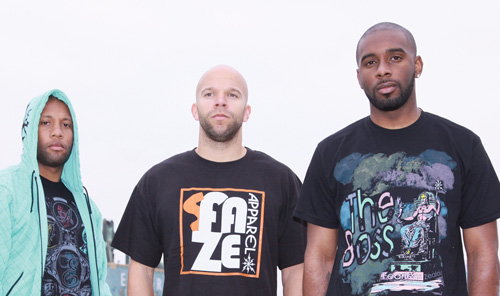
When I sat down with il gato for this week’s cover story, I also grilled the band about their favorite local eateries. And they had some pretty serious opinions on the matter. Below is a transcript of our food-loving conversation:

San Francisco Bay Guardian: So where do you like to eat in San Francisco?

Johnny Major: Little Chihuahua, have you ever been there? I’m an absolute addict. It’s the perfect food. Garlic shrimp burritos! And they have amazing carnitas burritos. I go there all the time. And Lower Haight has got some great spots like Memphis Minnies. It’s great Southern barbecue. Where do you go and get some real Southern barbecue here? Those are my two favorite restaurants.
Daimian Holiday Scott: I was raised vegetarian so initially coming out here and, which I’m still super into, I’ve never had the experience of eating lots of different types of meat, so getting like, veggie chili cheese fries or there’s [Golden Era] that has fake fried chicken sticks that have a bamboo dowel.

SFBG: Are you still vegetarian?
DHS: Still vegetarian. Yeah.
JM: From birth! Never had a piece of meat.
DHS: [Laughs] That’s John’s favorite line! It’s not true.
JM: I mean a real piece of meat. You ever had a steak?
DHS: No, I don’t know if I have really.
JM: There you go.

DHS: I lived in Berkeley a couple of years, and Berkeley is still one of the top food spots. And I love Little Star and that rosemary cornmeal crust. I [also] like pickled things so I pickle a lot – cured olives and sauerkraut.

Andrew Thomas: I grew up in Texas, so I’ve had plenty of steak [laughs]. I’ve dabbled in all types. I’ve been a pescetarian, I’ve been a vegan, I’ve tried it all and I’m pretty much back to eating meat. I live in Oakland so I’ve got lots of favorites in Oakland. But I lived in San Francisco for a year and one of my favorites is House on Nanking in Chinatown. And in general, moving up here –  and my girlfriend is part of it too, she’s a big cook and into farmers’ markets – I’ve learned infinitely more about cooking and vegetables in general. And I have to say, my token place was Kennedy’s [Irish Pub and Curry House]. It’s pretty much an Irish bar meets and Indian place.

DHS: Indian pizza is one of my favorite things about living in San Francisco. Zantes is better but there used to be Raja in Lower Haight. I actually went to a [different] place that said they had Indian pizza – [it was] a cheese slice with garlic, spinach, and then some like, jarred Indian sauce on it. I was like, “what are you doing? How dare you?!” [laughs].

I walked home last night after Johnny’s [solo] show, and I got homemade apple pie with fresh whipped cream off a vender on Valencia. That’s tied into the city being one of the top two or three food cities in the world, which is so true and we’re so spoiled.

Cluck and shuck

0

le.chicken.farmer@gmail.com

CHEAP EATS Beignets have cheese in them. Boudin does not have rice. Andouille is made of tripe. It’s not the least bit spicy. I’m learning a lot in France, and one of the things I’m learning is I can’t wait to be back in New Orleans.

In Rochefort they are building a ship, a more-or-less exact replica of the Hermione, which carried LaFayette from Rochefort to Boston in 1780 with news that yo, the French had our back. According to some Frenchies who I ate with, the new Hermione upon completion will also sail from Rochefort to Boston! You know, for old time’s sake.

I’ve tried more than once to get into the little shipyard there and have a peek at it. I want to know approximately how much time I have to get back home and start a revolution. But alas, I haven’t got a clue.

Yesterday I cooked up one of Farmer Fabienne’s chickens for dinner and we ate it again for lunch today, and I still can’t believe how goddamn awful good it tasted. And juicy! Even the breast. Even warmed over. I’m accustomed to true free-range chickens being a tad too easily overcooked. In fact, until we sunk our teeth into it, I was sure I had overcooked this one and had already started my suicide note while I was waiting for Fabienne and Fred to come in for dinner from the fields.

“You raise you a fine, fine chicken, farmer,” I said to Fabienne.

“And you cooked it perfectly, farmer,” she said to me.

We call each other farmer. Fred, technically, is a carpenter.

The secret from her end, Fabienne said, was in the corn, which (allegedly) “builds lipids.” So her feed, which she grows herself organically, is more corn than wheat or sunflower seeds. And the chickens of course also have access to grass and bugs and sunshine.

Hedgehog is in New York now, working on a movie. When I sent her a picture of our dinner and explained about the lipid-ish juicy excellence of it all, she of course wanted to know if the corn was sweet corn or “ratty yellow stuff.”

“Hold on a second,” I said (but in an email). And I went out into yon cornfield to check.

Yellow. I didn’t see any rats and or rattiness, but I’m guessing it ain’t exactly sweet corn by Hedgehog’s standards. I’m not saying she’s a sweet corn snob, but she is. And she has every right to be, like I’m a snob about butter. And together we shall make the best popcorn in the history of the world, if not cinema.

So, yeah, she’s working on a movie and I’m working on a book. And I send her pictures of the food I’m feeding the French and she sends me baseball reports from the States.

As if I cared. Which I do. Again. Thanks to both her and Baseball Mary. Baseball Mary, you will recall, presides at the Clement Street Bar and Grill, my new favorite bar. And grill, come to think of it.

Hedgehog and I had the honor of house and garden-sitting for my pals Papa and Papi, thanks to which you will be reading about much more avenue-y than usual restaurants over the next few weeks.

The Clement Street Bar and Grill was where we watched our baseball, except for one evening we also ate there, along with the Choo-Choo Train, Ding-a-Ling-a-Ling, Earl Butter, and a couple of visiting beloveds from Ohio.

Me, I got osso buco with garlic mashed potatoes. Hedgehog had the duck breast special. Earl Butter had a steak, and I forget what all else was flying around the table. But for sure, a lot of happy faces and good times, not to mention full bellies.

This is a real gem of an unpretentiously old-school filler-upper, whether you’re eating or drinking.

We bellied up to the bar afterwards to watch the end of the Giants game, and Baseball Mary joined us for a little while, but then the game went into extra innings and we all had to leave.

CLEMENT STREET BAR AND GRILL

Tue.-Thu. 4:30 — 9:30 p.m.; Fri.-Sat. 4:30-10 p.m.; Sun. 10 a.m.-3 p.m. & 4:30 — 9 p.m.

708 Clement, SF

(415) 386-2200

Full bar

AE/D/MC/V


Straw

2

paulr@sfbg.com

We don’t typically use the expression “start-up” when talking about restaurants — the phrase belongs to Techtopia and implies, at least to me, oceans of venture capital and huge salaries for people who run companies that don’t make money. But if we did, Straw would be an ideal one. It’s the sort of place one saw quite a few of in the early to mid 1990s, in that interval between the disasters of stock-market-crash-earthquake-war-fire and the start of the first tech boom. In that moment, people seemed to feel a renewed sense of optimism but didn’t have pots of money. The result was a sequence of new restaurants offering superior food, high value, and modest (sometimes DIY) décor. If you couldn’t afford to have Cass Calder Smith design your dining room, you could still somehow let it be known, through the medium of unprepossessingness, that you were reserving your best efforts for the food and service.

Straw, in this important sense, feels like a throwback from 1995. The restaurant (which opened in January) is small and slightly scruffy and is in an old building — a small oddity along Octavia Boulevard, which is newness itself and has been the occasion for all sorts of fresh construction in the past few years. The white walls, slightly scuffed, are hung with carnival posters, and some of the window seating seems to have been salvaged from a ride at a state fair somewhere. We haven’t had a place like this in more than a decade, I don’t think, not since the days when 3 Ring tried to make its circus theme fly in the old Val 21 space (now Dosa) on Valencia.

What kind of food would you expect to find at a carnival? Straw does provide some witty answers to this question, but the menu ranges gracefully beyond the obvious, which is to say the fried. Still, the fried stuff is good — a basket of little corn dogs ($7.75) made of Niman Ranch beef and looking like batter-fried musket balls. These were wonderfully crisp and juicy, and the trio of dipping sauces — nacho cheese, spicy ketchup, and ranch dressing — each had a strong enough personality to make them distinct, one from the others. The prawn ceviche ($7.75), boldly seasoned with habanero, lime, cilantro, and red pepper was presented in a fried tortilla cup, the kind tortilla salads come in, along with some tortilla chips on the side. These turned out to be good for dispensing with the last of the corndog sauces.

But not everything is fried, and the kitchen helps itself to a wide variety of influences. Grilled cobs of corn ($4) sprinkled with feta cheese, cayenne, and chili powder and presented with fresh lime and what the menu calls, with charming redundancy, “garlic aioli,” seemed to have Mexican roots, while the mac ‘n’ cheese ($5), fortified with bacon and slices of apple (an excellent idea) was a nice little crock of Americana.

The menu is also vegetarian-friendly — and not just in the small dishes, though quite a few of those are meatless, among them the tomato soup, pretzel bites, and several of the salads. An entrée called samba on subuco ($12), festively joined chunks of butternut squash and eggplant in a slightly sweet (but not cloying) coconut-milk curry broth reminiscent of many a hormak talay in Thai restaurants. This dish succeeded for me, despite the eggplant, which managed to be both rubbery and mushy.

Places are found for flesh too, often cleverly. We were particularly impressed by the satchemo ($15), a bed of creamy white grits carefully inlaid with sautéed prawns, leaves of linguiça, and green filet beans. Apart from being flavorful and well-balanced, the dish was beautiful to look at: like a tile taken from the palace of an Ottoman pasha.

I was a little less impressed with the picadilly ($14.75), if only because I wonder if a fish as marvelous as ahi tuna needs to be turned into fish sticks. Ahi, like beef, can stand on its own and is generally best when standing on its own. It doesn’t take all that kindly to elaborate treatments and back-room, hardball techniques like breading and frying. Doing that to a nice piece of ahi is a little like getting out your best lead crystal to serve some Diet Coke. The accompanying mayonnaise was astounding, however.

No carnival would be complete without a root beer float, and Straw offers a nice one ($5.50), made with root beer gelato and served with a straw (!)— not exactly radical ideas but sound ones. The more radical idea was laying little sticks of candied bacon atop an almost impossibly creamy peanut butter pie ($6) in a chocolate crust. Peanut butter and chocolate are one of sweetdom’s divine combinations (also totally New World), and I’d never heard the pair were looking for a third, certainly not pork. The truth is that the pie would have been fine without it. But the meat brought a bit of salty-sweet chewiness for contrast, and the result was better than fair.

STRAW

Dinner: Mon.-Sat., 5-10 p.m.; Sun., 5-9 p.m.

Brunch: Sat.-Sun., 10 a.m.-3 p.m.

203 Octavia, SF

(415) 431-3663

www.strawsf.com

Full bar

MC/V

Noisy

Wheelchair accessible


The foodie crackdown

3

news@sfbg.com

Yet another blow was dealt to the San Francisco’s free-thinking food scene on June 11 when the final Underground Market was staged by ForageSF, at least for the time being. The market was shut down by the San Francisco Department of Public Health (SFDPH) in a clash between small-time food businesses and city officials over permitting and regulatory issues.

“I was ready for this for a while,” ForageSF founder Iso Rabins told us. “I thought someone would show up eventually to say something about this, and now they have.”

Rabins began the Underground Market in 2009 as a monthly venue for food entrepreneurs to share their goods without financial and bureaucratic red tape. It’s basically a farmers market without the permits, fees, and commercial kitchen requirements that add thousands of dollars to the cost of staging an event. Throw in live music, drinks, a little subversive thrill, and you’ve got a gathering that has proven enormously popular.

Until now, the market has operated as a private event. It is held in a private space and attendees are required to sign a membership form and pay a $5 entrance fee. It’s become a huge draw for foodies, with 1,500 to 3,200 patrons per event, according to Rabins, so the state government got wind of its largely unregulated operations.

Alicia Saam, the temporary events coordinator with SFDPH, says her department was asked by state officials to observe the market. It’s now too big to be considered private, she says, so it must adhere to health code and public safety regulations just like any other public event.

“One of the things that differentiate private versus public events is how much advertisement goes out there,” Saam said. “Something that is advertised and has grown big enough to have a following, that becomes a concern for us as a public event.”

Without official oversight, rules are bound to be broken. As with any novice venture, mistakes are made. When officials came to the Underground Market, they saw some vendors acting more like friends at a house party than professional food vendors, which is the complicated line that the market tries to toe.

“We observed operators and vendors eating and then handling the food, and that’s a huge contamination hazard for us,” Saam said. “They weren’t washing their hands before continuing food service, nor did they have a hand-washing set-up right there at their booth. There looked to be temperature issues as far as some of the food that was being stored, such as protein foods, sausages, and dairy. Some foods were not protected but were displayed on the table uncovered. People come up and they’re excited and curious, there’s a lot of creativity there, so they’re hovering over the food and possibly contaminating it with all sorts of things. The source of food, such as the kitchen where the food is coming from, needs to be an approved space where there are no animals, or cats like in some homes. It needs to be a commercial space that is properly cleaned and sanitized.”

According to the U.S. Center for Disease Control, one in six Americans get sick each year from eating contaminated food. Salmonella infection is of particular concern because food can be contaminated anywhere from the fields to kitchen surfaces.

The SFDPH has already allowed the Underground Market to operate unregulated for more than a year without any reported food illnesses, but Rabins is quick to agree that these health concerns are real.

“I do believe that these issues of health are important, and although I feel that all the vendors at the market are very careful about what they make, we do want to institute some Serve-Safe classes, basic food safety,” Rabins says.

He says that on the whole, people cooking small batches pay much more attention to their ingredients and processes than industrial food companies do. Rabin said that while the country’s food safety system works pretty well, it doesn’t allow for much locally based innovation in new models for making and sharing food.

“The Health Department’s position makes sense because this is the system that has existed, this is the system that they know and that their jobs support, and it’s a system that works in a lot of ways. But it’s also a system that was really created for industrial processes,” Rabins says. “Unfortunately the way regulations work, top-down is one-size-fits-all, but that’s just not the way it is.”

That gets to the meat of the issue: whether and how much the city should get involved in people’s food habits. Where is the line between public restaurants and private homes — and are there ways of creating hybrids of the two? It’s an ongoing battle in San Francisco between regulating restaurants (and netting taxes) while still promoting an innovative food industry that attracts locals and tourists alike.

In the past few years, the mobile food truck craze has hit San Francisco with little bits of foodie culture from all over the world. Entrepreneurs say it’s too difficult and expensive to start a successful restaurant in SF, so they’re trying small-time pop-ups instead.

At first they went unregulated, but now laws define what they can sell, the permits they need, and limit their mobility. Permits are expensive too, starting at $1660 for initial basic coverage, which is why Rabins says the Underground Market provides an additional support for motivated locals. As city officials have closed big budget deficits year after year without any substantial increases in general tax revenue, fees and permit costs have risen substantially in recent years.

According to Rabins, getting the Underground Market up to code means, “getting all the vendors commercial kitchen space, making them get catering licenses, which is around $600, making them pay for vendor event permits, which is $140 per event, and then I would have to buy a sponsor permit which is another $1200 per event plus event insurance plus, plus, plus all these things that would essentially destroy the spirit of the event. It would make the bar way too high.”

Tightening the membership rules is another option, such as making people sign up weeks in advance or requiring member cards. Richard Lee, the director of environmental health regulatory programs at SFPHD, says that regardless of the vendor’s complaints, the regulations must be met.

“We think that these are reasonable options,” Lee said. “Anyone who is going to sell to the public needs to meet certain requirements, and unfortunately some of those requirements are going to be costly. They have to pay for permits and whatever those permits cost they’re going to have to pay.”

Until some agreement can be reached, the Underground Market won’t be operating, and San Franciscans will have to find their fix at the numerous above ground markets and restaurants. Lee says that he hopes that the market meets city demands, and soon, as this kind of entrepreneurial innovation is essential to a thriving food economy.

“We do encourage the micro-enterprises, and there are possible ways to have that started in San Francisco,” Lee said. “It is possible that there may be legislation in the future that might be supported by the Board [of Supervisors] to make it easier for them to get permitted, so there are things that can be done. For us, though, it is food safety and public health that are the most important things.”

But Rabins is already looking far beyond just the small market model.

“They just want to make it another farmers market,” Rabins said. “I’m not interested in running another farmers market. There are plenty of farmers markets around and people who have been doing them for years and know how to do them.”

He also isn’t interested in conforming to the pre-set expectations and sees the motivation behind the market taking it to new heights. In addition to reopening, he says that ForageSF has secured a kitchen space for helping entrepreneurs launch their small businesses and host public classes.

“We are going to hopefully have a rooftop garden with a movie screen, a retail space in front that sells products being made in the kitchen by vendors, and possibly a small-scale brewery in back,” Rabins said.

He is also reaching out to other similar market organizers, such as some in Los Angeles, to brainstorm ways to make this business model more acceptable across the country. He says they are in the initial phases of creating a model that is reproducible for others who want to start their own markets.

Once again, in the place where the organic food movement first bloomed, people are coming together to create new interactions between producers, consumers, and their food.

Perbacco

1

paulr@sfbg.com

DINE In the little gathering of restaurants on the 200 block of California Street deep in the Financial District, Perbacco is one of the middle children, at least physically. Mid-block positions can be awkward for restaurants, since your would-be customers are likely to have to do a bit of searching for you instead of finding you in mighty command of some conspicuous corner. On the other hand, if your nearest neighbors are Michael Mina (née Aqua) and Tadich Grill, the foot-traffic factor could tilt in your favor.

Perbacco, which turns five later this year, is relatively narrow and deep, which is not atypical of mid-block spaces. Within those friendly confines it does offer a few points of topographical interest, including a mezzanine and, at the very rear, an open kitchen that redefines “open kitchen”: a kitchen so open that it has no physical barrier or marker to separate it from the rest of the restaurant. It reminded me in an odd way of those federal prisons without fences — the so-called Club Feds — where Michael Millken and the other high-finance hucksters of the 1980s did their time. It was odd to glance back there and see young chefs just milling around. Even in a star-struck culture like ours, there can be such a thing as overexposure.

It would also be fair to say that the design scheme emphasizes earth tones.

“It’s brown in here” was a pithy observation that reached me from the pithy observer across the table. Some cream tones too, yes, but still. One imagines that the grand men’s clubs of old London, White’s, and the Atheneum, among others, must look something like this inside, not that I’ve ever managed a peek.

If you’ve been to Italy, particularly in the north, you’ll probably agree that Italians eat more meat than is generally supposed, and in this sense, chef-owner Staffan Terje’s menu does reflect a profound Italian aesthetic. (Its principal influences are from the northern regions of Piemonte and Liguria.) The kitchen turns out its own salumi, and an $18 plate of it (the small version) is most impressive in range, flavor, and sheer heft. If you open with this, you should plan accordingly for what you want to follow, because you don’t just get a couple of crostini smeared with paté and some cornichons. You get, instead, a sizable plate dizzyingly arrayed with such treats as testa in cassetta di Gavi, pancetta, several types each of lardo and salame, and — for a bit of crunchy acid — a bouquet of pickled cauliflower florets.

The passion for meat, in particular for cured meat, even insinuated itself into the salads, where we found a witty reimagining of the classic cantaloupe with prosciutto in the form of ripe peach slices ($12) set amid baby lettuces with flaps of smoked goose breast that could easily have passed for speck or pancetta affogata except for their color, which was more of a telltale red. The salad was dressed with a stone-fruit vinaigrette, but this salad was that rare thing, a salad that, laden with juicy ripe fruit and pungent flesh, would have been fine with no dressing at all.

Yet more meat turned up in the pasta courses (many interesting and unusual shapes here), in the form of short-rib ragu ladled over pappardelle ($17), the wide ribbons that look like fledgling lasagne. The ragu was intensely earthy, and horseradish shavings brought some bite, but I did question the addition of a roasted cipolline confit, whose almost jelly-like texture and sweetness seemed to me to disrupt the harmony of the dish. So much of the brilliance of Italian cooking has to do with simplicity — i.e., resisting the temptation to add ingredients and omitting them instead — and this dish would have been better with no onion confit.

Actual short ribs ($24) were also available, cooked long and slow (stracotto is the Italian word), given a bone-marrow crust (rich!), and plated with pea tendrils, chanterelle mushrooms, and more cipolline onions, which for some reason did not wreak the havoc here they did with the pasta and actually might have helped balance the richness of the bone marrow.

The dessert menu, like its savory counterpart, reflects a surprisingly friendly pricing scheme. Everything is $8, except for the sorbetti ($7) and the panforte ($3). And the preparations are complex enough so that you feel you’re actually getting more than one thing. For example, a strawberry semifreddo (a flat pink disk with the consistency of sherbet kept in a too-cold freezer) was festooned with crumbles of pistachio cake and tumbles of zabaglione, the marvelous — and marvelously simple — concoction of egg yolks whipped in a bain marie with sugar and some kind of sweet wine, usually marsala, but flat champagne works well, too. The zabaglione had a faint green sheen; had it been doctored with pistachios, like the cake? Pink plus green beats brown every time.

PERBACCO

Dinner: Mon.-Sat., 5:30-10 p.m.

Lunch: Mon.-Fri., 11:30 a.m.-2:30 p.m.

230 California, SF

(415) 955-0663

www.perbaccosf.com

Full bar

AE/MC/V

Noisy

Wheelchair accessible

A song and dance at City Hall

It was a lively scene on the steps of City Hall Aug. 2, as back-to-back press events featured live performances, lots of cheering, and support for new legislation that supporters hope will benefit low-wage workers, small businesses, and musicians.

Spirits were high at the Progressive Workers’ Alliance (PWA) rally, as organizers anticipated strong support for an ordinance they helped craft which aims to prevent wage theft by strengthening the powers of the city’s Office of Labor Standards & Enforcement (OLSE).

The Wage Theft Prevention Ordinance would double fees for employers who retaliate against employees seeking to have labor laws enforced, impose a timeline in which employee complaints must be addressed, and create new penalties for employers who fail to adhere to local labor standards. During the rally, workers speaking in various languages described their experiences of working long hours without receiving minimum wage or overtime pay.

Organized under PWA as part of a number of organizations including the Chinese Progressive Association, Young Workers United, the Filipino Community Center, the San Francisco Day Laborer’s Program, and others, the crowd of PWA members crammed into the Board Chambers and exploded into applause when the board voted unanimously to pass the ordinance on first reading.

Following a noon rally, youth with the Chinese Progressive Association’s high school program treated supporters and members of the press to a dance performance.

http://www.youtube.com/watch?v=X7CVb4K3tcw

Directly afterward, District 5 Supervisor Ross Mirkarimi appeared at the podium to drum up support for legislation he’d proposed to create a more affordable permit for cafes and restaurants wishing to host live performances in their establishments. He described it as a business-friendly idea that could “put musicians to work,” adding that more music in smaller venues could help dispel the notion that San Francsico isn’t as supportive of the arts as Chicago, Boston, New York, or even Paris. A preliminary survey found that some 700 restaurants could benefit from having access to less expensive live performance permits, he said.

Supervisors showed unanimous support for Mirkarimi’s idea, but Sups. David Chiu and Mark Farrell each added amendments to ensure that live performances couldn’t go past 10 p.m. in certain neighborhoods in their districts.

Mirkarimi invited Jazz Mafia to play a tune before the board meeting started. Here’s what they sounded like.

http://www.youtube.com/watch?v=WjRbGBTEdMk

Videos by Rebecca Bowe

Best of the Bay 2011: BEST WAY TO SIGN UP

0

Beautify the street and bolster your curb appeal in classic style with some legit hand-lettering from New Bohemia Signs. Using traditional enamels and gold leaf, New Bohemia practices its old-school art with pride — snazzing up placards with over-the-top fonts, providing elegant window signage for boutiques and restaurants, crafting appetizing menu boards, even revamping your Victorian with a gilded transom. Founder Damon Styer and crew have also branched out into the gallery scene: a recent art show at Guerrero Gallery featured work by present and past New Bohemia staff. The vintage feel, handmade aesthetic, and design-addict cache — New Bohemia’s products have even been salivated over in The New York Times — seem a perfect sign of our local, small-batch, skill-appreciative times.

281 Ninth St., SF. (415) 864-7057, www.newbohemiasigns.com

Best of the Bay 2011 Editors Picks: Shopping

0

Best of the Bay 2011 Editors Picks

Shopping


BEST VINYL FLIPPERS

Tweekin Records in the Lower Haight was one of the centers of Bay Area dance music culture for the better part of two decades. But besides the basic insanity of operating a specialty record store in these e-times, the Tweekin brand had gotten a bit ragged over the years. So it was a charge for vinyl lovers when Manny Alferez and crew stepped up for a reinvigoration, unveiling Black Pancake Records. Pretty much the same concept reigns: great funk, soul, house, techno, jazz, and even (gasp!) rock records, plus a friendly staff with some primo recommendations. Perhaps best of all, there are a couple of those rarest of beasts — listening stations. Yep, you can put the actual circular whatsit on the doohickey that spins around and hear it make the music, little Johnny. All without clickety-clicking on the wee mouse-thingy.

593 Haight, SF. (415) 626-6995, www.blackpancakerecords.com


BEST EVERYDAY KAN DO

Peruse the labels of say, a kitty-shaped exfoliating washcloth or exquisitely lacquered bento box at Ichiban Kan, and you’re likely to see a Good Housekeeping seal of approval-style label trumpeting that the item won a design award in Japan. At times it seems like everything wins a design award in Japan, then the realization sets in that no other country seems to have dedicated itself so fervently to assuring that the everyday things of life — from paper clips to cooking utensils — be attractive, eminently functional, durable, and well-designed. When we want to load up on the best of the quotidian (we’re particular fans of the rolls of plastic wrap for $1), we come here.

Various locations, www.ichibankanusa.com


BEST GEEKDOM: THE GATHERING

It’s a constant nerd alert — not that that’s a bad thing — at Cards and Comics Central, a Richmond District shop where employees know the difference between vine whips and seed bombs and can explain why destroy effects don’t harm a cattank. Kids into Yu-Gi-Oh, Pokémon, or Magic will be overwhelmed by the shop’s vast selection. Parents will be overwhelmed at the price tag — you can spend more than $100 on a single card, though assorted decks (available for under $10) might keep the average young collector sated. Check out the back room for the real action — pale adults playing Magic with an intensity you won’t find at most Vegas poker tables.

5424 Geary, SF. (415) 668-3544, www.candccentral.com


BEST REFILL, NOT LANDFILL

What does it take to win a gazillion green business awards? It certainly starts with a great concept, a seriously vetted supply chain, and a commitment to spreading the eco-word. It also helps to have a pleasing storefront in Noe Valley, cute and eager staff, luscious products, and bulk-store prices without the forklifts and doublewide shopping carts. Green 11, launched by married couple Marco Pietschmann and Bettina Limaco and inspired by a Rachel Carson observation (“For the first time in history, every human being is being subjected to contact with dangerous chemicals, from the moment of conception to death.”), offers soaps, cleaning supplies, pet food, shampoo, conditioners, and lotions, all ready for your refillable, affordable use. Bring your own containers or put for up a starter container at the store.

3980 24th St., SF. (415) 425-5195. www.shopgreen11.com


BEST FAIR FEATHERS

You think your head hurts from the plumage parade that alit on Dolo Park this year? Think of the feather-farm roosters and other avian amigos that have lost their lives to appease the current mania for quill jewelry and hair extensions. Happily, two gentle crafters have taken the torture out of the trend: Erykah Prentice and Martha Hudson started their accessories label Divine Dandelions for peace, not plucking. The two create their cascading earrings and fanciful headdresses from foraged feathers, selling them from a sweet little gazebo at festivals up and down the West Coast. If you find yourself Bay-bound during next month’s Gaia Festival (up in the hills of Laytonville), you can always check out their Kahlil Gibran-quoting website for custom-made creations.

www.divinedandelions.com


BEST MEMORY TRANSFERENCE

Are your childhood camcorder memories gathering worrisome mildew by the minute? Entrust your VHS-ed precious moments to the Mission’s Video Transfer Center run by Jennifer Miko, a 2008 graduate of the L. Jeffrey Selznick School of Film Preservation and a collaborator with the Image Permanence Institute. Miko, along with husband Buck Bito, boasts some of the best equipment in the biz — including a fancy-pants transfer system for 8mm and Super-8 that the center says is California’s first and only. For a small fee, the team will inspect, repair, and transfer your film memories to a digital format that will last forever … or at least until we figure out brain-to-brain info-beaming.

395 South Van Ness, SF. (415) 558-8815, www.videotransfercenter.com


BEST BUGS BUNNY B-BOY FLASHBACKS

Mission vintage stores tend to cater to your typical high-waisted jean-clad, chain-smoking-in-front-of-Four-Barrel kind of girl. (We love her!) But New Jack City is a breath of fresh hype air. This “throwback goods” outpost at 15th and Guerrero streets specializes in sports gear and B-boy stylings straight from your favorite scene in Houseparty 2. Vintage Giants jackets, old school stripes, Bugs Bunny tees of various ages, priceless Afro-centric relics, and breezy caps repping teams or just plain reppin’ … . Actual 1980s and ’90s B-boys (and newer admirers) will feel they never left their Cold Crush Brothers and KRS-One cassettes in their cousin’s janky hoopty’s deck once they step inside.

299 Guerrero, SF. (415) 624-3751, newjackcitysf.blogspot.com


BEST REASON TO NOT GET OUT OF BED

You know those girls who flounce down 24th Street, vintage pastel print sundresses fluttering over their kicky cork wedge sandals, carrying a perfect sexy grandma purse? We know their style secret. Oakland’s Field Day Wearables’ bedding dresses are handmade by a crunchy-awesome label that wants to take the disposable out of fashion. They’ve got pockets and detachable straps that double as a matchy-match headband, and you can find them in patterns from striped to pansied to Batman (yes, they’re made from actual sheets). Score ’em at myriad brick-and-mortar distributing boutiques — or even better, by trying them on over your jeans at one of the craft fairs and street walks where FDW sets up a pretty post.

Available at various Bay Area locations. www.fielddaywearables.com


BEST SMALL WORLDS AFTER ALL

Apparently all the people who came of age in the late 1960s and early ’70s are either dead or too busy filling out Social Security forms to notice that at least one of their cherished craft projects is making a comeback. (No, not candle-splattered Mateus wine bottles or macramé hanging plant slings.) We’re talking about terrariums, the terrestrial equivalent of a ship in a bottle. So what if many G4-era terrarium enthusiasts call them “terraniums”? Their variation on vivarium nomenclature does nothing to diminish the charm of these glassed-in mini-worlds. And particularly high on the charm assessment scale are the creations of the good women of Studio Choo, part of Prairie Collective, whose arrangements of tiny ferns, succulents, and other floral inspire full minutes of unbroken, smart phone-free contemplation.

Available at Prairie Collective 262 Divisadero. (415) 701-8701, www.studiochoo.com, www.prairiecollective.com


BEST BET FOR BAROQUE BEAUTY

You’ve redecorated your living room, but still something is missing. Could it be? Yes it is — a fuchsia-toned chaise lounge. Do not despair, for we have your marching orders: SF Antiques and Design Mall. The 13-year-old Bayview behemoth is something akin to an indoor flea market, and is home to 200 experts in the art of antique, all of whom have booths filled to the brim with fanciful paperweights, glittering heaps of costume jewelry, and ever-so-whimsical seating options. Seriously, if your interior design is hankering for a touch of the over-embellished, a whiff of kitsch, or perhaps a splash of hanging basket chair, you will find it here.

701 Bayshore, SF. (415) 656-3530, www.sfantique.com


BEST FASHION SHRINE

Natural wooden tables, colorful blankets spread here and there, a goat’s head staring placidly down on wonder-covered shelves — Hayes Valley’s Reliquary could be a gaucho explorer’s treasure room. And — minus the gaucho part — that’s pretty much what boutique owner Leah Bershad has created it to be. Bershad stocks the year-old space with crafts and vintage finds from all around the country, plus Europe and — in the case of some elaborate bead-and-quilt satchels stacked near the counter — Afghanistan. The store’s racks of secondhand embroidered dresses and its smattering of designer wear like high-waisted Court denim mean that, as far as fashion church goes, Reliquary lives up to its name: a container for sacred relics.

537 Octavia, SF. (415) 431-4000, reliquarysf.tumblr.com


BEST PLACE TO BUY 300 PAIRS OF PANTS, 250 TELEPHONES, OR 7,651 RUBBER GASKETS

If you’ve ever spent an afternoon wistfully clicking your way through the Craigslist “free” section — pondering all you could do with an extra this or that — you’ve sampled a certain seductive sweet taste. Beware: the California Materials Exchange is crack to Craigslist’s cocaine. It’s eBay on steroids, Urban Ore for colossi. A state-sponsored recycling program, CalMAX facilitates the transfer of bulk, odd, and industrially useful products for wholesale and discount rates, and sometimes for free. So, looking for extra cubicles? How ’bout a free 1000-gallon asphalt-emulsion tank? Or 7,500 pounds of apparel, including 300 women’s black twill pants missing only the waist button? That’ll cost you a paltry 10 grand, but for someone with a plan — and a lot of storage — it could be just the thing.

www.calrecycle.ca.gov/CalMAX


BEST SHOP FOR THE SOCIALLY CONSCIOUS STITCH

A sobering fact: your clothes were probably made in a sweatshop (sorry). Most of our industrially produced togs — you are probably aware — are made by people making far from decent wages, working with toxic, health-shattering dyes. Small wonder then that local fiber movements are beginning to stitch. Visit Oakland yarn shop A Verb For Keeping Warm to be indoctrinated. Owner Kristine Vejar sells an in-house line of local fibers and natural dyes, and stocks other brands as well. Plus she gives classes on the skills you need to clothe yourself sustainably and hosts free sewing nights to develop community among people who purl — responsibly.

6328 San Pablo, Oakl. (510) 595-8372, www.averbforkeepingwarm.com


BEST WAY TO SIGN UP

Beautify the street and bolster your curb appeal in classic style with some legit hand-lettering from New Bohemia Signs. Using traditional enamels and gold leaf, New Bohemia practices its old-school art with pride — snazzing up placards with over-the-top fonts, providing elegant window signage for boutiques and restaurants, crafting appetizing menu boards, even revamping your Victorian with a gilded transom. Founder Damon Styer and crew have also branched out into the gallery scene: a recent art show at Guerrero Gallery featured work by present and past New Bohemia staff. The vintage feel, handmade aesthetic, and design-addict cache — New Bohemia’s products have even been salivated over in The New York Times — seem a perfect sign of our local, small-batch, skill-appreciative times.

281 Ninth St., SF. (415) 864-7057, www.newbohemiasigns.com


BEST PROTOTYPES (PRIMATE OR OTHERWISE)

The website of the Foam Monkeys concept modeling studio has an “awards” section that admits, “While we can’t honestly recall Foam Monkeys ever actually being mentioned for an award, the company has certainly been a part of many award-winning product development teams.” But we’re giving the company itself a real, bona fide Best of the Bay to boast about. Why? Because! Here you can not only construct a polyurethane primate, but also all sorts of useful stuff — like prototypes for everything from MacBooks to microchips. Sure, the company is geared toward creating serious conceptual models for industrial design and product development, but that doesn’t make the idea of an accessible foam-based 3-D modeling studio any less awesome.

32 Shotwell, SF. (415) 552-5577, www.foammonkeys.com


BEST SONIC SAFARI

Deep in the thick of the taquerias, bodegas, butcher shops , and joyerias of 24th Street dwells this exotic little shopping outpost for fearless cultural adventurers. Explorist International captain Chris Dixon (known on assorted music bills as Phengren Oswald) lets his collector come out to play here, sharing new and used recordings of global party riddims, heady jazz, weird old folk and country blues, and various unclassifiables — as well as art books, micro-run zines, and McSweeney’s volumes. The record bins are where the real action is, though: Moondog vinyl canoodles with Sperm Walls rarities, and Charlie Nothing crashes with the Indonesian prog and funk of Those Shocking, Shaking Days. Would we like to snag that vinyl copy of Luk Thung: Classic and Obscure 78s from the Thai Countryside? Yes, Dr. Livingstone, we would indeed.

3174 24th St., SF. (415) 400-5850, www.exploristinternational.com


BEST CHEAP PLACE TO SCORE A CUP AND A CONRAD

Literature and coffee: such sweet, sweet dependencies. Enable both on the cheap at Reader’s Café . Inconspicuous to those on a casual Fort Mason stroll, this used book treasure trove on the bay is infinite and grand once found. With $20, it’s possible to take home a few written works (some only $1!) and still have change for indulging in a custom-brewed cup of Blue Bottle. Reader’s is a production of the San Francisco Friends of the Library, so not only does each purchase soothe the DTs, it’s for a good cause.

Building C, Room 165, Fort Mason Center, SF. (415) 771-1076, www.readerscafe.org


BEST PARTNER IN PREUSED PURCHASE

In a perfect world, each visit to the Apartment would be a leisurely half-day treasure hunt. The Mission District store is packed with vintage furnishings, boxes of old family photos and 1960s magazines, even a $1 tray for affordable finds. No plywood or cheap IKEA stuff here — everything on offer is well maintained and crafted. Of course, that quality comes with some heft, but if you’ve fallen in love with a cedar armoire when you were supposed to be on the hunt for a throw rug, the Apartment will pay for its delivery: $65 plus $10 for every flight of stairs it must ascend to your door. So accommodating!

3469 18th St., SF. (415) 255-1100


BEST ANTI-GOLIATH GAME FACE

After a five-year effort by chain-wary neighborhood activists to keep it off the grand hippie boulevard, megachain Whole Foods opened at Haight and Stanyan streets early this year. It furthered the neighborhood’s fitful transmogrification into Fancy Town (or Ashbury Valley, the ‘hood’s new NoPa-like real estate agency-created moniker), but Haight Street Market is rising to this market-share challenge. With shifts starting before the crack of dawn, the 30-year-old family-owned shop has stepped it up, adding a high-quality butcher counter, a deli, the least pricey and most diverse beer selection in the Upper Haight, and a buffed-up coffee selection. If only all small businesses could up their game in the face of corporate claims.

1530 Haight, SF. (415) 255-0644, www.haightstreetmarket.com


BEST LEATHER-SCENTED TIME WARP

Stepping into cobbler Suzanne George’s shop is like entering a hide-covered time warp. George crafts her clodhoppers in much the same way that shoes were made several hundred years ago. She works the leather by hand, stitching the pieces with thread and hammering it all together with actual nails. Not only are the shoes custom-made to fit every tootsie they encase, they are also unique pieces of art, nearly too lovely to take tramping on the dirty pavement. George shares her high-quality, low-technology workshop with Peter, a shoemaker originally from Italy who used to make sandals for Mother Teresa. Together they make some damn fine throwback sling-backs.

1787 Church, SF. (415) 775-1775, www.suzannegeorgeshoes.com


BEST COUCH-BOUND — BUT COMMUNITY-MINDED — STONER’S DREAM COME TRUE

While a marijuana home delivery business may sound like nothing more than a couch-bound stoner’s dream come true, the Green Cross actually offers a valuable service to many of the city’s neediest residents who are less mobile as a result of illness, disability, or age. And this is no slapdash selection, either. Brick-and-mortar dispensaries can’t beat its impressive array of hard-to-find THC-infused specialty items like olive oil and agave nectar. Plus it boasts vegan, gluten-free, and nut-free goodies, all made in-house. So toke it all in — a portion of the proceeds are reinvested in the community, supporting social service agencies like the SF AIDS Foundation and the YMCA.

(415) 648-4420, www.thegreencross.org


BEST GOAL-GETTERS

Toby and Libby Rappolt hardly leave the balls behind when they exit their 20-year business, Sunset Soccer Supply, for the day. The Rappolts are players, coaches, and fans too. If they’re not holding up the counter at their shop, chatting with regulars about the most recent match or the best way to teach a kid to dribble or selling a team-sized box of scrimmage vests, there’s a good chance they’re out supporting the SF soccer community. The business is especially into rooting for women’s teams: it was present at the Civic Center showing of the World Cup final, it sponsors tournaments, and it has even invited players to in-store signings.

3401 Irving, SF. (415) 753-2666, www.sunsetsoccer.com


BEST PLACE TO PUT A CORD ON IT

Where to trundle if you want to wear that pretty pierced stone you found on your first anniversary hike up Mount Diablo? The Bead Store has a vast assortment of necklace-ready cords, and the Castro shop’s friendly staff can point you toward a nice clasp, or even tie a slip-knot for you if you’re not fancy. It’s the city’s smallest and oldest bead store — it has been in the same spot since 1964 — and stocks centuries-old beads and rare stones you won’t find anywhere else, as well as the standard tools you need to take your diamonds from the rough.

417 Castro, SF. (415) 861-7332, www.thebeadstoresf.com


BEST RING OF SUCCESS

Jewelry — it can be scary! We don’t mean the fun ornamental kind of jewelry, like Celtic nipple rings or jade idol earrings or purple pentagram pendants (although those can be scary too). No, we’re referring to real jewelry — like the fancy traditional kind you’d better get right or Bridezilla/o is gonna ‘splode and slap you silly with a rolled-up copy of Country Weddings magazine. How will you know how to score the perfect engagement ring, or wedding band, or anniversary bracelet, or birthday watch? Don’t fret. The enormously helpful and nice folks of Just Bands will help you with everything, from sizing and color to design and polish. Their showroom in the labyrinthine San Francisco Gift Center sparkles not just with diamonds and silver, but with the smiles of satisfied lovers whose romance wasn’t tarnished by stressful transactions.

888 Brannan, Suite 151, SF. (415) 626-2318


BEST THROUGH THE RABBIT HOLE

The N-Judah thunders by it dozens of times a day, but because it’s tucked well back in a garden courtyard, you’d never know this spirited, magickal little “multitraditional world mysticism” shop existed. Unless you capital-K Know. Look into your third eye: do you Know? Randy, the genial owner of the Sword and the Rose — a man who is part Keith Richards, part Baba Yaga — definitely Knows. And he’ll graciously tell you, spinning tales of about gods and goddesses from esoteric cultures past and present, or reading your tarot cards in a cozy nook warmed by an amber fire, or selling you his house-produced incense, or offering lessons in spellcraft, all while bestowing friendly (if a bit confusing to the uninitiated) guidance to more transcendent realms. First stop: Cole and Carl streets. Next stop: the Divine.

85 Carl, SF. (415) 681-5434


BEST BARREL FULL OF MONKEY SUITS

Let’s face it, if you’re a happenin’ gentleman or a trouser-trusting lady in this fancy-pants city, you’re going to need to bust out the occasional tuxedo. But who wants to spend a few hundred bucks on a new tux? Screw that noise, get over to Held Over, and check out the selection of $20 used tux shirts and wide variety of full monkey suits — from the 1970s-style mariachi look to something a bit more classic. Hell, why don’t you mix-and-match it up? They’ve already got you in a suit, so you might as well have some fun with it.

1542 Haight, SF. (415) 864-0818


BEST GRAND POOBAH OF THE PAST

A visit to the cavernous Potrero Hill digs of Big Daddy’s Antiques ushers you into a wondrous, uncannily postmodern version of the past. There’s definitely a little vintage-meets-steampunk aesthetic going on — Big Daddy grand poobah Shane Brown and his magic elves have collected enough old-school film lights, globes, wooden angel wings, horse-drawn buggies, large animal heads, giant pillars, and studio cameras with bellows to kit out the dreams of antique queens and cyber-fanboys alike. (Tech guys, please get your decor here.) And the large collection of Depression-era Americana like shoe shop signs and flag bunting adds to the pleasantly discombobulating Twilight Zone feel. Don’t worry though; the amiable Big Daddy’s staff will guide you though it all.

1550 17th St., SF. (415) 621-6800, www.bdantiques.com


BEST SHOT OF PANACHE

We just have one question for you, Revolver: can we move in? We would fit so well in your charming, roomy, homey, comfy store-and-gallery. On warm summer days, we could don one of your light summer frocks and Illesteva sunglasses, like contemporary post-ironic preppies but not that heavy; seal in our dewy look with one of your delicious moisturizers; and have coffee while pondering the art on display in your back room. Evenings, we could venture out in a pair of Tretorn rubber boots or suede Volta high tops and Creep khaki chinos, then settle in for the night on one of your durable cotton Japanese Workers pillow covers. In short, Revolver, we like everything about your small, beautifully curated store. Just one more thing: Is that a pistol in your pocket, or are you glad to see us?

136 Fillmore, SF. (415) 578-3363, www.revolversf.com


BEST HOLGA ROLLS

You know what’s tired? Using your iPhone to take a picture of yourself in the mirror for your Google+ profile. You know what’s not tired? Using a low-fi medium format 120 film Chinese toy camera from the 1980s to snap that same pic. Sure, you could just download Hipstamatic, but the hardcore among us prefer to use the delightful original mechanism — an actual Holga camera — which, thanks to a mini-craze in the past few years, has become readily available in the U.S. But you’ll need the right roll of film, and the awesome Photoworks is here to provide. Photoworks stocks hard-to-find film from all over the world, offers excellent print production services, and will even stretch your Holga hotness on a canvas to hang in your hallway.

2077-A Market, SF. (415) 626-6800, www.photoworkssf.com


BEST NATURE NOOKIE NAPSACKS

Backpacks, tents, and BPA-free utensils designed with an eye for classic retro outdoors-y accouterments (think 1980s L.L. Bean and 1970s RV campers), Mission District-based camping company Alite Designs‘ gear is innovative, body conscious, and oh-so-considerate of our decadent ways. Take for example its Sexy Hotness sleeping bag — at first glance, just a pretty sack for camp-crashing, but unzip the center fastener and it becomes a thermo-Snuggie with built-in feet, its center zipper freeing your nether regions for trips to the john or even a little nature nookie. Plus, the bags connect endlessly, so if you roll deep ‘n’ dirty, your camp orgies will be well served.

2505 Mariposa, SF. (415) 626-1526, www.alitedesigns.com

Wage theft prevention ordinance moves forward

Supervisors expressed strong support July 20 for an ordinance that a San Francisco coalition of labor advocates is pushing for to prevent wage theft and shore up protections for low-income workers. Spearheaded by Sups. Eric Mar and David Campos with Sups. Ross Mirkarimi, Jane Kim, John Avalos, and David Chiu as co-sponsors, the legislation would enhance the power of the city’s Office of Labor Standards and Enforcement (OLSE) and double fines for employers who retaliate against workers.

Dozens of low-wage restaurant workers, caregivers, and day laborers turned out for a July 20 Budget & Finance Committee meeting to speak in support of the Wage Theft Prevention Ordinance, which was drafted in partnership with the Progressive Workers Alliance. The umbrella organization includes grassroots advocacy groups such as the Chinese Progressive Association, the Filipino Community Center, Pride at Work, Young Workers United, and others.

A restaurant worker who gave his name as Edwin said during the hearing that he’d been granted no work breaks, no time off, and had his tips stolen by his employer during a two-and-a-half year stint in a San Francisco establishment, only to be fired for trying to take a paid sick day. “When I was let go, I did not receive payment for my last days there,” he said.

His experience is not uncommon. An in-depth study of labor conditions in Chinatown restaurants conducted by the Chinese Progressive Association found that some 76 percent of employees did not receive overtime pay when they worked more than 40 hours in a week, and roughly half were not being paid San Francisco’s minumum wage of $9.92 an hour.

“People who need a job and can’t afford to lose it are vulnerable to exploitation,” Shaw San Liu, an organizer with the Chinese Progressive Association who has been instrumental in advancing the campaign to end wage theft, told the Guardian.

The ordinance would increase fines against employers from $500 to $1,000 for retaliating against workers who stand up for their rights under local labor laws. It would establish $500 penalties for employers who don’t bother to post notice of the minimum wage, don’t provide contact information, neglect to notify employees when OLSE is conducting a workplace investigation, or fail to comply with settlement agreements in the wake of a dispute. It would also establish a timeline in which worker complaints must be addressed.

“The fact is that even though we have minimum wage laws in place, those laws are still being violated not only throughout the country but here in San Francisco,” Campos told the Guardian. “Wage theft is a crime, and we need to make sure that there is adequate enforcement — and that requires a change in the law so that we provide the Office of Labor Standards and Enforcement more tools and more power to make sure that the rights of workers are protected. Not only does it protect workers, but it also protects businesses, because the vast majority of businesses in San Francisco are actually … complying with the law, and it’s not fair for them to let a small minority that are not doing that get away with it.”

So far, the ordinance is moving through the board approval process with little resistance. Mayor Ed Lee has voiced support, and Budget Committee Chair Carmen Chu, who is often at odds with board progressives, said she supported the goal of preventing wage theft and thanked advocates for their efforts during the hearing. The item was continued to the following week due to several last-minute changes, and will go before the full board on Aug. 2.

Chiu blocks health-care bill (for now)

22

Sup. David Chiu has blocked a health-care reform bill from advancing to the full Board of Supervisors. And it’s particularly ironic since he’s a cosponsor of the measure.


The bill, by Sup. David Campos, is a key labor priority this year. It modifies the Healthy San Francisco program, which requires businesses with more than 20 employees to either offer health insurance, pay about $1.09 an hour into a fund for the city’s own health-care system, or set aside money to reimburse workers for health-care expenses. The last option is the least effective; asthe Chron points out


Part of the problem, said Matt Goldberg of the city’s labor office, is that some individual employers tailor their plans so restrictively that it’s difficult for workers to tap into their accounts. At some businesses, he said, employees can’t get reimbursed for such expenses as dental work and health insurance premiums.


The other part of the problem: Employers set aside the money, and at the end of the year, if the workers haven’t used it, they simply take it back. The payments (which, frankly, are an alternative to benefits that an employee would consider part of his or her compensation) don’t roll over to the next year. Campos wants to change that (and in the process, perhaps, discourage businesses from using the benefits-account option, which doesn’t work very well for employees). The bill would require businesses to make the money they put aside in one year available for the next year.


The Chamber of Commerce hates it, of course, but Campos had six co-sponsors. Until July 14.


At the Government Audit and Oversight Committee, Campos — the committtee chair — sought to get the bill approved and sent on to the full board. Committee member Mark Farrell, of course, opposes it, so the swing vote was the third committee member, Chiu — who, to the surprise of Campos, insisted on holding it in committee.


Chiu told me that he still supports the idea of the legislation, but thinks it needs a little more work, and that it’s better to amend bills in committee than send them on to the full board with changes pending. His main concern, he said, was potential job loss.


The city’s economist, Ted Egan, concluded that there could be job loss — but not really. What he said was that the city could expect 20,000 new jobs next year, and 15,000 the year after — but this legislation might mean a loss of as many as 400. So instead of 20,000 new jobs, SF might wind up with 19,600. Since the 20,000 is clearly an estimate, the actual impact seems pretty minor. Chiu told me that 400 jobs lost out of 700 businesses wasn’t minor — but the reality is that this isn’t a huge economic deal for the businesses. Just for the employees.


Campos said he thinks Chiu “wants to water it down.”


Henoted: “from a public policy standpoint, the Health Care Security law was designed to relieve the burden on the taxpayers of coveirng the costs of uninsured employees, who wind up at the public hospital emergency room.” He noted that the health care accounts, which can amount to about $4,000 a year, are of only limited use for a lot of people — “that doesn’t even cover one night in the hospital.” (Tell me about it — when I broke my hand, I wasn’t even in the hospital overnight, but I had two surgeries, one to put pins in the bone and one to take them out, and the cost, before my insurance payments, was close to $20,000. I’d still be typing with one hand if I didn’t have real insurance.)


“I don’t know what the hesitation is,” Campos said. “That money is for the workers, it belongs to the workers, and in some restaurants, customers are being asked to pay extra fees to cover the cost of healthcare that isn’t being provided. The businesses that play by the rules are at a competitive disadvantage.”


It takes four votes to pull a measure out of committee and bring it to the board. Campos so far has three — himself, John Avalos and Eric Mar. I’ll keep you posted. 


Couscous with Al Qaeda part 2

0

TRUE TRAVEL TALES: This is part two of Marke B.’s culinary journey through the Arab Spring. You can read part one — spicy! — here.

Before we left Tunis, the lovely people and open vibe of which which we’d rapidly fallen in love with, we ate at a mind-blowing West African lunch off a small street near the African Development Agency building, El Khalifa. Heaping plates of sauce-covered, deeply flavored attiéké poulet brasse (a creamy, manioc-based specialty of Côte d’Ivoire) and choucouya de poulet au cancancan, smothered with onions over berberé-spiked rice, were served cafeteria-style to a bustling room of suits talking international affairs in a head-swimming number of languages.

All the development-speak in the air got us scheming about how to bring more tourists back to this great city, with its intense cosmopolitan air, historical riches, and perfectly enchanting old city section — although we’d already witnessed one option in play: activist tourism

In the medina (old city) of Tunis

Fortunately or unfortunately, our hotel (the majestic, insanely reasonable Grand Hôtel de France, go stay there) had played host to a coterie of trendy-anarchisty Western student-types, perpetual cigarette smoke wreathing their immaculately styled dreadlocks. They had come, like us, to see the after-effects of the revolution and make contact with some of the people behind it. But they also wanted a piece of the action, joining demonstrations and breathlessly relating tales of being chased by police — before heading out for a day at the beach. Part of a loose organization called the Knowledge Liberation Front, they had gathered from all parts of Europe, hoping to formulate new models of resistance to the austerity measures sweeping the Union. (The fact that there were so many Italians there, raging against Berlusconi, was kind of encouraging.) They were cute! If, of course, deadly serious. Whatever Tunisian group that had facilitated their “revolution experience” certainly had a great thing started in terms of possible revenue streams.  

But now we were on our way south via Tunisia’s main railroad line, hoping to reach the Grand Erg Oriental, a rippling sea of sand in the Sahara that looks like the pictures in your head when you hear “Sahara.” From there, our ultimate destination would be El Ghriba on the island of Djerba, the oldest synagogue in North Africa, and its huge annual Lag B’Omer festival, which draws tens of thousands of Jews from around the world in a celebrated pilgrimage.   

The third-century Roman-style amphitheater at El Djem 

On the way, we stopped in El Djem, a neat little town that just so happens to contain a humungous, remarkably intact Roman coliseum-like amphitheatre, a 35,000-seat wonder built in the 3rd century (with ancient graffiti carved into its stone!), which we had practically to ourselves. It also has a well-designed museum of ravishing mosaics, including some depicting the martyrdom-by-wild-beasts that the amphitheatre (actually more like a killing factory, really) showcased. Innumerable christians and animals – including now-extinct species of elephants, tigers, even giraffes — were sacrificed horribly for the crowd’s entertainment.

We had the most extraordinary lunch. At Cafe Le Bonheur, a traditional central Tunisian feast with several salads and a main course of tender rabbit stewed in saffron, served in casual French style by a hip young waiter for cheap. Score! Some balmy afternoon time in cafes over cafe filter (coffee served in a glass) confirmed that El Djem is one of those magical little places you could sink into for a while.

The only other tourists in El Djem belonged to a random British family. Hang in there, Tunisia!

Then it was on to Gabes at the end of the train line, an unremarkable oil town (with attendant pollution — but also plentiful alcohol and solid business-traveler restaurants), where we planned to rent a car and drive to the desert. As soon as we got to Gabes, though, we saw our plans would be interrupted. The barbed-wire around the city square was not an encouraging sign. We were now officially in the south, where the revolution had started and which, with its large and impoverished Berber population, had always been restive. 

Now that the Libyan revolution had begun, and tens of thousands of refugees were flooding into Tunisia (which, wonderfully, had welcomed them with open arms, providing housing and resources), the situation had grown more complicated. According to the press and the government, some of the Libyans were bringing weapons into the country with them — weapons stashes had been found in nearby caves. And, alas, on the route to the Grand Erg from Gabes, an Al Qaeda plot had been foiled, with more evidence of Al Qaeda presence being found in the region. (Both Tunisia and Morocco had remained almost Al Qaeda-free until recently, this was all sad news, although it still seemed divorced from the citizen’s everyday reality. Tunisians, especially, seemed casually or privately religious on the whole.)

We realized that it might not be the best thing to drive through the desert countryside, already a tricky operation, without a guide. So we switched plans and headed to tourist center Douz, where once busloads of tourists unloaded to ride camels and 4x4s into the scrubby surroundings, but which was now slowly but valiantly weathering the almost complete lack of tourist traffic since the revolution.

Livestock market at Douz

(First, it’s kind of gross that thousands of package tours cancelled now that there was no dictator, although people on package tours seem like the most vulnerable to feelings of uncertainty. Secondly, it was pretty inspiring to see people who were slowly slipping into poverty due to lack of income hold their heads up because they had won freedom — and remain positive that once things had settled down, people would come back. We heard that again and again.)   

So, swallowing my environmental eeks, we chartered a 4×4 to drive us over the dunes (after we had passed any cryptobiotic hotspots) to the hot springs oasis of Ksar Ghilane in the Grand Erg Oriental sand sea, which I probably don’t need to mention was aaaaah-mazing.

We rode camels named Caramel and Ghaniya (“pretty girl”) through a halcyon sunset into a full moon. And then it rained! In the freakin’ Sahara! Awesome.

We were, as usual, the only tourists there (and devoured delectable chicken tagine in an empty, cavernous mess hall right out of The Shining: camel-riding makes you ravenous!). As we were as well at our next stop, mountainous Matmata, the famous “trogolodyte” Sand People/ Mos Eisley Cantina town from Star Wars. I think that’s right — don’t kill me Star Wars nerds. There things, however, took another unexpectedly sinister turn.

Matmata is one of the biggest tourist draws in Southern Tunisia, thanks to the whole Skywalker connection. We rode in bumpily aboard a louage, the shared minivan taxis that are the main means of transport in these remote regions. But as we approached we saw smoke — and a tour bus, the only one of that week we later heard, rapidly retreating. As we entered the town center, the smoke grew overwhelming. A large group of men were burning tires in front of the government outpost. We were told that a govenment official was supposed to arrive from the capital that morning with news of a jobs program, but he never materialized. Out here the unemployment rate is around 70-80 percent, so this was a big deal (even though driving away the few tourists seemed like a bad idea.)

In the morning, after the tire fire

We managed to stay the night in one of the sunken, white-washed, fantasy-come-true underground trogolodyte dwellings, mingle with the locals, and stuff ourselves with kousksi bil djaj (chicken couscous), shakshouka (eggs poached with tomatoes, peppers, and tumeric) and makrouth — sweet, date-filled pastries native to the city of Kairoun.

The next morning, though, protesters had blocked the highway and were burning more tires. 

With no means of transportation, we started hiking the 12 kilometers to the next biggest city — luckily the day was overcast, this was still the Sahara after all! A nice man in a truck with government plates stopped to give us a ride, but as we rounded a large curve we hit another roadblock. A gang of young men from a nearby mountain town were standing ominously behind rocks piled on the road, makeshift weapons of former highway signs in their hands. As we slowly approached, they silently surrounded the truck.

“Uh oh,” I telegraphed to Hunky Beau, “I’ve seen this movie, and it doesn’t end well.” And then, “Well, at least a couple of them are hot.”

The guy giving us a ride backed slowly out and we retreated while he made a few calls. We went back to Matmata, our hearts sinking because the situation was getting heavier there as well. We waited a couple of stomach-wrenching hours on a bend outside of town, wondering what to do, at least enjoying the clifftop views. Lo and behold, our guardian angel in the truck returned with two hardcore, seasoned military men aboard (one of them a thick-faced number who looked like he saw a lot of torture under the old regime — and he wasn’t on the receiving end). We quickly squeezed in. As soon as we got back to the roadblock, the army dudes leapt out of the truck and charged the gang, bellowing and waving their arms.

“That’s the way to do it,” I thought, watching through laced fingers. “Barge the fuck right in.” There was a scuffle, one of the kids tried to grab an officer’s gun, weapons were hectically raised, but the kids eventually backed off after getting to vent a bit, and we charged through. Government escort? I’d never been so happy to have one. And all to help two complete strangers make it to their next vacation stop. Tunisia, I love ya.

But yeah, frustration out there is growing. When we eventually made it back to Douz, we had one of the best meals of my life. Finally, we found a great bowl of Ojja, the egg stew cooked with merguez sausages, served by the wonderful women who run Restaurant Chez Magic —  it really was a house of sausage stew magic!

Ojja at last. Crappy iPhone photo by Marke B.

Final destination: Djerba island, the legendary “Land of the Lotus Eaters.” Probably beautiful in its normal, sunny, sparkling blue Mediterranean state. Racked by magnificent storms when we were there. No Tunisian martinis at the beach for me.

No problem, though — there was plenty to enjoy, including one of Tunisia’s most bewitching specialties: brik. I know that there was a lot of other stuff involved, but if ol’ Odysseus and his Greek crew had trouble leaving this isle behind on their quest to return home, I’m pretty sure brik was involved.

Brik at Bric

Imagine, if you will, a thin-skinned pastry, stuffed with mashed potatoes, tuna, capers, parsley, olives, chopped onion, and harissa folded into a triangle and lightly deep-fried. But wait! Before the pastry is folded, and egg is gently broken into it, so that when your fork pierces the pastry skin, the yolk gently breaks and oozes out like a swoosh of golden flavor. I am sorry my vegan friends! Magnificent, and the place to get them is called Bric Belgacem in Houmt Souk, the capital, on January 14, 2011 Street (named after the date of the dictator Ben Ali stepped down). Gaaah, I want one.    

We had come to Djerba, like supposedly tens of thousands of other pilgrims, for the huge annual Lag B’Omer festival at the ancient synagogue of El Ghriba, in one of Northern Africa’s last remaining Jewish communities. Yep, on this small island, Jew and Muslim live side by side in peace — we’d unfortunately seen a dismaying share of anti-Semitism (not just anti-Israelism) on our journey in the form of graffiti, alas. We felt bouyant to be a part of this giant celebration.

And sure, in 2002 Al Qaeda had tried to blow up El Ghriba, which holds possibly the world’s oldest Torah (paraded through the streets during the festival). A truck bomb had killed 21. But that was long enough ago not to frighten people away, right?

El Ghriba synagogue

Not really. Spooked by the revolution and the turmoil just a few kilometers away in Libya (a flood of Libyan refugees was engulfing the island: there were more Libyan license plates than Tunisian ones), so many tourists had cancelled their pilgrimage that the celebration itself was cancelled. And boy, was it cancelled. When we showed up at the ornately-decorated, marvelously Moorish-style synagogue, there were just five old men praying, a father-daughter pair from Kansas (who had just crossed dangerous Southern Algeria for the heck of it) and the effervescent Zoey, a middle-aged Englishwoman who was receiving text messages from God. Let’s let her finish out this account:

“I woke up one day at my home in Norwich one day and I heard God telling me to drive to Israel.” She looked me in the eyes, completely calmly. “So I loaded up my camper and began to drive, trusting him to provide — and he has, oh how has. I made it to Libya and I asked God how was I going to get in. And you know what? He opened the borders for me, just opened them right up so I could drive through. As I was driving toward the border post, the rebels captured it, peacefully, and in the confusion I just drove. I met the rebels and slept in the mountains with them, until it was time to go. I drove on to Benghazi” — she was in a station wagon towing a trailer with a Jesus fish on the bumper — “where God taught me to accept my fear of being bombed, as bombs rained down all around me. I can tell you that was something.

“Checkpoint after checkpoint opened up before me. Sometimes they would search my car, but I had a Koran, and when they saw I had the Word of God with me they let me through. Once when danger approached, I received a text to avoid a certain area. Then finally, I was stopped and they ransacked my trailer. They tried to ransack me as well, but God put a stop to that! I was blindfolded and sent to a prison in Tripoli for a week. They ended up deporting me, and so I’m waiting here at the border until God tells me to try again. Really, you just need to trust sometimes. I can see that you’ll be hearing from him today, just by coming here.

“Sometimes,” she continued, “we have to do whatever crazy thing our heart tells us we should do, and call it belief.”

And with that, she went to drop a harboiled egg in an ancient well, which is the tradition at such occasions.


The energy of Arab Spring uprisings soon spread to Spain, although with a very different effect: you can read my report here.


Bastille Day at Sous Beurre? Oui, oui!

0

I’m sure all the travel stories in this week’s issue are making you jealous, especially when it’s raining fog outside and acting rather un-summery. But I have a secret to tell you. One of the best things about traveling is the food, and if you can find a restaurant here in San Francisco with authentic enough dishes in their kitchen, eating out can be almost as good as getting a new stamp in your passport. Here is one of them.


My husband and I just got back from our honeymoon in France a few weeks ago. It was not your typical French honeymoon, strolling around Paris. We spent it mostly in the country, hiking more than 100 miles, from tiny village to tiny village — and then in the evening, gorging ourselves on decadent three or four course meals, made with more butter than anything else. The other night, back home and back to the grind, I did a Yelp search for a French restaurants, thinking I could take my hubby on a buttery date, and a place called Sous Beurre Kitchen popped up, with one, five-star review (it now has two). Somehow, a tiny French restaurant has just appeared inside Sugarlump Cafe on 24th street and based on that one review, I knew we had to go there.

Sous Beurre’s name means “in butter,” which sounds incredibly true to the French way of cooking. We found the chef, Michael Mauschbaugh, behind the counter, in a new tiny kitchen that he built all on his own. Everything on the menu is made from scratch (except for the dairy items) and Mauschbaugh told me that he’s a big fan of making his own sausages and liver pates. Homemade pate? That was one of our favorite discoveries in France, the way they scooped it out of gigantic ceramic bowls, wrapped it in paper, and then sent you on your way to slather it on warm baguettes while picnicking along a river. Just the mention of pate made us drool.

But then it came out, slathered on crispy pieces of toast and topped with balsamic roasted figs and we knew that, yes, reliving our French foodie fantasies was not such a far off dream. It was delicious. And so was the hearty cassoulet with home-made juniper berry sausage, the perfect antidote to the chilly evening outside. Not only is the food perfectly French, it’s also local, organic whenever possible, and always served with a big smile. And for something even more fun, Mauschbaugh has created a special prix fixe menu for Bastille Day ($26), that will not only add a little culture to your life, but might even make you feel like you’ve traveled to that beautiful far off country where butter is truly king.

Bastille Day Dinner
Thu/14, 5pm-10pm, $26
Sous Beurre Kitchen
inside Sugarlump Cafe
2862 24th Street
San Francisco
www.sousbeurrekitchen.com

State park closures raise difficult issues

0

The recent state budget cuts remind us to treasure the natural beauty of California reflected in our state parks that we’ve taken for granted — until now. For the first time in state history, budget cuts will require closing up to 70 of our 278 state parks by July 1, 2012.

The closures are a result of the budget cuts of $11 million for the next fiscal year 2011-12. Another $11 million will be cut for the following fiscal year 2012-13. In the Bay Area alone, 20 state parks are set for closure, including Samuel P. Taylor State Park in Marin County and Castle Rock State Park in Santa Cruz County. “These cuts are unfortunate, but the state’s current budget crisis demands that tough decisions be made,” Resources Secretary John Laird said in a prepared statement.

Because no state park has ever been closed before, “we’re still figuring out what a closed park looks like,” said Danita Rodriguez, state park superintendent of Marin County.

One option is to continue to let people into the parks, but without facilities—no potable water, no bathrooms. Rodriguez hopes to create new partnerships and operating agreements in an effort to keep some of the doomed parks open, at least seasonally. “We’re in a whole new ball game right now,” she said.

Though the state park system has no intention of privatizing its parks to keep them open, it is still developing plans and guidelines and could allow private companies to operate parks under state rules as equipment rental places and restaurants within parks already do.

“In Little Basin, there’s United Camps Conferences and Retreats that operates the campground for us,” said California Department of Parks and Recreation Deputy Director of Communications Roy Stearns. “If we can find more professional campground organizations that can run campgrounds, under our rules, we’re going to consider it.”

The goal is to keep the land public, but to keep it open with private sector help if necessary, a scenario that could raise controversial privatization issues depending on what the department allows. At least 92 percent of today’s park attendance will be retained, even with the closure of 70 parks. But no one knows how the individual parks will be affected. “There are many unanswered questions,” said Chet Bardo, state park superintendent of Santa Cruz County. One such question is, how do you close a beach?

“It would be very difficult to keep people out,” Rodriguez said. But if you continue to let people in, they could act as extra eyes and ears to discourage vandalism.

Bardo suggested shortening the parks’ open seasons. “We’ve just never done this before,” so they don’t know what’s going to happen. Bardo is in the middle of submitting draft proposals for alternatives to full park closures, which could begin as early as February 2012, according to Stearns, as park employees begin getting laid off or moved to vacancies in other parks.

“Anybody who cares for their parks should visit them now and in the future, if they can,” said Bardo. 


PARKS IDENTIFIED FOR CLOSURE IN BAY AREA

Candlestick Point State Recreation Area

Gray Whale Cove State Beach

Samuel P. Taylor State Park

Tomales Bay State Park

Castle Rock State Park

Portola Redwoods State Park

Henry W. Coe State Park

Twin Lakes State Beach

Santa Cruz Mission State Historic Park

Brennan Island State Recreation Area

Benicia Capitol State Historic Park/Benicia State Recreation Area

Olompali State Historic Park

China Camp State Park

Petaluma Adobe State Historic Park

Jack London State Historic Park

Annadel State Park

Sugarloaf Ridge State Park

Bale Grist Mill State Historic Park

Bothe-Napa Valley State Park

Austin Creek State Recreation Area

For a map of all parks identified for closure statewide, go to www.parks.ca.gov/?page_id=26685.


Upcoming summer festivals

0

July 14-24

Midsummer Mozart Festival Various Bay Area venues. (415) 627-9141, www.midsummermozart.org . Prices vary. You won’t be hearing any Beethoven or Schubert at this midsummer series — the name of the day is Mr. Mozart alone.


July 16-17

Connoisseur’s Marketplace Santa Cruz between Camino and Johnson, Menlo Park. (650) 325-2818, www.miramarevents.com. 10am-6pm, free. Let the artisans do what they do best — you’ll polish off the fruits of their labor at this outdoor expo of artisan food, wine, and craft.


July 21-Aug 8

SF Jewish Film Festival Various Bay Area venues. www.sfjff.org. Times and prices vary. A three week smorgasbord of world premiere Jewish films at theaters in SF, Berkeley, the Peninsula, and Marin County.


July 22-Aug 13

Music@Menlo Chamber Music Festival Menlo School, 50 Valparaiso, Atherton. (650) 330-2030, www.musicatmenlo.org. Classical chamber music at its best: this year’s theme “Through Brahms,” will take you on a journey through Johannes’ most notable works.


July 23-Sept 25

 SF Shakespeare Festival Various Bay Area venues. www.sfshakes.org. Various times, free. Picnic with Princess Innogen and her crew with dropping a dime at this year’s production of Cymbeline. It’s by that playwriter guy… what’s his name again?


July 30

Oakland A’s Beer Festival Eastside Club at the Oakland-Alameda Coliseum, 7000 Coliseum Way, Oakl. www.oakland.athletics.mlb.com. 4:05-6:05pm, free with game ticket. Booze your way through the Oakland A’s vs. Minnesota Twins game while the coliseum is filled with brewskies from over 30 microbreweries, there for the chugging in your souvenir A’s beer mug.


July 30-31

 Berkeley Kite Festival Cesar Chavez Park, 11 Spinnaker, Berk. www.highlinekites.com. 10am-5pm, free. A joyous selection of Berkeley’s coolest kites, all in one easy location.


July 31

Up Your Alley Dore between Folsom and Howard, SF. www.folsomstreetfair.com. 11am-6pm, $7-10 suggested donation. Whether you are into BDSM, leather, paddles, nipple clamps, hardcore — or don’t know what any of the above means, this Dore Alley stroll is surprisingly friendly and cute once you get past all the whips!


Aug 1-7

SF Chefs Various venues, SF. www.sfchefs2011.com. Times and prices vary. Those that love to taste test will rejoice during this foodie’s paradise of culinary stars sharing their latest bites. Best of all, the goal for 2011’s event is tons of taste with zero waste.


Aug 7

SF Theater Festival Fort Mason Center. Buchanan and Marina, SF. www.sftheaterfestival.org. 11am-5pm, free. Think you can face about 100 live theater acts in one day? Set a personal record at this indoor and outdoor celebration of thespians.


Aug 13

San Rafael Food and Wine Festival Falkirk Cultural Center, 1408 Mission, San Rafael. 1-800-310-6563, www.sresproductions.com. Noon-6pm, $25 food and wine tasting, $15 food tasting only. A sampler’s paradise, this festival features an array of tastes from the Bay’s best wineries and restaurants.


Aug 13-14

Nihonmachi Street Fair Post and Webster, SF. www.nihonmachistreetfair.org. 11am-6pm, free. Founded by Asian Pacific American youths, this Japantown tradition is a yearly tribute to the difficult history and prevailing spirit of Asian American culture in this SF neighborhood.


Aug 20-21

Oakland Art and Soul Festival Entrances at 14th St. and Broadway, 16th St. and San Pablo, Oakl. (510) 444-CITY, www.artandsouloakland.com. $15. A musical entertainment tribute to downtown Oakland’s art and soul, this festival features nationally-known R&B, jazz, gospel, and rock artists.


Aug 20-22

* SF Street Food Festival Folsom St from Twenty Sixth to Twenty Second, SF. www.sfstreetfoodfest.com. 11am-7pm, free. All of the city’s best food, available without having to go indoors — or sit down. 2011 brings a bigger and better Street Food Fest, perfect for SF’s burgeoning addiction to pavement meals.


Aug 29-Sept 5

Burning Man Black Rock City, Nev. (415) TO-FLAME, www.burningman.com. $320. This year’s theme, “Rites of Passage,” is set to explore transitional spaces and feelings. Gather with the best of the burned-out at one of the world’s weirdest, most renowned parties.


Sep 10-11

* Autumn Moon Festival Street Fair Grant between California and Broadway, SF. (415) 982-6306, www.moonfestival.org. 11am-6pm, free. A time to celebrate the summer harvest and the end of summer full-moon, rejoice in bounty with the moon goddess.


Sept 17-18

SF International Dragon Boat Festival California and Avenue D, Treasure Island. www.sfdragonboat.com. 10am-5pm, free. The country’s largest dragon boat festival sees beautiful man-powered boats take to the water in 300 and 500 meter competitive races.


Sept 23-25

SF Greek Food Festival Annunciation Cathedral. 245 Valencia, SF. www.sfgreekfoodfestival.org. Fri.-Sat., 11am-10pm; Sun., noon-9pm, free with advance ticket. Get your baba ghanoush on during this late summer festival, complete with traditional Greek dancing, music, and wine.


Sept 25

Folsom Street Fair Folsom between 7th and 12th St., SF. www.folsomstreetfair.org . 11am-6pm, free. The urban Burning Man equivalent for leather enthusiasts, going to this expansive SoMa celebration of kink and fetish culture is the surest way to see a penis in public (you dirty dog!).


Sept 30-Oct 2

Hardly Strictly Bluegrass Speedway Meadows, Golden Gate Park, SF. www.strictlybluegrass.com. 11am-7pm, free. Pack some whiskey and shoulder your banjo: this free three day festival draws record-breaking crowds — and top names in a variety of twangy genres — each year.


Items with asterisks note family-fun activities.

Hot sexy events: July 6-12

0

Good news this week’s gang: Femina Potens has found a new brick and mortar gallery! The sex-positive, high-art fetish org will be moving out to Cesar Chavez between Mission and Valencia, high times for those of us in favor of artsy bondage nights and feminist porn-o-rama. We’ll keep you posted as this story progresses… now onto the sex events!


Feelmore510 erotic film night

Didja catch our recent profile of Oakland’s dopest new sex toy store? Certainly worth a trip to downtown Oak-town, so why not make it tonight for owner Nena Joiner’s screening of blue films. Tonight’s theme is vintage – maybe it’ll get you all stoked for next week’s YBCA retro porn festival?

Weds/13 7:30-9 p.m., free

Feelmore510 

1703 Telegraph, SF

(510) 891-0199

www.feelmore510.com


Pink 

Oh man, you’re all dressed up in your marabou finery, you’re at Mission Control, there’s a sexy cat or Dorothy or mermaid sitting across the room giving you the come-hither gaze – and you freeze. Don’t worry, times like these just call for a workshop. You can get that before you hit this week’s Pink play party at the regular pre-party class, which this time around features Martha Baczynski teaching you the fine art of the swinger come-on. Just remember, you gotta bring a “responsible partner” to Pink.

Pre-workshop 9-10:15 p.m.

Play party 10 p.m.-3 a.m., $30 for both, members only

Mission Control 

www.missioncontrolsf.org


Screwup

Guess what trannies, genderqueers, and the like: you now have your very own coffee meet-and-greet! Hie thee hence to Wicked Grounds, where you will find not only a gender-nuetral bathroom, but a roomful of fun, interesting, sexy folks who defy the gender binary that persists in asking: coffee or tea? at SF’s S-M cafe extraordinaire. 

Sat/9 7-9 p.m., free

Wicked Grounds 

289 Eighth St., SF

(415) 503-0405

www.wickedgrounds.com


11th Annual South Bay Kink Ride

Board your choppers and bring your appetite – this South Bay tradition takes you to that most suburban of restaurants, to a small park for singetail slingin’, and then out through the Santa Cruz Mountains – and lunch, of course. Perfect for those who enjoy the feel of fresh air whipping by their sexy loins. And whips, of course. 

Sun/10 9 a.m. breakfast, 10:30 ride, free except for cost of food

Marie Callender’s

18500 Sutter, Morgan Hill

www.soj.org/calendar


Naked Girls Eating

The gang — Lady Monster, Carol Queen, Cherry Galette, Ophelia Coeur de Noir, and Isis Starr from Naked Girls Reading is back — and they’ve brought snacks. This month, the rude nudes will be orating from tales of delectable food porn — and all the while you can feast on their bodacious bods and treats from SF’s own BDSM coffeeshop, Wicked Grounds. Delicious!

Sun/10 8-10 p.m., $15-20

Center for Sex and Culture

1349 Mission, SF

(415) 552-7399

www.sexandculture.org


“Fabulous Fellatio: The Art of Oral Sex” and “Petting the Kitty: Cunnilingus and Female Massage”

Megan Andelloux‘s gotta have a great mouth. The sexpert is teaching not one, but two nights that’ll teach all comers the art of going downtown on their Charlie Brown (and Lucy). Hetero couples: going to one and not the other? Not fun at all, make it a two-fer and everyone goes home happy! 

Fellatio: Mon/11 6:30-8:30 p.m., $20-25

Petting: Tues/12 6:30-8:30 p.m., $20-25

Good Vibrations

1620 Polk, SF

(415) 345-0500

www.goodvibes.com 


Is LEED really green?

news@sfbg.com


The archangel of sustainable development has arrived, promising much needed city housing that will add to the “social fabric of the waterfront community” with its glamorous green rooftops and unheard-of bay views. This is going to be the greenest building of them all, or so we’ve been told, but the truth is a bit more complicated.


A condominium development 25-plus years in the making, 8 Washington would transform the site of the Golden Gateway Tennis and Swim Club near Pier 39. The developer plans to renovate the recreation center with a larger fitness facility, provide two new waterfront parks with public access, and supply 30,000 feet of ground-floor retail stores and restaurants beneath its 165 new luxury apartments.


Sounds nice, doesn’t it? The problem with this $345 million project is that it’s being touted, with its “green building” LEED certification, as the most sustainable structure it can possibly be.


But there’s nothing sustainable about building high-end condos in San Francisco, a city with too many high-end condos and not enough affordable housing. And LEED (Leadership in Energy and Environmental Design), the most popular sustainable development certification system in the country, is a lie — at least as your friendly neighborhood building developer is marketing it.


LEED, the baby of the U.S. Green Building Council (USGBC) is a great marketing tool for developers in San Francisco, the city with the single most LEED certified buildings in the United States. San Francisco was just named the “greenest” city in North America at the 2011 Aspen Ideas Festival, largely due to its extensive representation of green buildings — which normally means structures built with recycled materials, near a transportation hub, featuring some solar panels or other renewable energy sources.


“LEED is certainly a positive thing,” Planning Commission President Christina Olague told us. “There’s this whole push toward green sustainability.”


The project’s “platinum” LEED status is all a San Francisco developer could hope for to attract the green — and more important, the city’s approval.


“LEED certification is part and parcel to the vision for the project,” said PJ Johnston of PJ Johnston Communications, speaking for the developer. “The city, neighborhood, and waterfront deserve healthy, sustainable structures, living spaces, public spaces, and amenities. That’s exactly what 8 Washington will bring.”


LEED has become the final word in green building — if your building is LEED certified, you’re golden. But all this green they’ve been feeding us is really a misleading, incomplete rating system.


The first thing to consider is that sustainable development, even if it uses recycled materials and 10 percent sun-powered electricity, is still development. Any time a structure is torn down, “the energy and materials in that [original structure] are going to get sent to landfills somewhere. You gotta calculate all that,” said sustainable development activist Brad Paul, a former SF deputy mayor, who believes in considering the entire “life cycle of a building” in determining its sustainability.


Even the Environmental Protection Agency sometimes discounts essential considerations of sustainable building. When it sought a new SF office space in 2009, its intention was to find a home that was “a model of sustainable development,” the SF Biz Times reported. But its first choice was to build new development, at the site at 350 Bush Street — with its environmental costs of demolition, throwing out old materials, and starting from scratch.


Last month, the EPA decided to remain at 75-95 Hawthorne Street instead of moving to a new building, but not because it was the sustainable choice. No deal was reached for 350 Bush, and as Regional Public Affairs Officer Traci Madison said, “There was no other option to choose from.”


Although it’s a measure of a structure’s material sustainability, LEED does not consider a building’s life cycle, or even its use. Consider 8 Washington. The developer has boasted that it’s the most expensive housing project in San Francisco history, with a hefty price tag of $3 million to $10 million per apartment.


“Who can afford these luxury condos, and what do they use them for?” Paul asks. “These guys who work for hedge funds on Wall Street,” who use the condo as a second or third home and commute on their private jets to get there.


Johnston said 8 Washington will be marketed to a “mix of buyers, including young professionals, empty-nesters looking to move back to San Francisco, and families … The project has many two- and three-bedroom units, encouraging family living,” he said. But it’s unlikely that those who can afford a condo of this luxury will make it their only home.


“[Board President] David Chiu says he’s worried about SF becoming a bedroom community for Silicon Valley,” said Paul. “I’m more worried about this being a bedroom community for New York, Boston, L.A.”


Instead of providing the affordable housing that San Francisco so needs, projects like 8 Washington attract the wealthy, who aren’t using public transportation. Instead, Paul said, they burn tons of fossil fuels using their new condos as weekend getaways.


LEED FOR THE RICH


LEED certifies buildings as “sustainable developments” based on the following categories: sustainable sites, water efficiency, energy and atmosphere, materials and resources, indoor environmental quality, and innovation in design and regional priority.


Earning points in each category brings a building closer to LEED certification, which requires at least 40 points. Above “silver” and “gold” status, a “platinum” LEED certification requires 80 points. But how builders get the points is what matters. For example, a developer might skimp on the insulation to install extra solar panels and get more points for a less efficient building.


Does LEED consider a building’s actual use? “The short answer is no,” said Jennifer Easton, a communications associate at the USGBC who added, “We want [LEED] to be used by every type of project.” But despite its billing, LEED tells an incomplete story.


“It’s just green drapery,” said SF attorney Sue Hestor, a slow growth advocate. “They’ve really had a PR machine. They keep touting all this greenness.”


LEED certification has value, Paul said, but it doesn’t turn multimillion dollar condos green. “There is absolutely no need for high-end luxury housing in the city right now,” he said.


Building luxury condos in place of affordable housing encourages the “Manhattanization” phenomenon, attracting wealthy out-of-towners to expend fuel on their private jets to get to their new crash pads.


“They aren’t gonna be living there all year,” Olague said of residents of luxury housing. “We hear a lot of, ‘We need more housing.’ If you keep building housing for the top 2 percent, how does it lessen the demand on your average workforce?”


But not everyone sees luxury condo-building as counterproductive. “Building that project actually allows for more affordable housing,” said Gabriel Metcalf, executive director of SPUR (San Francisco Planning + Urban Research Association). “It’ll provide housing for some people, and that can only be helpful to the housing market. If you don’t build new condos, then people just compete for the crumbs, and that means people who are rich push the rest of us out.”


In other words, if you give the rich housing, then they won’t take over your flat in the Mission — if they ever really wanted it in the first place. “I don’t think we can impose some kind of hipster elitism that they’re not our kind of people so they’re not allowed in,” Metcalf said of the wealthy out-of-towners.


LEED agrees. “We don’t want [LEED] to be for one specific group of people,” Easton said. “We have LEED-certified homeless shelters, but having a LEED certified luxury condo building is an advantage. We can’t control if someone is flying across the country in a jumbo jet every day — but we can control their energy efficiency in a building.”


WHO RIDES BUSES?


For the typical working class San Franciscan, living modestly is a must and public transportation is essential. So there’s an inherent environmental advantage to attracting residents who don’t rely on polluting planes and cars.


“There’s a definite need for workforce housing, middle class housing in San Francisco,” Paul says. “I guarantee you none of those people get there by private jet. The less income people have, the more likely they’re going to be to use public transit.”


But 8 Washington and luxury developments like it don’t foster public transit. The more wealthy people who move in, the more low-income residents get displaced — to the East Bay or other areas with more affordable housing. It’s another strike against sustainability when these workers opt to drive back into the city for work instead paying for BART, says Paul, particularly when they drive older, less-efficient cars.


“LEED was a way to spell an environmentally friendly product, but you have to figure in the extra driving,” said Paul.


But 8 Washington gets LEED points for building on a site close to public transit in an attempt to discourage individual car pollution. But will wealthy condo owner actually take the infrequent F-line with all the tourists instead of parking their $150,000 car in the underground parking garage right below their feet?


“When you’re talking about sustainable practices and reducing greenhouse gas emissions and how it relates to land use planning, it makes you wonder if that’s supposed to [solely] relate to housing people near transit corridors,” said Olague. “It seems to me you have to look at equity.”


The garage at 8 Washington, to be built below sea level under the condos, will house 415-plus parking spaces. The developer says that 250 of the spaces will be offered as public parking for the busy Ferry Building down the street, but the 165 additional spaces guarantee one parking space for each residential unit.


“Given the larger size of the residential units and the fact that the majority of the units are two to three bedrooms, we believe that one parking space per dwelling is appropriate,” said Johnston. Appropriate, maybe, but not environmentally friendly.


PROMISES AND REALITY


Wealthy people and affordable housing aside, LEED doesn’t actually measure the energy used in a building, says New York City-based architectural associate Henry Gifford. He filed a $100 million class action lawsuit against LEED last October for gaining a monopoly on the sustainable development market by making false claims about buildings’ energy savings.


“They say that the building is required to be energy efficient. But the building doesn’t have to be energy efficient — it just has to earn points, to promise it’s going to be energy efficient,” Gifford said.


It’s up to the developer what computer software is used to predict a building’s energy efficiency, and Gifford says that computer diagrams can easily be manipulated and do not consider inconsistent factors, like weather.


“California is the promise land,” said Gifford. “All you’re required to do is provide a promise. The sad thing is that it removes all the integrity from the process — it encourages lying.”


Furthermore, once the building is built and has achieved LEED certification, the building’s actual energy use in its life cycle isn’t considered. The only way you can truly know if a building is energy efficient is by looking at the utility bills, says Gifford. But once it’s LEED-certified, who cares?


There is a voluntary program called Building Performance Partnership (BPP) that tracks a building’s energy and water use over time. “The idea is we want LEED to be a system where it enacts change in the actual building,” said Easton. But the problem is the building has already gained LEED certification before the first utility bill is even mailed.


“We publish baseball scores. With everything in life, people get scored,” said Gifford, who operates with transparency in developing energy efficient buildings in New York, hosting open houses after buildings are built with printouts of their recent utility bill history.


LEED was never intended to have the final say on sustainable building, to be a seal of green approval, according to a New York Times op-ed by Alec Appelbaum last year (“Don’t LEED us astray,” 5/19/10). “Rather it was to be a set of guidelines for architects, engineers, and others who want to make buildings less wasteful. However, developers quickly realized that its ratings — certified, silver, gold, or platinum — were great marketing tools, allowing them to charge a premium on rents.”


Therein lies the issue. Yes, 8 Washington will “allow for more ‘eyes on the street’ at all hours of the day” and provide two or three-bedroom units for families who can afford them, as it promises. But a sustainable structure is far different than the promise of a sustainable life cycle of a building. And a promise is just that. *


UPDATE: Jennifer Easton at LEED wrote to inform us that, although the 8 Washington website clearly states that the project will include LEED certified buidlings, “We would like to clarify that 8 Washington is not a LEED-certified project, nor a LEED-registered project.”


PLANNING COMMISSION HEARINGS


July 7: Community Vision for San Francisco’s Northeast Waterfront


July 14: City demographics and sustainability; the need for low-income housing; presentation of “jet fuel burn rate” argument.


July 21: 8 Washington’s EIR approval hearing


All hearings to be held at 12 p.m. in the Commission Chambers, Room 400, City Hall, 1 Dr. Carlton B. Goodlett Place.


JET FUEL BURN RATE FOR LUXURY CONDOS


Let’s assume that just five of the 165 condo buyers at 8 Washington (3 percent) are Wall Street hedge fund traders or venture capitalists using them as second or third homes. Let’s also assume they’ll use them 1.5 times a month and commute to SF aboard their business jet, a reasonable assumption for Wall Street execs making tens of millions in salary and bonuses. Why would they fly by private jet rather than take Southwest or Amtrak? Because they can. This must be factored into any environmental analysis of a project that explicitly markets to this demographic and include the following:


Mid to large size business jets used to fly cross country (Hawker 800XP, Gulfstream G2/ G3, Bombardier Global Express) on average burn 400 gallons of jet fuel/hour, take 6 hours to fly New York to SFO and 5 hours for return trip. Therefore, a single round trip burns:


11 hours X 400 gallons per hour = 4,400 gallons of jet fuel per trip. A typical family car uses 1,200 gallons of gas per year, so one flight from NYC to 8 Washington equals almost four years of driving a family car.


1.5 trips/mo. = 6,600 gallons X 12 months = 79,200 gallons of jet fuel/year or the equivalent of driving a family car for 66 YEARS each month.


Using our example of five residents, the numbers over one year and 20 years are:


5 X 79,200 gallons/per year = 396,000 GALLONS OF JET FUEL A YEAR or equal to driving a family car 330 years, A THIRD OF A MILLENNIUM, each year.


396,000 gal. X 20 yrs. = 7,920,000 gallons of jet fuel, equivalent of driving family car 6,600 years, OVER 6 MILLENNIUM, in 20 years.


Given this reality, the 8 Washington environmental impact report must analyze such questions as:


How many solar panels are needed compensate for burning 396,000 gallons of jet fuel/year? How many low flow toilets would make up for burning 396,000 gallons of jet fuel/year? Etc.

Appetite: 3 restaurants to watch

0

Here are two new places that just opened, showing a lot of promise… and one that keeps getting better.

Sexy ’70s foodie lounge : CHAMBERS EAT+DRINK

The Phoenix Hotel has long exuded rock star hipness. Its prior restaurant was more bar than food destination… and it really wasn’t memorable on the drink front, though the mid-century motel poolside setting is special. The pool remains, now with cactus wall and bright orange chairs. Drinks, though decent, still aren’t worth a special trip, but the food is.

With chef Trevor Ogden behind brand new Chambers Eat+Drink inside the Phoenix, I had no doubt it would be good. Young and ambitious, he has impressed me from his days at Mission Beach Cafe. With a complete decor revamp, I am delighted to say there’s no atmosphere like it in SF. A sleek 1970s den lined with hundreds of records (yes, LPs), the place is outfitted in leather, plaid couches, quirky lamps, knick-knacks, themes varying between restaurant, lounge and pool.

The food keeps up. Shaved Spring Salad ($8) is a knock-out of asparagus, wild arugula, and sheep’s milk ricotta topped with shaved Summer squash and lightly fried mushrooms. In a saffron tarragon vinaigrette, it nods to the long days of Summer. Smoking Salmon ($12) arrives wrapped like a rose blossom over a mini-hearth, emitting smoke from roasting coals. A bowl of yuzu sake creme fraiche, chive oil and salmon caviar/roe complete the playful presentation.

In a city with no shortage of fine burgers, Ogden makes an utterly satisfying one ($12): Prather Ranch beef is pink and juicy topped with whole grain aioli, butter lettuce, heirloom tomato, and red onion so smoky it feels as if the burger was grilled by campfire. It comes with thyme-dusted Kennebec fries, while add-ons include crispy-braised pork belly ($3) or avocado ($2.50). There are a handful of entrees ranging $18-26, or one could go with a mix of small plates. PB & L.T. ($10) is essentially pork belly in rice paper wrap, layered with butter lettuce, heirloom tomato, house sambal (chili sauce), and champagne aioli. A fun way to eat belly, almost light yet satisfying. Cauliflower soubise soup ($7) was the only misstep for me – too salty: basil, dried olives, and pink peppercorn added nuance, but over-salting left the impression of being one note.

Ogden is also handling the desserts. They read better than they tasted in opening weeks… but there is promise here. A giant Manhattan creme brulee ($8) is rye bourbon creme brulee doused in macerated cherries and blood orange reduction with candied orange peel. To be fair, I’m not a big creme brulee fan so overall it came off too pudding-like, but high marks for the drink-as-dessert concept. Carrot Caraway Cake ($7) hit blessedly savory with caraway, Kaffir lime nectar and candied carrot tops. Dots of creme fraiche frosting didn’t seem enough to balance out the slight dryness of the cake.

I’m pleased to see a new addition with dramatic, unusual environs that is also for the gourmet. We don’t always do it up in the setting department in SF, preferring to (rightly) focus on the food first. But it doesn’t hurt to do both.

CHAMBERS EAT+DRINK 601 Eddy Street at Polk, 415-829-2316, www.chambers-sf.com

Louisiana Authenticity : BOXING ROOM , Hayes Valley (549 Irving Street, between 6th & 7th, 415-592-8174)

The new Boxing Room may not immediately recall Louisiana: exposed wood, modern chandeliers and an open space look like any typical current-day restaurant. But the food coming out of the kitchen from the hands of Chef Justin Simoneaux, a Southern Louisiana native, just begins to assuage my constant hunger for New Orleans.

First off, I can’t tell you how thrilled I was to see Creole cream cheese on his menu. I fill up on that silky, gently sweet goodness whenever I’m in Nola but had yet to see it here. Seems he couldn’t find it either so Simoneaux made his own. He’s currently serving it with a salad ($8) of mixed greens, strawberries, and spiced pecans.

Deep fried alligator with a Creole remoulade ($11) is about the freshest alligator I’ve tasted – even better than what I’ve had in Nola or Florida. He’s taken painstaking efforts to source the best possible ingredients and it shows: this alligator is more tender and flavorful than its fried status would suggest. Crawfish Étouffée ($13 small, $20 large) is a beloved dish served in varying styles, but often reminiscent of gumbo. Simoneaux’s roux base for the Étouffée is subtly sweet and savory. A beauty… but I could have used a little more crawfish.

Stuffed mirliton and eggplant ($17) is a superb vegetarian dish and maybe the most creative entree. Over a sweet, stewed tomato ratatouille, Grana Padano cheese accents a small, stuffed eggplant and larger mirliton, Southern Lousiana’s beloved vegetable (also known as chayote). Crispy Boudin Balls ($5) is delicious Cajun boudin sausage fried into breaded balls. Don’t miss the free starter of crackers with pimento cheese spread. I’ll take more pimento cheese, thanks. Bananas foster cake ($7) is a moist, dense take on one of Nola’s greatest desserts, served with a subtle bourbon ice cream.

There’s also oysters, fried chicken and red beans, beers on draft (a nice list ranging from Belgians to Louisiana beers), wines on tap, and plenty of bottles. Zydeco plays in the background. At least two waiters are from Louisiana – we sure enjoyed chatting ours up about the glories of food from that state. The only thing missing is a Mint Julep.

BOXING ROOM, Hayes Valley 549 Irving Street, between 6th & 7th streets, 415-592-8174, www.boxingroomsf.com

Daily-changing freshness: OUTERLANDS

Outerlands keeps getting better. Since chef Brett Cooper came on board and their liquor license came through, allowing for seasonal cocktails, it’s more of a destination than it was. I always liked the woodsy, narrow interior but found waits at brunch chaotic and the food all-around solid, if not noteworthy. There is now amped-up artistry, particularly in vegetarian dishes, distantly reminiscent of what one might see at Napa’s Ubuntu.

There are roughly only two $10 cocktails a night. Recently, I liked a Smash in a mason jar: Buffalo Trace bourbon, fresh peaches, lemon and rosemary. More refreshing than unforgettable, it was as garden-fresh as dinner was. Co-owner David Muller’s bartending background at places like Slanted Door clearly informs house-made ingredients and knowledgeable mix of ingredients, like an aperitif of Junipero gin, absinthe, Campari, fennel, sparkling wine.

Dinner highlights included baby carrots and leeks ($9) dotted with fennel, nettles and toasted almond breadcrumbs, and a plate of Mixed Beets ($8), juicy in red frill mustard and sherry, accented by dollops of the most divine, creamy house ricotta. Savory bread pudding ($9) is a puffy dream of their house bread baked with caramelized onions, chard, rosemary, crusted with Gruyere cheese.

Dessert ($7 each) was a mason jar filled with strawberry rhubarb parfait, creamy and fresh, but with barely a taste of rhubarb or fennel. More of both would have made for a superior dessert. More exciting, despite its straightforward sound, was a chocolate budino: lush dark chocolate, hazelnuts, graham cracker, toasted meringue, and thankfully plenty of salt to keep it savory.

Outerlands has evolved into something special by the beach, and a win for anyone who lives out that way.

OUTERLANDS, 4001 Judah Street at 45th Ave., 415-661-6140, www.outerlandssf.com

Subscribe to Virgina’s twice monthly newsletter, The Perfect Spot

Dick Meister: Paid sick leave is good for us all

5

The latest figures show that some 44 million workers in private employment  – more than 40 percent of the private sector workforce – do not have paid sick days that they could use to recover from illnesses, including contagious illnesses such as the flu, or worse.

It should be of particular concern that those occupations which are currently least likely to provide paid sick days include occupations most likely to have regular contact with the public – most importantly and most disturbingly, food service and food preparation.

That raises serious health problems – especially in these tight economic times, when workers need to stay on the job as much as they can, no matter how ill they are, to earn as much money as they can. Which, of course, endangers the health of those who come in contact with them, as well as delaying their recovery from their illness.

Public health experts note that the fewer the number of workers who are able to stay at home when sick, the more likely it is that diseases will spread. In addition to the increased suffering of the public and other workers which that causes, it also causes significant economic losses.

Laws have been proposed in several states and in Congress that would require employers to grant paid sick leaves to their employees, but it seems unlikely that the measures, however much they are needed, will pass any time soon – if at all.

But there has at least been a start, however slight, toward what’s broadly needed. That’s a paid sick leave law that was adopted by the city of San Francisco five years ago – the first citywide such law in the country. If nothing else, the San Francisco ordinance proves that such laws are quite feasible, and not the “job killers” that anti-labor forces contend they would be.

San Francisco business groups fought fiercely against adoption of the ordinance and thankfully lost big time. The ordinance was approved by 61 percent of the voters in a citywide election in 2006.

Under the ordinance, workers in businesses with fewer than 10 workers can earn up to five paid sick days a year, while workers in larger businesses can earn up to nine paid sick days.  Workers accrue one hour of paid sick leave for every 30 hours they work. They may use the sick time to recover from their own illnesses, care for a sick family member, or seek routine medical care.

A recent independent survey of nearly 1,200 San Francisco workers and nearly 700 employers by the Institute for Women’s Policy Research came up with findings that the city ordinance was, in the words of the California AFL-CIO, “overwhelmingly positive for workers, businesses and the public.”

The labor federation called the study “further evidence policies that help working families meet their responsibilities at work and at home are good for everyone.”

The study shows, in short, that the San Francisco ordinance has had a great impact on workers’ lives but little or no impact on the city’s businesses.  They overwhelmingly report that the law has not cut into their profits. Two-thirds of them reported no problems implementing the law.

It seems likely that the reason for the slight impact on businesses business can be attributed to the fact that most workers take sick leave days only when they need them.  Even though the law allows workers five to nine sick days a year, San Francisco workers used a median of just three days a year. And one-quarter of the workers didn’t take a single sick day.

Even the major opponent of the law prior to its passage, the local, politically powerful restaurant association that led the political fight against the city ordinance, now concedes it hasn’t led to employee abuses or hurt restaurants or other business.

Most important, as the state AFL-CIO noted, the survey proved that having paid sick days makes a substantial difference for working families.  More than half the workers surveyed said they’ve benefitted from the law. Among other important things, the law has given workers who need paid sick days the most, including parent and workers with chronic health conditions, the time they need to care for their health and that of their children.

The labor federation reports that it hears regularly “the stories of parents who are forced to choose between their children’s health and the financial well-being of their family . . . who have put off visits to the doctor and sacrifice their health to avoid losing their jobs.

Washington, D.C. and Milwaukee have followed San Francisco’s lead and adopted ordinances providing paid sick leave for workers.  And some states, California, New Jersey and Connecticut among them, have adopted similar though less extensive laws.

But what’s most needed is a federal law – a law that, if properly enforced, would grant sick leave pay to all workers, helping them, their families and anyone else who might be exposed to their illness.

It’s obviously the sensible thing to do.


Dick Meister, former labor editor of the SF Chronicle and KQED-TV Newsroom, has covered labor and politics for more than a half-century as a reporter, editor, author and commentator. Contact him through his website, www.dickmeister.com, which includes more than 300 of his columns.


Zero Zero

0

paulr@sfbg.com

DINE Our recent bout of pizza chic was bound to reach some sort of apex sooner or later, like all fevers, and it now appears to have done so at Zero Zero, the Bruce Hill endeavor that opened last summer in the old Azie space adjoining LuLu. The name refers to a vaunted Neapolitan flour used to make pizza dough, but it also seems to suggest the turn of the millennium, with its near-5,000 Nasdaq and the reinvention of SoMa as the urban version of Silicon Valley. If you’d gone to sleep about 10 years ago and were just now waking up, you probably wouldn’t think much had changed, except that pizza had become very grand indeed during your little nap.

As a pizza master, Hill has a formidable pedigree. He was the longtime chef at Oritalia, one of the city’s most interesting and innovative restaurants of the 1980s and 1990s before moving on to reinvigorate the cooking at both the Waterfront and Bix. The Zero Zero gamble is to open a pizzentric restaurant in the heart of the city’s new restaurantland instead of at its fringes, in the lower Haight (Ragazza), Dogpatch (Piccino), or Glen Park (Gialina). A major plus of the location is that a rich lode of clientele is near at hand; being upstairs at Zero Zero on a busy weekend night is a little like trying to work your way through the break room of the Abercrombie and Fitch catalog. Clearly pizza is familiar and reassuring to people who aren’t too many years past their college graduations and who are now living in SoMa’s innumerable new luxury lofts. But is pizza enough to carry a serious restaurant?

Hill has gracefully hedged his bets by laying out a menu that’s considerably broader and more sophisticated than a few tomato-red pies to be washed down with steinfuls of brew. The kitchen turns out an assortment of crudo, antipasti, and pasta plates to keep things interesting. And if you don’t want pizza at all, you can certainly get by — although you won’t find so much as a single conventional large dish. It’s little dishes, with or without pizza. Or bupkes.

We found the food beautifully conceived and presented, although several dishes struck me as being on the verge of too salty. This is odd, considering that so much restaurant food has struck me as underseasoned over the years. Whenever I come upon oversalted food in a restaurant, I find myself thinking of the young chefs-in-waiting who can often be seen in clusters on the sidewalks in front of culinary academies, puffing away at their ciggies. It is well known that smoking cigarettes dulls the sense of taste and affects the way a chef is seasoning things.

A crudo of California halibut flaps ($12.95) was presented on a narrow sushi platter, as if subtly to enhance our sense of its freshness. And it was glisteningly tender, its butteriness deepened by Fiordolio EVOO. But the promised “panzanella” was just golden-crisp croutons with salt sprinkled over the top. It is surprising how much damage even a little salt can do to delicate food. I also found too salty an otherwise marvelous salad of wild arugula ($9.50) with quarters of ultra-ripe yellow nectarine and marcona almonds. The greens, with their almost prickly freshness, could have been picked five minutes before. But the lemon vinaigrette tended toward briny. One dish we did find in good tune was expertly braised octopus ($13.95), cubed and tender and plated with Sicilian chickpea fritters that could have passed for polenta triangles, along with the wondrous weed purslane and an agrodolce (sweet-sour) sauce. There was an important clue in this dish — that saltiness is a relative phenomenon. It can be balanced.

The pizzas buck the local trend by using a slightly thicker, puffier crust. One nice feature of puffs: they blister well. Blisters suggest that the pie has been rushed to you straight from the oven, like a popover. The topping combinations are elegant and restrained; even a relatively lavish pie, the Fillmore ($15.95), with leeks, mozzarella, hen-of-the-wood mushrooms, garlic, thyme, and three cheeses (parmesan, pecorino, fontina), remained coherent, with fresh herb breath.

But Zero Zero’s best feature is probably its build-your-own-dessert option. You choose your base ($4), your ice cream ($4.95) — simple flavors but housemade — and your toppings ($1 each). Olive oil and sea salt are among them, but so is chocolate hazelnut crunch. Which would you rather have? 

ZERO ZERO

Dinner: Sun.–Thurs., 5:30-10 p.m.;

Fri.–Sat., 5:30–11 p.m.

Lunch: Mon.–-Fri., noon–-2:30 p.m.

Brunch: Sat.–Sun., 11:30 a.m.–2:30 p.m.

826 Folsom, SF

(415) 348-8800

www.zerozerosf.com

Full bar

AE/DS/MC/V

Noisy

Wheelchair accessible


Carrot coladas: Vegan happy hour, anyone?

0

A short list of cocktails that are not vegan: Irish coffee, anything involving Drambuie or Martini and Rossi vermouth, cheese-garnished Bloody Marys. (Thanks Barnivore.)

This spring, I interviewed six SF vegans on the state of animal product-free lifestylin’ out here in the Bay. They agreed it was all pretty awesome, given the kitchen creativity and commitment to healthy eating that lives out here. But they identified one thing that our hills and valleys are lacking: a strong sense of vegan community. 

And what’s a better community builder than alcohol?A vegan — and thus more hardcore — version of worldwide sustainability boozery crew Green Drinks, Vegan Drinks SF has been gathering up meat-defeaters for the past two years, dumping them (with fair notice) on the city’s watering holes for a vegan cocktail special, scintillating mingling opportunities, and drunken event announcements to cap the whole thing off. This week, there’s a meet-up at Martuni’s on Thurs/30. We caught up with Elizabeth Castoria, the managing editor of Vegan Drinks progenitor VegNews, to find out more about the phenomenon. 

Ah, and if you’re really feeling the concept, you might try meat-free speed dating.


San Francisco Bay Guardian: How many meetings of Vegan Drinks SF have there been? 

Elizabeth Castoria: We started in February of 2009, and typically skip the months of November and December because since Vegan Drinks is always held on the last Thursday of the month, those two months tend to get swallowed by the holidays. If my math’s right, that’s 25 meetings so far. 


SFBG: Are the drinks specifically vegan? I know that animal products tend to lurk in alcoholic beverages when you least expect them.

EC: The nice thing is that the vast majority of hard liquor is vegan (it’s much more common to find beer and wine that’s been processed with animal byproducts). Our monthly drink special changes up, but it’s always a liquor-based martini. 


SFBG: Who are the Vegan Drinkers? How many people came to the last event? 

EC: We don’t take tickets at the door or anything, but about 50 were in attendance at the last event. The group usually ranges between around 50-ish people to 75-ish, and it’s a real mix. Most are probably between the ages of 25 and 55, and the personalities are diverse, as in any group. Most are professionals who come right from work. 


SFBG: Why Martuni’s for this one? Does the place have a special vegan allegiance? 

EC: When we were scouting out places, Martuni’s seemed like a really good fit because it has a fairly spacious back room that’s semi-private. Skip, the owner, has been really wonderful about coming up with creative drink specials every month. He also happens to have both a popcorn popper and a really adorable little hot dog cart, and he went out and got us a bunch of vegan hot dogs, buns, and condiments that sold for $1. It’s wonderful to partner with someone who’s so enthusiastic! 


SFBG: And knowing Martuni’s, there will be some amazing lounge act in the back room…

EC: Ha! Not intentionally. Though Martuni’s martinis are notoriously strong, so after a few, you never know! We do, however, have a brief announcement period at the end of every event so that anyone who has a project or opportunity to share has the chance to do so. 


SFBG: Drunk events announcements, love it. Why’d you start Vegan Drinks? 

EC: Vegan Drinks as an idea actually started in New York in 2008. When our staff started seeing photos from their events that looked like way too much fun, we got jealous. So we started our own chapter! The point is just to create a space for people to come together, spend time among like-minded folks, and hang out. It purposefully doesn’t have an agenda beyond “let’s have drinks and chat” because so often events are fundraisers, or outreach, or festivals, or readings, or something else that involves a level of obligation, and it’s really nice to just get together with people in the community and hang out without any pressure. 


SFBG: Have you seen any interesting animal product-free collaborations spring up out of these meetings? What are the hot vegan conversation topics that people are mingling over these days?

EC: Certainly some networking happens, and some projects have come from that. For example, even with Vegan Drinks itself, we started organizing the events, and then connected with the Vegansaurus bloggers, and now we co-sponsor the event with them. In terms of hot topics, food is a nearly ubiquitous theme at vegan gatherings. New restaurants, places people have eaten recently for the first time and had either good or bad experiences, new recipes people are experimenting with and those kinds of things definitely come up.


(Carrot colada photo by Wendall T. Webber via Food & Drink)


Vegan Drinks

Thurs/28 6-8 p.m., free with purchase of drink 

Martuni’s 

4 Valencia, SF

(415) 241-0205

www.sfvegandrinks.com