Queer

Hot sexy events: September 21-27

1

Pretty much, today’s whole paper is a hog-tied, historical, self-confessional smutfest of San Franciscan proportions. It only makes sense, because I dare say this week of sex events will reach levels of debauchery that even the City by the Bay can be happily ashamed of. 

Yep, it’s the Folsom Street Fair sex events column! Including things that aren’t Folsom Street Fair also, like Mission Control’s genderqueer play party, a Good Vibes film fest, and an art exhibition that’ll leave you panting.

Indie Erotic Film Fest short film competition and party

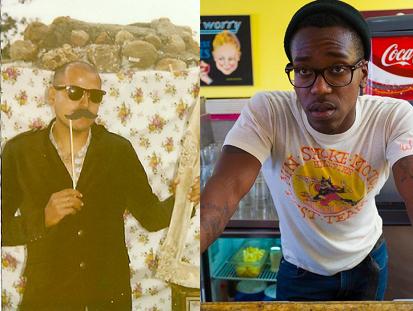
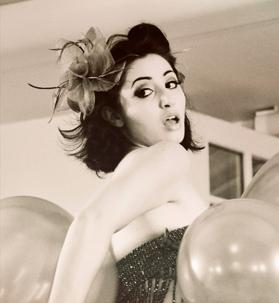
The culmination of a week of alternative porno presentations, tonight’s docket includes short blue films from around the world – something for everyone in this wild and wooly world of voyeurs. But cum early – the pre-screening party in the top floor of the Castro is gonna be balls, or at least mustaches. There’s a mustachio-ed photobooth and even more titillating, burlesque dancing courtesy of Twilight Vixen Review. 

Thu/22 party 7 p.m., screenings 8 p.m., $10 each

Castro Theatre

429 Castro, SF

(415) 621-6120

www.gv-ixff.org


Steam does Folsom

Get squeaky-durty at this installment of Steam, the SoMa bathouse resurrection party. So many ways to play: enter into the wet towel contest ($100 prize for the best terrycloth tease), massages for $1 per minute, cheap drinks, cheaper go-gos, and hard crusing into the kinkiest weekend in the Bay. Tunes by Honey Soundsystem’s DJ Peeplay help you get some. 

Fri/23 9 p.m.-2 a.m., $8 cover to benefit the SF Bay Area Leukemia and Lymphoma Society

Powerhouse 

1347 Folsom, SF

Facebook: Steam Does Folsom


San Francisco erotic art exhibition

From the candy-coated gazes of Yancy Mendoza’s models to the unique sextaur sculpture stylings of Peter Keresztury, there will be enough images of penetration, playtime, and penis at this group art exhibition to merit a stopover in your weekend of hedonism rendered art. 

Fri/23, 4-9 p.m.; Sat/24, 1-9 p.m.; Sun/25, noon-5 p.m., free 

The Artists Alley

863 Mission, SF

www.eroticartevents.com


Velvet

Play in the SF girls of Leather “fungeon,” and have a genderqueer good time overall at Mission Control’s queer-trans-boi-butch-femme puppy pile. Scenes from the Crash Pad Series will be playing all night to ensure that you’ve got inspiration for all the naughty things you’re about to do to your alt sex cupcake. 

Fri/23 8 p.m.-2 a.m., $20 Mission Control members only

Mission Control

www.missioncontrolsf.org


Show Me Where it Hurts

Sardine-pack into a crowd of the hottest, kinkiest dykes on the scene at this free party at the Lex. But dress to impress: Elizabeth and Buck Wilder are performing, DJs Jenna Riot and Durt are spinning… you’ll wanna look whip-smart at the night’s fetish-uniform costume contest. 

Sat/24 9 p.m., free

Lexington Club

3464 19th St., SF

www.lexingtonclub.com


Folsom Street Fair

400,000 fetish fans packed into 13 sunny city blocks – the mother of all fetish fairs takes over SF this weekend. Check for hard-bodied, sweaty-fisted action all over the place, but also the annual erotic artist’s corner and two stages of live music all day. Oh and hey, for a rad look at women’s role at the fair over the years, check out Amber Schadewald’s cover story on the SF girls of Leather from early this summer. 

Sun/25 11 a.m.-6 p.m., $10 suggested donation

Folsom between Seventh and 12th sts., SF

www.folsomstreetfair.org


Deviants: Official Folsom Street Fair after-party

There’s gonna be so much bump and grind at this union of Honey Sound System, Some Thing, and Hard French DJ crews that your harness will go bald. It’s only right – a minutes-long stumble from the main event in SoMa today gets you to the Erie Street cul-de-sac that Public Works looms over. Today, it’ll be blocked off for a outdoors-indoors party that have you screaming for more. The party features the hostessing powers of Sex Issue star Princess Donna http://bit.ly/oQu9mn and a photo confession booth staffed by queer porn maven Courtney Trouble. 

Sun/25 3 p.m.-4 a.m., $20-30

Public Works 

161 Erie, SF

www.publicsf.com


Because Princess says so

3

caitlin@sfbg.com

SEX ISSUE 2011 I saw Donna Dolore for the first time at a Hard French queer soul dance party at El Rio. I remember because she took my drink so authoritatively that I had no choice but to be okay with it. She sipped it, handed it back, and strode away. Can I get a thank you? Throughout the whole, sloppy afternoon, I noticed it was kind of her theme.

But no one seemed to care. Part of it was obvious: Dolore is a Sophia Loren with wider eyes, maybe a little taller, with the same generous tendencies towards sharing glimpses of the bust line. Only — I reflected, shortly before falling back into cheap-beer-and-go-go-dancer melee — that attitude. Who the hell is this woman?

Weeks later, I’m telling her the story in person in the cavernous break room at Kink.com’s headquarters in the San Francisco Armory (everything at the Armory is cavernous). It turns out that Dolore is in fact, a pretty big deal. Just ask her legions of heavy-breathing fans who know her as Princess Donna, the Kink.com director and star queer dominatrix.

“Oh my gosh, I did that?” At the office from where she plans shoots for the three Kink websites she heads, Dolore is a less formidable figure. She’s not wearing any makeup. Her black outfit makes her look like she’s about to take off for a light jog around the Mission.

But she might just be being coy. After all, I’d stalked her up good before our appointment and had come across this gem in a video interview she did a few years back: “I’m pretty true to form — Princess Donna acts a lot like I do.”

Dolore double majored at New York University, perfectly enough, in gender and sexuality studies and photography. She became a stripper while at school, and then on a tip from a coworker, got into professional BDSM shoots. Although she had been to some BDSM play parties, the work was the first time she’d ever been tied up.

“I was immediately into the challenge of being in a really stressful position — being flogged or caned, total sensory overload,” she remembers. “I would leave a shoot feeling really invigorated, a stronger person. It made me want to see what my body was capable of.”

Nowadays, Princess Donna sits — utterly sexily, usually in a short skirt and fuck-me heels — atop the Internet BDSM porn puppy pile.

At Kink she is the mind behind no less than three sites. For “Public Disgrace,” Dolore makes trips around the world to supervise the stripping-down, feeling-up, and penetration of beautiful women in town squares and busy bars. On “Wired Pussy,” she plays with electrical equipment, inducing screaming orgasms in her female partners.

In her latest endeavor, “Bound Gang Bang,” Dolore supervises teams of horny men and one or two women in fantasy-type shoots: high school nerds get their revenge on the bitchy mean girls, a prison warden drops her key and winds up giving head to inmates through a chain link fence. She has guest-starred in many of Kink’s different sites, usually as a top, sometimes as a bottom.

“I get stressed out because we have so much content to produce,” says Dolore, who works on one or two shoots a week. “But it’s a challenge that I enjoy.” One gets the sense that at Kink, Dolore has found a place that can nurture her talent for perversion.

http://www.youtube.com/watch?v=bYkStoeNtuw

Like most of Kink’s offerings, Dolore’s sites are unapologetically brutal. Women are dominated, wind up covered in ejaculate and with bound breasts that are agonizing to look at (well, at least for the BDSM newbie).

This is exactly the kind of stuff that sends shivers — the bad kind — up the spines of anti-porn feminists. But Dolore is a feminist too. As articulate as she is and as prominent she is and as wild as her porns are, she’s often called on to defend BDSM’s treatment and portrayal of women.

“I think the exact opposite of the people that think that BDSM would promote violence against women,” she says. That tired question — “is porn degrading to women?” — is something that Dolore finds degrading. Why, she asks, don’t the anti-porn musketeers ask the same of men in the industry?

“What is going on in our society that we continue to see sex as something that is put on women that they don’t desire? Why can’t we fathom it being a dream job for a woman?”

Kink is doing its part to raise awareness about the sexual pleasure that can be experienced by submissive actors. Before and after each shoot, the man or woman who you’ve watched screaming, a cattle prod or vibrator pressed against their genitals, is interviewed. That familiar dazed after-sex look is all over their faces, and their endorphin-heavy perk is really all you need to know what Dolore says is true: the models at Kink really, really love their job.

Delore contests the notion that only people who have been sexual abused take pleasure in pain, although she says you’ll find abuse victims in porn studios, just like any other workplace.

“Unfortunately, you could look to any profession and say a lot of them were abused as kids. You could look at secretaries and say that. Personally, I wasn’t sexually abused.” She smiles. “I’m just a natural pervert.”

Delore’s a regular on the queer party circuit — this week, you can catch her stealing drinks at Sunday’s “Deviants” Folsom Street Fair closing party. Her exuberance in exploring the outer realms of sexuality haven’t gone unnoticed in the San Francisco sex community. Kelly Lovemonster, editor of the queer quarterly sexuality zine [SSEX BBOX] is a close friend of Dolore, and calls her a “super heroine.”

“Even when she is portraying a submissive bottom, being cattle prodded, nipples clamped down and attached to electric cords, you can tell she is absolutely in control,” says Lovemonster. “She shows us that our dirtiest, scariest, and wildest sexual fantasies can come true through healthy communication and BDSM play. She rescues us all from a world where sexuality is suppressed and made shameful.”

This, according to Dolore, is a big part of why what Kink produces is important. The website puts BDSM urges out there, lets people that get turned on by being slapped across the face know that they’re not the only ones.

For the dis-empowered and isolated BDSM fan, that can be heady stuff. “You can explore your rape fantasy in a way that the woman is in control of what’s happening to their body — it’s a way to relive a situation where you had no control and relive it in a way in which you do have control,” says Dolore.

In a direct repudiation of the claims that abuse victims fall into BDSM for unsavory reasons. Dolore says she’s seen rough sex and power play rehabilitate partners whose sexuality seems terminally fucked. “I’m not a therapist but I feel like I am sometimes.”

But when I ask her if she considers herself an activist, she says no.

“When I think of the word activist, I think of people who are more outspoken than I am. I do my thing on my website, and people can come watch it if they want to.”

Which is not to say that the forward girl at Hard French doesn’t think she’s affecting change. Says the princess: “I’m just happy that I can help people be honest about what they want in bed.” 

DEVIANTS: OFFICIAL FOLSOM STREET FAIR CLOSING PARTY

Sun/25 4 p.m.-3 a.m., $20-30

Public Works

161 Erie, SF

www.publicsf.com


Hot sexy events: September 14-20

0

There are times to rejoice that we live in a city as alt-hot as we do, and this is one of them. Around the country, pornography theater might call up images of lonely men in trenchcoats – but in SF, it can mean a community celebration of sex positivity – and yeah, it’s going to be hot. 

The Indie Erotic Film Festival starts this weekend and continues to the middle of next week (Sat/17-Thu/22). The sweaty-palmed nights will include screenings of films, from Naked Sword to the works of Shine Louis Houston and the ever-fabulous short film competition, for which festival sponsor Good Vibrations has solicited snippets from around the world (New Zealand makes porn? Hooray!).

New to skin flicking? Worry not because opening night of IXFF doubles as its own 101 course. Susie Bright, sex activist is putting her erotic film criticism to work for a showing of her American porn retrospective. She’ll be speaking about the revolutionaries of pornography – maybe at the end of the festival you’ll have learned other names she can add to her list.  


Bawdy Storytelling: Candy From Strangers

The City Clinic triage survey includes a question that goes roughly like this: have you ever had sex with someone you weren’t able to contact the next day? That’s stranger danger, boys and girls – lust that has to be congratulated for its sheer simplicity. This month’s Bawdy features live stories told by local luminaries about anonymous encounters. Hey, maybe you’ll meet someone in the crowd… 

Wed/14 8 p.m., $10

The Blue Macaw

2565 Mission, SF

www.bawdystorytelling.com


Kinky Salon’s Pussyfest

Faster pussycat, faster – if you’re down to strap-on a tail and purr suggestively you’re gonna love this edition of the swinger’s party. It’s all cat costumes this time around – grab a partner and bring your catnip. 

Sat/17 10 p.m., $25-30 members only

Mission Control 

www.missioncontrolsf.org


Indie Erotic Film Festival

Gay, queer, straight as an arrow – you’re going to find something on screen you can scream to. Presentations of the films of Spain’s Erika Lust, Pink and White Production’s feminist queer porn producer Shine Louis Houston, even a night of shorts from around the world (this on Thu/22 at the Castro, preceded by a festival closing party with a mustache photo booth and burlesque prancers). 

Sat/17-Thu/22

Various times, prices, locations

www.gv-ixff.org


“Alchemy: Partner Tantra Yoga”

The town’s tantric center Dakini Temple is sending out its director out into the world to share its teachings. Bast is this emissary, and she’ll be teaching partners the basic of yogic sexuality. Male ejaculation control will be explored, as well as multi-orgasmic states and amrita – the female orgasmic ejaculation.

Tues/20 6:30-8:30 p.m., $45-50

Good Vibrations

1620 Polk, SF

(415) 345-0500

www.goodvibes.com 


Our Weekly Picks: September 14-20

0

WEDNESDAY 14

MUSIC

Fake Your Own Death

A few years back, local indie rockers Elephone received an infusion of new life via a teenage singer. Unfortunately, the procedure didn’t stick and the band met its demise. But if someone has to die, let it be the group. At least then the members can go on to new lives like the Downer Party and Kill Moi. Elephone guitarist Terry Ashkinos has found a survivor’s group in Fake Your Own Death. “Open my mouth to speak, but it’s old technology. Fake your own death, watch it on TV,” the band sings on one listless, sonorous track recalling the National. Dying is easy, what comes after is harder. (Ryan Prendiville)

With Bruises, Excuses for Skipping, DJ Neil Martinson (SMiLE!)

9:30 p.m., $10

Cafe Du Nord

2170 Market, SF

(415) 861-5016

www.cafedunord.com


MUSIC

Kylesa

Set your head to banging as Kylesa returns to San Francisco. The Savannah, Ga. double-drummed metal titans have taken music to its heaviest extremes, defying genre boundaries in favor of sheer crushing aggression. Formed by members of 90s sludge innovators Damad, Kylesa obliterates the boundaries between punk and metal, drawing fans of loud and heavy from all over the spectrum — its Pushead-designed logo is practically required adornment on black denim vests worn by crusties and longhairs alike. Last year’s Spiral Shadow, the band’s fifth full length album, proves that Kylesa shows no sign of mellowing out, even as they explore new horizons and incorporate increasingly psychedelic twists to their booming Southern sound. (Cooper Berkmoyer)

With Deafheaven and Castle

8 p.m., $15

859 O’Farrel, SF

(415) 885-0750

www.gamh.com


THURSDAY 15

DANCE

“Extinction Burst: a dance of lost movement”

How refreshing! For once we don’t have to feel guilty about contributing to the extinction of so many threatened species. Think those bottom-of-the-ocean crawlers who will be gone before we have even discovered them. Thank you, Chris Black. Her latest five-person dance installation, “Extinction Burst: a dance of lost movement” brings back to life — sort of — animals who are gone. She is a smart, experienced choreographer who can peek below of just about anything and twist her findings into dance theater that smiles as it informs. (Rita Felciano)

7:30 p.m., $10–$12

California Academy of Sciences

55 Music Concourse, Golden Gate Park, SF

(415) 379-8000

www.calacademy.org


EVENT

Bonny Doon Press Club

Attention local oenophiles! As part of Press Club’s Visiting Vintner Series, Randall Grahm, the founder of Bonny Doon Vineyards (located just to our south in Santa Cruz County) will be on hand tonight for a meet and greet — and to lead tastings of his outstanding wines. The independent owner and author of Been Doon So Long (University of California Press, 2009) has gained a well-earned reputation for innovative ideas in several areas of his business, including the introduction of screw cap bottles and unique labels. His delicious wines, however, remain the real reason for his success, and he’ll be bringing along several limited production varieties for aficionados to enjoy. (Sean McCourt)

6-9 p.m, free admission, tasting flight $21

Press Club

20 Yerba Buena Lane, SF

(415) 744-5000

www.pressclubsf.com


MUSIC

Part Time

Part Time, San Francisco’s lo-fi darling of the moment, is a visitor from another time, a dimension in which the early 80s never soured and the party lived on forever. The debut album What Would You Say?, released by Mexican Summer earlier this year, plays like some fabled bedroom pop gem, thought lost for decades until rediscovered one sunny day at a flea market, wedged between a Barbra Streisand Christmas album and The Return of Bruno. Don’t be fooled into thinking it’s just a novelty band, though. The vintage aesthetic belies Part Time’s innovation on a retro template and the captivating pop goodness it crafts — danceable tunes that sound like home recorded Prince demos with a teenage goth edge. (Berkmoyer)

With Pamela, Surf Club, and Permanent Collection

9 p.m., $5

Thee Parkside

1600 17th St., SF

(415) 252-1330

www.theeparkside.com


DANCE

Project Bandaloop A vertical dance floor ain’t no thing for Project Bandaloop. They’ve been soaring across mountains, skyscrapers, and other breathtaking sites for two decades with work inspired by the possibilities of climbing and rappelling. For the group’s 20th anniversary season, it will take on the Great Wall of Oakland in Bound(less), a multimedia event, synthesizing years of creativity under the direction of Amelia Rudolph. The free performance features a live band in addition to fearless physicality and grace. After years of interacting with environments and audiences around the world, Project Bandaloop’s aerial dance brings a daring artistic edge to the notion of climbing as the vertical ballet. (Julie Potter)

Thurs/15-Sat/17, 8:30 p.m., free

The Great Wall

West Grand Ave. at Broadway, Oakl.

(415) 421-5667

www.projectbandaloop.com


FRIDAY 16

MUSIC


Bayonics

On a cold San Francisco summer night in a Bayview recording studio, Bayonics were talking about when they knew they’d made it big. It happened on Craigslist actually. Members of the Latin-hip-hop-soul-funk-reggae-country (yeah, it goes there) big band spotted an ad from an SF high school bandleader that was looking for new musicians “with a Bayonics-style sound.” Such a tale could only come from a crew with a strong sense of place — and the group (which shares tonight’s bill with Samoa-via-Compton island reggae smoothie J. Boog) sure enough struts its Bay cred during its live shows. Guaranteed to be an ass-shaker, the long-awaited release party for the new album Mission Statement celebrates urban SF sound. (Caitlin Donohue)

With J. Boog 9 p.m., $25

Mezzanine

444 Jessie, SF

www.mezzaninesf.com


SATURDAY 17

EVENT

Rock Make Street Festival

There are so few things in this life that are truly good and free without some sort of hitch. The Rock Make Street Festival — now in its fourth year — is a genuinely fun (and free) outdoor party in the Mission, presented by the Bay Bridged blog, the band Tartufi, and accessory makers Cookie and the Dude. Live bands this year include mainstay Tartufi, along with Birds & Batteries, Bare Wires, Battlehooch, Cannons & Clouds, and more ampersand-less acts. There also will be not-free food truck eats and crafts made by local merchants. True story: I bought my brother a heather gray shirt with a huge California screen-print at the first Rock Make Street Festival and he’s worn that thing into the ground — it’s nearly threadbare. (Emily Savage)

Noon-7 p.m., free

Treat at 18th St., SF

www.rockmake.com


MUSIC

Bring Your Own Queer

You can either load your favorite rainbow-flavored, gender-hopping, sexually transgressive buddy into your bright red Radio Flyer wagon and haul zhim down to this wild free daytime outdoor dance party and arts festival at the Golden Gate Park bandshell — or you can just polish the unicorn horn on your own inner Q until it becomes a blinding beacon and go mingle with a planetload of other fabulosities. (Say, is “Planet Unicorn” retro yet?) In any case: come here, be queer, get shoes for it. DJs Juanita More, the Honey Soundsystem queens, and very special person DJ Bus Station John will provide diverse sounds. Appearances by Adonisaurus, Chica Boom, Philip Huang, the Vagine Regime from Bay Area Derby Girls, and Titland will surely tickle. There will be a fashion forest OMG hi. (Marke B.)

Noon-6 p.m., free

Golden Gate Park Music Concourse

50 Hagiwara Tea Garden Dr., SF

www.byoq.org


MUSIC

Peter Hook and the Light performing Closer

The odd thing about New Order’s disintegration in 2007, with Peter Hook leaving seemingly for good, is that he would tour on Joy Division material. Perhaps it’s simply a commentary on the state of affairs: Hook has attributed illegal downloading to shrinking royalties and live performance are the way to work the back catalog. In any case, his band will perform Joy Division’s final album Closer, a highly acclaimed, darker work that appears on t-shirts less often than Unknown Pleasures, which he played to a packed crowd last year. Obviously, it’s no more Joy Division than upcoming New Order dates without Hook will be New Order, but it will be a showcase for the man’s influential bass style. (Prendiville)

With Oona, DJ Tomas Diablo (Strangelove) 9 p.m., $22

Mezzanine

444 Jessie, SF

(415) 625-8880

www.mezzaninesf.com


MUSIC

Basscenter III

Tempo-mashing electronic artist Bassnectar returns to the Bay Area for the first time since last year’s sold out show at the Fox Theater. This time, however, he’s bringing his Basscenter event started in 2010, previously held in Broomfield, Colo. and Asheville, NC. Bass-ically it’s a three ring circus (no really — the Vau de Vire Society will be performing) with an eclectic lineup of support. With a more straightforward electro sound, it should be interesting to hear how Wolfgang Gartner works the crowd. And while I don’t generally think of wobbly bass when I think of Dan Deacon, his Tim and Eric musical aesthetic brings a certain ADHD liveliness that only the headliner can match. (Prendiville)

With Bassnectar, Big Gigantic, Wolfgang Gartner, Dan Deacon 7 p.m., $40

Bill Graham Civic Auditorium

99 Grove, SF

www.apeconcerts.com


SUNDAY 18

MUSIC

Rorschach

Listening to Rorschach is like being held down and methodically punched in the face. The powerviolence progenitor from New Jersey paved the way for the last two decades of hardcore, alternating between breakneck blast-beat assaults and almost unbearably heavy breakdowns. The 1991 Rorschach/Neanderthal split is a classic of the genre: four songs in under five minutes that helped launch the race to make the meanest music in the world. Although Rorschach called it quits in 1993 after only four years, the band’s varied catalogue has remained an important influence in both the punk and metal scenes; after jumpstarting 90s hardcore, Rorschach went on to lay the foundations of metalcore. Reformed in 2009 for a short East Coast tour, Rorschach is making its way to the bay for what’s sure to be a memorable, if brutal, night. (Berkmoyer)

With Early Graves, Kowloon Walled City, and Kicker

9 p.m., $10

Thee Parkside

1600 17th St., SF

(415) 252-1330

www.theeparkside.com


TUESDAY 20

MUSIC

Laudanum

Laudanum is the East Bay king of doom and gloom, a four piece of the most crushing proportions that features members of Asunder, the other heaviest band in the bay, as well as the now defunct Graves at Sea. If a regent of hell ever enslaved the earth, or a zombie monarch rose to reclaim its throne, it would make sense for Laudanum to compose the coronation march. The slow atmospheric drone is notably more sinister sounding that most contemporaries, drawing black metal influences into the rigor of stoner metal with tortured vocals and dissonant progressions. It’s what an evil bearded wizard riding on the shoulders of a club wielding giant puts on his iPod to jam out to as he lays waste to his enemies and slaughters the innocent. Or, ya’ know, it could be a Zune: evil wizards don’t have brand loyalty. (Berkmoyer)

With the Body and Braveyoung

9 p.m., $7

Hemlock Tavern

1131 Polk, SF

(415) 923-0923

www.hemlocktavern.com

Instant replaya

0

SUPER EGO Dear burners,

I am absolutely NOT BITTER that I couldn’t join you this year. And I certainly DID NOT wrap myself in a hot-pink bedsheet, spin around until I saw Ganesh, puke up 23 packets of Tasty Bites, and throw a fistful of chickpea flour in my roommate’s face, screaming “Rites of passage, bitch!” so that I could virtually burn. And then I didn’t fist-pump to vintage Bassnectar, nor construct a 12-foot flashing Alexander Wang Summer 2011 fun-fur ankle strap high-heeled sandal in our foyer out of wire hangers, chicken bones, old Dell motherboards, and tuck tape.

Does anyone have a couch I could crash on? Preferably one of those big red lips-shaped ones?

In a sort-of pathetic attempt to even things out a bit, here’s what you missed: a gaggle of the hottest nerds in the world cruising Zinefest; the best Bloody Mary ever at my new-old favorite bar, Little Shamrock; Optimo DJs blowing minds at Public Works by dropping one of the first industrial tracks, Liasons Dangereuses’ “Los Niños del Parque”; German frenzy-whipper Matthias Tanzmann slaying with Maxwell-sampling summer smash “Entrance Song” by Eats Everything at Mighty, the supernova heat-explosion of Oakland Pride … and I’m not even on Sunday evening yet. So, you know, nyah.

ARAABMUZIK AND DJ FUNK

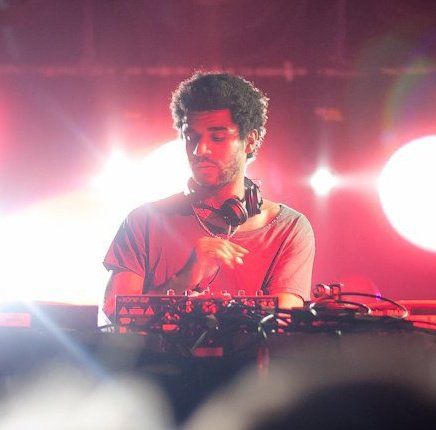
Young Rhode Islander Abraham Orellano, a.k.a. Araabmuzik, is actually of Dominican-Guatemalan descent – his crew dubbed him Araab when he was a teen. (Why? Because he’s so fine like the rest of us Arab brothers?) But beyond the Google-gold moniker, Araab’s emblematic of a neat trend right now in our frantic niche-crossover times: he’s a hip-hop beatmaker (Cam’ron, Duke Da God) with a touching love for poppy old dance music, using his genius manual dexterity with big-buttoned, retro-looking Music Production Center devices in his live act to melt dance floors into stunned lumps of woah.

This year’s Electronic Dreams album subtly warps goofball “Night at the Roxbury”-type ’90s dance anthems like Future Breeze’s “Why Don’t You Dance With Me” and Starchaser’s “So High” – and even gabber-house noise-blast “Underground Stream” by Nosferatu – into haunting documents of a young man’s often-lonely street life. Araab’s polishing songs I spent a good part of my life running in terror from into weird mirrors of interiority, fusing futuristic bedroom-producer headspace with retro big-room boom. And the dude’s just getting started.

http://www.youtube.com/watch?v=QeJcUz7nSYk

Also headlining this month’s Lights Down Low party is DJ Funk, a Chicago booty-bass legend who pioneered the “ghetto house” sound that still holds the Midwest underground in its filthy, rump-slapping grip. Funk’ll get the panties wet; up to you to rip ’em off.

Fri/9, 9:30 p.m.-3 a.m., $15. SOM, 2925 16th St., SF. www.som-bar.com

VIRGO FOUR

The word “timeless” sure gets thrown around a lot in this retro-minded era. And I’m fine with that, as long as the hype keeps fuelling comebacks like Virgo Four’s. At the moment, timeless, in techno terms, is almost a spatial distinction – and records like the Chicago duo’s wonderful “Vision” from 1989 really do sound like something that steps swiftly out of the distant past and into tomorrow’s speakers.

Merwyn Sanders and Eric Lewis expertly stroked the house-techno-acid nexis of the time with a series of releases that now serve as a few vinyl collectors’ 401ks. They’ve been relatively silent in the 20-odd years since, but from what I’ve heard on the virtual grapevine, their reunion DJ sets are deep and smoking. Honey Soundsystem and the No Way Back boys are pairing up to present this one, so the party should be mixed-crowd, no-attitude bliss.

Fri/9, 10 p.m.-4 a.m., $15. Public Works, 161 Erie, SF. www.publicsf.com

TRUCK RELAUNCH WITH CHRISTEENE

One of San Francisco’s cutest macho gay bars is having a makeover-do-over, with new co-owner Matt Bearracuda from the West Coast’s insane Bearracuda bear dance parties joining already-owner Paul Miller at the helm. Apparently, a new menu, new parties, new faces are in store (and I bet a lot of those faces will be fuzzy in a good way).

http://www.youtube.com/watch?v=QkL9Fpp1FF4

First up, the actually insane trash drag rapper r&b clown-whore Christeene (www.christeene.org) performs some “opening” numbers. I don’t really “get” her, which just might be an endorsement!

Sat/10, 8 p.m., free. 1900 Folsom, SF. www.trucksf.com

On the Cheap Listings

0

WEDNESDAY 7

Grant application seminar Independent Film Center, 145 Ninth St., SF. (415) 402-2794, www.creativeworkfund.org. 6-7:30pm, free. The Creative Work Fund is giving out up to $810,000 to local artists — and it’s hosting a series of workshops that will guide potential applicants through the process of submitting their proposal. The program is focusing on media (computer, audio, digital, and film) and performing artists this time around — if you fit the bill, you might want to look at letting this organization fit out your bills.

THURSDAY 8

Captive Genders: Trans Embodiment and the Prison Industrial Complex reading Modern Times Bookstore, 2919 24th St., SF. 7-9pm, free. A ground-breaking new book examines the relationship of queer, trans, and gender non-conforming people and the prison industrial complex. Contributors to the book — a group that includes past and present prisoners, academics, and activists — will speak at this reading. The event could be a call to action on an under-reported conflict.

Back to school dog and kid party Wag Hotel, 25 14th St., SF. (415) 876-0700, www.waghotels.com. 5-7pm, $5 suggested donation. The SF SPCA is bringing adoptable woofs to this meet-and-greet (don’t bring Junior if you’re not trying to walk away with a new best friend?). Kids will also be able to participate in the shelter’s Puppy Dog Tales Reading Room program.

FRIDAY 9

Rally in the Alley 100-199 Ames, SF. www.alleyproject.ning.com. 5:30-8pm, free. Ames Alley (between 22nd and 23rd streets and Dolores and Guerrero) has recently been renovated — the new alleyway features solar lighting, vertical gardens… whoa, water-permeable pavement!? This calls for a celebration, and a celebration is what you’ve got coming to you. Today, join food vendors, an art exhibit, live music, and more to welcome the newly spruced-up walkway to the neighborhood.

SATURDAY 10

Babylon Salon Cantina, 580 Sutter, SF. www.babylonsalon.com. 7pm, free. ZYZZYVA’s longtime editor Howard Junker is a free agent now, so he’s got the time to focus on his own projects — share in their glory at this event, where Junker will be reading from his “proto-memoir-ish blog novel of ideas” tentatively titled An Old Junker. Other readers for the night include authors Nick Krieger, Laura Goode, and magician Robert Strong.

Haight Street Hop Milk, 1840 Haight, SF. www.milksf.com. 9pm, $5 before 10pm, $10 afterwards. Bingo, boobies, DJs, dancing: such is the multi-faceted entertainment that awaits you at this something-for-everyone ho-down. Burlesque bingo? Free hairdos from professional stylists? What is going on here really, this is just getting too crazy.

Ghirardelli Square Chocolate Festival Ghirardelli Square, SF. www.ghirardellisq.com. Noon-5pm, free. Sure, you’ve got shell out some dough to sample the goods at this fest in the heart of tourist town, but monkeys come free! Paul Frank — the company of that iconic Julian monkey face, and all your adolescent nieces favorite cartoon-cute T-shirts — is coming to town. Representatives from the brand will be holding a contest for “king and queen of puppy prom,” and while we hesitate to qualify what the hell that means, it seems safe to say you should bring your dog.

SUNDAY 11

Drum for Peace gathering Numi Tea Garden, 2230 Livingston, Oakl. (877) 686-4832, www.numiteagarden.com. 3-6pm, free. A fundraiser for Altitudinal Healing Connection’s ArtEsteem youth arts education program, this gathering is sure to be very “Kumbaya” — which given this day’s recent history, probably isn’t the worst thing ever. Love your neighbor and all that, people. 


Submit items for the listings at listings@sfbg.com. For further information on how to submit items for the listings, see Picks.

Eric Quezada. Presente.

2

By Roberto Lovato and Jason Ferreira

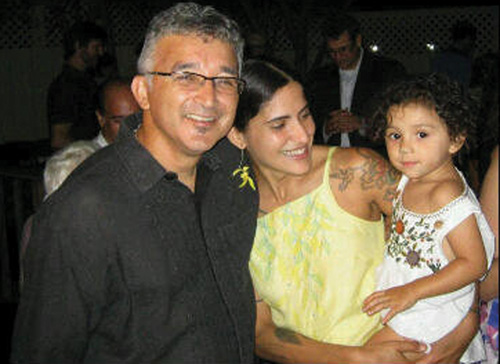
“I’d love to see a garden of flowers there,” whispered Eric Quezada a few days before his final breath on Earth. Looking like a Guatemalan Quixote, a lanky Eric pointed to the front of his Bernal Heights home with an index finger whittled down by a cancer he’d been fighting ferociously for seven years.

Days later, about 150 people brought pots packed with daisies, bougainvilleas, lavender, lots of red roses — and a bright bouquet of candles to bear witness to the life and friendship of a man who had planted his gentle way into our thoughts, our actions and—most especially—our hearts. To see the tearful and trembling faces of the diverse crowd — former Salvadoran revolutionaries, African American internationalists, soccer buddies made over a lifetime, immigrant rights advocates, Aztec dancers, Guatemalan family members, long time and recent Mission residents, queer leaders and the (Latino) Man Who Would Be Mayor — was heartbreaking. But at the same time we were all shining forth the beautiful Mission that Eric spent a lifetime steadfastly tending to with love.

A true revolutionary, our friend, our brother, who died Aug. 24 at 45, Eric Quezada, lived and died organizing his community, La Misión.

San Francisco and the wider community lost more than just a housing activist, a former candidate for supervisor, and an extraordinarily effective standard bearer of the left. We lost a husband-father-son-brother, a loyal friend and mentor, and a spiritual-political figure whose sources of beauty only became obvious after he gently touched you.

The son of Carlos and Clara Quezada, two Guatemalan immigrants known to many Mission residents as the dynamic duo that birthed two soccer stars (Eric and older brother Carlos) and owned CQ Bike shop on 24th Street, the very soft-spoken Eric lived to bridge the human and the political.

Traveling as a child between a San Francisco on the verge of the silicon revolution-based gentrification wave and wartime Guatemala, Eric developed early on a sense of the emotional and political circuits connecting movements and people on the insurgent continent of América. He grew up hearing stories of very involved and engaged family members like aunt, Ana Maria Quezada, who was arrested for protesting and organizing in Argentina during the 1978 World Cup, and his parents, who lived through the military coup that ousted democratically-elected Guatemalan President Jacobo Arbenz. “I remember hearing stories about Arbenz,” Eric once told us, adding, “—and how the U.S. sponsored the coup.”

Eric’s unique vision was also born out of the racism –and the resistance to it-back home in the Bay Area. Eric often talked of how his mother and he once witnessed two police officers harassing several young African American boys in the parking lot of a convenience store. Clara immediately took the officers to task for their racism, refusing to leave until they left the young boys alone. Eric never forgot his immigrant mother’s courage, her transcendent lesson: always stand alongside those who face injustice.

“Eric is a continuum,” fellow organizer and beloved compañera, Lorena Melgarejo, said. “His beliefs, his commitment didn’t stop in public. They are deep in how he thought about life. As a dad, as a friend, as a lover- that’s who he was,” said Lorena.

After Eric told her when they first met that he didn’t want to burden her with his cancer, Lorena responded: “You have no right to stop your life, you can’t close the door to life!” After that, they were never apart. Embracing life, one filled with no regrets, they fell in love immediately. A few years later, upon the arrival of their beautiful daughter Ixchel, Lorena reminded the larger-than-life, activist father that, “You can’t put your personal life on hold because there’ll always be an event, a meeting or some crisis in the world.”

As was obvious to anyone who really got to know him, one of Eric’s primary connectors to that wider, crisis-filled world of politics and culture was something seemingly apolitical: soccer.

“His politics were like his soccer playing,” explained Eric’s uncle, Edgar, who formed an important part of the Sagastume soccer dynasty in late 20th century San Francisco. “When Eric played, he was cool, but tenacious, hard working. He trained meticulously and never gave up. Eric was fond of saying how he “learned about the politics in different countries—Croatia, Greece, Mexico, El Salvador, England, all kinds—from playing in the San Francisco (soccer) leagues. You learned international relations and neighborhood politics at the same time.”

Such a schooling made Eric a ferocious ally of Central American revolutionary movements including the URNG in Guatemala, Sandinistas in Nicaragua, and the FMLN in El Salvador. These same commitments also served him well as a leader in the Venceremos Brigade to Cuba, where he met Fidel Castro, famously causing the Cuban leader to become nostalgic when asked about his memories of meeting Malcolm X in Harlem. Later, in 2002, he met with Hugo Chávez in Venezuela. They talked about everything from 21st century socialism to baseball. Beaming with the pride that only a lifelong—not fair weather—fan can display, Eric swore that Chávez was a huge fan of the San Francisco Giants.

The eclectic internationalism Eric envisioned and embodied was always two-way. He always strived towards reciprocity. Through Grassroots Global Justice and his work at the World Social Forum in Porto Alegre (Brazil), Eric sought to bring to the international stage the struggles of working class San Franciscans: day laborers, the homeless, people with HIV, and undocumented immigrants.

Eric’s journey reflected that of his mentor and dear friend, the legendary Bill Sorro (who himself died of cancer four years ago this very week). Both Bill and Eric were revolutionaries largely unsatisfied with the traditional rhetoric and disarming anger of the left. “We don’t struggle because we hate, we do so because we love. Yes, we may hate oppression but in the end we are fighting for something, we fight out of a place of love.” Eric never wavered in this.

Eric was a jazz man. A saxophone player, he believed in the art of improvisation and experimentation. At a time when the left was floundering, Eric brought a musical spirit to the necessary work of strengthening dialogue, analysis, and education in the community. He co-founded the Center for Political Education (San Francisco’s equivalent of the legendary Brecht Forum), which has served since 1998 as a catalyst for more effective organizing and as a space to build bridges.

Eric understood the centrality of compassionate bridge-building to political success. And like one of his heroes, Monseñor Oscar Romero, he will in his death rise again in his people. For Oscar Grande, a young community organizer with PODER, a Mission-based Latino environmental and economic justice organization, “Eric was instrumental in bringing radical politics and a visionary spirit to Mission politics,” said Grande.

Eric’s involvement in city politics was less about winning elections and electoral power than about the process of teaching the community how to deal with the powers that be. “He was about ‘let’s re-write the laws and get rid of the bums at City Hall so we can get the things our community needs: housing, open space and recreation opportunities at the material level,'” Grande said. But, according to Grande, who describes Eric as an “older bro/mentor,” Eric’s greatest contribution was spiritual.

“There are fewer and fewer schools of politics, places where you learn how to do politics,” said Grande. “Most of those that are still around in the Latino community are about deal-making, cozying up to the politicians. Eric offered an alternative. The spiritual and the political were always there. Those other fools started from the top-down. Eric started from the bottom up.” This was a key principle of the Mission Anti-displacement Coalition that Eric was instrumental in establishing.

During the last five years of his life, Eric’s bottom-up, interconnecting philosophy was realized at Dolores Street Community Services, a housing and community advocacy organization. For Wendy Phillips, longtime friend of Eric and DSCS Interim Executive Director, Eric was instrumental in securing real housing and other resources for different groups and in connecting DSCS and the Mission to immigrant rights, LGBT rights, and other struggles of our time.

“I think helping create MAC was a huge accomplishment of his because it stopped the massive wave of gentrifying capital entering the Mission. He and MAC mobilized hundreds of people to resist and show the board of supervisors and Mayor that the Mission wasn’t going to go down without a fight.” Their efforts resulted in a community rezoning process that has prioritized the creation of affordable housing in the Mission.

Phillips also noted that, while at DSCS, Eric also spearheaded the creation of the San Francisco Immigrant Legal and Education Network, a network of thirteen organizations that provide free legal services for immigrants, and, of course, advocacy. As if describing his soccer-inspired cosmopolitanism, she said, “Before it became obvious to most, Eric sensed that things were getting really bad on immigration and decided to create SFILEN, which unites Latino organizations, African organizations, Arab organizations, and Asian organizations in an effort to defend immigrants citywide.”

Eric’s defense of — and offensives in — La Mision continues to reverberate in and beyond his beloved neighborhood. “My campaign is really reigniting and reasserting the movement that Eric Quezada helped to build and grow,” said John Avalos, a serious contender in the upcoming Mayor’s race. Avalos, who has dedicated his campaign to Eric and his family, believes that Eric best symbolizes the continuation of the “movement of the people to build power against the downtown forces of gentrification and create livable neighborhoods where people can live with dignity.”

Eric Quezada spent his last days accompanied by loved ones. Along with Lorena, Ixchel and his mother, Eric was tended to and accompanied at his bedside by soccer buddies, family members, his closest personal and political friends, all of whom joined him in taking in the soothing sounds of his favorite music: guitarist friends playing boleros and bossa nova, CD’s of Los Lobos and Jorge Drexler, whose song “Todo Se Transforma,” (nothing is lost, everything is transformed) gave solace to Eric until his final breath. From the vantage point of our present heartbreak, it gives the rest of us hope.

In the lingo of the Latino and Latin American musical and political movements that informed Eric’s thought and action and his life in La Mision, “El Compañero Eric Quezada murio conspirando,” Comrade Eric Quezada died conspiring.

While in English the word “conspire” means to “make secret plans jointly to commit an unlawful or harmful act,” in political Spanish the word has an almost opposite meaning. Conspirar is closer to the Latin roots that combine con, meaning “together,” and spirare, the word for “breathing” and the origin of the word, “spirit.”

In this way, Eric conspired for a better world. After his last breath, he has left us a great spirit. We love you, carnal. Compañero Eric Quezada PRESENTE! La Lucha Continua!!!

(Note: The Community Celebration of Eric Quezada will take place on Sunday, September 25, 2011, 2-5 p.m. at Horace Mann Middle School, 3351 23rd Street

Those wishing to help Eric’s family can donate to the MAF — Ixchel Quezada Education Fund, http://missionassetfund.org/ixchel)

The real Leland Yee

53

tredmond@sfbg.com

It’s early January 2011, and the Four Seas restaurant at Grant and Clay is packed. Everyone who is anyone in Chinatown is there — and for good reason. In a few days, the Board of Supervisors is expected to appoint the city’s first Asian mayor.

The rally is billed as a statement of support for Ed Lee, the mild-mannered bureaucrat and reluctant mayoral hopeful. But that’s not the entire — or even, perhaps, the central — agenda.

Rose Pak, who describes herself as a consultant to the Chinese Chamber of Commerce but who is more widely known as a Chinatown powerbroker, is the host of the event. She stands in front of the room, takes the microphone, and, in Cantonese, delivers a remarkable political speech.

According to people in the audience, she says, in essence, that the community has come out to celebrate and support Ed Lee — but that’s just the start. She also urges them not just to promote their candidate — but to do everything possible to prevent Leland Yee from becoming mayor.

She continues on for several minutes, lambasting Yee, the state Senator who lived in Chinatown as a child, accusing him of about every possible political sin — and turning the Lee rally into an anti-Yee crusade. And nobody in the crowd seems terribly surprised.

Across Chinatown, from the liberal nonprofits to the conservative Chamber of Commerce, there’s a palpable fear and distrust of the man who for years has been among San Francisco’s most prominent Asian politicians — and who, had Lee not changed his mind and decided to run for a full term this fall, was the odds-on favorite to become the city’s first elected Chinese mayor.

The reasons for that fear are complex and say a lot about the changing politics of Asian San Francisco, the power structure of a city where an old political machine is making a bold bid to recover its lucrative clout — and about the career of Yee himself.

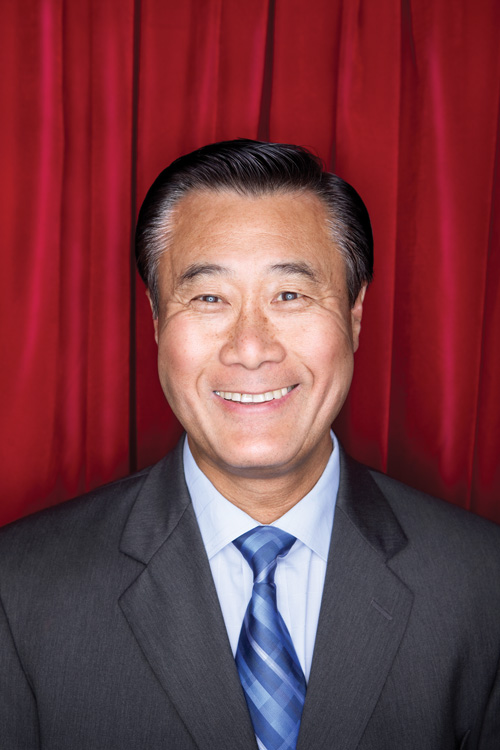
Senator Leland Yee is a political puzzle. He’s a Chinese immigrant who has built a political base almost entirely outside of the traditional Chinatown community. He’s a politician who once represented a deeply conservative district, opposed tenant protections, voted against transgender health benefits and sided with Pacific Gas and Electric Co. on key environmental issues — and now has the support of some of the most progressive organizations in the city. He’s taken large sums of campaign money from some of the worst polluters in California, but gets high marks from the Sierra Club.

His roots are as a fiscal conservative — yet he’s been the only Democrat in Sacramento to reject budget compromises on the grounds that they required too many spending cuts.

He’s grown, changed, and developed his positions over time. Or he’s become an expert at political pandering, telling every group exactly what it wants to hear. He’s the best chance progressives have of keeping the corrupt old political machine out of City Hall — or he’s a chameleon who will be a nightmare for progressive San Francisco.

Or maybe he’s a little bit of all of that.


Leland Yin Yee was born in Taishan, a city in China’s Guangdong province on the South China Sea. The year was 1948; Mao Zedong’s Communist Party of China had taken control of much of the countryside and was moving rapidly to take the major cities. The nationalist army of General Chiang Kai-Shek was falling apart, and Yee’s father, who owned a store, decided it was time for the family to leave.

The Yees made it to Hong Kong, and since Mee G. Yee had previously lived in the United States and served in the U.S. Army during World War II, he was ultimately able to move the family to San Francisco. In 1951, the three-year-old Leland Yee arrived in Chinatown.

For four years, Yee lived with his sister and mother in a one-room apartment with a shared bathroom while his father worked as a sailor in the merchant marine. It was, Yee recalled in a recent interview, a tight, closed, and largely self-sufficient community.

“The movie theater, the shoe store, the barber shop, food — everything you needed you could get in Chinatown,” Yee said. “You never had to leave.”

Of course, after a while, Yee and his mom started to venture out, down Stockton Street to Market, where they’d shop at the Emporium, the venerable department store. “It was like walking into a different country,” he said. “If you didn’t know English, they didn’t have time for you.”

Yee, like a lot of young Chinese immigrants of his era, put much of his time into his studies — in the San Francisco public schools and in a local Chinese school. “My mom spoke a village dialect, and we had to learn Cantonese,” he said. “Every little kid had to go to Chinese school. We hated it.”

When Yee was eight, his parents managed to buy a four-unit building on Dolores Street, and the family moved to the Mission, where he would spend not only the rest of his childhood but much of his early adult life. He graduated from Mission High School, enrolled in City College, studied psychology and after two years won admission to UC Berkeley.

Berkeley in 1968 was a very different world from Chinatown and even the relatively controlled environment he’d experienced at home in the Mission. “You didn’t protest in school. You’d have been sent home, and your mother would kill you,” he said.

At Berekely, all hell was breaking loose, with the antiwar protests, the People’s Park demonstrations, the campaign to create a Third World College (which led to the first Ethnic Studies Department), and a general attitude of mistrust for authority. “I developed a sense of activism,” Yee said. “I realized I could speak out.”

That spirit quickly vanished when Yee lost faith in some of his fellow activists. “People would work with us, then get into positions of power and use that against you,” he recalled. “A lot of my friends said ‘forget it.’ I left the scene.”

Yee once again devoted his energy to school, earning a masters at San Francisco State University and a Ph.D in child psychology from the University of Hawaii. Along the way, he met his wife, Maxine.

With his new degree, the Yees moved back to San Francisco — and back in with his parents at the Dolores property, where he, Maxine and a family that would grow to four kids would live for more than a decade.


Yee worked as a child psychologist for the San Francisco Department of Public Health, starting the city’s first high school mental-health clinic. He went on to become a child psychologist at the Oakland Unified School District, then joined a nonprofit mental health program in San Jose.

In 1986, Yee decided to get active in politics for the first time since college, and ran for the San Francisco School Board. He lost — and that would be the only election he would ever lose. In 1988, he won a seat, and established himself as an advocate for students of color, fighting school closures in minority neighborhoods. He also tried to get the district to modify its harsh disciplinary rules, arguing against mandatory expulsions.

On fiscal issues, though, Yee was a conservative. For his first term, despite the brutal cutbacks of the recession of the late 1980s and early 1990s, he insisted that the district make do with the money it had. His solution to the red ink: Cut waste. Only in 1992, when he was up for re-election, did he acknowledge that the district needed more cash; at that point, he supported a statewide initiative to tax the rich to bring money to the schools.

The sense of fiscal conservatism — of holding the line on taxes, but mandating open and fair contracting procedures and tight financial controls — was a hallmark of much of his political career. When the Guardian endorsed him for re-election to the board in 1992, we wrote that “there’s real value in his continuing vigilance against administrative fat and favoritism in contracts.”

Over the next four years, Yee worked with then-Superintendent Waldemar “Bill” Rojas, a deeply polarizing figure who pushed his own personal theory of “reconstitution” — firing all the staff at low-performing schools — and later was enmeshed in a scandal that led to prison time for a contractor he’d hired. Yee told me he was the only board member to vote against hiring Rojas, but people who were watching the board closely back then say he didn’t always stand up to the superintendent.

He also became what some say was a bit too close with Tim Tronson, a consultant hired by the district as a $1,000-a-day facilities consultant. Tronson wound up getting indicted on 22 counts of grand theft, embezzlement, and conspiracy in a scheme to steal $850,000 from the schools, and was sentenced to four years in state prison.

In 1998, when some school board members wanted to build housing for teachers on property that the district owned in the Sunset, Yee led the opposition — with Tronson’s help. At one meeting at Sunset Elementary School, Yee went so far as to say, according to people present, that “Tim Tronson is my man, and I rely on him for advice.”

Yee acknowledged that he worked closely with Tronson to defeat that housing project. “He was the facilities manager,” Yee explained, “and I said that I trusted his judgment.”


Yee has either a great sense of political timing or exceptional luck. He ran for the Board of Supervisors in 1996, facing one of the weakest fields in modern San Francisco history. He was the only Chinese candidate and one of just two Asians (the other, appointed incumbent Michael Yaki, barely squeaked to re-election). In an at at-large election with the top five winning seats, Yee came in third, with 103,000 votes.

He was never a progressive supervisor. In 2000, the Guardian ranked the good votes of what we referred to as Willie Brown’s Board, and Yee scored only 43 percent. He was against campaign finance reform. He supported the brutal gentrification and community displacement represented by the Bryant Square development. He voted to kill a public-power feasibility study and opposed the Municipal Utility District initiative. He opposed a moratorium on uncontrolled live-work development.

In 2002, Yee was one of only three supervisors to oppose Proposition D, a crucial public-power measure that would have broken up PG&E’s monopoly in the city. He stood with PG&E (and then-Sups. Tony Hall and Gavin Newsom) in opposition to the measure, then signed a pro-PG&E ballot argument packed with PG&E lies.

When I asked him about that stand, Yee at first didn’t recall opposing Prop. D, but then said he “stood with labor” on the issue. In fact, the progressive unions didn’t oppose Prop. D at all; the opposition was led by PG&E’s house union, IBEW Local 1245.

Yee was particularly bad on tenant issues. He not only voted to deny city funding for the Eviction Defense Collaborative, which helped low-income tenants fight evictions; he actually tried to get the city to put up money for a free legal fund to help landlords evict their tenants. He opposed a ballot measure limiting condo conversions. He opposed a measure to limit the ability of landlords to pass improvement costs on to their tenants.

In 2001, Yee voted to uphold a Willie Brown veto of legislation to limit tenancies in common, a backdoor way to get around the city’s condo conversion ordinance. Only Hall and Newsom, then the most conservative supervisors on the board, joined Yee. At one point, he started asking whether the city should consider repealing rent control.

He opposed an affordable housing bond in 2002, joining the big landlord groups in arguing that it would raise property taxes. Every tenant group in town supported the measure, Proposition B; every landlord group opposed it.

I asked Yee about his tenant record, and he told me that he now supports rent control. But he said that he was always on the side of homeowners and small landlords, and that property ownership was central to Chinese culture. “I was responding to the Chinese community and the West Side,” he said.

He wasn’t much of an environmentalist, either — at least not in today’s terms. He was one of the only city officials to support a “Critical Car” rally in 1999, aimed at promoting the rights of vehicle drivers (and by implication, criticizing Critical Mass and the bicycle movement).

His record on LGBT issues was mixed. While he supported a counseling program for queer youth when he was on the school board, he also supported JROTC, angering queer leaders who didn’t want a program in the public schools run by, and used as a recruiting tool for, the military, which at that point open discriminated against gay and lesbian people.


Yee was also one of only two supervisors who voted in 2001 against extending city health benefits to transgender employees.

That was a dramatic moment in local politics. Nine votes were needed to pass the measure, and while eight of the supervisors were in favor, Yee and Hall balked. At one point, Board President Tom Ammiano had to direct the Sheriff’s Office to go roust Sup. Gerardo Sandoval, who was ducking the issue in his office, to provide the crucial ninth vote.

Yee didn’t just vote against the bill. According to one reliable source who was there at the time, Yee spoke to a community meeting out on Ulloa Street in the Sunset and berated his colleagues, quipping that the city should have better things to do than “spend taxpayer money on sex-change operations.”

It was a bit shocking to trans people — Yee had, over the years, befriended some of the most marginalized members of what was already a marginalized community. “There was one person at the rail crying, saying ‘Leland, how could you do this to us,'” Ammiano recalled.

The LGBT community was furious with Yee. “I didn’t speak to him for at least a year,” Gabriel Haaland, one of the city’s most prominent transgender activists, told me.

Yee now says the vote was a mistake — but at the time, he told me, he was under immense pressure. When he voted for the queer youth program, he said, “the elders of the Chinese community ripped me apart. They called my mother’s friends back in the village [where he was born] and said her son was embarrassing the Chinese community.”

That must have been difficult — and he said that “if I had known the pain I had caused, I wouldn’t have voted that way.” But it was hard to miss that pain his vote caused.

On the other hand, people learn from their experiences, attitudes evolve, we all grow up and get smarter, and the way Yee describes it, that’s what happened to him.

In 2006, when he was running for state Senate, Yee met with a group of trans leaders and formally — many now say sincerely — apologized. It was an important gesture that made a lot of his critics feel better about him.

“He didn’t have to do that,” Haaland said. “People change, and he paid for his crime, and that’s genuine enough for me.”

As a former school board member, Yee kept an interest in the schools — but not always a healthy one. At one point, he actually proposed splitting SFUSD into two districts, one on the (poorer) east side of town and one on the (richer) west. “We strongly opposed that,” recalled Margaret Brodkin, who at the time ran Coleman Advocates for Children and Youth. “Eventually he dropped the idea.”

For all the problems, in his time on the Board of Supervisors, Yee developed a reputation for independence from the Brown Machine, which utterly dominated much of city politics in the late 1990s. His weak 43 percent rating on the Guardian scorecard was actually third-best among the supervisors, after Ammiano and the late Sue Bierman.

In 1998, he was one of the leaders in a battle to prevent the owners of Sutro Tower from defying the city’s zoning administrator and placing hundreds of new antennas on Sutro Tower. He, Bierman, and Ammiano were the only supervisors opposing Brown’s crackdown on homeless people in Union Square.

When he ran in the first district elections, in 2000, against two opponents who had Brown’s support and big downtown money, the Guardian endorsed him, noting that while he “can’t be counted on to support worthy legislation … He’s one of only two board members who regularly buck the mayor on the big issues.”

(He never liked district elections, and used to take any opportunity to denounce the system, at times forcing Ammiano to use his position as president to tell Yee to quit dissing the electoral process and get to the point of his speech.)


In 2002, the westside state Assembly district seat opened up, and both Yee and his former school board colleague Dan Kelly ran in the Democratic primary. Yee won, and went on to win the general election with only token opposition.

His legislative record in the Assembly wasn’t terribly distinguished. Yee never chaired a policy committee — although he did win a leadership post as speaker pro tem. And he cast some surprisingly bad votes.

In 2003, for example, then-Assemblymember Mark Leno introduced a bill that would have exempted single-room occupancy hotels from the Ellis Act, which allows landlords to evict tenants for no reason. Yee refused to vote for the bill. Leno was furious — he was one vote short of a majority and Yee’s position would have doomed the bill. At the last minute, a conservative Republican who had grown up in an SRO hotel voted in favor.

When he ran for re-election in 2004, we noted: “What’s Leland Yee doing up in Sacramento? We can’t figure it out — and neither, as far as we can tell, can his colleagues or constituents. He’s introduced almost no significant bills — compared, for example, to Assemblymember Mark Leno’s record, Yee’s is an embarrassment. The only high-profile thing he’s done in the past several years is introduce a bill to urge state and local governments to allow feng shui principles in building codes.”

In 2006, Yee decided to move up to the state Senate, and he won handily, beating a weak opponent (San Mateo County Supervisor and former San Francisco cop Mike Nevin) by almost 2-1. His productivity increased significantly in the upper chamber — and in some ways, he moved to the left. He’s begun to support taxes — particularly, an oil severance tax — and when I’ve questioned him, he somewhat grudgingly admits that Prop. 13 deserves review.

He’s done some awful stuff, like trying to sell off the Cow Palace land to private developers. But he has consistently been one of the best voices in the Legislature on open government, and that’s brought him some national attention.

Yee has been a harsh critic of spending practices and secrecy at the University of California, and when UC Stanislaus refused in 2010 to release the documents that would show how much the school was paying Sarah Palin to speak at a fundraiser, Leland flew into action. He not only blasted the university and introduced legislation to force university foundations to abide by sunshine laws; he worked with two Stanislaus students who had found the contract in a dumpster and made headlines all over the country.

He’s fought for student free speech rights and this year pushed a bill mandating that corporations that get tax breaks for job creation prove that they’ve actually created jobs — or pay the tax money back. He’s also won immense plaudits from youth advocates and criminal justice reformers for his bill that would end life-without-parole sentences for offenders under 18.

Along the way, he compiled a 100 percent voting record from the major labor unions, including the California Nurses Association and SEIU, and with the Sierra Club. All three organizations have endorsed him for mayor.

Yee told me that he thinks he’s become more progressive over the years. “My philosophy has shifted,” he said.

Yet when you talk to his colleagues in Sacramento, including Democrats, they aren’t always happy with him. Yee has a tendency to be a bit of a loner — he’s never chaired a policy committee and in some of the most bitter budget fights, he’s refused to go along with the Democratic majority. Yee insists that he’s taken principled stands, declining to vote for budget bills that include deep service cuts. But the reality in Sacramento is that budget bills have until this year required a two-thirds vote, meaning two or three Republicans have had to accept the deal — and losing a Democratic vote has its cost.

“You have to give up all sorts of things, make terrible compromises, to get even two Republicans,” one legislative insider told me. “When a Democrat goes south, you have to find another Republican, and give up even more.”

In other words: It’s easy to take a principled stand, and make a lot of liberal constituencies happy, when you aren’t really trying to make the state budget work.


I met Rose Pak on a July afternoon at the Chinatown Hilton. She brought along her own loose tea, in a paper package; the waitress, who clearly knew the drill, took it back to the kitchen to brew. Pak and I have not been on the greatest of terms; she’s called the Guardian all kinds of names, and I’ve had my share of critical things to say about her. But on this day, she was polite and even at times charming.

After we got the niceties out of the way (she told me I was unfair to her, and I told her I didn’t like the way she and Willie Brown played politics), we started talking about Yee. And Pak (unlike some people I interviewed for this story) was happy to speak on the record.

She told me Yee had “no moral character.” She told me she couldn’t trust him. She told me a lot of stories and made a lot of allegations that we both knew neither she nor I could ever prove.

Then we got to talking about the politics of Chinatown and Asians in San Francisco, and a lot of the animosity toward Yee became more clear.

For decades, Chinatown and the institutions and people who live and work there have been the political center of the Chinese community. Nonprofits like the Chinatown Community Development Center have trained several generations of community organizers and leaders. The Chinese Chamber of Commerce, the Six Companies, and other business groups have represented the interests of Chinese merchants. And while the various players don’t always get along, there’s a sense of shared political culture.

“In Chinatown,” Gordon Chin, CCDC’s director, likes to say, “it’s all about personal connections.”

There’s a lively infrastructure of community-service programs, some of which get city money. There’s also a sense that any mayor or supervisor who wants to work with the Chinese community needs to at least touch base with the Chinatown establishment.

Yee doesn’t do that. “He doesn’t give a shit about them,” David Looman, a political consultant who has worked with many Chinese candidates over the years, told me.

Yee’s Asian political base is outside of Chinatown; he told me he sees himself representing more of the Chinese population of the Sunset and Richmond and the growing Asian community in Visitacion Valley and Bayview.

Pak is connected closely to Brown, who Yee often clashed with. For Pak, Brown, and their allies, strong connections to City Hall mean lucrative lobbying deals and public attention to the needs of Chinatown businesses. Then there’s the nonprofit sector.

CCDC and other nonprofits do important, sometimes crucial work, building and maintaining affordable housing, taking care of seniors, fighting for workers rights, and protecting the community safety net. Yee, Pak said, “has never shown any interest in our local nonprofits. We all work together here, and he doesn’t seem to care what we do.” Yee told me he has no desire to see funding cut for any critical social services in any part of town. But he has also made no secret of the fact that he questions the current model of delivering city services through a large network of nonprofits, some of which get millions of taxpayer dollars. And the way Pak sees it, all of that — the nonprofits, the business benefits, the contracts — are all at risk. “If Leland Yee is elected mayor,” she told me, “we are all dead.”

I ran into an old San Francisco political figure the other day, a man who has been around since the 1970s, inside and outside of City Hall, who remains an astute observer of the players and the power relationships in the local scene. At the time we talked, he wasn’t supporting any of the mayoral candidates, but he had a thought for me. “This town,” he said, “is being taken over by a syndicate. Willie Brown is the CEO, and Rose Pak is the COO, and it’s all about money and influence.”

That’s not a pleasant thought — I’ve lived through the era of political machine dominance in this town, and it was awful. In the days when Brown ran San Francisco, politics was a tightly controlled operation; only a small number of people managed to get elected to office without the support of the machine. Developers made land-use policy; gentrification and displacement were rampant; corruption at City Hall turned a lot of San Franciscans off, not only to the political process but to the whole notion that government could be a positive force in society.

A few years ago, I thought those days were over — and to a certain extent, district elections will always make machine politics more difficult. But when I see signs of the syndicate popping up — and I see a candidate like Ed Lee, who’s close friends with Brown, leading the Mayor’s Race — it makes me nervous. And for all his obvious flaws, at least Leland Yee isn’t part of that particular operation. If there’s a better reason to vote for him, I don’t know what it is.

YEE HOME PURCHASE RAISES SUSPICIONS

Rose Pak has a question about Leland Yee. “How,” she asked me, “did the guy manage to buy a million-dollar house on a $30,000 City Hall salary?”

Pak isn’t the only one asking — numerous media reports over the years have examined how Yee raised a family of four and bought a house in the Sunset on very little visible income. And while I’m not usually that interested in the personal finances of political candidates, I decided that it was worth a look.

Here’s what I found: Public records show that in July 1999, Yee and his wife, Maxine, purchased a house on 24th Avenue for $875,000 (it’s now assessed at slightly more than $1 million). At the time, Yee was a San Francisco supervisor, earning a little more than $30,000 a year. (The salary of the supervisors was raised dramatically shortly after Yee left the board and went to the state Assembly.) His wife wasn’t working. And his economic interest statements for that period show no other outside earnings. So the disposable, after-tax income of the entire Yee family couldn’t have been much more than $25,000.

That, by any normal standard, shouldn’t have been enough to float a mortgage that, records show, totaled $516,000. In fact, the interest payments alone on that mortgage alone would total $3,600 a month — more than Yee’s gross income.

Documents in the Assessor’s Office show another paper trail, too. In 1989, Jung H. Lee, Yee’s mother, transferred the deed on a four-unit Dolores St. building where the family had been living to Maxine and Leland Yee — for no money. And a few months before the Yees bought the Sunset house, they took out a $320,000 home-equity loan on that property. That was the down payment on the Sunset property.

Still: At that point, the Yees would have been paying off two mortgages, with a total nut of about $5,000 a month — and supporting four kids, in San Francisco. In 2002, Yee’s economic interest statement’s show some modest income from teaching at Lincoln University — but nowhere near enough to pay that level of expenses.

What happened? Yee explains it this way: “For more than 10 years, we were living rent-free in my parents’ property,” he told me I an interview. “We were a close Chinese family, and my parents provided the food and helped pay for the children’s clothing. So we had almost no expenses and we lived very frugally.”

During that period, Yee was working for the San Francisco Department of Public Health, the Oakland Unified School District, and a San Jose nonprofit, earning, he said, between $50,000 and $90,000 a year. If he saved almost all of that money, he would have had more than a half-million dollars in the bank when he bought the Sunset house.

There’s nothing on any of his economic disclosure forms showing any ownership of stocks or other reportable financial interests during that period, so he wasn’t investing the money. In fact, he says, it was, and is, all in simple savings accounts. A bit unusual for that large a sum of money.

How did he get a mortgage? “Back then,” he said, “banks were willing to lend a lot more freely than they do today.”

Starting in 2003, Yee was in the state Assembly, making a higher salary — but still not much in excess of $100,000 a year. After taxes, he was probably taking home about $75,000 — and $60,000 was going to the two mortgages.

How did he do it? “We have been supplementing our income with our savings,” he said. “We don’t take vacations, we are very careful with our money.” And they clearly aren’t desperate for cash — Yee’s daughter occupies two of the four units in the Dolores St. building they own, but the other two units are vacant.

It’s possible. It’s plausible. But I don’t blame people for wondering how he managed to pull it off. (Tim Redmond, with research assistance by Oona Robertson) 


BIG CORPORATIONS HAVE BACKED YEE

Yee became a prodigious fundraiser in Sacramento — and a lot of the money came from big corporations that had business in the Legislature. And while he has perfect scores from the Sierra Club and the big labor unions, he’s taken tens of thousands of dollars from some of the biggest corporations, agribusiness interests, and polluters in the state. And at times, he’s voted their way.

Since 1993, for example, campaign finance records show Yee has taken more than $20,000 from Chevron, ExxonMobil, Valero, Conoco Phillips, and BP. He’s received another $22,450 from the chemical industry (and industry employees). Most of it came from Clorox, Dow Chemical, and Dupont.

And while the Sierra Club may not have considered it a priority, Sen. Mark Leno has worked hard to pass a bill limiting chemical fire retardants in furniture. In 2008, Yee voted against Leno’s AB 706.

That year he also refused to support a bill that would prohibit the use of the chemical diacetyl in workplaces. The industries that opposed AB 514 (including Bayer, Abbott Laboratories, Pfizer, and Johnson & Johnson) have given Yee a total of more than $60,000.

In 2003, Yee voted against a crucial tenant bill, one that would have prevented the owners of single room occupancy hotels from using the Ellis Act to evict tenants. He received a campaign check for $2,500 from the San Francisco Apartment Association the next day. Landlords in general have given Yee close to $40,000.

Then there’s agribusiness. Yee gets a lot of money from the farming industry, despite the fact that there obviously aren’t many farms in his district. Why, for example, would the California Poultry Association, the California Cattlemen’s Association, and the California Farm Bureau give him money? The Poultry Association’s Bill Mattos told us that Yee “has taken a keen interest in California’s poultry industry.”

Yee also took immense flak from the San Francisco Chronicle and other papers over a 2003 vote against a bill to limit emissions from farm vehicles. In an editorial, the paper wrote that he was “doing dirty work for the lobbyists.” In the end, under immense public pressure, he switched positions and voted for the bill. I asked Yee about all that money from all those bad operators, and he told me — as most politicians will — that campaign cash has never influenced any of his votes.

So why do all these groups give him money? “It’s about whether you will sit down and listen,” Yee said. “I will talk to all sides and at least consider the arguments as a thoughtful human being. Then I vote my conscience.” (Tim Redmond, with research by Oona Robertson) 

Vision statement

0

arts@sfbg.com

FALL ARTS You better start doing your stretches and invest in a good pair of walking shoes. There’s as much ground to cover as there is art to see this fall, and if you get to every gallery, studio, and museum on this far-from-comprehensive list your eyes will probably be as sore as your feet. But as any seasoned hiker will tell you, the views are well worth any aches incurred along the way.

Julie Heffernan: Boy Oh Boy II” “Boschian” is an oft-overused adjective in art writing, and Heffernan’s more-is-more paintings, chock-full of twisted allusions to Renaissance art (Bosch included) and all sorts of fantastic razzle-dazzle, will have you scrambling for synonyms. (Sept. 3–Oct. 29, Catharine Clark Gallery; www.cclarkgallery.com)

Pamela Jorden” I’ll leave the question of whether or not painting’s dead up to more qualified coroners, and simply state that the oil-on-linen works of the young, Los Angeles-based Jorden make a powerful case for the continued relevance of gestural abstraction. There are echoes of Richard Diebenkorn or Clyfford Still in Jorden’s fractured cataracts of color (her blues will make you blush), but compositionally her canvases evince an alchemy that’s entirely her own. (Sept. 16-Oct. 15, Romer Young Gallery; www.romeryounggallery.com).

SF Open Studios Artists, they’re just like us! Seriously, though, one of the many pluses of ArtSpan’s annual city-wide event is that it helps demystify and de-romanticize what it means to be a working artist. Get to know the creative types in your neighborhood, see where the magic happens, and maybe help stimulate the local economy (hint, hint). (Oct. 1-18, various venues; www.artspan.org.)

Lionel Bawden: The World of the Surface” The title of Badwen’s American debut is a half-truth. His sculptural works, comprised of hexagonal colored pencils grouped together and shorn, topiary-like, into amorphous shapes, suggest a world far below the surface: caves, fatty tissue, cells. Dive in. (Oct. 1–Nov. 26, Frey Norris Gallery; www.freynorris.com.)

Houdini: Art and Magic” How does a museum escape the confines of the now tired “contemporary artists responding to famous historical figure X” approach to curating? Do like the Contemporary Jewish Museum and put on a show about legendary escape artist Harry Houdini. Come for tributes by Vik Muniz, Jane Hammond, etc. (what, no Matthew Barney?) but stay for a recreation of his famous Water Torture Cell illusion, along with the hundred other bits of Houdiniana. (Oct. 2–Jan. 16., 2012, Contemporary Jewish Museum; www.thecjm.org.)

Ralph Eugene Meatyard” The very banality of Meatyard’s biography — he was a happily married optician in Lexington, Ken. who did photography as a weekend hobby — only makes his singular and startling body of work that much more so: from children creepily posed with dolls and masks to bold experiments with abstraction and “no focus” imagery, Meatyard’s pictures push into territory far more strange and wondrous than the Gothic South. (Oct. 8- Feb. 26, de Young Museum, www.famsf.org.)

“Geoff Oppenheimer” Oppenheimer makes conceptually smart and visually arresting installation and video work that frequently voices the unspoken dynamics behind public performances of controlled discourse, such as press conferences. Be prepared to be discomfited. (Oct. 28–Dec. 11, Ratio 3; www.ratio3.org).

The Air We Breathe” I have some serious reservations about the San Francisco Museum of Modern Art’s decision to organize their first major contemporary group show in a long while around “the cause of marriage equality” (for starters, why not host “Hide/Seek,” the previously censored and now traveling exhibit about same-sex desire and American portraiture currently at the Tacoma Art Museum, instead?). That said, something truly queer, politically risky and aesthetically challenging has gotta happen when you put specially commissioned works by the likes of John Ashbery, Dodie Bellamy, Raymond Pettibon, Ann Hamilton, and Robert Gober (and many others) under one roof, right? For now, consider my tongue held and eyebrow raised. (Nov. 5–Feb. 20, 2012; SFMOMA, www.sfmoma.org.)

Rep Clock

0

Schedules are for Wed/24–Tues/30 except where noted. Director and year are given when available. Double features are marked with a •. All times are p.m. unless otherwise specified.

ARTISTS’ TELEVISION ACCESS 992 Valencia, SF; www.atasite.org. $6-8. “Dimensions,” short film program curated by Cassandra Sechler, Fri, 8. “3rd I Queer Eye:” Flying With One Wing (Handagama, 2002), Sat, 7.

ALBANY 1115 Solano, Albany; www.unausaeastbay.org. $5-10. Sergio (Barker, 2009), Sat, 9:30am. Presented by the United Nations Association-USA East Bay Chapter in honor of World Humanitarian Day.

BALBOA 3620 Balboa, SF; www.balboamovies.com. $17.50-20. Swan Lake, from the Bolshoi Ballet, Moscow, Wed, 7:30. Nabucco, from Teatro Antico, Taormina, Sat-Sun, 10am.

CASTRO 429 Castro, SF; (415) 621-6120, www.castrotheatre.com. $7.50-13. •Double Indemnity (Wilder, 1944), Wed, 2:40, 7, and The Postman Always Rings Twice (Garnett, 1946), Wed, 4:40, 9:05. •Days of Heaven (Malick, 1978), Thurs, 3:10, 7, and Badlands (Malick, 1973), Thurs, 5, 8:55. “Midnites for Maniacs: An All-Night Tribute to Edgar Wright:” •Scott Pilgrim vs. The World (2010), Fri, 7, followed by Q&A with Edgar Wright, Hot Fuzz (2007), Fri, 9:45, and Shaun of the Dead (2004), Fri, 11:59. This event, $15. “The Peaches Christ Experience:” Showgirls (Verhoeven, 1995), Sat, 7. This event, $25-45.

“CENTER STREET SUMMER CINEMA” 2219 Center, Berk; (510) 548-5335, www.downtownberkeley.org. Free (bring your own chair, or $5 to rent a chair). The Big Lebowski (Coen, 1998), Sat, 7:30.

CHRISTOPHER B. SMITH RAFAEL FILM CENTER 1118 Fourth St, San Rafael; (415) 454-1222, www.cafilm.org. $10.25. The Names of Love (Leclerc, 2010), call for dates and times. Senna (Kapadia, 2011), call for dates and times. The Whistleblower (Kondracki, 2010), call for dates and times. Africa United (Gardner-Paterson, 2010), Thurs and Sun, 7. The Hedgehog (Achache, 2010) Aug 26-Sept 1, call for times.

“FILM NIGHT IN THE PARK” This week: Creek Park, 451 Sir Francis Drake, San Anselmo; (415) 272-2756, www.filmnight.org. Donations accepted. Harold and Maude (Ashby, 1971), Fri, 8; Mary Poppins (Stevenson, 1964), Sat, 8. Union Square, Geary and Powell, SF; same contact info. Roman Holiday (Wyler, 1953), Sat, 8.

PACIFIC FILM ARCHIVE 2575 Bancroft, Berk; (510) 642-5249, www.bampfa.berkeley.edu. $5.50-9.50. “Bay Area Animation:” “Twentieth-Century Animations,” Wed, 7; “Twenty-First Century Animations,” Sun, 7. “Hands Up: Essential Skolimowski:” Moonlighting (1982), Thurs, 7. It Conquered the World (Corman, 1956), Thurs, 8:30. Free outdoor screening in the BAM/PFA Sculpture Garden. The Makioka Sisters (Ichikawa, 1983), Fri, 7. “The Timeless Cinema of Marcel Pagnol:” Cigalon (Pagnol, 1935), Sat, 6; Angèle (1934), Sat, 7:50; The Baker’s Wife (1938), Sun, 4.

PARAMOUNT 2025 Broadway, Oakl; 1-800-745-3000, www.ticketmaster.com. $5. Dr. Strangelove, or: How I Learned to Stop Worrying and Love the Bomb (Kubrick, 1964), Fri, 8.

ROXIE 3117 and 3125 16th St, SF; (415) 863-1087, www.roxie.com. $5-9.75. The Arbor (Barnard, 2010), Wed-Thurs, 7, 9. Rita, Sue, and Bob Too! (Clarke, 1986), Wed, 9:20. Terri (Jacobs, 2011), Wed-Thurs, 7. Vigilante Vigilante (Good, 2011), Thurs, 9. Shut Up Little Man! An Audio Misadventure (Bate, 2011), Aug 26-Sept 1, 7, 9 (also Sat-Sun, 3, 5).

VICTORIA 2961 16th St, SF; www.threeminutepictureshow.com. $5-10. “Three-Minute Picture Show:” “Twinkling To-Do Film Screening,” family-friendly films made by 6-17 year-olds, Sat, 3:15 (ages 6-12) and 4 (ages 13-17); “Black-Tie Gala and Film Screening,” Sat, 7:15. YERBA BUENA CENTER FOR THE ARTS 701 Mission, SF; (415) 978-2787, www.ybca.org. Free. “Smut Capital of America: San Francisco’s Sex Cinema Revolution:” Resurrection of Eve (Fontana and Mitchell, 1973), Thurs, 7:30.

PSIgasm explores the science of the climax

0

Kinsey was an obvious pioneer of sexy science and the sexual revolution was sparked in the decades after his first studies contributed hard facts about human sexuality, but at this point his findings needs refreshing.

But instead of intensified sexual investigations, our country is regressing and the frigidness of conservative politics tied up with the pharmaceutical industry have pushed sex nerds away from researching healthy bodies to focus their attention on limp studies — deficiencies, dysfunction, and anything else that can be prescribed.

The PSIgasm Project, a Bay Area sex-positive research project, wants to jump back into the fun stuff and track down just what exactly the the big “o” does to the human body.

It may look like a super powerful dildo, but the PSIgasm is actually a fancy scienticfic device that records changes in body temperature, heat capacity, heart rate, blood volume, moisture, and movement; all signs pointing to orgasm. The smart instrument of pleasure was concieved in 2010 by Ned Mayhem, a PhD candidate in experimental physics at UC Berkeley and his lover Maggie Mayhem, an HIV prevention specialist, both of whom are sex positive activists, queer porn performers. The aim of their project is simple: to get people off and simaltaeously monitor the physiological responses correlated with arousal and orgasm. You can almost hear this city full of tech geeks pleading, “more, more!”

“The idea that the reactions to sex can be quantified blows their minds,” says Mr. Mayhem of excited audeinces and test subjects who have been introduced to the project. “Sex is usually talked about in a kind of ‘woo-woo’ way, but what’s going on in your body are real physical processes. When you’re turned on, it’s not just your mental state, or magic divorced from your body. It’s actual chemicals, flowing.”

psigasm

The scientific shaft, version II

Mr. Mayhem is currently bulking up version three of the PSIgasm, which involves a lot of technical tweaking and electronics upgrading to make sure it’s reliable enough for vigerous, all-night, hot and heavy testing. The plan is to record data from people with all different anatomies, gender identities, ages and cultures, engaged in sex for various reasons and in different places, like dungens, bedrooms, and backseats. If there were ever a research study that would gain ethusiastic volunteers in this city, PSIgasm would be it. 

The Mayhems want their findings to not only inform people about the wonders of their own bodies, but dispute society’s widespread misconceptions of “normal” sex by showing conclusive data that people orgasm from differnt types of action, both soft and rough, wild and quiet. The mobility of the PSIgasm will also keep the data honest by allowing individuals using the smart dildo to play privately however they please, without white lab coats standing over their shoulder.

Eventaully Mr. Mayhem plans to make all of the PSIgasm’s designs public so people can build their own equipement and anonomously share their data.

For the time being, he’s working the projects presentation for Arse Elektronika, which may or may not include a live demonstration. Now that sounds like exciting science!

Stage Listings

0

OPENING

Exit, Pursued By a Bear Boxcar Playhouse, 505 Natoma, SF; www.crowdedfire.org. $10-35. Previews Thurs/18-Fri/19, 8pm. Opens Sat/20, 8pm. Runs Wed-Sat (Aug 24-27 and Sept 7-17), 8pm. Through Sept 17. Crowded Fire performs Lauren Gunderson’s new play, a feminist revenge comedy.

Waiting for Giovanni Decker Theater, New Conservatory Theatre Center, 25 Van Ness, SF; www.nctcsf.org. $25-36. Previews Fri/19-Sat/20 and Aug 24-26, 8pm; Sun/21, 2pm. Opens Aug 27, 8pm. Runs Wed-Sat, 8pm; Sun, 2pm. Through Sept 18. This world-premiere play by Jewelle Gomez in collaboration with Harry Waters Jr. imagines a split-second of indecision in the mind of author James Baldwin.

BAY AREA

Toke Ashby Stage, 1901 Ashby, Berk; www.brownpapertickets.com. $25. Opens Thurs/18, 8pm. Runs Thurs-Sat, 8pm; Sun, 5pm. Through Sept 11. Swirl Media presents Deedee Kirkwood’s pot-fueled comedy.

ONGOING

Act One, Scene Two SF Playhouse, Stage Two, 533 Sutter, SF; (415) 869-5384, www.un-scripted.com. $10-20. Thurs/18-Sat/20, 8pm. Un-Scripted Theater Company hosts a different playwright each night, performing the first scene of an unfinished play and then improvising its finish.

“AfroSolo Arts Festival” Various venues, SF; www.afrosolo.org. Free-$100. Through Oct 20. The AfroSolo Theatre Company presents its 18th annual festival celebrating African American artists, musicians, and performers.

American Buffalo Actors Theatre of San Francisco, 855 Bush, SF; (415) 345-1287, www.actorstheatresf.org. $26-38. Wed-Sat, 8pm. Through Sept 3. Actors Theatre of San Francisco performs the David Mamet crime classic.

Bedtime in Detroit Boxcar Theatre Studios, 125A Hyde, SF; www.boxcartheatre.org. $15. Thurs/18-Sat/20, 8pm; Sun/21, 4pm. Boxcar Theatre’s first-ever Directing Lab Performance is of Ellen K. Anderson’s drama, set in Detroit on Devil’s Night.

Billy Elliot Orpheum Theater, 1192 Market, SF; www.shnsf.com/shows/billyelliot. $35-200. Wed/17-Sat/20, 8pm (also Sat/20, 2pm); Sun/21, 2 and 7:30pm. As a Broadway musical, Billy Elliot proves more enjoyable than the film. The movie’s T. Rex score may have been a major selling point, but it was a bit maudlin for a story that needed no help in that department. The musical naturally has a sentimental moment or three, but it’s much more often funny, muscular in its staging (with repeatedly inspired choreography from Peter Darling), and expansive in its eclectic score (Elton John) and well-wrought book and lyrics (Lee Hall). Moreover, Stephen Daldry (who also directed the 2000 film) plays up bracingly the too-timely class politics of the modest 1980s English mining town besieged by Margaret Thatcher’s neoliberal regime in the latter’s ultimately successful bid to crush the once-powerful miners union. The cast is likewise very strong. The second act is not as strong as the first, but as crowd-pleasing entertainment the musical burrows deep and more often than not comes up with gold. (Avila)

The Book of Liz Custom Made Theatre, 1620 Gough, SF; www.custommade.org. $25-32. Thurs-Sat, 8pm; Sun, 7pm. Extended through Aug 28. Custom Made Theatre performs David and Amy Sedaris’ comedy about an unconventional nun.

Gilligan’s Island: Live On Stage! 2011 Garage, 975 Howard, SF; www.brownpapertickets.com. $10-20. Sat-Sun, 8pm. Through Aug 28. Moore Theatre and SAFEhouse for the Performing Arts presents this updated, ribald take on TV’s classic castaways.

A Midsummer Night’s Dream Steve Silver Theater, 1101 Eucalyptus (on the Lowell High School campus), SF; www.bathwater.org. $20. Thurs/18-Sat/20, 7:30pm. Bathwater Productions performs an acrobatic version of the Shakespeare classic.

A Midsummer’s Night Dream This week: McLaren Park, Mansell St, SF; www.womanswill.org. Free (donations requested). Sat/20-Sun/21, 2pm. Performances continue at Bay Area parks through Aug 28. Woman’s Will performs the Shakespeare favorite.

The Nature Line Phoenix Theater, 414 Mason, SF; www.sleepwalkerstheatre.com. $17-20. Thurs-Sat, 8pm. Through Aug 27. With The Nature Line, Sleepwalkers Theatre concludes playwright J.C. Lee’s ambitious apocalypse trilogy, “This World and After.” Now well into the post-apocalyptic age, Aya (Charisse Loriaux) buries her miscarriages in the hardscrabble earth, tended by a blind one-breasted s/he named T (Amy Prosser) who plants a would-be garden and collects tattered love letters from a past when people could still physically — and emotionally — touch one another. All that’s been banished now, Aya’s friend Arty (Ariane Owens) tells us, along with the onetime plague of “sadness.” The few humans remaining huddle in the antiseptic arms of a corporate entity represented by a bossy nurse (Janna Kefalas) and her spacey assistant (Lissa Keigwin), who manage an artificial insemination clinic fueled by a stable of four comic-book–reared studs, or “dudes” in the argot of the future (a sensitive crooner smitten with Aya, played by Joshua Schell, and a boisterously adolescent fantastic three played by the roundly hilarious Roy Landaverde, Jeff Moran, and Jomar Tagatac). This all takes place at the edge of a vast, reportedly menacing frontier. Lured by an enchanting dream, and urged by T, Aya crosses over into this forbidding land, followed willy-nilly by everyone else, only to find another Eden of sorts, inhabited by the, at first, unrecognized figures of Aya’s lost and future familia (Soraya Gillis and Carla Pantoja) — a poignant moment comes in a bilingual reunion that magically erases barriers of language and time. Indeed, if Lee’s title suggests “line” as both lineage and division, the play recovers a timeless order by challenging the artificial lines between persons; people and “nature”; past, present, and future; or dream and reality. Director Mina Morita’s staging is fleet and at times poetic, while she gets generally solid performances from her cast (the more comical parts working best). Imaginative, just a little risqué, and reminiscent in its heightened vernacular, low humor, and romantic optimism of word-struck apocalypto-dramas like Liz Duffy Adams’ Dog Act, Nature is a well-constructed narrative with a theme and dialogue that can feel alternately eloquent and heavy-handed. That said, its final image remains an apt conclusion for the trilogy as a whole, amid another Eden where the first kiss, and first heartbreak, starts the beating all over again. (Avila)

Peaches en Regalia Stage Werx, 533 Sutter, SF; www.wilywestproductions.com. $12-24. Thurs-Sat, 8pm. Through Aug 27. The new comedy by Bay Area playwright Steve Lyons borrows its title from a Frank Zappa instrumental and stamps it on the menu of a local diner (tangibly evoked in Wes Cayabyab and Quinn J. Whitaker’s spiffy set design), where new employee and recent college graduate Peaches (an endearingly offbeat Sarah Moser) revels in her impulse decision to leave a job at an investment bank to work at a place with such an auspicious side dish. We meet Peaches, as well as best friend Joanne (Nicole Hammersla), nebbish customer Norman (Philip Goleman), and confident guy’s guy Syd (Cooper Carlson), through a set of discrete monologues, each illustrated with mute help from the other characters. Philosophies of life and hidden desires are all on display but the plot is a prix fixe menu of romance, marriage, and parenthood as deliberate encounters lead to unexpected matches. Sharp performances crisply directed by Sara Staley add zest to otherwise average comic fare, but the writing has several inspired flights of zaniness too. Questionable whether the second act’s course is warranted, however, since it’s plot to pull into parenthood a reluctant Norman — for whom the pace of events collapses nine months and more into a dizzying time warp — is a bit too I Love Lucy to concentrate on without itching to change the channel. (Avila)

Tigers Be Still SF Playhouse, 522 Sutter, SF; www.sfplayhouse.org. $30-50. Tues-Wed, 7pm; Thurs-Sat, 8pm (also Sat, 3pm). Through Sept 10. SF Playhouse performs Kim Rosenstock’s quirky comedy.

True West NOHspace, 2840 Mariposa, SF; 1-800-838-3006, www.truewestsf.com. $10-28. Wed-Sat, 8pm. Through Sept 17. Expression Productions presents Sam Shepard’s tale of two brothers.

2012: The Musical! This week: Washington Square Park, Columbus at Union, SF; www.sfmt.org. Free. Sat/20, 2pm. Also Sun/21, 2pm, Yerba Buena Gardens, Mission at Third St, SF. Continues through Sept 25 at various Bay Area venues. San Francisco Mime Troupe mounts their annual summer musical; this year’s show is about a political theater company torn between selling out and staying true to its anti-corporate roots.

What Mamma Said About Down There SF Downtown Comedy Theater, 287 Ellis, SF; www.sfdowntowncomedytheater.com. $15. Thurs/18-Sat/20, 8pm. Sia Amma returns with her solo comedy.

BAY AREA

Candida Bruns Memorial Amphitheater, 100 California Shakespeare Theatre Way, Orinda; www.calshakes.org. $35-66. Tues-Thurs, 7:30pm; Fri-Sat, 8pm (also Sept 3, 2pm); Sun, 4pm. Through Sept 4. Cal Shakes artistic director helms this taken on George Bernard Shaw’s classic about a housewife torn between her husband and a new suitor.

Communicating Doors Live Oak Theatre, 1301 Shattuck, Berk; www.aeofberkeley.org. $12-15. Fri/19-Sat/20, 8pm. Actors Ensemble of Berkeley performs Alan Ayckbourn’s “time-travel-battle-of-the-sexes comedy.”

The Complete History of America (abridged) Dominican University of California, Forest Meadows Amphitheater, 1475 Grand, San Rafael; (415) 499-4488, www.marinshakespeare.org. $20-35. Performance times vary; check website for schedule. Through Sept. 25. Marin Shakespeare Company performs Adam Lon, Reed Martin, and Austin Tichenor’s three-person romp through American history.

Madhouse Rhythm Cabaret at Marsh Berkeley, 2120 Allston, Berk; (415) 282-3055, www.themarsh.org. $15-35. Thurs, 7:30pm. Through Aug 25. Joshua Walters performs his hip-hop-infused autobiographical show about his experiences with bipolar disorder.

Not a Genuine Black Man Marsh Berkeley, TheaterStage, 2120 Allston, Berk; 1-800-838-3006, www.themarsh.org. $20-50. Sat, 5pm (also Sept 8 and 22, 7:30pm). Through Sept 24. This is it: the final extension of Brian Copeland’s solo show about growing up in (nearly) all-white San Leandro.

Reduction in Force Berkeley City Club, 2315 Durant, Berk; (510) 558-1381, www.centralworks.org. $14-25. Thurs-Sat, 8pm (also Sat/20 and Aug 27, 5pm); Sun, 5pm. Through Aug 28. Central Works performs “an economic comedy about back-stabbing, ass-kissing, and survival of the sneakiest.”

The Road to Hades John Hinkel Park, Southampton Ave, Berk; (510) 841-6500, www.shotgunplayers.org. $10 (suggested donation; no one turned away for lack of funds). Sat-Sun, 3pm. Through Sept 11. Shotgun Players presents a new comedy written by and starring veteran comedian and clown Jeff Raz.

Seven Guitars Marin Theatre Company, 397 Miller, Mill Valley; (415) 388-5208, www.marintheatre.org. $34-55. Tues and Thurs-Sat, 8pm (also Aug 25, 1pm; Sat/20 and Sept 3, 2pm); Wed, 7:30pm; Sun, 2 and 7pm. Through Sept 4. Marin Theatre Company performs August Wilson’s 1940s-set entry into his series of plays about the African-American experience.

Strange Travel Suggestions Cabaret at Marsh Berkeley, 2120 Allston, Berk; (415) 282-3055, www.themarsh.org. $20-50. Fri, 8pm; Sat, 5pm. Through Aug 27. Jeff Greenwald returns with a new version of his hit show of improvised monologues about travel.

“2011 New Works Festival” TheatreWorks at Lucie Stern Theatre, 1355 Middlefield, Palo Alto; (650) 463-1960, www.theatreworks.org. $19-29. Schedule varies. Through Sun/21. TheatreWorks presents its annual festival of new musicals and plays, performed in workshop or staged-reading form, plus a panel discussion.

PERFORMANCE/DANCE

“Four Saints in Three Acts: An Opera Installation” Novellus Theater, 700 Howard, SF; (415) 978-2787, www.ybca.org. Previews Thurs, 7:30pm. Runs Fri-Sat, 8pm; Sun, 2pm. $10-85. SFMOMA and YBCA present this new production of Virgil Thomson and Gertrude Stein’s opera.

“Free Preview of SF Fringe Festival” Exit Theatre, 156 Eddy, SF; RSVP to carrpool@pacbell.net. Sat, 8pm. Free. Check out excerpts from Fringe-bound works by local companies.

“Help is on the Way XVII: Gotta Sing! Gotta Dance!” Herbst Theatre, 401 Van Ness, SF; www.helpisontheway.org. Sun, 7:30pm. $50-125. Performers including Lea Salonga, Shirley Jones, Kim Nalley, Paula West, and more join forces to raise money for local AIDS service organizations, presented by the Richmond/Ermet AIDS Foundation.

“House Special” ODC Theater, 3153 17th St, SF; (415) 863-9834, www.odctheater.org. Sat, 8pm. $15-18. Julie Caffey, Christine Bonasea, and Raisa Punkii present works-in-progress as part of ODC’s summer shared-residency program.

“A Mix Tape for Ophelia” CounterPULSE, 1310 Mission, SF; www.counterpulse.org. Fri-Sat, 8pm. $20. CounterPULSE and Collage Theater present this multimedia exploration of adolescence through a Shakespearian, queer lens.

“SF Live!” 50 Mason Social House, 50 Mason, SF; www.50masonsocialhouse.com. Mon, 9:30pm. Free. Ongoing. Comedy and music showcase.

“2011 Bay Area Rhythm Exchange” Herbst Theatre, 401 Van Ness, SF; (415) 392-4400, www.cityboxoffice.com. Fri-Sat, 8pm. $17-25. Stepology presents this tap dance festival, featuring Melinda Sullivan, Channing Cook Holmes, the Barbary Coast Cloggers, and more.

“The Wounded Stag” Marsh, 1062 Valencia, SF; www.themarsh.org. Tues, 7:30pm, $10. Musical performance and monologues with multi-instrumentalist Andrew Goldfarb (a.k.a. the Slow Poisoner) and absurdist performance artist Dan Carbone.


Performance times may change; call venues to confirm. Reviewers are Robert Avila, Rita Felciano, and Nicole Gluckstern. Submit items for the listings at listings@sfbg.com. For further information on how to submit items for the listings, see Picks. For complete listings, see www.sfbg.com.

Tim Carr is a “Fame Whore” (maybe)

0

We were tickled earlier this year by local songsmith Tim Carr’s clever “Shake Your Caboose” video — now comes a Gaga-ripping, kiddy-hip clip for “Fame Whore” from his forthcoming album The Shadows, due out in December. How many infantilized SF club kids can you spot? 

Live Shots: GAPA Runway 23, 08/13/2011

4

Fantasy Land was out in full force on the Herbst Theater stage this past weekend, for the 23rd annual Gay Asian Pacific Alliance (GAPA) Runway show and 2011 Mr. & Miss GAPA pageant. The contestants were dressed to impress and pulled out all the stops (and pulled off a few pairs of pants too), in hopes of winning over a panel of judges that included everyone from socialites like Holy McGrail and politician Fiona Ma. Everyone was bedazzled, especially by the host Tita Aida.

Working with a cold and a pesky iPad, Tita held the whole event together with elegance and poise, and enough inappropriate jokes to keep everyone laughing and wetting their panties for the entire four hours of the show. I hope to one day call Tita a BFF. Tita is my heroine, not only for her amazing style, but also for her never ending list of Daly City jokes.

And then there were all the sexy Gaysian fantasies on the runway, dressed in fairytales of Snow White and genies, who really gave their all. One of my personal favorites was an evocative and devastating performance by Jezebel Patel of the Dying Swan, feathers spewing in every direction after each perfectly performed pirouette. She was a runner up for Miss Gapa, but the gigantic trophies at the end of the night went to two wonderful talents, Lychee Minelli and Mike Nguyen, who stole the show with their school-girl good looks and baton twirling triumphs.

I’ve been to a pretty solid sampling of drag shows in my day, but I have to say, GAPA Runway was magical in so many ways and one that I hope to make a yearly tradition.

“Rollercoaster ride” for victims in the aftermath of Oakland gay-bashing

1

“This was me running in to grab my friend, I didn’t think twice about it,” says Oakland assault victim Adal Castellon, who (as reported by the Bay Citizen) was attacked with bandmate Brontez Purnell outside of Club Paradiso at 2 a.m. late Wednesday night. “That’s when the guy socked me in the face.”

Hard. When the Guardian spoke with him this afternoon, Castellon had just returned from the hospital where doctors told him bones in his face had been broken in five places. Recently unemployed after seven years working in Bay Area social services, he has no health insurance. 

Two days after the ordeal, the musician has barely had time to think about what he’ll have to do to recover from the assault. “This came at the worst time,” he says. “It’s been such a rollercoaster ride.”

The two men had arrived at the club around 12:30 a.m. on Wednesday, according to Castellon. It was a slow night, and they talked about issues pertaining to their band (Younger Lovers). Castellon, in training for the New York Marathon, wasn’t drinking.

When they exited, says Castellon “these guys told us that we were in the wrong club. This is our neighborhood club! Brontez has been going there since he was 22, and he’s 29 now.”

Purnell answered back “how dare you?” and the situation escalated until, Castellon tells us, the men started punching Purnell. He ran in to grab his friend, and caught the worst of the situation; three punches to the face. Now, Castellon’s upper jaw, cheekbone, and bones around his eye socket are broken, and in some places shattered. 

“[Castellon] is not a violent, confrontational person at all,” Purnell told the Guardian. 

The police are still searching for the assailants, but according to Castellon have some good leads to work on. “I know who one of [the assailants] is,” he tells us.

But regardless, Castellon’s marathon is off now, and the Bay Area queer community and its allies have been left wondering just what the hell is going on in our cities lately. Looks like we’re suffering from the same kind of ignorant goings-on that happen everywhere else. This from Purnell: “You can meet up with knuckleheads anywhere. What’s cool is the support that we have here.”

For information on how to donate to Adal Castellon’s medical expenses, contact Melissa Merit at (415) 816-9176.

The Sisters of Perpetual Indulgence have planned a march tomorrow in the Castro to speak out about the recent spate of homophobic beatings. 3 p.m. at Jane Warner Plaza. More information available here.

Hot sexy events: August 10-16

0

As the world comes tumbling down around our ears, it can be difficult to think about getting it on. Just kidding. People are as freaky as ever in San Francisco, which is good ’cause pretty soon that Big One will come and we’ll all fall into the ocean, the flames, a cravasse-abyss where the San Andreas Fault used to be — naked. Hopefully it won’t be this week, though. We’ve got a lot of filthy sex events to go to.

“Bawdy Storytelling: Queer”

How hip is queer right now? From Hard French to New York’s recent triumph to Queen Latifah, all you gotta do is add a LGBT to the front of your event title and bam! Your crowd will be a. hotter and b. hotter. Perhaps, then, you should not miss this edition of Bawdy Storytelling, fresh off its triumphant receipt of our Best of the Bay award for “Best Titillating T.M.I.” The pervy share sesh is trotting out sexy dykes ‘n’ fags galore to share the more, er, colorful side of living over the rainbow. 

Wed/10 8 p.m., $10

The Blue Macaw

2565 Mission, SF

www.bawdystorytelling.com


“SSEX BBOX: It’s Complicated”

You’ve got lots to say about sex, don’t you? SSEX BBOX is counting on it – that’s why the alternative sexuality web series is hosting this dance party-fundraiser-filming (we know what you’re thinking, it’s not like that. Okay, maybe it’s kind of like that) at El Rio. They’ll be looking for your views on gender, relationships, and sexuality – all while DJs Booty Klap and Miss Pop shuck and jive. 

Thu/11 8 p.m.-1 a.m., $7

El Rio

3158 Mission, SF

www.ssexbbox.com


Lick It

This poster for this party asks “what do you have a taste for?” It’s really, really hoping the answer is go-go dancers. The menfolk will be gyrating under the black lights for this one, and you’re invited to bust your tongue out, all over them. Brush your teeth before you come, yes you. 

Fri/12 10 p.m.-1 a.m., $5

Powerhouse 

1347 Folsom, SF

(415) 552-8689

www.powerhouse-sf.com


Arty Shoe Party

“You know how picky I am about shoes, and they only go on my feet!” Ah Alicia Silverstone, how you right you were: it simply doesn’t do to be Clueless about footwear. Alas, many of us are – hell, I’m wearing waterproof boat shoes as we speak. Not so at this weekend’s Center for Sex and Culture fundraiser bash, where nude models will be strutting about in artistically accomplished heels and flats. Worship them, foot fetishers – that’s kind of the point. 

Sat/13 2-7 p.m., $20

Center for Sex and Culture 

1349 Mission, SF

(415) 552-7399

www.sexandculture.org


Burlesque and Brass 

Cafe Van Kleef’s cozy climes, crowded with mysterious tchotchkes and cocktail-wielding friendly strangers, seems ready-made for Louisianian jazz. It’s a busty sort of music, isn’t it? Perhaps that’s why Hot Pink Feathers’ floorshows seem to go so well with Blue Bone Express’ robust aural stylings at Burlesque and Brass. Of course, New Orleans has long been known as a top-notch melting pot of colorful characters – small wonder that this show features Italy’s Scarlett Martini, Germany’s Hedo Luxe, and Switzerland’s Koko La Douce. 

Sat/13 9:30 p.m.-1 a.m., $10

Cafe Van Kleef

1621 Telegraph, Oakl.

www.cafevankleef.com


“How To Have Sex With a Transguy”

A special somebody caught your eye on the dancefloor last weekend, but you backed off after the initial make-out session because you weren’t positive you’d know what to do with it once you got it? To the uninitiated, having sex with a transperson can seem very mysterious. And no one likes to look like a first-timer (unless that’s like, your thing). Enter Liam “Captain” Snowdon, poet-activist-educator. Snowdon will be giving not-super-straight talk on gender reassignment surgery and its results on getting down – strategies, and ways to communicate so that you and Mr. Lust can skip to the bedroom, sans baggage. 

Mon/15 6-8 p.m., $20-25

Good Vibrations

1620 Polk, SF

(415) 345-0500

www.goodvibes.com


Complete interview: “Between Two Worlds” directors Deborah Kaufman and Alan Snitow

0

In 1981 Deborah Kaufman founded the nation’s first Jewish Film Festival in San Francisco. Thirteen years later, with similar festivals burgeoning in the wake of SFJFF‘s success — there are now over a hundred around the globe — she left the festival to make documentaries of her own with life partner and veteran local TV producer Alan Snitow.

Their latest, Between Two Worlds, which opens at the Roxie Fri/5 while playing festival dates, could hardly be a more personal project for the duo. Both longtime activists in various Jewish, political, and media spheres, Snitow and Kaufman were struck — as were plenty of others — by the rancor that erupted over the SFJFF’s 2009 screening of Simone Bitton’s Rachel. That doc was about Rachel Corrie, a young American International Solidarity Movement member killed in 2003 by an Israeli Defense Forces bulldozer while standing between it and a Palestinian home on the Gaza Strip.

As different sides argued whether Corrie’s death was accidental or deliberate, she became a lightning rod for ever-escalating tensions between positions within and without the U.S. Jewish populace on Israeli policy, settlements, Palestinian rights, and more — with not a few commentators amplifying the conservative notion that any criticism of Israel is anti-Semitic, even (or especially) when it comes from Jews themselves.

People who hadn’t seen (and boasted they wouldn’t see) the strenuously even-handed Rachel called the documentary an “anti-Israeli hate fest” akin to “Holocaust denial,” its SFJFF inclusion “symptomatic of a demonic strategy” by “anti-Semites on the left.” KGO radio’s John Rothmann opined on air that the festival had “crossed the line” and “sympathized with those who participate in terror.”

Stunned SFJFF executive director Peter Stein (who’s leaving the festival after its current edition) decried Jewish community “thought police” who pressured the institution and those connected to it with defunding and boycotting threats. The festival attempted damage control by inviting a public foe of the screening (Dr. Michael Harris of StandWithUs/Voice for Israel) to speak before it, which only amplified the hostile rhetoric.

Seeing the festival being used by extremists on both sides became a natural starting point for Between Two Worlds, which takes a many-sided, questioning, sometimes humorous look at culture wars in today’s American Jewish population. It touches on everything from divestment debates at UC Berkeley to the disputed site of a Museum of Tolerance in Jerusalem (atop a 600-year-old Muslim cemetery), from the tradition of progressive liberalism
among U.S. Jews to rising ethnic-identity worries spawned by intermarriage and declining birth rates.

The fundamental question here, as Kaufman puts it, is “Who is entitled to speak for the tribe?” For the first time, the filmmakers have made themselves part of the subject matter, exploring their own very different personal and familial experiences to illustrate the diversity of the U.S. Jewish experience. Snitow’s mother had to hide her prior Communist Party membership to remain active in social-justice movements after the 1940s, while Kaufman’s father was a devoted Zionist from his Viennese childhood who had to adjust to offspring like “Tevye’s daughters gone wild,” including one who converted to Islam.

They’re clearly in sympathy with other documentary interviewees insisting that one core of Jewish identity has been, and should remain, a stance against absolutism and injustice towards any peoples. Between their SFJFF screenings the filmmakers chatted with the Guardian.

SFBG: Is the Bay Area still a bastion of Jewish liberalism, relatively speaking? Watching your movie I wondered how many other places there are where a Jewish film festival audience would boo and heckle a conservative pro-Israeli speaker like Dr. Michael Harris.

Deborah Kaufman: What we saw at the festival during the Rachel uproar was a collapse of the center. It was really a moment when the extremes were at battle and the center simply disappeared. That’s what was and is so disturbing. A kind of apathy where the moderates just throw up their hands and walk away from what’s become a very toxic debate.

Alan Snitow: It’s not that the Bay Area is unique to boo a so-called “pro-Israel” speaker. It’s that the Bay Area has maintained an open debate about Israeli policies when other Jewish communities never countenanced such debate from the get-go. Rachel was not shown in other Jewish film festivals around the country because they are already creatures of conservative donors. The aim in this power grab by the right in San Francisco was and is to silence people and institutions like the festival that oppose a McCarthyite crackdown in a remaining bastion of free speech. And this is being mirrored in Israel itself where the Knesset recently passed a law punishing anyone who publicly supports the idea of a boycott of the West Bank settlements.

I think we also have to question this claim of “pro-Israel.” All criticism of Israel’s occupation is now being branded as “anti-Israel.” Theodore Bikel — a lifelong Zionist activist who went to jail with my mother at the Soviet consulate in Washington DC — was recently called an “anti-Zionist” because he supported an actors’ boycott of performing in the settlements. J Street — an explicitly and consistently pro-Israel voice that is critical of Israeli policies — is regularly attacked as not really pro-Israel for that very reason. “Pro-Israel” has come to mean pro the policies of the current, most right-wing government in Israeli history — a government that is now advocating the truly Orwellian position that there is no occupation at all! That’s not what pro-Israel or Zionist ever meant except to some ideologues on the far right.

DK: The Bay Area has had a history of passionate political commitment — to both the Zionist and anti-Zionist causes. But today the right wing is certainly louder and aside from what we saw at the theater that day, there has been a significant silencing of voices critical of Israel’s occupation policies.

SFBG: Conversely, have you perceived the local Jewish community as growing more conservative in recent years? In particular, more inclined to treat criticism of Israeli government policies as inherently anti-Semitic, even when voiced by fellow Jews?

DK: We were interested in the notion of excommunication — going back to Spinoza — and to the accusation “self-hating Jew” that some people used to attack Hannah Arendt when she wrote Eichmann in Jerusalem. Today, right-wing Jews are leveling charges of treason against Jewish academics, rabbis, and community members whose positions on israel aren’t as rabidly right wing as theirs. We didn’t have to look very far to find dramatic stories for our film on these themes. Censorship and the stifling of dissent are happening right in our home town.

AS: There’s conservative and there’s conservative. The Jewish community hasn’t become more conservative in terms of voting patterns or support for civil rights or the welfare state, but the establishment has become more and more dependent on an ever smaller number of big conservative donors who have bought out these institutions and compromised their independence and legitimacy as representing the whole Jewish community. This is a major reason for the crisis. More and more young Jews are finding the community’s institutions do not reflect their liberal beliefs and upbringing, particularly when it comes to Israel. The result is that many young people are not identifying with Israel because its actions are not consistent with their ideals as American Jews.

SFBG: Had you already been thinking about somehow addressing political rifts in the Jewish community before the SFJFF fracas?

DK: We began the film over a year before the JFF fracas. We were focusing more on Jewish identity than politics — looking at intermarriage, hybrid identities, a new generation of American Jews — we wanted to re-tell the Biblical story of Ruth, and we were following a fantastic feminist-queer internet discussion called “Rabbis: Out Of My Uterus!” that we thought would be fun to film — but we kept getting swept into the Israel vortex and realized we had to address the question of dissent and who speaks for the Jewish community at this historical moment for the film to be relevant.

SFBG: The festival had shown other movies relating to different aspects of the Palestinian conflict before, and Rachel does make an effort to represent all the different sides of its story. What do you think particularly ticked people off about that film?

DK: Over the years the festival had shown many films that were more controversial than Rachel. In fact, that same summer the festival showed a film called Defamation that we felt was far more critical of the Jewish establishment, but it went right under everybody’s radar. It was the Tea Party summer — almost anything could have been the spark that ignited a controversy. But the tragic death of Rachel Corrie had already made her an internationally famous symbol of opposition to Israel’s occupation, so the anger was focused on the program with her name.

AS: Rachel was just a pretext. In the months before the film festival, think tanks in Israel had declared the Bay Area a node of “delegitimization” of Israel (along with Toronto and London). The right was looking for a test case to make an example of Jewish institutions that step out of line. The San Francisco Jewish Film Festival was founded as a transgression right from the start — a place where unpopular and counter-cultural and diverse views could engage. It was a perfect target to attack.

One other item: when the festival allowed [Harris] on the podium to attack one of its own films and filmmakers it was a bad precedent, and the right smelled blood in the water. The festival’s good faith effort was viewed as a sign of weakness and the attacks only intensified. The people who wrote the attacking emails are people who think that any criticism of Israel is tantamount to anti-Semitism. They are not to be appeased by any symbolic action. They want control and silence.

SFBG: Deborah, since you left the festival it’s seen several well-regarded executive and programming directors depart, seemingly burnt out. Do you think the effort it takes to represent and placate the festival audience has gotten harder?

DK: I’m not sure things have changed so much. There has always been pressure on festival directors to do what major donors demand. I got a lot of that during my tenure but resisted the pressure. The difference is the political atmosphere which is more polarized and shrill, especially since the new, ultra-right government in Israel has come to power. It’s hard to withstand the bullying and accusations of treason and self-hate.

AS: I think it’s also important to add that Deborah and Janis [Plotkin] — who was director for many years — also had a lot of fun with the festival. This is a very hard job, but it’s a creative and fascinating one, and these attacks may come with the territory, but they don’t dominate it.

DK: In terms of the audience it’s always been a diverse group. I have fond memories of the midnight screening of the silent version of The Golem (1920) we did at the Roxie in our second year — where people in the audience were literally screaming at each other and at the projectionist during the whole screening about whether we should turn the volume up or down on the rock music sound track we had commissioned.

SFBG: You’ve shown Between Two Worlds to a variety of Jewish audiences so far, in Toronto, New York, and Jerusalem as well as SF. What have been some of the responses?

DK: The response has been great and sometimes surprising — we’ve had people from the left and right of the political spectrum both say the film has made them reconsider their own stridency. Non-Jews have said it mirrors what they felt they could not say out loud. Young people have told us it’s affirming of their perceptions and reveals a history they didn’t know existed. In Jerusalem one person felt the film was overly optimistic because it didn’t examine the support of right-wing Christian fundamentalists for the settlements!

AS: I think the personal stories we tell of our own families ring true to many people. Most Jews know deep down that if you look at the family histories of American Jews, you will find intense long term debates between those people at the Passover seder table who were Communists, Socialists, and Zionists. Often, the only way to sit down together was to maintain silence, but we wanted to bring those utopian hopes and ideals back into focus, and people across the political spectrum seem to take that as an opportunity to think about and question their own families and their own positions.

SFBG: How did the decision come about to put yourselves in the film? As filmmakers, was it awkward to become subjects?

DK: We’ve never been in our own films so it was something of a challenge for us. We don’t feel relaxed in front of the camera, but early in the production we realized we had to be in the film so that people would know where we were coming from, and also because our family histories shed a lot of light on debates inside the Jewish community today. We watched a lot of work by other documentary filmmakers who put themselves in their films like Marlon Riggs, Alan Berliner, and Ross McElwee, and decided we’d give it a try. We also felt this film was really about the intersection of the personal and the political, so the structure that moves back and forth between the two made sense to us.

AS: My daughter, Tania, is an actor, and I kept thinking that we needed to consult with her about being on camera. It’s not just something that you do. You have to work at it and learn how to do it. After we did it a couple of times, we realized that we weren’t dressing right, that the hair was wrong, that I was scratching my head, that we should have shot ourselves from above and not below. Rather than being an on camera ego-trip, it was a humbling experience.

Between Two Worlds opens Fri/5 at the Roxie.

Whose voice?

0

arts@sfbg.com

FILM In 1981 Deborah Kaufman founded the nation’s first Jewish Film Festival in San Francisco. Thirteen years later, with similar festivals burgeoning in the wake of SFJFF’s success — there are now over a hundred around the globe — she left the festival to make documentaries of her own with life partner and veteran local TV producer Alan Snitow.

Their latest, Between Two Worlds, which opens at the Roxie this Friday while playing festival dates, could hardly be a more personal project for the duo. Both longtime activists in various Jewish, political, and media spheres, Snitow and Kaufman were struck — as were plenty of others — by the rancor that erupted over the SFJFF’s 2009 screening of Simone Bitton’s Rachel. That doc was about Rachel Corrie, a young American International Solidarity Movement member killed in 2003 by an Israeli Defense Forces bulldozer while standing between it and a Palestinian home on the Gaza Strip.

As different sides argued whether Corrie’s death was accidental or deliberate, she became a lightning rod for ever-escalating tensions between positions within and without the U.S. Jewish populace on Israeli policy, settlements, Palestinian rights, and more — with not a few commentators amplifying the conservative notion that any criticism of Israel is anti-Semitic, even (or especially) when it comes from Jews themselves.

People who hadn’t seen (and boasted they wouldn’t see) the strenuously even-handed Rachel called the documentary an “anti-Israeli hate fest” akin to “Holocaust denial,” its SFJFF inclusion “symptomatic of a demonic strategy” by “anti-Semites on the left.”

Stunned SFJFF executive director Peter Stein (who’s leaving the festival after its current edition) decried Jewish community “thought police” who pressured the institution and those connected to it with defunding and boycotting threats. The festival attempted damage control by inviting a public foe of the screening (Dr. Michael Harris of StandWithUs/Voice for Israel) to speak before it, which only amplified the hostile rhetoric.

Seeing the festival being used by extremists on both sides became a natural starting point for Between Two Worlds, which takes a many-sided, questioning, sometimes humorous look at culture wars in today’s American Jewish population. It touches on everything from divestment debates at UC Berkeley to the disputed site of a Museum of Tolerance in Jerusalem (atop a 600-year-old Muslim cemetery), from the tradition of progressive liberalism among U.S. Jews to rising ethnic-identity worries spawned by intermarriage and declining birth rates.

The fundamental question here, as Kaufman puts it, is “Who is entitled to speak for the tribe?” For the first time, the filmmakers have made themselves part of the subject matter, exploring their own very different personal and familial experiences to illustrate the diversity of the U.S. Jewish experience. Snitow’s mother had to hide her prior Communist Party membership to remain active in social-justice movements after the 1940s, while Kaufman’s father was a devoted Zionist from his Viennese childhood who had to adjust to offspring like “Tevye’s daughters gone wild,” including one who converted to Islam.

They’re clearly in sympathy with other documentary interviewees insisting that one core of Jewish identity has been, and should remain, a stance against absolutism and injustice towards any peoples. Between their SFJFF screenings the filmmakers chatted with the Guardian.


SFBG Is the Bay Area still a bastion of Jewish liberalism, relatively speaking?

Deborah Kaufman What we saw at the festival during the Rachel uproar was a collapse of the center. It was really a moment when the extremes were at battle and the center simply disappeared. That’s what was and is so disturbing. A kind of apathy where the moderates just throw up their hands and walk away from what’s become a very toxic debate.

Alan Snitow It’s not that the Bay Area is unique to boo a so-called “pro-Israel” speaker [like Harris]. It’s that the Bay Area has maintained an open debate about Israeli policies when other Jewish communities never countenanced such debate from the get-go. Rachel was not shown in other Jewish film festivals around the country because they are already creatures of conservative donors. The aim in this power grab by the right in San Francisco was and is to silence people and institutions like the festival that oppose a McCarthyite crackdown in a remaining bastion of free speech. And this is being mirrored in Israel itself where the Knesset recently passed a law punishing anyone who publicly supports the idea of a boycott of the West Bank settlements.

I think we also have to question this claim of “pro-Israel.” All criticism of Israel’s occupation is now being branded as “anti-Israel.” “Pro-Israel” has come to mean pro the policies of the current, most right-wing government in Israeli history — a government that is now advocating the truly Orwellian position that there is no occupation at all! That’s not what pro-Israel or Zionist ever meant except to some ideologues on the far right.


SFBG Had you already been thinking about somehow addressing political rifts in the Jewish community before the SFJFF fracas?  

DK We began the film over a year before the SFJFF fracas. We were focusing more on Jewish identity than politics — looking at intermarriage, hybrid identities, a new generation of American Jews — we wanted to re-tell the Biblical story of Ruth, and we were following a fantastic feminist-queer internet discussion called “Rabbis: Out Of My Uterus!” that we thought would be fun to film. But we kept getting swept into the Israel vortex and realized we had to address the question of dissent and who speaks for the Jewish community at this historical moment for the film to be relevant.

Between Two Worlds opens Fri/5 at the Roxie.

Our weekly picks: Aug. 3-11, 2011

0

WEDNESDAY 3

FILM

“John Musker on the Art of Animation”

For the latest in its “Behind the Scenes: The Art and Craft of Cinema” series, the Pacific Film Archive turns to Disney animator John Musker, part of the writing-directing team for several of the studio’s new-revival hits, including 1989’s The Little Mermaid, 1992’s Aladdin, and 2009’s The Princess and the Frog. Musker’s three-day event kicks off with a clip show and discussion, sure to be jam-packed with insidery info (like, how much was Robin Williams’ Aladdin genie scripted, anyway? And how do animators deal with actors who like to improvise?). Next, he’ll introduce the most recent entry into Disney’s fairy tale arsenal, The Princess and the Frog, and Sunday brings a screening of 1940 classic Pinocchio — still magical, even without the benefit of newfangled 3D or CGI. (Cheryl Eddy)

Wed/3-Thurs/4, 6:30 p.m.; Sun/7, 3 p.m., $5.50–$9.50 Pacific Film Archive, 757 Bancroft, Berk. www.bampfa.berkeley.edu


THURSDAY 4

MUSIC

Exhumed

Exhumed could most assuredly provide the soundtrack if we were ever faced with a zombie apocalypse. As the still living population struggled in vain to escape dismemberment and ran screaming through the blood-soaked streets, blast beats and frenzied shredding would seal their doom. The goregrind pioneer from San Jose, Calif. has more than enough lyrical content to describe the ensuing mayhem and its ferocious riffs speak volumes on their own. Long dormant, Exhumed has returned with a new album and new line-up but retained its dependable brutality. Supporting Exhumed is the equally dependable Cephalic Carnage to unleash a further grind beat-down and aurally describe a world in which intestines pave the roads. (Cooper Berkmoyer)

With Macabre, Cephalic Carnage, and Withered

8 p.m., $16 Slim’s 333 11th St., SF. www.slims-sf.com


MUSIC

Shit Robot

When I last saw Shit Robot, the DJ was in a tin foil rocket ship in the 200s section of Madison Square Garden, performing during LCD Soundsystem’s “final” show. While thousands of people can say they were there for the end, Shit Robot a.k.a. Irish musician Marcus Lambkin is one of two who were there at the beginning, having reportedly swapped records with and introduced James Murphy to good dance music. Murphy would later return the favor, lending production and vocals to Shit Robot’s 2010 LP From the Cradle to the Rave. Featuring vocals from LCD’s Nancy Whang and Hot Chip’s Alexis Taylor, it was a long-awaited debut and distillation of electro, house, and (another result of that trade) rock. (Ryan Prendiville)

With Hands, and Popscene DJs 9 p.m., $10–$13 Rickshaw Stop 155 Fell, SF. www.rickshawstop.com


FRIDAY 5

MUSIC

Bastard Noise

Earlier this summer in East LA, Bastard Noise celebrated the 84th birthday of Grandpa, a longtime presence in the punk underground. Now they’re helping Amy Lawless, a DJ at Radio Valencia and ceaseless DIY supporter of local hardcore and metal, pummel into her 45th (her thrash heavy band, Voetsek, is playing too). Twenty years ago, Bastard Noise spawned from the legendary Man is the Bastard, which pioneered the aesthetics of powerviolence: fast, political, hectically tempo changing, dual basses yet no guitar, custom-crafted electronics. Perhaps their newest vocalist, Aimee Artz, and Landmine Marathon’s Grace Perry will team up for a growling version of “Happy Birthday.” “And many [deep breath]: Mmmooooorrrrre!” (Kat Renz)

With Landmine Marathon, Voetsek, Hosebeast 8 p.m., $10 Sub/Mission 2183 Mission, SF.  www.sf-submission.com


MUSIC

KMFDM

If ever there were a band synonymous with industrial music, KMFDM would be it. Buzzing guitars and a mechanical assault of synthesizers and drum machines have for over 20 years laid the groundwork for KMFDM’s unique sound. Add to that political overtones, German accents, and the ever-evolving vision of Sascha Konietzko, KMFMD’s founding member and front man, and you’d be hard pressed to find better music to lace up combat boots to. The live show is part Head Bangers Ball and part rave: a confluence of industrial beats, driving riffs, and performance art; the latter of which has diminished in recent years but continues to influence KMFDM’s endlessly mimicked aesthetic. (Berkmoyer)

With Army of the Universe, 16volt, and Human Factors Lab. 9 p.m., $14 Regency Ballroom 1300 Van Ness, SF (415) 673-5716 www.theregencyballroom.com


MUSIC

Low End Theory

Top billing for this stellar monthly has gone to Syd, one of OFWGKTA’s ancillary producers and (apparently) only female member. While that acronym brings out a contingent of hyped up little bros shouting “Swag!” until raw, tha Kyd has shown potential for a less posturing, honestly sexy sound on solo tracks. Next on this stacked deck are locals Secret Sidewalk, crafting beats live in a way reminiscent of the Glitch Mob. Also, Virtual Boy should be making a triumphant return (having killed at Public Works in the fall) and if you haven’t caught a set by regular the Gaslamp Killer (who DJs like a psychedelic Muppet come alive) you really should. (Ryan Prendiville)

With Mux Mool, Daddy Kev, DJ Nobody, D-Styles, and MC Nocando 10 p.m., $15 103 Harriet St., SF. www.1015.com


MUSIC

Think and Die Thinking Festival

Is San Jose finally . . . cool? The Bay Area’s largest city is held by many to also be its most boring: a suburban sprawl without the thriving radical-youth culture of it’s metropolitan neighbors. A close-knit community of D.I.Y. enthusiasts, however, is waging a battle to save their city’s soul and the Think and Die Thinking festival is as promising an opening sortie as any. The three-day festival will feature Grass Widow, Broken Water, Sourpatch, Brilliant Colors, and more as well as local arts, crafts, literature, and resources like the Billy DeFrank Center (which will receive some of the proceeds from the festival). Maybe one day soon, you’ll even want to live in San Jose. With an average daily temperature of 73 degrees and festivals like this one, who wouldn’t? (Berkmoyer)

With Grass Widow, Broken Water, Brilliant Colors, Sourpatch, and more Fri/5 — Sun/7, $7 — $10 Various locations, San Jose thinkanddiethinking.tumblr.com


SATURDAY 6

MUSIC

San Frandelic Summer Fest

Whatever you may find lacking in San Francisco, garage rock definitely isn’t going to be on that list. It makes sense that the city that gave the world the Mummies would be responsible for more lo-fi stripped down rocking than almost any other, although Oakland is fast overtaking SF in terms of the sheer volume of leather jackets and frayed jeans. San Frandelic Summer Fest is an opportunity for long hairs from both sides of the bay to join forces in bestowing fuzz, with acts such as Bare Wires and Nectarine Pie representing the East Bay, and Poor Sons and Outlaw, the west. The Groggs are coming all the way from Santa Cruz, and over ten bands is total will take part in the all day event. (Berkmoyer)

With Bare Wires, the Groggs, Nectarine Pie, Poor Sons, and more. 8 p.m., $10 Thee Parkside 1600 17th St., SF. www.theparkside.com


MUSIC

Kill Moi

San Francisco’s Kill Moi sets itself apart from other indie rock bands in the local and national scene with a mature mix of beautiful melodies, hypnotic rhythms, and a healthy sprinkling of trombone and trumpet accents. Led by Ryan Lambert, whose long musical journey not only includes a stint with local favorites Elephone, but reaches back all the way to his childhood, when he was a cast member on the ’80s TV show Kids Incorporated, Kill Moi celebrates the release of its brand new, debut full length album Hold Me, Motherfucker at tonight’s show. (Sean McCourt)

With Sioux City Kid and Tiny Television 10 p.m., $10 Bottom of the Hill 1833 17th St., SF. www.bottomofthehill.com


MUSIC

Big Business

There’s no mistaking the distinctive tones of Big Business. Drummer Coady Willis’ kit sounds like a shopping cart full of kitchenware careening down a stairwell. Singer-bassist Jared Warren sports an outraged yowl, like an otherwise mild-mannered man getting a mustard stain on his favorite t-shirt. Though Big Business added a guitarist, Toshi Kasai, in 2008, and then another, Scott Martin, in 2010, the six-string effect on the band is minimal. New EP Quadruple Single is still powered by bass, drums and vocals, although it may well be named in honor of the band’s new four-person line-up, which is referred to, hilariously, as a “power quartet.” No quibbling there — this band is powerful. (Ben Richardson)

With Torche, Thrones 9 p.m., $15 Slim’s 333 11th St., SF. www.slims-sf.com


MONDAY 8

COMEDY

Comedy Returns to El Rio!”

You can’t beat a night out at El Rio: cheap drinks, a huge patio, douchebag-free crowds, and a huge range of affordable entertainment, from metal bands to queer DJ nights to burlesque performers. Tonight, hit up the Mission District venue for five comedians, including local favorites Joe Klocek, Nick Leonard, and host Lisa “Kung Pao Kosher” Geduldig, a prolific event producer who got her start telling jokes on El Rio’s stage over 20 years ago. Also in the mix are SF native Carla Clayy and new local Karinda Dobbins, whose bio explains she’s “fluent in three languages: English, Lesbian Lingo, and Corporate-Speak.” (Eddy)

8 p.m., $7–$20 El Rio 3158 Mission, SF. www.koshercomedy.com


TUESDAY 9

MUSIC

Imelda May

Although many of her American fans may have gotten their first live stateside glimpse at Irish chanteuse Imelda May on The Tonight Show last month, the dervish from Dublin has been rocking stages for well over a decade in the UK. Taking the sounds of traditional rockabilly and giving them an injection of her own infectious energy and style, May’s sultry and sumptuous voice can make listeners swoon at a ballad or jump to attention on the searing rockers that pepper her set. May comes to the city tonight in support of her latest album Mayhem — catch the rising star in an intimate setting while you still can. (McCourt)

With Dustin Chance and the Allnighters 8 p.m., $10 Independent 628 Divisadero, SF. www.independentsf.com


The Guardian listings deadline is two weeks prior to our Wednesday publication date. To submit an item for consideration, please include the title of the event, a brief description of the event, date and time, venue name, street address (listing cross streets only isn’t sufficient), city, telephone number readers can call for more information, telephone number for media, and admission costs. Send information to Listings, the Guardian Building, 135 Mississippi St., SF, CA 94107; fax to (415) 487-2506; or e-mail (paste press release into e-mail body — no text attachments, please) to listings@sfbg.com. Digital photos may be submitted in jpeg format; the image must be at least 240 dpi and four inches by six inches in size. We regret we cannot accept listings over the phone.