Politics

School board race shouldn’t be personal

4

EDITORIAL There are plenty of issues to talk about in the San Francisco School Board race. The new student assignment process marks a dramatic shift in the way parents and kids get to choose schools. The district’s decision to pursue federal Race to the Top money was a mistake. There are too many charter schools, and not enough money for basic programs. The district has made great strides in closing the achievement gap, but there’s more to do. Many school facilities still need upgrades, meaning — potentially — more bond acts. The austerity budget has meant teacher layoffs. Overall, the district is in better shape than it was five years ago, but the goal of quality education for all kids is still a long way off.

This is what candidates and interest groups ought to be talking about. Instead, it seems as if the entire race is about one candidate: Margaret Brodkin.

Brodkin, the former director of Coleman Advocates for Children and Youth and former head of the Mayor’s Office of Children, Youth, and Families is by all accounts among the most experienced people ever to run for the office. She’s also strong-willed, forceful, and sometimes difficult. That’s what’s made her such a successful advocate. Over the past 30 years, she’s been involved in almost every progressive cause involving children and youth in the city, from the creation of the Children’s Fund to the battle against privatization in the public schools.

You think she’d at least be considered a serious candidate and that elected officials and political groups would give her the respect she deserves as someone who has devoted her life to activism on behalf of children.

But some incumbent board members have been engaged in a full-scale, anti-Brodkin campaign the likes of which we’ve rarely seen, even in the rough and sometimes brutal politics of this city. It’s mostly quiet, backroom stuff — and as far as we can tell, it’s not about issues. But they’ve approached just about everyone in local politics to badmouth Brodkin.

Let us stipulate: there are issues, real issues, progressives can disagree on with Brodkin. We’ve fought with her ourselves over some of the programs she implemented when she worked in the Newsom administration. Brodkin was far too supportive of former school superintendent Arlene Ackerman, who was secretive and imperious, for far too long. She’s also a close ally of board member Jill Wynns, who was wrong on a lot of issues over the past few years.

Brodkin has extensive proposals about education reform that she has discussed over and over; if you don’t like them, then don’t vote for her. If you think her proposals would be bad for the kids in the public schools — and in the end, that’s what this is all about — then work to elect somebody else. That’s how politics works.

But the misleading whisper campaign annoys us, and is often based on inaccurate information. Brodkin, we’ve been told, opposed voting rights for noncitizens back in 2004. Not true — she personally wrote a ballot argument in favor of the law. She told us, for the record, on tape, that she disagrees with Wynns and opposes JROTC in the public schools.

There’s also the line (and it’s somewhat reminiscent of some of things that were said about Hillary Clinton during the presidential campaign) that she’s hard to get along with, that she won’t be collegial on the board. At her campaign kickoff, incumbent Hydra Mendoza praised the lack of conflict on the current board and said she wanted to preserve that — the implication being that Brodkin would bring disunity.

But unanimity and lack of conflict isn’t always good for a public board. Too much consensus leads to complacency — and that’s always a big problem, particularly when it comes to oversight.

We’ll issue our endorsements Oct. 6, when we’ve had a chance to talk to all the candidates — and right now we’re not ready to give the nod to Brodkin or anyone else. And we’d be the first to say that she has made mistakes and they ought to be taken into account in any endorsement process.

But we don’t like personal attacks, and we don’t like the politics of personal destruction. It’s not good for the schools, not good for democracy, not good for San Francisco. Argue issues, debate public problems — but this nasty whisper campaign has to stop.

SFBG Radio: Do-it-yourself politics

1

Today Johnny and Tim talk about the rise of DIY politics — from northern Michigan to San Francisco. Check it out after the jump.


SFBGRadio8/30/2010 by endorsements2010

Endorsement Interviews: Debra Walker

Editors note: The Guardian is interviewing candidates for the fall elections, and to give everyone the broadest possible understanding of the issues and our endorsement process, we’re posting the sound files of all the interviews on the politics blog. Our endorsements will be coming out Oct. 6th.

Debra Walker, a candidate for District 6, has obviously thought a lot about sustainable development — and she isn’t just focused on what building materials are being selected. In addition to planning in ways that would limit traffic congestion and still make sense years from now when the city is grappling with sea-level rise, affordability ranks near the top of her list of priorities.

“Can we agree that we are not building enough below-market housing?” she asked.

A tenant representative on the city’s Building Inspection Commission, Walker is interested in integrating an analysis of the socioeconomic effects of development into the city planning process. “We need to look at our development proposals through a different lens,” she said. “We need to come at planning from the perspective of what we need.”

She’d like to see the city look at the larger picture of what kind of a future is being crafted through its planning decisions. “Land use is the primary issue in District 6 and District 10,” she said. “If we do it wrong, it will exacerbate every problem we have. It’s the future of San Francisco.”

As someone whose primary mode of transportation is a bicycle, Walker looks at MUNI from the perspective of some one who might take transit more often if her busy schedule permitted it. “None of our policies encourage people to ride transit,” she pointed out, adding that she would be interested in exploring ways to boost ridership in order to improve MUNI service, and looking at measures such as a vehicle license fee to create additional funding for transit.

Walker also talked with us about revenue generating measures, why she would support a Bank of San Francisco as a way to prime the pump for our local economy, and how to address issues surrounding local hiring. Listen to the full interview below.

dwalker by tim94107

Endorsement Interviews: Kim-Shree Maufas

8

Editors note: The Guardian is interviewing candidates for the fall elections, and to give everyone the broadest possible understanding of the issues and our endorsement process, we’re posting the sound files of all the interviews on the politics blog. Our endorsements will be coming out Oct. 6th.

Equitable access, restorative justice, parental participation and the achievement gap. Those are the main issues that Kim-Shree Maufas brought up when she sat down with the Guardian to talk about why she is running for re-election to the School Board.

“It’s about education,” Maufas said, as she talked about the need for equitable access and opportunities throughout the San Francisco Unified School District.

In October 2009, the Board voted unanimously to develop a plan to replace some student suspensions with a restorative justice approach. Since then $1 million has come into the district to fund this initiative and those monies are being used to focus on the relationships between teachers and students, Maufas says.
‘The teacher is no longer the person at the chalkboard, handing out assignments,” Maufas said.

Now, Maufas wants to lessen the amount of time that some students—particularly African American, Latino and Samoan students— spend outside class because they have been sent to the principal’s office.
“The most important daytime relationship for these kids is the ones they have at school,” Maufas said.

Listen to Maufas talk about why she supports the new assignment process and open AP and honors classes for all, why she is in favor of a bond to raise more money for local schools, and the untold story of how she came to use a SFUSD credit card to pay for some personal expenses.
“The thing is that the Chronicle did not have all the information,” Maufas said.  “They just had the part where I had used the credit card.”


maufas by endorsements2010

Hands off social security!

2

Dick Meister, former labor editor of the SF Chronicle and KQED-TV Newsroom, has covered labor and politics for a half-century. Contact him through his website, www.dickmeister.com, which includes more than 250 of his recent columns.

Republican leaders in Congress would have us believe that most Americans support cutting Social Security and Medicare payments as a way to cut the federal budget deficit. But don’t you believe it.

As the AFL-CIO and other labor sources have discovered, that’s at best a figment of the Republican imagination. Or, as is most likely, it’s a bald-faced political lie.

The proof came in a poll marking the 75th anniversary of Social Security this year. It was conducted by a prominent research organization, Greenberg Quilan Rosner, and commissioned by the nation’s leading public employee unions, the Service Employees International and American Federation of State, County and Municipal Employees, joined by MoveOn.org and the Campaign for America’s Future.

The poll was in response to Republican House leader John Boehner’s call for reducing the federal budget deficit by raising the Social Security retirement age to 70, while continuing President Bush’s massive tax breaks for multi-billion-dollar corporations and wealthy individuals.

Boehner, that is, wants to lower the Republicans’ rich friends’ taxes at the expense of Americans who must rely on Social Security payments, averaging less than $14,000 a year, to meet their basic living expenses.

It would make much more sense, of course, to reduce the deficit by increasing taxes on the wealthy at least to the level they were before Bush’s tax cuts, rather than do it by raising the retirement age and making other financial cutbacks that hurt low and middle income Americans.

So, what did the poll show?

Most Democrats and independents responding wanted to end the Bush tax cuts that, if not repealed, will increase the deficit by an estimated $3.1 trillion over the next decade and reduce government revenue by more than $650 billion. That obviously would greatly curtail Social Security and other government programs for poor and middle class Americans.

It shouldn’t surprise anyone that most of the Republicans polled did not want to repeal the tax cuts and thus help government provide more services to those who need them, often badly need them.

Nevertheless, nearly 70 percent of the probable voters polled, whatever their political party, opposed cutting Social Security and Medicare to reduce the deficit.
What’s more, two-thirds of the Republicans also opposed raising the retirement age, despite their general dislike of the Social Security system. Raising the retirement age from 67 to 70 obviously would greatly curtail Social Security and other government programs designed to help poor and middle class Americans. But that apparently didn’t disturb many of the Republicans polled. Most of them did not want to repeal the tax cuts under any circumstance.

The AFL-CIO concluded – and quite accurately, I think – that “those conservative politicians who want to use concern about deficits as an opening to go after Social Security or Medicare risk a backlash” from voters.

The poll made clear that relatively few people are buying the Republican claims that Social Security and Medicare outlays are a major cause of the continuing federal budget deficit. Too many people have too much sense to believe that.

But what did sensible voters see as the main causes of the deficit?

Nearly half of those polled blamed the costs of the wars in Iraq and Afghanistan.
About a third blamed the bailouts of big banks and the auto industry.

Nearly a third blamed lobbyists and special interests for getting unnecessary spending put into the budget.

Almost as many placed the major blame on President Obama’s economic recovery or stimulus plan.

About one-fourth blamed the Bush tax cuts.  A relative few blamed the economic recession that reduced tax revenue and required costly government support for the unemployed. A relatively few others blamed the deficit on the cost of Medicare prescription drug benefits.

What it boils down to is this, as the AFL-CIO’s James Parks said in a bit of public advice to GOP Congressman Boehner:  “The public doesn’t like your plan to cut their Social Security so your rich friends can get another tax break.”

Anyone doubting the popularity and importance of Social Security need only consider a recent AARP survey that showed  “exceedingly high” support for the program.

” Clearly,” said AARP researcher Colette Thayer, ” most Americans rely on Social Security and expect it to be a source of income in their retirement. In fact, it is the most commonly cited source of retirement income.”

    Whatever their ages, whether over 30 or under, the poll – just as others like taken on the program’s anniversary dates five, 15 and 25 years ago – shows that Social Security is one of the government’s most important programs in that it provides essential retirement income to millions of Americans who would otherwise have little or no income.

The Campaign for America’s Future and MoveOn.org, will be jointly campaigning for candidates in the coming midterm elections who’ll pledge to block cuts in Social Security and Medicare and otherwise back the organizations’ liberal agendas. The unions that helped them sponsor the poll will also be waging major campaigns, as will other AFL-CIO affiliates.

They’re backing the kind of political candidates we should all back – and as strongly as we can. Our social security depends on it.

Dick Meister, former labor editor of the SF Chronicle and KQED-TV Newsroom, has covered labor and politics for a half-century. Contact him through his website, www.dickmeister.com, which includes more than 250 of his recent columns.

Endorsement interviews: Margaret Brodkin

7

Editors note: The Guardian is interviewing candidates for the fall elections, and to give everyone the broadest possible understanding of the issues and our endorsement process, we’re posting the sound files of all the interviews on the politics blog. Our endorsements will be coming out Oct. 6th.

Margaret Brodkin’s spent her entire adult life as an advocate for children, youth and families. She been a nonprofit director (she ran Coleman Advocates for 24 years), a department manager (running the Department of Children, Youth and Families until Gavin Newsom fired her for refusing to go along with his budget plans) and was the author of the legislation that created the Children’s Fund. She has a wealth of knowledge about the school district and is full of ideas about what a 21st century education would look like.

Brodkin talks about big-picture issues — experiential learning, the problems with the Obama Administration’s education policies — and basic local issues (the need for a central kitchen to make healthy school lunches).

You can hear our interview with her here:

mbrodkin by endorsements2010

Endorsement interview: Jim Meko

5

Editors note: The Guardian is interviewing candidates for the fall elections, and to give everyone the broadest possible understanding of the issues and our endorsement process, we’re posting the sound files of all the interviews on the politics blog. Our endorsements will be coming out Oct. 6th.

Jim Meko’s been part of western SOMA for decades. He founded the SOMA Leadership Council, played a key role in Western SOMA planning, helped create the Entertainment Commission and now sits on that panel. He probably knows the details of land-use policy better than half the professional planners in the city and has all sorts of ideas about using zoning and traffic engineering to improve the neighborhood (two-way traffic on Folsom, for example). He’s pushing to be sure that market-rate housing development not skew the existing ration of affordable to expensive housing. He’s a small business owner and a supporter of the entertainment industry.

He’s got a bit of a fiscal conservative side, too: He told us he supports Jeff Adachi’s pension-reform measure and wants to get rid of many of the set-asides in the city budget. You can listen to his views here:


jimmeko by janwend

Endorsement interviews: Glendon “Anna Conda” Hyde

2

Editors note: The Guardian is interviewing candidates for the fall elections, and to give everyone the broadest possible understanding of the issues and our endorsement process, we’re posting the sound files of all the interviews on the politics blog. Our endorsements will be coming out Oct. 6th.

District 6 candidate Glendon “Anna Conda” Hyde is full of intriguing ideas for how San Francisco can bring greater dignity into people’s lives.

These include a five-year moratorium on condominiums, the establishment of safe injection sites, building a grocery store in the Tenderloin, continuum housing for youth that age out of foster care, the charging of weight-based fees on vehicles that enter the city, and the creation of a theater and cultural district on the mid-Market Street corridor.

“We have been inspiring a whole lot of people that didn’t have a voice,” Hyde, who performs as the drag queen Anna Conda, told us in a conversation that touched on hot-button topics like decriminalizing homelessness, expanding rent control, creating safe and affordable housing, and providing better and basic services for folks in low-income areas,

“I was more into the idea of rent control but people are far more willing to talk about harm reduction and safe injection sites,” Hyde said of life on the campaign trail.

“San Francisco is a magical place that draws people to it, but it’s become the place that forces people out.”

Folks often talk about the divisive rise of NIMBYism in the South of Market, but Hyde thinks there is a way to create a more unified front in the district. “People don’t understand the ramifications of not taking care of the homelessness,” Hyde said. “Your tax is putting people in jail or on the streets, where it will cost twice as much. Three nights in jail equals the cost of an entire month of housing.”

To learn more about how Hyde intends to offer permanent solutions to these challengers, instead of simply sweeping folks from a doorstep to a jail cell, listen to the interview here:


glendon by janwend

Funny face, fecal face

0

arts@sfbg.com

FALL ARTS/HAIRY EYEBALL “New Work: R. H. Quaytman” It’s appropriate that the paintings commissioned by SFMOMA for R.H. Quaytman’s first West Coast showing were conceived in response to the museum’s own photography holdings as well as the work of SF Renaissance poet Jack Spicer. I’m curious to see what sort of conversation Quaytman’s precise, labor-intensive, and site-specific silk-screens (in “seven interrelated sizes based on the golden ratio”) stage with Spicer’s salty and spicy verse. Oct. 22-Jan. 16, 2011; San Francisco Museum of Modern Art, www.sfmoma.org.

“Masami Teraoka: The Inversion of the Sacred” Masami Teraoka built his reputation in the 1980s and ’90s on his apocalyptic ukiyo-e-style paintings, which juxtaposed topical content (AIDS, the globalization of fast food) against their faithful reproduction of an older, “traditional” aesthetic. In recent years he’s turned to Renaissance altar painting as the medium of choice to express his disgust over a whole host of new evils. His latest gilded blasphemy — a triptych that reenvisions the Last Supper as a Papal stag party in hell — encompass the ever-mounting sex abuse scandals linked to the Catholic Church and the gulf oil spill. Oct. 2-Nov.13; Catharine Clark Gallery, cclarkgallery.com.

“Tammy Rae Carland: Funny Face, I Love You” For her second solo show at Silverman Gallery, Mr. Lady Records cofounder and visual artist Tammy Rae Carland presents a suite of new work inspired by female comedians. Carland’s photographs of empty stand-up stages give off a slightly forlorn vibe, to be sure, but her anywhere clubs are also sites of possibility to laugh off gender difference as well as to laugh at it. You’ll leave in stitches. Sept. 10-Oct. 23, 2010; Silverman Gallery, www.silverman-gallery.com.

“10 Years of Fecal Face, An Anniversary Show” A decade in Internet years is a long-ass time, so three cheers to founder John Trippe and his army of global correspondents for sticking to their guns these past 10 years and creating an invaluable resource and platform for Bay Area artists and visual art fans. Tripp has pulled together a who’s who of site and Fecal Face Dot Gallery alum — David Choe, Matt Furie, and Jeremy Fish, to name a few — for this epic retrospective. Support the scene that supports you. Sept. 10-Oct. 9, 2010; Luggage Store Gallery, www.luggagestoregallery.org.

“HARVEST: what have you gathered?” Just in time for the lead-up to Thanksgiving, the North of Market/Tenderloin Community Benefit District Gallery lays out quite a spread. “Harvest” asked a diverse group of TL-based artists, “What have you gathered?” Their responses should make for an interesting snapshot of the lives that comprise a neighborhood in flux. Sept. 1–Nov. 30; 134 A Golden Gate, www.nom-tlcbd.org.

“Reclaimed: Paintings From the Collection of Jacques Goudstikker” Fact: the Nazis did many shitty things, such as taking other people’s (wealthy Jews, in particular) cultural property as their own. Such was the fate of the collection of prominent Dutch art dealer Jacques Goudstikker, who had amassed a sizable number of Northern Renaissance rarities. After much effort conservators finally repieced together the collection in 2006, and now SF gets a peek at Goudstikker’s greatest hits. And what hits they are: for starters, Hendrick Avercamp’s Winter Landscape with Iceskaters (1608) could give Breughel’s peasantry a run for their money. Oct. 29-March 11, 2011; Contemporary Jewish Museum, www.thecjm.org.

“Chris Duncan: Eye Against I” Though it takes its title from a seminal album by Washington, D.C., hardcore-legends Bad Brains, “Eye Against I” can also refer to the mind/body split one undergoes when staring down one of Chris Duncan’s refracted whirlpools of color. Fry art by way of Saul Bass is one way to think about Duncan’s carefully hued spirals of isosceles triangles, but some of the guest artists scheduled for a series of accompanying live events might provide some other ways to re-see the work. Sept. 11- Oct. 16, 2010; Baer Ridgway Exhibitions, www.baerridgway.com.

“One Night Stand: A Mills MFA Group Show” Art doesn’t come much cheaper than this. The bright-eyed and bushy-tailed talents in the 2011 Mills MFA class are selling their work for under $50 a pop. Buy now or cry later after they’ve won a SECA award and made the cover of Juxtapoz. Oct. 8, 6-9 p.m.; Branch Gallery, www.branchgallery.com.

“Cliff Hengst and Wayne Smith: New Work” Both Hengst and Smith have been longtime fixtures on the SF art scene, but their work — different as it is in tone and medium — is always refreshing. Here’s hoping Hengst unveils work in line with the small gems in his last showing at 2nd Floor Projects: news photo-sourced images of demonstrations in which everything but the protestors’ signs have been blackened out. Sept. 10-Oct. 29; Gallery 16, www.gallery16.com.

“Suggestions of Life Being Lived” This exciting group show curated by Danny Orendorff and Adriane Skye Roberts promises to live up to the dare laid down by Bikini Kill many moons ago to be “worse than queer.” Bypassing the usual identity politics-centered narratives and concerns that have defined much LGBT art practice, “Suggestions” seeks out new territory for queerness, whether it be in Kirstyn Russell’s photos of gay bars past, Jeannie Simm’s intimate study of an Indonesian maid training agency, or Chris Vargas and Greg Youman’s humorous “real life” Web sitcom Falling in Love With Chris and Greg. Sept. 9-Oct. 23; SF Camerawork, www.sfcamerawork.org.


OUT OF TOWN

Not all fall hits are in the city. Borrow some wheels and head to points north and south to check out these promising shows:

“THE GOLDEN DECADE: PHOTOGRAPHY AT THE CALIFORNIA SCHOOL OF FINE ARTS, 1945-55”

Before SF Art Institute was SF Art Institute, it was known as the California School of Fine Arts and had one of the finest photography programs in post-World War II America. Set up by Ansel Adams, the program counted such celebrated photographers as Dorothea Lange, Homer Page, and Imogen Cunningham among its illustrious faculty. Smith Anderson North in San Anselmo collects an unprecedented showing of photographers who came out of the program at the height of its fame. Sept. 14-Oct. 15; Smith Anderson North, www.smithandersonnorth.com.

“2010 01SJ BIENNIAL”

You may know the way to San Jose, but San Jose knows the way to the future. The 01SJ Biennial has grown into one of the Bay Area’s premier art events, bringing together visual artists, architects, computer programmers, and a whole host of other creative doers and thinkers and unleashing their creations and collaborations across the city, this year, with the prompt to “Build Your Own World.” Sept. 16-19; www.01sj.org.

Historic election for labor

0

Labor and Democratic Party leaders are concerned – and rightly so – that labor’s rank-and-file may not turn out in November to support labor-friendly Democrats in the massive numbers that played a major role in the election of President Obama and Democratic congressional majorities in 2008.

AFL-CIO officials are hoping to turn the anger and frustration that so many working people feel into votes, financial support and campaigning in behalf of pro-labor Democrats.  But the officials worry about an “enthusiasm gap” among unionists and their supporters stemming from the relatively slow pace of the progressive economic and political changes that they had very much expected from Obama and the congressional Democrats.

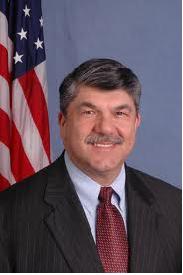
Many unionists are frustrated as usual by the lack of a viable progressive alternative to the Democratic Party. But they’d best beware, as AFL-CIO President Richard Trumka says, of the serious consequences of   being less than enthusiastic supporters of Democratic candidates in November’s elections.

“The Republican Party of NO doesn’t want our vote,” says Trumka. “All they want is for us to stay home. They want us to feel hopeless and disgusted so they can come back by default.”

 Trumka acknowledges that many union members, and many of their supporters and other progressives, are frustrated with the slow pace of economic change, the continuing high unemployment rate, continuing wars and other serious, unsettled problems.

But Trumka points out that in just a year and a half, Obama has had to dig out of a huge economic hole and “face extremist opposition on every point.” Yet, Trumka notes, “We’ve halted taxpayer bailouts … no longer are losing 700,000 jobs a month but are gaining a few… And by the end of this year we will have created or saved 3 1/2 million jobs and have fulfilled the dream of every president since Harry Truman and started to move down the road to health care for all. “

Organized labor has particularly good reason to be pleased with the performance of Obama and the congressional Democrats – particularly good reason to once again deploy millions of campaign dollars and millions of campaign workers in their behalf as labor did in the 2008 elections.

The Labor Department and National Labor Relations Board, virtually tools of the anti-labor right wing under President Bush, are under Obama returning to their job of enforcing the laws that guarantee workers the right to unionize without employer interference.

 And federal agencies are once again strictly enforcing the minimum wage and hour laws and other vital pro-worker laws that had been seriously neglected under Bush’s distinctly anti-labor administration. What’s more, the Occupational Safety and Health Administration is actually attempting to clamp down on the widespread violation of the job safety laws that has led to the needless deaths and serious injury of millions of American workers.

“We know you are angry,” Trumka told a recent gathering of labor leaders, “but we have made progress. No one said this was going to be easy. Ask African Americans how long they have fought and continue to fight. If they had given up after a year and a half they would still be in chains.”

 November’s election, says Richard Trumka, is  “the most crucial election in 75 years.” It will in any case be of unusually high importance to America’s working people and their unions and of exceptional importance to the rest of us as well.

Dick Meister, former labor editor of the SF Chronicle and KQED-TV Newsroom, has covered labor and politics for a half-century. Contact him through his website, www. dickmeister.com, which includes more than 250 of his recent columns.

SF Chamber attacks — lamely

0

The right-wing San Francisco Chamber of Commerce has had a pretty bad track record in local electoral politics in recent years, and its latest attack ads on progressive members of the Board of Supervisors demonstrates why: the group’s muddled and hypocritical messaging is barely comprehensible to the average San Franciscan.

The San Francisco Chronicle this morning announced the new ad campaign, the first salvo resulting from strategy sessions with Mayor Gavin Newsom and other downtown players, and the article included a funny conflict about whether or not the Chronicle is giving free advertising space to the effort.

But the ads themselves are even funnier – although inadvertently so – asking voters whether “your city supervisor” prefers “buses or benefits,” “parks or pensions,” or “paychecks or pinkslips.” Apparently, the Chamber is trying to capitalize on this political season’s fashionable attacks on public employee pensions and benefits, but the false choices that the Chamber sets up actually say more about its own promotion of this sort of zero-sum game within the public sector.

Hundreds of city employees have gotten pink slips in the last couple years directly because Newsom and the Chamber have sabotaged proposed revenue measures, even those that would help small businesses. They’ve played cynical political games that have cut Muni service and caused fares to double since Newsom became mayor, with Muni money diverted to help fund the paychecks, benefits, and pensions of police and firefighters – core Newsom constituencies to whom he gave overly generous deals to secure their early support for his 2007 re-election – while recently negotiating a deal that would exempt them from being affected by Jeff Adachi’s pension reform measure for another two years.

But targets of the ads don’t even need to know this whole backstory to see that the ads are simply false choices, lamely presented. Another swing and a miss from the once-mighty Chamber.

Democrats divided

25

Update:This online article contains a correction concerning the DCCC’s vote on Sup. Sean Elsbernd’s Muni pay guarantees (Prop. G). In the print version of this article, the Guardian reported that the DCCC had voted “to recommend a no vote” on Prop. G. This is incorrect. The DCCC voted “not to endorse” Prop. G. As Elsbernd points out, “This is a key distinction.”

Sarah@sfbg.com

With fewer than 10 weeks to go until a pivotal November election, the San Francisco Democratic County Central Committee (DCCC) approved a package of endorsements at its Aug. 11 meeting, giving the nod to mostly progressive candidates and rejecting Mayor Gavin Newsom’s most divisive ballot measures.

This crucial election could alter the balance of power on a Board of Supervisors that is currently dominated by progressives, and that new board would be seated just as it potentially gets the chance to appoint an interim mayor.

That’s what will happen if Newsom wins his race for lieutenant governor. The latest campaign finance reports show that Newsom has raised twice as much money as the Republican incumbent, former state Sen. Abel Maldonado. But the two candidates are still neck-and-neck in the polls.

Although the DCCC supports Newsom in the race, it is resisting his agenda for San Francisco, voting to oppose his polarizing sit-lie legislation (Prop. L), a hotel tax loophole closure (Prop. K) that would invalidate the hotel tax increase that labor unions placed on the ballot, and his hypocritical ban on local elected officials serving on the DCCC (Prop. H).

Shortly after the vote, the San Francisco Chronicle reported that Newsom called an emergency closed-door meeting with some of his downtown allies to discuss the upcoming election. “We just wanted to get on the same page on what’s going on locally, what’s going with the ballot initiatives, where people are on the candidates for supervisor,” Newsom told the newspaper.

DCCC Chair Aaron Peskin, who regularly battled with Newsom during his tenure as president of the Board of Supervisors, voted with the progressive bloc against Newsom’s three controversial measures. But he told us that he was glad to see the mayor finally engage in the local political process.

Sup. David Campos kicked off the DCCC meeting by rebuffing newly elected DCCC member Carole Migden’s unsuccessful attempt to rescind the body’s endorsement of Michael Nava for Superior Court Judge, part of a push by the legal community to rally behind Richard Ulmer and other sitting judges.

Things got even messier when the DCCC endorsed the candidates for supervisor. In District 2, the DCCC gave the nod to Janet Reilly, snubbing incumbent Sup. Michela Alioto-Pier, who is running now that Superior Court Judge Peter Busch has ruled that she is not termed out (a ruling on City Attorney Dennis Herrera’s appeal of Busch’s ruling is expected soon).

In District 6, where candidates include DCCC member Debra Walker, School Board President Jane Kim, Human Rights Commission Executive Director Theresa Sparks, neighborhood activist Jim Meko, and drag queen Glendon Hyde (a.k.a. Anna Conda), the club endorsed only Walker, denying Kim the second-place endorsement she was lobbying for.

But in District 8, where candidates include progressive DCCC member Rafael Mandelman, moderate DCCC member Scott Wiener, and moderate Rebecca Prozan, the politics got really squirrelly. As expected, Mandelman got the first-place nod with 18 votes: the progressive’s bare 17-vote majority on the 33-member body plus Assembly Member Leland Yee.

Yet because Yee supports Prozan and David Chiu, the Board of Supervisors president who was also part of the DCCC progressive slate, had offered less than his full support for Mandelman, a deal was cut to give Prozan a second-place endorsement.

That move caused some public and private grumbling from Jane Kim’s supporters, who noted that Kim is way more progressive than Prozan and said she should have been given the second-place slot in D6.

A proxy for John Avalos even tried to get the DCCC to give Walker and Kim a dual first-place endorsement, but Peskin ruled that such a move was not permitted by the group’s bylaws. Then DCCC members Eric Mar and Eric Quezada argued that Kim should get the club’s second-choice endorsement.

But Walker’s supporters argued that Kim only recently moved into the district and changed her party affiliation from the Green Party to the Democratic Party, and Kim’s supporters failed to find the 17 votes they needed.

“District 6 has an amazing wealth of candidates and I look forward to supporting many of them in future races,” Gabriel Haaland told his DCCC colleagues. “I will just not be supporting them tonight.”

Wiener told the group he would not seek its endorsement for anything below the top slot. “I’m running for first place and I intend to win,” Wiener said, shortly before Prozan secured the club’s second-choice endorsement.

In District 4, the DCCC endorsed incumbent Carmen Chu, who is running virtually unopposed. The DCCC also endorsed Bert Hill’s run for the BART Board of Directors, where he hopes to unseat James Fang, San Francisco’s only elected Republican.

The body had already decided to delay its school board endorsements until September and ended up pushing its District 10 supervisorial endorsement back until then as well because nobody had secured majority support.

“I think it’s because they want to give members of the DCCC a chance to learn more about some of the candidates,” District 10 candidate Dewitt Lacy told the Guardian. “I don’t think folks have spent enough time to make an informed decision.”

D10 candidate Chris Jackson agreed, adding, “The progressives in this race have brought our issues to the forefront.”

“I think it’s appropriate,” concurred D10 candidate Isaac Bowers. “D10 is a complicated district. It’s wise to wait and see how it settles out.”

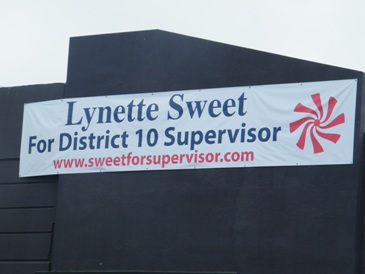
The main thing that needs to be resolved is which candidate in the crowded field will emerge as the progressive alternative to Lynette Sweet, who has the support of downtown groups and mega-developer Lennar Corp.

After the meeting, Walker said different races require different political strategies. “I think it’s hard in the progressive community, where so many of us know each other and even our supporters know the other candidates and are their supporters in other scenarios,” Walker said.

“But the Democratic Party makes decisions not just based on politics,” she continued. “So the endorsement is about being viable and successfully involved in Democratic issues. And even though I want to encourage everyone to run, and we have that ability with ranked choice voting and public financing, when it comes to straight-on politics, the goal is winning.”

Walker said the vote on D8 reflected the reality that Mandelman was having trouble getting the necessary number of votes. “I know Rebecca and I know Rafael, and Rafael was my clear first choice,” Walker said.” Rafael asked me to consider voting for Rebecca—and I voted for her as my second choice.”

Walker predicts she’ll have union support behind her campaign, while Kim, who leads in fundraising, will have independent expenditure committees that will support her campaign.

“My consultant says it’s a $250,000 race, and unfortunately the viability is based on that reality, the funds, the money,” Walker observed.

On the fall ballot measures, the DCCC voted to recommend a no vote on Public Defender Jeff Adachi’s measure to make city employees pay more for the pension and healthcare costs (Prop. B), Sup. Sean Elsbernd’s Health Service Board Elections (Prop. F,) and Newsom’s three controversial measures. And they voted “no endorsement” on Elsbernd’s measure to remove from the charter Muni pay guarantees (Prop. G). 

But the DCCC did vote to endorse a local vehicle registration fee surcharge (Prop. AA), Newsom’s earthquake retrofit bond (Prop. A), Sup. Chris Daly’s proposed legislation to require mayoral appearances at board meetings (Prop. C), Chiu’s measure to allow noncitizen voting in school board elections (Prop. D), Sup. Ross Mirkarimi’s Election Day voter registration (Prop. E), former Newsom campaign manager Alex Tourk’s Saturday voting proposal (Prop. I) Labor’s hotel tax (Prop. J ), Mirkarimi’s foot patrols measure (Prop. M) and Avalos’ real estate transfer tax (Prop. N).

With just about everybody opposed to Adachi’s measure going after public employee unions, Walker observed that Adachi probably wishes he had done it differently now. But looking into the future, Walker sees opportunities for the party to come back together.

“There’s an opportunity to start a dialogue because everyone is hurting,” Walker said. “The more we don’t have a proactive solution, the more we get caught at the bottom.”

And in a feel-good vote for the frequently divided body, the DCCC also voted overwhelmingly to endorse the statewide initiative to legalize and tax marijuana (Prop. 19). Normally local party committees don’t take a position on state initiatives, but because the California Democratic Party took no position on Prop. 19, the DCCC had permission to weigh in.

As Peskin put it before the enthusiastic marijuana vote, “Raise your hands — high.”

The real reason GOP is obssessing on the Ground Zero mosque

4

Daily Kos contributing editor Jed Lewison suggests that it’s because the Republican Party has nothing else to contribute to the conversation, as the election nears.

It’s an interesting theory.

As Lewison writes, “Despite polling that shows most Americans — including Democrats and even many liberals — oppose building a mosque two blocks from Ground Zero, Republicans are making a big mistake in building their fall campaign around the issue, in the process handing Democrats a big opportunity.

“GOPers obviously believe that the symbolism of the mosque issue makes it ripe of exploitation,” Lewison continues. “And it might be true that the mosque is the best issue they’ve got going for them, even if the public debate about it has been fueled by bigotry and false characterizations of the proposal. Nonetheless, their decision to exploit it says more about the fundamental weakness of GOP than it does about their political prowess.”

“Here’s why: the mosque issue is far less important than the economy, and every moment that the GOP spends focusing its message on the mosque provides Democrats with the chance to point out that Republicans are fundamentally unserious about doing what it takes to get the economy going again,” Lewison concludes. “Every poll shows the economy is priority #1, #2, and #3, yet Republicans haven’t offered a single economic plan other than to do nothing.”

‘Love Over 60’ adds wisdom to poetic desire

0

   
    It’s fair to say that a lot of Western love poetry is biased towards youth and the male perspective. You could blame the influence of the British Romantics, who for all their unquestionable genius were essentially a bunch of horny twentysomethings who discovered that eloquence could get them laid. You could trace the prejudice back to Renaissance sonneteers, to the Greco-Roman Classics, or even to the general patriarchal bent of our culture. Politics—identity politics included—are pretty inimical to art, and you’d be missing the point if you looked at the whole corpus of poems dealing with sex and desire and saw only a conspiracy to propagate male supremacy and ageism. Still, it doesn’t make you a philistine if you point out that female voices—especially the older ones—are sometimes excluded from this particular canon.
    Last Thursday’s reading at Moe’s books didn’t explicitly acknowledge these realities, but it didn’t exactly have to. The title of the new compilation from which the evening’s content was culled—Love Over 60: An Anthology of Women’s Poems (Mayapple Press, 126 pages, $16.95)—is tough to read as anything but a rebuttal to those who see erotic verse as a young man’s game. The poems themselves dealt with love in a variety of forms—we heard lots about sexual love, sure, but there were also plenty of lines dedicated to its maternal, aesthetic, and metaphysical cousins.
    The first poet who read was Ellery Akers, an occasional writer of fiction and self-described naturalist. Akers presented two pieces, each of which combined a biologist’s fascination with minute organic phenomena with a poet’s worshipful awe of nature. In “The Naturalist in Love,” her eroticism was frank and explicit, though it always arrived filtered through a scrim of natural metaphor. Her overall ethos is pantheistic, drawing no division between her desire for her partner and her all-encompassing love of the natural world. It was vibrant, zesty, smart stuff, but Akers did employ the occasional hackneyed image, especially when she explored the erotic potential—“slide its wet petals apart”– of flowers. 
    Akers was followed by Gail Entrekin, who dished out a rapid series of witty, slice-of-life vignettes. These pieces were charming, funny, and insightful, but they were hampered somewhat by their resolute literalism. There’s nothing that says a poem has to be obscure or packed with dense figurative language, but snappy lines are generally a poor substitute for truly arresting imagery. The exception was her closing poem “Recovery Room,” a shattering but ultimately hopeful portrayal of long-term illness.
    After Entrekin, Kathie Isaac-Luke, a Registered Nurse and the editor of Caesura literary journal, took the mike. Her poems were rife with choice language—the line “I cannot walk her to the stars that guide her” from the parental ode “Blame Aphrodite” really stuck in my head. Furthermore, “Alchemy,” her wistful, joyous paean to classic cinema, seemed the most deeply-felt and potentially the strongest piece read that evening. 
    Following that, things got a little darker.  The final three poets—Rosalie Nelson, Carol Wade Lundberg, and Ellaraine Lockie—expressed degrees of sorrow and anger that hadn’t been present in the preceding poems. This sometimes got a little heavy-handed, particularly in Lockie’s “Translation of a facelift.” She made up for it, though, with her wonderfully ambivalent dialogue “Wings Clipped,” which managed to combine an amusing intergenerational exchange with an overwhelming sense of existential dread. Wade Lundberg’s “Under a Thin Film of Ice” was similarly ambivalent, and ended up being one of the evening’s highlights.
    If the reading—and by extension the collection—had a unifying theme, it was experience. Taken together, the poems implied that a lifetime of love and loss doesn’t make the palate jaded, but instead makes it richer, allowing for an appreciation of subtle hues and undertones. There’ll always be a place in poetry for callow young men, but if Love Over 60 is any indication, perhaps they could benefit from occasionally listening to their elders. 
   

Queen Carol

0

Let me tell you what I think about when I think about Carol Channing: “Jam tomorrow, jam yesterday, but never, ever, ever jam today.” And then she turns herself into a sheep.

That’s not a fever dream: it’s one of the more absurd scenes from the 1985 TV movie Through the Looking Glass, featuring Channing as the batty White Queen. Channing’s 60-year career spans film, television, and theater — she’s probably best known for her iconic roles in Broadway shows Hello, Dolly! and Gentlemen Prefer Blondes. And yet, in my mind, she’s waving her arms wildly and ranting nonsense at poor Alice.

In a way, that’s fair. It’s difficult to get a handle on Channing. I don’t think she could do it herself.

“I haven’t the slightest idea,” she said when I asked about the longevity and diversity of her career. “We’re all surprised at everything that happens to us.”

At nearly 90, Channing continues to perform. She’ll be in San Francisco for the Richmond/Ermet AIDS Foundation’s 16th annual Help is On the Way benefit concert. AIDS relief is one of Channing’s longest-running causes, inspired by a longtime friendship with the queer community.

“Way back in 1950, I don’t know what, we opened in San Francisco with Gentlemen Prefer Blondes,” she recalled. “They tell me there wasn’t a blonde wig left in San Francisco. They all came dressed as me.”

And because of her pioneering work, the gay community has continued to support her. Well, that and her status as Broadway legend: it kind of goes with the territory. Until talking to her, however, I had no idea about the politics of being a gay icon.

“They made me their queen, for life,” Channing explained. “The empress is only for three years — but they made me their queen.”

I didn’t have the nerve to ask where Liza Minnelli and Barbra Streisand fit into this hierarchy for fear I’d stir up tension and incite a coup. But Channing is more concerned with her current cause, the Carol Channing and Harry Kullijian Foundation for the Arts, which seeks to preserve arts education to keep kids in school.

“This is a crisis now in our country,” Channing lamented. “Not everybody gets it.”

Luckily, she laid it out for me: “Each of us sees the world differently. All the artist does is recreate what was already created, but as they see it. And once you start expressing how you see the world, it opens up the brain.”

And you were expecting “Raspberries!”  

HELP IS ON THE WAY XVI: THAT’S ENTERTAINMENT

Sun/15, 7:30 p.m., $75

Herbst Theatre

401 Van Ness, SF

(415) 392-4400

www.cityboxoffice.com


What DCCC questionnaires reveal about Adachi reform, sit-lie and marijuana

20

The DCCC makes its endorsements for the November election on August 11. And in preparation for that crucial endorsement, candidates filled out questionnaires that are posted online, providing fodder for those interested in Jeff Adachi’s pension reform, Mayor Gavin Newsom’s sit-lie ordinance, and the legalization of marijuana, amongst other measures.

But before we get to those issues, I have to admit I was a bit surprised to see that D. 10 candidate Malia Cohen, who has already secured the endorsements of Sally Lieber, Fiona Ma and Aaron Peskin, says on her DCCC questionnaire that she supports the death penalty.

Now, to be fair, advocating for or against the death penalty isn’t the duty of the Board of Supervisors. And I haven’t yet caught up with Cohen yet to clarify why she holds this stance, (or whether it was one big typo, though I somehow doubt it). So, I’ll be sure to update this post, once I have a chance to talk to Cohen, who was busy at yet another candidate forum, when I was writing this entry. UPDATE: Cohen says she does not support the death penalty, and that she inadvertently misanswered the question. (Thanks for clearing up the mystery, Malia, and being gracious about it in the process.)

I should mention that Peskin also endorsed D. 10 candidate Tony Kelly.

And I should also note that while D. 10 candidate Lynette Sweet’s questionnaire says she supports Jeff Adachi’s pension and healthcare reform, Sweet’s campaign says that’s not the case, pointing to how Sweet said at the Potrero Hill Democratic Club’s August 2 D. 10 forum that what Adachi did wasn’t a bad thing, but the way he went about it was.

I quoted Sweet saying those very words in a previous post, and Sweet’s campaign manager Shane Mayer told me that he forwarded what I wrote about that meeting to the DCCC to clarify Sweet’s position. But Mayer got testy when I asked him about the rent, or rather the lack of rent, that Sweet, who Mayor Gavin Newsom has already endorsed, appears to be paying for her campaign headquarters at 25 Division Street (at Rhode Island).

As Beyond Chron tells it, the deal looks more than a bit fishy, and appears to be bankrolled by the Visovichs, a family with Republican leanings that supported Mayors Willie Brown and Newsom in past election campaigns.

 Mayer tried to dismiss the Beyond Chron article as a “hit piece”.

“The article focuses on only one candidate,” Mayer said. “We’re paying fair market rate, and using only a small portion of a warehouse. When we moved in, we didn’t have lights.”

But Sweet isn’t the only D. 10 candidate to come under Beyond Chron’s fire in recent days: fellow D. 10 candidate Steve Moss also took flak for receiving $500 from Andrew Zacks, the landlord attorney famous for doing Ellis Act evictions.

While on the phone with Moss recently, I asked what he thought about Newsom’s sit-lie ordinance, Moss said he hadn’t made up his mind yet.

And in his DCCC questionnaire, Moss also waxes ambiguous on sit-lie. “There’s clearly a lack of civility in certain areas of the city,” Moss wrote. “And in Bayview-Hunters Point, youth loitering can create conditions that create violence. However, it’s not clear to me that sit-lie is an appropriate response to this issue, and that it won’t result in unintended consequences. For example, sidewalks in Bayview-Hunters Point are also often used for peaceful gathering of neighbors, which is community-building and non-threatening.”

Makes me wonder what Moss and the rest of the candidates think about City Attorney Dennis Herrera’s recent gang injunction in Viz Valley…

UPDATE: I should add here that termed-out D.6 Sup. Chris Daly has just endorsed legislative aide and D.6 candidate James Keys, whose DCCC answers I’ve included in my round up of some of the candidate responses to this year’s DCCC questionnaire. UPDATE: And for all the Glen “Anna Conda” Hyde supporters, my humble apologies for omitting your candidate’s positions in my first post on this issue:

Chiu’s non-citizen voting in School Board elections
Supportive of non-citizen voting:  Adachi, Sup. Michela Alioto-Pier and D. 2 challenger Janet Reilly, D. 6 candidates Glen “Anna Conda” Hyde, James Keys, Jane Kim, Jim Meko, Debra Walker and Theresa Sparks. D. 8 candidates Rafael Mandelman, Rebecca Prozan and Scott Wiener. D. 10 candidates Isaac Bowers, Cohen, Chris Jackson, Tony Kelly, Dewitt Lacy and Eric Smith.
Opposed: D.2 candidates Farrell and Berwick, D. 4 incumbent Carmen Chu, and D. 10 candidates Kristine Enea and Lynette Sweet.

Newsom’s ban on dual office holding

Supportive: Berwick, Farrell, Glen “Anna Conda” Hyde, Meko, Enea.

“Yes. Better distribution of power,” Anna Conda said.

Opposed: Adachi, Alioto-Pier, Reilly, Keys, Kim, Walker, Sparks, Mandelman, Sweet, Lacy, Kelly, Cohen, Wiener, Jackson, Smith and Prozan.
“This measure is the result of petty politics between the mayor and the Board,” Prozan, who contributed S100 to Newsom’s Lt. Governor campaign, famously wrote on her DCCC questionnaire.

Newsom’s Sit-Lie Ordinance
Supportive: Farrell, Alioto-Pier, Reilly, Chu, Sparks, Wiener and Sweet.
Opposed: Adachi, Berwick, Glen “Anna Conda” Hyde, Keys, Kim, and Walker. Mandelman and Prozan. Cohen, Jackson, Kelly, Lacy and Smith.

Adachi’s Pension Reform
Supportive: Adachi, Berwick, Meko, and Sweet
Opposed: Chu, Farrell and Reilly. Glen “Anna Conda” Hyde, Keys, Kim, Walker and Sparks. Mandelman, Prozan and Wiener. Cohen, Jackson, Kelly, Lacy and Smith.
No position, yet: Alioto-Pier.

Legalization of pot (Prop. 19)
Supportive: Adachi, Berwick. Glen “Anna Conda” Hyde, Keys, Kim, Meko, Sparks, and Walker. Mandelman, Prozan and Wiener. Cohen, Jackson, Kelly, Lacy, Smith and Sweet.
Opposed: Chu and Farrell

No position, yet: Alioto-Pier, Janet Reilly.

Hard to tell: Moss.

“I philosophically support this measure but am concerned that its economic and social implications haven’t been carefully considered, nor its interaction with federal law,” Moss wrote on his DCCC questionnaire.

Sparks for her part just clarified that she mistakenly answered “No” on two DCCC questionnaire items: “Do you opposeprivatization of essential government services,” and “Will you oppose anti-worker initiatives that seek to undermine the ability of union leaders to carry out will of members and engage in political activities.”

“I meant to answer yes, as I explained at my DCCC interview,” Sparks said. “I was confused by the double negatives.”

While she was on the phone, Sparks also admitted that the pace on the campaign trail is getting intense with forums and meetings every night.

“David Campos, who has been a good friend since we were both on the Police Commission, recently told me, ‘win or lose, you need to schedule a few weeks off in November when the election is over,’” Sparks said.

Campos is right. To all the candidates on the campaign trial, here’s wishing you lots of energy and calm in the weeks to come. And see you at the DCCC forum.

<!–[endif]–>

Call of the grisly

0

arts@sfbg.com

LIT With volumes devoted to numerous U.S. cities and quite a few foreign capitals, it sometimes seems as if Akashic Books’ expanding line of noir story anthologies will wind up covering virtually every major metropolis on earth. Because less gritty burgs like Portland, Ore.; Seattle; and Phoenix all have entries in the crime fiction series, it’s only fair that Mexico City gets a nod.

Akashic must be commended for waiting several years until the great novelist Paco Ignacio Taibo II agreed to take on editing duties for Mexico City Noir (Akashic Books, 250 pages, $15.95). Taibo, who was born in Spain but has lived in Mexico since 1958, is the author of wildly entertaining and internationally successful mysteries that push the genre’s boundaries in interesting directions. In addition to a dense biography of Che Guevara, he has written a doorstop-size book about Pancho Villa that should have been translated into English years ago.

In his introduction to Mexico City Noir, Taibo describes the capital city as having “the most corrupt police force on the planet.” (A recent guidebook cites research showing that 13 percent of the megacity’s incarcerated population are veterans of the police corps.) Taibo writes of the corruption and mayhem sewn by members and ex-members of “security” forces: “If you’re lucky, you can stay away from it, you can keep your distance … until, suddenly, without a clear explanation of how, you fall into the web and become trapped.” He concludes, “You wake up in the morning with the uneasy feeling that the law of probabilities is working against you.” If that’s not noir, what the hell is?

The stories Taibo assembles shine a harsh light on systematic injustice and dire poverty amid, as Taibo puts it, “an economic crisis that’s been going on for 25 years.” Among the book’s highlights are a street drunk who may have witnessed a police killing, a demented priest with some unsavory urges, and plenty of street-level contemplation of the violence of everyday life. There’s also enough grisly narco-related mayhem to satisfy fans of the Saw movie franchise (assuming they can read).

But while stateside crime fiction often achieves such levels of violence at the expense of a moral center, and rarely works on more than one fairly obvious (if lucrative) level, these short stories are rooted in rage at the injustice that permeates life in Mexico City. The sometimes experimental narratives lay out the harsh socioeconomic realities of post-NAFTA Mexico, where the less-than-magical realism of the market makes the rich richer and the poor poorer — and the U.S.-backed drug war provides plenty of bad men with more guns. The warped humor here, especially in Taibo’s contribution about the struggle for the soul of an embattled street corner, is part of the survival mechanism of people who have seen too much of life at its worst but must keep laughing anyway.

Akashic is complementing the release of Mexico City Noir by reissuing The Uncomfortable Dead (Akashic Books, 268 pages, $15.95), the novel Taibo wrote in collaboration with Zapatista spokesperson and strategist Subcommandante Marcos. In an interview included as part of the new edition’s supplementary materials, Taibo describes the frenetic pace at which he and Marcos wrote alternate chapters for serialization in Mexican paper La Jornada, for a total of 12 chapters over 12 weeks. That ongoing deadline pressure has produced a giddy read, and if it doesn’t deliver the kind of straightforward narrative and tight plotting that U.S. mystery readers look for, the literary pyrotechnics of these two impressive wordsmiths offer undeniable pleasures that eschew formulaic predictability.

Taibo’s chapters feature his Coca-Cola-and-tobacco-addled, one-eyed detective Hector Belascoarn Shayne on the trail of a murderer named Morales. Marcos in turn writes about a Zapatista investigator named Elias, who is also searching for a man named Morales. The two stories wind up intersecting in a sometimes surreal jumble in Mexico City, where, in Taibo’s words, there are “more movie theatres than Paris, more abortions than London, and more universities than New York.”

The 1968 Mexico City police massacre of student activists is a key reference point in both books. That bloody repression was clearly a watershed period for Taibo and Marcos, profoundly influencing both of them. In the early 1980s, Marcos went south to Chiapas and joined the guerrillas who evolved into Zapatistas. Taibo became a history professor at the Metropolitan University of Mexico City and president of the International Association of Political Writers; He also went on to write ‘68, a memoir of sorts available in English from Seven Stories Press, and the experimental novel Calling All Heroes: A Manual for Taking Power (which features a survivor of the 1968 police massacres who enlists the aid of his childhood heroes Sherlock Holmes, Doc Holliday, Wyatt Earp, and D’Artagnan to help him in a new reform movement) just reprinted by local publisher PM Press.

Both Taibo and Marcos retained their radical politics and commitment to class struggle. They also share a fondness for absurdist humor, and both display an endearing willingness to laugh at themselves. Self-effacing humor is not a trait one usually associates with committed leftists, alas. The writing of Taibo and Marcos is a fine corrective to the unfortunate association of strident humorlessness with radical activism.

DCCC endorsements will test progressive unity

2

When the San Francisco Democratic County Central Committee convenes tomorrow (Aug. 11) evening to vote on its endorsements for the November races and ballot measures, the clout and unity of its slim progressive majority will be tested in a few high profile contests where the outcome isn’t entirely clear.

As I reported last week, progressives occupy only about 17 of the 33 seats, so any defectors from the slate that won in June could create some squirrely politics or backroom deals. Progressive supervisorial candidates Rafael Mandelman from District 8 and Debra Walker from District 6 are widely expected to get the top endorsements in their races, but Rebecca Prozan in D8 and Jane Kim (and possibly Jim Meko) in D6 each have some progressive supporters on the committee and could make a play for the second slot in the ranked-choice voting election. D8 candidate Scott Wiener, the former DCCC chair, will probably also try to get some kind of spot on the slate but is likely to be met with fairly unified progressive opposition.

The District 10 endorsement will be a free-for-all with no clear progressive consensus alternative to downtown-backed candidate Lynette Sweet yet emerging from the crowded field. Party chair Aaron Peskin has endorsed Malia Cohen and Tony Kelly in that race, but Chris Jackson, Dewitt Lacy, Kristine Enea, and other candidates also have progressive backing, so it could be tough for any of them to get to 17 votes at this point. But in District 2, Janet Reilly appears to have the endorsement locked down, despite a judge allowing incumbent Sup. Michela Alioto-Pier to run for a third term.

On the local ballot measures, the progressive majority is likely to endorse the revenue measures (a hotel tax increase pushed by labor, a transfer tax on properties worth over $5 million, and a small local vehicle license fee surcharge) and reject Public Defender Jeff Adachi’s measure to increase how much city employees pay for health care and into their pensions and Sup. Sean Elsbernd’s measure to end pay guarantees for Muni drivers (although not even progressives are feeling much love for the recalcitrant Transportation Workers Union these days).

The aggressive effort by the legal community to overturn the DCCC endorsement of Michael Nava for judge – waged on behalf of Judge Richard Ulmer, a recent appointee of Gov. Arnold Schwarzenegger, ostensibly over judicial independence but also as a way of sucking up to judges that lawyers want to curry favor with – is expected to fail, mostly because it requires a two-thirds vote. An ordinance to ban sitting or lying on sidewalks that is being pushed by Mayor Gavin Newsom, Police Chief George Gascon, and San Francisco Chronicle columnist CW Nevius is also likely to be soundly rejected by the party.

DCCC endorsements usually carry quite a bit of weight in heavily Democratic San Francisco, getting the candidates on party slate cards and entitling them to other party resources. Any races that don’t yield a majority endorsement this week would get pushed back to the September meeting, when the DCCC will consider school board endorsements.

The fun starts at 6 p.m. at the Unite-Here Local 2 office at 209 Golden Gate Avenue.

Hot sexy events Aug 4-10

1

The ocean breezes toss your hair haphazardly, whipping it from side to side for that perfect Saturday morning tousled look. Man that wind –  or is that actually from all the mid-air flogging? At thiis peer workshop, you better watch out for the safety of your earlobes. A feller named Jonathan Eros (who often goes by his Burning Man Ranger name of Grizzly) puts on public bimonthly get-togethers and sweet bear that he is he’ll have loaner whips on hand for newbies. Grizzly also publishes a list of appropriate and accessible flogging devices on his website – truth be told, he’s quite comprehensive. Check out his al fresco flaying if you’re interested in jumping into the whip scene, or even if you’ve got a special flick of the wrist you’d care to share with some new friends.


Ask the Doctor: Anal Sex

Should the thought of the city’s unofficial sexpert Carol Queen explaining the ins and outs of anal sex not be enough motivation for you to ease your way into this talk, heed this: they’re giving away tickets to the new Giovanni Rebisi flick about the adult Internet website business, Middle Men.

Wed/4 6:30-7:30 p.m., free

Good Vibrations

603 Valencia, SF

(415) 522-5460

www.goodvibes.com


Steamworks DJ Night

My god – did you know $5 gets you a month’s entry to the steamiest spot in the East Bay (where SF’s prude “no closed doors” rules don’t apply – be safe out there, folks!). Get your heart pumping tonight to DJ Tristan Jaxx’s sweaty beats.

Sat/7 11 p.m., $5

Steamworks

2107 Fourth St., Berk.

(510) 845-8992

www.steamworksonline.com


Bullwhips by the Bay

Like I said – outdoor whippery in the park. Protective earwear recommended.

Sun/8 11:30 a.m.-1 p.m., free

Golden Gate Park, southeast of Polo Field (see website for exact location)

www.laughingbear.com


“The Real L” Word Viewing Party

Bartenders Amy and Donny serve up cheap beer and strong drinks at the dyke dive’s weekly party to watch Showtime’s series about the hijinx of a bunch of lovely ladies in La-La Land.

Sun/8 10 p.m.-11 p.m.

Lexington Club

3464 19th St., SF

(415) 863-2052

www.lexingtonclub.com


Erotic Needlepoint Workshop

Oh my! Drop (stich) into Amy Leonard’s class to make your sweetie the gosh darn most exciting dish towel they’ve ever laid eyes on. Perhaps you’ll embroider a scene from those hot thirty minutes in the Sur La Table elevator? Who can say: the choice is yours.  

Sun/8 3 p.m., $10

Femina Potens

2199 Market, SF

(415) 864-1558

www.feminapotens.org


The Art of Feminine Dominance

Mistress Midori, who performs a mean Japanese bondage scene, elaborates on how to find your dom within – the science, politics, practices, and fashion of the game. Are you ready for the upper hand?

Tues/10 6-8 p.m., $25-30

Good Vibrations

1620 Polk, SF

(415) 345-0400

www.goodvibes.com


The politics of unity and division

7

steve@sfbg.com

These are strange days for the San Francisco Democratic Party, which is seeking to overcome bitter divisions on the local level and come together around candidates for statewide office that include Mayor Gavin Newsom, whose fiscal conservatism and petulant political style are the main sources of that local division.

The tension has played out recently around the Board of Supervisors deliberations on the new city budget and November ballot measures and in dramas surrounding the newly elected Democratic County Central Committee, where the battles during its July 28 inaugural meeting previewed a more significant fight over local endorsements coming up Aug. 11.

Almost every elected official in San Francisco is a Democrat. Newsom, the Democratic nominee for lieutenant governor, has been the main obstacle to new taxes that progressives and labor leaders say are desperately needed to preserve public services, deal with massive projected deficits in the next two years, and quit balancing budgets on the backs of workers.

“We balanced the budget without raising taxes. I don’t believe in raising taxes. We don’t need to raise taxes,” Newsom said proudly at his July 29 budget signing ceremony, during which he also effusively praised the labor unions whose support he needs this fall: “Labor has been under attack in this state and country. They’ve become a convenient excuse for our lack of leadership in Sacramento and around the country.”

That hypocritical brand of politics has been frustrating to his fellow Democrats, particularly progressive supervisors and DCCC members. At the July 27 board meeting, Sup. Ross Mirkarimi and Board President David Chiu reluctantly dropped their pair of revenue measures that would have raised $50 million, bowing to opposition by Newsom and the business community.

The San Francisco Chamber of Commerce has become such a vehicle for antitax and antigovernment vitriol that the DCCC on July 29 approved a resolution calling for the organization — which hosted a speech by Republican National Chair Michael Steele in June — to renounce the platform of the Republican National Committee.

“The Chamber is not a knee-jerk right-wing organization,” Chamber President Steve Falk felt compelled to clarify in a July 28 letter to DCCC Chair Aaron Peskin, closing with, “Anything you can do to avoid painting the Chamber as a pawn of the GOP would be greatly appreciated — because it just isn’t true.”

Yet Rafael Mandelman, who sponsored the resolution and is a progressive supervisorial candidate in District 8, told us the Chamber’s fiscal policies are indistinguishable from those pushed by Republicans. “They’re the leading force pushing the Republican agenda in San Francisco,” Mandelman said, calling the stance short-sighted. “It’s not in the long-term interests of the business community for our public sector to fall apart.”

Chiu’s business tax reform measure is a good example of how conservative ideology seems to be trumping progressive policy, even among Democrats. Only 10 percent of businesses in the city pay any local business tax, and the measure would increase taxes on large corporations, lower them on small businesses, create private sector jobs, bring $25 million per year into the city, and expand the tax burden to 25 percent of businesses, including the large banks, insurance companies, and financial institutions that are now exempt. But even the Small Business Commission refused to support the plan, prompting Chiu to drop the proposal and tell his colleagues, “There is still not consensus about whether this should move forward.”

Sup. Chris Daly, the lone vote against the budget compromise with Newsom and the removal of revenue measures from the November ballot, noted at the July 27 board meeting how the business community has sabotaged city finances, citing its 2002 lawsuit challenging the gross receipt taxes, which the board settled on a controversial 8-3 vote. “This is a large part of our structural budget deficit,” Daly said.

But antitax sentiment has only gotten worse with the current recession and political dysfunction, causing Democrats like Newsom to parrot Republicans’ no-new-taxes mantra, much to the chagrin of progressives.

“A lot of this is being driven by statewide politics. [Newsom] needs to not have taxes go up but he also needs the support of the labor unions, so we get weird stuff happening in San Francisco,” Mandelman said.

The situation has also fed Newsom’s animus toward progressives, who have enjoyed more local electoral success than the mayor. Newsom responded in June to the progressive slate winning a majority on the DCCC by placing a measure on the November ballot that would ban local elected officeholders from serving on that body, which includes four progressive supervisors and three supervisorial candidates.

Nonetheless, Newsom then unexpectedly sought a seat on the DCCC, arguing that his lieutenant governor nomination entitled him to an ex officio seat (those held by state and federal elected Democrats) even though the DCCC’s legal counsel disagreed. While noting the hypocrisy of the request, Party Chair Aaron Peskin took the high road and proposed to change the bylaws to seat Newsom.

Some progressives privately groused about giving a seat to someone who, as DCCC member Carole Migden said at the meeting, was “picking a fight” with progressives by pushing a measure she called “disrespectful and unconstitutional.” But in practice, the episode seems to have hurt Newsom’s relations with progressives without really strengthening his political hand.

Newsom ally Scott Wiener — a DCCC member and District 8 supervisorial candidate (who told us he opposes the mayor’s DCCC ballot measure) — proposed to amend Peskin’s motion to change the bylaws in order to seat Newsom with language that would allow Newsom to continue serving even if he loses his race in November.

That amendment was defeated on a 17-13 vote that illustrated a clear dividing line between the progressive majority and the minority faction of moderates and ex officio members. Even with Newsom and District Attorney Kamala Harris (who was seated as the Democratic nominee for attorney general) being seated — and counting the one absent vote, Sen. Leland Yee, who is expected to sometimes vote with progressives and sometimes with moderates — progressives still hold the majority going into the process of endorsing local candidates and allocating party resources for the fall campaign.

“Presuming that 17 people of that 33-member body all agree on something, then the presence of Mayor Newsom doesn’t change anything,” Peskin said. He also noted that even if Newsom’s measure passed and the progressive supervisors were removed, “the irony is that the chair of the party [Peskin] would appoint their successors.”

Also ironic is the political reality that it is Newsom who most needs his party’s support right now, while it is progressives who are adopting the most conciliatory tone.

“We should all be working to turn out the vote and help Democrats win,” Peskin told us. “I implore our mayor and lieutenant gubernatorial candidate to work with us and get that done.”

Yet after Newsom gave a budget-signing speech that included the line, “At the end of the day, it comes down to leadership, stewardship, collaboration, partnership,” he told the Guardian that he has no intention of removing or explaining his DCCC ballot measure, saying only, “If the voters support it, then it would be the right thing to do.”

Chiu responded to the news by telling us, “I hope the mayor can move beyond the politics of personality and build a party vehicle that is about unity.”

Reinventing San Francisco

8

By Christopher D. Cook, Karl Beitel, and Calvin Welch. 

OPINION It’s hard to trust hope these days — to imagine that our world, or even our city — could be different. But for the next 10 or 15 minutes, as you read this, we invite you to suspend the cynicism and disbelief that hang over contemporary life, and allow your mind to imagine that, yes, a different San Francisco is possible. Just for 15 minutes, although we hope this helps kick-start a much longer-term revival of hope and urban reimagining.

It’s time to create something new in San Francisco — a visionary movement for constructive change that’s bold and unapologetic. Imagine, for instance, if San Francisco became a national model for how cities can reinvest local profits (public and private) and assets to expand economic opportunity and social equity. Imagine if, instead of promoting a dispiriting and volatile blend of corporate development and Darwinian “free-market” anarchy, San Francisco transformed how American cities define success by creating concrete alternatives to the chaos of capitalism.

Now imagine that San Francisco had its own public bank — a fiscally solvent, interest-generating financial force (potentially a half-billion dollars strong) dedicated to public financing and economic stimulus, that functioned as a vigorous incubator for homegrown industries and sustainable, true-green job creation.

We are proposing no less than a reinvention of San Francisco — a dramatic shift in priorities, resources, politics, and culture that marries the very best in both creative innovation and urgently needed reforms to make our city socially equitable and sustainable, both ecologically and economically.

Toward this end, the Community Congress, Aug. 14-15 on the University of San Francisco campus, will stimulate ideas, discussion, and planning to reinvigorate civic engagement and inspiration and create a concrete, locally actionable agenda for reshaping the city. You’re invited. (Visit www.sfcommunitycongress.wordpress.com for more information.) The congress is a conversation starter and idea incubator — an opportunity to begin reimagining San Francisco as a socially equitable, racially inclusive, ecologically sustainable city that grows its own food, supplies its own energy, and is an affordable haven for working-class people, immigrants, artists, and creative folk of all stripes.

We humbly propose a city that embraces cosmopolitanism and international exchange while empowering its residents to achieve a decent and livable quality of urban life. We are not trying to turn back the clock; we are trying to create new forms of social and economic value that give people meaning and sustenance, and hope.


WHY A COMMUNITY CONGRESS—WHY NOW?

Couldn’t we save such sweeping aspirations for a rainy day? The sky isn’t falling yet, is it? Not quite, but the present constellation of crises San Francisco is ensnarled in — massive and rising structural deficits, a boom/bust economy that’s profoundly unstable and inequitable, deepening economic and social divides that destabilize communities, to name a few — is simply unsustainable.

San Francisco’s economic and fiscal crisis is not a passing moment. Rather, it signals long-term structural flaws in the city’s economic policies and planning. San Francisco has lost roughly 45,000 jobs since 2000, and each “recovery” is marked by steadily higher unemployment rates (currently resting at 9.2 percent). More critically, as jobs and wages have grown more precarious and housing prices have steadily risen (over the long term), thousands of San Franciscans have been displaced.

Any serious vision for change must incorporate race and class dynamics. Consider the economic evisceration of much of the city’s African American population, which has plummeted from 13.4 percent of the population in 1970 to just 6.5 percent today (more than 22,000 African Americans left the city between 1990 and 2008). The gutting of communities of color is intrinsically intertwined with issues of job and wage loss and soaring housing costs. This is particularly acute in the geographic and political dislocation of African Americans in San Francisco. Add to this picture intense overcrowding and poverty in Chinatown and in Latino and immigrant communities, and you get a set of inequities that are morally unacceptable and socially untenable.

Like other major American cities, San Francisco faces a crucial historical moment. Global warming and fast-dwindling oil supplies require a transformative shift in how we conceive (and implement) economic development far beyond the city’s current piecemeal approach to “green procurement.” The Peak Oil Preparedness Task Force, appointed by the Board of Supervisors in 2007, concluded that a full 86 percent of San Francisco’s energy use comes from fossil fuels, primarily petroleum and natural gas, and a small amount of coal. Given the world’s fading oil supplies and mounting climate chaos, this is simply unsustainable.

The specter of a looming energy and environmental crisis, combined with economic instability marked by persistently high unemployment, rising income inequality, systemically entrenched homelessness, consumer debt, and the deepening crisis of cutbacks to critically needed human services and affordable housing call for a radical shift in how society — and San Francisco’s economy — are run.

Transforming San Francisco into a truly sustainable city will mean dramatic shifts in what (and how) we produce and consume, and aggressive city policies that promote local renewable energy. Our economy — how our food, housing, transportation and other essential goods are made — will have to be rebuilt for a world without oil.

These and other limits mean we must redefine growth and profit—fast. Work and sustainability must become fully intertwined, and we must think creatively about how jobs can produce social and community value, instead of profits concentrated at the top.

Creating truly sustainable and equitable cities for the 21st century will also mean dramatic shifts in how we produce and consume. There is no better place to begin than here in San Francisco, long an incubator in progressive thinking and genuine grassroots action and innovation. In an earlier Community Congress in 1975, residents and groups from across San Francisco united in a movement of ideas and organizing that led to district supervisorial elections and successful campaigns to stem the tide of downtown corporate development, helping to democratize politics and economics in San Francisco.

The 2010 Community Congress is aimed at reinvigorating local movements for lasting change, both on the policy level and in the relationship between people and their government. We hope to inspire a spirited and creative shift in the city’s culture and politics — with concrete, politically actionable policies to democratize planning and development and a more sweeping transformation of our expectations — toward a far richer and deeper engagement of people and communities in their own governance.


A NEW FRAMEWORK FOR URBAN DEVELOPMENT

What would this City of Hope look like, and how would it work? Consider what we could accomplish with a municipal bank. The City and County of San Francisco currently has almost $2.6 billion in highly liquid reserves, about $500 million of which could be used to fund a Municipal Bank of San Francisco. Once established (and federally insured), the Municipal Bank could take additional deposits and use this to issue more loans. The bank could promote economically viable worker-run cooperatives that produce goods and services addressing community needs — be it day care, urban gardening, or ecologically sustainable light industry that creates meaningful employment for local residents. The bank could provide competitive small-interest loans to help stimulate small-business development — the key economic engine of the city. Currently, access to credit is one of the primary impediments to small business growth in San Francisco.

The city could also start a Municipal Development Corporation to produce goods and services that meet essential needs, boost local employment, and generate surpluses that would be available for local reinvestment. San Francisco could launch itself on the path to local energy self-reliance with funds from the Municipal Bank, together with revenue bonds—raising large pools of capital to finance large-scale alternative energy investments such as solar panels to generate energy for sale to local businesses and households.

The proceeds could help subsidize community-based development such as urban farming projects that could grow food for our public schools. The Municipal Development Corporation could explore other initiatives like large-scale medical marijuana cultivation and development of a commercial fiberoptic network. Other ideas can be developed; we need to engage our collective imagination to envision what can exist if there’s enough people power and political will.

By expanding access to credit, municipalizing a chunk of the city’s assets, establishing an economically viable municipal development enterprise, and democratizing city planning and development, San Francisco can enable long-disenfranchised communities to create sustainable and diversified development — instead of fighting over “jobs versus the environment” and other false choices and getting nowhere for decades.

It’s time for proactive, community-led economic development that addresses urgent needs, from local hiring and training, to creating a diverse base of neighborhood-serving businesses, to ecologically sustainable and healthful development and planning that is driven by communities and residents.

San Francisco’s job creation policies can be transformed to prioritize community needs over corporate profits by linking major development contracts to strict local hiring and training, community benefits agreements that invest in social goods like childcare and in-home health services, and ensuring dramatic increases in the city’s stock of affordable housing.

We need to build new forms of public participation in local government in ways that address people’s everyday needs. For instance, the congress will propose a new partnership between residents and Muni to make Muni work better, involving current riders and drivers in a new, more powerful role in how Muni lines function.

We need to find better ways to sustain a diverse population of working-class, people of color, artists, writers, musicians, and others. We need to make sure development isn’t just code for finding new ways to gentrify neighborhoods and displace existing residents.

Specific proposals will address how the city and community-based nonprofits deliver critical health and human services to our neediest residents. We propose making this an integrated part of the budget process, not a last-minute afterthought. Toward this end, the Community Congress will present actionable proposals to create innovative “resident/government” partnerships to improve local government responsiveness and efficiency.


RAISING—AND SPENDING—THE BENJAMINS

One of the keys to unlocking the city’s stagnating economy is progressive revenue generation and more democratic participation in budgeting. We must enlarge the public pie while reapportioning it in a way that stimulates job creation and shifts the tax burden onto the large businesses that reap vast private benefits from public goods and services. The city’s budget process must be dramatically reshaped and democratized. Communities need a seat at the fiscal table when the budget is being crafted — instead of lobbying tooth and nail at the end of the process just to retain funding that barely keeps programs afloat.

How can we build a participatory budgeting movement that brings residents and communities into the process? For instance, community budget councils composed of elected and appointed residents from every supervisorial district could assess neighborhood needs and incorporate them into drafting the budget. Whatever form this takes, the goal is to put the needs of residents at the forefront of how the city spends its resources.

The Community Congress can also help redefine fiscal responsibility. Taxing and spending must be accountable and transparent and respect the fact that this is the public’s money. Let’s be honest: much of what passes for government excess is due to management and executive bloat at the top, not salaries of frontline workers like bus drivers, social service providers, and hospital workers. True fiscal responsibility also means investing in prevention: education, healthcare, and services that help people build their lives.


RECLAIMING HOPE

It’s time to reclaim the public sector as the sphere of our shared interest. Rather than thinking in terms of the old paradigm that counterpoises “government” and “the market,” let us envision a new citizen movement to create a more participatory, democratic, and accountable system of self-government.

The San Francisco Community Congress is about bringing people together — community activists, those working in the trenches of our increasingly strained social services, our environmental visionaries, our artists, the urban gardeners and permaculturists, poets, bicycle enthusiasts, inventors … in short, assembling our pool of collective knowledge and wisdom, and yes, our differences — in a forum to discuss, debate, share concerns and viewpoints, and ultimately produce a working template that is both visionary and can be implemented.

The Community Congress will create a space for all of us to participate in defining our own vision of San Francisco. It is a first step toward reasserting popular control over economic development. It is an invitation to be visionary, rethinking in fundamental ways what it means to live in the 21st century city, and a forum for creating real, practical platforms and proposals that can be implemented using the powers of local government.

We want to propose a new vision of urban governance. Not more bureaucracy, more commissions, more departments, but the creation of new institutions that are democratically accountable and place new kinds of economic and political resources in the hands of ordinary citizens.

We don’t have any illusions. There are limits to what local government can do. Ultimately, deep change will require actions by higher levels of government. More profoundly, it will require a deeper change in citizen awareness, a rejection of life dominated by the pursuit of narrow self-interest, in favor of a more ecologically sustainable, socially just, and more democratic way of life.

But we can begin at the local level, here and now, to envision and implement the kind of changes that will need to take place if we want to insure that our city, our country, and our planet will be the kind of place we want our children to live. Please come. Bring your hopes, passions, and ideas. This is our collective project, our shared wisdom, our joint vision of the kind of city and society in which we want to live.

Christopher D. Cook is an author, journalist, and former Bay Guardian city editor (www.christopherdcook.com). Karl Beitel is a writer, scholar, and activist. Calvin Welch is the director of the San Francisco Information Clearinghouse and a long-time affordable housing advocate. This story was funded in part by www.spot.us


 

A new community congress

0

EDITORIAL The first time a group of activists from across San Francisco met in a Community Congress, it was 1975 and the city was in trouble. Runaway downtown development was creating massive displacement and threatening the quality of life. Rents were rising and tenants were facing eviction. An energy crisis had left residents and businesses with soaring power bills. The manifesto of the Congress laid out the problem:

"Every poor and working class community in San Francisco has learned the hard way that its interests are at the bottom of the list as far as City Hall is concerned. At the top of the list are the banks, real estate interests, and large corporations, who view San Francisco not as a place for people to live and work and raise families, but as a corporate headquarters city and playground for corporate executives. By using their vast financial resources, they have been able to persuade local government officials that office buildings, hotels, and luxury apartments are more important than blue-collar industry, low-cost housing and decent public services and facilities."

The Community Congress hammered out a platform — a 40-page document that pretty much defined what progressive San Francisco believed in and wanted for the city. It included district elections of supervisors, rent control, public power, a requirement that developers build affordable housing, and a sunshine ordinance — in fact, much of what the left has accomplished in this town in the past 35 years was first outlined in that document.

Beyond the details, what the platform said was profound: it suggested that the people of San Francisco could reimagine their city, that local government could become a force for social and economic change on the local level, even when politics in Washington and Sacramento were lagging behind. It called for a new relationship between San Franciscans and their city government and looked not just at what was wrong, but what was possible.

That’s something that too often gets lost in political debate today. With urban finances in total collapse, the progressives are on defense much of the time, trying to save the basic safety net and preserve essential programs and services. It seems as if there’s little opportunity to talk about a comprehensive alternative vision for San Francisco.

But bad times are great times to try new ideas — and when the second Community Congress convenes Aug. 14 and 15 at the University of San Francisco, that’s exactly what they’ll be trying to do. It’s not going to be easy — the left in San Francisco has always been fractious, and there’s no consensus on a lot of central issues. But if the Community Congress attracts a broad enough constituency and develops a coherent platform that can guide future political organizing efforts, it will have made a huge contribution to the city.

The event also offers the potential for the creation of a permanent progressive organization that can serve as a forum for discussion, debate, and action on a wide range of issues. That’s something the San Francisco left has never had. Sup. Chris Daly tried to create that sort of organization but it never really worked out. The city’s full of activist groups — the Tenants Union, the Harvey Milk LGBT Club, the Sierra Club, and many others — that work on important issues and generally agree on things, but there’s no umbrella group that can knit all those causes together. It may be an impossible dream, but it’s worth discussing.

The organizers of the Community Congress discuss some of their agenda in the accompanying piece on this page. It should be based on a vision of what a city like San Francisco can be. Think about it:

This can be a city where economic development is about encouraging small businesses and start-ups, where public money goes to finance neighborhood enterprises instead of subsidizing massive projects.

This can be a city where planning is driven by what the people who live here want for their community, not by what big developers can make a profit doing.

This can be a city where housing is a right, not a privilege, where new residential construction is designed to be affordable for the people who work here.

This can be a city where renewable energy powers nearly all the needs of residents and businesses and where the public controls the electricity grid.

This can be a city where the wealthy pay the same level of taxes that rich people paid in this country before the Reagan era, where the individuals and corporations that have gotten filthy rich off Republican tax cuts give back a little bit to a city that is proud of its liberal Democratic values.

This can be a city where it’s safe to walk and bike on the streets and where clean, reliable buses and trains have priority over cars.

This can be a city where all kids get a good education in public schools.

Despite all the economic woes, this is one of the richest cities in one of the richest countries in the history of human civilization. There are no economic or physical or scientific or structural constraints to reimagining the city. The only obstacles are political.

In the next two years, control of City Hall will change dramatically. Five seats on the Board of Supervisors are up in November, and the mayor’s office is open the year after that. The progressives have made great progress in the past few years — but downtown is gearing up to try to reverse those advances. The community congress needs to address not just the battle ahead, but describe the outcome and explain why San Francisco’s future is worth fighting for.

A new community congress

2

Bad times are great times to try new ideas – the second Community Congress convenes Aug. 14 and 15 at the University of San Francisco

EDITORIAL The first time a group of activists from across San Francisco met in a Community Congress, it was 1975 and the city was in trouble. Runaway downtown development was creating massive displacement and threatening the quality of life. Rents were rising and tenants were facing eviction. An energy crisis had left residents and businesses with soaring power bills. The manifesto of the Congress laid out the problem:

“Every poor and working class community in San Francisco has learned the hard way that its interests are at the bottom of the list as far as City Hall is concerned. At the top of the list are the banks, real estate interests, and large corporations, who view San Francisco not as a place for people to live and work and raise families, but as a corporate headquarters city and playground for corporate executives. By using their vast financial resources, they have been able to persuade local government officials that office buildings, hotels, and luxury apartments are more important than blue-collar industry, low-cost housing and decent public services and facilities.”

The Community Congress hammered out a platform — a 40-page document that pretty much defined what progressive San Francisco believed in and wanted for the city. It included district elections of supervisors, rent control, public power, a requirement that developers build affordable housing, and a sunshine ordinance — in fact, much of what the left has accomplished in this town in the past 35 years was first outlined in that document.

Beyond the details, what the platform said was profound: it suggested that the people of San Francisco could reimagine their city, that local government could become a force for social and economic change on the local level, even when politics in Washington and Sacramento were lagging behind. It called for a new relationship between San Franciscans and their city government and looked not just at what was wrong, but what was possible.

That’s something that too often gets lost in political debate today. With urban finances in total collapse, the progressives are on defense much of the time, trying to save the basic safety net and preserve essential programs and services. It seems as if there’s little opportunity to talk about a comprehensive alternative vision for San Francisco.

But bad times are great times to try new ideas — and when the second Community Congress convenes Aug. 14 and 15 at the University of San Francisco, that’s exactly what they’ll be trying to do. It’s not going to be easy — the left in San Francisco has always been fractious, and there’s no consensus on a lot of central issues. But if the Community Congress attracts a broad enough constituency and develops a coherent platform that can guide future political organizing efforts, it will have made a huge contribution to the city.

The event also offers the potential for the creation of a permanent progressive organization that can serve as a forum for discussion, debate, and action on a wide range of issues. That’s something the San Francisco left has never had. Sup. Chris Daly tried to create that sort of organization but it never really worked out. The city’s full of activist groups — the Tenants Union, the Harvey Milk LGBT Club, the Sierra Club, and many others — that work on important issues and generally agree on things, but there’s no umbrella group that can knit all those causes together. It may be an impossible dream, but it’s worth discussing.

The organizers of the Community Congress discuss some of their agenda in the accompanying piece on this page. It should be based on a vision of what a city like San Francisco can be. Think about it:

This can be a city where economic development is about encouraging small businesses and start-ups, where public money goes to finance neighborhood enterprises instead of subsidizing massive projects.

This can be a city where planning is driven by what the people who live here want for their community, not by what big developers can make a profit doing.

This can be a city where housing is a right, not a privilege, where new residential construction is designed to be affordable for the people who work here.

This can be a city where renewable energy powers nearly all the needs of residents and businesses and where the public controls the electricity grid.

This can be a city where the wealthy pay the same level of taxes that rich people paid in this country before the Reagan era, where the individuals and corporations that have gotten filthy rich off Republican tax cuts give back a little bit to a city that is proud of its liberal Democratic values.

This can be a city where it’s safe to walk and bike on the streets and where clean, reliable buses and trains have priority over cars.

This can be a city where all kids get a good education in public schools.

Despite all the economic woes, this is one of the richest cities in one of the richest countries in the history of human civilization. There are no economic or physical or scientific or structural constraints to reimagining the city. The only obstacles are political.

In the next two years, control of City Hall will change dramatically. Five seats on the Board of Supervisors are up in November, and the mayor’s office is open the year after that. The progressives have made great progress in the past few years — but downtown is gearing up to try to reverse those advances. The community congress needs to address not just the battle ahead, but describe the outcome and explain why San Francisco’s future is worth fighting for.