Politics

Legal Brahmins organize against Nava

19

Some of the most prominent lawyers in San Francisco, including two high-ranking judges, have launched a full-scale political campaign to protect Judge Richard Ulmer, a straight white former Republican and Schwarzenegger appointee, against a challenge by a gay Latino Democrat.


Among the Ulmer supporters, who have vowed to raise a substantial amount of money for the fall judicial election, are J. Anthony Kline, presiding justice of the state Court of Appeal in San Francisco and James McBride, presiding judge of the San Francisco Superior Court. They’re joined by a surprising number of leading liberal lawyers, including James Brosnahan, senior partner at Morrison and Foerster, Joe Cotchett, the widely known trial lawyer, and Sid Wolinsky, a founder of Disability Rights Advocates and a lifelong public interest attorney.


And John Burton, the chair of the California Democratic Party, is contacting members of the San Francisco County Central Committee to try to get that panel to rescind its endorsement of Ulmer’s opponent, Michael Nava.


It is, by any standard, an astonishing amount of political firepower for a local judicial race – and it’s all being done in the name of avoiding politicizing the judiciary.


Nava, a former prosecutor who now works as a staff attorney for state Supreme Court Justice Carlos Moreno, finished first among three candidates in the June primary election, and will face Ulmer in a November runoff. Nava finished with 45 percent of the vote, Ulmer with 42. Dan Deal, also a gay man, won 11 percent of the vote, and most observers agree that if he hadn’t been in the race, Nava would have exceeded 50 percent of the vote and won the seat outright.


So Ulmer heads into the fall with a significant disadvantage — Nava needs only another five percent to put him over the top, and has the endorsement of the local Democratic Party, a major factor in a race that typically doesn’t attract much public attention.


That, by all accounts, has given the local judiciary a bit of a scare. Judges by law serve six-year terms, and can face a challenge when they come up for election, but it doesn’t happen often. And there aren’t many elections for open seats. That’s because the vast majority of Superior Court judges retire or step down in mid-term, giving the governor the opportunity to appoint somenone to the post.


And judges typically don’t like running for re-election; it forces them to raise money from people who might appear in their courtroom and makes them get out and about and glad hand in the community — something that isn’t a normal part of a judge’s life.


Ulmer’s only been on the bench a little more than a year, and hasn’t done anything unprofessional or inappropriate; most attorneys who’ve appeared before him consider him an honest, competent judge. But he was appointed by a Republican governor to a bench that critics say is not reflective of the diversity of San Francisco, and if a local Democrat can unseat him, a lot of other judges could be vulnerable.


That’s what drove McBride, who told me he normally avoids politics, into the fray. Early in July, McBride sent an email to every past president of the Bar Association of San Francisco, inviting (some would say summoning) them to a July 7th meeting at the law office of Pillsbury, Madison and Sutro. The tagline talked about the “independence of the judiciary,” but the event turned out to be something of a pep talk and rally for Ulmer.


According to several accounts, Kline made the main pitch: He called this a “game-changing judicial election,” and made the arguments he would publish two days later in an opinion piece in the Recorder, a legal newspaper.


“The unseating of Judge Ulmer, widely considered an outstanding judge, would have a far greater politicizing effect than many realize,” his piece stated.


He added:


“If challenges to sitting judges without regard to their competence and character become acceptable in California, the consequences for our judiciary will be transformative. Exceptionally able but politically inexperienced lawyers will be less likely to seek judicial appointment. Lawyers who do seek appointment might feel it necessary to seek and obtain the political support of well-financed or influential groups, which may want to know where they stand on issues courts decide. Governors will favor judicial candidates possessing the political skills and financial resources necessary to defend themselves. Some judges may think twice about ruling against politically influential parties, lawyers, or interest groups. Judges may establish campaign funds to discourage potential challengers, and lawyers who appear before such judges may feel compelled to contribute.”


And in a move that disturbed some of those present, Kline argued, in essence, that the local court already has considerable diversity, and that the fact that Ulmer is a straight white male shouldn’t be an overriding factor in the race.


“With the election of Linda Colfax,” his Recorder article states, “25 of the court’s 51 members will be women, 10 gay men or lesbians, 9 Asian-Americans; 3 Latinos; and 3 African-Americans. The court must already be the most diverse in the United States.”


McBride told the group that Ulmer would need money — substantial sums of money — to compete against Nava, and made it clear that he needed help raising it. According to some accounts, there was discussion of seeking a war chest of $350,000. The presiding judge also asked the former bar presidents to sign a letter asserting that the election of Nava would be an attack on the judiciary.


Peter Keane, dean emeritus of the Golden Gate University Law School, was among those invited, and the meeting left him deeply disturbed. “It was something disgraceful, the tone of opposition from people like Kline,” he told me. “It felt like a Dick Cheney weapons of mass destruction speech, this fear about the independence of the judiciary. I raised my hand and said I disagree.”


Keane said that “to frame this as an independence of the judicary question cheapens that argument.” Nava, he said, has every legal right to run and make the case that he’d be a better judge than Ulmer. “Ulmer’s been endorsed by the Republicans,” Keane said. “So what’s wrong if Nava is endorsed by the Democrats?”


Keane said he’d voted for Ulmer in June, but was switching to supporting Nava this fall, in part because he sees a powerful attack coming down against the challenger. “A lot of Brahmins in the legal society have gotten stampeded into the lynch mob against Michael,” he said.


In the end, the bar presidents agreed to what Keane called a mild statement saying that party affiliation shouldn’t be the sole basis for making judicial election decisions.


Kline, a former judicial appointments secretary for Gov. Jerry Brown who is widely considered one of the most liberal judges in the state, told me that he barely knows Ulmer, but knows of his pro bono work cleaning up the California Youth Authority. But he said he will continue to speak out for the incumbent because he fears the election of Nava would open the floodgates to challenges against judges on purely political grounds.


McBride confirmed that he called the July 7th meeting and was happy to discuss what happened and his perspective. He told me that it’s difficult and often inappropriate for judges to raise money for campaigns, since the people most likely to be interested in those races — lawyers — often have business before the courts. And he argued that the fear of a challenge could make judges hesitant to rule against powerful interest groups.


“One of the things that came up at the meeting,” he said, “is that judges are the only public officials who are required by the Constitution and their oath of office to act against their constituents.”


But Nava points out that state law provides for judges to face the voters — and potential opponents — once every six years. “This is simply the judges trying to establish standards for the voters to decide when and under what circumstances a judge can be challenged,” he told me. “They want to decide what qualifies someone to be a judge and what doesn’t.”


He said that the argument that the court is already diverse is “offensive.” The court’s own statistics, he noted, show that 70 percent of the judges are white and “most have been appointed by governors of a particular partisan and ideological bent.”


That, of course, is one reason Nava is running against an incumbent: He thinks (probably correctly) that Gov. Schwarzenegger would never appoint him to the bench, and unless Jerry Brown wins this fall, he’ll be essentially unable to become a local judge for years. Of course, if more judges retired at the end of their terms, and create more openings, there’d be less of a problem; lawyers who want to ascend to the bench would have a fair shot at running without taking on any incumbents.


Nava agreed that it was unpleasant and unseemly for judges, or judicial candidates, to go around raising money — but he thinks there’s another solution. “Why don’t they work to make all judicial campaigns fully publicly financed?” he asked. “If Justice Kline wants to do that, I’ll be happy to join him.”


Although McBride said he hopes the Ulmer campaign will be able to raise enough money to reach the voters directly this fall, the focus right now is on the DCCC. “Since the Democratic Party is so dominant in this town, having the endorsement of the party shifts the balance way towards Nava,” McBride told me. Everybody knows the party won’t endorse Ulmer, who was a Republican until he was appointed to the bench, at which point he switched his registration to decline to state. But McBride hopes enough DCCC members will agree to reverse the Nava endorsement to leave the local party neutral in the race.


That’s going to be difficult – it takes a two-thirds vote to change an endorsement. But Ulmer supporters are pulling out all the stops – Burton has written a letter, prominent local lawyers who support Ulmer are calling DCCC members,  and in some cases, cornering them in person.


“I was at an event the other day, and Joe Cotchett comes up and tells me he needs to talk to me,” DCCC member Alix Rosenthal told me. “He corners me and starts talking about how I need to reverse the endorsement of Nava.”


And the power of the Brahmins seems to be having at least some impact – a few of the members who supported Nava in the spring appear to be wavering, and some newly elected progressives are still undecided.


Reversing an endorsement would be highly unusual. “I’ve never seen anything like this done in my eight years on the committee,” member Gabriel Haaland told me.


But no matter what happens at the DCCC in August, when the issue will come up, the relatively low-profile race for Superior Court judge is going to get heated this fall – and Nava will be in the crosshairs.

Newsom’s budget and DCCC hypocrisy

9

Hypocrisy hung thickly in the air at City Hall today as Mayor Gavin Newsom refused to responsively address glaring contradictions on a pair of high-profile policy stances, pursuing naked self interest while cloaking himself in deceptive but high-minded rhetoric. Newsom used the city budget-signing ceremony to effusively praise the labor unions that he publicly shamed into giving back $250 million over two years to balance the budget without tax increases, a budget that cut services and increased various fees and fines.

“Labor has been under attack in this state and country. They’ve become a convenient excuse for our lack of leadership in Sacramento and around the country,” Newsom said without blushing, defending unions against pension reform measures such as Public Defender Jeff Adachi’s SF Smart Reform, which he opposes while continuing to support the need for pension reform.

But Newsom seemed unaware that the layoffs, forced furloughs, and voluntary pay cuts accepted by the unions that he publicly demonized just a couple months ago and now praises – whose support he needs for his current run for lieutenant governor – is connected to his steadfast opposition to new taxes, which he reiterated today: “We balanced the budget without raising taxes. I don’t believe in raising taxes, we don’t need to raise taxes.”

Despite the fact that just 10 percent of San Francisco businesses pay any business taxes to the city, Newsom opposed and this week helped kill a measure by Board President David Chiu to reform the business tax system in a way that would increase taxes on large corporations, lower them on small businesses, create private sector jobs, bring $25 million per year into the city, and expand the tax burden to 25 percent of businesses, including the large banks, insurance companies, and financial institutions that are now exempt. Instead, labor took a deep hit and the city still faces projected $500 million budget deficits each of the next two fiscal years.

But Newsom’s hypocrisy isn’t confined fiscal issues. After the ceremony, he told reporters that he was sticking by his November ballot measure to ban local elected officials from serving on the Democratic County Central Committee, even after last night insisting that body give him a seat, which they had to change the bylaws to accommodate.

At last night’s DCCC meeting, members of an elected committee that includes four progressive supervisors and three current supervisorial candidates called for Newsom or his proxy John Shanley to explain why he is pushing a policy to ban locally elected officials from serving on the DCCC, a body in which elected state and federal officials automatically get seats.

“This mayor is on record as saying local officials should not serve on the committee,” Sup. David Campos said at the meeting, calling for Newsom to clarify this policy contradiction and offer his reasoning for the policy: “We don’t want to do anything that is inconsistent with what the mayor has said so far.”

Chair Aaron Peskin translated Campos’s comments as indicating “some level of irony or hypocrisy,” but Campos objected, insisting “it’s not a personal attack” but a genuine desire to know why Newsom sought to ban local elected officials after progressives won a majority of the DCCC seats in June.

Both Shanley last night and Newsom today gave the same legalistic answers, noting that he’s not serving in his capacity as the mayor, but as an ex officio member who automatically gets a seat for being the Democratic nominee for a statewide office (although the DCCC legal counsel said Newsom wasn’t entitled to a seat because the bylaws only award a seat when the current holder of the office being sought is a Democrat).

But DCCC member Carole Migden objected to Shanley’s answer, saying of Newsom’s effort to unseat duly elected members, “That’s picking a fight, if we want to be clear…That effects my vote, I have to say. It’s disrespectful and unconstitutional.”

DCCC member David Chiu noted that Newsom’s ballot measure would explicitly ban supervisors and the mayor from serving on the DCCC and said that the mayor still had a few days before the deadline for him to withdraw the measure, which he single-handedly placed on the ballot using his authority as mayor.

But today, when asked by the Guardian, Newsom said he had no intention of either withdrawing the measure or explaining it to the DCCC. When we asked about the contradiction in his positions, Newsom said only, “If the voters support it then it would be the right thing to do.”

He was similarly dismissive when other reporters continued to ask about the controversy, gesturing toward me with a dismissive wave of his hand as he said, “Certain people with certain newspapers major in the minor.”

After being told that Newsom is sticking by his DCCC ballot measure, Chiu told us, “I hope the mayor can move beyond the politics of personality and build a party vehicle that is about unity.”


New debate surrounds New Mission Theater

The New Mission Theater, a dilapidated landmark that sits on the 2500 block of Mission Street, has been vacant for years, but controversy surrounding its fate is alive as ever and will be discussed at this afternoon’s July 29 City College of San Francisco Board of Trustees meeting.

In 2004, the city designated the theater as historically significant for its ties to the Mission’s early 20th century “vaudeville and movie house district.” Once upon a time, patrons regularly circulated through its palacial interior, which features Art Deco-syle ornamental metalwork at the ballustrades, plaster moldings imprinted with Greek key motifs, etched Art Deco glass panel doors, ceiling ornaments with floral motifs, and a balcony adorned with a frieze of garlands and urns, according to a landmark designation file.

Plans to restore and reopen the theater have been in the works for several years, and a 100-percent affordable housing development adjacent to the theater could move forward if everything falls into place. That’s turning out to be a big ‘if.’

In 2005, CCSF sold the theater, along with an adjacent shuttered Giant Value store, to Gus Murad — Medjool restaurant owner and a former small business commissioner appointed by Mayor Gavin Newsom — for $4.35 million, according to CCSF counsel Greg Stubbs. Now, CCSF is considering initiating foreclosure proceedings against Murad due to nonpayment. He owes more than $2 million on the property, according to notice of default issued June 21. During open and closed sessions at the July 29 Board of Trustees meeting, trustees will decide whether to proceed with taking back the property from Murad or grant him a 120-day extension. Murad is expected to offer his pitch for an extension at the meeting.

CCSF board member John Rizzo told the Guardian he was fed up with the missed payments. “Gus Murad keeps assuring us, oh yes, it’s going to happen, we’re on the verge,” Rizzo said. “But the affordable housing is not being built,” he said. If CCSF took the property back, “we wouldn’t sell it for market-rate housing,” he added. “We would want to see affordable housing.”

P.J. Johnston, a spokesperson for Gus Murad, declined to answer questions about possible foreclosure but told the Guardian that the central goal is to create 85 to 100 affordable units in the heart of the Mission. “We’ve been working with Mission Housing and hopefully are very close to a reaching an agreement with Mission Housing and the Mayor’s Office of Housing, which would obviously be a chief funder of the project,” he said.

Securing financing and reaching a deal with Mission Housing and the Mayor’s Office of Housing would allow Murad to square things away with CCSF, get the ball rolling on the development, and get something out of his investment.

Murad initially planned to develop market-rate housing on the lot curently occupied by the Giant Value storefront, but switched to an affordable housing project 1.5 years ago, Johnston said. Plans have always included rehabbing the theater. Negotiations with Bernal Housing came close to a deal, but ultimately fell through, he said. Now, Murad is hopeful that CCSF will grant a 120-day extension and a deal with Mission Housing can be secured in time.

“It has been a challenging time for the economy as it relates to land use,” Johnston said. “And it’s been a very difficult couple of years for restaurants.”

Mayor’s Office on Housing Director Doug Shoemaker declined to comment for this story.

Chris Jackson, a trustee, said he worried that if CCSF were to move ahead with foreclosure, “it’ll probably scuttle the affordable housing project. I’d rather wait an extra four months to bring affordable housing than just put the screws to the guy,” Jackson said. “If it was a market-rate project, I’d be like no, give us the money.” Jackson said under state law, any funds generated by a sale of the property — which was originally purchased with bond money — would have to go back into the capital project fund, and couldn’t go into college’s operations budget. “It won’t go to save one class at City College,” he explained. “It just goes into capital project reserves.”

Rizzo noted that certain “political forces” aligned with Newsom had been contacting board members in advance of the meeting to try and persuade trustees to grant an extension for Murad, who will clearly benefit if he is allowed to hold onto the property. Murad has hosted campaign fundraisers for Newsom in the past and has contributed to campaigns of the mayor’s political allies. It isn’t the first time the New Mission Theater development has generated political buzz.

When an earlier incarnation of Murad’s plans for the New Mission Theater and adjacent lot came before the Board of Supervisors in Feburary of 2009, it generated some controversy. Murad had won approval from planning staff for a 20-foot height extension that would have brought his housing project to 85 feet, but that was rejected by the Board of Supervisors. In an odd twist, a typo kept the 85-foot limit intact, so the Board was required to vote again to bring it down to the 65 feet they approved. When Mayor Newsom vetoed the board’s second vote, Sup. Chris Daly lambasted Newsom for engaging in “pay-to-play politics.”

DCCC seats are fine for Newsom, just not supervisors

3

Mayor Gavin Newsom is seeking to be seated on the San Francisco Democratic County Central Committee when it swears in newly elected members tonight, even though the body’s legal counsel says he’s not entitled to a seat and Newsom has put a measure of the November ballot that would prohibit local officials from serving on that body.

Newsom and his supporters, most prominently DCCC member and District 8 supervisorial candidate Scott Wiener – who fears the progressive-dominated body will endorse and support his more progressive opponent, Rafael Mandelman – argue that being the Democratic nominee for lieutenant governor should give him a seat on the DCCC.

But the longtime legal counsel for DCCC, Lance Olson, doesn’t agree, citing bylaws that indicate that only nominees for statewide offices currently held by Democrats get seats on the body. So District Attorney Kamala Harris, the Democratic nominee to succeed Attorney General Jerry Brown, gets an ex officio seat (those held by state and federal elected officials and regional party leaders) but Newsom doesn’t because he’s running against incumbent Lieutenant Governor Abel Maldonado, a Republican.

DCCC chair Aaron Peskin, a political opponent of Newsom, told us the rules are the rules and that if Newsom thinks that it’s in the interests of the Democratic Party for him to have a seat, “He’s going to need to make an argument why we should amend the rules.” Peskin even offered to introduce a rule change for discussion if Newsom does so.

While Wiener wrote (in a letter quoted by the Chronicle) that seating Newsom would be about party unity, Peskin notes that Newsom has actually been a practitioner of the “politics of spite and division,” particularly after he responded to the success of the progressive DCCC slate in the June election by trying to ban local officeholders from the body (several progressive members of the Board of Supervisors successfully ran for the DCCC), claiming the body should be like a farm team for building the party.

“It really begs the question: why is he seeking to do himself what he doesn’t want others to do?” Peskin asked.

Newsom’s office didn’t respond to our inquires about the matter. BTW, in his letter to Peskin, Newsom proposed that attorney John Shanley be his proxy and journalist and political gadfly Warren Hinckle be his alternate. The meeting begins at 7 p.m. in the state building at 455 Golden Gate.

Herrera’s right to appeal the Alioto-Pier decision

5

I’m not exactly sure what Ken Garcia was trying to say here — his argument is rambling and makes no sense — but Dennis Herrera really had no choice: He had to appeal the Alioto-Pier decision.


The Superior Court ruling in the case screws up the city’s term-limits law. It’s not clear now, for example, when Sup. Carmen Chu will be termed out. It’s not clear whether the mayor can appoint someone midway into a vacant term and essentially give that person an extra two years on the board. And one ruling from one Superior Court judge doesn’t clarify the law (which the judge acknowledged was at the very least ambiguous) or set a binding precedent.


When the voters approved district elections, they also approved term limits; everyone gets two four-year terms. But under Judge Peter Busch’s decision, that’s no longer true.


Suppose, for example (and this is a wild scenario, but such things happen in local politics) that Gavin Newsom gets elected lieutenant governor (entirely possible) and in January, the newly elected supervisors choose the next mayor. Here’s what happens: The board president becomes interim mayor until somebody lines up six votes.


So let’s say (and this just happened with David Chiu) that one of the newly-elected, first-time supervisors — Debra Walker, or Rafael Mandelman, or Scott Weiner, or Jane Kim, or someone else — lines up six votes and becomes board president, and thus mayor. Then he or she immediately appoints a successor as supervisor. That person gets a free four-year term that doesn’t count against term limits at all.


So the city needs clarity, and the only way to get it is to ask the Appeals Court to weigh in. And if it turns out that the current law does, indeed, set a double standard, and that appointed supervisors get special treatment, then the board needs to be a Charter amendment on the ballot fixing the problem.


If Sup. Alioto-Pier wants to claim this is just politics, let’s remember: She’s already run for Congress, for secretary of state, and was planning to run for insurance commissioner until she fell ill this spring. Now that nothing else has worked out, she wants another term on the board. She has every right to challenge Herrera’s opinion, but asking him to apologize is wrong; he’s just doing his job.

City Hall standoff

0

steve@sfbg.com

Backroom politics, vote-trading, threats, and tricky legislative maneuvering marked — some would say marred — the approval of the city’s 2010-11 budget and a package of fall ballot measures.

For weeks, Mayor Gavin Newsom had been threatening to simply not spend the roughly $42 million in budgetary add-backs the supervisors had approved July 1, mostly for public health and social services, unless they agreed to withdraw unrelated November ballot measures that Newsom opposes (see "Bad faith," July 14).

The board’s July 20 meeting included a flurry of last-minute maneuvers interrupted by an hours-long recess during which Newsom, Board President David Chiu, and their representatives negotiated a deal that was bristled at by progressive supervisors and fiscal conservative Sup. Sean Elsbernd.

Ideological opposites Elsbernd and Sup. Chris Daly voted against motions to delay consideration of several measures — including splitting appointments to the Rent, Recreation and Park, and Municipal Transportation Authority boards; revenue measures; and requiring police foot patrols — until after approval of the city budget.

"What is the connection between [seismic retrofit] bonds and the budget?" Elsbernd asked as Budget Committee chair John Avalos made the motion to delay consideration of the $46 million general obligation bond Newsom proposed for the November ballot.

Avalos made an oblique reference to "other meetings" that were happening down the hall. Daly then criticized the maneuver, noting that "vote trading is illegal," later citing a 2006 City Attorney’s Office memo stating that supervisors may not condition their votes on unrelated items.

But that didn’t stop supervisors from engaging in a complex, private dance with the Mayor’s Office and other constituencies that day. In the end, the board approved the budget on a 10-1 vote, with Daly in dissent. Then Chiu provided the swing vote to kill the progressive proposal to split with the mayor appointments to the Recreation and Park Commission, with Sups. Daly, Avalos, Ross Mirkarimi, David Campos, and Eric Mar on the losing end of a 5-6 vote to place the measure on the fall ballot.

A measure to split appointments to the Rent Board was defeated on a 10-1 vote, with Daly dissenting, although that seems to be tactical concession by progressives. Campos, who sponsored the measure, said landlord groups were threatening an aggressive campaign against the measure that would also seek to tarnish progressive supervisorial candidates.

Removal of an MTA reform measure from the ballot, another mayoral demand, was also likely at the July 27 meeting (held after Guardian press time). Chiu told his colleagues July 20 that he was still negotiating with the mayor on implementing some of its provisions without going to the ballot this year.

Chiu rejected the notion that he cut an inappropriate budget deal, saying he was concerned the split appointment measures would be portrayed as a board power grab, noting that community groups need the funding that Newsom was threatening to withhold, and saying the board’s threats not to fund Newsom’s Project Homeless Connect facility and Kids2College Savings program were also factors in the deal.

"We were engaged with a number of conversations, they all took time, and we didn’t finish until very late," Chiu told us.

Even Daly acknowledged supervisors had few options to counter Newsom’s threats, but told us, "It’s just not the way we should be doing things."

The decision on three revenue measures (a parking tax increase, property transfer tax, and business tax reform) was set for July 27, with sources telling the Guardian that only one or perhaps two would make it onto the ballot. Newsom opposes all of them. Also hanging in the balance was Mirkarimi’s ballot measure requiring police to do more foot patrols, as well as another version in which Chiu added a provision that would invalidate the Newsom-backed ordinance banning sitting or lying on sidewalks, a retaliation for Newsom inserting a similar poison pill in his hotel tax loophole measure that would invalidate the hotel tax increase that labor put on the ballot if it gets more votes.

But most of the action was on July 20. The Transportation Authority (comprised of all 11 supervisors) voted 8-3 (with Chiu, Avalos, and Mar opposed) to place a $10 local vehicle license fee surcharge on the ballot, which would raise about $5 million a year for Muni. A Daly-proposed ballot measure to create an affordable housing fund and plan failed on 4-7 vote, with only Campos, Mar, and Chiu joining Daly.

There were some progressive victories as well. A charter amendment by Mirkarimi to allow voters to register on election day was approved 9-2, with Elsbernd and Alioto-Pier in dissent. A Chiu-proposed measure to allow non-citizens to vote in school board elections was approved 9-2, with Elsbernd and Carmen Chu voting no. And a Daly-proposed charter amendment to require the mayor to engage in public policy discussions with the board once a month was approved 6-5, opposed by Dufty, Alioto-Pier, Elsbernd, Maxwell, and Chu.

But the busy day left some progressives feeling unsettled. "How do you do this and not be trading votes?" Campos told us. "In the end, we’re saving programs, but what does it say about the institution of the board?"

Newsom spokesperson Tony Winnicker denied that the mayor made inappropriate threats, but confirmed that a deal was cut and told us, "Yes, the Mayor made his concerns about the budget clear. Yes, the mayor made his concerns about the charter amendments clear."

Safety first!

0

Dick Meister, former labor editor of the SF Chronicle and KQED-TV Newsroom, has covered labor and politics for a half-century. Contact him through his website, www.dickmeister.com, which includes more than 250 of his recent columns.

The number of serious on-the-job accidents this year have yet again made very clear the urgent need for expanded and tightened government safety regulation. The toll on workers has been high, as President Cecil Roberts of the United Mine Workers union told the House Education and Labor Committee in mid-July.

Roberts noted the explosion at a mine in West Virginia that killed 29 coal miners, a blast at a refinery in Washington State that killed seven workers, the BP oil rig blast in the Gulf of Mexico that killed 11, an explosion that killed six workers at an Energy Systems facility in Connecticut.

Those were but a very small sampling of the on-the-job accidents that kill nearly 6,000 U.S. workers every year. More than two million other American workers are seriously injured yearly. And another 50,000 or more die yearly from cancer, lung and heart ailments and other occupational diseases caused by exposure to toxic substances.

The Mine Workers’ Roberts came before the House committee to urge passage of a bill, the Miner Safety and Health Act, that focuses on mine safety but also includes provisions that would strengthen safety protections in all other workplaces.

Joe Main, who heads the federal Mine Safety and Health Agency, said the bill would do nothing less than “change the culture of safety in the mining industry, and put the health and safety of miners first.”  That indeed would be a major shift in focus, a very much needed and most welcome shift.

It’s sad but true that the safety of miners has often been a secondary consideration of many mine owners and government regulators. Greater profit and productivity – not safety – has been the overriding concern, and far too many workers have suffered because of that.

Too many have been maimed, too many killed for lack of proper protections, some required by law but ignored, some not required at all, however essential they are.

The Mine Safety and Health Agency’s Main says the proposed law would give his agency the tools to make employers live up to their legal and moral obligation. And if they don’t meet their obligation, the agency would be empowered to step in to see that they do so.

As the AFL-CIO’s general counsel, Lynn Rinehart, told the House committee, the federal job safety laws – now 40 years old – are way out-of-date. They have never been significantly strengthened, Rinehart noted, and their penalties are slight compared to those imposed for violations of other labor laws.

What’s more, Rinehart said, the law gives workers little protection from employer retaliation against those who raise safety concerns. Current law, he added, “simply does not provide a sufficient deterrent against employers who would cut corners on safety and put workers in harm’s way.”

Among the bill’s most important provisions is one that would guarantee workers the right to refuse to work in unsafe conditions. That right is guaranteed in mineworker union contracts, and for good reason: Non-union miners have long complained that they fear employer retaliation if they speak out about mine safety problems.

The bill would give the mine safety agency authority to close a mine if there’s a continuing threat to workers safety, and would subject mine owners to increased civil and criminal penalties for safety violations.

The AFL-CIO’s Rinehart noted that the median penalty for having working conditions that cause a fatality was a mere $5,000 in 2009. The penalties generally have been mere slaps on the wrist.

One of the most important parts of the proposed safety law would extend coverage of the Occupational Safety and Health Act  – OSHA – to the millions of local and state government employees who are not covered by the law.

Sponsors of the proposed law face formidable opposition – the National Association of Manufacturers, U.S. Chamber of Commerce and nearly two dozen other industry groups whose members aren’t eager to spend money on safer workplaces.

The Bush administration was openly on the side of those groups. Safety laws were only lightly enforced – if enforced at all – by the Bush appointees who ran the federal safety agencies. Peg Seminario, the AFL-CIO’s safety and health director, figures it will take years to reverse and undo the “many bad policies and practices that were put into place” under Bush.

It will indeed be a long time before the government can provide the full protection from on-the-job hazards that will continue to needlessly harm millions of American workers. But the proposed new safety law, and the worker-friendly Obama administration, give us a fighting chance to finally do what must be done if we are to have truly safe workplaces.

Dick Meister, former labor editor of the SF Chronicle and KQED-TV Newsroom, has covered labor and politics for a half-century. Contact him through his website, www.dickmeister.com, which includes more than 250 of his recent columns.

Congress is acting stupidly

1

Dick Meister, former labor editor of the SF Chronicle and KQED-TV Newsroom, has covered labor and politics for a half-century. Contact him through his website, www.dickmeister.com, which includes more than 250 of his recent columns.

AFL-CIO President Rich Trumka has it right. It’s not the heat in Washington, D.C., that’s bothering him and many other advocates of working people. It’s the stupidity – the economic stupidity of Congress refusing to give financial aid to states that badly need help in order t o save the jobs of some 300,000 teachers, nurses, firefighters, police and other public service workers who are facing layoffs because of budget deficits.

The possible remedy is at hand – a pending $100 billion jobs bill.  Most of the money would go to states for quickly creating or saving up to one million jobs in public and private employment, restoring government services that have been cut, and averting other planned cuts, mostly in education, public safety and job training.

Republican opposition has kept the jobs bill from passage. The GOP also opposes a companion bill that deals with another bit of economic stupidity in Washington – the stupidity of Congress’ refusal to extend the unemployment insurance benefits of the 1.4 million Americans who will run out of benefits by the end of July, and the 325,000 who already have run out of benefits.

By year’s end, more than eight million workers will have exhausted their benefits. Their regular benefits, averaging $300 a week, ran out after 26 weeks and have not been extended as they usually have been during periods of heavy unemployment. The House voted for extension, and President Obama urged extension. But the Senate has refused to act.

The AFL-CIO’s Trumka calls the situation tragic, as well he should. He notes that almost 15 million Americans are currently unemployed, a number that’s been growing by about 250,000 workers per week.

So, 15 million people who need jobs – many who desperately need jobs – are unable to find them. About one million have been jobless for more than a year.

Overall, the jobless make up about 10 percent of the workforce. They’ve been out of work an average of 35 weeks. Another 11 million Americans are underemployed, including temporary and part-time workers and others who are underutilized and underpaid.

Nearly half of all the jobless have been out of work for more than six months.  As Trumka says, “Families are stretched to the limit and state budgets are under incredible strain, putting hundreds of thousands more jobs in danger. Yet the Republicans in Congress repeatedly have blocked efforts to take action, create jobs and rebuild our battered economy.” Although it’s mainly Republicans who’ve opposed extension of benefits, some conservative Democrats have also opposed extension.

Trumka, noting that many politicians, including every member of the House, will be on the ballot in the coming mid-term elections, urges union members to demand that the office seekers take concrete action to “rebuild our economy and create jobs now.” If they don’t take action, Trumka warns, “they may not be elected officials anymore.”

New York Times’ columnist Paul Krugman blames Congress’ failure to provide relief to the jobless on “a coalition of the heartless, the clueless and the confused.”

Krugman defines the heartless as “Republicans who have made the cynical calculation that blocking anything President Obama tries to do – especially anything that  might ease the country’s economic problems – improves their chances in the midterm elections.

And the clueless? Try Sharron Angle, the Republican candidate for senator from Nevada. She’s repeatedly claimed that the unemployed are deliberately choosing to stay jobless so they can keep collecting the benefits of a few hundred dollars a week.

The confused include politicians and others who apparently are too confused to understand the obvious – that the unemployed need money, and will quickly spend whatever they get in the way of extended benefits, thus boosting consumer spending, helping create jobs quickly and otherwise expanding the economy.

Except to the heartless, clueless and confused, saving money at the expense of the unemployed by denying them benefits is, as Paul Krugman says, “cruel as well as misguided.”

Dick Meister, former labor editor of the SF Chronicle and KQED-TV Newsroom, has covered labor and politics for a half-century. Contact him through his website, www.dickmeister.com, which includes more than 250 of his recent columns.

Adachi and the real politics of pension reform

71

While downtown-oriented politicos and out-of-touch corporate columnists tout the political potential of targeting public employee unions with pay reductions and pension plan take-aways – and say the Public Defender Jeff Adachi may be mayoral material for doing so – they forget that electoral success requires coalitions, particularly in savvy San Francisco.

Unlike his cheerleaders, Adachi seems to understand this, downplaying the personal political upside when he talked to the Guardian and other media outlets. Sure, he might just be sandbagging, as his boosters hope he is, but there’s good reason to believe that this move could hurt Adachi’s chances of becoming mayor more than it helps it.

Much has been written and said about how Adachi’s move alienated labor unions and much of the progressive movement. “They urged me not to do it,” Adachi told the Guardian in the final days of his successful signature-gathering effort for a measure that would save the city about $167 million per year by taking that amount out of employees’ paychecks.

It’s not that pension reform isn’t needed. Indeed, San Francisco voters just approved a measure in June to increase the pension contributions for all new city employees, and politicians ranging from Sups. John Avalos and David Campos on the left to Sup. Sean Elsbernd and Mayor Gavin Newsom on the right all agree that more needs to be done, pledging to work with unions on the issue. And given the surly mood of the electorate, Adachi’s measure will probably pass.

But that still doesn’t make him mayoral material. Unlike Newsom, whose Care Not Cash initiative to take money from poor people helped propel him into Room 200, Adachi doesn’t have a strong constituency behind him, unlike the full strength of downtown and the Willie Brown machine that Newsom had behind him.

Downtown will never get behind a mayoral campaign for Adachi, a heavily tattooed defender of criminals who has a strong independent streak, even if they like the fact that he’s socking it to the public employee unions, an effort they helped fund. And progressives will now have a hard time ever trusting Adachi to work with them, seeing him now as someone hostile to political process and coalition-building, much like Newsom.

And even Newsom has come out against Adachi and his proposal, even though he loves the pension reform issue and shares some stylistic similarities with Adachi, including a certain political petulance. “Mayor Newsom has been clear that effective, long-term pension reform will come by doing it with our public employee unions, in partnership, not to and against them, in contrast to the Adachi measure,” Newsom Press Secretary Tony Winnicker wrote to the Guardian this week. It was a laughingly hypocritical statement from a mayor who has repeatedly demonized unions and refused to work cooperatively with them, but it’s a true statement nonetheless.

Finally, while socking it to public employees may be in vogue right now, during this moment of real economic uncertainty and political myopia, this sort of divisive politics might come to be seen more as opportunistic than courageous. And it’s hard to see how the approach that Adachi has taken will somehow add up to an effective political coalition capable of stealing the Mayor’s Office from wily politicians like Mark Leno, Leland Yee, or Aaron Peskin.

Consider the fact that even the Police Officers Association – the most conservative, downtown-oriented employee union in San Francisco – also opposes the Adachi measure and other efforts to blame the city’s fiscal problems on employees, rather than the large financial institutions that don’t even pay any kind of business tax to the city.

So I leave you with the words of POA President Gary Delagnes, writing in the May issue of the POA Journal, sounding a bit like a Guardian editorial writer on this politically sensitive issue: “Even more problematic is the rapidly developing notion that public employee pensions serve as the root of all evil, and are almost solely to blame for all of our economic woes.

“Opportunistic Wall Street insiders, politicians, and robber baron CEOs have manipulated and pilfered our country’s financial well-being. They have unconscionably – if not also illegally – lined their deep pockets with the hard-earned savings and pensions of the middle class working man and woman. Accountants from coast to coast have coached multi-millionaires on the art of avoiding paying their true tax obligations. Millions of people were allowed to qualify for mortgage loans by greedy bankers and mortgage brokers that led to trillions of dollars in bailout money. The result is a public incensed about fat cats taking advantage of them. Now, the backlash has set up public pensions and the unions that negotiated them as the scapegoats for his anger.

“Those of use who long ago made the decision to forgo large salaries in exchange for a life of public service, are now being portrayed as greedy and self-centered, taking unwarranted pensions and benefits after 30 years of service as firefighters, police officers, teachers, and nurses. These are shameful accusations, and utterly without merit.”

We couldn’t have said it better ourselves, but unlike one of our editorials, this is the perspective of cops and other unions and progressive constituencies that will shape their actions in elections to come.

The martyrdom of Mooney and Billings

0

Dick Meister , former labor editor of the SF Chronicle and KQED-TV Newsroom, has covered labor and politics for a half-century. Contact him through his website, www.dickmeister.com, which includes more than 250 of his recent columns.

It was an unusually hot July day in San Francisco.   There was a parade on that day in 1916 – a “Preparedness Day” parade organized by local Republican businessmen. It was intended to drum up support for U.S. entry into World War I and embarrass Democratic President Woodrow Wilson, who was running for re-election on a platform that stressed,  “He kept us out of war!”

A lot of people supported neither the war nor the parade, however. The opponents particularly included the union organizers who were the radicals of that period – “reds” who were trying to establish the right of unionization in the face of often violent opposition from the business interests who controlled the city and who most assuredly supported the war.

Many thousands of spectators, as many as 100,000 by some accounts, lined the parade route down Market Street, cheering and enthusiastically waving American flags. At precisely 2:06, less than a half-hour after the parade of more than 25,000 marchers had begun, just as contingents from the Grand Army of the Republic and Sons of the American Revolution were passing the crowded corner of Steuart and Market  streets. . . Boom!

It was the thunderous blast of a bomb that had either been thrown into the crowd or planted there.  The horrific explosion killed 10 bystanders and seriously wounded 40 others.

Within a few hours, the authorities had their culprits. Not surprisingly, all of those arrested as suspects were union organizers. Among them were two men who were especially despised by the city’s virulently anti-labor business establishment — Tom Mooney, 34, a burly Irish-American organizer for the International Molders Union who was one of San Francisco’s most prominent labor activists, and his close friend, slim, short, boyish Warren Billings, a 23-year-old shoe factory worker.

Mooney and Billings were San Francisco’s “most notorious reds,” declared the SF Chamber of Commerce in one of its typically frenzied assessments of those who dared challenge the status quo in which workers were treated as mere chattel.

The others who were arrested were soon freed, but Mooney and Billings were put on trial and eventually found guilty. Mooney was sentenced to death by hanging, Billings to life imprisonment.

There’s absolutely no doubt Mooney and Billings were framed. Federal investigators, investigative newspaper reporters and others proved that beyond any doubt.  The city’s famously corrupt district attorney, Charles Frickert, was found to have suppressed evidence that proved the pair’s innocence, joining with corrupt policemen to fabricate evidence that supposedly proved their guilt, and failing to call witnesses who, as he knew, had solid evidence that they were not guilty. Frickert hired other witnesses and coached them to give perjured testimony implicating Mooney and Billings.

Eventually, every major witness confessed to lying to the juries at both the Mooney and Billings trials. Some of them claimed to have seen the men plant the bomb on the day of the explosion, although it turned out the supposed eye-witnesses hadn’t even been in the city at the time.

Some gave their perjured testimony in exchange for such favors as the parole of relatives who were serving prison sentences, others for the pay District Attorney Frickert offered them. All were after the $17,500 reward posted for evidence leading to the conviction of Mooney and Billings.

 The judge who presided over Mooney’s trial told California’s governor he had determined through personal investigation that “every single witness who testified against Mooney had lied.” Mooney’s lawyer declared them “the weirdest collection of God-damned liars” he’d ever seen.

 A federal fact-finding commission concluded that “there was never any scientific attempt made by either the police or the prosecution to discover the perpetrators of the crime. The investigation was in reality turned over to a private detective, who used his position to cause the arrest of the defendants.” 

Fremont Older, the crusading editor of the San Francisco Bulletin, concluded that the authorities “conspired to murder a man with the instruments that the people have provided for bringing about justice. There isn’t a scrap of testimony that wasn’t perjured.”

The cases quickly drew widespread national attention, right up to the White House. President Wilson argued against Mooney’s hanging on grounds that there wasn’t a shred of evidence to support his guilt.

It was obvious that the Chamber of Commerce’s so-called Law and Order Committee had played a major role in framing Mooney and Billings as part of the chamber’s drive to change San Francisco’s status as one of the country’s most heavily unionized cities. 

Mooney and Billings, of course, had been attempting to enhance that status, in part by helping wage major organizing drives among the city’s vital transit workers and the equally vital employees of the company that supplied the city’s gas and electricity. Which was a very good reason the utility company – Pacific Gas & Electric – hired the private detective cited by federal fact-finders to help District Attorney Frickert and the police fabricate evidence against Mooney and Billings.  Not incidentally, Frickert was backed financially by Pacific Gas & Electric in his election campaigns for district attorney.

 The convictions prompted protests across the United States and worldwide, much like those raised five years later in behalf of two other union radicals, Nicola Sacco and Bartolomeo Vinzetti, who were executed in Massachusetts for a murder they clearly did not commit.

The Mooney and Billings case was dubbed internationally as “America’s Dreyfus Case,” a comparison to the famous French case that also drew worldwide protests. The protests stemmed from the rigged conviction of Jewish French Army Captain Alfred Dreyfus in 1894 for allegedly attempting to turn over secret military documents to the German government. Although the “Dreyfus Affair,” as it was called, was based on another issue – anti-Semitism – it similarly involved the use of false evidence against an innocent man by powerful authorities.

 Protestors in the United States and abroad quickly formed a network of defense committees in behalf of Mooney and Billings, and mounted rallies and other noisy and highly visible public demonstrations. 

 Freeing the two men became labor’s cause célèbre. Unions everywhere voiced loud and frequent protests, as did all other segments of the left, ranging from liberal to Communist. Eventually, they helped force California authorities to reduce Mooney’s death sentence to life imprisonment, ironically on the basis of evidence that should have freed him.

 President Wilson’s request that Mooney be spared was probably the main reason his sentence was commutated, but the heavy pressures of the Mooney-Billings defense committees and the American Federation of Labor, which Wilson most certainly felt, also had much to do with it.
   
Mooney finally was freed in 1939, twenty-one years later. Culbert Olson, California’s first Democratic governor in 44 years, granted him a full and unconditional pardon. Mooney, said Gov. Olson, was “wholly innocent,” and his conviction  “wholly based on perjured testimony.” 

Mooney’s release sparked great celebration among his supporters, who had fought so long for his freedom. Thousands paraded up Market Street behind Mooney shortly after his release, the street cleared for them by police, past the site of the explosion 23 years earlier that had sent Mooney to prison.

The next day, Mooney joined a picket line of striking department store employees on Market Street and donated to their cause half of the $10 the state had given him on his release from San Quentin Prison. Mooney sent the other half to Newspaper Guild members who were waging a major strike in Chicago.

Tom Mooney hadn’t much time to enjoy his freedom. His health had been broken in prison and he soon was hospitalized with a serious stomach ailment. He remained in a hospital bed until his death at age 60, less than two years later.

Billings got his freedom a few months after Mooney left San Quentin. Gov. Olson commutated his life sentence to time served – 23 years for a crime that no one really believed he or Mooney had committed.  Finally, in 1961, Gov. Edmund G. Brown granted Billings a full pardon. But, as Billings complained, it was granted on grounds that he had been “rehabilitated” rather than because he was innocent.

After leaving prison, Billings married and settled down in San Mateo, working in  San Francisco as a watch repairman, a trade he had learned in prison, and later set up his own repair business at home.  Billings quickly resumed his labor activism, as a member of the Watchmakers Union executive board and delegate to the San Mateo Labor Council. He was active as well in the anti-Vietnam War movement and various other political, economic and social causes. 

I interviewed Billings just before his death in 1972 at age 79. I expected to encounter a bitter, angry old man. Yes, he was old, but his spritely manner belied that basic fact of his life, and he showed absolutely no bitterness over the great injustice that had been done him – none! He talked instead of injustices that were being done to others, and of joining in efforts to help overcome them.

“I don’t have anything against anybody about anything,” Billings told me. “The people who testified against me were after that reward, but it all went to the police who arrested me. I’ve never felt any bitterness, but the fact that the witnesses against me didn’t get any of the reward money should make them bitter.”

Warren K. Billings was a great inspiration to me and others who knew him, and to many who just knew of him. He was a man possessing a spirit that could not be broken by circumstances far more severe than most of us have ever had to endure.  A man who would not even raise his voice in anger or bitterness against the terrible injustice that was done him. A man who maintained his convictions through it all. A strong and courageous man, but kind and gentle, and possessed of an incredible measure of tolerance and understanding.

The Preparedness Day bombing has never been solved.

NOTE: For more on the Mooney-Billings case, See “Frame-up” by Curt Gentry, an extraordinary work of investigative journalism book covering all aspects
of the case.

Dick Meister , former labor editor of the SF Chronicle and KQED-TV Newsroom, has covered labor and politics for a half-century. Contact him through his website, www.dickmeister.com, which includes more than 250 of his recent columns.

Bad faith

3

steve@sfbg.com

Mayor Gavin Newsom and his business allies are actively trying to sabotage the various revenue measures that have been put forth by the labor movement and progressive members of the Board of Supervisors, employing deceptive rhetoric, sneaky tactics, and a refusal to bargain in good faith.

In fact, Newsom — the Democratic nominee for lieutenant governor — is so averse to supporting anything that could be called a “tax” that he rejected a hard-won compromise measure created by powerful developers, affordable housing advocates, a pro-business think tank, the building trades, and his own directors of housing and economic development.

Just as that story was breaking in the New York Times (produced by Bay Citizen) on July 9, members of the Board of Supervisors Budget and Finance Committee discovered that Newsom’s proposed ballot measure to close loopholes in the city’s hotel tax that favored airline employees and online travel companies — a widely supported change, but one worth just $6 million per year — contains language that would nullify any increases in the hotel tax. Earlier in the week, labor unions turned in signatures on an initiative to increase the hotel tax by 2 percent, which would bring in more than $30 million per year.

“This poison pill is an intentionally deceptive, underhanded move,” Gabriel Haaland, an organizer with Service Employees International Union Local 1021, which sponsored the hotel tax, told us. “It’s so frustrating. It’s not even a good faith fight. He’s trying to create confusion and fool the voters. If our measure passes fair and square, it should be implemented.”

Meanwhile, Newsom and business groups have been attacking a reform measure by Board President David Chiu that would make the currently flat payroll tax more progressive, exempt more small businesses from paying it, and create a commercial rent tax to spread the tax burden more widely than the 10 percent of businesses who now pay tax to the city.

Critics complained that the measure would hurt local businesses — but that’s just not true. The city’s Office of Economic Analysis concluded that Chiu’s original proposal would have no effect on private sector jobs and would generate $34 million annually for the city, preserving some government jobs and spending.

Then Chiu amended the measure to spare even more small businesses. Now the OEA says that the measure would actually create private sector jobs — and still bring $28 million in to the city. Yet Newsom and the business community are still withholding their support.

This trio of Machiavellian moves comes just a week after Newsom pulled out of budget negotiations with board progressives concerning about $40 million in board add-backs to programs that Newsom proposed to cut after they wouldn’t agree to his precondition that they withdraw unrelated measures proposed for the November ballot, such as splitting appointments to the Rent, Recreation and Park, and Municipal Transportation Agency boards and requiring police officers to do foot patrols.

The series of events has led many progressives to say that conservative ideological blinders — a knee-jerk opposition to anything that saves government jobs and services or that Republicans might criticize — is the only logical explanation for the intransigent stance adopted downtown and by Newsom.

“It’s ideological. It’s not economic, and it’s not even political,” said Calvin Welch, the affordable housing activist who helped negotiate the transfer tax compromise with developer Oz Erickson, San Francisco Planning Urban Research Association director Gabriel Metcalf, Mayor’s Office of Housing Director Doug Shoemaker, and others.

That measure would have created a transfer tax on sales of properties over $875,000 and generated approximately $50 million annually for affordable housing (funds that were drastically reduced in Newsom’s proposed 2010-11 budget) while cutting in half the current requirements and fees on market-rate developers to create below-market-rate units. The plan would have stimulated both types of housing and created desperately needed construction work — an approach those involved called an elegant solution to several problems.

“To me, this was a win-win, solving two problems that are each a big deal,” Metcalf told us. “I don’t know what his reasons were for not supporting it. I was surprised.”

But Welch said, “It collapsed straight up because the mayor didn’t want to support a tax.” Although Newsom told the Times it was because there wasn’t broad enough consensus yet, “the mayor’s reason is whole-cloth bullshit,” Welch said, noting the role of the Mayor’s Office in brokering the deal. “The mayor walks away from it because everyone wasn’t in the room? Well, it’s your room, motherfucker. Show some leadership.”

Newsom Press Secretary Tony Winnicker refused to discuss these issues by phone, responding to our written inquires by noting that Newsom opposes taxes and thinks the best way to address budget deficits are privatizing city services and pension reform (although he opposes Public Defender Jeff Adachi’s initiative, the only pension reform measure on the fall ballot).

“The mayor is opposed to the Board of Supervisors’ proposals to increase taxes because they’re not needed to balance the budget and they will strangle our still young economic recovery,” Winnicker wrote, refusing to answer follow-up questions or support a statement about Chiu’s measure that the OEA concludes is not accurate.

Like many political observers of all stripes, those from downtown and progressive circles, Welch criticized Newsom for his lack of engagement with city business and its long-term fiscal outlook, contrasting him with former Mayor Willie Brown, who met regularly with former Board of Supervisors President Tom Ammiano even as the two ran a bitter campaign for mayor against one another in 1999. “They dealt with the city’s business like two adults who cared about the city,” he said.

Welch acknowledged that there was still work to be done building political support for the transfer tax measure. He and other progressives would have had to win over city employee unions who wouldn’t like the budget set-aside aspect, and Erickson and Metcalf would need to placate some of their downtown allies who oppose taxes on ideological grounds. But given how downtown groups are behaving right now, that might not have been an easy sell.

“There are members of the small business community that are averse to any taxes,” said Regina Dick-Endrizzi, director of the city’s Office of Small Business and staffer to the Small Business Commission, which was withholding a recommendation on the Chiu measure but planned to meet again to consider it July 12 (look for an update on the sfbg.com Politics blog). She said the small business community is having tough times and “they are just not sensitive to keeping city workers employed.”

Larger commercial interests are being even more forceful in opposing the revenue measures. While a parade of workers, social service providers, and progressive activists testifying at the July 9 Budget Committee hearing implored supervisors to place all the proposed revenue measures on the ballot, representatives from the Building Owners and Managers Association (BOMA) and San Francisco Chamber of Commerce were the only two speakers urging supervisors to drop the measures and focus instead on creating private sector jobs.

“You’re trying to create a little revenue here and it’s not going to work,” said Ken Cleaveland, director of BOMA SF, arguing that big banks and financial services companies — entities exempt from the payroll tax that Chiu is hoping to target with the commercial rent tax — will buy their buildings to avoid paying the tax. “They aren’t going to create more jobs and they really aren’t going to create more revenue.”

Yet Chiu noted that it was the business community and fiscal conservatives who pushed to create the Office of Economic Analysis, whose work they have regularly used to attack progressive legislation. Now that the office has concluded that a piece of progressive legislation is good for the local economy, Chiu told Cleaveland and the Chamber spokesperson Rob Black at the hearing, “I ask you to respect the work this office has done.”

Black said the Chamber board will consider Chiu’s amended legislation, but said businesses are in no mood to help the city. “How many times have you gone to your neighborhood merchant and had them say, ‘Gee, my rent’s too cheap’?<0x2009>” he said during his testimony.

Yet Chiu said landlords of small tenants (those paying less than $65,000 in rent per year) are exempt from the rent tax and only 26 percent of SF businesses would pay any city business tax under his plan. “I hope the mayor will support this proposal and the business community will give it a good look,” Chiu said as the hearing ended.

At the beginning of the hearing, Chiu framed the dire situation facing San Francisco, citing Controller’s Office figures showing this year’s $500 million budget deficit (out of a $6 billion total budget) will be followed by a $700 million deficit next year and a $800 million gap the following budget cycle as a result of a deep structural budget imbalance.

“We have budget deficits as far as the eye can see,” Chiu said at the hearing. “We have to consider measures that will provide more stable sources of revenue.”

He also noted that city employee unions have agreed to give back about $250 million in salary and had their ranks reduced by about 2,000 workers in the last two years. So he and the other progressive supervisors say it’s time for the rest of San Francisco to help address the problem.

“We, as a city, should not be trying to balance this budget simply through cutting,” Sup. David Campos said.

Sup. John Avalos, the committee chair, amended his transfer tax measure in the wake of Newsom’s rejection of the deal by making it a simple 2 percent tax on properties that sell for more than $5 million, and 2.5 percent tax on properties over $10 million. He estimates it will bring in about $25 million per year from the city’s wealthiest corporations and landlords.

“That’s who we’re socking it to,” Avalos told us, saying he was disappointed the compromise fell through. “The amendment is going to be more progressive than what was originally planned.”

Even Sup. Sean Elsbernd, a strong fiscal conservative who announced early in the hearing, “You want to do that [balance future budgets] by adding taxes, but I want to do it through ongoing service cuts,” later told the Guardian that he was intrigued by the amendments Avalos and Chiu made to their measures and has not yet taken a position on them.

Sup. Ross Mirkarimi is also sponsoring a measure to increase the city’s tax on parking lot operators from 25 percent to 35 percent, the first change to that tax in 30 years, and will include valet parking for the first time. The measure would bring in up to $24 million per year, and OEA analysis shows it would decrease the number of cars trips by 1.3 percent, another benefit.

SFMTA supports the measure, with board member Cameron Beach testifying that the money will be used to subsidize Muni and “it links the use of private automobiles and is consistent with the city’s transit-first policy.” Mirkarimi, who chairs the Transportation Authority, also has proposed a $10 local vehicle license fee surcharge that would bring in another $5 million per year for Muni.

All the revenue measures require six votes by the full Board of Supervisors, which is scheduled to consider them July 20, after which they would need a simple majority approval by voters in November to take effect.

The mayor has the authority to directly place measures on the ballot, so the committee hearing on his hotel tax loophole measure and a $39 million general obligation bond that he’s proposing to create a revolving loan fund for private sector seismic improvements were mere formalities, so supervisors criticized aspects of each but were unable to make changes.

Avalos even grudgingly acknowledged the hotel tax poison pill was an effective way to kill that revenue source, saying at the hearing, “This is very smart. I don’t agree with it, but it’s very smart.”

Haaland was less charitable, criticizing a provision designed to confuse voters. “This kind of move means both measures won’t pass because now we have to oppose [Newsom’s measure],” he said, criticizing the mayor for running away from the hard decisions facing the city. “He won’t be around next year, when we have an even bigger structural budget deficit, to clean up this mess. Absent new revenue sources, this city starts to fall apart.”

Trash Lit: Nellie Bly meets old-school hacker in “The Alchemy of Murder”

0

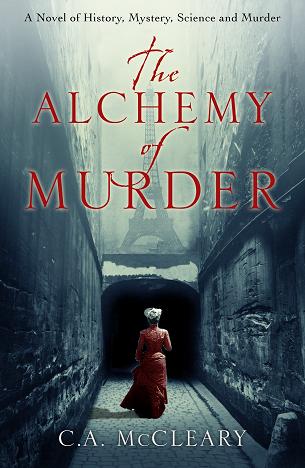
The Alchemy of Murder
Carol McCleary
Forge, 365 pp. $24.99

Nice effort for a first novel. A fun premise, fairly well executed. Nellie Bly, the famous (for real) investigative reporter for Joseph Pulitzer’s New York World, goes to Paris in 1898, just as the World’s Fair is attracting throngs of tourists, to catch a brutal murderer.

The guy’s apparently a doctor, and has been hacking up girls and taking away parts of their bodies. Now he’s going about his nasty business in a city that’s not only overwhelmed with the fair (and trying to hush up the killings to avoid bad publicity) but in the throes of an epidemic of something called Black Fever.

The authorities think the fever is spread by miasma rising from the sewers. The anarchists, who control the Montmarte section of the city, think it’s a plot by the rich to kill the poor. And of course, as McClearly points out about Montmarte, “the immorality and depravity of its bohemian inhabitants is a scandal known throughout the world.” Bly runs into Louis Pasteur, Jules Verne (who she eventually sleeps with), Oscar Wilde, Louise Michel and a host of other characters from late 19th century Paris as she chases around, putting herself forward as bait for the killer.

McCleary isn’t terribly kind to the anarchists, but there’s a lot of (relatively) accurate historical description of the politics of the time, with ample references to Kropotkin, Bakunin, and Haymarket Square. And the scenes in Montmart, the Pasteur Institute and the Parisian sewers are worth the price of admission – even if the eventual plot twist, involving an anarchist attempt at biowarfare with anthrax, plague and cholera – is a bit of a stretch.

Lesbian sex in a café with ample absinthe. Blow jobs in another café. A bladder filled with plumbers acid that gets sprayed on a bad guy’s dick. Sex with Jules Verne. Lectures by the radical Ms. Michel. I wouldn’t sell it as a history book, but as an entertaining mystery, it actually works.

RENE CAZENAVE, 1941-2010

5

Rene M. Cazenave died at home June 27 in the company of his wife, Sylvie, and sister, Denise. He is also survived by his son, Lucien, and two-week-old granddaughter, Drew. He was 69.

A native San Franciscan, Rene was instrumental in the creation of the community empowerment movement in the city from its modern inception in the 1970s. He was at the center of community politics for nearly 40 years. He was a key member of Citizens for Representative Government, the community-based coalition that devised and successfully campaigned for district election of supervisors in 1977, a move that led to the election of the first directly elected African American, Chinese American, and gay supervisors. He helped organize and found the Council of Community Housing Organizations, a coalition of faith- and community-based nonprofits that produce permanently affordable housing. Over the past 30 years, members of the group have developed or acquired and rehabilitated some 25,000 affordable homes and apartments in one of the most expensive housing markets in the U.S. He helped create and then save KPOO community radio. He loved his family, jazz, old San Franciscans (indeed, he became one himself), dogs and cats, and reading and debating history.

His dad, also Rene and also a native, spent his working life in newspapers, retiring as a Hearst Examiner editor. Rene learned from his dad — and mom, who was also a native — every parish, every street, every neighborhood, and every bar in San Francisco. He was invaluable to a movement centered on community organizing, but made up of folks who hailed from everywhere but San Francisco. He shared his knowledge of the city — and his love for the people of the city as well.

Rene’s special genius was in raising funds for the creation of a community controlled infrastructure, empowering residents of low-income neighborhoods in San Francisco. He was the master in the use of the federal Community Development Block Grants program (CDBG), and was an important part of a community effort to restructure the Redevelopment Agency, leading to the use of the agency’s tax-increment financing mechanism. At a conservative estimate, these two public sources — CDBG and tax increment financing — have poured more than $1 billion into low-income San Francisco communities since 1975. Thousands of lower- and fixed-income San Franciscans who didn’t even know Rene’s name found a home, got critical job training, played in a gym, ate a hot meal at a senior center, got treatment for an illness at a community clinic, and had an opportunity to vote for a supervisor who represented their interests as a result of his skillful and tireless advocacy.

Rene was a fully integrated political being. To an astounding degree, his moods were set by the politics of his city. He held a deep and unshakable belief in socialism and humanism. He was heartsick at the decline of working class San Francisco. But his depression and disappointment over political events never caused him to give up or give in. He loved the fight, he loved the action, and he worked harder than most to the very end.

We all know that we stand on the shoulders of giants. But every now and then we are lucky enough to actually stand shoulder-to-shoulder with them. Those of us who knew Rene Cazenave were that lucky. Services are pending.

Calvin Welch worked with Rene Cazenave for 39 years doing community organizing, advocacy, and politics together. He, along with hundreds of others, misses the hell out of him already.

Sorting out the Adachi initiative

37

Lots of press on the Adachi pension-reform measure, a proposal that would amount to cutting the pay of city workers during a recession. It turns out even Gavin Newsom doesn’t like the plan:


The mayor also attacked Adachi’s pension plan, arguing that the public defender never discussed it with the employee unions, city officials or others affected by the measure and that it could have “unintended consequences” for the city.


And while I think it’s a bit of a stretch to say that the Adachi measure “could reshape national politics,” Randy Shaw makes a good point:


Adachi’s measure would join with Sean Elsbernd MUNI charter amendment to create a one-two punch against public employees on San Francisco’s November ballot. The national media will have a field day with the prospect of “liberal” San Francisco, and Nancy Pelosi’s home turf, voting to cut public employee compensation.

While this is not the message Adachi wants to send, it will likely be the one that is heard. It emerges at a time when the entire Republican Party and corporate Democrats are in a full-fledged media campaign to redirect public anger over the fiscal crisis toward excessively compensated public employees, and away from banks, oil companies, hedge fund managers, and an under taxed and poorly regulated private sector.


Shaw also says that the campaign will “bitterly divide progressives,” and I’m not sure it has to turn out that way. There’s always the danger that liberal voters who work in the private sector, and are struggling to keep their jobs and health insurance, will be seduced by the notion that public-sector employees are too well paid already. And the donwtown folks, who will soon be fully on board with the Adachi measure, will seek to divide the nonprofit sector and labor by arguing that nonprofit workers don’t get the same benefits as city employees — and city funding for nonprofits is threatened by the budget deficit. Both those things are true, but it’s also true that there’s a growing movement to challenge that approach. This battle will be a test for the city’s progressive movement, but I think the overwhleming majority of progressive leaders, activists and nonprofits will stick together and oppose Adachi.


The more important political impact will be felt in the tightly contested district-election contests, where city-employee pensions could join the sit-lie measure as wedge issues that the moderates will use against progressives. When Adachi came down to see us, I asked him if he was worried about that; he didn’t really seem to think it was important.


But there’s a reason we talk about a “progressive movement” (and don’t start on the “machine” stuff again, we had that debate over here). We all ought to be concerned about how one campaign affects the larger goal of building a better and more sustainable city. And while I hate to say it, I have to agree with Gavin Newsom: This thing could have “unintended consequences.”


Lisa Cholodenko on “The Kids Are All Right”

0

Writer-director Lisa Cholodenko earned attention with critically acclaimed features like High Art (1998) and Laurel Canyon (2002). Her latest movie, The Kids Are All Right, is a “personal film” about a lesbian couple raising teenagers. I spoke to Cholodenko about queer politics, explicit content, and keeping things lighthearted.

San Francisco Bay Guardian: Recently, there was a lot of controversy surrounding a Newsweek article, in which the author wrote about the difficulty of queer actors playing straight roles. I was wondering about your take on that, and on the opposite — straight actors playing queer roles. Is that something you even considered when casting?
 
Lisa Cholodenko: I’ll be honest, I was just told about this article and I didn’t read it. You know, I think it’s kind of weird thing to even discuss in a way, to me. Chiefly because I think actors’ personal lives — I just think people should have a private life, not that they should be in the closet, but that there should be a separation between professional life and personal life. And if a director feels like so-and-so, whether they’re gay or straight, would be good for a role, give them the role. What does it matter? As it turns out, I think gay people have more of an affect, whether they’re lesbians or gay men, that’s harder to camouflage in straight roles. Why that is, I mean, you could talk about that. I think it’s easier to go the other way. That’s just what it is. I say that without a value judgment. It is what it is.

SFBG: The Kids Are All Right has a same-sex relationship, of course, but it also has a fair amount of graphic sex and even a snippet of hardcore gay porn. Do you think it will shock a mainstream audience? Are they ready for it, and does that matter?

LC: I think it’s shocking in a sense that it’s portrayed in such a real way, that it’s not super arch, or it’s not like The L Word. This stuff has been on TV and in films. In a way, I’m not inventing the wheel at all. But I think the package that it’s coming in is going to be disarming to people. I think we tried and I think we were somewhat successful in making it so that you don’t realize exactly what you’re watching, the subversiveness of what you’re seeing. You can settle into watching it without that kind of discomfort of being super aware of, “This is something I’m not. I’m other and this is not my thing.” I think we figured out a way for people to enter it, and that was really important for us.

SFBG: I ask because I do feel like this shouldn’t be a big deal, that people should be able to handle it. And yet, the night before I saw your movie, I saw Sex and the City 2, in which there was a gay wedding. And as soon as the two men kissed, the camera cut away. There’s a lot of intimacy between Nic and Jules in the movie, so I was wondering particularly about that. Are people outside of San Francisco going to be apprehensive?

LC: Yeah. You know, I think we didn’t really know. I think we tried to write it and I tried to direct it in a way that the humor would be disarming enough, and the images themselves, if you really deconstruct it, would be tame enough. So it was more the suggestion of it. That would be the kind of twist. The people in the know would get it more than the people that were not in the know, maybe. I think we hoped that it would have a mainstream appeal to it, and that we could get beyond the people who would be apprehensive. There were questions about the gay porn and about how much sexuality we were showing, but we felt like, this is the fun of the film. It’s not going to be Spider-man 12 or something. It’s not going to be a multiplex film. But we hope it’s not going to be super rarefied art house film. So in terms of the Sex and the City thing, I think that they’re looking to go as wide as humanly possible, to every grandmother to every neck of whatever, so you can only take it so far.

SFBG: I want to touch on the humor that you mentioned, because I think it’s one of the movie’s real strong points. It’s so funny. What was your approach when you were co-writing to keeping the drama of the story but still making it fun?

LC: It was like a process, it was a real evolution. We had sort of a plot, a conceit for how the plot comes together, which was this thing about the kind of doofus friend wanting to watch the DVDs, and finding the porn, and blah, blah, blah, blah. So that all was funny, and then the kind of awkward conversation about trying to tiptoe around trying to figure out if their kid was gay, and that they would even care that the kid is gay, and how ironic that two gay moms are going to care that there kid is gay. And all that stuff. So it made us laugh, but there was a lot of other stuff in there that we took a lot more seriously and played a lot more seriously. I think as we went deeper into the drafts and moved along in the evolution of getting the film done, I really, really, really pushed for us to take whatever was potentially funny in there and just kick it up a notch. Stuart [Blumberg, who co-wrote the film] is a really funny guy — we have a similar sensibility. The same kind of stuff makes us laugh. So we knew if we were sitting there writing it and laughing, it was good. We had kind of gotten there.

SFBG: I think a lot of the humor comes from the fact that the film is so real and grounded. You have Laser, a 15-year-old boy, who talks like a 15-year-old boy, and that’s something we don’t always see in movies. And so it’s not stereotypical or preachy—it feels more organic than that.

LC: Yeah, we were really passionate about making it not politically correct and not sanctimonious and not super earnest and just hoping that there would be heart in it, simply because these were sympathetic and three-dimensional characters in a difficult situation.

SFBG: I wanted to ask about the character of Nic [played by Annette Bening], who could have been played very typically butch, because she has a masculine name and short hair and these traditionally “male” qualities. In terms of the writing and the directing, how did you make sure there was more complexity there?

LC: You know, I think that wasn’t super overdetermined. It’s really just kind of my worldview. I don’t live in a world where people are super stratified. I don’t feel like my partner and I are super — I kind of see the butch and femme in every lesbian I know. I know that there are lesbians who really kind of identify with that, and that’s there thing in the world, and that’s good. But it’s a personal film, so it’s written from my worldview. So there’s that, and then there’s also, you get Annette Bening and you get Julianne Moore, and they come with their own essence and personality. Julianne Moore has some butch in her and Annette Bening has some femme in her. They are who they are.

SFBG: There’s a great conversation early on in the film about the spectrum of sexuality and how it’s not so easily defined, which ties into Jules sleeping with a man. Were you concerned about an audience’s reaction to a lesbian having sex with a straight guy?

LC: I mean, it was a concern for me, but I felt like, you know what, oh well. I might be nailing the coffin. It might just be a bad choice. But in essence, the whole plot of the film revolves around that, so it was either, ditch the film or run with it and try to make it feel earned and interesting and viable and what not. In the early drafts I would show people — and when I started getting feedback in the early drafts, and “This is good,” I stopped being so uptight about that and just let myself kind of take it to the next place.

SFBG: It wasn’t an issue for me, but I think for a lot of people, they expect more rigid definitions. We don’t see a lot of queer characters on screen, and so when we do, many want them to be perfect: the queer voice, the lesbian, the gay man. And when they step outside those boundaries, suddenly it becomes an issue, politically.

LC: The calculated thing was that, I thought, a) I identify with this. This is something that I feel like, that makes sense to me. That makes sense to people I know. That makes sense to whatever. So it didn’t feel like some weird kind of conceit that I came up with that was like, that never happens. All lesbians are rigidly this and don’t go over that boundary. Because we know that’s not true. So there was that, and then I thought, I like this set-up and I like this plot, and also I feel like, it’s kind of an interesting intermingling of straight and gay. I felt like, if I really want this to be a mainstream film, that’s good. This is really inclusive of gay and straight, and I like that. I like that personally and I like that for this film. I was much more interested in reaching out to the male population than I was concerned about alienating a sector of the lesbian population.

SFBG: I wanted to talk about the title, The Kids Are All Right, and that focus on the children. How did the title come about? How do you feel about the role the kids play, and why is that central to the film?

LC: The film is about, you know, these women and their experience making a family. The family. The man who comes in and wants to be part of the family. Really when you’re talking about the family, it’s about the life of the kids. So it’s sort of an ironic title, in the sense that the kids are kind of doing better than the moms, in a way. And it’s also a kind of a wink to the notion that gay people can’t raise healthy, psychologically healthy children. Like, the kids are fine. Don’t worry about them. They’re just right.

SFBG: You talked a bit about what Annette Bening and Julianne Moore brought to the film, but I was wondering if you could elaborate on casting.

LC: Julianne was someone I had probably 10 years ago, just at some function somewhere. We had spoken about wanting to work together at some point. She was a fan of the first film that I made, High Art, and I was always a fan of hers, particularly in Boogie Nights (1997). So when Stuart and I wrote this, we asked ourselves several times, could Julianne play this part or that part? We were sort of on the fence. We thought she could play either part. So I sent it to her and I said, “Which part would you like to play?” And she picked Jules. Which, we weren’t surprised. We knew she’d want to play that part, but I thought I’d offer her the other one if she wanted it. And that was great.

Then finding her counterpart, the Nic character, was more difficult. It was kind of vexing. I just didn’t know what actor in that age group who had great acting chops, who was funny and dramatic and sexy, could be a good match for her. But when I stumbled on the idea of Annette Bening, I kind of got rabid about it. OK, this is it, this is the only person who can do it. So come hell or high water, she’s gonna do it.

SFBG: And then in terms of the younger actors — you don’t always see teenagers who actually look like teenagers.

LC: Well, they’re pretty close to the ages they’re supposed to play. Mia [Wasikowska] was like 19 at the time, and Josh [Hutcherson] was maybe 16, going on 17. So they were pretty close. Mia was someone that I had seen on an HBO series called In Treatment and thought she was interesting. I liked that she was Australian, not a typical American young actor, from LA or New York and wouldn’t have that baggage or affect that you might find in a lot of young actors from here. And he — I didn’t know his work, but I knew that he had done a lot of work. I was told he was an up-and-coming actor, so I was open to meeting him as well as other people, but when he came in and did the scene, it was just one of those things where you go like, “Oh, yeah.” I thought maybe Laser would be more of a Paul Dano-type kid, a little bit more twee, but when I saw him, I thought, oh, that’s good. He should be more boyish and more kind of robust, and just like a dude. I like that.

SFBG: There’s a lot of subtlety in The Kids Are All Right. I liked Nic’s drinking, which was fairly underplayed but came up several times. What was the thought process behind that? Does she have a drinking problem, or is that just the manifestation of the turmoil going on in her family?

LC: I think we felt like, oh, you know what? She’s kind of borderline. She’s a little bit of a lush. She’s kind of leaning on the wine too much, and this has become a thing and the other partner is now noticing. She’s drinking too much and she’s a stress case and she’s not dealing with it very well. She doesn’t have a good off valve. I think we tried to design it in a way that it felt like, this is something that’s coming to a head in their relationship. One partner’s seeing a behavior that’s making her concerned and the other one doesn’t want to deal with it yet, and she’s boozing it up.

SFBG: It’s also interesting because it’s easy to label Nic the control freak. But here’s Nic, who can’t control her drinking, and Jules, the free spirit, trying to get her to keep it in line.

LC: Right, right, right. Well, I felt like everybody has their ironies and contradictions and stuff. It’s endemic, I think, in all long-term relationships.

SFBG: There was another relationship that interested me, which was the relationship between Paul [Mark Ruffalo] and Tanya [Yaya DaCosta]. I was wondering if it was significant that it was an interracial relationship. In the sense that, 40 years ago, audiences might have been shocked by an interracial relationship, but now it plays naturally — and hopefully, the same will be true of same-sex relationships. Was that intentional, or am I reading into things too much?

LC: You know, I think it wasn’t totally consciously mediated, but at a certain point when I was thinking about casting, I had Erykah Badu in my mind for that role. I felt like, who’s the kind of person who Paul would be with? It seems like he’s the kind of guy who would be running after the most exotic person. That character to me was sort of gorgeous and exotic and whatever. And then, to go from that to Jules, who is totally exotic in her own way, because she’s who she is and she’s older and she’s beautiful and she’s a lesbian. It was this kind of motif of like, what’s exotic? The Tanya character, the black character, is clearly in love with him and would be devoted to him in a heartbeat. And the white character, who’s a lesbian and completely inaccessible, is not available at all.

I guess the second part to that question is, at a certain point when we were putting this together was, it’s not only that, in terms of the psychology of the character, but I think this is good to mix it up. You know, he’s screwing this black woman, and OK, compare that to the lesbians watching gay male porn. This is what people do in life. It’s not just white people and straight people. It’s mixed up.

The Kids Are All Right opens Fri/9 in San Francisco.

alt.sex.column: Search that drug

0

Dear Readers:

Ah, flibanserin, we hardly knew ye.

The U.S. Food and Drug Administration’s Reproductive Health Drugs Advisory Committee voted 10 to 1 on June 18 that flibanserin, 100 mg (Girosa; Boehringer Ingelheim), was not significantly better than placebo for hypoactive sexual desire disorder (HSDD). They also voted unanimously that the benefits did not compensate for its adverse effects. (Medscape, June 21)

Bah.

Sometime last fall my friend Yvonne and I stood in front of a Sex Information class, systematically dismissing once-promising sex-enhancing drugs. This one works for men, but not for women;. this one doesn’t work at all; this one may work but causes vomiting and loss of consciousness. And there we left it, except for — what was that new one called again — flibanserin, a.k.a. Girosa! The next great hope for women suffering from hypoactive sexual desire disorder (HSSD). “We’ll be back with an update,” we promised. “Hell, if we can get our hands on some we’ll even try it for you.”

What was new and intriguing about this one was that it purported to affect the emotions, via our old neurotransmitter friends dopamine, norepinephrine and serotonin. Now that sounded promising.

To be fair, flibanserin did not in fact completely flunk the test, it just didn’t do well enough to impress a conservative (scientifically, not necessarily politically) voting panel at the FDA.

A clinical trial of flibanserin presented last year in 1,378 premenopausal women found that after 24 weeks, the frequency of satisfying sexual events increased significantly in women taking flibanserin 100 mg, from 2.8 at baseline to 4.5 at study end, compared with placebo, which was 2.7 at baseline and increased to 3.7 at the study end. Women taking flibanserin also demonstrated improved sexual desire vs. placebo as measured by a daily electronic diary and the Female Sexual Function Index desire domain.

I have to say, 4.5 vs. 3.7 “satisfying sexual events” per month for the placebo is not chopped liver. Then again, a well-marketed, completely physiologically inactive miracle sex pill, with plenty of anecdotal bolstering and a neat-o name and a very strong suggestion from a caring physician that this was the drug that would actually work better than anything out there and without any pesky vomiting and passing out even — it’s really most inconvenient that a campaign like that would be illegal as well as unethical. Not to mention short-lived — heads would roll when word got out.

I’m bummed, personally, to be denied another chance to offer myself up to science for your amusement and edification. Oh, and also that there’s still nothing out there for the millions of women who are, for whatever reason, just not feeling it.

Personally, I think those reasons include but go so far beyond biology and chemistry, into sociology, history, and politics … I hope you brought a magazine, it’s going to be a hell of a wait.

Love,

Andrea

P.S. Viagra can totally work for some women, you know, just not on the self-reported dysfunction-sufferers studied

Email your questions to: andrea@mail.altsexcolumn.com

Stage listings

0

Stage listings are compiled by Guardian staff. Performance times may change; call venues to confirm. Reviewers are Robert Avila, Rita Felciano, and Nicole Gluckstern. Submit items for the listings at listings@sfbg.com.

THEATER

OPENING

Cindy Goldfield & Scrumbly Koldewyn in Cowardly Things New Conservatory Theatre Center, 25 Van Ness; 861-8972, www.nctsf.org. $20-28. Previews Thurs/8, 8pm. Opens Fri/9, 8pm. Runs Thurs-Sat, 8pm. Through July 31. Cindy Goldfield and Scrumbly Koldewyn in a tribute to Noel Coward.

Comedy Ballet The Garage, 975 Howard; (800) 838-3006, www.brownpapertickets.com. $15-25. Opens Fri/9, 8pm. Runs Thurs-Sat, 8pm, Sun, 3pm. Through July 18. Dark Porch Theatre presents an outlandish and unusual dance and theater hybrid.

Dead Certain Royce Gallery, 2901 Mariposa; (866) 811-4111. $12-28. Previews Thurs/8-Fri/9, 8pm. Opens Sat/10, 8pm. Runs Thurs-Sat, 8pm. Through August 14. Expression Productions presents a psychological thriller by Marcus Lloyd.

Foresight Fort Mason Southside Theater, Building D; www.fortmason.org. $22-27. Opens Fri/9, 8pm. RunsFri-Sat, 8pm; Sun, 2 and 8pm. Through July 18. Easily Distracted Theatre presents a new play by Bay Area filmmaker Ruben Grijalva.

Gilligan’s Island: Live on Stage! The Garage, 975 Howard; (800) 838-3006, www.brownpapertickets.com. $15-20. Opens Sun/11 8pm. Runs Sun, 8pm. Through August 29. Moore Theatre and SAFEhouse for the Performing Arts brings the TV show to the stage, lovey.

The 91 Owl African American Arts Cultural Complex, 762 Fulton; 574-8908, www.brownpapertickets.com. $10-25. Previews Thurs/8, 8pm. Opens Fri/9 8pm. Runs nightly 8pm. Through July 22. A production of Bernard Norris’s play about the life of a San Francisco bus stop.

Piaf: Love Conquers All Eureka Theatre, 215 Jackson; (800) 838-3006, www.brownpapertickets.com. $25-36. Previews Wed/7-Thurs/8, 8pm. Opens Fri/9 8pm. Runs Tues-Fri, 8pm; Sat, 2 and 8pm. Through August 7. Tone Poet Productions brings a portrait of Edith Piaf to the stage.

"San Francisco Olympians Festival" Exist Stage Left, 156 Eddy; www.sfolympians.com $10.

BAY AREA

Mrs. Warren’s Profession Bruns Ampitheatre, 100 California Theatre Shakespeare Way, Orinda; (510) 548-9666, www.calshakes.org. $34-70. California Shakespeare Theater presents George Bernard Shaw’s classic morality play.


ongoing

Abigail: The Salem Witch Trials Temple SF, 540 Howard; www.templesf.com. $10. Thurs/8, 29, Aug 5, 12, 19, 26, 9pm. Through Aug 26. Buzz Productions, with Skycastle Music and Lunar Eclipse Records, presents an original rock opera based on the Salem witch trials.

Beijing, California Thick House Theater, 1695 18th St; www.asianamericantheater.org. $15-25. Thurs-Sat, 8pm; Sun, 5pm. Through July 17. Asian American Theater Company presents a new play by Paul Heller set in the year 2050, when China invades America.

*Blackbird: Honoring a Century of Pansy Divas Mama Calizo’s Voice Factory, 1519 Mission; 786-9325, www.evezen.org. Thurs-Sat, 8pm. Through Sat/10. The intimate Blackbird Funeral Parlour Speakeasy is somber-toned and deceptively hushed, complete with period furnishings, a see-through dressing room, softly flickering altar, and obligatory piano. Only a few moments into Seth Eisen’s exceptional one-man cabaret, however, and the place is alive and kicking: doleful aspects of the décor making ample room for a sly, vigorous, soulful performer and a completely unexpected journey through some vibrant underground queer history (backed by fellow Circo Zero alum Sean Feit’s sharp musical direction and breezy accompaniment, and Alanna Simone’s gently humorous and haunting video pieces). Your guide is 100-year-old Jean Marlin, author of the notorious 1930s Pansy Craze, 75 years dead and looking fabulous in tails, bold green cravat, dapper purple hankie and a topping of regal black plumage (costumer Jack Davis demonstrates a genius throughout for turning a shoestring budget into a G-string–supported extravaganza). A multifaceted performer with quick tongue, nimble steps, and hearty voice (giving life to an assortment of extraordinary songs), Eisen uses drag, dance, puppetry, and performance art techniques to give flight to worthy exotic blackbirds known and forgotten—drag queen Zen priest Tommy Issan Dorsey; sexually ambiguous Danny Kaye; Brazil’s inimitable Ney Matogrosso; the definitely outré Klaus Nomi; and disco treasure Sylvester, whose live rendition of the Beatles’ "Blackbird" at SF’s War Memorial Opera House is one of several standout moments in this rollicking and poignant act of resurrection, insurrection, and homage. (Avila)

"Durang Me!" Next Stage, 1620 Gough; 1-800-838-3006, www.custommade.org. $10-28. Thurs-Sat, 8pm. Through Sat/10. Christopher Durang’s The Actor’s Nightmare could just as easily be called The Accountant’s Nightmare, as befuddled Everyman and presumed non-actor George Spelvin (Eric O’ Kelly) attempts to navigate his way out of a confused rendition of Noel Coward’s "Private Lives" dressed as Prince Hamlet and menaced by a trashcan-bearing Beckett-arian (AJ Davenport). This traditional companion piece to Durang’s Catholic School send-up Sister Mary Ignatius Explains It All for You references a Catholic boyhood several times, but it is the anxiety of the present moment that prevails, as the stage clears, and Spelvin is chased into a corner by an unforgiving spotlight to deliver his frantic last-ditch attempt at a soliloquy: his ABC’s. The titular Sister Mary Ignatius (AJ Davenport), by turns arctic and expansive, attempts to explain all, while periodically trotting out her star pupil Thomas (Cole Cloud) to recite catechism and spell eck-u-men-ickle for cookies. Davenport plays the pedantic side of Sister Mary with humorous vigor, but when a group of her former students drop by "to embarrass her" she doesn’t quite pull off embodying the ogress of their now-adult nightmares. Of her former students, it is probably Aloysius Benheim (Eric O’Kelly) who comes across as the most damaged by her tyranny, and not coincidentally, suffers the piece’s greatest humiliation. (Nicole Gluckstern)

How the Other Half Loves Phoenix Theatre, 414 Mason; (800) 838-3006, www.offbroadwaywest.org. $35, Thurs-Sat, 8pm. Through July 31. In Alan Ayckbourn’s 1971 comedy, a night of infidelity propels two colliding couples into menacing a third, a pair of innocents unwittingly drawn into the whole affair as alibis. The collisions are made all the more kinetic by the fact that Ayckbourn cheekily drops the two principal couples into overlapping living rooms, where they continually brush by each other in ironic obliviousness. At the outset of this droll two-act, Fiona Foster (a smart, cucumber-cool Sylvia Kratins) has just slept with Bob Phillips (a brilliantly sourpussed James Darbyshire), junior colleague of her husband Frank (Jeff Garrett, exuding the animated splendor of the full-on English twit), on the night of the couple’s wedding anniversary (pure coincidence for the forgetful, loveless Fiona). In loose coordination with lover Bob, Fiona explains her late night absence with reference to a pair of vague acquaintances, the Featherstones (Jocelyn Stringer and Adam D. Simpson). Bob does the same with Teresa (a spunky Corinne Proctor), his homebound wife and a new, deeply disgruntled young mother. Naturally, back-to-back dinner parties with said alibis ensue, much to the horror and chagrin of the adulterers. Off Broadway West Theatre Company’s production, smoothly helmed by Richard Harder, makes the most of the complex staging as both time and space collapse over intersecting dining tables. If the play is slow to catch fire, it reaches a nice sustained peak that proves worth the going. Shaky accents from Garrett and especially Simpson can distract at times, but Harder’s cast is generally solid and engaging, with particularly enjoyable work from Darbyshire and Proctor as the volatile younger Phillips with their crass bickering, canned erotic energy, and barely countenanced off-stage baby. (Avila)

The New Century New Conservatory Theatre Center, 25 Van Ness, SF; 861-8972, www.nctcsf.org. $22-40. Wed-Sat, 8pm; Sun/11, 2pm. Through Sun/11. New Conservatory Theatre Center performs Paul Rudnick’s bill of short comedies.

Peter Pan Threesixty Theater, Ferry Park (on Embarcadero across from the Ferry Bldg); www.peterpantheshow.com. $30-125. Tues and Thurs, 7pm; Fri-Sat, 7:30pm (also Sat, 2pm); Wed, 2pm; Sun, 1 and 5pm. Through August 29. JM Barrie’s tale is performed in a specially-built 360-degree CGI theater.

Posibilidad, or Death of the Worker Dolores Park and other sites; 285-1717, www.sfmt.org. Free. Sat-Sun, 2pm; also Sept 6, 2pm; Sept 17, 8pm. The San Francisco Mime Troupe opens its 51st season with a modern song and tango about politics in the workplace.

Reading My Dad’s Porn and French Kissing the Dog The Marsh Studio Theater, 1074 Valencia; (800) 838-3006, www.themarsh.org. Thurs-Sat, 8pm. Through July 17. The title of San Francisco writer-performer Cherry Zonkowski’s confessional solo show gives only a little away—a passing detail from the Nordic diversions of a spirited army brat and daughter of an alcoholic father—but the rest of the narrative leaves even less to the imagination. An account of Zonkowski’s initiation into the sex party and BDSM scene, Reading My Dad’s Porn bounces gleefully between comically graphic depictions of sweaty, writhing Bay Area meet-and-greets and a childhood and young adulthood buried in family dysfunction, a loveless marriage, and the grueling teaching load of a recent English PhD. Ultimately, it’s the story of a woman finding her own identity and community, and if the outlines sound familiar they also feel that way. The straightforward plot—peppered with humorous details and asides (as well as the odd song, accompanied by accordionist Salane Schultz, alternating nights with Aaron Seeman)—lacks both urgency and characters of much complexity. The story’s patina of outré sex, meanwhile, is far from revelatory and too superficial and jokey to offer much dramatic heft. Nevertheless, the show, developed with director David Ford, draws a limited appeal from the force of Zonkowski’s extroverted personality, whose orientation sexual and otherwise skews toward fun—although her more aggressive attempts to corral the audience into participating (mainly vocally) in the show’s narrative high jinx may put some off even more than the fisting by the snack table. (Avila)

What Mama Said About Down There Our Little Theater, 287 Ellis; 820-3250, www.theatrebayarea.org. $15-25. Thurs-Sun, 8pm. Through August 28. Writer-performer-activist Sia Amma presents this largely political, a bit clinical, inherently sexual, and utterly unforgettable performance piece.

Young Frankenstein Golden Gate Theatre, 1 Taylor; 551-2000, www.shnsf.com. $30-99. Thurs-Sat, 8pm; Sun, 2pm, also Tues/13, July 20, 8pm; Wed/7, July 24, 21, 2 and 8pm. Through July 25.

For all its outlandish showmanship, Mel Brooks’s other movie-turned-musical is not quite as grand a beast as The Producers . Still, the adventures of Victor Frankenstein’s reputation-conscious grandson, Frederick Frankenstein—played with exceeding charm and surgeon-like skill by major cut-up Roger Bart, originator of the role on Broadway—remains a monster of a show, in more ways than one. The rapid-fire repartee, for starters, is scarily deft, the comic timing among a first-rate cast all but flawless (even when milking a line shamelessly), the fancy footwork (choreographed by director Susan Stroman) pretty fancy, and the mise en scène holds some attractive surprises as well. At the same time, and despite the fecund humor revolving around questions of size and virility, the show’s actual two-and-a-half-hour length proves a bit wearying, especially as many of the best jokes (though by no means all) are the much-loved and universally much-repeated gags from the film. Moreover, Brooks’s songs, while very able, rarely rise to memorable and sometimes feel perfunctory or a bit busy. One of the glorious exceptions is the blind hermit scene (played brilliantly by Brad Oscar), which combines the hilariously plaintive song "Please Send Me Someone" with a lovingly faithful rendition of the original spoof for a sequence that literally smokes. (Avila)


BAY AREA

*East 14th: True Tales of a Reluctant Player Marsh Berkeley, 2120 Allston, Berk; www.themarsh.org. $20-50. July 24, 31, 8pm; July 18, 25, Aug 1, 7pm; Fri/9, 16, 9pm. Through August 1. Don Reed’s solo play, making its Oakland debut after an acclaimed New York run, is truly a welcome homecoming twice over. (Avila)

Left of Oz Ashby Stage, 1901 Ashby, Berk; (800) 838-3006, www.brownpapertickets.com. $25-50. Fri-Sat, 8pm, Sun, 7pm. Through July 18. Stephanie’s Playhouse presents a lez-queer musical comedy following the out west adventures of Dorothy.

Les Liasons Dangereuses Redwood Ampitheatre, 30 Sir Francis Drake, Ross; (415) 251-1027, www.porchlight.net. $15-30. Thurs-Sat, 7:30pm; also Wed/7, 7:30pm. Through Sat/10. Porchlight Theatre Company presents a production of Christopher Hampton’s adaptation of the 1782 novel.

Loveland The Marsh Berkeley, 2120 Allston, Berk; (800) 838-3006, www.themarsh.org. $25-50. Fri/9, 7pm; Sun/11, 2pm. Through July 11. Ann Randolph’s comic solo show about an irreverent woman’s trip back to her childhood home in Ohio.

Shaker Chair Pear Avenue Theatre, 1220 Pear Avenue, Mtn View; (800) 838-3006, www.brownpapertickets.com. $15-30. Thurs-Sat, 8pm; Sun, 2pm (also Sat/10, 2pm). Through July 11. Pear Avenue Theatre presents Adam Bock’s play about a middle-aged widow who applies Shaker philosophy to her lifestyle.

Speech & Debate Aurora Theatre, 2081 Addison, Berk; www.auroratheatre.org. $34-55. Wed-Sat, 8pm; Sun, 2pm, 7pm; Tues, 7pm. Through July 18. Aurora Theatre closes its 18th season with Stephen Karam’s comedy about three teen misfits connected to a small town sex scandal.


PERFORMANCE/DANCE

BATS Improv Theatre Bayfront Theater, Fort Mason Center, B350 Fort Mason; 474-6776, www.improv.org. Fri-Sat, 8pm. Through July 31. Bay Area Theatresports presents an evening of theater and comedy.
The Bowls Project: Secrets of the Apocalyptic Intimate Yerba Buena Center for the Arts, Sculpture Court, 701 Mission; 978-2787, www.ybca.org. Tues/6, 6-8pm, free. Through August 22. Charming Hostess presents a series of performances in conjunction with an interactive sound sculpture.
Liz Grant Variety Pack Comedy Show Purple Onion, 140 Columbus; 200-8781, www.brownpapertickets.com. Fri, 4:30pm. Through Sept 3. $10. A changing lineup of stand up comedy.
"San Francisco Olympians Festival" Exit Stage Left, 156 Eddy; www.sfolympians.com Fri/9-Sat/10, 8pm, $10. A series of one=act perfomances by No Nude Men Productions.

Closing the wealth gap

0

Dick Meister, former labor editor of the SF Chronicle and KQED-TV Newsroom, has covered labor and politics for a half-century. Contact him through his website, www.dickmeister.com, which includes more than 250 of his recent columns.


Although the wage gap between white and African-American workers remains wide, it has been shrinking. But that’s not so for the more significant black and white wealth gap.

A new study by researchers at Brandeis University shows that the wealth gap has been growing steadily, leaving African-American families with increasingly fewer resources than white families to cope with serious economic problems such as many families face today.

The Brandeis study found that in the quarter-century from 1984 to 2007, the African-American and white wealth gap more than quadrupled, from $20,000 to $95,000.

Middle-income white households had $74,000 in financial assets by 2007. That was far higher than even the average high income African-American family, which had only $18,000 in assets. At least 25 percent of the black families had no assets at all – no wealth, that is.

The study notes that wealth – “what you own minus what you owe” – is what “allows people to start a business, buy a home, send children to college, and ensure an economically secure retirement. Without wealth, families and communities cannot become and remain economically secure . . . The gap is opportunity denied and assures racial inequality for the next generation.”

The main reasons cited by the researchers for the four-fold increase in the African-American and white wealth gap are unfortunately not surprising: Racial discrimination and tax policies that favor the rich, who are disproportionately white.

The study noted the advantages given the wealthy through tax cuts on investment income and inheritances, retirement accounts, home mortgages and college savings. In contrast, African-American families typically face disadvantages – the disadvantages of “persistent discrimination.”

For example: During the period beginning in 1984, African Americans “were at least twice as likely to receive high cost home mortgages as whites with similar incomes. These high-cost loans unnecessarily impeded wealth building in minority communities and triggered the foreclosure crisis that is wiping out the largest source of wealth for minorities.”

Lacking sufficient assets, African Americans in general have had no choice but to rely heavily on expensive credit. The total amount of their debt just about doubled between 1984 and 2007 to at least $3,600 each.

To make it worse, African Americans, like other non-white credit users, generally have to pay more than white borrowers in interest payments and other charges. Many have no choice but to borrow from predatory lenders who charge exorbitant interest rates.

The study suggests several remedies, including creation of a Consumer Financial Protection Agency designed to ensure fairness for all in their financial dealings. That would include helping “equalize and regularize the terms on which cash-strapped families are borrowing to make ends meet.”

Efforts to help low and moderate income families increase their assets so as to gain economic stability and mobility have been increasing. But the study shows the efforts must be intensified, for they are “not yet strong enough or at a scale to make a significant difference in people’s lives.”

The study shows as well that the wealth gap between African Americans and whites persists even among African Americans who hold well-paying jobs.   Thus “wealth opportunities must be targeted to families of color whose lives are made even more precarious by not having enough assets to make ends meet when economic challenges arise.”

True enough, there are public policies now in place “that provide incentives and subsidies for asset building.” But reforms are needed to make certain that the policies benefit all Americans equally – reforms that might at last close the wealth gap between African-American and white workers and their families.

The Brandeis study has it right: “Public policies have played and continue to play a major role in creating and sustaining the racial wealth gap, and they must play a major role in closing it.”

Dick Meister, former labor editor of the SF Chronicle and KQED-TV Newsroom, has covered labor and politics for a half-century. Contact him through his website, www.dickmeister.com, which includes more than 250 of his recent columns.

Ride the Iron Horse

0

There’s a mysterious paradox present in the fact the Golden Gate Bridge was essentially born in the pit of the Great Depression. On the one hand, this marvel of architecture and beauty stands for potential and optimism as made manifest in the dreamiest haven of California. On the other, the Golden Gate is like a metallic siren, known as a place where those who have lost contact with American life go to disappear.

In Golden Gate: The Life and Times of America’s Greatest Bridge (Bloomsbury Press, 224 pages, $23) the esteemed historian and state librarian emeritus Kevin Starr focuses on the positive side of the landmark, even if he notes tragedies such as the deaths of ten workers near the final days of the bridge’s construction. Starr isn’t seduced by the romantic or melancholic image of the fog-shrouded structure so much as committed to celebrate — with great acumen and an oft-oratorial voice that unites broad yet vital references in a turn of phrase — its greatness. His book is as well-ordered and constructed as its subject, with cleanly presented chapters outlining the bridge’s relationship to subjects such as politics, money, and design, saving the more ambiguous — yet also perhaps richest? — areas of suicide and art for last.

As such, Golden Gate is complimentary to Donald MacDonald and Ira Nadel’s more illustrative, text-based 2008 tome Golden Gate Bridge: History and Design of an Icon (Chronicle Books, 144 pages, $16.95), a well-designed hardcover with a cover that pays homage to the International Orange color of the bridge itself. Another recent book that pairs off and contrasts well with Scharff’s is Gary Snyder and Tom Killion’s Tamalpais Walking: Poetry, History and Prints (Heyday Books, 160 pages, $50), in the sense that Starr, ever mindful of context, is keenly attuned to the bridge’s role in connecting nature and urbanity in Northern California. In the latter stretch of the book, he takes time to explore the contested role of BART in relation to the bridge.

In the “Art” chapter of Golden Gate, Starr makes cursory mention of the scene in Alfred Hitchcock’s 1958 Vertigo in which Kim Novak hurls herself into the water at the foot of the Golden Gate Bridge. Anyone who visits this cinematic landmark, whether alone or on a group tour, will discover that after Sept. 11, 2001, it has been fenced off. So, while safeguarding against real-life suicides has not (at least yet) resulted in overt changes to the look and structure of the bridge, the possibility of terrorist attack has led to some tiny degree of visual blight near it. It’s curious, and contradictory, and the type of detail — complete with the added twist that a hole ripped into the metal fence allows for good photography — that Starr might enjoy. He isn’t interested in singing the praises of the bridge’s famous creators, such as Joseph B. Strauss, as he is in demonstrating the meaning of their accomplishments. Trains and boats if not airplanes brought us the Golden Gate Bridge, and Scharff shows why its Art Deco subtle majesty — those paradoxes again — is here to stay.

KEVIN STARR: GOLDEN GATE

July 8, 6 p.m., $7–$12

Commonwealth Club

595 Market, SF

(415) 597-6700

www.commonwealth.org

July 13, 7 p.m., free

Bookshop West Portal

80 West Portal, SF

(415) 564-8080

www.bookshopwestportal.com

July 14, 7 p.m., free

Books Inc.

2251 Chestnut, SF

(415) 931-3633

www.booksinc.net

July 15, 6 p.m.

California Historical Society

678 Mission, SF

(415) 357-1848

www.californiahistoricalsociety.org

Sparks reveals her conservativism in exchange with Walker

26

During the District 6 supervisorial candidate debate that San Francisco Young Democrats held last week, a two-question exchange between two of the leading candidates – progressive Debra Walker and downtown-backed Theresa Sparks – offered a revealing look at their starkly different worldviews and priorities, which is more important in this race than people’s machine politics conspiracy theories.

During the second portion of the event, candidates were allowed to ask a question of another candidate, and Walker and Sparks focused on one another with pointed questions (this occurred at around the 30-minute mark, although the video doesn’t seem to allow users to forward to that point, forcing you to endure the often insipid commentary).

Walker went first, asking Sparks why, during her more than four-year tenure on the Police Commission – a body in charge of disciplining police officers accused of serious misconduct after citizen complaints are investigated and found valid by the Office of Citizen Complaints, with each case assigned to a particular commissioner – Sparks didn’t hold any hearings or act to punish any officers.

Sparks said the accusation wasn’t true, and that she did hold one hearing during that time, and then said that the Police Commission is prohibited by the city charter from intervening in the internal workings of the Police Department, implying that the body isn’t actually in charge of disciplining officers. Walker said Sparks was wrong and tried to ask a follow-up question and was cut off by moderator Melissa Griffin.

So this week, I called both candidates to try to get to the bottom of the dispute. “She indicated it’s not the commission’s job to focus on these things, and that’s absolutely not the case,” Walker said. “She was incorrect saying it wasn’t the job of commissioners to do this.”

And when I talked to Sparks, she didn’t dispute that fact, but conveyed how complicated the process was when officers are accused of serious misconduct (minor misconduct just goes to the chief), with lawyers seeking stipulated settlements and whatnot, and repeatedly emphasizing “it’s a bad system.” One reason it’s so bad is her own lack of qualifications: “You can’t have people like me, whose only legal background is watching Law and Order, trying to handle these cases.”

Sparks was appointed by Mayor Gavin Newsom, who is backing her supervisorial bid, which is also expected to have strong support from the San Francisco Police Officers Association. She wouldn’t say how many cases she was assigned during her tenure, but OCC records show more than 300 cases assigned to the commission during her tenure and the long backlog left in her wake has been the subject of criticism by everyone from Police Chief George Gascon to new Police Commission Jim Hammer.

Rather than supporting this civilian oversight of problem officers, Sparks wants to turn those duties over to Gascon’s office, telling us, “We need to give this chief more authority to fire officers rather than going through this ridiculous process.”

At the debate, after seeming stung by a question she jokingly called a “softball,” Sparks fired back by asking Walker whether she supported the proposed tax measures now being considered by the Board of Supervisors to help close the city’s large budget deficit, framing the question by saying they would hurt small business.

Walker answered by voicing her support for small business, but noting how essential city services such as public health programs were being deeply cut and that the city needed new revenue to deal with its structural budget deficit, although she said that she had yet to decide which of the tax measures she supported considering none have been approved for the ballot yet.

This week, Moody’s Investor Services lowered the citys’ credit rating precisely because Newsom’s budgets have not addressed that structural budget deficit, and even the Controller’s Office has ordered more than a $100 million placed on reserve because of doubts about the mayor’s revenue assumptions.

So for Sparks to characterize the need for new revenue as an unfair attack on small business indicates a short-sighted, right-wing approach to municipal finances, an approach Walker rejects, telling us, “I think we need to be responsible and do the right thing in dealing with the city’s needs…It’s going to cost us and the people who come after us more and more because of these cuts.”

When I spoke with Sparks, noting the Moody’s report, she seemed to back away from how she was trying the characterize the revenue measures at the debate. “I do think the city needs new revenue, but I don’t think that taxing small business is the way to go,” she said, referring to a proposal by Sup. David Chiu to tax commercial rents, which would be paid by the landlords.

So I asked Sparks whether she supported any of the proposals or if she was advocating any other revenues measures, and she said, “Quite honestly, I need to think about that because I do think we need more revenue.”

Which is pretty much the same answer Walker gave in a far more honest and direct way in that debate, without trying to pander to the fears of small businesspeople. The bottom line is that the downtown corporations who are backing Sparks have done nothing to help the city during this prolonged recession, while demanding even greater police responses to deal with poor people sitting on sidewalks and other perceived problems, and that hypocrisy should be front and center in this election.

Kelly Malone crafts up a new kind of SF playspace

0

I’m going to venture a thought that may prove controversial, but it bears saying. San Francisco is not a crafter’s wonderland. Now, certainly it is fertile ground for artistic genius. But craft? Such a small, persnickety pastime thrives better in towns with worse weather, or less going on, or in ones with an idyllic beach or field where no one asks you if you’d like a weed infused peanut butter and jelly sandwich every god damn twenty minutes. Perhaps this explains the widespread popularity of Workshop, a crafting social space where you can zone out for an evening of PBRs and careful make-time.

Workshop co-founder Kelly Malone grew up with a functional notion of craft. Her dad’s a carpenter and her mom a part time seamstress. The couple would sit in the garage and sewing room, respectively, “and I was like, well that’s kind of lame,” Malone tells me one morning at Workshop, after we have gotten coffee across the street at Matching Half Cafe and I had managed to spill it on my dress, twice. Malone’s mom would try to teach her stitches back then, but “I’d get all goth on her, and tell her to piss off with the sewing.” It wasn’t until college that Malone got into crafting, after which she nabbed New York creative gigs for Victoria’s Secret and Betsy Johnson before moving to San Francisco.

Once here, she assembled her crafty friends in her backyard for Indie Mart, a hip DIY craft fair where Malone would cram in 25 vendors, stick a DJ in the bushes and was the funnest thing ever until the bathroom line got too long. So they moved it out to larger venues like the blocks outside Thee Parkside bar, and The Independent (it’s still going strong). Malone battled ovarian cancer (three rounds of chemo, but in remission as of last month), and decided that she wanted a permanent spot to capitalize on the SF craft mania that Indie Mart seemed to tap into.

So she sold nearly everything she owned, and got a Western Addition space that had lived previously as a T-shirt company, and as a dry cleaner for thirty years previous. Her vision paid off. Nowadays, she can’t post the one-off classes to the website quick enough – they sell out, nearly every one of the 13 the center usually offers a week. When Workshop opened, Malone had expected to teach no more than four a week.

“I didn’t realize that home ec doesn’t exist anymore – no one knows how to sew,” she tells me. “We all used to make things, but now we don’t create our own things anymore. I don’t nerd out on the politics of it too much, but I like seeing people make their own commerce.” 

Workshop classes do seem to attract their fair share of aspiring professionals eager to beat their cyclical unemployment. A recent screen-printing course I took played host to a girl in a homemade dress that seemed intent on learning the functionality of making prints, even though we shared the space that night with a sweethearted pack of leftover Pride tourists that came for the good times that Malone’s affable instructors provide. Some students have become Indie Mart vendors, even gone on to sell their wares to stores, and an Indie Business class at Workshop has found an eager audience.

But crafting is still clearly the source of much amusement here. My screen-printing instructor, Nicole Schwieterman, seemed equally concerned with the amount of fun students were having as their grasp of the technical skills involved. “It’s supposed to look like that, right?” she smiled when I sheepishly showed her the excessive mess my paint slops had made. Most people left with a finished product, of sorts, but I’m guessing only half will ever avail themselves to Workshop’s open studio hours.


The Workshop team’s votives of their space’s patron saints. Holla, Mr. Wizard, Martha Stewart, Bob Vila, and Shepard Fairey! Photo by Caitlin Donohue

Popular classes include glass terrarium making and rock ‘n roll sewing (for beginners), from which participants walk away with a homemade beer cozie. Examples of these lovely floral and/or screen-printing specimens lie piled in a basket in a corner of Workshop’s front room in accordance with a house rule that all drinks must be drunk thusly, well insulated. It’s good times — I liked the teacher ladies so much that when the three hour class had finished, I wanted to crack another beer, nest into the lounge area by the front door, and suck in more of the fun-productive ambience.

I can’t decide which of my three visits to Workshop I enjoyed most. The first was my initial stumble-upon when I caught their Divisadero Art Walk party. The same room I learned to screen-print in was packed with alterna-looking young people, and a girl headed up a punk band whose instruments were hooked up to more amps than seemed strictly necessary for a space so small. “We have our fair share of social events,” Kelly told me when I came back to chat with her on my second trip to figure out how this place came to be. And of course, there was the third time, making owl print T-shirts and killing beers with my roommate and a bunch of nice strangers. 

I take it back, I’m obviously going with the third time. You can hear a cute little indie band any day of the week, and hanging with successful creatives is cool, but a night on the town just making stuff? Totally San Francisco — or at least now we can pretend that it is.


Workshop

1798 McAllister, SF

(415) 874-9186

www.workshopsf.org


Powder keg

5

news@sfbg.com

Ask any pollster, political consultant, or academic who studies the American electorate about the mood of the voters this year and you’ll get the same one-word answer: Angry.

Everyone’s pissed — the liberals, the conservatives, the moderates, the people who don’t even know where they fit in. It’s an unsettled time and, potentially, very bad news for a progressive agenda that seeks to address issues ranging from poverty and war to the long-term health of the public and the planet.

The Democrats, who swept into power with an enormously popular president just 18 months ago, may lose control of Congress. The tea partiers have driven the Republicans so far to the right that some candidates for Senate are openly talking about eliminating Social Security. The unemployment rate — the single most important factor in the politics of the economy — remains high and doesn’t show any signs of improving.

And the progressive left seems frustrated and demoralized, particularly in California. The Golden State, which once led the nation in innovation and enlightened social policy, now seems to be leading the politically dysfunctional race to the bottom.

The nation could be headed for a dangerous era, rife with the potential for right-wing demagoguery and other nasty political schisms. The state of the economy could easily fuel a more powerful movement to shrink the scope of government and a continuing backlash against the public sector — and the financial backers of the antitax and antiregulation movement are drooling at the prospect.

But there’s also a chance for progressives to seize a populist narrative and shift the discussion away from traditional disagreements and toward those areas, particularly the destructive influence on government by powerful corporations, where the grassroots right and grassroots left might actually agree.

The anger that voters feel toward a government that isn’t meeting their needs is starting to find other outlets. People are as mad about the abuses of big business — the Wall Street meltdown, the bailouts, the BP oil spill, the political manipulation — as they are about the failures of Congress and the president. If you ask Americans of every political stripe who they least trust — big government or big business — even conservatives aren’t so sure anymore.

For 30 years, the central narrative of American politics has revolved around the size and effectiveness of government. Now there’s a chance to shift that entire debate in American politics toward the largely unchecked power of corporations. It is, populist writer Jim Hightower told us, “an enormous opportunity handed to us by the bastards.”

But so far, none of the Democratic leaders in California are taking advantage of it to start dispelling damaging myths and crafting political narratives that might begin to create some popular consensus around how to deal with society’s most pressing problems.


THE PEOPLE WANT TAXES

There have been many polls gauging voter anger, but one of the most comprehensive and interesting recent ones was “Californians and Their Government,” a collaborative study by the Public Policy Institute of California and the James Irvine Foundation that was released in May.

It shows that Californians are mad about the state’s fiscal problems, disgusted with their political leaders, divided by ideology, and deeply conflicted over the best way forward. An astounding 77 percent of respondents say California is headed in the wrong direction and 81 percent say the state budget situation is a “a big problem.”

But the anti-incumbent message isn’t necessarily an anti-government message. Most Californians are willing to put more of their cash into public-sector programs, even during this deep recession. When asked to name the most important issues facing the state, 53 percent mentioned jobs and the economy . The state budget, deficit, and taxes only got the top billing of 15 percent.

And contrary to the conventional wisdom espoused by moderate politicians and political consultants, most voters say they are willing to pay higher taxes to save vital services. “Californians tell us they continue to place a high value on education and want education to be protected from cuts. And they’re willing to commit their money to help fund that,” PPIC director Mark Baldassare told the Guardian.

The survey found that 69 percent of respondents say they would pay higher taxes to protect K-12 education from future cuts, while 54 percent each say they would pay higher taxes to prevent cuts to higher education and to health and human services programs. In other words, voters seem to recognize where we’ve cut too deeply — and where we haven’t cut enough: only 18 percent of respondents would be willing to pay higher taxes to prevent cuts to prisons and corrections.

Baldassare said the June primary results also showed that people are willing to pay more in taxes for the services they value. “Around the state, there was a lot of evidence that people responded favorably to requests by their local governments for money, particularly for schools,” he said.

Both the California Legislature and Gov. Arnold Schwarzenegger are held in very low esteem with voters, according to the PPIC study, and Schwarzenegger’s 23 percent rating is the lowest in the poll’s history.

Barbara O’Connor, political communications professor who heads the Institute for the Study of Politics and the Media at Sacramento State University, told us that voter unhappiness with elected leaders is no surprise. Right now, most people are afraid that their basic needs won’t be met over the long run.

“The common narrative is fear, and fear channels into anger,” O’Conner said.

And that fear is being tapped into strongly this year by the Republican candidates, who are trying to scare voters into embracing their promises to gut government and keep taxes as low as possible.

“If there’s any lesson to be learned from Meg and Carly’s early ads, it’s fear-mongering, fear-mongering all the time — and that doesn’t create a very positive narrative,” O’Connor said of gubernatorial candidate Meg Whitman and U.S. Senate candidate Carly Fiorina.

O’Connor noted that Barack Obama’s campaign had great success in using a positive, hopeful message and said she believes the right leader can also do so in California. “I talked to Jerry [Brown]’s people about it and said you can’t just run a negative campaign because that’s what Meg is doing.”

Despite the tenor of the times, O’Connor said she’s feeling hopeful about hope. She also believes Californians would respond well to a leader like Obama who tried to give them that hope — if only someone like Brown can pick up that mantle. “I think the environment is right for a positive message. But the question is: do we have people capable of delivering it?”

She said the no-new-taxes, dismantle-government rhetoric has started to wear thin with voters. “The real fiscal conservatives are badly outnumbered in Californian,” O’Connor said. As for the corporate sales jobs, O’Connor said voters have really started to wise up. “They aren’t going to be scammed.”

The results of the June primary election showed that voters across the spectrum were also disturbed by big special-interest money. Proposition 16, backed by $46 million from Pacific Gas and Electric Co., went down to defeat — even in counties that tend to vote Republican.

And this fall, with two rich former CEOs spending their personal wealth to win two of California’s top elected offices and energy companies pushing a measure to roll back California’s efforts to combat global warming, there could be great opportunity in a narrative targeting those at the top of our economic system.


THE TOP AND THE BOTTOM

Some observers say that whatever their shared feelings about corporate scams, conservatives and liberals in the state are just too far apart, and that there’s little hope for any substantive agreement. “People are becoming more polarized,” said consultant David Latterman, who often works for downtown candidates and interests. “I think we’re beyond compromise.”

Allen Hoffenblum, a Los Angeles-based Republican strategist, agreed. “The voter are all mad, but they’re mad at different things. I just don’t see where they come together.”

But Hightower, who has spent a lifetime in politics as a journalist, elected official, author, and commentator, has a different analysis.

“As I’ve rambled through life,” he wrote in a recent essay, “I’ve observed that the true political spectrum in our society does not range from right to left, but from top to bottom. This is how America’s economic and political systems really shake out, with each of us located somewhere up or down that spectrum, mostly down.

“Right to left is political theory; top to bottom is the reality we actually experience in our lives every day — and the vast majority of Americans know that they’re not even within shouting distance of the moneyed powers that rule from the top of both systems, whether those elites call themselves conservatives or liberals.”

In an interview, he told us he sees a lot of hope in the fractured and potentially explosive political ethos. “There’s all this anger,” he said. “People don’t know what to do. And I think the one focus that makes sense is the arrogance and abuse of corporate executives.”

In fact, Hightower pointed out, the teabaggers didn’t start out as part of the Republican machinery. “Wall Street and the bailouts sparked the tea bag explosion,” he said. It wasn’t until big right-wing outfits like the Koch brothers, who own oil and timber interests and fund conservative think tanks, started quietly funding tea party rallies that the anti-corporate, anti-imperial edge came off that particular populist uprising.

“At first, the teabaggers didn’t even know where the money was coming from,” Hightower said. “You can’t be mad at the teabaggers; we should have been out there organizing them first.”

There’s plenty of evidence that anger at big business is growing rapidly — and rivals the distrust of big government that has defined so much of American politics in the past 30 years. The bailouts were “the first time in a long time that people have been slapped in the face by collusion between big business and its Washington puppets,” Hightower noted.

Then there’s the Supreme Court decision in Citizens United v. Federal Elections Commission. In January, a sharply divided court ruled 5-4 that corporations had the right to spend unlimited amounts of money supporting or opposing political candidates. Progressives were, of course, outraged — but conservatives were, too.

Polls show that more than 80 percent of Democrats think the decision should be overturned. So do 76 percent of Republicans. “This is a winner for our side,” Hightower noted. “But our side’s not doing anything about it.”

Sure, President Obama denounced the ruling in his State of the Union speech and promised reform. But the bill the Democrats have offered in response does nothing to stop the flow of money; it would only increase disclosure requirements. And in response to furor from the National Rifle Association, it’s been amended and is now so full of holes that it doesn’t do much of anything.

Political consultants advising Whitman are clearly looking for ways to direct the voter unhappiness into a demand for lower taxes and smaller budgets. She’s already vowed to fire 40,000 state workers, and her most recent campaign ad attacks Brown for expanding public programs and raising the state deficit.

So far Brown hasn’t challenged that narrative — and some Democrats say he shouldn’t. It would be safer, they say, for Brown to get out front and demand his own cuts in Sacramento. “Going after public-sector pensions is a winner,” one Democratic campaign consultant, who asked not to be named, told us. “If Whitman beats Brown on those issues, she wins.”

But that approach is never going to be effective for Democrats. If the argument is over who can better cut government spending, the GOP candidates will always win. The better approach is to see if progressives can’t shift the debate — and the anger — toward the private sector.

As Hightower put it: “You can yell yourself red-faced at Congress critters you don’t like and demand a government so small that it’d fit in the backroom of Billy Bob’s Bait Shop and Sushi Stand, but you won’t be touching the corporate and financial powers behind the throne.”

That’s where the discussion has to start. And there’s no better place than California.

The Golden State is a great example of what happens when the tax- cutters win. In 1978, the liberals in Sacramento, operating with a huge state budget surplus, couldn’t figure out how to derail the populist anger of property tax hikes. So Proposition 13, the beginning of the great tax revolt, passed overwhelmingly. Over the next decade, more antitax initiatives went before the voters, and all were approved.

Now the state is heading toward fiscal disaster. The schools are among the worst-funded in the nation. The world-famous University of California system is on the brink of collapse. Community colleges are turning away students. The credit rating on California bonds have fallen so far that it’s hard for the state to borrow money. And there’s still a huge budget gap.

The tax-cut mentality that led to the so-called Reagan revolution started in California; a political movement that shifts the blame for many of the state’s problems away from government and onto big business ought to be able to start here as well. And it’s potentially a movement that could bring together people who normally find themselves on opposite sides of the fence.

A case in point: the measure the oil companies have put on the November ballot to repeal the state’s greenhouse gas limits. The corporations backing the initiative, led by Valero, argue that California’s attempts to slow climate change will cost jobs. That’s a line we’ve heard for decades. Every tax cut, every move toward deregulation, is defended as helping spur job growth.

But the past four presidents have done nothing but cut taxes and reduce regulations — and the result is facing Americans on the streets every day. There is also growing evidence that even Republican voters don’t believe everything big businesses tell them anymore. And they’re starting to grasp that sometimes deregulation leads to outcomes like larcenous CEOs and unstoppable oil leaks.

So the potential for a successful progressive populist movement is out there. But it’s not going to happen by spontaneous combustion.


SF SHOWS THE WAY

On the national level, one of the factors creating this gloomy electorate is the failure of President Obama to keep the coalition that elected him active and engaged. The intense partisanship in Washinton has turned off many independent Obama voters, while his progressive supporters have been disappointed by issues ranging from his escalation in Afghanistan to tepid reforms on health care and Wall Street.

“One of the narratives now is where are the Obama voters and will they participate?” Jim Stearns, a San Francisco political consultant who works mostly on progressive campaigns, told us. “They still love Obama but they’re not moved by him anymore.”

Perhaps more important, they have lost the sense of hope that he once instilled. The Republican Party’s descent into right-wing extremism and the strong anticorporate narratives that have emerged in the last year — from BP’s oil spill to PG&E’s political manipulation to Goldman Sachs’ self-dealing to the prospect of unrestricted corporate campaign propaganda unleashed by the Citizens United ruling — have created the possibility that the negative narratives by the left may crowd out the positive ones.

“Meg Whitman is someone you can hate. She’s the rich Republican CEO trying to buy her way into office,” Stearns said. “But it’s a depressing message.”

But Stearns said there is another, most hopeful political narrative that is emerging in San Francisco, one that might eventually grow into a model that could be used at the state and federal levels. “We’re lucky in San Francisco. Progressive voters are engaged.”

He noted that San Francisco’s voter turnout was higher than expected in the June primary, and far higher than the record low state number, even though there really weren’t any exciting propositions or closely contested races on the local ballot — except for the Democratic County Central Committee, where progressives maintained their newfound control. And it’s because of the organizing and coalition-building that the left has done.

“What you’ve seen over the last few years is a coalition of labor, neighborhood groups, environmentalists, and the progressives now operating through the Democratic Party. That’s a great coalition with a lot for people to trust,” Stearns said.

Meanwhile, downtown has all but collapsed as a unified political force. “They don’t really have a political infrastructure,” Stearns said of downtown. “Normally it would be the mayor who gets everyone in line and working together.”

Even Latterman, the downtown-oriented consultant, agrees that the business community is no longer setting San Francisco’s agenda because it’s become fractured and unable to push a consistent political narrative: “There’s certainly been a lack of coordination.”

He also agrees that progressives have become more organized and effective. “Clearly, the Democratic Party of San Francisco has become a conduit for progressive politics and politicians, but not issues,” Latterman said. “What a lot of people get wrong in the city is the difference between politics and policy.”

Part of the reason is economic. With scarce resources, a high threshold for approving new revenue sources, and a fiscally conservative mayor unwilling to talk taxes, it’s been difficult to move a progressive agenda for San Francisco. And in Sacramento, it’s barely part of the discussions.

“The people of California have been held hostage by a handful of Republicans who are making us cut everything we care about,” while in San Francisco “Newsom is taking an entirely Republican approach to the budget,” Stearns said.

Looking toward the fall races, Stearns said the progressive coalition and majority on the Board of Supervisors will be tested on issues such as Muni reform, and the question will be whether fiscal conservatives like Sup. Sean Elsbernd can blame Muni’s problems on drivers, or whether progressives can create and sell a broader package that includes new revenue and governance reforms.

“The drivers are going to get their guarantee taken out of the charter, that’s going to happen. But people know that isn’t all that’s wrong with Muni,” Stearns said.

But to craft a more comprehensive solution, he said the progressives are going to need to use their growing coalition to connect the dots for voters. “We need to run a citywide campaign around a whole constellation of issues,” Stearns said, citing Muni, schools, taxes, resistance to mean-spirited measures like sit-lie, and the larger issues raised by the Brown and Barbara Boxer campaigns. “We need to figure out a way to put all that in the same coalition and run one campaign around it. And we can do that because progressives retained control of the DCCC.”


THE STRUGGLE AHEAD

Although they’ve made great strides, San Francisco progressives are still struggling with a mayor who sees the solution to every budget crisis as cuts — and with a growing number of efforts to blame public employees for the city’s fiscal problems. Even Jeff Adachi, the public defender once considered a standard-bearer for progressive causes, is pushing a ballot measure that would require city workers to pay more for their pensions.

Gabriel Haaland, who works with Service Employees International Union Local 1021, made the right point in the pension debate. “Big financial institutions crashed the stock market,” he said recently, “and now they want to blame city workers.”

In a blog post on the political website Calitics, Robert Cruickshank put it clearly: “The notion that ‘everyone needs to give back’ just doesn’t make sense given our economic distress. We’ve already given back too much. We gave back our wages. We gave back our ability to afford health care and housing and transportation. We gave back the robust public- sector services that created widespread prosperity in the 1950s and 1960s. We gave back affordable, quality education. And too many of us have given back our future.

“No, it’s time for someone else to give back. It’s time for the wealthiest Californians and the large corporations to give back. For 30 years now they have benefited from economic policy designed to take money and benefits from the rest of us and give it to those who already have wealth and power.”

That’s a message that ought to appeal to anyone who’s hurting from this recession. It ought to cross red and blue lines. It ought to be the mantra of a new progressive populism that can channel voter anger toward the proper target: the big corporations that created the problems that are making us all miserable.

If Jerry Brown could adopt that narrative, he could change the state of California — and the state of the nation.