Politics

A hackivist’s call for a culture of engagement

By Shava Nerad

[Editor’s note: Last week, the Guardian reached out to a number of experts and technologists to gauge reactions on revelations of the massive National Security Agency spying program that recently came to light. Shava Nerad, who started her career as a software engineer and was previously involved with the Tor Project, which offers online anonymity in web browsing, has also been engaged in various forms of political activism. Nerad submitted comments via email in response to the Bay Guardian’s request for an interview. We’ve published an edited version of her thoughts here.]

My dad worked with MLK and the SCLC [Southern Christian Leadership Conference] every summer of the early/mid 60s — and the FBI knew who he had lunch with every day of those summers — this stuff isn’t really that new, it’s just automated. I got to go from “We Shall Overcome” to making sure that the Tor Project could get US nonprofit status, a good foundation of funding, a great reputation internationally, and become infrastructural for free press, free speech, and free expression on the net.

I come from a family of old style liberals from a time before the 60s, when intellectual liberals were in the military, in finance, in civil service and all parts of civic life. We moderated all parts of American society. After the 60s, to a large extent, it became uncool for liberals and intellectuals (even non-hippie types) to go into these Establishment pastimes, especially the volunteer or low paying scutwork that keeps this country running. So after half a century, what are we seeing? Largely unmoderated by liberal intellectual thought, with two generations of kids who don’t even know how to go to a public meeting or why or how politics actually works at most levels in this country, we are a goddamn mess.

I have a son in the military, and I have friends in the [Department of Homeland Security], law enforcement, a friend who’s a retired CIA analyst. But many of my friends consider me an outspoken lefty liberal (I don’t) because I am a Democratic Party activist, a strong civil libertarian, a union member … and a sort of hippie chick.

I love this wonderful flawed country. I want to tell every one of my folks here, get out of your ergonomic chairs … and get involved. Congress’ approval rating is up two percent since March to fifteen percent — and they won’t fix the USA PATRIOT Act because they aren’t a bit afraid of your disapproval!  In fact, if you say you disapprove, they will make googly eyes at you, and say “Oooooo TERRORISTS!!!” and expect you to back down and shut up — and unfortunately they are probably right.

If we are the engineers and the scientists, the innovators and the entrepreneurs — can’t we find the best way to fix our culture of engagement?  Make our culture a culture where the makers learn applied civics and share their successes on social networking?

Many of us who are “hactivists” are post-conventional thinkers, if you are familiar with that concept. Most of us do not believe that the system is irrevocably broken — we are not revolutionaries or traitors or terrorists. This is why we are making moves that are aimed toward waking up the public, not blowing them up.  If that isn’t clear enough, I can’t see what would be — we certainly have ample examples of violence in the world. We are sending signals that say, “Please, see that everything is not exactly as you have been told. You are citizens of a Republic. Take the reins and bring it back to rights. Your rights.”

Civil disobedients, whistleblowers, leakers, facilitators like Bradley Manning, Edward Snowden, William Binney, Nicholas Merrill, Jake Appelbaum and more — these people should be honored rather than vilified as people who were willing to risk everything they had in order to send up a distress signal to the nation to say, “All is not right.”

But if every person of good character left all the military, law enforcement, DHS, government — then we would be a mess. Not everyone can leave. Someone has to break ranks, betray unit cohesion, take these risks, and risk being branded as a traitor even (and all of those men have been by some people).  

The American public has to wake up and understand that all is not right BECAUSE IT IS NOT.  DHS cannot fix the USA PATRIOT Act. Congress won’t fix it so long as the people moan about it on blogs and don’t insist that action be taken.

I have spoken to people in DHS since 9/11 who have been waiting to exhale for over a decade. Do you understand the situation that many in the career diplomatic services believed that they were in during [George W. Bush’s]’s administration? That they were hanging on by their fingernails, as professional diplomats and civil servants? 

Well, oddly, when Obama came in, State gave a great many of these people an opportunity to exhale. But … oddly, the new boss, and the Congress just piled on more of the same. No reprieve.

So we have the State Department declaring Internet Freedom and distributing Tor overseas, and Prism turned inward at our own people?  What sense does this make?  Praising the Arab Spring, and chasing American citizens with drones?  

The nation is sleeping or ostriching, and I’m sorry, but the press is sleeping or at the least, distracted by survivability issues. We need to turn this into a great and heroic national adventure story, or it’s going to turn into a national tragedy.

Netrootin’: Dispatches from the progressive tech networking confab

4

George McIntire is reporting live from Netroots Nation ’13 in San Jose

Good morning all you liberals, progressives, socialists, leftists, environmentalists, civil libertarians, feminists, queer activists, radical freegan communists and everyone else! Today is the first day of the 8th annual running of the liberals more commonly know as the Netroots Nation Conference and your correspondent for the three-day liberalchella (I promise that’s the only time I’ll use that term) has just arrived in beautiful San Jose.


Everyone is buzzing about the issues du jour of gay marriage (SCOTUS ruling coming soon), immigration (the one issue Congress might actually work on), and civil liberties (all your phone calls are belong to NSA). Will there be a schism due to the Obama’s administration’s abhorrent record on civil liberties? Or perhaps a new era of progressivism will ignite? Maybe Pride will just kick in and everyone will throw on a wig and rainbow boa. Stay tuned to find out!

For the next 60 hours I will be reporting, blogging, and tweeting on the panels, talks, keynote speeches, attendees, and anything else I see fit to report (in addition to photographing the event). Unfortunately for me the paradox of choice will be in full effect and I do not have a way to clone myself. There are 14 events to choose from during the 3-4:15pm time slot and 16 events during the 4:30-5:45 slot, not to mention all the after parties. Here is the schedule.

So I call on you Guardian faithful to help me decide which events to cover. Should I check out “Moving the Needle: How We Won Gay Marriage in 2012” or “Smoke Signals: The Next Steps in Marijuana Reform” or “Beating Back Mansplaining & Sexism in Politics & Organizing”. Please let me know in the comments or you can tweet at me at @gorejusgeorge.

Guardian forum on Plan Bay Area draws big, engaged crowd

72

San Franciscans who want to help shape how this city grows — rather than just leaving it up to regional planners and market forces — packed a large conference room last night for a community forum presented by the Bay Guardian: “Whose Future? What Does the Regional ‘Plan Bay Area’ Really Mean for San Francisco?”

Moderated and organized by Guardian Editor/Publisher Tim Redmond, and co-sponsored by the Council of Community Housing Organizations (CCHO) and Urban Institute for Development and Economic Alternatives (UrbanIDEA), the session began with a overview of what’s now being planned for the San Francisco of 2040.

Gen Fujoika of the Chinatown Community Development Center said that Plan Bay Area, which is being jointly developed by the Association of Bay Area Governments and Metropolitan Transportation Commission (which will hold a hearing on the plan tomorrow, Fri/14, at 9:30am in Oakland), doesn’t pay for itself yet it will include strong incentives that will shape development in the region.

“It is in some sense a plan and I think we need to critique the hell out of that plan,” he said. “As we think of Plan Bay Area as a vision statement, we need to think about whether it’s our vision.”

As illustrated by the Plan Bay Area maps that the lined the walls of the LGBT Center conference room, the plan’s “priority development areas” that are slated for dense, streamlined development are also the same areas identified as “communities of concern” with vulnerable, low-income populations, making the plan a recipe for mass displacement.

Fujoika quoted a comment that Mayor Ed Lee made on Tuesday when asked by Sup. Eric Mar about the issue: “San Francisco has some of the toughest anti-displacements laws in the country.” While that may be true, Fujoika said that the plummeting numbers of African-Americans in the city and Plan Bay Area’s displacement projections for San Francisco show those laws simply aren’t up the challenge.

“If we have the toughest anti-displacement position in the country, then we are in some trouble,” he said, calculating that the affordable housing needed to prevent extreme gentrification in the city would total $6.8 billion, and that the affordable housing fund created by voters last year is only projected to raise $1.3 billion by 2030.

Fujoika said that he and the other panelists aren’t against growth and development, “but we are for equitable growth,” which would involve more community buy-in for the plan, more money for affordable housing and infrastructure needs, and more of the growth burden being shared by other Bay Area communities.

San Francisco Planning Commission Chair Cindy Wu cited growth projections for Chinatown as a good example of the problem, noting that is already a dense, complete neighborhood that would suffer from the greatly increased traffic that would be funneled through it and other negative impacts of unfettered growth.

“It’s not just growth for growth’s sake, it’s who gets to live there and who gets those jobs,” she said. Wu called for more community organizing around this and other development plans, citing as a good example the coalition-building that forced California Pacific Medical Center to agree to a multi-hospital project with far better community benefits than the deal it originally cut with the Mayor’s Office.

It was a point echoed by Maria Zamudio with Causa Justa, who said Plan Bay Area will worsen pressures that are already displacing the Mission District residents she works with, or forcing them to live in unsafe housing. “They’re going to push our families out of the city and maybe out of the region,” she said.

To combat the power that this plan and profit-minded property owners will exert over how San Francisco grows, San Francisco Labor Council President Mike Casey, head of UNITE-HERE Local 2, said that progressive San Franciscans will need to work cooperatively with organized labor, a relationship that has suffered during these tough economic times.

“Unfortunately, I think we’ve become alienated and marginalized from each other,” Casey said, calling on activists to not let differences over individual projects or issues interfere with solidarity over the larger, longer struggle for equity and justice.

“Not everyone agrees that a strong labor movement is the cornerstone of a more progressive vision,” Casey said, arguing that displacement of working class people from the city has a cascading effect in gentrifying the city. “The demographics of a city shape very much what the politics of protest look like.”

And those politics of protest will be more crucial than ever in resisting the demands that powerful capitalists will make on San Francisco in the coming years, a point that all seven panelists seemed to agree on.

Bob Allen of Urban Habitat said the planning research groups represented on the panel need to find ways to funnel more funding into grassroots organizing, both in San Francisco and regionally. Otherwise, we’ll see the “suburbanization of poverty,” with Plan Bay Area funneling the best jobs and most expensive housing into urban areas and leaving everyone else to fend for themselves in communities that don’t have the tenant protections and other hard-won social justice programs that San Franciscans have struggled for.

“Local control can be a way of saying ‘I don’t want black or brown people to live in my suburban community,” Allen said.

Ironically, Plan Bay Area is ostensibly driven by concerns over climate change and the argument that it’s better to concentrate development along transit corridors, which is why almost all of San Francisco and much of Oakland is proposed for development that would be given waivers from some California Environmental Quality Act scrutiny.

Yet the plan doesn’t fund the transit upgrades that would be needed to serve that growth or create restrictions on automobile use that might encourage more transit use. Instead, Fujoika said low-income people who actually use transit would be the diplaced in favor of wealthier residents who might not.

“Transit has become an amenity rather than a necessity,” Wu said.

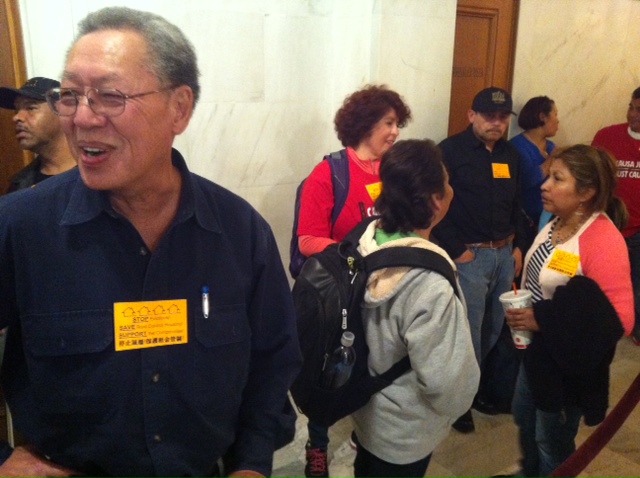
The forum, which was attended by more than 130 people, included a lively discussion that involved dozens of audience members who offered their own views, ideas, and strategies for how to move forward. Among them was Brian Basinger of the AIDS Housing Alliance, who said that he is working with a coalition to reform the Ellis Act, which allows landlords to evict tenants from rent-controlled apartments.

“We could move this as early as January,” Basinger said of the reform legislation now being developed with allies in the Legislature, urging attendees to get involved.

After the audience discussion, the meeting closed with Peter Cohen of the CCHO summarizing the high points and getting people to sign up on lists that were circulated to be involved with next steps. And Rachel Brahinsky, a former Guardian staff writer who is now a professor at USF’s Leo T. McCarthy Center for Public Service and the Common Good, urged attendees to fight for San Francisco to remain inclusive and diverse: “San Francisco is the place it is because people have kept fighting.”

Supervisors approve condo legislation with veto-proof majority

64

The San Francisco Board of Supervisors today voted to approve compromise legislation that will allow more than 2,000 tenancy-in-common homeowners to convert to condominiums in exchange for a 10-year moratorium on the city’s current condo conversion lottery that now allows 200 conversions annually.

Approved by a veto-proof 8-3 majority after some last amendments were shot down by the six supervisors who most steadfastly supported the version that Board President David Chiu took the lead on crafting, this was a big victory for tenant groups who strongly opposed the original legislation, which did not include the moratorium and other restrictions.

“It’s great. We’re going to see a significant drop in condo conversions in the future. All of us tenants are very happy,” San Francisco Tenants Union head Ted Gullicksen told us after the hearing, which was packed with tenant supporters.

Sup. Mark Farrell, who sponsored the original legislation, decried how divisive the issue had become, criticized the approved version as deviating from his original intent of helping TIC owners in exchange for a fee that would help fund new affordable housing, and said, “This doesn’t need to be a zero sum game.”

But Chiu and the five supervisors who supported his version – Jane Kim, Norman Yee, David Campos John Avalos, and Eric Mar – noted the finite number of rent-controlled apartments in the city and the need to protect them from being converted into condos.

“How do we balance the needs of tenants who fear being evicted with TIC owners looking for relief?” Chiu said of the balance he aimed to strike, which he continued to tweak with new amendments today, including allowing TICs with all owner-occupied units to move forward if the legislation is challenged in court, an event that would otherwise freeze all condo conversions until the lawsuit is resolved.

Sup. London Breed wanted even greater flexibility in that so-called “poison pill” aspect of the legislation, which tenant groups had insisted on to prevent the bypass from going through even if the moratorium was challenged. Breed proposed allowing condo conversion applications to proceed for a year after a lawsuit was filed, but Chiu said that would let TIC owners convert to condos while challenging other aspects of the legislation, such as the lifetime leases for tenants in converted buildings.

Breed and Sup. Malia Cohen, who privately and rather grimly conferred with one another and sometimes Chiu before the item began a little after 4pm, were clearly the two swing votes on the question of whether the legislation would reach the crucial eight-vote threshold needed to override a possible mayoral veto. Mayor Ed Lee has refused to take a position on the issue, leaving both sides in the dark.

But after the motion to insert Breed’s amendments failed on a 5-6 vote, the board voted 8-3 to approve Chiu’s version of the legislation, with Sups. Farrell, Scott Wiener, and Katy Tang opposed. A subsequent vote on a version of the legislation backed by Farrell and Wiener – which contained a weaker poison pill and more flexible owner-occupancy provisions – then failed on a 4-7 vote, with Breed joining the three dissenting supervisors.

Underscoring this legislation was what some supervisors called a “housing affordability crisis” in San Francisco, an issue that Mayor Lee was asked about at the start of the meeting, which he deflected by claiming “our city has some of the toughest anti-displacement laws in the nation.”

We’ll analyze that discussion and offer more details on the condo conversion debate and the politics behind it tomorrow in the space, so check back then.      

Alerts

0

WEDNESDAY 12

Whose future? Community forum LGBT Community Center, 1800 Market, SF. sfbg.com, ccho@sfic-409.org. 6-8pm, free. In July, the Bay’s Regional governing body is scheduled to approve a state-mandated plan aimed at reducing carbon-emissions that proposes to put 280,000 more people, 92,000 new housing units, 100,000 new jobs (and 73,000 more cars) into SF over the next 30 years. By the proposed Plan’s own assessment: it will increase the risk of neighborhood disruption and displacement of existing residents and businesses, especially among the city’s working class communities. What can we do about it? Join Tim Redmond, San Francisco Bay Guardian; Mike Casey, Unite HERE Local 2; Cindy Wu, San Francisco Planning Commissioner; Maria Zamudio, Causa Justa: Just Cause; and others for this important panel discussion.

THURSDAY 13

Raising the Roof for Renters 111 Minna Gallery, 111 Minna, SF. tenantstogether.org/raisingtheroof2013. 6pm, $30 in advance/ $40 at the door. Tenants are hurting right now, so show your support by attending this fundraiser for Tenants Together — California’s statewide organization for renters’ rights. Celebrate five years of mobilizing tenants statewide for housing justice. Featuring a silent auction, fantastic food, and a cash bar.

SUNDAY 16

Teach-in: class struggle in Turkey Niebyl Proctor Marxist Library, 6501 Telegraph Ave., Oakl. (510) 428-1578. 10:30am-12:30 p.m., free with donation requested. On May 31, without warning, Turkey erupted. For the first time in recent history, women, students, workers, artists, youth, Kurds, Artists, Turks, gays-lesbians, Alevites, doctors, small merchants, environmentalists, unions and progressive associations rose up together. Mehmet Bayram, a long time journalist and Bay Area activist from Turkey, will report on the developments that led to the events and the aftermath. A discussion of politics and class struggle in Turkey will follow.

THURSDAY 20

Rally and protest against Keystone XL Battery East, below Golden Gate Bridge Visitor Center, SF. tinyurl.com/mf6m2ef. Noon, free. Join Bill McKibben of 350.org for a noon rally against the Keystone XL pipeline, followed by a march across the Golden Gate Bridge. This time, environmentalists seeking to halt this major oil infrastructure project will be joined by National Nurses United, who are organizing a day of action in the city against austerity and the Keystone XL.

Salon says, “Ladies, shush! People paid good money for Michelle Obama and rape”

20

Hey, remember Code Pink during the Bush years?  “Why can’t those old, shriveled, nagging dyke hags stop screaming about Iraq and stuff,” seemed to be the reaction of most of America and the media.

Meanwhile, even many of us wholly sympathetic to their message cringed a bit in our Internet-ringside seats as the valiant fuschia-clad ladies yelled, and yelled, and yelled. Even at Hillary Clinton and Nancy Pelosi! (Clutch pearls.) And hey, they’re still doing it. Even at Obama! (Clutch pearls tighter.)

Weren’t they hurting our cause with all this rudeness? Why could they just sit down at their Dell Gateway computers, dial up AOL, and write a firmly worded comment on the New York Times site like the rest of us. What about civility? WHO WILL THINK OF THE CIVILITY?

Now, of course, with the distance of time and the realization of just how awful that political period was still dawning, it’s like, “Thank fucking god someone was doing something real, however quixotic.”

And yet, the sorry clutching of pearls in the face of female resistance continues. Why can’t women just pipe down about stuff? Especially those whiny ol’ man-hater ones.

If you’re awake today, you’re hearing about how Ellen Sturtz of Berkeley-based gay rights activist group GetEQUAL “heckled” Michelle Obama at a $10,000 per person DNC fundraiser by loudly demanding that President Obama issue an executive order protecting LGBTs from discrimination by companies that contract with the federal government. “I’m a lesbian looking for federal equality before I die,” she shouted. WELL, I NEVER!

Michelle Obama left the podium, confronted Sturtz (whose description in almost every major news account incorporates the phrase “56-year-old lesbian activist” or, better, “a divorced lesbian” — because you know what that means: shrieky shrieky!), and told the crowd that it had to choose whether it wanted to hear her or Sturtz. Sturtz replied that she’d gladly take the mic. But, duh, the fancy crowd chose Obama, and Sturtz was promptly hauled off by security — thank god for our great country’s sake, and that of general decorum also.

Of course this episode is being touted, even by liberal-leaning outlets, as Michelle’s great “smackdown,” a “verbal chin check,” a brilliant takedown. She has had it, get huh! That angry lesbian got what she deserved.

But the most disappointing — and frankly shocking — take was by Mary Elizabeth Williams of Salon. In an incredibly weird and misguided post this morning called “Michelle Obama’s Heckler Win,” Williams decries any kind of disruptive protest, let alone one at a $10,000 per person fundraiser, my stars, because it’s forcing your values on someone else

“[Sturtz] explains her actions by saying, “I simply couldn’t stay silent any longer.” And she did manage to draw attention to the issue. But she did it by being rude and boorish, so where’s the satisfaction in that? The headline-grabbing outburst is a common ploy, one that, it depresses me to say, is far too often used by those of us here on the crunchy left. We can say that dire circumstances call for extreme reactions, but really, all that heckling does is broadcast to the world, “What I feel right this moment is more important than what everybody else in the room paid money to experience.”

Nevermind for a minute if Sturtz paid her money, too, or that Williams is privileging money over expression and using a common rightwing troll attack trope (protesting is infringing on freedom) — but seriously, WTF? Heaven forbid people get what they paid for at a political fundraiser … actual politics. (Obama was on her usual schtick about ‘we must help the poor children of Chicago.” Pretty sure not much of that $10,000 was going South of the Loop.)

Could everyone please just sit quietly after they give all their money to Michelle Obama or whoever because FREEDOM OF MONEY? Thanks. If you’re upset about something, organize your own million-dollar fundraiser. These people paid to worship Michelle, not hear about your discrimination under the hypocritical administration she’s representing. Why don’t you crunchy lefties understand that?

But wait, there’s worse. In her Salon piece, Williams extends her “please don’t ruffle the money feathers” to an incident that blew up last year when a woman, during a rape-based routine at a Daniel Tosh comedy show, stood up and yelled, “actually rape jokes are never funny!” (Tosh then suggested the crowd gang-rape the woman — and oh boy, did Mary Elizabeth Williams have some fucked up opinions about that at the time.) Her post this morning continues:

“Last summer, a comedy club patron enticed Daniel Tosh to make some very unfortunate remarks about rape – an event that was set in motion when the woman decided, “I felt that sitting there and saying nothing, or leaving quietly, would have been against my values as a person and as a woman.”  In other words, much like Sturtz, she decided that her values should be made known to everyone in the audience, because they were more important than anything anybody else was saying or doing. Certainly more important than what the person the rest of the assembly had paid their money to see was saying and doing.”

Um, so of course the woman “enticed” the rape remarks by speaking out against them — she sure was asking for it. She should have just sat there and not imposed her highly unusual and embarrasing “rape is bad” values on people who paid to hear rape jokes. Williams then ends the piece:

“A no-nonsense mom like Michelle Obama could tell you that any 2-year-old in a WalMart can get noticed just by throwing herself on the floor of the sporting goods aisle. That doesn’t mean anybody is going to take her seriously.”

So, just to recap, raising your voice for equality at a $10,000 per person fundraiser is just as annoying as standing up against rape jokes (which you caused in the first place) because you’re being a bully to all these people who paid money. Don’t ever speak up about injustice because you’re being a baby. Live with it like the rest of us, especially here at Salon, which never speaks out about anything to grab attention. 

Got it. Mary Elizabeth Williams, you are a master troll. Not even Code Pink with 10,000 crimson bullhorns could fault your logic. Ellen Sturtz, go to your room — with no equality for dinner.


Addressing the unspeakable

0

arts@sfbg.com

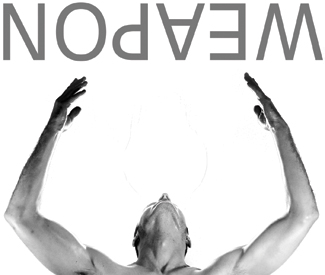
DANCE Liz Tenuto and Justin Morrison — two dancer-choreographers who’ve made up for their limited time in the Bay Area by being highly, polymorphously productive — share a bill at CounterPULSE this weekend. Tenuto will show a work for three dancers in two parts, the first of which premiered at ODC Theater last December under the title The Darkest Hour Is Just Before Dawn (featuring the trio of Esmeralda Kundanis-Grow, Elizabeth McSurdy, and Rebecca Siegel). Morrison performs in the debut of his new solo work, entitled Weapon.

As performers and performance makers, Tenuto and Morrison are very distinct, but each brings to their work substantial rigor and experience as well as strong connections to local dance-performance work at large, including collaborations with many leading figures in the Bay Area scene. As a dancer, Tenuto has brought her distinctive blend of physical skill, manic humor, and sinuous sensuality to several productions by Laura Arrington Dance, and worked too with Anne Bluethenthal Dance and Scott Wells & Dancers, among others.

Morrison, a graceful and intelligent force on stage, has been a member of Hope Mohr Dance Company, and continues to work with Sara Shelton Mann as well. In fact, it was his first work with Mann (in 2009) that introduced him to San Francisco, which he adopted the following year following three years in Amsterdam as part of Katie Duck’s improvisation-driven Magpie Music Dance Company. (That relationship continues too: Duck was at Kunst-Stoff in April with Crimes and Casualties, performed with Alfredo Genovesi and Morrison, as part of Arts Building Consortium’s Visiting Artist Series Exchange program.)

Tenuto and Morrison share important points of contact in the local scene —for example, in their mutual appreciation for and conversations with contemporary drag, especially as it continues to evolve in the Bay Area’s rich mixture of nightlife performance and contemporary dance. They have both performed as part of Oakland-based SALTA collective’s monthly performance program, PPP (a bright area of experimentation and conversation that celebrates its one-year anniversary in June).

But probably more interesting still is what separates them. Between the new work on display from each artist, Pageantry — as the CounterPULSE program is titled — promises to offer an intriguing contrast, reflecting something of the breadth of styles and formal concerns that make the contemporary dance scene here both dynamic and complex.

This diversity has been an empowering force, notes Tenuto, who comes to dance from a strict ballet context initially and credits her Bay Area contemporary dance peers with a radical development of her outlook and work.

“[In coming to the Bay Area] I was taking in a whole new set of values, and that was very eye-opening for me. It really freed me from this dance past that I’d inherited. As a dancer, you’re trained to be very obedient,” she says. “All of these people stirred me up in a lot of different ways; opened up a whole realm of possibility for me, all these other states of mind that I didn’t normally access when I dance — darker states than I had every been comfortable dancing with before — and feeling the power of the poison, being comfortable expressing that and not feeling shame for it or being afraid of it. I think prior to meeting all these people I was afraid of that. Now I’m able to not only access it but also decide how much I let in, to control it, fine tune it, which is very exciting.”

In her new piece, Tenuto aims at expressing the emotionally and psychologically volatile between-ness that comes with a powerful disruption to one’s everyday equilibrium.

“Both pieces are really about the moments right before you go through a big change,” says Tenuto, “it’s a close reading of such moments. It’s very detailed, [and performed] in a very rich way, a very vibrant and dense way —but also a little bit artificialized and over the top, which is definitely something that I’ve inherited from being a performer in San Francisco and commingling with drag and commingling with theater.”

According to Tenuto, her work plays with the suggestion of narrative rather than a specific storyline (she notes that whereas part one operated tonally as a kind of hyper-drama, on a par with a Mexican soap opera, part two will be more of a mystery-noir). Morrison, by contrast, eschews narrative altogether, in terms that imply a reluctance to imbue dance with the limiting horizon such narrative tropes can form.

“There seems to be a proliferation of works that are, or seek to be, ‘about’ something,” notes Morrison. “Perhaps [that’s] a byproduct of the grant writing process.”

Morrison says he finds this problematic, since “it forces artists to contrive a narrative, often steeped in cliché.” More often than not, this means for Morrison familiar platitudes around identity and politics.

“Work,” he contends, “becomes overtly a narrative about self, about the performers, about the economy, for example; at times, [this means] ignoring the phenomenological, the abstract, or that which cannot otherwise be described, only experienced.”

PAGEANTRY

Fri/7-Sun/9, 8pm, $15

CounterPULSE

1310 Mission, SF

www.counterpulse.org


When the Coastal Commission fails

43

The sensationalist title of the Bay Guardian article “Fornication loses to soccer fields” (5/15/13) overshadows the far-reaching implications of the Coastal Commission’s rubber-stamp of San Francisco’s Beach Chalet soccer complex. Lost in the article is the story of what really happened: powerful political interests leaned on the commissioners to abrogate their responsibility to protect the California coast.

Project supporters repeated the fallacy that seven acres of artificial turf and 150,000 watts of sports lighting next to Ocean Beach would stem the flight of families from the city. Notably, none of the commissioners acknowledged that the City of San Francisco’s own environmental impact report identified an alternative that meets the project goals — including the need for playtime — without any impact on the coastal zone. In fact, the “need” argument is a red herring to push through a pet project.

When the commissioners approved the Beach Chalet’s 150,000 watts of lights — situated only 500 feet from the beach — they did not even discuss the impacts from sports lights. They disregarded their own staff report — which said much of what opponents of the project have been saying for years — and ignored copious evidence from well-credentialed experts demonstrating the city’s faulty environmental analysis on the negative biological and aesthetic impacts of lights on people and wildlife in the coastal zone.

Only Commissioner Steve Blank seemed willing to uphold his duty to protect the coastline. Blank reminded the panel that its mandate is to uphold the Coastal Act and protect the interests of the 38 million Californians in our shared coastline. The California coastline has remained protected for decades due to the diligence of past commissions. The commission is supposed to transcend local politics. But the remaining commissioners failed to do this.

The approval of the Beach Chalet project is not just the acquiescence of the Coastal Commission to a single project but an all-out attack on coastal protections. Now, any developer who can trump up claims of local need for recreation can expect this commission to rubber-stamp its project.

Anyone concerned about the integrity of California’s coast should be outraged. We encourage you to let your elected representatives know that if the Coastal Commission members can’t abide by the Coastal Act, they should be replaced before they can do even more damage to our remaining coastline.

For those not at the hearing, the Bay Guardian headline refers to the claim that the Beach Chalet is a cruising ground for gay men, a claim used to sensationalize the issue and also to assert that healthy, all-American recreation field would make the area “safe for children.” This homophobic tactic was a recurrent theme during local hearings and has been deeply felt by the LGBT community.

The battle for our parkland is not over. There is currently a CEQA lawsuit in the courts; in addition, a broad coalition of groups is moving forward to continue to fight this project. Join with them — it will take everyone’s participation to win back our parkland, our beach and our coast.

Sue Englander is an Executive Board Member, Harvey Milk LGBT Club. Arthur Feinstein is chair of the Sierra Club, Bay Chapter. Mike Lynes is executive director of the Golden Gate Audubon Society. Katherine Howard is a member of the Steering Committee of SF Ocean Edge.

Editor’s notes

51

Tredmond@sfbg.com

EDITORS NOTES It’s as if someone has some kind of auto-respond system: Every time I write about housing or rent control, one of the trolls who comments on the Guardian Politics blog complains that landlords are “subsidizing” longterm tenants.

That’s a complaint I’ve heard plenty of times before — rent control is a “subsidy” because property owners have to allow the use of their property for a lower rate than the current market might allow.

And it’s completely wrong.

In fact, it only takes a basic understanding of economics to realize that in many cases, tenants are subsidizing their landlords. That’s how the business works.

You don’t have to read Karl Marx to learn that in a capitalist system, the owner of a business typically pays his or her employees less than the value they bring to the operation; the difference is what’s called “profit.” It’s how American capitalism works.

Same way, when a landlord signs a rental agreement with a tenant, the rent he or she charges is typically enough to: (a) cover that tenant’s portion of the building mortgage; (b) cover expected maintenance costs, and (c) provide the owner with a profit. Not that many landlords go into the business to lose money, or to break even.

I have a friend who bought a multi-unit building in the East Bay a few years ago, and it’s a great deal for him: He lives in one unit, and the tenants in the other units pay enough rent to cover most of the mortgage. So my friend’s housing is practically free. The tenants are subsidizing him.

Now: Add in rent control, and what do you get? The same exact situation. At the time a landlord and a tenant agree on a lease, the payments are adequate to cover the landlord’s costs plus a margin of profit. (Otherwise the landlord would be a fool to sign the lease.) Over time, the rent goes up a little bit every year. The landlord’s mortgage either stays the same, or, these days, goes down after a refinance at the lowest rates in history. The landlord’s next biggest expense — property tax — goes up by less than the allowable rent increase most years. So every year, the tenant pays the landlord more than it costs the landlord to provide the housing. Every year, the vast majority of landlords in San Francisco make a profit.

Yes: a rent-controlled unit prevents someone who bought a building years ago and has longterm tenants from making even more of a profit. It is, and should be seen as, a way of limiting profit on rental property to a reasonable amount, not to what a speculative market could bring. That’s fair; housing is a public right, and should be regulated a little like a public utility. (PG&E gets to make a profit every year, but not an unlimited profit.)

But like workers in a capitalist system whose product of labor subsidizes the profit of the owners, tenants in San Francisco are subsidizing landlords. That’s how the private housing market works.

Stage listings

0

Stage listings are compiled by Guardian staff. Performance times may change; call venues to confirm. Reviewers are Robert Avila, Rita Felciano, and Nicole Gluckstern. Submit items for the listings at listings@sfbg.com.

THEATER

OPENING

410[GONE] Thick House, 1695 18th St, SF; www.crowdedfire.org. $10-35. Previews Thu/6-Sat/8, 8pm. Opens Mon/10, 8pm. Runs Wed-Sat, 8pm. Through June 29. Crowded Fire Theater presents the world premiere of Frances Ya-Chu Cowhig’s fanciful, Chinese folklore-inspired look at the underworld.

Oleanna Exit’s Studio Theater, 156 Eddy, SF; www.theexit.org. $18-25. Opens Thu/6, 8pm. Runs Fri-Sat, 8pm (also June 15, 2pm); Sun, 4pm. Through June 16. Spare Stage performs David Mamet’s exploration of sexual politics in academia.

BAY AREA

Bubbles for Grown-Ups Marsh Berkeley, 2120 Allston, Berk; www.themarsh.org. $15-50. Opens Wed/5, 8pm. Runs Wed, 8pm. Through June 19. Louis “The Amazing Bubble Man” Pearl presents a show aimed at adults (see listing for his ongoing show for kids, The World’s Funniest Bubble Show, below).

George Gershwin Alone Berkeley Repertory Theatre, Thrust Stage, 2025 Addison, Berk; www.berkeleyrep.org. $29-77. Previews Sat/8, 8pm. Opens Sun/9, 7pm. Runs Tue and Thu-Sat, 8pm (also Sat, 2pm); Wed and Sun, 7pm (also Sun, 2pm). Through June 23. Hershey Felder stars in his celebration of the music and life of composer George Gershwin.

Wild With Happy TheatreWorks at the Mountain View Center for the Performing Arts, 500 Castro, Mtn View; www.theatreworks.org. $23-73. Previews Wed/5-Fri/7, 8pm. Opens Sat/8, 8pm. Runs Tue-Wed, 7:30pm; Thu-Sat, 8pm (also Sat, 2pm); Sun, 2 and 7pm. Through June 30. TheatreWorks presents the West Coast premiere of Colman Domingo’s new comedy, starring the playwright himself.

ONGOING

Arcadia ACT’s Geary Theater, 415 Geary, SF; www.act-sf.org. $20-95. Wed-Sat, 8pm (also Wed and Sat, 2pm; no matinee June 12); Sun, 2pm. Extended through June 16. In Tom Stoppard’s now 20-year-old master work Arcadia, sex and science, and poetry and pastoralism crowd the otherwise uncluttered stage (designed by Douglas W. Schmidt), as two sets of characters separated by 200 years demonstrate themselves to be far more connected then even their immediate descendents suspect. As two modern academics (Gretchen Egolf and Andy Murray) vie over the contents of a country estate library in order to verify their own pet theories about the past occupants — including, briefly, Lord Byron — a 19th-century intellectual prodigy (Rebekah Brockman) discovers the principles of chaos theory more than a hundred years ahead of her time, impressing her raffish tutor (Jack Cutmore-Scott) while the rest of the household busies itself with the mundane intrigues that better typify their aristocratic caste. Although at times the pacing of the nearly three-hour play feels sluggish, the slow unfurling of key plot points and character reveals suits the intricacies of the text, while still allowing for much of Stoppard’s wry humor to shine, if not crackle, through the layers. The delightfully antagonistic chemistry between Egolf and Murray, and the more delicately cerebral connection between Brockman and Cutmore-Scott alone make this a production worth seeing, to say nothing of the rigorous crash course in Latin, landscaping, physics, and Romanticism. (Gluckstern)

Birds of a Feather New Conservatory Theatre Center, 25 Van Ness, SF; www.nctcsf.org. $25-45. Fri-Sat, 8pm (also Sat, 2pm); Sun, 2pm. Through June 29. New Conservatory Theatre Center performs the San Francisco premiere of Marc Acito’s tale inspired by two gay penguins at the Central Park Zoo.

Black Watch Drill Court, Armory Community Center, 333 14th St, SF; www.act-sf.org. $100. Tue-Sat, 8pm (also Wed and Sat, 2pm); Sun, 2pm. Through June 16. American Conservatory Theater presents the National Theatre of Scotland’s internationally acclaimed performance about Scottish soldiers serving in Iraq.

The Divine Sister New Conservatory Theatre Center, 25 Van Ness, SF; www.nctcsf.org. $25-45. Previews Fri/7, 8pm. Opens Sat/8, 8pm. Runs Fri-Sat, 8pm; Sun, 2pm. Through June 29. Charles Busch’s latest comedy pays tribute to Hollywood films involving nuns.

Drunk Enough to Say I Love You? Costume Shop, 1117 Market, SF; www.therhino.org. $15-30. Wed-Sat, 8pm; Sun, 3pm. Through June 16. Theatre Rhinoceros performs Caryl Churchill’s play that asks, “Do countries really behave like gay men?” Included in the program are two one-act plays: Churchill’s Seven Jewish Children: A Play for Gaza and Deborah S. Margolin’s Seven Palestinian Children.

Foodies! The Musical Shelton Theater, 533 Sutter, SF; www.foodiesthemusical.com. $30-34. Fri-Sat, 8pm. Open-ended. AWAT Productions presents Morris Bobrow’s musical comedy revue all about food.

Frisco Fred’s Magic and More Alcove Theater, 414 Mason, Ste 502, SF; www.thealcovetheater.com. $35-50. Thu-Sat, 7pm. Through June 29. Performer Fred Anderson presents his latest family-friendly show, complete with magic, juggling, and “crazy stunts.”

Hedwig and the Angry Inch Boxcar Theatre, 505 Natoma, SF; www.boxcartheatre.org. $27-43. Thu-Sat, 8pm. Open-ended. John Cameron Mitchell’s cult musical comes to life with director Nick A. Olivero’s ever-rotating cast.

Into the Woods Eureka Theatre, 215 Jackson, SF; www.rayoflighttheatre.com. $25-36. Thu-Sat, 8pm (check website for matinee schedule). Through June 29. Ray of Light Theatre performs Stephen Sondheim’s fairy-tale mash-up.

Killing My Lobster Learns a Lesson Stage Werx Theatre, 446 Valencia, SF; www.killingmylobster.com. $10-25. Thu/6-Sat/8, 8pm; Sun/9, 7pm. The sketch troupe performs “comedy vignettes for the avid achievers.”

Krispy Kritters in the Scarlett Night Exit on Taylor, 277 Taylor, SF; www.cuttingball.com. $10-50. Thu, 7:30pm; Fri-Sat, 8pm (also Sat, 2pm; no shows Sat/8); Sun, 5pm. Through June 16. Cutting Ball Theater performs Andrew Saito’s Howl-inspired portrait of San Francisco.

Sex and the City: LIVE! Rebel, 1760 Market, SF; trannyshack.com/sexandthecity. $25. Wed, 7 and 9pm. Open-ended. It seems a no-brainer. Not just the HBO series itself — that’s definitely missing some gray matter — but putting it onstage as a drag show. Mais naturellement! Why was Sex and the City not conceived of as a drag show in the first place? Making the sordid not exactly palatable but somehow, I don’t know, friendlier (and the canned a little cannier), Velvet Rage Productions mounts two verbatim episodes from the widely adored cable show, with Trannyshack’s Heklina in a smashing portrayal of SJP’s Carrie; D’Arcy Drollinger stealing much of the show as ever-randy Samantha (already more or less a gay man trapped in a woman’s body); Lady Bear as an endearingly out-to-lunch Miranda; and ever assured, quick-witted Trixxie Carr as pent-up Charlotte. There’s also a solid and enjoyable supporting cast courtesy of Cookie Dough, Jordan Wheeler, and Leigh Crow (as Mr. Big). That’s some heavyweight talent trodding the straining boards of bar Rebel’s tiny stage. The show’s still two-dimensional, even in 3D, but noticeably bigger than your 50″ plasma flat panel. Update: new episodes began May 15. (Avila)

Steve Seabrook: Better Than You Marsh San Francisco, 1062 Valencia, SF; www.themarsh.org. $15-50. Thu, 8pm; Sat, 8:30pm. Extended through June 29. Self-awareness, self-actualization, self-aggrandizement — for these things we turn to the professionals: the self-empowerment coaches, the self-help authors and motivational speakers. What’s the good of having a “self” unless someone shows you how to use it? Writer-performer Kurt Bodden’s Steve Seabrook wants to sell you on a better you, but his “Better Than You” weekend seminar (and tie-in book series, assorted CDs, and other paraphernalia) belies a certain divided loyalty in its own self-flattering title. The bitter fruit of the personal growth industry may sound overly ripe for the picking, but Bodden’s deftly executed “seminar” and its behind-the-scenes reveals, directed by Mark Kenward, explore the terrain with panache, cool wit, and shrewd characterization. As both writer and performer, Bodden keeps his Steve Seabrook just this side of overly sensational or maudlin, a believable figure, finally, whose all-too-ordinary life ends up something of a modest model of its own. (Avila)

Talk Radio Actors Theatre of San Francisco, 855 Bush, SF; www.actorstheatresf.org. $26-38. Wed-Sat, 8pm. Through June 15. Actors Theatre of San Francisco performs Eric Bogosian’s breakthrough 1987 drama.

Tinsel Tarts in a Hot Coma: The Next Cockettes Musical Hypnodrome, 575 10th St, SF; www.thrillpeddlers.com. $30-35. Thu-Sat, 8pm. Extended through June 29. Thrillpeddlers and director Russell Blackwood continue their Theatre of the Ridiculous series with this 1971 musical from San Francisco’s famed glitter-bearded acid queens, the Cockettes, revamped with a slew of new musical material by original member Scrumbly Koldewyn, and a freshly re-minted book co-written by Koldewyn and “Sweet Pam” Tent — both of whom join the large rotating cast of Thrillpeddler favorites alongside a third original Cockette, Rumi Missabu (playing diner waitress Brenda Breakfast like a deliciously unhinged scramble of Lucille Ball and Bette Davis). This is Thrillpeddlers’ third Cockettes revival, a winning streak that started with Pearls Over Shanghai. While not quite as frisky or imaginative as the production of Pearls, it easily charms with its fine songs, nifty routines, exquisite costumes, steady flashes of wit, less consistent flashes of flesh, and de rigueur irreverence. The plot may not be very easy to follow, but then, except perhaps for the bubbly accounting of the notorious New York flop of the same show 42 years ago by Tent (as poisoned-pen gossip columnist Vedda Viper), it hardly matters. (Avila)

Vital Signs: The Pulse of an American Nurse Marsh San Francisco, 1062 Valencia, SF; www.themarsh.org. $15-50. Sun, 7pm. Through June 16. Registered nurse Alison Whittaker returns to the Marsh with her behind-the-scenes show about working in a hospital.

The World’s Funniest Bubble Show Marsh San Francisco, 1062 Valencia, SF; www.themarsh.org. $8-50. Sun, 11am. Through July 21. Louis “The Amazing Bubble Man” Pearl returns after a month-long hiatus with his popular, kid-friendly bubble show.

BAY AREA

The Beauty Queen of Leenane Marin Theatre Company, 397 Miller, Mill Valley; www.marintheatre.org. $36-52. Tue, Thu-Sat, 8pm (also Thu/6, 1pm; June 15, 2pm); Wed, 7:30pm; Sun, 2 and 7pm. Through June 16. Marin Theatre Company performs Martin McDonagh’s award-winning black comedy about a dysfunctional mother-daughter relationship.

By & By Ashby Stage, 1901 Ashby, Berk; www.shotgunplayers.org. $20-30. Wed-Thu, 7pm; Fri-Sat, 8pm; Sun, 5pm. Through June 23. Shotgun Players presents a new sci-fi thriller by Lauren Gunderson.

Dear Elizabeth Berkeley Rep’s Roda Theatre, 2015 Addison, Berk; www.berkeleyrep.org. $24-77. Wed and Sun, 7pm (also Sun and July 3, 2pm); Thu-Sat, 8pm (also Sat and Thu/6, 2pm; no matinee Sat/8; no show July 4). Through July 7. Berkeley Rep performs Sarah Ruhl’s play in the form of letters between Elizabeth Bishop and Robert Lowell.

Hanging Georgia, a play with music about Georgia O’Keefe Pear Avenue Theatre, 1220 Pear, Mtn View; www.thepear.org. $10-30. Thu/6-Sat/8, 8pm (also Sat/8, 2pm); Sun/9, 2pm. Pear Avenue Theatre marks its 75th show with Sharmon J. Hilfinger and Joan McMillen’s world premiere, a co-production with BootStrap Theater Foundation.

The Medea Hypothesis Berkeley City Club, 2315 Durant, Berk; www.centralworks.org. $15-28. Thu-Sat, 8pm; Sun, 3pm. Through June 23. Medea is perhaps one of the most problematic tragic protagonists in theater history, as even the most flexibly sympathetic viewpoint is severely challenged when faced with a filicidal mother. But at Central Works, rather than just updating an old tale of bloody vengeance, The Medea Hypothesis further takes a page from the pop science book of the same name written by Peter Ward, in which he speculates on the latent suicidal and self-destructive tendencies of the planetary superorganism. As the brittle, middle-aged Em, Jan Zvaifler dominates the stage, holding herself and her glamorous career in fashion together as her husband leaves her for a woman with a “perfect neck” and her daughter Sweetie (Dakota Dry), who appears only as a video projection, becomes contested property in an angry custody battle. Relentlessly egged on by her Mephistophelian flunky Ian (Cory Censoprano), and enraged by the interference of her ex-husband’s prospective father-in-law (Joe Estlack), Em does lash out at the happy couple in the Euripides-approved manner (though with flunky-provided “Plutonium 210” instead of plain old poison) but when it comes to the expected act of ultimate violence playwright Marian Berges provides a surprising twist to the familiar Grecian formula, giving Em a shot at a redemption never allowed the Euripidean matriarch. It’s still undeniably a tragedy, but concurrently, also a triumph. Kind of like the continued presence of multicellular life on earth. (Gluckstern)

PERFORMANCE/DANCE

Caroline Lugo and Carolé Acuña’s Ballet Flamenco Peña Pachamama, 1630 Powell, SF; www.carolinalugo.com. Sat/8, June 16, 22, 30, July 13, 21, and 27, 6:15pm. $15-19. Flamenco performance by the mother-daughter dance company, featuring live musicians.

“Comedy Returns to El Rio” El Rio, 3158 Mission, SF; www.elriosf.com. Mon/10, 8pm. $7-20. With Karinda Dobbins, Bobby Golden, Bob McIntyre, Maggie Dolan, and Lisa Geduldig.

“Free: Queer and Trans People of Color Visions of Freedom” African American Arts and Culture Complex, 762 Fulton, SF; www.brownpapertickets.com. Tue/11, 7:45pm. $12-20. The National Queer Arts Festival and Mangos With Chili present collaborative performances by Cherry Galette, Juba Kalamka and Joshua Merchant, and more.

“Gwah Guy: Crossing the Street” ODC Theater, 351 Shotwell, SF; www.odcdance.org. Fri/7-Sat/8, 8pm. $15-20. Musician Marcus Shelby and visual artist Flo Oy Wong collaborate on this performance inspired by memories from Wong’s husband, Edward K. Wong, a Chinese American who grew up in racially-segregated Georgia.

David Huntsberger and friends Café Royale, 800 Post, SF; www.caferoyale-sf.com. Wed/5, 8pm. $5. Stand-up comedy hosted by Zach Chap.

“Kunst-Stoff Arts Fest 2013” Kunst-Stoff Arts, One Grove, SF; www.kunst-stoff.org. Through Fri/7. Most events $10-15. Morning classes, afternoon workshops, and evening performances are the focus of this festival of dance, film, music, and more.

“L.O.A.D.E.D.” Dance Ground Keriac, 1805 Divisadero, SF; christine@calidance.info (space is limited, so RSVP is required). Sat/8, 7:30pm. $5-25 suggested donation. A new live performance collaboration by Cali & Co dance and the Welcome Matt.

“Mission Position Live” Cinecave, 1034 Valencia, SF; www.missionpositionlive.com. Thu, 8pm. Ongoing. $10. Stand-up comedy with rotating performers.

“Moonlight Cocktail” Feinstein’s at the Hotel Nikko, 222 Mason, SF; (415) 394-1111. Fri/7, 8pm; Sat/8, 7pm. $65-95. Cabaret star Andrea Marcovicci performs.

“Pageantry” CounterPULSE, 1310 Mission, SF; www.counterpulse.org. Fri/7-Sun/9, 8pm. $15. An evening of dance split by Liz Tenuto and Justin Morrison.

Red Hots Burlesque El Rio, 3158 Mission, SF; www.redhotsburlesque.com. Wed, 7:30-9pm. Ongoing. $5-10. Come for the burlesque show, stay for OMG! Karaoke starting at 8pm (no cover for karaoke).

“San Francisco Ethnic Dance Festival: Weekend One” San Francisco City Hall Rotunda, SF; www.sfethnicdancefestival.org. Fri/7, noon. Free. Opening performance with Ballet Folklorico Netzahualcoyotl (presenting a Catholic processional dance) and Fogo Na Roupa Performing Company (Brazilian Carnaval dance and percussion). Also Sat/8, 8pm, $38, Florence Gould Theater, Legion of Honor Museum, 100 34th Ave, SF. With Charya Burt Cambodian Dance.

“San Francisco Magic Parlor” Chancellor Hotel Union Square, 433 Powell, SF; www.sfmagicparlor.com. Thu-Sat, 8pm. Ongoing. $40. Magic vignettes with conjurer and storyteller Walt Anthony.

“Shafted: The Blaqxsploitation Project” African American Art and Culture Complex, 762 Fulton, SF; www.brownpapertickets.com. Fri/7-Sat/8, 7:30pm. $12-20 (no one turned away for lack of funds). Live theater show about 1970s African American cinema; part of the National Queer Arts Festival.

“Take 5” ODC Theater, 3153 17th St, SF; www.odctheater.org. Fri/7, 5pm. $5. Works-in-progress by dance artists Milissa Payne Bradley, Caitlin Hafer, and Astrid Bas, followed by discussion.

“Union Square Live” Union Square, between Post, Geary, Powell, and Stockton, SF; www.unionsquarelive.org. Through Oct 9. Free. Music, dance, circus arts, film, and more; dates and times vary, so check website for the latest.

“Unlock” Zaccho SF, 1777 Yosemite, #330, SF; www.zaccho.org. Fri/7-Sun/9, 8pm. $15-25. Push Dance Company presents its 2013 home season, featuring a world premiere by choreographer-director Raissa Simpson.

“Yerba Buena Gardens Festival” Yerba Buena Gardens, Mission between 3rd and 4th Sts, SF; www.ybgfestival.org. Through Oct 15. Free. This week: AXIS Dance Company (Sun/9, 1-2pm).

BAY AREA

“The Shout: Life’s True Stories” Grand Lake Coffee House, 440 Grand, SF; www.theshoutstorytelling.com. Mon/10, 7:30-9:30pm. $5-20. Amazing but true ten-minute tales from various storytellers.

“Stagebridge Class Showcase” Oakland Asian Cultural Center, 388 Ninth St, Second Flr, Oakl; www.stagebridge.org. Mon/10, 7pm. $10. Musical theater and other skills are showcased by Stagebridge students aged 50 to 90.

“Swearing in English: Tall Tales at Shotgun” Ashby Stage, 1901 Ashby, Berk; www.shotgunplayers.org. June 17, 8pm. $15. Shotgun Cabaret presents John Mercer in a series of three stranger-than-fiction dramatic readings.

Both sides DON’T do it

25

As someone with a lot of friends and contacts in the real world and on the Net, I hear pretty much every opinion under the sun. From die-hard Communist all the way to equally didactic (and tellingly similar) Objectivist, I get it all day every day. 

Lots of interesting stuff. And it’s no secret where my head is at on most things. I’ll listen to pretty much anything with one major exception–this odd idea that “both sides do it“, that right and left are equally to blame for the gridlock in DC and the animosity elsewhere.

The basis for this thinking, I assume, is Newtonian. For every action, there’s an equal and opposite reaction. If it isn’t physics, it’s metaphysics best expressed by the Byrds’ biblically-derived second #1 hit song, that there’s a time and purpose for everything.

But there isn’t. Politics isn’t physics and left and right aren’t identical yet opposite, which would have to be the case for this proposition to be true. The psychology of the authoritarian vesus that of the anti-establishmentarian is completely dissimilar. If one side sees everything as black and white and a struggle where it’s good vs evil (and they’re the good guys) 100% of the time and the other side believes in nuance, degree of intensity, reason and logic based on evidence, both sides don’t do it. Yes–both sides are engaged in politics. But if one side “makes shit up and then sues for the right to do it legally” and the other is “if it isn’t factual, lose it”, then both sides don’t do it.

Filmmaker Michael Moore expressed it best when talking about his 2007 movie, “Sicko”. Every fact in that film was picked over by fine-toothed comb because he knew that any fuck up would be blasted over our “liberal media” 24/7. Contrast that to the soon to be retired from Congress Michele Bachmann or 2012 GOP candidate Mitt Romney who lied so much that it became impossible to keep up with them. And yet, until her recent campaign finance troubles, Bachmann was rarely if ever called to task in her hometown paper and with Romney, his unending string of fibs actually endeared him to his supporters!

If “both sides do it”, explain this remarkable bit of Anti-Americanism?

Because ”lying for the “cause” is, in the mind of the American Rightist, acceptable, because the cause is a holy war for the “soul of America”. Odd that the same people that lobby for the posting of the 10 Commandments everywhere seem to forget #9, the “false witness” one. 

People on the left lie, too. There is no doubt of that, all people lie to a degree. But claiming that one side’s crapola is identical to the other is like saying that “Red Sox 12, Yankees 2” is a tie, because, after all, both teams scored runs, so they’re equal. Nope, were that so, the score would be 7-7. But that’s math. Which doesn’t lie. And as such, is pesky.

(It has to be said that the people that claim “both sides do it” in correspondance with me are always right-leaning. I think they’re have trouble letting go, but they’re getting there). 

Adlai Stevenson, failed candidate for president said it better than I or anyone else can: I have been thinking that I would make a proposition to my Republican friends… that if they will stop telling lies about the Democrats, we will stop telling the truth about them. 

That was 61 years ago. If he could only see us now. 


Solomon: Our twisted politics of grief

1

By Norman Solomon
Norman Solomon is co-founder of RootsAction.org and founding director of the Institute for Public Accuracy. His books include “War Made Easy: How Presidents and Pundits Keep Spinning Us to Death” and “Made Love, Got War: Close Encounters with America’s Warfare State.”

Darwin observed that conscience is what most distinguishes humans from other animals. If so, grief isn’t far behind. Realms of anguish are deeply personal — yet prone to expropriation for public use, especially in this era of media hyper-spin. Narratives often thresh personal sorrow into political hay. More than ever, with grief marketed as a civic commodity, the personal is the politicized.

The politicizing of grief exploded in the wake of 9/11. When so much pain, rage and fear set the U.S. cauldron to boil, national leaders promised their alchemy would bring unalloyed security. The fool’s gold standard included degrading civil liberties and pursuing a global war effort that promised to be ceaseless. From the political outset, some of the dead and bereaved were vastly important, others insignificant. Such routine assumptions have remained implicit and intact.

The “war on terror” was built on two tiers of grief. Momentous and meaningless. Ours and theirs. The domestic politics of grief settled in for a very long haul, while perpetual war required the leaders of both major parties to keep affirming and reinforcing the two tiers of grief.

For individuals, actual grief is intimate, often ineffable. Maybe no one can help much, but expressions of caring and condolences can matter. So, too, can indifference. Or worse. The first years of the 21st century normalized U.S. warfare in countries where civilians kept dying and American callousness seemed to harden. From the USA, a pattern froze and showed no signs of thawing; denials continued to be reflexive, while expressions of regret were perfunctory or nonexistent

Drones became a key weapon — and symbol — of the U.S. war trajectory. With a belated nod to American public opinion early in the century’s second decade, Washington’s interest in withdrawing troops from Afghanistan did not reflect official eagerness to stop killing there or elsewhere. It did reflect eagerness to bring U.S. warfare more into line with the latest contours of domestic politics. The allure of remote-control devices like drones — integral to modern “counterterrorism” ideas at the Pentagon and CIA — has been enmeshed in the politics of grief. So much better theirs than ours.

Many people in the United States don’t agree with a foreign policy that glories in use of drones, cruise missiles and the like, but such disagreement is in a distinct minority. (A New York Times/CBS poll in late April 2013 found Americans favoring U.S. overseas drone strikes by 70 to 20 percent.) With the “war on terror” a longtime fact of political life, even skeptics or unbelievers are often tethered to some concept of pragmatism that largely privatizes misgivings. In the context of political engagement — when a person’s internal condition is much less important than outward behavior — notions of realism are apt to encourage a willing suspension of disbelief. As a practical matter, we easily absorb the dominant U.S. politics of grief, further making it our politics of grief.

The amazing technology of “unmanned aerial vehicles” glided forward as a satellite-guided deus ex machina to help lift Uncle Sam out of a tight geopolitical spot — exerting awesome airpower in Afghanistan and beyond while slowing the arrival of flag-draped coffins back home. More airborne killing and less boot prints on the ground meant fewer U.S. casualties. All the better to limit future grief, as much as possible, to those who are not us.

However facile or ephemeral the tributes may be at times, American casualties of war and their grieving families receive some public affirmation from government officials and news media. The suffering had real meaning. They mattered and matter. That’s our grief. But at the other end of American weaponry, their grief is a world of difference.

In U.S. politics, American sorrow is profoundly important and revs up many rhetorical engines; the contrast with sorrow caused by the American military could hardly be greater. What is not ignored or dismissed as mere propaganda is just another unfortunate instance of good intentions gone awry. No harm intended, no foul. Yet consider these words from a Pakistani photographer, Noor Behram, describing the aftermath of a U.S. drone attack: “There are just pieces of flesh lying around after a strike. You can’t find bodies. So the locals pick up the flesh and curse America. They say that America is killing us inside our own country, inside our own homes, and only because we are Muslims.

A memorable moment in the film Lincoln comes when the president says, “Things which are equal to the same thing are equal to each other” — in 1865, a daring leap for a white American assessing race. Truly applying the same Euclidean theorem to grief would be just as daring now in U.S. politics. Let’s face it: in the American political culture of our day, all grief is not created equal. Not even close.

We might say ’twas ever thus: countries and ethnic groups mourn their own while yawning or even rejoicing at the agonies of some “others.” And when grief weighs in on the U.S. political scale, the heaviness of our kind makes any other secondary at best. No wonder presidents have always been wary of red-white-and-blue coffins at Andrews Air Force Base. No wonder “Bring our troops home” is such an evergreen slogan of antiwar activism. If the only grief that matters much is American, then just getting Americans out of harm’s way is the ticket. The demand — like empathy for the war-torn grief of Americans — is vital. And grievously incomplete.

The world’s only superpower has been operating with vast impunity to strike targets and, in effect, summarily execute. (President Obama’s big speech on May 23 reasserted that prerogative; as the ACLU’s president Anthony Romero pointed out, Obama “still claims broad authority to carry out targeted killings far from any battlefield, and there is still insufficient transparency.”)  For American politics and mass media — perennially infatuated with the Pentagon’s latest tech advances in military capacities — such enormous power to smite presumptive evildoers has fed into a condition of jingo-narcissism. Some of its manifestations could be viewed as sociopathic: unwilling or unable to acknowledge, or evidently care much about, the pain of others.

Or the terror of others, if we are causing it. In the American political lexicon, terror — the keynote word for justifying the U.S. state of warfare so far in this century — is a supreme epithet, taken as ours to confer and to withhold. Meanwhile, by definition, it goes without saying, our leaders of the “war on terror” do not terrorize. Yet consider these words from New York Times reporter David Rohde, recalling his captivity by the Taliban in 2009 in tribal areas of Pakistan: “The drones were terrifying. From the ground, it is impossible to determine who or what they are tracking as they circle overhead. The buzz of a distant propeller is a constant reminder of imminent death.”

As part of tacit job descriptions, the U.S. network anchor or the president is highly selective in displayed compassion for the grieving. It won’t do to be seen with watery eyes when the Pentagon has done the killing (“friendly fire” a notable exception). No rulebook need be published, no red lines openly promulgated; the gist remains powerfully inherent and understood. If well acculturated, we don’t need to ask for whom the bell tolls; we will be informed in due course. John Donne, meet Orwell and Pavlov.

The U.S. Constitution — if not international law or some tenacious kind of idealism — could prevent presidential “kill lists” from trumping due process. But, as Amy Davidson wrote in a New Yorker online column last year, the operative approach is: “it’s due process if the president thinks about it.” Stephen Colbert summed up: “The Founders weren’t picky. Trial by jury, trial by fire, rock-paper-scissors — who cares?” After all, “Due process just means there’s a process that you do.” Satire from Colbert has been far more candid than oratory from President Obama, whose May 23 speech claimed a commitment to “due process” and declared: “I’ve insisted on strong oversight of all lethal action.”

Bypassing due process and shrugging off the human consequences go hand in hand. At the same time, it can be reassuring when the commander in chief speaks so well. But Obama’s lengthy speech at the National Defense University laid out a global picture with a big missing piece: grief due to U.S. military attacks. The only mention was a fleeting understatement (“for the families of those civilians, no words or legal construct can justify their loss”), instantly followed by a focus on burdens of top perpetrators: “For me, and those in my chain of command, these deaths will haunt us as long as we live…” As usual, the grief of the USA’s victims was quickly reframed in terms of American dilemmas, essential goodness and standing in the world. So, while Obama’s speech called for “addressing the underlying grievances and conflicts that feed extremism, from North Africa to South Asia,” some crucial grievances stoking the conflicts were off the table from the outset; grief and rage caused by U.S. warfare remained out of the picture.

Transcendent and truly illuminating grief is to be found elsewhere, close to home. “The greatest country in the world” presumes to shoulder the greatest grief, with more access to profundities of death. No wailing and weeping at the scene of a drone strike, scarcely reported by U.S. media anyway, can hold a candle. For American grief to be only as weighty as any other just won’t do. We’re number one! A national narrative of emotional supremacy.

Our politics of grief, bouncing off the walls of U.S. media echo chambers, are apt to seem natural and immutable while fueling much of the domestic political rhetoric that drives U.S. foreign policy. The story goes that we’re sinned against yet not sinning, engaged in self-protection, paying to defend ourselves. Consider the Google tallies for two phrases. “U.S. defense budget”: nearly 4,000,000. “U.S. military budget”: less than 100,000.

But for those in communities grieving the loss of people struck down by the USA’s “Defense Department,” the outlook is inverted. To be killed is bad enough. But to be killed with impunity? To be killed by a machine, from the sky, a missile fired by persons unseen who do not see who they’re killing from hundreds or thousands of miles away? To be left to mourn for loved ones killed in this way?

When, from our vantage point, the grief of “others” lacks major verisimilitude, their resentment and rage appear irrational. Heaven forbid that such emotions could give rise to deadly violence approaching the level of our own. People who are uneducated and unclear on the American concept sometimes fail to appreciate that our perception is to be enforced as hegemonic reality. By a kind of fiat we can elevate with fervent validation some — some — others’ grief. As for the rest, the gradations of importance of their grief, and the legitimacy of their resort to violence, are to be determined by our judicious assessment; for further information, contact the State Department.

There may be no worse feeling of human powerlessness than inability to prevent the death of a loved one. The unmatched power of bereavement forces people to cope with a basic kind of human algebra: love + death = grief. Whether felt as a sudden ghastly deluge or as a long series of sleeper waves with awful undertows, real grief can turn upbeat memories into mournful ones; remembering becomes a source of anguish, so that, as Joan Didion wrote, “Memories are what you no longer want to remember.” Ultimately, intimately, the human conditions of loss often move people to places scarcely mapped by standard news coverage or political rhetoric.

Imagine living in a village in Pakistan or Afghanistan or Yemen. From the sky, death has been visited on neighbors, and drones keep hovering. (As now-former Times reporter Rohde pointed out: “Drones fire missiles that travel faster than the speed of sound. A drone’s victim never hears the missile that kills him.”) Overhead are drones named Reaper, shooting missiles named Hellfire. Have the heavens been grabbed by people who think their instruments of death are godly?

“When scientific power outruns moral power,” Martin Luther King Jr. said, “we end up with guided missiles and misguided men.” For America, drones and other highest-tech weapons are a superb technological means of off-loading moral culpability from public agendas; on the surface, little muss, less fuss.

Disembodied killing offers plenty of pluses in U.S. politics, especially when wars become protracted. From Vietnam to Afghanistan, the reduction of troop levels has cut the number of American deaths (easing the grief that “counts”) in tandem with more bombardment from the air (causing the “other” grief). Today’s domestic politics of grief are akin to what emerged after mid-1969, when President Nixon initiated a steady withdrawal of U.S. troops from South Vietnam. During the three years that followed, Nixon reduced the number of soldiers in Vietnam by nearly half a million, to 69,000. During the same three years, the U.S. government dropped 3.5 million tons of bombs on Vietnam — more than all the bombing in the previous five years.

Then, as now, the official scenario had U.S. troops thinning on the ground, native troops taking up more of the combat burden, and the Pentagon helpfully bombing from the sky as only Americans could “know how.” Independent journalist I. F. Stone astutely identified the paradigm in 1970, when the White House struggled with fading public support for the war. The revamped policy, Stone wrote, was “imperialism by proxy,” aiming to buy “low-wage soldier-power,” an approach that “will be seen in Asia as a rich white man’s idea of fighting a war: we handle the elite airpower while coolies do the killing on the ground.” Stone would have swiftly recognized the pattern in President Obama’s upbeat statement on May 23 that “we will work with the Afghan government to train security forces and sustain a counterterrorism force.”

The number of U.S. ground troops in Afghanistan was down by one-third, to 66,000, at the start of this year, when Obama announced plans to gradually withdraw the remaining troops over a period of two years. High-tech warfare would pick up the slack. The outgoing Defense Secretary, Leon Panetta, told a news conference that a key mission in Afghanistan, persisting after 2014, would be “counterterrorism,” a buzzword for heavy reliance on airpower like drones and cruise missiles. Such weapons would give others grief.

A top “national security” adviser to the president, John Brennan, said as much in an April 2012 speech. “As we have seen,” he noted, “deploying large armies abroad won’t always be our best offense. Countries typically don’t want foreign soldiers in their cities and towns.” The disadvantages of “large, intrusive military deployments” were many. “In comparison, there is the precision of targeted strikes.”

But such “precision” is imperfect enough to be an other’s calamity. Likewise, the extreme relativity of “agony.” At his Senate confirmation hearing to become CIA director in February 2013, Brennan spoke of “the agony we go through” in deciding which individuals to target with drones. Perhaps to square some circles of cognitive dissonance, those who inflict major violence often seem moved to underscore their own psychological pain, their own mental wounds. (As if to say, This hurts me as much as it hurts them; maybe even more, given my far more acute moral sensitivities.) When the focus is on the agony of the perpetrators, there may be less room left to consider the grief of their victims.

Shifting the burden of protracted war easily meshes with a zero-sum geopolitical game. Official enthusiasm for air strikes has correlated with assurances that Americans would be facing much less grief than allied others. So, near the end of 2012, the USA Today front page reported that “the number of U.S. deaths in Afghanistan is on track to decline sharply this year, reflecting the drawdown in U.S. forces” — while the death toll for Afghan government forces had climbed to ten times the U.S. level. These developments were recounted as progress all the way around.

As top officials in Washington move to lighten the political load of American grief, their cost-benefit analyses find major strategic value in actions that inflict more grief on others. Political respects must be paid. Elites in the war corps and the press corps do not have infinite tolerance for American deaths, and the Pentagon’s latest technology for remote killing is a perpetual favorite. In the long run, however, what goes around tends to come around.

Advice offered by scholar Eqbal Ahmad before 9/11 bears repeating and pondering: “A superpower cannot promote terror in one place and reasonably expect to discourage terrorism in another place. It won’t work in this shrunken world.”
After the “war on terror” gained momentum, Martin Luther King III spoke at a commemoration of his father’s birth and said: “When will the war end? We all have to be concerned about terrorism, but you will never end terrorism by terrorizing others.” That was more than nine years ago.

Norman Solomon is co-founder of RootsAction.org and founding director of the Institute for Public Accuracy. His books include “War Made Easy: How Presidents and Pundits Keep Spinning Us to Death” and “Made Love, Got War: Close Encounters with America’s Warfare State.”

(The Bruce blog is written and edited by Bruce B. Brugmann, editor at large of The San  Francisco Bay Guardian, and editor and co-founder and co-publisher of the Guardian with his wife Jean Dibble (1966-2012). He can be contacted at Bruce@sfbg.com. b3

What we do is secret

2

emilysavage@sfbg.com

TOFU AND WHISKEY Bay Area garage pop quintet the Mantles will release Love Enough to Leave on Slumberland Records next month (June 18) and play the Rickshaw Stop a few short days before that (June 14). The breezy group formed in 2007, but sounds like it could just have easily been hanging out at Vesuvio in Jack Kerouac Alley or across the street at Specs Bar in 1968, grasping stiff drinks and talking politics and fashion with local drunks.

Although, singer-guitarist Michael Olivares, wife and drummer Virginia Weatherby, and their new dog Jumbo moved to Oakland’s Temescal neighborhood last year thanks to rising rents in Bernal Heights, where they formerly lived. So that old-time SF scenario isn’t quite as picturesque as conjured. But the band still bleeds Bay Area. Olivares and Weatherby frequent nearby 1-2-3-4 Go! Records for vinyl, and the Night Light, the Hemlock, the Knockout, and El Rio for live shows. The band recorded its new album with local legend Kelley Stoltz, and the other three band members — keyboardist Carly Putnam, bassist Matt Roberts and, newish lead guitarist Justin Loney — live scattered throughout SF, in the Tenderloin and the Mission.

Plus, it’s really more the sound that evokes those vintage tastes, those early Nuggets-esque psych-pop ideals. Olivares gets the comparisons and appeal, though hopes his band does not come off as just a carbon copies of the past (it doesn’t). “We definitely like all of that music and other things from that era, that culture,” he says. “We’re aware enough though that I hope to not become just a blatant revivalist band that’s trying to wear tie-dye shirts and bell-bottoms or something.”

But still, the favorable comparison is applicable, “Most of the music I listen to is from that era, the ’60s and ’70s, so I’d say we’re pretty heavily influenced by it.”

This may come as no surprise to listeners still besotted with the Mantles’ self-titled 2010 debut (Siltbreeze), with its nimbly Byrds-like appeal. Yes, three years later (and EP Pink on Mexican Summer in between) the mood remains upbeat, but like the musicians who created it, there’s an older wisdom to the approach.

There’s a seen-it-all-before strength from tracks off Love Enough to Leave such as “Brown Balloon” and only slightly more solemn album closer “Shadow of Your Step.” It’s like the group time-warped and took those free-wheeling early folk popsters back to the garage with them, plugged in and showed them proto-punk, then had a serious conversation about what would happen to the Bay Area in 2013: housing prices will rise again, there will be this thing called the web that changes everything.

When asked what’s changed since he first moved to SF a decade ago, Olivares says it seems like bands have gone poppier (including his own), but also notes there’s been a shift in the sheer number of house shows in SF proper.

He says their migration to the East Bay loosely influenced title track, “Long Enough to Leave,” and “Don’t Cross Town.”

Conversely, there are some more character-based tracks inspired by books and films like Mike Leigh’s comedic camping ode Nuts in May (1976), including jangly opener “Marbled Birds” and the illusory single “Hello,” which initially seems like a pleasant conversation. Cheery to begin with, it feels like candy and turquoise rotary telephones in teenage bedrooms (a ruse, the band members are all actually in their early 30s). But then, it gets to the line, “Hello/Maybe you can help me get out of here.” Ah, the hook, and out comes the reverb. Olivares told me it was actually about a time when his friend in France was sending postcards and he kept forgetting to respond.

While the Mantles may evoke vintage San Francisco, there’s something moving in this week that’s entirely new to the area and musical landscape. The America’s Cup Concert Series at the America’s Cup Pavilion (between Piers 27/29), stricken by neighborhood complaints, finally soldiers forward (but now down to 30 concerts from 40). It’ll be SF’s largest venue — holding up to 9,000 classic rock fans in an outdoor concert bulb connected to the equally maligned America’s Cup. Teamed up with Live Nation, the Pavilion will host a barrage of top 40 acts including Imagine Dragons this weekend, Fri/31, (already sold out).

Then there’ll be Sting, the Steve Miller Band, Counting Crows with the Wallflowers, 311, Train, Sammy Hagar, and it goes on. It’s a rather stale line-up, perhaps best suited for those legitimately excited for the boat races. The youngest group is the Jonas Brothers, after that Fall Out Boy and Panic! At the Disco (all well into their 30s). Perhaps the only really interesting additions are Weezer and the symphony. Here’s hoping the neighbors don’t keep complaining.


BAY FEVER

And now, a little spring-cleaning for Tofu and Whiskey. Some Bay Area bands are killing it in late May and June. Dreams in the Rat House (Hardly Art), the explosive new full-length from Oakland trio Shannon and the Clams dropped last week. As noted when the single “Rip Van Winkle” was released, the kings and queen of surfy doo-wop have kept up their hip-shaking guitar lines and voracious vocals with a joyfully trashy edge. There’s also now a mini doc on the band, OutofFocus TV’s “American Music Episode 6: featuring Shannon and the Clams,” which you can check on Youtube and Vimeo.

In it, Shannon Shaw, Cody Blanchard, and drummer Ian Amberson (who quit sometime during filming apparently) struggle to describe their band, which leads to a great video edit that includes snippets of each saying words such as “fantastical, ballads, cozy, weirdo, Muppet, punk, oldies.” shannonandtheclams.com. Song to check: “Rip Van Winkle”

After what seems like an eternity (three years and a brief hiatus) Rogue Wave will release new record Nightingale Floors Tue/4 on Vagrant Records. It’s the band’s fifth studio album, and newest since 2010’s Permalight. On Nightingale Floors, bandleader Zach Rogue and longtime drummer Pat Spurgeon battle out demons (death, personal tragedies) and come out the other end with trusted jangly guitars, Rogue’s delicate vocals that still sound like an old friend telling stories, and Spurgeon’s expert off-time drumming — a sharp new release produced by John Congleton (who also produced Rogue’s solo effort, Release the Sunbird). In addition to Rogue and Spurgeon, Nightingale Floors includes contributions by bassist Masanori Mark Christianson, guitarist Peter Pisano, vocalist Jules Baenziner (Sea of Bees) and Mwahaha’s Ross Peacock on synths.

The record seems to take listeners on a narrated life trip, through “College” and “Figured It Out” to the “Siren’s Song,” finally settling on the inevitable with twinkly “When Sunday Morning Comes” and unhurried “Everyone Want to Be You.” Rogue Waves plays the Independent July 13. roguewavemusic.com. Song to check: “No Magnatone”

And then there’s Oakland’s Mortar and Pestle. On its self-titled new full-length, the band projects a vibe akin to a trippier Little Dragon. There are bouncy keyboard lines and scattered found-sound touches boosted by the lush, dreamy vocals of lead singer Janaysa Lambert. On first single “U.V” there’s even the familiar ping-ping-ping of a classic pinball game, forcing you to picture the full Mortar and Pestle set-up placed neatly between games in a 1980s arcade. The synth-pop trio is also one of the first acts to see release on Metal Mother’s new label-collective, Post Primal, so you know it has her stamp of approval. www.mortarandpestlemusic.com Song to check: “Pristine Dream.”

Because they’re assholes

56

Yesterday, Business Insider, the bastion of leftist socialism, reported that the Republican Party’s negatives are polling at an all time high. 59% of the public disapproves of the GOP. That number has only been this high once before.

The piece and a companion on Yahoo attributes the dissatisfaction to over-reach on the IRS/Benghazi issues mostly. Also the phenomena of “gerrymandering as electoral poison”, where congress-people from safe districts reflect their constituents’ views and those constituents are way out of America’s mainstream. Logical reasons, all of them.

I disagree. How many people really follow these scandals that closely? 40% of the people that thought Benghazi was a major issue can’t even find it on a map and they care about it. Imagine the people that hear “Benghazi” and think of the actor with the similar name or the tiger with the similar name. Most people don’t care at all about these matters, so why would they dislike the GOP that much?

The reason is painfully obvious and is not a surprise. But no one wants to say it aloud. I will, though–while many Republicans are indeed wonderful people (and relatives), most of them in 2013 are just plain assholes.

They’re assholes. The kind of unpleasant, red-eyed, mouth-foaming obsessives whose every thought centers around partisan politics and how every news item can be determined as good or bad. Not “true” or “false”, mind you. And this monomaniacal focus means that dealing with them in person is a drag and on the Internet, a nightmare. Any buzz word, anything they heard in their hermetically-sealed-off-from-reality echo chamber is barfed back onto the rest of us in a technicolor spew of incomprehensible talking points. Conversations with them have to be carefully parsed so as not to set them off. That may be OK when dealing with a child with an emotional issue, but these are technically adults. Who wants to self-censor everything lest they get a torrent of twittery back?

It’s like the guy on the bus that hasn’t bathed in a month. No one wants to sit near him. And the guy on the bus may be a great guy. But at that moment, he stinks. That’s how Republicans have become on the issue of politics. Keep them away from the topic and they may be OK, but because so many of them live for the stimulating rush of “telling off the libs”, they’re basically, well, assholes.

The worst part of this is that their hapless and cowardly adversaries, the Democratic Party, now need do almost nothing to win elections. All a Democrat has to be is “not them” in a fair part of the country to be competitive. Smile a lot, seem reasonable and speak calmly even as you do awful shit (see “drones”) or nothing (see “Gitmo” or “non prosecution of Wall Street”). (See Obama, Barack).

This was not the case in my youth. Republicans were generally the thoughful, prudent careful ones and even if they were still Tory-like, they weren’t aggressive about it and saw the other person’s point of view. Today’s Republican politician and their enablers bellow out inane Heritage Foundation horseshit and with a patina of smug contempt for the uncoverted, not unlike the above it all hippies post-Altamont. Their leaders and pundits wonder what might win people over to them? Simple. Stop catering to and being assholes. After that, you’ll be fine.

Talk Radio’s Funny Secret

39

Most folks do one thing for a living and are happy that way. I’m not. I need a lot of challenges that change all the time. I have a lot of different occupations, acting, playing music, writing and talk radio host on an LA station.Of the latter, I knew nothing about the genre at all when I got into it 10 1/2 years ago. Never listened to it and still don’t. News stations occasionally, but generally, the sound in the car is music.I found that there are a lot of people that just love talk radio and in all walks of life. Most remarkably, lots of fellow musicians. They’re addicted to it, the raving and the story-telling, the “painting a picture with words”. And many talk show hosts are “lifers” that dread being “on the beach“. It’s a massive rush to keep spieling, as Mike Watt would say and it is a rare skill. As I have never had a problem freely offering an opinion (asked for or not) or at a loss for words, it was a natural fit.Thing is, talk radio is really not at all what it appears to be. On the surface, it is the voice of outrage, the sound of angry people, villagers rising up with pitchforks to the sound of their leader’s voice, pure populism. And that’s what many successful hosts do. They represent for the little person–or so it seems.

In reality, no. If one listens closely to what 95% of talk hosts actually say, it’s fairly clear that they are not challenging the audience’s ideas, but bolstering them for the most part. Picking a common enemy and railing on same for hours–the voices inside the heads of the listener are congruent with what the show host is saying–he or she isn’t even articulating it half the time but spitting out time worn cliches.Ask yourself–when was the last time you heard a talk show host take a completely unexpected turn? As almost all news/talk is rightist, when was the last time you heard a private entity (not owned by a liberal) railed on? The government is fair game, but as right-wing Americans have been trained since diapers to hate the government (while mooching off same), who cares? Or suggested that nationalism (ours and the Muslims) is the root cause of terrorism. Or that the NRA are conmen. Or…….Also, the hatred of the government seems to abate on the airwaves five minutes after a Republican is elected. Which makes sense as a lot of talk shows hosts see themselves as indispensable parts of the GOP’s machine.This isn’t news to anyone, really. But the idea that the talk show host is the valiant bearer of the torch of freedom is pure fantasy. When was the last time a talk host was hauled off the air by the government for saying anything? Yes, profanity brings high fines. But all action against talk hosts comes from the public, generally in the form of embargoes or from stations afraid of a backlash fomented by the same public.

That the genre is getting beaten up on badly of late has a few proximate causes. An aging base of fans is one reason. Another is the sheer tedium of predictability–a road trip from Portland Me to Portland OR would be about 4 days long and there is almost no chance you’d ever hear anything on AM that’s different one city from another. That means dullness and laziness and copycatting, 

The irony is that when AM talk stations–supposedly moribund–go back to their roots and go local and social and personal, they thrive. In California, KMJ in Fresno and KFI in Los Angeles are the prime examples. Limited national babble and lots of local means the hosts can’t lean on talking points or be completely predictable (as the audience is right there in the center of the topics, not distant from DC). It helps that in the latter station’s case, their morning and afternoon shows have hosts whose politics are wildly unpredictable. KFI is the nation’s #1 talk station and since KMJ became privately owned, its ratings have soared. What does that tell you?

Yes, saying shit on the air to piss people off on purpose sounds like it would work, but it never does. Conversely, kissing the audience’s ass for three hours at a time is just as bad. If talk really were the voice of the people, it would be impossible to suss what it would do, just as it’s impossible to figure out what people (us) do. Simple, huh?

Weiner Rises!

27

Midnight Wednesday, Anthony Weiner–who resigned from Congress two years ago because of a “sexting” scandal–has announced he will run for mayor of New York City. He will enter a crowded field to replace Michael “Big Gulps Are Murder” Bloonberg.

As he has a boatload of cash and 100% name recognition, he will be a force to be reckoned with. Plus, his main opponent, Christine Quinn has serious personal issues of her own. New York politics and politicians being what they are, from Walker and LaGuardia to Ed Koch and Rudy Giuliani, means that this will be very amusing to the rest of the country.

Weiner, if you recall, sent out bare chested (among other things) pics to females via text a few years ago. That was the proximate cause of the uproar behind his resignation. It can be debated whether this was really the reason or not–Weiner went after the insurance industry with an awful lot of gusto. And, like fellow New Yorker Eliot Spitzer, he paid for it–screw with the mega-wealthy while you are playing games on the Internet or with hookers and they will snag you.

The difference between Weiner and Spitzer is while Spitzer (a lawman) was breaking the law and having actual sex, Weiner was doing neither. For all of the hand-wringing and ridicule Weiner brought on himself and his wife, he did absolutely nothing wrong. In fact, he did absolutely nothing at all, because sexting and cyber sex are not sex. At all. By any stretch of the definition of sex.

Minus actual contact between parties, there is no sex. Weiner could not impregnate the women he was sexting nor could he directly provide them sexual pleasure and most importantly, if this is sex, when has sexting ever led to an STD? If there is no sexual transmission, there is no sex. The objection that he was indiscreet stands (no pun), but if there was any real unhappiness over these non-existent trysts, where is it?

Cyber sex is no more sex than a strip club or porn is sex or for that matter, flirting is sex. Because that’s all cybersex really is, flirtation. And for all the noise this nonsense generated, Huma Abedin (Mrs. Weiner) never left him–it is entirely possible that she sees this for what it is–nothing. She may even like the idea that her husband is a popular figure among women and that when it comes to the actual act, it’s her and he. (So far as we know).

Weiner, like Spitzer and even the pitiful John Edwards, were held up as pariahs because of their dalliances. But the truth is, they enraged the powers that be, from hammering Wall Street to suggesting that there are “two Americas” where the lesser one gets screwed a lot harder than anything in A Weiner’s provocative prose and photos. As the voters of South Carolina just sent back a cheater whose actual behavior is a hundred times worse than Bony Tony’s was, maybe this idiocy can finally be put to rest once and for all, but I wouldn’t count on it. 


“One powerful newsroom” pulls back from its San Francisco roots

22

Locally focused journalism in San Francisco took another big hit today with the announcement that The Bay Citizen — which was founded by the late Warren Hellman in 2009 specifically to augment declining reporting on San Francisco and the Bay Area — is being folded into Center for Investigative Reporting [Updated below].

When the two entities merged last year, Bay Guardian and others raised concerns that local accountability journalism in San Francisco would suffer and that the strong donor base that Hellman developed to support Bay Citizen was being used to support CIR, whose board is chaired by former San Francisco Chronicle Editor Phil Bronstein, who engineered the deal.

“It’s exciting for us to be able to address what has been a vacuum in San Francisco for a long time,” CIR Executive Director Robert Rosenthal, addressing the need to strengthen local coverage, told us last year.

But today, in an upbeat press release and blog post announcing The Bay Citizen’s demise entitled “One Powerful Newsroom,” Rosenthal seems to dismiss the importance of San Francisco City Hall coverage and other locally based reporting in justifying CIR’s flip to a more national focus.  

“We know that as long as we are telling the right stories – the stories that no one else is covering, the stories that reveal deeply hidden information, the stories that actually make a difference in people’s lives – it doesn’t matter if they are about San Francisco or Sacramento or Washington, D.C.,” wrote Rosenthal, who has not yet returned our call to discuss the issue [see below].

For anyone who cares about journalism and accountability in San Francisco, where wealthy interests have essentially partnered with the Mayor’s Office on an ambitious agenda that is changing the face and future of the city, it does matter where reporters focus their time and energies.

CIR Editorial Director Mark Katches also wrote today that in addition to less coverage of San Francisco, the merged organization will do fewer overall stories: “First and foremost, we have rededicated ourselves to high-impact investigative reporting – stories that matter. We’ve largely stopped covering routine stories and breaking news, which got in the way of this core mission. Last year, we generated about 1,000 stories. By choice, we expect to produce about 200 stories this year. But the stories we go after will be the ones we think can make a difference.

“The newsroom will also rethink the scope of its coverage: Last year, about 95 percent of the stories generated out of this newsroom were either focused on the Bay Area or the state of California. That left a small fraction of our work focused on national or international issues or produced in a way that would appeal to an audience outside California’s borders,” wrote Katches, who also hasn’t yet returned our call (we’ll update this post if and when we hear back from Rosenethal and Katches).

While it’s always good to have more quality journalism focused on national and international issues, San Francisco needs more accountability journalism, not less, particularly when the Chronicle newsroom has been decimated and the stories that its reporters are doing are now stuck behind an online paywall, further reducing readership.

That dearth of San Francisco-based reporting is why Hellman created The Bay Citizen, as he told me while he was conceiving the concept and shortly after it was created. “It will focus on local news events, including politics and the arts, the kind of thing that is just dying at the Chronicle,” Hellman told me.

And now, just as we feared, two of the Chronicle editors who oversaw that demise — Bronstein and Rosenthal — are killing off the once-successful local newsroom that was created to shine a critical light on what’s happening in San Francisco and around the Bay Area.

We certainly wish CIR well and we hope that this “one powerful newsroom” will continue to devote some reporting resources to San Francisco, as they did most recently in exposing radioactive contamination at Treasure Island. But this is still a sad day for the Fourth Estate in the rapidly evolving city of St. Francis.

Update: Rosenthal just got back to me and expressed the hope that San Francisco won’t suffer from this latest move: “We’re going to continue doing what we hope will be stories that make a difference in San Francisco and the Bay Area.”

But as a longtime newspaper editor who also values local reporters working beats to hold powerful people and entities accountable and to inform local citizens about issues that affect them, Rosenthal said that he understands the Guardian’s concerns.

“I love beat reporting, and yes, beat reporting will suffer,” Rosenthal said, decrying the newsroom cutbacks in communities across the country. “At the same time, we’re the only news organization, if you can call us that, in the country that has been adding staff in the last five years.”

Rosenthal emphasized that there were no layoffs during last year’s merger or as part of this current move, and in the always challenging modern media environment, he said the question he wrestles with is: “How do we keep the whole organization alive?”

Rosenthal also said CIR plans to expand its investigative reporting on the technology industry and its impact on San Francisco and other cities, which should benefit the need for accountability journalism here.

“We don’t want to abandon the Bay Area or the Bay Area media,” he said, citing recent coverage of Bay Area pedestrian deaths as an example the kind of stories that can make a difference locally.

As for Hellman’s vision of The Bay Citizen as a local news outlet, Rosenthal said, “It evolved.”

The Ro Khanna party

17

When Ro Khanna, a young, energetic intellectual property lawyer, ran for Congress against Tom Lantos, he was the candidate of the progressives. I liked Khanna, and appreciated his willingness to take on the almost unheard-of task of challenging a longtime incumbent in a Democratic primary. At that point, in 2004, the big issues were the war and the PATRIOT Act, and Khanna was against both. Lantos, who was always hawkish on defense issues (and a die-hard supporter of Israel, no matter what the Israeli government was doing), was clearly out of touch with his district. But Khanna never got much traction, and he lost pretty badly.

Now he’s back, in a new era of top-two primaries (which has its own problems), and in a different district. He’s taking on Mike Honda, who, like Lantos, has been around a while, and hasn’t faced serious opposition in years.

And this time around, it’s not Matt Gonzalez and the left supporting Khanna — it’s Lite Guv Gavin Newsom, who beat Gonzalez for mayor of SF, along with Ron Conway and the tech industry. And  instead of talking about failed US military policies, he’s talking about bringing the interests of Silicon Valley to Washington:

“The premise of this campaign is quite simple,” Khanna told the crowd. “We’ve had quite brilliant people…use technology to change the world. And it’s time that we actually change politics, that Silicon Valley has the potential to do this.” “It’s not just about having a tech agenda. This is about something much deeper — our values, and our ability to use those values to change Washington and the world,” he told them.

Now: It’s not as if Mike Honda has been horrible to Silicon Valley. He’s been involved in all sorts of tech-related issues. But he’s of a different generation, and however stereotypical it may be to say it, there’s a certain level of ageism in the tech world right now. Honda is old; the wealth in the tech world is overwhelmingly young. Politico notes:

Khanna’s decision to take on Honda also reflects a long-standing frustration among many young California pols who have been patiently waiting for older members to exit the state’s congressional delegation. Last year’s induction of an independent redistricting committee and a jungle primary system in which the top two finishers in an open primary advance to the runoff regardless of party affiliation, helped push many senior members into retirement.

Oh, and Honda is very much a pro-labor guy. And tech firms are almost never unionized, and their owners and workers don’t tend to have the same sympathies for labor unions as young activists did 20 years ago.

Politico doesn’t give Khanna much of a shot; it’s going to be a tough battle. Honda’s been around the district forever, and has no apparent scandals or gaffes (and unlike poor Pete Stark, he doesn’t seem to be losing his marbles).

But money talks, and Khanna’s got a lot of it — and in some ways, this will be a new-money-v.-old-Democratic Party, tech v. labor kind of battle that will say a lot about where Bay Area politics are going as the region’s population, and wealth, are dramatically and rapidly changing.

Cryin’ wolf

128

This has been a wretched stretch of brutal press for Barack Obama lately. Battered over and over by revelations of IRS malfeasance, aggressive assaults on press freedom at the AP and Benghazi ad infinitum, the hits keep on coming, amplified by the dual forces of the “Conservative Entertainment Complex” (as exemplified by this great pundit) and a “liberal media” that has realized that Internet hits are their most likely saving grace and revenue stream. It has reached such fevered pitch that the media is making a chilling analogy commonplace!

Thing is, once you get out of the fever swamps of the Internet, where seething Caucasian retirees amped up on Fox n Metamucil dominate debates with wildly incoherent snatches of reactionary-babble that sound like bizarre code to the unintiated, nobody–and I do mean NOBODY–gives a rodent’s anus about any of this. Be it at the laundromat, the gym, the coffee shop, kid’s schools, diner—general talk in my neck of the woods is a smorgasbord of the usual celeb/weather thing. And why?

Not just because none of this impacts anyone directly (certainly not as directly as this, which affects everyone that breathes, namely everyone alive), but in reality, because the Republican Noise Machine’s ceasleless elevation of every Obama falter/failure to a matter of the utmost urgency (requiring Obama’s removal) has rendered the public and even a fair amount of the blogosphere numb to their unending pounding. Benghazi–a bloody mess of a tragedy that left four Americans dead has actually been called by one of the GOP’s most repellant figureheads as more significant than 9/11. Another has called for impeachment. As the same level of outrage never existed during the Bush years (and similar attacks that left 60 people dead), this is transparent nonsense. Not to mention the hearings themselves over Benghazi, which deliberately leave out testimony from any key players that might deviate off script.

http://www.youtube.com/watch?v=b3HTaJJugwc

Of greater importance would be the IRS and AP scandals. But even these are revealed to be borderline ridiculous–the IRS didn’t single out only Tea Party groups and the AP’s claim of political persecution is no more than an attempt to deflect a legitmate inquiry into a serious security breach. Let’s get real: Using the IRS to persecute one’s opponents is serious beyond serious–but when the campaign finance laws have been upended, the IRS making legitimate inquiries into an organization’s status is to be expected.

The real issue at hand here is that for over 20 years, the Republican Party has molehilled into mountains every story that they thought would sway public opinion. And it tends to crest at the same time as well–right after a Democratic incumbent shocks them by trouncing a challenger, as was also the case in 1996. Never mind that the kitchen sink was thrown at both Clinton and Obama, whose policies themselves could barely be described as genuinely progressive, the only thing that mattered was wrecking their approval ratings in time for midterms or for the next presidential election–and as the Democrats gained seats in 1998 and their dreadful candidate outpolled the Republican in the popular vote in 2000, it really doesn’t work.

But they’ll cry wolf forever, because at this point “conservative politics” are a lucrative racket. And by playing this bait and switch game, the public tunes out even the things that are critical to them. So, “Benghazi” and the others replace “ACORN” or “Jeremiah Wright” for a spell and then roll back into the sea of noise like so many barking seals. But as the media lock that existed 15 some years ago disappears, these stories will hopefully carry less gravity in the future and pass along with the embittered folks whose panic over cultural changes has turned them into easy marks. Can’t come fast enough for me.


Film listings

0

Film listings are edited by Cheryl Eddy. Reviewers are Kimberly Chun, Dennis Harvey, Lynn Rapoport, and Sara Maria Vizcarrondo. For rep house showtimes, see Rep Clock.

OPENING

The Iceman See “Assassination Character” at www.sfbg.com. (1:46) Embarcadero, Shattuck.

Midnight’s Children Deepa Mehta (2005’s Water) directs and co-adapts with Salman Rushdie the author’s Booker Prize-winning 1981 novel, which mixes history (India’s 1947 independence, and the subsequent division of India and Pakistan) with magical elements — suggested from its fairy-tale-esque first lines: “I was born in the city of Bombay, once upon a time.” This droll voice-over (read by Rushdie) comes courtesy of Saleem Sinai, born to a poor street musician and his wife (who dies in childbirth; dad is actually an advantage-taking Brit played by Charles “Tywin Lannister” Dance) but switched (for vaguely revolutionary reasons) with Shiva, born at the same moment to rich parents who unknowingly raise the wrong son. Rich or poor, it seems all children born at the instant of India’s independence have shared psychic powers; over the years, they gather for “meetings” whenever Saleem summons them. And that’s just the 45 minutes or so of story. Though gorgeously shot, Midnight’s Children suffers from page-to-screen-itis; the source material is complex in both plot and theme, and it’s doubtful any film — even one as long as this — could translate its nuances and more fanciful elements (“I can smell feelings!,” Saleem insists) into a consistently compelling narrative. Last-act sentimentality doesn’t help, though it’s consistent with the fairy-tale vibe, I suppose. (2:20) Opera Plaza, Shattuck, Smith Rafael. (Eddy)

Something in the Air After accidentally causing a guard serious harm during a Molotov-cocktail revenge attack on high school campus police, floppy-haired Gilles (Clément Métayer) and his baby anarchist comrades have to scatter for summer vacation. He heads to Italy along with potential new girlfriend Christine (Lola Créton), the last one (Carole Combes’ Laure) having tripped off to London and Ibiza with her artist parents. Gilles wants to be an artist, too. As much of a narrative arc as there is here details his gradual shift from dedication to political ideology toward decisions that might help further his career and define his aesthetic as a painter (or maybe a filmmaker). Always interesting but never involving, Olivier Assayas’ somewhat autobiographical feature is a portrait-of-a-young-man exercise that’s ultimately a little too much like everyone’s freshman college year: Fascinating and life-changing if you were there, not so much if you’re just hearing someone else’s counter cultural reminiscences. Gilles is a petulant blank whose revolutionist convictions seem borrowed rather than felt — which may be the writer-director’s intent, but it’s hard to tell. Originally titled Apres Mai — a much more useful reference to the French far-left political tumult of May 1968 and its aftermath — this is one more cinematic attempt to encapsulate the “turbulent” 1960s (extending here into the mid-’70s) that at least fleetingly captures the era’s fluidity of sex, love, community, and ideology. And that’s far less successful at convincing us the beliefs our protagonists tout are anything more than an immature following of cultural fashion. It’s an incongruously passive movie about a time in which passion reigned. (2:01) Opera Plaza, Shattuck. (Harvey)

Star Trek Into Darkness CUMBERBATCH! (2:07) Balboa, Presidio.

Stories We Tell Actor and director Sarah Polley (2011’s Take This Waltz) turns the camera on herself and her family for this poignant, moving, inventive, and expectation-upending blend of documentary and narrative. Her father, actor Michael Polley, provides the narration; our first hint that this film will take an unconventional form comes when we see Sarah directing Michael’s performance in a recording-studio booth, asking him to repeat certain phrases for emphasis. On one level, Stories We Tell is about Sarah’s own history, as she sets out to explore longstanding family rumors that Michael is not her biological father. The missing piece: her mother, actress Diane Polley (who died of cancer just days after Sarah’s 11th birthday), a vivacious character remembered by Sarah’s siblings and those who knew and loved her. Stories We Tell‘s deeper meaning emerges as the film becomes ever more meta, retooling the audience’s understanding of what they’re seeing via convincingly doc-like reenactments. To say more would lessen the power of Stories We Tell‘s multi-layered revelations. Just know that this is an impressively unique film — about family, memories, love, and (obviously) storytelling — and offers further proof of Polley’s tremendous talent. (1:48) Embarcadero, Shattuck, Smith Rafael. (Eddy)

Sun Don’t Shine Prolific indie producer and actor (Upstream Color) Amy Seimetz’s debut as feature writer-director is a intriguingly ambiguous mumblecore noir about a couple on the run, à la Bonnie and Clyde. Crystal (Kate Lyn Sheil) and Leo (Kentucker Audley) are driving south through Florida — a state that seemingly always relaxes demands on intelligence and legality — with a handgun, innumerable anxieties, and something problematic hidden in the trunk. We gradually realize she’s unstable, though to what extent remains unclear. Seimetz’s refusal to spell out that and other basic narrative elements lends her film a compelling aura of mystery, one that heightens some striking, tense sequences but also can prove somewhat frustrating in the long run. (A little more insight would have made it easier to understand why the seemingly level-headed Leo has hitched his wagon to the increasingly off-putting Crystal.) Overall, though, it’s the kind of first feature that makes you eager to see what she’ll come up with next. (1:20) Roxie. (Harvey)

ONGOING

Aftershock Dumped into theaters without fanfare or advance screenings, this collaboration between co-scenarist/producer/star Eli Roth and Chilean director Nicolás López deserves better — it’s possibly the most luridly entertaining of numerous recent jokey homages to retro grindhouse cinema. Roth plays a character known only as Gringo, a divorced Yank lawyer on vacation traveling around Chile with two local friends, brash Pollo (Nicolás Martínez) and mopey Ariel (Ariel Levy). Their tour of raves, clubs, drugz, and tail-chasing — the rare warm-up half-hour that’s actually very funny and enjoyable — comes to an abrupt halt in Valparaiso. Partying with three newly met multinational lady friends (Lorenza Izzo, Andrea Osvárt, Natasha Yarovenko) they find themselves caught in a major earthquake — and the carnage that it causes is just the beginning of their woes, as crisis piles upon crisis. Spinning ’70s disaster-flick tropes toward crass gore-horror, Aftershock is gleefully trashy enough to get away with outrageous cruelties, including mortal harm served out to characters shockingly high on the cast list. (1:30) (Harvey)

The Angels’ Share The latest from British filmmaker Ken Loach (2006’s The Wind that Shakes the Barley) and frequent screenwriter collaborator Paul Leverty contains a fair amount of humor — though it’s still got plenty of their trademark grit and realism. Offered “one last opportunity” by both a legal system he’s frequently disregarded and his exasperated and heavily pregnant girlfriend, ne’er-do-well Glaswegian Robbie (Paul Brannigan) resolves to straighten out his life. But his troubled past proves a formidable roadblock to a brighter future — until he visits a whiskey distillery with the other misfits he’s been performing his court-ordered community service with, and the group hatches an elaborate heist that could bring hope for Robbie and his growing family … if his gang of “scruffs” can pull it off. Granted, there are some familiar elements here, but this 2012 Cannes jury prize winner (the fest’s de facto third-place award) is more enjoyable than predictable — thanks to some whiskey-tasting nerd-out scenes, likable performances by its cast of mostly newcomers, and lines like “Nobody ever bothers anybody wearing a kilt!” (not necessarily true, as it turns out). Thankfully, English subtitles help with the thick Scottish accents. (1:41) Smith Rafael. (Eddy)

At Any Price Growing up in rural Iowa very much in the shadow of his older brother, Dean Whipple (Zac Efron) cultivated a chip on his shoulder while dominating the figure 8 races at the local dirt track. When papa Henry (Dennis Quaid) — a keeping-up-appearances type, with secrets a-plenty lurking behind his good ol’ boy grin — realizes Dean is his best hope for keeping the family farm afloat, he launches a hail-mary attempt to salvage their relationship. This latest drama from acclaimed indie director Ramin Bahrani (2008’s Goodbye Solo) is his most ambitious to date, enfolding small-town family drama and stock-car scenes into a pointed commentary on modern agribusiness (Henry deals in GMO corn, and must grapple with the sinister corporate practices that go along with it). But the film never gels, particularly after an extreme, third-act plot twist is deployed to, um, hammer home the title — which refers to prices both monetary and spiritual. A solid supporting cast (Kim Dickens, Heather Graham, Clancy Brown, Red West, newcomer Maika Monroe) helps give the film some much-needed added weight as it veers toward melodrama. (1:45) SF Center. (Eddy)

The Big Wedding The wedding film has impacted our concepts of matrimony, fashion, and marital happiness more than all the textbooks in the world have affected our national testing average; but it’s with that margin of mediocrity I report from the theater trenches of The Big Wedding. With this, the wedding movie again peters to a crawl. Susan Sarandon (an actress I love with a loyalty beyond sense) is Bebe, the stepmother/caterer swept under the rug by the selfishness of her live in lover Don (De Niro), his ex-wife/baby momma Elle (Diane Keaton) and their racist wackjob future in-laws. When Don and Elle faced the end of their marriage, they tried to rekindle with a Columbian orphan. Cue Ben Barnes in brownface. Alejandro is set to wed Amanda Seyfried and when his mother ascends from Columbia for the wedding, he decides Don and Elle have to act like their marriage never ended &ldots; which makes Bebe a mistress. Surprise! A decade of caring selflessly for your lover’s kids has won you a super shitty wedding you still have to cater! To give you a sense of the conflict management on display, Bebe — the film’s graceful savior —drops a drink on Don before fleeing the scene in her Alfa Romeo; she’s the one character not determined to act out her more selfish urges in the style of an MTV reality show. Despite some less imaginative conflicts and degrading “solutions,” this blended family still speaks some truth about the endearing embarrassment of the happy family. (1:29) SF Center. (Vizcarrondo)

Blancanieves If you saw the two crappy overblown Hollywood takes on Snow White last year, my condolences. This is probably its best cinematic incarnation ever not made by someone called Walt. Pablo Berger’s Blancanieves transplants the tale to 1920s Spain and told (à la 2011’s The Artist) in the dialogue-free B&W style of that era’s silent cinema. Here, Snow is the daughter of a famous bullfighter (a beautiful performance by Daniel Giménez Cacho) who’s paralyzed physically in the ring, then emotionally by the death of his flamenco star wife (Inma Cuesta) in childbirth. He can’t bring himself to see his daughter until a grandmother’s death brings little Carmencita (the marvelous Sofía Oria) to the isolated ranch he now shares with nurse-turned-second-wife Encarna — Maribel Verdú as a very Jazz Age evil stepmother. Once the girl matures (now played by the ingratiating, slightly androgynous Macarena García), Encarna senses a rival, and to save her life Carmen literally runs away with the circus — at which point the narrative slumps a bit. But only a bit. Where The Artist was essentially a cleverly sustained gimmick elevated by a wonderful central performance, Blancanieves transcends its ingenious retro trappings to offer something both charming and substantiative. Berger doesn’t treat the story template as a joke — he’s fully adapted it to a culture, place, and time, and treats its inherent pathos with great delicacy. (1:44) Opera Plaza, Smith Rafael. (Harvey)

The Company You Keep Robert Redford directs and stars as a fugitive former member of the Weather Underground, who goes on the run when another member (Susan Sarandon) is arrested and a newspaper reporter (Shia LaBeouf) connects him to a murder 30 years earlier during a Michigan bank robbery. Both the incident and the individuals in The Company You Keep are fictive, but a montage of archival footage at the start of the film is used to place them in the company of real-life radicals and events from the latter days of the 1960s-’70s antiwar movement. (The film’s timeline is a little hard to figure, as the action seems to be present day.) Living under an assumed name, Redford’s Nick Sloan is now a recently widowed public interest lawyer with a nine-year-old daughter, still fighting the good fight from the suburbs of Albany, NY — though some of his movement cohorts would probably argue that point. And as Nick heads cross-country on a hunt for one of them who’s still deep underground, and LaBeouf’s pesky reporter tussles with FBI agents (Terrance Howard and Anna Kendrick) and his besieged editor (Stanley Tucci) — mostly there to pass comment on print journalism’s precipitous decline — there’s plenty of contentious talk, none of it particularly trenchant or involving. Redford packs his earnest, well-intentioned film with stars delineating a constellation of attitudes about revolution, justice, and violent radical action — Julie Christie as an unrepentant radical and Nick’s former lover, Nick Nolte and Richard Jenkins as former movement members, Brendan Gleeson as a Michigan police detective involved in the original investigation, Chris Cooper as Nick’s estranged and disapproving younger brother. But their scrutiny, and the film’s, feels blurry and rote, while the plot’s one major twist seems random and is clumsily exposed. (2:05) Albany, SF Center, Sundance Kabuki. (Rapoport)

The Croods (1:38) Metreon.

Disconnect (1:55) Presidio, SF Center.

Evil Dead “Sacrilege!” you surely thought when hearing that Sam Raimi’s immortal 1983 classic was being remade. But as far as remakes go, this one from Uruguayan writer-director Fede Alvarez (who’d previously only made some acclaimed genre shorts) is pretty decent. Four youths gather at a former family cabin destination because a fifth (Jane Levy) has staged her own intervention — after a near-fatal OD, she needs her friends to help her go cold turkey. But as a prologue has already informed us, there is a history of witchcraft and demonic possession in this place. The discovery of something very nasty (and smelly) in the cellar, along with a book of demonic incantations that Lou Taylor Pucci is stupid enough to read aloud from, leads to … well, you know. The all-hell that breaks loose here is more sadistically squirm-inducing than the humorously over-the-top gore in Raimi’s original duo (elements of the sublime ’87 Evil Dead II are also deployed here), and the characters are taken much more seriously — without, however, becoming more interesting. Despite a number of déjà vu kamikaze tracking shots through the Michigan forest (though most of the film was actually shot in New Zealand), Raimi’s giddy high energy and black comedy are replaced here by a more earnest if admittedly mostly effective approach, with plenty of decent shocks. No one could replace Bruce Campbell, and perhaps it was wise not to even try. So: pretty good, gory, expertly crafted, very R-rated horror fun, even with too many “It’s not over yet!” false endings. But no one will be playing this version over and over and over again as they (and I) still do the ’80s films. (1:31) Metreon. (Harvey)

42 Broad and morally cautious, 42 is nonetheless an honorable addition to the small cannon of films about the late, great baseball player Jackie Robinson. When Dodgers owner Branch Rickey (Harrison Ford) declares that he wants a black player in the white major leagues because “The only real color is green!”, it’s a cynical explanation that most people buy, and hate him for. It also starts the ball curving for a PR shitstorm. But money is an equal-opportunity leveling device: when Robinson (Chadwick Boseman) tries to use the bathroom at a small-town gas station, he’s denied and tells his manager they should “buy their 99 gallons of gas another place.” Naturally the gas attendant concedes, and as 42 progresses, even those who reject Robinson at first turn into men who find out how good they are when they’re tested. Ford, swashbuckling well past his sell-by date, is a fantastic old coot here; his “been there, lived that” prowess makes you proud he once fled the path of a rolling bolder. His power moves here are even greater, but it’s ultimately Robinson’s show, and 42 finds a lot of ways to deliver on facts and still print the legend. (2:08) Metreon, 1000 Van Ness, Sundance Kabuki. (Vizcarrondo)

From Up on Poppy Hill Hayao (dad, who co-wrote) and Goro (son, who directed) Miyazaki collaborate on this tale of two high-school kids — Umi, who does all the cooking at her grandmother’s boarding house, and Shun, a rabble-rouser who runs the school newspaper — in idyllic seaside Yokohama. Plans for the 1964 Olympics earmark a beloved historic clubhouse for demolition, and the budding couple unites behind the cause. The building offers a symbolic nod to Japanese history, while rehabbing it speaks to hopes for a brighter post-war future. But the past keeps interfering: conflict arises when Shun’s memories are triggered by a photo of Umi’s father, presumed lost at sea in the Korean War. There are no whimsical talking animals in this Studio Ghibli release, which investigates some darker-than-usual themes, though the animation is vivid and sparkling per usual. Hollywood types lending their voices to the English-language version include Jamie Lee Curtis, Christina Hendricks, Ron Howard, and Gilllian Anderson. (1:31) Shattuck. (Eddy)

The Great Gatsby Every bit as flashy and in-your-face as you’d expect the combo of “Baz Luhrmann,” “Jazz Age,” and “3D” to be, this misguided interpretation of F. Scott Fitzgerald’s classic tale is, at least, overstuffed with visual delights. For that reason only, all the fashion-mag fawning over leading lady Carey Mulligan’s gowns and diamonds, and the opulent production design that surrounds them, seems warranted. And in scenes where spectacle is appropriate — Gatsby’s legendary parties; Tom Buchanan’s wild New York romp with his mistress — Luhrmann delivers in spades. The trade-off is that the subtler aspects of Fitzgerald’s novel are either pushed to the side or shouted from the rooftops. Leonardo DiCaprio, last seen cutting loose in last year’s Django Unchained, makes for a stiff, fumbling Gatsby, laying on the “Old Sports” as thickly as his pancake make-up. There’s nothing here so startlingly memorable as the actor and director’s 1996 prior collaboration, Romeo + Juliet — a more successful (if still lavish and self-consciously audacious) take on an oft-adapted, much-beloved literary work. (2:22) California, Four Star, Marina, 1000 Van Ness, Presidio, SF Center, Sundance Kabuki, Vogue. (Eddy)

In the House In François Ozon’s first feature since the whimsical 2010 Potiche, he returns somewhat to the playful suspense intrigue of 2003’s Swimming Pool, albeit with a very different tone and context. Fabrice Luchini plays a high school French literature teacher disillusioned by his students’ ever-shrinking articulacy. But he is intrigued by one boy’s surprisingly rich description of his stealth invasion into a classmate’s envied “perfect” family — with lusty interest directed at the “middle class curves” of the mother (Emmanuelle Seigner). As the boy Claude’s writings continue in their possibly fictive, possibly stalker-ish provocations, his teacher grows increasingly unsure whether he’s dealing with a precocious bourgeoisie satirist or a literate budding sociopath — and ambivalent about his (and spouse Kristin Scott Thomas’ stressed gallery-curator’s) growing addiction to these artfully lurid possible exposé s of people he knows. And it escalates from there. Ozon is an expert filmmaker in nimble if not absolute peak form here, no doubt considerably helped by Juan Mayorga’s source play. It’s a smart mainstream entertainment that, had it been Hollywood feature, would doubtless be proclaimed brilliant for its clever tricks and turns. (1:45) Opera Plaza, Shattuck, Smith Rafael. (Harvey)

Iron Man 3 Neither a sinister terrorist dubbed “the Mandarin” (Ben Kingsley) nor a spray-tanned mad scientist (Guy Pearce) are as formidable an enemy to Tony Stark (Robert Downey, Jr.) as Tony Stark himself, the mega-rich playboy last seen in 2012’s Avengers donning his Iron Man suit and thwarting alien destruction. It’s been rough since his big New York minute; he’s been suffering panic attacks and burying himself in his workshop, shutting out his live-in love (Gwyneth Paltrow) in favor of tinkering on an ever-expanding array of manned and un-manned supersuits. But duty, and personal growth, beckon when the above-mentioned villains start behaving very badly. With some help (but not much) from Don Cheadle’s War Machine — now known as “Iron Patriot” thanks to a much-mocked PR campaign — Stark does his saving-the-world routine again. If the plot fails to hit many fresh beats (a few delicious twists aside), the 3D special effects are suitably dazzling, the direction (by series newcomer Shane Black) is appropriately snappy, and Downey, Jr. again makes Stark one of the most charismatic superheros to ever grace the big screen. For now, at least, the continuing Avengers spin-off extravaganza seems justified. (2:06) Marina, Metreon, 1000 Van Ness, Presidio, Sundance Kabuki. (Eddy)

Jurassic Park 3D “Life finds a way,” Jeff Goldblum’s leather-clad mathematician remarks, crystallizing the theme of this 1993 Spielberg classic, which at its core is more about human relationships than genetically manufactured terrors. Of course, it’s got plenty of those, and Jurassic Park doesn’t really need its (admittedly spiffy) 3D upgrade to remain a thoroughly entertaining thriller. The dinosaur effects — particularly the creepy Velociraptors and fan-fave T. rex — still dazzle. Only some early-90s computer references and Laura Dern’s mom jeans mark the film as dated. But a big-screen viewing of what’s become a cable TV staple allows for fresh appreciation of its less-iconic (but no less enjoyable) moments and performances: a pre-megafame Samuel L. Jackson as a weary systems tech; Bob Peck as the park’s skeptical, prodigiously thigh-muscled game warden. Try and forget the tepid sequels — including, dear gawd, 2014’s in-the-works fourth installment. This is all the Jurassic you will ever need. (2:07) 1000 Van Ness. (Eddy)

Kon-Tiki In 1947 Norwegian explorer and anthropologist Thor Heyderdahl arranged an expedition on a homemade raft across the Pacific, recreating what he believed was a route by which South Americans traveled to Polynesia in pre-Columbian times. (Although this theory is now disputed.) The six-man crew (plus parrot) survived numerous perils to complete their 101-day, 4300-mile journey intact — winning enormous global attention, particularly through Heyderdahl’s subsequent book and documentary feature. Co-directors Joachim Roenning and Espen Sandberg’s dramatization is a big, impressive physical adventure most arresting for its handsome use of numerous far-flung locations. Where it’s less successful is in stirring much emotional involvement, with the character dynamics underwhelming despite a decent cast led by Pal Sverr Hagen as Thor (who, incredibly, was pretty much a non-swimmer). Nonetheless, this new Kon-Tiki offers all the pleasures of armchair travel, letting you vicariously experience a high-risk voyage few could ever hope (or want) to make in real life. (1:58) Albany, Embarcadero, Piedmont. (Harvey)

Love is All You Need Copenhagen hairdresser Ida (Trine Dyrholm) has just finished her cancer treatments — with their success still undetermined — when she arrives home to find her longtime husband Leif (Kim Bodnia) boning a coworker on their couch. “I thought you were in chemo” is the closest he comes to an apology before walking out. Ida is determined to maintain a cheerful front when attending the Italian wedding of their daughter Astrid (Molly Blixt Egelind) — even after emotionally deaf Leif shows up with his new girlfriend in tow. Meanwhile brusque businessman and widower Philip (Pierce Brosnan), the groom’s father, is experiencing the discomfort of returning to the villa he once shared with his beloved late wife. This latest from Danish director Susanne Bier and writing partner Anders Thomas Jensen (2006’s After the Wedding, 2004’s Brothers, 2010’s In a Better World) is more conventionally escapist than their norm, with a general romantic-seriocomedy air reinforced by travel-poster-worthy views of the picturesque Italian coastline. They do try to insert greater depth and a more expansive story arc than you’d get in a Hollywood rom com. But all the relationships here are so prickly — between middle-aged leads we never quite believe would attract each other, between the clearly ill-matched aspiring newlyweds, between Paprika Steen’s overbearing sister in-law and everyone — that there’s very little to root for. It’s a romantic movie (as numerous soundtracked variations on “That’s Amore” constantly remind us) in which romance feels like the most contrived element. (1:50) Embarcadero, Shattuck. (Harvey)

Mud (2:15) California, Metreon, 1000 Van Ness, Piedmont, Sundance Kabuki.

Oblivion Spoiler alert: the great alien invasion of 2017 does absolutely zilch to eliminate, or at least ameliorate, the problem of sci-fi movie plot holes. However, puny humans willing to shut down the logic-demanding portions of their brains just might enjoy Oblivion, which is set 60 years after that fateful date and imagines that Earth has been rendered uninhabitable by said invasion. Tom Cruise plays Jack, a repairman who zips down from his sterile housing pod (shared with comely companion Andrea Riseborough) to keep a fleet of drones — dispatched to guard the planet’s remaining resources from alien squatters — in working order. But Something is Not Quite Right; Jack’s been having nostalgia-drenched memories of a bustling, pre-war New York City, and the déjà vu gets worse when a beautiful astronaut (Olga Kurylenko) literally crash-lands into his life. After an inaugural gig helming 2010’s stinky Tron: Legacy, director Joseph Kosinski shows promise, if not perfection, bringing his original tale to the screen. (He does, however, borrow heavily from 1968’s 2001: A Space Odyssey, 1996’s Independence Day, and 2008’s Wall-E, among others.) Still, Oblivion boasts sleek production design, a certain creative flair, and some surprisingly effective plot twists — though also, alas, an overlong running time. (2:05) Balboa, Metreon, 1000 Van Ness, Sundance Kabuki. (Eddy)

Oz: The Great and Powerful Providing a backstory for the man behind the curtain, director Sam Raimi gives us a prequel of sorts to 1939’s The Wizard of Oz. Herein we follow the adventures of a Depression-era Kansas circus magician named Oscar (James Franco) — Oz to his friends — as he cons, philanders, bickers with his behind-the-scenes assistant Frank (Zach Braff), and eventually sails away in a twister, bound for a Technicolor land of massively proportioned flora, talking fauna, and witches ranging from dazzlingly good to treacherously wicked. From one of them, Theodora (Mila Kunis), he learns that his arrival — in Oz, just to clarify — has set in motion the fulfillment of a prophecy: that a great wizard, also named Oz, will bring about the downfall of a malevolent witch (Rachel Weisz), saving the kingdom and its cheery, goodhearted inhabitants. Unfortunately for this deserving populace, Oz spent his last pre-twister moments with the Baum Bros. Circus (the name a tribute to L. Frank Baum, writer of the Oz children’s books) demonstrating a banged-up moral compass and an undependable streak and proclaiming that he would rather be a great man than a good man. Unfortunately for the rest of us, this theme is revisited ad nauseam as Oz and the oppressively beneficent witch Glinda (Michelle Williams) — whose magic appears to consist mainly of nice soft things like bubbles and fog — stand around debating whether he’s the right man for the task. When the fog clears, though, the view is undeniably pretty. While en route to and from the Emerald City, Oz and his companions — among them a non-evil flying monkey (voiced by Braff) and a rather adorable china doll (Joey King) — wander through a deliriously arresting, Fantasia-esque landscape whose intricate, inventive construction helps distract from the plodding, saccharine rhetoric and unappealing story line. (2:07) SF Center. (Rapoport)

Pain & Gain In mid-1995 members of what became known as the “Sun Gym Gang” — played here by Mark Wahlberg, Dwayne Johnson, and Anthony Mackie — were arrested for a series of crimes including kidnapping, extortion, and murder. Simply wanting to live large, they’d abducted one well-off man (Tony Shalhoub) months earlier, tortured him into signing over all his assets, and left him for dead — yet incredibly the Miami police thought the victim’s story was a tall tale, leaving the perps free until they’d burned through their moolah and sought other victims. Michael Bay’s cartoonish take on a pretty horrific saga repeatedly reminds us that it’s a true story, though the script plays fast and loose with many real-life details. (And strangely it downplays the role steroid abuse presumably played in a lot of very crazy behavior.) In a way, his bombastic style is well-suited to a grotesquely comic thriller about bungling bodybuilder criminals redundantly described here as “dumb stupid fucks.” There have been worse Bay movies, even if that’s like saying “This gas isn’t as toxic as the last one.” But despite the flirtations with satire of fitness culture, motivational gurus and so forth, his sense of humor stays on a loutish plane, complete with fag-bashing, a dwarf gag, and representation of Miami as basically one big siliconed titty bar. Nor can he pull off a turn toward black comedy that needs the superior intelligence of someone like the Coen Brothers or Soderbergh. As usual everything is overamped, the action sequences overblown, the whole thing overlong, and good actors made to overact. You’ve got to give cranky old Ed Harris credit: playing a private detective, he alone here refuses to be bullied into hamming it up. (2:00) Metreon, 1000 Van Ness. (Harvey)

Peeples (1:35) 1000 Van Ness.

The Place Beyond the Pines Powerful indie drama Blue Valentine (2010) marked director Derek Cianfrance as one worthy of attention, so it’s with no small amount of fanfare that this follow-up arrives. The Place Beyond the Pines‘ high profile is further enhanced by the presence of Bradley Cooper (currently enjoying a career ascension from Sexiest Man Alive to Oscar-nominated Serious Actor), cast opposite Valentine star Ryan Gosling, though they share just one scene. An overlong, occasionally contrived tale of three generations of fathers, father figures, and sons, Pines‘ initial focus is Gosling’s stunt-motorcycle rider, a character that would feel more exciting if it wasn’t so reminiscent of Gosling’s turn in Drive (2011), albeit with a blonde dye job and tattoos that look like they were applied by the same guy who inked James Franco in Spring Breakers. Robbing banks seems a reasonable way to raise cash for his infant son, as well as a way for Pines to draw in another whole set of characters, in the form of a cop (Cooper) who’s also a new father, and who — as the story shifts ahead 15 years — builds a political career off the case. Of course, fate and the convenience of movie scripts dictate that the mens’ sons will meet, the past will haunt the present and fuck up the future, etc. etc. Ultimately, Pines is an ambitious film that suffers from both its sprawl and some predictable choices (did Ray Liotta really need to play yet another dirty cop?) Halfway through the movie I couldn’t help thinking what might’ve happened if Cianfrance had dared to swap the casting of the main roles; Gosling could’ve been a great ambitious cop-turned-powerful prick, and Cooper could’ve done interesting things with the Evel Knievel-goes-Point Break part. Just sayin’. (2:20) Embarcadero, Four Star, 1000 Van Ness, Presidio, Shattuck, Sundance Kabuki. (Eddy)

The Reluctant Fundamentalist Based on Pakistani novelist Mohsin Hamid’s award-winning 2007 novel, and directed by the acclaimed Mira Nair (2001’s Monsoon Wedding, 2006’s The Namesake), The Reluctant Fundamentalist boasts an international cast (Kate Hudson, Martin Donovan, Kiefer Sutherland, Liev Schreiber, Om Puri) and nearly as many locations. British-Pakistani actor Riz Ahmed (2010’s Four Lions) stars as Changez Khan, a Princeton-educated professor who grants an interview with a reporter (Schreiber) after another prof at Lahore University — an American citizen — is taken hostage; their meeting grows more tense as the atmosphere around them becomes more charged. Most of the film unfolds as an extended flashback, as Changez recounts his years on Wall Street as a talented “soldier in [America’s] economic army,” with a brunette Hudson playing Erica, a photographer who becomes his NYC love interest. After 9/11, he begins to lose his lust for star-spangled yuppie success, and soon returns to his homeland to pursue a more meaningful cause. Though it’s mostly an earnest, soul-searching character study, The Reluctant Fundamentalist suddenly decides it wants to be a full-throttle political thriller in its last act; ultimately, it offers only superficial insight into what might inspire someone’s conversion to fundamentalism (one guess: Erica’s embarrassingly bad art installation, which could make anyone hate America). Still, Ahmed is a compelling lead. (2:08) Opera Plaza, Shattuck, Smith Rafael. (Eddy)

Renoir The gorgeous, sun-dappled French Riviera setting is the high point of this otherwise low-key drama about the temperamental women (Christa Theret) who was the final muse to elderly painter Auguste Renoir (Michel Bouquet), and who encouraged the filmmaking urges in his son, future cinema great Jean (Vincent Rottiers). Cinematographer Mark Ping Bin Lee (who’s worked with Hou Hsiao-hsein and Wong Kar Wai) lenses Renoir’s leafy, ramshackle estate to maximize its resemblance to the paintings it helped inspire; though her character, Dédée, could kindly be described as “conniving,” Theret could not have been better physically cast, with tumbling red curls and pale skin she’s none too shy about showing off. Though the specter of World War I looms in the background, the biggest conflicts in Gilles Bourdos’ film are contained within the household, as Jean frets about his future, Dédée faces the reality of her precarious position in the household (which is staffed by aging models-turned-maids), and Auguste battles ill health by continuing to paint, though he’s in a wheelchair and must have his brushes taped to his hands. Though not much really happens, Renoir is a pleasant, easy-on-the-eyes experience. (1:51) Shattuck, Smith Rafael. (Eddy)

The Sapphires The civil rights injustices suffered by these dream girls may be unique to Aboriginal Australians, but they’ll strike a chord with viewers throughout the world — at right about the same spot stoked by the sweet soul music of Motown. Co-written by Tony Briggs, the son of a singer in a real-life Aboriginal girl group, this unrepentant feel-gooder aims to make the lessons of history go down with the good humor and up-from-the-underdog triumph of films like The Full Monty (1997) — the crucial difference in this fun if flawed comedy-romance is that it tells the story of women of color, finding their voices and discovering, yes, their groove. It’s all in the family for these would-be soul sisters, or rather country cousins, bred on Merle Haggard and folk tunes: there’s the charmless and tough Gail (Deborah Mailman), the soulful single mom Julie (Jessica Mauboy, an Australian Idol runner-up), the flirty Cynthia (Miranda Tapsell), and the pale-skinned Kay (Shari Sebbens), the latter passing as white after being forcibly “assimilated” by the government. Their dream is to get off the farm, even if that means entertaining the troops in Vietnam, and the person to help them realize that checkered goal is dissolute piano player Dave (Chris O’Dowd). And O’Dowd is the breakout star to watch here — he adds an loose, erratic energy to an otherwise heavily worked story arc. So when romance sparks for all Sapphires — and the racial tension simmering beneath the sequins rumbles to the surface — the easy pleasures generated by O’Dowd and the music (despite head-scratching inclusions like 1970’s “Run Through the Jungle” in this 1968-set yarn), along with the gently handled lessons in identity politics learned, obliterate any lingering questions left sucking Saigon dust as the narrative plunges forward. They keep you hanging on. (1:38) Piedmont, Shattuck. (Chun)

Scatter My Ashes at Bergdorf’s This glossy love letter to posh New York City department store Bergdorf Goodman — a place so expensive that shopping there is “an aspirational dream” for the grubby masses, according to one interviewee — would offend with its slobbering take on consumerism if it wasn’t so damn entertaining. The doc’s narrative of sorts is propelled by the small army assembled to create the store’s famed holiday windows; we watch as lavish scenes of upholstered polar bears and sea creatures covered in glittering mosaics (flanking, natch, couture gowns) take shape over the months leading up to the Christmas rush. Along the way, a cavalcade of top designers (Michael Kors, Vera Wang, Giorgio Armani, Jason Wu, Karl Lagerfeld) reminisce on how the store has impacted their respective careers, and longtime employees share anecdotes, the best of which is probably the tale of how John Lennon and Yoko Ono saved the season by buying over 70 fur coats one magical Christmas Eve. Though lip service is paid to the current economic downturn (the Madoff scandal precipitated a startling dropoff in personal-shopper clients), Scatter My Ashes is mostly just superficial fun. What do you expect from a store whose best-selling shoe is sparkly, teeteringly tall, and costs $6,000? (1:33) Clay. (Eddy)

The Source Family Under the guidance of charismatic, luxuriously-bearded leader Father Yod (once named Jim Baker, later known as YaHoWha), the Source Family operated one of the country’s first health food restaurants. They lived in a Hollywood Hills mansion, wore flowing robes, assumed dreamy new names, meditated, and studied Father Yod’s custom blend of Eastern and Western philosophy and mysticism. As the home movies that comprise Maria Demopoulos and Jodi Wille’s documentary, The Source Family, suggest, there were golden moments aplenty, even as the mainstream began to view the group with suspicion (and an aging Father Yod’s decision to take multiple wives confused some members — particularly the woman he was already legally married to). Tapping into the group’s extensive film and psych-rock music archives, as well as interviews with surviving members, The Source Family offers a captivating look at what had to be the most earnest (and most photogenic) cult of the 1970s. (1:38) Roxie. (Eddy)

Upstream Color A woman, a man, a pig, a worm, Walden — what? If you enter into Shane Carruth’s Upstream Color expecting things like a linear plot, exposition, and character development, you will exit baffled and distressed. Best to understand in advance that these elements are not part of Carruth’s master plan. In fact, based on my own experiences watching the film twice, I’m fairly certain that not really understanding what’s going on in Upstream Color is part of its loopy allure. Remember Carruth’s 2004 Primer? Did you try to puzzle out that film’s array of overlapping and jigsawed timelines, only to give up and concede that the mystery (and sheer bravado) of that film was part of its, uh, loopy allure? Yeah. Same idea, except writ a few dimensions larger, with more locations, zero tech-speak dialogue, and — yes! — a compelling female lead, played by Amy Seimetz, an indie producer and director in her own right. Enjoying (or even making it all the way through) Upstream Color requires patience and a willingness to forgive some of Carruth’s more pretentious noodlings; in the tradition of experimental filmmaking, it’s a work that’s more concerned with evoking emotions than hitting some kind of three-act structure. Most importantly, it manages to be both maddening and moving at the same time. (1:35) Roxie. (Eddy)


How SF politics (and journalism) really works

51

The internal report on SF Housing Authority management berates ousted director Henry Alvarez as a jerk and a bully, somone who made racist and homophobic comments and intimidated staff. But the report also shows exactly how the corrupt politics of San Francisco contracting works. You can’t read the whole Chronicle story because of the paywall, but I’ll excerpt the part that matters:

In another instance, Larsen said Alvarez had him resolicit bids three times for a contract to provide security at public housing projects. Alvarez later called Larsen into his office and said he had just returned from lunch with Chronicle columnist and former Mayor Willie Brown where he met Stan Teets, who runs the private security firm Personal Protective Services, which was not poised to win the contract, the report said.

“Larsen said that Alvarez told him, ‘You need to figure this out; you need to figure out a way to get PPS the work,’ ” according to the report. “Larsen said that his belief is that Alvarez saw Brown as an influential person, and that he (Alvarez) therefore needed to get Teets a contract or risk losing his job.”

After PPS failed to win the contract, Larsen said Alvarez told him to start the process over a fourth time, the report said.

Alvarez denied to investigators that ever happened.

Brown, when reached on his cell phone, said: “I can’t talk to you. I’m at a luncheon.”

Check that out: Brown — who works for the Chronicle as a columnist — said he can’t talk to a Chronicle reporter because he’s at a luncheon. BTW, he’s used the exact same excuse with me a bunch of times, including once at 4pm. He has a lot of luncheons. And they seem to last most of the day.

And let’s remember: in his columns, Brown has consistently made excuses for Alvarez and gone out of the way to tell his side of the story.

PPS has had serious problems with its work at the Housing Authority in the past, when Teets was hired by Brown’s hand-picked authority director, Ronnie Davis. Now Brown meets with Alvarez — who he defends in his column — and tries to get a contract for a firm with a shaky history that wasn’t the low bidder.

Is PPS one of Brown’s private law clients? We don’t know — the Chron doesn’t require him to disclose that information.

But we know this is fucking sleazy shit, and it’s exactly how the city worked every day when Brown was mayor — and apparently, it’s how things are working again, now that Brown’s pal Ed Lee is mayor. I give Lee credit for ousting Alvarez and shaking up the Housing Authority Commission, but by the time he did that, he really had no choice — the evidence and the mounting media pressure was overwhelming. And Willie clearly still has his hands in the operations of the city.

All this is happening at the same time that the Columbia Journalism Review has taken up the issue of Brown’s column and the truly shady ethics involved.

I had a lot of gripes with Mayor Gavin Newsom, as all of you know, but when he was mayor, this kind of pay-to-play overwhelming sleaze wasn’t the order of the day at City Hall. Now it’s back.

That’s how it works in San Francisco in 2013. How lovely.


The zero-sum future

74

tredmond@sfbg.com

It’s going to take longer, sometimes, to get from here to there. Acres of urban space are going to have to change form. Grocery shopping will be different. Streets may have to be torn up and redirected. The rules for the development of as many as 100,000 new housing units in San Francisco will have to be rewritten.

That’s the only way this city — and cities across the country — can meet the climate-change goals that just about everyone agrees are necessary.

Jason Henderson, a geography professor at San Francisco State University, lays out that case in a new book. He argues, persuasively, that the era of easy “automobility” — a time when people could just assume the ease and convenience of owning and using a private car as a primary means of transportation — has come to an end.

Henderson isn’t suggesting that all private vehicles go away; there are places where cars and trucks will remain the only way to move people and supplies around. But in the urban and suburban areas where most Americans live, the automobile as the default option simply has to end.

“In 10 years, there will be less automobility,” he told me in a recent interview. “It’s a simple limit to resources.”

And the sooner San Francisco starts preparing for that, the better off the city and its residents are going to be.


BIG NUMBERS

Henderson’s book, Street Fight: The Politics of Mobility in San Francisco, focuses largely on the Bay Area. But as he points out, the lessons apply all over. The numbers are daunting: Cities, Henderson reports, “use 75 percent of the world’s energy and produce 78 percent of global greenhouse gas emissions.” He adds: “Transportation is the fastest growing sector of energy use and [greenhouse gas] emissions, and this fact is in great measure owing to the expansion of automobility.”

And the United States is the biggest culprit. This nation has 4 percent of the world’s population — and 21 percent of the world’s cars.

To turn around the devastating impacts of climate change, “America will need not only to provide leadership, but also to decrease its appetite for excessive, on demand, high-speed automobility.”

And buying a lot of Priuses, or even electric cars, isn’t going to do the job. “Americans must undertake a considerable restructuring of how they organize cities, and that must include the rethinking of mobility and the allocation of street space.”

The Bay Area is about to enter into a long-term planning cycle that, according to groups like the Association of Bay Area Governments, will involve increased urban density. ABAG, according to its most recent projections, would like to see some 90,000 new housing units in San Francisco.

That’s got plenty of problems — particularly the likelihood of the displacement of existing residents. Henderson agrees that more density is going to be needed in the Bay Area — but he’s surprisingly bullish on the much-denigrated suburb.

“It’s actually quick and easy to retrofit suburbia,” he told me.

And like so much of what he discusses in his book, the primary solution is the old, venerable, human-powered contraption known as the bicycle.

“Existing communities like Walnut Creek are eminently bikeable,” Henderson told me. He suggests expanding development in three-mile circles around BART stations — after getting rid of all the parking. “We could easily get 20 to 30 percent of the trips by bike,” he noted.

In fact, he argues, it’s easier to put bicycle lanes and paths in the suburbs than in San Francisco. The streets tend to be wider, there’s more room in general — and it’s fairly simple to provide barriers from cars that make biking safe for everyone.

In fact, a lot of European cities are less dense than San Francisco — and have far fewer drivers. Even in California, the city of Davis is famous for its bike culture; “In Davis,” Henderson said, “There are all these children riding their bikes to school.”


ACRES OF PARKING

One of the most profound changes San Francisco is going to have to make involves coming to terms with the immense amount of scarce space that’s devoted to cars. Parking spaces may not seem that big — but when you combine the 300-square-foot typical space (larger than many bedrooms and offices) with the space needed for getting into and out of that space, it adds up.

“Parking for 130 cars amounts to about an acre, and the aggregate of all non-residential off-street parking is estimated to be equal in area to several New England states.”

Cars need more than a home parking space — they need someplace to park when they’re used. So in a city like San Francisco that has more than 350,000 cars, a vast amount of urban land must be devoted to parking. In fact, Henderson estimates that parking space in San Francisco amounts to about 79.4 million square feet — or about 79,400 two-bedroom apartments. Off-street parking alone takes up space that could house 67,000 two-bedroom units.

And it’s hella expensive. Building parking adds as much as 20 percent to the cost of a housing unit. He cites studies showing that 20 percent more San Franciscans could afford to buy a condo unit if it didn’t include parking.

But the city still mandates off-street parking for all new residential construction — and while activists have managed to get the amount reduced from a minimum of one parking space per unit to a maximum of around eight spaces per 10 units, that’s still a whole lot of parking.

And if San Francisco is expected to absorb 90,000 more housing units, under current rules that’s 72,000 more cars — which means a demand for 72,000 more parking spaces near offices, shopping districts, and parks. Crazy.

So how do you get Americans, even San Franciscans, to give up what Henderson calls the “sense of entitlement that we can speed across town in a private car?” Some of it requires the classic planning measures of discouraging or banning parking in new development (AT&T Park works quite well as a facility that is primarily accessed by foot and transit). Some of it means putting in the resources to improve public transit.

And a lot of it involves shifting transportation modes to walking and bicycles.

San Francisco has had significant success increasing the use of bikes in the past few years. But there are limits to what you can do by tinkering around the edges, with a few more bike lanes here and there.

There are, for example, the hills. And there’s grocery shopping for a family. Those things need bigger shifts in the use of urban space.

San Francisco’s street grid, for example, sends travelers straight up some nearly impossible inclines. Young, healthy people in great physical condition can ride bikes up those hills, but children and older people simply can’t.

Henderson suggests that the city could install lifts in some areas, but there’s another, more radical (but less energy-intensive) solution: Reroute the grid.

If city streets wound around the sides of hills, instead of heading straight up, walking and biking would be far easier. That would involve major changes, particularly since there’s housing in the way of any real route changes — but in the long term, that sort of concept should, at least, be on the table.

Bikes with cargo trailers make a lot of sense for shopping, Henderson told me — and once big supermarkets get rid of all that parking, the price of food will come down.


THE POLITICS OF NEO-LIBERALS

The biggest challenge, though — and the heart of Henderson’s book — is political. Transportation, he argues, is inherently ideological: “It matters how you get from here to there.” And he notes that progressives, who are willing to think about social responsibility, not just individual rights, see the choices very differently than the neo-liberals, who in this city are often called “moderates.” If the neo-libs have their way, he says, the changes will be too little, too late, and mostly ineffective.

Because Americans are facing a series of choices — and there are no solutions that preserve the old way of life without sacrificing the future of the planet. It’s entirely a zero-sum game: We can slow global climate change, or we can keep driving cars. (Oh, and electric cars — which still require large amounts of power, mostly from fossil-fuel plants — aren’t going to solve the problem any time soon.)

We can shift to bicycles and transit as our primary ways to get around, or we can leave our kids an ecological disaster of unprecedented scope. We can overhaul the entire way we think about urban planning — to make streets friendly to bikes and buses — or we can go down a deadly path of no return.

We can accept the fact that moving around cities may be a little slower, particularly while we adapt. Or we can join the climate-change deniers. “There are a lot of neo-liberals out there who say we can’t start controlling automobility until we have a gold-plated transit system,” Henderson told me. “But this is not a chicken and egg problem. First you have to create the urban space. Then you can build a better system.”