Police

Teachers, students demand funding for education

9

People across the Bay Area joined in the National Day of Action to Defend Public Education March 1, with rallies at Berkeley City Hall, UC Berkeley, Oakland City Hall, SF State, and at the State Building on Golden Gate Ave.  Demonstrators at UC Santa Cruz shut down the campus for the day demanding well-funded and quality public education.

At the State building, about 100 engaged in civil disobedience, entering the building’s large lobby for a teach-in on the importance of public education. Speakers included teachers and students from several local schools, including City College of San Francisco, San Francisco State University, and Mission High School.

Around 4 p.m, most left the building to go two blocks down the street to Civic Center Plaza, where about 400 converged to share stories of hardship in affording education and voice demands.

Students from local elementary schools express their concerns at the Civic Center rally to defend public education. Video by Carol Harvey

The day of action was supported and shaped in part by Occupy groups throughout the country, including, here in the city, Occupy SF, Occupy SF State and Occupy CCSF. But unlike most occupy-affiliated demonstrations, speakers March. 1 urged the crowd to support specific policies; initiatives that may go to the ballot in November.

Specifically, the group expressed support for the Millionaire’s Tax measure. If the measure passes, California residents earning $1 million per year would pay an additional three percent in income taxes; those making $2 million or make per year would add five percent. 60 percent of funds raised would go towards education.

There are several competing ballot initiatives to fund education, including one proposed by Governor Jerry Brown. According to a recent Field Poll, the Millionaire’s Tax polls the highest, with 63 percent support.

Some protesters also expressed support for the Tax Oil to Fund Education Initiative.

Support for both measures was one of the demands on a demand letter distributed throughout the events. Activists began the protest with lobbying at the offices of state legislators, and convinced four aides to fax the demand letter to their representatives, including Leland Yee, Mark Leno, Fiona Ma, and Tom Ammiano.

However, some protesters at the State Building teach-in emphasized that legislation would not solve the whole problem.

“This issue is bigger than just taxes. The same power structure that is causing the destruction of our educational system is also destroying the face of the planet that we live on. It’s destroying our personal relationships with one another and all of our brothers and sisters around the world,” said Ivy Anderson, a 2011 SF State graduate and organizer with the environmental group Deep Green Resistance.

The event was peaceful and lasted only a few hours. When the state building closed at 6 p.m., 14 remained inside, continuing to “occupy.” Police issued a dispersal order shortly after six o’ clock, and by 6:40, 13 had been cited on-site and released, according to SF occupier Joshua.

At that point, several raced to board buses down the block, joining about 100 others who began a march to Sacramento. Known as the “99 Mile March for Education,” protesters plan to walk about 20 miles a day until arriving in Sacramento March 5 to take their demands for accessible education to the governor.

According to Joshua, the conflict-free day was a success.

“We had a great rally, and I thought it was an excellent lead-up to Sacramento,” said Joshua.

“But the capitol is obviously going to be a bigger fish.”

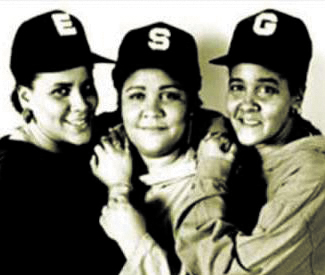
The unidentifiable dance grooves of ESG

1

MUSIC Even the strangest sounds tend to lose their unfamiliar aura after a few listens. But no matter how many times I spin ESG’s “UFO,” I find myself utterly incapable of identifying that synthetic warbling that meanders through the minimal groove. Is it water gurgling in old gas pipes, a whirling police siren, the ferocious grumbling of a subway train? Or something more disturbing: Clanging echoes of gunfire, successive bursts of city noise filtered through apartment hallways?

It’s as if the song prompts a flux of associations that never find a place to rest. But as much as the song prompts a heavy dose of uneasiness, it works a curative spell on the body. That mysterious noise, whose relentless growth heightens the pulse of the rhythm, ultimately triggers an urge to break out in rhythm, and to put it quite simply: dance.

“Coming up in the South Bronx, in the 1970s, we watched Star Wars and Close Encounters of the Third Kind,” says lead vocalist and writer, Renee Scroggins, who together with her sisters — Valerie on drums, Deborah on bass guitar, and Marie on congas — originally composed ESG with a couple friends. “At the end of Close Encounters, they have that do do do do in the background when they communicate with the aliens,” she continues. “So I was sitting at home one day, and I thought: What would it be like if a UFO just landed in the middle of the projects? And that’s how I wrote the song. It begins with chaos and craziness, because I know what would happen,” she laughs.

http://www.youtube.com/watch?v=1o5vuMYQyhE

Over 30 years have passed since ESG (Emerald, Sapphire and Gold) pressed “UFO” to wax on its debut seven-inch for Factory Records in 1981. Today, the unlikely story of the vinyl’s origins seems to be the stuff of lore. While still teenagers, the Scroggins sisters had been performing in New York’s downtown scene for a couple of years. “We were opening for A Certain Ratio at a club called Hurrah in New York when Tony Wilson [of Factory Records] heard us,” Renee recalls, “and he said, ‘how would you like to make a record? I was like, yeah sure, because I didn’t think he was serious. But this was on a Wednesday night, and by Saturday, we were in the studio recording with Martin Hannett.”

Hannett, Factory’s eccentric in-house producer who is likely best known for his work on Joy Division, lent his uncanny touch to ESG’s sound. Bookmarked by the diss song “You’re No Good” and the other end of the love spectrum, “Moody,” with its emotional highs and lows, the EP consists in a stripped down polypercussive funk that would mark ESG’s style for the rest of its output: loosely structured drum patterns weave around pockets of emptiness and stark bass lines, letting Renee’s vocals flutter and hypnotize. It caught the attention of Ed Bahlman at NY’s 99 Records, who was already unofficially managing the outfit but hadn’t realized its full potential in the studio. The Scroggins followed with another EP and recorded their debut full-length for 99, Come Away with ESG, at Radio City Music Hall in ’83.

Come Away solidified its magnetic role during a fertile period of New York’s musical history, in which at least three strands of musical forms encountered each other to unexpected effect. The angular edge of post-punk deconstructed the blues guitar, no wave bands challenged rock purism by stressing the danceable groove, and block parties exploded in the South Bronx, establishing the conditions for what would eventually come to be known as hip-hop. ESG — which shared the stage with the Clash, Gang of Four, and Grandmaster Flash, and performed at Paradise Garage, Danceteria and the Mudd Club — was at the threshold of all this momentum.

What might single ESG out from its peers, though, is its rooted lineage in soul. “James Brown is definitely one of the biggest influences on my writing style,” says Renee. “He would always take it to the bridge, and cut loose, and I’d be like — ‘I didn’t want that part to ever end!’ But, I thought, if I could write a song, and just keep that bridge part going, then people could dance all night.” It’s not all that surprising that ESG’s talent for elaborating, intensifying, and prolonging the aesthetics of the bridge, in frenetic jams off its debut like “Dance,” “The Beat,” and “Christelle,” would correspond with the birth of the DJ, who would attempt a similar effect by looping breaks found in dusty bins of soul, funk, and rock. Soon enough, “UFO” became one of those sampled records.

Listening to “UFO” is all the more disorienting because of the overwhelming dispersion of offspring it calls to mind. That synthetic siren has been sped up, modulated, faded behind layers of reverb, or even spliced in its pure form onto a new backbeat. There are too many to name: Big Daddy Kane’s “Ain’t No Half Steppin’,” Notorious B.I.G.’s “Party and Bullshit,” and countless more from J Dilla, Beastie Boys, Q-Bert, among hundreds, if not thousands of others. You’d think that such an influential legacy would neutralize “UFO,” finally render it to that sterile status of the familiar, but the effect is much the opposite, as if its staggered mutations have only increased the alien, yet maddeningly ecstatic element, within the song.

ESG returned to the recording studio in the 2000s, introducing both Renee’s daughter as well as Valerie’s to the family venture. It dropped two albums of solid new material for Soul Jazz, which also released compilations of its classic singles and rarities. But after more than 30 years of performing and making raw grooves as well as some pop oriented songs in the mix, ESG plans to self-release its final record, Closure, this month (esgclosure.com), to coincide with a farewell world tour. So this might just be the last time its unidentified funk touches down live in San Francisco. 


ESG

Presented by No Way Back, With DJ sets from Solar, Conor, and Junior

Sat/March 3, 9 p.m., $20

Mezzanine

444 Jessie St., SF

www.mezzaninesf.com

Mayor Lee praises the importance of nightlife to SF

3

Addressing a gathering of nightlife advocates at a California Music and Culture Association event last night, Mayor Ed Lee praised the economic and cultural role that the entertainment industry plays in San Francisco, announced plans to add a “nightlife unit” in the Mayor’s Office of Economic and Workforce Development, and even hinted that Halloween in the Castro might be returning after being shut down during the city’s so-called “war on fun.”

“If I’m going to be about jobs,” he said, referring to his near-constant emphasis on economic development, “it should be both for the day and for the night…I do recognize this as a business, as a serious contributor to the economic engine of city.”

Lee referenced the new Controller’s Office report that was requested by Sup. Scott Wiener, which concludes that the nightlife industry generates about $4.2 billion in annual economic activity in the city (that report will be the subject of a rally and hearing on Monday at City Hall starting on the steps at noon). And he said that the benefits of a vibrant nightlife scene also help make San Francisco an appealing city for other businesses, an indirect economic benefit.

“You’re all part of a great part of the city that keeps everyone refreshed,” Lee said, later adding, “I think we can do more at night. The young people who work gobs of hours need to have an entertaining evening.”

As he announced plans to add a nightlife unit to OEWD, the office that works with private companies looking to locate or expand here, he said, “We, as government, need to fast-track things that are successful.” Yet he also said that public safety is still a challenge and called for the industry to work closely with police to keep everyone safe.

Yet Lee spoke positively about Halloween in the Castro, a once-popular event that was canceled because Mayor Gavin Newsom and then-Sup. Bevan Dufty (who Lee recently hired as his new homeless czar) feared the city couldn’t control it, and Lee alluded to plans being developed to revive it in some form. “I hate to see any event that brought so many people to the city gone,” he said.

The event was held at The Grand, a club owned by CMAC board member and new Entertainment Commissioner Steven Lee. CMAC was formed two years ago in response to crackdowns on SF nightlife by city and state officials.

Bayview man who filmed cops convicted

14

In a case that has gained notoriety in San Francsico, Debray Carpenter, also known as Fly Benzo, was convicted Feb. 22 of two misdemeanors.

Benzo was filming the police with his cell phone camera at the time of his arrest. Videos of his arrest are available online.

Video evidence

Benzo was arrested at an Oct. 18 rally. During that incident, police officers John Norment and Joshua Fry of the Bayview precinct apparently unplugged a boombox that they said was not authorized in a street outlet. Then, when officers began videotaping Benzo, he took out his camera phone and began videotaping them as well. Witnesses report that police told Benzo to get the camera “out of my face.”

According to transcripts of three videos of the incident, police told Benzo “back up” and “don’t put your hand in my face.” Benzo claimed his right to stand “where I want to stand” and to film the police. Other individuals near him at the time objected to police orders for Benzo to “stand back,” saying, “he didn’t even touch you though” and asserting that Benzo had done nothing wrong.

After a minute or so of back and forth, Officer Fry stated “Don’t put your hand – You know what? Put your hands behind your back.” At that point, the video shows four officers converging to detain Benzo and knocking him to the ground.

The assault in question occured after Benzo was detained.

“[Benzo] was moving himself from side to side. He didn’t want to get knocked to the ground. During that incident, Officer Fry scraped his elbow and that’s the alleged assault,” said Severa Keith, Benzo’s attorney.

The jury convicted Benzo of misdemeanor assault rather than felony, citing insuffient evidence that Officer Norment had suffered a concussion after the incident.

Trial by jury

Benzo’s trial concluded Feb. 22. The jury found Benzo not guilty of felony assault of a police officer, but did convict him of three misdemeanors. Benzo was convicted of “resisting, obstructing or delaying a peace officer in his or her lawful duties” (California Penal Code Section 148 A1) and misdemeanor assault committed against a peace officer (Section 241 C).

Assistand District Attorney Omid Talai emphasized that  “Benzo was convicted by a jury of his peers.” The jury spent four days deliberating the case.

“The jury obviously took this very seriously and went through each element of the defense. They said they’d watched the videos numerous times,” said Talai.

But some supporters have raised doubts about the jury, partly because there were no African American jurors.

“He did not get indicted by a group of his peers,” said Tracey, a comrade of Benzo’s from the Black Star Liner Coalition. The Coalition is a CCSF student club aimed at improving the relationship between the college and its surrounding community.

Benzo has said that he was consistently harassed by police, including Norment and Fry, for several months prior to the incident.

Keith says she had several witnesses ready to testify to this harassment at the trial.

“These officers would sometimes flip him off, there were a couple of officers who would go by him and hold up the black power fist in a mocking way. There was testimony of how these officers had threatened him,” said Keith.

However, prosecutors successfully exluded all evidence concerning previous incidents between Benzo, Norment and Fry with a pre-trial motion

According to Keith, “We had a really good and very thoughtful jury. But they were not given the chance to understand all the aspects of what happened that day.”

She added that jurors were permitted to write questions to ask witnesses, and several jurors used this tool to attempt to ask about previous incidents between the officers and the defendent in order to better understand the motives of all parties. These questions were not answered due to the pre-trial motion.

“A lot of middle class people hear stories about the way that people in poor black neighborhoods experience the police, even on a day to day basis when nothing out of the ordinary had occured, and they don’t believe it because it’s so different form their experiences. Or they don’t want to believe it because they don’t want to believe that people get treated that way, or that police act that way,” said Kieth.

Troubled history
Benzo is known for speaking out against issues of police harassment in the Bayview, including the killing of Kenneth Harding. Harding, 19, was shot by police in August 2011. Harding was leaving a T train when police asked to see his transfer, a two-dollar value. Harding presumably panicked and ran away from the police. Officers shot at him as he ran. Police have claimed that Harding produced a gun and, while running, shot behind himself at police, and that it was his own bullet that killed him.

Police then approached and surrounded the fallen Harding and prevented others from approaching him. After 30 minutes, the young man had bled to death. A video of his death has since circulated widely on youtube.

Harding’s death sparked an upsurge in the continued outrage over police violence and racist disparities in law enforcement tactics.

Many of Benzo’s supporters feel that his convictions impinge on first amendment rights, and feel that the convictions are unjust.

But Benzo, a CCSF student and musician, is also trying to spend time taking care of his life responsibilities.

“[Benzo] is a college student. He’s doing what he needs to do, and going to school,” explained Tracey.

Benzo is scheduled for sentencing April 20, to be decided by Judge Jerome Benson. Each misdemeanor could carry a year in county jail.

Kieth is considering appealing the verdict.

Death penalty could go before California voters in November

12

It appears that California voters will get a chance to abolish the death penalty this November, and that supporters of the proposed ballot measure will use mostly fiscal and public safety arguments to pick away at the majority of state residents that polls have shown still support capital punishment.

The group SAFE (which stands for Savings, Accountability, Full Enforcement) California this morning held press conferences in San Francisco and three other cities to announce that it is turning in more than 800,000 voter signatures (504,764 are needed) to qualify a measure that would make life in prison without the possibility of parole the maxiumum sentence in California. It would also spare the 720 inmates now on death row in San Quentin Prison, converting their sentences to life in prison.

“We make history today. This is the first time that voters in California will have the opportunity to replace the death penalty with life in prison without the possibility of parole,” LaDoris Cordell, a retired Santa Clara County Superior Court judge, said at San Francisco City Hall.

She was flanked by Sups. Scott Wiener and Christina Olague and other supporters of the measure, as well to two visuals showing a county-by-county breakdown of the unsolved homicides and rapes in California. San Francisco ranks near the top in both categories, with 58 percent of murders (450) and 70 percent of reported rapes (1,236) going unsolved between 2000 and 2009.

“The money to catch these murderers and rapists is not there because it is on death row,” Cordell said, noting that the state wastes an estimated $184 million per year on capital punishment, a figure that represents the roughly $100,000 more per year it costs to house someone on death row versus in the normal prison population and the cost of lifetime legal representation and appeals to which condemned prisoners are entitled.

They argue that in a cash-strapped state, that money could be put to better use solving crimes and supplementing police budgets, with Wiener calling for state residents “to be rational in our approach to public safety and end the death penalty in California.”

Most studies on capital punishment have shown that it does not act as a crime deterrent and that it does not save money, so most arguments supporting it have been emotional ones offered by grieving families or law enforcement officials describing the heinous details of crimes. 

SAFE California seemed to be trying to preempt those appeals with speeches in San Francisco by three other supporters of the measure: Jeanne Woodford, the former San Quentin warden who now runs Death Penalty Focus; Obie Anthony, who was wrongfully accused of murder and exonerated last year after serving 17 years in prison; and Deldelp Medina, whose aunt was murdered by her cousin during a psychotic breakdown and faced capital punishment.

Woodford oversaw four executions at San Quentin and said she and other corrections workers were plagued by the questions of whether the person they were executing was innocent and whether state-sanctioned killing was really making the world safer: “No public employee should ever carry that burden, because I can tell you the system is flawed.”

Many studies have shown the criminal justice system is often biased against African Americans like Anthony. “At the age of 19, I was charged and faced with a murder I did not commit,” said Anthony, who was convicted based on eyewitness testimony of a pimp who later admitted that he was lying to get leniency in his own criminal charges, a deal with police that jurors never learned about.

“I’m living proof that terrible mistakes can happen and there is no perfect system,” Anthony said.

Medina told another story common to California’s flawed justice system, that of overzealous prosecutors seeking to appear tough, often for political reasons, being matched against overburdened public defenders who often lack the resources to properly defend poor people accused of serious crimes.

She noted how the death penalty gets “trotted out as a show pony in every election cycle” by politicians using the families of crime victims. But the reality is that vengeance isn’t a healthy emotion, and she said that capital punishment does little to heal a family’s pain: “The death penalty is an empty promise to the families of victims.”

Cordell said that capital punishment, which often takes 25 years to occur once all the appeals are exhausted, simply prolongs the survivors’ pain. “A quarter of a century is not justice for these families,” she said. And with the high cost of capital punishment exacerbating government funding shortfalls and inherent flaws in the court system, she said, “Justice in our criminal justice system is in grave peril.”   

The war is over. Fun won.

1

steve@sfbg.com

>>Read Sup. Scott Weiner’s op-ed on SF nightlife here

Two years ago, the war on fun that the Bay Guardian had been chronicling and decrying since 2006 — involving overzealous cops, NIMBY neighbors complaining about noise, escalating fees on outdoor events, and politicians scapegoating nightclubs for urban violence –- seemed to be reaching a peak of official intolerance.

The San Francisco Police Department and California Department of Alcoholic Beverage Control were running amok, with an especially troublesome pair of enforcers harassing disfavored club owners and guests, getting rough with patrons at private parties, and seizing laptop computers from DJs and cameras from those who documented the abuses (see “The new War on Fun,” 3/23/10). Then-Mayor Gavin Newsom and then-Police Chief Heather Fong and their underlings only fed the conflict with brash statements and by refusing to support the nightlife industry.

But today, all involved say the situation has turned completely around, with the nightlife industry asserting its importance to San Francisco’s culture and economy and getting key support from a new generation of political leaders. It may be too early to say the war on fun is over, but everyone is certainly enjoying a welcome cease-fire.

Police Chief Greg Suhr has longstanding relationships with many leaders in the nightlife community -– and he’s someone who says that he goes out regularly and has a son who plays drums for a local band.

“I consider many of the people in the entertainment community to be personal friends,” Suhr told us. “And if there’s a problem, I don’t think anyone has been shy about approaching me personally.”

At the same time, the industry has taken on a higher political profile in town since forming the California Music and Culture Association two years ago during the height of the conflicts with the city and the ABC. The group now has monthly meetings with a nightlife liaison that Suhr has assigned to work through issues.

“The lines of communication are open. Despite some differences in opinion, there is a growing sense of trust and respect that is developing in these meetings,” CMAC co-chair Alix Rosenthal told us.

Rather than bashing the nightclubs as a source of trouble, political officials have been openly courting CMAC, which holds regular public events and forums on nightlife issues, including an “Industry Cocktail Hour with Mayor Ed Lee” on the evening Feb. 29 from 5-7 p.m. at The Grand, a club owned by the newest Entertainment Commission member, Steven Lee.

Sup. Scott Wiener has also been a strong advocate for nightlife issues, and has commissioned a city study on the economic benefits of the nightlife industry, which he discusses in this week’s Guardian Op-ed and which will be the subject of March 5 rally and hearing at City Hall.

Preliminary results in the study, with was conducted by City Economist Ted Egan, show that the nightlife industry generates $4.2 billion in annual spending, $55 million in taxes, and employs 48,000 people. And those figures don’t include outdoor events such as street fairs or the Outside Lands Festival, which another recent study by concert organizers found generated $60.6 million in San Francisco and $6.6 million in surrounding communities last year.

“People coming into the city to enjoy themselves is our number one industry,” Suhr said, noting how important it is to balance public safety concerns with support for the city’s cultural and entertainment offerings.

Rosenthal said CMAC was happy that Wiener commissioned the study. “This study is going to be helpful,” she said. “We’ll have hard data to show how much the entertainment economy contributes to San Francisco’s entire economy.”

Stage Listings

0

Stage listings are compiled by Guardian staff. Performance times may change; call venues to confirm. Reviewers are Robert Avila, Rita Felciano, and Nicole Gluckstern. Submit items for the listings at listings@sfbg.com. For further information on how to submit items for the listings, see Picks.

THEATER

OPENING

Maurice New Conservatory Theatre Center, 25 Van Ness, SF; (415) 861-8972, www.nctcsf.org. $25-45. Previews Wed/29-Fri/2, 8pm. Opens Sat/3, 8pm. Runs Wed-Sat, 8pm; Sun, 2pm. Through March 25. New Conservatory Theatre Center presents a play about two young men who fall in love in pre-World War I England, adapted from E.M. Forster’s novel.

Merchants Exit Stage Left, 156 Eddy, SF; www.brownpapertickets.com. $10-25. Previews Thurs/1-Fri/2, 8pm. Opens Sat/3, 8pm. Runs Thurs-Sat, 8pm. Through March 24. No Nude Men Productions performs Susan Sobeloff’s tale of two sisters trying to balance financial stability and career satisfaction.

ONGOING

*Blue/Orange Lorraine Hansberry Theatre, 450 Post, SF; (415) 474-8800, www.lhtsf.org. $43-53. Thurs-Sat, 8pm (also Sat, 2pm). Through March 18. Lorraine Hansberry Theater offers an uneven but worthwhile production of British playwright Joe Penhall’s sardonic comedy of ideas and institutional racism, an intriguingly frustrating three-hander about a young doctor (a bright Dan Clegg) at a psychiatric teaching hospital who begins a battle royal with his suave and pompous supervising physician (a comically nimble Julian Lopez-Morillas) over the release of a questionably-sane black patient. Originally brought in by police for creating a disturbance, Christopher (the excellent Carl Lumbly) still exhibits signs of psychosis and his ability to care for himself seems doubtful to the young doctor treating him. The older physician appeals to the patient’s general competence, hospital procedures, the shortage of beds, and the exigencies of career advancement in countering the younger doctor’s insistence on keeping the patient beyond the mandatory 28-day period required by law. For his part, Christopher, nervous and rather manic, is at first desperately eager to be released back to his poor London neighborhood. Competing interviews with the two doctors complicate his perspective and ours repeatedly, however, as a heated debate about medicine, institutionalization, cultural antecedents to mental “illness,” career arcs, and a “cure for black psychosis,” leave everyone’s sanity in doubt. Although our attention can be distracted by a too-pervading sound design and less than perfect British accents, Edris Cooper-Anifowoshe directs a strong and engaging cast in a politically resonant not to say increasingly maddening play. (Avila)

52 Man Pick Up Brava Theater, 2781 24th St, SF; (415) 647-2822, www.brava.org. $10-25. Thurs/1-Sat/3, 8pm. Desiree Butch performs her solo show about a deck of cards’ worth of sexual encounters.

Geezer Marsh San Francisco, MainStage, 1062 Valencia, SF; (415) 282-3055, www.themarsh.org. $25-100. Thurs and Sat, 8pm; Sun, 5pm. Through March 18. Geoff Hoyle’s hit solo show returns.

Glengarry Glen Ross Actors Theatre of San Francisco, 855 Bush, SF; (415) 345-1287, www.brownpapertickets.com. $26-40. Fri-Sat, 8pm. Through March 24. David Mamet’s cutthroat comedy, courtesy of the Actors Theatre of San Francisco.

The Pirates of Penzance Julia Morgan Center for the Arts, 2640 College, Berk; (510) 845-8542, www.juliamorgan.org. $17-35. Fri-Sat, 7pm (also Sat, 2pm); Sun, noon and 5pm. Through April 1. Berkeley Playhouse performs the Gilbert and Sullivan classic, with the setting shifted to a futuristic city.

The Real Americans Marsh Studio Theater, 1062 Valencia, SF; (415) 282-3055, www.themarsh.org. $25-50. Fri, 8pm; Sat, 5pm; Sun, 2pm. Through March 18. Dan Hoyle revives his hit solo show about small-town America.

Scorched American Conservatory Theater, 415 Geary, SF; (415) 749-2228, www.act-sf.org. $10-85. Tues-Sat, 8pm; Wed, Sat-Sun, 2pm. Through March 11. Lebanese-Canadian playwright Wajdi Mouawad bites off a little more than he can chew, and ACT thus offers a less than satisfying three-hour feast with its stilted production of Mouawad’s 2008 epic about a brother and sister (Babak Tafti and Annie Purcell) sent by their estranged, recently deceased mother’s executor (David Strathairn) on a hunt for her past in her unnamed civil war-torn Middle Eastern homeland. At that point, the story of their mother, Nawal (Marjan Neshat), comes center stage — or rather crisscrosses it with that of her children in a mash-up that only undercuts the potential tension or interest in either plot strand. Director Carey Perloff’s cast also proves unevenly compelling. Strathairn’s Alphonse is a compassionate, slyly wise man who nervously rambles to make up for the extremely laconic and resentful mood of Nawal’s children. But he is of peripheral importance, and his malapropisms are laid on a little thicker than his endearing Quebecois accent, as if betraying the limits of his function onstage. The other characters meanwhile feel too thinly sketched to occupy the middle. As the sad and horrifying details of this Sophocles-inspired tale unfold, there is surprisingly little sense of authentic experience, and much more the feeling of over-indulgence it certain dramatic devices. Between the sententious and ponderous dialogue, strained characterization, and unwieldy storyline is a play flailing away at something beyond its ken or capacity. (Avila)

Three’s Company Live! Finn’s Funhouse, 814 Grove, SF; www.brownpapertickets.com. $20. Fri/2-Sat/3, 7 and 9pm. Cat Fights and Shoulder Pads Productions (best production company name ever?) brings the classic sitcom to the stage.

Tontlawald Exit on Taylor, 277 Taylor, SF; (415) 525-1205, www.cuttingball.com. $10-50. Thurs, 7:30pm; Fri-Sat, 8pm (also Sat, 2pm); Sun, 5pm. Through March 11. Entering the theater space thought the back door, squeezing alongside a giant fishing net motif, which wraps the entire stage in a fabric grid, almost imperceptibly skews one’s perspective in advance of the show, just a brief twist that sets the tone for this abbreviated epic of abuse, friendship, and revenge. The heroine, an earthy yet somehow fragile maid (Marilet Martinez), inadvertently manages to rile her evil stepmother (Madeline H. D. Brown) for what seems to be the umpteenth time before fleeing into the mysterious wooded Tontlawald, inhabited by joyously frolicking beasts (or boys) and a preternaturally beautiful princess (Rebecca Frank) who immediately adopts her as a friend. Told through snatches of repetitive text, solemnly-intoned and ecstatically sung, and moments of engagingly acrobatic, hyper-stylized movement, Cutting Ball’s Tontlawald meanders through an Estonian fairy tale-hero’s quest, as if told from the perspective of the child protagonist — light on detail, heavy on drama. Inspired by TeatrZAR, the resident company of Poland’s Grotowski Centre, co-directors Paige Rogers and Annie Paladino and choreographer Laura Arrington worked to emulate certain characteristics of its style, notably the emphasis on song. But while there are some gorgeously transcendent moments of musical direction courtesy of Rogers, and of choreography courtesy of Arrington, the work plays out mostly as a disjointed series of striking tableaux, which intrigue the intellect, but somehow fail to inflame the soul. (Gluckstern)

*Tree City Legends Intersection for the Arts, 925 Mission, SF; (415) 626-2787, www.theintersection.org. $20-25. Thurs/1-Sat/3, 8pm. The three surviving Kane brothers — Sum (Juan Amador), Min (Taiyo Na), and Denizen (Sean San José) — come together to remember in pain and ecstasy the life of their fallen fourth, Junie Kane (Dennis Kim), whose voice and shadow come back now and then through a materializing recording session with his band (Dirty Boots: James Dumalo and Rachel Lastimosa). Set in the violent, drug-addled, but tenacious streets of an imaginary Bay Area inner-city neighborhood called Tree City, Campo Santo’s production of Kim’s new play transforms the daytime office space at Intersection for the Arts into an all-embracing mise-en-scene that feels, intentionally, like a memorial service, a concert, a dreamy almost hallucinatory reverie, and an incipient rebellion. The shadow-filled, ritual-like atmosphere (lit by Darl Andrew Packard amid Joan Osato’s lush, all-pervading video installation) suits well the play’s roiling mix of grief, restive anger, defiant humor, and communion — given exquisite expression in both song and extended, persuasive monologues by the fine trio of actors. Directed by Marc Bamuthi Joseph, the production’s ability to envelop the audience in this raucous ceremony lends just the right support to Kim’s strong, flowing, eloquent, and earthy ruminations on the fractious but soulful lives of the oppressed among us. (Avila)

*True West Boxcar Studios, 125A Hyde, SF; (415) 967-2227, www.boxcartheatre.org. $25. Thurs-Sat, 8pm. Through April 7. The first installment of Boxcar Theatre’s four-play Sam Shepard repertory project, True West ushers in the ambitious run with a bang. This tale of two brothers who gradually assume the role of the other is one of Shepard’s most enduring plays, rich with humorous interludes, veering sharply into dangerous terrain at the drop of a toaster. In time-honored, True West tradition, the lead roles of Austin, the unassuming younger brother, and Lee, his violent older sibling, are being alternated between Nick A. Olivero and Brian Trybom, and in a new twist, the role of the mother is being played by two different actresses as well (Adrienne Krug and Katya Rivera). The evening I saw it, Olivero was playing Austin, a writer banging away at his first screenplay, and Trybom was Lee, a troubled, alcoholic drifter who usurps his brother’s Hollywood shot, and trashes their mother’s home while trying to honor his as yet unwritten “contract”. The chemistry between the two actors was a perfect blend of menace and fraternity, and the extreme wreckage they make of both the set (designed by both actors), and their ever-tenuous relationship, was truly inspired. (Gluckstern)

*Vice Palace: The Last Cockettes Musical Thrillpeddlers’ Hypnodrome, 575 10th St, SF; (415) 377-4202, www.thrillpeddlers.com. $30-35. Fri/2-Sat/3, 8pm. Hot on the high heels of a 22-month run of Pearls Over Shanghai, the Thrillpeddlers are continuing their Theatre of the Ridiculous revival with a tits-up, balls-out production of the Cockettes’ last musical, Vice Palace. Loosely based on the terrifyingly grim “Masque of the Red Death” by Edgar Allan Poe, part of the thrill of Palace is the way that it weds the campy drag-glamour of Pearls Over Shanghai with the Thrillpeddlers’ signature Grand Guignol aesthetic. From an opening number set on a plague-stricken street (“There’s Blood on Your Face”) to a charming little cabaret about Caligula, staged with live assassinations, an undercurrent of darkness runs like blood beneath the shameless slapstick of the thinly-plotted revue. As plague-obsessed hostess Divina (Leigh Crow) and her right-hand “gal” Bella (Eric Tyson Wertz) try to distract a group of stir-crazy socialites from the dangers outside the villa walls, the entertainments range from silly to salacious: a suggestively-sung song about camel’s humps, the wistful ballad “Just a Lonely Little Turd,” a truly unexpected Rite of Spring-style dance number entitled “Flesh Ballet.” Sumptuously costumed by Kara Emry, cleverly lit by Nicholas Torre, accompanied by songwriter/lyricist (and original Cockette) Scrumbly Koldewyn, and anchored by a core of Thrillpeddler regulars, Palace is one nice vice. (Gluckstern)

The Waiting Period MainStage, Marsh San Francisco, 1062 Valencia, SF; (415) 282-3055, www.themarsh.org. $15-50. Fri, 8pm; Sat, 5pm. Through March 24. Brian Copeland returns with a new solo show about his struggles with depression.

BAY AREA

*Body Awareness Aurora Theatre, 2081 Addison, Berk; (510) 843-4822, www.auroratheatre.org. $30-48. Tues, 7pm; Wed-Sat, 8pm; Sun, 2 and 7pm. Through March 11. In Annie Baker’s new comedy, receiving a top-notch Bay Area premiere at Aurora Theatre, peppy psychology prof Phyllis (Amy Resnick) hosts “Body Awareness Week” at her small Vermont college, while back home partner Joyce (Jeri Lynn Cohen) talks to her 21-year-old son Jared (Patrick Russell) about the porn pay-per-view bill he’s racked up. Phyllis contends that Joyce’s introverted, somewhat explosive virgin son (who in addition to bouts of violent anger soothes himself compulsively with an electric security toothbrush) has Asperger’s Syndrome — a diagnosis that Jared, a budding not too say obsessive lexicographer, hotly contests. That same week, the couple hosts a guest artist, Frank (Howard Swain), a breezy man’s man whose career stands squarely on a series of photographs of nude women and girls. The young man seeks sexual advice from the older one, much to Phyllis’s disgust and Joyce’s relief, while also tempting Joyce with the notion of posing for a nude portrait and “reclaiming her body image,” in a well-used phrase. An already delicate balance thus goes right off kilter as, between the poles of Phyllis and Frank, Joyce and Jared chase competing notions and definitions of themselves and the world. In the volatile tension between perspectives, power trips, and extreme personalities, playwright Baker initially pushes a comic form toward an unsettling edge, only to retreat in the end for safer ground and a family-friendly resolution. While that feels like a lost opportunity, Body Awareness is still a stimulating and solidly entertaining evening, brought to life by a warm and dexterous ensemble under fine, lively direction by Joy Carlin. (Avila)

Counter Attack! Ashby Stage, 1901 Ashby, Berk; (510) 444-4755, ext. 114, www.stagebridge.org. $18-25. Wed/29-Thurs/1, 7:30pm; Fri/2-Sat/3, 8pm; Sun/4, 2pm. Stagebridge presents the world premiere of Joan Holden’s waitress-centric play.

A Doctor in Spite of Himself Berkeley Repertory Theatre, Roda Theatre, 2015 Addison, Berk; (510) 647-2949, www.berkeleyrep.org. $14.50-73. Tues and Thurs-Sat, 8pm (no show March 23); Wed and Sun, 7pm (also Sun, 2pm). Through March 25. Berkeley Rep performs a contemporary update of the Molière comedy.

*The Kipling Hotel: True Misadventures of the Electric Pink ’80s New venue: Marsh Berkeley, 2120 Allston, Berk; (415) 282-3055, www.themarsh.org. $20-50. Sat, 8:30pm; Sun, 7pm. Extended through March 25. This new autobiographical solo show by Don Reed, writer-performer of the fine and long-running East 14th, is another slice of the artist’s journey from 1970s Oakland ghetto to comedy-circuit respectability — here via a partial debate-scholarship to UCLA. The titular Los Angeles residency hotel was where Reed lived and worked for a time in the 1980s while attending university. It’s also a rich mine of memory and material for this physically protean and charismatic comic actor, who sails through two acts of often hilarious, sometimes touching vignettes loosely structured around his time on the hotel’s young wait staff, which catered to the needs of elderly patrons who might need conversation as much as breakfast. On opening night, the episodic narrative seemed to pass through several endings before settling on one whose tidy moral was delivered with too heavy a hand, but if the piece runs a little long, it’s only the last 20 minutes that noticeably meanders. And even with some awkward bumps along the way, it’s never a dull thing watching Reed work. (Avila)

Mesmeric Revelation Berkeley City Club, 2315 Durant, Berk; (510) 558-1381, www.centralworks.org. Thurs-Sat, 8pm; Sun, 5pm. Through March 18. Central Works opens its season of world premieres with Aaron Henne’s Edgar Allen Poe-inspired drama.

Titus Andronicus La Val’s Subterranean, 1834 Euclid, Berk; www.impacttheatre.com. $10-20. Thurs-Sat, 8pm. Through March 31. Impact Theatre takes on the Bard’s bloodiest tragedy.

The World’s Funniest Bubble Show Marsh Berkeley, TheaterStage, 2120 Allston, Berk; (415) 826-5750, www.themarsh.org. $8-50. Extended run: March 11 and 18, 11am. Louis “The Amazing Bubble Man” Pearl returns with this kid-friendly, bubble-tastic comedy.

PERFORMANCE/DANCE

“The Abduction from the Seraglio (Yanked from the Harem)” Marines Memorial Theater, 609 Sutter, SF; www.pocketopera.org. Sun/4 and March 11, 2pm. Also March 18, 2pm, Berkeley Hillside Club, 2286 Cedar, Berk. $15-39. Pocket Opera performs artistic director Donald Pippin’s witty translation of Mozart’s classic work.

“Alice Superbrain/The Twin Section” Garage, 975 Howard, SF; www.975howard.com. Fri/2-Sat/3, 8pm. $10-20. Andrea Lanza’s multidisciplinary perfomance is inspired by Lewis Carroll’s Alice adventures.

“Arthur in Underland” CounterPULSE, 1310 Mission, SF; www.counterpulse.org. Previews Fri/2-Sun/4, 8pm. Opens March 8, 8pm. Runs Fri-Sun, 8pm. Through March 24. $15-24. Dandelion Dancetheater performs a new work about a young man whose life is changed when he becomes part of a rock group’s entourage.

“Elect to Laugh” Studio Theater, Marsh San Francisco, 1062 Valencia, SF; (415) 282-3055, www.themarsh.org. Tues, 8pm. Ongoing through Nov 6. $15-50. Will Durst and friends perform in this weekly political humor show that focuses on the upcoming presidential election.

“The Eric Show” Milk Bar, 1840 Haight, SF; www.milksf.com. Tues, 8pm (ongoing). $5. Local comedians perform with host Eric Barry.

“Finding the Michaels” Shotwell Studios, 3252-A 19th St, SF; www.brownpapertickets.com. Sat/3 and March 9-10, 8pm; Sun/4, 3pm. Footloose presents Cassie Angley’s solo play about her experiences in post-9/11 New York City.

Nina Haft & Company and Facing East Dance and Music ODC Theater, 3153 17th St, SF; www.odcdance.org. Fri/2-Sat/3, 8pm; Sat/3-Sun/4, 3pm. $18-24. The companies perform this.placed, a dance and multimedia performance about what the body remembers.

“The Whole Megillah 2: Uncut” Jewish Theatre, 470 Florida, SF; www.jccsf.org. Thurs-Fri, 8pm; Sat, 7 and 10pm. Through March 10. Also March 7, 8pm, Kanbar Hall, Jewish Community Center of San Francisco, 3200 California, SF. $15-20. The Hub and Killing My Lobster present this Purim-themedsketch comedy show.

Film Listings

0

Film listings are edited by Cheryl Eddy. Reviewers are Kimberly Chun, Max Goldberg, Dennis Harvey, Lynn Rapoport, and Matt Sussman. For rep house showtimes, see Rep Clock.

OPENING

*Crazy Horse Does the documentary genre need an injection of sex appeal? Leave it to ground-breaking documentarian Frederick Wiseman to do just that, with this hilarious, keenly-observed look into Paris’s rightfully legendary Crazy Horse Paris cabaret. For 10 weeks, the filmmaker immersed himself in all aspects of preparation going into a new show, Désirs, by choreographer Philippe Decouflé, and uncovers the guts, discipline, organizational entanglements, and genuine artistry that ensues backstage to produce the at-times laugh-out-loud OTT (e.g., the many routines in which the perky, planet-like posterior is highlighted), at-times truly remarkable numbers (the girl-on-girl spaceship fantasia; the subtle, surreal number that bounces peek-a-boo body parts off a mirrored surface) onstage — moments that should inspire burlesque performers and dance aficionados alike with the sheer imaginative possibilities of dancing in the buff, with a side of brain-teasing titillation, of course. Always silently commenting on the action, Wiseman pokes quiet fun (at the dancer vigorously brushing the horse-hair tail attached to her rear, the obsessed art director, and the sound guy who’s a ringer for Philip Seymour Hoffman’s Boogie Nights nebbish) while patiently paying respect to the mechanics behind the magic (Decouflé, among others, arguing with management for more time to improve the show, despite the beyond-rigorous seven-days-a-week, twice- to thrice-daily schedule). Crazy Horse provides marvelous proof that the battle of seduction begins with the brain. (2:08) Embarcadero, Shattuck, Smith Rafael. (Chun)
Dr. Seuss’ The Lorax Dr. Seuss’ environmental fable comes to (3D, CG-animated) life, with Danny DeVito voicing the iconic title creature. (1:26) Balboa, Presidio, Shattuck.

Project X Nope, not a remake of the 1987 Matthew-Broderick-befriends-a-chimp flick. This one’s a comedy about a chaotic high school party. (1:28) California.

*Tim and Eric’s Billion Dollar Movie See Trash. (1:32) Lumiere, Shattuck.

Undefeated Daniel Lindsay and T.J. Martin, who previously teamed up on a 2008 doc about beer pong, have a more serious subject for their latest tale: the unlikely heroics of an inner-city Memphis, Tenn. high school football team. The title refers more to the collective spirit rather than the (still pretty damn good) record of the Manassas Tigers, a team comprised of youths challenged by less-than-ideal home lives and anti-authority attitude problems that stem from troubles running deeper than typical teenage rebellion. Into an environment seemingly tailored to assure the kids’ failure steps coach Bill Courtney. He’s white, they’re all African American; he’s fairly well-off, while most of them live below the poverty line. Still, he’s able to instill confidence in them, both on and off the field, with focus on three players in particular: the athletically-gifted, academically-challenged O.C., who gets a Blind Side-style boost from one of Courtney’s assistant coaches; sensitive brain Money, sidelined by a devastating injury; and hot-tempered wild card Chavis, who eventually learns the importance of teamwork. With the heavy-hitting endorsement of celebrity exec producer Sean Combs, Undefeated is a high-quality entry into the "inspiring sports doc" genre: it offers an undeniably uplifting story and sleek production values. But it’s a little too familiar to be called the best documentary of the year, despite its recent anointing at the Oscars. If it was gonna be a sports flick, why not the superior, far more complex (yet not even nominated) Senna? (1:53) SF Center. (Eddy)

*We Need to Talk About Kevin It’s inevitable — whenever a seemingly preventable tragedy occurs, there’s public outcry to the tune of "How could this happen?" But after the school shooting in We Need to Talk About Kevin, the more apt question is "How could this not happen?" Lynne Ramsay (2002’s Morvern Callar) — directing from the script she co-adapted from Lionel Shriver’s novel — uses near-subliminal techniques to stir up atmospheric unease from the very start, with layered sound design and a significant, symbolic use of the color red. While other Columbine-inspired films, including Elephant and Zero Day (both 2003), have focused on their adolescent characters, Kevin revolves almost entirely around Eva Khatchadourian (a potent Tilda Swinton) — grief-stricken, guilt-riddled mother of a very bad seed. The film slides back and forth in time, allowing the tension to build even though we know how the story will end, since it’s where the movie starts: with Eva, alone in a crappy little house, working a crappy little job, moving through life with the knowledge that just about everyone in the world hates her guts. Kevin is very nearly a full-blown horror movie, and the demon-seed stuff does get a bit excessive. But it’s hard to determine if those scenes are "real life" or simply the way Eva remembers them, since Kevin is so tightly aligned with Eva’s point of view. Though she’s miserable in the flashbacks, the post-tragedy scenes are even thicker with terror; the film’s most unsettling sequence unfolds on Halloween, horror’s favorite holiday; Eva drives past a mob of costumed trick-or-treaters as Buddy Holly’s "Everyday" (one of several inspired music choices) chimes on the soundtrack. Masked faces are turn to stare — accusingly? Coincidentally? Do they even know she’s Kevin’s mother? — with nightmarish intensity heightened by slow motion. And indeed, "Everyday" Eva deals with accepting her fate; the film is sympathetic to her even while suggesting that she may actually be responsible. For a longer review of this film, and an interview with director Ramsay, visit www.sfbg.com/pixel_vision. (1:52) (Eddy)

ONGOING

Act of Valor (1:45) 1000 Van Ness, Sundance Kabuki.

Albert Nobbs The titular character in Rodrigo Garcia’s film is a butler of ideal bone-stiff propriety and subservience in a Dublin hotel whose well-to-do clients expect no less from the hired help. Even his fellow workers know almost nothing about middle aged Albert, and he’s so dully harmless they don’t even notice that lack. Yet Albert has a big secret: he is a she, played by Glenn Close, having decided this cross dressing disguise was the only way out of a Victorian pauper’s life many years ago. Chance crosses Albert’s path with housepainter Hubert (Janet McTeer), who turns out to be harboring precisely the same secret, albeit more merrily — "he" has even found happy domesticity with an understanding wife. Albert dreams of finding the same with a comely young housemaid (Mia Wasikowska), though she’s already lost her silly head over a loutish but handsome handyman (Aaron Johnson) much closer to her age. This period piece is more interesting in concept rather than in execution, as the characters stay all too true to mostly one-dimensional types, and the story of minor intrigues and muffled tragedies springs very few surprises. It’s an honorable but not especially rewarding affair that clearly exists mostly as a setting for Close’s impeccable performance — and she knows it, having written the screenplay and produced; she’s also played this part on stage before. Yet even that accomplishment has an airless feel; you never forget you’re watching an actor "transform," and for all his luckless pathos, Albert is actually a pretty tedious fellow. (1:53) Opera Plaza, Presidio. (Harvey)

*The Artist With the charisma-oozing agility of Douglas Fairbanks swashbuckling his way past opponents and the supreme confidence of Rudolph Valentino leaning, mid-swoon, into a maiden, French director-writer Michel Hazanavicius hits a sweet spot, or beauty mark of sorts, with his radiant new film The Artist. In a feat worthy of Fairbanks or Errol Flynn, Hazanavicius juggles a marvelously layered love story between a man and a woman, tensions between the silents and the talkies, and a movie buff’s appreciation of the power of film — embodied in particular by early Hollywood’s union of European artistry and American commerce. Dashing silent film star George Valentin (Jean Dujardin, who channels Fairbanks, Flynn, and William Powell — and won this year’s Cannes best actor prize) is at the height of his career, adorable Jack Russell by his side, until the talkies threaten to relegate him to yesterday’s news. The talent nurtured in the thick of the studio system yearns for real power, telling the newspapers, "I’m not a puppet anymore — I’m an artist," and finances and directs his own melodrama, while his youthful protégé Peppy Miller (Bérénice Béjo) becomes a yakky flapper age’s new It Girl. Both a crowd-pleasing entertainment and a loving précis on early film history, The Artist never checks its brains at the door, remaining self-aware of its own conceit and its forebears, yet unashamed to touch the audience, without an ounce of cynicism. (1:40) Balboa, California, Embarcadero, Marina, 1000 Van Ness, Piedmont, Sundance Kabuki. (Chun)

*Chico and Rita This Spain-U.K. production is at heart a very old-fashioned musical romance lent novelty by its packaging as a feature cartoon. Chico (voiced by Eman Xor Oña) is a struggling pianist-composer in pre-Castro Havana who’s instantly smitten by the sight and sound of Rita (Limara Meneses, with Idania Valdés providing vocals), a chanteuse similarly ripe for a big break. Their stormy relationship eventually sprawls, along with their careers, to Manhattan, Hollywood, Paris, Las Vegas, and Havana again, spanning decades as well as a few large bodies of water. This perpetually hot, cold, hot, cold love story isn’t very complicated or interesting — it’s pretty much "Boy meets girl, generic complications ensue" — nor is the film’s simple graphics style (reminiscent of 1970s Ralph Bakshi, minus the sleaze) all that arresting, despite the established visual expertise of Fernando Trueba’s two co directors Javier Mariscal and Tono Errando. When a dream sequence briefly pays specific homage to the modernist animation of the ’50s-early ’60s, Chico and Rita delights the eye as it should throughout. Still, it’s pleasant enough to the eye, and considerably more than that to the ear — there’s new music in a retro mode from Bebo Valdes, and plenty of the genuine period article from Monk, Mingus, Dizzy Gillespie, Chano Pozo and more. If you’ve ever jones’d for a jazzbo’s adult Hanna Barbera feature (complete with full-frontal cartoon nudity — female only, of course), your dream has come true. (1:34) Opera Plaza, Smith Rafael. (Harvey)

*Chronicle A misfit (Dane DeHaan) with an abusive father and an ever-present video camera, his affable cousin (Matt Garretty), and a popular jock (Michael B. Jordan) discover a strange, glowing object in the woods; before long, the boys realize they are newly telekinetic. At first, it’s all a lark, pulling pranks and — in the movie’s most exhilarating scene — learning to fly, but the fun ends when the one with the anger problem (guess which) starts abusing the ol’ with-great-power-comes-great-responsibilities creed. Chronicle is a pleasant surprise in a time when it’s better not to expect much from films aimed at teens; it grounds the superhero story in a (mostly) believable high-school setting, gently intellectualizes the boys’ dilemma ("hubris" is discussed), and also understands how satisfying it is to see superpowers used in the service of pure silliness — like, say, pretending you just happen to be really, really, really, good at magic tricks. First-time feature director Josh Trank and screenwriter Max "son of John" Landis also find creative ways, some more successful than others, to work with the film’s "self-shot" structure. The technique (curse you, Blair Witch) is long past feeling innovative, but Chronicle amply justifies its use in telling its story. (1:23) 1000 Van Ness. (Eddy)

*Coriolanus For his film directing debut, Ralph Fiennes has chosen some pretty strong material: a military drama that is among Shakespeare’s least popular works, not that adapting the Bard to the screen has ever been easy. (Look how many times Kenneth Branagh, an even more fabled Shakespearean Brit on stage than Ralph, has managed to fumble that task.) The titular war hero, raised to glory in battle and little else, is undone by political backstabbers and his own contempt for the "common people" when appointed to a governmental role requiring some diplomatic finesse. This turn of events puts him right back in the role he was born for: that of ruthless, furious avenger, no matter that now he aims to conquer the Rome he’d hitherto pledged to defend. The setting of a modern city in crisis (threadbare protesting masses vs. oppressive police state) works just fine, Elizabethan language and all, as does Fiennes’ choice of a gritty contemporary action feel (using cinematographer Barry Ackroyd of 2006’s United 93 and 2008’s The Hurt Locker). He’s got a strong supporting cast — particularly Vanessa Redgrave as Coriolanus’ hawkish mother Volumnia — and an excellent lead in one Ralph Fiennes, who here becomes so warped by bloodthirst he seems to mutate into Lord Voldemort before our eyes, without need of any prosthetics. His crazy eyes under a razored bald pate are a special effect quite alarmingly inhuman enough. (2:03) Bridge. (Harvey)

*The Descendants Like all of Alexander Payne’s films save 1996 debut Citizen Ruth, The Descendants is an adaptation, this time from Kaui Hart Hemmings’ excellent 2007 novel. Matt King (George Clooney) is a Honolulu lawyer burdened by various things, mostly a) being a haole (i.e. white) person nonetheless descended from Hawaiian royalty, rich in real estate most natives figure his kind stole from them; and b) being father to two children by a wife who’s been in a coma since a boating accident three weeks ago. Already having a hard time transitioning from workaholic to hands-on dad, Matt soon finds out this new role is permanent, like it or not — spouse Elizabeth (Patricia Hastie, just briefly seen animate) will not wake up. The Descendants covers the few days in which Matt has to share this news with Elizabeth’s loved ones, mostly notably Shailene Woodley and Amara Miller as disparately rebellious teen and 10-year-old daughters. Plus there’s the unpleasant discovery that the glam, sporty, demanding wife he’d increasingly seemed "not enough" for had indeed been looking elsewhere. When has George Clooney suggested insecurity enough to play a man afraid he’s too small in character for a larger-than-life spouse? But dressed here in oversized shorts and Hawaiian shirts, the usually suave performer looks shrunken and paunchy; his hooded eyes convey the stung joke’s-on-me viewpoint of someone who figures acknowledging depression would be an undeserved indulgence. Payne’s film can’t translate all the book’s rueful hilarity, fit in much marital backstory, or quite get across the evolving weirdness of Miller’s Scottie — though the young actors are all fine — but the film’s reined-in observations of odd yet relatable adult and family lives are all the more satisfying for lack of grandiose ambition. (1:55) Four Star, Piedmont, Presidio, SF Center, Shattuck, Sundance Kabuki. (Harvey)

Ghost Rider: Spirit of Vengeance (1:36) 1000 Van Ness, SF Center.

*The Girl With the Dragon Tattoo The meeting of Stieg Larsson’s first "Millennium" book and David Fincher promised fireworks, as he’s a director who can be equally vivid and exacting with just the elements key to the series: procedural detail, obsession, violence, tweaked genre conventions, mind games, haunted protagonists, and expansive story arcs. But perhaps because this possible franchise launch had to be rushed into production to ride the Larsson wave, what should have been a terrific matchup turns out to be just a good one — superior in some stylistic departments (notably Trent Reznor and Atticus Ross’ pulsing score), but overall neither an improvement nor a disappointment in comparison to the uninspired but effective 2009 Swedish film version. Daniel Craig plays Mikael Blomkvist, the muckraking Stockholm journalist whose public disgrace after a failed expose of a suspect corporate tycoon makes him the perfect candidate for an unexpected assignment: staying sequestered in the wealthy, warring Vanger clan’s island home to secretly investigate a teenage girl’s disappearance and presumed murder 40 years ago. His testy helpmate is the singular Lisbeth Salander (Rooney Mara), antisocial hacker, researcher, and ex-mental patient par excellence. Nearly three hours long, the compressed, slightly altered (get over it) storyline nonetheless feels rushed at times; Fincher manages the rare feat of making mostly internet research exciting in filmic terms, yet oddly the book’s more shocking episodes of sex and/or mayhem don’t have the memorable impact one might expect from him. The leads are fine, as is the big support cast of recognizable faces (Christopher Plummer, Stellan Skarsgård, Robin Wright, etc.) But the knockout suspense, atmosphere, and urgency one hoped for isn’t present in this intelligent, not entirely satisfying treatment. On the other hand, maybe those who’ve already read the books and seen the prior films have already had so much exposure to this material that a revelatory experience is no longer possible. (2:38) Castro. (Harvey)

Gone Still-shaky if now highly self-defensive Jill (Amanda Seyfried) was abducted from her bed a year ago, thrown into a deep hole in a forest outside Portland, Ore., and escaped death only by overcoming her barely-glimpsed captor. Or so she insists — the police never found any corroborating evidence, and given Jill’s history of mental instability, wrote off her whole purported adventure as delusional. When sister Molly (Emily Wickersham) goes inexplicably missing the morning of an important exam, however, Jill is convinced the serial kidnapper-killer has struck again, going off on a frantic manhunt of her own with no help from the authorities. There is nothing spectacularly wrong with Gone, but nothing right, either — to justify the ponying up of cash money at a theater these days you have to offer something a little more than the routine execution of a derivative, uninspired script with little suspense but plenty of plot holes. That sort of thing is best experienced at a sleepless 2 a.m. on cable, for free. (1:34) 1000 Van Ness, SF Center. (Harvey)

Hugo Hugo turns on an obviously genius conceit: Martin Scorsese, working with 3D, CGI, and a host of other gimmicky effects, creates a children’s fable that ultimately concerns one of early film’s pioneering special-effects fantasists. That enthusiasm for moviemaking magic, transferred across more than a century of film history, was catching, judging from Scorsese’s fizzy, exhilarating, almost-nauseating vault through an oh-so-faux Parisian train station and his carefully layered vortex of picture planes as Hugo Cabret (Asa Butterfield), an intrepid engineering genius of an urchin, scrambles across catwalk above a buzzing station and a hotheaded station inspector (Sacha Baron Cohen). Despite the special effects fireworks going off all around him, Hugo has it rough: after the passing of his beloved father (Jude Law), he has been stuck with an nasty drunk of a caretaker uncle (Ray Winstone), who leaves his duties of clock upkeep at a Paris train station to his charge. Hugo must steal croissants to survive and mechanical toy parts to work on the elaborate, enigmatic automaton he was repairing with his father, until he’s caught by the fierce toy seller (Ben Kingsley) with a mysterious lousy mood and a cute, bright ward, Isabelle (Chloe Grace Moretz). Although the surprisingly dark-ish Hugo gives Scorsese a chance to dabble a new technological toolbox — and the chance to wax pedantically, if passionately, about the importance of film archival studies — the effort never quite despite transcends its self-conscious dazzle, lagging pacing, diffuse narrative, and simplistic screenplay by John Logan, based on Brian Selznick’s book. Even the actorly heavy lifting provided by assets like Kingsley and Moretz and the backloaded love for the fantastic proponents at the dawn of filmmaking fail to help matters. Scorsese attempts to steal a little of the latters’ zeal, but one can only imagine what those wizards would do with motion-capture animation or a blockbuster-sized server farm. (2:07) Four Star, Presidio, Shattuck, Sundance Kabuki. (Chun)

*In Darkness Agnieszka Holland is that kind of filmmaker who can become a well known, respectable veteran without anyone being quite sure what those decades have added up to. Her mentor was Andrzej Wadja, the last half-century’s leading Polish director (among those who never left). He helped shape a penchant for heavy historical drama and a sometimes clunky style not far from his own. She commenced her international career with 1985’s Angry Harvest, about the amorous relationship between a Polish man and the Austrian, a Jewish woman, he hides during Nazi occupation. Her one indispensable feature is 1990’s Europa, Europa, an ideal vehicle for her favored mix of the grotesque, sober, and factual — following a Jewish boy who passed as Aryan German. The new In Darkness is her best since then, and it can’t be chance that this too dramatizes a notably bizarre case of real-life peril and survival under the Nazis. Its protagonist is Leopold Socha (Robert Wieckiewicz), an ordinary family man in Lvov (Poland then, Ukraine now) who’s not above exploiting the disarray of occupation and war to make ends meet. A sewer inspector, he uses his knowledge of underground tunnels to hide Jews who can pay enough when even the fenced-off ghetto is no longer safe. For such a long, oppressive, and literally dark film, this one passes quickly, maintaining tension as well as a palpable physical discomfort that doubtlessly suggests just a fraction what the refugees actually suffered. In Darkness isn’t quite a great movie, but it’s a powerful experience. At the end it’s impossible to be unmoved, not least because the director’s resistance toward Spielbergian exaltation insists on the banal and everyday, even in human triumph. (2:25) Embarcadero. (Harvey)

The Iron Lady Curiously like Clint Eastwood’s 2011 J. Edgar, this biopic from director Phyllida Lloyd and scenarist Abi Morgan takes on a political life of length, breadth and controversy — yet it mostly skims over the politics in favor of a generally admiring take on a famous narrow-minded megalomaniac’s "gumption" as an underdog who drove herself to the top. Looking back on her career from a senile old age spent in the illusory company of dead spouse Denis (Jim Broadbent), Meryl Streep’s ex-British Prime Minister Margaret Thatcher steamrolls past hurdles of class and gender while ironically re-enforcing the fustiest Tory values. She’s essentially a spluttering Lord in skirts, absolutist in her belief that money and power rule because they ought to, and any protesting rabble don’t represent the "real England." That’s a mindset that might well have been explored more fruitfully via less flatly literal-minded portraiture, though Lloyd does make a few late, lame efforts at sub-Ken Russell hallucinatory style. Likely to satisfy no one — anywhere on the ideological scale — seriously interested in the motivations and consequences of a major political life, this skin-deep Lady will mostly appeal to those who just want to see another bravura impersonation added to La Streep’s gallery. Yes, it’s a technically impressive performance, but unlikely to be remembered as one of her more depthed ones, let alone among her better vehicles. (1:45) Albany, Marina, Vogue. (Harvey)

My Week With Marilyn Statuette-clutching odds are high for Michelle Williams, as her impersonation of a famous dead celebrity is "well-rounded" in the sense that we get to see her drunk, disorderly, depressed, and so forth. Her Marilyn Monroe is a conscientious performance. But when the movie isn’t rolling in the expected pathos, it’s having other characters point out how instinctive and "magical" Monroe is onscreen — and Williams doesn’t have that in her. Who could? Williams is remarkable playing figures so ordinary you might look right through them on the street, in Wendy and Lucy (2008), Blue Valentine (2010), etc. But as Monroe, all she can do is play the little-lost girl behind the sizzle. Without the sizzle. Which is, admittedly, exactly what My Week — based on a dubious true story — asks of her. It is true that in 1956 the Hollywood icon traveled to England to co-star with director Sir Laurence Olivier (Kenneth Branagh) in a fluff romance, The Prince and the Showgirl; and that she drove him crazy with her tardiness, mood swings, and crises. It’s debatable whether she really got so chummy with young production gofer Colin Clark, our wistful guide down memory lane. He’s played with simpering wide-eyed adoration by Eddie Redmayne, and his suitably same-aged secondary romantic interest (Emma Watson) is even duller. This conceit could have made for a sly semi-factual comedy of egos, neurosis, and miscommunication. But in a rare big-screen foray, U.K. TV staples director Simon Curtis and scenarist Adrian Hodges play it all with formulaic earnestness — Marilyn is the wounded angel who turns a starstruck boy into a brokenhearted but wiser man as the inevitable atrocious score orders our eyes to mist over. (1:36) Clay, Four Star, Shattuck. (Harvey)

Norwegian Wood Haruki Murakami’s global best-seller — a melancholic, late-1960s love story — hits the big screen thanks to Tran Anh Hung (1993’s The Scent of the Green Papaya). Kenichi Matsuyama (2011’s Gantz, 2005’s Linda Linda Linda) and Rinko Kikuchi (2006’s Babel) play Watanabe and Naoko, a young couple who reconnect in Tokyo after the suicide of his best friend, who was also her childhood sweetheart. There’s love between them, but Naoko is mentally fragile; she flees town suddenly after they sleep together for the first time. Meanwhile, Watanabe meets the vivacious Midori (Kiko Mizuhara) — who is also already involved, though not quite so deeply as he — and they spark, though he’s devoted to Naoko, and visits her at the rural hospital where she’s (sort of) working through her emotional issues. Tran is an elegant filmmaker, and Radiohead’s Jonny Greenwood contributes an appropriately moody score. But amid all the breathless encounters, the uber-emo Norwegian Wood drags a bit at over two hours, and the film never quite crystallizes what it was about Murakami’s book that inspired such international rapture. (2:13) Four Star. (Eddy)

*Pina Watching Pina Bausch’s choreography on film should not have been as absorbing and deeply affecting of an experience as it was. Dance on film tends to disappoint — the camera flattens the body and distorts perspective, and you either see too many or not enough details. However, improved 3D technology gave Wim Wenders (1999’s Buena Vista Social Club; 1987’s Wings of Desire) the additional tools he needed to accomplish what he and fellow German Bausch had talked about for 20 years: collaborating on a documentary about her work. Instead of making a film about the rebel dance maker, Wenders made it for Bausch, who died in June 2009, two days before the start of filming. Pina is an eloquent tribute to a tiny, soft-spoken, mousy-looking artist who turned the conventions of theatrical dance upside down. She was a great artist and true innovator. Wenders’ biggest accomplishment in this beautifully paced and edited document is its ability to elucidate Bausch’s work in a way that words probably cannot. While it’s good to see dance’s physicality and its multi dimensionality on screen, it’s even better that the camera goes inside the dances to touch tiny details and essential qualities in the performers’ every gesture. No proscenium theater can offer that kind of intimacy. Appropriately, intimacy (the eternal desire for it) and loneliness (an existential state of being) were the two contradictory forces that Bausch kept exploring over and over. And by taking fragments of the dances into the environment — both natural and artificial — of Wuppertal, Germany, Wenders places them inside the emotional lives of ordinary people, subjects of all of Bausch’s work. (1:43) Shattuck, Sundance Kabuki. (Rita Felciano)

Rampart Fans of Dexter and a certain dark knight will empathize with this final holdout for rogue law enforcement, LAPD-style, in the waning days of the last century. And Woody Harrelson makes it easy for everyone else to summon a little sympathy for this devil in a blue uniform: he slips so completely behind the sun- and booze-burnt face of David "Date Rape" Brown, an LAPD cop who ridicules young female cops with the same scary, bullying certainty that he applies to interrogations with bad guys. The picture is complicated, however, by the constellation of women that Date Rape has sheltered himself with. Always cruising for other lonely hearts like lawyer Linda (Robin Wright), he still lives with the two sisters he once married (Cynthia Nixon, Anne Heche) and their daughters, including the rebellious Helen (Brie Larson), who seems to see her father for who he is — a flawed, flailing anti-hero suffering from severe testosterone poisoning and given to acting out. Harrelson does an Oscar-worthy job of humanizing that everyday monster, as director Oren Moverman (2009’s The Messenger), who cowrote the screenplay with James Ellroy, takes his time to blur out any residual judgement with bokeh-ish points of light while Brown — a flip, legit side of Travis Bickle — just keeps driving, unable to see his way out of the darkness. (1:48) Embarcadero. (Chun)

*Roadie Michael Cuesta’s first film as both director and writer (again co-authoring with brother Gerald) since 2001’s startling debut feature L.I.E. is also his best work since then. After nearly a quarter-centurty spent schlepping equipment for Blue Oyster Cult — the arty metal band ("Don’t Fear the Reaper," i.e. "more cowbell!") that was already sliding from the spotlight when he signed on — Jimmy Testergross (Ron Eldard) is fired, the reasons unknown to us. With nowhere else to go, he lands on the doorstep of his childhood home in Queens, where he hasn’t been seen in at least 20 years. Mom (Lois Smith) is going senile, though somehow her disapproval comes through with perfect clarity (and hasn’t changed in all that time). Seeking a liquid solace at a bar, our hero instead runs into Randy (Bobby Cannavale), who bullied him mercilessly way back when — and is now married to "Jimmy Testicle’s" still-hot former girlfriend Nikki (Jill Hennessey), who has rock-star aspirations of her own. Taking place over less than 24 hours’ span, Roadie is a very small character study, but a well-observed one. "Developmentally stunted by rock ‘n’ roll," as one character puts it (when it emerges 40-something Jimmy has never learned to make coffee for himself), its protagonist is the kind of likable boy-man loser usually found in Fountains of Wayne songs, an aging lifelong air guitarist pining over good old days that probably weren’t even that good. His nostalgia is as touchingly hapless as his dubious future. (1:35) SF Film Society Cinema. (Harvey)

Safe House Frankly, Denzel Washington watchers are starved for another movie in which he’s playing the smartest guy in the room. Despite being hampered by a determinedly murky opening, Safe House should mostly satisfy. Washington’s Tobin Frost is well-used to dwelling into a grayed-out borderland of black ops and flipped alliances — a onetime CIA star, he now trades secrets while perpetually on the run. Fleeing from killers of indeterminate origin, Tobin collides headlong with eager young agent Matt (Ryan Reynolds), who’s stuck maintaining a safe house in Cape Town, South Africa. Tasked with holding onto Tobin’s high-level player by his boss (Brendan Gleeson) and his boss’s boss (Sam Shepard), Matt is determined to prove himself, retain and by extension protect Tobin (even when the ex-superspy is throttling him from behind amid a full-speed car chase), and resist the magnetic pull of those many hazardous gray zones. Surrounded by an array of actorly heavies, including Vera Farmiga, who collectively ratchet up and invest this possibly not-very-interesting narrative — "Bourne" there; done that — with heart-pumping intensity, Washington is magnetic and utterly convincing as the jaded mouse-then-cat-then-mouse toying with and playing off Reynolds go-getter innocent. Safe House‘s narrative doesn’t quite fill in the gaps in Tobin Frost’s whys and wherefores, and the occasional ludicrous breakthroughs aren’t always convincing, but the film’s overall, familiar effect should fly, even when it’s playing it safe (or overly upstanding, especially when it comes to one crucial, climactic scrap of dialogue from "bad guy" Washington, which rings extremely politically incorrect and tone-deaf). (2:00) 1000 Van Ness, SF Center, Sundance Kabuki. (Chun)

*A Separation Iran’s first movie to win Berlin’s Golden Bear (as well as all its acting awards), this domestic drama reflecting a larger socio-political backdrop is subtly well-crafted on all levels, but most of all demonstrates the unbeatable virtue of having an intricately balanced, reality-grounded screenplay — director Asghar Farhadi’s own — as bedrock. A sort of confrontational impartiality is introduced immediately, as our protagonists Nader (Peyman Moadi) and Simin (Leila Hatami) face the camera — or rather the court magistrate — to plead their separate cases in her filing for divorce, which he opposes. We gradually learn that their 14-year wedlock isn’t really irreparable, the feelings between them not entirely hostile. The roadblock is that Simin has finally gotten permission to move abroad, a chance she thinks she must seize for the sake of their daughter, Termeh (Sarina Farhadi). But Nader doesn’t want to leave the country, and is not about to let his only child go without him. Farhadi worked in theater before moving into films a decade ago. His close attention to character and performance (developed over several weeks’ pre-production rehearsal) has the acuity sported by contemporary playwrights like Kenneth Lonergan and Theresa Rebeck, fitted to a distinctly cinematic urgency of pace and image. There are moments that risk pushing plot mechanizations too far, by A Separation pulls off something very intricate with deceptive simplicity, offering a sort of integrated Rashomon (1950) in which every participant’s viewpoint as the wronged party is right — yet in conflict with every other. (2:03) Albany, Embarcadero. (Harvey)

*The Secret World of Arrietty It’s been far too long between 2008’s Ponyo, the last offering from Studio Ghibli, and this feature-length adaptation of Mary Norton’s children’s classic, The Borrowers, but the sheer beauty of the studio’s hand-drawn animation and the effortless wonder of its tale more than make up for the wait. This U.S. release, under the very apropos auspices of Walt Disney Pictures, comes with an American voice cast (in contrast with the U.K. version), and the transition appears to be seamless — though, of course, the background is subtly emblazoned with kanji, there are details like the dinnertime chopsticks, and the characters’ speech rhythms, down to the "sou ka" affirmative that peppers all Japanese dialogue. Here in this down-low, hybridized realm, the fearless, four-inches-tall Arrietty (voiced by Bridgit Mendler) has grown up imaginative yet lonely, believing her petite family is the last of their kind: they’re Borrowers, a race of tiny people who live beneath the floorboards of full-sized human’s dwellings and take what they need to survive. Despite the worries of her mother Homily (Amy Poehler), Arrietty begins to embark on borrowing expeditions with her father Pod (Will Arnett) — there are crimps in her plans, however: their house’s new resident, a sickly boy named Shawn (David Henrie), catches a glimpse of Arrietty in the garden, and caretaker Hara (Carol Burnett) has a bit of an ulterior motive when it comes to rooting out the wee folk. Arrietty might not be for everyone — some kids might churn in their seats with ADD-style impatience at this graceful, gentle throwback to a pre-digital animation age — but in the care of first-time director Hiromasa Yonebayashi and Ghibli mastermind Hayao Miyazaki, who wrote co-wrote the screenplay, Arrietty will transfix other youngsters (and animation fans of all ages) with the glorious detail of its natural world, all beautifully amplified and suffused with everyday magic when viewed through the eyes of a pocket-sized adventurer. (1:35) California, 1000 Van Ness, Sundance Kabuki. (Chun)

*Shame It’s been a big 2011 for Michael Fassbender, with Jane Eyre, X-Men: First Class, Shame, and A Dangerous Method raising his profile from art-house standout to legit movie star (of the "movie stars who can also act" variety). Shame may only reach one-zillionth of X-Men‘s audience due to its NC-17 rating, but this re-teaming with Hunger (2008) director Steve McQueen is Fassbender’s highest achievement to date. He plays Brandon, a New Yorker whose life is tightly calibrated to enable a raging sex addiction within an otherwise sterile existence, including an undefined corporate job and a spartan (yet expensive-looking) apartment. When brash, needy, messy younger sister Cissy (Carey Mulligan, speaking of actors having banner years) shows up, yakking her life all over his, chaos results. Shame is a movie that unfolds in subtle details and oversized actions, with artful direction despite its oft-salacious content. If scattered moments seem forced (loopy Cissy’s sudden transformation, for one scene, into a classy jazz singer), the emotions — particularly the titular one — never feel less than real and raw. (1:39) Lumiere. (Eddy)

Star Wars: Episode 1: The Phantom Menace 3D (2:16) SF Center, Sundance Kabuki.

*Straight Outta Hunters Point 2 In 2001, filmmaker Kevin Epps turned a camera on his own neighborhood: Bayview-Hunters Point, the southeastern San Francisco community best-known by outsiders for Candlestick Park, toxic pollution, and gang violence. Straight Outta Hunters Point was an eye-opener not just locally but internationally, as its runaway success opened doors for Epps to travel with the film and establish his career. These days, Epps is no longer an emerging talent — he’s a full-time independent filmmaker with multiple credits (including The Black Rock, a documentary about Alcatraz’s African American inmates, and hip-hop film Rap Dreams), collaborations (with Current TV and others), and an artist fellowship at the de Young Museum under his belt. For his newest project, he returns to the scene of his first work. He no longer resides in Bayview-Hunters Point, but he still lives close by, and he’s never lost touch with the community that inspired the first film and encouraged him to make its follow-up. Described by Epps as a "continuation of the conversation" launched by the first film, SOHP 2 investigates the community as it stands today, with both external (redevelopment) and internal (violence) pressures shaping the lives of those who live there. It’s a raw, real story that unspools with urgency and the unvarnished perspective of an embedded eyewitness. (1:20) Roxie. (Eddy)

*Tinker Tailor Soldier Spy Tomas Alfredson (2008’s Let the Right One In) directs from Bridget O’Connor and Peter Straughan’s sterling adaptation of John le Carré’s classic spy vs. spy tale, with Gary Oldman making the role of George Smiley (famously embodied by Alec Guinness in the 1979 miniseries) completely his own. Your complete attention is demanded, and deserved, by this tale of a Cold War-era, recently retired MI6 agent (Oldman) pressed back into service at "the Circus" to ferret out a Soviet mole. Building off Oldman’s masterful, understated performance, Alfredson layers intrigue and an attention to weird details (a fly buzzing around a car, the sound of toast being scraped with butter) that heighten the film’s deceptively beige 1970s palette. With espionage-movie trappings galore (safe houses, code machines), a returned-to flashback to a surreal office Christmas party, and bang-on supporting performances by John Hurt, Mark Strong, Colin Firth, Toby Jones, and the suddenly ubiquitous Benedict Cumberbatch, Tinker Tailor epitomizes rule one of filmmaking: show me, don’t tell me. A movie that assumes its audience isn’t completely brain-dead is cause for celebration and multiple viewings — not to mention a place among the year’s best. (2:07) Piedmont, Shattuck, Sundance Kabuki. (Eddy)

Tyler Perry’s Good Deeds (1:51) 1000 Van Ness, Shattuck.

"2011 Oscar-Nominated Short Films, Live Action and Animated" Lumiere, Opera Plaza, Shattuck, Smith Rafael.

The Vow A rear-ender on a snowy Chicago night tests the nuptial declarations of a recently and blissfully married couple, recording studio owner Leo (Channing Tatum) and accomplished sculptor Paige (Rachel McAdams). When the latter wakes up from a medically induced coma, she has no memory of her husband, their friends, their life together, or anything else from the important developmental stage in which she dropped out of law school, became estranged from her regressively WASP-y family, stopped frosting her hair and wearing sweater sets, and broke off her engagement to preppy power-douchebag Jeremy (Scott Speedman). Watching Paige malign her own wardrobe and "weird" hair and rediscover the healing powers of a high-end shopping spree is disturbing; she reenters her old life nearly seamlessly, and the warm spark of her attraction to Leo, which we witness in a series of gooey flashbacks, feels utterly extinguished. And, despite the slurry monotone of Tatum’s line delivery, one can empathize with a sense of loss that’s not mortal but feels like a kind of death — as when Paige gazes at Leo with an expression blending perplexity, anxiety, irritation, and noninvestment. But The Vow wants to pluck on our heartstrings and inspire a glowing, love-story-for-the-ages sort of mood, and the film struggles to make good on the latter promise. Its vague evocations of romantic destiny mostly spark a sense of inevitability, and Leo’s endeavors to walk his wife through retakes of scenes from their courtship are a little more creepy and a little less Notebook-y than you might imagine. (1:44) 1000 Van Ness, SF Center. (Rapoport)

*Wanderlust When committed Manhattanites George (Paul Rudd) and Linda (Jennifer Aniston) find themselves in over their heads after George loses his job, the two set off to regroup in Atlanta, with the reluctantly accepted help of George’s repellent brother Rick (Ken Marino). Along the way, they stumble upon Elysium, a patchouli-clouded commune out in the Georgia backcountry whose members include original communard Carvin (Alan Alda), a nudist novelist-winemaker named Wayne (Joe Lo Truglio), a glowingly pregnant hippie chick named Almond (Lauren Ambrose), and smarmy, sanctimonious, charismatic leader Seth (Justin Theroux). After a short, violent struggle to adapt to life under Rick’s roof, the couple find themselves returning to Elysium to give life in an intentional community a shot, a decision that George starts rethinking when Seth makes a play for his wife. Blissed-out alfresco yoga practice, revelatory ayahuasca tea-induced hallucinations, and lectures about the liberating effects of polyamory notwithstanding, the road to enlightenment proves to be paved with sexual jealousy, alienation, placenta-soup-eating rituals, and group bowel movements. Writer-director David Wain (2001’s Wet Hot American Summer, 2008’s Role Models) — who shares writing credits with Marino — embraces the hybrid genre of horror comedy in which audience laughter is laced with agonized embarrassment, and his cast gamely partake in the group hug, particularly Theroux and Rudd, who tackles a terrifyingly lengthy scene of personal debasement with admirable gusto. (1:38) 1000 Van Ness, SF Center, Shattuck. (Rapoport)

W.E. Madonna’s first directorial feature, 2008’s Filth and Wisdom, was so atrocious, and the early word on this second effort so vitriolic, that there’s a temptation to give W.E. too much credit simply for not being a disgrace. Co-written by Madge and Alek Keshishian, it’s about two women in gilded cages. One is Wallis Simpson (the impressive Andrea Riseborough), a married American socialite who scandalized the world by divorcing her husband and running about with Edward, Prince of Wales (James D’Arcy), who had to abdicate the English throne in order to marry her in 1936. The other is fictive Wally Winthrop (Abbie Cornish), a childless Manhattan socialite in the late 1990s who’s neglected by her probably-unfaithful husband (Richard Coyle). Over-eagerly intertwined despite their trite-at-best overlaps (the main one being Wally’s obsession with Wallis), these two strands hold attention for a while. But eventually they grow turgid. We’re presumably meant to be carried away by their True Love, but the film doesn’t succeed in making Wallis and Edward seem more than two petulant, shallow snobs who were fortunate to find each other, but didn’t necessarily make one another better or more interesting people. (It also alternately denies and glosses over the couple’s fascist-friendly politics, which became an embarrassment as England fought Germany in World War II.) Meanwhile, Wally is a mopey blank too easily belittled by her spouse, and too handily rescued by a Prince Charming, or rather "Russian intellectual slumming as a security guard" (Oscar Isaac) working at Sotheby’s during an auction of the late royal couple’s estate. As is so often the case with Madonna, she seems to be saying something here, but precisely what is murky and probably not worth sussing
out. Likewise, the attention to showy surface aesthetics — in particular Arianne Phillips’ justifiably Oscar-nominated costumes — is fastidious, revealing, and to an extent satisfying in itself. Somewhat ambitious and in several ways quite well crafted, the handsomely appointed W.E. isn’t bad (surely it wouldn’t have attracted such hostility if directed by anyone else), but the flaws that finally suffocate it reach right down to its conceptual gist. There is, however, one lovely moment toward the end: Riseborough’s Wallis, a well-preserved septuagenarian, dancing an incongruous yet supremely self-assured twist on request for her bedridden husband. (1:59) Opera Plaza. (Harvey)

The Woman in Black Daniel Radcliffe (a.k.a. Harry Potter) plays a grieving young widower in an old-fashioned ghost story, set in the era of spirit hands and other visitations from beyond the veil. But while Victorian séances were generally aimed at the dearly departed, the titular visitant (Liz White), who haunts the isolated estate of Eel Marsh House and its environs, is a vindictive, mean-spirited creature, avenging the long-ago loss of her child by wreaking havoc and heartbreak among the families of the nearby village, among them a local landowner (Ciarán Hinds) and his wife (Janet McTeer). Radcliffe’s character, a lawyer named Arthur Kipps, has been tasked with settling the affairs of the mansion’s recently deceased owner, an assignment that requires sifting through mounds of dusty, crumpled ephemera in one of the creakiest, squeakiest buildings ever constructed. Set at the end of a narrow spit of land that disappears into the surrounding wetlands when the tide is high, Eel Marsh House is a charming place to be marooned after dark. But no amount of horrified screams from the audience will keep Kipps from his duties, though it’s hard to make much headway amid the unrelenting creepiness. Nearly every moment brings a fresh inexplicable thumping noise from an upper floor; a new room full of dead-eyed dolls that Kipps has no business wandering into; another freakishly screaming face next to his as he gazes out the window. The house is a richly textured set piece; the horror is of the sort that makes you jump and then laugh, both at the filmmakers, for springing the same tricks on you over and over, and at yourself, for falling prey to them every time. (1:36) 1000 Van Ness. (Rapoport)

Save our homes

9

yael@sfbg.com


This story has been edited


Bay Area activists, fueled in part by the Occupy movement, have recently taken stands against police brutality, for the rights of the homeless, against the corporate power of banks, and much more. But, arguably, nowhere has the movement been more successful than in the fight against foreclosures and evictions.


With the support of Alliance of Californians for Community Empowerment (ACCE) and the Bayview Foreclosure Fighters, several Bayview residents whose homes had already been sold continue to occupy them, and in some cases sales have been rescinded. Occupy Bernal has used civil disobedience to postpone six housing auctions, keeping their neighbors in their homes that much longer. They secured a meeting with Diana Stauffer, Wells Fargo Home Mortgage senior vice president, and David Campos, District 9 supervisor, to delay foreclosure proceedings.


But the activists are pushing for a full moratorium on foreclosures and evictions in San Francisco. Such a moratorium is not without precedent. In recent years, sheriffs have stopped evictions and foreclosures in Wayne Country, Michigan; Cook County, Illinois; Butler County, Ohio; and Philadelphia County, Pennsylvania.


When Cook County Sheriff John Dart imposed his moratorium in 2010, he said, “I can’t possibly be expected to evict people from their homes when the banks themselves can’t say for sure everything was done properly. I need some kind of assurance that we aren’t evicting families based on fraudulent behavior by the banks.”


San Francisco seems ripe for a similar stance, as Assessor-Recorder Phil Ting recently released a report revealing widespread lawbreaking in foreclosure proceedings. The report found that 84 percent of foreclosures in San Francisco over the last three years involved faulty paperwork, some of it amounting to fraud.


Representatives from the District Attorney’s and the City Attorney’s offices told the Guardian that they are concerned about the report. These bodies may be starting the process of further investigating findings. Last week, Sheriff Ross Mirkarimi, whose office carries out the county’s evictions, said he has begun an initiative to collect and analyze the city’s foreclosure data.


But Mirkarimi’s hands may be tied. As he told Ann Garrison of KPFA radio Feb. 25, “I don’t have the latitude or discretion, much as I would like, because there would need to be a change in state law that empowers municipal sheriffs to be able to use that discretion.”


Occupy Bernal formed just a couple months ago, but it has emerged as a powerful advocate for homeowners facing foreclosure. The neighborhood-based branch of the Occupy movement chose to focus specifically on preventing the evictions of Bernal Heights residents, where over 100 homes face foreclosure.


They kept the pressure up Feb. 25, when a group of supporters convened at 1090 Chestnut Street, the residence of John Stumpf, the CEO of Wells Fargo. That bank owns the majority of mortgages on Bernal homes facing foreclosure.


The protest wasn’t meant to block the street and no one tried to enter the building where Stumpf owns three of the 14 floors. But police decided that the group of about 150 warranted blocking off the entire block to traffic, to the annoyance of many neighbors.


“You collected $43.7 billion in taxpayer money and have since made record profits at the expense of low-income communities, while repeatedly breaking your legal and moral obligations as a creditor. You have failed to comply with loan modification requirements under your own lending agreements,” said a blown-up “foreclosure notice” outside Stumpf’s home.


In the spirited street theater scene, activists dressed as an auctioneer and a larger-than-life John Stumpf played out a fake auction of Stumpf’s property.


Dexter Cato, a father of four whose wife was recently killed in a car crash in the midst of months-long loan modification proceedings, faces foreclosure from his Bayview home of 40 years.


“Stumpf, we want a new address for you,” said Archbishop Franzo King of the Western Additions’ John Coltrane church, “850 Bryant Street!”


The crowd then proceeded to chant this address: the San Francisco Hall of Jusice and County Jail.


“We understand that some of our customers are going through difficult times during this economic recovery,” said Jim Foley, president of Wells Fargo’s Greater Bay Area region, in a press release responding to the Feb. 25 protest. The company plans to hold “Home Preservation Workshops” in Richmond March 7 and 8 to help homeowners facing foreclosure.


Public officials may be a long way from locking up CEOs for foreclosure fraud, but some have taken notice of complaints against the banks. On Feb. 2, the Berkeley City Council voted not to extend its contract with Wells Fargo to manage $300 million in city assets, citing its foreclosures on city residents.


On a national level, activists have been successful in persuading people to transfer their money to local banks and credit unions in recent months. Javelin Strategy and Research came out with statistics that 5.6 million Americans have switched bank service providers in the past 90 days, three times the normal transfer rate. Bank Transfer Day in early October was specifically cited as the trigger by 610,000 of those people.


The recent $25 billion settlement between the five largest banks and attorneys general in California and other states over mortgage fraud made big headlines, but activists note that it allocates a measly $2,000 to some people who have lost their homes to foreclosure. Occupy Bernal’s Buck Bagot said people need more protection from powerful banks. “Banks suckered people into this stuff, and they have made billions,” Bagot said. “We’re not saying people shouldn’t have to pay off the money they borrowed, but it took two to tango.”

Localized Appreesh: The Shants

0

Localized Appreesh is our weekly thank-you column to the musicians that make the Bay. To be considered, contact emilysavage@sfbg.com.

The Shants have done something curiously rare these days: created an authentically Southern and categorically enjoyable stompy blues and folk record in the heart of garage punk and hip-hop obsessed Oakland. That authenticity come from real roots, as these sorts of things often do – the new record, Beautiful was the Night, is said to be a “haunted love letter” to singer Skip Allum’s youth in the South Louisiana delta pines.

The resulting record is a lively mix of Americana, twanged vocals, bluesy riffs, bits of piano and violin, and steel guitar, with guest appearances by the likes of multi-instrumentalist/horn player Ralph Carney, Blue Bone Express, and vocalist Quinn DeVeaux. I think singer Brianna Lea Pruett, who also guests on the record, describes the music best when she says in the short documentary on the making of the album, “Even in the dark parts, there’s a sweet treatment to it.”

With the long-awaited release of its debut full-length record finally here, the quartet will play Cafe Du Nord this Thursday.

You can watch the making of the new album here:
http://www.youtube.com/watch?v=WaPdF3T8UZs

Year and location of origin: Oakland, 2009

Band name origin: Its a reference to the Gaelic word, shiant, meaning blessed or charmed… and the Shiant Isles of Scotland. Skip came across it while doing some research on his Scottish family origins, which can be traced to those islands. That’s the short version, anyway.

Band motto: “Is the pedal steel too loud? How ’bout now?”

Description of sound in 10 words or less: A dusty, slow blend of Southern folk, and country blues.

Instrumentation: 1954 Harmony archtop guitar, Emmons double-neck pedal steel guitar, 1970s Peavey bass guitar, drums. May soon have a new fella on many other instruments. Stay tuned!

Most recent release: Beautiful Was The Night, our first full-length! Available now at live shows, our website, iTunes, Bandcamp, Spotify, etc. and all Rasputin Records locations. It was recorded with all analog gear over at the Rec Center (formerly Bakesale Betty’s storage space) and at Tones on Tail Studios in Oakland, with Mr. Eliot Curtis.

Best part about life as a Bay Area band: The diverse musical community is pretty inspiring. We may not sound like a lot of other bands coming out of Oakland and the city… but we are all very DIY-focused & often looking to expand our sound with new textures.

Worst part about life as a Bay Area band: Tolls and parking tickets are a bitch, man. After shelling out this much money, we should get board seats with Caltrans and Alameda County.

First album ever purchased:
Skip: Matthew Sweet – Girlfriend
Carver: Nirvana – Nevermind
Adam: The Police – Synchronicity
Sam: Son Volt – Trace

Most recent album purchased/downloaded:
Skip: Samantha Crain – You (Understood)
Carver: Etta James – Etta James Rocks the House
Adam: Keith Jarret – Shostakovich 24 Preludes and Fugues
Sam: Calexico – Feast of Wire

Favorite local eatery and dish:

Skip: Aslam’s Rosoi on Valencia. I love their lamb Madras.
Adam: Lo Coco’s on Piedmont Ave in Oakland. Their Maria and Suzanne pizzas so good.
Carver: Brown Sugar Cafe in Emeryville. Get the chicken & waffles.
Sam: Bakesale Betty’s in Oakland. Fried chicken sandwich, of course.

The Shants
With Chadwick Stokes
Thurs/1, 8 p.m., $17
Cafe Du Nord
2170 Market, SF
(415) 861-5016
www.cafedunord.com

Dick Meister: The IWW Legacy

0

By Dick Meister

Dick Meister, former labor editor of the SF Chronicle and KQED-TV Newsroom, has covered labor and politics for more than a half-century. Contact him through his website, www.dickmeister.com, which includes more than 350 of his columns.

The Occupy Wall Street Movement and the other anti-capitalist forces of today could find no greater inspiration than the Industrial Workers of the World – the IWW, one of the most influential organizations in U.S. history, that was founded in Chicago in 1905 by a band of fiercely dedicated idealists.

The Wobblies, as they were called, battled against overwhelming odds. Their only real weapon was an utter refusal to compromise in a single-minded march toward a Utopia that pitted them against the combined forces of government and business.

Their weapon, their goals, the power of their opponents, the imperfect world about them made it inevitable that they would lose. But this is not to say the Wobblies failed because they didn’t reach their goal of creating “One Big Union” to wage a general strike that would put all means of production in the hands of workers and transform the country into a “Cooperative Commonwealth of Workers.”

To say the Wobbles failed would be to misinterpret the history of the Wobbly battle that left the world, as few battles leave it, a little less imperfect.

You need not believe in the simple Marxism and direct action techniques of the Wobblies to appreciate their great contribution to democracy, to union theory and practice, to folk music and literature, to the American idiom.

The IWW was founded by a group of socialists and dissident union organizers as an alternative to the American Federation of Labor, which they saw as an elitist and racist handmaiden of the capitalist class that controlled the economy. They denounced the AFL for ignoring the racially and ethnically mixed mass of unskilled workers in favor of the far fewer skilled and semi-skilled white craftsmen who were organized into separate unions according to their crafts.

The Wobblies would bring all workers, all of them members of the working class, into the “One Big Union” regardless of their race, nationality, craft or work skills.

Wobbly organizers crisscrossed the country on freight trains to spread their message. They mounted street corner soapboxes in many cities, often battling police and vigilantes who tried to silence them. They organized lumberjacks, mine workers, farm workers, factory and mill hands. They led strikes.

The speeches, the written statements and the songs of the Wobblies were powerful, simple, direct and moving. So were the cartoons, posters and other material that filled the IWW’s tremendous outpouring of publications, among them a dozen foreign-language newspapers that were distributed among the many unskilled immigrants from European nations where unions had goals similar to those of the IWW.

Much of what was said and sung and written is still with us, a century later. Probably most important are the brilliant insights of the IWW’s chief leaders, Bill Haywood and Elizabeth Gurley Flynn, and the songs of famed IWW martyr Joe Hill, those simple satirical rhymes set to familiar melodies that focused workers on a common body of ideals.

You’ve probably heard at least one of Hill’s songs. Remember? “You will eat, bye and bye/ In that glorious land above the sky/ Work and pray, live on hay/You’ll get pie in the sky when you die.”

The IWW legacy goes far beyond words and song. There’s still much of value that we can draw from its history, sadly including what the IWW’s ultimate fate tells us about how excessively undemocratic our government can be if left unchecked.

The Wobblies’ refusal to support U.S. entry into World War I and their refusal to abandon strikes and other organizational activities during the war were used as an excuse by officials at all levels of government to side with employers. They called out troops and police to attack non-violent IWW strikers and raid IWW offices. They encouraged vigilantism and lynchings and generally raised public hysteria against “IWW terror” that allegedly hampered the war effort.

After the war ended in 1918, officials seized on the IWW’s open support for the Bolshevik revolutionaries in Russia as an excuse to crush Wobbly strikes and organizing efforts by mass arrests and imprisonment of strikers and IWW leaders for engaging in “Bolshevik conspiracies.”

The IWW was all but destroyed. Membership shrank steeply and steadily, to the point that today the organization has only a relative handful of members, most of them employed at coffee shops, bookstores and other small businesses, their message spread primarily via websites.

Make no mistake, though. Employers did make some concessions in response to the IWW, and the very example of the Wobblies, their spirit of protest, their tactics, their history, and their courage continue to inspire labor and political activists worldwide.

As author Joyce Kornbluh notes in her magnificent IWW anthology, “Rebel Voices,” the Wobblies made “an indelible mark on the American labor movement and American society” – laying the groundwork for later mass unionization, inspiring the formation of groups to protect the civil liberties of dissidents, prompting prison and farm labor reforms and leaving behind “a genuine heritage … industrial democracy.”

Dick Meister, former labor editor of the SF Chronicle and KQED-TV Newsroom, has covered labor and politics for more than a half-century. Contact him through his website, www.dickmeister.com, which includes more than 350 of his columns.


Motion could cripple case against Mirkarimi if granted

162

(UPDATE 2/27: The judge today denied the defense motion to suppress this video. More details here.) The domestic violence case against Sheriff Ross Mirkarimi could be dealt a crippling blow if the judge approves yesterday’s defense motion to bar videotaped testimony that his wife, Eliana Lopez, gave to their neighbor, Ivory Madison. But even if Mirkarimi beats the criminal rap, his political future could still depend on finally offering a detailed explanation of exactly what happened during that New Year’s Eve incident.

Yesterday’s motions were the subject of a cover story in today’s San Francisco Examiner, but they were strangely buried on page C2 in the San Francisco Chronicle, which also chose not to provide details of the motion, which makes a fairly compelling case for barring the videotape that is the only evidence that Lopez may have had a bruise on her arm, allegedly inflicted by Mirkarimi.

The motion argues that the videotape is inadmissible hearsay evidence that doesn’t meet the legal standard of an immediate reaction to a crime. Not only was it recorded the next day, but both Lopez and Madison say on the tape that it was intended to be used only if Lopez left Mirkarimi and sought sole custody of their two-year-old son, Theo.

“The videotape itself was the product of a reflective and deliberate decision to create evidence for purposes of a custody proceeding,” Mirkarimi attorney Lidia Stiglich argued in her motion, citing caselaw that makes such considered actions inadmissible. As the Examiner noted, the motion suggested Lopez might have ulterior motives in such an instance, making it possible that she misrepresented to Madison what had happened. Lopez denies that Mirkarimi abused her and is not cooperating with the prosecution.

Madison is quoted in the motion as saying the video was being made in case there was ever a child custody case and that “I really don’t know” what happened that night, but she believed it wasn’t an isolated incident, allegedly telling police, “she definitely didn’t describe it as ‘he grabbed my arm one time and left this mark.’”

Stiglich told the Guardian that barring the videotape from admission would be huge: “It’s a significant piece of evidence.” Some legal observers have even said the entire case against Mirkarimi could crumble if that evidence is barred, and that the ruling on its admissibility could really go either way depending on which judge gets assigned to the case tomorrow.

“We are not suprised nor concerned with the motion filed by Mr. Mirkarimi’s attorney and we will continue to handle legal issues in the courtroom and not in the media,” District Attorney’s Office spokesperson Omid Talai told us. He wouldn’t characterize how important that evidence is to the case, but he did say, “Every case is filed based on the totality of evidence.”

Yet Stiglich said much of the case rests of that videotaped evidence, which she believes presents a distorted view of what happened. “These statements are essential to their case, and there are issues with that type of testimony,” Stiglich told us.

Yet if Mirkarimi beats the criminal rap by suppressing that evidence, it’s unlikely to help him in the court of public opinion. Neither Mirkarimi nor Lopez have provided a full explanation or alternative narrative of what happened that night, how the alleged injury occurred, or other crucial details, and Stiglich said she doesn’t think now is the time for that kind of tell-all.

“I don’t think anyone should be making factual statements outside the courtroom at this point,” Stigich told us, confirming that she has advised against Mirkarimi making those kind of public statements, although she said he has been anxious to do so.

Motions in the case could be heard as soon as tomorrow, but Stiglich said she doesn’t expect opening statements in the case to take place under the week after next. She estimates witness testimony in the case will take about a week.

Then, after it’s all over and the jury renders a verdict, we’ll all see how much Mirkarimi’s team discloses about what actually happened that night and with earlier instances where Mirkarimi allegedly got physical with Lopez and a previous girlfriend, Christina Flores, who prosecutors also hope to put on the witness stand.

And if there are still questions to be answered, then we can all push Mirkarimi for a fuller accounting, render our own judgments, and determine where we think the truth lies and what that says about the public officials involved in this case.

Spanning time with the Flaming Lips

0

I ran into a temporal anomaly while driving. My first warning sign was the police cruiser with one headlight flashing its sirens behind me. Wrong place at the wrong time? Well, I was getting pulled over in Sebastopol on the way to Richmond from SF, but when the cop told me I was doing 78 in a 55, it suggested one thing —speeding.

And speeding isn’t spatial — location is irrelevant — you are precisely where you should be, just too fucking soon. The cop seemed hopeful that he could help me, but as he took my papers and ran back to his car I knew he had abandoned me to the crush of an impending temporal singularity, as time began to move in slow motion.

Slow motion. Some refer to it as time dilation. The sensation that a certain duration lasts longer than it should. The Flaming Lips have a song about it, called, obviously, “Slow Motion.” It goes like this:

Hey, come on over.

You know the day is going slower.

It takes a year, to make a day.

And I’m feeling like a float in the Macy’s Day parade.

Or like a boat, out on the ocean. 
I’m drifting round in slow motion.

LSD and other narcotics aside, time generally doesn’t work that way. Compared to your life so far, each additional day is a smaller proportion. Time telescopes, you speed up, it goes faster. Slowing down is the opposite, unnatural. Sitting in a car waiting for the cop to come back (Is he going to search me?) or laying on a couch with friends trying not to cry — whenever time slows down — it’s unnerving.

You only know this much about “Slow Motion” — an alternate track from The Soft Bulletin not released in the US — because you saw the Flaming Lips play it once. But which time? Not at that fair in Santa Rosa. That one had a rave after. Not at the Fox Theater. That was the one where you slow danced with your girlfriend (at the time) until the staff asked you to leave. At Sasquatch, there in the Gorge? They did play The Soft Bulletin then, but it was rushed. That guy stood behind you — when Wayne Coyne was recounting Steven Drozd almost losing his hand and Michael Ivins being in a car crash — screaming “Play-a-song!” No, there just hadn’t been time.

And time, for the Flaming Lips, is important. Because as a band — one that has been through all sorts of well documented shit — the Flaming Lips know the value of time (particularly borrowed) and have made it their work to not just create music but get into the complete manufacture of moments. Which is a tricky business, because moments are bastards. Take all the pictures you want of the blinding lights, the beautiful costumed kids, the confetti cannons or all the other individual weapons that the Flaming Lips use to wage musical psychedelic war on time, and the moment still might not fit in a shutter, no matter how you slice a second.

It was at Bimbo’s. Not the time they played Noise Pop a few years back, but more recently. They were playing The Soft Bulletin, and taking their time. Hitting every single track from every single version of the album. Not quite slow motion, but close. When was that?

It was the night after the couch. When you were watching Blade Runner on TV, just the end part. Where the maniac with white hair is running around, trying to knock some sense into the other idiot character, who hardly even realizes he’s alive most of the time. And it starts getting heavy. Meaningless inevitability; the crushing force of time. Fucking tears in the rain. Before you know it, you’re happy it’s basic cable, because sometimes a commercial interruption is all that’s keeping you from crying.

It was the night after that. The Lips were going slower for sure, but still way too fast. The moments going by before you’re ready. Before you know it, they are on to other songs, and “Slow Motion” is somewhere in the past, back there with your best friends on the couch, never to return.

The band is getting ready to play something else, Steven readying both miraculous hands on another instrument while Michael stands ready, as ever, on the bass. You want to reach into your bag to take the camera out again, but you resist the urge. It won’t capture the cold press of the air canisters at your back anyway. Or, for that matter, the hookah scented air from the smoke machines. And anyway, if you’re taking pictures during “Feeling Yourself Disintegrate,” you’re probably irretrievably lost.

And suddenly, everything has changed. The cop comes back to the car. Tells me my record is clear, that he just marked 65 on the ticket, because I was didn’t know where I was. He gives me some directions, regarding the roads. I don’t really listen (but do thank him and let him know about his broken headlight.) I drive forward, knowing exactly where I am. I was at a Flaming Lips show, and now I’m driving home.  

Occupy 4 Prisoners hits San Quentin

5

About 800 protesters marched to San Quentin’s East Gate in a day to protest what they called inhumane conditions in prison Feb. 20

Protesters called for an end to the practice of trying children as adults, three strikes laws, life sentences, life without the possibility of parole, and the death penalty.They did not call for the dismantling of the prison system or an end to the practice of incarceration, as Chip Johnson implies here.

In San Quentin– and in prisons across the country—inmates are subjected to solitary confinement, sometimes for decades. Kids as young as 13 are tried as adults and sometimes sentenced to life without the possibility of parole. In three-strikes states, people are sentenced to decades in prison for non-violent crimes that sometimes amount to less than a couple hundred dollars in damages. And in death penalty states, state-sponsored execution means that lives, sometimes innocent, are thrown away.

Twenty-four US states do not have three strikes laws, many countries cap prison sentences at 15 years regardless of the severity of the crime, and only one European country- Belarus- continues to impose the death penalty. The United States incarcerates its citizens at a rate that far surpasses any other country in the world; second on the list in Rwanda.

Conditions and laws like these have spurred decades of prison reform and prison abolition activism, both from inmates and supporters on the outside. Feb. 20, this movement joined with Occupy Oakland to protest outside San Quentin prison and demand that these issues be addressed.

As protesters arrived, organizers blasted music, hoping to reach the ears of prisoners. Dozens of prison guards and representatives from the Marin County sheriff’s department were stationed in front of the prison gate, and well as on hills looking down on the protest group.

The loud music continued with a performance from the Brass Liberation Orchestra, and subsequently a drumming ritual.

“As First Nations people, we’re no strangers to occupation. We’re also no strangers to prison. The first prisons were the reservation and the slave plantation,” said George Galvis, Executive Director of Communities United for Restorative Youth Justice.

“We have post-colonial stress disorder in our communities,” added Galvis.

Author, film producer (Redemption: The Stan Tookie Williams Story) and 2006 California gubernatorial candidate Barbara Becnel helped facilitate the event.

In her opening statements, Becnel praised the crowd, packed with Occupy activists, family members of incarcerated people, formerly incarcerated people, and others.

“We should really be proud of ourselves today. Because today, we are history makers. We have merged the prison rights movement with the Occupy movement,” said Becnel to an eruption of applause.

Throughout the program, speakers read solidarity statements addressed to Occupy Oakland from prisoners across the country, including Mumia Abu Jamal, Leanard Peltier, Kevin Cooper, and group statements from Pelican Bay human rights organizers, and those involved in state-wide prison strikes in Georgia.

A movement has coalesced around the claim that Cooper, a death row inmate at San Quentin since 1985, is innocent. Cooper was denied an appeal in 2009 in a ninth-circuit court case in which five judges dissented, declaring that, “the state of California may be about to execute an innocent man.” Their 103-page dissent statement includes descriptions of evidence tampering leading to Cooper’s conviction.

Cooper helped call for the Occupy 4 Prisoners day of action.

Speakers at the rally called for Cooper’s freedom, and for the end of death row entirely.

Becnel related a story about some prisoners, charged with life without the possibility of parole, that she had met while campaigning against the death sentence for Stan “Tookie” Williams.

The men, Becnel said, told her: “We only leave here in a casket also. We are also dead men walking.”

Speakers also decried the use of solitary confinement as a punishment in prisons.

Sarah Shourd, known for her imprisonment in Iran after accidentally crossing the border during a hike, spoke along with fellow imprisoned hikers Josh Fattal and Shane Bauer.

Shourd, who was held in solitary confinement for 14 months, related her experiences.

“After just two months my mind began to slip. I would spend large portions of my day crouched down by a small slot in my door, listening for any sounds from the outside that might distract me from the sheer terror of my isolation.”

A statement from a Texas prisoner, read by an Occupy Wall Street organizer, also addressed solitary confinement.

“We tend to think of man as a collection of individuals, each complete in himself, who just happen to come together to satisfy certain needs. Actually, however, there is nothing distinctly human that can be exhibited by an individual in isolation,” said the philosophical letter.

The Pelican Bay Hunger Strike last year highlighted solitary confinement, and prisoners demanded an end to the practice, in which inmates are held in isolated rooms with no sunlight for 23 hours a day, often for years on end. Some inmates at Pelican Bay have been held in these conditions for over 30 years.

Organizers of the hunger strike called it off when the California Department of Corrections promised to investigate the issue, but started to strike again several months later when no changes had been made to any of the conditions that they were protesting.

Kelly Turner, 42, who was sentenced to 25 years to life for writing a bad check for $146.16 in 1997, was also placed in solitary confinement for one year. However, she focused her speech at the rally on California’s three strikes law, the legislation that turned what would have been a three-year sentence for forgery into a possible life sentence for Turner. Turner said she was lucky that good pro bono lawyers defended her, and would likely still be in prison had they not; she now owns her own business.

Turner, who advocates for Families to Amend California Three Strikes (FACTS), urged the crowd to vote for an initiative to amend the law that is slated to appear on the California ballot this November. 

In her speech, Turner described meeting women in the Central California Women’s Facility is Chowchilla that were also serving decades-long sentences after having been charged with a third strike.

“I am here today for the woman that was on my dorm that had 27 years to life for drinking a 99 cent lemon line soda out of a store. Or the woman who stole a jar of Vaseline, a bottle of vitamins, two pairs of boxers,” said Turner.

Tatiana, a young prisoners rights advocate who spent time in juvenile hall, read a statement from incarcerated youth Veronica Hernandez.

Hernandez, 20, has been imprisoned since age 16.

She was tried as an adult, an outcome that she attributes to a public defender who did not do his best to fight for her.

“There are no law libraries or legal services at juvenile hall, so a juvenile, for better or for worse, is entirely dependent on his or her court-appointed attorney, and must trust that he or she will lead them in the right direction. Unfortunately for me, that direction was to adult court. I now face a life sentence should I be convicted,” said Hernandez in her statement.

No speaker argued for the dismantling of the prison system, instead focusing on what they saw as unjust sentencing and inhumane treatment in prisons.

In a statement calling for Occupy 4 Prisoners, Kevin Cooper connected a call to end the death penalty with struggle for correct racial and economic justice and an end police brutality:

“America has a deep-seeded philosophy in which it only allows for the execution of its poorest people. These seeds have taken root and have grown in such a way that no person who this system sees as a ‘have-not’ is safe from the death machine. Whether they are within (San Quentin) or on a BART platform.”

Bauer also expressed the importance of tying prison rights to the Occupy movement, saying, “This Occupy movement needs to permeate the prisons. God forbid one day some people here will be on the other side of this fence. But when movements get strong, people start getting locked up. We should know this. This happens in every country. Prisons are places where movements are killed. But at the same time, when movements successfully permeate prisons, a space built to break people down, the movement is at its strongest. This is true all over the world.”

Occupy Oakland organizers have already been hit with bizarre and seemingly invalid charges, such as “lyching,” “bike,” “boat,” and umbrella. In one of the most extreme cases, Khali, an Occupy Oakland protester, may face life in prison after being arrested for a allegedly taking a blanket out of a garbage can. Advocates for Khali say that he was denied prescription medications in jail for ten days before allegedly assaulting a police officer; his third strike.

Well-known prison rights advocate and former Black Panther Elaine Brown ended the program. After remarking that “there aren’t enough songs in this movement,” she sang Oh, Freedom as the crowd peacefully exited the site, as several volunteers picked up any trash that was left behind.

“Before I’ll be a slave, I’ll be buried in my grave, and go home to my comrades and be free,” sang Brown.

Stage Listings

0

Stage listings are compiled by Guardian staff. Performance times may change; call venues to confirm. Reviewers are Robert Avila, Rita Felciano, and Nicole Gluckstern. Submit items for the listings at listings@sfbg.com. For further information on how to submit items for the listings, see Picks.

THEATER

OPENING

The Pirates of Penzance Julia Morgan Center for the Arts, 2640 College, Berk; (510) 845-8542, www.juliamorgan.org. $17-35. Opens Sat/25, 2 and 7pm. Runs Fri-Sat, 7pm (also Sat, 2pm); Sun, noon and 5pm. Through April 1. Berkeley Playhouse performs the Gilbert and Sullivan classic, with the setting shifted to a futuristic city.

Titus Andronicus La Val’s Subterranean, 1834 Euclid, Berk; www.impacttheatre.com. $10-20. Previews Thurs/23-Fri/24, 8pm. Opens Sat/25, 8pm. Runs Thurs-Sat, 8pm. Through March 31. Impact Theatre takes on the Bard’s bloodiest tragedy.

ONGOING

*Blue/Orange Lorraine Hansberry Theatre, 450 Post, SF; (415) 474-8800, www.lhtsf.org. $43-53. Thurs-Sat, 8pm (also Sat, 2pm). Through March 18. Lorraine Hansberry Theater offers an uneven but worthwhile production of British playwright Joe Penhall’s sardonic comedy of ideas and institutional racism, an intriguingly frustrating three-hander about a young doctor (a bright Dan Clegg) at a psychiatric teaching hospital who begins a battle royal with his suave and pompous supervising physician (a comically nimble Julian Lopez-Morillas) over the release of a questionably-sane black patient. Originally brought in by police for creating a disturbance, Christopher (the excellent Carl Lumbly) still exhibits signs of psychosis and his ability to care for himself seems doubtful to the young doctor treating him. The older physician appeals to the patient’s general competence, hospital procedures, the shortage of beds, and the exigencies of career advancement in countering the younger doctor’s insistence on keeping the patient beyond the mandatory 28-day period required by law. For his part, Christopher, nervous and rather manic, is at first desperately eager to be released back to his poor London neighborhood. Competing interviews with the two doctors complicate his perspective and ours repeatedly, however, as a heated debate about medicine, institutionalization, cultural antecedents to mental “illness,” career arcs, and a “cure for black psychosis,” leave everyone’s sanity in doubt. Although our attention can be distracted by a too-pervading sound design and less than perfect British accents, Edris Cooper-Anifowoshe directs a strong and engaging cast in a politically resonant not to say increasingly maddening play. (Avila)

52 Man Pick Up Brava Theater, 2781 24th St, SF; (415) 647-2822, www.brava.org. $10-25. Thurs-Sat and Mon/27, 8pm. Through March 3. Desiree Butch performs her solo show about a deck of cards’ worth of sexual encounters.

Geezer Marsh San Francisco, MainStage, 1062 Valencia, SF; (415) 282-3055, www.themarsh.org. $25-100. Thurs and Sat, 8pm; Sun, 5pm. Through March 18. Geoff Hoyle’s hit solo show returns.

Glengarry Glen Ross Actors Theatre of San Francisco, 855 Bush, SF; (415) 345-1287, www.brownpapertickets.com. $26-40. Fri-Sat, 8pm. Through March 24. David Mamet’s cutthroat comedy, courtesy of the Actors Theatre of San Francisco.

Higher Theater at Children’s Creativity Museum, 221 Howard, SF; (415) 749-2228, www.act-sf.org. $10-65. Extended run: Wed/22, 2pm; Thurs/23-Sat/25, 8pm (also Sat/25, 2pm). American Conservatory Theater premieres artistic director Carey Perloff’s ambitious but choppy play about renowned architect Michael Friedman (an affably egotistical Andrew Polk) and brilliant but still up-and-coming Elena Constantine (a restlessly clever yet vulnerable René Augesen), lovers who find themselves competing for the same commission to design a memorial at the site of a bus bombing on the Sea of Galilee. The spunky widow (Concetta Tomei) of a wealthy American Jewish businessman is funding the memorial, and supervising the competition with the help of a handsome young Israeli, Jacob (Alexander Crowther), grieving for his father. The jet-set lovers only gradually realize they’re competitors (Michael very late in the game, which seems a bit too clueless). Meanwhile, Michael attends to the strained relationship with his grown-up but too-long-neglected gay son (Ben Kahre), a convert to “born-again Judaism” in contrast to his father’s attenuated affiliations; and shiksa Elena finds inspiration for a radical design in the grief-stricken (but soon smitten) Jacob, kneading the burnt sand at the shore of a lake “filled with Jewish tears.” In a play dealing with land and memory, reconciliation, chauvinism, and short-sightedness, the absence of any mention of Palestinian “tears” in the same water (or Palestinians at all) seems a conspicuous absence. The dialogue, meanwhile, while often witty, can be labored in its mingling of airy architectural notions with earthier matters. Mark Rucker’s direction gives scope to an admirably tailored performance from Augesen (the small stage offers a rewarding chance to watch the ACT veteran work up close) but not enough attention goes to the supposed sexual tension between Elena and Michael, which, despite sporadically randy dialogue and some awkward blocking on a mattress, is effectively nil. (Avila)

*Little Brother Gough Street Playhouse, 1620 Gough, SF; www.custommade.org. $25-32. Thurs/23-Sat/25, 8pm. Custom Made Theatre Co. performs Josh Costello’s adaptation of Cory Doctorow’s San Francisco-set thriller.

Not Getting Any Younger Marsh San Francisco, Studio Theater, 1062 Valencia, SF; (415) 826-5750, www.themarsh.org. $15-50. Extended run: Fri/24, 8pm; Sat/25, 5 and 8:30pm. Marga Gomez is back at the Marsh, a couple of too-brief decades after inaugurating the theater’s new stage with her first solo show — an apt setting, in other words, for the writer-performer’s latest monologue, a reflection on the inevitable process of aging for a Latina lesbian comedian and artist who still hangs at Starbucks and can’t be trusted with the details of her own Wikipedia entry. If the thought of someone as perennially irreverent, insouciant, and appealingly immature as Gomez makes you depressed, the show is, strangely enough, the best antidote. (Avila)

Private Parts SF Playhouse, Stage 2, 533 Sutter, SF; www.sfplayhouse.org. $20. Thurs, 7pm; Fri/24-Sat/25, 8pm. Graham Gremore performs his autobiographical solo comedy.

The Real Americans Marsh Studio Theater, 1062 Valencia, SF; (415) 282-3055, www.themarsh.org. $25-50. Fri, 8pm; Sat, 5pm; Sun, 2pm. Through March 18. Dan Hoyle revives his hit solo show about small-town America.

Scorched American Conservatory Theater, 415 Geary, SF; (415) 749-2228, www.act-sf.org. $10-85. Opens Wed/22, 7pm. Runs Tues-Sat, 8pm (Tues/28, show at 7pm); Wed, Sat-Sun, 2pm (no matinee Wed/22). Through March 11. Oscar nominee David Strathairn stars in ACT’s performance of Wajdi Mouawad’s haunting drama.

Three’s Company Live! Finn’s Funhouse, 814 Grove, SF; www.brownpapertickets.com. $20. Fri-Sat, 7 and 9pm. Through March 3. Cat Fights and Shoulder Pads Productions (best production company name ever?) brings the classic sitcom to the stage.

Tontlawald Exit on Taylor, 277 Taylor, SF; (415) 525-1205, www.cuttingball.com. $10-50. Thurs, 7:30pm; Fri-Sat, 8pm (also Sat, 2pm); Sun, 5pm. Through March 11. Cutting Ball Theater presents this world premiere ensemble piece, using text by resident playwright Eugenie Chan, a capella harmonies, and movement to re-tell an ancient Estonian tale.

*True West Boxcar Studios, 125A Hyde, SF; (415) 967-2227, www.boxcartheatre.org. $25. Thurs-Sat, 8pm. Through April 7. The first installment of Boxcar Theatre’s four-play Sam Shepard repertory project, True West ushers in the ambitious run with a bang. This tale of two brothers who gradually assume the role of the other is one of Shepard’s most enduring plays, rich with humorous interludes, veering sharply into dangerous terrain at the drop of a toaster. In time-honored, True West tradition, the lead roles of Austin, the unassuming younger brother, and Lee, his violent older sibling, are being alternated between Nick A. Olivero and Brian Trybom, and in a new twist, the role of the mother is being played by two different actresses as well (Adrienne Krug and Katya Rivera). The evening I saw it, Olivero was playing Austin, a writer banging away at his first screenplay, and Trybom was Lee, a troubled, alcoholic drifter who usurps his brother’s Hollywood shot, and trashes their mother’s home while trying to honor his as yet unwritten “contract”. The chemistry between the two actors was a perfect blend of menace and fraternity, and the extreme wreckage they make of both the set (designed by both actors), and their ever-tenuous relationship, was truly inspired. (Gluckstern)

*Vice Palace: The Last Cockettes Musical Thrillpeddlers’ Hypnodrome, 575 10th St, SF; (415) 377-4202, www.thrillpeddlers.com. $30-35. Fri-Sat, 8pm. Through March 3. Hot on the high heels of a 22-month run of Pearls Over Shanghai, the Thrillpeddlers are continuing their Theatre of the Ridiculous revival with a tits-up, balls-out production of the Cockettes’ last musical, Vice Palace. Loosely based on the terrifyingly grim “Masque of the Red Death” by Edgar Allan Poe, part of the thrill of Palace is the way that it weds the campy drag-glamour of Pearls Over Shanghai with the Thrillpeddlers’ signature Grand Guignol aesthetic. From an opening number set on a plague-stricken street (“There’s Blood on Your Face”) to a charming little cabaret about Caligula, staged with live assassinations, an undercurrent of darkness runs like blood beneath the shameless slapstick of the thinly-plotted revue. As plague-obsessed hostess Divina (Leigh Crow) and her right-hand “gal” Bella (Eric Tyson Wertz) try to distract a group of stir-crazy socialites from the dangers outside the villa walls, the entertainments range from silly to salacious: a suggestively-sung song about camel’s humps, the wistful ballad “Just a Lonely Little Turd,” a truly unexpected Rite of Spring-style dance number entitled “Flesh Ballet.” Sumptuously costumed by Kara Emry, cleverly lit by Nicholas Torre, accompanied by songwriter/lyricist (and original Cockette) Scrumbly Koldewyn, and anchored by a core of Thrillpeddler regulars, Palace is one nice vice. (Gluckstern)

*Vigilance Phoenix Theatre, 414 Mason, SF; (415) 335-6087, secondwind.8m.com. $20-25. Thurs/23-Sat/25, 8pm. Ian Walker (The Tender King) directs a sharp revival of his own lucid, involving 2000 domestic drama about three households brought to the brink by the arrival of a menacing working-class loner. Seamlessly staged in a single pair of rooms (designed by Fred Sharkey) representing all three suburban middle-class homes — as well as downstage on the street where dream-home lottery winner Duncan (an imposing Steven Westdahl) throws his beer cans and leers at the wives and children — Vigilance begins with three friends meeting under the pretext of a poker game. Host Virgil (played with gruff charm by a commanding Mike Newman) is a 30-something husband, father, and guy’s guy whose Montana-grown libertarian machismo compensates for the agro of a stormy marriage and rocky finances. He talks the suggestible, nebbishy Bert (a slyly humorous Ben Ortega) and the equally nerdy but independent-minded Dick (a nicely layered Stephen Muterspaugh) into forming a “committee” to deal with the troublesome Duncan. Walker’s well-honed dialogue brings out the false notes in the supposed pre-Duncan harmony right away, and the play strikes best at the buried politics of marriage and friendship. (Avila)

The Waiting Period MainStage, Marsh San Francisco, 1062 Valencia, SF; (415) 282-3055, www.themarsh.org. $15-50. Fri, 8pm; Sat, 5pm. Through March 24. Brian Copeland returns with a new solo show about his struggles with depression.

BAY AREA

Arms and the Man Lesher Center for the Arts, Margaret Lesher Theater, 1601 Civic, Walnut Creek; (925) 943-7469, www.centerrep.org. $38-43. Wed/22, 7:30pm; Thurs/23-Sat/25, 8pm. Center REPertory Company presents George Bernard Shaw’s classic romantic comedy.

*Body Awareness Aurora Theatre, 2081 Addison, Berk; (510) 843-4822, www.auroratheatre.org. $30-48. Tues, 7pm; Wed-Sat, 8pm; Sun, 2 and 7pm. Through March 11. In Annie Baker’s new comedy, receiving a top-notch Bay Area premiere at Aurora Theatre, peppy psychology prof Phyllis (Amy Resnick) hosts “Body Awareness Week” at her small Vermont college, while back home partner Joyce (Jeri Lynn Cohen) talks to her 21-year-old son Jared (Patrick Russell) about the porn pay-per-view bill he’s racked up. Phyllis contends that Joyce’s introverted, somewhat explosive virgin son (who in addition to bouts of violent anger soothes himself compulsively with an electric security toothbrush) has Asperger’s Syndrome — a diagnosis that Jared, a budding not too say obsessive lexicographer, hotly contests. That same week, the couple hosts a guest artist, Frank (Howard Swain), a breezy man’s man whose career stands squarely on a series of photographs of nude women and girls. The young man seeks sexual advice from the older one, much to Phyllis’s disgust and Joyce’s relief, while also tempting Joyce with the notion of posing for a nude portrait and “reclaiming her body image,” in a well-used phrase. An already delicate balance thus goes right off kilter as, between the poles of Phyllis and Frank, Joyce and Jared chase competing notions and definitions of themselves and the world. In the volatile tension between perspectives, power trips, and extreme personalities, playwright Baker initially pushes a comic form toward an unsettling edge, only to retreat in the end for safer ground and a family-friendly resolution. While that feels like a lost opportunity, Body Awareness is still a stimulating and solidly entertaining evening, brought to life by a warm and dexterous ensemble under fine, lively direction by Joy Carlin. (Avila)

Counter Attack! Ashby Stage, 1901 Ashby, Berk; (510) 444-4755, ext. 114, www.stagebridge.org. $18-25. Wed-Thurs, 7:30pm; Fri-Sat, 8pm (also Sat, 2pm); Sun, 2pm. Through March 4. Stagebridge presents the world premiere of Joan Holden’s waitress-centric play.

A Doctor in Spire of Himself Berkeley Repertory Theatre, Roda Theatre, 2015 Addison, Berk; (510) 647-2949, www.berkeleyrep.org. $14.50-73. Tues and Thurs-Sat, 8pm (also Thurs and Sat, 2pm; no matinees Sat/25, March 1, 8, and 15; no show March 23); Wed and Sun, 7pm (also Sun, 2pm). Through March 25. Berkeley Rep performs a contemporary update of the Molière comedy.

*The Kipling Hotel: True Misadventures of the Electric Pink ’80s New venue: Marsh Berkeley, 2120 Allston, Berk; (415) 282-3055, www.themarsh.org. $20-50. Sat, 8:30pm; Sun, 7pm. Extended through March 25. This new autobiographical solo show by Don Reed, writer-performer of the fine and long-running East 14th, is another slice of the artist’s journey from 1970s Oakland ghetto to comedy-circuit respectability — here via a partial debate-scholarship to UCLA. The titular Los Angeles residency hotel was where Reed lived and worked for a time in the 1980s while attending university. It’s also a rich mine of memory and material for this physically protean and charismatic comic actor, who sails through two acts of often hilarious, sometimes touching vignettes loosely structured around his time on the hotel’s young wait staff, which catered to the needs of elderly patrons who might need conversation as much as breakfast. On opening night, the episodic narrative seemed to pass through several endings before settling on one whose tidy moral was delivered with too heavy a hand, but if the piece runs a little long, it’s only the last 20 minutes that noticeably meanders. And even with some awkward bumps along the way, it’s never a dull thing watching Reed work. (Avila)

Mesmeric Revelation Berkeley City Club, 2315 Durant, Berk; (510) 558-1381, www.centralworks.org. Thurs-Sat, 8pm; Sun, 5pm. Through March 18. Central Works opens its season of world premieres with Aaron Henne’s Edgar Allen Poe-inspired drama.

A Steady Rain Marin Theatre Company, 397 Miller, SF; (415) 388-5208, www.marintheatre.org. $34-55. Wed/22, 7:30pm; Thurs/23-Sat/25, 8pm (also Sat/25, 2pm); Sun/26, 2 and 7pm. Marin Theatre Company performs Keith Huff’s neo-noir drama.

The World’s Funniest Bubble Show Marsh Berkeley, TheaterStage, 2120 Allston, Berk; (415) 826-5750, www.themarsh.org. $8-50. Extended run: Sun/26, March 11, and 18, 11am. Louis “The Amazing Bubble Man” Pearl returns with this kid-friendly, bubble-tastic comedy.

PERFORMANCE/DANCE

“Accentuate the PAWSitive!” DNA Lounge, 365 11th St, SF; www.dnalounge.com. Tues/28, 7pm. $20. Cabaret star Carly Ozard and friends perform to raise money for Pets Are Wonderful Support.

“The Auction” Kanbar Hall, Jewish Community Center of San Francisco, 3200 California, SF; (415) 292-1233, www.jccsf.org. Sat/25, 8pm. $10-40. Miranda July performs a piece based on her book It Chooses You.

Batsheva Dance Company Novellus Theater, Yerba Buena Center for the Arts, 700 Howard, SF; (415) 398-6449, www.sfperformances.org. Thurs/23-Sat/25, 8pm. $35-60. The Tel Aviv-based company performs Max.

“Black Choreographers Festival: Here and Now 2012” Dance Mission Theater, 3316 24th St, SF; www.bcfhereandnow.com. Fri/24-Sat/25, 8pm; Sun/26, 7pm. $10-25. Celebrate African and African American dance and culture at this multi-part festival, with works by Marc Bamuthi Joseph, Kendra Kimbrough Barnes, and more.

“Club Chuckles” Hemlock Tavern, 1131 Polk, SF; www.hemlocktavern.com. Thurs/23, 9pm. $8. Comedians Rob Cantrell, W. Kamau Bell, John Hoogasian, and Caitlin Gill perform.

“Elect to Laugh” Studio Theater, Marsh San Francisco, 1062 Valencia, SF; (415) 282-3055, www.themarsh.org. Tues, 8pm. Ongoing through Nov 6. $15-50. Will Durst and friends perform in this weekly political humor show that focuses on the upcoming presidential election.

“The Eric Show” Milk Bar, 1840 Haight, SF; www.milksf.com. Tues, 8pm (ongoing). $5. Local comedians perform with host Eric Barry.

“No Exit” and “Dead/Alive” Garage, 975 Howard, SF; www.brownpapertickets.com. Fri/24-Sat/25, 8 p.m., $15. Christine Bonansea and Minna Harri Experience Set perform new works.

“Oracle and Enigma” CounterPULSE, 1310 Mission, SF; 1-800-838-3006, www.counterpulse.org. Fri/24-Sat/25, 8pm. $20. Master Katsura Kan directs this Butoh dance theater work.

Alerts

0

WEDNESDAY, FEB. 22


Police graft

This event, part of the Shaping SF Public Talk series, will focus on the 1937 Atherton Report that blew the lid off San Francisco police corruption in that era. Speakers Hank Chapot and Chris Agee will address their research, on the report and on SF policing and crime in the 1950s, respectively.

7:30pm, free

CounterPULSE

1310 Mission, SF

www.counterpulse.org/?tribe_events=shaping-sf-public-talk-police-graft-in-san-francisco/

THURSDAY, FEB. 23

Eviction community forum

A panel discussion and chance to access resources for those affected by and interested in the epidemic of foreclosures and evictions in our neighborhoods. Hear from community organizers, foreclosure lawyers, and affected homeowners and tenants. This is organized by Occupy Bernal and will feature Spanish translation and childcare.

7pm, free

Bernal Heights Community Center

515 Cortland, SF

415-821-7617


Garden for the environment

Enjoy live music, food from Haight Street Market, a raffle, and a celebration of urban permaculture at the fundraiser. The Haight Ashbury Neighborhood Center celebrates the achievements of Garden for the Environment, a group that maintains a one-acre garden in the Sunset demonstrating the educational, environmental and food-security possibilities of permaculture.

6pm, $5

111 Minna, SF

www.hanc-sf.org/urban-farming-fundraiser-and-party.html

FRIDAY, FEB. 24


History of porn

Join author Sam Benjamin and golden age porn star Richard Pacheco for a lively presentation chronicling how porn emerged in its present form by looking back over past decades. The presentation will use non-explicit clips but promises to be funny and informative. Benjamin is the author of American Gangbang: A Love Story.

8pm, $10-30 suggested donation

Center for Sex and Culture

1349 Mission, SF

www.sexandculture.org/

SATURDAY, FEB. 25

Foreclose on Wells Fargo CEO

A demonstration, complete with street theater and education, as activists attempt to foreclose on and evict Wells Fargo CEO John Stumpf. According to Occupy Bernal, this fun community event will feature “street theater to foreclose, auction home, and evict the CEO, music, Pride at Work dance mob, and special surprise bidders.”

1pm, free

1090 Chestnut, SF

www.occupybernal.org/wordpress


Deep Green Resistance

Have you ever felt that to continue to live on the planet, people must actively dismantle industrial systems which are destroying the earth, perhaps by any means necessary? If so, you should hear author Aric McBay speak about his book Deep Green Resistance: Strategy to Save the Planet. In the book, also by Derrick Jensen and Lierre Keith, the authors discuss the philosophies, tactics and implications of this brand of radical environmental activism.

7:30pm, free

Unite HERE Local 2

209 Golden Gate, SF

www.occupysf.org/calendar-2/

Will shutting down two businesses really ‘clean up’ the Tenderloin?

21

It was noon on the Jan. 30 when I broke the news to 24-year-old Amer Mousa that the City of San Francisco was filing a civil suit to shut down Walid Abdulrahman, his friend and owner of the Razan Deli on Ellis Street in the Tenderloin.

Two hours earlier, City Attorney Dennis Herrera and San Francisco Police Chief Greg Suhr held a press conference out the front of the Azaal Market on the corner of Leavenworth and Turk streets in the Tenderloin to announce the dual lawsuits against the markets owners, Jaber A. Algahim and Walid Abdulrahman, for maintaining a public nuisance. Our efforts to get comments from Algahim and Abdulrahman were not successful, but Mousa spoke freely about the situation.

The City’s complaint says the deli is a safe haven for criminal activity and that Abdulrahman either allows it to continue unabated or is actively involved himself. It is not hard to understand the logic behind the suit; shut down problem businesses and the neighborhood will heal. But in a City with a history of going after small businesses as if they are the root cause of all criminality, the question remains about whether this is really about helping the neighborhood or about being seen to help.

Abdulrahman does not speak English well, so it was Mousa who answered the phone. When first asked about the store’s involvement in illicit activity, Mousa became flustered, confused, and denied any knowledge of drug activity within the store. “Maybe outside, in the neighborhood, but I wouldn’t risk my job like that,” he said at the time.

Both Abdulrahman and Mousa are from Jordan. Abdulrahman is a close friend of Mousa’s father, so close Mousa refers to him as “uncle.” Mousa came to the U.S. on a greencard in 2009 and has been studying to be a nurse. He met his future wife in school and they married in 2010. Every day he heads into San Francisco from Daly City to work in deli from 10pm until 6am to support his young family.

The Razan Deli is a pokey little deli open 16 hours a day that does not sell alcohol and keeps little stacked on the shelves. It caters for the homeless and street population with candy, burritos, and cheap pre-made frozen meals. Bigger items are left to liquor-selling competitors across the road whose owners refuse to say anything about what happens outside their doors, lest some doped-up gang member decide to make an example of them. When asked, they just stare at the ceiling and say they put their faith in God.

Outside, Ellis Street is quiet, at least during the day, with the exception of a woman in a wheelchair and another leaning against a wall who mumbles something about robbery and cackles to herself. Stopping at any intersection along Turk Street invariably means being approached by dealers. The greatest concentration stand just outside the Azaal Market while they chatter constantly and offer passers-by narcotics with incomprehensible street names.

The lawsuit was the result of a two-year undercover operation by the SFPD that claimed to have found evidence of a “pattern of illegal activity” at each business. The complaint and police statements claim the deli acted as a safe-haven and intermediary for drug dealing and buys stolen goods for resale. To build the case, undercover officers visited a local Walgreen’s and asked the business to donate items before trying to re-sell the product to businesses in the Tenderloin, while slipping in the fact that they were stolen goods.

Police statements say Abdulrahman bought stolen goods and helped facilitate undercover officers buying drugs from the dealers loitering outside the shop. Mousa does not deny that Abdulrahman took the bait on the two occasions he was present. “Look, we’re not angels,” he says. “When the undercover police came, they gave us razors, you know like Gillette, and my uncle bought some stolen merchandise for personal use. He didn’t buy all, he just bought some.”

If true, that would be a very different accusation than the one being made by the city in its civil suit, which has asked the court to close the business and impose an initial penalty of $25,000, additional penalties of $2,500 for “each act of unlawful business practice” and costs for the suit and investigation. In a criminal prosecution, Abdulrahman might receive up to a year in jail for receiving stolen goods of around $200 in value and a separate charge for being an accessory to the sale of a small quantity illicit substances. That is, assuming he is guilty of everything the police say he is. And they have evidence.

Yet none of that matters. Abdulrahman cannot afford an attorney; he will appear self-represented. Either he will be sent into bankruptcy or he will be run out of business. This legal fight seems lopsided, to say the least.

The City of San Francisco has a history of going after small liquor shops and markets in the Tenderloin and the Mission on a crusade to shut down criminal “safe-havens” or “magnets of drug dealing,” as Matt Dorsey, media liaison for the City Attorney’s Office, framed it during a phone conversation about the city’s tactics in choosing to bring a civil claim against Abdulrahman. “Civil cases have lower standard of evidence. Effectively we’re going to try and shut the business down. As they say, the City’s Attorney tries to take their money. The District Attorney puts people in jail,” he said.

The theory goes that shutting down such places will force the criminal element out, leave them nowhere to go and ultimately make the neighborhood a safer place. Randy Shaw, Director of the Tenderloin Housing Clinic (THC) and editor of BeyondChron, has endorsed this view and has said he “cheered” the litigation.

Shaw’s hostility for the Azaal Market, alternatively known as the Barah Market, was plain. His tone indicated the market’s continued existence was a personal slight. “We sued the Maryland and the Barah markets in the 90’s and the Maryland hasn’t been a problem since,” said Shaw, a housing right attorney turned Tenderloin political power broker. Shaw said he welcomes any city efforts to try to clean up the neighborhood. But it’s hard to see how this action will make much difference, particularly given the neighborhood’s open criminality.

“I called the police more than seven or eight times, from the cell phone,” Mousa said. “What did they do? Nothing. They know who the drug dealers are. There’s just two to four drug dealers on the whole block. Most of the others just work for them. If police don’t come and do their job, what am I supposed to do? Start shooting? … If I keep calling the police I’m going to get shot. All I can do is tell them to get outside the store. Go sell your shit outside the store.”

Abdulrahman’s shop will close, that seems like the likely outcome. Once the shutters are drawn, the City Attorney and the Chief of Police will hold another press conference and claim a great victory in their fight to “clean up the neighborhood” in the name of “families and the elderly.” It will sound good on television, and read well in the papers. Everyone will clap and agree that the streets are a safer place for it, but it seems like a huge stretch of imagination to blame the Tenderloin’s problems on these two small businesses.

“I’m a full time student, I have a wife, I’m not living by myself, I cannot live by myself or with some buddies, I need to have a home. After the store closes, what’s going to happen to me? There are no jobs right now. Even if I get a full-time job, how much am I going to make?” Mousa says. “This is just going to destroy two families, two households. What’s going to happen? Nothing’s going to change. There are still going to be drug dealers outside… This neighborhood is broken. It was broken when we got here, it will be broken when we leave.”

Justin Vivian Bond talks Occupy Wall Street, the power of language, and the politics behind the music

1

When Justin Vivian Bond was a little kid, v (more about that unique pronoun below) confidently wore Iced Watermelon lipstick to school and, inspired by feminist movements of the time, brandished a sign reading “Kids Lib!” Adults told the young Mx. Bond that these things were wrong, but v knew how right they felt, and represents for queer pride and radical poltics to this day. The writer, singer and activist is best known for v’s role as Kiki DuRane in Kiki and Herb, a drag cabaret show with partner Kenny Mellman. The show started in San Francisco and made it to Broadway, and was nominated for a 2007 Tony award. V’s memoir Tango: My Childhood, Backwards and in High Heels was released this year (wherein Bond tells the lipstick story and a lot more about growing up gender-free). Bond is still touring and will be back in San Francisco Feb. 23, performing from v’s new album, Dendrophile. I talked with v about the upcoming concert, v’s recent performance at Occupy Wall Street, and how music can bring people together.

SFBG What can people expect at your upcoming concert?

JVB I’m going to be performing songs from Dendrophile. I did my release concert when I was in the Bay Area in the spring. So some songs from that, some others songs, and some monologues about contemporary political observations. Also– 20 years ago I married a local performer by the name of Leigh Crow, aka Elvis Herselvis, and she and her band the Whoa Nellies are going to be opening. So it’s going to be an anniversary celebration.

SFBG You performed at Occupy Wall Street. What was that like?

JVB It was really awesome. I performed for the Trans-form the Occupation rally Nov. 13. It was a lot of trans activists talking about trans issues and establishing a presence of trans people within the revolution. It was so inspiring, empowering and exciting for me to perform my song on the Peoples’ Mic. The song, New Economy, is about the current obsession with whether people have enough and who has it. It was such a great experience.

Of course, the next day the police came in and closed Zuccoti park down. In my show I joked that once the queers and the trans people started making their presence known the police they realized they’d better shut it down. They were probably having flash backs to the ACT UP and Queer Nation days!

SFBG Do you think there has been a good presence of queer and trans issues in the Occupy movement?

JVB There certainly was that day. We didn’t get to see how that manifested within the community at the park. But I do feel that there are a lot of queer and trans people involved in raising awareness about social and economic disparities within our culture, so I think that its an inevitability that the subjects are going to be part of the Occupy conversation. Because trans people are constantly being oppressed and harassed.

SFBG How do you think music can help bring that kind of political awareness?

JVB I think that music is a way of bringing people together, especially people that may not realize how much they have in common, or may not have an excuse to be in the same space. If there’s an artist who starts voicing thoughts, ideas, and political sentiments, that’s one person making a statement, and people all of a sudden find themselves in a room with like-minded people. Community is formed. That community can become a larger voice, and that’s a powerful way of affecting the culture. Historically, music and artists have been a rallying potent for great and powerful change.

SFBG What’s your most powerful political song?

JVB Probably New Economy, this song that I did at occupy Wall Street . There’s also my cover of 22nd Century, which was written by Exuma, whose a Bahamian voodoo priest and spiritual revolutionary writer. That one really seems to get people going.


SFBG What inspired New Economy?

JVB I wrote it when the stock market was collapsing and everybody was freaking out. People were losing their 401k plans or health insurance. As an artist, I’ve never had those things. So seeing people freaking about something I’m so used to dealing with was kind of comforting. It was like, we are all going to be on a similar level for a while and try to figure out how to solve peoples problems. The song is about our commonality. The final line is “take what you need and give a little back,” because I believe there is enough out there for everybody.

SFBG
You’ve been involved with Radical Faeries, a group that celebrates queer sexuality, connection with the earth, and community. Have you been involved recently, and what does it mean to you?
 

JVB I haven’t been to a Faerie Gathering since the fall, but yes, I’m still involved. Its about community, and its about finding alternative economies, and ways of sharing and supporting each other on a very human, person-to-person level. That’s as opposed to having your reality dictated by the mass media and corporations.

SFBG Last year, you announced your official pronoun: V. You also use the honorific Mx. The move raised awareness for genderqueer and non-gender-conforming people, and also created backlash. It’s been a year now—how are you feeling about your pronoun decision?

JVB It’s been really great for me. Of course there’s frustration with people who somehow feel like they know me or my trip better than I do. But in general its been really liberating. And on a social level, I’ve met a lot of wonderful people who are going through similar experiences, that are not interested in being part of a fundamentalist or gender-fascist paradigm. So it’s nice to meet other people who feel this same way, and amazing to find out how many of those people there are out there.

SFBG
I know some writers don’t like using gender-neutral pronouns (some commonly-used pronouns that don’t signify a particular gender include ze and they.) But as a writer who has used the incorrect pronoun for somebody in the past, then edited the piece, I feel– it’s not that hard to respect how people identify!

JVB
I’ve been shocked to find out how heavily invested some writers are are in what they’re used to. For people that make their living using words, I’m almost shocked at how inflexible they can be. As for me, I love language and the power of it. The conversation that the pronoun provokes has been a great conversation to have with so many people. There have been times when people have done that same thing with me, then they fix it online and apologize, so that’s a nice thing.

SFBG Well thank you, and we’re excited for your concert.

JVB It’s going to be really fine show. It’s going to be a celebration, and I’m looking forward to it.

Conversation on Golden Gate Park concerts continues

11

“I call for this hearing each year,” said District 1 Supervisor Eric Mar. The focus of the hearing was large events in Golden Gate Park, and each year, hundreds of San Franciscans have something to say about it.

At the Land Use Committee meeting Feb. 13, the room was packed with concert industry representatives, local artists, police officers, a couple dozen members of the Carpenters In Action from the United Brotherhood of Carpenters Local 22, and neighbors. Lots and lots of neighbors.

Many of the Richmond and Sunset residents who spoke are furious with the many large concerts that take place in Golden Gate Park throughout the year, including Hardly Strictly Bluegrass, Alice’s Summerthing, Outside Lands, and Power to the Peaceful.

They spoke of unbearable noise, impossible parking, and crime spilling over from the event crowds. One man said that during Outside Lands, his house shakes so much that he feels “trapped inside an acoustic guitar for three days straight.”

The Recreation and Parks Department has implemented several measures addressing these ongoing concerns since the first annual hearing on this topic in 2009. Dana Ketchum and Nick Kinsey represented the department at the hearing, speaking in detail of tightened permitting measures, increased outreach to the community about upcoming events, and a hotline set up so neighbors can call in noise complaints more efficiently during large concerts and performances.

Ketchum said that noise complaints have resulted more than once in Rec and Parks representatives threatening to pull the plug on amplified sound in the park if partiers don’t turn it down. One neighbor called the hotline, “more useless than yesterday’s spit.”

Proponents of the events, too, were passionate.

Local hip hop artist Tom Shimura, aka Lyrics Born spoke on the importance of the events to the San Francisco music scene. Shimura praised how the Outside Lands lineup is 20 percent local artists.

“These festivals launch careers and create Bay Area success stories,” said Shimura.

“I just wanted to say that I’m a big fan,” said Supervisor Mar.

Many supporters cited a recently released San Francisco State University Study, which finds that Outside Lands generates “more than $60 million for the San Francisco economy,” and even claims the festival creates “683 full-time equivalent jobs” in the city.

Some Richmond residents demanded that all the festivals be cancelled, and, barring that, that they be issued the personal cell phone numbers of the Rec and Parks staff.

“It’s clear everyone supports these events,” said Supervisor Mar at the hearing’s conclusion.

“It’s a matter of collaboration.”

Stage Listings

0

Stage listings are compiled by Guardian staff. Performance times may change; call venues to confirm. Reviewers are Robert Avila, Rita Felciano, and Nicole Gluckstern. Submit items for the listings at listings@sfbg.com. For further information on how to submit items for the listings, see Picks.

THEATER

OPENING

The Real Americans Marsh Studio Theater, 1062 Valencia, SF; (415) 282-3055, www.themarsh.org. $25-50. Opens Fri/17, 8pm. Runs Fri, 8pm; Sat, 5pm; Sun, 2pm. Through March 18. Dan Hoyle revives his hit solo show about small-town America.

Scorched American Conservatory Theater, 415 Geary, SF; (415) 749-2228, www.act-sf.org. $10-85. Previews Thurs/16-Sat/18 and Tues/21, 8pm (also Sat/18, 2pm). Opens Feb 22, 7pm. Runs Tues-Sat, 8pm (Feb 28, show at 7pm); Wed, Sat-Sun, 2pm (no matinee Feb 22). Through March 11. Oscar nominee David Strathairn stars in ACT’s performance of Wajdi Mouawad’s haunting drama.

Three’s Company Live! Finn’s Funhouse, 814 Grove, SF; www.brownpapertickets.com. $20. Opens Fri/17, 7 and 9pm. Runs Fri-Sat, 7 and 9pm. Through March 3. Cat Fights and Shoulder Pads Productions (best production company name ever?) brings the classic sitcom to the stage.

Tontlawald Exit on Taylor, 277 Taylor, SF; (415) 525-1205, www.cuttingball.com. $10-50. Previews Fri/17-Sat/18, 8pm; Sun/19, 5pm. Opens Feb 23, 7:30pm. Runs Thurs, 7:30pm; Fri-Sat, 8pm (also Sat, 2pm); Sun, 5pm. Through March 11. Cutting Ball Theater presents this world premiere ensemble piece, using text by resident playwright Eugenie Chan, a capella harmonies, and movement to re-tell an ancient Estonian tale.

BAY AREA

Mesmeric Revelation Berkeley City Club, 2315 Durant, Berk; (510) 558-1381, www.centralworks.org. Previews Thurs/16-Fri/17, 8pm. Opens Sat/18, 8pm. Runs Thurs-Sat, 8pm; Sun, 5pm. Through March 18. Central Works opens its season of world premieres with Aaron Henne’s Edgar Allen Poe-inspired drama.

ONGOING

*Blue/Orange Lorraine Hansberry Theatre, 450 Post, SF; (415) 474-8800, www.lhtsf.org. $43-53. Thurs-Sat, 8pm (also Sat, 2pm). Through March 18. Lorraine Hansberry Theater offers an uneven but worthwhile production of British playwright Joe Penhall’s sardonic comedy of ideas and institutional racism, an intriguingly frustrating three-hander about a young doctor (a bright Dan Clegg) at a psychiatric teaching hospital who begins a battle royal with his suave and pompous supervising physician (a comically nimble Julian Lopez-Morillas) over the release of a questionably-sane black patient. Originally brought in by police for creating a disturbance, Christopher (the excellent Carl Lumbly) still exhibits signs of psychosis and his ability to care for himself seems doubtful to the young doctor treating him. The older physician appeals to the patient’s general competence, hospital procedures, the shortage of beds, and the exigencies of career advancement in countering the younger doctor’s insistence on keeping the patient beyond the mandatory 28-day period required by law. For his part, Christopher, nervous and rather manic, is at first desperately eager to be released back to his poor London neighborhood. Competing interviews with the two doctors complicate his perspective and ours repeatedly, however, as a heated debate about medicine, institutionalization, cultural antecedents to mental “illness,” career arcs, and a “cure for black psychosis,” leave everyone’s sanity in doubt. Although our attention can be distracted by a too-pervading sound design and less than perfect British accents, Edris Cooper-Anifowoshe directs a strong and engaging cast in a politically resonant not to say increasingly maddening play. (Avila)

Cabaret Young Performers Theatre, Fort Mason Center, Bldc C, Room 300, Marina at Laguna, SF; (415) 381-1638, cabaretsf.wordpress.com. $25-45. Thurs/16-Sat/18, 8pm; Sun/19, 7pm. Shakespeare at Stinson and Independent Cabaret Productions perform the Kander and Ebb classic in an intimate setting.

52 Man Pick Up Brava Theater, 2781 24th St, SF; (415) 647-2822, www.brava.org. $10-25. Thurs-Sat, Wed/15, and Feb 27, 8pm. Through March 3. Desiree Butch performs her solo show about a deck of cards’ worth of sexual encounters.

Geezer Marsh San Francisco, MainStage, 1062 Valencia, SF; (415) 282-3055, www.themarsh.org. $25-100. Thurs and Sat, 8pm; Sun, 5pm. Through March 18. Geoff Hoyle’s hit solo show returns.

Glengarry Glen Ross Actors Theatre of San Francisco, 855 Bush, SF; (415) 345-1287, www.brownpapertickets.com. $26-40. Fri-Sat, 8pm. Through March 24. David Mamet’s cutthroat comedy, courtesy of the Actors Theatre of San Francisco.

Higher Theater at Children’s Creativity Museum, 221 Howard, SF; (415) 749-2228, www.act-sf.org. $10-65. Wed/15-Sat/18, 8pm (also Wed/15 and Sat/18, 2pm); Sun/19, 2pm. American Conservatory Theater premieres artistic director Carey Perloff’s ambitious but choppy play about renowned architect Michael Friedman (an affably egotistical Andrew Polk) and brilliant but still up-and-coming Elena Constantine (a restlessly clever yet vulnerable René Augesen), lovers who find themselves competing for the same commission to design a memorial at the site of a bus bombing on the Sea of Galilee. The spunky widow (Concetta Tomei) of a wealthy American Jewish businessman is funding the memorial, and supervising the competition with the help of a handsome young Israeli, Jacob (Alexander Crowther), grieving for his father. The jet-set lovers only gradually realize they’re competitors (Michael very late in the game, which seems a bit too clueless). Meanwhile, Michael attends to the strained relationship with his grown-up but too-long-neglected gay son (Ben Kahre), a convert to “born-again Judaism” in contrast to his father’s attenuated affiliations; and shiksa Elena finds inspiration for a radical design in the grief-stricken (but soon smitten) Jacob, kneading the burnt sand at the shore of a lake “filled with Jewish tears.” In a play dealing with land and memory, reconciliation, chauvinism, and short-sightedness, the absence of any mention of Palestinian “tears” in the same water (or Palestinians at all) seems a conspicuous absence. The dialogue, meanwhile, while often witty, can be labored in its mingling of airy architectural notions with earthier matters. Mark Rucker’s direction gives scope to an admirably tailored performance from Augesen (the small stage offers a rewarding chance to watch the ACT veteran work up close) but not enough attention goes to the supposed sexual tension between Elena and Michael, which, despite sporadically randy dialogue and some awkward blocking on a mattress, is effectively nil. (Avila)

Jesus in India Magic Theatre, Fort Mason Center, Marina at Laguna, SF; www.magictheatre.org. $20-55. Wed/15-Sat/18, 8pm (also Sat/18, 2:30pm); Sun/19, 2:30pm. Lloyd Suh’s American Hwangap is still one of Magic’s strongest premieres in recent years; his latest makes a disappointing contrast. There’s again an absent father (or two) and a sense of dislocation, but Suh’s “Jesus in India” does little or nothing with them. Director Daniella Topol assembles a bright cast headed by musically adept charmer Damon Daunno — on Michael Locher’s colorful, all-encompassing street mosaic set (comprised of floor-to-wall stickers, spray-paint, and mandalas around a central thicket of abandoned bicycle wheels) — but it all serves an insipid chronicle of the deity’s wayward teen years. (Avila)

*Little Brother Gough Street Playhouse, 1620 Gough, SF; www.custommade.org. $25-32. Thurs-Sat, 8pm; Sun, 7pm. Through Feb 25. Custom Made Theatre Co. performs Josh Costello’s adaptation of Cory Doctorow’s San Francisco-set thriller.

Not Getting Any Younger Marsh San Francisco, Studio Theater, 1062 Valencia, SF; (415) 826-5750, www.themarsh.org. $15-50. Fri, 8pm; Sat, 5 and 8:30pm. Extended through Feb 25. Marga Gomez is back at the Marsh, a couple of too-brief decades after inaugurating the theater’s new stage with her first solo show — an apt setting, in other words, for the writer-performer’s latest monologue, a reflection on the inevitable process of aging for a Latina lesbian comedian and artist who still hangs at Starbucks and can’t be trusted with the details of her own Wikipedia entry. If the thought of someone as perennially irreverent, insouciant, and appealingly immature as Gomez makes you depressed, the show is, strangely enough, the best antidote. (Avila)

Olivia’s Kitchen Exit Theatre, 156 Eddy, SF; www.generationtheatre.com. $20-40. Fri/17-Sat/18, 8pm; Sun/19, 3pm. GenerationTheatre offers this “remix” of Shakespeare’s Twelfth Night.

Private Parts SF Playhouse, Stage 2, 533 Sutter, SF; www.sfplayhouse.org. $20. Thurs, 7pm; Fri-Sat, 8pm. Through Feb 25. Graham Gremore performs his autobiographical solo comedy.

*True West Boxcar Studios, 125A Hyde, SF; (415) 967-2227, www.boxcartheatre.org. $25. Thurs-Sat, 8pm. Through April 7. The first installment of Boxcar Theatre’s four-play Sam Shepard repertory project, True West ushers in the ambitious run with a bang. This tale of two brothers who gradually assume the role of the other is one of Shepard’s most enduring plays, rich with humorous interludes, veering sharply into dangerous terrain at the drop of a toaster. In time-honored, True West tradition, the lead roles of Austin, the unassuming younger brother, and Lee, his violent older sibling, are being alternated between Nick A. Olivero and Brian Trybom, and in a new twist, the role of the mother is being played by two different actresses as well (Adrienne Krug and Katya Rivera). The evening I saw it, Olivero was playing Austin, a writer banging away at his first screenplay, and Trybom was Lee, a troubled, alcoholic drifter who usurps his brother’s Hollywood shot, and trashes their mother’s home while trying to honor his as yet unwritten “contract”. The chemistry between the two actors was a perfect blend of menace and fraternity, and the extreme wreckage they make of both the set (designed by both actors), and their ever-tenuous relationship, was truly inspired. (Gluckstern)

*Vice Palace: The Last Cockettes Musical Thrillpeddlers’ Hypnodrome, 575 10th St, SF; (415) 377-4202, www.thrillpeddlers.com. $30-35. Fri-Sat, 8pm. Through March 3. Hot on the high heels of a 22-month run of Pearls Over Shanghai, the Thrillpeddlers are continuing their Theatre of the Ridiculous revival with a tits-up, balls-out production of the Cockettes’ last musical, Vice Palace. Loosely based on the terrifyingly grim “Masque of the Red Death” by Edgar Allan Poe, part of the thrill of Palace is the way that it weds the campy drag-glamour of Pearls Over Shanghai with the Thrillpeddlers’ signature Grand Guignol aesthetic. From an opening number set on a plague-stricken street (“There’s Blood on Your Face”) to a charming little cabaret about Caligula, staged with live assassinations, an undercurrent of darkness runs like blood beneath the shameless slapstick of the thinly-plotted revue. As plague-obsessed hostess Divina (Leigh Crow) and her right-hand “gal” Bella (Eric Tyson Wertz) try to distract a group of stir-crazy socialites from the dangers outside the villa walls, the entertainments range from silly to salacious: a suggestively-sung song about camel’s humps, the wistful ballad “Just a Lonely Little Turd,” a truly unexpected Rite of Spring-style dance number entitled “Flesh Ballet.” Sumptuously costumed by Kara Emry, cleverly lit by Nicholas Torre, accompanied by songwriter/lyricist (and original Cockette) Scrumbly Koldewyn, and anchored by a core of Thrillpeddler regulars, Palace is one nice vice. (Gluckstern)

*Vigilance Phoenix Theatre, 414 Mason, SF; (415) 335-6087, secondwind.8m.com. $20-25. Thurs-Sat, 8pm; Sun, 2pm. Through Feb 25. Ian Walker (The Tender King) directs a sharp revival of his own lucid, involving 2000 domestic drama about three households brought to the brink by the arrival of a menacing working-class loner. Seamlessly staged in a single pair of rooms (designed by Fred Sharkey) representing all three suburban middle-class homes — as well as downstage on the street where dream-home lottery winner Duncan (an imposing Steven Westdahl) throws his beer cans and leers at the wives and children — Vigilance begins with three friends meeting under the pretext of a poker game. Host Virgil (played with gruff charm by a commanding Mike Newman) is a 30-something husband, father, and guy’s guy whose Montana-grown libertarian machismo compensates for the agro of a stormy marriage and rocky finances. He talks the suggestible, nebbishy Bert (a slyly humorous Ben Ortega) and the equally nerdy but independent-minded Dick (a nicely layered Stephen Muterspaugh) into forming a “committee” to deal with the troublesome Duncan. Walker’s well-honed dialogue brings out the false notes in the supposed pre-Duncan harmony right away, and the play strikes best at the buried politics of marriage and friendship. (Avila)

Waiting for Godot Royce Gallery, 2901 Mariposa, SF; (415) 336-3522, www.tidestheatre.org. $20-38. Thurs/16-Sat/18, 8pm. The fuchsia papier-mâché tree and swirling grey-on-white floor pattern (courtesy of scenic designer Richard Colman) lend a psychedelic accent to the famously barren landscape inhabited by Vladimir (Keith Burkland) and Estragon (Jack Halton) in this production of the Samuel Beckett play by newcomers Tides Theatre. The best moments here broadcast the brooding beauty of the avant-garde classic, with its purposely vague but readily familiar world of viciousness, servility, trauma, want, fear, grudging compassion, and the daring, fragile humor that can look it all squarely in the eye. (Avila)

The Waiting Period MainStage, Marsh San Francisco, 1062 Valencia, SF; (415) 282-3055, www.themarsh.org. $15-50. Fri, 8pm; Sat, 5pm. Through March 24. Brian Copeland returns with a new solo show about his struggles with depression.

BAY AREA

Arms and the Man Lesher Center for the Arts, Margaret Lesher Theater, 1601 Civic, Walnut Creek; (925) 943-7469, www.centerrep.org. $38-43. Wed, 7:30pm; Thurs-Sat, 8pm; Sun, 2:30pm. Through Feb 25. Center REPertory Company presents George Bernard Shaw’s classic romantic comedy.

*Body Awareness Aurora Theatre, 2081 Addison, Berk; (510) 843-4822, www.auroratheatre.org. $30-48. Tues, 7pm; Wed-Sat, 8pm; Sun, 2 and 7pm. Through March 11. In Annie Baker’s new comedy, receiving a top-notch Bay Area premiere at Aurora Theatre, peppy psychology prof Phyllis (Amy Resnick) hosts “Body Awareness Week” at her small Vermont college, while back home partner Joyce (Jeri Lynn Cohen) talks to her 21-year-old son Jared (Patrick Russell) about the porn pay-per-view bill he’s racked up. Phyllis contends that Joyce’s introverted, somewhat explosive virgin son (who in addition to bouts of violent anger soothes himself compulsively with an electric security toothbrush) has Asperger’s Syndrome — a diagnosis that Jared, a budding not too say obsessive lexicographer, hotly contests. That same week, the couple hosts a guest artist, Frank (Howard Swain), a breezy man’s man whose career stands squarely on a series of photographs of nude women and girls. The young man seeks sexual advice from the older one, much to Phyllis’s disgust and Joyce’s relief, while also tempting Joyce with the notion of posing for a nude portrait and “reclaiming her body image,” in a well-used phrase. An already delicate balance thus goes right off kilter as, between the poles of Phyllis and Frank, Joyce and Jared chase competing notions and definitions of themselves and the world. In the volatile tension between perspectives, power trips, and extreme personalities, playwright Baker initially pushes a comic form toward an unsettling edge, only to retreat in the end for safer ground and a family-friendly resolution. While that feels like a lost opportunity, Body Awareness is still a stimulating and solidly entertaining evening, brought to life by a warm and dexterous ensemble under fine, lively direction by Joy Carlin. (Avila)

Counter Attack! Ashby Stage, 1901 Ashby, Berk; (510) 444-4755, ext. 114, www.stagebridge.org. $18-25. Wed-Thurs, 7:30pm; Fri-Sat, 8pm (also Sat, 2pm); Sun, 2pm. Through March 4. Stagebridge presents the world premiere of Joan Holden’s waitress-centric play.

A Doctor in Spire of Himself Berkeley Repertory Theatre, Roda Theatre, 2015 Addison, Berk; (510) 647-2949, www.berkeleyrep.org. $14.50-73. Opens Wed/15, 8pm. Runs Tues and Thurs-Sat, 8pm (also Thurs and Sat, 2pm; no matinees Thurs/16, Feb 25, March 1, 8, and 15; no show March 23); Wed and Sun, 7pm (also Sun, 2pm). Through March 25. Berkeley Rep performs a contemporary update of the Molière comedy.

Ghost Light Berkeley Repertory Theatre, Thrust Stage, 2025 Addison, Berk; (510) 647-2949, www.berkeleyrep.org. $14.50-73. Wed/15 and Sun/19, 7pm (also Sun/19, 2pm); Thurs/16-Sat/18, 8pm (also Thurs/16 and Sat/18, 2pm). Berkeley Rep performs Tony Taccone’s world-premiere play about George Moscone’s assassination, directed by the late San Francisco mayor’s son, Jonathan Moscone.

*The Kipling Hotel: True Misadventures of the Electric Pink ’80s New venue: Marsh Berkeley, 2120 Allston, Berk; (415) 282-3055, www.themarsh.org. $20-50. Sat, 8:30pm; Sun, 7pm. Extended through March 25. This new autobiographical solo show by Don Reed, writer-performer of the fine and long-running East 14th, is another slice of the artist’s journey from 1970s Oakland ghetto to comedy-circuit respectability — here via a partial debate-scholarship to UCLA. The titular Los Angeles residency hotel was where Reed lived and worked for a time in the 1980s while attending university. It’s also a rich mine of memory and material for this physically protean and charismatic comic actor, who sails through two acts of often hilarious, sometimes touching vignettes loosely structured around his time on the hotel’s young wait staff, which catered to the needs of elderly patrons who might need conversation as much as breakfast. On opening night, the episodic narrative seemed to pass through several endings before settling on one whose tidy moral was delivered with too heavy a hand, but if the piece runs a little long, it’s only the last 20 minutes that noticeably meanders. And even with some awkward bumps along the way, it’s never a dull thing watching Reed work. (Avila)

A Steady Rain Marin Theatre Company, 397 Miller, SF; (415) 388-5208, www.marintheatre.org. $34-55. Tues and Thurs-Sat, 8pm (also Thurs/16, 1pm; Feb 25, 2pm); Wed, 7:30pm; Sun, 2 and 7pm. Through Feb 26. Marin Theatre Company performs Keith Huff’s neo-noir drama.

The World’s Funniest Bubble Show Marsh Berkeley, TheaterStage, 2120 Allston, Berk; (415) 826-5750, www.themarsh.org. $8-50. Extended run: Sun/19, Feb 26, March 11, and 18, 11am. Louis “The Amazing Bubble Man” Pearl returns with this kid-friendly, bubble-tastic comedy.

PERFORMANCE/DANCE

Tanya Bello’s Project. B. and Alyce Finwall Dance Theater Garage, 975 Howard, SF; www.975howard.com. Fri/17-Sat/18, 8pm. $15. New work by choregraphers Bello and Finwall.

“Black Choreographers Festival: Here and Now 2012” Dance Mission Theater, 3316 24th St, SF; www.bcfhereandnow.com. Fri/17-Sat/18 and Feb 24-25, 8pm; Sun/19, 4pm; Feb 26, 7pm. $10-25. Celebrate African and African American dance and culture at this multi-part festival, with works by Marc Bamuthi Joseph, Kendra Kimbrough Barnes, and more.

Company C Contemporary Ballet Yerba Buena Center for the Arts, 701 Mission, SF; (415) 978-2787. Fri/17, 8pm; Sat/18, 6:30pm (gala benefit); and Sun/19, 3pm. $23-175. The company opens its 10th anniversary season.

“Elect to Laugh” Studio Theater, Marsh San Francisco, 1062 Valencia, SF; (415) 282-3055, www.themarsh.org. Tues, 8pm. Ongoing through Nov 6. $15-50. Will Durst and friends perform in this weekly political humor show that focuses on the upcoming presidential election.

“The Eric Show” Milk Bar, 1840 Haight, SF; www.milksf.com. Tues, 8pm (ongoing). $5. Local comedians perform with host Eric Barry.

“Forever Tango” Marines Memorial Theatre, 609 Sutter, SF; www.marinesmemorialtheatre.com. Wed/15-Sat/18, 8pm (also Sat/18, 2pm); Sun/19, 2pm. $45-75. Dancing With the Stars’ Anna Trebunskaya stars in this tango extravaganza.

“Hold Me Closer, Tiny Dionysus: A Greek Comedy Rock Epic” CounterPULSE, 1310 Mission, SF; www.counterpulse.org. Fri/17-Sun/19, 8pm. $20. Trixxie Carr and Ben Randle’s San Francisco-set multimedia performance returns.

Holly Johnston/Ledges and Bones ODC Theater, 3153 17th St, SF; (415) 863-9834, www.odctheater.org. Fri/17-Sat/18, 8pm; Sun/19, 7pm. $17-37. The contemporary dance company world-premieres Want.

“The Past is a Grotesque Animal” Yerba Buena Center for the Arts, 701 Mission, SF; (415) 978-2787, www.ybca.org. Thurs/16-Sat/18, 8pm. $5-25. Argentine writer-director Mariano Pensotti presents the Bay Area premiere of his acclaimed drama.

Film Listings

0

Film listings are edited by Cheryl Eddy. Reviewers are Kimberly Chun, Max Goldberg, Dennis Harvey, Lynn Rapoport, and Matt Sussman. For rep house showtimes, see Rep Clock.

INDIEFEST

The 14th San Francisco Independent Film Festival runs through Feb 23 at the Roxie Theater, 3117 16th St, SF. For tickets (most films $11) and schedule info, visit www.sfindie.com.

OPENING

*Chico and Rita This Spain-U.K. production is at heart a very old-fashioned musical romance lent novelty by its packaging as a feature cartoon. Chico (voiced by Eman Xor Oña) is a struggling pianist-composer in pre-Castro Havana who’s instantly smitten by the sight and sound of Rita (Limara Meneses, with Idania Valdés providing vocals), a chanteuse similarly ripe for a big break. Their stormy relationship eventually sprawls, along with their careers, to Manhattan, Hollywood, Paris, Las Vegas, and Havana again, spanning decades as well as a few large bodies of water. This perpetually hot, cold, hot, cold love story isn’t very complicated or interesting — it’s pretty much "Boy meets girl, generic complications ensue" — nor is the film’s simple graphics style (reminiscent of 1970s Ralph Bakshi, minus the sleaze) all that arresting, despite the established visual expertise of Fernando Trueba’s two co directors Javier Mariscal and Tono Errando. When a dream sequence briefly pays specific homage to the modernist animation of the ’50s-early ’60s, Chico and Rita delights the eye as it should throughout. Still, it’s pleasant enough to the eye, and considerably more than that to the ear — there’s new music in a retro mode from Bebo Valdes, and plenty of the genuine period article from Monk, Mingus, Dizzy Gillespie, Chano Pozo and more. If you’ve ever jones’d for a jazzbo’s adult Hanna Barbera feature (complete with full-frontal cartoon nudity — female only, of course), your dream has come true. (1:34) Embarcadero, Shattuck, Smith Rafael. (Harvey)

Ghost Rider: Spirit of Vengeance Nicolas Cage returns as the flaming-skull’d, motorcycle-riding anti-hero. This time in 3D! (1:36) Shattuck.

*Granito: How to Nail a Dictator Granito: How to Nail a Dictator is acclaimed documentarian Pamela Yates’ follow-up to her 1983 doc about the Guatemalan civil war, When the Mountains Tremble. "How does each of us weave our responsibilities into the fabric of history?" Yates wonders in her introspective voice-over. When a human-rights lawyer working to charge Guatemalan military leaders with genocide asks Yates for her Mountains outtakes, the filmmaker scours her archives, digging for evidence and eventually becoming deeply involved in the case. Granito is a legal thriller, but it’s also a personal journey, for Yates and, most potently, survivors still traumatized by Guatemala’s years of repression and violence. San Francisco lawyer Almudena Bernabeu, featured in the film as the lead lawyer in the 2006 genocide case when it was presented to the Spanish National Court, will be in attendance at this screening. (1:43) Balboa. (Eddy)

Love Billed as "the ultimate romantic comedy," this import — starring Shu Qi and a host of other Chinese and Taiwanese megastars — proves Valentine’s Day isn’t merely a stateside obsession. (2:07) Metreon.

Margaret Lisa Cohen (Anna Paquin) is an Upper West Side teen living with her successful actress mother (J. Smith-Cameron, wife to writer-director Kenneth Lonergan) — dad (Lonergan) lives in Santa Monica with his new spouse — and going through normal teenage stuff. Her propensity for drama, however, is kicked into high gear when she witnesses (and inadvertently causes) the traffic death of a stranger. Initially fibbing a bit to protect both herself and the bus driver (Mark Ruffalo) involved, she later has second thoughts, increasingly pursuing a path toward "justice" that variably affects others including the dead woman’s friend (Jeannie Berlin), mom’s new suitor (Jean Reno), teachers at Lisa’s private school Matt Damon and Matthew Broderick), etc. Lonergan is a fine playwright and uneven sometime scenarist who made a terrific screen directorial debut with 2000’s You Can Count On Me (which also featured Ruffalo, Broderick and Smith-Cameron). He appears to have intended Margaret as a pulse-taking of privileged Manhattanites’ comingled rage, panic, confusion, and guilt after 9-11. But if that’s the case, then this convoluted story provides a garbled metaphor at best. It might best be taken as a messy, intermittently potent study of how someone might become the kind of person who’ll spend the rest of their lives barging into other people’s affairs, creating a mess, assuming the moral high ground in a stubborn attempt to "fix" it, then making everything worse while denying any personal responsibility. Certainly that’s the person Lisa appears to be turning into, though it’s unclear whether Lonergan intends her to be seen that way. Indeed, despite some sharply written confrontations and good performances, it’s unclear what Lonergan intended here at all — and since he’s been famously fiddling with Margaret‘s (still-problematic) editing since late 2005, one might guess he never really figured that out himself. (2:30) SF Film Society Cinema. (Harvey)

Rampart Fans of Dexter and certain dark knight will empathize with this final holdout for rogue law enforcement, LAPD-style, in the waning days of the last century. And Woody Harrelson makes it easy for everyone else to summon a little sympathy for this devil in a blue uniform: he slips so completely behind the sun- and booze-burnt face of David "Date Rape" Brown, an LAPD cop who ridicules young female cops with the same scary, bullying certainty that he applies to interrogations with bad guys. The picture is complicated, however, by the constellation of women that Date Rape has sheltered himself with. Always cruising for other lonely hearts like lawyer Linda (Robin Wright), he still lives with the two sisters he once married (Cynthia Nixon, Anne Heche) and their daughters, including the rebellious Helen (Brie Larson), who seems to see her father for who he is — a flawed, flailing anti-hero suffering from severe testosterone poisoning and given to acting out. Harrelson does an Oscar-worthy job of humanizing that everyday monster, as director Oren Moverman (2009’s The Messenger), who cowrote the screenplay with James Ellroy, takes his time to blur out any residual judgement with bokeh-ish points of light while Brown — a flip, legit side of Travis Bickle — just keeps driving, unable to see his way out of the darkness. (1:48) Embarcadero. (Chun)

*The Secret World of Arrietty It’s been far too long between 2008’s Ponyo, the last offering from Studio Ghibli, and this feature-length adaptation of Mary Norton’s children’s classic, The Borrowers, but sheer beauty of the studio’s hand-drawn animation and the effortless wonder of its tale more than make up for the wait. This U.S. release, under the very apropos auspices of Walt Disney Pictures, comes with an American voice cast (in contrast with the U.K. version), and the transition appears to be seamless — though, of course, the background is subtly emblazoned with kanji, details like the dinnertime chopsticks, and the speech rhythms, down to the "sou ka" affirmative that peppers all Japanese dialogue. Here in this down-low, hybridized realm, the fearless, four-inches-tall Arrietty (voiced by Bridgit Mendler) has grown up imaginative yet lonely, believing her petite family is the last of their kind: they’re Borrowers, a race of tiny people who live beneath the floorboards of full-sized human’s dwellings and take what they need to survive. Despite the worries of her mother Homily (Amy Poehler), Arrietty begins to embark on borrowing expeditions with her father Pod (Will Arnett) — there are crimps in her plans, however: their house’s new resident, a sickly boy named Shawn (David Henrie), catches a glimpse of Arrietty in the garden, and caretaker Hara (Carol Burnett) has a bit of an ulterior motive when it comes to rooting out the wee folk. Arrietty might not be for everyone — some kids might churn in their seats with ADD-style impatience at this graceful, gentle throwback to a pre-digital animation age — but in the care of first-time director Hiromasa Yonebayashi and Ghibli mastermind Hayao Miyazaki, who wrote co-wrote the screenplay, Arrietty will transfix other youngsters (and animation fans of all ages) with the glorious detail of its natural world, all beautifully amplified and suffused with everyday magic when viewed through the eyes of a pocket-sized adventurer. (1:35) California, Presidio. (Chun)

Thin Ice One of Greg Kinnear’s specialties is the lovable loser — the guy who’s clearly an absolute scoundrel, but you can’t outright hate him, because you sense that he used to be a decent fellow once upon a time. In Thin Ice, his insurance-agent character, Mickey, is very much in this vein: visibly weary, yet still handsome; not entirely soulless, but also not above exploiting an old man for financial gain. In some ways, Thin Ice recalls last year’s Win Win in its suggestion that crime is an increasingly tempting path out of sagging middle-class desperation. One suspects that Thin Ice director and co-writer Jill Sprecher also wouldn’t mind comparisons to 1996’s Fargo, another quirky noir set in the snowy Midwest. But Thin Ice is no Fargo, or even as good as Win Win, despite showy supporting turns by Alan Arkin, Bob Balaban, and Billy Crudup. Its undoing is an abrupt final act that thinks it’s far more clever than it actually is. (1:54) Shattuck. (Eddy)

This Means War McG (both Charlie’s Angels movies, 2009’s Terminator Salvation) stretches our understanding of the term "romantic comedy" in this tale of two grounded CIA agents (Chris Pine and Tom Hardy) who use their downtime to compete for the love of a perky, workaholic consumer-products tester (Reese Witherspoon). Broadening the usage of "comedy" are scenes in which best bros and partners FDR (Pine) and Tuck (Hardy) spend large portions of their agency’s budget on covert surveillance ops targeting the joint object of their affection, Lauren (Witherspoon). Expanding our notions of the romantic impulse, This Means War jettisons chocolate, roses, final-act sprints through airports, and other such trite gestures in favor of B&E, micro-camera installations, and wiretapping — the PATRIOT Act–style violation of privacy as feverish expression of amour. Without letting slip any spoilers about the eventual lucky winner of the competition, let it simply be said that at no point is the prize afforded the opportunity to comment on the two men’s überstalkery style of courtship, though the movie has to end rather abruptly to accomplish that feat. But hey, in the afterglow of Valentine’s Day, who’s feeling nitpicky? And besides, the real relationship at stake in this unabashedly bromantic film is the love that dare not speak its name, existing as it does between two secret agents. Chelsea Handler supplies the raunch and, as Lauren’s closest (only?) friend, manages to drag her through the dirt a few times. Being played by Witherspoon, however, she climbs out looking like she’s been sprayed down and scrubbed with one of her focus-grouped all-purpose cleansers. (2:00) Presidio. (Rapoport)

*The Viral Factor Dreamy Taiwanese megastar Jay Chou — last seen playing second banana (as if) to Seth Rogen in 2011’s The Green Hornet — reclaims center stage in Hong Kong director Dante Lam’s latest blockbuster action flick. Chou plays Jon, a supercop tasked with protecting a scientist in possession of a new and deadly smallpox strain, highly sought-after by villains who lust after its possibilities as a chemical weapon. Unbeknownst to Jon, his long-lost older brother, Yeung (dreamy HK megastar Nicholas Tse) is up to his neck on the wrong side of the law; when clean-cut bro meets hipster-mullet-and-tattoo’d bro, screeching car chases and epic fist- and gunfights soon melt away in favor of begrudging family bonding. That doesn’t mean all of the other bad guys (corrupt cops, Jon’s evil ex-partner, an arms dealer, etc.) go soft, of course — The Viral Factor very seldom stops for a breath during its chockablock two hours, what with all the bullets, grenades, and rocket launchers busting up half the globe (Kuala Lumpur gets the worst of it). The fact that Jon has one of those only-in-the-movies ticking-clock head injuries (two weeks to live! Better make it count!) ups The Viral Factor‘s already sky-high stakes; big-name salaries aside, it’s pretty clear most of the film’s $200 million budget went into special effects of the go-boom variety. Can’t argue with that. After a brief SF run a few weeks back, the film returns as a double-feature with Donnie Yen, Louis Koo, Sandra Ng, Kelly Chen, and Raymond Wong ensemble rom-com All’s Well, Ends Well 2012. (2:00) Four Star. (Eddy)

ONGOING

Albert Nobbs The titular character in Rodrigo Garcia’s film is a butler of ideal bone-stiff propriety and subservience in a Dublin hotel whose well-to-do clients expect no less from the hired help. Even his fellow workers know almost nothing about middle aged Albert, and he’s so dully harmless they don’t even notice that lack. Yet Albert has a big secret: he is a she, played by Glenn Close, having decided this cross dressing disguise was the only way out of a Victorian pauper’s life many years ago. Chance crosses Albert’s path with housepainter Hubert (Janet McTeer), who turns out to be harboring precisely the same secret, albeit more merrily — "he" has even found happy domesticity with an understanding wife. Albert dreams of finding the same with a comely young housemaid (Mia Wasikowska), though she’s already lost her silly head over a loutish but handsome handyman (Aaron Johnson) much closer to her age. This period piece is more interesting in concept rather than in execution, as the characters stay all too true to mostly one-dimensional types, and the story of minor intrigues and muffled tragedies springs very few surprises. It’s an honorable but not especially rewarding affair that clearly exists mostly as a setting for Close’s impeccable performance — and she knows it, having written the screenplay and produced; she’s also played this part on stage before. Yet even that accomplishment has an airless feel; you never forget you’re watching an actor "transform," and for all his luckless pathos, Albert is actually a pretty tedious fellow. (1:53) Opera Plaza, Shattuck. (Harvey)

*The Artist With the charisma-oozing agility of Douglas Fairbanks swashbuckling his way past opponents and the supreme confidence of Rudolph Valentino leaning, mid-swoon, into a maiden, French director-writer Michel Hazanavicius hits a sweet spot, or beauty mark of sorts, with his radiant new film The Artist. In a feat worthy of Fairbanks or Errol Flynn, Hazanavicius juggles a marvelously layered love story between a man and a woman, tensions between the silents and the talkies, and a movie buff’s appreciation of the power of film — embodied in particular by early Hollywood’s union of European artistry and American commerce. Dashing silent film star George Valentin (Jean Dujardin, who channels Fairbanks, Flynn, and William Powell — and won this year’s Cannes best actor prize) is at the height of his career, adorable Jack Russell by his side, until the talkies threaten to relegate him to yesterday’s news. The talent nurtured in the thick of the studio system yearns for real power, telling the newspapers, "I’m not a puppet anymore — I’m an artist," and finances and directs his own melodrama, while his youthful protégé Peppy Miller (Bérénice Béjo) becomes a yakky flapper age’s new It Girl. Both a crowd-pleasing entertainment and a loving précis on early film history, The Artist never checks its brains at the door, remaining self-aware of its own conceit and its forebears, yet unashamed to touch the audience, without an ounce of cynicism. (1:40) California, Embarcadero, Marina, 1000 Van Ness, Piedmont, Sundance Kabuki. (Chun)

Big Miracle Three gray whales trapped beneath the Beaufort Sea ice near the tiny town of Barrow, Alaska become an international cause célèbre through the uneasily combined efforts of an Anchorage reporter (John Krasinski), a Greenpeace activist (Drew Barrymore), a group of chainsaw-toting Inupiaq fishermen, a Greenpeace-hating oilman (Ted Danson), a Reagan-administration aide (Vinessa Shaw), a U.S. Army colonel (Dermot Mulroney), a pair of Minnesotan entrepreneurs (James LeGros and Rob Riggle) with a homemade deicing machine, and the crew of a Soviet icebreaking ship. The magical pixie dust of Hollywood has been sprinkled liberally over events that did indeed take place in 1988, but the media frenzy that blossoms out of one little local newscast is entirely believable. Everyone loves a good whale story, and this one is a tearjerker — though the kind that parents can bring their kids to without worrying overly much about subsequent weeks of deep-sea-set nightmares and having to explain terms like "critically endangered Western North Pacific gray whale" if they don’t want to. The film makes clear that the weak-on-the-environment Reagan administration and Danson’s oilman stand to gain some powerfully good PR from this feat, with potentially devastating ecological results down the line, and Barrymore’s character gets to recite a quick litany of impending oceanic catastrophes. But this kind of talk is characterized as less useful than a nice, quick, visceral pull on the heartstrings, and while offering us the pleasurable sight of whales breaching in open water, the film avoids panning out too much farther, which may be why the miracle looks so big. (2:03) 1000 Van Ness. (Rapoport)

Carnage Nancy (Kate Winslet) and Alan (Christoph Waltz) have arrived in the apartment of Penelope (Jodie Foster) and Michael (John C. Reilly) to discuss proper follow-up to a playground incident in which one of their children went ballistic on another. But this grownup discussion about conduct between children quickly degenerates into a four-way living room sandbox melee, as the couples reveal snobbish disdain toward one another’s presumed values and the cracks in each marriage are duly bared. Roman Polanski’s unnecessary screen translation of Yasmina Reza’s play remains awkwardly rooted to the stage, where its contrivances would have seemed less obvious, or at least apt for the medium. There’s some fun to be had watching these actors play variously self-involved, accusatory Manhattanites who enact a very lite Who’s Afraid of Virginia Woolf? amid way too much single-malt Scotch ingestion. But the text gets crudely farcical after a while, and its critiques of the characters’ shallow materialism, bad parenting, knee-jerk liberal empathy, privileged class indifference, etc. would resonate more if those faults weren’t so cartoonishly drawn. In the end, Carnage‘s high-profile talent obliterates rather than illuminates the material — it’s like aiming a bazooka at a napkin. (1:20) Opera Plaza. (Harvey)

*Chronicle A misfit (Dane DeHaan) with an abusive father and an ever-present video camera, his affable cousin (Matt Garretty), and a popular jock (Michael B. Jordan) discover a strange, glowing object in the woods; before long, the boys realize they are newly telekinetic. At first, it’s all a lark, pulling pranks and — in the movie’s most exhilarating scene — learning to fly, but the fun ends when the one with the anger problem (guess which) starts abusing the ol’ with-great-power-comes-great-responsibilities creed. Chronicle is a pleasant surprise in a time when it’s better not to expect much from films aimed at teens; it grounds the superhero story in a (mostly) believable high-school setting, gently intellectualizes the boys’ dilemma ("hubris" is discussed), and also understands how satisfying it is to see superpowers used in the service of pure silliness — like, say, pretending you just happen to be really, really, really, good at magic tricks. First-time feature director Josh Trank and screenwriter Max "son of John" Landis also find creative ways, some more successful than others, to work with the film’s "self-shot" structure. The technique (curse you, Blair Witch) is long past feeling innovative, but Chronicle amply justifies its use in telling its story. (1:23) 1000 Van Ness. (Eddy)

*Coriolanus For his film directing debut, Ralph Fiennes has chosen some pretty strong material: a military drama that is among Shakespeare’s least popular works, not that adapting the Bard to the screen has ever been easy. (Look how many times Kenneth Branagh, an even more fabled Shakespearean Brit on stage than Ralph, has managed to fumble that task.) The titular war hero, raised to glory in battle and little else, is undone by political backstabbers and his own contempt for the "common people" when appointed to a governmental role requiring some diplomatic finesse. This turn of events puts him right back in the role he was born for: that of ruthless, furious avenger, no matter that now he aims to conquer the Rome he’d hitherto pledged to defend. The setting of a modern city in crisis (threadbare protesting masses vs. oppressive police state) works just fine, Elizabethan language and all, as does Fiennes’ choice of a gritty contemporary action feel (using cinematographer Barry Ackroyd of 2006’s United 93 and 2008’s The Hurt Locker). He’s got a strong supporting cast — particularly Vanessa Redgrave as Coriolanus’ hawkish mother Volumnia — and an excellent lead in one Ralph Fiennes, who here becomes so warped by bloodthirst he seems to mutate into Lord Voldemort before our eyes, without need of any prosthetics. His crazy eyes under a razored bald pate are a special effect quite alarmingly inhuman enough. (2:03) Embarcadero. (Harvey)

A Dangerous Method Cool and chatty (unsurprisingly, given its subject matter and the fact that it’s based on a play and a novel), David Cronenberg’s latest begins in 1904 Zurich as a shrieking patient (Keira Knightley) is escorted into the care of psychiatrist Carl Jung (Michael Fassbender). Dr. Jung, an admirer of Sigmund Freud, tests the "talking cure" on the woman, who turns out to be the fiercely intelligent and conveniently beautiful Sabina Spielrein. An attraction, both intellectual and sexual, soon develops, no matter that Jung is Sabina’s doctor, or that he happens to be married to a prim wife whose family wealth keeps him in boats and lake houses. Meanwhile, Jung and Freud (an excellent Viggo Mortensen) begin corresponding, eventually meeting and forming a friendship that’s tested first when Sabina comes between them, and later when Jung expresses a growing interest in fringe pursuits like parapsychology. The scenes between Freud and Jung are A Dangerous Method‘s most intriguing — save those brief few involving Vincent Cassel as a doctor-turned-patient who advises Jung to "never repress anything" — but the film is mostly concerned with Jung’s various Sabina-related dramas. Pity that this is a tightly-wound Fassbender’s least dynamic performance of the year, and that Knightley, way over the top in Sabina’s hysterical scenes, telegraphs "casting mistake" from the get-go. (1:39) Lumiere. (Eddy)

*The Descendants Like all of Alexander Payne’s films save 1996 debut Citizen Ruth, The Descendants is an adaptation, this time from Kaui Hart Hemmings’ excellent 2007 novel. Matt King (George Clooney) is a Honolulu lawyer burdened by various things, mostly a) being a haole (i.e. white) person nonetheless descended from Hawaiian royalty, rich in real estate most natives figure his kind stole from them; and b) being father to two children by a wife who’s been in a coma since a boating accident three weeks ago. Already having a hard time transitioning from workaholic to hands-on dad, Matt soon finds out this new role is permanent, like it or not — spouse Elizabeth (Patricia Hastie, just briefly seen animate) will not wake up. The Descendants covers the few days in which Matt has to share this news with Elizabeth’s loved ones, mostly notably Shailene Woodley and Amara Miller as disparately rebellious teen and 10-year-old daughters. Plus there’s the unpleasant discovery that the glam, sporty, demanding wife he’d increasingly seemed "not enough" for had indeed been looking elsewhere. When has George Clooney suggested insecurity enough to play a man afraid he’s too small in character for a larger-than-life spouse? But dressed here in oversized shorts and Hawaiian shirts, the usually suave performer looks shrunken and paunchy; his hooded eyes convey the stung joke’s-on-me viewpoint of someone who figures acknowledging depression would be an undeserved indulgence. Payne’s film can’t translate all the book’s rueful hilarity, fit in much marital backstory, or quite get across the evolving weirdness of Miller’s Scottie — though the young actors are all fine — but the film’s reined-in observations of odd yet relatable adult and family lives are all the more satisfying for lack of grandiose ambition. (1:55) California, Piedmont, Presidio, SF Center, Sundance Kabuki. (Harvey)

*The Girl With the Dragon Tattoo The meeting of Stieg Larsson’s first "Millennium" book and David Fincher promised fireworks, as he’s a director who can be equally vivid and exacting with just the elements key to the series: procedural detail, obsession, violence, tweaked genre conventions, mind games, haunted protagonists, and expansive story arcs. But perhaps because this possible franchise launch had to be rushed into production to ride the Larsson wave, what should have been a terrific matchup turns out to be just a good one — superior in some stylistic departments (notably Trent Reznor and Atticus Ross’ pulsing score), but overall neither an improvement nor a disappointment in comparison to the uninspired but effective 2009 Swedish film version. Daniel Craig plays Mikael Blomkvist, the muckraking Stockholm journalist whose public disgrace after a failed expose of a suspect corporate tycoon makes him the perfect candidate for an unexpected assignment: staying sequestered in the wealthy, warring Vanger clan’s island home to secretly investigate a teenage girl’s disappearance and presumed murder 40 years ago. His testy helpmate is the singular Lisbeth Salander (Rooney Mara), antisocial hacker, researcher, and ex-mental patient par excellence. Nearly three hours long, the compressed, slightly altered (get over it) storyline nonetheless feels rushed at times; Fincher manages the rare feat of making mostly internet research exciting in filmic terms, yet oddly the book’s more shocking episodes of sex and/or mayhem don’t have the memorable impact one might expect from him. The leads are fine, as is the big support cast of recognizable faces (Christopher Plummer, Stellan Skarsgård, Robin Wright, etc.) But the knockout suspense, atmosphere, and urgency one hoped for isn’t present in this intelligent, not entirely satisfying treatment. On the other hand, maybe those who’ve already read the books and seen the prior films have already had so much exposure to this material that a revelatory experience is no longer possible. (2:38) Sundance Kabuki. (Harvey)

The Grey Suicidally depressed after losing his spouse, Ottway (Liam Neeson) has to get pro-active about living in a hurry when his plane crashes en route to a oil company site in remotest Alaska. One of a handful of survivors, Ottway is the only one with an idea of the survival skills needed to survive in this subzero wilderness, including knowledge of wolf behavior — which is fortunate, given that the (rapidly dwindling) group of eight men has landed smack in the middle of a pack’s den. Less fortunate is that these hairy, humongous predators are pretty fearless about attacking perceived intruders on their chosen terrain. Director and co-writer Joe Carnahan (2010’s The A-Team, 2006’s Smokin’ Aces) labors to give this thriller some depth via quiet character-based scenes for Neeson and the other actors (including Frank Grillo, Dallas Roberts and Dermot Mulroney) in addition to the expected bloodshed. The intended gravitas doesn’t quite take, leaving The Grey and its imposing widescreen scenery (actually British Columbia) in a competent but unmemorable middle ground between serious, primal, life-or-death drama and a monster movie in wolf’s clothing. (1:57) 1000 Van Ness, SF Center. (Harvey)

*Haywire Female empowerment gets its kung-fu-grip thighs around the beet-red throat of all the old action-heroes. Despite a deflated second half — and director Steven Soderbergh’s determinedly cool-headed yet ultimately exciting-quelling approach to Bourne-free action scenes — Haywire is fully capable of seizing and demanding everyone’s attention, particularly that of the feminists in the darkened theater who have given up looking for an action star that might best Angelina Jolie’s Lara Croft. Former pro mixed martial arts fighter Gina Carano, who plays it as studiedly intense and charismatic as crossover grapplers Lee, Norris, and Seagal before her, is that woman, with convincingly formidable neck and shoulder muscles to distract from her curves. Her Mallory Kane is one of the few women in Haywire‘s pared-down, stylized mise-en-scene — the lone female in a world of men out to get her, starting with the opening diner scene of a watchful Mallory confronted by a man (Channing Tatum) playing at being her boyfriend, fed up with her shit, and preparing to pack her into the car — a scenario that doubtless many rebel girls can relate to until it explodes into an ultraviolent, floor-thrashing fight scene. Turns out Mallory is an ex-Marine and Blackwater-style mercenary, ready to get out of the firm and out of a relationship with her boss, Kenneth (Ewan McGregor), when she learns, the bruising way, that she’s been set up. The diner scene sets the tone for rest of Haywire, an otherwise straightforward (albeit flashback-loaded) feminist whodunit of sorts, limned with subtextual currents of sexualized violence and unfolding over a series of encounters with men who could be suitors — or killers. (1:45) 1000 Van Ness, Shattuck. (Chun)

The Help It’s tough to stitch ‘n’ bitch ‘n’ moan in the face of such heart-felt female bonding, even after you brush away the tears away and wonder why the so-called help’s stories needed to be cobbled with those of the creamy-skinned daughters of privilege that employed them. The Help purports to be the tale of the 1960s African American maids hired by a bourgie segment of Southern womanhood — resourceful hard-workers like Aibileen (Viola Davis) and Minny (Octavia Spencer) raise their employers’ daughters, filling them with pride and strength if they do their job well, while missing out on their own kids’ childhood. Then those daughters turn around and hurt their caretakers, often treating them little better than the slaves their families once owned. Hinging on a self-hatred that devalues the nurturing, housekeeping skills that were considered women’s birthright, this unending ugly, heartbreaking story of the everyday injustices spells separate-and-unequal bathrooms for the family and their help when it comes to certain sniping queen bees like Hilly (Bryce Dallas Howard). But the times they are a-changing, and the help get an assist from ugly duckling of a writer Skeeter (Emma Stone, playing against type, sort of, with fizzy hair), who risks social ostracism to get the housekeepers’ experiences down on paper, amid the Junior League gossip girls and the seismic shifts coming in the civil rights-era South. Based on the best-seller by Kathryn Stockett, The Help hitches the fortunes of two forces together — the African American women who are trying to survive and find respect, and the white women who have to define themselves as more than dependent breeders — under the banner of a feel-good weepie, though not without its guilty shadings, from the way the pale-faced ladies already have a jump, in so many ways, on their African American sisters to the Keane-eyed meekness of Davis’ Aibileen to The Help‘s most memorable performances, which are also tellingly throwback (Howard’s stinging hornet of a Southern belle and Jessica Chastain’s white-trash bimbo-with-a-heart-of-gold). (2:17) Opera Plaza. (Chun)

Hugo Hugo turns on an obviously genius conceit: Martin Scorsese, working with 3D, CGI, and a host of other gimmicky effects, creates a children’s fable that ultimately concerns one of early film’s pioneering special-effects fantasists. That enthusiasm for moviemaking magic, transferred across more than a century of film history, was catching, judging from Scorsese’s fizzy, exhilarating, almost-nauseating vault through an oh-so-faux Parisian train station and his carefully layered vortex of picture planes as Hugo Cabret (Asa Butterfield), an intrepid engineering genius of an urchin, scrambles across catwalk above a buzzing station and a hotheaded station inspector (Sacha Baron Cohen). Despite the special effects fireworks going off all around him, Hugo has it rough: after the passing of his beloved father (Jude Law), he has been stuck with an nasty drunk of a caretaker uncle (Ray Winstone), who leaves his duties of clock upkeep at a Paris train station to his charge. Hugo must steal croissants to survive and mechanical toy parts to work on the elaborate, enigmatic automaton he was repairing with his father, until he’s caught by the fierce toy seller (Ben Kingsley) with a mysterious lousy mood and a cute, bright ward, Isabelle (Chloe Grace Moretz). Although the surprisingly dark-ish Hugo gives Scorsese a chance to dabble a new technological toolbox — and the chance to wax pedantically, if passionately, about the importance of film archival studies — the effort never quite despite transcends its self-conscious dazzle, lagging pacing, diffuse narrative, and simplistic screenplay by John Logan, based on Brian Selznick’s book. Even the actorly heavy lifting provided by assets like Kingsley and Moretz and the backloaded love for the fantastic proponents at the dawn of filmmaking fail to help matters. Scorsese attempts to steal a little of the latters’ zeal, but one can only imagine what those wizards would do with motion-capture animation or a blockbuster-sized server farm. (2:07) Four Star, Shattuck. (Chun)

*I Am Bruce Lee Not to be confused with Bruce Lee: A Warrior’s Journey (2000), this Spike TV co-production is nonetheless a similarly praise-filled portrait of the groundbreaking, charismatic action star. Warrior’s Journey‘s main coup was revealing long-thought-lost footage from 1978’s The Game of Death, one of only five feature films starring Lee (two of which were posthumous, including 1973 smash Enter the Dragon). I Am Bruce Lee tilts more toward exploring Lee’s lasting legacy — an extended debate over whether or not he invented what we now call "mixed martial arts" definitely plays to the doc’s Spike TV interests — but also contains the expected biography, with an emphasis on Lee’s unique approaches to martial arts and philosophy, as well as input from suspects usual (Lee’s widow and daughter, top Lee student Dan Inosanto, etc.), understandable (boxer Manny Pacquiao, martial arts champ Cung Lee), and fanboy (Mickey Rourke, Ed O’Neill). Screening in a very limited run, I Am Bruce Lee is a flashy, entertaining primer for beginning students of Lee (lesson one: he was basically the coolest guy who ever lived); longtime fans may not learn anything new, but will no doubt find much to enjoy anyway. (1:34) Four Star. (Eddy)

The Iron Lady Curiously like Clint Eastwood’s 2011 J. Edgar, this biopic from director Phyllida Lloyd and scenarist Abi Morgan takes on a political life of length, breadth and controversy — yet it mostly skims over the politics in favor of a generally admiring take on a famous narrow-minded megalomaniac’s "gumption" as an underdog who drove herself to the top. Looking back on her career from a senile old age spent in the illusory company of dead spouse Denis (Jim Broadbent), Meryl Streep’s ex-British Prime Minister Margaret Thatcher steamrolls past hurdles of class and gender while ironically re-enforcing the fustiest Tory values. She’s essentially a spluttering Lord in skirts, absolutist in her belief that money and power rule because they ought to, and any protesting rabble don’t represent the "real England." That’s a mindset that might well have been explored more fruitfully via less flatly literal-minded portraiture, though Lloyd does make a few late, lame efforts at sub-Ken Russell hallucinatory style. Likely to satisfy no one — anywhere on the ideological scale — seriously interested in the motivations and consequences of a major political life, this skin-deep Lady will mostly appeal to those who just want to see another bravura impersonation added to La Streep’s gallery. Yes, it’s a technically impressive performance, but unlikely to be remembered as one of her more depthed ones, let alone among her better vehicles. (1:45) Albany, Sundance Kabuki. (Harvey)

Journey 2: The Mysterious Island (1:34) 1000 Van Ness.

Man on a Ledge Sam Worthington plays escaped convict Nick Cassidy, a former cop wrongly accused of stealing a very big diamond from a ruthless real estate mogul (Ed Harris) against the backdrop of 2008’s financial disasters. Having cleared the penitentiary walls, many a man might have headed for the nearest border, but Nick’s fervent desire to prove his innocence leads him to climb out the window of a 21st-floor Manhattan hotel room and spend most of the rest of the movie pacing a tiny strip of concrete and chatting with hung over NYPD crisis negotiator Lydia Mercer (Elizabeth Banks), who’s also nursing some PTSD after a suicide negotiation gone bad. After a while, the establishing shots panning up 21 floors or across the city grid to Nick’s exterior perch begin to feel extraneous — we know there’s a man on a ledge; it says so on our ticket stub. More involving is the balancing act Nick performs while he’s up there — keeping the eyes of the city glued on him while guiding the suspensefully amateur efforts of his brother (Jamie Bell) and his brother’s girlfriend (Genesis Rodriguez) to pull off an unidentified caper in a nearby high-rise. Ed Burns, Anthony Mackie, and Kyra Sedgwick costar. (1:42) 1000 Van Ness. (Rapoport)

Midnight in Paris Owen Wilson plays Gil, a self-confessed "Hollywood hack" visiting the City of Light with his conservative future in-laws and crassly materialistic fiancée Inez (Rachel McAdams). A romantic obviously at odds with their selfish pragmatism (somehow he hasn’t realized that yet), he’s in love with Paris and particularly its fabled artistic past. Walking back to his hotel alone one night, he’s beckoned into an antique vehicle and finds himself transported to the 1920s, at every turn meeting the Fitzgeralds, Gertrude Stein (Kathy Bates), Dali (Adrien Brody), etc. He also meets Adriana (Marion Cotillard), a woman alluring enough to be fought over by Hemingway (Corey Stoll) and Picasso (Marcial di Fonzo Bo) — though she fancies aspiring literary novelist Gil. Woody Allen’s latest is a pleasant trifle, no more, no less. Its toying with a form of magical escapism from the dreary present recalls The Purple Rose of Cairo (1985), albeit without that film’s greater structural ingeniousness and considerable heart. None of the actors are at their best, though Cotillard is indeed beguiling and Wilson dithers charmingly as usual. Still — it’s pleasant. (1:34) Opera Plaza. (Harvey)

Mission Impossible: Ghost Protocol No world landmark (the Kremlin, the Burj Khalifia) is too iconic and/or freaking tall for uber-adrenalized Impossible Missions Force agent Ethan Hunt (Tom Cruise) and his team (Jeremy Renner, Paula Patton, Simon "Comic Relief" Pegg) to infiltrate, climb, assume false identities in, use as a home base for unleashing futuristic spy technology that seems almost plausible (with the help of lots of iPads), race a BMW through, etc. One kind of gets the sense that Cruise and company sat down with a piece of paper and were like, "What stunts haven’t we done before, and how many of them can I do with my shirt off?" Celebrated animation director Brad Bird (2004’s The Incredibles) is right at home with Ghost Protocol as his first live-action effort — the film’s plot (set in the present day, it involves a positively vintage blend of Russians and nukes) and even its unmemorable villain take a back seat to Cruise’s secret-agent shenanigans, most of which take the form of a crazy plan that must be altered at the last minute, resulting in an even crazier plan, which must be implemented despite the sudden appearance of yet another ludicrously daunting obstacle, like, say, a howling sandstorm. For maximum big dumb fun, make sure you catch the IMAX version. A warning, though: any time the movie screeches to a halt to explore emotions or attempt characterization … zzz. (2:13) 1000 Van Ness. (Eddy)

My Week With Marilyn Statuette-clutching odds are high for Michelle Williams, as her impersonation of a famous dead celebrity is "well-rounded" in the sense that we get to see her drunk, disorderly, depressed, and so forth. Her Marilyn Monroe is a conscientious performance. But when the movie isn’t rolling in the expected pathos, it’s having other characters point out how instinctive and "magical" Monroe is onscreen — and Williams doesn’t have that in her. Who could? Williams is remarkable playing figures so ordinary you might look right through them on the street, in Wendy and Lucy (2008), Blue Valentine (2010), etc. But as Monroe, all she can do is play the little-lost girl behind the sizzle. Without the sizzle. Which is, admittedly, exactly what My Week — based on a dubious true story — asks of her. It is true that in 1956 the Hollywood icon traveled to England to co-star with director Sir Laurence Olivier (Kenneth Branagh) in a fluff romance, The Prince and the Showgirl; and that she drove him crazy with her tardiness, mood swings, and crises. It’s debatable whether she really got so chummy with young production gofer Colin Clark, our wistful guide down memory lane. He’s played with simpering wide-eyed adoration by Eddie Redmayne, and his suitably same-aged secondary romantic interest (Emma Watson) is even duller. This conceit could have made for a sly semi-factual comedy of egos, neurosis, and miscommunication. But in a rare big-screen foray, U.K. TV staples director Simon Curtis and scenarist Adrian Hodges play it all with formulaic earnestness — Marilyn is the wounded angel who turns a starstruck boy into a brokenhearted but wiser man as the inevitable atrocious score orders our eyes to mist over. (1:36) Clay, Shattuck. (Harvey)

Norwegian Wood Haruki Murakami’s global best-seller — a melancholic, late-1960s love story — hits the big screen thanks to Tran Anh Hung (1993’s The Scent of the Green Papaya). Kenichi Matsuyama (2011’s Gantz, 2005’s Linda Linda Linda) and Rinko Kikuchi (2006’s Babel) play Watanabe and Naoko, a young couple who reconnect in Tokyo after the suicide of his best friend, who was also her childhood sweetheart. There’s love between them, but Naoko is mentally fragile; she flees town suddenly after they sleep together for the first time. Meanwhile, Watanabe meets the vivacious Midori (Kiko Mizuhara) — who is also already involved, though not quite so deeply as he — and they spark, though he’s devoted to Naoko, and visits her at the rural hospital where she’s (sort of) working through her emotional issues. Tran is an elegant filmmaker, and Radiohead’s Jonny Greenwood contributes an appropriately moody score. But amid all the breathless encounters, the uber-emo Norwegian Wood drags a bit at over two hours, and the film never quite crystallizes what it was about Murakami’s book that inspired such international rapture. (2:13) Sundance Kabuki. (Eddy)

Once Upon a Time in Anatolia Turkish director Nuri Bilge Ceylan’s deconstructed Turkish police procedural offers little action but plenty of atmosphere. The search for a corpse by a group of men — a prosecutor, a commissar, a doctor, and their two main suspects— through the desolate, wind-scoured hills of rural Anatolia, is in fact something of a Hitchcockian MacGuffin. Ceylan’s real investigation is philosophical, zeroing in on the way in which each of these men constructs his own truth out of the re-telling and mis-telling of past events. And the drudgery of this protracted investigation, much of it depicted in real-time, provides plenty of opportunities for all of the players to tell their stories or to simply ruminate, often bitterly, about their own lives. There is palpable loneliness that courses through all the chatter, formally mirrored by Ceylan’s penchant long-takes of isolated figures swallowed by the countryside or the darkness of night. But despite the endless landscape that surrounds them, there is no exit for these small men. (2:37) SF Film Society Cinema. (Sussman)

*Pariah A teenage girl stands stock-still in a dark nightclub, gazing with desire and fear at the half-naked female dancers on the stage. Later, riding home on the bus, she slowly removes the layers of butch that held her together in the club, stripping down to some version of the person her parents need to see when she walks in the door. Nearly wordlessly, the opening scenes of Dee Rees’s Pariah poignantly depict the embattled internal life of Alike (Adepero Oduye), a 17-year-old African American girl living in Brooklyn with her family and struggling both to be seen as she is and to determine what that might look like. The battles are being waged externally, too, between Alike’s adoring father (Charles Parnell), living in willful ignorance, and angry, rigid mother (Kim Wayans), desperately enforcing a feminine dress code and steering Alike away from openly butch friend Laura (Pernell Walker). Rees’ script beautifully conveys a household of landmines and chasms, which widen as husband and wife and daughter struggle and fail to communicate, asking the wrong questions, fearfully skirting the truth about Alike’s sexuality and her parents’ crumbling marriage. And the world outside proves full of romantic pitfalls and the tensions of longtime friendship and peer pressure. The poems in which the talented Alike takes solace and makes her way toward a more truthful existence are beautiful, but at a certain point the lyricism overtakes the film, forcing an ending that is tidy but less than satisfying. (1:26) Lumiere. (Rapoport)

*Pina Watching Pina Bausch’s choreography on film should not have been as absorbing and deeply affecting of an experience as it was. Dance on film tends to disappoint — the camera flattens the body and distorts perspective, and you either see too many or not enough details. However, improved 3D technology gave Wim Wenders (1999’s Buena Vista Social Club; 1987’s Wings of Desire) the additional tools he needed to accomplish what he and fellow German Bausch had talked about for 20 years: collaborating on a documentary about her work. Instead of making a film about the rebel dance maker, Wenders made it for Bausch, who died in June 2009, two days before the start of filming. Pina is an eloquent tribute to a tiny, soft-spoken, mousy-looking artist who turned the conventions of theatrical dance upside down. She was a great artist and true innovator. Wenders’ biggest accomplishment in this beautifully paced and edited document is its ability to elucidate Bausch’s work in a way that words probably cannot. While it’s good to see dance’s physicality and its multi dimensionality on screen, it’s even better that the camera goes inside the dances to touch tiny details and essential qualities in the performers’ every gesture. No proscenium theater can offer that kind of intimacy. Appropriately, intimacy (the eternal desire for it) and loneliness (an existential state of being) were the two contradictory forces that Bausch kept exploring over and over. And by taking fragments of the dances into the environment — both natural and artificial — of Wuppertal, Germany, Wenders places them inside the emotional lives of ordinary people, subjects of all of Bausch’s work. (1:43) Shattuck, Sundance Kabuki. (Rita Felciano)

Safe House Frankly, Denzel Washington watchers are starved for another movie in which he’s playing the smartest guy in the room. Despite being hampered by a determinedly murky opening, Safe House should mostly satisfy. Washington’s Tobin Frost is well-used to dwelling into a grayed-out borderland of black ops and flipped alliances — a onetime CIA star, he now trades secrets while perpetually on the run. Fleeing from killers of indeterminate origin, Tobin collides headlong with eager young agent Matt (Ryan Reynolds), who’s stuck maintaining a safe house in Cape Town, South Africa. Tasked with holding onto Tobin’s high-level player by his boss (Brendan Gleeson) and his boss’s boss (Sam Shepard), Matt is determined to prove himself, retain and by extension protect Tobin (even when the ex-superspy is throttling him from behind amid a full-speed car chase), and resist the magnetic pull of those many hazardous gray zones. Surrounded by an array of actorly heavies, including Vera Farmiga, who collectively ratchet up and invest this possibly not-very-interesting narrative — "Bourne" there; done that — with heart-pumping intensity, Washington is magnetic and utterly convincing as the jaded mouse-then-cat-then-mouse toying with and playing off Reynolds go-getter innocent. Safe House‘s narrative doesn’t quite fill in the gaps in Tobin Frost’s whys and wherefores, and the occasional ludicrous breakthroughs aren’t always convincing, but the film’s overall, familiar effect should fly, even when it’s playing it safe (or overly upstanding, especially when it comes to one crucial, climactic scrap of dialogue from "bad guy" Washington, which rings extremely politically incorrect and tone-deaf). (2:00) 1000 Van Ness, Presidio, SF Center. (Chun)

*A Separation Iran’s first movie to win Berlin’s Golden Bear (as well as all its acting awards), this domestic drama reflecting a larger socio-political backdrop is subtly well-crafted on all levels, but most of all demonstrates the unbeatable virtue of having an intricately balanced, reality-grounded screenplay — director Asghar Farhadi’s own — as bedrock. A sort of confrontational impartiality is introduced immediately, as our protagonists Nader (Peyman Moadi) and Simin (Leila Hatami) face the camera — or rather the court magistrate — to plead their separate cases in her filing for divorce, which he opposes. We gradually learn that their 14-year wedlock isn’t really irreparable, the feelings between them not entirely hostile. The roadblock is that Simin has finally gotten permission to move abroad, a chance she thinks she must seize for the sake of their daughter, Termeh (Sarina Farhadi). But Nader doesn’t want to leave the country, and is not about to let his only child go without him. Farhadi worked in theater before moving into films a decade ago. His close attention to character and performance (developed over several weeks’ pre-production rehearsal) has the acuity sported by contemporary playwrights like Kenneth Lonergan and Theresa Rebeck, fitted to a distinctly cinematic urgency of pace and image. There are moments that risk pushing plot mechanizations too far, by A Separation pulls off something very intricate with deceptive simplicity, offering a sort of integrated Rashomon (1950) in which every participant’s viewpoint as the wronged party is right — yet in conflict with every other. (2:03) Albany, Embarcadero. (Harvey)

*Shame It’s been a big 2011 for Michael Fassbender, with Jane Eyre, X-Men: First Class, Shame, and A Dangerous Method raising his profile from art-house standout to legit movie star (of the "movie stars who can also act" variety). Shame may only reach one-zillionth of X-Men‘s audience due to its NC-17 rating, but this re-teaming with Hunger (2008) director Steve McQueen is Fassbender’s highest achievement to date. He plays Brandon, a New Yorker whose life is tightly calibrated to enable a raging sex addiction within an otherwise sterile existence, including an undefined corporate job and a spartan (yet expensive-looking) apartment. When brash, needy, messy younger sister Cissy (Carey Mulligan, speaking of actors having banner years) shows up, yakking her life all over his, chaos results. Shame is a movie that unfolds in subtle details and oversized actions, with artful direction despite its oft-salacious content. If scattered moments seem forced (loopy Cissy’s sudden transformation, for one scene, into a classy jazz singer), the emotions — particularly the titular one — never feel less than real and raw. (1:39) Lumiere. (Eddy)

Star Wars: Episode 1: The Phantom Menace 3D (2:16) 1000 Van Ness, SF Center, Sundance Kabuki.

*Tinker Tailor Soldier Spy Tomas Alfredson (2008’s Let the Right One In) directs from Bridget O’Connor and Peter Straughan’s sterling adaptation of John le Carré’s classic spy vs. spy tale, with Gary Oldman making the role of George Smiley (famously embodied by Alec Guinness in the 1979 miniseries) completely his own. Your complete attention is demanded, and deserved, by this tale of a Cold War-era, recently retired MI6 agent (Oldman) pressed back into service at "the Circus" to ferret out a Soviet mole. Building off Oldman’s masterful, understated performance, Alfredson layers intrigue and an attention to weird details (a fly buzzing around a car, the sound of toast being scraped with butter) that heighten the film’s deceptively beige 1970s palette. With espionage-movie trappings galore (safe houses, code machines), a returned-to flashback to a surreal office Christmas party, and bang-on supporting performances by John Hurt, Mark Strong, Colin Firth, Toby Jones, and the suddenly ubiquitous Benedict Cumberbatch, Tinker Tailor epitomizes rule one of filmmaking: show me, don’t tell me. A movie that assumes its audience isn’t completely brain-dead is cause for celebration and multiple viewings — not to mention a place among the year’s best. (2:07) Piedmont, Shattuck, Sundance Kabuki. (Eddy)

"2011 Oscar-Nominated Short Films, Live Action and Animated" Lumiere, Opera Plaza, Shattuck, Smith Rafael.

The Vow A rear-ender on a snowy Chicago night tests the nuptial declarations of a recently and blissfully married couple, recording studio owner Leo (Channing Tatum) and accomplished sculptor Paige (Rachel McAdams). When the latter wakes up from a medically induced coma, she has no memory of her husband, their friends, their life together, or anything else from the important developmental stage in which she dropped out of law school, became estranged from her regressively WASP-y family, stopped frosting her hair and wearing sweater sets, and broke off her engagement to preppy power-douchebag Jeremy (Scott Speedman). Watching Paige malign her own wardrobe and "weird" hair and rediscover the healing powers of a high-end shopping spree is disturbing; she reenters her old life nearly seamlessly, and the warm spark of her attraction to Leo, which we witness in a series of gooey flashbacks, feels utterly extinguished. And, despite the slurry monotone of Tatum’s line delivery, one can empathize with a sense of loss that’s not mortal but feels like a kind of death — as when Paige gazes at Leo with an expression blending perplexity, anxiety, irritation, and noninvestment. But The Vow wants to pluck on our heartstrings and inspire a glowing, love-story-for-the-ages sort of mood, and the film struggles to make good on the latter promise. Its vague evocations of romantic destiny mostly spark a sense of inevitability, and Leo’s endeavors to walk his wife through retakes of scenes from their courtship are a little more creepy and a little less Notebook-y than you might imagine. (1:44) Marina, 1000 Van Ness, SF Center. (Rapoport)

W.E. Madonna’s first directorial feature, 2008’s Filth and Wisdom, was so atrocious, and the early word on this second effort so vitriolic, that there’s a temptation to give W.E. too much credit simply for not being a disgrace. Co-written by Madge and Alek Keshishian, it’s about two women in gilded cages. One is Wallis Simpson (the impressive Andrea Riseborough), a married American socialite who scandalized the world by divorcing her husband and running about with Edward, Prince of Wales (James D’Arcy), who had to abdicate the English throne in order to marry her in 1936. The other is fictive Wally Winthrop (Abbie Cornish), a childless Manhattan socialite in the late 1990s who’s neglected by her probably-unfaithful husband (Richard Coyle). Over-eagerly intertwined despite their trite-at-best overlaps (the main one being Wally’s obsession with Wallis), these two strands hold attention for a while. But eventually they grow turgid. We’re presumably meant to be carried away by their True Love, but the film doesn’t succeed in making Wallis and Edward seem more than two petulant, shallow snobs who were fortunate to find each other, but didn’t necessarily make one another better or more interesting people. (It also alternately denies and glosses over the couple’s fascist-friendly politics, which became an embarrassment as England fought Germany in World War II.) Meanwhile, Wally is a mopey blank too easily belittled by her spouse, and too handily rescued by a Prince Charming, or rather "Russian intellectual slumming as a security guard" (Oscar Isaac) working at Sotheby’s during an auction of the late royal couple’s estate. As is so often the case with Madonna, she seems to be saying something here, but precisely what is murky and probably not worth sussing
out. Likewise, the attention to showy surface aesthetics — in particular Arianne Phillips’ justifiably Oscar-nominated costumes — is fastidious, revealing, and to an extent satisfying in itself. Somewhat ambitious and in several ways quite well crafted, the handsomely appointed W.E. isn’t bad (surely it wouldn’t have attracted such hostility if directed by anyone else), but the flaws that finally suffocate it reach right down to its conceptual gist. There is, however, one lovely moment toward the end: Riseborough’s Wallis, a well-preserved septuagenarian, dancing an incongruous yet supremely self-assured twist on request for her bedridden husband. (1:59) Bridge. (Harvey)

The Woman in Black Daniel Radcliffe (a.k.a. Harry Potter) plays a grieving young widower in an old-fashioned ghost story, set in the era of spirit hands and other visitations from beyond the veil. But while Victorian séances were generally aimed at the dearly departed, the titular visitant (Liz White), who haunts the isolated estate of Eel Marsh House and its environs, is a vindictive, mean-spirited creature, avenging the long-ago loss of her child by wreaking havoc and heartbreak among the families of the nearby village, among them a local landowner (Ciarán Hinds) and his wife (Janet McTeer). Radcliffe’s character, a lawyer named Arthur Kipps, has been tasked with settling the affairs of the mansion’s recently deceased owner, an assignment that requires sifting through mounds of dusty, crumpled ephemera in one of the creakiest, squeakiest buildings ever constructed. Set at the end of a narrow spit of land that disappears into the surrounding wetlands when the tide is high, Eel Marsh House is a charming place to be marooned after dark. But no amount of horrified screams from the audience will keep Kipps from his duties, though it’s hard to make much headway amid the unrelenting creepiness. Nearly every moment brings a fresh inexplicable thumping noise from an upper floor; a new room full of dead-eyed dolls that Kipps has no business wandering into; another freakishly screaming face next to his as he gazes out the window. The house is a richly textured set piece; the horror is of the sort that makes you jump and then laugh, both at the filmmakers, for springing the same tricks on you over and over, and at yourself, for falling prey to them every time. (1:36) 1000 Van Ness, Shattuck. (Rapoport)

Hearing today on bizarre Occupy Oakland stay-away order case

8

The first Occupy Oakland protester to allegedly be in violation of a stay-away order has a hearing today.

Joseph Briones, 30, was arrested along with 408 others at an Occupy Oakland protest Jan. 28. He is one of 12 who were apparently issued the restraining orders, and is therefore barred from being within 300 yards of Oakland City Hall, potentially for the next three years, according to Alameda County Deputy District Attorney Teresa Drenick.

But based on a Feb. 8 hearing, Briones and his lawyer understood that he did not have a stay-away order against him, said Occupy Oakland media committee member Omar Yassin.

“That’s why he was at the plaza, carefree, on Wednesday,” said Yassin. That’s when Briones was arrested.

In a Feb. 9 press release, Officer Johnna Watson of Oakland Police media relations said that “Joseph Briones is one of four individuals charged with a violent felony offense stemming from the Jan. 28 protest.” But according to records at the District Attorney’s office, that’s incorrect; Briones is charged with three misdemeanors.

While everyone scrambles to get their story straight, Briones is still in jail. He has a hearing at 2 o’ clock today. If found to have violated a stay-away order, he could face six months in prison.

So far, Briones is legally innocent of any crime; he has not been convicted of any of the charges leveled on him in connection with Jan. 28. None of the other 11 who are prohibited from going near City Hall have been convicted of anything either.

Besides all that, the stay-away orders may be entirely illegal.

According to Jivaka Candappa, one of the attorneys working on the stay-away order cases, “the orders are unconstitutional and unreasonable.”

Most of the charges on the twelve are as benign as blocking the sidewalk and remaining at the scene of a riot (the latter is the same charge that was placed on  hundreds who were cited and released with no bail, and whose charges will likely be dropped—including me.) Even the felony charges, such as assault of a police officer, are common charges leveled on protesters that are usually dismissed. It is highly unusual to ban individuals from any public place, for any reason, let alone City Hall and a public plaza so obviously necessary for access to First Amendment rights, under any circumstances.

“This is legitimate action in, for example, a domestic violence situation. Here, protesters have not attacked anybody and they’re not a physical threat,” said attorney Mike Flynn, president of the San Francisco chapter of the National Lawyers Guild.

Candappa says that he and his colleagues may file motions in the Alameda County Superior Court challenging constitutionality of the stay-away orders.

Said Candappa, “preventing someone from exercising their First Amendment rights doesn’t promote public safety. Courts are very reluctant to restrain someone’s expressive rights, because its really a cornerstone of any democracy and if you want to be able to participate in democracy you’ve got to have a right to express yourself. To take away that fundamental right to express yourself is something courts are very reluctant to do, especially when those conditions are applied against someone who has not yet been convicted.”