Police

The Mirkarimi vote: Will there be some profiles of courage?

52

(See the postscript for the Chronicle’s shameful crucifixion coverage of Mirkarimi and a timely, newsworthy oped it refused to run by Mirkarimi’s former girl friend. And how Chronicle columnist Debra Saunders ran the Nieves piece on her blog. Damn good for you, Debra Saunders.)

On Jan. 6, 2011, the Bay Citizen/New York Times broke a major investigative story headlined “Behind-the-Scenes Power Politics: The Making of Ed Lee.” The story by Gerry Shih detailed how then Mayor Gavin Newsom, ex-Mayor Willie Brown, and his longtime political ally Rose Pak orchestrated an “extraordinary political power play” to make Ed Lee the interim mayor to replace Newsom, the lieutenant governor-elect.

The story also outlined the start of a chain of events that leads to the vote by the San Francisco Board of Supervisors on Tuesday on whether Sheriff Ross Mirkarimi keeps his job.

Shih reported that “word had trickled out” that the supervisors had narrowed the list of interim candidates to three—then Sheriff Michael Hennessey, former Mayor Art Agnos, and Aaron Peskin, then chairman of the city’s Democratic party.  But the contenders “were deemed too liberal by Pak, Brown, and Newsom, who are more moderate.”

Over the next 48 hours, Pak, Brown, and the Newsom administration put together the play, “forging a consensus on the Board of Supervisors, outflanking the board’s progressive wing and persuading Lee to agree to become San Francisco’s first Asian-American mayor, even though he had told officials for months that he had no interest in the job,” Shih wrote.

The play was sold on the argument that Lee would be an “interim mayor” and that he would not run for mayor in the November election. The Guardian and others said at the time that the play most likely envisioned Lee saying, or lying, that he would not run for mayor and then, at the last minute, he would run and overpower the challengers as an incumbent with big downtown money behind him.  This is what happened. That is how Ed Lee, a longtime civil servant, became the mayor and that is how the Willie Brown/Rose Pak gang won the day for the PG&E/Chamber of Commerce/big developer bloc and thwarted the progressives.

Let us note that the other three interim candidates would most likely never have done what Lee did and suspend Mirkarimi for pleading guilty to misdemeanor false imprisonment in an arm-bruising incident with his wife Eliana. In fact, Hennessey supported Mirkarimi during the election and still does and says he is fit to do the job of sheriff. 

This was a political coup d’etat worthy of Abe Ruef, the City Hall fixer at the start of the century. “This was something incredibly orchestrated, and we got played,” Sup. John Avalos told Shih. Sup. Chris Daly was mad as hell and he voted for Rose Pak because, he told the Guardian, she was running everything in City Hall anyway. Significantly, the San Francisco Chronicle missed the story and ever after followed the line of its columnist/PG&E lobbyist Willie Brown and Pak by supporting Lee for mayor without much question or properly reporting the obvious power structure angles and plays.

This is the context for understanding a critical part of the ferocity of the opposition to Mirkarimi. As the city’s top elected progressive, he was a politician and force to be reckoned with. His inaugural address as sheriff  demonstrated his creative vision for the department and that he would ably continue the progressive tradition of Richard Hongisto and Hennessey. That annoyed the conservative law enforcement folks. He could be sheriff for a good long time, keep pushing progressive issues from a safe haven, and be in position to run for mayor when the time came. So he was a dangerous character.  

To take one major example, the  PG&E political establishment and others regard him as Public Enemy No. 1. Among other things, he managed as an unpaid volunteer two initiative campaigns during the Willie Brown era. They were aimed at kicking PG&E out of City Hall, enforcing the public power provisions of the federal Raker Act, and bringing  the city’s cheap Hetch Hetchy public power to its residents and businesses for the first time. (See Guardian stories since 1969 on the PG&E/Raker act scandal.)

He then took the public power issue into City Hall when he became a supervisor and aggressively led the charge for the community choice aggregation (cca) project.  His work was validated in the recent 8-3 supervisorial vote authorizing the city to start up a public power/clean energy program. This is the first real challenge ever to PG&E’s private power monopoly.

Significantly, Willie is now an unregistered $200,000 plus a year lobbyist for PG&E. He writes a column for the San Francisco Chronicle promoting, among other things, his undisclosed clients and allies and whacking Mirkarimi and the progressives and their issues on a regular basis.  And he is always out there, a phone call here, an elbow at a cocktail party there, to push his agenda.   The word is that he’s claiming he has the votes to fire Mirkarimi.

The point is that the same forces that put Lee into office as mayor are in large part the same forces behind what I call the political assassination of Mirkarimi.  And so, when the Mirkarimi incident emerged, there was an inexorable  march to assassination. Maximum resources and pressure from the police on Mirkarimi. And then maximum pressure from the District Attorney. And then maximum pressure from the judicial process (not even allowing  a change of venue for the case after the crucifixion media coverage.)  And then Lee calls Mirkarimi “a wife beater” and suspends him with cruel and unusual punishment: no pay for him, his family, his home, nor legal expenses for him or Eliana for the duration.

And then Lee pushes for maximum pressure from the City Attorney and the Ethics Commission to try Mirkarimi and force the crucial vote before the election to put maximum pressure on the supervisors. Obviously, the vote would be scheduled after the election if this were a fair and just process.

Lee, the man who was sold as consensus builder and unifier, has become a polarizer and punisher on behalf of the boys and girls  in the backroom.  

And so the supervisors are not just voting to fire the sheriff.  Mirkarimi, his wife Eliana, and son Theo, 3, have already paid a terrible price and, to their immense credit, have come back together as a family.

The supervisors got played last time and voted for a coup d’etat to make Lee the mayor, rout the progressives, and keep City Hall safe for Willie Brown and Rose Pak and friends.   This time the stakes are clear: the supervisors are now voting on the political assassination of the city’s top elected progressive and it’s once again aimed at helping keep City Hall safe for PG&E, the Chamber, and big developers.

The question is, will there be some profiles of courage this time around? b3

P.S.1  Julian Davis for District 5 supervisor: “Supes mum on sheriff,” read the Sunday Chronicle head. Nobody would say how he/she would vote. And poor Sup. Sean Elsbernd claimed that he would be “holed all Sunday in his office reading a table full of thick binders of official documents related to the case plus a few that he’s prepared for himself containing some case law.”  (Anybody wonder how he’s going to vote? Let’s have a show of hands.)  

The last time I saw Julian Davis he was holding a “Stand with Ross” sign at a Mirkarimi rally on the City Hall steps. With Davis, there would be no second guessing and hand wringing on how he would vote. That’s the problem now with so many neighborhood supervisors who go down to City Hall and vote with Willie and downtown. Davis would be a smart, dependable progressive vote in the city’s most progressive district (5), and a worthy successor to Matt Gonzalez and Ross Mirkarimi. If Davis were on the board now, I’m sure he would stand with Ross and speak for Ross, no ifs, ands, or buts. And his vote might be decisive.  

P.S. 2 The Chronicle’s  shameful crucifixion of Mirkarimi continues  The Chronicle has refused to run a timely and  newsworthy op ed piece from Evelyn Nieves, Mirkarimi’s former girl friend. She  wrote an op ed piece for the Chronicle four days before the Tuesday vote.  Nieves is an accomplished journalist who for several years was the San Francisco bureau chief for the New York Times.  She told me that she was notified Monday morning that the Chronicle didn’t have room for the op ed in Tuesday’s paper. I sent an email to John Diaz, Chronicle editorial page editor, and asked him why the Chronicle couldn’t run her op ed when the paper could run Willie Brown, the unregistered $200,000 plus PG&E lobbyist who takes regular whacks at Mirkarimi, as a regular featured column in its Sunday paper.  No answer at blogtime.

This morning, I opened up the Chronicle to find that the paper, instead of running the Nieves piece today or earlier,  ran an op ed titled “Vote to remove Mirkarmi,” from Kathy Black, executive director of the Casa de las Madres, the non profit group that advocates against domestic violence. It has been hammering Mirkarimi for months. On the page opposite, the Chron ran yet another lead editorial, urging the supervisors to “Take a Stand” and vote for removal because “San Francisco now needs its leaders to lead.” It was as if Willie was not only directing the Chronicle’s news operation but writing its editorials–and getting paid both by PG&E and the Chronicle.  And so the Chronicle started out with shameful crucifixion coverage of  Mirkarimi and then continued the shameful crucifixion coverage up until today. Read Nieves on Ross.

Well, the honor of the Chronicle was maintained by columnist Debra Saunders, virtually the Chroncle’s lone journalistic supporter of Mirkarmi during his ordeal. Many Chronicle staffers are privately supportive of Ross, embarrassed by Willie’s “journalism,” and critical of the way the Chronicle has covered Mirkarimi. Saunders posted the Nieves column her paper refused to print on her Chronicle blog. Damn good for you, Debra Saunders.  


City to cease using condoms as evidence in prostitution cases

25

The San Francisco Police Department announced today that they will stop using condoms as evidence in prostitution cases.

This will address the issue of police searching prostitution suspects for packaged condoms and wrappers. Under current city policy, police cannot confiscate condoms to be used as evidence. They can, however, photograph condoms. But recent reports form the Bay Area Reporter found that police sometimes broke the policy, and did confiscate condoms. 

The SFPD, the District Attorney, the office of the Public Defender, and the office of Sup. David Campos spoke with groups that work with sex workers in meetings that led to the new policy, which will be in place for a three to six month trial period.

Public defenders also agreed to not use lack of condoms as proof of innocence for people facing prostitution charges.

A July report from Human Rights Watch criticized San Francisco, along with New York, Washington, DC and Los Angeles, for using condoms as evidence. Local sex worker health clinic the St. James Infirmary has also implored the police department to stop the practice.

It discourages sex workers from carrying condoms, they say, exposing prostitutes and clients to sexually transmitted diseases

“Cops in four of the major cities that we documented in this report are stopping sex workers on the street and harassing them for carrying too many condoms, and threatening to arrest them,” said Megan McLemore, senior health researcher at Human Rights Watch, in an interview about the report. “And this is a problem because it’s making sex workers less willing to carry and use condoms while they’re working.”

The Human Rights Watch report emphasized that many sex workers, as well as women and transgender people, fear carrying more than one or two condoms with them in public.

“Transgender people have terrible problems with being profiled by the police, being arrested falsely for prostitution, and just being equated with sex work in the mind of many, many police officers,” said McLemore. 

The San Francisco Department of Public Health actually distributes condoms to sex workers as part of the fight against HIV/AIDS and other STDs—and police then photograph and even take them, to use against them in court.

In 1994, city departments agreed on a similar trial period to test the policy of not confiscating condoms. After the trial period, then-District Attorney Arlo Smith declared that condoms could no longer be confiscated for use as evidence.

This trial period could lead to a similar policy change, which would permanently ban the use of condoms, physical of photographed, as evidence in prostitution cases.

Berkeley Police implement new limits on spying and mutual aid

4

The Berkeley Police Department is undergoing some major policy changes after mounting pressure from the community to enact reforms, with new limits on its participation with other law enforcement agencies.  

“There will be some extra reporting standards required, but procedures have been put in place for us to handle these new requirements,” BPD’s Public Information Officer Jennifer Coats told us, although she did not provide details on how they will be implemented. “This will not affect the high level of service the Berkeley Police Department continues to provide the community.”

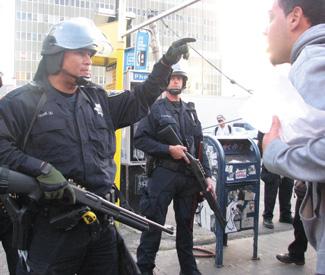
Sparked by overzealous police responses to the Occupy movement in neighboring Oakland and UC Berkeley and by the issue of local police agencies working with the FBI to spy on law-abiding citizens, community groups in Berkeley urged city officials to revise policies regarding surveillance, intelligence activities, and police mutual aide.  

Leading the charge was the Coalition for a Safe Berkeley and the ACLU of Northern California.  Both groups attended the Sept. 18th Berkeley City Council meeting where the council voted to modify the city’s policing procedures.

Berkeley police will no longer respond immediately and automatically to mutual aid requests from other police agencies. “The policy change that the council approved said that in a case in which there is not serious or violent crime or destruction of property, that our police will seriously evaluate whether or not to respond,” says Councilmember Jesse Arreguin.  “We won’t automatically respond in cases of civil disobedience or peaceful protest.”

Mutual aid agreements were suspended last year while the city adjusted its policies.

“The Berkeley Police Department has a strong working relationship with other police departments,” writes Coats via email. “We are able to review the need for services on a case by case basis and we look forward to continuing to work closely with other agencies.”

Other revisions include the end of surveillance and intelligence gathering of residents who participate in political activity or express First Amendment rights. Police must also have at least reasonable suspicion in order to submit a Suspicious Activity Report, which will then be reviewed by the City Manager for approval before being made available to other police agencies. 

The council postponed a decision on the issue of immigration jail detainers after the ACLU of Northern California expressed its concerns with the proposed policy. The changes come after a decade of police agencies nationwide upping their law enforcement efforts, particularly in border and coastal states like California where local police often work with federal immigration and customs officers.

“After 9/11, there were a lot of agencies reorganized under the Department of Homeland Security and they all started collaborating in ways they hadn’t before,” says Nadia Kayyali of the Bill of Rights Defense Committee, which consulted with the Coalition for a Safe Berkeley.  “Federal and local collaborations are extending across the country and I have yet to see strong evidence that what they’re doing is making us any safer.”

It was almost one year ago that Occupy Oakland made international headlines as clashes between police and protesters turned violent.  The Oct. 25 melee pit police officers from Oakland, Berkeley, and San Francisco against protesters occupying Frank Ogawa Plaza, resulting in serious injuries to protesters.  The mutual aid deployed from Berkeley left many residents livid after watching their police officers assist in using force against peaceful protesters.  

“If you’re involved in something that hurts the rights and security of protesters in a public place, it raises questions of complicity.  We don’t want our police to be used to halt civil liberties,” says George Lippman of the Berkeley Peace and Justice Commission, which was involved in pushing the reforms. “There should be more oversight given to these types of activities of mutual aid when there are First Amendment activities going on.”

Lippman sees increased law enforcement as a growing trend to militarize local communities nationwide, and he points to the armored tank that Berkeley police almost acquired earlier this year as an example. The City Council blocked that effort and it remains unclear why exactly BPD wanted such a bellicose piece of equipment.  

“Fear is always a great substitute for rational thought in American politics,” says Lippman. “It’s also the benefit of those who profit from warfare to have something to base their weapon sales on.”

San Francisco has also taken steps to limit law enforcement practices. In May, the city implemented legislation that will force police officers collaborating with the FBI to adhere to privacy rights as stated in local and state laws.  Although hailed as a step in the right direction, that legislation was watered down after an earlier version was vetoed by Mayor Ed Lee.

Feminist vigilante gangs to march on Oakland Friday

58

Oakland’s last feminist vigilante gangs march was a demonstration promoting offensive feminism in response to rape, assault, and murder of “women, queers, gender rebels and allies.” It was also a birthday party.

“The first march basically came about because it was my 30th birthday,” said Lauren, one of the organizers of that march and a second feminist vigilante gangs march, which will take place in Oakland on Friday.

“I had been talking a big game about feminist vigilante gangs and calling attention to the need for people to form affinities for a long time. When I was asked what I wanted for my 30th birthday I said, I want a feminist vigilante gangs march, as a joke. But people were into it.”

Last time, a group, equipped with and radical queer and feminist literature, banners, and glitter, marched from the “fake neighborhood” of uptown Oakland to downtown Oakland, Lauren said, ending with a dance party in “Oscar Grant Plaza,” Occupy Oakland’s longtime home base outside City Hall.

Along the way, organizers “stopped at some places to talk about things have had happened there,” said Lauren. “For instance, the place where Brandy Martell was killed.”

Brandy Martell was transgender woman who was shot April 29. Her murder remains unsolved. Martell’s is a “a high-profile case of transgender bashing. She died, and so we know about. But these types of things happen everyday on the streets in Oakland,” said Lauren.

The next feminist vigilante gangs march begins Friday at 7pm from 19th and Telegraph. It will also stop at the spot where Martell was killed, as well as other spots where queer bashing, rape and assault have taken place.

Lauren says the march is a few things. It’s a call-out “encouraging women, queers, gender outlaws in the Bay Area to start thinking offensively about the abuse that we’re on the receiving end of.”

It’s also “a way for us to practice discipline in the streets. Because we live in a culture that’s so abusive towards women, queers, gender variant people, its really hard for us to form affinities.”

The group plans for a tightly organized march. A security team and a league of bike scouts to protect the march have already begun training, and before the march begins a generalized security training is planned. Anyone who arrived alone will be given the chance to hook up with a marching buddy. Street medics and “emotional medics” from the Occupy Oakland safer spaces working group– “people who have some training to interact with people who are experiencing PTSD or who are experiencing emotions that are making it difficult for them to participate”– will be on hand.

“We have a bloc that is set up for people with limited mobility, that’s wheelchair users, cane users, people using walkers,” Lauren said.

Community self-defense

Organizers of the march hope that its spirit and practice of community building and self-defense can extend to the everyday lives of participants.

One way is by connecting demonstrators “with the resources to begin things like self-defense training, especially in a feminist and collective environment,” Lauren said. Groups like the Offensive Feminist Project, the Suigetsukan Dojo, and Girl Army.

“Something that we should be creating in marginalized communities is community self-defense. That’s something that the Black Panthers worked on. It’s not a new concept, in Oakland we have a lot of history with that,” said Lauren.

Community self-defense, of course, is supposed to be unnecessary; crime prevention and retribution is supposed to be relegated to the police and the criminal justice system. But Lauren said that these institutions are not working.

“I don’t believe that the criminal justice system is just, or serving anyone. And I think that’s a perspective shared by the people who are organizing the march, and probably by most of the people who will attend it,” she said. “I say this as someone who’s watched the police interrogate a rape victim and– interrogate is the correct word. There’s no justice in the criminal justice system for victims of rape and assault. So we want to talk about extra-legal methods of dealing with these issues.”

Extra-legal means of dealing with violence, she says, is “what feminist vigilante gangs is all about.”

After the march, organizers plan to continue this conversation at “a series of plenaries and salons in the East Bay” where participants will discuss questions like “What does feminist vigilantism look like?” Lauren said.

“As these conversations continue we will be spending a lot of time focusing on issues like race, and things like the history in the United States of falsely accusing men of color of assaulting white women so that they can be imprisoned or abused or killed,” Lauren said.

The group also has an open call for entries for a feminist vigilante gangs zine, for those who want to continue the discussion on paper. “People have been writing about bashing back. The Bash Back book Queer Ultraviolence just came out this year,” she noted.

Still, many people have not been exposed to the ideas and practices behind the feminist vigilante gangs march. On Friday, a lot of people will be– the march will coincide with Art Murmur, and downtown Oakland’s streets will already be crowded. A contingent from GLITUR, aka the Grand Legion of Incendiary and Tenacious Unicorn Revolutionaries, is coming down from Seattle. This march might get big.

But never fear, Lauren assured: “We should have enough glitter bandanas for everyone who comes.”

Endorsements 2012: State and national races

25

National races

PRESIDENT

BARACK OBAMA

You couldn’t drive down Valencia Street on the evening of Nov. 4, 2008. You couldn’t get through the intersection of 18th and Castro, either. All over the east side of the city, people celebrating the election of Barack Obama and the end of the Bush era launched improptu parties, dancing and singing in the streets, while the cops stood by, smiling. It was the only presidential election in modern history that create such an upwelling of joy on the American left — and while we were a bit more jaded and cautious about celebrating, it was hard not to feel a sense of hope.

That all started to change about a month after the inauguration, when word got out that the big insurance companies were invited to be at the table, discussing health-care reform — and the progressive consumer advocates were not. From that point on, it was clear that the “change” he promised wasn’t going to be a fundamental shift in how power works in Washington.

Obama didn’t even consider a single-payer option. He hasn’t shut down Guantanamo Bay. He hasn’t cut the Pentagon budget. He hasn’t pulled the US out of the unwinnable mess in Afghanistan. He’s been a huge disappointment on progressive tax and economic issues. It wasn’t until late this summer, when he realized he was facing a major enthusiasm gap, that he even agreed to endorse same-sex marriage.

But it’s easy to trash an incumbent president, particularly one who foolishly thought he could get bipartisan support for reforms and instead wound up with a hostile Republican Congress. The truth is, Obama has accomplished a fair amount, given the obstacles he faced. He got a health-care reform bill, weak and imperfect as it was, passed into law, something Democrats have tried and failed at since the era of FDR. The stimulus, weak and limited as it was, clearly prevented the recession from becoming another great depression. His two Supreme Court appointments have been excellent.

And the guy he’s running against is a disaster on the scale of G.W. Bush.

Mitt Romney can’t even tell the truth about himself. He’s proven to be such a creature of the far-right wing of the Republican Party that it’s an embarrassment. A moderate Republican former governor of Massachusetts could have made a credible run for the White House — but Romney has essentially disavowed everything decent that he did in his last elective office, has said one dumb thing after another, and would be on track to be one of the worse presidents in history.

We get it: Obama let us down. But there’s a real choice here, and it’s an easy one. We’ll happily give a shout out to Jill Stein, the candidate of the Green Party, who is talking the way the Democrats ought to be talking, about a Green New Deal that recognizes that the richest nation in the history of the world can and should be doing radically better on employment, health care, the environment, and economic justice. And since Obama’s going to win California by a sizable majority anyway, a protest vote for Stein probably won’t do any harm.

But the next four years will be a critical time for the nation, and Obama is at least pushing in the direction of reality, sanity and hope. We endorsed him with enthusiasm four year ago; we’re endorsing him with clear-eyed reality in 2012.

UNITED STATES SENATE

DIANNE FEINSTEIN

Ugh. Not a pleasant choice here. Elizabeth Emken is pretty much your standard right-wing-nut Republican out of Danville, a fan of reducing government, cutting regulations, and repealing Obamacare. Feinstein, who’s already served four terms, is a conservative Democrat who loves developers, big business, and the death penalty, is hawkish on defense, and has used her clout locally to push for all the wrong candidates and all the wrong things. She can’t even keep her word: After Willie Brown complained that London Breed was saying mean things about him, Feinstein pulled her endorsement of Breed for District 5 supervisor.

It’s astonishing that, in a year when the state Democratic Party is aligned behind Proposition 34, which would replace the death penalty with life without parole, Feinstein can’t find it in herself to back away from her decades-long support of capital punishment. She’s not much better on medical marijuana. And she famously complained when then-mayor Gavin Newsom pushed same-sex marriage to the forefront, saying America wasn’t ready to give LGBT couples the same rights as straight people.

But as chair of the Senate Intelligence Committee, Feinstein was pretty good about investigating CIA torture and continues to call for the closure of Guantanamo Bay. She’s always been rock solid on abortion rights and at least decent, if not strong, on environmental issues.

It’s important for the Democrats to retain the Senate, and Feinstein might as well be unopposed. She turns 80 next year, so it’s likely this will be her last term.

HOUSE OF REPRESENTATIVES, DISTRICT 8

NANCY PELOSI

The real question on the minds of everyone in local politics is what will happen if the Democrats don’t retake the House and Pelosi has to face two more years in the minority. Will she serve out her term? Will her Democratic colleagues decide they want new leadership? The inside scuttle is that Pelosi has no intention of stepping down, but a long list of local politicians is looking at the once-in-a-lifetime chance to run for a Congressional seat, and it’s going to happen relatively soon; Pelosi is 72.

We’ve never been happy with Rep. Pelosi, who used the money and clout of the old Burton machine to come out of nowhere to beat progressive gay supervisor Harry Britt for the seat in 1986. Her signature local achievement is the bill that created the first privatized national park in the nation’s history (the Presidio), which now is home to a giant office complex built by filmmaker George Lucas with the benefit of a $60 million tax break. She long ago stopped representing San Francisco, making her move toward Congressional leadership by moving firmly to the center.

But as speaker of the House, she was a strong ally for President Obama and helped move the health-care bill forward. It’s critical to the success of the Obama administration that the Democrats retake the house and Pelosi resumes the role of speaker.

HOUSE OF REPRESENTATIVES, DISTRICT 9

BARBARA LEE

Barbara Lee represents Berkeley and Oakland in a way Nancy Pelosi doesn’t represent San Francisco. She’s been a strong, sometimes lonely voice against the wars in Iraq and Afghanistan and a leader in the House Progressive Caucus. While Democrats up to and including the president talk about tax cuts for businesses, Lee has been pushing a fair minimum wage, higher taxes on the wealthy, and an end to subsidies for the oil industry. While Oakland Mayor Jean Quan was struggling with Occupy, and San Francisco Mayor Ed Lee was moving to evict the protesters, Barbara Lee was strongly voicing her support for the movement, standing with the activists, and talking about wealth inequality. We’re proud to endorse her for another term.

HOUSE OF REPRESENTATIVES, DISTRICT 12

JACKIE SPEIER

Speier’s an improvement on her predecessor, Tom Lantos, who was a hawk and terrible on Middle East policy. Speier’s a moderate, as you’d expect in this Peninsula seat, but she’s taken the lead on consumer privacy issues (as she did in the state Legislature) and will get re-elected easily. She’s an effective member of a Bay Area delegation that helps keep the House sane, so we’ll endorse her for another term.

State candidates

ASSEMBLY DISTRICT 13

TOM AMMIANO

Tom Ammiano’s the perfect person to represent San Francisco values in Sacramento. He helped sparked and define this city’s progressive movement back in the 1970s as a gay teacher marching alongside with Harvey Milk. In 1999, his unprecedented write-in mayoral campaign woke progressives up from some bad years and ushered in a decade with a progressive majority on the Board of Supervisors that approved landmark legislation such as the universal healthcare program Ammiano created. In the Assembly, he worked to create a regulatory system for medical marijuana and chairs the powerful Public Safety Committee, where he has stopped the flow of mindless tough-on-crime measures that have overflowed our prisons and overburdened our budgets. This is Ammiano’s final term in the Legislature, but we hope it’s not the end of his role in local politics.

STATE ASSEMBLY, DISTRICT 19

PHIL TING

Phil Ting could be assessor of San Francisco, with a nice salary, for the rest of his life if that’s what he wanted to do. He’s done a good job in an office typically populated with make-no-waves political hacks — he went after the Catholic Church when that large institution tried to avoid paying taxes on property transfers. He’s been outspoken on foreclosures and commissioned, on his own initiative, a study showing that a large percentage of local foreclosures involved at least some degree of fraud or improper paperwork.

But Ting is prepared to take a big cut in pay and accept a term-limited future for the challenge of moving into a higher-profile political position. And he’s the right person to represent this westside district.

Ting’s not a radical leftist, but he is willing to talk about tax reform, particularly about the inequities of Prop. 13. He’s carrying the message to homeowners that they’re shouldering a larger part of the burden while commercial properties pay less. He wants to change some of the loopholes in how Prop. 13 is interpreted to help local government collect more money.

It would be nice to have a progressive-minded tax expert in the Legislature, and we’re glad Ting is the front-runner. He’s facing a serious, well-funded onslaught from Michael Breyer, the son of Supreme Court Justice Breyer, who has no political experience or credentials for office and is running a right-wing campaign emphasizing “old-style San Francisco values.”

Not pretty. Vote for Ting.

SENATE DISTRICT 11

MARK LENO

Mark Leno wasn’t always in the Guardian’s camp, and we don’t always agree with his election season endorsements, but he’s been a rock-solid representative in Sacramento and he has earned our respect and our endorsement.

It isn’t just how he votes, which we consistently agree with. Leno has been willing to take on the tough fights, the ones that need to be fought, and shown the tenacity to come out on top in the Legislature, even if he’s ahead of his time. Leno twice got the Legislature to legalize same-sex marriage, he has repeatedly gotten that body to legalize industrial hemp production, and he’s twice passed legislation that would give San Francisco voters the right to set a local vehicle license fees higher than the state’s and use that money for local programs (which the governor finally signed). He’s also been laying an important foundation for creating a single-payer healthcare system and he played an important role in the CleanPowerSF program that San Francisco will implement next year. Leno will easily be re-elected to another term in the Senate and we look forward to his next move (Leno for mayor, 2015?)


BART BOARD DISTRICT 9


TOM RADULOVICH

San Francisco has been well represented on the BART Board by Radulovich, a smart and forward-thinking urbanist who understands the important role transit plays in the Bay Area. Radulovich has played leadership roles in developing a plan that aims to double the percentage of cyclists using the system, improving the accessibility of many stations to those with limited mobility, pushing through an admittedly imperfect civilian oversight agency for the BART Police, hiring a new head administrator who is more responsive to community concerns, and maintaining the efficiency of an aging system with the highest ridership levels in its history. With a day job serving as executive director of the nonprofit Livable City, Radulovich helped create Sunday Streets and other initiatives that improve our public spaces and make San Francisco a more inviting place to be. And by continuing to provide a guiding vision for a BART system that continues to improve its connections to every corner of the Bay Area, his vision of urbanism is helping to permeate communities throughout the region

BART BOARD, DISTRICT 7

ZACHARY MALLETT

This sprawling district includes part of southeast San Francisco and extends all the way up the I-80 corridor to the Carquinez Bridge. The incumbent, San Franciscan Lynette Sweet, has been a major disappointment. She’s inaccessible, offers few new ideas, and was slow to recognize (much less deal with) the trigger-happy BART Police who until recently had no civilian oversight. Time for a change.

Three candidates are challenging Sweet, all of them from the East Bay (which makes a certain amount of sense — only 17 percent of the district’s population is in San Francisco). Our choice is Zachary Mallett, whose training in urban planning and understanding of the transit system makes up for his lack of political experience.

Mallett’s a graduate of Stanford and UC Berkelely (masters in urban planning with a transportation emphasis) who has taken the time to study what’s working and what isn’t working at BART. Some of his ideas sound a bit off at first — he wants, for example, to raise the cost of subsidized BART rides offered to Muni pass holders — but when you look a the numbers, and who is subsidizing who, it actually makes some sense. He talks intelligently about the roles that the various regional transit systems play and while he’s a bit more moderate than us, particularly on fiscal issues, he’s the best alternative to Sweet.

Bad and good news from the Guv

14

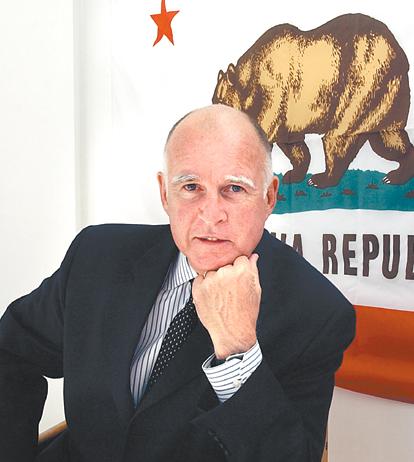
First, the bad news: Jerry Brown has vetoed a couple of important bills by Assemblymember Tom Ammiano, showing that he’s still a strange and unpredictable guy. He rejected a measure that would have provided some basic labor protections to domestic workers and another that would have opened up state prisons to a modicum of media access. His message on domestic workers was confusing (gee, maybe it would cost more to make sure people get meal breaks); on the media access, it was just bizarre:

“Giving criminals celebrity status through repeated appearances on television will glorify their crimes and hurt victims and their families,” Brown wrote in his veto message for Assembly Bill 1270.

What? The notion that the press might be able to interview prisoners about conditions behind bars in an agency that consumes more than $10 billion a year in state funds will “glorify crimes?” Sorry, but Jerry is out of his mind.

From Ammiano’s press release:

“Press access isn’t just to sell newspapers. It’s a way for the public to know that the prisons it pays for are well-run,” Ammiano said. “The CDCR’s unwillingness to be transparent is part of what has led to court orders on prison health care and overcrowding. We should know when the California prisons aren’t being well run before it goes to court. I invite the Governor to visit the SHU [special housing unit/solitary confinement] to see for himself why media access is so important.”

Same goes for the TRUST Act, which had the support of a lot of local police chiefs, the mayor of Los Angeles and Assembly Minority Leader Nancy Pelosi.

On the other hand, Brown did sign a bill by Sen. Mark Leno that could turn out to be the best budget news San Francisco’s had in years. SB 1492 would allow the Board of Supervisors and the voters to reinstate, just in this city, the vehicle license fee that former Governor Arnold Schwarzenegger cut, to such disastrous effect, when he first took office. If the supervisors put it on the ballot and the voters approve, a two percent hike in the car tax could raise $70 million a year for the city — more than triple the amount that the mayor has agreed to raise in his weak gross receipts tax proposal.

That law goes on the books Jan. 1 — and the supes should immediately take up the challenge and approve the VLF hike for the next even-year ballot, November 2014.

Then the Guv vetoed Leno bills protecting cell phone users from warrantless searches and alloing the state to recognize more than two people as parents of a child.

Sen. Leland Yee’s bill allowing juveniles who were sentenced to life without parole to get a second chance made it passed Brown’s desk.

So what do we make of the governor? About the usual — he’s random.

The Aoki files

1

Editors note: Steve Woo and Alex T. Tom argued in a Guardian oped last week that a new book unfairly paints Richard Aoki as an FBI snitch. The book’s author asked for space to respond.

OPINION I write to correct serious misstatements about my new book — and particularly about my revelation that the late radical leader Richard Aoki was an FBI informant — in the editorial by Steve Woo and Alex T. Tom.

My book, Subversives: The FBI’s War on Student Radicals, and Reagan’s Rise to Power (Farrar, Straus and Giroux), examines the FBI’s covert activities concerning the University of California during the Cold War. It focuses on the FBI’s secret involvement with three iconic figures: Clark Kerr, the UC president; Mario Savio, leader of the Free Speech Movement; and Ronald Reagan, California Governor.

Subversives is based on more than 300,000 pages of FBI records released to me as a result of five lawsuits I brought under the Freedom of Information Act. The FBI frequently claimed redacted information had to be withheld by law, but as a result of my challenges, seven federal judges ordered the FBI to release more information. One court order specifically recognized my expertise, stating, “Plaintiff has persuasively demonstrated in his affidavit that his research requires meticulous examination of records that may not on their face indicate much to an untrained observer.”

In Subversives I also profile many other figures, including Aoki, a revered activist in the San Francisco Bay Area who I revealed was a paid FBI informant at the time he gave the Black Panthers some of their first guns and firearms training in late 1966 and early 1967. I also disclosed this in an article and video produced with the Center for Investigative Reporting (CIR), which were published contemporaneously with my book last month.

Woo and Tom are incorrect when they claim my findings about Aoki are “baseless and false.” Although reporting on intelligence activities is notoriously difficult and often relies on off-the-record sources, I relied only upon on-the-record sources such as:

— A detailed interview with retired FBI agent Burney Threadgill Jr., who was Aoki’s initial handler;

— A 2007 interview with Aoki in which he denied being an informant but when pressed added, “People change. It is complex. Layer upon layer.”

— FBI records concerning Aoki released in response to my Freedom of Information Act request, including a November 16, 1967 report on the Black Panthers that identified him as informant T-2.

— Consultation with former FBI agent M. Wesley Swearingen, who had helped vacate the murder conviction of Black Panther leader Geronimo Pratt on the ground that the FBI and Los Angeles police failed to disclose that a key witness against him was an FBI informant.

My conclusion that Aoki was an informant was thus based on the totality of my research — not merely on a “scrap of evidence.” The detailed notes to my book make this clear. As I also have noted, available evidence does not show whether the FBI was involved in Aoki’s arming the Panthers, or that bureau officials even knew about it.

My initial disclosures about Aoki have been confirmed by the FBI’s release of 221 pages of Aoki’s FBI informant file. I reported this in a September 7 article, posted with his entire informant file as released to me at the CIR website.

Although I strongly disagree that my revelations about Aoki “damage the movement” and reinforce stereotypes of Asian Americans, they surely shed new light on him. For while he may well have been a dedicated activist, substantial evidence shows he also was an FBI informant. Although his full role and motives are not yet known, Richard Aoki was undoubtedly more complex than his fellow activists knew.

Seth Rosenfeld is a San Francisco writer.


The case for reinstating Mirkarimi

113

EDITORIAL We know for a fact that on New Year’s Eve, 2011, Ross Mirkarimi, the elected but unsworn sheriff of San Francisco, had a physical altercation with his wife that left her with a bruised arm. We know she later complained about that bruise on a video lasting less than a minute. Beyond that, nobody except Mirkarimi and Eliana Lopez knows exactly what happened; there were no witnesses except the couple’s three-year-old son, no video taken during the fight, no audio recordings — nothing.

We know that Mirkarimi agreed to plead guilty to misdemeanor false imprisonment — although we also know there was never any evidence that he actually imprisoned anyone.

That’s all we really know about the incident that has set off an expensive, drawn-out, political and legal battle that could change the city’s politics for years to come. If the whole thing seems a little overblown, that’s because it is.

There is nothing in the record that justifies Mayor Ed Lee’s move to suspend Mirkarimi, and nothing that would justify the supervisors voting to remove him from office. In fact, a removal vote would set a dangerous precedent for future mayors in a city that already gives its chief executive far too much power.

Let us examine the three main reasons why the board needs to vote to restore the elected sheriff.

1. If you believe Eliana Lopez, there’s no case.

The only person other than Mirkarimi who can honestly and accurately testify about the events of New Year’s eve is Lopez — and she has been clear, consistent, and convincing in her account.

Lopez acknowledges that she and her husband have had marital issues, that Mirkarimi wasn’t as supportive or her and their young son as he should have been, that he was away from home and working when she should have been sharing domestic duties. She was considering divorce — but was worried that Mirkarimi might gain custody of their boy.

She testified under oath before the Ethics Commission that Mirkarimi was never someone who “beats his wife” (to use Lee’s utterly inappropriate terminology). He had no history of domestic violence with her.

What he did was grab her arm during an argument, leaving a bruise. Inexcusable, but hardly a sign of serious assault. In fact, Lopez testified that she bruises so easily that just playing around with three-year-old Theo can leave marks on her.

Lopez testified that she made the video to use as a tool — a bargaining chip, so to speak — if Mirkarimi ever sought to gain custody of their son. She said she believed that her neighbor, Ivory Madison, who made the video, was a lawyer and that the video would be protected by attorney-client confidentiality. She said she never wanted to go to the police and never felt physically threatened by her husband.

The mayor charged Mirkarimi with attempting to dissuade witnesses and interfere with a police investigation, but those charges were based almost entirely on the testimony of Madison, whose rambling 22-page statement was so full of hearsay that the Ethics Commission tossed almost all of it. There was absolutely no evidence of witness tampering, and those claims were dismissed.

In fact, the only reason the commission recommended removal is the fact that Mirkarimi bruised his wife and pled to a misdemeanor — one that everyone knows he didn’t really commit. Remember: It’s legal, and common, in misdemeanor cases to plead to something you never did to avoid facing trial on more serious charges.

There’s no principled way to accept as credible the testimony of Lopez and still vote to remove the sheriff. If she’s telling the truth — and we believe her — the case should end right there.

2. Mirkarimi was chosen by the voters, and the voters can freely remove him.

Ross Mirkarimi was elected in November, 2011, with a clear majority in a contested race. The state Constitution provides an excellent remedy for replacing an elected official who has lost the confidence of the voting public; it’s called the recall. With a fraction of the effort that’s been spent on this case, people who feel Mirkarimi should no longer serve as sheriff could have collected signatures and forced an election.

The City Charter gives the mayor extraordinary authority — we would say too much authority — to unilaterally suspend an elected official and seek removal. That’s a power that should be wielded only in the most extreme cases, with great deference to the will of the voters.

Lee did no investigation before filing official misconduct charges. He based those charges on unsubstantiated claims, most of which were proven false. There’s a dangerous precedent here: If Mayor Ed Lee can suspend without pay Sheriff Ross Mirkarimi on such limited evidence, the ability of future mayors to misuse this power could be alarming. And remember: There is nothing in the Charter that allows anyone to suspend or seek removal of the mayor.

3. This case mangles “official misconduct.”

There’s another dangerous element to this case, and it’s not just a legal technicality. The New Year’s Eve incident occurred before Mirkarimi took the oath of office; on that day, he wasn’t the sheriff of San Francisco. He was a supervisor.

It’s hard to claim he was guilty of “official misconduct” on a day when he had no official duties. A fascinating, but unsigned analysis by somebody who clearly has a strong legal background is posted on the web (rjemirkarimi.blogspot.com). It notes:

“If the Supervisors approve what the Ethics Commission did on August 16, they will be handing a powerful new political weapon to all mayors, present and future. Good mayors may never misuse it, but other mayors might. No longer will such a mayor be limited to examining an opponent’s conduct while in office. He will have carte blanche and a strong motive to look farther back in time for personal misconduct that occurred before his opponent took office, and to use what he finds to suspend his opponent without pay and remove him from office — all while claiming (as undoubtedly he will) to be engaged in a noble pursuit of truth and justice.”

Let’s be serious: There have been San Francisco mayors with a long record of vindictive politics, or seeking any method possible to punish their enemies. There may well be again. Do we really want to have this case — this weak case driven more by politics than reason and evidence — set the precedent for the grave step of overriding the voters and removing an elected official?

Any of these three reasons ought to be grounds to vote against the mayor’s charges. Together, they make a sound enough case that it’s hard to imagine how the supervisors, sitting as a fair and impartial jury, could come to any conclusion other than returning Mirkarimi to office. We recognize that there are political implications, that Mirkarimi’s foes will target anyone who votes to support him. And just as it’s hard for some politicians to appear “soft on crime,” it’s nearly impossible to survive in San Francisco if you’re considered “soft on domestic violence.” But anyone who doesn’t want tough choices shouldn’t run for public office. It will take courage to do the right thing here — and in the end, that’s what should matter.

Critical Mass at 20

20

steve@sfbg.com

I was in Zeitgeist on a Friday summer evening, at a planning meeting for the 20th anniversary of Critical Mass, when I first heard about the idea of kicking off the celebration week with a renegade bicycle ride over the Bay Bridge.

The people who first shook up the city’s commute two decades ago were going to take the idea of seizing space from cars a step further — and fulfill a longtime cyclist fantasy. They were going to take the bridge.

Chris Carlsson, the author/activist who helped found Critical Mass and has evangelized the concept around the world, reminded me of this super-secret ride last Wednesday when I finally got around to starting my reporting for this story. I was surprised that I’d forgotten about it — but yes, I told him, I still wanted to be there.

>>JOIN IN ON THE FESTIVITIES WITH OUR GUIDE TO THIS WEEK’S CRITICAL MASS EVENTS

“This will galvanize our sense of the week,” Carlsson told me, explaining that Critical Mass has always been about “opening up a space for a conversation,” whether it’s about how urban space is used or who gets to make that decision.

“There is a real necessity to have a place for people to start thinking creatively. That’s Critical Mass’s enduring contribution, 20 years ago and today.”

What started in September 1992 with 48 cyclists pedaling together through San Francisco has become an enduring worldwide phenomenon. On the last Friday of every month, without leaders or direction, this group bike ride simply meanders through the streets, riders smiling and waving at motorists often perplexed at the temporary alteration of traffic laws by a crowd too big to stop or ignore. While views of Critical Mass may differ, the conversation about urban cycling that it started has had an undeniable impact on how people see cities and their power to shape them, placing it high on the list of San Francisco’s proudest cultural exports.

Last Friday evening — a week before thousands of people are expected to show up for the 20th anniversary ride Sept. 28 — I rode over to a meeting in the back of the art gallery at 518 Valencia, the welcome center for the week. The first international arrivals were there: four Europeans who flew to Mexico City, where most of them built tall bikes to cycle up to San Francisco for the anniversary ride, arriving last week after a four-month trek.

They were veterans of Critical Mass events all over Europe, which borrowed the concept from the Bay Area, and they were happy to be going back to its core.

Andrea Maccarone is a 31-year-old Italian who lives in Paris when he isn’t bike touring, which he does quite a bit, last year riding to consecutive Critical Mass events in Paris, Toulouse, Rome, and Madrid. “It began here and spread everywhere,” he said. “A lot of my lifestyle — I’ve been a bike messenger and worked in bike kitchens — is based on what started here.”

His French girlfriend, Marie Huijbregts, described a cultural happening that began when she was 8 years old. “It’s a political movement of cyclists to release the streets from the cars,” the 28-year-old told me. “It’s environmental, do-it-yourself, and a great way to meet people.”

She said she wanted to be here “because it’s supposed to be the biggest one and all the world was invited. It’s symbolic and I wanted to be a part of it.”

Carlsson has watched the event he helped popularize spread to hundreds of cities around the world, from the Biciletada in Sao Paulo to the Cyklojizda in Prague. He loves to see young people who have been energized by Critical Mass and the larger renegade cyclist movement that grew up around it — from DIY bicycle kitchens and art bikes to creative political actions that seize public spaces — “who dream of San Francisco with stars in their eyes.”

But he often feels like we’re the “hole in the donut” of this international urban cycling movement, unable to retain the same intention and energy that it had when Carlsson, Jim Swanson, and a group of their bike messenger and anarchist cyclist friends conceived of the idea (originally called Commute Clot) in the Market Street office of a zine called Processed World.

Carlsson still hears the stories from people whose lives were changed by Critical Mass. But it was only in the last year or so, as the 20th anniversary approached, that he started regularly riding Critical Mass again, with a new generation of participants often drawn by confrontational yahooism, riding well-trod routes and rejecting efforts to suggest destinations as counter to its leaderless ethos.

“It’s extremely predictable now and I’m sick of it,” Carlsson admitted to me, a less diplomatic version of what he wrote in the introduction to the newly released book of essays he edited, Shift Happens: Critical Mass at 20, writing that the “euphoria of cooperative, joyful reinhabitation of urban space is hard to sustain after a awhile.”

Yet that powerful central idea is still there, and it remains as relevant as ever in cities dominated by fast-moving cars. People working together to create “an organized coincidence” can still change the rules of the road, opening up all kinds of new possibilities.

“It is an unpredictable space and you never know what’s going to happen,” Carlsson told me. That’s true of the history of Critical Mass around the world — with its storied clashes with cops and motorists, and its glorious convergences and joyful infectiousness — and it was true of our quest to take the Bay Bridge the next day.


TO THE BRIDGE

We weren’t just being daredevils. The idea of fighting for a freeway lane against six lanes of fast-moving cars, drivers distracted by that epic view of San Francisco, was conceived by Carlsson as a political statement protesting current plans to rebuild the Bay Bridge with a bike lane going only from Oakland to Treasure Island, leaving out that final 2.5-mile stretch into The City.

And for years, the Bay Bridge had been out there as a symbol of where bikes couldn’t go — and in dozens of demonstrations, riders have sought to make it up those ramps, particularly during the Bikes Not Bombs rides protesting the US invasion of Iraq, only to be blocked by police.

Carlsson handed out flyers headlined “A Bay Bridge for Everyone,” harking back to the early pre-Internet “xerocracy” that used flyers to promote Critical Mass ideas or suggest routes. A local historian, Carlsson included photos and descriptions of the Bay Bridge with three lanes of cars in each direction on the top deck, back when the lower deck had trains.

Why couldn’t we have one lane back for bikes? Well, it’s actually under consideration — sort of.

The idea of creating a bicycle/pedestrian lane on the western span is the subject of an ongoing $1.6 million study by Caltrans and the Bay Area Toll Authority, which are looking at attaching paths to the sides of the bridge. That would likely require replacing the decks on the bridge with a lighter new surface to compensate for the added weight, all at a cost of up to $1 billion.

Carlsson thinks that’s ridiculous overkill, and probably intended to scuttle the idea (or else put the blame on bicyclists for the cost of resurfacing the bridge). “For five grand, in three hours it could be done,” he said, arguing that all cyclists need is a lane, a protective barrier, perhaps a lowering of the speed limit — oh, and the political will to recognize that we have as much right to this roadway as motorists.

“It is a sad commentary on the nature of our government that the only way the state transit agency will take bicycling seriously as everyday transportation is when pressured by demonstrations and organized public demands,” Carlsson wrote on the flyer. “Why don’t they take the lead in opening space for cycling instead of doing everything to obstruct, deny, and prevent cycling?”

Even getting to Treasure Island for a bike ride isn’t easy for the car-free. Muni only allows two bikes at a time on its 108 bus, so Carlsson borrowed a van to shuttle almost 20 of us out there in multiple trips. Among the crew were the group that rode up from Mexico City, a Peruvian, and many regular local Critical Mass riders, including Bike Cavalry founder Paul Jordan and LisaRuth Elliott, a 10-year Critical Mass rider who helped edit Shift Happens and coordinate volunteers for the anniversary week, along with a couple of its very early adherents: Hugh D’Andrade and Glenn Bachmann.

“Nobody knew what we were doing,” Bachmann said of that first ride. “We didn’t know what was going to happen. But displacing cars left us this intense euphoria.

Elliott said she was drawn to Critical Mass shortly after she got into urban cycling, attracted by the sense of community that had developed around her transportation choice. She was later inspired to visit Paris and Marseille and other cities that adopted Critical Mass rides.

“They have taken charge and are leading their movements to better bicyclable cities. It’s an adaptable idea,” she told me as we prepared to load our bikes on the van bound for Treasure Island.

Once we were out there, we gathered for a picnic on the beach in Cooper Cove, where we got some sobering news from David Wedding Dress, who talked us through the ride and was going to be trailing our crew in his Mercedes as a safety measure.

“Prepare to be in jail until Monday morning,” he told us. There were also the high winds and dangerous gaps to contend with, offering a bleak prognosis.

A veteran radical activist and bicyclist, Dress has ridden the bridge before and been arrested most times, and he didn’t share Carlsson’s view that we were most likely to get away with it. When Carlsson arrived, he tried to shore up our spirits, saying we’d probably be okay if we maintained the element of surprise.

“We have a right to do this and make that point,” Carlsson said.

Elliott, who was already a wobbler going in, decided not to ride, but 16 of us decided to do it anyway, feeling nervous but excited. When a CHP patrol pulled over a car near our spot and it turned into an hour-long arrest and towing ordeal, which we were forced to wait out, we had plenty of time to think about what we were doing.

As D’Andrade told me as we waited to ride up to the bridge entrance, “What feels to me like the early days of Critical Mass is how scary this is.”


THE EARLY DAYS

In the beginning, the Critical Mass activists say their battle for space was a safety issue infused with a political message, delivered with a smile derived from the joyous new discovery that riding with friends made it much easier. San Francisco streets were designed for automobiles, and to a lesser extent public transit, with cycling relegated to the bike messengers and a few renegades seen by most as simply refusing to grow up.

Even the nascent San Francisco Bicycle Coalition of that era — which grew in numbers and power on a similar trajectory as Critical Mass, despite its policy of maintaining a defensible distance from that outlaw event — was initially dominated by the philosophy that urban cyclists should ride quickly with car traffic and didn’t need separate lanes.

“That’s what I like to remind people is how scary bicycling was in San Francisco in the early ’90s,” D’Andrade said.

I first encountered Critical Mass in 2001 when I was the news editor for the Sacramento News & Review, and Berkeley resident Jason Meggs brought the movement into automobile-centric Sacramento. My reporters and I covered those early rides, which were met with a harsh crackdown by police, who often cited every minor traffic violation.

But Meggs was committed to the concept, as he wrote in his Shift Happens! essay entitled, “The Johnny Appleseed of Critical Mass,” a role he has played over the last 19 years. “Critical Mass made me a video activist and filmmaker; it sent me to jail and then to law school, and again to graduate school for healthy cities. It provided us the space to build a vibrant bicycle culture, and to feel free and alive in cities that otherwise felt hostile, caustic, and alien,” he wrote.

Meggs calculates that he’s been arrested more than 20 times and received more than 100 traffic tickets during Critical Mass events, beginning with the Berkeley Critical Mass that he started in March of 1993, in part to protest plans to widen I-80.

“Those early rides were legendary — moment to moment ecstatic joy and street theater,” he remembered. “The combination of bike activists and freeway fighters with anarcho-environmentalists on wheels was a combination that couldn’t be beat. Like a newscaster once said of Critical Mass, back then we were drunk with power.”

Yet in almost city where it’s sprouted, Critical Mass has had to battle through crackdowns by police, which are often met with greater determination by the cycling community. San Francisco fought through a showdown with Mayor Willie Brown in 1997, when his threats to shut Critical Mass down turned out thousands of cyclists for the next ride.

In 2007, the San Francisco Chronicle sensationalized a conflict between a motorist and Critical Mass, beginning a media campaign that led Mayor Gavin Newsom to order a heavy police presence on subsequent rides — a show of force, but one without any apparent plan or directive — again increasing number of cyclists.

Each time, San Francisco city officials were forced to accept the inevitability of Critical Mass, opting to avoid the route of the harsh, sustained, and costly crackdowns employed in New York City, whose police and city officials essentially went to war with Critical Mass in 2004 and have all-but destroyed it. Portland has also had a tumultuous relationship with its Critical Mass, with police there essentially shutting it down.

Yet Carlsson noted in his Shift Happens essay that the bicycle activism that formed along with those rides still prevailed: “Both cities — not coincidentally I think — have implemented extensive and intensive street-level redesigns to accommodate the enormous increase in daily cycling that followed the rapid growth and ultimate repression of their Critical Mass rides.”

San Francisco has seen an even greater explosion in the number of cyclists on the roadways, so many that spontaneous “mini-Masses” of cyclists form up during the daily commutes on Market Street and elsewhere. But despite the near-universal City Hall support for cycling here, and the SFBC’s status as one of the city’s largest grassroots political advocacy organizations, Carlsson said San Francisco’s cyclists still lack the infrastructure and policies needed to safely get around the city.

That’s one reason why the challenge of Critical Mass is still relevant, he said, and one reason why we were determined to ride our bikes into San Francisco on the Bay Bridge.


ANOTHER DAY

The cops left a little before 6pm, so we massed up and headed for the Bay Bridge, pedaling single-file up a long hill. Soon, the long western span of the bridge came into view, stretching to the downtown destination that we all hoped to reach without incident or arrest, as we passed a sign reading “Pedestrians and Bicycles Prohibited.”

As we crested the hill and dropped down toward the freeway entrance, our pathway seemed clear, with the only real variable being coordinating with Dress in the Mercedes trail car, but Carlsson was on the phone with him and we all assumed that we were about to ride our bikes onto the Bay Bridge.

We were in a fairly tight pack, Maccarone smiling atop the tall bike that had traveled so far to this point, as we rounded the swooping right turn to the point where even cars make a dangerously quick entrance onto the bridge from a complete stop, merging into loud and dense traffic moving at freeway speeds.

We stopped, looked back for Dress, and he wasn’t there. A minute crept by, then another, as cars drove cautiously past us to get onto the freeway, their drivers giving us the same quizzical, confused looks that we’d seen on Critical Mass so many times. Another minute passed, then another, as Carlsson lit one of the road flares that we planned to use as a secondary safety measure to the Mercedes.

Then, a CHP patrol car rounded the bend, the officer sternly telling us over his PA system, “Don’t even think you’re getting on this bridge with those bikes.”

So we turned around and began to head back when Dress finally arrived in his Mercedes, presenting a moment of truth. Did we proceed anyway, even though we had been warned and knew the officer had probably radioed in our presence, taking away the element of surprise and increasing our chances of arrest?

There was dissension in ranks and a clear division among those urging opposite courses of action, but Carlsson and others continued to ride away after talking the Dress, who proceeded onto the freeway. Later, Carlsson said he was still game to go at that moment, but tried to be responsive to the collective: “I was not comfortable imposing going on the bridge on everyone.”

D’Andrade advocated for going anyway, but most felt it was too risky at that point, siding with Carlsson’s argument that is wasn’t about getting arrested: “I like to do something and get away.”

And so it was decided that we would choose a strategic retreat, some pledging to take the bridge some other day, hopefully with greater numbers. Besides, we all had a big week ahead of us, starting the next day with the first official event of Critical Mass’s anniversary week: the Art Bike/Freak Bike Ride and BBQ.

We gathered the next afternoon on the waterfront under sunny blue skies, our aborted bike crew increased in size 10-fold, joined by underground DIY bike crews from San Francisco’s own Cyclecide to the Black Label crews from Minneapolis, Oakland, and Los Angeles, infusing the ride with a countercultural edge.

Urban bike culture is now vast and varied — from the eco-warriors and urban thinkers to wage slaves and renegade tinkerers — and they’ve all found a regular home in Critical Mass. “Twenty years on, people are kinda nostalgic about it, even if they don’t ride in it or think it’s a good idea,” an activist name rRez told me during that beautiful Sunday ride, the one we were able to take because we weren’t in jail.

Carlsson told me on the ride that he was at peace with our failed mission of the day before, a sign that being radical isn’t the same thing as being reckless. “That was a good strategic retreat moment. It’s very adult,” he said. “It was a good experience for all of us, and nothing bad happened and nobody is in jail.”

In a way, that’s the essence of Critical Mass. It isn’t pure anarchy, and it’s not about fighting with the cops or the motorists, something Carlsson sees as straying from its original intent. It’s a joyful gathering, an exercise in the power of people who are willing to challenge the status quo and take well-considered risks to create a society of their choosing.

“In a modern capitalist society, the roads are the lifeblood,” Carlsson said, “and if you block them, you’re a threat.”


CELEBRATE 20 YEARS OF CRITICAL MASS


Wednesday 26

East Bay Ride, meet at West Oakland BART station, 11:45am. Ride along the east shore of the bay to the Rosie the Riveter monument in Richmond.

NOIZ Ride, McKinley statue on the Panhandle at Baker Street, noon. Bring food, drink, and layers for a several hour, non-strenuous ride featuring three live bands.

Shift Happens book release party and discussion, Main SF Library, Latino-Hispanic Room, 100 Larkin St, 5:45 p.m. Discuss Critical Mass and this new book with its writers.

Book release concert, Great American Music Hall, 859 O’Farrell, SF, $15, 8pm. Featuring Seaweed Sway, Aaron Glass and Friends, and Kelly McFarling


Thursday 27

Mosquito Abatement Ride, Meeting place TBA near 16th & Valencia, SF, 11am. One-hour rides with a cycling city contractor.

NYC Critical Mass discussion and video, 518 Valencia, SF, 2pm. Hosted by Times Up New York City.

Bike Polo, Jose Coronado Playground, 21st and Shotwell, SF, 7-9pm. Play with locals and visitors, share a beer.

Bikes, Bands, and Brew: CM’s 20th Bday party, CELLspace, 2050 Bryant, 7pm, $10-20. Bike cultural offerings and music by Grass Widow, Apogee Sound Club, The Rabbles, and Future Twin.


Friday 28

20th Anniversary Critical Mass Ride, Justin “Pee Wee” Herman Plaza, Market and Embarcadero, SF, 6pm

Vintage Bicycle Film Festival, Oddball Films, 275 Capp, SF, $10. Saturday 29 International Critical Mass Symposium, California Institute of Integral Studies, 1453 Mission, Rooms 303/304, 5-8pm. Event will include an open mic and CM20 Anniversary Week photo contest at 7pm Sunday 30 Farewell Bike Ride and Party, 1pm departure from 518 Valencia, 2pm at Ocean Beach. Bring food and drink to share with your new friends and listen to bands on Rock the Bike’s pedal-powered stage. For more events and details, visit www.sfcriticalmass.org

Mission residents connect at community meeting

7

Police hosted a Mission community meeting yesterday in response to the Sept. 16 death of Jesus Solis, 20, who was shot at Treat Ave and 26th St. But before the meeting could take place on its scheduled date, another shooting took place; police officers shot Oscar Barceñas, 22, Sept. 20. Barceñas has survived his injuries.

The second shooting sparked two nights of late-night demonstrations during which protesters broke the windows of banks and a local business and painted “killers” on the Mission police station.

At last night’s meeting, Police Chief Greg Suhr, district Captain Robert Moser, and district Sup. David Campos spoke to a group of more than 100, then listened as the group asked questions, commented on their experiences and made suggestions. Ricardo Garcia-Acosta, regional director of the Community Response Network, took a seat next to the city officials about halfway through the meeting to address the community as well.
 
Suhr said that Barceñas may have been planning to act in revenge for the death of Solis.

Many at the meeting spoke of their mourning process for Solis, known as Chuy. He had been working, employed with help from the office of Sup. David Campos, before he was killed last week.

“This individual was trying go change his life. He was going to work, we was trying to turn his life around,” Campos said during the meeting.

Long-time Mission resident Roberto Hernandez said that he has been to 50 meetings after deaths of people in the community.

“I’ve buried too many kids in this barrio,” said Hernandez.

How to help?

Some residents at the meeting called for increased police presence, and one requested mounted police at Garfield Park. Others, such as Yaron Milgram, owner of two upscale restaurants in the 24th street area, expressed a desire to be more involved in the community.

“I know that there’s been a lot of change, and I know I’m considered part of that change,” said Milgram.

Many at the meeting had suggestions of how other residents could help.

Some advocated getting to know neighbors.

“For some of you hear who are quick to call the cops, when’s the last time you went outside and said how, how are you guys doing? What are your names?” said Garcia-Acosta.

“It really hurts when you hear people ask for these youth to be pushed out of the neighbrohood,” said Susana Rojas, director of the Mission Clubhouse. “Never forget they’re somebody’s son, they’re somebody’s brother, they might be somebody’s dad.”

She said that, if residents didn’t want to talk to the kids themselves, “talk to the people that are working with them” to learn more about them. She recommended donating to local community centers like the Mission Boys and Girls Club and the Good Samaritan Family Resource Center, where the meeting was held.

“A lot of the people I work with, they’re angry,” said Jae Maldonado, Community School Coordinator at Buena Vista/ Horace Mann. “The community is changing at a pace they don’t have any control over.”

Maldonado suggested that local business owners play an active role in getting resources and jobs to youth, offering Mission Pie as an example of a company that employs local youth and helps prepare employees for careers in catering or baking.

One resident, Anabelle Bolaños, decided to help set up a police and community meeting in Spanish, which she hopes can take place monthly. According to staff at the Mission Police Department, the first such meeting is tentatively scheduled to take place at some point in November. Tonight, police will host their regular community meeting at Mission Police Station meeting, which occur the last Tuesday of every month at 6pm.

Rojas also announced a “peace march,” to leave Thursday from 24th and Mission at 4pm.

Where is Occupy SF now?

28

On the anniversary of Occupy Wall Street, Occupy San Francisco also celebrated its birthday.

Demonstrations throughout the day Sept. 17, focusing on a variety of topics, converged at 5pm at 555 California, Bank of America’s west coast headquarters. A lively march of about 600 became a street festival down the block. There, protesters stopped for a circus of birthday activities. In one corner, people saddled by debt wrote their debt information on pieces of paper, explained their situations to the crowd, and dropped the papers into a trash can for a symbolic burning. One person also burned cash. “Hell no, we won’t pay,” the crowd chanted.

A few feet over, protesters painted the street with a bright yellow sun declaring “democracy not debt.” Volunteers then fed a free meal to the hundreds in attendance and wheeled in a video screen to watch some recaps of the year’s best moments. Around 8pm, the group left as peacefully as they had come.

In the darkness, a few hundred headed east on Market. When they arrived in Justin Herman Plaza– or Bradley Manning Plaza, as Occupy SF has christened it, in honor of the whistle blowing soldier- a few police stood guard around the perimeter. Undeterred, protesters walked in, and shouts of “happy birthday” gave way to “welcome home.”

The birthday party continued with a night of music. Five tents were pitched, sleeping bags were brought out. Police vehicles carrying truckloads of barricades drove by, but police told protesters they would have to leave the park by 6am, the hour the park opens.

30 or 40 spent the night. In the morning police came back. As ukelele and drums continued to play, tents were dutifully broken down. A few went back to sleep.

Video by Eric Louie

Last fall, Occupy SF could basically be found here. The camp was at Justin Herman Plaza. The ever-expanding list of working groups sometimes met somewhere else, but Occupy was at camp. But after a series of police raids, from Oct. 5 to the raid that finally brought the camp down in December, this camp was no more.

Now, Occupy SF is found all over the place.

As longtime Occupy SF activist Vi Huynh said while celebrating the anniversary: “I think it’s good to honor these milestones because, unlike the mainstream media would have us believe, we haven’t gone away. We’re not dying either. They’re writing our obituaries, but we’re very much alive. And we’re doing things every day.”

Here’s an uncomprehensive list of active groups from Occupy in San Francisco.

101 Market. This is the old camp of Occupy, “re-occupied” in February in response to a national call. At least 30 sleep there every night, and the camp is a veritable fortress of furniture and belongings. They’re mere existence is a refusal to humor the concept of private property. General Assembly meetings occur at 101 Market Tuesdays and Thursdays at 7pm.

Action Council. Action Council is a forum meant to connect Occupy with unions, non-profits, and community groups. They played a big role in planning demonstrations like the Jan. 20 shutdown of the financial district and the May Day solidarity demonstrations. Action Council meets weekly, Sundays at 2pm at Unite Here headquarters, 215 Golden Gate Ave.

All Streets Yoga. Since last winter, All Streets Yoga, formerly known as Decolonize Yoga, has been transforming part of the sidewalk at the 16th and Mission BART station into a yoga studio free for all. Volunteer yoga teachers lay out rugs and lead personalized yoga sessions for anyone who chooses to join. They transform space and creating calm in the busy city landscape. Join them Fridays 5-7pm.

Community Not Commodity. Also known as Bay Occupride, this group formed to protest commercialization of the Pride Parade. On the Sept. 17 anniversary they did a march on the Castro banks and a sit-in to protest sit-lie at Harvey Milk Plaza. CNC describes itself as “a collective assembly of queer/trans-focused community groups with established reputations in the Bay Area that have come together to strengthen and unify our diverse communities. We have come together to confront the 1% within our movement. We work for complete liberation of queer and trans people!” They meet Sundays at noon at Muddy Waters Café, 521 Valencia. See more at www.bayoccupride.com.

Direct Action working group. Direct action is a central tenant of Occupy. It means taking action to prevent something bad or create something good without permission or help of those with political power. In a 1912 essay titled Direct Action, Voltairine de Cleyre cited the Boston Tea Party as an example and wrote that “Every person who ever had a plan to do anything, and went and did it, or who laid his plan before others, and won their co-operation to do it with him, without going to external authorities to please do the thing for them, was a direct actionist. All co-operative experiments are essentially direct action.” The direct action working group meets Wednesdays, 6pm, at the Redstone Building at 2940 16th Street.

Environmental Justice working group. The environmental justice working group keeps the pressure on the corporations that exploit the planet. They’ve protested hydraulic fracturing and the nuclear industry. They meet Tuesdays at 4pm at 101 Market.

Food bank of America. Occupy SF set up the first Food Bank of America to feed thousands of hungry protesters and passers-by on Jan. 20. A Market Street Bank of America branch locked its doors when volunteers set up a food table and passed out hot meals. Now, Food Bank of America continues in front of the mega-bank’s 23rd and Mission branch, where volunteers pass out produce, mostly donated from farmers’ markets, along with literature on switching to credit unions. They’re usually there Thursdays 5-6pm.

Ideological Liberation working group. This working group has produced pamphlets explaining Occupy, trading cards of especially greedy bankers, and postcards summarizing issues like the foreclosure crisis and the National Defense Authorization Act. They also created the Occupy SF Declaration. Brainstorm and write with them on Tuesdays, 7:30-9pm, at the decidedly ideologically un-liberated meeting spot of the Starbucks at 27 Drumm.

Occupy Bay Area United. Occupy Bay Area United spent the night outside 555 California on the eve of the Occupy SF anniversary, an occupation complete with tents and signs. They are “committed to non-violent direct action.” They meet on Sundays, 5-7pm, and post meeting locations on their website, www.obau.org.

Occupy Bernal. This neighborhood-based group is largely considered one of the most effective and desperately needed parts of the Occupy movement in San Francisco. Occupy Bernal is in the business of stopping foreclosures and evictions. “Since January no one we worked with has had an auction. People we work with who already had auctions, we’re stopping their evictions. We’ve stopped six of them so far. So we’re almost done with all the evictions, and we can go back to just stopping the auctions. We have 60 people in line to get loan modifications from Wells,” said Occupy Bernal organizer Buck Bagot. On the anniversary, Occupy Bernal hosted a rally highlighting the disproportionate effects of the foreclosure crisis and veterans and elderly and disabled people. “There were about 100 of us at the protest and five people, all over 80, veterans who are all at risk of losing their homes because they don’t have very much income,” said Bagot. Occupy Bernal meets 7-9pm on the second and fourth Thursday of each month at the Bernal Heights Neighborhood Center at 515 Cortland Ave. See www.occupybernal.org for more information.

Occupy Forum. Occupy Forum started up in early June in the Women’s Building, and has since moved to Justin Herman Plaza. The well-attended forums, usually around 70 people, are a time to discuss issues that concern people in Occupy. From the beginning Occupy has been said to have “no focus”– maybe that’s because those involved saw that everything from greedy banks to income inequality to homelessness to discrimination in loans to healthcare to racism to wars were all connected. The forum is a chance to focus in on a different topic every week. Check them out Mondays at 6pm at Justin Herman Plaza, at Market and Embarcadero.

Occupy the Richmond. A philosophical Occupy. If you’ve ever gotten sick of decrying problems in society and yearned to discuss creative solutions, Occupy the Richmond may be your cup of tea. A philosophical Occupy. Saturdays at 4pm, Occupy the Richmond gets together at 11th Ave. in Mountain Lake Park “to talk about what kind of society we want to organize together,” according to Occupy the Richmond participant Alex Zane. “Occupy opens up the possibility for talking about that. Otherwise, people would be stuck behind their screens freaking out about what kind of society we should organize. We should get together and talk with real, living people about how we’re supposed to reorganize our society,” said Zane.

Outreach working group. A group that spreads the word about Occupy and speaks with people and community organizations about working together. They meet Wednesdays at 7pm at One Rincon Center, also known as 121 Spear.

This article has been corrected. Bradley Manning served as a soldier in the Army, not a marine

Beyond the video

124

steve@sfbg.com

The Board of Supervisors received the official misconduct case against suspended Sheriff Ross Mirkarimi this week, with a majority of Ethics Commission members urging supervisors to give more weight to the 45-second video that started this sordid saga than the voluminous record they have compiled at great expense over five months of hearings.

Yet Chair Benedict Hur, the commission’s sole vote against finding that Mirkarimi committed official misconduct, last month argued that supervisors shouldn’t take such a narrow view of this decision, expressing concern about the “dangerous precedent” of removing an elected official for conduct unrelated to his job.

Ironically, Hur will be the one presenting the commission’s case to the board later this month, a decision his colleagues made because the other options weren’t good and because they said he has been so knowledgeable and fair-minded through the process. While Hur is likely to play it straight, the supervisors will have an opportunity to elicit his true perspective — raising questions that will be central to the sheriff’s future.

Will supervisors see their decision as a matter of showing zero tolerance for even minor acts of domestic violence, as Mayor Ed Lee and some women’s groups are urging? Or will they see this as governmental overkill in pursuing a punishment that doesn’t fit the crime, overturning an election and giving mayors too much power to go after their political rivals?

Is this just about Mirkarimi and his actions, or are there larger, more important principles involved in this unprecedented decision?

In the video, Mirkarimi’s wife, former Venezuelan soap opera star Eliana Lopez, displays a small bruise on her right bicep and tearfully tells the neighbor who filmed it, Ivory Madison, that Mirkarimi caused it the previous day, Dec. 31, and “this is the second time this is happening.” She also said that she wants to work on the marriage, but that, “I’m going to use this just in case he wants to take [her son] Theo away from me.”

Lopez last month spent more than three hours on the witness stand being grilled by Deputy City Attorney Peter Keith and Ethics commissioners, explaining why she made the video and how she believed Madison was an attorney and their conversations were confidential. She repeatedly insisted that she was not a victim of domestic violence and criticizing city officials and prosecutors for persecuting her family and taking away her husband’s livelihood.

There was nothing in the testimony that obviously impeached Lopez or hurt her credibility. To many observers -– particularly Mirkarimi supporters, who made up the vast majority of those giving public comments to the commission -– her testimony marked the moment when the city’s case began to unravel. Indeed, on Aug. 16 the commissioners voted unanimously to reject most of the charges that Lee filed, including witness dissuasion, abuse of authority, and impeding the police investigation.

In the end, there was just that video, and commissioners on Sept. 11 added a final statement into the record that they believed it more than anything Lopez has said since then. Even Hur said that he found it compelling, and that more may have happened on Dec. 31 than Lopez and Mirkarimi have admitted.

But there really isn’t much evidence to support that belief, and Hur said in August that it shouldn’t matter anyway. If the city’s vague and untested official misconduct language can apply to low-level misdemeanors unrelated to an official’s duties, he said, “we are opening this provision up to abuse down the road.”


Ending the mayor’s commission monopoly

2

EDITORIAL Ten years ago, San Francisco voters took a huge step toward decentralizing control of city planning, approving a measure that splits the appointments to the powerful Planning Commission between the mayor and the Board of Supervisors. A year later, a similar change gave the supervisors a role in appointing Police Commission members.

By any rational account, it’s been a complete success. The commissions better reflect the diversity of opinion in the city, function well and are no longer complete rubber stamps for the mayor and his planning director and police chief.

The mayor still controls the majority on both panels; his ability to set the direction of city policy hasn’t been harmed. But there’s a least a chance for a dissenting voice or two.

Compare that to, say, the Recreation and Parks Commission.

Rec-Park is a disaster. The seven members are all appointed by the mayor. Some have little or no past experience in anything related to recreation or parks. One actually works as Mayor Ed Lee’s scheduler. Commission votes are nearly always unanimous and the panel supports the director more than 90 percent of the time.

The mayoral appointees have overseen the rampant privatization of public space and a change in direction that undermines the entire concept of urban parks. Rec-Park staff have been directed to find increased ways to turn the parks into cash machines, prioritizing revenue over public access.

The result: So many people are angry at the department that it’s possible San Francisco voters will reject a bond act in November aimed at providing badly needed money to fix up ailing parks and facilities.

The discontent with Rec-Park stems in significant part from the perception that the commission is inaccessible and uninterested in public input. Since all of the members typically line up in lockstep on every decision, there’s little discussion and less chance for opposing opinions to get heard.

There’s a pretty easy fix — the supervisors could put a charter amendment on the ballot giving the board three of the seven appointments. But that would leave a long list of other key commissions unchanged — and there’s no reason to address the problem piecemeal. It’s time for the supervisors to push a comprehensive reform package that redefines how every policy commission in the city is structured.

The reason district elections of supervisors has been such an unqualified success (and remains incredibly popular) is that it guarantees not only neighborhood input on issues but a diverse board. Fiscal conservatives have a voice; so do left-progressives. You won’t find that on most mayoral commissions; it’s very, very rare for a mayor to appoint someone who doesn’t share his or her policy perspectives.

The mayor of San Francisco — who needs to raise huge gobs of money to get elected, leaving him or her deeply in debt to powerful and wealthy individuals and interests — has too much power. That’s a basic problem in the City Charter. The supervisors should start holding hearings now on alternative approaches to a more equally shared governance. Splitting appointments to all commissions would be a great start.


Alerts

0

WEDNESDAY 19

Day of action for free Muni passes for youth Balboa BART Station, 401 Geneva Ave, SF; www.peopleorganized.org. 1:30pm, free. POWER has been working for years to get free Muni passes for youth, but the fight is not over. Come help keep the pressure on in a campaign that aims to "shift local, regional, and national mass transit priorities towards the needs of working class communities of color and to bring an analysis of race, class, and gender to bear on transportation planning decisions," starting with free Muni for youth in San Francisco.

Norman Yee happy hour Rio Grande, 1108 Market, SF; www.tinyurl.com/kim4yee. 6pm, free. Connect with some politicians at this happy hour, which District 6 Sup. Jane Kim is throwing for District 7 candidate Norman Yee. Yee is currently on the school board and hopes to represent District 7, which spans from Judah in the north to Lake Merced.

THURSDAY 20

Speak-out and march for Derrick Gaines Arco gas station, 2300 Westborough Blvd., South San Francisco; Derrick Gaines was just 15 years old when he was killed on June 5, 2012 by an officer of the South San Francisco Police Department. Police approached Gaines and a friend, who they say were "looking suspicious." Police say Gaines ran away from them and drew a gun. Family and friends don’t buy it. They will meet at the site of Gaines’ death, the Arco gas station, in a continuing campaign to demand justice.

Icarus 10-year anniversary concert El Rio, 3158 Mission, SF; www.theicarusproject.net. 6pm, $5-25. The Icarus Project is celebrating a decade of redefining mental illness by "navigating the space between brilliance and madness." Learn more about the Bay Area-born group in our story "Still Soaring" (9/12/12). Join them for live music, poetry, and an open mic.

SATURDAY 22

Out from the Wreckage Thrillhouse, 3422 Mission, SF; heatherwreckage.blogspot.com. "The collected, rejected, and recent works of punk artist Heather Wreckage." Her art has fueled revolutionary movements and counterculture at places like the Slingshot Collective, Occupy Oakland, and Hellarity House. Her zine, Dreams of Donuts, is on its 15th edition. Celebrate Wreckage with live music and zine bartering Saturday.

Third annual Castro nude-in Jane Warner Plaza, 17th and Castro, SF; nude-in.blogspot.com. Noon, free. It’s that time again. Come celebrate and defend the right of the Castro’s nude dudes and everyone who likes to be naked in public space. Of recent concern: cops unhappy with the public donning of cock rings. Decorated or not, nude-in organizers say, cocks should be able to fly free. So come support, nude or not- you can even dig up your Guardian butt guard from last year!

Self respect and community defense people’s forum Humanist Hall, 390 27th Street, Oakl; peopleshearing.wordpress.com. 12pm, free. Registration is at noon with events at 1, 3, and 6pm in this all-day forum on self-defense in the face of racial profiling and violence. In the wake of a report from The Malcolm X Grassroots Movement that shows that "every 36 hours a black man, woman, or child is murdered by the police, private security guards, prison guards or vigilantes in the US," this forum will discuss the history and current state of racial profiling and violence and how to launch a movement of people protecting themselves and their communities.

SUNDAY 23

Effective Animal Advocacy 101 371 10th St., SF; www.tinyurl.com/veg101. 1pm, free. Farm Sanctuary works to help animals by spreading the word about going vegetarian or vegan. They launch their Compassionate Communities national tour in San Francisco Sunday. Join them for a vegan lunch and workshop on "Effective Animal Advocacy 101," and be sure to pick up some leaflets explaining the merits of "going veg."

MONDAY 24

Nonprofit workers’ victory party El Rio, 3158 Mission, SF; www.tinyurl.com/seiunonprofit. 6pm, free. San Francisco nonprofit workers, represented by SEIU 1021, won a 2 percent increase in funding and prevented layoffs this year. Celebrate with the SEIU nonprofit division at El Rio, with DJ Carnita of Hard French.

Opinion: Let reporters into prisons

23

As a young public defender, I represented an innocent man who was convicted of
murder.

John Tennison was serving a sentence of 25 years to life when, in 1997, I
contacted a 20/20 news producer, who agreed to feature the case.

Tennison had already lost seven years of his freedom. A national broadcast
exposing concealed evidence, perjury and misconduct by police and prosecutors in
the case could reverse his fate and reunite him with his family.

But when prison officials denied the television crew an interview with my
client, producers were forced to withdraw. No interview meant no story.
 
Tennison was eventually exonerated, but it took 14 years. Fortunately, a
reporter from the SF Bay Guardian named Adam Clay Thompson accompanied me during
a prison interview as my paralegal and was able to meet and interview Tennison.
He wrote a cover story that exposed the injustice of Tennison’s case and
started the ball rolling towards his eventual exoneration. I am convinced that
if media access were granted in this case, it would have restored his freedom
years earlier.
 
For the past 15 years, California’s prisons have operated in a virtual media
blackout. With the flick of his pen, Governor Jerry Brown has the opportunity to
turn on the light.
 
Now on his desk is AB 1270, also known as the Prison Media Access Bill. The
bill, authored by Assemblyman Tom Ammiano, would restore the press’ ability to
conduct pre-arranged, face-to-face interviews with specific prison inmates.
 
Currently, reporters may interview inmates who are hand-picked by prison
officials. They are not allowed follow-up contact, making it impossible to know
whether a prisoner has suffered retaliation as a result of the interview.
 
It wasn’t always this way. During Brown’s first stint as governor, the press was
free to fulfill its watchdog role in California prisons.
 
In 1996, prison officials clamped down on press access under the guise of
discouraging tabloid media from making celebrities of notorious killers. In the
process, it also made it far harder to expose systematic abuse, fiscal
mismanagement and unsafe conditions for guards and inmates alike.
 
It was under this information shut-out that inhumane conditions were allowed to
fester to the point that the Supreme Court intervened in 2011, ordering the
release of 46,000 inmates.
 
It was nearly a century ago that US Supreme Court Justice Louis Brandeis wrote
that sunlight is the best disinfectant. It remains no less true today.

Government accountability is impossible without media access. The 2011-2012

state budget allocates $9.2 billion in taxpayer money to the CaliforniaDepartment of Corrections and
Rehabilitation, yet public information is limited by CDCR’s current restrictive
media policies.

Taxpayers deserve to know where their money is going. Like John Tennison,
innocent men and women languishing in California’s prisons deserve to tell their
stories.

Jeff Adachi is San Francisco’s public defender.

In the face of protest, City College moves forward with tough decisions

11

The City College Board of Trustees passed the college’s budget and new mission statement yesterday, as well as a proposal to request a special trustee to work with the board as they face an accreditation process and dire financial situation.

The special trustee will advise the board on decision making. But they also have the power to overrule board decisions, something opponents called an undemocratic process.

About 40 of those opponents stormed the meeting. The activists, from the Save CCSF coalition, surrounded the trustees and, when several walked out of the room, sat down at their meeting table.

“I propose that we convene the People’s Board of Trustees. All in favor, say aye,” CCSF journalism student Alex Schmaus declared with a bang of the board’s gavel.

The “People’s Board of Trustees” then passed a few proposals. They passed a proposal that “students appoint ourselves special trustee and oppose any other kind of special trustee,” and that “we stand in solidarity with the teachers’ strike in Chicago.”

The dissenters left the table voluntarily, but were briefly confronted by campus police when they continued to march, chant and hold banners inside the meeting room.

Afterwards, the Board of Trustees resumed their meeting. Trustees William Walker and Chris Jackson voted against calling the question to vote on the special trustee, citing a lack of sufficient information about the powers of the special trustee, such as details about how and when their vote would supersede board decisions and the process for firing the special trustee.

The proposal to invite a special trustee passed 6-1, with Chris Jackson voting no.

“This is a monumental step for the lack of information we have in this process,” Jackson told the board concerning his vote.

http://www.youtube.com/watch?v=O25Xnjj4RmY&feature=youtu.be

Video by Joe Fitzgerald

Tension and passion at the meeting underlined the community’s commitment to CCSF and dismay at the situation it faces. As SEIU 1021 representative Angela Thomas said during public comment, “None of us are happy. None of us.”

Save CCSF certainly isn’t happy. Many students involved had already been fighting the Student Success Act, which prioritizes those students who get through school in two years rather than those who take longer, as well as those in non-credit classes, ESL classes, and lifelong learners. Now, they fear that the accreditation process will cause City College to make cuts along similar lines.

“We are not a junior college. We are a community college,” said Shanell Williams, Associated Students president at Ocean campus.

Teachers and staff are also hurting. The 2012-2013 budget, passed at last night’s meeting, includes reductions in pay for both groups of college employees. During public comment at the board meeting, American Federation of Teachers 2121 Alisa Messer engaged the protesters in dialogue.

“Difficult decisions are coming down on us. We need to fight against them when appropriate and work with them when appropriate,” said Messer.

“The faculty of this college has voted for the pay cut at 89 percent. We did it because we love this college and we want to turn it around,” she later added.

Thomas also made comments directed at the protesters. “I see the same things you guys see,” she said. But she added that the trustees were forced into difficult decisions, and called protesters’ anger towards the board misplaced.

“I don’t have time for fighting folk that ain’t my enemy,” said Thomas.

At the meeting, the board also approved a revised mission statement. The new mission statement does not mention lifelong learning as a goal of the college, a concern for some of the public present at the meeting.

“I’m a senior who found City College towards the end of my career. We have a lot of seniors who are lifelong learners. And the mission statement just got rid of them,” said Al Yates, Vice President of the Associated Students at the Southeast campus.

One of the disagreement that permeated the meeting was the choice between working together to meet the accreditation requirements or coming together to protest and somehow resist those requirements, which many in Save CCSF say could lead to austerity measures and privatization.

Board members delayed the vote on the issue of requesting a special trustee at their last meeting after a smaller protest. They were provided with a packet of documents with information about the special trustee, but some critical questions remained unanswered.

The special trustee will advise the board on decision making. But they also have the power to overrule board decisions–to “stay and/or rescind board actions where such actions are inconsistent with the developed recovery plan, accreditation standards, and the fiscal health of the district,” according to a letter from Executive Vice Chancellor for Programs Erik Skinner.

What process and criteria define that “inconsistency” remain unclear.

“We can only go on the language that we have in the letter. We don’t have any additional or special knowledge other than what the state chancellor has told us,” said City College spokesperson Larry Kamer.

Those questions may come to the forefront as the board selects and begins to work with a special trustee.

“Now that the vote passed, its important to have an open and transparent process to select the trustee,” said Jackson after the meeting.

Photographic perspective: Salvaged shots from Japanese tsunami come to Intersection of the Arts

0

Let the photos above serve as a reminder that your humpday muck-ups really aren’t the cataclysms they seem to be.

The shots are from an exhibit that opens today at Intersection for the Arts called “(re)collection: Family Photos Swept By the 3/11 Japan Tsunami”. They’re representative ofa massive collection of photographs salvaged from crushed homes in the wake of the 2011 magnitude 9.0 earthquake offshore from the island nation. That’d be the one that caused the devastating tsunami, flattening coastal towns like Tohoku, where massive numbers of lives were lost and where these images were collected by rescue workers. 

It started organically, the effort that later came to be know as the Memory Salvage Project. People — police officers, military troops, firefighters — just started bringing the damaged photos to the gymnasium of a Tohoku elementary school.

750,000 were collected, if you can believe it or not. And now, on display on the somber walls of Intersection, are men wearing 3D glasses, babies riding grandpas, formal shots of kimono and stiff-looking, suit-clad groups. There’s some images that have been destroyed as completely as the lives they were meant to document. Unintelligible photos are on display as well.

“It’s really one of the most profound things I’ve worked on in my 14 years here at Intersection,” Kevin Chen, the art organization’s program director for visual arts, told us in an email that accompanied the images for this post. The show serves as a reminder of the blanketing tragedy of natural disaster, and should clarify that the GChat blowout you just had with your boyfriend truly does not qualify as the end of the world. 

“(re)collection: Family Photos Swept by the 3/11 Japan Tsunami”

Through Oct. 27

Opening reception: Wed/12 7-9pm, free

Intersection for the Arts

925 Mission, SF

www.theintersection.org

Still soaring

3

yael@sfbg.com

“I was 18 years old the first time they locked me up in a psych ward.”

So begins “The Bipolar World,” an article published in the Bay Guardian‘s literature section 10 years ago, on September 18, 2002. The writer, Sascha Altman DuBrul, tells the story of his life. He’d been arrested walking on New York subway tracks after the year he first experienced what would later be diagnosed as bipolar disorder.

In the article, DuBrul wrote that the ideas shooting through his head were like a pinball game and he was convinced the radio was talking to him and that the CIA was recording his thoughts via secret neurotransmitters under his skin. But when he was diagnosed and told that he would need to take daily pills for the rest of his life, he wrote“I wasn’t convinced, to say the least, that gulping down a handful of pills every day would make me sane.”

“I think it’s really about time we start carving some more of the middle ground with stories from outside the mainstream and creating a new language for ourselves that reflects all the complexity and brilliance that we hold inside,” the article concludes.

DuBrul was right—the time was ripe.

“Within a couple of days of it being out on the street, I got about 40 emails from strangers,” DuBrul told me. “And it wasn’t just one or two line emails that were,’ hey, great article.’ It was people pouring out their stories to me.”

One of those people was Oakland artist Jacks McNamara, and the two instantly connected.

“You know the myth of Icarus, right? It’s the boy who flies too close to the sun. It’s from Greek mythology. So we were two people who had been diagnosed with bipolar disorder, and we were like, instead of seeing ourselves as diseased or disordered, we see ourselves as having dangerous gifts, like having wings,” DuBrul said. “And so, we put up a website that said, ‘The Icarus Project, navigating the space between brilliance and madness.'”

The Icarus Project began as a website, whose forums quickly filled with discussions as more people shared their stories and connected. Today, The Icarus Project has published three books, including a guide to starting support groups, dozens of which have sprung up around the country. More than 14,000 people have registered on the website.

The Bay Area-born radical mental health project celebrates its 10 year anniversary this year. An art show, concerts, spoken word, film screening, and skill share will take place this coming week. “Icaristas” will do what they do best: share their stories in language that feels right, building connections and community.

“When Sascha and I started it, we’d never seen anything written about bipolar that we could relate to. Everything was sterile and clinical and very mainstream, and didn’t really situate these sort of struggles within a larger political context,” McNamara recalls.

Now, there are Icarus Project books translated into six languages, and a huge collection of writing and art in what one zine editor, Jonah Bossewitch, calls the Icarus “sphere of influence and inspiration.”

“Our lives are made of fleeting moments, and to create documentation — whether in print or online or on canvas — is to make a fleeting moment into something to be shared. The Icarus Project and others who share similar ideas of liberation need to live our lives of beautiful fleeting moments, but also need to create documentation so that we can be heard,” said Laura-Marie Taylor, creator of Functionally Ill, an Icarus-inspired mental health zine now in its 13th edition.

We’re in competition with the loud voices of psychiatry, advertising, governments, and other forces that want to tell us who we are. We need to broadcast our stories far and wide in order to counteract the forces that want to tell us who we are,” Taylor said.

That was also the view of Ken Paul Rosenthal, whose film, Crooked Beauty, will be screened at the 10-year anniversary celebration.

“She who does not write is written upon,” Rosenthal told me. “Society’s narratives will overwrite your authentic self.”

“I think more than anything, Icarus is about hearing stories,” he said.

And that story telling is intimately connected to the building of community and networks.

Rosenthal first got acquainted with Icarus when he read a line Mcnamara had written: “The world seemed to hit me so much harder and fill me so much fuller than anyone else I knew. Slanted sunlight could make me dizzy with its beauty and witnessing unkindness filled me with physical pain.”

“We really wanted to create materials that were beautiful and inspiring and that people actually wanted to read,” said McNamara. “And that they could relate to if they came from more of a subcultural perspective or just had suspicions about the mental health industry and the ways that it diagnoses people and treats them. “

Icarus concepts also spread through means other than their support groups and publications.

“A lot of long-term Icarus members have gone on to become social workers, or to become therapists, or in various ways to have careers that are based in mental health and are bringing alternative perspectives,” McNamara said.

One such Icarista is Kathy Rose. She met McNamara at a screening of Crooked Beauty in 2010, and began participating in support groups and volunteering with Icarus. A teacher at Five Keys Charter School, which operates in San Francisco county jails, Rose said that the understanding and language of mental health she got from Icarus have been useful in her classroom.

“I see how many of my students are struggling with their own mental health, how they are treated, and how so much is related to the trauma they’ve experienced in their lives and lack of support,” said Rose. She said that she has used Icarus materials in the classroom and screened Crooked Beauty.

Those materials explore questions of over-medication and independence and autonomy in decision-making and question the role of institutions like psychiatric hospitals and prisons.

“Institutionalization in prisons and mental hospitals isn’t helping anyone and isn’t getting us anywhere,” Rose said.

The Icarus Project isn’t the first effort to resist the mental health establishment. The Mental Patients Liberation Front, and the larger Psychiatric Survivors movement grew out of civil rights efforts of the 1960s and 70s, as patients demanded an end to coerced and forced psychiatric interventions like electroshock. Today, Mind Freedom International and other groups continue that pressure; most recently, hundreds protested an American Psychiatric Associations meeting discussing new definitions for the Diagnostic and Statistical Manual of Mental Disorders Fifth Edition on May 5.

The Icarus Project is also intimately connected to activist movements, but plays a unique role.

“There’s support networks that get started in activist communities, but there’s a lot of ways that people have a really hard time being supportive of each other if they haven’t done the work themselves to be able to be supportive of themselves,” said DuBrul. “What happens in activist communities is that people burn out, which is kind of the ultimate Icarus project. I mean, that’s the Icarus myth.”

He called the Occupy movement, with its distinctive tent cities packed with people, many of whom were hurting financially and emotionally, a “test case” for implementing Icarus concepts.

In fact, Occupy has led to yet another Icarus-inspired book, Mindful Occupation, due to be released this year. The book “aims to address the need for attention to mental health, healing, and emotional first aid within Occupy and other movement groups.”

Mental health professionals, along with other non-professionals who were a part of Occupy Wall Street, formed the Support working group to intervene when people seemed to be in crisis and patrol the park at night. But Jonah Bossewitch, a member of the working group and one of the editors of Mindful Occupation, said that the broad critique of society and authority present in most of Occupy didn’t always extend to Support.

“Nobody was going to go to the cops after people got into a fight. Yet people were getting forced treatment and psych evaluations, ” Bossewitch said. “Folks are ready to critique the outside world — capitalism, banks — but it’s way harder to look in at their own profession.”

For DuBrul, the emotional tensions that played out at Occupy, as well as the trauma of police beatings, jail, and exposure to chemicals, proved the need to continue and grow The Icarus Project.

“If you know how you are when you’re well, it’s much easier to get back there,” said DuBrul said. “I’m telling you, a movement full of people, an Occupy movement full of people that have a sense of how they are when they’re well, then it’s much easier to work towards what it is that you want. If you’re operating from a place where you’re having a really hard time, it’s much harder to get to where you’re going.”

So where is Icarus going? They hope to formalize the mentorship and education that has already happened, borrowing in some ways from the “sponsorship” approach that groups like Alcoholics Anonymous take.

“We started with a vision of creating a new language and culture about what gets considered mental illness,” DuBrul said. “It’s alright to be ‘mad’ and still be brilliant.”

The schedule of Icarus anniversary events is available at www.theicarusproject.net/10thanniversary

Commissioners sharpen Mirkarimi case and select unlikely rep

165

 The Ethics Commission wrapped up nearly six months worth of proceedings on the official misconduct charges against suspended Sheriff Ross Mirkarimi today, finalizing its findings of fact and choosing Chair Benedict Hur to make its presentation to the Board of Supervisors even though he was the sole dissenting vote against removing Mirkarimi from office. 

After making the key decisions during a marathon meeting on Aug. 16, today’s hearing was mostly about mopping up, and it was the most sparsely attended of the hearings so far. But there were still a couple of tough issues to hash out, and the commissioners who voted against Mirkarimi tried to strengthen their case at the last minute.
The City Charter mandates removal of an official if at least nine supervisors find he committed official misconduct. The commission had earlier discussed how they viewed that finding and the punishment as separate issues, but decided against recommending a punishment after discussing that charter language. 
Commissioner Beverly Hayon today sought to remove any doubt about where she stood, adding a personal statement into the record that she thought the sustained charges — its 4-1 finding that Mirkarimi’s grabbed his wife’s arm during a Dec. 31 argument and subsequently pleaded guilty to false imprisonment — warranted Mirkarimi’s removal.
In a sign that the commissioners are paying attention to the political climate that has formed up around their deliberations, she made a reference to a discussion and vote last month by the Commission on the Status of Women and sought to clarify any “confusion” about where she stood.
Commissioner Paul Renne also sought to sharpen the findings of fact by adding language indicating the commission found the testimony of Mirkarimi and his wife, Eliana Lopez, to be a less credible and compelling description of what happened on Dec. 31 than the tearful 45-second video that neighbor Ivory Madison helped her make days after the incident displaying the bruise on her arm and saying she wanted to document the incident in case they divorced and there was a custody battle over their three-year-old son. 
That language was inserted in the document without objection, a decision that drew a sharp rebuke from Lopez’s attorney, Paula Canny, during the public comment portion of the hearing. “My client wants you to know that you’re flat out wrong,” Canny said, criticizing the commission’s hostile treatment of both Lopez and Linnette Peralta-Haynes, Lopez’s confidante on the day Madison unexpectedly called the police. 
“It has to be Eliana is not credible to justify your finding,” Canny said, accusing commissioners of selecting facts to fit impressions they formed when watching the emotional video. “The only reason Eliana made that video is to be used in a custody dispute.”
Mirkarimi attorney David Waggoner tried unsuccessfully to make changes to a commission summary document that he called “very one-sided,” including trying to add language indicating that the commission had unanimously rejected most of the charges that Mayor Ed Lee brought against Mirkarimi, such as witness dissuasion, abuse of power, and interfering with a police investigation. 
Waggoner also objected to Hur’s suggestion that attorney Scott Emblidge, who is doing pro bono legal work on the proceedings for both the commission and the Board of Supervisors, calling it a conflict of interest given that the commission’s role is akin to that of prosecutor. And on that point, he found support from Renne, who was unaware that Emblidge will also be advising the supervisors, a dual role he found troubling. “I’m a little surprised and I don’t know why the board doesn’t have independent counsel,” Renne said.
Emblidge promised a “dry recitation” of the commission’s findings, but Waggoner recommended the commission’s executive director, John St Croix, when pressed by Hur for an alternative, a choice Hur rejected because St. Croix hasn’t been present at all the hearings. Finally, Renne suggested that Hur do the presentation, saying that he has been fair and represented all arguments well during the proceedings so far, something that Hayon and Commissioner Dorothy Liu enthusiastically agreed with. 
It was an unconventional decision given that Hur made strong arguments on Aug. 16 about the troubling precedent that he thinks the commission’s decision represents, saying it gives the mayor too much power and opens the door to political manipulation if the official misconduct provisions are construed so broadly.
But he accepted the duty, telling the commissioners: “I’m willing to do it. It is awkward given that I was in the dissenting view, but I’ll do my best.”The case is expected to be sent to the board by Sept. 18 and it will have 30 days to act, meaning the decision will be just a few weeks before an election in which five supervisors are running to keep their jobs.Mirkarimi’s team has sought to delay the transfer of the case until after the election, noting many political interest groups and supervisorial candidates have been publicly putting pressure on the supervisors to remove Mirkarimi.

Defending Richard Aoki — and the movement

5

OPINION In a new book, Bay Area journalist Seth Rosenfeld publicly names longtime Asian American leftist Richard Aoki as an FBI informant during his time as a leader of the Third World Liberation Front movement and as a founding member of the Black Panther Party. As Asian American activists in the movement today, we denounce these claims as baseless and false and are shocked at the way Rosenfeld makes such unsubstantiated claims while promoting his book release. His allegations damage the movement and reinforce trite “yellow peril” stereotypes of Asian Americans.

The allegations against Richard come without any credible evidence. Rosenfeld provides one incomplete document that he claims identifies Richard as an informant called “SF T-2.” It reads: “SF T-2 was designated for [redacted] (Richard M. Aoki) for the limited purposes of describing his connections with the organization and characterizing him.” The FBI cover sheet associates names of informants with their “T” codes. All informants’ names have been redacted.

It is astounding to us that Rosenfeld concluded Richard was an informant from that scrap of evidence. Later in this document, Aoki’s name is used again in order to name an FBI file location. In the few pages available under his FBI file, the informant “SF T-2” goes on to inform about the readings, political thought, and organizational/party membership of Richard Aoki. It appears to us that an informant named “SF T-2” was assigned to inform about Richard.

Rosenfeld also cites a former agent named Burney Threadgill, who claims Richard was an informant; before his death in 2009, Richard denied that in an interview. Threadgill is hardly a credible source and was a major player at the height of COINTELPRO, implementing FBI policy that was designed to deter and divide the movement. Unfortunately, both men are now deceased and cannot defend their claims.

He also uses testimony of a former FBI agent, M. Wesley Swearington, who had no relation to Richard Aoki. Despite this, Swearington claims that Richard was a “perfect informant” because he was a Japanese person in an organization of Black Americans. That makes no sense because Richard stuck out while in the Black Panther Party, and again feeds into the divisive stereotypes of Asian Americans.

Rosenfeld implies that Richard worked as an instigator, pushing people toward violent action. In fact, Richard was cautious about the use of violence and was vigilant about it during mass actions. It’s true that Richard armed the Black Panthers; however, he did so in the name of self-defense and protecting the people against police brutality.

All in all, Seth Rosenfeld’s news story on Richard Aoki was poorly researched and only a small fraction of his new book. His public accusations are unfounded and sensationalist.

Richard’s advanced leftist political thought, mentored and developed new leaders, educated his working-class sisters and brothers, and built black and Asian solidarity — and this was invaluable. Richard and other movement veterans inspired us and a new generation of young leaders to carry forward the work today. We are stronger because of them — and that is how people should be judged and remembered.

Steve Woo is an organizer in the Tenderloin and steering committee member of the Richard Aoki Fund. Alex T. Tom is the executive director of the Chinese Progressive Association.