Photography

More wonders from David Hall’s ‘Beneath Cold Seas’

0

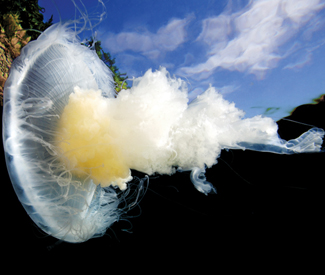
Shot in the Pacific Northwest and featured on the cover of the Guardian’s Green Issue this week, David Hall’s ‘Beneath Cold Seas is the first photographic book to show the colorful and exotic sea life of North America’s cold waters.

Hall spent 15 years diving in British Columbia to gather the images and as he explains in this week’s issue the animals depicted in the book can also be found by our NorCal shores because they “don’t recognize international borders.” We were only able to fit a few images into the print edition so here are some more for you to feast your eyes upon. Dive in and go to www.beneathcoldseas.com for more.


Sea, here

0

arts@sfbg.com

>>See more astounding images from Beneath Cold Seas here.

THE GREEN ISSUE Most people associate underwater photography with the tropics, but the beautiful shots that appear in Beneath Cold Seas (University of Washington, $45, 160pp) were shot in the Pacific Northwest. What’s most striking about the book is the color and vibrance that photographer David Hall was able to capture. It’s a bit mind-blowing to imagine that the hooded nudibranches and grasping octopi found in the book live in the inky depths abutting our very own rocky shores. The next time you take a dip at Baker or Muir Beach don’t forget that you’re frolicking with some seriously stunning fauna. 

SFBG: Where did you shoot Beneath Cold Seas?

DAVID HALL: I shot Beneath Cold Seas in British Columbia. The water tends to be more clear and there’s less pollution because of the small population density. But the same animals in the book are found in Northern California, they don’t recognize international borders. Technically biologists say the ecosystem extends from Southern Alaska down to Point Conception (north of Santa Barbara). That entire area is referred to as the Pacific Northwest.

SFBG: What environmental issues are facing the Pacific Northwest?

DH: One problem is the introduction of alien species. For instance farm-raised salmon taken from New England genetic stock occasionally escape and interbreed with the five or six Pacific species. So you’re getting a genetic mixture which endangers the original Pacific species. But the environmental issues that most people are worried about are overfishing and pollution, like oil spills. As more Canadian oil is being developed and exported to places like China, it will have to be shipped across these waters. So that becomes a concern, especially after what happened in the Gulf of Mexico last year.

SFBG: When did you start taking photos underwater?

DH: Many years ago I took a trip to the Virgin Islands. I’d never seen a coral reef before and was completely overwhelmed by what I saw while snorkeling. I felt that I had to photograph it because I’m not so good at describing things. I went out and bought the best camera I could afford which was a Kodak Instamatic in a plastic housing with flashbulbs. That was how it all started. In those days the bar was very low, if you got an underwater photograph that was somewhat recognizable you could get it published.

http://www.youtube.com/watch?v=NgDfA61OpFI

SFBG: What would you say inspired this project?

DH: At first I started going because I loved the diving, I enjoyed being there and getting photographs. But after the first half dozen trips I realized that the material I was getting was good enough for a book. I got the idea for the book about five years ago, but all in all it took about 15 years.

SFBG: What was a typical shoot like?

DH: I was living on a small boat for a couple of weeks at a time, doing three dives a day, and then reviewing photos at night. The days would be consumed with getting ready for the dive, getting all the equipment on, waiting until the current was just right, getting into the water, diving for an hour, getting back to the boat, getting warm — which takes another hour or two — and then getting ready to dive again. Altogether I made about 500 dives from 1995 to 2010.

Photographing underwater is much more difficult than photographing in air, and photographing in cold water is that much more difficult than photographing in warm water. No one had ever published a good book on underwater photography from a cold water destination in North America before. There are plenty of field guides, and fish ID books for fisherman, but no one had ever published a photographic book that tried to show the character of the ecosystem in an artistic way.

The book required getting a lot of wide angle shots to include the scenery as well as the animals. Getting good clear, colorful photographs in cold water is difficult because of visibility issues. Also cold water filters out all of the warm colors in the spectrum (red, orange, yellow) so to see the colors you have to add light back. So I dive with a pair of powerful flash units that attach to the camera by way of articulated arms that keep my hands free.

SFBG: So there wasn’t someone handling lighting for you?

DH: If I were a National Geographic contract photographer I’d probably have had a few assistants holding lights for me, but I wasn’t so lucky. I had to do everything myself. And in most cases I was diving completely alone.

SFBG: People don’t associate such colorful and exotic creatures with our coast. It’s really wonderful that your book is changing that perception.

DH: I certainly hope that’s what’s happening. The book has been very well received, largely because nobody was aware of what was down there. I mean marine biologists and divers were, but ordinary people had no idea.

People tend to protect what they know and value. Most Americans and Canadians are familiar with the aquatic species that we eat, but there’s a whole ecosystem there that the great majority of us are completely unfamiliar with. I hope my book will make people aware that these things exist and want to feel more protective toward that whole environment.


Rep Clock

0

Schedules are for Wed/11-Tue/17 except where noted. Director and year are given when available. Double and triple features are marked with a •. All times pm unless otherwise specified.

ARTISTS’ TELEVISION ACCESS 992 Valencia, SF; www.atasite.org. $6. “Other Cinema:” “Psychedelia:” analog-synthesizer subculture works by John Davis, Lori Varga, David Cox, Matthew Bate, and more, Sat, 8:30. “Brazilian Voices of Cinema:” O Dragão da Maldade contra o Santo Guerreiro (Rocha, 1969), Sun, 8.

BERKELEY FELLOWSHIP OF UNITARIAN UNIVERSALISTS 1606 Bonita, Berk; www.bfuu.org. $5-10. Queen of the Sun: What Are the Bees Telling Us? (Siegel, 2010), Thurs, 7.

CASTRO 429 Castro, SF; (415) 621-6120, www.castrotheatre.com. $7.50-10. •Young Adult (Reitman, 2011), Wed, 3:05, 7, and Juno (Reitman, 2007), Wed, 5, 8:55. “Midnites for Maniacs: Growing Up Too Fast Triple Bill:” •Lost in Translation (Coppola, 2003), Fri, 7:15; Battle Royale (Fukasaku, 2000), Fri, 9:30; and House (Ohbayashi, 1977), Fri, 11:45. Admission $13 for one or three films. •2046 (Wong, 2004), Sat, 2:30, 8:55; Days of Being Wild (Wong, 1991), Sat, 5; and In the Mood for Love (Wong, 2000), Sat, 7. •Sutro’s: The Palace at Lands End (Wyrsch, 2011), Sun, 1; Remembering Playland (Wyrsch, 2010), Sun, 3. •The Manchurian Candidate (Frankenheimer, 1962), Sun, 6:30, and The Parallax View (Pakula, 1974), Sun, 8:55.

CHRISTOPHER B. SMITH RAFAEL FILM CENTER 1118 Fourth St, San Rafael; (415) 454-1222, www.cafilm.org. $6.75-10.25. The Deep Blue Sea (Davies, 2011), call for dates and times. The Island President (Shenk, 2011), call for dates and times. Jiro Dreams of Sushi (Gelb, 2011), call for dates and times. The Salt of Life (de Gregorio, 2010), call for dates and times. Monsieur Lazhar (Falardeau, 2011), April 13-19, call for times. “World Ballet on the Big Screen:” Romeo and Juliet from the Royal Ballet, London, Sun, 10am; Tues, 6:30. Positive Negatives: The Photography of David Johnson (Steiner, 2011), Sun, 4:15.

ELMWOOD 10070 San Pablo, El Cerrito; www.rialtocinemas.com. Free. “Community Cinema:” Hell and Back Again (Dennis, 2011), Wed, 7.

KADIST ART FOUNDATION 3295 20th St, SF; (415) 738-8668. Free. Kippenberger: The Film (Kobel, 2005), Wed, 7.

PACIFIC FILM ARCHIVE 2575 Bancroft, Berk; (510) 642-5249, bampfa.berkeley.edu. $5.50-9.50. “Film 50: History of Cinema, Film and the Other Arts:” Playtime (Tati, 1967), Wed, 3:10. With a lecture by Marilyn Fabe. “Documentary Voices:” 24 City (Jia, 2008), Wed, 7. “Cine/Spin:” The Blood of a Poet (Cocteau, 1930), Thurs, 7:30. With accompaniment by UC Berkeley student DJs. “Dark Past: Film Noir by German Emigrés:” Caught (Ophuls, 1949), Fri, 7; Criss Cross (Siodmak, 1949), Fri, 8:50; Dark City (Dieterle, 1950), Sun, 6:15. “The Library Lover: The Films of Raúl Ruiz:” Tres Tristes Tigres (1968), Sat, 6; The Suspended Vocation (1977), Sun, 4. “Howard Hawks: The Measure of Man:” Rio Bravo (1959), Sat, 8; El Dorado (1967), Tues, 7.

ROXIE 3117 and 3125 16th St, SF; (415) 863-1087, www.roxie.com. $6.50-10. The Ballad of Genesis and Lady Jaye (Losier, 2011), Wed, 8:45. Better Than Something: Jay Reatard (Hammond and Markiewicz, 2011), Wed-Thurs, 7:30, 9:30. The Hunter (Pitts, 2010), Wed, 7. San Francisco International Women’s Film Festival, Fri-Sun. For more info, visit www.sfiwff.com. Bad Fever (Guy-Defa, 2011), April 13-19, 7.

SF FILM SOCIETY CINEMA 1746 Post, SF. $10-11. This Is Not a Film (Panahi, 2011), Wed-Thurs, 1, 3, 5, 7, 9. The Turin Horse (Tarr, 2011), April 13-19, 2, 5:30, 8:30.

SF PUBLIC LIBRARY Koret Auditorium, 100 Larkin, SF; www.sfpl.org. Free. “Bay Area Community Cinema Series:” Hell and Back Again (Dennis, 2011), Tues, 5:45.

“SONOMA INTERNATIONAL FILM FESTIVAL” Various North Bay locations; www.sonomafilmfest.org. More than 130 independent films from around the world, plus a tribute to legendary filmmaker John Waters, Wed-Sun.

VORTEX ROOM 1082 Howard, SF; www.myspace.com/thevortexroom. $7 donation. “Starship Vortex:” •Flash Gordon (Hodges, 1980), Thu, 9, and Barbarella (Vadim, 1968), Thu, 11.

YERBA BUENA CENTER FOR THE ARTS 701 Mission, SF; (415) 978-2787, www.ybca.org. $6-8. “Great Directors Speak:” •Robert Bresson: Without a Trace (Weyergans, 1965), and Chantal Akerman by Chantal Akerman (Akerman, 1996), Thu, 7:30.

Pop-Up Magazine is back with issue six

0

There are so many creative concepts and winning events every week in San Francisco, it can sometimes feel overwhelming. Let me make this easy for your muddled brain waves: you should go to Pop-Up Magazine. The organizers just now tweeted the date of the sixth issue – April 25, at Davies Symphony Hall – and the date tickets go on sale, which is next Tuesday, April 3.

For those who’ve yet to attend, it’s a live format feature magazine that pops up for one night and includes different writers and artists presenting totally new ideas and concepts in creative presentations. And it was a Best of the Bay winner in 2010, an Editor’s Pick for “Best Gazette Refresher.”

The event – which happens a couple of times a year in San Francisco – is a must for anyone interested in media, arts, writing, film, photography, and/or radio. It features a rotating, shifting mix of contributors to The New Yorker, This American LifeAll Things Considered, Mother Jones, Wired, and National Geographic, and more.

With so much documentation going on in our everyday lives, and in particular at large Bay Area events, it’s a refreshing change of pace (especially for me) – there are no audience cameras allowed inside, you may not record, do not press play. Just sit back and enjoy.

Over the course of several of the events I’ve learned weird new facts and been enthralled with earnest stories about turkey vultures, crazed sports fanatics, mapping infographics, sign spinners, ping-pong, surfers, Asian fetishists, fake bellies for expectant pops, and a teenage message in a bottle (love you, Starlee Kine).

Gay-la time: LGBT Center’s annual ‘Soiree’ gets Frenched

0

Photos by Bowerbird Photography.
 
There couldn’t have been a better way to escape the dramatic, wet downpour the night of Sat/24 than to celebrate the 10th anniversary of the SF LGBT Community Center at the SF Design Center under the twinkling lights of a “gay Pah-ree” inspired party. (Never was “Paris” pronounced the clunky Anglo way, of course.)

There was amazing food, free-flowing booze, but best of all, crowds of beautiful, happy people, dressed in Parisian splendor (including stilt-walking Eiffel Towers a scruffy French poodle).

Everyone looked fabulous. Really fabulous! The entertainment included a song by the super sweet Honey Mahogany, surreal live decorations courtesy of a walking Matisse painting, a gorgeous half-nude contortionist, and, of course, a coterie of supportive politicians (including Mark Leno), raising their bubbly high to toast the Center on its birthday.

The Center eschewed long speeches to devote the evening to great dancing, beautiful drag performances, and those irresistible old school soul beats of DJ Carnita from Hard French, that lasted far into the evening.

The Magnetic Fields play ’69 Love Songs’ and then some at the Fox

0

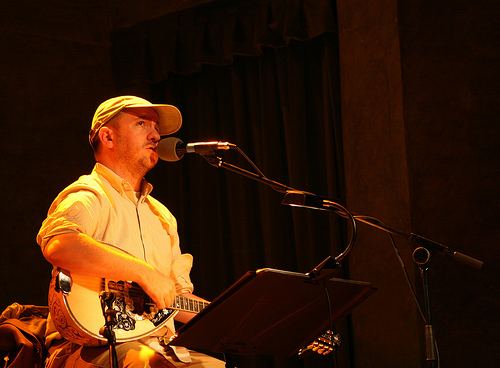
While the Magnetic Fields’ newest album, Love at the Bottom of the Sea, recaptured the group’s love for synthesizers and electronics, Saturday night’s Fox Theater performance was a testament to the timeless quality of its stripped-down acoustic format.

Using a charming setup of mandolin, acoustic guitar, accordion, piano, and cello, the band burned through 25-plus songs from various points in its two decades-strong career. The first plucks of opener “I Die” quickly established Stephin Merritt’s morose rumble of a voice — which sounded just as drolly beautiful and unbelievably deep as it does on record — and quickly hushed the impressively diverse crowd populated with theater geeks, punk rockers, old-timers, and lovey-dovey hipster couples.

It didn’t take long for the band to begin tackling songs from its landmark 1999 album, 69 Love Songs. Tracks like “A Chicken With Its Head Cut Off” and “Busby Berkeley Dreams” elicited giddy responses amongst the audience and led to more than a few people lightly singing along. An unexpected treat came when Merritt took lead vocals on “Come Back From San Francisco,” a track that was sung by member Shirley Simms on the album.

Speaking of Simms, vocal duties were shared among her, Merritt, and Claudia Gonson all evening, which helped keep things lively and unpredictable. Just as Merritt had taken over for her on “Come Back From San Francisco,” Simms reciprocated with a rousing rendition of his “Fear of Trains,” from the country-influenced The Charm of the Highway Strip.

With such a big catalog to compose a setlist from, nearly every album was represented, from the baroque sounds of Realism (“You Must Be Out of Your Mind), to the noisy Distortion (“Drive On, Driver”) and early favorites like Distant Plastic Trees (“Tar-Heel Boy”). Arrangements of all of these were simple and elegant, and a real testament the talent and attention to detail of each member.

Merritt’s well-documented prickly personality shone through at times in agitated comments to the crowd about flash photography and unnecessary hooting and hollering. And, if basing an opinion strictly off of body language, it really seemed like he’d have rather been anywhere else than on stage all show. None of that took away from what was a wholly fun, engaging and heartwarming show, however, which even at a packed 90 minutes felt all too brief.

On the Cheap Listings

0

Submit items for the listings at listings@sfbg.com. For further information on how to submit items for the listings, see Picks.

WEDNESDAY 21

“An Ancient Path in a Modern World” Dr. Paul R. Fleischman talks about Vipassana meditation Golden Gate Room, Fort Mason Center, SF. (415) 345-7500, www.mahavana.dhamma.org. 7 p.m., free. When spastically squeezing that stress ball isn’t cutting it for you anymore, it might be time to look for alternative forms of meditation. Join Dr. Paul R. Fleischman, psychiatrist and teacher of Vipassana, in his discussion of channeling an ancient approach to cope with 21st century issues. Breathe in, breathe out.

“Experience Your America” San Francisco Maritime National Historical Park open house General’s Residence, Fort Mason Center, Marina at Buchanan, SF. (415) 561-7049, www.nps.gov/safr. 4:30 p.m.-6:30 p.m., free. We are extremely lucky to live in a city full of parks, lagoons, beaches, and gardens. Meet the folks who work to keep our parks beautiful, and for a chance to ask how we can help too.

THURSDAY 22

The 16th Tournee of Animation series of original animated shorts McBean Theatre, Exploratorium, 3601 Lyon, SF. (415) 561-0360, www.exploratorium.edu. 7:30 p.m., free. This annual touring program went around the world from the 1970s to the late 1980s. The 16th Tournee returns (again) to the local animation community in San Francisco. The night promises 16 animated films from the 1980s, shown in pristine 16mm print.

FRIDAY 23

Wild Ride poetry readings and dancing San Francisco Motorcycle Club, 2194 Folsom, SF. (415) 863-1930, www.sf-mc.org. 7:30 p.m., free. Wild Ride pairs the intense velocity of motorcycles with the serenity of poetry. Writers from San Francisco State and San Bernardino State Universities come together to share their work at the second oldest motorcycle club in the country.

SATURDAY 24

SoMa flea market Tanil Artist Studio, 1108 Howard, SF. (415) 722-7847. 10 a.m.-7 p.m., free. Pop in to this monthly indoor market and get ready to reach your swapmeet nirvana. Local bands and DJs will be whistling some tunes, as backdrop to your life foretold by a psychic. Hopefully the clairvoyant advises to immediately head to the food stand.

Two Cats comic bookstore grand opening Two Cats Comic Book Store, 320 West Portal, SF. (415) 566-8190, www.twocatscomicbookstore.com. 1 p.m.-9 p.m., free. Comic lovers, pick up your weeklies and check out neat collectibles at San Francisco’s newest comic store. The grand opening boast an impressive lineup of creators and artists who will sign new issues and conduct drop-in art classes. The new shop has a knowledgeable staff and additional room reserved for events and yes, gaming.

Retirement Boot Camp Presidio Golf Club, Eight Presidio Terrace, SF. (415) 221-8833, www.presidiogolfclub.com. 8:30 a.m.-2 p.m., free. Whether you like it or not, everyone gets old. Be smart and take some to think about retirement plans so that you can live later with peace of mind. Experts will speak on income planning, how to best protect your assets, and long-term health and wellness issues.

Bonsai repotting party Bonsai Garden at Lake Merritt, 666 Bellevue, Oakl. (510) 763-8409, www.gsbf-bonsai.org. 10 a.m. for bonsai seminar; noon-4 p.m. for repotting, free. For the past two years, professional bonsai artist Ryan Neil has been styling a Rocky Mountain juniper tree, defoliating and pruning the miniature plant with utmost care. This little tree will have its grand debut this weekend with a repotting party, docent tours, and morning seminars on the traditional Japanese art form.

“Devil’s Tango: How I Learned the Fukushima Step by Step” author reading Downstairs Forum, 2550 Dana, Berk. (510) 981-1858, www.cecilepineda.com. 3 p.m., free. Published on the one-year anniversary of the nuclear disaster at Japan’s Fukushima Daiichi, Cecile Pineda’s memoir blends a mix of personal reflection with investigative journalism. The author not only exposes the nuclear catastrophe through daily reportage, but also communicates the utter terror of local inhabitants through deep song (canto hondo) and meditations.

SUNDAY 25

“Death Valley Photographer’s Guide” wildlife photography exhibition Sarber’s Cameras, 1958 Mountain, Oakl. (510) 339-8545, www.dansuzio.com. 1 p.m.-2 p.m., free. The endlessly beautiful geographic terrain of Death Valley makes it difficult when choosing which angle or light to capture the salt-coated valley floor with your camera. Wildlife photographer Dan Suzio will share his photos and talk about his new book, which lays down where and how to catch the valley’s best side.

“War, Sanctions, and Regime Change in the Middle East” teach-in featuring Ramsey Clark Unitarian Universalist Society, 1187 Franklin, SF. (415) 821-6545, www.answercoalition.com. 1 p.m., $5–$20 donation. It’s not much for a celebration, but March 2012 marks the ninth anniversary of the U.S. invasion of Iraq. The panel of activists, such as Ramsey Clark, former U.S. Attorney General, and Dr. Jess Ghannam of Al-Awda Palestine Right of Return Coalition, will share their first-hand knowledge of the conflict in the Middle East during this afternoon teach-in.

MONDAY 26

Conversation with Glee executive producer Dante Di Loreto and performance Jewish Community Center of San Francisco, 3200 California, SF. (415) 292-1200, www.jccsf.com. 7 p.m., $10 for students; $20 general admission. Gleeks, all your fervent questions will now be answered. After enjoying a mash up number from “Cabaret” performed by the Young People’s Teen Musical Theatre Company, flock to the stage to pick at the brain of the guy responsible for bringing musical theater to prime time television.

TUESDAY 27

EcoTuesday sustainable business networking event CompoClay Showroom, 60 Post, SF. (415) 877-4228, www.compoclay.com. 6:30 p.m.-9 p.m., $10 with online registration; $15 at door. EcoTuesday is a networking event that happens on the fourth Tuesday of every month. Mingle with sustainable business leaders and bounce that innovative green ball around.

“Mission Theatres and the Trolleys That Took Us There” historical presentation St. Philip’s Catholic Church, 725 Diamond, (415) 750-9986, www.sanfranciscohistory.org. 7:30 p.m., $5 general admission. It’s hard to believe that at one time, trolleys were not just a tourist-ridden fiasco but a popular means of transportation for locals. Jack Tillmany, S.F. transit and movie theatre historian, will take you down streetcar lines and to the surviving theatres of San Francisco.

Power puff

0

HERBWISE I remember the first time I saw photographer Robyn Twomey‘s work — talk about simpatico. It was a huge print of a photo of an elderly woman sitting in front of a piano and a mirror with an immense Persian cat, lighting a joint firmly held between her lips. I’d never seen anything like it — documented in a gallery, that is.

In some version of my future life, I’d like to make a nest inside Twomey’s photographer bag and travel the country with her. Not that she’d need my services. Her shots speak loudly, from her descriptive portraits of T.I., Bill Gates, Rosie O’Donnell, to Attorney General Kamala Harris.

Small wonder that the smoke-filled photos of Harborside Health Center’s women patients (originally shot for a Fortune Magazine feature) are part of the Mission Cultural Center for Latino Arts’ new group exhibition “Solo Esas Mujeres”, which opens March 17. The show assembles the work of 14 female artists in an effort to reaffirm feminine power through its documentation.

So of all the females that Twomey’s captured throughout her career, why use the shots of these cannabis smokers for this particular exhibition? Perhaps these females — all of whom use the stuff for real serious medical conditions — have the most need of documentation. Easy access to medical marijuana is important, oh federal government of ours. Hey Robyn, any chance of getting Harris out to the Mission for the opening reception? I can help host.

“Solo Esas Mujeres” March 17 through May 5. Opening reception March 21, 6:30 p.m.-9:30 p.m., free. Mission Cultural Center for Latino Arts, 2868 Mission, SF. (415) 643-2785, www.missionculturalcenter.org


Alerts

0

yael@sfbg.com

WEDNESDAY 14

Protest Wells Fargo

Occupy Bernal is at it again, fighting for neighborhood residents facing foreclosure. Organizers surveyed foreclosures in their neighborhood and found that the bank that owned most of them was none other than Wells Fargo, a bank that happens to have a largely San Francisco-based Board of Trustees. They recently took their indignation to the home of Wells CEO John Stumpf (see “Save Our Homes,” 2/28/12.) Now, they’ll bring it to the offices of Dignity Health, where board member Lloyd H. Dean is CEO. 

Noon, free

185 Berry, SF

www.occupybernal.org


Rebooting the rainbow

Before the 99%, and before Jesse Jackson’s Rainbow PUSH Coalition, there was the original Rainbow Coalition: a 1960s partnership between the Puerto Rican Young Lords, the White Young Patriots Organization, and the Black Panther Party for Self Defense. These visionaries hoped to bring together people fighting to protect their communities towards a united goal of justice for all. In this talk, part of the Shaping San Francisco series, three activists from back in the day– Pam Tau Lee, Joe Navarro, and Kiilu Nyasha—will discuss that history. They’ll also speak to “what it’s going to take to keep the 99 percent together for the long haul.”

7:30 p.m., free

CounterPULSE

1310 Mission, SF

www.shapingsf.org


SATURDAY 17

Homes not jails benefit

This homeless advocacy organization is fiercely dedicated to making sure those who want it have a roof over the heads at night, and many San Franciscans won’t sleep in the cold tonight due to their efforts. Come celebrate their efforts at this benefit. There will be live music from local favorites Little Wolves, Shakes Gown, Molly and the Mad Science and LPD, not to mention new zines and Homes Not Jails t-shirts. 

7 p.m., donation suggested

Redstone Building

2940 16th St., SF

www.indybay.org


SUNDAY 18

Dream Memoirs of a Fabulist

It’s queer, surreal, and will probably blow your mind. This book hints of ghosts, photography, gender, and language. In a review, Janice Lee says the book includes, “the dizzying abyss of self-imposed identity, and the gravitational field of language itself, the pronouns textually speaking to one another, dragging memory from one space into another.” To truly understand it, head to Modern Times for a reading and talk with author Doug Rice and artist Stephanie Sauer. 

7 p.m., free

Modern Times Bookstore

1919 24th St., SF

www.mtbs.com/events

C’mon inside “Silent House” with co-director Laura Lau

0

Yep, it’s another remake of a foreign horror movie — but Uruguay’s La casa muda is obscure enough that Silent House, which recycles its plot and filming style, feels like a brand-new experience. Co-directors Chris Kentis and Laura Lau, last seen bobbing in shark-infested waves for 2003’s similarly bare-bones Open Water, apply another technical gimmick here: Silent House appears to be shot in one continuous take.

Though it’s not actually made this way, each shot is extraordinarily long — way longer than you’d expect in a horror film, since the genre often relies on quick edits to build tension. Instead, the film’s aim is “real fear captured in real time” (per its tag line), and there’s no denying this is one shriek-filled experience.


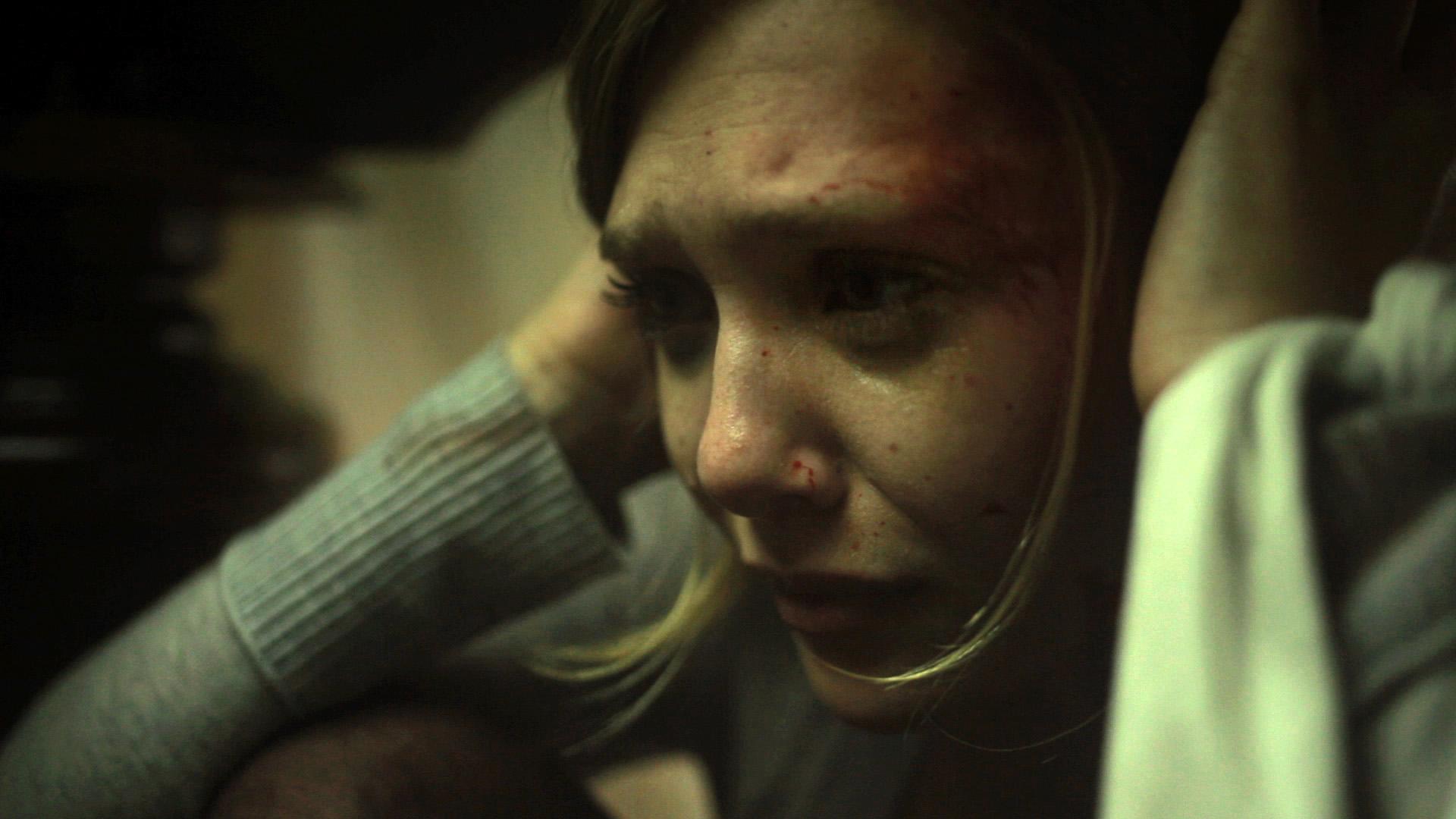
The dwelling in question is an isolated, rambling lake house being fixed up to sell by Sarah (Elizabeth Olsen), her father (Adam Trese), and uncle (Eric Sheffer Stevens). The lights don’t work, the windows are boarded up, most doors are padlocked shut, and there are strange noises coming from rooms that should be empty. Much of the film follows Sarah as she descends into deeper and deeper terror, scrabbling from floor to floor trying to hide from whoever (or whatever) is lurking, while at the same time trying to bust her way out. Though the last-act exposition explosion is a little hard to take, the film’s slow-burn beginning and frantic middle section offer bona fide chills.

I caught up with the Tiburon, Calif.-born, New York-based co-director and writer Laura Lau just prior to Silent House‘s release.

SFBG: Like Open Water, which used a minimal crew and took place, for the most part, in the middle of the ocean, Silent House combines a streamlined story with a complicated technical set-up — the illusion of one long take. What do you think attracts you and co-director Chris Kentis to these types of films?

Laura Lau: I think it’s true that we want to challenge ourselves as filmmakers. We don’t want to repeat what’s already been done. We want to try and do things that are different — that makes it interesting for us. I think that’s absolutely true about both of these projects. Each one of them had its own really unique challenges. But of course it’s all about telling a story, and what it is that, emotionally, creates a reaction in us. Both of these films were really about certain kinds of horrors, true horrors that really spoke to us and we wanted to make films about.

http://www.youtube.com/watch?v=Wc7-biVJlJQ

SFBG: And just to clarify, Silent House is not really one continuous shot. You did cut sometimes.

LL: Yes. It is a seamless, continuous shot, and the experience for the viewer is that it is one continuous take. However, to achieve that we did that in very long takes, but they were different shots that we stitched together.

SFBG: But the takes are, as you say, a lot longer that what you would see in an average film.

LL: Absolutely. And not only that, but all of the sort of usual filmmaking tools that you have were taken away from us. We didn’t shoot any coverage at all. Usually, you go on a film shoot and you shoot a lot of coverage, and then you go and make your movie in the editing room. In our situation here, we had to make all those decisions ahead of time; what we shot was what we had. And all of the usual ways that you would control pacing, revealing information, even sculpting performances were taken away from us.

SFBG: The lighting appears to come only from on-set sources, mostly flashlights. Was this really what happened?

LL: Well, the whole house was pre-lit from above, and it was all on a dimmer board. We had a dimmer board operator who had to ride those lights. That was one of the elements that made it tricky, because not only was there performance and camera choreography, but there were elements like the lights, like the [assistant director] department hitting cues, like props. All of those things that were critical to actually getting the shot the way we wanted it — if any one of those elements went awry, we would have to start over again.

SFBG: Did you do a lot of rehearsing?

LL: We did. After I had written the script, and then, once we had gotten the location, I re-wrote the script. And then Chris and I just started to run the movie from top to bottom. I would actually just act out Sarah’s part, and we could run it over and over again. Especially since the script was like, 60 pages, so it was short for a feature, and there was a lot of trepidation about whether it was feature-length. Which it was, but nobody knew, because nobody in our crew had made a movie in this way, and of course [neither had any of the] producers. So, there was that process of Chris and I basically running it through, and our [director of photography], Igor Martinovic, came on, and we ran it with him. And then we went into rehearsal. We had two weeks of rehearsal with the actors, and then we had three weeks to shoot the movie. We had 15 days.

SFBG: Martinovic has a lot of documentary experience (2010’s The Tillman Story; 2008’s Man on Wire). Did that play into your decision to work with him on Silent House?

LL: Absolutely.

SFBG: Silent House isn’t part of the “we’re filming ourselves!” trend in films right now, but it has some similarities to those types of movies.

LL: I can see why you would say that, and I think it’s because the continuous shot is entirely coming from one person’s experience. Since there’s no cutting, you really are trapped with this character, who is trapped in a nightmare, in a terrifying situation. We hope that the experience is that you really feel like you are there with her as she’s going through this.

SFBG: How did you approach building tension and suspense within the continuous shots?

LL: I think that actually the continuous take is what really builds the tension. If you can’t release yourself, and there’s no cutting, I think it just builds the intensity. You can’t get away from this character and you can’t get away from her experience. I think that the story I wanted to tell with this technique of the continuous take was really about one woman’s experience. It’s about her experience and what it is that she’s going through.

SFBG: How did you cast Elizabeth Olsen as Sarah?

LL: We had been working with casting directors Kerry Barden and Paul Schnee on previous projects that we’d been trying to get off the ground, and as soon as they read the script, they said, “Oh, we know who Sarah has to be.” They had cast Jennifer Lawrence in Winter’s Bone the year before. So [Olsen] came in as the girl our casting directors had already cast, and they were right! She had the charisma and the luminosity and the depth, because again, this is a film where we knew that we were going to be watching one character, and she had to be somebody that we wanted to watch, and somebody that we would care about.

SFBG: A lot of what’s scary about Silent House are the unseen elements, including mysterious noises throughout the house. Did you choreograph the sounds as carefully as the lighting and performances?

LL: Yes, of course, the sound and the score were all part of the design of conveying Sarah’s experience. What she was going through, throughout the film. So everything was working together through the entire film.

SFBG: You mentioned earlier that you’re interested in making movies that don’t repeat what’s already been done. Silent House is a remake, but the source film hasn’t been seen in the U.S., has it?

LL: No, it has not. And I think the last time a film that was a continuous take has been seen by American audiences was Hitchcock’s Rope, in 1948. It’s been a long time. It really is a very different cinema experience, we think. And Rope is not a horror movie. It’s a very different genre. It feels very theater-like; all of the action takes place in two rooms, it could really almost be like a theater stage. It’s quite different from our film. We were just thrilled when we were offered to do the remake, because it was really an opportunity to do something different. And how often do you get to actually do something different?

Silent House opens Fri/9 in Bay Area theaters.

On the Cheap Listings

0

On the Cheap listings are compiled by Soojin Chang. Submit items for the listings at listings@sfbg.com. For further information on how to submit items for the listings, see Picks.

WEDNESDAY 29

Nutrition class for cyclists Sport Basement, 1881 Ygnacio Valley, Walnut Creek. (925) 941-6100, www.sportbasement.com. 7 p.m.-8 p.m., free with RSVP. It is the worst when you’re still 20 minutes away from your destination and your energy decides to crash on you. In this nutrition class, experts give perspectives on quality food choices, review specific bars and powders, and provide simple and delicious recipes for on and off the bike.

Radical Directing lecture series with Terry Zwigoff San Francisco Art Institute, 800 Chestnut, SF. (415) 771-7020, www.sfai.edu. 7:30 p.m., free. Long-time San Franciscan Terry Zwigoff makes feature films out of underground comic strips and turns down corporate project offers in favor of ‘tooning for smaller outfits. Join Zwigoff as he discusses his experience writing screenplays and making documentaries.

THURSDAY 1

“After Dark: Vinyl” interactive presentation Exploratorium, 3601 Lyon, SF. (415) 561-0360, www.exploratorium.edu. 6 p.m.-10 p.m., free with museum admission. In the heyday of vinyl, records were made of fragile materials such as wax and shellac. Experimental physicist Carl Haber recovers the sweet tunes that we once believed were gone forever.

The End of Money: Counterfeiters, Preachers, Techies, Dreamers—and the Coming Cashless Society author discussion The Booksmith, 1644 Haight, SF. (415) 863-8688, www.booksmith.com. 7:30 p.m., free. These days, you can get far without the greenbacks — as long as you’ve got dough on your plastic. In his newest book, David Wolman embarks on a paper cash-less journey around the world, encountering people and technologies whose alternatively embrace and fear the end of tangible money.

“So You Think You Can Paint?” SoMa art party Club Six, 60 Sixth St., SF. (415) 863-1221, www.clubsix1.com. 7 p.m.-11 p.m., free. Your task is to complete as many eight-foot art pieces as you possibly can. If you have any doubts to your skills or just want to learn more, there will be a free art class from 6 p.m. to 7 p.m. Huge walls, paint, brushes, and tunes will be provided.

Nightlife’s Darkroom photography event California Academy of Sciences, 55 Music Concourse, SF. (415) 379-8000, www.calacademy.org/nightlife. 6 p.m.-10 p.m., $12. Come meet the folks from Instagram for a night dedicated to the recent transmutations of photography. Enjoy live music and images of beautiful coral reef while checking out the innovations of Lytro’s light field camera, artist Genevieve Quick’s hand-made cameras, Lomography’s analog cameras, and aerial photographer Michael Layesfsky’s balloon camera.

FRIDAY 2

True Stories Lounge story telling performance The Make-out Room, 3225 22nd St., SF. (415) 647-2888, www.makeoutroom.com. 7:30 p.m., $10. Telling a good story is a particularly difficult art to master. Join seven professional storytellers who’ll be keeping this oral tradition alive by divulging their memoirs, essays, reportages, and narrative column writings.

SATURDAY 3

Origami club San Francisco Public Library, 500 Cortland, SF. (415) 355-2810, www.sfpl.org. 2 p.m.-4 p.m., free. Ah, the progressive addiction of origami. First you’re making a crane, and then you’re drinking out of an ornate paper teacup. Not surprising at all that there is a local club devoted to the art — now where’s the 12-step program?

“Zeke Greenwald, Potential Roommate” comedy show 222 Hyde, SF. (415) 345-8222, www.222hyde.com. 8 p.m.-10 p.m., free. Anyone who has ever searched Craigslist for housing in San Francisco know of the comedic horror that lies within each potential roommate. Five local comedians stand up to share their stories.

Dr. Seuss’s birthday celebration Playland-Not-at-the-Beach, 10979 San Pablo, El Cerrito. (510) 592-3002, www.playland-not-at-the-beach.org. Through Sunday. 10 a.m.-5 p.m., $10 children; $15 general admission. Celebrate the birthday of the guy who reminded us all that crazy is awesome and the imagination is limitless. There will be penny arcades, haunted houses, interactive exhibits, and magic sideshows. High-fives for everyone who dresses up.

Sperm Whale Soiree art and science reception Randall Museum, 199 Museum, SF. (415) 561-6622, www.randallmuseum.org. 7 p.m.-10 p.m., $15 advance tickets. Moby Dick gave sperm whales a bad rep. But the truth is they’re extremely interesting animals that nowadays, are sadly endangered (no thanks to you, Captain Ahab). Learn about their amazing diving skills and their even more intriguing sex lives.

SUNDAY 4

Actual Jazz Series with the John Schott Trio and special guests Actual Cafe, 6334 San Pablo, Oakl. (510) 653-8386, www.actualcafe.com. 5 p.m., free. Actual Cafe’s new house band plays twice a month on first and third Sundays. Its set list includes everything from standard jazz to obscure Ukrainian songs. First Sundays feature younger jazz musicians from the Bay Area, guest singers, and spoken word collaborators.

MONDAY 5

Mental Aerobics San Francisco Public Library, 100 Larkin, SF. (415) 355-2822, www.sfpl.org. 1 p.m.-3:30 p.m., free. Feeling a little brain-dead lately? You can do something about that, y’know. Come work out your cerebral organs and spark your cognitive vitality in this class designed to get your synapses firing.

TUESDAY 6

Andy Warhol: Polaroids/Matrix 240 Berkeley Art Museum, 2626 Bancroft, Berk. (510) 642-0808, bampfa.berkeley.edu. Through May 20. Gallery hours Wed.-Sun. 11 a.m.-5 p.m., $7–$10. Long before Instagram, there was Polaroid. The Prince of Pop Andy Warhol took thousands of snapshots that were never shown to the public until now. Come check out photos of O.J. Simpson, Daryl Lillie, Diane von Furstenberg, and of course, bananas.

Film Listings

0

Film listings are edited by Cheryl Eddy. Reviewers are Kimberly Chun, Max Goldberg, Dennis Harvey, Lynn Rapoport, and Matt Sussman. For rep house showtimes, see Rep Clock. Due to the Presidents’ Day holiday, theater information was incomplete at presstime.

INDIEFEST

The 14th San Francisco Independent Film Festival runs through Thurs/23 at the Roxie Theater, 3117 16th St, SF. For tickets (most films $11) and schedule info, visit www.sfindie.com.

OPENING

Act of Valor Action movie starring real-life, active-duty Navy SEALs. (1:45)

*Bullhead Michael R. Roskam’s Belgian import scored an unexpected Best Foreign Language Film Oscar nomination this year. Unexpected, because it’s daring, disturbing, and a lot of other things that Foreign Language Film nominees usually are not (heartwarming, yes — gasp-inducing, no). The five-second description of this film, which is about a cattle farmer who injects both his livestock and his own body with illegal hormones, doesn’t do it justice. Who knew there was such a thing, for instance, as a “hormone mafia underworld”? While some of Bullhead‘s nuances, which occasionally pivot on culture-clash moments specific to its Belgium setting, will inevitably be lost on American viewers, the most important parts of the movie come through loud and clear, and you won’t soon forget them. (2:04) (Eddy)

*Dizzy Heights: Silent Cinema and Life in the Air The film medium’s first, sound free decades coincided with a sense of hurtling modernization throughout first-world society like nothing before or since — centuries of history had scarcely prepared for the sudden reality of such concepts as “world war” or “skyscraper.” Aviation in particular was such a fascinating wonder its potential seemed limitless, though commercial air travel was as yet many years and dollars from the average citizen’s reach. Curated by Patrick Ellis, this Pacific Film Archive series brings together some of the era’s most fanciful depictions of progress and peril in the skies. It includes 1918’s goofy, ambitious Danish A Trip to Mars, whose intrepid (if in-fighting) Earthlings land to promptly horrify the Red Planet of Peace’s entire vegetarian populace by shooting fowl and throwing a grenade. The influence of Isadora Duncan weighs heavily on the ensuing lessons learned, as wreath-bearing, toga clad peaceniks (“Come with me and look at the dance of chastity”) exhort our heroes to return home and preach pacifism — a very timely message, then. The 1929 British “disaster flick” High Treason more realistically depicts a very Jazz Age near future pushed away from the Charleston towards more catastrophic military conflict by unscrupulous war profiteers. Julien Duvivier, a director at the beginning of a long, sometimes pedestrian career in the French cinematic mainstream, was young and feckless when he made 1927’s Mystery of the Eiffel Tower, a long, antic conspiracy thriller that directly inspired the Tintin comics. This long weekend of rarities also includes a program of shorts encompassing animation from Disney and McKay, trick photography and Mack Sennett slapstick. Pacific Film Archive. (Harvey)

Gone A woman (Amanda Seyfried) who escaped a serial killer fears he has retaliated by kidnapping her sister. (1:34)

*In Darkness See “The War at Home.” (2:25)

*Khodorkovsky Russia today is a so-called “managed democracy.” Flawed a system as democracy is, though, it’s something you either live in or don’t — put a qualifier on the term, and it becomes something else. This particular something else is a nation where a popular, populist leader like Vladimir Putin can maintain an economically successful (at least for many) status quo and his own power by squelching any political opposition via decidedly un-democratic means. One of the most conspicuous such cases in recent years has been the imprisonment of Mikhail Khodorkovsky, former owner of oil company Yukos and the most fabulously wealthy “oligarch” to emerge from Russia’s post-Soviet move toward capitalist privatization. Though initially considered as corrupt as any in that privileged class, he realized after a fashion that transparency actually encouraged investment, becoming a noted respecter of oft-abused minority shareholder rights and a sort of poster child for ethical business practice. This transition coincided with increased friction between him and Putin, who had given Khodorkovsky and others like him relatively free rein so long as they “stayed out of politics.” On the day before the latter was arrested in 2003 — returning against all advice from an overseas trip where he’d been expected to become another wealthy “political emigrant” — he continued to align himself with the reformist anti-Putin opposition by telling a TV host “As long as our country isn’t fully a civil society, no one is safe from the people with handcuffs.” Conviction on questionable charges, Stalinesque detention in remote Siberia, and still-ongoing excuses for sentence elongation have ensued. The subject of Cyril Tuschi’s documentary (finally interviewed directly at the end) is certainly not innocent of arrogance, incaution, and possibly more prosecutable crimes; but he has also clearly chosen the hardest path against an intractable, grudge-keeping foe on moral principal. How many billionaires would even consider losing their freedom, comfort, and wealth for such an abstract? Khodorkovsky the movie has its character flaws, too — but you can forgive a filmmaker some of those when he’s working on a subject, and from a perspective, that has gotten more than a couple fellow journalists “mysteriously” poisoned to death. (1:51) (Harvey)

*Roadie Michael Cuesta’s first film as both director and writer (again co-authoring with brother Gerald) since 2001’s startling debut feature L.I.E. is also his best work since then. After nearly a quarter-century spent schlepping equipment for Blue Oyster Cult — the arty metal band (“Don’t Fear the Reaper,” i.e. “more cowbell!”) that was already sliding from the spotlight when he signed on — Jimmy Testergross (Ron Eldard) is fired, the reasons unknown to us. With nowhere else to go, he lands on the doorstep of his childhood home in Queens, where he hasn’t been seen in at least 20 years. Mom (Lois Smith) is going senile, though somehow her disapproval comes through with perfect clarity (and hasn’t changed in all that time). Seeking a liquid solace at a bar, our hero instead runs into Randy (Bobby Cannavale), who bullied him mercilessly way back when — and is now married to “Jimmy Testicle’s” still-hot former girlfriend Nikki (Jill Hennessey), who has rock-star aspirations of her own. Taking place over less than 24 hours’ span, Roadie is a very small character study, but a well-observed one. “Developmentally stunted by rock ‘n’ roll,” as one character puts it (when it emerges 40-something Jimmy has never learned to make coffee for himself), its protagonist is the kind of likable boy-man loser usually found in Fountains of Wayne songs, an aging lifelong air guitarist pining over good old days that probably weren’t even that good. His nostalgia is as touchingly hapless as his dubious future. (1:35) SF Film Society Cinema. (Harvey)

*Straight Outta Hunters Point 2 See “Back to the Point.” (1:20) Roxie.

Tyler Perry’s Good Deeds Director Tyler Perry puts aside the Madea drag to star as a man torn between Gabrielle Union and Thandie Newton. (1:51)

Wanderlust Paul Rudd and Jennifer Aniston star in this David Wain-directed, Judd Apatow-produced comedy about a New York City couple who move to a commune. (1:38)

ONGOING

*The Artist With the charisma-oozing agility of Douglas Fairbanks swashbuckling his way past opponents and the supreme confidence of Rudolph Valentino leaning, mid-swoon, into a maiden, French director-writer Michel Hazanavicius hits a sweet spot, or beauty mark of sorts, with his radiant new film The Artist. In a feat worthy of Fairbanks or Errol Flynn, Hazanavicius juggles a marvelously layered love story between a man and a woman, tensions between the silents and the talkies, and a movie buff’s appreciation of the power of film — embodied in particular by early Hollywood’s union of European artistry and American commerce. Dashing silent film star George Valentin (Jean Dujardin, who channels Fairbanks, Flynn, and William Powell — and won this year’s Cannes best actor prize) is at the height of his career, adorable Jack Russell by his side, until the talkies threaten to relegate him to yesterday’s news. The talent nurtured in the thick of the studio system yearns for real power, telling the newspapers, “I’m not a puppet anymore — I’m an artist,” and finances and directs his own melodrama, while his youthful protégé Peppy Miller (Bérénice Béjo) becomes a yakky flapper age’s new It Girl. Both a crowd-pleasing entertainment and a loving précis on early film history, The Artist never checks its brains at the door, remaining self-aware of its own conceit and its forebears, yet unashamed to touch the audience, without an ounce of cynicism. (1:40) (Chun)

*Chico and Rita This Spain-U.K. production is at heart a very old-fashioned musical romance lent novelty by its packaging as a feature cartoon. Chico (voiced by Eman Xor Oña) is a struggling pianist-composer in pre-Castro Havana who’s instantly smitten by the sight and sound of Rita (Limara Meneses, with Idania Valdés providing vocals), a chanteuse similarly ripe for a big break. Their stormy relationship eventually sprawls, along with their careers, to Manhattan, Hollywood, Paris, Las Vegas, and Havana again, spanning decades as well as a few large bodies of water. This perpetually hot, cold, hot, cold love story isn’t very complicated or interesting — it’s pretty much “Boy meets girl, generic complications ensue” — nor is the film’s simple graphics style (reminiscent of 1970s Ralph Bakshi, minus the sleaze) all that arresting, despite the established visual expertise of Fernando Trueba’s two co directors Javier Mariscal and Tono Errando. When a dream sequence briefly pays specific homage to the modernist animation of the ’50s-early ’60s, Chico and Rita delights the eye as it should throughout. Still, it’s pleasant enough to the eye, and considerably more than that to the ear — there’s new music in a retro mode from Bebo Valdes, and plenty of the genuine period article from Monk, Mingus, Dizzy Gillespie, Chano Pozo and more. If you’ve ever jones’d for a jazzbo’s adult Hanna Barbera feature (complete with full-frontal cartoon nudity — female only, of course), your dream has come true. (1:34) Smith Rafael. (Harvey)

*The Descendants Like all of Alexander Payne’s films save 1996 debut Citizen Ruth, The Descendants is an adaptation, this time from Kaui Hart Hemmings’ excellent 2007 novel. Matt King (George Clooney) is a Honolulu lawyer burdened by various things, mostly a) being a haole (i.e. white) person nonetheless descended from Hawaiian royalty, rich in real estate most natives figure his kind stole from them; and b) being father to two children by a wife who’s been in a coma since a boating accident three weeks ago. Already having a hard time transitioning from workaholic to hands-on dad, Matt soon finds out this new role is permanent, like it or not — spouse Elizabeth (Patricia Hastie, just briefly seen animate) will not wake up. The Descendants covers the few days in which Matt has to share this news with Elizabeth’s loved ones, mostly notably Shailene Woodley and Amara Miller as disparately rebellious teen and 10-year-old daughters. Plus there’s the unpleasant discovery that the glam, sporty, demanding wife he’d increasingly seemed “not enough” for had indeed been looking elsewhere. When has George Clooney suggested insecurity enough to play a man afraid he’s too small in character for a larger-than-life spouse? But dressed here in oversized shorts and Hawaiian shirts, the usually suave performer looks shrunken and paunchy; his hooded eyes convey the stung joke’s-on-me viewpoint of someone who figures acknowledging depression would be an undeserved indulgence. Payne’s film can’t translate all the book’s rueful hilarity, fit in much marital backstory, or quite get across the evolving weirdness of Miller’s Scottie — though the young actors are all fine — but the film’s reined-in observations of odd yet relatable adult and family lives are all the more satisfying for lack of grandiose ambition. (1:55) (Harvey)

The Help It’s tough to stitch ‘n’ bitch ‘n’ moan in the face of such heart-felt female bonding, even after you brush away the tears away and wonder why the so-called help’s stories needed to be cobbled with those of the creamy-skinned daughters of privilege that employed them. The Help purports to be the tale of the 1960s African American maids hired by a bourgie segment of Southern womanhood — resourceful hard-workers like Aibileen (Viola Davis) and Minny (Octavia Spencer) raise their employers’ daughters, filling them with pride and strength if they do their job well, while missing out on their own kids’ childhood. Then those daughters turn around and hurt their caretakers, often treating them little better than the slaves their families once owned. Hinging on a self-hatred that devalues the nurturing, housekeeping skills that were considered women’s birthright, this unending ugly, heartbreaking story of the everyday injustices spells separate-and-unequal bathrooms for the family and their help when it comes to certain sniping queen bees like Hilly (Bryce Dallas Howard). But the times they are a-changing, and the help get an assist from ugly duckling of a writer Skeeter (Emma Stone, playing against type, sort of, with fizzy hair), who risks social ostracism to get the housekeepers’ experiences down on paper, amid the Junior League gossip girls and the seismic shifts coming in the civil rights-era South. Based on the best-seller by Kathryn Stockett, The Help hitches the fortunes of two forces together — the African American women who are trying to survive and find respect, and the white women who have to define themselves as more than dependent breeders — under the banner of a feel-good weepie, though not without its guilty shadings, from the way the pale-faced ladies already have a jump, in so many ways, on their African American sisters to the Keane-eyed meekness of Davis’ Aibileen to The Help‘s most memorable performances, which are also tellingly throwback (Howard’s stinging hornet of a Southern belle and Jessica Chastain’s white-trash bimbo-with-a-heart-of-gold). (2:17) (Chun)

Hugo Hugo turns on an obviously genius conceit: Martin Scorsese, working with 3D, CGI, and a host of other gimmicky effects, creates a children’s fable that ultimately concerns one of early film’s pioneering special-effects fantasists. That enthusiasm for moviemaking magic, transferred across more than a century of film history, was catching, judging from Scorsese’s fizzy, exhilarating, almost-nauseating vault through an oh-so-faux Parisian train station and his carefully layered vortex of picture planes as Hugo Cabret (Asa Butterfield), an intrepid engineering genius of an urchin, scrambles across catwalk above a buzzing station and a hotheaded station inspector (Sacha Baron Cohen). Despite the special effects fireworks going off all around him, Hugo has it rough: after the passing of his beloved father (Jude Law), he has been stuck with an nasty drunk of a caretaker uncle (Ray Winstone), who leaves his duties of clock upkeep at a Paris train station to his charge. Hugo must steal croissants to survive and mechanical toy parts to work on the elaborate, enigmatic automaton he was repairing with his father, until he’s caught by the fierce toy seller (Ben Kingsley) with a mysterious lousy mood and a cute, bright ward, Isabelle (Chloe Grace Moretz). Although the surprisingly dark-ish Hugo gives Scorsese a chance to dabble a new technological toolbox — and the chance to wax pedantically, if passionately, about the importance of film archival studies — the effort never quite despite transcends its self-conscious dazzle, lagging pacing, diffuse narrative, and simplistic screenplay by John Logan, based on Brian Selznick’s book. Even the actorly heavy lifting provided by assets like Kingsley and Moretz and the backloaded love for the fantastic proponents at the dawn of filmmaking fail to help matters. Scorsese attempts to steal a little of the latters’ zeal, but one can only imagine what those wizards would do with motion-capture animation or a blockbuster-sized server farm. (2:07) (Chun)

The Iron Lady Curiously like Clint Eastwood’s 2011 J. Edgar, this biopic from director Phyllida Lloyd and scenarist Abi Morgan takes on a political life of length, breadth and controversy — yet it mostly skims over the politics in favor of a generally admiring take on a famous narrow-minded megalomaniac’s “gumption” as an underdog who drove herself to the top. Looking back on her career from a senile old age spent in the illusory company of dead spouse Denis (Jim Broadbent), Meryl Streep’s ex-British Prime Minister Margaret Thatcher steamrolls past hurdles of class and gender while ironically re-enforcing the fustiest Tory values. She’s essentially a spluttering Lord in skirts, absolutist in her belief that money and power rule because they ought to, and any protesting rabble don’t represent the “real England.” That’s a mindset that might well have been explored more fruitfully via less flatly literal-minded portraiture, though Lloyd does make a few late, lame efforts at sub-Ken Russell hallucinatory style. Likely to satisfy no one — anywhere on the ideological scale — seriously interested in the motivations and consequences of a major political life, this skin-deep Lady will mostly appeal to those who just want to see another bravura impersonation added to La Streep’s gallery. Yes, it’s a technically impressive performance, but unlikely to be remembered as one of her more depthed ones, let alone among her better vehicles. (1:45) (Harvey)

Margaret Lisa Cohen (Anna Paquin) is an Upper West Side teen living with her successful actress mother (J. Smith-Cameron, wife to writer-director Kenneth Lonergan) — dad (Lonergan) lives in Santa Monica with his new spouse — and going through normal teenage stuff. Her propensity for drama, however, is kicked into high gear when she witnesses (and inadvertently causes) the traffic death of a stranger. Initially fibbing a bit to protect both herself and the bus driver (Mark Ruffalo) involved, she later has second thoughts, increasingly pursuing a path toward “justice” that variably affects others including the dead woman’s friend (Jeannie Berlin), mom’s new suitor (Jean Reno), teachers at Lisa’s private school Matt Damon and Matthew Broderick), etc. Lonergan is a fine playwright and uneven sometime scenarist who made a terrific screen directorial debut with 2000’s You Can Count On Me (which also featured Ruffalo, Broderick and Smith-Cameron). He appears to have intended Margaret as a pulse-taking of privileged Manhattanites’ comingled rage, panic, confusion, and guilt after 9-11. But if that’s the case, then this convoluted story provides a garbled metaphor at best. It might best be taken as a messy, intermittently potent study of how someone might become the kind of person who’ll spend the rest of their lives barging into other people’s affairs, creating a mess, assuming the moral high ground in a stubborn attempt to “fix” it, then making everything worse while denying any personal responsibility. Certainly that’s the person Lisa appears to be turning into, though it’s unclear whether Lonergan intends her to be seen that way. Indeed, despite some sharply written confrontations and good performances, it’s unclear what Lonergan intended here at all — and since he’s been famously fiddling with Margaret‘s (still-problematic) editing since late 2005, one might guess he never really figured that out himself. (2:30) SF Film Society Cinema. (Harvey)

My Week With Marilyn Statuette-clutching odds are high for Michelle Williams, as her impersonation of a famous dead celebrity is “well-rounded” in the sense that we get to see her drunk, disorderly, depressed, and so forth. Her Marilyn Monroe is a conscientious performance. But when the movie isn’t rolling in the expected pathos, it’s having other characters point out how instinctive and “magical” Monroe is onscreen — and Williams doesn’t have that in her. Who could? Williams is remarkable playing figures so ordinary you might look right through them on the street, in Wendy and Lucy (2008), Blue Valentine (2010), etc. But as Monroe, all she can do is play the little-lost girl behind the sizzle. Without the sizzle. Which is, admittedly, exactly what My Week — based on a dubious true story — asks of her. It is true that in 1956 the Hollywood icon traveled to England to co-star with director Sir Laurence Olivier (Kenneth Branagh) in a fluff romance, The Prince and the Showgirl; and that she drove him crazy with her tardiness, mood swings, and crises. It’s debatable whether she really got so chummy with young production gofer Colin Clark, our wistful guide down memory lane. He’s played with simpering wide-eyed adoration by Eddie Redmayne, and his suitably same-aged secondary romantic interest (Emma Watson) is even duller. This conceit could have made for a sly semi-factual comedy of egos, neurosis, and miscommunication. But in a rare big-screen foray, U.K. TV staples director Simon Curtis and scenarist Adrian Hodges play it all with formulaic earnestness — Marilyn is the wounded angel who turns a starstruck boy into a brokenhearted but wiser man as the inevitable atrocious score orders our eyes to mist over. (1:36) (Harvey)

The Vow A rear-ender on a snowy Chicago night tests the nuptial declarations of a recently and blissfully married couple, recording studio owner Leo (Channing Tatum) and accomplished sculptor Paige (Rachel McAdams). When the latter wakes up from a medically induced coma, she has no memory of her husband, their friends, their life together, or anything else from the important developmental stage in which she dropped out of law school, became estranged from her regressively WASP-y family, stopped frosting her hair and wearing sweater sets, and broke off her engagement to preppy power-douchebag Jeremy (Scott Speedman). Watching Paige malign her own wardrobe and “weird” hair and rediscover the healing powers of a high-end shopping spree is disturbing; she reenters her old life nearly seamlessly, and the warm spark of her attraction to Leo, which we witness in a series of gooey flashbacks, feels utterly extinguished. And, despite the slurry monotone of Tatum’s line delivery, one can empathize with a sense of loss that’s not mortal but feels like a kind of death — as when Paige gazes at Leo with an expression blending perplexity, anxiety, irritation, and noninvestment. But The Vow wants to pluck on our heartstrings and inspire a glowing, love-story-for-the-ages sort of mood, and the film struggles to make good on the latter promise. Its vague evocations of romantic destiny mostly spark a sense of inevitability, and Leo’s endeavors to walk his wife through retakes of scenes from their courtship are a little more creepy and a little less Notebook-y than you might imagine. (1:44) (Rapoport)

W.E. Madonna’s first directorial feature, 2008’s Filth and Wisdom, was so atrocious, and the early word on this second effort so vitriolic, that there’s a temptation to give W.E. too much credit simply for not being a disgrace. Co-written by Madge and Alek Keshishian, it’s about two women in gilded cages. One is Wallis Simpson (the impressive Andrea Riseborough), a married American socialite who scandalized the world by divorcing her husband and running about with Edward, Prince of Wales (James D’Arcy), who had to abdicate the English throne in order to marry her in 1936. The other is fictive Wally Winthrop (Abbie Cornish), a childless Manhattan socialite in the late 1990s who’s neglected by her probably-unfaithful husband (Richard Coyle). Over-eagerly intertwined despite their trite-at-best overlaps (the main one being Wally’s obsession with Wallis), these two strands hold attention for a while. But eventually they grow turgid. We’re presumably meant to be carried away by their True Love, but the film doesn’t succeed in making Wallis and Edward seem more than two petulant, shallow snobs who were fortunate to find each other, but didn’t necessarily make one another better or more interesting people. (It also alternately denies and glosses over the couple’s fascist-friendly politics, which became an embarrassment as England fought Germany in World War II.) Meanwhile, Wally is a mopey blank too easily belittled by her spouse, and too handily rescued by a Prince Charming, or rather “Russian intellectual slumming as a security guard” (Oscar Isaac) working at Sotheby’s during an auction of the late royal couple’s estate. As is so often the case with Madonna, she seems to be saying something here, but precisely what is murky and probably not worth sussing out. Likewise, the attention to showy surface aesthetics — in particular Arianne Phillips’ justifiably Oscar-nominated costumes — is fastidious, revealing, and to an extent satisfying in itself. Somewhat ambitious and in several ways quite well crafted, the handsomely appointed W.E. isn’t bad (surely it wouldn’t have attracted such hostility if directed by anyone else), but the flaws that finally suffocate it reach right down to its conceptual gist. There is, however, one lovely moment toward the end: Riseborough’s Wallis, a well-preserved septuagenarian, dancing an incongruous yet supremely self-assured twist on request for her bedridden husband. (1:59) (Harvey)

On the Cheap Listings

0

WEDNESDAY 8

Aphrodesia Afterhours Valentine’s Day Conservatory of Flowers, Golden Gate Park, 100 John F. Kennedy, SF. (415) 831-2090, www.conservatoryofflowers.org. 6 p.m.-10 p.m., $10.

Chocolate is hands down the best part of Valentine’s Day. Join local chocolatier TCHO’s chief chocolate guru, Brad Kintzer, for his demonstration on how to transform beans into bliss. Afterwards, grab a love potion from the Cocktail Lab, frolic amongst the orchids, and enjoy a live performance by Le Quartet de Jazz. Remember to take a picture in the photobooth — a night dedicated to chocolate is a night to remember.

Love on Wheels dating game Public Works, 161 Erie, SF. (415) 932-0955, www.sfbike.org. 6 p.m., $5 for SF Bicycle Coalition members; $10 for non-members. The cutest people always seem to be railing past each other on their bikes. The SF Bicycle Coalition is going to sit all you guys down so you can date already. Lovebirds will quiz three potential dates (hidden from view) and go on a date provided by one of the sponsors. This annual tradition is a cute hoot.

THURSDAY 9

“Animal Attraction” NightLife aquarium gallery and sex talk California Academy of Sciences, 55 Music Concourse, SF. (415) 379-8000, www.calacademy.org. 6 p.m.-10 p.m., $12. Cal Academy’s weekly Thursday evening party, NightLife, is launching a new gallery for fish-lovers (and friends!) with a series of reproduction-themed talks. Various experts will be talking about mating strategies in the animal kingdom, penis bones of different species, and the sex life of Zodiac signs. Dr. Carol Queen from Good Vibrations will be sharing her knowledge about the science of orgasms. So let’s do like they do on the Discovery Channel.

“Cupid’s Back” sixth annual Valentine’s Day party Supperclub, 657 Harrison, SF. (415) 348-0900, cupidsback.kintera.org. 8 p.m.-midnight, $30-35. Gay charity impressario Mark Rhoades is back — like Cupid, you might say — with this popular shindig that brings together oodles of hot men. DJ Juanita More will fluff the crowd, and it all goes to help out our invaluable GLBT Historical Society. Shoot your arrow and it goes real high …

“Go Deep” lube wrestling for the boys El Rio, 3158 Mission, SF. (415) 379-8000, www.calacademy.org/events/nightlife. 8 p.m.-11:30 p.m., $10–<\d>$15. What says romance more than watching half-naked queer boys with fantastical monikers like Yogzar and Red Dragon wrestling in a vat of lube? Slide your way into V-Day at this monthly grip ‘n slip put on by neo-Vaudevillian troupe SF Boylesque, with DJ Drama Bin Laden, a performance by the Bohemian Brethren, and Cajon food from Family Meal available on the back patio.

FRIDAY 10

Bardot A Go Go Pre-Valentine’s Dance Rickshaw Stop, 155 Fell, SF. (415) 861-2011, www.bardotagogo.com. 9 p.m., $10. “Music by French people for everybody” is the motto of the neato longtime roving Bardot A Go Go — and that includes a bubbly beretful of cute folks who revel in 1960s pop glamour filtered through contemporary va-va-voom. Live band Nous Non Plus is très adorable, and DJs Pink Frankenstein, Brother Grimm, and Cali Kid bring French kisses galore. Plus: free hairstyling by Peter Thomas Hair Design, d’accord.

I Heart Some Thing The Stud, 399 9th St., SF. (415) 863-6623, www.studsf.com. 10 p.m.-late, $8. “We love love! We just love it!” scream the awesome queens of Some Thing, the mind-altering weekly friday drag show and party at the Stud. You may detect a hint of the sardonic in there, but the smart Some Thingers always cover their bases with a healthy dose of sincerity to go with the staged pop culture send-ups. heart-shaped performers include Glamamore, Manicure Versace, Cricket Bardot, and Nikki Sixx Mile. Afterhours dancing, too.

Mortified’s Annual Doomed Valentine’s Show DNA Lounge, 375 11th St., SF. (415) 626-1409, www.getmortified.com. 7:30 p.m., $14 adv; $21 at door. Do you remember your first kiss when you went in for the gold, missed completely, and your lips puckered mid-air? Well, the folks at Mortified sure do. They have sorted through the oldest and nerdiest notebooks, letters, photos, and shoeboxes so that they can share with you their most humiliating romantic encounters. Reinvigorate your disdain for this holiday by taking comedic comfort in the mishaps of these thick-skinned Valentine’s veterans.

Ninth Annual Food from the Heart Festival Ferry Building Marketplace, 1 Ferry Building, SF. (415) 983-8000, www.ferrybuildingmarketplace.com. Through Saturday. 5:30-8 p.m., free entrance. Nothing says “I love you” like food. Give the gift of a happy stomach to your lover this Valentine’s in the candlelit Grand Nave of the Ferry Building, with a night of dancing and eating. Revel in the magic of the waterfront, sip on wine poured by local Napa Vinters, and taste a scrumptious hors-d’oeuvre or five.

“On The Edge 2” erotic photography exhibition Gallery 4N5, 863 Mission, SF. (415) 522-2400, www.gallery4n5.com. Through Sunday. Gallery hours Fri., 4 p.m.-9 p.m.; Sat., 11 p.m.-9 p.m.; Sun., noon-5 p.m., free. Valentine’s Day may be about romance for some people, but for us it’s about getting naked. (And eating, but mostly getting naked.) This group exhibition features 400 pictures of artful sexiness taken by 25 erotic photographers who bring on the nudes.

SATURDAY 11

“Drunk with Love” with Carol Peters The Emerald Tablet, 80 Fresno, SF. (415) 500-2323, www.carolpeters.net. 8 p.m., $10. Carol Peters, a.k.a. “Velvet Voice,” is known for her passionate and amorous renderings. For one steamy night in light of Valentine’s Day, Peters will grace the stage to croon sensual tunes that capture the many dimensions of love.

Valentine’s Surprise SF Lindy Ball Womens Building, 3543 18th St., SF. sfswingjam.eventbee.com. 7:30 p.m.-12:30 a.m., $22 This Lindy Hop and Swing ball is actually the centerpiece of a three-day swing summit in celebration of romance (check the website for full line-up) — because what says, “I love you” more than artfully mopping the floor with your partner? We sure don’t know. Hoppin’ workshops and technique tune-up sessions complement the ball, which consists of a Lindy contest, live swing music, and a surprise 91st birthday celebration for classic movie star Ray Hirsch.

Watson’s “Naked at the Art Museum Scavenger Hunt” Legion of Honor, 34th Ave, SF. (415) 750-3600, legionofhonor.famsf.org. Through Sunday. 2 p.m.-4:30 p.m., $20. Who said museums had to be tame? Bring a lover or friend this weekend to the Legion of Honor for a sexy scavenger hunt. You will scope the halls for studly sculptures, titillating paintings, bathing beauties, and many sexy inanimate objects more. Museums will never be the same again.

SUNDAY 12

SF Mixtape Society’s “Under The Covers” music exchange and contest The Make-Out Room, 3225 22nd St, SF. (415) 440-4177, www.sfmixtapesociety.com. 6 p.m., free with mix. Don’t have someone to make a mixtape for this year? It’s OK. Your ex’s music taste was awful anyways! Put that playlist you love on a CD, cassette, or USB drive and have it land right in the ears of a random yet lucky someone. You’ll end the night with someone else’s coveted mix, and everyone will get to vote for the playlist with the best track listings and artwork.

MONDAY 13

Litquake Literary Festival presents: Love Hurts readings of grief-stricken passages of love and lust The Make-Out Room, 3225 22nd St, SF. (415) 440-4177, www.litquake.org. 7 p.m., $10. Ten Bay Area writers will give their own cynical (and mostly hilarious) twists on the forlorn words of some of the most melancholic and/or melodramatic novels ever written. Come sort out the parallels between drug dependency and romance in Valley of the Dolls, the masochistic plotline of The Story of O, and many more classics that well forewarned of broken hearts.

TUESDAY 14

Club Neon’s Eighth Annual Vaslentine’s Day Underwear Party The Knockout, 3223 Mission, SF. (415) 550-6884, www.theknockoutsf.com. This is THE event for fresh and nubile indie heartbreakers, stripping down to make you all “damn!” and stuff. One of our favorite annual pantsless throwdowns, with steamy rock DJs Jamie Jams and EmDee making you want to take it all off.

The Fifth Annual Poetry and Music Battle of ALL of the Sexes Uncle Al and Mama Dee’s Cafe at POOR Magazine, 2940 16th St, SF. (415) 865-1932, www.poormagazine.org. 7 p.m., $5-$20 suggested donation for dinner and show. Instead of scribbling your words in to a Hallmark card, show off your love this Valentine’s in rhyme and verse. All proceeds will support POOR magazine, a local arts organization that advocates education and media access for struggling communities. The theme is 1950s, but the beats will be timeless.

Love Story film showing and gala with Justin MX Bond Castro Theatre, 429 Casto, SF. (415) 621-6120, www.castrotheatre.com. 8 p.m., $10 film only; $25 for gala tickets. Relive the drama, the tragic heartaches, and the swooning love story of the 1970 film classic. Ali MacGraw will be at the Castro mezzanine in person, “Theme from Love Story” will be sung by Katya Smirnoff-Skyy, and special guest Mx Justin Vivian bond will be doing a “sorry” medley.

Passion Punch Valentine’s day kickboxing class UFC Gym, 1975 Diamond, Concord. (925) 265-8130, www.ufcgyms.com. 6:30 p.m., free. Valentine’s got you foaming at the mouth? Let it out. This 60-minute class will incorporate dynamic boxing moves so that you can punch away all the annoyances you will be feeling by the end of this day.

The Crackpot Crones present “I Hate Valentine’s Day” sketch comedy and improv show The Dark Room, 2263 Mission, SF. (415) 648-5244, www.crackpotcrones.com. 8 p.m., $20. Outrageous duo Terry Baum and Carolyn Myers are providing a public service for the romantically challenged. They will be making fun of everything Valentine’s related — especially silly little concepts like true love and soul mates. Belt along to the song, “The Twelve Days of Being Dumped,” and give your best evil cackle at this sketch comedy show.

Valentine’s Day Party with T.I.T.S and Uzi Rash Hemlock, 1131 Polk, SF. (415) 923-0923, www.hemlocktavern.com. 9 p.m., free. There is no need for all the fuss, the fancy gifts, the cutesy ribbons, or the overpriced dinner. If you’re sick of the pink, come dance your anti-heart out at this doom punk show. Flowers wilt anyways.

Cheap dates!

0

VALENTINE’S Whether you’re hopelessly in love, completely philophobic, or somewhere in between, here’s a sweet slew of events on the horizon that won’t tap you dry. We’ve chosen our favorites that are all less than $20 (except for a couple worthwhile charity fundraisers). Now go out and get starry-eyed, you kid.  


——-

WEDNESDAY 8

Aphrodesia Afterhours Valentine’s Day Conservatory of Flowers, Golden Gate Park, 100 John F. Kennedy, SF. (415) 831-2090, www.conservatoryofflowers.org. 6 p.m.-10 p.m., $10. Chocolate is hands down the best part of Valentine’s Day. Join local chocolatier TCHO’s chief chocolate guru, Brad Kintzer, for his demonstration on how to transform beans into bliss. Afterwards, grab a love potion from the Cocktail Lab, frolic amongst the orchids, and enjoy a live performance by Le Quartet de Jazz. Remember to take a picture in the photobooth — a night dedicated to chocolate is a night to remember.

Love on Wheels dating game Public Works, 161 Erie, SF. (415) 932-0955, www.sfbike.org. 6 p.m., $5 for SF Bicycle Coalition members; $10 for non-members. The cutest people always seem to be railing past each other on their bikes. The SF Bicycle Coalition is going to sit all you guys down so you can date already. Lovebirds will quiz three potential dates (hidden from view) and go on a date provided by one of the sponsors. This annual tradition is a cute hoot.


——-

THURSDAY 9

“Animal Attraction” NightLife aquarium gallery and sex talk California Academy of Sciences, 55 Music Concourse, SF. (415) 379-8000, www.calacademy.org. 6 p.m.-10 p.m., $12. Cal Academy’s weekly Thursday evening party, NightLife, is launching a new gallery for fish-lovers (and friends!) with a series of reproduction-themed talks. Various experts will be talking about mating strategies in the animal kingdom, penis bones of different species, and the sex life of Zodiac signs. Dr. Carol Queen from Good Vibrations will be sharing her knowledge about the science of orgasms. So let’s do like they do on the Discovery Channel.

“Cupid’s Back” sixth annual Valentine’s Day party Supperclub, 657 Harrison, SF. (415) 348-0900, cupidsback.kintera.org. 8 p.m.-midnight, $30-35. Gay charity impressario Mark Rhoades is back — like Cupid, you might say — with this popular shindig that brings together oodles of hot men. DJ Juanita More will fluff the crowd, and it all goes to help out our invaluable GLBT Historical Society. Shoot your arrow and it goes real high …

“Go Deep” lube wrestling for the boys El Rio, 3158 Mission, SF. (415) 379-8000, www.calacademy.org/events/nightlife. 8 p.m.-11:30 p.m., $10–$15. What says romance more than watching half-naked queer boys with fantastical monikers like Yogzar and Red Dragon wrestling in a vat of lube? Slide your way into V-Day at this monthly (second Thursdays) grip ‘n slip put on by neo-Vaudevillian troupe SF Boylesque, with DJ Drama Bin Laden, a performance by the Bohemian Brethren, and Cajon food from Family Meal available on the back patio.


——–

FRIDAY 10

 ——–

FRIDAY 10

Bardot A Go Go Pre-Valentine’s Dance Rickshaw Stop, 155 Fell, SF. (415) 861-2011, www.bardotagogo.com. 9 p.m., $10. “Music by French people for everybody” is the motto of the neato longtime roving Bardot A Go Go — and that includes a bubbly beretful of cute folks who revel in 1960s pop glamour filtered through contemporary va-va-voom. Live band Nous Non Plus is très adorable, and DJs Pink Frankenstein, Brother Grimm, and Cali Kid bring French kisses galore. Plus: free hairstyling by Peter Thomas Hair Design, d’accord.

I Heart Some Thing The Stud, 399 9th St., SF. (415) 863-6623, www.studsf.com. 10 p.m.-late, $8. “We love love! We just love it!” scream the awesome queens of Some Thing, the mind-altering weekly friday drag show and party at the Stud. You may detect a hint of the sardonic in there, but the smart Some Thingers always cover their bases with a healthy dose of sincerity to go with the staged pop culture send-ups. heart-shaped performers include Glamamore, Manicure Versace, Cricket Bardot, and Nikki Sixx Mile. Afterhours dancing, too.

Mortified’s Annual Doomed Valentine’s Show DNA Lounge, 375 11th St., SF. (415) 626-1409, www.getmortified.com. 7:30 p.m., $14 adv; $21 at door. Do you remember your first kiss when you went in for the gold, missed completely, and your lips puckered mid-air? Well, the folks at Mortified sure do. They have sorted through the oldest and nerdiest notebooks, letters, photos, and shoeboxes so that they can share with you their most humiliating romantic encounters. Reinvigorate your disdain for this holiday by taking comedic comfort in the mishaps of these thick-skinned Valentine’s veterans.

Ninth Annual Food from the Heart Festival Ferry Building Marketplace, 1 Ferry Building, SF. (415) 983-8000, www.ferrybuildingmarketplace.com. Through Saturday. 5:30-8 p.m., free entrance. Nothing says “I love you” like food. Give the gift of a happy stomach to your lover this Valentine’s in the candlelit Grand Nave of the Ferry Building, with a night of dancing and eating. Revel in the magic of the waterfront, sip on wine poured by local Napa Vinters, and taste a scrumptious hors-d’oeuvre or five.

“On The Edge 2” erotic photography exhibition Gallery 4N5, 863 Mission, SF. (415) 522-2400, www.gallery4n5.com. Through Sunday. Gallery hours Fri., 4 p.m.-9 p.m.; Sat., 11 p.m.-9 p.m.; Sun., noon-5 p.m., free. Valentine’s Day may be about romance for some people, but for us it’s about getting naked. (And eating, but mostly getting naked.) This group exhibition features 400 pictures of artful sexiness taken by 25 erotic photographers who bring on the nudes.


——–

SATURDAY 11

“Drunk with Love” with Carol Peters The Emerald Tablet, 80 Fresno, SF. (415) 500-2323, www.carolpeters.net. 8 p.m., $10. Carol Peters, a.k.a. “Velvet Voice,” is known for her passionate and amorous renderings. For one steamy night in light of Valentine’s Day, Peters will grace the stage to croon sensual tunes that capture the many dimensions of love.

Valentine’s Surprise SF Lindy Ball Womens Building, 3543 18th St., SF. sfswingjam.eventbee.com. 7:30 p.m.-12:30 a.m., $22 This Lindy Hop and Swing ball is actually the centerpiece of a three-day swing summit in celebration of romance (check the website for full line-up) — because what says, “I love you” more than artfully mopping the floor with your partner? We sure don’t know. Hoppin’ workshops and technique tune-up sessions complement the ball, which consists of a Lindy contest, live swing music, and a surprise 91st birthday celebration for classic movie star Ray Hirsch. Lessons offered!

Watson’s “Naked at the Art Museum Scavenger Hunt” Legion of Honor, 34th Ave, SF. (415) 750-3600, legionofhonor.famsf.org. Through Sunday. 2 p.m.-4:30 p.m., $20. Who said museums had to be tame? Bring a lover or friend this weekend to the Legion of Honor for a sexy scavenger hunt. You will scope the halls for studly sculptures, titillating paintings, bathing beauties, and many sexy inanimate objects more. Museums will never be the same again.


———-

SUNDAY 12

SF Mixtape Society’s “Under The Covers” music exchange and contest The Make-Out Room, 3225 22nd St, SF. (415) 440-4177, www.sfmixtapesociety.com. 6 p.m., free with mix. Don’t have someone to make a mixtape for this year? It’s OK. Your ex’s music taste was awful anyways! Put that playlist you love on a CD, cassette, or USB drive and have it land right in the ears of a random yet lucky someone. You’ll end the night with someone else’s coveted mix, and everyone will get to vote for the playlist with the best track listings and artwork.


———

MONDAY 13

Litquake Literary Festival presents: Love Hurts readings of grief-stricken passages of love and lust The Make-Out Room, 3225 22nd St, SF. (415) 440-4177, www.litquake.org. 7 p.m., $10. Ten Bay Area writers will give their own cynical (and mostly hilarious) twists on the forlorn words of some of the most melancholic and/or melodramatic novels ever written. Come sort out the parallels between drug dependency and romance in Valley of the Dolls, the masochistic plotline of The Story of O, and many more classics that well forewarned of broken hearts.


———

TUESDAY 14

Club Neon’s Eighth Annual Valentine’s Day Underwear Party The Knockout, 3223 Mission, SF. (415) 550-6884, www.theknockoutsf.com. 10 p.m.-2 a.m., $5, free with no pants before 11 p.m.! This is THE event for fresh and nubile indie heartbreakers, stripping down to make you all “damn!” and stuff. One of our favorite annual pantsless throwdowns, with steamy rock DJs Jamie Jams and EmDee making you want to take it all off.

The Fifth Annual Poetry and Music Battle of ALL of the Sexes Uncle Al and Mama Dee’s Cafe at POOR Magazine, 2940 16th St, SF. (415) 865-1932, www.poormagazine.org. 7 p.m., $5-$20 suggested donation for dinner and show. Instead of scribbling your words in to a Hallmark card, show off your love this Valentine’s in rhyme and verse. All proceeds will support POOR magazine, a local arts organization that advocates education and media access for struggling communities. The theme is 1950s, but the beats will be timeless.

Love Story film showing and gala with Justin MX Bond Castro Theatre, 429 Casto, SF. (415) 621-6120, www.castrotheatre.com. 8 p.m., $10 film only; $25 for gala tickets. Relive the drama, the tragic heartaches, and the swooning love story of the 1970 film classic. Ali MacGraw will be at the Castro mezzanine in person, “Theme from Love Story” will be sung by Katya Smirnoff-Skyy, and special guest Mx Justin Vivian bond will be doing a “sorry” medley.

http://www.youtube.com/watch?v=oMjsuYytrkg

Passion Punch Valentine’s day kickboxing class UFC Gym, 1975 Diamond, Concord. (925) 265-8130, www.ufcgyms.com. 6:30 p.m., free. Valentine’s got you foaming at the mouth? Let it out. This 60-minute class will incorporate dynamic boxing moves so that you can punch away all the annoyances you will be feeling by the end of this day.

The Crackpot Crones present “I Hate Valentine’s Day” sketch comedy and improv show The Dark Room, 2263 Mission, SF. (415) 648-5244, www.crackpotcrones.com. 8 p.m., $20. Outrageous duo Terry Baum and Carolyn Myers are providing a public service for the romantically challenged. They will be making fun of everything Valentine’s related — especially silly little concepts like true love and soul mates. Belt along to the song, “The Twelve Days of Being Dumped,” and give your best evil cackle at this sketch comedy show.

Valentine’s Day Party with T.I.T.S and Uzi Rash Hemlock, 1131 Polk, SF. (415) 923-0923, www.hemlocktavern.com. 9 p.m., free. There is no need for all the fuss, the fancy gifts, the cutesy ribbons, or the overpriced dinner. If you’re sick of the pink, come dance your anti-heart out at this doom punk show. Flowers wilt anyways.

Live Shots: Decentralized Dance Party

0

All photos by Bowerbird Photography
 
When Sam Love and I finally arrived at Union Square on Fri/27 night, we were surprised by the mass of boomboxes perched on peoples’ shoulders, like a thousand John Cusacks in Say Anything, heading down Powell Street. Somehow, we found our friends (Ickles and Eckles) when the party descended at the Powell Street BART station. The music blared and tourists careened their heads over the banisters of the station to see what the heck was going on. It was a Decentralized Dance Party (DDP), where strangers get dressed up, gather with their old boomboxes, and wait for the organizers to hijack a radio frequency, where they send out the jams on long antennas, for some major noise and wild Friday night dancing.

The theme was “Strictly Business,” so at times it was hard to tell the downtown suits from the party people, which just added more crazy to the mix. Of course, it got pretty hot on the concrete dance floor and layers were quickly stripped. Eventually, we found ourselves walking down Market, a hoard of twinkle-toed goofballs, getting down to everything from Journey to LMFAO. Almost to the Ferry Building, we stopped in a business park at 1 Bush Plaza and were told — gleefully? — that we had amassed 400 noise violations. The cops gave us one more song. Little did they know, DDP would pick a nearly 15 minute-long song – extending the party just long enough to finish off those “water” bottles and find someone’s shoulder to dance on.

Headshots for the homeless? Photographer Joe Ramos connects art and social work

6

Images of homelessness are not hard to come by. These scenes are often pathetic, clichéd. In the worst cases, the homeless are portrayed as inhuman heaps of blanket and facial disfigurement, people reduced to their time spent sleeping on the streets or begging for money. But in “Acknowledged,” photographer Joe Ramos’ exhibit at the Main Library that opens Sat/28, unhoused subjects are shown in a way that’s truly radical: as people just like us.

The tradition of using poor peoples’ image as exploitative art can be traced back to Jacob Riis’s photos of New York City tenement housing in his 1890 photojournalism book How the Other Half Lives. The project launched a spate of tenement tourism among the upperclass in New York City — a phenomenon which finds its equivalent today in the slum tours conducted in Mumbai, Rio, Nairobi, and other developing cities.

The stated intention of these enterprises is admirable: to raise awareness of a societal problem that needs to be addressed. But their results can be a dehumanization and objectification of the “other half,” the poor becoming art and entertainment rather than harbingers of a culture gone awry and, most importantly, fellow human beings. 

But that is why Ramos’s photography project is so exceptional. Instead of randomly snapping pictures of the homeless on the street, the photographer works for Project Homeless Connect, a non-profit that provides medical and social services to the homeless in San Francisco. For the past six years, Ramos has been photographing program participants — he told the Guardian, at their own request.

The results are striking, studio-style portraits in both color and black-and-white. For “Acknowledged””s exhibition, many of the pictures are displayed alongside stories and interviews. Respect, empathy, and a strange glamor suffuse each portrait. 

Like John Steinbeck, Ramos was born and raised in Salinas, California. Mentored by Richard Conrat, the former assistant of the famed photographer of Dust Bowl families, Dorothea Lange, Ramos brings a neo-Depression era aesthetic to his work. As the child of farmhands, he understands poverty. Ramos’ subjects are not the other — they are unmistakably like any of us, after a bout of bad luck or a few missed paychecks.

In a recent phone interview with the Guardain, Ramos was emphatic about his project’s goals. “There are as many reasons for being homeless as there are homeless people,” he said. “Not all of them are out on the street. Many are in the shelter system. There are families with children in the school system who are technically homeless.” 

He said because of this invisible class of struggling, unhoused people, most of us don’t associate homelessness with anything other than the panhandler on the corner of Geary and Powell Streets. Through his work, Ramos wants to show the true face of homelessness — in all its complexity, dignity, and humanity.

“Acknowledged” features portraits of well-dressed, loving families. There is the man in a business suit with haunting eyes who lost his way after accidentally causing a fatal accident. There are transgender adults who faced harsh family rejection, discrimination, and unemployment as a result of their need to express what they felt inside.

Ramos says that after hearing his subjects’ stories, he finds himself befriending them, seeing them again and again. He has photographed some of them up to 10 times. After each photo is developed, he sends a copy to his subject, or their subject’s family upon request. Sometimes his portraits are used to show family back home that estranged members are doing all right. 

Ramos subjects pose on a completely voluntary basis. While his project is undoubtedly artistic, it’s hard not to see it through another lens: as a free studio portrait service for those who would never be able to record their lives in any other way. The surprising sense of ease visible in the photos’ faces makes sense. These people are clients, not art objects. They feel at ease because they feel acknowledged. 


“Acknowledged”: Joe Ramos photo exhibit

Through March 25

Opening program (including expert panel on SF homelessness): 

Sat/28 2 p.m., free

San Francisco Public Library

100 Larkin, SF

(415) 557-4000

www.sfpl.org


CORRECTION: An earlier version of this article mistakenly identified Joe Ramos’ mentor. He was actually taught by Richard Conrat. The Guardian apologizes for the error. 

The sex heard ‘round the world: [SSEX BBOX] documentary premieres

1

Scenes from [SSEX BBOX], the global sexuality documentary project whose long-awaited first episode will premiere at the Center of Sex and Culture on Mon/30:

One. A protest in Berlin, where a presentation is being made on the 16th century physical punishments that religious institutions imposed on sexually “immoral” people. 

Two. A conversation between two transgendered men living in Brazil.

Filmed in the form of interviews and group discussions, [SSEX BBOX] is a social justice film project that takes viewers on tour through the different understandings of gender and sexuality from around the globe. The documentary engages the ongoing conversation regarding the cultural, social, and even linguistic implications that are intertwined within sexuality. It will air 15 10-minute episodes bi-weekly from January to August 2012 — but the Mon/30 screening will offer the chance to talk face-to-face with the team behind the project. 

[SSEX BBOX] sexuality out of the box! from SSEX BBOX on Vimeo.

Priscilla Bertucci, the executive producer and director of [SSEX BBOX], holds that in an environment where something so primary as a noun is categorized as male or female, sexism and strict gendering become strongly embedded in cultural perceptions of sexuality. Looking back at the project, she commented to the Guardian in a recent phone interview:

SF and Berlin are pioneering cities in that there is a lot of sexual education and many years of work have been [put into those places towards] bringing about awareness. [Exploring sexuality] is definitely more difficult in Barcelona and Brazil where there are still a lot judgments.  People perceive gender as male or female, straight or gay, and don’t really think of what may be outside of this divided box. 

On location with [SSEX BBOX]. Photo by Danila Bustamante

When shooting in Sao Paulo, Bertucci encountered numerous individuals who had never been exposed to the idea of alternative sexual orientations. That lack of experience wasn’t a surprise to her — she was raised there:

I grew up in Brazil and I experienced a gap in information first hand. In places like Sao Paulo, there is a huge lack of sex education in schools and sex educators in general. When I was very young, I was aware of the gay and lesbian community. But at some point, I started not fitting in the box because I would sometimes be attracted to men and I didn’t really identity as bisexual. But later, I became aware that I could identify as queer or gender queer. But it took me a long time and I had to go out and learn a lot of things on my own. A project like [SSEX BBOX] helps people understand that they don’t have to choose [from] a binary.

Bertucci’s film features interviews with sex activists, educators, psychotherapists, and average citizens from all over the spectrum of sexuality. The documentary was mostly edited here in San Francisco, but its crew was comprised of a globetrotting crew of directors and cinematographers traveling through Sao Paulo, Berlin, and Barcelona. 

The international affair was made possible through efficient Skype meetings and Dropbox, and [SSEX BBOX] will continue to embrace the web as a way to distribute their films. The team also launched a pocket-size zine in fall of 2011 that included photography, personal narratives, cartoons, paintings, and writings on gender expression which you can order online in digital or paper form.


[SSEX BBOX] documentary premiere 

Mon/30 7:30-11 p.m., free. 

Center for Sex and Culture

1349 Mission, SF

(415) 902-2071

www.sexandculture.org

Live Shots: Starfucker and Painted Palms at Great American Music Hall

0

Though Starfucker hails from Portland, Ore., it’s easy to see why the band feels at home here. If a bunch of hip, pasty dudes performing in drag doesn’t scream “San Francisco,” I don’t know what does. Its name is edgy enough to elicit parental concern (the less offensive STRFKR is often used instead), but Starfucker’s trendy synth-pop is catchy and sweet.

Every time the band rolls through town, it seems like more resident scenesters have been bitten by the Starfucker bug. Maybe it was the release of the delightful Reptilians (Polyvinyl) in March, or its appearance at last summer’s Outside Lands festival that ignited Starfucker pandemonium. Whatever the reason, the group was inspired to put on three Bay Area shows to accommodate voracious fans this time around.

Friday night’s sold-old show at the Great American Music Hall was jam-packed enough to quell the most insatiable appetite. As the band appeared in gaudy thrift store dresses and wigs, the young, attractive crowd went ape. Joints were sparked, beers were lifted, and the band made it impossible to have a bad time.

At every Starfucker show I’ve seen in the past (I’ve seen a lot), the band seemed to rely heavily on the seductive charisma of former lead vocalist Ryan Biornstad. Without Biornstad, the boys mostly resigned to their respective positions on stage with no one taking a lead position. There was, however, plenty of tambourine shaking and wig tossing.

Though slightly less exciting visually, Starfucker sounded better than ever. Melodic synthesizers and guitars meshed with founding member Josh Hodges’ gentle, androgynous vocals. The extremely long set featured a bunch of tracks from Reptilians, including the Passion Pit-esque “Julius,” a hand-clap inciting “Death as a Fetish,” and many older selections from the Starfucker catalog. With its lusty bassline and celestial synths, “Isabella of Castile” served as a reminder that the band’s name was aptly chosen. Other highlights were the Target commercial jam “Rawnald Gregory Erickson the Second” and cover of Cyndi Lauper’s “Girls Just Wanna Have Fun.”

When the set finally concluded, we were a sweat-soaked, satisfied bunch. Those on stage were likely sweatier and undoubtedly more exhausted. There wasn’t much between song banter, but the night began with Hodges declaring the band’s love for San Francisco. Hey Starfucker, the feeling is mutual.

Opener: I spent most of Painted Palms’ set trying to figure out why keyboardist Reese Donohue was giving me major déjà vu. I realized that I’d seen Donohue doing lead vocals during electronica outfit Butterfly Bones’ opening set for Starfucker at the Rickshaw Stop years ago. I’m pretty sure I also saw him on stage with absurd joke rap ensemble Flophouse when it opened for Starfucker side-arm Skeletron at Milk Bar. Painted Palms was, however, the most promising act I’ve seen Donohue perform with so far. A relatively new band with only one EP under its belt, the duo cranked out a short set filled with bright loops and chill vibes, which was a nice way to warm up for Starfucker’s crazy energy.

All photos by Wolfgangg Photography.

Live Shots: Avey Tare at New Parish

0

It’s been over a year since Dave Portner – the yelping member of Animal Collective better known as Avey Tare – released his crocodile-inspired solo debut Down There (Paw Tracks). Maybe Tare needed to spend some time away from the songs that dealt with divorce, death, and illness, as he only recently set out on tour in support of the album. He finished his brief solo tour on Sunday night at Oakland’s New Parish, and I couldn’t wait to finally check him out.

The dismal grey weather was well-suited to Tare’s dark and murky debut. A youthful crowd clad in an unsettling amount of lumberjack plaid filled the venue. Onstage was a creepy Yoda skeleton and a white sequined cloth-draped table with a few baby crocodiles placed around several electronic instruments.

Tare began by blasting the audience with a discordant burst of noise. In the spirit of Animal Collective, the set that followed was comprised of several new, unreleased songs interspersed with selections from Down There. Animal Collective is known to routinely perform new material prior to putting it out, so it seems only natural that the band’s primary songwriter would engage in a similar backwards album cycle.

New songs like “Slow Words” and a track fans are tentatively referring to as “Sometimes” were bright and bubbly with Tare’s passionate, yelping vocals at the forefront. As with all things Animal Collective, there were plenty of repetitive, primal rhythms and colorful samples. Tare seemed well acquainted with the new stuff, which is (hopefully) indicative of a follow-up to Down There in the not so distant future.

For me, watching an artist breath new life into songs I know and love is the highlight of any performance. Given the sonic complexity of Tare’s material, it was tough digesting all the newness without something familiar to latch onto. I was thrilled whenever one of his unknown offerings blossomed seamlessly into a track from Down There. The ambling, accordion-driven “Laughing Hieroglyphic,” the swampy, synth-heavy “Lucky 1,” and a pulsing “Oliver Twist” were the shining moments of Tare’s set. I didn’t get to dance as much as I would have liked. Instead, I watched in awe as Tare toyed with his gear and sang with fervid intensity.

Opener: I often describe bands as energetic, but L.A.’s Foot Village made every performance I’ve seen before look like a geriatric yoga class in comparison. The four tribal noise rockers beat on a giant cluster of drum kits while two members took turns shouting incoherently into a megaphone. Held over a floor tom, the same megaphone produced a sound unlike anything I’ve heard. The band’s only female member, Grace Lee (who removed her pants after the opening song), stole the show by convulsing wildly, whipping a rope light around, and knocking down a speaker twice her size.


All photos by Wolfgangg Photography.

The Hangover: Dec. 8-11

1

**Environmental concerns aside, there is something satisfying about delving into the lost art of film photography. Or maybe I was thrilling to analogue on account of all the pretty cameras that were on sale at the opening of Union Square’s new Lomography store on Thursday, Dec. 8. Pretty patterns, candy colors — coupled with the hand-infused vodkas in flavors like sasparilla, orange peel, and bayleaf being churned out by experimental mixers Cocktail Lab, the creative possibilities were intoxicating. The store specializes in cameras that produce Instagram-esque shots, check out the thousands of color-soaked photos that have been uploaded to its website by film freaks around the country. (Caitlin Donohue)

**A couple words used (and possibly made up) to describe Jose James’ show at New Parish on Friday night: swoontastic and babymakingmusic. The rising neo-crooner gigged in San Jose and SF the preceding two  evenings, but for our money it’s hard to beat the intimacy of the small Oakland venue. Whereas James’s previous shows in the Bay Area featured more traditional jazz with restrained piano accompaniment, on this tour he was backed up with a full band capable of illustrating his range. It made for a super talented quintet including keyboardist Kris Bowers (who appeared on Kanye and Jay Z’s Watch the Throne album), bassist Solomon Dorsey, trumpet player Takuya Kuroda (a familiar collaborator of James’s), and standout drummer Nate Smith. (Ryan Prendiville) 

**If there was one cohesive thread linking the entirety of the sold-out Tycho show at the Independent on Saturday night, it would be water. Basic H20. Though, more to the truth, water spruced up with rolling waves, psychedelic cuts, vintage surfers, and a hazy orangeish moon on the horizon — the latter a constant in the current Tycho aesthetic, gracing the cover of the recently released album, Dive (Ghostly International). Behind the live three-piece, there was a running stream of visuals with a few shots that appeared to be out of surfer-cinematographer George Greenough’s groundbreaking 1975 surf film, Crystal Voyager. Tycho’s ebb and flow rose with its backdrop; there was silvery synth and acid-popped live drum hits laced together with smooth, wandering guitar and rippling bass. With shots of giant kohl-rimmed eyes and warming balls of sun, the performance was complete. And what better night to see Tycho (a.k.a. SF’s Scott Hanson, a.k.a graphic designer ISO50) than the evening of the blood-red lunar eclipse? (Emily Savage)

**It’s been over a year since Dave Portner – the yelping member of Animal Collective better known as Avey Tare – released his crocodile-inspired solo debut Down There (Paw Tracks). Maybe Tare needed to spend some time away from the songs that dealt with divorce, death, and illness, as he only recently set out on tour in support of the album. He finished his brief solo tour on Sunday night at Oakland’s New Parish, and I couldn’t wait to finally check him out. The dismal grey weather was well-suited to Tare’s dark and murky debut. A youthful crowd clad in an unsettling amount of lumberjack plaid filled the venue. Onstage was a creepy Yoda skeleton and a white sequined cloth-draped table with a few baby crocodiles placed around several electronic instruments. (Frances Capell) 

Get read!

0


ROCK AND ROLL ALWAYS FORGETS

By Chuck Eddy

Duke University Press

352 pp., paper, $24.95

Chuck Eddy glides through music criticism like a grumpy fanatic. Each article included in Rock and Roll Always Forgets — culled from Eddy’s vast back catalogue of music journalism articles, beginning with the early 1980s — is packed with cultural references, touchstones, facts, witty asides, a dash of snark, and acknowledgments of once-obscure acts. Yet, he approaches each band like he’s the first to have discovered it. He’s a musical anthropologist, but also, archeologist, digging up the remains of musicians past, lest we forget. Take a piece on a Marilyn Manson show, written in 1996. More than simply describing the stage and the crowd (which he does, expertly: “[they] wore too much black makeup, but they didn’t scare me — most seemed to be upper-middle-class Catholic school teens from the burbs…”). He wanders near profundity, dissecting Manson’s overall persona, his ticks, his own cultural references, and those who came before him, namely Alice Cooper, but a great many more. Most importantly, Eddy alludes to why that all matters in the least. (Emily Savage)


TROPIC OF CHAOS

By Christian Parenti

Nation Books

295 pp., hardcover, $25.99

Through historical research and on-the-ground reporting in Kenya, war-torn areas of Afghanistan, and other regions marked by intense conflict, Christian Parenti offers an unusual and compelling analysis of violence through the lens of the environment. Tropic of Chaos: Climate Change and the New Geography of Violence teases out the idea that increasingly unstable weather patterns stemming from climate change have fueled conflict throughout impoverished areas of the Global South. In the savannahs of northwest Kenya, for instance, deadly cattle raids have intensified as intertribal warfare heats up in the face of water scarcity. Recurring droughts and floods in Afghanistan have made it exceedingly difficult for farmers raise traditional crops, making them increasingly reliant drought-resistant poppy — the raw ingredient for heroin — for economic survival. Parenti also turns a sharp eye upon the repression, surveillance, and counterinsurgency that first-world nations have employed to combat growing violence in water-scarce, conflict-ridden regions, and calls for a more enlightened approach. (Rebecca Bowe)


CAFE LIFE SAN FRANCISCO

by Joe Wolff

Interlink Books

224 pp., paperback $20

Small quirks in this guide to the city’s cafes and coffeehouses — the sixth in a series that includes Sydney, New York, and Venice — will let you know its not strictly, strictly for locals. Java Beach is lumped in with more gearhead-oriented Mojo Bicycle Cafe and Ninth Avenue’s Arizmendi Bakery is filed under the catchall “Sunset District and vicinity.” The introduction’s discussion of “San Fran” versus “Frisco” versus “the City” is one that became boring long ago. But those things matter little. In-depth histories of some of your favorite cafes, from Java Beach to Philz’ to Caffé Baonecci are lucid looks at the facts and rewards of small entrepreneurship in the city. And Roger Paperno’s loving photography of velvet crema and foccacia sheets combines with words to create an ode to the city’s third spaces that any caffeine-laptop addict will appreciate in their stocking. (Caitlin Donohue)


LIONS OF THE WEST: HEROES AND VILLAINS OF THE WESTWARD EXPANSION

By Robert Morgan

Algonquin Books

497 pp., hardcover, $29.95

Biography can be the best history; stories of the people who changed the world (for better, and often for worse) are more compelling than turgid texts of dates and places. Lions of the West recounts the development of the American frontier from the end of the Revolutionary War to the Civil War era through the lives of 10 men. Yeah, all men. In fact, Morgan (by choice or by the longtime bias of American historians) makes it appear as if all of the great and evil deeds done as the nation moved Westward Ho were the province of the male of the species. At times, the profiles are a bit over the top (I don’t really care that much about Kit Carson’s personal life.) Overall, though, it’s a detailed, lively, and informative book that minces no words, especially when discussing the theft of much of the southwest from Mexico. San Franciscans will enjoy learning who Stockton, Sloat, Castro, Winfield, and a few other streets were named after. (Tim Redmond)


VHS: ABSURD, ODD, AND RIDICULOUS RELICS FROM THE VIDEOTAPE ERA

By Joe Pickett and Nick Prueher

Running Press

272 pp., paper, $14

Found Footage Festival founders and comedy writers Joe Pickett and Nick Prueher are apparently the Indiana Joneses of VHS, unearthing remarkable video package cover art that would otherwise be relegated to hoarder basements, bonfires, and anywhere else the worst (a.k.a., the best) videotapes go to die. I salute these dudes, even though the captions they tag each page with aren’t always funny or necessary. Truly, the covers (soft-focus and garish, tacky and baffling) speak for themselves, direct dispatches from ye olden days, long before YouTube brought WTF-ness to anyone with an Internet connection. You see, children, back in the 1980s or 90s, home viewers had to seek this shit out: instruction in squirrel-calling, chair-dancing, seduction, hairstyling (“What the Heck Am I Going to Do With My Hair?”), baby-proofing, spotting counterfeit Beanie Babies, etc. Straight-to-video masterpieces (F.A.R.T.: The Movie). Horrible exercise fads (“Bunnetics: The Buttocks Workout”). Well-meaning but also ghoulish-looking self-improvement vids (“Face Aerobics”). Every page is magical. Your mind will be blown. (Cheryl Eddy)


BI-RITE MARKET’S EAT GOOD FOOD

By Sam Mogannam and Dabney Gough

Ten Speed Press

297 pp., hardcover, $32.50

Bi-Rite Market is the ultimate neighborhood grocery. Shockingly small (with ambition to expand), it’s jam-packed with the best in organic produce, meats, cheeses, and artisan food products, much of it local. Now, Bi-Rite founder Mogannam has a new book loaded with recipes for such inviting delectables as white bean puree with prosciutto crespelle and strawberry rhubarb pie. But don’t relegate it to the cookbook category. Hewing to Bi-Rite’s mantra of creating community through food, the authors share extensive tips on shopping seasonally and locally for the healthiest and best-tasting products, no matter where you may live. You’ll learn what to look for at the grocery, storage and usage tips, and more. Well-illustrated sections feature produce (broken down by season), wine, beer, cheese, deli meats, butchery, baked goods, and even farmer profiles. Bonus: stay tuned for Sweet Cream and Sugar Cones, Bi-Rite’s ice cream and frozen treats recipe book from its renowned creamery, out this April. (No word yet on whether it’ll tell us how to beat the ever-present line outside.) (Virginia Miller)


DAMNED

By Chuck Palahniuk

Doubleday

247 pp., hardcover, $25

Welcome to Hell, as seen through the eyes of 13-year-old Madison Spencer, the daughter of a jet-setting yet eco-hyperconscious movie starlet and philanthropist. This is Dante’s Inferno meets The Breakfast Club, a film that overtly informs the plot and its main characters. As in Palahniuk’s breakout novel Fight Club, it’s hard distinguish between reality and perception as Maddy leads readers past the Vomit Pond, across Dandruff Desert, and right into Satan’s black Town Car. As she recalls her final weeks on earth, you’re pretty sure that she didn’t really die from a marijuana overdose. Clearly, things are not what they seem as the novel looses an American teenager’s perspective on modern life in both the underworld and earthly realm, with wry commentary on everything from pop culture and capitalist excess to the defeated religions whose fallen gods roam Hades. The gags alone — like the telemarketing and chatroom porn the damned deliver to Earth, and Hell’s endless loop of The English Patient — make this a tough book to put down, all the way to its slightly unsatisfying conclusion. (Steven T. Jones)


BEST AMERICAN COMICS 2011

edited by Alison Bechdel

Houghton Mifflin Harcourt,

352 pp., paperback $25

Chris Ware’s textbooky flowcharts; Angie Wang’s Technicolor, spiraling pistil-armed super-flower-heroine; Peter and Maria Hoy’s intricately plotted cause-and-effect grid art — the sixth year of this hardcover assemblage of the year in superlative strip art soars as a holiday gift for your fave comic nerd. Visual trickery and innovative page staging aside, many of the graphic narratives in this book hold up on plot alone. An excerpt from Kevin Mutch’s Fantastic Life effectively mines zombie philosophy, dating paranoia, and begging drinks off your service industry friends for comic gold. Many of the best pieces, perhaps indicative of the graphic novel mood these days, explore the darker side of the human psyche. But what graphic novel fan is unfamiliar with complicated? (Caitlin Donohue)


THE TIPSY VEGAN

By John Schlimm

Lifelong Books/Da Capo

164 pp., paper, $17

Every time I think we’re past the stereotype of the sullen, uptight vegan, I get another comment like, “Wait, don’t you only eat vegetables?” Why yes, I do eat plenty of veggies, but I also eat decadent dishes such as The Tipsy Vegan‘s Party Monster Pancakes, loaded with the sweet nectar of amaretto and drenched in syrup. This book is a carnivorous teetotaler’s nightmare, boasting 75 boozy recipes stuffed with everything from “beer to brandy” for the liquor-loving vegan cooks among us. It’s not, as I initially imagined, a book on vegan cocktails — that would be far too easy. Written by John Schlimm (Ultimate Beer Lover’s Cookbook), a member of “one of the oldest brewing families in the United States,” the book includes booze-infused treats for parties, brunch, and supper: fried avocados, slur-baaaaked peaches with Cointreau, “Bruschetta on a Bender” — all of which kind of sound like stoner food to me. An nice touch: glossy food porn shots on every page. (Emily Savage)


PROJECT DOG

By Kira Stackhouse

self-published

352 pp., hardcover, $34.99

Local photographer Kira Stackhouse experienced an inspiration so intense that she ditched her high-profile marketing job to pursue it: she would photograph specimens of the 50 most popular canine breeds officially registered with the American Kennel Club (“purebred dogs”) that had been purchased from professional breeders — and pair them with photos of the exact same kinds of dogs found in local dog rescues and shelters. The purpose was to start a dialogue about the effects of professional breeding and highlight the many kinds of dogs available for adoption (and also to change peoples’ perceptions about rescue dogs). But a major part of the story — and what makes this book so fantastic — is the wonderful doggy photography and sumptuous layout. Dogs are posed, or pose themselves, against iconic Bay Area backdrops, accompanied by often hilarious, always revealing, biographies and profiles. Project Dog became an online sensation: this book cements its reputation. Available at www.projectdog.net. (Marke B.)


LISTEN TO THIS

By Alex Ross

Picador

384 pp., paper, $18

In the expanded paperback edition of his absorbing and erudite collection of essays, Alex Ross of the New Yorker writes what could be called his mantra as critic: “I have always wanted to talk about classical music as if it were popular music, and popular music as if it were classical.” Ross listened exclusively to classical until he was 20, something he admits may sound “freakish.” But whether he’s describing Björk in her recording studio in Iceland, or composer John Luther Adams’ sound and light installation in Alaska, Ross draws from an immeasurable well of knowledge and plunges into his subject with gusto. He can find commonalities between Radiohead’s “Pyramid Song” and Stravinsky’s Firebird Suite, clear away the myths that have clouded both Franz Shubert and Bob Dylan, and thoroughly explain why OK Computer and John Cage’s 4’33” are equally astonishing. Informative, eye opening, Ross is every lover of music thrown harmoniously into one. (James H. Miller)


MY FAMILY TABLE

By John Besh

Andrews McMeel Publishing

272 pp., hardcover, $35

To know anything about New Orleans’ dining scene is to know John Besh. As one of Nola’s great chefs, he has a number of restaurants, including the acclaimed August, elevating local cuisine in forward-thinking ways. His original book My New Orleans is a striking post-Katrina tome to one of the greatest cities in the world and its vibrant culinary history. It’s a gorgeous coffee table volume packed with photos of the region’s people, places, and foods — more than 200 recipes from Mardi Gras specialties to gumbo, many with a contemporary twist. Besh just released, My Family Table, with welcoming, everyday recipes he cooks with his family that are healthy, fresh, simple, and heartwarming. Besh’s star power (Iron Chef champion and James Beard award-winner that he is) never dominates. Like New Orleans, it’s a visually beautiful book, but this time themed by “School Nights,” “Breakfast with my Boys,” and recipes like “Curried Anything” or “Creamy Any Vegetable Soup.” Closing with the key element of cooking, the communal, he writes: “If asked what my last meal would be, I’d reply, ‘Any Sunday supper at home, cooked with love, for people I love.'” (Virginia Miller)


FOUR SEASONS OF YOSEMITE: A PHOTOGRAPHER’S JOURNEY

By Mark Boster

Time Capsule Press

128 pages, hardcover, $34.95

John Muir would have loved this book, the spectacular result of a passionate love affair with Yosemite National Park involving all of the principals in this impressive project. Muir helped glorify and preserve Yosemite with his voice and pen. Robert Redford, who fell in love with Yosemite as an 11-year-old boy recovering from a mild case of polio, wrote an eloquent introduction to the book. Photojournalist, Mark Boster was smitten by the beauty and grandeur of the Yosemite when he first visited the park as a child with his family. He spent a year in the park detailing its seasonal changes in more than 100 magnificent pictures. “I felt the breezes, analyzed the light, listened to the sound of the rivers and falls, and tried to capture the images that moved me,” he writes in his introduction. Catherine Hamm’s delicate haiku add a poetic touch to many scenes. (The two principals who brought this project to life with loving care are Narda Zacchino, a former editor of LA Times and the Chronicle, and Dickson Louie, a former executive at both those papers. Zacchino serves as publisher and editor and Louie as president and CEO of Time Capsule Press, which specializes in creating books by using the archival content of newspapers and magazines.) Available at www.fourseasonsofyosemite.com (Bruce B. Brugmann)


THE PDT COCKTAIL BOOK

By Jim Meehan

Sterling Epicure

368 pp., hardcover, $24.95

Few bars have made as much impact on the New York cocktail (and thus the international) scene than PDT. Known as an early mover in the speakeasy trend, PDT revives classic recipes and invents new ones in the classic spirit. Bartender Jim Meehan put PDT on the map, and he’s since gone on to write about drink and educate bar managers and tenders everywhere. In the PDT Cocktail Book, he shares more than 300 cocktail recipes in a comprehensive collection inspired by classic tomes like The Savoy Cocktail Book. There are recipes from generations of hard-working bartenders, tips on glassware, bar tools, equipment, garnishes, techniques, a listing of seasonal ingredients, even a spirits primer. In keeping with PDT’s connection to neighboring Crif Dogs who serve creative dogs in the bar, there’s a section of hot dog recipes from big-name chefs who are regulars at the bar, including David Chang (Momofuku), Wylie Dufresne (WD-50), and Daniel Humm (Eleven Madison Park). From the comfort of home, cook up a Mason Dog fried in cornmeal and huitlacoche (corn smut/fungus, a Mexican specialty) to go with the Little Bit of Country cocktail, which mixes bourbon, maple, and jalapeño. (Virginia Miller)


EVERYTHING IS ITS OWN REWARD: AN ALL OVER COFFEE COLLECTION

By Paul Madonna

City Lights

240 pp., hardcover, $27.95

Like Ben Katchor’s classic “Julius Knipl, Real Estate Photographer,” local artist Paul Madonna’s “All Over Coffee” — published every Sunday in the Chronicle and on essential Web zine The Rumpus (www.therumpus.net) — draws me into a psychic space that is at once serene and troubled, surreal and hyperreal. The effect comes as much from the drawing style as the dreamlike non-narrative: both are direct descendants of Winsor McKay’s “Little Nemo.” Madonna gets an extra chills-up-the-spine boost from his illustrations of semi-familiar San Francisco architecture and intersections, lucid as etchings of bleached Kodachrome shots. For this second collection of the strip, he broadens his nib to include not only the City by the Bay, but Paris, Rome, Buenos Aires, and Tokyo. Overheard quotes, snatches of philosophical discourse, interior monologue snippets, existential doubts, random observations, and short stories are floated over the images to capture a peculiarly lovely eddies in the zeitgeist.


I DON’T WANT TO KILL YOU

By Dan Wells

Tor

320 pp., paperback, $11.95

Some of this is sick shit. You need a warped sense of humor and a love for random violence to enjoy the tale of a young man who lives with his mom in a mortuary and fights a demon made of black goo who takes over the minds and bodies of humans. But it’s a different type of thriller — complete with its own kinda sweet moments of teenage love and angst — and it’s packed with great detail. (Did you know that undertakers use Vaseline to fill up bullet holes? Cool.) John Wayne Cleaver, perfect name for a demon hunter, is a sociopath who is beastly to his mother and can’t get along with the other kids . Except for a super-hot chick who he thinks must be a demon, otherwise why would she like such a loser geek? The demon is nasty and gouges out eyes, cuts off tongues, sticks bodies on poles … you gotta check it out. (Tim Redmond)


RICE AND CURRY: SRI LANKAN HOME COOKING

S.H. Fernando, Jr.

Hippocrene Books

224 pp., paperback, $19.95

After a tongue-inflaming visit to the East Village’s fantastic Sigiri restaurant in NYC a couple weeks back, my interest in — and lust for — spicy Sri Lankan treats like kiri hodhi (coconut milk gravy), rossam (coriander-tamarind broth), kool (seafood soup), Jaffna goat curry, and ulundu vai (savory donuts) was, er, inflamed. Fortunately for me, author “Skiz” Fernando recently spent a year on the island rediscovering his roots and delving into the varied cuisine (later serving as a guide for that cheeky culinary colonist Anthony Bourdain). The punchy, informative Rice and Curry is the result, and includes nice introductions to Sri Lankan geography and history, as well as tips on what to stock in your cupboard to achieve the certain Sri Lankan “oomph” that sets the cuisine apart from Indian. A particular passage that profiles Leela, Fernando’s aunt’s ancient maid, offers some real insight into the island’s food tradition and customs — and yields a marvelous, corruscating crab curry from her hometown of Chilaw, just in time for Dungeness season. (Marke B.)


HEDY’S FOLLY: THE LIFE AND BREAKTHROUGH INVENTIONS OF HEDY LAMARR

By Richard Rhodes

Doubleday

261 pp., hardcover, $26.95

An author best-known for his 1986 Pulitzer-winning The Making of the Atomic Bomb, Richard Rhodes might seem like an unlikely biographer for movie stunner Hedy Lamarr, who lit up Golden Age films like Cecil B. DeMille’s 1949 epic Samson and Delilah. But her above-average qualities (she was called “the most beautiful woman in the world”) extended beyond the superficial. After escaping her gilded-cage marriage to an Austrian munitions magnate, Lamarr found success — and five more husbands — in Hollywood; between roles, she started inventing “to challenge and amuse herself.” During World War II, she got serious about her hobby. Showbiz circles led her to avant-garde musician George Antheil, renowned for his groundbreaking composition for 1924 short Ballet Mécanique. As Rhodes writes, “[Lamarr] began thinking about how to invent a remote-control torpedo to attack submarines just at the time she met Antheil, who knew quite a lot about how to synchronize player pianos.” Together, the “charming Austrian girl” and “the bad boy of music” worked on that torpedo, as well as “spread-spectrum radio,” an innovation that paved the way for contemporary wireless technology. Unlikely? Yes. Fascinating? Indeed. Never underestimate a beautiful woman — or a skilled writer’s ability to humanize complicated characters and bring drama to a tale loaded with tech-speak. (Cheryl Eddy)


COME, THIEF

By Jane Hirschfield

Knopf

98 pp., hardcover, $25

As it happens, one of Bay Area poet Jane Hirschfield’s passages currently adorns the famous Kahn and Keville auto repair shop’s marquee in the Tenderloin: “What some could not have escaped/ others will find by decision/ each we call fate.” Well, you could never blame her for not thinking big. As a well-known and approachable poet, she sports a blurb from O, The Oprah Magazine on this, her ninth collection, the first in six years since releasing her arresting After. And while her slightly witchy, be-scarved, grandiloquent persona screams marketable poetess, there’s some understated magic in her latest poems. These ones are full of plums and glass and vague Zen spells that give off, in their overall effect, an rueful, anticipatory sigh. Some childlike wonder seeps in: “Another year ends./ This one, I ate Kyoto pickles,” says “Washing Doorknobs,” my favorite from the collection. “But one thing you’ll never hear from a cat/ is Excuse me” goes “A Small-Sized Mystery.” Sometimes you can almost Hirschfield her straining for ambiguity, the poems’ heavy life lessons tearing through her delicate webs of observation. Still, each poem here showcases Hirschfield’s incisive power. (Marke B.)


PLENTY

By Yotam Ottolenghi

Chronicle Books

287 pp., hardcover, $35

Recently I returned to London, eating my way extensively through the city. One of my gustatory highlights was Yotam Ottolenghi’s beloved bakery and restaurant, Ottolenghi (with four locations). Not only were his baked goods otherworldly delights, his straightforward but elegant dishes using pristine ingredients were among the freshest and satisfying of my London travels. Plenty, his new cookbook, is a cleanly designed book with vivid photos of recipes like broccoli gorgonzola pie and mushroom herb polenta. Most impressive? Ottolenghi’s recipes are 100% vegetarian. The meat-free aspect is barely emphasized, and one feels no lack in the diverse range of flavors (with Middle Eastern influences) presented. Since 2006, Ottolenghi has penned the UK Guardian’s vegetarian column — and he’s not even a vegetarian! This speaks to how respected he’s become as a chef in his use of veggies and grains. Plenty shows this talent off, but most importantly delivers approachable, easy-to-replicate recipes to tickle our palates. (Virginia Miller)


HILLBILLY NATIONALISTS, URBAN RACE REBELS, AND BLACK POWER

By Amy Sonnie and James Tracy

Melville House

201 pp., paper, $16.95

Gazing back in time to the era when the Black Panthers were serving up free breakfast to low income youth and coming into the crosshairs of COINTELPRO, few may be aware that an interracial coalition of radical organizers included a contingent of poor white southerners bent on fighting capitalism in solidarity with communities of color. Written by a cofounder of the Center for Media Justice and a longtime San Francisco housing activist, this detailed bit of radical history spotlights the organizing efforts of poor whites, transplanted from rural Appalachia to the low-income Uptown neighborhood of Chicago, to build coalitions of poor people in solidarity with civil rights leaders. Groups like Jobs or Income Now (JOIN), the Young Patriots, and Rising Up Angry launched campaigns against neglectful landlords and cops who brutalized their youth. They represented the white arc of the multiracial Rainbow Coalition, initiated by the Black Panthers in Chicago as “a code word for class struggle.” Bizarre as it may seem, “It became common to see [Panther] Fred Hampton ‘give a typically awe-inspiring speech on revolutionary struggle, while white men wearing berets, sunglasses, and Confederate rebel flags sewn into their jackets helped provide security for him.'”

(Rebecca Bowe)


MR. KILL

By Martin Limon

Soho Press

376 pp., hardcover, $24

Korea in the 1970s. The United States has 50,000 troops in country, mostly near the Demilitarized Zone, and they don’t always behave. In general, the Korean authorities allow the military to police its own — but when a young Korean woman is brutally raped on a train to Seoul, and the assailant appears to be an American, all hell breaks loose. Martin Limon lived in Korea for ten years, and he does a (fairly) good job of presenting a portrait of the Cold War tensions between the two supposed allies. There’s a little bit of American bias — the author is former military himself — and his potrayal of Korean society isn’t as sensitive or oddly loving as John Burdett’s descriptions of Thailand in the Bankok 8 series. Limon’s great storytelling and his lively and compelling protagonists, Sergeants George Sureno and Ernie Bascom, pull readers past those issues. Perfect gift for someone who likes international crime thrillers. (Tim Redmond)


THE RECIPE PROJECT

By One Ring Zero

Black Balloon Publishing

116 pp., hardcover, $24.95

It’s part cookbook, part music journalism, part rock opus, and hell, part coffee table book. The Recipe Project (subhead “A Delectable Extravaganza of Food and Music”) is a concept spearheaded by New York-based gypsy-klezmer act One Ring Zero. The band’s co-founders, Michael Hearst and Joshua Camp, created songs using the recipes of well-known chefs (Mario Batali, Isa Chandra Moskowitz, Chris Cosentino) as the word-for-word lyrics. The meals themselves served as musical influence; each recipe inspired a different sound. While the songs are not likely ones you’d listen to say, on a long lonesome drive, they do have a glint of childlike glee. It’s conceptual. The true genius of this project is its overall cohesiveness. It’s an all-in-one package. Follow the recipe, listen to the song, get some interesting background factoids. The Recipe Project also includes full recipe playlists, articles by rock journalists, and some pretty interesting interviews with chefs. (Emily Savage)


CARY GRANT: DARK ANGEL

By Geoffrey Wansell

Arcade Publishing

192 pp., hardcover, $24.95

Back in print (it was originally released in 1996), this paen to the dapper star of North By Northwest (1959), An Affair to Remember (1957), Notorious (1946), His Girl Friday (1940), and approximately 10 zillion other classic films is somewhere between a biography and a coffee-table book. It’s worth picking up for the lavish black-and-white photos alone, illustrating the span of Cary Grant’s career with film stills, behind-the-scenes shots, and the occasional almost-candid image (did he ever take a bad picture)? The accompanying text is straightforward, but — as its title suggests — doesn’t shy away from Grant’s well-documented countercultural experiments. (“Grant became so enthusiastic about the value of LSD that he extolled its virtues during the shooting of his next picture.”) Nor does it gloss over Grant’s vices (he smoked 30 to 40 cigarettes a day) and sometimes troubled personal life (he was married five times). But the book’s chief focus is Grant’s brilliant career. As Stanley Donen, who directed him three times, remarks to author Geoffrey Wansell, “He’s thought of as a man who achieved a certain elegance and savoir faire. But in truth he was a fantastic actor.” (Cheryl Eddy)


NATURAL HISTORY OF SAN FRANCISCO BAY

By Ariel Rubissow Okamoto and Kathleen M. Wong

University of California Press

352 pp., paperback, $24.95

Drag queens, beat poets, burlesque dancers, hyphy rappers, dot com techies — the human species of the Bay Area have been well-documented, but information on the non-human dwellers of the bay itself has been left to scattered guidebooks, obscure blogs, and academic sources. Authors Rubissow Okamoto and Wong have collected a wealth of biological and environmental information in their book, published this November. The cross-country saga of the striped bass, the hidden beauty of eelgrass, the varied contentions of the California water wars are presented in highly readable, easily digestible sections. The emphasis here is on environmental impact and recent conservation developments — I did not know that it’s officially dangerous to eat more than one pound a month of fish from the bay! — and the history of decades of restoration triumphs and setbacks is related sleekly and straightforwardly. Absorbing all the information in this illuminating primer helped me appreciate the seething loveliness and churning forces that make up the place I call home. (Marke B.)