Parks

Labor’s promise

0

Dick Meister, former labor editor of the SF Chronicle and KQED-TV Newsroom, has covered labor and politics for a half-century. Contact him through his website, www.dickmeister.com, which includes more than 250 of his columns.


The AFL-CIO and its affiliated unions know what they must do to grow and strengthen the labor movement for the benefit of all Americans. They must recruit and train millions of young workers, particularly young women and minority workers.  It is they who will join with others to shape our future.

Union organizers are already focusing clearly on reaching out to young would-be members who are often skeptical of union promises to help them win, not only better pay and working conditions, but also a meaningful voice in community affairs.
Participants in one of several recent AFL-CIO meetings on the subject noted that a key issue among young workers, as among so any others in these perilous economic times, is their inability to find a job or to pay for higher education. While unionization, of course, does not guarantee workers jobs or money to pay for higher education, it certainly gives them to at least a good chance of finding work or earning a college degree.

AFL-CIO Secretary Treasurer Liz Shuler told another gathering that outreach to young people is a top labor priority. But she said that, even though young workers need unions, they generally don’ t know much about them. That’s in part because they are less likely than young people in earlier generations to have a family member or neighbor to talk to them about unionization and its rewards.

Unions, of course, usually win agreements from employers for, among other fringe benefits, health insurance.  But recent surveys show that about one-third of young workers have no health insurance.  The surveys show in general “a massive decline” in the economic situation of the young. One-third of those surveyed say they often can’t pay their bills, for instance. Only about half have paid sick days and must work so even if ill.

A survey done recently by the federal Bureau of Labor Statistics cautions that  “unions must become more diverse and open up more opportunities for young workers and women in leadership or they will move on to other social justice organizations.”

The AFL-CIO’s James Parks noted that “while acknowledging the significant gains for women in the workplace made possible by unions and their growing diversity in the union movement, the federal report urges unions to do even more to become more open.”

The national AFL-CIO has moved further in that direction by requiring state and local AFL-CIO bodies to establish concrete goals for diversifying the leadership of their member unions.

There’s also been efforts to movement to meet the complaints of young members and would-be members that union leaders  are often able to stay in office far too long, blocking younger candidates for union office from assuming leadership posts. .  That would be eased by an AFL-CIO proposal for unions to set term limits for elective leadership positions.

At any rate, this much is very, very clear: Unions need the young if they are to prosper and grow, and the young need unions if they are to realize their full potential as citizens. Together, unions and the young can bring important new strength to the country.

Dick Meister, former labor editor of the SF Chronicle and KQED-TV Newsroom, has covered labor and politics for a half-century. Contact him through his website, www.dickmeister.com, which includes more than 250 of his columns.

Civil Sidewalks, Lewis Lapham, and the struggle for the soul of cities

114

Cities often get vilified as the cauldrons of all that’s wrong in the world – greed, vice, pollution, and all manner of social ills – but they are also the incubators of ideas that are humankind’s last best shot at solving the social and environmental problems that threaten our long-term stability and prosperity. So ruminating on the indispensable role of cities, as Lapham’s Quarterly does with its fall issue, is more than just an academic exercise or interesting read.

“The Census Bureau counts 232,581,397 Americans, 82.6 percent of the population, living in the nation’s cities, but if our moralists and intelligence services are to be believed, they do so at no small risk to the safety of their persons and the security of their souls,” editor Lewis Lapham, who ran the venerable Harper’s Magazine before stepping down to start LQ, writes in the opening essay of an issue entitled simply “The City.”

Lapham goes on to note the contradiction of how rural areas and suburbs get celebrated as somehow housing the more noble values of the common folk, raising the questions, “If the city is the sewer of vice and a slough of despond, why do so many people choose to live there? On what toxic landfill does the city stand as the embodiment of its ennobling cognate, civilization?”

In an interview with the Bay Guardian, Lapham puts the increasingly important role of cities even more succinctly: “The future is urban.” As the population grows and natural resources become more scarce – and as sea levels rise – the population of cities will swell and the imperative of solving our long neglected problems will grow. And where else but the cities will new ideas find their laboratories?

But in San Francisco and other big cities, many still struggle with what it means to be a city, with all the tolerance for messy urban realities that entails. Witness Prop. L on SF’s fall ballot, which actually seeks to outlaw the simple act of sitting on a sidewalk, or as its proponents call it (in an ironic testament to their desire for order above all things), the Civil Sidewalks Law.

Lapham told me this fear of the great unwashed masses (“The rich are afraid of the poor”), an emotion that has fueled the growth of the suburbs and the massive waste of resources that entailed, has hindered the ability and willingness of city leaders to advocate for common values and define the lead role that cities should be playing in this troubled country.

“We don’t have an idea of the city as a great, good place, and we have to start with that,” Lapham told us. “We have to decide what is a city, what work does it do, what is the value, and how do we promote that value.”

This issue of Lapham’s Quarterly is a good place to start that debate. As always, the journal includes the writings of great thinkers throughout time, from Thucydides writing about Athens in 430 BC to Frederick Kaufman writing about New York City in 2008. Celebrated urbanist Jane Jacobs does a great job of capturing the allure of cities – that special something that seems to escape the fearful promoters of Civil Sidewalks – in an essay she wrote about NYC in 1961.

“Reformers have long observed city people loitering on busy corners, hanging around in candy stores and bars and drinking soda pop on stoops, and having passed a judgment, the gist of which is, ‘This is deplorable! If these people had decent homes and a more private or bosky outdoor place, they wouldn’t be on the street!’ This judgment represents a profound misunderstanding of cities. It makes no more sense than to drop in at a testimonial banquet in a hotel and conclude that if these people had wives who could cook, they would give their parties at home,” she writes. “The point of both the testimonial banquet and the social life of city sidewalks is precisely that they are public. They bring people together who do not know each other in an intimate, private social fashion – and in most cases do not care to know each other in that fashion. Nobody can keep an open house in a great city. Nobody wants to. And yet if interesting, useful, and significant contacts among people are confined to acquaintances suitable for private life, the city becomes stultified.”

Indeed, that was the observation that journalist H.L Mencken wrote about many East Coast as he penned an essay in 1920 celebrating San Francisco as “an American city that somehow managed to hold itself above pollution by the national philistinism and craze for standardization, the appalling progress of 100 percent Americanism, the sordid and pathetic dream of unimaginative, timorous, and inferior men.”

Mencken says he can’t quite put a finger on what makes San Francisco so special, touching on our international influences and the fortitude developed by braving fog, steep hills, and messy urban realities, which he says have given us a unique appreciation for life. “The San Franciscans have learned how to bear it. They are stupendously alive while they are in motion, but they knock off betimes. The town is rich in loafing places: restaurants, theaters, parks. No one seems to work very hard. The desperate, consuming industry of the East is quite unknown. One could not imagine a sweatshop in the town. Puffs of Oriental air come with the fog. There is nothing European about the way life is lived; the color is all Asiatic.”

A decidedly different portrait of San Francisco comes in the journal’s only other entry on this city, written in 1849 by Gen. William Tecumseh Sherman, who helped establish an important military base in a city that had only recently changed its name from Yerba Buena and which was about the explode with the discovery of gold in the Sierras.

“All the town lay along Montgomery Street, from Sacramento to Jackson, and about the plaza. Gambling was the chief occupation of the people. While they were waiting for the cessation of the rainy season, and the beginning of spring, all sorts of house were being put up, but of the most flimsy kind, and all were stores, restaurants, or gambling saloons,” wrote the military man, who didn’t much care for the city.

Yet for those who appreciate the role of cities as generators of culture and incubators of ideas, there’s no question that our future is urban, although even Lapham has his doubts that the great solutions will come from the cities, preferring to see the Internet and its virtual communities as usurping from cities the role of intellectual hubs.

“The intellectual engine of the Bay Area is centered in the Silicon Valley world rather than on Montgomery Street in San Francisco,” he told us, noting how little the financial firms that dominate downtown San Francisco or Wall Street in his home city of New York have to do with addressing the real problems the world faces.

He’s right, of course, but that’s also why the struggles for the soul of cities are so important and consequential, and why the the Bay Guardian has spilled so much ink fighting downtown over our 44-year history. Because to give in to the bankers and Civil Sidewalks crowd is to give up on the city.

It’s not a new struggle, as Friedrich Engels wrote about London in 1844: “Everywhere one finds on the one hand the most barbarous indifference and selfish egotism and on the other the most distressing scenes of misery and poverty. Signs of social conflict are to be found everywhere. Everyone turns his house into a fortress to defend himself – under the protection of the law – form the depredations of his neighbors. Class warfare is so open and shameless that is has to be seen to be believed. The observer of such as appalling state of affairs must shudder at the consequences of such feverish activity and can only marvel that so crazy a social and economic structure should survive at all.”

Four years later, Engels wrote “The Communist Manifesto” with Karl Marx, diagnosing the problems of capitalism and laying out solutions that came awfully close to taking root around the world before they were defeated by Western military and economic powers. Yet the problems persist to this day, manifested most visibly in cities around the world.

Lapham does admit that cities will be the laboratories and incubators of the ideas that are developed. Given the political dysfunction on the state and federal levels, he also agrees with the contention of Guardian Executive Editor Tim Redmond that the age of he Nation-State as the preeminent political authority is passing, and that its likely replacement is the City-State.

“To make democracy work, it needs to be relatively small,” Lapham said, agreeing that localism is the model that is being widely discussed as the answer to many of our political, environmental, and economic problems. And that all comes back to the cities, provided we can seize the opportunity to define ourselves, or as Lapham said, “One of the things we’re missing is the idea of a glorious future of some kind.”

City bid to bring vendors into Dolores Parks causes an uproar

12

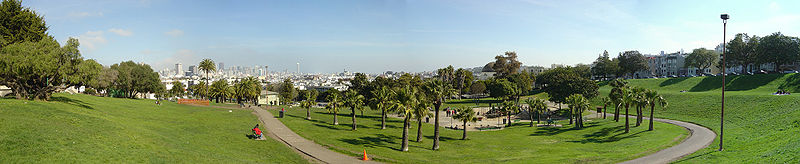
Officials with the SF Recreation and Parks Department are attempting to quell the mounting frustrations of some Mission District merchants and residents who feel that the city shouldn’t allow private companies to operate in a public park, as the department is seeking to do. Even those who don’t necessarily have a problem with inviting more commerce into Dolores Park say the process should have been more open and transparent.

“I like pushcarts,” said Rachel Herbert, owner of Dolores Park Café. “I think they add flavor to San Francisco.” But Herbert is also allowing opponents of the department’s request for proposals (RFP) to set up shop in her store and gather signatures for a petition to “stop the commercialization of Dolores Park.” Herbert, who lives in the neighborhood, said she is helping the effort because “It’s about the process and Rec and Park not really thinking things through and doing whatever they want.”

Mike McConnell, the man behind the petition, holds a similar viewpoint. “I don’t feel that it was adequate outreach before this.” They’re not alone. McConnell currently has petitions in three stores – including his own store, Fayes Video – each with around 100 signatures, along with 700 online petition signatures.

While the controversy is recent, the RFP for the permits was issued in September last year. The proposal stated: “Before entering into permit agreement for the operation of a pushcart in any neighborhood park, the Department will conduct a community outreach process to determine the appropriateness of such a use in the park.”

It’s unclear how much outreach there was beyond a request for applicants posted in the July 31 issue of the San Francisco Chronicle. However, according to Mission Local, department spokesman Elton Pon sent them an email stating that the department mailed out “an announcement of the opportunity to more than 1,000 potential applicants.”

Regina Dick-Endrizzi, director of the SF Office of Small Business, said much of the demand for the permits has come from small time vendors. “Part of this has been an organic growing up of the vendors themselves,” Dick-Endrizzi said. “The mobile food folks have been coming and working and urging us to open up more space.”

Dick-Endrizzi helped vet the applicants in the panel that included members of department and the Mayor’s Office of Economic Development. “I can attest as being part of the committee that they were very careful in making their decision,” she said.

However one recipient of the permits, Oakland-based Blue Bottle Coffee, has received criticisms that it isn’t local enough – city policies encourage contracting with San Francisco small businesses. Blue Bottle is also backed by venture capital firm Kohlberg Ventures.

Its founder recently issued a public letter explaining his position: “I had assumed that since there were published articles in The Chronicle, the Examiner, and the SF Weekly in November of 2009, and January 2010, that the community around Dolores Park was well informed. So it pained me to hear that many of our (hopefully) future neighbors were upset that more outreach had not been done.”

This isn’t the first time a vendor has been allowed to operate in city parks. Nor are they the first merchant with questionable local status. Last August RPD commission voted 6-1 to replace long-time Stow Lake vendor with an out of state suitor. The Chronicle reported “the corporation, which has owned and operated the 1940s-era boathouse for 67 years, couldn’t compete with New Mexico-based Ortega Family Enterprises, which pledged to complete $233,000 worth of improvements to the well-worn building and buy a brand-new fleet of boats.”

Dolores has become a haven for unlicensed vendors selling items such as beer, hot dogs, ice cream, and even pot-laced brownies and truffles. What will become of them? “You pay thousands and thousands for your trailer and for permits and this guy comes around with his little cart and is selling coffee for 50 cents less, what are you going to do? You’re going to call the fucking cops and say get this scumbag out of here,” said local impresario Chicken John.

Dolores Park has traditionally been regarded with a kind of laissez faire attitude by many San Francisco residents. On a warm day it’s not uncommon to see hundreds of chic to cheap layabouts basking on its hills, beer and bowl in hand, without worry in mind. And many-a-cop has seen them too, but rarely do they intervene – and all was well. Maybe that’s another reason why there has been such uproar over the proposed introduction of pushcarts into the park.

Since the uproar, both Blue Bottle Coffee and the other potential vendor nonprofit Cocina have been put in limbo. La Cocina’s executive director, Caleb Zigas, told Mission Local that “he had expected to roll into the park this week and is disappointed by the delay. In the past four months he’s poured $28,000 in grant money into La Cocina’s food trailer, which is now sitting in storage.”

But how long will the pushcarts (they’re actually trailers powered by generators) gather dust in a garage? “For most types of appeals there is a 15-day window after the permit was issued,” said Cynthia Goldstein, executive director of the SF Board of Appeals. However it isn’t a concrete rule. “On rare instances the board will extend the window when there is evidence that the city did something wrong.” In addition, according to Goldstein, there is usually a 15-20 day window between when an appeal is filled and when it is reviewed by the Board. In short, the dilemma may not be quashed by the meeting this evening that the department is holding on the controversy.

The extension would bode well for any NIMBYs since Cocina’s and Blue Bottle’s permits were granted on April 15, 2010 and Sept 2, 2010, respectively.

RecPark was expecting a 12 percent cut on the pushcart profits and hoped to net around $70,000 annually. The pushcarts are just one of the many revenue generating ideas that are currently floating around. RecPark – under its new department head, Phil Ginsburg, who was previously chief of staff to Mayor Gavin Newsom – recently created a partnerships and revenue generating division with the purpose of capitalizing on many of the cities assets.

At the Jan 21, 2010 Recreation and Parks Commission meeting, pushcarts were discussed as a way to ostensibly keep city employees from getting laid off. Other ideas that were tossed out included hosting a production of Peter Pan, renting out parking places for car shares, and an adopt-a-park program; an adopt-a-gardener program was even suggested. The city was broke and was searching for a way to close huge General Fund deficits.

The idea of pushcarts was discussed again at the Feb 18 meeting. Nick Kinsey from the property division of RecPark, told the commission, “We received 18 responses to the RFP and we actually brought six of them in for interviews. As part of the interviews we met with the respondents, we evaluated their qualifications, evaluated their operation plans – in terms of where they wanted to be in each of the parks, in each of the proposed parks, how that would interact with residents and other park users use of the park space and if there would be any conflict there.”

Kinsey continued, “We’re also accepting application on a rolling basis right now. So if anyone is watching and interested in submitting an application for pushcarts, we are accepting pushcarts. Some of our location are maxed out we wouldn’t accept anyone else. But we have plenty of other park spaces where we think this is an appropriate use.”

The meeting of the issue is today (Thurs/7) at 4 p.m. in City Hall Room 416


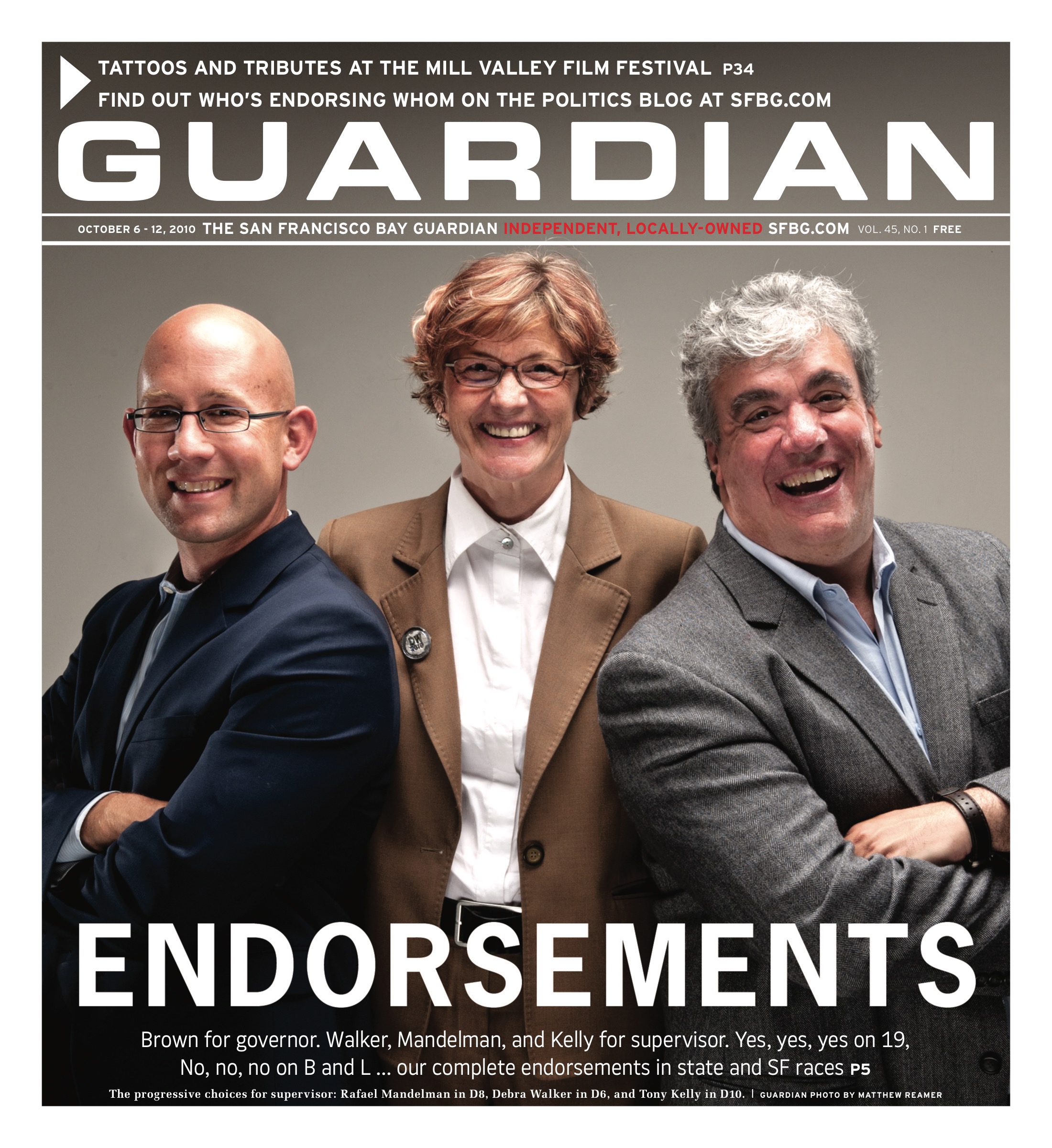
Endorsements 2010: San Francisco candidates

53

SUPERVISOR, DISTRICT 2


JANET REILLY


Frankly, we were a little surprised by the Janet Reilly who came in to give us her pitch as a District 2 supervisorial candidate. The last time we met with her, she was a strong progressive running for state Assembly as an advocate of single-payer health care. She was challenging Fiona Ma from the left, and easily won our endorsement.


Now she’s become a fiscal conservative — somewhat more in synch with her district, perhaps, but not an encouraging sign. Reilly seems to realize that there’s a $500 million budget deficit looming, but she won’t support any of the tax measures on the ballot. She’s against the hotel tax. She’s against the real estate transfer tax on high-end properties. She’s against the local car tax. She opposed Sup. David Chiu’s business tax plan that would have shifted the burden from small to larger businesses (even though it was clear from our interview that she didn’t understand it).


She talked about merging some of the nonprofits that get city money, about consolidating departments, and better management — solutions that might stem a tiny fraction of the red ink. But she wouldn’t even admit that the limited tax burden on the very rich was part of San Francisco’s budget problem.


Her main proposal for creating jobs is more tax credits for biotech, life sciences, and digital media and more public-private partnerships.


It’s too bad, because Reilly’s smart, and she’s far, far better than Mark Farrell, the candidate that the current incumbent, Michela Alioto-Pier, is backing. We wish she’d be realistic about the fiscal nightmare she would inherit as a supervisor.


On the positive side, she’s a strong supporter of public power and she has good connections to the progressive community. Unlike Alioto-Pier, she’d be accessible, open-minded, and willing to work with the progressive majority on the board. That would be a dramatic change, so we’ll give her the nod.


We were also impressed with Abraham Simmons, a federal prosecutor who has spent time researching city finance on the Civil Grand Jury. But he supports sit-lie, Prop. B and Prop. S, and opposes most new tax proposals and needs more political seasoning.


DISTRICT 4


NO ENDORSEMENT


We’ve always wanted to like Carmen Chu. She’s friendly, personable, intelligent, and well-spoken. But on the issues, she’s just awful. Indeed, we can’t think of a single significant vote on which she’s been anything but a call-up loyalist for Mayor Newsom. She even opposed the public power measure, Prop. H, that had the support of just about everyone in town except hardcore PG&E allies.


She’s running unopposed, and will be reelected. But we can’t endorse her.


DISTRICT 6


1. DEBRA WALKER


2. JANE KIM


3. GLENDON “ANNA CONDA” HYDE


CORRECTION: In our original version of this endorsement, we said that Jim Meko supports the sit-lie ordinance. That was an error, and it’s corrected below.


A year ago, this race was artist and activist Debra Walker’s to lose. Most of the progressive community was united behind her candidacy; she’d been working on district issues for a couple of decades, fighting the loft developers during the dot-com boom years and serving on the Building Inspection Commission. Then School Board member Jane Kim decided to enter the race, leaving the left divided, splitting resources that might have gone to other critical district races — and potentially helping to put the most pro-business downtown candidate, Theresa Sparks, in a better position to win.


Now we’ve got something of a mess — a fragmented and sometimes needlessly divisive progressive base in a district that’s key to holding progressive control of the board. And while neither of the two top progressive candidates is actively pursuing a credible ranked-choice voting strategy (Kim has, unbelievably, endorsed James Keys instead of Walker, and Walker has declined to endorse anyone else), we’re setting aside our concern over Kim’s ill-advised move and suggesting a strategy that is most likely to keep the seat Chris Daly has held for the past 10 years from falling to downtown control.


Walker is far and away our first choice. She understands land use and housing — the clear central issues in the district — and has well thought-out positions and proposals. She says that the current system of inclusionary housing — pressing market-rate developers to include a few units of below-market-rate housing with their high-end condos — simply doesn’t work. She supports an immediate affordable housing bond act and a long-term real estate transfer tax high enough to fund a steady supply of housing for the city’s workforce. She told us the city ought to be looking at planning issues from the perspective of what San Francisco needs, not what developers want to build. She’s in favor of progressive taxes and a push for local hiring. We’re happy to give her our first-place ranking.


Jane Kim has been a great SF School Board member and has always been part of the progressive community. But she only moved into District 6 a year and a half ago — about when she started talking about running for supervisor (and she told us in her endorsement interview that “D6 is a district you can run in without having lived there a long time.”) She still hasn’t been able to explain why she parachuted in to challenge an experienced progressive leader she has no substantive policy disagreements with.


That said, on the issues, Kim is consistently good. She is in favor of indexing affordable housing to market-rate housing and halting new condo development if the mix gets out of line. She’s for an affordable housing bond. She supports all the tax measures on this ballot. She’s a little softer on congestion pricing and extending parking-meter hours, but she’s open to the ideas. She supports police foot patrols not just as a law-enforcement strategy, but to encourage small businesses. She’d be a fine vote on the board. And while we’re sympathetic to the Walker supporters who would prefer that we not give Kim the credibility and exposure of an endorsement, the reality is that she’s one of two leading progressives and would be better on the board than the remaining candidates.


Hyde, a dynamic young drag queen performer, isn’t going to win. But he’s offered some great ideas and injected some fun and energy into the race. Hyde talks about creating safe injection sites for IV drug users to reduce the risk of overdoses and the spread of disease. He points out that a lot of young people age out of the foster-care system and wind up on the streets, and he’s for continuum housing that would let these young people transition to jobs or higher education. He talks about starting a co-op grocery in the Tenderloin. He proposes bus-only lanes throughout the district and wants to charge large vehicles a fee to come into the city. He’s a big advocate of nightlife and the arts. He lacks experience and needs more political seasoning, but we’re giving him the third-place nod to encourage his future involvement.


Progressives are concerned about Theresa Sparks, a transgender activist and former business executive who now runs the city’s Human Rights Commission. She did a (mostly) good job on the Police Commission. She’s experienced in city government and has good financial sense. But she’s just too conservative for what remains a very progressive district. Sparks isn’t a big fan of seeking new revenue for the city telling us that “I disagree that we’ve made all the cuts that we can” — even after four years of brutal, bloody, all-cuts budgets. She doesn’t support the hotel tax and said she couldn’t support Sup. David Chiu’s progressive business tax because it would lead to “replacing private sector jobs with public sector jobs” — even though the city’s own economic analysis shows that’s just not true. She supports Newsom’s sit-lie law.


Sparks is the candidate of the mayor and downtown, and would substantially shift the balance of power on the board. She’s also going to have huge amounts of money behind her. It’s important she be defeated.


Jim Meko, a longtime neighborhood and community activist, has good credentials and some solid ideas. He was a key player in the western SoMa planning project and helped come up with a truly progressive land-use program for the neighborhood. But he supports Prop. B and is awfully cranky about local bars and nightlife.


James Keys, who has the support of Sup. Chris Daly and was an intern in Daly’s office, has some intriguing (if not terribly practical) ideas, like combining the Sheriff’s Department and the Police Department and making Muni free). But in his interview, he demonstrated a lack of understanding of the issues facing the district and the city.


So we’re going with a ranked-choice strategy: Walker first, Kim second, Hyde third. And we hope Kim’s supporters ignore their candidate’s endorsement of Keys, put Walker as their second choice, and ensure that they don’t help elect Sparks.


DISTRICT 8


RAFAEL MANDELMAN


This is by far the clearest and most obvious choice on the local ballot. And it’s a critical one, a chance for progressives to reclaim the seat that once belonged to Harvey Milk and Harry Britt.


Mandelman, a former president of the Milk Club, is running as more than a queer candidate. He’s a supporter of tenants rights, immigrants’ rights, and economic and social justice. He also told us he believes “local government matters” — and that there are a lot of problems San Francisco can (and has to) solve on its own, without simply ducking and blaming Sacramento and Washington.


Mandelman argues that the public sector has been starved for years and needs more money. He agrees that there’s still a fair amount of bloat in the city budget — particularly management positions — but that even after cleaning out the waste, the city will still be far short of the money it needs to continue providing pubic services. He’s calling for a top-to-bottom review of how the city gets revenue, with the idea of creating a more progressive tax structure.


He’s an opponent of sit-lie and a supporter of the sanctuary city ordinance. He supports tenants rights and eviction protection. He’s had considerable experience (as a member of the Building Inspection Commission and Board of Appeals and as a lawyer who advises local government agencies) and would make an excellent supervisor.


Neither of the other two contenders make our endorsement cut. Rebecca Prozan is a deputy city attorney who told us she would be able to bring the warring factions on the board together. She has some interesting ideas — she’d like to see the city take over foreclosed properties and turn them into housing for teachers, cops, and firefighters — and she’s opposed to sit-lie. But she’s weak on tenant issues (she told us there’s nothing anyone can do to stop the conversion of rental housing into tenancies-in-common), doesn’t seem to grasp the need for substantial new revenues to prevent service cuts, and doesn’t support splitting the appointments to key commissions between the mayor and the supervisors.


Scott Wiener, a deputy city attorney, is a personable guy who always takes our phone calls and is honest and responsive. He’s done a lot of good work in the district. But he’s on the wrong side of many issues, and on some things would be to the right of the incumbent, Sup. Bevan Dufty.


He doesn’t support public power (which Dufty does). He says that a lot of the city’s budget problems can’t be solved until the state gets its own house in order (“we can’t tax our way out of this”) and favors a budget balanced largely by further cuts. In direct contrast to Mandelman, Wiener said San Franciscans “need to lower our expectations for government.” He wants broad-based reductions in almost all city agencies except Muni, “core” public health services, and public safety. He doesn’t support any further restrictions on condo conversions or TICs. And he has the support of the Small Property Owners Association — perhaps the most virulently anti-tenant and anti-rent control group in town.


This district once gave rise to queer political leaders who saw themselves and their struggles as part of a larger progressive movement. That’s drifted away of late — and with Mandelman, there’s a chance to bring it back.


DISTRICT 10


1. TONY KELLY


2. DEWITT LACY


3. CHRIS JACKSON


District 10 is the epicenter of new development in San Francisco, the place where city planners want to site as many as 40,000 new housing units, most of them high-end condos, at a cost of thousands of blue-collar jobs. The developers are salivating at the land-rush opportunities here — and the next supervisor not only needs to be an expert in land-use and development politics, but someone with the background and experience to thwart the bad ideas and direct and encourage the good ones.


There’s no shortage of candidates — 22 people are on the ballot, and at least half a dozen are serious contenders. Two — Steve Moss and Lynette Sweet — are very bad news. And one of the key priorities for progressives is defeating the big-money effort that downtown, the police, and the forces behind the Van Ness Avenue megahospital proposal are dumping into the district to elect Moss.


Our first choice is Tony Kelly, who operates Thick Description Theater and who for more than a decade has been directly involved in all the major neighborhood issues. He has a deep understanding of what the district is facing: 4,100 of the 5,300 acres in D10 have been rezoned or put under the Redevelopment Agency in the past 10 years. Planners envision as many as 100,000 new residents in the next 10 years. And the fees paid by developers will not even begin to cover the cost of the infrastructure and services needed to handle that growth.


And Kelly has solutions: The public sector will have to play a huge role in affordable housing and infrastructure, and that money should come from higher development fees — and from places like the University of California, which has a huge operation in the district and pays no property taxes. Kelly wants to set up a trigger so that if goals for affordable housing aren’t met by a set date, the market-rate development stops. He supports the revenue measures on the ballot but thinks we should go further. He opposes the pension-reform measure, Prop. B, but notes that 75 percent of the city’s pension problems come from police, fire, and management employees. He wants the supervisors to take over the Redevelopment Agency. He’s calling for a major expansion of open space and parkland in the district. And he thinks the city should direct some of the $3 billion in short-term accounts (now all with the Bank of America) to local credit unions or new municipal bank that could invest in affordable housing and small business. He’s a perfect fit for the job.


DeWitt Lacy is a civil-rights lawyer and a relative newcomer to neighborhood politics. He speaks passionately about the need for D10 to get its fair share of the city’s services and about a commitment to working-class people.


Lacy is calling for an immediate pilot program with police foot patrols in the high-crime areas of the district. He’s for increasing the requirements for developers to build affordable housing and wants to cut the payroll tax for local businesses that hire district residents.


Lacy’s vision for the future includes development that has mixed-use commuter hubs with shopping and grocery stores as well as housing. He supports the tax measures on the ballot and would be willing to extend parking meter hours — but not parking fines, which he calls an undue burden on low-income people.


He’s an outspoken foe of sit-lie and of gang injunctions, and with his background handling police abuse lawsuits, he would have a clear understanding of how to approach better law-enforcement without intimidating the community. He lacks Kelly’s history, experience, and knowledge in neighborhood issues, but he’s eminently qualified and would make a fine supervisor.


Chris Jackson, who worked at the San Francisco Labor Council and serves on the Community College Board, is our third choice. While it’s a bit unfortunate that Jackson is running for higher office only two years after getting elected to the college board, he’s got a track record and good positions on the issues. He talks of making sure that blue-collar jobs don’t get pushed out by housing, and suggested that the shipyard be used for ship repair. He wants to see the city mandate that landlords rent to people with Section 8 housing vouchers. He supports the tax measures on the ballot, but also argues that the city has 60 percent more managers than it had in 2000 and wants to bring that number down. He thinks the supervisors should take over Redevelopment, which should become “just a financing agency for affordable housing.” He wants to relocate the stinky sewage treatment plant near Third Street and Evans Avenue onto one of the piers and use the area for a transit hub. He’s still relatively unseasoned, but he has a bright political future.


Eric Smith, a biodiesel activist, is an impressive candidate too. But while his environmental credentials are good, he lacks the breadth of knowledge that our top three choices offer. But we’re glad he’s in the race and hope he stays active in community politics.


Malia Cohen has raised a lot of money and (to our astonishment) was endorsed No. 2 by the Democratic Party, but she’s by no means a progressive, particularly on tenant issues — she told us that limiting condo conversions is an infringement of property rights. And she’s way too vague on other issues.


Moss is the candidate of the big developers and the landlords, and the Chamber of Commerce is dumping tens of thousands of dollars into getting him elected. He’s got some good environmental and energy ideas — he argues that all major new developments should have their own energy distribution systems — but on the major issues, he’s either on the wrong side or (more often) can’t seem to take a stand. He said he is “still mulling over” his stand on sit-lie. He supports Sanctuary City in theory, but not the actual measure Sup. David Campos was pushing to make the policy work. He’s not sure if he likes gang injunctions or not. He only moved back to the district when he decided to run for supervisor. He’s way too conservative for the district and would be terrible on the board.


Lynette Sweet, a BART Board member, has tax problems (and problems explaining them) and wouldn’t even come to our office for an endorsement interview. The last thing D10 needs is a supervisor who’s not accountable and unwilling to talk to constituents and the press.


So we’re going with Kelly, Lacy, and Jackson as the best hope to keep D10 from becoming a district represented by a downtown landlord candidate.


SAN FRANCISCO BOARD OF EDUCATION


MARGARET BRODKIN


KIM-SHREE MAUFAS


HYDRA MENDOZA


Three seats are up on the School Board, and three people will get elected. And it’s a contested race, and in situations like that, we always try to endorse a full slate.


This fall, it was, to put it mildly, a challenge.


It’s disturbing that we don’t have three strong progressive candidates with experience and qualifications to oversee the San Francisco Unified School District. But it seems to be increasingly difficult to find people who want to — and can afford to — devote the time to what’s really a 40-hour-a-week position that pays $500 a month. The part-time school board is an anachronism, a creature of a very different economic and social era. With the future of the next generation of San Franciscans at stake, it’s time to make the School Board a full-time job and pay the members a decent salary so that more parents and progressive education advocates can get involved in one of the most important political jobs in the city.


That said, we’ve chosen the best of the available candidates. It’s a mixed group, made up of people who don’t support each other and aren’t part of anyone’s slate. But on balance, they offer the best choices for the job.


This is not a time when the board needs radical change. Under Superintendent Carlos Garcia, the local public schools are making huge strides. Test scores are up, enrollment is increasing, and San Francisco is, by any rational measure, the best big-city public school district in California. We give considerable credit for that to the progressives on the board who got rid of the irascible, secretive, and hostile former Superintendent Arlene Ackerman and replaced her with Garcia. He’s brought stability and improvement to the district, and is implementing a long-term plan to bring all the schools up to the highest levels and go after the stubborn achievement gap.


Yet any superintendent and any public agency needs effective oversight. One of the problems with the district under Ackerman was the blind support she got from school board members who hired her; it was almost as if her allies on the board were unable to see the damage she was doing and unable to hold her accountable.


Our choices reflect the need for stability — and independence. We are under no illusions — none of our candidates are perfect. But as a group, we believe they can work to preserve what the district is doing right and improve on policies that aren’t working.


Kim-Shree Maufas has been a staunch progressive on the board. She got into a little trouble last year when the San Francisco Chronicle reported that she’d been using a school district credit card for personal expenses. That’s not a great move, but she never actually took public money since she paid back the district. Maufas said she thought she could use the card as long as she reimbursed the district for her own expenses; the rules are now clear and she’s had no problems since. We don’t consider this a significant enough failure in judgment to prevent her from continuing to do what she’s been doing: serving as an advocate on the board for low-income kids and teachers.


Maufas is a big supporter of restorative justice and is working for ways to reduce suspensions and expulsions. She wants to make sure advanced placement and honors classes are open to anyone who can handle the coursework. She supports the new school assignment process (as do all the major candidates), although she acknowledges that there are some potential problems. She told us she thinks the district should go back to the voters for a parcel tax to supplement existing funding for the schools.


Margaret Brodkin is a lightening rod. In fact, much of the discussion around this election seems to focus on Brodkin. Since she entered the race, she’s eclipsed all the other issues, and there’s been a nasty whisper campaign designed to keep her off the board.


We’ve had our issues with Brodkin. When she worked for Mayor Newsom, she was part of a project that brought private nonprofits into city recreation centers to provide services — at a time when unionized public employees of the Recreation and Parks Department were losing their jobs. It struck us as a clear privatization effort by the Newsom administration, and it raised a flag that’s going to become increasingly important in the school district: there’s a coming clash between people who think private nonprofits can provide more services to the schools and union leaders who fear that low-paid nonprofit workers will wind up doing jobs now performed by unionized district staff. And Brodkin’s role in the Newsom administration — and her background in the nonprofit world — is certainly ground for some concern.


But Brodkin is also by far the most qualified person to run for San Francisco school board in years, maybe decades. She’s a political legend in the city, the person who is most responsible for making issues of children and youth a centerpiece of the progressive agenda. In her years as director of Coleman Advocates for Children and Youth, she tirelessly worked to make sure children weren’t overlooked in the budget process and was one of the authors of the initiative that created the Children’s Fund. She’s run a nonprofit, run a city department, and is now working on education issues.


She’s a feisty person who can be brusque and isn’t always conciliatory — but those characteristics aren’t always bad. Sup. Chris Daly used his anger and passion to push for social justice on the Board of Supervisors and, despite some drawbacks, he’s been an effective public official.


And Brodkin is full of good ideas. She talks about framing what a 21st century education looks like, about creating community schools, about aligning after-school and summer programs with the academic curriculum. She wants the next school bond act to include a central kitchen, so local kids can get locally produced meals (the current lunch fare is shipped in frozen from out of state).


Brodkin needs to remember that there’s a difference between being a bare-knuckles advocate and a member of a functioning school board. But given her skills, experience, and lifetime in progressive causes, we’re willing to give her a chance.


We also struggled over endorsing Hydra Mendoza. She works for Mayor Newsom as an education advisor — and that’s an out-front conflict of interest. She’s a fan of Obama’s Education Secretary, Arne Duncan, whose policies are regressive and dangerous.


On the other hand, she cares deeply about kids and public education. She’s not a big supporter of charter schools (“I’ve yet to see a charter school that offers anything we can’t do ourselves,” she told us) and while she was on the wrong side of a lot of issues (like JROTC) early in her tenure, over the past two years she’s been a good School Board member.


There are several other candidates worth mentioning. Bill Barnes, an aide to Michela Alioto-Pier, is a good guy, a decent progressive — but has no experience in or direct connection to the public schools. Natasha Hoehn is in the education nonprofit world and speaks with all the jargon of the educrat, but her proposals and her stands on issues are vague. Emily Murase is a strong parent advocate with some good ideas, but she struck us as a bit too conservative (particularly on JROTC and charter schools.) Jamie Wolfe teaches at a private school but lacks any real constituency or experience in local politics and the education community.


So given a weak field with limited alternatives, we’re going with Maufas, Brodkin and Mendoza.


SAN FRANCISCO COMMUNITY COLLEGE BOARD


JOHN RIZZO


The San Francisco Community College District has been a mess for years, and it’s only now starting to get back on track. That’s the result of the election of a few progressive reformers — Milton Marks, Chris Jackson, and John Rizzo, who now have enough clout on the seven-member board to drag along a fourth vote when they need it.


But the litany of disasters they’ve had to clean up is almost endless. A chancellor (who other incumbent board members supported until the end) is now under indictment. Public money that was supposed to go to the district wound up in a political campaign. An out-of-control semiprivate college foundation has been hiding its finances from the public. The college shifted bond money earmarked for an arts center into a gigantic, expensive gym with a pool that the college can’t even pay to operate, so it’s leased out to a private high school across the street.


And the tragedy is that all three incumbents — two of whom should have stepped down years ago — are running unopposed.


With all the attention on the School Board and district elections, not one progressive — in fact, not one candidate of any sort — has stepped forward to challenge Anita Grier and Lawrence Wong. So they’ll get another term, and the reformers will have to continue to struggle.


We’re endorsing only Rizzo, a Sierra Club staffer who has been in the lead in the reform bloc. He needs to end up as the top vote-getter, which would put him in position to be the board president. Rizzo has worked to get the district’s finances and foundation under control and he richly deserves reelection.


BART BOARD OF DIRECTORS, DISTRICT 8


BERT HILL


It’s about time somebody mounted a serious challenge to James Fang, the only elected Republican in San Francisco and a member of one of the most dysfunctional public agencies in California. The BART Board is a mess, spending a fortune on lines that are hardly ever used and unable to work effectively with other transit agencies or control a police force that has a history of brutality and senseless killing.


Fang supports the suburban extensions and Oakland Airport connector, which make no fiscal or transportation sense. He’s ignored problems with the BART Police for 20 years. It’s time for him to leave office.


Bert Hill is a strong challenger. A professional cost-management executive, he understands that BART is operating on an old paradigm of carrying people from the suburbs into the city. “Before we go on building any more extensions,” he told us, “we should take care of San Francisco.” He wants the agency to work closely with Muni and agrees there’s a need for a BART sunshine policy to make the notoriously secretive agency more open to public scrutiny. We strongly endorse him.


ASSESSOR-RECORDER


PHIL TING


San Francisco needs an aggressive assessor who looks for every last penny that big corporations are trying to duck paying — but this is also a job that presents an opportunity for challenging the current property tax laws. Phil Ting’s doing pretty well with the first part — and unlike past assessors, is actually stepping up to the plate on the second. He’s been pushing a statewide coalition to reform Prop. 13 — and while it’s an uphill battle, it’s good to see a tax assessor taking it on. Ting has little opposition and will be reelected easily.


PUBLIC DEFENDER


JEFF ADACHI


Adachi’s done a great job of running the office that represents indigent criminal defendants. He’s been outspoken on criminal justice issues. Until this year, he was often mentioned as a potential progressive candidate for mayor.


That’s over now. Because Adachi decided (for reasons we still can’t comprehend) to join the national attack on public employees and put Prop. B on the ballot, he’s lost any hope of getting support for higher office from the left. And since the moderate and conservative forces will never be comfortable with a public defender moving up in the political world, Adachi’s not going anywhere anytime soon.


Which is fine. He’s doing well at his day job. We wish he’d stuck to it and not taken on a divisive, expensive, and ill-conceived crusade to cut health care benefits for city employees.


SAN FRANCISCO SUPERIOR COURT


SEAT 15


MICHAEL NAVA


To hear some of the brahmins of the local bench and bar tell it, the stakes in this election are immense — the independence of the judiciary hangs in the balance. If a sitting judge who is considered eminently qualified for the job and has committed no ethical or legal breaches can be challenged by an outsider who is seeking more diversity on the bench, it will open the floodgates to partisan hacks taking on good judges — and force judicial candidates to raise money from lawyers and special interests, thus undermining the credibility of the judiciary.


We are well aware of the problems of judicial elections around the country. In some states, big corporations that want to influence judges raise and spend vast sums on trial and appellate court races — and typically get their way. In Iowa, three judges who were willing to stand on principle and Constitutional law and declare same-sex marriage legal are facing what amounts to a well-funded recall effort. California is not immune — in more conservative counties, liberal judges face getting knocked off the bench by law-and-order types.


It’s a serious issue. It’s worth a series of hearings in the state Legislature, and it might be worth Constitutional change. Maybe trial-court elections should be eliminated. Maybe all judicial elections should have public campaign financing. But right now, it’s an elected office — at least in theory.


In practice, the vast majority of the judicial slots in California are filled by appointment. Judges serve for four-year terms but tend to retire or step down in midterm, allowing the governor to fill the vacancy. Unless someone files specifically to challenge an incumbent, typically appointed judge, that race never even appears on the ballot.


The electoral process is messy and political, and raising money is unseemly for a judicial officer. But the appointment process is hardly pure, either — and governors in California have, over the past 30 years, appointed the vast majority of the judges from the ranks of big corporate law firms and district attorney’s offices.


There are, of course, exceptions, and Gov. Arnold Schwarzenegger has been better than his predecessor, Democrat Gray Davis. But overall, public interest lawyers, public defenders, and people with small community practices (and, of course, people who have no political strings to pull in Sacramento) have been frustrated. And it’s no surprise that some have sought to run against incumbents.


That’s what’s happening here. Michael Nava, a gay Latino who has been working as a research attorney for California Supreme Court Justice Carlos Moreno, was going to run for a rare open seat this year, but the field quickly got crowded. So Nava challenged Richard Ulmer, a corporate lawyer appointed by Schwarzenegger who has been on the bench a little more than a year.


We will stipulate, as the lawyers say: Ulmer has done nothing wrong. From all accounts, he’s a fine judge (and before taking the bench, he did some stellar pro bono work fighting for reforms in the juvenile detention system). So there are two questions here: Should Nava have even filed to run against Ulmer? And since he did, who is the better candidate?


It’s important to understand this isn’t a case of special interests and that big money wanting to oust a judge because of his politics or rulings. Nava isn’t backed by any wealthy interest. There’s no clear parallel to the situations in other areas and other states where the judiciary is being compromised by electoral politics. Nava had every right to run — and has mounted an honest campaign that discusses the need for diversity on the bench.


Ulmer’s supporters note — correctly — that the San Francisco courts have more ethnic and gender diversity than any county in the state. And we’re not going to try to come to a conclusion here about how much diversity is enough.


But we will say that life experience matters, and judges bring to the bench what they’ve lived. Nava, who is the grandson of Mexican immigrants and the first person in his family to go to college, may have a different perspective on how low-income people of color are treated in the courts than a former Republican who spent his professional career in big law firms.


We were impressed by Nava’s background and knowledge — and by his interest in opening up the courts. He supports cameras in the courtrooms and allowing reporters to record court proceedings. He told us the meetings judges hold on court administration should be open to the public.


We’re willing to discuss whether judicial elections make sense. Meanwhile, judges who don’t like the idea of challenges should encourage their colleagues not to retire in midterm. If all the judges left at the end of a four-year term, there would be plenty of open seats and fewer challenges. But for now, there’s nothing in this particular election that makes us fear for the independence of the courts. Vote for Nava.


>>BACK TO ENDORSEMENTS 2010

Endorsements 2010: State ballot measures

25

PROP. 19

LEGALIZE MARIJUANA

YES, YES, YES

The most surprising thing about Prop. 19 is how it has divided those who say they support the legalization of marijuana. Critics within the cannabis community say decriminalization should occur at the federal level or with uniform statewide standards rather that letting cities and counties set their own regulations, as the measure does. Sure, fully legalizing marijuana on a large scale and regulating its use like tobacco and alcohol would be better — but that’s just not going to happen anytime soon. As we learned with the legalization of marijuana for medical uses through Prop. 215 in 1996, there are still regional differences in the acceptance of marijuana, so cities and counties should be allowed to treat its use differently based on local values. Maybe San Francisco wants full-blown Amsterdam-style hash bars while Fresno would prefer far more limited distribution options — and that’s fine.

Other opponents from within marijuana movement are simply worried about losing market share or triggering federal scrutiny of a system that seems to be working well for many. But those are selfish reasons to oppose the long-overdue next step in legalizing adult use of cannabis, a step we need to take even if there is some uncertainty about what comes next. By continuing with prohibition Californians and their demand for pot are empowering the Mexican drug cartels and their violence and political corruption; perpetuating a drug war mentality that is ruining lives, wasting resources, and corrupting police agencies that share in the take from drug-related property seizures; and depriving state and local governments of tax revenue from the California’s number one cash crop.

Bottom line: if there are small problems with this measure, they can be corrected with state legislation that Assemblymember Tom Ammiano has already pledged to carry and that Prop. 19 explicitly allows. But this is the moment and the measure we need to seize to continue making progress in our approach to marijuana in California. Vote yes on Prop. 19.


PROP. 20

CONGRESSIONAL DISTRICT REAPPORTIONMENT

NO

Prop. 20 seeks to transfer the power to draw congressional districts from elected officials to the 14-member California Citizens Redistricting Commission, the state agency created in 2008 to draw boundary lines for California state legislative districts and Board of Equalization districts.

Supporters argue that Prop. 20, (which is backed by Charles Munger Jr., the heir to an investment fortune) would create more competitive elections and holds politicians accountable. And indeed, there’s been some funky gerrymandering going on the the state for decades.

But the commission is hardly a fair body — it has the same number of Republicans as Democrats in a state where there are far more Democrats than Republicans. And most states still draw lines the old-fashioned way, so Prop. 20 could give the GOP an advantage in a Democratic state. States like Texas and Florida, notorious for pro-Republican gerrymandering, aren’t planning to change how they do their districts.

That’s why former state Assemblymember John Laird (D-Santa Cruz), who lost his recent bid for the State Senate thanks to gerrymandering and an August special election, calls Prop. 20 “the unilateral disarmament of California.”

It could also create a political mess in San Francisco, Laird said. “An independent commission could end up dividing the city north/south, not east/west. Or it could throw Sen. Mark Leno and Leland Yee into the same district.” Vote no.


PROP. 21

VEHICLE LICENSE FEE FOR PARKS

YES

Part of the reason California is in the fiscal crisis it is now facing — underfunding schools, slashing services, and considering selling off state parks — is because Gov. Arnold Schwarzenegger ran for office on a pandering pledge to deeply cut the vehicle license fee, costing the state tens of billions of dollars since then. It was the opposite of what this state should have been doing if it was serious about addressing global warming and other environmental imperatives, not to mention encouraging car drivers to come closer to paying for their full societal impacts, which study after study shows they don’t now do. This measure doesn’t fully correct that mistake, but it’s a start.

Prop. 21 would charge an $18 annual fee on vehicle license registrations and reserve at least half of the $500 million it would generate for state park maintenance and wildlife conservation programs. As an added incentive, the measure would also give cars free entrance to the state parks, a $50 million perk. Of the remaining $450 million, $200 million could be used to back-fill state general fund revenue now going to these functions, which means most of this money would go to parks and wildlife.

We’d rather see funds derived from private car use go to mass transit and other alternatives to the automobile, but we’re not going to quibble with the details on this one. California desperately needs the money, and it’s time for drivers to start giving back some of the money they shouldn’t have been given in the first place.


PROP. 22

LOCAL REDEVELOPMENT FUNDS

NO

This one sounds good, on the surface: Prop. 22 would prevent the state from taking money from city redevelopment agencies to balance the budget in Sacramento. But it’s not so simple: Sometimes it actually makes sense to use redevelopment money to fund, say, education — and only the state can do that. Besides, this particular bill only protects cities, not counties — so San Francisco will take even more of a hit in tough times. Vote no.


PROP. 23

SUSPENDING AIR POLLUTION CONTROL LAWS

NO, NO, NO

Think of Prop. 23 as a band of right-wing extremists orchestrating a sneak attack on the one hope this country has for removing its head from the tarball-sticky sand and actually doing something, for real this time, about global warming. Assembly Bill 32, California’s Global Warming Solutions Act, imposes enforceable limits on greenhouse gas emissions by 2012 — and now, Big Oil is drilling deep into its pockets in an effort to blow up those limits.

Funded by Texas oil companies Tesoro Corporation and Valero Energy Corporation in conjunction with the Koch brothers, billionaires who have been called the financial backbone of the Tea Party, Prop. 23 would reverse a hard-fought victory by suspending AB32 until unemployment drops to 5.5 percent for four consecutive quarters — not likely to happen anytime soon. In truly sleazy fashion, proponents have dubbed Prop. 23 the “California jobs initiative.”

The environmental arguments for rejecting Prop. 23 are obvious, but this time there’s a twist — even the business community doesn’t like it. Take it from Rob Black of the San Francisco Chamber of Commerce, which is actively opposing Prop. 23. “There is a fear that clean energy policy is a communist plot,” Black explained. “We actually think it’s a good capitalist strategy.” To most business leaders, AB32 is like the goose that laid the golden egg — it encourages investment in green technology, which is probably California’s best future economic hope. Vote no on 23.


PROP. 24

BUSINESS TAXES

YES

Prop. 24 repeals some special-interest tax breaks that the Legislature had to accept as part of the latest budget deal. In essence, it restores about $1.7 billion worth of taxes on corporations, particularly larger ones that hide income among various affiliates. Vote yes.


PROP. 25

SIMPLE MAJORITY BUDGET PASSAGE

YES, YES, YES

Prop. 25 would be a step toward ending the budget madness that defines California politics every year. It would allow the state Legislature to pass a budget and budget-related legislation can be passed with a simple majority vote.

It’s not a full solution — a two-thirds vote would still be required to pass taxes. But at least it would allow the majority party to approve a blueprint for state spending and help end the gridlock caused by a small number of Republicans. Vote yes.


PROP. 26

TWO-THIRDS VOTE FOR FEES

NO, NO, NO.

Prop. 26 would require a two-thirds supermajority vote in the Legislature and at the ballot box in local communities to pass fees, levies, charges and tax revenue allocations that under existing rules can be enacted by a simple majority vote

It’s supported by the Chamber of Commerce, Chevron, Occidental Petroleum, the Wine Institute, and Aera Energy.

Opponents argue that Prop. 26 should be called the “Polluter Protection Act” because it would make it harder to impose fees on corporations that cause environmental or public health problems. For example, it would be harder to impose so-called “pollution fees” on corporations that discharge toxics into the air or water. It would also make it nearly impossible for San Francisco to impose revenue measures like the Alcohol Fee sponsored by Sup. John Avalos. It’s another in a long line of attempts at the state level to block local government from raising money. Vote no.


PROP. 27

ELIMINATING REDISTRICTING COMMISSION

YES

We opposed the 2008 ballot measure creating the redistricting commission, arguing that, while allowing the state Legislature to draw its own seats is a problem, the solution would make things worse. The panel isn’t at all representative of the state (it has an equal number of Republicans and Democrats) and could be insensitive to the political demographics of California cities (it makes sense, for example, to have Senate and Assembly lines in San Francisco divide the city into east and west sides because that’s how the politics of the city tend to break).

This measure abolishes that panel and would allow the Legislature to draw new lines for both state and federal offices after the 2010 census. We don’t love having the Legislature handle that task — but we like the existing, unaccountable, unrepresentative agency even less. Vote yes.


>>BACK TO ENDORSEMENTS 2010

Endorsements 2010: State races

24

GOVERNOR

EDMUND G. BROWN

We have issues with Jerry Brown. The one-time environmental leader who left an admirable progressive legacy his first time in the governor’s office (including the Agricultural Labor Relations Board, the California Conservation Corps, and the liberal Rose Bird Supreme Court) and who is willing to stand up and oppose the Diablo Canyon nuclear power plant has become a centrist, tough-on-crime, no-new-taxes candidate. And his only solution to the state budget problems is to bring all the players together early and start talking.

But at least since he’s started to debate Republican Meg Whitman face to face, he’s showing some signs of life — and flashes of the old Jerry. He’s strongly denouncing Whitman’s proposal to wipe out capital gains taxes, reminding voters of the huge hole that would blow in the state budget — and the $5 billion windfall it would give to the rich. He’s talking about suing Wall Street financial firms that cheated Californians. He’s promoting green jobs and standing firm in support of the state’s greenhouse-gas emissions limits.

For all his drawbacks (his insistence, for example, that the Legislature shouldn’t raise any taxes without a statewide vote of the people), Brown is at least part of the reality-based community. He understands that further tax cuts for the rich won’t solve California’s problems. He knows that climate change is real. He’s not great on immigration issues, but at least he’s cognizant that 2 million undocumented immigrants live in California — and the state can’t just arrest and deport them all.

Whitman is more than a conservative Republican. She’s scary. The centerpiece of her economic platform calls for laying off 40,000 state employees — thereby greatly increasing the state’s unemployment rate. Her tax plan would increase the state’s deficit by another $5 billion just so that a tiny number of the richest taxpayers (including her) can keep more of their money. She’s part of the nativist movement that wants to close the borders.

She’s also one of the growing number of candidates who think personal wealth and private-sector business success translate to an ability to run a complex state government. That’s a dangerous trend — Whitman has no political experience or background (until recently she didn’t even vote) and will be overcome by the lobbyists in Sacramento.

This is a critically important election for California. Vote for Jerry Brown.


LIEUTENANT GOVERNOR


GAVIN NEWSOM

Why is the mayor of San Francisco running for a job he once dismissed as worthless? Simple: he couldn’t get elected governor, and he wants a place to perch for a while until he figures out what higher office he can seek. It’s almost embarrassing in its cold political calculus, but that’s something we’ve come to expect from Newsom.

We endorsed Newsom’s opponent, Janice Hahn, in the Democratic primary. It was hard to make a case for advancing the political career of someone who has taken what amounts to a Republican approach to running the city’s finances — he’s addressed every budget problem entirely with cuts, pushed a “no-new-taxes” line, and given the wealthy everything they wanted. His immigration policies have broken up families and promoted deporting kids. He’s done Pacific Gas and Electric Co. a nice favor by doing nothing to help the community choice aggregation program move forward.

Nevertheless, we’re endorsing Newsom over his Republican opponent, Abel Maldonado, because there really isn’t any choice. Maldonado is a big supporter of the death penalty (which Newsom opposes). He’s pledged never to raise taxes (and Newsom is at least open to discussion on the issue). He used budget blackmail to force the awful open-primaries law onto the ballot. He’s a supporter of big water projects like the peripheral canal. In the Legislature, he earned a 100 percent rating from the California Chamber of Commerce.

Newsom’s a supporter of more funding for higher education (and the lieutenant governor sits on the University of California Board of Regents). He’d be at least a moderate environmentalist on the state Lands Commission. And he, like Brown, is devoting a lot of attention to improving the state’s economy with green jobs.

We could do much worse than Newsom in the lieutenant governor’s office. We could have Maldonado. Vote for Newsom.


SECRETARY OF STATE


DEBRA BOWEN

California has had some problems with the office that runs elections and keeps corporate filings. Kevin Shelley had to resign from the job in 2005 in the face of allegations that a state grant of $125,000 was illegally diverted into his campaign account. But Bowen, by all accounts, has run a clean office. Her Republican opponent, Damon Dunn, a former professional football player and real estate agent, doesn’t even have much support within his own party and is calling for mandatory ID checks at the ballot. This one’s easy; vote for Bowen.


CONTROLLER


JOHN CHIANG

Chiang’s been a perfectly decent controller, and at times has shown some political courage: When Gov. Arnold Schwarzenegger tried to cut the pay of state employees to minimum-wage level, Chiang refused to go along — and forced the governor to back down. His opponent, state Sen. Tony Strickland (R-Los Angeles), wants to use to office to promote cuts in government spending. Vote for Chiang.


TREASURER


BILL LOCKYER

Lockyer’s almost certain to win reelection as treasurer against a weak Republican, Mimi Walters. He’s done an adequate job and pushed a few progressive things like using state bonds to promote alternative energy. Mostly, though, he seems to be waiting for his chance to run for governor — and if Jerry Brown loses, or wins and decides not to seek a second term, look for Lockyer to step up.


ATTORNEY GENERAL


KAMALA HARRIS

This is going to be close, and it’s another clear choice. We’ve had our differences with Harris — she’s trying too hard to be a tough-on-crime type, pushing some really dumb bills in Sacramento (like a measure that would bar sex offenders from ever using social networking sites on the Internet). And while she shouldn’t take all the blame for the problems in the San Francisco crime lab, she should have known about the situation earlier and made more of a fuss. She’s also been slow to respond to serious problem of prosecutors and the cops hiding information about police misconduct from defense lawyers that could be relevant to a case.

But her opponent, Los Angeles D.A. Steve Cooley, is bad news. He’s a big proponent of the death penalty, and the ACLU last year described L.A. as the leading “killer county in the country.” Cooley has proudly sent 50 people to death row since he became district attorney in 2001, and he vows to make it easier and more efficient for the state to kill people.

He’s also a friend of big business who has vowed, even as attorney general, to make the state more friendly to employers — presumably by slowing prosecutions of corporate wrongdoing.

Harris, to her credit, has refused to seek the death penalty in San Francisco, and would bring the perspective of a woman of color to the AG’s office. For all her flaws, she would be far better in the AG’s office than Cooley. Vote for Harris.


INSURANCE COMMISSIONER


DAVE JONES

Jones, currently a state Assemblymember from Sacramento, won a contested primary against his Los Angeles colleague Hector de la Torre and is now fighting Republican Mike Villines of Fresno, also a member of the Assembly. Jones is widely known as a consumer advocate and was a foe of Prop. 17, the insurance industry scam on the June ballot. A former Legal Aid lawyer, he has extensive experience in health-care reform, supports single-payer health coverage, and would make an excellent insurance commissioner.

Villines pretty much follows right-wing orthodoxy down the line. He wants to replace employer-based insurance with health savings accounts. He argues that the solution to the cost of health insurance is to limit malpractice lawsuits. He wants to limit workers compensation claims. And he supports “alternatives to litigation,” which means eliminating the rights of consumers to sue insurance companies.

Not much question here. Vote for Jones.


BOARD OF EQUALIZATION, DISTRICT 1


BETTY YEE

The Board of Equalization isn’t well known, but it plays a sizable role in setting and enforcing California tax policy. Yee’s a strong progressive who has done well in the office, supporting progressive financial measures. She’s spoken out — as a top tax official — in favor of legalizing and taxing marijuana. We’re happy to endorse her for another term.


SUPERINTENDENT OF PUBLIC INSTRUCTION


TOM TORLAKSON

We fully expected a November runoff between Torlakson and state Sen. Gloria Romero. Both Democrats had strong fundraising and political bases — and very different philosophies. Romero’s a big charter school and privatization fan; Torlakson has the support of the teachers unions. But to the surprise of nearly everyone, a wild-card candidate, retired Los Angeles educator Larry Aceves, came in first, with Torlakson second and Romero third. Now Aceves and Torlakson are in the runoff for this nonpartisan post.

Aceves is an interesting candidate, a former principal and school superintendent who has the endorsement of the San Francisco Chronicle and the San Francisco Green Party. But he’s too quick to take the easy line that the teachers’ unions are the biggest problem in public education, and he wants the unilateral right to suspend labor contracts.

Torlakson wants more charter-school accountability and more funding for primary education. He’s the far better candidate.


STATE SENATE


DISTRICT 8

Leland Yee

Yee’s got no opposition to speak of, and will easily be re-elected. So why is he spending money on a series of slick television ads that have been airing all over San Francisco, talking about education and sending people to his website? It’s pretty obvious: The Yee for state Senate campaign is the opening act of the Yee for San Francisco mayor campaign, which should kick into high gear sometime next spring. In other words, if Yee has his way, he’ll serve only a year of his next four-year term.

Yee infuriates his colleagues at times, particularly when he refuses to vote for a budget that nobody likes but everyone knows is necessary to keep the state afloat. He’s done some ridiculous things, like pushing to sell the Cow Palace as surplus state property and turn the land over to private real estate developers. But he’s always good on open-government issues, is pushing for greater accountability for companies that take tax breaks and then send jobs out of state, has pushed for accountability at the University of California, and made great progress in opening the records at semiprivate university foundations when he busted Stanislaus State University for its secret speaking-fees deal with Sarah Palin.

With a few strong reservations, we’ll endorse Yee for another term.


STATE ASSEMBLY, DISTRICT 12


FIONA MA

A clear hold-your-nose endorsement. Ma has done some truly bad things in Sacramento, like pushing a bill that would force the San Francisco Unified School District to allow military recruiters in the high schools and fronting for landlords on a bill to limit rent control in trailer parks. But she’s good on public power and highly critical of PG&E, and she has no opposition to speak of.


STATE ASSEMBLY, DISTRICT 13


TOM AMMIANO

Ammiano’s a part of San Francisco history, and without his leadership as a supervisor, we might not have a progressive majority on the Board of Supervisors. Ammiano was one of the architects of the return to district elections, and his 1999 mayoral campaign (against Willie Brown) marked a turning point in the organization, sophistication, and ultimate success of the city’s left. He was the author of the rainy day fund (which has kept the public schools from massive layoffs over the past couple of years) and the Healthy San Francisco plan.

In Sacramento, he’s been a leader in the effort to legalize (and tax) marijuana and to demand accountability for the BART Police. He’s taken on the unpleasant but critical task of chairing the Public Safety Committee and killing the worst of the right-wing crime bills before they get to the floor. He has four more years in Sacramento, and we expect to see a lot more solid progressive legislation coming out of his office. We enthusiastically endorse him for reelection.


STATE ASSEMBLY, DISTRICT 14


NANCY SKINNER

Skinner’s a good progressive, a good ally for Ammiano on the Public Safety Committee, and a friend of small business and fair taxation. Her efforts to make out-of-state companies that sell products in California pay state sales tax would not only bring millions into the state coffers but protect local merchants from the likes of Amazon. We don’t get why she’s joined with Berkeley Mayor Tom Bates to try to get rid of Kriss Worthington, the most progressive member of the Berkeley City Council, but we’ll endorse her for re-election.


STATE ASSEMBLY, DISTRICT 16


SANDRE SWANSON

Swanson’s a good vote most of the time in Sacramento, but he’s not yet the leader he could be — particularly on police accountability. The BART Police murdered Oscar Grant in Swanson’s district, yet it fell to a San Franciscan, Tom Ammiano, to introduce strong state legislation to force BART to have civilian oversight of the transit cops. Still, he’s done some positive things (like protecting state workers who blow the whistle on fraud) and deserves another term.


>>BACK TO ENDORSEMENTS 2010

Music listings

0

Music listings are compiled by Paula Connelly and Cheryl Eddy. Since club life is unpredictable, it’s a good idea to call ahead to confirm bookings and hours. Prices are listed when provided to us. Submit items for the listings at listings@sfbg.com. 

WEDNESDAY 6

ROCK/BLUES/HIP-HOP

Aces Biscuits and Blues. 8 and 10pm, $15.

Caribou, Emeralds Regency Ballroom. 9:30pm, $22.

Child Abuse, Burmese, Death Sentence: Panda Elbo Room. 10pm, $7.

Continues, Felt Drawings, Bloody Snowman, Ssleeping DesiresS DNA Lounge. 9pm, $11.

Fences, Head and the Heart, Winter’s Fall Rickshaw Stop. 8pm, $10.

Fortune 500, Gem Tops, Barrel Riders Rock-It Room. 9pm, $8.

Lissie, Dylan LeBlanc Great American Music Hall. 8pm, $15.

Plastic Fantastic Lover, Jugtown Pirates, 21st Century Bottom of the Hill. 9pm, $8.

Raw Power, Irritones, Neon Maniacs, Corruptors Knockout. 9:30pm, $8.

Angus and Julia Stone, Bhi Bhiman Independent. 8pm, $16.

Hawksley Workman, Connie Lim, Sonia Rao Hotel Utah. 8pm, $10.

FOLK/WORLD/COUNTRY

Moh Alileche Yoshi’s San Francisco. 9pm, $7. With dance artist Rasa Vitalia.

DANCE CLUBS

Booty Call Q-Bar, 456 Castro, SF; www.bootycallwednesdays.com. 9pm. Juanita Moore hosts this dance party, featuring DJ Robot Hustle.

Hands Down! Bar on Church. 9pm, free. With DJs Claksaarb, Mykill, and guests spinning indie, electro, house, and bangers.

Jam Fresh Wednesdays Vessel, 85 Campton, SF; (415) 433-8585. 9:30pm, free. With DJs Slick D, Chris Clouse, Rich Era, Don Lynch, and more spinning top40, mashups, hip hop, and remixes.

Mary-Go-Round Lookout, 3600 16th St, SF; (415) 431-0306. 10pm, $5. A weekly drag show with hosts Cookie Dough, Pollo Del Mar, and Suppositori Spelling.

RedWine Social Dalva. 9pm-2am, free. DJ TophOne and guests spin outernational funk and get drunk.

Respect Wednesdays End Up. 10pm, $5. Rotating DJs Daddy Rolo, Young Fyah, Irie Dole, I-Vier, Sake One, Serg, and more spinning reggae, dancehall, roots, lovers rock, and mash ups.

Synchronize Il Pirata, 2007 16th St, SF; (415) 626-2626. 10pm, free. Psychedelic dance music with DJs Helios, Gatto Matto, Psy Lotus, Intergalactoid, and guests.

VG Plus Hemlock Tavern. 9pm, free. With DJ Skips N Pops and DJ Jessica B.

THURSDAY 7

ROCK/BLUES/HIP-HOP

Devotionals, Honeycombs Amnesia. 9pm, $3.

Ferocious Few, Oona Café Du Nord. 10pm, $10.

Flood, Cuzo, Glitter Wizard Eagle Tavern. 9:30pm, $6.

Glass Candy, Chromatics, DJ Mike Simonetti, Soft Metals, DJ Omar Rickshaw Stop. 9pm, $15.

Klaxons, Baby Monster Great American Music Hall. 9pm, $18.

Land of Talk, Besnard Lakes, Suuns Independent. 8pm, $15.

Aimee Mann Yoshi’s San Francisco. 8pm, $35.

Night Horse, Hot Lunch, Lecherous Gaze Hemlock Tavern. 9pm, $7.

Curtis Salgado Biscuits and Blues. 8 and 10pm, $18.

Tera Melos, Skinwalker, Glaciers Bottom of the Hill. 9pm, $10.

FOLK/WORLD/COUNTRY

Heather Combs, Ryan Auffenberg, Mike Gibbons, Walty Hotel Utah. 8pm, $8.

Dark Hollow Band Atlas Café. 8pm, free.

*Devotionals, David and Joanna Amnesia. 9pm, $8.

Grupo Fantasma Yoshi’s San Francisco. 10:30pm, $20.

Leni Stern Coda. 10pm, $10.

DANCE CLUBS

Afrolicious Elbo Room. 9:30pm, $10. DJs Pleasuremaker and Señor Oz spin Afrobeat, tropicália, electro, samba, and funk.

Caribbean Connection Little Baobab, 3388 19th St, SF; (415) 643-3558. 10pm, $3. DJ Stevie B and guests spin reggae, soca, zouk, reggaetón, and more.

Club Jammies Edinburgh Castle. 10pm, free. DJs EBERrad and White Mice spinning reggae, punk, dub, and post punk.

Drop the Pressure Underground SF. 6-10pm, free. Electro, house, and datafunk highlight this weekly happy hour.

Electric Feel Lookout, 3600 16th St, SF; (415) 431-0306. 9pm, $2. With DJs subOctave and Blondie K spinning indie music videos.

Good Foot Som., 2925 16th St, SF; (415) 558-8521. 10pm, free. With DJs spinning R&B, Hip hop, classics, and soul.

Holy Thursday Underground SF. 10pm, $5. Bay Area electronic hip hop producers showcase their cutting edge styles monthly.

Jivin’ Dirty Disco Butter, 354 11th St., SF; (415) 863-5964. 8pm, free. With DJs spinning disco, funk, and classics.

Koko Puffs Koko Cocktails, 1060 Geary, SF; (415) 885-4788. 10pm, free. Dubby roots reggae and Jamaican funk from rotating DJs.

Lacquer Beauty Bar. 10pm-2am, free. DJs Mario Muse and Miss Margo bring the electro.

Mestiza Bollywood Café, 3376 19th St, SF; (415) 970-0362. 10pm, free. Showcasing progressive Latin and global beats with DJ Juan Data.

Peaches Skylark, 10pm, free. With an all female DJ line up featuring Deeandroid, Lady Fingaz, That Girl, and Umami spinning hip hop.

Popscene 330 Rich. 10pm, $10. Rotating DJs spinning indie, Britpop, electro, new wave, and post-punk.

Solid Thursdays Club Six. 9pm, free. With DJs Daddy Rolo and Tesfa spinning roots, reggae, dancehall, soca, and mashups.

Studio SF Triple Crown. 9pm, $5. Keeping the Disco vibe alive with authentic 70’s, 80’s, and current disco with DJs White Girl Lust, Ken Vulsion, and Sergio.

FRIDAY 8

ROCK/BLUES/HIP-HOP

Abney Park, Vernian Process, Unextraordinary Gentlemen DNA Lounge. 9pm, $23.

Birdmonster, Nervous Wreckords, Kid Mud Café Du Nord. 9:30pm, $12.

Blank Tapes, Rad Cloud, Tall Tales and the Silver Lining, Ryan Parks Amnesia. 9pm, $5.

Bobby Joe Ebola and the Children McNuggits, Angel and Robot Show, Emily’s Army, Secretions Thee Parkside. 9:30pm, $8.

Dainty, Le Verita, Jon Bennett Brainwash Café, 1122 Folsom, SF; www.brainwash.com. 8pm, free.

Greg Dale, Stefan Grant, These Are Not My Ancestors Hotel Utah. 9pm, $10.

East Bay Grease, Switchbacks Hemlock Tavern. 10pm, $5.

*Fool’s Gold, Bitter Honeys, Soft White Sixties Rickshaw Stop. 8:30pm, $12.

Matt Hires, Drew Holcomb and the Neighbors, Cloud Nothings Bottom of the Hill. 10pm, $10.

Aimee Mann Yoshi’s San Francisco. 8pm, $35.

McCabe and Mrs. Miller, Bye Bye Blackbirds Make-Out Room. 7:30pm, $7.

Nighthawks Biscuits and Blues. 8 and 10pm, $20.

Sea Wolf, Sera Cahoone, Patrick Park Independent. 9pm, $15.

Tom Tom Club, Paul Ryder, Motion Potion Great American Music Hall. 9pm, $26.

JAZZ/NEW MUSIC

Amick Byram CEBC, 801 Silver, SF; www.eventbee.com/view/amickbyramsf. 8pm, free.

Marcus Shelby Orchestra’s MLK Jewish Community Center of San Francisco, 3200 California, SF; www.sfjazz.org. 8pm, $20-30.

Mike Dillon’s Go-Go Jungle, Earl and Mike Duo Coda. 10pm, $12.

Paula West with George Mesterhazy Quartet Herbst Theater, 401 Van Ness; www.sfperformances.org. 8pm, $30-50.

FOLK/WORLD/COUNTRY

Heather Ambler and Jim Goodkind Mercury Café, 201 Octavia, SF; (415) 252-7855. 7:30pm, free.

“Americana Jukebox” Slim’s. 8:30pm, $14. With Misisipi Rider, Whisky Richards, Belle Monroe and Her Brewglass Boys, and Bluegrass Revolution.

Meredith Axelrod and Craig Ventresco Amnesia. 7pm, free.

Grupo Fantasma Yoshi’s San Francisco. 10:30pm, $20.

World Percussion Arts Festival Dance Mission Theater, 3316 24th St., SF; (415) 826-4441. 8pm, $25.

DANCE CLUBS

Club Dragon Club Eight, 1151 Folsom, SF; www.eightsf.com. 9pm, $8. A gay Asian paradise. Featuring two dance floors playing dance and hip hop, smoking patio, and 2 for 1 drinks before 10pm.

Exhale, Fridays Project One Gallery, 251 Rhode Island, SF; (415) 465-2129. 5pm, $5. Happy hour with art, fine food, and music with Vin Sol, King Most, DJ Centipede, and Shane King.

Fat Stack Fridays Koko Cocktails, 1060 Geary, SF; (415) 885-4788. 10pm, free. With rotating DJs B-Cause, Vinnie Esparza, Mr. Robinson, Toph One, and Slopoke.

Fo’ Sho! Fridays Madrone Art Bar. 10pm, $5. DJs Kung Fu Chris and Makossa spin rare grooves, soul, funk, and hip-hop classics.

Fubar Fridays Butter, 354 11th St., SF; (415) 863-5964. 6pm, $5. With DJs spinning retro mashup remixes.

Garden Triple Crown. 9pm, $8. With DJs Inland Knights, M3, and Deron Delgado.

Good Life Fridays Apartment 24, 440 Broadway, SF; (415) 989-3434. 10pm, $10. With DJ Brian spinning hip hop, mashups, and top 40.

Heartical Roots Bollywood Café. 9pm, $5. Recession friendly reggae.

Hot Chocolate Milk. 9pm, $5. With DJs Big Fat Frog, Chardmo, DuseRock, and more spinning old and new school funk.

Rockabilly Fridays Jay N Bee Club, 2736 20th St, SF; (415) 824-4190. 9pm, free. With DJs Rockin’ Raul, Oakie Oran, Sergio Iglesias, and Tanoa “Samoa Boy” spinning 50s and 60s Doo Wop, Rockabilly, Bop, Jive, and more.

Singapore 60’s The Knockout. 5:30pm, free. DJ Sid Presley spinning rare pop, garage, and freakbeat from Singapore and SE Asia.

Some Thing The Stud. 10pm, $7. VivvyAnne Forevermore, Glamamore, and DJ Down-E give you fierce drag shows and afterhours dancing.

Strictly Video 111 Minna. 9pm, $10. With VDJs Shortkut, Swift Rock, GoldenChyld, and Satva spinning rap, 80s, R&B, and Dancehall.

Treat Em Right Elbo Room. 10pm, $5. Hip-hop, funk, reggae, and more with DJs B. Cause, Vinnie Esparza, and guest Goldmyne.

SATURDAY 9

ROCK/BLUES/HIP-HOP

Awesome Party, Serpent Crown, Evil Survives, Spellcaster Hemlock Tavern. 9:30pm, $6.

Cowboy Junkies, Watson Twins Bimbo’s 365 Club. 9pm, $35.

Ruth Gerson Hotel Utah. 8pm, $10.

Griffin House, Tyler James Swedish American Hall (upstairs from Café Du Nord). 8pm, $15.

Hard Girls, Ivy and Erick Amnesia. 7pm. Part of LitQuake, with readings by Blag Dahlia, Eric Lyle, and more.

Bruce Katz Biscuits and Blues. 8 and 10pm, $15.

LoCura, Manicato, DJ Funk-C Slim’s. 9pm, $16.

Moon Duo, Lilac Amnesia. 10pm, $8.

Particle Great American Music Hall. 9pm, $20.

Proj, Psychology of Genocide, Beet, MC Lynn Breedlove Thee Parkside. 9pm, $6.

Scene of Action, Felsen, Bird By Bird, Kindness and Lies Bottom of the Hill. 8:30pm, $12.

Bob Schneider, Bascom Hill, Smile Smile Independent. 9pm, $20.

Toro Ramire, Ideomeneo, Flash Bastards Thee Parkside. 3pm, free.

Wires in the Walls, Tenderloins Hotel Utah. 9:30pm, $8.

Zoo Station Blackthorn Tavern, 834 Irving, SF; www.blackthornsf.com. 9pm, $10.

JAZZ/NEW MUSIC

Amick Byram CEBC, 801 Silver, SF; www.eventbee.com/view/amickbyramsf. 8pm, free.

Anat Cohen and Avishai Cohen Congregation Sherith Israel, 2266 California, SF; www.sfjazz.org. 8pm, $25-50.

Dead Kenny Gs, Black Frames, Earl and Mike Duo Coda. 10pm, $12.

“On the Edge of Dark” Simm Series, Musicians Union Hall, 116 Ninth St, Sf; www.outsound.org. 8pm, $8-10. With Vinny Golia, Rent Romus, and the Lords of Outland.

Lavay Smith and Her Red Hot Skillet Lickers Café Du Nord. 9pm, $15. Performing the music of Duke Ellington.

Nikki Yanofsky Florence Gould Theatre, Legion of Honor, 100 Legion of Honor Dr, SF; www.sfjazz.org. 2pm, $25.

FOLK/WORLD/COUNTRY

World Percussion Arts Festival Dance Mission Theater, 3316 24th St., SF; (415) 826-4441. 8pm, $25.

DANCE CLUBS

Bar on Church 9pm. Rotating DJs Foxxee, Joseph Lee, Zhaldee, Mark Andrus, and Nuxx. Bootie vs. Booty Call DNA Lounge. 9pm, $6-12. Mash-ups with VJ Brewski, Smash-Up Derby, Adrian and Mysterious D, and Dada.

Cockblock Rickshaw Stop. 10pm, $5-7. Queer dance party with DJ Nuxx and friends.

Frolic Stud. 9pm, $3-7. DJs Dragn’Fly, NeonBunny, and Ikkuma spin at this celebration of anthropomorphic costume and dance. Animal outfits encouraged.

HYP Club Eight, 1151 Folsom, SF; www.eightsf.com. 10pm, free. Gay and lesbian hip hop party, featuring DJs spinning the newest in the top 40s hip hop and hyphy.

Industry Mighty. 10pm, $25. With DJ Dave Aude and Jamie J Sanchez celebrating Fleet Week.

Lacquer! Milk Bar. 10pm, $5. With DJ Mario Muse vs. DJs Blondie K and subOctave spinning indie dance, electro, new wave, and disco.

Rock City Butter, 354 11th St., SF; (415) 863-5964. 6pm, $5 after 10pm. With DJs spinning party rock.

Same Sex Salsa and Swing Magnet, 4122 18th St, SF; (415) 305-8242. 7pm, free.

Spirit Fingers Sessions 330 Ritch. 9pm, free. With DJ Morse Code and live guest performances.

Spotlight Siberia, 314 11th St, SF; (415) 552-2100. 10pm. With DJs Slowpoke, Double Impact, and Moe1.

Tormenta Tropical Elbo Room. 10pm, $15. Electro-cumbia with DJs El Guincho, El Hijo de la Cumbia, and DJs Disco Shawn and Oro 11.

SUNDAY 10

ROCK/BLUES/HIP-HOP

Anberlin, Crash Kings, Civil Twilight Regency Ballroom. 8pm, $20.

Frightened Rabbit, Plants and Animals, Bad Veins Fillmore. 8pm, $22.50.

Terry Hanck Biscuits and Blues. 8 and 10pm, $15.

Liz Phair Independent. 8pm, $25.

Rangers, Universal Studios Florida, Radiant Husk Hemlock Tavern. 8pm, $6.

“SF Bike Coalition Presents: Kestral Sound Review, Volume 2: Battle of the One-Man Bands” Café Du Nord. 8pm, $10. With A Magic Whistle, Mallard, Ricky Lee Robinson, Hanalei.

Slow Motion Cowboys, Virgil Shaw and the New Mid-City Band, Domestic Electrics Make-Out Room. 8pm, $7.

*Mark Sultan, Hunx and His Punx, Shannon and the Clams Rickshaw Stop. 8pm, $12.

Wannabe Texans, Mae McCoy and the Neon Stars Bottom of the Hill. 3pm, $10.

JAZZ/NEW MUSIC

Frank Jackson, Larry Vuckovich Bliss Bar, 4026 24th St, SF; (415) 826-6200. 4:30pm, $10.

“3rd Annual San Francisco Filipino American Jazz Festival” Yoshi’s San Francisco. 6pm, $45.

“On the Edge of Dark” Simm Series, Musicians Union Hall, 116 Ninth St, Sf; www.outsound.org. 7:30pm, $8-10. With Vinny Golia, Rent Romus, and the Lords of Outland.

FOLK/WORLD/COUNTRY

Meredith Axelrod and Craig Ventresco Atlas Café. 4pm, free.

Garett Brennan Bazaar Café, 5927 California, SF; (415) 831-5620. 6pm.

Calliope Amnesia. 7pm, free.

Quinn Deveaux Amnesia. 9pm, $7-$10.

Silver Threads, Merle Jagger Thee Parkside. 4pm, free.

World Percussion Arts Festival Dance Mission Theater, 3316 24th St., SF; (415) 826-4441. 6pm, $25.

DANCE CLUBS

Autobahn Koko Cocktails, 1060 Geary, SF; (415) 885-4788. 9pm, free. With DJs Shawn Ryan and Pat Les Stache and host Tristes Tropiques.

DiscoFunk Mashups Cat Club. 10pm, free. House and 70’s music.

Dub Mission Elbo Room. 9pm, $6. International dub summit with Subatomic Sound System vs. Dubblestandart, featuring Emch and Paul Zasky, plus Devon D and DJ Sep.

Gloss Sundays Trigger, 2344 Market, SF; (415) 551-CLUB. 7pm. With DJ Hawthorne spinning house, funk, soul, retro, and disco.

Fresh Ruby Skye. 6pm, $25. A Columbus Day weekend T-dance with DJ Paul Goodyear.

Honey Soundsystem Paradise Lounge. 8pm-2am. “Dance floor for dancers – sound system for lovers.” Got that?

Jock! Lookout, 3600 16th St, SF; (415) 431-0306. 3pm, $2. This high-energy party raises money for LGBT sports teams.

Kick It Bar on Church. 9pm. Hip-hop with DJ Zax.

Lowbrow Sunday Delirium. 1pm, free. DJ Roost Uno and guests spinning club hip hop, indie, and top 40s.

Mini Non Stop Bhangra Rickshaw Stop. Noon-3pm, $5-10. Kid-friendly world music dance party.

Out Loud Festival Wrap Party Thee Parkside. 12:30pm, $6. With DJs Brown Amy and Carnita.

Pachanga Coda. 5pm, $10. Salsa dance party with DJs Fab Fred and Antonio and Orquestra La Moderna Tradición.

Religion Bar on Church. 3pm. With DJ Nikita.

Remember the White Party Disco Glas Kat, 520 4th St., SF; (415) 495-6620. 6pm, $25. With DJ Jerry Bonham spinning Trocadero Transfer classics.

Stag AsiaSF. 6pm, $5. Gay bachelor parties are the target demo of this weekly erotic tea dance.

Swing Out Sundays Rock-It Room. 7pm, free (dance lessons $15). DJ BeBop Burnie spins 20s through 50s swing, jive, and more.

MONDAY 11

ROCK/BLUES/HIP-HOP

Capsula, Blammos Elbo Room. 9pm, $6.

Corin Tucker Band Great American Music Hall. 8pm, $17.

Eels Fillmore. 8pm, $27.50.

James, Ed Harcourt Regency Ballroom. 8pm, $28.

Remy Zero, Sanders Bohlke Café Du Nord. 8pm, $15.

*Valient Thorr, Red Fang, FlexXBronco Bottom of the Hill. 9pm, $12.

Brad Wilson and Rhythm Drivers Biscuits and Blues. 8pm, $12.

FOLK/WORLD/COUNTRY

Toshio Hirano Amnesia. 8:30pm, free.

DANCE CLUBS

Black Gold Koko Cocktails, 1060 Geary, SF; (415) 885-4788. 10pm-2am, free. Senator Soul spins Detroit soul, Motown, New Orleans R&B, and more — all on 45!

Death Guild DNA Lounge. 9:30pm, $3-5. Gothic, industrial, and synthpop with DJs Decay, Joe Radio, and Melting Girl.

Krazy Mondays Beauty Bar. 10pm, free. With DJs Ant-1, $ir-Tipp, Ruby Red I, Lo, and Gelo spinning hip hop.

M.O.M. Madrone Art Bar. 6pm, free. With DJ Gordo Cabeza and guests playing all Motown every Monday.

Manic Mondays Bar on Church. 9pm. Drink 80-cent cosmos with Djs Mark Andrus and Dangerous Dan.

Musik for Your Teeth Revolution Café, 3248 22nd St., SF; (415) 642-0474. 5pm, free. Soul cookin’ happy hour tunes with DJ Antonino Musco.

Network Mondays Azul Lounge, One Tillman Pl, SF; www.inhousetalent.com. 9pm, $5. Hip-hop, R&B, and spoken word open mic, plus featured performers.

Skylarking Skylark. 10pm, free. With resident DJs I & I Vibration, Beatnok, and Mr. Lucky and weekly guest DJs.

TUESDAY 12

ROCK/BLUES/HIP-HOP

All That Remains, Asking Alexandria, Unearth, And She Whispered Regency Ballroom. 7:30pm, $24.

Bettie Serveert, Foxtail Somersault Café Du Nord. 9:30pm, $15.

El Ten Eleven, Baths, Sister Crayon Bottom of the Hill. 9pm, $12.

Fat Tuesday Band Biscuits and Blues. 8 and 10pm, $15.

Audrey Howard, Kate Kilbane, Meredith Axelrod Club Waziema, 543 Divisadero, SF; (415) 346-6641. 8pm.

Passenger and Pilot, Drew Victor, Pirate Radio Viracocha, 998 Valencia, SF; (415) 374-7048. 8pm.

Platinum Live SF Coda. 9pm, $10.

PS I Love You, Gold Medalists, Downer Party Hemlock Tavern. 9pm, $7.

Teenage Fanclub, Radar Brothers Fillmore. 8pm, $26.50.

Devin Townsend, Project Tesseract Slim’s. 8pm, $16.

DANCE CLUBS

Eclectic Company Skylark, 9pm, free. DJs Tones and Jaybee spin old school hip hop, bass, dub, glitch, and electro.

Rock Out Karaoke! Amnesia. 7:30pm. With Glenny Kravitz.

Share the Love Trigger, 2344 Market, SF; (415) 551-CLUB. 5pm, free. With DJ Pam Hubbuck spinning house.

Womanizer Bar on Church. 9pm. With DJ Nuxx.


Alerts

0

alert@sfbg.com

WEDNESDAY, OCT. 6

District 8 Candidate Forum


Four candidates running for D8 supervisor — Bill Hemenger, Rafael Mandelman, Rebecca Prozan, and Scott Wiener — discuss the issues and concerns facing the district. Audience members will have an opportunity to ask the candidates questions. Hosted by Friends of Noe Valley and the League of Women Voters.

6:30 p.m., free

Randall Museum

199 Museum Way, SF

(415) 554-9600

Nine Years Later


Hear speakers with different political viewpoints unite in their opposition to the war in Afghanistan at this event to commemorate our nine-year war there and the loss of thousands of lives. Featuring Karel from Green 960; John Dennis, Republican candidate from the 8th Congressional District; Daniel Ellsberg, and others.

6 p.m., free

First Unitarian Universalist Society

1187 Franklin, SF

(415) 776-4580

THURSDAY, OCT. 7

District 6 Candidate Forum


Hear the candidates for D6 supervisor answer questions and discuss issues related to parks, open space, and land use in the district and general issues relating to the city as a whole. Jane Kim, Matt Drake, Glendon "Anna Conda" Hyde, James Keys, Jim Meko, Theresa Sparks, Debra Walker, and Elaine Zamora will be on board. Hosted by the League of Women Voters and San Francisco Neighborhood Parks Council.

6 p.m., free

Genentech Hall

UCSF Mission Bay Campus

600 16th St., SF

415-989-VOTE

Grandmothers against the War


Join antiwar grannies for an hour of leafleting and discussion with passersby about the need to bring our tax money back home for education and other basic services. This is an ongoing weekly protest.

Noon, free

Corner of Powell and Geary, SF

(510) 845-3815

FRIDAY, OCT. 8

District 8 Candidates on Milk


Hear D8 candidates Bill Hemenger, Rafael Mandelman, Rebecca Prozan, and Scott Wiener debate the issues vital to the district and as well as the values inspired by the life and work of former D8 Sup. Harvey Milk. The debate will be moderated by Cynthia Lard, editor of Bay Area Reporter, and Christina Velasco, principal of the Harvey Milk Civil Rights Academy. Forum includes questions from Harvey Milk Civil Rights Academy students.
7 p.m., free
Auditorium
Harvey Milk Civil Rights Academy
4235 19th St., SF
(415) 608-7414

SUNDAY, OCT. 10

Protest live chicken sales


Every Wednesday and Sunday morning, hundreds of live chickens are sold for food at the Heart of the City Farmers Market to people who lack butchering skills and don’t know what they’re buying. The animals are a product of industrial farming and often arrive sick, wounded, and dehydrated. Help advocate for the lives of these animals and educate the public on veganism and animal rights. Protest the city’s inaction, the market management’s complacency, and the cruelty of poultry vendors.

9 a.m., free

Heart of the City Farmers Market

U.N. Plaza

Market at Leavenworth, SF

www.lgbtcompassion.org

Mail items for Alerts to the Guardian Building, 135 Mississippi St., SF, CA 94107; fax to (415) 255-8762; or e-mail alerts@sfbg.com. Please include a contact telephone number. Items must be received at least one week prior to the publication date.

Hotel plan revives old question: Can the Presidio Trust be trusted?

2

In San Francisco’s Presidio, one of the few national parks that is mandated to pay for its operations with the proceeds from development, historic preservation is often undermined by commercial concerns. And critics contend the proposal for a big new hotel at the Main Post is a prime example of that model’s shortcomings.

The Presidio Trust, a seven-member board that presides over the historically significant park, is considering a proposal by the Larkspur Hotel Group to build an 88,000-square-foot luxury hotel complex of 12 new buildings and another two current and historic buildings that would be remodeled as part of the project. Opponents say the project runs counter to the Trust’s mandate of protecting the historical and environmental character of the Presidio’s Main Post.

Originally, the Trust set out a management plan that allows for only minor construction projects at the Main Post, but the body is now seeking to amend the plan to include the massive new hotel development. When it announced its plans at a recent public meeting, it was met with overwhelming opposition from neighborhood and local preservation groups

Gary Widman, president of the Presidio Historical Association, sees the move to amend the plan as emblematic of the Trust’s refusal to work collaboratively with the community. “People are frustrated by what they see as the Trust trying to put this amendment into place in a ‘stealth’ move. The Trust is not holding hearings explicitly on its proposed amendments,” he said.

Widman was also concerned with the impact that the hotel and the changes to the Presidio would have on the environment, calling the changes “consumptive, anti-sustainable and not in line with them claiming to be a green organization.”

Another opponent of the plans for the hotel is Boyd de Larios, a representative of Descendants of the Anza and Portola Expeditions (DAPE), who expressed concerns about local heritage being lost forever if the trust went ahead with its plans.

“Presidio doesn’t need a hotel. People aren’t looking for another Coney Island,” he said. “They do some wonderful things but no one trusts the trust anymore.”

After the base closure in 1994, the Trust was set up to make the park self sustainable by 2013 through the use of real estate leasing and renovations to the post buildings to make the park more desirable for the private sector. Among the projects added to the park in recent years is the Walt Disney Family Museum.

Trust officials did not responded to repeated Guardian calls for comment on the issue and any additional future plans. Similarly, others have been unable to get the answers they are searching for from the trust. One community member, Richard Hanlin has been questioning the future of the Presidio for years but has still not found answers to his questions. Hanlon said he worries about the Presidio’s future.

“As it stands [the Trust] is in a very weak position,” Hanlin said, focusing on the ability of the trust to maintain and protect its valuable assets. Hanlin went on to predict the barracks buildings will be ensconced by fences and without any renovations by the end of 2013 when the federal subsidies of the Trust runs out. The lack of renovation and preservation of the old barracks buildings are particularly troubling to Hanlon, especially since they represent the roots of the Presidio as a strategically important military installation.

“History matters,” Hanlin said. “Lots of young men spent their last night there and never came back.”


Life and death in Sunnydale

7

Photographs by Sarah Phelan

On the first Friday afternoon in September, as most folks were trying to get an early start on their Labor Day weekend, C.L.A.E.R. director Sharen Hewitt and her advisory board member Carrie Manuel welcomed friends, family, neighbors—and a handful of D10 candidates—to a basketball hoop dedication ceremony outside C.L.A.E.R.’s office on Brookdale Ave at the heart of the  violence-racked Sunnydale housing project in Visitacion Valley.

By afternoon”s end, Hewitt had managed to get D 10 candidates Malia Cohen, Kristine Enea, Chris Jackson, Tony Kelly and Marlene Tran shooting hoops with a dozen African American youngsters who live in Sunnydale, the city’s largest public housing project, and talking about what they have learned about life and death in this deceptively pleasant-looking sun-and-fog bathed spot that overlooks the Bay, backs onto McLaren Park and the neighboring Gleneagles Golf course–little knowing that within two hours, yet another young black man would be fatally shot one block away from C.L.A.E.R.’s office.

Sunnydale’s appealing geographical location has made it the target of redevelopment plans that seek to rebuild 785 low income unit and add 925 market rate units into the mix—plans that have Hewitt concerned that Sunnydale’s current residents could end up being displaced through a combination of factors, including the San Francisco Housing Authority’s  announcement that many of these residents owe thousands in back rent, and City Attorney Dennis Herrera’s announcement that he is seeking a gang injunction against 41 alleged members of the Down Below Gangsters and the Towerside Gang, who have been engaged in a violent turf war in the Suinnydale for the past three years.

Many of these alleged gang members don’t actually live in Sunnydale, but their friends, families and their own children still do. Currently, seventy-five percent of lease holders in Sunnydale are single female heads of household. And while African Americansaccount for only six percent of San Francisco’s population citywide, black males represent 60 percent of the county jail’s population and feature in disproportionately high numbers in the city’s homicide statistics.

An unfortunate case in point occurred just hours after C.L.A.E.R.’s basketball hoop dedication, when 38 year old Asa Roberts was fatally shot on the first block of Brookdale Avenue, which is a stone’s throw from Hewitt’s office. Found after police responded to a report of gunshots at 8:20 p.m. at the Sunnydale projects, Roberts was pronounced dead at San Francisco General Hospital on what was his 38th birthday, making him the city’s 35th homicide this year.

And at the C.L.A.E.R. ceremony, held at 5:30 p.m. that day, the majority of kids in attendance raised their hands when asked if they knew someone who had been murdered—a shocking illustration of the traumatic stress that these children live with, even as they reside in one of the richest cities in the world

“This is more than just a basketball dedication ceremony and this is hardly just any basketball hoop, this hoop represents a small step toward safety and security for the residents of Sunnydale public housing,” Hewitt told the crowd, just hours before she would find herself rushing around the projects, trying to determine if families and kids in Sunnydale were safe, in the wake of Roberts’ shooting.

“In remembrance of Labor Day, one mother’s labor of love will unite a community under siege,” Hewitt said at C.L.A.E.R.’s 5:30 p.m. hoop dedication, recalling how she had seen Carrie Manuel’s four boys playing basketball against the wall of a public housing unit that was home to an old gas line with pipes that were in dire need of repair. Shocked, Hewitt called upon city partners and C.L.A.E.R. donors in an effort to get these boys a real hoop and thus minimize safety concerns.

“Because the little things change a community, “ Hewitt said.

Hewitt recalled how Sup. Bevan Dufty put her in touch with the Department of Recreation and Parks and the San Francisco Parks Trust, when he heard about the basketball hoop situation, and that these departments helped heed her call to action.

Hewitt also tipped her hat to the five D 10 candidates who attended the hoop dedication: Kristine Enea for being the first to respond to this particular crisis, Malia Cohen for her ongoing support of CLAER’s Brookdale Center, Tony Kelly for his general support of the community, Chris Jackson for connecting Sunnydale residents, including four named in Herrera’s gang injunction, to the Gateway to College program, and Marlene Tran for her work on public safety.

After the dedication, Hewitt paired each D10 candidate with one of the bright-eyed small boys that were eagerly waiting to play ball, as Manuel looked on.

“She’s a woman under siege,” Hewitt said of Manuel, recalling how this woman and her kids witnessed a homicide outside their window, and how Manuel’s 16-year-old son was murdered before his child—her first grandson—was born. “This family has been besieged by no less than three murders, but they don’t even have space to run up and down,” Hewitt observed.

“Look at what we do with nothing,” Hewitt said, pointing to the basketball hoop outside C.L.A.E.R.’s office. “We are not a service provider in a box.”

“Look at this beautiful property,” Hewitt said, pointing to the Bay that sparkled in the distance below and the fingers of  fog that tumbled across the sun-baked hills behind Viz Valley. “But this has not been such a beautiful place. This has been a forgotten district, a forgotten neighborhood, but not in our name.”

“This mother,” Hewitt continued, pointing to Manuel, “must be embraced by all of you. And we must give these boys more options than a cage or a coffin.”

Hewitt was referring to the disproportionately high number of young black males that end up jailed or dead in San Francisco, with many of those arrests and fatalities occurring in and around Sunnydale. But while the City Attorney’s office has responded to this pattern of crime and violence by issuing gang injunctions, Hewitt believes this strategy is a waste of money and resources, given that local non-profits which seek to provide education and restorative justice, have just had their budgets decimated.

Last month, City Attorney Dennis Herrera filed an injunction naming 41 alleged members of the Down Below Gangsters and the Towerside Gang, claiming that the two groups were engaged in turf wars that had terrorized the residents of the Sunnydale housing projects for the last three years. And on Thursday, September 30, Herrera will go to court to try to get a judge to support his injunction request.

But Hewitt fears that Herrera’s injunction will further stress an already fragile community.

“Gang injunctions are plaguing this neighborhood and their families, but we don’t have gangs, we have families,” Hewitt said, as local residents Larry C. Jones of TURF and the Marsha Kyer Foundation, and Robert Cowan, watched the kids and candidates play ball.

After the basket ball game, Hewitt asked the five D10 candidates what they had learned from the C.L.A.E.R-sponsored event

“I’m struck by how strong the entrepreneurial spirit is,” Marlene Tran said, surveying a greeting card business that Sunnydale youth Tyree Vaughan started, under the auspices of C.L.A.E.R. “For 35 years, I was with kids every day,” Tran continued, referring to her career as a teacher. “And when I was 9 years old in Hong Kong, I helped my mother with work, and at 16, I had my own import/export business. So, we should recognize youth, all the positive things they do.”


Kristine Enea also praised the entrepreneurial spirit that was evident on the ground in Sunnydale.”Entrepreneurship is a powerful drug,” Enea observed. “Every child should know the joy of holding in your hands a product that started as an idea in your head,”


“This neighborhood is getting ready to be demolished,” Hewitt interjected. “What do we have to do with Project Hope?”

Tony Kelly admitted that he had never been to C.L.A.E.R.’s office before.
“But I’ve been involved with Hope SF on Potrero Hill,” Kelly said. “With Hope SF, there’s this weird thing of competition between public housing sites, this, ‘Oh, we can only get one project taken care of,’ and ‘Oh, we can’t get services’  attitude. But this is the largest public housing project in the city. We need complete neighborhoods where we live.”

Chris Jackson complimented C.L.A.E.R. on doing so much with so little.
“When I look at how many millions we spend on community services, but not something as simple as a basketball hoop, which gives a dozen black youth access to exercise, team work and figuring out how to work together, I see that you are doing with $300 what Goodwill and JHS failed to do with millions,” Jackson said.” You have brought the community together.”

Hewitt, who likes to call herself Mini Mouse and isn’t afraid to challenge her biggest supporters, responded by urging the candidates to get more hands on.

“The rhetoric doesn’t bode well for the community,” Hewitt said. “You can’t only come here every six months.”

Malia Cohen, who is on C.L.A.E.R.’s board, expressed her belief that the community needs to do more in terms of giving back.
“This is a partnership, I brought resources here, but people who live here ought to respect the resources, and say, this is our home and we are going to sweep up,” Cohen said, pointing to untended pathways and a couple of wilted potted plants that had died for lack of watering outside C.L.A.E.R.’s office.

“You did this because you are a board member,” Hewitt retorted, giving Cohen, who she supports politically, a predictably hard time.“But where are we collectively in terms of challenging ourselves to respond?”

 “I see great opportunities here, but because of budget cuts, you haven’t had resources,” Cohen continued. “The Department of Children, Youth and Families has been funneling funds to mega-organizations, and not the grassroots.”

“One opportunity is with City College,” Jackson, who counts Hewitt as a mentor, interjected. “And we can give deeper. I believe 20 percent of our participants are from Viz Valley, and we can do a better job of reaching out to the 41 young men listed on gang injunction. It’s something the City Attorney should have talked about before he put in for the gang injunction. A week later, he declares he’s running for mayor, while those of us on the ground are left to clean up.”

“785 units will come back as low-income and there is a zero vacancy rate here, so the one-to-one replacement of the units is not so much the issue as the replacement of the people,” Hewitt told me, as she locked up her office and the rest of the city prepared to enjoy a Labor Day weekend in a world that is not scarred by memories of fblack and brown brothers dying in a hail of bullets in the street.

And as I drove away, towards the bonfire of vanities that is downtown San Francisco, I couldn’t shake the twin images of those young black boys raising their hands when asked if they knew someone who has been murdered, and of Hewitt, fearlessly grilling the D10 candidates, even as she tries to hold together this fragile community of color on a prayer and an increasingly frayed shoelace budget.

9/11 rescuers need rescuing

0

Dick Meister, former labor editor of the SF Chronicle and KQED-TV Newsroom, has covered labor and politics for a half-century. Contact him through his website, www.dickmeister.com, which includes more than 250 of his columns.

A new AFL-CIO report shows that more than 13,000 of the truly heroic firefighters, police and other rescuers who were the first to rush to the scene of the attacks on the World Trade Center in New York City on Sept. 11, 2001 are still being treated for the serious injuries they received.

They were exposed to a highly toxic mix of chemicals, jet fuel, asbestos, lead, glass fragments and other debris that caused a wide range of respiratory, intestinal and mental health problems. Also exposed were nearly 53,000 other first responders who are being monitored for signs of 9/11 related illness. Yet another 71,000 are being watched closely because they also were exposed to the extremely harmful toxins while helping clear debris.

The number of reported victims continues to grow. For example, another new study, from the Mount Sinai Medical Center, shows that some 70 percent of the 10,000 workers involved in the cleanup who were tested between 2000 and 2004, now say they have new or more serious respiratory illnesses.

In addition to firefighters and police, the victims include construction workers, residents of the area and school children, among others. The new report, by the AFL-CIO’s James Parks and Mike Hall, focuses in part on one of the first to reach Ground Zero — Vito Friscia, a Brooklyn homicide detective.  He was only a block away when the second of the Twin Towers fell. He rushed to the site through a dense cloud of toxins to seek – and to rescue – survivors.  Friscia spent a week helping with the rescue efforts.

Today, Detective Friscia has a deep cough that won’t go away, chronic sinus problems and shortness of breath.

“But I’m no hero,” he insists. “I was just doing my job.” Many others involved in the rescue efforts say pretty much the same thing – that they were just doing their jobs as police officers, firefighters or as other public service employees.

Frisia’s sister-in-law, Maria Pusteri, has produced a documentary film, “Vito After,” which takes a detailed look at what the detective has endured since his rescue efforts.  The film, first released in 2005, recently made its international debut in London.

What’s needed now, the AFL-CIO says, is to provide long-term medical care and careful monitoring of the tens of thousands of rescue and recovery workers and community members whose health remains at serious risk because of their exposure to contaminated materials.

The AFL-CIO rightly blames part of the problem on Republican opposition. For instance, the Bush administration refused to create or support a permanent research, monitoring and health care program for Ground Zero workers. And the administration also cut funding for health care related to the 9/11 cleanup.

 Just before the congressional recess in August, House Republicans managed to block a bill – the 9/11 Health and Compensation Act – that would provide $7.5 billion for long-term monitoring and health care of victims.

This prompted another of the ailing first responders, Greg Staub, to complain that “they told us if we did our job, they’d take care of us. We did our job. Now we’re sick and they don’t remember who we are anymore.” Staub was forced to retire from the New York City Fire Department last year because of chronic lung problems stemming from his rescue efforts.

The odds, however, are that the House Republicans will not be able to block passage of the proposed Health and Compensation Act when comes up for a second vote, which is expected soon.

Those who rushed to Ground Zero to help the 9/11 victims clearly need – and certainly deserve – lots of help, probably at least as much as provided by the bill. As one of those treating the 9/11 victims noted, “Our patients are sick, and they will need ongoing care for the rest of their lives.”

Providing that care is the very least we can do.

Dick Meister, former labor editor of the SF Chronicle and KQED-TV Newsroom, has covered labor and politics for a half-century. Contact him through his website, www.dickmeister.com, which includes more than 250 of his columns.

Texas hotels more progressive than San Francisco’s?

5

Prop. J would increase San Francisco’s hotel tax of 14 percent – which is lower than such big cities as Seattle, Chicago, and New York — by 2 percent. Opponents of the measure, such as District 8 supervisorial candidate Scott Wiener, say they are concerned that San Francisco would have the highest such tax in the country and that tourism could suffer as a result.

Yet in the city that actually has the highest hotel tax, San Antonio, Texas – where the 16.75 percent rate would still be higher than San Francisco’s even if Prop. J passes – representatives of the hotels have been among the bigger supporters of the tax, unlike in San Francisco where hotels are leading the campaign to defeat Prop. J with help of Mayor Gavin Newsom.

Dee Dee Poteete, the director of communications at the San Antonio Convention and Visitors Bureau, told the Guardian there are more than 25 million people that visit that city each year, a number that held steady even after the tax was put in place in 1999. The tax rate was reauthorized two years ago, with the hotels in support.

“Our city provides a very full and rich vacation or meeting experience that is an extremely good investment for [visitors],” Poteete said when asked about how tourism in San Antonio is affected by the tax, revenue from which is currently used to help support and promote tourism. And like San Antonio, San Francisco is a rich destination with a large tourism industry. Supporters of the tax believe the tax will also help keep San Francisco attractive to tourists.

“Money will go back into the general fund, but tourists use the same city services such as Muni and the parks so the money is also going back to them,” Gabriel Haaland with SEIU Local 1021, which helped gathered signatures to qualify the measure for the ballot, told us. “City services have been so dramatically cut that it would undermine the tourism industry if the city degraded and that’s what would deter tourists more than the $3 a night [that the measure would add to the average hotel bill].”

San Francisco Controller Ben Rosenfield has estimated that the revenue generated by the tax would be $38 million annually.

Eating Jonathan Safran Foer’s words

12

Well, hell, I thought, shutting Jonathan Safran Foer’s book Eating Animals after reading its last page. There goes that. I have been a vegetarian (careful omnivore, pescatarian) off and on for fifteen years now. But having read the author of Everything is Illuminated and Extremely Loud and Incredibly Close‘s latest offering, Safran Foer’s exploration of the horrific world and consequences of our current addiction to factory farming, I realized I could no straddle the fence. There would be, I realized, no more salmon on my plate, or “cage-free” eggs, or cheddar cheese. Why? Well besides the whole institutionalized torture thing in most slaughterhouses-dairy farms-egg factories today, here’s a fact to chew on: omnivores generate seven times more carbon emissions than vegan. And I can live without eggs and bacon. Call me Natalie Portman if you must. I chatted with Safran Foer over the phone about his lyrical horror story in anticipation of his SF appearances next week, including a benefit for 826 Valencia (Weds/22). He’s no activist, but I like him.


San Francisco Bay Guardian: This book made me reconsider the way I eat in a major way. But I felt like a lot of the arguments could be extended past meat to dairy products and eggs as well. Are you a vegan?

Jonathan Safran Foer: No, not exactly. I’m pretty close. I try to eat as little as possible and also only from sources that I know. I’m not by definition a vegan. I don’t think there’s any one line, I think that this is an important thing to acknowledge. There are certain things that come down to instincts that we have, how we were raised. There are people in this country that don’t have access to anything but fast food, not even a supermarket. The line for me will been shifting for the next couple years. I won’t eat meat, that’s a line that I’ve drawn.


SFBG: What do you think was the hardest part about quitting meat?

JSF: It’s a habit, it tastes good and you’re used to doing it. Habits are hard to change, especially since they’re so fundamental to your lifestyle. Anything you do twice a day is hard to change, especially when they’re so tied to your culture. 


SFBG: So what’s the good word for people that are considering going cold turkey [or rather, cold no-turkey]?

JSF: Be forgiving of yourself. If you slip up, it doesn’t have to signify the end of your experiment. I recommend to people that they phase it in. If I had done that from the beginning I would have had a much easier time with it. 


SFBG: The book has, understandably stirred up some healthy debate. Do you read your critics? Has anyone offered criticism that’s caused you to revisit your findings?

JSF: Not exactly. I was surprised by the responses, mostly that they were very generous. When I was writing the book, I couldn’t envision the person that would defend factory farming. Whenever I do a reading I always say that if you have a defense that I haven’t heard of, please, share it. I guess I’ve been surprised by the strange consensus on the subject. Obviously there are a lot of people that think eating meat is a fine thing to do. But I’ve never met the person that, once exposed to factory farming, thinks that factory farming is a good thing to do.


SFBG: The scenes you describe in the factory farms you visit, as well as their environmental impact that you describe, are horrifying. How is it that the facts about this topic aren’t more well-known?

JSF: For one thing, there are incentives for it not to be. We would just as soon not think about it. It makes our lives easier not to think about. Also the meat lobby is incredibly strong, incredibly powerful, and good at keeping information from consumers. Finally, we don’t have much exposure to what farming is really like. Most of the exposure that we have is stories that are told to us from the industry, labeling on packages. They encourage us to think of farms as places wheres there’s animals on the grass. For a lot of people, the problem is that there’s a distance between what we hold in our mind and the reality. And it’s hard to close that distance. 


SFBG: You say the impetus for writing Eating Animals was to figure out whether or not you should serve your newborn son meat. The book focuses mainly on animal welfare though, with a smattering of environmental concern. Were there other books you could have written on this subject focusing on labor issues or nutritional concerns, say?

JSF: I don’t think of the book as being about animal welfare, actually. It’s not comprehensive but it is as comprehensive as I could be in a book thats only 300 pages. 


SFBG: How many farms did you visit throughout the course of your research?

JSF: A lot. It depends on what you mean by visits. Some you could drive up and see by the side of the road, some I had to go to in the middle of the night. I don’t know – a dozen?


SFBG: You talk a lot in this book about the importance of meat in “table fellowship.” You focus, in particular on eating turkey at Thanksgiving. How should one approach the subject of vegetarianism with family that eats meat in those types of situations?

JSF: I think one of the most important things is to feel out the answer that the person wants. Some people are genuinely curious, some are just asking out of politeness. It can be a kind of vanity that makes you feel good to say it, but it’s not helping anything. I have found actually that conversations about this don’t really work. I don’t really try to persuade people in person, I mostly go about my business and do my thing. I think we’ve made a mistake, the people who care about this thinking that argument will win. I think conversation will. We have to be more humble. 


SFBG: Do you consider yourself an animal rights activist?

JSF: No. I don’t even think about animal rights. I think about animal welfare. It’s a piece of a puzzle.


SFBG: What’s the next project? Will your next book be back to fiction?

JSF: Yeah it is.


SFBG: Was it a strange process researching a non-fiction book?

JSF: It was very strange and at times difficult. I don’t know if I would do it again


SFBG: Why not?

JSF: I found it frustrating. The thing I value most about fiction is freedom, being able to pursue my imagination. Basically having nowhere to go is what I like about writing fiction, there is no referring to anything. But in this book, I’m referring to the world. I found it at times very difficult.


Jonathan Safran Foer’s upcoming SF appearances:


Q&A and Book Signing

Tues/21 1 p.m., free

Rosa Parks Room, Student Center

San Francisco State University

1600 Holloway, SF

(415) 338-1111

www.sfsu.edu


In conversation with Vendela Vida

City Arts & Lectures Fall Literary Series

Weds/22 8 p.m., $20

Herbst Theater

401 Van Ness, SF

www.cityarts.net


Endorsement interviews: Emily Murase

0

Emily Murase has a lot on her plate. The mother of two daughters in the San Francisco public school system, she is also the executive director of the San Francisco Department on the Status of Women, a member of the Rosa Parks School Site Council, the Japanese Bilingual Bicultural Program Parent Teacher Community Council, and the Lowell Alumni Association Board of Directors; she also sits on the boards of the Lakeshore Acres Improvement Club, the San Francisco Girl Scouts, and Democratic Women in Action.

As if that weren’t enough, she’s running for school board, and has earned the endorsements of California Senators Mark Leno and Leland Yee, Mayor Gavin Newsom, five members of the Board of Supervisors, and United Educators.

When she met with the Guardian, Murase spoke about tackling the budget deficit, addressing the opportunity gap for African American, Latino, and Pacific Islander students, and fighting truancy. She said she’s in favor of reforming Prop. 13 to promote adequate funding for education, but in the short-term she envisions setting up a system to solicit ideas from people working within the school system to identify opportunities for savings.

Murase said she supports a parcel tax to generate more funding for schools. She’s also in favor of developing a formal system for evaluating teacher performance. Murase said she supported JROTC in the past, but would be interested in forging more robust partnerships between public schools and skilled trades in order to create a broader array of career pathways for students. School lunches should be prepared locally, she added, and this could also translate into a learning opportunity for kids.

Listen to the entire interview below.


murase by endorsements2010

Endorsement Interviews: Malia Cohen

7

Malia Cohen has three priorities: She wants to keep District 10 residents working, healthy and safe.

Healthy means expanding open space in the district, creating more pocket parks and turning McLaren Park into more of a destination. Safe means more community policing and using nonprofits like TURF to help monitor streets and buses. “I’m a believer in the broken windows theory,” she said, arguing for brighter lights on Third Stree and San Bruno Ave. She’s also calling for community clean-up days to “change the culture of Third Street.” But she opposes the city attorney’s gang injunctions. Working means more jobs for local people from development and better educational opportunities, particularly for people who might not go on to college.

Cohen took some strong progressive stands — she’s against Sit-Lie, and for public power (although she wasn’t too familiar with Community Choice Aggregation.) She supports the hotel tax, the real estate transfer tax and the vehicle license fee.

But she has a decidedly conservative streak, too: She wouldn’t support any further limits on condo conversions, Ellis Act evictions, or TICs, saying those regulations would infringe on the rights of property owners. You can listen to our interview here:


mcohen by endorsements2010

Blocking the bridge

1

sarah@sfbg.com

The Sierra Club and Golden Gate Audubon Society have sued to block the final environmental impact report on the Lennar Corp. redevelopment project, a move that could force reconsideration of a bridge over Yosemite Slough.

The suit against the city, Board of Supervisors, and Redevelopment Agency charges that the final EIR for Lennar’s Candlestick Point-Hunters Point Shipyard project was inadequate, in part because it didn’t consider all the impacts of the bridge or look properly at alternatives.

The move comes as no big surprise: these environmental groups vowed to file a suit within 30 days of the city’s August certification of the project EIR. But advocates hope it will lead to a change in the proposal.

Arthur Feinstein, a member of the Sierra Club’s San Francisco Bay Chapter, said the EIR didn’t comply with the California Environmental Quality Act, or CEQA.

The introduction to the Sierra Club suit notes that “the FEIR failed to identify or underestimated the significance of environmental impacts associated with the project; failed to address the alternative proposed by Arc Ecology, which provides for a bus rapid transit route around Yosemite Slough; and failed to provide adequate responses to comments on the draft EIR.”

Or as Feinstein puts it: “There’s a bridge, and it’s going through a nature area where they say the sound level from the buses will be the equivalent to standing 50 feet from a freeway.

“They say there is no impact and that you can’t have an undisturbed nature experience in an urban area, but you can,” Feinstein continued, pointing to the Presidio, Golden Gate Park, and Crissy Field as examples of places where you can have undisturbed experiences.

Feinstein noted that Candlestick Point State Recreation Area is the only large park on the city’s eastern shoreline, and the only park that people in the Bayview can access easily.

“The city boasts about how much it was improving the Bayview, but this park is the only major open space where you can get away from urban stress — and folks have a lot of stress in the Bayview,” Feinstein said. He added that building the bridge will involve sinking pilings in Yosemite Slough that will disturb wildlife and stir up PCBs and other known contaminants.

“Noise, light and glare all have impacts on wildlife, but the city’s EIR said these are insignificant because these critters are insignificant,” Feinstein said.

Feinstein noted that the city’s final environmental impact report did make a finding of overriding concern that the project will cause air pollution at levels that exceed Bay Area Air Quality Management District (BAAQMD) health standards.

“But [the city] decided that this was a regional problem, so they did not attempt any mitigations for the 25,000 new residents that this 700-acre redevelopment plan is supposed to bring into the Bayview — which already has the city’s highest asthma and cancer rate and the largest number of polluting sources,” Feinstein said. “But they could say that all buses going into the development need to be electrified, or they could limit the number of parking spaces the way they did at Octavia-Market and South of Market.”

Feinstein said the next step in this CEQA lawsuit in a pretrial negotiation session to see if a settlement can be reached. “We’re not looking for a long drawn out fight. We’re ready for one, but we’re also ready to negotiate because that’s how you achieve things.”

Feinstein also noted that the Sierra Club had to go to Los Angeles to hire a traffic consultant to work on its suit because Lennar has contracts with just about every shop in the Bay Area, thanks to its various projects at Hunters Point, Treasure Island, and Mare Island.

“The related problem is that the city is no longer looking at the project with a steely eye,” Feinstein said. “Instead, they have become the developer — except that they are working with Lennar and not reviewing Lennar’s plans with objectivity. By filing this lawsuit, we’re keeping the conversation about this project alive and reminding folks that you don’t have to take everything this mayor and his administration gives you.”

The Sierra Club/Audubon Society suit came four days after the San Francisco Chronicle reported that the California State Parks Foundation entered into an agreement with Lennar to help prepare conceptual designs that reportedly will be used as the basis for the actual bridge over the Yosemite Slough.

Some critics interpreted the timing of CSPF’s announcement, which the Chronicle reported under a confusing “Environmentalists to help design span” headline, as an attempt by Lennar’s well-oiled PR machine to undermine the Sierra Club/Audubon Society suit.

They also questioned CSPF’s independence from Lennar, and from the Mayor’s Office, because Guillermo Rodriguez Jr. from the Mayor’s Office of Economic and Workforce Development sits on CSPF’s board. So does Peter Weiner, a partner at Paul, Hastings, Janofsky & Walker, which has contracts with Lennar. Representatives from Southern California Edison, Toyota, the Walt Disney Company, Pacific Gas and Electric Co., and several other companies that either have contracts with Lennar or have given to Mayor Gavin Newsom’s campaign for lieutenant governor campaign also sit on the park foundation board.

CPSF’s President Elizabeth Goldstein told us that “as park supporters and defenders, we consider ourselves environmentalists.” CSPF originally planned to fight approval of the project’s final EIR when it came before the board in July. But unlike the Sierra Club, CSPF pulled its appeal at the last minute.

Goldstein told the Guardian that the foundation reversed its decision because it had initiated what she characterized as “a fruitful discussion with Lennar.”

“We wanted to play that out,” Goldstein said. “And now we’re glad we did, because the design criteria look quite good and hopefully will be compatible with the project.”

“What we’ve agreed with Lennar about is a set of design criteria to be applied to the bridge, she continued. “These criteria are intended to make sure the bridge fits aesthetically into the park as much as is possible. Lennar asked us, and we agreed, to develop the first set of conceptual plans — obviously in cooperation with them — to make sure that they are, from their first iteration, as sympathetic as possible to the park.”

Goldstein said that some of these design criteria are “quite global.”

“Some are big arcs of things that are very important to us, such as impact from light, glare and noise,” she said, noting that they don’t want to see the proposed bridge lighted at night, à la the Golden Gate Bridge.

“We want the environment at dusk to be as unimpacted as possible,” she said.

Other CSPF concerns are more situation specific.

“We want safe, attractive, easy-to-use signage,” Goldstein said, referring to need to help users and neighbors find their way around and across the bridge. “We also talk about minimizing piers in the water at the slough, and if possible, eliminating them altogether since they impact vehicles and kayaks.”

Goldstein agreed that the foundation’s roots are not in political advocacy. “We were founded as a philanthropic land acquisition partner to the Department of State Parks.” But she noted that the group was involved in blocking a proposed toll road through Orange County and is a leading supporter of Proposition 21, which seeks to raise nearly $500 million a year for state parks by tacking on an $18 vehicle registration fee that would give all vehicles registered in California free access to the majority of state parks.

As Feinstein observed, “The CSPF does great work, but they are not usually advocates for conservation and biodiversity. That is what the club and Audubon Society does.”

Stuart Flashman, attorney for the Sierra Club and the Golden Gate Audubon Society, said that in the long run the lawsuit won’t stop the project from going forward. “But in the short term, if the court finds that the EIR wasn’t adequate and that there are significant impacts from the bridge that could have been avoided, then the city has to go back and redo that part of the EIR, a process that could take two to four months. And if they conclude, yeah, the impacts from the bridge are unavoidable, then they’d have to redo it to go around the slough.”

Flashman says he hasn’t seen the proposal CPSF and Lennar are working on. “But as part of this suit, we are required to sit down with the city and see if we can settle — and we are hopeful we can do that.”

Labor Day heroes

0

Dick Meister, former labor editor of the SF Chronicle and KQED-TV Newsroom, has covered labor and politics for a half-century. Contact him through his website, www.dickmeister.com, which includes more than 250 of his recent columns.

Let’s pause for a moment this Labor Day to recognize some of our most important, yet most maligned workers.

They’re teachers and librarians, police officers and firefighters.  They’re bus drivers, doctors and nurses. Judges and lawyers, landscape gardeners and arborists. They’re laborers and other maintenance and construction workers . . .

They are, of course, public employees. There are millions of them, who every day perform many thousands of the essential tasks that keep our country going.

It is they who keep our streets and highways, our parks and playgrounds safe and clean, who help educate our children, provide emergency health care, convey us to our jobs and back home, who sometimes risk their very lives to protect us from harm.

Yet for all that, public employees have come under heavy bipartisan attacks by political leaders and would-be leaders who find them an easy target to blame for the budget shortfalls that beset government at all levels. Labor costs, after all, make up the bulk of government spending everywhere.

The politicians and too many others who benefit from the public employees’ services – and, in fact, demand the services – say public employees are paid too much and their fringe benefits are way too generous, especially their pensions.

The employees’ pay and benefits were in most cases the result of democratic give-and-take collective bargaining and are guaranteed in union contracts that their government employers agreed to, sometimes after a long and difficult struggle by the workers.

But that was then, this is now. This is a time to make scapegoats of public employees, to shift the blame for economic troubles to them.

Public servants they were then, but public enemies they are now in many quarters, where they’re characterized as overpaid and underworked members of greedy and much too economically and politically powerful unions.
Their unions are now in the vanguard of the labor movement, growing larger and stronger while other unions shrink, and becoming serious new threats to anti-labor forces on Wall Street and elsewhere that seek profit from the work of others in private and public employment alike.

There’s no legitimate reason for any government entity to finance operations at the expense of its employees, whose jobs are among the nation’s most important, or to deny  them much deserved pay and benefit increases.  There’s plenty of money available to cover the costs.

And where is that treasure trove to be found?  Where else but in money-hungry corporate America. It’s simple. Repeal the huge tax cuts that President Bush and his corporation-loving, union-hating Republican colleagues bestowed on their wealthy friends.

That would bring in an estimated $3.75 trillion over the next ten years and just about erase the federal budget deficit.  But that’s not going to happen as long as Republicans retain enough votes in Congress to wage a filibuster.

GOP leaders would rather try to reduce the deficit by such outrageous steps as raising the Social Security retirement age from 67 to 70, and thus deny much-needed benefits to millions of the working class Americans who we honor on Labor Day.

None are more deserving of our appreciation, none more deserving of being honored than the men and women who do the work of government that benefits us all.

Happy Labor Day.

Dick Meister, former labor editor of the SF Chronicle and KQED-TV Newsroom, has covered labor and politics for a half-century. Contact him through his website, www.dickmeister.com, which includes more than 250 of his recent columns.

Endorsement interview: DeWitt Lacy

0

DeWitt Lacy wants District 10 to get its fair share — of the city’s economic pie, of the programs that serve San Franciscans, of the parks and infrastructure that San Francisco pays for. He complains that the district has some of the worse environmental problems in the city “and we don’t even protect the parkland we have now.” He’s taking a generally progressive approach — he opposes sit-lie, is against the gang injunctions, and supports all the revenue measures on the fall ballot. He also thinks the city makes it too hard on the working class; in fact, he complained about the cost of parking tickets, saying they’re a real burden for people trying to support a family on moderate incomes. And he’s concerned that the emphasis on housing in the city’s Eastern Neighborhoods Plan could impact light industry.

You can listen to the interview here:


lacy by endorsements2010

Endorsement Interviews: Rebecca Prozan

Rebecca Prozan, a candidate for Disctrict 8, has the endorsement of incumbent Sup. Bevan Dufty, and she and Dufty seem to have a lot in common. “I’m able to bring both sides together,” she told us, noting that D-8 constituents “like people who are independent thinkers, who are right up the middle.”

An assistant District Attorney, LGBT and District 8 liaison under former Mayor Willie Brown, and a Recreation & Parks Commissioner, Prozan is familiar with San Francisco government from a number of angles — but she’s also perceptive of the level of mistrust that exists. “There isn’t a San Franciscan in District 8 that actually thinks government is spending every dollar as it should,” she said.

Prozan said she is supportive of a hotel tax to boost revenues, a vehicle license fee to help improve MUNI, and a parcel tax to raise money for schools. She likes the idea of conducting audits as a way to tighten up spending, but rejected the idea of requiring nonprofit organizations to disclose how they spend city funds that are allocated to them. She doesn’t see any reason for split appointments on the SFMTA Board or the Redevelopment Agency, and she believes that while it’s “not a witch hunt,” part of the solution for MUNI should be targeting salaries. She’s against the proposed sit / lie ordinance, she’s a big fan of the Community Justice Center, and she thinks gang injunctions are a useful tool for law enforcement.

Prozan also told us she thinks the city should focus on building more rental housing, and she has been shopping around the idea of figuring out how to convert 1,100 foreclosed San Francisco properties into affordable housing for “teachers, cops, and firefighters.” Listen to the full interview below.

rprozan by endorsements2010