Opinion

The ‘heightened sensitivity’ blues

74

OPINION 

“No one can deny that there is presently a particular sensitivity around domestic violence issues, and this may have been a contributing factor in their decision in this instance. I want to emphasize that I respect this heightened sensitivity and I will not criticize those allies of mine that have chosen to withdraw support.”

– Oct. 17 press statement from District 5 candidate Julian Davis

This is not a Julian Davis hit piece. Just as much as any young progressive in this town, I know the guy. He’s not a bad guy.

He can be a boor. But to be fair, he’s only doing what he’s been taught to do in this era of the San Francisco City Hall progressive scene.

Lemme take it back to my first assignment covering politics for the Bay Guardian (indulge me.) I was a culture intern.

I was assigned to the Democratic County Central Committee election-night party at the Great American Music Hall. I had the early shift, because those hours of the evening are boring enough to entrust to an intern with little background knowledge of the San Francisco political scene. While I was there, gamely interviewing the only person I recognized from the newspapers (a man who I’ve been told ad nauseum is a leader of the San Francisco progressive movement), a shrill -– to appropriate a term usually coded for women and gays –- elderly, straight male blogger approached us and inquired loudly if I was the politician’s escort.

Now, I am pro-sex worker. But as a young woman who was performing an important task for the first time, when a dinosaur implies that you are at a stone-dull political happening to solicit sexual favors for money -– well I’m sorry, brothers and sisters, but I was there to interview people for a newspaper. I don’t think this man’s query, shouted as it was over the crowd, implied a high degree of sex-positivity.

The progressive leader seemed unfazed. Who knows, maybe it happens all the time. He briefly made introductions and ninja-moved into the social melée, leaving me with old blogger, who commenced interrogating me rudely, on camera, from a distance close enough that I could smell him. It wasn’t a superlative scent.

Perhaps Kay Vasilyeva felt similarly six years ago when she went to Bill Barnes, who was serving as campaign manager for Chris Daly, the San Francisco progressive deity at whose campaign event she says the most egregious incident with Davis took place.

Davis groped her, she told Barnes. He told her she could report the incident to the police, and when questioned about the incident by Fog City Journal last week, he said “my memories that are most clear about that campaign were the political side of what was going on, not about the interpersonal issues.”

I’ve told my election night story a couple times over the last week since it stands out clearly as the moment I knew, for sure, I would never get involved in San Francisco politics.

More than one of my friends told me I was asking for this humiliation, what with having identified myself as a Guardian reporter. I’ll admit, that perhaps I could have expected such diminutive behavior. The paper’s, like, “controversial.” All the same, I told those friends, as respectfully as possible, to fuck off.

In the wake of the Ross Mirkarimi and Julian Davis debacles, and in the wake of reaction to said debacles (decidedly the more catastrophic happenings, even compared with the acts themselves), many are realizing that the dominant face of SF progressivism is that of a self-absorbed, hierarchy-enforcing man.

Perhaps some are making the cognitive leap to wonder about why we’re not exactly overwhelmed with progressive females in elected office.

Could it be that through sloppily coded language like that used in Davis’s email, the Barnes response, and my election night incident, an environment is systematically being created that no intelligent young women would ever sanely choose to take part in?

Tell me I’m too soft for politics. Sure you’re right. Tell me it’s equal opportunity assholery. Probs. Tell me that’s just how it is.

I’ll tell you this: being progressive is about more than voting in favor of rent control and raising teacher’s wages. Being pro-choice is not the end of one’s involvement in women’s issues. You can have all the right politics on paper, but if you make those who are different from you feel like shit when you’re two cocktails into election night, take a seat, wrench your eyes from their tits, and let someone else take the lead, because you’re the reason why the progressive movement, the labor movement, et. al., are stale and worn.

Convince all the young women and other people who are not the face of power in this country that they have no place and they will find a different place, and your slate will be all the dumber for it.

Beware, boorish men, when you blame the current spate of sexual abuse unmaskings on “political climate” or “interpersonal issues.” Denigrate actual justice as a “trend” or “gossip” and you will most certainly find yourself fighting for something that you really, really don’t want — the increased infirmity of the movement you claim to hold so dear.

“Heightened sensitivity” getting you down? Hit up a pharmacy, I bet they have a cream for that.

The return of the ugly laws

0

OPINION In the late 19th and early 20th centuries, municipalities across the country passed what have become known as “ugly laws,” often modeling their ordinances word for word on San Francisco’s. According to The Ugly Laws: Disability in Public, Susan Schweik’s comprehensive study of these laws, they were intended to target those who “exposed disease, maiming, deformity, or mutilation for the purpose of begging.” In city after city a pattern emerged of “enactment, reenactment, crackdown, malaise.” As Schweik writes, “what most aligned” the cities “were not the law’s successes, but its failures, the impossibility of removing the unsightly in the form of persons.”

Fast-forward 150 years and “sit lie,” replaces “ugly,” as the name for a category of laws whose intention is to remove the unsightly from our public spaces. Different in form, but nearly identical in intent and justification, these laws are now sweeping through the country, disfiguring the municipal codes of one city after another. San Francisco is not patient zero of this epidemic. But it now threatens to pass that contagion on directly to Berkeley.

Berkeley’s Measure S would prohibit sitting on any commercial sidewalk or on any object placed on the sidewalk without express permission of the city between 7 am and 10 pm. (Since 1998 Berkeley has had an ordinance prohibiting lying on the sidewalk.)

As with the “ugly laws,” the fact that sit lie-laws have been ineffective, has proven no impediment to their spread. Months before the Berkeley City Council voted to place Measure S on the ballot, an independent analysis of San Francisco’s sit-lie ordinance conducted one year after its implementation concluded that it had “on the whole, been unsuccessful at meeting its multi-faceted intentions to improve merchant corridors, serve as a useful tool for SFPD, connect services to those who violate the law, and positively contribute to public safety for the residents and tourists of San Francisco.” Undeterred by the failures of sit-lie in San Francisco, proponents of Measure S, most prominently business improvement districts representing commercial landlords, promise it will rid the city of what they describe as unsightly “encampments” of nomadic street youth.

The fact that Measure S is targeted at homeless youth is an open secret. Ugly laws are a thing of the past. It is not constitutionally permissible to pass laws that target people for who they are as opposed to what they do. The Supreme Court has declared laws against loitering and vagrancy unconstitutionally void for vagueness. The workaround these constitutional obstacles is to pass laws against specific behaviors associated with people whom we don’t want in our public space. Like laws prohibiting sitting on the sidewalk.

Over a hundred years ago, Anatole France famously praised “the majestic equality of the law that forbids the rich and the poor alike to sleep under bridges, to beg in the streets, and to steal bread.” He would no doubt smile at a law that forbids everybody from sitting on the sidewalk. Measure S is supported by people who hide behind its “majestic equality,” but count on a “majestic inequality,” in its enforcement. They believe, without reservation, that it will always be enforced against others.

I don’t like using disease metaphors in politics. Susan Schweik describes the spread of ugly laws as a “contagion,” and it’s hard to resist a similar metaphor for the spread of sit-lie laws. But what is really at stake here is an ugly tendency in national politics, spread not by an anonymous bug, but by people in positions of power and influence, to shift the blame for our sour economy from those who run the system to those who are run over by it: labor unions, public employees, teachers, immigrants, and now, in Berkeley and too many other cities, people who are homeless. If Berkeley passes Measure S, sit-lie laws could be greenlighted across the nation, for who could object that such laws are unfair and mean spirited if oh-so-radical Berkeley passed one. On the other hand, if we defeat measure S Berkeley has a chance to model how a community can come together to find real solutions to real problems in hard economic times.

Osha Neumann is an attorney with the East Bay Community Law Center, and Chair of Berkeley Standing Up for the Right to Sit Down/No on Measure S. For more on the measure, visit www.noonsberkeley.com.

Mayor’s aide’s totally inappropriate text to Olague

64

Wow — a source just passed me the text messages that Tony Winnicker, a senior advisor to Mayor Lee, send to Sup. Christina Olague after her vote on the Mirkarimi case.

It’s totally crazy, outrageous — and inappropriate coming from a top mayoral staffer. Check it out:

As your constituent you (sic) disgust me and I will work night and day to defeat you. You are the most ungrateful and dishonorable person ever to serve on the board. You should resign in disgrace.

Winnicker confirmed to me that he wrote the text, but insisted he wasn’t speaking for the mayor:

As you know I am not the Mayor’s spokesperson and have not been for some time, especially on matters like this. I am, however, a district five constituent who disagrees strongly with my district supervisor’s vote last night and i took the opportunity to express my opinion and extreme disappointment in her decision and judgment. It is just that, however, my personal opinion and frustration with her vote, a frustration shared by many fellow district five residents who agree with Mayor Lee and the majority of the Board of Supervisors that Ross Mirkarimi should not be Sheriff.

Holy shit. I hope the mayor tells Mr. Winnicker that this is not an example of the “civility” Lee is trying to promote at City Hall.

Medical marijuana is over

4

caitlin@sfbg.com

HERBWISE Hey potheads, welcome to what figures to be the last Herbwise column for the time being.

But we’ve had some good sessions together, no? Over the course of a very eventful year in marijuana, we spoke with Roseanne Barr, Black Panthers, oncologists, tax attorneys, Coral Reefer. Snoop Dogg, Fiona Apple, Pat Robertson, the president of Uruguay, and an actress from the Blair Witch Project all made our news call. They all do the weed, or support such things, and that list alone should serve as proof that cannabis has irrevocably entered the mainstream.

We went around the world to see how pot was faring in other corners. Seattle’s medical marijuana champion-DIY pop star Lisa Dank reported back from South By Southwest. I chatted with the author of medical marijuana legislation in Washington, DC, dropped in on a Berlin head shop employee, and took a walk with a small town politician up in the Marin County hills of Fairfax.

Honestly, I didn’t want to write about politics at all when we started the column. Boring! Fake! Politricks! Etcetera. But then last September, the IRS intensified its hounding of several major Bay Area dispensaries, cheating them out of perfectly reasonable tax exemptions. Then, at an October 7 press conference in Sacramento, US Attorneys let us know they were going to start being a bummer.

A year later, we’re short a whole bunch of places to get marijuana, including no less than two of the clubs I personally depended on. Hiss. Against my best intentions, current events necessitated that Herbwise focus on law and order, from time to time.

But there’s been good moments (the week I wrote Herbwise high as hell in my cubicle on Amoré, the cannabis aphrodisiac shot), just like the especially-bad moments (the week I bore the tidings that major credit card companies would no longer process sale of marijuana and that beloved local dispensary Vapor Room was closing due to threatening letters from federal agencies. That week I wrote about Lady Gaga.) I’m privileged to have been able to weigh in on a year that will surely change the future of cannabis, for better or worse.

Some words on words: I got told 800 times to not call it “pot” or “weed.” One person wrote to say “flower” was better terminology. Please don’t mix us up with the recreational users, some card carrying marijuana users told me. You’re hurting our quest to be taken seriously.

But I need my synonyms. Nah, more importantly, I think this not-mixing is the problem. Focusing the movement for increased access to cannabis on the medical marijuana industry isn’t working. Drop the pretense, I say. The notion that weed can only be prescribed by a medical professional is not just dumb, it’s also not gonna get us anywhere. The longer we stigmatize recreational users, the longer people (and by people I mean young men of color, because that’s who our racist prison system is filled with) are going to be sent to jail for a stupid reason. And less people will feel connected enough to the movement to create the kind of buzz that will eventually change public opinion. And prisonmakers and anti-drug warriors will continue to get the money that should be going to our schools and to our public library flag burning sessions where everyone is handed a pink thong to wear at the outset and ordered to chant baby-killing nursery rhymes in Spanish. Broadcast on PBS.

Obviously, I’m not saying that cannabis doesn’t have medical usages. Studies have recently emerged that suggest it stops the spread of cancer in the body, and any patient that has AIDS or another wasting, awful, strength-sapping disease can tell you that cannabis can be a literal life saver when it comes to stimulating appetite and general pain management.

But the ways in which people use cannabis are multitudinous, and the only reason it’s regulated differently than tobacco, wine, liquor, McDonald’s, and the thousand other things you can abuse out of moderation is because of government and corporate control. You smoke to relax after a hard day, you smoke to bond with friends, you smoke to have fun.

Herbwise bids you adieu. We’ll still be covering cannabis in the Guardian, of course, and like a phoenix, I’ll be rising from this spent bowl with Street Seen, a new column focusing on all the rad things happening in street art, and fashion, and other founts of alternative Bay Area culture.

Thanks for being there. Stay high.

PROJECT CENSORED 2012

6

yael@sfbg.com

People who get their information exclusively from mainstream media sources may be surprised at the lack of enthusiasm on the left for President Barack Obama in this crucial election. But that’s probably because they weren’t exposed to the full online furor sparked by Obama’s continuation of his predecessor’s overreaching approach to national security, such as signing the 2012 National Defense Authorization Act, which allows the indefinite detention of those accused of supporting terrorism, even US citizens.

We’ll never know how this year’s election would be different if the corporate media adequately covered the NDAA’s indefinite detention clause and many other recent attacks on civil liberties. What we can do is spread the word and support independent media sources that do cover these stories. That’s where Project Censored comes in.

Project Censored has been documenting inadequate media coverage of crucial stories since it began in 1967 at Sonoma State University. Each year, the group considers hundreds of news stories submitted by readers, evaluating their merits. Students search Lexis Nexis and other databases to see if the stories were underreported, and if so, the stories are fact-checked by professors and experts in relevant fields.

A panel of academics and journalists chooses the Top 25 stories and rates their significance. The project maintains a vast online database of underreported news stories that it has “validated” and publishes them in an annual book. Censored 2013: Dispatches from the Media Revolution will be released Oct. 30.

For the second year in row, Project Censored has grouped the Top 25 list into topical “clusters.” This year, categories include “Human cost of war and violence” and “Environment and health.” Project Censored director Mickey Huff told us the idea was to show how various undercovered stories fit together into an alternative narrative, not to say that one story was more censored than another.

“The problem when we had just the list was that it did imply a ranking,” Huff said. “It takes away from how there tends to be a pattern to the types of stories they don’t cover or underreport.”

In May, while Project Censored was working on the list, another 2012 list was issued: the Fortune 500 list of the biggest corporations, whose influence peppers the Project Censored list in a variety of ways.

Consider this year’s top Fortune 500 company: ExxonMobil. The oil company pollutes everywhere it goes, yet most stories about its environmental devastation go underreported. Weapons manufacturers Lockheed Martin (58 on the Fortune list), General Dynamics (92), and Raytheon (117) are tied into stories about US prisoners in slavery conditions manufacturing parts for their weapons and the underreported war crimes in Afghanistan and Libya.

These powerful corporations work together more than most people think. In the chapter exploring the “Global 1 percent,” writers Peter Phillips and Kimberly Soeiro explain how a small number of well-connected people control the majority of the world’s wealth. In it, they use Censored story number 6, “Small network of corporations run the global economy,” to describe how a network of transnational corporations are deeply interconnected, with 147 of them controlling 40 percent of the global economy’s total wealth.

For example, Philips and Soeiro write that in one such company, BlackRock Inc., “The eighteen members of the board of directors are connected to a significant part of the world’s core financial assets. Their decisions can change empires, destroy currencies, and impoverish millions.”

Another cluster of stories, “Women and Gender, Race and Ethnicity,” notes a pattern of underreporting stories that affect a range of marginalized groups. This broad category includes only three articles, and none are listed in the top 10. The stories reveal mistreatment of Palestinian women in Israeli prisons, including being denied medical care and shackled during childbirth, and the rape and sexual assault of women soldiers in the US military. The third story in the category concerns an Alabama anti-immigration bill, HB56, that caused immigrants to flee Alabama in such numbers that farmers felt a dire need to “help farms fill the gap and find sufficient labor.” So the Alabama Department of Agriculture and Industries approached the state’s Department of Corrections about making a deal where prisoners would replace the fleeing farm workers.

But with revolutionary unrest around the world, and the rise of a mass movement that connects disparate issues together into a simple, powerful class analysis — the 99 percent versus the 1 percent paradigm popularized by Occupy Wall Street — this year’s Project Censored offers an element of hope.

It’s not easy to succeed at projects that resist corporate dominance, and when it does happen, the corporate media is sometimes reluctant to cover it. Number seven on the Top 25 list is the story of how the United Nations designated 2012 the International Year of the Cooperative, recognizing the rapid growth of co-op businesses, organizations that are part-owned by all members and whose revenue is shared equitably among members. One billion people worldwide now work in co-ops.

The Year of the Cooperative is not the only good-news story discussed by Project Censored this year. In Chapter 4, Yes! Magazine‘s Sarah Van Gelder lists “12 ways the Occupy movement and other major trends have offered a foundation for a transformative future.” They include a renewed sense of “political self-respect” and fervor to organize in the United States, debunking of economic myths such as the “American dream,” and the blossoming of economic alternatives such as community land trusts, time banking, and micro-energy installations.

They also include results achieved from pressure on government, like the delay of the Keystone Pipeline project, widespread efforts to override the US Supreme Court’s Citizens United ruling, the removal of dams in Washington state after decades of campaigning by Native American and environmental activists, and the enactment of single-payer healthcare in Vermont.

As Dr. Nafeez Mosaddeq Ahmed writes in the book’s foreword, “The majority of people now hold views about Western governments and the nature of power that would have made them social pariahs 10 or 20 years ago.”

Citing polls from the corporate media, Ahmed writes: “The majority are now skeptical of the Iraq War; the majority want an end to US military involvement in Afghanistan; the majority resent the banks and financial sector, and blame them for the financial crisis; most people are now aware of environmental issues, more than ever before, and despite denialist confusion promulgated by fossil fuel industries, the majority in the United States and Britain are deeply concerned about global warming; most people are wary of conventional party politics and disillusioned with the mainstream parliamentary system.”

“In other words,” he writes, “there has been a massive popular shift in public opinion toward a progressive critique of the current political economic system.”

And ultimately, it’s the public — not the president and not the corporations—that will determine the future. There may be hope after all. Here’s Project Censored’s Top 10 list for 2013:


1. SIGNS OF AN EMERGING POLICE STATE

President George W. Bush is remembered largely for his role in curbing civil liberties in the name of his “war on terror.” But it’s President Obama who signed the 2012 NDAA, including its clause allowing for indefinite detention without trial for terrorism suspects. Obama promised that “my Administration will interpret them to avoid the constitutional conflict” — leaving us adrift if and when the next administration chooses to interpret them otherwise. Another law of concern is the National Defense Resources Preparedness Executive Order that Obama issued in March 2012. That order authorizes the President, “in the event of a potential threat to the security of the United States, to take actions necessary to ensure the availability of adequate resources and production capability, including services and critical technology, for national defense requirements.” The president is to be advised on this course of action by “the National Security Council and Homeland Security Council, in conjunction with the National Economic Council.” Journalist Chris Hedges, along with co-plaintiffs including Noam Chomsky and Daniel Ellsberg, won a case challenging the NDAA’s indefinite detention clause on Sept. 1, when a federal judge blocked its enforcement, but her ruling was overturned on Oct. 3, so the clause is back.


2. OCEANS IN PERIL

Big banks aren’t the only entities that our country has deemed “too big to fail.” But our oceans won’t be getting a bailout anytime soon, and their collapse could compromise life itself. In a haunting article highlighted by Project Censored, Mother Jones reporter Julia Whitty paints a tenuous seascape — overfished, acidified, warming — and describes how the destruction of the ocean’s complex ecosystems jeopardizes the entire planet, not just the 70 percent that is water. Whitty compares ocean acidification, caused by global warming, to acidification that was one of the causes of the “Great Dying,” a mass extinction 252 million years ago. Life on earth took 30 million years to recover. In a more hopeful story, a study of 14 protected and 18 non-protected ecosystems in the Mediterranean Sea showed dangerous levels of biomass depletion. But it also showed that the marine reserves were well-enforced, with five to 10 times larger fish populations than in unprotected areas. This encourages establishment and maintenance of more reserves.


3. US DEATHS FROM FUKUSHIMA

A plume of toxic fallout floated to the US after Japan’s tragic Fukushima nuclear disaster on March 11, 2011. The US Environmental Protection Agency found radiation levels in air, water, and milk that were hundreds of times higher than normal across the United States. One month later, the EPA announced that radiation levels had declined, and they would cease testing. But after making a Freedom of Information Act request, journalist Lucas Hixson published emails revealing that on March 24, 2011, the task of collecting nuclear data had been handed off from the US Nuclear Regulatory Commission to the Nuclear Energy Institute, a nuclear industry lobbying group. And in one study that got little attention, scientists Joseph Mangano and Janette Sherman found that in the period following the Fukushima meltdowns, 14,000 more deaths than average were reported in the US, mostly among infants. Later, Mangano and Sherman updated the number to 22,000.


4. FBI AGENTS RESPONSIBLE FOR TERRORIST PLOTS

We know that FBI agents go into communities such as mosques, both undercover and in the guise of building relationships, quietly gathering information about individuals. This is part of an approach to finding what the FBI now considers the most likely kind of terrorists, “lone wolves.” Its strategy: “seeking to identify those disgruntled few who might participate in a plot given the means and the opportunity. And then, in case after case, the government provides the plot, the means, and the opportunity,” writes Mother Jones journalist Trevor Aaronson. The publication, along with the Investigative Reporting Program at the University of California-Berkeley, examined the results of this strategy, 508 cases classified as terrorism-related that have come before the US Department of Justice since the 9/11 terrorist attacks of 2001. In 243 of these cases, an informant was involved; in 49 cases, an informant actually led the plot. And “with three exceptions, all of the high-profile domestic terror plots of the last decade were actually FBI stings.”


5. FEDERAL RESERVE LOANED TRILLIONS TO MAJOR BANKS

The Federal Reserve, the US’s quasi-private central bank, was audited for the first time in its history this year. The audit report states, “From late 2007 through mid-2010, Reserve Banks provided more than a trillion dollars… in emergency loans to the financial sector to address strains in credit markets and to avert failures of individual institutions believed to be a threat to the stability of the financial system.” These loans had significantly less interest and fewer conditions than the high-profile TARP bailouts, and were rife with conflicts of internet. Some examples: the CEO of JP Morgan Chase served as a board member of the New York Federal Reserve at the same time that his bank received more than $390 billion in financial assistance from the Fed. William Dudley, who is now the New York Federal Reserve president, was granted a conflict of interest waiver to let him keep investments in AIG and General Electric at the same time the companies were given bailout funds. The audit was restricted to Federal Reserve lending during the financial crisis. On July 25, 2012, a bill to audit the Fed again, with fewer limitations, authored by Rep. Ron Paul, passed the House of Representatives. HR459 expected to die in the Senate, but the movement behind Paul and his calls to hold the Fed accountable, or abolish it altogether, seem to be growing.


6. SMALL NETWORK OF CORPORATIONS RUN THE GLOBAL ECONOMY

Reporting on a study by researchers from the Swiss Federal Institute in Zurich didn’t make the rounds nearly enough, according to Censored 2013. They found that, of 43,060 transnational companies, 147 control 40 percent of total global wealth. The researchers also built a model visually demonstrating how the connections between companies — what it calls the “super entity” — works. Some have criticized the study, saying control of assets doesn’t equate to ownership. True, but as we clearly saw in the 2008 financial collapse, corporations are capable of mismanaging assets in their control to the detriment of their actual owners. And a largely unregulated super entity like this is vulnerable to global collapse.


7. THE INTERNATIONAL YEAR OF COOPERATIVE

Can something really be censored when it’s straight from the United Nations? According to Project Censored evaluators, the corporate media underreported the UN declaring 2012 to be the International Year of the Cooperative, based on the coop business model’s stunning growth. The UN found that, in 2012, one billion people worldwide are coop member-owners, or one in five adults over the age of 15. The largest is Spain’s Mondragon Corporation, with more than 80,000 member-owners. The UN predicts that by 2025, worker-owned coops will be the world’s fastest growing business model. Worker-owned cooperatives provide for equitable distribution of wealth, genuine connection to the workplace, and, just maybe, a brighter future for our planet.


8. NATO WAR CRIMES IN LIBYA

In January 2012, the BBC “revealed” how British Special Forces agents joined and “blended in” with rebels in Libya to help topple dictator Muammar Gadaffi, a story that alternative media sources had reported a year earlier. NATO admits to bombing a pipe factory in the Libyan city of Brega that was key to the water supply system that brought tap water to 70 percent of Libyans, saying that Gadaffi was storing weapons in the factory. In Censored 2013, writer James F. Tracy makes the point that historical relations between the US and Libya were left out of mainstream news coverage of the NATO campaign; “background knowledge and historical context confirming Al-Qaeda and Western involvement in the destabilization of the Gadaffi regime are also essential for making sense of corporate news narratives depicting the Libyan operation as a popular ‘uprising.'”


9. PRISON SLAVERY IN THE US

On its website, the UNICOR manufacturing corporation proudly proclaims that its products are “made in America.” That’s true, but they’re made in places in the US where labor laws don’t apply, with workers often paid just 23 cents an hour to be exposed to toxic materials with no legal recourse. These places are US prisons. Slavery conditions in prisons aren’t exactly news. It’s literally written into the Constitution; the 13th Amendment, which abolished slavery, outlaws  slavery nor involuntary servitude, except as a punishment for crime whereof the party shall have been duly convicted.” But the article highlighted by Project Censored this year reveal the current state of prison slavery industries, and its ties to war. The majority of products manufactured by inmates are contracted to the Department of Defense. Inmates make complex parts for missile systems, battleship anti-aircraft guns, and landmine sweepers, as well as night-vision goggles, body army, and camouflage uniforms. Of course, this is happening in the context of record high imprisonment in the US, where grossly disproportionate numbers of African Americans and Latinos are imprisoned, and can’t vote even after they’re freed. As psychologist Elliot D. Cohen puts it in this year’s book: “This system of slavery, like that which existed in this country before the Civil War, is also racist, as more than 60 percent of US prisoners are people of color.”


10. HR 347 CRIMINALIZES PROTEST

HR 347, sometimes called the “criminalizing protest” or “anti-Occupy” bill, made some headlines. But concerned lawyers and other citizens worry that it could have disastrous effects for the First Amendment right to protest. Officially called the Federal Restricted Grounds Improvement Act, the law makes it a felony to “knowingly” enter a zone restricted under the law, or engage in “disorderly or disruptive” conduct in or near the zones. The restricted zones include anywhere the Secret Service may be — places such as the White House, areas hosting events deemed “National Special Security Events,” or anywhere visited by the president, vice president, and their immediate families; former presidents, vice presidents, and certain family members; certain foreign dignitaries; major presidential and vice presidential candidates (within 120 days of an election); and other individuals as designated by a presidential executive order. These people could be anywhere, and NSSEs have notoriously included the Democratic and Republican National Conventions, Super Bowls, and the Academy Awards. So far, it seems the only time HR 347 has kicked in is with George Clooney’s high-profile arrest outside the Sudanese embassy. Clooney ultimately was not detained without trial — information that would be almost impossible to censor — but what about the rest of us who exist outside of the mainstream media’s spotlight? A book release party will be held at Moe’s Books, 2476 Telegraph, in Berkeley, on Nov. 3. You can listen to Huff’s radio show Friday morning at 8pm on KPFA.

Party Radar: Kafana Balkan, Maurice Fulton, Never Knows, Body and Soul, Glamamore and more

0

I finally made it to Tradition, the new bar from the Bourbon and Branch guys that mashes up classic bar types — English pub, dive bar, Mad Men cocktail hour, classic drawing room, tiki lounge, etc. — in a gorgeous Tenderloin (oh, sorry, er “Union Square”) space with awesome vintage liquor ads plastered on the walls and really cuuute staff.

Well, not quite mashes up: there are no great drunk Irish-whiskey brawlers breaking through the walls of a girl-drink-drunk gaggle of video-bar gays to form some kind of mutant queer neon St. Patrick’s Day Parade. Or, you know, the Catholic Church. (Laugh track.)

But there are some great-sounding “blends” — liquor aged in barrels cured with various wines and coffees. I’d like to go back and drink my way through them. last night, however, Hunky Beau opted for a winning sazerac, I tried a yummy “surfer on acid” (various rums ‘n things, including housemade coconut marmalade), and we both reveled in the attentions of the fine bartenders. The labor-intensive cocktails are somewhat deservedly priced around $10, so save Tradition for something special, but it’s totally worth it.

And now we dance. Click on the names of the fun events below to view the FB invites, if applicable.


>> GLAMAMORE’S BIRTHDAY

Mr. David, aka Glamamore, is, in my opinion, SF’s best drag performer (and couturier, too). Often with little by way of prop, his trademark cigarette angled toward his pouted, dark-painted lips, his regal forehead topped by a tangle of wig, silent movie eyes ablaze, he draws you hypnotically into the worlds of the classic showtunes and diva numbers he knows and loves so well. It’s truly a mystical transformation, no reality required. His weekly Friday club Some Thing is essential: three drag shows featuring more than a dozen queens will pay him tribute, plus late-night dancing with DJ Josh Cheon.

Fri/5, 10pm-late, $8. The Stud, 399 Ninth St., SF. www.studsf.com


>> MAURICE FULTON

When it comes down to gorgeous and multi-faceted talent, it’s very hard to beat this Sheffield house (and occasional arty techno) producer. As a DJ, he’s most respected for glittering, balanced beat constructions that don’t stint on great soul classics and otherworldly vibes. (I absolutely adored what he did with British-Zanzibari singer Mim Suleiman in 2010 and the remix above is one of my favorites.) Oh, and did we mention he had a hand in Crystal Waters’ “Gypsy Woman”? Oh yes he did.

Fri/5, 10pm, $10-$20. 222 Hyde, SF.


>> KAFANA BALKAN

One of the city’s absolute best parties — a Romany romp through the great styles of the Balkans, complete with whooping brass, big drums, and lots of stomping and twirling. It only comes around once every two months or so, so don’t miss it. especially since the Brass Menazeri ensemble, Jill Parker & The Foxglove Sweethearts, and Kafana mastermind DJ Zeljko (where does he find all this great music?) are gonna be there.

Sat/6, 9pm-2am, $13. Rickshaw Stop, 155 fell, SF. www.rickshawstop.com


>> NEVER KNOWS

Dark and delicious local lord of sensual technoise and Untitled & After label head (“wants to be the 4AD of techno), Never Knows will help is step into the future — live — at the wonderfully advenuturous monthly Haceteria party. Should be a neat trip into razor-edged, goth-tinged, liquid moods, plus propulsive rhythms. With DJs Nihar, Tristes Tropiques, Jason P., and SMAC.

Sat/6, 9pm-3am, free before 10:30, $5 after. Deco Lounge, 510 Larkin, SF.


>> BODY AND SOUL

I’ve waxed rapturous about actually legendary NYC party Body and Soul several times before — for me, it’s what helped saved Clubland from some mighty phony times in the late 90s and early 2000s. Many people I know on the West Coast would save up to fly in just for the weekly bash, which boasted one of the most eclectic crowds I’ve seen outside of early rave-times (and sadly ended regular installments a few years back in favor of yearly reunions) . There were also incredible tunes, of course, from mind-blowing Carribean singalongs to 15-minute deep-house rave-ups, diva croons to electro gems. Afro-Latin jams were always on the menu and, considering one fo the DJs was incredibly influential producer Francois K (along with Danny Krivit and Joe Clausell), a ton of disco rareties as well. Come to Mighty and see what the fuss is about.

Sat/6, 10pm-5am, $20-$30. Mighty, 119 Utah, www.mighty119.com


>>CMAC SFDJ SHOWCASE

Underground star-studded fundraiser time! The California Music and Culture Association fights for our right to party in many ways — not it is actually throwing a party, at Mighty, with DJs Syd Gris, Sleazemore, Maneesh the Twister, Ryury, and many more. It’ll be a blast.

Mon/8, 8pm-1am, $5 CMAC members /$10 non members /Free entrance with $25 purchase of CMAC membership. Mighty, 119 Utah, SF. www.cmacsf.org


Northern promises

0

On the Road (Walter Salles, US/France/UK/Brazil, 2012) Walter Salles (2004’s The Motorcycle Diaries) engages Diaries screenwriter Jose Rivera to adapt Jack Kerouac’s Beat classic; it’s translated to the screen in a streamlined version, albeit one rife with parties, drugs, jazz, danger, reckless driving, sex, philosophical conversations, soul-searching, and “kicks” galore. Brit Sam Riley (2007’s Control) plays Kerouac stand-in Sal Paradise, observing (and scribbling down) his gritty adventures as they unfold. Most of those adventures come courtesy of charismatic, freewheeling Dean Moriarty (Garrett Hedlund of 2010’s Tron: Legacy), who blows in and out of Sal’s life (and a lot of other people’s lives, too, including wives played by Kristen Stewart and Kirsten Dunst). Beautifully shot, with careful attention to period detail and reverential treatment of the Beat ethos, the film is an admirable effort but a little too shapeless, maybe simply due to the peripatetic nature of its iconic source material, to be completely satisfying. Among the performances, erstwhile teen dream Stewart is an uninhibited standout. Thu/4, 6:30 and 6:45pm, Smith Rafael. (Cheryl Eddy)

Road North (Mika Kaurismäki, Finland) Mika Kaurismäki’s films are generally much more broadly accessible than the dryly minimalist ones of his brother Aki, yet the latter has by far the larger international audience. That might change a bit with this likable seriocomic road trip. Emotionally recessive concert pianist Timo (Samuli Edelmann) is less than delighted one day to find an uninvited guest slumped outside his apartment: the father who abandoned him 30-odd years earlier. Far from having improved himself in the interim, Leo (Vesa-Matti Loiri) is a corpulent slob, convenience store robber, and car thief. But he is insistent in dragging his son on a journey whose full purpose he won’t reveal until its end. Actually, you can guess where it’s headed — but getting there is full of surprises, some touching and some very funny. Fri/5, 9pm, Smith Rafael; Sun/7, 6pm, Sequoia. (Dennis Harvey)

Fat Kid Rules the World (Matthew Lillard, US) It really does suck to be Troy (Jacob Wysocki from 2011’s Terri). An XXL-sized high schooler, he’s invisible to his peers, derided by his little brother (Dylan Arnold), and has lived in general domestic misery since the death of his beloved mother under the heavy-handed rule of his well-meaning but humorless ex-military dad (Billy Campbell). His only friends are online gamers, his only girlfriends the imaginary kind. But all that begins to change when chance throws him across the path of notorious local hell raiser Marcus (Matt O’Leary), who’s been expelled from school, has left the band he fronts, and is equal parts rebel hero to druggy, lyin’ mess. But he randomly decrees Troy is cool, and his new drummer. Even if he’s just being used, Troy’s world is headed for some big changes. Actor Matthew Lillard’s feature directorial debut, based on K.L. Going’s graphic novel, is familiar stuff in outline but a delight in execution, as it trades the usual teen-comedy crudities (a few gratuitous joke fantasy sequences aside) for something more heartfelt and restrained, while still funny. O’Leary from last year’s overlooked Natural Selection is flamboyantly terrific, while on the opposite end of the acting scale Campbell makes repressed emotion count for a lot — he has one wordless moment at a hospital that just might bring you to the tears his character refuses to spill. Sat/6, 3pm, Sequoia; Oct. 11, 7pm, Smith Rafael. (Harvey)

The Central Park Five (Ken Burns, US) Acclaimed documentarian Ken Burns takes on the 1989 rape case that shocked and divided a New York City already overwhelmed by racially-charged violence. The initial crime was horrible enough — a female jogger was brutally assaulted in Central Park — but what happened after was also awful: cops and prosecutors, none of whom agreed to appear in the film, swooped in on a group of African American and Latino teenagers who had been making mischief in the vicinity (NYC’s hysterical media dubbed the acts “wilding,” a term that became forever associated with the event). Just 14 to 16 years old, the boys were questioned for hours and intimidated into giving false, damning confessions. Already guilty in the court of public opinion, the accused were convicted in trials — only to see their convictions vacated years after they’d served their time, when the real assailant was finally identified. Using archival news footage (in one clip, Gov. Mario Cuomo calls the crime “the ultimate shriek of alarm that says none of us are safe”) and contemporary, emotional interviews with the Five, Burns crafts a fascinating study of a crime that ran away with itself, in an environment that encouraged it, leaving lives beyond just the jogger’s devastated in the process. Sat/6, 3:30pm, Smith Rafael; Mon/8, 3:15pm, Smith Rafael. (Eddy)

Rebels with a Cause (Nancy Kelly, US) The huge string of parklands that have made Marin County a jewel of preserved California coastline might easily have become wall-to-wall development — just like the Peninsula — if not for the stubborn conservationists whose efforts are profiled in Nancy Kelly’s documentary. From Congressman Clem Miller — who died in a plane crash just after his Point Reyes National Seashore bill became a reality — to housewife Amy Meyer, who began championing the Golden Gate National Recreation Area because she “needed a project” to keep busy once her kids entered school, they’re testaments to the ability of citizen activism to arrest the seemingly unstoppable forces of money, power and political influence. Theirs is a hidden history of the Bay Area, and of what didn’t come to pass — numerous marinas, subdivisions, and other developments that would have made San Francisco and its surrounds into another Los Angeles. Sat/6, 6:15pm, Sequoia; Tue/9, 4pm, Smith Rafael. (Harvey)

The Sessions (Ben Lewin, US) Polio has long since paralyzed the body of Berkeley poet Mark O’Brien (John Hawkes) from the neck down. Of course his mind is free to roam — but it often roams south of the personal equator, where he hasn’t had the same opportunities as able-bodied people. Thus he enlists the services of Cheryl (Helen Hunt), a professional sex surrogate, to lose his virginity at last. Based on the real-life figures’ experiences, this drama by Australian polio survivor Ben Lewin was a big hit at Sundance this year (then titled The Surrogate), and it’s not hard to see why: this is one of those rare inspirational feel-good stories that doesn’t pander and earns its tears with honest emotional toil. Hawkes is always arresting, but Hunt hasn’t been this good in a long time, and William H. Macy is pure pleasure as a sympathetic priest put in numerous awkward positions with the Lord by Mark’s very down-to-Earth questions and confessions. Sat/6, 7pm, Smith Rafael; Sun/7, noon, Sequoia. (Harvey)

Flicker (Patrik Eklund, Sweden) The provincial HQ of behind-the-times, inept telecommunications company Unicom is locus to a whole bunch of weirdness during the eventful work week chronicled by Swedish writer-director Patrik Eklund’s first feature. To wit: sterility by electrocution, tarantula therapy, grade-school performances of Frankenstein, Ted Danson fixations, workplace application of dunce caps, blind dates, domestic terrorism cults, and scented candle making. If you only see one Scandinavian comedy this year, make it Klown. If you only see two, however, this is definitely the other one. It’s a goofy, lightly surreal delight. Sat/6, 9pm, Smith Rafael; Mon/8, 3:15pm, Smith Rafael. (Harvey)

Jayne Mansfield’s Car (Billy Bob Thornton, US) Billy Bob Thornton’s first directing gig in over a decade is an ensemble piece set in small-town 1969 Alabama — like every U.S. town at the time, a hotbed of generational conflict over the Vietnam War and the generally changin’ times. Particularly defining that gap is the squabbling relationship between hawkish patriarch Jim Caldwell (Robert Duvall) and youngest son Carroll (Kevin Bacon), who — though a World War II veteran, like brother Skip (Thornton) — has appointed himself a sort of elder to the local hippie population. That alone is enough to set Jim’s teeth on edge; he’s put in an even crustier mood upon hearing that his ex-wife has died, and her corpse is being brought back from England by the new family (John Hurt, Ray Stevenson, Frances O’Connor) she’d acquired after leaving him. The awkward meeting between two very different clans quickly thaws in various ways, however, some sexual, some comradely. Dismissed as a garrulous mess in its other festival showings to date, this Car is indeed one rusty, leaky, wayward vehicle at times, with some forced situations and way too much speechifying in the director’s script (co-written with Tom Epperson). But the thematically over ambitious, structurally clumsy movie is watchable nonetheless, with some real strengths: most notably strong performances (especially Thornton’s own) and a real feel for a particular high-Southern Brahmin milieu that hasn’t changed much more in the last 40 years than it did in the prior 40. Thornton will receive the MVFF Award and be interviewed onstage at the film’s screening. Sun/7, 6:30pm, Smith Rafael; Oct. 14, 5pm, Smith Rafael. (Harvey)

Ricky on Leacock (Jane Weiner, France/US) Shot over the last 40 years, since she was her subject’s student, Jane Weiner’s film about globe trotting director-cinematographer Richard Leacock is a fond tribute that pays due respect to the latter’s innovations in the documentary form. Dismayed by the lack of spontaneity that cumbersome equipment forced on the genre, he began devising a series of lightweight, synch-sound cameras that could unobtrusively travel with and capture events as they occurred. While his own mostly TV-targeted fruits of that labor are relatively little-known today, their impact on nonfiction cinema was enormous — and Leacock, who died last year at 89, was clearly charming company. Sun/7, 7pm, Smith Rafael; Mon/8, 9:15pm, 142 Throckmorton. (Harvey)

In Another Country (Hong Sang-soo, Korea) This latest bit of gamesmanship from South Korea’s Hong Sang-soo (2000’s Virgin Stripped Bare by Her Bachelors) has Isabelle Huppert playing three Frenchwomen named Anne visiting the same Korean beachside community under different circumstances in three separate but wryly overlapping stories. In the first, she’s a film director whose presence induces inapt overtures from both her married colleague-host and a strapping young lifeguard. In the more farcical second, she’s a horny spouse herself, married to an absent Korean man; in the third, a woman whose husband has run away with a Korean woman. The same actors as well as variations on the same characters and situations appear in each section, their rejiggered intersections poking fun at Koreans’ attitudes toward foreigners, among other topics. Airy and amusing, In Another Country is a playful divertissement that’s shiny as a bubble, and leaves about as much of a permanent impression. Tue/9, 4:15pm, Sequoia; Oct. 12, 9:45pm, Smith Rafael. (Harvey)

To Kill A Beaver (Jan Jakub Kolski, Poland) Furtive, paranoid, solitary Eryk (Eryk Lubos) returns from places unknown to prepare his dilapidated farmhouse for a mission that, for a long time, remains equally unclear. Veteran Polish director Jan Jakub Kolski’s enigmatic drama takes its time unfolding the mysteries of Eryk’s traumatic past, unstable present, and future purpose. He’s all suspicion when he finds local teen Bezi (Agnieszka Pawelkiewicz) trespassing on his property, but her brazen come-on and hidden vulnerabilities chip away at his ample defenses. This intricate character study in the guise of a thriller puzzle is offbeat and absorbing, thanks in large part to Lubos’ prickly performance as a man as damaged as he is dangerous. Oct. 10, 6:30pm, Smith Rafael; Oct. 11, 9:30pm, Sequoia. (Harvey)

Holy Motors (Leos Carax, France) Holy moly. Offbeat auteur Leos Carax (1999’s Pola X) and frequent star Denis Lavant (1991’s Lovers on the Bridge) collaborate on one of the most bizarrely wonderful films of the year, or any year. Oscar (Lavant) spends every day riding around Paris in a white limo driven by Céline (Edith Scob, whose eerie role in 1960’s Eyes Without a Face is freely referenced here). After making use of the car’s full complement of wigs, theatrical make-up, and costumes, he emerges for “appointments” with unseen “clients,” who apparently observe each vignette as it happens. And don’t even try to predict what’s coming next, or decipher what it all means: this wickedly humorous trip through motion-capture suits, graveyard photo shoots, teen angst, back-alley gangsters, old age, and more (yep, that’s the theme from 1954’s Godzilla you hear; oh, and yep, that’s pop star Kylie Minogue) is equal parts disturbing and delightful. Movies don’t get more original or memorable than this. Oct. 11, 6pm, Sequoia; Oct. 12, 3:15pm, Smith Rafael. (Eddy)

The 35th Mill Valley Film Festival runs Oct. 4-14 at the Christopher B. Smith Rafael Film Center, 1118 Fourth St, San Rafael; Cinéarts@Sequoia, 25 Throckmorton, Mill Valley; and 142 Throckmorton Theatre, Mill Valley. For additional venues, full schedule, and tickets (most shows $13.50), visit www.mvff.com. Additional short reviews at www.sfbg.com.


Panther medicine

1

caitlin@sfbg.com

HERBWISE The night before our interview, Elder Freeman spoke alongside Peace and Freedom Party presidential candidate (and beloved sitcom sassmouth) Roseanne Barr, 2008 Green Party candidate Cynthia McKinney, and others about the political possibilities of marijuana at a panel discussion held inside Oaksterdam University.

As Black Panther History Month begins, commemorating the 46th anniversary of the party’s founding by Freeman and his peers — see info on events at the end of this article — it seems only fitting that the cannabis movement and the Panthers’ struggle for social justice and the right to control our own communities be connected. For Freeman, the two have become inextricably linked.

The morning of the day we met at West Oakland’s Revolution Cafe, the 67 year old original member of LA’s Black Panther Party had two doctors appointments. Freeman has colon cancer. Three years ago, he was diagnosed with prostate cancer. He smokes marijuana to improve his appetite — he’s used to eating a single meal a day, but that’s not enough to keep up his strength during treatment. As a long-time 215 card-carrier, the last year’s federal crackdown on cannabis dispensaries threatens to send him back to buying pot on the streets.

Is access to marijuana a Black Panther issue? Freeman thinks so. He tells me why over a cup of coffee (cream, no sugar), and between interruptions by well-wishers — the entire neighborhood knows him, it seems, they all want to pay their respects.

“It’s all connected. The simple fact is that the judicial system is inadequate. The whole idea that they want to keep it in an illegal state is so that they can criminalize people.” He became aware of cannabis, he says, when Bob Marley started talking about its connection to non-violence. “I identified with the Rasta community for awhile,” he tells me.

Freeman’s been told that this current bout of cancer is incurable. But he’s also been told that the Watts uprising in 1965 that was responsible for his political awakening was actually riots and that he deserved to spend those seven years in jail alongside many of his Panther cohorts on a laundry list of mostly trumped-up charges. He didn’t buy those things either.

In fact, at Oaksterdam he shared with the crowd that he plans on going to Cuba for a second opinion on his medical treatment. “There’s something about American medicine that seems to be lacking,” he says.

Last night’s event was actually the first time Freeman spoke as a cannabis activist. He spends most of his time as an advocate these days working for inmate rights — not surprising when you consider he spent the better part of a decade as a political prisoner. He works with All of Us or None (www.allofusornone.org), a national organization that works to “ban the box” — remove questions about past incarceration from employment applications — promote inmate voting rights, and build awareness in the communities most affected by mass incarceration. So although personally, access to cannabis is clearly a health concern, he tends to speak about it with more a law and order focus.

“People are doing a lot of time for something that they shouldn’t even be in jail for.” He wonders out loud to me about why we don’t lock up cigarette producers. “They got it backwards. But that’s capitalism.”

BLACK PANTHER HISTORY MONTH RALLY

Oct. 13, noon

Frank Ogawa Plaza, Oakl.

BLACK PANTHER HISTORY MONTH EXHIBIT

Oct. 13, 2pm, free

Geoffrey’s Inner Circle

410 14th St., Oakl.

www.itsabouttimebpp.com


Supervisors advised against Mirkarimi recusals, essentially removing their gags

76

It’s looking increasingly unlikely that any members of the Board of Supervisors will be recused from next week’s big vote on whether to sustain the official misconduct charges against suspended Sheriff Ross Mirkarimi, particularly given an advice letter written today by attorney Scott Emblidge, who is advising the board.

Mirkarimi and his attorneys were hoping some supervisors would admit discussing the case with Mayor Ed Lee or others – particularly Sup. Christina Olague, who is at the center of the controversy about whether Lee committed perjury when he denied, while testifying under oath, ever consulting with any supervisors about the case – and they were disappointed with Emblidge’s advice.

“Scott Emblidge parrots the language of the City Attorney in his recommendation against recusal,” Mirkarimi attorney David Waggoner told us, taking issue with the relationship Emblidge and his firm have with the city and the fact that he also served as legal counsel to the Ethics Commission, some of whose members were unaware of that dual role and expressed concern. “The board must appoint independent counsel.”

In his advice letter, Emblidge did take a similar position to that urged by the City Attorney’s Office, which argued that supervisors are assumed to be politicians who have some relationship with the person that they’re being asked to judge and that analogizing it to a jury in a criminal case isn’t accurate.

“That analogy is misguided. The Charter does not provide for resolution of official misconduct charges by a body unfamiliar with the parties or the facts of the dispute. Rather, it specifically entrusts that decision to the Board of Supervisors, a body composed of individuals who almost certainly would have had dealings with anyone charged with official misconduct,” Emblidge wrote in a letter requested by Board President David Chiu. “Rather than a jury trial, this proceeding is more like an administrative hearing involving employee discipline or other important rights.”

Emblidge said the legal standards indicate that a supervisor must have a financial interest in the decision or be so “personally embroiled” in the case that he/she would have already demonstrated a strong bias or animus against Mirkarimi. And even then, it would be up to a majority vote by the board to excuse a supervisor from the vote.

Such recusal votes are usually mere formalities once a supervisor claims a conflict-of-interest, as then-Sup. Gavin Newsom sometimes did on votes involving landlord-tenant relations. But given that it takes nine of the 11 votes to remove Mirkarimi – with each recusal effectively being a vote in his favor – claims of a conflict will be carefully scrutinized, which Emblidge thinks is appropriate.

“The bar should be high for recusal because of the three-fourths requirement,” Emblidge told the Guardian, making clear that was his personal rather than legal opinion.

The City Attorney’s Office strongly advised the supervisors earlier this year not to discuss the Mirkarimi case with anyone, and they have all heeded that advice and refused to discuss the case with reporters, adding to the drama surrounding a high-profile decision with huge potential long-term ramifications.

Unlike other big decisions, in which supervisors will publicly stake out positions before the vote, often making clear the political dynamics and swing votes, nobody really knows where any of the supervisors stand right now. It’s widely believed that progressive Sups. John Avalos and David Campos – both of whom have unexpectedly easy paths to reelection in November – are the most likely votes for Mirkarimi, with just one more vote needed to reinstate him.

Olague will be in a tough spot politically, torn between supporting the mayor who appointed her and a district that Mirkarimi once represented, where opposition to his removal seems strongest. Ditto with Sup. Jane Kim, a fellow former Green long allied with Mirkarimi, but also someone who backed Lee last year and has ambitions to be the next board president.

This is also a board filled with Ivy League lawyers, and it’s hard to say what aspect of this complex case will draw their focus. Will they side with those who say the decision is simply about showing zero tolerance for domestic violence, or will they share the concerns of Ethics Chair Benedict Hur, who calls this a potentially dangerous precedent that gives too much power to the mayor.

It’s even possible that someone from the board’s conservative bloc of Sups. Sean Elsbernd, Mark Farrell, and Carmen Chu might object to this costly and distracting move by government to go after one individual, making this more about limited government and deferring to voters rather than the fate of an individual for whom they have no particular fondness.

Until now, it’s been difficult to read these tea leaves, but that might be about to change. Emblidge argues that the grounds for recusal are so narrow and restrictive that even if supervisors make public statements about their thoughts on the case, that wouldn’t present a conflict-of-interest that would prevent them from voting on it, particularly now that they’re actively reviewing the record.

So, are we about to start getting some hints from under the dome about how this is going to play out? We’re listening and we’ll let you know.

The Aoki files

1

Editors note: Steve Woo and Alex T. Tom argued in a Guardian oped last week that a new book unfairly paints Richard Aoki as an FBI snitch. The book’s author asked for space to respond.

OPINION I write to correct serious misstatements about my new book — and particularly about my revelation that the late radical leader Richard Aoki was an FBI informant — in the editorial by Steve Woo and Alex T. Tom.

My book, Subversives: The FBI’s War on Student Radicals, and Reagan’s Rise to Power (Farrar, Straus and Giroux), examines the FBI’s covert activities concerning the University of California during the Cold War. It focuses on the FBI’s secret involvement with three iconic figures: Clark Kerr, the UC president; Mario Savio, leader of the Free Speech Movement; and Ronald Reagan, California Governor.

Subversives is based on more than 300,000 pages of FBI records released to me as a result of five lawsuits I brought under the Freedom of Information Act. The FBI frequently claimed redacted information had to be withheld by law, but as a result of my challenges, seven federal judges ordered the FBI to release more information. One court order specifically recognized my expertise, stating, “Plaintiff has persuasively demonstrated in his affidavit that his research requires meticulous examination of records that may not on their face indicate much to an untrained observer.”

In Subversives I also profile many other figures, including Aoki, a revered activist in the San Francisco Bay Area who I revealed was a paid FBI informant at the time he gave the Black Panthers some of their first guns and firearms training in late 1966 and early 1967. I also disclosed this in an article and video produced with the Center for Investigative Reporting (CIR), which were published contemporaneously with my book last month.

Woo and Tom are incorrect when they claim my findings about Aoki are “baseless and false.” Although reporting on intelligence activities is notoriously difficult and often relies on off-the-record sources, I relied only upon on-the-record sources such as:

— A detailed interview with retired FBI agent Burney Threadgill Jr., who was Aoki’s initial handler;

— A 2007 interview with Aoki in which he denied being an informant but when pressed added, “People change. It is complex. Layer upon layer.”

— FBI records concerning Aoki released in response to my Freedom of Information Act request, including a November 16, 1967 report on the Black Panthers that identified him as informant T-2.

— Consultation with former FBI agent M. Wesley Swearingen, who had helped vacate the murder conviction of Black Panther leader Geronimo Pratt on the ground that the FBI and Los Angeles police failed to disclose that a key witness against him was an FBI informant.

My conclusion that Aoki was an informant was thus based on the totality of my research — not merely on a “scrap of evidence.” The detailed notes to my book make this clear. As I also have noted, available evidence does not show whether the FBI was involved in Aoki’s arming the Panthers, or that bureau officials even knew about it.

My initial disclosures about Aoki have been confirmed by the FBI’s release of 221 pages of Aoki’s FBI informant file. I reported this in a September 7 article, posted with his entire informant file as released to me at the CIR website.

Although I strongly disagree that my revelations about Aoki “damage the movement” and reinforce stereotypes of Asian Americans, they surely shed new light on him. For while he may well have been a dedicated activist, substantial evidence shows he also was an FBI informant. Although his full role and motives are not yet known, Richard Aoki was undoubtedly more complex than his fellow activists knew.

Seth Rosenfeld is a San Francisco writer.


Insider/Outsider art: Paul Festa’s ‘Tie It Into My Hand’ at ODC Fri/21-Sat/22

0

In a way, his first film, the experimental documentary Apparition of the Eternal Church (2006), did for Paul Festa what years of classical musical training and fiction writing never yet had: it put him squarely before the eyes and ears of the world as a serious artist. Ironically, he’d never trained as a filmmaker. He was following a musical muse, to be sure, but down an unfamiliar path.

Asking how we listen — why we listen — to music, Apparition gathered an eclectic assortment of interview-subjects (friends, drag queens, his Juilliard mentor Albert Fuller, even his old college prof, renowned critic-scholar Harold Bloom), had them strap on headphones, and then describe their reactions to Olivier Messiaen’s Apparition de l’église éternelle, the composer’s unrelentingly intense 1932 piece for organ. It was a simple notion that produced complex, and completely absorbing, results.

That unscheduled journey through film has been to the benefit of audiences literally around the world, as Apparition not only received awards and enthusiastic reviews but also toured widely in the lead-up to the centenary of Messiaen’s birth in 2008. In April of that year, it screened at San Francisco’s Grace Cathedral as part of a larger program that included Festa on violin, performing the West Coast premiere of Messiaen’s 1933 Fantasy for violin and piano (only published in 2007).

It also marked a vital new turn in Festa’s career, which continues this weekend with the world premiere of Tie It Into My Hand, his new experimental documentary and a fascinating exploration of the artistic life, as rollickingly entertaining as it is insightful and stirring. The premise is again cunningly straightforward: ask a wide range of artists (but no violinists) to give the filmmaker a violin lesson. (After many years of serious study at Juilliard and elsewhere, Festa had retired from playing music in the wake of a hand injury. In the film, he attempts passages from Pyotr Illyich Tchaikovsky’s Violin Concerto.)

Going from the insular world of Juilliard, with its disciplinary rigor and institutional certitudes, to the wide-open prairie of independent filmmaking, is not a typical trajectory for an artist. Festa’s work both expresses and investigates precisely those tensions — between professionalism and amateurism, mentorship and independence, success and failure, glamor and alienation, opinion and taste, beauty and pain — stirred up in his own unconventional path through life and art.
Among the film’s invariably interesting interlocutors are many local artists as well as prominent national figures, but the variety lies as much in the breadth of artistic disciplines represented: actors, drag queens, performance artists (including an uncompromisingly blunt but ever-precise Penny Arcade), poets, musicians (barring only violinists), writers (Daniel Handler, for instance, an old friend from middle and high school years in San Francisco), at least one historian, dancers, theater directors, and playwrights (ACT’s Carey Perloff and Theatre Rhinoceros’s John Fisher being examples in both categories), and painters (including the last recorded interview with the late William Theophilus Brown, for whom Festa had previously modeled and who, as part of the project, produced three color drawings of the violinist-filmmaker).

“It’s a combination of people with whom I’ve had a long acquaintance, some people I had just met at [the Yaddo] artist colony, or wherever else, and then people I was referred to. Apparition of the Eternal Church was really skewed more toward people in my circle. There were only two people in Apparition of the Eternal Church who I met for the first time at the interview.”

If Apparition of the Eternal Church asked questions about the perception of art, and specifically music, for different people, Tie It Into My Hand asks questions about the artistic impulse itself. But the conversations, culled from roughly 120 interviews, range widely, and Festa’s shrewd editing clusters the themes that arise in purposefully harmonic and dissonant clusters, while threading certain leitmotifs throughout. Tie It Into My Hand screens tonight and Sat/22 as part of a triptych of short films (the full program is discussed below), culminating Festa’s theater residency at ODC.

The filmmaker talked about his process, and his circuitous artistic career, while attending to some final color corrections at ODC a couple of days ago. Sitting in the control booth at the back of ODC’s theater, Festa admits he’s not gotten enough sleep of late, but speaks thoughtfully about the necessity of bridging strikingly different artistic terrains.

SFBG You were saying how this project transitioned from a theater piece to a film?

Paul Festa How it went from a theater piece into this film. It’s funny. Carey Perloff has this wonderful line in the film about how men have their nervous breakdowns ten years earlier than women. Well, I had mine right on schedule, six months from my 40th birthday. It had to do with the theater piece, and it had to do with the death of three of four really central mentors to me. Three people died in a four-year period. The first one was George Dusheck, who used to be a reporter here in San Francisco and he dated my mother. He became a really central father figure and mentor. He moved up to Mendocino and introduced me to this whole group of amazing artists and musicians up there. And he died in 2005.

And then Albert Fuller, who you see in this film, who was also the star of Apparition of the Eternal Church, who was the great mentor whose philosophy and whose teaching about music, ostensibly about music, is really what created me as a filmmaker. His imagination about music, his harpsichord music — it had nothing to do with opera or ballet, it wasn’t like he was in the theater, but he had his own theater going on up here. Exposing that to us, he was the origin, and he was the first interview of Apparition of the Eternal Church. And in a sense that whole film is an expression or a crystallization of his teaching. And he died in 2007.

And then this woman Juliette died in 2009. And about three weeks later I had a conversation [about the proposed theater piece at ODC] with a guy who had helped me put on the Grace Cathedral evening. And he kind of looked at me like I’d lost my mind. “What are you talking about? First you did music, and you didn’t make a debut or cut a record. And then you were a writer and you didn’t finish the novel.”

He basically accused me of being a dilettante. He said, “Wow. You’re middle-aged. Do you know that? Are you aware that it’s difficult to get funders and audiences and everyone else to take you seriously?” He didn’t phrase it in quite such a judgmental way; that’s how I took it. He was more amazed that I had the nerve to do that. He’s very wealthy, and he said, “I would be concerned about my own security. Do you have no concern for your own security?”

Well, that’s how I had my nervous breakdown. I became morbidly concerned with my own security. “Holy shit. What have I been doing? Have I been asleep for the last 25 years?” And so at that point I stopped sleeping. There were a lot of practical things [concerning me]. One of the practical things was you can’t even apply to an artist residency or a lot of different things unless you have work that is less than four years old. And Apparition of the Eternal Church, my only film, was about to age-out of that system. So I’d lay awake just trying to think my way out of this disaster that I had somehow engineered for myself. You know, kind of the worst-case nervous-breakdown anxieties.

And I thought, “OK, I’ll make a film, and I’ll introduce the theater piece with this film, and I’ll sort of kill two birds with one stone or I’ll sort of rescue the theater piece and rescue my career with this movie. And it’ll be a silent film comedy, and I’ll accompany it live on the violin. So I’ll keep all the things in the air at once. Kind of like the Grace Cathedral thing, I’ll finally bring everything together. So that became this silent film called The Glitter Emergency, which is set to the second and third movement of the Tchaikovsky violin concerto. So the idea was that that would be the prelude to the theater piece.

What wound up happening was that it ended up being the conclusion to a triptych of films called Three Short Films by Pyotr Illyich Tchaikovsky. The first of which is this thing. The second of which is a ballet fantasy, which we’ll watch a text-based storyboard of, with me playing live, on [Fri/21]. And then there’s The Glitter Emergency. So it’s one kind of enormous short film and two 20-minute short films.

So that’s how it all came about. And every step of the way, ODC was right with me. When I told [former ODC Theater Director] Rob [Bailis] the theater piece had really evolved and would now be a series of short films, he was totally down. ODC has been a really incredible partner for the last three years.

SFBG Tie It Into My Hand does have elements of self-examination of course, which resonates with the context you describe, but part of why it is so very approachable and compelling is the way it invariably goes much further in what it explores. Did you have a sense of what you’d find?

PF It was like Apparition of the Eternal Church in that it was this big experiment. I didn’t know what the hell was going to happen when I walked into these lessons. I mean, I had an idea: I wanted to accomplish what Apparition of the Eternal Church had accomplished, which was to get people to forget that there was a camera on them. When the headphones went on, I realized that’s why you can watch Apparition of the Eternal Church and just watch talking heads for 35 of those minutes: because they’re doing something, and responding to something.

When you get the download from people, usually they become very cerebral and very careful and they speak in measured tones — and these people were kind of losing it, and that was fun to watch. So I wanted to give them something to do, and that’s what the violin lesson did — and it involved music without the headphone conceit. But also I learned, from everywhere I’d been to music school, that the best way to get someone talking is to have them teach. I heard so many great stories from my teachers.

So I hoped, and I think I was right, it would turn out to be a really productive pretext or device for an interview.

SFBG I would agree. In addition to longer conversations, there are just so many wonderful lines in the film; some very funny, others very perceptive, and often both.

PF What are some you remember?

SFBG For instance, one question was, “Is that as painful to play as it is to listen to?”

PF [Laughs] And the answer to that question is, actually, yes. Thank you, Mink Stole.

Tie It Into My Hand

Fri/21-Sat/22, 7pm, $15-$35

ODC Theater

3153 17th St, SF

www.odctheater.org

TIFF happens! Toronto fest picks, part one

0

This year’s Toronto International Film Festival showcased 289 films. I attended 32. Mark down any titles that sound interesting, because this upcoming year is gonna be one to remember.

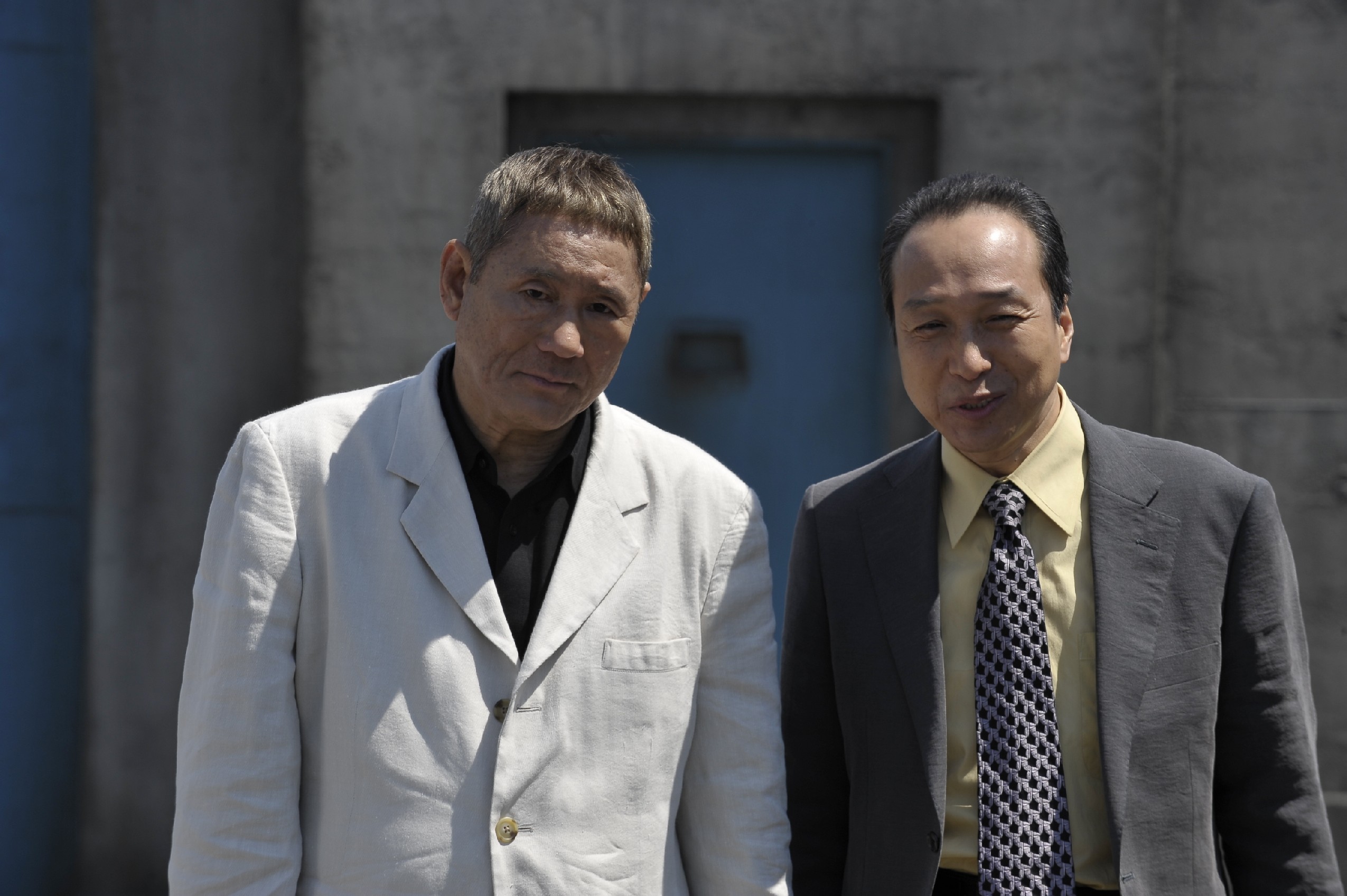
Outrage Beyond (Takeshi Kitano, Japan) The sequel to Takeshi Kitano’s return-to-gangster-form Outrage (2010) sports the same no-nonsense editing that matches extreme violence with perfectly primed pauses. Kitano’s knack for offbeat crime films began almost 25 years ago with his nasty neo-noir classic Violent Cop (1989). Since then, he’s found a perfect blend of humor and artistry over the years, with such masterpieces as Sonatine (1993) and Hana-Bi (1997). Even his more eccentric deliveries, such as the sentimental Kikujiro (1999) and Brother (2000) —  his American crossover, co-starring Omar Epps — have the power to make fans out of first-time Takeshi viewers. Outrage Beyond methodically introduces (then destroys) main characters, creates tons of twists and turns that mangle the melodrama, and will either hypnotize you to all its inverted genre glory or leave you completely cold, confused, and unaffected. Either way, Takeshi is his own boss and I will watch everything he touches.

Rhino Season (Bahman Ghobadi, Iraq/Kurdistan/Turkey) This beautifully political narrative is a terrifying tribute to outspoken Iranian artists who find themselves threatened with decades of prison if they dare to question the contradictions around them. Ghobadi himself had to leave Iran a few years ago just so this film could actually be made; fellow film festival fave Jafar Panahi, director of The White Balloon (1995), Crimson Gold (2003), and Offside (2007), is still incarcerated under house arrest and is banned from writing and directing for what looks like 20 more years.

Panahi’s situation brings an extra importance to Ghobadi’s Rhino Season. The casting of Italian superstar Monica Bellucci and Behrouz Vossoughi (one of Iran’s most popular and prolific actors) could make this Ghobadi’s most accessible film since his 2004 Turtles Can Fly. This is cinema of the now — and combined with Ghobadi’s lyrical images, it solidifies him as a leading cinematic voice.

http://www.youtube.com/watch?v=JqqgrUna28w

Dredd 3D (Pete Travis, US/UK) The new and improved Judge Dredd adaptation (which was presented in the Midnight Madness category, and opens in Bay Area theaters Fri/21) takes a much different approach than the uneven (yet under appreciated) 1995 Sylvester Stallone vehicle by making the obvious choice to darken the mood (and not to take Dredd’s helmet off.) By bringing in the screenwriter of 28 Days Later (2002) and 28 Weeks Later (2007), Alex Garland, the story kicks into absolute overdrive, saving an origin script for the already much-anticipated sequel.

While the special effects are spectacular and the deadpan one-liners are delivered with an enjoyable amount of irony, Dredd’s voice (which is quite reminiscent of a certain superhero in Christopher Nolan’s blockbuster franchise) reminds you that every decade has its own dated elements. Perhaps Danny Cannon’s 1995 Judge Dredd is just as representational of its own era as this rambunctious Escape from New York-meets-The Raid homage.

http://www.youtube.com/watch?v=pI3uhHh3DgM

To the Wonder (Terrence Malick, US) For those who were wishing Terrence Malick would explore relationships sans dinosaurs and throbbing solar systems, look no further. Utilizing recognizable techniques like a glorious Steadicam shot gliding through golden fields at dusk, To the Wonder is in fact much more spiritual and even overtly religious than anything else at TIFF.

Especially after 2011’s polarizing The Tree of Life, Malick has become a loaded name for haters and lovers alike — bringing unfair expectations to a filmmaker who is clearly attempting to create ethereal art. To the Wonder features a stunning performance by Rachel McAdams and a curiously perfect, Robert Bresson-esque role for Ben Affleck. This film has to been seen in an actual movie theater.

http://www.youtube.com/watch?v=E0sxqycgYNA

The Lords of Salem (Rob Zombie, US) When Rob Zombie took the stage for the world premiere of his fifth feature film (also a Midnight Madness selection), audience members greeted him with a standing ovation. “Are you guys ready to see a bunch of sexy dancing naked witches?” Zombie yelled. When the audience erupted with “YES!” he replied, “Well … this movie doesn’t have any of that!” and humorously walked off the stage.

What followed was hands-down the most terrifying opening sequence of Toronto (much less 2012). It literally left the entire audience dumbfounded. And when the title The Lords of Salem appeared, you could feel the subconscious collective bracing themselves for what going to be yet another disturbingly brilliant Zombie horror classic.

Let’s take a step back to remember Zombie’s debut House of 1000 Corpses (2003) and sequel The Devil’s Rejects (2005). Both films caught both horror critics and music fans by surprise with how powerful his filmmaking aesthetics are. He arrived on the horror scene smack dab in the middle of the “torture porn” craze; in my opinion, Zombie was tops in the “Splat Pack” (amid Eli Roth, James Wan, Alexandre Aja, etc.) due to his Tarantino-style cinephilia (casting horror icons of the past in major roles; paying homage to genre classics like the original Texas Chainsaw Massacre series), but more importantly his contemporary understanding of music. With his remakes of the Halloween series (2007 and 2009), which many horror fans may need to revisit, Zombie further proved himself a filmmaker who has a lot to say to his audiences.

Which brings us to The Lords of Salem, a contemporary witch tale influenced by Roman Polanski’s Rosemary’s Baby (1968) and Robin Hardy’s The Wicker Man (1973). Showcasing serious suspense, a psychotic soundtrack, and purposeful pacing, the film also boasts one of the most deliciously diabolical denouements in years. Avoid all spoilers and add this creepfest to your must-see list. All hail Salem!

Jesse Hawthorne Ficks is the Film History Coordinator at the Academy of Art University and hosts Midnites for Maniacs, a film series devoted to underrated, overlooked, and dismissed cinema.

Torture, for real

3

OPINION Last week I walked into my favorite café in SoMa and noticed the barista wearing a t-shirt emblazoned with the black and orange word “torture.”

I froze. I knew I was holding up the line but I didn’t care. I had to ask about that shirt.

“Oh, it’s to promote the San Francisco Giants,” he said. He continued speaking, not noticing my umbrage. “So do you want your coffee hot or cold today?”

I wanted to keep talking about that shirt, but I didn’t know what to say. “I will have my coffee cold please,” I told him.

For the past ten years, torture has never been far from me. When I worked at Amnesty International, it was two doors down in the person of my colleague Kumar, who was tortured in Sri Lanka for advocating for Tamil rights. When I was on Capitol Hill as a foreign policy aide in the House of Representatives, I saw lawmakers justify President Obama’s lackadaisical attitude towards US torture.

One of the first things I learned at Amnesty International is the power and the responsibility of words. Human-rights work is about finding and verifying stories and then giving those stories names: war crime, rape, genocide … torture. It’s in the naming that our action begins. When we use the word torture it carries weight—and can heal wounds—because for so many people, their torture is denied, rationalized, or trivialized.

When I see the word torture on a t-shirt I do more than cringe: I mourn how far we are as a nation from a serious discussion of the use of torture by our own government.

Just last week Attorney General Eric Holder announced that the Justice Department was closing the last two cases examining harsh CIA interrogation tactics during the Bush administration.

According to the ACLU, “(CIA) Interrogators were told they could use, among other tactics, extended sleep deprivation; ‘stress positions’ such as forced-standing, handcuffing in painful crouched positions and shackling people to the ceiling, usually for hours or even days; confining prisoners to small, coffin-like boxes with air and light cut off; extended forced nudity; sensory bombardment; extreme temperatures; hooding; and physical beatings, including slamming prisoners into walls.”

I can understand and I can attest that watching your team blow a lead in the bottom of the ninth is painful, excruciating even. It might cause you to drink or curse or smoke more. But it’s not torture. It doesn’t violate the core of your being. It doesn’t terrorize your nights.

Standing in line at the café that day, I thought of my friend Firoze who was tortured so badly he can no longer have sex. I wonder what he would say if were staring at the Barista with the “torture” t-shirt.

He would probably laugh and say it’s just a game. And then he might say what he told me each time we met: “People have no idea.”

Zahir Janmohamed recently completed a fellowship at the San Francisco Writers’ Grotto and is writing a book about Juhapura, the largest ghetto of Muslims in India

.

Ending the mayor’s commission monopoly

2

EDITORIAL Ten years ago, San Francisco voters took a huge step toward decentralizing control of city planning, approving a measure that splits the appointments to the powerful Planning Commission between the mayor and the Board of Supervisors. A year later, a similar change gave the supervisors a role in appointing Police Commission members.

By any rational account, it’s been a complete success. The commissions better reflect the diversity of opinion in the city, function well and are no longer complete rubber stamps for the mayor and his planning director and police chief.

The mayor still controls the majority on both panels; his ability to set the direction of city policy hasn’t been harmed. But there’s a least a chance for a dissenting voice or two.

Compare that to, say, the Recreation and Parks Commission.

Rec-Park is a disaster. The seven members are all appointed by the mayor. Some have little or no past experience in anything related to recreation or parks. One actually works as Mayor Ed Lee’s scheduler. Commission votes are nearly always unanimous and the panel supports the director more than 90 percent of the time.

The mayoral appointees have overseen the rampant privatization of public space and a change in direction that undermines the entire concept of urban parks. Rec-Park staff have been directed to find increased ways to turn the parks into cash machines, prioritizing revenue over public access.

The result: So many people are angry at the department that it’s possible San Francisco voters will reject a bond act in November aimed at providing badly needed money to fix up ailing parks and facilities.

The discontent with Rec-Park stems in significant part from the perception that the commission is inaccessible and uninterested in public input. Since all of the members typically line up in lockstep on every decision, there’s little discussion and less chance for opposing opinions to get heard.

There’s a pretty easy fix — the supervisors could put a charter amendment on the ballot giving the board three of the seven appointments. But that would leave a long list of other key commissions unchanged — and there’s no reason to address the problem piecemeal. It’s time for the supervisors to push a comprehensive reform package that redefines how every policy commission in the city is structured.

The reason district elections of supervisors has been such an unqualified success (and remains incredibly popular) is that it guarantees not only neighborhood input on issues but a diverse board. Fiscal conservatives have a voice; so do left-progressives. You won’t find that on most mayoral commissions; it’s very, very rare for a mayor to appoint someone who doesn’t share his or her policy perspectives.

The mayor of San Francisco — who needs to raise huge gobs of money to get elected, leaving him or her deeply in debt to powerful and wealthy individuals and interests — has too much power. That’s a basic problem in the City Charter. The supervisors should start holding hearings now on alternative approaches to a more equally shared governance. Splitting appointments to all commissions would be a great start.


Opinion: Let reporters into prisons

23

As a young public defender, I represented an innocent man who was convicted of
murder.

John Tennison was serving a sentence of 25 years to life when, in 1997, I
contacted a 20/20 news producer, who agreed to feature the case.

Tennison had already lost seven years of his freedom. A national broadcast
exposing concealed evidence, perjury and misconduct by police and prosecutors in
the case could reverse his fate and reunite him with his family.

But when prison officials denied the television crew an interview with my
client, producers were forced to withdraw. No interview meant no story.
 
Tennison was eventually exonerated, but it took 14 years. Fortunately, a
reporter from the SF Bay Guardian named Adam Clay Thompson accompanied me during
a prison interview as my paralegal and was able to meet and interview Tennison.
He wrote a cover story that exposed the injustice of Tennison’s case and
started the ball rolling towards his eventual exoneration. I am convinced that
if media access were granted in this case, it would have restored his freedom
years earlier.
 
For the past 15 years, California’s prisons have operated in a virtual media
blackout. With the flick of his pen, Governor Jerry Brown has the opportunity to
turn on the light.
 
Now on his desk is AB 1270, also known as the Prison Media Access Bill. The
bill, authored by Assemblyman Tom Ammiano, would restore the press’ ability to
conduct pre-arranged, face-to-face interviews with specific prison inmates.
 
Currently, reporters may interview inmates who are hand-picked by prison
officials. They are not allowed follow-up contact, making it impossible to know
whether a prisoner has suffered retaliation as a result of the interview.
 
It wasn’t always this way. During Brown’s first stint as governor, the press was
free to fulfill its watchdog role in California prisons.
 
In 1996, prison officials clamped down on press access under the guise of
discouraging tabloid media from making celebrities of notorious killers. In the
process, it also made it far harder to expose systematic abuse, fiscal
mismanagement and unsafe conditions for guards and inmates alike.
 
It was under this information shut-out that inhumane conditions were allowed to
fester to the point that the Supreme Court intervened in 2011, ordering the
release of 46,000 inmates.
 
It was nearly a century ago that US Supreme Court Justice Louis Brandeis wrote
that sunlight is the best disinfectant. It remains no less true today.

Government accountability is impossible without media access. The 2011-2012

state budget allocates $9.2 billion in taxpayer money to the CaliforniaDepartment of Corrections and
Rehabilitation, yet public information is limited by CDCR’s current restrictive
media policies.

Taxpayers deserve to know where their money is going. Like John Tennison,
innocent men and women languishing in California’s prisons deserve to tell their
stories.

Jeff Adachi is San Francisco’s public defender.

Nailed it

0

le.chicken.farmer@gmail.com

CHEAP EATS Hedgehog got me this Groupon for a fancy pantsy mani-pedi at a place in San Mateo puts flower petals and orange slices in your feet water! It’s hard for me to hold a grudge, however, because at the time-of-purchase we were living in New Orleans. For all she knew, San Mateo was a suburb of San Fran, like the Sunset or the Richmond.

Nope. You have to drive.

So I was driving back, all relaxed and pretty and shit, and there was Candlestick … and it was very nearly (at the time) football season … and the only thing I don’t like about getting my nails done is the way you smell for the rest of that day. I mean, I am, at heart, a chicken farmer. Lookswise, I can handle being beautiful, but it’s my nature to smell like hay. Not mimosas.

It takes about 30 minutes to drive from San Mateo to the Mission.

Around about Candlestick, I’m saying, enough became enough. Deciding finally to change the smell of my fingernails, I swerved off the freeway in search of barbecue. In search, specifically, of Franks, where I had eaten once recently on account of another goddamn groupon, this one courtesy of Earl Butter. Who, to his credit, did apologize for eating all the brisket off our three-way-combo before Hedgehog and me ever even knew what hit us.

Turns out the brisket is Frank’s best meat! It’s tender, smoky, and doused in a really good, hot (if you ask for it) basic barbecue sauce, I now know. I got it to go, and they gave me a fork.

But I used my fingers….

CHEAP SPORTS

by Hedgehog

Sunday’s baseball was Mission vs. Mission at Balboa. In my copious notes I dubbed the home team the Good Guys and the away team the Better Guys. Chicken Farmer and our friend Long Tall Phil were playing for the Better Guys, hence that side’s upgrade.

Unfortunately, I don’t know many of the other players’ names and resorted to nicknaming them mostly based on what they were wearing, who they reminded me of, and the few scattered facts I remembered about them from previous games. For example, there was Big Blue, Hairdo, Walnut Creek, Old Timey, Lost Horizons, and In’N’Out. After a while, my play-by-play reads more like I’m calling a horse race.

Anyway, I don’t know how many folks are interested in rec league games, but I think more are probably into Fantasy Baseball. Then again, I don’t know which side of the fence the readership of Cheap Eats falls into demographically so I’ll cover both bases with one bird and say that in my opinion, Fantasy Baseball should allow for at least one Rec League player per team. My reasoning is as follows:

1) Rec Leaguers steal a ton of bases. I am in a Stolen Bases race in my Fantasy League right now and if I had In’N’Out or Gray Shirt Tony, or even Chicken Farmer herself, I wouldn’t need to put all this imaginary pressure on Michael Bourn to do what I’m pretend-paying him for.

2) Rec Leaguers are almost all multi-positional and thus, very useful when setting your lineup. I mean someone who plays left field, short, third, second, catcher and pitcher? And steals three bases in one game?! I mean come on…

3) Major league starting pitchers don’t hold a candle to Rec League pitchers. Unless you count speed, accuracy, or variety of pitches. But the Good Guys starter pitched a complete game! And the Better Guys pitcher went seven innings. Colorado Rockies: take note.

Better Guys, 4. Good Guys, 7.

After the game we went to my new favorite barbecue, which isn’t Franks, but only because you can’t walk to it from our house. You can walk to Southpaw. What my beloved and bristly sportswriter couldn’t have known from the press box was that the whole game in the dugout we were talking about barbecue.

The box score for the Mission’s new smoke house reads: weak, weak ‘cue. At least the ribs and brisket. Go for the sides, which are awesome. Pulled pork with beans and (get this) bechemel over warm potato chips, brussels sprouts with bacon, and my favorite: smoked goat served with fry bread. For that, I will be back.

SOUTHPAW BBQ

Mon, Wed-Fri 5-11:30pm; Sat 3-11:30pm; Sun 11:30am-11:30pm

2170 Mission, SF

(415) 934-9300

AE,D,MC,V

Full bar

CEQA: We Need It

0

OPINION Big business interests in California are waging a full-scale assault on the California Environmental Quality Act, known as CEQA, which has been loudly blamed for the slowdown in new construction in recent years.

But sluggish construction has been problematic nationwide and is far beyond CEQA’s reach. The exaggerated attacks on CEQA parallel extreme Tea Party politics, where facts don’t seem to matter and well-funded voices drown out reason. Attackers unfairly scapegoat a law that instead deserves great credit for far-reaching good.

The truth is that while environmental review takes time and costs money, the CEQA process usually moves quickly. In terms of litigation, a recent report recounted 11 CEQA lawsuits filed against San Francisco last year, while many hundreds of projects were approved in the city without CEQA challenges. A Natural Resources Defense Council study in Los Angeles similarly found 18 cases filed after 1182 approvals. A more in-depth analysis by the Public Policy Institute of California found that only one CEQA lawsuit is filed per 354 projects, a fraction of a percent.

So — what good does CEQA do? It assures citizens that they can participate in identifying and solving environmental problems alongside self–interested project applicants and City Hall insiders. The concept is simple and results in tangible benefits to California’s environment via better, smarter projects. The Planning and Conservation League, in a publication aptly entitled “Everyday Heroes,” assembled more than 70 examples of CEQA success. If space permitted I could describe scores of happy endings attributable to CEQA review that I have personally seen and celebrated.

CEQA assures environmental quality for present and future generations. Californians count on being informed about projects with environmental impacts — before their approval. In every California community, citizens organize and volunteer their time to offer comments and problem-solving suggestions. Applicants in turn know that their projects’ environmental impacts must be both disclosed and mitigated.

Attempts to weaken CEQA have also been around for decades. They always fail as Californians continue to champion their unique neighborhoods, cities, farmland, beaches, and wilderness areas. Most developers, even if preferring that their own projects not be subjected to CEQA review, do not want the law waived for all other projects.

Still, the national economic slowdown has given new life to the overblown claims of CEQA critics. A few weeks ago in Sacramento, a last-minute “gut and amend” bill would have taken away key protections. The public responded and the effort, again, failed. But the push to gut CEQA continues in cynical barrage.

What should happen? While well-orchestrated attacks on CEQA in the press and in Sacramento are largely opportunistic and misdirected, there is room for improvement. Over the past five years CEQA has been revised to prevent alleged abuses — including a $10,000 penalty for anyone filing a frivolous suit — and to streamline environmental review. Other positive changes are now being discussed among experts — without sacrificing citizen participation or substantial environmental protections.

Any CEQA amendments should occur only after a broad-based public process with full review by the Senate and Assembly Committees on Natural Resources.

Surely we do not want to regress to back-room planning and development without accountability. Benefiting all Californians in the long run, this profound law must itself be protected. As we continue to welcome millions to our beautiful state, we need CEQA’s protections more than ever.

Attorney Susan Brandt-Hawley represents public-interest environmental preservation groups statewide. In the last 15 years her work has been recognized with state and national awards and her cases have contributed to CEQA precedent in all six districts of the California Court of Appeal and in the Supreme Court.

Defending Richard Aoki — and the movement

5

OPINION In a new book, Bay Area journalist Seth Rosenfeld publicly names longtime Asian American leftist Richard Aoki as an FBI informant during his time as a leader of the Third World Liberation Front movement and as a founding member of the Black Panther Party. As Asian American activists in the movement today, we denounce these claims as baseless and false and are shocked at the way Rosenfeld makes such unsubstantiated claims while promoting his book release. His allegations damage the movement and reinforce trite “yellow peril” stereotypes of Asian Americans.

The allegations against Richard come without any credible evidence. Rosenfeld provides one incomplete document that he claims identifies Richard as an informant called “SF T-2.” It reads: “SF T-2 was designated for [redacted] (Richard M. Aoki) for the limited purposes of describing his connections with the organization and characterizing him.” The FBI cover sheet associates names of informants with their “T” codes. All informants’ names have been redacted.

It is astounding to us that Rosenfeld concluded Richard was an informant from that scrap of evidence. Later in this document, Aoki’s name is used again in order to name an FBI file location. In the few pages available under his FBI file, the informant “SF T-2” goes on to inform about the readings, political thought, and organizational/party membership of Richard Aoki. It appears to us that an informant named “SF T-2” was assigned to inform about Richard.

Rosenfeld also cites a former agent named Burney Threadgill, who claims Richard was an informant; before his death in 2009, Richard denied that in an interview. Threadgill is hardly a credible source and was a major player at the height of COINTELPRO, implementing FBI policy that was designed to deter and divide the movement. Unfortunately, both men are now deceased and cannot defend their claims.

He also uses testimony of a former FBI agent, M. Wesley Swearington, who had no relation to Richard Aoki. Despite this, Swearington claims that Richard was a “perfect informant” because he was a Japanese person in an organization of Black Americans. That makes no sense because Richard stuck out while in the Black Panther Party, and again feeds into the divisive stereotypes of Asian Americans.

Rosenfeld implies that Richard worked as an instigator, pushing people toward violent action. In fact, Richard was cautious about the use of violence and was vigilant about it during mass actions. It’s true that Richard armed the Black Panthers; however, he did so in the name of self-defense and protecting the people against police brutality.

All in all, Seth Rosenfeld’s news story on Richard Aoki was poorly researched and only a small fraction of his new book. His public accusations are unfounded and sensationalist.

Richard’s advanced leftist political thought, mentored and developed new leaders, educated his working-class sisters and brothers, and built black and Asian solidarity — and this was invaluable. Richard and other movement veterans inspired us and a new generation of young leaders to carry forward the work today. We are stronger because of them — and that is how people should be judged and remembered.

Steve Woo is an organizer in the Tenderloin and steering committee member of the Richard Aoki Fund. Alex T. Tom is the executive director of the Chinese Progressive Association.

Our Weekly Picks: September 12-18

0

WEDNESDAY 12

Zero1 Biennial

This week, when the weather is right, SF designer Ishky will coordinate a massive 3.14-ecetera to be written by five planes over the Bay’s skyscape. The work heralds the arrival of Zero1 Biennial, sure to be a different look at Silicon Valley. SFMOMA, Headlands Center for the Arts, and Stanford will all be participating in the tech-art fest, but “Seeking Silicon Valley” is a good place to start exploring. Artists from 11 countries have created innovative odes to computerlandia at Zero1 Garage, a specially-designed new permanent art space in San Jose. Expect virtual tunnels connecting cross-Atlantic museums and the first dot com rise and fall, as interpreted through shots of a vertiginous Argentinian mountain. (Caitlin Donohue)

Through Dec. 8, Various times and Bay Area venues

“Seeking Silicon Valley”

Zero1 Garage

439 First St., San Jose

www.zero1biennial.org


Chelsea Wolfe

Like a gloomier incarnation of Julia Holter, or PJ Harvey with a stoner-goth edge, Chelsea Wolfe has a knack for sounding like everyone and no-one else, all at once. On last year’s Apokalypsis, her wispy, high-pitched vocals stood in stark opposition to the record’s sonic atmosphere: robust, foreboding drums and guitars a la Slint, wrapped up in lush electronics, layers upon layers of reverb, and the vague ethos of the hypnagogic pop movement. One of those “weird” records whose weirdness is rendered highly palatable by its confident execution, Wolfe’s debut was one of last year’s most compelling rock statements. (Taylor Kaplan)

With Crypts, Dia Dear, DJ S4NtA_MU3rTE, DJ Nako

8pm, $12

Rickshaw Stop

155 Fell, SF

(415) 861-2011

www.rickshawstop.com


THURSDAY 13

Femina Potens’ ASKEW Film and Performance Festival

Should your post-convention feminist outrage still be clouding the edges of your vision, mark your calendars for a weekend of smart, sex-positive female-made films and readings at YBCA. Tonight, take in multimedia memoir presentations by adult industry stars-authors Oriana Small and Lorelei Lee, then a documentary on SF strippers’ fight for justice in the workplace by Hiwa B., an ex-dancer herself. Later this weekend, Madison Young’s doc on her first year as a mama in SF sex culture awaits (Sat/14), and Mollena Williams’ interactive short on the ways racism can emerge in the world of BDSM play (Sun/15). Forget “legitimate rape,” it’s time to start developing our own vision of the way we want the world to work. (Donohue)

Through Sun/15, $10/screening

Yerba Buena Center for the Arts

701 Mission, SF

(415) 978-2787

www.ybca.org


Nommo Ogo

The Bay Area is overloaded with ambient electronic acts inviting you to lose yourself in their Pink Floyd-on-codeine haze, but Nommo Ogo’s attention to detail sets it apart from the pack. Balancing old-school, Cluster-meets-Zelda synth tones with live guitars, field recordings, jittery percussion, and the occasional buried vocal track, its records are unusually dynamic, and compositionally advanced, for “ambient” fare. This Thursday, the Oakland-via-Anchorage outfit will unleash some new material, as it celebrates the release of its forthcoming LP, Endless Dream, at Bottom of the Hill. Will the new album follow the sturdy progression of the back catalogue, or will it present a bold change of direction? (Kaplan)

With Candle Labra, Secret Sidewalk

9pm, $10

Bottom of the Hill

1233 17th St., SF

(415) 621-4455

www.bottomofthehill.com


FRIDAY 14

John Cage Celebration: PICO

You have one chance this weekend to wish John Cage a Happy 100th Birthday. With a razor mind, often barely visible behind his affable façade, Cage and Merce Cunningham turned inside out cherished traditions about listening and seeing. A European composer once asked Cage whether it was not difficult for him write music so far away from the Tradition. His reply: “it must be hard for you write music so close to the Tradition.” PICO: Performance Indeterminate Cage Opera, based on Cage’s Fontana Mix — less a score than a manual for proceeding — is a very Cagean enterprise with live and recorded music, three channels of video, 20 plus dancers, and audience participation (should you be so inclined). PICO also pays tribute to kindred spirits Marcel Duchamp and Nam June Paik (Rita Felciano).

7:30pm, $7

Berkeley Art Museum

2626 Bancroft Way, Berk.

www.bampfa.berkeley.edu


Rustie

Who needs restraint, or tastefulness, when you’ve got Rustie? Like fellow producers Hudson Mohawke and Lone, the Glasgow-based beatmaker specializes in a high-gloss brand of dubstep-tinged electronica that overwhelms with its kitchen-sink approach. Much like an alternate Sonic the Hedgehog soundtrack, as envisioned by the venerable Warp imprint, his debut LP, Glass Swords, was one of 2011’s most ecstatically go-for-broke records. Garish, fluorescent synths compete relentlessly for the spotlight, anchored (just barely) by grooving, thrashing percussion, on a hugely celebratory record with the irresistible energy of a basketful of puppies. One can only imagine the potential of Rustie’s maximalist approach in a live setting. (Kaplan)

With Kode9, Obey City, Anna Love, Dreams, Dials vs. Bogi, The Slayers Club Crew

10pm, $20

1015 Folsom, SF

(415) 264-1015

www.1015.com/onezerothree


Phenomena

Everyone’s heard of 1977’s Suspiria, but Dario Argento’s filmography is full of should-be horror classics — including 1985’s Phenomena, which returns to Suspiria‘s boarding-school milieu but shifts the action to Switzerland, where the new girl in class is the troubled daughter (Jennifer Connelly) of a movie star. She sleepwalks, she communicates with insects, she befriends a local professor (Donald Pleasence, Halloween‘s Dr. Loomis) and his chimpanzee companion, she runs afoul of the local murderer … man, growing up is tough! With lamé’d costumes by Giorgio Armani and songs by Iron Maiden, Motörhead, and Argento faves Goblin, Phenomena is a gloriously ’80s relic. It screens with animated classic The Iron Giant (1999) and young Connelly’s Muppet-tastic breakout film, 1986’s Labyrinth. (Cheryl Eddy)

“Midnites for Maniacs: Trix Are For Kids Triple Bill”

7:30pm, $13

Castro Theatre

429 Castro, SF

www.midnitesformaniacs.com


J.B. Smoove

After starting his career on Russell Simmons’s Def Comedy Jam in the ’90s, J.B. Smoove has since solidified his status as a foolproof secret weapon within the comedy world. Uncredited appearances and writing work on Saturday Night Live, in addition to scene-stealing supporting roles in films such as Pootie Tang, helped land him his current role as Leon (“Pepitone, Pepitone!”), Larry David’s opportunistic house guest/sidekick on recent seasons of Curb Your Enthusiasm. As a stand-up performer, Smoove combines physical comedy with hilarious storytelling, courtesy of his unmistakable vocal delivery. (Landon Moblad)

8 and 10:15pm; Sat/15, 7:30 and 9:45pm, $25

Cobb’s Comedy Club

915 Columbus, SF

(415) 928-4320

www.cobbscomedyclub.com


SATURDAY 15

Los Straitjackets

Nashville, Tenn.’s Los Straitjackets have been pairing genuine musicianship with over-the-top gimmick for more than 20 years and 11 studio albums. True, quality songwriting and matching costumes sounds oxymoronic, but Los Straitjackets defy common sense. The foursome plays instrumental, surf-inspired rock music, with an extensive list of covers, including “Deck the Halls” and “Smells Like Teen Spirit,” but their original material is where the band shines. During performances, they dress identically in all black with gold Aztec-inspired medallions, differentiated only by customized luchador masks. Not to worry, they also have synchronized choreography. (Haley Zaremba)

With Daddy-O Grande, Big Sandy and His Fly-Rite Boys

9pm, $20

Great American Music Hall

859 O’Farrell, SF

(415) 885-0750

www.slimspresents.com


SUNDAY 16

Faux Queen Pageant: The Next Generation

Now, San Francisco cherishes an exceptional portion of the world’s most glamorous and inventive faux queens. But in 1995, when Diet Popstitute and Ruby Toosday unleashed the Faux Queen Pageant, there were few outlets for “drag queens trapped in women’s bodies.” The doors FQP helped throw open make its 2012 reincarnation all the more intriguing, as SF’s big and brassy faux queen contest returns under the auspices of Bea Dazzler, Holy McGrail, and the Klubstitute Kollective. With MCs Leigh Crow (as Captain Kirk) and Trixxie Carr at the helm, and a firmament of local star judges (Heklina, Fauxnique, Birdie Bob Watt, Cricket Bardot, Ruby Toosday, L. Ron Hubby and Deena Davenport), Faux Queen Pageant: The Next Generation promises to take you where no woman has gone before. (Robert Avila)

8pm, $15

DNA Lounge

375 Eleventh St., SF

(415) 626-1409

www.fauxqueenpageant.com


TUESDAY 18

Mark Bittman

Veteran New York Times opinion and food columnist Mark Bittman claims he’s not a chef and he’s never been professionally trained. Yet, his How to Cook Everything is recognized as a veritable recipe bible for curious home chefs. Bittman, nicknamed “The Minimalist” for his unfussy approach to cooking, delves even further into the fundamentals with this year’s updated How to Cook Everything: The Basics. The newest edition is an encyclopedia of tips, ranging from how to set up a pantry to how to tell when particular foods are done cooking (always important for those house parties). As if writing for the Times and authoring more than a dozen cookbooks was not enough, The Minimalist debuted his new Cooking Channel show of the same name earlier this fall. (Kevin Lee)

In conversation with Jessica Battilana

7:30pm, $22–$27

Herbst Theatre

401 Van Ness

(415) 392-4400

www.cityboxoffice.com


TUESDAY 18

Paloma Faith

Thanks to a string of hit singles such as “Do You Want The Truth or Something Beautiful?” along with starring roles in several films, including Terry Gilliam’s The Imaginarium of Doctor Parnassus, acting opposite Tom Waits, British singer Paloma Faith is a noted star over in her native UK. Fusing modern pop with sultry ’50s rock sensibilities and a classy, retro-inspired look, the 27-year-old Faith is hitting the United States for her first ever tour, in support of her new album, Fall To Grace. Fans can be sure that next time she comes around, it will be in a much bigger venue. (Sean McCourt)

8pm, $15

Rickshaw Stop

155 Fell St., SF

(415) 861-2011

www.rickshawstop.com


The Guardian listings deadline is two weeks prior to our Wednesday publication date. To submit an item for consideration, please include the title of the event, a brief description of the event, date and time, venue name, street address (listing cross streets only isn’t sufficient), city, telephone number readers can call for more information, telephone number for media, and admission costs. Send information to Listings, the Guardian, 71 Stevenson, Second Floor, SF, CA 94105; or e-mail (paste press release into e-mail body — no attachments, please) to listings@sfbg.com. Digital photos may be submitted in jpeg format; the image must be at least 240 dpi and four inches by six inches in size. We regret we cannot accept listings over the phone.

Obama’s appeal to SF’s divided Left draws mixed reactions

26

President Barack Obama has a divided political base, as local Democrats who showed up at the Laborers Local 261 hall last night to hear his nomination acceptance speech were immediately reminded by leftist protesters. And despite the belief by some true believers that his speech won over its target audience, I have my doubts.

Courage to Resist and its allies from Code Pink, the Occupy movement, and other groups targeted this Democratic County Central Committee watch party (and 24 others around the country) with an appeal that Obama free Bradley Manning, the US soldier accused of turning over classified documents to Wikileaks who has been kept in solitary confinement for almost two years without trial.

“President Obama needs to live up to his promise to protect whistleblowers,” said Jeff Paterson, founder of Courage to Resist and himself a Gulf War resister (and coincidentally the ex-boyfriend of newly elected DCCC member Kat Anderson). For more on that protest, read this.

DCCC member Hene Kelly (and a phalanx of SFPD cops) helped keep the entrance clear – something the good-natured protesters didn’t seem to threaten – and said she understood their perspective: “They’re here because they have a right to ask President Obama to free Bradley Manning, and I agree with them.”

But inside, DCCC Chair Mary Jung wasn’t so happy about this rain on their parade, telling the Guardian that she supported the ideas behind Occupy but said, “I think the message is misdirected at us,” ticking off Democratic Party positions on same sex marriage, immigration reform, and other issues.

When I told her that the protest was actually about Manning, whose fate is pretty clearly in the hands of Obama and his appointees, she offered this hopeful assessment: “I would hope it’s going to work it’s way through the courts as it’s supposed to. There is a process.”

When I tried to get District Attorney George Gascon’s take on whether that process comports with normal legal and civil rights standards, he told us, “I have no opinion. I need to digest the information a little more.” (That was more than Willie Brown offered, with the former mayor, unregistered political lobbyist, and San Francisco Chronicle columnist responding to my questions with, “I’m a columnist. I don’t make comments to other newspapers,” after he gave a speech to the gathered Democrats.)

But it didn’t take Gascon long to digest Obama’s speech, telling us afterward, “I think he hit it out of park. If this doesn’t get the enthusiasm up, nothing will.”

Yet my reaction, and most that I’ve heard since then from people who listened to the speech, wasn’t quite so enthusiastic. Yes, Obama had some good lines, and yes, he fairly effectively countered many of the Republican misrepresentations of his record and ability to quickly turn around the failing economy he inherited. And yes, I think the substance and messaging were more progressive than his centrist acceptance speech of four years ago.

“Times have changed and so have I,” Obama declared at one point.

But this is a party that still shares the same basic paradigm as the Republican Party, this story of American exceptionalism, protected by noble military “heroes” and guided by altruistic virtues, working within an economic system that can just keep growing and expanding the prosperity of US citizens indefinitely – the kind of rhetoric that still drove the crowd to a jingoistic chant of “USA, USA, USA!” at one point.

Yet it was a crowd where not a single person in the local hall applauded or cheered for this line by Obama: “Our country only works when we accept our obligation to each other and future generations.” He’s right, but he’s also been running the country in a way that robs from future generations in many realms (debt, infrastructure, global warming, energy, education, etc.) and doesn’t address our obligation to the protesters out front and the valid perspective that they represent.

“There are many shades of blue in the Democratic Party. We’re all blue,” Jung told me.

Perhaps that true, because I felt a little blue coming away from this event, but maybe not in the sense that Jung intended.

Warren, Clinton, and the Demo divide

4

Talk about a contrast.

Tonight was all about the two sides of the Democratic Party, the two visions of how the party should approach policy, two utterly divergent approaches to the world that can hardly even be called “wings” of one party. And yet, they both got rousing cheers — and even the progressives were all hot about ol’ Bill.

Okay — the guy’s a pro. He’s one of the best off-the-cuff, unscripted public speakers in America, even if he doesn’t know when he’s done. He had all the right talking points, all the great ways to demolish everything that the Romney team has been saying. He can talk about the “real world” from experience, since for eight years he sorta ran it.

But let’s remember — this is the guy who threw millions off welfare (and now brags about it), who was responsible for the deregulation of Wall Street and the telecom industry, a guy who the financial world loved and whose policies were pretty close to what the mainstream of the Republican Party supported just a few years earlier.

I got to meet Clinton a few years ago at an alternative newsweekly convention in Little Rock, and I asked him why he didn’t consider same-sex marriage a civil-rights issue. He ducked and said in essence that America wasn’t ready for it.

And just before he took the stage, Elizabeth Warren — who talks seriously about regulating big business, who wasn’t afraid to say “corporations are not people” — was on stage. She talked like a member of the Democratic Wing of the Democratic Party, like someone who believes that too few have too much at the expense of the rest of us.

It’s not odd to have a wide spectrum of opinion in a major political party (except that the GOP doesn’t allow that any more). But it’s startling to see two speakers who might as well come from different planets, not just different parties, sharing the podium — and getting the same wild applause.

I get it — it’s all about the show. But it’s also all about people forgetting what Clinton was about.

The agri-chem industry’s secrets

3

OPINION This November, California voters will decide on a question that affects us all: Do we have the right to know what’s in the food we’re eating and feeding our families?

This high-stakes food fight has become the most expensive issue of the upcoming election. Pesticide and junk-food corporations have already poured $25 million into an effort to defeat Proposition 37, a simple labeling measure that would inform California consumers about whether our food has been genetically engineered.

What is it that these corporations don’t want us to know?

Right now, many foods on supermarket shelves, from baby formula to corn chips, contain genetically engineered ingredients that are hidden from consumers. Also called GMOs, these are crops that have been artificially altered in a lab with the DNA of other species in ways that cannot occur in nature.

Numerous studies link genetically engineered foods to allergies and other adverse health effects. But the U.S. government requires no safety studies of GMOs, no long-term health studies have been conducted, and no labeling is required to notify consumers so we can make our own choices about whether we want to eat these foods.

Genetically engineered foods are also linked to serious environmental concerns, including an overall increase in pesticide use, a rise in super weeds that are threatening farm land, and the unintentional contamination of organic crops.

These concerns have led 50 other countries to require GMO labeling. But here in the U.S., the agri-chemical companies have deployed their massive lobby power to stop the federal government and at least 19 U.S. states from passing simple labeling bills.

Now it’s up to the voters of California — and the heavy-artillery corporate lobbying campaign is heading our way.

The Yes on 37 Campaign is currently tracking far ahead in the polls. But the voters have not yet been subjected to the wave of deceptive television ads designed to convince us that GMO labeling is too scary or too expensive.

When you see these ads, consider the source. The largest funders of No on 37 are Monsanto and DuPont, two corporations that hardly have a track record of integrity when it comes to truth in advertising. These are the same companies that told us DDT and Agent Orange were safe.

Major funders of the No campaign also include junk-food companies that have a long history of opposing common-sense labels to give consumers information about their food. Look for these companies to spend tens of millions trying to convince voters that adding a few words to food labels will force them to raise the cost of groceries “hundreds of dollars a year.”

Over on the Yes on 37 side is a true people’s movement made up of millions of moms, dads, and consumers in California, and the many farmers and California businesses that are part of the state’s thriving natural and sustainable food industry.

Now is the time and this is our chance to make sure we have the right to know what’s in our food. Visit Yes on 37 at Carighttoknow.org to volunteer, donate and stay up to date with the latest news about this historic campaign.

Stacy Malkan is the media director for Yes on 37, the California Right to Know campaign to label genetically engineered foods.

Dick Meister: Let’s count our blessings on Labor Day!

2

By Dick Meister

Dick Meister, former labor editor of the SF Chronicle and KQED-TV Newsroom, has covered labor and politics for more than a half-century. Contact him through his website, www.dickmeister.com, which includes more than 350 of his columns.

OK, it’s time to celebrate Labor Day, time to celebrate the labor movement that won a wide range of benefits for working people. That includes, of course, a paid day off on Labor Day and other holidays or extra pay for working on the holidays. But there’s much more than that. Much more.

We can also thank unions for:

* The eight-hour workday with meal and rest breaks.

* Forty-hour work weeks and three-day holiday weekends.

* Overtime pay and paid vacations, sick leave and maternity leave.

 * Major help in the enactment of anti-child labor law laws and increased public education funding.

* Medicare and retirement and disability benefits.

* Job security and other workers’ rights.

* A strong political voice for unions that helped enact Social Security, unemployment insurance, workers compensation, health and safety and minimum wage laws and has helped elect pro-worker office holders.

* Important help in the passage of key civil rights and civil liberties laws that have particularly helped political dissidents, women and minorities and military veterans.

Certainly not every worker enjoys all the union-backed benefits. But even the non-union workers who make up the vast majority of working people these days have many of the benefits. And, thanks to the efforts of unions, they have the opportunity to win all of the benefits.

You can be sure that on this Labor Day, as on all others, political candidates will have lots to say about unions.  You can expect, however, that not much will be heard from Republicans. Their usual ranting in behalf of their moneyed backers about the evils of “Big Labor” and “union bosses” will be muted, lest they offend potential blue-collar supporters. Democrats undoubtedly will voice their usual support for union members and workers generally, many sincerely, some simply in hopes of gaining blue-collar support.

Union opponents seem to forget that unions are democratic organizations, whose members generally have a strong voice in their unions’ activities.  Union officers are elected, after all, and so are answerable to their members.

Union positions on political candidates and issues, as well as financial contributions to candidates, are not dictated by union officers, despite what anti-union politicians assert. Union positions and union political spending are determined by the votes of union members, usually on the recommendations of their Committees on Political Education (COPE). Officers who don’t reflect their members’ position face replacement by membership vote.

Once, Labor Day meant big parades in cities nationwide. But no more. Although union numbers continue shrinking, unions are surely here to stay. They’ve fought their way into the Establishment. They still parade here and there, but no longer feel that parading is necessary to show their strength and importance.

Unions are much more likely to mark Labor Day with the political activity that has become as important to them as economic activity since their arrival into the ranks of the economically accepted.

Thus the Labor Day messages of union leaders will stress politics. That will largely include support for President Obama, despite union complaints that he has not worked hard enough to overcome congressional opposition to pro-labor reforms that he’s proposed or supported. From labor’s point-of-view, Obama is nevertheless very much preferable to Mitt Romney, just as most other Democrats are preferable to their Republican opponents.

Despite much opinion to the contrary, the union stress on politics, rather on winning broader public support for unionization, does not mean that all unions have reached a permanent, unshakeable position in society.

Nor does it mean that unions are not still fighting battles that are as almost as significant as those of the 1930s and 1940s that drew broad support from a public which sometimes frowns on unions, now that they have secured the strong position in society which the public helped them win.

Labor influence is not measured strictly by the number of union members, because of labor’s strong influence in politics and because the wages and conditions of unionized workers set the standard for all workers. Yet numbers are important, and unions generally have been struggling just to keep overall membership steady.

Currently, only about 12 percent of privately employed workers are unionized. But while their numbers have remained low, the figure for unionized public employees has grown to nearly 40 percent. That has put public employee unions in the vanguard of the labor movement, and given the movement new, badly needed strength, although also raising strong political opposition to public employee unions.

There are some fairly solid reasons for the decline in union membership overall, ironically including the unions’ loss of their position as underdogs, the widespread granting of union conditions to non-union workers and illegal employer interference in voting by workers on whether to unionize.

Perhaps the most important reason for the decline in union membership has been a fundamental change in the workforce. Once dominated by blue-collar production workers, it has come to be dominated by white-collar service workers. But organized labor sometimes has been slow to move into white-collar fields outside of public employment.

Labor Day should cause us to reflect on the great importance of the labor movement’s vital mission – its organizing of workers to win economic and political strength and helping elect pro-worker officeholders, its help in creating jobs and otherwise aiding the millions of Americans who remain unemployed or otherwise in economic distress.

So while you may not be able to see a parade on Labor Day, labor is still doing many other things well worth watching, and well worth supporting.

A footnote: Despite what the standard history books say, the first real Labor Day celebration was not held in New York City in 1882, but 14 years earlier right here in San Francisco. That was on February 21, 1868. Three thousand paraded the city’s streets by torchlight to mark enactment of the 8-hour-day law in California.

Happy Labor Day!

Dick Meister, former labor editor of the SF Chronicle and KQED-TV Newsroom, has covered labor and politics for more than a half-century. Contact him through his website, www.dickmeister.com, which includes more than 350 of his columns.