Oakland

Life at 45 r.p.m.

2

arts@sfbg.com

MUSIC Hunter Mack is many things — visual artist, U.C. Berkeley mechanical engineering PhD, new dad — but music fans know him best as the owner and president of Oakland-based, 7-inch-centric Gold Robot Records. The indie label’s releases include the now-disbanded Volunteer Pioneer, San Francisco’s Man/Miracle, and Bonnie “Prince” Billy of Drag City Records, among others.

Thirty-two-year-old Mack, an avid concert-goer and audiophile, became disheartened when bands he saw perform only had their music available on CDRs. And he would continually hear these musicians express their want and longing to do a vinyl record. His close friend, Graham Hill, drummer for Beach House and Papercuts who records solo under the moniker Roman Ruins also had a few tracks that had not been released. “[Hill] is one of the reasons [I started the label]. His music needed to be preserved on something archival,” Mack explains.

Early on, Mack resolved to physically release GRR’s music on vinyl only (through its website, gold-robot.com/records, the label also distributes digital downloads). “I like the active listening experience that a 7-inch forces you into. You listen to things on one side; you have a song; if you want to listen to that song you have to actively flip it over,” he says. “Instead of setting your music on shuffle and not knowing where it came from or not making an actual choice, a 7-inch makes you — forces you — to make a choice.”

Thus GRR’s inaugural release was “Releasing Me/Your House,” a 7-inch by Roman Ruins, in 2007. “It was wonderful. I worked with [Hill] since and continue to work with him now,” Mack says.

Since its inception, GRR has grown to include a very diverse array of artists who have produced more than 30 releases, from Ned Oldham’s simple guitar songs, to the 1990s hip-hop of Meanest Man Contest, to the experimental noise rock of Railcars. “There’s something vain about being able to choose all the music that goes onto [the label]. I’m essentially the decider on what comes out,” he says. “For that reason, it ends up being an extremely eclectic collection of music because I listen to extremely eclectic music.”

An older version of GRR’s website explained that the only requirement for music to be considered for the label was that it “inspired space travel.” This, of course, was a joke — but it stuck and has become the label’s tagline throughout the years. In selecting artists to work with, Mack exclusively seeks out musicians who are as excited, motivated, and invested in the project as he is. “I’m just looking for stuff that I’m listening to and that I’m loving. I’m looking for somebody who needs my support,” he explains.

Mack enjoys working with artists in different stages in their careers: emerging artists like Monster Rally; well-established musicians doing a unique project (Bonnie “Prince” Billy’s Gold Robot Release featured poetry set to music); or a solo side project of an artist already in a band, like Roman Ruins. Mack’s openness to work with artists at different points in their professional careers reflects his commitment to providing musicians with several avenues to showcase their art.

This philosophy extends to designers too. While Mack has created album art for different releases — including the abstract cover for “Pastor/al,” a Roman Ruins 7-inch on orange vinyl — most of the artwork is done by other artists. “I know when I was just starting my visual arts career, I would have jumped at any chance to make art for a release. And so I’m trying to give people that opportunity,” Mack says. This year, Mack anticipates the release of five new GRR releases, from Not the 1s, Primary Structures, Seamonster, Monster Rally, and Roman Ruins. He acknowledges that this release schedule is very ambitious. “[It’s] a lot for me,” he says. Despite his mild apprehension, his passion for and love of music is palatable. “I’m not making any money off this,” Mack says. “It’s solely a project of getting music out and giving music back to the musicians.”

Cryptic cave wave

0

SOUND TO SPARE “What show are you here for?” asked what looked like a curious 10-year-old as I took care of business at the urinal. “I’m here to see Uzi Rash,” I answered matter-of-factly. But I wasn’t so sure he was curious about the bands by the way he stared at what makes it the men’s room. Apparently Oakland’s the New Parish (www.thenewparish.com) took the phrase “all ages show” to heart.

After that somewhat disturbing run-in, I settled into the bar excited for a night of firsts. It would be my first time at the venue, as well as my first time seeing openers Terry Malts. They were fine, but like I told the tiny Peeping Tom, I wanted to check out the East Bay’s Uzi Rash (www.myspace.com/uzirash). I hadn’t seen them since they did a memorable night of Monks’ covers on Halloween, where their performance included theatrical embellishments like shaved monk-like heads and makeshift robes.

This night’s scene was different. The onset of a rare heat wave was kicking in while the murky, cave-wave sounds of the mutable band — these days, a seven-piece stage outfit — took charge with a commanding and cacophonous presence. The Rash seems to be sitting on a backlog of sludgy, lo-fi treasure: current LP Palmwine Rumpus Vol. 2 (Party Ngg! Records) precedes a September release on Volar Records titled I Was 30 in 2012. Next month the band plans to start recording another full-length album, Whyte Rash Time — not a play on “white trash,” but a reference to the Monks’ Black Monk Time — which will hopefully see the light of day before the year’s end and they embark on a West Coast tour.

I caught up with Max Nordlie, the band’s toenail-painted, jorts-wearing guitarist and vocalist. He gave me a peek into his philosophy on degeneration and premonitions. (With song titles like “Bag of Dirt” and “I’m a Trashbag,” it’s tempting to see Uzi Rash as emblematic of the self-deprecating sounds I often notice oozing out of Oakland.)

Nordlie directly references 2012 as the year of the band’s apocalyptic demise, and explains how the Rash players were “born grown” four years ago. “The band sound was much more the same of itself than it could possibly be now,” Nordlie says cryptically, going on to cite a permanent need for regression. I hear that yearning for regression in the music — at times it reminds me of an unpolished version of Devo’s de-evolution.

That night, the ensemble’s delivery of what Nordlie calls “beach party squelch and shimmy” included electro-sax, keys, and cool-looking guitars. The band looked sort of like a low-budget version of Sly and the Family Stone: keyboardist Thee Whyte Bitch in her long white wig hammering out some discord and bassist Mateo Luv looking svelte in his long johns.

Their performance is raw and charged, and while the front man looks as if he’s working out some serious emotion, Nordlie assures me that he’s aiming at “getting it right” in an expressive sense — he just wants a playfully spirited “twist-and-shout-up.”

I asked Nordlie if the constant revolving door of musicians in the band dizzies him. “Stability, much like ability, is overrated,” he replied. “We seek to compensate for the traditional rock spectacle of ritual with monstrous unpredictability — even to ourselves,” he said, before quipping that the forthcoming Volar record is simultaneously “sophisticated and appalling.” That sounds like a great introduction to 2012, end times or no.

There will be a few more local opportunities to catch Uzi Rash this summer — most notably the 1-2-3-4 Go! Records 10-year anniversary show July 22 at Oakland Metro Operahouse (www.oaklandmetro.org) — before it goes on tour with Unnatural Helpers.

The way forward

0

sarah@sfbg.com

Two days before President Obama announced his plan to begin withdrawing 33,000 troops from Afghanistan over the next 15 months, Peace Action West’s political director Rebecca Griffin delivered a box containing thousands of toy soldiers to Sen. Dianne Feinstein’s office in downtown San Francisco.

Tied to each soldier were handwritten messages that gave reasons for demanding a large and swift withdrawal. Many of the petitions came from folks whose loved ones are in the military or are veterans of Afghanistan and Iraq.

Unlike most Democratic Party leaders, Feinstein has not demanded a significant draw-down of combat troops, despite polls showing that Americans increasingly support leaving Afghanistan, particularly after the killing of Osama bin Laden. There’s good reason for the public’s growing restlessness. This 10-year war has already surpassed Vietnam as the longest conflict in U.S. history.

According to the online database icasualities.org, 1,637 U.S. soldiers have died in Afghanistan and 4,463 soldiers have died in Iraq. Another 11,722 service members have been wounded in Afghanistan, and 32,100 in Iraq, primarily by improvised explosive devices. And that’s not counting the thousands who are suffering from depression, posttraumatic stress disorder, and other ailments.

Griffin said her goal was to draw attention to the political organizing in support of ending the war. But even as she made her delivery, Feinstein was on MSNBC maintaining that draw-down decisions should be left to the military generals.

In the wake of President Obama’s June 22 announcement, which went way farther than the generals wanted, many of Feinstein’s colleagues such as Sen. Barbara Boxer and Rep. Nancy Pelosi, the house minority leader, expressed disappointment that the pace of withdrawal isn’t quicker.

“I am glad this war is ending, but it’s ending at far too slow a pace,” Boxer said.

“We will continue to press for a better outcome,” Pelosi stated.

Rep. John Garamendi (D-Concord), who visited the troops over Memorial Day weekend, told us that a different strategy is needed. “Our troops are incredible, dedicated, and skilled. But every minute of every day, they are in a very dangerous situation, and many of them are dying. There is no recognition that we are caught in the middle of a five-way civil war.”

And Rep. Barbara Lee (D-Oakland) vowed to offer defense appropriations amendments to cut all funding for combat operations. “History shows there is no military solution in Afghanistan,” she said. “We’ve got to engage with the Taliban and engage with those in the region to find some stability.”

But where does Obama’s plan leave the peace movement as the election nears?

Griffin said activists should take credit for getting Obama to withdraw 33,000 troops rather than the smaller number his generals wanted. She sees his plan as a sign that activists need to keep pushing for more, including a concrete timeline for when he will bring all the troops home.

Under Obama’s plan, 68,000 troops will still be on the ground in September 2012, and 2014 is identified as the deadline for completing the transition to Afghan control and ending the U.S.’s combat mission.

“This means there’ll be a significant military presence in Afghanistan for at least another three-and-a-half years,” Griffin said. “By the end of Obama’s first term, the war will be 11 years old and there will be nearly double the American troops on the ground as there were when [George W.] Bush left office.”

Progressive activist and author Norman Solomon, who is running in the 2012 race to replace Rep. Lynn Woolsey (D-Marin County), noted that a recent New York Times’ headline read “Obama Opts for Faster Afghan Pullout.”

“But faster than what?” Solomon said, noting that “10,000 troops are only 10 percent of our force. This is a pattern we saw in Iraq, where the withdrawal was too slow and the numbers remaining doubled when you factored in all the private contractors.”

Solomon said that when Nixon pulled 500,000 troops from Vietnam in the late 1960s, the conflict actually increased in terms of the tonnage of weaponry used. “And the U.S. is now engaged in wars in Libya, Yemen, and a Pakistan air war.”

But longtime antiwar activist and former Democratic state legislator Tom Hayden saw a number of clues in Obama’s speech for how to push for a faster, bigger, more significant draw-down.

“Obama said 33,000 troops will be withdrawn by next summer, followed by a steady pace of withdrawal. So that gets you to 50,000 troops by the election, and all combat troops out by 2014,” Hayden told us. “If he could be pushed by the peace movement, that would break the back of the warmongers’ planning.”

In his speech, Obama noted that the U.S. will host a summit with our NATO allies and partners to shape the next phase of this transition next May in Chicago, where Obama’s former chief of staff is mayor.

“Get ready, Rahm Emanuel, for big demonstrations,” warned Hayden, who was a member of the Chicago Seven group tried for inciting riots during the 1968 Democratic National Convention. “But do you imagine Obama would do that if he were going to escalate the war? No — he’s wrapping a ribbon of unity to transfer control to Afghanistan on a timetable.”

He also noted that Obama’s allies aren’t exactly pushing him to stay. “They may not have an exit strategy, but they are heading for the exits,” Hayden said. “So if you organize demonstrations with international support, that gives you an organizational opportunity in multiple governments to press Obama to leave.”

Hayden predicts that Obama is moving toward a diplomatic settlement, led by Secretary of State Hillary Clinton, that is pro withdrawal and pro women.

“But Obama’s got a genuine problem of his own making. He escalated the damn war,” Hayden said. “He doesn’t want the military to be attacking his plan. But if he wants to be in the center, he’s going to offend the generals.

Hayden noted that in his speech Obama said, “America, it is time to focus on nation building here at home.” It was a statement that sounded in line with a recent U.S. Conference of Mayors resolution calling on Congress “to bring these war dollars home to meet vital human needs, promote job creation, rebuild our infrastructure, aid municipal and state governments.”

But Richard Becker, western regional coordinator of the antiwar ANSWER Coalition, described Obama’s draw-down as “a minimal pledge.”

“Given the growing discontent with the war, it’s hard to see how you can claim that this is a step forward,” he told us.

Becker said it has been difficult to mobilize the antiwar movement under a Democratic administration. He also stressed the importance of people coming out in San Francisco for a “protest, march, and die-in” on Oct. 7, the 10th anniversary of the war, and for a major action in Washington. D.C., on Oct. 6. “What’s going to get the U.S. out is a combination of what’s going on in Afghanistan — and what kind of antiwar movement we have here.”

On the Cheap Listings

0

On the Cheap listings are compiled by Jackie Andrews. Submit items for the listings at listings@sfbg.com. For further information on how to submit items for the listings, see Picks.

WEDNESDAY 29

Support SF Pride At Work Women’s Building, 3543 18th St., SF; www.sfprideatwork.org. 6-8pm, sliding scale donation. Help support the LGBTQ arm of the labor movement at SF Pride at Work’s annual fundraiser featuring art, music and karaoke, and tasty treats. This year, in addition to a silent auction and art sale featuring work from the Beehive Collective, Jamie Q, Lex Non Scripta, and others, DJ BootyKlap will take the decks to get you dancing.

THURSDAY 30

“Small” Creativity Explored, 3245 16th St., SF.; www.creativityexplored.org. 7-9pm, free. You won’t find “Guernica”-sized works at this art exhibition. “Small” is all about artwork that can fit in the palm of your hand, and features over 100 pee wee stylings from 40 big talents. There will be smatterings from art modes from ceramics to woodblock prints, and mixed-media pieces exploring a wide variety of themes – the only parameter given to the artists was the size (seven by seven inches) allowing them to either interpret life’s minutia or immensity in any media they choose.

FRIDAY 1

“Homebrew” Rare Device, 1845 Market, SF; www.raredevice.net. 7-9pm, free. Artist and founder of Born Ugly skate mag Mickael Broth shows all new work at this opening reception for the former hooligan (as a young’n, he enjoyed graffiti and stealing beer from neighbors’ garages, and later spent 10 months in the slammer for vandalism.) The show, up all month, features an installation composed of drawings, paintings, and photographs that follow the theme of the home – which helped Broth overcome a crippling fear of one day coming home to his house in flames with his dog trapped inside. However morbid the inspiration, the result is inspiring and surprisingly optimistic.

SATURDAY 2

Fillmore Jazz Festival Fillmore between Jackson and Eddy, SF; www.fillmorejazzfestival.com. Sat/2 and Sun/3, 10am-6pm, free. Celebrate the rich history and jazz tradition of San Francisco’s Fillmore District with two days, and three stages of up-and-coming acts and seasoned crooners – like Mingus Amungus, Scary Larry and many others. Of course there will also be arts and crafts to check out, eclectic cuisine from a variety of food vendors, and other goods to purchase.

SUNDAY 3

Neko Case at the Stern Grove Festival Stern Grove, 19th Ave. and Sloat, SF; www.sterngrove.org. 2pm, free. Enjoy a free concert at this beautiful outdoor amphitheater in the park. Singer-songwriter Neko “Lungs for Days” Case headlines this 74 year-old tradition of free performing arts at the Grove. Also performing is local faves the Dodos, and to occupy the kiddies, Magik Magik orchestra (the Tiny Telephone recording studio’s official house orchestra) will get them making music together at the “build a band” workshop.

These Colors Don’t Run SOMArts Cultural Center, 934 Brannan, SF; www.squart.eventbrite.com. 3-11:30pm, $10. There’s a lot going on at this nine hour party – a mini-Hard French complete with BBQ, an experimental drag show, live bands including Dave End, Night Call, and Double Dutchess, and something called – ahem — squart performances. Not to be confused with the flatulent surprise known as a shart, squarting involves glitter, nudity, adult diapers, and spandex and works like this: artists break into randomly assigned teams and receive a list of theme criteria, for which they have two hours to assemble a piece and face a panel of judges for anything-goes spontaneous performance art.

East Bay Symphony and fireworks Craneway Pavilion, 1414 Harbor Way South, Richmond; www.oebs.org. 6:30pm, free. Enjoy live music, food, and fireworks for this Independence Day weekend celebration. Oakland East Bay Symphony will perform patriotic standards and popular movie scores to fireworks and breathtaking views of the San Francisco skyline. The venue will host a Fourth of July-themed concession menu, and you’ve got options: the adjacent Boiler restaurant will remain open during the event.

MONDAY 4

Pier 39 July Fourth celebration Pier 39, Embarcadero, SF; www.pier39.com. 1pm, free. Take the family to Pier 39 for this year’s Independence Day celebration featuring live music, fireworks, and all the attractions that Pier 39 always has to offer (sea lions!) Live performances lined up for this event are beach pop-y Ruby Summer and Tainted Love, everyone’s favorite ’80s cover band. There will also be a Club 90 dance party featuring club hits from back in the day. After the sun goes down, be sure to stick around for the fireworks display.


Roll in the punky grime of Wax Idols

1

It’s purple and bloodied, scuffed and raw from a blind leap and yet if you dig your finger in deep enough, there’s a soft spot back and to the left. The Oakland-based quartet Wax Idols— playing Sun/26 at Thee Parkside — puts on a badass punk front, but those shiny hooks expose just enough emotion to keep things from scabbing. Wax Idols are super-gritty and always promise to play their noisy garage punk loud and hard. The band is fronted by Hether Fortune who’s got a firecracker reputation and a long list of local music projects, including Blasted Canyons and previously, Hunx and his Punx. She’s joined by Keven Tecon on the drums, Jennifer Mundy on the guitar and vox, and Amy Rosenoff on bass, and although the band is dominated by ladies, it keeps an angsty, andro-sound. 

Fortune told 7×7 that the band’s name was inspired by the lyrics “flesh-colored Christs that glow in the dark” from Bob Dylan’s “It’s Alright Ma (I’m Only Bleeding)”, which isn’t creepy at all, right? A quick scroll through the band’s blog and it’s obvious this stellar mix of freak-show inspiration is constantly being collected, analyzed, and hopefully churned into some new music. Think bones, lots of nude ladies in strange public arrangements, bizarre music icons, and all kinds of other awesome dream material; puts some physical creep into the layered emotions. More please!

Wax Idols will be joined by the grungy, ’90s-rock of San Francisoc’s Lilac, the surfy sounds of The Wrong Words, and Paperhead, a psych-pop trio from Nashville. 


WAX IDOLS w/Lilac, The Paperhead and The Wrong Words

Sun/26, 8 p.m., $6

Thee Parkside

1600 17th Street, SF

www.theeparkside.com


The Queer Issue 2011

5

Every year we bring it for Pride — attempting to represent the incredibly varied and creative community we call queer. This is an impossible task, of course, but that doesn’t mean we don’t try! We really try. So strap on those rainbow knickers, hop on a unicorn, and let’s dive in. 

>>EDITOR’S NOTES

Queer youth and you

By Marke B.


>>THE GUARDIAN HOT PINK LIST 2011


>>OUR MEGA-GUIDE TO PRIDE

Events, parties, art, action and more


>>GO WITH THE FLOW

Oakland rap phenom Kreayshawn reps a casual Bay sexuality

By Amber Schadewald


>>BRIGHT ON

Dyke porn pioneer Susie Bright opens up with Big Sex, Little Death

By Mattilda Sycamore Bernstein


>>YEARBOOK OF HEARTBREAK AND OUTRAGE

A 40-year retrospective highlights the Bay Area Reporter’s heroic AIDS coverage

By Oscar Raymundo


>>SHE’S GOT THE LOOK

Cat Perez’s Lesbians in San Francisco blog captures queer hotness

By Amber Schadewald


>>GETTING WHAT YOU WANT

Second annual This Is What I Want performance extravaganza plumbs the nature of desire

By Robert Avila


>>SCENES FROM THE ROAD

Queer youth art from the Roaddawgz homeless youth program

Go with the flow

2

arts@sfbg.com

QUEER “I don’t like titles. I’m an open-minded person. I’m not going to shoot anybody down based on gender or color,” Kreayshawn told me over the phone. “I’ve dated girls. I’ve dated guys. And I’ve felt the same way for both.”

It’s only been about a month since the 21-year-old East Oakland native’s “Gucci Gucci” video blew-up, gaining both props and criticism for her label-bashing, be-yourself approach — designer-addicted “basic bitches” are her favorite target, and everyone from college-campus Adderall addicts to crass Barbie wannabes gets a dig. She’s generated a lot of hype and the immediate backlash has been harsh, but Kreayshawn’s rambunctious persona has kept things fresh. She’s an adorable little stoner with mad style, a naughty mouth, and a cartoonish sexual vibe. Her “White Girl Mob” is a swagged-out version of the Spice Girls and her collection of work (including a hilariously over-the-top, girl-on-girl makeout session in the video for “Online Fantasy”) immediately gave the press a reason to cry “lez.”

That’s usually the story when a woman steps up in the rap game, though — in a genre marked by macho preening and degrading insults, most women in hip-hop usually play the boys’ game and highlight their masculine side or market a hypersexed sluttiness, both of which can easily play into stereotypes of lesbianism. (Recently, rap — and pop — women have found one escape hatch: straight-up out-of-body weirdness, à la early Nicki Minaj.)

For actual gay or bi ladies who want a piece of big-time rap’s pie, the odds so far have been stacked against them — out lesbian rappers like super-talented Yo Majesty only seem to get so far, although there is, at least, a still-flickering homo-hop circuit that promotes queer talent. Major label artists are pressured to stay in the closet, despite all the rumors and paparazzi shots of “companions.” This last approach can be psychologically disastrous, as I found out one night in Minneapolis when a devastated and drunk Lady Sovereign, who had repeatedly rejected the lesbian label at her management’s request, crashed on my futon after her ex-girlfriend refused to let her stay over. Sov finally came out last summer. You could tell that her bottled-up feelings had taken their toll, however.

But hey, it’s 2011 and it’s nice to think the rap game has matured along with the rest of pop culture. Ellen is wifed up. Lohan dated Ronson. Lambert should’ve won American Idol. Everybody seems “Born This Way.” As celebrity homos become more visible, the “openly gay” tag seems old-fashioned. But that doesn’t mean we still aren’t curious — and if you don’t tell, people will keep asking.

Yet while Kreayshawn hasn’t denied being a lady-lover, questions regarding her sexuality have garnered a wash of fuzzy responses, only fueling curiosity and more sound-bites. My personal favorite was her quote in Complex Magazine, in which she stated she isn’t a “raging lesbian” but an “occasional lesbian.” Should I be insulted? This needed some clarification.

“I say occasional because I go with the flow,” Kreayshawn told me over the phone, while relaxing on what she considers a “chill day:” hours of interviews and business related to her recent $1 million deal with Columbia Records.

She could easily claim the “B” in LGBT, but says she’s not comfortable with that label either. If anything, she’d go for an “A.”

“Sometimes I tell my friends I’m asexual because I don’t feel like I seek out guys or girls.” Kreayshawn lets interested parties approach her and would just rather let things happen organically. “A girl and I could start talking and I could think, ‘Hey, she’s cool, we should be friends’ or I could think ‘This girl is hot, we should hang out on another kind of hype.’ And it’s the same with guys.”

She’s like the indie-rap version of Lady Gaga — another young woman in the public eye who isn’t afraid to declare her undeclared sexual status. This isn’t a phase and she’s not on the fence. Nor is she checking just one box. She could be the poster child for that nebulous term, “post-gay,” if we’re at a point in our culture where we can move beyond the importance of mainstream representation. (Many would say we’re not.)

“I wish everybody was open-minded so we wouldn’t have to have any labels — no bi, straight, gay. We wouldn’t have to have these titles that separate people.”

Her spirited musician mother helped shape Kreayshawn’s flexible ideas on sexuality. Mom even worked in the warehouse of Good Vibrations, San Francisco’s sex-positive one-stop shop.

“I’d go visit my mom and bring my homework. That place is really diverse, you know what I’m sayin’? I saw some crazy dildos and shit, but I was taught that it’s normal. That’s why I’m open and accepting of everything.”

She admits her lyrics are consistently more lez-oriented, but not necessarily raging. “It’s not like I say I’m gonna eat this girl’s koochie — it’s on a different hype.” This way, she says, guys can sing along too.

It’s appropriate that Kreayshawn keep one eye toward her male audience and supporters — she rolls with a lot of buzz-worthy industry dudes, most notably the guys of Odd Future. As nice as their beats may be, members like Tyler, the Creator have been known to deliver some nasty, homophobic lines. Does she just bite her tongue?

“I know those guys personally, but I’m also not someone who goes off and listens to their music every day. I don’t like homophobe stuff, not in music and not in my friends,” she says, maybe hinting that the Odd Future guys just like to ruffle rainbow feathers for effect. Kreayshawn herself is no stranger to playing dirty, although she often takes on a mocking male persona when doing so — calling other girls hos and Twittering lines like “I need a bitch on my lap.”

“Growing up in the hood and shit, I would hear all kinds of that shit walking down the street,” she explains. Now she wants to turn sexist speech on its head and play with it. “When guys say that stuff in music, like, uh girl, your pussy is so wet — what? Ew — nasty!” She wants girls to be able to sing along and participate instead of feeling attacked or uncomfortable.

“But I wouldn’t say you should read into every single lyric,” she says. With all the attention she’s receiving, she may yet turn her girl-love outward with some solid lyrics. She’s already hard at work on a mixtape and her first full-length, which she hopes will be released by the end of the year. Predicting where Kreayshawn will be by next summer isn’t so easy.

“I’ll probably be touring like something crazy. Maybe directing a music video. Or maybe I’ll be knitting socks. You never know with me. It could get completely out of control.”

And as for advice at this year’s Pride: “Everyone be safe. Have fun. And just make sure you have fun and be safe while doing it.”

I told her she sounded like a mom. “I know,” she giggles in her squeakiest voice. “I just care about my people.”

Busted!

0

le.chicken.farmer@gmail.com

CHEAP EATS I have already written a restaurant review, a poem, and a cheerful pop song about my anal abscess. I don’t know how else to celebrate the cursed motherfucker. I could curse … But I guess I’ve done that too.

I’ve already had it lanced twice. Those were the good times. Except that on the first occasion I missed a day of work, and on the second I missed a baby shower. I felt so badfully about the missed baby shower that I invited the moms-to-be, Pod and the Attack, to breakfast the following Saturday. Technically I guess maybe I invited myself to breakfast. At their house.

Bless them, they made my favorite: waffles! With fresh strawberries! They made bacon! They made eggs! They made roasted tomatoes! It was the perfect meal! It was a masterpiece! It was culinary genius! It was the time of our lives!

Problem: I forgot to go. I don’t know, I was looking forward to it all week and then I woke up on Saturday morning, went, “Dum-de-doe,” and decided — oh, I don’t know — maybe do a little recording, or something.

I record in my kitchen because it’s the quietest room in my apartment, if I turn off the refrigerator. My cell phone was in the closet. At the designated hour, Pod went to West Oakland BART and waited for me.

When she called to say what-the-where-the-fuck-are-you? I was in the kitchen. I had my headphones on, refrigerator off, and was laying some blistering electric ukulele tracks onto Garage Band, singing: “It’s a new day/ It’s a driving rain/ I’m gonna have anal surgery/ It’s gonna be OK/ Gonna feel no pain / Or if I do it will be good for me.” La la la la la la.

And so forth.

Then.

I saw my cell phone while I was getting ready for work. It was lit up like a Christmas tree: texts, voicemails, e-mails. What-the-where-the-fuck-was-I? Oh my sweet baby Jesus, you can imagine my horror, and self-hatred — nay, loathing — as it all sunk in. How did I do that? How could I? Was my head so far up my ass that … ?

Well, technically it was, damn me. Clobber me in the kidneys with a golf club. I felt as low as a horse’s hoof cheese. And that was before the Attack sent me a picture of their spread, Pod in all her pregnancy sitting down to eat those wonderful things I said, plus cantaloupe.

Minus me.

I’ve done some dumb-ass things in my day, but don’t know if I’ve ever hated myself more. I couldn’t imagine how I was ever going to forgive myself. I still kinda can’t. I mean, the bacon alone looked so good in that picture.

They were of course very gracious and forgiving, and I was of course determined to make it up somehow. I invited them over to Berkeley that evening for some of the chicken pot pie that me and the kids were making. They declined.

I invited them to breakfast the following morning. Out somewhere, on me, and they accepted. We went to the Sunny Side Café in Albany, which was alleged to be kind of fancy-pants, and great.

Never in my life, before this, have I wanted a meal to cost more than it did. But, alas, it didn’t. It was like normal weekend brunch prices, roughly $10 apiece. Less tragically, but more to the point, I didn’t think the food was that good. Let alone great. I may have malordered. Maybe I was still traumatized by my brain fart from the morning before, but my spinach-and-sausage scramble was bland city, even with salt-pepper-Tapatío. The roasted tomatoes … meh.

Pod’s pigs in blankets … that was better. And the Attack, she got it right. She hit the jackpot with the Alameda, a stack-up of good stuff — ham, cheese, french toast, eggs — and some other things I personally don’t go for, which is to say mushrooms and Hollandaise. Oh, and a balsamic reduction.

It’s her new favorite restaurant.

SUNNY SIDE CAFÉ

Mon.–Fri. 8 a.m.–3 p.m.;

Sat.–Sun. 8:30 a.m.–3 p.m.

1499 Solano, Albany

(510) 527-5383

Full bar

AE/D/MC/V


On the hook

4

rebeccab@sfbg.com

Unique Roberts squared back her shoulders and recalled what it was like when she first moved to San Francisco from East Oakland more than a decade ago. A tall, 33-year-old African American transgender woman with piercing eyes and a charming smile despite gaps of missing teeth, Roberts said she performed as a showgirl at clubs like Harvey’s and the Pendulum in the Castro. In those exciting days, “I fell in love with this boy, and he was an addict,” she explained. “I thought that if I did it, it would keep our relationship together.”

She recalled how awful her boyfriend felt when he found out she was using, telling her, “You don’t know what you’re doing to yourself.” He departed for Texas several years later, but addiction stuck with her as a way of life.

She says she’s tried to kick the habit, but it’s wrapped up in a battle against depression stemming from the loss of loved ones. Roberts was wearing one of the bright orange sweatshirts issued to inmates at San Francisco County Jail. She landed there after being arrested in April for allegedly selling a tiny rock of crack, weighing just 9/100s of a gram, to an undercover narcotics officer. According to the police report, the cop offered her $20 for it — but based on National Drug Intelligence Center street-value estimates, that amount is only worth about $2.50.

Roberts may go by the first name Unique, but her lawyer Tal Klement, who works for the San Francisco Public Defender’s Office, is fond of saying her case is hardly unique at all. She was one of several people arrested in the Tenderloin that day after interacting with the same plainclothes officer.

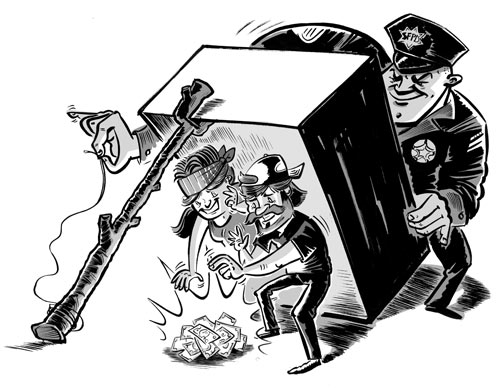
It was part of a coordinated sweep known as a buy-bust, a common practice under which an officer may pose as a homeless person, a clueless outsider, or a dope-sick fiend to lure people into selling crack, pills, meth, heroin, or marijuana. Once a transaction is made, a team of officers awaiting the signal immediately closes in and arrests the seller.

As of June 20, there were at least 109 open buy-bust cases in San Francisco. Based on defendants’ rap sheets, 92 percent had prior drug-use histories, according to a tally conducted by the Public Defender’s Office.

The officers posing as buyers — who often earn overtime — use street lingo, know which drugs can be obtained at which intersections, and sometimes offer higher prices than the accepted street value. Attorney Anne Irwin, also a public defender, is critical of the practice, saying it’s an expensive tactic that’s makes for easy arrests — because the money is irresistible to addicts who think they’re getting an opportunity to convert a personal stash into more drugs.

In a lean budget year, “they’re cutting social services left and right, and these are the very services that could help the addicts get off the street,” Irwin noted. She’s skeptical that the strategy stems the flow of substantial quantities of drugs.

Police Chief Greg Suhr, who said he participated in buy-busts for years as a narcotics officer, credits the tactic for helping to eradicate a rampant open-air drug market on Third Street in the Bayview, and says it can help prevent drug-related violence.

Klement, however, condemns it as a “war on crumbs,” saying it ensnares far more addicts than serious dealers and often ends up unnecessarily pinning felony convictions onto low-level offenders.


NUMBERS GAME

Buy-busts usually involve around eight officers, according to an average calculated by the Public Defender’s Office based on open cases, but have involved as many as 14 and as few as three. There’s the decoy buyer, who sometimes dresses in grimy sweatpants, goes without shaving, or dirties his face to look like a street addict in desperate need of a fix. There’s a “close cover” officer who follows the decoy, plus an arrest team that is also sometimes in plainclothes. Beforehand, officers will photocopy cash — usually $20 bills — to document the serial numbers so that the same marked city funds can be used as evidence once recovered from arrestees. Busts can happen within minutes of one another, and a single shift may net five or six arrests.

Irwin says the people snared aren’t typical drug dealers — certainly not big-time players. But they’re charged as dealers — and in many cases wind up branded as felons, with severe legal penalties such as multiyear prison sentences.

While the police department is able to show on paper that it’s brought hundreds of drug dealers into custody — and the district attorney can point to a boost in the conviction rate thanks to the program’s efficiency — Irwin says the amounts being peddled are tiny.

“In traditional narcotics operations, they cultivated snitches, used surveillance, and obtained search warrants” to go after major dealers, Irwin said. With buy-busts, “It’s like shooting fish in a barrel. Everyone agrees that we need cops on the streets to help keep us safe … But do we want to be paying hundreds of thousands of dollars for this?”

Sharon Woo, chief assistant of operations for the San Francisco District Attorney, told the Guardian that “we charge based on the conduct of the individual.” Woo went on to say that the DA tried to “exercise appropriate discretion” on a case-by-case basis when individuals are selling to support an addiction or due to being in dire financial straits.

Sometimes individuals are ushered into alternative programs such as drug court or a Back on Track program for first-time offenders, Woo said. And while the DA typically includes charges that make defendants ineligible for probation under state law if they have prior convictions for selling crack-cocaine — a discretionary practice that has drawn criticism from public defenders — Woo observed that “it doesn’t mean that’s how cases resolve.”

Police forces in nearly every major metropolitan area practice buy-busts, said Frank Zimring, a law professor at UC Berkeley’s Boalt Hall School of Law specializing in criminal justice issues. Yet he described the practice as costly and noted that paying overtime for it “makes what would ordinarily be a very expensive operation into a more expensive operation.”

Cost estimates for the entire program are tough to pin down. It costs $130 per day to house each prisoner in the county jail, amounting to more than $14,000 per day if all of the defendants with pending cases are in custody. If an average of eight officers per bust were paid $60 an hour each to spend six hours conducting a buy-bust, the current caseload represents more than $300,000 in officer pay — a conservative estimate — and that’s before lawyers in the offices of the public defender and district attorney are paid to prosecute and defend the suspects in court.

But no matter how you add it up, it’s a lot of money.

Suhr told the Guardian that apprehending street-level offenders occasionally leads officers to bigger fish. “Sometimes you get a low-level person, or a buyer if you will … if that same person would say, ‘But I know this guy and he has guns and he’s a big dealer and whatever.’ That is a good way to get to those bigger people.”

“We’ve never seen that happen in practice,” Klement countered.

One of Irwin’s clients, a homeless man, was charged with selling narcotics after he scraped out the contents of his pipe to sell 1/1,000th of a gram of crack to an undercover officer for $20. In a rare twist, the case was ultimately settled on a misdemeanor possession of narcotics.

Inspector Robert Doss, who served as the decoy in that case, has earned substantial amounts of overtime while going undercover to buy drugs, according to a court transcript. In 2009 Doss earned $35,488 in combined overtime and “other pay,” which includes time spent testifying in court, according to a San Francisco Chronicle database of municipal salaries.


ON THE STREET, OFF THE STREET

The Tenderloin is frequently targeted for buy-busts, with 65 percent of open cases as of June 13 having taken place in that neighborhood. The Haight ranked second, with nearly 12 percent of cases, and the Mission followed with 10 percent. Shortly after District Attorney George Gascón was sworn into his prior post as police chief in 2009, he announced a concerted effort to clean up the Tenderloin, and Klement maintains he’s seen a surge in cases stemming from buy-busts there ever since.

Drug dealing in the Tenderloin often makes the news as a source of frustration to merchants and residents. “You try and explain to the people of San Francisco that it’s okay for people to have open-air drug markets right in front of their stores,” Suhr said.

Yet Klement maintains that what is essentially a quality-of-life crime should not be treated as a felony. “There’s a lot of pressure from people who are invested in businesses [in the Tenderloin] who would love to see that neighborhood become the next Hayes Valley,” he said. “But what they don’t realize is that people are paying with prison for that agenda.”

Once someone has been labeled a drug dealer in the eyes of the law, he said, it becomes more difficult for them to access drug treatment — not to mention get a job, qualify for a student loan, or find housing.

Roberts’ case nearly went to trial. If convicted, she could have been sent to prison for a minimum of three and a maximum of 17 years due to extra penalties from prior convictions. On the eve of the trial, however, the case was settled on a possession charge for a year in jail, a rare outcome. Klement was hoping to have her placed in a treatment program.

Asked if she knew of others swept up in undercover operations, Roberts gave a wry chuckle and gestured to the jail corridor behind her, indicating that nearly everyone there had been taken down in similar fashion. Klement noted that the targets of the buy-busts are almost exclusively people of color, saying, “You walk into the holding cell and you think you’re in Alabama or Mississippi, not San Francisco.”

In an editorial on the subject that he wrote a couple years ago, Klement noted that by contrast, predominantly white middle class people with a fondness for illegal drugs are rarely targeted because they aren’t the ones selling drugs on the street. “The hard truth is that the police ignore most of the middle class drug use and dealing occurring out of private homes in every neighborhood or other public venues in the city — bars, nightclubs, concert halls. More drugs are being transported to Burning Man as we speak than will probably be seized during Gascón’s entire crackdown.”

For Klement, it’s just another symptom of a broken system. “A lot of these people are repeat players because we don’t have the right interventions at the right time,” he said. “We don’t understand addiction.”


Saving Oakland libraries

When I went to Oakland’s Art Murmur a couple weeks ago, a funeral procession organized to call attention to the possible loss of Oakland public libraries wound its way through the streets.

It wasn’t the only creative mobilization launched in Oakland in response to the possible closure of 14 branch libraries, including the Tool Lending Library, African-American Museum and Library at Oakland, and Second Start Adult Literacy program, to make up for steep revenue shortfalls. Under the painful budget scenario to be discussed by Oakland City Council at its June 21 meeting, just four library branches would stay open, with services just three days a week.

On June 20, a coalition called Save Oakland Libraries organized a 14-hour read-in, featuring local authors reading out loud in front of Oakland City Hall to vocalize support for keeping the libraries open.

Meanwhile, this is what happened last week when anti-capitalist protesters associated with Bay of Rage took to the streets as a “book block” to protest library closures:

http://www.youtube.com/watch?v=1UMo3prDOLw&feature=channel_video_title

While anarchist bookworms tangle with the cops on the streets, the Coalition to Save Oakland Libraries is asking people to send “polite” letters to the Oakland Police Officers Association to “ask them to make their Fair Share contribution to their retirement to keep the libraries open.” Oakland City Hall will likely be packed tonight.

Video by David Martinez.

Booty, booty, booty– Big Freedia to slam Hard French

0

There has never been a better time to shake watcha momma gave ya— and if mother didn’t pack a heavy trunk, you’ll have to improvise with some extra nasty drops and shakes. No excuses—New Orleans’ bounce star Big Freedia is headlining the Pride edition of Hard French and cheeks across the peninsula will feel the aftershocks.

Unless you caught Freedia in Oakland last year or have witnessed another super booty-fied bounce musician live, you’re probably not ready for this jelly. Really. A quick Google search for Big Freedia and you’ll find yourself sufficiently slapped in the face by glorious asses, bouncing hard and fast to the vicious mash-up of heavy beats. Freedia says he was born with the moves.

“In New Orleans you grow up learning how to pop your ass. We teach ‘em from babies,” he says, taking a break in the studio where he’s putting the final touches on a debut full-length album. “For over two decades, it’s been in the culture here. You wake up with it and go to sleep with it. You breathe it in the air, each and every day.”

The Southern city by the sea is ass over heels for bounce and Freedia says he can catch apple bottoms gettin’ down to his genre ‘round the clock. “At a stop light, someone will jump out of their car and start shaking their ass. Happens all the time.” 


Big Freedia’s love and pride for bounce is beyond evident when you see his nightly performance schedules and over the past year he’s introduced the rest of the country to not only the genre, but the presence of a gay hip-hop performer. His summer Go Homo Tour hopes to crush some stereotypes and fight homophobia. He’s also just released a five-song EP on Scion A/V Presents and has his fingers crossed for a documentary and reality TV show. I suggested an aerobics video and he hinted that there may be some sort of yoga-bounce combo in the works.

And if that’s not enough– he still operates an interior decorating business; flowers, funerals, weddings. Hard to imagine his wild personality laying out table cloths and vases without a couple booty drops. 

His stop at Hard French will be an epic end to Pride weekend, but that doesn’t mean dancers shouldn’t stretch before the game. The usual soul crowd has got some moves, of course, but Freedia is on a whole new hype. Still, there is no need to be intimidated, as he says, “honey, don’t you worry” and gladly offers three suggestions to loosen up loins in preparation for the dance floor.

1. Check out Big Freedia on You Tube

2. Wear some loose clothing so you can be free to move around.

3. Use your muscles— especially in the back and legs. Work that spine!


HARD FRENCH PRIDE FEATURING BIG FREEDIA

Sun/26, 2 p.m. to 10 p.m., $20

Public Works

161 Erie Street, SF

www.PublicSF.com

Ears of the Beholder outdoor show at El Rio

0

An afternoon show under fruit trees and bright sunshine is always nice, but a line-up of super chill local music is extra conducive to ideal weekend mentality. As long as the weather keeps up its good behavior, Saturday’s Ears of the Beholder four-band showcase will be a total hit and a great introduction to some homegrown electro-pop.

Ears of the Beholder is a pretty rad indie-music blog, started by an San Francisco guy named Peter in 2008. The site promotes a lot of great shows around the city, handpicked with the best intentions. Start with beer, dab your beak with sunscreen and don’t forget the layers; the show may start early at the lovely El Rio, but it won’t wrap until after sunset. The ticket price also includes food, which means you won’t have to run-off mid-set for dinner and instead, you’re encouraged to plop down for a full evening. Take a listen to the line-up:

Phantom Kicks

This SF band keeps things feather-light with pretty, super mellow guitars. They’re minimalist post-rock that’s super easy on the ears and their new synth addition is sure to add in a sweet surge of electro-pop. 


Blackbird Blackbird

The mystical chimes, mermaid voices, and super glassy synth melodies of San Francisoc’s Blackbird Blackbird wash over your senses in slow-motion. They’re a perfect soundtrack for underwater swimming.


Old Arc

These Santa Cruz guys keep things psychedelic, but add in a heavier, more danceable punch. Their random bag of tricks switches up quick and the super diverse samples insures things stay uber fresh from track to track.


Yalls

The honest, fragile vocals from this Oakland native are compelling enough, but then he adds in pianos and totally weird racing beats. There’s something twisted about the combinations he throws and the unpredictability of it all keeps you along for the bright ride. 


EARS OF THE BEHOLDER OUTDOOR SHOW

Sat./18, 3 p.m., $8

El Rio

3158 Mission Street, SF

www.ElRioSF.com

Mehserle’s free, but some protesters could still face jail time

 Johannes Mehserle, the former BART police officer who shot and killed Oscar Grant while he was lying face down on the Fruitvale station train platform on New Year’s Day 2009, was released from a Los Angeles jail June 13 after serving a total of 365 days for his involuntary manslaughter conviction. He was sentenced to two years behind bars, but Judge Robert Perry granted him an early release due to credit for time served and good behavior.

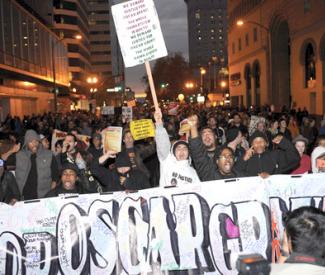
The same date of his release, the National Lawyers Guild filed a class-action lawsuit on behalf of 150 protesters who were mass-arrested during the Nov. 5, 2010 demonstration in Oakland in the wake of Mehersle’s sentencing. Meanwhile, a handful of individuals who engaged in the Jan. 14, 2009 and July 8, 2010 protests launched by Grant supporters — which morphed into riots after community rallies came to an end — are still battling court cases.

Two of the protesters arrested last July initially faced serious felony arson charges for igniting a trash can, which could have led to incarceration for a longer duration than Mehserle served for fatally shooting Grant.

“There were several felony arrests last July, and people were facing charges that could lead to more than a year, no question about that,” noted attorney Dan Siegel of the Oakland-based firm Siegel & Yee. Siegel is currently representing Todd Lister and Adrian Wilson, the two defendants who were accused of arson. The codefendants now face attempted arson charges, carrying a minimum penalty of eight months, with a midterm of one year. “Theoretically, that’s what they’re still facing,” Siegel said, but added that he was confident the as-yet unresolved case would result in a more lenient outcome.

Meanwhile, some of the burglary charges stemming from the looting that occurred in Oakland last July could potentially lead to multi-year sentences, Siegel added, leading to more time in jail than Mehserle served.

Some of the hundreds arrested over the course of the three protests who had prior criminal convictions had their probation or parole immediately revoked as a consequence, said Rachel Jackson, a member of the Coalition for Justice for Oscar Grant and one of the organizers of the Nov. 5 community rally in downtown Oakland’s Frank Ogawa Plaza.

Of the hundreds of arrests made in Oakland during waves of protests launched by Grant supporters, just a small number were on serious charges such as burglary or arson. The mass arrest of 150 individuals last November was initially made on charges of unlawful assembly, yet nearly all of the arrestees were cited and released after spending up to 24 hours in jail, and all had their charges dropped.

In that instance, Oakland police corralled 150 demonstrators who had been participating in a lawful march through the streets into a residential block in East Oakland. Once they were surrounded, Oakland police — who were aided in the streets by 32 other law-enforcement agencies that night, according to National Lawyers Guild attorney Rachel Lederman — placed them all under arrest. No dispersal order was issued prior to making the arrests, and it would have been impossible to comply if one had been issued.

In a class-action lawsuit, the National Lawyers Guild argues that the Nov. 5 protester roundup and mass arrest was a violation of the Oakland Police Department’s crowd control policy, and that it constituted a violation of protesters’ rights to freedom of speech and freedom of assembly. “Even legal observers and a few people who happened to live in the neighborhood were swept up,” Lederman said.

“The policy is clear, and the constitution is clear,” she went on. “You must have probable cause to believe an individual is committing a crime. But in this case, the whole crowd was herded onto a residential street, blocked in, and held on the street for hours. There was never a dispersal order, and all exits were sealed off.”

The Oakland Police Department did not respond to a request for comment.

Arrestees were held handcuffed in vans, in some cases for hours, without access to a bathroom, Lederman noted. All of the women were subjected to pregnancy tests upon being booked into jail, “which made no sense and was abusive in this particular case,” Lederman maintains, because the short time they spent there didn’t justify the excuse that the test would have been necessary to determine whether anyone needed prenatal care. Several men, meanwhile, were subjected to DNA swabs, which is “only supposed to happen if you’re arrested for a violent felony,” according to Lederman. 

Jackson, who was also arrested that night, said she believed police conduct was “incredibly intimidating, and it has a chilling effect on free speech.”

Treasure Island: 11 ayes, no sight

6

On June 7, the San Francisco Board of Supervisors voted 11-0 to reject an appeal of the Treasure Island environmental impact report. The appeal was brought by Arc Ecology and our colleagues the Sierra Club, Golden Gate Audubon Society, Wild Equity, former Sup. Aaron Peskin, and Yerba Buena Island resident Ken Masters.

The board will tell you that the Department of City Planning and the Mayor’s Office of Economic and Workforce Development found the appeal lacking in merit.

In the appeal, we claimed the EIR lacked the specificity to qualify as a project EIR, which means that after it passes, the city will have substantially limited the ability of any future Board of Supervisors to address the project’s actual environmental impacts. But these impacts cannot and will not be known until actual development proposals, none of which presently exist, are made.

Sup. Jane Kim and city planning staffers argued that the EIR had almost too much specificity. For example, without showing a single confirming diagram, project sponsors claimed they could cut as many as 100 stories off the proposed skyscrapers — yet keep the same number of condos without increasing the bulk, height, or number of buildings in the overall project. How? Through the Harry Potter-like magic of “flex buildings and zones.”

The board will tell you that this project presents a vision of a new community unrivaled in the Bay Area and nation — a new Athens. But the supervisors don’t seem to realize that it’s a development with a population larger than Emeryville, about the size of Albany. Indeed, the separate dedicated buildings of affordable homes truly make Treasure Island like Athens of old, with poorer people segregated from the rich.

They don’t see that this is a self-reflecting vision blithely unconcerned about the impacts it will have on the greater Bay Area region, and that it’s a bloated project that will vastly exceed the region’s capacity to support it. It’s a project whose impacts will enslave legions of people to longer commutes as more cars flood the bridge, pushing traffic like rising sea levels into the upper reaches of East Bay freeways. Nor are project proponents particularly concerned about the impacts of air pollution blowing from the bridge and the region’s freeways into Berkeley, Emeryville, and Oakland.

Finally, neither the supervisors, nor the city planners, nor the Office of Economic and Workforce Development seem to be aware that San Francisco currently has 30,000 vacant housing units. It will cost a projected $577,000 to build each Treasure Island unit. But more units could be built on San Francisco’s mainland with almost no impact, simply by allowing rental units in the basements of some of our stock of 130,000 single-family homes.

That kind of housing isn’t as luxurious as a 45-story view of the bay from Treasure Island perhaps — but at a cost of $100,000 to $200,000 per unit, more than half of those in-law apartments could be rented at or below market rate. Infill housing of that sort would also mean greater stability for established home owners, more jobs and business opportunities, and more riders for Muni.

Still, the appellants weren’t trying to halt any project at Treasure Island. The appeal was about was fixing the deficiencies in the EIR and right-sizing the project so it can move forward with its benefits intact.

In the Tarot, the Five of Cups depicts an individual so besotted by that possibilities floating before his eyes that he stands mesmerized, believing they are at hand — of course, in reality he’s fooling himself. In the case of Treasure Island, the supervisors and city officials are intoxicated by the visions floating in the bay — and are thus blinded to the better options of making this city and region more sustainable and affordable.

Our Weekly Picks: June 15-21, 2011

0

WEDNESDAY 15

EVENT

“Snakes and Lizards: The Summer of Slither”

“It is I; be not afraid.” Such were the comforting words, according to the Gospel of John, spoketh by Jesus C. unto his disciples after he reportedly walked across the sea. Now imagine another creature — right here, right now — capable of sprinting across the water: the neon-emerald mini-pterodactyl “green basilisk lizard,” expressing the same sentiment through its namesake stare. Need you be afraid of the 60 snakes and lizards — collectively known as “squamates” — visiting the California Academy of Sciences till September? Maybe. But these scaly species, along with their academy interpreters, have an important role this summer as live ambassadors from the reptilian realm. You just might find God, the devil, Darwin, or all three. (Kat Renz) Through Sept. 5

Mon.–Sat., 9:30 a.m.–5 p.m.;

Sun., 11 a.m.–-5 p.m., $19.95–$29.95

California Academy of Sciences

55 Music Concourse, Golden Gate Park, SF

(415) 379-8000

www.calacademy.org


THURSDAY 16

PERFORMANCE

Fresh Meat Festival

Fresh Meat, the transgender and queer performance festival, is 10 years fresh this year. And to celebrate, the festival offers its most ambitious program to date, four full nights’ worth of work, including Vogue Evolution, the New York City LGBT street dance group featured on the reality competition America’s Best Dance Crew. Also fleshing out this year’s roster: Los Angeles–based Robbie Tristan and Willem DeVries (same-sex ballroom world champions), New Mexico’s Cohdi Harrell (world-class trapeze artist), Sean Dorsey Dance, Na Lei Hulu I Ka Wekiu (an all-male hula company), the Gay Asian Pacific Alliance Men’s Chorus, glamourpuss singer-songwriter Shawna Virago, and comedian Natasha Muse. (Robert Avila)

Thurs/16–Sat/18, 8 p.m.;

Sun/19, 7 p.m., $15–$20

Z Space at Theater Artaud

450 Florida, SF

www.freshmeatproductions.org


FRIDAY 17

DANCE

Epiphany Productions Sonic Dance Theater

Recently returned from Mexicali, Mexico, the globetrotting choreographer Kim Epifano brings her art and travels back to SF with a home season work at the ODC Theater. Solo Lo Que Fue, a dance film shot at Cantina El Norteño, a historic bar in Mexicali, features a site-specific dance with performers from the region. The program also includes Heelomali, a multimedia piece created with composer and didgeridoo master Stephen Kent and Burmese harp player Su Wai, as well as Alonesome/Twosome, a duet inspired by an airmail drawing sent to Epifano by acclaimed artist Remy Charlip with live music by Epifano and Kent. Enjoy this armchair travel from the theater. (Julie Potter)

Fri/17–Sun/19, 8 p.m.; Sun/19, 7 p.m., $16–$20

ODC Theater

3153 17th St., SF

(415) 863-9834

www.odcdance.org


MUSIC

Horrid Red

Imagine an almost ludicrously compact car of obscure design speeding through the Teutonic countryside. It’s the early to mid-1980s. Driver and passenger, both with shaved heads and dressed entirely in black, are leaving their usual neon-soaked haunts in Berlin for a weekend in the mountains. They are very much in love, and Horrid Red is the soundtrack to their affections. Featuring three-fourths of shitgaze pioneers Teenage Panzerkorps, Horrid Red eschews the aggression of this other incarnation and opts instead for a near-perfect and haunting blend of krautrock, new wave, and early minimalist punk. Split between two continents (vocalist Bunker Wolf lives in Germany while the rest of the band resides right here in San Francisco), Horrid Red is a collaborative effort that only rarely allows for live performance. In other words, don’t miss them. (Cooper Berkmoyer)

With Burial Hex and Brute Heart

9:30 p.m., $8

Hemlock

1131 Polk, SF

(415) 923-0923

www.hemlocktavern.com


SATURDAY 18

DANCE

Patricia Bulitt

Patricia Bulitt is for the birds. Literally. She has been making dances about them for more than 30 years, first in Alaska, most recently in New Zealand and Japan. To her they are harbingers of peace and beauty, qualities she finds woefully absent in our humdrum existence, and her dances honor them. One piece was dedicated to the native birds of Lake Merritt in an Oakland refuge, another to a blackbird residing in grove on the UC Berkeley campus. But her biggest love is the majestic egret. Her Egretfully, performed on the lawn below the nesting couples at the Audubon Canyon Ranch, has become an annual event. (Rita Felciano)

2–4 p.m., free (contributions requested)

Audubon Canyon Ranch

4900 Shoreline Hwy., Stinson Beach

415-868-9244

www.egret.org


MUSIC

Pete Rock

Pete Rock recently tweeted about “dat Montel Williams blender, the fucking truth. Watch ur fingers, dat shit will blend ur joints up nicely lol.” A mainstay of classic 1990s hip-hop, Pete Rock isn’t new to blending, plucking from the depths of R&B, funk, and jazz records for his signature fusion of music styles. With his kitchen blender, Rock concocted an “apple, celery, parsley drink” and declared that “man dis shit is good.” Tonight is the chance to see what he’ll cook up outside the kitchen, as the legendary producer performs a two-hour set. In the spirit of remixes, Yoshi’s offers Japanese delicacies to sample alongside the music. (David Getman)

10:30 p.m., $25

Yoshi’s San Francisco

1330 Fillmore, SF

(415) 655-5600

www.yoshis.com


EVENT

Northern California Pirate Festival

Arrr! Forget about all other expeditions ye may have plotted for this here comin’ weekend, ya lousy bilge rats! Ye best be settin’ sail for swashbuckling adventures of all manner at the fifth annual Northern California Pirate Festival, a true buccaneer’s dream come true. Costumed revelry, sword-fighting, sailing ships, canon firings, music, food, grog, wenches, treasure, and more be in store, whether ye be a seasoned deck hand or a curious landlubber. What better way to spend Father’s Day weekend than to take Dad to see the new Pirates of the Caribbean flick — be warned, ye may want to bring along a healthy ration of rum — and then make way for a festival where you may actually walk away with $5,000 in gold coins and treasure? (Sean McCourt)

10 a.m.–6 p.m., free

Vallejo Waterfront Park

Adjacent to Vallejo Ferry Terminal

298 Mare Island Way, Vallejo

1-800-921-YARR

www.norcalpiratefestival.com


MUSIC

Bill Callahan

Apocalypse, Bill Callahan’s follow-up to 2009’s beautiful Sometimes I Wish We Were an Eagle, is a striking left turn from the lush production and personal reflection that populated much of that album. Instead, with his deeply rich baritone always front and center in the mix, Callahan has created a song cycle more in line with the fractured folk and wry humor of Smog, the alias he worked under for nearly 20 years. Apocalypse stretches eight songs over the course of 40 minutes, each full of stark takes on American roots music and wrapped in simple, haunting arrangements. It’s another example of Callahan’s slow, steady climb to the upper echelon of modern American songwriters. (Landon Moblad)

With Michael Chapman

9 p.m., $20

Independent

628 Divisadero, SF

(415) 771-1421

www.theindependentsf.com


SUNDAY 19

MUSIC

Sharon Jones and the Dap Kings

To ring in its 74th season of free summer performances, organizers of the Stern Grove Festival enlist Motown-revivalist masters Sharon Jones and the Dap Kings. With a massive voice in the lead and instruments authentic to the period, the band is tailor-made for the festival circuit and outdoor arenas. Today’s concert is the first of many to come this summer, including performances by Neko Case, Aaron Neville, and the trifecta that is the SF Symphony, Ballet, and Opera. Nothing beats listening to Sharon Jones and Co. jam — other than listening to Sharon Jones while picnicking on rolling hills.Beer and wine welcome. (Getman)

With Ben L’Oncle Soul

2 p.m., free

Sigmund Stern Grove

19th Ave. at Sloat, SF

(415) 252-6252

www.sterngrove.org


FILM

Wings of Desire

Before there was City of Angels (1998), and before there was “Stillness Is the Move,” there was 1987’s Wings of Desire. Three years after Paris, Texas, German New Wave director Wim Wenders made this art film that went on to inspire that insipid remake, as well as the Dirty Projectors’ pop song. An angel falls for a mortal trapeze artist amid the graffitied wasteland of West Berlin and sheds his wings in exchange for love, mortality, and coffee. With music from Nick Cave and Crime and the City Solution, it’s essential viewing for all the hopeless romantics hopelessly trapped in the ’80s, before being so was hip or ironic. Wenders just knows. (Ryan Lattanzio)

Sun/19–Mon/20, 7:30 p.m.

Also Sun/19, 2 and 4:45 p.m., $6–$9

Red Vic Movie House

1727 Haight, SF

(415) 668-3994

www.redvicmoviehouse.com


PERFORMANCE

“Hubba Hubba Revue: Flying Saucer Beach Party”

In the vein of classic B-movies from the 1950s and ’60s like Horror of Party Beach (1964), Hubba Hubba Revue’s Flying Saucer Beach Party promises to be a sci-fi summer kick off that will deliver a ghoulishly good time. In addition to a bevy of burlesque beauties from the Bay Area and the greater known universe, the afternoon will feature live surf rock from the Deadlies and Pollo Del Mar, special guests Balrok and the Cave Girls from Creepy KOFY Movie Time, a “Martians, Maidens, and Monsters” swimsuit and costume contest, and much more monstrous fun! (Sean McCourt)

2–8 p.m., $10–$12

DNA Lounge

375 11th St., SF

(415) 626-1409

www.dnalounge.com


TUESDAY 21

MUSIC

Martyrdod

When you describe a band as blackened crustcore from Sweden, you’re bound to raise a few eyebrows. Blackened crustcore? Why not just crustcore? Wait … what the hell is crustcore? Martyrdod has been around since 2001 and has consistently carried the banner high for heaviness in punk. What sets it apart from contemporaries, besides how utterly crushing it is, is the subtle way a black metal influence has worked itself into Martyrdod’s records; it’s punk and it’s heavy, but its also gloomy and terse. It’s filled with despair and anger and totally without hope. Think Motorhead if Lemmy was really into Crass and Darkthrone. The atmospheric considerations don’t diminish the intensity of the assault, and Martyrdod emerges on this, its West Coast tour, as a punishing force in punk. (Berkmoyer)

With No Statik and Yadokai

9:30 p.m., $7

Knockout

3223 Mission, SF

(415) 550-6994

www.theknockoutsf.com 


The Guardian listings deadline is two weeks prior to our Wednesday publication date. To submit an item for consideration, please include the title of the event, a brief description of the event, date and time, venue name, street address (listing cross streets only isn’t sufficient), city, telephone number readers can call for more information, telephone number for media, and admission costs. Send information to Listings, the Guardian Building, 135 Mississippi St., SF, CA 94107; fax to (415) 487-2506; or e-mail (paste press release into e-mail body — no text attachments, please) to listings@sfbg.com. Digital photos may be submitted in jpeg format; the image must be at least 240 dpi and four inches by six inches in size. We regret we cannot accept listings over the phone.


Not the face!

0

marke@sfbg.com

SUPER EGO Henny, I don’t even know where to start. I leave the country for a lousy two months and I come back to this? No more Eagle Tavern to blow my mind on Thursday nights and blow my other parts on Sunday afternoon? No more Ti Couz for a hot bowl of pear cider when it’s pissing down rain? Straight people from Richmond puking all over the Castro on the regular? (Actually not too sad about this. I love my Richmond girls — and their unattended purses and boyfriends.)

Perhaps worst of all — um, Kreayshawn? Wow. At least we’re balancing out that catastrophe with a healthy, sleazy obsession with the Weeknd.

OK, I’m gonna move it all along, not dig my claws into bygones. I just flew in and my arms are too short to box with blah. It’s actually great to be back in blackout among my SF dance floor family. So let’s toast the future by getting toasted, because there’s a Jeroboam-load of parties sparkling in the fridge. Hiya!


BAWDY STORYTELLING: “LIBERTINE!”

“Carnal chronicler” Dixe De Tour’s over-the-top scandalous, sexy Bawdy Storytelling reading series is so successful it just expanded to Los Angeles. But home is where its, er, heart remains as Oakland’s infamous Ouchy the Clown joins a bevy of ear-burners for a no-holes-barred night of free speech.

Wed/8, 7 p.m. doors, 8 p.m. storytime, $10. Blue Macaw, 2565 Mission, SF. www.bawdystorytelling.com


WIG OUT: KIM KONG BENEFIT

Beloved DJ and promoter Kim Kong of Non-Fat and Bitches with Stitches was just diagnosed with lymphoma, and the SF scene is stepping up to lend support at this bonkers fundraiser. The Housepitality, dirtybird, and Non-fat crews are bringing heavy hitters Mr. C and Claude VonStroke to the decks — you throw on your favorite wig and dance around.

Wed/8, 8 p.m., donation requested. Icon, 1192 Folsom, SF. www.wigoutwednesday.com


BLOW UP SIX-YEAR ANNIVERSARY

You mean our seminal electro banger glamourpuss joint is already six years old? That’s almost the age most of the kids who went there were during its insane early Rickshaw Stop days, what? Blow Up power couple Ava Berlin and Jeffrey Paradise join the Tenderlions, Nisus, Trevor Simpson, Holy Mountain, and more for the hands-up blur.

Fri/10, 10 p.m., $16 under 21, $12.50 over. DNA Lounge, 375 11th St., SF. www.blowupsf.com


DAVE NADA

The godfather of Moombahton — pitching Dutch house down to its deliciously tropical (and far less annoying/wannabe gangsta) roots — hits the raucous Lights Down Low party, not previously known for its reggaeton or Netherlandish leanings. But dude, when it gets darker anything goes. U.K. funky beatsplitter Canblaster and IHEARTCOMIX’s Franki Chan open up, local locos Deevice, Sleazemore, and Eli Glad preside.

Fri/10, 9:30 p.m.-3 a.m., $10. SOM, 2925 16th St., SF. www.lightsdownlow.net


EVOLVE ANNIVERSARY

Monthly party Evolve has grabbed the crown for deep yet spirit-raising soulful house in the Bay. (Was there ever any doubt Oakland would reign supreme?) And while the emphasis is on the “sacred element of music,” DJs David Harness and Soul Luciani don’t stint on the more earthly pleasures of a friendly, packed dance floor.

Fri/10, 9 p.m., $10. Era Art Bar, 19 Grand, Oakl. www.oaklandera.com


LEE DOUGLAS

Sophisticated nu-disco and deeper house funkiness from this Brooklynite, who has garnered a star-studded following by unashamedly embracing the lo-fi analog techniques of yore. (No fear of the wah-wah here!) He’ll be at the monthly No Way Back party with DJs Conor and Navid.

Fri/10, 9:30 p.m., $5–$7. 222 Hyde, SF. www.222hyde.com


LOOSE JOINTS THREE-YEAR ANNIVERSARY

One of the funkiest parties in the city — a real topper combining secret sampled classics with up-to-the minute edits into a heady yet hip-swinging brew — hits the triple. Guest star: live beatboxer, producer, and instrumentalist James “Ayro” Ellison of Ubiquity Records, with residents Tom Thump, Damon Bell, and Centipede.

Fri/10, 10 p.m., $5. Make-Out Room, 3225 22nd St., SF. www.makeoutroom.com


MALL MADNESS

The totally not ironic, awesomely gnarly, giddily drag-ridden tribute to 1990s boy bands, ’80s Spandex pop, and ’70s unicorns on roller skates (bonus Bieber nods!) is folding up its Sunglass Hut and moving on with its life. Hostess Oxana Olsen serves up Glamour Shots and Hot Topics for the final installment.

Sat/11, 10 p.m., $7. UndergroundSF, 424 Haight, SF.


FADE TO MIND

Those wacky Tormenta Tropical kids are at it again, expanding the signature electro-cumbia sound of their monthly gig with some warped global bass action. This Fade to Mind showcase flies in the L.A. label’s biggest draws: rave ‘n’ b king Kingdom, bouncy duo Nguzunguzu, and kooky pixellator Total Freedom.

Sat/11, 10 p.m., $10. Elbo Room, 647 Valencia, SF. www.elbo.com


THIRD ANNUAL SUNSET MUSIC AND ARTS PICNIC

It doesn’t exactly feel like summer as I write this — most likely because one of the Bay’s most adored free summer-launching events hasn’t occurred yet, right? The Sunset crew is once again taking over Treasure Island for a daytime dance and chill extravaganza, featuring a live set by the actually legendary house and jungle pioneer A Guy Called Gerald of “Voodoo Ray” and “Black Secret Technology” fame. DJs Solar, Galen, J-Bird, and (yay!) Primo Preems support.

Sun/12, noon–8:30 p.m., free. Treasure Island. www.pacificsound.net 2


Live Shots: U2 360 Tour at the Oakland Coliseum, 06/07/2011

1

Ace Guardian photographer Charlie Russo caught Bono & co. in all their arena glory last night as part of the massive 360 Tour. Click here to see larger versions of the pics.

Alameda all at once

0

caitlin@sfbg.com

BAR CRAWLER Rumored to have given birth to the snow cone, the Popsicle, and the Kewpie doll back in its amusement park days, Alameda still gives off a summery island vibe. (With Playland at the Beach, Oakland’s Idora Park, and Alameda’s Neptune Beach, the primary mode of transportation in the Bay used to be a Big Dipper. Picture rush hour.) The golden sun, rad flea market, and laid-back neighborhoods — well, the place screams “stay a while.” So you may as well get drunk. FYI, the flatlands crawl works best on a bike, but if you soldier up and walk it, you don’t risk getting tipsy and bloody — to each her own. (Caitlin Donohue)


ALAMEDA FERRY

No, you’re not driving out there. Hop the ferry, ’cause guess what? It’s the first stop on the crawl. Take advantage of the bracing winds to order a beer, or better yet, a bay-ready cocktail. Affable bartenders will recommend a bloody or one of the Campari concoctions that sometimes make the specials board. Take your sweet-ass time and ascend to the top deck with your glass — you have 30 to 45 minutes to kill coming from San Francisco. Once you disembark, you’ll be flush with the possibility of a new island lifestyle. Steady on captain, much boozing lies ahead.

Departs from SF Ferry Building, Pier 41, and Jack London Square. www.eastbayferry.com


ST. GEORGE SPIRITS

Surprise! Not only is Alameda a great bar town, it’s also home to a burgeoning alcohol-making district. The island’s northwestern blocks — once the Naval Air Station and still fetchingly speckled at the edges with behemoth military boats — went through an era of tumbleweed rule but are now being reinvigorated by pioneer businesses that enjoy the commercial, wide-open spaces that only airplane hangers can provide. St. George Spirits moved here in 2004 and now produces pleasant, not-too-cloying Hangar One-flavored vodkas (mandarin blossom and chipotle versions are amazing), absinthe, superlative Firelit coffee liqueur, and more. Check out the $15 tasting menu in the jovial tasting room and toast to Alameda with every tiny, long-stemmed glass the good saint presents you with.

2601 Monarch, Alameda. (510) 769-1601, www.stgeorgespirits.com

(Click here for larger Google map.)

ROCK WALL WINES

Don’t worry if your St. George tasting ended with a disorienting absinthe-root beer closer — you don’t have far to bike to the next stop on the crawl. A few hangars over, step into the sleek tasting room of Rock Wall Wines, where you can order flights of swishes from Rock Wall’s father-daughter team plus nine other small wineries that share production space next door in the massive urban vintner hangar-hangout. Feel good about supporting the little guys along with another chance to sample an array of finely-crafted local booze.

2301 Monarch, Suite No. 300, Alameda. (510) 522-5700, www.rockwallwineco.com


BLADIUM BAR AND GRILL

So you’re a few drinks deep — time to check out the actual Alameda haunts. Bar! Well, a gym bar. Once you arrive at the Bladium (you’ll pedal past an impressive lineup of battleships on the way), smile sousedly at the front desk of the Bladium athletic center and weave your way through in-line hockey and indoor lacrosse arenas to the comfortable second-floor sports bar, where you can knock a pint back and take in some of the heated amateur action going on among the athletic types below. Don’t let all the secondhand endorphins make you feel lazy — the kind of drinking you’re doing takes endurance.

800 West Tower, Building 40, Alameda. (510) 814-4999, www.bladium.com


FORBIDDEN ISLAND TIKI LOUNGE

Enough crawling with the generalists — let’s get dark ‘n’ sugary the way only a quality tiki bar can encourage. Find the flavor at the low-lit Forbidden Island, where there will be a luau in progress, if you play your cards right, and sufficient vats of rum and juice even if you didn’t schedule your crawl around roast pig. Hoist a Neptune’s Garden (it’s blue and has fruit garnishes!) to discovering more about the Forbidden Island’s watering holes and continue on your way.

1304 Lincoln, Alameda. (510) 749-0332, www.forbiddenislandalameda.com


LOST WEEKEND LOUNGE

See how we planned this out? We started with sober sea legs on the ferry, pinky-up tastings while you can still bullshit about noses and mouthfeels, then the limber tiki limbo — enter now the dives. Lost Weekend is a good one, and it’s smack in the center of Alameda’s fun downtown, which is worth a saunter about if you’re feeling a little shaky after Forbidden Island. Otherwise, belly up the bar, gaze at the TVs and myriad ephemera on the walls from hazy sports meccas — Philly? Texas? — and discover that here in the Island City, the jock and black-clad hipster crowds can oftentimes merge into one.

2320 Santa Clara, Alameda. (510) 523-4700, www.lostweekendlounge.com


LUCKY 13

Turn the corner onto Park Street and you, my friend, have come to the end of your bar crawl — lucky for SF residents, it’s on familiar turf. The Lucky 13’s East Bay branch is just as good a rockabilly dive into a heavy, microbrew-tinged blackout as its Castro counterpart. Same wooden tables to back-slap and talk trash over without blazing TVs to distract your train of thought, same walled patio for fresh air and lighting of the cancer stick (yeah, alright, you’re wasted). Two big points for the Alameda Lucky: you can bring in take-out stromboli and french fries from Scolari’s next door — and the Fruitvale BART Station is only a happy downhill ride away when you’re ready for the mainland. Lean your bike against the wall and find a comfy seat for yourself, brave crawler — you’ve earned it.

1301 Park, Alameda. (510) 523-2118, www.lucky13alameda.com 

Tipping point

3

sarah@sfbg.com

On June 14, members of the Board of Supervisors will vote to appoint a new member of the Police Commission — in the wake of a messy string of alleged police misconduct scandals that, progressives argue, underscore why having strong civilian oversight is critical to ensuring a transparent, accountable police department the public can trust.

The appointment comes less than two months after San Francisco native Greg Suhr was sworn in as chief in the wake of Mayor Gavin Newsom’s decision to appoint former Chief George Gascón as the next district attorney — a move that has served to muddy the D.A. Office’s efforts to investigate the alleged police misconduct.

Further complicating the board’s choice is the heated battle that erupted over the appointment, led in part by members of two Democratic clubs that represent lesbian, gay, bisexual, and transgender communities.

The Alice B. Toklas LGBT Democratic Club has officially endorsed Julius Turman, a gay attorney and community activist who was a former assistant U.S. attorney and the first African American president of the Alice club. Turman currently works for Morgan, Lewis & Bockius, where he represents companies in actions for wrongful termination, employment discrimination, and unfair competition. He is also state Sen. Mark Leno’s (D-SF) proxy to the San Francisco Democratic County Central Committee and serves on the Human Rights Commission.

On the other side, members of the Harvey Milk LGBT Democratic Club, the voice of the city’s queer left, are supporting David Waggoner, an attorney and community activist who is a former Milk Club president. Waggoner has worked on police use-of-force policy and as a pro bono attorney for the National Lawyers Guild at the Oakland Citizen’s Police Review Board, and been a passionate advocate for the LGBT community, immigrants’ rights, people with disabilities, and the homeless.

The other two applicants for the post are Vanessa Jackson, a staffer at a women’s shelter with experience in counseling ex-offenders; and Phillip Hogan, a former police officer who serves on the board of the Nob Hill Association and has been trying to get on a commission for years.

Although both Jackson and Hogan have diverse experience with law enforcement — Jackson as an African American woman who claims the police have “no respect for people of color” and Hogan as a former police officer of Lebanese-Irish descent who manages real estate — neither has the support of the LGBT community. The position occupied by Deputy District Attorney James Hammer for the last two years, and Human Rights Commission director Theresa Sparks occupied before that, is widely considered to be an LGBT seat.


WHO’S THE REFORMER?

So now the fight is about whether Turman or Waggoner would be the strongest reformer.

In a recent open letter, former Board Presidents Harry Britt, Aaron Peskin. and Matt Gonzalez expressed support for Waggoner. “While most hardworking police officers perform their jobs admirably, insufficient oversight and poor management systems have led to significant problems,” their letter stated. “Despite these widely reported problems, the Police Commission has failed to adequately address these issues. San Francisco needs real reform, not more of the same. We believe David Waggoner will be that voice at this critical time.”

At the June 2 Rules Committee hearing, Waggoner proposed taking away master keys to single-resident occupancy (SRO) hotels from the police. “Significant abuse of that resulted in seriously tarnishing the department,” he said.

Turman made an equally impassioned — if less stridently reformist-sounding — speech. “Why would we allow an officer to enter a home, regardless of the master key rule, which I’m not a fan of?” Turman asked. He also said Tasers are dangerous weapons with unintended consequences. “I fear communities of color will suffer more from Taser use.”

Waggoner’s supporters noted that their candidate has more than 15 years of police accountability experience. Turman’s supporters vouched for his integrity, maturity, ability to build consensus, and “belief in strategically serving his community.”

In the end, Sups. Sean Elsbernd and Mark Farrell voted for Turman, while Rules Committee Chair Sup. Jane Kim voted for Waggoner.

That means Turman’s name has been forwarded to the full board with a recommendation. But because the Rules Committee interviewed all the candidates, the board can still appoint any of them.

At the Rules Committee, Sup. Scott Wiener voiced support for Turman. And Board President David Chiu recently told the Guardian that he has known Turman for years, has worked with him professionally, and will vote for him. “I found him to be fair, thoughtful, and compassionate,” Chiu said, noting that he believes the role of the commission is “to provide oversight and set policy.”

Sup. David Campos, one of the solid progressive votes on the board and a longtime Milk Club member, believes Waggoner would make an excellent commissioner but is a friend of Turman, and believes he’ll be a strong voice for reform. “Sean [Elsbernd] and Mark [Farrell] could be in for a big surprise if Julius gets appointed,” Campos mused shortly after Elsbernd and Farrell voted for Turman.

Campos recalled how he and Turman started working at the same firm years ago. “So I got to know him well,” he said, adding he is “like a family member.

“By virtue of his involvement with Alice, some folks think Julius will be a certain way,” Campos added. “But I believe he’ll take a progressive point of view on the issues. He has both the knowledge and the experience with the police, he understand the important role that police oversight and the Police Commission play in making the SFPD accountable.”

Kim told us that she primarily voted for Waggoner because she knows him the best, and not out of concern that Turman wouldn’t do a good job. “I’m more familiar with David and that’s what tipped the scale,” Kim said. “It’s great to have two strong LGBT attorneys who have a clear understanding of public safety issues, the law, and are advocates for the community.”

But Debra Walker, who ran against Kim last November, steadfastly supports Waggoner. “Julius has been active in the Alice B. Toklas club for a while, he’s a prosecutor, while David is more of a citizen’s defense attorney,” she said.

Turman continues to be dogged by reports of domestic violence, thanks to a lawsuit that Turman’s former domestic partner Philip Horne filed in March 2006 alleging that Turman came into his house when he was sleeping on New Year’s Day 2006 and tried to strangle him.

Horne claimed he “was terrified that the lack of air supply would cause him to pass out and potentially die at the hands of such a jealous and unmerciful former lover.” He alleged he was able to calm Turman down only to see him get enraged again and punch Horne in the face seven to 10 times. When Horne decided he needed to go to the emergency room, the complaint states, Turman grabbed his phone and keys saying, “If you leave, you’ll never see the cats (alive) again,” and “I will report you to the state bar.”

Horne claimed he ran outside screaming for help and that when SFPD arrived, they arrested Turman for domestic violence and called an ambulance for Horne.

Turman responded in July 2006 to what he described as Horne’s “unverified complaint,” arguing he acted in “self-defense” and that the conduct Horne complained of “constituted mutual combat.” He added that “damages, if any, suffered by Horne were caused in whole or in part by entities or persons other than Turman.”

In the end, no criminal charges were ever filed against Turman and the case was settled out of court. Turman now says “I’ve done nothing wrong and these allegations are false.”

Campos warns people not to jump to conclusions. “We need to remember that there is a presumption of innocence,” Campos said. “Yes, there was a court case, but there was never a conviction. Yes, there was a settlement, but people do that for a lot of reasons.”

Turman told the Rules Committee that the incident was from “an extremely difficult time that is now being used against me as a political sideshow.”

Meanwhile, Campos notes that without a reform-minded mayor, there will be only so much any board-appointed police commissioners can do. “What we really need to implement police reform is a mayor who is willing to do that,” he said. “Otherwise it’s going to be very difficult because the mayor still gets to appoint four commissioners and mayor still gets to control who is in charge of the police department.”


WHAT DIRECTION?

Civil liberties advocates praised as a “first step in the right direction” Suhr’s May 18 decision to issue an order clarifying that SFPD officers assigned to the FBI’s joint terrorism taskforce should adhere to SFPD policies and procedures set by the Police Commission, not FBI guidelines.

But in the coming months, the commission will have to decide whether to push a Portland-style resolution around SFPD involvement with the FBI. The commission also will be dealing with fallout from the other scandals, including the crime lab, the use of force against mentally ill suspects, and videos that allegedly show police conducting warrantless search and seizure raids in single residential occupancy hotels.

These scandals have progressives arguing that it’s critical that the board’s three seats on the commission are occupied by applicants with proven track records of reform.

Waggoner notes that in 2003, voters approved Prop. H., which changed the composition of the commission from five to seven members. Four are appointed by the mayor; three by the board.

Last year, he said, the commission made significant progress in the right direction when it adopted new rules after the Jan. 2 shooting of a man in a wheelchair in SoMa. “That was not the first time an unarmed person with a disability was killed,” he said. “After Prop. H and a crisis, the commission finally took steps. It remains to be seen if Chief Suhr will implement that.”

Waggonner said the current arrangement “creates tension between people who are more willing to defer to the chief on policy issues and being in an advisory capacity, as opposed to people who want to be in the forefront of setting policy.”

That tension played out when Commissioners James Hammer, Angela Chan, and Petra DeJesus tried to find consensus on the Taser controversy last year. “Overall they worked well together. But there’s been no progress yet on Tasers,” he said, noting that the commission eventually decided on a pilot project.

Waggoner said he would be in favor of the commission having a more active role and exerting its authority under the city charter to set policy, but in collaboration with the chief.

The Police Commission’s May 18 joint hearing with the Human Rights Commission about FBI spying concerns was a symbol of the broader issue at the Police Commission. The majority of the commission didn’t see any major problems — but the progressives were highly critical. “Is the commission there to set policy and take leadership, or is it there in an advisory capacity?” Waggoner asked.

With Hammer’s departure, Chan and DeJesus, both board-appointed women of color, are the most progressive members of the commission. Chan hopes Hammer’s replacement believes in strong civilian oversight. “We should never be a rubber stamp for the police department,” he said. “We need to take community concerns very seriously. When the police department is doing great things, we should support them — but if we see something wrong, we should not be afraid to speak out.”

Turman told the Guardian that “being the voice for reform and advising are not mutually exclusive roles — and an effective police commissioner needs to be both.

“I would advocate for series of meetings with representatives from the Arab community, the SFPD, and the FBI to increase communication and understanding of each side’s perspective on exactly what we need to implement in San Francisco,” Turman said.

Asked more about Tasers, Turman said that “one of the things I would be interested in pursuing is a recognition by some that female officers are less likely to incapacitate during an arrest, which could lead to learning for the larger police force.”

But does this means Turman will turn out to be a swing vote for Tasers? Only time — and the board’s June 14 vote — will tell.

Avalos introduces SF-San Mateo Local Hire agreement

7

Last year, when Sup. John Avalos introduced and eventually won passage of the city’s landmark local hiring ordinance, a number of battles broke out, as folks in neighboring municipalities began fretting that the new law could shut them out of construction jobs in San Francisco. Avalos worked hard to make sure their concerns were addressed, but he continued to encounter resistance from San Mateo County.
And in February Assemblymember Jerry Hill (D-San Mateo) who is facing term limits and reapportionment, introduced a bill in Sacramento that was intended to limit the reach of the Avalos legislation, which aimed to put more San Francisco residents to work on city-funded construction projects.
Hill’s legislation, AB 356, sought to prohibit the use of state money on local-hire projects and prevent Avalos’ legislation from being applied to the city’s projects in counties within 70 miles of San Francisco, including upgrades to the Hetch Hetchy water system on the Peninsula.
“San Francisco can use its own money any way it wants,” Hill said at the time, “Taxpayers from San Mateo, Ventura, Solano and other California counties shouldn’t have to pay for the increased construction costs that will result from San Francisco’s local-hire ordinance.”
Plus, he said the city should be thinking regionally, not hyper-local.
But, as Avalos repeatedly pointed out, his local hire law doesn’t apply to projects funded with state money, and it only mandates 20 percent local hire this year, gradually increasing to 50 percent local hire over the next seven years.
At the time, the Guardian predicted that Hill’s bill would “probably go down the crapper because the San Francisco legislators, who have a fair amount of clout up in Sacramento these days, aren’t going to support it. Assemblymember Tom Ammiano and state Sens. Mark Leno and Leland Yee have all signed a letter supporting the city’s local hire law.”
And sure enough, after the mayors of San Francisco and Los Angeles, not to mention organizations from San Francisco, Oakland, Los Angeles and San Diego, and the State Building Trades Council made their views known, Assemblymember Charles Calderon requested June 3 that Hill’s legislation by ordered to the inactive file.
Local supporters of Avalos’ legislation say Hill’s bill got pulled because there was no chance in hell that it would ever get out of the State Assembly.
But Hill’s office claims it was because San Francisco and San Mateo reached a deal last week, and that this outcome was Hill’s intention all along.
“What happened was that the Assemblymember Jerry Hill put together a bill and his intention was to get his constituents in San Mateo a memorandum of understanding with San Francisco—and that MOU was signed last Friday (June 3) by San Francisco Mayor Ed Lee and San Mateo County Board President Carole Groom,” Hill’s legislative aide Aurelio Rojos told the Guardian.
And according to a statement that Hill’s office released June 3, Hill welcomed the signing of a reciprocity agreement that “ends a dispute between the counties of San Mateo and San Francisco by creating a level playing field for San Mateo County residents working on construction  projects in the county funded by San Francisco.”
Hill’s press release claims the MOU was “forged following weeks of negotiations that began in February after Hill introduced legislation that would have limited San Francisco’s recently enacted local hire ordinance to its geographic boundaries. The agreement allows contractors working on San Francisco public works projects located in San Mateo County to hire an equal number of workers from the two counties.  As a result of the agreement, Hill has agreed not to move forward with his legislation, Assembly Bill 356.”
 “San Mateo County construction workers will no longer be penalized by San Francisco’s local hire ordinance as a result of the agreement,” Hill said.  “I applaud Mayor Lee and Supervisor Groom for creating a level playing field that will enable San Mateo residents to work on construction projects within their county.”
 Hill claims that  with San Francisco scheduled to award $27 billion in public contracts during the next decade, the city’s local hire  provision would have impacted the ability of San Mateo County residents to work on construction projects in their county, including the San Francisco International Airport, the jail in San Bruno, Hetch Hetchy waterworks and other facilities on the Peninsula.”
Either way, today, Avalos, who has long maintained that Hill either didn’t understand his legislation or was refusing to understand the legislation, and Mayor Ed Lee are introducing a resolution, “approving a local hiring agreement between San Francisco and San Mateo County,” and reinforcing equal opportunity guaranteed under San Francisco’s Local Hire Policy and community-labor partnerships
Avalos, who is running for mayor, apparently led the negotiations alongside Lee to forge the agreement which allows contractors performing San Francisco public works projects in San Mateo County to equally draw workers from San Francisco and San Mateo to meet required staffing levels under the local hiring ordinance.
The agreement covers San Francisco-funded projects located in San Mateo County, including the San Francisco airport.  Under the agreement, San Mateo workers are included by the local hiring requirement for projects  in San Mateo County, and will be able to fill up to half of the local hiring requirement.
“This is a win-win for workers in San Francisco and San Mateo. Whatever we can do to support job creation in the Bay Area region during this very long recession is going to be very meaningful to the families that are struggling to stay in this area,” Avalos said.
“The achievement in securing this resolution is really a testament to the strength of communities united,” said Brightline executive director Joshua Arce. “Sup. Avalos always intended that his legislation would expand, in terms of opportunities on city-funded projects, outside San Francisco. On San Francisco-funded work in San Mateo, San Francisco and San Mateo workers will be working side by side, taking advantage of the local and regional aspects of the legislation.”
Or as Avalos put it,  “The local hiring ordinance is about making sure we create job opportunities in San Francisco when the city invests taxpayer dollars in construction projects. We included the flexibility to craft reciprocal agreements with other cities and counties, and that’s exactly what was accomplished in the deal that was reached between San Francisco and San Mateo.”

Locals shine at the Slumberland Showcase

0

This year’s SF Popfest culminated in last Saturday’s doozy of a Slumberland Showcase, boasting 10 bands in eight hours’ time for a day-to-night festival of jangly art-pop for the twinkle-toes in all of us. Despite the draw of bigger names like 14 Iced Bears and the June Brides’ Phil Wilson — both of 1980s UK pop and C86 fame — it’s safe to say that a few local bands truly represented and made us all proud, possibly even stealing the show.


Oakland’s Kids on a Crime Spree features Mario Hernandez of Ciao Bella and From Bubblegum to Sky, writing in his usual style of layered and lush melodies with vocal harmonies — and handclaps! Also noteworthy is righteous drummer babe, Becky Barron, who has apparently mastered the art of dancing and drumming at the same time, and doing a pretty good job at it.

Here’s a video for “Sweet Tooth,” a catchy track off of their brand new LP “We Love You So Much” on, you guessed it, Slumberland. Children, the elderly, and those prone to epileptic seizures beware — it’s super stroboscopic.


Not quite local, but close enough, Oxnard’s Sea Lions delivered an amazing follow-up performance to their January 22 show and San Francisco debut at the Knockout. Those of us in attendance earlier this year have been waiting with bated breath for this eclectic bunch to grace the stage once again, and it was well worth the wait. Adrian Pillado’s reverb-y Calvin Johnson-esque voice juxtoposed with the band’s nerdy and jangly pop numbers is unexpected, yet works really well.  

Check out the vintage celluloid artifacts of old Oxnard in the 1960s and 70s in the band’s music video for the tunes “I Loved Her So Much” and “I Wish I Was Lou Reed”:


What the hell is a Terry Malts and why is it so amazing?

Jokes aside, the band plowed through a perfect set of expertly crafted pop songs, this time amping up the volume and speed, as well as their signature crunchy fuzz that left the croud unaware of what hit them. Many say this local trio stole the show.

Behold, the music, but beware — you will have these catchy tunes stuck in your head for days:


Tumble Down by corey_lee Terry Malts – Distracted by Slumberland Records


Art Musems are always a delight! This band’s resemlance to the Clean and other Flying Nun acts is unmistakable. Their unconventional set-up on stage and their slightly folky flavor set them apart from the rest of the evening’s line up, and the electronic stylings of Virginia Weatherby is mezmerizing to watch. With releases on both Slumberland and Woodsist, we will certainly be seeing more of these guys soon.


Unfortunately I missed Brilliant Colors while, um, running an errand — the performance turnaround was so speedy!– but I’m sure they were fabulous as always with their disjointed-yet-lovely Raincoats-y melodies, like these numbers:

Brilliant Colors – How Much Younger by Slumberland Records Never Mine by brilliantcolorsinfo

Waggoner for Police Commission

6

By Harry Britt, Matt Gonzalez, and Aaron Peskin

OPINION Given the escalating scandals in the San Francisco Police Department, the time is ripe to appoint a police commissioner who understands the recurring problems and the need for reform.

The supervisors have the opportunity to appoint such a commissioner: David Waggoner. Waggoner’s extensive background in policy reform, community policing, and criminal justice issues will be a valuable asset to the commission.

Waggoner has worked as a pro bono attorney before the Oakland Civilian Police Review Board and has earned the respect and admiration of people from highly diverse political and social backgrounds. His integrity and sense of justice and fairness inspire trust and confidence — and frankly, we could use a lot more of that in this city.

Credibility with historically marginalized communities — including people of color, new immigrants, the homeless, people with disabilities and the LGBT community — is essential in developing the kind of mutual respect that makes the department’s work effective or even possible. David Waggoner has that credibility.

In 2003, in response to years of strained relations between the SFPD and the community, the voters approved Proposition H. Prop. H gave the Police Commission more authority to adjudicate cases of officer misconduct and changed the makeup of the commission by giving the board three appointments to balance the mayor’s four.

Despite these significant steps toward reform, eight years later we have a Police Department that is under investigation by the Justice Department and the FBI and struggling to overcome serious credibility and morale problems.

Case in point: in the last year alone, the department’s credibility was undermined by a major crime lab scandal, the disclosure of Fourth Amendment violations in SRO hotels, use of excessive force on the mentally ill, and widespread withholding of evidence of officer misconduct from attorneys. These scandals resulted in the dismissal of hundreds of cases.

A number of outstanding policy issues remain in need of serious attention. In 2005, the Civil Grand Jury published a report on compensation in the Police Department, finding that officers receive greater salary increases than other city employees while San Francisco is in a state of fiscal stress. In 2007, the grand jury recommended filling significant numbers of desk jobs with civilians. When the department finally rolled out a pilot program this year, it called for only 15 civilians.

The San Francisco Police Department needs to improve its training of officers, including fostering a respect for the civil liberties that San Franciscans cherish. This should be basic to all police work. However, last year San Francisco paid $11.5 million in lawsuits because of police misconduct.

San Francisco needs police commissioners who understand the challenges of police work but who also are willing to explore the nature of endemic problems that have led to embarrassing scandals. We need commissioners who have a broader understanding of criminal justice policy and how it can be changed to promote public safety.

We join with the San Francisco La Raza Lawyers Association, Community United Against Violence, the Harvey Milk LGBT Democratic Club, and a host of other elected officials, community activists, attorneys, and local leaders in wholeheartedly supporting the appointment of David Waggoner to the San Francisco Police Commission. It’s about time. 


Harry Britt is a former president of the Board of Supervisors and the author of the landmark 1982 legislation that created the Office of Citizen Complaints. Matt Gonzalez is chief attorney in the Public Defender’s Office, a former president of the Board of Supervisors, and a co-sponsor of Prop. H. Aaron Peskin is chair of the San Francisco Democratic Party, a former president of the Board of Supervisors, and a co-sponsor of Prop H.