News

Censorship — or something else?

8

Project Censored highlight stories that didn’t make the national mainstream news media. And in this issue, we’ve got a story that shows something about how news judgments are made in two of San Francisco’s largest newsrooms.

Journalist Peter Byrne (who once worked at SF Weekly and wrote some critical stories about us) shares the tale of what happened to a story that the San Francisco Chronicle assigned him — but never published. The people at the Chron and the Bay Citizen (a nonprofit whose work runs in the New York Times) have different perspectives on what happened in this case — and whether powerful people like Richard Blum influence whether critical stories end up in print. Readers can decide for themselves how to see this situation.

But what was striking to us at the Guardian — and why we chose to print both Byrne’s account and the final story that the Chronicle chose not to print below — was that the suppressed story was actually quite tame and well-balanced after Chronicle writers, editors, and lawyers spent months working on it (Bay Citizen also invested weeks of work and never published anything relating to the story).

It simply raised the issue of whether the University of California should be doing private equity investment deals that are overseen by wealthy, politically connected people like Blum, whose own funds were also involved. It ultimately wasn’t a screaming indictment or accusation of illegal activity, but just a modest peek behind the curtain of an important institution whose focus has strayed from its core mission of serving college students.

We reviewed email exchanges that confirm the basic outline of Byrne’s story, conducted some interviews that guided our editing of this story, and included responses from the Chronicle and Bay Citizen at the end of the story. Ultimately, whether this is a case of censorship or something else, we thought it deserved to find its way into print. (Steven T. Jones)


BlumGate

Why two Bay Area newsrooms dismissed my story about conflicts of interest in UC investment deals


By Peter Byrne

news@sfbg.com

In September 2010, the journalism website Spot.us published my investigative series, “The Investors Club: How University of California Regents Spin Public Money into Private Profit.” It detailed how members of the UC Board of Regent’s investment committee oversaw the investment of nearly $1.5 billion of UC’s money into business deals in which they themselves held significant stakes.

One of the conflicted regents was Richard Blum, the financier husband of U.S. Sen., Dianne Feinstein (D-CA); another was Paul Wachter, a business partner of then-Gov. Arnold Schwarzenegger (who is also a regent).

The story caused a stir, particularly at a time when student groups were protesting draconian cuts and tuition hikes. Several newsweeklies published the series. The Los Angeles Times ran a story about my findings. And the investigation was honored with journalism awards by several local, state, and national organizations. So I was not surprised when Nanette Asimov, the higher education beat reporter for the San Francisco Chronicle, called me last October.

“I know it’s a Herculean task, but is it possible to charbroil your opus down to 800 words?” she asked. The paper offered to pay me $350 for the story.

Intrigued, I squeezed the investigation that Spot.us had paid $7,000 to produce into a few paragraphs. Little did I know that Asimov and I would be expanding and cutting and tweaking this story for the next eight months, as publication was delayed again and again by foot-dragging editors.

But I was patient. Even after Metro Editor Audrey Cooper told me that Blum had “threatened” Chronicle editors if they ran the tale, I waited several more months before going public. It is my belief that journalists must as accountable for what we do not print as for what we do print.

When Elizabeth Lesly Stevens, a staff writer at the Bay Citizen, inquired about the delay in publishing the story, I told her what I knew and gave her dozens of emails between myself and Chronicle staff. Ironically, the Bay Citizen never ran the story about the story.


THE GORY DETAILS

It quickly became obvious that the complex financial story would not easily squeeze into a few paragraphs. But since the Hearst Corporation had cut the Chronicle’s reportorial throat several years ago by laying off its investigative enterprise staff, there appeared to be no one left capable of editing it. Asimov had to constantly badger editors to work on the story.

Shortly before Thanksgiving 2010, Chronicle business reporter Tom Abate got involved. He sent me an outline indicating places where I should insert a “FIRE BREATHING QUOTE” and then a “QUOTE OF OUTRAGE.” The idea of daily news writing, he told me, was “make the readers spit up their coffee.” Okay! I dreamed that the streets of San Francisco would soon flow with rivers of regurgitated java.

By early January 2011, Asimov and I had worked up a coherent version, focusing on Blum and Wachter’s conflicts of interest. On January 31, Assistant City Editor Terry Robertson emailed, “I’m aiming to get it in the paper by the end of the week.” A few days later, he backtracked, “Well, I just found out that the story needs to be lawyered. That throws a bit of a wrench into the works. Sorry.”

By mid-February, Robertson had evidently lost interest. Determined to see it in print, Asimov recruited a veteran Chronicle reporter, John Wildermuth, to edit it. He whipped it into shape at 1,600 words. Now it was time for Asimov to call Blum for comment, since he refuses to talk to me.

According to Asimov, Blum was “spitting nails.” He called the allegations of conflicts of interest made by an array of ethics experts “obscene.” He said, “Nobody has ever told me that we had to ask UC for an OK before we invested in something. I wouldn’t be on the Board of Regents if I have to ask for permission to go to the bathroom.” And I was told he threatened the Chronicle with legal action if the story was published.

In late March, the copy was again sent to Cooper. On April 11, she decided it needed yet more attention from the lawyers.


COOPER GETS MAD

On April 14, the Daily Nexus, which is the student newspaper at UC Santa Barbara, reported on a group of students who had gathered hundreds of signatures on a petition to the state Attorney General asking for an investigation based upon the conflicts of interest identified in the Spot.us investigation. In the article, UC scholar Gray Brechin opined that the Chronicle was failing to print my story due “to the political influence of Blum and Feinstein.”

Shortly after the story was posted online, Cooper called Daily Nexus Editor Elliot Rosenfeld. She complained that Brechin’s comment about the Chronicle was “libelous.” The student editor removed the quote from the newspaper’s website.

When I asked Cooper about this, she emailed, “As for the Nexus, I think it’s a learning experience for them. As I told the paper’s editor and Dr. Brechin, I have never been intimidated into publishing anything—nor to refrain from publishing an article. And it won’t happen in the future, regardless of whether the pressure comes from a scientist, another journalist, or a senator.”

Then Cooper stopped responding to my emails.


THE PLOT THICKENS

On May 6, I received an email from the Bay Citizen’s Stevens. She had been at a dinner party with Brechin. She asked me why the Chronicle story was languishing. She said the Bay Citizen might publish it. I told her I was not ready to go public.

On May 18, I emailed Asimov about the status of the story. She said the lawyer had it.

I called Cooper. She told me, “I would like to get [the story] in for Memorial Day because we need the copy. … I am not responding to emails because I don’t want any of this shit in print. … Dick Blum can go fuck himself! Excuse my language. I don’t know the guy. I am not afraid of him. If he is doing something shady I want to publish that … [but] I am not going to be bullied into not printing it by Dick Blum and I’m not going to be bullied into printing it. … The fact that he’s called the editor and has an attorney in waiting makes us want to do it more. … I absolutely want to run it. I would like to run it next weekend.”

I asked if Blum was threatening the newspaper.

Cooper replied, “Yeah. The only people who know that are me and the executive editor and the managing editor. I don’t think Nanette knows that. So you are now like the fourth person that knows that besides Dick Blum. … People threaten to sue us all the time. But if we are going to mess with, you know, a billionaire, we are going to be a little cautious.”

A few weeks later, on June 2, I asked Asimov if she knew about Blum’s threat. She replied, “Of course, I knew. Heck, Blum told me as well. The presence of Blum’s lawyers won’t influence whether we run the piece, however. But this is getting increasingly ridiculous, and I’ve asked someone to find out the status for us.”

On June 27, Asimov told me that the “final version” of the story would “run over the weekend” and that it had been cut to 1,200 words. It did not run.

On July 6, I asked Asimov what was going on. She replied, “What happened is that the lawyer looked at it, and made some tweaks. Most were minor, but a small number of them struck me as simply wrong—like he didn’t understand the point. So I told Audrey, and its been the big chill ever since. So I don’t currently know what’s happening.”

That same day, July 6, the Chronicle ran a profile of Feinstein praising her as “the most effective politician in California.” Her well-documented conflicts of interest with her husband’s various businesses were not mentioned.

A week later, July 12, the Chronicle printed an op-ed by Blum in which he said online education is the future. He did not mention that Blum Capital has a multi-billion-dollar stake in two of the nation’s largest for-profit education corporations, each with a growing online component. Nor did the oped note that UC had invested $53 million in these companies after Blum joined the investment committee in 2004.

On July 19, Asimov told me, “The story was re-sent to the attorneys last night with the latest edits.” She said that nothing was likely to happened for at least two weeks since people were going on vacation. She said she would “leave [Cooper] a note saying that if the lawyer approves it, you must approve the final version.” And that was the last time I heard from anyone at the Hearst Corporation.

A few days later, Stevens contacted me again. She wanted to write about my story for the Bay Citizen’s section in The Sunday New York Times. Not being gifted with second sight, I did not know if the Chronicle would ever run the story, but they damn sure had let it get rigor mortis. So, I gave Stevens the email trail. I warned her that she might run into a similar problem at the Bay Citizen, which was founded by Wall Street financier Warren Hellman. It turns out that Hellman sits on the Board of Directors of the Berkeley Endowment Management Company, which controls half a billion dollars in UC Berkeley Foundation investments. Public records show that Hellman’s investment bank is partnered with the same two private equity funds that count both UC and Blum Capital as limited partners. And one of the Founding Patrons of Bay Citizen is the Blum Family Foundation. And one of the board members of the nonprofit Bay Citizen is Jeffery Ubben, a former managing partner of Blum Capital. But I digress.

[Editor’s Note: The Bay Citizen’s newsroom is run independently of its board members, and journalists there say none of the funders have influenced the selection or editing of news stories.]

A week later, Stevens informed me that the story was being pushed to the following week. And then she went on a month-long vacation and the story died. Go figure.

But Stevens did alert the Chronicle staff to my complaints, and the fact that I had provided her with emails and documentation to back up my claim that the Chronicle had bowed to Blum’s threat.

On August 8, Asimov emailed a UC instructor, Kathryn Klar, who had inquired about the status of my story. Asimov recounted, “I worked for nearly a year to get Peter Byrne’s—frankly awful—story in good enough shape to run in the Chronicle. It was poorly written and confusing. He will tell you how hard I worked to get that thing ready for publication. … By the end of July, the story was in great shape and the lawyers were taking a final look.

“And then Peter did the unthinkable. He forwarded a year’s worth of my private correspondence to another journalistic organization—not a newspaper—who then contacted me and others at the paper threatening to write a story about how the Chronicle had suppressed Peter’s story. … They behaved like blackmailers. Of course they had no story to write, and they didn’t. Needless to say, Peter’s story will not run in the Chronicle now. But it was his actions, not ours, that led to its death. We, my editors included, liked the story and were pleased that it was finally in great shape. Even the lawyers agreed.

“Its such a shame.”

Editors note: We asked Chronicle Managing Editor Steve Proctor for his response. He told us:

“The decision not to publish the story was made by the paper’s two top editors, me and Ward Bushee. After reviewing Mr. Byrne’s previously published articles and his interactions with the Chronicle, we decided that we were not comfortable publishing his work.

“The story was brought to the Chronicle after having been previously published on a journalism web site. The editors here who worked with Mr. Byrne decided that his reporting would need to be double-checked if the piece were to appear in some form in the Chronicle. This was done intermittently, over a period of time, as there was no urgency to publish given that a version of the story had already appeared.

“We want to be clear on one point. The Chronicle is never intimidated by threats made prior to the publication of a newspaper story — and they are hardly infrequent. We make all of our decisions about publishing stories based on the high standards for journalism that we seek to uphold in the newspaper every day.” Bay Citizen reporter Elizabeth Lesly Stevens told us: “After much reporting we ultimately decided that Peter’s story was a lot less interesting than he thought it was, and wouldn’t make for a very worthwhile column in the NY Times.”

Editors note: This is the final version of the story that was supposed to run in the Chron:

By Peter Byrne

news@sfbg.com

The University of California has invested hundreds of millions of dollars in business deals in which two regents who have helped oversee UC’s investment portfolio also had financial interests, records show.

Since 2003, UC has invested in five private equity deals in which Regent Richard Blum also had investment interests, according to federal, state and university documents. Regent Paul Wachter had a substantial financial interest in one of those deals.

In such cases, Blum and Wachter were in a position to benefit — or lose — from university investments they oversaw. Blum served on the investment committee from 2004 to February 2010. Wachter joined in 2004 and is its current chairman.

Both regents deny any wrongdoing. The university’s chief attorney has examined the investment overlap and concluded they were likely coincidental.

Yet some ethics experts say the overlapping investments create an appearance of conflicted interests. Critics say the deals may violate state and UC ethics guidelines.

Blum, an investment banker and financier who was appointed to the regents in 2002 by then-Gov. Gray Davis, is the husband of Sen. Dianne Feinstein. Wachter is CEO of Main Street Advisors,?a financial management company. He was named to the board by Gov. Arnold Schwarzenegger in 2004.

The regents’ 10-member investment committee sets policy for and oversees the management of UC’s $70.8 billion as of March 2011 portfolio of investments, which includes the retirement, endowment and campus foundation funds. UC’s chief investment officer, Marie Berggren, regularly reports to the committee, explaining where the money is being invested and how well the investments are doing.

The investment committee’s conflict-of-interest policy prohibits committee members from telling the investment officer what specific funds to invest in. But they can, and do, direct her to invest greater or lesser amounts in certain categories of funds.

Committee members must also adhere to conflict-of-interest guidelines established by the state and UC, both of which prohibit officials from influencing or voting on matters in which there is even an appearance of a personal conflict of interest. In particular, UC’s policy says a conflict exists “if it is reasonably foreseeable that the decision will have a material financial effect on one or more of your economic interests.” A material interest is defined as being worth more than $2,000.

DEALS EXAMINED

Blum had investments of more than $1 million in a number of the business partnerships that UC put money into, while Wachter had up to $1 million invested in one of the deals.

UC’s general counsel, Charles Robinson, examined these investments in 2010. Robinson concluded that the investment overlap was probably coincidental, and that neither Blum nor Wachter improperly steered public funds.

“Any overlap is substantially more likely to be the result of independent decisions by like-minded investors than the result of coordination,” Robinson reported.

Blum called the idea that he would coordinate investments and profit from UC’s financial dealings “ridiculous” and even “obscene.”

“Nobody has ever told me that we had to ask the UC for an OK before we invested in something,” Blum told The Chronicle. “I wouldn’t be on the Board of Regents if I have to ask for permission to go to the bathroom.”

Wachter also dismissed the idea that the overlapping investments represent a conflict. “It just doesn’t make sense at all,” Wachter said, adding that he’s surprised that he and Blum had so few overlapping investments over the years, given the extent of their holdings. “The key thing is that you’re not telling each other what to do.”

But ethics experts say conflict of interest laws and regulations do not allow for such overlaps. “The regents’ overlapping investments pose clear conflicts of interest,” said Kirk Hanson, executive director of the Markkula Center for Applied Ethics at Santa Clara University. “It is really striking that members of the investment committee stood to gain so significantly from co-investing with UC.”

Robert Weissman, president of the government watchdog group Public Citizen, was more direct: “A third-grader can see that what the regents on the investment committee were doing is unethical.”

FINANCIAL DETAILS

Minutes from committee meetings show Blum and Wachter consistently voted to instruct the investment officer to increase the amount of money invested in private equity funds, a sector in which the two regents have substantial financial interests.

More importantly, some of those investments were tied to private equity deals in which Blum and Wachter held financial stakes.

In one example, Blum, Wachter, and UC all invested in private equity funds that partnered to buy the Las Vegas casino corporation Harrah’s Entertainment in 2008.

It worked this way: The regents’ investment committee oversaw an investment of $199 million in four private equity funds that helped finance the $30 billion Harrah’s deal, according to documents filed with the U.S. Securities and Exchange Commission and UC financial records.

Blum held “more than $1 million” in one these funds, called TPG Capital V, according to Feinstein’s economic disclosure statement. Wachter owned “up to $1 million” in two of the funds that financed the Harrah’s buyout, according to his financial disclosure statements.

Blum denied any conflict. He said the money resulted from a 2006 merger between Blum’s Newbridge Capital and TPG Capital. Newbridge became TPG Asia, with Blum as its co-chairman.

As a result of the merger, “I wound up having some extremely minor — less than 1 percent — interest in some of (TPG Capital’s) funds,” Blum said, referring to his $1 million-plus asset.

Blum said he did not engineer the arrangement, and is never consulted on matters concerning TPG Capital, which did the deal with Harrah’s.

“You couldn’t pay me to invest in a casino,” he said. Wachter agreed that the Harrah’s case presents no conflict. “With investors, there will always be overlap. The point is, if one of the regents told the UC to invest in a particular fund, manager or company, that would be a different conversation. But that’s what our policy prohibits.”

OTHER DEALS

During his six years on the investment committee, Blum had a financial interest in four other deals in which UC was involved, according to SEC filings and UC records.

They involved Univision and Freescale Semiconductor in 2007, Sungard Data Systems in 2005, and Kinetic Concepts in 2004.

Blum said he had no control over any of the deals involving TPG Capital, but said his firm, Blum Capital Investments, was very involved with Kinetic Concepts.

He scoffed at the idea that he engineered any UC investment to enrich himself. “This is how ridiculous it is,” Blum said. “So someone’s going to whine because of $1 million? And somehow I’m taking advantage of the UC? I probably give away a bigger percentage of my net worth” than many people.

Private equity, in any case, has not been a cash cow for the university. In February, investment officer Berggren reported that the 10-year rate of return on the private equity portion of the UC retirement fund was averaging less than 1 percent annually, far less than the 6.5 percent return of UC’s fixed-income portfolio during the same period. Nanette Asimov contributed to this report.


Gascon justifies secrecy in Guardian interview

2

Three top candidates for district attorney held a joint press conference this morning calling out District Attorney George Gascon for refusing to release a controversial memo by a consultant hired by the DA’s office outlining problems with DNA analysis in the city’s crime lab, which was overseen at the time by then-Police Chief Gascon.

Instead of obeying a judge’s order that he release the document, Gascon is clinging to a thin legal interpretation that it is a work product that he can withhold, choosing instead to spend city resources appealing the ruling. Journalist Peter Jamison has repeatedly written about the memo and the crime lab in the SF Weekly, but it was the Bay Guardian who got Gascon’s most extensive comments to date on it during his endorsement interview with us last week.

Starting just after the 23 minute mark when I asked about the memo and continuing for more than 10 minutes, Gascon – who earlier presented himself as one of the state’s most progressive law enforcement officials – takes credit for exposing problems with the crime lab but offers a fairly tortured rationale for hiding a document that might prove embarrassing during election season.

The California Public Records Act allows limited disclosure exceptions for what’s called “work product,” or drafts of internal documents meant to be works in progress, but it doesn’t require those documents to remain secret (as with personnel records, for example). Gascon admits that he could release the document but that he chooses not to.

“There are several concerns here. This is a memo that is largely the opinions of an individual that is a work product, it is within the office of the District Attorney’s Office, and there is good public policy as to why you have work product. You want to have robust discussions and honest self assessment of what works and what doesn’t work,” he said.

We noted that the consultant, Rockne Harmon, was brought in to bring problems with the crime lab to light so they could be addressed (not attorneys discussing the strengths and weaknesses of a case, the example Gascon cited), that Harmon actually wants to memo to be released, and that no possible public harm could come from this.

Gascon even agreed with that last point, telling us, “This document is quite harmless, but it’s the concept of the ability of people to have honest self-assessment and self-critical discussions.” He said they were reviewing the judge’s ruling and “we’ll comply with the court.” Then, the very next day, he announced that he would appeal the ruling.

Clearly – as DA candidaes David Onek, Sharmin Bock, and Bill Fazio noted this morning – Gascon is hiding the document because he’s worried it will make him look bad. And as our discussion with Gascon illustrates, he is not someone who places a high value on transparency, which is a real problem given the history of damaging secrecy in both the SFPD and the DA’s office.

So give a listen to a candid discussion about a breaking news story on an important issue and weigh in with your thoughts. BTW, as an added bonus, keep listening to the interview to hear the perspective of an unlikely supporter that Gascon brought with him: attorney Matt Gonzalez, who galvanized the progressive movement with his 2003 mayoral run.

Localized Appreesh: Dreams

1

Localized Appreesh is our weekly thank-you column to the musicians that make the Bay. Each week a band/music-maker with a show, album release, or general good news is highlighted and spotlit. To be considered, contact emilysavage@sfbg.com.

The voice of Billie Holiday blended with a drop of folk and an electro-infused ka-pow of Afro-pop. It’s the stuff of dreams, isn’t it? Sort of. Dreams, besides being the mind’s subconscious porthole, is a new East Bay indie supergroup. Lead by Emily Ritz (of Honeycomb and Yesway) and keyboardist Rob Shelton (of the Moanin Dove) and backed by steel guitar, vibraphone, and a hand-held rhythm section (along with drums), the group skips through genres, time, and traditional percussion expectations.

It’s been a pretty big month for the seven-piece act. First, it was featured as one of the first bands on Porto Franco Records’ new video series (see vid below), then it released its first single, and this week, Dreams plays a magical musical single release extravaganza: Thursday at Beatbox. The show, which includes a free copy of the single for the first 30 attendees, will also have some fun non-musical elements. The band invited artists and projectionists to add visual elements. And the release warns, “Expect mimes.” Also, how weird is it that scientists may now be able to recreate scenes from our subconscious using imaging technology?

Year and location of origin: Rob: Emily and I started experimenting with sounds and writing songs together in 2009, but we didn’t really settle on the full band with all the members until we started recording earlier this year. We first started playing in the converted basement of a 1906-era emergency shelter in Oakland, Calif.
Band name origin: I had the idea to create this band while traveling in Ecuador and Peru in 2008, and was originally going to call it Los Suenos, but since none of really speak Spanish, I thought it would be better it in our native tongue. When I first presented it to the band, we weren’t really sure if we wanted to use it, so we’d show up to rehearsal and just sit there spitting out out band names for hours. Some of the losers: Goodie Bag, Boyfriend, Chimera, Blood Orange.
Band motto: Lush
Description of sound in 10 words or less: Electric Afro psych popscicle (faux pop).
Instrumentation: Rhodes and synth bass: Rob Shelton; Vocals and Jawbone: Emily Ritz; Drums: Jake Nochimow; Vibraphone, Percussion: Andrew Maguire; Percussion, Vibraphone: Geneva Harrison ; Bass, Lap Steel Guitar: Jesse Cafiero; Electric Guitar: Zac Rubin-Rattet
Most recent release: We’re doing our first release on September 29. An A & B side single entitled “With You,” which has Thao Nguyen guesting on back-up vocals. We’ve been recording at San Francisco’s Tiny Telephone studios on and off for the past four months, and it’s really exciting to finally be releasing something.
Best part about life as a Bay Area band: Being around such a vibrant and diverse music scene and being able to collaborate with all different types of artists.
Worst part about life as a Bay Area band: We’ve got it pretty good here, and almost the whole band is living in Oakland now, which makes it easy to rehearse. Probably the worst part is that BART doesn’t run super late, so when you’ve got fans coming from Oakland to SF, everyone’s catching that 12:20 train back under the bay, sometimes in the middle of your set.
First cassette record/cassette tape/or CD ever purchased: Embarrassing, Twenty Eight Teeth by Buck O’ Nine. I used to be in a ska band.
Most recent record/cassette tape/CD/or Mp3 purchased/stolen from the Web: Purchased –  Age of Adz by Sufjan Stevens. Stolen/Borrowed: Laughing Stock by Talk Talk
Favorite local eatery and dish: Shakin’ Jesse at Rudy’s Can’t Fail Cafe. Guinness, espresso, and ice cream – can’t go wrong with that.

UnderCover Presents: Dreams Single Release Party
With Tartufi, and Debbie Neigher
Thurs/29, 8:30 PM doors, $10 cover
BeatBox
314 11th St, SF
www.beatboxsf.com
Facebook: Event

Porto Franco Records captures Dreams:
http://www.youtube.com/watch?v=Ebe0gbOcc6Y: 

Calvin Trillin: So Why Be So Hard on Vermont?

0

Michele Bachman says Hurricane Irene was God’s warning to curb excessive government spending.      –News reports

We know that God’s an all-powerful God

God’s actions are not nonchalant.

We know he can punish whomever he wants.

So why be so hard on Vermont?


Yes, spending increases our deficit–sure.

Vermont, though, has not been avant

The rest of the country. We all spend a lot.

So why be so hard on Vermont?


Its mountains? Its hiipsters? Its accent? Or what

Might tick off the Great Commandant?

W know we’re all sinners; we spend and we spend.

So why be so hard on Vermont?

–Calvin Trillin: Deadline Poet  Sept. 26, 2011 Nation


The death penalty: How close, how far

5

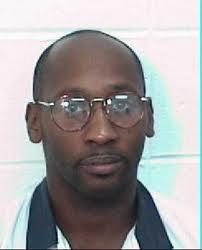
The Chronicle didn’t even put the news on the front page (although The New York Times did), but the execution of Troy Davis went forward more or less as scheduled Sept. 21, with news media around the world watching. It was a shameful miscarriage of justice; as the Times noted in an editorial:

Seven of nine witnesses against Mr. Davis recanted after trial. Six said the police threatened them if they did not identify Mr. Davis. The man who first told the police that Mr. Davis was the shooter later confessed to the crime. There are other reasons to doubt Mr. Davis’s guilt: There was no physical evidence linking him to the crime introduced at trial, and new ballistics evidence broke the link between him and a previous shooting that provided the motive for his conviction.

Yes the Georgia courts, and the federal courts, and the United States Supreme Court, let the state kill Davis — and now it’s too late to prove his innocence. That, of course, is the most horrible aspect of the death penalty. It’s also cruel, expensive and pointless.

But there’s a bit of good news, at least in California. I’m convinced that sentiment is changing. We’ve been interviewing candidates for San Francisco sheriff and district attorney over the past two weeks — and I can tell you, while San Francisco isn’t a good reflection of the state as a whole, attitudes among law-enforcement types in this town have changed pretty dramatically over the past ten years or so.

In 1999, Matt Gonzalez, Bill Fazion and Terence Hallinan all ran for district attorney, and Gonzales came in third. Fazio — a veteran prosecutor and tough-on-crime type, went to Gonzalez and sought his endorsment in the runoff. Gonzalez said he’d support him — if Fazio would agree never to seek the death penalty. It was a pretty easy call, since no San Francisco jury is ever going to vote for capital punishment anyway — but Fazio refused. He insisted that he was a death-penalty supporter to the end, and he lost the race.

Now, Fazio says the death penalty is a complete failure, and he would not only never seek it but he’s actively in favor of repealing it.

Just a few months ago, former police chief and current D.A. George Gascon was talking about how the death penatly ought to be one of a prosecutor’s tools — but now he utterly disavows is, says he would never seek it and is calling for repeal.

Chris Cunnie, a former president of the avowedly pro-death-penalty Police Officers Association, told us he opposes capital punishment.

And Kamala Harris, who never wavered in her refusal to seek the death penalty, even for the killing of a cop, managed to get elected attorney general of California.

So there’s hope.


Free at last

20

An ordeal lasting more than two years for Shane Bauer and Josh Fattal came to an end in Iran today, when the two 29-year-old University of California Berkeley grads were freed at last from Tehran’s Evin Prison.

CNN reports that Bauer and Fattal were transported from the Iranian prison to an international airport just before nightfall, accompanied by Swiss and Omani officials. They were bound for Muscat, the Omani capital, where arrangements had been made for them to meet with their families and Sarah Shourd, Bauer’s fiancee, who was arrested along with them in July of 2009 while on a hiking trip in Iraqi Kurdistan. Shourd was released in what Iran characterized as a humanitarian gesture last year, after spending 410 days in solitary confinement.

“Today can only be described as the best day of our lives,” a statement from the families said in response to the news that they had finally been released. “We have waited for nearly 26 months for this moment and the joy and relief we feel at Shane and Josh’s long-awaited freedom knows no bounds. We now all want nothing more than to wrap Shane and Josh in our arms, catch up on two lost years and make a new beginning, for them and for all of us.”

Last month, Bauer and Fattal were convicted of spying and illegally entering the country and sentenced to eight years in prison each, despite a lack of evidence and repeated statements by President Barack Obama that they had never worked for the U.S. government.

Yet human rights activists advocating for their release have characterized the Iranian government’s decision to continue holding them as a political tactic to begin with, and some observers didn’t take the outcome of the trial at face value.

The fact that they stood trial after two years of being detained was interpreted as potentially a positive signal by some supporters advocating for their release.
News of their conviction and harsh eight-year sentences also brought kernels of hope, ironically, for some who speculated that the severe outcome of their trial might figure into a broader plan to grant their pardon, setting the Iranian government up for an opportuinity to take credit on the world stage for a merciful act just as Iranian President Mahmoud Ahmadinejad headed to the United States for the United Nations General Assembly in New York.

However, unexpected delays and hints that the hikers were caught up amid an internal power struggle in Iran kept friends and supporters in a state of agonizing suspense over the past week. On Sept. 13, Iranian President Mahmoud Ahmadinejad stated publicly that Bauer and Fattal could be freed “in a couple of days.”
 
But that statement had come to nothing by Sept. 16, when supporters from the Bay Area gathered in San Francisco in hopes that an announcement would be made. The following day, reports surfaced that an Iranian lawyer trying to free them was waiting on the signature of a judge who was on vacation until Sept. 20 before their release could go forward.

Bauer and Fattal were released on $1 million bail, a sum CNN reported was paid by the Omani government.

Bauer, Fattal and Shourd are social-justice advocates, antiwar activists, writers, environmentalists, travelers, and creative thinkers with deep ties to the Bay Area. Shourd and Bauer had been living in Syria when they joined with Fattal, who was visiting, and embarked on the ill-fated hiking trip in Iraqi Kurdistan in July of 2009. Shourd, who lives in Oakland, was teaching English to Iraqi refugees when she was in Syria, as well as practicing some journalism. Fattal, who taught at Aprovecho — an education center in Oregon focused on sustainability and permaculture — had been traveling to India, South Africa, and other places through the International Honors Program to lead workshops on health and sustainable technology before visiting his friends in Syria.

Bauer wrote for publications such as The Nation, Mother Jones, and the Christian Science Monitor, and the San Francisco Bay Guardian. A photojournalist who has won multiple awards and had his work published internationally, he’s documented stories ranging from tenant conditions in San Francisco SROs to conflict-ridden regions in Africa and the Middle East.

Their imprisonment prompted an international response. Calls for their release were issued by Obama, Secretary of State Hillary Clinton, United Nations Secretary General Ban Ki-moon, human rights activists, religious leaders, authors, celebrities, and hundreds of supporters who wrote letters, displayed banners, and raised money for efforts pushing for their release. A host of family members, friends, and supporters organized under an effort called Free the Hikers worked steadily to free them, and their long-anticipated reunion with Bauer and Fattal has finally arrived.

On Guard!

1

news@sfbg.com


CENTRAL SUBTERFUGE

While supporters of the controversial Central Subway project — from Mayor Ed Lee and his allies in Chinatown to almost the entire Board of Supervisors — dismiss the growing chorus of critics as everything from ill-informed to racist, they refuse to address the biggest concerns about the project.

In a nutshell, the main concerns center on serious design flaws (such as the lack of direct connections to either Muni or BART), the city’s responsibility for any cost overruns on this complex $1.6 billion project, its estimated $15.2 million increase to Muni’s already strained annual operating budget (a figure used by the Federal Transportation Administration, well over the local estimate of $1.7 million), and the city’s unwillingness to implement its own plans for improving north-south transit service on congested Stockton Street rather than relying solely on such an expensive option for serving Chinatown that doesn’t start until 2019.

Judge Quentin Kopp, a longtime former legislator, called this summer’s grand jury report, “Central Subway: Too Much Money for Too Little Benefit,” the best he’s ever read and one that should be heeded. He recently wrote a letter to top state officials urging them to reconsider the $488 million in state funding pledged to the project. As we reported last week, mayoral candidate Dennis Herrera is also challenging a project that he supported before its most recent cost overruns and design changes.

But supporters of the project pushed back hard on Sept. 14, using taunts and emotional rhetoric that avoided addressing the core criticisms. “Beneath the unfounded criticism about costs is actually a disagreement over values. The grand jury report relied upon by critics makes a only brief and superficial criticism about costs,” Norman Fong and Mike Casey wrote in an op-ed in last week’s Guardian.

Actually, the 56-page grand jury report goes into great detail about why it believes cost overruns are likely, citing the myriad risks from tunneling and SFMTA’s administrative shortcomings and history of mismanagement, including on this project’s less-complicated first phase, the T-Third line, which was 22 percent over budget and a year and half late in completion. Even with the contingencies built into the Central Subway budget, the report notes that a similar overrun would increase the local share of this project from $124 million to more than $150 million.

Mayor Lee purportedly addressed criticism of the project during the Question Time session in the Sept. 14 Board of Supervisors meeting, prompted by a loaded question from Sup. Sean Elsbernd offering Lee the “opportunity to move beyond the clichés and one-liners of political campaigns.”

But Lee’s answer was classically political, touting the estimated 30,000 jobs it would create, praising those who have pushed this project since the 1980s, offering optimistic ridership estimates (that exceed current FTA figures by about 9,000 daily riders), and ignoring concerns about whether the city can cover the ever-increasing capital and operating costs.

“Now is the time to support the Central Subway,” Lee said, flashing his trademark mustachioed grin.

We called the normally responsive Elsbernd, who prides himself on his fiscal responsibility, twice, to ask about financial concerns surrounding the project and he didn’t call back. During their mayoral endorsement interviews with the Guardian last week, we also asked Sups. John Avalos and David Chiu to address how they think the city will be able to afford this project, and neither had good answers about the most substantive issues (listen for yourself to the audio recordings on our Politics blog).

Once Congress gives final approval to $966 million in federal funding for this project sometime in the next couple months, the city will be formally committed to the Central Subway and all its costs. It’s too bad that, even during election season, all its supporters have to offer to address valid concerns are “clichés and one-liners.”(Steven T. Jones)


BLACK AGENDA

Mayoral candidates faced tougher questions than usual at a Sept. 15 forum hosted by the Harvey Matthews Bayview Hunters Point Democratic Club. Whereas debates hosted in the Castro and Mission Bay, for instance, featured questions on how candidates planned to clean up city streets, what they thought about AT&T’s plan to place utility boxes on city sidewalks, or how they’d promote a more business-friendly environment, residents brought a thornier set of concerns to the Bayview Opera House.

One question pointed to an alarming statistic based on U.S. Census data and cited by racial justice advocates, showing that residents of the predominantly African American Bayview Hunters Point have a life expectancy that’s 14 years lower, on average, than that of residents of the more well-to-do Russian Hill.

Someone else asked about improving mental health services for lower-income community members struggling with post-traumatic stress syndrome (PTSD). High unemployment figured in as a key concern. And one member of the audience wanted to know how candidates planned to “improve the behavior of the police,” alluding to the mid-July officer-involved shooting that left 19-year-old Seattle resident Kenneth Harding dead, triggering community outrage.

Mayor Ed Lee attended the beginning of the forum but left early to attend an anniversary celebration for the Bayview Hunters Point Foundation; other participants included Terry Joan Baum, Jeff Adachi, Bevan Dufty, Dennis Herrera, David Chiu, Michela Alioto-Pier, and Joanna Rees.

Answers to Bayview residents’ sweeping concerns varied, yet many acknowledged that the southeastern neighborhood had been neglected and ill-served by city government for years.

“There is no economic justice here in Bayview Hunters Point,” Adachi said. “There never has been. That’s the reality.” He pointed to his record in the Pubic Defender’s Office on aggressively targeting police misconduct, and played up his pension reform measure, Prop. D, as a vehicle for freeing up public resources for critical services.

Dufty, who has repeatedly challenged mayoral contenders to incorporate a “black agenda” into their platforms, spoke of his vision for a mayor’s office with greater African American representation, and emphasized his commitment to improving contracting opportunities for minority-owned businesses.

Herrera, meanwhile, was singled out and asked to explain his support for gang injunctions, an issue that has drawn the ire of civil liberties groups. “I only support gang injunctions as a last resort,” he responded. “We shouldn’t have to use them. But … people should be able to walk around without being caught in a web of gang violence. I put additional restrictions on myself to go above and beyond what the law requires, to make sure that I am balancing safe streets with protecting civil liberties.”

Herrera asserted that gang violence had been reduced by 60 percent in areas where he’d imposed the controversial bans on contact between targeted individuals, and noted that the majority of those he’d sought injunctions against in Oakdale weren’t San Francisco residents.

Baum brought questions about a lack of services back to the overarching issue of the widening income and wealth gaps. “Right now, the money is being sucked upward as we speak,” she said. “We have to bring that money back down.”

She closed with her signature phrase: “Tax the rich. Duuuuh.” (Rebecca Bowe)


DUFTY REMEMBERS

The selection of Ed Lee as interim (or not-so-interim) mayor of San Francisco was one of those moments that left just about everyone dazed — how did a guy who wasn’t even in town, who had shown no interest in the job, who had never held elective office, suddenly wind up in Room 200?

Well, former Sup. Bevan Dufty, who was going to nominate Sheriff Mike Hennessey and switched to providing the crucial sixth vote for Lee at the last minute, told us the story during his mayoral endorsement interview last week.

Remember: Lee, as recently as a few days earlier, had told people he didn’t want to be mayor. “An hour before the meeting, Gavin (Newsom) called Michela (Alioto-Pier) and me into his office and said Ed Lee had changed his mind,” Dufty told us. He walked out of the Mayor’s Office uncommitted, he said, and even Newsom wasn’t sure where Dufty would go.

After two rounds of voting, with Dufty abstaining, there were five votes for Lee. So Dufty asked for a recess and went back to talk to Newsom — where he was told that the mayor thought the reason the progressives were supporting Hennessey was that the sheriff had agreed to get rid of about 20 mayoral staffers — including Chief of Staff Steve Kawa, “who had engineered Ed Lee running.”

So Kawa, with Newsom’s help, preserved his job and power base. “It’s all turnabout,” Dufty said. “I figure Mike Hennessey’s had a couple of beers and a couple of good times thinking about my vote. But that’s politics.” (Tim Redmond)


ALMOST FREE?

Friends and supporters of Shane Bauer and Josh Fattal were kept in a state of agonizing suspense over whether the two men, both 29, would be released from the Iranian prison where they’ve been held for more than two years following an ill-fated hiking trip in Iraqi Kurdistan.

On Sept. 13, Iranian President Mahmoud Ahmadinejad stated publicly that Bauer and Fattal could be freed “in a couple of days.” The announcement brought hope for family and friends who, just weeks earlier, had absorbed the news that the men were sentenced to eight years in prison after an Iranian court found them guilty of committing espionage, a charge that the hikers, the United States government, religious leaders, and human rights advocates have characterized as completely baseless.

Reports followed that the Iranian judiciary would commute the hikers’ sentences and release them in exchange for bail payments totaling $1 million. But by Sept. 16, when supporters gathered in San Francisco in hopes that of an imminent announcement, they were instead greeted with new delays.

The constantly shifting accounts hinted at internal strife within the Iranian government, and contributed to the sense that Bauer and Fattal were trapped as pawns in a power struggle. By Sept. 19, their Iranian lawyer remained in limbo, awaiting the signature of a judge who was scheduled to return from vacation Sept. 20.

“Shane and Josh’s freedom means more to us than anything and it’s a huge relief to read that they are going to be released,” the hikers’ families said in a statement Sept. 13. “We’re grateful to everyone who has supported us and looking forward to our reunion with Shane and Josh. We hope to say more when they are finally back in our arms.” (Rebecca Bowe)

Hiding the condoms

3

news@sfbg.com

“All Condoms primary location at Customer Service” reads a small sign surrounded by empty shelves that once held condoms, pregnancy tests, and other important sexual health products at the Safeway on Potrero Avenue.

Because of concerns about theft, the condoms now sit among the Nicorette and razors in a row of glass cases near Customer Service, amid the chaos of hurried shoppers headed to and fro. Although Safeway’s recent condom lock-up may have reduced theft, it has also reduced accessibility, and may have deterred customers from buying a product crucial for the prevention of pregnancy and STD’s.

The increased security measures are not contained to the Potrero store, or even San Francisco’s Safeways. “There are a number of products (Oil of Olay for example) that we’ve had to secure under lock and key because of theft,” Susan M. Houghton, Safeway’s Northern California spokesperson tells the Guardian. “It varies by store and city, but yes, condoms were recently added — due to theft.”

Houghton would not go into any further detail about when or why the condoms were locked, but the move has raised concerns by public health advocates.

“We fully understand the position that Safeway is in, but we really would advocate for people having pregnancy tests, condoms — anything that really helps people manage their lives better — to be much more accessible,” Adrienne Verrilli, a spokesperson for Planned Parenthood in San Francisco tells the Guardian. “Accessibility is often key, especially for young people.”

Kyriell Noon, executive director of San Francisco’s STOP AIDS project, says he believes locked cases could deter people from buying condoms, “especially for young people who are shy or could be embarrassed about asking for help…Condoms should be as easy for people to access as any other item available for purchase on the market. When there are barriers between people and condoms, I think many people will shrug and give up. But if they’re easy to access there’s no excuse to not use them.”

STOP AIDS knows the importance of condoms in the prevention of HIV, and distributes free condoms to 90 locations throughout San Francisco.

Safeway representatives and staff members refused to say which Safeways have moved condoms behind glass, but a visit to four San Francisco Safeways found condoms locked in cases at each of them, some even locked behind the Customer Service counter.

At the Safeway at Church and Market streets, we found that there is often a line at Customer Service, which customers must now wait in to purchase condoms. The process of acquiring condoms requires requesting the case be unlocked, making a selection under the watchful eye of an employee, and having the employee remove it from the case and walk it back to Customer Service where it can be purchased. Ten minutes had passed before I was leaving with my $8.99 12-pack of Trojan ENZ.

This challenge could affect teenagers more than adults due to embarrassment, hassle, or the now public process of choosing and purchasing condoms at Safeway. “It puts young people in a very awkward situation,” says Leah LaCroix, president of the San Francisco Youth Commission. LaCroix says she does not believe condoms should be locked up, even if it means a company loses profits.

“I think public safety is more important than that,” she tells the Guardian. LaCroix and the rest of the Youth Commission are currently urging the San Francisco Unified School District, “to reevaluate and come up with a new curriculum for health education,” she said. “I’m sure safe sex will be a component of their new curriculum.”

A 2009 Center for Disease Control survey found that 43.5 percent of high school students did not use a condom during sex, and 85.6 percent did not use birth control pills the last time they had sex, making sex education and birth control availability increasingly vital.

“I’m not sure you can criticize Safeway for protecting their merchandise,” says Beth Brown, manager of San Francisco’s New Generation Health Center. “I think there’s a larger issue of a lack of resources and lack of resourcefulness.”

Brown says she believes the Department of Public Health is responsible for providing these resources. One resource that is available is a service called Family PACT, which provides reproductive health services to low-income residents.

“The state of California pays for young people who need confidential services…and you can get all the birth control you want,” she tells the Guardian. The New Generation Health Center enrolls teenagers and young adults in the service, and gives away free condoms to non-enrolled teenagers as well.

“The state of California is actually a very good place to be if you’re young and sexually active,” says Brown, “because they will pay for it.”

“What’s interesting about that,” Verrilli said of Safeway’s condom lockup, “is that it’s kind of going backwards to where we used to be as opposed to moving forward to where we are.”

Today, with condoms available to purchase for any age, public health clinics in most cities, and sexual education available on the Internet, making birth control readily and publicly accessible seems to be the next logical step. Besides preventing pregnancy, condoms are crucial in preventing the spread of HIV, the virus that causes AIDS.

“I think we should all be in the practice of increasing access to condoms rather than decreasing it,” Noon said. “I don’t know that Safeway’s decision alone would make a huge contribution to the spread of HIV, but they could be setting a precedent that other stores that sell condoms might follow. If it were the case that Walgreen’s and Rite-aid, etcetera, also began to follow this practice, I think we would have a problem.”

SFBG’S CONDOM BUYER’S GUIDE FOR THE YOUNG AND SHY

A wide variety of unlocked condoms are sold at:

Planned Parenthood — 1650 Valencia St. off Mission

Price: 30 cents each, come individually and in strips of 8 or 10.

Plus: offers STD testing and other health services

Walgreens — 200 West Portal at 15th

Price: 12 count $14 and up

Walgreens — 3201 Divisadero at Lombard

Price: 12 count $8.99 and up

Plus: open 24 hours a day

Walgreens — 3400 Cesar Chavez at Mission

Price: 12 count $13.99 and up

Walgreens — 1496 Market at Van Ness

Price: 12 count $15.99 and up

CVS/Pharmacy — 731 Market at 3rd

Price: 12 count $12.99 and up

CVS/Pharmacy — 2025 Van Ness at Jackson

Price: 12 count $12.99 and up

Plus: open until midnight every day

Free condoms are available at:

New Generation Health Center — 625 Potrero at 18th

Plus: offers bags of 20 at a time

STOP AIDS — 2128 15th at Market

Plus: also distributes free condoms to restaurants and stores in the city including:

Marlena’s — 488 Hayes at Octavia

SOMA Health Center — 551 Minna at 6th

Crossroads — 1519 Haight at Ashbury

LBGT Center — 1800 Market at Octavia

Books Inc. — 2275 Market at Noe

(Oona Robertson)

Consequences of inaction

8

news@sfbg.com

The San Francisco Sunshine Ordinance, although it sounds bright and cheery, remains shrouded in a cloud of inaction. Meant to increase transparency in city government, it hasn’t emerged from the bureaucratic fog since its establishment in 1994. Cases wait years to be heard and even blatant violations go unpunished, due to infighting and power disputes between the commissions that are supposed to enforce government compliance.

The Sunshine Ordinance outlines citizen’s rights to request document and information. Citizens can take their complaints about request denials to the Sunshine Ordinance Task Force, an 11-member committee appointed by the Board of Supervisors to ensure government compliance. If the task force decides a violation has occurred the case is handed over to the Ethics Commission, a five-member appointed board that will supposedly enforce the rulings with fines or ordering documents to be made public.

George Wooding, reporter for the Westside Observer and president of the West of Twin Peaks Central Council, is the complainant in one of the task force’s most recent cases. This spring Wooding requested emails from the Recreation and Park Department multiple times but was told the documents did not exist. What RPD didn’t know was that Wooding had the emails all along.

The task force unanimously found RPD guilty of withholding emails. This is the third major sunshine violation by RPD in three years. Even more surprising, not one RPD employee has been fined, suspended, or faced any kind of punishment or corrective action.

The episode is a case study in the total eclipse of sunshine enforcement in the city, and how one embattled department — the RPD, which has come under heavy scrutiny for efforts to monetize park resources (see “Parks Inc.”, July 12) — used that dysfunction to stifle dissent.


DILUTING DISSENT

George Wooding v. RPD began when Wooding was asked to be a panelist at a Commonwealth Club event on May 11. The event, titled “Golden Gate Park Under Siege,” was to be a discussion about possible development projects in the park. Other panelists were representatives of environmental and anti-development groups who claimed they were not given time to voice their concerns in Board of Supervisors meetings, and wanted a forum to do so.

Wooding says that the Commonwealth Club was bombarded with phone calls and emails weeks before the discussion.

“They were saying our panel was one-sided, which is really unusual, and the Commonwealth Club told us they were getting a lot of heat for such a little panel discussion,” Wooding said. “It was not going to be a big deal, in all honesty.”

The emails that Wooding had and the department denied include correspondence from Sarah Ballard, RPD’s director of policy and public affairs, to Kerry Curtis, co-chair of the Commonwealth Club Environment & Natural Resources Forum, indicating she had phoned the club as well and asked that the discussion be canceled due to its “deeply biased panel that has no interest in discussing facts.”

There are also emails between Susan Hirsch, director of the City Fields Foundation, a private group that has been installing artificial turf in public parks, from her business email address to the panel moderator Jim Chappell’s private email, urging him to reconsider the event.

“You and I discussed this project years ago; the private sector is contributing far more than $20 million to provide safe, accessibly, and yes, environmentally sound fields for kids all across San Francisco to use. We have a unique private/public partnership with Rec and Park; it’s too bad the focus is on something negative, rather than the positive impact,” Hirsch wrote.

Mark Buell, president of the Recreation and Park Commission, also emailed Greg Dalton, Commonwealth Club’s COO, from his private email address: “I find the title inflammatory, the participants biased, and the fact that no one from the Rec and Park Department invited hard to understand. As president of the Commission I would like to urge the club to both alter the title of the event to ‘issues facing the park’ and have the club ask a representative of the department to be on the panel.”

Shortly thereafter, Buell was added to the panel and the event was renamed “Golden Gate Park Under Siege?”

Buell says the situation has been blown out of proportion. “I got on the panel because I’ve been active with the Commonwealth Club for years and all of a sudden I read a very slanted title about something tantamount to the ruination of Golden Gate Park, and a panel of people who are all critics,” Buell told us.

Wooding says the panel went smoothly, but he was unsettled by the last minute changes. He asked around for any information about what happened and got the emails through a knowledgeable source close to the RPD.

“[RPD] has pissed off a lot of people because they came in with a hammer when they didn’t need a sledge hammer. One of the people they pissed off was really upset and ended up giving me the correspondence,” Wooding told us.

As a journalist, Wooding said, “I was thinking, ‘this is a great story but wait, I can’t use any of this information,’ so I thought about how I could get the information legitimately?”

Wooding immediately emailed Olivia Gong, a RPD secretary, making clear that he was requesting the emails in accordance with the Sunshine Ordinance. Gong replied that the department did not have any documents matching the request.

“Imagine how amazed I was when they claimed they didn’t exist,” Wooding said.

After a second request turned up nothing, Wooding knew they were hiding the emails. He then asked Gong how she had determined the emails did not exist. Gong forwarded emails she had sent to department members who replied they did not have responsive documents.

Wooding then filed a complaint with the task force, which voted unanimously that RPD was in the wrong. Not only did it claim the emails did not exist, but when it became clear that they did, the department said that members deleted the emails because some were sent on private accounts and did not directly pertain to RPD affairs.

“I just delete everything,” Buell says. “It’s not that I did anything, it’s just that I didn’t know the rules that you’re supposed to keep everything.”

Task Force Chair Hope Johnson says she was shocked by this argument. The California Public Records Act, which is more lenient than the Sunshine Ordinance, clearly lists emails as a form of government document that must be handed over on request. The Sunshine Ordinance covers emails as well, and all officials who serve on city boards were required to undergo sunshine training last year, outlining what public documents are and noting that it’s illegal under state law to destroy them.

“Just switching over to another email address lends itself to the idea that this is something they knew was underhanded and would not be received positively by the public,” Johnson said.

She says this is becoming a problem throughout city government.

“There’s not a lot of specificity about keeping emails. They need a retention policy,” Johnson says. “Obviously I think that they prefer it to be as vague as possible.”


POSSIBLE PUNISHMENT?

Although the task force found RDP in violation, punishment is up to the Ethics Commission, a separate entity at City Hall.

Enter bureaucratic gloom and doom.

Since 1993 the task force has given the Ethics Commission 19 sunshine violation cases. Only one has even been heard. The other 18 were dismissed or are still “pending investigation.” Government officials are therefore under no serious threat if they disobey the law.

Richard Knee, former chair of the task force, says there is obvious animosity between the task force and commission staff. Rather than enforcing punishment, the Ethic Commission staff claim that cases can be dismissed on the grounds of insufficient evidence, or require additional investigation, which stalls the process indefinitely.

“I don’t think there’s any confusion, I think it’s merely resistance,” Knee said. “We are not asking the Ethics Commission to re-adjudicate something we have already adjudicated. When we refer a matter to the Ethics Commission we are asking them to tack some kind of enforcement action on a violation we have already found exists.”

In the one case Ethics did hear, it turned the punishment decision over to the mayor as the “appointing officer,” who did nothing. It has, therefore, never enforced a penalty on any government official that the task force found guilty.

A report released in August by the Civil Grand Jury, entitled “San Francisco’s Ethics Commission: The Sleeping Watchdog,” criticizes the body’s record of inaction on both sunshine and campaign finance complaints.

“Because of the Ethics Commission’s lack of enforcement, no city employee has been disciplined for failing to adhere to the Sunshine Ordinance. The Commission has allowed some city officials to ignore the rulings of the Sunshine Ordinance Task Force,” the report says.

Johnson says that since the report came out, her correspondence with the Ethics Commission has shifted slightly.

“They used to send us letters back saying they dismissed it, but recently we’ve sent over two cases and they agreed that there had been a violation,” Johnson said. “But they said they wouldn’t be able to do enforcements of any kind.”

She says that the Sunshine Ordinance won’t be taken seriously until the very people it is meant to monitor begin to enforce its stipulations.

“It’s difficult with the Ethics Commission because they keep all of their investigations secret,” Johnson says. “There is no external oversight, it is all the politicians, all of the people who appointed them, they are the only people who monitor what they’re doing.”

In response to the report, Johnson hopes the Ethics Commission will be urged to actually hear sunshine cases, and Wooding’s could be one of the first.

“The George Wooding case is a good example of how the Sunshine Ordinance can reveal oppression of a group of people who wanted to come together and have a constructive analysis,” Johnson said. “That should be something that’s allowed, and here’s the very entity that they want to have an analysis and discussion about shutting them down. And here are some documents that prove it.”

Wooding’s case will be heard once more by the task force on Sept. 27. It will almost certainly be sent to the Ethics Commission, but Wooding may be waiting awhile for any resolution.

“It’s probably going to take forever,” Wooding says. “Either I’ll just end up being another file in a cabinet somewhere, or this may even become an example, if it moves through, of how things should be done. There might be a lot more life in this than anyone ever imagined.”

Free Farm Stand faces an uncertain fall harvest after call from Rec and Parks Department

1

Every Sunday at the Parque Niños Unidos in the Mission, an eager group of people gather to receive free, organic food from the Free Farm Stand. The incredible project has been going on since since 2008 and has to date given out almost 17,000 pounds of fresh produce.

This is the brainchild of Tree Rub, a volunteer who started the project “to create a network of neighbors and local farmers who grow fruit, vegetables, and flowers and share their surplus with the community and especially with those in need.” But last Sunday Tree announced that the SF Recreation and Parks Department had received two complaints that the Free Farm Stand is “having a negative impact on the park.”

He was also informed that the group would need a permit for its tent, which it set up to protect to food and volunteers from the sun. Tree says he applied for a permit in 2008 but “never heard back” from authorities.

Sometime the produce that’s given out is extremely ripe and almost past it’s peak, but the savvy San Franciscans who receive the Free Farm Stand’s food (the bounty can include heirloom tomatoes and sun-kissed white peaches) are happy to take the time to can and preserve them. The stand not only creates access to extremely nutritious foods, it saves them from getting composted. Tree also distributes organic seedlings so that people can grow their own veggies and then share any surplus they might have with the community — a feedback loop of neighbors nourishing each other.

I contacted the permits office at SF Rec and Park to ask about the future of the Free Farm Stand and got a message back from Dana Ketcham, the permits and reservations manager.

According to Ketcham, her office doesn’t want to shut down the Free Farm Stand, but employees there “have received complaints that families feel overwhelmed by the crowds as they use this park with their children.”

As of two weeks ago, people waited in line outside of the park, and were only actually in the park when receiving produce. Since the lines have gotten long, last Sunday a new system had been implemented in which numbers are handed out so that people can relax in the grass until it their turn to get food.

Ketcham said that parks are “not authorized places for distribution of food” and “that we needed to give the organizer time to find a new location.” The Free Farm Stand has until October 15th to find an alternative location.

As a long time patron of the Free Farm Stand, this came as very sad news. Tree has created an amazing community that feels like a gigantic potluck. You can meet up with friends and enjoy the sunshine there, in addition to getting fresh food for dinner.

Ketcham suggested the Free Farm Stand re-locate to an “empty parking lot” in her email to me. That plan would mar the beauty of having the stand alongside a community garden where people sometimes wander while they wait and are able to relax in the shade of a tree.

I made of a video of the Free Farm Stand right when it opened, back when it was still a pretty small operation. Tree was handing out jars of honey from his personal bee hives and sprouts. Now, there’s the Free Farm and more than 200 people receiving food each week. It would be a horrible loss to San Francisco if Free Farm Stand disappears.

If you know of any locations where the Free Farm Stand might be able to re-locate, please contact Tree at: iamtree99@gmail.com.


Localized Appreesh: The 21st Century

0

Localized Appreesh is our weekly thank-you column to the musicians that make the Bay. Each week a band/music-maker with a show, album release, or general good news during those seven days is highlighted and spotlit. To be considered, contact emilysavage@sfbg.com.

Last fall, eclectic new folk act the 21st Century was given the opportunity of a lifetime: a chance to record with legendary producer Stephen Short  (the former owner of Trident Studios who has worked with David Bowie, the Clash, Paul McCartney, Queen, Echo and the Bunnymen et. al.). The Bay Area eight-to-nine piece was thrilled but too broke to cover all the costs of making the album, plus, there were travel commitments (Short is based in Texas).

The forward-thinking futurists harnessed modern technology: they set up a Kickstarter page. With the $10,000+ funding in place (thanks to 187 backers), the band recorded late last  year, and the album will be released in November. Before that release, however, the 21st Century will play a show as part of the ongoing Mission Creek Music and Art Festival.

Year and location of origin: 2010, SAN FRANCISCO/OAKLAND/BERKELEY
Band name origin: The name originates from a few different places. One is ambition. We’re an eight (and occasionally a nine) piece with orchestrated horns and four part harmonies and a couple of kitchen sinks so we wanted to name ourselves in a way that reflected that bold and without limits musical attitude. We also felt that we’d spent much of our lives hearing our times and our generation defined for us in ways that we didn’t relate to so we thought why don’t we take a stab at it and have a say in the matter. Hence THE 21ST CENTURY. Oh and I also remember hearing Elvis Costello saying that he named himself after the two largest acts he could think of — a pretty gutsy move. I thought — now that’s a good idea, but let’s raise him one.
Band motto: Unofficially, it’s probably ‘What would Bruce Springsteen Do?”
Description of sound in 10 words or less: Intricate arrangements, colorful harmonies, brass, lyrical surrealism and off-beat pop sensibility.
Instrumentation: Electric, Acoustic and bass guitars, drums, keys, horns, lots of percussion and lots of singing.
Most recent release: THE CITY, Coming Soon…November 2011.
Best part about life as a Bay Area band: People want to be friends.
Worst part about life as a Bay Area band: The bars and clubs close too early. 2 a.m.? Come on.
First record/cassette tape/or CD ever purchased: The single of “Under Pressure” by David Bowie and Freddy Mercury. I thought I was getting Vanilla Ice.
Most recent record/cassette tape/CD/or Mp3 purchased/borrowed from the Web: Wilco’s The Whole Love & Girls Father, Son, Holy Ghost.
Favorite local eatery and dish: Al Pastor at El Metate–dynamite.And the Cold House Noodles at Yamo.

Mission Creek Music and Art Festival
Ongoing through Sept. 30
Multiple venues through San Francisco and Oakland
www.mcmf.org

The 21st Century
Sept. 28, 9 p.m. $8
The New Parish
579 18th St., Oakl.
Event info

Live at the Starry Plough:

Ms. Mirliton

2

CHEAP EATS First time I went to Criolla was with Coach and company and I was just tickled to death to be eating chicken and waffles within walking distance from my home. Chicken and waffles! I forgave them the dry chicken, even though it was all dark meat and dark meat is of course harder to overcook, because the waffle was good. And they offered real, true Vermont maple syrup for one worth-it dollar more.

And it was chicken and waffles. And walking distance. And so forth: sweet potato tater tots, limeade, sunshine, just a beautiful sidewalky San Francisco day at Market and Noe.

I thought: OK, new favorite restaurant. It ain’t Farmer Brown’s Little Skillet, or even Auntie April’s, but it ain’t Baghdad Café anymore, either. It’s chicken and waffles! In the Castro, and that was overall a happy thought.

Next time I went was with Hedgehog on an also-beautiful day, but we sat inside. In the window, and looked out upon the sidewalk there. It’s a colorful corner. Men stroll by naked. Nobody blinks.

All right.

But if you are going to make fried chicken anywhere in the world, including the Castro, including walking distance to my house, you are going to need to make it to order. Fried chicken don’t sit well. It never has, and it never will. So unless you’re a place that sells it as fast as you can crank it out, you’re going to serve some hit-or-miss soggy-breading-ed and dry-meat fried chicken. Most of the time.

I don’t know if Criolla Kitchen fries or tries to fry their chickens to order. If they do, they better get better at it.

The good news is, since it isn’t just a chicken and waffle place, or even a fried chicken place, you’ve got plenty of other options. And a lot of them sound kinda good. Almost all of them, besides the chicken and waffles, sound Louisianic: chicken gizzards with pepper jelly, mirliton salad, red beans and rice, shrimp po’oy …

I got the Louisiana farm-raised catfish mojito isleño on the sheer strength of the number of words in its name. If there were green olives in the tomato-ey, onion-y smother as advertised, I didn’t see or taste them. But it was pretty good anyway.

Hedgehog’s chicken was soggy-topped and dry inside. I’d warned her, but she had to see for herself, poor li’l prickly. Anyway, the red beans and rice that came with it were good.

Warning: the black beans are vegetarian, and therefore not very good. Unless maybe if you’re a vegetarian, but even then I think they might could use a little something.

The best thing I’ve had, in my two visits to Criolla, was the mirliton salad. Hedgehog, being an issue-taker by nature, took issue with our waiterperson’s mispronunciation of mirliton. She’s also a former and future resident of New Orleans, so has heard the word more than most of us’ns.

The way she says it sounds like mella tone, as in melatonin — which has helped me sleep once or twice, so I like it. But the salad is something else entirely: almost see-through, thinly sliced strips of mirliton — or chayote, a kind of gourd with crunch, which tastes pretty much exactly like whatever you put on it, in this case a lemon-cumin vinaigrette.

And avocado, which needs no introduction.

Yum! So that was the best thing I have had at my new favorite restaurant. A little tiny starter salad. Still, I will go back, I’m sure, because even though I’m mad at them for their fried chicken, and disappointed in the catfish, there are still the shrimp po’oys and charbroiled oysters to be tried.

If those oysters come even close to the chargrilled ones I ate one day at Acme Oyster House in Metairie after buying some shirts at the mall last spring, then I will be the happiest little glaze-eyed chicken farmer in the whole wide city, and will promise to never ever leave the Bay Area ever again.

Which. Wait. I have promised before, and broken. And broken. And will break again, I promise. 

le_chicken_farmer@yahoo.com

CRIOLLA KITCHEN

Daily: 7 a.m.-2 a.m.

2295 Market, SF

(415) 552-5811

www.criollakitchen.com

AE/D/MC/V

Beer and wine


Generation cork

0

virginia@sfbg.com

BEER AND WINE It’s a unique time in Bay Area winemaking. We see more California winemakers finding harmony between New and Old World-style production, laying off heavier-handed extremes of overly-oaked or high alcohol wines, honing in on our region’s true terroir. While global love for big, bold California wines isn’t going anywhere, it’s ever more apparent that our range is far beyond what might be assumed.

Small, family-run wineries have long undergirded our region’s greatness, and today there are many new wines, from Sonoma to Napa, adding nuance to the landscape. As is the case historically, many wineries are a family affair where parents and children share in the work, from production to business operations. Here are a few we felt you should know about; you can order most of their wines through their websites.


SUTTON CELLARS, SAN FRANCISCO

San Francisco holds a treasure in the person of Carl Sutton of Sutton Cellars. He walks the fine line of approachability and Old World-influenced production style. At 22nd Street and Illinois sits a funky warehouse winery where he throws Jug Sundays, tapping barrels and selling jugs or liters of wine (email directly through its website — www.suttoncellars.com — to be added to the event email list). Carl corrals Dogpatch neighbors to supply grub, like Olivier’s Butchery or the TomKat Asian street food truck. His wife Sharon often pours and works with him, both of them wine aficionados and passionate global travelers.

His grapes grow mostly in Sonoma County (with a little Mendocino in the mix), and are often single vineyard wines. At a time when many claim personal care, Sutton’s brown label wines are actually filled and corked by hand. Often this kind of care implies high costs, but Sutton stays amazingly affordable at $14–<\d>$21 a bottle.

Sutton is heavily influenced by France and Spain. He offers a full-bodied Rattlesnake Rosé ($15), but also the stunning Fizé, a 2010 rosé of organic Carignane grapes. It unfolds with each sip: tart cranberry and pomegranate notes, and a crisp effervescence. With no yeast or sulfites added, fermentation actually happens in the bottle. It possess a bready nose, with a profile far beyond typical rosés on either end of the sweet/dry spectrum (find this beauty at the winery, Bi-Rite, Rainbow Grocery, D&M). As of last week, he has keg preview of the 2010 Rattlesnake Rosé on tap at Magnolia Pub and Brewery.

His 2007 Carignane is an acidic, balanced, food-friendly red (barrel fermented in neutral oak). The aged La Solera is an elegant after-dinner imbibement and one of Sutton’s best creations. A blend of syrah, zin, and carignane wines from 1999-2006, it at turns evokes Madeira, Banyuls, sherry, even whiskey, with whispers of burnt orange, and a golden richness from its time resting in the sun, a classic method he picked up in Spain. La Solera is at the top of his price range at a mere $30, a steal for such a complex wine.

Sutton’s Brown Label Vermouth (unaged brandy-fortified neutral white wine, infused with 17 botanicals, bottled fresh weekly) is a winner. The Alembic was the first place to serve this refreshing aperitif on tap, enjoyed on the rocks, Italian-style. Sutton bubbles over with visions for a wide range of wines and liqueurs, including at least one new aperitif/digestif wine due before year’s end.


KELLY FLEMING WINES, CALISTOGA

Head off Silverado Trail, past vines and olive trees, onto a dirt road that leads to a gate. Beyond a sea of cabernet vines, lies Kelly Fleming’s stone winery (www.kellyflemingwines.com), evoking an Italian villa, similar to many I explored in Tuscany. The winery’s stone walls and wood shutters imbue the space with a rustic character far beyond its years.

In an open-air dining room, I sat under stone arches at a handmade wood table crafted from one tree off the 300-acre property. Kelly and her daughter Colleen, who also works for the company, served a Mediterranean-style spread for lunch, using ingredients from their garden (like a silky jam from their fig trees).

We sipped Fleming’s 2009 Sauvignon Blanc (50 percent French oak, 50percent stainless steel), representative of the Oakville soil from which these grapes grow. It’s a balanced white with a floral and fruity (pear, pineapple) profile, rounded out by a hint of vanilla. 2007 Cabernet is 100 percent estate and CCOF organically grown, rested in 85 percent new French oak. Though fruit plays prominently (warm, dusty raspberries), hints of wood, nuts and spice give it contrast.

Winemaker Celia Welch works with the region’s terroir (this is cabernet country, after all), from vines planted in 1999. The wild beauty of the property’s forests and creeks is kept intact with only 12 of the 300 acres planted with vines. Inside limestone caves, the air is naturally cool, storing barrels and bottles of past vintages (unreleased but which they’ve been perfecting for nearly a decade). At a mere 850 cabernet and 675 sauvignon blanc cases a year, these are truly small production wines.

Kelly is hands-on in so many aspects from harvesting to forklift operation. She and Colleen both were recently certified in forklift driving, highlighting the involved, familial nature of the winery. They are gracious hosts, welcoming guests by appointment.


SWANSON VINEYARDS, RUTHERFORD

Think Parisian carnival, classic French estate, Napa’s rich nature, New Orleans’ roots, and you’ll begin to get an idea of the influences on Swanson Vineyards (www.swansonvineyards.com). The winemaker is Chris Phelps — Clarke Swanson founded the winery back in 1985, planting his first merlot grapes. His daughter, Alexis, works as the winery’s creative director. Wife Elizabeth buzzed about as we sipped wine in their enchanting garden, greeting each guest.

The first sign Swanson is different comes when you enter the Sip Shoppe, with red-and-white striped tented walls, Old World French artwork, and Billie Holiday playing soothingly in the background. Elizabeth and Alexis designed the shop themselves, imparting a playful Parisian spirit to what could just be another tasting room. One wants to linger for flights like “Some Like it Red,” paired with the likes of warm pistachios, Alexis bonbons (made by Vosges with curry and Swanson’s Alexis Cabernet), or a potato chip topped with creme fraiche and Hackleback sturgeon caviar (lovely with their Chardonnay).

The 2010 Chardonnay was my favorite, and a complete surprise as a mineral, French-inspired chardonnay, reminiscent of Chablis. Neutral oak allows crisp, green apple notes to shine, while honey adds a tinge of cream to the finish. At a pricey $45, this one is only available at the winery or to wine club members.

Of the reds, Swanson’s signature 2007 Merlot offers the best price-to-taste ratio at $38 per bottle. It’s unexpectedly balanced with tart tannins, hints of black cherry, currant and mocha. On the pricier end, the 2007 Alexis Cabernet ($75) is bold and layered, while a 2006 Petite Syrah ($70) goes the earthier, spice and gentle black pepper route.

Make an appointment to visit the winery for a Salon tasting ($65) or Sip Shoppe flight (around $25), then finish by lingering in the garden. You can taste at dozens of wineries but the Swanson’s chic shoppe and salon deliver a fun, Parisian spirit to the Napa countryside. *

Virginia Miller writes about the latest food and drink news at The Perfect Spot, www.theperfectspotsf.com

Central Subway: justice and jobs

0

OPINION The Central Subway is a result of years of grassroots environmental transit justice organizing that San Francisco should be proud of. But in recent weeks, politicos and the media have stirred up a string of unfounded criticisms of the Central Subway — an essential project that will upgrade transit for the long term, create thousands of jobs in the midst of a recession, and expand opportunity for tens of thousands of San Franciscans who need to get to work everyday. Politicians who supported the project for years are now reversing themselves and calling it a “subway to nowhere” and a “boondoggle.” And short staffed newspapers find it easy paint a cartoon picture of City Hall and Chinatown “powerbrokers” who conspired to sell the city on an expensive project it doesn’t need.

But San Franciscans should ignore the overheated rhetoric of the moment and see the future value and need for this critical project — particularly when the Republicans in Congress are attacking us from the right. We need to unite as one city and not squander what might be the last opportunity to access federal funding to make the economic center of the city more transit accessible for all San Franciscans. In this limited space, we offer some of the facts about the project that seem to be missing in the present reporting.

The number of recent critics and media attention about the subway makes it appear that the subway’s costs and design were new news. Planning for the project began more than 20 years ago, and the essential alignment and projected costs have been agreed to and consistent since 2008. There is no new news.

The claims about skyrocketing costs are misleading, comparing different project proposals. The Civil Grand Jury and others fail to do an apples-to-apples comparison. The project costs have increased primarily because, in response to public feedback, the final project is a different project. It has a new alignment, new stations, and more contingency funds built in. The core costs for the project have not changed since 2008, when it was approved with broad support, including some of its present critics.

The critics who claim that not building the project will save future Muni operating costs fail to address the costs of doing nothing. The environmental impact report showed that the no-project option would cost even more. The absence of a subway would require Muni to run and maintain more buses on streets that will be more crowded and more gridlocked. (Ten years from now, if the critics succeed in killing the project, when you are stuck in traffic and late for work you will know who to blame).

Beneath the unfounded criticism about costs is actually a disagreement over values. The grand jury report relied upon by critics makes a only brief and superficial criticism about costs. The report actually devotes more attention and criticism to the location of the Chinatown station. The grand jury prefers a subway that runs closer to the financial district. For critics, the present project is a “subway to nowhere.” But for the Asian, black, and working class neighborhoods that will be connected via the subway and the T-line, this is a subway to jobs and economic opportunity.

Finally, we need to be clear that this is probably the last chance in many of our lifetimes for San Francisco to grow its transit system. While critics talk about alternate uses for the $940 million dollars of federal funding, the reality is we cannot redirect those dollars. The funding process for the subway is nearing the finish line after an arduous ten-year competitive federal application process. Given the federal budget, re-starting that application process may not merely mean a multi-year delay, it will likely mean there will be no funding to apply for and the loss of 30,000 jobs over the life of the project.

We urge all the mayoral candidates and our media pundits to tone down the rhetoric around the subway. We should not let short-term thinking and the heat of political passion of this campaign season kill a project that has had broad support for 20 years and will provide new transit that we desperately need for our city’s future.

Ultimately the subway is an issue about justice and access to jobs. Justice for some of the most densely populated neighborhoods in San Francisco, where 80% of the residents don’t own cars and rely entirely on public transportation. And we’re talking about the potential loss of thousands of construction jobs and access to jobs for those who need the transit to their workplaces.

Stand firm, San Francisco, for jobs and justice.

Rev. Norman Fong is the incoming director of the Chinatown Community Development Center. Mike Casey is the head of UNITE HERE Local 2.


On Guard!

0

news@sfbg.com

BART’S CRACKDOWN

For weeks now, protesters have descended on Bay Area Rapid Transit (BART) stations to denounce the fatal July 3 shooting of homeless passenger Charles Hill by a BART Police officer, and to call for the agency’s long-controversial police force to be disbanded. Commuters have had to contend with service disruptions and delays, and costs to the transit agency have exceeded $300,000. Yet it isn’t just bullhorn-wielding protesters who’ve been thrust into the spotlight — BART’s police force is also facing scrutiny for its conduct under pressure.

BART drew the ire of numerous media outlets after a Sept. 8 protest when transit cops detained members of the press along with protesters on suspected violation of California Penal Code Section 369i, which prohibits interfering with the operations of a railroad. Most journalists were eventually released, but the protest resulted in 24 arrests.

Although BART police later contended that they issued dispersal orders prior to closing in, many who were encircled and detained (including me) insisted they’d heard no such announcement. BART police also instructed San Francisco Police Department (SFPD) officers who were on hand to assist to seize reporters’ SFPD-issued press passes — a move that SFPD spokesperson Troy Dangerfield later told the Guardian was an error that went against normal SFPD protocol.

In a Sept. 10 editorial, the San Francisco Chronicle blasted BART police for placing Chronicle reporter Vivian Ho in handcuffs despite being informed that she was there as a journalist. Ho’s experience was mild compared with that of Indybay reporter David Morse (aka Dave Id), who told the Guardian he was singled out for arrest by BART Deputy Police Chief Daniel Hartwig and isolated from the scene — even though Hartwig is familiar with Morse and knows he’s been covering protests and BART board meetings for the free online publication. Asked why Morse was arrested when other journalists detained for the same violation were released, BART spokesperson Jim Allison told us, “The courts will answer that, won’t they?”

No Justice, No BART — a group that was instrumental in organizing the Sept. 8 protest — telegraphed to media and police at the outset that they intended to test BART’s assertions that people’s constitutionally guaranteed rights to free speech would be upheld as long as they remained outside the paid areas of the station, in what was dubbed a “free speech zone.” (Rebecca Bowe)


CHRON VS. WIENER(S)

Scott Wiener tried to do something eminently reasonable, and ask the naked guys in the Castro to put down a towel before they sit on public benches. Although the Department of Public Health hasn’t made any statements about the issue (and people put their naked butts on public toilet seats without creating major social problems), it’s pretty much an ick factor thing — and using a towel is an unwritten (sometimes written) rule at almost every nudist resort in the country.

The whole thing is a bit ironic, since it’s already illegal for fully clothed poor people to sit on the street — but so far, it’s not illegal for naked people to sit on benches. So far.

Wiener’s move set off an anti-nudity campaign at the San Francisco Chronicle, starting with columnist C.W. Nevius suggesting that the nudies are all perverts: “If these guys were opening a trench coat and exposing themselves to bystanders in a supermarket parking lot we’d call them creeps.” A Chron editorial called for a new law banning nudity in the city (an excellent use of time for a police department that already says it can’t afford community policing). The national (right-wing) press is having a field day. The commenters on sfbg.com are arguing about whether the pantsless men are shedding scrotal hair, or whether they’re mostly shaved. For the record, we haven’t checked.

And for the record, in a couple of months it’s going to get way too cold and rainy for this sort of thing anyway. (Tim Redmond)


HERRERA’S SMACKDOWNS

City Attorney Dennis Herrera has always been limited by his office’s neutral role in criticizing city policies and officials. But as a mayoral candidate, he seems to have really discovered his political voice, offering more full-throated criticisms of Mayor Ed Lee and his policies than any of the other top-tier candidates.

“I think it’s kind of liberating for him that he can talk policy instead of just about legal issues,” Herrera’s longtime spokesperson Matt Dorsey, who recently took a leave from his city job to work on the campaign full-time, told the Guardian.

Perhaps not surprisingly, Herrera’s shift began a little more than a month ago when Lee bowed to pressure from Willie Brown, Rose Pak, and other top power brokers to get into mayor’s race, prompting Herrera’s biting analysis that, “Ed Lee’s biggest problem isn’t that he’s a dishonest man — it’s that he’s not his own man. The fact is, if Ed Lee is elected mayor, powerful people will continue to insist on things. And I don’t think San Franciscans can be blamed for having serious doubts about whether Ed Lee would have the courage to say no.”

Herrera followed up last week by providing an example of something Lee and most other mayoral candidates don’t have the courage to say no to: the Central Subway project, with its runaway price tag and growing number of critics that say it’s a wasteful and inefficient boondoggle that will worsen Muni’s operating budget deficit.

“Fiascos aren’t born that way. They typically grow from the seeds of worthy idea, and their laudable promise is betrayed in subtle increments over time,” was how Herrera began a paper he released Sept. 8 called “It’s time to rethink the Central Subway,” in which he calls for a reevaluation of a project that he and the entire Board of Supervisors once supported.

He notes that the project’s costs have tripled and its design flaws have been criticized by the Civil Grand Jury and numerous transit experts. “Let’s look at this thing and see if it still makes sense,” Herrera told us, a stand that was greeted as blasphemy from the project’s supporters in Chinatown, who called at least two press conferences to decry that they called a “cheap political stunt.”

While the stand does indeed help distinguish Herrera from a crowded mayoral field, he insists that it was the grand jury report and other critiques that prompted him to raise the issue. “Good policy is good politics, so let’s have a debate on it and let the validity of the project stand or fall on its merits,” he said.

Herrera and fellow candidate John Avalos were also the ones who called out Lee on Sept. 2 for praising Pacific Gas & Electric Co. as “a great company that get it” for contributing $250,000 to a literacy program, despite PG&E’s deadly negligence in the San Bruno pipeline explosion and its spending of tens of millions of dollars to sabotage public power efforts and otherwise corrupt the political process.

“It shows insensitivity to victims’ families, and poor judgment for allowing his office to be used as a corporate PR tool. No less troubling, it ignores the serious work my office and others have done to protect San Franciscans from PG&E’s negligence,” Herrera said in a prepared statement.

Now, his rhetoric isn’t quite up to that of Green Party mayoral candidate Terry Baum, who last week called for PG&E executives to be jailed for their negligence, but it’s not bad for a lawyerly type. Herrera insists that he’s always wielded a big stick, expressed through filing public interest lawsuits rather than campaign missives, “but the motivation in how I do either is not really different.” (Steven T. Jones)


JACK IS BACK

The mayor’s race just got a new player, someone who is guaranteed to liven things up. His name is Jack Davis — and he’s already gone on the attack.

Davis, the infamous bad boy of political consulting who is so feared that Gavin Newsom paid him handsomely just to stay out of the 2003 mayor’s race, has been keeping a low profile of late. But he’s come out of semi-retirement to work for Jeff Adachi, the public defender who is both running for mayor and promoting Prop. D, his pension-reform plan.

Davis and Adachi first bonded when Adachi ran against appointed incumbent Kim Burton in 2002. Now, Davis has begun firing away at Mayor Ed Lee, with a new mailer that calls the competing Lee pension plan a “backroom deal.” The piece features a shadowy figure (who looks nothing like Ed Lee) slipping through a closing door, a fancy ashtray full of cigars and an allegation that Lee gave the cops a sweet pension deal in exchange for the police union endorsement.

Trust us, that’s just the start. (tr)


PENSION PALS

Meanwhile, Adachi sent Lee a letter on Sept. 8 challenging him to debate the merits of their rival pension measures — Lee spearheaded the creation of Prop. C, with input from labor unions and other stakeholders — sometime in the next month.

“I believe there is a vital need — if not an obligation — for us to ensure that the voters of San Francisco understand both the severity of our pension crisis as well as the significant differences between our two proposals,” Adachi wrote, later adding, “As the two principals behind the competing ballot measures, I hope that we can work together to increase awareness of this important issue and work toward a better future for our city.”

Lee’s campaign didn’t respond directly to Adachi, but Lee’s ever-caustic campaign spokesperson Tony Winnicker told the Guardian that the request was “the oldest political trick in book” and one they were rejecting, going on to say, “Voters deserve to hear from all the candidates on pension reform, not just two of them.”

Perhaps, but given the mind-numbing minutiae that differentiates the two measures, some kind of public airing of their differences might be good for all of us. Or I suppose we can just trust all those dueling mailers headed our way, right? (stj)

For more, visit our Politics blog at www.sfbg.com.

Banking on misfortune

11

news@sfbg.com

Unemployed San Franciscans are now receiving monthly benefit payments through a mandatory Bank of America debit card. While presented as a benefit to both recipients and the state, the initiative is the latest chapter in a long history of banks profiting off of the less fortunate.

In July, the California Employment Development Department (EDD) began distributing Bank of America debit cards to all California residents who receive unemployment benefits, “in what is one of the largest pre-paid card programs in the nation,” EDD spokesperson Dan Stephens tells the Guardian.

The cards, a result of a recent contract Bank of America won to implement the EDD’s new debit card system, replace the monthly unemployment check residents receive. The cards are also being used for disability insurance and paid family leave payments.

“We wanted a faster, safer, more convenient way for our customers to access their benefits,” Stephens says. But figuring out the new system takes time, usage fees can surface, and complaints have arisen.

“Now I have against my will been forced to become a B of A customer, which I don’t like,” says Cliff Liehe, a part time business teacher at City College who collects unemployment benefits during the summer. “I don’t want to do business with B of A. I hate them, and there’s a lot of staff members that feel the same way, throughout the state, not just City College.”

Liehe says that he dislikes B of A because it has a “corporate philosophy that I’ve disagreed with,” as well as, “terrible customer service and high fees.” Bank of America, the largest bank in the nation, angered the public by receiving a $20 billion federal bailout after buying Merrill Lynch in 2009, in the wake of the financial meltdown from which banks quickly recovered but the average American still hasn’t.

Money can be accessed on the debit card through purchases, unlimited ATM withdrawals, or transferred to a bank account. Liehe opted to have the money transferred to an account independent from B of A, but says he found the process challenging, and the information and instructions difficult to find.

Bank of America is not paying the EDD, but the new system will save the EDD approximately $4 million in initial savings due to decreased paper, printing, mailing, and check processing costs, Stephens tells the Guardian. He remains vague about the EDD’s plans for this money, but does make it clear that the agreement is a “no-cost contract” between parties.

However, Bank of America’s participation is far from charitable. “B of A is covering its costs through fees paid by banks and merchants who honor the cards. Interchange fees are received from businesses that use the ATM network,” Stephens says.

With 1.7 million Californians receiving unemployment benefits and using their cards at ATMs and retail establishments, Bank of America will be receiving a percentage off all this money spent, as well as gaining more than a million new customers, unless recipients have the know-how to have their money transferred to a different bank. This adds up to a substantial potential profit for America’s richest bank.

“We generally don’t comment on the profitability of individual programs or products, but we are pleased to be working with the EDD to provide more secure and convenient benefit payments to its constituents,” bank spokesperson Jefferson George told us.

What consumers don’t consider when using a credit or debit card to make purchases is that with each purchase, the merchant is paying a percentage back to the bank or other credit card processor. Here at the Guardian, for instance, we lose a significant percentage of our ad profits when advertisers pay with a credit card. With MasterCard and Visa, we lose 3.5 percent of the sales amount, and with American Express it’s 4.15 percent, on top of monthly processing fees.

“The issues with credit card charges in general is that it’s all about the small print,” says Hut Landon, Executive Director of Northern California Independent Booksellers Association. As with the Bank of America EDD card, unadvertised fees can occur through usage of debit and credit cards. On top of a base percentage, merchants must pay fees for rewards cards, mileage cards, and are sometimes charged for transactions, Landon explains. There is even a fee for manually entering credit card information instead of swiping it. The debit card fee is sometimes less, but merchants still could be suffering from the EDD’s new system.

“While this may be a good situation for Bank of America,” says Landon, “[for merchants] its definitely not a good deal.”

Joel Bleskacek, co-owner of Potrero Hill favorites Plow and Ruby Wine, tells the Guardian he pays between 1.5 percent and 3 percent for credit card transactions at his restaurant and wine store. That’s a significant amount of money lost with each transaction, money that goes directly to the banks or credit card processors. “For what we’re paying at the restaurant, I could hire a general manager to work if we only accepted cash,” Bleskacek says. But credit cards are more popular than cash at both his establishments. “A vast majority is credit card sales. People don’t seem to carry cash anymore. Same at the restaurant. An overwhelming majority of sales are through the credit card machine.” Credit card company’s earnings quickly add up. “Basically 2.5 to 3 percent of our entire economy is going to credit card companies…,” he says. “Somebody’s making some money.”

Hikers could be freed within days

1

Shane Bauer and Josh Fattal, the American hikers who have been detained in Iran for more than two years, could be freed “in a couple of days,” according to statements made by Iranian President Mahmoud Ahmadinejad on NBC’s “Today” show and reported by the Associated Press. An Iranian court has set bail for each of them at $500,000, clearing the way for their release.

Bauer and Fattal, both 29, were first taken to prison after Iranian officials picked them up while hiking near the Iranian border in Northern Iraq in July of 2009. They were taken into custody along with Sarah Shourd, Bauer’s fiancee, who was released last year. Shourd, working alongside friends and family members, has organized numerous events in the Bay Area since returning to the United States to aid in the effort to free the hikers.

“While we do not have further details at this time, we are overjoyed by the positive news reports from Iran,” the hikers’ families noted in a statement. “Shane and Josh’s freedom means more to us than anything and it’s a huge relief to read that they are going to be released. We’re grateful to everyone who has supported us and looking forward to our reunion with Shane and Josh. We hope to say more when they are finally back in our arms.”

Localized Appreesh: The Jaunting Martyrs

1

Localized Appreesh is our weekly thank-you column to the musicians that make the Bay. Each week a band/music-maker with a show, album release, or general good news during those seven days is highlighted and spotlit. To be considered, contact emilysavage@sfbg.com.

The Jaunting Martyrs were chosen for Localized Appreesh because the seven-piece band has a great, thoroughly San Franciscan in spirit, show this week and it could use your attention: Kimo’s tonight (Tuesday) with Fierce Bad Rabbit, Wesley Woo, Halftime Heros.

Plus, have you heard its music? It’s like an Eastern European circus took a folky Appalachian holiday.  It’s both quiet, classical bedtime story and traveling, rambling, carnival party.  The song “Surfin Tzigane” off last year’s self-titled EP is probably the most telling. With initially delicate Spanish-style strumming, it leads eventually to rowdy wet reverb –  not out of place within a true-blue American surf rock Dick Dale track – and, laid over that, Bulgarian drumming and Turkish horn. It’s world traveling from the ground-pillow comfort of your own intimate local music venue.

Year and location of origin: 2008, San Francisco, Calif.
Band name origin: Originally, it began as the random name of the track of space music Justine was sending off in the mail when she met Brendan on the BART train, but has come to mean something deeper, communicated in some of the characters in our songs, such as Mickey, Lila, and Bonnie Blue. Basically, A Jaunting Martyr is one who has moved past anger and angst into acceptance of their plight, and is able to laugh and dance in the face of hopelessness.
Band motto: “Never mind the baby faces, this is a savage band.”
Description of sound in 10 words or less: A sound that tells a story, fluttering from intimate to intense.
Instrumentation: Electric guitar, bass, banjo, mandolin, trumpet, tapan (Bulgarian drum), fiddle, charango, kaval.
Most recent release: A self-titled self-released, self-mixed self-published EP.
Best part about life as a Bay Area band: This is simply the most beautiful, spiritually powerful place in the world. We are all natives here, we all consider it home. (Except for Ivan, he’s from Bulgaria, which I’m sure he digs as well).
Worst part about life as a Bay Area band: Those folks with the tightly crossed arms at shows.
First record/cassette tape/or CD ever purchased: The Mermen – A Glorious Lethal Euphoria.
Most recent record/cassette tape/CD/or Mp3 purchased/borrowed from the Web: Spirits of The Red City – Hunter Moon.
Favorite local eatery and dish: Lucca Foods on Irving and 20th.  Best deli in SF, baby. Get the Billy Filly. (You can only get it when Billy’s working).

With Fierce Bad Rabbit, Wesley Woo, Halftime Heros
Tues/13, 9 p.m., $6
Kimo’s
1351 Polk, SF
www.kimosbarsf.com

Try not to fall in love: http://www.youtube.com/watch?v=uOC31u1GzxU&feature=related

Brown the columnist: How long can this go on?

9

Well, the Chronicle didn’t have any problem when one of its columnists, Willie Brown, showed up at California Public Utilities Commission hearing representing PG&E. That was a stretch. Now Brown has hosted a fundraiser for the mayor — getting directly involved in an electoral campaign while writing about politics in a column in the daily paper.

And when an Examiner reporter asked for details about his fundraiser, Brown used his Chron job as an excuse to duck:

“I don’t talk to reporters. I am a reporter,” said Brown, now a columnist for the San Francisco Chronicle. “I write my own column. All right? Nothing personal.”

The Chron has fired other people for far less relevant conflicts of interest. At the very, very least, Brown ought to be disclosing in his column what campaigns he’s working on (and which private clients he’s representing).
I don’t know if the Chron has any rules at all for Brown (could he run for office again, as a columnist?) But if there are any rules that have any connection to the standards that the Chron forces all of its other employees to uphold, then this is over the line. Way over the line.
I emailed and called Chron editor Ward Bushee to ask him about this latest conflict, and if he gets back to me I’ll let you know.
UPDATE: Bushee emailed me. Here’s the verbatim transcript:

We’ve gone down this road before. Our position remains the same.  Willie Brown is not a member of the Chronicle news staff. Our reporters continue to cover the former mayor as a newsmaker and he has been the subject of scrutiny in our editorials. Willie’s World is highly popular with our readers who are well aware of his background and long history of involvement in local and state politics.

Actually, I’m not sure how many readers are aware of all of his background. The Chron’s much happier with good ol’ avuncular Willie. I suppose I shouldn’t be surprised.

Keep it raw

0

emilysavage@sfbg.com

MUSIC Does the Godfather of Punk really need an introduction? It’s Iggy Pop. He’s been doing this — this meaning spitting out underground ethos in a signature growl and writhing shirtless — for nearly 50 years. With the untimely death of original Stooge guitarist Ron Asheton, Pop regrouped and tapped Raw Power-era player James Williamson to rejoin the band a couple of years back.

I spoke to Pop in Paris over the phone — his current world tour was supposed to land in San Francisco on Sept. 12 and 13. As we were going to press, however, we were informed that the ever-wild Pop broke his foot and his appearance here will be rescheduled, with new dates TBA Dec. 4 and 6 at the Warfield. We wish him a speedy recovery!

SFBG: What songs are you playing this tour?

Iggy Pop: All of Raw Power, some of Funhouse, some songs from the eponymous debut the Stooges, and some stuff that was too hot to handle, too raw for the times — stuff that came out on bootlegs in the ’70s like “Cock in My Pocket,” “Open Up and Bleed,” “Head on the Curve.”

SFBG: And James Williamson is on guitar?

Iggy Pop: Yeah, it’s James. The three principles in the group are James, myself and [drummer] Scott Asheton, — [Scott] had a medical emergency…after our appearance at the Hellfest. He’s now home — he’s benched for the rest of the year. I expect he’ll fully recover and be back next year. His replacement on drums is somebody that grew up listening to our records — Toby Dammit. And Mike Watt is with us, and Steve Mackay. Mike’s there being Mike, you know?

SFBG: I do. At this point in your career do feel pressure to maintain this ‘Wild Child’ image?

Iggy Pop: You mean you’ve noticed my style? [Laughs]. It’s interesting. I feel a desire to — [screams] “still do that, BABY!” — at certain times when it’s going to do me good. And I can’t think of a better time than when the Stooges are cranking, and there are a bunch of people who are sick of this shit-soup that white rock has become and want to see some action. I let some of those elements live and breath, and I always feel good about it.

I don’t think there’s so much an image I have to live up to because one of the beautiful things about being me and about being the Stooges is that we never, ever received any legitimate or uncontested exposure from either the official music industry, when it existed, or the official media. We’re more popular now than we ever were. I’m 64 and I’m just starting to hit a career peak. I consciously try to introduce as many new things as I can into what I do and try to keep moderating it. My hair’s not gray, I haven’t lost interest in life.

SFBG: So what are you looking forward to in the future? The future being later tonight, and six months down the line?

Iggy Pop: [Laughs] well, later tonight, my wife’s with me, and I’m going to open half a bottle of Bordeaux, watch the French news, and practice my French. I’ve made a small album of my own [Existence] that’s along the lines of [2009’s] Préliminaires so I’m working on seeing if I can bamboozle some record company into putting that out. But I’m also working on [Stooges] stuff with James. He’s a real prolific talent, and wasn’t playing music for something like 37 years — he’s got a lot of pent-up energy. It’s funny because he’s an eminently sane, responsible family man who has become a very successful tech executive in San Jose. But he has still reserved his unreasoning, adolescent, spiteful side for our group — so out it comes!

SFBG: How did you end up on American Idol?

Iggy Pop: Well, my agent was begging and threatening — and I’m the sort of person that likes to take a dare. I don’t know how many times I’ve slunk past the television set when that thing was on fuming, “this stinks, what a bunch of shit this is, look at these people — they might as well be parrots!” Yet, behind all that you’re always thinking, “I can do better than that.” I thought of all 102 reasons why I shouldn’t do it, but you’re being offered a chance to do one of your own songs…on the same stage, with the chance to do it your way. I did it for that. To give four minutes of my life and put that on the record in America.

SFBG: On that same note, what was the Rock and Roll Hall of Fame experience like for you, finally getting inducted in 2010?

Iggy Pop: It always reminds me of that movie Carrie. She didn’t start out wanting to be homecoming queen, did she? They keep nominating you, and I didn’t ask, nobody asked me if I wanted to be nominated. So then with every nomination comes the rejection, so you start feeling all like, “fuck!” Then you start looking around and think, “well there’s a silly-ass prick and he’s in the Hall of Fame” and “there’s a no-talent weasel and he’s in the Hall of Fame” — why the hell can’t I be in the Hall of Fame?

Shortly after Ron and Scott and I started working together again I said, “are there any specific things you want to accomplish?” And both said, “well, I want to be in the Rock and Roll Hall of Fame. That would be the big thing.” So at that point I started doing things that would tend to let that happen. I did a couple of Grammy-related events. And then we did Madonna’s [induction]. I figured if the voters for this thing didn’t know who we were before, they’d know now. It’s a shame, Ron was really pissed when they didn’t induct us the next year — he hated doing the Madonna song but I didn’t mind. Hell, we could do “Happy Birthday” and it would sound good, too. It would sound like us. 

An American blindness

8

After the first jetliner crashed into the Twin Towers on that September 11 morning, a friend of mine and his 11-year old daughter climbed up to the roof of their Manhattan home to look around. Just then the second plane struck, the young girl fell backward, and went blind from shock.

It took more than a year of examinations and therapies before this girl came out of her blindness to look around.

That’s what happened to America itself ten years ago this Sunday on 9/11, though it might be claimed many of us were blinded by privilege and hubris long before. But 9/11 produced a spasm of blind rage, arising from a pre-existing blindness as to the way much of the world sees us. That in turn led to the invasions of Afghanistan, Iraq, Afghanistan again, Pakistan, Yemen, Somalia and, in all, a dozen “shadow wars” according to The New York Times.

Bob Woodward’s crucial book, Obama’s Wars, points out that there were already secret and lethal counterterrorism operations active in more than 60 countries as of 2009. From Pentagon think tanks came a new military doctrine of the “Long War,” a counter-insurgency vision arising from the failed Phoenix program of the Vietnam era, projecting U.S. open combat and secret wars over a span of 50 to 80 years, or 20 future presidential terms. The taxpayer costs of this Long War, also shadowy, would be in the many trillions of dollars — and paid for not from current budgets, but by generations born after the 2000 election of George W. Bush. The deficit spending on the Long War would invisibly force the budgetary crisis now squeezing our states, cities and most Americans.

Besides the future being mortgaged, civil liberties were thought to require a shrinking proper to a state of permanent and secretive war, so the Patriot Act was promulgated. All this happened after 9/11 through Democratic default and denial. Who knows what future might have followed if Al Gore, with a half-million popular vote margin over George Bush, had prevailed in the U.S. Supreme Court instead of losing by the vote of a single justice? In any event, only a single member of Congress, Barbara Lee of Berkeley-Oakland, voted against the war authorization, and only a single senator, Russ Feingold, voted against the Patriot Act.

Were we not blinded by what happened on 9/11? Are we still? Let’s look at the numbers we almost never see.


CASUALTIES OF WAR

As to American casualties, the figure now is beyond twice those who died in New York, Pennsylvania and Washington D.C. on 9/11. The casualties are rarely totaled, but are broken down into three categories by the Pentagon and Congressional Research Service. There is Operation Enduring Freedom, which includes Afghanistan and Pakistan but, in keeping with the Long War definition, also covers Kazakhstan, Kyrgyzstan, Pakistan, Tajikistan, Turkmenistan, and Uzbekistan. Second, there is Operation Iraqi Freedom and its successor Operation New Dawn, the name adopted after September 2010 for the 47,000 US advisers, trainers and counterterrorism units still in Iraq. The scope of these latter operations includes Bahrain, Jordan, Kuwait, Oman, Qatar, Saudi Arabia, Turkey and the United Arab Emirates. These territories include not only Muslim majorities but, according to former Centcom commander Tommy Franks, 68 percent of the world’s proven oil reserves and the passageway for 43 percent of petroleum exports, another American geo-interest which was heavily denied in official explanations.

A combined 6,197 Americans were killed in these wars as of August 16, 2011, in the name of avenging 9/11, a day when 2, 996 Americans died. The total number of American wounded has been 45,338, and rising at a rapid rate. The total number rushed by military Medivac out of these violent zones was 56, 432. That’s a total of 107,996 Americans. And the active-duty military suicide rate for the decade is at a record high of 2, 276, not counting veterans or those who have tried unsuccessfully to take their own lives. In fact, the suicide rate for last year was greater than the American death toll in either Iraq or Afghanistan.

The Pentagon has long played a numbers game with these body counts. In addition to being painfully difficult and extremely complicated to access, there was a time when the Pentagon refused to count as Iraq war casualties any soldier who died from their wounds outside of Iraq’s airspace. Similar controversies have surrounded examples such as soldiers killed in non-combat accidents.

The fog around Iraq or Afghanistan civilian casualties will be seen in the future as one of the great scandals of the era. Briefly, the United States and its allies in Baghdad and Kabul have relied on eyewitness, media or hospital numbers instead of the more common cluster-sampling interview techniques used in conflict zones like the first Gulf War, Kosovo or the Congo. The United Nations has a conflict of interest as a party to the military conflict, and acknowledged in a July 2009 U.N. human rights report footnote that “there is a significant possibility that UNAMA is underreporting civilian casualties.”

In August, even the mainstream media derided a claim by the White House counter-terrorism adviser that there hasn’t been a single “collateral,” or innocent, death during an entire year of CIA drone strikes in Pakistan, a period in which 600 people were killed, all of them alleged “militants.” As an a specific explanation for the blindness, the Los Angeles Times reported April 9 that “Special Forces account for a disproportionate share of civilian casualties caused by western troops, military officials and human rights groups say, though there are no precise figures because many of their missions are deemed secret.”


STICKER SHOCK OF WAR

Among the most bizarre symptoms of the blindness is the tendency of most deficit hawks to become big spenders on Iraq and Afghanistan, at least until lately. The direct costs of the war, which is to say those unfunded costs in each year’s budget, now come to $1.23 trillion, or $444.6 billion for Afghanistan and $791.4 billion for Iraq, according to the National Priorities Project.

But that’s another sleight-of-hand, when one considers the so-called indirect costs like long-term veteran care. Leading economists Joseph Stiglitz and Linda Bilmes recently testified to Congress that their previous estimate of $4 to $6 trillion in ultimate costs was conservative. Nancy Youssef of McClatchy Newspapers in D.C. — in my opinion, the best war reporter of the decade — wrote recently that “it’s almost impossible to pin down just what the United States spends on war.” The president himself expressed “sticker shock,” according to Woodward’s book, when presented cost projections during his internal review of 2009.

The Long War casts a shadow not only over our economy and future budgets but our innocent and unborn children’s future as well. This is no accident, but the result of deliberate lies, obfuscations and scandalous accounting techniques. We are victims of an information warfare strategy waged deliberately by the Pentagon. As Gen. Stanley McChrystal said much too candidly in a February 2010, “This is not a physical war of how many people you kill or how much ground you capture, how many bridges you blow up. This is all in the minds of the participants.” David Kilcullen, once the top counterinsurgency adviser to Gen. David Petraeus, defines “international information operations as part of counterinsurgency.” Quoted in Counterinsurgency in 2010, Kilcullen said this military officer’s goal is to achieve a “unity of perception management measures targeting the increasingly influential spectators’ gallery of the international community.”

This new war of perceptions, relying on naked media manipulation such as the treatment of media commentators as “message amplifiers” but also high-technology information warfare, only highlights the vast importance of the ongoing WikiLeaks whistle-blowing campaign against the global secrecy establishment. Consider just what we have learned about Iraq and Afghanistan because of WikiLeaks: Tens of thousands of civilian casualties in Iraq, never before disclosed; instructions to U.S. troops to not investigate torture when conducted by U.S. allies; the existence of Task Force 373, carrying out night raids in Afghanistan; the CIA’s secret army of 3,000 mercenaries; private parties by DynCorp featuring trafficked boys as entertainment, and an Afghan vice president carrying $52 million in a suitcase.

The efforts of the White House to prosecute Julian Assange and persecute Pfc. Bradley Manning in military prison should be of deep concern to anyone believing in the public’s right to know.

The news that this is not a physical war but mainly one of perceptions will not be received well among American military families or Afghan children, which is why a responsible citizen must rebel first and foremost against The Official Story. That simple act of resistance necessarily leads to study as part of critical practice, which is as essential to the recovery of a democratic self and democratic society. Read, for example, this early martial line of Rudyard Kipling, the poet of the white man’s burden: “When you’re left wounded on Afghanistan’s plains/ And the women come out to cut up what remains/ Just roll to your rifle and blow out your brains/And go to your God like a soldier.” Years later, after Kipling’s beloved son was killed in World War I and his remains never recovered, the poet wrote: “If any question why we died / Tell them because our fathers lied.”


A HOPE FOR PEACE

An important part of the story of the peace movement, and the hope for peace itself, is the process by which hawks come to see their own mistakes. A brilliant history/autobiography in this regard is Dan Ellsberg’s Secrets, about his evolution from defense hawk to historic whistleblower during the Vietnam War. Ellsberg writes movingly about how he was influenced on his journey by meeting contact with young men on their way to prison for draft resistance.

The military occupation of our minds will continue until many more Americans become familiar with the strategies and doctrines in play during the Long War. Not enough Americans in the peace movement are literate about counterinsurgency, counterterrorism and the debates about the “clash of civilizations”, the West versus the Muslim world.

The more we know about the Long War doctrine, the more we understand the need for a long peace movement. The pillars of the peace movement, in my experience and reading, are the networks of local progressives in hundreds of communities across the United States. Most of them are voluntary, citizen volunteers, always and immersed in the crises of the moment, nowadays the economic recession and unemployment.

This peace bloc deserves more. It won’t happen overnight, but gradually we are wearing down the pillars of the war. It’s painfully slow, because the president is threatened by Pentagon officials, private military contractors and an entire Republican Party (except the Ron Paul contingent) who benefit from the politics and economics of the Long War.

But consider the progress, however slow. In February of this year, Rep. Barbara Lee passed a unanimous resolution at the Democratic National Committee calling for a rapid withdrawal from Afghanistan and transfer of funds to job creation. The White House approved of the resolution. Then 205 House members, including a majority of Democrats, voted for a resolution that almost passed, calling for the same rapid withdrawal. Even the AFL-CIO executive board, despite a long history of militarism, adopted a policy opposing Afghanistan. The president himself is quoted in Obama’s Wars as opposing his military advisors, demanding an exit strategy and musing that he “can’t lose the whole Democratic Party.” At every step of the way, it must be emphasized, public opinion in Congressional districts was a key factor in changing establishment behavior.

As for Al Qaeda, there is always the threat of another attack, like those attempted by militants aiming at Detroit during Christmas 2009 or Times Square in May 2010. In the event of another such terrorist assault originating from Pakistan, all bets are off: According to Woodward, the U.S. has a “retribution” plan to bomb 150 separate sites in that country alone there, and no apparent plan for The Day After. Assuming that nightmare doesn’t happen, today’s al Qaeda is not the al Qaeda of a decade ago. Osama bin Laden is dead, its organization is damaged, and its strategy of conspiratorial terrorism has been displaced significantly by the people-power democratic uprisings across the Arab world.

It is clear that shadow wars lie ahead, but not expanding ground wars involving greater numbers of American troops. The emerging argument will be over the question of whether special operations and drone attacks are effective, moral and consistent with the standards of a constitutional democracy. And it is clear that the economic crisis finally is enabling more politicians to question the trillion dollar war spending.

Meanwhile, the 2012 national elections present an historic opportunity to awaken from the blindness inflicted by 9/11.

After more than 50 years of activism, politics and writing, Tom Hayden is a leading voice for ending the wars in Afghanistan, Iraq, and Pakistan and reforming politics through a more participatory democracy.

Dick Meister: Busting the union busters, a labor day lament

2

By Dick Meister

This is not a very happy Labor Day for labor, considering the continued heavy attacks on public employee unions, which have become the vanguard of organized labor. More than one-third of public employees are now in unions, while only about 7 percent of private sector workers are unionized.

Probably nothing could be more damaging to the labor movement in general than the attempts by anti-union forces to weaken unions at all levels of government by trying to limit– if not withdraw – their collective bargaining rights and right to strike, in addition to unilaterally cutting the pay and pensions, health care and other benefits their unions have won in bargaining.

Although that’s all been done in the name of budget balancing, it’s more accurately described as union busting, spurred on by the steady increase in public employee union members, even as the number of private sector unionists has been declining.

It hasn’t helped unions, either, that President Obama has turned out to be far less friendly to labor than he’d promised while securing lots of union money and lots of union supporters to help him win the presidency. Ironically, the key role unions played in Obama’s election has led to moves by anti-union forces to try to also weaken unions’ political rights.

The best example of the heavy pressures public employees and their unions are feeling is in Wisconsin, where the movement to strip public employees of their union rights began, under notoriously anti-labor Gov. Scott Walker.

Republican Walker is not only seeking to deny unionization to most state, county and municipal employees. He’s also been pushing measures that would increase the employees’ contributions to pension and health care funds by up to 50 percent, require their contracts to be re-negotiated yearly, and no longer allow unions to deduct dues from employee paychecks. It’s hard to imagine a union surviving under such restraints. Certainly Gov. Walker and his political friends don’t imagine it.

Wisconsin is but one of at least 18 states, including several once considered union friendly, where public employees are under heavy attack. On the federal level, supposedly labor-friendly Obama has imposed a federal pay freeze.

Ohio’s Republican governor, John Kasich, is trying to outdo Walker. He’s proposing, among other anti-union measures, to eliminate the bargaining rights of more than 35,000 of Ohio’s public employees, to outlaw teacher strikes, prevent child care and home care workers from unionizing and repeal a rule that requires paying union wages to non-union workers on public construction projects.

Gov. Walker, however, remains the poster boy for anti-labor stalwarts. His most outrageous act has been to back a new state law that requires about two-thirds of Wisconsin’s school districts to use employee handbooks to replace collective bargaining agreements that for decades outlined the teachers’ pay and duties.

Substituting the handbooks for negotiated contracts gives school administrators the authority to dictate broad changes in the teachers’ working conditions without so much as consulting the teachers. In some school districts, even the administrators were not consulted before the handbooks with their stringent new conditions were issued.

Teachers are probably our most important public employees. Yet despite their great importance – or maybe because of it – Gov. Walker is eagerly supporting, not only a withdrawal of teachers’ collective bargaining rights, but also an end to teacher tenure, which protects them from unwarranted attacks by union foes such as Walker.

Walker also wants a substantial increase in the already high contributions to their health insurance by teachers and teacher retirees and changes that curtail the teachers’ basic rights and security by allowing them to be hired on a year-to-year basis. The new rules also mandate that in times of financial constraint, seniority can no longer be a basis for deciding which teachers to lay off.

Some Wisconsin school districts are even trying to reduce the number of sick days allowed teachers, however unwise it may seem to have teachers with possible communicative illnesses remain in the classroom because they can’t afford to take days off.

Other districts are doing away with at least some paid holidays or changing extra days used for professional development into workdays and cutting paid lesson preparation periods in half. The Wisconsin Journal Sentinel’s Erin Richards quotes one of Wisconsin’s major teacher union leaders as noting that teachers across the state have been most concerned with losing prep time, which can have a direct effect on the quality of lessons and student performance.

Gov. Walker and other leading Republicans don’t seem to be much concerned about that. What’s more important to them is cutting Wisconsin’s education budget, the influence of teachers on education policy and, of course, all but eliminating the union rights of teachers and all other public employees.

But Walker may very well have gone too far. The negative reaction has been strong and growing in Wisconsin and elsewhere. It’s widely realized that if the public employee union busters are successful, private sector unions throughout the country will feel even stronger opposition. And it’s clear that if anti-union forces can weaken the public employee unions that are the strongest segments of today’s labor movement, it’s more than likely that private sector unions will be the next target.

The good news is that recently, Wisconsin voters easily turned back a GOP attempt to recall two strong pro-worker state senators who had helped lead the fight against Walker’s anti-worker legislation. The fight began in the spring when Republicans targeted eight Democratic senators for recall – and lost. There have been nine recall elections since then and labor has won five of them.

Labor and the Democrats had hoped to wrest control of the State Senate from the GOP. But though failing to do so, they did narrow the Republicans Senate majority to a razor-thin 17-16.

Democrats and union leaders are rightly celebrating the pro-labor election victories as a possible opening shot against anti-labor extremism nationwide, which could in turn lead to an attempt to recall Gov. Walker or at least force him to back off.

Actually, Walker has done his labor enemies a great favor by provoking public outrage that has brought important new strength and solidarity to the cause of working people and their unions everywhere.

So it may be a happy Labor Day after all, thanks to a labor opponent.

Dick Meister, former labor editor of the SF Chronicle and KQED-TV Newsroom, has covered labor and politics for more than a half-century. Contact him through his website, www.dickmeister.com, which includes more than 350 of his columns.