Music

Bands on the Rise 2013

7

emilysavage@sfbg.com

MUSIC Ask 10 artists the same question, get back a dozen answers. The replies to my very brief questionnaires this year — it’s our second annual On the Rise issue — were revealing, like peeling back the skin of a tender orange, or rather fragrant onion.

Some juicy responses filled me with pride for our fair city and sisters across the bay, some inspired me to dig deeper, some just stunk. Jokes — they were all much appreciated, thank you. As the surveys came floating back in, I got excited by personal sonic descriptions such as “club bangers and sultry club grind jams,” “morbid classics,” and “Brazilian shoegaze.”

Another question that garnered a flurry of diverse answers from the acts: what’s the best part of life as a Bay Area artist? Turns out, the artists like that the crowds here mosh and smile, that making music locally isn’t intimidating like it can be in LA or NY, that new groups pop up whenever you think you’re clued in to it all, that they’re able to see live music every night of the week, the monthly showcases like Sick Sad World, the tight knit community of elder area rappers, and “the widespread non-commercial ethos of groove.”

And like last year’s list, this On the Rise bunch is rather varied, dealing in electronic arts, post-metal, hip-hop hype, ’70s glam, radio-friendly soul pop, and beyond — truly creating unique sounds across the board. One common thread I did find was the location; more than half of those picked for the 2013 list happen to be based in the East Bay, meaning at least six of the 10 are usually spotted across the bridges and BART stations. What that says about our local music scene, I haven’t quite dissected, though I often hear rumblings from artists in the area about rising SF rents and lack of rehearsal space. These are concerns to discuss amongst ourselves.

For On the Rise 2013, this much I know: these are the acts that I’d like to see get more attention this year and beyond. These are the bands, singers, musicians, and rappers that have been creating exciting output for less than a year, or some, for nearly a decade. They’re the ones to keep your eye on, to stay involved with, to hand over your hard-earned cash to see live. They’re keeping the Bay interesting — and weird — and for that, I’m grateful. Here are their stories.

>>A-1

>>CHIPPY NONSTOP

>>HOLLY HERNDON

>>KOWLOON WALLED CITY

>>THE SHE’S

>>SPACE GHOST

>>THE SESHEN

>>TRAILS AND WAYS

>>WARM SODA

>>WAX IDOLS

Our Weekly Picks: February 13-19, 2013

0

WEDNESDAY 13

Dirty Looks Road Show

How Do I Look? asks a seminal weighty tome addressing queer film and video theory from 1991. “Dirty!” I always wanted to shout back to my dusty bookshelf when it caught my eye. Well, hey — 22 years later along comes NYC’s Dirty Looks collective, which showcases queer experimental film and video with startling freshness. The edgy gems on offer in its two-night visit to SF may have slipped through your Youtube crack. Thu/14’s “Yesterday Once More” at SFMOMA, www.sfmoma.org, gives you contemporary coolness from Matt Wolf, Zachary Drucker, Mariah Garnett, and Chris E. Vargas. Then check out Fri/15’s “Pickle Surprise! The Eyes of Tom Rubnitz” at Artists Television Access, www.atasite.org, which has me jumping for joy — this ’80s underground clubkid, filmmaker, and musician caught the spirit of one of our civilizations most vividly glorious times before he died of AIDS. Legendary drag queens and trashy foodstuffs galore! (Marke B.)

“Yesterday Once More”: Thu/14, 7-9pm, $10

Phyllis Watts Theater, SF MOMA

151 Third St., SF

“Pickle Surprise”: Fri/15, 8pm, $6

992 Valencia, SF

www.dirtylooksnyc.org


Comedy! Comedy!

As the name subtlety implies, this event will showcase humor. Hosted by the sardonic upstart comic Cameron Vannini, this event, billed as a standup show for comics and by comics, will be the first ever comedic event at the nascent Chapel, signaling more standup shows in its future. Going up to bat tonight will be an all-local slate featuring Kevin O’Shea, Clare O’Kane, Jules Posner, Sean Keane, Brendan Lynch, and Kevin Camia. O’Shea, O’Kane, Posner, Keane, and Vannini will all be coming fresh off recent gigs at Sketchfest. The blunt and jabbing Camia, whose record Kindness was voted among the top 10 best comedy albums on iTunes in 2010, is a stalwart of the local scene and recently has been rumored to be making “the move” down to LA. A night like this should be the perfect respite for those still pining for Sketchfest. (George McIntire)

9pm, $15

Chapel

777 Valencia, SF

(415) 551-5157

www.thechapelsf.com


Stone Foxes

Remember rock’n’roll? You know, that dynamic and gritty music before the age of synthesizers? The Stone Foxes show at the New Parish might jog your memory. Launching into experimentation from strong roots in blues, the band plays a range from the catchy interpretation of Edgar Allen Poe’s gothic, “The Tell-Tale Heart,” (“Everybody Knows”) to the elegy in minor, “Battles, Blades and Bones,” which repeats, “We need someone to sing/’Cause we’ve turned everything/To battles, blades, and bones.” In their third album, Little Fires (which came out Feb. 12), collaboration with Girls’ producer Doug Boehm proves that polish doesn’t mean sterility, that good production doesn’t mean overproduction, and that good old rock’n’roll lives on. (Laura Kerry)

With Mahgeetah, Black Cobra Vipers

9pm, free

New Parish

579 18th St., Oakl.

(510) 444-7474

www.thenewparish.com


THURSDAY 14

“The Algorithm of Love”

Sam Yagan might be as qualified as anyone to decipher the formula for love. Yagan and his three Harvard classmates founded the online dating site OKCupid as a spin off from the Spark Notes study guides they created at the turn of the millennium. Since then, Internet matchmaking has become a booming business, and Yagan and Co. capitalized in 2011 by selling OKCupid to rival Match.com. Yagan, now Match.com’s CEO, uses data from 8 million users to quantify the unquantifiable, to dissect what exactly goes into fuzzy feelings and unexplainable attractions. Bay Area matchmaker Joy Nordenstrom and SFGate blogger Beth Spotswood will be on hand to help translate the love equation. (Kevin Lee)

6:30pm, $7–$20

Commonwealth Club

595 Market, SF

www.commonwealthclub.org


The Wooster Group/New York City Players: Early Plays

However it pans out as a performance, this has to be one of the theatrical events of the year: A rare Bay Area appearance by the famed Wooster Group in collaboration with another NY-based contemporary experimental theater company of renown, Richard Maxwell’s New York City Players. Maxwell directs members of both companies in a trio of “Early Plays” by Eugene O’Neill —three one-acts also known as the Glencairn plays, after the ship on which work the men of Moon of the Caribbees, Bound East for Cardiff, and The Long Voyage Home. Each unfolds in the director’s emblematic affectless style, which seeks out the unfamiliar beneath layers of received theatricality and, in the case of these young yet also experimental plays, lingering melodrama. (Robert Avila)

Through Sat/16, 8pm, $20–$30 ($10 Thu/14)

Yerba Buena Center for the Arts

750 Folsom, SF

(415) 978-2787

www.ybca.org


Feed Me with Teeth

Britain’s Jon Gooch has many alter egos. He’s a producer and a DJ, he’s Spor and he’s Feed Me. No matter what the role or the moniker, however, Gooch remains constant and consistent in his creation of unrelentingly catchy electro and yes, dubstep. Teeth, Gooch’s newest creation, is the element that pushes Feed Me’s act over the line from just another EDM act and into the realm of a truly spectacular performance that’s going to keep you talking about it for quite a while. The Teeth are comprised of 20 jagged LED screens that create a huge, crooked grin that flashes and pulses in sync with Feed Me’s expert mixing. Dancing shoes required, party provided. (Haley Zaremba)

With Mord Fustang

9pm, $38

Regency Ballroom

1300 Van Ness, SF

www.theregencyballroom.com


Body Cartography: Symptom

Last time Olive Bieringa and Otto Ramstad’s Body Cartography Project performed locally downtown, it was difficult to tell the dancers apart from the mingling pedestrians. Shortly after that the company left its home turf of SF for greener pastures, Minneapolis, as it turned out. From there Body Cartography has taken its expanded investigations of physicality — both geographically and the mediums within which it works — around the globe. For its return engagement as part of CounterPULSE’s Queer Series (running through March), Body Cartography is bringing a relatively small group, Ramstad with sibling Emmett. One is a dancer, the other a visual artist. They look very much alike; they are even dressed alike. They have called what they do Symptom, a work they say is “sculpture, drawing, movement and text.” (Rita Felciano)

8pm, $20-30

Also Feb. 15-17

CounterPULSE

1310 Mission, SF

(877) 297-6805

www.counterpulse.org


FRIDAY 15

“Engulfing the Elusory”

Here are some of the themes that the sculptures of Rachel Mica Weiss undertake: human vulnerability, large-scale disasters, self-inflicted limitations. Does an image come to mind? I’m guessing that it does not resemble Weiss’s black net installations. But when you see the twisted rope, the rough stones, and the tarnished wood that comprise Weiss’s previous work, idea and object click. The artist condenses so much conceptual work into physical pieces of inexplicable poignancy. Let’s throw a few more themes in: boundaries, environmental change, cultural constructs. All of it will be on view in the windows of the Arts Commission Gallery. (Kerry)

Through April 27

6pm, free

SF Arts Commission Gallery

401 Van Ness, SF

(415) 554-6080

sfartscommission.org/gallery


Every Time I Die

The metal life isn’t for everyone. Constant touring, an over-crowded industry, and headbang whiplash causes many bands to give up their brutal dream early into their career. Buffalo, NY’s Every Time I Die isn’t one of those bands. ETID has been churning out its distinctive Southern-tinged hardcore since 1998. Six studio albums, a billion bassists, and a tour with Steve-O later, the Buckley brothers are still going strong. Incredibly, their high-energy live show has shown no signs of fatigue in well over a decade, and their reputation for intensity continues to be well-earned. Come for the snarky lyrics and clever songwriting, stay for the circle pit. (Zaremba)

With the Acacia Strain, Vanna, Hundreth, No Bragging Rights

8pm, $17

Oakland Metro Operahouse

630 Third St, Oakl.

(510) 763-1146

www.oaklandmetro.org


“Hip-Hop Beyond Gender”

My first compact disc was Salt ‘N Pepa’s masterful ode to minding one’s business, safe sex, and superlative/godawful male companions, 1993’s Very Necessary. Imagine my confusion, then, upon my discovery that the rest of the hip-hop world was hardly as empowering for females as that power-sass had led me to believe. But hip-hop has always been a site of subversion, where societal rules are flipped, and so it makes perfect since that some day, its lovers would take back the form from the silly misogynists on the Billboard charts. So, yay: tonight, nu-world griots Aya De Leon, Raquel Gutierrez, Chinaka Hodge, Carrie Leilam Love, Dawn Robinson, and Kity Yan examine hip-hop’s queer-feminist revolutionary potential through spoken word. It’s the first of five La Peña events in 2013 focused on breaking down hip-hop’s gender barriers. (Caitlin Donohue)

8pm, $15–$18

La Peña Cultural Center

3105 Shattuck, Berk.

www.lapena.org


Ott and the All-Seeing I

If you’re into dub, electronic, Middle Eastern, and psychedelic sounds, you must meet Ott. Ott — a veteran electronic British musician-producer who has worked with big names like Sinéad O’Connor, Brian Eno, and Simon Posford (Shpongle) — makes rich, ambient, trancey electronic dub jams under the moniker Ott and the All-Seeing I. “Owl Stretching Time,” one of the band’s signature tracks, could just as easily be the anthem to a Jamaican surf trip as the soundtrack to a night out in Berlin. Ott handles electronics alongside Naked Nick (guitars, synths, percussion), bassist Chris Barker, and drummer Matt White. (Mia Sullivan)

With KiloWatts, Desert Dwellers, Outersect

10pm, $15

1015 Folsom, SF

(415) 264-1015

www.1015folsom.com


MONDAY 18

Buke and Gase

Before we begin, let’s establish a few definitions. Buke: an altered six-string baritone banjo. Gase: a blend of a guitar and bass. Surely, a band that carries its own invented glossary approaches music differently. Arone Dyer and Aron Sanchez, the duo that with its homemade instruments manages to sound more like an offbeat orchestra, alters language, genre, and the overall assumptions of the listener. The driving cacophony in the recently released General Dome shouldn’t make sense. Somehow, though, with Dyer’s expressive singing, the building repetition of sounds, and the band’s confidence in its own inventiveness, it all comes together. See Dyer and Sanchez create their own rules at Café Du Nord. (Kerry)

With Aleuchatistas, Yassou Benedict

9pm, $10

Cafe Du Nord

2170 Market, SF

(415) 861-5016 

www.cafedunord.com

The Guardian listings deadline is two weeks prior to our Wednesday publication date. To submit an item for consideration, please include the title of the event, a brief description of the event, date and time, venue name, street address (listing cross streets only isn’t sufficient), city, telephone number readers can call for more information, telephone number for media, and admission costs. Send information to Listings, the Guardian, 225 Bush, 17th Flr., SF, CA 94105; or e-mail (paste press release into e-mail body — no attachments, please) to listings@sfbg.com. Digital photos may be submitted in jpeg format; the image must be at least 240 dpi and four inches by six inches in size. We regret we cannot accept listings over the phone.

Film Listings

0

Film listings are edited by Cheryl Eddy. Reviewers are Kimberly Chun, Dennis Harvey, Lynn Rapoport, and Sara Maria Vizcarrondo. For rep house showtimes, see Rep Clock.

OPENING

Beautiful Creatures In the tiny South Carolina town of Gatlin, a teenage boy named Ethan Wate (Alden Ehrenreich) finds himself dreaming about a girl he’s never met (Alice Englert), until she shows up at school one day with an oddly behaving tattoo on her wrist and the power to disrupt local weather patterns when she loses her temper. Thus begins Richard LaGravenese’s adaptation of the first installment in Kami Garcia and Margaret Stohl’s four-book YA series the Caster Chronicles. The girl of Ethan’s dreams, Lena Duchannes, is the youngest member of a reclusive local family long suspected by the town’s inhabitants of performing witchcraft and otherwise being in league with Satan. They’re at least half right, though Lena and her relatives (among them Jeremy Irons, Emma Thompson, and Emmy Rossum) prefer the term caster to witch, a slur inflicted on them by mortals. As for the diabolical part, casters are, it seems, slaves to essentialism: their coming-of-age rite at age 16 entails learning whether their true nature will turn them toward the forces of darkness or light. Lena’s special birthday, as it happens, is coming up, a circumstance complicating the romance that sparks between her and Ethan. Though the altitude is lower, and the sweeping pans of coniferous forests have been replaced by claustrophobic shots of swampland and live oaks draped with Spanish moss, comparisons to the Twilight franchise are inevitable. But while we’re not unfamiliar with the arc of a human teenage protagonist who is drawn into the orbit of an alluring supernatural and finds life forever changed, Beautiful Creatures‘ young lovers are more relatable, less annoying and creepy, and smaller targets for an SNL spoof. (2:04) Shattuck. (Rapoport)

Escape from Planet Earth Kid-friendly animated tale about adventurous blue aliens, starring the voices of Brendan Fraser, Jessica Alba, and William Shatner. (1:35) Shattuck.

56 Up The world may be going to shit, but some things can be relied upon, like Michael Apted’s beloved series that’s traced the lives of 14 disparate Brits every seven years since original BBC documentary 7 Up in 1964. More happily still, this latest installment finds nearly all the participants shuffling toward the end of middle-age in more settled and contented form than ever before. There are exceptions: Jackie is surrounded by health and financial woes; special-needs librarian Lynn has been hit hard by the economic downturn; everybody’s favorite undiagnosed mental case, the formerly homeless Neil, is never going to fully comfortable in his own skin or in too close proximity to others. But for the most part, life is good. Back after 28 years is Peter, who’d quit being filmed when his anti-Thatcher comments provoked “malicious” responses, even if he’s returned mostly to promote his successful folk trio the Good Intentions. Particularly admirable and evidently fulfilling is the path that’s been taken by Symon, the only person of color here. Raised in government care, he and his wife have by now fostered 65 children — with near-infinite love and generosity, from all appearances. If you’re new to the Up series, you’ll be best off doing a Netflix retrospective as preparation for this chapter, starting with 28 Up. (2:24) California, Embarcadero, Smith Rafael. (Harvey)

A Glimpse Inside the Mind of Charles Swan III Roman Coppola’s comedy stars Charlie Sheen as a 1970s ladies man trying to get his life together. (1:25)

A Good Day to Die Hard Jai Courtney (TV’s Spartacus) joins the long-running action series as the CIA agent son of Jack McClane (Bruce Willis). (1:37) Presidio.

Safe Haven Over a decade and a half, as one Nicholas Sparks novel after another has hit the shelves and inexorably been adapted for the big screen, we’ve come to expect a certain kind of end product: a romantic drama that manages, in its treacly messaging and relentless arc toward emotional resonance, to give us second thoughts about the redemptive power of love. The latest, Safe Haven, directed by Lasse Hallström (2011’s Salmon Fishing in the Yemen, 1993’s What’s Eating Gilbert Grape), follows the formula fairly dutifully. Julianne Hough (2012’s Rock of Ages) plays Katie, a Boston woman on the run from the kind of terrifying event that causes a person to dye their hair platinum blond and board a Greyhound in the middle of the night, a trauma whose details are doled out to us in a series of flashbacks. Winding up in a small coastal town in North Carolina, she meets handsome widower and father of two Alex (Josh Duhamel), who runs the local general store and takes a shine to the unfriendly new girl. Viewers of last year’s Sparks adaptation The Lucky One will find some familiar elements (the healing balm of a good man’s love, cloying usage of the paranormal), as will viewers of 1991’s Sleeping with the Enemy, another film that presents the fantasy of a fresh start in Smalltown, U.S.A. (1:55) Presidio. (Rapoport)

“Silent Winter” The San Francisco Silent Film Festival programs a day of vintage delights, including films starring Mary Pickford and Buster Keaton, with live musical accompaniment. See story at www.sfbg.com. Castro.

Yossi A decade after Yossi (Ohad Knoller) lost his secret lover Jagger in a night raid during their Israeli Army service, the former is no longer a strapping, macho figure but a prematurely middle-aged sad sack. He works to the point of exhaustion as a Tel Aviv cardiologist, and his home life is pathetically lonely — an attempt to step out of the closet with an internet hookup turns out so humiliatingly that it seems he might as well shut the door on love for keeps. But forced to take a vacation, he finds some measure of hope in a chance encounter with four young soldiers who remind him of himself and still-mourned Jagger back when — except times have changed, and the gay identity he still hides even from closest colleagues doesn’t phase them in the least. Eytan Fox’s 2002 breakthrough Yossi & Jagger (originally made for Israeli TV) was sexy, then tragic, then stinging — consistently surprising and nuanced, with a memorably bitter resolution of social injustice. A sequel was theoretically a good idea, but the choices Fox has made for it (and for Yossi) are at once depressing and pat. It’s one thing that our hero has turned into such a piteous loser — these things happen, though the original edition didn’t seem like he’d give up so easily — quite another that his salvation comes in an all-too-convenient, movie wish-fulfillment form. As a stand-alone, melancholic character-study drama, Fox’s latest has its points. As a follow-up to what’s still his best film, however, it’s a bit more deflating and deflated than necessary. (1:24) California, Embarcadero. (Harvey)

ONGOING

Amour Arriving in local theaters atop a tidal wave of critical hosannas, Amour now seeks to tempt popular acclaim — though actually liking this perfectly crafted, intensely depressing film (from Austrian director Michael Haneke) may be nigh impossible for most audience members. Eightysomething former music teachers Georges and Anne (the flawless Jean-Louis Trintignant and Emmanuelle Riva) are living out their days in their spacious Paris apartment, going to classical concerts and enjoying the comfort of their relationship. Early in the film, someone tries to break into their flat — and the rest of Amour unfolds with a series of invasions, with Anne’s declining health the most distressing, though there are also unwanted visits from the couple’s only daughter (an appropriately self-involved Isabelle Huppert), an inept nurse who disrespects Anne and curses out Georges, and even a rogue pigeon that wanders in more than once. As Anne fades into a hollow, twisted, babbling version of her former self, Georges also becomes hollow and twisted, taking care of her while grimly awaiting the inevitable. Of course, the movie’s called Amour, so there’s some tenderness involved. But if you seek heartwarming hope and last-act uplift, look anywhere but here. (2:07) Clay, Smith Rafael. (Eddy)

Argo If you didn’t know the particulars of the 1979 Iranian Revolution, you won’t be an expert after Argo, but the film does a good job of capturing America’s fearful reaction to the events that followed it — particularly the hostage crisis at the US embassy in Tehran. Argo zeroes in on the fate of six embassy staffers who managed to escape the building and flee to the home of the sympathetic Canadian ambassador (Victor Garber). Back in Washington, short-tempered CIA agents (including a top-notch Bryan Cranston) cast about for ways to rescue them. Enter Tony Mendez (Ben Affleck, who also directs), exfil specialist and father to a youngster wrapped up in the era’s sci-fi craze. While watching 1973’s Battle for the Planet of the Apes, Tony comes up with what Cranston’s character calls “the best bad idea we have:” the CIA will fund a phony Canadian movie production (corny, intergalactic, and titled Argo) and pretend the six are part of the crew, visiting Iran for a few days on a location shoot. Tony will sneak in, deliver the necessary fake-ID documents, and escort them out. Neither his superiors, nor the six in hiding, have much faith in the idea. (“Is this the part where we say, ‘It’s so crazy it just might work?'” someone asks, beating the cliché to the punch.) Argo never lets you forget that lives are at stake; every painstakingly forged form, every bluff past a checkpoint official increases the anxiety (to the point of being laid on a bit thick by the end). But though Affleck builds the needed suspense with gusto, Argo comes alive in its Hollywood scenes. As the show-biz veterans who mull over Tony’s plan with a mix of Tinseltown cynicism and patiotic duty, John Goodman and Alan Arkin practically burst with in-joke brio. I could have watched an entire movie just about those two. (2:00) Balboa, Embarcadero, Sundance Kabuki. (Eddy)

Beasts of the Southern Wild A year after winning the Grand Jury Prize at Sundance (and a Cannes Camera d’Or), Beasts of the Southern Wild proves capable of enduring a second or third viewing with its originality and strangeness fully intact. Magical realism is a primarily literary device that isn’t attempted very often in U.S. cinema, and succeeds very rarely. But this intersection between Faulkner and fairy tale, a fable about — improbably — Hurricane Katrina, is mysterious and unruly and enchanting. Benh Zeitlin’s film is wildly cinematic from the outset, as voiceover narration from six-year-old Hushpuppy (Quvenzhané Wallis) offers simple commentary on her rather fantastical life. She abides in the Bathtub, an imaginary chunk of bayou country south of New Orleans whose residents live closer to nature, amid the detritus of civilization. Seemingly everything is some alchemical combination of scrap heap, flesh, and soil. But not all is well: when “the storm” floods the land, the holdouts are forced at federal gunpoint to evacuate. With its elements of magic, mythological exodus, and evolutionary biology, Beasts goes way out on a conceptual limb; you could argue it achieves many (if not more) of the same goals Terrence Malick’s 2011 The Tree of Life did at a fraction of that film’s cost and length. (1:31) Opera Plaza. (Harvey)

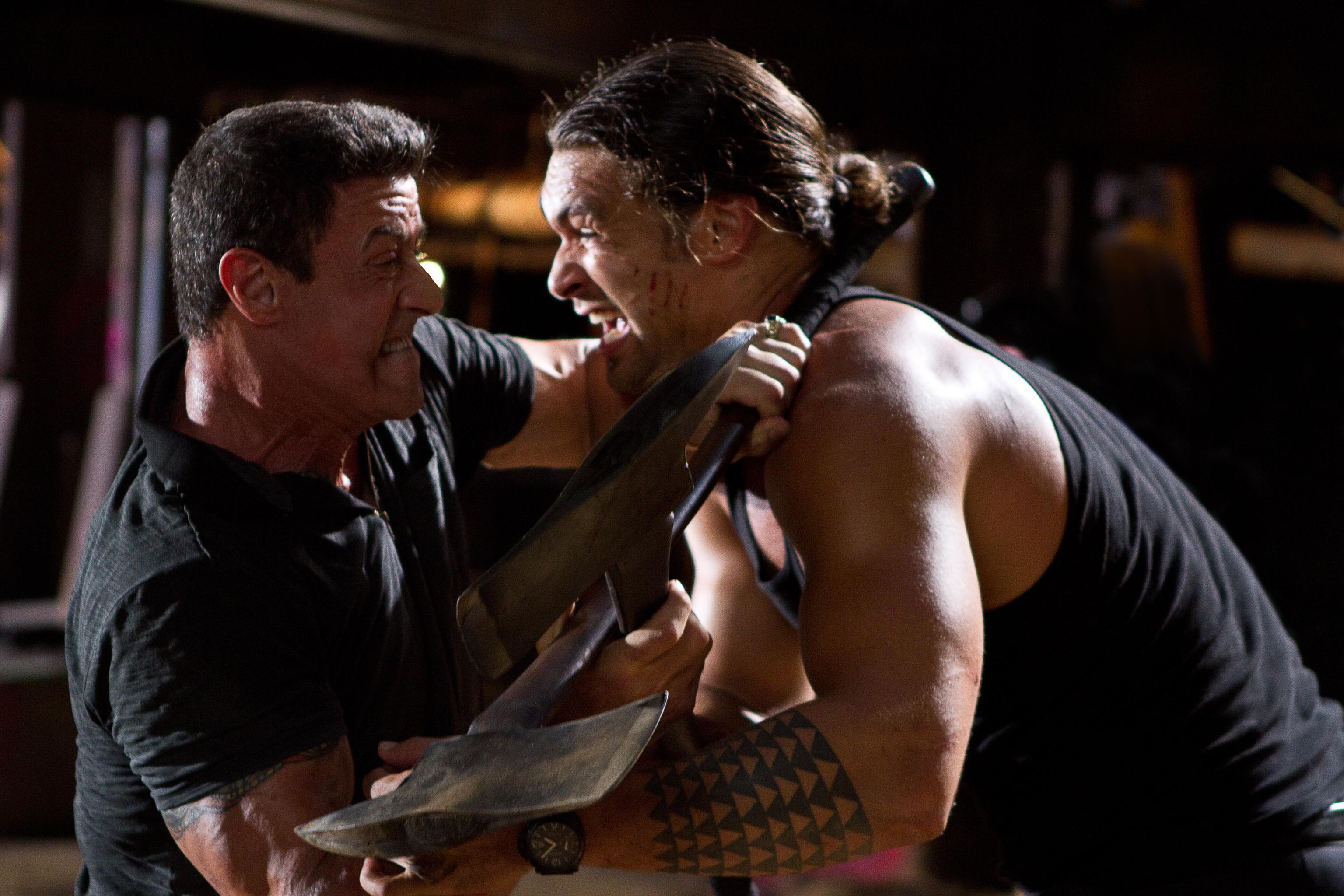
Bullet to the Head Not to be mistaken for the John Woo passion play, this head wound of a revenge flick instead pits a hired assassin (Sylvester Stallone) against an outsider cop (Sung Kang), the corroded action star who emerged from the thicket of ’70s Italian American iconic actors against a smooth-faced Asian American indie actor associated with the Fast and Furious franchise. Sly’s James Bonomo and his partner have been set up by a set of tepid bad guys (Oz fave Adewale Akinnuoye-Agbaje, here sleep-raging his way through Bullet; a very unpumped Christian Slater; and Jason Momoa, who glowers like he’s still playing a warlord on Game of Thrones). So Bonomo and Kang’s Taylor Kwon — the former’s got the brawn, the latter’s got the smartphone with access to criminal databases — must reluctantly team up to mete out some kind of justice. Yawn. The uninspired oh-so-gritty camera effects don’t help matters when it comes to staving off the sleepies induced by this tired enterprise — director Walter Hill certainly seems to have succumbed to the big snooze. The only real fun to be gleaned here is in watching your random, uh, ax fight and studying the Stallone’s weirdly crumbling yet inert rubble of face, which almost seems to scream to us about — yo, not Adrian, but the ravages of age, surgery, and excess. (1:32) Metreon, 1000 Van Ness. (Chun)

Django Unchained Quentin Tarantino’s spaghetti western homage features a cameo by the original Django (Franco Nero, star of the 1966 film), and solid performances by a meticulously assembled cast, including Jamie Foxx as the titular former slave who becomes a badass bounty hunter under the tutelage of Dr. Schultz (Christoph Waltz). Waltz, who won an Oscar for playing the evil yet befuddlingly delightful Nazi Hans Landa in Tarantino’s 2009 Inglourious Basterds, is just as memorable (and here, you can feel good about liking him) as a quick-witted, quick-drawing wayward German dentist. There are no Nazis in Django, of course, but Tarantino’s taboo du jour (slavery) more than supplies motivation for the filmmaker’s favorite theme (revenge). Once Django joins forces with Schultz, the natural-born partners hatch a scheme to rescue Django’s still-enslaved wife, Broomhilda (Kerry Washington), whose German-language skills are as unlikely as they are convenient. Along the way (and it’s a long way; the movie runs 165 minutes), they encounter a cruel plantation owner (Leonardo DiCaprio), whose main passion is the offensive, shocking “sport” of “Mandingo fighting,” and his right-hand man, played by Tarantino muse Samuel L. Jackson in a transcendently scandalous performance. And amid all the violence and racist language and Foxx vengeance-making, there are many moments of screaming hilarity, as when a character with the Old South 101 name of Big Daddy (Don Johnson) argues with the posse he’s rounded up over the proper construction of vigilante hoods. It’s a classic Tarantino moment: pausing the action so characters can blather on about something trivial before an epic scene of violence. Mr. Pink would approve. (2:45) Metreon, 1000 Van Ness, Sundance Kabuki. (Eddy)

Gangster Squad It’s 1949, and somewhere in the Hollywood hills, a man has been tied hand and foot to a pair of automobiles with the engines running. Coyotes pace in the background like patrons queuing up for a table at Flour + Water, and when dinner is served, the presentation isn’t very pretty. We’re barely five minutes into Ruben Fleischer’s Gangster Squad, and fair warning has been given of the bloodletting to come. None of it’s quite as visceral as the opening scene, but Fleischer (2009’s Zombieland) packs his tale of urban warfare with plenty of stylized slaughter to go along with the glamour shots of mob-run nightclubs, leggy pin-curled dames, and Ryan Gosling lounging at the bar cracking wise. At the center of all the gunplay and firebombing is what’s framed as a battle for the soul of Los Angeles, waged between transplanted Chicago mobster Mickey Cohen (Sean Penn) — who wields terms like “progress” and “manifest destiny” as a rationale for a continental turf war — and a police sergeant named John O’Mara (Josh Brolin), tasked with bringing down Cohen’s empire. The assignment requires working under cover so deep that only the police chief (Nick Nolte) and the handpicked members of O’Mara’s “gangster squad” — ncluding Gosling, a half-jaded charmer who poaches Cohen’s arm candy (Emma Stone) — know of its existence. This leaves plenty of room for improvisation, and the film pauses now and again to wonder about what happens when you pit brutal amorality against brutal morality, but it’s a rhetorical question, and no one shows much interest in it. Dragged down by talking points that someone clearly wanted wedged in (as well as by O’Mara’s ponderous voice-overs), the film does better when it abandons gravitas and refocuses on spinning its mythic tale of wilder times in the Golden State. (1:53) Metreon, 1000 Van Ness. (Rapoport)

Hansel & Gretel: Witch Hunters So here’s something you may not have been wondering: what exactly happened to Hansel and Gretel after they killed the gingerbread-house witch and made their way to freedom? Did they really live happily ever after? Did they land in the foster care system? Did they enter adulthood bearing the deep psychic wounds a person might well suffer after shoving a living creature into an oven and listening to her agonized howls as she burned alive? Or did they realize they’d discovered their life’s vocation without even having to complete the Myers-Briggs test? Shutting his eyes and pointing at random, director and screenplay cowriter Tommy Wirkola (2009’s Dead Snow) chooses the latter scenario, keeping his eyes closed to stab out some weak dialogue and half a plot for a script that leans heavily on the power of 3D technology to send eviscerated-witch guts and other biological shrapnel flying toward the eyeballs of audience members. Hansel (why, Jeremy Renner?) and Gretel (Gemma Arterton) have grown up to share the intense sibling bond and wandering ways you might expect from a brother and sister abandoned at a tender age to starve and be rent limb from limb by wild animals. They’ve also taken full advantage of a niche witch-slaying market in and around the gloomy forest where they made their first kill. When they’re hired to track down a particularly loathsome practitioner of the dark arts (Famke Janssen) who’s been snatching up local children, multidimensional mayhem ensues. Arterton’s Gretel is pretty much a badass and the brains of the operation, while Renner’s Hansel is more of a strong, silent, and occasionally shit-faced type. Neither makes for a particularly memorable protagonist, but that flat look on their faces could just be disappointment or boredom with the material. (1:41) Metreon, 1000 Van Ness. (Rapoport)

The Hobbit: An Unexpected Journey Make no mistake: the Lord of the Rings trilogy represented an incredible filmmaking achievement, with well-deserved Oscars handed down after the third installment in 2003. If director Peter Jackson wanted to go one more round with J.R.R. Tolkien’s beloved characters for a Hobbit movie, who was gonna stop him? Not so fast. This return to Middle-earth (in 3D this time) represents not one but three films — which would be self-indulgent enough even if part one didn’t unspool at just under three hours, and even if Jackson hadn’t decided to shoot at 48 frames per second. (I can’t even begin to explain what that means from a technical standpoint, but suffice to say there’s a certain amount of cinematic lushness lost when everything is rendered in insanely crystal-clear hi-def.) Journey begins as Bilbo Baggins (a game, funny Martin Freeman) reluctantly joins Gandalf (a weary-seeming Ian McKellan) and a gang of dwarves on their quest to reclaim their stolen homeland and treasure, batting Orcs, goblins, Gollum (Andy Serkis), and other beasties along the way. Fan-pandering happens (with characters like Cate Blanchett’s icy Galadriel popping in to remind you how much you loved LOTR), and the story moves at a brisk enough pace, but Journey never transcends what came before — or in the chronology of the story, what comes after. I’m not quite ready to declare this Jackson’s Phantom Menace (1999), but it’s not an unfair comparison to make, either. (2:50) Metreon. (Eddy)

Identity Thief America is made up of asshole winners and nice guy losers — or at least that’s the thesis of Identity Thief, a comedy about a crying-clown credit card bandit (Melissa McCarthy) and the sweet sucker (Jason Bateman) she lures into her web of chaos. Bateman plays Sandy, a typical middle-class dude with a wife, two kids, and a third on the way. He’s always struggling to break even and just when it seems like his ship’s come in, Diana (McCarthy) jacks his identity — a crime that requires just five minutes in a dark room with Sandy’s social security number. Suddenly, his good name is contaminated with her prior arrests, drug-dealer entanglements, and mounting debt; it’s like the capitalist version of VD. But as the “kind of person who has no friends,” Diana is as tragic as she is comic, providing McCarthy an acting opportunity no one saw coming when she was dispensing romantic advice on The Gilmore Girls. Director Seth Gordon (2011’s Horrible Bosses) treats this comedy like an action movie — as breakneck as slapstick gets — and he relies so heavily on discomfort humor that the film doesn’t just prompt laughs, it pokes you in the ribs until you laugh, man, LAUGH! While Identity Thief has a few complex moments about how defeating “sticking it to the man” can be (mostly because only middle men get hurt), it’s mostly as subtle as a pratfall and just as (un-)rewarding. (1:25) Four Star, Marina, 1000 Van Ness, SF Center, Sundance Kabuki. (Vizcarrondo)

The Impossible Spanish director Juan Antonio Bayona (2007’s The Orphanage) directs The Impossible, a relatively modestly-budgeted take on the 2004 Indian Ocean tsunami, based on the real story of a Spanish family who experienced the disaster. Here, the family (Naomi Watts, Ewan McGregor, three young sons) is British, on a Christmas vacation from dad’s high-stress job in Japan. Beachy bliss is soon ruined by that terrible series of waves; they hit early in the film, and Bayona offers a devastatingly realistic depiction of what being caught in a tsunami must feel like: roaring, debris-filled water threatening death by drowning, impalement, or skull-crushing. And then, the anguish of surfacing, alive but injured, stranded, and miles from the nearest doctor, not knowing if your family members have perished. Without giving anything away (no more than the film’s suggestive title, anyway), once the survivors are established (and the film’s strongest performer, Watts, is relegated to hospital-bed scenes) The Impossible finds its way inevitably to melodrama, and triumph-of-the-human-spirit theatrics. As the family’s oldest son, 16-year-old Tom Holland is effective as a kid who reacts exactly right to crisis, morphing from sulky teen to thoughtful hero — but the film is too narrowly focused on its tourist characters, with native Thais mostly relegated to background action. It’s a disconnect that’s not quite offensive, but is still off-putting. (1:54) Balboa, Metreon. (Eddy)

Jack Reacher (2:10) Metreon.

Life of Pi Several filmmakers including Alfonso Cuarón, Jean-Pierre Jeunet, and M. Night Shyamalan had a crack at Yann Martel’s “unfilmable” novel over the last decade, without success. That turns out to have been a very good thing, since Ang Lee and scenarist David Magee have made probably the best movie possible from the material — arguably even an improvement on it. Framed as the adult protagonist’s (Irrfan Khan) lengthy reminiscence to an interested writer (Rafe Spall) it chronicles his youthful experience accompanying his family and animals from their just shuttered zoo on a cargo ship voyage from India to Canada. But a storm capsizes the vessel, stranding teenaged Pi (Suraj Sharma) on a lifeboat with a mini menagerie — albeit one swiftly reduced by the food chain in action to one Richard Parker, a whimsically named Bengal tiger. This uneasy forced cohabitation between Hindu vegetarian and instinctual carnivore is an object lesson in survival as well as a fable about the existence of God, among other things. Shot in 3D, the movie has plenty of enchanted, original imagery, though its outstanding technical accomplishment may lie more in the application of CGI (rather than stereoscopic photography) to something reasonably intelligent for a change. First-time actor Sharma is a natural, while his costar gives the most remarkable performance by a wild animal this side of Joaquin Phoenix in The Master. It’s not a perfect film, but it’s a charmed, lovely experience. (2:00) 1000 Van Ness, SF Center. (Harvey)

Lincoln Distinguished subject matter and an A+ production team (Steven Spielberg directing, Daniel Day-Lewis starring, Tony Kushner adapting Doris Kearns Goodwin, John Williams scoring every emotion juuust so) mean Lincoln delivers about what you’d expect: a compelling (if verbose), emotionally resonant (and somehow suspenseful) dramatization of President Lincoln’s push to get the 13th amendment passed before the start of his second term. America’s neck-deep in the Civil War, and Congress, though now without Southern representation, is profoundly divided on the issue of abolition. Spielberg recreates 1865 Washington as a vibrant, exciting place, albeit one filled with so many recognizable stars it’s almost distracting wondering who’ll pop up in the next scene: Jared Harris as Ulysses S. Grant! Joseph Gordon-Levitt as Robert Lincoln! Lena Dunham’s shirtless boyfriend on Girls (Adam Driver) as a soldier! Most notable among the huge cast are John Hawkes, Tim Blake Nelson, and a daffy James Spader as a trio of lobbyists; Sally Field as the troubled First Lady; and likely Oscar contenders Tommy Lee Jones (as winningly cranky Rep. Thaddeus Stevens) and Day-Lewis, who does a reliably great job of disappearing into his iconic role. (2:30) Balboa, Metreon, 1000 Van Ness. (Eddy)

Mama From bin Laden to wild babes in woods, Jessica Chastain can’t seem to grab a break. Equipped with just the bare outlines of a character, however, she’s one of the few pleasures in this missed-opportunity of a grim, ghostly fairy tale. Expanding his short of the same name, director Andres Muschietti kicks off his yarn on a sadly familiar note in these days of seemingly escalating gun violence: little sisters Victoria and Lily have disappeared from their home, shortly after their desperate father (Game of Thrones‘ Nikolaj Coster-Waldau) has gone on a shooting spree. They repair to an abandoned cabin scattered with mid-century modern furniture. Five years on, the girls’ scruffy artist uncle Lucas (also Coster-Waldau) is still searching for them, supported by his punk rock girlfriend Annabel (Chastain). The little girls lost are finally found by trackers — and they appear to be hopelessly feral, with the angelic-looking Victoria (Megan Charpentier), acting as the ringleader and the younger, bedraggled Lily (Maya Dawe) given to sleeping under beds and eating on all fours next to the dog bowl. The arty couple take them in and move into a “test house” provided by the sisters’ enthralled therapist (Daniel Kash), obviously psyched to study not one but two Kaspar Hausers. The traumatized kids are clearly haunted by their experience — in more ways than one — as inexplicable bumps go off, night and day, and Misfits t-shirt-clad Annabel discovers the real meaning of goth while getting in touch with her seemingly deeply buried maternal urges. Unfortunately, despite possessing the raw material for a truly scary outing that plunges to the core of our primal instincts (what’s scarier than an unsocialized kid that’s capable of anything?) and showing off Muschietti’s occasional instances of cinematic flair (as when multiple rooms are shown using split-screens), Mama ends up running away from the filmmaker and is finally simply spoiled by its mawkishly sentimental finale. It doesn’t help that the inadequate script sports logic holes that a mama could drive a truck though. (1:40) Metreon. (Chun)

Les Misérables There is a not-insignificant portion of the population who already knows all the words to all the songs of this musical-theater warhorse, around since the 1980s and honored here with a lavish production by Tom Hooper (2010’s The King’s Speech). As other reviews have pointed out, this version only tangentially concerns Victor Hugo’s French Revolution tale; its true raison d’être is swooning over the sight of its big-name cast crooning those famous tunes. Vocals were recorded live on-set, with microphones digitally removed in post-production — but despite this technical achievement, there’s a certain inorganic quality to the proceedings. Like The King’s Speech, the whole affair feels spliced together in the Oscar-creation lab. The hardworking Hugh Jackman deserves the nomination he’ll inevitably get; jury’s still out on Anne Hathaway’s blubbery, “I cut my hair for real, I am so brave!” performance. (2:37) SF Center. (Eddy)

Movie 43 (1:37) Metreon.

“Oscar Nominated Short Films 2013: Animated” If you caught Wreck-It Ralph, nominated in the Best Animated Feature category, you’ve already seen John Kahrs’ Paperman, about a junior Mad Men type who bumbles through his pursuit of a lovely fellow office drone he spots on his commute. Or, if you saw Ice Age: Continental Drift, you’ve seen Maggie Simpson in The Longest Daycare, starring Homer and Marge’s wee one as she grapples with the social order at the Ayn Rand School for Tots. Among the stand-alones, Minkyu Lee’s Adam and Dog features a quick appearance by Eve, too, but the star is really the scrappy canine who gallops through prehistory playing the world’s first game of fetch with his hairy master. Two minutes is all PES (nom de screen of Adam Pesapane) needs to make Fresh Guacamole — which depicts grenades, dice, and other random objects as most unusual ingredients. The only non-US entry, UK director Timothy Reckart’s Head Over Heels, is about an elderly married couple whose relationship has deteriorated to the point where they (literally) no longer see eye to eye on anything. The program is rounded out by three more non-Oscar-nominated animated shorts: Britain’s The Gruffalo’s Child, featuring the voices of Helena Bonham Carter and Robbie Coltrane; French art-thief caper Dripped; and New Zealand’s sci-fi tale Abiogenesis. (1:28) Embarcadero. (Eddy)

“Oscar Nominated Short Films 2013: Documentary” (3:29) Opera Plaza.

“Oscar Nominated Short Films 2013: Live Action” (1:54) Embarcadero.

Parker (1:58) Metreon.

Quartet Every year there’s at least one: the adorable-old-cootfest, usually British, that proves harmless and reassuring and lightly tear/laughter producing enough to convince a certain demographic that it’s safe to go to the movies again. The last months have seen two, both starring Maggie Smith (who’s also queen of that audience’s home viewing via Downton Abbey). Last year’s The Best Exotic Marigold Hotel, in which Smith played a bitchy old spinster appalled to find herself in India, has already filled the slot. It was formulaic, cute, and sentimental, yes, but it also practiced more restraint than one expected. Now here’s Quartet, which is basically the same flower arrangement with quite a bit more dust on it. Smith plays a bitchy old spinster appalled to find herself forced into spending her twilight years at a home for the elderly. It’s not just any such home, however, but Beecham House, whose residents are retired professional musicians. Gingerly peeking out from her room after a few days’ retreat from public gaze, Smith’s Jean Horton — a famed English soprano — spies a roomful of codgers rolling their hips to Afropop in a dance class. “This is not a retirement home — this is a madhouse!” she pronounces. Oh, the shitty lines that lazy writers have long depended on Smith to make sparkle. Quartet is full of such bunk, adapted with loving fidelity, no doubt, from his own 1999 play by Ronald Harwood, who as a scenarist has done some good adaptations of other people’s work (2002’s The Pianist). But as a generator of original material for about a half-century, he’s mostly proven that it is possible to prosper that long while being in entirely the wrong half-century. Making his directorial debut: 75-year-old Dustin Hoffman, which ought to have yielded a more interesting final product. But with its workmanlike gloss and head-on take on the script’s very predictable beats, Quartet could as well have been directed by any BBC veteran of no particular distinction. (1:38) Embarcadero, Smith Rafael. (Harvey)

Rust and Bone Unlike her Dark Knight Rises co-star Anne Hathaway, Rust and Bone star Marion Cotillard never seems like she’s trying too hard to be sexy, or edgy, or whatever (plus, she already has an Oscar, so the pressure’s off). Here, she’s a whale trainer at a SeaWorld-type park who loses her legs in an accident, which complicates (but ultimately strengthens) her relationship with Ali (Belgian actor Matthias Schoenaerts, so tremendous in 2011’s Bullhead), a single dad trying to make a name for himself as a boxer. Jacques Audiard’s follow-up to 2009’s A Prophet gets a bit overwrought by its last act, but there’s an emotional authenticity in the performances that makes even a ridiculous twist (like, the kind that’ll make you exclaim “Are you fucking kidding me?”) feel almost well-earned. (2:00) Opera Plaza. (Eddy)

The Sessions Polio has long since paralyzed the body of Berkeley poet Mark O’Brien (John Hawkes) from the neck down. Of course his mind is free to roam — but it often roams south of the personal equator, where he hasn’t had the same opportunities as able-bodied people. Thus he enlists the services of Cheryl (Helen Hunt), a professional sex surrogate, to lose his virginity at last. Based on the real-life figures’ experiences, this drama by Australian polio survivor Ben Lewin was a big hit at Sundance this year (then titled The Surrogate), and it’s not hard to see why: this is one of those rare inspirational feel-good stories that doesn’t pander and earns its tears with honest emotional toil. Hawkes is always arresting, but Hunt hasn’t been this good in a long time, and William H. Macy is pure pleasure as a sympathetic priest put in numerous awkward positions with the Lord by Mark’s very down-to-earth questions and confessions. (1:35) Opera Plaza. (Harvey)

Side Effects Though on the surface Channing Tatum appears to be his current muse, Steven Soderbergh seems to have gotten his smart, topical groove back, the one that spurred him to kick off his feature filmmaking career with the on-point Sex, Lies, and Videotape (1989) and went missing with the fun, featherweight Ocean’s franchise. (Alas, he’s been making claims that Side Effects will be his last feature film.) Here, trendy designer antidepressants are the draw — mixed with the heady intoxicants of a murder mystery with a nice hard twist that would have intrigued either Hitchcock or Chabrol. As Side Effects opens, the waifish Emily Taylor (Rooney Mara), whose inside-trading hubby (Tatum) has just been released from prison, looks like a big-eyed little basket of nerves ready to combust — internally, it seems, when she drives her car into a wall. Therapist Jonathan Banks (Jude Law), who begins to treat her after her hospital stay, seems to care about her, but nevertheless reflexively prescribes the latest anti-anxiety med of the day, on the advice of her former doctor (Catherine Zeta-Jones). Where does his responsibility for Emily’s subsequent actions begin and end? Soderbergh and his very able cast fill out the issues admirably, with the urgency that was missing from the more clinical Contagion (2011) and the, ahem, meaty intelligence that was lacking in all but the more ingenious strip scenes of last year’s Magic Mike. (1:30) Metreon, 1000 Van Ness, Presidio, Sundance Kabuki. (Chun)

Silver Linings Playbook After guiding two actors to Best Supporting Oscars in 2010’s The Fighter, director David O. Russell returns (adapting his script from Matthew Quick’s novel) with another darkly comedic film about a complicated family that will probably earn some gold of its own. Though he’s obviously not ready to face the outside world, Pat (Bradley Cooper) checks out of the state institution he’s been court-ordered to spend eight months in after displaying some serious anger-management issues. He moves home with his football-obsessed father (Robert De Niro) and worrywart mother (Jacki Weaver of 2010’s Animal Kingdom), where he plunges into a plan to win back his estranged wife. Cooper plays Pat as a man vibrating with troubled energy — always in danger of flying into a rage, even as he pursues his forced-upbeat “silver linings” philosophy. But the movie belongs to Jennifer Lawrence, who proves the chops she showcased (pre-Hunger Games megafame) in 2010’s Winter’s Bone were no fluke. As the damaged-but-determined Tiffany, she’s the left-field element that jolts Pat out of his crazytown funk; she’s also the only reason Playbook‘s dance-competition subplot doesn’t feel eye-rollingly clichéd. The film’s not perfect, but Lawrence’s layered performance — emotional, demanding, bitchy, tough-yet-secretly-tender — damn near is. (2:01) Four Star, 1000 Van Ness, Presidio, SF Center, Sundance Kabuki, Vogue. (Eddy)

Skyfall Top marks to Adele, who delivers a magnificent title song to cap off Skyfall‘s thrilling pre-credits chase scene. Unfortunate, then, that the film that follows squanders its initial promise. After a bomb attack on MI6, the clock is running out for Bond (Daniel Craig) and M (Judi Dench), accused of Cold War irrelevancy in a 21st century full of malevolent, stateless computer hackers. The audience, too, will yearn for a return to simpler times; dialogue about “firewalls” and “obfuscated code” never fails to sound faintly ridiculous, despite the efforts Ben Whishaw as the youthful new head of Q branch. Javier Bardem is creative and creepy as keyboard-tapping villain Raoul Silva, but would have done better with a megalomaniac scheme to take over the world. Instead, a small-potatoes revenge plot limps to a dull conclusion in the middle of nowhere. Skyfall never decides whether it prefers action, bon mots, and in-jokes to ponderous mythologizing and ripped-from-the-headlines speechifying — the result is a unsatisfying, uneven mixture. (2:23) Metreon. (Ben Richardson)

Stand Up Guys Call it oldster pop, call it geriatricore, just don’t call it late for its meds. With the oncoming boomer elder explosion, we can Depends — har-dee-har-har — on the fact that action-crime thrillers-slash-comedies like 2010’s Red, 2012’s Robot and Frank, and now Stand Up Guys are just the vanguard of an imminent barrage of grumpy old pros locking and loading, grousing about their angina, and delivering wisdom with a dose of hard-won levity. As handled by onetime teen-comedy character actor Fisher Stevens, Stand Up Guys is a warm, worthy addition to that soon-to-be-well-populated pantheon. It grows on you as you spend time with it — much like the two aging reprobates at its core, Val (Al Pacino) and Doc (Christopher Walken). Val, the proverbial stand-up guy who took the fall for the rest of his gang, has just completed a 25-year-plus stint in the pen. There to meet him is his only pal, and former partner in crime, Doc, who has been leading a humble life but has one last hit to commit for their old boss Claphands (Mark Margolis), who’s inexplicably named after a Tom Waits song. Sex, drugs, and some Viagra commercial-esque bluesy guitars are in order, but first Val and Doc must find their drive, in the form of their old driver buddy Hirsch (Alan Arkin), who they break out of a rest home, and, perhaps, their moral compass, which arrives with the discovery of a victim (Vanessa Ferlito) of baddies much less couth than themselves. The pleasure comes with following these stand-up guys as they make that leap from craven self-preservation to heroism, which might seem implausible to some. But to the cast’s, and Stevens’s, credit, they make it work — and even give the sentiment-washed finale a swashbuckling buddy-movie romanticism, the kind that a young Tarantino might dislike and an older Tarantino would be loathe to begrudge his lovable louses. (1:34) 1000 Van Ness, SF Center, Sundance Kabuki. (Chun)

Top Gun 3D (1:50) 1000 Van Ness.

Warm Bodies A decade and a half of torrid, tormented vampire-human entanglements has left us accustomed to rooting for romances involving the undead and the still-alive. Some might argue, however, that no amount of pop-cultural prepping could be sufficient to get us behind a human-zombie love story for the ages. Is guzzling human blood really measurably less gross than making a meal of someone’s brains and other body parts? Somehow, yes. Recognizing this perceptual hurdle, writer-director Jonathan Levine (2011’s 50/50, 2008’s The Wackness) secures our sympathies at the outset of Warm Bodies by situating us inside the surprisingly active brain of the film’s zombie protagonist. Zombies, it turns out, have internal monologues. R (Nicholas Hoult) can only remember the first letter of his former name, but as he shambles and shuffles and slumps his way through the terminals of a postapocalyptic airport overrun by his fellow corpses (as they’re called by the film’s human population), he fills us in as best he can on the global catastrophe that’s occurred and his own ensuing existential crisis. By the time he meets not-so-cute with Julie (Teresa Palmer), a young woman whose father (John Malkovich) is commander-in-chief of the human survivors living in a walled-off city center, we’ve learned that he collects vinyl, that he has a zombie best friend, and that he doesn’t want to be like this. We may still be flinching at the thought of his and Julie’s first kiss, but we’re also kind of rooting for him. The plot gapes in places, where a tenuous logic gets trampled and gives way, but Levine’s script, adapted from a novel by Isaac Marion, is full of funny riffs on the zombie condition, which Hoult invests with a comic sweetness as his character staggers toward the land of the living. (1:37) 1000 Van Ness, SF Center, Sundance Kabuki. (Rapoport)

West of Memphis At this point, it’s hard to imagine a present-day murder trial more painstakingly documented than that of the so-called West Memphis Three. West of Memphis can be considered a crash course for those who somehow missed the Bruce Sinofsky and Joe Berlinger-directed Paradise Lost trilogy; it’s an evenly-paced montage of talking heads, archival trial footage, and interviews with investigators and legal experts, with additional focus on the relationship between former death row inmate Damien Echols and his wife Lorri Davis. (The other two accused men do appear in the film, but Echols is the focal point.) The doc traces the entire case, from the initial news reports of the disappearance of eight-year-olds Christopher Byers, Michael Moore, and Steve Branch, to the supporter-funded, post-conviction investigation and appeals process still unfolding today. Over the years, Echols’ defense team had gradually amassed testimony from a slew of high-powered experts, which not only pointed away from the West Memphis Three, but also suggested new suspects. Despite this seemingly compelling material, Echols’ appeal hit a wall in 2008, when then-Circuit Court judge David Burnett, who had presided over the original trials, denied a new hearing, citing “inconclusive” evidence. At that point, Peter Jackson and Fran Walsh, who had privately bankrolled much of the investigation leading to the DNA appeal, decided produce a doc; Amy Berg (2006’s Deliver Us from Evil) was tapped to direct. Whether or not this film advances the legal process any further remains to be seen, but it does offer a telling portrait of a deeply-flawed criminal justice system at work. (2:26) Shattuck. (Nicole Gluckstern)

Zero Dark Thirty The extent to which torture was actually used in the hunt for Osama Bin Ladin may never be known, though popular opinion will surely be shaped by this film, as it’s produced with the same kind of “realness” that made Kathryn Bigelow’s previous film, the Oscar-winning The Hurt Locker (2008), so potent. Zero Dark Thirty incorporates torture early in its chronology — which begins in 2003, after a brief opening that captures the terror of September 11, 2001 using only 911 phone calls — but the practice is discarded after 2008, a sea-change year marked by the sight of Obama on TV insisting that “America does not torture.” (The “any more” goes unspoken.) Most of Zero Dark Thirty is set in Pakistan and/or “CIA black sites” in undisclosed locations; it’s a suspenseful procedural that manages to make well-documented events (the July 2005 London bombings; the September 2008 Islamabad Marriott Hotel bombing) seem shocking and unexpected. Even the raid on Bin Ladin’s HQ is nail-bitingly intense. The film immerses the viewer in the clandestine world, tossing out abbreviations (“KSM” for al-Qaeda bigwig Khalid Sheikh Mohammed) and jargon (“tradecraft”) without pausing for a breath. It is thrilling, emotional, engrossing — the smartest, most tightly-constructed action film of the year. At the center of it all: a character allegedly based on a real person whose actual identity is kept top-secret by necessity. She’s interpreted here in the form of a steely CIA operative named Maya, played to likely Oscar-winning perfection by Jessica Chastain. No matter the film’s divisive subject matter, there’s no denying that this is a powerful performance. “Washington says she’s a killer,” a character remarks after meeting this seemingly delicate creature, and he’s proven right long before Bin Ladin goes down. Some critics have argued that character is underdeveloped, but anyone who says that isn’t watching closely enough. Maya may not be given a traditional backstory, but there’s plenty of interior life there, and it comes through in quick, vulnerable flashes — leading up to the payoff of the film’s devastating final shot. (2:39) Marina, 1000 Van Ness, SF Center, Sundance Kabuki. (Eddy)

Suck on this: Guardian staff reviews aphrodisiac lollipops

0

Hey Valentines. Did you need a libido boost to buoy you through this week of boner-killing commercialized love-things? Meet Pandora’s Pops, then, a little venture headed up by Jena Chambers, a body worker who once ran a massage school and clinic in Asheville, North Carolina for six years. Chambers recently launched a Kickstarter to fund large-scale production of her pops, which are vegan, organic, herbal — all the things.

They also purport to give you feelings. Our focus was on Pandora’s aphrodisiac pops, since V-Day approaches and Chambers’ brand ambassador Mary Lollipoppins will be flitting about town distributing them. The line also includes mental stimulant pops, pops to help you quit smoking, pops to calm you down, and more.

How well do they work? The pops were thrust into the hands of Guardian staffers last weekend. Results are as follows: 

I’m going to give this one a solid “didn’t hurt.” Despite my bachelor’s degree in sociology I created a totally flawed sex pop experimental design: I ate my “Hot Professor” pop an hour before meeting a date for which no additional stimulant was needed. Did I giggle at his French dialetic thought jokes because of my pop’s unique herbal blend? Was Pandora responsible for the way I tolerated my companion’s meandering anecdotes or the effusiveness with which I cooed over his station wagon? Maybe? At any rate, unlike the other reviewers I thought my professor pop tasted dreamy (not too sweet, spicy, imparting the distinct sensation that I was eating something not free of nutritional value.) I’d do it again. Um, eat a Pandora Pop I mean. 

Maybe I’m biased because I met Chambers when she brought the pops by the office and she is adorable: 

See?

Anyway, onto the Guardian staff peanut gallery:

I had the “Nurse Ginger” pop, which tasted OK but mildly reminiscent of potpourri. It felt a bit tingly on the tongue, but didn’t seem to have any effect on my libido.

— Emily Savage, music editor

When I heard that Pandora’s Pops would “amplify [my] natural, magnetic pheromones,” I thought: goodie. I can smell even stronger. How sexy will that be? Will my partner even notice over the odor of the dog and the unwashed laundry and the teenagers who don’t seem to understand the meaning of “regular showers?” What the hell; can’t hurt.

Except that: Gross.

The website described my “Flight Attendant” lollipop as “cinammon and exotic/familiar spice.” Actually, tasted like stinky socks. And I can give you all a basic dating tip: Nobody wants to kiss you when your mouth tastes like stinky socks. Trust me — I tried.

— Tim Redmond, executive editor

To put it simply: whiskey trumps aphrodisiac lollipops. I took one lick of my “Juicy Rose” pop and and half expected to turn into a lovesick puppy –- heart-shaped pupils and all. Sadly it seems any potential fireworks were masked by the stronger effects of multiple whiskey sours. But not all was lost -– my heart-shaped treat was defeated by alcohol but it still worked great both as a breath mint and a conversation piece.

— Cortney Clift, editorial intern

So perhaps Pandora’s Pops were too delicately herbal to stoke the fires of hardened journalist-folks. Perhaps your sweetie is more easily-influenced? Or just really into sucking on hearts. 

Heads Up: 7 must-see concerts this week

0

The Grammys are over – did you watch? I was busy with a very important tiki cocktail at Smuggler’s Cove at the time of the actual broadcast, but I got all the pertinent data and watched all the non-lip synced performances post-show. Another year of meh, with some ostentatious pop sprinkled throughout. I’m more excited about Future|Perfect with Holly Herndon, and live shows by Beak>, Graveyard, and EELS, all of which take place in the Bay Area this week.

Go, support oddball creative talent at its finest, and perhaps next year we’ll get the weirdos on the main stage.

Here are your must-see Bay Area concerts this week/end:

Beak>
Beak> is at one once unsettling and charming; its Krautrock backbone and angular guitars create eerie, paranoid grooves, à la Silver Apples — you know the itchy, building beats — but those mumbly vocals soothe the senses. Drummer-singer Geoff Barrow, keys-guitarist Matt Williams, and bassist Billy Fuller, are all members of other bands (including Barrow’s Portishead), so they split their time between acts, but have already released two albums in the few short years they’ve been able to get together, including critically-lauded 2012 full-length, >>.
With Vex Ruffin, Peanut Butter Wolf
Wed/13, 8pm, $20
Independent
628 Divisadero, SF
www.theindependentsf.com
http://www.youtube.com/watch?v=KTeRpmBVPPo

Stone Foxes
“Launching into experimentation from strong roots in blues, the Stone Foxes plays a range from the catchy interpretation of Edgar Allen Poe’s gothic, “The Tell-Tale Heart,” (“Everybody Knows”) to the elegy in minor, “Battles, Blades and Bones,” which repeats, “We need someone to sing/’Cause we’ve turned everything/To battles, blades, and bones.” In their third album, Little Fires (out Tue/12), collaboration with Girls’ producer Doug Boehm proves that polish doesn’t mean sterility, that good production doesn’t mean overproduction, and that good old rock’n’roll lives on.” — Laura Kerry
With Mahgeetah, Black Cobra Vipers
Wed/13, 9pm, free
New Parish
579 18th St., Oakl.
(510) 444-7474
www.thenewparish.com
http://www.youtube.com/watch?v=s9qRW-KMGXw

Holly Herndon
There will be plenty more on experimental electronics manipulator/hushed vocalist Holly Herndon in this coming issue (Feb. 13). But for now, you just need to know this: the “Movement” singer is blowing up, and this party should not be missed.
Future|Perfect with NGUZUNGUZU, DJs Marco de la Vega and Loric Sih
Thu/14, 9pm, $10-$15 (pre-sales)
Public Works
161 Erie, SF
www.publicworkssf.com
https://www.youtube.com/watch?v=kanNN4RPrgY

Graveyard
Scuzzy Swedish foursome Graveyard is playing two nights at Slim’s, in what should be an impossibly loud and raucous weekend – especially considering openers like thrashy LA punk band the Shrine and new local psych band, Golden Void. The fried-’70s-rock-meets-early-heavy-metal band, which sounds Southern, but again, is full of Swedes, returns on its third full-length, Lights Out. This is an actual quote from the Wall Street Journal, forward by Graveyard’s representation, too amusing to ignore: “Wall Street Journal says ‘[Lights Out] rips by like a boulder kicked over a cliff.’ What does that mean? Go find out.
Fri/15-Sat/16, 9pm, $20 ($33 for two-day pass)
Slim’s
333 11th St., SF
www.slimspresents.com
http://www.youtube.com/watch?v=k8jqUHYiSl0

The Dirty Dozen Brass Band
Funky Louisiana jazz ensemble the Dirty Dozen Brass Band – formed way back in ’77 – has been going strong strong for 35-plus years now, and will showcase its stamina with two spirited, wailing-horn-filled shows this weekend at the Independent. Note: Fri/15’s show opens with  Toubab Krewe – which mixes “rock, Malian rhythms, surf-rock and Appalachian folk.”
Fri/15-Sat/16, 9pm, $22
Independent
628 Divisadero, SF
www.theindependentsf.com
http://www.youtube.com/watch?v=sM7TlkksKa4

EELS
When you see E live, you just want to give him a hug. The scruffy leader of long-running poetic indie rock band EELS, E has an openness and vulnerability about him that undeniably draws in listeners with softly croaked classic lyrics like, “you’re such a beautiful freak/I wish there were more just like you.” The band followed up ’96’s Beautiful Freak with deeply personal Electro-Shock Blues (a record about E’s sister’s suicide and his mom’s cancer), Souljacker, a handful of fuzzy, lovely records in between, and most recently, Wonderful, Glorious (Feb. 2013).
With Nicole Atkins
Sat/16, 9pm, $30
Fillmore
1805 Geary, SF
www.livenation.com
http://www.youtube.com/watch?v=_vS_By_ZZ0g

Johnny Render
Johnny Render is: “a longtime Hollywood-based musician and entertainer,” “[The] President of Rock and Roll,” and sounds like “the Ramones meets the Carpenters.” Most importantly, I have a bunch of cardboard coasters with his face on them, if any of you desire such a cockamamie treasure? First person to email me with the sentence “I need Johnny Render coasters,” gets ’em.
Sat/16, 9pm, $7
Hemlock
1131 Polk, SF
www.hemlocktavern.com
http://www.youtube.com/watch?v=jivECvAyRWo

Sundance 2013: what’s NEXT?

0

Earlier fest reports here, here, and here.

At Sundance 2013, no other category could compete with the NEXT programming. NEXT was initiated in 2010; its aim is to highlight “pure, bold works distinguished by an innovative, forward-thinking approach to storytelling. Digital technology paired with unfettered creativity proves the films selected in this section will inform a ‘greater’ next wave in American cinema.”

Matthew Porterfield’s I Used to Be Darker showcases Ned Oldham (brother of indie fave Will Oldham) as a father-husband-musician whose teenage daughter starts to drift away as his marriage dissolves. Wonderfully awkward and trying moments arise from every suburban-hipster angle, making Darker not only a disturbing blueprint of divorce among the indie-rock generation, but — with three fully performed songs — a reminder of why so much music from this time period remains utterly relatable. (Clearly, not everyone agrees; I overheard a group of SLC locals calling Darker their “least favorite movie of all time.”)

Yen Tan’s surprisingly powerful Pit Stop and “Best of NEXT” winner Chad Hartigan’s This is Martin Bonner both showcase quiet and emotionally implosive relationships; both also have such well-earned conclusions that I was confused as to why they weren’t in the Dramatic Competition category instead. Tan’s interwoven structure reminded me of Megan Griffiths’ overlooked gem The Off Hours (2010), while Hartigan’s slow burner was excitingly reminiscent of Paul Thomas Anderson’s Hard Eight (1998). Remember their names, because these filmmakers are about to have major breakthroughs.

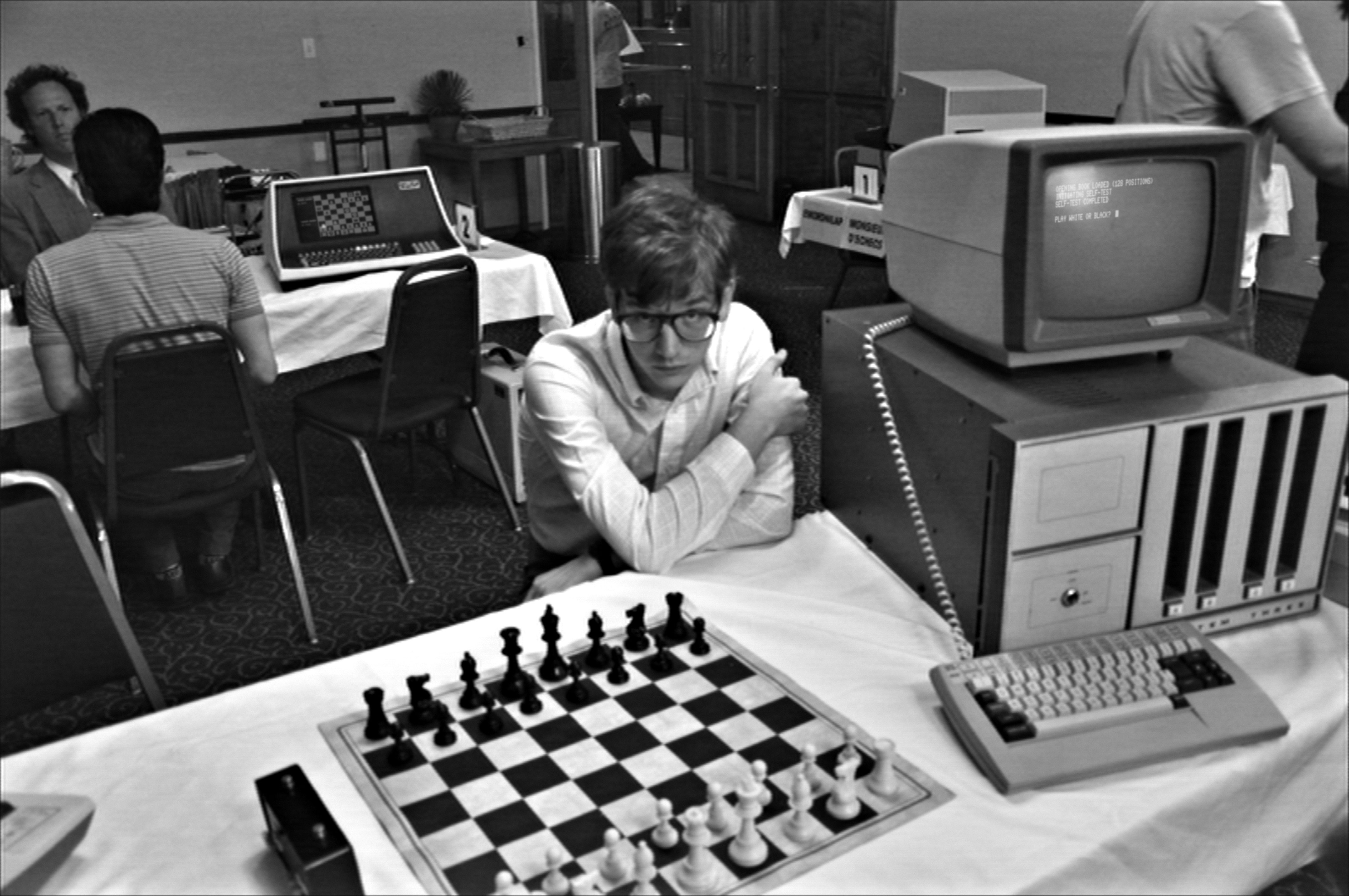
But the two NEXT entries that have already achieved “major” status in my mind already are Andrew Bujalski’s Computer Chess (USA) and Alexandre Moors’s Blue Caprice (discussed in Thu/7’s post). Oddly enough both films inspired extremely aggressive Q&As, in which an audience member attacked the film and filmmaker with the very first question.

Mumblecore master Bujalski, who studied under minimalist Chantal Akerman (1975’s Jeanne Dielman), walked up onto the stage after his mind-numbing, purposefully janky, addictively hilarious, and ultimately transcendental psychedelic mind-fuck. First question right out of the gate: “Would you explain three or four concepts from your film, so I know what I just watched?” Though some audience members groaned, Bujalski made a valiant effort to respond. (After a few moments, he asked, “Is it okay if I come back to that one?” “No!” was the angry response.)

Bujalski shot the film on old Portapak video cameras from the late 1970s he’d purchased on eBay; he meticulously edited the video to look and feel as if it had been made on a linear editing system though it was done on Final Cut Pro. By trading in his beloved 16mm cameras from his previous three films — Funny Ha Ha (2002), Mutual Appreciation (2005), and Beeswax (2008) — he has captured the look and feel of the early video era.

Computer Chess not only gets its techie vocab right, it also captures the spirit of the entire era (aging hippies and emerging New Agers mingling with proto-nerds), and does so without being mean-spirited. In fact, it was so scientifically spot-on it won the Alfred P. Sloan Prize at this year’s festival — an award given to the best feature film that focuses on science or technology as a theme, or depicts a scientist, engineer, or mathematician as a major character. Computer Chess was also my favorite feature at this year’s Sundance Film Festival. I wanted to watch the film again as soon as it was over.

Reflections on last Friday’s Oakland Art Murmur

0

I pictured writing a different sort of response to last Friday’s Oakland Art Murmur and accompanying street festival. The fatal shooting of an 18-year-old, however, taints the memory of the evening and retroactively adds a hint of menace to the crowded streets.

In OAM’s responding statement, what begins as condolence, transitions into a reaffirmation of the monthly festival’s aims: “The Oakland Art Murmur and the First Friday Street Festival are the products of communities coming together to showcase the best of what people create together.” As questions surround the future of the event — most pressingly, can it continue as before? — it is important to remember this.

The mood on the streets before the shooting was celebratory. In the stretch of street closed to traffic, random pockets of activity testified to the joyful and creative possibilities contained within a diverse crowd of thousands.

On Telegraph Avenue, I saw an eclectic group dancing in front of a DJ booth; a block later, a man banged on his bike with drumsticks to accompany a small drum circle (whose members found it as strange as the onlookers did); and a pint-sized child rapped along to music on the back of truck that had been converted into a stage. Another wonderful surprise came in the form of the best pork bun I’ve ever tasted from the food truck, The Chairman (apparently I’m behind on food truck culture). The music, food, and general merriment on the streets occupied much of my time. And it was a great time.

But before I stray too far from the event’s original purpose seven years ago, I should mention that I also saw some compelling art and visited some intriguing spaces. My favorite stop of the evening was the antithesis to the raucousness between 19th and 27th Streets, the store and gallery Umami Mart on Broadway and 8th. Started by high school friends from Cupertino, Yoko Kumano and Kayoko Akabari, the pop-up shop (and hopefully soon-to-be mainstay) exhibits art and sells kitchen-themed goods that all reflect the stark elegance of the Japanese aesthetic.

Brother-sister duo Aya and Sylvan Brackett added to the warmth of the space. Raised in Nevada City, Calif. in a traditional Japanese home, the siblings each filter elements of their background into different arts in the Bay Area — Sylvan through food and his catering business, Peko-Peko, and Aya through her photography. Umami Mart showcased samples of both arts with udon noodles meticulously prepared from scratch at a stand in the corner, and striking photos on the wall surrounding the heading, “Home is Oakland; Home is Japan.”

The familial atmosphere in a store whose every surface revealed a delightful intersection of California and Japanese culture amounted to an excellent example of “the best of people create together.” So did the food trucks, the spontaneous dancing, and the different music flooding the street every half block. After last week’s event, the future of the Oakland Art Murmur raises complicated concerns. But I hope that it will continue to allow more positive examples to arise in the future.

On the Om Front: In the name of love

0

It’s February—feeling a little love in your heart? Srutih Asher Colbert’s been feeling the love all year long. She’s a Bay Area yoga teacher (and hairdresser) who raised $24,000 in one year through grassroots fundraising to fight sex trafficking in India, where she’ll be going next week to volunteer her time to the cause.

Om Front talked to her about how, and why, she undertook the challenge.

SFBG Wow. You raised $24,000 in one year. Tell us about the organization you raised the money for.

COLBERT Off The Mat and Into the World is a yoga-based organization [founded by internationally-acclaimed yoga teacher/activist Seane Corn]. It initiates different projects around the world to create sustainable change. The idea is that people take their yoga practice “off the mat and into the world” to become leaders in their community and use that leadership to make a difference. Every year, Off the Mat conducts something called the Seva Challenge, in which people everywhere are challenged to raise at least $20,000 for a particular cause. If you can raise the money, you are invited to go on a trip with Off the Mat to volunteer your time to that cause.

SFBG  What inspired you to do the 2012 Seva Challenge?

COLBERT  The cause this year is to stop sex trafficking in India. Sex trafficking is happening all over the world, but there are over 3 million girls in India alone that are being held prisoner and being raped on a daily basis. Some of them have been tricked by being promised a job in the factory and then they end up in a brothel. Some of them have been sold by their own parents. There are so many ways they can be coerced. I have two daughters and it hit close to home to think that my eight year old daughter could be trafficked for sex. I wanted to see if I could help stop that kind of action. I didn’t think I’d be able to raise $20,000 but I thought I would try!

SFBG  So, how did you do it?

COLBERT I reached out to everyone in my yoga community, students and teachers, and planned all of these events. I don’t know how I did it, but it all added up in the end. Some of the events I held were a benefit Kirtan [chanting event] with Ananda Rasa and Prajna Vieira at the Sivananda Yoga Center; a yoga-DJ-dance party at Equinox in Palo Alto, where I teach; and a Thanksgiving benefit class at Namaste Yoga in Oakland with Vickie Russell Bell. I sold Stop Slavery Now tee-shirts, and held a cocktail party and a silent auction. Also, [legendary kirtan singer] Krishna Das did an amazing fundraiser in NYC on the Bhajan Boat and he donated his whole portion to me for the cause. It was incredible.


Thanksgiving benefit class at Namaste Yoga in Oakland with Vickie Russell Bell

SFBG  What was the biggest fundraiser?

COLBERT  It was actually at my hair salon, Monica Foster Salon, in Palo Alto. I got everyone to work on a Monday when we’re usually closed, and they all donated their proceeds, over $4000 altogether, to Off the Mat.

SFBG  So you’re going to India then?

COLBERT Yes! I’ve never been to India and I am so thrilled that I get this opportunity. We leave on February 17 for 10 days in Kolkata. We’ll be working every day with the local charities that are partnered with Off the Mat to help rescue girls, and teach them trades like jewelry-making. We’ll also be helping to build a new room onto a dance-and-yoga therapy center that helps these girls transition back into society.

It’s an interesting time to be going to India to do this work. After the recent gang rape in India, there’s been an uprising of women banding together saying we’re not going to stand for this anymore. It feels really good that we can be part of that timing and affect some social change.

SFBG  Is your fundraising effort over?

COLBERT  Technically, yes, but people are still giving me cash and writing me checks! We’re asked to bring a donation bag over with us filled with first aid supplies, art supplies, and things to draw with, that we can give to the different charities—so I’ve been using the additional funds for that. Once that bag is full, I’ll give the remaining money to Off the Mat.


Colbert with yoga teacher Vickie Russell Bell (left) at Namaste Yoga

SFBG  What has this year of fundraising taught you?

COLBERT That I am not in control of anything. Every fundraiser, I would think it would go this way or that way—and it was never like that. I would think there would be 75 people there and in walked 12. Or I thought a person was going to give me $5 and he gave me $500. I had to learn to not try to control things, and to just be in the present moment with what is.

SFBG  You’re leaving on February 17. Nice timing for Valentine’s Day, eh?

COLBERT Yes, but every day should be Valentine’s Day! Every day we should all be giving each other as much love as we can, helping each other and holding each other up.

If you want to donate to Off the Mat or learn about the 2013 Seva Challenge, visit www.offthematintotheworld.org.

Karen Macklin is a writer and yoga teacher in San Francisco — her On the Om Front column appears biweekly here on SFBG.com.


It’s All About Love
Yoga and Spirituality Listings by Joanne Greenstein

Seven Month Chakra Awakening Intensive with Anodea Judith

Open your heart through the chakras. Award winning author and internationally renowned teacher Anodea Judith is coming to the Bay Area to lead a series of seven workshops on the seven chakras over seven months.  Each month will focus on one of the chakras, offering asana practice, bioenergetic exercises, breathing techniques, guided trance journeys, chanting, art, music and more to clear blockages and active chakra energy.  Workshops will be supplemented by weekly emails.
Sat 2/9 – Sat 2/13, 1:00 – 5:45 PM, Yoga Kula SF, 3030A 16th, SF with 2 sessions at Yoga Kula Berkeley, 1700 Shattuck, Berkeley, $90/workshop or $560 for all 7.  Livestream also available at $45/sessionor $285 for all sessions. yogakula.com/chakra-awakening

Valentine’s Day Contact Yoga Class with Alok Rocheleau and Anjuli Mahendra
Open your heart through touch.  Connect physically, emotionally and spiritually through partner yoga, contact improvisation and Thai massage.
Thurs/14, 7:30 – 10:00 PM, Mindful Body, 2876 California, SF, $70 per couple in advance/$80 at the door. www.themindfulbody.com/main/workshopsevents.htm

Celebration of Heart with Deborah Lee
Open your heart through movement.  Flow through a series of poses designed to help you release tension, improve your posture and connect to your heart. 
Sun/10, 2:00 – 4:15 PM, Yogaworks, 1823 Divisadero, SF, $20 in advance/$30 at the door. More info here.

Kirtan with David Newman (Durga Das)
Open your heart through song.  David and his wife Mira will lead a fun, joyous evening of call-and-response chanting letting you access your heart space. 
Fri/15, 8:00 – 10:00 PM, Urban Flow, 1543 Mission, SF, $20 in advance/$25 at the door. www.urbanflowyoga.com/workshop.html
 

Tantra & Massage Valentine’s Workshop with Dee Dussault
Open your heart through connection.  Explore and deepen your relationship through these workshops for couples. On day one, learn tantric practices to enhance the intimacy, energy, communication and sensuality in your relationship.  On day two, improve your love-making through tantric massage, breathing and visualization.  Day two is clothing optional, with a non-genital focus.
Tantra Workshop: Expanding Erotic Energy
Sat/16, 1:30 – 4:30 PM, 548 Fillmore, SF, $45
Sensual Massage: Conscious Intimate Touch
Sun/17, 2:00 – 5:00 PM, 548 Fillmore, SF, $45
More info here.

SF IndieFest starts tomorrow! Win tickets to their annual Big Lebowski Party!

0

Starting tomorrow, Thur/7, SF IndieFest will begin celebrating their Quinceañera with films, parties, premieres, guests, and you! The festival lineup includes a series of films with a coming-of-age theme, starting with our opening night film, the US Premiere of Michel Gondry’s The We and the I with DJs, live music, an open bar and, a birthday cake to follow.

Festival festivities include: 10th Annual Big Lebowski Party, IndieFest’s Anti-Valentines Day Power Ballad sing-a-long, and the annual IndieFest Roller Disco Party.

And then there’re the films. Over 40 programs of new amazing films like Days of Grace, a poetic and violent film about drugs and kidnapping from Mexico. From Italy there is The Legend of Kaspar Hsuser featuring Vincent Gallo in dual rolls. Documentaries like Iceberg slim: Portrait of a Pimp and The Life and Times Paul the Psychic Octopus sound intriguing just by their titles. And, need it be said, much more!

Get the complete schedule and ticket information here. To win a pair of tickets to the Big Lebowski Party on Sat/9 (details here) featuring mini bowling, white Russians, and more, email your full name to sfbgpromos@sfbg.com with “The Dude abides” in the subject by Thur/7 and we will respond with passes while supplies last.


Fanboy ruminations on the new My Bloody Valentine

3

Here I am, listening to m b v for the umpteenth time since Saturday night, and I still can’t believe it exists. Up until last week, I had grown used to “the Loveless follow-up” as a punchline in hipster water-cooler conversation, a tall tale in the canon of guitar-rock mythology. But now, after two decades of broken promises, My Bloody Valentine’s fabled third LP is here. And I can dance to it. And it shows up on iTunes like everything else. This can’t be happening.

After he nearly bankrupted his label, striving to recreate the reverberacious sounds swirling around in his head, MBV’s guitarist and production mastermind Kevin Shields exited the studio with 1991’s seminal Loveless, an album that re-imagined the textural possibilities of guitars and vocals within the pop framework. The effect was equally seductive and menacing: a record swarming with haze and fuzz, yet with an undercurrent of Pet Sounds pop purity cutting straight down the middle. This ethereal, borderline-electronic approach to guitar-rock, and its use of androgynous, vaguely intelligible vocals as a background instrument, has spawned a thousand imitators, but no worthy successor, resulting in one of the modern era’s few truly legendary recordings.

That said, it’s hard to overstate the cultural baggage attached to m b v from the get-go. Seriously, if you’re Shields, how do you move on from what everyone from Brian Eno to Phish has embraced as the the greatest musical achievement of the ‘90s? The band’s third full-length presents several answers to that question, with a mixed bag of laid-back meanderings, abrasive left-field experiments, and a handful of vintage MBV anthems to feed that long-neglected Loveless fix.

Although it continues to open up and reveal itself with each listen, here are some observations from my first weekend with this incredibly unlikely album.

“she found now”
My Bloody Valentine’s first statement of the new millennium is a quiet, low-key one, without drums, that leaves Shields’ fuzzy, undulating guitars to support his and Bilinda Butcher’s entangled, hushed vocals. First time around, I was underwhelmed. Comebacks should start with a bang, right? After a few listens, though, it all made sense; this is the sound of Shields and Co. waking up after a two-decade hibernation, collecting their bearings, and taking a moment to reflect before getting on with the show. A poignant gesture, after 22 years of silence.

“only tomorrow”
And we’re rolling. I can’t remember the last time the band sounded this funky. Shields’ guitar has an earthly, familiar crunch to it, paring down from the otherworldly pink-noise that defined Loveless, and Colm Ó Cíosóig’s shuffly drums sound fuller, boomier, and more dynamic than ever before. Yet, it’s unmistakably MBV, from the complex, angular chord changes, to the sound of Butcher’s vocals succumbing to Shields’ towers of distortion.

http://www.youtube.com/watch?v=UUc5y1NljXI
“who sees you”
This is the jewel of the album, the track that delivers on all the expectations I had convinced myself were unreasonable. All of Loveless’ trademark qualities are right upfront, from the emphasis on heady, impressionistic texture, to the inextricable pop DNA at its core. The chord changes are as seductive as ever, and Shields’ guitars haven’t skipped a beat since ‘91. Most amazingly, though: we’re finally hearing a Loveless-caliber MBV song, approached with a muscular, dynamic, 21st century production sensibility. This is too good to be true.

“is this and yes”
Loveless’ brief, Final Fantasy-esque intro, “Touched” suggested an alternate direction for the band, which “is this and yes” explores in depth for the first time. Guitars are absent, and drums are minimal; the wispy synth tones coalesce with Butcher’s soft vocals to resemble the relaxed, samba-ish lilt of a Stereolab ballad. Simple and repetitive, but always engaging and never tedious, it offers a new perspective on MBV’s crafty songwriting abilities, and a nice moment of calm between thick slabs of pop/noise.

“if i am”
Relatively open and uncluttered by MBV standards, yet permeated by the band’s signature vertigo, “if i am” is a nice reminder that Shields’ aesthetic isn’t all smoke and mirrors, distortion, layering, and plain old big noises. If the two previous pop songs felt a bit formulaic and deconstructable, this track emphasizes the mystery and vagueness of MBV’s squirmy, seasick sound. Also, Shields on a wah-pedal is a nice surprise.

http://www.youtube.com/watch?v=VpoOjoiYcWY
“new you”
The most melodic, bubbly, and downright fun song MBV has ever committed to tape, “new you” is like a window into an alternate universe, where MBV revved back up in ’96 and took the charts by storm. Recalling the work of Garbage, Chapterhouse, and other bands who carried the shoegaze-baton in more populist directions in the post-Loveless wake, it’s essentially a vintage MBV song, with all the noise peeled away. From the upfront vocals, to that irresistible synth melody, to the generous low-end that practically dares you not to dance like a fool… it’s a real treat.

“in another way”
While the first two-thirds of m b v, and all of Loveless, are largely held together by a strong harmonic undertow, “in another way” finds the band ripping that foundation out from under our feet, and playing with colder, spikier textures. The harsh, punky guitar squalls, and discordant vocals, resemble Isn’t Anything at its crudest, while the skipping, hopping drums and weirdly anthemic synths feel like an extension of their foray into dance territory on “Soon.” It’s a compelling experiment, and it’s neat to hear MBV hinting at new directions for their second act, but the lack of harmonic warmth keeps me from embracing it entirely.

“nothing is”
Ever repeat a word over and over, until it becomes a meaningless mishmash of sound? “nothing is” achieves the same sort of minor transcendence through repetition, looping a one-second stab of guitars and drums up and down a sine wave for over three minutes. It’s an easy space to get lost in, and fairly un-tedious, despite the odds. Similarly to “in another way”, though, I’m not finding a visceral connection to this one. I like it; it’s captivating; but love? Not quite.

“wonder 2”
Given the number of rock-band reunions defined by a disappointing sense of by-the-numbers conservatism, m b v’s final third sounds especially brave. “wonder 2” is the album’s boldest experiment: an uninhibited, atonal blur of a semi-pop song, laid atop a reverb-soaked drum and bass beat, and set inside that metaphorical “jet engine” that MBV fans are always talking about. Like most of their songs, it combines dissonance with pop structure. Yet, unlike the “great” ones (“Only Shallow,”“When You Sleep,” “Honey Power,” etc.), the pop warmth is missing. This one might take awhile to sink in though, as new layers of metallic noise continue to reveal themselves upon each listen.

In the long-run, m b v’s reputation will likely depend on where Shields and Co. choose to go from here. If they call it quits again, experiments like “nothing is” could ultimately be seen as vaguely disappointing, in their failure to completely justify a 22-year wait. Yet, if the band continues to create and explore, m b v’s third act in particular might wind up as another signpost on their weird, wonderful journey as an ensemble, leading to bigger rewards down the stretch.

If this is indeed the band’s closing statement, we’re incredibly fortunate to have a new handful of vintage MBV songs, like “who sees you” and “new you,” to live and love by for decades to come. At this point, m b v sounds too scattered and impulsive to compete head-to-head with Loveless’ obsessive commitment to pink noise, but were we really expecting that? The fact that in 2013, a new My Bloody Valentine album manages to reach those glorious heights, even on occasion, leaves us with so much to be thankful for.

Film Listings

0

Film listings are edited by Cheryl Eddy. Reviewers are Kimberly Chun, Dennis Harvey, Lynn Rapoport, and Sara Maria Vizcarrondo. For rep house showtimes, see Rep Clock.

INDIEFEST

The 15th San Francisco Independent Film Festival runs Feb 7-21 at the Brava Theater, 2781 24th St, SF; the Roxie, 3117 16th St, SF; and the Vortex Room, 1082 Howard, SF. For complete schedule and tickets (most shows $12), visit www.sfindie.com. For commentary, see "Muppets, Manholes, and Mayhem" and "Short Takes."

OPENING

Identity Thief When Melissa McCarthy steals Jason Bateman’s identity, this movie happens. (1:25) Four Star, Marina.

John Dies at the End See "Weird Tales." (1:40) California, Embarcadero.

Shanghai Calling Hotshot lawyer Sam Chao (Daniel Henney) is his NYC firm’s top choice to be their man in Shanghai — much to his chagrin, since he puts the American in Chinese American. But off to the bustling, rapidly-expanding city he goes, knowing exactly only one word of Chinese ("fart"), and a classic fish-out-of-water comedy follows. His first day on the job, he bungles a billion-dollar deal, and spends the rest of the movie trying to set things right for his prickly client (Alan Ruck) — with the help of his ambitious assistant (Zhu Zhu), a perky relocation expert (Eliza Coupe), a fried-chicken mogul who runs an American-style bar (Bill Paxton), and a reporter who goes by the improbable moniker of "Awesome Wang" (Geng Le). Along the way, of course, he does some personal soul-searching, realizing there’s more to life than fancy-restaurant reservations and a high-stakes career. Writer-director Daniel Hsia’s Shanghai Calling doesn’t break any new ground, but it’s an undeniably entertaining tale of culture clash, backed up by an appealing cast to boot. (1:40) Presidio. (Eddy)

Side Effects Though on the surface Channing Tatum appears to be his current muse, Steven Soderbergh seems to have gotten his smart, topical groove back, the one that spurred him to kick off his feature filmmaking career with the on-point Sex, Lies, and Videotape (1989) and went missing with the fun, featherweight Ocean’s franchise. (Alas, he’s been making claims that Side Effects will be his last feature film.) Here, trendy designer antidepressants are the draw — mixed with the heady intoxicants of a murder mystery with a nice hard twist that would have intrigued either Hitchcock or Chabrol. As Side Effects opens, the waifish Emily Taylor (Rooney Mara), whose inside-trading hubby (Tatum) has just been released from prison, looks like a big-eyed little basket of nerves ready to combust — internally, it seems, when she drives her car into a wall. Therapist Jonathan Banks (Jude Law), who begins to treat her after her hospital stay, seems to care about her, but nevertheless reflexively prescribes the latest anti-anxiety med of the day, on the advice of her former doctor (Catherine Zeta-Jones). Where does his responsibility for Emily’s subsequent actions begin and end? Soderbergh and his very able cast fill out the issues admirably, with the urgency that was missing from the more clinical Contagion (2011) and the, ahem, meaty intelligence that was lacking in all but the more ingenious strip scenes of Magic Mike. (1:30) California, Presidio. (Chun)

Top Gun 3D MAVERICK! (1:50)

West of Memphis See "West Memphis Blues." (2:26) Embarcadero.

ONGOING

Amour Arriving in local theaters atop a tidal wave of critical hosannas, Amour now seeks to tempt popular acclaim — though actually liking this perfectly crafted, intensely depressing film (from Austrian director Michael Haneke) may be nigh impossible for most audience members. Eightysomething former music teachers Georges and Anne (the flawless Jean-Louis Trintignant and Emmanuelle Riva) are living out their days in their spacious Paris apartment, going to classical concerts and enjoying the comfort of their relationship. Early in the film, someone tries to break into their flat — and the rest of Amour unfolds with a series of invasions, with Anne’s declining health the most distressing, though there are also unwanted visits from the couple’s only daughter (an appropriately self-involved Isabelle Huppert), an inept nurse who disrespects Anne and curses out Georges, and even a rogue pigeon that wanders in more than once. As Anne fades into a hollow, twisted, babbling version of her former self, Georges also becomes hollow and twisted, taking care of her while grimly awaiting the inevitable. Of course, the movie’s called Amour, so there’s some tenderness involved. But if you seek heartwarming hope and last-act uplift, look anywhere but here. (2:07) Albany, Embarcadero, Clay, Smith Rafael. (Eddy)

Argo If you didn’t know the particulars of the 1979 Iranian Revolution, you won’t be an expert after Argo, but the film does a good job of capturing America’s fearful reaction to the events that followed it — particularly the hostage crisis at the US embassy in Tehran. Argo zeroes in on the fate of six embassy staffers who managed to escape the building and flee to the home of the sympathetic Canadian ambassador (Victor Garber). Back in Washington, short-tempered CIA agents (including a top-notch Bryan Cranston) cast about for ways to rescue them. Enter Tony Mendez (Ben Affleck, who also directs), exfil specialist and father to a youngster wrapped up in the era’s sci-fi craze. While watching 1973’s Battle for the Planet of the Apes, Tony comes up with what Cranston’s character calls "the best bad idea we have:" the CIA will fund a phony Canadian movie production (corny, intergalactic, and titled Argo) and pretend the six are part of the crew, visiting Iran for a few days on a location shoot. Tony will sneak in, deliver the necessary fake-ID documents, and escort them out. Neither his superiors, nor the six in hiding, have much faith in the idea. ("Is this the part where we say, ‘It’s so crazy it just might work?’" someone asks, beating the cliché to the punch.) Argo never lets you forget that lives are at stake; every painstakingly forged form, every bluff past a checkpoint official increases the anxiety (to the point of being laid on a bit thick by the end). But though Affleck builds the needed suspense with gusto, Argo comes alive in its Hollywood scenes. As the show-biz veterans who mull over Tony’s plan with a mix of Tinseltown cynicism and patiotic duty, John Goodman and Alan Arkin practically burst with in-joke brio. I could have watched an entire movie just about those two. (2:00) Balboa, Piedmont, Presidio, Sundance Kabuki. (Eddy)

Beasts of the Southern Wild A year after winning the Grand Jury Prize at Sundance (and a Cannes Camera d’Or), Beasts of the Southern Wild proves capable of enduring a second or third viewing with its originality and strangeness fully intact. Magical realism is a primarily literary device that isn’t attempted very often in U.S. cinema, and succeeds very rarely. But this intersection between Faulkner and fairy tale, a fable about — improbably — Hurricane Katrina, is mysterious and unruly and enchanting. Benh Zeitlin’s film is wildly cinematic from the outset, as voiceover narration from six-year-old Hushpuppy (Quvenzhané Wallis) offers simple commentary on her rather fantastical life. She abides in the Bathtub, an imaginary chunk of bayou country south of New Orleans whose residents live closer to nature, amid the detritus of civilization. Seemingly everything is some alchemical combination of scrap heap, flesh, and soil. But not all is well: when "the storm" floods the land, the holdouts are forced at federal gunpoint to evacuate. With its elements of magic, mythological exodus, and evolutionary biology, Beasts goes way out on a conceptual limb; you could argue it achieves many (if not more) of the same goals Terrence Malick’s 2011 The Tree of Life did at a fraction of that film’s cost and length. (1:31) New Parkway, Opera Plaza. (Harvey)

Beware of Mr. Baker This mesmerizing bio-doc about volatile, wildly talented drummer Ginger Baker (Cream, Blind Faith) begins with the 70-something musician clocking director Jay Bulger in the face. After this opening, Bulger — who also wrote a deeply compelling article about Baker for Rolling Stone last year — wisely pulls himself out of the narrative, instead turning to a wealth of new interviews (with Baker, his trademark red locks faded to gray, and many of his musical and personal partners, including Eric Clapton and multiple ex-Mrs. Bakers), vintage performance footage, and artful animation to weave his tale. Baker’s colorfully-lived, improbably long life has been literally all over the map; he overcame a hardscrabble British childhood to find jazz and rock stardom, and along the way jammed with Fela Kuti in Nigeria (where he picked up his fierce love of polo), broke many hearts (his own kids’ among them) and lost multiple fortunes, spent a stint in the US, and eventually landed at his current farm in South Africa. Two constants: his musical genius, and his frustratingly jerky behavior — the consequence of a naturally prickly personality exacerbated by copious drug use and bitterness. A must-see for musicians and those who love them. (1:30) Roxie. (Eddy)

Bullet to the Head Not to be mistaken for the John Woo passion play, this head wound of a revenge flick instead pits a hired assassin (Sylvester Stallone) against an outsider cop (Sung Kang), the corroded action star who emerged from the thicket of ’70s Italian American iconic actors against a smooth-faced Asian American indie actor associated with the Fast and Furious franchise. Sly’s James Bonomo and his partner have been set up by a set of tepid bad guys (Oz fave Adewale Akinnuoye-Agbaje, here sleep-raging his way through Bullet; a very unpumped Christian Slater; and Jason Momoa, who glowers like he’s still playing a warlord on Game of Thrones). So Bonomo and Kang’s Taylor Kwon — the former’s got the brawn, the latter’s got the smartphone with access to criminal databases — must reluctantly team up to mete out some kind of justice. Yawn. The uninspired oh-so-gritty camera effects don’t help matters when it comes to staving off the sleepies induced by this tired enterprise — director Walter Hill certainly seems to have succumbed to the big snooze. The only real fun to be gleaned here is in watching your random, uh, ax fight and studying the Stallone’s weirdly crumbling yet inert rubble of face, which almost seems to scream to us about — yo, not Adrian, but the ravages of age, surgery, and excess. (1:32) Metreon, 1000 Van Ness. (Chun)

Django Unchained Quentin Tarantino’s spaghetti western homage features a cameo by the original Django (Franco Nero, star of the 1966 film), and solid performances by a meticulously assembled cast, including Jamie Foxx as the titular former slave who becomes a badass bounty hunter under the tutelage of Dr. Schultz (Christoph Waltz). Waltz, who won an Oscar for playing the evil yet befuddlingly delightful Nazi Hans Landa in Tarantino’s 2009 Inglourious Basterds, is just as memorable (and here, you can feel good about liking him) as a quick-witted, quick-drawing wayward German dentist. There are no Nazis in Django, of course, but Tarantino’s taboo du jour (slavery) more than supplies motivation for the filmmaker’s favorite theme (revenge). Once Django joins forces with Schultz, the natural-born partners hatch a scheme to rescue Django’s still-enslaved wife, Broomhilda (Kerry Washington), whose German-language skills are as unlikely as they are convenient. Along the way (and it’s a long way; the movie runs 165 minutes), they encounter a cruel plantation owner (Leonardo DiCaprio), whose main passion is the offensive, shocking "sport" of "Mandingo fighting," and his right-hand man, played by Tarantino muse Samuel L. Jackson in a transcendently scandalous performance. And amid all the violence and racist language and Foxx vengeance-making, there are many moments of screaming hilarity, as when a character with the Old South 101 name of Big Daddy (Don Johnson) argues with the posse he’s rounded up over the proper construction of vigilante hoods. It’s a classic Tarantino moment: pausing the action so characters can blather on about something trivial before an epic scene of violence. Mr. Pink would approve. (2:45) Balboa, Metreon, 1000 Van Ness, Sundance Kabuki. (Eddy)

Gangster Squad It’s 1949, and somewhere in the Hollywood hills, a man has been tied hand and foot to a pair of automobiles with the engines running. Coyotes pace in the background like patrons queuing up for a table at Flour + Water, and when dinner is served, the presentation isn’t very pretty. We’re barely five minutes into Ruben Fleischer’s Gangster Squad, and fair warning has been given of the bloodletting to come. None of it’s quite as visceral as the opening scene, but Fleischer (2009’s Zombieland) packs his tale of urban warfare with plenty of stylized slaughter to go along with the glamour shots of mob-run nightclubs, leggy pin-curled dames, and Ryan Gosling lounging at the bar cracking wise. At the center of all the gunplay and firebombing is what’s framed as a battle for the soul of Los Angeles, waged between transplanted Chicago mobster Mickey Cohen (Sean Penn) — who wields terms like "progress" and "manifest destiny" as a rationale for a continental turf war — and a police sergeant named John O’Mara (Josh Brolin), tasked with bringing down Cohen’s empire. The assignment requires working under cover so deep that only the police chief (Nick Nolte) and the handpicked members of O’Mara’s "gangster squad" — ncluding Gosling, a half-jaded charmer who poaches Cohen’s arm candy (Emma Stone) — know of its existence. This leaves plenty of room for improvisation, and the film pauses now and again to wonder about what happens when you pit brutal amorality against brutal morality, but it’s a rhetorical question, and no one shows much interest in it. Dragged down by talking points that someone clearly wanted wedged in (as well as by O’Mara’s ponderous voice-overs), the film does better when it abandons gravitas and refocuses on spinning its mythic tale of wilder times in the Golden State. (1:53) Metreon, 1000 Van Ness. (Rapoport)

Hansel & Gretel: Witch Hunters So here’s something you may not have been wondering: what exactly happened to Hansel and Gretel after they killed the gingerbread-house witch and made their way to freedom? Did they really live happily ever after? Did they land in the foster care system? Did they enter adulthood bearing the deep psychic wounds a person might well suffer after shoving a living creature into an oven and listening to her agonized howls as she burned alive? Or did they realize they’d discovered their life’s vocation without even having to complete the Myers-Briggs test? Shutting his eyes and pointing at random, director and screenplay cowriter Tommy Wirkola (2009’s Dead Snow) chooses the latter scenario, keeping his eyes closed to stab out some weak dialogue and half a plot for a script that leans heavily on the power of 3D technology to send eviscerated-witch guts and other biological shrapnel flying toward the eyeballs of audience members. Hansel (why, Jeremy Renner?) and Gretel (Gemma Arterton) have grown up to share the intense sibling bond and wandering ways you might expect from a brother and sister abandoned at a tender age to starve and be rent limb from limb by wild animals. They’ve also taken full advantage of a niche witch-slaying market in and around the gloomy forest where they made their first kill. When they’re hired to track down a particularly loathsome practitioner of the dark arts (Famke Janssen) who’s been snatching up local children, multidimensional mayhem ensues. Arterton’s Gretel is pretty much a badass and the brains of the operation, while Renner’s Hansel is more of a strong, silent, and occasionally shit-faced type. Neither makes for a particularly memorable protagonist, but that flat look on their faces could just be disappointment or boredom with the material. (1:41) Metreon, 1000 Van Ness, Shattuck. (Rapoport)

A Haunted House (1:25) Metreon.

The Hobbit: An Unexpected Journey Make no mistake: the Lord of the Rings trilogy represented an incredible filmmaking achievement, with well-deserved Oscars handed down after the third installment in 2003. If director Peter Jackson wanted to go one more round with J.R.R. Tolkien’s beloved characters for a Hobbit movie, who was gonna stop him? Not so fast. This return to Middle-earth (in 3D this time) represents not one but three films — which would be self-indulgent enough even if part one didn’t unspool at just under three hours, and even if Jackson hadn’t decided to shoot at 48 frames per second. (I can’t even begin to explain what that means from a technical standpoint, but suffice to say there’s a certain amount of cinematic lushness lost when everything is rendered in insanely crystal-clear hi-def.) Journey begins as Bilbo Baggins (a game, funny Martin Freeman) reluctantly joins Gandalf (a weary-seeming Ian McKellan) and a gang of dwarves on their quest to reclaim their stolen homeland and treasure, batting Orcs, goblins, Gollum (Andy Serkis), and other beasties along the way. Fan-pandering happens (with characters like Cate Blanchett’s icy Galadriel popping in to remind you how much you loved LOTR), and the story moves at a brisk enough pace, but Journey never transcends what came before — or in the chronology of the story, what comes after. I’m not quite ready to declare this Jackson’s Phantom Menace (1999), but it’s not an unfair comparison to make, either. (2:50) Metreon, Shattuck. (Eddy)

The Impossible Spanish director Juan Antonio Bayona (2007’s The Orphanage) directs The Impossible, a relatively modestly-budgeted take on the 2004 Indian Ocean tsunami, based on the real story of a Spanish family who experienced the disaster. Here, the family (Naomi Watts, Ewan McGregor, three young sons) is British, on a Christmas vacation from dad’s high-stress job in Japan. Beachy bliss is soon ruined by that terrible series of waves; they hit early in the film, and Bayona offers a devastatingly realistic depiction of what being caught in a tsunami must feel like: roaring, debris-filled water threatening death by drowning, impalement, or skull-crushing. And then, the anguish of surfacing, alive but injured, stranded, and miles from the nearest doctor, not knowing if your family members have perished. Without giving anything away (no more than the film’s suggestive title, anyway), once the survivors are established (and the film’s strongest performer, Watts, is relegated to hospital-bed scenes) The Impossible finds its way inevitably to melodrama, and triumph-of-the-human-spirit theatrics. As the family’s oldest son, 16-year-old Tom Holland is effective as a kid who reacts exactly right to crisis, morphing from sulky teen to thoughtful hero — but the film is too narrowly focused on its tourist characters, with native Thais mostly relegated to background action. It’s a disconnect that’s not quite offensive, but is still off-putting. (1:54) Metreon, Presidio, Shattuck. (Eddy)

Jack Reacher (2:10) Metreon.

The Last Stand With gun control issues dominating the news, what better time to release a movie that lovingly glorifies the wonders of excessive firepower? Fortunately for star Arnold Schwarzenegger, making his return to leading-man status after that little fling with politics, The Last Stand is stupidly enjoyable enough to make any such PC-minded realizations relatively fleeing ones. When a Mexican drug lord (who also happens to be an expert race-car driver) escapes from federal custody and begins speeding home in a super-Corvette, the lead FBI agent (Forest Whitaker, slumming big-time) realizes his only hope is a teeny Arizona border town that happens to be overseen by Sheriff Schwarzenegger. (Other residents include a couple of hapless deputies; an Iraq war vet; and a gun nut played by a cartoonishly obnoxious Johnny Knoxville.) Can this ragtag crew hold off first the drug lord’s advance team (led by a swaggering Peter Stormare), and then the head baddie himself? Duh. The biggest surprise The Last Stand offers is that it’s actually pretty fun — no doubt thanks to the combo of Korean director Kim Jee-woon (2008’s eccentric The Good, The Bad, and the Weird; 2003’s spooky A Tale of Two Sisters) and the heft of Schwarzenegger’s still-potent charisma. (1:47) Metreon. (Eddy)

Life of Pi Several filmmakers including Alfonso Cuarón, Jean-Pierre Jeunet, and M. Night Shyamalan had a crack at Yann Martel’s "unfilmable" novel over the last decade, without success. That turns out to have been a very good thing, since Ang Lee and scenarist David Magee have made probably the best movie possible from the material — arguably even an improvement on it. Framed as the adult protagonist’s (Irrfan Khan) lengthy reminiscence to an interested writer (Rafe Spall) it chronicles his youthful experience accompanying his family and animals from their just shuttered zoo on a cargo ship voyage from India to Canada. But a storm capsizes the vessel, stranding teenaged Pi (Suraj Sharma) on a lifeboat with a mini menagerie — albeit one swiftly reduced by the food chain in action to one Richard Parker, a whimsically named Bengal tiger. This uneasy forced cohabitation between Hindu vegetarian and instinctual carnivore is an object lesson in survival as well as a fable about the existence of God, among other things. Shot in 3D, the movie has plenty of enchanted, original imagery, though its outstanding technical accomplishment may lie more in the application of CGI (rather than stereoscopic photography) to something reasonably intelligent for a change. First-time actor Sharma is a natural, while his costar gives the most remarkable performance by a wild animal this side of Joaquin Phoenix in The Master. It’s not a perfect film, but it’s a charmed, lovely experience. (2:00) 1000 Van Ness, New Parkway, SF Center. (Harvey)

Lincoln Distinguished subject matter and an A+ production team (Steven Spielberg directing, Daniel Day-Lewis starring, Tony Kushner adapting Doris Kearns Goodwin, John Williams scoring every emotion juuust so) mean Lincoln delivers about what you’d expect: a compelling (if verbose), emotionally resonant (and somehow suspenseful) dramatization of President Lincoln’s push to get the 13th amendment passed before the start of his second term. America’s neck-deep in the Civil War, and Congress, though now without Southern representation, is profoundly divided on the issue of abolition. Spielberg recreates 1865 Washington as a vibrant, exciting place, albeit one filled with so many recognizable stars it’s almost distracting wondering who’ll pop up in the next scene: Jared Harris as Ulysses S. Grant! Joseph Gordon-Levitt as Robert Lincoln! Lena Dunham’s shirtless boyfriend on Girls (Adam Driver) as a soldier! Most notable among the huge cast are John Hawkes, Tim Blake Nelson, and a daffy James Spader as a trio of lobbyists; Sally Field as the troubled First Lady; and likely Oscar contenders Tommy Lee Jones (as winningly cranky Rep. Thaddeus Stevens) and Day-Lewis, who does a reliably great job of disappearing into his iconic role. (2:30) 1000 Van Ness, SF Center, Shattuck, Sundance Kabuki. (Eddy)

LUV Baltimore native Sheldon Candis drew from his own childhood for this coming-of-age tale, which takes place in a single day as 11-year-old "little man" Woody (Michael Rainey Jr.) tags along with his uncle, Vincent (Common), recently out of jail and rapidly heading back down the criminal path. With both parents out of the picture, Woody’s been raised by his grandmother (Lonette McKee), so he idolizes Vincent even though it’s soon clear the short-tempered man is no hero. Of course, things go horribly awry, bloody lessons are learned, tears are shed, etc. Despite the story’s autobiographical origins, the passable LUV suffers greatly by inviting comparisons to The Wire — the definitive docudrama examining drug crime in Baltimore. Most blatantly, sprinkled into an all-star cast (Dennis Haysbert, Danny Glover, Charles S. Dutton) are supporting characters played by Wire icons Michael K. "Omar" Williams (as a cop) and Anwan "Slim Charles" Glover (as a meaner Slim Charles, basically). Perhaps if you’ve never seen the show this wouldn’t be distracting — but if that’s the case, you should really be watching The Wire instead of LUV anyway. (1:34) New Parkway. (Eddy)

Mama From bin Laden to wild babes in woods, Jessica Chastain can’t seem to grab a break. Equipped with just the bare outlines of a character, however, she’s one of the few pleasures in this missed-opportunity of a grim, ghostly fairy tale. Expanding his short of the same name, director Andres Muschietti kicks off his yarn on a sadly familiar note in these days of seemingly escalating gun violence: little sisters Victoria and Lily have disappeared from their home, shortly after their desperate father (Game of Thrones‘ Nikolaj Coster-Waldau) has gone on a shooting spree. They repair to an abandoned cabin scattered with mid-century modern furniture. Five years on, the girls’ scruffy artist uncle Lucas (also Coster-Waldau) is still searching for them, supported by his punk rock girlfriend Annabel (Chastain). The little girls lost are finally found by trackers — and they appear to be hopelessly feral, with the angelic-looking Victoria (Megan Charpentier), acting as the ringleader and the younger, bedraggled Lily (Maya Dawe) given to sleeping under beds and eating on all fours next to the dog bowl. The arty couple take them in and move into a "test house" provided by the sisters’ enthralled therapist (Daniel Kash), obviously psyched to study not one but two Kaspar Hausers. The traumatized kids are clearly haunted by their experience — in more ways than one — as inexplicable bumps go off, night and day, and Misfits t-shirt-clad Annabel discovers the real meaning of goth while getting in touch with her seemingly deeply buried maternal urges. Unfortunately, despite possessing the raw material for a truly scary outing that plunges to the core of our primal instincts (what’s scarier than an unsocialized kid that’s capable of anything?) and showing off Muschietti’s occasional instances of cinematic flair (as when multiple rooms are shown using split-screens), Mama ends up running away from the filmmaker and is finally simply spoiled by its mawkishly sentimental finale. It doesn’t help that the inadequate script sports logic holes that a mama could drive a truck though. (1:40) California, Metreon, 1000 Van Ness. (Chun)

Les Misérables There is a not-insignificant portion of the population who already knows all the words to all the songs of this musical-theater warhorse, around since the 1980s and honored here with a lavish production by Tom Hooper (2010’s The King’s Speech). As other reviews have pointed out, this version only tangentially concerns Victor Hugo’s French Revolution tale; its true raison d’être is swooning over the sight of its big-name cast crooning those famous tunes. Vocals were recorded live on-set, with microphones digitally removed in post-production — but despite this technical achievement, there’s a certain inorganic quality to the proceedings. Like The King’s Speech, the whole affair feels spliced together in the Oscar-creation lab. The hardworking Hugh Jackman deserves the nomination he’ll inevitably get; jury’s still out on Anne Hathaway’s blubbery, "I cut my hair for real, I am so brave!" performance. (2:37) 1000 Van Ness, SF Center, Shattuck, Sundance Kabuki. (Eddy)

Movie 43 (1:37) Metreon, 1000 Van Ness.

Searching for Sugar Man The tale of the lost, and increasingly found, artist known as Rodriguez seems to have it all: the mystery and drama of myth, beginning with the singer-songwriter’s stunning 1970 debut, Cold Fact, a neglected folk rock-psychedelic masterwork. (The record never sold in the states, but somehow became a beloved, canonical LP in South Africa.) The story goes on to parse the cold, hard facts of vanished hopes and unpaid royalties, all too familiar in pop tragedies. In Searching for Sugar Man, Swedish documentarian Malik Bendjelloul lays out the ballad of Rodriguez as a rock’n’roll detective story, with two South African music lovers in hot pursuit of the elusive musician — long-rumored to have died onstage by either self-immolation or gunshot, and whose music spoke to a generation of white activists struggling to overturn apartheid. By the time Rodriguez himself enters the narrative, the film has taken on a fairy-tale trajectory; the end result speaks volumes about the power and longevity of great songwriting. (1:25) New Parkway. (Chun)

"Oscar Nominated Short Films 2013: Animated" If you caught Wreck-It Ralph, nominated in the Best Animated Feature category, you’ve already seen John Kahrs’ Paperman, about a junior Mad Men type who bumbles through his pursuit of a lovely fellow office drone he spots on his commute. Or, if you saw Ice Age: Continental Drift, you’ve seen Maggie Simpson in The Longest Daycare, starring Homer and Marge’s wee one as she grapples with the social order at the Ayn Rand School for Tots. Among the stand-alones, Minkyu Lee’s Adam and Dog features a quick appearance by Eve, too, but the star is really the scrappy canine who gallops through prehistory playing the world’s first game of fetch with his hairy master. Two minutes is all PES (nom de screen of Adam Pesapane) needs to make Fresh Guacamole — which depicts grenades, dice, and other random objects as most unusual ingredients. The only non-US entry, UK director Timothy Reckart’s Head Over Heels, is about an elderly married couple whose relationship has deteriorated to the point where they (literally) no longer see eye to eye on anything. The program is rounded out by three more non-Oscar-nominated animated shorts: Britain’s The Gruffalo’s Child, featuring the voices of Helena Bonham Carter and Robbie Coltrane; French art-thief caper Dripped; and New Zealand’s sci-fi tale Abiogenesis. (1:28) Embarcadero, Shattuck. (Eddy)

"Oscar Nominated Short Films 2013: Documentary" (3:29) Opera Plaza.

"Oscar Nominated Short Films 2013: Live Action" (1:54) Embarcadero, Shattuck.

Parker (1:58) Metreon, 1000 Van Ness, Shattuck.

Quartet Every year there’s at least one: the adorable-old-cootfest, usually British, that proves harmless and reassuring and lightly tear/laughter producing enough to convince a certain demographic that it’s safe to go to the movies again. The last months have seen two, both starring Maggie Smith (who’s also queen of that audience’s home viewing via Downton Abbey). Last year’s The Best Exotic Marigold Hotel, in which Smith played a bitchy old spinster appalled to find herself in India, has already filled the slot. It was formulaic, cute, and sentimental, yes, but it also practiced more restraint than one expected. Now here’s Quartet, which is basically the same flower arrangement with quite a bit more dust on it. Smith plays a bitchy old spinster appalled to find herself forced into spending her twilight years at a home for the elderly. It’s not just any such home, however, but Beecham House, whose residents are retired professional musicians. Gingerly peeking out from her room after a few days’ retreat from public gaze, Smith’s Jean Horton — a famed English soprano — spies a roomful of codgers rolling their hips to Afropop in a dance class. "This is not a retirement home — this is a madhouse!" she pronounces. Oh, the shitty lines that lazy writers have long depended on Smith to make sparkle. Quartet is full of such bunk, adapted with loving fidelity, no doubt, from his own 1999 play by Ronald Harwood, who as a scenarist has done some good adaptations of other people’s work (2002’s The Pianist). But as a generator of original material for about a half-century, he’s mostly proven that it is possible to prosper that long while being in entirely the wrong half-century. Making his directorial debut: 75-year-old Dustin Hoffman, which ought to have yielded a more interesting final product. But with its workmanlike gloss and head-on take on the script’s very predictable beats, Quartet could as well have been directed by any BBC veteran of no particular distinction. (1:38) Albany, Embarcadero, Piedmont, Smith Rafael. (Harvey)

The Rabbi’s Cat A rabbi, a Muslim musician, two Russians (a Jew and a boozy Christian), and two talking animals hop into an antique Citroën for a road trip across Africa. No, it’s not the set-up for a joke; it’s the premise for this charming animated film, adapted from Joann Sfar’s graphic novel (the author co-directs with Antoine Delesvaux). In 1930s Algiers, a rabbi’s pet cat suddenly develops the ability to talk — and read and write, by the way — and wastes no time in sharing opinions, particularly when it comes to religion ("God is just a comforting invention!") When a crate full of Russian prayer books — and one handsome artist — arrives at the rabbi’s house, man and cat are drawn into the refugee’s search for an Ethiopian city populated by African Jews. Though it’s not suitable for younger kids (there’s kitty mating, and a few bursts of surprising violence) or diehard Tintin fans (thanks to a randomly cranky spoof of the character), The Rabbi’s Cat is a lushly illustrated, witty tale of cross-cultural clashes and connections. Rockin’ soundtrack, too. (1:29) Smith Rafael. (Eddy)

Rust and Bone Unlike her Dark Knight Rises co-star Anne Hathaway, Rust and Bone star Marion Cotillard never seems like she’s trying too hard to be sexy, or edgy, or whatever (plus, she already has an Oscar, so the pressure’s off). Here, she’s a whale trainer at a SeaWorld-type park who loses her legs in an accident, which complicates (but ultimately strengthens) her relationship with Ali (Belgian actor Matthias Schoenaerts, so tremendous in 2011’s Bullhead), a single dad trying to make a name for himself as a boxer. Jacques Audiard’s follow-up to 2009’s A Prophet gets a bit overwrought by its last act, but there’s an emotional authenticity in the performances that makes even a ridiculous twist (like, the kind that’ll make you exclaim "Are you fucking kidding me?") feel almost well-earned. (2:00) Opera Plaza, Shattuck. (Eddy)

The Sessions Polio has long since paralyzed the body of Berkeley poet Mark O’Brien (John Hawkes) from the neck down. Of course his mind is free to roam — but it often roams south of the personal equator, where he hasn’t had the same opportunities as able-bodied people. Thus he enlists the services of Cheryl (Helen Hunt), a professional sex surrogate, to lose his virginity at last. Based on the real-life figures’ experiences, this drama by Australian polio survivor Ben Lewin was a big hit at Sundance this year (then titled The Surrogate), and it’s not hard to see why: this is one of those rare inspirational feel-good stories that doesn’t pander and earns its tears with honest emotional toil. Hawkes is always arresting, but Hunt hasn’t been this good in a long time, and William H. Macy is pure pleasure as a sympathetic priest put in numerous awkward positions with the Lord by Mark’s very down-to-earth questions and confessions. (1:35) Opera Plaza. (Harvey)

Silver Linings Playbook After guiding two actors to Best Supporting Oscars in 2010’s The Fighter, director David O. Russell returns (adapting his script from Matthew Quick’s novel) with another darkly comedic film about a complicated family that will probably earn some gold of its own. Though he’s obviously not ready to face the outside world, Pat (Bradley Cooper) checks out of the state institution he’s been court-ordered to spend eight months in after displaying some serious anger-management issues. He moves home with his football-obsessed father (Robert De Niro) and worrywart mother (Jacki Weaver of 2010’s Animal Kingdom), where he plunges into a plan to win back his estranged wife. Cooper plays Pat as a man vibrating with troubled energy — always in danger of flying into a rage, even as he pursues his forced-upbeat "silver linings" philosophy. But the movie belongs to Jennifer Lawrence, who proves the chops she showcased (pre-Hunger Games megafame) in 2010’s Winter’s Bone were no fluke. As the damaged-but-determined Tiffany, she’s the left-field element that jolts Pat out of his crazytown funk; she’s also the only reason Playbook‘s dance-competition subplot doesn’t feel eye-rollingly clichéd. The film’s not perfect, but Lawrence’s layered performance — emotional, demanding, bitchy, tough-yet-secretly-tender — damn near is. (2:01) Four Star, 1000 Van Ness, Piedmont, Presidio, SF Center, Shattuck, Sundance Kabuki, Vogue. (Eddy)

Skyfall Top marks to Adele, who delivers a magnificent title song to cap off Skyfall‘s thrilling pre-credits chase scene. Unfortunate, then, that the film that follows squanders its initial promise. After a bomb attack on MI6, the clock is running out for Bond (Daniel Craig) and M (Judi Dench), accused of Cold War irrelevancy in a 21st century full of malevolent, stateless computer hackers. The audience, too, will yearn for a return to simpler times; dialogue about "firewalls" and "obfuscated code" never fails to sound faintly ridiculous, despite the efforts Ben Whishaw as the youthful new head of Q branch. Javier Bardem is creative and creepy as keyboard-tapping villain Raoul Silva, but would have done better with a megalomaniac scheme to take over the world. Instead, a small-potatoes revenge plot limps to a dull conclusion in the middle of nowhere. Skyfall never decides whether it prefers action, bon mots, and in-jokes to ponderous mythologizing and ripped-from-the-headlines speechifying — the result is a unsatisfying, uneven mixture. (2:23) Metreon. (Ben Richardson)

Sound City Dave Grohl adds "documentary director" to his ever-lengthening resume with this tribute to the SoCal recording studio, where the grimy, funky décor was offset by a row of platinum records lining its hallway, marking in-house triumphs by Fleetwood Mac, Tom Petty, Cheap Trick, Neil Young, and others (even, yep, Rick Springfield). Top acts and producers (many of whom appear in the doc to dish and reminisce) were lured in by a unique recording console, installed in the early 1970s, whose legend grew with every new hit it helped engineer. Despite its reputation as a hit factory — and the attraction of its laid-back vibe and staff — old-school Sound City began to struggle once the highly-polished sound of digital technology overtook the music industry. That is, until Grohl and Nirvana recorded Nevermind there, keeping the studio alive until the unstoppable march of Pro Tools hammered the final nails in. Or did it? Sound City‘s final third follows Grohl’s purchase of the studio’s iconic console ("A piece of rock ‘n’ roll history," he proclaims, though he installs it in a swanky refurbished space) and the recording of an album featuring luminaries from the studio’s past … plus Paul McCartney. The resulting doc is nostalgic, sure, but insider-y enough to entertain fans of classic rock, or at least anyone who’s ever sneered at a drum machine. (1:46) Roxie. (Eddy)

Stand Up Guys Call it oldster pop, call it geriatricore, just don’t call it late for its meds. With the oncoming boomer elder explosion, we can Depends — har-dee-har-har — on the fact that action-crime thrillers-slash-comedies like 2010’s Red, 2012’s Robot and Frank, and now Stand Up Guys are just the vanguard of an imminent barrage of grumpy old pros locking and loading, grousing about their angina, and delivering wisdom with a dose of hard-won levity. As handled by onetime teen-comedy character actor Fisher Stevens, Stand Up Guys is a warm, worthy addition to that soon-to-be-well-populated pantheon. It grows on you as you spend time with it — much like the two aging reprobates at its core, Val (Al Pacino) and Doc (Christopher Walken). Val, the proverbial stand-up guy who took the fall for the rest of his gang, has just completed a 25-year-plus stint in the pen. There to meet him is his only pal, and former partner in crime, Doc, who has been leading a humble life but has one last hit to commit for their old boss Claphands (Mark Margolis), who’s inexplicably named after a Tom Waits song. Sex, drugs, and some Viagra commercial-esque bluesy guitars are in order, but first Val and Doc must find their drive, in the form of their old driver buddy Hirsch (Alan Arkin), who they break out of a rest home, and, perhaps, their moral compass, which arrives with the discovery of a victim (Vanessa Ferlito) of baddies much less couth than themselves. The pleasure comes with following these stand-up guys as they make that leap from craven self-preservation to heroism, which might seem implausible to some. But to the cast’s, and Stevens’s, credit, they make it work — and even give the sentiment-washed finale a swashbuckling buddy-movie romanticism, the kind that a young Tarantino might dislike and an older Tarantino would be loathe to begrudge his lovable louses. (1:34) 1000 Van Ness, SF Center, Shattuck, Sundance Kabuki. (Chun)

Warm Bodies A decade and a half of torrid, tormented vampire-human entanglements has left us accustomed to rooting for romances involving the undead and the still-alive. Some might argue, however, that no amount of pop-cultural prepping could be sufficient to get us behind a human-zombie love story for the ages. Is guzzling human blood really measurably less gross than making a meal of someone’s brains and other body parts? Somehow, yes. Recognizing this perceptual hurdle, writer-director Jonathan Levine (2011’s 50/50, 2008’s The Wackness) secures our sympathies at the outset of Warm Bodies by situating us inside the surprisingly active brain of the film’s zombie protagonist. Zombies, it turns out, have internal monologues. R (Nicholas Hoult) can only remember the first letter of his former name, but as he shambles and shuffles and slumps his way through the terminals of a postapocalyptic airport overrun by his fellow corpses (as they’re called by the film’s human population), he fills us in as best he can on the global catastrophe that’s occurred and his own ensuing existential crisis. By the time he meets not-so-cute with Julie (Teresa Palmer), a young woman whose father (John Malkovich) is commander-in-chief of the human survivors living in a walled-off city center, we’ve learned that he collects vinyl, that he has a zombie best friend, and that he doesn’t want to be like this. We may still be flinching at the thought of his and Julie’s first kiss, but we’re also kind of rooting for him. The plot gapes in places, where a tenuous logic gets trampled and gives way, but Levine’s script, adapted from a novel by Isaac Marion, is full of funny riffs on the zombie condition, which Hoult invests with a comic sweetness as his character staggers toward the land of the living. (1:37) 1000 Van Ness, SF Center, Sundance Kabuki. (Rapoport)

Zero Dark Thirty The extent to which torture was actually used in the hunt for Osama Bin Ladin may never be known, though popular opinion will surely be shaped by this film, as it’s produced with the same kind of "realness" that made Kathryn Bigelow’s previous film, the Oscar-winning The Hurt Locker (2008), so potent. Zero Dark Thirty incorporates torture early in its chronology — which begins in 2003, after a brief opening that captures the terror of September 11, 2001 using only 911 phone calls — but the practice is discarded after 2008, a sea-change year marked by the sight of Obama on TV insisting that "America does not torture." (The "any more" goes unspoken.) Most of Zero Dark Thirty is set in Pakistan and/or "CIA black sites" in undisclosed locations; it’s a suspenseful procedural that manages to make well-documented events (the July 2005 London bombings; the September 2008 Islamabad Marriott Hotel bombing) seem shocking and unexpected. Even the raid on Bin Ladin’s HQ is nail-bitingly intense. The film immerses the viewer in the clandestine world, tossing out abbreviations ("KSM" for al-Qaeda bigwig Khalid Sheikh Mohammed) and jargon ("tradecraft") without pausing for a breath. It is thrilling, emotional, engrossing — the smartest, most tightly-constructed action film of the year. At the center of it all: a character allegedly based on a real person whose actual identity is kept top-secret by necessity. She’s interpreted here in the form of a steely CIA operative named Maya, played to likely Oscar-winning perfection by Jessica Chastain. No matter the film’s divisive subject matter, there’s no denying that this is a powerful performance. "Washington says she’s a killer," a character remarks after meeting this seemingly delicate creature, and he’s proven right long before Bin Ladin goes down. Some critics have argued that character is underdeveloped, but anyone who says that isn’t watching closely enough. Maya may not be given a traditional backstory, but there’s plenty of interior life there, and it comes through in quick, vulnerable flashes — leading up to the payoff of the film’s devastating final shot. (2:39) Marina, 1000 Van Ness, SF Center, Sundance Kabuki. (Eddy)

On the Cheap Listings

0

Submit items for the listings at listings@sfbg.com. For further information on how to submit items for listings, see Picks.

WEDNESDAY 6

Urban dance at the library Merced Branch Library, 155 Winston, SF. www.sfpl.org. 4:30, free. For ages seven to 18. In celebration of Black History Month, Sergio Suarez of the All the Way Live Foundation will share his knowledge of street dance history — covering everything from the Memphis jook to Oakland TURF to LA crump. Children and teens will also have a chance to watch acclaimed Bay Area dancers Beatz n Pieces, Agatron, Fluidgirl, and Too Wet.

THURSDAY 7

“Bacon, Babes and Bingo” El Rio, 3158 Mission, SF. www.baconbabesandbingo.com. 7-11pm, $10. With endless ways to win prizes — from donning superlative pig-related accessories to spinning the “squeal wheel” — tonight is a shining night for bacon. To keep up with the theme, vendor BaconBacon will be serving up a variety of pork-related goodies. If all this isn’t compelling enough, there will also be burlesque, music, and free snacks courtesy of Rock Candy Snack Shop.

FRIDAY 8

Gray Loft Gallery’s second annual Love Show Gray Loft Gallery, 2889 Ford, third floor, Oakl. Through February 23. www.greyloftgallery.com. Opening reception: 6-9pm, free. Photographs, paintings, collages, sculptures, jewelry, textiles, and handmade cards, all exploring themes of love will be on display tonight in this unconventional work-live warehouse and gallery in Oakland’s Jingletown district.

“On The Edge” erotic photography exhibition Gallery 4N5, 683 Mission, SF. www.eroticartevents.com. 4-10pm. $5. Also open Sat/9, 1-10pm and Sun/10, noon-5pm. Free on Sunday. If the thought of a teddy-bear-and-Hallmark-card kind of Valentines Day puts you straight to sleep, this exhibit might be what you’ve been looking for. Featuring 400 pieces of fine nude art and extreme erotica photographs by 20 photographers, this event is sure spice up your holiday. Mingle with some of the photographers and stay for the leather fashion show at 7:30pm.

“Mortified’s Doomed Valentine’s Show” DNA Lounge, 375 11th St., SF. www.dnalounge.com. Doors open at 6:30pm. Show starts at 7:30pm, $14-21. Sat/8, 7:30pm at the Uptown, 1928 Telegraph, Oakl. “Mortified” is a nationally-loved, comic excavation of the artifacts of teenage angst (i.e. journals, home movies, letters, poems, etc.) shared by the original authors. Complete with a house band, these stories cover topics such as worst hand job, first puff, and Bible camp. Some of these stories may make you cringe with sheer awkwardness but they might make your high school experience seem slightly less tragic.

SF Beer Week Various Bay Area locations. www.sfbeerweek.org. Through Feb. 17. Every year this celebration of the Bay’s burgeoning microbrew macroculture exceeds our expectations and in 2013 we’ll be raising our steins yet again. Check the website for info on tastings, food-beer pairing dinners, educational offerings, and what special brew your favorite bar will be pouring on what night.

SATURDAY 9

“My Perverted Sucky Valentine Puts Out!” Center for Sex and Culture, 1349 Mission, SF. 8pm, $10-25 donation suggested. If you’ve fallen victim to a romantic rejection or two, you should know you’re not alone. In fact, tonight is a spoken word extravaganza focusing on topics such as: hot heartbreak, lust gone wrong, and ill-advised hookups. And let’s hear it for sponsoring sex-positive culture: your donations go to help the Center for Sex and Culture and St. James Infirmary continue those institutions’ rad, empowering programming.

Rare Device Valentine’s Trunk Show Rare Device, 600 Divisadero, SF. www.raredevice.net. Noon-6pm, free. Treat your Valentine (or yourself) with some awesome, locally-crafted goodies this afternoon. Between Zelma Rose’s cross stitched accessories, Jen Hewett’s lively prints, Emily McDowell’s inspirational illustrations, and Karrie Bakes’ gluten-free treats you are sure to walk away with something sweet.

Cupid’s Undie Run The Republic, 3213 Scott, SF. www.cupidsundierun.com. Pre-festivities start at noon, run begins at 2:30pm, $30. Register online. Strip down and sweat up for this mile long run around the Marina and Lombard Street. While your best lingerie gets all sweaty, you’ll also be helping to raise funds to benefit the Children’s Tumor Foundation. Warm up at the Republic before and afterwards with pre and post-run festivities.

SUNDAY 10

SPCA’s Be MineValentine’s Adopt-a-thon 201 Alabama, SF. www.sfspca.org. 10am-6pm, free. Nothing says “I love you” more than a puppy. Join the SF SPCA this weekend for its annual adoption extravaganza. Head over Friday night for a cocktail party, Saturday afternoon for dog and cat behavior seminars, or today for a puppy kissing booth, foster care bake sale, and prize wheel. All adoption fees are waived this weekend for animals from SF SPCA, SF Animal Care and Control, Muttville Senior Dog Rescue, and Family Dog Rescued.

MONDAY 11

“Edible Valentine Workshop” Autumn Express, 2071 Mission, SF. www.autumnexpress.com. 5-6pm. $10 if you register before Feb. 8, $15 at the door. Whether you’re still in school or not, passing out Valentine’s Day cards is fun. Head over to sustainability-oriented print shop Autumn Express to decorate some cookies and chocolate bars with icing and candies and whip up some cards for your big-kid class.

THURSDAY 14

One Billion Rising performance ritual First Presbyterian Church, 2619 Broadway, Oakl. www.bayarearising.org. 7-8:30pm, $10-100 donation suggested. Free for youth under 17. Purchase tickets online. Put your Valentines Day towards a good cause this year at a fundraiser for International Development Exchange (IDEX), an organization working to empower impoverished women across the globe. The evening will be a mix of spirituality, politics, and performances from local groups such as Youth Speaks and Mission Dance Brigade.

Dogpatch Wine Works date night Dogpatch Wine Works, 2455 Third St., SF. www.dogpatchwineworks.com. 6-8pm, $40. Few things spell out romance quite like wine and chocolate. Stroll around Dogpatch Wine Works’ tasting room sipping on some vino and snacking on locally-crafted Recchiuti chocolate. After your palette is satisfied you can tour the 15,000 square foot working winery.

“Returning Cupid’s Fire” Cartoon Art Museum, 655 Mission, SF. www.cartoonart.org. 7-9pm, $10. If you are Valentine-less and planning on having a night in with Ben and Jerry, it’s time to change your plans. San Francisco comedians Ivan Hernandez, Colleen Watson, and Mike Capozzola feel your pain and will be performing anti-Valentine’s Day themed stand-up routines tonight. Refreshments will be served.

Tout Sweet Pâtisserie tasting Tout Sweet Pâtisserie in Macy’s Union Square, 170 O’Farrell, third floor, SF. (415) 385-1679, www.toutsweetsf.com. 7-8:30pm, $55 per person. Reservations recommended. Yigit Pura, chef and owner of this sweet shop, is now offering tastings at Tout Sweet, which for our purposes means a three-course dessert menu featuring a rotating selection of seasonal offerings, each paired with local artisanal wine and beer. If you already have some sweet Valentine’s Day plans don’t fret, Pura has more tastings scheduled for March 14 and April 11.

Hella Vegan Eats V-Day pop up dinner Dear Mom, 2700 16th St., SF. www.dearmomsf.com. 5pm-midnight, free. The Oakland–based traveling food vendor will be in the city to once again take over Mission bar Dear Mom. We are hoping their doughnut burger with secret sauce will be on tonight’s menu.

Valentine’s Day at the Armory Club The Armory, 1800 Mission, SF. tickets.armorystudios.com. 7:30 and 9:30, $55. Start the evening off on the upper floor of the historic Armory then head to a workshop led by porn starlet Rain DeGrey that focuses on teaching couples how to make fantasies reality. Afterward, enjoy specialty cocktails and aphrodisiac-themed appetizers at the luxe Armory Club across the street.


Out of place

414

news@sfbg.com 

In his State of the City address last week, Mayor Ed Lee cheerfully characterized San Francisco as “the new gravitational center of Silicon Valley.” He touted tech-sector job creation. “We have truly become the innovation capital of the world,” Lee said, “home to 1,800 tech companies with more than 42,000 employees — and growing every day.”

From a purely economic standpoint, San Francisco is on a steady climb. But not all residents share the mayor’s rosy outlook. Shortly after Lee’s speech, renowned local author Rebecca Solnit published her own view of San Francisco’s condition in the London Review of Books. Zeroing in on the Google Bus as a symbol of the city’s housing affordability crisis, she linked the influx of high-salaried tech workers to soaring housing costs. With rents trending skyward, she pointed out, the dearth of affordable housing is escalating a shift in the city’s cultural fabric.

“All this is changing the character of what was once a great city of refuge for dissidents, queers, pacifists and experimentalists,” Solnit wrote. “It has become increasingly unaffordable over the past quarter-century, but still has a host of writers, artists, activists, environmentalists, eccentrics and others who don’t work sixty-hour weeks for corporations — though we may be a relic population.”

LIMITED OPTIONS

The issue of housing in San Francisco is highly emotional, and there is perhaps no greater flashpoint in the charged debate than Ellis Act evictions.

When the housing market bounces upward, Ellis Act evictions tend to hit long-term tenants whose monthly payments, protected by rent control, are a comparative bargain. Even if they’ve submitted every payment on time and upheld every lease obligation for 20 years, these renters can find themselves in the bind of being forced out.

And they don’t just lose their homes; often they lose their community. San Francisco has become so expensive that many Ellis Act victims are tossed out of this city for good.

Enacted in 1986, the state law allows a landlord to stop renting units, evict all tenants, and sell the building for another purpose. Originally construed as a way for landlords to “go out of business” and move into their properties, the Ellis Act instead gained notoriety as a driving force behind a wave of evictions that slammed San Francisco during the tech boom of the late 90s. Between 1986 and 1995, just 29 Ellis evictions were filed with the San Francisco Rent Board; in the 1999-2000 fiscal year alone, that number ballooned to a staggering 440.

Under the current tech heyday, there are indications that Ellis Act evictions are gaining fresh momentum. The San Francisco Rent Board recorded 81 this past fiscal year, more than double that of the previous year, and there appears to be an upward trend.

TIC CONTROVERSY

Buildings cleared via the Ellis Act are typically repackaged as tenancies-in-common (TIC), where several buyers jointly purchase a multi-unit residence and each occupy one unit. Realtors often market TICs as a path to homeownership for moderate-income individuals, creating an incentive for buyers to enter into risky, high-interest shared mortgages in hopes of later converting to condos with more attractive financing.

The divide between TIC owners and renters came into sharp focus at a contentious Jan. 28 hearing, when a Board of Supervisors committee met to consider legislation that would allow some 2,000 TIC units to immediately convert to condos without having to wait their turn in a requisite lottery system.

One TIC owner said he was financially burdened, but had only entered into the arrangement because “I wanted to stay here and raise my family, but we couldn’t afford a single family home.” Yet tenants brought their own set of concerns to the table, saying the temptation to create TICs was putting a major dent in the city’s finite stock of rent-controlled units — the single greatest source of affordable housing in San Francisco.

“My feeling is, let’s stop doing TICs,” Tommi Avicolli Mecca, a tenants right activist with the Housing Rights Committee, told the Guardian following the hearing. “The city has to just start making sure that the condos that are built are the kind of thing [TIC buyers] can afford. Instead, we cannibalize our rental stock? That’s a reasonable way? You evict one group of people to house another: How does that make sense?”

The grueling five-hour hearing illustrated the sad fact that San Franciscans in a slightly better economic position were being pitted against economically disadvantaged renters. The two groups were bitterly divided, and all seemed weary, furious, and frustrated by their housing situations.

The condo-conversion legislation, co-sponsored by Sups. Scott Wiener and Mark Farrell, did not move forward that day. Instead, Board President David Chiu made a motion to table the discussion until Feb. 25, to provide time for “an intensive negotiation process.” Chiu, who rents his home, added: “While I myself would like to become a homeowner someday … I do not support the legislation in its current form.”

Sup. Jane Kim sought to appeal to the tenants as well as the TIC owners. “It’s very tragic that we have set up a situation where [TICs and renters] are pitted against one another,” she said. She hinted at what a possible alternative to might look like. “We should be looking at a ban of scale,” she said. “If we allow 1,800 potential units to go thru this year, are we willing to do a freeze for the next 8 to 10 years?”

It’s unclear what will happen in the next few weeks, but if this legislation makes it back to the full board in some form, the swing votes are expected to be Sups. London Breed, Malia Cohen and Norman Yee.

CASH OR EVICTION?

New protections were enacted following the late-90s frenzy to discourage real-estate speculators from using the Ellis Act to turn a profit on the backs of vulnerable seniors or disabled tenants. Yet a new wave of investors has discovered they can persuade tenants to leave voluntarily, simply by offering buyouts while simultaneously wielding the threat of an Ellis Act eviction. “The process got more sophisticated,” explains San Francisco Rent Board Deputy Director Robert Collins.

Once a tenant has accepted a check in lieu of eviction, rent-controlled units can be converted to market rate, or refurbished and sold as pricey condos, without the legal hindrances of an eviction blemish. Buyouts aren’t recorded with the Rent Board, and the agency has no real guidance for residents faced with this particular dilemma. “We don’t have the true number on buyouts,” says Mecca. “We don’t know how many people have left due to intimidation.”

Identity-wise, renters impacted by the Ellis Act defy categorization. A contingent of monolingual Chinese residents rallied outside City Hall recently to oppose legislation they believed would give rise to evictions; in the Mission, many targeted tenants are Latinos who primarily speak Spanish. From working immigrants, to aging queer activists, to disabled seniors, to idealists banding together in collective houses, the affected tenants do have one thing in common. When landlords or real-estate speculators perceive that their homes are more valuable unoccupied, their lives are susceptible to being upended by forces beyond their control.

The upshot of San Francisco’s affordability crisis is a cultural blow for a city traditionally regarded as tolerant, forward thinking, and progressive. In the words of Rose Eger, a musician who faces an Ellis Act eviction from her apartment of 19 years, “it changes the face of who San Francisco is.

Out of the Castro

By Tim Redmond

You can’t get much more Castro than Jeremy Mykaels. The 62-year old moved to the neighborhood in the early 1970s, fleeing raids at gay bars in Denver. He played in a rock band, worked at the old Jaguar Books, watched the rise of Harvey Milk, saw the neighborhood transform and made it his home.

He’s lived in a modest apartment on Noe Street for 17 years, and for the past 11 has been living with AIDS. Rent control has made it possible for Mykaels, who survives on disability payments, to remain in this city, in his community, close to the doctors at Davis Hospital who, he believes, have saved his life.

And now he’s going to have to leave.

In the spring of 2011, his longtime landlords sold the building to a real-estate investment group based in Union City — and the new owners immediately sought to get rid of all the tenants. Two renters fled, knowing what was coming; Mykaels stuck around. In September of 2012, he was served with an eviction notice, filed under the state’s Ellis Act.

He’s a senior, he’s disabled, his friends are mostly dead and his life is in his community — but none of that matters. The Ellis Act has no exceptions.

Mykaels spent a fair amount of his life savings fixing up his place. The walls are beige, decorated with nice art. Dickens the cat, who is chocolate brown but looks black, wanders in and out of the small bedroom. Mykaels has been happy there and never wanted to leave; “this,” he told me, “is where I thought I would live the rest of my life.”

There’s no place in the Castro, or even the rest of the city, where he can afford to move. Small studios start at $2,500 a month, which would eat up all of his income. There is, quite literally, nowhere left for him to go.

“A lot of my friends have died, or moved to Palm Springs,” he said. “But this is where my doctors are and where I’m comfortable. I’m not going to find a support system like this anywhere else in the world.”

Mykaels is the face of San Francisco, 2013, a resident who is not part of the mayor’s grand vision for bringing development and high-paying jobs into the city. As far as City Hall is concerned, he’s collateral damage, someone whose life will have to be upended in the name of progress.

But Mykaels isn’t going easily. The former web designer has created a site — ellishurtsseniors.org — that lists not only his address (460 Noe) and the names of the new owners (Cuong Mai, William H. Young and John H. Du) but the addresses of dozens of other properties that are facing Ellis Act evictions. His message to potential buyers: Boycott.

“Do not buy properties where seniors or the disabled have been evicted for profit by real estate speculators using the Ellis Act,” the website states.

Mykaels is a demon researcher — his site is a guide to 31 properties with 94 units where seniors or disabled people are being evicted under the Ellis Act. In some cases, individuals or couples are filing the eviction papers, but at least 14 properties are owned by corporations or trusts.

Mai told me that he knew a disabled senior was living in the building when he and his two partners bought it, but he said his plan all along was to evict all the tenants and turn the three-unit place into a single-family house. He said he hasn’t decided yet whether to sell building; “I might decide to live there myself.” (Of course, if he wanted to live there himself, he wouldn’t need the Ellis Act.)

Mai said he “felt bad about the whole situation,” and he had offered to buy Mykaels out. The offer, however, wouldn’t have covered more than a few months of market rent anyplace else in the Castro.

By law, Mykaels can stay in his apartment until September. If he can’t stave off the eviction by then, San Francisco will lose another longtime member of the city community.


Dark days in the Inner Sunset

By Rebecca Bowe

The living room in Rose and Willie Eger’s Inner Sunset apartment is where Rose composes her songs and Willie unwinds after playing baseball in Golden Gate Park. Faded Beatles memorabilia and 45 records adorn the walls, and a prominently displayed poster of Jimi Hendrix looms above a row of guitar cases and an expansive record collection.

It’s a little worn and drafty, but the couple has called this 10th Ave. apartment home for 19 years. Now their lives are about to change. On Jan. 5, all the tenants in their eight-unit building received notice that an Ellis Act eviction proceeding had been filed against them.

“The music that I do is about social and political things,” explains Rose, dressed from head-to-toe in hot pink with a gray braid swinging down her back. Determined to derive inspiration from this whole eviction nightmare, she’s composing a song that plays with the phrase “tenants-in-common.”

Cindy Huff, the Egers’ upstairs neighbor, says she began worrying about the prospect of eviction when the property changed hands last summer. Realtor Elba Borgen, described as a “serial evictor” in online news stories because she’s used the Ellis Act to clear several other properties, purchased the apartment building last August, through a limited liability corporation. The notice of eviction landed in the mailbox less than six months later. (Borgen did not return Guardian calls seeking comment.)

“With the [average] rent being three times what most of us pay, there’s no way we can stay in the city,” Huff says. “The only option we would have is to move out of San Francisco.” She retired last year following a 33-year stint with UCSF’s human resources department. Now, facing the prospect of moving when she and her partner are on fixed incomes, she’s scouring job listings for part-time work.

The initial notice stated that every tenant had to vacate within 120 days, but several residents are working with advocates from the Housing Rights Committee in hopes of qualifying for extensions. Huff and the Egers are all in their fifties, but some tenants are seniors—including a 90-year-old Cuban woman who lives with her daughter, and has Alzheimer’s disease.

Willie works two days a week, and Rose is doing her best to get by with earnings from musical gigs. Both originally from New York City, they’ve lived in the city 35 years. When they first moved to the Sunset, it resembled something more like a working-class neighborhood, where families could raise kids. The recent tech boom has ushered in a transformation, one that Rose believes “changes the face of who San Francisco is.” Willie doesn’t mince words about the mess this eviction has landed them in. “I call it ‘Scam-Francisco,'” he says.

The trio recently joined tenant advocates in visiting Sup. Norman Yee, their district supervisor, to tell their stories. Yee, who is expected to be one of the swing votes on an upcoming debate about condo-conversion legislation vehemently opposed by tenant activists, reportedly listened politely but didn’t say much.

As for what the next few months have in store for the Egers? “I can’t really visualize the outcome,” Rose says. “I can only visualize the day-to-day fight. And that’s scary.”


Fighting for a home in the Mission

By Tim Redmond

Eleven years ago, Olga Pizarro fell in love with Ocean Beach. A native of Peru who was living in Canada, she visited the Bay Area, saw the water and decided she would never leave.

Fast forward to today and she’s built a home in the Mission, renting a small room in a basement flat on Folsom Street. The 55-year-old has lived in the building for eight years; polio has left her wearing a leg brace and she can’t climb stairs very well, but she still rides her bike to work at the Golden Gate Regional Center. She’s a sociologist by training; the walls in her room are lined with bookshelves, with hundreds of books in Spanish and English.

The place isn’t fancy, and it needs work, but it’s hard to find a ground-floor apartment in the Mission that’s affordable on a nonprofit worker’s salary. Since 2011, when she moved in, she and her three housemates have been protected by rent control. And Pizarro’s been happy; “I love the neighborhood,” she told me.

The letter warning of a pending eviction arrived Jan. 16. A new owner of the building wants to turn the place into tenancies in common and is prepared to throw everyone out under the Ellis Act. There’s no place else in town for Pizarro to go.

“I’ve looked and looked,” she said. “The cheapest places are $2,500 a month or more. Maybe I’ll have to move out of the city.”

Pizarro’s building is owned by Wai Ahead, LLC, a San Francisco partnership registered to Carol Wai and Sean Lundy. I couldn’t reach Wai or Lundy, but their attorney, Robert Sheppard, had plenty to say. “San Francisco is going the way of New York,” he told me. “Manhattan is full of co-ops that used to be rentals, and lower-income people are moving to Brooklyn and Queens. That’s happening here with Oakland and further out.” He argued that TICs, like co-ops, provide home-ownership opportunities for former renters.

Sheppard, who for years represented tenants in eviction cases, said the Ellis Act is law, and America is a capitalist country, and “as long as there is a private housing market, there will be shifts of people as the housing market shifts.” He agreed that it’s not good for lower-income people to lose their homes, but “the poor will always be hurt by a changing economy. It’s called evolution.”

Pizarro told me she’s shocked at how expensive housing has become in the Mission. “It’s gotten so gentrified,” she said. “People show up in their BMWs. It’s starting to feel very isolated.”

She’s fighting the eviction. “I didn’t intend it to be this way,” she explained. “I just want to live here.” Lacking any family in the area, the Mission has become her community — “and I’m frustrated by the violence of how expensive it is.”


Affordability goes out of style

By Rebecca Bowe

Hester Michael is a fashion designer, and her home doubles as a project space for creating patterns, sewing custom clothing, weaving cloth, and painting. She’s lived in her Outer Sunset two-bedroom unit for almost two decades, but now she faces an Ellis Act eviction. Michael says she initially received notice last June. The timing was awful -– that same month, her husband passed away after a long battle with terminal illness.

“I’ve been here 25 years. My friends are here, and my business. I don’t know where else to go, or what else to do,” she says. “I just couldn’t picture myself anywhere else.”

Michael rents the upstairs unit of a split single-family home, a kind of residence that normally isn’t protected by rent control. Yet she leased the property in 1994, getting in under the wire before that exemption took effect. Since she pays below-market-rate rent in a home that could be sold vacant for top dollar, a target was essentially inscribed on her back when the property changed hands in 2004. That’s about when her long battle with the landlords began, she says.

From the get-go, her landlords indicated that she should look for a new place, Michael says, yet she chose to remain. The years that followed brought things falling into disrepair, she says, and a string of events that caused her feel intimidated and to fear eviction. Finally, she consulted with tenant advocates and hired an attorney. A complaint filed in superior court alleges that the property owners “harassed and retaliated [Michael] when she complained about the defective and dangerous conditions …telling [her] to move out of the property if she did not like the dangerous conditions thereat … repeatedly making improper entries into [the] property, and wrongfully accusing [her] of causing problems.”

Records show that Angela Ng serves as attorney in fact for the property owner, Ringo Chung Wai Lee. Steven Adair MacDonald, an attorney who represents both landlords and tenants in San Francisco housing disputes, represents the owners. “An owner of a single family home where the rent is controlled and a fraction of market has virtually no other choice but to terminate the tenancy,” MacDonald said when the Guardian reached him by phone. “They’ve got to empty it, and the only way to empty it is the Ellis Act.”

While Michael received an extension that allows her to remain until June 5, she fears her custom sewing business, Hester’s Designs, will suffer if she has to move. There’s the issue of space. “I have so much stuff in this house,” she says. And most of her clients are currently located close by, so she doesn’t know where her business would come from if she had to relocate. “A lot of my clients don’t have cars,” she says, “so if I live in some suburb in the East Bay, forget it. I’ll lose my business.”

The prospect of eviction has created a major dilemma for Michael, who first moved to San Francisco in 1987. While moving to the East Bay seems untenable, she says renting in San Francisco feels out of reach. “People are renting out small, tiny bedrooms for the same price as I pay here,” she says. With a wry laugh, she adds: “I don’t think there’s any vacant apartments in San Francisco -– unless you’re a tech dude and make seven grand a month.”

Freak show

0

emilysavage@sfbg.com

TOFU AND WHISKEY As Homer Flynn describes to me the Bay Area musical landscape during the time when iconic, experimental music-arts collective the Residents first rolled into town in 1966, I can’t help but picture a tiny gold hammer cracking the earth wide open like it was a piñata, with glitter, powdered wigs, freakish masks, oversized eyeballs, and gingerbread men spewing out in a magnificent tangle.

“A lot of what attracted the Residents to the Bay Area was the psychedelic music scene of the mid-to-late ’60s,” he says, with a pleasant Southern drawl. “What was so interesting about that era, was that it was wide open. Because the money was not as big, there was a lot more freedom.”

Flynn’s talking to me as a van carrying the current members of the Residents careens through the New Mexico desert on their first tour in two years, their 40th anniversary tour, which crawls to San Francisco on Feb. 24 (8pm, $35. Bimbo’s, 1025 Columbus, SF. www.bimbos365club.com).

Looking back at the beginning of the band’s career, he includes early FM radio as part of that equation: “FM radio was really getting its start, in terms of broad exposure, and it was wide open. You would turn on KSAN Radio at that time, [and] you could hear Mozart, the Grateful Dead, Bob Dylan, swing music. It was very eclectic, and that’s what made it interesting.”

He could be describing the Residents themselves with that last descriptor. The mysterious band (always covered in the face, often in whimsical dada-tastic costumery) might have been lured to the Bay by the psychedelia scene, but they took cues from far broader reaches of sound. There was cosmic jazz composer Sun Ra — “I mean, Sun Ra said he was from the planet Saturn.”

“There was a lot of mystery about Sun Ras…and when he spoke, everything was all poetic and enigmatic. He was a huge influence on the Residents, in terms of style and music presentation, although, they never really tried to emulate him in terms of music. But there was a lot of respect and influence.”

Musically, and composition-wise, there was influence from Captain Beefheart, more on the fringes of psychedelia, and far weirder than the acts that made it exponentially bigger by decade’s end. But the Residents have staying power — releasing 60 albums and multimedia CD-ROMs over four decades, including first single Santa Dog (1972), and milestone records like Eskimo (1979) and Freak Show (1990).

This is probably a good time to point out that we the listeners don’t exactly know who the band members are, or who Flynn is.

This much is true: the Cole Valley neighborhood resident is part of the band’s two-person management team, Cryptic Corporation. He’s also the art director who created most of their album covers, and who ushered in the concepts for the Residents’ many memorable faceless looks (specifically, and most well-known, the eyeball masks, though his original concept for that was giant silver globes).

The heavy globes were a no-go, so someone suggested eyeballs (the better to see you with).

“It was like, well if you have an eyeball, what goes with that? At this time it was still hippie to some extent. What was in for bands was sloppy and slovenly — which, of course, it still is at this time — so the idea of tuxedos they thought, that’s cool and classy. And then the top hat was just the perfect compliment to the eyeball and the tuxedo.”

He may also be in the band, and the band’s main lyricist, but claims to this day otherwise. It’s been a long debate, as to who is actually a member of the Residents, because, again, they all wear masks.

However Flynn’s connected with the group, he’s certainly been along for the journey — the Shreveport, La.-native has long been in that bumpy Residents bus, not least for this tour, the 40th anniversary special, which began a day before our conversation.

The live show this time around is a retrospective of the Residents entire career, laying out the colorful story of the band, with monologues and musical bits throughout. The show kicks off — where else? — with “Santa Dog.” Flynn says it’s meant to paint a broad and entertaining picture of the band.

To add a punctuation mark to the anniversary, the group is offering an ultimate box set: a 28 cubic-foot refrigerator containing releases from the group’s entire career, 100 different first pressings including 40 vinyl LPs, 50 CDs, DVDs, and a signature eyeball-with-top-hat mask. Asking price? A cool $100,000 to the lucky buyer.

On the road, the group is also bringing more practical merch, such as t-shirts and commemorative coins. Hopefully there’ll be plenty left at the Bimbo’s show near the end of the tour. While there will still be a couple more dates after it, Flynn considers the SF show to be the big return home.

“I’ve traveled around quite a bit, I’ve seen a lot of places that I like, I’ve never seen any place else that I’ve wanted to live. In terms of the Residents, best thing I can say is that they’ve been happy to call the Bay Area home.,” Flynn says dreamily. “I know it will feel really good to pull up in front of Bimbo’s and take all our stuff in, our well-worn crew at that point, coming to play the show.”


GHOST BEACH

Are you familiar with the term “tropical grit-pop.” Neither was I, but listen to the NYC band Ghost Beach’s Modern Tongues EP, and it should all come together. Or better yet, see it live this weekend. It’s all electronic burps and yacht rock vocals, from a pop duo (possibly?) named after a Goosebumps book, with ’90s-baiting lyrics, and ’80s synth layers. With ONUINU, popscene DJs.

Thu/7, 9:30pm, $10. Rickshaw Stop, 155 Fell, SF. www.rickshawstop.com.


BIG FREEDIA

If you’re celebrating Mardi Gras without Big Freedia, you’re doing it wrong. Lights Down Low is bringing the New Orleans bounce queen out especially for you, the sexy people. Oh, and don’t forget to twerk. With MikeQ, Hard French DJs.

Fri/8, 9pm, $16 (advanced tickets). Mezzanine, 444 Jessie, SF. www.mezzaninesf.com.


BEAK>

Beak> is at one once unsettling and charming; its Krautrock backbone and angular guitars create eerie, paranoid grooves, à la Silver Apples — you know the itchy, building beats — but those hushed, mumbly vocals soothe the senses. Drummer-singer Geoff Barrow, keys-guitarist Matt Williams, and bassist Billy Fuller, are all members of other bands (including Barrow’s Portishead), so they split their time between acts, but have already released two albums in the few short years they’ve been able to get together, including critically-lauded 2012 full-length, >>. And their albums are all live recorded improv sessions in the same room, which translates well to shows, making the appearances mesmerizing extensions of previous jam sessions. With Vex Ruffin, Peanut Butter Wolf.

Feb. 13, 8pm, $20. Independent, 628 Divisadero, SF. www.theindependentsf.com


Stallone, Walken, zombies, Oscar shorts, and more: new movies!

0

Yes you can find time to see a movie this otherwise football-y weekend. The ongoing Noir City and Sketchfest still have a lot of great upcoming programming, Sly Stallone is back in evocatively-titled action flick Bullet to the Head, a zombie finds love in Warm Bodies (review below), and all the Academy Award-nominated shorts are now available for big-screen viewing, for anyone who takes winning the office Oscar pool as seriously as … the Superbowl.

And speaking of the big game, the Roxie will be hosting its annual “Men in Tights” viewing party, a benefit for the theater and the upcoming SF IndieFest. So you can have your pigskin, and eat your popcorn too. GO NINERS!


“Oscar Nominated Short Films 2013: Animated” If you caught Wreck-It Ralph, nominated in the Best Animated Feature category, you’ve already seen John Kahrs’ Paperman, about a junior Mad Men type who bumbles through his pursuit of a lovely fellow office drone he spots on his commute. Or, if you saw Ice Age: Continental Drift, you’ve seen Maggie Simpson in The Longest Daycare, starring Homer and Marge’s wee one as she grapples with the social order at the Ayn Rand School for Tots. Among the stand-alones, Minkyu Lee’s Adam and Dog features a quick appearance by Eve, too, but the star is really the scrappy canine who gallops through prehistory playing the world’s first game of fetch with his hairy master. Two minutes is all PES (nom de screen of Adam Pesapane) needs to make Fresh Guacamole — which depicts grenades, dice, and other random objects as most unusual ingredients. The only non-US entry, UK director Timothy Reckart’s Head Over Heels, is about an elderly married couple whose relationship has deteriorated to the point where they (literally) no longer see eye to eye on anything. The program is rounded out by three more non-Oscar-nominated animated shorts: Britain’s The Gruffalo’s Child, featuring the voices of Helena Bonham Carter and Robbie Coltrane; French art-thief caper Dripped; and New Zealand’s sci-fi tale Abiogenesis. (1:28) (Cheryl Eddy)

http://www.youtube.com/watch?v=Z8SbmPhavhs

“Oscar Nominated Short Films 2013: Documentary” Selections include San Francisco filmmaker Sari Gilman’s poignant study of a Florida retirement community, Kings Point; Cynthia Wade’s Mondays at Racine, about a beauty salon that provides free services for women who have lost their hair to cancer treatments; Sean Fine and Andrea Nix’s Inocente, a profile of a young, homeless, aspiring artist; Redemption, Jon Alpert and Matthew O’Neill’s take on New York dumpster divers; and Open Heart, Keif Davidson’s look at Rwandan children who travel to Sudan for high-risk surgery. (3:29)

“Oscar Nominated Short Films 2013: Live Action” Selections include Bryan Buckley’s Asad, about a Somali boy who must choose between fishing and piracy; Sam French’s Buzkashi Boys, about two young friends coming of age in war-torn Kabul, Afghanistan; Shawn Christensen’s babysitting yarn Curfew; Tom Van Avermaet’s supernatural love story Death of a Shadow; and another (sort-of) love story, Canadian Yan England’s Henry. (1:54)

Sound City Dave Grohl adds “documentary director” to his ever-lengthening resume with this tribute to the SoCal recording studio, where the grimy, funky décor was offset by a row of platinum records lining its hallway, marking in-house triumphs by Fleetwood Mac, Tom Petty, Cheap Trick, Neil Young, and others (even, yep, Rick Springfield). Top acts and producers (many of whom appear in the doc to dish and reminisce) were lured in by a unique recording console, installed in the early 1970s, whose legend grew with every new hit it helped engineer. Despite its reputation as a hit factory — and the attraction of its laid-back vibe and staff — old-school Sound City began to struggle once the highly-polished sound of digital technology overtook the music industry. That is, until Grohl and Nirvana recorded Nevermind there, keeping the studio alive until the unstoppable march of Pro Tools hammered the final nails in. Or did it? Sound City‘s final third follows Grohl’s purchase of the studio’s iconic console (“A piece of rock ‘n’ roll history,” he proclaims, though he installs it in a swanky refurbished space) and the recording of an album featuring luminaries from the studio’s past … plus Paul McCartney. The resulting doc is nostalgic, sure, but insider-y enough to entertain fans of classic rock, or at least anyone who’s ever sneered at a drum machine. (1:46) Roxie. (Cheryl Eddy)

Stand Up Guys Call it oldster pop, call it geriatricore, just don’t call it late for its meds. With the oncoming boomer elder explosion, we can Depends — har-dee-har-har — on the fact that action-crime thrillers-slash-comedies like 2010’s Red, 2012’s Robot and Frank, and now Stand Up Guys are just the vanguard of an imminent barrage of grumpy old pros locking and loading, grousing about their angina, and delivering wisdom with a dose of hard-won levity. As handled by onetime teen-comedy character actor Fisher Stevens, Stand Up Guys is a warm, worthy addition to that soon-to-be-well-populated pantheon. It grows on you as you spend time with it — much like the two aging reprobates at its core, Val (Al Pacino) and Doc (Christopher Walken). Val, the proverbial stand-up guy who took the fall for the rest of his gang, has just completed a 25-year-plus stint in the pen. There to meet him is his only pal, and former partner in crime, Doc, who has been leading a humble life but has one last hit to commit for their old boss Claphands (Mark Margolis), who’s inexplicably named after a Tom Waits song. Sex, drugs, and some Viagra commercial-esque bluesy guitars are in order, but first Val and Doc must find their drive, in the form of their old driver buddy Hirsch (Alan Arkin), who they break out of a rest home, and, perhaps, their moral compass, which arrives with the discovery of a victim (Vanessa Ferlito) of baddies much less couth than themselves. The pleasure comes with following these stand-up guys as they make that leap from craven self-preservation to heroism, which might seem implausible to some. But to the cast’s, and Stevens’s, credit, they make it work — and even give the sentiment-washed finale a swashbuckling buddy-movie romanticism, the kind that a young Tarantino might dislike and an older Tarantino would be loathe to begrudge his lovable louses. (1:34) (Kimberly Chun)

http://www.youtube.com/watch?v=1FVyUL1Q06M

Warm Bodies A decade and a half of torrid, tormented vampire-human entanglements has left us accustomed to rooting for romances involving the undead and the still-alive. Some might argue, however, that no amount of pop-cultural prepping could be sufficient to get us behind a human-zombie love story for the ages. Is guzzling human blood really measurably less gross than making a meal of someone’s brains and other body parts? Somehow, yes. Recognizing this perceptual hurdle, writer-director Jonathan Levine (2011’s 50/50, 2008’s The Wackness) secures our sympathies at the outset of Warm Bodies by situating us inside the surprisingly active brain of the film’s zombie protagonist. Zombies, it turns out, have internal monologues. R (Nicholas Hoult) can only remember the first letter of his former name, but as he shambles and shuffles and slumps his way through the terminals of a postapocalyptic airport overrun by his fellow corpses (as they’re called by the film’s human population), he fills us in as best he can on the global catastrophe that’s occurred and his own ensuing existential crisis. By the time he meets not-so-cute with Julie (Teresa Palmer), a young woman whose father (John Malkovich) is commander-in-chief of the human survivors living in a walled-off city center, we’ve learned that he collects vinyl, that he has a zombie best friend, and that he doesn’t want to be like this. We may still be flinching at the thought of his and Julie’s first kiss, but we’re also kind of rooting for him. The plot gapes in places, where a tenuous logic gets trampled and gives way, but Levine’s script, adapted from a novel by Isaac Marion, is full of funny riffs on the zombie condition, which Hoult invests with a comic sweetness as his character staggers toward the land of the living. (1:37) (Lynn Rapoport)

The Performant: Sexcapades, no ice

0

“SPANK!” and “Sex and the City: Live!” heat things up a little

The Regency Ballroom is awash in estrogen and vodka martinis, overrun by neatly-coifed former sorority sisters sheathed in tasteful rayon suits and drop earrings. The few men in attendance fall into two distinct camps—balding bruisers wrestled into button-down shirts, and fidgety-looking younger men who know they have just been dragged into the theatrical equivalent of a chick flick. One only hopes that a reciprocal arrangement involving the Super Bowl or some racy bedroom activity was reached earlier on, the latter being the most appropriate to the occasion — an evening of E.L. James-inspired comedy, “SPANK! The Fifty Shades parody.”

Apparently not to be confused with “50 Shades! The Musical,” nor “Fifty Shades of Grey: a XXX Adaptation,” “Spank!” bills itself as a musical review, and features just three performers as writer E.B. Janet (Amanda Barker), “smoldering” anti-hero Hugh Hanson (Drew Moerlein) and the painfully two-dimensional ingénue Tasha Woode (Michelle Vezilj).

As Soft Cell blares from the Regency’s imposing bank of speakers stage fog begins to drift across the stage and Moerlein bursts through the giant red curtains, gyrating to the music with the practiced wink-and-nudge finesse of a Chippendale. Eventually the two others join him, Vezilj dancing, and Barker drinking Chardonnay from a giant wineglass, her constant companion. Barker is our narrator and guide into the world of grey we are about to descend into.

She’s also about the best thing in the play — with a flirty dirty attitude and brazen laugh, she controls the stage far better than the supposedly dominant Moerlein, whose “dark” character is likened multiple times to that of Batman, but whose goofy antics including a pitch-perfect Gilbert and Sullivan song, instead bring the Tick to mind. He does get a moment where he strips all the way down to his Wonderoos, by far the raciest vignette in the otherwise bare-bones, vanilla-beige show, which still appears to satisfy its target oddience, who laugh at all the appropriate moments and even inject their own humor into the event during the potentially-awkward participatory bits, ring-led by Vezilj. And isn’t it the potentially-awkward participatory bits what we remember most in life? In love?

Speaking of bits, fan favorite, live action glamour-com “Sex and the City: Live!” is staging a revival down at Rebel, with all-new episodes and plenty of costume changes for all you drag-fashionistas. Dragonistas.

Starring the redoubtable Heklina as Carrie, Lady Bear as Miranda, Trixie Carr as Charlotte, and D’Arcy Drollinger as the best-known cougar since Mrs. Robinson, Samantha, the “Sex” crew promises to be as racy and raucous (if not more so) as the televised version. “Airing” on hump day Wednesdays, at both 7 and 9 p.m. each performance features two episodes, highlighting themes of promiscuity, dirty talk, romantical quandaries, and expensive shoes, a campy cocktail of fun escapism to get you through the week. And for the risk-adverse, fear not, the only participation the “Sex” ladies demand of you is laughter. Now that’s hot!

Sex and the City: Live!, open-ended run
7 p.m. and 9 p.m.
Rebel
1760 Market, SF
$20
www.trannyshack.com

Live Shots: Wovenhand at Bottom of the Hill

0

Although the notoriously devout David Eugene Edwards would probably be appalled to hear it, attending his shows is about as close to a religious experience as I ever get.

The ferociously intense frontperson of Wovenhand (as well as the former 16 Horsepower), Edwards was instrumental in the foundation of the hyper-localized alt-Americana/gothic-folk genre known as the Denver Sound, a category filled with moody ballads of shaken faith and raucous, C&W-tinged fire-and-brimstone.

And there’s just something about the sheer unapologetic bombast of his live presence that makes me want to don sackcloth and ashes on the spot and follow the path of the righteous — a feeling which lasts at least until I manage to break away from his sermon on the mount (or any rate, the Bottom of the Hill) to stumble home, still a sinner.

Clearly I’m not the only heathen who feels this way, as evidenced by a cluster of audience members at Saturday’s show clad earnestly in t-shirts proclaiming pagan-esque affinities (“Keep Thor in Thursday” is my favorite) bobbing their heads solemnly like everyone else to Edwards’ unmistakably Christian lyrics; music our common sacrament.

Watching Edwards onstage is not unlike watching the charismatic theatre of a revival-meeting minister, from his unwavering focus, to his fearless exhortations for repentance and mercy. Himself the grandson of a traveling preacher man on one side of the family, and a nomadic Native American entertainer who traveled (it’s said) from town to town with a trained bear, Edwards always appears to be equally influenced by both.

At one point speaking in tongues, eyes rolled back, at another whooping into the mic as Ordy Garrison on drums pounds out a tribal rhythm seemingly pulled from the very bones of the continent. In various incarnations, Edwards has displayed facility with all kinds of instruments, but for Saturday’s show he limited himself to three — two guitars and his signature hybrid mandolin-banjo built in the late 1800s, which gives off an almost ethereal twang from four nylon strings.

A word about Garrison. A Wovenhand collaborator for every album since ‘03’s Blush Music, he may well be the unsung driving force behind the evolution of the music, which grows heavier and more deeply layered with every progressive album. His timing is impeccable and he clearly sits in a position of power, directing much of the ebb and flow from his upstage perch.

A much newer recruit, Sir Charles French, who played guitar on Wovenhand’s latest album The Laughing Stalk (Sounds Familyre, 2012), but bass for the show, gave off a less anchored aura, perhaps due to less familiarity with the instrument in his hands, perhaps for other reasons, but fortunately with Wovenhand there are few fancy bass lines to worry about — a throbbing pulse sufficed quite well, pairing neatly with an undercurrent of pre-recorded drone — another Edwards signature.

The set-list, comprised in large part with tracks from The Laughing Stalk included representatives from almost every album since Consider the Birds — including a melancholy old favorite, “Swedish Purse,” an introspective “Kingdom of Ice,” and a bone-shaking “Long Horn”. 

But ultimately with Wovenhand, it’s rarely the precise setlist that gets remembered, so much as the overall effect of spending a solid hour communing with the band. You could almost liken the experience to a midnight mass for lost souls in search of redemption in song — we the flock, and Wovenhand the guiding light.