Mayor

Obama, Lee, Avalos, and the arc of history

84

People need to hear compelling stories, particularly from those who aspire to lead them, a point that author and psychologist Drew Westen nailed in his incisive think-piece in Sunday’s New York Times, “What Happened to Obama?” His conclusions also apply in San Francisco, where progressives have lost control of the narrative to the tax-cutting centrists, who are telling stories that serve mainly to enfeeble the people and prop up powerful interests.

“The stories our leaders tell us matter, probably almost as much as the stories our parents tell us as children, because they orient us to what is, what could be, and what should be; to the worldviews they hold and to the values they hold sacred. Our brains evolved to ‘expect’ stories with a particular structure, with protagonists and villains, a hill to be climbed or a battle to be fought,” Westen writes.

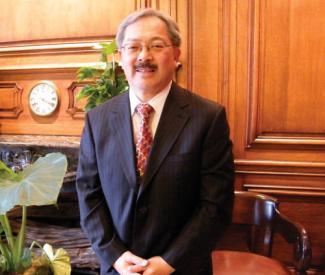
Contrast that with the guiding narrative in San Francisco politics right now, put forth by Mayor Ed Lee, his supporters, and the crew of mostly bland centrists who aspire to replace him, all of whom cast conflict itself as the villain. Much like Obama, they all style themselves as the administrators-in-chief, conflict-averse protagonists content to compromise away what little wealth and power the average citizen still possesses. Not only does that narrative guarantee that Lee will be elected, but it’s a false and short-sighted narrative that does a profound disservice to this city.

The one candidate in the mayor’s race who understands that class matters, that conflict is a necessary part of politics, and that we’re all getting screwed over by the rich and powerful is John Avalos. But despite some flashes of progressive populism on the stump, he hasn’t really been consistently and boldly telling San Francisco the story of itself that it really needs to hear right now, which is the same story that Obama should be telling the American people.

“I know you’re scared and angry. Many of you have lost your jobs, your homes, your hope. This was a disaster, but it was not a natural disaster. It was made by Wall Street gamblers who speculated with your lives and futures. It was made by conservative extremists who told us that if we just eliminated regulations and rewarded greed and recklessness, it would all work out. But it didn’t work out,” begins the story that Westen said Obama should have told during his inaugural address.

And that’s the story that Avalos should be telling right now, combating the myths that have been put out there by Lee, David Chiu, Bevan Dufty, Dennis Herrera, and the other centrists in the race, that if we just give Twitter, Zynga, Oracle, Sutter Health, Willie Brown’s clients, and every other corporation and developer who promises to create jobs everything they want, then we’ll all be okay.

But on some level, we all know that just isn’t true, and it hasn’t been true for a long time. Only a fool would trust them to take care of us at this point. The greed and self-interest of rich individuals and corporations – which has gone unchecked for far too long, at least partly because of the political corruption they’ve sponsored – is reaching epidemic proportions. It is the villain that needs to be fought, it is the hill that needs to be climbed.

“When faced with the greatest economic crisis, the greatest levels of economic inequality, and the greatest levels of corporate influence on politics since the Depression, Barack Obama stared into the eyes of history and chose to avert his gaze. Instead of indicting the people whose recklessness wrecked the economy, he put them in charge of it. He never explained that decision to the public — a failure in storytelling as extraordinary as the failure in judgment behind it. Had the president chosen to bend the arc of history, he would have told the public the story of the destruction wrought by the dismantling of the New Deal regulations that had protected them for more than half a century. He would have offered them a counternarrative of how to fix the problem other than the politics of appeasement, one that emphasized creating economic demand and consumer confidence by putting consumers back to work. He would have had to stare down those who had wrecked the economy, and he would have had to tolerate their hatred if not welcome it. But the arc of his temperament just didn’t bend that far,” Westen wrote.

He was riffing off Obama’s penchant for quoting the MLK line, “The arc of the moral universe is long, but it bends toward justice,” which he returned to again with his devastating conclusion: “But the arc of history does not bend toward justice through capitulation cast as compromise. It does not bend when 400 people control more of the wealth than 150 million of their fellow Americans. It does not bend when the average middle-class family has seen its income stagnate over the last 30 years while the richest 1 percent has seen its income rise astronomically. It does not bend when we cut the fixed incomes of our parents and grandparents so hedge fund managers can keep their 15 percent tax rates. It does not bend when only one side in negotiations between workers and their bosses is allowed representation. And it does not bend when, as political scientists have shown, it is not public opinion but the opinions of the wealthy that predict the votes of the Senate. The arc of history can bend only so far before it breaks.”

That is the moment we find ourselves in, both as a country and as a city. And it is a story that we’re still waiting for a future leader to tell us with enough power and passion that we all begin to believe it.


View from the middle

4

OPINION Editor’s Note: Between the well-funded, politically connected campaign pushing Ed Lee to run for mayor and the high-profile critics who say he should keep his word and step down, it’s hard to tell how the average city resident feels. So to reflect that perspective, we’re reprinting a letter that was sent to Lee on July 29.

Dear Mayor Lee,

My name is Peter Nasatir; I’m a middle-aged, middle class San Franciscan who works in middle management. I’m not an activist and I have no political ax to grind. In fact, I rarely write letters like this, but felt compelled to do so because I’ve been reading how you are considering a run for mayor this November. For your own integrity, and the good of the city, I urge you not to run.

One of the reasons you have been able to achieve the successes you’ve enjoyed this year is because San Franciscans know your time is finite, thus giving you the ability to avoid the kind of hard slog other mayors have found themselves in. You have been able to stay above the fray and receive near-universal support precisely because you’ve been able to do the amazing job you’re doing without having an eye on the upcoming election.

If you run, you’ll look like another cynical politician, who promises one thing and does another. Plus, with your experience, think how much political capital you’ll have when you return to your old position. And if you decide to run in 2015, you’ll already have on-the-job training no other candidate would have and have proven yourself to be a real leader for taking the high road.

I know Willie Brown and Rose Pak, who are considered influential community leaders, have been at the forefront of your bid to run. However, they also carry a lot of damaging baggage. Just look at the front page of today’s (July 29th) Chronicle. With their names attached to your run for mayor, your image in the eyes of many San Francisco voters is already tainted before you even have a chance to file your papers.

As much as I respect you and the incredible job you are doing, I can say without hesitation that if your name is on the ranked-choice ballot this November, I will not vote for you in any of the three positions.

On behalf of many like-minded San Francisco voters, I urge you to do the right thing and not run for mayor this November.

Thanks you for your consideration of this matter.  

Sincerely, 

Peter Nasatir

Alerts

0

alerts@sfbg.com

WEDNESDAY 10

Protesting another police shooting

Raheim Brown Jr., 20, was killed on Jan. 22 by an Oakland school district police officer, after a fellow police officer was allegedly attacked with a screwdriver. This rally protests the latest in a series of killings by police, and supports Brown’s family, who will be confronting the Oakland School Board for its part in the death. After the rally, protestors will march to the Oakland School District headquarters where the family members will be making their address.

3:30 p.m., free

Lake Merritt Bart Station

Oak & 9th St., Oakland


THURSDAY 11

Mayoral debate

Watch the mayor mayoral candidates face off in a debate. The forum will be hosted by the San Francisco Young Democrats, Alice B. Toklas LGBT Democratic Club and the City Democratic Club, who have partnered with the Huffington Post and YouTube to broadcast and discuss the event. Melissa Griffin will be the evening’s moderator, with commenting by Beth Spotswood and Pollo de Mar.

6 p.m., free

African American Art & Cultural Complex

762 Fulton St., SF

www.sfyd.org


SATURDAY 13

Climate change and the EcoHouse

Learn how to reduce your carbon footprint on a tour of Berkeley’s EcoHouse, a toolshed built with straw bale, rammed earth, clay, and cob. The center has a living roof, laundry greywater system, 1100-gallon rainwater cistern, a native rain garden and three kinds of compost. The tour features tips on the best ways to save energy and reduce climate impact, with the EcoHouse as its prime example.

10 a.m.-noon, free

Ecohouse

1305 Hopkins St., Berkeley

(510) 548-2220 x239

www.ecologycenter.org


SUNDAY 14

Iraq War Veterans Speak Out

This event organized by March Forward!, an organization of veterans and soldiers on active duty, gives Iraq War Veterans a chance to speak out about their experiences, and against war. A former Marin Corps infantryman, former Army infantryman and former Army intelligence operative will share eyewitness accounts of their time in Iraq. They will explain how their Iraq war experiences turned them into anti-war activists, the current situation for veterans and veteran care, and how they are building an anti-war resistance among active duty troops within the military.

5-7 p.m., $5-10 donation, no one turned away

2969 Mission St., SF

www.answersf.org


Mail items for Alerts to the Guardian Building, 135 Mississippi St., SF, CA 94107; fax to (415) 437-3658; or e-mail alert@sfbg.com. Please include a contact telephone number. Items must be received at least one week prior to the publication date.

Ed Lee does some ‘splainin

Ed Lee, appointed San Francisco’s interim mayor early this year after giving the San Francisco Board of Supervisors his word that he would not seek a full term, filed papers to enter the race as a mayoral candidate on Aug. 8.

“I haven’t changed at all,” Lee said when reporters questioned his 180-degree turnaround. “I’ve just made a change of mind in terms of running for this office.”

Standing beside his wife, Anita, the mayor delivered a five-minute speech about what has transpired in his seven months as interim mayor, saying he was motivated to run by his accomplishments in office so far.

http://www.youtube.com/watch?v=7u4DudZPY80

Lee said he had met with members of the Board of Supervisors and understood that some would be looking for an explanation on his change of heart.

Former District 6 Sup. Chris Daly has said he believes Lee’s run for mayor was scripted from the start. Whatever the case, an outburst that occurred as Lee was filling out paperwork certainly was not part of any script. Surrounded by news cameras, Charles Khalish heckled Lee, asking, “Sir, are you going to step down? You’re in the office under false pretenses, Mr. Lee.” When security surrounded him, he loudly protested, and a group of sheriff deputies and mayoral security officers with the San Francisco Police Department closed in and grabbed him.

http://www.youtube.com/watch?v=Gs0tFvWCNzo

While it was impossible for this reporter to see exactly what took place seconds before Khalish was forcibly removed, Tony Winnicker, a former press secretary to Mayor Gavin Newsom who is now issuing media advisories for Lee’s mayoral campaign, later claimed he wouldn’t have been removed if he hadn’t gotten pushy. The officers hauled Khalish down the corridor as he shrieked, “Heeeeeeelp!!” They restrained his arms behind his back and placed his head in a lock while they told him to stop resisting.

“He was cited for obstructing public business,” sheriff spokesperson Eileen Hirst later told the Guardian. “It is likely that he will be released as soon as the paperwork is finished.” She added that she had not yet seen an incident report.

The interim mayor said he made the decision to run over the weekend with the help of his family members. Chinatown power broker Rose Pak is not part of his family, but Lee’s daughter Brianna wrote in a January editorial called “Fear the ‘ Stache” that she had always known Pak as “Auntie Rose.”

Pak was a key driver behind “Run, Ed, Run,” the campaign backed by Progress for All that plastered cartoon drawings of Lee all over San Francisco. Progress for All will be the subject of discussion at the Aug. 8 Ethics Commission meeting, since Ethics director John St. Croix has stated he believes the political organization filed improperly as a general purpose committee. In late July, five mayoral candidates — including Board President David Chiu — joined Democratic County Central Committee chair Aaron Peskin in asking for an investigation into whether Progress for All had violated local campaign laws. Campaign finance reports, meanwhile, show that the effort was backed by a small group of inflential business insiders. Asked about the role of “Run, Ed, Run,” on his campaign for mayor, here’s how Lee responded:

http://www.youtube.com/watch?v=CBI5SSmVr4E

This evening, Lee the will participate in a mayoral candidate forum hosted by the Duboce Triangle/Castro/Eureka Valley Neighborhood Association at the Castro Theater at 7 p.m.

Shady financial dealings mar the “Run, Ed, Run” campaign

68

Not only do the groups behind the campaign urging Mayor Ed Lee to run for mayor get lucrative city contracts, sometimes with Lee’s help, but at least one of the companies has also made direct payouts to Chinatown power broker Rose Pak, who arranged to place Lee in the Mayor’s Office and has been coordinating the campaign to keep him there.

This latest revelation, from documents uncovered by the Guardian, comes as other local media outlets have been exposing the financial self-interest that Pak, former Mayor Willie Brown, and their allies have in urging Lee to break his word and run for a full mayoral term, including a devastating front page article in today’s Chronicle.

Reporter John Cote writes that Progress for All, the group behind the “Run, Ed, Run” campaign, “has been bankrolled almost entirely by a small group of politically connected individuals, some of whom have received millions of dollars in city contracts in recent years.” Among them is Robert Chiang, owner of Chiang CM Construction, which has received millions of dollars in city contracts despite lawsuits and rulings by regulators alleging that the company violated a variety of wage laws.

Chiang CM has also paid Pak personally at least $10,000, according to her tax return form that she filed with the city back in 2002 when she bought a Rincon Hill condominium for half-price through a city affordable housing program. The tax form listed that payment under “miscellaneous income,” along with $12,000 from Emerald Fund, the politically connected developer of the project, “an apparent violation of regulations governing the distribution of the discount housing,” according to an Examiner article at the time (“Affordable-housing flap,” 2/24/03). But the Brown Administration, which approved Pak’s purchase of the condo, refused to take any action against Pak, a close ally of both Brown and Lee.

We reached Pak on her cell phone to discuss her financial ties to Chiang CM and what they paid her for, and after we explained our findings three times, she said, “I don’t remember,” and hung up the phone. When we called the company for comment, we were told “nobody is available to speak on that right now.”

More recently, the Examiner has reported on the millions of dollars in city contracts that Lee has helped steer to other key Progress for All leaders, including the Chinatown Community Development Center, whose executive director, Gordon Chin, also leads Progress for All. In addition to its city contracts, documents obtained by the Guardian also show that on Dec. 10, 2010, CCDC entered into a contract with Central Subway Partners – which is building the Central Subway project long pushed by Pak and Lee, but criticized as an overly expensive boondoggle by many transit activists – to be paid up to $810,000 for unspecified services that “will be issued on an Annual Task Order basis.” Chin hasn’t yet returned a Guardian call for comment.

The Chronicle also broke the story about Pak urging Recology – which just last month was awarded a lucrative city contract (with Lee’s support) giving it a monopoly over all aspects of waste management in the city – to improperly have its employees work for the “Run, Ed, Run” campaign. And the Bay Citizen has also exposed the financial self-interest of Progress for All backers, which Judge Quentin Kopp and local Democratic Party chair Aaron Peskin have separately called for prosecutors and regulators to investigate.

“Unlike all other candidates who must abide by the strict $500 contribution limit and source restriction (no corporate, union or City contractor money), Progress for All has been able to raise unlimited amounts from any source, making it easy to amass large sums of money for its efforts,” Peskin wrote in a July 28 letter to Ethics Commission director John St. Croix, requesting an investigation. The Ethics Commission is scheduled to discuss Progress for All at its Aug. 8 meeting.

Despite her considerable power and influence – including arranging regular trips to China for public officials, including Lee and Board President David Chiu – Pak’s 1999 tax return indicated she had an adjusted gross income of just $31,084. On her application, Pak reported a $60,000 income in 2002 as a “self employed consultant,” yet a whopping $73,414 in her checking account.

Although Maggie LaRue, the inclusionary program manager, wrote Pak a letter on June 17, 2002 challenging the “inadequate documentation” of her income in the application, the Mayor’s Office ultimately approved her purchase of a swanky two-bedroom apartment at 400 Beale Street for just $300,000, although it was valued at $580,000.

Although Pak seems to have fairly steady income from the vague consulting work that she does, a request for information from the Office of the Treasurer and Tax Collector indicates that she doesn’t have a business license and hasn’t paid any local taxes, even though city laws require a license from any “entity engaging or about to engage in business for seven or more days a year in San Francisco.”

Lee’s office has consistently denied knowledge of or connections to the Progress for All campaign, although the Chronicle has reported that Lee does plan to get into the mayor’s race, probably next week. The deadline to file for a run is Aug. 12.

Fall ballot gets stripped of progressive measures

25

The San Francisco Tenants Union suffered a pair of disappointing setbacks in the last week – first when a referendum on the Parkmerced project narrowly failed to qualify for the fall ballot, then when progressive supervisors withdrew a proposed ballot measure to prevent demolition of existing rental housing – leaving the fall ballot without any progressive measures (unless one counts the sales tax measure that was unanimously approved this week by the Board of Supervisors).

Also dropped from the ballot this week was another progressive measure that would have prevented the Recreation and Park Department from entering into new commercial leases of parks and recreation centers, a measure written by the citizens group Take Back Our Parks to reverse RPD’s recent push to monetize more of its assets.

Yet unlike last week’s removal of a third measure placed on the ballot by at least four progressive supervisors – the Fair Shelter Initiative, written by the Coalition on Homelessness, which was unhappy that Sup. Jane Kim dropped her support under pressure from the Mayor’s Office – it was the sponsoring groups that asked the supervisors to remove the two measures this week.

Sponsors of the parks measure say it had some legal problems that would have complicated the campaign, particularly after an analysis by the City Attorney’s Office concluded that it could affect things like private party reservations and leases associated with the America’s Cup.

Ted Gullicksen of the San Francisco Tenants Union said his group concluded there were legal problems with the anti-demolition measure as well and that it wouldn’t affect the demolition of 1,500 housing units associated with the Board of Supervisors’ 6-5 vote to approve the massive Parkmerced project, which was the catalyst for the measure.

SFTU sponsored the signature-gathering campaign to do a referendum on that vote, but the Elections Department concluded on July 29 that of the 18,487 signatures that were turned in, just 12,917 were valid, falling short of the 14,336 they needed. Gullicksen said delays in qualifying the 56-page petition gave them just three weeks to gather signatures, and a freak mid-June rainstorm hurt that effort as well.

“We knew from the get-go that it was going to be a challenge,” he said. “It was very disappointing that we fell just short.”

But he said there was a silver lining: “It sent a message to the supervisors. David Chiu [the swing vote on the Parkmerced approval] called me the next day to say he’d make sure demolitions don’t become an epidemic.”

Sup. David Campos – who helped sponsor all three measures and even kept his name on the shelter measure after Sups. Eric Mar and Kim had removed theirs – told us, “I think it’s disappointing that there isn’t a measure on the ballot to excite the progressive base, but at the end of the day, we do have an exciting mayor’s race and races for sheriff and district attorney.”

Campos has endorsed John Avalos of mayor and Ross Mirkarimi for sheriff, but has not yet made an endorsement for DA.

Step up and save CCA

6

EDITORIAL Two things became abundantly clear at the San Francisco Public Utilities Commission meeting July 26th: The Community Choice Aggregation program is off track — and General Manager Ed Harrington has no interest in making it work. The supervisors need to move aggressively to save CCA.

Since 2007, when a draft implementation plan was released, the goals of the program — which is supposed to offer a cleaner alternative to Pacific Gas & Electric Co. — have shifted fairly dramatically. No longer does the plan seek to meet PG&E’s rates. It won’t be aimed at the entire city to start. And the PUC is putting most of its effort into a short-term contract to buy green power from Shell Energy North America — and all-but ignoring the more important moves to build a publicly owned energy-generation infrastructure.

CCA, which allows cities to buy power in bulk and resell it to customers, is a step in the right direction. The program now before the PUC would put San Francisco in the public power business — to a degree. But as the financial projections for the program demonstrate, the real savings and the real revenue won’t come until San Francisco replaces PG&E as the owner and operator of the local grid. A full-scale public power system would allow the city to both increase renewable power and cut rates — and would bring hundreds of millions into the treasury in the process (see “Mud Money,” 6/26/08).

Still, CCA offers many benefits — including the chance for the city to build local renewable energy facilities. And that’s where the PUC’s efforts ought to be focused.

During discussion of the proposed contract July 26th, Harrington was largely negative and talked repeatedly as if he didn’t think the original program could work. He kept saying that renewable power was more costly (true, today — but not after the city starts building its own facilities). He said that the goals the “advocates” (who include a majority of the Board of Supervisors) have demanded were unrealistic. And most of the commissioners seemed clueless.

That’s a terrible way to launch one of the most important environmental and financial initiatives in modern San Francisco history. Marin County is already well on the way to creating a working CCA system. Other counties are moving forward. And San Francisco, the only city in the nation with a federal mandate for public power, can’t get its civic act together.

The supervisors need to get involved, quickly. The Local Agency Formation Commission, which is overseeing this project, should haul Harrington in for a hearing as soon as possible. Among other things, the LAFCO members should ask why Harrington is so determined that the project won’t work; why his proposal is geared to a small number of residents and businesses who would face higher rates for power; and what his plans are to create a local energy generation infrastructure that over the long run would be dramatically cheaper and greener than anything PG&E (which has been in the background here trying to undermine CCA) will be able to offer.

The problems with CCA reflect the immense challenges of putting this program in the hands of a commission a majority of whose members were appointed by a mayor who opposed public power, managed by someone who has never supported municipalization efforts. Harrington and the SFPUC appear to be setting CCA up to fail. The supervisors need to step in before that happens — and every candidate for mayor needs to be pushed to publicly support CCA and make this an important campaign issue. And they need to promise that they’ll appoint people with real public power credentials who will replace Harrington and shake up the next PUC.

Mayor’s race a tight pack, but Gascón lags in DA’s contest

25

Despite the hype and spin from various mayoral campaigns and newspapers, the big story in yesterday’s release of semi-annual campaign finance reports is that there isn’t much of a story: It’s pretty much what everyone has been expecting, a tight field of qualified mayoral candidates with comparable financial resources.

It was also no surprise that Progress for All, the deceptive committee behind the effort to draft Mayor Ed Lee into breaking his word and running to keep his job, was funded mostly by a narrow group of business interests connected to longtime power brokers Rose Pak and Willie Brown, mostly with $5,000 contributions, or 10 times the contribution limit for legitimate mayoral campaigns.

The real story in yesterday’s numbers was in the district attorney’s race where the conventional wisdom that incumbent George Gascón is the clear frontrunner (“wisdom” that we’ve always questioned given his lack of local roots) was cast into doubt by his lackluster fundraising, big spending for small results, and the fact that each of his two major challengers have twice as much money in the bank.

Alameda County prosecutor Sharmin Bock led the fundraising race this year with $240,337, about $6,000 more than Gascón. And after spending $156,916 in just six months, Gascón has just $77,570 in the bank. David Onek, who has been getting progressive support and retail campaigning up a storm, raised $126,386 this year, but his early start and frugal spending leaves him with $153,474 in the bank.

In the mayor’s race, while both the Chronicle and Examiner led with David Chiu’s impressive fundraising this year, leading the pack with almost $400,000, all that really did was put him into financial contention with the top-tier candidates who have been raising money since last year: Leland Yee, Dennis Herrera, Bevan Dufty, Joanna Rees, and Michela Alioto-Pier.

As of last month, their campaigns’ cash-on-hand was Herrera at $586,294, Dufty at $493,372, Yee at $444,820, Ress at $441,168, Alioto-Pier at $406,574, and Chiu at $396,754. On the next tier down, Phil Ting appears dead in the water, raising just $67,526 and having more debt than money in the bank, although his campaign consultant Eric Jaye said public funds are just starting to come in and the campaign is on track to meet its $300,000 fundraising goal.

Two other major candidates were also well behind the pack, but both are running with an outsiders’ appeal that should keep them in the running throughout the race. Tony Hall, a conservative with a strong independent appeal, raised $102,612, has $173,368, and will likely continue nipping at the heels of the mainstream pack.

And then there’s progressive favorite John Avalos, who has been running a visible, enthusiastic campaign with lots of volunteer support, although he raised just $86,882 this period and has about $100,000 in the bank (contrary the erroneous report in today’s Chronicle that he only had $500, apparently because the reporter looked at his supervisorial campaign report instead of his mayoral – whoops).

But Avalos supporter Chris Daly said the campaign has recently raised another $32,000 and is due to soon receive about $120,000 in matching funds, bringing them up to around $250,000. “That’s what [then-mayoral candidate Tom] Ammiano had in his entirety in ’99,” Daly said, noting that progressive mayoral favorites always get outspent and usually by margins greater than what Avalos now faces. “Our people don’t have as much money or city contracts.”

By contrast, Chiu has been raking in the dough this year, with lots of $500 contributions mostly from lawyers, bankers, developers, people with Chinese surnames, and employees of Google and other tech firms, with almost half of the contributions from out of town.

“We raised almost a hundred grand more than the closest competitor,” said Chiu campaign manager Nicole Derse. “We’re in a super strong position.”

In addition to the big money sources that usually gravitate to strong moderate candidates, Chiu also had some notable financial support from some progressive constituencies, including bicyclist activists (such as Gary Fisher, Dan Nguyen-Tan, Jason Henderson, architect David Baker, and MTA member Cheryl Brinkman), progressive activists Susan King and Amy Laitenen (Matt Gonzalez’s former board aide), and medical marijuana advocate Kevin Reed from Green Cross.

Jim Stearns, who is running the Yee and Bock campaigns, said the funding picture is about what he and others predicted would be the case given public financing (and its $1.475 million spending cap) and the large field of qualified candidates. “That’s the interesting thing about this race, it’s like the World Series of Poker with everyone getting the same stake,” he said. “This is unlike every other mayor’s race where there have been huge disparities in funding.”

Many political analysts privately fear that this dynamic, with nobody really pulling away from the pack of candidates, could encourage Lee to get into the race. But Stearns notes that Lee, despite the power of incumbency, will have a hard time catching up in fundraising and a huge target on his back because of breaking his word, the sleazy “Run Ed Run” campaign tactics, and just the fact that he would become the instant frontrunner.

“In the ranked choice voting scenario, if there’s someone who looks like he’s going to come in first, you don’t lose anything by attacking him because his second place votes aren’t going anywhere,” said Stearns, who said the current mayor’s race appears to be a game of inches. “It’s an infantry game rather than an air game, where the gains are slow and people are proceeding carefully.”


Editorial: Step up to save CCA and take on PG&E

110

Two things became abundantly clear at the San Francisco Public Utilities Commission meeting July 26th: The Community Choice Aggregation program is off track — and General Manager Ed Harrington has no interest in making in work. The supervisors need to move aggressively to save CCA.

Since 2007, when a draft implementation plan was released, the goals of the program — which is supposed to offer a cleaner alternative to Pacific Gas and Electric Co. — have shifted fairly dramatically. No longer does the plan seek to meet PG&E’s rates. No longer is it aimed at the entire city. And the PUC is putting most of its effort into a short-term contract to buy green power from Shell Energy North America — and all-but ignoring the more important moves to build a publicly owned energy-generation infrastructure.

CCA, which allows cities to buy power in bulk and resell it (along existing private utility lines) to customers, is a step in the right direction. The program now before the PUC would put San Francisco in the public power business — to a degree. But as the financial projections for the program demonstrate, the real savings and the real revenue won’t come until San Francisco replaces PG&E as the owner and operator of the local grid. A full-scale public power system would allow the city to both increase renewable power and cut rates — and would bring hundreds of millions into the treasury in the process (see “Mud Money,” 6/26/08).

Still, CCA offers many benefits — including the chance for the city to build local renewable energy facilities. And that’s where the PUC’s efforts ought to be focused.

During discussion of the proposed contract July 26th, Harrington was largely negative and talked repeatedly as if he didn’t think the original program could work. He kept saying that renewable power was more costly (true, today — but not after the city starts building its own facilities). He said that the goals the “advocates” (who include a majority of the Board of Supervisors) have demanded were unrealistic. And most of the commissioners seemed clueless.

That’s a terrible way to launch one of the most important environmental and financial initiatives in modern San Francisco history. Marin County is already well on the way to creating a working CCA system. Other counties are moving forward. And San Francisco, the only city in the nation with a federal mandate for public power, can’t get its civic act together.

The supervisors need to get involved, quickly. The Local Agency Formation Commission, which is overseeing this project, should haul Harrington in for a hearing as soon as possible. Among other things, the LAFCO members should ask why Harrington is so determined that the project won’t work; why his proposal is geared to a small number of residents and businesses who would face higher rates for power; and what his plans are to create a local energy generation infrastructure that over the long run would be dramatically cheaper and greener than anything PG&E will be able to offer.

The problems with CCA reflect the immense challenges of putting this program in the hands of a commission a majority of whose members were appointed by a mayor who opposed public power, managed by someone who has never supported municipalization efforts. Harrington and the SFPUC appear to be setting CCA up to fail. The supervisors need to step in before that happens.


Ethics Commission to discuss Progress for All

San Francisco Chronicle reporter John Cote’s scoop highlighting how Recology executives were working behind the scenes under pressure from Chinatown power broker Rose Pak to encourage Mayor Ed Lee to seek a full term is just the latest development for a committee that’s raised eyebrows already, and it may be just the beginning.

Five mayoral candidates — board President David Chiu, City Attorney Dennis Herrera, state Sen. Leland Yee, former Supervisor Michela Alioto-Pier, and businesswoman Joanna Rees — have teamed up to encourage the San Francisco Ethics Commission to investigate whether Progress for All has run afoul of local election laws, rallying behind an effort spearheaded by Democratic County Central Committee Chair Aaron Peskin in a July 28 letter to commissioners.

At the heart of the issue is whether Lee or any of his representatives have been coordinating with agents of Progress for All. If they are, Progress for All would have to be considered Lee’s own, candidate-controlled committee, Peskin asserts in the letter.

“Given the close relationship between Ms. Pak, the Mayor, and Progress for All, it is very possible that the committee has ‘consulted’ or ‘coordinated’ with the Mayor, and therefore its expenditures should be deemed to be made ‘at his behest,'” Peskin’s letter to the Ethics Commission argues. A City Hall insider told the Guardian that Pak — a primary driver behind the Run, Ed, Run campaign — is regularly observed going to and from the mayor’s office.

“If Progress for All or any of these other committees has been acting on Mayor Lee’s behalf, those committees may have violated the $500 contribution limit and prohibitions against accepting corporate, union or city contractor money, restrictions that apply to all candidate committees,” the letter states.

Financial disclosure filings for committees fundraising for the Nov. 8 election are due Monday.

Aside from the question of whether there is coordination between Lee, who has not yet announced that he will run for mayor, and Progress for All, concerns have been raised about city contractors aiding in the efforts of the campaign. Under the city’s Campaign Finance Reform Ordinance, contractors doing business with the city are not allowed to make political contributions.

(Given the revelations that Recology executives’ signature gathering efforts were done in violation of company policy, it’s no wonder Recology executives become bashful when approached by reporters who ask tough questions.)

Meanwhile, Recology might not be the only city contractor that Pak has encouraged to support Run, Ed, Run. A column that former Mayor Willie Brown published recently in the San Francisco Chronicle suggests that this isn’t the first conversation of this kind.

“One thing you can say about Chinatown powerhouse Rose Pak, she is not shy,” Brown’s column begins. “Holding court at the party for the opening of the new airport terminal, Rose was seated at the table with interim Mayor Ed Lee and his wife, Anita, and a host of other local officials. ‘I want every one of you to call his office and tell him he should run for mayor,’ Rose told the table. ‘And do it right away so that there’s no misunderstanding.’ Then she turned to the architect David Gensler. ‘Didn’t you do this terminal?’ she asked. ‘Yes,’ he said. ‘Didn’t you remodel this terminal before?’ ‘Yes,’ he said. ‘Then your firm should raise a million dollars for his election campaign.'”

While Brown may not be a visible player in the Run, Ed, Run campaign, he’s certainly been at the table with a key driver behind it and Lee himself — and he’s using his platform in the Chronicle to get the word out about Lee’s potential mayoral campaign.

“The specific revelations of unethical and possibly illegal activity are very troubling and need to be fully investigated by the Ethics Commission as soon as possible,” Chiu told the Guardian.

Political consultant Jim Stearns, whose firm is managing Sen. Yee’s mayoral campaign, joined the chorus in calling for an investigation. “If you think about the fact that these guys still, according to press reports, are eating together once a week, and there’s not supposed to be any coordination … You have this committee that is essentially operating in complete disregard of the campaign law,” he said. “It’s sort of like there’s a crime being committed, and where’s the police?”

The San Francisco Ethics Commission will hold a policy discussion about how to treat Progress for All at its Aug. 8 meeting, Ethics director John St. Croix told the Guardian.

“We’ve told the committee that we believe they’re a primarily form committee, which is an independent expenditure committee on behalf of a candidate for office or a ballot measure,” St. Croix explained. “They’re claiming that there’s no candidate, so they can’t be that committee, even though they’re acting pretty much exactly like one would.”

As things stand, Progress for All has filed as a general purpose committee, he added. “A general purpose committee is what you would think of as a [political action committee]. They usually represent an organization or elected group of individuals, they tend to exist for a long period of time, and they contribute to multiple campaigns, whereas a primarily formed committee is created to support or oppose a single candidate or a single ballot measure in a single election,” he explained. Another key distinction: “Independent expenditure committees don’t have contribution limits the way that candidate committees do. Candidate committees have a $500-per-contributor contribution limit.”

Peskin, meanwhile, hinted that there may be more to come. “There’s a lot of it,” he said, “and I think there are many people who have stories to tell.”

Guardian forum July 28: Immigration, education and youth

3

The next Guardian Forum on issues in the mayor’s race will take place Thursday, July, when we’ll be talking about immigration, education and youth issues. We’ve got a great panel lined up:


Sherilyn Adams, Larkin Street Youth Services
Angela Chan, Asian Law Caucus
David Campos, Supervisor, District 9
Mario Yedidia, Director, Youth Commission*
Pecolia Manigo, Coleman Advocates


(*for identification only)


It’s at the Bayanihan Community Center, 1010 Mission (at 6th), 6-8 p.m.


(Powell Street BART and MUNI 14, 19, 27, or 31)


As always, plenty of time for audience participation. Hopy you can make it.

Taking out the trash

1

sarah@sfbg.com

A controversial city waste disposal contract appeared primed for final approval by the Board of Supervisors on July 26 (after Guardian press time) — despite being challenged by a lawsuit and initiative campaign — after two progressive supervisors rescinded their initial vote in a July 20 committee hearing and supported awarding the contract to Recology.

City staff had recommended awarding the 10-year, $112-million landfill disposal and facilitation agreement to Recology (formerly NorCal Waste Systems, Inc.), which has grown from a locally based company to the 10th largest waste management firm in the US, with $652 million in annual revenue, according to Waste Age magazine.

If the full board follows the unanimous recommendation of its Budget & Finance Committee, the vote will authorize Recology to transport and dispose up to 5 million tons of the city’s solid waste at the company’s Ostrom Road landfill in Wheatland, Yuba County. The contract will take effect when San Francisco’s disposal agreement at Waste Management Inc.’s Altamont landfill in Livermore expires — estimated to occur in 2015.

The deal will cement Recology’s control, at least for a 10-year period, over all aspects of the city’s solid waste stream, at a cost of about $225 million per year, even as the company faces significant challenges, many related to the city’s 1932 refuse collection and disposal ordinance.

That law, approved during the Great Depression to prevent conflict between competing garbage haulers, has resulted in Recology’s exercising complete control over trash collection and transportation in San Francisco, without having to bid on those contracts or pay the city franchise fees.

During the negotiations over the city’s next landfill contract — the only aspect of San Francisco’s waste stream put out to bid — this 79-year-old law was invoked to explain why Recology has the sole authority to transport trash and compostables to Wheatland, which is 130 miles from San Francisco.

The move also comes as Yuba County is contemplating significantly increasing dumping fees at the landfill — from $4.40 per ton to $20 or $30 per ton — a hike that could erase the $100 million that the Department of the Environment (DoE) claims the Recology deal would save over a competing bid by Waste Management Inc. WM is the largest waste firm in the U.S., according to Waste Age, with about $12.5 billion in annual revenues.

On July 18, WM filed a lawsuit in San Francisco Superior Court to prevent the city from approving the agreements with Recology on the grounds that they violate the city’s competitive bid laws.

“The Department of the Environment inappropriately and unlawfully expanded the scope of its 2009 ‘request for proposal for landfill disposal capacity’ and, therefore, violated the city’s competitive procurement laws,” WM alleges in the suit.

WM has long held that DoE inappropriately issued a tentative contract award for both the transportation and disposal of solid waste to Recology without soliciting any other transportation bids. But DoE, which gleans $7 million annually (to operate recycling, green building, and environmental justice programs and long-term planning for waste disposal) from rates that Recology’s customers pay, ruled last year that WM’s objections are “without merit.”

Now WM is asking the court to require DoE to scrap its award to Recology and issue a new request for proposals to comply with competitive bidding requirements.

“There is ample time for the department to issue a new RFP,” WM stated July 18, noting that there is plenty of room at its Altamont landfill to accommodate the city’s waste after the contract expires.

That same week, a coalition led by retired Judge Quentin Kopp, community activist Tony Kelly, and Waste Solutions CEO David Gavrich announced that it had submitted enough signatures to qualify an initiative on the June 2012 ballot requiring competitive bidding and franchise fees from any company that seeks to win any aspect of the city’s solid waste business.

Kelly says his group was unable to collect enough signatures in time for the November election because Recology hired the city’s two biggest signature-gathering firms to circulate what he calls a “phony petition” in support of Recology’s performance in San Francisco. And signature gatherers say they were harassed by Recology boosters while trying to petition citywide.

“But I believe the question of whether candidates support competitive bidding will continue to be a defining issue this fall,” Kelly said.

The board’s decision on the landfill agreements has already been delayed several months, following a February 2011 Budget and Legislative Analyst report recommending that the board consider submitting a proposition to the voters to repeal the 1932 refuse ordinance so that future collection and transportation services be put to bid. The report also recommended that future residential and commercial refuse collection rates be subject to board approval.

But with two progressive supervisors running in citywide elections this fall, and with Recology exerting massive pressure on elected officials, the Kelly coalition could not find four supervisors to place such a charter amendment on the November ballot, forcing them to launch their own initiative.

And at the July 20 meeting of the board’s Budget and Finance Committee, Sup. Ross Mirkarimi, who is running for sheriff, and Sup. Jane Kim rescinded their initial decision to send the agreements to the full Board without recommendation. Instead, after the committee had moved on to other business, they joined Chair Carmen Chu, one of the most conservative supervisors, in forwarding the Recology agreements to the full board with unanimous support.

Mirkarimi interrupted the committee’s next discussion to rescind the landfill vote. “I think there was some misunderstanding a little bit in wrapping up the landfill agreements with Recology, ” Mirkarimi said. He said that he asked for the vote to be rescinded, “so we can accurately reflect some of the sentiments being articulated here. I think we just learned some things on the fly.”

In many respects, the switch by Kim and Mirkarimi made sense: prior to their initial vote, they made positive statements about the proposed agreements, but also stated an interest in exploring the appropriateness of the city’s 1932 law.

“Overall, I think this was a good contract,” Kim said. But she noted that, thanks to the 1932 ordinance, the city doesn’t get franchise fees. And she claimed that it only gets half of what other Bay Area cities get from their waste contractors. “So, I’m really interested in continuing that conversation, but I think it’s a separate conversation,” she said.

Mirkarimi said it was his concerns that led the committee to “put a pause” on the Recology agreements until it could “undertake more homework.” He also noted that his office “held a number of meetings” and he tried to “leverage this opportunity to reanimate activity at the Port.”

“I was hoping that we might be able to arrive at something much more deliverable,” Mirkarimi said, presumably referring to the fact that these efforts resulted in DoE unveiling an amendment to include two “possible changes” to operations and facilities at the Port of San Francisco in the agreements.

These changes involve utilizing other modes of transportation, including barges, as alternatives to the rail-haul plan proposed in the agreement. They also call for developing new facilities at the Port for handling waste, recyclables, organics, and other refuse. The cost of such alternatives would be passed onto the rate payers.

“I think that, cost-effectively, we may be able to insert the Port into this equation, but it’s not ready for prime-time yet,” Mirkarimi said. He concluded by saying that Recology has been innovative in reducing the city’s waste stream.

“This should be a front-burner conversation,” Mirkarimi said, noting that former Mayor Gavin Newsom focused on making San Francisco “the greenest city” in the United States. He added that San Francisco claims to have a 77 percent diversion rate, the highest in the U.S., and said, “That comes at a cost, it doesn’t come for free.”

After the meeting, DoE deputy director David Assmann said that the City Attorney’s Office is reviewing WM’s filing. “But it’s too soon to comment,” Assmann said.

He also claimed that, thanks to the 1932 ordinance, “there was no practical way” for another company to transport San Francisco’s waste to its designated landfill, “other than building a second transfer station outside the city.”

But Kelly continued to express concerns that the agreements are not competitive, and that the city lacks a contract and ensuing franchise fees. “They are running this as if it’s still the 1950s,” he said.

Kelly claimed that Recology Vice President John Legnitto, who is the 2011 chair of the SF Chamber of Commerce’s Board of Directors, recently told him that Recology has been in negotiations with City Hall around a $4 million franchise fee, but that the money would now be spent opposing Kelly’s competitive bidding initiative.

Anger erupts over police shootings

11

rebeccab@sfbg.com

As the murky details of two recent police shootings emerge, a palpable anger surging through targeted communities points to a deeper issue than the particular circumstances surrounding each of these deaths. Simply put, many Bay Area communities are fed up with police violence.

For many activists who descended on transit stations to protest the fatal BART police shooting of Oscar Grant III, the 20-year-old unarmed Hayward man who was killed on New Year’s Day 2009, an upwelling of rage was rekindled after BART cops shot and killed a homeless man named Charles Blair Hill on July 3 in Civic Center Station.

Then, on July 16, San Francisco police officers in the Bayview shot 19-year-old Kenneth Wade Harding Jr. multiple times after he ran from the T-Third train platform because he’d been stopped for fare evasion, leaving him dead on the sidewalk.

The recent officer-involved shootings occurred under two different law enforcement bodies, and both incidents remain under police investigation with many questions still unanswered. BART police say Hill was brandishing a knife; the San Francisco Police Department (SFPD) said its response was justified because Harding fired at officers first. The investigation in Harding’s case took a bizarre twist July 21 when SFPD issued a press release based on a medical examiner’s report stating that Harding had died not from rounds fired by police, but a self-inflicted gunshot wound.

But among communities distrustful of the police, the particulars of each case seemed to matter less than the perception that officers are too quick to escalate conflicts into deadly standoffs. Both incidents provoked intense anger because they resulted in marginalized transit passengers suffering sudden, violent deaths following interactions that were initiated by police. The shootings sparked angry protests, prompting standoffs at Civic Center BART Station, along the T-Third line in the Bayview, on Valencia Street, in Dolores Park, inside the Castro Muni Station, and at the cable car turnaround on Powell Street.

A group of activists staged protests in the Mission following the Bayview police shooting, snaking through the streets as they disrupted traffic and public transit service. “The march began at Dolores Park where nearly 200 of us departed,” an anonymous post on the anticapitalist Bay of Rage website recounted, describing the events of a July 19 protest that resulted in 43 arrests. “Upon reaching the Castro Muni Station, all hell broke loose…. What had now become a mob moved effortlessly past the bewildered cops … Trash was set alight and thrown down onto the tracks below … ticket machines, the fare checkpoints, and the agent booth were all smashed with hammers and flags — totally ruined. Smoke bombs and fireworks were thrown throughout the station.”

This display occurred just eight days after protesters shut down BART stations in downtown San Francisco during rush hour to condemn the fatal shooting of Hill, the homeless BART passenger.

The message from outraged Bayview residents at a chaotic and emotionally charged community forum staged July 20 at the Bayview Opera House was not that people were upset that this had happened to Harding, a Washington state resident, in particular. Instead, people expressed outrage that police had gunned down yet another African American youth, and that unless some complicated and long-standing issues were addressed, it could happen again, to anyone. The forum was organized in partnership with the SFPD and clergy members from the Bayview. Police had prepared a PowerPoint presentation, but never managed to get that far.

At the meeting, Police Chief Greg Suhr tried to provide an explanation for the July 16 shooting. “During this foot pursuit, at some point in time, the suspect … fired at the officers, and the officers returned fire. This is the account that we have so far,” he said. “I cannot tell you how badly that I feel … as captain of this station for two years,” Suhr continued, as an angry crowd shouted him down.

Police escorted Suhr out of the meeting before everyone who had signed up to speak had a chance to be heard. Once outside, the police chief told reporters that he planned to return.

After Suhr and other city officials departed from the meeting, District 10 Supervisor Malia Cohen stayed at the Bayview Opera House and addressed the crowd that remained, she later told the Guardian, and engaged in discussion with Bayview homeowners, merchants, and other community stakeholders.

“We had a very thoughtful conversation,” she said. “People had questions about [Municipal Transportation Agency] policy over the SFPD riding the bus. We talked about the importance of attending Board of Supervisors meetings, Police Commission meetings, and giving public comment. And there will be future conversations, without obstruction.”

Many who attended the meeting voiced concerns that went well beyond the July 16 incident. Several said they believed youth were unduly harassed by law enforcement over Muni fares on a regular basis. Elvira Pollard spoke about how her son was shot 36 times by police and killed seven years ago. Another woman complained that police had used abusive language when she was arrested in the Bayview four years ago.

Mayor Ed Lee told the Guardian that a bigger police presence at the Oakdale/Palou stop on the T-Third line was part of the city’s strategy to prevent violence in that area. “I actually asked the chief to pay more attention to areas that had a history of gun violence and shootings and other kinds of violence … and it just so happens that this particular area, Third and Palou, is a place where there’s a lot of violence,” Lee said. “So we had more uniformed officers on that specifically at not only my request, but with the understanding of the police chief, too.”

Responding to acts of violence by sending in more police sounds simple enough, yet it seems a toxic environment has arisen out of a heightened police presence in a community where tensions between police and residents already run high, fueled by anxiety and bad past experiences. Add to this dynamic a trend of youth who lack other transportation alternatives riding public transit even if they don’t have enough money to pay the fare, and the situation feeds ongoing strife, particularly when fare evaders are asked for identification and searched by police.

Lee, in partnership with Cohen, called a meeting in City Hall July 19 with leaders of the Bayview community. The press was not allowed to attend, but participants said later that officials gave a presentation about the shooting and played an audio of gunfire from the SFPD’s SpotShotter program to offer evidence that Harding had fired first. Later that day, the SFPD reported that gunshot residue had been detected on Harding’s hand, supporting the police account of what happened. Yet the July 21 press release, suggesting that Harding had shot himself because a .380-caliber bullet that police said could not have come from SFPD firearms had entered the right side of Harding’s neck, made it even less clear what really happened.

By July 22, confusion was still swirling over why a gun hadn’t immediately been recovered from the scene of the shooting, and there still wasn’t any clarity on whether an online video of a passerby removing a silvery object from the sidewalk showed a person who retrieved Harding’s firearm after the shooting, as police have claimed. Police recovered a gun that was initially believed to be Harding’s, but later reported that the gun could not have been the same weapon that discharged a .380 caliber round into the victim’s head.

Chris Jackson, a Bayview resident who sits on the board of City College of San Francisco and ran for District 10 supervisor in 2010, said after the City Hall meeting that he felt it had amounted to little more than a lecture from the city’s top officials. Jackson said he perceived a need for a policy shift in terms of how to deal with fare evasion and violence prevention. “We need a better approach,” he said. “We cannot address this with more cops on the T line.”

After Harding’s death, it came to light that the 19-year-old Washington state man had served time for attempting to promote prostitution, and had been named as a person of interest in connection with the fatal shooting of a 19-year-old Seattle woman. Yet a widely circulated online video showing him writhing on the sidewalk in a pool of blood after being shot, while a handful of officers continued to stand around with weapons drawn, sparked outrage. Once the forum at the Bayview Opera House had broken up, LaDonna Callaway condemned the police response, saying, “They didn’t have to shoot him as many times as they did.”

Angelique Mayhem, a Bayview resident who stood nearby, told the Guardian that she didn’t think the meeting had solved anything. “A boy gets gunned down. We don’t know if there was a gun there, but we do know that for 40 damn years, people have been getting gunned down in this community,” Mayhem said. “People are angrier now than when they were when they walked in the door. We’re a community that’s truly in pain, that’s truly frustrated, and really needs some respect.”

Kim removes homeless shelter reform measure from ballot

8

Under pressure from the Mayor’s Office, Sup. Jane Kim today removed her sponsorship of the Fair Shelters Initiatives, effectively killing the measure that was set to appear on the November ballot, according to activists working on the issue. Sup. Eric Mar reportedly followed Kim’s lead and also removed his sponsorship, telling activists he was deferring to Kim’s decision.

“We hardly expected the supervisors would put a measure forward and then cave in before the campaign had even started,” said Bob Offer-Westort of the Coalition on Homelessness, which had asked Kim to be the lead sponsor of a measure that he said is the homeless community’s highest priority.

The measure would have removed shelter beds from the definition of housing under the city’s voter-approved Care Not Cash program, thus freeing up beds for the larger homeless population that is often denied space in shelters even as beds reserved for CNC recipients – who give up most of their welfare support in return for housing and services – often remain vacant.

The measure — which was sponsored by Sups. Ross Mirkarimi, David Campos, and John Avalos, in addition to Kim and Mar, giving it one more than the four votes it needed to make the ballot – had been harshly criticized by the San Francisco Chamber of Commerce and other downtown groups, as well as Mayor Ed Lee and other moderate politicians, who said it would somehow destroy CNC and attract more homeless people to the city.

In a recent email blast, Chamber head Steve Falk called the measure “alarming” and was “effectively dismantling the nationally-recognized program.” He tried to use the 100 nightly vacant shelter beds as a rationale against the measure (despite the fact that was the very problem the measure tried to correct), and wrote, “This measure is nothing more than pure politics to turn out progressive voters in a crowded mayoral race.”

Kim and her staffers haven’t returned Guardian calls for comments, and neither Mar nor Mirkarimi could be reached. But Offer-Westort said the arm-twisting by the Mayor’s Office shows just how little things have really changed at City Hall.

“It sets a really bad precedent when once again a mayor bullies members of the Board of Supervisors to get his way,” he said, noting that Kim still claimed to support the reform in her conversations with COH members. “It certainly wasn’t because she changed her mind about whether this was right or wrong. It had more to do with her concerns over the board’s relationship with Room 200.”

Will Esbernd support Lee?

24

As the tom toms grew louder at the Chronicle and in the Willie Brown/Rose Pak community for Interim Mayor Ed Lee to run for the full term as mayor, I emailed two impertinent questions to my district supervisor Sean Elsbernd:


1. Would you have nominated Ed Lee for interim mayor had you known he would consider running for the job?


2. Will you endorse him if he does decide to run for mayor?


As a longtime West Portal resident, I’ve always gotten annoyed at how Elsbernd (and other supervisors) love to play the neighborhood game back in their district — but when the chips are down on a power structure issue, they go down to City Hall and vote with Willie Brown and the downtown gang. Which is what happened in January on the critical vote for mayor when the Willie Brown/Rose Pak forces worked a quiet play to knock out the progressive candidates (Sheriff Mike Hennessey and former Mayor Art Agnos) and put in City Administrator  Ed Lee, a Willie Brown ally.


Elsbernd was happy to nominate Lee and told us at the time that he had done so because he wanted an interim mayor who would not run in November.


In his email answer to me, Elsbernd wrote, “I believe the benefits of that strategy have proven correct (e.g. the overall budget process and its unanimous approval, and the unanimous approval of the consensus and comprehensive pension/health care charter amendment.“


So what about today when Lee seems more and more poised to run?


Elsburn noted that he has not endorsed anyone, but that “I have been most attracted to the candidacies of City Attorney Dennis Herrera and former Supervisors Alioto-Pier and Bevan Dufty.” He said that these three have the “right combination of qualifications, experience, intelligence, skills and integrity to serve as mayor.”


So what’s his out? “Should Mayor Lee run for election, I would only consider endorsing his effort under one circumstance—if, and only if, I was convinced that without his candidacy, Sen. Leland Yee would be elected. That is, if I see that no one else can beat Sen, Yee other than Mayor Lee, then I would support a Mayor Lee campaign. At this point, I’m not convinced of that—I still think any one of the three I mentioned above could beat Sen. Yee.”


Well, that’s Elsbernd back in his district doing his neighborhood routine at the Village Grill, a favorite Elsbernd breakfast place. Elsbernd has still left himself a way to do what he said he was dead set against doing: going along with Willie Brown and  Rose Pak and  helping Lee become the fulltime mayor. Bring back Quentin Kopp and John Barbagelata. B3


Ed Lee is going to run

79

We might as well get used to it: Mayor Ed Lee is going to run in November.


It’s not just about getting his old job back. It’s about the fact that he’s starting to really like being mayor — and that his closest allies have made it clear to him that the choice is either him or State Sen. Leland Yee, and that they find Yee unacceptable.


Lee has been talking to all the people you would expect him to talk to over the past few days, my sources tell me, letting them know that he’s seriously considering it and looking for support. It’s a little late to be lining up big endorsements; a lot of people have already signed on with one of the other candidates. But he’ll be happy with co-endorsements and second-place endorsements — and given his connections, he’ll be able to raise substantial amounts of money quickly.


Oddly enough, if he gets in, the big loser won’t be Yee, who will go out and try to run a campaign as an independent outsider against the old machine (and who doens’t have to worry about offending Lee’s supporters, who dislike him anyway). And John Avalos will be running to the left of both of them. 

Will Kopp’s competitive bidding initiative derail Recology’s train to Yuba?

1

Sponsors of an initiative to require competitive bidding on all aspects of the city’s multi-million-dollar garbage services say they plan to deliver their initiative petitions to the Department of Elections this afternoon. The petitions contain 12,000 signatures, far more than the 7,000-8,000 required, effectively signalling that, even after the city weeds out non-valid signatures, the initiative will qualify for the June 2012 election.

The move threatens to give the Board a political migraine, since the Board is set to vote July 26 on a Department of Environment resolution to expand Recology (formerly Norcal Waste System, Inc)’s monopoly on San Francisco’s garbage and recycling services.

In fact, the DoE resolution contains two separate agreements: a $112 million long-term landfill disposal agreement that was competitively bid, and a facilitation agreement that governs how waste is transported to the landfill and that was not competitively bid. As such, the city’s facilitation agreement is already the subject of a lawsuit that Waste Management Inc. filed in San Francisco Superior Court last week.

Sponsors of the competitive bidding ordinance, which include retired judge Quentin Kopp, community activist Tony Kelly and Waste Solutions CEO David Gavrich,believe the Board should delay voting on the landfill disposal and facilititation agreements until next summer, after voters have had a chance to weigh in on the bigger question of whether folks want competitive bidding on all the city’s garbage-related services, which are worth a quarter of a billion, each year. “

“It would be disrespectful to voters to accept a resolution while an initiative is pending,” Kopp stated.

“It would make sense if they severe the landfill disposal and facilitation agreements into two files,” Kelly added, referring to how the two separate agreements are currently lumped into one item on the Board’s July 26 agenda, under the section titled “recommendations of the Budget and Finance sub-committee.”

How the deal got filed in the B&F sub-committee’s recommended section is another story unto itself: Last Wednesday, after Sups. Ross Mirkarimi and Jane Kim, who sit on the Board’s Budget and Finance sub-committee, voted to send the deal to the Board with no recommendation, (a vote that suggested that they had some concerns with the deal) and after members of the public who came to testify about the item had left,  Mirkarimi asked to rescind the landfill vote.

“I think there was some misunderstanding a little bit in wrapping up the landfill agreements with Recology, “ Mirkarimi said, as he asked for the vote to be rescinded, “so we can accurately reflect some of the sentiments being articulated here.”
“I think we just learned some things on the fly,” Mirkarimi stated, as he and Kim joined committee chair Sup. Carmen Chu, one of the Board’s more conservative members, in sending the deal to the full Board “with recommendation.”

The Guardian learned of the vote switcheroo, after the DoE, which is apparently anxious to see the Recology agreements move forward, contacted us to say that our blog post about the Budget and Finance sub-committee, incorrectly stated that Mirkarimi and Kim had not given the deal their unmitigated thumbs-up. (The Guardian has since amended its blog post to accurately reflect what happened at the meeting, after this reporter and most members of the public, except the Chamber of Commerce’s Jim Lazarus, who supports the Recology agreements, had left the Board’s Chambers.)

Asked about the last-minute move to amend the vote Kelly said, “It was Ross at his Rossest.”

And in many ways, Mirkarimi’s move to rescind made sense: neither he nor Kim had registered any problems with the landfill disposal and facilitation agreements during the committee hearing, though a number of seemingly valid concerns were raised, including the observation by Yuba County supervisor Roger Abe that Yuba County is considering raising its host fees at Recology’’s Ostrom Road landfill in Wheatland from $4.40 a ton to $20- $30 a ton. If Yuba County does raise itsw fees, the move could wipe out the estimated $100 million in savings that DoE claims Recology’s proposal represents for San Francisco ratepayers. According to Abe, Yuba’s fees have not been raised for 14 years, and his county, which is one of the poorest in California, could use the additional income, especially if it is going to see its local landfill fill up faster than anticipated, thanks to San Francisco sending up to 5 million tons of trash over a 10-year period.

To be fair, Mirkarimi did warn that it would be unwise to dismiss Yuba County’s concerns , but he countered that any county can raise its fees. And DoE suggested that it was unlikely that Yuba County can raise its fees excessively, because those same fees would have to be paid by the other municipalities that use the Ostrom ROad dump, most of which are small towns that can’t afford to pay as much as relatively prosperous Bay Area cities like San Francicso.

Instead, Mirkarimi and Kim reserved most of their concerns for the bigger question of whether San Francisco ratepayers are best served by the city’s continuing lack of competitive bidding and franchise fee requirements on San Francisco’s remaining $225-million-a-year garbage collection related services–concerns that seem to bring us back full circle to Kopp and Kelly’s competitive bidding ordinance, which they had hoped to qualifty for

Asked how many supervisors he thought will stand up tomorrow and dig into the details of the DoE agreements and how they contradict with the requirements of the Kopp-Kelly-Gavrich competing bidding initiative, Kelly said, “Two.”

If so, that’s not likely to derail Recology’s train to Yuba, especially given that Mayor Ed Lee, who holds veto power over any item that less than eight supervisors support or oppose, told the Guardian in February that he believes Recology had earned its privilege.

But so far the City Attorney’s Office is remaining mum about the potential impact of WM’s lawsuit on Recology’s train to Yuba County, a silence that will give the Board the political cover they apparently so desperately need, if they vote tomorrow to haul San Francisco’s trash to Yuba County by rail, an arrangement that won’t start until after the city’s current contract at Waste Management’s Altamont landfill expires, something that is not anticipated to happen until 2015, based on the city’s current diversion rates.