Mayor

OFFIES 2011

0

It was the year of the Rapture (oh, wait, maybe not), the year of the great Republican resurgence (oh wait, maybe not), the year of Anthony Weiner’s penis and Gerard Depardeiu’s piss, the year of the Kardashians and Charlie Sheen … and the Offies in-basket overflows. Here are our favorite choice moments of 2011.


ACTUALLY, HIS THUMBS ON THE PHONE WERE THE ONES DOING DAMAGE

Anthony Weiner, in a sexting conversation with a middle-aged Nevada Democratic volunteer, described his penis as “ready to do some damage.”


AT LEAST SOMEBODY’S DOING SOMETHING ABOUT THE UNEMPLOYMENT RATE

Hustler publisher Larry Flynt offered Weiner a job


GOOD THING EXPERTISE IN THE ENGLISH LANGUAGE HAS NEVER BEEN A PREREQUISITE OF THE JOB

Presidential candidate Herman Cain, in an interview, said he didn’t know the name of the president of Uzbekistan, which he called UBEKE BEKI KEIE BAH BAH STAND O BAN STAN SO WHAT WHAT?


CERTAINLY NOT THE KIND OF FOOD FOR A MIGHTY MAN WHO SEXUALLY HARASSES HIS SUBORDINATES

Cain said that too many vegetable toppings make a “sissy pizza.”


BECAUSE AN ELECTRIFIED CARTOON MOUSE IS AN INSPIRATION TO US ALL

Cain blamed “elites” for derailing his campaign, then quoted from the Pokemon theme song.


NICE TO SEE HERMAN CAIN HAS COMPANY IN THE DEPARTMENT OF QUALITY POLITICAL CANDIDATES

Joe the Plumber announced he would run for Congress


COULD IT BE — THE STUPIDEST REPUBLICAN CANDIDATE EVER?

Rick Perry couldn’t remember which federal agencies he wanted to shut down.


EXCEPT THAT THE ALMIGHTY HASN’T BEEN ABLE TO TELL US WHICH DEPARTMENTS HE WOULD CUT, EITHER

Michelle Bachman said that the East Coast earthquake and hurricane were signs that God thought the country was spending too much money on government services.


IT APPEARS THE CHRISTIAN RIGHT CAN’T GET ITS STORIES STRAIGHT

Rush Limbaugh said that the power of Hurricane Irene, which caused 53 deaths and $15 billion in property damage, was blown out of proportion to promote “the leftist agenda.”


HMMM… SINCE HERS MAKES A BUSINESS OF “CONVERTING” GAY PEOPLE, WE HAVE TO WONDER WHAT HE TELLS HER TO DO

Bachman said wives should be obedient to their husbands


BUT HEY — THOSE GUYS ALL LOOK ALIKE

Bachman praised Waterloo, Iowa as the home of John Wayne, when it’s actually the home of serial killer John Wayne Gacy


AN EXCEPTIONAL NEW INTERPRETATION OF THE INTELLECTUAL ROOTS OF THE SECOND AMENDMENT

Sarah Palin insisted that Paul Revere “warned the British that they weren’t going to be taking away our arms, by ringing those bells.”


UM, RICK, THE SCHOOLS ARE CLOSED ON CHRISTMAS

A Rick Perry campaign ad said that “something’s wrong with America” because “gays can serve openly in the military but our kids can’t openly celebrate Christmas or pray in school.”


DAMN — THAT MEANS HE REALLY IS A DUMB AS HE LOOKS

Perry insisted he wasn’t drunk when he delivered a rambling speech in New Hampshire


OR MAYBE A LITTLE LIKE FINDING OUT THAT SHE WAS JUST USING YOU ALL ALONG

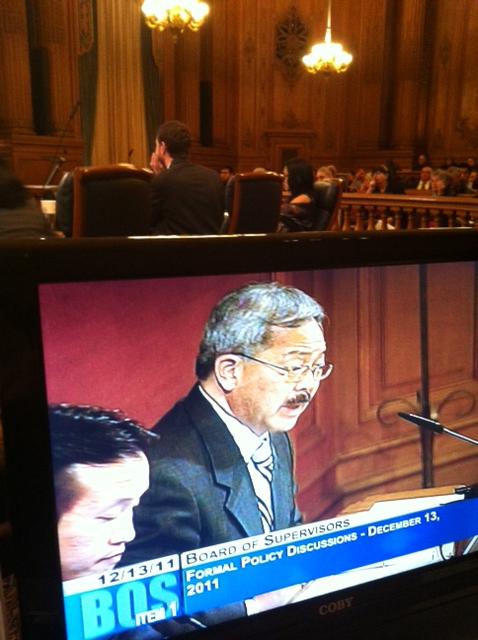
Sup. David Chiu said meeting Mayor Lee — who he helped put in office — after he broke his promise not to run was “a little like meeting an ex-girlfriend after a breakup.”


AND TALK ABOUT BEING USED

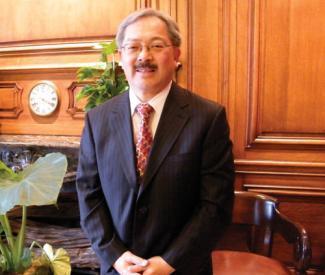
Ed Lee said he didn’t want to run for mayor, but he had trouble saying no to Rose Pak and Willie Brown


IT DOESN’T MATTER — AS THE GREAT RONALD REAGAN ONCE SAID, “FACTS ARE STUPID THINGS.”

Sen. John Kyle announced that 90 percent of Planned Parenthood’s business was abortions, and when it turned out he was wrong by a factor of 30, he said his allegation “wasn’t meant to be factual.”


THE U.S. HAS DEPOSED PEOPLE FOR LESS THAN THAT. OH, WAIT …

Moammar Gadafi said his political opponents were on LSD and kept a stash of photos of Condoleeza Rice.


OH WELL, YOU KNOW HOW GOD IS; HE FLAKES OUT ON DATES ALL THE TIME

Oakland radio minister Harold Camping announced that the end of the world would come Oct. 21.


TOO BAD THAT WILL ONLY COVER THE FIRST SESSION OF THE POOR KID’S THERAPY

A woman who created a media frenzy when she said that she had given her young daughter botox admitted she made the story up so a tabloid would pay her $200.


WHEREAS, OBAMA HAS NEVER DEMANDED THAT TRUMP SHOW HIS REAL HAIR

Donald Trump demanded that Barack Obama show his birth certificate.


IF THE JAPANESE WOULD ONLY CUT GOVERNMENT SPENDING SOME MORE, THIS SORT OF THING WOULDN’T HAPPEN

Rush Limbaugh made fun of Japanese people after the earthquake and tsunami, saying “where Gaia blew up is right where they make all these electric cars.”


THE SCHOOL’S ESTEEMED NAMESAKE, ON THE OTHER HAND, HAD 27 WIVES, SOME AS YOUNG AS 15, AND AT LEAST 64 CHILDREN, SO HE WOULD NEVER HAVE APPROVED OF SUCH A THING

Brigham Young University suspended basketball star Brandon Davies because he sex with his girlfriend.


IT’S AWFUL, THE SACRIFICES OUR POLITICAL LEADERS HAVE TO MAKE IN THE NAME OF THE COUNTRY

Newt Gingrich told the Christian Broadcasting Network that he’d cheated on his wife because he loved America so much.


ON THE OTHER HAND, IF YOU WEREN’T SO FULL OF SHIT THE PLUMBING MIGHT FUNCTION A BIT BETTER

Sen. Rand Paul complained to an energy department official that he didn’t like appliance efficiency standards because “we have to flush the toilet 10 times before it works.”


NATURALLY — CLEANLINESS IS NEXT TO GODLINESS. SORT OF LIKE MARITAL FIDELITY

Gingrich told Occupy protesters to take a bath.


WHAT — HE DOESN’T CONSIDER HIMSELF A “FROTHY MIX OF FECAL MATTER AND LUBE THAT IS SOMETIMES THE BYPRODUCT OF ANAL SEX?”

Former Senator and presidential candidate Rick Santorum complained about what turns up when you put his name in a Google search.


AND NEXT, WE’LL REDEFINE “POOR” AND ELIMINATE FOOD STAMPS

House Republicans tried to redefine “rape” to eliminate funding for abortions


OH WELL, THERE GOES THE SEASON

Stanford University stopped giving student athletes special lists of easy classes


DONALD — YOU’RE FIRED

Donald Trump tried to host a presidential debate but gave up when nobody wanted to be there.


THIS FROM A MAN WITH “INVENTED” INTEGRITY

Gingrich called the Palestinians an “invented” people.


GOOD THING ABOUT THE CRACK — THAT SHIT FUCKS UP YOUR BRAIN

Charlie Sheen opened his Violent Torpedo of Truth Tour in Detroit, where he burned a Two and A Half Men T-shirt, told the crowd that he was “finally here to identify and train the Vatican assassin locked inside each and every one of you,” demanded “freedom from monkey-eyed&ldots;sweat-eating whores,” and said he doesn’t do crack anymore.


AT LEAST HE’S GOT ONE THING GOING FOR HIM: HE JOGS WITH A GUN AND SO FAR HASN’T SHOT HIS OWN BALLS OFF

Rick Perry told the Associated Press that he shot a coyote that had threatened him on his morning jog.


KILL ‘EM ALL AND LET GOD SORT ‘EM OUT

The crowd at a Republican debate cheered after moderator Brian Williams noted that Rick Perry had overseen 234 executions.


ANOTHER GREAT MOMENT IN THE ANNALS OF LAW ENFORCEMENT

A Davis police officer pepper sprayed a group of peaceful protesters who were sitting on the ground.


SINCE THERE’S NO NEWS IN THE WORLD OF THE 1 PERCENT

The New York Post investigated sex at Occupy Wall Street


GOOD THING IT DIDN’T WORK — THE WATER FROM HEAVEN WOULD HAVE MADE THE BUNS ALL SOGGY

Perry held a religious rally to pray for rain at Reliant Stadium in Houston, and urged people to fast, although the concession stands sold hot dogs.


BUT WAIT — IF WE SHUT DOWN THE GOVERNMENT, AREN’T WE … OH, NEVER MIND

Michelle Bachman said she opposes same-sex marriage because “the family is the fundamental unit of the government.”


THE FACT THAT WE’RE EVEN WRITING ABOUT A TEENAGER WHO CALLS HER TITS “SNOWBALLS” IS A SIGN OF THE END OF CIVILIZATION

Child bride Courtney Stodden was kicked out of a pumpkin patch for dressing in daisy dukes and making out with her 53-year old husband, Doug Hutchinson, and she madly tweets things like “Squeezing my snowballs inside of a seasonal sexy little lingerie as I begin to swing around the Christmas tree to hot rock ‘n roll hits!”


IT SELLS, BABY, IT’S SELLS

Kim Kardashian made $12 million for doing essentially nothing.


A NEW DEFINITION OF TERROR: WATCHING A 63-YEAR-OLD MAN WHIP OUT HIS DICK

Gerard Depardieu pissed on the floor of an Air France jet after flight attendants told him he’d have to wait to use the bathroom.


WE’RE GOING TO TAKE A BUNCH OF STEROIDS AND THEN LIE ABOUT IT AND MAYBE WE CAN SPEND A MONTH THERE, TOO

The U.S. Justice Department spent millions of dollars and eight years to convince a judge to sentence Barry Bonds to spend a month at his Beverly Hills estate.

City Hall’s 2012 agenda

16

EDITORIAL There’s so much on the to-do list for San Francisco in 2012 that it’s hard to know where to start. This is a city in serious trouble, with unstable finances, a severe housing crisis, increased poverty and extreme wealth, a shrinking middle class, crumbling and unreliable infrastructure, a transportation system that’s a mess, no coherent energy policy — and a history of political stalemate from mayors who have refused to work with progressives on the Board of Supervisors.

Now that Ed Lee has won a four-year term, he and the supervisors need to start taking on some of the major issues — and if the mayor wants to be successful, he needs to realize that he can’t be another Gavin Newsom, someone who is an obstacle to real reform.

Here are just a few of the things the mayor and the board should put on the agenda for 2012:

• Fill Sup. Ross Mirkarimi’s seat with an economic progressive. This will be one of the first and most telling moves of the new Lee administration — and it’s critical that the mayor appoint a District 5 supervisor who is a credible progressive, someone who supports higher taxes on the rich and better city services for the needy and is independent of Lee’s more dubious political allies.

• Make the local tax code more fair — and bring in some new revenue. Everybody’s talking about changing the payroll tax, which makes sense: Only a small fraction of city businesses even pay the tax (which is not a “job killer” but is far too limited). Sup. David Chiu had a good proposal last year that he abandoned; it called for a gross receipts tax combined with a commercial rent tax — a way to get big landlords and companies (like law firms) that pay no business tax at all to contribute their fair share. That’s a good starting point — but in the end, the city needs more money, and the new system should be set up to bring in at least $100 million more a year.

• Create a linkage between affordable and market-rate housing. This has to be one of the key priorities for the next year: San Francisco’s housing stock is way out of balance, and it’s getting worse. The city’s own General Plan mandates that 60 percent of all new housing should be available at below-market-rate prices; the best San Francisco ever gets from the developers of condos for the rich is 20 percent. The supervisors need to enact legislation tying the construction of new market-rate housing to an acceptable minimum level of affordable housing to keep the city from becoming a place where only the very rich can live.

• Demand a good community-benefits agreement from CPMC. The California Pacific Medical Center has a massive new hospital project planned for Van Ness Avenue — and so far, CPMC officials are refusing to provide the housing, transportation and public health mitigations that the city is asking for. This will be a key test of the new Lee administration — the mayor has to demonstrate that he’s willing to play hardball, and refuse to allow the project to move forward unless hospital officials reach agreement with community activists on an acceptable benefits agreement.

• Make CleanEnergySF work. A recent study by the website Energy Self-Reliant States shows that by 2017 — in just five years — the cost of solar energy in San Francisco will drop below the cost of Pacific Gas and Electric Company’s fossil-fuel and nuclear mix. So the city’s new electricity program, CleanEnergySF, needs to be planning now to build out both a large-scale solar infrastructure system and small-scale distributed generation facilities on residential and commercial roofs and set the agenda of offering clean, cheaper energy to everyone in the city. The money from the city’s generation can be used to purchase distribution facilities to phase out PG&E altogether.

• Don’t let Oracle Corp. take over even more of the waterfront. The America’s Cup continues to move forward — but at every step of the way, multibillionaire Oracle CEO Larry Ellison is trying to squeeze the city for more. Mayor Lee has to make it clear: We’ve given one of the richest people in the world vast amounts of valuable real estate already. He doesn’t need a giant TV screen in the Bay or more land swaps or more city benefits. Enough is enough.

There’s plenty more, but even completing part of this list would put the city on the right road forward. Happy new year.

Yee offers a package of government sunshine bills

1

California Sen.Leland Yee (D-SF) may have finished in a disappointing fifth place in the mayor’s race, garnering just 7.5 percent of the first place votes. But now he’s back to working in a realm where he’s really distinguished himself as a politician: opening up government agencies to greater sunshine and public scrutiny.

When the California Legislature reconvenes tomorrow (Wed/4) morning, Yee says he will introduce a series of bills giving the public better access to information. That builds on a record for championing sunshine, which earned Yee a James Madison Freedom of Information Award from the Northern California chapter of the Society of Professional Journalists in 2010.

In the past, he’s taken on the University of California and California State University systems, including a measure last year aimed at the latter for trying to keep secret high speaker’s fees paid to Sarah Palin. This time, Yee’s first target is the California Public Utilities Commission (CPUC) and its cozy and secretive approach to regulating Pacific Gas & Electric and other utilities. 

Senate Bill 1000 would subject the CPUC to the same California Public Records Act disclosure requirements as other state agencies, ending special exemptions granted to the agency back in the 1950s. CPUC documents are assumed to be confidential unless overtly made public by the CPUC board — the polar opposite standard of the CPRA, which assumes all documents are public unless they meet specific exemption requirements.

As the Bay Guardian, San Francisco Chronicle, and other media outlets have reported in the wake of PG&E’s deadly gas pipeline explosion in San Bruno, the CPUC has blocked release of incident reports, pipeline safety inspections, audits, and other information that could show what other areas might be at risk of a similar tragedy and evidence of exposed PG&E’s negligence in the explosion, as a federal review panel concluded. A CPUC spokesperson said the agency is studying the legislation and didn’t have an immediate comment. 

“The CPUC is supposed to be there to protect us and not as a barrier to public access,” Yee said in a public statement.

SB 1001 would double the $50 annual registration fee paid by lobbyists in California and use that revenue to improve the Cal-Access campaign finance and lobbying database operated by the Secretary of State’s Office. That system has periodically crashed in recent months because of outdated technology. 

“It is simply unacceptable that the public cannot access basic information on campaign contributions and lobbying activity,” said Yee.  “The crash of Cal-Access not only prevents public access, it means government is not being transparent or being held accountable.”

SB 1002 would require that when government agencies are asked for public documents that are available in electronic form, that they do so using formats that are easily searchable by keyword using current technology. That has been a big issue for years in San Francisco, where sunshine advocates have long called for the city to be more user-friendly when it complies with the Sunshine Ordinance.

“Producing a 2,000 page electronic document that cannot be searched or sorted is inadequate and almost useless,” said Yee. “For too long, many government agencies – either by choice or inertia – have been living in the Stone Age when it comes to producing public documents.”

SF 2003 would amend the Brown Act open meeting law to allow for injunctive or declaratory relief for past violations, thus preventing agencies from repeatedly violating that law. It addresses a loophole created by the court’s interpretation of the act in its McKee v. County of Tulare decision. 

Finally, Yee is also pushing for the Assembly to approve Senate Constitutional Amendment 7, which the Senate approved last year. It would exempt the Brown Act from requirements that the state pay for mandates on local government, which last year caused the Commission on State Mandates to pay out $20 million from the state budget to local governments for acts such as posting agendas and which has caused the Brown Act to be temporarily suspended during past state fiscal crises.

“Our open meeting laws are too important to be made optional every time the state runs short of money,” Yee said. “SCA 7 will ensure government agencies provide the public the information they deserve.”

Peter Scheer, executive director of the California First Amendment Coalition, praised Yee’s efforts.

“It’s a very valuable and important package of measures to plug loopholes, some recently created and some that have been with us for too long,” Scheer told us.

While most of the legislation takes on fairly narrow issues, Scheer said each address very real and important problems that journalists and the general public have encountered. “None would be particularly difficult to implement,” he said. “But collectively, they would make it easier to hold public officials accountable.”

Guardian editorial: City Hall’s 2012 agenda

20

EDITORIAL There’s so much on the to-do list for San Francisco in 2012 that it’s hard to know where to start. This is a city in serious trouble, with unstable finances, a severe housing crisis, increased poverty and extreme wealth, a shrinking middle class, crumbling and unreliable infrastructure, a transportation system that’s a mess, no coherent energy policy — and a history of political stalemate from mayors who have refused to work with progressives on the Board of Supervisors.

Now that Ed Lee has won a four-year term, he and the supervisors need to start taking on some of the major issues — and if the mayor wants to be successful, he needs to realize that he can’t be another Gavin Newsom, or Willie Brown, mayors who were an obstacle  to real reform.

Here are just a few of the things the mayor and the board should put on the agenda for 2012:

+Fill Sup. Ross Mirkarimi’s seat with an economic progressive. This will be one of the first and most telling moves of the new Lee administration — and it’s critical that the mayor appoint a District 5 supervisor who is a credible progressive, someone who supports higher taxes on the rich and better city services for the needy and is independent of Lee’s more dubious political allies.

+Make the local tax code more fair — and bring in some new revenue. Everybody’s talking about changing the payroll tax, which makes sense: Only a small fraction of city businesses even pay the tax (which is not a “job killer” but is far too limited). Sup. David Chiu had a good proposal last year that he abandoned; it called for a gross receipts tax combined with a commercial rent tax — a way to get big landlords and companies (like law firms) that pay no business tax at all to contribute their fair share. That’s a good starting point — but in the end, the city needs more money, and the new system should be set up to bring in at least $100 million more a year.

+Create a linkage between affordable and market-rate housing. This has to be one of the key priorities for the next year: San Francisco’s housing stock is way out of balance, and it getting worse. The city’s own General Plan mandates that 60 percent of all new housing should be available at below-market-rate prices; the best San Francisco ever gets from the developers of condos for the rich is 20 percent. The supervisors need to enact legislation tying the construction of new market-rate housing to an acceptable minimum level of affordable housing to keep the city from becoming a place where only the very rich can live.

+Demand a good community-benefits agreement from CPMC. The California Pacific Medical Center has a massive new hospital project planned for Van Ness Avenue — and so far, CPMC officials are refusing to provide the housing, transportation and public health mitigations that the city is asking for. This will be a key test of the new Lee administration — the mayor has to demonstrate that he’s willing to play hardball, and refuse to allow the project to move forward unless hospital officials reach agreement with community activists on an acceptable benefits agreement.

+Make CleanEnergySF work. A recent study by the website Energy Self-Reliant States shows that by 2017 — in just five years — the cost of solar energy in San Francisco will drop below the cost of Pacific Gas and Electric Company’s fossil-fuel and nuclear mix. So the city’s new electricity program, CleanEnergySF, needs to be planning now to build out both a large-scale solar infrastructure system and small-scale distributed generation facilities on residential and commercial roofs and set the agenda of offering clean, cheaper energy to everyone in the city. The money from the city’s generation can be used to purchase distribution facilities to phase out PG&E altogether.

+Don’t let Oracle Corp. take over even more of the waterfront. The America’s Cup continues to move forward — but at every step of the way, multibillionaire Oracle CEO Larry Ellison is trying to squeeze the city for more. Mayor Lee has to make it clear: We’ve given one of the richest people in the world vast amounts of valuable real estate already. He doesn’t need a giant TV screen in the Bay or more land swaps or more city benefits. Enough is enough.

There’s plenty more, but even completing part of this list would put the city on the right road forward. Happy new year.


The Performant: Tripp hop nation

1

Going balls out for Berlin-style ping-pong with American Tripps

The only thing lacking is a haze of cigarette smoke curling over the lone ping-pong table bogarting the cosy dance floor of Project One. A polite jostle of players, perhaps 25 strong, rings the table, shoulder to shoulder. Each one clutches a paddle in one hand, and, more than a few, a drink in the other. The game is “Berlin-style” ping-pong (also known as rundlauf)—a participatory style of play in which every participant gets a turn serving or receiving as the circle shuffles one spot at a time, counter-clockwise around the crowded table.

And despite the resolutely smoke-free Californian air and the proliferance of decidedly un-Germanic striped sweatbands worn by the regulars, it’s easy to imagine the scene in general transplanted to a basement in Prenzlauer Berg, right down to The Fine Young Cannibals on the sound-system. Welcome to American Tripps.
 
Trust the Germans to come up with a group variation on an ostensibly individualistic pastime. And trust a San Franciscan enamored of the practice (Allan Hough) to be the one to transport it overseas and invite the neighbors, in this case the faithful readers of his Mission Mission blog, to play a few rounds. And then a few more. Now nearing its six-month anniversary, American Tripps has attracted a core group of loyal followers and a slew of curious first-timers to each of its nomadic ping-pong parties, held in a variety of bars and art spaces in and around the Southerly neighborhoods.

Although the general demographic is skewed heavily (about 3-to-1) towards “dude-ness,” the testosterone in the room is far from frothing over. Clearly at the end of each round there will be a winner, and a table’s worth of losers, but this statistic seems of little concern to the people patiently standing in line, waiting to be eventually eliminated. At American Tripps it’s very much about playing the game, not so much about whether or not you make it to the final round. At least that’s what I tell myself each time I miss the ball (almost every time), or volley it into the DJ booth at the back of the room (once). Achtung, baby!

Thankfully there are better players, and at each tournament a half-dozen or so wind up dominating most of the final rounds, which are played at frenetic top speeds in contrast to the leisurely strolling that defines the first part of the game. For instance, at Lower Haight’s D-Structure store the week before, the unassuming-looking Tim Walsh (the drummer for neo-psychedelic ensemble the Stepkids) rose to the top more than a few times, while the genial Peter Allen (whom I secretly dubbed “The Mayor of the Lower Haight”) maintained a decent game through almost every round while greeting close to every single person who entered the room, dancing ecstatically to Jimmy Cliff, and coordinating his sweatbands to his Wing Wings t-shirt.

Of course being a good player doesn’t guarantee you’ll get far in any given game—pitting oneself against an entire room full of strangers is a great leveler. And so leveled, you might discover the best parts of the evening don’t even involve the game at all, except as an excellent ice-breaker, or as Allan Hough puts it, “the grand prize is that everybody had an epic time all night.”

I’m sold. Now where do I find a set of sweatbands?

Following court ruling, SF Redevelopment seeks a “legislative fix”

1

Redevelopment agencies were dealt a statewide hit after a unanimous ruling Dec. 29 by the California Supreme Court decided not only that lawmakers had the ability to terminate the agencies, but that those agencies could not continue forward with redevelopment projects as smaller entities.


Assembly Bills 1X 26, which eliminates redevelopment agencies but makes existing redevelopment housing projects an “enforceable obligation,” and 1X 27, which would have required agencies to make payments to the state of California in exchange for continuing to exist in smaller form, both came under scrutiny by the state Supreme Court. AB26 was upheld, but AB27 was considered illegal.

While large-scale redevelopment projects in San Francisco have generated no shortage of criticism and controversy, Mayor Ed Lee described the decision as disappointing and harmful for the city’s future.

“Redevelopment has not only played a critical role in creating jobs, transforming disadvantaged communities and delivering affordable housing, but it has spurred economic growth for our entire City at a time when we needed it most,” Lee said in a statement issued earlier today.

Gov. Jerry Brown introduced the idea of eliminating redevelopment agencies about a year ago as part of budget cuts designed to revitalize the state economy, as the Guardian reported last January. Today’s decision, which leaves the state with $1.7 billion more to work with in the first year of implementation of this plan, may help cushion the blow as state legislators seek to balance the budget.

However, the San Francisco Redevelopment Agency isn’t giving up.

“We are aggressively looking at solutions, most likely a legislative fix, to provide for redevelopment to continue,” S.F. Redevelopment Agency executive director, Tiffany Bohee, told the Guardian. “The state will do what it needs to do to fill the hole [in the state budget] but there are unintended consequences.”

Private funding from companies like Lennar Homes supplementing state funding has made the continuation of redevelopment projects in San Francisco’s Mission Bay, Bayview Hunters Point Shipyard, and Treasure Island possible. Lee maintains that these areas will remain unaffected.

The legislation does, however, affect future projects. “We call on the state to find a legislative solution to this problem” Lee’s statement noted. “And while we are committed to working with the state, we have already started to look at local solutions and alternatives.”

Bohee echoed the mayor’s resolve. “We are committed to the long haul and focused on what the next steps are,” she said.

Keith Olberman to NY Mayor Bloomberg: Resign!

0


With a link to the video of Keith Olberaman’s scathing commentary on Current TV on  Bloomberg’s  raid on Occupy New York

I have been watching Keith Olberman for years, as a tv sports reporter,  the MSNBC star who opened up broadcast journalism to a bit of liberal advocacy,  and now to his excellent television show at Current TV (channel 107 in San Francisco) carrying on the Olberman tradition.   On Tuesday night (12/27/11), he rousted New York Mayor Michael  Bloomberg from his office with a scathing indictment of his use of pepper-spraying, truncheon-swinging  police against unarmed Occupy protesters in a cowardly early morning raid  in lower Manhattan.

It was one of his best commentaries, the sort of thing Edward R. Murrow would have enjoyed.   Since the media either dismissed or misreported  this important raid and the important next day legal jockeying between the mayor and the  protesters/ National Lawyers Guild  over a temporary restraining order, Olberman’s commentary was all the  more valuable.

Listen to  Olberman’s  complete commentary with this link. And tune in Olberman regularly to get the best continuing Occupy coverage and some of the best invective on television.

http://current.com/shows/countdown/videos/keiths-special-comment-why-occupy-wall-street-needs-michael-bloomberg

PG&E’s system fails — again

2

EDITORIAL There’s no question that officials from Santa Clara — thrilled to have finalized financing for a new 49ers stadium — were taking full political advantage of the Dec. 19 blackouts at Candlestick Park. There’s no question that the event Mayor Ed Lee called a “national embarrassment” helped guarantee that the team will leave San Francisco after one more season.

But this is about more than football — and the mayor and the supervisors ought to using this latest PG&E screw-up to take a serious look at the company’s reliability and its impact on the city.

This is hardly the first embarrassing PG&E blackout in San Francisco. For the past few years, the private utility’s aging infrastructure has been failing, leaving businesses and residents in the dark. And while PG&E officials are trying to blame the city for the latest snafu, everyone admits that the problem started when a PG&E power line snapped.

Snapping power lines are a dangerous prospect — in this case, nobody was hurt and the arcing electricity didn’t start any fires. But that was largely a matter of luck — the jolt from the broken line lit up TV screens all over the country and if it had happened close to some flammable object (or, worse, some live person), the damage could have been serious.

As it was, millions of people watched San Francisco’s football stadium go dark — twice. The electricians at Candlestick patched things together and the game went on, but the message was clear: PG&E can’t be trusted to keep its equipment in safe, operating condition.

The city of San Bruno is still trying to recover from the natural gas explosion that killed eight people and leveled a neighborhood. And while local and state officials are giving increased scrutiny to PG&E’s underground gas pipes, the electricity system isn’t in much better shape.

Blackouts are more than an embarrassment — they cost the city and its businesses money. And, as the almost certain loss of the 49ers shows, unreliable infrastructure doesn’t help the local business climate. As Santa Clara Mayor Jamie Matthews told the Bay Citizen: “The reason they moved to Santa Clara is the reliability of our services. We have reliability in our electricity system that is unparalleled.”

One reason: Santa Clara has its own municipal power system. Rates are lower, blackouts are unheard of and the equipment is well maintained. Compare that to PG&E, where company executives diverted gas line maintenance money to pay themselves bonuses, and you see why San Francisco, which relies on the private monopoly, has a problem.

The supervisors ought to take this opportunity to hold hearings on the reliability of PG&E’s electric and gas system in the city — looking not just at the Candlestick problem but at the maintenance records, the age of crucial equipment, the company’s replacement plans and the economic impact of a shoddy electrical system. That should be part of Mayor Lee’s investigation, too.

At some point, San Francisco residents are going to have to pay to rebuild this system. They can pay through higher PG&E rates when the utility finally gets around to it — or they can begin the process of creating a municipal utility, which can do the job right, bring down rates and improve the business climate that the mayor so loves to discuss.

Editor’s notes

4

Tredmond@sfbg.com

I’m not good at holidays. When your world is made of deadlines, the holidays are just one more — gotta get the kids presents, gotta get the tree, gotta make plans, gotta do dinner … one more set of hassles. Bah humbug.

And I’ve never been a big fan of New Year’s Eve. Too many people acting like they’ve never been drunk before and will never be drunk again, and everything costs too much. I drink every day; I can miss New Year’s Eve. Party pooper.

So I don’t do my own new year’s resolutions; I do them for other people. This is what I would like everyone else to do in 2012:

I would like the Occupy organizers to put together a massive day of teach-ins and a march on Washington in the spring, to keep the movement alive and bring in a lot more people.

I would like my fellow dog owners to pick up the shit off the sidewalks.

I would like the Department of Parking and Traffic to put up No Left Turn signs on 16th Street at Potrero and Bryant.

I would like Visconti to lower the price on that really cool lava fountain pen.

I would like the transportation whizzes at City Hall to figure out how to put bike lanes on Oak Street so I can ride back from Golden Gate Park as safely as I can ride to the park.

I would like the supervisors to change the rules for Question Time so the mayor doesn’t get all the questions in advance and there’s a chance for real discussion that isn’t stupid and boring.

I would like middle school English teachers in San Francisco to explain to their students that homeless people are not “hobos.”

I would like the Obama Administration to quit hassling pot dispensaries.

I would like the airlines to start serving cocktails before takeoff.

I would like the thriller writers of America to learn how to write decent sex scenes.

I would like Jerry Brown to endorse the initiative to outlaw the death penalty.

I would like everyone in politics to stop saying the words “together” and “shared” since we aren’t together and I don’t want to share with the rich.

Anything else? Happy New Year.

Period Piece: Brannan Street sense (and Geary Boulevard, too)

0

Guardian history writer Lucy Schiller is exploring the city street-by-street in the slow week inter-holiday weekends. Today, learn about Samuel Brannan’s shipment of Mormons to San Francisco and John Geary side jobs (which include governor of Philadelphia). Click here for yesterday’s installment on Baker Street.

Brannan Street 

Named for Samuel Brannan, Mormon, ex-Mormon, journalist, Gold Rush instigator

Samuel Brannan (1819-1889) brought 240 Mormons to San Francisco on a ship along with a printing press, effectively tripling the tiny town’s population. And though he himself steered clear of panning for gold, Brannan was the first man to capitalize on the Gold Rush. And capitalize he did, publishing news of California’s gleaming bounty in his newspaper The California Star, while simultaneously selling mining supplies out of a well-placed general store. Brannan quickly became a millionaire, and with his notoriety, his character displayed itself. After being expelled from the church for some pretty questionable tithe diversions, Brannan became an integral member of San Francisco’s notorious citizen police force, the Vigilance Committee. Brannan Street runs in a fittingly prominent path parallel to Market.

Geary Boulevard

Named for John Geary, postmaster, mayor, governor

Just like the street named in his honor, John Geary (1819-1873) was a bustling behemoth, standing around six and a half feet tall and holding the dubious honor of more than 10 war wounds. He also managed to hold an impressive array of titles throughout his violent life, working as San Francisco’s first postmaster, last alcade (premier authority during Mexican rule), first mayor, military general, governor of Kansas, and governor of Pennsylvania. Geary levied the first taxes on San Franciscans, established the first jail (a stinking, unsanitary mess on the ship Euphemia), and ensured that both Washington Square and Union Square remain public spaces.  


Guardian editorial: PG&E’s system fails again!

37

EDITORIAL There’s no question that officials from Santa Clara — thrilled to have finalized financing for a new 49ers stadium — were taking full political advantage of the Dec. 19 blackouts at Candlestick Park. There’s no question that the event Mayor Ed Lee called a “national embarrassment” helped guarantee that the team will leave San Francisco after one more season.

But this is about more than football — and the mayor and the supervisors ought to be using this latest PG&E screw-up to take a serious look at the company’s reliability and its impact on the city.

This is hardly the first embarrassing PG&E blackout in San Francisco. For the past few years, the private utility’s aging infrastructure has been failing, leaving businesses and residents in the dark. And while PG&E officials are trying to blame the city for the latest snafu, everyone admits that the problem started when a PG&E power line snapped.

Snapping power lines are a dangerous prospect — in this case, nobody was hurt and the arcing electricity didn’t start any fires. But that was largely a matter of luck — the jolt from the broken line lit up TV screens all over the country and if it had happened close to some flammable object (or, worse, some live person), the damage could have been serious.

As it was, millions of people watched San Francisco’s football stadium go dark — twice. The electricians at Candlestick patched things together and the game went on, but the message was clear: PG&E can’t be trusted to keep its equipment in safe, operating condition.

The city of San Bruno is still trying to recover from the natural gas explosion that killed eight people and leveled a neighborhood. And while local and state officials are giving increased scrutiny to PG&E’s underground gas pipes, the electricity system isn’t in much better shape.

Blackouts are more than an embarrassment — they cost the city and its businesses money. And, as the almost certain loss of the 49ers shows, unreliable infrastructure doesn’t help the local business climate. As Santa Clara Mayor Jamie Matthews told the Bay Citizen: “The reason they moved to Santa Clara is the reliability of our services. We have reliability in our electricity system that is unparalleled.”

One reason: Santa Clara has its own municipal power system with a much better service and reliability record than PG&E.  Rates are lower, blackouts are unheard of and the equipment is well maintained. Compare that to PG&E, where company executives diverted gas line maintenance money to pay themselves bonuses, and you see why San Francisco, which relies on the private monopoly, has a problem.

The supervisors ought to take this opportunity to hold hearings on the reliability of PG&E’s electric and gas system in the city — looking not just at the Candlestick problem but at the maintenance records, the age of crucial equipment, the company’s replacement plans, the expensive loss of the city’s Hetch Hetchy power being wheeled on PG&E lines, and the economic impact of a shoddy electrical system.  That should be part of Mayor Lee’s investigation, too.

At some point, San Francisco residents are going to have to pay to rebuild this system. They can pay through higher PG&E rates when the utility finally gets around to it — or they can begin the process of creating a municipal utility, which can do the job right, bring down rates, improve the business climate that the mayor so loves to discuss, and move  the city  into compliance with the federal Raker Act mandating public power for San Francisco.


Occupying the future

0

p { margin-bottom: 0.08in; }

It was a funny feeling, seeing so many faces from Occupy San Francisco and Occupy Oakland in the bright, clean “Gold Room” of San Francisco’s Commonwealth Club, particularly after spending so many nights camping with them and covering the movement.

But they were there on Dec. 15, just up Market Street from their old campsites, along with a couple hundred supporters and interested community members, attending a forum on “Occupy: What now? What’s next?” Facilitator Caroline Moriarty Sacks announced that she “expected a civic conversation.” What she got was a very Occupy answer to the question of the evening which, in typical style, redefined the very concept of “civic” conversation.

The forum involved voices from many different parts of the left. Jean Quan, the Oakland mayor with a progressive activist past. George Lakoff, an outspoken liberal professor of linguistics at UC Berkeley. In the audience, dozens of people who support or are interested in Occupy, the mostly leftist San Francisco political milieu. And, of course, representing most of the panel and a good chunk of the audience were the active occupiers: anarchists, peace activists, labor organizers, and everything in between.

During the panels, their perspectives clashed. Yet Occupy strives to be a coalition of everyone, and all of these voices will be important as it progresses. Sacks had planned a 90-minute forum, featuring a panel to answer both moderator and audience questions, a break-out session, and summary reports back.

In their quest to practice participatory democracy, Occupy protesters have become used to long meetings that strive for non-hierarchical structure and a platform to hear the voice of anyone who would like to speak. If there’s one thing they can all agree upon, it’s that they’re a little tired of waiting patiently for their voices to be heard.

During the panel discussion, a few Occupiers started a Peoples Mic, interrupting Mayor Quan. They were escorted out. This fazed no one, and by the time she left the panel, chants demanding her recall rang in the hall. At each disruption, some Occupy-involved folks would object, “Listen to her! I want to hear all viewpoints!”

The tone was rowdy, but not aggressive. Minutes after disrupting the forum, protesters were back on schedule, sitting in small groups engaged in dialogue with other audience members. Even Quan was fine with it; she told the Oakland Tribune, “It was a chance to talk and have dialogue…We fostered a debate.”

This event was a microcosm of the thorny but crucial way that Occupy is uniting the left. The people in the room had something in common: belief in the visions and goals of Occupy. They just disagreed on how to get there.

Discussing, debating, and creatively bridging these differences has been one of the movement’s greatest struggles. But the more Occupy succeeds on the thorny path to unity, the more its strength builds.

Misrepresenting anarchism

Civil disobedience, peace, non-violence—all of these are critical concepts for the Occupy movement, and wrestling with them frankly has been part of the long road towards unification.

This has been done through the application of what’s originally an anarchist concept: embracing a diversity of tactics.

This is what the Occupy protesters did at the Commonwealth Club Forum. Some disapproved of disruptions, others thought them necessary. Individuals acted as they felt was right.

The Occupy supporters who turned their backs on Quan and interrupted her didn’t do it because they are inexplicably rude. They gave their reasons, including still being hurt and angry after Quan unleashed police using tear gas, rubber bullets, and aggression to break up their encampment on Oct. 25.

Quan also was displeased about that night’s events, saying that “No one is happy about what happened around the tear gas and mutual aid.”

The second reason for the reactions was what an Occupy Oakland protester who mic-checked Quan called her “misrepresentation of anarchism.” This has been dismissed and mocked by many press outlets, as if to say: What’s the point of bothering to understand anarchism?

Many people who identify with anarchist principles and tactics are involved with Occupy groups. This has contributed to the growth and development of autonomous communities at camps, as many anarchists have extensive knowledge and practice in building alternative communities based on horizontalism and collective management of resources. Occupy’s anarchist roots go deep.

This has also created controversy when tactics like property destruction and the black bloc, both associated with anarchism, become a part of Occupy. One example was the bank windows smashed and vacant building occupied during Occupy Oakland’s General Strike on Nov. 2, and riot police again responded with tear gas that night. The next day, 700 attended a General Assembly meeting to focus on discussing violence, its nature, and the ethics surrounding it.

Many have been quick to characterize this ongoing debate as a division in the movement. But if unity is to be achieved, these tough conversations are necessary.

Bringing it home

Occupy has been criticized for its lack of leaders, but that has left it open to exciting possibilities. To start a new Occupy project, you just have to convince some people to help you out—you must gain approval from no one. Some have described the organization as a “do-ocracy.” Don’t ask for permission, they say, just do it.

As such, the ideas for moving forward span from handfuls of people on street corners to millions converging on Washington.

Lakoff presented one of these concepts to the group at the Commonwealth Club, what he called “Occupy Elections.” Lakoff said, “Join Democratic clubs, and insist on supporting those people with your general moral principles. If you join Democratic clubs soon, you decide who gets to run. This is how the Tea Party took over.”

Like most ideas floating around in Occupy, there’s already something similar underway. Berkeley resident Joshua Green started the Occupy the Congress initiative, which hopes to organize and fund efforts for candidates “who support the declaration of the occupation of Wall Street.” Congressional candidates such as Elizabeth Warren in Massachusetts and Norman Solomon here in California have expressed support for and goals similar to the Occupy movement.

Occupy Washington DC has taken the message to Congress in other ways. In an open forum with supporters and renowned economists, they developed their Budget Proposal for the 99 Percent and are coordinating with Occupy groups throughout the country to call for a National Occupation of Washington DC starting March 30.

A call to action like that has a chance of being huge. With the West Coast Port Shutdown on Dec. 12, Occupy has demonstrated an ability to coordinate nationally. Those actions also showed Occupy’s growing unity with labor groups, as ILWU members worked closely with Occupy to plan those actions.

On Dec. 6, Occupy demonstrated its dedication to yet another new frontier—occupying foreclosed homes. That was a national day of action called by Occupy Our Homes and Occupy groups in over two dozen cities participated, defending homeowners threatened with eviction and moving the homeless into empty properties.

Hibernation

By the time moderator Melissa Griffin asked her final question to the panel, it was clear that the “civic conversation” had not gone as planned. Two Occupy protesters had been escorted out for interrupting Jean Quan. A handful of others had stood and turned their backs when she spoke. The crowd was restless for their own chance to grill the panelists, and there were only a few minutes left. With a faint look of dismay and hopelessness, Griffin asked the question that had no chance of being quickly answered: What’s next for occupy?

She quoted Kalle Lasn, co-founder of Adbusters, the “culture-jamming” organization credited with prompting Occupy Wall Street. In a recent interview with NPR, Lasn said: “I think that we should hibernate for the winter. We should brainstorm with each other. We should network with each other and then come out swinging next spring.” Griffin asked the panelists if they agreed with that statement.

Of course, some did and some didn’t. In fact, some form of “hibernation” is what many plan to do. In San Francisco, Occupy reading groups, workshops, and educational circles are on the rise. Small actions happen almost daily, ranging from workshops to meetings to marches to pop-up occupations.

Occupiers who were kicked out of camps are sleeping in networks of squats, safe-houses, and what one long-time camper described as “little homeless encampments around the city. We don’t put up an Occupy banner, and police don’t arrest us.”

The forum was a microcosm of the debates and plans brewing within Occupy, and it ended like most Occupy events. New connections had been made. Most people trickled out while several Occupy campers stayed to help stack chairs and clean up from the event. They all eventually exited the warm building, with its empty lobby that could have slept at least 50 people. OccupySF and Oakland activists chatted and advised each other on where to go.

Occupy is a resurgence in the spirit and power of protest and peoples movements, a recognition that the personal is political, that individuals losing their jobs and their homes can have more power in numbers. Organizing and protest has become a lifestyle.

As the Occupiers left the Commonwealth Club building, the future seemed thrilling, although many still needed a place to sleep for the night while those possibilities continue to percolate.

More reasons why PG&E hurts the city

136

I know that the folks in Santa Clara are just taking full political advantage of the Candlestick blackout, buy you have to admit: They have a persuasive case. Here’s today’s Bay Citizen:

On Tuesday, Santa Clara’s mayor said his city’s superior public infrastructure helped lure the Niners away from San Francisco.

“To say this would be unlikely here is too kind: it simply could not happen in Santa Clara,” Mayor Jamie Matthews said in a Tuesday interview.

Santa Clara’s publicly owned Silicon Valley Power agency runs its own power generation and distribution system, drawing on sources such as wind turbines on Altamont Pass.

“The reason they moved to Santa Clara is the reliability of our services,” Matthews said. “We have reliability in our electricity system that is unparalleled.”

Yep: PG&E’s aging infrastructure and its inability to keep the lights on costs San Francisco jobs. And a reliable public system like the one in Santa Clara would help attract business. Maybe even more than tax breaks.

You paying attention, Mr. Mayor?


Small town values

0

caitlin@sfbg.com

HERBWISE When we arranged to meet Fairfax (population 7,500) councilperson Larry Bragman, he suggested a rendezvous at “the coffeeshop.” When asked to be more specific, he clarified he meant Fairfax Coffee Roastery. “But you’ll see it, it’s right there.”

Bragman is a San Francisco-educated attorney who began coming to the small Marin County town decades ago. He’s been on town council — whose members pass around the title of mayor every year — since 2003. He was mayor in November, when the four-member council passed Resolution No. 11-58.

Bragman’s voice clogs a little with emotion when asked why the resolution was passed. “I don’t understand how you can justify a policy that denies help for patients that are going through that kind of hardship and suffering.”

The only medical marijuana dispensary in Fairfax, which is located in the county with the breast cancer rate in women is nearly 50 percent — closed its doors last weekend. The Department of Justice’s Melinda Haag sent a letter to the Marin Alliance for Medical Marijuana’s landlord, the likes of which are all too familiar to the medical cannabis industry nowadays.

The dispensary was located in a school zone. Landlord Fred Ezazi had 45 days to evict the dispensary, it said, or he would face up to 45 years in prison or civil forfeiture. (See 12/14/11’s Herbwise column “For the kids?” about an SF dispensary that received a similar notice)

“It feels like a violation,” says Bragman when asked how it feels to be a small town politician being railroaded by federal agencies. Resolution No. 11-58 supports the Alliance and other California dispensaries’ right to continue business. San Francisco’s Board of Supervisors passed a similar resolution in October.

Bragman insists that the policies his city developed to regulate the Alliance were exemplary. When the dispensary was founded by longtime marijuana activist Lynette Shaw shortly after Proposition 215 passed, Fairfax “had the foresight and courage to create the first use permit in the state of California [for a marijuana dispensary],” says Bragman. When called for comment, the city’s finance director Michael Vivrette said the Alliance was one of the top ten sales tax contributors in a town struggling with budgetary woes.

Later, we walk the three blocks to the Alliance, which is (was) located on a quiet street next to a Little League field in a non-descript office building. You have to walk up a flight of stairs and peer inside its windows to even know what it is.

A few despondent marijuana patients lingered in the waiting room, sadfaced and bewildered that the space would soon be gone. “I thought that a press blackout meant that we wouldn’t talk to press,” a woman spits at me when I ask the man at the front desk when they would be closing. It was hard to be frustrated with her truculence.

Bragman went so far as to call Haag to try to reason with her letter’s logic. “I said ‘you’re going to encourage the black market traffickers which we all know are a threat to the community. It’s unbelievable. It’s just so stupid.”

Correction: An earlier version of this article identified the Marin Alliance for Medical Marijuana as Marin County’s only cannabis dispensary. It is not, and we regret the error

Lots of buzz and politicking around D5 appointment

65

There is eager speculation – and lots of public and private pressure being applied to Mayor Ed Lee – over the question of who he will appoint to fill the District 5 seat on the Board of Supervisors that is being vacated by Sheriff-elect Ross Mirkarimi.

Anti-progressive entities from the San Francisco Chamber of Commerce to the San Francisco Chronicle are urging Lee to appoint a fellow moderate to the solidly progressive seat, despite the outrage that would trigger on the left and the difficulty that appointee would likely have keeping the seat after the November election.

Chron columnist CW Nevius today published a weird little puff piece plugging London Breed – a moderate who wants the D5 seat, a fact he strangely didn’t mention – and her leadership of the African American Art & Cultural Center. Chron columnist Leah Garchik also pumped up Breed as a D5 appointee last week. Nevius’ column in particular seemed to be a thinly veiled attempt to influence the decision, despite the regular insistence by Nevius and others at the Chron that they never have a political agenda or try to influence City Hall. Yeah, right – at least we at the Guardian are honest about our advocacy for more progressive city leadership.

Breed is being strongly pushed by Willie Brown, the former mayor and current Chron columnist, as well as most of the city’s African American ministers, such as Revs. Amos Brown and Arnold Townsend, who showed up at last week’s Board of Supervisors meeting and followed Lee back to his office after his appearance before the board.

Sources connected to the ministers told us that Lee hadn’t returned their phone calls in recent weeks and they were angry about the snub, so they showed up to let him know and mau-mau him into appointing Breed. Indeed, Brown did get a private meeting with Lee after his followers wedged their way into the office.

Reporters had asked Lee about the D5 appointment just moments before and he said that he was in no hurry to make a decision. “I want to pay my respects to many groups in District 5,” Lee said.

While many names have been floated as D5 contenders, there are a few that rise to the top. Malcolm Yeung, public policy director of the Chinatown Community Development Center, is being pushed by Rose Pak, the Chinatown power broker who worked with Brown to get Lee into Room 200.

But given Lee will probably avoid simply choosing between the Brown and Pak choices – unless they can privately coalesce around someone, which is certainly a possibility – most City Hall speculation these days falls on Christina Olague. The Planning Commission president comes from the progressive camp but she also served as a co-chair of Progress for All, creators of the Run, Ed, Run campaign that persuaded Lee to run for a full term.

Speaking to the Guardian in October, Olague denied that her early endorsement of Lee had anything to do with the D5 seat, which she said she wasn’t seeking but would take if offered. “If we get progressives to support him early on, maybe we’ll have a seat at the table,” was how she explained her support for Lee.

On Friday, Olague showed up for Mirkarimi’s art opening and holiday party in his City Hall office, and she chatted with other possible contenders for the D5 seat, including Quintin Mecke, Julian Davis, Gabriel Haaland, Jason Henderson, and Michael O’Connor. Asked by the Guardian if she had any insights into how the appointment was going, she said all she knows is what she’s read online and in the newspapers.

And so we wait.

The lights are on in Santa Clara

1

It’s ironic that PG&E is trying to blame the (brief) power outages at Candlestick — seen live, nationwide, on what was otherwise a great Monday Night Football game — on San Francisco. Even by the utility’s biased admission (and let’s remember — these are the same folks who tried to duck blame for the San Bruno blast that killed eight people), the whole problem started when a line owned and operated by the private utility lost power.

But here’s the best part: One of the main reasons that Santa Clara has been able to finance a brand new stadium for the team, which will soon abandon poor, beat-up old Candlestick, is that the Peninsula city has its own public-power agency.

I’m not for using public money to build sports stadiums. The people who own NFL teams (with the exception of the Green Bay Packers) are not only part of the 1 percent; they’re part of the top one-tenth of the one percent. They’re very, very rich folks, who can pay for their own damn stadiums.

And I don’t think San Francisco will suffer greatly when the Niners move south — we never got much of an economic benefit from football games here, anyway.

But I’ll always remember the story Sheriff Mike Hennessey told me a few years back, when he was attending one of Mayor Gavin Newsom’s department-head meetings, and the mayor started complaining about Santa Clara’s efforts to woo the Niners, and how money from that city’s power agency was making it hard for S.F. to compete.

“Are you saying,” Hennessey asked the mayor, “that if San Francisco had public power, we might be able to keep the 49ers?”

Newsom didn’t respond.

Mayor Lee, Sharp Park, and Gavin Newsom

43

So Ed Lee’s going to veto the Board of Supervisors resolution on Sharp Park. Of course he is. And there’s more than snakes and frogs at issue here.

The veto, I think, sets the tone for what we’re going to see over the next four years, which is: Gavin Newsom.

For four years, the progressive bloc on the board — that is, the shaky sometimes-majority that can pull together six votes on an issue — is going to run slam into a mayoral veto a good deal of the time.

In this case, John Avalos, David Campos, David Chiu, Jane Kim, Eric Mar and Ross Mirkarimi — that’s the list of the six — all supported a plan to negotiate with the National Park Service to take over the property, which would probably mean the end of the golf course. It’s an environmental issue, mostly, and also a public-resource issue — but the main thing is that it’s an issue that split the board along the left-center/right lines that we’ll see again and again over Lee’s term. And Lee is siding with the right.

That’s what we came to expect from Newsom — every progressive initiative was a struggle; often, bill sponsors had to line up eight votes, not six, because there was always the threat that Newsom would shoot it down. And I’m getting the feeling that we’ll be facing the same thing with Mayor Lee.


A step forward and step back for SF’s homeless families

26

As San Francisco grapples with a record-high number of homeless families seeking shelter space during the holiday season, a pair of homeless policy discussions at yesterday’s Board of Supervisors meeting highlighted shortcomings and missed opportunities in the city’s approach to the issue.

Mayor Ed Lee announced that he is opening up more shelter space and public housing units for homeless families, finally relenting to weeks of pressure to address the pressing problem. Yet the board also narrowly approved turning surplus city property over to neighborhood residents rather than using proceeds from selling it to benefit homeless families, as city policies call for.

The property in question, 341 Corbett Avenue, is a vegetated hillside near Upper Market that the city declared a surplus property in 2004, transferring it to the Mayor’s Office of Housing to either develop as housing for poor families or to put the proceeds from its sale toward that purpose. Providing housing for the homeless is what city policy calls for surplus property to be used for, according to 2002’s Surplus City Property Ordinance. The property was assessed at $2.2 million, but it wasn’t developed because of costs associated with the steep hillside, nor was it listed for sale.

Neighbors of the property have sought to use the property for open space and a community garden, so the district’s Sup. Scott Wiener authored legislation to facilitate a community garden by transferring it to the Department of Public Works. The transfer would involve no money, leaving homeless advocates concerned about depriving homeless families of any revenues from the property.

“There are a lot of public assets we could sell if we wanted to fund this need or that,” Wiener told his colleagues, noting that neighbors would rather see a community garden on the site and that Upper Market lacks adequate open space.

But Sups. Jane Kim and Eric Mar led the opposition to the move, saying they didn’t object to that kind of community use of this property, but that city policies need to be followed, particularly considering the dire need for more resources to address the needs of homeless families. “I do have concerns about the precedent we set and also being consistent,” she said, arguing for a delay in the action until city officials find a way to compensate MOH for at least some of the property’s value.

“Overriding the surplus property ordinance is not something I want to do right now,” Sup. John Avalos said.

But the board voted 6-5 to approve the transfer, with progressive Sups. Kim, Avalos, Mar, David Campos, and Ross Mirkarimi in dissent. Housing advocates upset by the action directly their ire at the swing vote, one-time progressive Sup. David Chiu, with activist Tommi Avicolli Mecca sending out an e-mail blast saying, “david chiu betrayed us again — he wouldn’t support continuing the 341 Corbett item so that affordable housing advocates could try and work out a better deal with the Mayor’s Office on Housing and others.”

Meanwhile, the skyrocketing number of homeless families has become a big issue in town since the Guardian broke the story on Oct. 13, with repeated stories in the Chronicle, Examiner, and other media outlets, and homeless advocates staging rallies outside City Hall and unsuccessfully pushing for a meeting with Mayor Lee on the issue.

During yesterday’s monthly mayoral question time, Kim asked Lee what he was doing to address the “alarming rate” of homeless families in the city – with 267 families now on a wait list for emergency shelter space, a 356 percent increase since 2007 – specifically challenging him to expand the city’s Rental Subsidy Program by 50 families and open new emergency winter shelters. She also noted three recent suicides in the city by individuals facing homelessness.

“I share your concern about family homelessness in San Francisco. My staff has been hard at work for a long time now trying to proactively respond to this very serious challenge and I’m proud to offer some very constructive, tangible solutions,” Lee said. He announced that his administration had just this week starting expediting the placement of homeless families into vacant public housing units, with 18 families now being processed and a goal of placing about 30 of the 79 families now in shelters into public housing units.

Lee also said that SalesForce.com CEO Marc Benioff is donating $1.5 million to the Home for the Holidays program the city is creating to provide rent subsidies and case management to 160 families, a donation that the city will match. “Their generosity is inspiring,” Lee said.

He also pledged to open up an unspecified number of new family shelter spots and, somewhat bizarrely, tried to wrap this issue into his relentless focus on promoting private sector job creation, mostly through tax breaks that actually cut into the city’s ability to provide direct assistance to homeless families. As Lee said, “The long-term goal is to increase these families’ incomes and to place them into permanent unsubsidized housing.”

Ed Lee and “job killers”

15

Every time I hear the word “job killer” I think of the California Chamber of Commerce, which loves to affix the label to anything that might hurt corporate profits. Most environmental legislation, most pro-labor legislation, most financial regulations, anything that improves employer requriements for health insurance — the Chamber dubs it “job killers.”

And now Ed Lee is using that word to slow down progressive taxes, regulations or business mandates. He’s proposing a Charter Amendment to send any bills that might cause job losses to the Small Business Commission for a “jobs impact” public hearing.

That would give another weapon to downtown interests who want to kill, say, improvements to the Healthy San Francisco law, or any changes in the business tax.

Here’s what kills me: How many jobs were destroyed by the LACK of regulations over the U.S. financial industry? How many jobs were destroyed by a tax system that keeps most of the wealth concentrated in the top one percent? How many jobs were destroyed by cutbacks and layoffs in the public sector (which were a direct result of a failure to seek new revenues that business leaders would have called “job killers”?)

But we don’t have a special commission weighing in on tax cuts and tax breaks that cost the city money and kill city jobs.

Assemblymember Tom Ammiano, who has to deal with the California Chamber and its lackeys, told me that Lee “is talking like a Republican, or like the moderate Democrats in Sacramento.” That’s not where the mayor of San Francisco ought to be.


SF supervisors urge city to defy federal immigration holds

57

The San Francisco Board of Supervisors yesterday (Tues/13) approved a resolution calling for the city to adopt stronger policies for resisting federal efforts to deport undocumented immigrants who live here. It is the latest move to support the city’s Sanctuary City status and counter the federal Secure Communities (S-Com) program, a new database that allows the feds to circumvent local policies protecting local immigrants who have been arrested but not convicted of any crimes.

The resolution urges the Sheriff’s and Juvenile Probation departments not to honor civil immigration detainer requests from U.S. Immigration and Customs Enforcement until there is a written agreement to have ICE pay for all local costs associated with the incarcerations. The Santa Clara County Board of Supervisors adopted a similar policy in October, a move also being pursued in Chicago, New York City, Washington DC, and other jurisdictions.

“It doesn’t make communities safer. In fact, it makes immigrant communities less safe,” Sup. Eric Mar, who authored the resolution, said of S-Com, noting that it makes immigrants less likely to report crimes or cooperate with police. “I urge you to support this message and to follow the lead of jurisdictions like Santa Clara and Chicago, Cook County.”

Sups. David Campos and Jane Kim asked to join Mar and Board President David Chiu as co-sponsors of the measure, which was then approved on an 8-3 vote, with Sups. Sean Elsbernd, Mark Farrell, and Carmen Chu in dissent. Members of the San Francisco Immigrant Right Defense Committee, who had lobbied hard for the resolution and who packed board chambers, erupted in a sustained standing ovation after the vote.

Angela Chan, an attorney with Asian Law Caucus who helped lead the effort, afterward told supporters, “It’s because of this group’s hard work that we got a lot more votes than we thought we’d get,” noting they only had six solid votes going in. “Thank you, happy holiday, and we have lots more work to do.”

Chan hopes the resolution will give political cover to Ross Mirkarimi – who supported the measure as a supervisor and who takes over as sheriff at the end of the month – to expand policies created this year by Sheriff Michael Hennessey to resist some immigration detainer requests. Mirkarimi hasn’t yet returned calls for comment on the issue.

San Francisco has a fraught recent history on how to handle undocumented immigrants accused of crimes. Two years ago, the board adopted a policy of refusing to report them to the feds until they had been convicted of serious crimes, approving the Campos-authored legislation on a veto-proof 8-3 vote, only to have then-Mayor Gavin Newsom refuse to enforce the policy. After that highly charged fight, the creation of the S-Com program allowed the feds to circumvent those restrictions by directly finding out whether local inmates are undocumented, making moot Mayor Ed Lee’s agreement to partially implement the Campos legislation.

As we report in this week’s paper, this is one of a number of issues related to local control and an overreaching police state where Bay Area communities such as Berkeley, San Francisco, Richmond, and San Jose are trying to push back on the federal government. Sup. Jane Kim is currently working on an ordinance to restrict the participation of San Francisco http://www.sfbg.com/2011/04/26/spies-blue. Advocates say she plans to introduce the measure next month, but Kim told us she’s have some difficulty getting sign-off from the City Attorney’s Office.

Lack of charity

8

news@sfbg.com

Activists and city officials are challenging California Pacific Medical Center — which a new study shows provides far less charity care than other San Francisco hospitals — to do more for all city residents if it wants approval for the massive new high-end hospital and housing project it is seeking to build on Cathedral Hill.

That $2.2 billion project, which the city will consider sometime next year, would also rebuild or modify four other CPMC hospitals in town, including St. Luke’s Hospital, which serves low-income Mission District residents, but which will see its number of beds cuts from 130 now down to 80.

Community groups opposed to the CPMC project as it now stands — including the Good Neighborhood Coalition, Jobs with Justice, and Coalition for Health Planning-San Francisco — commissioned the UC Hastings College of Law to study how CPMC’s charity care compares with other nonprofit hospitals in the city.

The result, “Profits & Patients: the Financial Strength and Charitable Contributions of San Francisco Hospitals,” was released Dec. 8 and was scheduled to be the subject of a public hearing at the Board of Supervisors on Dec. 13 after Guardian press time. Activists planned to use the hearing to highlight some of the report’s most damning conclusions about CPMC and its nonprofit parent company, Sacramento-based Sutter Health.

“Mainly due to Sutter Health’s plan to alter its current hospital structure within San Francisco, the provision of community health benefits by San Francisco hospitals is now a major issue before the Planning Commission and Board of Supervisors,” the report reads.

The report compares CPMC’s hospitals with St. Francis Memorial Hospital, St. Mary’s Medical Center (both are Catholic Healthcare West facilities), and Chinese Hospital, as well as noting how the city-run General Hospital provides by far the most charity care in town. The report finds CPMC is only spending about 1 percent of its revenues on charity care while the city sets a minimum standard of 3 percent.

Even before that project, CPMC/Sutter is the dominant health provider in town, and by far the most profitable. Between 2006-2010, the report says the company made $743.9 million in profits from its San Francisco operations, compared to St. Mary’s $22.6 million in profits and the $14.8 million loss by St. Francis.

“Our analysis shows that CPMC has the financial capacity to provide more of a share of services for uninsured and underinsured San Franciscans than it presently does, and that it is crucial for CPMC to do so in order to meet the city’s health care needs,” said Jeff Ugai, a Hastings student who worked on the study.

In 2010 CPMC’s three oldest campuses — Pacific, Davies, and California — provided charity care at a patients per bed rate less than half that of St. Francis, even though CPMC is triple St. Francis’s size and has much greater financial stability.

“St. Francis meets a huge amount of charity care patients. CPMC clearly can and should meet healthcare needs,” said Emily Lee, a member of the Chinese Progressive Association who spoke at a press conference announcing the report. “From the position of the coalitions, we want to see a project, and we want to see a good project.”

But CPMC, which has been resisting calls by Mayor Ed Lee and other city officials to commit to more charity care as a condition for its project, isn’t even accepting the report’s damning conclusions that it is extracting huge profits from San Francisco and giving little back.

“It depends on how you calculate it,” said CPMC spokesperson Kevin McCormack. “As a dollar amount, we give more in charity care than any other hospital except for General Hospital.”

That’s not surprising given that CPMC makes more money in San Francisco than any other hospital, enough that it has become a cash cow for the entire chain.

“CPMC-St. Luke’s is not only the most profitable hospital in San Francisco, but it is also the most profitable hospital in the Sutter Health statewide network. Out of twenty-one hospital groups within the Sutter Health network, CPMC/St.Luke’s brought in nearly one quarter of Sutter Health’s average net income over the last five years,” the report reads.

But McCormack says Sutter reinvests its profits back into the system.

“It goes back into the system itself,” he said. “It goes back into the hospital, into salaries, building new facilities, repairing old ones.” Yet the activists are unconvinced. Even before this report on charity care, they were critical of a CPMC project that includes housing on Van Ness with low rates of affordability, and which they say doesn’t rebuild St. Luke’s large enough to meet the community’s needs. It is also agreeing to operate St. Luke’s for only 20 years. “I like to call it a stay of execution,” said Jane Sandoval, who’s been a nurse at St. Luke’s for 26 years. “When CPMC took over with their master plan, it was an enigma to me how they concluded what the community needed. I know what the community needs, and I wonder who they asked.”

Plugging the flow

0

rebeccab@sfbg.com

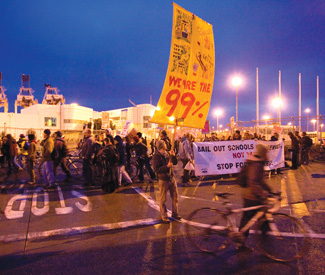
When significant events related to the Occupy movement occur in the pre-dawn hours, it usually means a protest encampment has been raided. But on Dec. 12, Occupy protesters were the ones carrying out a strategic plan before sun up.

Activists organized by OccupyOakland effectively blocked cargo shipments from moving through several Port of Oakland terminals that day, as part of a coordinated West Coast Port Blockade that featured similar actions in other cities including San Diego, Portland, Seattle, and Longview, Washington.

About 150 longshore workers were sent home from their morning shifts at Oakland shipping terminals because protesters were marching in circular picket lines outside the gates.

The day began when more than 1,000 protesters met up at the West Oakland BART station at 5:30 a.m., sleepily raising signs and banners in the chilly morning air as they proceeded down 7th Street toward the port. Once they reached the sprawling shipping hub, they formed picket lines outside terminal entrances. Police were on the scene and clad in riot gear, but no clashes with protesters occurred early in the day.

Around 7 a.m., when the morning shift would have typically started, two International Longshore & Warehouse Union (ILWU) dockworkers — who declined to give their names — stood near the Hanjin Shipping gate at berths 55 and 56. Past the gate, a cargo vessel which had likely come from Japan was berthed and waiting to unload.

The men calmly surveyed the roughly 200 chanting Occupy activists as they marched around and around in a circular picket. “Ain’t nobody going to cross it,” one offered. The other gestured toward the protesters. “These are Americans wanting American jobs,” he said.

Around 10 a.m. outside the same terminal, protest organizer and Oakland hip-hop artist Boots Riley declared the first part of the port shutdown to be a victory. “Longshoremen are going home now,” he said. “Effectively, the Port of Oakland is shut down.” Later in the afternoon, protesters returned to prevent the start of an evening shift.

Until recently, the nationwide Occupy movement manifested as tent cities springing up everywhere in rebellion against the lopsided economic conditions. After a series of police raids cleared the tents away, however, organizers in the Bay Area and beyond took a different tack with the port blockade.

Working in tandem with allies from labor, occupiers from San Diego all the way up to Anchorage directed their gaze at international shipping hubs, critical infrastructure for multinational businesses importing and exporting goods between Asia and North America.

Cargo terminals make for heavyweight targets, as five of the nation’s 10 largest ports are located along the West Coast. The value of annually traded goods flowing in and out of Oakland alone is $34 billion, and authorities there estimate some $8 million could be lost if business were to be halted for a full day.


MAKING HISTORY

OccupyOakland unanimously approved the call for a coordinated West Coast port blockade at a Nov. 18 General Assembly.

“The ports play a pivotal role in the flow and growth of capital for the 1 percent in this country and internationally,” occupiers explained on a website announcing the port shutdown. “For that reason alone it is the ideal place to disrupt their profit machine.”

The ports weren’t selected as a target for that reason alone, but rather as an affront to specific corporations whose labor practices have sparked the ire of port workers. Export Grain Terminal (EGT) and its parent company, Bunge, Ltd., came into Occupy’s crosshairs because of their ongoing dispute with ILWU Local 21 in Longview, Wash., stemming from what longshoremen characterize as union-busting practices.

Port terminal operator Stevedoring Services of America (SSA Marine) and its parent company’s primary shareholder, Goldman Sachs, were also singled out in support of low-wage port truckers whose employment classification as independent contractors bars them from unionizing.

The third objective of the blockade, according to organizers, was to strike back against a series of police raids that dismantled Occupy encampments nationwide.

It wasn’t the first time cargo ships traversing the Pacific would be stalled by a politically motivated coast-wide port blockade. In 2008, ILWU members coordinated a West Coast port shutdown in dissent of the Iraq War.

In 1984, longshoremen and anti-apartheid activists blocked South African cargo to boycott the apartheid regime, noted ILWU member Stan Woods. Similar shutdowns, carried out in response to politically explosive issues going back to 1934, have been led by community activists forming picket lines at port entrances to prevent dockworkers from beginning their shifts.

Occupy’s call for a coordinated blockade brought an unprecedented twist to this historic trend, representing the first time a group unaffiliated with dockworkers had called for a shutdown spanning the entire West Coast. It left some seasoned organizers wondering anxiously how things would unfold, while others saw it as a gust of wind in the sails of the labor movement.

“One of the good things about the Occupy movement is that it’s challenging leaders of progressive institutions,” Woods said. “The old way … isn’t working. There’s been a one-sided class war, and there has to be a two-sided class war.”

Organizer Barucha Peller noted that the Occupy movement could be galvanizing for non-unionized workers, too. “Our movement is giving a framework for the 89 percent of workers who are not in unions,” she said.

For occupiers up and down the West Coast, the port shutdown also seemed to present a kind of test as to whether their young movement could successfully “exert its collective muscle,” as an OccupyOakland press statement put it, and effectuate a mass mobilization even after police raids flattened their encampments.


A ROUGH VOYAGE

In the weeks leading up to Dec. 12, even as Bay Area Occupy organizers plastered fliers about the blockade everywhere, met with union members, and organized outreach events to garner community support, they stumbled into challenges. Robert McEllrath, the president of the ILWU, publicly criticized the blockade plan, saying organizers had failed to reach out to union officials before unanimously approving the call to action.

“Any decisions made by groups outside of the union’s democratic process do not hold water, regardless of the intent,” McEllrath wrote. He seemed troubled that Occupy had attached itself to a union struggle without adequate communication, but an official endorsement of a third-party blockade by the ILWU would have landed the union in legal trouble.

“Whenever a group of people decide to march into a workplace in an effort to shut it without respecting the democratic decision-making process, it’s not an ideal situation,” ILWU spokesperson Craig Merrilees told the Guardian.

Some rank-and-file ILWU members saw things differently. “The rank and file do support the principles of the community, and Occupy,” said Anthony Lavierge, an ILWU steward. “Longshoremen had a good response to [the Nov. 2 port blockade]. It was empowering to a lot of people that so many came out.”

Another rank-and-file union member said, “the majority of ILWU workers are supportive of what’s going on, definitely.”

One rank-and-file ILWU member and self-described anarchist published a critique online raising concerns that OccupyOakland had failed to bring local union officials on board before approving the call to action.

In response, OccupyOakland organizer Mike King said, “We never brought it to them, because it’s not something they could endorse.” Yet he added that they had sought to include the rank-and-file from the start.

“We have done far more outreach for Dec. 12,” than in the days prior to the Nov. 2 port shutdown, which brought tens of thousands of activists to the street, King said. “Leading up to Nov. 2, we never expected half that many people would show up.”

Occupiers in San Diego, Los Angeles, Portland, Vancouver, Anchorage, and other cities all signed up to participate, and the idea drew support from activist groups as far away as Japan who vowed to perform solidarity actions in their own communities.

Nevertheless, the international union president’s statement prompted a flurry of mainstream news articles — along with some downright derisive columns — casting occupiers as out of sync with the very workers they claimed to stand with.

In Oakland, authorities of the targeted facility posed another obstacle. The Port of Oakland took out full-page ads in local daily newspapers and the New York Times urging the community to “Keep the Port Open.” The ads borrowed the language of the movement by proclaiming that the port “employs the 99 percent.” Port spokesperson Robert Bernardo emphasized this message in an interview with the Guardian. “When you shut down a port, you lose jobs,” he said. “Local jobs.”

Sue Piper, special assistant to Oakland Mayor Jean Quan, noted prior to Dec. 12 that the mayor was working with police and port officials to ensure that the port remained open for business. On the morning of the port blockade, however, police stood down and did not prevent protesters from circling up in front of terminal entrances.


BIG FISH TO FRY

Lost in much of the mainstream coverage of the port blockade were Occupy Oakland’s three main objectives. The protesters aimed to demonstrate solidarity with low-income port truckers laboring in service of the powerful SSA Marine; stand with ILWU Local 21 members in their face-off against EGT; and deliver a show of resistance against coordinated police raids of Occupy encampments nationwide.

In October, 26 Los Angeles truckers working for a port company called Toll Group were fired after wearing Teamsters truckers’ union jerseys to their shifts to demonstrate their wish to unionize. Because they’re classified as independent contractors instead of employees, it’s illegal for the truckers to join unions. They’re paid per shipment rather than per hour, which translates to hours of unpaid labor spent in the queue, and must cover their own job-related costs.

Occupy Los Angeles caught wind of the incident and began to talk about doing an action in solidarity with the truckers.

“The date of Dec. 12 was originally suggested by people in Los Angeles,” explained Dave Welsh, a delegate of the San Francisco Labor Council and secretary of the Committee to Defend the ILWU. “It’s also Our Lady of Guadalupe feast day, a Mexican holiday. Since many truckers of the Port of LA are Mexican, they picked that date. One focus [of the blockade] is support for truckers and their demand for better wages, working conditions, etc.”

On the day of the blockade, an open letter from port truckers was published on the website of the Coalition for Clean and Safe Ports, an advocacy group. “We are inspired that a non-violent democratic movement that insists on basic economic fairness is capturing the hearts and minds of so many working people,” the message read. “Thank you ’99 Percenters’ for hearing our call for justice. We are humbled and overwhelmed by recent attention. Normally we are invisible.”

The second major target of the blockade was EGT, which constructed a new grain terminal on Port of Longview property at the edge of the Columbia River in southern Washington, about an hour’s drive from Portland, Ore.

EGT’s parent company is Bunge, Ltd., a major agribusiness firm that has come under fire for everything from tax evasion, to rampant clearing of Amazon rainforest lands for soybean cultivation, to the use of slave labor in Brazil.

Although the terminal construction first brought hope to a small community inflicted with 15 percent unemployment , ILWU Local 21 President Dan Coffman says things soured when EGT brought in out-of-state laborers to build the facility, then refused to hire members of his union.

Coffman contends that EGT’s lease with the port means the company is required to hire Local 21 workers, but EGT disputes this, and has been locked in a federal court battle with the port. The dispute has prompted union members to stage port blockades of their own, resulting in some arrests.

Peller, the Occupy Oakland organizer, announced on a megaphone Dec. 12 that occupiers in southern Washington had shut down the Port of Longview, according to a text message from ILWU Local 21. Union members wanted to thank the movement for the show of support, she added.

“They thought they could just run over a small local,” Coffman told the Guardian, referencing EGT. “Well, David met Goliath. We’re going to fight them till the bitter end.”

Lowe’s: The anti-Muslim neighbor on Bayshore

9

I don’t shop at Lowe’s. Don’t go to Home Depot or Wal-Mart (those folks have enough money as it is), either. I don’t like big-box retail in general, and I was opposed to bringing a big-box, out-of-state chain to build a store on Bayshore Boulevard. I think shopping local and spending your money with small merchants who are part of the community is good for the economy. 

But thanks to lobbyist Jack Davis, who was hired at some vast sum of money to bring Home Depot to San Francisco, and then-Mayor Willie Brown, who bought Davis’s line, Home Depot won permission to build on Bayshore — and when the Georgia-based company decided not to bother and left the site vacant, Lowe’s (based in North Carolinia) stepped in.

And now we know what an excellent neighbor the giant retail outlet has turned out to be. Lowe’s has decided to pull its ads from the Discovery Channel’s All-American Muslim show because some right-wing Christian nut-group objects to anything that doesn’t demonize the Islamic religion and all who follow it.

What a fine, upstanding company to welcome to San Francisco.

Editor’s notes

68

tredmond@sfbg.com

Twenty years ago, if you mapped income distribution in San Francisco on a standard graph, you’d see what the economist call a bell curve: At one end were a small number of very poor families, at the other a small number of very rich, and in between the bulk of the city was somewhere roughly close to what you could call middle class.

Take the 2012 census data and make that graph today and you get the opposite — it’s becoming a U-shape, with more people in poverty and more gross wealth and not as much in the center.

You could see that on stark display at City Hall Dec 12.

At 10 a.m., the City Operations and Neighborhood Services Committee heard several hours of testimony on the alarming rise in the number of homeless families. In the end, the Mayor’s Office agreed to find $3 million to help out.

At 1 p.m., the Land Use and Economic Development Committee heard testimony on a plan to build more housing — on the waterfront, for the top one quarter of the top one percent of the richest people in America, people who will need more than $3 million just for the downpayment on their new digs.

The plan calls for 145 of what Port of San Francisco officials call “high end” or “luxury” condominiums, along with 400 underground parking spaces. “It’s going to be tight on three levels,” a Port official testified. “Most of it will be valet parking.” The developer wants to raise the height limit along the waterfront for the first time in half a century.

The Port, which controls some of the land, will get a cut of all the condo sales, maybe as much as $500,000 a year; that money will go to rebuild old piers and fund a long list of Port projects — including the America’s Cup. (Ted Gullicksen of the San Francisco Tenants Union was sitting next to me at the hearing, and he shook his head at that bit of news. “Condos for rich people to pay for boats for rich people,” he said.)

A long list of people, including former City Planning Director Alan Jacobs and former City Attorney Louise Renne — spoke against the project. Jacobs and Renne both explained that this was single-site spot zoning that would change the half-century consensus that the city should “decrease height toward the waterfront so the people can see and enjoy the meeting of land and water,” as Jacobs put it.

Jacobs gave the committee members his one “absolute truth” about city planning: “If a developer accepts and knows that a rule can’t be broken, then it will be economical to build within it. If he or she think it can be changed, then suddenly it will not be economical. It’s called greed.”

In other words, Simon Snellgrove, the developer of 8 Washington, could make money with a lower-scale project that conforms to existing height limits. But he can make more money if the city gives him a big honkin favor.

But it’s not all about height limits for me. It’s not even about the fact that the project will chop up a tennis and swimming club that serves about 2,000 more-or-less middle-class people in an effort to make life nicer for about 145 very rich people.

It’s about what kind of housing we’re building in San Francisco. “Every study that we’ve seen shows that we’ve vastly overbuilt housing for the wealthy,” Gullicksen testified.

And we’re not just talking the ordinary wealthy here. The most compelling testimony came from Frederick Allardyce, a real-estate broker from Sotheby’s who said he had been involved in the sale of about 70 percent of all luxury condos sold from Washington St. to the waterfront. He gave us a glimpse of who would be living — sort of — at 8 Washington.

The cheapest condos would require an income of $469,000, a downpayment of $625,000, and another $493,000 of liquid reserves. Monthly payment: $13,699. The higher-end units would require an annual income of $1.029 million and a downpayment of $6.5 million.

“That’s not the one percent,” he said. “It’s the top one quarter of the top one percent.”

And, Allardyce explained, most of the people who buy that level of property are so rich that they don’t actually live there. It’s a second or third or fourth home, a place to stay a few weeks out of the year. And since the project involves chopping up a tennis and swim club used by some 2,000 people (who are nowhere near that rich), “you’re eliminating the use of that land by the general public” in favor of a tiny elite.

The developer says that the city will get money to build 33 below-market-rate units. That’s nice; by that standard, 80 percent of the new housing goes to the richest people in the world, and 20 percent for everyone else. That percentage ought to be reversed — and until it is (or at least, until we have a plan to build enough affordable housing for the people who really need a place to live in San Francisco) I can’t imagine why we’d want to be doing favors to feed the greed of developers.

What we’re doing in this city is making life harder for low-income people who are increasingly living on the streets and doing big favors for the spectacularly wealthy. There’s no sanity in our housing policy — except to turn San Francisco even more into a city of the rich.