Mayor

Hearing could work out flaws in Lee’s housing trust fund proposal

2

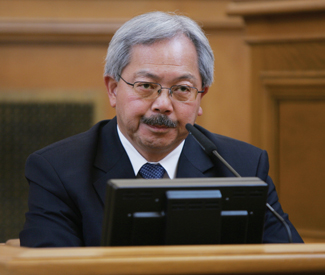
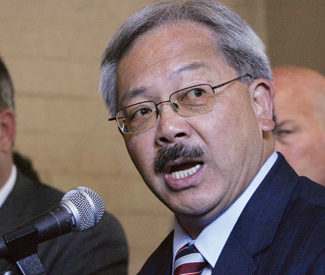
Mayor Ed Lee’s proposed Housing Trust Fund charter amendment — which he proposed during his inaugural address in January — will be up for review before the Board of Supervisors Rules Committee tomorrow (Wed/11) in the hopes of making its way onto the November ballot. The meeting is at 1:30pm in City Hall Room 263.

The measure, which would guarantee money for affordable housing for the next 30 years, was drafted primarily by the Council of Community Housing Organization (CCHO) and the Mayor’s Office, but included input from housing developers, the San Francisco Planning and Urban Research Association (SPUR), and some supervisors.

Supporters intend the housing trust fund to provide a consistent stream of funding that guarantees $1.2 billion over a 30-year period for affordable housing. Each year the fund would take in between $20 million and $50 million. In addition to building new housing, it would create a $15 million homebuyers assistance program, doubling the current funds, and a $15 million home stabilization fund to help homeowners facing foreclosure. But Lee hasn’t convinced his business community allies to adequately fund the measure and there are doubts about its revenue projections.

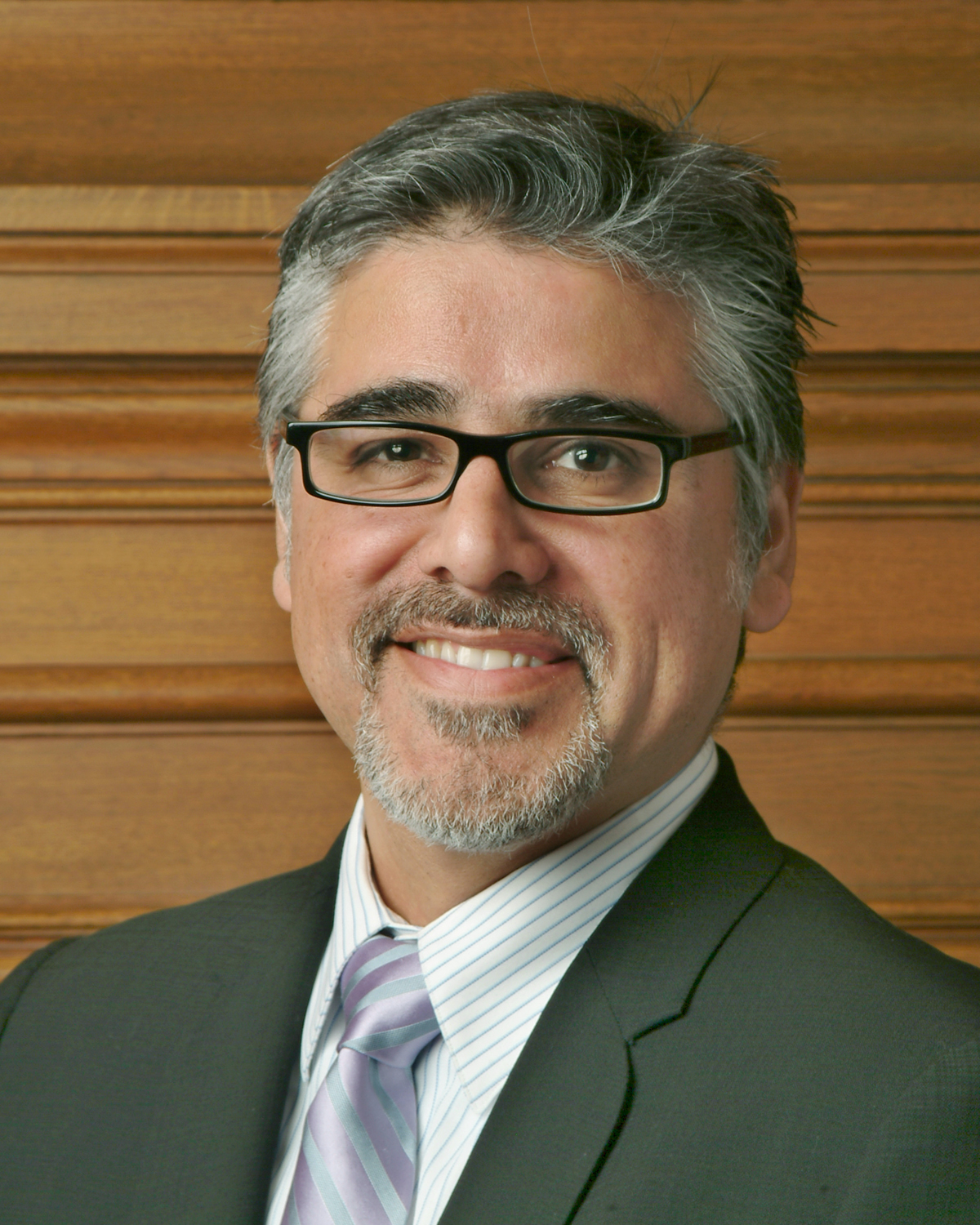
Sup. John Avalos is cosponsoring the measure and helped draft some content, but he isn’t ready to vote for it yet. He is concerned with some of the big concessions the measure grants to market-rate developers, which could end up actually hurting existing affordable housing programs.

“I am watching closely,” Avalos said, “to make sure we don’t give too much away.”

Here are the three concessions: 1) High-rise residential developers would be allowed to pay inclusionary housing fees for affordable housing after construction instead up upfront. 2) Low to mid-rise developers would have the percentage of onsite affordable housing unit requirements lowered from 15 percent to 12 percent. 3) Developers of small five-to-nine-unit buildings would no longer have the inclusionary housing fee or the onsite affordable housing requirement.

The housing trust gets its funding by trying recapture the disbanded Redevelopment Agency’s bond repayments and hotel tax funds, but Fernando Marti of CCHO doesn’t believe that would capture nearly as much as Lee hopes. Marti estimates that the money would eventually lead to $13 million a year, which is a far cry from the previous $50 million needed.

Marti said the rest of the funding he hopes will come from the two competing business tax reform measures developed by Lee and Avalos, although Avalos has make clear that the $40 million his measure would raise is intended for the General Fund to maintain city services that have been cut in recent years. Lee’s measure would generate $13 million that he would earmark for the housing trust fund.

Marti said if the housing trust is approved by voters but the business tax reform fails, Lee has inserted language into the measure that would allow him to unilaterally abolish the housing trust fund. Marti said the CCHO doesn’t want the money for the housing trust to come out of the cash-strapped general fund.

Avalos is skeptical of Lee’s approach, telling us, “That doesn’t sound like anything I’d vote for.”

Gascon comments on Lee perjury allegations

108

Luke Thomas from Fog City Journal showed up at a press conference District Attorney George Gascon was holding on another topic, and threw in a question about the allegations that Mayor Ed Lee lied under oath before the Ethics Commission. Gascon’s comments were, as I would expect, pretty well couched in political-DA language, but the man who initially filed the domestic violence charges that set off this legal episode came down clearly on the side of having Ethics investigate further:

Luke sent me a transcript of Gascon’s full remarks, to wit:

“I think that the first thing that we have to do is we have to allow the Ethics Commission to continue what they’re doing. This is an ongoing hearing by the Ethics Commission. The voters of San Francisco, through the Charter, gave the Ethics Commission a tremendous amount of power — they wanted a very robust process. The Ethics Commission has the ability to call witnesses and put witnesses under sworn testimony and I think it is appropriate for the Ethics Commission to continue to inquire into this. Once they have completed the process, we will evaluate and, if appropriate, we will move accordingly. If the evidence surfaces that we have sworn testimony to indicate that perjury has taken place then we will certainly evaluate whether that will be appropriate to prosecute. At this point, we need to let the Ethics Commission do its work.”

I got in touch with Gascon’s press person, Stephanie Ong Stillman, and she confirmed that the DA thinks right now Ethics ought to be handling this:

“We don’t want to interfere with the Ethics Commission’s ongoing process.
All we know is what’s being reported in the newspapers.  These allegations
arose in the context of an ongoing Ethics Commission hearing, therefore the
Ethics Commission is the most appropriate body to look into this matter.”

Doesn’t sound like Gascon is eager to launch his own inquiry. But he’s at least interested in hearing what the key witnesess have to say — and he seems to agree that they should be placed under oath.

In fact, Gascon seems to be saying that he will look to Ethics to conduct the initial investigation — which just puts more pressure on the commissioners to allow Mirkarimi’s lawyers to put Walter Wong and Christina Olague on the stand.

I wonder if Lee is starting to regret setting off this whole spectacle. If he’d just demurred and allowed the voters to weigh in with a recall election, he could have avoided what may be a costly political mistake.

Oh, and by the way: Since the Chron made a huge deal out of Ivory Madison’s sworn statement — much of which was tossed out as inadmissible — it’s worth reading the entire statement of Eliana Lopez, which is posted here.

If Mayor Lee lied

219

What’s going to happen to Mayor Ed Lee?

That’s the big question after a series of news reports have suggested that the mayor was less-than truthful under oath in his statements to the Ethics Commission. If he actually lied on the stand, that would be considered perjury, which is a felony.

But the reality is that the mayor’s not going to jail. First of all the District Attorney’s Office would have to investigate and file charges — and does anyone really think this DA, George Gascon, is going to subpoena Walter Wong and demand that he talk under oath about his interactions with Lee (who is a close friend)? I think Gascon ought to do it; there’s clear evidence that a crime may have been committed, and the public has a right to know about it, but I suspect that will never happen.
And even if the DA pushed, and Wong told the truth, and the truth contradicted the mayor, would a jury believe Wong over Lee?

It’s really hard to prove perjury. Maybe one of Lee’s staffers talked to Wong and the mayor wasn’t directly involved. Maybe the recollections of the two men have faded in the past few months. Maybe the mayor’s defense would be able to throw up enough chaff that nobody in the courtroom could figure it out.

So it’s not going to be about a criminal case against the mayor. But the revelations of what’s gone down here go far beyond any possible perjury indictment.

For starters, Ross Mirkarimi’s lawyers have every right and responsibility to demand that the Ethics Commission members hear from Debra Walker, Walter Wong, and — I would argue — every member of the Board of Supervisors. Here’s why:

The crux of Mirkarimi’s legal case at Ethics is that the mayor had no grounds to remove him from office — and that Lee never gave Mirkarimi due process or a chance to explain himself. The way the suspended sheriff tells it, the mayor never asked for an explanation of what happened that New Year’s Eve, never tried to talk to Eliana Lopez — never, in short, did any investigation into the incident before deciding the file misconduct charges (except for talking to Ivory Madison).

The way the mayor tells it, Mirkarimi refused to provide an explanation.

That distinction is critical, and the only basis for deciding what happened is for the judges — the commissioners — to use their best information and judgment about who’s telling the truth.

In other words, the mayor’s credibility is central to the entire case.

So if there’s any evidence that Lee lied about his discussions with Walter Wong or about whether he talked to any supervisors, then the commissioners would have the responsibility to consider that when evaluating the rest of his testimony. If you can’t believe everything he said, can you believe anything he said?

Some commissioners may argue that it’s not their business to determine if the mayor perjured himself, and on one level, that’s true — Ed Lee isn’t on trial here. But his credibility either makes or breaks the case. So the panel needs to hear from witnesses who can address that question.

Then there’s the much larger, more disturbing possibility that the mayor sought to influence (or might have been in a position to influence) members of the Board of Supervisors, who will be sitting as the final judges of Mirkarimi’s fate.

There’s a reason that the City Attorney’s Office has advised board members not to talk about the case. They’re sitting in a judicial role, and they can’t legally fulfill that obligation if there’s any indication they’ve already made up their minds. And if the mayor has talked to any of them — and there’s any indication at all that anything he said could be seen as seeking to influence their votes — well, in a courtroom you’d call that jury tampering. It’s a little different in a political forum, but still: Any supervisor who had a conversation with the mayor will be under pressure to recuse himself or herself — and every recusal helps Mirkarimi.

It doesn’t matter how many supervisors are in the room, in the country, recused or otherwise unable to vote — the mayor still needs nine to remove the sheriff. Three recusals and the whole thing collapses.

That’s why all of this is so fascinating and potentially explosive.

Oh,and by the way: When Lee set this process in motion, he should have known that he’d be testifying under oath and that anything he said or did might come out. You’d think he’d have been a little better prepared. 

So what’s going to happen to Ed Lee? Legally, nothing. But he may have done serious damage to his own case.

Perjury allegations against Lee gain more support

126

San Francisco Democratic Party Chair Aaron Peskin has confirmed his role in extending a city job offer from Mayor Ed Lee to Sheriff Ross Mirkarimi if Mirkarimi had been willing to resign in March, bolstering allegations that Lee may have committed perjury when testifying under oath before the Ethics Commission on Friday.

But even as more media outlets report the possible perjury (a story we broke first here), which is further complicating the already complicated official misconduct proceedings that Lee brought against Mirkarimi, the Mayor’s Office and key Lee allies have refused to comment on the perjury allegations or the strange circumstances surrounding the alleged bomb threat that temporarily got Lee off the hot seat.

As we reported in this week’s Guardian, Building Inspection Commissioner Debra Walker said Lee was lying when he said that he hadn’t spoken with any members of the Board of Supervisors before charging Mirkarimi with official misconduct. Walker said Sup. Christina Olague told her she had spoken with Lee about the matter, which Olague now denies.

Lee also responded “absolutely not” when asked by Mirkarimi attorney Shephard Kopp whether he authorized Peskin or development consultant Walter Wong, a close Lee ally, “to convey to Sheriff Mirkarimi if he would stop down, you’d get him another job.”

At press time for this week’s article, Peskin was backpacking in the Sierras and couldn’t be reached, but he has now confirmed to the Guardian that he met with Wong at 11:30am on March 19 – just hours before Lee met with Mirkarimi to say he would be removed from office unless he resigned – at Cafe Trieste.

In that meeting, Peskin said Wong asked him to convey to Mirkarimi an offer from the mayor of a job with the San Francisco Public Utilities Commission or the Airport Commission if Mirkarimi would voluntarily resign. Asked whether Wong indicated that he had discussed the offer with the mayor, Peskin told us, “He certainly left me with that impression.”

Mirkarimi refused to accept the offer, insisting on fighting to keep his job, which was one factor in Peskin’s subsequent public statement calling for Mirkarimi to resign. “There were a lot of things that factored into that,” Peskin said of his call for Mirkarimi to step down, although he wouldn’t discuss other factors on the record.

Efforts by both the Guardian and the Examiner to reach Wong have been unsuccessful, and messages to the Mayor’s Press Office on this and related issues also haven’t been answered. But just as Walker has offered to do, Peskin said he’s willing to testify under oath if asked.

“I am prepared, if subpoenaed, to tell the truth, the whole truth, and nothing but the truth,” Peskin told us.

Lee hasn’t had any public events or made any public comments on the matter since the scandal broke on Friday. The other unanswered mystery is why Lee was whisked from the hearing room just 15 minutes into his testimony, shortly after making the statements that Walker alleges amounted to perjury.

As we reported, neither the SFPD nor the Sheriff’s Department ordered the room evacuated, meaning that decision must have been made by someone within the Mayor’s Office. Press Secretary Christine Falvey’s last statement to the Guardian, on July 2, said, “Again, the mayor’s office did not recess the meeting. I still have to refer you to the Police Department which maintains Mayor Lee’s security or the Ethics Commission about the decision to recess the meeting for (I believe) about 90 minutes.”

Yet neither body seems to know who made the call, and follow-up questions asking the Mayor’s Office to disclose any information they have about that decision have gone unanswered. District Attorney George Gascon — whose office would need to pursue the perjury allegations considering the city’s official misconduct rules don’t apply to the mayor — also didn’t return our call asking generally how allegations of this fashion should be handled.

The official misconduct proceeding continue in front of the Ethics Commission on July 18 and 19 when Mirkarimi’s wife, Eliana Lopez, is scheduled to testify. But that has also been complicated by the Mayor’s Office’s refusal to authorize payment for a plane ticket for Lopez to return from her native Venezuela to testify. Mirkarimi and his legal team say they can’t afford to pay for that plane ticket after Lee suspended Mirkarimi without pay.

RCV repeal effort gets tricky with three alternatives

38

The Board of Supervisors is scheduled to vote on July 10 whether to place a controversial charter amendment on November’s ballot that would largely repeal San Francisco’s ranked-choice voting (RCV) system, but the outcome of that effort has become murky with the introduction of two competing alternatives.

The original charter amendment, sponsored by Sup. Mark Farrell, would eliminate RCV for all citywide elected officials, instead holding a primary in September and runoff in November. The board rejected an earlier effort by Farrell to repeal RCV, but Farrell came back with a modified measure that was co-sponsored by Sup. Christina Olague, much to the dismay of her progressive supporters, particularly Steven Hill, the father of RCV in San Francisco.

Hill said runoff elections in September, a month notorious for having low-voter turnout, will invariably favor the conservatives who always vote in high numbers. He said that RCV is a fairer representation of what voters want and a November election allows for more voters to be heard.

After widespread criticism from her progressive constituents, Olague publicly turned away from the measure, telling Hill and board members she would remove her name from it. Yet instead of removing her name, in a surprise move she proposed her own amendment to the charter, which only angered progressives more.

“Progressives are pretty furious with Christina right now because she is working with conservatives and went back on her word,” Hill said.

Olague’s proposal would eliminate RCV for only mayoral elections, with the primary still in September, even though she previously told the Guardian that she opposes having an election in September. Olague didn’t respond to email inquiries from the Guardian, but she has maintained in previous interviews that she is only trying to create a compromise between opposing parties on the board.

It’s unclear whether Farrell and the other center-right sponsors of his measure might back Olague’s alternative, but her colleagues who support RCV have put forward an alternative of their own. Board President David Chiu introduced another proposal amending Farrell’s measure that keeps RCV intact—more or less.

Although Chiu told the Guardian he thought the current RCV method has worked well for the city so far and that most people seem to understand how to use the system, he offered the amendment to address certain issues which have arisen because of Farrell’s measure and Olague’s amendment.

“My amendment addresses the concerns that have been raised in an appropriately tailored way,” Chiu told us.

Chiu’s proposal incorporates run-off elections for the top mayor candidates, but only after rank choice voting has narrowed the field to two candidates. It supports elections in November with the mayoral runoff in December.

However, this still allows for a second election, which RCV advocates think is a costly and unnecessary alternative that RCV was designed to eliminate – an imperative they see as more important than ever given court rulings that now allow unlimited spending by wealthy individuals and corporations to influence elections.

Although Hill isn’t happy with any repeal of the current voting methods, he said he reluctantly supports Chiu’s amendment.

“These are poorly made proposals,” Hill said. “It’s like being at the factory and watching sausage getting made.”

Hill fears that if Olague’s co-sponsorship of Farrell’s charter amendment or her own proposed amendment are approved by the board and allowed on the ballot in November that conservative money and power would most likely influence the election enough to pass the RCV repeal.

Guardian Voices: Stop and Frisk didn’t work last time

5

Mayor Lee’s musings before the Chronicle editorial board, in which he revealed his thoughts about instituting a “stop and frisk” policy in San Francisco, set off a very quick negative responses from two of his high-profile supporters in the African American community, Willie Brown and Supervisor Malia Cohen. But that’s only part of the surprise the mayor will face if he pursues this policy.

It wasn’t a real good week for Mayor Lee, who seemed to repeatedly trip himself up:

— In  the chat about stop and frisk;
— In the admission at a Board of  Supervisors hearing by Sutter/CPMC that the economic modeling of the hospital chain’s proposed  project so undermined key elements of the deal that Mayor Lee demanded that it be redone;
— And in his testimony before the Ethics Commission on the Mirkarimi case that brought specific charges of  perjury he has yet to answer.

But the stop and frisk was the most sobering of the three, for it shows a fundamental misunderstanding of the very nature of the city that he seeks to govern and an astounding insensitivity to its not-too-distant past.

The last time stop and frisk was implemented by the San Francisco Police Department was in 1974, at the height of the “Zebra” murders during which, over a six-month period from the end of 1973 to the beginning of 1974, 16 whites were murdered and another six wounded (one of whopm was a young Art Agnos) in shootings using a similar caliber hand gun. What made sensational headlines was the fact that the six survivors all agreed that the shooters were  black. 

Mayor Joe Alioto, facing a steep decline in tourist visits to the city and a drumbeat of headlines, surprised eferyone by announcing a stop and frisk policy aimed at young Black males. Within the first week some 500 stops were made. Not a single Zebra suspect was found.

The San Francisco NAACP and ACLU quickly filed suit in Federal Court where the policy was banned as being un-Constitutional racial profiling. The Zebra case was broken using the time tested technique of offering a reward for information. An informant stepped up, and in the summer of 1974, four men were arrested based upon his information. In 1976 the four men were convicted –and the stop and frisk policy had nothing to do with either their arrest or conviction.  Nothing remained of the failed policy for 38 years.

What did remain was a deep and bitter memory of stop and frisk in the San Francisco African-American community — a memory neither Willie Brown nor Malia Cohen forgot.

If the mayor really believes that stop and frisk will work in the face of deep seated community resentment, based on actual local historic experience – for his remarks were all about “getting the guns” off the street in African American neighborhoods — then he has a profound misunderstanding of the nature of San Francisco.

San Francisco is perhaps one of the two or three most humanly diverse cities in North America. There is a bewildering mix of humans in our city, which confronts any policy based upon appearances — such as stop and frisk — with complexities that often render its actual use on the street ineffective. Simply stated, people are not as they seem in San Francisco, and many San Franciscans prefer to live no other way. Good cops understand this and work hard to learn who is who on the street. That’s called community policing and it often works in San Francisco.  

But many times it doesn’t. Let me tell you a personal story.

During the school year, I try to pick up my two grandsons, Jalius and Jacob, every Tuesday. We spend some time together walking from their school, George Peabody, in the Inner Richmond, to the 33 Stanyan bus stop at Clement and Arguello for a bus ride back to the Haight-Ashbury. We walk and talk and then wait for the bus and talk some more.

A few months ago, we were waiting for the bus, the boys sitting on the bench, me standing and talking. I noticed a cop across the street doing a foot patrol, talking to merchants and customers. He kept looking at us. He was Chinese and my grandsons are half Chinese.  Finally, he walked over to us and with a polite smile asked me why was I talking to these children.

I had an idea that was why he came over so I was expecting the question. I smiled back to him and said, proudly, “these are my grandsons, Jalius and Jacob”.  He looked at me and then turned to the boys and said “is he?” They said “yes” and he looked back at me and said “just doing my job,”  and turned and walked away.

And what a tough job it is as people are often other than they look in San Francisco. Old white men are not always what they seem, and young black men are not always what they seem, no matter how low they ware their pants. Policies based upon things being exactly as they appear will be overwhelmed by the human reality of the City of St. Francis.

There is a connection between people in this physically compact city of ours that forms a foundation for a common political outlook when it comes to personal and group rights and freedoms. San Francisco is a center-left city on matters of civil and human rights. Local elections have shown time after time that on civil and human rights the usual political divisions between the various parts of San Francisco don’t obtain. Trying to push a center-right stop and frisk policy on San Francisco will politically isolate Ed Lee, making all other parts of his agenda that much more difficult to accomplish. And as a city we need to get some big things done, quickly. Let’s move on, together, and get them done.

Guardian Voices: A place for rage

23

Just a few weeks ago, my partner came home from work in South San Francisco to tell me some horrifying news. A cop had killed a boy she knew, a Black eighth grader named Derrick Gaines. We looked at each other in the way we do when there is too much to say, our eyes wet, our hearts racing, our rage too big for words. We held our son extra tight that night.

Ayoka went to the funeral last Thursday, and was finally able to shed a few of what felt like a mountain of tears inside of her. She supported family and friends who were overwhelmed with grief, and listened to people’s efforts to make sense of this madness. But for anyone who can see the humanity of this young Black man, there is no way for his murder to make any damn sense at all.

I don’t know and I don’t care if Derrick was what the news calls “a good kid” or a “troubled kid,” a “gangbanger” or a straight-A student. What I do know, what matters to my heavy heart, and what is at the source of my rage, is that Derrick was a human being, that he was a kid, that a cop killed him needlessly and that he will most likely get away with it. There will be no apologies, no accountability, no recognition that the cop had many other options than to shoot and kill. And the absence of all this will be another silent attack on our psyche, an unstated affirmation of Black inferiority, of the lesser value of Black lives.

Derrick’s tragic murder has captured less attention than that of Trayvon Martin, but they both have weighed especially heavily on my heart. Both young, Black and male, they were supposedly “looking suspicious” in a non-Black neighborhood. Both Derrick and Trayvon were teenagers minding their business. Neither was in the midst of committing a crime – which would not in any case justify their murder but does draw attention to the degree to which their Blackness itself was apparently the crime being committed.

Both Derrick and Trayvon are dead, no one is safer, and Derrick’s four-year-old brother is left to struggle with the reality that his big brother will never be coming home again. I’ve been to more than my fair share of police accountability protests. But today, on this 4th of July, something is rising up in me that is new. It has to do with the place for rage.

Anybody Black in America has a strategy, conscious or not, for dealing with rage. Some of us are lucky and stumble upon socially productive paths – we serve, we organize for change, we become leaders in our church. Others are less lucky and make choices that lead to violence and self-destruction. Some of us stay permanently in a place of rage, and become one kind of crazy or another.

I confess to having been, for all these years, a fairly reasonable sister, reticent to fully voice my heartbreak, pain and rage about the state of my people. But I’m reconsidering this path.

The moment clearly calls for a new way. We may have a Black president, but these are dark times. It’s Trayvon and Derrick. It’s the Supreme Court’s racist ruling on SB1070, allowing the blatant racial profiling of the “papers please” provision to move forward. All the talk about government agents stopping black and brown people in the street takes me back to slave times, when we needed papers to leave the plantation, when white men were paid to hunt for fugitive slaves, and why my great great great grandfather took his family to Canada after the passage of the Fugitive Slave Act of 1850. It was time to protect his family and leave the madness of the United States of America.

The Black Community faces Depression-level unemployment, a resurgence racist Right and a level of state violence in our everyday lives that is largely invisible to most non-Black people. We have the greatest number of Black people incarcerated of any time in American history; there are more Black men under the control of the criminal justice system today than there were in slavery in 1850. In supposedly progressive San Francisco, Mayor Lee is openly considering New York’s notoriously racist “stop and frisk” policing policy. And even without such a draconian measure, the data already tell us that the majority of Black boys in San Francisco have been stopped, harassed, or arrested by the local cops by the time they become adults.

In the face of what can only be considered extreme conditions, extreme violence and extreme disenfranchisement amongst my people, I confess that I have failed to take the extraordinary measures that are plainly necessary.

See, the thing is, I had good home training and was socialized to be a nice Black girl. I can code-switch and communicate with nearly anyone with a passion that generally gains respect. Even when in the midst of political battle I don’t scream and holler, and have allowed any number of white people to do and say racist things and get away unharmed. Like so many of us, I try to be a Black person with dignity, without losing my shit. As Michael Jackson would say, I’m a lover not a fighter. This strategy has helped me gain social status, an elite education, and some middle class comforts of American life.

So what to do with this rage? What’s the path beyond reasonableness that does not lead to self-destruction? On this 4th of July, I’m remembering our freedom fighters Frederick Douglass and Harriet Tubman, and asking them for wisdom. In my own way and in these times, I want to walk with faith and fearlessness as they did, and not be afraid to put my body on the line for freedom. What sacrifices will we all need to make? What creature comforts or career plans will we need to put aside? What will it take to build a movement that lifts up the value of Black life and our place in a better, more just society?

In Michelle Alexander’s stunning book The New Jim Crow, she makes a clear case that since we won the formal battle against Jim Crow in the 1960s, “We have not ended racial caste in America; we have merely redesigned it.” This contemporary, supposedly colorblind, system of mass incarceration and social control of Black people makes our work more complicated, our moral outrage less understandable and our courage ever more necessary.

Let’s build a movement for racial justice, honor our rage, and find a way to be the Frederick Douglass’ and Harriet Tubmans of the 21st century that these times require.

To support Derrick Gaines’ family, donations can be made at any Wells Fargo to the ‘Derrick Gaines Memorial Fund’ account #: 1636477653.

You can check out Michelle Alexander’s work on the New Jim Crow here. And stay tuned for community organizing against attempts to bring “Stop and Frisk” to SF.

Davis launches D5 campaign with fortuitous timing

14

When progressive activist Julian Davis formally launched his District 5 supervisorial campaign late last week with a well-attended kickoff party at the Peacock Lounge in Lower Haight, timing and circumstances seemed to be on his side.

Days earlier, Quintin Mecke – a rival for the progressive vote in this staunchly leftist district – announced to supporters that he needed to care for his ailing mother and wouldn’t be running after all. At the same time, appointed incumbent Christina Olague seemed to be rapidly falling from favor with many progressives.

First came the viral video of Olague gushing over all the support she’s received from Chinatown power broker Rose Pak during a fundraiser where she raised nearly $50,000, then her squirrely role in helping the moderates repeal ranked-choice voting, and finally the bizarre episode of clashing with a close progressive ally and friend to defend Mayor Ed Lee from perjury allegations.

Davis has sought to capitalize on the rapidly unfolding developments, today sending out a press release blasting Olague for having “joined the conservatives on the Board of Supervisors to repeal ranked choice voting for mayoral elections,” and telling the Guardian that Mecke’s exit will help clarify the choice D5 voters face.

“The fact that he’s out allows us to consolidate the progressive base,” Davis said, not mentioning that candidates John Rizzo and Thea Shelby will also be vying for the progressive vote.

At his kickoff party, Davis also demonstrated that he has substantial support from another significant D5 voting block – African Americans – for which he’ll be competing with political moderate London Breed, director of the African American Arts & Cultural Complex.

Davis said that with Olague’s support by Mayor Ed Lee and the city’s economic and political establishment, he’ll need to run a strong grassroots campaign based on “people power and shoe leather,” an approach that he’s also displaying with regular street corner campaigning.

“We’re at an economic, social, and political crossroads in San Francisco,” he said at his launch party. “Rogue developers are corrupting City Hall with a vision of luxury condos, corporate tax breaks, chain stores, and parking garages. It’s a vision of San Francisco that doesn’t include us. Everyday, progressive reforms are being dismantled and progressive values are being abandoned.”

Davis is hoping that Olague’s ties to Lee will drag her down in a district that voted almost 2-1 in favor of progressive John Avalos (whose campaign Davis actively worked on) over Lee in last year’s mayor’s race.

“Look what’s happening on the waterfront where Olague voted to approve the 8 Washington development. These are condos for the Kardashians, vacation homes for the ultra rich and the 1 percent. That’s not keeping it real for San Francisco,” he said at the kickoff. “So we’ve got to ask ourselves: how do they get away with it? The only way they can. By choosing your leaders for you. Over the past two years in San Francisco, we’ve had an appointed mayor, an appointed district attorney, an appointed sheriff, and an appointed District 5 supervisor. Does that sound like participatory democracy to you? Does that sound like your vote counts?”

And as Avalos also tried to do in his mayoral campaign, Davis says he wants to use his campaign to help restart the city’s progressive movement, which has been in tatters since being divided and nearly conquered by the politicians and political operatives who helped elevate Lee into Room 200 18 months ago.

As he told supporters, “We can re-launch the progressive movement in San Francisco from this district. We can take back City Hall. We will win this election with people power, street by street, block by block, neighbor to neighbor, shop by shop.”

Brown, Pak, and Olague

38

Christina Olague was a great planning commissioner. I’ve always liked her, and when she was appointed we pointed out how strongly she was rooted in the progressive community.

Olague has strong progressive activist credentials, from working with the Mission Anti-Displacement Coalition to protect low-income renters during the last dot-com boom to her more recent community organizing for the Senior Action Network. She co-chaired the 2003 campaign that established the city’s minimum wage and has been actively involved in such progressive organizations as the Milk Club, Transit Riders Union, and the short-lived San Francisco People’s Organization.

She also served two terms on the Planning Commission — appointed by Board of Supervisors then-President Matt Gonzalez in 2004 and reappointed by then-President Aaron Peskin in 2008 — where she was known for doing her homework on complicated land use issues and usually landing on the progressive side of divided votes.

We’ve had some disagreements since she took office — particularly around 8 Washington. (I also disagreed with the Labor Council on that one, and only three of the supervisors agreed with me.) And it’s not the first time an elected official I supported turned around and infuriated me on a development vote.

I want Olague to succeed; I want her to come to us in the fall with a record that makes us want to endorse her for a full four-year term. She’s been talking seriously about violence in the district and about young people, predominantly African Americans, getting killed. I feel like she wants to do the right thing.

But her reelection effort is starting to feature some bad actors.

At a recent fundraiser in Chinatown, former Mayor Willie Brown, who ranks as one of the most corrupt public officials in modern San Francisco history and whose administration was a disaster for poor and working-class people (he once even said that poor people ought to just get out of town because this city is too expensive for them), stood up and made a speech, warmly endorsed Olague and said he would be with her “all the way.” Olague then thanked Rose Pak, the Chinatown power broker, for “all of her support over the last few months.”

This makes me nervous. And it hasn’t helped my nerves that I’ve been trying to talk to Olague about these issues for the last week, and she keeps avoiding the conversation by not returning calls or cutting conversations short when I do reach her.

Willie Brown, with his Chron column, has taken on this funny, warm, man-about-town persona, but when he was running City Hall, everything was about money. He cut deals right and left that destroyed communities and neighborhoods. He oversaw, aided and encouraged what we called the “Economic Cleansing of San Francisco.” Tens of thousands of working-class people, artist, writers, young people … were driven out of the city by a steamroller of gentrification — all with the mayor’s blessing.

Now he’s working as a private attorney, and last time we checked was getting $200,000 a year to represent PG&E. We have no idea what other big corporate clients he has or what he does for them — but it’s clearly not writing legal briefs and handling litigation. He gets paid for being a political fixer. For the bad guys.

And he’s going to be with Olague “all the way.”

Damn.

Under oath

19

steve@sfbg.com

Mayor Ed Lee and suspended Sheriff Ross Mirkarimi each took some lumps on June 29 as they were cross-examined by opposing attorneys in front the Ethics Commission, which is conducting the official misconduct case that Lee brought against Mirkarimi over a Dec. 31 domestic violence incident. But the hearings proved unexpectedly dramatic when the room was suddenly cleared for an undisclosed security threat — following testimony by Lee that a city commissioner alleges included perjury.

The incident raises a number of issues that officials hadn’t yet answered by Guardian press time. Was the security threat real? If so, why wasn’t the room or the rest of City Hall properly secured after the mayor was whisked away? If not, who ordered the room cleared and why?

Undersheriff Paul Miyamoto, who ran against Mirkarimi last year, told the Guardian that the San Francisco Police Department notified his office that a caller claimed to have planted bombs outside of City Hall and on the Golden Gate Bridge. Deputies conducted a search and found nothing, and his office didn’t order the recess of the hearing. “We did not evacuate anyone,” he told us.

Speculation about the incident was heightened during the break when Debra Walker, a Mirkarimi supporter and longtime member of the city’s Building Inspection Commission, told the Guardian that Lee committed perjury when he denied speaking with any members of the Board of Supervisors before filing official misconduct charges. Lee was responding to a direct and pointed question from Mirkarimi attorney Shepherd Kopp — one that that Lee’s attorneys had unsuccessfully objected to.

Specifically, Walker said that her longtime friend and political ally Sup. Christina Olague — who Lee appointed to serve the last year of Mirkarimi’s term for the District 5 seat — had told her repeatedly that Lee had asked her advice before filing the charges against Mirkarimi, and that Olague’s advice was that Lee should ask for Mirkarimi’s resignation but drop the matter if he refused.

That allegation, which was first reported on the Guardian’s Politics blog shortly after the commission went into recess (Olague had not yet returned a call from the Guardian asking whether she had spoken to Lee about Mirkarimi), prompted reporters to confront Olague in the hallway outside her supervisorial office, where she tersely denied the allegation and then took refuge behind closed doors.

When the reporters lingered and persisted, waiting for a more complete answer, Olague finally emerged, reiterated her denial, refused to speculate about why her friend Walker would make that claim, and said, “We’re not allowed to discuss this matter with anyone before it comes to the board…I may have to recuse myself from voting on this.”

It was unclear why she thought recusal might be necessary, but if she does disqualify herself from voting on Mirkarimi’s removal later this summer after Ethics completes its investigation and makes its recommendations to the board, that would hurt Lee’s effort to get the nine votes needed to remove Mirkarimi.

When the Ethics Commission hearing resumed after a couple hours, Lee was again placed in a position of denying specific factual allegations that others have made, again raising the possibility that he committed perjury in his sworn testimony, which could expose him to felony criminal charges while undercutting his moral authority to remove Mirkarimi over the single misdemeanor count of false imprisonment that he pleaded guilty to in March.

The second instance was when Kopp asked Lee, “Did you ever extend any offer through third parties that you would find him another job if he resigned?”

“I don’t recall offering Sheriff Mirkarimi any job,” Lee replied.

Kopp specifically asked whether that job offer had been extended on Lee’s behalf by permit expediter Walter Wong or by San Francisco Democratic Party Chair Aaron Peskin, to which Lee replied, “Absolutely not.”

Mirkarimi supporters have told the Guardian that Peskin had made that offer, which Mirkarimi refused, shortly before the party chair publicly called for Mirkarimi’s resignation. The outgoing message on Peskin’s cell phone said he was unavailable and wouldn’t be checking his messages until July 5. Mirkarimi’s attorneys said they’re still figuring out how to respond to the developments and had no comment, but Walker said she’s willing to testify under oath.

But the dramas underscore the treacherous grounds opened up by these unprecedented proceedings, the first involving the Ethics Commission and the broadened definition of official misconduct placed into the City Charter in 1996. As baseball great Barry Bonds and former President Bill Clinton learned, being forced to testify under oath about sensitive topics can be a tough trap to negotiate.


MIRKARIMI TESTIMONY

Deputy City Attorney Peter Keith also seemed to be trying to spring that perjury trap on Mirkarimi as he took the stand on the morning of June 29 following an hour on the stand at the previous night’s hearing. Keith reminded Mirkarimi that he was advised not to discuss his testimony with anyone and asked, “Who have you spoken to since last night?”

“My attorneys,” Mirkarimi answered.

“What did you say to them?” Keith asked, drawing objections about attorney-client privilege that Commission Chair Benedict Hur sustained.

“Did you stop for coffee?” Keith then asked, seemingly concerned that Mirkarimi may have discussed his testimony with someone at the coffee shop that morning, which Mirkarimi denied. Keith let the allegation go but maintained an accusatory, hectoring tone throughout the next three hours that he had Mirkarimi on the stand, two more hours than he had told the commission he would need.

Much of the time was spent trying to establish support for the allegation that Mirkarimi had dissuaded witnesses and sought to thwart the police investigation, which was triggered by a call from Ivory Madison, a neighbor to whom Mirkarimi’s wife, Eliana Lopez, had confided. But the testimony yielded little more than the city’s unsupported inference that Mirkarimi must have directed Lopez and his campaign manager, Linnette Peralta Haynes, to contact Madison after she had called the police and urged her to stop cooperating with them.

Mirkarimi has maintained that he did nothing to dissuade Madison or anyone from talking to police, and that he wasn’t aware of the investigation or that Madison had made a videotape of Lopez showing a bruise on her arm until hours after the police were involved. He even sent a text to Lopez saying there was nothing he could do, as he noted.

“It was after 4pm on January 4 when I first learned of any of this,” Mirkarimi testified, later adding, “I was very clear to her in saying you can’t unring the bell, we have to follow through with this.”

Yet Lee and the deputy city attorneys who are representing him also maintain that they needn’t prove witness dissuasion or other allegations they have made, and that the Dec. 31 incident and Mirkarimi’s guilty plea to a single misdemeanor count of false imprisonment are enough to constitute official misconduct and warrant his removal, an interpretation that Mirkarimi’s attorneys dispute.

Keith sought to hammer home how Mirkarimi should have admitted to and publicly atoned for his crime right away rather than telling reporters it was a “private family matters” (which Mirkarimi admitted was a mistake) or fighting the charges by trying to discredit Madison publicly, an allegation he denies.

After unsuccessfully trying to get Mirkarimi to admit to directing efforts to question Madison’s credibility in local media accounts, Keith asked, “Did you ever direct anyone not to attack Ivory Madison?”

“I never directed anyone to attack or not attack,” Mirkarimi replied.

Keith also clarified that Mirkarimi denies the allegation Madison made that the physical abuse on Dec. 31 went beyond grabbing Lopez’s arm once in the car, as the couple has maintained. “It’s your testimony there was no punching, pulling, or grabbing in the house?” Keith asked, which Mirkarimi confirmed.

Yet Keith said that given the totality of what happened, Mirkarimi should have known he couldn’t continue on as sheriff. “Under those circumstances, wouldn’t resigning be the honorable thing to do?” Keith said, to which Mirkarimi replied that it’s a hard question and that he’s doing what he thinks is right.

Faced with friendlier questions from his own attorney, David Waggoner, Mirkarimi apologized for his actions, saying “I feel horrible and ashamed,” but that he was “sad and scared” to have his family torn apart against their will. He also said that he believes he can still be effective as sheriff because “what makes San Francisco special is our forward-thinking approach to criminal justice.”

Longtime Sheriff Michael Hennessey — who endorsed Mirkarimi and continues to support him — established a variety of programs emphasizing redemption and rehabilitation, hiring former convicts into top jobs in the department to emphasize a belief in restorative justice that Mirkarimi ran a campaign promising to continue.

“Never in my wildest dreams did I think I would be an example of what this redemption process looks like,” Mirkarimi said, choking back tears.

But Keith had the last word before Mirkarimi left the stand, belittling the idea that Mirkarimi offers an example to follow by noting how much probation time and court-ordered counseling he still has to undergo and asking, “The process of redemption doesn’t happen overnight, right?”


LEE ON THE STAND

Under questioning by Kopp, Mayor Lee admitted that he doesn’t have a written policy on what constitutes official misconduct, that his decisions are made on “a case by case basis,” and that he’s not sure whether conviction of a crime would always constitute official misconduct “because I’ve never confronted this before.”

“Were you aware that many members of the Sheriff Department have criminal convictions?” Kopp asked. Lee said he was not aware. Asked whether he was aware that Sheriff Hennessey had hired a convicted murderer into a top command staff position (see “The unlikely sheriff,” 12/21/11), Lee said he wasn’t.

Lee’s insistence that Mirkarimi’s crime makes him unable to deal effectively with other officials was also attacked by Kopp, who asked, “Isn’t it true that people get elected who have disagreements with other city officials?” He pointed out that City Attorney Dennis Herrera had nasty conflicts with Lee when they ran against each other for mayor last year, but that they’re working well together now.

Kopp also drilled into Lee about his decision to bring official misconduct charges before conducting an investigation or speaking with any witnesses besides Madison — an answer Lee blurted out just as city attorneys objected to the question. Much of Madison’s written testimony has been rejected by the commission as prejudicial hearsay evidence (see “Mayor vs. Mirkarimi,” July 27).

But the public’s perception of this case, if not it’s outcome, could turn on whether Lee is holding Mirkarimi to standards that he himself — as someone appointed mayor on a later-broken promise not to run for a full term — couldn’t meet. It was what Kopp seemed to be driving at before the bomb scare.

“You have asserted in your written charges that Sheriff Mirkarimi’s conduct fell below the standard of decency, good faith, and right action that is impliedly required of all public officials, correct?” Kopp asked.

“Yes,” Lee replied.

“We expect certain things of our elected officials, right?” Kopp asked.

After a long pause, in which Lee appeared to be thinking through his answer, he replied, “That’s generally true, yes.”

“And when the charter speaks of official misconduct, it doesn’t say we expect a certain standard for the sheriff, a different standard for the mayor, a different standard for the DA, a separate standard for the assessor, it just speaks in general terms about official misconduct for public officials, right?” Kopp asked.

Kaiser objected to the question on three counts, sustained on the grounds that it calls for a legal conclusion.

“Do you yourself believe there’s a separate standard for sheriff than for other elected officials?” Kopp asked, and this time the city’s objection was overruled and Lee replied, “It should be the same standard.”

“And would you agree with me that one of the things that is expected of elected officials is for them to be honest and forthright when dealing not only with their constituents, but with other elected officials?” Kopp asked, his final question before Chair Benedict Hur announced that the hearing would be suspended and the room would need to be cleared.

After the hearing reconvened, Kopp drew parallels to other city officials who remained on job after scandals, including former Mayor Gavin Newsom (who had an affair with a subordinate who was married to his campaign manager), former Sheriff Dick Hongisto (who was jailed for refusing to carry out a court’s eviction order), and current Fire Chief Joanne Hayes White (whose husband reported that she hit him in the head with a pint glass).

Asked about the latter case, Lee responded, “I don’t know all the circumstances around that and I don’t believe I was mayor at the time.”


Stop ‘stop and frisk’

4

EDITORIAL If the San Francisco Police Department put up checkpoints and metal detectors all along lower Market Street and stopped and searched every person who walked by, they’d find some contraband. No question — a certain percentage of people on the city’s main downtown artery are carrying drugs or weapons. Some have warrants out. There would be multiple arrests and criminals taken off the streets.

And it’s hard to imagine that anyone would consider that a good idea.

So how about moving those checkpoints to the Mission and Bayview-Hunters Point? You might get even more weapons and drugs. And it would still be a profound violation of the civil liberties of every San Franciscan.

But what Mayor Ed Lee is now talking about — instituting some version of the notorious New York City “stop and frisk” law — isn’t much different. Under New York Mayor Michael Bloomberg, the police have been given the authority to search, without cause or a warrant, anyone who looks suspicious. The goal is to get guns off the street.

The result: The vast majority of people stopped are African American or Latino — and 88 percent are totally innocent.

It is, in other words, a huge waste of police resources as well as a systematic program or racial profiling and harassment.

Lee told the San Francisco’ Chronicle’s editorial board that he realized the problems with the New York system and wants a better model. And he said, correctly, that there are serious problems with gun violence, particularly in Bayview-Hunters Point. “I think we have to get to the guns,” Lee said. “I know we have to find a different way to get to these weapons, and I’m very willing to consider what other cities are doing.”

But San Francisco has spent huge amounts of time and resources trying (not always successfully) to build a community policing program that would increase trust between the police and communities of color — and any version of “stop and frisk” would instantly undermine that effort. It’s a terrible idea, and Lee should make it clear that he is dropping any discussion or consideration of it.

The mayor and his supporters insist that they’ll only pursue this approach if it can be done without profiling. But that’s almost impossible and it’s a fantasy to think the San Francisco cops, once empowered to stop anyone for any reason, would target white people the same way they do blacks and Latinos. There’s never been an example anywhere in the country where this kind of law was anything but a case study in racial profiling. Even Police Chief Greg Suhr sounds dubious.

The fact that Lee would even suggest this is a sign of how far he’s moved from his progressive roots. Moving even a step further toward this sort of wholesale civil-liberties violation would be a disaster for San Francisco.

The good old days in Rock Rapids, Iowa, the Fourth of July, 1940-1953

1

(Note: In July of 1972, when the Guardian was short a Fourth of July story, I sat down and cranked out this one for the front page on my trusty Royal Typewriter. I now reprint it each year on the Bruce blog, with some San Francisco updates and postscripts.)

Back where I come from, a small town beneath a tall standpipe in northwestern Iowa, the Fourth of July was the best day of a long, hot summer.

The Fourth came after YMCA camp and Scout camp and church camp, but before the older boys had to worry about getting into shape for football. It was welcome relief from the scalding, 100-degree heat in a town without a swimming pool and whose swimming holes at Scout Island were usually dried up by early July. But best of all, it had the kind of excitement that began building weeks in advance.

The calm of the summer dawn and the cooing of the mourning doves on the telephone wires would be broken early on July Fourth: The Creglow boys would be up by 7 a.m. and out on the lawn shooting off their arsenal of firecrackers. They were older and had somehow sent their agents by car across the state line and into South Dakota where, not far above the highway curves of Larchwood, you could legally buy fireworks at roadside stands.

Ted Fisch, Jim Ramsey, Wiener Winters, the Cook boys, Hermie Casjens, Jerry Prahl, Elmer Menage, and the rest of the neighborhood gang would race out of  their houses to catch the action. Some had cajoled firecrackers from their parents or bartered from the older boys in the neighborhood: some torpedoes (the kind you smashed against the sidewalk); lots of 2 and 3-inchers, occasionally the granddaddy of them all, the cherry bomb (the really explosive firecracker, stubby, cherry red, with a wick sticking up menacingly from its middle; the kind of firecracker you’d gladly trade away your best set of Submariner comics for).

Ah, the cherry bomb. It was a microcosm of excitement and mischief and good fun. Bob Creglow, the most resourceful of the Creglow boys, would take a cherry bomb, set it beneath a tin can on a porch, light the fuse, then head for the lilac bushes behind the barn.

“The trick,” he would say, imparting wisdom of the highest order, “is to place the can on a wood porch with a wood roof. Then it will hit the top of the porch, bang, then the bottom of the porch, bang. That’s how you get the biggest clatter.”

So I trudged off to the Linkenheil house, the nearest front porch suitable for cherry bombing, to try my hand at small-town demolition. Bang went the firecracker. Bang went the can on the roof. Bang went the can on the floor. Bang went the screen door as Karl Linkenheil roared out in a sweat, and I lit out for the lilacs behind the barn with my dog, Oscar.

It was glorious stuff – not to be outdone for years, I found out later, until the Halloween eve in high school when Dave Dietz, Ted Fisch, Ken Roach, Bob Babl, and rest of the Hermie Casjens gang and I made the big time and twice pushed a boxcar loaded with lumber across Main Street and blocked it for hours. But that’s another story for my coming Halloween blog.

Shooting off fireworks was, of course, illegal in Rock Rapids, but Chief of Police Del Woodburn and later Elmer “Shinny” Sheneberger used to lay low on the Fourth. I don’t recall ever seeing them about in our neighborhood and I don’t think they ever arrested anybody, although each year the Rock Rapids Reporter would carry vague warnings about everybody cooperating to have “a safe and sane Fourth of July.”

Perhaps it was just too dangerous for them to start making firecracker arrests on the Fourth – on the same principle, I guess, that it was dangerous to do too much about the swashbuckling on Halloween or start running down dogs without leashes (Mayor Earl Fisher used to run on the platform that, as long as he was in office, no dog in town would have to be leashed. The neighborhood consensus was that Fisher’s dog, a big, boisterous boxer, was one of the few that ought to be leashed).

We handled the cherry bombs and other fireworks in our possession with extreme care and cultivation; I can’t remember a single mishap. Yet, even then, the handwriting was on the wall. There was talk of cutting off the fireworks supply in South Dakota because it was dangerous for young boys. Pretty soon, they did cut off the cherry bomb traffic and about all that was left, when I came back from college and the Roger boys had replaced the Creglow boys next door, was little stuff appropriately called ladyfingers.

Fireworks are dangerous, our parents would say, and each year they would dust off the old chestnut about the drugstore in Spencer that had a big stock of fireworks and they caught fire one night and much of the downtown went up in a spectacular shower of roman candles and sparkling fountains.

The story was hard to pin down, and seemed to get more gruesome every year – but, we were told, this was why Iowa banned fireworks years before, why they were so dangerous and why little boys shouldn’t be setting them off. The story, of course, never made quite the intended impression; we just wished we’d been on the scene My grandfather was the town druggist (Brugmann’s Drugstore, “Where drugs and gold are fairly sold, since 1902″) and he said he knew the Spencer druggist personally. Fireworks put him out of business and into the poorhouse, he’d say, and walk away shaking his head.

In any event, firecrackers weren’t much of an issue past noon – the Fourth celebration at the fairgrounds was getting underway and there was too much else to do. Appropriately, the celebration was sponsored by the Rex Strait post of the American Legion (Strait, so the story went, was the first boy from Rock Rapids to die on foreign soil during World War I); the legionnaires were a bunch of good guys from the cleaners and the feed store and the bank who sponsored the American Legion baseball team each summer.

There was always a big carnival, with a ferris wheel somewhere in the center for the kids, a bingo stand for the elders, a booth where the ladies from the Methodist Church sold homemade baked goods, sometimes a hootchy dancer or two, and a couple of dank watering holes beneath the grandstand where the VFW and the Legion sold Grainbelt and Hamms at 30¢ a bottle to anybody who looked of age.

Later on, when the farmboys came in from George and Alvord, there was lots of pushing and shoving, and a fist fight or two.

In front of the grandstand, out in the dust and the sun, would come a succession of shows that made the summer rounds of the little towns. One year it would be Joey Chitwood and his daredevil drivers. (The announcer always fascinated me: “Here he comes, folks, rounding the far turn…he is doing a great job out there tonight…let’s give him a big, big hand as he pulls up in front on the grandstand…”)

Another year it would be harness racing and Mr. Hardy, our local trainer from Doon, would be in his moment of glory. Another year it was tag team wrestling and a couple of barrel-chested goons from Omaha, playing the mean heavies and rabbit-punching their opponents from the back, would provoke roars of disgust from the grandstand. ( The biggest barrel-chest would lean back on the ropes, looking menacingly at the crowd and yell, “ Aw, you dumb farmers. What the hell do you know anyway? I can beat the hell out of any of you.”   And the crowd  would roar back in glee.)

One year, Cedric Adams, the Herb Caen of Minneapolis and the Star-Tribune, would tour the provinces as the emcee of a variety show. “It’s great to be in Rock Rapids,” he would say expansively, “because it’s always been known as the ‘Gateway to Magnolia.” (Magnolia, he didn’t need to say, was a little town just over the state line in Minnesota which was known throughout the territory for its liquor-by-the-drink roadhouses. It was also Cedric Adams’ hometown: his “Sackamenna.”) Adams kissed each girl (soundly) who came on the platform to perform and, at the end, hushed the crowd for his radio broadcast to the big city “direct from the stage of the Lyon County Fairgrounds in Rock Rapids, Iowa.”

For a couple of years, when Rock Rapids had a “town team,” and a couple of imported left-handed pitchers named Peewee Wenger and Karl Kletschke, we would have some rousing baseball games with the best semi-pro team around, Larchwood and its gang of Snyder brothers: Barney the eldest at shortstop, Jimmy the youngest at third base, John in center field, Paul in left field, another Snyder behind the plate and a couple on the bench. They were as tough as they came in Iowa baseball.

I can remember it as if it were yesterday at Candlestick, the 1948 game with the Snyders of Larchwood. Peewee Wenger, a gawky, 17-year-old kid right off a high school team, was pitching for Rock Rapids and holding down the Snyder artillery in splendid fashion. Inning after inning he went on, nursing a small lead, mastering one tough Larchwood batter after another, with a blistering fastball and a curve that sliced wickedly into the bat handles of the right-handed Larchwood line-up.

Then the cagey Barney Snyder laid a slow bunt down the third base line. Wenger stumbled, lurched, almost fell getting to the ball, then toppled off balance again, stood helplessly holding the ball. He couldn’t make the throw to first. Barney was safe, cocky and firing insults like machine gun bullets at Peewee from first base.

Peewee, visibly shaken, went back to the mound. He pitched, the next Larchwood batter bunted, this time down the first base line. Peewee lurched for the ball, but couldn’t come up with it. A couple more bunts, a shot through the pitcher’s mound, more bunts and Peewee was out. He could pitch, but, alas, he was too clumsy to field. In came Bill Jammer, now in his late 30’s, but in his day the man who beat the University of Iowa while pitching at a small college called Simpson.

Now he was pitching on guts and beer, a combination good enough for many teams and on good days even to take on the Snyders. Jammer did well for a couple of innings, then he let two men on base, then came a close call at the plate. Jammer got mad. Both teams were off the bench and onto the field and, as Fred Roach wrote in the Rock Rapids Reporter, “fisticuffs erupted at home plate.” When the dust cleared, Jammer has a broken jaw, and for the next two weeks had to drink his soup through a straw at the Joy Lunch. John Snyder, it was said later, came all the way in from center field to throw the punch, but nobody knew for sure and he stayed in the game. I can’t remember the score or who won the game, but I remember it as the best Fourth ever.

At dusk, the people moved out on their porches or put up folding chairs on the lawn. Those who didn’t have a good view drove out to the New Addition or parked out near Mark Curtis’ place or along the river roads that snaked out to the five-mile bridge and Virgil Hasche’s place.

A hush came over the town. Fireflies started flickering in the river bottom and, along about 8:30, the first puff of smoke rose above the fairgrounds and an aerial bomb whistled into the heavens. BOOM! And the town shook as if hit by a clap of thunder.

Then the three-tiered sky bombs – pink, yellow, white, puff, puff, puff. The Niagara Falls and a gush of white sparks.

Then, in sudden fury, a dazzling display of sizzling comets and aerial bombs and star clusters that arched high, hung for a full breath and descended in a cascade of sparks that floated harmlessly over the meadows and cornfields. At the end, the flag – red, white and blue – would burst forth on the ground as the All-American finale in the darkest of the dark summer nights. On cue, the cheers rolled out from the grandstand and the cars honked from the high ground and the people trundled up their lawn chairs and everybody headed for home.

Well, I live in San Francisco now, and I drive to Daly City with my son, Danny, to buy some anemic stuff in gaudy yellow and blue wrapping and I try unsuccessfully each year to get through the fog or the traffic to see the fireworks at Candlestick. But I feel better knowing that, back where I come from, everybody in town will be on their porches and on the backroads on the evening of the Fourth to watch the fireworks and that, somewhere in town, a little boy will put a big firecracker under a tin can on a wood porch, then light out for the lilacs behind the barn.

P.S. Our family moved in l965 from Daly City to a house in the West Portal area of San Francisco. There are, I assure you, few visible fireworks in that neighborhood. However, down at the bottom of Potrero Hill, the professional and amateur action is spectacular.

 From any Potrero Hill height, you can see the fireworks in several directions: the waterfront fireworks in the city, fireworks on the Marin side of the Golden Gate bridge, fireworks at several points in the East Bay, fireworks along the Peninsula coast line.

And for the amateur action, parents with kids, kids of all ages, spectators in cars and on foot, congregate after dusk along Terry Francois Boulevard in San Francisco along the shoreline between the Giants ballpark and Kellys Mission Rock restaurant.

The action is informal but fiery, fast,  and furious: cherry bombs, clusters, spinning wheels, high flying arcs, whizzers of all shapes and sizes. The cops are quite civilized and patrol the perimeter but don’t bother anybody. I go every year. I think it’s the best show in town. B3.


Leaked documents add to CPMC’s credibility problems

10

Three key members of the Board of Supervisors today presented what they say are documents leaked by a whistleblower within California Pacific Medical Center showing it will likely shut down St. Luke’s Hospital by invoking an escape clause in the development agreement that the Mayor’s Office negotiated and the board is now considering.

The CPMC internal financial documents sent to the supervisors Sunday from an anonymous whistleblower predict a financial scenario in which the operating revenue will fall below a 1 percent margin by 2018.  The predicted loss would allow CPMC to exit its 20-year commitment to St. Luke’s and close the hospital in 2020, just five years after its scheduled reopening.  Sups. David Chiu, Malia Cohen, and Christina Olague say they worry the financial shortfall would also limit CPMC’s charitable donations while its Sutter Health parent company cuts hundreds of hospital jobs to save a projected $70 million per year.

 CPMC has promised to seismically retrofit St. Luke’s and run it for 20 years. In return, the medical group gets to build a massive hospital on Cathedral Hill. Inserted into the deal is what Chiu calls the fine print, which states if CPMC operating margin falls below 1 percent for two years it may close the hospital. Chiu said CPMC presented the escape clause as a very unlikely event, occurring only in a catastrophic scenario.

Instead, the leaked documents present a negative operating margin as an incredibly probably situation that CPMC has known about for months and misrepresented to city officials. “CPMC knew it was possible and likely they would default on their commitment,” Cohen said, adding that her greatest grievance is CPMC’s refusal to do anything about the situation.

Cohen said the financial revelations aren’t surprising considering Sutter Health has a reputation for shady practices. She said we should all wonder how a supposedly not-for-profit corporation is able to make so much profit.

CPMC spokesman Sam Singer said the documents are fraudulent, flawed financial reports that CPMC threw away a long time ago. He suggested someone must have dug them out of the garbage in a conspiracy like fashion. Singer said the mayor had learned about the document a few weeks ago.

Chui said that may help explain why  the Mayor’s Office recently acknowledged it reentered negotiations with the CPMC after becoming concerned about the viability of St. Luke’s, telling supervisors it was based on CPMC’s revised revenue estimates, sparking a controversy during last week’s hearing.

Whatever the reason, the three supervisors want more time to investigate the matter.

“Let’s be clear,” said Cohen said, “these contract negotiations should be informed by actual financial information and not just by the word of CPMC leadership, which we’ve unfortunately found to be untrustworthy.”


Guardian voices: The labor agreement that changed SF

18

This year marks the 53rd anniversary of the beginnings of  negotiations between the International Longshoreman’s and Warehouseman’s Union and the Pacific Maritime Association over what came to be known as the “Mechanization and Modernization Agreement.”  Signed in October, 1960, after months of talks,  the “M and M agreement” transformed San Francisco’s economy forever, moving its founding industry — shipping and trans shipping — to the East Bay, opening up the land once devoted to maritime uses to real estate development, and setting off the modern political era of San Francisco.

The agreement allowed containerization to come into the San Francisco Bay, making obsolete  the finger piers along San Francisco’s waterfront and the ILWU’s “gangs” that worked on them, hand-loading “break bulk” cargo into the holds of cargo ships. The new technology of shipping cargo in a single  container that could be transported by truck, train, and ship without unloading  transformed maritime trade.

During World War II, shipbuilding and shipping were  fundamental in the effort to move billions of tons of supplies and millions of troops across the global battlefield. In both cases the  San Francisco Bay was ground zero in that in that effort.

Kaiser and Bechtel, two Bay Area-based construction companies, wildly successful in undertaking huge construction projects during the New Deal, were urged to build ships during the war. Kaiser in Richmond and Bechtel in Sausalito constructed  huge shipyards that  built cargo ships by the hundreds, bringing tens of thousands of workers to the Bay Area and changing the demographics of the region for ever. These huge industrial centers didn’t last after the war, and while they transformed who lived in the region, they didn’t really have a lasting economic impact.

But wartime changes in cargo handling did.

For as long as San Francisco had been a city, it depended on its port as the base of its economy. The Gold Rush happened here in part because we had a port and the world rushed in on ships. The enduring fortunes were made during that period by merchants and shipping companies were totally dependent on shipping and cargo handling.

At the heart of the maritime economy was the longshoreman who, by hand, loaded and unloaded ships’ holds. The demand for speed during WWII saw the then-revolutionary introduction of the fork lift truck on the piers of San Francisco, replacing hands with a machine for the first time in the history of the San Francisco waterfront.

But that was only the beginning. New ship designs and new shipping techniques were invented to meet the needs of global war. Since most of the Pacific islands that were the military objectives of the war had no ports or piers, ships were designed that could land directly on a beach and unload preloaded trucks.  Preloaded containers were simply stacked on the decks of Liberty ships, avoiding the need to load the cargo below decks.  By the Korean War these containers were in such regular use by the Army that ships were modified to carry only them, replacing below-deck cargo entirely.

Since ports and piers had been major targets during the war and required extensive rebuilding in both Europe and Asia,  new cargo handling techniques were built into these new facilities, making US ports, undamaged by the war, outmoded and old fashioned.  If US ports were to keep up they had to be modernized.  But who would pay for these new facilities: the shipping business or the government?

San Francisco was still governed by an unbroken line of Republican Mayors during this key period: the anti-New Deal, pro-Mussolini Angelo Rossi; the shipping line owner and anti- ILWU leader Roger Lapham; the pro-real-estate development Elmer Robinson; and finally, the last Republican Mayor of San Francisco, the pro-urban-renewal stalwart George Christopher. These four had no desire to rebuild the waterfront and make the ILWU even stronger. Indeed, Robinson and his successor Christopher had a vision of the waterfront as prime real estate, not working waterfront.

And so, with no commitment to the maritime industry from the city’s leadership and with technological change making the status quo impossible to maintain, Harry Bridges and the leadership of the ILWU cut the best deal they could for their existing members: the 1960 M and M agreement, which gave all existing longshore workers lifetime jobs and very good pay — but sealed the fate of San Francisco waterfront.

By 1962 the Port of Oakland had built its first container facility, and that same year, the first containership, the S.S. Elizabethport, docked and begin loading. By the mid 1970’s, the ILWU was no longer a force in the San Francesco labor movement, its leadership taken by the Building Trades unions  whose  numbers increased as the development boom, fueled by land made vacant by the loss of the maritime industry, grew.

For the rest of the Bay Area, it was San Francisco’s model of waterfront as real estate development that was followed, not Oakland’s investment in cargo shipping. By 1965, development of the Bay was so intense that the McAteer-Petris Act was passed, creating the Bay Conservation and Development Commission, a regional body aimed at limiting the powers of local governments (like San Francisco) in filling and over-developing the Bay.

The 8 Washington battle, the struggle over the Hunters Point shipyard, and the looming battle over the use of a port pier for the Warriors arena all have their history deeply rooted in the 1960 M and M agreement.

In this second decade of the 21st century, our greatest challenge is creating and sustaining meaningful employment. Would our prospects be better if we had somehow been able to keep some maritime uses at the port? Would families in Bay View-Hunters Point be more able to buy homes in their own neighborhood if the same kinds of jobs that allowed their grandparents to buy theirs still existed? Would the boom-or-bust cycle of our real-estate dependent local economy been so disruptive if we had a more steady state base of a maritime sector — which kept the Great Depression from being so devastating in San Francisco in the1930s?

These questions are real — and should show that the shape of our economy is made by us and the decisions we make, locally, not solely by techological change, global trends or the far-too-palsied invisible hand of the free market.

Mayor and Mirkarimi testify in Ethics probe before dramatic disruption

261

After Sheriff Ross Mirkarimi endured about four hours of questioning in his official misconduct proceedings, mostly from Deputy City Attorney Peter Keith, Mayor Ed Lee took the stand a little after 1pm. But just as Mirkarimi attorney Shepherd Kopp was beginning to pin Lee down on the selective manner in which he decided to launch these unprecedented proceedings, the commission suddenly announced the hearing was being suspended and the room would need to be cleared immediately.

There is speculation that there was a bomb threat or other security emergency, but officials have so far offered no explanation for the dramatic development or whether the hearing would reconvene today. Yet the room is still half-filled with journalists and audience members, some speculating that that the clearing of the room was simply an effort to get the unusually grim-faced Lee off the hot seat.

Kopp’s questioning included pointed questions about whether he consulted any members of the Board of Supervisors before deciding to bring official misconduct charges against Mirkarimi in March. The city’s objection was overruled after Kopp noted that the supervisors will ultimately decide Mirkarimi’s fate. Forced to answer under oath, Lee said no, he didn’t speak to any supervisors before filing charges.

But progressive activist Debra Walker says Sup. Christina Olague — women who are close political allies and speak regularly — has repeatedly told her that Mayor Lee asked her opinion before filing the charges. If true, that would mean Mayor Lee committed perjury, which is a felony. Yet as reporters confronted Olague outside her office, she denied ever speaking with Lee about the case and then barricaded herself in her office.

When the reporters lingered and persisted, she finally emerged, reiterated her denial, refused to speculate about why her friend Walker would make that claim, and said, “We’re not allowed to discuss this matter with anyone before it comes to the board…I may have to recuse myself from voting on this.”

It was unclear why she thought recusal might be necessary, but if she does that would hurt Lee’s effort to get the nine votes on the board needed to remove Mirkarimi.

We’ll have complete analysis of the testimony and other developments in next week’s Guardian.


Ed Lee gets frisky

33

I knew Mayor Ed Lee was going to be more friendly to developers that I would have liked, and I knew he’d be a tough sell on new taxes, but I didn’t expect to see him talking about a program that has racial profiling and civil liberties issues written all over it.

Yeah, we could find some weapons if we simply gave up all rights to privacy. Yeah, if we put a metal detector on Market Street and strip-searched everyone who passed by we’d find some contraband. But seriously — I don’t think even my crazy trolls think this is a good idea.


CPMC’s new numbers threaten St. Luke’s and the mayor’s deal

9

Can San Franciscans trust California Pacific Medical Center (CPMC) not to shutter St. Luke’s Hospital once the company gets what it wants from the city? And has the Mayor’s Office, in its desire to please the business community and building trades, accepted and promoted a bad deal that doesn’t adequately protect the city’s interests?

Those are some of the questions that arose Monday during a hearing on CPMC’s $2.5 billion, multi-hospital development proposal before the Board of Supervisors Land Use Committee when officials from the Mayor’s Office revealed that the development agreement they negotiated with CPMC might not be good enough to keep St. Luke’s open.

As we’ve reported, CPMC (a subsidiary of Sutter Health, a not-for-profit corporation that nonetheless has a well-earned reputation for profiteering and other bad corporate behavior) is seeking to build a 550-bed regional luxury hospital atop Cathedral Hill. In exchange, the development deal requires CPMC to rebuild St. Luke’s, a seismically unsafe hospital in the Mission District that is relied on by many low-income San Franciscans (as well as the city, which would otherwise have to shoulder more of that burden at General Hospital).

After years of stalled negotiations between CPMC and two consecutive mayors, Mayor Ed Lee announced a deal in March that would have CPMC build a smaller version of St. Luke’s (with just 80 beds) and agree to keep it open for at least 20 years as long as CPMC’s operating margins didn’t dip below 1 percent in two consecutive years.

Activists had criticized the deal as too small, too short, and without enough guarantees, but Mayor’s Office officials have consistently said they were confident it was enough to keep St. Luke’s from being shuttered. But now, based on new revenue projections offered by CPMC, even those officials have lost confidence in the deal and say it needs to be renegotiated.

“These new 2012 projections, while still showing CPMC will not breach the 1 percent margin, do not offer the same comfort level we previously had,” Ken Rich of the Mayor’s Office of Economic and Workforce Development told the committee.

The news hit like a bombshell, shaking the confidence of even supervisors who strongly supported the deal, such as Sup. Scott Wiener, who called it a “surprising, critical piece of information” and said, “It’s very, very important that this issue is quickly resolved.”

For supervisors who were already skeptical of the deal and CPMC – such as Sup. David Campos, whose District 9 includes St. Luke’s – it was further evidence that this was a bad deal that needed more work before being brought to the board. The Planning Commission has already approved the project and the full board was scheduled to consider it in just a few weeks.

“What does that say about the way the negotiation was done?” Campos told us. “How half-baked can something be? What have we done to verify the numbers that CPMC gave us? And what does this say about CPMC?…If the numbers on St. Luke’s aren’t accurate, how can we trust the rest of what they’re telling us?”

Yet during the hearing, when Campos tried to get reassurances from CPMC officials and requested that the board be allowed to review the company’s financial records, he was rebuffed and belittled by CPMC attorney Pam Duffy – who later tersely apologized for her comments after Committee Chair Eric Mar criticized them as “insulting to the board.”

Campos had questioned Rich about why the city was relying on CPMC rather than independently assessing the numbers. “Maybe if you had done an audit, you wouldn’t be in this position of being surprised by the numbers that were given to you,” Campos told Rich.

But Rich said “projections are guesses, we can’t ever guarantee that they are right,” noting that CPMC had revised its revenue estimates downward for the years after St. Luke’s would open (when it would be absorbing the high costs of construction), making its profit margin slimmer. “CPMC took a more conservative approach to forecasting the rate of increase in hospital charges as well as patient volumes in light of the greater uncertainty in health care finance,” Rich said.

So Campos asked whether the supervisors could review CPMC’s data. Rich, who has reviewed it, replied, “The conditions under which we were shown CPMC’s projections is that those are confidential.”

Campos noted that it is the board’s job to review and approval this deal to determine whether it’s in the city’s best interests, which shouldn’t simply involve trusting CPMC. “Why should the executive branch of the government see those numbers but not the legislative branch?” he asked.
“It’s really not our call,” said Rich, noting that he had no objections to the request.

But when Campos asked CPMC’s Duffy, she offered a legalistic refusal, and when Campos tried to explain his reasoning, she said, “I heard your speech a moment ago” and added, “this isn’t really a game of gotcha.”

When Campos said the board was simply exercising its due diligence over an important project. she said “nothing unusual or untoward has occurred here, and the suggestion that might be the case, I think it unfair.”

But Campos wasn’t alone in wanting more reassurance from CPMC, who supervisors, labor leaders, and community activists have criticized for its secrecy and bad faith negotiating tactics with both the city and its employee unions.

“This announcement is shocking, on a number of levels,” Board President David Chiu said at the hearing, noting that he had met with CPMC officials just days earlier and they hadn’t mentioned the new developments, instead assuring him that their operating margins were high and the deal protected St. Luke’s. “It’s not a great way to build the trust we’ll need to move this forward.”

Rich said he had learned of the new numbers 12 days earlier, drawing a rebuke from Campos and others who said the supervisors should have been notified earlier. But Rich said that he was hoping that the problem would be solved through negotiations with CPMC before the hearing, but that talks over the issue have so far been fruitless.

“We would have vastly preferred to have an agreement in hand,” Rich told the committee, reassuring the supervisors that the Mayor’s Office will not support the project until the St. Luke’s issue is resolved to its satisfaction.

But Sup. Malia Cohen criticized CPMC as an untrustworthy negotiating partner. “CPMC has an interesting corporate culture,” she said, noting that the company has repeatedly misled supervisors and community leaders, accusing it of being “disingenuous in its negotiations.”

Chiu emphasized that this is a make-or-break issue: “This is an escape clause that could allow St. Luke’s – and what St. Luke’s means to the city – to not be operational. So this is an incredibly important question.”

Campos said this latest episode only added to his suspicion that CPMC will play games with its finances to shutter St. Luke’s – whose construction must be completed before CPMC can build Cathedral Hill Hospital – once it gets the lucrative regional medical center that it really wants.

“How do we know they aren’t transferring money out of CPMC into Sutter in order to shut down St. Luke’s?” Campos said, adding that he wants to see a clear guarantee that St. Luke’s will remain open as a full-service hospital. “This deal, as far as I’m concerned, is not ready for prime time.”

Mayor vs. Mirkarimi

58

steve@sfbg.com

For all the lawyers, investigators, witnesses, politicians, and political appointees involved in Mayor Ed Lee’s official misconduct case against suspended Sheriff Ross Mirkarimi, this case is ultimately a battle between these two politicians, who come from rival ideological camps — and have a lot riding on the outcome of their clash.

And this week, both Mirkarimi and Lee are expected to take the witness stand and face tough questioning from each other’s attorneys.

These first two rounds of live testimony before the Ethics Commission — which has been painstakingly setting up procedures for its inquiry, defining its scope, and making myriad rulings on what evidence and witnesses to allow — could be the emotional high point of hearings likely to drag on throughout the summer.

On June 28, after the commission finishes ruling on the admissibility of evidence — dealing mostly with the controversial testimony of Lee’s star witness, Ivory Madison, the neighbor who triggered the police investigation that found Mirkarimi had grabbed his wife’s arm during a Dec. 31 argument — Mirkarimi is expected to take the stand.

Given the tacks taken by each side so far, the deputy city attorneys representing Lee will likely try to ask Mirkarimi a broad array of questions about his actions and their wider implications, while his attorneys will seek to limit the line of inquiry to what they see as the narrow question of whether he committed specific acts of official misconduct.

“They’re going to want to blast him with every single issue they can conjure up,” said Mirkarimi attorney Shepherd Kopp. But he thinks the Ethics Commission “will limit it consistent with how they’ve been ruling on our objections,” which has already greatly limited the case that Lee sought to present.

The next day, Lee is scheduled to take the stand, with Mirkarimi’s attorneys planning to question the mayor about why he didn’t conduct an investigation or seek more input from witnesses or former mayors before demanding Mirkarimi’s resignation and suspending him without pay in March.

“The suspension was not done carefully with the best interests of the city at heart. It was a rash political decision that had little to do with the facts,” Mirkarimi’s other attorney, David Waggoner, told us.

Indeed, the city didn’t begin gathering evidence until after the charges had been filed, and since then Lee and his team haven’t been able to unearth much evidence in support of his most damning allegations that Mirkarimi tried to dissuade witnesses and thwart the police investigation, something that Mirkarimi and his attorneys have adamantly denied. In the absence of that evidence, Waggoner said Lee has stepped up his efforts to defame Mirkarimi publicly.

Lee told reporters on June 19 that he suspended Mirkarimi because he was “beating his wife,” seeming to escalate the characterization of a single arm-grabbing incident. The city has also released the video that Madison made of Mirkarimi’s wife tearfully recounting the incident and the couple’s text messages, which made Mirkarimi look bad but don’t offer much new information or evidence.

“He’s panicking. The ship is going down and he’s beginning to flail,” Waggoner said of Lee’s recent statements and actions. “The more the mayor uses that kind of rhetoric, the less credibility he has.”

We sought responses and comments from the press secretaries for Lee and the City Attorney’s Office, but both refused to comment for the record.

Ethics Commission Chair Benedict Hur has taken an increasingly strong role in running the hearings and limiting the ability of either side’s attorney to control them. At the June 19 hearing, he cut off Deputy City Attorney Sherri Kaiser at least twice when she tried to offer unsolicited comments, at one point causing her to get visibly agitated and declare, “I’m objecting to the procedures for objecting to evidence.”

But Hur didn’t relent or modify his approach, telling her, “We are trying to conduct these proceedings in a fair and expeditious way.” Waggoner praised the way Hur has run the hearings so far: “I think he’s been fair in his rulings and how he’s conducted the process.”

After this week’s pair of hearings, the Ethics Commission is scheduled to reconvene its inquiry on July 18 and 19, when it will likely hear from Madison, whose testimony could make or break the case. But first, attorneys for each side are meeting this week to decide where they can agree to limit Madison’s testimony, with the commission making rulings on realms where the two sides differ. Deputy City Attorney Peter Keith has previously said he expects Madison to face tough questioning in which her credibility will be attacked, but the commission itself has already criticized her written declaration and greatly limited her hearsay accounts of life in the Mirkarimi household (see “Ethics Commission undercuts the main witness against Mirkarimi,” June 20, SFBG.com Politics blog). And Kopp told us, “If I get most of my objections sustained, I may not need to cross examine her, as fun as that might be.”

Behind the CBI chief’s “resignation”

5

Matier and Ross reported today that Vivian Day, the director of the Building Inspection Commission, was stepping down and taking another city job (at the same pay). But there’s a lot more to the story.

A leader in the Residential Builders Association who serves as the chair of the Building Inspection Commission was behind the move oust Day — and he did it without informing other members of his panel.

Angus McCarthy, the residential builder representative on the commission, hauled Day into a meeting that involved a senior representative of the city’s personnel department to discuss his desire for her to resign, emails obtained by the Bay Guardian show.

Micki Callahan, the city’s Human Resources Director, met with Day and McCarthy May 22, the emails show, and Day was offered an alternative job with the city at equal pay if she would step down.

 “I was asked to ‘resign’ by June 30, 2012 by Angus who stated he was speaking on behalf of the Commission who wanted a change in leadership,” Day wrote in a  May 23 email to McCathy and Callahan. “I understand that I serve at the will of the Commission, but I was surprised by the fact that people were being interviewed for my position without some notice to me as a courtesy.”

She noted that she didn’t want to resign and needed to hear that the entire commission was backing up McCarthy.

The problem: At least two other commissioners I spoke to told me they had no idea the commission chair was calling on the director to resign, and one of them, Debra Walker, said she wasn’t looking for a change.

“They’re trying to get rid of Vivian because she isn’t corrupt,” Walker told me.

In a May 23 email, Callahan wrote that “we wanted to you explore with you your interest in pursuing a voluntary resignation in a way that was respectful of your contributions to the city.”

But Day was having none of it, and complained by email that she was being harassed by the builders. The previous commission chair, Mel Murphy, also tried to drive her out.

“I spent a year being harassed in front of the Commission because I would not bend Civil Service rules to accommodate [Murphy’s] wishes regarding staff,” Day noted.

By law, the BIC must include a residential builder, a residential landlord, a licensed structural engineeer, an architect, a tenant, a nonprofit housing provider and a member of the general public.

I contacted Day, who told me that she couldn’t comment. McCarthy told me by email that “this is a personnel matter between the Director and Human Resouces, [so] I have been advised by the City Attorney’s office to avoid commenting on the matter.”

Myrna Melgar, who holds the public seat, told me that McCarthy had never spoken to her about Day and that the commission had held no meetings to discuss her job or tenure. Melgar told me that she’s not sure Day is strong enough on tenant issues, but never told McCarthy that she wanted a new director.

There doesn’t seem to be widespread concern among tenants about Day’s performance. Tommi Avicolli Mecca, who works at the Housing Rights Committee, told me he and his colleagues have no issues with her.

Walker confirmed there had been no discussions about Day resigning among the commissioners. Any move to oust the director would require a closed-sesion meeting on the topic, and none has been scheduled, Walker said.

But according to a May 24 email from Day to Callahan, “Angus did state that the ‘commission wanted a change in leadership.’”
She added: “The Commission has not been convened to discuss this issue and I do not want to voluntarily resign. … If the Commission wants a change, thyen the Commission should be respectful to me and not back door and try to force a voluntary resignation from me.”

All of which leaves two obvious possibilities: McCarthy went ahead and tried to push Day out, claiming that he had the rest of the commission behind him — or else McCarthy spoke privately with several other commission members to line them up, in which case he violated the Brown Act, which mandates that such discussions be held only at a scheduled meeting with a quorum present.

The residential builders’ anger with Day is a bit puzzling. She hasn’t been exactly a rabid anti-development type. The Chron says the mayor thought she was “an obstructionist blocking the mayor’s efforts to build more housing and boost neighborhood economic development,” but it’s hard to see any evidence of that.

I asked Randy Shaw, director of the Tenderloin Housing Clinic, a big fan of McCarthy and an ally of the mayor, if he had seen any problems with Day. “I’ve never met her,” he emailed tersely.

One person close to DBI had a different take on the situation. “The RBA has been running the department for years,” this person, who asked not to be named, told me. “Vivian wasn’t one of them. So they figured they might as well just put their own person in charge.”

Avalos emerges as the board’s main progressive champion

23

Sup. John Avalos seems to be the only consistent champion of progressive values at the Board of Supervisors these days, as he demonstrated once again yesterday as he tried to present some alternatives to the neoliberal corporatism that has seized City Hall over the last couple years.

Last week, Avalos was the only vote against a pandering proposal by Sup. Mark Farrell to exempt more small businesses from the city’s payroll tax, which is projected to cost the city $1.5 million next fiscal year and $2.5 million the following one, blowing a $4 million hole in the two-year budget that supervisors are now finalizing for approval in two weeks.

Yesterday, as the measure was about to receive final approval on its second reading, Avalos made a motion to delay it until after the fall election when voters may consider a pair of measures to transition from a payroll to gross receipts tax as the means of assessing local businesses. Mayor Ed Lee and Board President David Chiu introduced one measure that is revenue neutral, while an alternative by Avalos would bring in about $40 million per year.

Avalos didn’t have the votes for the long delay, so he got behind a compromise motion by Sup. Jane Kim to delay the measure until July 10 so the Budget Committee can at least factor it into its deliberations. Farrell opposed the move, insisting that “this is about creating jobs now,” despite the fact that businesses couldn’t apply for the exemption until next February.

A spirited debate followed, in which Avalos criticized City Hall’s current penchant for business tax cuts and questioned whether it really creates the jobs its boosters claim. He also noted that it is the multitude fee increases that local politicians have approved in recent years to balance the budget without raising taxes that have become most onerous for small businesses.

“When we were raising fees over the last five years, we were raising taxes on small businesses,” Avalos said, suggesting that rolling back those fees and taxing larger corporations that can afford it is a better strategy for helping small businesses and encouraging them to create jobs.

Eventually, Avalos won the short delay on a 7-4 vote, with Sups. Farrell, Carmen Chu, Sean Elsbernd, and Scott Wiener opposed.

Meanwhile, Avalos managed to place on the fall ballot an increase in the real estate transfer taxes paid on properties worth $2.5 million or more, convincing Sups. Kim, David Campos, and Eric Mar to support the proposal as the 5 pm deadline for at least four supervisors to place measures on the ballot neared. It would raise $16 million and compete with a similar measure by Lee that would raise $13 million through a smaller increase on properties worth more than $1 million.

Avalos also joined Campos and Chiu in opposing final approval for the 8 Washington housing project for the uber-wealthy. On the same 8-3 vote, the board also rejected Chiu’s efforts to allow opponents of the project to circulate referendum petitions without having to lug around a thick stack of all the studies referenced in the project approval.

Chiu appealed to his colleagues to support “citizens of San Francisco exercising the constitutional right to referendum,” but he won few sympathies on a board that these days seems most concerned with the interests of this city’s wealthiest individuals and corporations.