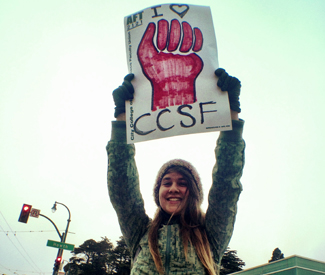
Mayor

Who killed City College?

news@sfbg.com

The day City College of San Francisco heard it would close was the same day, July 3, that 19-year-old Dennis Garcia signed up for his fall classes.

With a manila folder tucked under his arm, he turned the corner away from the registration counter and strode by a wall festooned with black and white sketches of every City College chancellor since 1935, including a portrait of bespectacled founder Archibald Cloud. In a meeting room on the other side of that wall, the college’s current administrators were receiving the verdict from the Accrediting Commission for Community and Junior Colleges.

It was their worst fears of the past year realized: City College’s accreditation was being revoked. Accreditation is necessary for the college to receive state funding, for students to get federal loans, and for the degree to be worth more than the paper it’s printed on.

Unbeknownst to Garcia, he walked out of the building just as the college received its death sentence, which is scheduled to be carried out next July unless appeals now underway offer a reprieve. In the interim, CCSF will essentially be a ward of the state, stripped of the local control it has enjoyed since Cloud’s days.

Just a few blocks down Ocean Avenue is the nerve center of City College’s teachers union. Housed in a flat above a Laundromat, the scent of freshly washed clothes wafted up the staircase to an office that instantly became a flurry of ringing phones and rushed voices.

Only an hour later, 10 or so union volunteers were calling their members, contacting nearly 1,600 City College faculty whose responses ranged from sad to furious. The volunteers read them bulleted factoids about accreditation and a call to join an upcoming protest march.

But the woes of City College reach deeper than a three line script could ever cover, and can be traced back to the oval office itself, leading to a really odd question: Did President Obama kill City College?


PRESSURE FROM THE TOP

When the president trumpeted education in his 2012 State of the Union speech, he sounded an understandable sentiment. “States also need to do their part, by making higher education a higher priority in their budgets,” Obama told the nation. “And colleges and universities have to do their part by working to keep costs down.”

But the specifics of how to cut costs were outlined by years of policymaking and a State of the Union supplement sheet given to the press.

The president’s statement said that they will determine which colleges receive aid, “either by incorporating measures of value and affordability into the existing accreditation system; or by establishing a new, alternative system of accreditation that would provide pathways for higher education models and colleges to receive federal student aid based on performance and results.”

The emphasis is ours, but the translation is very simple: College accreditation agencies can either enforce the administration’s numbers-based plan or be replaced. The president’s college reform is widely known and hotly debated in education circles. Commonly known as the “completion agenda,” with an emphasis on measurable outcomes in job placement, it had its start under President George W. Bush, but Obama carried the torch.

The idea is that colleges divest from community-based programs not directly related to job creation or university degrees, and use a data measurement approach to ensure two-year schools transfer and graduate students in greater numbers. “Community colleges” would quickly become “junior colleges,” accelerating a slow transition that began many years ago.

But its critics say completion numbers are screwy: They discount students who are at affordable community colleges just to learn a single skill and students who switch schools, administrator Sanford Shugart of Valencia College in Florida wrote in an essay titled “Moving the Needle on College Completion Thoughtfully.”

Funding decisions made from completion numbers affect millions of students nationwide — and CCSF has now become the biggest laboratory rat in this experiment in finding new ways to feed the modern economy.

“I think there was a general consensus that the country is in a position that, coming out of the recession, we have diminished resources,” Paul Feist, spokesperson for the California Community College Chancellor’s Office, told us. “Completion is important to the nation — if you talk to economic forecasters, there’s a huge demand for educated workers. Completion is not a bad thing.”

Like dominoes, the federal agenda and Obama’s controversial Secretary of Education Arne Duncan tipped the Department of Education, followed by the ACCJC, and now City College — an activist school in an activist city and an institution that openly defied the new austerity regime.


WINNING THE BATTLE

In the ACCJC’s Summer 2006 newsletter, Brice Harris — then an accreditation commissioner, now chancellor of the state community college system — described the conflict that arose when colleges rallied against completion measurements established by the federal government.

“In the current climate of increased accountability, our regional accrediting associations find that tight spot to be more like a vice,” Harris wrote.

Many of the 14 demands the ACCJC made of City College trace back to the early days of Obama’s administration, when local trustees resisted slashing the curriculum during the Great Recession.

“There’s a logic to saying ‘We don’t want to put students on the street in the middle of a recession,'” said Karen Saginor, former City College academic senate president. “If you throw out the students, you can’t put them in the closet for two years and bring them back when you have the money.”

And they have a lot of students — more than 85,000. Like all community colleges in California, the price of entry is cheap, at $46 a unit and all welcome to attend. But since 2008, the system was hammered with budget cuts of more than $809 million, or 12 percent of its budget.

So programs were cut, including those for seniors, ex-inmates re-entering society, or young people enrolling to learn Photoshop or some other skill without committing to a four-year degree.

“As the recession hit, the Legislature instructed the community college system [to] prioritize basic skills, career technical, and transfer,” Feist said. “That’s to a large extent what we did. That was the reshaping of the mission of that whole system.”

It’s easy to cast the completion agenda as a shadowy villain in a grand dilemma, but as Feist or anyone on the federal level would note, people were already being pushed out of the system, to the tune of more than 500,000 students since the 2008-09 academic year due to the budget crisis. Course offerings have been slashed by 24 percent, according to the state chancellor’s office.

But City College would only go so far. Then-Chancellor Don Q. Griffin raised the battle cry against austerity and the completion agenda at an October 2011 board meeting, his baritone voice sounding one of his fullest furies.

“It was obvious to me when I heard Bush … and then Obama talking about the value of community colleges … they’re going to push out poor people, people of color, people who cannot afford to go anywhere else except the community college,” he said.

But when it came to paying for that pushback, things got tricky.

“No more of this bullshit, that we turn the other way and say it’s fine. We’re going to concentrate the money on the students,” Griffin said at a December 2011 board meeting. “You guys are talking about cutting classes, we don’t believe in that. Cut the other stuff first, cut it until it hurts, and then talk about cutting classes.”

So he slashed his own salary and lost staff through attrition and other means. The college had more than 70 administrators before 2008, and it now has fewer than 40.

“Since the recession in 2009, we’ve been seen as the rebels,” said Jeffrey Fang, a former student trustee on City College’s board. “When most of the colleges went and made cuts in light of the recession, we decided to find ways to keep everything open while doing what we could to eliminate spending.”

But those successes in saving classes put City College on a collision course with its accreditor.


LOSING THE WAR

Seven years ago, the ACCJC found six deficiencies that it asked City College to fix, finding it had too many campuses serving too many students, fiscal troubles, and hadn’t enforced measurement standards. Last year, it faulted City College for resisting those changes and tacked on eight additional demands, threatening to revoke its accreditation.

Speaking on condition of anonymity, an official who worked closely with ACCJC as a member of one of the visiting accreditation teams told us there was pressure to crack down on all the Western colleges.

“The message they’re hearing from (ACCJC President) Barbara Beno is that Washington is demanding, ‘Why are you not being more strict with institutions with deficiencies that have lasted more than two years [and taking action] to revoke their accreditation?'” the source said.

This official said this may soon ripple to other accreditation agencies. “What’s anomalous about California is we’re getting to where everyone will be in a few years.”

The ACCJC’s next evaluation is this December, where it will be reviewed by the Department of Education. It wants to be ready, says Paul Fain, a reporter for Inside Higher Ed, a national trade publication.

“Washington writ large … is pushing very hard on accreditors to drive a harder line,” Fain told us. “There’s a criticism out there that accreditation is weak and toothless.”

The U.S. Department of Education declined to comment on the issue, saying only that it will formally respond to all officially filed complaints about ACCJC.

But the numbers speak volumes. As an ACCJC newsletter first described federal pressure back in 2006, seven community colleges in California were on probation or warning by the ACCJC. By 2012 that number leapt to 28.

But the California Federation of Teachers is fighting back, and recently filed a 280-page complaint about the ACCJC with the Department of Education.

The allegations were many: Business conflict of interest from a commission member, failure to adhere to its own policies and bylaws, and even the commission President Beno’s husband having served on City College’s visiting team, which the unions said is a clear conflict of interest.

Some people think it’s a waste of time, that City College has already lost.

“That process of fighting accreditation won’t succeed, it just forestalls the problem,” said Bill McGinnis, a trustee on Butte College’s board for over 20 years. He’s also served on many ACCJC visiting teams.

But the unions are making some headway. The Department of Education wrote a letter to the ACCJC telling them to respond in full to the complaints by July 8, as this article goes to press. The accreditor will soon be the one evaluated.


WHAT’S NEXT?

In the meantime, City College has exactly one year to reverse its fortunes: The loss of accreditation doesn’t actually kick in until July, 2014. A special trustee appointed by the state will be granted all the powers of the locally elected City College Board of Trustees to get with the federal program. Without voting power, the elected body is effectively castrated.

No one knows what that will mean for the college board, not even Mayor Ed Lee, who issued a statement supporting the state takeover and criticizing local trustees for not cutting enough. “The ACCJC is fundamentally hostile to elected boards and they’ve made that clear,” City College Trustee Rafael Mandelman told us. “The Board of Trustees should and may look at all possible legal options around this.”

Although officials say classes will proceed as normal for the next year, some aren’t waiting around to see if City College will survive.

At its last board meeting, the CCSF Board of Trustees grappled with how to address dwindling enrollment. As news of its accreditation troubles spread, City College has been under-enrolled by thousands of students, exacerbating its problems. Since the state funds colleges based on numbers of students, City College’s funding is plummeting by the millions.

A frightening statistic: When Compton College lost its accreditation in 2005 and was subsequently absorbed by a neighboring district, it lost half its student population, according to state records.

Even the faculty is having a hard time hanging on, said Alisa Messer, the college’s faculty union president.

“People are looking for jobs elsewhere already. Despite everyone’s dedication to see the college through, it has tried everyone and stretched them to the limit,” she told us.

The college has two hopes — that the CFT wins its lawsuit and can reverse the ACCJC decision, or that the new special trustee can somehow turn the college around by next July. But either way, something will be lost. “City College is definitely changing,” Saginor said. “What it will change into, and if those changes will be permanent, that I don’t know.”
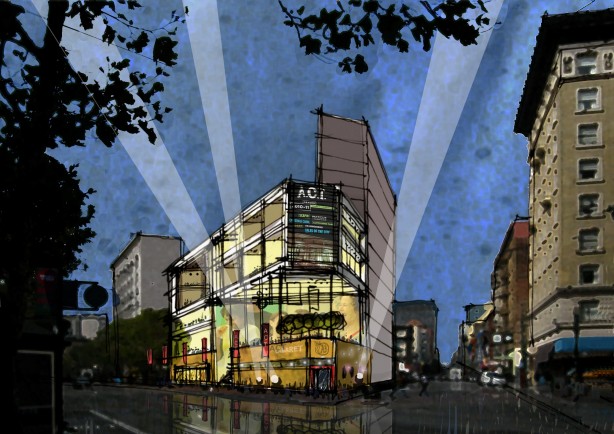
In tech-dominated Mid-Market, arts center beats the odds

Is there a place for community theaters and nonprofit arts and education programs in pricey San Francisco? The 950 Center for Art and Education, a project that will be housed on the corner of Market and Turk streets in San Francisco, has gained a foothold against the odds.

Two years in the making, the center will provide permanently affordable performance facilities for the Lorraine Hansberry and Magic theaters, and create affordable space for art education organizations including Youth Speaks, the American Conservatory Theater and All Stars Project. Other groups, such as Lines Ballet, the Tenderloin Boys and Girls Club and others previously unsure whether they could continue to rent in the Tenderloin/SoMa area will get the chance to expand their performance and programming capabilities at the center.

Because the neighborhood is in such high demand in the wake of recent tax breaks and incentives designed to bring tech businesses to SF, it took the Tenderloin Economic Development Project, a part of the North of Market Neighborhood Improvement Corporation, at least two years to secure the property for the arts and education complex. Until very recently, the project’s fate was hanging in the balance, with many groups uncertain whether they would be able to remain in the city.

Three-quarters of the project space that TEDP had long set its sites on is located at 970 Market, and was initially owned by Lone Star, a Texas-based hedge fund. The remaining project space, at 950 Market, was under the ownership of the Thatcher family, known for philanthropy.

Initially, TEDP “had a deal with the hedge fund,” says TEDP director Elvin Padilla, but after property values rose, “they basically walked away from the negotiating table. The crisis moment was, who’s going to control the land – and will they collaborate with us?”

Padilla credits Gladys Thatcher, founder of the San Francisco Education Fund, as “the reason we decided to make the attempt [to acquire these spaces for the 950 Center] in the first place.” 

When TEDP first pitched the idea to her several years ago, “she gave us her blessing we decided to make a go of it,” he explained.

Thatcher is trustee and former board member of the San Francisco Foundation, which worked alongside TEDP and the Rainin Foundation to secure the lion’s share of the land needed for the 950 Center, by facilitating a purchase of the 970 Market Parcel from Lone Star.

On June 7, the property was transferred from Lone Star to Group I, a San Francisco-based real estate development firm that Thatcher is friendly with. Now that the sale has gone through, the space will be devoted to the arts and education programming that TEDP had long envisioned. The San Francisco Foundation plans to facilitate development of the center through the creation of a new sponsoring organization that will be housed at Community Initiatives, a nonprofit. 

While he is grateful for the community support, Padilla likened their quest to gain 970 Market to a climb up Mt. Everest.

A 2011 payroll tax exclusion zone introduced by Mayor Ed Lee vastly increased the property value in the mid-Market area. Although Lee had a soft spot for the 950 Arts and Education Center and even organized events to support bringing that use to mid-Market, his new policy left the project facing an uncertain future in a suddenly pricey strip along Market Street. “He doesn’t have any real authority over private sector transactions,” Padilla says, so all the Mayor could do was stipulate the city’s interest in using this land for “arts and education.”

The city doesn’t offer public funding for projects like 950 Center for Arts and Education. To “subsidize on the front end,” as Padilla puts it, the center will have to rely on the backing of individual investors, philanthropic groups and new market tax credits to reduce and eliminate the debt entirely, so the organizations that will be housed at the center don’t have to carry a mortgage.

In the end, it was only through the efforts of wealthy and connected individuals that plans for the center were nailed down rather than extinguished. “Mid-Market is going through a very rapid transformation,” says Dr. Sandra R. Hernández, Chief Executive Officer of the San Francisco Foundation. “We’re just lucky that Group I, the developer, shares this vision with us for an arts center.”

Looking back on the years of effort it took to piece the plan together, Padilla noted, “When we started this, it was before the tech boom. Now, the pressure on the real estate is many times what it was when we conceptualized the 950 project.” 

That uncertainty finally came to an end for Padilla’s organization when Group I closed the deal with Lone Star on June 7. “That really [did] start the project officially,” Hernández says. “We’re now working with a number of the organizations that have expressed interest in having permanent space or accessible space for their programming or rehearsals for their theater production.”

Celebrating independence, embracing wage slavery

50

On the eve of Independence Day, too many San Franciscans seem eager to give up on the very idea of independence, instead willingly buying into the divide and conquer strategies of those who seek to control and exploit us. Just consider the big news of the day.

On Day Three of the BART strike, mainstream and social media are once again awash with angry anti-union diatribes by people who are resentful of the fact that some workers in this society still manage to earn the pensions and decent salaries that most of us wage slaves are being denied.

Pensions are the one thing that allows the working class some degree of independence during its twilight years. And the average BART salary of $72,000 annually shouldn’t be considered excessive in an expensive city that will chew up at least a third of that in housing costs.

But they are each more than most of us are getting, so it’s easy to turn many people against their fellow workers, even though the real targets of our ire should be the bosses and economic system that are denying us our independence and the means to pursue our happiness.

It’s a similar story with the breaking news of the day: City College of San Francisco losing its accreditation and being turned over to state control. While there are some reasons to criticize how this important institution has been managed over the years, it was still being managed by locally elected trustees who made the best decisions they could under bad circumstances.

They made decisions to maintain a broad-based curriculum that this community wanted and needed, and to avoid exploiting the faculty like so many other educational institutions are doing, in the process taking a gamble with lower reserves than may be needed. And the voters of San Francisco stepped up to support CCSF with a parcel tax that was helping to ease it away from the brink, acting as a proud and independent community does during troubled times.

But a commission of unelected bureaucrats on a ideological mission to transform educational institutions into something less than the broad-based community resources that CCSF has strived to be decided to make an example of San Francisco. And they did so with the full support of Mayor Ed Lee, who issued a statement today criticizing local officials for not embracing even harsher austerity measures than they did, and saying “I fully support” the state takeover.

Lee’s hand-picked panel recommending reforms of the Housing Authority is also proposing to sacrifice the independence of poor San Franciscans in favor of ever-more subsidies to real estate developers, according to a story in today’s San Francisco Chronicle.

Among the “reforms” is a proposal to divert federal money from the Section 8 program that offers rent-subsidies to the poor, as Chron reporter John Cote described like this: “A terribly run program that provides low-income residents with vouchers for private housing would be administered by the city, rather than the federally funded public housing agency. The vouchers would be prioritized for certain affordable housing projects, creating dedicated revenue to help secure loans to build them.”

So the vouchers that allow low-income people some independence — rather than living in squalid, chronically mismanaged public housing projects in San Francisco — will instead subsidize development projects. Yes, we do need to subsidize affordable housing development, which this city is underfunding, but we shouldn’t be taking the meager resources of society’s least fortunate families to do so.  

I have no doubts that Lee will jump at this suggestion (although its unlikely to be so eagerly embraced by federal regulators at HUD) given his penchant for shady real estate schemes that line the pockets of the powerful, like the one that the Center for Investigative Reporting uncovered this week.

CIR reported that the San Francisco Bay Area Regional Center — a for-profit company connected to Willie Brown that is arranging immigration visas for Chinese nationals who invest in Lennar’s Hunters Point housing development — is getting key help from Lee and members of his staff.

This project was already looking like a bait-and-switch scam, as we also reported this week, with Lennar being guaranteed profits without even putting up its own money, thanks to Lee’s willingness to use the power of his office to solicit funds on behalf of the country’s biggest residential developer.

If Lennar wasn’t going to build the affordable housing we need on the front end, or put up the money itself, why didn’t the city just administer this project and give the work to local contractors? What exactly is this Florida-based corporation doing in exchange for being handed some of the most valuable real estate in the city, except for helping its powerful local friends who pulled strings on its behalf?

What’s motivating Lee these days? Well, considering that Brown and other power brokers placed him in the Mayor’s Office after a career at City Hall doing their bidding — a role he seems to be still playing today in his powerful new role — I’d say it was a lack of independence.

It’s all pretty depressing, but at least we have a holiday tomorrow to celebrate our independence. Happy Fourth of July, comrades.  

The Fourth of July: Remembering the good old days in Rock Rapids, Iowa, circa 1940s to 1950s

0

By Bruce B. Brugmann

(Note: In July of 1972, when the Bay Guardian was short a Fourth of July story, I sat down and cranked out this one for the front page on my trusty Royal Typewriter. I now reprint it each year on the Bruce blog, with some San Francisco updates and postscripts.)

Back where I come from, a small town beneath a tall standpipe in northwestern Iowa, the Fourth of July was the best day of a long, hot summer.

The Fourth came after YMCA camp and Scout camp and church camp, but before the older boys had to worry about getting into shape for football. It was welcome relief from the scalding, 100-degree heat in a town without a swimming pool and whose swimming holes at Scout Island were usually dried up by early July. But best of all, it had the kind of excitement that began building weeks in advance.

The calm of the summer dawn and the cooing of the mourning doves on the telephone wires would be broken early on July Fourth: The Creglow boys would be up by 7 a.m. and out on the lawn shooting off their arsenal of firecrackers. They were older and had somehow sent their agents by car across the state line and into South Dakota where, not far above the highway curves of Larchwood, you could legally buy fireworks at roadside stands.

Ted Fisch, Jim Ramsey, Wiener Winters, the Cook boys, Hermie Casjens, Jerry Prahl, Elmer Menage, and the rest of the neighborhood gang would race out of  their houses to catch the action. Some had cajoled firecrackers from their parents or bartered from the older boys in the neighborhood: some torpedoes (the kind you smashed against the sidewalk); lots of 2 and 3-inchers, occasionally the granddaddy of them all, the cherry bomb (the really explosive firecracker, stubby, cherry red, with a wick sticking up menacingly from its middle; the kind of firecracker you’d gladly trade away your best set of Submariner comics for.)

Ah, the cherry bomb. It was a microcosm of excitement and mischief and good fun. Bob Creglow, the most resourceful of the Creglow boys, would take a cherry bomb, set it beneath a tin can on a porch, light the fuse, then head for the lilac bushes behind the barn.

“The trick,” he would say, imparting wisdom of the highest order, “is to place the can on a wood porch with a wood roof. Then it will hit the top of the porch, bang, then the bottom of the porch, bang. That’s how you get the biggest clatter.”

So I trudged off to the Linkenheil house, the nearest front porch suitable for cherry bombing, to try my hand at small-town demolition. Bang went the firecracker. Bang went the can on the roof. Bang went the can on the floor. Bang went the screen door as Karl Linkenheil roared out in a sweat, and I lit out for the lilacs behind the barn with my dog, Oscar.

It was glorious stuff – not to be outdone for years, I found out later, until the Halloween eve in high school when Dave Dietz, Ted Fisch, Ken Roach, Bob Babl, and rest of the Hermie Casjens gang and I made the big time and twice pushed a boxcar loaded with lumber across Main Street and blocked it for hours. But that’s another story for my coming Halloween blog.

Shooting off fireworks was, of course, illegal in Rock Rapids, but Chief of Police Del Woodburn and later Elmer “Shene” Sheneberger used to lay low on the Fourth. I don’t recall ever seeing them about in our neighborhood and I don’t think they ever arrested anybody, although each year the Lyon County  Reporter would carry vague warnings about everybody cooperating to have “a safe and sane Fourth of July.”

Perhaps it was just too dangerous for them to start making firecracker arrests on the Fourth – on the same principle, I guess, that it was dangerous to do too much about the swashbuckling on Halloween or start running down dogs without leashes (Mayor Earl Fisher used to run on the platform that, as long as he was in office, no dog in town would have to be leashed. The neighborhood consensus was that Fisher’s dog, a big, boisterous boxer, was one of the few that ought to be leashed).

We handled the cherry bombs and other fireworks in our possession with extreme care and cultivation; I can’t remember a single mishap. Yet, even then, the handwriting was on the wall. There was talk of cutting off the fireworks supply in South Dakota because it was dangerous for young boys. Pretty soon, they did cut off the cherry bomb traffic and about all that was left, when I came back from college and the Roger boys had replaced the Creglow boys next door, was little stuff appropriately called ladyfingers.

Fireworks are dangerous, our parents would say, and each year they would dust off the old chestnut about the drugstore in Spencer that had a big stock of fireworks and they caught fire one night and much of the downtown went up in a spectacular shower of roman candles and sparkling fountains.

The story was hard to pin down, and seemed to get more gruesome every year – but, we were told, this was why Iowa banned fireworks years before, why they were so dangerous and why little boys shouldn’t be setting them off. The story, of course, never made quite the intended impression; we just wished we’d been on the scene.  My grandfather was the town druggist (Brugmann’s Drugstore, “Where drugs and gold are fairly sold, since 1902″) and he said he knew the Spencer druggist personally. Fireworks put him out of business and into the poorhouse, he’d say, and walk away shaking his head.

In any event, firecrackers weren’t much of an issue past noon – the Fourth celebration at the fairgrounds was getting underway and there was too much else to do. Appropriately, the celebration was sponsored by the Rex Strait post of the American Legion (Strait, so the story went, was the first boy from Rock Rapids to die on foreign soil during World War I); the legionnaires were a bunch of good guys from the cleaners and the feed store and the bank who sponsored the American Legion baseball team each summer.

There was always a big carnival, with a ferris wheel somewhere in the center for the kids, a bingo stand for the elders, a booth where the ladies from the Methodist Church sold homemade baked goods, sometimes a hootchy dancer or two, and a couple of dank watering holes beneath the grandstand where the VFW and the Legion sold Grainbelt and Hamms beer  at 30¢ a bottle to anybody who looked of age.

Later on, when the farmboys came in from George and Alvord, there was lots of pushing and shoving, and a fist fight or two.

In front of the grandstand, out in the dust and the sun, would come a succession of shows that made the summer rounds of the little towns. One year it would be Joey Chitwood and his daredevil drivers. (The announcer always fascinated me: “Here he comes, folks, rounding the far turn…he is doing a great job out there tonight…let’s give him a big, big hand as he pulls up in front on the grandstand…”)

Another year it would be harness racing and Mr. Hardy, our local trainer from Doon, would be in his moment of glory. Another year it was tag team wrestling and a couple of barrel-chested goons from Omaha, playing the mean heavies and rabbit-punching their opponents from the back, would provoke roars of disgust from the grandstand. ( The biggest barrel-chest would lean back on the ropes, looking menacingly at the crowd and yell, “ Aw, you dumb farmers. What the hell do you know anyway? I can beat the hell out of any of you.”   And the crowd  would roar back in glee.)

One year, Cedric Adams, the Herb Caen of Minneapolis Star-Tribune, would tour the provinces as the emcee of local  variety shows. “It’s great to be in Rock Rapids,” he would say expansively, “because it’s always been known as the ‘Gateway to Magnolia.” (Magnolia, he didn’t need to say, was a little town just over the state line in Minnesota which was known throughout the territory for its liquor-by-the-drink roadhouses. It was also Cedric Adams’ hometown: his “Sackamenna,” as Caen would say.  Adams kissed each girl (soundly) who came on the platform to perform and, at the end, hushed the crowd for his radio broadcast to the big city “direct from the stage of the Lyon County Fairgrounds in Rock Rapids, Iowa.”

For a couple of years, when Rock Rapids had a “town team,” and a couple of imported left-handed pitchers named Peewee Wenger and Karl Kletschke, we would have some rousing baseball games with the best semi-pro team around, Larchwood and its gang of Snyder brothers: Barney the eldest at shortstop, Jimmy the youngest at third base, John in center field, Paul in left field, another Snyder behind the plate and a couple on the bench. They were as tough as they came in Iowa baseball.

I can remember it as if it were yesterday at Candlestick, the 1948 game with the Snyders of Larchwood. Peewee Wenger, a gawky, 17-year-old kid right off a high school team, was pitching for Rock Rapids and holding down the Snyder artillery in splendid fashion. Inning after inning he went on, nursing a small lead, mastering one tough Larchwood batter after another, with a blistering fastball and a curve that sliced wickedly into the bat handles of the right-handed Larchwood line-up.

Then the cagey Barney Snyder laid a slow bunt down the third base line. Wenger stumbled, lurched, almost fell getting to the ball, then toppled off balance again, stood helplessly holding the ball. He couldn’t make the throw to first. Barney was safe, cocky and firing insults like machine gun bullets at Peewee from first base.

Peewee, visibly shaken, went back to the mound. He pitched, the next Larchwood batter bunted, this time down the first base line. Peewee lurched for the ball, but couldn’t come up with it. A couple more bunts, a shot through the pitcher’s mound, more bunts and Peewee was out. He could pitch, but, alas, he was too clumsy to field. In came Bill Jammer, now in his late 30’s, but in his day the man who beat the University of Iowa while pitching at a small college called Simpson.

Now he was pitching on guts and beer, a combination good enough for many teams and on good days even good enough  to take on the Snyders. Jammer did well for a couple of innings, then he let two men on base, then came a close call at the plate. Jammer got mad. Both teams were off the bench and onto the field and, as Fred Roach wrote in the Reporter, “fisticuffs erupted at home plate.” When the dust cleared, Jammer had a broken jaw, and for the next two weeks had to drink his soup through a straw at the Joy Lunch cafe, John Snyder, it was said later, came all the way in from center field to throw the punch, but nobody knew for sure and he stayed in the game. I can’t remember the score or who won the game, but I remember it as the best Fourth ever.

At dusk, the people moved out on their porches or put up folding chairs on their lawns. Those who didn’t have a good view drove out to the New Addition or parked out near Mark Curtis’ place or along the river roads that snaked out to the five-mile bridge and Virgil Hasche’s farm.

A hush came over the town. Fireflies started flickering in the river bottom and, along about 8:30, the first puff of smoke rose above the fairgrounds and an aerial bomb whistled into the heavens. BOOM! And the town shook as if hit by a clap of thunder.

Then the three-tiered sky bombs – pink, yellow, white, puff, puff, puff. The Niagara Falls and a gush of white sparks.

Then, in sudden fury, a dazzling display of sizzling comets and aerial bombs and star clusters that arched high, hung for a full breath and descended in a cascade of sparks that floated harmlessly over the meadows and cornfields. At the end, the flag – red, white and blue – would burst forth on the ground as the All-American finale in the darkest of the dark summer nights. On cue, the cheers rolled out from the grandstand and the cars honked from the high ground and the people trundled up their lawn chairs and everybody headed for home.

Well, I live in San Francisco now, and I drive to Daly City with my son, Danny, to buy some anemic stuff in gaudy yellow and blue wrapping and I try unsuccessfully each year to get through the fog or the traffic to see the fireworks at Candlestick. But I feel better knowing that, back where I come from, everybody in town will be on their porches and on the backroads on the evening of the Fourth to watch the fireworks and that, somewhere in town, a little boy will put a big firecracker under a tin can on a wood porch, then light out for the lilacs behind the barn.

P.S. Our family moved in l965 from Daly City to a house in the West Portal area of San Francisco. There are, I assure you, few visible fireworks in that neighborhood. However, down at the bottom of Potrero Hill, the professional and amateur action is spectacular on the evening of the Fourth of July.

From any Potrero Hill height, you can see the fireworks in several directions: the waterfront fireworks in the city, fireworks on the Marin side of the Golden Gate bridge, fireworks at several points in the East Bay, fireworks along the Peninsula coast line.

And for the amateur action, parents with kids, kids of all ages, spectators in cars and on foot, congregate after dusk along Terry Francois Boulevard in San Francisco along the shoreline between the Giants ballpark and the  Mission Rock restaurant.

The action is informal but fiery, fast, and furious: cherry bombs, clusters, spinning wheels, high flying arcs, whizzers of all shapes and sizes. The cops are quite civilized and gingerly patrol the perimeter but don’t bother anybody. I go every year. I think it’s the best show in town. B3.

City College loses accreditation, throwing its future into doubt

79

City College of San Francisco will lose its accreditation, it was announced today, and the venerable local college may not survive. With its impending death, the future of thousands of San Franciscans seeking education and a better life are in limbo.

The loss of accreditation becomes effective in one year, and the decision is being appealed, during which time local control is being transferred to a state trustee. The California Community College Chancellor’s Office has not yet named the trustee that it will appoint, and officials say the trustee will be given full authority to make decisions in the place of the current Board of Trustees.

“I think state intervention is going to be necessary,” said Mayor Ed Lee told reporters this afternoon.

“It’s imperative City College stay open for business and education the 85,000 students it serves” Lee said in a conference call with reporters. “I’m concerned about the devastating impact City College’s termination would have on our great city.”

The long-awaited decision was expected sometime around this long holiday weekend, and officials knew losing the accreditation was a possibility, but most said privately that they didn’t think the Accrediting Commission of Community and Junior Colleges would actually pull the trigger. So right now, everyone is still reeling from the news.

“It’s too soon to say who that special trustee will be at that point,” State Community College Chancellor Brice Harris said. 

Locally elected Trustee Rafael Mandelman said that the locally elected board will continue operating until July of 2014, when the termination of the accreditation becomes effective, but it’s unclear what authority it will now have. 

“It’s disappointing, it’s outrageous, I don’t think it’s called for. I don’t think it’s the right outcome. I don’t think the state is going to do a better job running the school than a local board could,” he told us.

“We believe that the best way to bring the college from certain closure is to put the college under trusteeship of certain powers,” Harris said, adding that the search for a new chancellor for CCSF will now be accelerated. The current chancellor is an interim chancellor, the second one in a year after chancellor Don Griffin left the school due to an illness.

“We are disappointed in the Commission’s decision. We will be filing a request for review and will do everything in our power to have this decision reversed,” Chancellor Thelma Scott-Skillman said in a prepared statement. “What is of utmost importance at this time is that City College remains open, and instruction and services will continue. We want to assure our students and their families that we will serve them and continue to provide the high quality education that they expect from City College. We will continue to register new and returning students for the Fall semester and look forward to their arrival on campus in August.”

City College was put on sanction by the commission back in July of 2012 after allegedly failing to fix issues identified by the commission six years prior. Since then, the college has been in panic mode. 

The threat of closure brought drastic changes at whip lash speed over the past few months: two campuses shuttered, over 40 counselors and support staff were laid off, faculty took a 7 percent pay cut and student enrollment has plummeted.

Vice Chancellor of Administration and Finance Peter Goldstein put the college’s finances this way, “This has been a nightmare of a fiscal year.”

But there were positive improvements as well, said Alisa Messer, an English teacher and faculty union president of City College’s local AFT 2121. 

“Faculty have banded together and worked hard to address the requirements around student learning outcomes,” Messer said. SLOs, as they’re commonly known, measure student learning over the course of a class and in a student’s college career. 

“The accrediting commission felt it wasn’t integrated throughout the college, but they would be hard pressed to say it isn’t now,” she said.

Despite City College’s improvements the California Federation of Teachers is set on fighting the accreditation commission’s decision. They filed a massive 280-plus page complaint to the U.S. Department of Education alleging that the accreditation commission violated many of its own rules in evaluating CCSF.


The commission responded by locking out over 30 faculty and concerned citizens from its most recent public meeting, even barring a reporter from the SF Chronicle from entering.  

Now the commission has asked visiting accreditation teams, who evaluate colleges on site, to shred their documentation to make such complaints harder to research, which was originally reported on by the Chronicle of Higher Education.

“The work you do here is a position of trust, the documents you receive are given to you in that light.” said a faculty member who had served on prior accreditation teams, but did not wish to be named because they are not approved to speak on behalf of the accreditation commission. “When you’re done fulfilling your responsibility its good policy to dispose of them, and its the commission’s expectation.”

Some of the documents are proprietary information at for-profit colleges, such as Heald. It makes sense to protect that private information. The visiting team has “a look behind the curtain,” the faculty member said. 

But Messer isn’t buying it. “We’ve asked they be more transparent, they’ve done the opposite of that,” Messer said.

On the college’s Ocean campus, just outside the Chancellor’s office in a retro brown speckled hallway, Dennis Garcia walked by with his City College registration info in hand.

He’s ready for his next semester, and unlike the thousands of students that didn’t enroll in City College this year, he forged ahead.  

“I decided to come because I’m not scared or nervous about the school going down,” he said.

Garcia is an 18-year-old criminal justice major and SF native who dreams of transferring to San Francisco or San Jose State Universities. He wants to be a star soccer player while in school.

But why did he stay when so many others fled? 

“Why City College? It’s home,” he said. “People say, coming here is not successful, but I mean, sometimes you don’t have money and you’re not an A or B student, but you get your math and English done and you go from there. College is college.”

Now, whether City College remains a college this time next year is still an open question.


So now what?

0

EDITORIAL The scene at City Hall on Friday, June 28 could have been a video rewind of 2004’s Winter of Love: a surprise announcement granting same-sex marriage licenses; a breathless rush of couples to the civic altar, led by two brave, symbolic women (lesbian groundbreakers Del Martin and Phyllis Lyon in 2004 and anti-Prop 8 plaintiffs Kris Perry and Sandy Stier in 2013), a city erupting with good will and cheer, dazed by the speed of luck and history. Earlier, Lt. Gov. Gavin Newsom, teeth and hair and all, was making grand pronouncements, strutting about like he was mayor of the place again.

Back in 2004, the city was scarred and drained from the first great Internet bust, and still reeling from the losses of AIDS. San Francisco was a mess, but it was starting to recover. People who had been forced to move out by the city’s skyrocketing rents and evictions in the early 2000s were beginning to trickle back in, and many of those beached by the boom’s collapse were turning into the very freaks, artists, and innovators they had helped displace. When Newsom launched SF’s same-sex marriage rebellion, it was an act of great civic uplift, burnishing SF’s progressive image in the eyes of the world, while boosting the city’s self-confidence. (Not to mention its economy, which benefited greatly from the wedding explosion.)

The act also burnished Newsom’s own reputation. Previously reviled for his “Care Not Cash” policies that demonized the poor and homeless, a significant percentage of LGBTQ people among them, he was suddenly a posterboy for civil rights. Now of course, San Francisco is supposedly on the arc of an economic boom, skyrocketing evictions included, and not in the dregs of a bust. So it was with a regretful shudder that we noticed some more ominous similarities between 2004 and 2013.

A week before this year’s Pride, and right before the wave of marriage elation overtook the festivities, the city’s homeless census was released. Out of the total count of 6,436 homeless people, a figure emerged that stunned many: 29 percent of 1000 people specifically asked identified themselves as LGBTQ, and it’s assumed that the actual percentage of queer homeless people is in fact higher, due to factors like closeting and mental health. A large portion of LGBTQ homeless are youth, still drawn here by San Francisco’s promise of inclusion and shelter from abusive and rejective backgrounds.

While the city celebrates the achievement of grand ideals of equality, we are failing the very people for whom those ideals may be most valuable. Currently, Dolores Street Services, along with help from Sup. David Campos and the city’s “homeless czar” Bevan Dufty, is working towards the building of a 24-bed shelter specific aimed to service LGBTQ homeless people. But that’s just a drop in the bucket. We need much more.

Now that DOMA has been overturned and Prop. 8 kicked to the curb, there’s a lot of discussion about what the powerful, energized “gay lobby” should take on next. Righting the horrible Supreme Court decision gutting the Voting Rights Act and achieving marriage equality in 37 more states are valiant, necessary goals. But turning toward the actual problems in our own backyard is another imperative.

As the Pride celebration in the Civic Center was winding down on the evening of Sunday, June 30, a group of young women emerged seemingly out of nowhere among the trash-strewn streets and beeping trucks being loaded with the party’s massive detritus. The women quietly dispersed among the leftover crowd, hauling sacks of bread on their shoulders. They made their way toward those lying on the street or huddled in doorways, distributing loaves in a matter-of-fact manner to people in need. It was a perfect reminder of the real spirit of Pride — an inclusivity that benefits all, empowered by actions on a one-to-one, human scale.

Wedding bells and Pride protests

0

rebecca@sfbg.com ; steve@sfbg.com

The city of San Francisco was a complete whirlwind from June 26 to June 30. First came the historic Supreme Court ruling that ended the ban on same-sex marriage in California and struck down the discriminatory Defense of Marriage Act. The historic decision, handed down just before the city’s Pride festivities got underway and as a rare heat wave gripped the city, unleashed widespread celebration June 26, culminating with a rally and dance party in the streets of the Castro.

The Supreme Court ruled that the Defense of Marriage Act, which denies federal recognition of same-sex marriage, “is unconstitutional as a deprivation of the equal liberty of persons that is protected by the Fifth Amendment.” According to the majority opinion, “DOMA’s principal effect is to identify a subset of state sanctioned marriages and make them unequal.”

Hollingsworth v. Perry, the Prop 8 case, was dismissed on standing due to the fact that the State of California refused to defend it in court. That meant the previous ruling invalidating Prop 8, by Judge Vaughan Walker and upheld by the Ninth Circuit Court, was upheld.

City Hall was totally packed at 7am when the Court convened, with hordes of journalists, gay and lesbian couples, and sign-wielding activists in the crowd. Cheers erupted when the decision was announced striking down DOMA. When the Prop 8 statement came down, the room went nuts.

“It feels good to have love triumph over ignorance,” said Mayor Ed Lee, who joined Lt. Gov. Gavin Newsom in escorting a fragile Phyllis Lyon down the stairway. When Lyon married the late Del Martin, they became the first same-sex couple to get legally married in California in 2004.

“San Francisco is not a city of dreamers, but a city of doers,” Newsom said. “Here we don’t just tolerate diversity, we celebrate our diversity.” He thanked City Attorney Dennis Herrera and others who’d contributed to the fight to for marriage equality. “It’s people with a true commitment to equality that brought us here.”

When Herrera took the podium, he turned to Newsom, and said, “Now you can say, ‘Whether you like it or not!'” — a joking reference to Newsom’s same-sex marriage rallying cry, which some blamed for boosting the anti-same-sex marriage cause. “We wouldn’t be here today if it wasn’t for Gavin Newsom’s leadership,” Herrera continued. “I remember in 2004 when people were saying it was too fast, too soon, too much.” Herrera also pledged to continue the fight that began here in City Hall more than nine years ago: “We will not rest until we have marriage equality throughout this country.”

Later that afternoon, clergy from a variety of faiths including Christianity, Judaism, Islam, Buddhism and the Church of Latter Day Saints gathered on the steps of Grace Cathedral on Nob Hill for a buoyant press conference to celebrate the court’s rulings.

“For 20 years I’ve been marrying gay and lesbian couples, because in the eyes of God, that love and commitment was real, even when it wasn’t in the eyes of the state,” said Rabbi Michael Lerner of the Beyt Tikkun Synagogue. “We as religious people have to apologize to the gay community,” he added, for religious texts that gave opponents of gay marriage ammunition to advance an agenda of discrimination.

He added that the take-home message of the long fight for marriage equality is, “don’t be ‘realistic.’ Thank God the gay community vigorously fought for the right to be married — because they were not ‘realistic,’ the reality changed. Do not limit your vision to what the politicians and the media tell you is possible.”

Mitch Mayne introduced himself as “an openly gay, active Mormon,” which is significant since the Mormon Church was a major funder of Prop 8. He called it “one of the most un-Christlike things we have ever done as a religion,” but noted that the sordid affair had brought on “a mighty change in heart from inside the Mormon community, with greater tolerance than ever before,” with many Mormons going out and marching in solidary with gay and lesbian couples, he said.

Then on June 28, earlier than expected, the County Clerk started issuing same-sex marriage licenses. Kris Perry and Sandy Stier, plaintiffs in the case against Prop. 8, became the first of dozens of happy couples to be married at City Hall that evening, and the marriages continued in the days that followed.

And as if that weren’t enough excitement, it all happened before the weekend, when Pride festivities got underway. This year featured not only the official Pride parade and myriad performances, but also an “Alternative to Pride Parade,” signifying that a radical Pride-questioning movement has been reawakened in San Francisco.

“Have you had enough with the poor political choices of some community leaders that claim to represent you? Are you over the over-corporatizing of SF Pride? Or just tired of the same old events that don’t reflect who you are, and how you want to celebrate your queer pride?” organizers wrote in a statement announcing the event.

The parade itself, meanwhile, also featured some dissenters. The third annual Bradley Manning Support Network contingent swelled in ranks this year, due to the political maelstrom touched off when the Pride Board rescinded Manning’s appointment as Grand Marshal.

The Bradley Manning Support Network contingent attracted more than 2,000 supporters who marched to show solidarity with the openly gay whistleblower, comprising the largest non-corporate contingent in the Parade. Former military strategist Daniel Ellsberg, who leaked secret government documents known as the Pentagon Papers to the press in 1971, donned a pink boa and rode alongside his wife, Patricia, in a pick-up truck labeled “Bradley Manning Grand Marshal.” Patricia told the Bay Guardian, “There is something about the energy and triumph of this beautiful event … Just as the gays have made a tremendous difference with marriage, we have to do the same with wars and aggression” in U.S. foreign policy.

Pride’s legal counsel, Brooke Oliver — who resigned over the Pride Board’s handling of the Manning debacle — marched along with the Bradley Manning contingent. Bevan Dufty, former SF Supervisor and now the mayor’s point person on homelessness, stepped down as a Grand Marshal, also because of the Pride Board’s actions, but didn’t march with the contingent.

Nor were the Bradley Manning supporters the only protest contingent to take part in the parade. A group seized the opportunity to make a political statement by marching with a faux Google bus, an action meant to call attention to gentrification and evictions in San Francisco. They rented a white coach and covered it with signs printed up in a similar font to Google’s corporate logo, proclaiming: “Gentrification & Eviction Technologies (GET) OUT: Integrated Displacement and Cultural Erasure.”

Some trailed the faux Google bus with an 8-foot banner depicting a blown-up version of an Ellis Act evictions map. Others donned red droplets stamped with “evicted” to signify Google map markers, while a few toted suitcases to represent tenants who’d been sent packing. However, their ranks were thin in comparison with the parade contingents surrounding them, which included crowds of workers representing eBay, DropBox, and, of course, Google — the largest corporate contingent in the parade.

“The organizers of this anti-gentrification and displacement contingent are not ‘proud’ that folks are being kicked out of this city that was once their refuge,” organizers of the faux Google bus contingent wrote in a press statement. “The 2013 SF Homeless Count and Survey shows that 29 percent of the city’s homeless population is ‘LGB and other.’ The Castro is experiencing the highest number of evictions in the city. Meanwhile, the SF Pride Parade is becoming as gentrified as SF. This group is calling on Pride to remember its roots.”


City budget boosts homelessness spending, but not enough to meet demand

6

The city budget that is now awaiting approval by the Board of Supervisors includes new funding for individuals and families facing homelessness, but community advocates say it doesn’t devote enough of the city’s rebounding revenues to addressing this growing problem.

Last Thursday, the Board of Supervisor’s Budget and Finance Committee approved $2.4 million in “add-backs” to homeless services, on top of the $2.3 million that Mayor Ed Lee pledged to supplement the city’s initiatives to curb the burgeoning number of San Francisco’s individuals and families becoming homeless.

The committee’s proposed budget will go before the full Board of Supervisors’ for a vote this month, devoting at least $2 million for this fiscal year and $1 million the next in to continue the successful Homelessness Prevention and Rapid Re-housing (HPRP) program that provides eviction defense and rent and utility vouchers to residents at-risk of homelessness.

Other homelessness initiatives in the proposed budget include extending the Lower Haight First Friendship shelter for homeless families to a year-round schedule, permanent housing units at 5th and Harrison streets for transitional age youth, 33 Local Operating Subsidy Program (or LOSP) subsidies for low-income homeless individuals and families, and funding to construct 24 shelter beds for the City’s first LGBTQ-focused homeless shelter at Dolores Street Community Center.

But for many residents and families, these initiatives may not be enough to stay in their homes, or re-house themselves after becoming homeless. And as the rent prices continue to drastically rise in San Francisco as the city’s economy heats up, the search for affordable housing or shelter beds has become more and more desperate.

January’s point-in-time homeless count identified 6,436 homeless persons on the streets and in the shelters in the city, a majority of which became homeless as San Franciscans. The current number on the city’s wait list is 220 families with an expected wait of seven to eight months, according to the Human Services Agency, which runs the city’s homeless shelter system. This is slightly down from 268 families earlier this year, then the largest in city history.

As the Guardian reported recently, the number of eviction notices in San Francisco hit a 12-year high this year, indicating an increase in displacement that may compound the number of families on the emergency shelter waiting list.

Bevan Dufty, the mayor’s point person on homelessness, told the Guardian that “the city definitely is not seeking to expand the shelter system,” despite the near-record waiting list.

 “Yes, we have lost shelter beds in recent years, and the 24 we are adding at Dolores Street Community Services is a minimal number,” Dufty added. “But you have to have a toolbox to respond in different ways.” And Dufty claims that re-housing families through programs like HPRP services in the budget has been shown to be the best way to prevent homelessness.

In response, Jennifer Friedenbach of the Coalition on Homelessness told the Guardian that, although the $1 million of HPRP services did prevent 1,300 San Francisco households from becoming homeless last year, it only covered 15 percent of the city’s overall need based on the number of people seeking services through San Francisco’s Eviction Defense Collaborative.

When asked to respond to the Coalition’s estimate, Dufty replied that he could not comment on its accuracy, but he conceded that the HPRP funding is “certainly not going to satisfy all the need.”

Dufty stressed that the city has been able to reduce the number of homeless veterans and has responded to a noticeable outcry in the need for more transitional housing, especially from LGBTQ community activists. Although the version of the budget making it to the Board of Supervisor’s vote this month would not expand the homeless shelter system beyond the Dolores Street Community Services project, it would improve the city’s oft-criticized shelter reservation system for single adults.

Along with Dufty and the Mayor Lee’s support, Friedenbach advocated in the homeless community to change the current line-based system to a lotterized system run through the city’s 311 system.

“The current shelter waitlist system is really archaic,” Friedenbach told the Guardian. “People spend 17 hours a day trying to get a bed at night.” Mayor Lee proposed this change in his budget, especially so the indigent and elderly no longer have to stand for hours waiting in line for a bed.

Though Friedenbach acknowledges the positive in the budget initiatives, she pointed out that there is still only one shelter spot for every six homeless persons in San Francisco, and that she “doesn’t know what standard you can go by to say that is too much.”

The new revenue from November’s business tax reform measure, won through a ballot initiative pushed by on-the-ground community groups like the Coalition on Homelessness, should “go back to low-end communities who are hurt from years of reduced services in mental and public health,” Friedenbach said.

Last month, the Coalition on Homelessness and other advocates pushed the Budget and Finance Committee to double Mayor Lee’s proposed $1 million for HPRP for 2013-2014 and an additional 75 LOSP rental subsidies on top of the 25 the Mayor had already pledged. At its last meeting before the new fiscal year, the Budget and Finance Committee pledged an addition $1 million for HPRP, but only added eight new LOSP subsidies.

Friedenbach attributed the lower number to the city’s logistical problems of trying to find additional service providers for subsidies. The “add-backs” marked “a lot of progress for poor folks,” Friedenbach said, although the city will still have “a situation where a lot of money is coming in, but not trickling down.”

“San Francisco is at a critical juncture,” Friedenbach prefaced her public comment at a Budget and Finance hearing last month. “The influx of wealth is pushing the heart of the city—the working class and poor—out.”

The budget approved by the Budget and Finance Committee last Thursday will likely go to the full Board of Supervisors starting next week, July 9.

Community awaits benefits as Lennar finally breaks ground in Hunters Point

26

More than five years after San Francisco voters approved a massive redevelopment plan for the Hunters Point Shipyard and much the southeast part of the city — giving Lennar Corp., the country’s biggest home builder, the largest tracts of open land in the city — that project is now finally, slowly, getting underway.

But activists who have been following the project say the city is getting played by Lennar because of an agreement that lacks performance standards and has allowed the company to drag its feet to maximize its profits despite an affordable housing crisis in the city. And some community members say Lennar hasn’t lived up to promises of jobs and other benefits.

“The modus operandi of Lennar is bait and switch and delay,” Saul Bloom of Arc Ecology, who consulted on this development deal for the Redevelopment Agency before his contract was dropped in 2010 after publicly raising concerns, told us. Bloom and his firm have decades of experience analyzing complex development deals, and he has been tracking Lennar’s pattern of behavior around the country. 

Bloom said that when Lennar cut its initial deals with then-Mayor Willie Brown and other local officials in 1997, the company said it needed no external financing and that it would build housing affordable to Hunters Point residents, including rentals. Since then, the deal has gotten steadily better for the company and worse for San Francisco, and the groundbreaking date has been repeatedly pushed back.

“The city was not smart enough to build in liquidated damage and a performance schedule and that kind of thing,” Bloom said. “Lennar tells them what they want and the city tends to roll over, and there’s been no pushback.”

When Lennar ended up needing financing after all, the project stood by while a $1.7 billion deal with the China Development Bank Corp. was structured in 2012. Despite Mayor Lee personally participating in the quest for capital in China alongside the developer, the deal quickly collapsed. It is yet to be seen how Lennar will satisfy its commitments in the Bayview and at its separate Treasure Island site since the plug was pulled on the loan deal.

Lennar Urban Director of Community Affairs Cheryl Smith referred our questions to communications consultant David Satterfield of G.F. Bunting, who said that he passed them on to Lennar officials and, “They don’t have anything to say.” The Mayor’s Office also has not responded to our request for comment on the issues that Bloom is raising.

With a weak agreement and a lack of political will to push the company to expedite construction of affordable housing, Bloom said Lennar has simply waited for housing prices to increase and for other developers to lead the way in gentrifying Bayview Hunters Point before moving forward on the nearly 1,400 acres of land it controls in San Francisco — an area equivalent in size to the Presidio.

“Their incentive is to wait for the property values to rise…Lennar understands how much this land is worth,” Bloom said. “What Lennar has done is crafted a strategically smart box that the city is in.”

Yet after years of delays, the project did officially get underway last week (Wed/27), with a well-attended hilltop ceremony.  Mayor Ed Lee, former Mayor Willie Brown, District 10 Sup. Malia Cohen, and Cohen’s predecessor, Sophie Maxwell, joined Lennar Urban President Kofi Bonner to speak at the long-anticipated event.

Lennar’s local subsidiary, Lennar Urban, unveiled a master plan to convert the land to a brand new mixed-use community. At the ceremony, Brown remarked that “there is no other piece of soil that is as lucrative” as the Bayview Hunters Point peninsula and that it promises to be the “ideal place to live.”

The Hunters Point Shipyard, occupies roughly 500 acres of southeastern San Francisco and when taken together with neighboring Candlestick Point and parts of Bayview, it is the largest single tract of land in San Francisco designated for redevelopment. The other big redevelopment site in the city, Treasure Island, is also controlled by Lennar and its partners.

A former naval base, the shipyard was transferred to the city in 2004. Most naval operations there had ceased in 1974 and commercial uses declined in the 20 years that followed, steadily displacing black workers employed on the premises.

Affordable housing and job creation for neighborhood locals were two major stipulations in the ballot measure San Francisco voters approved in 2008. The “Bayview Jobs, Parks, and Housing Initiative,” however, entrusted that goal fulfillment almost wholly to Lennar and Bloom now questions whether that trust was well placed.

Phase 1 of the project will consist of construction of 1,400 new residential units in the shipyard, approximately 30 percent of which will one day be affordable housing. But Bloom said that Lennar has delayed construction of the affordable units until after much of the more lucrative market rate housing is done.

At the event, Bonner enthusiastically outlined the goal of having 800 of 1,100 market rate homes in this first phase constructed and occupied within 36 months time and Mayor Lee opened his remarks with the celebratory chant “Welcome to The Bayview! We need housing for everybody!”

But Bloom said that the city is rapidly gentrifying as Lennar waits to meet its affordable housing obligations, noting that the city was 11 percent African-American when Lennar cuts its first deal to develop Hunters Point in 1997, and that population is now 4 percent and falling.

Reconstruction of the Alice Griffith Public Housing Project will help Lennar to satisfy its affordable housing quota. Announcements of these plans garnered large applause from community activists in attendance, though they are slated for the project’s second phase, which likely won’t begin for years.

“They could build all of Alice Griffith on Parcel A, but they’re not going to do it,” Bloom said. “When is this community going to get what was promised to them?”

A group of picketers from Aboriginal Blackman United (ABU) was contained by SFPD at the bottom of the hill during the afternoon’s proceedings. As black town cars chauffeured officials to the event site, the protesters’ cries were drowned out by the music of Miles Davis playing from stage speakers.

ABU was protesting non-inclusive hiring practices at the shipyard site. Members, who were outnumbered by police 2-to-1, argued that they were being wrongfully barred access to the ceremony above and by the event’s conclusion, they had been relocated from the main intersection at Innes Avenue and Donahue Street to a side access road.

Job creation was trumpeted generally in the afternoon’s speeches, with Sup. Cohen applauding the public-private partnership between Lennar and Bayview organizations and Mayor Lee praising the project for “honoring labor and honoring local residents.” However, ABU’s founder and president, James Richards, said “we’re not getting the jobs or the contracts that the community people are supposed to get and that’s why we’re out here.”

Though ABU wants to see local residents of color placed in many of the new positions opening up, workers in the community have only been promised good faith consideration rather than actual job guarantees by the San Francisco Building and Construction Trades Council, which is in charge of staffing the project. Attempts to reach Michael Theriault, Secretary-General of the Council, were unsuccessful.

Bloom said Lennar has insulated itself from community criticism with an agreement that promises money to community groups that refrain from publicly criticizing Lennar or the project. He said Lennar has followed a similar pattern here as it has elsewhere, using its clout and political contacts to get lucrative redevelopment deals, then using delay and bait-and-switch tactics to make those projects more lucrative. He cited Lennar’s Mare Island project, which is now in bankruptcy, and its massive Newhall Ranch project north of Los Angeles.

In that latter deal, the California Public Employees’ Retirement System lost the $970 million it paid Lennar in 2007 for part of its stake in Newhall Land Development Co., which went bankrupt when the housing market crashed the next year. But Lennar built in an option to reclaim the shares, which a bankruptcy judge allowed Lennar to do in 2009 for just $138 million.

Bloom said that deal is typical behavior for a manipulative company that has a history of acting contrary to the public interest, but in which local political officials have given tremendous control over the city’s future.

“We remain skeptical about their commitment to getting it done,” Bloom said of the affordable housing that Lennar has promised. “What we’d like to see is some real action on the promises that were made to the public.”

Small Business Commissioners support Pet Food Express over local stores

34

San Francisco’s Small Business Commission has recently come under fire for its promotion of corporate interests and, most recently, advocating for an allegedly predatory pet store chain known as Pet Food Express.

In 2009, the Small Business Commission voted in favor of denying Pet Food Express’ application for a location on Lombard Street in the Marina District. Subsequently, the Planning Commission also denied the request, seemingly blocking Pet Food Express’ efforts to set up shop in the Marina. 

San Francisco’s formula retail legislation requires chain stores like Pet Food Express to apply for a conditional use permit in order to receive approval for opening new locations.

But now, Pet Food Express is back after recently filing another identical application with the SBC for the exact same spot on Lombard Street, and this time some members of the SBC are oddly supporting the chain.

As Pam Habel, owner of local Marina pet store Catnip & Bones, pointed out at the commission meeting on June 10, Pet Food Express already has a location on California Street just one mile away. At the same meeting, Susan Landry, owner of another Marina pet store, Animal Connection, added that nothing has changed in the past four years that would point toward the Marina community needing or wanting this Pet Food Express, since four pet-related stores exist within a mile of the proposed Lombard Street location.

“We were really surprised and disappointed that the commission no longer seemed to be an advocate of small business and even made comments indicating sympathy for the big chain pet store,” Habel and Landry, told the Bay Guardian jointly via email. “Commissioner Adams even said it seemed unfair to him to penalize a business that had started out small and now are being victimized for their success since they are one of the largest pet store chains in the U.S.”

So what has changed since 2009 that is now making the SBC consider supporting the proposed Pet Food Express? For one, Mayor Ed Lee’s corporate-friendly appointees to the SBC, including developer Luke O’Brien and President Stephen Adams, a manager for Sterling Bank & Trust.

Additionally, San Francisco Animal Care and Control Director Rebecca Katz lobbied for approval of the Pet Food Express while holding a blind Chihuahua adorned with a sweater at the June 10 meeting. Katz cited Pet Food Express’ many financial contributions to her agency as reasoning behind supporting the chain’s new location and expansion. According to Animal Care and Control spokeswoman Deb Campbell, Pet Food Express donates an estimated $50,000 to $70,000 in supplies annually to the city department.

“The more business Pet Food Express does, the more they grow and the more they give back to the community,” Katz told the Bay Guardian. “We take in about 10,000 animals a year on a budget of about $40 million.”

Kathleen Dooley, one of the SBC’s few existing members still in favor of promoting local business over big business, met Katz’s lobbying with criticism.

“She went up and lobbied for Pet Food Express and implied if it wasn’t for them no pets would be adopted and the animal world would be in chaos,” Dooley told the Bay Guardian. “They already have a number of stores in San Francisco, but they act as if this one on Lombard would change the tide.”

But Katz says that her public promotion of Pet Food Express is not lobbying. “I spoke to the Ethics Commission and they told me it is okay for me to talk about what Pet Food Express does for us,” said Katz.

Few of the arguments in favor of the Pet Food Express’s intrusion into the Marina actually acknowledge the store’s potential detrimental impact on the existing local businesses. Katz even publically said she thought it was ironic to protest another corporation coming into the Marina, where so many chain businesses already exist.

“The size of the Lombard location would allow for an adoption center which would have a huge impact,” said Katz. “Whereas residents have to drive to the California Street location, now they could walk.”

Unfortunately for local Marina businesses, the SBC, whose professed goal is to “work to support and enhance an environment where small businesses can succeed and flourish,” may be doing just the opposite by supporting a chain business that will undoubtedly endanger the many locally owned pet stores.

“As small businesses in San Francisco, we rely on the SBC as our voice at City Hall, not as a sympathetic voice for chain stores,” said Habel and Landry. “Because of their response last month, we no longer feel that we can look to the SBC to support small business in San Francisco.”

In her presentation before the commission, Landry drew an analogy to the previous opening of a Blockbuster on Lombard Street. Following the corporation’s entrance into the community, all four independent video stores in Cow Hollow closed within a year.

At the same meeting, Commissioner Mark Dwight acknowledged the predatory nature of Pet Food Express, who has sat on the same property for four years in order to continuously rally support in favor of the proposed location.

The pet supply stores in the Marina could face the same fate as the local video rental shops if Pet Food Express succeeds in opening on Lombard Street.

“When chain stores go in, commercial rents go up and the small mom and pop businesses are priced out of the neighborhood and replaced by even more chain stores as they are the only ones who, with their corporate structures, can easily afford high rents,” said Landry and Habel. “This is about more than one Pet Food Express application on Lombard, this is part of our battle to retain the heart and soul of our neighborhood commercial corridors.”

Supreme Court same-sex marriage decisions: DOMA invalidated, Prop 8 case dismissed, SF reacts [UPDATED]

27

Watch this space throughout the day for breaking news on the decision and reactions. Tonight there will be a celebration of the Court’s decisions at Castro and Market Streets at 6:30pm. (Join  the Guardian beforehand, 6-9 at the Pilsner in the castro, at its annual pre-Pride event.) 

DOMA INVALIDATED

The Supreme Court released its ruling this morning that the Defense of Marriage Act, which denies federal recognition of same-sex marriage, “is unconstitutional as a deprivation of the equal liberty of persons that is protected by the Fifth Amendment.”

“DOMA singles out a class of persons deemed by a State entitled to recognition and protection to enhance their own liberty,” according to the majority opinion. “DOMA’s principal effect is to identify a subset of state sanctioned marriages and make them unequal.” The Court voted 5-4, with Justice Kennedy, who wrote the majority opinion, as the decisive vote along the usual liberal/conservative lines. You can read the full opinion here

This means that same-sex marriages performed in states that have legalized such marriages will be recognized by federal law.  

PROP 8 DISMISSED ON STANDING

As for Hollingsworth v. Perry, the Prop 8 case, it was dismissed on standing, due to the fact that the State of California refused to defend the case that would uphold Prop 8 (which denied same-sex marriage).That meant private citizens were left to defend a state statute, which was unprecedented, and the Court refused to rule on those grounds.

We have never before upheld the standing of a private party to defend the constitutionality of a state statute when state officials have chosen not to. We decline to do so for the first time here,” the majority Court statement (which broke along the typical 5-4 line) said. That means there is no specific decision from the Court regarding Prop 8, and the previous ruling, by Judge Vaughan Walker and upheld by the Ninth Circuit Court, that invalidated Prop 8 as discriminatory, stands.

This may mean that same-sex marriages in California can resume as early as July.

You can read the full Prop 8 ruling here.

Scene this morrning at SF City Hall, with Mayor Ed Lee and Lt. Gov. Newsom. Photo by Dan Bernal.

[UPDATE] REACTIONS AT CITY HALL

Steven T. Jones reports from SF City Hall:

City Hall was totally packed at 7am when the US Supreme Court convened — tons of journalists, lots of couples, many signs in the crowd. Two screens were set up, one with a live blog from court chamber, the other with the CNN live feed. Huge cheers erupted at 7:11 when the decision was announced striking down DOMA and forcing the federal government to recognize the rights of same-sex married couples.  Then at 7:38, when the Prop 8 statement came down, the room went nuts. 

A moment later, an array of current and former city officials appeared at the top of the City Hall main staircase. Mayor Ed Lee and Lt. Gov. Gavin Newsom escorted a fragile Phyllis Lyon down the stairs — she, along with the late Del Martin, were the first same-sex couple to get legally married in California in 2004 — flanked by the rest of the city family, all with big smiles.

“Welcome to the people’s house of San Francisco,” Mayor Lee said, thanking the crowd “for sharing in this historic moment.”

“It feels good to have love triumph over ignorance,” he said.

At 7:44, City Attorney Dennis Herrera and Chief Deputy City Attorney Terry Stewart, who had been on the City Hall steps addressed reporters’ question on the legal details of the ruling, joined the crew to sustained applause as Lee recognized them. He then introduced Newsom, who in 2004 as San Francisco mayor allowed same-sex marriages to be performed, as “one person who used the power of this office to make history and show his love for the city.”

“San Francisco is not a city of dreamers, but a city of doers,” Newsom said. “Here we don’t just tolerate diversity, we celebrate our diversity.” He thanked Herrera and everyone who contributed to this moment. “It’s people with a true commitment to equality that brought us here.”

Newsom introduced Kate Kendall with the National Center for Lesbian Rights, who has led the coalition of groups that have push for marriage equality. She looked around the crowd and said, “Fuck you, Prop 8!”

The crowd roared, and she said that she had scanned the room for children, and promised to “put a dollar in the swear jar” if necessary. But she said that, “We have lived for too many years under that stigmatizing piece of crap.”

Then Herrera took the podium, turned to Newsom, and said, Now you can say, ‘Whether you like it or not!'” — a joking reference to Newsom’s same-sex marriage rallying cry, which some blamed for boosting the anti-same-sex marriage cause.

“We wouldn’t be here today if it wasn’t for Gavin Newsom’s leadership,” Herrera continued. ““I remember in 2004 when people were saying it was too fast, too soon, too much.”

But today, that long effort has been vindicated, Now, he said, “It’s about changing the hearts and minds of people and educating them.” He also pledged to continue the fight that began here in City Hall more than nine years ago: “We will not rest until we have marriage equality throughout this country.”

Gavin Newsom being interviewed inside City Hall. Photo by Steve Jones

Finally Stewart, who has argued cases related to San Francisco’s stand before both the US and California Supreme Courts, praised both the Prop. 8 and DOMA rulings and the precedents they set. “In the DOMA case decision, the Supreme Court expressed a stong equal protection philosophy…that will help legalize same sex marriage in other states.”

Three members of the Board of Supervisors were also invited by Kendell to address the huge City Hall crowd: Board President David Chiu and Sups. David Campos and Scott Wiener, the only two current supervisors who are gay.

Chiu noted that the bust of slain Sup. Harvey Milk is prominently positioned outside the Board Chambers, a reminder of the long struggle for gay rights that San Franciscans have led. “That work lives on today,” he said.

He added the hope that the work done here will ripple out of across the country because, he said, “As goes San Francisco, so goes California, so goes the rest of the country.”

Campos, an attorney who has long been in a committed relationship, said, “It’s a very emotional moment for those of us who are part of the LGBT community.” He said this Supreme Court ruling is the first time it has really acknowledged “that we are people and we have dignity,” and that the rulings sends a clear message to Congress that legislation like DOMA is unconstitionally discriminatory.

Wiener praised the resilience of the LGBT community, from the early days of enduring the AIDS crisis and fighting for federal support through the current campaign for marriage equality. And he cheered the fact that, “Those marriages that we see under the rotunda [in City Hall] will get a little more diverse.”

11:30 AM UPDATE: Style and substance

While Newsom strutted around like a proud peacock in front of City Hall — clearly the leading man in this epic story with the happy ending, much in demand by the television crews — Herrera and Stewart briefed various reporters on the details of the case that they had just won.

Gavin Newsom outside City Hall. Photo by Steve Jones.

“I wanted a merits ruling, but a standing ruling is a victory too,” Herrera told us, making the distinction between the court ruling that banning same-sex marriage is unconstitutional on the grounds of equal protection under the law — which it did not do — and the 5-4 ruling it did issue: that those who appealed the Ninth Circuit Court ruling invalidating Prop. 8 lack proper legal standing to do so.

The standing ruling leaves same-sex marriage opponents more wiggle room to argue that the ruling might only apply to the couples named in the suit, or in just the counties that took part, which also included Alameda and Los Angeles, positions they were already signaling in press statements.

But Herrera said that he would vigorously contest that kind of challenge, which he considers to be without merit, telling us, “The injunction is not limited in its scope.”

UPDATE: SFPD isn’t worried

Police Chief Greg Suhr, who attended the City Hall event, said the timing on the ruling during Pride Week couldn’t be better. “It’s nice that it all lined up for us,” he told us. “This town is going to rock ‘til the wheels come off.”

Asked whether he has any heightened security concerns about the Pride Parade in the wake of a ruling that is controversial to some, Suhr said that he’s not worried. He said SFPD is now fully staffed and all available personnel working this weekend, although he will try allow many of his gay and lesbian officers to join the celebration if they want.

“We’re going to police what’s likely to be the biggest party this city has ever seen,” Suhr said, adding that his policing philosophy is, “We plan for the worst and hope for the best.”


On pins and needles

3

steve@sfbg.com

[UPDATE: The Supreme Court has overturned DOMA and dismissed the Prop 8 case. Read our full coverage here.]

As San Francisco’s LGBT community and its supporters prepared for Pride Weekend, the whole city was anxiously awaiting the imminent US Supreme Court ruling on same-sex marriage. That case began here more than nine years ago when then-Mayor Gavin Newsom decided to let gay men and lesbians marry and the City Attorney’s Office launched a long and torturous legal battle.

The synchronous timing of the two events couldn’t be better. (Well, it could have been better for the Bay Guardian‘s deadline if the ruling has come out June 25, instead of when this issue will be hitting the streets on June 26, but you can read our full, live coverage here at sfbg.com tomorrow.)

LGBT activists are planning a massive rally at Castro and Market streets starting at 6:30pm on June 26, along with another performance stage at Market and 19th streets featuring Donna Sachet emceeing performances ranging from DJs to drag and other live performances, like an early start to an already packed Pride Weekend. (For more info, see www.dayofdecision.org.)

Of course, at press time it was still unclear whether we’ll see a joyous springboard for a raucous Pride that many are hoping for, with total victory and marriage equality becoming the law of the land; a bitter repudiation of LGBT rights reminiscent of Nov. 4, 2008, when the street celebrations over President Barack Obama’s election victory were tempered by frustration over voters approving Prop. 8 and banning same-sex marriage; or something in between.

The ruling will cap a see-sawing legal and political battle for which the City Attorney’s Office calculates it has written more than a half-million pages of legal briefings for more than 50 judges at various levels, including four trips before the California Supreme Court in four separate but related cases before making arguments to the US Supreme Court in March.

If the ruling doesn’t legalize same-sex marriage in California, activists say they’ll immediately return the struggle back into the political arena and use the momentum of the ruling (and the three states that legalized same-sex marriage this year, bringing the total to 12) to win at the ballot box (it would take a popular vote to undo Prop. 8).

If that happens, look for our own Sen. Mark Leno — who got the California Legislature to approve his legislation legalizing same-sex marriage, twice, only to have it vetoed by then-Gov. Arnold Schwarzenegger — to play a lead role.

“The only option is to re-amend the constitution to eliminate the discriminatory Prop. 8,” Leno told us. That measure could be placed on the 2014 ballot by either the Legislature or an initiative, which Leno said will be decision for the coalition of same-sex marriage supporters.

There are benefits and drawbacks to both options. Gathering signatures for an initiative is expensive, but that effort would also help launch the campaign to win over California voters. In the Legislature, four supportive Democrats will likely move to other offices this year, including a Senator and Assemblymember who are each joining the Los Angeles City Council, but Leno is still confident.

“We stand prepared with legislation already drafted to move forward with a bill if that’s what the coalition decides,” Leno said. “And we are confident we have the 27 votes we need [in the Senate], maybe even 28.”

City Attorney’s Office Press Secretary Matt Dorsey has been doing regular email briefings for journalists who are here from around the world, ready to report from the place where it all began as soon as the ruling comes down.

City Attorney Dennis Herrera, Chief Deputy City Attorney Terry Stewart, and their team are prepared to analyze the ruling as soon as it is released just after 7am (Pacific time) and to deliver the first press briefing on the steps of City Hall at 7:30-8am. Mayor Ed Lee, Newsom, and other officials will host a live viewing of the ruling at 7am in City Hall, following by their own press conference.

Dissecting the ruling could be a tricky task given that there at least four major scenarios that the ruling could trigger, each of those with lots of sub-scenarios that depend on the scope and details of the ruling. Everything for legalizing same-sex marriage across the country to a technical ruling that kicks it all back to a lower court are possible.

“In 10 years [working for the City Attorney’s Office], I’m never seen an outcome that could go in so many different directions,” Dorsey told us.

If the ruling invalidates Prop. 8, that decision would be formalized in about a month, then returning jurisdiction over the case to the Ninth Circuit Court of Appeal, which will then issue a formal notice of decision that gives it the force of law, according to a June 11 memo the City Attorney’s Office wrote for other city officials.

It notes, “Depending on how the Supreme Court decides the case, marriages could resume as soon as mid-to-late July.”

Sadik-Khan and her groupies urge bold action on the streets of San Francisco

8

San Francisco and our timid Mayor Ed Lee could learn a few things from New York City, where Mayor Michael Bloomberg and his Transportation Commissioner Janette Sadik-Khan — who became a national hero to urban cycling advocates while being villified by some in NYC — have quickly created hundreds of miles of new bike lanes and the nation’s biggest bike sharing program.

That was the enthusiastic (if more diplomatically worded) message delivered on June 20 during the San Francisco Bicycle Coalition’s annual Golden Wheel Awards, where Sadik-Khan gave the keynote speech to a large, rapt crowd. She was introduced by SFBC Director Leah Shahum and Municipal Transportation Agency Director Ed Reiskin, who almost upstaged Sadik-Khan and one another in their calls for San Francisco to take more aggressive action.    

“Cities need to try new things on their streets and public spaces,” Shahum said, echoing the message Sadik-Khan regularly delivers. “We need to try new things and we need to do it now.”

It was a message that became a mantra, as she repeated it again and again, urging the city to do more experimentation on the streets and less long analysis. Part of that is slowing down cars to “actually prioritize the safety and health of our citizens on every street in the city.”

Shahum and Reiskin both admitted being star-struck by Sadik-Khan, with Reiskin saying his intro was “like my teenaged daughter introducing Brittany Spears.” Shahum said she’s often guided by the acronym WWJSKD: What Would Janette Sadik-Khan Do?

Reiskin, a regular cyclist, told the story of moving to New York City in 1991, selling the last car he owned (cue the applause by the large crowd of cyclists), but that he didn’t bring a bike because at that time, the common thinking was, “Who’d be crazy enough to ride a bike in Manhattan?”

But in just the last few years, Sadik-Khan has led the transformation of New York City into one of the most bike-friendly cities in the country. “If she can do that there, why can’t we do that here?” Reiskin asked, later adding, “It’s phenomenal what’s happened there.”

He called Sadik-Khan a cross between famed urbanist Jane Jacobs and Robert Moses, who was responsible for more public development projects than any New Yorker. “She’s got the Jane Jacobs sensibility, but getting shit done like Robert Moses,” Reiskin said.

When Sadik-Khan took the stage, humbled by an introduction that she said could only be followed by turning water into wine, she gave credit for her accomplishments to the leadership of Mayor Bloomberg and the “unbelievable political courage” it took to build 350 miles of bike lanes in six years despite sometimes strong opposition.

In the process, Bloomberg and Sadik-Khan started an alternative transportation arms races of sorts, prodding Chicago, Washington DC, San Francisco, and other cities to also beef up their bike infrastructure. “I think it’s great that there’s this national competition on who can be the greenest,” she said, later adding, “The future of cities is the key to our planet.”

She showed slides of various streetscape improvements that she led, often replacing lanes of parked cars with protected cycle tracks, including along tony Prospect Park, which she called, “the most controversial piece of land outside the Gaza Strip” for the backlash and lawsuits it sparked.

“When you push the status quo, the status quo often pushes back on you,” she said.

What has given Sadik-Khan such rock star status in the urban cycling world is her willingness to tough out the criticisms and let the results speak for themselves, noting that if some idea doesn’t work, it’s usually fairly easy to undo. Yet she arrived armed with stats showing her approach works, for both bicyclists and the business community.

She fought through arguments that cycle tracks along 8th and 9th avenues would hurt business, and she said those same businesses report a 50 percent increase in revenue since they went in three years ago. Same thing on 1st Avenue, where commercial vacancies dropped 47 percent. Citywide, 70 new bike shops opened during the recession to serve a burgeoning population of cyclists in the city.

She also talked about her latest and greatest innovation, the CitiBike sharing program that offers more than 6,000 bikes at locations densely spread along the bike network throughout the city, all with no public funds involved. “We think density is destiny in this instance,” she said. By contrast, San Francisco has taken years to launch its anemic bike-sharing program with just 350 bikes.  

Sadik-Khan called bike sharing “a gateway drug” that encourages more urban cycling in cities around the country, with all the environmental benefits that creates. Her studies have shown the new bike network and sharing program have added an average of 15,000 new cyclists to the city each day, and that it’s become a major tourist draw.   

Some of her slides also showed how elegant some of the improvements have been, from the cycle tracks to the bike racks that have sprouted up all over the city. “We brought good design into the public realm,” she said, encouraging San Francisco, with his reputation for innovation and good design, to do the same thing. “You have such design talent in San Francisco and I look forward to seeing what you come up with.”

But as Sadik-Khan and Shahum both repeatedly emphasized, it takes bold political leadership that is also pushed by civic groups like SFBC and the public in general, prodding on timid elected officials. As Sadik-Khan said, “People are way far ahead of public officials in understanding what works.”

Indeed, two days later on the streets of San Francisco, bike activists demonstrated that reality, staging an amazing Bicycle Music Festival that drew thousands of people to Golden Gate Park for a day of music from its pedal-powered stages.

Then, from 5-6pm, a colorful crowd of more than 1,000 people mounted their bikes and followed lounge singer Jason Brock on a bike-pulled stage that wound through the city to the next stop for the festival in the Mission District, a sort of musical, organized Critical Mass that produced big grins on everyone involved.

Led by key festival organizer Fossil Fool and his Rock the Bike comrades, and taking a cue from Sadik-Khan and fervent supporters that she’s developed here and across the country, perhaps it’s still possible to create a parade that our leaders can be persuaded to step in front of.

WWJSKD?

Did the Hayes Valley Farm occupation help or hurt the cause of liberating urban space?

16

Did the recent activist occupation of a temporary urban farming plot help “liberate the land,” as they claimed, or might it actually make property owners less likely to allow community-based temporary uses on land awaiting development? And did the farmers of this once-fallow land inadvertently provide a new toehold to challenge a proposed housing project?

Promptly after Hayes Valley Farm ended its three-year stint to make way for long-planned housing that would be built on the lot, a group of activists (many from Occupy San Francisco) calling itself Liberate the Land took residency for nearly two weeks, renaming it Gezi Gardens in solidarity with protesters at Gezi Square in Turkey. At 2am on June 13, Gezi Gardens was raided by police and the activists ejected.

The rise and fall of Gezi Gardens has had some people within the San Francisco urban agriculture community questioning whether or not the occupation was helpful in promoting the cause for more green space in the city. For some involved in the urban agriculture community, the end of Hayes Valley Farm reflects a not-so-distant future for other green spaces in the community.

Pastor Megan Rohrer is executive director of Welcome: A Communal Response to Poverty and project coordinator for The Free Farm, a community garden on St. Paulus Lutheran Church’s land on Gough and Eddy Street. That plot, temporarily turned into green space with permission from the landlord, St. Paulus Lutheran Church, is scheduled to end its three-year stint in December to make way for housing construction, much like Hayes Valley Farm.

The Free Farm’s land will sprout a housing project with all low-income housing units, whereas the project being built on the Hayes Valley Farm site will have 40 low-income units out of 180 total condos. Regardless, the possibility of a similar situation to what happened with Hayes Valley Farm has Rhorer on edge.

“I have a nervous feeling that what happened with Hayes Valley Farm may happen with my garden. I just want everything to end smoothly and peacefully,” Rohrer said. “I respect what the Occupy folks are doing in bringing awareness, but feel that what they did was a little disingenuous. Since the start of Hayes Valley Farm, there was an understanding that condos would be built over it. It was going to happen eventually.”

Longtime San Francisco activist Diamond Dave Whitaker was one of the people that occupied Gezi Gardens. He’s not sure if the occupation will be prove helpful to the urban agriculture movement in San Francisco.

“I’m not sure. What I do know is that Gezi Gardens was one of the few wild spaces left here,” Whitaker said. “Not everything has to be done within the law. Time will tell if what happened there helped urban agriculture here.”

Katy Broker-Bullick, a site steward at the 18th and Rhode Island community garden, told us the occupation of Gezi Gardens served to spark a dialogue about green spaces in San Francisco.

“I appreciate what the Occupiers are doing at Hayes Valley Farm in so much as it draws attention to innovative, community-based green spaces in San Francisco, and serves to foster a balanced, open discussion of the function and importance of such sites for community connection and innovation in urban spaces,” Broker-Bullick said.

Assemblymember Phil Ting (D-SF) is also weighing in on the discussion of urban green spaces in the city. Although he does not have a stance on the occupation of Gezi Gardens, he has made strides in trying to make urban agriculture more accessible with San Francisco’s Urban Agriculture Incentive Zones Act, Assembly Bill 551. It calls for property owners to sign a contract that would zone their land strictly for agriculture for 10 years in exchange for decreased property taxes.

Ting doesn’t necessarily support those who occupied Gezi Gardens, but said this: “What I do believe is that we should be doing what we can to keep green spaces in San Francisco.”

Some groups in the city may respect what the Liberate the Lands attempts at occupying Gezi Gardens, but the politically active Hayes Valley Neighborhood Association wasn’t one of them.

On June 7, nearly a week before the raid of Gezi Gardens, HVNA President William Bulkley penned a letter to Mayor Ed Lee, pleading to end the occupation of that land: “The HVNA board of directors feels that the current situation on Parcels O and P places a health and safety risk to both the participants and our neighbors. We respectfully request that, as mayor, you direct your staff to take appropriate action in a swift and timely fashion.”

Yet Rohrer also said Occupy activists are a much-needed part of San Francisco’s urban agriculture community. “It’s because of the hard work from people who have been connected to Occupy that spaces, like the Free Farm, are running,”  Rohrer said. “We have a lot of Occupy folk who volunteer that put their hearts and souls into the soil.”

There are efforts to halt building on Gezi Gardens, though many of the people who had occupied the lot have “scattered to the wind,” Whitaker said.

Mona Lisa Wallace, an attorney working with Liberate the Land, is attempting to halt construction based on the grounds that an accurate environmental impact report was not done because the land was found to be exempt from a more current report. Wallace said the last report was done five years ago when Parcels O and P were classified as “disturbed land.” Since then, plants and wildlife have flourished on Hayes Valley Farm.

She said an appeal to the exemption from a current environmental impact report will be filed at the the Board of Supervisor’s office on Friday. “Over the years a habitat has been created for hummingbirds, bees, crows, and quail,” Wallace said. “The exemption from the environmental impact report does not free them from being in compliance with federal and state law.”


Tale of two cities

25

Interesting piece in the LA Times a few days ago, Our new mayor, Eric Garcetti, wants to bring raves back to Los Angeles. After the death of a 15 year old that snuck into the Electric Daisy Carnival event at the Coliseum, the raves have gone to Vegas, where they’re pulling in 100K in attendance. The mayor sees dollar signs in those numbers, not to mention OT for city employees that have been hurting the last five years from budget cuts. A sensible idea.

It got me to thinking, as these things do, about a more general policy of bringing lucrative businesses and events to LA. After all, downtown business rents are cheaper than New York or Tokyo and there is far more space here as well. The city’s soon to be highest high rise will be a Korean owned hotel, so LA has already demonstrated a cooperation with Asian interests that cannot be matched. Not by New York or any other American city, even those on the West Coast. Like Seattle, Portland or erm, San Francisco.

If Garcetti and the city council decided to offer up better deals for high-tech than exist 390 miles to the Northwest, there is precious little Mayor Lee could do to match. LA has a lot more money and of greater importance, much more space. 49 square miles cannot compete with 480 square miles. And with the Internet making high tech jobs doable anywhere, why wouldn’t tech start ups decide to opt for LA?

Let’s face it, San Francisco has priced itself right off the grid. For all of Mayor Lee’s tax incentives, the city is incredibly expensive to rent or buy in. It is still possible to find a decent 1 BR in Silver Lake or Eagle Rock or Highland Park for under 1200 a month–where is that in SF, Bayview (if at all)? And no 82K parking spaces or multi million dollar Manhattan sized condos either–for 3 million bucks, you can buy a reasonable property in the West Side’s swankest hoods–what does that get you in Pacific Heights?

LA is a very expensive city to live in by dint of car ownership as necessity and driving distances. It’s also nowhere near as pretty as San Francisco is. But as SF approaches Tokyo-like exclusivity, it would take very little to pry high tech firms south–where it’s always warm, the beaches and ski resorts both near and best of all–the entertainment business and its attendant pleasures and power are nearby. 

Let’s face it, SF has screwed up–their biggest business for eons is tourism and that would never change were the city not so insistant on wrecking same with crack downs on clubs and “1984”-like scare tactics. Los Angeles–with its money and power can offer incentives that Mr. Lee and his cromies could only dream of–and with a forward thinker like Garcetti at the wheel, this may be inevitable.


Guardian forum on Plan Bay Area draws big, engaged crowd

72

San Franciscans who want to help shape how this city grows — rather than just leaving it up to regional planners and market forces — packed a large conference room last night for a community forum presented by the Bay Guardian: “Whose Future? What Does the Regional ‘Plan Bay Area’ Really Mean for San Francisco?”

Moderated and organized by Guardian Editor/Publisher Tim Redmond, and co-sponsored by the Council of Community Housing Organizations (CCHO) and Urban Institute for Development and Economic Alternatives (UrbanIDEA), the session began with a overview of what’s now being planned for the San Francisco of 2040.

Gen Fujoika of the Chinatown Community Development Center said that Plan Bay Area, which is being jointly developed by the Association of Bay Area Governments and Metropolitan Transportation Commission (which will hold a hearing on the plan tomorrow, Fri/14, at 9:30am in Oakland), doesn’t pay for itself yet it will include strong incentives that will shape development in the region.

“It is in some sense a plan and I think we need to critique the hell out of that plan,” he said. “As we think of Plan Bay Area as a vision statement, we need to think about whether it’s our vision.”

As illustrated by the Plan Bay Area maps that the lined the walls of the LGBT Center conference room, the plan’s “priority development areas” that are slated for dense, streamlined development are also the same areas identified as “communities of concern” with vulnerable, low-income populations, making the plan a recipe for mass displacement.

Fujoika quoted a comment that Mayor Ed Lee made on Tuesday when asked by Sup. Eric Mar about the issue: “San Francisco has some of the toughest anti-displacements laws in the country.” While that may be true, Fujoika said that the plummeting numbers of African-Americans in the city and Plan Bay Area’s displacement projections for San Francisco show those laws simply aren’t up the challenge.

“If we have the toughest anti-displacement position in the country, then we are in some trouble,” he said, calculating that the affordable housing needed to prevent extreme gentrification in the city would total $6.8 billion, and that the affordable housing fund created by voters last year is only projected to raise $1.3 billion by 2030.

Fujoika said that he and the other panelists aren’t against growth and development, “but we are for equitable growth,” which would involve more community buy-in for the plan, more money for affordable housing and infrastructure needs, and more of the growth burden being shared by other Bay Area communities.

San Francisco Planning Commission Chair Cindy Wu cited growth projections for Chinatown as a good example of the problem, noting that is already a dense, complete neighborhood that would suffer from the greatly increased traffic that would be funneled through it and other negative impacts of unfettered growth.

“It’s not just growth for growth’s sake, it’s who gets to live there and who gets those jobs,” she said. Wu called for more community organizing around this and other development plans, citing as a good example the coalition-building that forced California Pacific Medical Center to agree to a multi-hospital project with far better community benefits than the deal it originally cut with the Mayor’s Office.

It was a point echoed by Maria Zamudio with Causa Justa, who said Plan Bay Area will worsen pressures that are already displacing the Mission District residents she works with, or forcing them to live in unsafe housing. “They’re going to push our families out of the city and maybe out of the region,” she said.

To combat the power that this plan and profit-minded property owners will exert over how San Francisco grows, San Francisco Labor Council President Mike Casey, head of UNITE-HERE Local 2, said that progressive San Franciscans will need to work cooperatively with organized labor, a relationship that has suffered during these tough economic times.

“Unfortunately, I think we’ve become alienated and marginalized from each other,” Casey said, calling on activists to not let differences over individual projects or issues interfere with solidarity over the larger, longer struggle for equity and justice.

“Not everyone agrees that a strong labor movement is the cornerstone of a more progressive vision,” Casey said, arguing that displacement of working class people from the city has a cascading effect in gentrifying the city. “The demographics of a city shape very much what the politics of protest look like.”

And those politics of protest will be more crucial than ever in resisting the demands that powerful capitalists will make on San Francisco in the coming years, a point that all seven panelists seemed to agree on.

Bob Allen of Urban Habitat said the planning research groups represented on the panel need to find ways to funnel more funding into grassroots organizing, both in San Francisco and regionally. Otherwise, we’ll see the “suburbanization of poverty,” with Plan Bay Area funneling the best jobs and most expensive housing into urban areas and leaving everyone else to fend for themselves in communities that don’t have the tenant protections and other hard-won social justice programs that San Franciscans have struggled for.

“Local control can be a way of saying ‘I don’t want black or brown people to live in my suburban community,” Allen said.

Ironically, Plan Bay Area is ostensibly driven by concerns over climate change and the argument that it’s better to concentrate development along transit corridors, which is why almost all of San Francisco and much of Oakland is proposed for development that would be given waivers from some California Environmental Quality Act scrutiny.

Yet the plan doesn’t fund the transit upgrades that would be needed to serve that growth or create restrictions on automobile use that might encourage more transit use. Instead, Fujoika said low-income people who actually use transit would be the diplaced in favor of wealthier residents who might not.

“Transit has become an amenity rather than a necessity,” Wu said.

The forum, which was attended by more than 130 people, included a lively discussion that involved dozens of audience members who offered their own views, ideas, and strategies for how to move forward. Among them was Brian Basinger of the AIDS Housing Alliance, who said that he is working with a coalition to reform the Ellis Act, which allows landlords to evict tenants from rent-controlled apartments.

“We could move this as early as January,” Basinger said of the reform legislation now being developed with allies in the Legislature, urging attendees to get involved.

After the audience discussion, the meeting closed with Peter Cohen of the CCHO summarizing the high points and getting people to sign up on lists that were circulated to be involved with next steps. And Rachel Brahinsky, a former Guardian staff writer who is now a professor at USF’s Leo T. McCarthy Center for Public Service and the Common Good, urged attendees to fight for San Francisco to remain inclusive and diverse: “San Francisco is the place it is because people have kept fighting.”

Everyone but Mayor Lee sees SF’s worsening “housing affordability crisis”

43

There was a clear theme that ran through yesterday’s Board of Supervisors meeting from beginning to end, something understood equally by renters, homeowners, and politicians from across the political spectrum: San Francisco has a crisis of housing affordability that is forcing people from the city.

And the only person who doesn’t seem to understand or care about that is the person with the most power to deal with the situation, Mayor Ed Lee, who opened the meeting by essentially dismissing both short- and long-term gentrification forces and claiming “our city has some of the toughest anti-displacement laws in the country.”

It was a claim that Lee made twice, first in response to a question by Sup. Eric Mar about Plan Bay Area and the massive displacement of current San Franciscans that it would create by 2040. And it was also how he answered a question by Sup. John Avalos about rents that are now skyrocketing beyond what most San Franciscans can afford.

I followed Mayor Lee back to his office, asking him to explain his claim, and he cited the city’s “elaborate” rent control laws and the Rent Board recently hiring new personnel as he briskly retreated toward his office. But surely he’s aware that displacement is already happening and getting worse, I told him, citing Rent Board figures showing that evictions are now at a 12-year high.

Lee looked at me dubiously and said, “I’ll have to check the figures on that.” I followed up today with Press Secretary Christine Falvey to ask whether Lee did check those figures — which show 1,757 evictions in the last year, up from 1,395 the previous, both numbers representing returns to the mass displacement of the last dot-com boom — and I’ll update this post if/when I hear back.

“It shows he’s out of touch with what’s happening in San Francisco,” Avalos told me in response to the mayor’s remarks.

Lee seemed to bristle at the suggestion that his aggressive economic development policies might have a downside that he’s going to have to deal with at some point. He touts the 44,000 jobs the city has added during his mayoral tenure, even deflecting criticism that he’s too focused on the technology industry by citing estimates that every tech job creates at least four other jobs (seemingly oblivious to the fact that most of these are low-wage service sector jobs, the very people who are being forced from the city).

“I’m just hoping you’re not blaming the 44,000 jobs we helped created,” Lee told Avalos, saying that he understands the concern about the rising cost of living, “but those are 44,000 people drawing a paycheck and taking care of their families.”

Yes, Mr. Mayor, but those paychecks are having an increasingly tough time paying for housing in San Francisco. That concern animated the condo conversion debate that took place later in the meeting, voiced by those focused on the lack of affordable homeownership opportunities and those focused on reducing the city’s rental stock to create those opportunities.

“I don’t think saying ‘it’s good that we have a growing economy’ is enough to address the issue,” Sup. David Campos said during the condo debate, referring to Lee’s earlier remarks.

Speaking near the end that discussion, Campos summarized the concerns expressed by both sides and sought to put the legislation into perspective: while important, the condo deal is a drop in the anti-displacement bucket. “We are only dealing with the issue of affordability in San Francisco on the margins,” he said, later adding, “I don’t think we’re doing enough to deal with the fundamental issue of who gets to live in San Francisco.”

The debate on the condo conversion began with its original author — Sup. Mark Farrell, who represents District 2, the wealthiest and most conservative in the city — explaining his desire to help middle class people who want to own homes remain in the San Francisco.

“This is the most affordable form of home ownership in San Francisco today,” Farrell said of tenancies-in-common, the fiscally and legally precarious middle step between an apartment and condominium. Later, he said, “We need more affordable homeownership opportunities and not less.”

Farrell argued that “this didn’t need to be a zero sum game,” but that’s exactly what the stock of rent-controlled apartments is in San Francisco, where only housing built before 1979 is protected from the market forces that can drive rents up to whatever a landlord demands.

“We have a fixed rent control stock. Every apartment that converts to a a condo is one less unit,” said Board President David Chiu, who worked with Sups. Jane Kim and Norman Yee and tenant group to amend Farrell’s legislation to help both renters and homeowners.  

“These units were once the homes of tenants who were displaced,” Kim said, objecting to the notion that one person’s apartment should be another person’s affordable homeownership opportunity and arguing that the city should be building more condos for first-time homebuyers instead of cannabalizing the homes of the nearly two-thirds of city residents who rent.

Like Chiu and Kim, Yee said that he wanted to help the TIC owners of today without simply clearing out of the backlog and letting the condo lottery continue unabated, which would green-light even more conversion of apartments. “We want to curb the speculation,” Yee said.

That idea that the city should help people who live in the city, without simply feeding the speculative investors who profiteer off of housing in San Francisco, was a strong theme among critics of condo conversion.

A pro-tenant crowd packed the Board Chambers. Although barred by board rules from addressing the condo legislation directly (that occurred at the committee level), one commenter said, “Giving any more power to the real estate market in San Francisco should be considered a crime.”

To help ward off real estate speculators once the annual condo conversion lottery resumes in 2024, the legisation also limited future conversions to buildings of less than four units, instead of the current cap of six units, a change that Farrell resisted.

“This is not an academic exercise anymore,” Farrell said of the condo conversion restrictions that were added to the legislation. “This will negatively impact thousands of TIC owners in the city.”

Farrell’s original co-sponsor, Sup. Scott Wiener, had a more pro-tenant point-of-view, objecting to the changes that Chiu inserted on more narrow grounds. In his comments, he noted how close the two sides were and how they share the same basic goal: preventing displacement of current city residents.  

“The one thing we can all agree with is we have a housing affordability crisis,” Wiener said, praising the city’s rent control and tenant protection laws, but adding, “TIC owners are also part of this city.”

The price of dealing with the rapid growth in the city — whether it comes to infrastructure or housing affordability — was also a point that Wiener made earlier in the meeting as the board approved the term sheet for a massive office and residential development project proposed at Pier 70.

“We are not doing what we need to do to support the public transportation needed for those projects,” Wiener said, also referring to other projects along the waterfront (the Warrior Arena at Pier 30 and the Giants/Anchor Steam project at Pier 46) and in the southeastern part of the city. “We don’t have the transit infrastructure to support our current population, let alone new growth.”

It’s about striking a balance, as Chiu said he did with the condo legislation, and not just a balance between renters and TIC owners. It’s about striking a balance between how to protect the San Francisco of today while planning for the San Francisco of tomorrow.

Yes, that means working with market rate housing developers, and it also means diverting some of their would-be profits into the city’s affordable housing fund and its infrastructure needs. Yes, it means private-sector job creation, but it also means more public sector jobs and providing a safety net for people without jobs or who work as artists or social workers or other professions that are being driven from the city. And it means beefing up our public housing and turning around the exodus of African-Americans, concerns raised at the meeting by Sup. Malia Cohen.

We at the Guardian last year looked at how Oakland has become cooler than San Francisco, largely because of the displacement from here. And now, even many people within the tech community have begun to decry the gentrifiction that is being driven by Mayor Lee’s narrow economic development vision.

“Plan Bay Area is an opportunity to think regionally and strategically about planned growth,” Lee said when addressing Mar’s question, sidestepping the direct answer that Mar sought on a set of specific proposals for mitigating some of the displacement planned for San Francisco and maintaining this city’s diversity.

Yes, we do have an opportunity to think strategically about the city we’re becoming and who gets to live in it, but only if we don’t think “jobs” is the answer to every question.

Scorning smokers

news@sfbg.com

San Francisco officials are attempting to ban the public use of e-cigarettes under the same laws that restrict smoking cigarettes, which are banned in most public places purportedly because secondhand smoke endangers others. However, the alleged lack of toxic emissions from e-cigarette vapor raises questions about the basis for the crackdown.

Has the crusade against smoking in public really been about protecting the innocent, or is the moralistic motivation to try to save people from their own bad choices also driving the trend? And if so, does that undermine the legal basis for restricting an otherwise lawful product?

Since 2011, the San Francisco Department of Public Health has backed legislation to hold e-cigarettes under the same public smoking laws as traditional tobacco products. Currently, San Francisco’s continually expanding smoke-free ordinance bans cigarette consumption in nearly any public place. This consists of Muni stops, festivals, parks, farmers’ markets, non-smoking apartments and, unfortunately for all you nicotine-addicted bingo lovers, the obscure addition of “charity bingo games.”

San Francisco has yet to pass any regulatory laws regarding e-cigarette consumption, or “vaping.” But Nick Pagoulatos, a legislative aide to Sup. Eric Mar, a staunch sponsor of San Francisco’s many anti-smoking policies, says a plan is in the works.

“Currently there is nothing on the books,” Pagoulatos told the Bay Guardian. “But there has been discussion with the health department [which is] working something up and the Mayor’s Office has been talking with them as well. The timing is unclear, but at some point it will happen.”

California Senate Bill 648, approved in May and currently on its way to the California Assembly, would elevate similar e-cigarette regulations to a state level. So why are California and San Francisco pushing so hard to regulate these products?

“The suspicion is that allowing people to vape these things reinforces the culture of smoking,” Pagoulatos said. “It continues in the tradition of making smoking look cool, even if it’s not actual smoke.”

Traditionally, San Francisco’s smoking ordinances have derived from the hazards of secondhand smoke on innocent bystanders, but the regulation of e-cigarettes evokes an entirely new basis for public smoking laws.

California has an active history of anti-smoking legislation beginning in the 1990s when San Luis Obispo became the first city in the world to ban smoking in all public buildings. In 1998, the public smoking ban elevated to the state level, specifically because of the health risks posed to bar and restaurant employees by secondhand smoke. This year, the San Francisco Board of Supervisors voted to extend the already strict non-smoking laws to cover festivals and street fairs and require landlords to designate their building units as smoking or non-smoking. Now, vapers in California face a similar threat.


VAPING ISN’T SMOKING

E-cigarettes contain a battery operated heating device that vaporizes a combination of nicotine and a binding liquid such as propylene glycol, a substance “generally recognized as safe” by the FDA. Since nicotine is not what kills smokers, e-cigarettes have the potential to exist as a safe alternative for smokers who can feed both the physical and mental habit of smoking without the detrimental effects of tar and the plethora of other chemicals found in traditional cigarettes.

However, conflicting studies exist regarding the safety of e-cigarettes for both users and the public. While the FDA has yet to regulate e-cigarettes, a 2009 evaluation reported the finding of numerous chemicals in e-cigarette liquid, such as those found in antifreeze.

Gregory Conley, legislative director for The Consumer Advocates for Smoke-Free Alternatives Association, told us these reports are misleading.

“Essentially, there is absolutely no evidence that e-cigarette vapor poses any significant threat to public health,” said Conley. “The antifreeze chemical was found in one of the 18 cartridges and tested in an amount that was less than 1 percent. Additionally, the amount of the chemical diethylene glycol found by the FDA would take thousands of cartridges to reach a toxic level.”

Conley cites the publication Tobacco Control, a premier tobacco science journal in the US with no tobacco industry ties, as the leading evidence in the case for e-cigarettes. The study, funded by the National Institute of Health, tested 17 different brands of e-cigarettes for chemicals known to cause harm in secondhand smoke.

“These amounts were nearly identical to the amounts in the control product, or the FDA approved nicotine inhaler,” said Conley. “They are trace levels, and anyone who has been in a room with an e-cigarette knows that there is a vast difference in comparison to a normal cigarette.”

A study by the Fraunhofer Wilhelm-Klauditz-Institut in Braunschweig, Germany found similar results, reporting that the release of toxins from e-cigarettes were marginal to non-existent. In fact, researchers attributed many of the low level chemicals detected in the tests, such as formaldehyde and acetone, to the test subjects, since our lungs naturally exhale these chemicals in small amounts.

Conley says e-cigarettes not only provide a safe alternative, but also offer a public promotion of smoking cessation by illustrating the addicting effects of nicotine.

“It’s a walking advertisement to show how addictive cigarettes are,” Conley said. “The fact that you have to buy one of these things to quit smoking, with a battery and everything, it’s ridiculous.


TARGETTING TOBACCO

Equating e-cigarettes and traditional cigarettes does tend to disregard the potential benefits safer nicotine alternatives can have on addicts. The language of the FDA and the DPH appears to dismiss the advantages of e-cigarettes over smoking. While issues certainly arise with the lack of regulation and quality control of e-cigarettes, much of the discussion from these groups pertains to reversing social views on smoking.

“The major concern for us is about social norms,” Derek Smith, a health program coordinator at the Tobacco Free Project, told us. “People get confused about the use of these products in public where they might think tobacco use is allowed. That’s one of the major concerns because there are limits to where people can safely smoke indoors. It’s the idea of a copycat item.”

According to Smith, AT&T Park, San Francisco General Hospital, and the San Francisco Airport Commission have all already banned the use of e-cigarettes on their premises. Some Bay Area cities, such as Petaluma, have already classified vaping under their smoking ordinances. In Canada, the sale of e-cigarettes is entirely prohibited due to a lack of regulation and quality control, while cigarettes remain legal.

FDA regulation could certainly alleviate much of the pressure e-cigarette companies face from the public. However, if a safe e-cigarette is proven to exist via an official FDA evaluation, organizations like the DPH may still not allow public vaping for the sake of remaining strictly against the use of tobacco related products in public places.

Many of the arguments against the use of e-cigarettes are seemingly arbitrary to the discussion of public use since San Francisco’s public policy holds so much blunt hostility toward anything tobacco related (but, of course, anything marijuana related is okay with the city). Oddly, e-cigarettes continue to get flack from the FDA, while other nicotine delivery systems such as patches and gum are FDA approved.

Under what legal grounds could San Francisco’s government have the right to ban e-cigarette usage in public places if they are proved harmless? If the legislation passes, residents of non-smoking apartments would be unable to legally vape a scentless, allegedly toxin free e-cigarette in the privacy of their own home.


FEDS AND E-CIGS

In March the FDA appointed Mitch Zeller as the new director of the Center for Tobacco Products. According to his FDA profile, Zeller, a lifelong proponent of FDA tobacco regulation, has deep-rooted ties to the anti-smoking movement and is currently an executive of a pharmaceutical consulting firm working closely with sellers of FDA approved, nicotine-replacement pharmaceuticals.

But Zeller has openly advocated the idea of harm reduction through nicotine-replacement systems, much more than his predecessor, Dr. Lawrence Deyton. So hope may yet exist for the plight of vapers who don’t want to be lumped in with smokers. So much of the anti-smoking conversation is drenched in black-and-white thinking, promoting a system of total abolition over harm reduction. Unfortunately for smokers, this could impede their transition to a safe nicotine delivery system that they can use virtually anywhere, and one that may consequently help save lives. As of now, public discourse and education may act as the most important catalyst toward a widespread understanding of e-cigarettes.

For anyone who has seen an e-cigarette, the soft glow of the LED light at the end has little resemblance to a traditional cigarette, which is on fire and emitting a cloud of noxious smoke. If an FDA approved, emission-free e-cigarette eventually hits the market, users in San Francisco could still face a loss of freedom solely backed by the ideological social standards of the anti-smoking movement, which would bar them from vaping in public. But for now, San Francisco’s vapers should enjoy their freedom while it lasts.

CORRECTION: This article was corrected to change the chemical name in Conley’s quote from propylene glycol and to clarify that the FDA studied the liquid in e-cigarettes, not their emissions. 

Thunder from West Portal: Quentin Kopp savages the Warriors’ Embarcadero Wall and its $220 million taxpayer subsidy

7

(Scroll down to read Kopp’s column from the Westside Observer)

When then State Sen. Quentin Kopp was appointed to the bench in San Mateo County, some of his fellow judges took him out to lunch.  “We hope you realize you have now given up your First Amendment rights,” he was told.

Judge Kopp did as he was told and kept silent for years on the bench on the many issues he felt strongly about and would have taken on in the public arena.   Today, however, he is retired, given up judicial restraint, and is back in action exercising his First Amendment rights with gusto. Operating from a desk in the office of Atty. Peter Bagatelos in West Portal, Kopp blasted the scavengers on behalf of an initiative aimed at upending the scavenger monopoly and controlling rates (he was right.) He has fired away at the RosePak/Willie Brown/Chinatown power structure on the Central Freeway.
He regularly blasts Mayor Lee for “compliancy” on big development, District Attorney for any number of misdemeanors and indiscretions, and former Sup. Sean Elsbernd for being Sean Elsbernd.

Now, in the current edition of the Westside Observer, Kopp has hit his stride with an acidic but well argued column titled appropriately, “The Art of Picking the Public Purse.” 

His lead: “It’s all privately funded!  Those aren’t my words; those are the words of the billionaire owners of the San Francisco Warriors and compliant Mayor Edward Lee respecting the proposed (and financially complicated) Warriors proposal to build a mammoth sports and entertainment arena on San Francisco Piers 30-32.”

Kopp wryly urges his readers to forget that the proposed project, “with Lee as the spear carrier (proudly proclaiming that the wrongly placed arena would be his ‘legacy’) would, if ever built, be higher than the “hated Embarcadero Freeway, which many San Franciscans spent years detesting and attempting to eliminate.”

Instead, he said taxpayers should concentrate on the “taxpayer subsidy of up to $200,000 (including interest) to the Warriors.” And he lays out the arguments and stats that demolish the Warriors’ line that “it’s all privately funded.”  Warming up, Kopp writes that the Warriors demand that Piers 30-32 be fully reconstructed, at Port cost, to a standard that will support the immense 19,000-seat arena.  The reconstruction cost is an estimated $120,000,000. Every single penny of such $120,000,000 is public money, i.e. the Port. The Port must borrow the money to reconstruct those piers.

“From whom? The Warriors, of course, and for the privilege of borrowing such money (for the Warriors’ benefit), the Port will pay the Warriors an exorbitant 13% per year as interest.”

More: “the port must sell the Warriors an enormously valuable piece of public land across the Embarcadero (Seawall 330) for a highrise hotel, condominium and retail development (b3: gulp).” Still more: “under the proposed Warriors’ deal, the $120,000,000 borrowing would be approved by a simple majority of the Board of Supervisors. The San Francisco Giants in 1996 and the San Francisco 49ers in 1971 were not afraid to secure voter/taxpayers approval. Maybe Lee and the Warriors are afraid the truth is that $120,000,000 is needed for the extraordinary cost of bearing the proposed arena’s weight, and supporting facilities the Warriors want to build on a platform over San Francisco Bay (b3: gulp again.)” You get the idea. 

Kopp’s arguments cry for an independent analysis by Harvey Rose, the city’s respected  budget analysis, who did a prescient assessment of the costs of the America’s Cup project. Kopp’s columns, along  with the excellent reporting of Patrick Monette-Shaw on Laguna Honda and George Wooding on the Ethics Commission and others, demonstrate that the Westside Observer under Editor Doug Comstock and Publisher Mitch Bull has become a sharp critic of City Hall from a neighborhood point of view and the best neighborhood paper in town.

Click here to read Kopp in full: http://westsideobserver.com/columns/quentin11.html#jun13
The paper is distributed monthly  West of Twin Peaks but you can see it easily by going to the Observer’s website at westsideobserver.com  b3

(Bruce B. Brugmann, who signs his blogs and emails b3, writes and edits the Bruce blog at the Bay Guardian website at sfbg.com. He is the editor at large of the Bay Guardian and former editor and co-founder with his wife Jean Dibble, 1966-2012.  He is now off to attend his 60th reunion of the dream high school class of 1953 in Rock Rapids, Iowa. He will keep you posted.)