Local

Theater Listings: April 30 – May 6, 2014

0

Stage listings are compiled by Guardian staff. Performance times may change; call venues to confirm. Reviewers are Robert Avila, Rita Felciano, and Nicole Gluckstern. Submit items for the listings at listings@sfbg.com.

THEATER

OPENING

“Des Voix: Found in Translation Biennial 2014” Various venues, SF; www.desvoixfestival.com. Prices vary. May 1-25. In addition to Communiqué N°10 (listed in Ongoing, below), this festival of contemporary French playwrights and cinema includes four new play translations, a “New Play Nightclub,” film screenings, and more. Presented by Playwrights Foundation, Tides Theatre, Cutting Ball Theater, French International School, and the French Consulate of San Francisco.

“DIVAfest” Exit Theatre, 156 Eddy, SF; www.divafest.info. Prices and showtimes vary. May 1-24. This 13th annual festival celebrates the work of women artists, with performances including the premiere of Rat Girl (adapted from the memoir by rocker Kristin Hersh), Margery Fairchild’s ballet comedy The Pas De Quatre, a reading by acclaimed poet Diane di Prima, and more.

Dracula Shelton Theater, 533 Sutter, SF; sfdracula.blogspot.com. $35. Opens Thu/1, 8pm. Runs Thu-Sat, 8pm. Through May 31. Kellerson Productions presents a new adaptation of the Bram Stoker classic.

Du Barry Was a Lady Eureka Theatre, 215 Jackson, SF; www.42ndstmoon.org. $25-75. Previews Wed/30-Thu/1, 7pm; Fri/2, 8pm. Opens Sat/3, 6pm. Runs Wed-Thu, 7pm; Fri, 8pm; Sat, 6pm (also May 10 and 17, 1pm); Sun, 3pm. Through May 18. 42nd Street Moon presents Cole Porter’s saucy musical comedy, with comedian and writer Bruce Vilanch starring.

Romeo and Juliet Phoenix Theatre, 414 Mason, Ste 601, SF; www.eventbrite.com. $20. Previews Thu/1, 8pm. Opens Fri/2, 8pm. Runs Thu-Sat, 8pm; May 11 and 24, 3pm. Through May 24. Ninjaz of Drama performs Shakespeare’s tragic romance.

Seminar San Francisco Playhouse, 450 Post, Second Flr, SF; www.sfplayhouse.org. $20-100. Previews Wed/30-Fri/2, 8pm. Opens Sat/3, 8pm. Runs Tue-Thu, 7pm; Fri-Sat, 8pm (also Sat, 3pm); May 18 and June 1 and 8, 2pm. Through June 14. San Francisco Playhouse performs Theresa Rebeck’s biting comedy.

Waxing West Brava Theater Center, 2781 24th St, SF; www.brava.org. $20. Opens Thu/1, 8pm. Runs Thu-Sat, 8pm (Sat/3, show at 3pm); Sun, 3pm. Through May 18. Brava! For Women in the Arts and RasaNova Theater present the West Coast premiere of Saviana Stanescu’s tale of a Romanian mail-order bride haunted by her country’s past.

BAY AREA

Nantucket Marsh Berkeley MainStage, 2120 Allston, Berk; www.themarsh.org. $25-100 (all tickets include a picnic dinner). Opens Sat/3, 7pm. Runs Thu and Sat, 7pm. Through June 14. Acclaimed solo perfomer Mark Kenward presents his “haunting yet hilarious” autobiographical show about growing up on Nantucket.

ONGOING

Communiqué N°10 Exit on Taylor, 277 Taylor, SF; www.cuttingball.com. $10-50. Opens Thu/1, 7:30pm. Runs Thu, 7:30; Fri-Sat, 8pm (also Sat, 2pm); Sun, 5pm. Through May 25. Cutting Ball Theater closes its 15th season with the American premiere of Samuel Gallet’s drama inspired by recent racial tensions in France.

E-i-E-i-OY! In Bed with the Farmer’s Daughter NOHSpace, 2840 Mariposa, SF; www.vivienstraus.com. $20. Fri-Sat, 8pm. Through May 10. Vivien Straus performs her autobiographical solo show.

Feisty Old Jew Marsh San Francisco Main Stage, 1062 Valencia, SF; www.themarsh.org. $25-100. Sat, 8pm; Sun, 7pm. Starting May 17, performance schedule changes to Sat-Sun, 5pm. Extended through July 13. Charlie Varon performs his latest solo show, a fictional comedy about “a 20th century man living in a 21st century city.”

Foodies! The Musical Shelton Theater, 533 Sutter, SF; www.foodiesthemusical.com. $32-34. Fri-Sat, 8pm. Open-ended. AWAT Productions presents Morris Bobrow’s musical comedy revue all about food.

Pearls Over Shanghai Hypnodrome Theatre, 575 10th St, SF; www.thrillpeddlers.com. $30-35. Thu-Sat, 8pm. Through May 31. Five years ago, Thrillpeddlers breathed new life into a glitter-dusted piece of Sixties flotsam, beautifully reimagining the Cockettes’ raunchy mock-operetta Pearls Over Shanghai (in collaboration with several surviving members of San Francisco’s storied acid-drag troupe) and running it for a whopping 22 months. Written by Cockette Link Martin as a carefree interpretation of a 1926 Broadway play, the baldly stereotyped Shanghai Gesture, it was the perfectly lurid vehicle for irreverence in all directions. It’s back in this revival, once again helmed by artistic director Russell Blackwood with musical direction by Cockette and local favorite Scrumbly Koldewyn. But despite the frisson of featuring some original-original cast members — including “Sweet Pam” Tent (who with Koldewyn also contributes some new dialogue) and Rumi Missabu (regally reprising the role of Madam Gin Sling) — there’s less fire the second time around as the production straddles the line between carefully slick and appropriately sloppy. Nevertheless, there are some fine musical numbers and moments throughout. Among these, Zelda Koznofsky, Birdie-Bob Watt, and Jesse Cortez consistently hit high notes as the singing Andrews Sisters-like trio of Americans thrown into white slavery; Bonni Suval’s Lottie Wu is a fierce vixen; and Noah Haydon (as the sultry Petrushka) is a class act. Koldewyn’s musical direction and piano accompaniment, meanwhile, provide strong and sure momentum as well as exquisite atmosphere. (Avila)

The Provoked Wife Fort Mason Center, Southside Theater, SF; www.generationtheatre.com. $15-35. Thu/1-Sat/3, 8pm; Sun/4, 3pm. Generation Theatre performs Sir John Vanbrugh’s Restoration comedy.

Shit & Champagne Rebel, 1772 Market, SF; shitandchampagne.eventbrite.com. $25. Fri-Sat, 8pm. Open-ended. D’Arcy Drollinger is Champagne White, bodacious blond innocent with a wicked left hook in this cross-dressing ’70s-style white-sploitation flick, played out live on Rebel’s intimate but action-packed barroom stage. Written by Drollinger and co-directed with Laurie Bushman (with high-flying choreography by John Paolillo, Drollinger, and Matthew Martin), this high-octane camp send-up of a favored formula comes dependably stocked with stock characters and delightfully protracted by a convoluted plot (involving, among other things, a certain street drug that’s triggered an epidemic of poopy pants) — all of it played to the hilt by an excellent cast that includes Martin as Dixie Stampede, an evil corporate dominatrix at the head of some sinister front for world domination called Mal*Wart; Alex Brown as Detective Jack Hammer, rough-hewn cop on the case and ambivalent love interest; Rotimi Agbabiaka as Sergio, gay Puerto Rican impresario and confidante; Steven Lemay as Brandy, high-end calf model and Champagne’s (much) beloved roommate; and Nancy French as Rod, Champagne’s doomed fiancé. Sprawling often literally across two buxom acts, the show maintains admirable consistency: The energy never flags and the brow stays decidedly low. (Avila)

Sleeping Cutie: A Fractured Fairy Tale Musical Thick House, 1695 18th St, SF; sleepingcutiemusical.tix.com. $30-40. Thu-Sat, 8pm; Sun, 2pm. Though May 11. Off a Cliff Productions and PlayGround present Diane Sampson and Doug Katsaros’ world-premiere musical.

The Speakeasy Undisclosed location (ticket buyers receive a text with directions), SF; www.thespeakeasysf.com. $70 (gambling chips, $5-10 extra; after-hours admission, $10). Thu-Sat, 7:40, 7:50, and 8pm admittance times. Extended through May 24. Boxcar Theater’s most ambitious project to date is also one of the more involved and impressively orchestrated theatrical experiences on any Bay Area stage just now. An immersive time-tripping environmental work, The Speakeasy takes place in an “undisclosed location” (in fact, a wonderfully redesigned version of the company’s Hyde Street theater complex) amid a period-specific cocktail lounge, cabaret, and gambling den inhabited by dozens of Prohibition-era characters and scenarios that unfold around an audience ultimately invited to wander around at will. At one level, this is an invitation to pure dress-up social entertainment. But there are artistic aims here too. Intentionally designed (by co-director and creator Nick A. Olivero with co-director Peter Ruocco) as a fractured super-narrative — in which audiences perceive snatches of overheard stories rather than complete arcs, and can follow those of their own choosing — there’s a way the piece becomes specifically and ever more subtly about time itself. This is most pointedly demonstrated in the opening vignettes in the cocktail lounge, where even the ticking of Joe’s Clock Shop (the “cover” storefront for the illicit 1920s den inside) can be heard underscoring conversations (deeply ironic in historical hindsight) about war, loss, and regained hope for the future. For a San Francisco currently gripped by a kind of historical double-recurrence of the roaring Twenties and dire Thirties at once, The Speakeasy is not a bad place to sit and ponder the simulacra of our elusive moment. (Avila)

The Suit ACT’s Geary Theater, 415 Geary, SF; www.act-sf.org. $20-120. Opens Wed/30, 8pm. Runs Wed-Sat, 8pm (also Sat and May 7 and 14, 2pm); Sun, 2pm (May 18, show at 1pm); Tue, 7pm (May 13, show at 8pm). Through May 18. ACT performs Peter Brook, Marie Hélène Estienne, and Franck Krawcyzk’s music-infused drama about betrayal and resentment adapted from the short story by South African author Can Themba.

Tipped & Tipsy Marsh Studio Theater, 1062 Valencia, SF; www.themarsh.org. $20-50. Sat, 5pm; Sun, 7pm. Extended through May 17. Last fall’s San Francisco Fringe Festival began on a high note with Jill Vice’s witty and deft solo, Tipped & Tipsy, and the Best of Fringe winner is now enjoying another round at solo theater outpost the Marsh. Without set or costume changes, Vice (who developed the piece with Dave Dennison and David Ford) brings the querulous regulars of a skid-row bar to life both vividly and with real quasi-Depression-Era charm. She’s a protean physical performer, seamlessly inhabiting the series of oddball outcasts lined up each day at Happy’s before bartender Candy — two names as loaded as the clientele. After some hilarious expert summarizing of the dos and don’ts of bar culture, a story unfolds around a battered former boxer and his avuncular relationship with Candy, who tries to cut him off in light of his clearly deteriorating health. Her stance causes much consternation, and even fear, in his barfly associates, while provoking a dangerous showdown with the bar’s self-aggrandizing sleazeball owner, Rico. With a love of the underdog and strong writing and acting at its core, Tipsy breezes by, leaving a superlative buzz. (Avila)

The World’s Funniest Bubble Show Marsh San Francisco, 1062 Valencia, SF; www.themarsh.org. $8-11. Sun, 11am. Extended through May 25. The popular, kid-friendly show by Louis Pearl (aka “The Amazing Bubble Man”) returns to the Marsh.

BAY AREA

Fences Marin Theatre Company, 397 Miller, Mill Valley; www.marintheatre.org. $37-58. Tue and Thu-Sat, 8pm (also Sat/3 and May 10, 2pm); Wed, 7:30pm; Sun, 2 and 7pm. Through May 11. Marin Theatre Company performs August Wilson’s Pulitzer- and Tony-winning drama, with an all-star cast of Bay Area talent: Carl Lumbly, Steven Anthony Jones, and Margo Hall.

The Letters Harry’s UpStage, Aurora Theatre Company, 2081 Addison, Berk; www.auroratheatre.org. $28-32. Wed-Sat, 8pm; Sun, 2pm. Through June 1. Aurora Theatre Company showcases its new second-stage performance space with John W. Lowell’s suspenseful thriller.

Not a Genuine Black Man Osher Studio, 2055 Center, Berk; www.berkeleyrep.org. $30-45. Wed, 7pm (no shows May 14, 21, or 28); Thu-Sat, 8pm (no shows Sat/3 or May 9-10). Through May 31. Brian Copeland brings his acclaimed, long-running solo show to Berkeley Rep for a 10th anniversary limited run.

Smash Dragon Theatre, 2120 Broadway, Redwood City; www.dragonproductions.net. $30. Thu/1-Sat/3, 8pm; Sun/4, 2pm. Dragon Theatre performs Jeffrey Hatcher’s political comedy.

Tribes Berkeley Repertory Theatre, Roda Theatre, 2015 Addison, Berk; www.berkeleyrep.org. $29-99. Tue and Thu-Sat, 8pm (also Sat, 2pm); Wed and Sun, 7pm (also Sun, 2pm; no 2pm show May 18). Through May 18. Berkeley Rep performs Nina Raine’s family drama about a young deaf man who comes of age.

The 25th Annual Putnam County Spelling Bee Julia Morgan Theater, 2640 College, Berk; www.berkeleyplayhouse.org. $18-60. Thu/1-Fri/2, 7pm; Sat/3, 1 and 6pm; Sun/4, noon and 5pm. Berkeley Playhouse performs the Tony-winning musical comedy.

Wittenberg Aurora Theatre, 2081 Addison, Berk; www.auroratheatre.org. $32-60. Tue, 7pm; Wed-Sat, 8pm; Sun, 2 and 7pm. Extended through May 11. Aurora Theatre Company performs David Davalos’ comedy about reason versus faith.

PERFORMANCE/DANCE

“Acting Out: For the Health of It” Brava Theater Center, 2781 24th St, SF; bcation.org/actingout2014. Thu/1, VIP reception 6-7pm; show 7:15-9pm. $35-75. Breast Cancer Action benefits from this variety show featuring author Peggy Orenstein, the Sarah Bush Dance Project, comedian Irene Tu, bluegrass band Beauty Operators, and host Tania Katan.

“Baile en la Calle: The Mural Dances” Precita Eyes Mural Center, 2981 24th St, and Balmy Alley, SF; www.brava.org. Sun/4, tours at 11am, noon, 1pm, and 2pm. Free. Epiphany Productions, CuicacallDance Company, Cuicacalli Escuela de Danza, and Loco Bloco offer dance interpretations of the murals along the Mission’s historic Balmy Alley.

“Bay Area National Dance Week” Various locations; www.bayareadance.org. Wed/30-Sun/4. Free. This year’s theme is “iconic dance moves from pop culture,” and includes film screenings, free classes, outdoor dance performances, and more.

Caroline Lugo and Carolé Acuña’s Ballet Flamenco Peña Pachamama, 1630 Powell, SF; www.carolinalugo.com. Sun/4, May 10, 17, and 25, 6:15pm; May 11, 1pm. $15-19. Flamenco performance by the mother-daughter dance company, featuring live musicians.

Company C Contemporary Ballet ODC Theater, 3153 17th St, SF; www.odcdance.org. Thu/1-Sat/3, 8pm. $25-48. Also May 8-10, 8pm; May 11, 2pm, $25-48, Lesher Center for the Arts, 1601 Civic, Walnut Creek; www.lesherartscenter.org. With two world premieres by Maurice Causey and Charles Moulton.

“Dancing on the Edge of the World” Dance Mission, 3316 24th St, SF; www.dancemission.com. Fri/2, 8pm; Sat/3-Sun/4, 3pm (also Sun/4, 7pm). $15-20. Grrrl Brigade performs an homage to Howard Zinn’s A People’s History of the United States.

“Dirty Little Ditties” Phoenix Theatre, 414 Mason, SF; www.brownpapertickets.com. Fri/2-Sat/3, 8pm. $20. Miss Jane Aquilina and Miss Robusta Capp perform a show that promises to be “not your mother’s cabaret.”

“The Eye of Horus” Jessie Square, 736 Mission, SF; www.dancersgroup.org. Wed/30 and Sat/3, 12:30pm. Free. Dancers’ Group and Yerba Buena Gardens Festival present a new, site-specific work by Sara Shelton Mann.

Feinstein’s at the Nikko 222 Mason, SF; www.feinsteinssf.com. This week: Jeremy Jordan, Thu/1-Fri/2, 8pm; Sat/3-Sun/4, 7pm, $45-60.

“Five Funny Females” Great Star Theater, 636 Jackson, SF; 5funnyfemales.eventbrite.com. Fri/2-Sat/3, 8 and 10pm. $20. A different bill of five female comedians at each show.

“Leonard Cohen Love Fest” Mechanics’ Institute Library and Chess Room, 57 Post, SF; www.milibrary.org. Wed/30, 7pm. $10-20. A capella choir Conspiracy of Beards and author-musician Sylvie Simmons pay tribute to the music of Leonard Cohen.

“The Lusty Month of May” Martuni’s, 4 Valencia, SF; www.tomshawtrio.com. Sat/3, 7pm. $10. Vocalist Karen Hirst salures spring, the Great American Songbook, and more, with singer-pianist Tom Shaw, drummer Roberta Drake, and violinist Donny Lobree.

“Magic at the Rex” Hotel Rex, 562 Sutter, SF; www.magicattherex.com. Sat, 8pm. Ongoing. $25. Magic and mystery with Adam Sachs and mentalist Sebastian Boswell III.

“Out of Line Improv” Stage Werx, 446 Valencia, SF; outoflineimprov.brownpapertickets.com. Sat, 10:30pm. $12. Ongoing. A new, completely improvised show every week.

“Purple: A Circus Tribute to Prince” Circus Center, 755 Frederick, SF; purpleshow.eventbrite.com. Sat/3, 7:30pm. $15-20. Circus acts set to Prince hits like “1999” and “Raspberry Beret.”

“Rotunda Dance Series” San Francisco City Hall, 1 Carlton B. Goodlett Place, SF; www.dancersgroup.org. Fri/2, noon. Free. This month: La Tania Baile Flamenco performs dances from Spain.

“San Francisco Comedy College” Purple Onion at Kells, 530 Jackson, SF; www.purpleonionatkells.com. $5-10. “New Talent Show,” Wed-Thu, 7. Ongoing. “The Cellar Dwellers,” stand-up comedy, Wed-Thu, 8:15pm and Fri-Sat, 7:30pm. Ongoing.

“Shiner” Mojo Theater, 2940 16th St, SF; www.faultlinetheater.com. Thu/1-Sat/3, 8pm; Sun/4, 7pm. $10-20. FaultLine Theater performs Christian Durso’s grunge-era drama.

“Terminator Too: Judgment Play” DNA Lounge, 373 11th St, SF; www.dnalounge.com. Thu/1, 9pm. $25-50. The creators of Point Break Live! take on James Cameron’s 1991 sci-fi classic, with an audience member picked on the night of the show to embody Schwarzenegger’s iconic role.

“Yerba Buena Gardens Festival” Yerba Buena Gardens, 760 Howard, SF; www.ybgfestival.org. Sun/4, 1pm. Free. Eddie Palmieri Salsa Orchestra kicks off the annual outdoor performance festival, which runs through Oct 26.

BAY AREA

“Cinderella” Lesher Center for the Arts, Margaret Lesher Theatre, 1601 Civic, Walnut Creek; www.fantasyforum.org. Thu/1-Fri/2, 9:30 and 11am (also Fri/1, 7pm); Sat/3, 10am, noon, 2pm, and 4pm; Sun/4, 11am and 1pm. $14. Fantasy Forum Actors Ensemble performs a family-friendly musical based on the fairy tale, with audience participation encouraged.

“Dance on Center” Osher Studio, 2055 Center, Berk; www.dlkdance.com. Sat/3, 8pm. $15-25. Kathryn Roszak’s Danse Lumiere kicks off a new series with dance works by Lissa Resnick, Dalia Rawson, and Kathryn Roszak, plus a film by Amy Seiwert.

“Doapcoev: A Town Where Dancing Was Not Allowed” Malonga Casquelourd Center for the Arts, 1428 Alice, Oakl; www.brownpapertickets.com. Sun/4, 3pm. $15-25. Dimensions Dance Theater and Rites of Passage present this dance performance inspired by Footloose.

“The Fifth String: Ziryab’s Passage to Cordoba” Islamic Cultural Center of Northern California, 1433 Madison, Oakl; www.goldenthread.org. Fri/2-Sat/3, 7pm; Sun/4, 3pm. $15-22. Also May 15-17, 8pm; May 18, 3pm, Brava Theatre Center, 2781 24th St, SF. Golden Thread continues its “Islam 101” performance series with this family-friendly play with live music.

“Lilith, The Night Demon in One Lewd Act” Hoytt Theater, Osher Marin JCC, 200 N. San Pedro, San Rafael; www.marinjcc.org. Thu/1, 7:30pm. $39-49. Also Sat/3, 8pm, $30-35, JCC of the East Bay, 1414 Walnut, Berk; www.jcceastbay.org. Also Sun/4, 3pm, $39-49, Menlo-Atherton High School, 555 Middlefield, Atherton; www.thecenteratma.org. “The bawdy alternate Jewish story of creation,” presented in folk-opera form.

“MarshJam Improv Comedy Show” Marsh Berkeley, 2120 Allston, Berk; www.themarsh.org. Fri, 8pm. Ongoing. $10. Improv comedy with local legends and drop-in guests.

“Pele Ma” Hamilton Amphitheater Park, Hamilton Parkway, Novato; www.hulaon.org. Sat/3, 1-3pm. $10. Hula performance directed by Kumu Hula Shawna Alapa’i and featuring the students of Halau Hula Na Pua O Ka La’akea.

“Piñata Dance Ritual” Shawl Anderson Dance Center, 2704 Alcatraz, Berk; www.lizboubion.org. Sun/4, 4pm. $5-50. Piñata Dance Collective presents this performance to benefit artistic director Liz Boubion’s 350 Xochi Quetzal Artist Residency. *


Stalin: Darkness Visible

0

arts@sfbg.com

I remember the day I met J.Stalin, 10 years ago. He bounced into the Mekanix’s East Oakland studio, walked up to me, and shook my hand.

“I’m J.Stalin. I write and record two songs a day,” he said proudly. Rail-thin, barely 5 feet tall, he looked like a middle-schooler. While he’s thickened somewhat in adulthood, the pint-size rapper retains an air of adolescence that’s one of the keys to his enduring success. Kids in the hood love Stalin because he seems like them and his music speaks to them. He looks like what he once was, a d-boy on the corner slanging rocks. Yet his music is versatile, with a profound undercurrent of melancholy to his storytelling and a huge streak of ’80s R&B in his sound, both of which appeal to adults. Even without radio support, this potent combination has made him one of the most popular rappers not simply in Oakland but in the Bay Area, period, and when I hear a car roll up playing a local artist, more often than not these days, that artist is J.Stalin.

“Make sure you put that in,” Stalin says. “I’m the most played person on the streets in cars.”

It reminds me of our first meeting — but only a little, for, despite his youthful appearance, it’s hard to discern the eager youngster of a decade ago in the somber adult he’s become in his late 20s.

We’re sitting poolside in a middle-of-nowhere suburb where J’s tucked himself away with his girlfriend and 2-month-old son. I couldn’t imagine living out here, but it’s the perfect retreat for a rapper, away from the distractions of the hood. Coming from the cramped public housing of West Oakland’s Cypress Village, Stalin can appreciate the surrounding blandness in ways I can’t. And, of course, he’s on the road frequently, fresh from a sold-out West Coast tour with Husalah and Roach Gigz and about to embark on a series of appearances for his new album, S.I.D. (Shining In Darkness) (Livewire/Fontana), which will take him as far afield as Ohio.

https://www.youtube.com/watch?v=9ETUKFgYaEw

Named for his cousin, Sidney Malone, who died in 2008 at age 25 after suffering cardiac arrest during pacemaker surgery, S.I.D. showcases a different side of Stalin’s music than previous releases, even as it leans heavily on production from his longtime producers, the Mekanix, in addition to tracks by Mob Figaz maestro Roblo and HBK member P-Lo.

“With this record, I wanted to get back to making fun music,” he says. “When you come from the streets, and done been through hella shit, sometimes that’s all you want to talk about. It ain’t even like you rappin’. You just expressing your emotions. I love making street music, but my own music be depressing to me sometimes. I’m always going to give you that classic Stalin, but that’s the difference between this album and the last album: I wanted more uptempo tracks you can dance to.”

“I didn’t want to just name it, ‘In Memory of Sid,’ so I came up with Shining In Darkness, because that’s where the Bay at,” he continues. “We shining over here but the industry don’t put a spotlight on it. It’s just a darkness to the rest of the country. The more I started recording on it the more the meaning unfolded to me. Like when you hear it, you’re like, ‘Why don’t the world know about this nigga?’ But at the same time I just wanted to keep Sid’s memory alive; that was my biggest fan.”

In another departure, S.I.D. is Stalin’s first disc since July of last year, when he released his DJ Fresh-produced double-disc Miracle & Nightmare on 10th Street (Livewire/World’s Freshest), his first project to crack the Billboard rap charts, at #60.

“It’ll be like nine months since I dropped a project,” he says. “I’ve been focusing on putting out dope albums instead of flooding the music with quick mixtapes and shit.”

It’s a sign of how much rap has changed since the analog era, when E-40’s innovation as an independent artist was to drop an album “like a pregnant beeyatch, every 8 or 9 months,” compared with the lethargic, every year or two pace of major-label acts. Raised in the generation of the laptop studio, Stalin was among the innovators delivering a constant stream of music to his fans in the form of mixtapes, collaborations, and side projects in between proper solo albums. Waiting nine months between projects is almost unheard of for J, who has something like 30 discs to his credit at this point.

“I’ve been trying to work more strategically,” he says. “Work smarter, not harder. I’ve been doing more of the clothing line, selling Livewire Clothing at all my shows. Been doing a lot of pop-up stores in stores selling them, plus we got the online store. I popped off my website; I be giving away free music on there. My new artists Lil June and L’Jay, you can download they albums on my website.”

This is another key to Stalin’s success: He’s always thought of himself not simply as an artist, but as the CEO of Livewire Records, a company he has conjured into existence through sheer force of will, his own talent, and an uncanny ability to form alliances and develop artists. Even the short list of Livewire artists — Shady Nate, Philthy Rich, Stevie Joe, Lil Blood — is impressive, and Stalin is constantly building the roster. He still talks to major labels from time to time, but the decline of their business model, coupled with his success going through Universal’s independent distribution channel, Fontana, there’s not much the majors can offer him these days.

“Really, if ain’t nobody trying to give me money to put out multiple artists and projects, there’s not really no point. We at the position now where all the things that the label is talking about, we damn near can do ourselves,” he concludes. “Unless they giving out some millions — not one million, millions.”

https://www.youtube.com/watch?v=7e78hZlPwks

Events: April 30 – May 6, 2014

0

Listings are compiled by Guardian staff. Submit items for the listings at listings@sfbg.com. For further information on how to submit items for the listings, see Selector.

WEDNESDAY 30

“Saving the California Condor” Zimmer Auditorium, Oakland Zoo, 9777 Golf Links Rd, Oakl; www.oaklandzoo.org. 6:30-9:30pm, $12-20. Oakland Zoo’s Conservation Speaker Series presents biologist Joe Burnett of the Ventana Wildlife Society and Oakland Zoo veterinarian Dr. Andrea Goodnight.

THURSDAY 1

“Eating Cultures” SOMArts Cultural Center, 934 Brannan, SF; www.aawaa.net. Opening reception, 6-9pm. Free. Exhibit runs Tue-Fri, noon-7pm; Sat, noon-5pm. Through May 30. As part of the Asian Pacific Islander Cultural Center’s United States of Asian America Festival, the Asian American Women Artists Association presents a juried art exhibition featuring work inspired by food and food traditions.

“Jackpot NightLife” California Academy of Sciences, 55 Music Concourse, SF; www.calacademy.org. 6-10pm, $12. 21 and over. NightLife studies the statistics of luck, with visual FX wizards from Tippett Studio (Cosmos), Rat Pack-era tunes by DJ Tanoa, casino games, and more.

Ben Ross Green Arcade, 1680 Market, SF; www.thegreenarcade.com. 7pm, free. The author discusses Dead End: Suburban Sprawl and the Rebirth of American Urbanism.

FRIDAY 2

“Artwear” de Young Museum, Golden Gate Park, 50 Hagiwara Tea Garden, SF; www.famsf.org. 9:30am-8:30pm. Also Sat/3, 9:30am-4:30pm. Free. Shop wearable art by 16 local textile and jewelry artisans and designers.

Jo Becker Book Passage, 1 Ferry Building, SF; www.bookpassage.com. 12:30pm, free. The Pulitzer-winning journalist reads from Forcing the Spring: Inside the Fight for Marriage Equality.

SATURDAY 3

“Bikes to Books Rides Again!” Meet at Jack London Alley, near South Park and Second St, SF; www.burritojustice.com. 12:45pm, free. Burrito Justice and the San Francisco Bicycle Coalition host this seven-mile bike tour celebrating the literary history of San Francisco. Tips from the organizers: “Bring bikes with gears, snacks, and enthusiasm.”

“California Bookstore Day” Various locations; www.cabookstoreday.com. Nearly 100 bookstores across the state participate in this celebration with parties, author readings, in-store events, and exclusive day-of merch. Check website for local events.

“A La Carte and Art” Castro between Church and Evelyn, Mtn View; www.miramarevents.com. 10am-6pm. Free. Through Sun/4. This two-day festival features live music, a juried arts and crafts show, a classic car show, a farmers market, and more.

“Pegapalooza” Pegasus Downtown, 2349 Shattuck, Berk; Pegasus Oakland, 5560 College, Oakl; and Pegasus on Solano, 1855 Solano, Berk; www.pegasusbookstore.com. May 3-10. The bookstore marks its 45th anniversary with a full slate of festivities; tonight’s kick-off, in honor of California Bookstore Day, is a conversation between Dave Eggers and Malcolm Margolin at the Shattuck location (7:30pm, free).

Jenni Pulos Book Passage, 1 Ferry Building, SF; www.bookpassage.com. 11am, free. The Bravo star (Flipping Out) reads from her new memoir-advice tome, Grin and Bear It.

Shipyard Artists Spring Open Studios Hunters Point Shipyard, Innes at Donahue, SF; Islais Creek Studios, 1 Rankin, SF; www.shipyardartists.com/sos. 11am-6pm. Also Sat/4. Free. More than 125 artists participate in this 25th anniversary open studios event.

SUNDAY 4

“Poetry Unbound #4” Art House Gallery, 2905 Shattuck, Berk; berkeleyarthouse.wordpress.com. 5:15pm, $5. Readings by Deborah Fruchey, Blanca Torres, and Carol Hogan, followed by an open mic.

Urban Air Market Hayes Valley Octavia and Hayes, SF; www.urbanairmarket.com. 11am-6pm, free. Sustainable shopping (clothing, jewelry, home décor, body products, etc.) covers Hayes Valley at this open-air event.

MONDAY 5

“Cinco de Mayo at Habitot Children’s Museum” Habitot Children’s Museum, 2065 Kittredge, Berk; www.habitot.org. 9:30am-12:30pm, $8-10. Celebrate Mexican culture with special craft projects.

“The Cosmic Cocktail: Three Parts Dark Matter” Morrison Planetarium, California Academy of Sciences, 55 Music Concourse, SF; www.calacademy.org. 7:30pm, $8-12. University of Michigan physics professor Katherine Freese discusses the hunt for dark matter.

“Reclaiming Cinco de Mayo” San Francisco Living Wage Coalition, 2940 16th St, SF; www.livingwage-sf.org. 6-10pm, $5-25. Independent art and literature gala benefiting the SF Living Wage Coalition and its sister organization, Las Hormigas, in Ciudad Juarez.

TUESDAY 6

“An Evening with Benjamin Jealous and Belva Davis” Yerba Buena Center for the Arts, 701 Mission, SF; www.ybca.org. 7pm, $20-25. The former NAACP president and the pioneering journalist meet for an onstage conversation.

“Israel’s 66th Independence Day” Justin Herman Plaza, Embarcadero at Market, SF; www.sfjcsf.org. Noon-1:30pm, free. With live Israeli music, falafel vendors, community leaders, and more. *


Mr. Nice Guy

1

cheryl@sfbg.com

FILM Almost 10 years ago, a sprawling music doc entitled Metal: A Headbanger’s Journey kick-started the careers of Canadian filmmakers Sam Dunn and Scot McFadyen. Since 2005, the duo has worked on films about Rush, Iron Maiden, and Motorhead; they’ve also collaborated on a doc about Satan and will soon take on a project about “a very important heavy metal band who shall temporarily remain nameless.” Their current feature adds a third co-director, Reginald Harkema, for the colorful story of Alice Cooper, née Vincent Furnier, who’s as famous for songs like 1972’s “School’s Out” as he is for his horror-meets-vaudeville stage shtick.

Though Super Duper Alice Cooper retraces tales that will be familiar to anyone who’s read Cooper’s autobiographies or seen his Behind the Music episode, the directors tried to make the film as visually dynamic as possible, tapping old footage and animation and avoiding any talking heads. On the eve of the film’s premiere at the Tribeca Film Festival, and just ahead of its local screenings, I spoke to them about their approach.

SF Bay Guardian You’ve made a number of rock docs. What’s different about Super Duper Alice Cooper?

Scot McFadyen We’d finished doing Rush: Beyond the Lighted Stage (2010), and we were at an awards ceremony in London, where we were approached by Shep [Gordon, Alice Cooper’s longtime manager] about doing a doc on Alice. We decided that we’d be into it if we could do it in this sort of “doc opera,” highly visual way without talking heads. We thought that would be a really fun challenge. He’s such a cultural icon — I think it’s important for people to realize how much effect he’s had since the early 1970s, and how much an influence he’s been as a pioneering shock rocker.

SFBG Can you elaborate on “doc opera”?

Reginald Harkema The idea came because Sam and Scot have cut their teeth on documentaries, whereas I come in from a feature-drama side. I said, why don’t we take the approach of mythologizing our character? Why don’t we take the usual documentary material — TV appearances and magazine spreads, concerts and photos — and marry it with a rock opera concept? And Alice’s music is perfect for that because he’s very self-referential. His music became the soundtrack to his own rock opera.

SFBG Cooper has been open about his past and this film doesn’t contain any shocking new revelations. How did you strategize around that? 

SM Alice is such a showman. He does a lot of interviews, and we hear the same stories over and over. We did, like, 40 hours of interviews with him just trying to get him to go beyond the surface. And it was great to talk with [original Alice Cooper band bassist and Cooper childhood friend] Dennis Dunaway, because he was a big part of creating that character and bringing the band to life.

RH Also, when we were talking to Bernie Taupin, he wanted to tell the real story of his experiences with Alice, which involved cocaine and freebasing, which he felt a little bit guilty about bringing Alice into. And Alice has been very protective of that part of his past being revealed until now.

SFBG How did you choose your interview subjects? 

RH We didn’t want to have any journalistic voices in the film, or anyone observing Alice from an analytical point of view. We treated it more like a drama, in the sense that people enter the story as Alice moves through his life. So obviously, Dennis at the outset, meeting Shep Gordon, and eventually we hear from Elton John, who was really blown away by his concert at the Hollywood Bowl. We really wanted to talk to the pivotal characters in terms of Alice’s development as an artist.

SFBG Coincidentally, the doc Supermensch: The Legend of Shep Gordon is also about to hit theaters. Have you seen it?

SM Yes! It’s funny, because you’ll see there are a couple of stories in there that are similar to our film — and what’s great is that they’re completely different in his doc than in Alice’s doc. It really shows you how everyone’s memories are affected from that period. By the end, [Supermensch] is much more about Shep and his life than about him and Alice, but there are some moments of crossover for sure.

SFBG Supermensch is directed by Mike Myers, which leads to the obvious question: why no Wayne’s World (1992) clips in your movie?

SM We’d seen the docs about Alice in the past, but it seemed like the most Shakespearean, dramatic moment of his life was when he stepped onstage sober. And that was in 1986. That was the point where this Jekyll and Hyde character was able to overcome his demons. Yeah, he went on and did “Poison” and had a number one hit with that, and then did Wayne’s World, but that was after the endpoint of our story.

SFBG Ending the movie in the 1980s also allows you to avoid going into Alice’s conservative political views. 

RH He’s pretty apolitical, really — he’s a rich guy who lives in Arizona. He’s no Ted Nugent. But the goal of the story was to talk about how this kid, Vincent Furnier, transformed into the character of Alice Cooper. If you ask any performer, especially vocalists, they’ll tell you they go through some sort of transition before they go onstage. I think what makes Alice unique is that he becomes this character. And so while we didn’t necessarily want to touch on the political side of his life, we did want to show that this was a nice Christian kid from suburban Phoenix who became the godfather of shock rock. It was important to us to paint that picture. *

SUPER DUPER ALICE COOPER

Thu/1, 7 and 9:30pm, $7.50-10

Balboa Theater

3630 Balboa, SF

www.cinemasf.com


Thu/1 and May 8, 7pm, $7-11

Smith Rafael Film Center

1118 Fourth St, San Rafael

www.cafilm.org

Lawsuits target Airbnb rentals

4

LAWSUITS TARGET AIRBNB RENTALS

The San Francisco City Attorney’s Office last week filed a pair of lawsuits against local landlords who illegally rent out apartments on a short-term basis, units that had been cleared of tenants using the Ellis Act. Meanwhile, the San Francisco Tenants Unions has hired attorney Joseph Tobener to file more such lawsuits, and he is preparing to file at least seven lawsuits involving 20 units.

The lawsuits are the latest actions in a fast-moving crackdown on Airbnb and other online companies that facilitate short-term apartment rentals that violate city laws against converting apartments into de facto hotel rooms, including VRBO.com and Homeaway.com.

Board of Supervisors President David Chiu recently introduced legalization that would legalize, limit, and regulate such rentals, a measure that will be considered this summer. That legislation comes on the heels of Airbnb’s decision to stop stonewalling the city (and us at the Guardian, which has been raising these issues for the last two years) by agreeing to start paying the transient occupancy taxes it owes to the city for its transactions and creating new terms of service that acknowledge its business model may violate local laws in San Francisco and elsewhere (see “Into thin air,” 6/6/13).

As we’ve reported, City Attorney Dennis Herrera has been working with tenant groups and others on a legal action aimed at curtailing the growing practice of landlords using online rental services to skirt rent control laws and other tenant protection, removing units from the permanent housing market while still renting them out at a profit.

“In the midst of a housing crisis of historic proportions, illegal short-term rental conversions of our scarce residential housing stock risks becoming a major contributing factor,” Herrera said in a public statement. “The cases I’ve filed today target two egregious offenders. These defendants didn’t just flout state and local law to conduct their illegal businesses, they evicted disabled tenants in order to do so. Today’s cases are the first among several housing-related matters under investigation by my office, and we intend to crack down hard on unlawful conduct that’s exacerbating—and in many cases profiting from—San Francisco’s alarming lack of affordable housing.”

Tobener tells the Guardian that the San Francisco Tenants Union hired him to discourage local landlords from removing units from the market. “The San Francisco Tenants Union is just fed up with the loss of affordable housing,” Tobener told us. “It’s not about the money, it’s about getting these units back on the market.” (Steven T. Jones)


SF LOOKS TO MARIN FOR RENEWABLES

Just in time for Earth Day, a renewed effort to reduce the city’s carbon emissions was introduced at the April 22 Board of Supervisors yesterday. Sup. John Avalos introduced a resolution calling for a study of San Francisco joining Marin Clean Energy, which provides renewable energy to that county’s residents.

The move is seen largely as an effort to circumvent Mayor Ed Lee’s opposition to implementing a controversial renewable energy plan called CleanPowerSF (see “Revisionist future,” April 15).

“Mayor Lee and the Public Utilities Commission objected to CleanPowerSF, but they have offered no other solution to provide San Franciscans with 100 percent renewable electricity,” Avalos said in a public statement. “With this ordinance, we can either join Marin or we can implement our own program, but we can no longer afford to do nothing.”

The resolution is the latest effort in the long saga to implement CleanPowerSF, San Francisco’s proposed renewable energy alternative to PG&E, whose current energy mix is only 19 percent renewable. Much of PG&E’s current mix is dirty and directly contributes to half of San Francisco’s carbon footprint, according to the city’s own recent Climate Action Strategy.

Joining Marin under a Joint Powers Authority would provide a vehicle for San Francisco to enact CleanPowerSF’s goals, long blocked by the mayor. San Francisco’s renewable energy effort may have lingered in legal limbo for years, but Marin made the switch to renewables in 2010.

“It’s something people want, and it also reduces greenhouse gas emissions,” Marin Clean Energy Executive Officer Dawn Weisz told the Guardian. Much of Northern California, she noted, has little choice but to use PG&E for their electricity.

“The people never chose to have a monopoly in place,” she said. “People like having choices.” (Joe Fitzgerald Rodriguez)

BEACH FIRES CONTAINED

The National Parks Service is once again moving to limit and maybe even ban fires on Ocean Beach, replaying an episode from 2007 that was temporarily solved by volunteers and artistic new fire rings placed by the group Burners Without Borders, despite a lack of follow-through by NPS’s Golden Gate National Recreation Area.

Citing complaints about burning toxic materials, leaving messes, and people drinking on the beach (gasp!), the GGNRA this week announced a summer pilot program that would include moving the curfew up from 10pm to 9pm, installing a dozen new fire rings, and improved public outreach and monitoring of the conditions on the beach.

“We [have] over the years seen a rising problem over safety and general breaking of park rules like broken bottles. And with incidents of assault and underage drinking, mostly occurring during the night, GGNRA Area Director Howard Levitt told the Guardian.

But Tom Price, who helped create the 2007 compromise, said GGNRA never kept its end of the bargain — such as installing more rings to supplement the half-dozen created by artists, or creating visible signage so visitors would know what the rules area — and now it’s acting in a rapid, unilateral, and unreasonable way to ban beach fires.

“They never did the outreach or education or put out more fire rings,” Price said, urging people to let GGNRA know they support allowing fires on Ocean Beach, one of just two spots within GGNRA jurisdiction where they’re allowed (Muir Beach is the other). “The Parks Service has to be reasonable, and banning fires after 9pm in not reasonable.” (Steven T. Jones and Bryan Augustus)

TAX WEALTH, PIKETTY SAYS

French economist Thomas Piketty got a warm welcome in San Francisco last week when nearly 200 people turned out to hear him discuss what is fast-becoming the defining book of this new Gilded Era of escalating disparities in wealth: Capital in the 21st Century.

“The book has been so popular that Harvard University Press has run out,” The Green Arcade owner Patrick Marks said in introducing Piketty at a the April 22 event held across Market Street from the bookstore, in the McRoskey Mattress Company, in order to accommodate the large crowd.

Indeed, Capital has recently been lauded by a string of influential publications, ranging from The Nation through The New York Times to the Wall Street Journal, all acknowledging this as perhaps the most exhaustive study on wealth data ever collected — and a clear-eyed warning that capitalism isn’t the self-correcting system that its biggest boosters claim it is.

Piketty’s work shows how when the return on capital is greater than the annual growth rate of the overall economy, which is usually the case (except when interrupted temporarily by the major wars of the 20th Century, or the 90 percent tax rate on the highest US incomes after World War II), that dynamic consolidates wealth in ever-fewer hands, which is bad for the health of the economic system. The only real cure, Piketty concludes, is a progressive global tax on wealth. Yet Piketty tries to avoid being too prescriptive, choosing to let his research speak for itself. “All I’m trying to do is present this book so everyone can make up his own mind,” Piketty told the gathering. In fact, he thinks the cure he outlines at the end of his book is less important than what comes before it: “You can disagree with everything in Part IV and still find interest in Parts I, II, and III.” (Steven T. Jones)

Guardian Intelligence: April 30 – May 6, 2014

0

ONE FOR THE BOOKS

Polish your reading glasses: Sat/3 marks this first ever California Bookstore Day, a party featuring readings, author and artist appearances, and one-day-only, limited-edition book releases, taking place simultaneously at some 90 bookstores up and down the state. It’s modeled on the mega-successful Record Store Day, natch. A dozen bookstores in San Francisco have signed on, including Green Apple, City Lights, Booksmith, Books Inc., and Borderlands. Check www.cabookstoreday.com to find the celebration closest to you. Because hey, what kind of party has Amazon thrown for you lately?

ANOTHER ONE BITES THE DUST

The Attic, the dank 24th Street dive bar known for its decrepit vinyl booths, a pervasive questionable smell, and, somehow, boatloads of charm, closed its doors for good last week. Those in the know say owner Roger Howell (a former owner of Mad Dog in the Fog) will be using his liquor license at the schmancy new Gashead Tavern on Mission. No word yet on whether there will be DJs at that establishment who play nothing but the Clash if you ask them, or bartenders who give you endless bowls of Goldfish crackers, or a welcoming gang of hard-drinking regulars who cheer when you find your phone still at the bar after leaving it there the night before. RIP.

AIRBNB REG SHIT SHOW

Last year, when we at the Guardian were the only ones shouting about Airbnb‘s tax evasion and illegal short-term rentals, is was a lonely struggle. Then other journalists caught onto the story, Sup. David Chiu introduced his regulatory legislation a couple weeks ago, and the issue began to heat up. This week it all became a full-blown shit show, with rival rallies at City Hall on April 29. Opponents of the legislation are threatening a fall ballot measure that would reinforce the short-term rental ban in residential areas and give rewards to people who rat out their Airbnb-using neighbors. Perhaps we should be careful what we wish for.

MANY HAPPY RETURNS

It’s alive! The UC Theatre — the 1,460-seat Berkeley landmark, once beloved for its killer repertory film programming, but closed since 2001 — will undergo an eight-month renovation starting this summer and re-open as a nonprofit live music venue in 2015. According to a press release sent out by its new directors, Berkeley Music Group, the venue will present “approximately 75 to 100 shows a year, featuring a culturally diverse range of local, national, and international artists performing music genres ranging from Americana to zydeco and everything in between.” Located just two blocks from the Downtown Berkeley BART station, it will feature both touring and local bands and musicians, as well as comedy shows, a speaker series, and (yesss!) film screenings. Bonus: a full-service restaurant and bar, too. Bookmark www.theuctheatre.org to stay posted on the latest.

GLOBAL ECO-ACTIVISTS HONORED

Six winners of the Goldman Environmental Prize were awarded this week in San Francisco. The prestigious awards were given to Desmond D’Sa of South Africa, who organized a campaign to shut down a toxic waste dump; Ramesh Agrawal of India, who led disenfranchised communities in a successful effort to seek information on industrial activities and shut down a proposed coal mine; Suren Gazaryan of Russia, who helped expose the illegal use of federally protected forestland; Rudi Putra of Indonesia, who is targeting palm oil plantations that have triggered massive deforestation; Helen Slottje of New York, who provided pro-bono legal assistance to help pass bans on fracking; and Ruth Buendía Mestoquiari who led indigenous people of Peru in a fight against large-scale dams that would have displaced them.

WESTERN HIPNESS

Missionites and other east-side San Franciscans are always bashing the Outer Richmond and the Outer Sunset. Dubbed the Outerlands, its too foggy, too far, too quiet, or too-blah to make the visit worthwhile. You know what? The Outerlands doesn’t need you anymore, Mission! They’ve got a brand new parklet at Simple Pleasures Cafe on 35th avenue. Soon they’ll have overpriced coffee, Google buses, and white-washed ethnic food too! Avenues, represent.

TECH HEAD GOES FREE

San Francisco-based RaidumOne CEO Gurbaksh Chalal allegedly beat his girlfriend 117 times, but the man will not go to jail. A jury found Chalal guilty of misdemeanor violence and battery charges, and will serve three years probation, spend 52 weeks in a domestic violence program and perform 25 hours of community service. The court through out video evidence of the incident that police had seized from Chalal’s home as inadmissible. Chalal wrote on his blog, “This was all overblown drama because it generates huge volumes of page views for the media given what I have accomplished in the valley.” He then invoked the “American Dream” and lamented the cost to his soon-to-go-public company. Silicon Valley doesn’t have an entitlement problem. Nope.

FLAPPING FANCY

The Guardian’s Roaring ’20s-themed “Feathers and Fedoras” party last Friday at the de Young Museum drew a huge crowd of vintage-lovers. Zincalo Trio performed old-time favorites and gypsy jazz, the flapper-attired Decobelles dance troupe did a mean Charleston, and the de Young’s dazzling “Georgia O’Keefe and Lake George” exhibit provided a perfect artistic backdrop.

NOW READ THESE

The 2014 Northern California Independent Book Awards were announced last week, and must-read winners include Anthony Marra’s A Constellation of Vital Phenomena (fiction), George Albon’s Fire Break (poetry), Mary Roach’s Gulp: Adventures on the Alimentary Canal (nonfiction), Amy Stewart’s The Drunken Botanist (food writing) and Al Capone Does My Homework by Gennifer Choldenko (middle-grade readers). The NCIBA winners were determined by a coalition of independent bookstores, see more at www.nciba.com

CLIPPERS OWNER RACISM

How did people react to the racist comments allegedly made by Los Angeles Clippers owner Don Sterling? Clippers players: Removed their warmup shirts in a silent protest so that Clippers team logos would not be displayed. Magic Johnson: “He shouldn’t own a team any more. And he should stand up and say, ‘I don’t want to own a team any more.'”

President Barack Obama: “When ignorant folks want to advertise their ignorance, you don’t really have to do anything, you just let ’em talk.”

Snoop Dogg (in an online video addressing Sterling directly): “Fuck you, your mama, and everything connected to you, you racist piece of shit.”


Guardian endorsements

139

OUR CLEAN SLATE VOTERS GUIDE TO TAKE TO THE POLLS IS HERE.


Editor’s Note: Election endorsements have been a long and proud part of the Guardian’s 48-year history of covering politics in San Francisco, the greater Bay Area, and at the state level. In low-turnout elections like the one we’re expecting in June, your vote counts more than usual, and we hope our endorsements and explanations help you make the best decisions.


GOVERNOR: JERRY BROWN

There is much for progressives to criticize in Jerry Brown’s latest stint as governor of California. He has stubbornly resisted complying with federal court orders to substantially reduce the state’s prison population, as well as shielding the system from needed journalistic scrutiny and reforms of solitary confinement policies that amount to torture. Brown has also refused to ban or limit fracking in California, despite the danger it poses to groundwater and climate change, irritating environmentalists and fellow Democrats. Even Brown’s great accomplishment of winning passage for the Prop. 30 tax package, which eased the state back from financial collapse, sunsets too early and shouldn’t have included a regressive sales tax increase. Much more needs to be done to address growing wealth disparities and restore economic and educational opportunity for all Californians.

For these reasons and others, it’s tempting to endorse one of Brown’s progressive challenges: Green Party candidate Luis Rodriguez or Peace and Freedom Party candidate Cindy Sheehan (see “Left out,” April 23). We were particularly impressed by Rodriguez, an inspiring leader who is seeking to bring more Latinos and other marginalized constituencies into the progressive fold, a goal we share and want to support however we can.

But on balance, we decided to give Brown our endorsement in recognition of his role in quickly turning around this troubled state after the disastrous administration of Arnold Schwarzenegger — and in the hope that his strong leadership will lead to even greater improvement over his next term. While we don’t agree with all of his stands, we admire the courage, independence, and vision that Brown brings to this important office. Whether he is supporting the California High-Speed Rail Project against various attacks, calling for state residents to live in greater harmony with the natural world during the current drought, or refusing to shrink from the challenges posed by global warming, Jerry Brown is the leader that California needs at this critical time.


LIEUTENANT GOVERNOR: GAVIN NEWSOM

Gavin Newsom was mayor of San Francisco before he ascended to the position of Lieutenant Governor, and we at the Bay Guardian had a strained relationship with his administration, to put it mildly. We disagreed with his fiscally conservative policies and tendency to align himself with corporate power brokers over neighborhood coalitions. As lieutenant governor, Newsom is tasked with little — besides stepping into the role of governor, should he be called upon to do so — but has nevertheless made some worthwhile contributions.

Consider his stance on drug policy reform: “Once and for all, it’s time we realize that the war on drugs is nothing more than a war on communities of color and on the poor,” he recently told a crowd at the Democratic Party convention in Los Angeles. “It is fundamentally time for drug policies that recognize and respect the full dignity of human beings. We can’t wait.” In his capacity as a member of the UC Board of Regents, Newsom recently voted against a higher executive compensation package for a top-level administrator, breaking from the pack to align with financially pinched university students. In Sacramento, Newsom seems to come off as more “San Francisco” than in his mayoral days, and we’re endorsing him against a weak field of challengers.


SECRETARY OF STATE: DEREK CRESSMAN

Although the latest Field Poll shows that he has only single-digit support and is unlikely to make the November runoff, we’re endorsing Derek Cressman for Secretary of State. As a longtime advocate for removing the corrupting influence of money from politics through his work with Common Cause, Cressman has identified campaign finance reform as the important first step toward making the political system more responsive to people’s needs. As Secretary of State, Cressman would be in a position to ensure greater transparency in our political system.

We also like Alex Padilla, a liberal Democrat who has been an effective member of the California Senate. We’ll be happy to endorse Padilla in November if he ends up in a runoff with Republican Pete Peterson, as the current polling seems to indicate is likely. But for now, we’re endorsing Cressman — and the idea that campaign finance reform needs to be a top issue in a state and country that are letting wealthy individuals and corporations have disproportionate influence over what is supposed to be a democracy.


CONTROLLER: BETTY YEE

The pay-to-play politics of Leland Yee and two other California Democrats has smeared the Assembly. Amid the growls of impropriety, a report by the Center for Investigative Reporting has painted Speaker of the Assembly John Perez, a leading candidate for Controller, with a similar brush. CIR revealed Perez raised money from special interest groups to charities his lover favored, a lover later sued for racketeering and fraud.

Betty Yee represents an opportunity for a fresh start. On the state’s Board of Equalization she turned down campaign donations from tobacco interests, a possible conflict of interest. She also fought for tax equity between same-sex couples. The Controller is tasked with keeping watch on and disbursing state funds, a position we trust much more to Yee’s careful approach than Perez’s questionable history. Vote for Yee.


TREASURER: JOHN CHIANG

While serving as California’s elected Controller, John Chiang displayed his courage and independence by refusing to sign off on budgetary tricks used by then-Gov. Arnold Schwarzenegger and some legislative leaders, insisting on a level of honesty that protected current and future Californians. During those difficult years — as California teetered on the brink of bankruptcy, paralyzed by partisan brinksmanship each budget season, written off as a failed state by the national media — Chiang and retiring Treasurer Bill Lockyer were somehow able to keep the state functioning and paying its bills.

While many politicians claim they’ll help balance the budget by identifying waste and corruption, Chiang actually did so, identifying $6 billion by his estimate that was made available for more productive purposes. Now, Chiang wants to continue bringing fiscal stability to this volatile state and he has our support.


ATTORNEY GENERAL: KAMALA HARRIS

Kamala Harris has kept the promise she made four years ago to bring San Francisco values into the Attorney General’s Office, focusing on the interests of everyday Californians over powerful vested interests. That includes strengthening consumer and privacy protections, pushing social programs to reduce criminal recidivism rather than the tough-on-crime approach that has ballooned our prison population, reaching an $18 billion settlement with the big banks and mortgage lenders to help keep people in their homes, and helping to implement the Affordable Care Act and the legalization of same-sex marriage in the state.

Harris has maintained her opposition to the death penalty even though that has hurt her in the statewide race, and she brings to the office an important perspective as the first woman and first African American ever to serve as the state’s top law enforcement officer. While there is much more work to be done in countering the power of wealthy individuals and corporations and giving the average Californian a stronger voice in our legal system, Harris has our support.


INSURANCE COMMISSIONER: DAVE JONES

We’ve been following Dave Jones’s legislative career since his days on the Sacramento City Council and through his terms in the California Legislature, and we’ve always appreciated his autonomy and progressive values. He launched into his role as Insurance Commissioner four years ago with an emergency regulation requiring health insurance companies to use no more than 20 percent of premiums on profits and administrative costs, and he has continued to do what he can to hold down health insurance rates, including implementing the various components of the Affordable Care Act.

More recently, Jones held hearings looking at whether Uber, Lyft, and other transportation network companies are adequately insured to protect both their drivers and the general public, concluding that these companies need to self-insure or otherwise expand the coverage over their business. It was a bold and important move to regulate a wealthy and prosperous new industry. Jones deserves credit for taking on the issue and he has earned our endorsement.


SUPERINTENDENT OF SCHOOLS: TOM TORLAKSON

This race is a critical one, as incumbent Tom Torlakson faces a strong challenge from the charter school cheerleader Marshall Tuck. An investment banker and Harvard alum, Tuck is backed by well-heeled business and technology interests pushing for the privatization of our schools. Tech and entertainment companies are pushing charter schools heavily as they wait in the wings for lucrative education supply contracts, for which charter schools may open the doors. And don’t let Waiting for Superman fool you, charter schools’ successful test score numbers are often achieved by pushing out underperforming special needs and economically disadvantaged students.

As national education advocate Diane Ravitch wrote in her blog, “If Tuck wins, the privatization movement will gain a major stronghold.” California ranks 48th in the nation in education spending, a situation we can thank Prop. 13 for. We’d like to see Torlakson advocate for more K-12 school dollars, but for now, he’s the best choice.


BOARD OF EQUALIZATION: FIONA MA

Fiona Ma was never our favorite member of the San Francisco Board of Supervisors, and in the California Legislature, she has seemed more interested in party politics and leadership than moving legislation that is important to San Francisco. There are a few exceptions, such as her attempts last year to require more employers to offer paid sick days and to limit prescription drug co-payments. But she also notoriously tried to ban raves at public venues in 2010, a reactionary bill that was rejected as overly broad.

But the California Board of Equalization might just be a better fit for Ma than the Legislature. She’s a certified public accountant and would bring that financial expertise to the state’s main taxing body, and we hope she continues in the tradition of her BOE predecessor Betty Yee in ensuring the state remains fair but tough in how it collects taxes.


ASSEMBLY, DISTRICT 17: DAVID CAMPOS

The race to replace progressive hero Tom Ammiano in the California Assembly is helping to define this important political moment in San Francisco. It’s a contest between the pragmatic neoliberal politics of Board of Supervisors President David Chiu and the populist progressive politics of Sup. David Campos, whom Ammiano endorsed to succeed him.

It’s a fight for the soul of San Francisco, a struggle to define the values we want to project into the world, and, for us at the Bay Guardian, the choice is clear. David Campos is the candidate that we trust to uphold San Francisco’s progressive values in a state that desperately needs that principled influence.

Chiu emphasizes how the two candidates have agreed on about 98 percent of their votes, and he argues that his effectiveness at moving big legislation and forging compromises makes him the most qualified to represent us in Sacramento. Indeed, Chiu is a skilled legislator with a sharp mind, and if “getting things done” — the prime directive espoused by both Chiu and Mayor Ed Lee — was our main criterion, he would probably get our endorsement.

But when you look at the agenda that Chiu and his allies at City Hall have pursued since he came to power — elected as a progressive before pivoting to become a pro-business moderate — we wish that he had been a little less effective. The landlords, tech titans, Realtors, and Chamber of Commerce have been calling the shots in this city, overheating the local economy in a way that has caused rapid displacement and gentrification.

“Effective for whom? That’s what’s important,” Campos told us during his endorsement interview, noting that, “Most people in San Francisco have been left behind and out of that prosperity.”

Campos has been a clear and consistent supporter of tenants, workers, immigrants, small businesses, environmentalists — the vast majority of San Franciscans, despite their lack of power in City Hall. Chiu will sometimes do right by these groups, but usually only after being pushed to do so by grassroots organizing and lobbying efforts.

Campos correctly points out that such lobbying is more difficult in Sacramento, with its higher stakes and wider range of competing interests, than it is on the local level. Chiu’s focus on always trying to find a compromise often plays into the hands of wealthy interests, who sometimes just need to be fought and stopped.

We have faith in Campos and his progressive values, and we believe he will skillfully carry on the work of Ammiano — who is both an uncompromising progressive and an effective legislator — in representing San Francisco’s values in Sacramento.


ASSEMBLY, DISTRICT 19: PHIL TING

Incumbent Phil Ting doesn’t have any challengers in this election, but he probably would have won our support anyway. After proving himself as San Francisco’s Assessor, taking a strong stance against corporate landowners and even the Catholic Church on property assessments, Ting won a tough race against conservative businessman Michael Breyer to win his Assembly seat.

Since then, he’s been a reliable vote for legislation supported by most San Franciscans, and he’s sponsoring some good bills that break new ground, including his current AB 1193, which would make it easier to build cycletracks, or bike lanes physically separated from cars, all over the state. He also called a much-needed Assembly committee hearing in November calling out BART for its lax safety culture, and we hope he continues to push for reforms at that agency.


PROPOSITION 41: YES

Over a decade ago, Californians voted to use hundreds of millions of our dollars to create the CalVet Home and Farm Loan Program to help veterans purchase housing. But a reduction in federal home loan dollars, the housing crisis, and a plummeting economy hurt the program.

Prop. 41 would repurpose $600 million of those bond funds and raise new money to create affordable housing rental units for some of California’s 15,000 homeless veterans. This would cost Californians $50 million a year, which, as proponents remind us, is one-tenth of 1 percent of the state budget. Why let hundreds of millions of dollars languish unused? We need to reprioritize this money to make good on our unfulfilled promises to homeless veterans.


PROPOSITION 42: YES

This one’s important. Last year, Gov. Jerry Brown sought to gut the California Public Records Act by making it optional for government agencies to comply with many of the requirements built into this important transparency law. The CPRA and the Ralph M. Brown Act require government agencies to make records of their activities available for public scrutiny, and to provide for adequate notice of public meetings. Had the bill weakening these laws not been defeated, it would have removed an important defense against shadowy government dealings, leaving ordinary citizens and journalists in the dark.

Prop. 42 is a bid to eliminate any future threats against California’s important government transparency laws, by expressly requiring local government agencies — including cities, counties, and school districts — to comply with all aspects of the CPRA and the Brown Act. It also seeks to prevent local agencies from denying public records requests based on cost, by eliminating the state’s responsibility to reimburse local agencies for cost compliance (the state has repeatedly failed to do so, and local bureaucracies have used this as an excuse not to comply).


SF’S PROPOSITION A: YES

Prop. A is a $400 million general obligation bond measure that would cover seismic retrofits and improvements to the city’s emergency infrastructure, including upgrades to the city’s Emergency Firefighting Water System, neighborhood police and fire stations, a new facility for the Medical Examiner, and seismically secure new structures to house the police crime lab and motorcycle unit.

The Board of Supervisors voted unanimously to place Prop. A on the ballot, and a two-thirds majority vote is needed for it to pass. Given that San Franciscans can expect to be hit by a major earthquake in the years to come, upgrading emergency infrastructure, especially the high-pressure water system that will aid the Fire Department in the event of a major blaze, is a high priority.


SF’S PROPOSITION B: YES

As we report in this issue (see “Two views of the waterfront”), San Francisco’s waterfront is a valuable place targeted by some ambitious development schemes. That’s a good thing, particularly given the need that the Port of San Francisco has for money to renovate or remove crumbling piers, but it needs to be carefully regulated to maximize public benefits and minimize private profit-taking.

Unfortunately, the Mayor’s Office and its appointees at the Port of San Francisco have proven themselves unwilling to be tough negotiators on behalf of the people. That has caused deep-pocketed, politically connected developers to ignore the Waterfront Land Use Plan and propose projects that are out-of-scale for the waterfront, property that San Francisco is entrusted to manage for the benefit of all Californians.

All Prop. B does is require voter approval when projects exceed existing height limits. It doesn’t kill those projects, it just forces developers to justify new towers on the waterfront by providing ample public benefits, restoring a balance that has been lost. San Francisco’s waterfront is prime real estate, and there are only a few big parcels left that can be leveraged to meet the needs of the Port and the city. Requiring the biggest ones to be approved by voters is the best way to ensure the city — all its residents, not just the politicians and power brokers — is getting the best deals possible.


SF SUPERIOR COURT JUDGE: DANIEL FLORES

Daniel Flores has an impressive list of endorsers, including the Democratic, Republican, and Green parties of San Francisco — a rare trifecta of political party support. But don’t hold the GOP nod against Flores, who was raised in the Excelsior by parents who immigrated from El Salvador and who interned with La Raza Centro Legal while going to McGeorge School of Law. And he did serve in the Marines for six years, which could explain the broad range of support for him.

Flores is a courtroom litigator with experience in big firms and his own practice, representing clients ranging from business people to tenants fighting against their landlords. Flores told us that he wants to ensure those without much money are treated fairly in court, an important goal we support. We also liked Kimberly Williams and hope she ends up on the bench someday, but in this race, Flores is the clear choice.


CONGRESS, DISTRICT 12: NANCY PELOSI

This was a hard decision for us this year. Everyone knows that Pelosi will win this race handily, but in past races we’ve endorsed third party challengers or even refused to endorse anyone more often than we’ve given Pelosi our support. While Pelosi gets vilified by conservatives as the quintessential San Francisco liberal, she’s actually way too moderate for our tastes.

Over her 21 years in Congress, she has presided over economic policies that have consolidated wealth in ever fewer hands and dismantled the social safety net, environmental policies that have ignored global warming and fed our over-reliance on the private automobile, and military policies that expanded the war machine and overreaching surveillance state, despite her insider’s role on the House Intelligence Committee.

Three of her opponents — Democrat David Peterson, Green Barry Hermanson, and fiery local progressive activist Frank Lara of the Peace and Freedom Party — are all much better on the issues that we care about, and we urge our readers to consider voting for one of them if they just can’t stomach casting a ballot for Pelosi. In particular, Hermanson has raised important criticisms of just how out of whack our federal budget priorities are. We also respect the work Lara has done on antiwar and transit justice issues in San Francisco, and we think he could have a bright political future.

But we’ve decided to endorse Pelosi in this election for one main reason: We want the Democrats to retake the House of Representatives this year and for Pelosi to once again become Speaker of the House. The Republican Party in this country, particularly the Tea Party loyalists in the House, is practicing a dangerous and disgusting brand of political extremism that needs to be stopped and repudiated. They would rather shut the government down or keep it hopelessly hobbled by low tax rates than help it become an effective tool for helping us address the urgent problems that our country faces. Pelosi and the Democrats aren’t perfect, but at least they’re reasonable grown-ups and we’d love to see what they’d do if they were returned to power. So Nancy Pelosi has our support in 2014.


CONGRESS, DISTRICT 13: BARBARA LEE

Barbara Lee has been one of our heroes since 2001, when she was the only member of Congress to vote against the Authorization for the Use of Military Force Against Terrorists, braving the flag-waving nationalism that followed the 9/11 attacks on the World Trade Center and Pentagon to warn that such an overly broad declaration of war was dangerous to our national interests. She endured death threats and harsh condemnation for that principled stand, but she was both courageous and correct, with our military overreach still causing problems for this country, both practical and moral.

Lee has been a clear and consistent voice for progressive values in the Congress for 16 years, chairing both the Congressional Black Caucus and Congressional Progressive Caucus, taking stands against capital punishment and the Iraq War, supporting access to abortions and tougher regulation of Wall Street, and generally representing Oakland and the greater Bay Area well in Washington DC. She has our enthusiastic support.


CONGRESS, DISTRICT 14: JACKIE SPEIER

Jackie Speier has given her life to public service — almost literally in 1978 when she was an aide to then-Rep. Leo Ryan and survived the airstrip shootings that triggered the massacre at Jonestown — and she has earned our ongoing support. Speier has continued the consumer protection work she started in the California Legislature, sponsoring bills in Congress aimed at protecting online privacy. She has also been a strong advocate for increasing federal funding to public transit in the Bay Area, particularly to Muni and for the electricification of Caltrain, an important prelude to the California High-Speed Rail Project. In the wake of the deadly natural gas explosion in San Bruno, Speier has pushed for tough penalties on Pacific Gas & Electric and expanded pipeline safety programs. She has been a strong advocate of women’s issues, including highlighting the epidemic of sexual assault on college campuses and in the military, seeking greater protections, institutional accountability, and recourse for victims. More recently, Speier has become a key ally in the fight to save City College of San Francisco, taking on the federal accreditation process and seeking reforms. Speier is a courageous public servant who deserves your vote.

Will San Francisco Game of Thrones oust police commissioner?

11

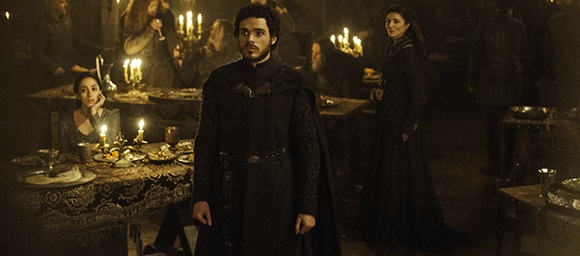
Police Commissioner Angela Chan did not pay fealty to the proper lords and houses, sources say, and in a true to life Game of Thrones, she may now lose her office. The throne in question is a seat on the Police Commission, which Chan may be reappointed to by the Board of Supervisors today [Tues/29], but her chances don’t look good. 

In a political tussle reminiscent of House Lannister’s schemes against House Stark, political machines far larger than the idealistic Chan are churning to keep her from regaining her political office. The forces of Chinatown community leader Rose Pak and her fellow power brokers are backing potential replacement police commissioner Victor Hwang, whose sudden candidacy took many off guard. 

As first reported by Tim Redmond of 48hills.org, Pak’s political pushers dialed every supervisor and marshalled their armies, hellbent on unseating Chan. 

They may win, but not because Chan was a bad commissioner. Actually, the problem might be that she was too effective, and now people in power want her out.

Expanding the mayor’s power

In a Rules Committee meeting Apr. 17, backers of both candidates wore their house sigils, green or white buttons meant to support their chosen candidate, both of whom are seemingly very qualified.

On the one side, Hwang is an ex-assistant district attorney, ex-public defender, ex-nonprofit attorney, and advocate with over 20 years of experience holding police to task for their wrongdoing. He’s fought human trafficking and litigated against out-of-control cops. 

But the incumbent, Chan, an attorney with the Asian Law Caucus, has many similar qualifications. She also has a proven track record on the Police Commission: she crafted the Crisis Intervention Team, tasked with de-escalating standoffs with mentally ill offenders; advocated language access in the police force; helped to revise rules protecting children at school facing arrest; and opposed arming police with tasers.

Both candidates have an extensive list of backers. District Attorney staffers, the Anti-Defamation League, advocates from the Chinatown Development Center, and Randy Shaw of the Tenderloin Housing Clinic all wrote to supervisors backing Hwang. The Guardian even named him a “local hero” in our Best of the Bay issue in 2004.

But the Coalition on Homelessness, San Francisco Women’s Political Committee, members of the Central Americans Resource Center, Board of Education President Sandra Fewer, the local NAACP, and even a retired police officer all backed Chan. The Guardian also named her a local hero, in 2010. 

A change.org petition calling for her reappointment to the commission has 255 signatures, as of this writing. 

Chan hasn’t yet given up the ghost.

“I’m hoping the full board will recognize I work extremely hard,” she told the Guardian. “I look after the community, especially those who are most marginalized.”

Though many issues have political bents and political sides, one aspect of this tussle reveals the power play behind the curtain: the two candidates are competing for one empty seat on the commission, when there are actually two seats vacant.

Why fight over just one seat? 

The answer lies in political motivations insiders would only outline for reporters on background. You see, in a city where many commissions (see: SFMTA) are fully appointed by the Mayor’s Office, and therefore beholden to his whims, the Police Commission has a mechanism to dilute that power — a minority of seats are appointed by the Board of Supervisors. The seat Chan and Hwang are fighting for is the supervisor appointed seat, and for now the mayor’s seat sits empty and uncontested.

Hwang was co-chair of Progress for All, which ran the Run, Ed, Run campaign for Lee’s mayoral candidacy. If the question was really just about making Hwang a commissioner, the mayor could appoint him today with a snap of his fingers. But that’s not the point.

Many insiders, including ones that seemingly support Hwang, told the Guardian that Mayor Ed Lee has plenty of reason to usher Chan out and appoint Hwang in her place. The SFPD long pushed for tasers but found a formidable opponent in Chan, and the mayor would benefit from police support next election, they said. Others said her combative style ruffled people’s feathers, a seemingly legitimate complaint until you consider more cooperative boards like the San Francisco Municipal Transportation Agency define “cooperative” by mostly voting in unison and with little discussion, coincidentally also often in agreement with the mayor’s positions.

Angela Chan asks an SFPD station captain if officers use verbal means to de-escalate situations. 

That’s why Chan is dangerous; she’s a freethinker, and a loud one at that. By pushing the supervisors to appoint Hwang, we were told, the mayor would unseat a potential political liability, and net a freebie commission seat appointment in the deal. 

Win-win.

This isn’t to say Hwang is a bad guy. He longs for public service (nicknaming his practice the Ronin Law Firm), and expressed disappointment in political power struggles beyond his control.

“For me it’s not about Angela, it’s about the police commission,” he told the Guardian. “To give Angela credit, I think the work she’s done on Crisis Intervention Team and language access are important issues.”

And for his part, he said that though many political entities aligned with political powerbroker Rose Pak are pushing for his appointment, he wouldn’t be beholden to her, or them.

“Are Chinatown issues important to me? Yes, they’re very important to me,” he said. “Am I going to answer to one or two folks just because of whoever they are? No. That would be putting my own 20 years of work aside to kowtow to one particular person over anyone else.”

Hwang told us Supervisor Eric Mar is asking the mayor to appoint him to the second vacant police commission seat, but if that effort isn’t successful Chan and Hwang will go head to head.

So the supervisors have a tough choice ahead of them, but for some, the decision is tougher than others.

Conflict of interest

Some of the supervisors have votes that are fair to guess at. Long time progressives like Sups. Mar, John Avalos, and David Campos are ideologically aligned with Chan, and have reason to vote in her favor. 

Chan needs six votes to be re-appointed to the commission, and some of those votes are up in the air.

Sups. Norman Yee, and Katy Tang voted to approve Chan in the Rules Committee, the first round before today’s Board of Supervisors vote. But that’s no guarantee they’ll vote for her again. 

Sup. Jane Kim has an odd conflict of interest. Ivy Lee, an attorney and one of Kim’s staffers, is Hwang’s romantic partner. The couple has three children together. He dedicated a brief he wrote for the Asian American Law Journal, “to my incredible partner Ivy Lee, who gave birth to our second son Kaiden, as I was writing the brief at the hospital.”

Is that conflict of interest grounds for Kim to recuse herself from the vote? Is it proper for her to vote to appoint her staffer’s partner to a political position? We reached out to Kim’s office but did not hear back from her before going to press. 

Board of Supervisors President David Chiu’s vote is also an open question. 

Chiu worked with Chan in 2011 to fight against the federal Secure Communities program, which as we then reported, was a database allowing the feds to circumvent local policies protecting local immigrants who have been arrested but not convicted of any crimes and deport them.

They were partners in the struggle for human rights. So will Chiu back his former ally, Chan, in her re-appointment?

We called, texted, and harangued Chiu to call us back, but did not hear from him before press time. To be fair, he’s running for the Assembly and was likely between one of his dozens of necessary appearances. He did have an aide call us back, but he was unable to give us a hint at which direction Chiu may vote in. 

Complicating his choice is a mix of allegiances. With so many former and current allies on both sides, Chiu will make someone angry no matter which potential police commissioner he votes for, insiders told us. 

And Chiu’s vote may be the deciding one. With real reform of the SFPD on the line, the stakes are higher than the fictional Game of Thrones.

Ultimately, Chiu will have to vote his conscience. 

Correction 3:28pm: The article earlier identified Ivy Lee as married to Victor Hwang. In actuality, Hwang and Lee are romantic partners who decided not to marry in direct protest of the LGBT community being denied the right to marry.

Update 6:50pm: The vote was cast, and Victor Hwang was appointed to the Police Commission in place of Angela Chan. Read our full story.

Bill would tax companies with wide CEO-worker pay disparities

60

California companies pouring big cash on their CEOs may be forced to tighten the spigot under a new bill that seeks to limit CEOs paid excessively at the expense of their workers.

Senate Bill 1372, authored by state Sens. Mark DeSaulnier (D-Concord) and Loni Hancock (D-Oakland), would increase taxes on companies with wide disparities between CEO and worker pay, and give a tax break to companies with a low ratio between CEO and worker pay.

“History has taught us that the gross disparity between CEO and worker pay is a direct threat to American democracy,” DeSaulnier said in a press statement. “It is unsustainable and a danger to our society. We must focus on restoring the middle class and stop fueling excessive income inequality.”

The pay-disparity bill cleared the Senate and Governance Finance Committee last Friday, and is headed to the Senate Appropriations Committee.

Local tech companies have much reason to fear the bill. Larry Ellison, CEO of the Redwood City-based Oracle, was paid 1,287 times the median salary of an Oracle employee in 2012, according to a Bloomberg study. Ellison pulled in $96.2 million in 2012, and the median employee working for his company brought in $74,693.

That’s less pay gap, more pay canyon. Former Secretary of Labor Robert Reich, a professor at UC Berkeley and a supporter of the pay-disparity bill, connected CEO pay with our troubled economy.

“This growing divergence between CEO pay and that of the typical American worker isn’t just wildly unfair. It’s also bad for the economy,” Reich wrote on his website last week. “It means most workers these days lack the purchasing power to buy what the economy is capable of producing — contributing to the slowest recovery on record. Meanwhile, CEOs and other top executives use their fortunes to fuel speculative booms followed by busts.”

The pay-disparity bill would lower taxes on companies with CEOs making less than 100 times more than its median employee. The tax rate for the company would be metered on a scale of CEO-to-worker pay ratio, with the highest penalties for companies paying their CEOs more than 400 times their median employee pay.

The bill also targets non-salaried independent contractors, a significant portion of the state’s workers.

Many local companies have wide pay gaps between CEOs and workers. In 2012, Apple had a CEO:worker pay ratio of 192:1, Wells Fargo had a ratio of 186:1, and Intel squeaked by with a ratio of 99:1, according to PayScale.com.

The PayScale.com study only looked at non-stock compensation. CEOs are often paid in stock and other bonuses, a significant part of their earnings. In lieu of this, recently many CEOs jumped on the $1 salary bandwagon, including Google CEO Larry Page. Ellison took home a single dollar for his salary in 2013, according to CNN Money.

This seemingly forward-thinking gesture is a good PR move, but in reality CEOs still take home millions of dollars in stocks, options, and bonuses. Page owned more than 24 million shares in Google as of 2013, for instance. Ellison took in $92.2 million in stocks, options, and other pay in 2013.

Luckily, that’s a loophole that DeSaulnier and Hancock considered when crafting the bill.

The bill would calculate executive compensation based on the Summary Compensation Table the company in question reports to the Securities and Exchange Commission. That includes salary, bonus, grants of stock options and stock appreciation rights, long-term incentive plan awards, pension plans, and employment contracts and related arrangements.

In 2012, the average CEO pay in California was $5,054,959, according to a statement from DeSaulnier, while the median worker pay in California was $48,029.

Below is a series of graphs detailing local Bay Area CEO and worker pay disparities, as of 2012.

New coalition opposes Chiu’s Airbnb legislation UPDATED

28

An unlikely coalition has formed to oppose legislation sponsored by Board of Supervisors President David Chiu that would legalize and regulate short-term apartment rentals facilitated by Airbnb and other online companies, which are now illegal in San Francisco.

[UPDATE: Some of those same opponents are also now threatening to place a rival measure on the fall ballot, the San Francisco Chronicle just reported. It reportedly shares some aspects with the Chiu legislation, such as a registration system, but it limits rentals to only commercial areas and includes rewards for those who turn in violators to the authorities].

The coalition includes landlord and tenant activists, as well as organized labor and neighborhood groups. It will square off against Airbnb and its hosts, which have pledged to lobby against limits created by the Chiu legislation — all of which could elevate this to the biggest fight of the summer at City Hall. Tomorrow [Tues/28], the coalition of opponents will rally outside City Hall at 10am, while Airbnb supporter will hold a “Speak Up for Home Sharing” rally at 12:30pm.

As we’ve been reporting, it took Chiu more than a year of negotiations with Airbnb, the San Francisco Tenants Union, affected city agencies, and other interested parties to arrive at legislation that requires hosts to register with the city, finally pay the city’s transient occupany tax, and limits stays to 90 nights per year.

But after more than two years of Airbnb’s defying city law and refusing to pay its taxes — scofflaw behavior tacitly supported by Mayor Ed Lee, who share a financial benefactor for the company in venture capitalist Ron Conway — several city constituencies pledged to oppose legislation that would now legalize its activities.

In particular, some longtime affordable housing and neighborhood activists say the legislation irresponsibly legalizes the conversion of residential apartments into tourist hotels throughout the city, creating neighborhood safety concerns and overturning decades of work to protect rent-controlled housing.

Meanwhile, Chiu’s opponent in the race for the Assembly District 17, David Campos, has been highlighting lobbying reports showing 61 contacts between representatives of Airbnb — including formers City Hall insiders David Owen and Alex Tourk — and Chiu’s office.

“Do you think tenant and neighborhood groups met with David Chiu 61 times?” Campos said during his endorsement interview with the Guardian last week, accusing Chiu of letting Airbnb write its own regulations without regard to neighborhood concerns.

Chiu didn’t immediately return our phone calls, but we’ll update this post if and when we hear back. [UPDATE: Chiu legislative aide Judson True just called and disputed how the legislation is being characterized by its opponents and rejecting calls to withdraw the legislation: “Everyone is entitled to a position on Sup. Chiu’s legislation, but we would hope they would engage in the legislative process and not just toss hand grenades. This is a serious policy issue that requires thoughtful dialogue and to simply call for the withdrawal of the legislation is irresponsible.”

True also said the legislation only legalized short term rentals “under very narrow circumstance and that legalization allows enforcement against the most egregious actors.” He also noted how Chiu has consistently opposed converting apartments to tourist uses and called for Airbnb to pay its taxes, calling the legislation a difficult balancing act: “We know that Airbnb has issues with the legislation. They didn’t write the legislation, period.”]

In the meantime, here’s the full text of the press release issued today by the new coalition, which will be holding a press conference at 10am tomorrow on the steps of City Hall:    

For Immediate Release: 
Monday, April 28, 2014

NEWS RELEASE

SAN FRANCISCO CITYWIDE COALITION SAYS NO 
TO PROPOSED CHIU LEGISLATION

Board of Supervisors trying to convert residential housing to 
short-term rentals

Press conference Tuesday April 29, 2014 Steps of City Hall at 10:00 am

San Francisco — Organizations representing usually divergent interests ranging from tenants to landlords, and from hotel workers to the hospitality industry have joined forces with neighborhood and homeowner associations to oppose legislation introduced by Supervisor David Chiu to legalize the short term rentals of residential property throughout San Francisco.

“In the face of an unprecedented housing crisis, Supervisor Chiu’s legislation to legalize the short term rentals of residential property will only exacerbate the housing crisis. This practice is detrimental to our rent-controlled housing stock”, said Janan New, Executive Director of the San Francisco Apartment Association.

“Our studies have shown that with over 10,000 units of housing being rented out over Airbnb, HomeAway and other websites this practice is having a negative impact on hotel workers and San Francisco’s hospitality industry”, said Mike Casey, President of UNITE HERE Local 2.

“The proposed legislation would rezone the entire city from residential zoning to commercial zoning in one fell swoop. We hear complaints from almost every neighborhood about the detrimental effects of short term rentals on the quality of life of tenants and residents”, said John Bardis, former President of the Coalition for San Francisco Neighborhoods and former San Francisco Supervisor.

“Supervisors Chiu’s legislation would repeal hard won controls on Single Resident Occupancy housing, threatens current affordable housing provisions for over 30,000 permanently affordable units, would transform newly approved “in-law units” into high priced motel rooms and make “below market rate” units lifetime luxury hotels. It is the single biggest threat to affordable housing ever proposed by a San Francisco Supervisor” stated longtime affordable housing advocate Calvin Welch.

“Airbnb and other hosting platforms owe the City millions of dollars in unpaid hotel taxes. It is high time that the City collect these taxes which pay for the arts and vital city services and programs. The proposed legislation does not clearly hold Airbnb and similar organizations responsible for collecting and remitting the hotel tax”, said former Supervisor Aaron Peskin.

All of these organizations are calling for Supervisor Chiu to withdraw his legislation at a press conference on Tuesday April 29 on the steps of City Hall at 10:00 am.

Lawsuits go after SF landlords doing illegal short-term apartment rentals

20

The San Francisco City Attorney’s Office today filed a pair of lawsuits against local landlords who illegally rent out apartments on a short-term basis, units that had been cleared of tenants using the Ellis Act. Meanwhile, the San Francisco Tenants Unions has hired attorney Joseph Tobener to file more such lawsuits, and he is preparing to file at least seven lawsuits involving 20 units.

The lawsuits are the latest actions in a fast-moving crackdown on Airbnb and other online companies that facilitate short-term apartment rentals that violate city laws against converting apartments into de facto hotel rooms, including VRBO.com and Homeaway.com.

Board of Supervisors President David Chiu recently introduced legalization that would legalize, limit, and regulate such rentals, a measure that will be considered this summer. That legislation comes on the heels of Airbnb’s decision to stop stonewalling the city (and us at the Guardian, which has been raising these issues for the last two years) by agreeing to start paying the transient occupancy taxes it owes to the city for its transactions and creating new terms of service that acknowledge its business model may violate local laws in San Francisco and elsewhere.

As we’ve reported, City Attorney Dennis Herrera has been working with tenant groups and others on a legal action aimed at curtailing the growing practice of landlords using online rental services to skirt rent control laws and othet tenant protection, removing units from the permanent housing market while still renting them out at a profit.   

“In the midst of a housing crisis of historic proportions, illegal short-term rental conversions of our scarce residential housing stock risks becoming a major contributing factor,” Herrera said in a public statement. “The cases I’ve filed today target two egregious offenders. These defendants didn’t just flout state and local law to conduct their illegal businesses, they evicted disabled tenants in order to do so. Today’s cases are the first among several housing-related matters under investigation by my office, and we intend to crack down hard on unlawful conduct that’s exacerbating—and in many cases profiting from—San Francisco’s alarming lack of affordable housing.”

The lawsuits allege violations of the city’s Planning and Administrative codes, as well as the state’s Unfair Competition Law, targetting 3073-3075 Clay Street, owned by defendants Darren and Valerie Lee; and 734 and 790 Bay Street, which is owned or managed by defendants Lev, Tamara and Tatyana Yurovsky (founder of SRT Consultants).

Guardian calls to both parties were not immediately returned, but we’ll update this post if and when we hear back. Tobener tells the Guardian that the San Francisco Tenants Union hired him to discourage local landlords from removing units from the market.

“The San Francisco Tenants Union is just fed up with the loss of affordable housing,” Tobener told us. “It’s not about the money, it’s about getting these units back on the market.”

The San Francisco Apartment Conversion Ordinance prescribes penalties of $1,000 per day for units rented out for less than 30 days. That now applies to buildings with four or more units, although Chiu’s legislation would lower that to buildings with two or more units while legalizing such rentals and requiring host to register with the city and live in the units for at least 275 days per year, meaning rentals would be limited to 90 days per year.

Tobener’s lawsuits list 210 violations in the 20 units it targets, seeking fines totaling $210,000. But he emphasized that money is not the issue: “The San Francisco Tenants Union doesn’t care about the penalties, they just want to put the message out that we’re going after landlords who do this and we want those units returned to the market.”

Projections

27

The 57th San Francisco International Film Festival runs April 24-May 8. Screening venues include the Castro Theatre, 429 Castro, SF; New People Cinema, 1746 Post, SF; Pacific Film Archive, 2575 Bancroft, Berk; and Sundance Kabuki Cinemas, 1881 Post, SF. For tickets (most shows $15) and complete schedule, visit festival.sffs.org.

Harmony Lessons (Emir Baigazin, Kazakhstan/Germany/France, 2013) Darwinian natural selection seems to be the guiding principle at the rural Kazakh school where bright farm boy Aslan (Timur Aidarbekov) is sent to further his education. What he learns there is mostly about survival, as he soon discovers the institution is dominated by an elaborate system of bullying and extortion in which a few older students terrorize the younger and weaker. Emir Baigazin’s striking debut feature applies a rigor both aesthetic and intellectual to a familiar theme here, his script as methodical as his minimalist compositions in dissecting the havoc wreaked by (and eventual unraveling of) a corrupt system that’s a microcosm of a societal whole. Fri/25, 3:30pm, Kabuki; May 4, 12:45pm, Kabuki; May 5, 6:15pm, Kabuki. (Dennis Harvey)

When Evening Falls on Bucharest or Metabolism (Corneliu Porumboiu, Romania/France, 2013) Romanian moviemaker Corneliu Porumboiu (2009’s Police, Adjective) turns his lens around, toward the casting couch and the oh-so-delicate damage done, in his third feature film. An everyday kind of corruption, sex, lies, and video — zipless, tapeless, and forging way beyond the limits of film — is the name of the game when a director (Bogdan Dumitrache) nonchalantly drops a nude scene on his actress (Diana Avramut) and the two try out a few ideas, on-camera for the screen and off-camera in the bedroom. The hardly working relationship plays both ways, as the moviemaker bends in turn to his producer, in this minimalist albeit layered glimpse into the unlovely guts of the last sacred cow: the so-called creative process. Fri/25, 3:45pm, New People; Sat/26, 6:30pm, Kabuki; Mon/28, 8:30pm, PFA. (Kimberly Chun)

Hellion (Kat Candler, US) Beer drinking and metal tees, shit-talking and shit-kicking, boys and their toys and their broken dreams — the signatures of director-writer Kat Candler are familiar even to those unversed in her 2006 Jumping Off Bridges and the short that this extended-play feature is based on. Yet somehow the motocross-fixated Jacob (Josh Wiggins) is finding his own fresh hell amid this testosterone-scape: with the death of his mother, his faded baseball star of a father (Aaron Paul) is struggling to hold the family together and kick his tendency to take refuge at the bottom of a beer can. Meanwhile younger brother Wes (Deke Garner) has been taken away and placed with the boys’ Aunt Pam (Juliette Lewis). Candler makes this hell of hurts fresh with her close attention to detail, relishing the whipped cream sandwiches and sofa bounce-offs of home-alone kids as well as the throttled rage of the Metallica and Slayer soundtrack, and charged performances from all, in particular Paul, also an executive producer here, and Lewis, two small-town castaways just a hair less lost than the kids. Fri/25, 6:30pm, Kabuki; Tue/29, 4pm, Kabuki. (Chun)

Blind Dates (Levan Koguashvili, Georgia, 2013) This rather wonderful deadpan comedy from Georgia (the former Soviet territory, not Jimmy Carter’s home) revolves around two best friends, male schoolteachers looking for love on the mutual brink of 40. Doleful-looking history prof Sandro (Andro Sakhvarelidze) and robust soccer coach Iva (Archil Kikodze) seem hapless and thwarted at every turn, yet simultaneously oblivious to scads of available women around them. The gentle, rueful tenor sneaks up on you, delivering some big laughs and narrative surprises as well as a very soulful sum impact. One of this year’s SFIFF sleepers (with no US distribution in sight), this droll yet bighearted gem is not to be missed. Fri/25, 9pm, Kabuki; Sun/27, 8:15pm, PFA; Tue/29, 6:30pm, New People. (Harvey)

Child of God (James Franco, US, 2013) You may not know that SFIFF It Guy James Franco has directed nearly two dozen shorts, documentaries, and features since 2005, in addition to his acting and miscellaneous multimedia dabblings. Don’t worry: You haven’t missed much. But this adaptation of a 1973 Cormac McCarthy novel is a great leap forward from his prior efforts, most of which felt like pretentious grad school thesis films. Scott Haze is startlingly good as Lester Ballard, a Tennessee hillbilly whose lack of conventional home, family, social instincts, or behavioral restraint gets him perpetually in trouble with the law — trouble that takes a macabre turn when he finds a dead woman’s body. The story’s shock value might easily have played as exploitative or ludicrous, but Franco hits the right tenor of mad intensity to reflect Lester’s near-feral state, in which acts that might appall any “civilized” mindset make perfect sense to him. Fri/25, 9:30pm, Kabuki; Mon/28, 3:45pm, New People. (Harvey)

The Double (Richard Ayoade, UK, 2013) Simon (Jesse Eisenberg) is a lowly clerk who gets nothing but indifference and scorn both at work and in his pitiful private life. Things slip even more insidiously beyond his control with the arrival of James (Eisenberg again), his exact doppelgänger — though no one else seems to notice that — and a climber as ruthlessly efficient as Simon is hapless. Not only does he steal his look-alike’s ideas in a rapid rise to the top, he seems to take great pleasure in kicking Simon further downward. Applying a Kafkaesque gloss to Dostoyevsky’s novella, with stylistic hat-tips to the Coens and Terry Gilliam, Richard Ayoade’s second feature is very different from his prior Submarine (2010) in all ways but one: It, too, is both overwhelmed and rendered fascinating by an excess of high directorial “style” whose self-consciousness infuses every frame and puts quote marks around every emotion. As a result, The Double is a striking objet d’art you’ll either love or hate — or enjoy aesthetically while being annoyed by its sacrifice of depth for a showoff surface. Sat/26, 1pm, Kabuki; Tue/29, 9:15pm, Kabuki. (Harvey)

Tangerines (Zaza Urushadze, Estonia/Georgia, 2013) It’s 1992, and carpenter Ivo (Lemit Ulfsak) and farmer Marcus (Elmo Nuganen) are old neighbors who are practically the only residents left in their rural Abkhazia village — everyone else has fled the approaching war between Georgian and Russia-backed North Caucasian forces that erupted over this disputed land after the USSR’s dissolution. The 60-something men have stayed behind out of habit, and to harvest Marcus’ latest (perhaps last) tangerine crop. When a shootout on Ivo’s doorstep leaves him stuck with one wounded soldier from each side, these uninvited guests must be kept from outside discovery — and from one another’s throats — as they recover. Wry and poignant, Georgian writer-director Zaza Urushadze’s antiwar microcosm is beautifully crafted, particularly in Rein Kotov’s gorgeous photography of the verdant countryside. Sat/26, 9pm, Kabuki; Sun/27, 6:15pm, Kabuki; May 6, 8:30pm, PFA. (Harvey)

The Sacrament (Ti West, US, 2013) This very disappointing latest by Ti West, of flavorful indie horrors The House of the Devil (2009) and The Innkeepers (2011), basically puts a piece of tracing paper over the climactic events at Jonestown, changing the names but otherwise refusing to do anything different — or really anything at all — with that historical model of mass religious cult freak out. Joe Swanberg, A.J. Bowen, and Kentucker Audley play filmmakers who visit a secretive jungle compound in order to figure out if somebody’s sister (Amy Seimetz) is staying there of her own free will or not. She seems to be doing OK, and in fact appears to be the favored apostle of enigmatic leader “Father” (Gene Jones). But once the strangers get a glimpse behind the facade of their carefully stage-managed visit, they glean that not everyone is happy here — indeed, some may be desperate to escape. Despite some good performance moments, there’s little psychological insight or real suspense to this fictionalized take on the 1978 catastrophe at Rev. Jim Jones’ Guyana settlement, and its quasi-“found footage” aesthetic feels very tired. Sat/26, 11:45pm, Kabuki; Mon/28, 9pm, Kabuki. (Harvey)

https://www.youtube.com/watch?v=UD8TrqVrFyU

All That Jazz (Bob Fosse, US, 1979) Stage and screen choreographer and director Bob Fosse’s autobiographical phantasmagoria modeled itself on Fellini’s very Italian 1963 8 1/2 (which also inspired the stage/film musical Nine), but its heart is pure, cold American show-biz brass. Roy Scheider is terrific as Fosse alter ego Joe Gideon, a driven workaholic whose decades of numerous excesses (pills, smoking, women, etc.) have put him at serious risk of a fatal heart attack just as he’s simultaneously starting rehearsals for a Broadway musical and finishing up editing on a Hollywood feature. The external pressure is exceeded only by his own compulsive perfectionism. He reviews his life of professional triumphs and failed relationships as it very possibly sputters toward an end. Like Joe’s character (and creator), Jazz is egomaniacal, charming, over-the-top, sexy, sexist, indulgent, and overbearing — a glitzy portrait of a brilliant heel, with dazzling musical numbers. Seldom revived in recent years, it’s being shown in a newly restored print. Sun/27, 12:30pm, Kabuki; May 2, 8:30pm, PFA. (Harvey)

Belle (Amma Asante, UK, 2013) The child of a British naval officer and a Caribbean slave, Belle (Gugu Mbatha-Raw) is deposited on the doorstep — well, the estate grounds — of her father’s relatives in 1769 England after her mother dies. Soon she’s entirely orphaned, which makes her a wealthy heiress and aristocratic title holder at the same time that she is something less than human in the eyes of her adopted society. For Belle is black (or more properly, mixed-race), and thus a useless curiosity at best as a well-bred noblewoman of the “wrong” racial makeup. Based on a murky actual historical chapter, Amma Asante’s film is that rare sumptuous costume drama which actually has something on its mind beyond romance and royalty. Not least among its pleasures is a fine supporting cast including Tom Wilkinson, Miranda Richardson, Penelope Wilton, and Emily Watson. Sun/27, 6:30pm, Kabuki; Tue/29, 3:30pm, Kabuki. (Harvey)

https://www.youtube.com/watch?v=nL-0RLaFcSg

Stray Dogs (Tsai Ming-liang, Taiwan/France, 2013) The fate of those left behind — the homeless, the stray dogs — amid the go-go aggression of tiger markets is ostensibly Tsai Ming-liang’s first concern in what he’s said is his last film. But the “Second Wave” Taiwanese director can’t help but leave a mark — those amazing performances, those achingly long, meditative shots — that makes you hungry for more. Ever so loosely knitting together a series of lengthy, gorgeously composed images that resemble still lifes of a metamorphosing Taipei that’s rapidly leaving its cultural core, the family, in the dust, Stray Dogs wanders, hangs, then drifts once more, much like the homeless father (Tsai regular Lee Kang-sheng) and two children at its rootless center. Dad holds an advertising sign at an intersection — necessitating what might be the longest urination shot in cinema and a singular burst into poetry and song — while the kids feed themselves with supermarket samples and wash up in public restrooms. Will they be brought together by the missing matriarch, in the form of a grocery store manager, or just a random instance of art or beauty in a crumbling building? Beauty, it seems, is everywhere, Tsai seems to signal, and time — here, spent and bent to new ends — might or might not tell, while this mesmerizing, testing, and ultimately rewarding digital farewell to the movies keeps you hanging on. Mon/28, 6pm, Kabuki; Tue/29, 3:15pm, New People; April 30, 6:30pm, PFA. (Chun)

The Overnighters (Jesse Moss, US) If you’re looking for a movie to affirm the resilient generosity of the American spirit (or economy), this isn’t it. But Bay Area filmmaker Jesse Moss’ new documentary is as engrossing as it is dismaying. When a fracking-related job boom hits low-population North Dakota, close-knit Williston — which had a population of just 12,000 at the millennium’s turn — suddenly becomes a magnet for the unemployed and desperate. That includes a diverse racial mix of men, including some transients, a few felons and ex-cons, plus others whom many locals are willing to skittishly term “trash.” There’s scant housing available to accommodate them; Pastor Jay Reinke of Concordia Lutheran tries to help out by letting some new arrivals sleep on the church (and even his family home’s) floor. But his congregation is increasingly unhappy about that, as is the community in general. The Overnighters grows more complicated, however, than a simple portrait of small-town closed-mindedness and a clergyman acting like Jesus would. Not every charity case is grateful, or honest, or manageable. Meanwhile, Rev. Reinke’s own psychological baggage starts looking pretty dang heavy well before a game changing late revelation that is painful on about 20 different levels. Mon/28, 6:30pm, Kabuki; May 3, 1pm, New People. (Harvey)

The Other One: The Long Strange Trip of Bob Weir (Mike Fleiss, US) Bob Weir gets a little of his share of the critical limelight in this doc by Mike Fleiss, which focuses on Weir’s personal life and gives Grateful Dead chronology a light scramble. It kicks off with a cruise across the Golden Gate Bridge with the SF-born musician, who was taught to drive by Neal Cassady and gleans admiration from both expected quarters (Sammy Hagar) and less so (The National, which tries a brief jam with Weir) and drops tidbits about his dyslexia, early hangouts with Palo Alto banjo player Jerry Garcia, his chronic shoulder pain, and songwriting approaches (“There’s no logic to it. It comes through the window when it wants to come though the window”), along with a visit to the famed Dead house at 710 Ashbury with his wife and daughters. Couched amid a bevy of performance snippets, none very long, the road-weathered rhythm guitarist comes off as a bit of tough nut to crack and almost too humdrum in his current downplayed presentation to ever really lead us on a truly “long, strange trip.” Still, this document serves as a decent primer for the rock generalist on the man (though not of his bands apart from the Dead) and goes a little way toward generating gratitude for the man oft dubbed an unsung hero. Tue/29, 8:50pm, PFA; May 2, 9:30pm, Kabuki. (Chun)

Eastern Boys (Robin Campillo, France, 2013) We first meet well-off, middle-aged single gay man Daniel (Olivier Rabourdin) as he’s cruising a Paris train station for rough trade in writer-director Robin Campillo’s bravura opening sequence. He settles on impish Marek (Kirill Emelyanov), negotiates an assignation, and goes home. But later on it’s not Marek who turns up on Daniel’s doorstep, but a couple dozen young former-Soviet-bloc illegal émigrés who take over his luxury apartment for an epic party as they cart his possessions out the door. (This unpleasant passage is the most difficult to swallow, as there’s no explanation why our protagonist is so passive about being robbed.) Yet Marek does eventually turn up, and despite all, a relationship develops — always at risk of incurring anger from “Boss” (Danill Vorobyev), the thuggish leader of the immigrant community Marek has aligned himself with. Like the Laurent Cantet films (1999’s Human Resources, 2001’s Time Out, 2008’s The Class) Campillo has edited, Eastern Boys doesn’t fill in all its narrative blanks, but is grounded in recognizable characters we can empathize with as the scenario takes unexpected turns. It’s a provoking movie that’s ultimately well worthwhile. April 30, 9:10pm, PFA; May 2, 6pm, Kabuki; May 4, 8:45pm, New People. (Harvey)

Kumiko, the Treasure Hunter (David Zellner, US) Fargo (1996), now also an FX series, is having a moment — and as bracingly sweet, tragicomic, and strange as its inspiration, Kumiko, the Treasure Hunter sets course from where the Coen Brothers left off. Essential ingredients include another moviemaking team of brothers, David and Nathan Zeller, and a waterlogged VHS tape of the North Dakota micro-epic, the latter leading one woman into white-out lunacy beyond the grinding conformity of Tokyo office work or small-town Minnesota mundanities. Shy, odd, and obsessive Kumiko (Rinko Kikuchi) is the nail that must be pounded down, as the Japanese saying goes; as she trudges through her job at a large, alienating company, her fantasy world is fueled by a video of Fargo she finds buried in a sea cave. Those grainy images set her on a quest among the determinedly kawaii in Japan and the hilariously humane in the States, which she compares to that of the conquistadors’. Even when accompanied by the Octopus Project’s vivid electronic score, which spells out the horror of this journey, Kumiko’s no Aguirre — though, like Fargo, her adventure’s end is based on a true case. A wonderfully weird — and ultimately compassionate — vamp on the power of fantasy and obsession that crosses international datelines. May 1, 8:45pm, Kabuki; May 3, 2:30pm, Kabuki; May 4, 12:30pm, Kabuki. (Chun)

Difret (Zeresenay Berhane Mehari, Ethiopia) Zeresenay Berhane Mehari’s film dramatizes a shocking human rights issue in Ethiopia: the continuing acceptance in rural areas of forcibly abducting young women for marriage. Fourteen-year-old Hirut (Tizita Hagere) is walking home from school one day when she’s surrounded by seven armed men, dragged off to a hut, then raped by the suitor whose marriage proposal she’d already rejected. When later she kills him in an escape attempt, tribal law decrees she be executed (and buried alongside him as “wife”). But a city lawyer for a women’s rights organization (Meron Getnet) takes up her cause. This is powerful material, but Difret would be a better film, and even better advocacy, if it didn’t handle its fictive events in such heavy-handed, pedestrian, everything spelled-out-for-you fashion. May 1, 6:30pm, Pacific Film Archive; May 3, 3:15pm, Kabuki; May 7, 3:30pm, Kabuki. (Harvey)

Abuse of Weakness (Catherine Breillat, France/Belgium/Germany, 2013) Those who last saw Isabelle Huppert as a dutiful daughter in 2012’s Amour will be both thrilled and piqued to see the tables turned so remarkably in Catherine Breillat’s Abuse of Weakness. Huppert gives an unapologetic, stunning tour de force performance in what appears to be a story torn from the filmmaker’s own life, when Breillat suffered a series of strokes in the ’00s and ended up entangled in a loving and predatory friendship with con man Christophe Rocancourt. Here, moviemaker and writer Maud (Huppert) is particularly vulnerable when she meets celebrity criminal and best-selling writer Vilko (Kool Shen). She is determined to have him star in her next film, despite the protestations of friends and family, and he helps her in return — by simply helping her get around and giving her focus when half her body seems beyond her control, while his constant machinations continue to compel her. Crafting a layered, resonant response to what seems like an otherwise clear-cut case of abuse, Breillat seems to have gotten something close to one of her best films out of the sorry situation, while Huppert reminds us — with the painful precision of this intensely physical role — why she’s one of France’s finest. May 1, 9pm, Kabuki. (Chun)

Of Horses and Men (Benedikt Erlingsson, Iceland/Germany, 2013) Benedikt Erlingsson’s astonishing directorial debut weaves together a half dozen disparate stories involving beautiful horses and mostly unlucky humans in and near a modern Icelandic small town. It’s a horsey movie like no other, each surprising tale marked to various degrees by black comedy, cruel fate, very earthy humor, and hints of the fantastical. Nature being a harsh mistress, some events here are rather shocking or tragic — those who automatically despise any film in which animals come to harm (only in dramatic terms, of course) had best stay clear. But less delicate souls may well find this unique equine-themed mix of folk art and fable exhilaratingly original. May 2, 4:30pm, Kabuki; May 3, 8:45pm, Kabuki; May 5, 6pm, Kabuki. (Harvey)

Salvation Army (Abdellah Taïa, Morocco, 2013) Paris-based Moroccan writer Abdellah Taïa adapts his presumably autobiographical 2006 novel in this accomplished feature. Teenaged Abdellah (Said Mrini) is stuck in the middle of a large, rambunctious family where his parents continually fight, sometimes violently, and he has to keep his feelings hidden — not least because they largely revolve around an infatuation with older brother Slimane (Amine Ennaji). While that attraction remains forbidden, Abdellah does find ways to access love or at least sex with other older men, though these sometimes exploitative interludes leave him dissatisfied. Salvation Army would be an effective if unmemorable portrait-of-the-artist-as-a-young-queer if it didn’t take an abrupt, unexpected jump forward 10 years, to chart the rough early days of a now-adult protagonist (Karim Ait M’Hand) in supposedly more gay-friendly (but not necessarily immigrant-friendly) France. It’s these later scenes that lend this directorial debut by (so far) the only out gay Arab Moroccan scribe its lingering gravity. May 2, 9pm, Kabuki; May 4, 8:30pm, PFA; May 6, 6:30pm, Kabuki. (Harvey)

Intruders (Noh Young-seok, South Korea, 2013) Noh Young-seok’s insidiously clever black comedy-thriller takes its time getting to the nasty stuff — although things start getting weird for our protagonist right away, when his bus ride to a remote resort region is interrupted by an overly-friendly local who will figure in his troubles later on. Sang-jin (Jun Kuk-ho) is here to spend some alone time finishing a screenplay. But he’s unlikely to get much work done, given various pesterings from the hitherto mentioned ex-con New Best Friend (Oh Tae-kyung), an obnoxious quartet of skiers, some hostile poachers, and … well, you’ll have to wait until the very end to get the complete list of unwanted guests. As misunderstandings and bodies pile up, Intruders cleverly finds ways to make the worst possible scenario even worse. May 2, 9:45pm, Kabuki; May 7, 9:30pm, Kabuki; May 8, 5:30pm, Kabuki. (Harvey)

Palo Alto (Gia Coppola, US) Adapted from the 2010 short story collection by James Franco, first-time director Gia Coppola’s depressive, aimless tale of disaffected youth tracks the ennuis and misadventures of a handful of Palo Alto teenagers: shy, inexperienced April (Emma Roberts), teetering on the edge of an affair with her soccer coach (Franco); naively promiscuous Emily (Zoe Levin); budding head case Fred (Nat Wolff); and his friend Teddy (Jack Kilmer, son of Val, who plays April’s out-to-lunch stepfather), who ambivalently participates in Fred’s mayhem while pining after April. Adult supervision is nearly Peanuts-level sparse — in other Peninsula households, helicopter parents may be fine-tuning the lives of their children down to the last extracurricular; here, the stoned, distracted elders who occasionally wander in front of the camera are more like flaky, absentee roommates. Meanwhile, their young charges fill the empty hours with copious amounts of alcohol consumption, random property destruction, and a round or two of social crucifixion. May 3, 7:30pm, Kabuki. (Lynn Rapoport)

The Lady Eve (Preston Sturges, US, 1941) Superficially the most conventional of Preston Sturges’ classics — being a romantic comedy vehicle for two major stars — this 1941 gem is no less great for it. Barbara Stanwyck plays Jean, the feminine lure in a team of wily con artists who spy easy prey in Henry Fonda, a fabulously wealthy “bumble-puppy” more interested in studying Amazonian snakes than inheriting the family brewery fortune. They relieve him of considerable cash at the card table, but when Jean decides she really does love the big dope and comes clean, he thinks she’s still lying. Now a woman scorned — and whatta woman! — Jean hatches a spectacular revenge scheme to teach him the lesson he deserves. As is Sturges’ wont, the film goes over the top a bit toward the end. But who cares, when Eve is so brilliantly written and performed, not to mention consistently hilarious. Film critic David Thomson and journalist-novelist Geoff Dyer will be present for this screening in conjunction with Thomson’s acceptance of the Mel Novikoff Award. May 4, 3pm, Kabuki. (Harvey)

https://www.youtube.com/watch?v=z5rVCYqW8U4

Ping Pong Summer (Michael Tully, US) Eighties teen flicks of the My Bodyguard (1980), smart-dweebs-beat-the-bullies ilk are paid homage in Michael Tully’s deadpan satire, which is closer in spirit to the Comedy of Lameness school whose patron saint is Napoleon Dynamite. Radley (Marcello Conte) is an average teen so excited to be spending the summer of 1985 in Ocean City, Md., with his family that he renames himself “Rad Miracle.” He acquires a New Best Friend in Teddy (Myles Massey), who as the whitest black kid imaginable might make even Rad look cool by comparison. However, they are both dismayed to discover the local center for video gaming and everything else they like is ruled by bigger, older, cuter, and snottier douchebag Lyle Ace (Joseph McCaughtry) and his sidekick. Only kicking Lyle’s ass at ping pong — with some help from a local weirdo (a miscast Susan Sarandon, apparently here because she’s an offscreen ping pong enthusiast) — can save Rad’s wounded dignity, and the summer in general. A big step up from Tully’s odd but pointless prior Septien (2011), this has all the right stuff (including a soundtrack packed with the likes of Mr. Mister, the Fat Boys, Mary Jane Girls, New Edition, Whodini, and Night Ranger) to hilariously parody the era’s inanities. But it’s just mildly amusing — a droll attitude with lots of period detail but not much bite. May 4, 6:30pm, Kabuki; May 7, 8:45pm, New People. (Harvey)

The One I Love (Charlie McDowell, US) Sophie (Elisabeth Moss) and Ethan (Mark Duplass) have hit a speed bump in their relationship — they don’t have fun together like they used to, and even direct attempts to replicate that past magic fall completely flat. Ergo they take the advice of a couples counselor (Ted Danson) and book a weekend at a country getaway he swears has done “wonders” for all his previous clients in relationship trouble. Things get off to a pleasant enough start, but the duo’s delight at recapturing their old mojo becomes complicated when they realize … well, it’s best to know as little as possible going into The One I Love, a first feature for director Charlie McDowell and scenarist Justin Lader that approaches a fantastical narrative idea with a poker face and considerable ingenuity. Duplass and (especially) Moss are terrific in roles that eventually require some very complicated (and subtle) nuances. May 6, 9:15pm, Kabuki. (Harvey)

Night Moves (Kelly Reichardt, US, 2013) Not to be confused with Arthur Penn’s same-named 1975 Gene Hackman thriller, Kelly Reichardt’s latest film nonetheless is also a memorably quiet, unsettling tale of conspiracy and paranoia. It takes us some time to understand what makes temporary allies of jittery Josh (Jesse Eisenberg), Portland, Ore.-style alterna-chick Dena (Dakota Fanning) and genial rural recluse Harmon (Peter Sarsgaard), beyond it being a mission of considerable danger and secrecy. When things don’t go exactly as planned, however, the three react very differently to the resulting fallout, becoming possibly greater threats to one another than the police or FBI personnel pursuing them. While still spare by mainstream standard, this is easily Reichardt’s most accessible work, carrying the observational strengths of 2010’s Meek’s Cutoff, 2008’s Wendy and Lucy, and 2006’s Old Joy over to a genuinely tense story that actually goes somewhere. May 7, 9pm, Kabuki; May 8, 7:30pm, Kabuki. (Harvey)


Film Listings: April 23 – 29, 2014

0

Film listings are edited by Cheryl Eddy. Reviewers are Kimberly Chun, Dennis Harvey, Lynn Rapoport, and Sara Maria Vizcarrondo. For rep house showtimes, see Rep Clock.

SF INTERNATIONAL FILM FESTIVAL

The 57th San Francisco International Film Festival runs April 24-May 8. Screening venues include the Castro Theatre, 429 Castro, SF; New People Cinema, 1746 Post, SF; Pacific Film Archive, 2575 Bancroft, Berk; and Sundance Kabuki Cinemas, 1881 Post, SF. For tickets (most shows $15) and complete schedule, visit festival.sffs.org. For coverage, see film section.

OPENING

Alan Partridge Steve Coogan recently took a serious-movie detour in last year’s Philomena, but he’s primarily a comedian — famed stateside for roles in cult movies like 24 Hour Party People (2002) and The Trip (2011). In his native England, he’s also beloved for playing buffoonish, image-obsessed host Alan Partridge in multiple TV and radio series — and now, a feature film, in which a giant media conglomerate takes over Alan’s North Norwich Digital radio station and gives it a cheesy corporate makeover. When he learns staffing cuts are afoot, Alan secretly throws his longtime friend and fellow DJ Pat (Colm Meany) under the bus. Though he’s oblivious to Alan’s betrayal, the depressed and disgruntled Pat soon bursts into the station, toting a shotgun and taking hostages, and Alan is designated the official go-between — to his utter delight, since he becomes the center of the surrounding media circus (“I’m siege-face!” he crows), and his already-inflated head balloons to even more gargantuan proportions. Along the way, he and Pat continue broadcasting, taking calls from listeners, spinning Neil Diamond records, and occasionally interfacing with an increasingly annoyed police force. Fear not if you haven’t seen any previous Alan Partridge outings — this film is stand-alone hilarious. (1:30) Embarcadero, Shattuck, Smith Rafael. (Eddy)

Brick Mansions This Luc Besson-produced thriller about an undercover Detroit cop stars Paul Walker in one of his final roles. (1:30) Presidio.

Dancing in Jaffa World champion ballroom dancer Pierre Dulaine, possessed of perfect posture and a flamboyant personality, returns to his native Jaffa, a city he hasn’t laid eyes on since his family (Palestinian mother, Irish father) fled in 1948. His love of teaching was dramatized in 2006’s Take the Lead — hey, if someone’s gonna make a movie about your life, you could do worse than being played by Antonio Banderas — but his task in Dancing in Jaffa is a far less glitzy one. Here, the real-life Dulaine aims to train a group of 11-year-olds how to merengue, rumba, tango, and jive, which is tall order under any circumstances, since these kids are still firmly entrenched in the awkward “boys/girls are icky” zone. Complicating matters even further is Dulaine’s determined quest to pair up tiny dancers from both Jewish and Palestinian Israeli schools, despite skeptical parents and religious restrictions against mingling with the opposite sex; it’s his fervent hope that performing together will help the kids see past their differences, and signal hope for the future. Though her documentary hits the expected beats — a depressed youngster we meet early in the film is delightfully (yet unsurprisingly) transformed by the power of dance — director Hilla Medalia (2007’s To Die in Jerusalem) does an admirable job contextualizing the students’ stories, capturing the cultural tensions that permeate everyday life in Jaffa. And a hat-tip to the kids themselves, who become surprisingly graceful hoofers despite all initial suggestions to the contrary. (1:28) Opera Plaza. (Eddy)

The German Doctor Argentine writer-director Lucía Puenzo (2007’s XXY) adapts her novel Wakolda for this drama imagining a post-World War II chapter in the life of Nazi doctor Josef Mengele. It’s 1960, and there’s a new doctor residing in Bariloche, Argentina — a stunningly picturesque town in the Andean foothills that seems to harbor an awful lot of Germans. Polite, well-dressed “Helmut” (Alex Brendemühl) befriends innkeepers Eva (Natalia Oreiro) and Enzo (Diego Peretti), taking a special interest in their 12-year-old daughter Lilith (Florencia Bado), whose petite frame (cruel classmates call her “dwarf”) awakens his let’s-experiment impulses. He gets even more attached when he finds out a pregnant Eva is carrying twins. Meanwhile, Israeli agents are moving in, having just snagged Mengele’s fellow war criminal Eichmann in Buenos Aires, and Lilith’s family soon catches on to their new friend’s true identity. Measured, multi-lingual performances — Brendemühl is both suave and menacing as the “Angel of Death,” forever penciling in his grotesque medical sketchbook — and the contrast between The German Doctor‘s dark themes and the Patagonian beauty of its setting bring haunting nuance to Puenzo’s twisted-history tale. (1:33) Embarcadero, Shattuck. (Eddy)

“Human Rights Watch Film Festival” The 2014 fest wraps up with a pair of nightmarish tales about men who endured wrongful imprisonment. Marc Wiese’s Camp 14 — Total Control Zone follows the solemn Shin Dong-hyuk, who was born in a North Korean death camp and managed to escape not only the camp, but the country itself; he’s thought to be the only person ever to do so. He endured unimaginable horrors both physical (beatings, starvation, torture) and mental (being forced to watch his mother and brother’s executions), and finally gathered the courage to flee when he met a recent detainee who was full of tales from the outside world. These days, he no longer lives in fear; he’s based in South Korea but travels the world speaking with human-rights groups. But he’s a man understandably scarred by his past, living in a nearly empty apartment and rarely raising his voice above a whisper. Meanwhile, American injustice gives a showcase performance in An Unreal Dream: The Michael Morton Story, Al Reinert’s emotional documentary about an innocent man convicted of killing his wife, thanks to some shoddy good ol’ boy police work. Though his own son turned against him as his years behind bars stretched into decades, Morton — now free and reconciled with his family, thanks to the Innocence Project — remains an inspiring, almost beatific example of the power of forgiveness. In Morton’s case, it helps that the real murderer was eventually nabbed and punished; in Camp 14, we meet a pair of former guards who shrug off the horrific cruelty they regularly inflicted on prisoners — and we’re reminded of the hundreds of thousands of North Koreans who remain behind bars, serving life sentences for made-up “crimes.” Not a shred of closure to be found in that one. Yerba Buena Center for the Arts. (Eddy)

Next Goal Wins World Cup fever is imminent — first game is June 12! — so there’s no better timing for this doc, which chronicles the transformation of American Samoa’s soccer team from international joke (thanks to a record-breaking 31-0 drubbing by Australia in 2001) to inspirational underdogs. Filmmakers Steve Jamison and Mike Brett visit the close-knit island nation just as Dutch hired-gun coach Thomas Rongen swoops in to whip the team into shape. Though he’s initially unimpressed, Rongen soon realizes that what his players lack in athletic ability, they make up for in heart, particularly beleaguered keeper Nicky Salapu (coaxed out of retirement, he’s still haunted by the 2001 loss) and upbeat Jaiyah Saelua, who is 100 percent accepted by her teammates, even though she happens to be transgender (“I’m not a male or a female — I’m a soccer player!”) Next Goal Wins is ultimately as much a window into American Samoan culture as it is a sports saga, adding richness to a tale that’s already heart-poundingly rousing. (1:30) Roxie. (Eddy)

The Other Woman Cameron Diaz, Leslie Mann, and Kate Upton star in this comedy about a trio of women who gang up on the man (Game of Thrones’ Nikolaj Coster-Waldau) who’s been playing them all. (1:49) Presidio.

The Quiet Ones Jared Harris (Mad Men) stars in this spooky Hammer Films drama about an Oxford professor studying the supernatural. (1:38)

Teenage This collage documentary by Matt Wolf (2008’s Wild Combination: A Portrait of Arthur Russell) is based on Jon Savage’s Teenage: The Creation of Youth Culture, spanning the adolescent experience from 1875-1945. First-person narrators (voiced by Jena Malone and Ben Whishaw, among others) reflect on the lives of teens from the US, the UK, and Germany, emphasizing current events (notably the stock market crash and World Wars I and II, the latter including segments on the Hitler Youth), and social problems (child labor, racial intolerance) and changes (the rise of Hollywood idols and teen gangs), as well as dance, fashion, nightlife (London’s Bright Young Things get a special spotlight), and music fads. Stock footage, vintage images, textured sound design, and creative reenactments shape this unusually artistic look at the rise of an age group that didn’t merit distinct status 150 years ago — but has since become popular culture’s most influential force, for better and worse. (1:17) Opera Plaza, Shattuck. (Eddy)

Walking with the Enemy Movie history abounds with dramas about the obvious dangers and complicated delights of passing during World War II — Agnieszka Holland’s Europa Europa (1990) and Paul Verhoeven’s Black Book (2006) come immediately to mind. But despite the inherent interest in this story (based on a real person, Pinchas Tibor Rosenbaum), Walking with the Enemy doesn’t hold its own next to those efforts. Elek (Jonas Armstrong), the handsome, intrepid son of a rabbi, is working in Budapest doing what any red-blooded young man of any era might, joking with his boss and flirting with the adorable Hannah (Hannah Tointon). When Hungary’s relations with the Nazis sour, the country’s Jewish citizens are gradually packed off and subjected to deadly crackdowns instigated by Adolf Eichmann, and Hungary’s Regent Horthy (Ben Kingsley) seems powerless to do very much, apart from allowing the neutral Swiss consulate to issue a stream of documents claiming the city’s Jewish denizens as its own. When two SS officers come calling in the Jewish quarter, attack Hannah, and are ultimately killed, fluent German speaker Elek and his friends snatch at the desperate measure of donning their uniforms to spy on their oppressors and save as many Jews as they can. What may have made for a fascinating tale, however, is reduced to broad strokes, awkward choices like onscreen IDs, and comically simplistic characterization, making Walking feel more like a TV movie or an educational film than anything with real power. (2:08) (Chun)

ONGOING

Bears (1:26) 1000 Van Ness, Shattuck.

Captain America: The Winter Soldier Marvel’s most wholesome hero returns in this latest film in the Avengers series, and while it doesn’t deviate from the expected formula (it’s not a spoiler to say that yes, the world is saved yet again), it manages to incorporate a surprisingly timely plot about the dangers of government surveillance. Steve Rogers (Chris Evans), hunkiest 95-year-old ever, is still figuring out his place in the 21st century after his post-World War II deep freeze. Nick Fury (Samuel L. Jackson) has him running random rescue missions with the help of Black Widow (Scarlett Johansson), but SHIELD is working on a top-secret project that will allow it to predict crimes before they occur. It isn’t long before Cap’s distrust of the weapon — he may be old-fashioned, but he ain’t stupid — uncovers a sinister plot led by a familiar enemy, with Steve’s former BFF Bucky doing its bidding as the science-experiment-turned-assassin Winter Soldier (Sebastian Stan). Anthony Mackie, Robert Redford, and series regular Cobie Smulders are fine in supporting roles, and Johansson finally gets more to do than punch and pose, but the likable Evans ably carries the movie — he may not have the charisma of Robert Downey Jr., but he brings wit and depth to a role that would otherwise be defined mainly by biceps and CG-heavy fights. Oh, and you know the drill by now: superfans will want to stick around for two additional scenes tucked into the end credits. (2:16) Balboa, Marina, Metreon, 1000 Van Ness, Sundance Kabuki. (Eddy)

Cesar Chavez “You always have a choice,” Cesar Chavez (Michael Peña) tells his bullied son when advising him to turn the other cheek. Likewise, actor-turned-director Diego Luna had a choice when it came to tackling his first English-language film; he could have selected a less complicated, sprawling story. So he gets props for that simple act — especially at a time when workers’ rights and union power have been so dramatically eroded — and for his attempts to impact some complicated nuance to Chavez’s fully evident heroism. Painting his moving pictures in dusty earth tones and burnt sunlight with the help of cinematographer Enrique Chediak, Luna vaults straight into Chavez’s work with the grape pickers that would come to join the United Farm Workers — with just a brief voiceover about Chavez’s roots as the native-born son of a farm owner turned worker, post-Depression. Uprooting wife Helen (America Ferrera) and his family and moving to Delano as a sign of activist commitment, Chavez is seemingly quickly drawn into the 1965 strike by the Mexican workers’ sometime rivals: Filipino pickers (see the recent CAAMFest short documentary Delano Manongs for some of their side of the story). From there, the focus hones in on Chavez, speaking out against violence and “chicken shit macho ideals,” hunger striking, and activating unions overseas, though Luna does give voice to cohorts like Dolores Huerta (Rosario Dawson), growers like Bogdanovitch (John Malkovich), and the many nameless strikers — some of whom lost their lives during the astonishingly lengthy, taxing five-year strike. Luna’s win would be a blue-collar epic on par with 1979’s Norma Rae, and on some levels, he succeeds; scanning the faces of the weathered, hopeful extras in crowd scenes, you can’t help but feel the solidarity. The people have the power, as a poet once put it, and tellingly, his choice of Peña, stolidly opaque when charismatic warmth is called for, might be the key weakness here. One suspects the director or his frequent costar Gael García Bernal would make a more riveting Chavez. (1:38) Metreon. (Chun)

Divergent Based on the blockbuster dystopian-future YA novel by Veronica Roth (the first in a trilogy), Divergent is set in a future city-state version of Chicago in which society is divided into five character-based, color-coded factions: Erudite, Amity, Candor, Abnegation, and Dauntless. Like her peers, Beatrice Prior (Shailene Woodley), the film’s Abnegation-born teenage heroine, must choose a permanent faction — with the help of a standardized aptitude test that forgoes penciling in bubbles in favor of virtual reality psychic manipulation. When the test fails to triangulate her sole innate personality trait, she learns that she belongs to a secret, endangered sixth category: Divergent, an astonishing set of people who are not only capable of, say, acts of selflessness but can also produce intelligent thought, or manifest bravery in the face of danger. Forced to hide her aberrant nature in a society whose leaders (Kate Winslet) are prone to statements like “The future belongs to those who know where they belong,” and seemingly bored among Abnegation’s hive of gray cardigan-wearing worker bees, Beatrice chooses Dauntless, a dashing gang of black-clad, alterna-rock music video extras who jump on and off moving trains and live in a warehouse-chic compound whose dining hall recalls the patio at Zeitgeist. Fittingly, a surly, tattooed young man named Four (Theo James) leads Beatrice, now Tris, and her fellow initiates through a harsh proving regimen that, if they fail, will cast them into an impoverished underclass. Director Neil Burger (2006’s The Illusionist, 2011’s Limitless) and the behemoth marketing force behind Divergent are clearly hoping to stir up the kind of madness stoked by the Twilight and Hunger Games series, but while there are bones a-plenty to pick with those franchises, Divergent may have them beat for pure daffiness of premise and diameter of plot holes — and that’s after screenwriters Evan Daugherty and Vanessa Taylor’s major suturing of the source material’s lacunae. The daffiness doesn’t translate into imaginative world-building, and while a couple of scenes convey the visceral thrills of life in Dauntless, the tension between Tris and Four is awkwardly ratcheted up, and the film’s shift into a mode of crisis is equally jolting without generating much heat. (2:20) Metreon, 1000 Van Ness. (Rapoport)

Dom Hemingway We first meet English safecracker Dom (Jude Law) as he delivers an extremely verbose and flowery ode to his penis, addressing no one in particular, while he’s getting blown in prison. Whether you find this opening a knockout or painfully faux will determine how you react to the rest of Richard Shepard’s new film, because it’s all in that same overwritten, pseudo-shocking, showoff vein, Sprung after 12 years, Dom is reunited with his former henchman Dickie (Richard E. Grant), and the two go to the South of France to collect the reward owed for not ratting out crime kingpin Mr. Fontaine (Demian Bichir). This detour into the high life goes awry, however, sending the duo back to London, where Dom — who admits having “anger issues,” which is putting it mildly — tries to woo a new employer (Jumayn Hunter) and, offsetting his general loutishness with mawkish interludes, to re-ingratiate himself with his long-estranged daughter (Emilia Clarke). Moving into Guy Ritchie terrain with none of the deftness the same writer-director had brought to debunking James Bond territory in 2006’s similarly black-comedic crime tale The Matador, Dom Hemingway might bludgeon some viewers into sharing its air of waggish, self conscious merriment. But like Law’s performance, it labors so effortfully hard after that affect that you’re just as likely to find the whole enterprise overbearing. (1:33) Metreon, Sundance Kabuki. (Harvey)

Draft Day (2:00) 1000 Van Ness, Presidio, SF Center, Sundance Kabuki.

Faust It’s taken nearly three years for Aleksandr Sokurov’s Faust to get to the Bay Area. That seems apt for what was surely, in 2011, the least popular recipient of the Venice Film Festival’s Golden Lion in decades. Sokurov is a bit of a weirdo; even his popular triumphs — 1997’s rhapsodic Mother and Son; 2002’s extraordinary 300-years-of-history-in-one-traveling-shot Russian Ark — are very rarefied stuff, disinterested in conventional narrative or making their meanings too clear. In production scale, Faust is Sokurov’s biggest project, which hardly stops it also being possibly his most perverse. It rings bells redolent of certain classic 1970s Herzog features, and of course Sokurov’s own prior ones (as well as those by his late mentor Tarkovsky). But it has a stoned strangeness all its own. It’s not 140 minutes you should enter lightly, because you are going to exit it headily, drunk off the kind of questionable homebrew elixir that has a worm floating in it. In a clammy mittle-Yurropeon town in which the thin margin between pissy bourgeoisie and dirty swine is none too subtly delineated when a funeral march collides with a cartful of porkers, Professor Faust (the marvelously plastic Johannes Zeiler) dissects a corpse in his filthy studio. Impoverished and hungry, the questionably good doctor is an easy mark for Mephistophelean moneylender Mauricius Muller (physical theater specialist Anton Adasinsky), an insinuating snake who claims the soul is “no heavier than a coin,” and will happily relieve Faust of his in return for some slippery satisfactions. Coming complete with the director’s trademark distortion effects (in both color tinting and image aspect), Faust has a soft, queasy, pickled feel, like a disquieting dream too fascinating to wake yourself from. (2:14) Roxie. (Harvey)

Finding Vivian Maier Much like In the Realms of the Unreal, the 2004 doc about Henry Darger, Finding Vivian Maier explores the lonely life of a gifted artist whose talents were discovered posthumously. In this case, however, the filmmaker — John Maloof, who co-directs with Charlie Siskel — is responsible for Maier’s rise to fame. A practiced flea-market hunter, he picked up a carton of negatives at a 2007 auction; they turned out to be striking examples of early street photography. He was so taken with the work (snapped by a woman so obscure she was un-Google-able) that he began posting images online. Unexpectedly, they became a viral sensation, and Maloof became determined to learn more about the camerawoman. Turns out Vivian Maier was a career nanny in the Chicago area, with plenty of former employers to share their memories. She was an intensely private person who some remembered as delightfully adventurous and others remembered as eccentric, mentally unstable, or even cruel; she was a hoarder who was distrustful of men, and she spoke with a maybe-fake French accent. And she was obsessed with taking photographs that she never showed to anyone; the hundreds of thousands now in Maloof’s collection (along with 8mm and 16mm films) offer the only insight into her creative mind. “She had a great eye, a sense of humor, and a sense of tragedy,” remarks acclaimed photographer Mary Ellen Mark. “But there’s a piece of the puzzle missing.” The film’s central question — why was Maier so secretive about her hobby? — may never be answered. But as the film also suggests, that mystery adds another layer of fascination to her keenly observed photos. (1:23) Clay, Shattuck. (Eddy)

The Galapagos Affair: Satan Came to Eden Extensive archival footage and home movies (plus one short, narrative film) enhance this absorbing doc from San Francisco-based Dayna Goldfine and Dan Geller (2005’s Ballets Russes). It tells the tale of a double murder that occurred in the early 1930s on Floreana — the most remote of the already scarcely-populated Galapagos Islands. A top-notch cast (Cate Blanchett, Diane Kruger, Connie Nielsen, Josh Radnour) gives voice to the letters and diary entries of the players in this stranger-than-fiction story, which involved an array of Europeans who’d moved away from civilization in search of utopian simplicity — most intriguingly, a maybe-fake Baroness and her two young lovers — and realized too late that paradise isn’t all it’s cracked up to be. Goldfine and Geller add further detail to the historic drama by visiting the present-day Galapagos, speaking with residents about the lingering mystery and offering a glimpse of what life on the isolated islands is like today. (2:00) Embarcadero, Shattuck. (Eddy)

The Grand Budapest Hotel Is this the first Wes Anderson movie to feature a shootout? It’s definitely the first Anderson flick to include a severed head. That’s not to say The Grand Budapest Hotel, “inspired by” the works of Austrian novelist Stefan Zweig, represents too much of a shift for the director — his intricate approach to art direction is still very much in place, as are the deadpan line deliveries and a cast stuffed with Anderson regulars. But there’s a slightly more serious vibe here, a welcome change from 2012’s tooth-achingly twee Moonrise Kingdom. Thank Ralph Fiennes’ performance as liberally perfumed concierge extraordinaire M. Gustave, which mixes a shot of melancholy into the whimsy, and newcomer Tony Revolori as Zero, his loyal lobby boy, who provides gravitas despite only being a teenager. (Being played by F. Murray Abraham as an older adult probably helps in that department.) Hotel‘s early 20th century Europe setting proves an ideal canvas for Anderson’s love of detail — the titular creation rivals Stanley Kubrick’s rendering of the Overlook Hotel — and his supporting cast, as always, looks to be enjoying the hell out of being a part of Anderson’s universe, with Willem Dafoe, Jeff Goldblum, and Adrien Brody having particularly oversized fun. Is this the best Wes Anderson movie since 2001’s The Royal Tenenbaums? Yes. (1:40) Balboa, California, 1000 Van Ness, Piedmont, Presidio, SF Center, Sundance Kabuki, Vogue. (Eddy)

A Haunted House 2 (1:26) 1000 Van Ness, SF Center.

Heaven is for Real (1:40) Metreon.

Jodorowsky’s Dune A Chilean émigré to Paris, Alejandro Jodorowsky had avant-garde interests that led him from theater and comic book art to film, making his feature debut with 1968’s Fando y Lis. Undaunted by its poor reception, he created El Topo (1970), a blood-soaked mix of spaghetti western, mysticism, and Buñuellian parabolic grotesquerie that became the very first “midnight movie.” After that success, he was given nearly a million dollars to “do what he wanted” with 1973’s similarly out-there The Holy Mountain, which became a big hit in Europe. French producer Michel Seydoux asked Jodorowsky what he’d like to do next. Dune, he said. In many ways it seemed a perfect match of director and material. Yet Dune would be an enormous undertaking in terms of scale, expense, and technical challenges. What moneymen in their right mind would entrust this flamboyant genius/nut job with it? They wouldn’t, as it turned out. So doc Jodorowsky’s Dune is the story of “the greatest film never made,” one that’s brain-exploding enough in description alone. But there’s more than description to go on here, since in 1975 the director and his collaborators created a beautifully detailed volume of storyboards and other preproduction minutiae they hoped would lure Hollywood studios aboard this space phantasmagoria. From this goldmine of material, as well as input from the surviving participants, Pavich is able to reconstruct not just the film’s making and unmaking, but to an extent the film itself — there are animated storyboard sequences here that offer just a partial yet still breathtaking glimpse of what might have been. (1:30) Embarcadero. (Harvey)

The Lunchbox Ila (Nimrat Kaur) is a self-possessed housewife and a great cook, whose husband confuses her for another piece of furniture. She tries to arouse his affections with elaborate lunches she makes and sends through the city’s lunchbox delivery service. Like marriage in India, lunchbox delivery has a failure rate of zero, which is what makes aberrations seem like magical occurrences. So when widow Saajan (Irrfan Khan) receives her adoring food, he humbly receives the magical lunches like a revival of the senses. Once Ila realizes her lunchbox is feeding the wrong man she writes a note and Saajan replies — tersely, like a man who hasn’t held a conversation in a decade — and the impossible circumstances lend their exchanges a romance that challenges her emotional fidelity and his retreat from society. She confides her husband is cheating. He confides his sympathy for men of lower castes. It’s a May/December affair if it’s an affair at all — but the chemistry we expect the actors to have in the same room is what fuels our urge to see it; that’s a rare and haunting dynamic. Newcomer Kaur is perfect as Ila, a beauty unmarked by her rigorous distaff; her soft features and exhausted expression lend a richness to the troubles she can’t share with her similarly stoic mother (Lillete Dubey). Everyone is sacrificing something and poverty seeps into every crack, every life, without exception — their inner lives are their richness. (1:44) Albany, Opera Plaza. (Vizcarrondo)

Noah Darren Aronofsky’s Biblical epic begins with a brief recap of prior Genesis events — creation is detailed a bit more in clever fashion later on — leading up to mankind’s messing up such that God wants to wipe the slate clean and start over. That means getting Noah (Russell Crowe), wife Naameh (Jennifer Connelly), and their three sons and one adopted daughter (Emma Watson) to build an ark that can save them and two of every animal species from the imminent slate-wiping Great Flood. (The rest of humanity, having sinned too much, can just feed the fishes.) They get some help from fallen angels turned into Ray Harryhausen-type giant rock creatures voiced by Nick Nolte and others. There’s an admirable brute force and some startling imagery to this uneven, somber, Iceland-shot tale “inspired” by the Good Book (which, needless to say, has endured more than its share of revisions over the centuries). Purists may quibble over some choices, including the device of turning minor Biblical figure Tubal-Cain (Ray Winstone) into a royal-stowaway villain, and political conservatives have already squawked a bit over Aronofsky’s not-so-subtle message of eco-consciousness, with Noah being bade to “replenish the Earth” that man has hitherto rendered barren. But for the most part this is a respectable, forceful interpretation that should stir useful discussion amongst believers and non believers alike. Its biggest problem is that after the impressively harrowing flood itself, we’re trapped on the ark dealing with the lesser crises of a pregnancy, a discontented middle son (Logan Lerman), and that stowaway’s plotting — ponderous intrigues that might have been leavened if the director had allowed us to hang out with the animals a little, rather than sedating the whole menagerie for the entire voyage. (2:07) 1000 Van Ness, SF Center, Shattuck, Sundance Kabuki. (Harvey)

Oculus Tim (Brenton Thwaites) and Kaylie (Karen Gillan) are grown siblings with a horrible shared past: When they were children, their parents (Rory Cochrane, Katee Sankhoff) moved them all into a nice suburban house, decorating it with, among other things, a 300-year-old mirror. But that antique seemed to have an increasingly disturbing effect on dad, then mom too, to ultimately homicidal, offspring-orphaning effect. Over a decade later, Tim is released from a juvenile mental lockup, ready to live a normal life after years of therapy have cleaned him of the supernatural delusions he think landed him there in the first place. Imagine his dismay when Kaylie announces she has spent the meantime researching aforementioned “evil mirror” — which turns out to have had a very gruesome history of mysteriously connected deaths — and painstakingly re-acquiring it. She means to destroy it so it can never wreak havoc, and has set up an elaborate room of camcorders and other equipment in which to “prove” its malevolence first, with Tim her very reluctant helper. Needless to say, this experiment (which he initially goes along with only in order to debunk the whole thing for good) turns out to be a very, very bad idea. The mirror is clever — demonically clever. It can warp time and perspective so our protagonists don’t know whether what they’re experiencing is real or not. Expanding on his 2006 short film (which was made before his excellent, little-seen 2011 horror feature Absentia), Mike Flanagan’s tense, atmospheric movie isn’t quite as scary as you might wish, partly because the villain (the spirit behind the mirror) isn’t particularly well-imagined in generic look or murky motivation. But it is the rare new horror flick that is genuinely intricate and surprising plot-wise — no small thing in the current landscape of endless remakes and rehashes. (1:44) Metreon, 1000 Van Ness, Shattuck. (Harvey)

On My Way Not for nothing too does the title On My Way evoke Going Places (1974): director Emmanuelle Bercot is less interested in exploring Catherine Deneuve’s at-times-chilled hauteur than roughing up, grounding, and blowing fresh country air through that still intimidatingly gorgeous image. Deneuve’s Bettie lost her way long ago — the former beauty queen, who never rose beyond her Miss Brittany status, is in a state of stagnation, working at her seafood restaurant, having affairs with married men, living with her mother, and still sleeping in her girlhood room. One workday mid-lunch hour, she gets in her car and drives, ignoring all her ordinary responsibilities and disappearing down the wormhole of dive bars and back roads. She seems destined to drift until her enraged, equally lost daughter Muriel (Camille) calls in a favor: give her son Charly (Nemo Schiffman) a ride to his paternal grandfather’s. It’s chance to reconnect and correct course, even after Bettie’s money is spent, her restaurant appears doomed, and the adorable, infuriating Charly acts out. The way is clear, however: what could have been a musty, predictable affair, in the style of so many boomer tales in the movie houses these days, is given a crucial infusion of humanity and life, as Bercot keeps an affectionate eye trained on the unglamorous everyday attractions of a French backwater and Deneuve works that ineffable charm that draws all eyes to her onscreen. Her Bettie may have kicked her cigarette habit long ago, but she’s still smokin’ — in every way. (1:53) Embarcadero. (Chun)

Only Lovers Left Alive Jim Jarmusch has subverted genre films before — you don’t have to dig deep to find fierce defenders of 1995 Western Dead Man — but his latest, Only Lovers Left Alive, is poised to be his biggest commercial hit to date. That’s not merely because it’s a vampire film, though this concession to trendiness will certainly work in its favor, as will the casting of high-profile Avengers (2012) star Tom Hiddleston. But this is still a Jarmusch vampire movie, and though it may be more accessible than some of the director’s more existential entries, it’s still wonderfully weird, witty, and — natch — drenched in cool. The opening credits deploy a gothic, blood red font across a night sky — a winking nod to the aesthetics of Hammer classics like Horror of Dracula (1958). Then, the camera begins to rotate, filming a record as it plays, and symbolizing the eternal life of the two figures who’ve entered the frame: gloomy Adam (Hiddleston, rocking a bedhead version of Loki’s dark ‘do), who lurks in a crumbling Detroit mansion, and exuberant Eve (Tilda Swinton, so pale she seems to glow), who dwells amid piles of books in Tangier. These two live apart, partially due to the hassle of traveling when one can’t be in the sun (red-eye flights are a must). Yet they remain entangled in spirit, a phenomenon referenced amid much talk of what Einstein called “spooky action at a distance,” and when at last they reunite, it’s glorious. Unlike those old Hammer films, there’s no stake-wielding Van Helsing type pursuing these creatures of the night; if there’s a villain, it’s actual and emotional vampire Ava (Mia Wasikowska), Eve’s bad-penny sibling, who swoops in for a most unwelcome visit. But Only Lovers Left Alive‘s biggest antagonist is simply the outside world, with its epidemics of dull minds and blood-borne diseases. The delight Jarmusch takes in tweaking the vampire mythos is just as enjoyable as his interest in exploring the agony, ecstasy, and uneventful lulls of immortality. (2:03) Embarcadero, Shattuck, Sundance Kabuki. (Eddy)

Particle Fever “We are hearing nature talk to us,” a physicist remarks in awe near the end of Particle Fever, Mark Levinson’s intriguing doc about the 2012 discovery of the Higgs boson particle. Earlier, another scientist says, “I’ve never heard of a moment like this in [science] history, where an entire field is hinging on a single event.” The event, of course, is the launch of the Large Hardon Collider, the enormous machine that enabled the discovery. Though some interest in physics is probably necessary to enjoy Particle Fever, extensive knowledge of quarks and such is not, since the film uses elegant animation to refresh the basics for anyone whose eyes glazed over during high-school science. But though he offers plenty of context, Levinson wisely focuses his film on a handful of genial eggheads who are involved in the project, either hands-on at the European Organization for Nuclear Research (CERN), or watching from afar as the mighty LHC comes to life. Their excitement brings a welcome warmth to the proceedings — and their “fever” becomes contagious. (1:39) Opera Plaza, Shattuck. (Eddy)

The Raid 2 One need not have seen 2011’s The Raid: Redemption to appreciate this latest collaboration between Welsh director Gareth Evans and Indonesian actor, martial artist, and fight choreographer Iko Uwais — it’s recommended, of course, but the sequel stands alone on its own merits. Overstuffed with gloriously brutal, cleverly choreographed fight scenes, The Raid 2 — sometimes written with the subtitle “Berendal,” which means “thugs” — picks up immediately after the events of the first film. Quick recap of part one: a special-forces team invades an apartment tower controlled by gangsters. Among the cops is idealistic Rama (Uwais). Seemingly bulletproof and fleet of fists and feet, Rama battles his way floor-by-floor, encountering machete-toting heavies and wild-eyed maniacs; he also soon realizes he’s working for a police department that’s as corrupt as the gangster crew. The Raid‘s gritty, unadorned approach resonated with thrillseeking audiences weary of CG overload. A second Raid film was inevitable, especially since Evans — who became interested in Indonesian martial arts, or pencak silat, while working on 2007 doc The Mystic Art of Indonesia — already had its story in mind: Rama goes undercover within a criminal organization, a ploy that necessitates he do a prison stint to gain the trust of a local kingpin. Naturally, not much goes according to plan, and much blood is shed along the way, as multiple power-crazed villains set their sinister plans into motion. With expanded locations and ever-more daring (yet bone-breakingly realistic) fight scenes aplenty — including a brawl inside a moving vehicle, and a muddy, bloody prison-yard riot — The Raid 2 more than delivers. Easily the action film of the year so far, with no contenders likely to topple it in the coming months. (2:19) Metreon, 1000 Van Ness, Sundance Kabuki. (Eddy)

The Railway Man The lackluster title — OK, it’s better than that of director Jonathan Teplitzky’s last movie, 2011’s Burning Man, which confused sad Burners everywhere — masks a sensitive and artful adaptation of Eric Lomax’s book, based on a true story, about an English survivor of WWII atrocities. As Railway Man unfolds, we find Eric (Colin Firth), a stammering, attractive eccentric, oddly obsessed with railway schedules, as he meets his sweet soul mate Patti (Nicole Kidman) in vaguely mid-century England. Their romance, however, takes a steep, downward spiral when Patti discovers her new husband’s quirks overlay a deeply damaged spirit, one with scars that never really healed. As Eric grows more isolated, his best friend Finlay (Stellan Skarsgard) reveals some of their experiences as POWs forced to toil on the seemingly impossible-to-build Thai-Burma Railway by Japanese forces. The brutality of the situation comes home when the young Eric (played by Jeremy Irvine of 2011’s War Horse) takes the rap for building a radio and undergoes a period of torture. The horror seems rectifiable when Finlay discovers that the most memorable torturer Nagase (played at various ages by Tanroh Ishida and Hiroyuki Sanada) is still alive and, outrageously, leading tours of the area. Revenge is sweet, as so many other movies looking at this era have told us, but Railway Man strives for a deeper, more difficult message while telling its story with the care and attention to detail that points away from the weedy jungle of a traumatic past — and toward some kind of true north where reconciliation lies. (1:53) Albany, Embarcadero, Piedmont. (Chun)

Rio 2 (1:41) Four Star, Metreon, 1000 Van Ness.

That Demon Within Hong Kong action director Dante Lam’s latest resides firmly within his preferred wheelhouse of hyper-stylized cops-and-robbers thriller, though this one’s more ghoulish than previous efforts like 2008’s Beast Stalker. Merciless bandits — identities concealed behind traditional masks — have been causing all kinds of trouble, heisting diamonds, mowing down bystanders, blowing up cars, exchanging mad gunfire with police, etc. After he’s injured in one such battle, sinister Hon (Nick Cheung), aka “the Demon King,” stumbles to the hospital, where cop Dave (Daniel Wu) donates blood to save the man’s life, not realizing he’s just revived HK’s public enemy number one. The gangster is soon back to his violent schemes, and Dave — a withdrawn loner given to sudden rage spirals — starts having spooky hallucinations (or are they memories?) that suggest either the duo has some kind of psychic connection, or that Dave is straight-up losing his mind. Meanwhile, a police inspector everyone calls “Pops” (Lam Kar-wah) becomes obsessed with taking Hon down, with additional tension supplied by crooked cops and infighting among the criminal organization. Does an overwrought, mind-warpingly brutal finale await? Hell yes it does. (1:52) Metreon. (Eddy)

Transcendence Darn those high-tech romantics, hiding out and planning global takeover in their shadowy Berkeley Craftsmen and hippie-dippie leafy grottos. That’s one not-so-great notion emanating from this timely thriller, helmed by a first-time director (and veteran cinematographer) Wally Pfister and writer Jack Paglen. In line with the dreamy, brainy idealism of its protagonists — and the fully loaded promises of artificial intelligence — Transcendence starts with a grand idea teeming with torn-from-the-tech-headlines relevancy, only to spiral off course, seemingly far out of the control of its makers. Ray Kurzweil-like scientist Will Caster (Johnny Depp) is in the midst of refining his work on artificial intelligence when Luddite terrorists shoot him, using a bullet coated with radioactive material, after a lecture on the UC Berkeley campus. That tragedy allows Will and devoted wife Evelyn (Rebecca Hall) a chance to put his ideas into action and to attempt to preserve that beautiful mind, with the help of friend and kindred researcher Max (Paul Bettany). Yet once his intelligence gets online, out to a Burning Man-like tabula rasa desert, and in the cloud, quite literally, there apparently are no limits in sight. Transcendence‘s stoppers, however, are all too human, including technical flubs that betray its newbie filmmaker’s limitations; script slip-ups that, for instance, highlight a rather dated fear of “Y2K”; and a narrative that ends up reading a bit too much like a technophobic Invasion of the Body Snatchers. (1:59) California, Four Star, Marina, Metreon, 1000 Van Ness, Sundance Kabuki. (Chun)

Under the Skin At the moment, Scarlett Johansson is playing a superhero in the world’s top blockbuster. Her concurrent role in Jonathan Glazer’s Under the Skin — the tale of an alien who comes to earth to capture men, but goes rogue once her curiosity about the human world gets the better of her — could not be more different in story or scope. Her character’s camouflage (dark wig, thickly-applied lipstick) was carefully calibrated to make her unrecognizable, since Glazer (2000’s Sexy Beast) filmed the alien’s “pick-up” scenes — in which Johansson’s unnamed character cruises around Glasgow in a nondescript van, prowling for prey — using hidden cameras and real people who had no idea they were interacting with a movie star. The film takes liberties with its source material (Michel Farber’s novel), with “feeding” scenes that are far more abstract than as written in the book, allowing for one of the film’s most striking visual motifs. After the alien seduces a victim, he’s lured into what looks like a run-down house. The setting changes into a dark room that seems to represent an otherworldly void, with composer Mica Levi’s spine-tingling score exponentially enhancing the dread. What happens next? It’s never fully explained, but it doesn’t need to be. When the alien begins to mistakenly believe that her fleshy, temporary form is her own, she abandons her predatory quest — but her ill-advised exploration of humanity leads her into another dark place. A chilling, visceral climax caps one of the most innovative sci-fi movies in recent memory. (1:47) California, SF Center, Sundance Kabuki. (Eddy)

Watermark Daring to touch the hem of — and then surpass — Godfrey Reggio’s trippy-movie-slash-visual-essays (1982’s Koyaanisqatsi, 2013’s Visitors) and their sumptuous visual delights and global expansivenesses, with none of the cheese or sensational aftertaste, Watermark reunites documentarian Jennifer Baichwal and photographer Edward Burtynsky, the latter the subject of her 2006 film, Manufactured Landscapes. Baichwal works directly with Burtynsky, as well as DP Nick de Pencier, as the artist assembles a book on the ways water has been shaped by humans. Using mostly natural sound and an unobtrusive score, she’s able to beautifully translate the sensibility of Burtynsky’s still images by following the photographer as he works, taking to the air and going to ground with succinct interviews that span the globe. We meet scientists studying ice cores drilled in Greenland, Chinese abalone farmers, leather workers in Bangladesh, and denizens on both sides of the US/Mexico border who reminisce about ways of life that have been lost to dams. Even as it continually, indirectly poses questions about humans’ dependence on, desire to control, and uses for water, the movie always reminds us of the presence and majesty of oceans, rivers, and tributaries with indelible images — whether it’s a time-lapse study of the largest arch dam in the world; the glorious mandalas of water drilling sites related to the Ogallala Aquifer; or a shockingly stylized scene of Chinese rice terraces that resembles some lost Oskar Kokoschka woodcut. While striking a relevant note in a drought-stricken California, Watermark reaches a kind of elegant earthbound poetry and leaves one wondering what Baichwal and Burtynsky will grapple with next. (1:31) Opera Plaza, Shattuck. (Chun)

Le Week-End Director Roger Michell and writer Hanif Kureishi first collaborated two decades ago on The Buddha of Suburbia, when the latter was still in the business of being Britain’s brashest multiculti hipster voice. But in the last 10 years they’ve made a habit of slowing down to sketching portraits of older lives — and providing great roles for the nation’s bottomless well of remarkable veteran actors. Here Lindsay Duncan and Jim Broadbent play a pair of English academics trying to re-create their long-ago honeymoon’s magic on an anniversary weekend in Paris. They love each other, but their relationship is thorny and complicated in ways that time has done nothing to smooth over. This beautifully observed duet goes way beyond the usual adorable-old-coot terrain of such stories on screen; it has charm and humor, but these are unpredictable, fully rounded characters, not comforting caricatures. Briefly turning this into a seriocomedy three-way is Most Valuable Berserker Jeff Goldblum as an old friend encountered by chance. It’s not his story, but damned if he doesn’t just about steal the movie anyway. (1:33) Embarcadero, Shattuck. (Harvey) *


 

Love rumbles

0

arts@sfbg.com

MUSIC Like some bastard love child of Link Wray and Johnny Thunders, Berlin-by-way-of-Israel rock ‘n’ roller Charlie Megira has mastered the art of blending 1950s-style rock guitar and spooky, blood-curdling howls. In his newest incarnation (though not as new as it may seem, but we’ll get to that later), the Bet She’an Valley Hillbillies, he takes those building blocks and adds a vroom-vroom rockabilly twang.

It’s a sound he describes in a typically poetic — and esoteric — word dump: “The beginning of the end of music…dealing with the local in an exotic manner. It don’t mean a thang if it ain’t got that twang…Rings of Fire that burn like love.” Got it.

Bigger news: After a long battle to obtain the proper visa, Megira will head to the United States for his first ever stateside tour, beginning Mon/28 at Vacation SF, then Tue/29 at the Nightlight in Oakland. In a travel loop, he’ll stop by the Austin Psych Festival in Texas and head back to the Bay for a pop in at the Makeout Room on May 14. During the tour, Megira and the Bet She’an Valley Hillbillies will be selling a cassette called The End of Teenage (Guitars and Bongos), a mix of original rockabilly and surf.

That Bet She’an Valley Hillbillies name is a nod to his childhood. He was born and raised in the northern Bet She’an region of Israel, obsessed with Algerian and Moroccan music like Salim Halali and Joe Amar. There was also the excellent record collection of his father, who once upon a time was a musician as well. “They told me that my father used to have a trumpet when he was a kid. I guess he didn’t stick with it,” says Megira. “But he used to play a number on family occasions like weddings. It was great.” Through his father’s vinyl stash, Megira absorbed the likes of Elvis, James Brown, Santana, and 1960s Israeli folk-pop star Esther Ofarim.

Later, a cousin introduced him to “popular music like Rod Stewart,” and hair metal legends White Snake.

“I used to ask him while watching the [White Snake] videos, ‘why are they wearing ripped clothes and torn jeans?’ I thought that they were poor or something,” he says.

He began a succession of his own bands, including perhaps the most well known, at least in Israel: The Modern Dance Club. Before MDC there was the Schneck, Naarey Hahefker, Oley Hagardom, Los Tigres, The Wall of Death, No Hay Banda, The Tralalala Boys; the list goes on.

I first caught on to the Modern Dance Club through its cheeky, perfectly ’60s-aping beach-blanket-bingo encapsulated video for “Dynamite Rock,” off second full-length Rock-n-Roll Fragments. (It was originally released in 2002 and rereleased on Birdman Records in 2009.) The song sounds like a fuzzier, Israeli “Teenager in Love.” It was hard to believe Megira was a modern-day musician, as the Modern Dance Club name hinted at and a quick Google search confirmed. He looked and sounded of another era, a toothy, pompadoured rocker with western motif style and hip-shaking guitar lines. Rock-n-Roll Fragments also contains a song called “Bet She’an Valley Hillbillies,” which informed his next act.

Years later, I learned of Modern Dance Club’s connection to Bay Area-based record label, Guitars and Bongos (Greg Ashley, Dancer), which released its double LP Love Police. It was the small Oakland label’s very first release after forming in 2011. More recently Guitars and Bongos released that tour tape, The End of Teenage.

“I read about [Megira] in an Israeli newspaper and heard him on Israeli radio,” says Guitars and Bongos co-founder Eran Yarkon, who lived in Israel for a year before moving to Oakland. “I never thought I would have a label. But of course I was a big fan, and so is my friend Julie Cohen, so we thought of ways to put out Charlie’s music in the US on vinyl. Julie came out with the name of the label, which is based on a Lou Christie song.”

Others might have found Megira through Israeli filmmaker Ari Folman’s follow-up to his wildly popular (and Oscar-nominated) film Waltz with Bashir (2008). The film, sci-fi epic The Congress (2013), included music by Megira and also an animated version of the rocker. “It was great seeing my cartoon character alongside Elvis and Yoko Ono.”

Folman had heard Love Police and tracked Megira down to be in his film. In it, Megira’s cartoon performs his own original song — haunting, slow-burning “Tomorrow’s Gone,” off an early releaseand also plays guitar on covers of Bob Dylan’s “Forever Young” and Leonard Cohen’s “If It Be Your Will,” sung by actress Robin Wright in the film.

Appearing in Folman’s film was a coup, no doubt, but the move from Israel to Berlin with his wife and young son a few years back was an even bigger milestone, an epic journey north leading to a prime creativity peak. “It all felt a bit like The Flight Into Egypt theme you find in Gothic paintings. Germany is now our Egypt.”

In Berlin, he revived a sound he first visited in his Rock-n-Roll Fragments days and formed a band by the same name as that aforementioned track: Bet She’an Valley Hillbillies, with a bassist who goes by the Dead Girl (also a member of the Modern Dance Club) and bongo player named Corso, whom Megira met while doing integration classes at a college in Berlin.

For the Bet She’an Valley Hillbillies US tour, however, Michael Beach (Electric Jellyfish, Michael Beach, Shovels) and Alexa Pantalone (Pang, Penny Machine) will back Megira. No matter, he’s long been the songwriter and main driving force behind his bands, fronting with cool abandonment and a sweltering connection to vintage rockers of yore.

Like his sonic ancestors, moody rockers with greasy pomps and snarling attitude, he seems to be on the rebellious, rock ‘n’ roll trip — roaring with fuzzed-out ’50s riffs that still pummel like Link Wray, growling like Johnny Thunders — yet bound to family, home life, and even self-improvement.

However serious, Megira claims, “I want to finally learn how to sing and dance like a serious entertainer and to communicate with people like a normal person. Maybe I should take some courses or something.” But then he’d be a so-called normal person, and what fun is that?

Charlie Megira

With Dancer

Mon/28, 9pm, free

Vacation

651 Larkin, SF

www.vacation-sf.com


With Andy Human, Dancer, Big Tits

Tue/29, 9pm, $7

Night Light

311 Broadway, Oakl

www.thenightlightoakland.com

Reel-ality

3

cheryl@sfbg.com

SFIFF “I’m the wrong kind of person to be really big and famous,” Elliott Smith admits in Heaven Adores You, Nickolas Rossi’s moving portrait of the late indie musician, who went from regional star to superstar after his Oscar nomination for 1997’s Good Will Hunting. “It was fun … for a day,” Smith reflects — and anyone who saw Smith’s hushed Academy Awards performance, on a night that also included Celine Dion’s chest-thumping rendition of “My Heart Will Go On,” has likely never forgotten it.

But Heaven isn’t overly concerned with Smith’s sudden celebrity and mysterious end (in 2003, he was found with two apparently self-inflicted stab wounds to the chest, but his death was ruled “undetermined,” rather than a suicide). Instead, it’s an artfully crafted study of a unique talent, avoiding music doc clichés in favor of more creative choices, like illustrating college-radio interviews — far more revealing than anything Smith would share with journos seeking Oscar sound bites — with gorgeously composed shots of Smith’s beloved Portland, Ore. Heaven widens to contextualize Smith’s importance within the 1990s Portland scene, with former members of his pre-solo band, Heatmiser, and fellow musician and longtime girlfriend Joanna Bolme among the interviewees. (Unfortunately absent: Hunting director Gus Van Sant.) But Smith’s soulful, eerily timeless songs (described here as “little pictures made of words”) remain Heaven‘s focus — appropriate, since they were always Smith’s focus, too.

A less-tragic tale of reluctant fame unfolds in Jody Shapiro’s Burt’s Buzz, which opens as its subject, Burt’s Bees co-founder Burt Shavitz, arrives in Taiwan to what can only be described as a hero’s welcome. Given the fact that Burt’s Bees products crowd drugstore shelves as ubiquitously as Neutrogena and Cover Girl, you’d be forgiven for assuming THE Burt lives the lavish life of a lip-balm magnate. Which is not the case, since the aging Shavitz prefers an exceedingly spartan life in rural Maine, with a woodstove providing heat and a begrudging acceptance of running water. “A good day is when no one shows up, and you don’t have to go anywhere,” Shavitz opines.

Not that he has any choice. When Burt’s Bees went from homespun to corporate, all the dough went to Shavitz’s former business (and romantic) partner Roxanne Quimby, who’d bought him out when their relationship went sour; most of Shavitz’s income seems to stem from making personal appearances for a company he no longer has much else to do with. (Quimby’s upbeat son is interviewed in her stead, though we do glimpse her in excerpts from a TV program entitled How I Made My Millions.) Still, Shavitz — knowing that Burt’s Bees is stuck with him forever, since his name and bearded visage decorate the brand’s folksy packaging — remains remarkably blasé about his financial situation. He’s not into material possessions, though he’s comfortable enough to have a “majordomo” help him with his affairs, and is enough of a diva to demand rice milk rather than the soy milk proffered by his eager-to-please Taiwanese hosts.

Shapiro’s documentary is a bit overlong (do we really need to see ol’ Burt Skyping with his dog?), but it wisely highlights the most interesting element of Shavitz’s story, which is not “Did he get ripped off?” or “Look at this crazy hippie!” but “Is this guy more self-aware than he’s letting on?” Though his assistant insists “He’s like Colonel Sanders, and he simply does not understand that,” it’s never entirely clear — though Shavitz’s own assertion that “No one has ever accused me of being ambitious” certainly has the ring of truth, rather than bitterness, to it.

Elsewhere in SFIFF’s documentary programming, two films take contrasting approaches to the artistic process. Of local interest, Jeremy Ambers’ Impossible Light, a close-up look at the Bay Lights — the high-tech art installation that illuminates the western span of the Bay Bridge — smartly runs a lean 71 minutes. First, we meet project founder Ben Davis, who had a brain wave one sunny day while idly staring at the bridge, which he’d always appreciated despite its ugly-stepsister status next to the glamorous Golden Gate. After artist and LED wizard Leo Villareal joins up, the ball really gets rolling, and Light tags along as a dedicated group of big thinkers form alliances with Caltrans engineers and other hands-on types who believe in Davis’ “impossible idea.” Nobody who sees this film about what became a truly collaborative process — Bridge workers scale the towers, tinkering with laptops! Creative types scramble to raise eight million bucks from private donors! — will ever take the intricately twinkling end result for granted.

The opposite of straightforward: The Seventh Walk, inspired by the nature-themed art of Indian painter Paramjit Singh. Director Amit Dutta brings Singh’s work to life with his questing camera, floating through the Kangra Valley’s leafy forests and across streams as water rushes, birds squawk, and insects hiss on the soundtrack. We also see Singh himself, dabbing his textured, abstract work onto canvases as the movie around him becomes more surreal. Occasional poetry fragments appear on screen to make the waking-dream vibe even more immersive: “Deep in the forest, the musk deer frantically pursues its own fragrance: laughter!”

Despite its title, it takes awhile for laughter to enter Happiness, Thomas Balmès’ tale of Peyangki, a restless nine-year-old monk living in remote Bhutan — the last pocket of the country, which prizes its “gross national happiness,” to get electricity. Stunningly composed shots (those mountains!) showcase a simple, deeply traditional lifestyle that’s about to completely change, for better and probably worse — ominously, everyone’s conversations already revolve around television. When Peyangki gets the chance to travel to the capital city, he’s fascinated by everything: mannequins, crutches, packaged snacks, aquarium fish, and, at last, TV, where the first thing he glimpses is Wrestlemania (and he’s on to it immediately: “Is it real?”), and you can practically see the innocence melting away.

http://www.youtube.com/watch?v=HA7FKRygwLc

A more conventionally-structured doc comes from Stanley Nelson, no stranger to powerful material with previous films like 2011’s Freedom Riders, 2006’s Jonestown: The Life and Death of People’s Temple, and 2003’s The Murder of Emmett Till. Nelson returns to the civil rights movement for Freedom Summer, which mixes archival material and contemporary interviews to detail the youth-propelled African American voter drive amid menacing intolerance in 1964 Mississippi.

News reports about the disappearances of workers James Chaney, Andrew Goodman, and Michael Schwerner — “Mickey” to wife Rita, as eloquent and composed today as she is in 1964 footage — weave throughout the film, with the discovery of their bodies recalled by folk legend Pete Seeger, who learned about it while performing on a Mississippi stage. While the events detailed in Freedom Summer have been covered by numerous other documentaries, Nelson’s impressive array of talking heads (not identified by name, though many are recognizable) brings a personal, eyewitness touch to this history lesson. *


The 57th San Francisco International Film Festival runs April 24-May 8. Screening venues include the Castro Theatre, 429 Castro, SF; New People Cinema, 1746 Post, SF; Pacific Film Archive, 2575 Bancroft, Berk; and Sundance Kabuki Cinemas, 1881 Post, SF. For tickets (most shows $15) and complete schedule, visit festival.sffs.org.

Left out

37

steve@sfbg.com

It’s never been easy for progressives to mount a serious campaign for the California governor’s office. The high water mark was in 1934 when famous author/activist Upton Sinclair ran on his End Poverty In California platform and got nearly 38 percent of the vote despite being shut out by the major newspapers at the time.

That campaign was cited by both of this year’s leading leftist challengers to Gov. Jerry Brown — Green Party candidate Luis Rodriguez and Peace and Freedom Party candidate Cindy Sheehan — who say the goal of ending poverty is more important than ever, but who are also having a hard time getting media coverage for that message.

The latest Field Poll from April 9 shows Brown with a 40-point lead on his closest challenger, conservative Republican Tim Donnelly (57 to 17 percent, with 20 percent undecided). Republicans Andrew Blount and Neel Kashkari were at 3 and 2 percent, respectively, while Rodriguez and Sheehan are among the 11 also-rans who shared the support of 1 percent of the California electorate.

Perhaps that’s to be expected given that Brown is a Democrat who pulled the state back from the edge of the fiscal abyss largely by backing the Prop. 30 tax package in 2012, with most of the new revenue coming from increased income taxes on the rich. But to hear Rodriguez and Sheehan tell it, Brown is just another agent of the status quo at a time when the growing gap between rich and poor is the state’s most pressing problem.

“We have to put all our resources into ending poverty,” Rodriguez told us.

The campaigns that Rodriguez and Sheehan are running seem indicative of the state of progressive politics in California these days, with good work being done on individual issues by an array of groups, but little coordination among them or serious work on the kind of organizing and coalition-building needed to win statewide office.

There is still hope, particularly given California’s open primary system, where all Rodriguez or Sheehan need to do is beat the top Republican challenger in June in order to face Brown in a two-person race in November — an outcome that would definitely elevate their progressive message.

“One of our sayings is ‘second place wins the race,'” Sheehan told the Guardian.

But at this point, that seems unlikely, a longshot that points to the need for progressive-minded Californians to rebuild the movement and win over new generations of voters, particularly the young people disconnected from electoral politics and largely behind by the economic system.


REACHING VOTERS

When we asked Sheehan how her campaign was going, she replied, “It’s going.” When we pushed for a bit more, she told us, “It’s very, very grassroots and we’ve been trying to get the word out.”

And by “very, very grassroots,” Sheehan seems to mean that it’s not going very well, in terms of fundraising, volunteer support, media exposure, or any of the things a campaign needs to be successful. It’s been a disappointment for a woman who started her public political life as a media darling.

The year after Sheehan’s son Casey died fighting the Iraq War in 2004, she set up an encampment outside then-President George W. Bush’s ranch in Crawford, Texas, instantly becoming a high-profile anti-war activist just as public opinion was turning strongly against the war.

Sheehan parlayed that fame into international activism for peace and other progressive causes, writing a pair of autobiographical/political books, and mounting a primary challenge against then-Speaker of the House Nancy Pelosi in 2008, finishing in second place with about 16 percent of the vote. Sheehan was also the running mate of presidential candidate Roseanne Barr in 2012, although their Peace and Freedom Party ticket didn’t appear on the ballot in most states.

But these days, Sheehan has found it tougher to recapture the media spotlight she once enjoyed, causing her to sometimes bristle with frustration and a sense of entitlement, as she did with us at the Guardian for failing to help her amplify her message before now.

“Who came in 2nd against Pelosi? Who received well into ‘double digits?’ The campaign can’t get steam if ‘lefties’ put the same criteria as the [San Francisco] Chronicle for example for coverage. If I were truly in this for my ‘ego’ I would have quit a long time ago. You write, I campaign all over the world for the things I care about,” Sheehan wrote in a testy April 3 email exchange with me after a supporter seeking our coverage sent her a message in which I questioned the prospects of her campaign.

But getting progressive support in a race against Pelosi in San Francisco clearly isn’t the same thing as having a progressive campaign gain traction with a statewide audience, particularly because Sheehan doesn’t have many prominent endorsers or organizational allies.

By contrast, Rodriguez seems to be outhustling Sheehan, racing up and the down the state to promote his candidacy and work on rebuilding the progressive movement, with an emphasis on reaching communities of color who feel estranged from politics.

“People like me and others on the left need to step up if we’re not going to just accept the control of the two-party system. We have to fight for that democratic reality, we have to make it real,” Rodriguez told us. “You can’t just say vote, vote, vote. You have to give them something to vote for.”


ON THE ISSUES

Rodriguez is the author of 15 books, including poetry, journalism, novels, and a controversial memoir on gang life, Always Running, winning major writing awards for his work. He lives in the Los Angeles area, where he’s been active in community-building in both the arts and political realms.

Rodriguez is running on a platform that brings together environmental, social justice, and anti-poverty issues, areas addressed separately by progressive groups who have made only halting progress on each, “which is why we need to make them inseparable.”

While he said Brown has improved the “terrible situation he inherited from Schwarzenegger,” Rodriguez said that the fortunes of the average Californian haven’t turned around.

“People are hurting in the state of California. I think Brown has to answer for that,” Rodriguez said, noting that people are frustrated with the economic system and looking for solutions. “I don’t think Gov. Brown has a plan for it. In fact, I think he’s making it worse.”

Sheehan is critical of Brown for his opposition to full marijuana legalization, his resistance to prison reform, for allowing fracking, and for doing little to challenge the consolidation of wealth.

“My main issue is always, of course, peace and justice. But a corollary of that is for the resources of this state to be more fairly distributed to help people’s lives,” Sheehan said, calling that economic justice stand an outgrowth of her anti-war activism. “Since my son was killed, I’ve been starting to connect the dots about the empire we live under.”

When she studied California history at UCLA, Sheehan said, “I was inspired by Upton Sinclair and his End Poverty In California campaign in the ’30s.” She reminisces about the California of her childhood, when college education was free and the social safety net was intact, keeping people from economic desperation.

“It’s been done before and we can do it again,” Sheehan said. “I love this state, I love its potential, and I miss the way it was when I was growing up.”


OBSTACLES TO OVERCOME

Money is a challenge for statewide candidates given the size of California, which has at least a half-dozen major media markets that all need to be tapped repeatedly to reach voters throughout the state.

“I won’t take any corporate dollars and only people with money get heard,” Rodriguez told us.

But he says California has a large and growing number of voters who don’t identify with either major party, as well as a huge number of Latino voters who have yet to really make their voices heard at election time.

“I’m really banking on the people that nobody is counting,” Rodriguez said. “This is the time when people need to come together. We have to unite on these central things.”

That’s always a tough task for third-party candidates. Sheehan has a paltry list of endorsers, owing partly to the left-leaning organizations like labor unions staying with Brown, even though Sheehan claims many of their members support her.

“The rank and file is supportive of our message, but the leadership is still tied in with the Democratic Party,” Sheehan told us. “This state is deeply controlled by the Democratic Party, even more than it was a few years ago.”

But Sheehan considers herself a strong and seasoned candidate. “I’ve run for Congress, I’ve run for vice president, and I think that politics should be local,” Sheehan told us, saying her main strength would be, “I would work with people to create a better state, not against people.”

It was a theme she returned to a few times in our conversation, her main selling point. “It’s about inspiring a movement,” Sheehan said. “My biggest gift is getting out there and talking to people.” But if her strengths are indeed inspiring a movement, working with allies, and building coalitions, then why isn’t her campaign doing those things? Sheehan admits that it’s been difficult, telling us, “I found it easier in San Francisco to get the word out.”

Record Store Day: Where to get your (musical) high tomorrow

0

You did it! It’s Friday!

This weekend will see a convergence of two holidays that, come to think of it, overlap rather nicely given their impact on chocolate sales. Whether you’re celebrating the resurrection of Christ by donning an elaborate hat for church or the recent renewal of your medical marijuana card by finding new and creative ways to mainline THC (word to the wise: be careful in public this year), Sunday, April 20 is shaping up to be a fine day for people-watching in this city.

But hey, fellow music nerds: We all know both of those pale in comparison to what’s going down on Saturday. Yes, like the first esoteric, vinyl-collection obsessed, possibly slightly-condescending-at-times robin of Spring, Record Store Day is upon us once again. Tomorrow, Sat/19, will be a pretty good day to visit just about any (actual, brick-and-mortar, non-Internet-based) record store in the Bay Area. Now in its seventh year, the holiday — which, its website notes, was kicked off in 2008 at San Francisco’s Rasputin, by none other than the boys from Metallica — is celebrated at stores on every continent except Antarctica.

No need to pack your bags though: Here’s what’s going down at a few Bay Area establishments that sell music in all its excellent tangible, physical forms.

From the Mission’s Aquarius Records, owner (and Minor Forest drummer) Andee Connors wrote us the following when we asked what he was stoked on this year:

1. A Minor Forest, Flemish Altruism / Inindependence, 4 LP reissue on Thrill Jockey, both albums from this nineties math/post/noise rock band [acknowledgement of personal bias here]

1. The Ghostbusters‘ glow-in-the dark 10″

3. Ron Jeremy, Understanding and Appreciating Classical Music With Ron Jeremy, 7″ (only a 7″??)

4. Cardinal 2/t LP, vinyl reissue of this seminal baroque indie-pop classic

5. Scharpling & Wurster, Rock, Rot & Rule LP, vinyl reissue of maybe the funniest record ever, especially for music nerds

I think our customers are probably excited for those, but they’re / we’re also looking forward to the Heatmiser (Elliott Smith’s old band) LP reissues, the four soundtrack LPs on Death Waltz, Pussy Galore reissue, Rodion G.A. reissue, the Space Project compilation…also, we have a new release from local band Twin Trilogy, featuring Sean Smith, the first in a series, ONLY available at aQ on RSD, and on Sunday, Twin Trilogy will be playing a special in-store at aQ. Record store day part 2!!! [Ed. note: Should pair well with your other Sunday celebrations].

ron

Across the Bay at Oakland’s 1-2-3-4 Go!, a full-day party will kick off when the store opens at 8am. “Last year people started lining up around 4:30am, to give you a heads-up if you plan on coming for the opening,” advised owner Steve Stevenson, adding that they’ll have coffee from SubRosa and donuts from Pepples (while supplies last) for those of you who line up early.

Giveaway: A test pressing of the Green Day Demolicious 2xLP, autographed by Berkeley boy Billie Joe Armstrong. The first 100 people in line will get a raffle ticket; once the 100th person has handed in their ticket, the drawing will commence.

James Williamson of The Stooges will be doing a signing and chatting with fans from 10am to 11ish. (Ed. note: !!!!)

Hella Vegan Eats will be on hand making breakfast and lunch throughout the day. “Not free, but well worth it even if you’re not vegan,” says Steve. They’ll also have a couple of kegs from Linden Street Brewery for over-21 folks, for free, after noon.

Bands: Ghoul will be playing a very special “surf” set from their RSD Hang Ten 10″ out on Tank Crimes at 3pm, with Occultist opening. 

gd

An entirely non-comprehensive list of what’s happening at other stores:

Amoeba Berkeley — In-store DJ sets from Jonah Nice and DJ Inti; 20 percent off all turntables, posters, and some other accessories; giveaways TBA.

Amoeba SF — Same sales as above, plus live silk-screening from 11am to 2pm with special RSD 2014 designs, one by Zach of Saintseneca; t-shirts and totes available for purchase, with all proceeds going to the San Francisco Rock Project. Plus a full day of guest DJs, including folks like Andy Cabic of Vetiver and Ezana Edwards and Ryan Grubbs from Blood Sister.

Rasputin Berkeley: Free acoustic show by Phillip Phillips.

Groove Merchant Records (Haight): Cool Chris’ hand-picked “batch of 300+ Rock, Soul, Jazz, Italo Disco, and Post-Punk records (LP’s, 12”s, & 7”s),” selected especially for RSD.

And now a word from your Record Store Day 2014 ambassador, Public Enemy’s Chuck D, whose duties coincide with an RSD reissue of a very fine 1988 album. Happy crate-digging!

City College special trustee restores public comments, meetings

8

Protests against City College of San Francisco’s leadership trumpeted grave concerns in the college community over the lack of public voice at the school. Now, some of those concerns have been resolved, and the beleagured CCSF is taking baby steps towards restoring democracy.

Special Trustee Robert Agrella announced via mass email today the return of public comment to City College board meetings, and, well, actual meetings. Local college officials praised the move as a step in the right direction.

“Perhaps the restoration of some level of openness will make people feel their voices are being heard,” said Fred Teti, the college’s Academic Senate president. The school’s senate only yesterday passed a resolution urging Agrella to restore public comment, Teti said, and with good reason.

Though the mention of board meetings may be elicit a shrug or a snooze for some, for City College students the right to speak out publicly to school leaders was important enough to be jailed over. Only last month, hundreds of student and faculty protesters stormed the school’s administrative building, and in the violent clash with SFPD and City College Police, one student was pepper-sprayed and another punched in the face.

Both were jailed afterward, and one of the students said all he wanted was a dialogue.

“We just want to have a conversation with Bob Agrella,” Dimitrious Phillou said in a video interview with the college’s newspaper, The Guardsman. “It’d be nice if he would talk to us, like a real human.”

And changes to City College are coming spitfire-fast. After they got word from their accreditors that they may close in July of this year, the school has scrambled to reshape classes offered at the school to meet the requirements, and vision, of their accreditors. Agrella was appointed by the state to take the place of the college’s duly-elected Board of Trustees — and therein lies the issue.

Not everyone agreed with the board, and many members through the years have been accused of laziness, incompetence, and worse. But at the very least, the college community had a monthly opportunity at public meetings to tell the board what was right and what was wrong, leading to many decisive turnarounds: budgets amended, classes saved, services restored or cut.

It was an imperfect process, but at least a forum existed to give the public the right to address their officials in full view of the public. Under Agrella, no such forum existed.

Student and faculty shout “let them speak!” at a City College board meeting.

When Agrella took over the powers of the board, the idea was to expedite decision-making in order to save the college. But this meant an end to the meetings. Though he posts the agendas for his decisions online, he held no public meetings, and only solicited “public comment” via email, which many rightly noted were not public at all.

Apparently these meetings are happening in the special trustee’s head,” Alisa Messer, the City College faculty union president told the Guardian in our story, “Democracy for None [3/18].” “No one agrees that [email] comment is public.”

That will change April 24. Agrella will hear public comments at 4pm at City College’s main campus in the Multi Use Building, Room 140. Unlike meetings of City College’s full board, Agrella’s public comment session will not be televised or audio recorded. When we asked why, college spokesperson Peter Anning said he would look into it. 

Anning added that Agrella did issue one warning. He was very clear that this was going to follow board policy which will require civil discourse,” Anning said in a phone interview. “That’s been an experience in the past, where people have gotten belligerent. He said he won’t tolerate that.” 

California Community College Chancellor’s Office spokesperson Larry Kamer said Agrella’s decision to restore public comment was a practical one.

I think Bob is a problem solver, he’s a practical guy,” Kamer said. “If there was concern and discontent about public comment, I think he just wanted to deal with it before it became a problem.”

Messer applauded the decision as a step in the right direction, but cautioned that it was a small step in terms of restoring City College’s democracy. 

“Of course, at any moment Dr. Agrella could — and should — restore actual board meetings,” she told us. “He could even include the voice of the voters by convening our publicly elected Board of Trustees.”

The Board of Supervisors unanimously passed a resolution last month urging Agrella to do exactly that. 

The resolution sends a very clear message about the importance of restoring democratic decision making at City College,” Sup. David Campos told the SF Examiner.

But, as Teti told the Guardian, sometimes you need to recognize that victories come incrementally. 

Thinking Agrella would restore the Board of Trustees, video airing of public comment and full meetings all at once is perhaps a stretch, he said, “That’s the pie in the sky idea.”