Local

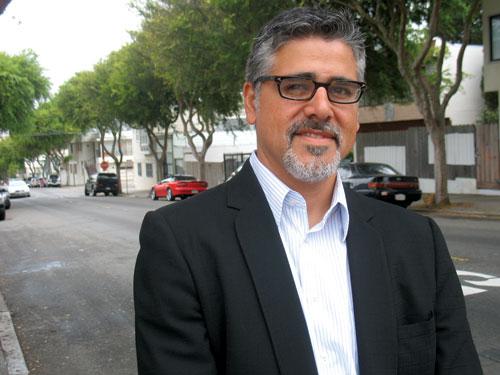
A lame attack on Avalos and Adachi

30

The Examiner headline today is about as misleading as you can get: “Labor leaders unite against mayor candidates Jeff Adachi, John Avalos.”


That’s pretty ridiculous, since Avalos has the endorsement of the largest city employee union (SEIU Local 1021) and the local teachers union and is about the most pro-labor person in the race. And when you look at what’s actually going on, only three “labor leaders” (out of 150 unions represented in the San Francisco Labor Council) are going after Adachi and Avalos — and they’re among the most conservative labor unions in the city. Who are these “labor leaders?” The cops, the firefighters and the plumbers.


The plumbers, I guess, are mad about Avalos’ local-hire law. The cops and firefighters are mad that Avalos doesn’t give them everything they want. And the fact that they’re going to raise money to go after Adachi and Avalos suggests that they think one or both of them is a serious threat to Mayor Ed Lee.


Or else they’re just blustering and throwing money around because they can.


The reality is that Avalos will have strong labor support, as he always has. Adachi will have a lot more than the cops and firefighters and plumbers to worry about — nobody in organized labor is happy with his pension-reform legislation. So this little rump group making a fuss and getting Examiner headlines means very little.

A wave

1

marke@sfbg.com

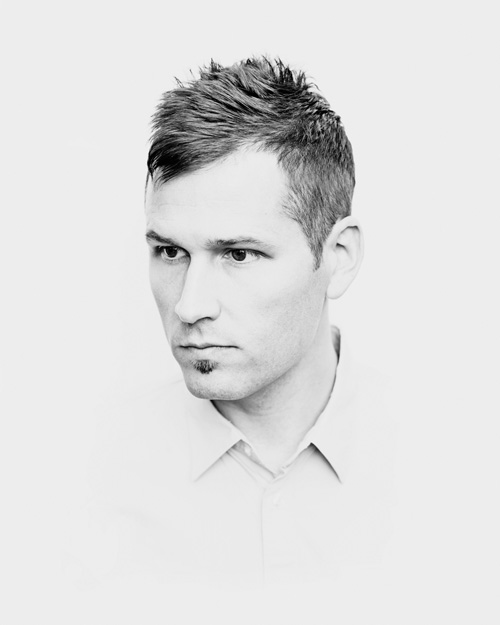
SUPER EGO And so, interest in user-friendly dance music has come to the point where it can support a full-fledged, all-ages, traveling arena festival tour, a kind of mid-period Lollapalooza for ravers of all stripes called Identity, which features a pretty thrilling grab bag of 35 acts in 20 cities, and rolls into Shoreline Amphitheatre on Sat/3. Well, why the hell not? It’s good to go big once in a while.

(Unlike Lollapalooza, however, Identity carries nary a hint of grassroots activism or cosmic enlightenment — although there are “glow products” for sale in the Vendor Village. Also, for something called “Identity” there’s an awfully pale-faced sausage-fest lineup. Both of these things, however, may just be an accurate reflection of contemporary electronic dance music mega-party affairs in general.)

Alongside marquee names like DJ Shadow, Crystal Method, Pete Tong, and Hercules and Love Affair and intriguing, less-familiar-Stateside acts Rusko, Nero, and Steve Lawler — not to mention heroes of hype Steve Aoki and Skrillex — is someone very familiar to San Franciscan clubgoers. Headlining Identity is Kaskade, a.k.a. Ryan Raddon, who made his early career in the city at OM Records before leaping to Billboard Dance Chart fame and becoming SF’s entry into that overwhelming, slightly horrifying, always fascinating pop-tech monster ball that includes Deadmau5, Tiësto, and David Guetta.

“It wasn’t really my ambition to get so big that here I am headlining this massive tour, which can be exhausting,” Kaskade told me over the phone as he prepared to jet off between Identity dates to play the UK’s famed Creamfields Fest. (As someone whose appearance at a block party sparked a full-on riot in LA last month, Kaskade’s down-to-earth, surfer-dude demeanor is a bit disarming.)

“My passion is really more about producing than DJing, although doing I.D. has been awesome and exposed me to new sounds and different audiences. It’s a great party. And it does feel more and more that the pop sound is coming around to what I’ve been doing. A wave of electronic music seems to be taking over right now. I don’t specifically compose for pop singers like Guetta, but I can see how my sound fits in with what’s happening, and that’s why it’s reaching more people.”

That sound is a thoroughly accessible, silky smooth, slightly melancholic series of usually vocal-based anthems that always seems to be shimmering on a Mediterranean beach somewhere (expensive sunglasses come to mind) even as it inexorably builds to its climaxes and breakdowns. New release “Eyes,” with singer Mindy Gledhill is emblematic, the aching breeziness pioneered by local OM and Naked Music labels in the early 2000s pumped up on the big-money, stadium-sized steroids of Kaskade’s current home, Ultra Records, based in New York City.

Headlining Identity has buoyed Kaskade’s mainstream standing, but hopping aboard has had other advantages as well. “One of the best things about the Identity tour is that I get to work on my own stage show, to turn the music into a whole experience. Most of the time as a DJ, I just come into predetermined venues like Ruby Skye and at least have a good light rig. But now I can really expand my musical ideas conceptually, with video projections and amphitheater effects. Opening up to that kind of thing, along with hearing what the other Identity acts like Datsik and Le Castle Vania are doing — I don’t get to go to other peoples’ shows very much because I’m always playing somewhere — that’s changed some of my ideas drastically.”

Is coming back to San Francisco a kind of triumphant homecoming? “I don’t think of it that way. I really don’t think I ever left San Francisco, or that anyone can ever really leave San Francisco. Obviously the Bay Area means a lot to me in terms of my development, but I think a lot about moving back there. The people are genuinely into the music — and they’re used to a high level of quality.”

Identity Festival Sat/3, 1 p.m., $60. Shoreline Amphitheater, Mountain View. www.idfestival.com.


BAD SHOES ANNIVERSARY

The local electro label pumps out a good share of thoughtful bangers, this free party at recently expanded swankity club Sloane Squared is a perfect chance to plug in to the crews’ mindbending doings. With Baan, Ear Jerker, MPHD, Dane O, and Teleport.

Wed/31, 10 p.m., free. Sloane Squared, 1525 Mission, SF. www.badshoesrecords.com


MATTHIAS TANZMANN

Cleverly fiendish, heavily electric house and techno, expertly mixed by this famous German, celebrated for his close association with Ibiza club Circoloco.

Fri/2, 10 p.m., $5 advance. Mighty, 119 Utah, SF. www.mighty119.com


ZUZUKA PODEROSA

Brazil-via-Brooklyn baile funk warrior queen gets provocative and splashes some neon rap over bass-heavy electronic tracks at one of my favorite monthly parties for downright friendliness and forward-thinking global jams, Braza!

Fri/2, 10 p.m., $10. SOM, 2529 16th St., SF. www.som-bar.com


D. DIGGLER AND KOLLEKTIV TURMSTRASSE

Repping Frankfurt and Hamburg respectively, these two acts are heroes of headspace-commandeering minimal techno — with duo Kollektiv considered by many to be among the best live acts in the world. Their sometimes haunting tracks will give the monthly Kontrol party an intense vibe.

Sat/3, 10 p.m.-6 a.m., $20. EndUp, 401 Sixth St., SF. www.kontrolsf.com


OPTIMO

Glaswegian geniuses of the extended 12-inch, this duo can make any retro track sound delightfully contemporary: classic rock, ska, dub, ’80s pop, it’s all fair game. Local “punch-drunk disco nihilists” Mi Ami, a band that’s garnered its own international fame, leads the charge.

Sat/3, 9 p.m.-4 a.m., $10 advance. Public Works, 161 Erie, SF. www.publicsf.com


ADRIAN SHERWOOD

One of the almighty princes of dub ruled the ’80s with treatments of Depeche Mode, Coldcut, the Woodentops, and Sinead O’Connor, released the first Black Uhuru records, cofounded the storied On-U Sound System, and is now helping celebrate excellent weekly Dub Mission’s 15th (!) anniversary. This is one of those “wows.”

Sun/4, 9 p.m., $15 advance. Elbo Room, 647 Valencia, SF. www.dubmission.com


TOM MIDDLETON

British Jedi master of smart tech-house in the 1990s has gone through a number of stylistic changes and clever monikers, but has never been afraid to let his classical and jazz training shine through his tracks. He’s headlining the grand Stompy + Sunset Labour of Love party.

Sun/4, 2 p.m., $20. Cafe Cocomo, 650 Indiana, SF. www.pacficsound.net

Chicago hope

0

arts@sfbg.com

FILM Hard times and an African American man in the White House have unleashed racial hostilities on a level unseen for decades, even if most of it is (thinly) veiled. Millions of low-paid or unemployed whites who should know better from their own experiences with economic struggles view blacks as a homogenous group of “welfare cheats” (believing all welfare is cheating, unless of course you need it yourself) and violent thugs. The online rhetoric, where everyone’s ugliest prejudices can be aired from a safe place of anonymity, reveals a nation of way too many people who spend way too much time hating each other. The venom is so enthusiastic you know most of them wouldn’t want rapprochement if it came with a $50 Wal-Mart gift certificate.

With concern from society and government as a whole at low ebb, communities at greater risk of violence from within than ever have had to come up with their own peace-making solutions. The Interrupters, the latest documentary by Steve James (1994’s Hoop Dreams), shows dedicated efforts to help one of the nation’s worst centers of such bloodshed. In Chicago, the overwhelming majority of both victims and perps of gang-related, domestic, and armed robbery fatalities are African American; shooting incidents in a few neighborhoods have continued to skyrocket even as similar statistics have declined elsewhere around the country.

“Violence is like the great infectious diseases of all history,” says epidemiologist Gary Slutkin, in that it can be stopped from spreading to epidemic proportions by numerous “initial interruption(s) of transmission” at its source. He translated that perspective into the founding of CeaseFire, a Chicago-based organization that doesn’t aim to summarily end the existence of gangs and drug trade. Instead, its plain but hardly simple mission is to stop the shootings, stabbings, etc. which are exacerbated by unemployment, broken families, and other sources of stress whose cumulative effect can rapidly escalate a casual dis to a mortal confrontation. As one interviewee in James’ film says, “sticks and stones” logic doesn’t apply here because “words can get you killed.”

Under CeaseFire’s auspices, Tio Hardiman created the Violence Interrupters program, which drafts people from the community — many former gangbangers themselves — as mediators wading into conflicts to defuse them before things get out of hand. It takes considerable will and nerves of steel; “interrupters” have been shot at, and during the course of this documentary’s year-long span one volunteer lands in the hospital for his trouble.

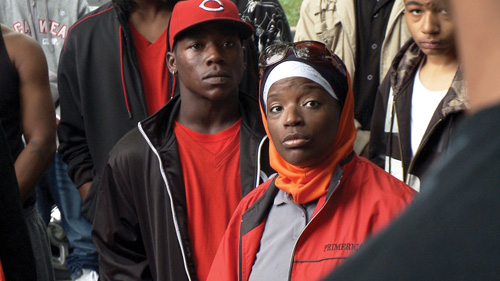
The Interrupters‘ most charismatic figure is Ameena Matthews, daughter of legendary local crime boss Jeff Fort (now in prison for life) and a onetime enforcer herself. Now a mother and devout Muslim, she is seen fearlessly, tirelessly diving into fraught situations where few would be able to command sufficient respect to “interrupt,” let alone arrest, the path that leads from disagreement to threat to assault. She even takes the podium at (yet another) funeral to harangue the attendees about stopping the cycle of brutal retaliation slayings. It’s hardly just active gang members or even their families who are at risk — random, mistaken-identity, and bystander shootings claim an outrageous number of lives every year. (In the New York Times Magazine article that led to this documentary, producer Alex Kotlowitz noted one summer Chicago weekend in which 36 people were shot, seven fatally.)

Like much of inner Detroit — as other recent docs have observed — these Chicago neighborhoods have practically been abandoned by the larger society, considered incurable zones in terms of crime, blight, brutality, abuse, despair. If residents already rank low in a pinched job market, prospects for those who’ve returned from prison stints are subterranean.

Such frustration and anger will be channeled one way or another; constructive alternatives are damn few. But The Interrupters makes a powerful case against the inevitability of hopelessness turning into violence. The program has even seen former perps transformed to the point of returning to the scene of a crime in order to apologize. Rage is blinding; CeaseFire and its mediators prove there’s nothing like taking a step back and a clear-eyed look at oneself to achieve peace in near-impossible circumstances. “Community, heal thyself” may well have to become the American mantra of the near future, because you know the Tea Party wouldn’t mind in the least letting certain groups self-destruct. 

THE INTERRUPTERS opens Fri/2 in Bay Area theaters.

Editor’s Notes

6

tredmond@sfbg.com

I have friends — progressives, activists, good people — who support Ed Lee for mayor. They tell me that Lee is accessible, that he listens to labor and grassroots community groups, that he’s going to be good on a lot of issues and that, compared to the mayors we’ve had in the past 30 years or so, he won’t be all that bad.

I respect that. I understand. But I try to remind them, and anyone else who’s listening, that the years when Willie Brown ran this town were really, really bad.

At the height of the Brown era, during the dot-com boom, hundreds of evictions were filed every single month. Thousands and thousands of low-income and working-class tenants were displaced, tossed out of San Francisco forever. Blue-collar jobs were destroyed as high-tech offices took over industrial space. Every single developer who waved money at the mayor got a permit, no matter how ridiculous, dangerous or crazy the project was.

In 1999, Paulina Borsook wrote a famous piece for Salon called “How the Internet ruined San Francisco.” But the Internet was just technology; what damaged this city so badly was a mayor who didn’t care what happened to the most vulnerable populations. At one point, Brown even said that poor people shouldn’t live in this city. We called his policies “the economic cleansing of San Francisco.”

He controlled local politics — brutally. If you didn’t kiss the mayor’s ring, you were crushed. He announced one day that the supervisors (then elected citywide) were nothing but “mistresses who have to be serviced” — and since most of them were utterly subservient to Brown, they didn’t even complain. Only one person on the board — Tom Ammiano — regularly defied the mayor; occasionally, Leland Yee and Sue Bierman joined him. But that was it.

The corruption was rampant. People who paid to play got in the door; nobody else came close. You did a favor for Brown and you got a commission appointment or a high-paid job, even if you weren’t remotely qualified.

The ones who suffered most were the poorest residents, particularly tenants, particularly on the east side of town. Brown didn’t seem to care that his appointments, deals and policies were causing terrible pain on the ground; it was as if politics was just a fun game, as if he were some sort of royal potentate, partying in the executive suites and ignoring what was happening on the streets.

There are people who believe that Ed Lee can be independent of Brown, and I hope they’re right. But Lee and Brown are close, and Brown helped put him in office — and the thought of even a small part of that rotten era of sleaze coming back makes me very, very nervous.

The real Leland Yee

53

tredmond@sfbg.com

It’s early January 2011, and the Four Seas restaurant at Grant and Clay is packed. Everyone who is anyone in Chinatown is there — and for good reason. In a few days, the Board of Supervisors is expected to appoint the city’s first Asian mayor.

The rally is billed as a statement of support for Ed Lee, the mild-mannered bureaucrat and reluctant mayoral hopeful. But that’s not the entire — or even, perhaps, the central — agenda.

Rose Pak, who describes herself as a consultant to the Chinese Chamber of Commerce but who is more widely known as a Chinatown powerbroker, is the host of the event. She stands in front of the room, takes the microphone, and, in Cantonese, delivers a remarkable political speech.

According to people in the audience, she says, in essence, that the community has come out to celebrate and support Ed Lee — but that’s just the start. She also urges them not just to promote their candidate — but to do everything possible to prevent Leland Yee from becoming mayor.

She continues on for several minutes, lambasting Yee, the state Senator who lived in Chinatown as a child, accusing him of about every possible political sin — and turning the Lee rally into an anti-Yee crusade. And nobody in the crowd seems terribly surprised.

Across Chinatown, from the liberal nonprofits to the conservative Chamber of Commerce, there’s a palpable fear and distrust of the man who for years has been among San Francisco’s most prominent Asian politicians — and who, had Lee not changed his mind and decided to run for a full term this fall, was the odds-on favorite to become the city’s first elected Chinese mayor.

The reasons for that fear are complex and say a lot about the changing politics of Asian San Francisco, the power structure of a city where an old political machine is making a bold bid to recover its lucrative clout — and about the career of Yee himself.

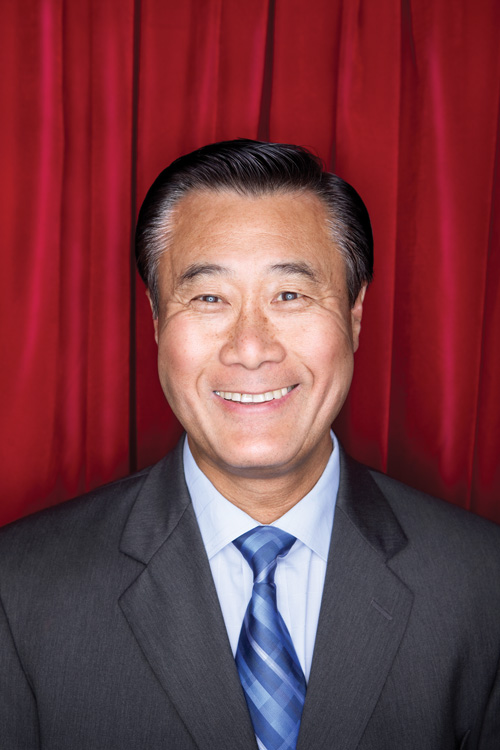
Senator Leland Yee is a political puzzle. He’s a Chinese immigrant who has built a political base almost entirely outside of the traditional Chinatown community. He’s a politician who once represented a deeply conservative district, opposed tenant protections, voted against transgender health benefits and sided with Pacific Gas and Electric Co. on key environmental issues — and now has the support of some of the most progressive organizations in the city. He’s taken large sums of campaign money from some of the worst polluters in California, but gets high marks from the Sierra Club.

His roots are as a fiscal conservative — yet he’s been the only Democrat in Sacramento to reject budget compromises on the grounds that they required too many spending cuts.

He’s grown, changed, and developed his positions over time. Or he’s become an expert at political pandering, telling every group exactly what it wants to hear. He’s the best chance progressives have of keeping the corrupt old political machine out of City Hall — or he’s a chameleon who will be a nightmare for progressive San Francisco.

Or maybe he’s a little bit of all of that.


Leland Yin Yee was born in Taishan, a city in China’s Guangdong province on the South China Sea. The year was 1948; Mao Zedong’s Communist Party of China had taken control of much of the countryside and was moving rapidly to take the major cities. The nationalist army of General Chiang Kai-Shek was falling apart, and Yee’s father, who owned a store, decided it was time for the family to leave.

The Yees made it to Hong Kong, and since Mee G. Yee had previously lived in the United States and served in the U.S. Army during World War II, he was ultimately able to move the family to San Francisco. In 1951, the three-year-old Leland Yee arrived in Chinatown.

For four years, Yee lived with his sister and mother in a one-room apartment with a shared bathroom while his father worked as a sailor in the merchant marine. It was, Yee recalled in a recent interview, a tight, closed, and largely self-sufficient community.

“The movie theater, the shoe store, the barber shop, food — everything you needed you could get in Chinatown,” Yee said. “You never had to leave.”

Of course, after a while, Yee and his mom started to venture out, down Stockton Street to Market, where they’d shop at the Emporium, the venerable department store. “It was like walking into a different country,” he said. “If you didn’t know English, they didn’t have time for you.”

Yee, like a lot of young Chinese immigrants of his era, put much of his time into his studies — in the San Francisco public schools and in a local Chinese school. “My mom spoke a village dialect, and we had to learn Cantonese,” he said. “Every little kid had to go to Chinese school. We hated it.”

When Yee was eight, his parents managed to buy a four-unit building on Dolores Street, and the family moved to the Mission, where he would spend not only the rest of his childhood but much of his early adult life. He graduated from Mission High School, enrolled in City College, studied psychology and after two years won admission to UC Berkeley.

Berkeley in 1968 was a very different world from Chinatown and even the relatively controlled environment he’d experienced at home in the Mission. “You didn’t protest in school. You’d have been sent home, and your mother would kill you,” he said.

At Berekely, all hell was breaking loose, with the antiwar protests, the People’s Park demonstrations, the campaign to create a Third World College (which led to the first Ethnic Studies Department), and a general attitude of mistrust for authority. “I developed a sense of activism,” Yee said. “I realized I could speak out.”

That spirit quickly vanished when Yee lost faith in some of his fellow activists. “People would work with us, then get into positions of power and use that against you,” he recalled. “A lot of my friends said ‘forget it.’ I left the scene.”

Yee once again devoted his energy to school, earning a masters at San Francisco State University and a Ph.D in child psychology from the University of Hawaii. Along the way, he met his wife, Maxine.

With his new degree, the Yees moved back to San Francisco — and back in with his parents at the Dolores property, where he, Maxine and a family that would grow to four kids would live for more than a decade.


Yee worked as a child psychologist for the San Francisco Department of Public Health, starting the city’s first high school mental-health clinic. He went on to become a child psychologist at the Oakland Unified School District, then joined a nonprofit mental health program in San Jose.

In 1986, Yee decided to get active in politics for the first time since college, and ran for the San Francisco School Board. He lost — and that would be the only election he would ever lose. In 1988, he won a seat, and established himself as an advocate for students of color, fighting school closures in minority neighborhoods. He also tried to get the district to modify its harsh disciplinary rules, arguing against mandatory expulsions.

On fiscal issues, though, Yee was a conservative. For his first term, despite the brutal cutbacks of the recession of the late 1980s and early 1990s, he insisted that the district make do with the money it had. His solution to the red ink: Cut waste. Only in 1992, when he was up for re-election, did he acknowledge that the district needed more cash; at that point, he supported a statewide initiative to tax the rich to bring money to the schools.

The sense of fiscal conservatism — of holding the line on taxes, but mandating open and fair contracting procedures and tight financial controls — was a hallmark of much of his political career. When the Guardian endorsed him for re-election to the board in 1992, we wrote that “there’s real value in his continuing vigilance against administrative fat and favoritism in contracts.”

Over the next four years, Yee worked with then-Superintendent Waldemar “Bill” Rojas, a deeply polarizing figure who pushed his own personal theory of “reconstitution” — firing all the staff at low-performing schools — and later was enmeshed in a scandal that led to prison time for a contractor he’d hired. Yee told me he was the only board member to vote against hiring Rojas, but people who were watching the board closely back then say he didn’t always stand up to the superintendent.

He also became what some say was a bit too close with Tim Tronson, a consultant hired by the district as a $1,000-a-day facilities consultant. Tronson wound up getting indicted on 22 counts of grand theft, embezzlement, and conspiracy in a scheme to steal $850,000 from the schools, and was sentenced to four years in state prison.

In 1998, when some school board members wanted to build housing for teachers on property that the district owned in the Sunset, Yee led the opposition — with Tronson’s help. At one meeting at Sunset Elementary School, Yee went so far as to say, according to people present, that “Tim Tronson is my man, and I rely on him for advice.”

Yee acknowledged that he worked closely with Tronson to defeat that housing project. “He was the facilities manager,” Yee explained, “and I said that I trusted his judgment.”


Yee has either a great sense of political timing or exceptional luck. He ran for the Board of Supervisors in 1996, facing one of the weakest fields in modern San Francisco history. He was the only Chinese candidate and one of just two Asians (the other, appointed incumbent Michael Yaki, barely squeaked to re-election). In an at at-large election with the top five winning seats, Yee came in third, with 103,000 votes.

He was never a progressive supervisor. In 2000, the Guardian ranked the good votes of what we referred to as Willie Brown’s Board, and Yee scored only 43 percent. He was against campaign finance reform. He supported the brutal gentrification and community displacement represented by the Bryant Square development. He voted to kill a public-power feasibility study and opposed the Municipal Utility District initiative. He opposed a moratorium on uncontrolled live-work development.

In 2002, Yee was one of only three supervisors to oppose Proposition D, a crucial public-power measure that would have broken up PG&E’s monopoly in the city. He stood with PG&E (and then-Sups. Tony Hall and Gavin Newsom) in opposition to the measure, then signed a pro-PG&E ballot argument packed with PG&E lies.

When I asked him about that stand, Yee at first didn’t recall opposing Prop. D, but then said he “stood with labor” on the issue. In fact, the progressive unions didn’t oppose Prop. D at all; the opposition was led by PG&E’s house union, IBEW Local 1245.

Yee was particularly bad on tenant issues. He not only voted to deny city funding for the Eviction Defense Collaborative, which helped low-income tenants fight evictions; he actually tried to get the city to put up money for a free legal fund to help landlords evict their tenants. He opposed a ballot measure limiting condo conversions. He opposed a measure to limit the ability of landlords to pass improvement costs on to their tenants.

In 2001, Yee voted to uphold a Willie Brown veto of legislation to limit tenancies in common, a backdoor way to get around the city’s condo conversion ordinance. Only Hall and Newsom, then the most conservative supervisors on the board, joined Yee. At one point, he started asking whether the city should consider repealing rent control.

He opposed an affordable housing bond in 2002, joining the big landlord groups in arguing that it would raise property taxes. Every tenant group in town supported the measure, Proposition B; every landlord group opposed it.

I asked Yee about his tenant record, and he told me that he now supports rent control. But he said that he was always on the side of homeowners and small landlords, and that property ownership was central to Chinese culture. “I was responding to the Chinese community and the West Side,” he said.

He wasn’t much of an environmentalist, either — at least not in today’s terms. He was one of the only city officials to support a “Critical Car” rally in 1999, aimed at promoting the rights of vehicle drivers (and by implication, criticizing Critical Mass and the bicycle movement).

His record on LGBT issues was mixed. While he supported a counseling program for queer youth when he was on the school board, he also supported JROTC, angering queer leaders who didn’t want a program in the public schools run by, and used as a recruiting tool for, the military, which at that point open discriminated against gay and lesbian people.


Yee was also one of only two supervisors who voted in 2001 against extending city health benefits to transgender employees.

That was a dramatic moment in local politics. Nine votes were needed to pass the measure, and while eight of the supervisors were in favor, Yee and Hall balked. At one point, Board President Tom Ammiano had to direct the Sheriff’s Office to go roust Sup. Gerardo Sandoval, who was ducking the issue in his office, to provide the crucial ninth vote.

Yee didn’t just vote against the bill. According to one reliable source who was there at the time, Yee spoke to a community meeting out on Ulloa Street in the Sunset and berated his colleagues, quipping that the city should have better things to do than “spend taxpayer money on sex-change operations.”

It was a bit shocking to trans people — Yee had, over the years, befriended some of the most marginalized members of what was already a marginalized community. “There was one person at the rail crying, saying ‘Leland, how could you do this to us,'” Ammiano recalled.

The LGBT community was furious with Yee. “I didn’t speak to him for at least a year,” Gabriel Haaland, one of the city’s most prominent transgender activists, told me.

Yee now says the vote was a mistake — but at the time, he told me, he was under immense pressure. When he voted for the queer youth program, he said, “the elders of the Chinese community ripped me apart. They called my mother’s friends back in the village [where he was born] and said her son was embarrassing the Chinese community.”

That must have been difficult — and he said that “if I had known the pain I had caused, I wouldn’t have voted that way.” But it was hard to miss that pain his vote caused.

On the other hand, people learn from their experiences, attitudes evolve, we all grow up and get smarter, and the way Yee describes it, that’s what happened to him.

In 2006, when he was running for state Senate, Yee met with a group of trans leaders and formally — many now say sincerely — apologized. It was an important gesture that made a lot of his critics feel better about him.

“He didn’t have to do that,” Haaland said. “People change, and he paid for his crime, and that’s genuine enough for me.”

As a former school board member, Yee kept an interest in the schools — but not always a healthy one. At one point, he actually proposed splitting SFUSD into two districts, one on the (poorer) east side of town and one on the (richer) west. “We strongly opposed that,” recalled Margaret Brodkin, who at the time ran Coleman Advocates for Children and Youth. “Eventually he dropped the idea.”

For all the problems, in his time on the Board of Supervisors, Yee developed a reputation for independence from the Brown Machine, which utterly dominated much of city politics in the late 1990s. His weak 43 percent rating on the Guardian scorecard was actually third-best among the supervisors, after Ammiano and the late Sue Bierman.

In 1998, he was one of the leaders in a battle to prevent the owners of Sutro Tower from defying the city’s zoning administrator and placing hundreds of new antennas on Sutro Tower. He, Bierman, and Ammiano were the only supervisors opposing Brown’s crackdown on homeless people in Union Square.

When he ran in the first district elections, in 2000, against two opponents who had Brown’s support and big downtown money, the Guardian endorsed him, noting that while he “can’t be counted on to support worthy legislation … He’s one of only two board members who regularly buck the mayor on the big issues.”

(He never liked district elections, and used to take any opportunity to denounce the system, at times forcing Ammiano to use his position as president to tell Yee to quit dissing the electoral process and get to the point of his speech.)


In 2002, the westside state Assembly district seat opened up, and both Yee and his former school board colleague Dan Kelly ran in the Democratic primary. Yee won, and went on to win the general election with only token opposition.

His legislative record in the Assembly wasn’t terribly distinguished. Yee never chaired a policy committee — although he did win a leadership post as speaker pro tem. And he cast some surprisingly bad votes.

In 2003, for example, then-Assemblymember Mark Leno introduced a bill that would have exempted single-room occupancy hotels from the Ellis Act, which allows landlords to evict tenants for no reason. Yee refused to vote for the bill. Leno was furious — he was one vote short of a majority and Yee’s position would have doomed the bill. At the last minute, a conservative Republican who had grown up in an SRO hotel voted in favor.

When he ran for re-election in 2004, we noted: “What’s Leland Yee doing up in Sacramento? We can’t figure it out — and neither, as far as we can tell, can his colleagues or constituents. He’s introduced almost no significant bills — compared, for example, to Assemblymember Mark Leno’s record, Yee’s is an embarrassment. The only high-profile thing he’s done in the past several years is introduce a bill to urge state and local governments to allow feng shui principles in building codes.”

In 2006, Yee decided to move up to the state Senate, and he won handily, beating a weak opponent (San Mateo County Supervisor and former San Francisco cop Mike Nevin) by almost 2-1. His productivity increased significantly in the upper chamber — and in some ways, he moved to the left. He’s begun to support taxes — particularly, an oil severance tax — and when I’ve questioned him, he somewhat grudgingly admits that Prop. 13 deserves review.

He’s done some awful stuff, like trying to sell off the Cow Palace land to private developers. But he has consistently been one of the best voices in the Legislature on open government, and that’s brought him some national attention.

Yee has been a harsh critic of spending practices and secrecy at the University of California, and when UC Stanislaus refused in 2010 to release the documents that would show how much the school was paying Sarah Palin to speak at a fundraiser, Leland flew into action. He not only blasted the university and introduced legislation to force university foundations to abide by sunshine laws; he worked with two Stanislaus students who had found the contract in a dumpster and made headlines all over the country.

He’s fought for student free speech rights and this year pushed a bill mandating that corporations that get tax breaks for job creation prove that they’ve actually created jobs — or pay the tax money back. He’s also won immense plaudits from youth advocates and criminal justice reformers for his bill that would end life-without-parole sentences for offenders under 18.

Along the way, he compiled a 100 percent voting record from the major labor unions, including the California Nurses Association and SEIU, and with the Sierra Club. All three organizations have endorsed him for mayor.

Yee told me that he thinks he’s become more progressive over the years. “My philosophy has shifted,” he said.

Yet when you talk to his colleagues in Sacramento, including Democrats, they aren’t always happy with him. Yee has a tendency to be a bit of a loner — he’s never chaired a policy committee and in some of the most bitter budget fights, he’s refused to go along with the Democratic majority. Yee insists that he’s taken principled stands, declining to vote for budget bills that include deep service cuts. But the reality in Sacramento is that budget bills have until this year required a two-thirds vote, meaning two or three Republicans have had to accept the deal — and losing a Democratic vote has its cost.

“You have to give up all sorts of things, make terrible compromises, to get even two Republicans,” one legislative insider told me. “When a Democrat goes south, you have to find another Republican, and give up even more.”

In other words: It’s easy to take a principled stand, and make a lot of liberal constituencies happy, when you aren’t really trying to make the state budget work.


I met Rose Pak on a July afternoon at the Chinatown Hilton. She brought along her own loose tea, in a paper package; the waitress, who clearly knew the drill, took it back to the kitchen to brew. Pak and I have not been on the greatest of terms; she’s called the Guardian all kinds of names, and I’ve had my share of critical things to say about her. But on this day, she was polite and even at times charming.

After we got the niceties out of the way (she told me I was unfair to her, and I told her I didn’t like the way she and Willie Brown played politics), we started talking about Yee. And Pak (unlike some people I interviewed for this story) was happy to speak on the record.

She told me Yee had “no moral character.” She told me she couldn’t trust him. She told me a lot of stories and made a lot of allegations that we both knew neither she nor I could ever prove.

Then we got to talking about the politics of Chinatown and Asians in San Francisco, and a lot of the animosity toward Yee became more clear.

For decades, Chinatown and the institutions and people who live and work there have been the political center of the Chinese community. Nonprofits like the Chinatown Community Development Center have trained several generations of community organizers and leaders. The Chinese Chamber of Commerce, the Six Companies, and other business groups have represented the interests of Chinese merchants. And while the various players don’t always get along, there’s a sense of shared political culture.

“In Chinatown,” Gordon Chin, CCDC’s director, likes to say, “it’s all about personal connections.”

There’s a lively infrastructure of community-service programs, some of which get city money. There’s also a sense that any mayor or supervisor who wants to work with the Chinese community needs to at least touch base with the Chinatown establishment.

Yee doesn’t do that. “He doesn’t give a shit about them,” David Looman, a political consultant who has worked with many Chinese candidates over the years, told me.

Yee’s Asian political base is outside of Chinatown; he told me he sees himself representing more of the Chinese population of the Sunset and Richmond and the growing Asian community in Visitacion Valley and Bayview.

Pak is connected closely to Brown, who Yee often clashed with. For Pak, Brown, and their allies, strong connections to City Hall mean lucrative lobbying deals and public attention to the needs of Chinatown businesses. Then there’s the nonprofit sector.

CCDC and other nonprofits do important, sometimes crucial work, building and maintaining affordable housing, taking care of seniors, fighting for workers rights, and protecting the community safety net. Yee, Pak said, “has never shown any interest in our local nonprofits. We all work together here, and he doesn’t seem to care what we do.” Yee told me he has no desire to see funding cut for any critical social services in any part of town. But he has also made no secret of the fact that he questions the current model of delivering city services through a large network of nonprofits, some of which get millions of taxpayer dollars. And the way Pak sees it, all of that — the nonprofits, the business benefits, the contracts — are all at risk. “If Leland Yee is elected mayor,” she told me, “we are all dead.”

I ran into an old San Francisco political figure the other day, a man who has been around since the 1970s, inside and outside of City Hall, who remains an astute observer of the players and the power relationships in the local scene. At the time we talked, he wasn’t supporting any of the mayoral candidates, but he had a thought for me. “This town,” he said, “is being taken over by a syndicate. Willie Brown is the CEO, and Rose Pak is the COO, and it’s all about money and influence.”

That’s not a pleasant thought — I’ve lived through the era of political machine dominance in this town, and it was awful. In the days when Brown ran San Francisco, politics was a tightly controlled operation; only a small number of people managed to get elected to office without the support of the machine. Developers made land-use policy; gentrification and displacement were rampant; corruption at City Hall turned a lot of San Franciscans off, not only to the political process but to the whole notion that government could be a positive force in society.

A few years ago, I thought those days were over — and to a certain extent, district elections will always make machine politics more difficult. But when I see signs of the syndicate popping up — and I see a candidate like Ed Lee, who’s close friends with Brown, leading the Mayor’s Race — it makes me nervous. And for all his obvious flaws, at least Leland Yee isn’t part of that particular operation. If there’s a better reason to vote for him, I don’t know what it is.

YEE HOME PURCHASE RAISES SUSPICIONS

Rose Pak has a question about Leland Yee. “How,” she asked me, “did the guy manage to buy a million-dollar house on a $30,000 City Hall salary?”

Pak isn’t the only one asking — numerous media reports over the years have examined how Yee raised a family of four and bought a house in the Sunset on very little visible income. And while I’m not usually that interested in the personal finances of political candidates, I decided that it was worth a look.

Here’s what I found: Public records show that in July 1999, Yee and his wife, Maxine, purchased a house on 24th Avenue for $875,000 (it’s now assessed at slightly more than $1 million). At the time, Yee was a San Francisco supervisor, earning a little more than $30,000 a year. (The salary of the supervisors was raised dramatically shortly after Yee left the board and went to the state Assembly.) His wife wasn’t working. And his economic interest statements for that period show no other outside earnings. So the disposable, after-tax income of the entire Yee family couldn’t have been much more than $25,000.

That, by any normal standard, shouldn’t have been enough to float a mortgage that, records show, totaled $516,000. In fact, the interest payments alone on that mortgage alone would total $3,600 a month — more than Yee’s gross income.

Documents in the Assessor’s Office show another paper trail, too. In 1989, Jung H. Lee, Yee’s mother, transferred the deed on a four-unit Dolores St. building where the family had been living to Maxine and Leland Yee — for no money. And a few months before the Yees bought the Sunset house, they took out a $320,000 home-equity loan on that property. That was the down payment on the Sunset property.

Still: At that point, the Yees would have been paying off two mortgages, with a total nut of about $5,000 a month — and supporting four kids, in San Francisco. In 2002, Yee’s economic interest statement’s show some modest income from teaching at Lincoln University — but nowhere near enough to pay that level of expenses.

What happened? Yee explains it this way: “For more than 10 years, we were living rent-free in my parents’ property,” he told me I an interview. “We were a close Chinese family, and my parents provided the food and helped pay for the children’s clothing. So we had almost no expenses and we lived very frugally.”

During that period, Yee was working for the San Francisco Department of Public Health, the Oakland Unified School District, and a San Jose nonprofit, earning, he said, between $50,000 and $90,000 a year. If he saved almost all of that money, he would have had more than a half-million dollars in the bank when he bought the Sunset house.

There’s nothing on any of his economic disclosure forms showing any ownership of stocks or other reportable financial interests during that period, so he wasn’t investing the money. In fact, he says, it was, and is, all in simple savings accounts. A bit unusual for that large a sum of money.

How did he get a mortgage? “Back then,” he said, “banks were willing to lend a lot more freely than they do today.”

Starting in 2003, Yee was in the state Assembly, making a higher salary — but still not much in excess of $100,000 a year. After taxes, he was probably taking home about $75,000 — and $60,000 was going to the two mortgages.

How did he do it? “We have been supplementing our income with our savings,” he said. “We don’t take vacations, we are very careful with our money.” And they clearly aren’t desperate for cash — Yee’s daughter occupies two of the four units in the Dolores St. building they own, but the other two units are vacant.

It’s possible. It’s plausible. But I don’t blame people for wondering how he managed to pull it off. (Tim Redmond, with research assistance by Oona Robertson) 


BIG CORPORATIONS HAVE BACKED YEE

Yee became a prodigious fundraiser in Sacramento — and a lot of the money came from big corporations that had business in the Legislature. And while he has perfect scores from the Sierra Club and the big labor unions, he’s taken tens of thousands of dollars from some of the biggest corporations, agribusiness interests, and polluters in the state. And at times, he’s voted their way.

Since 1993, for example, campaign finance records show Yee has taken more than $20,000 from Chevron, ExxonMobil, Valero, Conoco Phillips, and BP. He’s received another $22,450 from the chemical industry (and industry employees). Most of it came from Clorox, Dow Chemical, and Dupont.

And while the Sierra Club may not have considered it a priority, Sen. Mark Leno has worked hard to pass a bill limiting chemical fire retardants in furniture. In 2008, Yee voted against Leno’s AB 706.

That year he also refused to support a bill that would prohibit the use of the chemical diacetyl in workplaces. The industries that opposed AB 514 (including Bayer, Abbott Laboratories, Pfizer, and Johnson & Johnson) have given Yee a total of more than $60,000.

In 2003, Yee voted against a crucial tenant bill, one that would have prevented the owners of single room occupancy hotels from using the Ellis Act to evict tenants. He received a campaign check for $2,500 from the San Francisco Apartment Association the next day. Landlords in general have given Yee close to $40,000.

Then there’s agribusiness. Yee gets a lot of money from the farming industry, despite the fact that there obviously aren’t many farms in his district. Why, for example, would the California Poultry Association, the California Cattlemen’s Association, and the California Farm Bureau give him money? The Poultry Association’s Bill Mattos told us that Yee “has taken a keen interest in California’s poultry industry.”

Yee also took immense flak from the San Francisco Chronicle and other papers over a 2003 vote against a bill to limit emissions from farm vehicles. In an editorial, the paper wrote that he was “doing dirty work for the lobbyists.” In the end, under immense public pressure, he switched positions and voted for the bill. I asked Yee about all that money from all those bad operators, and he told me — as most politicians will — that campaign cash has never influenced any of his votes.

So why do all these groups give him money? “It’s about whether you will sit down and listen,” Yee said. “I will talk to all sides and at least consider the arguments as a thoughtful human being. Then I vote my conscience.” (Tim Redmond, with research by Oona Robertson) 

5 Things: August 30, 2011

0

>>A HURRICANE OF YIPS The great Chihuahua airlift of 2011 — in which a planeload of unwanted West Coast pups were to be flown from L.A. to new homes on the East Coast (where “there is a demand for them”), dubbed “Operation: Chihuahua,” has had to be delayed due to flight rescheduling around Hurricane Irene. But never fear small dog lovers (Chelsea gays)! Virgin is in the process of rescheduling what is surely the Saigon or Berlin airlift of our time, and even offering a “No Chuhuahua Left Behind” package — “each ticket to Mexico booked by 11:59 p.m. Thursday will contribute $25 to support ‘local dogs and future airlift flights.'”

>>24-HOUR VEGAN PIZZA ALERT! 24-HOUR VEGAN PIZZA ALERT! We’ve been really, really into vegan pizza lately here at the Guardian — and while our old standby is a simple veggie minus cheese from neighborhood spot Goat Hill Pizza, we finally had a post-clubbing opportunity to experience newly revamped pie parlour DNA Pizza, conveniently located right next to party-central DNA Lounge itself. It’s open 24 hours! It has lots of options! Best of all, there’s an excellent vegan overload called “The Whole Damn Vegan Garden”: spinach, basil, tomatoes, red onions, artichoke hearts, black olives, daiya vegan cheese, and bell pepper on some pretty great crust. No need to sink into dead grease after drinking at the goth party, y’all. 

>>RAISED VOICES A group from the San Francisco Girls Chorus will be singing and marching in protest today over the non-renewal of its longtime artist director, Dr. Susan McMane. The protestors, comprised of current singers and graduated alumnae, will meet at 5 p.m. at the San Francisco Opera House then sing-march to the San Francisco Girls Chorus building at 44 Page. McMane, who has been with the choir for over 10 years, learned in late July that her contract would not be renewed. The chorus is protesting for answers as to why this decision was made.

>>IF THE GLOVE FITS… Scene from last night’s birthday tribute to MJ at Showdown, hosted by our Fist Fam buddies. We’re still wearing ours today guys. It’s making it really hard to type this.

Photo by Dennis Beckmann

>>LAST NIGHT A BJ SAVED MY LIFE No one on Earth has every maintained a daily video blog for four years — besides BJ Dehut (disclaimer: this might not be true). We’re kind of sorry to turn you onto the LA DJ and marketing consultant’s deal because… well there goes the rest of your afternoon. Here, watch this one and try not to think of his 51 months of backlogged video weirdness, hip-hop, and 1950s knife-throwing mothers.

We got Forrest Day on our roof, rapping

0

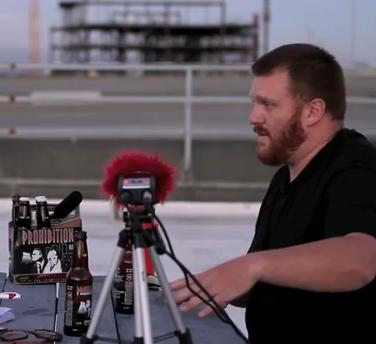
Not all locals can live here. But MC-bandleader-all around solid individual Forrest Day is pretty much as local as they get, even if he does live in San Leandro. He’s into being able to pay his rent, but the guy’s grandparents met at Bimbo’s, for chrissakes.

And how’s this for San Francisco? “There was a pet monkey in my family that was like a brother to my dad. He lived until he was 33 and his name was Bimbo,” Day tells us.

We’re saying, all-around solid individual. Day’s grandma had a spot near Dolores Park when he was growing up, so SF got him on the weekends.

How he gives back to the community that influenced his upbringing: Day leads an eponymous band whose music veers from hip-hop, yes — but then back again into screaming punk, funk, ska. He’s well known for performing in a muu muu that he reportedly got from Mission Thrift (rumor unconfirmed, Forrest can you help us out on that one?). Basically, the man does what he wants. 

“I just want to explore what I want to explore,” he explains, sitting up on the Guardian roof with a sixer of Prohibition Ale and an unexpected microphone shoved into it, suspiciously close to his face. After busting out of San Leandro after high school to hitch hike the country, Day actually spent awhile in punk’s high decibel climes. “I was mostly screaming then. When I quit my punk band, I missed that release.”

We ask him if he worries about his commercial viability, being strung between so many genres. “Sometimes I do worry that maybe I should be more focused and just create, like side projects or something. But at the end of the day, I just want to be a one-stop shop.”

It strikes us as very Bay Area, this unwillingness to cram into a sole genre. Why not just conquer them all? After five years with more or less the same musicians in his band, Day is ready to take the next step — more national touring, more sharing of the live show that he says can be “a cerebral experience” for people seeing it for the first time. (“After the third show they really start to get it,” he tells us.) 

And hell yeah, more dance videos. We didn’t get him two-stepping for Tiny Town Production‘s dope video of our interview (by the way, thanks for the audio visual assist, Tiny Town) and — hell yeah — his impromptu a capella performance. But consider this self-made tour vid the action movie.

By the way, he’s got a real good show coming up. It’s no rooftop jam, but it’ll do:


Forrest Day

With Oona and Lavish Green

September 9, 9 p.m., $13-15

Independent

628 Divisadero, SF

(415) 771-1421

www.theindependentsf.com


Thee Oh Sees will release another LP; San Francisco rejoices

0

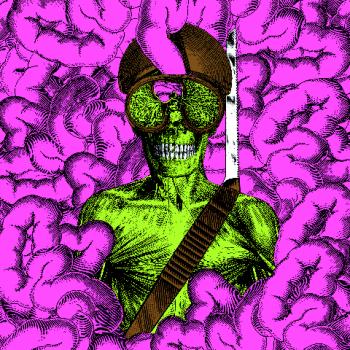
Yep, it’s true – another Thee Oh Sees record is on the way — not that we are complaining. Just six months after releasing their last LP (Castlemania), it was announced this week that John Dwyer and crew will release another dirty punk/psych garage record (Carrion Crawler/The Dream) this Nov.15 on In the Red Records. He just keeps churning them out. If you can remember that far back, the band released three albums in 2009. See below for the track listing and some fun videos.

Carrion Crawler/The Dream:
01 Carrion Crawler
02 Contraption/Soul Desert
03 Robber Barons
04 Chem-Farmer
05 Opposition
06 The Dream
07 Wrong Idea
08 Crushed Grasss
09 Crack in Your Eye
10 Heavy Doctor

Dwyer is a San Francisco staple at this point, like weed or broken down buses — as much as he’d probably hate to hear that. Depending on when you arrived in this city (oh, you were born here? Well, this sentence isn’t for you), you likely discovered his high-held, frenetic guitar attacks during one of three eras: Pink and Brown (1997), Coachwhips (2001) or the fully-evolved Thee Oh Sees (it originally began as his solo side-project). Of course, there were bands in between, but those mentioned were the era-defining acts.

In celebration of this always-welcome announcement, let’s look back at Dwyer’s career in video form:

Pink and Brown:
http://www.youtube.com/watch?v=2aqwzweFqjc

Coachwhips:
http://www.youtube.com/watch?v=VwK8sDJOJuA

Thee Oh Sees:
http://www.youtube.com/watch?v=z1bHddYhtDw

For those itching to see the band live again, its next local show is the Treasure Island Festival on Oct. 16.

5 Things: August 29, 2011

0

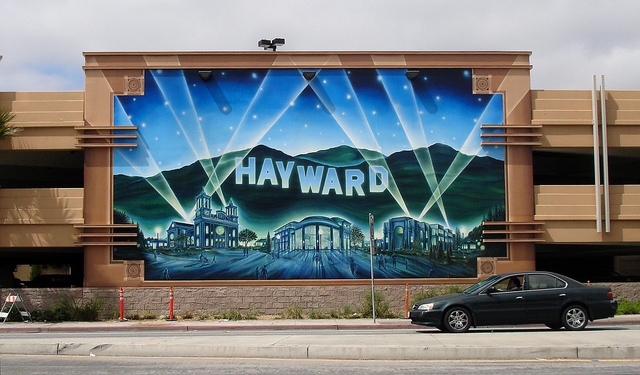
>>HOLLYWARD Hayward got a little more flash this week with the addition of Andrew Kong Knight’s two three-story-tall “Hollywood Meets Hayward” murals, which reimagine the town’s city center landmarks as an annex of Tinsel Town.

>>TWANG AID Twang to the Rescue – a concert for three local musicians displaced by the July 20th Waller Street fire – takes place tomorrow (Aug. 30) at Cafe Du Nord. It’s a mix of bluegrass and country bands coming together to support their fellow musicians: Pam Brandon, Tom Drohan, and Gayle Schmitt. The house at 434-436 Waller was so badly burnt that it was deemed uninhabitable (though luckily, no one was hurt). The fundraiser concert will include live performances by Windy Hill, The Royal Deuces, Lady A and the Heeldraggers, Misisipi Mike’s Midnight Gamblers and more. [Via Haighteration]

>>WE SWEAR WE’RE DONE TALKING ABOUT J-POP SUMMIT AFTER THIS We thought that just watching ourselves on camera in front of the throngs in Japantown’s New People mall was nerdy enough during the Japanese pop culture fest this week, but come to find out that the image on the flatscreen we were mugging for was actually connected to a livefeed leading to a Japanese website. Wait — so all those typed messages (“cowgirl!” and “we will get married now!” figured prominently on our turn) were from actual people on the other side of the world. Hope they enjoyed our manic fist-pumping — and thanks a lot, Niconico.com. But another fount of cat videos is always appreciated. 

>>THANKS FOR THIS, CORNELL UNIVERSITY Two AI bots decide to chat with each other, and what do they do? They argue — or rather, they contradict each other. Then they talk about God. If this is what the world is coming to, then John Cleese predicted it 45 years ago. 

>>LADY GAGA’S PERFORMANCE ON LAST NIGHT’S VMAS WAS EXTRAORDINARY


Maximum Consumption: John Vanderslice’s tea time

0

Making a record takes a lot out of person. It’s actually grueling work; it requires obsessive attention to detail and long, ungodly hours. No one knows this more than revered local rocker-storyteller-recording studio owner John Vanderslice. He the creator of his own music (MK Ultra, a vast solo career) and the recorder of a great many others (Deerhoof, Death Cab for Cutie, Thao) at his Mission-based studio, Tiny Telephone. Perhaps this understanding of the stresses is why Vanderslice is quick to offer incoming bands a warm cup of calm.

Turns out, Vanderslice developed a taste for fragrant loose-leaf teas a while back, and has seen to it that his studio offerings come stocked with said caffeinated beverage. Naturally, I went to the source to discuss this obsession for Maximum Consumption. Enjoy the resulting interview with two lumps of sugar (or however you take it):

San Francisco Bay Guardian: When did you develop an interest in tea?
John Vanderslice: I lived in London for a year, that changed it for me. Bad coffee [plus] good tea [ equals] tea drinker.

SFBG: Where do you purchase your loose leaf teas?
JV: Rainbow Grocery, Five Mountains, and Red Blossom.

SFBG: What are the 11 loose leaf teas offered at Tiny Telephone?
JV: Right now there’s 12! They are: Gunpowder, Genmaicha, Keemun, China Black, Green Jasmine, Throat Coat (the real, strong organic blend from Rainbow), Chamomile, Assam Black, English Breakfast, Camellia Blossoms, Emperor Pu-erh, and JV’s Herbal Organic.

SFBG: When did you come up your own personal JV’s herbal organic tea blend?
JV:
I initially wrote it on a piece of masking tape affixed to a mason jar with my mix. I thought it would be kind of funny, but people just asked me what the ingredients were. Then I started to take it seriously, tweaking and improving it. It has Rainbow’s Love Tea blend (which is really good), dandelion, peppermint, blackberry bush, red clover blossoms, rose hips, and sage. Some things are there for taste, and others for medicinal reasons.

SFBG: Do you see any connection between the ways you approach creating music/writing songs/recording bands and mixing teas?
JV:
I’m a tweaker through and through, I imagine I could have worked on cars or hydroelectric dams. I love the intersection of the technical and the creative.

SFBG:Would you ever be interesting in putting out your own brand?
JV:
I can barely function as it is, I think adding more pursuit/business and I might crack. I love giving it away for free.

SFBG: Do you also drink coffee?
JV
:I love coffee but I find myself drinking a lot more tea. Usually very strong black in the morning and green in the afternoon.


A video of our interviewee for your viewing pleasure: http://www.youtube.com/watch?v=_VKpMDxhGQY

BART board mulls nation’s first cell service disruption policy

44

A special meeting of BART’s Board of Directors yesterday (Wed/25) was the first step in crafting a policy outlining the circumstances under which BART staff would be authorized to cut off cell phone service in its train stations. The resulting policy will be the first in the nation, and is likely to act as a model for other government agencies to address the issue.

While BART’s top management defended the suspension of cell phone service to disrupt a protest planned for August 11, BART’s board was divided over whether the suspension of cell service to prevent a protest was justified and what would constitute a justification for cutting cell service in the future.

“This group was encouraging, promoting and inciting illegal behavior on our platform,” BART police Chief Kenton Rainey reminded the board.

“Well, there is illegal activity every day at BART. The response does not feel proportional enough for justification,” responded BART director Tom Radulovich,

BART director Robert Raburn echoed Radulovich’s concerns. “Neither speculation about a protest, nor mere disruption of train service, nor other illegal activity by itself constitutes a risk to passenger safety that would warrant interrupting cell service. We must guard First Amendment freedom of speech, and this will become a landmark case,” said Raburn.

Staff and union representatives stressed that public safety was always BART’s top concern.

Officials from BART’s three unions generally agreed that the shutting of cell phone service was inappropriate, but admonished protesters for conducting protests on the platforms where they say there is a safety risk due to crowding.
“I applaud the individuals, the union supports the individuals who organize, for I understand organizing. I understand protesting,” said Austin Thomas, who represents BART employees from SEIU Local 1021. “But, I would like to see that this forum be the forum to bring your protest, to have your grievances redressed here.”

“The bottom line for BART is that downtown San Francisco at 5 pm is the maximum stress point at the maximum stress time. It’s all about public safety and keeping the trains moving,” stressed BART Assistant General Manager of Operations Paul Oversier.

“We keep going around with these safety issues, but do not be confused: We do not have to have one or the other,” urged director Lynette Sweet, who referenced the 1955 case Pike vs Southern Bell Telegraph.

“In this case, a gentleman by the name of Bull Connors ordered Southern Bell to remove the telephone of one Lewis Pike, described by Mr. Connors as a negro of questionable character who is known to be using his phone for unspecified illegal purpose. That is not where we as BART want to go. We don’t want to tell people, or signify, or specify, that you can’t talk, that you don’t have the ability to talk.”

But BART board Vice President John McPartland took a harder stance. saying the action was justified, and BART need to post signs informing the public of possible disruptions in cell service due to safety issues.

“This is the beginning of a review from a national perspective on this issue. I, for one, think we should maintain our ability to control cell service until we have it looked at from a legislative perspective.” said McPartland.

“Not all free speech is protected. There are some very narrow exceptions, and I believed this to be one of them,” Oversier insisted.

“If we are ever going to shut off cell phone service, ever, it should be for the most valid reasons that I equate with 9-11 [terrorist attack] level. Not the protests that we thought were going to happen on August 11th. We can’t do that,” cautioned Sweet, who wondered out loud if BART couldn’t just apologize for making a mistake and move on.

Members of the public present for the meeting remained dubious about BART creating policy concerning cell phone disruption at all.

Speaking on behalf of protest group No Justice No BART, an activist identifying himself only as Christof told the board, “We are not asking you to fix anything. We just simply don’t trust you to run a police force at all. We are not asking you to improve your free speech policy, we already have a free speech policy – it’s called the constitution.”

He expressed doubts as to whether BART should be trusted with the power to cut cell phone service. “What is the first thing that your police officers did on the Fruitvale platform after they shot Oscar Grant in the back? They tried to confiscate video footage taken by passengers,” Christof accused.

That footage from the New Years Eve shooting of Grant by officer Johannes Mehserle was the beginning of BART’s problems with anti-police brutality protesters.

Other speakers from the public had similar concerns about BART overreaching its authority.

“The proper place to present the arguments we have just heard is not to this board, but in a court room before a judge considering a motion or injunction. Instead of using those existing legal mechanisms, you have taken matters into your own hands as vigilantes,” said Edward Hasbrook representing the Identity Project.

BART officials expect the new policy will be crafted and voted on within a month. They say the new policy will be vetted through BART attorneys, the ACLU, and and BART’s civilian advisory committee. But they cautioned that BART could not envision every emergency that would warrant shutting off of cellular service as they craft their forthcoming policy, so the policy would include some flexibility at the discretion of BART management.

Both the California Public Utilities Commission and the Federal Communications Commission, who regulate cell phone providers, are already examining the legality of BART’s actions. As an afterthought, at the close of the meeting, Sweet urged the board to consult with those agencies over the policy before it is implemented.

BART has only provided cell service in its stations for a short time. While BART is under no legal obligation to provide phone service, once they began providing service they fall under the jurisdiction of the FCC, which regulates cell service nationally.

Speaking in Denver to CNET, FCC Commissioner Robert McDowell said the matter was still under investigation.

“What the heck happened, what precedent does it set, were there any laws that were broken?” McDowell questioned. “Let’s continue with the investigation. We’ll draw conclusions after we have all the facts.”

Tonight: the last of five Guardian forums on the issues for the next mayor

0

Join us tonight for the fifth and final installment of the Guardian Forum: a series of panel discussions and participatory debates framing the progressive issues for the mayor’s race and beyond:
 
Forum Five: Environment, Energy and Climate Change
Tonight, August 25 at 5:30PM
Koret Auditorium, San Francisco Main Library, 100 Larkin St., SF
(Civic Center BART and MUNI 5, 19, 47, 49, or F Train)

Featuring:
Tim Redmond, San Francisco Bay Guardian
Antonio Diaz, People Organizing to Demand Environmental and Economic Rights
Alicia Garza, People Organized to Win Employment Rights
Aaron Peskin, former San Francisco supervisor
Saul Bloom, Arc Ecology
 
Cosponsors: Harvey Milk LGBT Democratic Club, San Francisco Tenants Union, SEIU Local 1021, San Francisco Rising, San Francisco Human Services Network, Council of Community Housing Organizations, Community Congress 2010, Center for Political Education, Jobs with Justice
 
All events are free. Sessions will include substantial time for audience participation and discussion. Please join us!
 
Save the Date
On September 21st, we’ll present our platform to the mayoral candidates and see which ones are willing to sign on.

Maximum Consumption: il gato eats SF

1

When I sat down with il gato for this week’s cover story, I also grilled the band about their favorite local eateries. And they had some pretty serious opinions on the matter. Below is a transcript of our food-loving conversation:

San Francisco Bay Guardian: So where do you like to eat in San Francisco?

Johnny Major: Little Chihuahua, have you ever been there? I’m an absolute addict. It’s the perfect food. Garlic shrimp burritos! And they have amazing carnitas burritos. I go there all the time. And Lower Haight has got some great spots like Memphis Minnies. It’s great Southern barbecue. Where do you go and get some real Southern barbecue here? Those are my two favorite restaurants.
Daimian Holiday Scott: I was raised vegetarian so initially coming out here and, which I’m still super into, I’ve never had the experience of eating lots of different types of meat, so getting like, veggie chili cheese fries or there’s [Golden Era] that has fake fried chicken sticks that have a bamboo dowel.

SFBG: Are you still vegetarian?
DHS: Still vegetarian. Yeah.
JM: From birth! Never had a piece of meat.
DHS: [Laughs] That’s John’s favorite line! It’s not true.
JM: I mean a real piece of meat. You ever had a steak?
DHS: No, I don’t know if I have really.
JM: There you go.

DHS: I lived in Berkeley a couple of years, and Berkeley is still one of the top food spots. And I love Little Star and that rosemary cornmeal crust. I [also] like pickled things so I pickle a lot – cured olives and sauerkraut.

Andrew Thomas: I grew up in Texas, so I’ve had plenty of steak [laughs]. I’ve dabbled in all types. I’ve been a pescetarian, I’ve been a vegan, I’ve tried it all and I’m pretty much back to eating meat. I live in Oakland so I’ve got lots of favorites in Oakland. But I lived in San Francisco for a year and one of my favorites is House on Nanking in Chinatown. And in general, moving up here –  and my girlfriend is part of it too, she’s a big cook and into farmers’ markets – I’ve learned infinitely more about cooking and vegetables in general. And I have to say, my token place was Kennedy’s [Irish Pub and Curry House]. It’s pretty much an Irish bar meets and Indian place.

DHS: Indian pizza is one of my favorite things about living in San Francisco. Zantes is better but there used to be Raja in Lower Haight. I actually went to a [different] place that said they had Indian pizza – [it was] a cheese slice with garlic, spinach, and then some like, jarred Indian sauce on it. I was like, “what are you doing? How dare you?!” [laughs].

I walked home last night after Johnny’s [solo] show, and I got homemade apple pie with fresh whipped cream off a vender on Valencia. That’s tied into the city being one of the top two or three food cities in the world, which is so true and we’re so spoiled.

For the fall of it

0

arts@sfbg.com

FALL ARTS Puppets, fanciful forms of democracy, and disfigured villains are leitmotifs beyond the Beltway this season, as the following theater and performance highlights suggest.

Stuffed and Unstrung Bad puppets, puppets misbehaving, puppets you won’t see on Sesame Street, puppets you don’t want to meet on a darkened street. Eighty of them. And six improvising comedians too: Henson puppeteers gone wild. (Brian Henson, that is, son of puppeteering parents Jim and Jane). Co-presented by SF Sketchfest. (Through Sat/27, Curran Theatre; shnsf.com.)

Roughin’ It: Theater. Oysters. Campfire. Booze. Is one of these things not like the others? No, they are all just like the others. Now you can yell oyster in a crowded campfire and drink like an actor. It seems this unique opportunity (one night only, this weekend) arises because PianoFight is couch surfing right now, very near the actual surf in Tomales Bay. The show-show part of this show consists of new material by local playwrights writing plays for this very moment in time at the Tomales Bay Oyster Company in Point Reyes Station, just in case you were wondering about it. Round-trip shuttle ride from SF available for a few extra clams, and dollar oysters for a dollar. (Sat/27, Tomales Bay Oyster Company, Point Reyes Station; pianofight.com.)

A Delicate Balance Aurora Theatre turns 20 this season too. It has chosen to celebrate by kicking things off with a production of Edward Albee’s great and so great play, A Delicate Balance. And to include in the cast local luminaries Anne Darragh, Charles Dean, and Carrie Paff. This is all just an excellent idea. (Sept. 2-Oct. 9, Aurora Theatre; auroratheatre.org.)

San Francisco Fringe Festival, the 20th annual for god’s sake. Forty-four shows from all over, all over 12 days, all over the lovely Tenderloin. Good theater very cheap, and bad theater, also very cheap. The lottery-based, snob-resistant Fringe: this is what democracy looks like. (Sept. 7–18, Exit Theatre; www.sffringe.org.)

The People: San Francisco Corporations are people too, my friend. So was Hitler. Even I am people apparently. There’s a lesson there somewhere in this Yerba Buena Center for the Arts and Z Space co-production, as the New York–based performance team of Caden Manson and Jemma Nelson (makers of 2009’s wowing S.O.S. at YBCA) bring to the street outside Z Space the local installment of their globetrotting site-specific democracy-curious spectacle, featuring live performance and real-time gi-normous video projections. I’m told there will also be taco trucks. But really: no way you want to miss Big Art Group. (Sept. 16–17, Z Space; bigartgroup.com)

3 For All Maybe the SF Improv Festival has whetted your appetite. Or maybe you already know that this longstanding, outstanding long-form improv trio comprised of Rafe Chase, Stephen Kearin, and Tim Orr are always varied and strange and wonderful. (Sept. 16–17, Bayfront Theatre; www.improv.org.)

Frankenstein Independent Eye’s Conrad Bishop and Elizabeth Fuller present their take on Mary Shelley’s gothic (and profoundly modern) tale, using a trio of actors, a moody mix of sound and image, and their exquisitely crafted puppets. (Oct. 7–30, 6th Street Playhouse; 6thstreetplayhouse.com.)

Richard III Now is the winter of our discontent made glorious with this fall theater-season spectacular starring Kevin Spacey. M’lord. What hump? (Oct. 19–29, Curran Theatre; shnsf.com.)

Desdemona Responding to internationally acclaimed director Peter Sellars’s 2009 staging of Othello, author Toni Morrison and African singer-songwriter Rokia Traoré, together with Sellars himself, channel a conversation between Shakespeare’s unlucky heroine and her African nurse, Barbary, in this intimate and intriguing U.S. premiere. (Oct. 26–29, Zellerbach Playhouse; calperfs.berkeley.edu.)

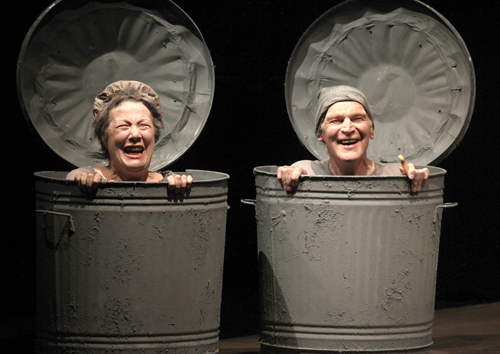
Endgame and Watt Samuel Beckett is not the Gloomy Gus everybody likes to think. All right, sure, he kind of is. But he’s also very funny. And I’m told tidy. He’s also a genius, damn it, and when it comes to interpretations of Beckett nobody has the cred that these Irish cats do, in Gate Theatre of Dublin’s rare visit to Berkeley’s Zellerbach Playhouse. Starring Barry McGovern, who can’t go on but will go on, in the great play Endgame, as well as his own selections from the novel Watt. (Nov. 17–20, Zellerbach Playhouse; calperfs.berkeley.edu.)

Vision statement

0

arts@sfbg.com

FALL ARTS You better start doing your stretches and invest in a good pair of walking shoes. There’s as much ground to cover as there is art to see this fall, and if you get to every gallery, studio, and museum on this far-from-comprehensive list your eyes will probably be as sore as your feet. But as any seasoned hiker will tell you, the views are well worth any aches incurred along the way.

Julie Heffernan: Boy Oh Boy II” “Boschian” is an oft-overused adjective in art writing, and Heffernan’s more-is-more paintings, chock-full of twisted allusions to Renaissance art (Bosch included) and all sorts of fantastic razzle-dazzle, will have you scrambling for synonyms. (Sept. 3–Oct. 29, Catharine Clark Gallery; www.cclarkgallery.com)

Pamela Jorden” I’ll leave the question of whether or not painting’s dead up to more qualified coroners, and simply state that the oil-on-linen works of the young, Los Angeles-based Jorden make a powerful case for the continued relevance of gestural abstraction. There are echoes of Richard Diebenkorn or Clyfford Still in Jorden’s fractured cataracts of color (her blues will make you blush), but compositionally her canvases evince an alchemy that’s entirely her own. (Sept. 16-Oct. 15, Romer Young Gallery; www.romeryounggallery.com).

SF Open Studios Artists, they’re just like us! Seriously, though, one of the many pluses of ArtSpan’s annual city-wide event is that it helps demystify and de-romanticize what it means to be a working artist. Get to know the creative types in your neighborhood, see where the magic happens, and maybe help stimulate the local economy (hint, hint). (Oct. 1-18, various venues; www.artspan.org.)

Lionel Bawden: The World of the Surface” The title of Badwen’s American debut is a half-truth. His sculptural works, comprised of hexagonal colored pencils grouped together and shorn, topiary-like, into amorphous shapes, suggest a world far below the surface: caves, fatty tissue, cells. Dive in. (Oct. 1–Nov. 26, Frey Norris Gallery; www.freynorris.com.)

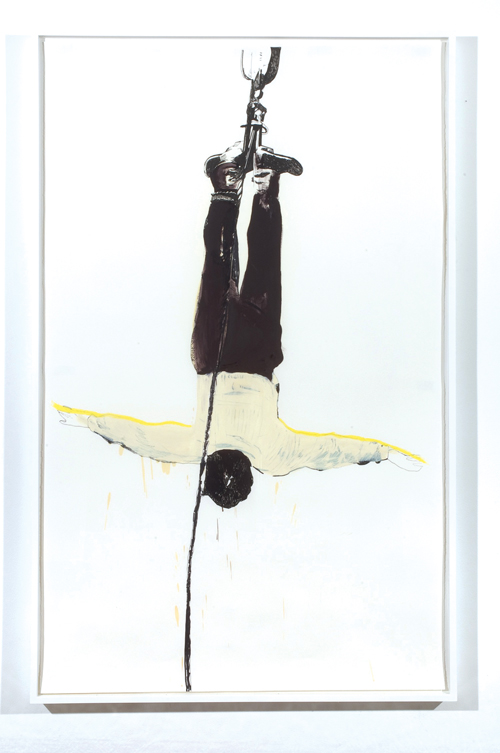
Houdini: Art and Magic” How does a museum escape the confines of the now tired “contemporary artists responding to famous historical figure X” approach to curating? Do like the Contemporary Jewish Museum and put on a show about legendary escape artist Harry Houdini. Come for tributes by Vik Muniz, Jane Hammond, etc. (what, no Matthew Barney?) but stay for a recreation of his famous Water Torture Cell illusion, along with the hundred other bits of Houdiniana. (Oct. 2–Jan. 16., 2012, Contemporary Jewish Museum; www.thecjm.org.)

Ralph Eugene Meatyard” The very banality of Meatyard’s biography — he was a happily married optician in Lexington, Ken. who did photography as a weekend hobby — only makes his singular and startling body of work that much more so: from children creepily posed with dolls and masks to bold experiments with abstraction and “no focus” imagery, Meatyard’s pictures push into territory far more strange and wondrous than the Gothic South. (Oct. 8- Feb. 26, de Young Museum, www.famsf.org.)

“Geoff Oppenheimer” Oppenheimer makes conceptually smart and visually arresting installation and video work that frequently voices the unspoken dynamics behind public performances of controlled discourse, such as press conferences. Be prepared to be discomfited. (Oct. 28–Dec. 11, Ratio 3; www.ratio3.org).

The Air We Breathe” I have some serious reservations about the San Francisco Museum of Modern Art’s decision to organize their first major contemporary group show in a long while around “the cause of marriage equality” (for starters, why not host “Hide/Seek,” the previously censored and now traveling exhibit about same-sex desire and American portraiture currently at the Tacoma Art Museum, instead?). That said, something truly queer, politically risky and aesthetically challenging has gotta happen when you put specially commissioned works by the likes of John Ashbery, Dodie Bellamy, Raymond Pettibon, Ann Hamilton, and Robert Gober (and many others) under one roof, right? For now, consider my tongue held and eyebrow raised. (Nov. 5–Feb. 20, 2012; SFMOMA, www.sfmoma.org.)

Bestivals

0

caitlin@sfbg.com

FALL ARTS Now that even the quaintest neighborhood block parties publish music lineups in advance and big beat fests give as much shine to snack vendors as secondary stages, it’s becoming clear that the events on our fall fair and festival listings are all just part of one big movement. Leading to what, you might ask? Leading to you having a celebrate-good-times kind of autumn in the Bay Area. Seize the day, pack your sunscreen, bring cash: from film to activism to chocolate, here comes the sun.


NOW-SEPT. 25

Shakespeare in the Park Presidio’s Main Post Parade Ground Lawn, between Graham and Keyes, SF. (415) 558-0888, www.sfshakes.org. Times vary, free. Whilst thou be satisfied with the Bard’s hits in the open air, free for you and the clan? The line-up, from Cymbeline to Macbeth, suggests that it won’t be so hard.


AUG. 27

J Pop Summit Japantown Peace Plaza, SF. www.newpeopleworld.com. 11 a.m.-6 p.m., free. Enter the kaleidoscope of anime, manga, Lolita, androgynously cute boys in tuxedo jackets, keyboard theatrics, and Vocaloid (a computer program that creates complete songs, vocals and all) contests at this unique festival marathon of Japanese pop culture.

Rock The Bells Shoreline Amphitheatre, Mountain View. www.rockthebells.net. 10:55 a.m.-10:25 p.m., $55.50-281.00. Lauryn Hill, Nas, GZA, Common, Black Star — the country’s biggest hip-hop festival hits the Bay, bigger than ever.


SEPT. 3

International Cannabis and Hemp Expo Telegraph from 16th to 20th sts. and Frank Ogawa Plaza, Oakl. intche.eventbrite.com. Noon-8 p.m., $18-300. 120 different strains of Mary Jane should be enough to get you through eight hours of festival — if not, there will be three stages of music and educational speakers for pot pals to trip on.


SEPT. 3-4

Zine Fest SF County Fair Building, 1199 Ninth Ave., SF. www.sfzinefest.org. 11 a.m.- 6 p.m., free. If arbiter of Bay indie comic cute Lark Pien’s original kitty cat Zine Fest 2011 poster doesn’t hook you (how?), you’re sure to find something that tickles your cut-and-paste among the aisles at this assemblage of DIY publishers and comic heads.

Millbrae Art and Wine Festival Broadway between Victoria and Meadow Glen, Millbrae. (650) 697-7324, www.miramarevents.com. 10 a.m.- 5 p.m., free. Celebrate Labor Day at this multi-faceted celebration of artisan comestibles, classic cars, live tunes, and hundreds of crafters — it even has a kids talent show.


SEPT. 4

EcoFair Marin Marin County Fairgrounds, San Rafael. www.ecofairmarin.org. 10 a.m.-7 p.m., $5. The keynote speaker at this expo of all things green and cutting-edge is Temple Grandin, Ph.D., one of the world’s leading autism advocates.


SEPT. 7-18

Fringe Festival Various locations, times, prices. www.sffringe.org. This festival’s egalitarian method of stage assignments mean that there’s no better time of year in the city to check out first-time playwrights and original (yes, sometimes wonky) scripts.


SEPT. 8-11

Electronic Music Festival Brava Theater Center, 2789 24th St., SF. www.sfemf.org. The Bay’s new music artists pop off together for this long weekend of exploration of the sonic spectrum.


SEPT. 10

Brews on the Bay Pier 45, SF. www.sfbrewersguild.org. Noon-5 p.m., $45. The city’s biggest brewers: Magnolia, Beach Chalet, Anchor, and Speakeasy among others, pour out endless tastes at this Bay-side swigfest


SEPT.10-11

Ghirardelli Square Chocolate Festival Ghriradelli Square, North Point and Larkin sts., SF. (415) 775-5500, www.ghirardellisq.com. Noon-5 p.m., $20 for 15 samples. A benefit for chronically ill and housebound elderly folks, chocolatier demonstrations and ice cream sandwich-eating contests sprinkle over this day of chocolate tasting par excellence.


SEPT. 14-18

Berkeley Old Time Music Convention Times, locations, and prices vary. www.berkeleyoldtimemusic.org. Loosen up them joints — it’s time to get goofy and gangly to some banjos and flat-footin’ at this multi-day Americana celebration of film screenings, concerts, open jams, and more.

Power and Sailboat Expo Jack London Square, Broadway and First St., Oakl. (510) 536-6000, www.ncma.com. Wed.-Fri., noon — 6 p.m.; Sat.-Sun., 10 a.m.-6 p.m., $10. In the market for a rubber inflatable raft? Wanna scope haute yachts? Sail away to this family-friendly event on the Bay.


SEPT. 15 — DEC. 18

SF Jazz Fest Times, locations, and prices vary. (866) 920-5299, www.sfjazz.org. Esperanza Spalding, Booker T., Aaron Neville, and performances by SF’s most talented high school jazz players mark this season of innovative concerts and jazz appreciation events.


SEPT. 23-25

Eat Real Jack London Square, Broadway and First St., Oakl. (510) 250-7811, www.eatrealfest.com. Fri, 1-8 p.m.; Sat, 11 a.m.-8 p.m.; Sun, 11 a.m.-7 p.m., free. A celebration of all foods local and sustainable, you can enter your prize pickles in a contest at this burgeoning fest, learn how to be a backyard farmer, and of course, eat good food til you burst.


SEPT. 23 — OCT. 16

24 Days of Central Market Arts www.centralmarketarts.org. Most events are free. The heart of the city organizes this smorgasboard of art events — from world class dance to circus to quirky theater pieces. Take your brown bag (lunch? something else?) down to Civic Center for one of the free performances.


SEPT. 24

Lovevolution Oakland Coliseum, 7000 Coliseum Way, Oakl. www.sflovevolution.org. Noon- 8 p.m., $25. The days of prancing neon-ly down Market Street are over but hey, Oakland’s got better weather! This year’s massive outdoor rave stages its traditional parade around the circumference of the coliseum’s parking lot.


SEPT. 25

Folsom Street Fair Folsom between Seventh and 12th sts., SF. www.folsomstreetfair.org. 11 a.m.- 6 p.m., $10 suggested donation. Sure, it’s touristy, but this kink community mega-event has its heart in the right place (between its legs). The premier place to get whipped in public, hands down.


SEPT. 30 — OCT. 2

Hardly Strictly Bluegrass Speedway Meadows, Golden Gate Park, SF. www.strictlybluegrass.com. Sure this homegrown free twangfest gets more crowded by the year — but attendance numbers are directly tied to the ever-more-badass lineup of multi-genre legends. This year: Emmylou Harris, Bright Eyes, Broken Social Scene, Robert Plant — and yes, MC Hammer.

Oktoberfest By the Bay Pier 48, SF. 1-888-746-7522, www.oktoberfestbythebay.com. Fri, 5 p.m.-midnight; Sat, 11 a.m.-5 p.m. and 6 p.m.-midnight; Sun, 11 a.m.-6 p.m., $25-65. Oompah, it’s time for some bratwurst! Raise your stein to this boozy celebration of German culture.


OCT. 1

Wildlife Conservation Expo Mission Bay Conference Center, 1675 Owens, SF. www.wildnet.org. 10 a.m.- 6 p.m., $30-60. Save the Botswanan cheetahs and okapis! Learn from leading conservationists about innovative environmental projects around the world.


OCT. 1-2

World Vegetarian Day County Fair Building, 9th Ave. and Lincoln, SF. (415) 273-5481, www.worldvegfestival.com. 10 a.m.-6 p.m., $10 suggested donation, free before 10:30 a.m. The 40-year old SF Vegetarian Society sponsors this expo of veggie livin’ — expert speakers talk science and advocacy, and there’ll even be a round of vegan speed dating for those hoping to share their quinoa with a like-minded meatless mama.

Alternative Press Expo (APE) Concourse Exhibition Center, 635 Eighth St., SF. (619) 491-1029, www.comic-con.org/ape. Check website for times and prices. The indie version of Comic-Con offers a weekend designed to give budding comics a leg up: workshops, keynote talks by slammin’ scribblers, issue-based panel discussions, and tons of comics for sale.


OCT. 2

Castro Street Fair Castro and Market, SF. (415) 841-1824, www.castrostreetfair.org. 11 a.m.- 6 p.m., free. This is no standard block party — big name acts take the stage at our historic homo ‘hood’s neighborhood get down, and along the curbs, crafters and chefs park alike.


OCT. 7-15

Litquake Times, locations, and prices vary. www.litquake.org. Our very own literary festival has grown a lot — the Valencia Street LitCrawl tradition has even spread to Austin and New York — check out its schedule for a chance to see one of your favorite scribes live and reading.


OCT. 9

Italian Heritage Day Parade Begins at Jefferson and Stockton sts., SF. (415) 703-9888, www.sfcolumbusday.org. 12:30 p.m., free. Peroni floats and courts of teenaged “Isabellas” reign supreme at this long-running North Beach cultural day.

Decompression Indiana outside Cafe Cocomo, SF. www.burningman.com. Check website for times prices. The Burning Man after-after-after party will be slammin’ this year, what with all the playa peeps that couldn’t score a ticket in the sell-out.


OCT. 15

Potrero Hill Festival 20th St. between Missouri and Arkansas, SF. potrerohillfestival.eventbrite.com. 9 a.m.- 4:30 p.m., free. $12 for brunch. A New Orleans-style mimosa brunch with live music kicks off this neighborhood gathering, also featuring a petting zoo and traditional Chinese dancers.

Noe Valley Harvest Festival 24th St. between Sanchez and Castro, SF. www.noevalleyharvestfestival.com. 10 a.m.- 5 p.m., free. Your little pumpkins can get their faces painted at this neighborhood fest, while you cruise the farmer’s market and meet the neighbors.


OCT. 15-16

Treasure Island Music Festival Treasure Island, SF. www.treasureislandfestival.com. $69.50-219.50. Indie fever takes a hold of the island this weekend, with a varied lineup this year featuring Aloe Blacc, Death Cab for Cutie, Empire of the Sun, and Dizzee Rascal.


OCT. 22

CUESA Harvest Festival In front of the Ferry Building, Embarcadero and Market, SF. www.cuesa.org. 10 a.m.-1 p.m., free. Butter churning, cider pressing, weaving demonstrations, and a chance to pick the mind of Bi-Rite Market founder Sam Morgannam.


NOV. 12-13

Green Festival SF Concourse Exhibition Center, 635 Eighth St., SF. www.greenfestivals.org. Sat, 10 a.m.- 7 p.m.; Sun, 11 a.m.- 6 p.m. Check website for prices. What would the sustainability movement be without endless halls of hemp backpacks and urban farming lectures? Keep up with the (Van) Joneses at this marquee environmental event.

Bravo, il gato

2

FALL ARTS The clouds hang over San Francisco like a brumous, early evening warning sign. It’s late summer on the back patio of popular Mission street bar El Rio. Small pockets of people huddle near outdoor heaters, and vintage pop songs come pumping through the speakers. Three men dressed neatly in sweaters and hoodies sit at a long picnic table clutching cheap beers.

This is the story of il gato, a San Francisco band that describes itself as indie-baroque-folk. Its music is baroque in the sense that it’s melancholic yet upbeat, lyric-heavy yet leans towards the classical, and highly decorated with a wide array of instrumentation. The band’s 2010 long-player, All These Slippery Things (self-released), and similarly-named followup EP All Those Slippery Things (released last month) feature banjo, mandolin, piano, a string quartet, and trumpets, along with aggressive acoustic folk guitar, looping pedal, upright and electric bass, and complex drumming.

After years of dutiful practice in tiny apartment kitchens, labored songwriting, and intimate live shows, the group finally recorded (thanks to a grant from the Bay Bridged blog) in 2009 at legendary studio Tiny Telephone, owned by revered local musician John Vanderslice. “I…remember how eclectic and fresh their instrumentation and arrangements were,” says Vanderslice. “They were a blast to have in the studio.” But this all came a decade after the first seedling of the il gato concept. Fittingly, the band’s journey — a mildly operatic one, given the twists and bumps along the way — began in Italy.

THE PROLOGUE: Daimian Holiday Scott is studying architecture abroad in Vicenza, Italy. The year is 1999; he hasn’t picked up an instrument since middle school. All of those niggling emotions involved with overseas travel had led to an outburst of emotions, which, naturally, led to buying a guitar. The initial concept was performance art: he’d speak with a fake Italian accent but sing cover songs in English. That never actually happened. “It’s the story before the story,” says il gato drummer, Johnny Major, “the prelude.”

THE FIRST ACT: fast forward five years. Scott shuts the door to the bedroom and asks his girlfriend to listen to the songs he’s been working on from a safe distance in the living room. “It took a long time for me to break free of being super shy and inhibited,” Scott says.

Scott was in his native Gainsville, Fla. writing songs on acoustic guitar and harmonica, learning that to be a songwriter, one must evolve out of the bedroom. He moved to the Bay Area in 2001, first to Berkeley and later, the Mission District of San Francisco, playing as il gato with a rotating cast of talented musicians friends. Years later, when he longed for consistency, he put up an ad on Craigslist seeking musicians.

Major, a San Francisco native who had recently returned from a two-year stay in Chile, answered it. “I liked the name,” says Major, “And of course, I really liked the music. I thought he sounded like a combination of Isaac Brock from Modest Mouse and Doug Martsch from Built to Spill, two of my favorite bands.”

Major — who has played in a variety of other bands including Sang Matiz and his new solo project, Adios Amigo — listened to Scott’s first album Conversation Music, which didn’t have drums, and heard some interesting potential for percussion. During this time, in 2008, Scott, Major and multi-instrumentalist Matthew Souther (who left the band a few months ago) would play in Major’s street-level Lower Haight apartment. The band next gained bassist Andrew Thomas, a Dallas, Tex.-born musician who had recently moved to SF with his girlfriend after a stint in college and other touring bands in Los Angeles. Scott and Thomas had been introduced by their girlfriends one night at the Latin American Club. “He came over the next week to my apartment in North Beach, we just played guitar and upright bass in my kitchen,” says Thomas of Scott.

ACT TWO: the end of an era. Scott’s aria, his solo work in effect, officially comes to an end. He’s part of a band now, all equal parts. “It was no longer just my project,” he says, taking a sip of Pabst Blue Ribbon. Over the course of four short days in February of 2010, the band essentially recorded two albums (the full-length and E.P.), 17 songs in total. The guitar, bass, vocals, and drums were all recorded live at Tiny Telephone. The overdubs of horns and string sections were recorded in Thomas’ home, to save time and money. “I can’t believe it turned out as well as it did,” Major says.

And it did turn out well. The songs are striking and wholly unique. That said, there are hints at the groups’ influences like Neutral Milk Hotel, Beirut, Modest Mouse, even Violent Femmes. But there are other elements, even hip-hop tucked in some parts as Major points out, especially in the mouthful of talk-sung lyrics in brassy folk single, “On Feathers and Arrows.” Major and Scott then discuss Scott’s predilection toward reggae beats, a holdover from his childhood with hippie parents. “That’s the nature of trying to describe your music to someone, it’s always difficult,” Scott says.

He adds that he is also influenced by the non-musical: acerbic, witty writers such as Kurt Vonnegut, along with films like Paul Thomas Anderson’s Magnolia. The band was recently featured on the soundtrack for the documentary Crime After Crime, something Scott is hoping to do more in the future.

ACT THREE: that future. The band has a handful of shows lined up this fall, including Cafe du Nord this week and Andrew Bird’s “Rock for Kids” fundraiser Sept. 19 at the Make-Out Room, along with some brief tours planned. Then, in January 2012, il gato wants to go back to Tiny Telephone to record a followup. Sitting in the back patio, chatting about the projects to come, the group’s goals are clear. Right now, all three are primarily focused on the band itself. In 2009, Scott was laid off from his job as an architect and Major was laid off six months ago. “I’m hopefully looking to break in to something else,” Major says. “Ideally, I’ll have a career as a performing musician, it’s difficult but that’s the dream for all of us. That’s why we’re here right now.”

CURTAIN CALL: take a bow. Crush the cans. 

Check out il gato’s favorite local eats here. They’ve got some good ones!

IL GATO

With Sallie Ford & The Sound Outside

Thurs/25, 9 p.m., $12

Cafe du Nord

2170 Market, SF

www.cafedunord.com

Central Subway gravy train shows how City Hall works

69

Despite its skyrocketing cost, inefficient design, and a growing chorus of criticism – ranging from a Wall Street Journal editorial today to an op-ed in the SF Chronicle last week – the Central Subway project continues to move forward for one simple reason: rich and powerful people want it to happen, whether it makes sense or not, because it benefits them directly.

“The subway is a case study in government incompetence and wasted taxpayer money,” the Wall Street Journal wrote in a “Review & Outlook” piece today (full text below), but it was only partially correct. The Central Subway is actually a case study in how things get done at City Hall, and how connected contractors and their political patrons make off with that taxpayer money.

“San Francisco is embarking on a Big Dig of the West, and unless our local leadership applies the brakes soon, the damage to our transit systems will be all but guaranteed. I urge local and national leaders to recognize what is obvious and stop this train to nowhere,” former San Francisco Transportation Agency Chair Jake McGoldrick wrote in his Aug. 18 op-ed.

But that isn’t likely to happen, given the political dynamics that have taken root at City Hall this year. Remember, this project was the result of a mutually beneficial deal that then-Mayor Willie Brown cut with Chinatown power broker Rose Pak back in 2003 (when the project was estimated at $648 million, before it ballooned to its current price tag of $1.6 billion).

This was the same duo that engineered the appointment of Ed Lee as interim mayor earlier this year and then pushed him to break his word and run to retain control of Room 200, as well as pressuring David Chiu into being the swing vote to give Lee that job and secretly backing Jane Kim’s run for the Board of Supervisors. All are big supporters of the Central Subway project, despite all the experts calling it an wasteful boondoggle that will be the most expensive 1.7-mile piece of track ever built in this country.

But the opinion of fiscal and transportation policy experts matters little in a town that is once again being governed by shameless power brokers. Hell, Brown even uses his weekly column in the Chronicle to confirm his weekly breakfast date (every Monday at the St. Regis Hotel) with his “friend” and client Jack Baylis, a top executive at AECOM, the main contractor for the Central Subway, as well as the America’s Cup, Transbay Terminal, the rebuild of the city’s sewer system, and all the other most lucrative city contracts.

In turn, AECOM kicks down contracts and payouts to a network of political supporters that will ensure that the project gets built, such as Chinatown Community Development Center, which signed an $810,000 contract in December to support the Central Subway in unspecified ways right before CCDC and its director Gordon Chin provided crucial support for getting Lee into the Mayor’s Office, where he can ensure the Central Subway project remains on track.

Yes, it’s just that crass and obvious. And it isn’t even about politics. Hell, Baylis is a Republican from Los Angeles, despite his meddling in San Francisco’s political affairs by sponsoring the Alliance for Jobs and Sustainable Growth and other groups that will be doing independent expenditures on behalf of Lee this fall, trying to tell us that “it’s all about civility.”

No, it’s about money and it’s about power, straight up. The Central Subway is really more of a gravy train than a sensible transit project, but that’s just how business is being done at City Hall these days.

One of the people who has long criticized the project – noting how Chinatown would be served far better with surface transit options, at a fraction of the cost – is Tom Radulovich, executive director of Livable City and an elected BART board member. He was heartened to see so many more voices – from the editorials to a recent Civil Grand Jury report to internal audits in the San Francisco Municipal Transportation Agency, which will lose money operating the new system – echoing his concerns.

“There are more people who seem to be sharing my thoughts,” Radulovich said. “It would be good to have a civic debate on this.”

But he’s not confident that will happen, despite the fresh wave of concerns. “There’s a lot of stuff that looks like planning that has gone into justifying this,” he said. “When the political culture of City Hall and the planning culture come together, this is what you get.”


Full text of WSJ article:

Off the San Francisco Rails

Tony Bennett may have left his heart in San Francisco, but the politicians who contrived the city’s Chinatown subway project must have left their brains somewhere else. The subway is a case study in government incompetence and wasted taxpayer money.

P.S. The Obama Administration is all for it.

Former Mayor Willie Brown sold a half-cent sales tax hike to voters in 2003 to pay for the 1.7-mile line on the pretext that the subway would ease congestion on Chinatown’s crowded buses, but he was more interested in obtaining the political support of Chinatown’s power brokers. In 2003, the city estimated the line would cost $647 million, but the latest prediction is $1.6 billion, or nearly $100 million for each tenth of a mile.

Transportation experts say the subway’s design is seriously flawed and that improving the existing bus and light-rail service would make more sense. The subway misses connections with 25 of the 30 light-rail and bus lines that it crosses, and there’s no direct connection to the 104-mile Bay Area Rapid Transit line or to the ferry.

Commuters will have to travel eight stories underground to catch the train and walk nearly a quarter of a mile to connect to the Market Street light-rail lines—after riding the subway for only a half mile. Tom Rubin, the former treasurer-controller of Southern California Rapid Transit District, calculates that taking the bus would be five to 10 minutes faster along every segment.

The city’s metro system, which is already running $150 million operating deficits, isn’t likely to have the money to keep the subway running in any case. Last month the San Francisco Civil Grand Jury, a watchdog group, warned that the subway’s costs “could stretch the existing maintenance environment [of the metro system] to the breaking point” and will defer the purchase of a new communications system.

Alas, San Francisco will likely drag national taxpayer money into the bay too. The city has applied for a multiyear $942 million “full funding grant agreement” from the Federal Transit Administration (FTA) to cover 60% of its capital costs. In 1964 Congress created a back-door earmark program called “New Starts” to subsidize local transportation projects. The FTA rates and recommends projects for grants, and Congress usually rubber-stamps its recommendations.

In January 2010, Transportation Secretary Ray LaHood modified the grant criteria by adding environmental and communal benefits and minimizing cost-effectiveness. The change effectively means that any project can get federal funding as long as its sponsors claim they’re moving cars off the road.

“Measuring only cost and how fast a project can move the most people the greatest distance simply misses the boat,” Mr. LaHood wrote in January 2010 on his Fast Lane blog. “Look, everywhere I go, people tell me they want better transportation in their communities. They want the opportunity to leave their cars behind . . . And to enjoy clean, green neighborhoods. The old way of doing things just doesn’t value what people want.” We’re told Mr. LaHood is smarter than he sounds.

The FTA has given the Chinatown subway one of its highest project ratings, which virtually assures a full funding grant agreement. Once the city receives such an agreement, the feds are obligated to provide whatever funds they promise. The FTA won’t approve the agreements until the fall, so there’s still hope that someone wises up and nixes the project. Oh, and if Congress is looking for discretionary programs to cut, New Starts would be a good start.

Our Weekly Picks: August 24-30

0

WEDNESDAY 24

MUSIC

Tim Cohen’s Magic Trick

Tim Cohen may just be the hardest working man in rock ‘n’ roll. He pours time and energy into singer-songwriting the Fresh & Onlys, guest musicianing friends’ bands, and masterminding his own side project, Magic Trick. He released a Magic Trick album in February and he recently released another, just half a year later. The LP, The Glad Birth of Love, is a piece of musical achievement: four lengthy rock ballads and guest spots from members of Thee Oh Sees, the Sandwitches, and Citay. It saw a limited release on July 19 (Cohen’s birthday) but was wide-released yesterday, Aug. 23. Tonight, Cohen will be feted with an album release show at the Rickshaw Stop that includes the last show ever for fellow SF rockers Magic Bullets. (Emily Savage)

With Magic Bullets, PreTeen, and Tambo Rays

8 p.m., $8

Rickshaw Stop

155 Fell, SF

(510) 861-2011

www.rickshawstop.com


MUSIC

Vaz

It’s been described as “scum-pop,” “cock rock,” and “creep-rock,” but all you really need to know is this: Vaz is loud as fuck. The hard-hitting Brooklyn trio rose from the ashes of ’90s band Hammerhead in the early aughts and somehow managed to make an even noisier sound in the years that followed. Vaz has also label-jumped in said years, putting out albums, tapes, and splits on Gold Standard Laboratories, Damage Rituals, Narnack, and Load Records, among others. Wherever the band’s outputs land, vocalist-guitarist Paul Erickson continues to wail on post-metal, rapid-paced cuts and drummer Jeff Moordian looks and sounds as though he’s having a convulsive, orgasmic meltdown behind the set (a good thing). (Savage)

With Pygmy Shrews, Unstoppable Death Machine, and Dead

9 p.m., $8.

Hemlock Tavern

1131 Polk, SF

(415) 923-0923

www.hemlocktavern.com


THURSDAY 25

EVENT

“Dinosaur Nightlife”

Though they died out 65 million years ago, Dinosaurs continue to fascinate us, stoking our imaginations, piquing our curiosities, and sometimes even stalking through our nightmares. If you’re yearning to unleash your inner 8-year-old pretend paleontologist and celebrate your love of these “terrible lizards,” then head over to the California Academy of Sciences for tonight’s Dinosaurs! Nightlife event, part of a weekly series of after-hours science-themed parties for the 21 and over portion of visitors. Tonight’s prehistoric party will feature a fossil show and tell, a special planetarium show, live music, drinks, and even a “Dino Burlesque” show. (Sean McCourt)

6-10 p.m., $10–$12

California Academy of Sciences

55 Music Concourse, SF

(415) 379-8000

www.calacademy.org


MUSIC

The Soft Moon

The Soft Moon is back! After touring America in support of its debut album, San Francisco’s most promising new band has finally returned. The band plays the coldest cold wave to come out of the bay in . . . forever? Seriously, it’s like 70 degrees outside and I feel like I have to put on a sweater every time I listen to a song. It’s unsettling. Frenchmen with angular haircuts and vows of silence make this kind of music, not Californians. The Soft Moon isn’t just playing at being the most ice cool band in the bay, though. The music is terse and cinematic; sparse vocals and guitar hover delicately above driving rhythm as lights and images dance across the stage completing the performance. Brrr. (Cooper Berkmoyer)

With Craft Spells

9 p.m., $10

Rickshaw Stop

155 Fell, SF

(415) 861-2011

www.rickshawstop.com


MUSIC

Sallie Ford & the Sound Outside

It’s easy to see how Sallie Ford & the Sound Outside has so quickly risen the ranks of the Portland music scene. The band’s breezy blend of rockabilly, jumpy jazz, and 1950s rock ‘n’ roll is contagiously effective, punctuated with walking stand-up bass lines, lively percussion, and just the right amount of rebellious energy. But it’s Ford herself that steals the show and lends the group its most compelling element. Channeling the yelping spirit of 1920s and 1930s-era blues singers such as Bessie Smith and Ida Cox, the wildly unhinged and raw passion in her voice has quickly won the band scores of fans, including the Avett Brothers, which the band accompanied for several shows throughout the West Coast and Colorado in 2009. (Landon Moblad)

With il gato

9 p.m., $12 Cafe Du Nord

2170 Market, SF

(415) 861-5016

www.cafedunord.com


MUSIC

White Mystery

Goddamn can Alex White sing. On guitar and vocals, Alex is half of Chicago, Ill. brother-sister duo White Mystery. Her brother Francis White, on drums, is the other half of this stripped down rock ‘n’ roll combo. The Bikini Kill comparisons are perhaps inescapable thanks to her powerful pipes and punchy riffs, but White Mystery is a different beast, one with two full heads of red hair that fly back and forth with each drum strike. The songs are simple and energetic: even as a two-piece, White Mystery sounds full with attitude that demands your attention. “I have an idea,” says Alex at the beginning of its song “Party:” “let’s have a party!” Yes, let’s. (Berkmoyer)

With Burnt Ones

9 p.m., $7

Hemlock Tavern

1131 Polk, SF

(415) 923-0923

www.hemlocktavern.com


FRIDAY 26

FILM

Edgar Wright

Gaining American mainstream exposure with 2004’s zombie smash hit Shaun Of The Dead, continuing with the 2007 action farce Hot Fuzz, and most recently with last year’s comic adaptation Scott Pilgrim vs. The World, writer and director Edgar Wright has brought us some of the most darkly hilarious and entertaining movies in recent memory. The British filmmaker visits the Castro Theatre tonight for a special “Midnights For Maniacs” event that will feature screenings of all three previously mentioned films, an assortment of shorts including the Grindhouse faux trailer Don’t, plus a live onstage interview in conversation with host Jesse Hawthorne Ficks. (McCourt)

7 p.m., $15

Castro Theatre

429 Castro, SF.

(415) 621-6120

www.castrotheatre.com


MUSIC

Traditional Fools

Snotty, sloppy and drunken, the Traditional Fools is everything garage rock should be. Notes crash into each other and vocals are kind of slurred over the consequent blur of fuzz, but something holds it all together for a few minutes until one song ends and another starts. “1-2-3-4!” It’s a party in three pieces: Andrew, David, and Ty (of eponymous Ty Segall fame) are heir to the Mummies’ budget rock sound with a twist of their own. If John Waters ever made a skate video (don’t ask me, I don’t know why he would, but if he did) the Traditional Fools would play in every scene. Does that make any sense? I’m not sure it does. (Berkmoyer)

With Outdoorsmen, Uzi Rash, and Shrouds

9 p.m., $10

Thee Parkside

1600 17th St., SF

(415) 252-1330

www.theeparkside.com


SATURDAY 27

MUSIC

J-Pop Summit Festival

Any day of the year you can stop by New People — that glowing white box/contemporary mall in the heart of Japantown — for a brief, colorful dose of j-pop. But if you really want to do it right, and get maximum exposure to the current pop culture trends of Japan, the yearly J-Pop Summit Festival is your best bet. The festival, which is hosted by New People this year, takes place on Post Street from Webster to Laguna, encompassing both the mall and the Peace Plaza of Japantown. There will be live music by Danceroid, Layla Lane, K-ON!, SpacEKrafT, the Patsychords, and teen duo the Bayonettes (which formed at the Bay Area Girls Rock Camp) along with DJs spinning modern j-pop. The fest also includes film screenings and avant-garde Elegant Gothic Lolita-style fashion by h. Naoto, so you can dress the part as well. (Savage)

Through Sun/28

11 a.m.-6 p.m., free

New People

1746 Post, SF

(415) 525-8630

www.newpeopleworld.com


FILM

“Showgirls: The Peaches Christ Experience”

It’s hard to believe anyone (ahem, director Paul Verhoeven and writer Joe Eszterhas) thought for two seconds that 1995’s Showgirls would be received as anything other than extreme high camp to the zillionth power. Faster than you can say “I like your nails,” however, Showgirls’ true destiny — as audience participation classic — was embraced, and one of its fiercest champions has been our very own Peaches Christ. Surely San Francisco’s hunger for the on-screen antics of Nomi Malone and Peaches’ accompanying hijinks (including a “Volcanic Goddess” pre-show and an army of 100 lap dancers) can barely be contained by any four walls, but among all possible venues, the Castro Theatre seems equipped for the challenge. Thrust it! (Cheryl Eddy)

8 p.m., $25–$45

Castro Theatre

429 Castro, SF

www.peacheschrist.com


SUNDAY 28

MUSIC

Sway Machinery

For those not of the Jewish faith, cantorial music is basically synagogue tunage. If Brooklyn-based, edged-out cantorial-meets-blues music isn’t your thing, try it tangled up with West African drumming and Malian vocals. At some point, Sway Machinery will get your attention. The band went to Mali, recorded two full albums with musicians there including local superstar Khaira Arby, then tread a bumpy road back to the States. Dynamic singer-songwriter-guitarist Jeremiah Lockwood often leads the Sway Machinery in Hebrew, though on the group’s most recent, inextricably Mali-influenced records, he takes two steps away from the traditional, and experiments with different vocal stylings. It’s true that the bloggers have made it clear they’re sick of indie-afro-pop, but this is an exception to that rule, it’s an old-world away from appropriation. (Savage)

8 p.m., $12

Beatbox

314 11th St., SF

www.beatboxsf.com


TUESDAY 30

MUSIC

Butthole Surfers

Boasting one of the most infamous monikers in music history and a harried reputation for wild antics that more than matched, the Butthole Surfers have been attacking stages and ear drums for the past 30 years. Still led by the core trio of Gibby Haynes, Paul Leary, and King Koffey, the band may have flirted with some mainstream success back in the 90s with tunes such as “Who Was In My Room Last Night?” and “Pepper,” but they still continue to mix a crazy concoction of underground punk, psychedelic rock, and noise that may confound the casual listener, while the hardcore fans go rabid at its shows. (McCourt)

With 400 Blows.

8 p.m., $30

Regency Ballroom

1290 Sutter, SF

www.theregencyballroom.com 


The Guardian listings deadline is two weeks prior to our Wednesday publication date. To submit an item for consideration, please include the title of the event, a brief description of the event, date and time, venue name, street address (listing cross streets only isn’t sufficient), city, telephone number readers can call for more information, telephone number for media, and admission costs. Send information to Listings, the Guardian Building, 135 Mississippi St., SF, CA 94107; fax to (415) 487-2506; or e-mail (paste press release into e-mail body — no text attachments, please) to listings@sfbg.com. Digital photos may be submitted in jpeg format; the image must be at least 240 dpi and four inches by six inches in size. We regret we cannot accept listings over the phone.