Interview

O victory forget your underwear

0

marke@sfbg.com

>>CLICK HERE FOR OUR INTERVIEW WITH JAMES FRANCO

Let’s get this out of the way right off the bat: The true “howl” in Rob Epstein and Jeffrey Friedman’s breezy bio-pic Howl is that of the ghost of Beat poet and queer countercultural icon Allen Ginsberg, patting his Buddha belly in the clouds and roaring at his good fortune to be portrayed by James Franco. Eat Pray Love‘s Elizabeth Gilbert may have scored the chick lit holy grail with Julia Roberts, but on the gay-o-meter, being reincarnated in the delectable body of Franco is pretty much to die for.

And Franco’s performance is a wonder, necessarily conveying all the maddening and inspiring elements of the young poet’s personality through subtle facial expressions, eye twinkles, and head cocks. I say necessarily because another thing Franco nails is Ginsberg’s pancake-flat vocal inflection. (Even at 31, Ginsberg came off like a nursing home resident grumbling over mushy latkes.)

There is the evangelical poeticizing and genius marketing. There is the awkward peacocking and needy perviness. And then there is Howl itself. I guess calling this a biopic is misleading. The movie is an amalgamation of styles — imagined interview, courtroom drama, historical flashback, animated fancy — that zeroes in on one particular slice of Ginsberg’s (and the nation’s) development: the celebrated 1957 obscenity trial over Howl the poem that seared Ginsberg, the Beats, and midcentury San Francisco into mainstream consciousness.

Focusing on that trial — City Lights publisher Lawrence Ferlinghetti and bookstore employee Shigeyoshi Murao were busted when Murao sold a copy of the poem to undercover cops — is an excellent strategy, and not just because, historical spoiler alert, Howl‘s victory provides a snappy climax. It also gives the filmmakers a chance to open a window on a particularly tumultuous time.

You get a little Mad Men-type excitement in the spot-on retro set designs and courtroom scenes, which rub old-school 1950s mores against the nascent cultural revolution. (Jon Hamm, Mad Men protagonist, plays the dashing defense lawyer.) You get some freshly presented Beat hagiography, with scenes of strapping young literary princes shaking off their fancy college pedigrees in New York and going, yes, on the road. Jack Kerouac, Neil Cassady, Peter Orlovsky … Beat fetishists will be readjusting their berets with glee.

Unfortunately, you also get long stretches of animated interpretations of the Howl text that seem incongruously imported from the neon-noir ’90s. Which in fact they were — illustrator Eric Drooker collaborated with Ginsberg for 1996’s Illuminated Poems, and he’s the animation designer here. The swirling ayurvedic tornadoes and cosmically copulating bodies, coupled with overly literal imagery (i.e. African American saxophonist during the “Negro streets at dawn” passage) took me back to a lot of bad French Canadian animation festivals.

Mostly though, you get the young Ginsberg. He didn’t attend the obscenity trial, and Howl’s framing device is an imagined interview in his fantastically shabby chic North Beach apartment during the legal proceedings. With Epstein and Friedman (The Times of Harvey Milk) directing, Gus Van Sant (Milk) executive producing, and Franco fresh from Milk himself, the set-up is pretty obvious. Another queer saint is being cinematically canonized. (Ginsberg, of course, was far from Milk on the political scale — his version of gay lib focused on the spiritual journey, not the systematic legal integration. Maybe Howl is meant to be the yang to Milk‘s yin.)

The idea of portraying an openly gay man in the 1950s is juicy — but Howl skews toward sexual yuks, like Neil Cassady’s girlfriend walking in on Ginsberg about to blow him. In this often rushed-feeling film, Ginsberg is allowed only a splash of existential longing before finding some fulfillment with his lifelong companion Orlovsky. But is that really fair, or even brave? After Milk, wouldn’t it be more courageous for this distinguished team to take on a lesbian activist? A transgender groundbreaker? A queer of color? Or even, gasp, the opportunistic, overexposed, NAMBLA-defending, hustler-gorging, radiantly nudist old man that Ginsberg became?

HOWL opens Fri/24 in Bay Area theaters.

The District 8 dilemma

13

tredmond@sfbg.com

Gabriel Haaland, a longtime queer labor activist, was talking to a friend from District 8 the other day, chatting about the race for a supervisor to fill the shoes of Harvey Milk, Harry Britt, Mark Leno, and Bevan Dufty. “She told me that she didn’t know who to vote for,” Haaland said, “because she didn’t know who the progressive was in the race.”

For supporters of Rafael Mandelman, that’s a serious challenge. “The polls are very consistent,” Haaland said. “Most of the voters in D-8 would prefer a progressive over a moderate, and when they know who the progressive is, they support that candidate.”

But oddly enough, although District 8 — the Castro, Noe Valley, and parts of the Mission — is one of the most politically active parts of the city, where voter turnout is consistently high, the supervisorial race is getting only limited media attention. The neighborhood and queer papers are doing a good job of covering the race, but for the rest of the media, it’s as if nothing’s happening. And that’s left voters confused about what ought to be a very clear choice.

The San Francisco Chronicle featured the District 6 race on the front page Sept. 19, with a long story about how demographic changes in the South of Market area would affect the successor to Sup. Chris Daly. District 10, with the mad political scrum of 22 candidates, no clear front runner and endorsements all over the map, has received considerable media attention.

Yet D–8 — which offers by far the most striking distinctions between candidates and the sharpest divisions over issues — has been flying under the radar.

Three major candidates are in the race, two gay men and a lesbian. All of them, for what it’s worth, are lawyers. Rafael Mandelman, who works for a firm that advises cities and counties, has the support of the vast majority of progressive leaders and organizations. Rebecca Prozan, a deputy district attorney, and Scott Wiener, a deputy city attorney, are very much on the moderate-centrist (some would say, by San Francisco standards, conservative) side of the political spectrum.

“As Barbara Boxer has said in her ads, the choice is clear,” Aaron Peskin, chair of the local Democratic Party and a Mandelman backer, told us. “Not to exaggerate, but this is like Boxer v. Carly Fiornia, and Rafael is our Boxer.”

Yet by almost all accounts, Wiener is ahead in the race.


ON THE ISSUES

The San Francisco Board of Supervisors has been roughly divided in the past decade between the progressive camp and moderate camp. And while those labels are hard to define (the Chronicle won’t even use the term “progressive,” preferring “ultraliberal”), most observers have a basic grip on the differences.

The moderates, who tend to support Mayor Gavin Newsom, are social liberals but fiscal conservatives. They talk about the city surviving budget red ink without major tax increases. They talk about controlling government spending and increasing public safety. The progressives generally see local government as underfunded after four years of brutal cuts and support the idea of raising new revenue to fill the gap. They support tenants over landlords, seek stronger protections for affordable housing, support Sanctuary City, and oppose sit-lie.

Certainly with Wiener and Mandelman, it’s abundantly clear where the candidates fall. The two agree on some things (they both oppose Prop. B, the pension-reform measure that would reduce health care payments for the children of city employees) and they both support nightlife. But overall, they take very different political stands.

Wiener told us, for example, that the city’s structural budget problems won’t be solved without cuts. “We’re not going to able to tax our way out of this,” he said in an endorsement interview. “We have to lower our expectations for government.”

Other than Muni, public safety, and core public health services, cuts “will have to be across the board,” he said. “What are the things we really can’t do without?”

Wiener supports the sit-lie proposal, saying that he doesn’t think the local police have the tools they need to get poorly behaving people off the streets. He doesn’t support Sup. Ross Mirkarimi’s measure mandating foot patrols because, he told us, he doesn’t think the supervisors should micromanage the Police Department.

Sup. Bevan Dufty, who currently holds the D–8 seat, has voted with the progressives occasionally — but almost never on tenant issues. And Wiener, who has the support of the rabidly anti-tenant Small Property Owners of San Francisco, is likely to follow that approach. Although he told us he supports rent control (which just about everyone in local politics agrees on at this point), he’s not a fan of additional protections against evictions and condo conversions. “I’m not prepared to go beyond what we have now” on eviction protections, he said. He supported Newsom’s plan to allow people to buy their way out of the waiting list and lottery for condo conversions.

And when it comes to public power, he’s to the right of the incumbent: Dufty has said repeatedly that he supports the city taking over Pacific Gas and Electric Co.’s infrastructure and putting the city in control of a full-scale public power system. Wiener says he supports community choice aggregation (CCA), but not full-scale public power.

Mandelman is a big supporter of local government and says, without hesitation, that the city needs more revenue. “The public sector is dramatically underfunded,” he told us in a recent interview. “There’s great wealth in the city and it needs to be tapped to preserve public services.” Mandelman said he’s not “tax happy,” but told us that the structure of how the city raises revenue is a mess. He supports a top-to-bottom review of the city’s revenue base with the goal of making taxation more progressive — and bringing in enough money to fund crucial services.

Mandelman is a foe of sit-lie, which he sees as punitive and ineffective. He opposes gang injunctions and supports Sanctuary City. And he’s a strong advocate for tenants, supporting stronger eviction protections and limits on condo conversions that take away affordable rental stock.

“You have to look at the candidates and ask what their priorities are,” he said. “Are the displacement of long-time residents critically important or something that’s not on the top of the list? Do you believe we need to rebuild the safety net? Or is queer politics all about property values?”

Prozan told us that she’s the one who can “bring the two sides together” and said that, like Dufty, she is “right up the middle.” She supports the hotel tax and the vehicle license fee and opposes sit-lie, but also thinks gang injunctions are a useful tool for law enforcement. She doesn’t see any reason to split appointments between the mayor and the supervisors for the board that oversees Muni or the Redevelopment Agency. She doesn’t think the city can or should do anything more about the conversion of rental property to tenancies in common, but supports the idea of taking over foreclosed properties to create housing for teachers, cops, and firefighters. So it’s safe to say the Prozan would probably be similar to the incumbent — with the progressives on a few things, against them on others.


UNDER THE RADAR?

Wiener and Mandelman agree on two basic points: there are stark differences between the candidates — and the city’s major media outlets aren’t paying enough attention. That’s probably because the relatively tame politics doesn’t compare to the sort of wild excitement you see in Districts 6 and 10.

“There’s less chaos than some of the other districts,” Wiener said. “The three major candidates are all hard-working, respected people who have all lived in the district a while.”

He also agreed that he and Mandelman have “very different visions” for the district and the city, and that there are sharp contrasts and divisions between the two candidates.

Prozan also argued that the political differences on issues aren’t going to be the only — or even the deciding — factor for many voters. “I think they’re looking for who’s got the courage and independence to do what’s right,” she told us.

But Mandelman told us there’s a crucial story here that needs to be told: “It’s a definitional fight about what the queer community is about in 2010. As goes D–8, so goes San Francisco.”

Endorsement interviews: Hydra Mendoza

0

Hydra Mendoza is running for a second term on the school board, and she told us that four years wasn’t enough time to get done all the work that she’s taken on. She’s pushing for the “career to college” program and for citywide preschool.


Mendoza supports the new enrollment process, saying it offers some certainty to parents. She’s a friend of Arne Duncan, the Obama Administration’s education secretary, whose policies have infuriated progressive educators, but she says he’s in a tough job: “It’s ahrd to set national education policy when you have states that are failures for kids.”


She supports the charter schools that the district currently has, although she argues that “I’ve yet to see a charter school that offers something we can’t do ourselves.”


You can listen to our full interview here:

Mendoza by endorsements2010

Endorsement interviews: Jane Kim

20

Jane Kim’s top issues are economic development and jobs. She told us she wants to encourage small business in the district, starting with an “empty storefronts” campaign. She’s pushing local-first hiring for construction and development.


Kim said she wants the city to index affordable housing to market-rate housing and try to keep the ratio from getting too far unbalanced. She’s calling for a new affordable housing bond.


She recognizes that the city needs substantial new sources of revenue, and supports a transit fee on downtown businesses, a transfer tax hike for properties selling for more than $825,000, and would explore a city income tax. She said she’s open to congestion pricing for downtown drivers.


Kim supports the City Place project, saying that a lot of the residents of the Tenderloin want discount retail in the area.


She’s a fairly new arrival to the district, having moved in about a year and a half ago, but she told us: “D6 is a district you can run in without having lived there a long time.”


Listen to the full interview here:


janekim by endorsements2010

The Asylum: an appreciation

1

By Landon Moblad

The fine art of creating shitty movies can be divided into two camps — intentional and unintentional. And while I have to admit, I’m much more a fan of the latter (Troll 2, The Room and the Blair Witch sequel all come to mind), I really love what the folks at the Asylum are up to. Any film studio with the balls to release a movie called Titanic II (“Looks like history is repeating itself”) is just fine in my book.

Based out of Burbank, CA, the Asylum produces truly awful rip-offs of major Hollywood blockbusters, which they’ve dubbed “mockbusters.” These straight-to-video travesties are hastily thrown together (the studio makes a movie a month) with a mix of embarrassing CGI, surreal casting decisions (Debbie Gibson, the scientist!) and insulting plots. They’re then promptly thrown into stores to coincide with the theatrical releases of the films they’re capitalizing on. Transformers becomes Transmorphers. I Am Legend turns into I Am Omega. And Snakes on a Plane is now Snakes on a Train (a spoof of a spoof — so meta!) But here’s the thing. These films are supposed to be bad and the guys calling the shots wouldn’t have it any other way. In fact, they think it’s hilarious.

“There’s a part of me that thinks that anyone who walks into a store, sees Transmorphers on the shelf and thinks that it’s the Michael Bay film on the same day that it’s entered into the theater, to a certain extent deserves to be fooled,” said Asylum partner, Paul Bales during this YouTube interview.

The self-awareness the studio employs in making these films and the fact that a lot of the audience is in on the joke leads to some opportunities to push the limits of what defines a bad movie. Sure, a lot of films have wooden acting, grade-school level writing and hilarious plot holes. But do they have a giant shark leaping out of the water and attacking a plane at full elevation, like in Mega-Shark vs. Giant Octopus? Nope. They don’t.

I also love how much the Asylum seems to revel in its shamelessness. You called your movie, Indiana Jones and the Kingdom of the Crystal Skull? Well, ours is called Allan Quatermain and the Temple of Skulls. Deal with it.

Really though, there’s something wonderful about consciously creating trash. Especially in the world of film, where we’ve grown accustomed to movies being synonymous with insane budgets, top-notch special effects, and elaborate scores. To turn that all on its head and make something terrible in the interest of just allowing people to laugh and be entertained is pretty awesome.

And to the sourpusses who find this all to be offensive or harmful to the Hollywood system, Asylum partner David Rimawi has offered up this advice: “If you want this to stop, you’ve gotta stop watching these movies.” Love ‘em or hate ‘em, that’s going to be easier said than done.

Endorsement interviews: Scott Wiener

70

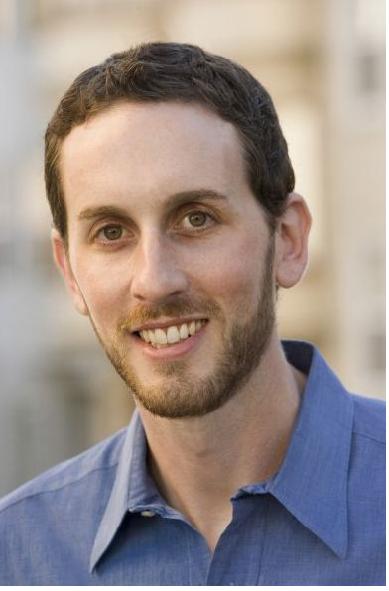
Scott Weiner has a long record in District 8. He helped build the LGBT Center, was the president of the Eureka Valley Improvement Association, co-founded Castro Community On Patrol, was co-chair of the Alice B. Toklas LGBT Club and chaired the San Francisco Democratic Party between 2006 and 2008.


He’s very much the political moderate; he told us he doesn’t want to see the city go into the retail electricity business with a full public-power system. He supports the sit-lie law (and opposes the ballot measure calling for community policing and foot patrols). He says he takes a “case by case” approach to taxes, and support the vehicle license fee, but doesn’t support the hotel tax increase. He’s got the support of the Small Property Owners, perhaps the most anti-tenant group in the city. He doesn’t think the city should go any further to stop Ellis Act evictions.


In fact, overall, Wiener thinks the city ought to address its financial problems with cuts and service reductions. “We have to live within our means …. Until the state gets its house in order, we can’t tax our way out of it,” he said.
You can listen to our interview here:


Wiener by endorsements2010

Ednorsement interviews: Bus drivers on Prop. G

3

Advocates for Muni drivers came to the Guardian this week to make the case for voters to reject Proposition G, which would remove their pay guarantees from the city charter, and to argue that the union has been unfairly demonized by Mayor Gavin Newsom, Sup. Sean Elsbernd and other city officials in an effort to deflect blame for problems with the troubled transit system.


The group included top Transport Workers Union Local 250A officials Irwin Lum and Rafael Cabrera, Bob Planthold with Senior Action Network, and Frank Lara with More Public Transit Coalition (which was spearheaded by the ANSWER Coalition). “Muni is broken and needs drastic change. It needs to be changed from the top to the bottom,” Lum began.


Yet he said targeting Muni drivers, most of whom are people of color doing a difficult job in one of the country’s most complex systems, doesn’t solve a problem that goes far beyond work rules and salaries. The problem lies with lack of resources and the political will to pursue them, they said, which is why the union supported proposals to reform the Municipal Transportation Authority governing structure and pursue significant revenue options, which were discussed but ultimately abandoned by the Board of Supervisors earlier this year.


“Too many people at City Hall are looking to cover their political rear ends,”said Planthold, who advocates for the rights of those with disabilities and has studied transit systems around the country.


Newsom has repeatedly singled out TWU as the one public employee union that didn’t agree to givebacks to help close the city’s budget deficit, and even some progressives have told the Guardian that the union hasn’t done itself any favors with its intransigent stance. But Lum said union leaders were prepared try to sell their members on a deal that included forgoing raises and accepting unpaid furlough days but that Newsom was too quick to leak news of the deal to the media for political reasons, causing TWU members to dig in and reject the deal before that education process could begin.


While the city and MTA may save $10 million through the measure, they said that was small change compared to the system’s real needs, which they estimated to be around $125 million, much of which could be brought in by creating transit assessment districts to charge big employers whose workers rely on Muni.


Click below to read the complete interview.


TWU by endorsements2010


Lynette Sweet, the “no comment” candidate

24

Lynette Sweet, who is running for D. 10 Supervisor, has already declined to give the Guardian an endorsement interview. And earlier this year, when Sweet sat down for a brief interview as part of our kick-off coverage of the D. 10 race, her campaign manager Shane Meyer kept trying to answer our questions before Sweet could even open her mouth.
But yesterday Meyer took the campaign’s habit of non-communicating to a new level, making us wonder just how much access or information anyone will be able to get out of Sweet, in the event that she actually gets elected, given how she is behaving as a candidate.

“We make no comments to the Guardian,” Meyer told us, when we called to ask if Sweet knew that workers with her campaign had stuck her campaign signs on the doors of the tenants association building in the Sunnydale public housing projects

Now, aside from the fact that Sweet is running a truly off-putting campaign by refusing to communicate on even the most straighforward issues, she might want to make sure her campaign staff are properly trained.

That’s because, as John St. Croix, executive director of the city’s Ethics Commission, told us, “It’s generally illegal to post any sign on public property.”

“All political signs can only be posted on utility poles and lamp posts,” St. Croix added, noting that the Department of Public Works regulates such activity and these regulations are clearly laid out in the Elections Department’s candidate guide.

That guide also states that local law prohibits the posting of signs in excess of 8-1/2 x 11” on all street poles—and that there is a total prohibition on historic lampposts, traffic signals (duh!) and poles with directional signage.

The guide lists common violations of the law regulating outdoor political advertising, which include posting more than one sign on the same pole, and failure to remove signs after Election Day.

“Candidates are strongly advised to become familiar with all applicable laws to avoid such violations,” the guide states.

Endorsement interviews: Bert Hill

2

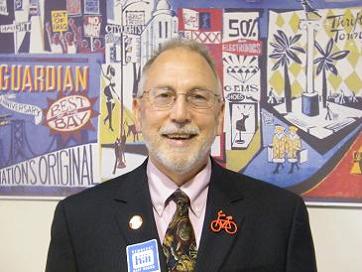
Bert Hill is running to represent western San Francisco on BART’s Board of Director, taking on incumbent James Fang, the city’s only Republican elected official. But even though Hill has the support of Democratic Party and a wide variety of progressive organizations, voters won’t see their party affiliation in this nonpartisan race. Instead, the race could be a referendum on an agency that Hill says isn’t responsive enough to the needs and experiences of riders.

“It’s important to figure out what are human needs on the trains,” Hill told us, citing the need to better accommodate passengers with bicycles and lots of luggage, the lack on working bathrooms and elevators in most stations, extending service beyond midnight on weekends, and the need for better station labels so passenger easily know when to get off.

Hill said BART is in need of major reforms in its financial planning (calling for the agency to build reserves during good times to avoid service cuts during recessions), its police force (saying the board should consider disbanding the BART Police and contracting out to local law enforcement agencies), and its transparency and accountability (telling a funny story about his own experience just trying to get permission to take a campaign photo by a BART train).

Listen to Hill full endorsement interview below. Fang has not responded to Guardian requests for an endorsement interview.

hill by endorsements2010

Sunny Sunday smile

1

arts@sfbg.com

MUSIC Michael Franti has definite ideas on the best manner in which to enjoy his music. "I wanna see you jumping!" the dreadlocked star of conscious pop music repeats numerous times throughout last weekend’s Power to the Peaceful concert in Golden Gate Park. But the crowd of 80,000 doesn’t mind — in fact, judging from the beaming faces in Speedway Meadow, Franti’s fervent messaging, mixed with liberal doses of dub sounds, reggae, hip-hop, and sunshine positivity, is the reason they came to the event in the first place.

Good thing, because Franti’s touch is everywhere. He started Power to the Peaceful in 1998 in Dolores Park to promote advocacy for death row prisoner-activist Mumia Abu Jamal. The concert’s date, Sept. 11, was chosen to highlight the urgency of Abu Jamal’s release, though now the event also honors victims of the World Trade Center attacks. Franti’s earnest odes to social justice attracted a crowd of 3,500 that first year, and twice that the next. Now Power to the Peaceful is a three-day event (Sept. 10-12) that includes mass yoga sessions, social justice organizations, and a weekend of benefit concerts at the Fillmore.

The vibe is feel-good to the point of theatrics. Throughout Saturday’s program, there was much turning to one’s neighbor and embracing. That many people wishing the world peace in synchronicity is heady, no doubt — but at one point during the yoga (while we are helping our partners, who are lying on their bellies, to "fly") I catch four face-painted Juggalos sniggering at the sheer compassion of it all.

"In order to sustain your activism, you have to have something inside you." Mid-interview, the six-foot, six-inch Franti is sitting cross-legged at my knee in a tapestried tent behind Saturday’s main stage. "It’s easy to get frustrated — you have to have something in your life to give you that fire." He smiles with the same easy grace he bestows throughout the weekend on everyone from toddlers to police officers. He likens PTTP to the battery recharging stations found in airport terminals.

This kind of spiritual activism and change through the shaking of hips hasn’t always been Franti’s modus operandi. At the start of his career, as an adopted kid in the Bay Area sick of hearing the n-word thrown at him (Franti’s birth father is Native American-black; his birth mother white), he called his first group the Beatnigs. Their hip-hop industrial punk songs railed against Ronald Reagan and the CIA.

But over the years, the anger behind Franti’s voice segued into something else. Sample lyric: "Even our worst enemies/ They deserve music." That music he slaps his guitar to, prances across the stage with, and compels us to jump in last weekend’s September sun is less "them" and more "us."

Which isn’t to say he’s given up on making a difference. Before his 2006 album Yell Fire (Anti) Franti, a staunch opponent of U.S. wars in the Middle East, took his show on the road to Iraq, Palestine, and Israel. He played for anyone who’d listen, from war zone families to American troops.

He’s still talking about the issues, just changing the approach. His most recent offering is The Sound of Sunshine (Capitol), whose album cover’s sweet scrawl of a boombox smiling bears the Franti signature. Live performances are ecstatic, infectious recitations of all things beautiful: multiculturalism, celebration, and the line "How ya feeeelin!" — a trademark he booms 11 times on Saturday.

By the family matinee concert Sunday at the Fillmore (a benefit for Hunter’s Point Family, a support center in the neighborhood that Franti has called home for 14 years), it’s clear that his appeal goes beyond the straightforward lyrics and infectious glee of his hits, which make a perfect fit for the little ones hoisted on their parents’ shoulders. He knows — as we do — the world’s got problems. But we do ourselves no favors if we don’t meet them with a smile.

Endorsement interviews: Theresa Sparks

40

Theresa Sparks says her first priority is jobs and public safety. She wants to more agressively pursue clean technology, with tax breaks if necessary. She wants more development in the district (but “smart development.”) She argues that the city should do an “incubator,” to really focus on new technologies.


She’s also not a big fan of taxes — she supports the real-estate transfer tax, but not the hotel tax (“next year could be a great convention year,” she said, arguing that higher taxes would put that at risk.) She didn’t like Sup. David Chiu’s business tax reforms beause, she said, she thought it would replace private-sector jobs with public-sector jobs. And she said she thinks there’s more at City Hall to cut, particularly in the nonprofits that get city contracts.


She says she supports full staffing for the Police Department, wants to repair the “broken disciplinary” system — and supports sit-lie.  You can listen to our entire interview here:


Sparks by endorsements2010

Nobunny unmasked!

2

arts@sfbg.com

MUSIC The morning of our scheduled interview, he sends me a text message, asking me to push things back a bit. Because he says he’s been up until 5:30 a.m., I figured he’s spent the previous night out being a bad bunny. But my assumptions are incorrect: the self-professed early bird known as Nobunny has stayed up late getting work done. The masked man, who now lives in Oakland, is out and about in San Francisco. I remain patient, knowing that he has plenty on his plate, including the release of his new album and an imminent European tour.

Nobunny’s First Blood (Goner Records) is more polished in production than previous efforts, including Love Visions (1-2-3-4 Go! Records), his breakthrough from 2008. He’s been at it for nearly 10 years now, but our hometown hero’s ascent to garage-rock stardom hasn’t come easy. Before getting off the phone with me, he speaks of darker days in Chicago, where he went from two-time Bozo Show visitor to “lying and stealing heroin addict,” only to be saved by a heartbroken sister and a pre-Hunx and His Punx member of the now-defunct Gravy Train. And by the time I finish interviewing him, he shares some information that I didn’t expect him to delve into, giving me glimpses of original obsessions, addictions, and future ambitions.

Still, at about the 30-minute mark, our first conversation comes to a sudden halt when Nobunny alerts me he has to put money in his parking meter. My time is up. After all, Blag Dahlia of Dwarves fame is expecting him for a radio interview. (Nobunny takes a page out of that fellow Chicago-to-Bay Area transplants’ book by shedding his threads on stage with the exception of the mask.)

I have the sense that Nobunny is holding back a little, like there is a wall. Is he guarded? Maybe a little nervous? He’d publicly admitted to shooting heroin before, but it isn’t until after our initial phone call that he begins to be genuine and upfront about his humbling experiences and the struggle that made him who he is today. All the while, I feel he is in complete control of our interactions, and imagine that’s probably what it’s like to work with someone so self-critical in the studio. The dichotomy of the man behind the mask begins to unravel.

We initially speak through a dodgy cell phone connection, interrupted by distracting wind and disruptive sirens. I’m in the TL, and he’s in the Mission. Both environments are worn down, sort of like the mangy Muppet-looking mask Nobunny wears during show time. He’s lived through misery before. He spent one winter in Chicago with a trash bag serving as his front door, and worked the graveyard shift at a highway gas station during his last year in the city. “I lived in a cage in a squatted grocery store that had become a shooting gallery-crack house,” Nobunny says. “Things were not all right.”

Just a week earlier, I’d seen Nobunny at the Total Trash Fest. He did what he does best: live rock ‘n’ roll, delivered sweaty and in briefs, with some crowd-surfing. The one new song worked into the set hinted at First Blood‘s tone. The album itself clocks in at a short but very sweet 26 minutes. Nobunny rips through the tracks, playing guitar, bass, and drums himself. He gets some assistance from his pal Jason “Elvis Christ” Testasecca, who’s aided him with home recordings in the past, and a couple of other musicians who get honorable mentions in the credits.

“Blow Dumb,” First Blood‘s first single, has been described as “Velvet-y” sounding. Perhaps because the Velvet Underground is associated with New York’s high-art scene by way of Warhol’s Factory, Nobunny points out that the track is a love song to California. It gives a special nod to the Bay Area and hyphy, but also shows some love for SoCal, with a possible Burger Records shout out. The end result is ideal for a groovy road trip with friends, riding down Highway 1 with nothing better to do than smile in the sun.

Content-wise, not everything on First Blood is so buoyant. Elsewhere, Nobunny’s lyrics confront sexual desire, unbalanced relationships, inner weakness, and the self improvements necessary to pull yourself out of the proverbial gutter and see the world. Plenty of lustful longings are laid out as he expresses exactly what he wants in the twangy-sounding “Pretty Please Me”: a noncommittal fling, no questions asked, just as long as it feels right.

The blatant “(Do the) Fuck Yourself” conjures up perverse images straight from Nobunny’s stage show, where his masked persona goes public, employing ball-gags while prancing around scantily-clad. When we finally meet in person, I ask him where these antics come from. His answer is quite simple, and makes sense coming from a rabbit, “I’m just horny,” he says. All the while, in order to maintain a “shred of anonymity,” he wears his favorite deranged-looking mask. It never seems to come off.

“I don’t think I’d like to deal with being in an un-masked band at, say, Hunx’s or Thee Oh Sees’ comparable level of popularity.” Nobunny says, when asked about the get-up. “Knowing eyes are on you when you are not on stage sounds maybe not always fun.” Nonetheless, a fruitful creative partnership with Hunx has been vital to Nobunny’s survival: “Seth [Bogart, a.k.a. Hunx] has been a very supportive friend, and, yes, in some ways I feel he saved me, or at the very least vastly improved my living situation.”

Though Nobunny often expresses the wish to record and play alone, he’s no stranger to collaboration, including a recent live session with Jack White at Nashville’s Third Man Records. Not all dream teams come true, though — since childhood he’d hoped to work with another master of disguises, the famously introverted King of Pop. “Michael Jackson was my first obsession, ” he says. “I wanted to be him. I still want to be him. According to Rocktober’s History of Masked Rock ‘n’ Roll, MJ was a masked musician with all his surgeries and what not. We all wear masks, some are just easier to spot than others.”

Speaking of costumed camouflage, First Blood‘s final track, “I Was On (The Bozo Show)” is a psyched-out, swirling down-tempo dirge with many levels of dedication. One could read it as homage to the late clown-god Larry Harmon (a.k.a. Bozo), as Nobunny hazily recalls his lost innocence and how he sat in the back row of a Chicago television with his little brother to meet the world-famous archetype on two separate occasions. Yes, Nobunny was on The Bozo Show — twice.

But behind its showbiz facade, “I Was On (The Bozo Show)” is also an agonizing confession from a former addict. “It’s for my blood brother and sister as well as my friends who struggle with drug addiction,” Nobunny says. “In another time, clowns made children happy and the circus was fun, but now they’ve become just another relic of past, tarnished by the more common association that their images are horrifying and that they are to be feared. I’m pretty sure no Juggalo ever went to clown school.”

A mythical creature from garage rock’s underbelly, Nobunny has earned his success, even securing a gig at the Playboy Mansion in L.A. as part of his 10-year anniversary celebration next Easter. But he’s no stranger to the addictions he sings about on First Blood final track. “My sister had been buggin’ me a bit to come visit her in Arizona, and I finally decided to take her up on it before I killed myself,” he says, still discussing “I Was On (The Bozo Show)”‘s origins. “I drove across the country shooting dope the whole way to the desert west of Tucson. She didn’t even know I was using. She nursed me back to health out there all alone in the desert. Our only neighbor was an 80-something yogi from India who was out there on a 30-day silent meditative prayer.”

If that sounds like material for a boulevard of broken dreams tell-all, in all seriousness, Nobunny has come out of the experience stronger, poised for new adventures, but most of all, grateful. “I am thankful to have enough fans to make touring worthwhile,” he said. “While I’d still be writing and recording and performing with no one looking, it’s really nice to see people at our shows dancing and singing along and smiling.”

Endorsement interviews: Emily Murase

0

Emily Murase has a lot on her plate. The mother of two daughters in the San Francisco public school system, she is also the executive director of the San Francisco Department on the Status of Women, a member of the Rosa Parks School Site Council, the Japanese Bilingual Bicultural Program Parent Teacher Community Council, and the Lowell Alumni Association Board of Directors; she also sits on the boards of the Lakeshore Acres Improvement Club, the San Francisco Girl Scouts, and Democratic Women in Action.

As if that weren’t enough, she’s running for school board, and has earned the endorsements of California Senators Mark Leno and Leland Yee, Mayor Gavin Newsom, five members of the Board of Supervisors, and United Educators.

When she met with the Guardian, Murase spoke about tackling the budget deficit, addressing the opportunity gap for African American, Latino, and Pacific Islander students, and fighting truancy. She said she’s in favor of reforming Prop. 13 to promote adequate funding for education, but in the short-term she envisions setting up a system to solicit ideas from people working within the school system to identify opportunities for savings.

Murase said she supports a parcel tax to generate more funding for schools. She’s also in favor of developing a formal system for evaluating teacher performance. Murase said she supported JROTC in the past, but would be interested in forging more robust partnerships between public schools and skilled trades in order to create a broader array of career pathways for students. School lunches should be prepared locally, she added, and this could also translate into a learning opportunity for kids.

Listen to the entire interview below.


murase by endorsements2010

The interview in which cute saves the world

0

You are perhaps in the market for an accessory statement that mimics pink plastic unicorns jumping through your ears? Maybe a connected  tube top-tutu smattered with a happy orgy of babydolls and hair-bows in the shape of a heart? Fret not, little cream-puff – your kawaii savior, Sebastian Masuda of Harajuku brand 6% DOKIDOKI (it’s name is an onomatopoeia of a beating heart) will be making an appearance at New People’s J-Pop Summit (Weds/15) for a lecture on Tokyo’s “cute culture,” a fashion show featuring members of his store’s famously, fabulously saccharine staff, and a glitz-tastic 6%DOKIDOKI pop-up store. The brand’s focus on wide-eyed adorable and the shockingly juvenile has been termed “happy anarchy” by people that know about these things, so we shot Masuda some questions via email about what the hell he’s up to. His answers were vague — but they include the possibility of world salvation, so you might wanna check them out.


San Francisco Bay Guardian: Sebastian, your shop is in the Harajuku district of Tokyo. What kind of influence does the neighborhood [famed for its innovative-freaky youth street culture] have on the 6% DOKIDOKI brand?

Sebastian Masuda: The girls of Harajuku girls have a sense of freedom, and they are challenging tradition or [sic] rules. That kind of attitude influenced 6% DOKIDOKI to become the store we are today.


Furry hats got nothing on the cuteness cataclysm Sebastian Masuda’s unleashed on this earth


SFBG: For our readers that are unfamiliar, what is kawaii culture? And is it true you once said “kawaii can save the world?”

SM: Kawaii makes happy, no matter what. One form of happiness. By “kawaii can save the world” I mean, and also hope, that the sense of “kawaii” makes people more happy and feel connected and this feeling will save the world from the grim and dark things that are happening right now. A lot of people are aware of such situations, and I have observed this from our world tour, Harajuku Kawaii Experience 2010. To this day, I strongly believe that “kawaii can save the world.” 


SFBG: How have your products sold in the United States? What is the response like that you get here?

SM: We are getting great response, usually because our items are really unique, and people see others wearing the items and ask “where did you get that?” The response is “oh, I got it in Harajuku”, so people are aware that our items came from Harajuku.


J-Pop Summit 2010: 6%DOKIDOKI Harajuku Kawaii Experience

Weds/15 7 p.m., $20 for lecture and fashion show

New People

1746 Post, SF

(415) 525-8630

www.newpeopleworld.com


DCCC endorsements — how the hell did this happen?

35

Everyone knew that the DCCC, the endorsing arm of the San Francisco Democratic Party, would have trouble choosing candidates in the heavily contested D. 10 race. After all, the member decided at the August endorsement meeting to punt the D. 10 decision for four weeks.

But the DCCC’s September 8 endorsement of civil rights attorney Dewitt Lacy, former Newsom staffer Malia Cohen, and biodiesel activist Eric Smith, in that order, was somewhat mind-boggling. It left the San Francisco Democratic Party in the position of endorsing a candidate who is utterly unreliable on tenant issues and passing over perhaps the most progressive contender in the race.


D. 10 candidate Tony Kelly, who has a long history of progressive involvement in the district and who thought he had strong support on the DCCC, felt as if he’d been thrown under the endorsement bus. And it left fellow progressive Chris Jackson feeling that the DCCC endorsement process didn’t take the community’s wishes into consideration.

It’s common knowledge that DCCC members felt they had to endorse an African American in this district, since it contains the city’s largest remaining black community, and since it’s unlikely that a black candidate will get elected from any other district this fall, potentially leaving the board with no African American representation.

But that does not explain why the DCCC, after giving Lacy its first place endorsement, gave its second slot to Cohen, a moderate who told the Guardian in a recent endorsement interview that she doesn’t support further controls on evictions and condo conversions because that would infringe on property owners’ rights.


And in the end, you have to wonder: Does this end up helping Steve Moss, the candidate most progressives on the DCCC most fear?

Insiders point to two hidden plays that worked against Kelly, and for Cohen, in terms of getting the DCCC’s nod.

The first was a push by downtown interests to have their representatives on the DCCC make no endorsements in the race. The idea was to keep Kelly off the slate, so that downtown’s preferred D. 10 candidate Steve Moss would have a better chance of sewing up the vote on Potrero Hill, where Kelly is expected to do well.

The other play was a push among some DCCC members to put a black woman on the slate. This made Cohen, despite her moderate stance on some progressive issues, their choice, since she was born and raised in the district and has raised enough money to run a competitive campaign.

DCCC chair Aaron Peskin told the Guardian that he wanted Kelly to get one of the slots.


“My failure to do so proves that the DCCC isn’t a machine,” Peskin said. “I wanted Tony on there somewhere, and for a while it was looking like he might get second or third place.”

Kelly told the Guardian that he was surprised not to get the DCCC endorsement—and that he has received 8 phone calls from DCCC members apologizing for what happened.


“Nobody wanted those three candidates, except perhaps Scott Wiener,” Kelly said.


“At the same time, there have been so many gyrations around this in the last week. I’ve had more than half of the DCCC members tell me directly, ‘You’ll make the best supervisor—and I’m supporting someone else.’ But now they don’t even have three progressives in the slate.”

Kelly added: “This is a weak moment for the Democratic Party. This is not a machine, it’s not something that has strength or relevance to the district. This is the most clueless endorsement possible.”


Jackson believes that what happened last night was purely politics.


“This was a very political process and they made a political decision,” Jackson said. “But ultimately, it’ll be up to the neighborhoods and community to make their own choice.”

 “Unbelievable,” is how Smith described the DCCC’s D. 10 slate. “Right before this vote started, Eric Quezada told me, no matter what happens, there are better things in life than this. But now I feel great. It’s given my campaign a big boost.”

“I’m close to Tony Kelly, I consider him as a friend,” Smith added. “But in some ridiculous karmic way, the stars aligned, and I’m one lucky bro.”

Lacy for his part was clearly elated at getting the DCCC’s top slot.


“I’m really excited,” Lacy said.  “I believe this means D. 10 has a strong opportunity to get its fair share of good things and the Democratic Party will take part in making that happen.”


It also means Lacy — whose campaign has been a little slow and underfunded — is really going to have to ramp up his efforts in the next few weeks to take advantage of the DCCC nod. And it means Moss will get a boost, since Kelly could take Potrero Hill votes away from him. Kelly’s the only candidate who got the Potrero Hill Democratic Club endorsement.


Endorsement interviews: Eric Smith

10

Eric Smith’s passion is environmental justice. He’s the director of Green Depot, a coalition of biodiesel organizations, and has helped lead the city to switch its buses and official vehicles to the cleaner fuel. He’s working on ways to get the city to move its waste by train. And he talks about the important of green jobs (and not just green jobs for the top college graduates.)


Smith told us he’s not fond of the Lennar project, but he supports the Communit Benefits Agreement and would have voted for the project EIR. He’s concerned about the city’s plans to bring 40,000 more housing units, mostly high-end condos, to the neighborhood, particularly the threat to light-industrial jobs. He complains about the lack of centralization in city services and the sometimes overlapping jobs of nonprofits and public agencies. He’s an opponent of the gang injunctions and Sit-Lie.


You can listen to our interview here:


esmith by endorsements2010


Endorsement Interviews: Malia Cohen

7

Malia Cohen has three priorities: She wants to keep District 10 residents working, healthy and safe.

Healthy means expanding open space in the district, creating more pocket parks and turning McLaren Park into more of a destination. Safe means more community policing and using nonprofits like TURF to help monitor streets and buses. “I’m a believer in the broken windows theory,” she said, arguing for brighter lights on Third Stree and San Bruno Ave. She’s also calling for community clean-up days to “change the culture of Third Street.” But she opposes the city attorney’s gang injunctions. Working means more jobs for local people from development and better educational opportunities, particularly for people who might not go on to college.

Cohen took some strong progressive stands — she’s against Sit-Lie, and for public power (although she wasn’t too familiar with Community Choice Aggregation.) She supports the hotel tax, the real estate transfer tax and the vehicle license fee.

But she has a decidedly conservative streak, too: She wouldn’t support any further limits on condo conversions, Ellis Act evictions, or TICs, saying those regulations would infringe on the rights of property owners. You can listen to our interview here:


mcohen by endorsements2010

Transfigurations

0

arts@sfbg.com

MUSIC/THE NEW SHOEGAZE The Waves. The title of the first album by Tamaryn is big and elemental. It’s also dramatic and literary, invoking the writing and the death of Virginia Woolf and evoking the ocean’s fatal pull in a classic Romantic sense. Tamaryn’s music is all of these things.

The vast, vague, cacophonous yet harmonic sound that Melody Maker deemed shoegaze back in the late 1980s has made a strong return in recent years, but Tamaryn — comprised of Tamaryn and producer-instrumentalist Rex John Shelverton — distinguishes itself from the pack through epic scope and high fidelity of production, and most of all, through sheer force of presence. Shoegaze so often buried rock’s persona in noise’s capacity for jouissance that the sound became (and remains) a too-easy way to mask a lack of musicality and personality. Not so on The Waves. You’d be hard-pressed to find a more confidently unique rock album this year. On “Haze Interior” and “Dawning,” the result is literally awesome.

Tamaryn lives in the Bay Area, but I have to go through a publicity company to arrange an interview, and our conversation takes place over the phone, on a hot afternoon, after she’s found a place to park her car in the East Bay. This roundabout route to getting in touch with the lady herself is fitting, since much of The Wavestension generates from the mysterious way in which Tamaryn moves through the huge and dense sounds that Shelverton generates. “To go into something that loud and overwhelming and do something completely restrained — that was the real challenge,” she says, after sizing up my own voice as that of a young person. “You play music like that in a practice space and you as a singer don’t hear a note coming from your voice. You have to go from muscle memory. It’s about finding your place in the sound.”

It’s easy to connect with Tamaryn on the subject of music, because her appreciation of it is as immense and intense as the album she’s made. When I mention that aspects of The Waves remind me in a flattering way of the ’90s group Curve, she’s appreciative. “The British [shoegaze] bands were all so specific and very restrained,” she says. “Bands like Curve were more in your face. Curve is what Garbage wanted to be — you can see the direct line.”

Tamaryn’s lyrics, guiding the listener through deep oceanic contours, ranging from choral winters to coral flowers, possess a strong sensory quality. She agrees. “Sensory is a perfect way to describe it,” she says. I wrote the lyrics in response to my experience of the music — my experience of being part of the song. There are performers that realize they are not playing an instrument — it’s almost like they are a participant, a part of the audience that is moved by the music to respond and perform. Ian Svenonius of the Make-Up had another band where he’d walk onstage and go, ‘I like this music,’ and start to be inspired. I always thought that was really cool.”

Without a doubt, The Waves is a San Francisco album, with lyrics written at Fort Funston, and music by a surfer — Shelverton — from Half Moon Bay. The album’s final track, “Mild Confusion,” draws from notes on a psychiatric patient that Tamaryn came across during a day job, and it brings the more classical doom-laden aspects of the opening title track to a specific, realistic modern realm. “It’s very extreme here, with water on three sides, and it can be totally inspiring,” Tamaryn says, amid talk of the Golden Gate Bridge’s beauty and tragic lure. “If you come to San Francisco with plans to destroy yourself, it will let you. But if you come self-contained, with a strong personal or creative identity, you can use the energy of the city to inspire you.”

At the moment, one of Tamaryn’s chief sources of inspiration is fellow singer and recent Guardian cover star Alexis Penney. The night of our interview, she assists Penney onstage during a Some Thing drag performance at the Stud that concludes with Penney being pelted with long-stemmed roses. Penney is also the nude star of the video for Tamaryn’s “Love Fade,” which uses Derek Jarman’s films for the Smiths as a touchstone. “Alexis is like everybody’s muse,” Tamaryn says. “He’s amazing.” The friendship makes perfect sense, because Tamaryn is no slouch when it comes to iconic and androgynous imagery: she looked to the rare monograph Trans-figurations, Holger Truzsch’s photo collaboration with Veruschka, when putting together band portraits for The Waves.

A few nights later at Honey Soundsystem’s BUTT Bias mixtape listening party, and then later by text, Penney is more than happy to repay the compliment. “I remember the first time I saw Tamaryn,” Penney writes. “She is so striking and startlingly beautiful, with a piercing gaze, and you can tell she knows exactly what she wants. She’s definitely lived a life and is full of stories, but also retains that same real-life mystery that pervades her music. Her music is so her in essence, almost as if she was even singing the guitars and drums. Composed, but very raw and real and spontaneous, with a voice that is so powerful. Which is funny, because when she’s speaking she’s so girlish, but when she sings she’s definitely channeling spirits — there’s primal earthy old magic in her voice, even when she’s whispering.”

The Waves is an album of staying power and growing rewards because of the subtle and understated way Tamaryn adds human emotion to the Slowdive-like dinosaur yawns and Loveless-era My Bloody Valentine blur of Shelverton’s guitar. Tamaryn makes no bones about the fact that she has set out to create an album that can stand alongside those bands’ best recordings, and the work of Talk Talk’s Mark Hollis, who she simply refers to as “my heart.”

“The kinds of things I write are always bittersweet,” Tamaryn says, as our conversation falls again into the subject of favorite music. “It’s my experience of life and that’s the music that makes me feel better. I feel that music is so liberating and it has the biggest impact on you because it captures how you feel about yourself. I’ve given up on my dream of having a fulfilling personal life — I’m more interested in making sacrifices in order to make the music I want to make. Being able to make a record I’m proud of is more fulfilling than some day-to-day activity.”

TAMARYN

with Weekend; DJ sets by oOoOOO, and Nako and Omar

Sept. 15, 9pm, $8

Elbo Room

647 Valencia, SF

(415) 552-7788

www.elbo.com

Agony uncle

0

arts@sfbg.com

FILM Alternately slavish and critical, simultaneously buying into and subtly resisting the hype, The Agony and the Ecstasy of Phil Spector is a bit like the renowned producer himself, who said this to biographer Mick Brown in 2007’s Tearing Down the Wall of Sound: the Rise and Fall of Phil Spector: “I have a bipolar personality … I have devils inside that fight me. And I’m my own worst enemy … I would say I’m probably relatively insane.”

Director Vikram Jayanti coproduced the Oscar-winning When We Were Kings (1996), yet seems to be more interested in American celebrity Babylons of late, à la The Golden Globes: Hollywood’s Dirty Little Secret (2003). You can see why he scored the interview with Spector at the center of Agony, since he gets on board the musicmaker’s bifurcated, multichannel tip. The doc is both fascinating and monotonous, respectful of Spector’s achievements as well as the sensation surrounding his blighted celebrity. The filmmaker stays away from the specifics of the night in 2003 when Lana Clarkson was found dead at Spector’s mansion, while recontextualizing the producer’s words and music with images culled from the murder trial and other footage. The end result is an innuendo-laden pastiche that resembles an echo chamber reverberating with all the doomed dramatics of “He Hit Me (It Felt Like a Kiss).”

Unavoidable, weirdly unblinking, and placed like a crazy diamond in front of John Lennon’s ivory “Imagine” grand piano is the wiggy wonder himself, rambling about such tidbits as his explosive courtroom ‘do (“It was a tribute to Albert Einstein and Beethoven. That day it got a little extreme”). In conversation, Jayanti dwells on the sunnier side of Spector’s checkered history: no mention is made of his alleged pistol-waving at the Ramones during the making of 1980’s End of the Century, or his reputed mistreatment of ex-wife and Ronettes star, Ronnie Spector — likely a condition of the interview. But the director manages to get in a scattershot series of thrusts and parries concerning the man and his guilt or innocence, pairing courtroom scenes — the image of a spent gun beside Clarkson’s twisted feet, a sphinx-like Spector in all his pop-Godfather pin-striped finery — with B&W TV clips of his now-classic, far-from-disposable songs.

The musical roll call is impressive, including the eerie, elegiac “To Know Him Is to Love Him” with Spector himself strumming guitar as part of the Teddy Bears and warbling to his dead father (who, eerily, committed suicide by “blowing his brains out,” as Spector puts it); the truly exquisite “Spanish Harlem”; and such rock ‘n’ roll Rosetta stones as “Then He Kissed Me” and “Be My Baby.” Subtitles by author Brown blow up the historical importance of the music, which could have easily stood on its own, and add to the po-mo swirl of information surrounding the man, the career, and the comedown. Yet we don’t hear from Spector’s crucial vocalists, who, like Darlene Love of the Crystals, struggled to find recognition beyond the producer’s Wall of Sound power, or the artists, who arguably tended to chafe against the producer’s overriding vision.

Still, to the Jayanti’s credit, Agony‘s strange parallels stay with you: Clarkson, in blackface, impersonates Little Richard (in a failed bid to resurrect her comedy career), around the time Lennon is heard on the soundtrack singing “Woman is the Nigger of the World”; Spector rattles on about how he wasn’t surprised when Lennon was shot (“People wanted to become famous by killing him, and if you were neurotic and crazy enough … “) before a prosecutor offers, “Lana Clarkson wasn’t an anonymous nobody who deserved a bullet to her head.” Over it all looms the so-called legend — a victim, yes, as he implies at the start, but one who has fallen prey to his own press, and to his own eternally flaming ego.

THE AGONY AND THE ECSTASY OF PHIL SPECTOR opens Wed/10 at the Roxie.

Film listings

0

Film listings are edited by Cheryl Eddy. Reviewers are Kimberly Chun, Michelle Devereaux, Peter Galvin, Max Goldberg, Dennis Harvey, Johnny Ray Huston, Louis Peitzman, Lynn Rapoport, Ben Richardson, and Matt Sussman. For rep house showtimes, see Rep Clock. For first-run showtimes, see Movie Guide. Due to the Labor Day holiday, theater information was incomplete at presstime.

OPENING

*The Agony and the Ecstasy of Phil Spector See “Agony Uncle.” (1:42) Roxie, Smith Rafael.

Bran Nue Dae An energetic screen translation of a 1990 Australian stage musical, Rachel Perkins’ film is tourist cliché spun into crowd-pleasing slop, like a Down Under Riverdance. Young Aboriginal Willie (Rockie McKenzie) escapes the “corrective” environ of a 1969 Perth Catholic boarding school and flees homeward, only to be pursued by mercilessly hammy Geoffrey Wright’s racist priest baddie. The crude humor, generic tunes, and hectically shot and dance-poor numbers have about as much to do with Aussie abo culture as The Lion King does with “Africa” — it’s prefab feel-good pap posing as multicultural representation. (1:28) Sundance Kabuki. (Harvey)

Change of Plans Emmanuelle Seigner stars in this ensemble comedy revolving around a dysfunctional Parisian dinner party. (1:40) Sundance Kabuki.

I’m Still Here Casey Affleck’s long-awaited Joaquin Phoenix documentary follows the maybe-crazy actor during his mountain man-bearded hip-hop phase. (1:48)

*Mademoiselle Chambon See “Mellow Noir.” (1:41)

Resident Evil: Afterlife Milla Jovovich picks up her guns again, this time to fight zombies in 3D. (1:30)

*White Wedding Every culture’s gotta have its own version of the wacky road-trip movie, in which a series of snafus (mechanical failure, miscommunication, booze, rednecks, farm animals, etc.) sidetrack hapless travelers en route to their (inevitably very important) destination. If the basic structure of Jann Turner’s White Wedding feels rather familiar, at least this South African import has its share of original charm. Groom-to-be Elvis (Kenneth Nkosi) misses a bus at the beginning of the film (we know he’s a nice guy, because he misses it helping a lost child), setting in motion a series of mostly comical disasters en route to his Johannesburg wedding. While his beloved, Ayanda (Zandile Msutwana), clashes with her mother over her choice of wedding (she wants a modern, sophisticated affair; mom wants a more traditional party) — and fends off the advances of a suave ex — Elvis and best friend Tumi (Rapulana Seiphemo, who co-wrote with Turner and Nkosi) attempt to cross miles of countryside despite fate throwing every kind of theoretical and metaphorical roadblock in their paths. One happy distraction is Rose (Jodie Whittaker), an English doctor grappling with travel woes of her own. There’s never any real doubt that Elvis and Ayanda will get hitched at film’s end, but White Wedding‘s journey, which is mostly featherlight despite some eye-opening insights into South Africa’s post-apartheid culture, is worth taking. (1:33) (Eddy)

A Woman, a Gun and a Noodle Shop Zhang Yimou remakes (kind of) the Coen Brothers’ 1984 Blood Simple. (1:35)

ONGOING

*The American George Clooney caught in a moodily paranoid, yet exquisitely photographed, ’70s-style suspense-arthouse death-trap? Belmondo and Beatty could empathize. Nonetheless, veteran rock photographer and Control (2007) director Anton Corbijn suffuses the chilly proceedings with a fresh, wintry beauty, the carefully balanced sense of highly charged tension and silky smoothness that a gunsmith would appreciate, and a resonance that feels personal. How else would an ex-rock shooter like Corbijn, who’s made iconic images of the Clash, U2, and others, connect with this tale of an assassin masquerading as a photographer, one who’s constantly glancing behind and around himself — justifiably wary of being caught in another killer’s sights — and seemingly just as wary of the director’s, and audience’s, gaze? A character who wouldn’t be out of place in a Camus novella or a Melville brooder, Jack/Edward, or more accurately “the American,” (Clooney) is in exile after a bad collision with a girlfriend and hitmen in Sweden and hiding out in a picturesque Italian village, conspicuously the more-cold-than-cool outsider and doing one immaculate job for a gorgeous mysterious woman (Thekla Reuten). Is he a good or bad guy? The local priest (Paolo Bonacelli), who knows and sees all like a great eye in the sky, is trying to find out, as is the most beautiful prostitute in town (Violante Placido). The answers are nowhere near as clear or as plainly painted as a Sergio Leone Western, although Corbijn nods to the maestro when stone-cold killer Henry Fonda, then playing shockingly against type, appears on a cafe TV screen in Once Upon a Time in the West (1968). But the director’s care and attention to beauty — as well as the lines carved in the face of Clooney’s lean, mean-looking American, a whore like any other — say more than words. (1:43) (Chun)

*Animal Kingdom More renowned for its gold rush history and Victorian terrace homes than its criminal communities, Melbourne, Australia gets put on the same gritty map as Martin Scorsese’s ’70s-era New York City and Quentin Tarantino’s ’90s Los Angeles with the advent of director-writer David Michôd’s masterful debut feature. The metropolis’ sun-blasted suburban homes, wood-paneled bedrooms, and bleached-bone streets acquire a chilling, slowly building power, as Michôd follows the life and death of the Cody clan through the eyes of its newest member, an unformed, ungainly teenager nicknamed J (James Frecheville). When J’s mother ODs, he’s tossed into the twisted arms of her family: the Kewpie doll-faced, too-close-for-comfort matriarch Smurf (Jacki Weaver), dead-eyed armed robber Pope (Ben Mendelsohn), Pope’s best friend Baz (Joel Edgerton), volatile younger brother and dealer Craig (Sullivan Stapleton), and baby bro Darren (Luke Ford). Learning to hide his responses to the escalating insanity surrounding the Codys’ war against the police — and the rest of the world — and finding respite with his girlfriend, Nicky (Laura Wheelwright), J becomes the focus of a cop (Guy Pearce) determined to take the Codys down — and discovers he’s going to have use all his cunning to survive in the jungle called home. Stunning performances abound — from Frecheville, who beautifully hides a growing awareness behind his character’s monolithic passivity, to the adorably scarifying Weaver — in this carefully, brilliantly detailed crime-family drama bound to land at the top of aficionados’ favored lineups, right alongside 1972’s The Godfather and 1986’s At Close Range and cult raves 1970’s Bloody Mama and 1974’s Big Bad Mama. (2:02) (Chun)

Avatar: Special Edition (2:51)

Cairo Time (1:29)

*Centurion Neil Marshall is the kind of filmmaker who inspires glee among horror and action junkies, but indifference among mainstream moviegoers. Centurion isn’t likely to change this. It’s the second century, and Romans are invading what’s now the Scottish Highlands, much to the displeasure of the Picts, the tribal people who’re already living there. Enter Quintus Dias (Michael Fassbender), a Roman soldier who becomes the de facto leader of an ever-shrinking group of men trapped behind enemy lines after their general (The Wire‘s Dominic West) is captured. Devotees of Marshall (2002’s Dog Soldiers, 2005’s The Descent, 2008’s Doomsday) will recognize certain elements: an ensemble cast, a military setting, the presence of a fierce female (Bond heroine Olga Kurylenko, who makes Pict warrior drag both spooky and sexy). Unlike his earlier films, though, there’s no supernatural twist; it’s just good old battlefield guts and gore. Sure, the romantic subplot feels a little forced, but this is genre filmmaking in its purest form, to be celebrated with gusto by those who appreciate grisly decapitations and the like. (Read my interview with Marshall at www.sfbg.com/pixel_vision.) (1:39) (Eddy)

The Concert (1:47)

Despicable Me Judging from the adorable, booty-shaking, highly merchandisable charm of its sunny-yellow Percocet-like minions, Despicable Me‘s makers have more than a few fond memories of the California Raisins. That gives you an idea of the 30-second attention-span level at work here. Thanks to Pixar and company, our expectations for animated features are high, but despite the single lob at Lehman Brothers aimed toward the grown-ups, the humor here is pitched straight at the eight and younger crowd: from the mugging, child-like minions to the all-in-good-fun, slightly quease-inducing 3-D roller-coaster ride. Gru (Steve Carell) is Despicable‘s also-ran supervillain — a bit too old and too unoriginal for a game that’s been rigged in the favor of the youthful, annoyingly perky Vector (Jason Segel), who’s managed to swipe the Giza Pyramids and become the world’s number one bad dude. When Vector steals away the crucial shrink ray needed for Gru’s plot to thieve the moon, the latter pulls out the big guns: three adorable orphans who have managed to penetrate Vector’s defenses with their fund-raising cookie sales. It turns out kids have their own insidiously heart-warming way of wrecking havoc on one’s well-laid plans. Filmmakers Pierre Coffin and Chris Renaud do their best to exploit the 3-D medium, but Avatar (2009) this is not. Nor will many adults be able to withstand the onslaught of cute undertaken by all those raisins, I mean, minions. (1:35) (Chun)

Dinner for Schmucks When he attracts favorable notice and a possible promotion from his corporate boss, Tim (Paul Rudd) is invited to an annual affair in which executives compete to see who can dig up the freakiest loser dweeb for everyone to snicker at. He literally runs into the perfect candidate: Barry (Steve Carrell), an IRS employee whose hobby is making elaborate tableaux with stuffed dead nice in tiny human clothes. He’s also the sort of person who, in trying to be helpful, inevitably wreaks havoc on the unlucky person being helped. Which means the 24 hours or so before the “Biggest Idiot” contest provide plenty of time for well-intentioned Barry to nearly destroy Tim’s relationship with a girlfriend (Stephanie Szostak), reunite him with Crazy Stalker Chick (Lucy Punch), and imperil his wooing of a multimillion-dollar account. Director Jay Roach (of the Austin Powers and Meet the Fockers series) has a full load of comedy talent on board here. So why are the results so tepid? This remake softens the bite of Francis Veber’s 1998 original French The Dinner Game by making Tim not a yuppie scumbag but a nice guy who just happens to have a jerk’s job (his company seizes ailing firms and liquidates them), and who doesn’t really want to expose hapless Barry to humiliation. But even with that satirical angle removed and a wider streak of sentimentality, it should cough up more laughs than it does. (1:50) (Harvey)

Dogtooth A man, his wife, and their three children live in a country house with a swimming pool and a huge yard enclosed by a high fence. So far, so good. But the kids, who don’t have names, appear to be in their 20s. They’ve never left the property, and they won’t, Dad (Christos Stergioglou) says, until they lose a “dogtooth,” at which time they’ll be mature enough to deal with the terrors of the outside world. In the meantime, they’re trapped in the only world they’ve ever known, carefully constructed by their domineering father. Greek writer-director Yorgos Lanthimos, who picked up the Prize Un Certain Regard at Cannes for this slice of disturbing domesticity, offers little explanation for Dad’s motives, or why Mom (Michelle Valley) goes along with his plan. The only hint comes from one of few scenes set outside the family’s compound, in which Dad goes to check on the progress of the family’s soon-to-be new dog. “Dogs are like clay, and our job here is to mold them,” the trainer explains. “Every dog is waiting for us to show it how to behave.” Indeed. It’s pretty clear Dad — master of his own private North Korea — is aware of that concept. Though Dogtooth‘s main themes enfold cruelty and child abuse, it also deploys the kind of black humor and button-pushing that fans of shock-trader Harmony Korine would appreciate. There is casual violence, extreme animal cruelty, full-frontal nudity, several disturbing sex scenes, and maybe the most alarming dance routine ever captured on film. (1:36) (Eddy)

Eat Pray Love The new film based on Elizabeth Gilbert’s chart-busting memoir, Eat Pray Love, benefits greatly from the lead performance by Julia Roberts, an actor who can draw from her own reserves of pathos when a project has none of its own. The adaptation, about a whiny American author farting around the globe in search of what amounts to spiritual room service, is nothing without her. The journey begins with the Type-A, book contract-inspired premise that Gilbert will travel to three appointed countries over the course of a year in order that, having thrice denied herself absolutely nothing, she might come out the other end a better-balanced human being. The first stop is Italy, where her entire plan is to finally unbutton her jeans and indulge in a celebrated cuisine, as if her home base of Manhattan were a culinary backwater. But this film is all about tired equivalencies, so Italy equals food, and expressive hand gestures, and “the art of doing nothing.” India, her next stop, equals enlightenment (her discovery that the guru she’s come to see is currently at an ashram in New York is an irony lost on the movie). And Bali, her final getaway, apparently equals contradictory but flattering aphorisms and thematically hypocritical romances. The sole appeal to a moviegoer here is aspirational. What’s so embarrassing about Eat Pray Love is its insistence that this appeal sprouts from the spiritual quest itself, and not just from the privilege that enables Gilbert to have such an extravagant quest in the first place. But then, self-awareness is supposed to be a obstacle to enlightenment. She’s got nothing to worry about there. (2:30) (Jason Shamai)

The Expendables Exactly what you’re expecting: a completely ludicrous explosion-o-thon about mercenaries hired by Bruce Willis to take down a South American general who’s actually a puppet for evil CIA agent-turned-coke kingpin Eric Roberts. Clearly, Sylvester Stallone (who directed, co-wrote, stars, and even coaxed a cameo out of Schwarzenegger) knows his audience, but The Expendables — bulging with a muscle-bound cast, including Dolph Lundgren, Terry Crews, Jason Statham, and Steve Austin, plus Jet Li, who suffers many a short-guy joke — is content to simply tap every expected rung on the 80s-actioner homage ladder. There’s no self-awareness, no truly witty one-liners, no plot twists, and certainly no making a badass out of any female characters (really, couldn’t the South American general’s daughter have packed some heat, or kicked someone in the balls — anything besides simply heaving her cleavage around?) The only truly memorable thing here is the inclusion of Mickey Rourke as Stallone’s tattoo-artist pal; I would possibly wager that Rourke was allowed to write his own weepy monologue, delivered in a close-up so extreme it’s more mind-searing than any of the film’s many machine-gun brawls. (1:43) (Eddy)

The Extra Man The polar opposite of buddy cop action flicks and spoofs a la The Other Guys, with only a faint resemblance to the bromances of Judd Apatow, Adam McKay, Will Ferrell, Seth Rogen, and so on, The Extra Man is a gently weird throwback to another era, much like its title character, Henry Harrison (Kevin Kline). Sweet, cross-dressing-curious teacher and would-be writer Louis Ives (Paul Dano) is drifting though life passively when he stumbles on eccentric playwright Harrison’s room-for-let and his oddball realm of hangers-on. A blustery, prickly, proudly misogynistic collector of Christmas balls, given to spasms of improvisational dancing, Harrison relishes his role as an escort to aged socialites, crankily shucking and jiving to score invites to fancy dinner parties and vacation homes in Florida. When Ives isn’t courting environmental magazine editor Mary (Katie Holmes) or hiding from the fearsome-looking wooly recluse Gershon (John C. Reilly), the mentor-able young man turns out to be more adept at the role than Harrison ever imagined. And like fossilized grande dames in Chanel, literate audiences also might be charmed by director-writer Shari Springer Berman’s unassuming, crushed-out bon mot, based on the novel by Jonathan Ames, to a few mannered, less-than-examined, happily twisted New York City subcultures. (1:45) (Chun)

Flipped I’m sure a “he said/she said” film exists that makes good on the premise, but Rob Reiner’s Flipped doesn’t quite cut it. Nestled safely in 1960s small-town America, the film is first narrated by Bryce, an eighth grader who’s spent the past four years rebuking the advances of Juli, the girl who lives across the street. Bryce is a pretty typical boy, bumbling and unsure of just what he wants, but soon the story “flips” and we see the same events narrated from Juli’s POV. Juli is drawn to Bryce’s “sparkling eyes,” yes, but with a poor family and an annoyingly sincere love for life, she has problems outside of lusting for Bryce. Based on a tween-hit novel by author Wendelin Van Draanen, the story’s familiarity perhaps stems from the source material — in my experience those sorts of novels rarely invite readers older than high school — and similarly in the case of Flipped, I think this might be something we should leave to the kids. (1:30) (Galvin)

Get Low Born from the true story of Felix Bush, an eccentric Tennessee hermit who invited the world to celebrate his funeral in advance of his own death, Get Low is a loose take on what might inspire a man to do a thing like that. It’s a small story, and unlikely to attract the attention of popcorn-addled viewers in the midst of the summer blockbuster season, but Get Low has a whopper of a character in Felix Bush. Robert Duvall becomes Bush, constructing a quiet man who sees it all and speaks only when he has something to say, and supporting roles from Sissy Spacek and Bill Murray are expectedly solid, but the real surprise is what a strong eye director Aaron Schnieder has. In allowing scenes to unfold on their own terms and in their own time, Schneider gives a real humanity to what could have been a Hallmark movie. (1:42) (Galvin)

*The Girl Who Played With Fire Lisbeth Salander is cooler than you are. The heroine of Stieg Larsson’s bestselling book series is fierce, mysterious, and utterly captivating: in the movie adaptations, she’s perfectly realized by Noomi Rapace, who has the power to transform Lisbeth from literary hero to film icon. Rapace first impressed audiences in The Girl With the Dragon Tattoo (2009), a faithful adaptation of Larsson’s premiere novel, and she returns as Lisbeth in The Girl Who Played With Fire. The sequel, as is often the case, isn’t quite on par with the original, but it’s still a page-to-screen success. And while the first film spent equal time on journalist Mikael Blomkvist (Michael Nyqvist), The Girl Who Played With Fire is almost entirely Lisbeth’s story. Sure, there’s more to the movie than the hacker-turned-sleuth — and the actor who plays her — but she carries the film. Rapace is Lisbeth; Lisbeth is Rapace. I’d watch both in anything. (2:09) Smith Rafael. (Peitzman)

Going the Distance If you live in San Francisco, don’t try to date someone in New York. It’s just not worth the hassle. But hey, maybe you’re as adorable as Drew Barrymore, and your boyfriend’s as charming as Justin Long — you can’t be expected to let a little geographical complication get in the way. That’s the driving force behind Going the Distance, a romcom that stars real-life couple Barrymore and Long as Erin and Garrett, two crazy kids trying to make it work cross-country. In many ways, the film is your standard boy-meets-girl story, but it’s cute enough that the predictability factor doesn’t really matter. The cast is universally strong, with bonus points to the standouts: It’s Always Sunny in Philadelphia‘s Charlie Day as Garrett’s embarrassing roommate, and Christina Applegate as Erin’s germaphobe sister. The humor is surprisingly sharp — and raunchy, which earned Going the Distance an R-rating. I’m not going to say Long’s bare ass is worth the price of admission, but it’s certainly a selling point. (1:43) (Peitzman)

Highwater The latest from the first family of surf movies comes courtesy of Dana Brown (2003’s Step Into Liquid), son of Bruce (1964’s The Endless Summer) and father of Wes (an up-and-comer who co-edited Highwater). The film focuses on Oahu’s legendary North Shore — “the one path all surfers must take,” per Dana’s occasionally woo-woo narration — and the annual big-wave contests held there each year. Though the majority of screen time is (of course) taken up by sweeping, slo-mo shots of pros tangling with looming walls of water, Highwater reaches out to civilian audiences with sidebars on the North Shore’s eccentric local culture, the science behind the 10-mile beach’s massive waves, and profiles of the sport’s more colorful characters. Brown is also careful to highlight the growing amount of women in the sport, who surf the exact same breaks as the men but earn far less prize money for it. Diehards might notice events in the film feel a bit dated, and indeed, Highwater was shot in 2005. But since surfers operate under the assumption that “one wave can make a person’s career” (especially if it’s captured on film), there’s presumably no sell-by date violation here. (1:30) (Eddy)

Inception As my movie going companion pointed out, “Christopher Nolan must’ve shit a brick when he saw Shutter Island.” In Nolan’s Inception, as in Shutter Island, Leonardo DiCaprio is a troubled soul trapped in a world of mind-fuckery, with a tragic-vengeful wife (here, Marion Cotillard) and even some long-lost kids looming in his thoughts at all times. But Inception, about a team of corporate spies who infiltrate dreams to steal information and implant ideas, owes just as much to The Matrix (1999), Eternal Sunshine of the Spotless Mind (2004), and probably a James Bond flick or two. Familiar though it may feel, at least Inception is based on a creative idea — how many movies, much less summer blockbusters, actually require viewer brain power? If its complex house-of-cards plot (dreams within dreams within dreams) can’t quite withstand nit-picking, its action sequences are confidently staged and expertly directed, including a standout sequence involving a zero-gravity fist fight and elevator ride. Though it’s hardly genius — and Leo-recycle aside — Inception is worth it, if you don’t mind your puzzle missing a few pieces. (2:30) (Eddy)

Jean-Michel Basquiat: The Radiant Child In 1986, filmmaker Tamra Davis was six years away from her breakthrough (1992’s Guncrazy; she also made 1998’s Half Baked and 2002 Britney Spears misfire Crossroads, and is married to one of the Beastie Boys). But she was already friends with artist Jean-Michel Basquiat, then at the height of his career. He died two years later of a heroin overdose, equally shaken by close friend Andy Warhol’s death and the pressures of his own skyrocketing fame. This tender doc weaves Davis’ 1986 interview with a low-key Basquiat (shot in a Beverly Hills hotel room) with recollections from his New York City circle (girlfriends, gallery owners, fellow artists, art critics). Though his art-world rise was breathtaking — he went from graffiti-scrawling kid to a hip painter whose works sold for hundreds of thousands (and now, multi-millions) — Davis’ doc suggests it was too much, too soon, creating distractions that first interfered with his creativity, then his well-being. Even if you don’t care for his art, Radiant Child is a compelling, insidery look at the dark side of celebrity. (1:34) (Eddy)

*Joan Rivers: A Piece of Work Whether you’re a fan of its subject or not, Ricki Stern and Annie Sundberg’s documentary is an absorbing look at the business of entertainment, a demanding treadmill that fame doesn’t really make any easier. At 75, comedian Rivers has four decades in the spotlight behind her. Yet despite a high Q rating she finds it difficult to get the top-ranked gigs, no matter that as a workaholic who’ll take anything she could scarcely be more available. Funny onstage (and a lot ruder than on TV), she’s very, very focused off-, dismissive of being called a “trailblazer” when she’s still actively competing with those whose women comics trail she blazed for today’s hot TV guest spot or whatever. Anyone seeking a thorough career overview will have to look elsewhere; this vérité year-in-the-life portrait is, like the lady herself, entertainingly and quite fiercely focused on the here-and-now. (1:24) (Harvey)

*The Kids Are All Right In many ways, The Kids Are All Right is a straightforward family dramedy: it’s about parents trying to do what’s best for their children and struggling to keep their relationship together. But it’s also a film in which Jules (Julianne Moore) goes down on Nic (Annette Bening) while they’re watching gay porn. Director Lisa Cholodenko (1998’s High Art) co-wrote the script (with Stuart Blumberg), and the film’s blend between mainstream and queer is part of what makes Kids such an important — not to mention enjoyable — film. Despite presenting issues that might be contentious to large portions of the country, the movie maintains an approachability that’s often lacking in queer cinema. Of course, being in the gay mecca of the Bay Area skews things significantly — most locals wouldn’t bat an eye at Kids, which has Nic and Jules’ children inviting their biological father (“the sperm donor,” played by Mark Ruffalo) into their lives. But for those outside the liberal bubble, the idea of a nontraditional family might be more eye-opening. It’s not a message movie, but Kids may still change minds. And even if it doesn’t, the film is a success that works chiefly because it isn’t heavy-handed. It refuses to take itself too seriously. At its best, Kids is laugh-out-loud funny, handling the heaviest of issues with grace and humor. (1:47) (Peitzman)

The Last Exorcism Latest in a long line of Louisiana preachers, genial extrovert Cotton Marcus (Patrick Fabian) isn’t even sure he believes in God anymore — but it’s the family business, and it’s a living. He definitely doesn’t believe in demonic possession, yet has presided over many an “exorcism” if only to fool the psychologically damaged into thinking they’re “cured” of delusional ails. But now he’s decided such hijinks might be more harmful than helpful. So to debunk the whole idea, he takes a documentary filmmaking crew on one last “soul-saving” trek, answering a desperate letter from a widowed farmer (Louis Herthum) whose 16-year-old daughter (Ashley Bell) is believed possessed. Cotton deploys theatrical tricks to rig an alleged purging of Satan’s minion. And it works … but this wouldn’t be a horror movie if that rationalist triumph didn’t turn out to be a false finish, followed by all kinds of inexplicable WTF. German director Daniel Stamm’s first English-language feature (written by Huck Botko and Andrew Gurland) is being positioned by Lionsgate as the next viral word-of-mouth horror sensation a la prior faux-docs The Blair Witch Project (1999) and Paranormal Activity (2007). But the “reality” illusion is more transparent here. Despite some clever buildup tactics, okay twists, and a handful of scares, this ultimately disappoints — a preview audience’s catcalls at its underwhelming fadeout suggested there will be no Last Exorcism 2. (1:27) (Harvey)

Lebanon Das Boot in a tank” has been the thumbnail summary of writer-director Samuel Maoz’s film in its festival travels to date, during which it’s picked up various prizes including a Venice Golden Lion. On the first day of Israel’s 1982 invasion (which Maoz fought in), an Israeli army tank with a crew of three fairly green 20-somethings — soon joined by a fourth with even less battle experience — crosses the border, enters a city already halfway reduced to rubble, and promptly gets its inhabitants in the worst possible fix, stranded without backup. Highly visceral and, needless to say, claustrophobic (there are almost no exterior shots), Lebanon may for some echo The Hurt Locker (2009) in its intense focus on physical peril. It also echoes that film’s lack of equally gripping character development. But taken on its own willfully narrow terms, this is a potent exercise in squirmy combat you-are-thereness. (1:33) Smith Rafael. (Harvey)

The Life and Times of Allen Ginsberg Here’s your chance to get to know the late poet before he’s portrayed by non-doppelgänger James Franco in the upcoming Howl. Whereas Howl, title drawn from his most famous and controversial creation, focuses on Ginsberg’s 1957 obscenity trial, Jerry Aronson’s 1994 doc offers a more sweeping take on his life. Friends and relatives (in both new and archival interviews), home-movie footage and photographs, talk show excerpts (William F. Buckley: so not down with the counterculture), and the man himself (reading his work, powerfully) help piece together what was undeniably a passionate and remarkable existence. (1:22) Roxie. (Eddy)

Lottery Ticket (1:39)

*Machete Probably the first movie that was initially conceived solely as a fake-movie trailer (as part of Quentin Tarantino and Robert Rodriguez’s 2007 Grindhouse), Rodriguez’s Machete emerges in full-length form to take on everyone’s sky-high expectations. I mean, the trailer promised motorcycles soaring through flames, a gun-toting priest, and the line “You just fucked with the wrong Mexican.” Fortunately, Machete the film does Machete the trailer proud; its deliberately silly revenge plot is both spot-on vintage homage and semi-serious commentary on America’s ongoing immigration debate. In addition, it features more severed limbs, gunshots to the head, irresponsible sex, and smirking Steven Seagal close-ups than any other movie in recent memory. Frequent Rodriguez supporting player Danny Trejo pretty much kills it as the title badass — but then, you already knew he would. (1:45) (Eddy)

*Mao’s Last Dancer Based on the subject’s autobiography of the same name, this Australian-produced drama chronicles the real-life saga of Li Cunxin (played as child, teen, and adult by Huang Wen Bin, Chengwu Guo, and Chi Cao), who was plucked from his rural childhood village in 1972 to study far from home at the Beijing Dance Academy. He attracted notice from Houston Ballet artistic director Ben Stevenson (Bruce Greenwood) during a cultural-exchange visit, and was allowed to go abroad for a Texas summer residency. At first the film looks headed toward well-handled but slightly pat inspirational territory pitting bad China against good America, as it cuts between Li’s grueling training by (mostly) humorless Party ideologues, and his astonishment at the prosperity and freedom in a country he’d been programmed to believe was a capitalist hellhole of injustice and deprivation. (Though as a Chinese diplomat cautions, not untruthfully, he’s only been exposed to “the nice parts.”) Swayed by love and other factors, Li created an international incident — tensely staged here — when he chose to defect rather than return home. But Jan Sardi’s script and reliable Aussie veteran Bruce Beresford’s direction refuse to settle for easy sentiment, despite a corny situation or two. Our hero’s new life isn’t all dream-come-true, nor is his past renounced without serious consequence (a poignant Joan Chen essays his peasant mother). The generous ballet excerpts (only slightly marred by occasional slow-mo gimmickry) offer reward enough, but the film’s greatest achievement is its honestly earning the right to jerk a few tears. (1:57) (Harvey)

*Mesrine: Killer Instinct This first half of a two-part film about notorious French bank robber Jacques Mesrine examines the early life of its subject, before he was a flamboyant, headline-grabbing folk hero. The very first scene uses 70s-style split-screens to revel Mesrine’s violent 1979 death; writer-director Jean-François Richet (2005’s Assault on Precinct 13) then jumps back 15 or so years for a glimpse of our (anti-) hero’s soldiering days in Algeria. Before long, “Jacky” (an outstanding Vincent Cassel, in a César-winning performance) is back in Paris, horrifying his upper-class parents and young wife by choosing the underworld over conventional pencil-pushing. (A near-unrecognizable Gérard Depardieu appears as a mob boss.) Killer Instinct, which is adapted from Mesrine’s own prison-penned autobiography, suffers from some standard biopic problems — it tries to cram in too much, and feels mighty rushed at times. But there’s still plenty of bad, bad behavior to enjoy, including the film’s spectacular last act, a breakneck recreation of one of the daring prison escapes that helped make Mesrine a legend. Continuation Mesrine: Public Enemy No. 1, which beings where this film ends, is now playing. (1:53) (Eddy)

*Mesrine: Public Enemy No. 1 If you see writer-director Jean-François Richet’s Mesrine: Killer Instinct (review below), you’re pretty much obligated to see this sequel, especially since the earlier film beings with the main character’s death, then flashes back and never catches up to it. This installment was actually filmed first, allowing star Vincent Cassell to pack on nearly 50 pounds to play the oldier, portlier version of the legendary French bank robber. Mesrine’s prowess as an escape artist allows him to spend much of this film on the lam with partner François (Mathieu Amalric) and girlfriend Sylvia (Ludivine Sagnier). Along the way, the headline-hungry crook declares himself a revolutionary, poses for Paris Match, kidnaps a billionaire, spends his ill-gotten money on diamonds and BMWs, tortures a journalist, and does as much as he can to further the Myth of Mesrine. The foreknowledge of Mesrine’s ultimate end lends a sense of ticking-clock doom; the first time we see it, in Killer Instinct, it’s from the point of view of Mesrine and Sylvia. Richet films the death scene here from the perspective of the police who tracked him, with increasing frustration, for years. Clever twists like this make it preferable to watch both films back-to-back, though Cassell’s commanding performance makes each a worthwhile stand-alone. (2:14) (Eddy)

Nanny McPhee Returns Emma Thompson is back as the titular Mary Poppins type who’s far from practically perfect, her extreme case of the uglies lessening whenever children in her charge learn a “lesson.” The family in need this time belongs to harried Isabel Green (Maggie Gyllenhaal, trying a little too hard like everyone here), who’s got way more than she can handle raising three unruly children and running an English farm while her husband’s away fighting World War II. Making matters worse is the arrival of a horribly bratty nephew and niece fleeing the London Blitz, not to mention the constant pestering of a brother-in-law (Rhys Ifans) who wants the farm sold to cover his secret gambling debts. Enter guess who, restoring order and civility with the thump of her magic walking stick. The first Nanny McPhee (2005) movie, adapted from Christianna Brand’s children’s books by Thompson and directed by Kirk Jones, was an old-fashioned delight adults could thoroughly enjoy. This sequel, again written by Thomson though directed by Susanna White, is roughly what Babe: Pig in the City (1998) was to the original Babe (1995): something endearingly simple and charming turned shrill, overproduced, and charmless, with way too many CGI animals doing stupid things (like porcine synchronized swimming). It’s bad enough that Ralph Fiennes and Ewan McGregor — no doubt beguiled by the earlier film — chose to do thankless cameos in such dross. But it’s pretty unforgivable that Dame Maggie Smith should suffer a career nadir as a senile old dear who at one point happily plops down on a big pat of cow shit. (1:48) (Harvey)

The Other Guys Will Ferrell and Adam McKay can do no wrong in some bro-medy aficionados’ eyes, but The Other Guys is no Talladega Nights: The Ballad of Ricky Bobby (2006) or Anchorman: The Legend of Ron Burgundy (2004). The other two Ferrell-McKay team-ups made short work of men’s jobs, in addition to genre filmmaking tropes, with crisper, cut-to-the-gag punchiness. And despite its laugh-out-loud first quarter — and some surprising TLC references by Michael Keaton, of all people, The Other Guys is about half a genuinely hilarious film that pokes fun at masculinity, as well as, interestingly, whiteness and beyond-the-pale, big-bucks white-collar crime. This lampoon of action buddy-cop flicks is dealt a semi-fatal blow when excess-loving, damage-dealing supercops Samuel Jackson and Dwayne Johnson exit, manically chewing scenery as they go. Two forgotten desktop jocks, forensic accounting investigator-with-a-past Allen (Ferrell) and ragaholic screwup Terry (Mark Wahlberg), must step it up when the dynamic duo dissipates, and go after crooked financier David Ershon (Steve Coogan). The second half of The Other Guys could have used some of the dramatic tension budding between buddy team Jackson-Johnson and reluctant cohorts Ferrell-Wahlberg, especially when Wahlberg begins to get bogged down in single-gear disbelief. But perhaps we should just be grateful for what few yuks we can glean from the atrocities of Great Recession-era robber barons. (1:47) (Chun)

The People I’ve Slept With Legions of walk-ons lay claim to the title role in the latest from Quentin Lee (1997’s Shopping for Fangs). The People I’ve Slept With‘s heroine, late-twentysomething L.A. dweller Angela (Karin Anna Cheung), leads a life of qualm-free sexual rapaciousness. That is, until the day when she finds herself — whether owing to a drunken bout of bad judgment or a breakdown in latex technology — pregnant, perplexed in regard to the issue of paternity, and forced to consult the thick stack of homemade baseball-style trading cards with which she documents her sexploits, using descriptive monikers and salient stats. Is Daddy dildo-lovin’ Mr. Hottie from down the hall? The smarmy gent with whom she briefly exchanged intimacies in the bathroom of a bar, a.k.a. Five-Second-Guy? Or the most appealing and least absurd contender, a local politico dubbed Mystery Man? Nothing in Angela’s track record suggests that the answer should matter as much as the location of the nearest Planned Parenthood clinic, but as in Knocked Up (2007), if it was less inexplicable, it would be a much shorter film. Instead, Angela, with the help of her snarky, romantically challenged gay BFF Gabriel (Wilson Cruz), sets off in pursuit of DNA samples from the likeliest candidates and, with slightly unhinged optimism, starts planning her nuptials. These events offer some very mild comedy and the occasional gross-out gag; the film’s maneuverings as Angela fumbles toward a position on motherhood, slutdom, and constructing the perfect life are sweet, earnest, and a little clumsy. (1:29) Viz Cinema. (Rapoport)

Piranha 3D (1:29)

Salt Angelina Jolie channels the existential crisis of Jason Bourne and the DIY spirit of MacGyver in a film positing that America’s most pressing concern is extant Russian cold warriors, who are plotting to reestablish their country’s pre-glasnost glory via nuclear holocaust and a Dark Angel–style army of spy kids. Jolie plays CIA agent Evelyn Salt, a woman who can stymie the top-shelf surveillance system at work using her undergarments and fashion a shoulder-mounted rocket out of interrogation-room furniture and cleaning supplies. These talents surface after Salt is accused of being a Russian operative in league with the aforementioned disturbers of the new world order and takes flight, with her agency coworkers (Liev Schreiber and Chiwetel Ejiofor) in hot pursuit. What ensues is a vicious and confounding assault on the highest levels of the U.S. government, most known rules of logic, and the viewer’s patience and powers of suspending disbelief. Salt’s off-the-ranch maneuverings are moderately engaging, particularly in the first leg of the chase, but clunky expository flashbacks, B-movie-grade dialogue, and an absurd plotline slow the momentum considerably. (1:31) (Rapoport)

*Scott Pilgrim vs. The World For fans of Bryan Lee O’Malley’s just-completed comics saga Scott Pilgrim, the announcement that Edgar Wright (2004’s Shaun of the Dead, 2007’s Hot Fuzz) would direct a film version was utterly surreal. Geeks get promises like this all the time, all too often empty (Guillermo del Toro’s Hobbit, anyone?). But miraculously, Wright indeed spent the past five years crafting the winning Scott Pilgrim vs. the World. The film follows hapless Toronto 20-something Scott Pilgrim (Michael Cera), bassist for crappy band Sex Bob-omb, as he falls for delivery girl Ramona Flowers (Mary Elizabeth Winstead), only to find he must defeat her seven evil exes — like so many videogame bosses — before he can comfortably date her. As it happens, he’s already dating a high-schooler, Knives (Ellen Wong), who’s not coping well with Scott moving on. Cera plays a good feckless twerp; his performance isn’t groundbreaking, but it dodges the Cera-playing-his-precious-self phenomenon so many have lamented. The film’s ensemble cast maintains a sardonic tone, with excellent turns by Alison Pill, Aubrey Plaza, and newcomer Wong. Jason Schwartzman is perfectly cast as the ultimate evil ex-boyfriend — there’s really no one slimier, at least under 35.The film brilliantly cops the comics’ visual language, including snarky captions and onomatopoetic sound effects, reminiscent onscreen of 1960s TV Batman. Sometimes this tends toward sensory overload, but it’s all so stylistically distinctive and appropriate that excess is easily forgiven. (1:52) (Sam Stander)

Soul Kitchen Director Fatih Akin (2004’s Head-On) offers a tribute to the German Heimat (“homeland”) film, as well as to his own hometown, Hamburg, with this gritty comedy set in a restaurant dubbed Soul Kitchen. Star Adam Bousdoukos, who co-wrote the script with Akin, really did own a similar greasy spoon, and his knowledge of what makes an eatery soar or fail is exaggerated here to humorous and occasionally surreal effect. Bousdoukos’ character, the scruffy Zinos, loves funk music; he’s also in an existential funk, having just seen his girlfriend move to Shanghai. What’s worse, he’s just injured his back, necessitating the hiring of snooty chef Shayn (Head-On‘s Birol Ünel); his ne’er-do-well brother (Moritz Bleibtreu) is freshly out of jail; and he owes big bucks to the local tax board. Also, an old childhood pal turned sleazy businessman (Wotan Wilke Möhring) is circling his property with sharky hunger. Will everything that can possibly go wrong, go wrong, with a side of ketchup and mayonnaise? Of course it will. Stylish direction and a game cast, including winning newcomer Anna Bederke as Zinos’ shot-gulping waitress, make Soul Kitchen a fun if non-essential diversion. (1:33) Smith Rafael. (Eddy)

Step Up 3D The third installment of the Step Up enterprise graduates performing arts high school and moves to the sidewalks, rooftops, and warehouses of New York City, as well as the occasional venue — part underground club, part ad-plastered sports arena — where packs of street dancers battle and mop up the floor with their rivals, employing only the weaponry of a fierce routine. That, and the fast-forward button in the editing suite — beyond drop kicks and droplets of water coming out of the screen at your face, Step Up 3D unabashedly adopts the choreographed F/X of contemporary action films, manipulating footage to make the dancers look like nimble, ferocious, supernatural creatures with a youthful disdain for gravity and the space-time continuum. There is a plot of sorts, involving a crew called the Pirates; their fearless leader Luke (Rick Malambri); his mysterious lady friend Natalie (Sharni Vinson); an NYU freshman named Moose (Adam Sevani of 2008’s Step Up 2: The Streets), who was, in Luke’s oft-repeated words, “born from a boombox” (or BFAB); and the warehouse wonderland where the Pirates live and train, amid a decor of tape-deck-womb walls and galleries of limited-edition sneakers. It’s best, though, not to follow along too closely on the rare occasions when director Jon Chu (Step Up 2) mistakenly lets more than four lines of earnest dialogue stack up without a dance-scene intervention. The near-continuous wave of choreographed outbursts is like eye candy injected with multiple shots of 5-Hour Energy drink, but those who flinch at the idea of Auto-Tuning dance performance may want to stay home and rent 2000’s Center Stage. (1:46) (Rapoport)

*The Switch Has any hard-working actor ever made as many mediocre, albeit vigorously marketed, movies as Jennifer Aniston? It seems like an age since her last good one, Nicole Holofcener’s Friends with Money (2006), though some might go as far back as 2002’s The Good Girl, her dramatic and cinematic breakthrough. Perhaps that dry spell seems extra long due to Aniston’s tabloid overexposure, or maybe it’s just the feeble conceits (a la 2009’s Love Happens) that Aniston allows herself to get roped into. In any case, armed with a sharp script based on a Jeffrey Eugenides short story and a less-than-perfect but comically well-equipped everyman foil in Jason Bateman, The Switch turns out to be a refreshing break from Aniston’s run of predictability: it’s actually good, girl (if a bit far-fetched that even a neurotic, successful financial whiz could be so emotionally constipated). Heeding her biological alarm clock over the objections of best friend Wally (Bateman), Kassie (Aniston) decides to get artificially inseminated by handsome, smart, and charming donor Roland (Patrick Wilson), but nothing goes according to plan when Wally gets wasted at her insemination party and — no use crying over spilled semen — woozily decides to substitute his own emissions for Roland’s. Funny, tender, heart-strings-tugging shenanigans ensue when Kassie returns to NYC after seven years with her adorable, neurotic mini-Wally Sebastian (Thomas Robinson). Bateman is as reliably excellent as ever. Blades of Glory (2007) directors Will Speak and Josh Gordon put care into the details — from the lighting, to the scene-swiping cameos by Juliette Lewis and Jeff Goldblum, to the on-point yet relatively realistic dialogue, and it shows, making this, along with The Kids Are All Right, a, ahem, seminal year for donor-coms. (1:56) (Chun)

*Takers Likely the best movie to be advertised on billboards all over Oakland in a while, Takers is one of those likeable, smart, and faintly ludicrous genre flicks — a gangsta B with a hip-hop heart, centered on a cadre of high-style, Rat Pack-like bank robbers — that redeems its playas all around. It gives T.I., in both starring and executive producer roles and tellingly emerging from the clink in his first scene, a career beyond the rap game and the pen: he’s a snottily charmismatic Little Caesar here, a slight, serpentine mini-Snoop. It gives the formidable Idris Elba (The Wire) as the group’s leader something to wrap his sonorous Cockney around as he plays off crack ‘ho sister (Marianne Jean-Baptiste) as if they were English-accented castaways on island L.A. It gives Paul Walker, the second-banana princeling of the urban action flick, something to do: namely function as Elba’s lieutenant. And it gives the benighted Chris Brown, who gets his share of fast-stepping glory via a nice, meaty chase scene, a way to recast and strive toward redeeming himself on the silver screen — while giving the little-girls-who-love-bad-boys something to scream about. See, something for everyone (except maybe Zoe Saldana, who gets saddled with the arm candy role). (1:57) (Chun)

*The Tillman Story To what extent is our government prepared to lie to us? Not just on a policy level, but a personal level, perverting actual instances of heroic self-sacrifice into propagandistic pablum? The answer during our prior White House administration was clearly: as far as possible, until caught. Perhaps the most egregious such instance was the case of Pat Tillman, who gave up a lucrative NFL contract, becoming a U.S. Army Ranger enlistee in a burst of genuine patriotic fervor post-9/11. He was subsequently killed in Afghanistan — but the “friendly fire” circumstances of that death, and its apparent cover-up, scandalized not only his military superiors but a command chain of deliberate disinformation stretching all the way to the White House. Amir Bar-Lev’s The Tillman Story is a documentary expose of unusual immediacy, narrative thrust, and outrage, which may partly stem from its being such a Bay Area story. The deceased subject’s South Bay family were diehard liberals dedicated to values that might be considered eccentric anywhere else. The mistake authorities made in casting Tillman’s death as a battlefield martyrdom — a scenario amply undermined by footage and testimony here — lay in underestimating the well-educated skepticism and doggedness of his blood relations, most notably mom, Mary. While other families might have simply accepted an official scenario, the Tillmans found logistical gaps, then pushed, and pushed. The Tillman Story is a journey toward justice (if not nearly enough). It’s engrossing, appalling, heartrending, and enraging, the nonfiction equivalent to last year’s underseen body bag drama The Messenger. (1:34) (Harvey)

Vampires Suck (1:40)

The Wildest Dream: Conquest of Everest The Everest documentary has, by now, become a genre unto itself. It’s got its own tropes (sweeping shots of the mountain’s face, somber voice-over philosophizing about the human struggle with nature) and its own canon (topped, perhaps, by the harrowing 1998 IMAX hit Everest). The latest entry into this field is National Geographic Entertainment’s The Wildest Dream, which chronicles early-20th century explorer George Mallory’s lifelong — and ultimately life-ending — quest to reach Everest’s summit, and modern mountaineer Conrad Anker’s attempt to recreate his predecessor’s final climb. Director Anthony Geffen unfolds his tale in standard adventure-doc fashion. We get a lot of scratchy footage from Mallory’s climbs, a few risibly awkward dramatic re-creations, and quite a lot of portentous voiceover work. These are worn techniques, to be sure, but that doesn’t make the story told any less compelling. Mallory himself emerges as a particularly fascinating figure — a talented and charming scholar, a devoted husband, and an irresponsible, borderline suicidal obsessive. It’s a shame that we’re only able to observe him at a century’s distance. (1:33) (Zach Ritter)

*Winter’s Bone Winter’s Bone has already won awards at the Berlin International Film Festival and the Sundance Film Festival, but it’s the kind of downbeat, low-key, quiet film that may elude larger audiences (and, as these things go, Oscar voters). Like Andrea Arnold’s recent Fish Tank, it tells the story of a teenage girl who draws on unlikely reserves of toughness to navigate an unstable family life amid less-than-ideal economic circumstances. And it’s also directed by a woman: Debra Granik, whose previous feature, 2004’s Down to the Bone, starred Vera Farmiga (2009’s Up in the Air) as a checkout clerk trying to balance two kids and a secret coke habit. Drugs also figure into the plot of the harrowing Winter’s Bone, though its protagonist, Ree Dolly (Jennifer Lawrence), is faced with a different set of circumstances: her meth head father has jumped bail, leaving the family’s humble mountain home as collateral; the two kids at stake are her younger siblings. With no resources other than her own tenacity, Ree strikes out into her rural Missouri community, seeking information from relatives who clearly know where her father is — but ain’t sayin’ a word. It’s a journey fraught with menace, shot with an eye for near-documentary realism and an appreciation for slow-burn suspense; Lawrence anchors a solid cast with her own powerful performance. Who says American independent film is dead? (1:40) (Eddy)


On the Cheap listings

0

On the Cheap listings are compiled by Paula Connelly. Submit items for the listings at listings@sfbg.com.

WEDNESDAY 8

California Nights California Historical Society Museum, 678 Mission, SF; (415) 357-1848. 5pm, free. Explore the history of California through the Historical Society’s collection of artwork and artifacts pertaining to the Gold Rush, California’s car culture, entertainment, nature, natural disasters, and agriculture. Open house to feature music and refreshments.

THURSDAY 9

Isabel Allende Fromm Hall, USF Main Campus, 330 Parker, SF; (415) 422-6828, reservations recommended. 5:45pm, free. Attend this book signing and interview with Chilean-American author Isabel Allende, one of the best known authors in Latin America whose books have been translated into 27 languages. Allende’s new book, Island Beneath the Sea, marks her return to historical fiction, with a nine year old heroine who is sold into slavery in eighteenth century Santo Domingo.

BAY AREA

Dreamgirls Jack London Square, 2 Webster, Oakl.; www.jacklondonsquare.com. 7:30pm, free. Channel your inner diva at this outdoor showing of Dreamgirls, the award winning musical about the history of Motown Records and The Supremes. There will also be a Motown karaoke contest with prizes.

FRIDAY 10

Ceramics Annual Herbst Pavilion, Fort Mason, Laguna at Beach, SF; www.ceramicsannual.org. Fri. and Sat. 10am-8pm, Sun. 10am-6pm; $10. Enjoy a comprehensive, current survey of ceramic art at this three day exhibition and fair featuring lectures, educational panels, tours, featured artwork by well-known artists, artistic childcare, and more. Kids under 18 get in for free.

Live Roleplaying Games Southern Exposure, 3030 20th St., SF; (415) 863-2141. 7:30pm, free. Since the birth of New Age sensibilities, people have sworn by the use of live role playing games to free oneself from the confines of social identity. Artist Brody Condon and Nordic live roleplaying game designers Bjarke Pedersen and Tobias Wrigstad will discuss the upcoming participatory performance on Sept. 16-18 called "LevelFive," talk about general character creation and preparation, and show examples of other live games from the past 10 years.

SATURDAY 11

Celebrate Larry Eigner Unitarian Center, 1187 Franklin, SF; www.sfsu.edu/~poetry. 7:30pm, $10. Attend this tribute to the life and work of Larry Eigner, a poet who overcame Cerebral palsy to become an influential figure in the Black Mountain school of poetry and also a major influence in the Language School of poetry, featuring readings by Richard Eigner, Robert Grenier, Norma Cole, Steve Dickison, Stephen Farmer, Jack and Adelle Foley, Kathleen Frumkin, and more.

Cooking Tomatoes and Peppers Ferry Plaza, 1 Ferry Building, Market at Embarcadero, SF; (415) 291-3276. 11am, free. Watch two seasonal cooking demonstrations using tomatoes and peppers, starting with Joyce Goldstein, author of Mediterranean Fresh, and followed by Sandra Keros, of Sandra Keros Inc. Pick up some tomatoes and peppers at the farmer’s market so you can go home and try out some of your new tricks.

Gesneriads San Francisco County Fair Building, 9th Ave. at Lincoln, SF; www.sfgesneriads.org. 10am, free. Start a collection or expand an existing one of these exotic and rare indoor plants which include African Violets, Flame Violets, Cape Primrose, Goldfish Plants, and many other varieties. Prices of cuttings range from $1-$3 and plants from $3-$8 or more for rare specimens. Experts will be on hand with tips and advice.

Power to the Peaceful Speedway Meadow, Golden Gate Park, SF; www.powertothepeacful.org. 9am-5pm, $5 suggested donation. Attend this unique music, arts, action, and yoga festival that aims to educate attendees on issues of social justice, non-violence, cultural coexistence, and environmental sustainability. The day starts with 1,000 yogis for peace, followed by an all-star line up of musical acts starting at 11am including Michael Franti and Spearhead, Rebelution, Rupa and the April Fishes, Sellassie, and more. Also featuring speakers, a DJ tent, exhibitors, food vendors, and more.

Solar Quest Meet at Koshland Park, Page at Buchanan, SF; www.sfbike.org. 9:45am, $5 donation. Take a tour of residential and commercial solar systems in San Francisco and learn how local efforts can help create a sustainable environment and economy, like how one San Franciscan organized her block to all go solar together. The two hour ride has an optional one and a half hour extension.

Writers with Drinks Make Out Room, 3225 22nd St., SF; www.writerswithdrinks.com. 7:30pm, $5-$10 sliding scale. This installment of the spoken word variety show featuring writers from different genres including novelist Brandon Sanderson, poet Shalija Patel, blogger Bonnie Burton, comedian Brian Malow, and fantasy writer Kristen Imani Kasai. Proceeds from the door to benefit StrangeHorizons, a science fiction webzine.

SUNDAY 12

Night Time Photowalk Meet at Fog City Diner, 1300 Batter, SF; www.trevorcarpenter.com. 7pm, free. Bring you camera and tripod for a night time photowalk along the Embarcadero, up past Coit Tower, to Fisherman’s Wharf, and ending in Fort Mason with experienced photowalker Trevor Carpenter. Photographers of all skill levels are welcome, even those with point-and-shoot cameras.

BAY AREA

Solano Stroll Solano between San Pablo and Alameda, SF; (510)527-5358. 10am-6pm, free. Catch the kickoff parade at 10am or a performance by one of 75 entertainers, or just enjoy the food booths, arts and crafts booths, games, art cars, and community non-profit and government organization booths. Bike parking, and free shuttle service from the North Berkeley BART station available.