Interview

Doom resurrection

0

arts@sfbg.com

Pentagram has had more members than many bands have songs. You could see the band three times and see 10 different people, with singer Bobby Liebling and his spooky, howling voice the only constant. But when Liebling takes the stage in San Francisco August 16, guitarist Victor Griffin will be beside him. Over the course of 30 years, their relationship has endured enough hardship and heartbreak to last a dozen lifetimes. When they stand together onstage, however, nothing can stop them.

Liebling, who founded Pentagram in 1971, grew up an only child in D.C.’s tony Virginia suburbs. When a high school guidance counselor suggested he take some time off before starting college, the goggle-eyed vocalist threw himself headlong into the two activities that would come to define the rest of his life: music and drugs.

Like Liebling, Griffin embarked on his rock ‘n’ roll career right out of high school. With friend and bassist Lee Abney, he had founded an outfit called Death Row, which gave voice to his thunderous, Sabbath-inspired guitar playing. In 1980, needing a drummer, the pair moved to D.C., where they linked up with Joe Hasselvander. The trio then began searching for a singer; with some trepidation, Hasselvander mentioned Liebling. He played Griffin a seven-inch single featuring two Pentagram classics: “Livin’ in a Ram’s Head” and “When the Screams Come.”

Reached by phone from his home in Tennessee, Griffin remembers that moment: “I was just blown away. To this day, that’s still one of my favorite recordings of Bobby.” Despite Liebling’s talents as a singer, however, Hasselvander had his doubts. “I was pretty much all for it,” continues Griffin, “but he went into a little more detail. He’d played with Bobby around ’78, and Bobby had blown some deals because of the drug use.”

Death Row decided to take a chance, inviting Liebling to try out. “We hit it off right away,” Griffin recalls. The guitarist had written lyrics for his songs, and rough vocal melodies, but he told Liebling to “just take it and do your thing with it.” The results were impressive. “What I can remember from that audition is just smiling from ear to ear,” Griffin says with a chuckle.

The pair formed a friendship and musical relationship that would last for three dramatic decades. Liebling was notoriously difficult to get along with, combining prickly pride and erratic, drug-induced behavior, but in Griffin, he found himself a partner, both in music and in crime. “Bobby and I have never had a problem with each other,” the guitarist allows. “We kind of share a weakness for drugs and alcohol. We kind of fed off each other.”

Liebling is enthusiastic: “We’re the same person in a lot of ways and nearly exactly the same person musically,” he wrote in an email interview.

Though the quartet initially performed as Death Row, it soon adopted the Pentagram moniker, losing two members, Hasselvander and Abney, in the process. Liebling and Griffin became the core of the band. But though they were producing some of the best Pentagram material to date, the duo never made it far outside the D.C. area. “Back in the olden days, we just didn’t really care,” says Griffin, ruefully. “It was the whole sex, drugs, and rock ‘n’ roll attitude.”

Throughout the 80s and early 90s, the drugs continued to exact their toll. “We were our own worst enemy,” admits Griffin.

“I made a lot of bad decisions. I regret the ones that I made that hurt people. Especially people that I loved,” Liebling adds.

In 1996, after a seemingly endless litany of acrimonious disputes, Griffin quit the band. He eventually succeeded in ending his long-running addiction to drugs and alcohol, emerging in 2000 at the head of Place of Skulls, a new band heavily informed by the guitarist’s embrace of a fervent Christian faith.

Liebling was left, as he had been at many times in his career, with a band name, a collection of songs, and not much else. Even his storied voice was beginning to decay, thanks to nearly forty years of heroin and cocaine abuse. It wasn’t until he met his now-wife, Hallie — 27 years his junior — in 2006, that he was finally able to get clean. When guitarist Russ Strahan quit a patchwork version of Pentagram the day before the start of the band’s 2010 tour, Liebling called Griffin.

Now sober, the guitarist was interested, but skeptical. “I wasn’t sure I believed it. I’ve heard every story Bobby’s ever had to tell. I know him as [well] — or better — than most people.” Still, Griffin agreed to rejoin the band on the condition that Liebling remain clean.

Since that fateful decision, Pentagram is arguably more secure and more successful than it’s ever been. In April 2011, the band released the thunderous studio album Last Rites. On the road, Liebling and Griffin look out for each other, supporting each other’s efforts to stay sober. “There’s a lot of people out there who would like to screw you up,” explains the guitarist. “I think that both of us being on the same page with all this stuff is definitely a help — to know that you’ve got a brother there with you, who’s gonna back you up.”

Liebling agrees. “The band is stronger when we are together,” he says. “I am so lucky to have him back.”

When asked if he thinks Pentagram might finally be getting a second chance, Griffin is cautiously optimistic: “Sometimes it seems like we never really got a first chance. We’re trying to take advantage of it now, and make better decisions than we used to make back then. Live better lives.” 

PENTAGRAM

With Pelican, Alpinist, Masakari, Early Graves, Baptists, and Aeges

Tues/16, 6:30 p.m., $25

Mezzanine

444 Jessie, SF

www.mezzaninesf.com


Al Gore calls for an “American spring”

4


In an interview with Keith Olberman Tuesday night  on his Current TV show,   Al Gore called for “an American spring” to counter the assault of the teaparty Republicans

and to go on the offensive from the grassroots and on the internet.  Gore was eloquent in his Goreish way and made many of the right points.

Olberman asked him, quite diplomatically, if a Democrat ought to run against  Obama and if Gore would support a Democratic primary fight.

Gore said no, he supported Obama and would continue to support him, and that the history of primary fights meant that the President and his challenger would both

lose.  He said Obama needed lots of help and pressure from the grassroots. Here’s the interview:  The Keith Olberman show is at 8 p.m. weekdays at Channel 107 in San Francisco.

I think Olberman is even better in this  format than he was when he pioneered the progressive tv show on MSNBC.  B3

http://current.com/shows/countdown/videos/al-gore-on-why-america-needs-a-non-violent-tahrir-square-part-one


SF Giants asked to take a stand against racism UPDATED

13

Updated with response from SF Giants at bottom of post

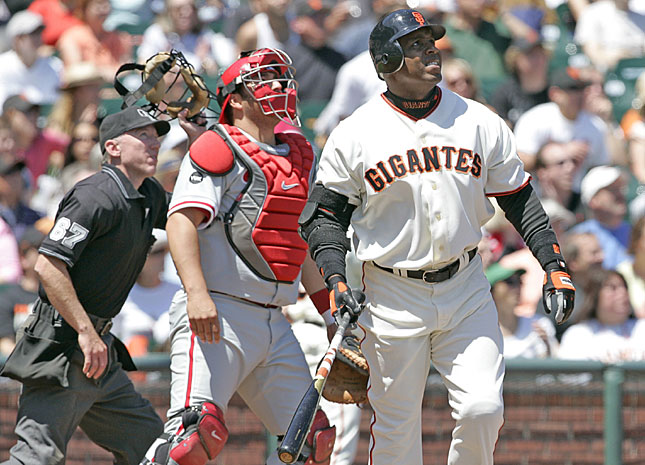
The San Francisco Giants will host the Arizona Diamondbacks tonight (July 31), beginning a three-game series that will determine the first place slot in the National League West. A lot of eyes will be on our 2010 league champions – all the more reason, says a classic Mission District arts and culture organization, for them to take a stand against racist anti-immigration laws.

In early June, community members who had been leaders of the 1960s to ’80s group Casa Hispana de Bellas Artes sent Giants CEO Bill Newcombe a letter with a simple request. They want the baseball team to wear its popular ‘Gigantes’ jerseys while playing the Arizona Diamondbacks and the Atlanta Braves, two squads that hail from states that have recently passed laws codifing racial profiling in the fight against illegal immigration. The letter tells the team “this kind of law has created a paralyzing climate of fear among Latino families, citizen and non-citizen alike.”

San Francisco, the Casa Hispana elders insist, does not swing at discriminatory government. Reminding the Giants organization of its long-standing support of the Latino community, they’re politely encouraging the team to represent its fans by speaking out against discrimination. We caught up with Casa Hispana elder Don Santina for an email interview to explain why his group asked its team for a wardrobe change. The Guardian was unable to reach the SF Giants for comment – but any organizational response we get will be added to this post.


San Francisco Bay Guardian: Tell us about the mission of Casa Hispana de Bellas Artes.

Don Santina: Casa Hispana de Bellas Artes was founded in 1966 in the Mission District by a group of artists and poets to promote cultural advocacy for Latino-Chicano-Raza culture. [Our] group produced and sponsored programs year-round but focused particularly on an annual two-month long Raza/Hispanidad Festival which opened on October 12, Dia de la Raza. Among the multitude of programs, exhibits, performances, and events produced included major undertakings like the Chichen Itza exhibit at SF State, the pre-Colombian artifacts at the De Young and 24th Street BART station opening, the Cisco Kid Festival with Duncan Renaldo, and the Latin American Theatre Festival with Enrique Buenaventura, and low rider car exhibit at the US Presidio. Casa faded into history in 1983 when its major funding sources withdrew. The National Endowment for the Arts was seized by Reaganites.

In 1975 Casa Hispana executive director Amilcar Lobos Yong read a bilingual version of “Casey at the Bat” at Candlestick Park as part of a program in honor of the Giant’s support of the Latino community. Photo by Joe Ramos

SFBG: Why did you send this letter to the Giants?

DS: The elders of Casa wrote to Bill Newcomb’s Giants organization because it had produced a pre-game program in Candlestick Park with Horace Stoneham’s Giants team in 1975 honoring the Giants for their “pioneer recognition of Latin players” in the racist world of major league baseball.  At the event, Casa Poets Theatre read “Casey at the Bat” in English and Spanish before the game and gave awards to the Giants, Juan Marichal, and Tito Fuentes for his works with youth in the Mission District (editor’s note: the awards were presented by long-time Bay Area Latino news legend Luis Echegoyen). Casa people felt that the Giants should continue that anti-racist policy by making a genuine statement against SB 1070 by at least wearing Gigantes uniforms when playing Arizona and Atlanta.


SFBG: What’s been the response from the team? Did they get back to you?

DS: The Giants received Casa’s letter on June 9, and the business has not responded. Casa is disappointed in this lack of response and respect from a San Francisco-based team which has many Latino players.


SFBG: What is a professional sports team role’s in their community? Should they be speaking out on political and social issues? 

DS: A professional sports team has the same responsibilities to the community as any other business; in a word: Spike Lee’s “do the right thing.” Unfortunately, these teams are all mega-corporate businesses with morality based on profit. Dave Zirin has covered this topic very thoroughly.


SFBG: How much of the artists and community members involved with Casa Hispana are baseball fans?

DS: Most of the Casa people love the Giants; however, they also love fútbol, a.k.a. the international game of soccer.   


SFBG: Do you think they’ll be wearing the Gigantes jerseys at AT&T Park tonight?  

DS: We don’t think they’ll wear the Gigantes uniforms without public pressure or embarrassment. [But] if they do, it will be beneficial as a public stand against racial profiling laws. 


UPDATED WEDNESDAY, AUGUST 3: The Guardian contacted Giants spokesperson Shana Daum, who said she couldn’t recall recieving Casa Hispana’s letter but that the Giants would not be wearing their Gigantes jerseys at all during this week’s Arizona series. “We try to support the community, but we don’t want to take a political stance,” she told us.

“There’s other ways for major league baseball to get involved.” Daum cited the team’s annual Fiesta Gigantes celebration during September’s Hispanic Heritage Month, HIV/AIDS awareness days, the team’s pioneering involvement in the It Gets Better campaign. She added “but we appreciate the spirit in which [Casa Hispana’s request to wear the Gigantes jersey] was asked.”

Stop the right-wing revolutionaries

59

The revolution has begun, but we aren’t the revolutionaries. That was the disturbing thought that occurred to me this morning as I listened to Fresh Air on KALW and its interview with Robert Draper, the New York Times Magazine journalist who is writing a book about the House of Representatives, where Tea Party backed members almost just succeeded in bringing down government as we know it.

That wasn’t how Draper cast the situation, although he did paint a vivid picture of the right-wing true believers who manufactured this debt ceiling “crisis” and their monomaniacal goals of slashing government to the bone, no matter what the consequences to the U.S. economy and way of life. Instead, the discussion triggered a memory of the powerful and prescient premise from economist Paul Krugman’s 2003 book The Great Unraveling.

In its opening pages, under the heading of “A Revolutionary Power,” Krugman cites an unlikely source for how to identify and oppose those bent on destroying a country’s institutions: Henry Kissinger. In 1957, as he was completing his doctorate at Harvard University, Kissinger wrote his dissertation, “A World Restored,” on Napoleon and the French reconstruction period after Waterloo, with some obvious parallels to the rise of fascism in Europe in the 1930s.

Kissinger argued for the importance of understanding the nature of a revolutionary force, and Krugman saw the inflexible right-wing movement in the U.S. as another example of that. “That is, it is a movement whose leaders do not accept the legitimacy of our current political system,” Krugman wrote, citing the oft-stated belief of modern Republicans that “long-established American political and social institutions should not, in principle, exist – and [they] do not accept the rules that the rest of us have taken for granted.”

At the time, Krugman cited the efforts of right-wing politicians and institutions to undo such New Deal era programs as Social Security, unemployment insurance, and Medicare, as well as their rejection of international treaties and cooperation in favor of empire and unilateralism. But since then, the right-wing has gone even further, willing to force the government into default in order to accomplish its ideological goal of destroying the federal government’s ability to ask anything of capital.

Kissinger made clear that such forces can’t be reasoned or compromised with, all you can do it try to defeat them before they destroy the country. The longer everyone delays arriving at that conclusion, the more difficult that task becomes, and that’s an important lesson for President Obama and the Democrats to learn right now.

“Lulled by a period of stability, which had seemed permanent, they find it nearly impossible to take at face value the assertion of the revolutionary power that it means to smash the existing framework. The defenders of the status quo therefore tend to begin by treating the revolutionary power as if protestation were merely tactical; as if it really accepted the existing legitimacy but overstated the case for bargaining purposes; as if it were motivated by specific grievances to be assuaged by limited concession. Those who warn against the danger in time are considered alarmists; those who counsel adaptation to circumstances are considered balanced and sane…But it is the essence of a revolutionary power that it possesses the courage of its convictions, that it is willing, indeed eager, to push its principles to their ultimate conclusion,” Kissinger wrote.

The Tea Party may have a fundamental misunderstanding of the principles and events surrounding the American Revolution, but make no mistakes that they do see themselves as revolutionaries, people who want to turn back the clock on the gains made in workers’ rights, environmental protection, tax equity, the creation of social safety net, and all the other hallmarks of civil society.

They’ve already taken over one of our two political parties, and succeeding in forcing the other one to do their bidding. Call me an “alarmist,” but if we don’t challenge the notion that Obama is “balanced and sane” and convince them that the American way of life is at stake, then we just might end up with another revolutionary war on our soil.

Complete interview: “Between Two Worlds” directors Deborah Kaufman and Alan Snitow

0

In 1981 Deborah Kaufman founded the nation’s first Jewish Film Festival in San Francisco. Thirteen years later, with similar festivals burgeoning in the wake of SFJFF‘s success — there are now over a hundred around the globe — she left the festival to make documentaries of her own with life partner and veteran local TV producer Alan Snitow.

Their latest, Between Two Worlds, which opens at the Roxie Fri/5 while playing festival dates, could hardly be a more personal project for the duo. Both longtime activists in various Jewish, political, and media spheres, Snitow and Kaufman were struck — as were plenty of others — by the rancor that erupted over the SFJFF’s 2009 screening of Simone Bitton’s Rachel. That doc was about Rachel Corrie, a young American International Solidarity Movement member killed in 2003 by an Israeli Defense Forces bulldozer while standing between it and a Palestinian home on the Gaza Strip.

As different sides argued whether Corrie’s death was accidental or deliberate, she became a lightning rod for ever-escalating tensions between positions within and without the U.S. Jewish populace on Israeli policy, settlements, Palestinian rights, and more — with not a few commentators amplifying the conservative notion that any criticism of Israel is anti-Semitic, even (or especially) when it comes from Jews themselves.

People who hadn’t seen (and boasted they wouldn’t see) the strenuously even-handed Rachel called the documentary an “anti-Israeli hate fest” akin to “Holocaust denial,” its SFJFF inclusion “symptomatic of a demonic strategy” by “anti-Semites on the left.” KGO radio’s John Rothmann opined on air that the festival had “crossed the line” and “sympathized with those who participate in terror.”

Stunned SFJFF executive director Peter Stein (who’s leaving the festival after its current edition) decried Jewish community “thought police” who pressured the institution and those connected to it with defunding and boycotting threats. The festival attempted damage control by inviting a public foe of the screening (Dr. Michael Harris of StandWithUs/Voice for Israel) to speak before it, which only amplified the hostile rhetoric.

Seeing the festival being used by extremists on both sides became a natural starting point for Between Two Worlds, which takes a many-sided, questioning, sometimes humorous look at culture wars in today’s American Jewish population. It touches on everything from divestment debates at UC Berkeley to the disputed site of a Museum of Tolerance in Jerusalem (atop a 600-year-old Muslim cemetery), from the tradition of progressive liberalism
among U.S. Jews to rising ethnic-identity worries spawned by intermarriage and declining birth rates.

The fundamental question here, as Kaufman puts it, is “Who is entitled to speak for the tribe?” For the first time, the filmmakers have made themselves part of the subject matter, exploring their own very different personal and familial experiences to illustrate the diversity of the U.S. Jewish experience. Snitow’s mother had to hide her prior Communist Party membership to remain active in social-justice movements after the 1940s, while Kaufman’s father was a devoted Zionist from his Viennese childhood who had to adjust to offspring like “Tevye’s daughters gone wild,” including one who converted to Islam.

They’re clearly in sympathy with other documentary interviewees insisting that one core of Jewish identity has been, and should remain, a stance against absolutism and injustice towards any peoples. Between their SFJFF screenings the filmmakers chatted with the Guardian.

SFBG: Is the Bay Area still a bastion of Jewish liberalism, relatively speaking? Watching your movie I wondered how many other places there are where a Jewish film festival audience would boo and heckle a conservative pro-Israeli speaker like Dr. Michael Harris.

Deborah Kaufman: What we saw at the festival during the Rachel uproar was a collapse of the center. It was really a moment when the extremes were at battle and the center simply disappeared. That’s what was and is so disturbing. A kind of apathy where the moderates just throw up their hands and walk away from what’s become a very toxic debate.

Alan Snitow: It’s not that the Bay Area is unique to boo a so-called “pro-Israel” speaker. It’s that the Bay Area has maintained an open debate about Israeli policies when other Jewish communities never countenanced such debate from the get-go. Rachel was not shown in other Jewish film festivals around the country because they are already creatures of conservative donors. The aim in this power grab by the right in San Francisco was and is to silence people and institutions like the festival that oppose a McCarthyite crackdown in a remaining bastion of free speech. And this is being mirrored in Israel itself where the Knesset recently passed a law punishing anyone who publicly supports the idea of a boycott of the West Bank settlements.

I think we also have to question this claim of “pro-Israel.” All criticism of Israel’s occupation is now being branded as “anti-Israel.” Theodore Bikel — a lifelong Zionist activist who went to jail with my mother at the Soviet consulate in Washington DC — was recently called an “anti-Zionist” because he supported an actors’ boycott of performing in the settlements. J Street — an explicitly and consistently pro-Israel voice that is critical of Israeli policies — is regularly attacked as not really pro-Israel for that very reason. “Pro-Israel” has come to mean pro the policies of the current, most right-wing government in Israeli history — a government that is now advocating the truly Orwellian position that there is no occupation at all! That’s not what pro-Israel or Zionist ever meant except to some ideologues on the far right.

DK: The Bay Area has had a history of passionate political commitment — to both the Zionist and anti-Zionist causes. But today the right wing is certainly louder and aside from what we saw at the theater that day, there has been a significant silencing of voices critical of Israel’s occupation policies.

SFBG: Conversely, have you perceived the local Jewish community as growing more conservative in recent years? In particular, more inclined to treat criticism of Israeli government policies as inherently anti-Semitic, even when voiced by fellow Jews?

DK: We were interested in the notion of excommunication — going back to Spinoza — and to the accusation “self-hating Jew” that some people used to attack Hannah Arendt when she wrote Eichmann in Jerusalem. Today, right-wing Jews are leveling charges of treason against Jewish academics, rabbis, and community members whose positions on israel aren’t as rabidly right wing as theirs. We didn’t have to look very far to find dramatic stories for our film on these themes. Censorship and the stifling of dissent are happening right in our home town.

AS: There’s conservative and there’s conservative. The Jewish community hasn’t become more conservative in terms of voting patterns or support for civil rights or the welfare state, but the establishment has become more and more dependent on an ever smaller number of big conservative donors who have bought out these institutions and compromised their independence and legitimacy as representing the whole Jewish community. This is a major reason for the crisis. More and more young Jews are finding the community’s institutions do not reflect their liberal beliefs and upbringing, particularly when it comes to Israel. The result is that many young people are not identifying with Israel because its actions are not consistent with their ideals as American Jews.

SFBG: Had you already been thinking about somehow addressing political rifts in the Jewish community before the SFJFF fracas?

DK: We began the film over a year before the JFF fracas. We were focusing more on Jewish identity than politics — looking at intermarriage, hybrid identities, a new generation of American Jews — we wanted to re-tell the Biblical story of Ruth, and we were following a fantastic feminist-queer internet discussion called “Rabbis: Out Of My Uterus!” that we thought would be fun to film — but we kept getting swept into the Israel vortex and realized we had to address the question of dissent and who speaks for the Jewish community at this historical moment for the film to be relevant.

SFBG: The festival had shown other movies relating to different aspects of the Palestinian conflict before, and Rachel does make an effort to represent all the different sides of its story. What do you think particularly ticked people off about that film?

DK: Over the years the festival had shown many films that were more controversial than Rachel. In fact, that same summer the festival showed a film called Defamation that we felt was far more critical of the Jewish establishment, but it went right under everybody’s radar. It was the Tea Party summer — almost anything could have been the spark that ignited a controversy. But the tragic death of Rachel Corrie had already made her an internationally famous symbol of opposition to Israel’s occupation, so the anger was focused on the program with her name.

AS: Rachel was just a pretext. In the months before the film festival, think tanks in Israel had declared the Bay Area a node of “delegitimization” of Israel (along with Toronto and London). The right was looking for a test case to make an example of Jewish institutions that step out of line. The San Francisco Jewish Film Festival was founded as a transgression right from the start — a place where unpopular and counter-cultural and diverse views could engage. It was a perfect target to attack.

One other item: when the festival allowed [Harris] on the podium to attack one of its own films and filmmakers it was a bad precedent, and the right smelled blood in the water. The festival’s good faith effort was viewed as a sign of weakness and the attacks only intensified. The people who wrote the attacking emails are people who think that any criticism of Israel is tantamount to anti-Semitism. They are not to be appeased by any symbolic action. They want control and silence.

SFBG: Deborah, since you left the festival it’s seen several well-regarded executive and programming directors depart, seemingly burnt out. Do you think the effort it takes to represent and placate the festival audience has gotten harder?

DK: I’m not sure things have changed so much. There has always been pressure on festival directors to do what major donors demand. I got a lot of that during my tenure but resisted the pressure. The difference is the political atmosphere which is more polarized and shrill, especially since the new, ultra-right government in Israel has come to power. It’s hard to withstand the bullying and accusations of treason and self-hate.

AS: I think it’s also important to add that Deborah and Janis [Plotkin] — who was director for many years — also had a lot of fun with the festival. This is a very hard job, but it’s a creative and fascinating one, and these attacks may come with the territory, but they don’t dominate it.

DK: In terms of the audience it’s always been a diverse group. I have fond memories of the midnight screening of the silent version of The Golem (1920) we did at the Roxie in our second year — where people in the audience were literally screaming at each other and at the projectionist during the whole screening about whether we should turn the volume up or down on the rock music sound track we had commissioned.

SFBG: You’ve shown Between Two Worlds to a variety of Jewish audiences so far, in Toronto, New York, and Jerusalem as well as SF. What have been some of the responses?

DK: The response has been great and sometimes surprising — we’ve had people from the left and right of the political spectrum both say the film has made them reconsider their own stridency. Non-Jews have said it mirrors what they felt they could not say out loud. Young people have told us it’s affirming of their perceptions and reveals a history they didn’t know existed. In Jerusalem one person felt the film was overly optimistic because it didn’t examine the support of right-wing Christian fundamentalists for the settlements!

AS: I think the personal stories we tell of our own families ring true to many people. Most Jews know deep down that if you look at the family histories of American Jews, you will find intense long term debates between those people at the Passover seder table who were Communists, Socialists, and Zionists. Often, the only way to sit down together was to maintain silence, but we wanted to bring those utopian hopes and ideals back into focus, and people across the political spectrum seem to take that as an opportunity to think about and question their own families and their own positions.

SFBG: How did the decision come about to put yourselves in the film? As filmmakers, was it awkward to become subjects?

DK: We’ve never been in our own films so it was something of a challenge for us. We don’t feel relaxed in front of the camera, but early in the production we realized we had to be in the film so that people would know where we were coming from, and also because our family histories shed a lot of light on debates inside the Jewish community today. We watched a lot of work by other documentary filmmakers who put themselves in their films like Marlon Riggs, Alan Berliner, and Ross McElwee, and decided we’d give it a try. We also felt this film was really about the intersection of the personal and the political, so the structure that moves back and forth between the two made sense to us.

AS: My daughter, Tania, is an actor, and I kept thinking that we needed to consult with her about being on camera. It’s not just something that you do. You have to work at it and learn how to do it. After we did it a couple of times, we realized that we weren’t dressing right, that the hair was wrong, that I was scratching my head, that we should have shot ourselves from above and not below. Rather than being an on camera ego-trip, it was a humbling experience.

Between Two Worlds opens Fri/5 at the Roxie.

Enviro justice groups spar with SFPUC on power program

A Pew Research Center analysis based on the latest U.S. Census data has found that Latino and African American households weathered deeper blows in the economic recession, driving the wealth gap between whites and minorities to an historic high. As things stand under current economic conditions, the Washington Post reports, the median net worth of a white family is now 20 times that of a black family, and 18 times that of a Latino family — roughly twice the gap that existed before the recession, and the biggest gap ever since 1984.

Meanwhile, a report issued yesterday by the Natural Resources Defense Council hit on another alarming trend, outlining the water-related challenges coastal cities will face as climate change takes its toll. The report highlights sea level rise, land erosion, saltwater intrusion, flooding, impacts to fisheries, and more frequent and intense storm events. (That’s to say nothing of wildfires.)

In San Francisco, a small group of environmental justice advocates has been working for the better part of a decade to help craft a municipal energy program with the aim of turning the tide, at least on a small local scale, to promote greater economic equality and fend off the worst impacts of climate change. Advocates from groups such as Global Exchange, the Local Clean Energy Alliance, the Sierra Club, the Brightline Defense Project, the San Francisco Green Party, and others have long envisioned CleanPower SF as a way to bolster local job creation, particularly for people who reside in the city’s low-income neighborhoods. The twin goal of CleanPower SF, also known as community choice aggregation (CCA), is to launch a local response to climate change by offering San Franciscans the option of purchasing clean electricity generated from local, renewable energy sources such as wind and solar.

At a July 26 meeting of the San Francisco Public Utilities Commission (SFPUC) in City Hall, however, it became clear that this overarching vision for the program wasn’t gaining traction with the agency that is tasked with implementing it. As the program inches closer to a review by the Board of Supervisors, advocates have reached an impasse with SFPUC staff as to how the whole endeavor should proceed.

Grassroots advocates raised concerns that the latest proposal for CleanPower SF amounted to a setup for failure, unless there was a concerted effort to plan for robust development of local green-energy sources. While SFPUC staff indicated that the current proposal would result in new jobs at call centers, advocates said more needed to be done to plan for installing local energy-generating sources which could truly bolster local job creation.

Yet SFPUC General Manager Ed Harrington said that what the advocates were asking for wasn’t realistic. He dismissed the original vision for CCA, articulated in a 2007 board-approved ordinance, as “not a realistic goal.” And he spoke in a condescending tone about the grassroots stakeholders, saying, “People saw that they would like green power to be cheaper, and therefore they believed that it was.”

Under the proposal that the SFPUC described to commissioners July 26, monthly electricity rates under CleanPower SF would be at least $7 more than estimated PG&E rates. That’s a key difference from the original draft implementation plan, hammered out in 2007, to “meet or beat” rates offered by the investor-owned utility.

The new proposal has also been scaled down considerably since 2007. As planned, CleanPower SF would contract with Shell Energy North America to begin offering 30 megawatts of 100 percent green power to just 75,000 municipal customers by the spring of 2012. That’s assuming most of the 229,000 residential account holders who will initially be enrolled will opt out; and SFPUC media relations representative Charles Sheehan noted that the full customer base would eventually roll up to the original goal of 340,000 customers. Still, the target at the outset represents just a fraction of the 360 megawatts of power for 340,000 customers originally called for, with a 51 percent renewable energy mix. Under this new scheme, electricity would be purchased through Shell on the open market, with long-term plans to develop local sources but no solid short-term goals for achieving that end.

SFPUC Commissoner Francesca Vietor asserted that SFPUC staff should continue working closely with the grassroots stakeholders and find a way to seriously plan for building local renewable sources, which could ultimately serve to drive municipal rates down and make the program more viable and competitive. “I think local build-out is a really exciting and important opportunity, and a critical piece of the CCA program,” she said.

Commissioners continued the decision on whether to approve parameters for a term sheet and submit it to the full board, pushing the discussion back until September unless a special meeting is called. Several commissioners raised concerns about the financial risk to the city, since the program would have higher rates than PG&E and is designed in such a way that a bulk of power would have to be purchased up front before the agency can determine how many customers will opt out.

“I was actually glad to hear a lot of commissioners raise a lot of concerns, especially about the financials,” Eric Brooks, a long-time CCA advocate speaking on behalf of the Green Party and an organization called Our City, told commissioners. “The more of a local build-out … the lower your price, and the lower you can get in terms of the risks.”

June Brashares, green energy director at Global Exchange, echoed Brooks’ comments in a telephone interview with the Guardian. “The proposal they’re doing now is really vulnerable,” because the higher rates will make the alternative power program less competitive, she said. “The whole reason for CCA — yes, we want cleaner energy — but the real key is the building of local energy sources to create an economic boost, and local green careers. And that’s not at the core of what the SFPUC is doing.”

This article has been corrected from an earlier version.

Frustrations rise with skyrocketing prices for scalped Burning Man tickets

58

In the wake of yesterday’s announcement that Burning Man tickets have sold out for the first time, scalpers have been offering tickets online for several times their face values – some for as much as $5,000 each – frustrating burners and raising difficult questions about what the laws of supply and demand are doing to a community that eschews “commodification” as one of its core principles.

Members of Black Rock City LLC have been worried about this problem since back in January when tickets first started selling briskly. When I asked BRC board members Larry Harvey and Marian Goodell about the possibility of its selling out early, they each asked me not to publicize that possibility because they were worried about scalpers making runs on tickets.

A few months ago, they announced that tickets wouldn’t be available at the gate, and they began to put out word through registered theme camps and occasional notices in the Jack Rabbit Speaks newsletter that selling out was a possibility and that those planning to attend should buy their tickets now.

“I feel bad if anyone was caught unaware, but they should have known,” Goodell told me yesterday.

But if the high prices being asked for Burning Man tickets on sites like eBay and StubHub are any indication, it seems that those looking to profit off the event were just waiting for the announcement that tickets had sold out. High ticket prices are also likely to add incentive to the regular ticket scams that occur, resulting in the likelihood of people getting stuck outside the gate at this far-flung locale.

BRC spokesperson Will Chase addressed that possibility in a post on the Burning Blog yesterday: “For those considering venturing out to Black Rock City without a ticket to ‘try your luck’ purchasing one at or near the entrance to Burning Man, we ask that you do NOT do so, for your own safety and the well-being of the surrounding communities. The Black Rock Desert is an extremely remote, inhospitable environment with limited resources, minimal facilities, and few camping opportunities in the vicinity.”

Longtime burner Chicken John Rinaldi, who has turned into a staunch critic of the way BRC is governed in recent years, said burners who don’t have much money will be tempted to sell their tickets if they really start going for thousands of dollars and he said BRC should have consulted the larger community about the issue.

“They don’t have a plan. They knew it was going to sell out and they didn’t have a plan,” said Rinaldi, who has also been critical of BRC’s plans for converting to a nonprofit with little input from the community about process or potential new governance models. “It was another missed opportunity for Larry to engage with his community…This is going to be a fucking disaster.”

As for what steps BRC is taking to discourage price gouging by scalpers, whether they are beefing up security to better fight off gate-crashers, and responses to criticisms rippling through online discussions among burners about “gentrification” of the event and related concerns, we’re still waiting for responses from BRC members who we expect to interview over the coming days.

So check back for updates on this blog and in next week’s special Guardian issue on Burning Man, which celebrates its silver anniversary this year.

Grab your deck, Tha Hood Games riding out tomorrow Sat/23

1

Mini ramps in front of murals, skate shoes stomping around, multiple forms of media sharing the spotlight for tomorrow (Sat/23)’s all-day multimedia art exhibit at the African Art and Culture Complex. Thanks to Parks and Recreation and an East Bay youth creativity non-profit you can shoulder your deck and head to Tha Hood Games exhibition.

Founded in East Oakland in 2005 by Keith “K-Dub” Williams & Ms. Barbara “Adjoa” Murden, Tha Hood Games was created to give “youth a creative platform to share their talents,” according to the group’s website. Tha Hood Games has ramped up 30 skate events and youth art festivals all over the Bay Area, in Las Vegas, Long Beach, and at the X Games.

The group’s events highlight the talents of Bay Area youth skateboarders. In an interview with the San Francisco Bay Area Independent Media Center, Williams said that, “Tha Hood Games gives youth an opportunity to showcase and nurture their skills in skateboarding, music, dance, and the visual arts in their own communities. This exhibition is our way of sharing our journey visually, and spotlighting our family of creative people and the many youth, cities and communities we have visited.”

So of course, there’s gonna be art on Saturday — the exhibit features murals and paintings on helmets and car hoods. There’s gonna be skateboarding – a temporary park’s been erected in the parking lot of the the African Art and Culture Complex that’ll be open from 10 a.m.-4 p.m. Also included will be live performances, live art, skate demos, and vendor booths.  Pro skater and associate of Tha Hood Games Karl Watson will be in attendance, as will be pro skater Nyjah Huston. An opening reception in the art gallery will take place from 5-7 p.m., and a fashion show  from 7-9 p.m.


“Tha Hood Games: Kids, Community, Comrades”

Sat/23, 11 a.m.-9 p.m., free

African Art and Culture Complex

762 Fulton, SF

(415) 292-6172

Facebook: Tha Hood Games Exhibition

www.aaacc.org


Party with the new, movie-making Yard Dogs Road Show Sun/24

0

It’s not every day that you get a missive from the carnival, so when I saw Eddy Joe Cotton’s email in my inbox I read it. Holy damn, Yard Dogs Road Show is making a movie. Even more than that — he was extending the invite to go play with the traveling pack of musico-gypsies on Sun/24 at their Oakland clubhouse. You can come too. No, really.

“The Yard Dogs Road Show wants to be a movie right now,” says Cotton, author of one of the best road journals ever (Hobo) and long-time member of the long-time traveling burlesque-vaudeville experience that is the YDRS. It kind of always did (if not another novel) — the band’s provenance has always been romanticized by its members, if not made into an urban legend. Take a gander at my interview with the group’s song and dance man Miguel for a look at magic and mystery. 

The band’s developed a nationwide following through its bohemian wonderland of a live show. So cool, it wants to share its roots. Of course, there is a Kickstarter involved. See, movies don’t just pop up from nowhere. Cotton explains — actually, he really explains, maybe I’ll just cut ‘n’ paste. The band needs your dough for:

– Editing, obtaining additional footage, purchasing archival-stock footage, music publishing fees, audio production, camera upgrades, hard drives, film festival entry fees, film promotion, graphic design, DVD manufacturing, etc.

– We have a 7-year old mini-DV camera that has stopped accepting tapes. We’ve had it repaired too many times. We need a new HD camera – price tag $4000

– We still need more footage to tell the story we want to tell. This will mean more of everything. 

Plus publicity, DVD manufacturing, cuts to Kickstarter and Amazon, mailing the DVDs, and for video gear they’ve already bought. 

Bla bla bla. Contributing to the project through the Kickstarter site will mean you get anything from YDRS love (this is not totally broken down, so feel free to let your imagination run rampant) to lifetime tickets to see the band giggin’. And the party in Oakland will feature a movie Q&A, sushi rolls, and lasso tricks. 


Yard Dogs Road Show movie party

Sun/24 5 p.m.-midnight, free

Yard Dogs Art Shack

2509 Myrtle, Oakl.

www.yarddogsroadshow.com

Pod people

0

arts@sfbg.com

LIGHTS OUT Ironically, the Bay Bridged founders Christian Cunningham and Ben Van Houten were on their yearly pilgrimage to South by Southwest when they came up with the idea for a local music website.

In 2006, the two were watching a San Francisco band whose name has since been lost to time, wondering why they’d come all the way to Austin to discover how much they liked this band from their own town. “It just struck us as odd,” Van Houten explains.

Life-long music fans, they decided they wanted to take active roles in promoting the local SF indie scene. When they returned to the Bay Area, they started an audio podcast. “Since I had done college radio, my friend kept telling me about podcasting and he finally sold me on the idea,” Van Houten says. “We just decided we would interview a band every week that was always local, and that all the music was going to be local.”

From there, the mission expanded — now the Bay Bridged is a nonprofit with a complete website that gives out recording grants and other creative support to local music groups. The podcast continues, airing every other week. During the first week of the month, the site offers tracks from a sampling of bands coming to the Bay Area. Later in the month, it releases a mixtape with a thematic binding agent, like a single artist (the most recent mix featured a set of 15 favorite Ty Segall songs) or a festival (for example, 20 tracks by bands playing at SF Pop Fest 2011). “The question we’ve been asking ourselves for the past five years is how to get people interested in local music,” Van Houten says.

These days, it’s not a Bay Bridged deal breaker if you’re not a local band. Van Houten explains that the organization’s new focus is on getting people out to see the music for themselves. “If you stay just on the Internet, then you’ll discover good things — but you’ll never have that visceral experience one gets with live music.”

Many Bay Area shows are a mix of local and other music, a combination of sounds that becomes part of the experience of seeing these bands. The site clues you into a gig with one of your favorite visiting bands, and in the process you discover a rad local opener: mission accomplished. The website also curates its own concert and festivals, including the third annual Regional Bias fundraiser showcase that will stuff four local indie groups into the Verdi Club on Aug. 6.

“On the radio waves you can’t find independent rock in San Francisco,” Van Houten says. “[But] podcasts are good for many of the same reasons radio is great. I still think there’s a value to being a passive participant in music, to being part of the audience and letting someone else do the programming.”

We’re living in an era when most of our AM and FM radio waves are stuck in a controlled loop. Luckily, it’s also the age of the Internet and for many music fans, creating a podcast is just mic check away.

The Bay Bridged recently made its 250th podcast. And Van Houten sees no end to his role as a local hype man. “Periodically we say, ‘Surely, we’re going to run out of things we’re interested in.’ But It hasn’t happened yet — and I don’t see it happening in the near future.”

THE BAY BRIDGED’S REGIONAL BIAS 2011

With Royal Baths, Little Wings, Sea of Bees, and White Cloud

Aug. 6, 8 p.m., $10–$50 donations

Verdi Club

2424 Mariposa, SF

www.thebaybridged.com


To Hellman and back

0

arts@sfbg.com

FILM “Legendary” is a term often applied to artists distinguished by either ubiquity or scarcity. Monte Hellman definitely falls in the second camp — nearly 80, he’s just made his first feature in 22 years, causing a flurry of interest in the sparse 10 he made during the prior three decades he was, relatively speaking, active — movies hardly anyone saw when they came out since none were more than a blip on the commercial radar.

That of course aided his reputation as a fascinating oddball working — when allowed — on the B-movie margins of mainstream entertainment, yet never quite at home there. Presumably this status, and the small number of projects he’s realized (let alone had a satisfying amount of control over), has been a cause of some frustration. Yet the laconic distance from emotional display or anything else that might pander to the audience’s easier responses — even in genres as typically uncomplicated as the western or horror movie — suggests a filmmaker who might well enjoy being perceived as the rugged, tether-resistant outsider. Lord knows it’s impossible to imagine him directing something brash, accessible, and popular.

Not that his interview quotes have ever revealed a willfully elusive nature. Hellman appears at the Roxie Friday, July 22 (and at the Smith Rafael Saturday, July 23) when his new Road to Nowhere opens, so you can gauge for yourself just how the man does or doesn’t feed the enigma his films have built around him.

After that night, the Roxie plays Road on double bills with the four movies that most shaped his cult following, offered in a mini-retrospective called “Monte Hellman: Maximum Minimalism.” They’re all road flicks in one way or another — the typical Hellman film, if there be such, is a one-way trip of some urgency but no certain destination save oblivion. Its protagonists’ circumstances may be desperate, but they themselves ruffle an outwardly sardonic, existential cool as they ride into the incinerating sunset.

Hellman got into the business via Roger Corman, Hollywood’s all-time greatest nose for cheap young talent from Francis Ford Coppola, Peter Bogdanovich, and Martin Scorsese to James Cameron. His first directorial job was 1959’s The Beast From the Haunted Cave, about a giant spider — a movie notable for being better than it needed to be, since it didn’t need to be any good at all, though no indicator of a distinctive sensibility. Nor were two 1964 action movies shot back-to-back in the Philippines, Flight to Fury and Back Door to Hell, though they commenced his brief but key collaboration with Jack Nicholson (who wrote the first as well as acting in both).

The next year they did another two-for-one deal for Corman, Nicholson now producing as well. Ride in the Whirlwind and The Shooting were low-budget westerns shot in Utah, intended for the bottom half of drive-in and grindhouse double bills. As Hellman later said, the expectation that they’d fly so far below radar was freeing: “Any thoughts about doing something different were for our own satisfaction. We never thought that anybody would notice.”

Evidently Corman and/or distributors noticed, because these two idiosyncratically spare Old West odysseys into ever more desolate (and deadly) terrain wound up being sparsely released around the globe as a seeming afterthought over the next many years, then falling into public domain limbo. (You can still find cheap dupes on fly-by-night labels in $1 bins.) The Nicholson-penned Whirlwind has him, a young Harry Dean Stanton, and Rupert Crosse (1969’s The Reivers) as itinerant cowhands mistaken for killer bandits, chased into the desert by vigilantes who’ll shoot first and hear claims of innocence later.

In The Shooting, Nicholson doesn’t appear until midpoint, joining Millie Perkins as a second black-hatted angel of death hiring two cowboys (Warren Oates, Will Hutchins) to lead them on a trek whose slowly revealed actual intent turns the guides into captives. That film, written by Carole Eastman (who later cemented Nicholson’s post-Easy Rider stardom with 1970’s Five Easy Pieces), not only introduced Hellman to his acting muse Oates but attracted enough stealth attention as a strikingly stark genre statement that it was shown out of competition at Cannes.

His mythos already growing in inverse proportion to his films’ popular exposure, Hellman found himself one of the more experienced directors to benefit from the major studios’ early 1970s panic — the old system having largely collapsed, and no clear roadmap to the future in place, they greenlit anything that seemed like it would appeal to the fickle new “youth” audience. Two-Lane Blacktop (1971) was one of many fascinating commercial flops that resulted, a cross-country race with a stubbornly detached, becalmed pulse, Oates wryly chewing scenery that included rock stars James Taylor and Dennis Wilson (as “The Driver” and “The Mechanic” respectively). The two had never acted before, and never would again — indeed you could say Taylor never has, since Hellman’s cryptic communication on set left Sweet Baby James stiff as a board. This effect winds up seeming part and parcel of the film’s droll in-joke tenor; it’s an action movie about extreme acceleration, yet one that absolutely will not get agitated.

There was even less hope of commercial benefit from Cockfighter, a 1974 adaptation of a Charles Willeford pulp with Oates — one actor who never needed being told what to do in the claustrophobic Hellman universe — perfect as the mute loner drifting through an unlovely small-town America of sleazy small-time operators, wayward wimmen, and bloody gambling “sport.” It’s the last film in the Roxie’s mini-retro, alongside the Corman westerns and Blacktop.

Hellman’s subsequent career has largely been off the map — as a director and editor for hire, often fixing problems (like directors who die mid-production) without screen credit. Among films with his name on them, 1978’s China 9, Liberty 37 was an Italian-produced, internationally-cast western that’s okay but uncharacteristically driven by sex and sentiment. (Oates’ rancher says “There ain’t no soft-hearted gunfighters,” but that’s exactly what impossibly handsome Fabio Testi plays.) Direct-to-video killer Santa Claus sequel Silent Night, Deadly Night III: Better Watch Out! (1989) shoehorns just enough eccentricity into the slasher formula to be bearable for Hellman completists.

But the prior year’s Iguana is something else: Shakespeare’s Tempest (with a little Robinson Crusoe) in reverse, a willfully misanthropic castaway adventure in which the facially deformed Oberlus (Twin Peaks‘ Everett McGill) avenges himself on lifelong tormentors by escaping his 19th-century whaling ship and ruthlessly ruling his own “kingdom” of enslaved castaways on an uncharted isle. Its Canary Islands shoot apparently an off-screen form of torment, Iguana was (natch) barely released and remains undervalued, but it’s as uncompromising, bitterly humorous and assured as anything Hellman’s done.

Whether Road to Nowhere qualifies as summary statement or aberration has already divided viewers since its Venice premiere last fall. Written by Iguana‘s Steven Gaydos, it’s a hall of mirrors in which a hotshot filmmaker (Tygh Runyan) making a movie about a woman’s apparent real-life murder casts an alluring non-actress (Shannyn Sossamon) whom an insurance investigator (Waylon Payne) and reporter (Dominique Swain) come to suspect might be playing herself — having faked her own death and adopted a new identity.

The mix of noir, reality-illusion puzzle, industry in-jokes, film history name-dropping (as well as archival clips), uneven performances, sometimes stilted dialogue, brief startling violence, and handsome compositions (shot without permits on a hand-held digital camera) can be taken as two hours of delicious gamesmanship or exasperating self-indulgence. But no one can argue that by now Hellman hasn’t earned his right to be difficult.

MONTE HELLMAN: ROAD TO NOWHERE AND REPERTORY

July 22–28, $5–$10.25

Roxie

3117 16th St., SF

www.roxie.com

Christopher B. Smith Rafael Film Center

1118 Fourth St., San Rafael

www.cafilm.org

Youth Speaks finds its Brave New Voices at this week’s international poetry slam

0

Bay Area, meet your home team. Their names are Joshua Merchant, Noah St. John, E.J. Walls, Gretchen Carvajal, Cassanda Euphrat Weston, and Jade Cho – spoken word poets, representatives of their cities in an international competition that has been the subject, even, of an HBO reality series, and all under the age of 18. Do you know about Brave New Voices?

A performance from BNW 2010 on everyone’s (least) favorite sustenance diet

 The international youth spoken word competition has been shocking senses and giving young people a way to spit the most difficult and important aspects of their lives since 1998 (go here for our recent post on Youth Speaks, the SF organization that was instrumental in making this slam royale happen and coordinates the Bay’s BNV representatives). What happens is teams of high school poets, usually selected through city-wide slams in their own areas, hit the stage during three rounds, reciting poems in tandem and solo that they’ve been revising and perfecting for months. Offstage, the kids get to meet fellow poets from around the world, ciphering and practicing their performances into the night.

We’re stoked at the Guardian for our Bay beatniks, and we somehow hooked two of them for an email interview in the middle of their preparations for the competition, which starts tomorrow, Wed/20, and culminates in the final slam Sat/23 at the SF Opera. Like Youth Speaks executive director James Kass says, here’s your “unadulterated, uncensored kids.”

San Francisco Bay Guardian: Introduce yourself to the city — how old you are, how long you’ve been involved with Youth Speaks, what do you like about spoken word?

Cassandra Euphrat Weston: I’m 18, I’ve been involved with Youth Speaks for about a year. I love the directness and honesty that spoken word demands of me as a writer. There is only one chance to connect with the audience; there’s no leisurely re-reading spoken word poems, and that immediacy creates an extremely powerful connection.

Gretchen Carvajal: I’m 17, I’ve been involved with Youth Speaks for almost three years now, and I love the entire spoken word community, the freeing environment [of] integrity and vulnerability coexisting.  All in all, spoken word is dope.


SFBG: You guys are less than a week out from Brave New Voices, how are you feeling?

GC: It feels surreal, we’ve been working at this for so long and it’s finally coming down to the wire, it’s Judgment Day. For real. Make it or break it. Think of every cliché used to describe this eye of the tiger moment, that’s what it is, times a million.


SFBG: What’s been the most challenging part about training for an international competition like this?

GC: Traveling from Newark to Oakland and Berkeley and San Francisco, it’s a lot of money to drop on BART. Also, several edits on the same poem can get a little repetitive, but it’s all for making the pieces stronger. 


SFBG: What are you most looking forward to about BNV? What do you think is going to be happening there when a country full of young spoken word artists meet?

CEW: I can’t wait to meet poets from all over the country and hear their work. I don’t know exactly what will happen, but I know the experience will be absolutely phenomenal.


SFBG: Tell me something that you’re proud of about your San Francisco team.

CEW: I love how different we all are, and how close we’ve become over the course of the past few months. Everybody has pushed themselves into the most difficult conversations and poems. This effort definitely shows.

GC: I’m proud of the mix we have in our team, and how we coincide. Our team has so many different styles and we can contribute to each other’s style, making everyone diverse within themselves. I just love my team.


Brave New Voices International Youth Poetry Festival

Wed/20-Sat/23, $6-100

Various Bay Area venues

www.bravenewvoices.org


Tech blogger takes on Silicon Valley

0

Critiquing the tech industry has to be one of San Francisco’s favorite events in the armchair Olympics – but usually the harangues are coming from my friend that can’t seem to hold onto his personal chef gigs. Incisive commentary about the social merits of Silicon Valley from within the tech community are hard to come by (maybe because they are all fully employed). 

Perhaps that’s why a critical blog post that tech news site The Next Web ran this week by normally ebullient reporter Hermione Way (who covers the start-up entrepreneur beat) set off so many alarms among her techie cohorts. Way, who I kind of think is a genius at being immersed in, and taking the piss from the tech industry, moved to Bay six months ago from the UK to interview start-up masterminds (we caught her before she’d even hopped the pond to learn about the life of a pro social networker), called out Silicon Valley on being motivated for all the wrong reasons:

I’ve heard pitch after pitch of the same technology and keep wondering why all these highly intelligent, well educated youngsters, many of whom have been educated in the best universities in the world (Stanford, Yale and Harvard) are not putting their brains to good use by solving real-world problems. Instead they’re building technology to solve trivial issues – like apps that show where to spot your nearest tofu cupcake and share it with your friends.

It’s an obvious critique that’s been levied by many people that haven’t met a fraction of the Internet entrepreneurs that Way has, but the post stirred up it’s fair share of wrath. 

Robert Scoble, who found initial fame as a Microsoft blogger and has been called a “technical evangelist”, pointed to financier Cynthia Ringo and Kevin Surace of Serious Material as exemplars of conscious technology movers. 

Over at Y Combinator, a start-up seed firm that operates news forums on its Hacker News website, some commenters thought the problem is that Way simply doesn’t understand what Silicon Valley is:

There isn’t a ‘problem’ with Silicon Valley, it simply exists like a beaker sitting over a bunsen burner. Over time different chemicals are available in the beaker and sometimes something magical happens, and sometime noxious fumes come out, but the place is an engine.

Of course, geographic locations don’t themselves create new techologies, socially-minded ones or otherwise — the people that live in them do. But to say that there is no culture of Silicon Valley – or hey, any place – is remarkably un-self aware. What is worked on, funded, and valued are trends that is agreed on by any community, even if, like Scoble, you can find exceptions to the rule. Here’s hoping that Way’s words will make techsters take a break from the coding-networking-developing grind to look at what they’re working towards.

Repulsed by Recology’s tactics, Kopp strikes name from Adachi initiative

36

Who knew that a bunch of garbage could get a taxpayer watchdog like former supe/state senator/judge Quentin Kopp threatening not to endorse Public Defender Jeff Adachi’s pension reform initiative? But that’s what happened according to Kopp, who adds that he was “personally insulted’ by a signature gatherer outside the West Portal post office last week, after he struck his name from a petition he had signed in support of Public Defender Jeff Adachi’s pension reform measure.

Adachi, who has reportedly been paying up to $5 per signature, also came under fire this week from opponents of his measure, who are threatening legal action after an undercover video showed four signature gatherers for Adachi’s measure soliciting signatures while making misleading statements about the proposal.

But this misbehavior had not been made public when Kopp encountered a signature gatherer last Friday, who asked if he would sign the Adachi petition. “I wrote my name and has just started to print it, when he said, how do you feel about Recology?” recalled Kopp, who is backing a ballot initiative that would require competitive bidding and hundreds of millions of dollars in franchise fees from firms who seek to win San Francisco’s garbage collection and recycling contract.

As such, Kopp’s initiative threatens to up-end the terms of an 80-year old charter amendment that resulted in Recology (formerly Norcal Waste Systems) gaining a contractless monopoly on San Francisco’s $226 million-a-year garbage and recycling stream. 

When Kopp asked the signature gatherer, who identified himself as Tim McArdle, why he was asking about Recology, McArdle said he had another petition on hand, which referred to the allegedly satisfactory service that Recology is providing.

At which point, Kopp began to strike his name from Adachi’s $5-a pop petition. McArdle allegedly interrupted, saying, “No, that’s not the same petition as Recology’s.” And when Kopp kept scratching out his name, McArdle allegedly began swearing at him, even allegedly employing the time-honored F-word. “A woman walked by and was shocked,” Kopp said.(So far the Guardian has been unable to locate McArdle, but when we do, we’ll be sure to update this post.)


When McArdle grabbed back his clipboard, Kopp said he was able to see that on its backside was what Kopp describes as ‘Recology’s phony petition.”

So, why is Kopp so repulsed by Recology? According to Kopp. Recology recently signed up the city’s top signature-gathering firms to work on their petition thereby preventing Kopp and his associates from hiring these firms to collect signatures for his competitive bidding initiative. “And they are doing so from our rates, the money we pay, its legalized misappropriation of our money,” Kopp claimed

So far, it seems as if Recology’s strategy is paying off, at least in the short term. This week, sponsors of the competitive bidding initiative announced that they will turn in their signatures by December 11 to qualify their measure for the June 2012 ballot—and not their original target of November 2011.

Their decision followed less than three weeks of signature-gathering, a tight squeeze that occured, in part, because the City Attorney’s Office  took the full 15 days allowed by law to review the language of the Kopp initiative, which was first submitted June 3.

Even so, and despite an extensive Recology-financed media campaign that included push polls and network and cable TV ads against competitive bidding,  proponents and volunteers with Kopp’s campaign managed to gather the 7,168 signatures they needed to qualify his initiative by the city’s July 11 deadline for submitting petitions for the November election. But some signatures could prove invalid, hence the decision to delay the competitive bidding initiative until June.

And the Guardian learned today that the Board’s Budget and Finance Committee has scheduled a July 20 hearing on whether to award Recology the city’s $11 million-a-year landfill disposal contract, with the full Board set to vote on the issue on July 26 and August 2. In other words, the Board is rushing to make a decision on the landfill, which would further consolidate Recology’s monopoly on the city’s waste stream, before the Board’s summer recess.

The Guardian has also learned that the Budget and Finance Committee will hear a resolution July 20 concerning Recology’s existing agreement with the city over garbage. Rumors are swirling that this hearing will allow Sup. Ross Mirkarimi, who sits on the committee, is running for sheriff and has allegedly been meeting with Mayor Ed Lee and Recology president and CEO Mike Sangiacomo behind closed doors, to insert a clause to allow for the payment of a $4 million franchise fee. But insiders assure the Guardian that Mirkarimi has no such plans, although Mirkarimi himself could not be reached.


Either way, as Kopp points out, the alleged proposed $4 million fee would only amount to 2 percent of Recology’s annual revenue from San Francisco ratepayers. ‘That’s almost an insult,” Kopp said, noting that Oakland, whose population is 340,000, (42 percent of San Francisco’s daytime population) gets a franchise fee of $30 million.

Now, in a recent report to the Board’s LAFCO committee, Recology claimed it provides $18 million annually in “free services” to the city. But the report did not include an independent analysis of Recology’s estimates, and therefore these claims raised the hackles of Kopp, Kelly and other competitive bidding proponents.

Kopp predicts a $4 million franchise fee would allow city leaders who oppose his measure to claim that one of the two objectives of his proposed initiative have been addressed.

In an interview with the Guardian earlier this year, Mayor Ed Lee said he felt that Recology “has justified its privilege to be the permit holder in San Francisco because of the things that it has been willing to do with us.”

Kopp said Lee repeated this position in June, and that Board President David Chiu recently said that he is opposed to monopolies in concept, but felt that any effort to allow competitive bidding on garbage services would tear the city apart.

“Chiu spoke in such draconian terms I thought I was in Iraq or Afghanistan,” Kopp said.

But these latest developments have strengthened Kopp and Kelly’s resolve to push ahead with their effort to give local residents a chance to decide whether competitive bidding would be better for San Francisco rate payers. As they point out, such a vote doesn’t mean Recology would be ousted from the city because they stand an excellent chance of winning any competitive bid. But it could mean that Recology is ousted from its current cost-plus arrangement with the city that allows them to make an estimated 10-20 percent profit.

And whatever happens, the upcoming battle threatens to shed light on Recology’s business model, which is based on vertical expansion into other counties and states, and the knowledge that, unlike the competitive bids it submits everywhere else in California, it has a guaranteed annual revenue of $225 million in San Francisco. In its 1996 filings with the Securities Exchange Commission, NorCal Waste and its 45 subsidiaries (now known as Recology) reported that San Francisco accounts for 50 percent of its annual revenue. And while those public filings are 15 years old, it’s clear Recology continues to rely on San Francisco for a large and guaranteed chunk of its income.

Or as one insider put it, “When you have a cost-plus contract, you can start buying things—like the Pier 96 development, and the recycling facility. And you can move profits to a different part of the company. You’re not competitively bidding the composting. And you can shift your profits out of San Francisco. And with a cost-plus contract, you put everything in the rates. For instance, the city says it wants composting. Ok, here’s the cost, here’s the bill. But you take the profit from the composting and invest it in San Jose, or San Bernardino, and use it to advance your other objectives, like buying two large landfills in Nevada and financing political campaigns.”

Meanwhile, Kopp says he plans to take Adachi to task for hiring the same signature gathering firm that is trying to undermine his petition.


“And I’m not planning to sign his petition now, and I might not endorse it,” Kopp said.


The Fillmore’s clip, cut, and snip: Reggie Pettus of New Chicago Barbershop No. 3 speaks

0

35 years ago, if you were to step through the doors of New Chicago Barbershop No. 3 you’d probably find Reginald “Reggie” Pettus standing behind his classic barber’s chair. Today, Pettus can still be found in the shop on Fillmore Street, an area that has seen seismic changes in its community. Pettus and the shop are a part of the Fillmore’s African American past, but he wants people to know that the shop is part of the present, too.

Born in Mobile, Alabama, the now seventy-one year old Pettus came to the Fillmore District in 1958, when he enrolled at City College of San Francisco. “Half of my family was in Mobile, Alabama, the other half was in San Francisco, so when I graduated from high school I wanted to come out here to go to school, so that’s what I did,” said Pettus in a Guardian interview one summer afternoon at his shop.

Known for its doo-wop beginnings and its present day rhythmic hot spots, the Fillmore District is the place to be when it comes to absorbing San Francisco’s jazz culture. Home to the historic Fillmore theater, and popular jazz club Yoshi’s San Francisco, the Fillmore District brings in people of all ages and colors to enjoy its good times. But if you’re looking to get a handle on some parts of Fillmore history, you won’t find it in the clubs. 

1551 Fillmore: The place to be for a beard trim, haircut, and some neighborhood history

Pettus has been working in The New Chicago Barbershop No. 3, a business originally opened on Ellis Street by his uncle James “Mack” McMillan in 1968, for thirty five years. Another branch (Chicago Barbershop No. 2), is located on Divisadero Street.

Pettus said that he’s been a professional barber for thirty seven years, but has been cutting hair since he was a young adult, including the time when he served in the Air Force from 1960 to 1964. “I’ve always been [a barber]. When I was in high school I cut hair, when I was in the service I cut hair. So when I got out of the service and came to California, my uncle, he had a barbershop so I went to school and became a barber, a legal barber that is.”

This year marks the forty-forth year of business for the barbershop, a success that Pettus credits to the staff’s welcoming customer service. “We open on time; we treat all the customers the same way, whether they’re Willie Brown or somebody that has come off the street. The way we treat people. That’s why we’re still here.”

Nevertheless, the barbershop has faced tougher times as the years have progressed. Pettus described the current business flow to be “fair”. “It’s holding on, put it that way.” He was adamant about the reasons for the ongoing decrease in clientele for the shop. He said that during the mid ‘70s, redevelopment came in and tore down most of the buildings around the Fillmore (the neighborhood had been slated for redevelopment since 1948 by the San Francisco Redevelopment Agency and by 1956, 60 blocks were included in this designated blighted area). As a result, most of the middle-class African American population had moved out of the Fillmore by the ’70s, resulting in a drop in business for the barbershop. “When they moved down, our business moved down,” said Pettus.

After the redevelopment, Pettus said that the makeup of the neighborhood had shifted. “Way back in the day it used to be mostly Afro Americans, Italians, and Asians. Now, after they tore all the buildings, then brought everything back, you got quite a few Koreans and Caucasians in comparison to Afro Americans.” 

“We’re the only Afro Americans on this block,” Pettus said. He takes pride in the fact that the shop has stuck around, but at the same time Pettus knows that it’s evidence of the lack of representation of African American businesses in the Fillmore District.

When asked what he’d change if he could tackle one aspect of the Fillmore’s future, Pettus responded “I would put more emphasis on having more Afro American people come back into the area, and let them know that we are still here too.”

Through the hardships that the New Chicago Barbershop No. 3 has faced, it has always been able to fall back on what it does best — cut hair. One of Pettus’s fonder memories was when Willie Brown came to the shop during his time as mayor. Over the years the shop has served as barbers to local stars, visiting celebrities – and the everyday residents of the Fillmore.

As many of the shop’s neighbors come and go, the New Chicago Barbershop No. 3 carries on as the Fillmore District’s spot for a cut, clip, or snip. But its owner is humble about its importance in the neighborhood. When asked about what separates the barbershop from other businesses on Fillmore Street, Pettus jokingly answered, “We’ve been here the longest.” 

Now retired, Pettus, who continues to live in the Fillmore,  and still makes frequent stops to the shop on 1551 Fillmore Street. 

Said Pettus, “I still do the same thing; I still deal with mostly the same people, and I enjoy it, I enjoy it.”


New Chicago Barbershop No. 3

1551 Fillmore, SF

(415) 563-9793

www.newchicagobarbershop.net


The BART shooting: Fishier and fishier

2

BART’s official account of the latest shooting — and the assertion that the officers acted properly — is starting to look more and more dubious.


Props to the Bay Citizen’s Zusha Elinson for getting the first real break on the case — an interview with a witness who says the man who got shot wasn’t running or lunging toward the cops, that he didn’t seem to pose an immediate threat, and that the shooting may not have been justified:


Hollero said that from her view of the incident, police officers should “absolutely not” have shot the man, who she said “just looked like a drunk hippie.”


That’s the kind of information that will be key to the investigation — was this guy just a drunk with a knife who could have been restrained without lethal force? Or was he an immediate threat to the lives of the cops?


One of the nice things about having some journalistic competition in town is that it drives reporters to go beyond the official statements. When I covered the Jerrold Hall shooting in 1992, nobody from the Chronicle or its (then) sister paper, the Examiner, lifted a finger to challenge what BART was saying.


This time around, after all the bad publicity BART has been getting from police shootings — and with more reporters covering the story — BART’s not going to be able to keep a cover-up going. (In fact, I’m surprised nobody’s come forward yet with a cell-phone video of the shooting; if you’ve got one, call me). At some point all of this will come out — and the more BART tries to pretend everything is just fine, the worse the agency is going to look.


Obviously, there has to be a full investigation here, by the SFPD,  the BART Police and BART’s new civilian review operation. And the officers involved shouldn’t be disciplined until all the facts are in and the various agencies come to their various conclusions.


But opening some of this up to the public now won’t hinder the inquiry; if anything, more discussion will bring more witnesses forward. That’s why BART absolutely needs to release the security video feed from the station, make the initial police reports public and stop stonewalling reporters.


There may be — may be – a valid legal reason for BART to refuse to release information on the case; the California Public Records Act gives some latitude to police agencies involved in ongoing investigations. But there’s nothing in any law that says the material MUST be confidential; BART has full discretion to release that video.


It’s going to come out at some point anyway. Why wait? 

Don’t fence him in

0

arts@sfbg.com

DANCE One of the most fascinating aspects of the world of dance studies has been the split that has taken place in the last few decades between dance history and dance theory. To oversimplify, the first concerns itself with discussing works in terms of their formal values of aesthetics; the second, influenced by cultural studies, prefers to look at pieces as social constructs.

Of course, there is an overlap between the two fields, and while I appreciated this new way of thinking about dance as a mind expander, I also deeply resented what I considered the devaluing of individual artistic achievement.

Good news: dancers themselves have come to the rescue. Immersed in cultural, gender, race, and other sociological studies — the lingua franca of today’s academy — they have started making works in which concepts like ambiguity, perception and reality, performance and identity, and direct and mediated experience are the subject matter, not a byproduct, of their work-making concerns. Some of these approaches — such as Jess Curtis’ ongoing Symmetry Project Studies, for instance — have yielded astounding results. Or Keith Hennessy’s mashing together of sociopolitical issues into novel form-giving approaches. Even at the heart of Joe Goode’s work, though he is in many ways a more traditional artist, lie principles of uncertainty and multiplicity on a constantly shifting ground.

It’s probably no accident that Miguel Gutierrez, a prominent member of this group of artists, started his career in the Joe Goode Performance Group. Gutierrez, now a New York City resident with a growing international reputation from France to Australia, is bringing his most recent piece, HEAVENS WHAT HAVE I DONE, to San Francisco. Clever that man he is, he recently refused to describe this solo in an interview with the Dancers Group’s indance publication.

Gutierrez last performed in San Francisco in 2008, when he brought his Bessie Award-winning Retrospective Exhibitionist/Difficult Bodies to what is now Z Space. It consisted of a solo for himself and a trio for Anna Azrieli, Michelle Boule, and Abby Crain. Although the trio had its own merits, it was Gutierrez’s appropriately-titled solo that communicated as a gutsy, spectacularly in-your-face piece of dance theater. Retrospective intrigued because of newness, intoxicated because of its intensity, and overall impressed because it was a complete statement. The questions Gutierrez asked about identity, perception, and the nature of performance may not have been that novel or original, but the way he framed them within a reshaped theatrical context made them so.

Wriggling lasciviously on a full-length mirror, he attempted to devour and slip into his own image. It was simultaneously pathetic and touching. Putting side-by side a video of himself as a high school pretty boy with two girls and his current, lived-in body as a gay man on stage put both identities in question.

In another section, Gutierrez laconically read aloud answers he had given in a videotaped interview while we watched the original on a monitor. What was more true: the artifice of his aping himself or the fake spontaneity of the television image?

Gutierrez appears in San Francisco as part of the Garage’s Verge festival, where kindred spirits Laura Arrington, Jorge de Hoyos, and Jesse Hewit will open for him. Garage director Joe Landini is presenting Gutierrez because he wants to encourage this type of performance practice, but also because he is an old friend. “Miguel used to run that [Methuselah-age] elevator at 50 Oak Street,” he remembers — up to Lines Ballet’s studios and down to the basement swimming pool. 

HEAVENS WHAT HAVE I DONE Fri/8–Sun/10, 8 p.m., $15. Garage, 975 Howard, SF. www.brownpapertickets.com


Film Listings

0

Film listings are edited by Cheryl Eddy. Reviewers are Kimberly Chun, Michelle Devereaux, Peter Galvin, Max Goldberg, Dennis Harvey, Johnny Ray Huston, Louis Peitzman, Lynn Rapoport, Ben Richardson, and Matt Sussman. For rep house showtimes, see Rep Clock. For first-run showtimes, see Movie Guide. Due to the Fourth of July holiday, theater information was incomplete at presstime.

OPENING

A Better Life Demian Bichir (Weeds) stars in this drama about an immigrant family struggling to realize the American dream. (1:38)

Horrible Bosses Jason Bateman and Jennifer Aniston star in this workplace comedy. (1:33)

How to Live Forever After his mother died, documentarian Mark S. Wexler began to seriously contemplate aging and, inevitably, his own death. A certain amount of baby boomer naval-gazing is the inevitable result, but Wexler is curious enough to expand his quest into realms beyond his own graying hair and expanding midsection. The film’s (mostly) tongue-in-cheek title comes into play as he visits scientists, inventors, new age types, cryonics-facility workers, and doctors with various anti-aging philosophies and agendas. But probably the most compelling long-life widsom comes from the elderly folks he visits for practical advice. While the Guinness record-holding 114-year-olds aren’t much for coherent communication, quite a few of the 80-, 90- and 100-somethings Wexler talks to suggest that simply being a spitfire is a key to longevity. Highlights include the late fitness guru Jack LaLanne, enviably energetic in his mid-90s; a 104-year-old Brit who’s a smoker, drinker, and aspiring marathoner; and an 80-year-old tap dancer who decides to compete in a beauty pageant for senior citizens. “I’m older than he is,” she giggles of her boyfriend. “But he can drive at night!” (1:34) (Eddy)

Vincent Wants to Sea An anorexic, an obsessive-compulsive, and someone with Tourette syndrome go on a roadtrip: it’s not the setup to a bad joke, it’s the gist of Vincent Wants to Sea, a mostly fun, sometimes touching, but often improbable film. When Vincent’s mother dies, his father (Heino Ferch) decides it’s time for Vincent (Florian David Fitz — who also wrote the screenplay) to once and for all eradicate his tics and spasms and sequesters him at a summer camp-esque institution in the German countryside. The subsequent escape and journey to the Italian coast (where Vincent hopes to scatter his mother’s ashes) with two fellow patients, the anorexic Marie (Karoline Herfuth) and the Bach-loving compulsive Alex (Johannes Allmayer), is rife with self-discovery and uplifting music, so much so that it sometimes resembles a Levi’s ad more than a feature film. There’s real heart and humor beneath the cheese, but there’s a lot of cheese. (1:36) (Cooper Berkmoyer)

Zookeeper Kevin James graduates from policing mall rats to hanging with talking zoo animals. (1:42)

ONGOING

The Art of Getting By The Art of Getting By is all about those confusing, mixed-up and apparently sexually frustrating months before high school graduation. George (Freddie Highmore) is a trench coat-wearing misanthrope — an old soul, as they say — whose parents and teachers are always trying to put him inside a box and tell him how to think. He finds a kindred sprit in Sally (Emma Roberts) who smokes and watches Louis Malle films. Hot. Heavily scored by the now-ancient songs of early ’00s blog bands, it may all sound like indie bullshit but this one has charm and wit despite its post-trend package. Like a sad little crayon, Highmore is a competent Michael Cera surrogate du jour. Writer-director Gavin Wiesen embraces hell of clichés, but he suitably sums up a generational angst along the way. The film may not always feel real, but it does have real feeling. Look out for great performances from Blair Underwood and Alicia Silverstone. (1:24) (Ryan Lattanzio)

Bad Teacher Jake Kasdan, the once-talented director of a few Freaks and Geeks episodes and 2002’s underrated Orange County, seems hell-bent on humiliating everyone in the cast of Bad Teacher. Cameron Diaz is Elizabeth, the title’s criminally bad pedagogue who prefers the Jack Daniels method to the Socratic. Her impetus for pounding Harper Lee into her middle school students’ bug-eyed little heads is to cash in on a bonus check to fund her breast-y ambitions and woo Justin Timberlake and his baby voice. The only likable onscreen presence is Jason Segal as a sad sack gym teacher in love with Elizabeth. But he could do so much better. There’s no shortage of racist jokes and potty humor in this R-rated comedy pandering to those 17 and below. When asked if she wants to go out with her coworkers, Elizabeth ripostes, “I’d rather get shot in the face!” That scenario is likely a better alternative than suffering this steaming pile of cash cow carcass. (1:29) (Lattanzio)

*Beginners There is nothing conventional about Beginners, a film that starts off with the funeral arrangements for one of its central characters. That man is Hal (Christopher Plummer), who came out to his son Oliver (Ewan McGregor) at the ripe age of 75. Through flashbacks, we see the relationship play out — Oliver’s inability to commit tempered by his father’s tremendous late-stage passion for life. Hal himself is a rare character: an elderly gay man, secure in his sexuality and, by his own admission, horny. He even has a much younger boyfriend, played by the handsome Goran Visnjic. While the father-son bond is the heart of Beginners, we also see the charming development of a relationship between Oliver and French actor Anna (Mélanie Laurent). It all comes together beautifully in a film that is bittersweet but ultimately satisfying. Beginners deserves praise not only for telling a story too often left untold, but for doing so with grace and a refreshing sense of whimsy. (1:44) (Peitzman)

*Bill Cunningham New York To say that Bill Cunningham, the 82-year old New York Times photographer, has made documenting how New Yorkers dress his life’s work would be an understatement. To be sure, Cunningham’s two decades-old Sunday Times columns — “On the Street,” which tracks street-fashion, and “Evening Hours,” which covers the charity gala circuit — are about the clothes. And, my, what clothes they are. But Cunningham is a sartorial anthropologist, and his pictures always tell the bigger story behind the changing hemlines, which socialite wore what designer, or the latest trend in footwear. Whether tracking the near-infinite variations of a particular hue, a sudden bumper-crop of cropped blazers, or the fanciful leaps of well-heeled pedestrians dodging February slush puddles, Cunningham’s talent lies in his ability to recognize fleeting moments of beauty, creativity, humor, and joy. That last quality courses through Bill Cunningham New York, Richard Press’ captivating and moving portrait of a man whose reticence and personal asceticism are proportional to his total devotion to documenting what Harold Koda, chief curator at the Costume Institute at the Metropolitan Museum of Art, describes in the film as “ordinary people going about their lives, dressed in fascinating ways.” (1:24) (Sussman)

Bride Flight Who doesn’t love a sweeping Dutch period piece? Ben Sombogaart’s Bride Flight is pure melodrama soup, enough to give even the most devout arthouse-goer the bloats. Emigrating from post-World War II Holland to New Zealand with two gal pals, the sweetly staid Ada (Karina Smulders) falls for smarm-ball Frank (Waldemar Torenstra, the Dutchman’s James Franco) and kind of joins the mile high club to the behest of her conscience. The women arrive with emotional baggage and carry-ons of the uterine kind. As the harem adjusts to the country mores of the Highlands, Frank tries a poke at all of them in a series of sex scenes more moldy than smoldery. This Flight, set to a plodding score and stuffy mise-en-scene, never quite leaves the runway. Not to mention the whole picture, pale as a corpse, resembles one of those old-timey photographs of your great grandma’s wedding. These kinds of pastoral romances ought to be put out to, well, pasture. (2:10) (Lattanzio)

*Bridesmaids For anyone burned out on bad romantic comedies, Bridesmaids can teach you how to love again. This film is an answer to those who have lamented the lack of strong female roles in comedy, of good vehicles for Saturday Night Live cast members, of an appropriate showcase for Melissa McCarthy. The hilarious but grounded Kristen Wiig stars as Annie, whose best friend Lillian (Maya Rudolph) is getting hitched. Financially and romantically unstable, Annie tries to throw herself into her maid of honor duties — all while competing with the far more refined Helen (Rose Byrne). Bridesmaids is one of the best comedies in recent memory, treating its relatable female characters with sympathy. It’s also damn funny from start to finish, which is more than can be said for most of the comedies Hollywood continues to churn out. Here’s your choice: let Bridesmaids work its charm on you, or never allow yourself to complain about an Adam Sandler flick again. (2:04) (Peitzman)

Buck This documentary paints a portrait of horse trainer Buck Brannaman as a sort of modern-day sage, a sentimental cowboy who helps “horses with people problems.” Brannaman has transcended a background of hardship and abuse to become a happy family man who makes a difference for horses and their owners all over the country with his unconventional, humane colt-starting clinics. Though he doesn’t actually whisper to horses, he served as an advisor and inspiration for Robert Redford’s The Horse Whisperer (1998). Director Cindy Meehl focuses generously on her saintly subject’s bits of wisdom in and out of a horse-training setting — e.g. “Everything you do with a horse is a dance” — as well as heartfelt commentary from friends and colleagues. In the harrowing final act of the film, Brannaman deals with a particularly unruly horse and his troubled owner, highlighting the dire and disturbing consequences of improper horse rearing. (1:28) Smith Rafael. (Sam Stander)

Cars 2 You pretty much can’t say a bad thing about a Pixar film. Cars 2 is by no means Ratatouille (2007) or Wall-E (2008), but the sequel to the 2006 hit Cars offers plenty of sleek visuals and one-note gags under its hollow hood. If nothing else, Pixar seems to have overcome the dingy, dark glaze that plagues 3-D films. Directors John Lasseter and Joe Ranft return to beloved autos Lightning McQueen (Owen Wilson) and the “extremely American” Mater (Larry the Cable Guy). This time around, secret agents Finn McMissile (Michael Caine) and Holley Shiftwell (Emily Mortimer) come along for the ride while working to expose sabotage in the alternative fuel industry. Compelling chase sequences, explosions and more than a few jabs at cultural stereotypes follow suit. This is the lightest, silliest Pixar film to date, but you probably don’t have any business seeing it unless you’ve got a kid in tow. (1:52) Balboa. (Lattanzio)

*Cave of Forgotten Dreams The latest documentary from Werner Herzog once again goes where no filmmaker — or many human beings, for that matter — has gone before: the Chauvet-Pont-d’Arc Cave, a heavily-guarded cavern in Southern France containing the oldest prehistoric artwork on record. Access is highly restricted, but Herzog’s 3D study is surely the next best thing to an in-person visit. The eerie beauty of the works leads to a typically Herzog-ian quest to learn more about the primitive culture that produced the paintings; as usual, Herzog’s experts have their own quirks (like a circus performer-turned-scientist), and the director’s own wry narration is peppered with random pop culture references and existential ponderings. It’s all interwoven with footage of crude yet beautiful renderings of horses and rhinos, calcified cave-bear skulls, and other time-capsule peeks at life tens of thousands of years ago. The end result is awe-inspiring. (1:35) (Eddy)

Conan O’Brien Can’t Stop Conan O’Brien Can’t Stop seems less of a movie title and more like a hushed comment shared between one of the many hangers-on during the filming of the “Legally Prohibited From Being Funny On Television Tour.” Throughout 23 cities’ worth of footage, O’Brien seethes, paces, sweats, yells and beats dead jokes so hard that they spring back to life, as he is wont to do. At this point, the Leno/Coco drama is a bit stale — at least in internet time — but the documentary is a fascinating comedian character study nonetheless. It may be hard to sympathize with a man nursing a bruised ego as he cashes a $45 million dollar check, but it’s easy to see that he’s one of the best late night hosts (temporarily off) the air. Split primarily between clips of O’Brien performing songs on stage with a myriad of celebrity guests and bemoaning how exhausted and frustrated he is, Can’t Stop derives most of its hilarity from the off-the-cuff comments that pepper Conan’s everyday conversations. (1:29) (David Getman)

*The Double Hour Slovenian hotel maid Sonia (Ksenia Rappoport) and security guard Guido (Filippo Timi) are two lonely people in the Italian city of Turin. They find one another (via a speed-dating service) and things are seriously looking up for the fledgling couple when calamity strikes. This first feature by music video director Giuseppe Capotondi takes a spare, somber approach to a screenplay (by Alessandro Fabbri, Ludovica Rampoldi, and Stefano Sardo) that strikingly keeps raising, then resisting genre categorization. Suffice it to say their story goes from lonely-hearts romance to violent thriller, ghost story, criminal intrigue, and yet more. It doesn’t all work seamlessly, but such narrative unpredictability is so rare at the movies these days that The Double Hour is worth seeing simply for the satisfying feeling of never being sure where it’s headed. (1:35) (Harvey)

Empire of Silver Love, not money, is at the core of Empire of Silver — that’s the M.O. of a Shanxi banking family’s libertine third son, or “Third Master” (Aaron Kwok) in this epic tug-of-war between Confucian duty and free will. The Third Master pines for his true love, his stepmother (Hao Lei), yet change is going off all around the star-crossed couple in China at the end of the 19th century and the start of the 20th, and the youthful scion ends up pouring his passion into the family business, attempting to tread his own path, apart from his Machiavellian father (Tielin Zhang). Much like her protagonist, however, director (and Stanford alum) Christina Yao seems more besotted with romance than finance, bathing those scenes with the love light and sensual hues reminiscent of Zhang Yimou’s early movies. Though Yao handles the widescreen crowd scenes with aplomb, her chosen focus on money, rather than honey, leaches the action of its emotional charge. It doesn’t help that, on the heels of the Great Recession, it’s unlikely that anyone buys the idea of a financial industry with ironclad integrity — or gives a flying yuan about the lives of bankers. (1:52) (Chun)

Green Lantern This latest DC Comics-to-film adaptation fails to recognize the line between awesome fantasy-action and cheeseball absurdity, often resembling the worst excesses of the Christopher Reeve Superman movies. A surprisingly palatable Ryan Reynolds stars as Hal Jordan, the cocky test pilot who is chosen to wield a power ring as a member of an intergalactic police force called the Green Lantern Corps. He must face down Parallax, an alien embodiment of fear, who appears here as a chuckle-inducing floating head surrounded by tentacles. Peter Sarsgaard is effectively nauseating as Hector Hammond, who becomes Parallax’s crony after he is transformed by a transfusion of fear energy. The acting is all over the map, with Blake Lively’s blank-faced love interest caricature as the weakest link, and the effects are hit-or-miss, but scenes featuring alien Green Lanterns should please fans, and you could probably do worse if you’re looking for an entertaining popcorn flick. (1:45) (Stander)

The Hangover Part II What do you do with a problematic mess like Hangover Part II? I was a fan of The Hangover (2009), as well as director-cowriter Todd Phillips’ 1994 GG Allin doc, Hated, so I was rooting for II, this time set in the East’s Sin City of Bangkok, while simultaneously dreading the inevitable Asian/”ching-chang-chong” jokes. Would this would-be hit sequel be funnier if they packed in more of those? Doubtful. The problem is that most of II‘s so-called humor, Asian or no, falls completely flat — and any gross-out yuks regarding wicked, wicked Bangkok are fairly old hat at this point, long after Shocking Asia (1976) and innumerable episodes of No Reservations and other extreme travel offerings. This Hangover around, mild-ish dentist Stu (Ed Helms) is heading to the altar with Lauren (The Real World: San Diego‘s Jamie Chung), with buds Phil (Bradley Cooper) and Doug (Justin Bartha) in tow. Alan (Zach Galifianakis) has completely broken with reality — he’s the pity invite who somehow ropes in the gangster wild-card Mr. Chow (Ken Jeong). Blackouts, natch, and not-very-funny high jinks ensue, with Jeong, surprisingly, pulling small sections of II out of the crapper. Phillips obviously specializes in men-behaving-badly, but II‘s most recent character tweaks, turning Phil into an arrogant, delusional creep and Alan into an arrogant, delusional kook, seem beside the point. Because almost none of the jokes work, and that includes the tired jabs at tranny strippers because we all know how supposedly straight white guys get hella grossed out by brown chicks with dicks. Lame. (1:42) (Chun)

Happy Happy, a documentary by Roko Belic (1999’s Genghis Blues), traces the contented lifestyles of men and women around the globe. Manoj Singh is a Kolkata rickshaw driver sustained by his son’s smile. Anne Bechsgaard’s life is enriched by her co-housing community in Denmark. These soothingly sentimental profiles are intercut with commentary from leading neuroscientists and psychologists. They provide a cursory guide to the rare balancing act that is happiness in the 21st century. A brisk 75 minutes, the film is saturated with thought-provoking tidbits (the Bhutan government aims for gross national happiness instead of GDP) and an ambient backing track that’s heavy on the chimes. However, sometimes there’s the sense that these mechanics of happiness aren’t cinematically compelling enough, and that rifling through a couple Wikipedia pages might offer just as much insight. At its best, Happy sparks a reflection on how many of the unofficial criteria for joy one has fulfilled, and suggests ideas for simple happiness boosters. (1:15) Roxie. (Getman)

Kung Fu Panda 2 The affable affirmations of 2008’s Kung Fu Panda take a back seat to relentlessly elaborate, gag-filled action sequences in this DreamWorks Animation sequel, which ought to satisfy kids but not entertain their parents as much as its predecessor. Po (voiced by Jack Black), the overeating panda and ordained Dragon Warrior of the title, joins forces with a cavalcade of other sparring wildlife to battle Lord Shen (Gary Oldman), a petulant peacock whose arsenal of cannons threatens to overwhelm kung fu. But Shen is also part of Po’s hazy past, so the panda’s quest to save China is also a quest for self-fulfillment and “inner peace.” There’s less character development in this installment, though the growing friendship between Po and the “hardcore” Tigress (Angelina Jolie) is occasionally touching. The 3-D visuals are rarely more than a gimmick, save for a series of eye-catching flashbacks in the style of cel-shaded animation. (1:30) (Stander)

Larry Crowne While Transformers: Dark of the Moon may be getting all the attention for being the most terrible summer movie, I’d like to propose Larry Crowne as the bigger offender. No, it doesn’t have the abrasive effects of a Michael Bay blockbuster, but it’s surely just as incompetent. And coming from an actor as talented as Tom Hanks — who co-wrote, directed, produced, and stars in the film —Larry Crowne is insulting. The plot, insofar as there is one, centers around the titular Larry (Hanks), a man who goes to community college, joins a scooter gang led by Wilmer Valderrama, and ends up falling for his cranky, alcoholic teacher Mercedes (Julia Roberts). The scenes are thrown together hapharzadly, with no real sense of character development or continuity. Larry Crowne doesn’t even feel like a romantic comedy until a drunk Mercedes begins kissing and dry humping her student. But hey, who can resist a shot of Larry’s middle-aged bottom as he tries to wriggle into jeans that are just too small? (1:39) (Peitzman)

Midnight in Paris Owen Wilson plays Gil, a self-confessed “Hollywood hack” visiting the City of Light with his conservative future in-laws and crassly materialistic fiancée Inez (Rachel McAdams). A romantic obviously at odds with their selfish pragmatism (somehow he hasn’t realized that yet), he’s in love with Paris and particularly its fabled artistic past. Walking back to his hotel alone one night, he’s beckoned into an antique vehicle and finds himself transported to the 1920s, at every turn meeting the Fitzgeralds, Gertrude Stein (Kathy Bates), Dali (Adrien Brody), etc. He also meets Adriana (Marion Cotillard), a woman alluring enough to be fought over by Hemingway (Corey Stoll) and Picasso (Marcial di Fonzo Bo) — though she fancies aspiring literary novelist Gil. Woody Allen’s latest is a pleasant trifle, no more, no less. Its toying with a form of magical escapism from the dreary present recalls The Purple Rose of Cairo (1985), albeit without that film’s greater structural ingeniousness and considerable heart. None of the actors are at their best, though Cotillard is indeed beguiling and Wilson dithers charmingly as usual. Still — it’s pleasant. (1:34) Balboa. (Harvey)

Monte Carlo (1:48)

Mr. Nice By the second hour of Mr. Nice, star Rhys Ifans and company have exhausted every possible pot smoking flourish. There’s the seductive French inhale by the pool, the suggestive mouth to mouth, the euphoric dragon release in the deserts of Pakistan: all rendered in extreme close-up with improbably thick plumes of white smoke. Mr. Nice is mostly sexy drug use tutorial, though it’s also part biography of real-life drug smuggler Howard Marks. His claim to fame — at least according to the movie’s tagline — is the sheer number of aliases, phone lines, and children he had (43, 89, and 4, respectively). Unexpectedly, it’s the period costuming, cinematography, and the enchanting listlessness of Chloe Sevigny that redeem the film. Mr. Nice is captivatingly interlaced with vintage news and scenery clips from the period and it’s shot in a way that is both hyper-stylized and erratic. Those twists and turns of Marks’s life turn out to be not nearly as suspenseful onscreen as they should be, making the movie less of a traditional drug thriller and more of a mildly interesting reflection on the culture of the period. (2:01) (Getman)

Mr. Popper’s Penguins (1:35)

*My Perestroika Robin Hessman’s very engaging documentary takes one very relatable look at how changes since glasnost have affected some average Russians. The subjects here are five thirtysomethings who, growing up in Moscow in the 70s and 80s, were the last generation to experience full-on Communist Party indoctrination. But just as they reached adulthood, the whole system dissolved, confusing long-held beliefs and variably impacting their futures. Andrei has ridden the capitalist choo-choo to considerable enrichment as the proprietor of luxury Western menswear shops. But single mother Olga, unlucky in love, just scrapes by, while married schoolteachers Lyuba and Boris are lucky to have inherited an apartment (cramped as it is) they could otherwise ill afford. Meanwhile Ruslan, once member of a famous punk band (which he abandoned on principal because it was getting “too commercial”), both disdains and resents the new order just as he did the old one. Home movies and old footage of pageantry celebrating Soviet socialist glory make a whole ‘nother era come to life in this intimate, unexpectedly charming portrait of its long-term aftermath. (1:27) Balboa. (Harvey)

*Page One: Inside the New York Times When Andrew Rossi’s documentary premiered at Sundance this January, word of mouth on it was respectable but qualified, with nearly everyone opining that it was good … just not what they’d been led to expect. What they expected was (in line with the original subtitle A Year Inside the New York Times) a top-to-bottom overview of how the nation’s most respected — and in some circles resented — arbiter of news, “style,” and culture is created on a day-to-day as well as longer term basis. That’s something that would doubtless fascinate anyone still interested in print media, or even that realm of web media not catering to the ADD nation. But that big picture and the wealth of minute cogs within isn’t Page One‘s subject. Instead, Rossi focuses on the Gray Lady’s wrestling with admittedly fast-changing times in which newspapers and any other information source on paper seem to constitute an endangered species. This particular Times, however, is such a special case that that crisis might better have been explored by training a camera on a less fabled publication, perhaps one of the many that have succumbed to a once unthinkable, market-shrunk mortality in recent years. The film finds its colorful protagonist in David Carr, an ex-crack addict turned media columnist who retains his cranky, nonconformist edge even as he defends the Times itself from the same out-with-the-old cheerleaders who 15 years ago were inflating the dot-com boom till it burst. Facing one particularly smug champion of the blogosphere at a forum, Carr notes that without a few remaining outlets — like the Times — doing the hard work of serious research and reportage, the web would have nothing to purloin or offer but its own unending trivia and gossip. Page One does what it does entertainingly well, but if you’re looking for insight toward this not-dead-yet U.S. institution as a whole, you’d be better off simply picking up this week’s Sunday edition and reading every last word. (1:28) Smith Rafael. (Harvey)

*Super 8 The latest from J.J. Abrams is very conspicuously produced by Steven Spielberg; it evokes 1982’s E.T.: The Extra-Terrestrial as well as 1985’s The Goonies and 1982’s Poltergeist (so Spielbergian in nature you’d be forgiven for assuming he directed, rather than simply produced, the pair). But having Grandpa Stevie blessing your flick is surely a good thing, especially when you’re already as capable as Abrams. Super 8 is set in 1979, high time for its titular medium, used by a group of horror movie-loving kids to film their backyard zombie epic; later in the film, old-school celluloid reveals the mystery behind exactly what escaped following a spectacular train wreck on the edge of their small Ohio town. The PG-13 Super 8 aims to frighten, albeit gently; there’s a lot of nostalgia afoot, and things do veer into sappiness at the end (that, plus the band of kids at its center, evoke the trademarks of another Grandpa Stevie: Stephen King). But the kid actors (especially the much-vaunted Elle Fanning) are great, and there’s palpable imagination and atmosphere afoot, rare qualities in blockbusters today. Super 8 tries, and mostly succeeds, in progressing the fears and themes addressed by E.T. (divorce, loneliness, growing up) into century 21, making the unknowns darker and the consequences more dire. (1:52) (Eddy)

*13 Assassins 13 Assassins is clearly destined to be prolific director Takashi Miike’s greatest success outside Japan yet. It’s another departure for the multi-genre-conquering Miike, doubtless one of the most conventional movies he’s made in theme and execution. That’s key to its appeal — rigorously traditional, taking its sweet time getting to samurai action that is pointedly not heightened by wire work or CGI, it arrives at the kind of slam-dunk prolonged battle climax that only a measured buildup can let you properly appreciate. In the 1840s, samurai are in decline but feudalism is still hale. It’s a time of peace, though not for the unfortunates who live under regional tyrant Lord Naritsugu (Goro Inagaki), a li’l Nippon Caligula who taxes and oppresses his people to the point of starvation. Alas, the current Shogun is his sibling, and plans to make little bro his chief adviser — so a concerned Shogun official secretly hires veteran samurai Shinzaemon (Koji Yakusho) to assassinate the Lord. Fully an hour is spent on our hero doing “assembling the team” stuff, recruiting other unemployed, retired, or wannabe samurai. When the protagonists finally commence their mission, their target is already aware he’s being pursued, and he’s surrounded by some 200 soldiers by the time Miike arrives at the film’s sustained, spectacular climax: a small village which Shinzaemon and co. have turned into a giant boobytrap so that 13 men can divide and destroy an ogre-guarding army. A major reason why mainstream Hollywood fantasy and straight action movies have gotten so depressingly interchangeable is that digital FX and stunt work can (and does) visualize any stupid idea — heroes who get thrown 200 feet into walls by monsters then getting up to fight some more, etc. 13 Assassins is thrilling because its action, while sporting against-the-odds ingeniousness and sheer luck by our heroes as in any trad genre film, is still vividly, bloodily, credibly physical. (2:06) (Harvey)

Transformers: Dark of the Moon I’ll never understand the wisdom behind epic-length children’s movies. What child — or adult, for that matter — wants to sit through 154 minutes of assaultive popcorn entertainment? It’s an especially confounding decision for this third installment in the Transformers franchise because there’s a fantastic 90-minute movie in there, undone at every turn by some of the worst jokes, most pointless characters, and most hateful cultural politics you’re likely to see this summer. But when I say a fantastic movie, I mean a fantastic movie. It took two very expensive earlier attempts before director Michael Bay figured out that big things require a big canvas. Every shot of Dark of the Moon‘s predecessors seemed designed to hide their effects by crowding the screen. Finally we get the full view — the scale is now rightly calibrated to operatic and ridiculous. The marquee set pieces are inspired and terrifying, eliciting a sense of vertigo that’s earned for once, not imposed by the editing. The human hijinks are less consistent but ingratiatingly batshit, and without resorting to preening self-awareness and elaborately contrived mea culpas. But unfortunately Bay is too unapologetic even to walk back the ethnic buffoonery that not only upsets hippies like me but also seems defiantly disharmonious with the movie he’s trying to make. Bay is like that guy at the party who thinks amping up the racism will prove he’s not a racist. It’s that kind of garbage (plus, I guess, some universal primal hatred of Shia LaBeouf that I don’t really get) that makes people dismiss these movies wholesale. This time it’s just not deserved. I wouldn’t want to meet the asshole who made this thing, but credit where credit is due. It’s a visual marvel with perfectly integrated, utterly tactile, brilliantly choreographed CG robotics — a point that’ll no doubt be conceded in passing as if it’s not the very reason the movie exists. As if it’s not a feat of mastery to make a megaton changeling truck look graceful. (2:34) (Jason Shamai)

The Tree of Life Mainstream American films are so rarely adventuresome that overreactive gratitude frequently greets those rare, self-conscious, usually Oscar-baiting stabs at profundity. Terrence Malick has made those gestures so sparingly over four decades that his scarcity is widely taken for genius. Now there’s The Tree of Life, at once astonishingly ambitious — insofar as general addressing the origin/meaning of life goes — and a small domestic narrative artificially inflated to a maximally pretentious pressure-point. The thesis here is a conflict between “nature” (the way of striving, dissatisfied, angry humanity) and “grace” (the way of love, femininity, and God). After a while Tree settles into a fairly conventional narrative groove, dissecting — albeit in meandering fashion — the travails of a middle-class Texas household whose patriarch (a solid Brad Pitt) is sternly demanding of his three young sons. As a modern-day survivor of that household, Malick’s career-reviving ally Sean Penn has little to do but look angst-ridden while wandering about various alien landscapes. Set in Waco but also shot in Rome, at Versailles, and in Saturn’s orbit (trust me), The Tree of Life is so astonishingly self-important while so undernourished on some basic levels that it would be easy to dismiss as lofty bullshit. Its Cannes premiere audience booed and cheered — both factions right, to an extent. (2:18) (Harvey)

*The Trip Eclectic British director Michael Winterbottom rebounds from sexually humiliating Jessica Alba in last year’s flop The Killer Inside Me to humiliating Steve Coogan in all number of ways (this time to positive effect) in this largely improvised comic romp through England’s Lake District. Well, romp might be the wrong descriptive — dubbed a “foodie Sideways” but more plaintive and less formulaic than that sun-dappled California affair, this TV-to-film adaptation displays a characteristic English glumness to surprisingly keen emotional effect. Playing himself, Coogan displays all the carefree joie de vivre of a colonoscopy patient with hemorrhoids as he sloshes through the gray northern landscape trying to get cell reception when not dining on haute cuisine or being wracked with self-doubt over his stalled movie career and love life. Throw in a happily married, happy-go-lucky frenemy (comic actor Rob Brydon) and Coogan (TV’s I’m Alan Partridge), can’t help but seem like a pathetic middle-aged prick in a puffy coat. Somehow, though, his confused narcissism is a perverse panacea. Come for the dueling Michael Caine impressions and snot martinis, stay for the scallops and Brydon’s “small man in a box” routine. (1:52) Smith Rafael. (Devereaux)

*Trollhunter Yes, The Troll Hunter riffs off The Blair Witch Project (1999) with both whimsy and, um, rabidity. Yes, you may gawk at its humongoid, anatomically correct, three-headed trolls, never to be mistaken for grotesquely cute rubber dolls, Orcs, or garden gnomes again. Yes, you may not believe, but you will find this lampoon of reality TV-style journalism, and an affectionate jab at Norway’s favorite mythical creature, very entertaining. Told that a series of strange attacks could be chalked up to marauding bears, three college students (Glenn Erland Tosterud, Tomas Alf Larsen, and Johanna Morck) strap on their gumshoes and choose instead to pursue a mysterious poacher Hans (Otto Jespersen) who repeatedly rebuffs their interview attempts. Little did the young folk realize that their late-night excursions following the hunter into the woods would lead at least one of them to rue his or her christening day. Ornamenting his yarn with beauty shots of majestic mountains, fjords, and waterfalls, Norwegian director-writer André Ovredal takes the viewer beyond horror-fantasy — handheld camera at the ready — and into a semi-goofy wilderness of dark comedy, populated by rock-eating, fart-blowing trolls and overshadowed by a Scandinavian government cover-up sorta-worthy of The Girl with the Dragon Tattoo (2009). (1:30) (Chun)

*X-Men: First Class Cynics might see this prequel as pandering to a more tweeny demographic, and certainly there are so many ways it could have gone terribly wrong, in an infantile, way-too-cute X-Babies kinda way. But despite some overly choppy edits that shortchange brief moments of narrative clarity, X-Men: First Class gets high marks for its fairly first-class, compelling acting — specifically from Michael Fassbender as the enraged, angst-ridden Magneto and James McAvoy as the idealistic, humanist Charles Xavier. Of course, the celebrated X-Men tale itself plays a major part: the origin story of Magneto, a.k.a. Erik Lehnsherr, a Holocaust survivor, is given added heft with a few tweaks: here, in an echo of Fassbender’s turn in Inglourious Basterds (2009), his master of metal draws on his bottomless rage to ruthlessly destroy the Nazis who used him as a lab rat in experiments to build a master race. The last on his list is the energy-wrangling Sebastian Shaw (Kevin Bacon), who’s set up a sweet Bond-like scenario, protected by super-serious bikini-vixen Emma Frost (January Jones). The complications are that Erik doesn’t ultimately differ from his Frankensteins — he pushes mutant power to the detriment of those puny, bigoted humans — and his unexpected collaborator and friend is Xavier, the privileged, highly psychic scion who hopes to broker an understanding between mutants and human and use mutant talent to peaceful ends. Together, they can move mountains—or at least satellite dishes and submarines. Jennifer Lawrence as Raven/Mystique and Nicholas Hoult as Hank McCoy/Beast fill out the cast, voicing those eternal X-Men dualities — preserving difference vs. conformity, intoxicating power vs. reasoned discipline. All core superhero concerns, as well as teen identity issues — given a fresh charge. (2:20) (Chun)


Our Weekly Picks, July 6-12, 2011

0

WEDNESDAY 6

DANCE/THEATER

Project Bust

Malinda LaVelle’s Project Bust tackles tits and ass without A Chorus Line. Presented as part of the San Francisco Conservatory of Dance’s second annual Summer Dance Series, Project Bust is the culmination of 18 months of research and creation with eight women in their 20s. A group of SF Conservatory of Dance-trained performers make up LaVelle’s company, Project Thrust, and for this evening-length dance theater work, they address some of the ups and downs of being young and female. This fresh crew marries athletic prowess with a fearless attitude, and their work is not complete without a competitive pillow fight. (Julie Potter)

Wed/6 and Aug. 3, 8 p.m., $15

Z Space

450 Florida, SF

(415) 626-0453

www.zspace.org


MUSIC

Rosebuds

Honestly, talking about this band at all makes me feel creepy. I blame their publicist. Since the release of The Rosebuds Make Out and over the course of four albums, Ivan Howard and Kelly Crisp were not just a band, they were married. Ideally, they were in love. It’s the sort of biographical information that can’t be glossed, but also overwhelmingly frames the musical relationship. Now that the pair are divorced, is their new album, Loud Planes Fly Low, truly as plaintively sad as it sounds? Onstage is it just an act? Does Howard seem happier in GAYNGS? Maybe Crisp’s latest blog post has the answers. (Ryan Prendiville)

With Other Lives

8 p.m., $14

Independent

628 Divisadero, SF

(415) 771-1421

www.theindependentsf.com


THURSDAY 7

FILM

San Francisco Frozen Film Festival

San Francisco has more film festivals than people I think. But — like the star of Last Fast Ride: The Life, Love, and Death of a Punk Goddess — the San Francisco Frozen Film Festival stands out from the pack. Last Fast Ride, which is screening at the fest, documents the late Marion Anderson: dominatrix, performance artist, and native San Franciscan whose stint as lead vocalist of the Insaints (and arrest at 924 Gilman; hint: it involves nudity and a banana) will forever secure her legacy as one of the wildest and most outspoken women ever to pick up a microphone. Also screening at the festival are several enormously varied collections of short films, as well as other full-length documentaries including Color Me Obsessed: A Film About the Replacements and Ocean Monk, which follows the surfing disciples of weightlifting spiritualist Sri Chinmoy. (Cooper Berkmoyer)

Thurs/7–Sat/9, $11

Roxie Theater

3117 16th St., SF

(415) 863-1087

www.frozenfilmfestival.com


VISUAL ART

“Chroma: About Color”

The summer months call for color and spontaneity; the newest exhibit at Cain Schulte Contemporary Art offers both. Tonight’s opening reception rings in a monthlong show featuring bright hues rendered in all kinds of media by five different artists. The gallery consistently spotlights artists on the rise and those just hitting their stride. This show is no different. Jessica Snow displays pieces on canvas and paper; Carrie Seid uses aluminum and silk; David Buckingham constructs with metal; Joel Hoyer with panel; and Eileen Goldenberg encaustic works. Don’t be blue if you can’t make it tonight: the art is on display for most of the summer. (David Getman)

Through Aug. 20

5:30–7:30 p.m., free

Cain Schulte Contemporary Art

251 Post, SF

(415) 543-1550

www.cainschulte.com


THEATER

Act One, Scene Two

Here’s a unique idea from a theater company that takes its name to heart: Un-Scripted’s Act One, Scene Two, which every night hosts a different playwright wielding an unfinished script. After an onstage debriefing with the author, the company takes the stage to perform the first scene from the first act, reading through the lines for the first time. The flyin’-by-the-seats-of-our-pants theme continues as Un-Scripted shifts to full-on improv mode, finishing out the play using their own wits but guided by information shared by the writer in that on-stage interview about his or her writing process, influences, etc. Sophisticated spontaneity (and likely some decent doses of impulsive humor) awaits. (Cheryl Eddy)

Through Aug. 20

Thurs.–Sat., 8 p.m., $10–$20

SF Playhouse, Stage Two

533 Sutter, SF

(415) 869-5384

www.un-scripted.com


FRIDAY 8

FILM

“Watching Big Brother: A Tribute to the Summer of 1984”

Ah, 1984: “Like a Virgin,” Boy George, Mary Lou Retton, Ronald Reagan — er, anyway. Politics aside, it was a magnificent year if you were an elementary-school kid obsessed with pausing the VCR to better analyze each second of every new Duran Duran video. The movies from 1984 weren’t too shabby, either, with a top 10 filled with now-classics: Ghostbusters, Beverly Hills Cop, Footloose … trust me, you’ve seen ’em all. Midnites for Maniacs salutes one of the greatest years for film (suck it, 1939) with a two-day cinematic throwdown. The event’s title, “Watching Big Brother,” nods to the Orwellian tone of the times, but the films are (mostly) pure fun, from big hits like Gremlins and The Karate Kid to more culty choices: The Pope of Greenwich Village, starring the original faces of Eric Roberts and Mickey Rourke; immortal sci-fi new-wave nugget The Adventures of Buckaroo Banzai Across the 8th Dimension; and a Midnites for Maniacs favorite, Diane Lane punk-noir musical relic Streets of Fire. (Eddy)

Fri/8, 7:30 p.m.; Sat/9, 2:30 p.m., $12–$13

Castro Theatre

429 Castro, SF

(415) 621-6120

www.castrotheatre.com


MUSIC

“Let Her Dance”

How high can your hair go? Like, 1962 high? Better get to back-combing, because “Let Her Dance” is a recreation of a prom circa the early ’60s, with a lineup of local musicians crooning tunes from the era (think Ike and Tina, the Bobby Fuller Four, Curtis Mayfield, and the like). The elegant Verdi Club, which could actually serve as a prom venue, has a big dance floor, so you can twist, mashed-potato, watusi, and frug to the sounds of DJ Primo Pitmo, plus Heidi Alexander and Grace Cooper (the Sandwitches), Shannon “And the Clams” Shaw, Quinn Deveaux, and others breathing new life into retro jams, with back-up help from the Goldstar Band. (Eddy)

8 p.m., $15

Verdi Club

2424 Mariposa, SF

www.letherdance.eventbrite.com


MUSIC

Limp Wrist

As punk rock begins yet another agonizing mutation into a marketable consumer good, a process that seems to ebb and flow with each passing lustrum, it’s easy to forget that bands can still be fierce. With a fearsome live show (I have seen the band rip a microphone cord in half, which, if you’ve ever tried — though I don’t know why you would — ou know is not easy) and songs like “I Love Hardcore Boys, I Love Boys Hardcore” and “Recruiting Time,” Limp Wrist strikes terror into the hearts of homophobes everywhere with wit, intelligence, and wicked-fast power chords. Vocalist Martin, also of the infamous Los Crudos, is a hairy-chested, short-shorts-wearing bomb who goes off when drum blasts start and queercore reaches its blitzkrieg zenith. (Berkmoyer)

With Drapetomania and Brilliant Colors

9 p.m., $7

El Rio

3158 Mission, SF

(415) 282-3325

www.elriosf.com


MUSIC

“The Tipper Sound Experience!”

There is an arms race taking place right now in the electronic music scene. The DJ booth has become a launching pad for a complete sensory assault. Tipper is not new to the fight, having built up a reputation by stuffing cars with a dangerous quantity of speakers (Funktion Ones — only the best), and blowing up crowds. This latest project not only continues the weaponization of glitchy breakbeats and wobbly down- tempo, but escalates it through Tipper’s extensive research into holographic surround sound, for 360 degrees of musical bombardment. (Prendiville)

With VibesquaD, Dov, and Hypnotech; visuals by Johnathan Singer

9 p.m., $25–$40

Regency Ballroom

1300 Van Ness, SF

1-800-745-3000

www.theregencyballroom.com


MUSIC

“A Benefit for Cheb I Sabbah”

Algerian-born DJ turned world musician Cheb I Sabbah been a part of San Francisco’s music scene since the 1980s; he’s the kind of innovative, constantly evolving musician who can’t help but influence other creative types he’s met along the way. That community, as well as his many fans, are uniting to help Cheb I, who is uninsured, cover medical bills after a devastating diagnosis of stage four stomach cancer. As you might suspect, the benefit boasts a massive lineup, with artists drawn from Anon Salon, Hookahdome, Opel Productions, Non Stop Bhangra, and Six Degrees Records, plus Fat Chance Bellydance dancers and DJs Syd Gris, Janaka Selecta, Turbo Tabla, DJ Sep, and many more. There will also be a raffle (win private belly dance lessons!) and if you can’t make the show, you can donate directly to the cause at Cheb I’s website. (Eddy)

9 p.m.–4 a.m., $15 and up

1015 Folsom, SF

www.chebisabbah.com


SATURDAY 9

EVENT

“Ugly Sweater Scavenger Hunt”

CLASH’s Ugly Sweater Scavenger Hunt finally gives you an excuse to bust out that Christmas gift from Grandma on a summer Saturday night. The hunt is stitched together by so-bad-it’s-good fashion, flowing alcohol, and scavenger accomplishments beamed in by social networking. Four to six people team up to complete funky challenges that might include coercing clues from characters planted in the city, thumb wrestling children, and sparking impromptu street dance parties. CLASH (which stands for California League of Adult Scavenger Hunters) pledges to “avoid the raunchy” but warns of a “light suggestive undertone at times” to shake things up. Luckily, anyone age 21 to 87 is welcome, so feel free to bring along the original gifter! (Getman)

8 p.m., $20

Blackthorn Tavern

834 Irving, SF

(415) 623-9629

www.clashsf.com 


The Guardian listings deadline is two weeks prior to our Wednesday publication date. To submit an item for consideration, please include the title of the event, a brief description of the event, date and time, venue name, street address (listing cross streets only isn’t sufficient), city, telephone number readers can call for more information, telephone number for media, and admission costs. Send information to Listings, the Guardian Building, 135 Mississippi St., SF, CA 94107; fax to (415) 487-2506; or e-mail (paste press release into e-mail body — no text attachments, please) to listings@sfbg.com. Digital photos may be submitted in jpeg format; the image must be at least 240 dpi and four inches by six inches in size. We regret we cannot accept listings over the phone.

Rep Clock

0

Schedules are for Wed/6–Tues/12 except where noted. Director and year are given when available. Double and triple features are marked with a •. All times are p.m. unless otherwise specified.

BALBOA 3620 Balboa, SF; www.balboamovies.com. $20. “Opera, Ballet, and Shakespeare in Cinema:” Love’s Labours Lost, performed at the Globe Theater, Sat-Sun, 10am.

CASTRO 429 Castro, SF; (415) 621-6120, www.castrotheatre.com. $7.50-13. •Out of the Past (Tourneur, 1947), Wed, 3:15, 7, and The Night of the Hunter (Laughton, 1955), Wed, 5, 8:55. Cave of Forgotten Dreams (Herzog, 2010), Thurs, 3, 5, 7, 9. “Watching Big Brother: A Tribute to the Summer of 1984: Day One” •The Last Starfighter (Castle, 1984), Fri, 7:30; Gremlins (Columbus, 1984), Fri, 9:45; and The Adventures of Buckaroo Banzai Across the 8th Dimension (Richter, 1984), Fri, 11:59; “Day Two:” •Cloak and Dagger (Franklin, 1984), Sat, 2:30; The Karate Kid (Avildsen, 1984), Sat, 4:45; Red Dawn (Milius, 1984), Sat, 7:15; The Pope of Greenwich Village (Rosenberg, 1984), Sat, 9:45; and Streets of Fire (Hill, 1984), Sat, 11:59. “Marc Huestis Presents: I Dream of Barbara Eden:” 7 Faces of Dr. Lao (Pal, 1964), Sun, noon; Gala Event with on-stage interview, performances, and more, Sun, 8. Tickets for the Gala Event, $25-45 at (415) 863-0611 or www.ticketfly.com.

CHRISTOPHER B. SMITH RAFAEL FILM CENTER 1118 Fourth St, San Rafael; (415) 454-1222, www.cafilm.org. $10.25. Buck (Meehl, 2011), call for dates and times. Page One (Rossi, 2011), call for dates and times. The Tree of Life (Malick, 2011), call for dates and times. The Trip (Winterbottom, 2010), call for dates and times. Mann vs. Ford (Chermayeff, 2011), Wed, 7. With director Maro Chermayeff and producer James Redford in person. Swan Lake, performed by the Bolshoi Ballet, Thurs, 7; Sun, 1. The Big Uneasy (Shearer, 2011), Mon, 7:15. With director Harry Shearer in person; this event, $15.

“FILM NIGHT IN THE PARK” This week: Creek Park, 451 Sir Francis Drake, San Anselmo; (415) 272-2756, www.filmnight.org. Donations accepted. ) Beatles movie TBA, Fri, 8.

FOUR STAR 2200 Clement, SF; www.lntsf.com. $10. “Asian Movie Madness” •Torrid Wave (Lin, 1982), and Sex and Zen III (Min, 1998), Thurs, call for times.

MECHANICS’ INSTITUTE 57 Post, SF; (415) 393-0100, rsvp@milibrary.org. $10. “CinemaLit Film Series: Music and Nostalgia:” Oh! What a Lovely War (Attenborough, 1969), Fri, 6.

PACIFIC FILM ARCHIVE 2575 Bancroft, Berk; (510) 642-5249, www.bampfa.berkeley.edu. $5.50-9.50. “Japanese Divas:” Twenty-Four Eyes (Kinoshita, 1954), Wed, 7; Carmen Comes Home (Kinoshita, 1951), Thurs, 7 and Sat, 6:30: When a Woman Ascends the Stairs (Naruse, 1960), Sat, 8:20; •Woman of Tokyo (Ozu, 1933) and A Hen in the Wind (Ozu, 1948), Sun, 5. “Bernardo Bertolucci: In Search of Mystery:” Before the Revolution (1964), Fri, 7; The Grim Reaper (1962), Fri, 9:10; The Spider’s Stratagem (1970), Sun, 7:45.

PARAMOUNT 2025 Broadway, Oakl; 1-800-745-3000, www.ticketmaster.com. $5. National Velvet (Brown, 1944), Fri, 8.

RED VIC 1727 Haight, SF; (415) 668-3994; www.redvicmoviehouse.com. $6-10. Vertigo (Hitchcock, 1958), Wed, 2, 7, 9:25. Circo (Schock, 2010), Thurs-Fri, 7:15, 9:15. Poster sale, noon-6pm. “An Evening with Jonathan Richman:” Vengo (Gatliff, 2000), Sat, 8. Babe (Noonan, 1995), Sun-Mon, 7:15, 9:15 (also Sun, 2, 4). What’s Up Doc? (Bogdanovich, 1972), July 12-13, 7:15, 9:20 (also July 13, 2).

RIALTO CINEMAS ELMWOOD 2966 College, Berk; (510) 433-9730, www.rialtocinemas.com. $5-10. The Big Uneasy (Shearer, 2011), July 8-14, call for times.

ROXIE 3117 and 3125 16th St, SF; (415) 863-1087, www.roxie.com. $5-9.75. Happy (Belic, 2011), Wed-Thurs, 7, 8:30. Viva Riva! (Munga, 2010), Wed, 7, 9. “San Francisco School of Digital Filmmaking Graduating Class ’11 Presents: Love the Shorts,” Thurs, 7, 9. “San Francisco Frozen Film Festival,” Thurs-Sat. Visit www.frozenfilmfestival.com for tickets and info. The Big Uneasy (Shearer, 2011), Sun-Mon, 7, 9 (also Sun, 3, 5). “Where Did That Come From?,” illustrated lecture with Bill Nichols, 7. For tickets ($20), visit www.sffs.org.

“TEMESCAL STREET CINEMA 2011” 49th St at Telegraph, Oakl; www.temescalstreetcinema.com. Free. D-Tour (Granato, 2009), Thurs, 8:45. With music by Pancho San at 8pm.

VIZ CINEMA New People, 1746 Post, SF; www.vizcinema.com. $15. Das Boot (Petersen, 1981), Thurs, 6. Restored and remastered director’s cut version of the film in honor of its 30th anniversary, with producer Ortwin Freyermuth in person. VORTEX ROOM 1082 Howard, SF; www.myspace.com/thevortexroom. $5 donation. “The United States of Vortex:” •Wild in the Streets (Shear, 1968), Thurs, 9, and The Werewolf of Washington (Ginsberg, 1973), Thurs, 11.

He’s back!

9

steve@sfbg.com

It’s been more than a year since relations between San Francisco’s nightlife community and the San Francisco Police Department bottomed-out following a nasty crackdown and pattern of harassment led by plain-clothes Officer Larry Bertrand and Michelle Ott, an agent with the California Department of Alcoholic Beverage Control.

The pair’s antics included repeatedly shutting down clubs, aggressively raiding private parties, seizing laptop computers and other property, making arrests for minor infractions, roughing up and threatening those who objected to the harsh treatment, dumping out dozens of bottles of alcohol, and, according to one lawsuit, retaliating against those who filed complaints.

There were at least four lawsuits against the city related to the crusade, including one that the city is in the process of settling for $50,000 (involving promoter Arash Ghanadan, who had repeated run-ins with Bertrand) and another federal lawsuit alleging that Bertrand’s harassment of legal businesses amounted to a criminal racketeering enterprise. The federal case is headed for trial later this year.

After cover stories in the Guardian (see “The new War on Fun,” 3/23/10) and SF Weekly exposed the abuses, and the nightlife community formed the California Music and Culture Association to counter the assault, Bertrand and Ott were pulled off the nightlife beat and things slowly got better.

So when Bertrand appeared back on the beat on a recent Friday night, June 17 — targeting two of the same clubs he allegedly harassed before, Mist and Sloan, and shutting Sloan down for the night on a technical violation — many in the nightlife community freaked out, fearing that their improved relationship with SFPD was over and the bad old days were back.

“My phone was blowing up with texts and photos of his raid on Sloan nightclub. People are livid,” attorney Mark Rennie, who works with clubs on permitting and compliance issues, wrote to a group of nightlife advocates in an e-mail titled “Officer Larry Bertrand back on the Streets last night and up to his old tricks.”

Complaints were made to new Police Chief Greg Suhr and others in the command staff. The SFPD initially refused a Guardian request for comment on whether Bertrand would remain back on the beat, citing the ongoing lawsuits. But police spokesperson Sgt. Mike Andraychak eventually admitted it was a mistake to have Bertrand busting clubs and said he won’t be back on that beat anytime soon.

Andraychak said the new commander of Southern Station, Capt. Charlie Orkes, assigned Bertrand to police the clubs for the night and “he wasn’t aware of the history of lawsuits, and so that’s why Officer Bertrand was out there that night doing permit inspections … He won’t have Officer Bertrand in that role again, in the interests of good community relations.”

Those relations have become much better and more cooperative in the last year, according to Suhr, Rennie, and Entertainment Commission Executive Director Jocelyn Kane. “We’re happy with our relationship with the Police Department right now,” Kane told us. “That’s why [the reappearance of Bertrand] was of concern to people.”

During an interview with the Guardian on the morning of June 17, Suhr said he was supportive of nightlife. “I’m pro entertainment and I want the clubs to succeed. It think it draws people to the city and allows us to do a lot of things,” Suhr said, emphasizing the importance of clear communications and good relations between clubs and the SFPD. “If we’re being fair, consistent, and objective in how we treat situations, the clubs will know how it works.”

To many in the nightlife community, Bertrand represents the antithesis of that approach. Mist owner Mike Quan, a plaintiff in the ongoing federal lawsuit alleging Bertrand repeatedly harassed him and his customers, said he was shocked to hear Bertrand showed up at his club and was abrasive with his employees again. “My attorney sent [SFPD] a letter the next day saying this is not acceptable,” Quan told us. “Hopefully they got the message.”

Mayoral candidate Bevan Dufty, who is close to the nightlife community, helped reach out to Suhr after the incident and said he believes it was an aberration. “This is something that is a concern and the leadership needs to be sure that we’re not falling back,” Dufty told us.

Appeals also went out to the City Attorney’s Office, headed by another mayoral candidate, Dennis Herrera, who said he was happy to hear this was an isolated incident. But he said it illustrates something he’s been saying in meetings with clubs and cops — that SFPD’s nightlife enforcement policies need to be clear and consistent.

“We need to get it above the ad hoc way we’ve done it, so that it’s above the captain level and coming from the command staff,” Herrera told us.

Suhr, who has better relations with the nightlife community than any of his recent predecessors, also emphasized the need to lay out clear expectations. But he stopped short of saying there wouldn’t be anymore undercover raids of clubs and parties, telling us, “I think it’s important that people think that’s a possibility.”

Bernal’s bucks

0

caitlin@sfbg.com

SHOPPING I stumbled into a small-town saloon, complete with a dingy 1950s cowboy mural over the door, a horseshoe-shaped bar, and the feeling that everybody — everybody! — knew the score better than I did.

Oh wait, I remembered. I’m just in Bernal Heights.

Normally I do not spend my Tuesday night on this hill, but tonight was an exception. Cortland Avenue was hosting a local business walk — the sidewalks lined with bustling young families and the fundraising popcorn stands of neighborhood groups. Paulie’s Pickling was offering free tastes of its delicious jarred carrots and cauliflower.

I wasn’t even on the hill for the sour samples. The evening also was meant to debut the Bernal Bucks card — an innovative, or at the very least, new take on the idea of local currency.

Bernal Heights is a neighborhood full of folks who don’t have much call to go anywhere else. Harriet — the kindly woman whose hubby was playing fiddle in the bluegrass sextet perched cozily on the small stage to the side of the Lucky Horseshoe’s front door — told me that they had lived in the neighborhood since 1971. They were well-acquainted with Lisa Marie Delgadillo, owner of the Horseshoe. In fact, Delgadillo’s partner would be playing banjo during the next set with his band Shedhouse.

“I wasn’t expecting this many people to show up,” Delgadillo said. As luck would have it, that day was actually the soft opening of the tavern, which she had bought from an owner who had stocked the historic space with great blues music but “hadn’t given it a good clean in 20 years.”

“Bernal really has a tight-knit community of business owners and residents — it totally makes sense that they’d promote in this way. It’s totally Bernal,” she said, refilling my pint as Shedhouse launched into four-part gospel harmony.

Mind you, this was not the start of Bernal’s local currency program. Bernal Bucks have been in circulation since 2009, initially as stickers users could affix to $1 bills. By spending them, users got a little more for their money — a free Fuji apple at Good Life Grocery, a free used DVD from Four Star Video, $1 off your drink at Stray Bar. The money went to the Bernal Heights Neighborhood Center and other community groups. The nonprofits got funding, shoppers felt warm inside, and businesses passed along the stickered bills to the next consumer, encouraging more people to drop dough in the area.

But now there’s a debit card, which eliminates the sticker step and acts like a frequent-flyer miles credit card. The more you spend, the more Bernal Bucks you rack up. You print out the bucks in $10 increments on your computer and spend them in your favorite local enterprise — on a screwdriver on Wild Side West’s garden patio perhaps, or a quick knife sharpening at Bernal Cutlery. The whole shebang is accessible via computer: no fuss, no muss.

“How can we create a mechanism that gives us more control over our economic destiny?” asked Arno Hesse, co-creator of the program, in a phone interview. Hesse hopes the card will “create a reminder in the wallet and an incentive to do the right thing more often.” He cited a study done on a similar shopping mall program that yielded a 24 percent income growth for business owners as a result of increased buying trips and ticket sales.

Hesse expects that “hundreds, hopefully even thousands” of Bernal Heights residents and workers will sign up. “We are optimistic that it will be a mainstream phenomenon. You don’t have to have a degree in economics to jump on this program,” he said.

He estimates that the program’s participating companies receive 50 percent of the neighborhood’s cash flow to locally run businesses.

The card is available through Mission SF Federal Credit Union, whose sole location is just down the hill from Cortland Avenue. Local bank, local businesses, card design by local artist (Ashley Wolff, an accomplished children’s book author) — it’s all local except for one thing: the glaring Visa symbol in the card’s lower right-hand corner.

Hesse is aware of the irony of having a megacorporation’s logo on a card meant to prevent Bernal money from “leaking out to the Safeways, Home Depots, or Amazons of this world.” There was debate at the Bernal Business Alliance over the issue, he said. But in the end, it was all about convenience: Business owners were unsure if part-time employees would be able to grasp an alternative payment system and counter space was too valuable to set up another kind of card-processing apparatus.

“Choosing Visa makes sense because is widely accepted by most merchants,” said Kathleen Scheible, an eight-year resident of the area and owner of Bernal Homeopathy. She added that the program also features a Web interface for businesses that would like to skip the Visa step. “There was a fair amount of logistical challenge to using the Bernal Bucks: having to go somewhere to physically purchase them, knowing how to use them. We like the idea of cash over credit in Bernal, but for many of us, debit or credit is the reality for anything over $10.”

I handed Delgadillo my sticker-less cash and told her I’d be back for more bluegrass when the bar gets its cabaret license in August. Judging from the convivial tenor of her first night, I bet by that point she’ll have seen her share of the Bernal Bucks card.

Bernal Heights is truly doing its own thing — few neighborhoods in the city produce the same close-knit, down-home vibe. If the program succeeds, Hesse said his group might respond to requests to help implement it in other neighborhoods or even citywide. The responses I heard from neighbors that night indicated the program will continue to succeed. Still, it is somewhat discouraging that even this successful local business campaign comes by way of plastic fantastic.

To learn more about the Bernal Bucks program, let your fingers do the walking to www.bernalbucks.org.