Internet

On the Rise: Space Ghost

1

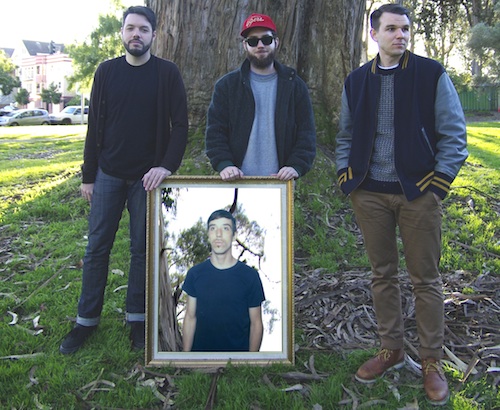
Space Ghost’s textured, sample-based electronic compositions might sound like fat rain drops dribbling over tight beats, as is the case with “SD”, or like the remnants of a soulful club hit stretched over hollow wooden percussion in newly uploaded tracks like one-minute-long “King City.”

He is ambient music-maker/Oakland producer Sudi Wachspress — not the masked Hanna-Barbera character — who pieces together tracks using sounds found on the Internet and arranges them in Ableton. The Ukiah native, born in ’91, says he also has a Zoom H4 audio recorder, which he’s used for field recordings in the past, an Alesis Micron, and a vintage Korg Mono/Poly, which he’s currently learning to incorporate into his music. He also occasionally works with his own recorded voice.

His music is, for the most part, simply created in his bedroom then uploaded to Soundcloud, sometimes unfinished, often with a raw murmur, always intriguing. He’s also put out a few actual records, including 2012’s You’re There, and he’s one of the hosts of Sick Sad World, with fellow DJs Mike Melero and Albert Luera. He described the monthly party — which has seen Le1f, Friendzone, and Main Attrakionz — in another publication as “a grimey warehouse Oakland rap-bass-dance party.”

Description of sound: Ambient/electronic/hip-hop based/instrumental/meditative.

What you like most about the Bay Area music scene: I don’t really think there is a specific electronic music scene in the Bay Area like the way Chicago has house music, Detroit with house and techno, LA with beats. And because of that I think the Bay Area is a really good place to be, for electronic music, because I feel like I stand out more at shows. I can play songs at shows that are completely rinsed in other places, but it could be some people’s first time hearing that song in the crowd. Also, at Sick Sad World, we have been pushing different bass heavy genres of electronic music in our sets, as well as including old and current rap, creating a sort of mixture of sounds at our shows. And because there is a lot of ground to be explored in electronic stuff around here, I think we are in the right place at the right time.

What piece of music means a lot to you: “Left Side Drive” by Boards of Canada. That was the first song I heard by them, second to “Roygbiv,” and it’s kind of unexplainable how it made me feel. I had never really heard much electronic music before then, and that song was just so deep. It just had this slow lagging hip-hop beat but was super grainy and had sounds I had never heard. All the sounds flow around each other so fluently and then at the end it enters 30 seconds of just pure angelic-like chords.

Favorite local eatery and dish: I’m super into nachos. I went to this place in Emeryville the other day called “Los Cantaros Taqueria,” and they have real good nachos and horchata.

Who would you most like to tour with: I think it would be tight to tour with the other guys on Astro Nautico, the label I released my last album on.

soundcloud.com/space-ghost-1

Our Weekly Picks: February 13-19, 2013

0

WEDNESDAY 13

Dirty Looks Road Show

How Do I Look? asks a seminal weighty tome addressing queer film and video theory from 1991. “Dirty!” I always wanted to shout back to my dusty bookshelf when it caught my eye. Well, hey — 22 years later along comes NYC’s Dirty Looks collective, which showcases queer experimental film and video with startling freshness. The edgy gems on offer in its two-night visit to SF may have slipped through your Youtube crack. Thu/14’s “Yesterday Once More” at SFMOMA, www.sfmoma.org, gives you contemporary coolness from Matt Wolf, Zachary Drucker, Mariah Garnett, and Chris E. Vargas. Then check out Fri/15’s “Pickle Surprise! The Eyes of Tom Rubnitz” at Artists Television Access, www.atasite.org, which has me jumping for joy — this ’80s underground clubkid, filmmaker, and musician caught the spirit of one of our civilizations most vividly glorious times before he died of AIDS. Legendary drag queens and trashy foodstuffs galore! (Marke B.)

“Yesterday Once More”: Thu/14, 7-9pm, $10

Phyllis Watts Theater, SF MOMA

151 Third St., SF

“Pickle Surprise”: Fri/15, 8pm, $6

992 Valencia, SF

www.dirtylooksnyc.org


Comedy! Comedy!

As the name subtlety implies, this event will showcase humor. Hosted by the sardonic upstart comic Cameron Vannini, this event, billed as a standup show for comics and by comics, will be the first ever comedic event at the nascent Chapel, signaling more standup shows in its future. Going up to bat tonight will be an all-local slate featuring Kevin O’Shea, Clare O’Kane, Jules Posner, Sean Keane, Brendan Lynch, and Kevin Camia. O’Shea, O’Kane, Posner, Keane, and Vannini will all be coming fresh off recent gigs at Sketchfest. The blunt and jabbing Camia, whose record Kindness was voted among the top 10 best comedy albums on iTunes in 2010, is a stalwart of the local scene and recently has been rumored to be making “the move” down to LA. A night like this should be the perfect respite for those still pining for Sketchfest. (George McIntire)

9pm, $15

Chapel

777 Valencia, SF

(415) 551-5157

www.thechapelsf.com


Stone Foxes

Remember rock’n’roll? You know, that dynamic and gritty music before the age of synthesizers? The Stone Foxes show at the New Parish might jog your memory. Launching into experimentation from strong roots in blues, the band plays a range from the catchy interpretation of Edgar Allen Poe’s gothic, “The Tell-Tale Heart,” (“Everybody Knows”) to the elegy in minor, “Battles, Blades and Bones,” which repeats, “We need someone to sing/’Cause we’ve turned everything/To battles, blades, and bones.” In their third album, Little Fires (which came out Feb. 12), collaboration with Girls’ producer Doug Boehm proves that polish doesn’t mean sterility, that good production doesn’t mean overproduction, and that good old rock’n’roll lives on. (Laura Kerry)

With Mahgeetah, Black Cobra Vipers

9pm, free

New Parish

579 18th St., Oakl.

(510) 444-7474

www.thenewparish.com


THURSDAY 14

“The Algorithm of Love”

Sam Yagan might be as qualified as anyone to decipher the formula for love. Yagan and his three Harvard classmates founded the online dating site OKCupid as a spin off from the Spark Notes study guides they created at the turn of the millennium. Since then, Internet matchmaking has become a booming business, and Yagan and Co. capitalized in 2011 by selling OKCupid to rival Match.com. Yagan, now Match.com’s CEO, uses data from 8 million users to quantify the unquantifiable, to dissect what exactly goes into fuzzy feelings and unexplainable attractions. Bay Area matchmaker Joy Nordenstrom and SFGate blogger Beth Spotswood will be on hand to help translate the love equation. (Kevin Lee)

6:30pm, $7–$20

Commonwealth Club

595 Market, SF

www.commonwealthclub.org


The Wooster Group/New York City Players: Early Plays

However it pans out as a performance, this has to be one of the theatrical events of the year: A rare Bay Area appearance by the famed Wooster Group in collaboration with another NY-based contemporary experimental theater company of renown, Richard Maxwell’s New York City Players. Maxwell directs members of both companies in a trio of “Early Plays” by Eugene O’Neill —three one-acts also known as the Glencairn plays, after the ship on which work the men of Moon of the Caribbees, Bound East for Cardiff, and The Long Voyage Home. Each unfolds in the director’s emblematic affectless style, which seeks out the unfamiliar beneath layers of received theatricality and, in the case of these young yet also experimental plays, lingering melodrama. (Robert Avila)

Through Sat/16, 8pm, $20–$30 ($10 Thu/14)

Yerba Buena Center for the Arts

750 Folsom, SF

(415) 978-2787

www.ybca.org


Feed Me with Teeth

Britain’s Jon Gooch has many alter egos. He’s a producer and a DJ, he’s Spor and he’s Feed Me. No matter what the role or the moniker, however, Gooch remains constant and consistent in his creation of unrelentingly catchy electro and yes, dubstep. Teeth, Gooch’s newest creation, is the element that pushes Feed Me’s act over the line from just another EDM act and into the realm of a truly spectacular performance that’s going to keep you talking about it for quite a while. The Teeth are comprised of 20 jagged LED screens that create a huge, crooked grin that flashes and pulses in sync with Feed Me’s expert mixing. Dancing shoes required, party provided. (Haley Zaremba)

With Mord Fustang

9pm, $38

Regency Ballroom

1300 Van Ness, SF

www.theregencyballroom.com


Body Cartography: Symptom

Last time Olive Bieringa and Otto Ramstad’s Body Cartography Project performed locally downtown, it was difficult to tell the dancers apart from the mingling pedestrians. Shortly after that the company left its home turf of SF for greener pastures, Minneapolis, as it turned out. From there Body Cartography has taken its expanded investigations of physicality — both geographically and the mediums within which it works — around the globe. For its return engagement as part of CounterPULSE’s Queer Series (running through March), Body Cartography is bringing a relatively small group, Ramstad with sibling Emmett. One is a dancer, the other a visual artist. They look very much alike; they are even dressed alike. They have called what they do Symptom, a work they say is “sculpture, drawing, movement and text.” (Rita Felciano)

8pm, $20-30

Also Feb. 15-17

CounterPULSE

1310 Mission, SF

(877) 297-6805

www.counterpulse.org


FRIDAY 15

“Engulfing the Elusory”

Here are some of the themes that the sculptures of Rachel Mica Weiss undertake: human vulnerability, large-scale disasters, self-inflicted limitations. Does an image come to mind? I’m guessing that it does not resemble Weiss’s black net installations. But when you see the twisted rope, the rough stones, and the tarnished wood that comprise Weiss’s previous work, idea and object click. The artist condenses so much conceptual work into physical pieces of inexplicable poignancy. Let’s throw a few more themes in: boundaries, environmental change, cultural constructs. All of it will be on view in the windows of the Arts Commission Gallery. (Kerry)

Through April 27

6pm, free

SF Arts Commission Gallery

401 Van Ness, SF

(415) 554-6080

sfartscommission.org/gallery


Every Time I Die

The metal life isn’t for everyone. Constant touring, an over-crowded industry, and headbang whiplash causes many bands to give up their brutal dream early into their career. Buffalo, NY’s Every Time I Die isn’t one of those bands. ETID has been churning out its distinctive Southern-tinged hardcore since 1998. Six studio albums, a billion bassists, and a tour with Steve-O later, the Buckley brothers are still going strong. Incredibly, their high-energy live show has shown no signs of fatigue in well over a decade, and their reputation for intensity continues to be well-earned. Come for the snarky lyrics and clever songwriting, stay for the circle pit. (Zaremba)

With the Acacia Strain, Vanna, Hundreth, No Bragging Rights

8pm, $17

Oakland Metro Operahouse

630 Third St, Oakl.

(510) 763-1146

www.oaklandmetro.org


“Hip-Hop Beyond Gender”

My first compact disc was Salt ‘N Pepa’s masterful ode to minding one’s business, safe sex, and superlative/godawful male companions, 1993’s Very Necessary. Imagine my confusion, then, upon my discovery that the rest of the hip-hop world was hardly as empowering for females as that power-sass had led me to believe. But hip-hop has always been a site of subversion, where societal rules are flipped, and so it makes perfect since that some day, its lovers would take back the form from the silly misogynists on the Billboard charts. So, yay: tonight, nu-world griots Aya De Leon, Raquel Gutierrez, Chinaka Hodge, Carrie Leilam Love, Dawn Robinson, and Kity Yan examine hip-hop’s queer-feminist revolutionary potential through spoken word. It’s the first of five La Peña events in 2013 focused on breaking down hip-hop’s gender barriers. (Caitlin Donohue)

8pm, $15–$18

La Peña Cultural Center

3105 Shattuck, Berk.

www.lapena.org


Ott and the All-Seeing I

If you’re into dub, electronic, Middle Eastern, and psychedelic sounds, you must meet Ott. Ott — a veteran electronic British musician-producer who has worked with big names like Sinéad O’Connor, Brian Eno, and Simon Posford (Shpongle) — makes rich, ambient, trancey electronic dub jams under the moniker Ott and the All-Seeing I. “Owl Stretching Time,” one of the band’s signature tracks, could just as easily be the anthem to a Jamaican surf trip as the soundtrack to a night out in Berlin. Ott handles electronics alongside Naked Nick (guitars, synths, percussion), bassist Chris Barker, and drummer Matt White. (Mia Sullivan)

With KiloWatts, Desert Dwellers, Outersect

10pm, $15

1015 Folsom, SF

(415) 264-1015

www.1015folsom.com


MONDAY 18

Buke and Gase

Before we begin, let’s establish a few definitions. Buke: an altered six-string baritone banjo. Gase: a blend of a guitar and bass. Surely, a band that carries its own invented glossary approaches music differently. Arone Dyer and Aron Sanchez, the duo that with its homemade instruments manages to sound more like an offbeat orchestra, alters language, genre, and the overall assumptions of the listener. The driving cacophony in the recently released General Dome shouldn’t make sense. Somehow, though, with Dyer’s expressive singing, the building repetition of sounds, and the band’s confidence in its own inventiveness, it all comes together. See Dyer and Sanchez create their own rules at Café Du Nord. (Kerry)

With Aleuchatistas, Yassou Benedict

9pm, $10

Cafe Du Nord

2170 Market, SF

(415) 861-5016 

www.cafedunord.com

The Guardian listings deadline is two weeks prior to our Wednesday publication date. To submit an item for consideration, please include the title of the event, a brief description of the event, date and time, venue name, street address (listing cross streets only isn’t sufficient), city, telephone number readers can call for more information, telephone number for media, and admission costs. Send information to Listings, the Guardian, 225 Bush, 17th Flr., SF, CA 94105; or e-mail (paste press release into e-mail body — no attachments, please) to listings@sfbg.com. Digital photos may be submitted in jpeg format; the image must be at least 240 dpi and four inches by six inches in size. We regret we cannot accept listings over the phone.

Film Listings

0

Film listings are edited by Cheryl Eddy. Reviewers are Kimberly Chun, Dennis Harvey, Lynn Rapoport, and Sara Maria Vizcarrondo. For rep house showtimes, see Rep Clock.

OPENING

Beautiful Creatures In the tiny South Carolina town of Gatlin, a teenage boy named Ethan Wate (Alden Ehrenreich) finds himself dreaming about a girl he’s never met (Alice Englert), until she shows up at school one day with an oddly behaving tattoo on her wrist and the power to disrupt local weather patterns when she loses her temper. Thus begins Richard LaGravenese’s adaptation of the first installment in Kami Garcia and Margaret Stohl’s four-book YA series the Caster Chronicles. The girl of Ethan’s dreams, Lena Duchannes, is the youngest member of a reclusive local family long suspected by the town’s inhabitants of performing witchcraft and otherwise being in league with Satan. They’re at least half right, though Lena and her relatives (among them Jeremy Irons, Emma Thompson, and Emmy Rossum) prefer the term caster to witch, a slur inflicted on them by mortals. As for the diabolical part, casters are, it seems, slaves to essentialism: their coming-of-age rite at age 16 entails learning whether their true nature will turn them toward the forces of darkness or light. Lena’s special birthday, as it happens, is coming up, a circumstance complicating the romance that sparks between her and Ethan. Though the altitude is lower, and the sweeping pans of coniferous forests have been replaced by claustrophobic shots of swampland and live oaks draped with Spanish moss, comparisons to the Twilight franchise are inevitable. But while we’re not unfamiliar with the arc of a human teenage protagonist who is drawn into the orbit of an alluring supernatural and finds life forever changed, Beautiful Creatures‘ young lovers are more relatable, less annoying and creepy, and smaller targets for an SNL spoof. (2:04) Shattuck. (Rapoport)

Escape from Planet Earth Kid-friendly animated tale about adventurous blue aliens, starring the voices of Brendan Fraser, Jessica Alba, and William Shatner. (1:35) Shattuck.

56 Up The world may be going to shit, but some things can be relied upon, like Michael Apted’s beloved series that’s traced the lives of 14 disparate Brits every seven years since original BBC documentary 7 Up in 1964. More happily still, this latest installment finds nearly all the participants shuffling toward the end of middle-age in more settled and contented form than ever before. There are exceptions: Jackie is surrounded by health and financial woes; special-needs librarian Lynn has been hit hard by the economic downturn; everybody’s favorite undiagnosed mental case, the formerly homeless Neil, is never going to fully comfortable in his own skin or in too close proximity to others. But for the most part, life is good. Back after 28 years is Peter, who’d quit being filmed when his anti-Thatcher comments provoked “malicious” responses, even if he’s returned mostly to promote his successful folk trio the Good Intentions. Particularly admirable and evidently fulfilling is the path that’s been taken by Symon, the only person of color here. Raised in government care, he and his wife have by now fostered 65 children — with near-infinite love and generosity, from all appearances. If you’re new to the Up series, you’ll be best off doing a Netflix retrospective as preparation for this chapter, starting with 28 Up. (2:24) California, Embarcadero, Smith Rafael. (Harvey)

A Glimpse Inside the Mind of Charles Swan III Roman Coppola’s comedy stars Charlie Sheen as a 1970s ladies man trying to get his life together. (1:25)

A Good Day to Die Hard Jai Courtney (TV’s Spartacus) joins the long-running action series as the CIA agent son of Jack McClane (Bruce Willis). (1:37) Presidio.

Safe Haven Over a decade and a half, as one Nicholas Sparks novel after another has hit the shelves and inexorably been adapted for the big screen, we’ve come to expect a certain kind of end product: a romantic drama that manages, in its treacly messaging and relentless arc toward emotional resonance, to give us second thoughts about the redemptive power of love. The latest, Safe Haven, directed by Lasse Hallström (2011’s Salmon Fishing in the Yemen, 1993’s What’s Eating Gilbert Grape), follows the formula fairly dutifully. Julianne Hough (2012’s Rock of Ages) plays Katie, a Boston woman on the run from the kind of terrifying event that causes a person to dye their hair platinum blond and board a Greyhound in the middle of the night, a trauma whose details are doled out to us in a series of flashbacks. Winding up in a small coastal town in North Carolina, she meets handsome widower and father of two Alex (Josh Duhamel), who runs the local general store and takes a shine to the unfriendly new girl. Viewers of last year’s Sparks adaptation The Lucky One will find some familiar elements (the healing balm of a good man’s love, cloying usage of the paranormal), as will viewers of 1991’s Sleeping with the Enemy, another film that presents the fantasy of a fresh start in Smalltown, U.S.A. (1:55) Presidio. (Rapoport)

“Silent Winter” The San Francisco Silent Film Festival programs a day of vintage delights, including films starring Mary Pickford and Buster Keaton, with live musical accompaniment. See story at www.sfbg.com. Castro.

Yossi A decade after Yossi (Ohad Knoller) lost his secret lover Jagger in a night raid during their Israeli Army service, the former is no longer a strapping, macho figure but a prematurely middle-aged sad sack. He works to the point of exhaustion as a Tel Aviv cardiologist, and his home life is pathetically lonely — an attempt to step out of the closet with an internet hookup turns out so humiliatingly that it seems he might as well shut the door on love for keeps. But forced to take a vacation, he finds some measure of hope in a chance encounter with four young soldiers who remind him of himself and still-mourned Jagger back when — except times have changed, and the gay identity he still hides even from closest colleagues doesn’t phase them in the least. Eytan Fox’s 2002 breakthrough Yossi & Jagger (originally made for Israeli TV) was sexy, then tragic, then stinging — consistently surprising and nuanced, with a memorably bitter resolution of social injustice. A sequel was theoretically a good idea, but the choices Fox has made for it (and for Yossi) are at once depressing and pat. It’s one thing that our hero has turned into such a piteous loser — these things happen, though the original edition didn’t seem like he’d give up so easily — quite another that his salvation comes in an all-too-convenient, movie wish-fulfillment form. As a stand-alone, melancholic character-study drama, Fox’s latest has its points. As a follow-up to what’s still his best film, however, it’s a bit more deflating and deflated than necessary. (1:24) California, Embarcadero. (Harvey)

ONGOING

Amour Arriving in local theaters atop a tidal wave of critical hosannas, Amour now seeks to tempt popular acclaim — though actually liking this perfectly crafted, intensely depressing film (from Austrian director Michael Haneke) may be nigh impossible for most audience members. Eightysomething former music teachers Georges and Anne (the flawless Jean-Louis Trintignant and Emmanuelle Riva) are living out their days in their spacious Paris apartment, going to classical concerts and enjoying the comfort of their relationship. Early in the film, someone tries to break into their flat — and the rest of Amour unfolds with a series of invasions, with Anne’s declining health the most distressing, though there are also unwanted visits from the couple’s only daughter (an appropriately self-involved Isabelle Huppert), an inept nurse who disrespects Anne and curses out Georges, and even a rogue pigeon that wanders in more than once. As Anne fades into a hollow, twisted, babbling version of her former self, Georges also becomes hollow and twisted, taking care of her while grimly awaiting the inevitable. Of course, the movie’s called Amour, so there’s some tenderness involved. But if you seek heartwarming hope and last-act uplift, look anywhere but here. (2:07) Clay, Smith Rafael. (Eddy)

Argo If you didn’t know the particulars of the 1979 Iranian Revolution, you won’t be an expert after Argo, but the film does a good job of capturing America’s fearful reaction to the events that followed it — particularly the hostage crisis at the US embassy in Tehran. Argo zeroes in on the fate of six embassy staffers who managed to escape the building and flee to the home of the sympathetic Canadian ambassador (Victor Garber). Back in Washington, short-tempered CIA agents (including a top-notch Bryan Cranston) cast about for ways to rescue them. Enter Tony Mendez (Ben Affleck, who also directs), exfil specialist and father to a youngster wrapped up in the era’s sci-fi craze. While watching 1973’s Battle for the Planet of the Apes, Tony comes up with what Cranston’s character calls “the best bad idea we have:” the CIA will fund a phony Canadian movie production (corny, intergalactic, and titled Argo) and pretend the six are part of the crew, visiting Iran for a few days on a location shoot. Tony will sneak in, deliver the necessary fake-ID documents, and escort them out. Neither his superiors, nor the six in hiding, have much faith in the idea. (“Is this the part where we say, ‘It’s so crazy it just might work?'” someone asks, beating the cliché to the punch.) Argo never lets you forget that lives are at stake; every painstakingly forged form, every bluff past a checkpoint official increases the anxiety (to the point of being laid on a bit thick by the end). But though Affleck builds the needed suspense with gusto, Argo comes alive in its Hollywood scenes. As the show-biz veterans who mull over Tony’s plan with a mix of Tinseltown cynicism and patiotic duty, John Goodman and Alan Arkin practically burst with in-joke brio. I could have watched an entire movie just about those two. (2:00) Balboa, Embarcadero, Sundance Kabuki. (Eddy)

Beasts of the Southern Wild A year after winning the Grand Jury Prize at Sundance (and a Cannes Camera d’Or), Beasts of the Southern Wild proves capable of enduring a second or third viewing with its originality and strangeness fully intact. Magical realism is a primarily literary device that isn’t attempted very often in U.S. cinema, and succeeds very rarely. But this intersection between Faulkner and fairy tale, a fable about — improbably — Hurricane Katrina, is mysterious and unruly and enchanting. Benh Zeitlin’s film is wildly cinematic from the outset, as voiceover narration from six-year-old Hushpuppy (Quvenzhané Wallis) offers simple commentary on her rather fantastical life. She abides in the Bathtub, an imaginary chunk of bayou country south of New Orleans whose residents live closer to nature, amid the detritus of civilization. Seemingly everything is some alchemical combination of scrap heap, flesh, and soil. But not all is well: when “the storm” floods the land, the holdouts are forced at federal gunpoint to evacuate. With its elements of magic, mythological exodus, and evolutionary biology, Beasts goes way out on a conceptual limb; you could argue it achieves many (if not more) of the same goals Terrence Malick’s 2011 The Tree of Life did at a fraction of that film’s cost and length. (1:31) Opera Plaza. (Harvey)

Bullet to the Head Not to be mistaken for the John Woo passion play, this head wound of a revenge flick instead pits a hired assassin (Sylvester Stallone) against an outsider cop (Sung Kang), the corroded action star who emerged from the thicket of ’70s Italian American iconic actors against a smooth-faced Asian American indie actor associated with the Fast and Furious franchise. Sly’s James Bonomo and his partner have been set up by a set of tepid bad guys (Oz fave Adewale Akinnuoye-Agbaje, here sleep-raging his way through Bullet; a very unpumped Christian Slater; and Jason Momoa, who glowers like he’s still playing a warlord on Game of Thrones). So Bonomo and Kang’s Taylor Kwon — the former’s got the brawn, the latter’s got the smartphone with access to criminal databases — must reluctantly team up to mete out some kind of justice. Yawn. The uninspired oh-so-gritty camera effects don’t help matters when it comes to staving off the sleepies induced by this tired enterprise — director Walter Hill certainly seems to have succumbed to the big snooze. The only real fun to be gleaned here is in watching your random, uh, ax fight and studying the Stallone’s weirdly crumbling yet inert rubble of face, which almost seems to scream to us about — yo, not Adrian, but the ravages of age, surgery, and excess. (1:32) Metreon, 1000 Van Ness. (Chun)

Django Unchained Quentin Tarantino’s spaghetti western homage features a cameo by the original Django (Franco Nero, star of the 1966 film), and solid performances by a meticulously assembled cast, including Jamie Foxx as the titular former slave who becomes a badass bounty hunter under the tutelage of Dr. Schultz (Christoph Waltz). Waltz, who won an Oscar for playing the evil yet befuddlingly delightful Nazi Hans Landa in Tarantino’s 2009 Inglourious Basterds, is just as memorable (and here, you can feel good about liking him) as a quick-witted, quick-drawing wayward German dentist. There are no Nazis in Django, of course, but Tarantino’s taboo du jour (slavery) more than supplies motivation for the filmmaker’s favorite theme (revenge). Once Django joins forces with Schultz, the natural-born partners hatch a scheme to rescue Django’s still-enslaved wife, Broomhilda (Kerry Washington), whose German-language skills are as unlikely as they are convenient. Along the way (and it’s a long way; the movie runs 165 minutes), they encounter a cruel plantation owner (Leonardo DiCaprio), whose main passion is the offensive, shocking “sport” of “Mandingo fighting,” and his right-hand man, played by Tarantino muse Samuel L. Jackson in a transcendently scandalous performance. And amid all the violence and racist language and Foxx vengeance-making, there are many moments of screaming hilarity, as when a character with the Old South 101 name of Big Daddy (Don Johnson) argues with the posse he’s rounded up over the proper construction of vigilante hoods. It’s a classic Tarantino moment: pausing the action so characters can blather on about something trivial before an epic scene of violence. Mr. Pink would approve. (2:45) Metreon, 1000 Van Ness, Sundance Kabuki. (Eddy)

Gangster Squad It’s 1949, and somewhere in the Hollywood hills, a man has been tied hand and foot to a pair of automobiles with the engines running. Coyotes pace in the background like patrons queuing up for a table at Flour + Water, and when dinner is served, the presentation isn’t very pretty. We’re barely five minutes into Ruben Fleischer’s Gangster Squad, and fair warning has been given of the bloodletting to come. None of it’s quite as visceral as the opening scene, but Fleischer (2009’s Zombieland) packs his tale of urban warfare with plenty of stylized slaughter to go along with the glamour shots of mob-run nightclubs, leggy pin-curled dames, and Ryan Gosling lounging at the bar cracking wise. At the center of all the gunplay and firebombing is what’s framed as a battle for the soul of Los Angeles, waged between transplanted Chicago mobster Mickey Cohen (Sean Penn) — who wields terms like “progress” and “manifest destiny” as a rationale for a continental turf war — and a police sergeant named John O’Mara (Josh Brolin), tasked with bringing down Cohen’s empire. The assignment requires working under cover so deep that only the police chief (Nick Nolte) and the handpicked members of O’Mara’s “gangster squad” — ncluding Gosling, a half-jaded charmer who poaches Cohen’s arm candy (Emma Stone) — know of its existence. This leaves plenty of room for improvisation, and the film pauses now and again to wonder about what happens when you pit brutal amorality against brutal morality, but it’s a rhetorical question, and no one shows much interest in it. Dragged down by talking points that someone clearly wanted wedged in (as well as by O’Mara’s ponderous voice-overs), the film does better when it abandons gravitas and refocuses on spinning its mythic tale of wilder times in the Golden State. (1:53) Metreon, 1000 Van Ness. (Rapoport)

Hansel & Gretel: Witch Hunters So here’s something you may not have been wondering: what exactly happened to Hansel and Gretel after they killed the gingerbread-house witch and made their way to freedom? Did they really live happily ever after? Did they land in the foster care system? Did they enter adulthood bearing the deep psychic wounds a person might well suffer after shoving a living creature into an oven and listening to her agonized howls as she burned alive? Or did they realize they’d discovered their life’s vocation without even having to complete the Myers-Briggs test? Shutting his eyes and pointing at random, director and screenplay cowriter Tommy Wirkola (2009’s Dead Snow) chooses the latter scenario, keeping his eyes closed to stab out some weak dialogue and half a plot for a script that leans heavily on the power of 3D technology to send eviscerated-witch guts and other biological shrapnel flying toward the eyeballs of audience members. Hansel (why, Jeremy Renner?) and Gretel (Gemma Arterton) have grown up to share the intense sibling bond and wandering ways you might expect from a brother and sister abandoned at a tender age to starve and be rent limb from limb by wild animals. They’ve also taken full advantage of a niche witch-slaying market in and around the gloomy forest where they made their first kill. When they’re hired to track down a particularly loathsome practitioner of the dark arts (Famke Janssen) who’s been snatching up local children, multidimensional mayhem ensues. Arterton’s Gretel is pretty much a badass and the brains of the operation, while Renner’s Hansel is more of a strong, silent, and occasionally shit-faced type. Neither makes for a particularly memorable protagonist, but that flat look on their faces could just be disappointment or boredom with the material. (1:41) Metreon, 1000 Van Ness. (Rapoport)

The Hobbit: An Unexpected Journey Make no mistake: the Lord of the Rings trilogy represented an incredible filmmaking achievement, with well-deserved Oscars handed down after the third installment in 2003. If director Peter Jackson wanted to go one more round with J.R.R. Tolkien’s beloved characters for a Hobbit movie, who was gonna stop him? Not so fast. This return to Middle-earth (in 3D this time) represents not one but three films — which would be self-indulgent enough even if part one didn’t unspool at just under three hours, and even if Jackson hadn’t decided to shoot at 48 frames per second. (I can’t even begin to explain what that means from a technical standpoint, but suffice to say there’s a certain amount of cinematic lushness lost when everything is rendered in insanely crystal-clear hi-def.) Journey begins as Bilbo Baggins (a game, funny Martin Freeman) reluctantly joins Gandalf (a weary-seeming Ian McKellan) and a gang of dwarves on their quest to reclaim their stolen homeland and treasure, batting Orcs, goblins, Gollum (Andy Serkis), and other beasties along the way. Fan-pandering happens (with characters like Cate Blanchett’s icy Galadriel popping in to remind you how much you loved LOTR), and the story moves at a brisk enough pace, but Journey never transcends what came before — or in the chronology of the story, what comes after. I’m not quite ready to declare this Jackson’s Phantom Menace (1999), but it’s not an unfair comparison to make, either. (2:50) Metreon. (Eddy)

Identity Thief America is made up of asshole winners and nice guy losers — or at least that’s the thesis of Identity Thief, a comedy about a crying-clown credit card bandit (Melissa McCarthy) and the sweet sucker (Jason Bateman) she lures into her web of chaos. Bateman plays Sandy, a typical middle-class dude with a wife, two kids, and a third on the way. He’s always struggling to break even and just when it seems like his ship’s come in, Diana (McCarthy) jacks his identity — a crime that requires just five minutes in a dark room with Sandy’s social security number. Suddenly, his good name is contaminated with her prior arrests, drug-dealer entanglements, and mounting debt; it’s like the capitalist version of VD. But as the “kind of person who has no friends,” Diana is as tragic as she is comic, providing McCarthy an acting opportunity no one saw coming when she was dispensing romantic advice on The Gilmore Girls. Director Seth Gordon (2011’s Horrible Bosses) treats this comedy like an action movie — as breakneck as slapstick gets — and he relies so heavily on discomfort humor that the film doesn’t just prompt laughs, it pokes you in the ribs until you laugh, man, LAUGH! While Identity Thief has a few complex moments about how defeating “sticking it to the man” can be (mostly because only middle men get hurt), it’s mostly as subtle as a pratfall and just as (un-)rewarding. (1:25) Four Star, Marina, 1000 Van Ness, SF Center, Sundance Kabuki. (Vizcarrondo)

The Impossible Spanish director Juan Antonio Bayona (2007’s The Orphanage) directs The Impossible, a relatively modestly-budgeted take on the 2004 Indian Ocean tsunami, based on the real story of a Spanish family who experienced the disaster. Here, the family (Naomi Watts, Ewan McGregor, three young sons) is British, on a Christmas vacation from dad’s high-stress job in Japan. Beachy bliss is soon ruined by that terrible series of waves; they hit early in the film, and Bayona offers a devastatingly realistic depiction of what being caught in a tsunami must feel like: roaring, debris-filled water threatening death by drowning, impalement, or skull-crushing. And then, the anguish of surfacing, alive but injured, stranded, and miles from the nearest doctor, not knowing if your family members have perished. Without giving anything away (no more than the film’s suggestive title, anyway), once the survivors are established (and the film’s strongest performer, Watts, is relegated to hospital-bed scenes) The Impossible finds its way inevitably to melodrama, and triumph-of-the-human-spirit theatrics. As the family’s oldest son, 16-year-old Tom Holland is effective as a kid who reacts exactly right to crisis, morphing from sulky teen to thoughtful hero — but the film is too narrowly focused on its tourist characters, with native Thais mostly relegated to background action. It’s a disconnect that’s not quite offensive, but is still off-putting. (1:54) Balboa, Metreon. (Eddy)

Jack Reacher (2:10) Metreon.

Life of Pi Several filmmakers including Alfonso Cuarón, Jean-Pierre Jeunet, and M. Night Shyamalan had a crack at Yann Martel’s “unfilmable” novel over the last decade, without success. That turns out to have been a very good thing, since Ang Lee and scenarist David Magee have made probably the best movie possible from the material — arguably even an improvement on it. Framed as the adult protagonist’s (Irrfan Khan) lengthy reminiscence to an interested writer (Rafe Spall) it chronicles his youthful experience accompanying his family and animals from their just shuttered zoo on a cargo ship voyage from India to Canada. But a storm capsizes the vessel, stranding teenaged Pi (Suraj Sharma) on a lifeboat with a mini menagerie — albeit one swiftly reduced by the food chain in action to one Richard Parker, a whimsically named Bengal tiger. This uneasy forced cohabitation between Hindu vegetarian and instinctual carnivore is an object lesson in survival as well as a fable about the existence of God, among other things. Shot in 3D, the movie has plenty of enchanted, original imagery, though its outstanding technical accomplishment may lie more in the application of CGI (rather than stereoscopic photography) to something reasonably intelligent for a change. First-time actor Sharma is a natural, while his costar gives the most remarkable performance by a wild animal this side of Joaquin Phoenix in The Master. It’s not a perfect film, but it’s a charmed, lovely experience. (2:00) 1000 Van Ness, SF Center. (Harvey)

Lincoln Distinguished subject matter and an A+ production team (Steven Spielberg directing, Daniel Day-Lewis starring, Tony Kushner adapting Doris Kearns Goodwin, John Williams scoring every emotion juuust so) mean Lincoln delivers about what you’d expect: a compelling (if verbose), emotionally resonant (and somehow suspenseful) dramatization of President Lincoln’s push to get the 13th amendment passed before the start of his second term. America’s neck-deep in the Civil War, and Congress, though now without Southern representation, is profoundly divided on the issue of abolition. Spielberg recreates 1865 Washington as a vibrant, exciting place, albeit one filled with so many recognizable stars it’s almost distracting wondering who’ll pop up in the next scene: Jared Harris as Ulysses S. Grant! Joseph Gordon-Levitt as Robert Lincoln! Lena Dunham’s shirtless boyfriend on Girls (Adam Driver) as a soldier! Most notable among the huge cast are John Hawkes, Tim Blake Nelson, and a daffy James Spader as a trio of lobbyists; Sally Field as the troubled First Lady; and likely Oscar contenders Tommy Lee Jones (as winningly cranky Rep. Thaddeus Stevens) and Day-Lewis, who does a reliably great job of disappearing into his iconic role. (2:30) Balboa, Metreon, 1000 Van Ness. (Eddy)

Mama From bin Laden to wild babes in woods, Jessica Chastain can’t seem to grab a break. Equipped with just the bare outlines of a character, however, she’s one of the few pleasures in this missed-opportunity of a grim, ghostly fairy tale. Expanding his short of the same name, director Andres Muschietti kicks off his yarn on a sadly familiar note in these days of seemingly escalating gun violence: little sisters Victoria and Lily have disappeared from their home, shortly after their desperate father (Game of Thrones‘ Nikolaj Coster-Waldau) has gone on a shooting spree. They repair to an abandoned cabin scattered with mid-century modern furniture. Five years on, the girls’ scruffy artist uncle Lucas (also Coster-Waldau) is still searching for them, supported by his punk rock girlfriend Annabel (Chastain). The little girls lost are finally found by trackers — and they appear to be hopelessly feral, with the angelic-looking Victoria (Megan Charpentier), acting as the ringleader and the younger, bedraggled Lily (Maya Dawe) given to sleeping under beds and eating on all fours next to the dog bowl. The arty couple take them in and move into a “test house” provided by the sisters’ enthralled therapist (Daniel Kash), obviously psyched to study not one but two Kaspar Hausers. The traumatized kids are clearly haunted by their experience — in more ways than one — as inexplicable bumps go off, night and day, and Misfits t-shirt-clad Annabel discovers the real meaning of goth while getting in touch with her seemingly deeply buried maternal urges. Unfortunately, despite possessing the raw material for a truly scary outing that plunges to the core of our primal instincts (what’s scarier than an unsocialized kid that’s capable of anything?) and showing off Muschietti’s occasional instances of cinematic flair (as when multiple rooms are shown using split-screens), Mama ends up running away from the filmmaker and is finally simply spoiled by its mawkishly sentimental finale. It doesn’t help that the inadequate script sports logic holes that a mama could drive a truck though. (1:40) Metreon. (Chun)

Les Misérables There is a not-insignificant portion of the population who already knows all the words to all the songs of this musical-theater warhorse, around since the 1980s and honored here with a lavish production by Tom Hooper (2010’s The King’s Speech). As other reviews have pointed out, this version only tangentially concerns Victor Hugo’s French Revolution tale; its true raison d’être is swooning over the sight of its big-name cast crooning those famous tunes. Vocals were recorded live on-set, with microphones digitally removed in post-production — but despite this technical achievement, there’s a certain inorganic quality to the proceedings. Like The King’s Speech, the whole affair feels spliced together in the Oscar-creation lab. The hardworking Hugh Jackman deserves the nomination he’ll inevitably get; jury’s still out on Anne Hathaway’s blubbery, “I cut my hair for real, I am so brave!” performance. (2:37) SF Center. (Eddy)

Movie 43 (1:37) Metreon.

“Oscar Nominated Short Films 2013: Animated” If you caught Wreck-It Ralph, nominated in the Best Animated Feature category, you’ve already seen John Kahrs’ Paperman, about a junior Mad Men type who bumbles through his pursuit of a lovely fellow office drone he spots on his commute. Or, if you saw Ice Age: Continental Drift, you’ve seen Maggie Simpson in The Longest Daycare, starring Homer and Marge’s wee one as she grapples with the social order at the Ayn Rand School for Tots. Among the stand-alones, Minkyu Lee’s Adam and Dog features a quick appearance by Eve, too, but the star is really the scrappy canine who gallops through prehistory playing the world’s first game of fetch with his hairy master. Two minutes is all PES (nom de screen of Adam Pesapane) needs to make Fresh Guacamole — which depicts grenades, dice, and other random objects as most unusual ingredients. The only non-US entry, UK director Timothy Reckart’s Head Over Heels, is about an elderly married couple whose relationship has deteriorated to the point where they (literally) no longer see eye to eye on anything. The program is rounded out by three more non-Oscar-nominated animated shorts: Britain’s The Gruffalo’s Child, featuring the voices of Helena Bonham Carter and Robbie Coltrane; French art-thief caper Dripped; and New Zealand’s sci-fi tale Abiogenesis. (1:28) Embarcadero. (Eddy)

“Oscar Nominated Short Films 2013: Documentary” (3:29) Opera Plaza.

“Oscar Nominated Short Films 2013: Live Action” (1:54) Embarcadero.

Parker (1:58) Metreon.

Quartet Every year there’s at least one: the adorable-old-cootfest, usually British, that proves harmless and reassuring and lightly tear/laughter producing enough to convince a certain demographic that it’s safe to go to the movies again. The last months have seen two, both starring Maggie Smith (who’s also queen of that audience’s home viewing via Downton Abbey). Last year’s The Best Exotic Marigold Hotel, in which Smith played a bitchy old spinster appalled to find herself in India, has already filled the slot. It was formulaic, cute, and sentimental, yes, but it also practiced more restraint than one expected. Now here’s Quartet, which is basically the same flower arrangement with quite a bit more dust on it. Smith plays a bitchy old spinster appalled to find herself forced into spending her twilight years at a home for the elderly. It’s not just any such home, however, but Beecham House, whose residents are retired professional musicians. Gingerly peeking out from her room after a few days’ retreat from public gaze, Smith’s Jean Horton — a famed English soprano — spies a roomful of codgers rolling their hips to Afropop in a dance class. “This is not a retirement home — this is a madhouse!” she pronounces. Oh, the shitty lines that lazy writers have long depended on Smith to make sparkle. Quartet is full of such bunk, adapted with loving fidelity, no doubt, from his own 1999 play by Ronald Harwood, who as a scenarist has done some good adaptations of other people’s work (2002’s The Pianist). But as a generator of original material for about a half-century, he’s mostly proven that it is possible to prosper that long while being in entirely the wrong half-century. Making his directorial debut: 75-year-old Dustin Hoffman, which ought to have yielded a more interesting final product. But with its workmanlike gloss and head-on take on the script’s very predictable beats, Quartet could as well have been directed by any BBC veteran of no particular distinction. (1:38) Embarcadero, Smith Rafael. (Harvey)

Rust and Bone Unlike her Dark Knight Rises co-star Anne Hathaway, Rust and Bone star Marion Cotillard never seems like she’s trying too hard to be sexy, or edgy, or whatever (plus, she already has an Oscar, so the pressure’s off). Here, she’s a whale trainer at a SeaWorld-type park who loses her legs in an accident, which complicates (but ultimately strengthens) her relationship with Ali (Belgian actor Matthias Schoenaerts, so tremendous in 2011’s Bullhead), a single dad trying to make a name for himself as a boxer. Jacques Audiard’s follow-up to 2009’s A Prophet gets a bit overwrought by its last act, but there’s an emotional authenticity in the performances that makes even a ridiculous twist (like, the kind that’ll make you exclaim “Are you fucking kidding me?”) feel almost well-earned. (2:00) Opera Plaza. (Eddy)

The Sessions Polio has long since paralyzed the body of Berkeley poet Mark O’Brien (John Hawkes) from the neck down. Of course his mind is free to roam — but it often roams south of the personal equator, where he hasn’t had the same opportunities as able-bodied people. Thus he enlists the services of Cheryl (Helen Hunt), a professional sex surrogate, to lose his virginity at last. Based on the real-life figures’ experiences, this drama by Australian polio survivor Ben Lewin was a big hit at Sundance this year (then titled The Surrogate), and it’s not hard to see why: this is one of those rare inspirational feel-good stories that doesn’t pander and earns its tears with honest emotional toil. Hawkes is always arresting, but Hunt hasn’t been this good in a long time, and William H. Macy is pure pleasure as a sympathetic priest put in numerous awkward positions with the Lord by Mark’s very down-to-earth questions and confessions. (1:35) Opera Plaza. (Harvey)

Side Effects Though on the surface Channing Tatum appears to be his current muse, Steven Soderbergh seems to have gotten his smart, topical groove back, the one that spurred him to kick off his feature filmmaking career with the on-point Sex, Lies, and Videotape (1989) and went missing with the fun, featherweight Ocean’s franchise. (Alas, he’s been making claims that Side Effects will be his last feature film.) Here, trendy designer antidepressants are the draw — mixed with the heady intoxicants of a murder mystery with a nice hard twist that would have intrigued either Hitchcock or Chabrol. As Side Effects opens, the waifish Emily Taylor (Rooney Mara), whose inside-trading hubby (Tatum) has just been released from prison, looks like a big-eyed little basket of nerves ready to combust — internally, it seems, when she drives her car into a wall. Therapist Jonathan Banks (Jude Law), who begins to treat her after her hospital stay, seems to care about her, but nevertheless reflexively prescribes the latest anti-anxiety med of the day, on the advice of her former doctor (Catherine Zeta-Jones). Where does his responsibility for Emily’s subsequent actions begin and end? Soderbergh and his very able cast fill out the issues admirably, with the urgency that was missing from the more clinical Contagion (2011) and the, ahem, meaty intelligence that was lacking in all but the more ingenious strip scenes of last year’s Magic Mike. (1:30) Metreon, 1000 Van Ness, Presidio, Sundance Kabuki. (Chun)

Silver Linings Playbook After guiding two actors to Best Supporting Oscars in 2010’s The Fighter, director David O. Russell returns (adapting his script from Matthew Quick’s novel) with another darkly comedic film about a complicated family that will probably earn some gold of its own. Though he’s obviously not ready to face the outside world, Pat (Bradley Cooper) checks out of the state institution he’s been court-ordered to spend eight months in after displaying some serious anger-management issues. He moves home with his football-obsessed father (Robert De Niro) and worrywart mother (Jacki Weaver of 2010’s Animal Kingdom), where he plunges into a plan to win back his estranged wife. Cooper plays Pat as a man vibrating with troubled energy — always in danger of flying into a rage, even as he pursues his forced-upbeat “silver linings” philosophy. But the movie belongs to Jennifer Lawrence, who proves the chops she showcased (pre-Hunger Games megafame) in 2010’s Winter’s Bone were no fluke. As the damaged-but-determined Tiffany, she’s the left-field element that jolts Pat out of his crazytown funk; she’s also the only reason Playbook‘s dance-competition subplot doesn’t feel eye-rollingly clichéd. The film’s not perfect, but Lawrence’s layered performance — emotional, demanding, bitchy, tough-yet-secretly-tender — damn near is. (2:01) Four Star, 1000 Van Ness, Presidio, SF Center, Sundance Kabuki, Vogue. (Eddy)

Skyfall Top marks to Adele, who delivers a magnificent title song to cap off Skyfall‘s thrilling pre-credits chase scene. Unfortunate, then, that the film that follows squanders its initial promise. After a bomb attack on MI6, the clock is running out for Bond (Daniel Craig) and M (Judi Dench), accused of Cold War irrelevancy in a 21st century full of malevolent, stateless computer hackers. The audience, too, will yearn for a return to simpler times; dialogue about “firewalls” and “obfuscated code” never fails to sound faintly ridiculous, despite the efforts Ben Whishaw as the youthful new head of Q branch. Javier Bardem is creative and creepy as keyboard-tapping villain Raoul Silva, but would have done better with a megalomaniac scheme to take over the world. Instead, a small-potatoes revenge plot limps to a dull conclusion in the middle of nowhere. Skyfall never decides whether it prefers action, bon mots, and in-jokes to ponderous mythologizing and ripped-from-the-headlines speechifying — the result is a unsatisfying, uneven mixture. (2:23) Metreon. (Ben Richardson)

Stand Up Guys Call it oldster pop, call it geriatricore, just don’t call it late for its meds. With the oncoming boomer elder explosion, we can Depends — har-dee-har-har — on the fact that action-crime thrillers-slash-comedies like 2010’s Red, 2012’s Robot and Frank, and now Stand Up Guys are just the vanguard of an imminent barrage of grumpy old pros locking and loading, grousing about their angina, and delivering wisdom with a dose of hard-won levity. As handled by onetime teen-comedy character actor Fisher Stevens, Stand Up Guys is a warm, worthy addition to that soon-to-be-well-populated pantheon. It grows on you as you spend time with it — much like the two aging reprobates at its core, Val (Al Pacino) and Doc (Christopher Walken). Val, the proverbial stand-up guy who took the fall for the rest of his gang, has just completed a 25-year-plus stint in the pen. There to meet him is his only pal, and former partner in crime, Doc, who has been leading a humble life but has one last hit to commit for their old boss Claphands (Mark Margolis), who’s inexplicably named after a Tom Waits song. Sex, drugs, and some Viagra commercial-esque bluesy guitars are in order, but first Val and Doc must find their drive, in the form of their old driver buddy Hirsch (Alan Arkin), who they break out of a rest home, and, perhaps, their moral compass, which arrives with the discovery of a victim (Vanessa Ferlito) of baddies much less couth than themselves. The pleasure comes with following these stand-up guys as they make that leap from craven self-preservation to heroism, which might seem implausible to some. But to the cast’s, and Stevens’s, credit, they make it work — and even give the sentiment-washed finale a swashbuckling buddy-movie romanticism, the kind that a young Tarantino might dislike and an older Tarantino would be loathe to begrudge his lovable louses. (1:34) 1000 Van Ness, SF Center, Sundance Kabuki. (Chun)

Top Gun 3D (1:50) 1000 Van Ness.

Warm Bodies A decade and a half of torrid, tormented vampire-human entanglements has left us accustomed to rooting for romances involving the undead and the still-alive. Some might argue, however, that no amount of pop-cultural prepping could be sufficient to get us behind a human-zombie love story for the ages. Is guzzling human blood really measurably less gross than making a meal of someone’s brains and other body parts? Somehow, yes. Recognizing this perceptual hurdle, writer-director Jonathan Levine (2011’s 50/50, 2008’s The Wackness) secures our sympathies at the outset of Warm Bodies by situating us inside the surprisingly active brain of the film’s zombie protagonist. Zombies, it turns out, have internal monologues. R (Nicholas Hoult) can only remember the first letter of his former name, but as he shambles and shuffles and slumps his way through the terminals of a postapocalyptic airport overrun by his fellow corpses (as they’re called by the film’s human population), he fills us in as best he can on the global catastrophe that’s occurred and his own ensuing existential crisis. By the time he meets not-so-cute with Julie (Teresa Palmer), a young woman whose father (John Malkovich) is commander-in-chief of the human survivors living in a walled-off city center, we’ve learned that he collects vinyl, that he has a zombie best friend, and that he doesn’t want to be like this. We may still be flinching at the thought of his and Julie’s first kiss, but we’re also kind of rooting for him. The plot gapes in places, where a tenuous logic gets trampled and gives way, but Levine’s script, adapted from a novel by Isaac Marion, is full of funny riffs on the zombie condition, which Hoult invests with a comic sweetness as his character staggers toward the land of the living. (1:37) 1000 Van Ness, SF Center, Sundance Kabuki. (Rapoport)

West of Memphis At this point, it’s hard to imagine a present-day murder trial more painstakingly documented than that of the so-called West Memphis Three. West of Memphis can be considered a crash course for those who somehow missed the Bruce Sinofsky and Joe Berlinger-directed Paradise Lost trilogy; it’s an evenly-paced montage of talking heads, archival trial footage, and interviews with investigators and legal experts, with additional focus on the relationship between former death row inmate Damien Echols and his wife Lorri Davis. (The other two accused men do appear in the film, but Echols is the focal point.) The doc traces the entire case, from the initial news reports of the disappearance of eight-year-olds Christopher Byers, Michael Moore, and Steve Branch, to the supporter-funded, post-conviction investigation and appeals process still unfolding today. Over the years, Echols’ defense team had gradually amassed testimony from a slew of high-powered experts, which not only pointed away from the West Memphis Three, but also suggested new suspects. Despite this seemingly compelling material, Echols’ appeal hit a wall in 2008, when then-Circuit Court judge David Burnett, who had presided over the original trials, denied a new hearing, citing “inconclusive” evidence. At that point, Peter Jackson and Fran Walsh, who had privately bankrolled much of the investigation leading to the DNA appeal, decided produce a doc; Amy Berg (2006’s Deliver Us from Evil) was tapped to direct. Whether or not this film advances the legal process any further remains to be seen, but it does offer a telling portrait of a deeply-flawed criminal justice system at work. (2:26) Shattuck. (Nicole Gluckstern)

Zero Dark Thirty The extent to which torture was actually used in the hunt for Osama Bin Ladin may never be known, though popular opinion will surely be shaped by this film, as it’s produced with the same kind of “realness” that made Kathryn Bigelow’s previous film, the Oscar-winning The Hurt Locker (2008), so potent. Zero Dark Thirty incorporates torture early in its chronology — which begins in 2003, after a brief opening that captures the terror of September 11, 2001 using only 911 phone calls — but the practice is discarded after 2008, a sea-change year marked by the sight of Obama on TV insisting that “America does not torture.” (The “any more” goes unspoken.) Most of Zero Dark Thirty is set in Pakistan and/or “CIA black sites” in undisclosed locations; it’s a suspenseful procedural that manages to make well-documented events (the July 2005 London bombings; the September 2008 Islamabad Marriott Hotel bombing) seem shocking and unexpected. Even the raid on Bin Ladin’s HQ is nail-bitingly intense. The film immerses the viewer in the clandestine world, tossing out abbreviations (“KSM” for al-Qaeda bigwig Khalid Sheikh Mohammed) and jargon (“tradecraft”) without pausing for a breath. It is thrilling, emotional, engrossing — the smartest, most tightly-constructed action film of the year. At the center of it all: a character allegedly based on a real person whose actual identity is kept top-secret by necessity. She’s interpreted here in the form of a steely CIA operative named Maya, played to likely Oscar-winning perfection by Jessica Chastain. No matter the film’s divisive subject matter, there’s no denying that this is a powerful performance. “Washington says she’s a killer,” a character remarks after meeting this seemingly delicate creature, and he’s proven right long before Bin Ladin goes down. Some critics have argued that character is underdeveloped, but anyone who says that isn’t watching closely enough. Maya may not be given a traditional backstory, but there’s plenty of interior life there, and it comes through in quick, vulnerable flashes — leading up to the payoff of the film’s devastating final shot. (2:39) Marina, 1000 Van Ness, SF Center, Sundance Kabuki. (Eddy)

Guerrero gallery bites Zero Graffiti convention

2

“The difference between art and vandalism is permission.” So said Dwight Waldo, retired San Bernadino cop, at the Zero Graffiti convention earlier this month in San Francisco. The event drew law enforcement officials from multiple countries, convening them for lectures on graffiti prevention, on street art’s connection to gangs and hate speech, and on ways to apprehend graffiti artists (“the Internet” figured prominently here, judging from the talks I managed to catch during the convention’s public portion.) In his talk, Waldo prided himself on shutting down a graffiti-inspired legal art show because it was being organized by an illegal graffiti artist. 

But it would appear that the art community isn’t satisfied with allowing those that hold the anti-graffiti wipes to be the arbiters of taste. The folks at Guerrero Gallery have branded their show opening Sat/2 with Zero Graffiti’s imagery to put scrutiny on San Francisco and other cities’ efforts to repress graffiti.

As for stopping graffiti… we should nourish it,” wrote gallery owner Andres Guerrero to me in an email. “The city’s effort to rid us of graffiti is a concern but graffiti will always be around. It’s an inspiring form of creativity that all demographics have accepted and have supported. It’s a growing culture that should be embraced and developed with the help of local communities. It’s a leading contemporary movement.”

The convention’s program, including ad for “spraycan sensor” that SF DPW officials confirmed have been purchased by the city. It’s been announced that next year’s conference will take place in Phoenix

The exhibit’s artists, Tim Diet and Remio, are both established gallery artists who got their start doing illegal graffiti. “It’s an exciting show for all of us at the gallery and they also represent a progressive intelligent community,” wrote Guerrero.

Given the dire state of arts education in the San Francisco Unified School District, perhaps city officials should start looking at graffiti artists in a different light. After all, if young people can’t find canvases elsewhere, why shouldn’t they make their mark on their neighborhood?

Project One opens “Project One Walls,” an indoor mural show, on Feb. 7. It’ll feature the work of current and former street artists and looks real cool. 

Here’s the Guerrero Sat/2 opening’s featured artists, both of whom started developing their art on the street: 

Norweigan-born artist Remio’s cluster faces still drip — but they’re emblematic of his transition from street work to showing in galleries

Bay Area artist Tim Diet’s “Sorry I Party” still embodies the chaos of work born in public space

“Man In Transition” and “This is Me”: Remio and Tim Diet

Through Feb. 23

Opening reception: Sat/2, 7-11pm, free

Guerrero Gallery

(415) 400-5168

www.guerrerogallery.com

Hello goodbye

0

emilysavage@sfbg.com

TOFU AND WHISKEY While it’ll be hard to say goodbye, Brass Menažeri’s founder Peter Jaques might have the best possible reason for dissolving his decade-old, San Francisco band. He got a Fulbright grant to study traditional Greek music — in Greece.

He’ll be traversing the Grecian island of Crete, coastal Epiros, mountainous Florina, and capitol city Athens, studying with Greek master musicians. So yeah, don’t cry for Jaques. It’ll more be the Bay Area Balkan scene’s loss than his, given the group’s influence on the local set, lo these past 12 years. (Remember that Tofu and Whiskey column on the bumping Bay Balkan scene a few weeks back? That wouldn’t have happened without it.)

With two full sets of Balkan dance music, the band will bid adieu at a final show this Fri/1 (New Parish, 579 18th St., Oakl. www.thenewparish.com. 9pm, $15). That night will include four-part horn melodies, special guest dancer Zoe Jakes of Beats Antiques, and the debut of trumpeter eO’s new DJ set of “glitch-seasoned, heavy Balko-electronic compositions and remixes.”

With that in mind, I asked Jaques to give me the rundown on the highlights — and low points — in the life of Brass Menažeri.

There are those less-than-ideal band situations: “the sound guy who insists he needs to boost the ‘kick drum’ (we don’t have one) in a room with overwhelming bass resonance. We could hear nothing at all aside from the drum; playing an outdoor festival at Civic Center 100 feet from a techno stage; getting stiffed for a measly $200 when a venue said they’d paid our money to the other band (why?) and the other band denied it.”

And then there are the inspiring moments that kept the band humming: “collaborating with Boston MC Mr. Lif at the Seattle Folk Fest in 2010; playing for Ruth Hunter’s 50th birthday party while the sun was setting on a beachfront in Seattle; crowd surfers at Amnesia; the 2008 CD release at Great American Music Hall with Aphrodesia, and returning there for Kafana Balkan last year with Fishtank Ensemble; crowd reactions at the Sebastopol Apple Blossom Festival; chasing Rupa around the Mission during her birthday procession a few years ago; double bill Balkan brass afterparty for the Goran Bregovic show, with Inspector Gadje last year; the first Kafana Balkan at ArtSF in the Mission, with people hanging from the rafters”

Wouldn’t you know it, there’s a Kafana Balkan night this weekend as well. As Jaques mentioned, Brass Menažeri played the first of these raucous Balkan dance parties. This Sat/2 is the club night’s sixth anniversary show, with Inspector Gadje, Jill Parker and Foxglove Sweethearts, and DJ Zeliko (Rickshaw Stop, 155 Fell, SF. www.rickshawstop.com. 9pm, $15).

So yes, you can pretty much spend your whole weekend reveling in the Balkans.


PETRA HADEN

For those more interested in the scores than the moving pictures on the screen, indie rock icon — and master jazz spawn — Petra Haden has done something quite unique with her newest album, Petra Goes to the Movies, released last week on Anti-. She’s rearranged classic film scores — think Psycho, A Fistful of Dollars, Superman, and 8 1/2 — mainly using her extraordinary voice to flesh out the formerly instrumental sections. For “Psycho,” that means high, layered a capella vocals creating that haunting paranoia so associated with the film’s theme. “Goldfinger” is a fun one as it also features Haden’s sultry lyric singing, and bum-da-bum “Hand Covers Bruise” from The Social Network stands out as an unexpected new gem. “When I saw the film Social Network, I thought it was a great movie but it was the music that really drew me in,” Haden said in a statement to her record label. The former That Dog vocalist’s interpretations on this album have minimal instrumental contributions courtesy of her famous father, jazz bassist Charlie Haden, pianist Brad Mehldau, and guitarist Bill Frisell.


PUSSY RIOT LIBERATION NIGHT

To celebrate the release of new book, Pussy Riot! A Punk Prayer for Freedom (Feminist Press), City Lights is hosting an evening of reading, declarations, and manifestos, with Frightwig (Deanna Mitchell, Mia Simmans, Cecelia Kuhn, Eric Drew Feldman), Daphne Gottlieb, Penelope Houston (of the Avengers), Deborah Iyall (of Romeo Void),Sophia Kumin, and Michelle Tea. Pull up some neon tights, tug a hot pink ski mask over your head, and join the movement.

Wed/30, 7pm, free. City Lights, 261 Columbus, SF. www.citylights.com.


JACKIE-O MOTHERFUCKER

Experimental, ’90s-born Portland act Jackie-O Motherfucker live at Mexican restaurant Casa Sanchez, where I can also eat chips and salsa during the set? That’ll do just fine, thank you. With You Nori, Cuttle Buttle, Baus.

Thu/31, 7:30pm, free. Casa Sanchez, 2778 24 St, SF. www.casasanchezfood.com.


BAGEL RADIO ANNIVERSARY SHOW

Ted Leibowitz has been doing Internet radio far longer than the majority of your favorite podcast hosts. His indie rock-oriented Internet radio station, BAGel Radio, is turning 10 this year. So the station founder-music director is throwing this show with local rock bands including Pixies-honoring Mister Loveless, angsty Churches, and tender Birdmonster. A lineup worth showing up early for.

Fri/1, 9:30pm, $12. Bottom of the Hill, 1233 17th St., SF. www.bottomofthehill.com.

It’s the end of Brass Menažeri, the 10th anniversary of BAGel Radio, and the start of Petra Haden’s foray into a capella film scores. Plus: Pussy Riot Night at City Lights!

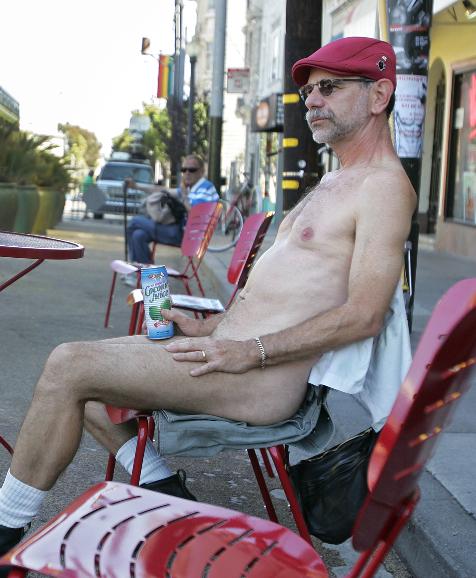
Nudity ban upheld, found to be stupid

27

The City Attorney’s Office just announced that a federal court has upheld San Francisco’s ban on public nudity. From the press release:

The court found that the nudism advocates’ challenge to the ordinance based on the First Amendment lacked merit because “public nudity alone is not expression protected by the First Amendment,” and because the ordinance was “not substantially overbroad.”  Judge [Edward] Chen additionally rejected plaintiffs’ arguments that exemptions for such permitted events such as Bay to Breakers and the Folsom Street Fair violated constitutional Equal Protection guarantees, holding that plaintiffs failed to demonstrate that the exceptions lacked a rational basis.  Though the nudism advocates’ facial challenge to the ordinance was dismissed without leave to amend, the court left the door open for nudism advocates to amend their pleading with subsequent “as-applied” claims, provided they were able to do so.

So maybe this isn’t over yet.

The news comes just as the Atlantic chimed in on the city’s nudity ban, calling it pretty dumb:

In San Francisco next week, it will remain perfectly legal for a 50-year-old man to seduce an 18-year-old, impregnate her, ridicule her physical appearance until she is brought to tears, walk out on her, seek out her mother, seduce that mother for no other reason than to further hurt the jilted daughter, draw a graphic novel of the whole sordid chain of events, and publish in on the Internet. But it’ll be illegal for him to be naked outside. Does anyone think the resulting moral signal is desirable?

There’s a long discussion of Judeo-Christian values, the Bible, Adam and Eve, etc. But the conclusion really makes the point:

Americans are bombarded with images of semi-clothed people all the time. It just happens that they’re all beautiful actors and actresses, magazine cover girls, television underwear models, and porn stars. The average person sees lots of naked bodies, but very little real variety. While that may be more aesthetically pleasant, it skewers our notion of what a normal human body looks like. In an age of Victoria’s Secret in the mall, substantial nudity on primetime television, and ubiquitous YouPorn, a ban on nonsexual street nudity begins to seem absurd. Society needs some relatively unattractive people to be naked in public now more than ever before.

So there you have it. Legal, stupid.


Heads Up: 7 must-see concerts this week

2

This week holds big, anticipated-return shows like Local Natives at the Fox and Cody ChesnuTT at the Independent, new pairings like Adam Green and Binki Shapiro at the Chapel, an anniversary celebration at BAGel Radio’s locally curated Bottom of the Hill night with Mister Loveless and CHURCHES, legendary Malian offspring Vieux Farka Touré at Yoshi’s, and a possible faux listing (Jackie-O Motherfucker is supposedly playing Casa Sanchez).

Only time will tell. Go out, Bay Area music lovers, into the chilly night, and report back to us.

Here are your must-see Bay Area concerts this week/end:

Cody ChesnuTT
The soul troubadour returns. Aside from his debut double-album, The Headphone Masterpiece (Ready Set Go), Roots collaboration, and brief 2010 EP Black Skin No Value (Vibration Vineyard), singer-songwriter Cody ChesnuTT just hasn’t been on the radar enough, given his powerful pipes. He brought it all back in late 2012, releasing socially-conscious soul gem, Landing on a Hundred (Redeye Label), which he’s touring on now.
Tue/29, 8pm, $15
Independent, 628 Divisadero, SF
www.theindependentsf.com
https://www.youtube.com/watch?v=CAlAmbewaZo

Local Natives
“Local Natives stole our collective hearts in 2009 with their self-funded debut Gorilla Manor, an irresistible slice of unearthly folk rock, before cruelly fading into the background. Finally, four years later, they’ve resurfaced with a sophomore effort, Hummingbird. Though the Orange Country-bred group recorded the album in Brooklyn, the California sunshine still shines through its meandering, ethereal soundscapes. The band’s songs draw heavily from indie peers Grizzly Bear and Fleet Foxes, but manage to add a refreshing, summery glow to the reverb-heavy pop murk. The album, which was produced by Aaron Dessner of the National, promises to translate well to a live format, keeping the band’s trademarked harmonies in place while also allowing vocalist Kelcey Ayer’s dreamy falsetto to soar.” — Haley Zaremba
With Superhumanoids
Wed/30, 8pm, $25
Fox Theater
1807 Telegraph, Oakland
(510) 302-2250
www.thefoxoakland.com
https://www.youtube.com/watch?v=L1dFjloBZYo

Jackie-O Motherfucker
[Disclaimer: I’ve found this show on two different punk listservs, yet nowhere else thus far. Got a call in to the shop.] Experimental, ’90s-born Portland act Jackie-O Motherfucker live at Mexican restaurant, Casa Sanchez, where I can also eat chips and salsa during the set? That’ll do just fine, thank you.
With You Nori, Cuttle Buttle, Baus.
Thu/31, 7:30pm, free
Casa Sanchez
2778 24 St, SF.
www.casasanchezfood.com

Brass Menažeri
The 12-year-old Balkan dance party band bids farewell at this final concert, with two live sets. Check this week’s issue (Wed/30) for more on the group’s demise.
Fri/1, 9pm, $15
New Parish
579 18th St., Oakl.
www.thenewparish.com
https://www.youtube.com/watch?v=twGgff89eno

BAGel Radio Anniversary Show

Ted Leibowitz has been doing Internet radio far longer than the majority of your favorite podcast hosts. His indie rock-oriented Internet radio station, BAGel Radio, is turning 10 this year. So the station founder-music director is throwing this show with local rock bands including Pixies-honoring Mister Loveless, angsty Churches, tender Birdmonster. A lineup worth showing up early for.
Fri/1, 9:30pm, $12
Bottom of the Hill,
1233 17th St., SF
www.bottomofthehill.com.
https://www.youtube.com/watch?v=n990CcF_uuA

Adam Green and Binki Shapiro
“Opposites do attract. Adam Green is a so-called “anti-folk” Manhattanite with an extensive catalog of foul-mouthed, tongue-in-cheek ballads and admirably humble beginnings as Kimya Dawson’s counterpart in the Moldy Peaches. Binki Shapiro hails from LA, is a retro fashion icon and former member of Brazilian-American supergroup Little Joy, along with her ex-boyfriend and Strokes drummer Fabrizio Moretti. The duo’s vastly different backgrounds and musical leanings don’t seem compatible at first glance, but in practice they blend beautifully. During the writing of the record, both Green and Shapiro were going through romantic rough patches, which ultimately pushed the musicians to help write each other’s breakup albums, creating a finished product rife with earnestness and vulnerability.” — Haley Zaremba
With the Range of Light Wilderness
Sat/2, 9pm, $18
The Chapel
777 Valencia, SF
(415) 551-5157
www.thechapelsf.com
https://www.youtube.com/watch?v=WrbeDDiU92g

Vieux Farka Touré
“It should be enough to say that Vieux Farka Touré follows the footsteps of his father, the late, Grammy-winning Ali, or that he’s known as “the Hendrix of the Sahara.” But not quite. In “Gido (featuring John Scofield)” — yes, of jazz-rock fame — an acoustic guitar expertly noodles in a Malian scale, a bend on an electric cues bass and drums, then the two guitars continue to converse. It’s tempting to fashion this into some metaphor about the melding of African music and Western rock, and though this wouldn’t be misplaced, the main takeaway from “Gido” and the whole album, The Secret (2011), is that it sounds great. As Yoshi’s will prove, Touré creates his own breed of music, and he does it well.” — Laura Kerry
With Markus James
Sun/3, 7pm, $25
Yoshi’s
1330 Fillmore, SF
(415) 655-5600
www.yoshis.com
https://www.youtube.com/watch?v=YMI46WhdjRE

Film Listings

0

Film listings are edited by Cheryl Eddy. Reviewers are Kimberly Chun, Dennis Harvey, Lynn Rapoport, and Sara Maria Vizcarrondo. For rep house showtimes, see Rep Clock.

OPENING

Beware of Mr. Baker This mesmerizing bio-doc about volatile, wildly talented drummer Ginger Baker (Cream, Blind Faith) begins with the 70-something musician clocking director Jay Bulger in the face. After this opening, Bulger — who also wrote a deeply compelling article about Baker for Rolling Stone last year — wisely pulls himself out of the narrative, instead turning to a wealth of new interviews (with Baker, his trademark red locks faded to gray, and many of his musical and personal partners, including Eric Clapton and multiple ex-Mrs. Bakers), vintage performance footage, and artful animation to weave his tale. Baker’s colorfully-lived, improbably long life has been literally all over the map; he overcame a hardscrabble British childhood to find jazz and rock stardom, and along the way jammed with Fela Kuti in Nigeria (where he picked up his fierce love of polo), broke many hearts (his own kids’ among them) and lost multiple fortunes, spent a stint in the US, and eventually landed at his current farm in South Africa. Two constants: his musical genius, and his frustratingly jerky behavior — the consequence of a naturally prickly personality exacerbated by copious drug use and bitterness. A must-see for musicians and those who love them. (1:30) Roxie. (Eddy)

Hansel & Gretel: Witch Hunters Jeremy Renner and Gemma Arterton star in this fairy-tale action film directed by Tommy Wirkola (2009’s Dead Snow). (1:41) California.

In Another Country This latest bit of gamesmanship from South Korea’s Hong Sang-soo (2000’s Virgin Stripped Bare by Her Bachelors) has Isabelle Huppert playing three Frenchwomen named Anne visiting the same Korean beachside community under different circumstances in three separate but wryly overlapping stories. In the first, she’s a film director whose presence induces inapt overtures from both her married colleague-host and a strapping young lifeguard. In the more farcical second, she’s a horny spouse herself, married to an absent Korean man; in the third, a woman whose husband has run away with a Korean woman. The same actors as well as variations on the same characters and situations appear in each section, their rejiggered intersections poking fun at Koreans’ attitudes toward foreigners, among other topics. Airy and amusing, In Another Country is a playful divertissement that’s shiny as a bubble, and leaves about as much of a permanent impression. (1:39) (Harvey)

Movie 43 An A-list ensemble cast (Hugh Jackman, Halle Berry, Kate Winslet) and multiple directors (Peter Farrelly, James Gunn, Bob Odenkirk) combine their star power for this 12-chapter comedy film. (1:37)

Parker "Jason Statham" is pretty much a distinct genre at this point, yeah? (1:58) Shattuck.

Quartet See "Smith Happens." (1:38) Embarcadero.

ONGOING

Amour Arriving in local theaters atop a tidal wave of critical hosannas, Amour now seeks to tempt popular acclaim — though actually liking this perfectly crafted, intensely depressing film (from Austrian director Michael Haneke) may be nigh impossible for most audience members. Eightysomething former music teachers Georges and Anne (the flawless Jean-Louis Trintignant and Emmanuelle Riva) are living out their days in their spacious Paris apartment, going to classical concerts and enjoying the comfort of their relationship. Early in the film, someone tries to break into their flat — and the rest of Amour unfolds with a series of invasions, with Anne’s declining health the most distressing, though there are also unwanted visits from the couple’s only daughter (an appropriately self-involved Isabelle Huppert), an inept nurse who disrespects Anne and curses out Georges, and even a rogue pigeon that wanders in more than once. As Anne fades into a hollow, twisted, babbling version of her former self, Georges also becomes hollow and twisted, taking care of her while grimly awaiting the inevitable. Of course, the movie’s called Amour, so there’s some tenderness involved. But if you seek heartwarming hope and last-act uplift, look anywhere but here. (2:07) Smith Rafael. (Eddy)

Argo If you didn’t know the particulars of the 1979 Iranian Revolution, you won’t be an expert after Argo, but the film does a good job of capturing America’s fearful reaction to the events that followed it — particularly the hostage crisis at the US embassy in Tehran. Argo zeroes in on the fate of six embassy staffers who managed to escape the building and flee to the home of the sympathetic Canadian ambassador (Victor Garber). Back in Washington, short-tempered CIA agents (including a top-notch Bryan Cranston) cast about for ways to rescue them. Enter Tony Mendez (Ben Affleck, who also directs), exfil specialist and father to a youngster wrapped up in the era’s sci-fi craze. While watching 1973’s Battle for the Planet of the Apes, Tony comes up with what Cranston’s character calls "the best bad idea we have:" the CIA will fund a phony Canadian movie production (corny, intergalactic, and titled Argo) and pretend the six are part of the crew, visiting Iran for a few days on a location shoot. Tony will sneak in, deliver the necessary fake-ID documents, and escort them out. Neither his superiors, nor the six in hiding, have much faith in the idea. ("Is this the part where we say, ‘It’s so crazy it just might work?’" someone asks, beating the cliché to the punch.) Argo never lets you forget that lives are at stake; every painstakingly forged form, every bluff past a checkpoint official increases the anxiety (to the point of being laid on a bit thick by the end). But though Affleck builds the needed suspense with gusto, Argo comes alive in its Hollywood scenes. As the show-biz veterans who mull over Tony’s plan with a mix of Tinseltown cynicism and patiotic duty, John Goodman and Alan Arkin practically burst with in-joke brio. I could have watched an entire movie just about those two. (2:00) 1000 Van Ness, Sundance Kabuki. (Eddy)

Broken City Catherine Zeta-Jones’ measured performance and killer wardrobe run away with this uneven political thriller about a made-up Manhattan with real(-ish) problems. Russell Crowe is only slightly improving his record post-Les Mis, as he plays another harried and morally confused agent "for the people." Here, he’s Mayor Hostetler, a swaggering politico with fingers in New York’s real estate cookie jar and the sort of "get shit done" directive that results in bodies lying in NYC’s overfilled gutters. Good thing he has Mark Wahlberg in his back pocket, a cop who slipped a murder wrap and now scrapes the bottom for gigs as a private detective. Seven years ago Billy Taggart (Wahlberg) was seeking vigilante justice for the victim of a rape-murder in the city’s biggest ghetto. The victim became a household name but the killer was let off, leading to cries about the validity of NY’s justice system and to allusions to the Central Park Five. Broken City is less about a broken City and more about broken Men, and there are certain elements that seem too subtle for a story built on such bald-faced and predictable strategy. Between a script that’s struggling to demonstrate moral compromise and integrity, and direction (by Allen Hughes) that’s as sensitive to nuance as a border collie, it’s hard to find much beyond Zeta-Jones’ shoe stylings to admire. (1:49) 1000 Van Ness, SF Center. (Vizcarrondo)

Cirque du Soleil: Worlds Away (1:31) Metreon.

Django Unchained Quentin Tarantino’s spaghetti western homage features a cameo by the original Django (Franco Nero, star of the 1966 film), and solid performances by a meticulously assembled cast, including Jamie Foxx as the titular former slave who becomes a badass bounty hunter under the tutelage of Dr. Schultz (Christoph Waltz). Waltz, who won an Oscar for playing the evil yet befuddlingly delightful Nazi Hans Landa in Tarantino’s 2009 Inglourious Basterds, is just as memorable (and here, you can feel good about liking him) as a quick-witted, quick-drawing wayward German dentist. There are no Nazis in Django, of course, but Tarantino’s taboo du jour (slavery) more than supplies motivation for the filmmaker’s favorite theme (revenge). Once Django joins forces with Schultz, the natural-born partners hatch a scheme to rescue Django’s still-enslaved wife, Broomhilda (Kerry Washington), whose German-language skills are as unlikely as they are convenient. Along the way (and it’s a long way; the movie runs 165 minutes), they encounter a cruel plantation owner (Leonardo DiCaprio), whose main passion is the offensive, shocking "sport" of "Mandingo fighting," and his right-hand man, played by Tarantino muse Samuel L. Jackson in a transcendently scandalous performance. And amid all the violence and racist language and Foxx vengeance-making, there are many moments of screaming hilarity, as when a character with the Old South 101 name of Big Daddy (Don Johnson) argues with the posse he’s rounded up over the proper construction of vigilante hoods. It’s a classic Tarantino moment: pausing the action so characters can blather on about something trivial before an epic scene of violence. Mr. Pink would approve. (2:45) Metreon, 1000 Van Ness, Sundance Kabuki. (Eddy)

Gangster Squad It’s 1949, and somewhere in the Hollywood hills, a man has been tied hand and foot to a pair of automobiles with the engines running. Coyotes pace in the background like patrons queuing up for a table at Flour + Water, and when dinner is served, the presentation isn’t very pretty. We’re barely five minutes into Ruben Fleischer’s Gangster Squad, and fair warning has been given of the bloodletting to come. None of it’s quite as visceral as the opening scene, but Fleischer (2009’s Zombieland) packs his tale of urban warfare with plenty of stylized slaughter to go along with the glamour shots of mob-run nightclubs, leggy pin-curled dames, and Ryan Gosling lounging at the bar cracking wise. At the center of all the gunplay and firebombing is what’s framed as a battle for the soul of Los Angeles, waged between transplanted Chicago mobster Mickey Cohen (Sean Penn) — who wields terms like "progress" and "manifest destiny" as a rationale for a continental turf war — and a police sergeant named John O’Mara (Josh Brolin), tasked with bringing down Cohen’s empire. The assignment requires working under cover so deep that only the police chief (Nick Nolte) and the handpicked members of O’Mara’s "gangster squad" — ncluding Gosling, a half-jaded charmer who poaches Cohen’s arm candy (Emma Stone) — know of its existence. This leaves plenty of room for improvisation, and the film pauses now and again to wonder about what happens when you pit brutal amorality against brutal morality, but it’s a rhetorical question, and no one shows much interest in it. Dragged down by talking points that someone clearly wanted wedged in (as well as by O’Mara’s ponderous voice-overs), the film does better when it abandons gravitas and refocuses on spinning its mythic tale of wilder times in the Golden State. (1:53) Metreon, 1000 Van Ness. (Rapoport)

A Haunted House (1:25) Metreon, 1000 Van Ness.

The Hobbit: An Unexpected Journey Make no mistake: the Lord of the Rings trilogy represented an incredible filmmaking achievement, with well-deserved Oscars handed down after the third installment in 2003. If director Peter Jackson wanted to go one more round with J.R.R. Tolkien’s beloved characters for a Hobbit movie, who was gonna stop him? Not so fast. This return to Middle-earth (in 3D this time) represents not one but three films — which would be self-indulgent enough even if part one didn’t unspool at just under three hours, and even if Jackson hadn’t decided to shoot at 48 frames per second. (I can’t even begin to explain what that means from a technical standpoint, but suffice to say there’s a certain amount of cinematic lushness lost when everything is rendered in insanely crystal-clear hi-def.) Journey begins as Bilbo Baggins (a game, funny Martin Freeman) reluctantly joins Gandalf (a weary-seeming Ian McKellan) and a gang of dwarves on their quest to reclaim their stolen homeland and treasure, batting Orcs, goblins, Gollum (Andy Serkis), and other beasties along the way. Fan-pandering happens (with characters like Cate Blanchett’s icy Galadriel popping in to remind you how much you loved LOTR), and the story moves at a brisk enough pace, but Journey never transcends what came before — or in the chronology of the story, what comes after. I’m not quite ready to declare this Jackson’s Phantom Menace (1999), but it’s not an unfair comparison to make, either. (2:50) Metreon, 1000 Van Ness, Sundance Kabuki. (Eddy)

How to Survive a Plague David France’s documentary chronicles the unprecedented impact political activism had on the course of AIDS in the U.S. — drastically curtailing its death toll within a few years despite considerable institutional indifference and downright hostility. As the epidemic here first surfaced in, and decimated, the gay male community, much of Reagan America (particularly in religious quarters) figured the death sentence was deserved. The President himself infamously refrained from even saying the word "AIDS" publicly until his final year of office, after thousands had died. Both terrified and outraged, the gay community took it upon themselves to demand treatment, education, and research. Most of this urgent 1980s overview is concerned with the rise of ACT-UP, whose angry young men successfully lobbied and shamed corporate, academic, medical, and pharmaceutical bodies into action, with the result that by the mid-90s new drugs existed that made this dreaded diagnosis no longer a necessarily terminal one. France is a journalist who’s been covering AIDS practically since day one, and his first feature (made with the help of numerous first-rate collaborators) is authoritative and engrossing. Just don’t expect much (or really any) attention paid to the contributions made by S.F. or other activist hotspots — like many a gay documentary, this one hardly notices there’s a world (or gay community) outside Manhattan. (1:49) Roxie. (Harvey)

The Impossible Spanish director Juan Antonio Bayona (2007’s The Orphanage) directs The Impossible, a relatively modestly-budgeted take on the 2004 Indian Ocean tsunami, based on the real story of a Spanish family who experienced the disaster. Here, the family (Naomi Watts, Ewan McGregor, three young sons) is British, on a Christmas vacation from dad’s high-stress job in Japan. Beachy bliss is soon ruined by that terrible series of waves; they hit early in the film, and Bayona offers a devastatingly realistic depiction of what being caught in a tsunami must feel like: roaring, debris-filled water threatening death by drowning, impalement, or skull-crushing. And then, the anguish of surfacing, alive but injured, stranded, and miles from the nearest doctor, not knowing if your family members have perished. Without giving anything away (no more than the film’s suggestive title, anyway), once the survivors are established (and the film’s strongest performer, Watts, is relegated to hospital-bed scenes) The Impossible finds its way inevitably to melodrama, and triumph-of-the-human-spirit theatrics. As the family’s oldest son, 16-year-old Tom Holland is effective as a kid who reacts exactly right to crisis, morphing from sulky teen to thoughtful hero — but the film is too narrowly focused on its tourist characters, with native Thais mostly relegated to background action. It’s a disconnect that’s not quite offensive, but is still off-putting. (1:54) SF Center, Sundance Kabuki. (Eddy)

Jack Reacher (2:10) Metreon.

The Last Stand With gun control issues dominating the news, what better time to release a movie that lovingly glorifies the wonders of excessive firepower? Fortunately for star Arnold Schwarzenegger, making his return to leading-man status after that little fling with politics, The Last Stand is stupidly enjoyable enough to make any such PC-minded realizations relatively fleeing ones. When a Mexican drug lord (who also happens to be an expert race-car driver) escapes from federal custody and begins speeding home in a super-Corvette, the lead FBI agent (Forest Whitaker, slumming big-time) realizes his only hope is a teeny Arizona border town that happens to be overseen by Sheriff Schwarzenegger. (Other residents include a couple of hapless deputies; an Iraq war vet; and a gun nut played by a cartoonishly obnoxious Johnny Knoxville.) Can this ragtag crew hold off first the drug lord’s advance team (led by a swaggering Peter Stormare), and then the head baddie himself? Duh. The biggest surprise The Last Stand offers is that it’s actually pretty fun — no doubt thanks to the combo of Korean director Kim Jee-woon (2008’s eccentric The Good, The Bad, and the Weird; 2003’s spooky A Tale of Two Sisters) and the heft of Schwarzenegger’s still-potent charisma. (1:47) Metreon, 1000 Van Ness. (Eddy)

The Law in These Parts Ra’anan Alexandrowicz’s documentary is a rather extraordinary historical record: he interviews numerous retired Israeli judges and lawyers who shaped and enforced the country’s legal positions as occupiers of Palestinian land and "temporary guardians" of a Palestinian populace living under foreign occupation. The key word there is "temporary" — in using here a different (military rather than civil) justice from the one Israeli citizens experience, Israel has been able to exert the extraordinary powers of an invading force in wartime. But what is "temporary" about an occupation that’s now lasted nearly 45 years? How can the state justify (under Geneva Convention rules, for one thing) building permanent Jewish settlements that now house about half a million Israelis on land that is as yet not legally Israel’s? By constantly changing the terms and laws of occupation, they do just that. If many policies have been perhaps necessary to control terrorist attacks, one can argue that they and other policies have created the climate in which oppositional fervor and terroristic acts were bound to flourish. That, of course, is a political-ethical judgement far beyond the public purview of the judges and others here, whose dry legalese admits no personal culpability — and indeed sometimes seems almost absurdly divorced from real-world ethics and consequence, which of course serves an increasingly rigid governmental stance just fine. Without preaching, The Law in These Parts raises a number of discomfiting questions about bending law to suit an agenda that in any other context would seem frankly unlawful. (1:40) Roxie. (Harvey)

Let Fury Have the Hour Though its message — that creative expression is a powerful, meaningful way to fight oppression — is a valuable one, Antonino D’Ambrosio’s Let Fury Have the Hour covers turf well-trod for anyone who has ever seen a documentary about punk rock and social justice. (Especially when it contains usual suspects like Ian MacKaye, Shepard Fairey, and Billy Bragg waxing nostalgic about how nonconformist they were in the 1980s.) In truth, Fury is more collage than doc, pasting together talking-head interviews (also here: Chuck D, John Sayles, Van Jones, Tom Morello, Boots Riley, and Wayne Kramer, plus a few token women, chiefly Eve Ensler) with a mish-mash of sepia-toned stock footage that more or less thematically compliments what’s being discussed at the time. A more focused examination of D’Ambrosio’s thesis might have resulted in a more effective film — like, say, an in-depth look at how Sayles’ politically-themed films (here, he reads from the script for 1987’s Matewan in a frustratingly brief segment) are echoed in works by contemporary artists and citizen journalists, particularly now that the internet has opened up a global platform for protest films. Listen: I admire what the film is trying to do. I am OK with watching yet another doc that contains the phrase "Punk rock politicized me." But with too much lip service and precious little depth, Fury‘s fury ends up feeling a bit diluted. (1:40) Balboa. (Eddy)

Life of Pi Several filmmakers including Alfonso Cuarón, Jean-Pierre Jeunet, and M. Night Shyamalan had a crack at Yann Martel’s "unfilmable" novel over the last decade, without success. That turns out to have been a very good thing, since Ang Lee and scenarist David Magee have made probably the best movie possible from the material — arguably even an improvement on it. Framed as the adult protagonist’s (Irrfan Khan) lengthy reminiscence to an interested writer (Rafe Spall) it chronicles his youthful experience accompanying his family and animals from their just shuttered zoo on a cargo ship voyage from India to Canada. But a storm capsizes the vessel, stranding teenaged Pi (Suraj Sharma) on a lifeboat with a mini menagerie — albeit one swiftly reduced by the food chain in action to one Richard Parker, a whimsically named Bengal tiger. This uneasy forced cohabitation between Hindu vegetarian and instinctual carnivore is an object lesson in survival as well as a fable about the existence of God, among other things. Shot in 3D, the movie has plenty of enchanted, original imagery, though its outstanding technical accomplishment may lie more in the application of CGI (rather than stereoscopic photography) to something reasonably intelligent for a change. First-time actor Sharma is a natural, while his costar gives the most remarkable performance by a wild animal this side of Joaquin Phoenix in The Master. It’s not a perfect film, but it’s a charmed, lovely experience. (2:00) 1000 Van Ness, SF Center. (Harvey)

Lincoln Distinguished subject matter and an A+ production team (Steven Spielberg directing, Daniel Day-Lewis starring, Tony Kushner adapting Doris Kearns Goodwin, John Williams scoring every emotion juuust so) mean Lincoln delivers about what you’d expect: a compelling (if verbose), emotionally resonant (and somehow suspenseful) dramatization of President Lincoln’s push to get the 13th amendment passed before the start of his second term. America’s neck-deep in the Civil War, and Congress, though now without Southern representation, is profoundly divided on the issue of abolition. Spielberg recreates 1865 Washington as a vibrant, exciting place, albeit one filled with so many recognizable stars it’s almost distracting wondering who’ll pop up in the next scene: Jared Harris as Ulysses S. Grant! Joseph Gordon-Levitt as Robert Lincoln! Lena Dunham’s shirtless boyfriend on Girls (Adam Driver) as a soldier! Most notable among the huge cast are John Hawkes, Tim Blake Nelson, and a daffy James Spader as a trio of lobbyists; Sally Field as the troubled First Lady; and likely Oscar contenders Tommy Lee Jones (as winningly cranky Rep. Thaddeus Stevens) and Day-Lewis, who does a reliably great job of disappearing into his iconic role. (2:30) 1000 Van Ness, SF Center, Sundance Kabuki. (Eddy)

LUV Baltimore native Sheldon Candis drew from his own childhood for this coming-of-age tale, which takes place in a single day as 11-year-old "little man" Woody (Michael Rainey Jr.) tags along with his uncle, Vincent (Common), recently out of jail and rapidly heading back down the criminal path. With both parents out of the picture, Woody’s been raised by his grandmother (Lonette McKee), so he idolizes Vincent even though it’s soon clear the short-tempered man is no hero. Of course, things go horribly awry, bloody lessons are learned, tears are shed, etc. Despite the story’s autobiographical origins, the passable LUV suffers greatly by inviting comparisons to The Wire — the definitive docudrama examining drug crime in Baltimore. Most blatantly, sprinkled into an all-star cast (Dennis Haysbert, Danny Glover, Charles S. Dutton) are supporting characters played by Wire icons Michael K. "Omar" Williams (as a cop) and Anwan "Slim Charles" Glover (as a meaner Slim Charles, basically). Perhaps if you’ve never seen the show this wouldn’t be distracting — but if that’s the case, you should really be watching The Wire instead of LUV anyway. (1:34) Metreon. (Eddy)

Mama From bin Laden to wild babes in woods, Jessica Chastain can’t seem to grab a break. Equipped with just the bare outlines of a character, however, she’s one of the few pleasures in this missed-opportunity of a grim, ghostly fairy tale. Expanding his short of the same name, director Andres Muschietti kicks off his yarn on a sadly familiar note in these days of seemingly escalating gun violence: little sisters Victoria and Lily have disappeared from their home, shortly after their desperate father (Game of Thrones‘ Nikolaj Coster-Waldau) has gone on a shooting spree. They repair to an abandoned cabin scattered with mid-century modern furniture. Five years on, the girls’ scruffy artist uncle Lucas (also Coster-Waldau) is still searching for them, supported by his punk rock girlfriend Annabel (Chastain). The little girls lost are finally found by trackers — and they appear to be hopelessly feral, with the angelic-looking Victoria (Megan Charpentier), acting as the ringleader and the younger, bedraggled Lily (Maya Dawe) given to sleeping under beds and eating on all fours next to the dog bowl. The arty couple take them in and move into a "test house" provided by the sisters’ enthralled therapist (Daniel Kash), obviously psyched to study not one but two Kaspar Hausers. The traumatized kids are clearly haunted by their experience — in more ways than one — as inexplicable bumps go off, night and day, and Misfits t-shirt-clad Annabel discovers the real meaning of goth while getting in touch with her seemingly deeply buried maternal urges. Unfortunately, despite possessing the raw material for a truly scary outing that plunges to the core of our primal instincts (what’s scarier than an unsocialized kid that’s capable of anything?) and showing off Muschietti’s occasional instances of cinematic flair (as when multiple rooms are shown using split-screens), Mama ends up running away from the filmmaker and is finally simply spoiled by its mawkishly sentimental finale. It doesn’t help that the inadequate script sports logic holes that a mama could drive a truck though. (1:40) Metreon, 1000 Van Ness. (Chun)

Les Misérables There is a not-insignificant portion of the population who already knows all the words to all the songs of this musical-theater warhorse, around since the 1980s and honored here with a lavish production by Tom Hooper (2010’s The King’s Speech). As other reviews have pointed out, this version only tangentially concerns Victor Hugo’s French Revolution tale; its true raison d’être is swooning over the sight of its big-name cast crooning those famous tunes. Vocals were recorded live on-set, with microphones digitally removed in post-production — but despite this technical achievement, there’s a certain inorganic quality to the proceedings. Like The King’s Speech, the whole affair feels spliced together in the Oscar-creation lab. The hardworking Hugh Jackman deserves the nomination he’ll inevitably get; jury’s still out on Anne Hathaway’s blubbery, "I cut my hair for real, I am so brave!" performance. (2:37) 1000 Van Ness, SF Center, Sundance Kabuki. (Eddy)

My Worst Nightmare First seen locally in the San Francisco Film Society’s 2012 "French Cinema Now" series, My Worst Nightmare follows icy art curator Agathe (Isabelle Huppert) as her airless, tightly-controlled world begins to crumble — thanks in no small part to an exuberantly uncouth, down-on-his-luck Belgian contractor named Patrick (Benoît Poelvoorde). (His obnoxious, freewheeling presence in Agathe’s precision-mapped orbit gives rise to the film’s title.) Director and co-writer Anne Fontaine (2009’s Coco Before Chanel) injects plenty of offbeat, occasionally raunchy humor into what could’ve been a predictable personal-liberation tale — the sight of classy dame Huppert driving through a bikini car wash, for instance. (1:43) Smith Rafael. (Eddy)

Parental Guidance (1:36) Metreon.

Promised Land Gus Van Sant’s fracking fable — co-written by stars Matt Damon and John Krasinski, from a story by Dave Eggers — offers a didactic lesson in environmental politics, capped off by the earth-shattering revelation that billion-dollar corporations are sleazy and evil. You don’t say! Formulated like a Capra movie, Promised Land follows company man Steve Butler (Matt Damon) as he and sales partner Sue (Frances McDormand) travel to a small Pennsylvania town to convince its (they hope) gullible residents to allow drilling on their land. But things don’t go as smoothly as hoped, when the pair faces opposition from a science teacher with a brainiac past (Hal Holbrook), and an irritatingly upbeat green activist (Krasinski) breezes into town to further monkey-wrench their scheme. That Damon is such a likeable actor actually works against him here; his character arc from soulless salesman to emotional-creature-with-a-conscience couldn’t be more predictable or obvious. McDormand’s wonderfully biting supporting performance is the best (and only) reason to see this ponderous, faux-folksy tale, which targets an audience that likely already shares its point of view. (1:46) SF Center. (Eddy)

The Rabbi’s Cat A rabbi, a Muslim musician, two Russians (a Jew and a boozy Christian), and two talking animals hop into an antique Citroën for a road trip across Africa. No, it’s not the set-up for a joke; it’s the premise for this charming animated film, adapted from Joann Sfar’s graphic novel (the author co-directs with Antoine Delesvaux). In 1930s Algiers, a rabbi’s pet cat suddenly develops the ability to talk — and read and write, by the way — and wastes no time in sharing opinions, particularly when it comes to religion ("God is just a comforting invention!") When a crate full of Russian prayer books — and one handsome artist — arrives at the rabbi’s house, man and cat are drawn into the refugee’s search for an Ethiopian city populated by African Jews. Though it’s not suitable for younger kids (there’s kitty mating, and a few bursts of surprising violence) or diehard Tintin fans (thanks to a randomly cranky spoof of the character), The Rabbi’s Cat is a lushly illustrated, witty tale of cross-cultural clashes and connections. Rockin’ soundtrack, too. (1:29) Smith Rafael. (Eddy)

Silver Linings Playbook After guiding two actors to Best Supporting Oscars in 2010’s The Fighter, director David O. Russell returns (adapting his script from Matthew Quick’s novel) with another darkly comedic film about a complicated family that will probably earn some gold of its own. Though he’s obviously not ready to face the outside world, Pat (Bradley Cooper) checks out of the state institution he’s been court-ordered to spend eight months in after displaying some serious anger-management issues. He moves home with his football-obsessed father (Robert De Niro) and worrywart mother (Jacki Weaver of 2010’s Animal Kingdom), where he plunges into a plan to win back his estranged wife. Cooper plays Pat as a man vibrating with troubled energy — always in danger of flying into a rage, even as he pursues his forced-upbeat "silver linings" philosophy. But the movie belongs to Jennifer Lawrence, who proves the chops she showcased (pre-Hunger Games megafame) in 2010’s Winter’s Bone were no fluke. As the damaged-but-determined Tiffany, she’s the left-field element that jolts Pat out of his crazytown funk; she’s also the only reason Playbook‘s dance-competition subplot doesn’t feel eye-rollingly clichéd. The film’s not perfect, but Lawrence’s layered performance — emotional, demanding, bitchy, tough-yet-secretly-tender — damn near is. (2:01) 1000 Van Ness, SF Center, Sundance Kabuki, Vogue. (Eddy)

Skyfall Top marks to Adele, who delivers a magnificent title song to cap off Skyfall‘s thrilling pre-credits chase scene. Unfortunate, then, that the film that follows squanders its initial promise. After a bomb attack on MI6, the clock is running out for Bond (Daniel Craig) and M (Judi Dench), accused of Cold War irrelevancy in a 21st century full of malevolent, stateless computer hackers. The audience, too, will yearn for a return to simpler times; dialogue about "firewalls" and "obfuscated code" never fails to sound faintly ridiculous, despite the efforts Ben Whishaw as the youthful new head of Q branch. Javier Bardem is creative and creepy as keyboard-tapping villain Raoul Silva, but would have done better with a megalomaniac scheme to take over the world. Instead, a small-potatoes revenge plot limps to a dull conclusion in the middle of nowhere. Skyfall never decides whether it prefers action, bon mots, and in-jokes to ponderous mythologizing and ripped-from-the-headlines speechifying — the result is a unsatisfying, uneven mixture. (2:23) Metreon, Sundance Kabuki. (Ben Richardson)

Texas Chainsaw 3D (1:32) Metreon.

This is 40 A spin-off of sorts from 2007’s Knocked Up, Judd Apatow’s This is 40 continues the story of two characters nobody cared about from that earlier film: Debbie (Leslie Mann, Apatow’s wife) and Pete (Paul Rudd), plus their two kids (played by Mann and Apatow’s kids). Pete and Debbie have accumulated all the trappings of comfortable Los Angeles livin’: luxury cars, a huge house, a private personal trainer, the means to throw catered parties and take weekend trips to fancy hotels (and to whimsically decide to go gluten-free), and more Apple products than have ever before been shoehorned into a single film. But! This was crap they got used to having before Pete’s record label went into the shitter, and Debbie’s dress-shop employee (Charlene Yi, another Knocked Up returnee who is one of two people of color in the film; the other is an Indian doctor who exists so Pete can mock his accent) started stealing thousands from the register. How will this couple and their whiny offspring deal with their financial reality? By arguing! About bullshit! In every scene! For nearly two and a half hours! By the time Melissa McCarthy, as a fellow parent, shows up to command the film’s only satisfying scene — ripping Pete and Debbie a new one, which they sorely deserve — you’re torn between cheering for her and wishing she’d never appeared. Seeing McCarthy go at it is a reminder that most comedies don’t make you feel like stabbing yourself in the face. I’m honestly perplexed as to who this movie’s audience is supposed to be. Self-loathing yuppies? Masochists? Apatow’s immediate family, most of whom are already in the film? (2:14) Metreon, 1000 Van Ness. (Eddy)

Wreck-It Ralph Wreck-It Ralph cribs directly from the Toy Story series: when the lights go off in the arcade, video game characters gather to eat, drink, and endure existential crises. John C. Reilly is likable and idiosyncratic as Ralph, the hulking, ham-fisted villain of a game called Fix-It-Felix. Fed up with being the bad guy, Ralph sneaks into gritty combat sim Hero’s Duty under the nose of Sergeant Calhoun (Jane Lynch), a blond space marine who mixes Mass Effect‘s Commander Shepard with a PG-rated R. Lee Ermey. Things go quickly awry, and soon Ralph is marooned in cart-racing candyland Sugar Rush, helping Vanellope Von Schweetz (a manic Sarah Silverman), with Calhoun and opposite number Felix (Jack McBrayer) hot on his heels. Though often aggressively childish, the humor will amuse kids, parents, and occasionally gamers, and the Disney-approved message about acceptance is moving without being maudlin. The animation, limber enough to portray 30 years of changing video game graphics, deserves special praise. (1:34) Metreon. (Ben Richardson)

Zero Dark Thirty The extent to which torture was actually used in the hunt for Osama Bin Ladin may never be known, though popular opinion will surely be shaped by this film, as it’s produced with the same kind of "realness" that made Kathryn Bigelow’s previous film, the Oscar-winning The Hurt Locker (2008), so potent. Zero Dark Thirty incorporates torture early in its chronology — which begins in 2003, after a brief opening that captures the terror of September 11, 2001 using only 911 phone calls — but the practice is discarded after 2008, a sea-change year marked by the sight of Obama on TV insisting that "America does not torture." (The "any more" goes unspoken.) Most of Zero Dark Thirty is set in Pakistan and/or "CIA black sites" in undisclosed locations; it’s a suspenseful procedural that manages to make well-documented events (the July 2005 London bombings; the September 2008 Islamabad Marriott Hotel bombing) seem shocking and unexpected. Even the raid on Bin Ladin’s HQ is nail-bitingly intense. The film immerses the viewer in the clandestine world, tossing out abbreviations ("KSM" for al-Qaeda bigwig Khalid Sheikh Mohammed) and jargon ("tradecraft") without pausing for a breath. It is thrilling, emotional, engrossing — the smartest, most tightly-constructed action film of the year. At the center of it all: a character allegedly based on a real person whose actual identity is kept top-secret by necessity. She’s interpreted here in the form of a steely CIA operative named Maya, played to likely Oscar-winning perfection by Jessica Chastain. No matter the film’s divisive subject matter, there’s no denying that this is a powerful performance. "Washington says she’s a killer," a character remarks after meeting this seemingly delicate creature, and he’s proven right long before Bin Ladin goes down. Some critics have argued that character is underdeveloped, but anyone who says that isn’t watching closely enough. Maya may not be given a traditional backstory, but there’s plenty of interior life there, and it comes through in quick, vulnerable flashes — leading up to the payoff of the film’s devastating final shot. (2:39) 1000 Van Ness, SF Center, Sundance Kabuki. (Eddy)

Are your friends criminals?

4

STREET SEEN Nearing the climax of her presentation at last week’s Zero Graffiti International Conference, Vancouver PD’s graffiti-fighting specialist Valerie Spicer despaired over graffiti’s affects on its perpetrators.

“He didn’t die because of graffiti,” she said sadly, a deceased Canadian graffiti artist’s childhood photo on the PowerPoint screen behind her. “But I’m quite sure that the behaviors he learned in the subculture didn’t help him confront the man who stabbed and killed him.”

It wasn’t the only conflation between societal decay and graffiti made at the conference (www.zerograffiti.org), held Jan. 16-18 in the soaring white St. Mary’s Cathedral on Geary and Gough — the one designed so that God sees a cross when he looks down at it.

Organized by the SF Graffiti Advisory Board, anti-graffiti nonprofit Stop Urban Blight, and citizen’s group SF Beautiful, the conference gave law enforcement and city officials the chance to attend lectures on prevention and investigation of graffiti, tours of Mission and Tenderloin murals on Academy of Art buses — the school was one of the event’s sponsors, in addition to the SF Arts Commission — and a play put on by a Sacramento anti-gang and graffiti group. This last, “performed in the colloquial dialect of youth and street culture,” as the program delicately put it.

As Spicer wrapped up her tragic tale, the lights came back on in the St. Mary’s basement. I fumbled with my things I was targeted by one of the graffiti fighters present.

“Are your friends into crime?” said Monty Perrera, professional buffer for the City of Oakland. “I assume you’re probably in the subculture,” he continued (my pink-and-purple hair made for poor camouflage, I guessed.) He was wearing a T-shirt screen printed with one of Oakland street artist Gats’ enigmatic visages.

“I’ve met many of the main [graffiti artists] in Oakland,” Perrera continued, after apologizing for “promoting graffiti” with the shirt. “They don’t really trust me or like me, but…” The admission hung between us in the air.

Perrera has a healthy interest in street art — so much so, he told me, that he buffs selectively, paying special attention to “bubble taggers” (“we call them the ego artists”) and new artists (“if someone’s new I get you because you’re new. Maybe you’ll go away.”) Despite having attended East Bay street art blog Endless Canvas’ “Special Delivery” mural exhibit in an empty Berkeley warehouse twice, Perrera was adamant that the work he does removing graffiti is vital to his community. “The ego taggers just have no mercy,” he told me.

Between public and private enterprise, as the police chief asserted from the Zero Graffiti podium, San Francisco spends $20 to $30 million dollars a year combating graffiti. The Department of Public Works, which takes responsibility for quickly removing graffiti deemed motivated by gang activity, drops a cool $3.6 million alone.

But to be fair, no one has ever asked me for cash to buy a spray can. That dollar figure is what graffiti removal costs us. And behind the rows of folding chairs at the conference, the rows of sponsoring vendor booths gave hints as to what that money could go towards. Graffiti Safe Wipes, suitable for removing paint from stone walls with a swipe. This Stuff Works! brand anti-graffiti wall coating.

Perhaps the most ominous is one of the tools our own city uses, according to SF’s DPW director of public affairs Rachel Gordon. Meet the GraffitiTech graffiti detection system, a 10″ x 3.8″ box that mysteriously detects tagging as it happens by means of “advanced heuristics and algorithms,” according to its company’s website. The sensor’s inner workings are left unexplained for fear of vandalism attempts but I’ve taken the liberty tracking down GraffitiTech’s US Patent Office full text description for those interested.

The second and final lecture open to the public that day was that of Dwight Waldo, a retired San Bernadino cop who proudly recounted tales of shutting down legal street art shows and murals by proving associated artists had drug convictions. He described the “five types” of graffiti to the crowd, and lauded the use of the Internet for its utility in researching crime (you can start by searching “tag crews fighting” on YouTube, he advised.)

“You’re going to hear things in trainings where you’ll go ‘oh I can’t do that’ because your political climate doesn’t allow it,” Waldo told Zero Graffiti attendees.

An hour later Mohammed Nuru, director of the DPW, used the podium to announce plans to fight for higher mandatory fines for convicted taggers, and to require commercial truck owners to rid their vehicles of graffiti before their registration could be renewed. Perhaps the political climate in the Bay Area is changing when it comes to the war on graffiti.


Find your happy place

2

culture@sfbg.com

HEALTH AND WELLNESS January may be cold, but it’s not particularly chill. The temps are low and it’s still dark out, which makes it a natural time for hibernation. Problem is, no one’s hibernating.

People, in fact, are exceptionally busy. We are trying to make up for time we lost during our temporary retirements in December. We are also frantically trying to realize our resolutions (before we forget them) and get back into shape after eating pie twice a day last month.

By the third week of the year, our holiday vacations are nothing but distant dreams, and we’ve all but tossed away any intention to be more present and calm in our lives in favor of strong partnerships with our coffee makers and datebooks to keep us afloat through the madness. Though Elton John once sang that “January is the month that cares”, it’s hard to believe it’s true. If January really does care, it certainly has a funny way of showing it.

>>Read Karen’s biweekly yoga and spirituality column, On the Om Front, here.

But I care. So here’s my advice: Unplug. Check out. Hop in or on your vehicle of choice, and get thee to a refuge. Go someplace where you can reconnect with your breath and your body. And stay for an hour—or at least until you remember that there is more to life than organizing your inbox. Here are some of my favorite winter spots for dialing down the noise and reconnecting with oneself.

SAMOVAR TEA LOUNGE

The Buddhist ambiance at these colorful lounges makes you feel like you’re actually in a temple. The tea — which ranges from earthy, caffeinated varieties like the Blood Orange Puerh to delectable herbal teas like Moorish Mint — isn’t cheap, but its surrounds really make it a spiritual experience. Two more bonuses for the midwinter urban escape artist: There is no Internet access and it’s always toasty inside.

Various SF locations. www.samovarlife.com

GRACE CATHEDRAL

This beautiful Episcopal cathedral is home to awe-inspiring architecture, stained glass windows of Biblical scenes, and the famous indoor Grace Cathedral labyrinth, the walking of which evokes sweet, honey-glazed mind states. You can cruise the labyrinth any time during regular church hours, take a candlelit labyrinth walk on the second Friday evening of each month, or do yoga in the labyrinth each Tuesday at 6:15 p.m. with Darren Main.

1100 California, SF. www.gracecathedral.org

FIRE CEREMONY AT THE YOGA SOCIETY

Fire was a fantastic discovery — and not only because marshmallows are better toasted. Watching a fire burn is mesmerizing, and can take you to a different plane of consciousness in seconds. There’s nothing quite like meditating on the power of heat and transformation. During select hours each week, the Yoga Society holds free fire ceremonies led by yoga teachers and other spiritual leaders who chant Sanskrit mantras as the flames dance around the indoor fire pit.

2872 Folsom, SF. yssfyoga.blogspot.com

ATHLETIC PLAYGROUND

Sometimes you just need to play! Jump, spin, do cartwheels and handstands, fall down. Children know this intuitively, but adults tend to forget. If you want to honor your inner child, the Athletic Playground is the place to do it. Every day there is a full schedule of classes, including acro-yoga, “monkey conditioning”, and aerial conditioning. It’s a perfect treat on a chilly day, and you don’t need to bring a companion — everyone plays very nicely at this playground.

4770 San Pablo Ave, Emeryville. www.athleticplayground.com

IMPERIAL DAY SPA RED CLAY ROOM

This small, cozy day spa is on the edge of Western Addition, and is a nice, lower-profile alternative to some of the more popular spots in town. It’s got a hot tub, a cold pool, and the requisite dry and wet saunas, but the real gem here is the red clay room. According to the spa, red clay removes toxins, boosts your metabolism, and gives you more energy. Lying naked in the hot (but not too hot) room on straw mats with your head on a beaded pillow also just feels really good.

1875 Geary, SF. www.imperialdayspa.com

URBAN FLOW YOGA

Any yoga class taught by a respectable teacher will take you on a journey of the spirit. But Rusty Wells’ two-hour weekend morning classes here are one of the best antidotes for the winter doldrums. They are hot and sweaty (you’ll need to be fairly fit to fit in), and have often been called “yoga church”. Rusty sings, dances, beats a drum (or just the floor), and preaches the best of things: love, courage, and connection with your juicy self.

1543 Mission, SF. www.urbanflowsf.com

SPIRIT ROCK MEDITATION CENTER

Zip it. No, really, that’s what you do at Spirit Rock. You stop talking. Sometimes for an afternoon, sometimes for a day, sometimes for 10 days. This beautiful, hilly retreat center in Woodacre is a great place to do a silent meditation retreat, one of the best ways to reconnect with yourself. We spend so much time thinking about what someone is saying, what to say next, and what we should say, shouldn’t say, or shouldn’t have said. Take all of that socializing off your plate for a few hours or days, and you’re left with a contemplation of some serious depth. I couldn’t recommend it more.

5000 Sir Francis Drake Boulevard, Marin. www.spiritrock.org

Check out Karen Macklin’s yoga column On the Om Front on the Guardian’s Pixel Vision blog


The end of landlines?

11

news@sfbg.com

The market for smart phones has reached the saturation point in the United States; it’s hard to find anyone who doesn’t have a mobile device. Hard, maybe — but not impossible. There are still thousands of people, many of them seniors, who rely on that old-fashioned, low-tech landline for their inexpensive connection to the world — and they’re about to lose out.

The deregulation of the telecommunications industry has reached the point where phone companies in California and elsewhere are getting ready to pull out and disconnect the copper wires that support traditional landlines — which, by law, have to be made available at dirt-cheap rates to low-income people.

And while so-called Lifeline rates for cell phones are coming, they aren’t available yet.

“It’s extremely important,” Nick Pasquariello, a senior and low-income resident of San Francisco who uses a landline with a Lifeline rate, told us. Like many seniors, Pasquariello says his old phone is cheaper, more reliable and simpler than a wireless plan.

“The technology and rates are changing all the time. It’s confusing,” he says, adding that the end of landlines would be detrimental to many people. “I haven’t heard of Lifeline for cell phones.”

So over the next year or two, seniors could find themselves disconnected. “It’s clear to us that companies like AT&T and Verizon are planning to get rid of their copper networks,” said Paul Goodman of the Greenlining Institute in Berkeley, which conducts public policy research and advocacy. Telecom companies have spent years lobbying to retire those lines, arguing that they’re expensive to maintain, which explains why they’ve been remiss when it comes to their upkeep.

“The phone companies are not repairing or maintaining old copper networks. They don’t want the responsibility,” Goodman explained.

Basic utilities like phone service have long been considered necessities and legislators have ensured that every household has access to them.

But replacing copper with newer technology makes better business sense. “It’s more lucrative to operate the VoIP and wireless networks,” Mark Toney, Executive Director of The Utility Reform Network, or TURN, told us. “They’re able to charge more per month and the profits are greater.”

The deregulation of phone service is nothing new; it started back in 1984 with the break up of AT&T. But it’s reaching the point where there’s little oversight at all.

In 2011, lawmakers in Wisconsin passed the Telecommunications Modernization Act and last year, virtually eliminating state regulation of phone companies. In New Hampshire, Governor John Lynch signed a similar bill into law. In California, SB 1161 went into effect a few months ago, lifting the California Public Utilities Commission’s regulatory power over internet-based phone services like VoIP and IP, among other things.

The bill’s passage caused consumer advocates to argue that deregulation would lead to price gouging and unfair business practices like cramming (or unauthorized third party charges found on a customer’s bill).

“We’re concerned with making sure consumers and seniors still have their protections which we think should apply regardless of the technology,” said Michael Richard, associate state director of advocacy for AARP.

Right now, Lifeline service is only offered through landlines. Retiring copper wire networks, and thus traditional landline service, could eliminate Lifeline altogether.

As the telecommunications industry has upgraded its products and services to accommodate newer technology, the CPUC has been forced to rethink its idea of what basic service looks like. Bill Johnston, Telecommunications Advisor to CPUC Commissioner Catherine Sandoval, told us the commission is working to make improvements.

“The earlier definition of basic service was from 1996 so there was a need to update that definition to include wireless service,” said Johnston, adding that the commission approved redefinition of “basic service” in December. That redefinition included offering Lifeline to “wireless and non traditional providers.” The definition reads: “Any basic service provider offering basic service must offer Lifeline rates on a non-discriminatory basis to eligible customers within the region where the provider offers basic service.”

But the service isn’t yet available for wireless or VoIP — and some fear that the current program will eclipse before a new one is in place. Johnston said a meeting is set for January 29 to discuss the scope of rules for Lifeline, and public hearings will be held around the state later this year to address this and other issues related to telecom deregulation.

The argument that landline phones are dying out may have some validity, but their benefits and practicality are evident — take for instance weather emergencies. After Hurricane Sandy struck the Northeast a few months ago, many towers providing service to cell phones went down. Landline users, however, were unaffected and still able to get in touch with family and emergency services.

According to Johnston, the commission is well aware of the benefits. “They want to make sure the wire line remains available because it has traditionally been the more reliable service.”

The notion that landlines phones are becoming obsolete has some consumer advocates rolling their eyes. “Most people in California have both cell phones and landlines,” said Toney.

Surfing to shoot

3

rebecca@sfbg.com

Somewhere in rural Southern California, a Craigslist user is offering a Hi-Point 9mm carbine, a kind of semi-automatic rifle, for “straight trade” in exchange for a quad or dirt bike. A post from Craigslist in San Mateo screams “i NEED AMMO” — in bulk, for various kinds of rifles. And across the state, Craigslist ads for Glocks, Berettas and other handguns commonly turn up in the mix, often instructing prospective buyers to respond by text message only.

Selling guns is explicitly prohibited on the world-famous website with the signature purple peace sign. Firearms, ammunition, and less-lethal weapons hover near the top of Craigslist’s prohibited items roster — but a cursory search reveals dozens of firearms-related ads in various US cities. Meanwhile, the San Francisco-based classifieds forum is just one of thousands of websites where people who want to obtain guns can make discreet connections with private sellers.

Gun listings on the Internet make it extremely easy for people to buy firearms with the click of a mouse and no questions asked. But in many cases, this activity is perfectly legal, website terms-of-service notwithstanding.

Federally licensed firearms dealers are obligated by law to conduct background checks on all buyers, whether they’re selling at a gun show or online. But that’s not the case for unlicensed individuals who aren’t officially in the business of dealing weapons. And these private transactions — which are increasingly initiated online — account for an estimated 40 percent of U.S. gun sales, according to estimates by the U.S. Department of Justice.

Under federal law, there’s nothing barring an unlicensed individual from advertising a gun for sale online and then selling the weapon to a person living in the same state without the involvement of a licensed dealer. California law does go further to require the involvement of a licensed dealer in firearms sales, but the proliferation of Internet ads shows how difficult that is to regulate.

As long as the seller isn’t knowingly selling to someone who’s prohibited from gun ownership due to a violent criminal conviction or some other reason, federal law imposes no obligation to perform a background check for in-state transfers. This leniency, combined with the unprecedented availability of weapons online, is a focal point for legislative reform efforts.

FROM CRAIGSLIST TO ARMSLIST

The Guardian recently heard from a distraught Craigslist user from Illinois who’d launched a one-person crusade against a persistent string of gun ads posted in his hometown. “It’s an anything goes, no-holds-barred, 24/7 gun show,” he charged, adding that he’d flagged posts for AK-47s, AR-15s, high-capacity magazines, and other combat-style weapons listings for removal.

He spoke on condition of anonymity for fear of retribution. “The gun crowd outnumbers other folks around here,” he explained, and forwarded some profanity-laden responses he’d received after calling attention to the issue in an online forum and urging other community members to help him flag the posts.

Craigslist staff members were responsive to emails alerting them of the posts, he said, but the measures they took weren’t always effective. Ads were removed a few days after being flagged, but many just cropped up again later. Online chatter suggests that sellers remain undeterred. “The liberal whiners flag the ads, then you just repost it,” one user advised in an online message board.

In 2011, New York City authorities conducted an in-depth, undercover investigation of online gun sales. In 45 days, they discovered 1,792 unique Craigslist posts advertising guns in 49 states. In that time, just 584 — about 33 percent — were flagged for removal, investigators reported.

Susan Best, a press contact at Craigslist, didn’t respond to several Guardian queries seeking information about how the company is handling the issue of unpermitted gun postings.

Despite the Illinois crusader’s sense of futility, some private gun dealers have migrated away from Craigslist after experiencing pushback from community members who consistently flag the unpermitted posts. The number of gun listings on Craigslist barely registers in comparison with the thousands of weapons readily available on ArmsList.com, a site created to make it easy to shop for guns online.

ArmsList was started in 2009 “by gun owning and gun loving Americans,” according to the website, “after seeing firsthand how the popular marketplace sites on the Internet shun firearms.” Anyone casually browsing ArmsList gun ads can view phone numbers and emails of sellers without creating an account, and the website does not get involved in sales.

Disturbingly, the New York City investigation found that more than half of the private gun dealers contacted via ArmsList said they’d be willing to sell to buyers who said they couldn’t pass a background check. That’s illegal, but there isn’t much currently in place to prevent it from happening.

PRIVATE-SALE LOOPHOLE

Under California law, an unlicensed individual can sell a gun to another individual if both seller and buyer go through a fully licensed dealer, known as a Federal Firearms Licensee (FFL). The FFL files paperwork for a background check, and releases the weapon only after the buyer’s name has cleared and a mandatory 10-day waiting period has passed.

“Bottom line: If you want to sell a firearm, you need to go through a licensed dealer,” says Michelle Gregory, a spokesperson for the California Department of Justice. “Even if they’re advertising online, they’ve still got to go through it.”

California’s rules are some of the strictest in the nation because lawmakers closed the “private-sale loophole” that exists under federal law, says Ben Van Houten, managing attorney at the San Francisco-based Law Center to Prevent Gun Violence. The loophole, also known as the “gun show loophole,” refers to the federal law provision allowing in-state transfers of firearms between private individuals without FFL involvement.

“The issue of online gun sales is most dangerous in states that have not closed the private-sale loophole,” Van Houten says. “It’s easy to find people you can buy a gun from, without having to pass a background check.”

REFORMS ON THE HORIZON

Closing the private-sale loophole is a key piece of a broader gun-law reform agenda unveiled by President Barack Obama Jan. 16. The Law Center to Prevent Gun Violence applauded the move. “Obama’s commitment today — to support federal legislation to fix our background check system and to ban military-style assault weapons and large capacity ammunition magazines — confirms that we are at a historic moment,” the organization noted.

The state of New York recently passed gun laws that surpass even California controls, Van Houten noted, because new safeguards were enacted to regulate ammunition sales. In California, several legislative efforts have sought to tighten ammo sales, which are currently unrestricted, but none have been enacted into law.

On the federal level, US Sen. Dianne Feinstein has also introduced legislation to ban high-capacity magazine clips, which can quickly feed 30 rounds of ammo into a rifle. As the Obama Administration advances its gun-law reform agenda, Bay Area residents have also been stirred to action.

San Francisco celebrity Craig Newmark, who founded Craigslist in the mid-1990s and isn’t involved in its day-to-day operations, recently urged his followers to support an effort to prevent gun violence.

“One month after the tragic mass shooting at Sandy Hook Elementary School, a group of Newtown, Connecticut citizens have organized to honor the lives lost by unveiling a national grassroots initiative committed to preventing similar tragedies,” announced a Jan. 14 post on Newmark’s website, CraigConnects. “The initiative’s a nonprofit called Sandy Hook Promise,” and it’s “asking folks across the country to make a promise to encourage and support common sense solutions. We must get all of America to sign the Sandy Hook Promise.”

Arnold’s baaaack! Plus more new movies

1

Get to the theatah! California’s (thankfully, former) Governor returns to the multiplex to do what he does best: speak in one-liners and carry a big gun. My review of The Last Stand below the jump, along with short takes on the Mark Wahlberg-Russell Crowe crime drama Broken City, and more.

Also this week: Hellbound?, a doc about damnation at the Yerba Buena Center for the Arts (Dennis Harvey’s take here); the Mostly British Film Festival (my round-up here); and the Guillermo del Toro-endorsed horror flick Mama, starring Jessica “Zero Dark Oscar” Chastain. Plus, tonight, the original Django (1966) screens at the Castro! More here.

http://www.youtube.com/watch?v=tCYaWxHJ_BU

Broken City Catherine Zeta-Jones’ measured performance and killer wardrobe run away with this uneven political thriller about a made-up Manhattan with real(-ish) problems. Russell Crowe is only slightly improving his record post-Les Mis, as he plays another harried and morally confused agent “for the people.” Here, he’s Mayor Hostetler, a swaggering politico with fingers in New York’s real estate cookie jar and the sort of “get shit done” directive that results in bodies lying in NYC’s overfilled gutters. Good thing he has Mark Wahlberg in his back pocket, a cop who slipped a murder wrap and now scrapes the bottom for gigs as a private detective. Seven years ago Billy Taggart (Wahlberg) was seeking vigilante justice for the victim of a rape-murder in the city’s biggest ghetto. The victim became a household name but the killer was let off, leading to cries about the validity of NY’s justice system and to allusions to the Central Park Five. Broken City is less about a broken City and more about broken Men, and there are certain elements that seem too subtle for a story built on such bald-faced and predictable strategy. Between a script that’s struggling to demonstrate moral compromise and integrity, and direction (by Allen Hughes) that’s as sensitive to nuance as a border collie, it’s hard to find much beyond Zeta-Jones’ shoe stylings to admire. (1:49) (Sara Maria Vizcarrondo)

The Last Stand With gun control issues dominating the news, what better time to release a movie that lovingly glorifies the wonders of excessive firepower? Fortunately for star Arnold Schwarzenegger, making his return to leading-man status after that little fling with politics, The Last Stand is stupidly enjoyable enough to make any such PC-minded realizations relatively fleeing ones. When a Mexican drug lord (who also happens to be an expert race-car driver) escapes from federal custody and begins speeding home in a super-Corvette, the lead FBI agent (Forest Whitaker, slumming big-time) realizes his only hope is a teeny Arizona border town that happens to be overseen by Sheriff Schwarzenegger. (Other residents include a couple of hapless deputies; an Iraq war vet; and a gun nut played by a cartoonishly obnoxious Johnny Knoxville.) Can this ragtag crew hold off first the drug lord’s advance team (led by a swaggering Peter Stormare), and then the head baddie himself? Duh. The biggest surprise The Last Stand offers is that it’s actually pretty fun — no doubt thanks to the combo of Korean director Kim Jee-woon (2008’s eccentric The Good, The Bad, and the Weird; 2003’s spooky A Tale of Two Sisters) and the heft of Schwarzenegger’s still-potent charisma. (1:47) (Cheryl Eddy)

http://www.youtube.com/watch?v=a-NeApCGEDE

The Law in These Parts Ra’anan Alexandrowicz’s documentary is a rather extraordinary historical record: he interviews numerous retired Israeli judges and lawyers who shaped and enforced the country’s legal positions as occupiers of Palestinian land and “temporary guardians” of a Palestinian populace living under foreign occupation. The key word there is “temporary” — in using here a different (military rather than civil) justice from the one Israeli citizens experience, Israel has been able to exert the extraordinary powers of an invading force in wartime. But what is “temporary” about an occupation that’s now lasted nearly 45 years? How can the state justify (under Geneva Convention rules, for one thing) building permanent Jewish settlements that now house about half a million Israelis on land that is as yet not legally Israel’s? By constantly changing the terms and laws of occupation, they do just that. If many policies have been perhaps necessary to control terrorist attacks, one can argue that they and other policies have created the climate in which oppositional fervor and terroristic acts were bound to flourish. That, of course, is a political-ethical judgement far beyond the public purview of the judges and others here, whose dry legalese admits no personal culpability — and indeed sometimes seems almost absurdly divorced from real-world ethics and consequence, which of course serves an increasingly rigid governmental stance just fine. Without preaching, The Law in These Parts raises a number of discomfiting questions about bending law to suit an agenda that in any other context would seem frankly unlawful. (1:40) Roxie. (Dennis Harvey)

http://www.youtube.com/watch?v=BWleS2KfRY0

Let Fury Have the Hour Though its message — that creative expression is a powerful, meaningful way to fight oppression — is a valuable one, Antonino D’Ambrosio’s Let Fury Have the Hour covers turf well-trod for anyone who has ever seen a documentary about punk rock and social justice. (Especially when it contains usual suspects like Ian MacKaye, Shepard Fairey, and Billy Bragg waxing nostalgic about how nonconformist they were in the 1980s.) In truth, Fury is more collage than doc, pasting together talking-head interviews (also here: Chuck D, John Sayles, Van Jones, Tom Morello, Boots Riley, and Wayne Kramer, plus a few token women, chiefly Eve Ensler) with a mish-mash of sepia-toned stock footage that more or less thematically compliments what’s being discussed at the time. A more focused examination of D’Ambrosio’s thesis might have resulted in a more effective film — like, say, an in-depth look at how Sayles’ politically-themed films (here, he reads from the script for 1987’s Matewan in a frustratingly brief segment) are echoed in works by contemporary artists and citizen journalists, particularly now that the internet has opened up a global platform for protest films. Listen: I admire what the film is trying to do. I am OK with watching yet another doc that contains the phrase “Punk rock politicized me.” But with too much lip service and precious little depth, Fury‘s fury ends up feeling a bit diluted. (1:40) Balboa. (Cheryl Eddy)

http://www.youtube.com/watch?v=uyvfVyV1eq0

LUV Baltimore native Sheldon Candis drew from his own childhood for this coming-of-age tale, which takes place in a single day as 11-year-old “little man” Woody (Michael Rainey Jr.) tags along with his uncle, Vincent (Common), recently out of jail and rapidly heading back down the criminal path. With both parents out of the picture, Woody’s been raised by his grandmother (Lonette McKee), so he idolizes Vincent even though it’s soon clear the short-tempered man is no hero. Of course, things go horribly awry, bloody lessons are learned, tears are shed, etc. Despite the story’s autobiographical origins, the passable LUV suffers greatly by inviting comparisons to The Wire — the definitive docudrama examining drug crime in Baltimore. Most blatantly, sprinkled into an all-star cast (Dennis Haysbert, Danny Glover, Charles S. Dutton) are supporting characters played by Wire icons Michael K. “Omar” Williams (as a cop) and Anwan “Slim Charles” Glover (as a meaner Slim Charles, basically). Perhaps if you’ve never seen the show this wouldn’t be distracting — but if that’s the case, you should really be watching The Wire instead of LUV anyway. (1:34) (Cheryl Eddy)

http://www.youtube.com/watch?v=wk6IB_Kgl4E

The Rabbi’s Cat A rabbi, a Muslim musician, two Russians (a Jew and a boozy Christian), and two talking animals hop into an antique Citroën for a road trip across Africa. No, it’s not the set-up for a joke; it’s the premise for this charming animated film, adapted from Joann Sfar’s graphic novel (the author co-directs with Antoine Delesvaux). In 1930s Algiers, a rabbi’s pet cat suddenly develops the ability to talk — and read and write, by the way — and wastes no time in sharing opinions, particularly when it comes to religion (“God is just a comforting invention!”) When a crate full of Russian prayer books — and one handsome artist — arrives at the rabbi’s house, man and cat are drawn into the refugee’s search for an Ethiopian city populated by African Jews. Though it’s not suitable for younger kids (there’s kitty mating, and a few bursts of surprising violence) or diehard Tintin fans (thanks to a randomly cranky spoof of the character), The Rabbi’s Cat is a lushly illustrated, witty tale of cross-cultural clashes and connections. Rockin’ soundtrack, too. (1:29) (Cheryl Eddy)

Nite Trax: That Icee Hot sensation

0

The stimulating and excellently-eared Icee Hot crew is blasting a two-part third anniversary party at Public Works: this Sat/19 sees dreamy R&B chopper Jacques Greene (yes, the guy with the glasses from the Azaelia Banks video, but also one of my favorite producers ever) and Dutch hyperdubber Martyn on deck. Part two on Sat/26 brings in alien techno soundscapist Space Dimension Controller and astral floor-pounder Basic Soul Unit. You will find me face down on the floor in sonic worship for both. (And you may be able to score a pass to both parties for a mere $15 here.)

I’ve been following the oft-roving party pretty much since its inception.

Usually I abhor parties that just throw a big name guest up and then give partygoers no other vibe-guidance: no decorations or look or neon Easter eggs of any kind. But the Icee Hot foursome — Shawn Reynaldo, Rollie Fingers, Ghosts on Tape, and Low Limit, all fantastic DJ/musicmakers in their own right — take an expressionist approach to gigs that transcends the bare-boned, and fends off any cynical charges of money-grubbing (the parties are hella cheap). Their excellent curatorial sense brings disparate, original sounds together to create something more stimulating than the sum of sonic parts.

I traded emails with the Icees on the eve of their blowout to talk about the party’s evolution and the SF scene right now.

SFBG Every time you guys throw a party, I trip over myself trying to describe the music with anything more substantial than “awesome” and then I overuse the word “bass.” How would you describe the music you look for when considering guest artists? 

GHOSTS ON TAPE We have a hard time describing it too. I think that’s part of the fun. But since you asked, I’d say we go for weirdo house, outsider artists, and underground pioneers. It’s hard to put a finger on what exactly we look for in a guest, they just have to do music that excites us. We also like to book people that are doing things that no one else is really doing, and it’s important for us to bring acts that have never played in SF before. That’s not always possible, but we try. We don’t really wanna bring artists based solely on internet hype, we have to genuinely like their music.  

ROLLIE FINGERS I think we just book people we like and people who influence people we like. The overarching theme is house and techno. It’s fine to just call it that. (Ed. Note: Mr. Fingers does not have to write exciting things about nightlife every week.)

SFBG What inspired you to start Icee Hot, and what are some of your favorite memories from the past three years?

SHAWN REYNALDO Icee Hot sort of grew out of Tormenta Tropical, another monthly party that I still throw here in San Francisco. That night is based around cumbia and other Latin/tropical styles, but back in 2009, I was mixing in a bunch of UK funky and other new house/bass/grime sounds. Some of those records were vaguely “tropical,” but I gradually realized that they didn’t properly fit the vibe of the party. Still, in November of that year, I booked L-Vis 1990 and Bok Bok at Tormenta Tropical for their first SF show, simply because I was so enthusiastic about the music they were making. This was right around the time that they were launching the Night Slugs label, and they hung out here in San Francisco for several days, during which time Rollie Fingers and I got really inspired, just by talking with them about music and realizing that there was something interesting happening with all these new hybrid sounds coming out of the UK. We also realized that this music melded really well with a lot of great classic house, garage and techno that wasn’t really being celebrated in the SF club scene at the time. Anyways, within a few weeks of that show, we enlisted Ghosts on Tape and Low Limit, booked our first party at 222 Hyde, and began planning ICEE HOT.

In terms of highlights, there are just too many to mention. Hosting Todd Edwards for his first-ever SF show was something special, and it was even better when we brought him back a year later and paired him with MK, one of his musical heroes. Beyond that, there was Robert Hood and Anthony “Shake” Shakir showing us what being a Detroit legend is all about. Ben UFO and Oneman going back-to-back, which was a real landmark for the party. Cedaa literally kicking off his 21st birthday with a midnight set. MikeQ turning the dancefloor out with drag queens doing bicycle kicks on stage. New Years 2011 with Bok Bok and Ramadanman. Girl Unit making his SF debut in the sweaty basement at 222 Hyde. John Talabot, both his DJ set and phenomenal live set a few months later. Our second anniversary last year with Mosca and Altered Natives. I could go on forever. It’s been fun.

ROLLIE FINGERS Hieroglyphic Being is an amazing DJ. He played a delayed vocal sample of “I Feel Love” for like 20 minutes when he played. If anyone else did that, it would be messy, but with him, it was bliss. I also have a very distinct memory of DJ Stingray getting out of the cab at Public Works wearing his ski mask. It was deep.

SFBG It seems like the number of parties has grown exponentially in the past few years. What are some of the challenges and rewards to throwing a party in the current SF nightlife landscape? Has it become more a matter of branding, rather than a distinct music or crowd profile? And do you feel that the party scene is being overdetermined by artist booking agencies?

SHAWN REYNALDO ICEE HOT is the product of a lot of hard work. Between talking to artists, negotiating with booking agents, locking down venues, purchasing flights, picking people up at the airport, fulfilling riders, and doing all the other behind-the-scenes tasks, it can be a little daunting, especially when we’re operating on a zero-profit basis. I don’t know if people always realize this, but ICEE HOT makes a point to keep our door prices as low as possible. Sure, we could charge $20, $25, $30 for a lot of our parties, but we don’t, because charging exorbitant door prices is lame. We’re not doing this to make money. We’re doing this to throw good events, and we don’t want anyone not to come because it’s too expensive.

http://www.youtube.com/watch?v=kwyxmrMSOUM

ROLLIE FINGERS We don’t mind branding our party at all. Every flyer for the past three years has said ICEE HOT really big on top. I think it’s nice for parties to have a distinct look and feel to them. ICEE HOT always feels like ICEE HOT, no matter what artist we are booking. I like that.

SHAWN REYNALDO And sure, dealing with nightlife landscape in San Francisco can be tricky. Even though the city attracts top-level talent, it’s still a relatively small place, so most promoters know one another. Sometimes you wind up competing with other parties to book the same talent, or dealing with booking agents who are trying to pit us against one another. Thankfully, we can usually avoid all of that mess. When booking agents are being unreasonable or don’t understand what we’re about, we usually just bow out of the proceedings. After three years, ICEE HOT has built up a good reputation, so the artists we’re trying to bring out have often already heard of the party and want to come play. Don’t get me wrong, it can all be frustrating sometimes, but we’re proud of what we’re doing and hopefully the parties and the label speak for themselves. Plus, it’s hard to really complain too much. Every month, we’re throwing parties exactly the way we want to throw them with guests we’re personally really excited about. Things are going well, and we want to just keep building on that.

SFBG Why’d you decide on a two-part blowout? It’s almost too-too good. Although I know you haven’t shot your wad yet — any hints on who might be coming in 2013 (or who your fantasy artists would be).

GHOSTS ON TAPE The kind folks at Public Works were nice enough to let us use their club two weeks in a row, and since our anniversary is something of a milestone, we wanted to book artists that are in line with our vision of what we like to do at ICEE HOT. I think Martyn, Jacques Greene, Space Dimension Controller and Basic Soul Unit are going to help us celebrate our three-year anniversary in fine form. As far as future bookings, I can’t give anything away, but we’re going to continue on the same path and keep on booking freakishly talented individuals. In the past, whenever we thought of a fantasy artist that we’d like to book, it always ended up coming true eventually, so I don’t want to say anything to ruin any future surprises.

Film Listings

0

Film listings are edited by Cheryl Eddy. Reviewers are Kimberly Chun, Dennis Harvey, Lynn Rapoport, and Sara Maria Vizcarrondo. For rep house showtimes, see Rep Clock.

OPENING

Broken City It’s a tough guy-off when an ex-cop (Mark Wahlberg) dares to take on New York’s corrupt mayor (Russell Crowe). (1:49)

Hellbound? See "Damnation Investigation." (1:25) Yerba Buena Center for the Arts.

The Last Stand In Arnold Schwarzenegger’s first leading role since that whole Governator business, he plays a small-town sheriff doing battle with an escaped drug kingpin. (1:47) Shattuck.

The Law in These Parts Ra’anan Alexandrowicz’s documentary is a rather extraordinary historical record: he interviews numerous retired Israeli judges and lawyers who shaped and enforced the country’s legal positions as occupiers of Palestinian land and "temporary guardians" of a Palestinian populace living under foreign occupation. The key word there is "temporary" — in using here a different (military rather than civil) justice from the one Israeli citizens experience, Israel has been able to exert the extraordinary powers of an invading force in wartime. But what is "temporary" about an occupation that’s now lasted nearly 45 years? How can the state justify (under Geneva Convention rules, for one thing) building permanent Jewish settlements that now house about half a million Israelis on land that is as yet not legally Israel’s? By constantly changing the terms and laws of occupation, they do just that. If many policies have been perhaps necessary to control terrorist attacks, one can argue that they and other policies have created the climate in which oppositional fervor and terroristic acts were bound to flourish. That, of course, is a political-ethical judgement far beyond the public purview of the judges and others here, whose dry legalese admits no personal culpability — and indeed sometimes seems almost absurdly divorced from real-world ethics and consequence, which of course serves an increasingly rigid governmental stance just fine. Without preaching, The Law in These Parts raises a number of discomfiting questions about bending law to suit an agenda that in any other context would seem frankly unlawful. (1:40) Roxie. (Harvey)

Let Fury Have the Hour Though its message — that creative expression is a powerful, meaningful way to fight oppression — is a valuable one, Antonino D’Ambrosio’s Let Fury Have the Hour covers turf well-trod for anyone who has ever seen a documentary about punk rock and social justice. (Especially when it contains usual suspects like Ian MacKaye, Shepard Fairey, and Billy Bragg waxing nostalgic about how nonconformist they were in the 1980s.) In truth, Fury is more collage than doc, pasting together talking-head interviews (also here: Chuck D, John Sayles, Van Jones, Tom Morello, Boots Riley, and Wayne Kramer, plus a few token women, chiefly Eve Ensler) with a mish-mash of sepia-toned stock footage that more or less thematically compliments what’s being discussed at the time. A more focused examination of D’Ambrosio’s thesis might have resulted in a more effective film — like, say, an in-depth look at how Sayles’ politically-themed films (here, he reads from the script for 1987’s Matewan in a frustratingly brief segment) are echoed in works by contemporary artists and citizen journalists, particularly now that the internet has opened up a global platform for protest films. Listen: I admire what the film is trying to do. I am OK with watching yet another doc that contains the phrase "Punk rock politicized me." But with too much lip service and precious little depth, Fury‘s fury ends up feeling a bit diluted. (1:40) Balboa. (Eddy)

LUV Baltimore native Sheldon Candis drew from his own childhood for this coming-of-age tale, which takes place in a single day as 11-year-old "little man" Woody (Michael Rainey Jr.) tags along with his uncle, Vincent (Common), recently out of jail and rapidly heading back down the criminal path. With both parents out of the picture, Woody’s been raised by his grandmother (Lonette McKee), so he idolizes Vincent even though it’s soon clear the short-tempered man is no hero. Of course, things go horribly awry, bloody lessons are learned, tears are shed, etc. Despite the story’s autobiographical origins, the passable LUV suffers greatly by inviting comparisons to The Wire — the definitive docudrama examining drug crime in Baltimore. Most blatantly, sprinkled into an all-star cast (Dennis Haysbert, Danny Glover, Charles S. Dutton) are supporting characters played by Wire icons Michael K. "Omar" Williams (as a cop) and Anwan "Slim Charles" Glover (as a meaner Slim Charles, basically). Perhaps if you’ve never seen the show this wouldn’t be distracting — but if that’s the case, you should really be watching The Wire instead of LUV anyway. (1:34) (Eddy)
Mama Two long-lost children bring something supernatural home with them in this horror flick starring Jessica Chastain and Nikolaj "Jaime Lannister" Coster-Waldau. (1:40) California.

The Rabbi’s Cat A rabbi, a Muslim musician, two Russians (a Jew and a boozy Christian), and two talking animals hop into an antique Citroën for a road trip across Africa. No, it’s not the set-up for a joke; it’s the premise for this charming animated film, adapted from Joann Sfar’s graphic novel (the author co-directs with Antoine Delesvaux). In 1930s Algiers, a rabbi’s pet cat suddenly develops the ability to talk — and read and write, by the way — and wastes no time in sharing opinions, particularly when it comes to religion ("God is just a comforting invention!") When a crate full of Russian prayer books — and one handsome artist — arrives at the rabbi’s house, man and cat are drawn into the refugee’s search for an Ethiopian city populated by African Jews. Though it’s not suitable for younger kids (there’s kitty mating, and a few bursts of surprising violence) or diehard Tintin fans (thanks to a randomly cranky spoof of the character), The Rabbi’s Cat is a lushly illustrated, witty tale of cross-cultural clashes and connections. Rockin’ soundtrack, too. (1:29) Smith Rafael. (Eddy)

ONGOING

Amour Arriving in local theaters atop a tidal wave of critical hosannas, Amour now seeks to tempt popular acclaim — though actually liking this perfectly crafted, intensely depressing film (from Austrian director Michael Haneke) may be nigh impossible for most audience members. Eightysomething former music teachers Georges and Anne (the flawless Jean-Louis Trintignant and Emmanuelle Riva) are living out their days in their spacious Paris apartment, going to classical concerts and enjoying the comfort of their relationship. Early in the film, someone tries to break into their flat — and the rest of Amour unfolds with a series of invasions, with Anne’s declining health the most distressing, though there are also unwanted visits from the couple’s only daughter (an appropriately self-involved Isabelle Huppert), an inept nurse who disrespects Anne and curses out Georges, and even a rogue pigeon that wanders in more than once. As Anne fades into a hollow, twisted, babbling version of her former self, Georges also becomes hollow and twisted, taking care of her while grimly awaiting the inevitable. Of course, the movie’s called Amour, so there’s some tenderness involved. But if you seek heartwarming hope and last-act uplift, look anywhere but here. (2:07) Albany, Clay, Smith Rafael. (Eddy)

Anna Karenina Joe Wright broke out of British TV with the 9,000th filmed Pride and Prejudice (2005), unnecessary but quite good. Too bad it immediately went to his head. His increasing showiness as director enlivened the silly teenage-superspy avenger fantasy Hanna (2011), but it started to get in the way of Atonement (2007), a fine book didn’t need camera gymnastics to make a great movie. Now it’s completely sunk a certified literary masterpiece still waiting for a worthy film adaptation. Keira Knightley plays the titular 19th century St. Petersburg aristocrat whose staid, happy-enough existence as a doting mother and dutiful wife (to deglammed Jude Law’s honorable but neglectful Karenin) is upended when she enters a mutually passionate affair with dashing military officer Count Vronsky (Aaron Taylor-Johnson, miscast). Scandal and tragedy ensue. There’s nothing wrong with the screenplay, by Tom Stoppard no less. What’s wrong is Wright’s bright idea of staging the whole shebang as if it were indeed staged — a theatrical production in which nearly everything (even a crucial horse race) takes place on a proscenium stage, in the auditorium, or "backstage" among riggings. Whenever we move into a "real" location, the director makes sure that transition draws attention to its own cleverness as possible. What, you might ask, is the point? That the public social mores and society Anna lives in are a sort of "acting"? Like wow. Add to that another brittle, mannered performance by Wright’s muse Knightley, and there’s no hope of involvement here, let alone empathy — in love with its empty (but very prettily designed) layers of artifice, this movie ends up suffocating all emotion in gilded horseshit. The reversed-fortune romance between Levin (Domhall Gleeson) and Kitty (Alicia Vikander) does work quite well — though since Tolstoy called his novel Anna Karenina, it’s a pretty bad sign when the subsidiary storyline ends up vastly more engaging than hers. (2:10) Embarcadero, Opera Plaza, Shattuck. (Harvey)

Argo If you didn’t know the particulars of the 1979 Iranian Revolution, you won’t be an expert after Argo, but the film does a good job of capturing America’s fearful reaction to the events that followed it — particularly the hostage crisis at the US embassy in Tehran. Argo zeroes in on the fate of six embassy staffers who managed to escape the building and flee to the home of the sympathetic Canadian ambassador (Victor Garber). Back in Washington, short-tempered CIA agents (including a top-notch Bryan Cranston) cast about for ways to rescue them. Enter Tony Mendez (Ben Affleck, who also directs), exfil specialist and father to a youngster wrapped up in the era’s sci-fi craze. While watching 1973’s Battle for the Planet of the Apes, Tony comes up with what Cranston’s character calls "the best bad idea we have:" the CIA will fund a phony Canadian movie production (corny, intergalactic, and titled Argo) and pretend the six are part of the crew, visiting Iran for a few days on a location shoot. Tony will sneak in, deliver the necessary fake-ID documents, and escort them out. Neither his superiors, nor the six in hiding, have much faith in the idea. ("Is this the part where we say, ‘It’s so crazy it just might work?’" someone asks, beating the cliché to the punch.) Argo never lets you forget that lives are at stake; every painstakingly forged form, every bluff past a checkpoint official increases the anxiety (to the point of being laid on a bit thick by the end). But though Affleck builds the needed suspense with gusto, Argo comes alive in its Hollywood scenes. As the show-biz veterans who mull over Tony’s plan with a mix of Tinseltown cynicism and patiotic duty, John Goodman and Alan Arkin practically burst with in-joke brio. I could have watched an entire movie just about those two. (2:00) Embarcadero, Castro, 1000 Van Ness, Piedmont, Sundance Kabuki. (Eddy)

Cirque du Soleil: Worlds Away (1:31) Metreon, Shattuck.

Cloud Atlas Cramming the six busy storylines of David Mitchell’s wildly ambitious novel into just three hours — the average reader might have thought at least 12 would be required — this impressive adaptation directed (in separate parts) by Tom Twyker (1998’s Run Lola Run) and Matrix siblings Lana and Andy Wachowski has a whole lot of narrative to get through, stretching around the globe and over centuries. In the mid 19th century, Jim Sturgess’ sickly American notory endures a long sea voyage as reluctant protector of a runaway-slave stowaway from the Chatham Islands (David Gyasi). In 1931 Belgium, a talented but criminally minded British musician (Ben Whishaw) wheedles his way into the household of a famous but long-inactive composer (Jim Broadbent). A chance encounter sets 1970s San Francisco journalist Luisa (Halle Berry) on the path of a massive cover-up conspiracy, swiftly putting her life in danger. Circa now, a reprobate London publisher’s (Broadbent) huge windfall turns into bad luck that gets even worse when he seeks help from his brother (Hugh Grant). In the not-so-distant future, a disposable "fabricant" server to the "consumer" classes (Doona Bae) finds herself plucked from her cog-like life for a rebellious higher purpose. Finally, in an indeterminately distant future after "the Fall," an island tribesman (Tom Hanks) forms a highly ambivalent relationship toward a visitor (Berry) from a more advanced but dying civilization. Mitchell’s book was divided into huge novella-sized blocks, with each thread split in two; the film wastes very little time establishing its individual stories before beginning to rapidly intercut between them. That may result in a sense of information (and eventually action) overload, particularly for non-readers, even as it clarifies the connective tissues running throughout. Compression robs some episodes of the cumulative impact they had on the page; the starry multicasting (which in addition to the above mentioned finds many uses for Hugo Weaving, Keith David, James D’Arcy, and Susan Sarandon) can be a distraction; and there’s too much uplift forced on the six tales’ summation. Simply put, not everything here works; like the very different Watchmen, this is a rather brilliant "impossible adaptation" screenplay (by the directors) than nonetheless can’t help but be a bit too much. But so much does work — in alternating currents of satire, melodrama, pulp thriller, dystopian sci-fi, adventure, and so on — that Cloud Atlas must be forgiven for being imperfect. If it were perfect, it couldn’t possibly sprawl as imaginatively and challengingly as it does, and as mainstream movies very seldom do. (2:52) Castro. (Harvey)

Django Unchained Quentin Tarantino’s spaghetti western homage features a cameo by the original Django (Franco Nero, star of the 1966 film), and solid performances by a meticulously assembled cast, including Jamie Foxx as the titular former slave who becomes a badass bounty hunter under the tutelage of Dr. Schultz (Christoph Waltz). Waltz, who won an Oscar for playing the evil yet befuddlingly delightful Nazi Hans Landa in Tarantino’s 2009 Inglourious Basterds, is just as memorable (and here, you can feel good about liking him) as a quick-witted, quick-drawing wayward German dentist. There are no Nazis in Django, of course, but Tarantino’s taboo du jour (slavery) more than supplies motivation for the filmmaker’s favorite theme (revenge). Once Django joins forces with Schultz, the natural-born partners hatch a scheme to rescue Django’s still-enslaved wife, Broomhilda (Kerry Washington), whose German-language skills are as unlikely as they are convenient. Along the way (and it’s a long way; the movie runs 165 minutes), they encounter a cruel plantation owner (Leonardo DiCaprio), whose main passion is the offensive, shocking "sport" of "Mandingo fighting," and his right-hand man, played by Tarantino muse Samuel L. Jackson in a transcendently scandalous performance. And amid all the violence and racist language and Foxx vengeance-making, there are many moments of screaming hilarity, as when a character with the Old South 101 name of Big Daddy (Don Johnson) argues with the posse he’s rounded up over the proper construction of vigilante hoods. It’s a classic Tarantino moment: pausing the action so characters can blather on about something trivial before an epic scene of violence. Mr. Pink would approve. (2:45) Four Star, Metreon, 1000 Van Ness, Presidio, Sundance Kabuki. (Eddy)

Gangster Squad It’s 1949, and somewhere in the Hollywood hills, a man has been tied hand and foot to a pair of automobiles with the engines running. Coyotes pace in the background like patrons queuing up for a table at Flour + Water, and when dinner is served, the presentation isn’t very pretty. We’re barely five minutes into Ruben Fleischer’s Gangster Squad, and fair warning has been given of the bloodletting to come. None of it’s quite as visceral as the opening scene, but Fleischer (2009’s Zombieland) packs his tale of urban warfare with plenty of stylized slaughter to go along with the glamour shots of mob-run nightclubs, leggy pin-curled dames, and Ryan Gosling lounging at the bar cracking wise. At the center of all the gunplay and firebombing is what’s framed as a battle for the soul of Los Angeles, waged between transplanted Chicago mobster Mickey Cohen (Sean Penn) — who wields terms like "progress" and "manifest destiny" as a rationale for a continental turf war — and a police sergeant named John O’Mara (Josh Brolin), tasked with bringing down Cohen’s empire. The assignment requires working under cover so deep that only the police chief (Nick Nolte) and the handpicked members of O’Mara’s "gangster squad" — ncluding Gosling, a half-jaded charmer who poaches Cohen’s arm candy (Emma Stone) — know of its existence. This leaves plenty of room for improvisation, and the film pauses now and again to wonder about what happens when you pit brutal amorality against brutal morality, but it’s a rhetorical question, and no one shows much interest in it. Dragged down by talking points that someone clearly wanted wedged in (as well as by O’Mara’s ponderous voice-overs), the film does better when it abandons gravitas and refocuses on spinning its mythic tale of wilder times in the Golden State. (1:53) Metreon, 1000 Van Ness. (Rapoport)

The Guilt Trip (1:35) Metreon.

A Haunted House (1:25) Metreon, 1000 Van Ness.

Hitchcock On the heels of last year’s My Week With Marilyn comes another biopic about an instantly recognizable celebrity viewed through the lens of a specific film shoot. Here, we have Anthony Hopkins (padded and prosthetic’d) playing the Master of Suspense, mulling over which project to pursue after the success of 1959’s North by Northwest. Even if you’re not a Hitch buff, it’s clear from the first scene that Psycho, based on Robert Bloch’s true crime-inspired pulpy thriller, is looming. We open on "Ed Gein’s Farmhouse, 1944;" Gein (Michael Wincott) is seen in his yard, his various heinous crimes — murder, grave-robbing, body-part hoarding, human-skin-mask crafting, etc. — as yet undiscovered. Hitchcock, portrayed by the guy who also played the Gein-inspired Hannibal Lecter, steps into the frame with that familiar droll greeting: "Guhhd eevvveeeening." And we’re off, following the veteran director as he muses "What if somebody really good made a horror picture?" Though his wife and collaborator, Alma (Helen Mirren), cautions him against doing something simply because everyone tells him not to, he plows ahead; the filmmaking scenes are peppered with behind-the-scenes moments detailed in Stephen Rebello’s Alfred Hitchcock and the Making of Psycho, the source material for John J. McLaughlin’s script. But as the film’s tagline — "Behind every Psycho is a great woman" — suggests, the relationship between Alma and Hitch is, stubbornly, Hitchcock‘s main focus. While Mirren is effective (and I’m all for seeing a lady who works hard behind the scenes get recognition), the Hitch-at-home subplot exists only to shoehorn more conflict into a tale that’s got plenty already. Elsewhere, however, Hitchcock director Sacha Gervasi — making his narrative debut after hit 2008 doc Anvil: The Story of Anvil — shows stylistic flair, working Hitchcock references into the mise-en-scène. (1:32) Embarcadero, New Parkway. (Eddy)

The Hobbit: An Unexpected Journey Make no mistake: the Lord of the Rings trilogy represented an incredible filmmaking achievement, with well-deserved Oscars handed down after the third installment in 2003. If director Peter Jackson wanted to go one more round with J.R.R. Tolkien’s beloved characters for a Hobbit movie, who was gonna stop him? Not so fast. This return to Middle-earth (in 3D this time) represents not one but three films — which would be self-indulgent enough even if part one didn’t unspool at just under three hours, and even if Jackson hadn’t decided to shoot at 48 frames per second. (I can’t even begin to explain what that means from a technical standpoint, but suffice to say there’s a certain amount of cinematic lushness lost when everything is rendered in insanely crystal-clear hi-def.) Journey begins as Bilbo Baggins (a game, funny Martin Freeman) reluctantly joins Gandalf (a weary-seeming Ian McKellan) and a gang of dwarves on their quest to reclaim their stolen homeland and treasure, batting Orcs, goblins, Gollum (Andy Serkis), and other beasties along the way. Fan-pandering happens (with characters like Cate Blanchett’s icy Galadriel popping in to remind you how much you loved LOTR), and the story moves at a brisk enough pace, but Journey never transcends what came before — or in the chronology of the story, what comes after. I’m not quite ready to declare this Jackson’s Phantom Menace (1999), but it’s not an unfair comparison to make, either. (2:50) California, Metreon, 1000 Van Ness, Sundance Kabuki. (Eddy)

Hyde Park on Hudson Weeks after the release of Lincoln, Hyde Park on Hudson arrives with a lighthearted (-ish) take on Franklin D. Roosevelt’s 1939 meeting with King George VI (of stuttering fame) and Queen Elizabeth at FDR’s rural New York estate. Casting Bill Murray as FDR is Hyde Park‘s main attraction, though Olivia Williams makes for a surprisingly effective Eleanor. But the thrust of the film concerns FDR’s relationship with his cousin, Daisy — played by Laura Linney, who’s relegated to a series of dowdy outfits, pouting reaction shots, and far too many voice-overs. The affair has zero heat, and the film is disappointingly shallow — how many times can one be urged to giggle at someone saying "Hot dogs!" in an English accent? — not to mention a waste of a perfectly fine Bill Murray performance. As that sideburned Democrat bellows in Lincoln, "Howwww dare you!" (1:35) Albany, Embarcadero. (Eddy)

The Impossible Spanish director Juan Antonio Bayona (2007’s The Orphanage) directs The Impossible, a relatively modestly-budgeted take on the 2004 Indian Ocean tsunami, based on the real story of a Spanish family who experienced the disaster. Here, the family (Naomi Watts, Ewan McGregor, three young sons) is British, on a Christmas vacation from dad’s high-stress job in Japan. Beachy bliss is soon ruined by that terrible series of waves; they hit early in the film, and Bayona offers a devastatingly realistic depiction of what being caught in a tsunami must feel like: roaring, debris-filled water threatening death by drowning, impalement, or skull-crushing. And then, the anguish of surfacing, alive but injured, stranded, and miles from the nearest doctor, not knowing if your family members have perished. Without giving anything away (no more than the film’s suggestive title, anyway), once the survivors are established (and the film’s strongest performer, Watts, is relegated to hospital-bed scenes) The Impossible finds its way inevitably to melodrama, and triumph-of-the-human-spirit theatrics. As the family’s oldest son, 16-year-old Tom Holland is effective as a kid who reacts exactly right to crisis, morphing from sulky teen to thoughtful hero — but the film is too narrowly focused on its tourist characters, with native Thais mostly relegated to background action. It’s a disconnect that’s not quite offensive, but is still off-putting. (1:54) California, Piedmont, SF Center, Sundance Kabuki. (Eddy)

Jack Reacher (2:10) Metreon, 1000 Van Ness.

Life of Pi Several filmmakers including Alfonso Cuarón, Jean-Pierre Jeunet, and M. Night Shyamalan had a crack at Yann Martel’s "unfilmable" novel over the last decade, without success. That turns out to have been a very good thing, since Ang Lee and scenarist David Magee have made probably the best movie possible from the material — arguably even an improvement on it. Framed as the adult protagonist’s (Irrfan Khan) lengthy reminiscence to an interested writer (Rafe Spall) it chronicles his youthful experience accompanying his family and animals from their just shuttered zoo on a cargo ship voyage from India to Canada. But a storm capsizes the vessel, stranding teenaged Pi (Suraj Sharma) on a lifeboat with a mini menagerie — albeit one swiftly reduced by the food chain in action to one Richard Parker, a whimsically named Bengal tiger. This uneasy forced cohabitation between Hindu vegetarian and instinctual carnivore is an object lesson in survival as well as a fable about the existence of God, among other things. Shot in 3D, the movie has plenty of enchanted, original imagery, though its outstanding technical accomplishment may lie more in the application of CGI (rather than stereoscopic photography) to something reasonably intelligent for a change. First-time actor Sharma is a natural, while his costar gives the most remarkable performance by a wild animal this side of Joaquin Phoenix in The Master. It’s not a perfect film, but it’s a charmed, lovely experience. (2:00) New Parkway, 1000 Van Ness, Presidio, SF Center. (Harvey)

Lincoln Distinguished subject matter and an A+ production team (Steven Spielberg directing, Daniel Day-Lewis starring, Tony Kushner adapting Doris Kearns Goodwin, John Williams scoring every emotion juuust so) mean Lincoln delivers about what you’d expect: a compelling (if verbose), emotionally resonant (and somehow suspenseful) dramatization of President Lincoln’s push to get the 13th amendment passed before the start of his second term. America’s neck-deep in the Civil War, and Congress, though now without Southern representation, is profoundly divided on the issue of abolition. Spielberg recreates 1865 Washington as a vibrant, exciting place, albeit one filled with so many recognizable stars it’s almost distracting wondering who’ll pop up in the next scene: Jared Harris as Ulysses S. Grant! Joseph Gordon-Levitt as Robert Lincoln! Lena Dunham’s shirtless boyfriend on Girls (Adam Driver) as a soldier! Most notable among the huge cast are John Hawkes, Tim Blake Nelson, and a daffy James Spader as a trio of lobbyists; Sally Field as the troubled First Lady; and likely Oscar contenders Tommy Lee Jones (as winningly cranky Rep. Thaddeus Stevens) and Day-Lewis, who does a reliably great job of disappearing into his iconic role. (2:30) 1000 Van Ness, Presidio, SF Center, Shattuck, Sundance Kabuki. (Eddy)

Les Misérables There is a not-insignificant portion of the population who already knows all the words to all the songs of this musical-theater warhorse, around since the 1980s and honored here with a lavish production by Tom Hooper (2010’s The King’s Speech). As other reviews have pointed out, this version only tangentially concerns Victor Hugo’s French Revolution tale; its true raison d’être is swooning over the sight of its big-name cast crooning those famous tunes. Vocals were recorded live on-set, with microphones digitally removed in post-production — but despite this technical achievement, there’s a certain inorganic quality to the proceedings. Like The King’s Speech, the whole affair feels spliced together in the Oscar-creation lab. The hardworking Hugh Jackman deserves the nomination he’ll inevitably get; jury’s still out on Anne Hathaway’s blubbery, "I cut my hair for real, I am so brave!" performance. (2:37) Marina, 1000 Van Ness, SF Center, Shattuck, Sundance Kabuki. (Eddy)

Monsters, Inc. 3D (1:35) Metreon.

My Worst Nightmare First seen locally in the San Francisco Film Society’s 2012 "French Cinema Now" series, My Worst Nightmare follows icy art curator Agathe (Isabelle Huppert) as her airless, tightly-controlled world begins to crumble — thanks in no small part to an exuberantly uncouth, down-on-his-luck Belgian contractor named Patrick (Benoît Poelvoorde). (His obnoxious, freewheeling presence in Agathe’s precision-mapped orbit gives rise to the film’s title.) Director and co-writer Anne Fontaine (2009’s Coco Before Chanel) injects plenty of offbeat, occasionally raunchy humor into what could’ve been a predictable personal-liberation tale — the sight of classy dame Huppert driving through a bikini car wash, for instance. (1:43) Smith Rafael. (Eddy)

Not Fade Away How to explain why the Beatles have been tossed so many cinematic bon mots and not the Stones? The group’s relatively short lifespan — and even the tragic, unexpectedly dramatic passing of John Lennon — seem to have all played into the band’s nostalgia-marinated legend, while the Stones’ profitable tour rotation and shocking physical resilience have lessened their romantic charge. So it reads as a counterintuitive, and a bit random, that Sopranos creator David Chase would open his first feature film with a black and white re-creation of the Mick Jagger and Keith Richards meet-up, before switching to the ’60s coming-of-age of New Jersey teen geek Douglas (John Magaro), trapped in an oppressively whiny nuclear family headed up by his Pep Boy grouch of a dad (James Gandolfini) — at least until rock ‘n’ roll saves his soul and he starts beating the skins. Graduating to better-than-average singer after his band’s frontman Eugene (Boardwalk Empire‘s Jack Huston) inhales a joint, Douglas not only finds his voice, but also wins over dream girl Grace (Bella Heathcote). Sure, Not Fade Away is about sex, drugs, and rock ‘n’ roll — and much attention is dutifully squandered on basement shows, band practice, and politics, and posturing with wacky new haircuts and funny cigarettes, thanks to Chase’s own background in garage bands and executive producer, music supervisor, and true believer Steve Van Zandt’s considerable passion. Yet despite the amount screen time devoted to rock’s rites, those familiar gestures never rise above the clichéd, and Not Fade Away only finds its authentic emotional footing when Gandolfini’s imposing yet trapped patriarch and the rest of Douglas’s beaten-down yet still kicking family enters the picture — they’re the force that refuses to fade away, even after they disappear in the rear view. (1:52) Shattuck. (Chun)

Only the Young First seen locally at the 2012 San Francisco International Film Festival, this documentary from Elizabeth Mims and Jason Tippet is styled like a narrative and often shot like a fine art photograph (or at least a particularly bitchin’ Instagram), with an unexpectedly groovy soundtrack. It follows a pair of high schoolers with ever-changing hairstyles in dried-up Santa Clarita, Calif. — a burg of abandoned mini-golf courses and squatter’s houses, and a place where the owner of the local skate shop seems equally obsessed with tacos and Jesus. It’s never clear where Garrison and Kevin fall on the religious spectrum — though "the church" has a looming importance, influencing relationships if not wardrobe choices — but one gets the feeling all they really care about is skateboarding, with their own friendship a close second. Less certain are Garrison’s feelings about punky, tough-yet-sweet gal pal Skye — especially when they begin spending time with new flames. Only the Young‘s seemingly random choice of subjects works to its advantage, capturing the kids’ unaffected, surprisingly honest point of view on subjects as varied as cars, dating, college, the economy, and Gandalf Halloween costumes. (1:10) Roxie. (Eddy)

Parental Guidance (1:36) Metreon.

The Perks of Being a Wallflower Move over, Diary of a Wimpy Kid series — there’s a new shrinking-violet social outcast in town. These days, life might not suck quite so hard for 90-pound weaklings in every age category, what with so many films and TV shows exposing, and sometimes even celebrating, the many miseries of childhood and adolescence for all to see. In this case, Perks author Stephen Chbosky takes on the directorial duties — both a good and bad thing, much like the teen years. Smart, shy Charlie is starting high school with a host of issues: he’s painfully awkward and very alone in the brutal throng, his only friend just committed suicide, and his only simpatico family member was killed in a car accident. Charlie’s English teacher Mr. Andersen (Paul Rudd) appears to be his only connection, until the freshman strikes up a conversation with feline, charismatic, shop-class jester Patrick (Ezra Miller) and his magnetic, music- and fun-loving stepsister Sam (Emma Watson). Who needs the popular kids? The witty duo head up their gang of coolly uncool outcasts their own, the Wallflowers (not to be confused with the deeply uncool Jakob Dylan combo), and with them, Charlie appears to have found his tribe. Only a few small secrets put a damper on matters: Patrick happens to be gay and involved with football player Brad (Johnny Simmons), who’s saddled with a violently conservative father, and Charlie is in love with the already-hooked-up Sam and is frightened that his fragile equilibrium will be destroyed when his new besties graduate and slip out of his life. Displaying empathy and a devotion to emotional truth, Chbosky takes good care of his characters, preserving the complexity and ungainly quirks of their not-so-cartoonish suburbia, though his limitations as a director come to the fore in the murkiness and choppily handled climax that reveals how damaged Charlie truly is. (1:43) Opera Plaza.. (Chun)

Promised Land Gus Van Sant’s fracking fable — co-written by stars Matt Damon and John Krasinski, from a story by Dave Eggers — offers a didactic lesson in environmental politics, capped off by the earth-shattering revelation that billion-dollar corporations are sleazy and evil. You don’t say! Formulated like a Capra movie, Promised Land follows company man Steve Butler (Matt Damon) as he and sales partner Sue (Frances McDormand) travel to a small Pennsylvania town to convince its (they hope) gullible residents to allow drilling on their land. But things don’t go as smoothly as hoped, when the pair faces opposition from a science teacher with a brainiac past (Hal Holbrook), and an irritatingly upbeat green activist (Krasinski) breezes into town to further monkey-wrench their scheme. That Damon is such a likeable actor actually works against him here; his character arc from soulless salesman to emotional-creature-with-a-conscience couldn’t be more predictable or obvious. McDormand’s wonderfully biting supporting performance is the best (and only) reason to see this ponderous, faux-folksy tale, which targets an audience that likely already shares its point of view. (1:46) 1000 Van Ness, SF Center. (Eddy)

Rise of the Guardians There’s nothing so camp as "Heat Miser" from The Year Without a Santa Claus (1974) in Rise of the Guardians,, but there’s plenty here to charm all ages. The mystery at its center: we open on Jack Frost (voiced by Chris Pine) being born, pulled from the depths of a frozen pond by the Man on the Moon and destined to spread ice and cold everywhere he goes, invisible to all living creatures. It’s an individualistic yet lonely lot for Jack, who’s styled as an impish snowboarder in a hoodie and armed with an icy scepter, until the Guardians — spirits like North/Santa Claus (Alec Baldwin), the Tooth Fairy (Isla Fisher), and the Easter Bunny (Hugh Jackman) — call on him to join them. Pitch the Boogeyman (Jude Law) is threatening to snuff out all children’s hopes and dreams with fears and nightmares, and it’s up to the Guardians must keep belief in magic alive. But what’s in it for Jack, except the most important thing: namely who is he and what is his origin story? Director Peter Ramsey keeps those fragile dreams aloft with scenes awash with motion and animation that evokes the chubby figures and cozy warm tones of ’70s European storybooks. And though Pine verges on blandness with his vocal performance, Baldwin, Jackman, and Fisher winningly deliver the jokes. (1:38) Metreon. (Chun)

Rust and Bone Unlike her Dark Knight Rises co-star Anne Hathaway, Rust and Bone star Marion Cotillard never seems like she’s trying too hard to be sexy, or edgy, or whatever (plus, she already has an Oscar, so the pressure’s off). Here, she’s a whale trainer at a SeaWorld-type park who loses her legs in an accident, which complicates (but ultimately strengthens) her relationship with Ali (Belgian actor Matthias Schoenaerts, so tremendous in 2011’s Bullhead), a single dad trying to make a name for himself as a boxer. Jacques Audiard’s follow-up to 2009’s A Prophet gets a bit overwrought by its last act, but there’s an emotional authenticity in the performances that makes even a ridiculous twist (like, the kind that’ll make you exclaim "Are you fucking kidding me?") feel almost well-earned. (2:00) Embarcadero, Shattuck. (Eddy)

Searching for Sugar Man The tale of the lost, and increasingly found, artist known as Rodriguez seems to have it all: the mystery and drama of myth, beginning with the singer-songwriter’s stunning 1970 debut, Cold Fact, a neglected folk rock-psychedelic masterwork. (The record never sold in the states, but somehow became a beloved, canonical LP in South Africa.) The story goes on to parse the cold, hard facts of vanished hopes and unpaid royalties, all too familiar in pop tragedies. In Searching for Sugar Man, Swedish documentarian Malik Bendjelloul lays out the ballad of Rodriguez as a rock’n’roll detective story, with two South African music lovers in hot pursuit of the elusive musician — long-rumored to have died onstage by either self-immolation or gunshot, and whose music spoke to a generation of white activists struggling to overturn apartheid. By the time Rodriguez himself enters the narrative, the film has taken on a fairy-tale trajectory; the end result speaks volumes about the power and longevity of great songwriting. (1:25) Opera Plaza. (Chun)

The Sessions Polio has long since paralyzed the body of Berkeley poet Mark O’Brien (John Hawkes) from the neck down. Of course his mind is free to roam — but it often roams south of the personal equator, where he hasn’t had the same opportunities as able-bodied people. Thus he enlists the services of Cheryl (Helen Hunt), a professional sex surrogate, to lose his virginity at last. Based on the real-life figures’ experiences, this drama by Australian polio survivor Ben Lewin was a big hit at Sundance this year (then titled The Surrogate), and it’s not hard to see why: this is one of those rare inspirational feel-good stories that doesn’t pander and earns its tears with honest emotional toil. Hawkes is always arresting, but Hunt hasn’t been this good in a long time, and William H. Macy is pure pleasure as a sympathetic priest put in numerous awkward positions with the Lord by Mark’s very down-to-earth questions and confessions. (1:35) New Parkway, Opera Plaza. (Harvey)

Silver Linings Playbook After guiding two actors to Best Supporting Oscars in 2010’s The Fighter, director David O. Russell returns (adapting his script from Matthew Quick’s novel) with another darkly comedic film about a complicated family that will probably earn some gold of its own. Though he’s obviously not ready to face the outside world, Pat (Bradley Cooper) checks out of the state institution he’s been court-ordered to spend eight months in after displaying some serious anger-management issues. He moves home with his football-obsessed father (Robert De Niro) and worrywart mother (Jacki Weaver of 2010’s Animal Kingdom), where he plunges into a plan to win back his estranged wife. Cooper plays Pat as a man vibrating with troubled energy — always in danger of flying into a rage, even as he pursues his forced-upbeat "silver linings" philosophy. But the movie belongs to Jennifer Lawrence, who proves the chops she showcased (pre-Hunger Games megafame) in 2010’s Winter’s Bone were no fluke. As the damaged-but-determined Tiffany, she’s the left-field element that jolts Pat out of his crazytown funk; she’s also the only reason Playbook‘s dance-competition subplot doesn’t feel eye-rollingly clichéd. The film’s not perfect, but Lawrence’s layered performance — emotional, demanding, bitchy, tough-yet-secretly-tender — damn near is. (2:01) Four Star, Piedmont, Presidio, SF Center, Shattuck. (Eddy)

Skyfall Top marks to Adele, who delivers a magnificent title song to cap off Skyfall‘s thrilling pre-credits chase scene. Unfortunate, then, that the film that follows squanders its initial promise. After a bomb attack on MI6, the clock is running out for Bond (Daniel Craig) and M (Judi Dench), accused of Cold War irrelevancy in a 21st century full of malevolent, stateless computer hackers. The audience, too, will yearn for a return to simpler times; dialogue about "firewalls" and "obfuscated code" never fails to sound faintly ridiculous, despite the efforts Ben Whishaw as the youthful new head of Q branch. Javier Bardem is creative and creepy as keyboard-tapping villain Raoul Silva, but would have done better with a megalomaniac scheme to take over the world. Instead, a small-potatoes revenge plot limps to a dull conclusion in the middle of nowhere. Skyfall never decides whether it prefers action, bon mots, and in-jokes to ponderous mythologizing and ripped-from-the-headlines speechifying — the result is a unsatisfying, uneven mixture. (2:23) Metreon, Shattuck, Sundance Kabuki. (Ben Richardson)

Texas Chainsaw 3D (1:32) Metreon, 1000 Van Ness.

This is 40 A spin-off of sorts from 2007’s Knocked Up, Judd Apatow’s This is 40 continues the story of two characters nobody cared about from that earlier film: Debbie (Leslie Mann, Apatow’s wife) and Pete (Paul Rudd), plus their two kids (played by Mann and Apatow’s kids). Pete and Debbie have accumulated all the trappings of comfortable Los Angeles livin’: luxury cars, a huge house, a private personal trainer, the means to throw catered parties and take weekend trips to fancy hotels (and to whimsically decide to go gluten-free), and more Apple products than have ever before been shoehorned into a single film. But! This was crap they got used to having before Pete’s record label went into the shitter, and Debbie’s dress-shop employee (Charlene Yi, another Knocked Up returnee who is one of two people of color in the film; the other is an Indian doctor who exists so Pete can mock his accent) started stealing thousands from the register. How will this couple and their whiny offspring deal with their financial reality? By arguing! About bullshit! In every scene! For nearly two and a half hours! By the time Melissa McCarthy, as a fellow parent, shows up to command the film’s only satisfying scene — ripping Pete and Debbie a new one, which they sorely deserve — you’re torn between cheering for her and wishing she’d never appeared. Seeing McCarthy go at it is a reminder that most comedies don’t make you feel like stabbing yourself in the face. I’m honestly perplexed as to who this movie’s audience is supposed to be. Self-loathing yuppies? Masochists? Apatow’s immediate family, most of whom are already in the film? (2:14) Metreon, 1000 Van Ness, Shattuck, Vogue. (Eddy)

Wreck-It Ralph Wreck-It Ralph cribs directly from the Toy Story series: when the lights go off in the arcade, video game characters gather to eat, drink, and endure existential crises. John C. Reilly is likable and idiosyncratic as Ralph, the hulking, ham-fisted villain of a game called Fix-It-Felix. Fed up with being the bad guy, Ralph sneaks into gritty combat sim Hero’s Duty under the nose of Sergeant Calhoun (Jane Lynch), a blond space marine who mixes Mass Effect‘s Commander Shepard with a PG-rated R. Lee Ermey. Things go quickly awry, and soon Ralph is marooned in cart-racing candyland Sugar Rush, helping Vanellope Von Schweetz (a manic Sarah Silverman), with Calhoun and opposite number Felix (Jack McBrayer) hot on his heels. Though often aggressively childish, the humor will amuse kids, parents, and occasionally gamers, and the Disney-approved message about acceptance is moving without being maudlin. The animation, limber enough to portray 30 years of changing video game graphics, deserves special praise. (1:34) Metreon, Shattuck. (Ben Richardson)

Zero Dark Thirty The extent to which torture was actually used in the hunt for Osama Bin Ladin may never be known, though popular opinion will surely be shaped by this film, as it’s produced with the same kind of "realness" that made Kathryn Bigelow’s previous film, the Oscar-winning The Hurt Locker (2008), so potent. Zero Dark Thirty incorporates torture early in its chronology — which begins in 2003, after a brief opening that captures the terror of September 11, 2001 using only 911 phone calls — but the practice is discarded after 2008, a sea-change year marked by the sight of Obama on TV insisting that "America does not torture." (The "any more" goes unspoken.) Most of Zero Dark Thirty is set in Pakistan and/or "CIA black sites" in undisclosed locations; it’s a suspenseful procedural that manages to make well-documented events (the July 2005 London bombings; the September 2008 Islamabad Marriott Hotel bombing) seem shocking and unexpected. Even the raid on Bin Ladin’s HQ is nail-bitingly intense. The film immerses the viewer in the clandestine world, tossing out abbreviations ("KSM" for al-Qaeda bigwig Khalid Sheikh Mohammed) and jargon ("tradecraft") without pausing for a breath. It is thrilling, emotional, engrossing — the smartest, most tightly-constructed action film of the year. At the center of it all: a character allegedly based on a real person whose actual identity is kept top-secret by necessity. She’s interpreted here in the form of a steely CIA operative named Maya, played to likely Oscar-winning perfection by Jessica Chastain. No matter the film’s divisive subject matter, there’s no denying that this is a powerful performance. "Washington says she’s a killer," a character remarks after meeting this seemingly delicate creature, and he’s proven right long before Bin Ladin goes down. Some critics have argued that character is underdeveloped, but anyone who says that isn’t watching closely enough. Maya may not be given a traditional backstory, but there’s plenty of interior life there, and it comes through in quick, vulnerable flashes — leading up to the payoff of the film’s devastating final shot. (2:39) Balboa, Marina, 1000 Van Ness, SF Center, Sundance Kabuki. (Eddy)


Spies on the corner

23

rebecca@sfbg.com

In the Netherlands city of Eindhoven, the streetlights lining a central commercial strip will glow red if a storm is coming. It’s a subtle cue that harkens back to an old phrase about a red sky warning mariners that bad weather is on the way. The automated color change is possible because satellite weather data flows over a network to tiny processors installed inside the lampposts, which are linked by an integrated wireless system.

Lighting hues reflecting atmospheric changes are only the beginning of myriad functions these so-called “smart streetlights” can perform. Each light has something akin to a smartphone embedded inside of it, and the interconnected network of lights can be controlled by a central command center.

Since they have built-in flexibility for multiple adaptations, the systems can be programmed to serve a wide variety of purposes. Aside from merely illuminating public space, possible uses could include street surveillance with tiny cameras, monitoring pedestrian or vehicle traffic, or issuing emergency broadcasts via internal speaker systems.

The smart streetlights aren’t just streetlights — they’re data collection devices that have the potential to track anything from pedestrian movements to vehicle license plate numbers. And, through a curious process distinctly lacking in transparency, these spylights are on their way to San Francisco.

BIG PLANS

On Minna between Fourth and Sixth streets in downtown San Francisco, the San Francisco Public Utilities Commission has installed a pilot project to test 14 streetlights that are connected by a wireless control system. The city agency plans to gauge how well this system can remotely read city-owned electric meters, wirelessly transmit data from tiny traffic cameras owned by the Municipal Transportation Agency, and transmit data from traffic signals.

The pilot grew out of San Francisco’s participation in an international program called the Living Labs Global Award, an annual contest that pairs technology vendors with officials representing 22 cities from around the world. At a May 2012 LLGA awards summit in Rio de Janeiro, far outside the scope of the city’s normal bidding processes, a Swiss company called Paradox Engineering won the right to start testing the high-tech lights in San Francisco. Within six months, Paradox Engineering and the SFPUC had the Minna streetlights test up and running.

Meanwhile, the city has issued a separate Request for Proposals for a similar pilot, which will test out “adaptive lighting” that can be dimmed or brightened in response to sensors that register pedestrian activity or traffic volume. The city is negotiating contracts with five firms that will test out this technology in three different locations, according to Mary Tienken, Project Manager for LED Streetlight Conversion Project for the SFPUC.

Under the program, five vendors will be chosen to demonstrate their wireless streetlights on 18 city-owned lights at three test sites: Washington Street between Lyon and Maple streets; Irving Street between 9th and 19th avenues; and Pine Street between Front and Stockton streets.

LED streetlights are energy-efficient and could yield big savings — but the lights do far more than shine. The RFP indicates that “future needs for the secure wireless transmission of data throughout the city” could include traffic monitoring, street surveillance, gunshot monitoring and street parking monitoring devices.

So far, the implications of using this technology for such wide-ranging objectives have barely been explored. “San Francisco thought they were upgrading their 18,000 lamps with LEDs and a wireless control system, when they realized that they were in fact laying the groundwork for the future intelligent public space,” LLGA cofounder Sascha Haselmeyer stated in an interview with Open Source Cities. “Eindhoven is pioneering this with … completely new, intelligent lighting concepts that adapt to the citizen not just as a utility, but a cultural and ambient experience. So many questions remain,” he added, and offered a key starting point: “Who owns all that data?”

LUMINARIES IN LIGHTING

Phillips Lighting, which was involved in installing the Eindhoven smart streetlights system, played a role in launching the San Francisco pilot. Paradox Engineering recently opened a local office. Oracle, a Silicon Valley tech giant, is also involved — even though it’s not a lighting company.

“Oracle, of course, manages data,” Haselmeyer explained to the Guardian when reached by phone in his Barcelona office. “They were the first to say, ‘We need to understand how data collected from lampposts will be controlled in the city.'”

According to a press release issued by Paradox Engineering, “Oracle will help managing and analyzing data coming from this ground-breaking system.” Oracle is also a corporate sponsor of the LLGA program. It has been tangentially involved in the pilot project “because of a longstanding relationship we had with the city of San Francisco,” Oracle spokesperson Scott Frendt told us.

Paradox was selected as the winner for San Francisco’s “sustainability challenge” through LLGA, which is now housed under CityMart.com, “a technology start-up offering a professional networking and market exchange platform,” according to the company website.

In May of 2012, the SFPUC sent one of its top-ranking officials, Assistant General Manager Barbara Hale, to Rio for the LLGA awards summit. There, technology vendors of all stripes showcased their products and mingled with local officials from Barcelona, Cape Town, Glasgow, Fukuoka and other international cities. San Francisco was the only US city in attendance. San Francisco will even host the next summit this coming May at Fort Mason.

In Rio, Paradox was lauded as the winning vendor for San Francisco’s LLGA streetlights “challenge.” It didn’t take long for the company to hit the ground running. “Soon after the Rio Summit on Service Innovation in Cities, where we were announced winners for San Francisco, we started discussing with the SFPUC the objectives and features of the pilot project,” Paradox announced on the LLGA website. “Working closely with the SFPUC, we also had the opportunity to build solid partnerships with notable industry players such as Philips Lighting and Oracle.”

WINNERS’ CIRCLE

On Nov. 15, Paradox hosted an invite-only “networking gala” titled “Smart Cities: The Making Of.” The event brought together representatives from Oracle, the SFPUC, Phillips, LLGA, and the Mayor’s Office of Civic Innovation, “to learn about the challenges of urban sustainability in the Internet of Things era,” according to an event announcement.

“The project we’re piloting with the SFPUC is highly innovative since it puts into practice the new paradigm of the ‘Internet of Things,’ where any object can be associated with an IP address and integrated into a wider network to transmit and receive relevant information,” Gianni Minetti, president and CEO at Paradox, stated in a press release.

The event was also meant to celebrate Paradox’s expansion into the North American urban lighting space, a feat that was greatly helped along by the LLGA endeavor. But how did a Swiss company manage to hook up with a San Francisco city agency in the first place — and win a deal without ever going through the normal procurement process?

San Francisco’s involvement in LLGA began with Chris Vein, who served as the city’s Chief Technology Officer under former Mayor Gavin Newsom. (Vein has since ascended to the federal government to serve as Deputy U.S. Chief Technology Officer for Government Innovation for President Barack Obama.)

To find the right fit for San Francisco’s wireless LED streetlights “challenge” under the LLGA program, a judging panel was convened to score more than 50 applicant submissions received through the program framework. Judges were selected “based upon knowledge and contacts of people in the SFPUC Power Enterprise,” Tienken explained. The scoring system, Haselmeyer said, measures sustainability under a rubric developed by the United Nations.

Jurists for San Francisco’s streetlight program were handpicked from the SFPUC, the San Francisco Department of Technology, Phillips, and several other organizations. An international jurist is designated by LLGA for each city’s panel of jurists, Haselmeyer said, “so as to avoid any kind of local stitch-up.”

He stressed that “the city is explicitly not committing to any procurement.” Instead, vendors agree to test out their technology in exchange for cities’ dedication of public space and other resources. Tienken, who manages the city’s LED Streetlight Conversion Project, noted that “Paradox Engineering is not supposed to make a profit” under the LLGA program guidelines. “We’ll pay them a $15,000 stipend,” she said, the same amount that will be awarded to the firms that are now in negotiation for pilot projects of their own.

“San Francisco is using this to learn about the solution,” Haselmeyer added. “This company will not have any advantage,” when it comes time to tap a vendor for the agency’s long-term goal of upgrading 18,500 of its existing streetlights with energy-saving LED lamps and installing a $2 million control system.

At the same time, the program clearly creates an inside track — and past LLGA participants have landed lucrative city contracts. Socrata, a Seattle-based company, was selected as a LLGA winner in 2011 and invited to run a pilot project before being tapped to power data.SFgov.org, the “next-generation, cloud-based San Francisco Open Data site” unveiled by Mayor Ed Lee’s office in March of 2012.

The mayor’s press release, which claimed that the system “underscores the Mayor’s commitment to providing state of the art access to information,” made no mention of LLGA.

PRIVACY AND PUBLIC SPACE

Throughout this process of attending an international summit in Rio, studying applications from more than 50 vendors, selecting Paradox as a winner, and later issuing an RFP, a very basic question has apparently gone unaddressed. Is a system of lighting fixtures that persistently collects data and beams it across invisible networks something San Franciscans really want to be installed in public space?

And, if these systems are ultimately used for street surveillance or traffic monitoring and constantly collecting data, who will have access to that information, and what will it be used for? Haselmeyer acknowledged that the implementation of such a system should move forward with transparency and a sensitivity to privacy implications.

“Many cities are deploying sensors that detect the Bluetooth signal of your mobile phone. So, they can basically track movements through the city,” Haselmeyer explained. “Like anything with technology, there’s a huge amount of opportunity and also a number of questions. … You have movement sensors, traffic sensors, or the color [of a light] might change” based on a behavior or condition. “There’s an issue about who can opt in, or opt out, of what.”

Tienken and Sheehan downplayed the RFP’s reference to “street surveillance” as a potential use of the wireless LED systems, and stressed that the pilot projects are only being used to study a narrow list of features. “The PUC’s interest is in creating an infrastructure that can be used by multiple agencies or entities … having a single system rather than have each department install its own system,” Tienken said. The SFPUC is getting the word out about the next batch of pilots by reaching out to police precinct captains and asking them to announce it in their newsletters, since “streetlighting is a public safety issue,” as Tienken put it.

Haselmeyer acknowledged that public input in such a program is important: “It’s very important to do these pilot projects, because it allows those community voices to be heard. In the end, the city has to say, look — is it really worth all of this, or do we just want to turn our lights on and off?”

LIGHTS, BUT NO SUNSHINE

One company that is particularly interested in San Francisco pilot is IntelliStreets, a Michigan firm that specializes in smart streetlights. IntelliStreets CEO Ron Harwood told the Guardian that his company was a contender for the pilot through LLGA; he even traveled to Rio and delivered a panel talk on urban lighting systems alongside Hale and a representative from Oracle.

A quick Google search for IntelliStreets shows that the company has attracted the attention of activists who are worried that these lighting products represent a kind of spy tool, and a spooky public monitoring system that would strip citizens of their right to privacy and bolster law enforcement activities.

“It’s not a listening device,” Harwood told the Guardian, when asked about speakers that would let operators communicate with pedestrians, and vice-versa. “So you can forget about the Fourth Amendment” issues.

Harwood seemed less concerned about the activists who’ve decried his product as a modern day manifestation of Big Brother, and more worried about why his company was not chosen to provide wireless LED streetlights in San Francisco. After being passed over in the LLGA process, Harwood said IntelliStreets responded to the RFP issued in the weeks following the Rio summit. Once again, Harwood’s firm didn’t make the cut.

Since his company provides very similar services to those described in the RFP, Harwood said he was “confused” by the outcome of the selection process. IntelliStreets’ Chief Administration Officer Michael Tardif was more direct. “Clearly we think this was an inside deal,” Tardif told the Guardian. Tienken, for her part, declined to discuss why San Francisco had rejected IntelliStreets’ application.

And when a public records request was submitted to the agency last August for details on San Francisco’s participation in LLGA, the response was opaque at best. “After a duly diligent search we find that there are no documents responsive to your request,” an SFPUC public records coordinator responded via email. “The San Francisco Public Utilities Commission is not a participant, nor is involved with Living Labs Global Award. Please know that we take our obligations under the Sunshine Ordinance very seriously.” That was just an honest mistake, Sheehan tells the Guardian now by way of explanation. In the public records division, “Clearly, nobody had any familiarity with LLGA.”

Welcome to San Francisco’s ‘Internet of Things’

In this week’s issue of the Guardian, we spotlight a pair of pilot projects that introduce a new technology to San Francisco.

Using converted streetlights that can do a lot more than just illuminate city blocks, the San Francisco Public Utilities Commission (SFPUC) ultimately hopes to link a variety of city operations and infrastructure into a centralized, digitally integrated network. Proponents have pronounced the initiative to be an exciting venture into an “Internet of Things” paradigm, in which services are organized around real-time data sharing.

With the pilot projects that are described in greater depth in this week’s issue, the SFPUC is testing clusters of energy-efficient LED streetlights that are linked via a wireless network. These “smart” streetlights will initially be used to remotely read city-owned electric meters, and to transmit data from previously installed Municipal Transportation Agency-owned traffic cameras.

The pilots will test how well the “smart” streetlights can manage tasks such as electric vehicle charging monitoring, MTA traffic signal data transmission, “adaptive lighting” that can respond to conditions, and other functions.

But according to a request for proposals (RFP) issued last June by the SFPUC to seek applications for one of these pilots, the list of uses could grow. “Future needs for the secure wireless transmission of data throughout the city,” the RFP states, may include “gunshot monitoring,” “street surveillance,” or “public information broadcasts.”

Marketing pitches from the companies that develop these systems and ancillary services provide an idea of the broader visions that are being presented to city governments. Here’s a promotional video by IntelliStreets, a firm that applied to test out its product with the SFPUC pilot program, showcasing internal cameras and speakers that a city could opt to add in as part of the package. The SFPUC rejected IntelliStreets’ application.

Phillips, a lighting company that is working with Paradox Engineering on a pilot that’s currently up and running in San Francisco, has some bright ideas for municipal use of “intelligent outdoor lighting systems.” And even Oracle has a plan for cash-strapped city governments that could use its tailored data-management platform in combination with “intelligent” infrastructure, according to the marketing brochure.

The use of “intelligent” digital systems for urban infrastructure still remains largely in the realm of big ideas. And so far, the city’s process of introducing this whole concept to the public has barely gotten underway. The SFPUC has initiated some outreach efforts  – via newsletters issued by local police captains  – in neighborhoods where dimmable “adaptive lighting” would be tested in the forthcoming pilot program.

Depending on whether the SFPUC decides to pursue a broader implementation of the integrated streetlights based on the results of the pilots, the potential exists for these digitally connected systems to be used for monitoring everything from street parking, to traffic flows, to activity on the street. This means a great deal of information could be gathered from public space in real time – and that raises a host of questions.

“Technology can be used for good and for ill,” points out American Civil Liberties Union (ACLU) Staff Attorney Linda Lye. It’s important to ask questions from the outset, she added, to avoid a scenario where “you have a government deploying new technology for one purpose, and using it for other purposes.”