International

Union divisions

28

steve@sfbg.com

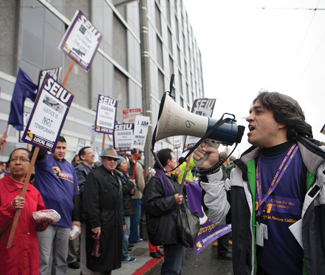
Service Employees International Union Local 1021 strenuously resists the wage and benefit givebacks regularly demanded in recent years by employers, including the city of San Francisco, which is now trying to slash the salaries for more than 40 city job classifications.

At the same time, Local 1021 is asking its own employees for benefit givebacks during new contract negotiations, a move that their own union is blasting as hypocritical.

That has squeezed Local 1021 President Roxanne Sanchez and her leadership team into a difficult position. They must fend off a revolt from staff that is turning vitriolic, without offending members who are in some cases worse off than the SEIU employees who represent them — all without weakening the union’s position at the bargaining tables with employers that relentlessly work to undermine the labor movement.

And they have to do it in the middle of an internal union election that they need to win to stay in power.

“The irony here is SEIU works assiduously to avoid takeaways in their contracts with employers and here they want givebacks from their own sweatshop-type working conditions,” says Libby Sayre, area director for Communications Workers of America Local 9404, which has represented SEIU Local 1021 employees since an internal reorganization in 2007. “It’s time for them to put some of their union principles into play.”

Local 1021 is proposing to increase how much employees pay for one of their health plans, eliminate the 401(k) pension match, and change some work rules, while keeping salaries where they’ve been stuck for many years. Employees say the givebacks total $416,000, and they’re coming even as the union maintains healthy reserves of about $11 million (the union says that level is now closer to $9 million).

“These are proposals they wouldn’t accept from an employer and they’re trying to impose them on their own employees,” Sayre told us. “It’s not justifiable. It’s not like this is a union in collapse.”

Yet Sanchez and her team, including Political Director Chris Daly, say the internal revolt led by a small number of disgruntled employees misrepresents how good the workers actually have it, particularly compared to members who have endured severe layoffs and salary and benefit cuts in recent years. Employees have another generous pension on top of the 401(k) (paying 2.5 percent of final salary per year worked), employer-paid health benefits (costs would go up for the PacificCare plan, but not Kaiser), normal step salary increases, and bonuses in lieu of raises in each of the last two years.

“Our staff has not given up anything,” Sanchez said. “They saw us cut the board’s budget by several hundred thousand dollars before we asked for anything.”

She said that with dues revenue falling along with membership numbers, and pension and health care costs rising steeply, the union can’t afford to keep dipping into its reserve funds, as it has in each of the last two years.

“We’re asking them to give modestly to their health care costs, and that we don’t pay for that second pension,” Sanchez said. “We are not balancing the budget on their backs, like what gets done with us.”

While both Daly and Sanchez admit the local has healthy reserve funds for its budget level, they say that’s necessary for the union to project strength, whether it be threatening a strike at the bargaining table or taking on ballot measures that would cripple the labor movement, such as last year’s Prop. 32, which the local dug into its reserve funds to fight.

“If we didn’t have healthy reserves, we’d be coming at them for more [givebacks] and doing layoffs,” Sanchez said.

While Sanchez said she resents being compared to the employers that her union battles, her rhetoric about the need for fiscal discipline is echoed by city officials who say they are already being generous with workers and they can’t afford to continue paying salaries that are so far beyond market rates.

“The city has to look at all the costs and be fiscally responsible and prudent,” said Susan Gard, a spokesperson for the city’s Department of Human Resources. “We don’t have the luxury of just looking at what’s best for employees.”

As allowed by the two-year contract Local 1021 reached with the city last year, DHR did a study comparing local salaries with eight other jurisdictions, finding that positions such as social workers, clerks, secretaries, custodians, and nursing assistants were between 16 and 48 percent above the Bay Area average. So the city is seeking to lower the salaries in 43 job classifications (applied to new hires only) and raise them for four classifications. The proposal will go before an arbitrator for a decision early next month.

Gard said the increases take into account San Francisco’s high cost of living and historic desire for pay equity, so most increases are less than half of the pay differentials the survey revealed. “They would all still be above market rates,” she said.

But Local 1021 officials say most of these positions had their salaries deliberately increased back in the 1980s and 1990s as part of an official city policy promoting pay equity for jobs often held by women and minorities. Even though that provision was removed from the official City Charter in 1996, they say it remains an important city policy.

“The city is rolling back decades of historic work on pay equity in this city,” Daly said. “We were concerned about equal treatment of workers who were disproportionately women and people of color.”

To highlight that pay equity issue, Local 1021 is planning a rally on Feb. 14 at noon outside DHR offices at 1 South Van Ness Avenue. Gard denies that the DHR proposal rolls back pay equity advances: “The city is committed to that principal, equal pay for equal work, and we don’t think our proposal erodes that.”

Sanchez said Local 1021 employees are undermining the union’s position in fights like this one, but they say the local needs to recognize and reward their work rather than justifying givebacks by comparing employees to members. “We don’t want to play the ‘our benefits are better than X-group’ games,” Nick Peraino, a 1021 researcher and CWA steward, told us. “We work very hard on behalf of the membership.”

Sayer accused Local 1021 leaders of arrogance and told us, “There is an attitude problem on the bargaining team and a reality problem on the part of the local,” a tone that that Sanchez sometimes mirrored when talking about the CWA campaign against her leadership.

Yet such vitriolic rhetoric may have as much to do with internal union politics as it does a true impasse. The leaders of the revolt by SEIU employees recently tried to decertify CWA and go with more forceful representation, a vote they lost badly but which may have spurred CWA to toughen its approach. Similarly, after SEIU members have accepted some bad contracts in recent years, some members may resent the organizers. Sanchez stressed how Local 1021 is member-led and responsive to the needs of workers, despite the current conflict.

“We want to make this organization good and strong,” Sanchez said, “and you can’t do that if you’re screwing over someone.”

Norman Solomon: Washington’s war-makers are in a bunker

2

Norman Solomon is co-founder of RootsAction.org and founding director of the Institute for Public Accuracy. His books include “War Made Easy: How Presidents and Pundits Keep Spinning Us to Death.” He writes the Political Culture 2013 column

With the tenth anniversary of the Iraq invasion coming up next month, we can expect a surge of explanations for what made that catastrophe possible. An axiom from Orwell — “who controls the past controls the future” — underscores the importance of such narratives.

I encountered a disturbing version last week while debating Col. Lawrence Wilkerson, former chief of staff to Secretary of State Colin Powell. Largely, Wilkerson blamed deplorable war policies on a “bubble” that surrounds top officials. That’s not just faulty history; it also offers us very misleading guidance in the present day.

During our debate on Democracy Now, Wilkerson said: “What’s happening with drone strikes around the world right now is, in my opinion, as bad a development as many of the things we now condemn so readily, with 20/20 hindsight, in the George W. Bush administration. We are creating more enemies than we’re killing. We are doing things that violate international law. We are even killing American citizens without due process. . .”

But why does this happen?

“These things are happening because of that bubble that you just described,” Colonel Wilkerson told host Amy Goodman. “You can’t get through that bubble” to top foreign-policy officials, “penetrate that bubble and say, ‘Do you understand what you’re doing, both to American civil liberties and to the rest of the world’s appreciation of America, with these increased drone strikes that seem to have an endless vista for future?’”

Wilkerson went on: “This is incredible. And yet, I know how these things happen. I know how these bubbles create themselves around the president and cease and stop any kind of information getting through that would alleviate or change the situation, make the discussion more fundamental about what we’re doing in the world.”

Such a “bubble” narrative encourages people to believe that reaching the powerful war-makers with information and moral suasion is key — perhaps the key — to ending terrible policies. This storyline lets those war-makers off the hook — for the past, present and future.

Hours after my debate with Wilkerson, I received an email from Fernando Andres Torres, a California-based journalist and former political prisoner in Chile under the dictatorship of General Augusto Pinochet. Referring to Wilkerson as “that bubble guy,” the email said: “Who they think they are? No accountability? Or do they think the government bubble gives them immunity for all the atrocities they commit? Not in the people’s memory.”

Later in the day, Torres sent me another note: “Not sure if we can call it a bubble, ’cause a bubble is easy to break; they were in a lead bunker from where the bloody consequences of their action can pass unnoticed.”

Wilkerson’s use of the bubble concept is “a tautology, a contradiction implicit,” wrote the co-editor of DissidentVoice.org, Kim Petersen, in an article analyzing the debate. “Often people escape culpability through being outside the loop. After all, how can one be blamed for what one does not know because one was not privy to the information. Can one credibly twist this situation as a defense? Wilkerson and other Bush administration officials were in the loop — privy to information that other people are denied — and yet Wilkerson, in a strong sense, claims to be a victim of being in a bubble.”

In that case, the onus is shared by those inside and outside the bubble. Wilkerson said as much when I mentioned that a decade ago, during many months before the invasion, my colleagues and I at the Institute for Public Accuracy helped to document — with large numbers of news releases and public reports — that the Bush administration’s claims about Iraqi weapons of mass destruction were full of holes.

From there, our debate swiftly went down a rabbit hole, as Wilkerson took me to task for not getting through the bubble that surrounded him as chief of staff for Secretary of State Powell. “I didn’t see a single one of your reports,” Wilkerson said. “So, nobody called me from your group. Nobody tried to get in — nobody tried to get into my office and talk to me from your group. Other groups did, but your group never got into my office, never called me on the phone — never talked to me. Other groups did. Why didn’t you?. . . You didn’t call. . . You didn’t call. . . You did not call.”

Non-apology apologies have been a forte of former impresarios of the Iraq war. It speaks volumes that Col. Wilkerson has been more apologetic than most of them. The scarcity of genuine public remorse is in sync with the absence of legal accountability or political culpability.

The partway apologies are tethered to notable narcissism. It’s still mainly about them, the seasoned ones who have worked in top echelons of government, whose self-focus is enduring. At the same time, scarcely a whisper can be heard about renouncing the prerogative to launch aggressive war.

So, when faced with occasional media questions about Powell’s WMD speech to the U.N. Security Council six weeks before the Iraq invasion, both Wilkerson and Powell routinely revert to the same careful phrasing about their own life sagas. Interviewed by CNN in 2005, after his three years as Secretary of State Powell’s chief of staff, Wilkerson described his key role in preparing that speech as “the lowest point in my life.” Last week, in our debate, he called the U.N. presentation “the lowest point in my professional and personal life.”

As for Colin Powell, guess what? That U.N. speech was “a low point in my otherwise remarkable career,” he told AARP’s magazine in 2006. Yet the U.N. speech gave powerful propaganda support for the invasion that began the Iraq war — a war that was also part of Powell’s “otherwise remarkable career.”

So, too, a dozen years earlier, was the Gulf War that Powell presided over as chairman of the Joint Chiefs of Staff in early 1991. On the same day that the Associated Press cited estimates from Pentagon sources that the six-week war had killed 100,000 Iraqi people, Powell told an interviewer: “It’s really not a number I’m terribly interested in.”

The illustrious and sturdy bow on the entire political package is immunity — a reassuring comfort to retired and present war leaders alike. Former Bush officials and current Obama officials have scant reason to worry that their conduct of war might one day put them in a courtroom dock. They’ve turned their noses up at international law, lowered curtains on transparency and put some precious civil liberties in a garbage compactor with the president’s hand on the switch.

Normalizing silence and complicity is essential fuel for endless war. With top officials relying on their own exculpatory status, a grim feedback loop keeps spinning as the increasingly powerful warfare state runs roughshod over the principle of consent of the governed. Top officials dodge responsibility — and pay no penalty — for lying the country into, and into continuing, horrendous wars and other interventions.

Without an honest reckoning of what did and didn’t happen in the lead-up to the Iraq war, a pernicious message comes across from Wilkerson, Powell and many others: of course we stuck it out and followed orders, we had private doubts but fulfilled our responsibilities to maintain public support for the war.

It’s a kind of role modeling that further corrodes the political zeitgeist. The upshot is that people at the top of the U.S. government — whether in 2003 or 2013 — have nothing to lose by going along with the program for war. In a word: impunity.

Norman Solomon is co-founder of RootsAction.org and founding director of the Institute for Public Accuracy. His books include “War Made Easy: How Presidents and Pundits Keep Spinning Us to Death.” He writes the Political Culture 2013 column.

Baby-carrot steps

San Francisco is known for its discerning foodies and exotic culinary offerings, but not every neighborhood has access to nutritious, let alone gourmet, fare. Yet several programs have sprouted up recently to boost businesses that want to improve environmental practices or benefit their surrounding communities.

Carrotmob, an international organization that runs campaigns in San Francisco, encourages local consumers to make purchases at targeted businesses in order to help the establishments meet sustainability goals. “We refer to it as ‘sustainability,’ but that encompasses a broad range of issues,” explains Nisha Gulati, an organizer with the group. “A Carrotmob can range from anything from helping to reduce climate change, to carrying fair trade products.”

There is one day left for socially conscious diners to support Carrotmob’s campaign to benefit the Old Skool Café, a Bayview restaurant that employs at-risk youth. The 1940’s-style supper club, which held its grand opening last fall, is a nonprofit “designed to provide solid alternatives to a life of crime and poverty by providing jobs and a community of support,” according to the website. For every $25 dinner voucher purchased online via the “mob,” 15 percent will be dedicated to a college scholarship fund for its crew of young servers and cooks.

This past weekend, Carrotmob held a kickoff for its second San Francisco campaign to help Valencia artisan cheese vendor Mission Cheese apply for and maintain bike parking, and to install water-saving devices.

Gulati says Carrotmobbers have spent more than $1 million at 250 campaigns around the world since 2008, helping businesses achieve socially just or climate-friendly improvements. While the endeavor deserves points for creativity, we can’t help but bristle at Carrotmob’s tagline: “In a boycott, everyone loses. In a Carrotmob, everyone wins.” (Hello? Ever heard of the Anti-Apartheid Movement? The Coalition of Immokalee Workers’ boycott against Taco Bell? Those boycotts produced some winners, we think.)

Meanwhile, there’s a push underway to bring healthier food to the city’s Southeast sector. While Fresh & Easy Markets in the Bayview and other locations may or may not shut their doors (stay tuned), the Southeast Food Access Coalition (SEFA) has started partnering with Third Street corner stores to improve residents’ access to healthy food options. The coalition is a collaborative of residents, community based organizations and city agencies focused on public health and food access.

The phrase “food desert” is typically used to describe low-income areas where stretches of pavement are dotted with liquor stores peddling unhealthy products. While corner stores in upscale neighborhoods may have vats of fresh chilled salads for sale under curved glass cases, stores in food desert areas typically carry little more than high-sodium chips, sugary soft drinks and alcohol.  A SEFA survey found that 60 percent of Bayview residents do their grocery shopping outside the area, and 33 percent reported that there were produce items they wanted but couldn’t buy in the area. 

Lee’s Market and Ford’s Grocery are two corner stores participating in the program, which aims to transform businesses’ food product offerings to promote overall health in a neighborhood disproportionately impacted by diabetes and other kinds of disease. In exchange for stocking fresh foods, the stores receive access to retail technical assistance, promotion efforts by SEFA and other government incentives. Similar efforts are underway in the Tenderloin.

In late January, District 10 Sup. Malia Cohen joined representatives from SEFA and other community organizations for a store “reopening” to raise awareness about the healthier product offerings. “Within one week of stocking fresh produce, Lee’s Market sold out of its inventory,” Cohen’s aide Andrea Bruss told the Guardian via email, “demonstrating that there is a demand from these communities for fresh foods.”

Celebrate Black History Month with four days of sf|noir food and drink

0

This month, you can observe Black History Month by attending a filmmaking discussion, a childrens dance class, by going to a lecture at USF — check out this and this event rundown for inspiration. And given how food-oriented we are as a region, it was only natural that eventually you’d be able to eat and drink while celebrating African American heritage, not to mention the black culinary geniuses that add to it here in the Bay. 


Sample wines poured by the Sterlings of Esterlina Vineyards (top) and bites made by Michele Wilson of Gussie’s Chicken & Waffles at sf|noir’s Feb. 23 gala

The organization that is sponsoring the four-day extravaganza was born one afternoon at North Beach Jazz Festival, the nine-day affair that Herve Ernest organized for eight years. He realized that the crowd in attendance was really, really white.

“There was an African American band on stage, but I could count on two hands the amount of black faces I saw,” he tells me in a phone interview. He realized that if African American culture was going to remain a presence in a city where black people were being rapidly displaced, concerted efforts would have to be made.

“That’s when the conceptual idea for what became sf|noir started happening,” Ernest continues. He started the organization, which sponsors read-ins, dance, and concerts, not only to get superlative cultural programming to black audiences, but also to “ensure the presentation of black arts and culture in San Francisco” — a city whose black population has dropped from 12 to less than three percent in the 19 years since Ernest first settled here. 

This year, his group is offering days of events that highlight some of the area’s most successful black food entrepreneurs. “It’s something that is very relevant here,” says Ernest. “It’s a foodie town, food events happen all the time. We thought it was high time to create a food and wine event that looks at African American cuisine.” 

So, belly up. Go here for more info: 

Remixology

Three mixologists — including Otis bartenders Phil Shell and Damon White — present cocktails found throughout the African diaspora. Entry is free, you have to pay for your own drinks though. 

Feb. 21, 6-9pm, free. Otis, 25 Maiden Lane, SF

Wine tasting with Omar White

After 15 years at Chez Panisse, believe that wine consultant White has some knowledge about local vinos. He’s lent his expertise to Pizzaolo and the East Bay’s Hibiscus and is here today to teach about the in’s and out’s of the wine tasting process. Register in advance for this one — participation is limited to 25 thirsty souls. 

Feb. 22, 6-9pm, $20. 18 Reasons, 3674 18th St., SF

http://www.youtube.com/watch?feature=player_embedded&v=U1eW77Pw4PQ

Wine and Food Gala

Food from nine restaurants well-versed in African American cuisine (Farmerbrown, Cedar Hill, and tomorrow’s brunch host Miss Ollie’s for starters), 20 local and international winemakers, and two dessert specialists — The Brown Sugar Lady and PieTisserie — are all serving up at this four-hour dinner party. 

Feb. 23, 7-11pm, $60. The Atrium, 101 Mission, SF

Oakland Jazz Brunch 

Hibiscus’ chef Sarah Minton has a new project in this Old Oakland corner restaurant. She’ll be offering up the place’s Carribean-toned menu for brunch today, while the Marcus Shelby Trio helps you finish the sf|noir series strong.

Feb. 24, 11am-3pm, free entrance, a la carte menu. Miss Ollie’s, 901 Washington, Oakl. 

Milk’s real legacy

11

OPINION Ever since Supervisor David Campos announced his proposal to add Harvey Milk’s name to SFO, there’s been an unending string of criticism — mostly from one source — that has an eerily familiar ring to it.

We heard it years ago when we tried to change the name of Douglas School in the Castro to Harvey Milk Civil Rights Academy. Believe it or not, it took seven years before the School Board finally voted for the name change — and there was still bitterness. This was a school in Harvey’s neighborhood that Harvey personally helped when he was alive.

And of course Harvey heard it himself, when he was constantly told not to rock the boat, not to make waves, not to be so out about being gay. Why? Because it would be divisive, alarm our friends, empower the gay community’s enemies, and set the movement back. And forty years later, people are still saying that.

It’s not just Harvey Milk. When we went to change the name of Army Street to Cesar Chavez, the same cast of characters voiced the same empty complaints, and it wasn’t until a vote of the people that it was finally settled.

Now we come to Campos’s courageous proposal to add Harvey’s name to San Francisco International Airport. For the city that wildly celebrated gay marriages at City Hall (another event that naysayers were quick to criticize), the city that is the emotional heart of the gay civil rights movement, and the city in which Harvey Milk lived, rose to prominence, and died — this should be a no-brainer. People say this is divisive? In fact, it should be an issue that unites us.

Yes, it will cost the airport some money to change its signage. But this can be done over time, through attrition, and can be far less than the estimates. (Which still only amount to one-half of one percent of the airport’s annual budget.)

But by far the most pernicious charge against the proposal is that it would tarnish Harvey’s legacy if it loses. Let me tell you — a little adversity never scared off Harvey Milk. He knew how to take a punch. And he knew how to move the civil rights agenda forward through provocative proposals.

For example, did you know before this that 80 airports in the United States are named after individuals, and not one is gay? How long are we going to be second-class citizens?

I commend Supervisor Campos for having the guts to put this proposal forward. That’s the real legacy of Harvey Milk: a city with openly gay elected officials who are willing to put their own careers on the line to challenge the status quo. Harvey would be proud.

And, as the powers that be sanctimoniously intone that we shouldn’t name the airport after any individual, our great city itself is named after St. Francis.

If being named after an inspiring individual is good enough for our city, it’s good enough for our airport.

Assemblymember Tom Ammiano represents the 17th District.


Ten years after Powell’s U.N. speech, old hands are ready for more blood

1

By Norman Solomon

Norman Solomon is the author of “War Made Easy: How Presidents and Pundits Keep Spinning Us to Death.” He is the founding director of the Institute for Public Accuracy and co-founder of RootsAction.org.

When Secretary of State Colin Powell spoke to the U.N. Security Council on February 5, 2003, countless journalists in the United States extolled him for a masterful performance — making the case that Saddam Hussein’s Iraq had weapons of mass destruction. The fact that the speech later became notorious should not obscure how easily truth becomes irrelevant in the process of going to war.

Ten years later — with Powell’s speech a historic testament of shameless deception leading to vast carnage — we may not remember the extent of the fervent accolades. At the time, fawning praise was profuse across the USA’s mainline media spectrum, including the nation’s reputedly great newspapers.

The New York Times editorialized that Powell “was all the more convincing because he dispensed with apocalyptic invocations of a struggle of good and evil and focused on shaping a sober, factual case against Mr. Hussein’s regime.” The Washington Post was more war-crazed, headlining its editorial “Irrefutable” and declaring that after Powell’s U.N. presentation “it is hard to imagine how anyone could doubt that Iraq possesses weapons of mass destruction.”

Yet basic flaws in Powell’s U.N. speech were abundant. Slanted translations of phone intercepts rendered them sinister. Interpretations of unclear surveillance photos stretched to concoct the worst. Summaries of cherry-picked intelligence detoured around evidence that Iraq no longer had WMDs. Ballyhooed documents about an Iraqi quest for uranium were forgeries.

Assumptions about U.S. prerogatives also went largely unquestioned. In response to Powell’s warning that the U.N. Security Council would place itself “in danger of irrelevance” by failing to endorse a U.S.-led invasion of Iraq, the adulation from U.S. media embraced the notion that the United Nations could only be “relevant” by bending to Washington’s wishes. A combination of cooked intelligence and geopolitical arrogance, served up to rapturous reviews at home, set the stage for what was to come.

The invasion began six weeks after Powell’s tour de force at the United Nations. Soon, a search for Iraqi weapons of mass destruction was in full swing. None turned up. In January 2004 — 11 months after Powell’s U.N. speech — the Carnegie Endowment for International Peace released a report concluding that top officials in the Bush administration “systematically misrepresented the threat from Iraq’s WMD and ballistic missile programs.”

Left twisting in the wind was Powell’s speech to the U.N. Security Council, where he’d issued a “conservative estimate” that Iraq “has a stockpile of between 100 and 500 tons of chemical weapons agent.” The secretary of state had declared: “There can be no doubt that Saddam Hussein has biological weapons and the capability to rapidly produce more, many more.”

Nineteen months after the speech, in mid-September 2004, Powell made a terse public acknowledgment. “I think it’s unlikely that we will find any stockpiles,” he said. But no gingerly climb-down could mitigate the bloodshed that continued in Iraq.

A decade ago,  Powell played a starring role in a recurring type of political dramaturgy. Scripts vary, while similar dramas play out on a variety of scales. Behind a gauzy curtain, top officials engage in decision-making on war that gives democracy short shrift. For the public, crucial information that bears on the wisdom of warfare remains opaque or out of sight.

Among the powerful and not-so-powerful, in mass media and on Capitol Hill, the default position is still to defer to presidential momentum for war. Public candor and policy introspection remain in short supply.

The new secretary of state, John Kerry — like the one he just replaced, Hillary Clinton — voted for the Iraq war resolution in the Senate, nearly four months before Powell went to the U.N. Security Council. During the crucial lead-up months, Senator Kerry was at pains to show his avid support for an invasion. In early October 2002, appearing for an hour on MSNBC’s “Hardball” program live from The Citadel as an audience of young cadets filled the screen, Kerry said: “I’m prepared to go. I think people understand that Saddam Hussein is a danger.”

Since then, Kerry has publicly said that he would have voted for the war resolution even if he’d known that Iraq actually had no weapons of mass destruction. But on the Senate floor, Kerry prefaced his vote for war by rhetorically demanding to know why Saddam Hussein was “attempting to develop nuclear weapons when most nations don’t even try.” The senator emphasized that “according to intelligence, Iraq has chemical and biological weapons.”

Months later, when Powell trumpeted that theme at the United Nations, the landslide of testimonials included this one from a future U.S. ambassador to the U.N., Susan Rice: “I think he has proved that Iraq has these weapons and is hiding them, and I don’t think many informed people doubted that.”

Meanwhile, the Washington Post edition with the editorial headlined “Irrefutable” also included unanimous agreement from each of the opinion columns on the facing page.

Longtime Post columnist Richard Cohen attested to Powell’s unquestionable veracity with these words: “The evidence he presented to the United Nations — some of it circumstantial, some of it absolutely bone-chilling in its detail — had to prove to anyone that Iraq not only hasn’t accounted for its weapons of mass destruction but without a doubt still retains them. Only a fool — or possibly a Frenchman – could conclude otherwise.”

Inches away, another venerable pundit held forth. Powell managed to “present the world with a convincing and detailed X-ray of Iraq’s secret weapons and terrorism programs yesterday,” wrote Jim Hoagland, a Post foreign-policy specialist. He concluded: “To continue to say that the Bush administration has not made its case, you must now believe that Colin Powell lied in the most serious statement he will ever make, or was taken in by manufactured evidence. I don’t believe that. Today, neither should you.”

Fast forward to the current era. What are Richard Cohen and Jim Hoagland writing — about Iran?

On February 6, 2012, exactly nine years after proclaiming that “only a fool” could doubt Iraq had weapons of mass destruction, Cohen’s column declared flatly: “The ultimate remedy is Iranian regime change.” Four months ago, Cohen wrapped up a column by observing “there is still time for Iran to back down before President Obama’s red line — no nuclear weapon — is crossed. This is a war whose time has not yet come.” Not yet.

Hoagland — a decade after telling readers they should put their trust in Colin Powell’s “convincing and detailed X-ray of Iraq’s secret weapons” — is now making clear that his patience with Iran is wearing thin. “Until recently,” Hoagland wrote five weeks ago, “I had been relatively comfortable with Obama’s assertions that there is time to reach a peaceful resolution with Iran.” Hoagland’s column went on to say that military strikes on Iran “threaten disastrous political and economic consequences for the world,” so diplomatic efforts should try to avert the need for such strikes — before they become necessary.

So goes the dominant spectrum of opinionating and policymaking for war, from eagerness to reluctance. Propaganda lead-ups to warfare are as varied as wars themselves; and yet every style of such propaganda relies on deception, and every war is unspeakable horror.

After jumping onto ghastly bandwagons for one war after another, the nation’s media establishment is available to do it again. So is the current U.S. ambassador to the United Nations. So is the new secretary of state. They’re old hands, dripping with blood. They have not had enough.

Norman Solomon is the author of “War Made Easy: How Presidents and Pundits Keep Spinning Us to Death.” He is the founding director of the Institute for Public Accuracy and co-founder of RootsAction.org.

My campy Valentine

0

FILM Love is the drug, or so sang somebody once. Yet violent conflict has always been a more predominatingly addicting factor in movies — which is why it seems both natural and despairing that the Vortex Room‘s “For Your Vortex Only” celebration of “Love…Vortex Style” (please guys, only one title per series), every Thursday in February, features eight vintage movies in which “love” is less a matter of romantic fulfillment than a titular selling point.

Which is not to say the Vortex programmers have not ranged far and extra wide to find 16mm prints (when available) of the most obscure and eccentric among odes to St. Valentine, though several weren’t remotely obscure at the time. That would include the kick-off double bill, which starts off with 1979’s Love at First Bite — a post-Young Frankenstein knockoff farce whose selling point was aging Old Hollywood himbo George Hamilton as a Count Dracula exported via coffin-encased necessity to disco-era Manhattan. He’s funny; Richard Benjamin as Jewish-shrink Van Helsing is funnier. Not so much: the tiresome racial stereotypes or clutter of TV sitcom faces.

That movie was a sleeper hit. A shameful semi-success, by contrast, was its Vortex co-feature The Love Machine (1971) — second adaptation of a Jacqueline Susann bestseller after 1967 camp classic Valley of the Dolls, and by far the best. Of course it’s still a glossy, ridiculous swamp of lurid melodrama and degraded “name” actors. John Phillip Law (1968’s Barbarella and Skidoo) probably locked himself out of the mainstream stardom by playing Susann’s soulless, indiscriminately sexually satisfying TV-executive climber. He’s actually very good — more than one can say for the fellow thespians (notably Dyan Cannon, Robert Ryan, Jackie Cooper, and David Hemmings as a particularly mean homosexual caricature) in what was only director Jack Haley Jr.’s second stab at narrative directing before he turned exclusively to celebrating his son-of-Tin-Man Old Hollywood heritage via documentaries like 1974’s That’s Entertainment!

Actual Valentine’s Day programming at the Vortex is certifiably insane: 1935’s Mad Love has Peter Lorre as a mad scientist in the daddy of all severed-transplanted-hands-of-a-murderer thrillers; while 1987’s Love is a Dog From Hell, a.k.a. Crazy Love, channels the Skid Row poetics of Charles Bukowski into a dazzling Belgian demonstration of art house bravado. It’s fatiguingly great.

https://www.youtube.com/watch?v=eTd3B0NXf44

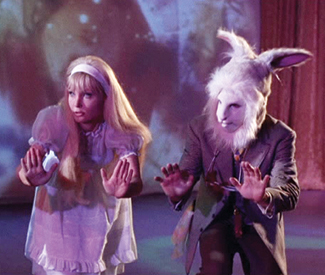
The last two Vortex Thursdays in February wade into genuinely forgotten cinematic chapters. Least (forgotten, but also worthy) among them is The Love-Ins, an inadvertently hilarious 1967 highlight in hippiesploitation with Peyton Place regular Susan Oliver and future Hawaii Five-O star James MacArthur as vulnerable university students roped into the dangerous radicalism of a Timothy Leary-like prof (Richard Todd). When she’s dosed on acid, the ensuing polite Alice in Wonderland “freak-out” ballet is perhaps Hollywood’s dumbest counterculture indictment ever.

Yea more obscure are this amorous series’ final selections. The Love War (1970) is a TV movie sci-fi with Lloyd Bridges and Angie Dickinson as combatants on an interplanetary-games war using Earth as its playing field. It’s gimmicky but stupid alongside the next year’s Quest for Love, a clever parallel-time fantasy perhaps beyond the capabilities of director Ralph Thomas (1974’s It’s Not the Size That Counts) and star Joan Collins (whose earnest efforts suggest she never had a naturalistic acting moment in her life).

Unavailable for preview was that Quest‘s Vortex co-feature Love Slaves of the Amazon, a 1957 Universal International exploitation film of which surely more should be known, if only to preserve our fragile balance between the sexes against so much perverted input. Including, of course, camp retrospectives like the Vortex’s. *

“FOR YOUR VORTEX ONLY: THURSDAY FILM CULT PRESENTS LOVE … VORTEX STYLE”

Thu/7, Feb 14, 21, and 28, 9 and 11pm, $10

Vortex Room

1082 Howard, SF

Facebook: The Vortex Room


Can Yan noodle?

0

virginia@sfbg.com

APPETITE Style-over-substance at popular restaurants grew old in my Los Angeles days. A pretty package matters little if food isn’t excellent. In SF, we tend towards the other direction. Thank goodness for places like Gitane, Bix, Foreign Cinema, which manage both — a little style is welcome. With the entry of two new, upscale Chinese restaurants, we get style aplenty. One, the international Hakkasan chain, feels oh-so LA or NY, and the other, M.Y. China, is inside a mall (very Southern California) from famed chef Martin Yan.

Buzz has been nonstop about these two, where I’ve spent a pretty penny, from lunch to dessert. I disagree with the racist-tinged complaint that typically cheaper, ethnic cuisines shouldn’t cost more, but the reason any cuisine should is quality of ingredients and reinvention or reinterpretation of classic dishes. Stir-fry, for example, shouldn’t cost double what it would in a hole-in-the-wall if it’s virtually the same dish. After multiple visits, my assessment is mixed, each restaurant boasts strong points, but neither reinvents Chinese cuisine, which begs the question: are the prices worth it?


HAKKASAN

Early on, Hakkasan succeeds on a number of points: seamless service from a team that seemed to work in sync from opening day. Though the second floor restaurant overlooking Market Street is a bit scene-y, especially around a large, central bar, I can’t help but applaud a space that says “night on the town”… particularly when the food is quite good. Similar to dining at the subterranean London Hakkasan, I find the overall experience satisfying if someone else is paying.

Drinkwise, I’m delighted with a refreshing, elegant Plum Sour of Yamazaki 12 year Japanese whisky, umeshu plum liqueur, lemon, Angostura bitters and egg white, or a robust Smoky Negroni (Rusty Blade, Carpano Antica, Campari, smoke-infused Grand Marnier), but the $12-15 cocktails aren’t superior to or necessarily equal to lower-priced cocktails around town. Similarly, roasted silver cod in a Champagne honey sauce is silky and lush but at $39? Countless Japanese restaurants worth their salt serve a fantastic version of similar miso cod at half that price.

As with M.Y. China below, dim sum is a highlight, but $7–$26 for a few dumplings is a struggle when far cheaper, quality dim sum is plentiful around town. Worthwhile dishes are atypical dim sum, like roasted duck pumpkin puffs or black pepper duck dumplings. Whether noodles ($12–$39) or stir-fry ($12–$58), I haven’t had a bad dish here. But leaving lunch for two over $100 lighter, or the same for drinks and a couple appetizers, I can’t help but conclude: food, drink, and service shine… on someone else’s dime.

1 Kearny, (415) 829-8148, www.hakkasan.com/sanfrancisco


M.Y. CHINA

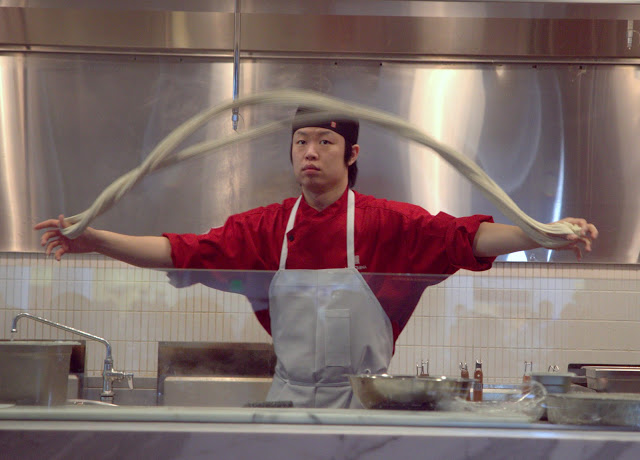
Growing up, I loved watching “Yan Can Cook.” To this day I’m inspired by Martin Yan’s energy and childlike exuberance. His anticipated SF restaurant opening, M.Y. China, is more affordable than Hakkasan, conveniently under the dome at the Westfield Center mall for a post or pre-movie meal. Despite all the noodle attention, including a world-champion noodle puller and noodle pulling stations viewable while dining, spectacle doesn’t necessarily equal stellar noodles. For example, squid ink snap noodles ($18), more like torn pasta squares, tossed with shrimp, scallops and calamari in Shaoxing wine, fail to exude much flavor. Dan Dan noodles ($12) are a stronger choice, and the favorite of everyone I’ve talked to is lush scissor noodles ($14), cut by kitchen scissors then wok-cooked with wild boar.

Wild boar shows up everywhere, a mild version of the robust meat (i.e. inoffensive for those afraid of boar), in lettuce cups ($9), dumplings (four for $8), and more. Every visit yielded disappointingly average wok-tossed dishes, and flavorless small plates like portabello sliders ($8) or mapo tofu ($8), which gets its sole perk from Sichuan peppercorn oil. Teas are a comforting choice, while cocktails ($10-13), which are better but pricier at Hakkasan, have been off balance, like a too sour Three Gorges, with a base of #209 Gin and lemon, lacking absinthe’s nuance or clean bitter structure from Cocchi Americano.

Each meal there’s a singular standout category: dim sum ($6-19). Spicy seafood dumplings (six for $9) are a joy in vivid green spinach wrappers loaded with scallops and shrimp, as are plump, lightly crispy whole wheat potstickers filled with pork and cabbage. Go for decadence with pork and black truffle dumplings ($18). Dessert includes Delise cafe ($4) offerings, among my favorite locally made ice cream, with flavors like Chinese almond, toasted rice or lemongrass.

Despite the mall setting, “under the dome” is the Westfield’s striking feature while chic design and noodle pulling entertainment set the experience apart. As for me, I’ll return for unusual dim sum.

Westfield Center, 845 Market, 4th Floor, (415) 580-3001, www.mychinasf.com

Subscribe to Virgina’s twice-monthly newsletter, The Perfect Spot, www.theperfectspotsf.com 


On the Cheap Listings

0

Submit items for the listings at listings@sfbg.com. For further information on how to submit items for listings, see Picks.

WEDNESDAY 6

Urban dance at the library Merced Branch Library, 155 Winston, SF. www.sfpl.org. 4:30, free. For ages seven to 18. In celebration of Black History Month, Sergio Suarez of the All the Way Live Foundation will share his knowledge of street dance history — covering everything from the Memphis jook to Oakland TURF to LA crump. Children and teens will also have a chance to watch acclaimed Bay Area dancers Beatz n Pieces, Agatron, Fluidgirl, and Too Wet.

THURSDAY 7

“Bacon, Babes and Bingo” El Rio, 3158 Mission, SF. www.baconbabesandbingo.com. 7-11pm, $10. With endless ways to win prizes — from donning superlative pig-related accessories to spinning the “squeal wheel” — tonight is a shining night for bacon. To keep up with the theme, vendor BaconBacon will be serving up a variety of pork-related goodies. If all this isn’t compelling enough, there will also be burlesque, music, and free snacks courtesy of Rock Candy Snack Shop.

FRIDAY 8

Gray Loft Gallery’s second annual Love Show Gray Loft Gallery, 2889 Ford, third floor, Oakl. Through February 23. www.greyloftgallery.com. Opening reception: 6-9pm, free. Photographs, paintings, collages, sculptures, jewelry, textiles, and handmade cards, all exploring themes of love will be on display tonight in this unconventional work-live warehouse and gallery in Oakland’s Jingletown district.

“On The Edge” erotic photography exhibition Gallery 4N5, 683 Mission, SF. www.eroticartevents.com. 4-10pm. $5. Also open Sat/9, 1-10pm and Sun/10, noon-5pm. Free on Sunday. If the thought of a teddy-bear-and-Hallmark-card kind of Valentines Day puts you straight to sleep, this exhibit might be what you’ve been looking for. Featuring 400 pieces of fine nude art and extreme erotica photographs by 20 photographers, this event is sure spice up your holiday. Mingle with some of the photographers and stay for the leather fashion show at 7:30pm.

“Mortified’s Doomed Valentine’s Show” DNA Lounge, 375 11th St., SF. www.dnalounge.com. Doors open at 6:30pm. Show starts at 7:30pm, $14-21. Sat/8, 7:30pm at the Uptown, 1928 Telegraph, Oakl. “Mortified” is a nationally-loved, comic excavation of the artifacts of teenage angst (i.e. journals, home movies, letters, poems, etc.) shared by the original authors. Complete with a house band, these stories cover topics such as worst hand job, first puff, and Bible camp. Some of these stories may make you cringe with sheer awkwardness but they might make your high school experience seem slightly less tragic.

SF Beer Week Various Bay Area locations. www.sfbeerweek.org. Through Feb. 17. Every year this celebration of the Bay’s burgeoning microbrew macroculture exceeds our expectations and in 2013 we’ll be raising our steins yet again. Check the website for info on tastings, food-beer pairing dinners, educational offerings, and what special brew your favorite bar will be pouring on what night.

SATURDAY 9

“My Perverted Sucky Valentine Puts Out!” Center for Sex and Culture, 1349 Mission, SF. 8pm, $10-25 donation suggested. If you’ve fallen victim to a romantic rejection or two, you should know you’re not alone. In fact, tonight is a spoken word extravaganza focusing on topics such as: hot heartbreak, lust gone wrong, and ill-advised hookups. And let’s hear it for sponsoring sex-positive culture: your donations go to help the Center for Sex and Culture and St. James Infirmary continue those institutions’ rad, empowering programming.

Rare Device Valentine’s Trunk Show Rare Device, 600 Divisadero, SF. www.raredevice.net. Noon-6pm, free. Treat your Valentine (or yourself) with some awesome, locally-crafted goodies this afternoon. Between Zelma Rose’s cross stitched accessories, Jen Hewett’s lively prints, Emily McDowell’s inspirational illustrations, and Karrie Bakes’ gluten-free treats you are sure to walk away with something sweet.

Cupid’s Undie Run The Republic, 3213 Scott, SF. www.cupidsundierun.com. Pre-festivities start at noon, run begins at 2:30pm, $30. Register online. Strip down and sweat up for this mile long run around the Marina and Lombard Street. While your best lingerie gets all sweaty, you’ll also be helping to raise funds to benefit the Children’s Tumor Foundation. Warm up at the Republic before and afterwards with pre and post-run festivities.

SUNDAY 10

SPCA’s Be MineValentine’s Adopt-a-thon 201 Alabama, SF. www.sfspca.org. 10am-6pm, free. Nothing says “I love you” more than a puppy. Join the SF SPCA this weekend for its annual adoption extravaganza. Head over Friday night for a cocktail party, Saturday afternoon for dog and cat behavior seminars, or today for a puppy kissing booth, foster care bake sale, and prize wheel. All adoption fees are waived this weekend for animals from SF SPCA, SF Animal Care and Control, Muttville Senior Dog Rescue, and Family Dog Rescued.

MONDAY 11

“Edible Valentine Workshop” Autumn Express, 2071 Mission, SF. www.autumnexpress.com. 5-6pm. $10 if you register before Feb. 8, $15 at the door. Whether you’re still in school or not, passing out Valentine’s Day cards is fun. Head over to sustainability-oriented print shop Autumn Express to decorate some cookies and chocolate bars with icing and candies and whip up some cards for your big-kid class.

THURSDAY 14

One Billion Rising performance ritual First Presbyterian Church, 2619 Broadway, Oakl. www.bayarearising.org. 7-8:30pm, $10-100 donation suggested. Free for youth under 17. Purchase tickets online. Put your Valentines Day towards a good cause this year at a fundraiser for International Development Exchange (IDEX), an organization working to empower impoverished women across the globe. The evening will be a mix of spirituality, politics, and performances from local groups such as Youth Speaks and Mission Dance Brigade.

Dogpatch Wine Works date night Dogpatch Wine Works, 2455 Third St., SF. www.dogpatchwineworks.com. 6-8pm, $40. Few things spell out romance quite like wine and chocolate. Stroll around Dogpatch Wine Works’ tasting room sipping on some vino and snacking on locally-crafted Recchiuti chocolate. After your palette is satisfied you can tour the 15,000 square foot working winery.

“Returning Cupid’s Fire” Cartoon Art Museum, 655 Mission, SF. www.cartoonart.org. 7-9pm, $10. If you are Valentine-less and planning on having a night in with Ben and Jerry, it’s time to change your plans. San Francisco comedians Ivan Hernandez, Colleen Watson, and Mike Capozzola feel your pain and will be performing anti-Valentine’s Day themed stand-up routines tonight. Refreshments will be served.

Tout Sweet Pâtisserie tasting Tout Sweet Pâtisserie in Macy’s Union Square, 170 O’Farrell, third floor, SF. (415) 385-1679, www.toutsweetsf.com. 7-8:30pm, $55 per person. Reservations recommended. Yigit Pura, chef and owner of this sweet shop, is now offering tastings at Tout Sweet, which for our purposes means a three-course dessert menu featuring a rotating selection of seasonal offerings, each paired with local artisanal wine and beer. If you already have some sweet Valentine’s Day plans don’t fret, Pura has more tastings scheduled for March 14 and April 11.

Hella Vegan Eats V-Day pop up dinner Dear Mom, 2700 16th St., SF. www.dearmomsf.com. 5pm-midnight, free. The Oakland–based traveling food vendor will be in the city to once again take over Mission bar Dear Mom. We are hoping their doughnut burger with secret sauce will be on tonight’s menu.

Valentine’s Day at the Armory Club The Armory, 1800 Mission, SF. tickets.armorystudios.com. 7:30 and 9:30, $55. Start the evening off on the upper floor of the historic Armory then head to a workshop led by porn starlet Rain DeGrey that focuses on teaching couples how to make fantasies reality. Afterward, enjoy specialty cocktails and aphrodisiac-themed appetizers at the luxe Armory Club across the street.


Avalos to call on SF retirement system to divest from fossil fuels

San Francisco’s city pension fund may have as much as $1 billion tied up in companies that control fossil fuel reserves, such as Exxon, BP, Shell and Chevron. At the Board of Supervisor’s meeting this afternoon, Sup. John Avalos plans to introduce a resolution calling on the San Francisco Employees Retirement System (SFERS) to divest from leading fossil fuel giants. 

The resolution, which urges the San Francisco Retirement Board to stop investing in stocks and and mutual funds with shares in coal, oil and gas companies, was created with input from nationwide environmental organization 350.org. Last year, 350.org launched a campaign calling on universities to divest from 200 targeted fossil fuel companies as a way to tackle global climate change.

“They’re the companies that own the vast majority of the world’s fossil fuel reserves – who actually own the carbon that’s sitting in the ground,” explains Jamie Henn, cofounder and communications director of 350.org. When these fossil fuel reserves are extracted and burned to generate power, they’ll emit greenhouse gases such as carbon dioxide, worsening the impact of global climate change.

Scientists have calculated that from here on out, a total of 565 gigatons of carbon dioxide can be emitted into the atmosphere before the planet’s global average temperature increases by two degrees Celsius. Despite widespread international consensus that crossing this threshold would bring unacceptable consequences, says Henn, the 200 targeted companies can access enough oil and gas reserves to eventually emit five times as much CO2 into the atmosphere.

“Their share prices are based on their ability to burn those reserves,” Henn said. “The only way we can tackle climate change in this country is if we weaken the fossil fuel industry.”

To that end, Avalos is acting locally.

“San Francisco has aggressive goals to address climate change,” the District 11 supervisor noted. “It’s important that we apply these same values when we decide how to invest our funds, so we can limit our financial contributions to fossil fuels and instead promote renewable alternatives.”

Supervisors do not have control over the investment decisions of the San Francisco Retirement Board, which controls the city’s $16 billion pension fund, so Avalos’ resolution would not impose a legal obligation to divest. Yet a Budget & Finance Committee hearing about the proposed resolution could help raise awareness of the issue, noted Jeremy Pollock, a legislative aide to Avalos. The idea is to start a conversation about “what our social investment policy is, with regard to retirement funding,”  he explained.

If Avalos’ resolution to divest in fossil fuels is ultimately approved by the full board, San Francisco would become the second city in the nation to take such a step. Seattle Mayor Mike McGinn called on city retirement funds to abandon stocks in coal, oil and gas companies last December.

In addition to the resolution calling for divestment from fossil fuels, Avalos also plans to introduce a resolution urging the San Francisco Retirement Board to divest from publicly traded manufacturers of firearms and ammunition.

Harvey Milk and Cesar Chavez

32

The Chron continues its jihad against Harvey Milk Airport today, arguing that the price tag airport administrators came up with — $4 million — makes the plan too expensive. Not that $4 million is a trivial amount of money, but please: Compared to the tax breaks, upzonings, and other giveaways the the city routinely hands over to big corporations, this is birdseed. That’s if we can trust the folks at SFO, who are opposed to the name change. And there’s no reason all that money has to be spent at once, the first day; change the name, then implement all the signage changes over a couple of years or so. Not really a big deal.

Assemblymember Tom Ammiano called this morning to remind us of a similar battle in 1994 over renaming Army Street after Cesar Chavez. The costs were wildly inflated. The Chron kept raising all sorts of problems. “It was like, ‘oh we should honor him, but we can’t change a name,’ Amminano said. “The same tired bullshit we’re hearing now.”

And the truth is, changing Army Street to Cesar Chavez Street was an appropriate step, no big deal — and in the end, everyone came around. Ten years from now, they’ll feel the same way about Harvey Milk International Airport.

PS: The issue here isn’t really renaming the airport against leaving it as SFO. I guarantee if this fails, at some point someone’s going to try to name it after Dianne Feinstein or Willie Brown — and the Chron probably won’t have the same issues. If the question is whether to name an airport after Brown (terrible mayor) Feinstein (terrible mayor) or Milk (international civil-rights icon) … well, that’s a no-brainer.

PS2: The B.A.R. came out against the name change in an odd editorial that suggested the battle would be divisive and “turn our friends against us.” That, as a sharp letter from Ammiano, Bevan Dufty, Carole Migden, Jose Cisneros, and Anne Kronenberg ponts out, is the same argument that the more conservative elements of the gay community used to try to talk Milk out of running for office.


http://www.ebar.com/openforum/letters/letter.php?sec=letters&id=372

Framing devices

0

VISUAL ART Several recent, notable group exhibitions have me thinking a bit more actively about the roles curators play as artists in the shows they assemble. As much as DJs or editors, curators are present in their shows as artists, sometimes demurely, sometimes not.

As curator of the “Disrupt” two-person show at Highlight Gallery, Kelly Huang has shrewdly assembled a pair of artists whose work reinforces each other. Seen together, the paper-based works of London’s Marine Hugonnier and Cairo’s Taha Belal, create a kind of duet of interrelated working styles. Both artists use silkscreen to recast newspaper and magazine pages with intricate designs and blocks of color. Hugonnier tends to work in series, appropriating several consecutive days worth of front pages from the same newspaper during the course of pivotal political events, then blocking out images with bright primary colors in a way that recalls both Ellsworth Kelly and Piet Mondrian. Belal prefers delicate tiled pattern work overlaid on full color ads, applied in a way that confuses, heightens, and twists the intended message on the page. Through Sat/2, Highlight Gallery, 17 Kearny, SF; www.highlightgallery.com.

When a gallery with considerable reach decides to mount a thematic exhibition, it can be both impressive and almost unruly, as with Fraenkel Gallery’s sprawling “The Unphotographable” show, featuring images by Alfred Stieglitz, Man Ray, Richard Misrach, Glenn Ligon, Wolfgang Tillmans, Diane Arbus, and many others. Truthfully, there’s probably too much here, but there are several gems in the gallery, lightly organized to highlight attempted photographic captures of the sublime, the disembodied, the transcendent, and the elusive. The most potent works in the show — among them Gerhard Richter’s September, an image of his 2005 painting, itself a conceptual model for abstract representation — counteract their own assertions of verisimilitude in favor of something more circumspect and self-aware. Through March 23, Fraenkel Gallery, 49 Geary, SF; www.fraenkelgallery.com.

For logistical and practical reasons, it’s fairly uncommon to hear of curators commissioning works for a gallery show, but the results can be intoxicating, as with “Remembering is Everything” at Alter Space. Bean Gilsdorf and A. Will Brown got six artists to contribute a work based on his or her own remembering of the same original video, which was destroyed after viewing. Befitting the premise, the works in the show contribute to a general field of reverberating feedback, each one in this context providing you incomplete points of view on an unknown experience.

Themes of recursion, repetition, and fugue recur, as in Stephen Slappe and Kate Nartker’s looped video works that both posit unresolved narrative chords, and Nancy Nowacek’s performance Circuit (As I Caught), in which mysterious packages filled with objects recalled from the video appear at the gallery each day of the exhibition. The effect is like an enacted Haruki Murakami dream sequence, and you’re immediately drawn into the activity of fabricating and assembling the show’s affects and objects into a kind of tenuous, vague, and poignant gestalt. Through Feb. 23, Alter Space, 1158 Howard, SF; www.alterspace.co.

Sometimes, the curatorial conceit is basically an excuse, as with “While We Were Away” at 941 Geary, which the press release says is “composed entirely of artists [curator Tova] Lobatz has become aware of while traveling.” Despite the throwaway premise, some of the work — especially by Sten Lex — is impressive. Sten Lex, the Italian stencil duo, makes arresting op-art flavored stencil portraits usually on grand scale on the sides of buildings; here on panels. What differs from the street-art norm in their work, aside from the precise Ben-Day rendering, is the not-really-offhand way they leave the painted stencil affixed to the substrate to let it peel or erode over time, a swerve that makes the painting’s correlation to the original photo more precise as it ages. Their four untitled works in the gallery demonstrate various points in that progression. Through March 2, 941 Geary, SF; www.941geary.com.

LOOKING AHEAD:

For “Silence,” curators Toby Kamps (Menil Collection) and Steve Seid (BAM/PFA) dig deep to assemble almost everybody you can think of — Beuys, Duchamp, Klein, Magritte, Warhol, Broodthaers, Manders, Marclay, Roden, Salcedo, others — to address the representation of silence using John Cage’s 4’33” as a point of departure. Jan. 30-April 28, UC Berkeley Art Museum/Pacific Film Archive, 2575 Bancroft, Berk; bampfa.berkeley.edu.

A new series of muralist group shows launches with work by Apex, Casey Gray, René Garcia Jr., and others. Erotic, anaglyphic 3D glitter wallpaper? Sign me up. Feb. 7-July 1, Project One, 251 Rhode Island, SF; www.p1sf.com.

Kehinde Wiley’s flashy, uber-hip portraits have made him the international go-to darling of both the upmarket and Juxtapoz crowds. Expect high craftsmanship and an eye for drama. “The World Stage: Israel,” Feb. 14-May 27, Jewish Contemporary Museum, 736 Mission, SF; www.thecjm.org.

The word “visionary” is perhaps overused in the world of architecture, but the jarring, psychologically charged work of Lebbeus Woods warrants the use. The recently deceased architect’s work will be represented by 175 drawings, renderings, and models in this career survey. Feb.16-June 2, San Francisco Museum of Modern Art, 151 Third St., SF; www.sfmoma.org.

Today in gun deaths

28

I have friends in the Gun Left, and even a few in the Gun Right, who firmly believe that they have to have a large collection of dangerous weapons so that when the Forces of Repression or the International Socialist Order come marching up to their doors to lock them up in concentration camps, they can fight back for their freedom. Like this, I guess.

Only: The dozen or so rifles in your closet won’t do much good up against the US Army, if that’s who you fear — and if you fear the International Socialist Order, relax: You’ll get free health care.

But in the meantime, all these guns are doing an awful lot of killing. Teenage inauguration performer shot in Chicago. Five people shot at an office building in Phoenix. Urologist shot in California.

Of course, we all know that the only thing stopping a bad guy with a gun is a good guy with a gun, so: We need armed guards in every office building, and in every urologist’s office, and on the streets of Chicago. Wait — we already have cops in Chicago. And in Oakland. And still.


Festival of festivals

2

arts@sfbg.com

THEATER The chill air had no snow in it. Instead, a particularly nasty outbreak of influenza whipped through the city, leaving a fine coating of mucus on the ground. Still, New York City looked beautiful as the various performing arts festivals that cluster around the annual meeting of APAP (the Association of Performing Arts Presenters) all revved up for a fat two weeks of shows this January.

These festivals, pitched to out-of-town-presenters and general audiences alike, include Under the Radar (an international but New York– and American-heavy program at the Public Theater), PS122’s Coil festival (specializing in theater but including some contemporary dance and performance), American Realness (a concentrated dose of leading contemporary dance/performance on the Lower East Side), Other Forces (a program of new independent theater presented by Incubator Arts Project, itself originally a program of Richard Foreman’s Ontological-Hysteric Theater), and the brand new Prototype festival (whose niche is new, chamber-sized opera-theater).

Under the Radar is the daddy of them all. Founded by longtime new-work maven Mark Russell (formerly of PS122) and now in its ninth year, Under the Radar has become more concentrated of late, partly in reaction to the other specialized festivals that have cropped up alongside it.

Festival director Russell described the trajectory in a recent phone conversation. “It’s a very interesting time, because by the ninth year you’re a fact on the landscape. People are beginning to take you for granted,” he said with a laugh. “Yes, there are a lot of other festivals now; it’s sort of become festival central in these two weeks in January, which is a little crazy, and I don’t recommend it. But it has created its own scene, in a way. I think that’s great. We started out trying to be big and trying to encircle a lot of the work that was going on downtown and around the world. Now, I’ve actually shrunk the festival to be more surgical and specific. Two years ago we were doing 21 things, and this year we’re doing 12, which feels more comfortable and better. We’re trying to go deeper in each of these performances and support them better, and let other people curate their way with the other festivals as well.”

UTR’s program this year included premieres by some leading American new-work companies, including Philadelphia-based Pig Iron (whose Chekhov Lizardbrain came to San Francisco as part of the 2011 FURY Factory Theater Festival). Pig Iron’s Zero Cost House is a simply but shrewdly staged, intriguingly unexpected collaboration with Japanese novelist-playwright Toshiki Okada (founder of theater company Chelfitsch). It unfolds an autobiographical dialogue between the younger and the present-day Okada over Thoreau’s Walden across a shifting set of actors and related characters (including a downbeat and down-at-the-heel Thoreau). Its po-faced humor belies an ultimately serious exploration of enduring ideas about our relation to society, political commitment, and art’s function amid the insanity of a status quo represented by the overwhelming indifference to the Fukushima nuclear disaster. This was a stimulating call to thought and imagination as nothing less than action toward survival.

Questions about art’s social role and power, as well as the lines joining the mundane to the great political and narrative arcs of the age, ran through much more work besides. One of the fresher, quietly unsettling surprises in this respect was Australian company Back to Back’s brilliantly staged Ganesh Versus the Third Reich, a deceptively low-key exploration of power and marginality by a five-member ensemble that includes actors with varying mental and physical disabilities. On a largely bare stage repeatedly transformed by large transparent curtains into a gorgeous shadowbox landscape of mythological proportions, the riveting cast plays out its own inner turmoil along an extremely subtle line separating the ridiculous and the profound, meanwhile complicating our perception of what is in fact real.

In a highly anticipated offering, New York’s Nature Theater of Oklahoma premiered eight hours worth of its Soho Rep–produced opus Life and Times (Episodes 1-4) — more episodes are apparently forthcoming — which channels the verbatim childhood reminiscences (replete with uhs, ums, likes, whatevers, and oh-my-gods) of a middle-class American 30-something (company member Kristen Worrall) through an evolving set of choreographed, highly stylized, mostly-musical ensemble performances. Again, as directed by founders Kelly Copper and Pavol Liska, the banal is elevated to the level of the epic, but in a precious and ironic way that, for all its precision and the seriousness of its core idea, leaves one feeling mostly empty, bored, and frayed by the text’s endless assault of half-articulate and overly familiar riffs on family, friends, awkwardness, first kisses, religion, and so on. With the dialogue divvied up among an entire ensemble in coordinated outfits, vocal harmonies, and group dance steps, we’re being made to hear again what we hear all the time, which invites certain revelations, but they seemed precious little compensation for the tedium of it all.

Further downtown at American Realness, where founder Ben Pryor’s astute gathering of contemporary dance-performance is now in its fourth year, there was much greater and subtler impact to be had from a slim hour spent in a largely unadorned room with performance maker Jeanine Durning. She also set forth a barrage of speech, a continuous stream of consciousness that touched on many subjects and her own self-consciousness, but in that simple score came a powerful emotional encounter and myriad questions about language, communication, reason, madness, art, and subversion that left the audience slightly stunned and reeling in their chairs.

American Realness had its much-hyped disappointments as well, in particular Trajal Harrell’s Antigone Sr., a self-conscious and dull three-hour riff on fashion and voguing that is part of his seven-part opus, Twenty Looks or Paris Is Burning at the Judson Church, which sets out to explore a dialogue between the post-modern dance movement of 1960s Greenwich Village and the voguing scene taking place uptown in the same era. A provocative enough project, but this piece had little to recommend in terms of ideas or movement.

There were more modestly-scaled but far more engaging works to be found at American Realness this year, including Miguel Gutierrez’s collaboration with Mind Over Mirrors (musician Jaime Fennelly), Storing the Winter, a supple, sinewy and raucous solo dance-for-keeps; and Faye Driscoll’s dynamic, ecstatically unhinged duet, You’re Me, which comes to SF’s CounterPULSE in March. While BodyCartography Project’s Super Nature (co-presented with the Coil festival) was a mixed success, it nevertheless made me want to see them again when they bring Symptom (also to CounterPULSE) in February. Another AR offering not to be missed is Frankfurt-based American and former Forsythe dancer Anthony Rizzi’s hilarious, ridiculously reasonable, and super-shrewd An Attempt to Fail at Groundbreaking Theater with Pina Arcade Smith, which plays locally at Kunst-Stoff Arts Feb. 7–9. *


Alerts

0

THURSDAY 31

Saluting Bradley Manning: Book event with Daniel Ellsberg

First Congregational Church of Berkeley, 2345 Channing, Berk. (510) 967-4495, tinyurl.com/salute-BM. 7:30-9:30pm, $12 advance, $15 door. Hosted by KPFA Radio, this book event features appearances by renowned whistleblower Daniel Ellsberg, his wife Patricia, and Kevin Gosztola, co-author of Truth and Consequences: The US vs. Bradley Manning. Learn the story of whistle-blower Bradley Manning, the Army private accused of leaking classified information to Wikileaks. Tickets may be purchased in advance at Pegasus Books, Marcus Books, Mrs. Dalloway’s, Moe’s Books, Walden Pond, DIESEL, A Bookstore, and Modern Times.

Spaghetti dinner for the 99 percent

Unitarian Universalist Center, 1187 Franklin, SF. (415) 595-7306, www.sf99percent.org. 6pm, $20 general, $10 students & seniors. A fundraiser for foreclosure fighters! Featuring political satirist Will Durst, plus speakers from Alliance of Californians for Community Empowerment, Occupy Bernal and Occupy Noe. 8pm screening of HEIST: Who Stole the American Dream? Followed by Q&A with co-producer Don Goldmacher. Benefits educational projects of Unitarian-Universalists for Peace-SF and the SF 99% Coalition.

FRIDAY 1

Protest: Don’t frack our public wildlands

Federal building, 450 Golden Gate, SF. (415) 436-9682, www.biologicaldiversity.org. Noon-1:30pm, free. Fracking is a dangerous drilling technique that could impact air quality and pollute waterways. The federal Bureau of Land Management (BLM) is auctioning of rights to drill and frack California wildlands. Join the Center for Biological Diversity in showing the BLM that Californians oppose this harmful practice.

SATURDAY 2

Panel discussion: rethinking juvenile justice

Congregation Sherith Israel, 2266 California, SF. (415) 346-1720 x24, edrucker@sherithisrael.org. 12:30pm, free. Reservations required. Join representatives from SF’s juvenile justice community for Kiddush, lunch, and a panel discussion on breaking the cycle of incarceration for young offenders. Participants include SF Superior Court Judge Jeffrey Ross; USF Professor Kimberly Richman;Center on Juvenile & Criminal Justice Executive Director Dan Macallair; Huckleberry Youth Programs Executive Director Bruce Fisher; Director of Juvenile Justice Programs at Huckleberry Denise Coleman; Director Huckleberry Community Assessment and Referral Center Gavin O’Neill; Former Youth Offender and Community Activist Felix Lucero.

Oakland Debtors’ Assembly

Eastside Arts Alliance, 2277 International, Oakl. (415) 568-6037, www.strike-debt-bay-area.tumblr.com. 2-4:30pm, free. Join this teach-in hosted by Strike Debt Bay Area and begin to rethink debt — not as an issue of individual shame, but as a political platform for collective resistance and action. Learn about debt resistance, share resources and skills, and join others in imagining and creating a world based on the common good, not Wall Street profits.

Roe v. Wade anniversary inspires flash mob, pro-choice rally, and pro-life march in SF

Remember when a dance revolution broke out in Justin Herman Plaza during Occupy San Francisco? This coming Saturday, the same choreographers behind that flash mob for economic justice plan to reignite the public square, this time with a flash mob organized in collaboration with the Silver Ribbon Campaign to commemorate the 40th Anniversary of Roe v. Wade.

“Roe v. Wade is an invitation to really celebrate women, women’s rights and women’s reproductive rights,” says Magalie Bonneau-Marcil, director of Oakland nonprofit Dancing without Borders, who will direct the Jan. 26 flash mob. She expects between 400 and 500 dancers to descend upon the plaza.

The performance is part of a larger event, Women Life & Liberty, organized to commemorate the landmark Supreme Court decision that made abortion legal in the United States. The Trust Women Silver Ribbon Campaign is organizing the free celebration in tandem with the National Organization for Women and a coalition of more than 20 local partners.

“Our sense was, it’s an opportunity to claim and reclaim, and revive our activism around the issues that this event is about,” Silver Ribbon Campaign Director Ellen Shaffer told the Guardian. The rally is part of a national effort that has also launched an “online march” for reproductive rights.

Birth control champion Sandra Fluke, who became the center of a firestorm after being lambasted by Rush Limbaugh for testifying before Congress on the need for access to birth control, will speak at the rally.  Other speakers will include filmmaker and Webby Awards Founder Tiffany Shlain, and San Francisco Supes Malia Cohen, David Campos, David Chiu and Eric Mar, who joined the board in adopting a December resolution commemorating the 40th anniversary of Roe v. Wade.

Meanwhile, an international campaign to end violence against women will also play a role in this weekend’s events. Upon returning to the Bay Area after a dance festival in Europe, Bonneau-Marcil says she saw Eve Ensler’s music video promoting VDay’s 1 Billion Rising Campaign, created to spark a global movement to end violence against women. “I was so moved,” she says.

Inspired, she began making preparations for the Jan. 26 performance and an upcoming Feb. 14 flash mob, to be staged in front of San Francisco City Hall in league with VDay’s global movement.

With recent outrage fueled by the rape and fatal attack in India, the public performances are timely. Bonneau-Marcil describes the public dance gatherings as a way for participants to “share a prayer to create a world free of violence and sexual oppression.” 

But there’s likely to be drama, as the Women Life & Liberty celebration is one of two dueling events. Walk for Life West, essentially the polar opposite of the Trust Women Silver Ribbon Campaign, is being spearheaded by San Francisco pro-lifers Dolores Meehan and Eva Muntean. Now in its ninth year, the annual event will bring hordes of anti-abortion activists to San Francisco, wielding dead fetus photos. They’ll travel from as far away as Nevada, Canada and “all over the Midwest,” according to Muntean. “We have 200 buses coming from all over the West Coast,” she said.

The anti-abortion rally will feature speakers such as Rev. Clenard Childress, who has built a career out of telling right wing Christians that the pro-choice movement is racist. (Seems Childress also spends his spare time penning inflammatory columns suggesting that acceptance of LGBT rights is “a sign of the end times.”)

The pro-life rally will converge at Civic Center Plaza and progress to – where else? – Justin Herman Plaza. There, according to the event page, revelers from the transformative flash mob may still be celebrating. Expect an awkward buzz kill.

This being San Francisco, plans are already being hatched to counter-protest the anti-abortion event. (Muntean emphasized that Walk for Life West should not be interpreted as counter-protest to the Women Life & Liberty event, by the way.)

Stop Patriarchy, made of up activists who are pro-choice, anti-Democratic party, and even anti-pornography since they deem it to be part of the war on women, plans to stage “boisterous and confrontational political protests throughout the week, taking on the Pro-Lifers who will be in San Francisco,” according to a press release. They’ll be there counter-protesting the Walk for Life with banners and signs declaring, “Abortion On Demand and Without Apology!”

Bonneau-Marcil, the flash mob director, says she’s trying to stay out of any back-and-forth that may come from warring factions. “We’re not pointing fingers,” she says. Instead, she’s on a mission to help dancers move in harmony to “access a place where, it’s not about opinions. It’s just about remembering who we are as human beings.”

The Women, Life & Liberty rally will be held at Justin Herman Plaza from 10 a.m. to noon. The Dancing Without Borders flash mob performance will take place at 11:30. Anyone can join the flash mob after attending two rehearsals: more info here. The Walk for Life West rally will converge at 12:30 at Civic Center Plaza and begin the procession to Justin Herman at 1:30. More info here, here and here.

Are your friends criminals?

4

STREET SEEN Nearing the climax of her presentation at last week’s Zero Graffiti International Conference, Vancouver PD’s graffiti-fighting specialist Valerie Spicer despaired over graffiti’s affects on its perpetrators.

“He didn’t die because of graffiti,” she said sadly, a deceased Canadian graffiti artist’s childhood photo on the PowerPoint screen behind her. “But I’m quite sure that the behaviors he learned in the subculture didn’t help him confront the man who stabbed and killed him.”

It wasn’t the only conflation between societal decay and graffiti made at the conference (www.zerograffiti.org), held Jan. 16-18 in the soaring white St. Mary’s Cathedral on Geary and Gough — the one designed so that God sees a cross when he looks down at it.

Organized by the SF Graffiti Advisory Board, anti-graffiti nonprofit Stop Urban Blight, and citizen’s group SF Beautiful, the conference gave law enforcement and city officials the chance to attend lectures on prevention and investigation of graffiti, tours of Mission and Tenderloin murals on Academy of Art buses — the school was one of the event’s sponsors, in addition to the SF Arts Commission — and a play put on by a Sacramento anti-gang and graffiti group. This last, “performed in the colloquial dialect of youth and street culture,” as the program delicately put it.

As Spicer wrapped up her tragic tale, the lights came back on in the St. Mary’s basement. I fumbled with my things I was targeted by one of the graffiti fighters present.

“Are your friends into crime?” said Monty Perrera, professional buffer for the City of Oakland. “I assume you’re probably in the subculture,” he continued (my pink-and-purple hair made for poor camouflage, I guessed.) He was wearing a T-shirt screen printed with one of Oakland street artist Gats’ enigmatic visages.

“I’ve met many of the main [graffiti artists] in Oakland,” Perrera continued, after apologizing for “promoting graffiti” with the shirt. “They don’t really trust me or like me, but…” The admission hung between us in the air.

Perrera has a healthy interest in street art — so much so, he told me, that he buffs selectively, paying special attention to “bubble taggers” (“we call them the ego artists”) and new artists (“if someone’s new I get you because you’re new. Maybe you’ll go away.”) Despite having attended East Bay street art blog Endless Canvas’ “Special Delivery” mural exhibit in an empty Berkeley warehouse twice, Perrera was adamant that the work he does removing graffiti is vital to his community. “The ego taggers just have no mercy,” he told me.

Between public and private enterprise, as the police chief asserted from the Zero Graffiti podium, San Francisco spends $20 to $30 million dollars a year combating graffiti. The Department of Public Works, which takes responsibility for quickly removing graffiti deemed motivated by gang activity, drops a cool $3.6 million alone.

But to be fair, no one has ever asked me for cash to buy a spray can. That dollar figure is what graffiti removal costs us. And behind the rows of folding chairs at the conference, the rows of sponsoring vendor booths gave hints as to what that money could go towards. Graffiti Safe Wipes, suitable for removing paint from stone walls with a swipe. This Stuff Works! brand anti-graffiti wall coating.

Perhaps the most ominous is one of the tools our own city uses, according to SF’s DPW director of public affairs Rachel Gordon. Meet the GraffitiTech graffiti detection system, a 10″ x 3.8″ box that mysteriously detects tagging as it happens by means of “advanced heuristics and algorithms,” according to its company’s website. The sensor’s inner workings are left unexplained for fear of vandalism attempts but I’ve taken the liberty tracking down GraffitiTech’s US Patent Office full text description for those interested.

The second and final lecture open to the public that day was that of Dwight Waldo, a retired San Bernadino cop who proudly recounted tales of shutting down legal street art shows and murals by proving associated artists had drug convictions. He described the “five types” of graffiti to the crowd, and lauded the use of the Internet for its utility in researching crime (you can start by searching “tag crews fighting” on YouTube, he advised.)

“You’re going to hear things in trainings where you’ll go ‘oh I can’t do that’ because your political climate doesn’t allow it,” Waldo told Zero Graffiti attendees.

An hour later Mohammed Nuru, director of the DPW, used the podium to announce plans to fight for higher mandatory fines for convicted taggers, and to require commercial truck owners to rid their vehicles of graffiti before their registration could be renewed. Perhaps the political climate in the Bay Area is changing when it comes to the war on graffiti.


Our Weekly Picks: January 23-29

0

WEDNESDAY 23

The Tambo Rays

If you’re looking for a San Francisco-based band to adore in the new year, keep your eye on the Tambo Rays. The punkish young chillwave foursome released Kaleidoscope, its debut EP, last summer and has speedily garnered an enthusiastic audience. The group — a collaboration between brother and sister Brian and Sara DaMert along with friends Greg Sellin and Bob Jakubs — makes catchy, introspective pop music characterized by B. DaMerts’ crooning vocals and a hazy wall of dissonance. The Tambo Rays played Café du Nord, Rickshaw Stop, and the Hemlock last year, but they still might be down to play your house party. (Mia Sullivan)

With Evil Eyes, Moonbell, Jesus Sons

9pm, $6

Brick and Mortar

1710 Mission, SF

(415) 371-1631

www.brickandmortarmusic.com


The Mallard and LENZ

Last year treated The Mallard well. Aside from winning recognition in the Guardian’s 2012 GOLDIES, the band’s dynamic garage-psych-rock also earned it a spot on MTV Hive’s list of “Five Indie-Rock Records to Look Forward to in 2013.” Evidently, this year promises more. LENZ, another Bay Area favorite, is also preparing for a fruitful 2013, with the release of its first full-length LP, Ways to End a Day, which it will celebrate at the New Parish. Containing punk influences, ’80s synth, and the self-identification “ice-pop,” the band promises intriguing music and a good time. And with both bands poised for greatness in 2013 (and $3 Trumer Pils), there’s no better time to see them then at this free show. (Laura Kerry)

With Casey and Brian, Dragontime

8pm, free New Parish

579 18th St., Oakl.

(510) 444-7474

www.thenewparish.com


THURSDAY 24

“How to Move A Mountain”

Consider this fact: many kids love to play with ants. The insect evokes some innate fascination that leads to prolonged observation (and frequently an unfortunate end by magnifying glass or the filling in of an ant hole). At Southern Exposure’s “How to Move a Mountain,” Dr. Deborah Gordon, a celebrated Stanford biologist, will elevate this fascination as she presents her studies on collaboration in the colonies of harvester ants, in this first installment of a three-part series. Thursday’s ends with a discussion led by conceptual artist Brad Borovitz and a responding art piece, the education-meets-art event will approach larger notions of societal organization and collectivism. It seems that those kids are on to something. (Kerry)

7-9pm, free Southern Exposure 3030 20th St., SF

(415) 863-2141

www.soex.org


“Dan Dion: The Musical Image” closing party

Fantastically prolific soul-snapper Dan Dion has been the house photographer for the Fillmore for 20 years and the Warfield for 15 — which gives him the kind of access to famous and intriguing subjects many would claw their own lenses out to get. For the past couple months he’s had a show of his eye-popping portraits of musical fascinators — from Johnny Cash, John Lee Hooker, Tony Bennett, James Brown, even Katy Perry — up at the hoppin’ Madrone on Divisadero. This closing party brings down on the curtain on the punchy exhibition, but there’s no rest for Dion, of course: along with his continued musician pics (check out www.dandion.com for an index of legends), he’s hard at work on a new project: 365 days of Comedian Portraits. (Marke B.)

6-9pm, free

Madrone Art Bar

500 Divisadero, SF

www.madroneartbar.com


FRIDAY 25

Noir City 11

Here’s a sweet early Valentine’s Day gift for your favorite dude or dame: a “passport” ticket good for admission to all of Noir City’s 27 films (many of which will sell out in advance), plus a chance to hang with opening-night special guest Peggy Cummins before a screening of her 1950 breakout Gun Crazy. Way cooler than a box of chocolates, and at $120, way cheaper than diamond jewelry. Billed as “the most popular film noir festival in the world,” Eddie Muller’s annual event flies the flag of 35mm projection proudly as it spotlights a host of classics and not-available-on-DVD rareties. Look for themed double-features like “Showbiz Noir” (can’t go wrong with 1950’s Sunset Boulevard on the big screen), “San Francisco Noir,” “African American Noir,” and — a Noir City first — “3D Noir.” (Cheryl Eddy)

Through Feb. 3, most shows $10–$15

Castro Theatre

429 Castro, SF

www.noircity.com


The Bay: Creators of Style

San Francisco fashion encompasses more than just glamor, style, and grit; it is an art of ideas and principles, creativity, and personality. Photographer Liz Caruana captures these many dimensions in her new book, The Bay: Creators of Style, a collection of black-and-white portraits of many of the Bay Area’s most distinguished designers. With an opening reception, an artist talk, and an exhibit of selected images from the book on view for three weeks, Carte Blanche has supplied an excellent opportunity to see prints that testify both to the skill of Liz Caruana and the originality and range of the Bay Area’s fashion community. (Kerry)

Through Feb. 13

Opening reception, 7-9:30pm, free

Artist talk Sat/26, 7:30pm

Carte Blanche

973 Valencia, SF

(415) 821-1055

www.gallerycarteblanche.com


SATURDAY 26

Joffrey Ballet

“Longtime no see” used to be a common greeting among friends. It has such an old-fashioned, convivial quality about it, yet sounds out of tune for our modern 24/7 being-connectedness. So why not say, “great to see you, what are you up to?” to the Joffrey Ballet, which used to regularly make the trip from New York, having made its reputation with showing ballet as a distinctly contemporary art. Now located in Chicago and under the artistic directorship of former SFB Principal Ashley Wheater, the Joffrey is bringing Kurt Jooss’ superb The Green Table, a seminal work of modern dance that thematically, unfortunately, is as up-to-date as it was in 1932. Edwaard Liang’s 2008 Age of Innocence and Christopher Weeldon’s After the Rain — two of today’s hottest choreographers complete this intriguing program. (Rita Felciano)

8pm, $30–$92

Also Sun/27, 3 p.m.

Zellerbach Hall

101 Zellerbach Hall, Berk.

(510) 642-9889

www.calperformances.org


“An Evening of Silent Films at Grace Cathedral”

Grace Cathedral is a non-traditional movie theater — obviously, you wouldn’t head to the Nob Hill landmark to see the latest superhero epic. But what it lacks in Dolby surround sound, it more than makes up for with its major league pipe organ, which provides the perfect accompaniment when the cathedral (which hosts concerts and events between services) screens silent films. Tonight, renowned musician Dorothy Papadakos provides the soundscape for two silent-era classics: Sergei Eisenstein’s 1925 propaganda film Battleship Potemkin (7pm), which elevated film editing with scenes like its tense “Odessa Staircase” sequence; and F.W. Murnau’s 1922 Nosferatu (9pm), the long-fingernailed granddaddy of all vampire films. (Eddy)

7 and 9pm, $10–$20 (both films, $17–$24)

Grace Cathedral

1100 California, SF

www.gracecathedral.org/concerts


Stellar Corpses

Santa Cruz rockers Stellar Corpses have been around for the part of a decade, mixing psychobilly, punk, rockabilly, surf guitar and much more into their sound. Having toured across the US and Europe as an independent act, the band released its third record last year, Dead Stars Drive-In (Santa Carla Records), which showcases an uncanny talent for meshing horror film imagery and addictive sing-along anthems into a monstrous creation that even Dr. Frankenstein would be proud of. With MTV recently featuring the group’s video for “Vampire Kiss,” things are looking up more than ever — these children of the night, what music they make! (Sean McCourt)

With The Rocketz, Memphis Murder Men, Limnus.

8:30pm, $13–$15

Slim’s, 333 11th St., SF

(415) 255-0333

www.slimspresents.com


Blond:ish

In a section of the music industry where club promoters and marketers all too frequently rely on glamor headshots layered over photoshopped neon clouds, London based, Montreal bred Anstascia D’elene and Vivie Ann Bakos have smartly chosen a name that immediately undercuts appearances. (Plus the tag-line: “not all dumbs are blonde.”) With that out of the way, this posh, Kompakt-approved duo has spent the last couple of years making a real name for itself, releasing credible 4×4 house sets and EPs with callbacks to ’60s psychedelia and ’80s new wave, while providing remixes for Todd Terje, Pete Tong, and Tomas Barfod. (Ryan Prendiville)

With DJ M3, Anthony Mansfield

9pm, $10-20

Monarch

101 Sixth St., SF

(415) 284-9774

www.monarchsf.com


SUNDAY 27

Stephen Tobolowsky

Stephen Tobolowsky will always be an honorary member of the “that guy” character actor club, (you’ve seen him in the margins of Groundhog Day, Memento, and HBO’s Deadwood) but lately, his podcast The Tobolowsky Files has become his signature project, revealing his depths as a storyteller. Whether he’s recounting a collaboration with David Byrne, his constant effort to balance Hollywood with family life, or the time he was held hostage at the supermarket, Tobolowsky’s tales of life, love, and showbiz engage the listener effortlessly. Presented by SF Sketchfest, Sunday’s event will feature new stories, as well as selections from his newly released book, The Dangerous Animals Club. (Taylor Kaplan)

8pm, $25

Yoshi’s

1330 Fillmore, SF

(415) 655-5600

www.yoshis.com


MONDAY 28

Steve Reich

Yes, Steve Reich is probably the most influential composer alive. And yes, his legendary mid-’70s output irreversibly mechanized the dynamics of Western music. Still, his greatest gift to the music world remains his ability to breathe life into minimalist structures, making room for dynamic, grooving rhythms, rich, warm tonal colors, and catchy, arpeggiated melodies that sound almost club-friendly in 2012. On Monday, the SF Contemporary Music Players will treat our fair city to a rare performance of Reich’s flagship composition, Music for 18 Musicians (1976), bookended by Clapping Music (1972) and Electric Counterpoint (1987). Essential, for devotees and newcomers, alike. (Kaplan)

8pm, $20

SF Conservatory of Music

50 Oak, SF

(415) 503-6275

www.sfcm.edu


TUESDAY 29

Vintage Trouble

When I started listening to The Bomb Shelter Sessions — Vintage Trouble’s 2012 release — I was pretty certain its authors could not be of this century. (And looking at photos of this old-timey quartet, might I add, only reinforced my initial contention.) Well, I was wrong. This blues rock group, comprised of vocalist Ty Taylor, guitarist Nalle Colt, drummer Richard Danielson, and bassist Rich Barrio Dill, formed in Los Angeles in 2010 and has achieved success and international renown not least for Taylor’s deep, rambling vocals that bring to mind mid-century legends like Otis Redding and Ray Charles. (Sullivan)

8:30 p.m., $15

Café du Nord

2170 Market, SF

(415) 861-5016

www.cafedunord.com

The Guardian listings deadline is two weeks prior to our Wednesday publication date. To submit an item for consideration, please include the title of the event, a brief description of the event, date and time, venue name, street address (listing cross streets only isn’t sufficient), city, telephone number readers can call for more information, telephone number for media, and admission costs. Send information to Listings, the Guardian, 225 Bush, 17th Flr., SF, CA 94105; or e-mail (paste press release into e-mail body — no attachments, please) to listings@sfbg.com. Digital photos may be submitted in jpeg format; the image must be at least 240 dpi and four inches by six inches in size. We regret we cannot accept listings over the phone.

Music Listings

0

Since club life is unpredictable, it’s a good idea to call ahead or check the venue’s website to confirm bookings and hours. Prices are listed when provided to us. Visit www.sfbg.com/venue-guide for venue information. Submit items for the listings at listings@sfbg.com. For further information on how to submit items for the listings, see Picks.

WEDNESDAY 23

ROCK/BLUES/HIP-HOP

Buckeye Knoll, These Old Wounds, Creak Bottom of the Hill. 9pm, $10.

Gojira, Devin Townsend Project, Atlas Moth Fillmore. 8pm, $20.

Guido vs Nathan Temby Johnny Foley’s Dueling Pianos. 9pm, free.

Headnodic, Skins and Needles, DJ Zeph Boom Boom Room. 8pm, $5.

Freddie Hughes Royal Cuckoo, 3203 Mission, SF; www.royalcuckoo.com. 7:30pm, free.

"Jason Becker Not Dead Yet 2" Slim’s. 8pm, $31. With Steve Morse, Uli Jon Roth, Richie Kotzen, and more.

Jhameel, Coast Jumper Cafe Du Nord. 8:30pm, $10.

Mumlers, Ohioan, Whiskerman Hemlock Tavern. 8:30pm, $7.

Panic is Perfect, Institution, Red Valley Trappers Elbo Room. 9pm, $6.

Terry Savastano Johnny Foley’s. 9pm, free.

Tambo Rays, Evil Eyes, Moonbell, Jesus Songs Brick and Mortar Music Hall. 9pm, $6.

Midge Ure Red Devil Lounge. 8pm, $25-$30.

JAZZ/NEW MUSIC

Shawn Colvin Yoshi’s SF. 8pm, $35.

Quinn DeVeaux Rite Spot. 9pm, free.

Dink Dink Dink, Gaucho, Eric Garland’s Jazz Session Amnesia. 7pm, free.

Ricardo Scales Top of the Mark, 999 California, SF; www.topofthemark.com. 6:30pm, $5.

FOLK/WORLD/COUNTRY

Timba Dance Party Bissap Baobab, 3372 19th St, SF; www.bissapbaobab.com. 10pm, $5. Timba and salsa cubana with DJ Walt Diggz.

DANCE CLUBS

Booty Call Q-Bar, 456 Castro, SF; www.bootycallwednesdays.com. 9pm. Juanita MORE! and Joshua J host this dance party.

Coo-Yah! Slate Bar, 2925 16th St, SF; www.slate-sf.com. 10pm, free. With Vinyl Ambassador, DJ Silverback, DJs Green B and Daneekah.

Full-Step! Tunnel Top. 10pm, free. Hip-hop, reggae, soul, and funk with DJs Kung Fu Chris and Bizzi Wonda.

Hardcore Humpday Happy Hour RKRL, 52 Sixth St, SF; (415) 658-5506. 6pm, $3.

Martini Lounge John Colins, 138 Minna, SF; www.johncolins.com. 7pm. With DJ Mark Divita.

THURSDAY 24

ROCK/BLUES/HIP-HOP.

Anthem Johnny Foley’s. 9pm, free.

"BB King Tribute" with Billy Big Daddy Cade Biscuits and Blues. 8 and 10pm, $20.

Brand New Trash, TV Mike and the Scarecrows, Ottomobile and the Moaners Amnesia. 9pm, $7.

Nate Currin, Brian Fuente, Jason Patrick Stevens Cafe Du Nord. 8pm, $10.

Dangermaker, Lessons, San Francesca DNA Lounge. 9pm, $8.

Earphunk Boom Boom Room. 8pm, $7.

Ever Ending Kicks, Natural Harbors Hemlock Tavern. 8:30pm, $6.

Hammond Organ Soul Blues Party with Chris Siebert Royal Cuckoo, 3203 Mission, SF; www.royalcuckoo.com. 7:30pm, free.

La Panique, Greater Sirens, La Montagne Bottom of the Hill. 9pm, $8.

"Music for Mutts" with Purple Ones Red Devil Lounge. 9:30pm, $25. Benefit for Muttville Senior Dog Rescue.

"Red Bull Thre3style" Independent. 8pm, $15. With Hot Pocket, DJ Sharp, J Espinosa, and more.

Ken Stringfellow, Maldvies, Will Sprott (Mumlers) Brick and Mortar Music Hall. 9pm, $12-$15.

Nathan Temby vs Guido Johnny Foley’s Dueling Pianos. 9pm, free.

"Voices of Latin Rock Benefit for Autism" Bimbo’s. 6pm. With Tierra, Generation Esmeralda, and more.

Walkmen, Father John Misty Fillmore. 8pm, $25.

JAZZ/NEW MUSIC

Shawn Colvin Yoshi’s SF. 8pm, $40.

Stompy Jones Top of the Mark, 999 California, SF; www.topofthemark.com. 7:30pm, $10.

FOLK/WORLD/COUNTRY

JimBo Trout and the Fishpeople Atlas Cafe, 3049 20 St, SF; www.atlascafe.net. 8pm.

Twang! Honky Tonk Fiddler’s Green, 1330 Columbus, SF; www.twanghonkytonk.com. 5pm. Live country music.

DANCE CLUBS

Afrolicious Elbo Room. 9:30pm, $8. DJs Pleasuremaker and Señor Oz spin Afrobeat, Tropicália, electro, samba, and funk.

All 80s Thursday Cat Club. 9pm, $6 (free before 9:30pm). The best of ’80s mainstream and underground.

Ritual Dubstep Temple. 10pm-3am, $5. Trap and bass. [every Thursday]

Tropicana Madrone Art Bar. 9pm, free. Salsa, cumbia, reggaeton, and more with DJs Don Bustamante, Apocolypto, Sr. Saen, Santero, and Mr. E.

FRIDAY 25

ROCK/BLUES/HIP-HOP

Ash Thursday Bazaar Cafe, 5927 California, SF; (415) 831-5620. 7pm, free.

"BB King Tribute" with Billy Big Daddy Cade Biscuits and Blues. 8 and 10pm, $20.

Body and Soul Johnny Foley’s. 9pm, free.

Brian Jordan Band, Afrofunk Experience Slim’s. 9pm, $13.

Daniel Castro Band, Chris Cobb Band Great American Musical Hall. 9pm, $15.

Fake Your Own Death, Happy Fangs, Vela Bottom of the Hill. 10pm, $10.

Hammond Organ Soul Blues Party with Chris Siebert Royal Cuckoo, 3203 Mission, SF; www.royalcuckoo.com. 7:30pm, free.

Inferno of Joy, Tunnel Hemlock Tavern. 9:30pm, $7.

KRS-One Yoshi’s SF. 10:30pm, $25.

Johnny Lawrie El Rio. 9pm, $5.

Midtown Social, Myron and E, Selecter DJ Kirk and DJ Ren Elbo Room. 10pm, $10.

Modern Kicks, Cumstain, Mud Mouth, Dead Waste, Banshee Boardwalk, Gladys Brick and Mortar Music Hall. 9pm, $5.

Mike Realm’s Ghetto Blaster, D-Sharp, Miles the DJ Independent. 9pm, $15.

Sensations, Jackpot, Prairiedog Chapel, 777 Valencia, SF. www.thechapelsf.com. 9pm, $12.

Solwave, Trophy Fire, Via Coma Rickshaw Stop. 9pm, $10-$12.

Greg Zema, Randy, Nathan Temby Johnny Foley’s Dueling Pianos. 9pm, free.

JAZZ/NEW MUSIC

Audium 1616 Bush, SF; www.audium.org. 8:30pm, $20. Theater of sound-sculptured space.

Black Market Jazz Orchestra Top of the Mark, 999 California, SF; www.topofthemark.com. 9Pm, $10.

Shawn Colvin Yoshi’s SF. 8pm, $45.

"Disappear Incompletely: The Music of Radiohead" Red Poppy Art House. 8pm, $10-$15. Electro-jazz arrangements.

Michael McIntosh Rite Spot. 9pm, free.

Rival Sons Cafe Du Nord. 9pm, $10.

FOLK/WORLD/COUNTRY

Baxtalo Drom Amnesia. 9pm, $7-$10. Live music, gypsy punk, belly dancing.

Oarsman, Grenade Hand, Progress Band 50 Masion Social House, SF; www.50masonsocialhouse.com. 7pm.

Trio Troubadour Bissap Baobab, 3372 19th St, SF; www.bissapbaobab.com. 7pm, free.

DANCE CLUBS

Cool Story Bro DNA Lounge. 9pm, $20. With Crizzly, Atom One, Sam F, Freefall.

Illumination: Envision Festival Fundraiser 1015 Folsom, SF. 10pm. With Gladkill, Surgarpill, Nominous, and more.

Joe Lookout, 3600 16th St.,SF; www.lookoutsf.com. 9pm. Eight rotating DJs, shirt-off drink specials.

Moguai, G-Stav Vessel, 85 Campton Place, SF; www.vesselsf.com. 10pm, $20-$30.

Old School JAMZ El Rio. 9pm. Fruit Stand DJs spinning old school funk, hip-hop, and R&B.

Paris to Dakar Little Baobab, 3388 19th St, SF; (415) 643-3558. 10pm, $5. Afro and world music with rotating DJs including Stepwise, Steve, Claude, Santero, and Elembe.

SATURDAY 26

ROCK/BLUES/HIP-HOP

Blues Ambassadors Biscuits and Blues. 8 and 10pm, $22.

Conspiracy of Beards Riptide Tavern. 9:30pm, free.

Exhausted Pipes Red Devil Lounge. 7pm, $13.

Foreverland, Minks Bimbo’s. 9pm, $22.

Hammond Organ Soul Blues Party with Lavay Smith, Chris Siebert Royal Cuckoo, 3203 Mission, SF; www.royalcuckoo.com. 7:30pm, free.

Katdelic feat. RonKat Spearman, Groove Session, DJ Fillmore Wax Boom Boom Room. 8pm, $12.

Locura, Shake Your Peace!, Makru Great American Musical Hall. 9pm, $17-$20.

Niki and the Dove, Vacationer, DJ Aaron Axelsen Independent. 9pm, $15.

"SF Rock Project’s Tribute to Black Sabbath, Frank Zappa, and Captain Beefheart" Thee Parkside. Noon, $5.

Stellar Corpses, Rocketz, Memphis Murder, Limnus Slim’s. 8:30pm, $13-$15.

Sunbeam Rd., Casey Chisolm Thee Parkside. 9pm, $7.

Nathan Temby, Chris A., Greg Zema Johnny Foley’s Dueling Pianos. 9pm, free.

Ticket to Ride Johnny Foley’s. 9pm, free.

Trainwreck Riders, Porkchop Express, Joseph Childress El Rio. 10pm, $8.

Tsar, Radishes, Custom Kicks Hemlock Tavern. 9:30pm, $7.

Vinyl and special guests Lebo, Bo, Jeconte and Friends Brick and Mortar Music Hall. 9pm, $15-$20. FunkRaiser for Mali.

Wovenhand, Vir, Yassou Benedict Bottom of the Hill. 9:30pm, $14.

Zodiac Death Valley, Hollow Mirrors, Peach Kings, Down and Outlaws Milk Bar. 9pm, $10.

JAZZ/NEW MUSIC

Audium 1616 Bush, SF; www.audium.org. 8:30pm, $20. Theater of sound-sculptured space.

Mr. Lucky and the Cocktail Party Rite Spot. 9pm, free.

Frederic Yonnet Yoshi’s SF. 8pm, $26; 10pm, $22.

FOLK/WORLD/COUNTRY

Americano Social Club Red Poppy Art House. 8pm, $15-$20.

"Aswang – a Tagalog Song Cycle" Bindlestiff Studio, 185 Sixth St, SF; www.kularts.org. 8pm, $15.

Sonya Cotton, Kelly McFarling, Mana Maddy, Rebecca Cross Community Music Center, 544 Capp, SF; www.kangarooconcerts.com. 7:30pm. Benefit for the Marine Mammal Center.

Gaucho, Kally Price and the Old Blues and Jazz Band, Craig Ventresco St Cyperian’s Church, 2097 Turk, SF; www.noevalleymusicseries.com. 8pm, $12.

International Guitar Night Brava Theater, 2781 24th St, SF; www.omniconcerts.com. 8pm, $38. With Martin Taylor, Solorazaf, and more.

Craig Ventresco and Meredith Axelrod Atlas Cafe, 3049 20 St, SF; www.atlascafe.net. 4-6pm.

DANCE CLUBS

Bearracuda Rickshaw Stop. 9pm, $6-$8.

Bootie SF: ’90s Mashup Night DNA Lounge. 9pm, $10-$15. With A Plus D, DJ Tyme, Dada.

Cazzette Ruby Skye. 9pm.

Dark Room 2.0 Anniversary Cafe Du Nord. 9:30pm, $7. Katabatik, Nezzy Id, Zania Morgan, DJ Identity Theft, and more.

120 Minutes Elbo Room. 10pm, $12. With Vatican Shadow, resident DJs S4NtA_MU3rTE and Nako.

Paris to Dakar Little Baobab, 3388 19th St, SF; (415) 643-3558. 10pm, $5. Afro and world music with rotating DJs.

Temptation Cat Club. 9:30pm. $5-$8. Indie, electro, new wave video dance party.

SUNDAY 27

ROCK/BLUES/HIP-HOP

Before the Brave, Glossary, Travis Hayes Thee Parkside. 8pm, $8.

Tyler Bryant and the Shakedown, Lea Grant Brick and Mortar Music Hall. 8pm, $12.

DJ Teddy Ted Hemlock Tavern. 8:30pm, $7.

Pentatonix Warfield. 8pm, $28.

Terry Savastano Johnny Foley’s. 9pm, free.

"SF Rock Project’s Tribute to Black Sabbath, Frank Zappa, and Captain Beefheart" Bottom of the Hill. 2pm, $5.

JAZZ/NEW MUSIC

Belinda Blair Bliss Bar, 4026 24th St, SF; .www.blissbarcom. 4:30pm, $10.

FOLK/WORLD/COUNTRY

"Aswang – a Tagalog Song Cycle" Bindlestiff Studio, 185 Sixth St, SF; www.kularts.org. 3pm, $15.

Brazil and Beyond with Rebecca Kleinmann Bissap Baobab, 3372 19th St, SF; www.bissapbaobab.com. 6:30pm, free.

"Mexico City and Beyond" Community Music Center, 544 Capp, SF; www.sfcmc.org. 4pm, $10-$15. Bernal Hill Players’ concert of Latin American Chamber Music.

Twang Sunday Thee Parkside. 4pm, free. With Laura Benitez Band.

Western Swing with Heel Draggers Amnesia. 8pm, $5-$10 (with dance lesson).

DANCE CLUBS

Beats for Brunch Thee Parkside. 11am, free. With Chef Josie and DJ Matt Haze.

Dub Mission Elbo Room. 9pm, $6. With DJ Sep, J. Boogie, and DJ Alarm.

Jock Lookout, 3600 16th St, SF; www.lookoutsf.com. 3pm, $2.

MONDAY 28

ROCK/BLUES/HIP-HOP

Damir Johnny Foley’s. 9pm, free.

Mike Olmos Jazz Pro Jam Biscuits and Blues. 7:30 and 11:30pm, $12.

JAZZ/NEW MUSIC

Mike Burns Rite Spot. 8:30pm, free.

FOLK/WORLD/COUNTRY

Open bluegrass jam Amnesia. 6pm.

DANCE CLUBS

Death Guild DNA Lounge. 9:30pm, $3-5. Gothic, industrial, and synthpop with Joe Radio, Decay, and Melting Girl.

Crazy Mondays Beauty Bar, 2299 Mission, SF; www.thebeautybar.com. 10pm, free. Hip-hop and other stuff.

M.O.M. Madrone Art Bar. 6pm, free. DJs Timoteo Gigante, Gordo Cabeza, and Chris Phlek playing all Motown every Monday.

Soul Cafe John Colins Lounge, 138 Minna, SF; www.johncolins.com. 9pm. R&B, Hip-Hop, Neosoul, reggae, dancehall, and more with DJ Jerry Ross.

Vibes’N’Stuff El Amigo Bar, 3355 Mission, SF; (415) 852-0092. 10pm, free. Conscious jazz and hip-hop with DJs Luce Lucy, Vinnie Esparza, and more.

TUESDAY 29

ROCK/BLUES/HIP-HOP

Tia Carroll and Hardwork Biscuits and Blues. 8 and 11:30pm, $15.

Cody ChesnuTT Independent. 8pm, $15.

ESMK, CYPH4, Ruff Draft, Demigod Bastards Elbo Room. 9pm, $6.

Good Gravy, Neckbeard Boys Brick and Mortar Music Hall. 9pm, $7-$10.

Willy Mason Chapel, 777 Valencia, SF. www.thechapelsf.com. 9pm, $12-$14.

One Hundred Percent, Mosshead, Couches Amnesia. 9pm, $7.

Poor Luckies, 1906, Unmanned Pilots, DJ Alberto Knockout. 9:30pm, $5.

Tristan Prettyman Great American Musical Hall. 8pm, $17-$19.

Stan Erhart Band Johnny Foley’s. 9pm, free.

Tropics Boom Boom Room. 8pm, $5.

Vintage Trouble Cafe Du Nord. 8:30pm, $12.

JAZZ/NEW MUSIC

Helen Jane Long and the London Players Yoshi’s SF. 8pm, $35.

FOLK/WORLD/COUNTRY

Brazilian Zouk Bissap Baobab, 3372 19th St, SF; www.bissapbaobab.com. 8:30pm, $5-$12.

Toshio Hirano Rite Spot. 8:30pm, free.

Editor’s notes

3

EDITORIAL Airports are special. There are schools and roads and buildings — and rest stops on the New Jersey Turnpike — named after famous and not-so-famous people, but airports, particularly major international airports, are, in a word, monumental. Tens of millions of people, many of them immigrants, have come through Kennedy Airport in New York, a place named after an inspirational leader who was killed before his time. We’re not so enamored with Reagan National in Washington, but the guy was a hugely influential president of the United States. Lt. Colonel O’Hare was a war hero.

That’s why the idea of naming San Francisco International Airport after Harvey Milk is so wonderful — and entirely appropriate.

There are lots of politicians in the world, and there have been many civic leaders who have done great things in and for San Francisco. But Harvey Milk was different, and special.

Milk was the first openly person gay person elected to public office in a major American city. He was an inspiration to tens of thousands of people, and his speeches, his signature line — “you’ve gotta give them hope — and his role as an LGBT icon made a better life possible for generations of young people who faced, and often still face, oppression, discrimination and fear.

It’s important to remember that, although he only served 11 months in office, Milk changed San Francisco, changed America, and changed the world. His bold actions forced the nation to accept a marginalized community. He represented the best of San Francisco, the essential spirit of rebellion, the demand for justice and the passion for equality that defines this city in the world.

And the struggle he embodied isn’t even close to over: All over the world, LGBT people are beaten, denied basic rights, killed for who they are. And if San Francisco can’t make a giant global statement against that, nobody can.

The renaming of SFO wouldn’t just honor a local political figure. I would make an international statement. The airport is a major West Coast hub, and people from all over the globe pass through its gates. While many of them won’t care who the airport is named for, others will — and an appropriate display in the terminals would educate countless visitors, many from countries and cultures where LGBT people are still not accepted, about the role Milk played in changing society’s attitudes.

We don’t take lightly the naming of civic institutions. There’s too much opportunity for political mischief, for someone like former mayors Willie Brown or Dianne Feinstein — neither of whom changed the city in a positive way or made dramatic statements — to get honored. That’s one reason that the San Francisco Airports Commission has declined to name anything after anyone who is still alive.

Sup. David Campos, who is promoting this idea, has taken the right approach: A decision this serious ought to go before the voters. The supervisors should place his charter amendment on the ballot, and the people of San Francisco should tell the world that the legacy of Harvey Milk is alive — and out there, our front, for everyone to see.

Mestranda Cigarra kicks ass

4

caitlin@sfbg.com

HEALTH AND WELLNESS It is impossible to climb the stairs to the San Francisco chapter of Abadá Capoeira and not know that you are in the Mestranda’s house.

Márcia Treidler founded the Mission District capoeira school, and she is there in the first photograph you see when you come in off the street. In it, she strikes her customary pose, an improbable one-handed flip (kick?) Her washboard abs challenge visitors to trade sedentary habits for the rich traditions and fat-carving core moves of the Brazilian martial arts form, the love of which made Treidler beg her mom for classes as a teenager, brought her from Brazil to the Bay Area, and led her to start a chapter of her teacher’s school right here in San Francisco.

In person, seated at a table next to Abadá’s statue of Iemanjá, orisha goddess of the Southern seas and patron deity of Rio de Janeiro, Treidler is hardly as intimidating. Mestranda Cigarra (her capoeira-given name) is in fact incredibly patient while explaining Brazilian history and basic tenets of the martial arts form to a stranger. She does do it for a living, after all.

Sharing information is a guiding principle of capoeira, which began as a covert form of fighting practiced by African slaves in Brazil who certainly couldn’t rely on written record to educate new generations in the martial art. After escaping servitude, some used their martial skills against the law enforcement sent after them. Capoeira helped fend off colonial attacks on their newly formed quilombos, the settlements ex-slaves built in remote locales.

Even after abolishing slavery in 1888, the Brazilian government considered capoeira subversive. It was officially banned in 1890, a tool used by authorities to put black men in jail. When waves of immigration brought new labor forces to the country and left many Africans jobless, public perception often equated capoeira with criminal activity.

The sport’s rise to acceptance and spread to other countries is a relatively recent occurrence. Treidler, who is now one of two of the highest ranking females in her school Abadá’s 41,000-member international organization, started practicing 31 years ago in Rio de Janeiro. She lived in Botafogo, a middle class beachfront neighborhood. At the time, capoeira still wasn’t considered respectable — and certainly not an obvious choice for an ambitious young woman. After becoming entranced by the sport at a school performance, the current Mestranda had to work on her mother for a year before she would agree to finance her classes.

“Women in capoeira was not popular at all,” Treidler says. “[My mother] was like ‘are you crazy? What are you thinking?'” Treidler had been active in sports — swimming and gymnastics — since she was six, but her mother insisted on observing capoeira classes before she’d agree to let her high school age daughter enroll.

“The [sport’s] reputation was really bad at the time,” Treidler remembers. “But when I first started, I never stopped.” Prepped by her athletic background, she took easily to capoeira’s acrobatics. She graduated through levels quickly, and struck a deal with her instructor to pay when she could after her mother withdrew financial support. Treidler credits the sport with teaching her patience, and became close with Mestre Camisa, the founder of Abadá.

The importance of their relationship today means Abadá students benefit from the vision of the founder, who still lives in Brazil. “She follows his vision 100 percent,” Treidler’s student and fellow Abadá instructor Antonio Contreras says. Camisa and Treidler are in constant contact, and he was present at the school’s January batizado graduation ceremony at Dance Mission Theater.

Eighty-plus students take classes at Abadá San Francisco chapter. They perform at places like the Academy of Sciences and in the Ethnic Dance Festival. The studio also offers Portuguese classes. Although there are only three adult Brazilians who currently take classes, the studio is somewhat of a center for Brazilian culture here in the city. Displays that tell of the legacy of capoeira line the walls in the main room, interspersed with statues of figures in traditional poses. Brazil’s world-famous street art duo Os Gemeos have whimsically rendered Abadá practitioners in large paintings that hang in the studio’s front stairwell, alongside the Mestranda’s portrait.

It is perhaps indicative of Treidler’s own start in the sport that her students are nothing if not diverse. At the recent batizado, the spotlight lingered on tiny children, middle-aged practitioners, developmentally-disabled capoeiristas sparring, flipping, playing musical instruments, and smiling tremendously in an immense roda, the circle of practitioners that encloses a capoeira presentation.

Treidler is the only instructor that Contreras, her only other full-time teacher at Abadá SF has ever had. An ex-personal shopper, he has called the studio home since 2000, when the sounds of single-stringed berimbaus and tambourine-like pandeiros pulled him into the studio after dinner at a Mission Street restaurant. He was amazed by the maculelê, the traditional dance that accompanies capoeira, and impressed by Treidler’s presence.

“I was like, ‘whoa, who’s that’ — this larger than life person,” he remembers. He was back that Tuesday for his first class. A cardio-weights gym rat who still employs a personal trainer, Contreras says that first day was the best workout of his life. He started noticing the changes in his body “immediately.”

“To me, it was very natural to learn from Márcia,” Contreras says, sitting next to a jar full of juice one afternoon at the studio. “The advantage is that she had it tough. She identifies with the difficulties you face because she has had her own.” He himself felt unflexible and uncoordinated when he first started his practice. He’s convinced that many instructors would have given up on him long ago.

But Treidler’s teaching eventually brought Contreras to a level of mastery that compelled him to quit his day job, to stop having to rush to the school from the stores every day at 5:45pm. Contreras says that the decision to commit to teaching is a natural part of capoeira.

Unlike other martial arts forms, in which the progressively more masterful levels of belt reward physical mastery of the form and discipline, capoeira reserves the next stage of training — and corresponding 10 colors of cords worn around your hips — for those who have displayed their ability to role model for others.

Treidler originally made ends meet here in San Francisco by working construction jobs, starting to teach capoeira a few times a week at SoMa’s Rhythm and Motion dance studio. She was deemed eligible for an “alien of extraordinary ability” visa by the US government and opened her first studio on Mission in between 19th and 20th Streets, moving to the current space 11 years ago.

Capoeira’s divergent skill sets — singing, playing musical instruments, sparring, and dancing — do seem to be a sport that can reward many kinds of students. Treidler resists generalizing when it comes to her students, but will say that the “women are very rational. Men identify with the power. I think that’s why it’s unique. We help each other in class.”

Capoeira is a good opportunity to let go of the “I’m sorry” hair trigger that plagues some females. “Women are too careful with each other,” the Mestranda says. “It’s like, I’m sorry? There’s no sorry! You get out of the way. That’s the challenge, for women not to think about it so much.” It’s difficult to picture Treidler hesitating — but then, she has been in rodas since she was 17 years old.

At the batizado in December, the Mestranda’s values of inclusion are as visible among her white-uniformed students as the high fives they can’t stop giving each other in the roda. After each class of graduates’ names are called, honorees “play games” — capoeira terminology for the minute-long sparring sessions that show off the flowing acrobatics and feigned violence of the sport. These run the gamut from the younger kids’ hyper, sky-high flips — done alongside each other as much as at each other — to the more focused bouts between older students. The latter range in tone from comical to rapid-fire serious. Everyone looks really good — er, healthy.

After a 2012 packed with performances, Treidler’s ready to expand her flock, make it possible for her part-time instructors to follow her path and leave their construction or restaurant job to focus on their passion for the sport. “What’s next you know?” she asks, somewhat rhetorically. “How can we use capoeira to make the world a better place?”

Abadá Capoeira 3221 22nd St., SF. (415) 206-0650, www.abada.org


The Chron’s bizarre attack on Milk Airport

78

It must have been hard for John Diaz, the Chron’s editorial page editor, to just come out and oppose the idea of renaming San Francisco International Airport for Harvey Milk. So instead he put out a tortured argument that goes like this:

It’s too easy to put things on the ballot in San Francisco. To wit:

San Francisco has a system that is ripe for abuse by politicians who want to call attention to themselves or want to try to acquire at the ballot box what they could not otherwise attain by working with their colleagues.

He actually quotes Lite Guv Gavin Newsom who says, apparently without blushing, that he went to “excrutiating lenghts” to avoid putting things on the ballot that he couldn’t get passed through the Board of Supervisors. Excuse me? Care Not Cash? WiFi?

More Diaz:

The renaming of SFO is an example of an issue that demands a thorough public airing: about its cost, about the implication for the airport’s global brand and about whether other San Franciscans should be considered. The regrettable upshot of the Harvey Milk San Francisco International Airport proposal is that it could devolve into a referendum on the late supervisor’s worthiness for such an honor.

Wait: You don’t think the supervisors will discuss this, that there won’t be public comment, that this proposed city charter amendment won’t go to committee for discussion? You don’t think that’s already happenning, or that a ballot campaign won’t involve all of those issues? That’s just silly.

Yeah, there have been things put on the ballot in the past without adequate hearings, but that’s certainly not the case here. This thing will be discussed and dissected and cost-analyzed and debated at great length. And in the end, it ought to go on the ballot. The Diaz argument is just an excuse to oppose something that’s hard to fight on the merits; if the supes had just gone ahead and done it on their own, we’d be hearing the opposite, that the voters need to weigh in.

And this?

There may be a time when an airport naming makes perfect sense, perhaps because of a San Franciscan’s contribution to the airport itself or aviation generally. Harvey Milk simply does not offer such a natural connection.

Please. John F. Kennedy may have sent a man to the moon, but had nothing substantive to do with New York City aviation. Ronald Reagan didn’t even fly into National Airport; Air Force One lands at Andrews Air Force Base. And his major contribution to civilian aviation was firing all the air traffic controllers and breaking their union.

Naming SFO after Milk would be a political statement on a grand scale. The City and County of San Francisco would be saying that a gay person deserves a monument of international scale, that Milk’s contributions to changing the world are something this city should treat as so special that we should tell the whole world, loudly and forever.

I’m all for it. But if you’re not, let’s at least debate it on the merits