Housing

A map of SF’s wealth — and poverty

19

There’s a cool interactive map that gives you a visual picture of wealth and poverty in San Francisco. Check it out here. Just type in “San Francisco, CA” and click “income.”

What you see is a city full of green (wealth), with a few pockets of poverty. The data is at least two years old, so it’s almost certain that, say, the inner Mission no longer has a median income of $36,000 and the median in Noe Valley is above $108,000. The median in Vis Valley is (or was) $17,000. Nobody at that level could buy a house in VV now, not even close.

The fun thing is to imagine the income map overlaid with this map to see where housing costs — and thus median income — is rising fast. Check out, for example, the tiny Duboce Triangle area, with median income of $84, 000 (certainly no more than middle class by San Francisco standards). There were at least 17 buildings in that one census tract cleared of tenants by Ellis Act evictions; I wonder how much the median income has gone up.

It’s interesting to contrast SF to, say, Oakland and Berkeley, or to Los Angeles, where there are plenty of rich people (on the coast and in the hills) but also large swaths of more middle-income middle-class communities.

Just some thoughts for a Monday afternoon.


Democratic Party chair signs on with Realtors

14

Gee, which is worse: Having the chair of the local Democratic Party working for Pacific Gas and Electric Co., which blows up neighborhoods, or for the San Francisco Board of Realtors, which pushes anti-tenant legislation and whose members profit from gentrification and evictions?

Either way, Mary Jung, the Democratic County Central Committee chair, isn’t exactly a good representative for the city’s progressive Democracts. She just left her job as a lobbyist for PG&E and took a new position running government affairs for the landlords. From the Realtors press release:

Jung stated, “I am excited to have this opportunity to build upon and expand the REALTORS® Association role in the community. I look forward to working collaboratively with our local, state and national elected officials, and with our members, to ensure that the robust housing market continues to grow and our voice is heard effectively at City Hall.”

The “robust housing market.” In other words, displacement central. From the elected chair of the Democratic Party in San Francisco. I can’t think of the last time the chair of the local party was paid to represent corporate interests. Not a good sign.

Rival condo conversion measures finally up for board vote

58

Controversial condominium conversion lottery bypass legislation is finally headed for a vote by the full Board of Supervisors this Tuesday. Befitting legislation that has stirred strong emotions and traveled a twisting political path over the last six months, there are new dramas and uncertainties cropping up at the last minute, including the lingering unknown of where Mayor Ed Lee stands.

Originally co-sponsored by Sups. Mark Farrell and Scott Wiener, the legislation was intended to allow 2,000-plus tenancy-in-common owners to buy their way past the city’s lottery that allows 200 conversions to condominiums each year. But tenant groups and their progressive allies strenuously opposed the idea, and it was amended by Sups. David Chiu, Jane Kim, and Norman Yee working with tenants to couple the bypass with a 10-year moratorium on new conversions, thus clearing the backlog without opening the door to speculators taking more rent-controlled apartments off the market.

The Land Use Committee voted June 3 (2-1, with Chiu and Kim voting yes and Wiener opposed) to send the tenant-supported legislation to the full board and keep a Wiener-backed rival measure stuck in committee. But since then, Wiener invoked a board rule allowing four supervisors to pull the stalled legislation out of committee, getting Farrell and Sups. Katy Teng and London Breed to place that rival measure on Tuesday’s agenda as well.

Tenant groups decried the move and have put out the call for supporters to flood City Hall for the 2pm meeting, but Wiener told us that the differences in the two pieces of legislation are minor. One difference deals with whether transfers of ownership interest will affect an applicant’s spot in the queue and the other involves the so-called poison pill inserted by tenant groups, which would freeze the conversion process if anyone challenges the legislation in court, as real estate interests have threatened to do.

Wiener said the tenant-backed legislation’s changes to condo conversion eligibility, such as a 10-year wait period and banning future conversions of buildings with more than five units, that would remain in place after a successful legal challenge is an unfair overreach. But Chiu said tenant groups have already compromised as much as they can and they need this protection: “This is a carefully constructed compromise, and for the first time tenants groups are supporting thousands of condo conversions.”

Breed’s concerns about the poison pill provision — which was why she said she went along with Wiener’s play to bring up the rival measure — go even beyond Wiener’s. While most concerns involved a lawsuit from real estate interests, Breed worries about a pro-tenant litigant who wants to stop all condo conversions.

“If anyone chose to sue, it would help renters by shutting down everything completely. Where is the incentive not to sue?” Breed told us, noting that she still doesn’t have a solution to the problem, but she wanted the leverage of rival measures in order to address the issue. “I’m hoping it’s a win-win for renters and TIC owners,” she said. “Everyone else is not my concern right now.”

But the real estate interests will almost certainly try to preserve an ability for speculators to continue funneling more rent-controlled apartments into the real estate market, and just yesterday, the San Francisco Association of Realtors announced the hiring of an influential new point person on lobbying and housing issues: Mary Jung, a former spokesperson for then-Mayor Gavin Newsom before moving over to represent PG&E, and who was last year elected chair of the Democratic County Central Committee.

That could make a difference when it comes to Mayor Lee, who has resisted efforts by both sides to weigh in on the issue, saying only that he supports both tenants and TIC owners and that he understands the concerns about opening the door to a flood of new conversion requests.

“The one wild card here is no one know where the mayor is,” Wiener told us, noting that neither side is likely to get the eight votes that would be needed to override a veto. “The mayor, if he wanted to, could have significant leverage in crafting a compromise.”
Chiu said that he’s confident that his version of the legislation has the six votes needed to pass, but that it is still unclear what Mayor Lee will support, despite Chiu asking Lee to weigh in publicly in February and privately during a meeting yesterday. As Chiu told us, “We’ll see.”

SF homeless services budget item < 0.25 percent of Larry Ellison’s net worth

Billionaire Larry Ellison, the vainglorious CEO of Oracle and yachtsman responsible for bringing the America’s Cup to San Francisco, has come a long way since 2010, when he first floated the idea of hosting the elite regatta against a Golden Gate backdrop.

On Forbes’ 2010 list of the world’s wealthiest individuals, Ellison’s estimated net worth of $28 billion earned him a spot in sixth place. That amount gave him a slight edge over the current GDP of Panama, but the superrich seafarer is doing waaaaay better than that Central American nation these days. On the 2013 Forbes roster, the tech mogul rose to No. 5, and his estimated net worth had ballooned considerably, to an estimated $43 billion.

As it happens, the additional $15 billion Ellison managed to attract in the last three years is nearly twice the total spending plan unveiled by San Francisco Mayor Ed Lee last week, when he presented the largest proposed city budget in history.

Lee made a point of noting in press statements that he’d taken pains to preserve social services; even tossing an additional $3.8 million toward funding for homeless prevention and housing subsidies. Nevertheless, some dust seems to be kicking up over how equitably Lee would have public dollars distributed across the board.

With the America’s Cup looming on the horizon, the mayor’s budget now awaiting supervisors’ review, and an ever-widening gulf between the haves and the have-nots in San Francisco, we began to ponder: Just how does Ellison’s wealth compare to the amount spent on, say, homeless services in San Francisco?

In Lee’s proposed 2014-2015 budget, “homeless services” is allotted $101,669,214 via the Human Services Agency, about $1.5 million less than the amount included in the city’s 2013-2014 budget. 

That figure could also be expressed as 0.236 percent of Ellison’s estimated net worth. Decimal dust.

Within a week or so, we’re told, the Human Services Agency will release an updated estimate of the city’s homeless population, along with historical comparisons suggesting whether the ranks of the un-housed has grown or waned in recent years. Weeks after that, San Francisco’s waterfront will be transformed by a sporting event that only the superrich can afford to compete in.

Editor’s notes

51

Tredmond@sfbg.com

EDITORS NOTES It’s as if someone has some kind of auto-respond system: Every time I write about housing or rent control, one of the trolls who comments on the Guardian Politics blog complains that landlords are “subsidizing” longterm tenants.

That’s a complaint I’ve heard plenty of times before — rent control is a “subsidy” because property owners have to allow the use of their property for a lower rate than the current market might allow.

And it’s completely wrong.

In fact, it only takes a basic understanding of economics to realize that in many cases, tenants are subsidizing their landlords. That’s how the business works.

You don’t have to read Karl Marx to learn that in a capitalist system, the owner of a business typically pays his or her employees less than the value they bring to the operation; the difference is what’s called “profit.” It’s how American capitalism works.

Same way, when a landlord signs a rental agreement with a tenant, the rent he or she charges is typically enough to: (a) cover that tenant’s portion of the building mortgage; (b) cover expected maintenance costs, and (c) provide the owner with a profit. Not that many landlords go into the business to lose money, or to break even.

I have a friend who bought a multi-unit building in the East Bay a few years ago, and it’s a great deal for him: He lives in one unit, and the tenants in the other units pay enough rent to cover most of the mortgage. So my friend’s housing is practically free. The tenants are subsidizing him.

Now: Add in rent control, and what do you get? The same exact situation. At the time a landlord and a tenant agree on a lease, the payments are adequate to cover the landlord’s costs plus a margin of profit. (Otherwise the landlord would be a fool to sign the lease.) Over time, the rent goes up a little bit every year. The landlord’s mortgage either stays the same, or, these days, goes down after a refinance at the lowest rates in history. The landlord’s next biggest expense — property tax — goes up by less than the allowable rent increase most years. So every year, the tenant pays the landlord more than it costs the landlord to provide the housing. Every year, the vast majority of landlords in San Francisco make a profit.

Yes: a rent-controlled unit prevents someone who bought a building years ago and has longterm tenants from making even more of a profit. It is, and should be seen as, a way of limiting profit on rental property to a reasonable amount, not to what a speculative market could bring. That’s fair; housing is a public right, and should be regulated a little like a public utility. (PG&E gets to make a profit every year, but not an unlimited profit.)

But like workers in a capitalist system whose product of labor subsidizes the profit of the owners, tenants in San Francisco are subsidizing landlords. That’s how the private housing market works.

Selector: June 5-11, 2013

0

WEDNESDAY 5

“New Filipino Cinema 2013”

Fourteen out of the 16 films screening at Joel Shepard and Philbert Ortiz Dy’s co-curated series are American premieres. Aside from being an impressive coup for the programmers, that statistic suggests we don’t get many Filipino movies stateside, despite the country’s thriving cinema industry. All the more reason to visit Yerba Buena Center for the Arts for “New Filipino Cinema 2013,” a five-day, 16-film showcase with several filmmakers appearing in person as well as a panel discussion puzzling over “What is New Filipino Cinema?” One highlight is sure to be the delightfully insane-sounding Tiktik: The Aswang Chronicles, Erik Matti’s horror-comedy about Philippine folklore’s favorite fetus-gobbling monster. (Cheryl Eddy)

Through Sun/9, $8–$10

Yerba Buena Center for the Arts

701 Mission, SF

www.ybca.org


Lenka

Here’s a sweet little slice of pop for your foggy SF summer. Lenka’s album Shadows, on her own Skipalong Records, is about as breezy as it gets, with the songwriter’s child-like whisper whipped into pleasant melodies rising over fiddle-de-dee beats and bells; they’re songs that have been described as modern lullabies for adults. But don’t let the lilting pop fool you, the Australian singer-songwriter (and wife of visual artist James Gulliver Hancock, who does much of her album artwork and stage design) has major creative chops, having worked as an actress by age 13 in her homeland, and in collaboration with Australian electronic group Decoder Ring on the soundtrack to ’04’ film Somersault. She’s released a couple of albums on Epic Records since a late aughts move to the US, and her newest, Shadows, drops this week. The song “Show” from her ’08 debut is likely her best known stateside, thanks to its brief appearance in commercials and family-friendly sitcoms. (Emily Savage)

With Satellite

9:30pm, $15

Café Du Nord

2170 Market, SF

www.cafedunord.com


Fossil Collective

Fossil Collective will not offer you a chance to let loose and dance. You may not even sing along with the band at its shows. But its performance doesn’t need any of that. The group is fond of making the type of music you simply love and truly appreciate. Reminiscent of Fleet Foxes, the angelic harmonies of Fossil Collective could take you to the heavens and back. All that finger-picking of the acoustic guitars alone is entrancing enough. “Only when the moon is bright enough/only when the stars are high enough,” croon the brothers in “Let it Go.” Well, the moon is bright enough with this band, and the stars are definitely high enough. The Leeds-based band opens tonight for the Boxer Rebellion. (Hillary Smith)

9pm, $21.50

Fillmore

1805 Geary, SF

(415) 346-6000

www.thefillmore.com


THURSDAY 6

Sam Amidon

He’s highly derivative; completely unoriginal; a thief. And he’s refreshing because of that. Growing up in Brattleboro, Vt., folk music surrounded Amidon and seeped into his psyche. As he wrote his new album, Bright Sunny South, songs from his youth resurfaced and he would build on or reshape them, The result feels so old and familiar that it’s uncannily thrilling, as if he has the ability to communicate with the ghosts of Irish traditional music, historical Appalachian tunes, and old New England melodies and beckon them into a living frenzy. Amidon fits more neatly into the folk revival than his peers; he has literally brought folk back to life. Come see his beautiful reincarnation at the Chapel. (Laura Kerry)

With Alessi’s Ark

9pm, $12

Chapel

777 Valencia, SF

(415) 551-5157

www.thechapelsf.com


Slough Feg

Once a constant presence on local stages, metal battlecruiser Slough Feg has been hiding in a nebula of late, awaiting the moment to strike. The time is now ripe; the band returns this week to the Eagle Tavern, also recently on hiatus. But though the historic SOMA leather bar has undergone a few renovations, expect no such changes from Slough Feg when it returns to the Eagle’s long-running Thursday Night Live series. The band’s inimitable sound continues to mix galloping classic metal with infectious melody; vocals by singer/guitarist Mike Scalzi veer from Sci-Fi to show tunes to philosophy and sometimes encompass all three at once. When he ducks offstage to change costumes, brace yourself for incoming fire. (Ben Richardson)

With Owl, Wounded Giant

9:30pm, $10

Eagle Tavern

398 12th St., SF

www.sf-eagle.com


FRIDAY 7

San Francisco Ethnic Dance Festival opening performance

You know it’s June when the SF Ethnic Dance Festival (by now just about the oldest event of its kind in the country) returns. Still, without a permanent, or at least a stable home, the Festival with its four weekends of 35 companies and over 500 performers, will perform where it is welcome: at YBCA, the Legion of Honor and closes with an artists’ discussion at the Museum of the African Diaspora. The opening performance by Ballet Folklórico Netzahualcoyotl (Mexico) and Fogo Na Roupa Performing Company (Brasil) will take place in the Rotunda of City Hall. What a great idea to have the seat of government be inundated by the sounds, sights, and sentiments of cultures that were alive and thriving before this city was even a speck on the map. (Rita Felciano)

Noon, free; additional performances, $18–$58

City Hall Rotunda, SF

(415) 978-2787

www.sfethnicdancefestival.org


Parquet Courts

The genre “Americana punk” doesn’t describe the music of Parquet Courts as much as it describes their story. The Texans relocated to Brooklyn a few years ago, and now that they’re in a jungle of a city, they’re going to do what they want. With songs off of Light Up Gold (2012) such as “Yr No Stoner,” “No Ideas,” and “Stoned and Starving,” the band projects the attitude of people whose greatest care is deciding between Swedish Fish or licorice. Any laziness in subject, though, is undermined by music that captures and emits real energy. Parquet Courts may be punkish, but they understand where they came from. And considering their weird and exciting breed of rock, we can’t wait to see where they’re going next. (Kerry)

With Cocktails, Pang

9pm, $12

Rickshaw Stop

155 Fell, SF

(415) 861-2011

www.rickshawstop.com


Raissa Simpson’s UNLOCK

Choreographer-dancer Raissa Simpson may best be recognized locally for her nuanced yet powerful performances with Robert Moses Kin and Zaccho Dance Theatre, and as the brain and heart behind the 3rd Street Youth Center and Clinic. For her own Push Dance Company, she has choreographed among others, the early, still eloquent solo Judgement in Milliseconds, the intimate site-specific Mixed Messages as well as an ambitious hip-hop opera, Black Swordsman Saga. For her present eighth season concert she chose a venue she knows inside out: Zaccho Dance Theatre’s recently refurbish performance space. The mixed evening’s focal point will be the premiere of UNLOCK, inspired by anthropologist-writer Zora Neale Hurston: it will be danced by Adriann Ramirez, Nafi Watson­Thompson, Arvejon Jones, Jhia Jackson, Elizabeth Sheets, and Katerina Wong. (Rita Felciano)

Through Sun/9, 8pm, $25

Zaccho Dance Theatre

1777 Yosemite, Suite 330, SF

push.eventbrite.com


Mark Farina and Roman Flügel (two sets each)

Sideshows can be sad at 1am. I once witnessed a DJ give up, outright get on the mic and tell us to pack into the main room to see the headliner, an uncomfortable situation on every level, and the difference between a party and a show. Here, Public Works is tricking out the conventional club hierarchy, with dual performances from two headliners, starting with a signature mushroom jazz set from Mark Farina in the loft and Roman Flügel housing the main room. At some point they’ll pull the old switcheroo, not just on the stages, but on genres, showcasing an entirely different sound — house and techno, respectively — from each. (Ryan Prendiville)

With Dax Lee, Duserock

9:30pm-3:30am, $20

Public Works

161 Erie St., SF

(415) 932-0955

www.publicsf.com


SATURDAY 8

“Plants from Outer Space”

How could the theme “Plants from Outer Space” steer you wrong? The San Francisco Succulent and Cactus Society’s annual show and sale is this weekend, and the theme is just that, with plant oddities from around the succulent world on full display. And if you’re picturing Seymour Krelborn squinting upwards after that Total Eclipse of Sun before noticing his own little leafy plant of horror, you’re also in my brain. More to reality however, the show will include California plant vendors with succulents, cacti, and the like, with society members of the nonprofit educational organization on hand to answer all your pertinent plant questions. (Savage)

Also Sun/9, 9am-5pm, free admission

San Francisco County Fair Building

1199 Ninth Ave., SF

www.sfsucculent.org


San Francisco Free Folk Festival

The San Francisco Folk Music Club is teeming with diehard folk fans who just might plague you with the same passion. Musicians and listeners alike will gather for the 36th time at this excitingly diverse event. Though large and busy, the festival offers an intimate experience with performers playing on three different stages. More than 20 folk groups will perform throughout the day from noon until 10pm, making this a must-see for Bay Area folk fans or people just looking for a fun, folky time. Some artists I recommend looking out for: Anne and Pete Sibley, Misisipi Mike Wolf, and the Easy Leaves. Just try leaving not a die-hard folk music fan; I dare you. (Smith)

Noon-10pm, free

Presidio Middle School

450 30th Ave., SF

www.sffolkfest.org


SUNDAY 9

Said the Whale

So, what did the whale say? The Canadian group Said the Whale may not have a straight answer to that, but it sure wouldn’t mind shooting the bull with you after the show anyways. On stage, it employs this same personable energy. Its upbeat attitude transforms into a deep appreciation of the depressing or fickle moments of life. It has a driving theme of nature in many songs, like in “Hurricane Ada” and “Seasons”. It’s not just the lyrics that reflect this theme though. Stomping, swaying, and thrashing around, the musicians of Said the Whale are all four seasons. Collected, they’re a hurricane. If you’re lucky enough, they’ll sweep you up with them. (Smith)

With Parson Red Heads and Desert Noises

Brick and Mortar Music Hall

10pm, $10

1710 Mission, SF

(415) 800-8782

www.brickandmortarmusic.com


Sunset Island

From boat parties in the bay (and Croatia!?) to a campout in Belden Town, Sunset Sound System is putting on bigger, bolder events than ever in 2013. But still, the one I look forward to the most is this “Electronic Music Picnic” on Treasure Island, which recalls both the crew’s name and its origins, dancing as the sun went down on the Berkeley Marina in 1994. The key word in this year’s lineup is “live,” featuring sets from the all hardware Detroit duo Octave One and vintage toned Chicago house veteran Tevo Howard, as well as the deep sounds of Midwestern DJ DVS1. (Prendiville)

With Galen, Solar, J-Bird

Noon-9pm, $10–$20

Great Lawn, Treasure Island

www.sunsetmusicelectric.com


The Guardian listings deadline is two weeks prior to our Wednesday publication date. To submit an item for consideration, please include the title of the event, a brief description of the event, date and time, venue name, street address (listing cross streets only isn’t sufficient), city, telephone number readers can call for more information, telephone number for media, and admission costs. Send information to Listings, the Guardian, 225 Bush, 17th Flr., SF, CA 94105; or e-mail (paste press release into e-mail body — no attachments, please) to listings@sfbg.com. Digital photos may be submitted in jpeg format; the image must be at least 240 dpi and four inches by six inches in size. We regret we cannot accept listings over the phone.

Film listings

0

Film listings are edited by Cheryl Eddy. Reviewers are Kimberly Chun, Dennis Harvey, Lynn Rapoport, and Sara Maria Vizcarrondo. For rep house showtimes, see Rep Clock.

DOCFEST

The 12th San Francisco Documentary Film Festival runs June 6-23 at venues including the Roxie, 3117 16th St, SF; Balboa, 3630 Balboa, SF; Aquarius, 430 Emerson, Palo Alto; and New Parkway, 474 24th St, Oakl. For tickets (most shows $11; opening night $20; passes, $25-$160), additional venue information, and schedule, visit www.sfindie.com. For commentary, see “Realness.”

OPENING

The East In Zal Batmanglij and Brit Marling’s powerful second film collaboration (Batmanglij directs, and the pair co-wrote the screenplay, as in 2011’s Sound of My Voice), Marling plays Sarah, an intelligence agent working for a private firm whose client list consists mainly of havoc-wreaking multinationals. Sarah, presented as quietly ambitious and conservative, is tasked by the firm’s director (Patricia Clarkson) with infiltrating the East, an off-the-grid activist collective whose members, including Benji (Alexander Skarsgård), Izzy (Ellen Page), and Doc (Toby Kebbell), bring an eye-for-an-eye sensibility to their YouTube-publicized “jams.” Targeting an oil company responsible for a BP-style catastrophe, they engineer their own spill in the gated-community habitat of the company’s CEO, posting a video that juxtaposes grisly images of oil-coated shorebirds and the unsettling sight of gallons of crude seeping through the air-conditioning vents of a tidy McMansion. A newspaper headline offers a facile framework for understanding their activities, posing the alternatives as “Pranksters or Eco-Terrorists?” But as Sarah examines the gut-wrenching consequences of so-called white-collar crime and immerses herself in the day-to-day practices of the group, drawn in particular to the charismatic Benji, the film raises more complex questions. Much of its rhetorical force flows from Izzy, whom Page invests with a raw, anguished outrage, drawing our sympathies toward the group and its mission of laying bare what should be unbearable. (1:56) California, Embarcadero. (Rapoport)

Fill the Void Respectfully rendered and beautifully shot in warm hues, Fill the Void admirably fills the absence on many screens of stories from what might be considered a closed world: the Orthodox Hasidic community in Israel, where a complex web of family ties, duty, and obligation entangles pretty, accordion-playing Shira (Hada Yaron). An obedient daughter, she’s about to agree to an arranged marriage to a young suitor when her much-loved sister (Renana Raz) dies in childbirth. When Shira’s mother (Irit Sheleg) learns the widower Yochay (Yiftach Klein) might marry a woman abroad and take her only grandchild far away, she starts to make noises about fixing Shira up with her son-in-law. The journey the two must take, in possibly going from in-laws to newlyweds, is one that’s simultaneously infuriating, understandable, and touching, made all the more intimate given director Rama Burshtein’s preference for searching close-ups. Her affinity for the Orthodox world is obvious with each loving shot, ultimately infusing her debut feature with a beating heart of humanity. (1:30) Albany, Clay, Smith Rafael. (Chun)

The Internship Owen Wilson and Vince Vaughn weasel their way into being Google’s oldest interns. Yes, but will they ride the GBUS to MTV? (1:59) Four Star, Marina.

Kings of Summer Ah, the easy-to-pluck, easy-to-love low-hanging fruit of summer — and a coming of age. Who can blame director Jordan Vogt-Roberts and writer Chris Galletta, both TV vets, for thinking that a juicy, molasses-thick application of hee-hee-larious TV comedy actors to a Stand by Me-like boyish bildungsroman could only make matters that much more fun? When it comes to this wannabe-feral Frankenteen love child of Terrence Malick and Parks and Recreation, you certainly don’t want to fault them for original thinking, though you can understand why they keep lurching back to familiar, reliably entertaining turf, especially when it comes in the form of Nick Offerman of the aforementioned P&R, who gets to twist his Victorian doll features into new frustrated shapes alongside real-life spouse Megan Mullally. Joe (Nick Robinson) is tired of his single dad (Offerman) stepping on his emerging game, so he runs off with neurotic wrestling pal Patrick (Gabriel Basso) and stereotypically “weirdo foreign” kid Biaggio (Moises Arias) to a patch of woods. There, from scrap, they build a cool-looking house that resembles a Carmel boho shack and attempt to live off the land, which means mostly buying chicken from a Boston Market across a freeway. Pipes are pummeled, swimming holes are swum, a pathetically wispy mustachio is cultivated — read: real burly stuff, until the rising tide of testosterone threatens to poison the woodland well. Vogt-Roberts certainly captures the humid sensuality and ripe potential of a Midwestern summer — though some of the details, like the supposedly wild rabbit that looks like it came straight from Petco, look a bit canned — and who can gripe when, say, Portlandia‘s Kumail Nanjiani materializes to deliver monster wontons? You just accept it, though the effect of bouncing back and forth between the somewhat serious world of young men and the surprisingly playful world of adults, both equally unreal, grows jarring. Kings of Summer isn’t quite the stuff of genius that marketing would have you believe, but it might give the “weirdo foreign” art house crowd and TV comedy addicts something they can both stand by. (1:33) (Chun)

Much Ado About Nothing Joss Whedon (last year’s The Avengers) shifts focus for a minute to stage an adaptation of the Shakespeare comedy, drawing his players from 15 years’ worth of awesome fantasy/horror/sci-fi TV and film projects. When the Spanish prince Don Pedro (Reed Diamond) pays a post-battle visit to the home of Leonato (Clark Gregg) with his officers Claudio (Fran Kranz) and Benedick (Alexis Denisof), Claudio falls for Leonato’s daughter, Hero (Jillian Morgese), while Benedick falls to verbal blows with Hero’s cousin Beatrice (Amy Acker). Preserving the original language of the play while setting his production in the age of the iPhone and the random hookup, Whedon makes clever, inventive use of the juxtaposition, teasing out fresh sources of visual comedy as well as bringing forward the play’s oddities and darker elements. These shadows fall on Beatrice and Benedick, whose sparring — before they succumb to a playfully devious setup at the hands of their friends — has an ugly, resentful heat to it, as well as on Hero and Claudio, whose filmy romance is unsettlingly easy for their enemies, the malevolent Don John (Sean Maher) and his cohorts, to sabotage. Some of Acker and Denisof’s broader clowning doesn’t offer enough comic payoff for the hammy energy expenditure, but Nathan Fillion, heading up local law enforcement as the constable Dogberry, delivers a gleeful depiction of blundering idiocy, and the film as a whole has a warm, approachable humor while lightly exposing “all’s well that ends well”‘s wacky, dysfunctional side. (1:49) (Rapoport)

1 Mile Above When his brother dies suddenly, sheltered Taiwanese student Shuhao takes possession of the older boy’s “riding diaries,” determined to complete his sibling’s dream of biking to the highest point in Tibet. It’d be a perilous journey even for an experienced cyclist — but Shuhao’s got gutsy determination that (almost) makes up for his wobbly wheels. Fortunately, nearly everyone he meets en route to Lhasa is a kind-hearted soul, including a food-obsessed fellow traveler who doles out advice on how to avoid government checkpoints, prevent “crotch trouble” (from all that riding), and woo women, among other topics. (The cruel weather, steep inclines, and hostile wild dogs he faces, however, aren’t as welcoming.) Jiayi Du’s based-on-true-events drama doesn’t innovate much on similar adventure tales — spoiler alert: it’s the journey, not the destination, that counts — but it admirably avoids melodrama for the most part, and the gorgeous location photography is something to behold. (1:29) Metreon. (Eddy)

The Purge Ethan Hawke and Lena Headey star in this sci-fi thriller that imagines the United States has curbed its crime rate by allowing one completely lawless 12-hour period each year. Brilliant plan! What could possibly go wrong? (1:25) Shattuck. Shadow Dancer Watching the emotions flicker across the exquisitely smooth, pale plane of Andrea Riseborough’s face is one of the central pleasures of Shadow Dancer. Likely the surest step Madonna made in making 2011’s W.E. was choosing the actress as her Wallis Simpson — her features fall together with the sweet symmetry of a, well, Madonna, and even when words, or the script, fail her, the play of thoughts and feelings rippling across her brow can fill out a movie’s, or a character’s, failings admirably. The otherwise graceful, good-looking Shadow Dancer fumbles over a few in the course of resurrecting the Troubles tearing apart Belfast in the 1990s. After feeling responsible for the death of a younger brother who got caught in the crossfire, Collette (Riseborough) finds herself a single mom in league with the IRA. Caught after a scuttled bombing, the petite would-be terrorist is turned by Mac (Clive Owen) to become an informant for the MI5, though after getting quickly dragged into an attempted assassination, Collette appears to be way over her head and must be pulled out — something Mac’s boss (Gillian Anderson) won’t allow. Director James Marsh (2008’s Man on Wire) brings a keen attention to the machinations and tested loyalties among both the MI5 and IRA, an interest evident in his Red Riding: In the Year of Our Lord 1980 (2009), and even imbues otherwise blanked-out, non-picturesque sites like hotel suites and gray coastal walks with a stark beauty. Unfortunately the funereal pacing and gaps in plotting, however eased by the focus on Riseborough’s responses, send the mind into the shadows. (1:44) Embarcadero. (Chun)

Violet and Daisy The 1990s revival has already infiltrated fashion and music; Violet and Daisy, the directorial debut of Oscar-winning Precious (2009) screenwriter Geoffrey Fletcher, suggests that cinema may be next. Unfortunately, not enough time has passed since the first wave of Pulp Fiction (1994) knockoffs to make the genre feel particularly interesting again. And yet here comes a pair of assassins dressed as nuns, cracking long-winded jokes before unloading on their targets with guns they’ve concealed in pizza boxes … as an AM radio hit (“Angel of the Morning”) swells in the background, and Danny Trejo stops by for a cameo. At least this Tarantino-lite exploration of crime and daddy issues has an appealing cast; besides Trejo, Alexis Bledel (sporting Mia Wallace bangs) and Saoirse Ronan play the jailbait titular killers, and James Gandolfini pops in as a sad-sack who manages to evade their bullets because, like, he’s nice and stuff. Despite their efforts, the over-stylized Violet and Daisy comes off like a plate of leftovers reheated too long after the fact. (1:28) (Eddy)

Wish You Were Here One of few bright spots in The Great Gatsby, Joel Edgerton returns in this Aussie import that doesn’t need to set off 3D glitter bombs to win over its audience — that’s the power of a well-acted, well-written thriller. Under the opening credits we witness married Sydney couple Dave and Alice (Edgerton and Felicity Price, who co-wrote the script with her husband, director Kieran Darcy-Smith), along with Alice’s sister Steph (Warm Bodies‘ Teresa Palmer) and new beau Jeremy (Antony Starr), having a blast on their Southeast Asian escape: sampling exotic food, dancing all night, spotting an elephant wandering the streets … oh, and guzzling drinks and gobbling drugs. Next scene: Dave and Alice returning home to their two young children, tension in the air, vacation bliss completely erased. It seems Jeremy is missing, somewhere in remote Cambodia — and that’s not the only lingering fallout from this journey gone terribly awry. Flashbacks mix with present-day scenes, including the police inquiry into Jeremy’s disappearance, to flesh out what happened; the end result is a suspenseful, surprising, precisely-assembled tale that only reveals what it needs to as the minutes tick by. (1:33) Opera Plaza, Shattuck. (Eddy)

ONGOING

After Earth In around a century, we’ll board penitentiary-style ships and evacuate Earth for a sexier planet. Let’s call it a middle-aged migration — we all saw this coming. It’ll be dour, and we’ll feel temporary guilt for all the trees we leveled, bombs we dropped, and oil refineries we taped for 1960s industrial films. Like any body post-divorce, our planet will develop defenses against its ex — us humans — so when Will Smith and son Jaden crash land on the crater it’s toxic to them, full of glorious beasts and free as the Amazon (because it was partly filmed there). Critically wounded General Raige (Will) has to direct physically incredible Kitai (Jaden) through the future’s most dangerous Ironman triathalon. It’s more than a Hollywood king guiding his prince through a life-or-death career obstacle course, it’s a too-aggressive metaphor for adolescence — something real-world Jaden may forfeit to work with dad. Call that the tragedy beneath After Earth: it makes you wonder why the family didn’t make a movie more like 1994’s The Lion King — they had to know that was an option. Director M. Night Shyamalan again courts the Last Airbender (2010) crowd with crazy CG fights and affecting father-son dynamics, but for once, Shyamalan is basically a hired gun here. The story comes straight from Papa Smith, and one gets the feeling the movie exists primarily to elevate Jaden’s rising star. (1:40) Four Star, 1000 Van Ness, Presidio, SF Center, Sundance Kabuki. (Vizcarrondo)

Before Midnight Proving (again) that not all sequels are autonomic responses to a marketplace that rewards the overfamiliar, director Richard Linklater and his cowriters Julie Delpy and Ethan Hawke reconnect with the characters Céline and Jesse, whom we first encountered nearly 20 years ago on a train and trailed around Vienna for a night in Before Sunrise, then met again nine years later in Before Sunset. It’s been nine more years since we left them alone in a Paris apartment, Céline adorably dancing to Nina Simone and telling Jesse he’s going to miss his plane. And it looks like he did. The third film finds the two together, yes, and vacationing in Greece’s southern Peloponnese, where the expansive, meandering pace of their interactions — the only mode we’ve ever seen them in — is presented as an unaccustomed luxury amid a span of busy years filled with complications professional and personal. Over the course of a day and an evening, alone together and among friends, the two reveal both the quotidian intimacies of a shared life and the cracks and elisions in their love story. (1:48) Embarcadero, Piedmont, Shattuck, Sundance Kabuki. (Rapoport)

Elemental Even those suffering from environmental-doc fatigue (a very real condition, particularly in the eco-obsessed Bay Area) will find much to praise about Elemental, co-directed by Gayatri Roshan and NorCal native Emmanuel Vaughan-Lee (who also co-composed the film’s score). This elegantly shot and edited film approaches the issues via three “eco-warriors,” who despite working on different causes on various corners of the planet encounter similar roadblocks, and display like-minded determination, along the way: Rajendra Singh, on a mission to heal India’s heavily polluted Ganges River; Jay Harman, whose ingenious inventions are based on “nature’s blueprints”; and Eriel Deranger, who fights for her indigenous Canadian community in the face of Big Oil. Deranger cuts a particularly inspiring figure: a young, tattooed mother who juggles protests, her moody tween (while prepping for a new baby), and the more bureaucratic aspects of being a professional activist — from defending her grassroots methods when questioned by her skeptical employer, to deflecting a drunk, patronizing Robert F. Kennedy Jr. at a big-ticket fundraiser — with a calm, steely sense of purpose. (1:33) Smith Rafael. (Eddy)

Epic (1:42) Metreo, 1000 Van Ness, Presidio.

Fast and Furious 6 Forget the fast (that’s understood by now, anyway) — part six in this popcorny series is heavy on the “furious,” with constant near-death stunts that zoom past irrational and slam into batshit crazy. Agent Hobbs (Dwayne Johnson) lures the gang out of sunny retirement to bust a fast driver with a knack for strategy and an eye on world domination. Sure, Ludacris jokes their London locale doesn’t mean they’re in a Bond movie, but give cold-blooded Luke Evans some time and he’ll work his way up to antagonizing 007. Shaw (Evans) is smaller than our hero Toretto (Vin Diesel), but he’s convincing, throwing his King’s English at a man whose murky dialect is always delivered with a devilish baritone. If Shaw’s code is all business, Toretto’s is all family: that’s what holds together this cast, cobbled from five Fast and Furious installments shot all over the world. Hottie Gal Gadot (playing Sung Kang’s love interest) reassures Han (Kang) mid-crisis: “This is what we are.” It’s not for nothing the gang’s main weapon is a harpoon gun that, once shot, leaves an umbilicus from the shooter to whatever’s in the crosshairs. That’s Torreto for you. Meanwhile, the villain’s weapon is a car with a spatula-like front end, that flips cars like pancakes. The climactic battle on a cargo plane has to give a face time to every member of the eight-person team, so naturally they shot it on the world’s longest runway. Of course the parade features less car porn than previous editions but it’s got a wider reach now — it’s officially international intrigue, not just fun for gearheads. For my money, it’s some of the best action in theaters today. Stick around for the inevitable sequel-suggesting coda during the credits. (2:10) Metreon, 1000 Van Ness. (Vizcarrondo)

Frances Ha Noah Baumbach isn’t exactly known for romance and bright-eyed optimism. Co-writing 2009’s Fantastic Mr. Fox with director Wes Anderson is maybe the closest to “whimsy” as he’s ever come; his own features (2010’s Greenberg, 2007’s Margot at the Wedding, 2005’s The Squid and the Whale, 1997’s Mr. Jealousy, and 1995’s Kicking and Screaming) tend to veer into grumpier, more intellectual realms. You might say his films are an acquired taste. But haters beware. Frances Ha — the black-and-white tale of a New York City hipster (Baumbach’s real-life squeeze, Greta Gerwig, who co-write the script with him) blundering her way into adulthood — is probably the least Baumbach-ian Baumbach movie ever. Owing stylistic debts to both vintage Woody Allen and the French New Wave, Frances Ha relies heavily on Gerwig’s adorable-disaster title character to propel its plot, which is little more than a timeline of Frances’ neverending micro-adventures: pursuing her nascent modern-dance career, bouncing from address to address, taking an impromptu trip to Paris, visiting her parents (portrayed by the Sacramento-raised Gerwig’s real-life parents), “breaking up” with her best friend. It’s so charming, poignant, and quotable (“Don’t treat me like a three-hour brunch friend!”) that even those who claim to be allergic to Baumbach just might find themselves succumbing to it. (1:26) Embarcadero, Piedmont, Shattuck, Smith Rafael, Sundance Kabuki. (Eddy)

The Great Gatsby Every bit as flashy and in-your-face as you’d expect the combo of “Baz Luhrmann,” “Jazz Age,” and “3D” to be, this misguided interpretation of F. Scott Fitzgerald’s classic tale is, at least, overstuffed with visual delights. For that reason only, all the fashion-mag fawning over leading lady Carey Mulligan’s gowns and diamonds, and the opulent production design that surrounds them, seems warranted. And in scenes where spectacle is appropriate — Gatsby’s legendary parties; Tom Buchanan’s wild New York romp with his mistress — Luhrmann delivers in spades. The trade-off is that the subtler aspects of Fitzgerald’s novel are either pushed to the side or shouted from the rooftops. Leonardo DiCaprio, last seen cutting loose in last year’s Django Unchained, makes for a stiff, fumbling Gatsby, laying on the “Old Sports” as thickly as his pancake make-up. There’s nothing here so startlingly memorable as the actor and director’s 1996 prior collaboration, Romeo + Juliet — a more successful (if still lavish and self-consciously audacious) take on an oft-adapted, much-beloved literary work. (2:22) California, Marina, 1000 Van Ness, SF Center, Sundance Kabuki. (Eddy)

The Hangover Part III Even the friendliest little blackout bacchanal can get tiresome the third time around. The poster depicting Bradley Cooper, Ed Helms, and Zach Galifianakis — stern in suits and ties — says it all: it’s grim men’s business, the care and maintenance of this Hangover franchise, this orgy of good times gone bad. Once a bad-taste love letter to male-bonding, Hangover Part III is ready for a chance, primed to sever some of those misbegotten ties. This time around, the unlikely troika — with the always dispensable normal-dude figurehead Doug (Justin Bartha) in tow — are captured by random sketchy figure Marshall (John Goodman, whose every utterance of the offensive “Chinaman” should bring back Big Lebowski warm-and-fuzzies). He holds Doug hostage in exchange for the amoral, cockfighting, coke-wallowing, whore-hiring, leather-wearing Leslie Chow (Ken Jeong), who stole his gold, and it turns out Alan (Galifianakis) might be his only chum. Jeong, who continues to bring the hammy glee, is still the best thing here, even as the conscience-free instigator; he’s the dark counterpart to tweaked man-child Alan, who meets cute with mean-ass pawn-star soulmate Cassie (Melissa McCarthy). Meanwhile, Cooper and Helms look on, puzzled, no doubt pondering the prestige projects on their plates and wondering what they’re still doing here. (1:40) 1000 Van Ness, SF Center, Shattuck, Sundance Kabuki. (Chun)

The Iceman Methody-y changeling Michael Shannon is pretty much the whole show in The Iceman, about a real-life hitman who purportedly killed over 100 people during his career. Despite some scarily violent moments, however, Ariel Vromen’s film doesn’t show much of that body count — he’s more interested in the double life Richard Kuklinski (Shannon) leads as a cold-blooded killer whose profession remains entirely unknown for years to his wife, daughters, and friends. The waitress he marries, Deborah (Winona Ryder), isn’t exactly a brainiac. But surely there’s some willful denial in the way she accepts his every excuse and fake profession, starting with “dubbing Disney movies” when he actually dupes prints of pornos. It’s in that capacity that he first meets Roy Demeo (Ray Liotta), a volatile Newark mobster who, impressed by Kuklinski’s blasé demeanor at gunpoint, correctly surmises this guy would make a fine contract killer. When he has a falling out with Demeo, Kuklinski “freelances” his skill to collaborate with fellow hitman Mr. Freezy (Chris Evans), so named because he drives an ice-cream truck — and puts his victims on ice for easier disposal. For the sake of a basic contrast defined by its ad line — “Loving husband. Devoted father. Ruthless killer.” — The Iceman simplifies Kuklinski’s saga, making him less of a monster. The movie only briefly suggests Kuklinski’s abused childhood, and it omits entirely other intriguing aspects of the real-life story. But Shannon creates a convincing whole character whose contradictions don’t seem so to him — or to us. (1:46) Opera Plaza. (Harvey)

In the House In François Ozon’s first feature since the whimsical 2010 Potiche, he returns somewhat to the playful suspense intrigue of 2003’s Swimming Pool, albeit with a very different tone and context. Fabrice Luchini plays a high school French literature teacher disillusioned by his students’ ever-shrinking articulacy. But he is intrigued by one boy’s surprisingly rich description of his stealth invasion into a classmate’s envied “perfect” family — with lusty interest directed at the “middle class curves” of the mother (Emmanuelle Seigner). As the boy Claude’s writings continue in their possibly fictive, possibly stalker-ish provocations, his teacher grows increasingly unsure whether he’s dealing with a precocious bourgeoisie satirist or a literate budding sociopath — and ambivalent about his (and spouse Kristin Scott Thomas’ stressed gallery-curator’s) growing addiction to these artfully lurid possible exposé s of people he knows. And it escalates from there. Ozon is an expert filmmaker in nimble if not absolute peak form here, no doubt considerably helped by Juan Mayorga’s source play. It’s a smart mainstream entertainment that, had it been Hollywood feature, would doubtless be proclaimed brilliant for its clever tricks and turns. (1:45) Roxie. (Harvey)

Iron Man 3 Neither a sinister terrorist dubbed “the Mandarin” (Ben Kingsley) nor a spray-tanned mad scientist (Guy Pearce) are as formidable an enemy to Tony Stark (Robert Downey, Jr.) as Tony Stark himself, the mega-rich playboy last seen in 2012’s Avengers donning his Iron Man suit and thwarting alien destruction. It’s been rough since his big New York minute; he’s been suffering panic attacks and burying himself in his workshop, shutting out his live-in love (Gwyneth Paltrow) in favor of tinkering on an ever-expanding array of manned and un-manned supersuits. But duty, and personal growth, beckon when the above-mentioned villains start behaving very badly. With some help (but not much) from Don Cheadle’s War Machine — now known as “Iron Patriot” thanks to a much-mocked PR campaign — Stark does his saving-the-world routine again. If the plot fails to hit many fresh beats (a few delicious twists aside), the 3D special effects are suitably dazzling, the direction (by series newcomer Shane Black) is appropriately snappy, and Downey, Jr. again makes Stark one of the most charismatic superheros to ever grace the big screen. For now, at least, the continuing Avengers spin-off extravaganza seems justified. (2:06) Metreon, 1000 Van Ness, Sundance Kabuki. (Eddy)

Kon-Tiki In 1947 Norwegian explorer and anthropologist Thor Heyderdahl arranged an expedition on a homemade raft across the Pacific, recreating what he believed was a route by which South Americans traveled to Polynesia in pre-Columbian times. (Although this theory is now disputed.) The six-man crew (plus parrot) survived numerous perils to complete their 101-day, 4300-mile journey intact — winning enormous global attention, particularly through Heyderdahl’s subsequent book and documentary feature. Co-directors Joachim Roenning and Espen Sandberg’s dramatization is a big, impressive physical adventure most arresting for its handsome use of numerous far-flung locations. Where it’s less successful is in stirring much emotional involvement, with the character dynamics underwhelming despite a decent cast led by Pal Sverr Hagen as Thor (who, incredibly, was pretty much a non-swimmer). Nonetheless, this new Kon-Tiki offers all the pleasures of armchair travel, letting you vicariously experience a high-risk voyage few could ever hope (or want) to make in real life. (1:58) Opera Plaza, Shattuck. (Harvey)

Midnight’s Children Deepa Mehta (2005’s Water) directs and co-adapts with Salman Rushdie the author’s Booker Prize-winning 1981 novel, which mixes history (India’s 1947 independence, and the subsequent division of India and Pakistan) with magical elements — suggested from its fairy-tale-esque first lines: “I was born in the city of Bombay, once upon a time.” This droll voice-over (read by Rushdie) comes courtesy of Saleem Sinai, born to a poor street musician and his wife (who dies in childbirth; dad is actually an advantage-taking Brit played by Charles “Tywin Lannister” Dance) but switched (for vaguely revolutionary reasons) with Shiva, born at the same moment to rich parents who unknowingly raise the wrong son. Rich or poor, it seems all children born at the instant of India’s independence have shared psychic powers; over the years, they gather for “meetings” whenever Saleem summons them. And that’s just the 45 minutes or so of story. Though gorgeously shot, Midnight’s Children suffers from page-to-screen-itis; the source material is complex in both plot and theme, and it’s doubtful any film — even one as long as this — could translate its nuances and more fanciful elements (“I can smell feelings!,” Saleem insists) into a consistently compelling narrative. Last-act sentimentality doesn’t help, though it’s consistent with the fairy-tale vibe, I suppose. (2:20) Smith Rafael. (Eddy)

Mud (2:18) Piedmont.

Now You See Me Cheese can be a tough factor to quantify, but you get close to the levels Now You See Me strives for when you picture the hopelessly goofy, tragically coiffed Doug Henning lisping, “It’s magic!” somewhere between Bob “Happy Little Tree” Ross and a rainbow sprinkled with Care Bears. Now You See Me, however, is much less likely to be dusted off and adored by a Bronies-style cult. Four seemingly savvy street and stage magicians (Jesse Eisenberg, Woody Harrelson, Isla Fisher, and Dave Franco) are brought together by tarot card invite by a mysterious host. What follows is a series of corny performances by the crew, now dubbed the Four Horseman, that are linked to a series of Robin Hood-like, or not, thefts. Nipping at their heels are a loudly flustered FBI agent (Mark Ruffalo, working an overcooked Columbo impression), a waifish Interpol detective (Mélanie Laurent, as if slouching through a Sorbonne semester), and a professional debunker (Morgan Freeman, maintaining amusement). In the course of the investigation, the Horsemen’s way-too-elaborate and far-from-apocalyptic illusions are taken apart and at least one vigorously theatrical fight scene takes place — all of which sounds more riveting than what actually transpires under the action-by-the-book watch of director Louis Leterrier, who never succeeds in making the smug, besuited puppets, I mean Horsemen, who strut around like they’re in Ocean’s Eighteen 4D, anything remotely resembling cool. Or even characters we might give a magical rabbit’s ass about. For all its seemingly knowing pokes at the truth behind the curtain, Now You See Me lacks much of the smarts and wit of loving deconstructionists like Penn and Teller —glimmers of which can only be made out in the smirk of Harrelson and the knowing twinkle of Freeman — or even the tacky machismo of Criss Angel, as well as a will to get to a truth behind the mystery. Or is the mystery behind the truth? (1:56) California, 1000 Van Ness, Presidio, SF Center, Sundance Kabuki. (Chun)

Oblivion Spoiler alert: the great alien invasion of 2017 does absolutely zilch to eliminate, or at least ameliorate, the problem of sci-fi movie plot holes. However, puny humans willing to shut down the logic-demanding portions of their brains just might enjoy Oblivion, which is set 60 years after that fateful date and imagines that Earth has been rendered uninhabitable by said invasion. Tom Cruise plays Jack, a repairman who zips down from his sterile housing pod (shared with comely companion Andrea Riseborough) to keep a fleet of drones — dispatched to guard the planet’s remaining resources from alien squatters — in working order. But Something is Not Quite Right; Jack’s been having nostalgia-drenched memories of a bustling, pre-war New York City, and the déjà vu gets worse when a beautiful astronaut (Olga Kurylenko) literally crash-lands into his life. After an inaugural gig helming 2010’s stinky Tron: Legacy, director Joseph Kosinski shows promise, if not perfection, bringing his original tale to the screen. (He does, however, borrow heavily from 1968’s 2001: A Space Odyssey, 1996’s Independence Day, and 2008’s Wall-E, among others.) Still, Oblivion boasts sleek production design, a certain creative flair, and some surprisingly effective plot twists — though also, alas, an overlong running time. (2:05) Metreon. (Eddy)

Rebels with a Cause The huge string of parklands that have made Marin County a jewel of preserved California coastline might easily have become wall-to-wall development — just like the Peninsula — if not for the stubborn conservationists whose efforts are profiled in Nancy Kelly’s documentary. From Congressman Clem Miller — who died in a plane crash just after his Point Reyes National Seashore bill became a reality — to housewife Amy Meyer, who began championing the Golden Gate National Recreation Area because she “needed a project” to keep busy once her kids entered school, they’re testaments to the ability of citizen activism to arrest the seemingly unstoppable forces of money, power and political influence. Theirs is a hidden history of the Bay Area, and of what didn’t come to pass — numerous marinas, subdivisions, and other developments that would have made San Francisco and its surrounds into another Los Angeles. (1:12) Roxie. (Harvey)

Renoir The gorgeous, sun-dappled French Riviera setting is the high point of this otherwise low-key drama about the temperamental women (Christa Theret) who was the final muse to elderly painter Auguste Renoir (Michel Bouquet), and who encouraged the filmmaking urges in his son, future cinema great Jean (Vincent Rottiers). Cinematographer Mark Ping Bin Lee (who’s worked with Hou Hsiao-hsein and Wong Kar Wai) lenses Renoir’s leafy, ramshackle estate to maximize its resemblance to the paintings it helped inspire; though her character, Dédée, could kindly be described as “conniving,” Theret could not have been better physically cast, with tumbling red curls and pale skin she’s none too shy about showing off. Though the specter of World War I looms in the background, the biggest conflicts in Gilles Bourdos’ film are contained within the household, as Jean frets about his future, Dédée faces the reality of her precarious position in the household (which is staffed by aging models-turned-maids), and Auguste battles ill health by continuing to paint, though he’s in a wheelchair and must have his brushes taped to his hands. Though not much really happens, Renoir is a pleasant, easy-on-the-eyes experience. (1:51) Smith Rafael. (Eddy)

Scatter My Ashes at Bergdorf’s This glossy love letter to posh New York City department store Bergdorf Goodman — a place so expensive that shopping there is “an aspirational dream” for the grubby masses, according to one interviewee — would offend with its slobbering take on consumerism if it wasn’t so damn entertaining. The doc’s narrative of sorts is propelled by the small army assembled to create the store’s famed holiday windows; we watch as lavish scenes of upholstered polar bears and sea creatures covered in glittering mosaics (flanking, natch, couture gowns) take shape over the months leading up to the Christmas rush. Along the way, a cavalcade of top designers (Michael Kors, Vera Wang, Giorgio Armani, Jason Wu, Karl Lagerfeld) reminisce on how the store has impacted their respective careers, and longtime employees share anecdotes, the best of which is probably the tale of how John Lennon and Yoko Ono saved the season by buying over 70 fur coats one magical Christmas Eve. Though lip service is paid to the current economic downturn (the Madoff scandal precipitated a startling dropoff in personal-shopper clients), Scatter My Ashes is mostly just superficial fun. What do you expect from a store whose best-selling shoe is sparkly, teeteringly tall, and costs $6,000? (1:33) Opera Plaza. (Eddy)

Star Trek Into Darkness Do you remember 1982? There are more than a few echoes of Star Trek II: The Wrath of Khan in J. J. Abrams’ second film retooling the classic sci-fi property’s characters and adventures. Darkness retains the 2009 cast, including standouts Zachary Quinto as Spock and Simon Pegg as comic-relief Scotty, and brings in Benedict “Sherlock” Cumberbatch to play the villain (I think you can guess which one). The plot mostly pinballs between revenge and preventing/circumventing the destruction of the USS Enterprise, with added post-9/11, post-Dark Knight (2008) terrorism connotations that are de rigueur for all superhero or fantasy-type blockbusters these days. But Darkness isn’t totally, uh, dark: there’s quite a bit of fan service at work here (speak Klingon? You’re in luck). Abrams knows what audiences want, and he’s more than happy to give it to ’em, sometimes opening up massive plot holes in the process — but never veering from his own Prime Directive: providing an enjoyable ride. (2:07) Metreon, 1000 Van Ness, Presidio, Sundance Kabuki. (Eddy)

Stories We Tell Actor and director Sarah Polley (2011’s Take This Waltz) turns the camera on herself and her family for this poignant, moving, inventive, and expectation-upending blend of documentary and narrative. Her father, actor Michael Polley, provides the narration; our first hint that this film will take an unconventional form comes when we see Sarah directing Michael’s performance in a recording-studio booth, asking him to repeat certain phrases for emphasis. On one level, Stories We Tell is about Sarah’s own history, as she sets out to explore longstanding family rumors that Michael is not her biological father. The missing piece: her mother, actress Diane Polley (who died of cancer just days after Sarah’s 11th birthday), a vivacious character remembered by Sarah’s siblings and those who knew and loved her. Stories We Tell‘s deeper meaning emerges as the film becomes ever more meta, retooling the audience’s understanding of what they’re seeing via convincingly doc-like reenactments. To say more would lessen the power of Stories We Tell‘s multi-layered revelations. Just know that this is an impressively unique film — about family, memories, love, and (obviously) storytelling — and offers further proof of Polley’s tremendous talent. (1:48) Shattuck, Smith Rafael. (Eddy)

What Maisie Knew In Scott McGehee and David Siegel’s adaptation of the 1897 Henry James novel, the story of a little girl caught between warring, self-involved parents is transported forward to modern-day New York City, with Julianne Moore and Steve Coogan as the ill-suited pair responsible, in theory, for the care and upbringing of the title character, played by Onata Aprile. Moore’s Susanna is a rock singer making a slow, halting descent from some apex of stardom, as we gather from the snide comments of her partner in dysfunctionality, Beale (Coogan). As their relationship implodes and they move on to custody battle tactics, each takes on a new, inappropriate companion — Beale marrying in haste Maisie’s pretty young nanny, Margo (Joanna Vanderham), and Susanna just as precipitously latching on to a handsome bartender named Lincoln (True Blood‘s Alexander Skarsgård). The film mostly tracks the chaotic action — Susanna’s strung-out tantrums, both parents’ impulsive entrances and exits, Margo and Lincoln’s ambivalent acceptance of responsibility — from Maisie’s silent vantage, as details large and small convey, at least to us, the deficits of her caretakers, who shield her from none of the emotional shrapnel flying through the air and rarely bother to present an appropriate, comprehensible explanation. Yet Maisie understands plenty — though longtime writing-and-directing team McGehee and Siegel (2001’s The Deep End, 2005’s Bee Season, 2008’s Uncertainty) have taken pains in their script and their casting to present Maisie as a lovely, watchful child, not the precocious creep often favored in the picture shows. So we watch too, with a grinding anxiety, as she’s passed from hand to hand, forced to draw her own unvoiced conclusions. (1:38) Albany, Opera Plaza. (Rapoport) *


Alerts

0

THURSDAY 6

Resisting gentrification in San Francisco The Green Arcade bookstore, 1680 Market, SF. www.thegreenarcade.com. 7-8:30pm, free. San Francisco author and political economist Karl Beitel will discuss his new book, Local Protest, Global Movements: Capital, Community, and State in San Francisco, which chronicles the history of anti-gentrification and housing rights activism in the city. The book focuses on the broader historical, political and global context of urban movements. Book talk followed by discussion.

Patent pending: The rise of GM humans Brower Center’s Goldman Theater, 2150 Allston, Berk. www.browercenter.org. 7:30pm, free. In 1997, New York Medical College cell biologist Stuart Newman applied for a patent on a “humanzee” — part human, part chimp — to call attention to the ethical hazards of biotech patenting. Last year, researchers in the UK and US sought approval for creating and implanting genetically modified (GM) human embryos. What is the state of human genetic modification? What is at stake for the species? Join Stuart Newman, PhD, in conversation with Milton Reynolds of Facing History and Ourselves for this talk, part of an East Bay Conversations series on the Promises and Perils of Biotechnology.

SATURDAY 8

Tenth anniversary World Naked Bike Ride Justin Herman Plaza, 1 Market, SF. 10:30am-4:30pm. Organizers of San Francisco’s Tenth Anniversary World Naked Bike Ride are hoping for the largest turnout yet. Meet on the northeast side of Vaillancourt Fountain at 10:30 AM to spend half an hour primping with body and face paint, then get ready to ride as bare as you dare. Route will pass through Fisherman’s Wharf, the Marina, Lombard, North Beach, the Embarcadero, the Civic Center, the Haight, past Golden Gate Park, and finally to Ocean Beach. The WNBR is part of a global against oil dependency.

TUESDAY 11

Our vanishing civil liberties St. John’s Presbyterian Church, 2727 College Avenue, Berk. 7:30-9:30pm, free. This panel talk on the erosion of civil liberties will feature Birgitta Jonsdottir, a member of Icelandic Parliament, Wikileaks and Bradley Manning supporter, and poet; Daniel Ellsberg of Pentagon Papers fame; and Nadia Kayyali of the Bill of Rights Defense Committee. Panelists will hit on concerns such as indefinite detention, the National Defense Authorization Act (NDAA), police militarization, and the prosecution of whistleblowers.

The Performant: Cracks in the pavement

2

Gentrification-proof poetry

Although the ongoing eviction saga (and upcomng relocation!) of Adobe Books, “the living room” of the Mission, from its 16th Street digs dredges up memories of all the neighborhood bookstores that have closed/moved in recent years, it’s worth being reminded that the book trade has only ever had a limited impact on the persistence of the written (and spoken) word, particularly where poetry is concerned.

In fact, the more tenuous the economic climate, the more tenacious poetry becomes, pushing itself like a hungry weed through the unavoidable cracks left in the superficially smooth pavement of gentrification. That poets are themselves accustomed to staying hungry yet artistically fruitful is a condition immortalized in the famous Robert Graves quip that “there’s no money in poetry, but there’s no poetry in money, either.”


There’s not much money, but plenty of poetry outside the 16th Street BART Station every Thursday night, rainy or not, when a constantly rotating crew shows up to the unnamed, (un)official poetry jam, armed with the essential tools of urban poets everywhere—tall boys in brown paper bags, open ears under fleece hoods, and a cache of words waiting to be unleashed.

As nightlifers in expensive shoes stroll out of the station en route to the increasingly upscaled Valencia Street, they pass by the chalk circle ringed by a throng of scrappy street poets, belting out their offerings with the hoarse-throated projection of people without a microphone to hide behind. Instigated in 2004 by a passel of performance poets from the now-defunct New College up the road, Thursday nights have continued to attract a wealth of wordsmiths for almost ten years: some published some not, some regulars some newbs, some lifers some dilettantes. There’s may be some good-natured vying for stage time, but the bottom line is anyone with something to share is welcome to jump into the circle, and there’s almost always at least one participant who electrifies beyond anticipation, making even the otherwise mostly oblivious passerby stop in their tracks and pay attention.

Meanwhile, in the Lower Haight, a more carefully curated reading series takes place at The Squat, attracting its own adherents with its appealing blend of irreverence and celebration. Conceptualized and commanded by one “Janey Smith,” The Squat is less of an actual squat (no-one actually lives in it) than a liminal territory for an underground intelligentsia to congregate without the burden of pretension.

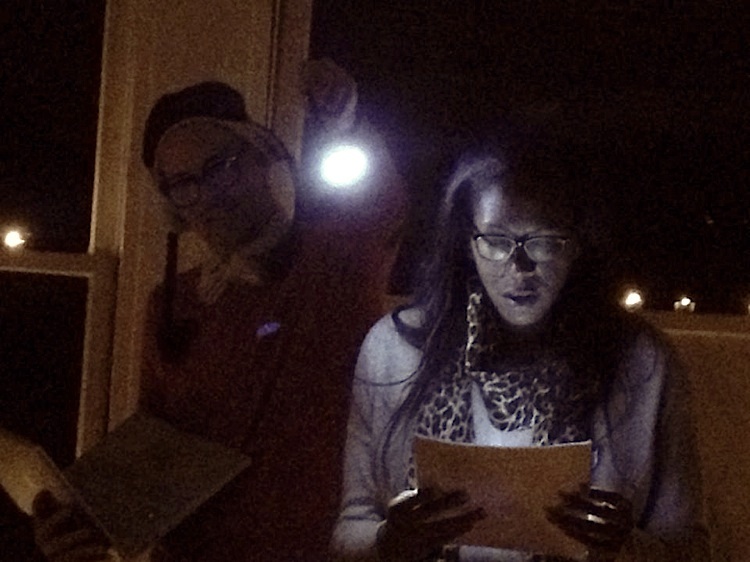
Beware the published starting time—the real determiner is the setting of the sun, since readings at The Squat are conducted, perhaps by necessity, in the dark. After night falls sufficiently, the group is led in abrupt silence from Smith’s iconic San Francisco apartment to the “venue,” a completely empty apartment upstairs, barely illuminated by rows of flickering tealights (“if you have hair, try not to catch on fire” Smith cracks). We squeeze into the “living room” together, encircling a pile of sawdust, the “stage.” 

Of the four readers, three locals (Ben Mirov, Erica Lewis, and Cedar Sigo) and a special “guest star” from the East Coast (Alex Dimitrov), the one whose poems most stick in my mind are Mirov’s, whose chilly distillations of word and image and deliberately affectless tone perfectly suit a body of poetry written in and for a digital age. Lewis reads from her latest project, a linked series called darryl hall is my boyfriend for which she provides mixed tapes of Darryl Hall’s music for emphasis, Sigo, most recently published by City Lights, presents a series of short poems rife with lush imagery, and Dimitrov works the increasingly vocal crowd with his confessional anecdotes, both written and spontaneous. The police don’t show and no-one catches on fire, so the event is deemed a success. Housing scarcity being what it is in this town, surely this apartment can’t stay empty forever, so get down there while you still have a chance, or head down to 16th Street on any Thursday around 10 p.m. Either way you’ll quickly discover that though our bookstores might be under siege, our poets refuse to surrender the fight.

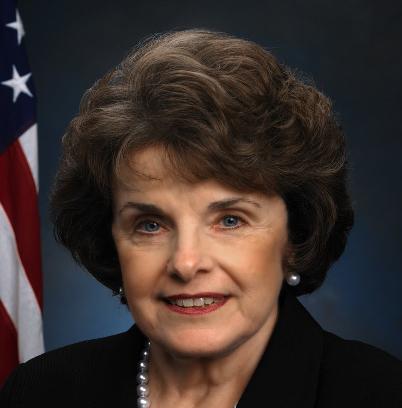
Dianne Feinstein and 8 Washington: The letters

8

Here’s a fascinating little bit of history that relates to the 8 Washington project.

In 1984, the owners of Golden Gateway proposed to build a nine-story condo tower on the site, pretty close to where Simon Snellgove wants to build his ultra-luxury condos today. Dianne Feinstein was the mayor of San Francisco, and she didn’t like the idea at all. In fact, she sent a letter to the Redevelopment Agency Commission, which at that time controlled the land, to say that condo development was inappropriate.

(Feinstein was remarkably open about the whole thing; Willie Brown would have made one phone call, gotten his way, and left no paper trail.)

The point she made in the letter (pdf here) was that the existing Golden Gateway project was approved in the first place largely because of the promise of open space and recreation facilities. Those facilities, contrary to what Snellgrove’s team is saying, are in fact open to anyone who pays dues. “To tear up the present tennis courts to crowd a condominium tower on the site would be regrettable,” she said.

Then in 2003, another plan reared its head — developers wanted to build a $39 million condo and health-club facility on the Golden Gateway site. Again, Feinstein — by that point a US senator — weighed in with a letter of opposition. “Development of more residential units would create traffic noise and pollution and disregard the original understanding between City officials and area residents that open space and recreational amenities would be preserved.”

Feinstein’s opposition was notable: She rarely opposed any development of any sort, anywhere in the city. She allowed massive new waves of office construction and — like Ed Lee today — argued that cranes on the skyline were a sign of progress.

But this idea — condos at the 8 Washington site — was so beyond the pale that even the most pro-growth mayor in the city’s history had to oppose it.

Feinstein hasn’t said anything about the latest project. But she clearly doesn’t actively support it; when the measure came up the the Democratic County Central Committee, her representative didn’t vote.


Guardian event on Plan Bay Area

65

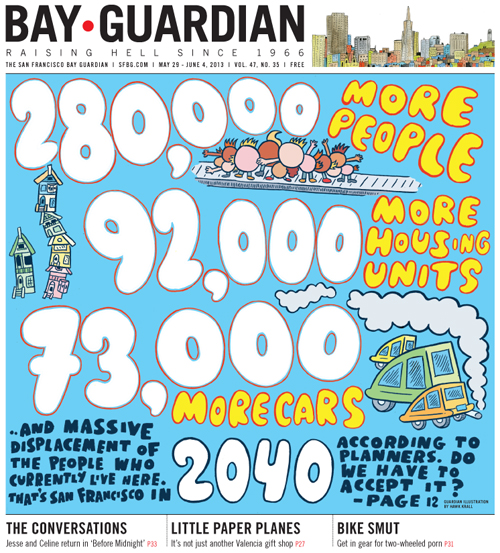
There’s going to be profound change in San Francisco over the next 25 years. If regional planners have their way, we’re talking 280,000 more people — and massive displacement of existing populations. Is that ok? What should we do about it? Is there any alternative, a better way to plan for growth?

I have no problem with increased density and population in San Francisco — but only if we can first protect vulnerable communities. How does that happen? What tools does the city have, and how can they be used?

These aren’t easy questions. Come help us talk about them and look for answers. The Guardian, along with the Council of Community Housing Organizations and Urban IDEA are holding a forum on Plan Bay Area June 12 at 6pm at the LGBT Center. It’s free and open to all.

Among the panelists:

·        Tim Redmond, San Francisco Bay Guardian

·        Mike Casey, Unite HERE Local 2

·        Cindy Wu, San Francisco Planning Commissioner

·        Maria Zamudio, Causa Justa: Just Cause

·        Antonio Diaz, People Organizing to Defend our Economic Rights (PODER)

·        Bob Allen, Urban Habitat

·        Gen Fujioka, Chinatown Community Development Center

·        Peter Cohen, Council of Community Housing Organizations

·        Rachel Brahinsky, University of San Francisco

More information here.

See you there.

Planning for displacement: Short takes

14

Regional planning hits Chinatown

When regional planners at the Metropolitan Transportation Commission funded a study to create a bus-rapid transit system on Van News Avenue, they decided, in the interest of speeding the buses along, to allow only one left turn — onto Broadway.

That would turn Broadway into a much-busier thoroughfare — and have a huge impact on Chinatown, where there’s heavy pedestrian traffic. That, Cindy Wu says, is one of the problems with regional planning — it doesn’t always consider the impacts on existing, fully developed neighborhoods.

Wu is a planner with the Chinatown Community Development Center and a member of San Francisco’s Planning Commission. She’s concerned that Plan Bay Area, with its macro focus, ignores the micro — the people who already live in communities that will feel the pressure.

“Chinatown is performing amazingly,” she told me recently. There’s low car use, high density … all the things ABAG seems to want. And yet, it’s in the Priority Development Area, where new construction could lead to displacement. “It doesn’t get to the neighborhood scale, where people will be forced to control the impacts of growth.”

Gen Fujioka, policy director at CCDC, noted that the plans says people displaced from a San Francisco community like Chinatown can be accommodated elsewhere in the region. “Like that’s an acceptable alternative,” he said.

A (somewhat) better approach

The Draft Environmental Impact Report on Plan Bay Area looked at several alternatives, including doing nothing at all, which everyone pretty much agrees is a bad idea. But interestingly, a proposal put together by community groups, including Public Advocates, Urban Habitat, and TransForm, turned out to do a better job of reaching ABAG’s environmental goals.

In the DEIR models, “Alternative Five,” as it’s described, leads to slightly lower levels of displacement and less car travel. It does that in large part through the imposition of a Vehicle Miles Travelled Tax — a one-cent levy on every mile driven by a private car or light truck in the region.

That, it turns out, does indeed discourage car use. It would also raise more than $600 million a year, most of which would go to public transit and affordable housing. Over 25 years, that’s a lot of cash.

But ABAG planners rejected that proposal, preferring their own alternative.

ABAG and the UN plan for world domination

One of the biggest problems with opposing, or even questioning, ABAG’s Plan Bay Area is that some of the loudest voices against it are, in a word, loony.

Around the Bay Area suburbs, people packing hearings on the plan are talking about the secret United Nations plan to confiscate all private property, burn down suburban homes, and force everyone into tiny cells in teeming cities where our personal freedoms will be systematically destroyed.

You haven’t heard of that? It’s called Agenda 21, and the John Birch Society is convinced that it’s a global plot to destroy America.

Actually, Agenda 21 is a weak, unenforceable document that came out of the UN’s environmental conference in 1992. It suggests — as does SB375, as does just about every sane thinker in civilization — that the world’s growth ought to be planned, sustainable, and energy efficient.

But it’s getting dragged up as grounds to scuttle Plan Bay Area. The black helicopter folks, the Obama Wants To Take My House folks, and a few NIMBYs who just don’t want density in the suburbs, have been wailing about this massive conspiracy in the past few months.

It’s unlikely that the Tea Party types will make common cause with San Francisco progressives on this issue. But there’s a real danger here: If the nut cases get the attention, serious questions about the feasibility of this plan could get lumped in with the ravings of conspiracy kooks.

And as far as the UN taking over California? Hey, at least we’ll get universal health care.

Film listings

0

Film listings are edited by Cheryl Eddy. Reviewers are Kimberly Chun, Dennis Harvey, Lynn Rapoport, and Sara Maria Vizcarrondo. For rep house showtimes, see Rep Clock. Due to the Memorial Day holiday, theater information was incomplete at presstime.

OPENING

After Earth M. Night Shyamalan directs father-son team Will and Jaden Smith as a father-son team stranded on post-apocalyptic Earth. (1:40)

Before Midnight See “The Conversations.” (1:48)

Now You See Me Magicians rob banks in this ensemble caper starring Jesse Eisenberg, Mark Ruffalo, Morgan Freeman, and Woody Harrelson. (1:56)

Rebels with a Cause The huge string of parklands that have made Marin County a jewel of preserved California coastline might easily have become wall-to-wall development — just like the Peninsula — if not for the stubborn conservationists whose efforts are profiled in Nancy Kelly’s documentary. From Congressman Clem Miller — who died in a plane crash just after his Point Reyes National Seashore bill became a reality — to housewife Amy Meyer, who began championing the Golden Gate National Recreation Area because she “needed a project” to keep busy once her kids entered school, they’re testaments to the ability of citizen activism to arrest the seemingly unstoppable forces of money, power and political influence. Theirs is a hidden history of the Bay Area, and of what didn’t come to pass — numerous marinas, subdivisions, and other developments that would have made San Francisco and its surrounds into another Los Angeles. (1:12) Roxie. (Harvey)

Sightseers See “Tourist Trappers.” (1:28)

Venus and Serena How do you compress the remarkable life and stunning career of one Williams sister into a doc that’s a shade over 90 minutes, much less fit both of their stories in there? Venus and Serena can’t do much more than offer an overview of the sports phenoms, shadowing both during what proved to be an unfortunately injury-plagued 2011 season. It also flashes back to chart the sisters’ rise from Compton-raised prodigies to Grand Slam-dominating forces of nature, and features glamorously-lit interviews with the women, a handful of their relatives, and famous admirers (with Anna Wintour stopping by to purr that they are “fashion gladiators and tennis gladiators”). Though directors Maiken Baird and Michelle Major don’t leave out the more controversial bits — the sisters’ feelings about their domineering father (their former coach); their on-court tantrums; their frank talk about religion, race, dealing with stress, etc. — the straightforward Venus and Serena lacks any stylistic flair, a shame considering how important style is to the sisters. It does offer a few unexpected off-the-cuff moments, however, as when a karaoke-obsessed Serena launches into “Hole Hearted,” by 1990s hair rockers Extreme, after a disappointing day at Wimbledon. (1:39) (Eddy)

We Steal Secrets: The Story of Wikileaks Call it the unenviable yet altogether fascinating task of the smartest moviemaker in the room: capturing the evasive, mercurial and fallible free-speech crusader Julian Assange and his younger church-going, trans-curious cohort Bradley Manning, all sans interviews with the paranoid former who’s in hiding and the guileless latter who was incarcerated without charges for a year by the military. Enron: The Smartest Guys in the Room (2005) documentary maker Alex Gibney seems to be just the guy to take on this project, pulling back the curtain on the transparency-first site, navigating the labyrinthine contradictions of a classic Internet-age antihero, and telling the previously untold story of the young man who tied himself to WikiLeaks’s, and Assange’s, fortunes. It starts out innocently (or not) enough, with Assange and his minuscule band of volunteers uploading and unleashing the still-shocking video footage of a Reuters news crew and their rescuers, mistaken for insurgents, being mowed down in a hailstorm of friendly fire by US forces in Iraq. Assange’s notoriety and undoing comes with the arrival of a mass of easily shared government intelligence uploaded then passed along to him by computer wiz Private Manning in the biggest leak of state secrets in US history; the lonely analyst’s unexpected friendship with hacker Adrian Lamo, who ultimately turns him in; and the rape charges that finally ensnare Assange in a web of lies, ironically, of his own making. Seemingly on the side of Assange, Net anarchists, and the free flow of information at the start of the saga, Gibney uses extensive interviews with (Bush-era) intelligence experts, Lamo, an Assange sexual-assault accuser, WikiLeaks supporters, and reporters; animation; and footage culled from journalists and likely anyone with a cell phone camera in shooting distance of Assange to tell this riveting story of good intentions and ego run amok, sidestepping the WikiLeaks poobah’s approval in a comprehensive, impassioned warts-and-all way that he even might appreciate. (2:10) (Chun)

ONGOING

At Any Price Growing up in rural Iowa very much in the shadow of his older brother, Dean Whipple (Zac Efron) cultivated a chip on his shoulder while dominating the figure 8 races at the local dirt track. When papa Henry (Dennis Quaid) — a keeping-up-appearances type, with secrets a-plenty lurking behind his good ol’ boy grin — realizes Dean is his best hope for keeping the family farm afloat, he launches a hail-mary attempt to salvage their relationship. This latest drama from acclaimed indie director Ramin Bahrani (2008’s Goodbye Solo) is his most ambitious to date, enfolding small-town family drama and stock-car scenes into a pointed commentary on modern agribusiness (Henry deals in GMO corn, and must grapple with the sinister corporate practices that go along with it). But the film never gels, particularly after an extreme, third-act plot twist is deployed to, um, hammer home the title — which refers to prices both monetary and spiritual. A solid supporting cast (Kim Dickens, Heather Graham, Clancy Brown, Red West, newcomer Maika Monroe) helps give the film some much-needed added weight as it veers toward melodrama. (1:45) (Eddy)

The Big Wedding The wedding film has impacted our concepts of matrimony, fashion, and marital happiness more than all the textbooks in the world have affected our national testing average; but it’s with that margin of mediocrity I report from the theater trenches of The Big Wedding. With this, the wedding movie again peters to a crawl. Susan Sarandon (an actress I love with a loyalty beyond sense) is Bebe, the stepmother/caterer swept under the rug by the selfishness of her live in lover Don (De Niro), his ex-wife/baby momma Elle (Diane Keaton) and their racist wackjob future in-laws. When Don and Elle faced the end of their marriage, they tried to rekindle with a Columbian orphan. Cue Ben Barnes in brownface. Alejandro is set to wed Amanda Seyfried and when his mother ascends from Columbia for the wedding, he decides Don and Elle have to act like their marriage never ended &ldots; which makes Bebe a mistress. Surprise! A decade of caring selflessly for your lover’s kids has won you a super shitty wedding you still have to cater! To give you a sense of the conflict management on display, Bebe — the film’s graceful savior —drops a drink on Don before fleeing the scene in her Alfa Romeo; she’s the one character not determined to act out her more selfish urges in the style of an MTV reality show. Despite some less imaginative conflicts and degrading “solutions,” this blended family still speaks some truth about the endearing embarrassment of the happy family. (1:29) (Vizcarrondo)

Elemental Even those suffering from environmental-doc fatigue (a very real condition, particularly in the eco-obsessed Bay Area) will find much to praise about Elemental, co-directed by Gayatri Roshan and NorCal native Emmanuel Vaughan-Lee (who also co-composed the film’s score). This elegantly shot and edited film approaches the issues via three “eco-warriors,” who despite working on different causes on various corners of the planet encounter similar roadblocks, and display like-minded determination, along the way: Rajendra Singh, on a mission to heal India’s heavily polluted Ganges River; Jay Harman, whose ingenious inventions are based on “nature’s blueprints”; and Eriel Deranger, who fights for her indigenous Canadian community in the face of Big Oil. Deranger cuts a particularly inspiring figure: a young, tattooed mother who juggles protests, her moody tween (while prepping for a new baby), and the more bureaucratic aspects of being a professional activist — from defending her grassroots methods when questioned by her skeptical employer, to deflecting a drunk, patronizing Robert F. Kennedy Jr. at a big-ticket fundraiser — with a calm, steely sense of purpose. (1:33) Smith Rafael. (Eddy)

Epic (1:42)

Fast and Furious 6 Forget the fast (that’s understood by now, anyway) — part six in this popcorny series is heavy on the “furious,” with constant near-death stunts that zoom past irrational and slam into batshit crazy. Agent Hobbs (Dwayne Johnson) lures the gang out of sunny retirement to bust a fast driver with a knack for strategy and an eye on world domination. Sure, Ludacris jokes their London locale doesn’t mean they’re in a Bond movie, but give cold-blooded Luke Evans some time and he’ll work his way up to antagonizing 007. Shaw (Evans) is smaller than our hero Toretto (Vin Diesel), but he’s convincing, throwing his King’s English at a man whose murky dialect is always delivered with a devilish baritone. If Shaw’s code is all business, Toretto’s is all family: that’s what holds together this cast, cobbled from five Fast and Furious installments shot all over the world. Hottie Gal Gadot (playing Sung Kang’s love interest) reassures Han (Kang) mid-crisis: “This is what we are.” It’s not for nothing the gang’s main weapon is a harpoon gun that, once shot, leaves an umbilicus from the shooter to whatever’s in the crosshairs. That’s Torreto for you. Meanwhile, the villain’s weapon is a car with a spatula-like front end, that flips cars like pancakes. The climactic battle on a cargo plane has to give a face time to every member of the eight-person team, so naturally they shot it on the world’s longest runway. Of course the parade features less car porn than previous editions but it’s got a wider reach now — it’s officially international intrigue, not just fun for gearheads. For my money, it’s some of the best action in theaters today. Stick around for the inevitable sequel-suggesting coda during the credits. (2:10) (Vizcarrondo)

42 Broad and morally cautious, 42 is nonetheless an honorable addition to the small cannon of films about the late, great baseball player Jackie Robinson. When Dodgers owner Branch Rickey (Harrison Ford) declares that he wants a black player in the white major leagues because “The only real color is green!”, it’s a cynical explanation that most people buy, and hate him for. It also starts the ball curving for a PR shitstorm. But money is an equal-opportunity leveling device: when Robinson (Chadwick Boseman) tries to use the bathroom at a small-town gas station, he’s denied and tells his manager they should “buy their 99 gallons of gas another place.” Naturally the gas attendant concedes, and as 42 progresses, even those who reject Robinson at first turn into men who find out how good they are when they’re tested. Ford, swashbuckling well past his sell-by date, is a fantastic old coot here; his “been there, lived that” prowess makes you proud he once fled the path of a rolling bolder. His power moves here are even greater, but it’s ultimately Robinson’s show, and 42 finds a lot of ways to deliver on facts and still print the legend. (2:08) (Vizcarrondo)

Frances Ha Noah Baumbach isn’t exactly known for romance and bright-eyed optimism. Co-writing 2009’s Fantastic Mr. Fox with director Wes Anderson is maybe the closest to “whimsy” as he’s ever come; his own features (2010’s Greenberg, 2007’s Margot at the Wedding, 2005’s The Squid and the Whale, 1997’s Mr. Jealousy, and 1995’s Kicking and Screaming) tend to veer into grumpier, more intellectual realms. You might say his films are an acquired taste. But haters beware. Frances Ha — the black-and-white tale of a New York City hipster (Baumbach’s real-life squeeze, Greta Gerwig, who co-write the script with him) blundering her way into adulthood — is probably the least Baumbach-ian Baumbach movie ever. Owing stylistic debts to both vintage Woody Allen and the French New Wave, Frances Ha relies heavily on Gerwig’s adorable-disaster title character to propel its plot, which is little more than a timeline of Frances’ neverending micro-adventures: pursuing her nascent modern-dance career, bouncing from address to address, taking an impromptu trip to Paris, visiting her parents (portrayed by the Sacramento-raised Gerwig’s real-life parents), “breaking up” with her best friend. It’s so charming, poignant, and quotable (“Don’t treat me like a three-hour brunch friend!”) that even those who claim to be allergic to Baumbach just might find themselves succumbing to it. (1:26) Smith Rafael. (Eddy)

The Great Gatsby Every bit as flashy and in-your-face as you’d expect the combo of “Baz Luhrmann,” “Jazz Age,” and “3D” to be, this misguided interpretation of F. Scott Fitzgerald’s classic tale is, at least, overstuffed with visual delights. For that reason only, all the fashion-mag fawning over leading lady Carey Mulligan’s gowns and diamonds, and the opulent production design that surrounds them, seems warranted. And in scenes where spectacle is appropriate — Gatsby’s legendary parties; Tom Buchanan’s wild New York romp with his mistress — Luhrmann delivers in spades. The trade-off is that the subtler aspects of Fitzgerald’s novel are either pushed to the side or shouted from the rooftops. Leonardo DiCaprio, last seen cutting loose in last year’s Django Unchained, makes for a stiff, fumbling Gatsby, laying on the “Old Sports” as thickly as his pancake make-up. There’s nothing here so startlingly memorable as the actor and director’s 1996 prior collaboration, Romeo + Juliet — a more successful (if still lavish and self-consciously audacious) take on an oft-adapted, much-beloved literary work. (2:22) (Eddy)

The Hangover Part III Even the friendliest little blackout bacchanal can get tiresome the third time around. The poster depicting Bradley Cooper, Ed Helms, and Zach Galifianakis — stern in suits and ties — says it all: it’s grim men’s business, the care and maintenance of this Hangover franchise, this orgy of good times gone bad. Once a bad-taste love letter to male-bonding, Hangover Part III is ready for a chance, primed to sever some of those misbegotten ties. This time around, the unlikely troika — with the always dispensable normal-dude figurehead Doug (Justin Bartha) in tow — are captured by random sketchy figure Marshall (John Goodman, whose every utterance of the offensive “Chinaman” should bring back Big Lebowski warm-and-fuzzies). He holds Doug hostage in exchange for the amoral, cockfighting, coke-wallowing, whore-hiring, leather-wearing Leslie Chow (Ken Jeong), who stole his gold, and it turns out Alan (Galifianakis) might be his only chum. Jeong, who continues to bring the hammy glee, is still the best thing here, even as the conscience-free instigator; he’s the dark counterpart to tweaked man-child Alan, who meets cute with mean-ass pawn-star soulmate Cassie (Melissa McCarthy). Meanwhile, Cooper and Helms look on, puzzled, no doubt pondering the prestige projects on their plate and wondering what they’re still doing here. (1:40) (Chun)

The Iceman Methody-y changeling Michael Shannon is pretty much the whole show in The Iceman, about a real-life hitman who purportedly killed over 100 people during his career. Despite some scarily violent moments, however, Ariel Vromen’s film doesn’t show much of that body count — he’s more interested in the double life Richard Kuklinski (Shannon) leads as a cold-blooded killer whose profession remains entirely unknown for years to his wife, daughters, and friends. The waitress he marries, Deborah (Winona Ryder), isn’t exactly a brainiac. But surely there’s some willful denial in the way she accepts his every excuse and fake profession, starting with “dubbing Disney movies” when he actually dupes prints of pornos. It’s in that capacity that he first meets Roy Demeo (Ray Liotta), a volatile Newark mobster who, impressed by Kuklinski’s blasé demeanor at gunpoint, correctly surmises this guy would make a fine contract killer. When he has a falling out with Demeo, Kuklinski “freelances” his skill to collaborate with fellow hitman Mr. Freezy (Chris Evans), so named because he drives an ice-cream truck — and puts his victims on ice for easier disposal. For the sake of a basic contrast defined by its ad line — “Loving husband. Devoted father. Ruthless killer.” — The Iceman simplifies Kuklinski’s saga, making him less of a monster. The movie only briefly suggests Kuklinski’s abused childhood, and it omits entirely other intriguing aspects of the real-life story. But Shannon creates a convincing whole character whose contradictions don’t seem so to him — or to us. (1:46) (Harvey)

In the House In François Ozon’s first feature since the whimsical 2010 Potiche, he returns somewhat to the playful suspense intrigue of 2003’s Swimming Pool, albeit with a very different tone and context. Fabrice Luchini plays a high school French literature teacher disillusioned by his students’ ever-shrinking articulacy. But he is intrigued by one boy’s surprisingly rich description of his stealth invasion into a classmate’s envied “perfect” family — with lusty interest directed at the “middle class curves” of the mother (Emmanuelle Seigner). As the boy Claude’s writings continue in their possibly fictive, possibly stalker-ish provocations, his teacher grows increasingly unsure whether he’s dealing with a precocious bourgeoisie satirist or a literate budding sociopath — and ambivalent about his (and spouse Kristin Scott Thomas’ stressed gallery-curator’s) growing addiction to these artfully lurid possible exposé s of people he knows. And it escalates from there. Ozon is an expert filmmaker in nimble if not absolute peak form here, no doubt considerably helped by Juan Mayorga’s source play. It’s a smart mainstream entertainment that, had it been Hollywood feature, would doubtless be proclaimed brilliant for its clever tricks and turns. (1:45) Roxie, Smith Rafael. (Harvey)

Iron Man 3 Neither a sinister terrorist dubbed “the Mandarin” (Ben Kingsley) nor a spray-tanned mad scientist (Guy Pearce) are as formidable an enemy to Tony Stark (Robert Downey, Jr.) as Tony Stark himself, the mega-rich playboy last seen in 2012’s Avengers donning his Iron Man suit and thwarting alien destruction. It’s been rough since his big New York minute; he’s been suffering panic attacks and burying himself in his workshop, shutting out his live-in love (Gwyneth Paltrow) in favor of tinkering on an ever-expanding array of manned and un-manned supersuits. But duty, and personal growth, beckon when the above-mentioned villains start behaving very badly. With some help (but not much) from Don Cheadle’s War Machine — now known as “Iron Patriot” thanks to a much-mocked PR campaign — Stark does his saving-the-world routine again. If the plot fails to hit many fresh beats (a few delicious twists aside), the 3D special effects are suitably dazzling, the direction (by series newcomer Shane Black) is appropriately snappy, and Downey, Jr. again makes Stark one of the most charismatic superheros to ever grace the big screen. For now, at least, the continuing Avengers spin-off extravaganza seems justified. (2:06) (Eddy)

Jurassic Park 3D “Life finds a way,” Jeff Goldblum’s leather-clad mathematician remarks, crystallizing the theme of this 1993 Spielberg classic, which at its core is more about human relationships than genetically manufactured terrors. Of course, it’s got plenty of those, and Jurassic Park doesn’t really need its (admittedly spiffy) 3D upgrade to remain a thoroughly entertaining thriller. The dinosaur effects — particularly the creepy Velociraptors and fan-fave T. rex — still dazzle. Only some early-90s computer references and Laura Dern’s mom jeans mark the film as dated. But a big-screen viewing of what’s become a cable TV staple allows for fresh appreciation of its less-iconic (but no less enjoyable) moments and performances: a pre-megafame Samuel L. Jackson as a weary systems tech; Bob Peck as the park’s skeptical, prodigiously thigh-muscled game warden. Try and forget the tepid sequels — including, dear gawd, 2014’s in-the-works fourth installment. This is all the Jurassic you will ever need. (2:07) (Eddy)

Kon-Tiki In 1947 Norwegian explorer and anthropologist Thor Heyderdahl arranged an expedition on a homemade raft across the Pacific, recreating what he believed was a route by which South Americans traveled to Polynesia in pre-Columbian times. (Although this theory is now disputed.) The six-man crew (plus parrot) survived numerous perils to complete their 101-day, 4300-mile journey intact — winning enormous global attention, particularly through Heyderdahl’s subsequent book and documentary feature. Co-directors Joachim Roenning and Espen Sandberg’s dramatization is a big, impressive physical adventure most arresting for its handsome use of numerous far-flung locations. Where it’s less successful is in stirring much emotional involvement, with the character dynamics underwhelming despite a decent cast led by Pal Sverr Hagen as Thor (who, incredibly, was pretty much a non-swimmer). Nonetheless, this new Kon-Tiki offers all the pleasures of armchair travel, letting you vicariously experience a high-risk voyage few could ever hope (or want) to make in real life. (1:58) (Harvey)

Love is All You Need Copenhagen hairdresser Ida (Trine Dyrholm) has just finished her cancer treatments — with their success still undetermined — when she arrives home to find her longtime husband Leif (Kim Bodnia) boning a coworker on their couch. “I thought you were in chemo” is the closest he comes to an apology before walking out. Ida is determined to maintain a cheerful front when attending the Italian wedding of their daughter Astrid (Molly Blixt Egelind) — even after emotionally deaf Leif shows up with his new girlfriend in tow. Meanwhile brusque businessman and widower Philip (Pierce Brosnan), the groom’s father, is experiencing the discomfort of returning to the villa he once shared with his beloved late wife. This latest from Danish director Susanne Bier and writing partner Anders Thomas Jensen (2006’s After the Wedding, 2004’s Brothers, 2010’s In a Better World) is more conventionally escapist than their norm, with a general romantic-seriocomedy air reinforced by travel-poster-worthy views of the picturesque Italian coastline. They do try to insert greater depth and a more expansive story arc than you’d get in a Hollywood rom com. But all the relationships here are so prickly — between middle-aged leads we never quite believe would attract each other, between the clearly ill-matched aspiring newlyweds, between Paprika Steen’s overbearing sister in-law and everyone — that there’s very little to root for. It’s a romantic movie (as numerous soundtracked variations on “That’s Amore” constantly remind us) in which romance feels like the most contrived element. (1:50) (Harvey)

Midnight’s Children Deepa Mehta (2005’s Water) directs and co-adapts with Salman Rushdie the author’s Booker Prize-winning 1981 novel, which mixes history (India’s 1947 independence, and the subsequent division of India and Pakistan) with magical elements — suggested from its fairy-tale-esque first lines: “I was born in the city of Bombay, once upon a time.” This droll voice-over (read by Rushdie) comes courtesy of Saleem Sinai, born to a poor street musician and his wife (who dies in childbirth; dad is actually an advantage-taking Brit played by Charles “Tywin Lannister” Dance) but switched (for vaguely revolutionary reasons) with Shiva, born at the same moment to rich parents who unknowingly raise the wrong son. Rich or poor, it seems all children born at the instant of India’s independence have shared psychic powers; over the years, they gather for “meetings” whenever Saleem summons them. And that’s just the 45 minutes or so of story. Though gorgeously shot, Midnight’s Children suffers from page-to-screen-itis; the source material is complex in both plot and theme, and it’s doubtful any film — even one as long as this — could translate its nuances and more fanciful elements (“I can smell feelings!,” Saleem insists) into a consistently compelling narrative. Last-act sentimentality doesn’t help, though it’s consistent with the fairy-tale vibe, I suppose. (2:20) Smith Rafael. (Eddy)

Mud (2:15)

Oblivion Spoiler alert: the great alien invasion of 2017 does absolutely zilch to eliminate, or at least ameliorate, the problem of sci-fi movie plot holes. However, puny humans willing to shut down the logic-demanding portions of their brains just might enjoy Oblivion, which is set 60 years after that fateful date and imagines that Earth has been rendered uninhabitable by said invasion. Tom Cruise plays Jack, a repairman who zips down from his sterile housing pod (shared with comely companion Andrea Riseborough) to keep a fleet of drones — dispatched to guard the planet’s remaining resources from alien squatters — in working order. But Something is Not Quite Right; Jack’s been having nostalgia-drenched memories of a bustling, pre-war New York City, and the déjà vu gets worse when a beautiful astronaut (Olga Kurylenko) literally crash-lands into his life. After an inaugural gig helming 2010’s stinky Tron: Legacy, director Joseph Kosinski shows promise, if not perfection, bringing his original tale to the screen. (He does, however, borrow heavily from 1968’s 2001: A Space Odyssey, 1996’s Independence Day, and 2008’s Wall-E, among others.) Still, Oblivion boasts sleek production design, a certain creative flair, and some surprisingly effective plot twists — though also, alas, an overlong running time. (2:05) (Eddy)

Pain & Gain In mid-1995 members of what became known as the “Sun Gym Gang” — played here by Mark Wahlberg, Dwayne Johnson, and Anthony Mackie — were arrested for a series of crimes including kidnapping, extortion, and murder. Simply wanting to live large, they’d abducted one well-off man (Tony Shalhoub) months earlier, tortured him into signing over all his assets, and left him for dead — yet incredibly the Miami police thought the victim’s story was a tall tale, leaving the perps free until they’d burned through their moolah and sought other victims. Michael Bay’s cartoonish take on a pretty horrific saga repeatedly reminds us that it’s a true story, though the script plays fast and loose with many real-life details. (And strangely it downplays the role steroid abuse presumably played in a lot of very crazy behavior.) In a way, his bombastic style is well-suited to a grotesquely comic thriller about bungling bodybuilder criminals redundantly described here as “dumb stupid fucks.” There have been worse Bay movies, even if that’s like saying “This gas isn’t as toxic as the last one.” But despite the flirtations with satire of fitness culture, motivational gurus and so forth, his sense of humor stays on a loutish plane, complete with fag-bashing, a dwarf gag, and representation of Miami as basically one big siliconed titty bar. Nor can he pull off a turn toward black comedy that needs the superior intelligence of someone like the Coen Brothers or Soderbergh. As usual everything is overamped, the action sequences overblown, the whole thing overlong, and good actors made to overact. You’ve got to give cranky old Ed Harris credit: playing a private detective, he alone here refuses to be bullied into hamming it up. (2:00) (Harvey)

The Painting Veteran animator Jean-François Laguionie’s French-Belgian feature is a charming and imaginative fable whose characters live in the worlds of an elusive artist’s canvases. It begins in one particular picture, a fanciful landscape in which society is strictly stratified in terms of how “finished” the figures in it are. At the top of the heap are the Alldunns, elitist castle-dwelling snobs who look down on the semi-completed Halfies. Everybody shuns the Sketchies, pencil preliminaries come to life. When members of each group get chased into the Forbidden Forest, they discover they can actually exit the frame entirely and visit other paintings in the artist’s studio. As a parable of prejudice and tolerance it’s not exactly sophisticated, and the story doesn’t quite sustain its early momentum. But it’s a visual treat throughout, nodding to various early 20th-century modern art styles and incorporating some different animation techniques (plus, briefly, live action). Note: the last screenings of each day will be in the film’s original French language, with English subtitles; all others offer the English-dubbed version. (1:18) (Harvey)

The Place Beyond the Pines Powerful indie drama Blue Valentine (2010) marked director Derek Cianfrance as one worthy of attention, so it’s with no small amount of fanfare that this follow-up arrives. The Place Beyond the Pines‘ high profile is further enhanced by the presence of Bradley Cooper (currently enjoying a career ascension from Sexiest Man Alive to Oscar-nominated Serious Actor), cast opposite Valentine star Ryan Gosling, though they share just one scene. An overlong, occasionally contrived tale of three generations of fathers, father figures, and sons, Pines‘ initial focus is Gosling’s stunt-motorcycle rider, a character that would feel more exciting if it wasn’t so reminiscent of Gosling’s turn in Drive (2011), albeit with a blonde dye job and tattoos that look like they were applied by the same guy who inked James Franco in Spring Breakers. Robbing banks seems a reasonable way to raise cash for his infant son, as well as a way for Pines to draw in another whole set of characters, in the form of a cop (Cooper) who’s also a new father, and who — as the story shifts ahead 15 years — builds a political career off the case. Of course, fate and the convenience of movie scripts dictate that the mens’ sons will meet, the past will haunt the present and fuck up the future, etc. etc. Ultimately, Pines is an ambitious film that suffers from both its sprawl and some predictable choices (did Ray Liotta really need to play yet another dirty cop?) Halfway through the movie I couldn’t help thinking what might’ve happened if Cianfrance had dared to swap the casting of the main roles; Gosling could’ve been a great ambitious cop-turned-powerful prick, and Cooper could’ve done interesting things with the Evel Knievel-goes-Point Break part. Just sayin’. (2:20) (Eddy)

Renoir The gorgeous, sun-dappled French Riviera setting is the high point of this otherwise low-key drama about the temperamental women (Christa Theret) who was the final muse to elderly painter Auguste Renoir (Michel Bouquet), and who encouraged the filmmaking urges in his son, future cinema great Jean (Vincent Rottiers). Cinematographer Mark Ping Bin Lee (who’s worked with Hou Hsiao-hsein and Wong Kar Wai) lenses Renoir’s leafy, ramshackle estate to maximize its resemblance to the paintings it helped inspire; though her character, Dédée, could kindly be described as “conniving,” Theret could not have been better physically cast, with tumbling red curls and pale skin she’s none too shy about showing off. Though the specter of World War I looms in the background, the biggest conflicts in Gilles Bourdos’ film are contained within the household, as Jean frets about his future, Dédée faces the reality of her precarious position in the household (which is staffed by aging models-turned-maids), and Auguste battles ill health by continuing to paint, though he’s in a wheelchair and must have his brushes taped to his hands. Though not much really happens, Renoir is a pleasant, easy-on-the-eyes experience. (1:51) Smith Rafael. (Eddy)

Scatter My Ashes at Bergdorf’s This glossy love letter to posh New York City department store Bergdorf Goodman — a place so expensive that shopping there is “an aspirational dream” for the grubby masses, according to one interviewee — would offend with its slobbering take on consumerism if it wasn’t so damn entertaining. The doc’s narrative of sorts is propelled by the small army assembled to create the store’s famed holiday windows; we watch as lavish scenes of upholstered polar bears and sea creatures covered in glittering mosaics (flanking, natch, couture gowns) take shape over the months leading up to the Christmas rush. Along the way, a cavalcade of top designers (Michael Kors, Vera Wang, Giorgio Armani, Jason Wu, Karl Lagerfeld) reminisce on how the store has impacted their respective careers, and longtime employees share anecdotes, the best of which is probably the tale of how John Lennon and Yoko Ono saved the season by buying over 70 fur coats one magical Christmas Eve. Though lip service is paid to the current economic downturn (the Madoff scandal precipitated a startling dropoff in personal-shopper clients), Scatter My Ashes is mostly just superficial fun. What do you expect from a store whose best-selling shoe is sparkly, teeteringly tall, and costs $6,000? (1:33) (Eddy)

Star Trek Into Darkness Do you remember 1982? There are more than a few echoes of Star Trek II: The Wrath of Khan in J. J. Abrams’ second film retooling the classic sci-fi property’s characters and adventures. Darkness retains the 2009 cast, including standouts Zachary Quinto as Spock and Simon Pegg as comic-relief Scotty, and brings in Benedict “Sherlock” Cumberbatch to play the villain (I think you can guess which one). The plot mostly pinballs between revenge and preventing/circumventing the destruction of the USS Enterprise, with added post-9/11, post-Dark Knight (2008) terrorism connotations that are de rigueur for all superhero or fantasy-type blockbusters these days. But Darkness isn’t totally, uh, dark: there’s quite a bit of fan service at work here (speak Klingon? You’re in luck). Abrams knows what audiences want, and he’s more than happy to give it to ’em, sometimes opening up massive plot holes in the process — but never veering from his own Prime Directive: providing an enjoyable ride. (2:07) (Eddy)

Stories We Tell Actor and director Sarah Polley (2011’s Take This Waltz) turns the camera on herself and her family for this poignant, moving, inventive, and expectation-upending blend of documentary and narrative. Her father, actor Michael Polley, provides the narration; our first hint that this film will take an unconventional form comes when we see Sarah directing Michael’s performance in a recording-studio booth, asking him to repeat certain phrases for emphasis. On one level, Stories We Tell is about Sarah’s own history, as she sets out to explore longstanding family rumors that Michael is not her biological father. The missing piece: her mother, actress Diane Polley (who died of cancer just days after Sarah’s 11th birthday), a vivacious character remembered by Sarah’s siblings and those who knew and loved her. Stories We Tell‘s deeper meaning emerges as the film becomes ever more meta, retooling the audience’s understanding of what they’re seeing via convincingly doc-like reenactments. To say more would lessen the power of Stories We Tell‘s multi-layered revelations. Just know that this is an impressively unique film — about family, memories, love, and (obviously) storytelling — and offers further proof of Polley’s tremendous talent. (1:48) Smith Rafael. (Eddy)

Upstream Color A woman, a man, a pig, a worm, Walden — what? If you enter into Shane Carruth’s Upstream Color expecting things like a linear plot, exposition, and character development, you will exit baffled and distressed. Best to understand in advance that these elements are not part of Carruth’s master plan. In fact, based on my own experiences watching the film twice, I’m fairly certain that not really understanding what’s going on in Upstream Color is part of its loopy allure. Remember Carruth’s 2004 Primer? Did you try to puzzle out that film’s array of overlapping and jigsawed timelines, only to give up and concede that the mystery (and sheer bravado) of that film was part of its, uh, loopy allure? Yeah. Same idea, except writ a few dimensions larger, with more locations, zero tech-speak dialogue, and — yes! — a compelling female lead, played by Amy Seimetz, an indie producer and director in her own right. Enjoying (or even making it all the way through) Upstream Color requires patience and a willingness to forgive some of Carruth’s more pretentious noodlings; in the tradition of experimental filmmaking, it’s a work that’s more concerned with evoking emotions than hitting some kind of three-act structure. Most importantly, it manages to be both maddening and moving at the same time. (1:35) Roxie. (Eddy)

A Wedding Invitation (1:45)

What Maisie Knew In Scott McGehee and David Siegel’s adaptation of the 1897 Henry James novel, the story of a little girl caught between warring, self-involved parents is transported forward to modern-day New York City, with Julianne Moore and Steve Coogan as the ill-suited pair responsible, in theory, for the care and upbringing of the title character, played by Onata Aprile. Moore’s Susanna is a rock singer making a slow, halting descent from some apex of stardom, as we gather from the snide comments of her partner in dysfunctionality, Beale (Coogan). As their relationship implodes and they move on to custody battle tactics, each takes on a new, inappropriate companion — Beale marrying in haste Maisie’s pretty young nanny, Margo (Joanna Vanderham), and Susanna just as precipitously latching on to a handsome bartender named Lincoln (True Blood‘s Alexander Skarsgård). The film mostly tracks the chaotic action — Susanna’s strung-out tantrums, both parents’ impulsive entrances and exits, Margo and Lincoln’s ambivalent acceptance of responsibility — from Maisie’s silent vantage, as details large and small convey, at least to us, the deficits of her caretakers, who shield her from none of the emotional shrapnel flying through the air and rarely bother to present an appropriate, comprehensible explanation. Yet Maisie understands plenty — though longtime writing-and-directing team McGehee and Siegel (2001’s The Deep End, 2005’s Bee Season, 2008’s Uncertainty) have taken pains in their script and their casting to present Maisie as a lovely, watchful child, not the precocious creep often favored in the picture shows. So we watch too, with a grinding anxiety, as she’s passed from hand to hand, forced to draw her own unvoiced conclusions. (1:38) (Rapoport)

Keep the focus on real estate

70

OPINION Let’s stop blaming the hipsters. The Google bus, that annoying icon of yuppie invasion and transit privatization, is not the lead driver of gentrification’s reckless stampede reshaping our city (though it does play a role). The upscale restaurants dominating commercial strips may be economically and aesthetically offensive to many, but they are the natural byproducts of gentrification’s much-ignored elephant in the room: the real estate industry.

While headlines, comment threads, and café chatter fixate on the tech industry and yuppies with fistfuls of dollars, it’s the profit-gobbling real estate companies and speculators who are jacking up rents and evicting so many small businesses and renters—and they are surely happy to stay out of the spotlight.

Gentrification is a many-layered beast nurtured by cultural and economic trends, regional and local labor and housing factors, and public policies (or lack thereof). Beneath the surface-level aesthetics, it is about displacement of people who don’t fit the dominant economic growth plan—radical market-driven upheavals of communities often abetted by government policies and inaction.

The stats are familiar but bear repeating as they are so destructive: average apartment rentals exceeding $2,700 a month, requiring someone making $70,000 a year to pay half of his or her salary in rent. Literally thousands of no-fault evictions in the past decade, according to the Rent Board.

Despite rampant displacement of thousands of San Franciscans, there has been little response from City Hall: no hearings, no proactive legislation, not even bully-pulpit style leadership. We must demand more.

Where is the leadership demanding the city do everything in its albeit limited power to halt further displacement of residents and small businesses? The toxic combo of tenant evictions and home foreclosures by the thousands — driven principally by major banks and real estate companies — is destroying lives and communities.

Some of this is beyond City Hall’s jurisdiction: state laws like the Ellis Act and Costa-Hawkins enable no-fault evictions and prevent vitally needed commercial rent control. Still, beyond their valiant opposition to the Wiener-Farrell condo conversion threat, city leaders have been largely silent about this latest wave of gentrification that’s eviscerating communities, driving out small businesses, and squeezing renters to the bone.

What can we do? We won’t defeat gentrification with city hearings or loud protests or online screeds and petitions — but we need all those things, along with serious public education, to shine a bright hot spotlight on the companies and individuals defining who lives and votes here.

We need a new era of citywide awareness, unity, and action to literally save San Francisco — a bold unapologetic vision that puts affordability and diversity at the forefront of what our city is about. We can’t have diversity without affordability; it’s that simple.

Renters are gearing up to fight back. An ‘Eviction Free Summer’ is being planned — an innovative campaign to counter the rash of evictions that are generating both displacement and skyrocketing rent prices. The idea of ‘Eviction Free Summer’ is to put evictions and evictors in the spotlight, to put would-be evictors on notice and capture the attention of city officials who have so far done little to stem their tide.

We must demand accountability and action by City Hall and state legislators to rein in the real estate industry and put the brakes on evictions and other displacement. People’s lives, neighborhoods and communities, and the very fabric and identity of our city are at stake.

To those who cheer “change” as if its victims were not real, or who wearily concede the fight, we must ask: are we really going to allow the profit-hungry market and wealth-seeking executives and speculators decide who lives and votes here? Are we going to let the market destroy what’s left of our city’s economic, cultural, racial and ethnic diversity — the very things that make San Francisco what it is?

Christopher D. Cook is an award-winning journalist and author, and former Bay Guardian city editor. Contact him at www.christopherdcook.com

Editor’s notes

57

tredmond@sfbg.com

EDITORS NOTES I know you’re getting a lot of shit these days, and it’s not entirely fair. You’re not the ones making a killing in overpriced real estate. You came here looking for a job, and the jobs you get pay well enough that landlords and speculators can extract wealth that you ought to be able to save or spend in town, creating more jobs for everyone. I can’t blame you for wanting to live in one of the world’s greatest cities; I came here too, from the East Coast, in 1981, looking for work as a writer but mostly looking to live in San Francisco. So did waves of immigrants before me.

But we all have to remember something: There were people living here when we arrived. It was their city before it was ours. And they had, and have, the right to live here, too.

In fact, the people who have been here for 20 or 30 years, who have worked to build this community, have — in a karmic sense — even more right to be here than you. Trite as it sounds, they were here first.

Americans have a bad record when it comes to moving into established populations. Ask any American Indian. Ask the Mexicans about the treaty of Guadalupe Hidalgo.

The hippies who arrived in San Francisco in the 1960s — attracted, among other things, by really cheap rent in the Haight Asbury — weren’t always terribly polite to, or concerned about, the natives who lived there, and had fun teasing the straights and fouling their parks. But they didn’t force anyone else to leave; there was lots of empty space in San Francisco. The city wasn’t kind to them, either — official San Francisco may celebrate the Summer of Love now, but back then, the cops went after the hippies with gusto.

Gay people who arrived in the 1970s — attracted, among other things, by cheap rent in Eureka Valley — faced harassment, discrimination, and brutality.

You, on the other hand, are officially welcomed — the mayor thinks you’re the city’s future. You face no barriers to renting or buying a home, no police crackdowns. The only people unhappy about your presence are the ones who are getting forced out of town to make room for you.

It’s not your fault that the city lacks eviction protections or effective rent control — but it is your fault if you act as if it doesn’t matter. Building community means more than spending money. It means getting involved.

Many of you are tenants. You may be richer than the people who you displaced, but your landlord will cheat you just the same. The Tenants Union needs support. You can be a part of making it stronger. Some of you will have kids at some point; there are great public schools in San Francisco, and I hope you support them.

Meanwhile, you can help keep longtime residents from being forced out. Jeremy Mykaels, a former web designer disabled by AIDS, has set up a site listing all the properties that have been cleared through the eviction of a senior or disabled person (ellishurtsseniors.com). Check it out. Don’t buy those units. If that means you have to live with lesser housing for a while, you can deal. For generations, the rest of us did.

Yeah, we were here first. Show a little humility and a little respect, and perhaps we’ll all get along fine.


Planning for displacement

70

tredmond@sfbg.com

The intersection of Cesar Chavez and Evans Avenue is a good enough place to start. Face south.

Behind you is Potrero Hill, once a working-class neighborhood (and still home to a public housing project) where homes now sell for way more than a million dollars and rents are out of control. In front, down the hill, is one of the last remaining industrial areas in San Francisco.

Go straight along Evans and you find printing plants, an auto-wrecking yard, and light manufacturing, including a shop that makes flagpoles. Take a right instead on Toland, past the Bonanza restaurant, and you wander through auto-glass repair, lumber yards, plumbing suppliers, warehouses, the city’s produce market — places that the city Planning Department refers to at Production, Distribution, and Repair facilities. Places that still offer blue-collar employment. There aren’t many left anywhere in San Francisco, and it’s amazing that this district has survived.

Cruise around for a while and you’ll see a neighborhood with high home-ownership rates — and high levels of foreclosures. Bayview Hunters Point is home to much of the city’s dwindling African American population, a growing number of Asians, and much higher unemployment rates than the rest of the city.

Now pull up the website of the Association of Bay Area Governments, a well-funded regional planning agency that is working on a state-mandated blueprint for future growth. There’s a map on the site that identifies “priority development area” — in planning lingo, PDAs — places that ABAG, and many believers in so-called smart growth, see as the center of a much-more dense San Francisco, filled with nearly 100,000 more homes and 190,000 new jobs.

Guess what? You’re right in the middle of it.

The southeastern part of the city — along with many of the eastern neighborhoods — is ground zero for massive, radical changes. And it’s not just Bayview Hunters Point; in fact, there’s a great swath of the city, from Chinatown/North Beach to Candlestick Park, where regional planners say there’s space for new apartments and condos, new offices, new communities.

It’s a bold vision, laid out in an airy document called the Plan Bay Area — and it’s about to clash with the facts on the ground. Namely, that there are already people living and working in the path of the new development.

And there’s a high risk that many of them will be displaced; collateral damage in the latest transformation of San Francisco.

CLIMATE CHANGE AND “SMART GROWTH”

The threat of global climate change hasn’t convinced the governor or the state Legislature to raise gas taxes, impose an oil-severance tax, or redirect money from highways to transit. But it’s driven Sacramento to mandate that regional planners find ways to reduce greenhouse gas emissions in California cities.

The bill that lays this out, SB375, mandates that ABAG, and its equivalents in the Los Angeles Basin, the Central Coast, the Central Valley and other areas, set up “Sustainable Communities Strategies” — land-use plans for now through 2040 intended to reduce greenhouse gas emissions by 15 percent.

The main path to that goal: Make sure that most of the 1.1 million people projected to live in the Bay Area by 2040 be housed in already developed areas, near transit and jobs, to avoid the suburban sprawl that leads to long commutes and vast amounts of car exhaust.

The notion of smart growth — also referred to as urban infill — has been around for years, embraced by a certain type of environmentalist, particularly those concerned with protecting open space. But now, it has the force of law.

And while ABAG is not a secret government with black helicopters that can force cities to do its will — land-use planning is still under local jurisdiction in this state — the agency is partnering with the Metropolitan Transportation Commission, which controls hundreds of millions of dollars in state and federal transportation money. And together, they can offer strong incentives for cities to get in line.

Over in Contra Costa and Marin counties, at hearings on the plan, Tea Party types (yes, they appear to exist in Marin) railed against the notion of elite bureaucrats forcing the wealthy enclaves of single-family homes to accept more density (and, gasp, possibly some affordable housing). In San Francisco, it’s the progressives, the transit activists, and the affordable housing people who are starting to get worried. Because there’s been almost zero media attention to the plan, and what it prescribes for San Francisco is alarming — and strangely nonsensical.

Under the ABAG plan, San Francisco would approve 92,400 more housing units for 280,000 more people. The city would host 190,000 more jobs, many of them in what’s called the “knowledge economy,” which mostly means high tech. Second and third on the list: Health and education, and tourism.

The city currently allows around eight cars for every 10 housing units; as few as five in a few neighborhoods, at least 10 in many others. And there’s nothing in any city or regional plan right now that seeks to change that level of car dependency. In fact, the regional planners think that single-occupancy car travel will be the mode of choice for 48 percent of all trips by 2040 — almost the same as it is today.

And since most of the new housing will be aimed at wealthier people, who are more likely to own cars and avoid catching buses, San Francisco could be looking for ways to fit 73,000 more cars onto streets that are already, in many cases, maxed out. There will be, quite literally, no place to park. And congestion in the region, the planners agree, will get a whole lot worse.

That seems to undermine the main intent of the plan: Transit-oriented development only works if you discourage cars. In a sense, the car-use projections are an admission of failure, undermining the intent of the entire project.

The vast majority of the housing that will be built will be too expensive for much of the existing (and even future) workforce and will do little to relieve the pressure on lower income people. But there is nothing whatsoever in the plan to ensure that there’s money available to build housing that meets the needs of most San Franciscans.

Instead, the planners acknowledge that 36 percent of existing low-income people will be at risk for displacement. That would be a profound change in the demographics of San Francisco.

Of course, adding all those people and jobs will put immense pressure on city services, from Muni to police, fire, and schools — not to mention the sewer system, which already floods and dumps untreated waste into the Bay when there’s heavy rain. Everyone involved acknowledged those costs, which could run into the billions of dollars. There is nothing anywhere in any of the planning documents addressing the question of who will pay for it.

THE NUMBERS GAME

Projecting the future of a region isn’t easy. Job and population growth isn’t a straight line, at best — and when you’re looking at a 25-year window in a boom-and-bust area with everything from earthquakes to sea-level rise factoring in, it’s easy to say that anyone who claims to know what’s going to happen in 2040 is guessing.

But as economist Stephen Levy, who did the regional projections for ABAG, pointed out to us, “You have to be able to plan.” And you can’t plan if you don’t at least think about what you’re planning for.

Levy runs the Center for the Continuing Study of the California Economy, and he’s been watching trends in this state for years. He agrees that some of his science is, by nature, dismal: “Nobody projects deep recessions,” much less natural disasters. But overall, he told me, it’s possible to get a grip on what planners need to prepare for as they write the next chapter of the Bay Area’s future.

And what they have to plan for is a lot more people.

Levy said he started with the federal government’s projections for population growth in the United States, which include births and deaths, immigration, and out-migration, using historic trends to allocate some of that growth to the Bay Area. There’s what appears at first to be circular logic involved: The feds (and most economists) project that job growth nationally will be driven by population — that is, the more people live in the US, the more jobs there will be.

Population growth in a specific region, on the other hand, is driven by jobs — that is, the more jobs you have in the Bay Area, the more people will move here.

“Jobs in the US depend on how many people are in the labor force,” he said. “Jobs in the Bay Area depend on our share of US jobs and population depends on relative job growth.”

Make sense? No matter — over the years it’s generally worked. And once you project the number of people and jobs expected in the Bay Area, you can start looking at how much housing it’s going to take to keep them all under a roof.

Levy projects that the Bay Area’s share of jobs will be higher than most of the rest of the country. “This is the home of the knowledge industry,” he told me. So he’s concluded that population in the Bay Area will grow from 7.1 million to 9.2 million — an additional 2.14 million people. They’ll be chasing some 1.1 million new jobs, and will need 660,000 new housing units.

Levy stopped there, and left it to the planners at ABAG to allocate that growth to individual cities — and that’s where smart growth comes in.

For decades in the Bay Area, particularly in San Francisco, activists have waged wars against developers, trying to slow down the growth of office buildings, and later, luxury housing units. At the same time, environmentalists argued that spreading the growth around creates serious problems, including sprawl and the destruction of farmland and open space.

Smart growth is supposed to be an alternative: the idea is to direct new growth to already-established urban areas, not by bulldozing over communities (as redevelopment agencies once did) but by the use of “infill” — directing development to areas where there’s usable space, or by building up and not out.

ABAG “focused housing and jobs growth around transit areas, particularly within locally identified Priority Development Areas,” the draft environmental impact report on the plan notes.

The draft EIR is more than 1,300 pages long, and it looks at the ABAG plan and several alternatives. One alternative, proposed by business groups, would lead to more development and higher population gains. Another, proposed by community activist groups including Public Advocates, Urban Habitat, and TransForm, is aimed at reducing displacement and creating affordable housing; that one, it turns out, is the “environmentally preferred alternative.” (See sidebar).

But no matter which alternative you look at, two things leap out: There is nothing effective that ABAG has put forward to prevent large-scale displacement of vulnerable communities. And despite directing growth to transit corridors, the DEIR still envisions a disaster of traffic congestion, parking problems, and car-driven environmental wreckage.

THE DISPLACEMENT PROBLEM

ABAG has gone to some lengths to identify what it calls “communities of concern.” Those are areas, like Bayview Hunters Point, Chinatown, and the Mission, where existing low-income residents and small businesses face potential displacement. In San Francisco, those communities are, to a great extent, the same geographic areas that have been identified as PDAs.

And, the DEIR, notes, some degree of displacement is a significant impact that cannot be mitigated. In other words, the gentrification of San Francisco is just part of the plan.

In fact, the study notes, 36 percent of the communities of concern in high-growth areas will face displacement pressure because of the cost of housing. And that’s region wide; the number in San Francisco will almost certainly be much, much higher.

Miriam Chion, ABAG’s planning and research director, told me that displacement “is the core issue in this whole process.” The agency, she said, is working with other stakeholders to try to address the concern that new development will drive out longtime residents. But she also agreed that there are limited tools available to local government.

The DEIR notes that ABAG and the MTC will seek to “bolster the plan’s investment in the Transit Oriented Affordable Housing Fund and will seek to do a study of displacement. It also states: “In addition, this displacement risk could be mitigated in cities such as San Francisco with rent control and other tenant protections in place.”

There isn’t a tenant activist in this town who can read that sentence with a straight face.

The problem, as affordable housing advocate Peter Cohen puts it, is that “the state has mandated all this growth, but has taken away the tools we could use to mitigate it.”

That’s exactly what’s happened in the past few decades. The state Legislature has outlawed the only effective anti-displacement laws local governments can enact — rent controls on vacant apartments, commercial rent control, and eviction protections that prevent landlords from taking rental units off the market to sell as condos. Oh, and the governor has also shut down redevelopment agencies, which were the only reliable source of affordable housing money in many cities.

Chion told me that the ABAG planners were discussing a list of anti-displacement options, and that changes in state legislation could be on that list. Given the power of the real-estate lobby in the state Capitol, ABAG will have to do more than suggest; there’s no way this plan can work without changing state law.

Otherwise, eastern San Francisco is going to be devastated — particularly since the vast majority of all housing that gets built in the city, and that’s likely to get built in the city, is too expensive for almost anyone in the communities of concern.

“This plan doesn’t require affordable housing,” Cindy Wu, vice-chair of the San Francisco Planning Commission, told me. “It’s left to the private market, which doesn’t build affordable housing or middle-class housing.”

In fact, while there’s plenty of discussion in the plan about where money can come from for transit projects, there’s virtually no discussion of the billions and billions that will be needed to produce the level of affordable housing that everyone agrees will be needed.

Does anyone seriously think that developers can cram 90,000 new units — at least 85 percent of them, under current rules, high-cost apartments and condos that are well beyond the range of most current San Franciscans — into eastern neighborhoods without a real-estate boom that will displace thousands of existing residents?

Let’s remember: Building more housing, even a lot more housing, won’t necessarily bring down prices. The report makes clear that the job growth, and population boom that accompanies it, will fuel plenty of demand for all those new units.

Steve Woo, senior planner with the Chinatown Community Development Center, sees the problem. In a letter to ABAG, he notes: “Plan Bay Area and its DEIR has analyzed the displacement of low-income people and explicitly acknowledges that it will occur. This is unacceptable for San Francisco and for Chinatown, where the pressures of displacement have been a constant over the past 20 years.”

Adds the Council of Community Housing Organizations: “It would be irresponsible for the regional agencies to advance a plan that purports to ‘improve’ the region’s communities as population grows while the plan simultaneously presents great risk and uncertainty for many vulnerable communities.”

Jobs are at stake, too — not tech jobs or office jobs, which ABAG projects will expand, but the kind of industrial jobs that currently exist in the priority development areas.

Calvin Welch, who has been watching urban planning and displacement issues in San Francisco for more than 40 years, puts it bluntly: “It is axiomatic that market-rate housing drives out blue-collar jobs,” he said.

Of course, there’s another potential problem: Nobody really knows where jobs will come from in the next 25 years, whether tech will continue to be the driver or whether the city’s headed for a second dot-com bust. San Francisco doesn’t have a good record of building for projected jobs: In the mid-1980s, for example, the entire South of Market area (then home to printing, light manufacturing, and other blue-collar jobs) was rezoned for open-floor office space because city officials projected a huge need for “back-office” functions like customer service.

“Where are all those jobs today?” Welch asked. “They’re in India.”

TOO MANY CARS

For a plan that’s designed to reduce greenhouse gas emissions by moving residential development closer to work areas, Plan Bay Area is awfully pessimistic about transportation.

According to the projections, there will be more cars on the roads in 2040, with more — and much worse — traffic. The DEIR predicts that a full 48 percent of all trips in 2040 will be made by single-occupant vehicles — just slightly down from current rates. The percentage of trips on transit will only be a little bit higher — and there’s no significant increase in projected bicycle trips.

That alone is pretty crazy, since the number of people commuting to work by bike in San Francisco has risen dramatically in the past 10 years, and the city’s official goal is that 20 percent of all vehicle trips will be by bike in the next decade.

Part of the problem is structural. Not everyone in San Francisco 2040 is going to be a high-paid tech worker. In fact, the most stable areas of employment are health services and government — and hospital workers and Muni drivers can’t possibly afford the housing that’s being built. So those people will — the DEIR acknowledges — be displaced from San Francisco and forced to live elsewhere in the region (if that’s even possible). Which means, of course, they’ll be commuting further to work. Meanwhile, if current trends continue, many of the people moving into the city will work in Silicon Valley.

Chion and Levy both told me that the transit mode projections were based on historical trends for car use, and that it’s really hard to get people to give up their cars. Even higher gas prices and abominable traffic delays won’t drive people off the roads, they said.

If that’s the case — if auto culture, which is a top source of global climate change, doesn’t shift at all — it would seem that all this planning is pointless: the seas will rise dramatically, and San Franciscans ought to be buying boats.

“The projections don’t take into account social change,” Jason Henderson, a geography professor at San Francisco State University and a local transportation expert, told me. “And social change does happen.”

Brad Paul, a longtime housing activist who now works for ABAG, said these projections are just a start, and that the plan will be updated every four years. “I think we’re finding that the number of people who want to drive cars will go down,” he said.

Henderson argues that the land-use policy is flawed. He suggests that it would make more sense to increase density in the Bay Area suburbs along the BART lines. “Elegant development in those areas would work better,” he said. You don’t need expensive high-rises: “Four and five stories is the sweet spot,” he explained.

Most of the transportation projects in the plan are already in the pipeline; there’s no suggestion of any major new public transit programs. There is, however, a suggestion that San Francisco adopt a congestion management fee for downtown driving — something that city officials say is the only way to avoid utter gridlock in the future.

SIDELINING CEQA

ABAG and the MTC have a fair amount of leverage to implement their plans. MTC controls hundreds of millions of dollars in transit money; ABAG will be handing out millions in grants to communities that adopt its plan. And under state law, cities that allow development in PDAs near transit corridors can gain an exemption from the California Environmental Quality Act.

CEQA is a powerful tool to slow or halt development, and developers (and some public officials) drool at the prospect of getting a fast-track pass to avoid some of the more cumbersome parts of the environmental review process.

Under SB 375 and Plan Bay Area, CEQA exemptions are available to projects that meet the Sustainable Community Strategy standards and are close to transit corridors. And when you look at the map of those areas, it’s pretty striking: All of San Francisco, pretty much every square inch, qualifies.

That means that almost any project almost anywhere in town can make a case that it doesn’t need to accept full CEQA review.

The most profound missing element in this entire discussion is the cost of all this growth.

You can’t cram 210,000 more residents into San Francisco without new schools, parks, and child-care centers. You can’t protect those residents without more police officers and firefighters. You can’t take care of their water and sewer needs without substantial infrastructure upgrades. And even if there’s state and federal money available for new buses and trains, you can’t operate those systems without paying drivers, mechanics, and support workers.

There’s no question that the new development will bring in more tax money. But the type of infrastructure improvements that will be needed to add 25 percent more residents to the city are really expensive — and every study that’s ever been done in San Francisco shows that the tax benefits of new development don’t cover the costs of public services it requires.

When World War II and the post-war boom in the Bay Area brought huge growth to the region, property taxes and federal and state money were adequate to build things like BART, the freeways, and hundreds of new schools, and to staff the public services that the emerging communities needed. But that all changed in 1978, with the passage of Prop. 13, and two years later, with the election of Ronald Reagan as president.

Now, federal money for cities is down to a trickle. Local government has an almost impossible time raising taxes. And instead of hiking fees for new residential and commercial projects, many communities (including San Francisco) are offering tax breaks to encourage job growth.

Put all that in the mix and you have a recipe for overcrowded buses, inadequate schools, overstressed open space (imagine 10,000 new Mission residents heading for Dolores Park on a nice day), and a very unattractive urban experience.

That flies directly in the face of what Plan Bay Area is supposed to be about. If the goal is to cut down on commutes by bringing new residents into developed urban areas, those cities have to be decent places to live. What would it cost to accommodate this level of new development? Five billion dollars? Ten billion? Nobody knows — because nobody has run those numbers. But they’re going to be big.

Because just as tax dollars have been vanishing, the costs of infrastructure keep going up. It costs a billion dollars a mile to build BART track. It’s costing more than a billion to build a short subway to Chinatown. Just upgrading the sewer system to handle current demands is a $4 billion project.

And if the developers and property owners who stand to make vast sums of money off all of this growth aren’t going to pay, who’s left?

The ABAG planners point out, correctly, that there’s a price for doing nothing. If there’s no regional plan, no proposal for smart growth, the population will still increase, and displacement will still happen — but the greenhouse gas emissions will be even worse, the development more haphazard.

But if the region is going to spend all this money and all this time on a plan to make the Bay Area more sustainable, more livable, and more affordable in 25 years, we might as well push all the limits and get it right.

Instead of looking at displacement as inevitable, and traffic as a price of growth, the planners could tell the state Legislature and the governor that it’s not possible to comply with SB375 — not until somebody identifies the big sums of money, multiples of billions of dollars, needed to build affordable housing; not until there are transit options, taxes, and restrictions on driving.

Because continued car use and massive displacement — the package that’s now facing us — just isn’t an acceptable option.


San Francisco Green Film Festival

0

The San Francisco Green Film Festival returns for a week-long event May 30 through June 5, with 50 new films from around the globe on environmental topics including clean energy, food, water, housing and art in the environment.

It opens with Rebels with a Cause, the new award-winning documentary from local filmmakers Nancy Kelly and Kenji Yamamoto, celebrating the compelling and epic story of those who fought to save the Marin County coast.

Other Festival highlights include the SF Premiere of Mark Decena’s Watershed with special guest Jamie Redford in attendance and La Source, which follows the story of a Haitian Princeton janitor who returns home after the 2010 earthquake to bring clean water to his village. Filmmaker Patrick Shen will be in attendance for Q&A after the show.

In the USA premiere of Because I Live Longer than You, we meet 9-year-old Felix Finkbeiner, who inspired youth to plant one million trees in each country.

Also, in Big Boys are Bananas!, filmmaker and muckraker Fredrik Gertten takes on the Dole Food Company in 2009 and has since experienced the PR and legal battles that inevitably followed. A discussion on media censorship follows the screening.

Tickets are $12 per screening, $100 for a weekend pass, and $200 for a full pass to the festival. Or, buy a six-pack and get six regularly priced tickets for the price of 5!

For more information please visit sfgreenfilmfest.org.


What we do is secret

2

emilysavage@sfbg.com

TOFU AND WHISKEY Bay Area garage pop quintet the Mantles will release Love Enough to Leave on Slumberland Records next month (June 18) and play the Rickshaw Stop a few short days before that (June 14). The breezy group formed in 2007, but sounds like it could just have easily been hanging out at Vesuvio in Jack Kerouac Alley or across the street at Specs Bar in 1968, grasping stiff drinks and talking politics and fashion with local drunks.

Although, singer-guitarist Michael Olivares, wife and drummer Virginia Weatherby, and their new dog Jumbo moved to Oakland’s Temescal neighborhood last year thanks to rising rents in Bernal Heights, where they formerly lived. So that old-time SF scenario isn’t quite as picturesque as conjured. But the band still bleeds Bay Area. Olivares and Weatherby frequent nearby 1-2-3-4 Go! Records for vinyl, and the Night Light, the Hemlock, the Knockout, and El Rio for live shows. The band recorded its new album with local legend Kelley Stoltz, and the other three band members — keyboardist Carly Putnam, bassist Matt Roberts and, newish lead guitarist Justin Loney — live scattered throughout SF, in the Tenderloin and the Mission.

Plus, it’s really more the sound that evokes those vintage tastes, those early Nuggets-esque psych-pop ideals. Olivares gets the comparisons and appeal, though hopes his band does not come off as just a carbon copies of the past (it doesn’t). “We definitely like all of that music and other things from that era, that culture,” he says. “We’re aware enough though that I hope to not become just a blatant revivalist band that’s trying to wear tie-dye shirts and bell-bottoms or something.”

But still, the favorable comparison is applicable, “Most of the music I listen to is from that era, the ’60s and ’70s, so I’d say we’re pretty heavily influenced by it.”

This may come as no surprise to listeners still besotted with the Mantles’ self-titled 2010 debut (Siltbreeze), with its nimbly Byrds-like appeal. Yes, three years later (and EP Pink on Mexican Summer in between) the mood remains upbeat, but like the musicians who created it, there’s an older wisdom to the approach.

There’s a seen-it-all-before strength from tracks off Love Enough to Leave such as “Brown Balloon” and only slightly more solemn album closer “Shadow of Your Step.” It’s like the group time-warped and took those free-wheeling early folk popsters back to the garage with them, plugged in and showed them proto-punk, then had a serious conversation about what would happen to the Bay Area in 2013: housing prices will rise again, there will be this thing called the web that changes everything.

When asked what’s changed since he first moved to SF a decade ago, Olivares says it seems like bands have gone poppier (including his own), but also notes there’s been a shift in the sheer number of house shows in SF proper.

He says their migration to the East Bay loosely influenced title track, “Long Enough to Leave,” and “Don’t Cross Town.”

Conversely, there are some more character-based tracks inspired by books and films like Mike Leigh’s comedic camping ode Nuts in May (1976), including jangly opener “Marbled Birds” and the illusory single “Hello,” which initially seems like a pleasant conversation. Cheery to begin with, it feels like candy and turquoise rotary telephones in teenage bedrooms (a ruse, the band members are all actually in their early 30s). But then, it gets to the line, “Hello/Maybe you can help me get out of here.” Ah, the hook, and out comes the reverb. Olivares told me it was actually about a time when his friend in France was sending postcards and he kept forgetting to respond.

While the Mantles may evoke vintage San Francisco, there’s something moving in this week that’s entirely new to the area and musical landscape. The America’s Cup Concert Series at the America’s Cup Pavilion (between Piers 27/29), stricken by neighborhood complaints, finally soldiers forward (but now down to 30 concerts from 40). It’ll be SF’s largest venue — holding up to 9,000 classic rock fans in an outdoor concert bulb connected to the equally maligned America’s Cup. Teamed up with Live Nation, the Pavilion will host a barrage of top 40 acts including Imagine Dragons this weekend, Fri/31, (already sold out).

Then there’ll be Sting, the Steve Miller Band, Counting Crows with the Wallflowers, 311, Train, Sammy Hagar, and it goes on. It’s a rather stale line-up, perhaps best suited for those legitimately excited for the boat races. The youngest group is the Jonas Brothers, after that Fall Out Boy and Panic! At the Disco (all well into their 30s). Perhaps the only really interesting additions are Weezer and the symphony. Here’s hoping the neighbors don’t keep complaining.


BAY FEVER

And now, a little spring-cleaning for Tofu and Whiskey. Some Bay Area bands are killing it in late May and June. Dreams in the Rat House (Hardly Art), the explosive new full-length from Oakland trio Shannon and the Clams dropped last week. As noted when the single “Rip Van Winkle” was released, the kings and queen of surfy doo-wop have kept up their hip-shaking guitar lines and voracious vocals with a joyfully trashy edge. There’s also now a mini doc on the band, OutofFocus TV’s “American Music Episode 6: featuring Shannon and the Clams,” which you can check on Youtube and Vimeo.

In it, Shannon Shaw, Cody Blanchard, and drummer Ian Amberson (who quit sometime during filming apparently) struggle to describe their band, which leads to a great video edit that includes snippets of each saying words such as “fantastical, ballads, cozy, weirdo, Muppet, punk, oldies.” shannonandtheclams.com. Song to check: “Rip Van Winkle”

After what seems like an eternity (three years and a brief hiatus) Rogue Wave will release new record Nightingale Floors Tue/4 on Vagrant Records. It’s the band’s fifth studio album, and newest since 2010’s Permalight. On Nightingale Floors, bandleader Zach Rogue and longtime drummer Pat Spurgeon battle out demons (death, personal tragedies) and come out the other end with trusted jangly guitars, Rogue’s delicate vocals that still sound like an old friend telling stories, and Spurgeon’s expert off-time drumming — a sharp new release produced by John Congleton (who also produced Rogue’s solo effort, Release the Sunbird). In addition to Rogue and Spurgeon, Nightingale Floors includes contributions by bassist Masanori Mark Christianson, guitarist Peter Pisano, vocalist Jules Baenziner (Sea of Bees) and Mwahaha’s Ross Peacock on synths.

The record seems to take listeners on a narrated life trip, through “College” and “Figured It Out” to the “Siren’s Song,” finally settling on the inevitable with twinkly “When Sunday Morning Comes” and unhurried “Everyone Want to Be You.” Rogue Waves plays the Independent July 13. roguewavemusic.com. Song to check: “No Magnatone”

And then there’s Oakland’s Mortar and Pestle. On its self-titled new full-length, the band projects a vibe akin to a trippier Little Dragon. There are bouncy keyboard lines and scattered found-sound touches boosted by the lush, dreamy vocals of lead singer Janaysa Lambert. On first single “U.V” there’s even the familiar ping-ping-ping of a classic pinball game, forcing you to picture the full Mortar and Pestle set-up placed neatly between games in a 1980s arcade. The synth-pop trio is also one of the first acts to see release on Metal Mother’s new label-collective, Post Primal, so you know it has her stamp of approval. www.mortarandpestlemusic.com Song to check: “Pristine Dream.”

Democrats reject 8 Washington

51

The San Francisco Democratic Party has voted to oppose the 8 Washington project and to endorse the ballot measure that would halt it.

By a 15-4 margin, the Democratic County Central Commitee, which makes policy for the local party, endorsed a No vote on the fall referendum that would negate the height limit increase developer Simon Snellgrove says he needs to build the ultra-luxury condos. The units would be the most expensive in San Francisco history.

The supervisors approved the height limit last fall. The referendum puts the issue directly before the voters, and foes of the project need a “no” vote to reject it.

“This was a huge victory,” Jon Golinger, who is running the campaign against the condos, told me. “The Democratic Party is a huge endorsement in San Francisco.”

That’s particularly true in a low-turnout election — and since there aren’t any high-profile races on this November’s ballot, I would guess only the most serious voters will make it to the polls.

The Sierra Club — another group that carries a lot of clout — has already come out against the project.

Snellgrove’s forces first tried to delay the vote until late summer, arguing that the committee needed more time to get all the facts. But Sup. David Chiu, a DCCC member, noted that this project has been discussed and analyzed and fought over for so long already that there’s nothing new anyone could possibly learn by delaying.

The motion to delay failed. Only Bevan Dufty, Sup. Scott Wiener, Sup. Malia Cohen and Kat Anderson voted in favor of the project. Voting against were Bill Fazio, Trevor McNeil, Kelly Dwyer, Leah Pimentel, Hene Kelly, Alix Rosenthal, Carole Migden, Rafael Mandelman, Matt Dorsey, Petra DeJesus, Assemblymember Tom Ammiano, State Senator Leland Yee, Chiu, Sup. David Campos, and Sup. John Avalos.


San Francisco Sex Worker Film and Arts Festival

0

This week, attend the the San Francisco Sex Worker Film and Arts Festival for parties, shows and movies at the Center for Sex & Culture and the Roxie Theater.

On Thur/23, get a whores-eye view from Amber Dawn, Brontez Purnell, Juba Kalamka, Ckiara Rose, Rhiannon Argo, Doug Upp, Lola Sunshine, Daphne Gottlieb, Lisa Kester, Kym Cutter at Oral Services spoken word, complete with sex worker open mic. Catch the mystery party on the bus after watching Mariko Passion’s Whorrific Popcorn Theatre Bus and Cabaret.

On Fri/24, attend the Institute for Sexworkology and learn about Whore Logic from the Incredible Edible Akynos, plus a marketing workshop with Alice in Bondage Land, and Housing Justice = Sex Worker Rights.

See the Sex Worker Sinema, screening all day and night at the Roxie Theater on Sat/25, including Lot Lizard, American Courtesans, and Stripper Damage.

Get more festival details at sexworkerfest.com.


Urbicide

53

Every point on the map (click here for the detailed, interactive version) is a building where the landlord has used the state’s Ellis Act to evict all the tenants. (The points typically involve multi-unit buildings, so the number of tenants displaced is even worst than it looks). Some tenants have been here for decades, living in rent-controlled apartments, contributing to the community. And when the eviction notice arrives, they have nowhere else to go.

>>TO SEE A PROPERTY-BY-PROPERTY SPREADSHEET TRANSLATING OUR COVER’S EVICTION MAP — THAT INCLUDES LANDLORD NAMES –CLICK HERE

It feels as if all of crazy, radical, artistic, and unconventional San Francisco is under attack, as if a city that once welcomed waves of weirdos and malcontents — who, in turn, gave the city its attractive reputation and flavor — is changing forever. It’s as if there’s no longer any room for the working class — the people who, for example, keep the city’s number one industry (that’s hospitality and tourism, not tech) functioning.

It’s terrifying. Neighborhood after neighborhood is losing affordable rental housing as landlords cash in on soaring prices. And there’s a huge human cost.

In the end, if trends continue, this will soon be a very different city. We all know that change is part of life (and certainly part of hyper-capitalism) but the notion that there’s a value to a city culture that needs low rent housing and cheap commercial space has been all-but abandoned by the administration of Ed Lee, which wants high-paying jobs at all costs.

And it’s hard to imagine how the best of San Francisco — the city whose culture and sense of madness attracted all these creative folks in the first place — will ever survive. Call it Urbicide — because as Rebecca Bowe reports here, it goes way beyond residential evictions.