Governor

How Brown can save California

4

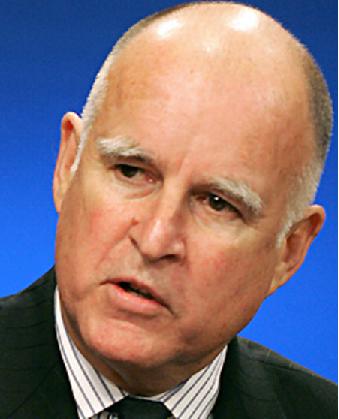
EDITORIAL There are two things Gov. Jerry Brown has to do to get California back on track, and he needs to start right away. He has to restore at least a degree of public faith in state government — and he has to put a series of tax increases on the June ballot.

The first step ought to be right in the Brown playbook. The public is fed up with the secrecy, lies, machinations, and policy failures of the Schwarzenegger administration, and Brown can start off by telling people the truth. The budget situation is frightening; it can’t all be solved by cuts without destroying the state of California as we know it. But it also requires an understanding that the taxpayers don’t want to see their money wasted.

Brown has done the right thing by offering to cut his own staff by 25 percent and by denouncing the demands of the highest-paid University of California staffers who want even larger pensions. He might also take a look at some of the outmoded, expensive commissions in the state (do we really need a 21-member California Film Commission?) None of these are big money-savers, and none address the budget crisis in any meaningful way. But they’ll show that Brown’s cautious with a buck.

Then he needs to tell the voters that the state does, indeed, have a revenue problem, not just a spending problem. And he should start right away with a blue-ribbon panel of tax experts to look at what reforms ought to go on the June ballot.

It’s crazy to say that solving a $28 billion budget shortfall is easy, but a few basic changes could go a very long way to balancing the books. If the voters approve an oil severance tax (something every other oil-producing state in the nation has), an end to the commercial property loophole in Prop. 13, and the restoration of the vehicle license fee that Arnold Schwarzenegger abolished, the state would be about $10 billion richer. A modest increase in the income tax on the very richest Californians would add a few billion more. And suddenly the problem wouldn’t look so insurmountable.

Brown has an advantage: he’s taking over for a terribly unpopular governor. He will be able to work with a Legislature that now has the ability to pass a budget with a simple majority. And while his victory in November was hardly a landslide, it was substantial enough that he’s got a valid mandate for change.

He and the legislative leaders should adopt a budget that includes the expected revenue from a June tax package — and then offer an alternative budget that doesn’t. Give the voters a clear choice. Do they want to eliminate hundreds of public schools, raise elementary school class sizes to 40, shut down a couple of University of California campuses, shutter the state parks, and let 30,000 prisoners go free? Of do they want the oil companies and the richest Californians to pay a little bit more to keep the state functioning?

Brown can make history this spring. The passage of Prop. 13, during his last term as governor, set off a nationwide tax-cutting frenzy that’s damaged the entire country. By pushing back just a little bit, and demanding a little bit of tax fairness, he can demonstrate that California is still a leader in progressive public policy.

He’ll have to put his political capital, his credibility, and all the money he can raise behind the effort. If he doesn’t, his administration, and the state, will be a total failure.

Editorial: How Brown can save California

0

There are two things Gov. Jerry Brown has to do to get California back on track, and he needs to start right away. He has to restore at least a degree of public faith in state government and he has to put a series of tax increases on the June ballot.

The first step ought to be right in the Brown playbook. The public is fed up with the secrecy, lies, machinations, and policy failures of the Schwarzenegger administration, and Brown can start off by telling people the truth. The budget situation is frightening; it can’t all be solved by cuts without destroying the state of California as we know it. But it also requires an understanding that the taxpayers don’t want to see their money wasted.

Brown has done the right thing by offering to cut his own staff by 25 percent and by denouncing the demands of the highest-paid University of California staffers who want even larger pensions. He might also take a look at some of the outmoded, expensive commissions in the state (do we really need a 21-member California Film Commission?) None of these are big money-savers, and none address the budget crisis in any meaningful way. But they’ll show that Brown’s cautious with a buck.

Then he needs to tell the voters that the state does, indeed, have a revenue problem, not just a spending problem. And he should start right away with a blue-ribbon panel of tax experts to look at what reforms ought to go on the June ballot.

It’s crazy to say that solving a $28 billion budget shortfall is easy, but a few basic changes could go a very long way to balancing the books. If the voters approve an oil severance tax (something every other oil-producing state in the nation has), an end to the commercial property loophole in Prop. 13, and the restoration of the vehicle license fee that Arnold Schwarzenegger abolished, the state would be about $10 billion richer. A modest increase in the income tax on the very richest Californians would add a few billion more. And suddenly the problem wouldn’t look so insurmountable.

Brown has an advantage: he’s taking over for a terribly unpopular governor. He will be able to work with a Legislature that now has the ability to pass a budget with a simple majority. And while his victory in November was hardly a landslide, it was substantial enough that he’s got a valid mandate for change.

He and the legislative leaders should adopt a budget that includes the expected revenue from a June tax package and then offer an alternative budget that doesn’t. Give the voters a clear choice. Do they want to eliminate hundreds of public schools, raise elementary school class sizes to 40, shut down a couple of University of California campuses, shutter the state parks, and let 30,000 prisoners go free? Of do they want the oil companies and the richest Californians to pay a little bit more to keep the state functioning?

Brown can make history this spring. The passage of Prop. 13, during his last term as governor, set off a nationwide tax-cutting frenzy that’s damaged the entire country. By pushing back just a little bit, and demanding a little bit of tax fairness, he can demonstrate that California is still a leader in progressive public policy.

He’ll have to put his political capital, his credibility, and all the money he can raise behind the effort. If he doesn’t, his administration, and the state, will be a total failure.  


Backroom meetings precede today’s mayoral succession vote

12

There’s been a flurry of political speculation and backroom discussions leading up to today’s final meeting of the current Board of Supervisors, which is scheduled to consider appointment of a successor mayor to Gavin Newsom starting at 3 p.m., despite Newsom’s refusal to vacate the office and assume the duties of lieutenant governor as he was supposed to yesterday.

After Kamala Harris took her oath of office as attorney general yesterday, Newsom now has the power to appoint a new district attorney, which he’s likely to wrap into his efforts to thwart progressive supervisors from appointing an interim mayor of their liking. So all eyes are on Newsom, as well as Board President David Chiu, and sources tell the Guardian that the two men met this morning behind closed doors.

Could Newsom appoint Chiu as the new DA in exchange for his support on naming a moderate as caretaker mayor? That possibility has progressives bristling with anger and privately threatening to aggressively go after Chiu if he cuts that kind of deal. The other way that Chiu might earn the progressive wrath is if he cuts a deal to become interim mayor that involves lots of support from the moderates.

But it’s also possible that most board progressives would back Chiu for interim mayor, although Sup. David Campos has so far been the most reluctant among progressives to support Chiu, who generally votes with progressives but who has cut a few high-profile deals with Newsom. Sup. Chris Daly told us that he will nominate Aaron Peskin for interim mayor today and Sup. Ross Mirkarimi is backing Art Agnos, who appears to have five votes but probably not six. The moderates are likely to push for Sheriff Michael Hennessey, although Newsom’s stated hope that the board consider his Chief of Staff Steve Kawa is a fantasy that only Newsom is seriously entertaining.

So far, Chiu and his people have been playing their cards fairly close to their vests, so it will be high drama going into today’s meeting. But what happens today is anyone’s guess, with the possibilities ranging from a deal to name a new mayor and DA to another anticlimactic punt of the decision on to the next board, which will be sworn in this Saturday.

Stay tuned.

Progressive supervisors block mayoral appointments

15

UPDATED: Progressives on the Board of Supervisors have finally started to push back on Mayor Gavin Newsom for his petulant refusal to vacate Room 200 unless his conditions for choosing a successor mayor are met, with the Rules Committee today blocking nine [UPDATE: seven] of 10 of the mayor’s committee and commission appointments.

Led by Sups. David Campos and Eric Mar, the three-member committee has been voting to continue consideration of the appointees to a future date at the discretion of Chairman Campos, even those who they voice support for. But they are trying to force a more equitable approach to governing the city during this transition period. The meeting is ongoing at this writing and can be viewed live here.

The one exception so far has been San Francisco Public Utilities Commission appointee Vince Courtney, with Mar and Campos voicing the urgency of filling the appointment on a body that is now moving forward Clean Power SF and other important initiatives. But they have blocked the appointment of Andrew Wolfram, Richard Johns, and Karl Kasz to the Historic Preservation Commission, Harry Kim and Herb Cohn to the Relocation Appeals Board, Florence Kong to the City Hall Preservation Advisory Board, Leona Bridges to the Municipal Transportation Agency Board of Directors, and Michael Kim and Leslie Katz to the Port Commission.

Former Sup. Amos Brown lashed out at the move, telling the committee, “I’m appalled to witness what’s happening here.”

But progressives have been equally appalled at Newsom for delaying today’s scheduled swearing in as lieutenant governor, reportedly to Jan. 10 after the new board is sworn in, and for demanding that the supervisors guarantee him that they will only support one of his preferred moderate caretakers for the interim mayor position. Newsom’s office did not return a Guardian call for comment on today’s meeting.

UPDATE 1:25 PM: After hearing more than an hour’s worth of testimony in support of Bridges, the committee unanimously voted to recommend her nomination to the MTA, citing that agency’s urgent need for a nominee from the African-American community who has a strong financial management background. The full board will consider her nomination tomorrow.

UPDATE 2:20 PM: Shortly before adjourning, the committee also unanimously recommended Katz be appointed to the Port Commission, saying that agency urgently needs another good appointee, although Mar indicated he didn’t think Kim was right for the position and that nomination was continued.

Out with the old

6

On the chilly morning of Dec. 21, a crowd of prominent local and state figures huddled in an industrial parking lot overlooking the brick smokestack of the Potrero power plant, which has been in operation for more than 40 years. It was the winter solstice, the morning after a lunar eclipse, and an historic environmental moment for San Francisco.

A longstanding battle to shut down the aging, polluting power plant was finally coming to an end, and it would be effectively shuttered as the calendar flipped to the new year. Although the past decade had been marked by political infighting and a relentless push to persuade the California Independent System Operator (CAISO) to shut it down sooner, the tone that day was buoyant as people made the rounds, embracing one another and offering congratulations and thanks.

Among those who lined up before the media were Mayor Gavin Newsom, who will be sworn in as lieutenant governor in early 2011; Sup. Sophie Maxwell, whose 10 years on the Board of Supervisors is coming to a close; City Attorney Dennis Herrera, who’s thrown his hat into the mayoral race; and San Francisco Public Utilities Commission General Manager Ed Harrington, whose name has been floated as a contender for interim mayor.

Each of these local politicians played a role in the contentious battle to close the plant, and each candidly admitted that shouting matches on the subject had erupted over the years. Yet they all expressed thanks to one another and to community members in the Potrero Hill, Dogpatch, and Bayview/Hunters Point neighborhoods, where residents were most directly affected by the noxious air pollution generated by the plant.

“They say it takes a village to raise a child. Well, it takes a state and a city to close this power plant,” said Maxwell, whose District 10 includes the neighborhoods affected by the power plant. “I started working on these plants when I took office, and now the plants are leaving with me.” Maxwell was credited with displaying dogged persistence and playing an instrumental role in pushing for the shutdown the plant.

“There were a lot of phone calls, there were a lot of arguments, there were a lot of disputes. But the fact of the matter is that everybody was focused on the same goal — and that was getting this plant shut down,” said Herrera, who has also been a key player in the decade-long fight to shut down the plant.

Newsom sounded a similar note. “I want to compliment everybody for their steadfastness and their devotion to this process,” the mayor said. “We didn’t always necessarily agree.”

Joshua Arce, who worked with community members to shut down the plant as part of his work with the Brightline Defense Project, was clearly pleased by the announcement. “It’s a fantastic day. We’re at last going to see the billowing smokestack come down, and for good,” Arce said.

The shutdown finally came to pass because the CalISO, which regulates the state power grid, was willing to accept new energy system upgrades as sufficiently reliable. For years, despite the community’s insistence that the plant was having an unacceptable impact on public health and disproportionately affected low-income communities of color, CalISO refused to terminate a contract requiring the plant to stay in operation for grid-reliability purposes.

However, new pieces to the city’s energy puzzle were recently fitted into place. The Trans Bay Cable, a 53-mile submarine power line that can transmit 400 megawatts of electricity from a Pittsburg generating station to San Francisco, became fully operational Nov. 23, months behind schedule. Meanwhile, a Pacific Gas & Electric Co. re-cabling project deemed important to San Francisco’s electricity reliability was completed Dec. 5.

“This plant has been part of the reliable supply for San Francisco … for a long time. And more recently, it actually provided the security for San Francisco should anything happen outside of San Francisco,” Yakout Mansour, president and CEO of the CalISO said during the shutdown ceremony. “But the time is here to replace the plant with an alternative to make the city more secure and reliable with much less polluting options.”

The CalISO issued a letter to the plant owner, which recently merged with another company and changed its name from Mirant to GenOn, stating that the must-run agreement would be terminated effective Jan. 1. The date of the final termination is Feb. 28, pending approval from the Federal Energy Regulatory Commission (FERC).

Now the major question is what will become of the power plant site, a vast strip of industrial real estate wedged between Illinois Street and the waterfront. “Many ideas have been thrown out there. People have come to us and said everything from office and industrial and research and development, to wind turbines,” noted Sam Lauter, a local spokesperson for GenOn. Lauter noted that community meetings would be held soon to discuss the future site use.

The site was previously owned by PG&E, and the utility is responsible for cleaning up lingering toxic residue including lampblack, a byproduct of coal processing, left behind when PG&E sold the site. Because of the pollution, residential units cannot legally be constructed on the site, even after cleanup.

There is one unfortunate consequence to shuttering the plant. According to plant manager Mike Montany, five or six of the 28 employees of the plant will lose their jobs. The rest will either retire or go to work at a new facility, he said.

While San Francisco will be poised to ring in the new year with improved air quality thanks to the elimination of its last polluting energy facility, residents of the area where the city’s power will now be sourced from won’t be so lucky. They are faced with the construction of two new power plants. The undersea Trans Bay Cable will run from the PG&E’s substation in San Francisco — a humming network of cables and transformers located beside the power plant that will stay put after the shutdown — to a generating station in Pittsburg, located in the delta near the confluence of the Sacramento and San Joaquin rivers.

GenOn owns the Pittsburg power plant, and it recently held a groundbreaking ceremony for a new power plant in neighboring Antioch, called Marsh Landing. At the same time, the California Public Utilities Commission (CPUC) recently gave the green light for another new power plant in that area. The $1.5 billion PG&E facility would be located in Oakley, which borders Antioch. It won commission approval Dec. 16, despite an earlier decision rejecting the proposal.

The plans for new power plants were approved just after the conclusion of an important United Nations convention on Climate Change in Cancún, Mexico, and amid news reports highlighting scientists’ conclusion that polar bears have a shot at survival only if serious efforts are taken to reduce greenhouse gas emissions. While the cheerful ceremony to shut down the Potrero power plant was a satisfying conclusion to a long battle, there’s a long road yet ahead in the overarching struggle against climate change.

Alerts

0

steve@sfbg.com

FRIDAY, DEC. 31


Critical Mass

Pedal your way toward a strong finish of 2010 by taking part in Critical Mass, a monthly San Francisco tradition for more than 15 years. As always, this leaderless group bicycle ride follows no set route and obeys no traffic laws or authorities, except yielding to pedestrians and emergency vehicles. This month, a group of anarchists (marked with black flags or other variations on that theme) plans to end up in the Mission District liberating a public space for a DIY New Year’s Eve celebration, so look out for that if that’s your bag.

6 p.m., free

departs from Justin Herman Plaza

Market and Embarcadero, SF

www.sfcriticalmass.org

MONDAY, JAN. 3


The next mayor?

In order to finally facilitate a public discussion of who San Francisco’s next mayor should be and how the prospective nominees would run the city, the Harvey Milk LGBT Democratic Club is sponsoring a forum for mayoral hopefuls. Club members have been concerned about the lack of public process for replacing Mayor Gavin Newsom (see “Mayoral dynamics,” Dec. 22), so they’ve invited the top candidates — including former Mayor Art Agnos, Sheriff Michael Hennessey, SFPUC head Ed Harrington, and others — to share their vision for 2011 and beyond. The event is cosponsored by SEIU Local 1021 and moderated by Guardian Executive Editor Tim Redmond.

6 p.m., free

SF LGBT Center

1800 Market, SF

www.milkclub.org

TUESDAY, JAN. 4


Newsom’s last stand

Join the outgoing San Francisco Board of Supervisors for its final scheduled meeting — and the final opportunity for the current board to select Mayor Gavin Newsom’s successor before the newly elected board takes over Jan. 8. At press time, Newsom was still threatening to delay his Jan. 3 swearing-in as California’s new lieutenant governor to prevent the current board from replacing him, so come see how that drama plays out and weigh in with your thoughts.

2 p.m., free

Room 250, City Hall

1 Dr. Carlton B. Goodlett Dr., SF

www.sfbos.org

WED. JAN. 5


Chris Daly Roast

We don’t usually list events for the following week’s paper, but this is one that lovers and haters of outgoing Sup. Chris Daly — which pretty much describes most San Franciscans — will want to mark on their calendars. The classic roast features John Burton, Aaron Peskin, Carolyn Tyler, and Dan Noyes, with Mistresses of Ceremonies Melissa Griffin and Beth Spotswood.

8 p.m., $20 (benefits St. James Infirmary ), or $5 after 10 p.m.

The Independent

628 Divisadero, SF.

Mail items for Alerts to the Guardian Building, 135 Mississippi St., SF, CA 94107; fax to (415) 437-3658; or e-mail alert@sfbg.com. Please include a contact telephone number. Items must be received at least one week prior to the publication date.


Get out of the way, Mr. Mayor

4

EDITORIAL Let us begin with the obvious: Mayor Gavin Newsom has absolutely no business deciding who should replace him. His petulant statements suggesting that he will delay taking office as lieutenant governor until the supervisors pick a candidate he likes are an embarrassment to the city. If he actually refuses to take the oath of office Jan. 3, when his term in Sacramento begins, it will damage his reputation and political career.

Newsom knew when he decided to seek higher office that he’d be leaving the city early if he won. He knew that under the City Charter, the Board of Supervisors would choose a new mayor. He knew that a progressive majority on the board was likely to elect someone whose political views differ from his. If he didn’t want that to happen, he should have stayed in town and finished his term.

Instead, his ambition and ego drove him to Sacramento, and he needs to accept that he is now out of the process. He should publicly agree to follow the state Constitution and join Governor-elect Jerry Brown for a timely swearing-in ceremony. Meanwhile, the supervisors need to make it very clear that they won’t accept this sort of political blackmail and will choose the next mayor on their own terms.

There’s only one more regularly scheduled meeting of the current board, on Tuesday, Jan. 4, the day after Newsom’s term as lieutenant governor begins. It’s unfortunate that the progressive majority on the board hasn’t been able to find a consensus candidate, and it’s appearing more and more likely that the next mayor will be a short-termer, a caretaker who agrees to fill out Newsom’s term. We’ve consistently argued that Newsom’s successor ought to be someone who can run for a full term in November, but there’s certainly a case to be made for the right person to take on the job for just 11 months. A progressive caretaker could fire all the failed managers left over (at high salaries) from Newsom’s tenure and make cuts to sacred cows like the police and fire departments without worrying about reelection. We’d still rather see a candidate with the courage and skill to make the tough choices and run in November on that record. But if that’s not possible, it’s important that an interim mayor be chosen carefully.

It’s also important that the progressive supervisors consider the long-term implications of their choice: If the next mayor only serves out Newsom’s remaining time, who’s going to run in November — and what will the interim mayor do to promote the prospects of a progressive candidate?

A number of names are floating around as possible caretakers, and several would do at least an adequate and perhaps an exceptional job. Former Board President Aaron Peskin has brilliant political instincts and knows how to run the city; he’s let us down on a few votes, but would work well with the progressive board majority. Sheriff Mike Hennessey is popular with the voters and has good progressive credentials (other than the move to privatize jail health services, which makes him somewhat unpalatable to labor), but he’s never faced anything resembling the political nightmare of the city’s current fiscal crisis. Sup. Ross Mirkarimi has a great legislative record and has hinted that he’d consider the job, but he still has two years to go as supervisor and would have to give up his seat and put his political career on hold. Former Mayor Art Agnos is the only one on the list who’s actually run the city at a time of crisis and would certainly be willing to make the tough decisions. If he could run an open office and listen to a diverse constituency, he might make up for the mistakes he made his first time in the job.

None of these candidates could do the job alone — and if they want to serve a short term as mayor, they need to start talking openly about it, explaining what their plans would be and give San Franciscans (and not just six supervisors) a reason to support them.

EDITORIAL: Get out of the way, Mr. Mayor

36

 Let us begin with the obvious: Mayor Gavin Newsom has absolutely no business deciding who should replace him. His petulant statements suggesting that he will delay taking office as lieutenant governor until the supervisors pick a candidate he likes are an embarrassment to the city. If he actually refuses to take the oath of office Jan. 3, when his term in Sacramento begins, it will damage his reputation and political career.

Newsom knew when he decided to seek higher office that he’d be leaving the city early if he won. He knew that under the City Charter, the Board of Supervisors would choose a new mayor. He knew that a progressive majority on the board was likely to elect someone whose political views differ from his. If he didn’t want that to happen, he should have stayed in town and finished his term.

Instead, his ambition and ego drove him to Sacramento, and he needs to accept that he is now out of the process. He should publicly agree to follow the state Constitution and join Governor-elect Jerry Brown for a timely swearing-in ceremony. Meanwhile, the supervisors need to make it very clear that they won’t accept this sort of political blackmail and will choose the next mayor on their own terms.

There’s only one more regularly scheduled meeting of the current board, on Tuesday, Jan. 4, the day after Newsom’s term as lieutenant governor begins. It’s unfortunate that the progressive majority on the board hasn’t been able to find a consensus candidate, and it’s appearing more and more likely that the next mayor will be a short-termer, a caretaker who agrees to fill out Newsom’s term. We’ve consistently argued that Newsom’s successor ought to be someone who can run for a full term in November, but there’s certainly a case to be made for the right person to take on the job for just 11 months. A progressive caretaker could fire all the failed managers left over (at high salaries) from Newsom’s tenure and make cuts to sacred cows like the police and fire departments without worrying about reelection. We’d still rather see a candidate with the courage and skill to make the tough choices and run in November on that record. But if that’s not possible, it’s important that an interim mayor be chosen carefully.

It’s also important that the progressive supervisors consider the long-term implications of their choice: If the next mayor only serves out Newsom’s remaining time, who’s going to run in November and what will the interim mayor do to promote the prospects of a progressive candidate?

A number of names are floating around as possible caretakers, and several would do at least an adequate and perhaps an exceptional job. Former Board President Aaron Peskin has brilliant political instincts and knows how to run the city; he’s let us down on a few votes, but would work well with the progressive board majority. Sheriff Mike Hennessey is popular with the voters and has good progressive credentials (other than the move to privatize jail health services, which makes him somewhat unpalatable to labor), but he’s never faced anything resembling the political nightmare of the city’s current fiscal crisis. Sup. Ross Mirkarimi has a great legislative record and has hinted that he’d consider the job, but he still has two years to go as supervisor and would have to give up his seat and put his political career on hold. Former Mayor Art Agnos is the only one on the list who’s actually run the city at a time of crisis and would certainly be willing to make the tough decisions. If he could run an open office and listen to a diverse constituency, he might make up for the mistakes he made his first time in the job.

None of these candidates could do the job alone and if they want to serve a short term as mayor, they need to start talking openly about it, explaining what their plans would be and give San Franciscans (and not just six supervisors) a reason to support them. 


Newsom’s delay tactic would create a legal mess

22

In this week’s Guardian, I lay out the latest political dynamics surrounding who will become San Francisco’s next mayor. But in reporting out that story, I stumbled across some interesting potential implications to Mayor Gavin Newsom’s petulant promise to delay his swearing in as lieutenant governor.

There is little precedent and scant caselaw on the legality of Newsom’s gambit, as most lawyers and political observers have said, so Newsom would be taking the city and state into uncharted territory just the deny his nemesis, Sup. Chris Daly, a chance to vote on the successor mayor. And it could backfire on Newsom.

For example, what if the excitement of returning to the governor’s office gives Jerry Brown, 72, a fatal heart attack after he and the rest of the state constitutional officers (except Newsom) are sworn in on Jan. 3? If Newsom had taken the oath of office as he was supposed to, he would realize his dream of becoming governor.

Instead, here’s what California Government Code 12058 says would then happen: “In case of vacancy in the office of Governor and in the office of Lieutenant Governor, the last duly elected President pro Tempore of the Senate shall become Governor for the residue of the term,” so Darrell Steinberg would become governor. Having covered Steinberg when I worked in Sacramento, I think he’d make a far better governor anyway, so this is probably a good outcome.

Here’s another unlikely scenario I like even better: what if Gov. Jerry Brown suddenly remembers all the nasty things that Newsom said about him while running for the Democratic Party gubernatorial nomination and declares the lieutenant governor’s office vacant because of Newsom’s no-show at the constitutionally mandated swearing-in ceremony and decides to appoint a grown-up to the office.

Newsom’s stand also carries risks for San Francisco, beyond just the sudden transfer of power that Newsom and moderate supervisors have already created. The City Charter calls for the newly elected Board of Supervisors to be sworn into office at noon on Jan. 8. But, as I’ve learned in interviews with officials in the Clerk the Board of Supervisors Office, there’s a strange quirk in the charter that makes it unclear who the president of the board is between when the new supervisors are sworn in and when they elect a new president, which is their first order of business.

After all, oftentimes the outgoing president isn’t even a supervisor anymore, as was the case two years ago when Aaron Peskin yielded his D3 supervisorial seat to David Chiu. This year, the Clerk’s Office says Chiu will preside over the Jan. 8 meeting for ceremonial reasons until a new president is elected (which could take minutes, hours, or days depending on a nominee’s ability to get six votes).

Now, under normal circumstances, the city would have a duly elected or appointed mayor during that transition period, so it’s not terribly important that there is a gap in who serves as president of the board. Even when the mayor moves on to higher office, as is the case this year, the City Charter calls for the president to serve as acting mayor until the board can appoint an interim mayor.

But because of Newsom’s extralegal meddling in city affairs after his scheduled departure, Chiu doesn’t become acting mayor as he should for those five days. So what happens if Brown has his sudden heart attack at 12:05 pm on Jan. 8 and Newsom, seeing that his stunt may cost him the chance to be governor, rushed to Sacramento to take his oath of office before Brown flatlines?

In that circumstance, the Mayor’s Office would be vacant and so would the board presidency, leaving San Francisco leaderless until the board can come up with six votes each for a new mayor and board president.

Now, is any of this likely? No, but this and lots of other hypothetical possibilities illustrate just how selfish and irresponsible that Newsom and the downtown-based instigators of this drama are being, despite their hypocritical public claims to caring about the city and trying to prevent political games.

But as Sacramento Bee columnist Dan Walters recently wrote: “It’s impossible to predict how Newsom’s power play will turn out. It’s a stormy beginning for his new career in state politics – but given the irrelevance of his new office, it may also be the high point.”

Mayoral dynamics

5

steve@sfbg.com

Despite the best efforts of Sup. Chris Daly and some of his progressive colleagues to create an orderly transfer of authority in the city’s most powerful office, the selection of a successor to Mayor Gavin Newsom will come down to a frantic, unpredictable, last-minute drama starting a few days into the new year.

The board has convened to hear public testimony and consider choosing a new mayor three times, each time delaying the decision with little discussion by any supervisor except Daly, who pleaded with his colleagues on Dec. 14 to “Say something, the people deserve it,” and asking, “Are we going to take our charge?”

The current board will get one more crack at making the decision Jan. 4, a day after the California Constitution calls for Newsom to assume his duties as lieutenant governor — although Newsom has threatened to delay his swearing-in so Daly and company don’t get to the make the decision.

“I can’t just walk away and see everything blow up. And there are a few politicians in this town that want to serve an ideological agenda,” Newsom told KCBS radio reporter Barbara Taylor on Dec. 16, two days after praising the board for its “leadership and stewardship” in revising and unanimously approving the city’s bid to host the America’s Cup.

Newsom and his fiscally conservative political base fear that the board’s progressive majority will nominate one of its own as mayor, whereas Newsom told Taylor, “The board should pick a caretaker and not a politician — that’s my criteria.”

Some board members strongly disagree. “It’s not his to decide. Besides, what’s not ideological? That doesn’t make sense. Everyone’s ideological,” Sup. John Avalos told the Guardian, a point echoed by other progressives on the board and even many political moderates in town, who privately complain that Newsom’s stand is hypocritical, petty, and not in the city’s best interests.

The Guardian has interviewed a majority of members of the Board of Supervisors about the mayoral succession question, and all expect the board to finally start discussing mayoral succession and making nominations on Jan. 4.

But whether the current board, or the newly elected board that is sworn in on Jan. 8, ultimately chooses the new mayor is anyone’s guess. And at Guardian press time, who that new mayor will be (and what conditions that person will agree to) was still a matter of wild speculation, elaborate conspiracy theories, and backroom deal making.


GETTING TO SIX

A majority of supervisors say there’s a simple reason why the board hasn’t seriously discussed mayoral succession since it unanimously approved the procedures for doing so Nov. 23 (see “The process begins,” Nov. 30). Everyone seems to know that nobody has the required six votes.

Avalos said he thinks the current board is better situated to choose the new mayor because of its experience, even though he voted for the delay on Dec. 14 (in an 8-3 vote, with Daly and Sups. Ross Mirkarimi and David Campos in dissent). “I supported the delay because we were not closer to having a real discussion about it than we were the week before,” Avalos told us, noting that those who were pushing for Campos “didn’t do enough to broaden the coalition to support David Campos.”

For his part, Campos agreed that “the progressive majority has not figured out what it wants to do yet,” a point echoed by Mirkarimi: “I don’t think there’s a plan.” Sup. Sophie Maxwell, who made both the successful motions to delay the vote, told us, “There’s a lot more thinking that people need to do.”

“We do not yet have consensus,” Chiu said of his reasons for supporting the delay, noting that state conflict-of-interest and open government laws also make it difficult for the board to have a frank discussion about who the new mayor should be.

For example, Chiu is barred from even declaring publicly that he wants the job and describing how he might lead, although he is widely known to be in the running.

The board can’t officially name a new mayor until the office is vacant. Sup. Bevan Dufty, who is already running for mayor, told us the board should wait for Newsom to act. “I felt the resignation should be in effect before the board makes a move,” Dufty said.

Sups. Sean Elsbernd, Carmen Chu, Michela Alioto-Pier, and Eric Mar did not return the Guardian’s calls for comment.


PIECES OF THE PUZZLE

Adding to the drama of the mayoral succession decision will be the new Board of Supervisors’ inaugural meeting on Jan. 8, when the first order of business will be the vote for a new board president, who will also immediately become acting mayor if the office has been vacated by then and the previous board hasn’t chosen a new mayor.

While Newsom and his downtown allies are clearly banking on the hope that the new board will select a politically moderate caretaker mayor, something that three of the four new supervisors say they want (see “Class of 2010,” Dec. 8), the reality is that the new board will have the same basic ideological breakdown as the current board and some personal relationships that could benefit progressives Chiu and Avalos.

Daly said downtown is probably correct that the current board is more likely than the new one to directly elect a progressive mayor who might run for the office in the fall, such as Campos or former board President Aaron Peskin. But he thinks the new board is likely to elect a progressive as president, probably Campos, Chiu, or Avalos, and that person could end up lingering as acting mayor indefinitely.

“They really haven’t thought through Jan. 8. Downtown doesn’t like to gamble, and I think it’s a gamble,” Daly said. “There’s a decent chance that we’ll get a more progressive mayor out of the leadership vote for board president.”

Avalos said it “would be a disaster” for the board president to linger as acting mayor for a long time, complicating the balance of power at City Hall. But he wouldn’t mind holding the board gavel. “I think I would do a good job as board president, but I’m not going to scratch and claw my way to be board president,” Avalos said. “I’d be just as happy to be chair of the Budget Committee again.”

Avalos said he thinks it’s important to have a mayor who is willing to work closely with board progressives and to support new revenues as part of the budget solution, which is why he would be willing to support Chiu, Campos, or Mirkarimi for mayor, saying “All of them could do a good job.”

Given the progressive majority on the board, it’s also possible that there will be a lingering standoff between supporters for Chiu, a swing vote in budget and other battles who has yet to win the full confidence of all the progressive supervisors, and former Mayor Art Agnos, who has offered to serve as a caretaker. Some see Agnos as more progressive than the other alternatives pushed by moderates, including Sheriff Michael Hennessey and San Francisco Public Utilities Commission head Ed Harrington.

Moderates like Dufty are hopeful that a couple of progressives might break off to support Hennessey (“From the first minute, he knows everything you’d need to know in an emergency situation,” Dufty said) or Harrington (“I could see him stepping in and closing the budget deficit and finding a good compromise on pension reform,” Dufty said) after a few rounds of voting.

Mirkarimi is openly backing Agnos. “He has evolved, as I’ve known him, in the days since being mayor,” Mirkarimi said. “I think we’ve spent too much time on finding the progressive guy to be mayor than on setting up what a progressive caretaker administration would look like.” And then there are the wild cards, like state Sen. Mark Leno and City Attorney Dennis Herrera. Herrera’s a declared candidate and Leno has made it clear that he’d take the job if it were offered to him.

Given the fact that supervisors can’t vote for themselves, it’s difficult for any of them to win. “I don’t think it’s likely that a member of the Board of Supervisors will get enough votes to be mayor,” Avalos told us, although he said that Chiu is the one possible exception.

But to get to six votes, Chiu would have to have most of the progressive supervisors supporting him and some moderates, such as D10 Supervisor-elect Malia Cohen (whom Chiu endorsed), D8’s Scott Wiener, and/or Chu (who might be persuaded to help elect the city’s first Chinese American mayor).

That would be a delicate dance, although it’s as likely as any of the other foreseeable scenarios.

Newsom tries to defy City Charter

31

Gavin Newsom knew that if he got elected lieutenant governor, the supervisors would be able to choose his replacement. That was part of the deal. Now he wants to game the system, and delay his swearing in until the new board takes over. The claim: “The board should pick a caretaker, not a politician.”


A politician? In the mayor’s office? Um, dude: What are you?


This is not only annoying and dubiously legal, but stupid. Does Newsom really think the incoming board is more likely to choose a caretaker? No such luck. The incoming board is likely to choose David Chiu — a politician who will likely run in November.


Besides, the state Constitution says the lite guv takes office Jan. 3rd. So if Newsom refuses to take the oath of office, one could certainly argue that he has vacated that position, meaning the governor, Jerry Brown, could appoint a replacement. I think if Newsom carries through with his lame threat that Jerry should do exactly that.


PS: Newsom also said he “can’t just walk away and see everything blow up and there are a few politicians in this town that want to serve on ideological agenda.” Let’s be clear here: Newsom also has an ideological agenda. He thinks same-sex marriage should be legal and taxes should be low. He thinks it should be illegal to sit on the sidewalk. He’s got plenty of ideology.


He just doesn’t want a mayor whose ideology he disagrees with. Too late, Gav: You decided to leave the city. Now leave the rest of us alone to deal with the consequences. 


SFBG Radio: Can Callifornia wake up?

0

In today’s episode, we talk about Jerry Brown’s challenge: Can the new old governor wake the state out of a California dream that has become utterly unconnected to reality? Check it out after the jump.

sfbgradio12/15/2010 by endorsements2010

The Mystery of the Missing Mayor

13

Again, the Board of Supervisors scheduled a vote to select a new mayor to succeed Gavin Newsom. Again, members of the public lined up for almost an hour to urge the board to do so and to suggest names and qualities they’d like to see in Room 200. And again, the board delayed the decision with no reason offered for why.

Well, actually, this time, Sup. Sophie Maxwell – the maker of the motion to continue the item this week and last – did at least say something. “We have three weeks and to have someone floating out there for that time is not in the board’s best interests,” Maxwell said, and that’s all she said.

It’s unclear what she meant, and none of the seven supervisors who supported the motion in a 8-3 vote – with Sups. Chris Daly, David Campos, and Ross Mirkarimi in dissent – had anything to say. But Daly certainly did, accusing his colleagues of “doing an incredible disservice to the people of the city and county of San Francisco.”

He restated his points from the two previous hearings on the issue, noting that supervisors should at least be willing to talk about what they’re looking for in a mayor and to provide some leadership going into a politically uncertain period after Newsom becomes lieutenant governor on Jan. 3.

“At some point, we need to be putting forward a vision for San Francisco,” Daly said, later asking, “Are we going to take our charge?”

“It’s almost as if the members of the board don’t want to be here,” he observed, urging them to at least inform the public what’s going on.

“If it’s that you want the next board to decide, say that,” Daly said. “Say something, the people deserve it.”

Is this an effort to stall the decision until the next board is seated on Jan. 8? Is the current board just waiting until Newsom is gone, afraid that he’ll delay his swearing in if they choose a progressive mayor now, and planning to spring into action on Jan. 4? Is there a secret deal in the offing? Or are supervisors just too distracted by the holiday season to make a big decision?

I don’t know, but I’m going to spend this week doing interviews to figure it out for a story in next weeks’ paper.

Let’s get budget priorities straight

0

OPINION Who will pay for California’s budget woes? For the last three years, Californians have put up with cuts to programs that are critical to our state’s future and our social safety net. Public education, HIV and AIDS programs, state universities, and CalWORKs have all come under the knife. The elephant in the room, as state and federal governments try to balance budgets on the backs of the working and middle class, is the billions of dollars we are wasting on a misguided war in Afghanistan.

Fresh evidence that the war in Afghanistan is failing rolls in on a daily basis. While the administration justifies the cost in lives and dollars as necessary to fight Al Qaeda, it also acknowledges that there are only 50 to 100 Al Qaeda fighters in Afghanistan. Every soldier in Afghanistan costs U.S. taxpayers $1 million per year. With 100,000 soldiers on the ground, that means we’re spending as much as $2 billion a year on each Al Qaeda fighter.

Would we dream of spending $2 billion on every needy child in California? Or even $1 million? As U.S. and Afghan casualties rise along with the dollar amounts, with little success to show for it, we need to get our priorities in check.

At Governor-elect Jerry Brown’s budget forum this week, we were staring down a $28.1 billion budget deficit over the next 18 months. Compare that to the $46.4 billion Californians have already spent on the war in Afghanistan — $1.2 billion of that right out of San Franciscans’ pockets.

The Obama administration is conducting a strategy review this month that is expected to rubber stamp an approach that keeps soldiers in harm’s way — when doing so is not likely to make Americans or Afghans safer. At the same time, the president’s deficit commission chairs are also passing down recommendations to save money by cutting benefits for our most vulnerable citizens.

I would like to tell the taxpayers in my district who are shelling out these dollars that there’s a light at the end of the tunnel, but the president is now proposing ending the “combat mission” in 2014, which could mean there will be tens of thousands of troops on the ground even after four more years have passed.

I will continue to fight for our real needs in Sacramento. But it’s time for our representatives in Washington to put an end to this disastrous war and bring our troops home as quickly and responsibly as possible. Our tax dollars should be making life in California sustainable and safe for all. We can’t afford any other way.

Assemblymember Tom Ammiano represents the 13th District.

Hiring at home

1

sarah@sfbg.com

The lame duck Board of Supervisors made history Dec. 7 when it voted 8-3 to approve mandatory local hire legislation for city-funded construction projects. The measure ends a decade-long effort to reach 50 percent local hiring goals through good-faith efforts.

“That’s a sea change in our local hiring discussion,” said Sup. John Avalos, who launched the legislation in October as part of the LOCAL-SF (Local Opportunities for Communities and Labor) campaign, which seeks to strengthen local hiring, address high unemployment rates, and boost the local economy.

The veto-proof passage of Avalos’ measure comes in the wake of a city-commissioned study indicating that San Francisco has failed to meet good-faith local hiring goals for public works projects even as unemployment levels rise in the local construction industry and several local neighborhoods face concentrated poverty.

Although Cleveland also has a local-hire law, the Avalos measure will be the strongest in the nation. Avalos’ legislative aide Raquel Redondiez told the Guardian that Cleveland’s 2003 legislation requires 20 percent local hire.

“This legislation doesn’t just have a mandated 50 percent goal,” Avalos explained, noting that San Francisco will require that each trade achieve a mandated rate and that 50 percent of apprentices be residents.

“This will ensure that our tax dollars get recycled back into the local economy, and that San Franciscans who are ready to work are provided the opportunity to do so,” Avalos said.

Avalos’ groundbreaking legislation phases in mandatory requirements that a portion of San Francisco public works jobs go to city residents and includes additional targets for hiring disadvantaged workers.


WHO GETS $25 BILLION?

The legislation replaces the city’s First Source program, under which contractors were required only to make good faith efforts to hire 50 percent local residents on publicly-funded projects. But the measure begins slowly by mandating levels some contractors are already reaching. According to a study commissioned by the city’s Office of Employment and Workforce Development and released in October, 20 percent of work hours on publicly-funded construction projects are going to San Francisco residents.

Avalos’ legislation, which is supported by a broad coalition of labor and community groups including PODER, the Filipino Community Center, Southeast Jobs Coalition, Kwan Wo Ironworks Inc., Rubecon, and Chinese for Affirmative Action, comes at a critical moment for the recession-battered construction industry.

Under the city’s capital plan, more than $25 billion will be spent on public works and other construction projects in the next decade — and two-thirds of this money will be spent over the next five years.

The measure has environmental benefits too. Transportation still accounts for more greenhouse gas emissions generated in the Bay Area than any other source, and San Francisco residents are more likely to take transit, walk, or bike to work than residents of other Bay Area counties. “When local citizens are able to work locally, there are fewer cars on the road and less air pollution,” Avalos said.

Sup. Ross Mirkarimi said that Avalos’ legislation is “just a start.”

“People have talked a good game about local hiring,” observed Mirkarimi, whose district includes the high unemployment-affected Western Addition.

“We are going to have to go beyond construction and start thinking about delving into the private sector,” Mirkarimi continued, pointing to the need to build 100,000 housing units over the next 25 years if the city is to keep up with a projected population increase. “Who is going to build that housing?” he asked.

Sup. Eric Mar noted that “the Sierra Club endorsed the measure early on because of the environmental benefits of having people work close to where they live.”

Sup. David Campos, whose district includes the Mission, said the measure was one of the most significant pieces of legislation to emerge from the board in recent years. “In the past, a lot of obstacles got in the way, including some legal challenges,” said Campos, who credited Avalos for navigating a complicated legal structure. “At the end of the day, I think this is going to benefit everyone.”

Mike Theriault, secretary-treasurer for the San Francisco Building Trades Council, told the Guardian he remains opposed to the legislation because the union presers to allocate jobs based on seniority, not residency. But he said the amendments make the measure “less harmful and more survivable in the short-term.”


THE ECONOMIC GAP

Termed-out Sup. Sophie Maxwell, who represents the city’s economically distressed southeast sector, has often noted that the construction industry provides a path to the middle class for people without advanced degrees or facing barriers to employment. She thanked Avalos for pushing legislation that promises to provides opportunities for “growing the middle class instead of importing it.”

“This industry closes the economic gap,” she said.

Board President David Chiu and termed-out Sups. Chris Daly and Bevan Dufty also supported Avalos legislation. But Dufty, who is running in the 2011 mayoral race, cast the eighth vote, which gave the measure a veto-proof majority.

The board’s Dec. 7 vote came a few hours after Bayview-based Aboriginal Blacks United founder James Richards and a score of unemployed local residents rallied at City Hall in the hopes of securing Dufty’s vote.

ABU has recently been protesting at UCSF’s Mission Bay hospital buildings site on 16th and Third streets. Its members also triggered a shut down at the Sunset Reservoir last month after a court ruled that locals promised jobs installing solar panels at the plant be replaced by higher-skilled engineers,

“It’s been too long that we have been protesting and fighting this good faith effort,” Richards told the Guardian. “We need a mandatory policy.”

Dufty is also hoping the Avalos measure could spread to other cities and benefit workers nationwide. “At a certain point I looked at labor and said, ‘Yes, I’m going for this legislation. But not just for San Francisco — you want to take this concept to other cities,’ ” Dufty said, as he made good on his promise to Richards to vote to support Avalos’ law.

Dufty seemed hopeful that Mayor Gavin Newsom would get behind the legislation. “But I respect that there may be a little bit of coming together between now and the second reading.”

Newsom spokesman Tony Winniker told the Guardian that the mayor has 10 days to review Avalos’ legislation after its Dec. 14 second reading. “He supports stronger local hire requirements but does want to review the many amendments that were added before deciding,” Winnicker said.

But will Newsom, who is scheduled to be sworn in as California’s next lieutenant governor Jan. 3, issue a veto on or before Christmas Eve on legislation that has been amended to address the stated concerns of the building trades?

That would be ironic since the amended legislation appears to match recommendations that the Mayor’s Taskforce on African American Outmigration published in 2009. The California Department of Finance projected that San Francisco’s black population would continue to decline from 6.5 percent (according to 2005 census data) to 4.6 percent of the city’s total population by 2050 — in part because of a lack of good jobs.


WILL NEWSOM VETO?

Avalos originally proposed to start at 30 percent and reach 50 percent over three years. But after the building trades complained that these levels were unworkable, Avalos amended the legislation to require an initial mandatory participation level of 20 percent of all project work-hours within each trade performed by local residents, with no less than 10 percent of all project work-hours within each trade to be performed by disadvantaged workers.

He also amended his legislation to require that this mandatory level be increased annually over seven years in 5 percent increments up to 50 percent, with no less than 25 percent within each trade to be performed by disadvantaged workers in the legislation’s sixth year.

A Dec. 1 report from city economist Ted Egan estimated that the local hire legislation would create 350 jobs and cost the city $9 million annually. But Egan clarified for the Guardian that this cost equals only 1 percent of the city’s spending on public works in any given year.

Vincent Pan of Chinese Affirmative Action, which supports Avalos’ local hiring policy, suggested that the mayor “check the temperature.”

“It would be leadership on the part of the mayor not to veto legislation that’s about San Francisco,” Pan said.

And Mindy Kener, an organizing member of the Southeast Jobs Coalition breathed a deep sigh of relief when Dufty’s vote made the law veto-proof. “It’s gonna go across the country,” Kener said. “We just made history.”

Mysteries of the death-drug scramble

0

news@sfbg.com

The California prison system finally released some documents on its efforts to procure the chemicals it needs to execute prisoners, and the 1,000 pages show the desperate lengths state officials have gone to procure the death drugs.

At one point, the California Department of Corrections and Rehabilitation looked at importing drugs from Pakistan. In October, prison officials sent agents on a secret midnight mission to Arizona to acquire sodium thiopental, one of the drugs used in executions, from that state’s supply.

In the end, CDCR wound up buying an extraordinary quantity of the stuff from a supplier in London — potentially putting California in the disturbing position of serving as the death-drug dealer to the rest of the country.

The protocol for lethal injections in California, and 33 other states, calls for three drugs — sodium thiopental to put the condemned inmate in a coma; pancurium bromide to paralyze the muscles; and potassium chloride to stop the heart.

But sodium thiopental, also known as Sodium Pentothal, has been in short supply in this country, in part because the one company that currently makes it, Hospira, has production backlogs. There’s not a whole lot of need for the drug in modern medicine — it’s largely been replaced with other anesthetics — and Hospira has made it clear in repeated press statements that it doesn’t want its product used in executions.

So when the last batch of the stuff in the state’s hands expired in October, California had to put executions on hold while prison officials scrambled to find some more.


HIDING THE TRUTH

The whole process was cloaked in secrecy. Nobody at CDCR would tell us where they were looking for the sodium thiopental, who would be procuring it, or how the supply chain might work. That, of course, is crucial, in a grisly way: If the anesthetic didn’t perform properly (that is, if the state got a bad batch from an unregulated supplier), a prisoner could go through unspeakable agony as the second batch of drugs made it impossible to breathe.

The Guardian filed a request in October under the California Public Records Act seeking details on the purchase attempts, but CDCR stonewalled. The American Civil Liberties Union, also seeking the documents, filed a lawsuit, and a judge ordered the release of a large volume of material.

Those documents, now available at aclunc.org, is heavily redacted, and much of the material we expected to see is missing. But the documents contain some remarkable revelations.

For starters, there’s an internal timeline going back to 2007 showing that CDCR officials knew back then, while the drug protocol was being developed, that there would be problems. The Drug Enforcement Administration will only allow a doctor to order the class III controlled substances. And the federal receiver overseeing the prison system wouldn’t allow any of the three doctors on staff at San Quentin State Prison to sign the order forms, although the documents didn’t say why.

In January 2007, CDCR tried to recruit outside doctors to order the drugs — but physicians in California have traditionally declined to assist in executions. Indeed, the American Medical Association policy bars doctors from participating in capital punishment in any way, including “prescribing or administering tranquilizers.”

It wasn’t until May 2010 that CDCR was able to find doctors willing to order the deadly drugs; the names of those physicians are not in the documents.

The timeline shows that in June 2010, CDCR became aware that there was a shortage of sodium thiopental, but there was no public discussion of the situation. Plans to execute Albert Greenwood Brown, a convicted murderer set to die in September 2010, went forward.

But the courts weren’t rushing the execution — and the last batch of sodium thiopental in CDCR’s possession expired Oct. 1.

As the clock ticked down toward that expiration date, the documents show, CDCR officials — all the way up to Corrections Secretary Matthew Cate — were involved in an all-out scramble to get more of the drug.

At one point, a Sept. 16 e-mail — from an official whose name is blacked out — notes that CDCR had contacted between 80 and 100 hospitals to try to buy some sodium thiopental, but “none of them have a drop.”

The documents note that CDCR officials even suggested that there were supplies of sodium thiopental in Pakistan. An Aug. 17 e-mail from John McAuliffe, a contract worker helping CDCR with executions, says the agency is trying to get federal government approval to import the drug.

One e-mail even suggests that an unnamed CDCR employee was in the area and could make a side trip to Pakistan to pick up the stuff.


THE LONDON CONNECTION

There are, of course, serious issues with importing controlled substances into the United States, and the documents show efforts by CDCR to get the DEA to approve imports. The Pakistan deal apparently went nowhere — but later e-mails show CDCR officials contacting a supplier in London. The name of the supplier is blacked out on all the documents, but CDCR’s deputy press secretary, Terry Thornton, later confirmed that the manufacturer was Archimedes Pharma.

Immediately after the California order for 521 grams of sodium thiopental went through, Britain’s secretary of state for business, Vince Cable, issued an order barring any further exports of the drug for use in executions.

Like most of the civilized world, the United Kingdom does not allow the death penalty.

In the meantime, Scott Kernan, CDCR’s undersecretary for operations, was trying to get enough of the death drug domestically to carry out at least one execution. A series of e-mails show contacts between California and Arizona, which recently had imported its own supply — and there are indications that Gov. Arnold Schwarzenegger was willing to call his counterpart in Arizona to help consummate the deal.

“I’m sure either the secretary or even the governor could make a call,” a Sept. 9 e-mail from Kernan to McAuliffe notes.

Then on Sept. 29, Kernan sent an e-mail to Assistant Secretary Anthony Chaus discussing a “secret and important mission.” Kernan wanted Chaus to send a team to a state prison complex in Florence, Ariz., a desert town about 40 miles southeast of Phoenix, to pick up 12 grams of the death drug.

At midnight Sept. 30, the warden in Florence gave the CDCD agents 24 vials, each containing half a gram of sodium thiopental. The agents drove it to Bakersfield, where another team picked up the vials and drove the rest of the way to San Quentin.

In a stomach-turning e-mail, Kernan sent a note Sept. 29 to an unnamed Arizona official saying “you guys in Arizona are life savers” and offering to “by [sic] you a beer next time I get that way.”

By then, a federal judge had delayed Brown’s execution until 2011.

Among the most startling revelation was the sheer quantity of sodium thiopental California eventually ordered from the firm in London. Even with training supplies and backup, it only takes between six and 12 grams of sodium thiopental to render a prisoner unconscious — meaning that the 521 grams that CDCR purchased for $36,413 are enough to kill between 43 and 86 people. The expiration date on the chemical is 2014.

It’s highly unlikely, given the legal hurdles and time involved in even one execution, that California would schedule more than three over the next three years. What possible use could the state have for so much death drug?

Thornton, CDCR’s press person, wouldn’t respond to our queries. But Natasha Minsker, the director of the ACLU’s Death Penalty Project, said she’s concerned that California will try to become a supplier for other prison systems. “It certainly raises questions,” she told us.

There’s a lot missing from the documents. In many instances, the names of the officials who sent and received e-mails are redacted. And there are obvious pieces of the puzzle missing from the files CDCR has released.

“There’s no e-mail from the DEA or the FDA,” Minsker said, “although CDCR was clearly contacting them. There’s nothing from the governor’s office, although it’s likely they were also involved.”

Overall, Minsker said, the documents “show how sneaky CDCR was trying to be about all of this.”

The ACLU filed another suit Dec. 13 seeking the release of some of the redacted material as well as records of CDCR’s efforts between October and December.

If those documents are ever released, they may address some of the looming questions about the material the state uses to kill people.

Brown’s education summit gives me hope

0

Most of what’s going on is just really, really disturbing — Brown is doing a good job of explaining just how bad the economy is, just how awful things are for education — and what that means for students. But he made one comment that struck me as critical (and that might, maybe, make Brown a great governor) came about an hour into the presentation.


Brown was talking about how the nation got into this crisis — about how people were forced to live on borrowing, and when the real estate market collapsed America became de-leveraged — when he took a slight sidetrack to say:


“Income redistribution upward from the middle class is comparable to the 1920s … it’s a societal crisis. We have to exercise discipline, but also fairness.”


A few points on this:


1. The incoming governor of California actually mentioned the words “income redistribution.” That’s a term almost entirely missing from the current debate. And he made it clear that part of the budget problem — part of the reason the state and the nation are in this crisis — is that the rich have gotten a larger and larger share of the pie.


2. Brown seems to think this is actually a problem, a “societal crisis.” Again: Obama doesn’t talk about that. Other than Bernie Sanders, most politicians in Washington are afraid of it. Just talking about wealth and income inequality (particularly in the context of education funding) is a huge step.


3. Brown talked about “fairness and discipline” together. Yes, we have to understand that resources right now are limited; but we also have to understand that part of the budget debate ought to be about the larger social issue of unfair distribution of wealth.


I know none of this seems like such a huge deal — it’s basic reality. But it’s so unusual that it’s refreshing.


Class conflict in DC and SF

12

There’s an unmistakable whiff of class warfare in the air this holiday season, most obviously on the national level where President Barack Obama and congressional Republicans are helping the ultra-rich steal hundreds of billions of dollars from future generations and the country’s current needs. But we’re also seeing it right here in San Francisco, subtly playing out around who will be our next mayor.

During yesterday’s scheduled discussion at the Board of Supervisors on choosing a new mayor, members of the public – from African-American mothers of slain youth to representatives of immigrant communities to those representing labor and progressive groups – urged the board to choose a mayor who would finally represent all of San Francisco, not just the wealthy and the business community.

Then the progressive supervisors who represent the city’s working class districts talked about getting the process underway and voiced some of the things they’d like to see in a new mayor, such as compassion and a willingness to work with the board and community groups. It seemed like a good faith effort at having an open public discussion about the city’s needs.

But on the other side of the aisle, the supervisors who represent the city’s wealthiest neighborhoods voted to delay the discussion without offering a reason why. Sup. Chris Daly made good points about how incoming mayors usually have time to prepare for assuming this powerful office at a time of pressing city needs and tricky political dynamics, arguing for making this decision sooner than later.

And from the Establishment representatives: nothing. Not a word. Instead, we have Mayor Gavin Newsom threatening to delay his swearing in as lieutenant governor to thwart the current board from picking a successor, and being overtly urged to do so in a San Francisco Chronicle editorial and in disingenous, sanctimonious ruses from SF Chamber of Commerce officials.

Why? Well, here’s the closest thing the editorial offered to a reason: “It makes all the sense in the world to have the supervisors who will be working with the interim mayor make the selection. They are the ones who will have to find common ground and develop a working relationship with Newsom’s successor.”

But does it really make any sense to have an inexperienced group of new supervisors (as our current cover stories shows, none of the four new supervisors have held municipal office and two are new to politics) pick a mayor on their first day on the job, and then have that person immediately take on the complicated job of running the city with no staff in place? And to do that by flouting the the California Constitution and the City Charter?

That sounds like a recipe for disaster – and an opportunity for downtown power brokers to make mischief and ensure their interests aren’t threatened as part of whatever backroom deal gets cut to choose a new mayor, district attorney, and board president. Why else would they so vehemently oppose a deliberative public process that would lead to a decision by those who know the workings of City Hall better than anyone?

As we saw in the last election, wealthy San Franciscans are scared to death of progressive malcontents like Chris Daly, and they’re doing whatever they can to prevent him from being involved in this decision. They see, probably correctly, that the current political dynamics of the city could lead to perhaps the most progressive mayor since George Moscone, or maybe ever, and they’ll do whatever they can to prevent that from happening.

The rich of this city and this country have overplayed their hands, crippled the public sector, and, as Sen. Bernie Sanders so eloquently said recently on the floor of the US Senate, shown a selfish disregard for the needs and interests of the vast majority of citizens. The only question now is this: are we ready to finally stand up, fight back, and really give them something to fear? Or are we going to take our cues from Obama and treat anti-government conservatives as good faith actors when they have shown only contempt for our most cherished democratic processes and values?

I suppose next week, when this board reconvenes to try to choose a successor mayor, we’ll find out.

Supervisors punt mayoral decision back a week

11

The San Francisco Board of Supervisors today voted to delay until Dec. 14 the process of choosing a mayor to succeed departing Mayor Gavin Newsom after taking about 40 minutes worth of public testimony, most of it calling on supervisors to act quickly to choose a public-spirited mayor to deal with a variety of neglected issues.
After Assembly member Tom Ammiano announced earlier today that he would not accept the board’s nomination to become mayor, it seemed unlikely that anyone could get the required six votes. But Sup. Chris Daly, who led the campaign to recruite Ammiano, argued for beginning the process today as agendized.
“While the Board of Supervisors is not prepared today to appoint someone as successor mayor of San Francisco, we shouldn’t truncate the conversation,” Daly argued, reiterating his call last week for a mayor who is experienced, compassionate, and willing to work cooperatively with the board.
But Sup. Sophie Maxwell didn’t want to have that conversation, making the motion to continue the item for one week, a motion seconded by Sup. Bevan Dufty. Neither offered reasons or arguments for the action.
Yet Daly noted that the board has an approved process for selecting a new mayor and “it might be a good idea to try it out and see how it works,” even if six votes aren’t there yet to approve a nominee. “I’m prepared to make a nomination.”
He addressed calls for delaying the mayoral succession decision by noting that Oakland Mayor-elect Jean Quan and Governor-elect Jerry Brown have both put together transition teams to prepare for taking power at the same time that Newsom will resign as mayor to become lieutenant governor.
“Typically, a mayor would have had about a month to put together a transition team,” Daly said, also noting, “We are now borrowing time against the next administration of San Francisco.”
Sups. David Campos and Eric Mar also spoke in support of this board making the mayoral succession decision “sooner rather than later,” as Campos put it. “We do have a very tough budget year we will be facing and many challenges in front of us,” he said. Campos said he was open to the delay, but he said “it would be a mistake” not to begin dealing with the decision in earnest next week.
Mar said he was open to the delay because he was interested to read the “Values-based Platform for the next Mayor” that a coalition of labor and progressive groups called San Francisco for All distributed at the meeting. The four-page document called for a mayor to value accessibility, consensus-building, making appointments who are accountable to the community, more equitable budget priorities, and transparency.
The motion to delay was approved on a 9-2 vote, with Daly in Sup. John Avalos in dissent.

Mayor? Ammiano says no thanks

4

Assemblymember Tom Ammiano made it official today, Dec. 7th — despite the efforts of Sup. Chris Daly and others to get him to serve as the city’s interim mayor, he’s declining. I just got the official statement:


I sincerely appreciate and understand the recent public efforts asking that I seek the nomination for interim mayor when Mayor Newsom steps down in January to become Lt. Governor but I must respectfully decline any nomination from the Board of Supervisors.


I was sworn in yesterday for my second term in the California State Assembly and I believe that the same strong progressive values that have inspired my twenty years as an elected official are needed now more than ever in the State Capitol.  One of the weaknesses of our current state government is a lack of true investment in the various elected offices due to the revolving door syndrome caused by term limits but I am committed to finishing the work that I have begun in Sacramento, including reforming our antiquated marijuana laws, closing the corporate loopholes in Proposition 13, ensuring adequate funding for the on-going battle against AIDS and continuing the struggle for equal rights for our LGBT community.


Since the board meets this afternoon to start the process of choosing a new mayor, Ammiano clearly wants to be sure that his name isn’t placed into nomination — a move that would force his many allies and supporters on the board either to vote against him (a potential show of disrespect for a man who many see as the father of the modern progressive movement in San Francisco) for vote for him (and push him toward a job he doesn’t want).


I don’t know if Daly will still nominate Ammiano; he was quoted today in the Bay Citizen saying that Ammiano “knows the gravity of the situation … I think if he has to opportunity to let that sink in a bit he might change his mind.” But I do know that Ammiano isn’t happy about being pushed by Daly, and would like to get his name out of the mix and move on.


So with all due respect to the many folks I know who want to encourage Tom (and I personally think he’d be a great mayor), he’s made his decision, and we have to respect that.

Legal fight brewing over HANC Recycling Center eviction

The Haight Ashbury Neighborhood Council (HANC) Recycling Center, located at the Kezar Triangle in Golden Gate Park, received a 90-day eviction notice following a Dec. 2 Recreation and Park Commission meeting approving plans for a community garden in its current location. However, tenant lawyer Robert De Vries, who is representing HANC, submitted in a Dec. 2 letter to Rec & Park Commissioners that HANC could not legally be made to vacate until the end of June.

The eviction has prompted an outcry from progressive groups, environmental organizations, and other HANC supporters, who turned out en masse at the Dec. 2 meeting and voiced strong disapproval over the proposal. It now appears that the issue may wind up in court.

“HANC has no intention of vacating the premises any earlier than legally required,” De Vries wrote to Rec & Park Commissioners. “HANC is also not willing to allow disruptive construction work or other activities to go forward on the leased property while it is in possession.”

In an earlier memo to Rec & Park Commissioners, city staff proposed issuing HANC a 30-day eviction notice, which would have ousted the recycling center by the end of December. That timing was significant, because it would have occurred under the administration of Mayor Gavin Newsom, a proponent of the eviction, who will vacate office Jan. 8 to be sworn in as Lieutenant Governor. Citing advice from the San Francisco City Attorney, the memo noted that Rec & Park could proceed with a 30-day eviction without commission approval.

But that initial advice was erroneous, City Attorney spokesperson Matt Dorsey told the Guardian, because it did not take into account HANC’s quarterly rental payments. Since the organization pays rent once every 90 days, instead of once a month, it cannot be evicted with just 30 days notice, according to state law. Once it was informed of HANC’s quarterly payments (by city staff, not De Vries’ letter, Dorsey said), the City Attorney advised Rec & Park that it should extend the eviction notice to 90 days.

The extra 60 days doesn’t just buy HANC time, it gives them hope. Newsom will be in Sacramento by then, and it’s possible that he could be replaced with an interim mayor who’s sympathetic to their cause.

De Vries, however, contends that 90 days is still too soon, and that HANC can’t legally be evicted until June 30, 2011. HANC’s original five-year, fixed-term lease ended on June 30, 2001. Since then, it’s been paying rent to the city every 90 days. De Vries wrote that under state law, this arrangement means that “the lease is automatically renewed” for one year, and that it’s renewed annually since 2001. California courts have found that “a tenancy from year to year is created where a tenant holds over after the expiration of a former lease for one or more years and pays rent,” De Vries wrote in his letter. His analysis is based on his reading of California Civil Code Section 1945.

“I don’t really see any other interpretation, frankly,” De Vries told the Guardian. In his view, by issuing a 90-day notice, “they’re putting something into the statute that isn’t there.”

The City Attorney’s office rejects De Vries’ analysis, and insists that the eviction notice is legal. “The lease does not expire on June 30,” Dorsey said, “and Rec & Park delivered a proper notice of termination.”

If this dispute winds up in court, it’s possible that the question won’t be settled until June of 2011 anyhow.

The prop. 8 hearing

2

Watching the hearing was a couple of hours well spent; it’s not often that you get to see an actual live oral argument before a federal appeals court. And it’s not often that you get to see three judges, not all of them liberals by any stretch, take apart the fundamental claims of the anti-gay-marriage folks.


There’s a nice live-blog and analysis here.


One of the most interesting elements in this case is the possibility that the legality of same-sex marriage in California may hinge on whether a deputy clerk in Imperial County has the right to represent the people of California in a legal appeal. See, the governor and the attorney general usually defend state laws when they’re challenged in court, but in this case, both Arnold Schwarzenegger and Jerry Brown declined. In essence, they both said they thought Judge Vaugh Walker’s decision overturning Prop. 8 was just fine.


So the supporters of Prop. 8 have to make the case they have legal “standing” to appeal — and the judges seemed more than a little dubious about that. The political group that backed Prop. 8 was in trouble from the start, and couldn’t really demonstrate what legal authority it had to handle the appeal. The deputy clerk from Imperial County, which has a population of 166,000, argued through her lawyer that she would have to sign marriage certificates, and that Prop. 8 directly affects her job. That didn’t get very far, either. And if the appeals court tosses the case on the standing issue, nothing else matters. Walker’s ruling is affirmed and same-sex marriage is legal in California.


Then to the meat of the case. Judge Hawkins instantly asked Charles Cooper, attorney for the Prop. 8 proponents, if the voters of the state of California could legally amend the state Constitution to re-segregate the public schools. Cooper: No. The point was pretty clear: The voters have the right to amend the Constitution, but not in a way that violates fundamental rights.


Cooper went on with what rapidly devolved into lunacy, eg: “When a relationship between a man and a woman becomes sexual, society has a profound interest.” In other words, a man and a woman have sex; they might conceive a child, who might be born “out of wedlock” and raised by a single parent, which would be a bad thing. Judge Reinhardt: That’s a good argument for prohibiting divorce — but isn’t really on point here.


Theodore Olson, representing the plaintiffs, pretty much knocked it out of the park in his first few minutes, noting that California has effectively engineered discrimination into the Constitution by eliminating a right that the U.S. Supreme Court has said repeatedly (14 times, according to Olson) is fundamental. He pointed out that in Lawrence v. Texas, which overturned the sodomy laws, the U.S. Supremes determined that sexual conduct between consenting adults of any gender is protected. So how, he asked, can you take away marriage rights because of a Constitutionally protected activity?


Since the Prop. 8-ers have argued that same-sex marriage would force children to have “a premature interest in sexual activity,” Olson suggested that the court would have to “ban comic books, video games and conversations with other children.”


The judges, as is typical, interrupted all the lawyers to ask questions — until Theresa Stewart stood up, representing the San Francisco City Attorney’s Office. She was sharp, quick on her feet, perfectly prepared — and for most of her short presentation, the judges simply listened. Her point: When it comes to children, family law in California treats same-sex couples and opposite-sex couples precisely and exactly the same; why should marriage be any different?


In the end, what I saw was three judges struggling not with the outcome of the case — Walker’s decision seems likely to be upheld — but with how broad they want the final decision to be. Based on the questioning at the end, it seemed as if they’d rather uphold Walker’s ruling without making a sweeping statement that gay marriage is Constitutionally protected and must be the law of the land everywhere in the United States.


But unless they try to duck the real issues and rule only on standing, that’s going to be a stretch. Any honest, logical ruling can only come to one conclusion — that treating lesbians and gay men differently than straight people violates the Equal Protection provisions of the U.S. Constitution. And if the Supreme Court agrees, it will be the end of gay marriage bans, the end of Don’t Ask, Don’t Tell and the beginning of a new era in America.


UPDATE (thanks to Nichole Dial for research);


Lots of news media coverage on the some good, some lame. The Prop. 8 Trial Tracker website had some of the best breaking stuff. The Mercury News did a live blog by Howard Mintz that was full of details. SF Weekly covered the more amusing accounts such as the crowd outside the court room.  The Bay Citizen also had a live blog and analysis.


Brian at Calitics had one of the best quick analyses and the Chron’s Bob Egelko came out with a really fast story that touches on the major themes of the case.


The AP postings on the Huffington Post covered the highlights as well as an overview of the background of prop 8. The New York Times used the same article, then later added a short, fairly superficial piece by Jesse McKinley  (what, the Times had no live blogger on this?)