


In today’s episode, we talk about the outgoing governor, and how to grade his record. Hint: When you think of Arnold Schwarzenegger’s legacy, does anything of substance come to mind (except financial disaster)? Anything? Listen after the break
Governor
Film Listings
Film listings are edited by Cheryl Eddy. Reviewers are Kimberly Chun, Michelle Devereaux, Peter Galvin, Max Goldberg, Dennis Harvey, Johnny Ray Huston, Louis Peitzman, Lynn Rapoport, Ben Richardson, and Matt Sussman. The film intern is Ryan Prendiville. For rep house showtimes, see Rep Clock. For first-run showtimes, see Movie Guide.
OPENING
*Black Swan See “Dance Fever.” (1:50)
*I Love You Phillip Morris See “Cash and Carrey.” (1:38)
*Marwencol It’s possible you’ve already seen the work of artist Mark Hogancamp: photographs of a World War II-era town built in his backyard, filled with epic stories enacted by meticulously clothed and accessorized Barbies and Army-guy dolls. As one art expert interviewed in Marwencol points out, the images are remarkable not just because of the attention to detail in each scene, but also because they are completely without irony. Unlike everything else in the entire 21st century, there’s no affect whatsoever. As Jeff Malmberg’s film shows, that’s because Hogancamp comes from a place that is completely genuine: after a bar-beating so severe he suffered brain injuries, the former alcoholic cobbled his life back together with the help of the town he named Marwencol, a fantasy world that provided both physical and emotional therapy. Hogancamp’s tale is the sort of truth-is-stranger-than-fiction stuff that makes ideal documentary material, and in addition to teasing out Hogancamp’s life story, Malmberg’s film also examines what happens when an outsider artist (in the truest sense of the term) is tapped to mingle with hipsters at a New York City gallery. Still — though Marwencol the movie is well worth seeing, it’s the work created by Hogancamp that truly amazes. (1:23) Lumiere, Shattuck. (Eddy)
*Saint Misbehavin’: The Wavy Gravy Movie As an 80s baby, Woodstock conjures images of MTV’s disastrous attempt to recreate the festival in 1999, so please forgive me for thinking Wavy Gravy was just a guy with an ice cream named after him. In Michelle Esrick’s well produced Gravy bio doc, it turns out there’s more to the man than brown acid and a hazelnut fudge swirl. A man of the world who prays to all gods, including Lenny Bruce and Albert Einstein (two of his former mentors), Wavy Gravy’s life story is one of cultural transformation: a beatnik poet and roommate with Bob Dylan, dropping acid with the Merry Pranksters, a smarter-than- he-looks icon of counterculture at Woodstock, and beyond. For his contemporaries who probably weren’t able to hold onto the dream quite as long, Saint Misbehavin’ is a nostalgic return to idealism. For those of us that came after, it’s a reminder that experimentation, culture jamming, and Burning Man aren’t revolutionary ideas. (1:27) Red Vic, Shattuck. (Prendiville)
*The Temptation of St. Tony This beguiling slice of exquisite-corpse surrealism from Estonian writer-director Veiko Ounpuu didn’t get much notice at Sundance, and certainly seemed one of that festival’s less likely candidates for non-festival exposure in the U.S. So credit the Roxie for gambling that its utterly unpredictable charms will draw (if not pack) ’em in for a week’s run. Middle manager Tony (Taavi Eelmaa) is first glimpsed marching in his father’s funeral procession, and the first indication that nothing here will go as expected comes when said parade is briefly surprised by a passing motorist’s 180 flip nearby. From there on hapless Tony is subjected to a series of increasingly bizarre trials that advance from family and work weirdnesses to a climactic, David Lynchian orgy-cabaret-human sacrifice-costume party. If you see one Estonian-Swedish-Finnish coproduction this year, let it be this cipherous black comedy. (1:50) Roxie. (Harvey)
The Warrior’s Way The star of this movie, Jang Dong-gun, is so badass his name has the word gun in it. Suck on that, Vin Diesel! (1:40)
ONGOING
*Ahead of Time The tagline for Bob Richman’s documentary is “Ruth Gruber didn’t just report the news … she made it!”, which is a pretty succinct way of summing up a rather incredible life. Just over an hour long, Ahead of Time mixes contemporary interviews with the pioneering writer (sharp as a tack, even in her late 90s) with footage (often shot by Gruber herself) of the historic events she witnessed, including, as an American Jew studying in Germany, a pre-World War II speech by Adolph Hitler. The native Brooklynite was a child prodigy of sorts, earning a PhD at age 20; throughout her career, she went where no journalist (and certainly no female journalist) had gone before, including the Soviet Arctic, and was an eyewitness to the Nuremberg Trials and the formation of Israel. Gruber’s life story has already been made into a feature film (2001’s Haven), but to hear these fascinating tales from the woman who lived them is a recommended experience. (1:13) Opera Plaza. (Eddy)
Burlesque Burlesque really wants your love. Much like its heroine Ali, the small-town girl with showbiz dreams (and the not-so-secret pipes to make those dreams a reality), Burlesque knows all the moves by heart and is determined to land a spot in the chorus-line next to Cabaret (1972), Pretty Woman (1990), The Devil Wears Prada (2006), and Gypsy (1962). “Come on,” it implores, firing off Bob Fosse finger-snaps and leg-bearing kicks, “I’ve got Christina Aguilera as the plucky newcomer and Cher as the seasoned stage-vet and owner of the Burlesque Lounge, a kind of music video purgatory in which the Pussycat Dolls never broke up.” [snap snap snap] “I’ve got Stanley Tucci trapped in the makeover montage closet, again, as the sassy gay-in-waiting to both female leads.” [snap snap snap] “I’ve got girls gyrating in a Victoria’s Secret catalog worth of risqué underthings.” [snap snap pant] “I’ve got melisma!” [pant pant pant] “Did I mention Cher’s eleventh-hour power ballad?” Yes, it’s true. Burlesque has all of the above (and can’t you just hear the hunger in its voice?) And yet, it is afflicted by a particularly unfortunate kind of mediocrity. Not terrible enough to be redeemable as camp, Burlesque also lacks what Kay Thompson would call “bazazz” — none of the leads have any chemistry with each other, or the camera for that matter — to make this musical truly sing. In the words of many a casting agent: “Maybe next time, kid.” (1:48) Empire, 1000 Van Ness, Presidio, SF Center, Shattuck, Sundance Kabuki. (Sussman)
Client 9: The Rise and Fall of Eliot Spitzer Was Eliot Spitzer’s very public disgrace the result of his own hubris or a loose conspiracy of business interests and conservative politicians aligned against him? Documentary filmmaker Alex Gibney (2007’s Taxi to the Dark Side) gives credence to both explanations in Client 9, though his sane interest in revisiting the case stems from knowing what happened next: Spitzer left office in March 2008, months before the economy shattered. As New York’s hard-charging Attorney General, Spitzer made his reputation prosecuting white-collar crime in lieu of meaningful regulatory action at the federal level. This earned him several powerful enemies (among them former AIG CEO Hank Greenberg and billionaire Ken Langone) as well as the general scorn of Wall Street (we see footage of the market floor breaking out into cheers when Spitzer announces his resignation). Gibney scores exclusive sit-downs with the former governor as well as his regular “escort” (not pseudo-celebrity Ashley Dupré), and the multiple cameras on Spitzer (as well as the attendant “rise and fall” structure of a born fighter) makes me think the prolific filmmaker thought Client 9 might be his Tyson (2008). But alas, Spitzer merely appears diplomatic, expressing contrition and leaving the raised eyebrows to an indistinguishable slew of talking heads. And while Gibney seems to be saying that most of the tabloid sensationalism was a distraction from more serious problems, Client 9 is constantly distracted by the same material. The many titillated screen shots of the “Emperor’s Club” website are indicative of the film’s unfortunate ratio of chaff to wheat. (1:57) Opera Plaza. (Goldberg)
Due Date One delayed appearance for a baby’s birth does not a Hangover (2009) make. After all, even the most commited baby daddy isn’t totally required to be at the blessed event, unlike a wedding ceremony. So even two films into what seems like a trilogy of bromancey men’s coming-of-age terror, director Todd Phillips already seems to working a tired old bone. Slick LA architect Peter (Robert Downey Jr.) has a self-satisfied mean streak that doesn’t seem to be abating with the birth of his first child halfway across the country, or his run-ins with budding thespian Ethan (Zach Galifianakis) — the two collide cute in the airport on their way to the so-called Best Coast. One no-fly list leads to another, and Peter is reluctantly hightailing it by rental car with the uncoolest dude in school. Oh dear: Roadtrip for Schmucks, anyone? Due Date proves that, yes, contrary to what I once believed, there is such a thing as too much Galifianakis, in perpetual shtick mode here. And even though the weathered, well-textured Downey can build character with a single well-placed, black-hearted glare, he’s saddled with such a sorry misanthropic creep here that the audience is hard-pressed to care. (1:35) 1000 Van Ness, SF Center, Shattuck, Sundance Kabuki. (Chun)
*Fair Game Doug Liman’s film effectively dramatizes yet another disgraceful chapter from the last Presidential administration: how CIA agent Valerie Plame (Naomi Watts), who’d headed the Joint Task Force on Iraq investigating whether Saddam Hussein had WMDs, was identified by name in the Washington Post as a covert agent — thus ending her intelligence career and placing many of her subordinates and sources around the world in danger. This info was leaked to the press, it turned out, by highest-level White House officials as “punishment” for the New York Times editorial former ambassador Joe Wilson (Sean Penn) — Plame’s husband — wrote condemning their insistence on those WMDs to justify the Iraq invasion by then already well in progress. (The CIA task force had also found zero evidence of mass-destruction weapons, but Bush and co. chose to come up with their own bogus “facts” to sway US public opinion.) Purportedly, Karl Rove clucked to CNN’s Chris Matthews that Wilson’s awkwardly-timed dose of sobering truth rendered his spouse “fair game” for exposure. Unfortunately opening here several days after it might theoretically have done some election-day good — not that many Republican voters would likely be queuing up — Fair Game may be a familiar story to many. But its gist and details remain quite enough to make the blood boil. While the political aspects are expertly handled in thriller terms, the personal ones are a tad less successful. That’s partly because we never quite glimpse what brought these two very busy, business-first people together; but largely, alas, because so many of Wilson’s diatribes come off all too much as things that might be said by Sean Penn, Rabble-Rouser and Humanitarian. This is perhaps a case of casting so perfect it becomes a distracting fault. (1:46) California, Embarcadero, Piedmont. (Harvey)
Faster Dwayne “The Rock” Johnson has been living down his WWE celebrity roots for some time, demonstrating real movie star presence and deft comic chops. So why would he sign on for this knucklehead thriller fit for Ah-nold, Diesel, or Seagal at their most robotically badass? He plays “Driver” — the characters here being too cool to have boring regular names — who gets out of prison after ten years and immediately peels off in his hell-yeah kustom sportscar to shoot a guy point-blank in a crowded office. This attracts the attention of junkie Cop (Billy Bob Thornton) and hired Killer (Oliver Jackson-Cohen), though being pursued by them and having his face plastered all over the news can’t slow this tower of glowering machismo’s quest to wreak vengeance those who killed his brother. Why, you surely ask? Because Driver is like the wind! He’s there, then … WTF! He’s gone! Even with the Rock’s chest thrust out here like Jayne Mansfield in a bullet bra, he’s about as inconspicuous as the Eiffel Tower on wheels. Anyway, vigilante justice takes its inevitable cliché-riddled course in this sub-Michael Baysian exercise in squealing tire, gratuitous slo-mo, spasti-cam, often laughable big-swingin’-dick heroics. Sample dialogue, warden inexplicably complimenting Driver’s prison survival upon his release: “It was as if you were born to the darkness in this place.” Multimillionaire thrill-junkie assassin guy being asked by girlfriend what he’ll do next: “Something more ultra!” If you’ve ever flexed biceps in the mirror and said “Yeah baby!” to yourself without irony, this may be the movie for you. (1:35) 1000 Van Ness, Shattuck. (Harvey)
*Four Lions If you think terrorism is no laughing matter you might resist English director-cowriter Chris Morris’ first film, which does make it pretty damn funny — it being the fanaticism, doggerel, and dim-bulbdom that can create suicide bombers, not the suicide bombing (or other murderous acts) themselves. Yes, people get hurt here, but within the Three Stooges tradition of folks who can’t stop boinking themselves or one another with mallets, or in this case (somewhat) more sophisticated weaponry. The protagonists here are working-class Sheffield Muslims, two of whom (Kayvan Novak, Riz Ahmed) just spectacularly flunked out of terrorist training camp in Pakistan. The others include a recent convert to Islam (Nigel Lindsay) who seems to be in it solely to lend his all-purpose rage an excusing “cause,” and a guy (Adeel Akhtar) training crows to deliver bombs — well, he’s trying. Their goal: getting blown to smithereens (hopefully taking as many infidels with them as possible) during the London Marathon. So … what’s their jihad? Let’s just say zeal outstrips cogency of moral mission, let alone competency at becoming a public threat, amongst these arbitrarily Koran-misquoting bozos. Four Lions manages to mix the credible and farcical, satirizing holy-terrorism without insulting religion (or culture, or ethnicity) itself. Despite very deft performances, script and direction remain hit ‘n’ miss to a point — but at that point, encompassing the long marathon-centered climax, it all turns freakin’ hilarious. (1:42) Lumiere. (Harvey)
*Genius Within: The Inner Life of Glenn Gould The Canadian piano virtuoso acquired a cult of personality granted very few 20th century classical musicians. His onstage manner was as strikingly idiosyncratic as his technique: the former marked by his sitting very low to the keyboard, often absentmindedly humming or singing along with the composition played; the latter by an exceptional clarity and control much influenced by a teacher’s formative training in “finger tapping” discipline, though also vulnerable to criticism in the realm of interpretive validity. (That debate commenced with his very first recording, the astonishingly popular 1955 Bach Goldberg Variations.) Offstage, his perceived eccentricities ranged from curious clothing to hypochondria, from the unreliable (frequently canceling gigs or whole tours) to the inaccessible (he retired from concert performance at age 32 in 1964, turning to the recording studio as better suited to his control-freakdom). He was a loner so demanding of his few trusted friends, lovers, and collaborators that one of the latter sighs in retrospect, “It was a whole career, being Glenn’s friend.” His ideas about health maintenance being bizarre to say the least, he died just after turning 50, the premature demise only enhancing his allure as artist and enigma. This documentary by fellow Canucks Michele Hozer and Peter Raymont is fascinating whether or not you’re already acquainted with Gould, or even a classical music enthusiast. A lot of the subject’s contemporaries are still around to reminisce about him, but most compelling here is the copious footage of him in performance, or as a surprisingly witty and relaxed interviewee. It doesn’t hurt that, while not quite so conventionally handsome, he holds the camera as magnetically as Chet Baker in 1988’s Let’s Get Lost. (1:46) Opera Plaza. (Harvey)
*The Girl Who Kicked the Hornet’s Nest If you enjoyed the first two films in the Millennium trilogy — 2009’sThe Girl With the Dragon Tattoo and The Girl Who Played With Fire — there’s a good chance you’ll also like The Girl Who Kicked the Hornet’s Nest. Based on the final book in Stieg Larsson’s series, the film begins shortly after the violent events at the conclusion of the second movie. There are brief flashes of what happened — the cinematic equivalent of TV’s “previously on&ldots;” — but it’s likely an indecipherable jumble to Girl first-timers. Hornet’s Nest presents the trial of Lisbeth Salander (Noomi Rapace), the much-abused, much-misunderstood, entirely kick-ass protagonist of the series. With the help of journalist Mikael Blomkvist (Michael Nyqvist) and his sister Annika (Annika Hallin) as her lawyer, Lisbeth finally gets her day in court. The conspiracy that drives the story is somewhat convoluted, and while it all comes together in the end, Hornet’s Nest isn’t an easy film to digest. Still, it’s a well-made and satisfying conclusion to the trilogy — as long as you caught the beginning and middle, too. (2:28) Albany, Clay, Piedmont, Smith Rafael. (Peitzman)
Harry Potter and the Deathly Hallows — Part 1 As enjoyable as the Harry Potter films are for fans, they never really hold their own. And that’s OK. They’re not Oscar bait the way the Lord of the Rings movies were, but they’re competent adaptations of a much beloved book series. While Harry Potter and the Deathly Hallows — Part 1 may not be a perfect film, it’s a solid translation of the source material, sure to appease the loyal readers who still can’t quite cope with the fact that the saga is nearly over. I count myself among them, and I’ll admit that it’s difficult to look at any Harry Potter movie with a critical eye. But even for an outsider, part one of Harry’s final chapter is likely to entertain, with plenty of action and a streamlined pace that helps the film move faster than past entries in the series. For devotees, the effect is greater, and the emotional wallop Deathly Hallows packs should not be underestimated. (2:26) Empire, Marina, 1000 Van Ness, Sundance Kabuki. (Peitzman)
Hereafter Clint Eastwood’s latest directorial effort starts out with an unusually flashy (for him) but effective setpiece: Parisian TV journalist Marie (Cécile De France) is at the end of a beach resort vacation with producer/lover Didier (Thierry Neuvic) when a tsunami hits, turning the market street on which she’s shopping into a rapids of rushing water and crushing debris. Meanwhile, two inseparable young London twins (Frankie and George McLaren), already coping with social service workers who want to take them from their junkie mother (Lyndsey Marshal), get duly separated in a less anticipated, cruel-hand-of-fate manner. And in San Francisco, loner George (Matt Damon) struggles to forget his “curse” — since a childhood near-death incident he’s been able to communicate with the dead — while an insensitive brother (Jay Mohr) insists this “gift” is a surefire moneymaker. What our main protagonists have in common is an unwanted ability, or desperate need, to glimpse the “hereafter.” It takes a very long time for Peter Morgan’s script to orchestrate their inevitable, accidental (or is it…??) paths-crossing. You might conjecture that at age 80, Eastwood felt ready to deal with the subject of mortality in a gentler, more mystical fashion than before. Perhaps Morgan wanted a break from his excellent usual docudrama terrain (2009’s The Damned United, 2008’s Frost/Nixon, 2006’s The Queen) by doing something purely, even fancifully fictive. But nothing in the film’s execution (after that startling beginning) indicates the very literal-minded Eastwood feels comfortable with or even interested in this story’s supernatural gist — was he mostly attracted by the opportunity to shoot in three swell cities? While just possibly the screenplay might have worked in other hands (Peter Weir? Werner Herzog?), here it marches listlessly toward increasing implausibility and boredom. The performers do what they can, although in the case of the child actors that’s very little indeed, while Bryce Dallas Howard overacts horribly in a support role. As composer, Eastwood does what he does — which means blanketing this DOA dud, which so badly needs tension and atmosphere, in the kind of cocktail-lounge noodling best suited for waiting rooms and pre-operative sedation. (2:09) Shattuck. (Harvey)
Inside Job Inside Job is director Charles Ferguson’s second investigative documentary after his 2007 analysis of the Iraq War, No End in Sight, but it feels more like the follow-up to Alex Gibney’s Enron: The Smartest Guys in the Room (2005). Keeping with the law of sequels, more shit blows up the second time around. As with No End in Sight, Ferguson adeptly packages a broad overview of complex events in two hours, respecting the audience’s intelligence while making sure to explain securities exchanges, derivatives, and leveraging laws in clear English (doubly important when so many Wall Street executives hide behind the intricacy of markets). The revolving door between banks, government, and academia is the key to Inside Job‘s account of financial deregulation. At times borrowing heist-film conventions (it is called Inside Job, after all), Ferguson keeps the primary players in view throughout his history so that the eventual meltdown seems anything but an accident. The filmmaker’s relentless focus on the insiders isn’t foolproof; tarring Ben Bernanke, Henry Paulson, and Timothy Geithner as “made” guys, for example, isn’t a substitute for evaluating their varied performances over the last two years. Inside Job makes it seem that the entire crisis was caused by the financial sector’s bad behavior, and this too is reductive. Furthermore, Ferguson does not come to terms with the politicized nature of the economic fallout. In Inside Job, there are only two kinds of people: those who get it and those who refuse to. The political reality is considerably more contentious. (2:00) Embarcadero, Shattuck, Smith Rafael. (Goldberg)
*Leaving Few beauties — French, English, French-English, or otherwise — have managed the transformation Kristin Scott Thomas has, in using her considerable beauty to convey unfathomable hunger. In this romantic thriller with a touch of Madame Bovary and more than a dab of noir, Scott Thomas is Suzanne, the efficient if somewhat taken-for-granted wife of a doctor (Yvan Attal, director of 2001’s My Wife Is an Actress and Charlotte Gainsbourg’s partner), whose marriage resembles a business arrangement more than a love match. The couple enlist Catalan ex-con Ivan (Sergi Lopez) to build an office for her budding physical therapy practice, and after a minor car accident, Ivan falls into Suzanne’s care, and as she grows to care more deeply about him, an affair begins. Director Catherine Corsini’s tough-eyed look at what follows — concerning the economics of marriage and the price of one woman’s individuation and passionate choices — calls to mind women’s melodramas of the ’40s and ’50s, though Corsini renders her oft-told tale of awakening with considerably less heavy-handedness and minimal condescension. That approach and Scott Thomas’ performance — the movie almost turns on the motionless, slowly evolving look in Suzanne’s eyes when she realizes what she must do — makes Leaving a departure from your average coming-of-liberation romance. (1:30) Smith Rafael. (Chun)
Love and Other Drugs Whatever kind of movie you think Love and Other Drugs is, you’re wrong. To be fair, it’s hard to pin down. This is a romantic comedy about two people who can’t commit, a serious drama about a young women living with Parkinson’s, a dark satirical look at the pharmaceutical industry, and — well, you get the idea. Love and Other Drugs shouldn’t work, really: the story is overstuffed and the script isn’t always cohesive. But leads Jake Gyllenhaal and Anne Hathaway sell the material well. In the end, it almost doesn’t matter that the film isn’t sure what it wants to be. “Almost” is key: there are moments in which Love and Other Drugs slips into Judd Apatow comedy territory, and others when it completely devolves into a sexual farce. It works on several different levels, but all together, it’s admittedly a bit of a mess. No bother. Just focus on the attractive naked people making out and you’ll likely enjoy the movie regardless. (1:53) Four Star, Presidio, SF Center, Sundance Kabuki. (Peitzman)
*Made in Dagenham I hesitate to use the word “spunky,” lest I sound condescending, but indeed that’s what we have here: the spunky tale, drawn from real life, of women who worked sewing seats at a British Ford factory in the late 60s — and fought for equal pay, despite the tide of sexism that desperately tried to hold them down. Heading the charge is Rita (Sally Hawkins from 2008’s Happy-Go-Lucky), a married mom who becomes a feminist icon (and a labor hero) without really meaning to; she’s the most developed character in a script that mostly calls forth types (Bob Hoskins as the encouraging union man; Rosamund Pike as the frustrated intellectual-turned-housewife; Rita’s slutty factory co-worker with the enormous beehive; steely-eyed Ford execs). Adding spark is Miranda Richardson as Britain’s no-nonsense Secretary of State Barbara Castle, a legendary Labour party politician. Though it’s packaged a bit too neatly — from frame one, the film’s peppy tone all but guarantees a happy ending — Made in Dagenham‘s message is uplifting and worthy, and a reminder that it wasn’t so long ago that women were fighting for the seemingly most obvious of rights. (1:53) Embarcadero. (Eddy)
*Megamind Be careful what you wish for, especially if you’re a blue meanie with a Conehead noggin and a knack for mispronunciation and mayhem. Holding up hilariously against such animated efforts as The Incredibles (2004) and Monsters, Inc. (2001), Megamind uses that nugget of wisdom as its narrative springboard and takes off where most superhero-vs.-supervillain yarns end: the feud between baddie Megamind (voiced by Will Farrell) and goody-two-shoes Metro Man (Brad Pitt) goes waaay back, to the ankle-biter years. They’ve battled so often over intrepid girl reporter Roxanne Ritchi (Tina Fay) that she’s beyond bored by every nefarious torture device and disco crocodile the Blue Man throws at her. When Mega finally, unexpectedly vanquishes his foe, he finds himself with a bad case of the blues. With the help of his loyal Minion (David Cross), he decides to change the game and create his own worthy opponent, who just happens to be Roxanne’s schlubby cameraman (Jonah Hill). Chortles ensue, thanks to the sarcastic sass emanating from the Will and Tina show, although the 3-D effects seem beside the point. The resemblance to this year’s Despicable Me is more than a little passing, from the bad guy on the moral turnaround to the adorable underlings, but Megamind‘s smart satire of comic hero conventions, its voice actor’s right-on riffs, and the rock and pop licks on the soundtrack make it the nice and nasty winner. (1:36) 1000 Van Ness, Sundance Kabuki. (Chun)
Morning Glory Unless you’ve never seen a romantic comedy before, there’s not much in Morning Glory that will surprise you. It’s about exactly what you’d expect —but that doesn’t actually make it any less charming. Morning Glory rests on the appeal of its leads: Rachel McAdams as our heroine Becky, Diane Keaton as the self-obsessed Colleen Peck, and Harrison Ford as crotchety newscaster Mike Pomeroy. All three of these actors, despite their talents, have made bad movies. But Morning Glory succeeds despite itself — the formulaic script, the shoehorned romance, and the predictable twists are all secondary to the undeniable chemistry between the actors. Will Becky be able to rejuvenate the morning show she’s executive producing? Will Colleen learn to be a team player? Will Mike drop the ego and show America his tender, frittata-loving heart? You know the answers already, but that doesn’t mean you won’t smile broadly when all the pieces fall into place. (1:47) Marina, 1000 Van Ness, Shattuck. (Peitzman)
The Next Three Days The new Paul Haggis human dramedy is so overripe and ludicrous it already seems set for satire: “Hey, honey, I’m home – and guess what, I’m getting put away for life for supposedly murdering my boss.” “Oh, awesome, hon, I’ll just break you out of prison — right after I pick up the kids. No problemo.” But no, all involved in this far-fetched, morally ambiguous exercise take it dead seriously. The Next Three Days starts with the absurd premise that the likable, chatty every mom Laura (Elizabeth Banks) could have possibly offed her coworker in a fit of office-politics pique. Desperate to save his suicidal spouse, Laura’s college instructor hubby John (Russell Crowe) must turn into a ferociously quick study in DIY jail breaking. The things we do for love, darling. This remake of 2008 French film Anything for Her certainly plays to a kind of noirish romantic willing to suspend disbelief at all costs — and Crowe throws all his sweaty, beady-eyed passion into his performance (though Banks seems somewhat overstretched in what’s kind of a Gloria Grahame role) — but bets are that most viewers with even a slight grasp of reality will simply roll their eyes in disbelief at the denouement, even while their most outlandish fantasy is fulfilled. (2:02) 1000 Van Ness, SF Center, Shattuck. (Chun)
127 Hours After the large-scale, Oscar-draped triumph of 2008’s Slumdog Millionaire, 127 Hours might seem starkly minimalist — if director Danny Boyle weren’t allergic to such terms. Based on Aron Ralston’s memoir Between a Rock and a Hard Place, it’s a tale defined by tight quarters, minimal “action,” and maximum peril: man gets pinned by rock in the middle of nowhere, must somehow free himself or die. More precisely, in 2003 experienced trekker Ralston biked and hiked into Utah’s Blue John Canyon, falling into a crevasse when a boulder gave way under his feet. He landed unharmed … save a right arm pinioned by a rock too securely wedged, solid, and heavy to budge. He’d told no one where he’d gone for the weekend; dehydration death was far more likely than being found. For those few who haven’t heard how he escaped this predicament, suffice it to say the solution was uniquely unpleasant enough to make the national news (and launch a motivational-speaking career). Opinions vary about the book. It’s well written, an undeniably amazing story, but some folks just don’t like him. Still, subject and interpreter match up better than one might expect, mostly because there are lengthy periods when the film simply has to let James Franco, as Ralston, command our full attention. This actor, who has reached the verge of major stardom as a chameleon rather than a personality, has no trouble making Ralston’s plight sympathetic, alarming, poignant, and funny by turns. His protagonist is good-natured, self-deprecating, not tangibly deep but incredibly resourceful. Probably just like the real-life Ralston, only a tad more appealing, less legend-in-his-own-mind — a typical movie cheat to be grateful for here. (1:30) California, Embarcadero, Piedmont, Sundance Kabuki. (Harvey)
Red Boomers — and rapidly aging Gen-Xers — rejoice: you’re still a force to be reckoned with, even as the hairline recedes and the paunch descends. The sleeker Hollywood companion to Michael Caine’s recent turn as a killer pensioner “Dirty Harry” in 2009’s Harry Brown, Red (based on a graphic novel by Warren Ellis and Cully Hamner) turns the world of black ops, convert assassinations, and the government-approved killers that make it all happen — and happen to survive long enough to retire into humdrum civilian life — into the stuff of action comedy. Frank Moses (Bruce Willis) isn’t quite ready to go quietly into the good night: he’s restless, bored, and lonely enough to strike up a telephone flirtation with Sarah, the woman charged with issuing his pension checks. Luckily she’s Mary-Louise Parker, applying the wide-eyed and game yet sarcastic and knowing qualities she brings to Weeds to the current “situation”: an assassination plot against Frank via the archetypal “Company” man (Karl Urban). The thrown-together couple is swiftly tracked from city to city while Frank rounds up the old gang, namely the very charismatic and watchable Morgan Freeman, John Malkovich, and Helen Mirren. Half the fun here, evident in the TV teasers, is watching Mirren quickly switch from Martha Stewart-like flower arranging to the steely application of machine gun fire, in a full-tilt formalwear. Consider Red the action-dappled, lightly entertaining wish fulfillment of so many oldsters, who have found themselves still toiling for a paycheck at time when they hoped to retire, frustrated and feeling betrayed by the so-called system and wishing they could also take it out on the proper baddies with seriously effective firepower. (1:51) 1000 Van Ness. (Chun)
Skyline (1:40) SF Center.
*The Social Network David Fincher’s The Social Network is a gripping and entertaining account of how Facebook came to take over the known social-networking universe. In this version of events — scripted by Aaron Sorkin and based on Ben Mezrich’s book The Accidental Billionaires, in turn based substantially on interviews with FB cofounder Eduardo Saverin, with input from Mark Zuckerberg icily absent — a girlfriend’s dumping of Zuckerberg (Jesse Eisenberg) on a crisp evening in 2003 is the impetus in his headlong quest for a “big idea.” The film is structured around the conference-room depositions for two separate lawsuits, brought against Zuckerberg by Saverin (Andrew Garfield) and by fellow Harvard entrepreneurs Tyler and Cameron Winklevoss (Armie Hammer) and Divya Narendra (Max Minghella) for crimes involving intellectual property and vast scads of retributive money. Unless Zuckerberg decides to post it on Facebook (which he probably shouldn’t, given the nondisclosure vows that capped off the first round of lawsuits), we’ll never know what truly motivated him and how badly he screwed over his friends and fellow students. But Fincher and Sorkin have crafted a compelling, absorbing, and occasionally poignant tale of how it could have happened. (2:00) 1000 Van Ness, Presidio, Shattuck, Sundance Kabuki. (Rapoport)
Prince of Broadway Attention struggling actors in NYC: quit. Just give it up, go into publishing or investment banking. Directors in your town are borrowing a trick from Italian Neorealism and pulling nonprofessional actors off the street. Ramin Bahrani did it a few times with Man Push Cart (2005) and Chop Shop (2007), and now Sean Baker repeats the successful formula in Prince of Broadway. Lucky (Prince Adu, in his film debut) is an illegal immigrant from Ghana earning a meager living hustling knock-off Gucci bags and Air Force Ones. When some girl he hooked up with a year before reappears out of nowhere and drops a toddler in his lap, every day becomes take your son to work day. The film avoids broad humor and plays out with the subtle tension of an extended Maury episode. Not to rub it in for Julliard-trained thespians, but even the kid gives a naturalistic, convincing performance. (1:42) Roxie. (Prendiville)
Tangled In its original form, Rapunzel‘s a pretty brutal fairy tale: barely pubescent girl gets knocked up by a prince — who’s then blinded by her evil witch guardian — leaving Rapunzel to fend for herself as she’s exiled into the desert and bears twins. Relax, that isn’t the story Tangled tells. The new Disney film is a complete revamping of the tale: Rapunzel (Mandy Moore) escapes the clutches of Mother Gothel (Donna Murphy) with the help of ne’er-do-well Flynn Ryder (Zachary Levi). Along the way, there are songs and slapstick moments and, yes, anthropomorphic animals. But unlike the classic feel of last year’s The Princess and the Frog, Tangled comes across as recycled. It’s just not as fresh and sharp as it should be, especially given recent Disney accomplishments like Toy Story 3. Kids will enjoy it and adults won’t be bored, but it’s a step backward for the House of Mouse. And don’t expect to be humming any of the songs after you exit the theater. (1:32) Four Star, 1000 Van Ness, Presidio, SF Center. (Peitzman)
*Today’s Special This food comedy, written by and starring the Daily Show‘s Aasif Mandvi, is not an original recipe. It opens with an appetite-igniting cooking montage à la Eat Drink Man Woman (1994) and follows The Big Night (1996) structure. Samir (Mandvi) is a sous chef in a modern NYC restaurant, laboring under the dickish Dean Winters and next to the patently unnattractive Kevin Corrigan. He’s never made Indian food, despite his parents’ owning a struggling restaurant called Tandoori Palace. What is Samir to do when he gets turned down for a promotion, because his cooking is soulless? Things pick up in the film with the arrival of Mary Poppins in the form of worldly taxi driver and master chef, Akbar (Naseeruddin Shah). The course of this voyage of personal and cultural discovery is obvious, but the humor is as genuine as the performances, with the ingredients just needing a bit of time to come together. (1:39) Albany, Opera Plaza, Smith Rafael. (Prendiville)
Unstoppable After a dunderheaded train-yard worker essentially flicks the “hellbent” switch on an unmanned train loaded with hazardous materials, it’s up to odd-couple operators Denzel Washington (old; cranky; in endearing subplot, his daughters work at Hooters) and Chris Pine (young; cocky; in weirdly off-putting subplot, his wife has a restraining order against him) to chase down that loco-motive and prove the movie’s title wrong. The film mostly darts between the interior of a train car, for Washington-Pine bickering; railroad mission control, where a miscast Rosario Dawson literally phones in her performance; TV news reports, lazily illustrating the train’s flight through rural Pennsylvania; and various low angles relative to the speeding train, so sinister it’s bright red and numbered 777 (which is, like, almost 666!) Veteran action director Tony Scott does what he can with the based-on-true-events storyline, but Unstoppable is so deadly serious and predictable it just gets boring after awhile. At least the runaway vehicle in 1994’s similar Speed had a villain to enjoy; here, there’s just an angry choo-choo. Miss you, Dennis Hopper. (1:38) Empire, 1000 Van Ness. (Eddy)
*Vision: From the Life of Hildegard von Bingen Born almost a 1,000 years ago and long regarded a feminist groundbreaker, Hildegard von Bingen was a composer, scientist, healer, writer, visionary, and game-changer in her humanist view of faith. A Benedictine nun who became the noted female spiritual leader when there were none, she built her own convent, and attracted the attention of the Pope with her waking visions, images she would interpret as dispatches from God. The feminist director of such classics of German new wave moviemaking as The Lost Honor of Katharina Blum (1975), Marianne and Juliane (1981), and Rosa Luxemburg (1986), Margarethe von Trotta is still focused on revolutionary women, albeit, with Vision, one who finds a way to work nonviolently, within the system. The challenge here is to bring the potentially stolid and static life of a medieval mystic to the screen — there are few concrete historical details about everyday life within a convent. But aided by Barbara Sukowa — the fiery radical center of both Marianne and Juliane and Rosa Luxemburg — von Trotta manages to give Hildegard human dimensions: the abbess is far from modest and retiring when, for instance, she needs to navigate the byzantine politics of the church or when her most devoted acolyte Richardis (Hannah Herzsprung) is wrenched away. Ornamented by Hildregarde’s compelling compositions and careful never to stray into kitsch, Vision only occasionally lapses into the flatness of a standard biopic — Hildegard (and Sukowa) are too fascinating, and von Trotta has been too long absent from moviemaking. (1:51) Smith Rafael. (Chun)
*White Material Claire Denis was raised in colonial Africa, and White Material is her third feature set in its wake (the first two were 1988’s Chocolat and 1999’s breathtaking Beau Travail). This new film is very much about Africa, compositing elements of several different “troubles” (child soldiers, a strong man’s militia, radio broadcasts fomenting violence) into an abstract of conflict. Between the dead-eyed rebels in the bush and the brutally efficient forces in town stands Maria Vial (Isabelle Huppert), a colonial holdout. As the troubles mount, Maria buries the signs of encroaching threats; her refusal to be terrorized is a trait we typically ascribe to male action heroes, though Maria’s resolute blindness is its own kind of privilege in the African context. Unusually for Denis, the film is both a literary adaptation (cowritten with author Marie NDiaye and based on Doris Lessing’s The Grass is Singing) and a star vehicle for Huppert, whose stringy musculature is a nice match for Yves Cape’s lithe camerawork. The idea of Maria’s character already tends toward the parabolic, though, and all these different inputs can result in too much dramatic underlining. But for all White Material‘s novelistic concessions, Denis’ subtle command of composition and rhythm as elements of narration is beyond doubt. Her use of the handheld camera remains preternaturally attuned to her characters’ pleasures and anxieties. (1:42) Bridge, Shattuck. (Goldberg)
The process begins

steve@sfbg.com
The Board of Supervisors has unanimously adopted a set of procedures for choosing a new mayor to replace Gavin Newsom when he becomes California’s lieutenant governor on Jan. 3. The board is scheduled to formally begin the mayoral selection process Dec. 7 with a discussion of what people want in a new mayor and perhaps even the first votes on nominees for the office.
If the process of approving a process was any indicator, choosing a new mayor won’t be easy. Just sorting out how supervisors will vote on nominees, which the board spent hours doing Nov. 23, illustrated the complex political dynamics and potential for parliamentary gamesmanship at play on a body with a deep ideological divide.
Progressives are on the dominant side of that divide, with Sups. John Avalos, David Campos, David Chiu, Chris Daly, Eric Mar, and Ross Mirkarimi sticking together on a pair of 6-5 procedural votes that sought to dilute their voting power, an effort led by Sup. Sean Elsbernd and supported by his moderate colleagues.
Both sides accused the other of playing games with this all-important process, but the greatest complicating factor seems to be the California Political Reform Act and related conflict-of-interests case law. Because the mayor is paid more than supervisors, board members are barred from doing anything to influence the process to become the new mayor.
That means they can’t publicly voice a desire to become mayor or lobby colleagues for votes. And once supervisors have been nominated to be mayor and they accept that nomination, they must immediately leave the room and be sequestered incommunicado until they decide to withdraw their nominations and participate in the process, after which they may not be renominated.
But the newly adopted details of exactly how that process plays out — including when the vote is called on each nominee, how it is taken, and in what order — will determine if any nominees can get the six votes they need to serve as mayor for the final year of Newsom’s term.
If the current board can’t do it, then the newly elected board — which has an ideological breakdown similar to the current board, but with slightly different personal relationships and alliances — will take up the matter when it is sworn in on Jan. 11. And that board’s challenge won’t be any easier.
Board of Supervisors Clerk Angela Calvillo and the Santa Clara County Counsel’s Office (legal counsel in the matter after our own City Attorney’s Office recused itself, largely because City Attorney Dennis Herrera wants to be mayor) proposed procedures whereby all nominees leave the room while the remaining supervisors vote.
But as Daly noted, clearing several supervisors from the room would make it unlikely that those remaining could come up with six votes for anyone. He also said the system would deny too many San Franciscans of a representative in this important decision and allow sabotage by just a few moderate supervisors, who could vote with a majority of supervisors present to adjourn the meeting in order to push the decision back to the next board.
“The process before us is flawed,” Daly said.
So Daly sought to have the board vote on every nomination as it comes up, but Elsbernd argued that under Robert’s Rules of Order, nominations don’t automatically close like that and to modify a board rule that contradicts Robert’s Rules requires a supermajority of eight votes. Calvillo, who serves as the parliamentarian, agreed with that interpretation and Chiu (who serves as chair and is the final word on such questions) ruled that a supermajority was required.
Although some of his progressive colleagues privately grumbled about a ruling that ultimately hurt the progressives’ preferred system, Chiu later told the Guardian, “I gotta play umpire as I see the rules … We need to ensure the process and how we arrive at a process is fair and transparent.”
Nonetheless, Chiu voted with the progressives on the rule change, which failed on a 6-5 vote. But Daly noted that supervisors may still refuse nominations and remain voting until they are ready to be considered themselves, which could practically have the same effect as the rejected rule change. “If we think that’s a better way to do it, we can do it. But we don’t need to fall into the trap and subterfuge of our opponents,” Daly told his colleagues.
Elsbernd then moved to approve the process as developed by Calvillo, but Daly instead made a motion to amend the process by incorporating some elements on his plan that don’t require a supermajority. After a short recess to clarify the motion, the next battleground was over the question of how nominees would be voted on.
Calvillo and Elsbernd preferred a system whereby supervisors would vote on the group of nominees all at once, but Daly argued that would dilute the vote and make it difficult to discern which of the nominees could get to six votes (and conversely, which nominees couldn’t and could thereby withdraw their nominations and participate in the process).
“It is not the only way to put together a process that relies on Robert’s Rules and board rules,” Daly noted, a point that was also confirmed at the meeting by Assistant Santa Clara County Counsel Orry Korb under questioning from Campos. “There are different ways to configure the nomination process,” Korb said. “Legally, there is no prohibition against taking single nominations at a time.”
So Daly made a motion to have each nominee in turn voted up or down by the voting board members, which required only a majority vote because it doesn’t contradict Robert’s Rules of Order. That motion was approved by the progressive supervisors on a 6-5 vote.
After the divisive procedural votes played out, Chiu stepped down from the podium and appealed for unity around the final set of procedures. He said that San Franciscans need to have confidence that the process is fair and accepted by all. So, he said, “It would be great if we have more than a 6-5 vote on this.”
As the role call was taken, Sup. Carmen Chu was the first moderate to vote yes, and her colleagues followed suit on a 11-0 vote to approve the process.
That unity isn’t likely to last long as supervisors fill an office that wields far more power than any other in city government. But both sides voiced an appreciation for what a monumental task they’re undertaking. “This is without a question the most important vote that any of us will take as a member of the Board of Supervisors and one that everyone is watching,” Elsbernd said of choosing a new mayor.
Daly called for supervisors to open the Dec. 7 meeting with a discussion about what qualities they all want to see in a mayor. “We owe it to the public, we owe it to the city, to discuss it and have it out in the open,” he said, going on to criticize the idea of a nonpolitical “caretaker mayor” and say, “I would like to see a mayor that works with the Board of Supervisors.”
But as the parliamentary jousting between Daly and Elsbernd en route to a bare-bones set of procedures shows, such high-minded ideals are likely to be mixed with some tough political brawls, back room deals, and power plays using arcane rules that guide the deliberations of legislative bodies.
In fact, when Korb was asked whether the adopted process precludes new amendments or procedural gambits, he noted that the Nov. 23 vote was probably just the beginning “given the parliamentary skills of this board.”
The biggest fish
rebeccab@sfbg.com
Shortly after Larry Ellison, the billionaire CEO of Oracle Corp. and owner of the BMW Oracle Racing Team, won the 33rd America’s Cup off the coast of Valencia, Spain, in February 2010, a reception was held in his honor in the rotunda at San Francisco City Hall.
The event drew members of Ellison’s sailing crew, business and political heavyweights such as former Secretary of State George Schultz, and other VIPs. Attendees posed for photographs with the tall, glittering silver trophy at the base of the grand staircase.
As part of the celebration, Ellison helped Mayor Gavin Newsom into an official BMW Oracle Racing Team jacket, and Newsom granted Ellison a key to the city, a symbolic honor usually reserved for heads of state and the San Francisco Giants after they won the World Series. Shortly after, the mayor and the guest of honor, whom Forbes magazine ranked as the sixth-richest person in the world, sat down for a face-to-face.
That meeting marked the beginning of the city’s bid to host the 34th America’s Cup in San Francisco in 2013. Since securing the Cup, Ellison has made no secret of his desire to stage the 159-year-old sailing match against the iconic backdrop of the San Francisco Bay, a natural amphitheater that could be ringed with spectators gathered ashore while media images of the stunningly expensive yachts are broadcast internationally.
Newsom and other elected officials have feverishly championed the idea, touting it as an opportunity for a boost to the region’s anemic economy. The city’s Budget & Legislative Analyst projects roughly $1.2 billion in economic activity associated with the event — the real prize, as far as business interests are concerned. It would also create the equivalent of 8,840 jobs, mostly in the form of overtime for city workers and short-term gigs for the private sector.
While the idea has won preliminary support from most members of the Board of Supervisors, serious questions are beginning to arise as the finer details of the agreement emerge and the date for a final decision draws near.
Ellison and the race organizers would be granted control of 35 acres of prime waterfront property in exchange for selecting San Francisco as the venue for the Cup and investing $150 million into Port of San Francisco infrastructure. But the event would result in a negative net impact to city coffers.
Hosting the event and meeting Ellison’s demands for property would cost the city about $128 million, according the Budget & Legislative Analyst, just as city leaders grapple with closing a projected $712 million deficit in the budget cycle spanning 2011 and 2012.
Part of the impact is an estimated $86 million in lost revenue associated with rent-free leases the city would enter into with Ellison’s LLC, the America’s Cup Event Authority (ACEA). In exchange for selecting San Francisco as a venue and investing in port infrastructure, ACEA would win long-term control of Piers 30-32, Pier 50, and Seawall Lot 330 — waterfront real estate owned by the Port of San Francisco, with development rights included. Seawall Lot 330, a 2.5-acre triangular parcel bordered by the Embarcadero at the base of Bryant Street, would either be leased long-term or transferred outright to ACEA.
The most vociferous opponent of the America’s Cup plan is Sup. Chris Daly, who has voiced scathing criticism of the notion that the city would subsidize a billionaire’s yacht race at a time of fiscal instability. “The question is whether or not the package that San Francisco’s putting together is good or bad for the city,” Daly told the Guardian, “and whether or not it’s the best deal the city can get.”
THE CREW
According to a Forbes calculation from September 2010, Ellison’s net worth is $27 billion, making him several times wealthier than the City and County of San Francisco, which has a total annual budget of about $6 billion. Ellison reportedly spent $100 million and a decade pursuing the Cup.
As soon as Ellison expressed interest in bringing the Cup to San Francisco, Newsom began charting a course. Park Merced architect and Newsom campaign contributor Craig Hartman of the firm Skidmore, Owings & Merrill was tapped to reimagine the piers south of the Bay Bridge as the central hub for the event, and soon Hartman’s vision for a viewing area beneath a whimsical sail-like canopy was forwarded to the media.
The mayor also issued letters of invitation to form the America’s Cup Organizing Committee (ACOC), a group that would be tasked with soliciting corporate funding for the event. ACOC was convened as a nonprofit corporation, and it’s a powerhouse of wealthy, politically connected, and influential members.
Hollywood mogul Steve Bing, who’s donated millions to the Democratic Party and funded former President Bill Clinton’s 2009 trip to North Korea to rescue two imprisoned American journalists, is on the committee. So is Tom Perkins, a Silicon Valley venture capitalist, billionaire, and former mega-yacht owner who was once dubbed “the Captain of Capitalism” by 60 Minutes. George Schultz and his wife, Charlotte, are members. Thomas J. Coates, a powerful San Francisco real estate investor who dumped $1 million into a 2008 California ballot initiative to eliminate rent control, also has a seat. Coates resurfaced in the November 2010 election when he poured $200,000 into local anti-progressive ballot measures and the campaigns of economically conservative supervisorial candidates.
Billionaire Warren Hellman, San Francisco socialite Dede Wilsey, and former Newsom press secretary Peter Ragone are also on ACOC. There are representatives from Wells Fargo, AT&T, and United Airlines. One ACOC member directs a real estate firm that generated $2.5 billion in revenue in 2009. Another is Martin Koffel, CEO of URS Corp., an energy industry heavyweight that made $9.2 billion in revenue in 2009. There’s Richard Kramlich, a cofounder of a Menlo Park venture capital firm that controls $11 billion in “committed capital.” And then there’s Mike Latham, CEO of iShares, which traffics in pooled investment funds worth about $509 billion, according to a BusinessWeek article.
There’s also an honorary branch of ACOC composed of elected officials including House Minority Leader Nancy Pelosi, Gov. Arnold Schwarzenegger, Sen. Dianne Feinstein, and others. Their role is to help the Cup interface with various governmental agencies to control air space, secure areas of the bay exclusively for the event, set up international broadcasts, and bring foreign crew members and fancy sailboats into the United States without a hassle from immigration authorities.
ACOC is expected to raise $270 million in corporate sponsorships for the America’s Cup. That money will be funneled into the budget for ACEA. It’s unclear whether the $150 million ACEA is required to invest in city piers will be derived from ACOC’s fund drive.
The city also anticipates that ACOC would raise $32 million to help defray municipal costs. “However,” the Budget & Legislative Analyst report cautions, “there is no guarantee that any of the anticipated $32 million in private contributions will be raised.”
A seven-member board, chaired by sports management executive Richard Worth, will direct the ACEA, according to Newsom’s economic advisors, but the other six seats have yet to be filled. ACEA’s newly minted CEO is Craig Thompson, a native Californian who previously worked with a governing body for the Olympics and has helped coordinate major sporting events internationally. In an interview with sports blog Valencia Sailing, Thompson provided some insight on why major corporations might be inspired to donate to the cause. Basically, the Cup is the holy grail of networking events.
“It’s a very difficult economic situation we are going through, and it’s not the best time to be looking for sponsors for a major event,” Thompson acknowledged. “On the other hand, the America’s Cup is one of the very few activities … that offer access to really top-level individuals in terms of education or economic situation. The America’s Cup is a unique platform for a lot of companies that want access to those individuals that are very difficult to reach under normal circumstances. I can tell you for example that Oracle is very pleased with the marketing opportunity the America’s Cup has presented to them. They invite their best customers and are very successful in turning the America’s Cup into a platform for generating business. The same thing can be true for a lot of different companies that need access to wealthy individuals.”
But should San Francisco taxpayers really be subsidizing a networking event for the some of the business world’s richest and most powerful players?
TRANSFORMING THE WATERFRONT
Over the past four months, Newsom’s Office of Economic and Workforce Development (OEWD) has been negotiating with race organizers to hash out a Host City Agreement outlining the terms of bringing the America’s Cup to San Francisco.
The proposal will go before the Board of Supervisor’s Budget & Finance Committee on Dec. 8, and to the full board Dec. 14. A final decision on whether San Francisco will host the race is expected by Dec. 31. ACEA and ACOC will each sign onto the agreement with the City and County of San Francisco.
From the beginning, the event was envisioned as “the twin transformation,” according to OEWD — the America’s Cup would be transformed by attracting greater crowds and heightened commercial interest while San Francisco’s crumbling piers would be revitalized through ACEA’s $150 million investment in port infrastructure.
The plan paints downtown San Francisco as the “America’s Cup Village” during the sailing events, and a study produced by Beacon Economics estimates that the financial boost would come primarily from hordes of visitors flocking to the event — more than 500,000 are expected to attend. The city expects a minimum of 45 race days, including one pre regatta in 2011 and one in 2012 (or two in 2012 if the one in 2011 doesn’t happen), a challenger series in 2013, and a final match in 2013.
The transformation of the city’s waterfront would be dramatic. In addition to the rent-free leases for Piers 30-32, 50, and Seawall Lot 330, ACEA would be granted exclusive use of much of the central waterfront, water, and piers around Mission Bay, and water and land near Islais Creek during the course of the event. Under the Host City Agreement, race organizers would have use of water space spanning Piers 14 to 22 ½; Piers 28, 38, 40, 48, and 54, a portion of Seawall Lot 337, and Pier 80, where a temporary heliport would be sited.
Seawall Lot 330, a 2.5-acre parcel valued by the Port at $33 million, lies at the base of Bryant Street along the Embarcadero and has a nice unimpeded view of the bay. Piers 30-32 span 12.5 acres, and Pier 50 is 20 acres.
The Budget & Legislative Analyst’s study predicts that the ACEA could opt to build a 250-unit condo high-rise on Seawall Lot 330, deemed the most lucrative use. Under the Host City Agreement, the city would be obligated to remove Tidelands Trust provisions from Seawall Lot 330, which guarantee under state law that waterfront property is used for maritime functions or public benefit. Tweaking the law for a single deal would require approval from the State Lands Commission, but Newsom, in his new capacity as lieutenant governor, would cast one of the three votes on that body.
The combination of construction, demolition, lost rent revenue, police and transit, environmental analysis, and other event costs would hit the city with a bill totaling around $64 million, according to the Budget & Legislative Analyst study. Since city government would recoup around $22 million in revenue from hosting the Cup, the net impact would be around $42 million. That doesn’t include the potential $32 million assistance from ACOC.
At the same time, the city would stand to lose another $86.2 million by granting long-term development rights to 35 acres of Port property for 66 to 75 years without charging rent, bringing the total cost to $128 million. OEWD representatives played down that loss in potential revenue, saying past attempts to redevelop piers hadn’t been successful because none could handle the upfront investment to revitalize the crumbling piers.
The Host City Agreement has raised skepticism among Port staff and the Budget Analyst that tempered initial enthusiasm for the event. “The terms of the Host City Agreement will require significant city capital investment and will result in substantial lost revenue to the Port,” a Port study determined. Faith in that plan seems to be eroding and it may be scrapped for an alternative plan that’s cheaper for the city.
The Northern Waterfront alternative substitutes Piers 19-29 as the primary location for the event and eliminates the Mission Bay piers from the equation. Under this scenario, ACEA would invest an estimated $55 million, instead of $150 million. In exchange, it would receive long-term development rights to Piers 30-32 and Seawall 330 on “commercially reasonable terms,” according to a Port staff report.
Board of Supervisors President David Chiu requested that the Port explore that second option more fully, and the Port report notes that it would reduce the strain on Port revenue. The Northern Waterfront plan would cost the Port a total of $15.8 million, instead of $43 million, the report notes. Port staff recommended in its report that both the original agreement and the alternative be forwarded to the full board for consideration.
PHANTOM BIDS?
Under the competition’s official protocol, Ellison, as defender of the Cup, has unilateral power to decide where the next regatta will be held. Race organizers have said it’s a toss-up between San Francisco and an unnamed port in Italy — though it’s anyone’s guess how seriously a European site is being considered by a team headquartered at the Golden Gate Yacht Club, a stone’s throw from the Golden Gate Bridge.
According to a San Francisco Chronicle article published in early September, Newsom issued a memo stating that San Francisco was competing against Spain and Italy to become the chosen venue. Valencia was said to be offering a “generous financial bid,” and a group in Rome was rumored to have offered some $645 million to bring the Cup to Italian shores, the memo noted. It was a call for the city to present Ellison with the most attractive deal possible to compel him to pick San Francisco.
Speaking at an Oct. 4 Land Use Committee hearing, OEWD director Jennifer Matz told supervisors: “San Francisco was designated the only city under consideration back in July. Now we are competing against the prime minister of Italy and the king of Spain.”
However, the veracity of those claims came into question in mid-November. Daly, incensed that the Mayor’s Office never communicated with him about the Cup despite wanting to hold it in his sixth supervisorial district, launched his own personal investigation. He fired off an e-mail to Team Alinghi, a prior America’s Cup winner, and began communicating with other European contacts until he got in touch with someone in Valencia’s municipal government.
“I got a call back from a representative who basically said I should know something,” Daly recounted. Valencia, his source said, never submitted a bid to host the Cup. At a Nov. 13 press conference, Valencia’s mayor Rita Barbera confirmed this claim, according to a Spanish press report, expressing disappointment that the city had been eliminated from consideration as a host venue. “There was no formal bidding process,” she charged. She also denied reports that any money had been offered.
Meanwhile, the Budget Analyst was unable to find any concrete evidence that other host city bids had been submitted. “We have nothing to confirm that other offers have been made,” Fred Brousseau of the Budget Analyst’s office told the Guardian.
In response to Guardian queries about whether the Mayor’s Office had evidence that Italy had indeed submitted a bid, Project Manager Kyri McClellan of the OEWD forwarded a one-page resolution from the Italian prime minister assuring race organizers that there would be tax breaks, accelerated approvals, and other perks guaranteed if the Cup came to Italy. However, an Italian journalist who looked over the resolution told the Guardian that the document didn’t appear to be a formal bid, merely a response to a query from race organizers.
Daly has his doubts that either Valencia or the Italian port were ever seriously considered. “I think they were phantom bids,” he said, “created by either Larry Ellison or the Newsom administration … to place pressure on the Board of Supervisors.”
A representative from OEWD told the Guardian that officials have no reason to doubt that the European bids, and accompanying offers of money, were real. However, the city wasn’t privy to race organizer’s discussions about possible European venues. A final decision is expected before the end of the year.
Daly hasn’t held back in voicing opposition to the America’s Cup and blasted it at an Oct. 5 Board meeting. “This tacking around Sup. Daly will not get you in calmer waters,” Daly said. “I told myself I was not going to make a yachting reference. But I will bring a white squall onto this race and onto this Cup, and I will do everything in my power starting on Jan. 8 to make sure these boats never see that water.”
WIND IN WHOSE SAILS?
The America’s Cup would undoubtedly bring economic benefit to the area and create work at a time when jobs are scarce. Police officers would get overtime. Restaurant servers would be scrambling to keep up with demand. Construction workers seeking temporary employment would get gigs. Hotels would rake it in. Pier 39 would be booming. However, the Budget Analyst report cautioned: “It is unlikely that any labor benefits would remain in the years after the America’s Cup event is completed.”
Certain small businesses would catch a windfall. John Caine, owner the Hi Dive bar at Pier 28, didn’t hesitate when asked about his opinion on the city hosting the Cup. “Please come fix our piers. It’s a shout-out to Larry Ellison,” he said. Caine said he supports the America’s Cup bid 100 percent, and is excited about the boost it could give his business. The Hi Dive would not be required to relocate under the proposal, he added.
At the same time, other small business would be negatively affected, particularly those among the 87 Port tenants who would be forced to relocate to make way for the America’s Cup. The Budget Analyst’s report also notes that retail businesses in the area whose services had no appeal to race-goers might suffer from reduced access to their stores, since crowding and street closures would shut out their customers.
The sailing community has rallied in support of the Cup, and Newsom has received hundreds of e-mails from yachting enthusiasts from as far away as Hawaii and Florida promising to travel to San Francisco with all their sailing friends to watch the world-famous vessels compete.
Ariane Paul, commodore of a classic wooden boat club called the Master Mariners Benevolent Association, told the Guardian that she was excited about the opportunity for the America’s Cup to showcase sailing on the bay. “In the long term, it’s a win-win,” Paul said. “It would be great to have that boost.” As for the financial terms of the deal, she remained confident, saying, “I don’t think that the city is going to let Larry Ellison walk all over them.”
Sup. Ross Mirkarimi is often politically aligned with Daly, but not when it comes to the issue of the America’s Cup. As a kid growing up on the island of Jamestown, a tiny blue-collar community located off the coast of Rhode Island, Mirkarimi learned to sail and occasionally spent summers working as a deckhand. Every few years, the America’s Cup would come to nearby Newport, transforming the area into a bustling hub and bringing the locals into contact with famous sailors. It left an everlasting impression. When the BMW Oracle Racing Team secured the 33rd Cup off the coast of Valencia, Mirkarimi did a double-take when he saw a photograph of the winning team — his childhood friend from Rhode Island was on the crew.
Mirkarimi told the Guardian he supports bringing the Cup to San Francisco because of the economic boost the area will receive — if the Cup continues to return to San Francisco as it did for 53 years in Newport, he said, the city could look forward to a free gift in improved revenue associated with the event, and that could help quiet the tired annual debates over painful budget cuts.
At the same time, he acknowledged that the Budget Analyst report had prompted what he called healthy skepticism. “I think the onus is on the city and Cup organizers to make sure the benefits far, far outweigh the investment,” Mirkarimi said. “This effort is not just about making one of the wealthiest men in the United States that much more wealthy … That can’t be the case,” he said. “It has to be about what will the Cup do in order to be a win-win for the people of San Francisco.” Mirkarimi said he expected scrutiny of the details of the agreement at the Dec. 8 Budget and Finance Committee hearing: “Naturally, in this time of economic downturn … people want to know, what’s the outlay of cost, and what are we going to get in return?”
Editor’s notes

Tredmond@sfbg.com
The pollsters like to call it the Santa Claus effect, and we’ve seen it over and over in surveys of California voters in the past few months. I think of it more as some sort of deep political pathology, a schizophrenia combined with delusions that underlies the state’s inability to get anything done.
Here’s what the data shows:
California voters don’t want cuts to higher education; in fact, they want to see more money spent on the University of California system, the California State University system, and local community colleges. They don’t want cuts to K-12 education either. Nor do they want to shut down state parks, release prisoners early, close public hospitals, stop building high-speed rail, reduce state support of local government … or do anything else that would save a significant amount of money.
And they don’t want tax increases.
If you ask people how they think the state should balance the budget, they talk about cutting waste — even though the current Republican governor admits there’s not that much waste left to cut.
I could spend hours talking about how we got here, how decades of corruption and bad governmental priorities soured people so much on the public sector that they don’t believe the state can be trusted to spend their money properly. But part of the issue is that the news media (which love to find a little waste here and there to trumpet) are very bad at presenting the choices.
Nobody in Sacramento’s going to do anything serious about the budget until Jerry Brown takes office; that’s just how it is. So this psycho-financial nightmare is going to fall in his lap — and I wonder sometimes if he ought to force us all to make the choices we want to avoid.
Maybe Brown ought to call a special election in February or March and put two — and exactly two — measures before the voters. Both would balance the state budget. One would do it almost entirely with cuts, and those cuts would be clearly defined: public schools would shut down all over the state. Class size would rise to 40 or more kids. UC would close half its campuses and admit half the number of qualified students it does today. At least 100,000 prisoners would be released as several prison are mothballed. The entire state park system would be shuttered. And that’s just the start. Consumer protection agencies would be abolished, public health devastated — there wouldn’t be a single thing that Californians take for granted that would survive.
Because that’s what a cuts-only, no borrowing budget would look like.
The other proposition would save those services by closing tax loopholes that benefit big business and raising income taxes on the wealthiest people in the state. Brown would have to travel up and down the state and make it clear: these are the choices we face. You can’t solve a $20 billion budget crisis without either tearing the state apart or raising taxes.
No more ducking. No more pretending. No more looking around for Santa Claus. Make the choice, folks: accept new taxes on a small percentage of the population, or give up on the state.
It’s a scary thought, but it may have to come to that.
Progressives show unity as board approves mayoral succession process
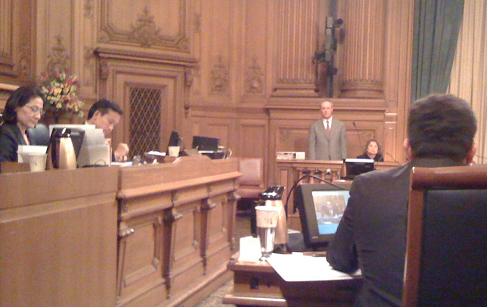
The San Francisco Board of Supervisors unanimously approved a process for replacing Mayor Gavin Newsom last night after the progressive majority stuck together on a pair of key procedural votes and some parliamentary jousting provided a preview of the high-stakes power struggle that will begin Dec. 7.
Sup. Sean Elsbernd led the board moderates (Sups. Carmen Chu, Michela Alioto-Pier, Bevan Dufty, and Sophie Maxwell) in trying to dilute the voting power of the six progressives on the board (Sups. David Chiu, Chis Daly, David Campos, Eric Mar, Ross Mirkarimi, and John Avalos) and ensure they can’t vote as a bloc to choose the new mayor.
State conflict-of-interest rules spelled out by the California Political Reform Act and associated rulings prevent supervisors from voting in their economic interests, as becoming mayor would be. So Board Clerk Angela Calvillo and the Santa Clara County Counsel’s Office (legal counsel in the matter after our own City Attorney’s Office recused itself) created procedures whereby all nominees leave the room while the remaining supervisors vote.
But as Daly noted, clearing several supervisors from the room would make it unlikely that those remaining to come up with six votes for anyone. He also said the system would deny too many San Franciscans of a representative in this important decision and allow sabotage by just a few moderate supervisors, who could vote with a majority of supervisors present to adjourn the meeting in order to push the decision back to the next board that is sworn in on Jan. 11.
“The process before us is flawed,” Daly said.
So Daly sought to have the board vote on every nomination as it comes up, but Elsbernd argued that under Robert’s Rules of Order, nominations don’t automatically close like that and to modify a board rule that contradicts Robert’s Rules requires a supermajority of eight votes. Calvillo, who serves as the parliamentarian, agreed with that interpretation and Chiu (who serves as chair and is the final word on such questions) ruled that a supermajority was required.
Although some of his progressive colleagues privately grumbled about a ruling that ultimately hurt the progressives’ preferred system, Chiu later told the Guardian, “I gotta play umpire as I see the rules…We need to ensure the process and how we arrive at a process is fair and transparent.”
Nonetheless, Chiu voted with the progressives on the rule change, which failed on a 6-5 vote. But Daly noted that supervisors may still refuse nominations and remain voting until they are ready to be considered themselves, which could practically have the same effect as the rejected rule change. “If we think that’s a better way to do it, we can do it, but we don’t need to fall into the trap and subterfuge of our opponents,” Daly told his colleagues.
Elsbernd then moved to approve the process as developed by Calvillo, but Daly instead made a motion to amend the process by incorporating some elements on his plan that don’t require a supermajority. After a short recess to clarify the motion, the next battleground was over the question of how nominees would be voted on.
Calvillo and Elsbernd preferred a system whereby supervisors would vote on the group of nominees all at once, but Daly argued that would dilute the vote and make it difficult to discern which of the nominees could get to six votes (and conversely, which nominees couldn’t and could thereby withdraw their nominations and participate in the process).
“It is not the only way to put together a process that relies on Robert’s Rules and board rules,” Daly noted, a point that was also confirmed at the meeting by Assistant Santa Clara County Counsel Orry Korb under questioning from Campos. “There are different ways to configure the nomination process,” Korb said. “Legally, there is no prohibition against taking single nominations at a time.”
So Daly made a motion to have each nominee in turn voted up or down by the voting board members, which required only a majority vote because it doesn’t contradict Robert’s Rules of Order. That motion was approved by the progressive supervisors on a 6-5 vote.
Both sides at times sought to cast the other as playing procedural games, and both emphasized what an important decision this is. “This is without a question the most important vote that any of us will take as a member of the Board of Supervisors and one that everyone is watching,” Elsbernd said of choosing a new mayor.
So after the divisive procedural votes played out, Chiu stepped down from the podium and appealed for unity around the final set of procedures. He said that San Franciscans need to have confidence that the process is fair and accepted by all, and so, “It would be great if we have more than a 6-5 vote on this.”
As the role call was taken, Carmen Chu was the first moderate to vote “yes,” and her colleagues followed suit on a 11-0 vote to approve the process. At that point, the board could have begun taking nominations, but it was already 7 p.m. and both Daly and Chiu argued to delay that process by couple weeks.
“We owe it to ourselves and this city to have a discussion [of what qualities various supervisors want to see in a new mayor] before we get into names and sequestration,” Daly said.
He and other progressive proposed to continue this discussion to Dec. 7, but Elsbernd – who was visibly agitated by the discussion – suddenly moved to table the item (which would end the discussion without spelling out the next step), a motion rejected on a 4-7 vote, with Maxwell joining the progressives.
The discussion ended with a unanimous vote to continue the item to Dec. 7, when supervisors will discuss what they want in a new mayor and possibly begin the process of making and voting on nominations. Anyone who receives six votes will need to again be confirmed during the board meeting on Jan. 4, a day after Newsom assumes the office of lieutenant governor.
Critical care
Sarah@sfbg.com
A complex and controversial project that would involve five San Francisco hospitals — including building a huge showcase facility for the wealthy atop Cathedral Hill — has prompted a debate about what average city residents need from the health care system.
California Pacific Medical Center, an affiliate of Sutter Health, proposes to downsize St. Luke’s Hospital, which primarily serves a low-income population in the Mission District, as part of a $2.5 billion proposal to renovate and retrofit three existing medical campuses, close another one, and build housing and a megahospital on Cathedral Hill that would draw patients from around the country.
CPMC’s grandiose plan was being considered strictly as a land use decision, despite its far-reaching impact on the city’s health care system. So Sup. David Campos created legislation calling for the city to create a citywide health services master plan and to use that as another tool for gauging future medical projects.
Debate over that legislation left some activists on both sides unhappy, with progressives disappointed that it won’t be able to stop a CPMC project they see as neglectful of the poor, and moderates wary of creating a new way to challenge development projects in the face of widespread unemployment in the construction industry.
But it struck a fine enough balance to win 8-3 approval by the board Nov. 16, enough to override a threatened mayoral veto. “I’m really happy and excited about the passage of this legislation,” Campos told the Guardian after the vote.
The legislation has a two-part mandate, with the first part kicking in as soon as it has final approval. It requires the Planning Department, with input from the Department of Public Health, to prepare a health care services master plan to identify current and projected needs for health care services and where they should be provided.
The second part, which begins in 2013, requires Planning to determine whether medical projects are consistent with the findings of this plan. That delay is credited to a last-minute amendment Campos granted during a Nov. 15 committee hearing after the hospital industry complained that the process could jeopardize its ability to meet state-mandated seismic retrofitting deadlines for projects already in the planning pipeline.
The passage of Campos’ legislation comes eight months after President Barack Obama signed the Patient Protection and Affordable Care Act. Hailed by its supporters as the most significant change to the U.S. health care delivery systems in 40 years, the reform package has also been greeted with criticism on both ends of the political spectrum. Progressives complain that it relies too heavily on private insurance companies and medical providers, while Tea Party supporters says that it’s government run amok and they have vowed to “kill the bill.” Senate Minority Leader Mitch McConnell (R-Ky) recently compared so-called Obamacare to “tyranny” in a speech to conservative legal scholars.
But here in San Francisco, the debate over Campos’ legislation — as heated and divisive as it was at times — yielded a surprising amount of consensus around the long-neglected idea that government should play a role in health care planning.
PULLING THE PLUG
The passage of Campos’ legislation marks the first time in 30 years that a government entity has mandated health care services planning in California. That approach West Bay Health Systems Agency, whose creation he opposed as governor of California.
Lucy Johns, a San Francisco-based health care planning consultant who wrote the only health care services master plan California has ever had, recalls what happened in the mid-1970s after President Gerald Ford signed legislation that established health system agencies nationwide.
“California established 14 health systems agencies, including the West Bay Health System Agency, which governed the nine Bay Area counties,” Johns told the Guardian. “The legislation mandated that they be established by every state, with the federal government providing the funding. So every state had to decide how many, how big, and how structured the health system agencies would be.”
Johns notes that state legislators were constrained when it came to the decisions these health service agencies made. “The governing bodies of the health systems agencies had to have a membership that was 51 percent consumer and 49 percent healthcare provider, which included doctors, nurses, and hospital administrators,” she said.
That history served as a backdrop for discussion of the Campos legislation, with the Planning Department staff report noting, “With the elimination of the West Bay Health Systems Agency in 1981, there is no longer a routine or comprehensive analysis of health service resources, needs, trends, and local impacts conducted for changes to or within medical uses.”
“It’s truly a historic moment for San Francisco,” Campos said after his legislation passed its Nov. 16 first reading (the second and final reading is set for Nov. 23, after Guardian press time). “We are the first city in the country to make sure land use decisions are aligned to our health care needs. That’s an unprecedented step that will shape the future of healthcare planning for years to come.”
Campos acknowledged that the passage of Obama’s heath reform package — which includes a mandate to purchase private health insurance beginning in 2014 — was also a catalyst for his legislation, along with the CPMC project.
“But it had more to do with seeing that the city didn’t have the tools it needed to evaluate projects in terms of whether they met the city’s healthcare needs and how they might impact people’s access to healthcare,” Campos said. “The main catalyst came from the community, which felt it was being asked to make decisions that will have long-lasting health care implications, but didn’t have any way to understand those needs. Those concerns were compounded by changes at the national level — and the recognition that these changes offer us an opportunity to engage in planning.”
Campos’ legislative victory came two months after members of the Cathedral Hill Neighbors Association joined nurses, medical workers, patients, and community groups in voicing concerns at a Sept. 23 public hearing about the draft environmental impact report for CPMC’s Cathedral Hill hospital and the other facilities that are part of its proposal.
These groups collectively expressed fear that downsizing St. Luke’s, closing the CPMC California campus, and transforming CPMC Pacific campus to an outpatient-only hospital will force low-income people to travel farther to access health care services while offering better service to the wealthy at Cathedral Hill. And neighbors worried that the proposed complex would increase traffic and require the demolition of rent-controlled apartments.
Formed in 1991 through the merger of Pacific-Presbyterian Medical Center and Children’s Hospital of San Francisco, CPMC has been affiliated with Sutter Health since 1996 and currently has four medical campuses in San Francisco: Pacific in Pacific Heights, California in Presidio Heights, Davies in the Duboce Triangle, and St. Luke’s in the Mission.
But CPMC’s longtime goal was to build a facility intended to be like the Mayo Clinic of the West Coast, a 15-story, 555-bed full-service hospital and specialty care facility at the corner of Van Ness Avenue and Geary Boulevard. Company officials have made approval for that project conditional on keeping St. Luke’s open in the face of the state’s deadline on seismic safety standards that the hospital doesn’t now meet.
“St. Luke’s Hospital was the big issue that got our attention,” Le Tim Ly, lead organizer for the Chinese Progressive Association, told the Guardian. His group has worked with residents in the city’s southeast sector around environmental justice, air quality, and pollution issues when they became aware of the threat to St. Luke’s. “All this, coupled with efforts to downsize Luke’s, left us alarmed by the disproportionate impact on an already impacted area.”
But alarm over CPMC’s plans has now revived the idea of healthcare planning.
MAKING A PLAN
As recently as the beginning of November, representatives for the Hospital Council of Northern and Central California — whose members include CPMC, Chinese Hospital, Jewish Home, Kaiser Permanente, Laguna Honda, St Luke’s, St. Mary’s, San Francisco General Hospital, and Veterans Affairs Medical Center — seemed opposed to any change in the way healthcare planning is done in San Francisco.
At a Nov. 1 hearing on the Campos legislation at the board’s Land Use and Economic Development Committee, Ron Smith, the Hospital Council’s senior vice president for advocacy, said his organization favored maintaining the city’s current procedures. “We would like to propose that the Health Commission does the planning, the Planning Commission does the land use, and that there is a required determination process which is in the current legislation,” Smith said. “We’re proposing that that continue.”
But two weeks later, after Campos amended his legislation so projects now in the planning pipeline are exempt from having to comply with the city’s health care services master plan, some members of the Hospital Council seemed to have a change of heart.
CPMC’s Chief Executive Officer Warren Browner surprised just about everybody when he publicly stated in mid-November that CPMC supports health care planning. “We strongly support the efforts of the city — we are in favor of health planning,” Browner said at a Nov. 15 hearing on the legislation.
“That statement was extraordinary,” said Lucy Johns, recalling CPMC’s history of resisting government control. “The conversation about this legislation has already changed the discourse, at least in public.”
Linda Schumacher, chief executive officer of Chinese Hospital, a community-owned, not-for-profit facility, explained at the same hearing that her organization had been concerned that Campos’ legislation would affect her hospital’s ability to move ahead with a $150 million project that has been in the pipeline since 2003.
“We thank you for that amendment that allows the effective date to be changed,” she said.
“It shows how much progress had been made, even before this legislation goes into effect,” Campos said of the hospital industry’s apparent shift in attitude. “It’s a monumental step, something that was not expected as recently as a few months ago.”
But Ly of the Chinese Progressive Association said he believes the Hospital Council still doesn’t want to see the city getting involved. “As recently as a month ago, their folks were speaking out against any kind of legislation. But I think they started seeing the writing on the wall.”
Ly fretted about the potential negative impact of Campos’ last-minute amendments. “Sup. Campos’ plan represents a victory. But we could use that information as soon as possible. The 2013 deadline means the city will be handicapped: it will have information it can’t use yet.”
Ly ventures that the hospital industry’s approach will be to try to lessen the impact of the legislation. “As written, it still provides the Planning Commission and the board with the discretion to approve projects,” Ly said. “Ultimately, the struggle is about values. Just because there are plans and guidance doesn’t mean the healthcare needs of the community will become a top priority — it just provides us with tools to make an assessment.”
Campos counters that his bill will allow the city to create incentives for, and apply pressure on, the hospital industry. “If they truly want their projects to be expedited and approved before state-mandated seismic retrofitting deadlines kick in, they’ll propose plans that work for the community,” Campos explained.
But even as it publicly vows to be supportive, the Hospital Council continues to express concerns about the Campos legislation. “It’s the council’s job is to be supportive now that the board has approved Campos’ plan,” Smith said. “And Sup. Campos was very generous. He started talking to us in June. But we really didn’t get a handle on his proposal until much later. We think the idea of healthcare planning is very good. We still have concerns about the process, but now the board has voted on the legislation, our goal is to do our best to work with the law.”
Concerns that the legislation would be used to mire projects in repeated appeals and give too much weight to critics’ concerns was raised at the Nov. 16 hearing by Sup. Sean Elsbernd.
“Right now, if anyone has concerns, there’s a conditional use process and a CEQA [California Environmental Quality Act] process,” Elsbernd told the Guardian. “But this turns up a brand new appeal. It means the appeals are heard at the same time, but you’ve now created a third route.”
Campos responded to these concerns by amending the legislation to clarify that the board must act on consistency determination appeals at the same time it acts on other related appeals, so projects won’t be delayed.
Evidently this wasn’t enough to appease the San Francisco Chamber of Commerce. “We cannot be supportive of that piece of legislation,” Rob Black, the Chamber’s vice president of public policy, told the Guardian after the legislation was approved. “We believe appeals should be done at the Department of Public Health in conjunction with service providers, since San Francisco provides 20 percent of service, and private organizations provide the remaining 80 percent.”
Black says the Chamber was pleased Campos amended his legislation so as not to slow down projects that are currently in the planning pipeline. But he claimed Campos’ legislation could actually limit access to healthcare services. “The Chamber is concerned that Campos’ legislation will make it harder for doctors to pool together in pods, and if we don’t do that, it won’t make healthcare more available because services will be more expensive,” Black said. “But we absolutely think” the city should analyze gaps in providing health care to San Franciscans.
Campos’ aide Hillary Ronen confirmed that Black is correct in saying that anyone can appeal a hospital project’s consistency determination. “But the final analysis will revolve around asking if the proposed project meets the health care needs of San Francisco,” she said. “If it doesn’t, and the board doesn’t believe there’s a compelling public policy reason to approve the project, [the board] can override the approval.”
PATIENTS VS. PROFITS
Mary Michelucci, a registered nurse for 40 years and a member of the California Nurses Association, is hopeful that Campos’ legislation will rein in the hospital industry.
“I hope that any plan that would favor patient care over profit would be the way to go,” Michelucci said. “Running a hospital is expensive. But with the profits that Sutter and CPMC are making, they can afford this.”
Michelucci says the dispute over St. Luke’s came to a head three years ago, when nurses began to suspect that CPMC was planning to let the facility fail, suspicions that intensified when CPMC closed St. Luke’s neonatal intensive care unit 18 months ago.
“Now the babies who need neonatal special care are transported to CPMC’s California campus, which is in the Richmond,” Michelucci said. “But the moms may be discharged and most of them live in the Mission or Bayview-Hunters Point.”
Michelucchi still fears that CPMC will wage “a horrific campaign” against the California’s Nurses Association as it continues to push the plan for its megahospital. “CPMC wants to be in complete control of the registered nurses,” she said. “We, unfortunately, are their conscience, while they are a business model in the business of healthcare. The decisions they make about healthcare are not in the interests of patients or nurses, and we are the thorn in their side.”
All this is happening against the backdrop of the worst economic recession since the Great Depression, and for construction workers facing high unemployment rates in San Francisco, CPMC’s megaproject clearly represents light at the end of a very dark tunnel.
“CPMC is my future,” William Hestor, a 28-year-old father of two and member of SEIU-United Healthcare Workers, said at the Nov. 15 hearing. “We worked hard on a contract and we just want to make sure our hospital is built on time.”
CPMC media spokesperson Kevin McCormack told the Guardian that the real issue between CPMC and the CNA is union membership at CPMC’s Cathedral Hill facility. “CPMC is reducing beds at St. Luke’s because the beds aren’t in use, but the facility will be able to take care of 90 percent of patients’ needs and if you need specialist care, a shuttle will take you to Cathedral Hill,” McCormack said. “This centralized arrangement is the best way to attract the best staff and equipment.”
McCormack noted that there are union members and 1,200 nonunion nurses working at CPMC facilities in San Francisco. “We are bringing together nonunion and union nurses together at this facility, and we don’t feel we have the right to force our nonunion nurses to join,” he said, adding that since the Teamsters, the Carpenters, and SEIU-United Healthcare Workers (UHW) are already unionized at the Pacific and California campuses, they’ll be allowed to unionize at Cathedral Hill.
CNA member Eileen Prendiville, who has worked in San Francisco as a registered nurse for decades, recalls the negative changes she has already seen at CPMC’s facilities, including eliminating registered nurses and specialty services.
“If you pull services, as they have, of course you’ll have fewer patients. And the physicians start leaving, so it’s a vicious cycle,” she said. “St. Luke’s was a small community hospital but now it’s all about corporate medicine.”
Sup. Eric Mar sided with those seeking to exempt current projects from the city’s health care services master plan. But Sup. Sophie Maxwell noted that the Planning Commission will take a facility’s historical role into account in determining whether projects are consistent with the city’s health care services plan.
“We believe that addressed community concerns,” Maxwell said. “St. Luke’s would never have been targeted for closure had this legislation been on the books in the past.”
Campos insists his legislation is not simply about CPMC. “Ultimately this legislation stems from a number of pleas we have heard in the last couple of years from people throughout the city,” he said. “It takes the institutional master planning process to the next level. We have tried to consolidate the appeal process under existing law. Important as the legislation is, it’s key to make sure we have the right master plan because that’s where the heavy lifting will take place.”
Meanwhile, the final EIR is being completed for the CPMC project, which should go before the Board of Supervisors for approval early next year.
Ragazza
paulr@sfbg.com
DINE Ragazza is the younger sorella of Sharon Ardiana’s Gialina in Glen Park and, as is so often the case with siblings, the two restaurants do and do not resemble each other. Much of the differences are traceable to the respective neighborhoods. Glen Park (where we find Gialina) has in recent years become an annex of city’s baby belt, whose big, shiny buckle is just over the hill in Noe Valley. Kids like pizza, and Gialina has fine pizza, along with a selection of pastas, a roast or two, and a selection of contorni. Eating at Gialina is a little like waiting to check in for a flight on Southwest Airlines: the environment is lively, lighthearted, and swarming with small children. (Shouldn’t shrieking children be flown on their own airline, perhaps Screaming Babies Airways, with a big screaming baby head painted on the tail of every plane. But if they want to eat at Gialina, okay.)
Ragazza, by contrast, brings haute pizza culture to a vortex of the Haights (lower and upper) and NoPa that so far shows few signs of turning into kiddieland. The restaurant opened recently in a space that’s worn quite a few masks over the past decade; 10 years ago, it was a bistro called Metro Café, then became a fine Nepalese restaurant called Metro Kathmandu, reverted briefly to Metro Café, and now this.
There is nothing distinctive about the mid-block, storefront setting. The glowing red paint scheme of the Kathmandu era has been dialed back to milder earth tones. Otherwise, the look of the restaurant is little different. (In this aesthetic continuity, too, Ragazza differs from its older sibling, whose neglected space was heavily made over before its opening in early 2007.)
Ragazza’s menu is somewhat less pizza-pie-centric than Gialina’s. The new place offers a number of antipasti choices and small plates, along with several roasted items. (Gialina offers one antipasto and one roast.) You could make do very nicely here without having a pizza at all. But the bulk of the clientele seems to understand Ragazza to be a pizzeria at heart, and so the pies emerge from the kitchen in a steady stream, with at least one seeming to turn up on virtually every table. It’s like watching a quarterback spread the ball around to eight different receivers.
Although Ragazza doesn’t offer Gialina’s fabled chili-bomb pizza, the aptly named atomica, it does have a spicy pie of its own, the moto, fired with Calabrian chilis. (These have an aromatic fume all their own and haven’t really been given their due.) The amatriciana pizza ($16), festooned with a sunny-side-up egg, also offered a noticeable nasal kick. And even the pies that aren’t armed with chili heat tend to be bracingly fragrant — a potato version ($15), for instance, topped with red onion and gorgonzola cheese and liberally laced with thyme. No hint of starch overload here, despite the potentially smothering presence of the spud.
Herbal perfumes, along with chili heat, are a recurrent theme. We were particularly aware of the oregano breath wafting from a crock of corona beans ($6) simmered with oven-roasted tomatoes. Oregano is the quintessential pizza smell, but I’d never come across corona beans before and, from their pale chubbiness, would have guessed them to be cannellini or flageolet. They’d been cooked just right and still offered nominal tooth resistance before yielding an interior creaminess.
Purely creamy, on the other hand, was the soft polenta ($9). Polenta can be bland, and it is sometimes enlivened by sautéed mushrooms and gorgonzola — and given Ragazza’s obvious gusto for big flavors, I wouldn’t have been surprised to find those players here. Instead the boost came from a medallion of tomato mascarpone cream, freighted with basil and set atop the polenta like a rosette.
The real test of any restaurant’s food is whether it can hold your attention even if, say, Mark Zuckerberg is sitting at the next table, making moony eyes with a comely ragazza. Was that really Mark Zuckerberg at the next table, an actual person as opposed to the character in the movie The Social Network and the subject of far too much quacking in the key of same from The New York Times’ waddling line of op-ed ducks? We weren’t sure. Zuckerberg is said to live in the wilds of the Peninsula, sleeping on a mattress on the floor of some faceless apartment, just as Jerry Brown did during his first go-round as governor. Yet there he was — maybe — in Ragazza, having come for the girl and stayed for the (pizza) pie. He didn’t friend us, alas, alack. *
RAGAZZA
Dinner: Sun.–Thurs., 5–10 p.m.;
Fri.–Sat., 5–10:30 p.m.
311 Divisadero, SF
(415) 255-1133
Beer and wine
AE/MC/V
Noisy
Wheelchair accesssible
The screwy rules for mayoral succession
EDITORIAL The clerk of the Board of Supervisors, at the request of Board President David Chiu, has released a proposal for the selection process for a new mayor, and it’s about as complicated and confusing as everyone expected. That’s in part the result of the vagueness of the City Charter, which simply specifies that a vacancy in the office of mayor shall be filled by a San Francisco registered voter chosen by a majority of the supervisors but offers no procedural clues on how to get there. And the Political Reform Act sets very strict limits on conflicts of interest for elected officials in California; a supervisor, for example, can’t vote for himself or herself or do anything to promote his or her candidacy for an office that comes with a pay raise.
In the end, the proposal leaves limited room for public input — and makes it very difficult for any sitting supervisor, particularly one of the progressives, to wind up winning the job.
The way the rules are laid out, the board would accept nominations — but any sitting supervisor who accepted the nomination would have to leave the room at once, cease all communication with his or her colleagues, and play no role in further deliberations or voting. Since it’s entirely possible that several supervisors — and possibly several progressives — could be nominated, the process would cripple the final outcome since the only ones allowed to vote would be the remaining board members whose names aren’t in the mix.
That skews the outcome heavily toward one of two options: the supervisors appoint someone who isn’t on the board — or Chiu winds up as both acting mayor and board president because nobody else can muster six votes. The only other option: The progressives all stick together, line up in advance behind a candidate who’s currently on the board, and find one more vote for that person.
The whole thing is so screwy that the supervisors ought to make some changes before they adopt it and try, to the extent that it’s legal, to inject some sanity into the process.
For example: Instead of opening the nominations, collecting a long list of names, sending all of the sitting supervisors on that list out of the room and then voting, the board could take the names one at a time. A supervisor gets nominated, leaves the room, and the votes are tallied; if he or she has fewer than six, the process starts again. (The problem: who goes first — because the first person eliminated can’t be nominated again. To be fair, there would have to be some sort of random drawing of which supervisor could make the first nomination — which alone might add too much random chance to the outcome.)
Then there’s the question of when this all takes place. If the process starts now and an interim mayor is chosen, the board will have to reconfirm that person Jan. 4 when Gavin Newsom actually resigns to take over as lieutenant governor. There’s a chance something could go wrong in the meantime and the board would have to change its vote, and there’s a chance that state law would prevent a supervisor who won from acting in any way to influence the final vote. But those are better risks than the option of leaving everything to the last day. And if the board decides that it can’t or shouldn’t act until Jan. 4, special meetings ought to be calendared for Jan. 5, 6, and 7 to give the current board more than one day to make the final decision.
And before anything happens, the board needs to schedule at lest one open hearing to get input from the public on the qualifications for the next mayor and on potential candidates.
The bottom line: any candidate who wants to get progressive support needs to be willing to do more than sign legislation and manage the city. He or she needs to be willing to use political capital and the mayor’s bully pulpit to make the case for progressive change — on taxes, services, the budget, and an overall civic vision. And the six board members on the left need to stick together, or that won’t happen.
Editorial: The screwy process for selecting a mayor
The clerk of the Board of Supervisors, at the request of Board President David Chiu, has released a proposal for the selection process for a new mayor, and it’s about as complicated and confusing as everyone expected. That’s in part the result of the vagueness of the City Charter, which simply specifies that a vacancy in the office of mayor shall be filled by a San Francisco registered voter chosen by a majority of the supervisors but offers no procedural clues on how to get there. And the Political Reform Act sets very strict limits on conflicts of interest for elected officials in California; a supervisor, for example, can’t vote for himself or herself or do anything to promote his or her candidacy for an office that comes with a pay raise.
In the end, the proposal leaves limited room for public input — and makes it very difficult for any sitting supervisor, particularly one of the progressives, to wind up winning the job.
The way the rules are laid out, the board would accept nominations — but any sitting supervisor who accepted the nomination would have to leave the room at once, cease all communication with his or her colleagues, and play no role in further deliberations or voting. Since it’s entirely possible that several supervisors — and possibly several progressives — could be nominated, the process would cripple the final outcome since the only ones allowed to vote would be the remaining board members whose names aren’t in the mix.
That skews the outcome heavily toward one of two options: the supervisors appoint someone who isn’t on the board — or Chiu winds up as both acting mayor and board president because nobody else can muster six votes. The only other option: The progressives all stick together, line up in advance behind a candidate who’s currently on the board, and find one more vote for that person.
The whole thing is so screwy that the supervisors ought to make some changes before they adopt it and try, to the extent that it’s legal, to inject some sanity into the process.
For example: Instead of opening the nominations, collecting a long list of names, sending all of the sitting supervisors on that list out of the room and then voting, the board could take the names one at a time. A supervisor gets nominated, leaves the room, and the votes are tallied; if he or she has fewer than six, the process starts again. (The problem: who goes first — because the first person eliminated can’t be nominated again. To be fair, there would have to be some sort of random drawing of which supervisor could make the first nomination — which alone might add too much random chance to the outcome.)
Then there’s the question of when this all takes place. If the process starts now and an interim mayor is chosen, the board will have to reconfirm that person Jan. 4 when Gavin Newsom actually resigns to take over as lieutenant governor. There’s a chance something could go wrong in the meantime and the board would have to change its vote, and there’s a chance that state law would prevent a supervisor who won from acting in any way to influence the final vote. But those are better risks than the option of leaving everything to the last day. And if the board decides that it can’t or shouldn’t act until Jan. 4, special meetings ought to be calendared for Jan. 5, 6, and 7 to give the current board more than one day to make the final decision.
And before anything happens, the board needs to schedule at lest one open hearing to get input from the public on the qualifications for the next mayor and on potential candidates.
The bottom line: any candidate who wants to get progressive support needs to be willing to do more than sign legislation and manage the city. He or she needs to be willing to use political capital and the mayor’s bully pulpit to make the case for progressive change — on taxes, services, the budget, and an overall civic vision. And the six board members on the left need to stick together, or that won’t happen.
Memo to Jerry: Yes, you can raise taxes
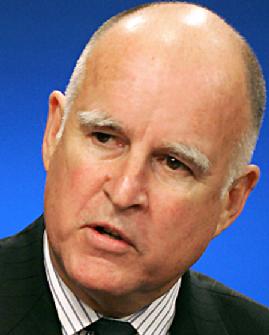
The students and professors at UC have come up with all sorts of creative ways to avoid or minimize tuition hikes, but there’s an option that the Regents (and so far, the new governor) haven’t put on the table: An income tax surchage on the irch and big corporations to pay for public education. Guees what? A majority of Californians are in favor of that approach. In fact, according to the Public Policy Institute, which generally produces some of the most accurate polls in the state, Californians are far more willing to see their own taxes go up than to see student fees raised.
And PPIC didn’t ask the direct question that I would have asked — would you favor a small tax increase for the wealthiest Californians to pay for reduced tuition at California’s public universities? — but based on the poll results in general, I think the response would be a resounding yes.
So there you go, Jerry — a chance to immediate take a stab at the budget crisis in a way that would be popular almost across the board.
Processing the mayoral transition

The question of who will be the next mayor of San Francisco wasn’t any clearer by the end of the Nov. 16 Board of Supervisors meeting, but many expressed a desire for an open and transparent process with accountability to the public. The board approved a motion by Board President David Chiu to have the Clerk of the Board propose an process for selecting a successor mayor, which will come under consideration at the next meeting. But with only a handful of board meetings left before the new board is sworn in on Jan. 8, there is a high level of anticipation.
Clerk of the Board Angela Calvillo confirmed that her office is drafting a proposed process for mayoral selection. Calvillo said the proposal would be submitted for consideration at next week’s meeting, and it will be available to the public on the city website by Friday, Nov. 19.
Essentially, the board could choose from a number of options at its next meeting on how to appoint a successor mayor once Mayor Gavin Newsom vacates office. Whatever the Board decides prior to Jan. 3, when Newsom is sworn in as Lt. Governor, will not have the force of law, since there won’t yet be a vacancy. So a second vote will have to be taken Jan. 4 to make the official appointment. Newsom has said he is “99 percent sure” that he will vacate the Office of the Mayor on Jan. 3.
According to Santa Clara County attorneys — who are filling in for City Attorney Dennis Herrera since he has a conflict-of-interest as a mayoral candidate — neither the Charter nor the Municipal Code dictates a specific process for the Board to use in selecting a successor mayor. So, the board could either follow the regular appointments procedure under the current Board Rules, or it could devise its own process.
The Clerk of Board is now hammering out that unique process, as directed by the board, and the board may vote to modify and adopt that process next week — but since a vote to adopt it would constitute an amendment to the board rules, it would require a super-majority of eight votes.
If there aren’t eight votes, then the board may still opt to set forth an appointment process under the current board rules. “I strongly believe that we do have the ability to effectuate an appointment without amending the board rules,” Sup. Chris Daly said. Daly told the Guardian that he has submitted a motion to take nominations and appoint a successor mayor, which will appear on the adoption without committee reference calendar at next Tuesday’s Board meeting. However, a similar motion put forth by Sup. John Avalos wasn’t able to gain the needed support.
If the board went through the normal appointments process, it would require sending nominees through the Rules Committee for consideration – but since it wouldn’t be practical to have just three members of the board recommend a mayoral appointment to the full board, all 11 supervisors could sit as a Committee of the Whole instead.
The timing is important because if supervisors cannot agree upon a process, or gain enough support for a single nominee, then the task will fall to the new Board of Supervisors, who will be sworn in Jan. 8. If the current board doesn’t reach a decision by Jan. 4, Board President David Chiu will automatically become acting mayor. Once the new board is sworn in, it can continue whatever appointment process has been set in motion or decide to initiate a new process for appointing a successor mayor. If the current board appoints a successor mayor, however, the new board cannot revoke or otherwise affect that appointment.
There are a slew of questions still at play. For example, under conflict-of-interest laws, when some one is nominated as successor mayor, he or she must leave the room and is barred from influencing the process in any way. The idea was bandied about at the Nov. 16 Board meeting to require nominees to respond to questions from the board as part of a public forum, but it’s unclear how a supervisor who has been nominated could respond to questions from his or her colleagues while being sequestered and prohibited from influencing the process.
Although word went out that interested members of the public should show up at City Hall around 4 p.m. Nov. 16 to weigh in on the discussion about appointing a successor mayor, the conversation didn’t get underway till much later.
Sup. John Avalos had submitted a motion to vote on an interim mayor and then vote a second time to ratify that appointment once Mayor Gavin Newsom had vacated office. However, his motion was amended to simply take public input and discuss the process of appointing a successor mayor.
Members of the public waited patiently, and when it was time, they lined up behind the speakers podium wearing neon sunburst stickers that read, “Let the Sun Shine In!” Local writer, artist, and activist Tommi Avicolli Mecca even sang the refrain of the song by that name, before imploring the Supes to “Get this done now, and give us a good, progressive interim mayor.”
Labor activist Gabriel Haaland urged the current board to agree upon an appointment instead of handing the responsibility over to the next board. “People who’ve never held an office hour in their life should not be making this decision,” Haaland said.
Christopher Cook highlighted the challenges that the new mayor would face. “We’re talking about a less-than-average amount of time to prepare for an absolute maelstrom,” with regard to the city budget, Cook noted.
“Let the sun shine in” seemed to be the catchphrase of the evening. Before the public weighed in, Sup. Chris Daly called for an open, transparent process for the appointment of the new mayor. “Conversations about mayoral transition have been happening behind closed doors, not in public session, for the better part of this past year,” Daly charged. “It’s time to hear from the public.”
But just how, exactly, the appointment process will work is anything but clear and sunny – at least for the time being.
Meanwhile, Judge Quentin Kopp, who was a member of the Board of Supervisors when a successor mayor was appointed on Dec. 4, 1978 — one week after the assassinations of Mayor George Moscone and Sup. Harvey Milk — said the process of choosing a new mayor was simpler back then.
In that case, then-Sup. Dianne Feinstein was the only nominee. She was appointed with six votes. Two, including Kopp, voted no, and there were two absences (Harvey Milk had been assassinated one week prior, and Dan White was in jail). Feinstein, who was made to leave the room during the vote, abstained. However, before the vote was called, Feinstein was able to vote against a motion for a continuance — a power she likely would not have had if current political-reform laws were in place.
“It’s simple,” Kopp said. “Why are they complicating it?”
He scoffed at the circuitous discussion happening now, and said some one else had called him with the same inquiry earlier that same day. “Once again, our overpaid supervisors are making work for themselves,” he said. “It’s called busywork.”
And that might be the most insightful statement yet – after all, while the process points are debated over and over again, there is more time for supervisors to determine just who might be able to collect the six votes needed to be elected mayor of San Francisco.
Replacing Newsom: no reason to wait
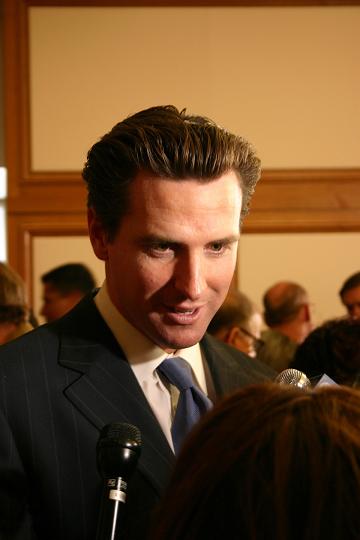
Randy Shaw’s calling on the supervisors to wait, and let the next board pick the next mayor. I don’t get his argument. In fact, it seems to me that there’s every reason for this board do its Charter-mandated job.
Think about it: everyone on the board has served for at least a year and a half, and some for a lot longer. They’ve been around enough to have some sense about how political decisions are made and some experience making tough calls. Two of the people who appear to be the new supes — Malia Cohen and Mark Farrell — have never held any elective office before. And if the decision is left to the new board, the first thing that group of 11 people, including four newcomers, will have to do — minutes after they’ve taken the oath of office — is make perhaps the most important decision any of them will face as supervisors.
And in that case, backroom deals made in the interregnum will play and even bigger role.
There’s no “rush.” I don’t think the board should choose a new mayor tomorrow. But I think the supes ought to get the process going — and do it in a way that is open and honest and gives the public faith in the results.
If you want to be appointed by the board to a commission or task force, you have to go before the Rules Committee and be vetted. The committee members ask questions. There’s testimony. Why should the mayor’s job be any different?
The process that makes the most sense would go like this: Starting this week, the supervisors nominate candidates for interim mayor. Everyone nominated is contacted and asked if he or she is interested in the job. Then the ones who want to serve — either as a “caretaker” or with the hope of running in the fall — appear at a series of hearings of the full board, sitting as a Committee of the Whole. Every supervisor gets to ask questions; the candidates respond, and the whole thing is open to the public.
When that’s done — in a couple of weeks — the board can select the best candidate. That person would then start forming a transition team and prepare to take office January 4th, when Newsom becomes lieutenant governor; the board would simply ratify its choice that day.
I’m not going to argue about whether the incoming board is more or less “progressive” than the current board. I am going to suggest that experience matters, that there are serious problems for the new mayor to take on, that the mad scramble approach (the way board presidents are elected) is a bad way to choose a new mayor and that there’s plenty of time to do this right, in the open, between now and January.
Yee launches mayoral bid as supervisors consider their options

Amid the jockeying for position on who will be San Francisco’s next mayor, Sen. Leland Yee this morning filed paperwork at the SF Elections Department to form a mayoral exploratory committee before a throng of journalists who were invited yesterday for a big “announcement.”
Yee diligently hit his talking points and did little to divert from a script emphasizing his deep local roots, his belief in being a humble public servant, and how this action was “beginning a conversation with San Franciscans” about “what they want of their city government and their next mayor.” Yee used the word “conversation” so many times that an AP reporter asked him to explain his issues and reasons for running without using the word “conversation,” a word Yee still slipped into his answer.
Meanwhile, members of the Board of Supervisors yesterday introduced competing motions for naming an interim mayor to replace Gavin Newsom while he leaves in January to become lieutenant governor. Sups. John Avalos, David Campos, and Chris Daly are seeking to have the board vote on a replacement mayor as soon as next week, while Board President David Chiu asked the board clerk’s office to develop a framework and process for choosing a new mayor. Asked whether he has the six votes needed to take up the matter next week, Avalos told the Guardian, “That’s my hope, but we’ll see.”
While Yee seems focused on winning the mayoral election next fall, rather than winning six votes on the board now, he told reporters, “I have the highest regard for members of the Board of Supervisors…They have a tremendous challenge in front of them and I wish them well.”
In his prepared statement that listed his contact person as Jim Stearns, a political consultant who usually works for progressive candidates and ballot measures, Yee sought to differentiate himself from Newsom, who has had hostile relations with the board throughout his seven-year tenure. “I want to see the Mayor work with, and not against the Board of Supervisors,” Yee said in that statement.
Asked by the Guardian to elaborate on what appears to be a critique of Newsom, Yee demurred. “I’m not going to judge this mayor. History will do that,” he said.
Playing it safe for now could be a sound strategy for Yee, who would be the city’s first Chinese-American mayor and who has a history of endorsing progressive candidates and positions, but who also just raised and spent more than $1.2 million (much of it in big corporate donations that far exceed limits on local donations that his committee will now allow him to begin collecting) on his uncontested Senate reelection, including giving six-figures to Stearns and spending almost as much on polling.
Stearns tells the Guardian that, consistent with his message today, Yee will run a very positive campaign. “We’re going to run a different kind of campaign, a very collaborative campaign,” he said. “This city deserves a different kind of campaign where people are just firing their guns at each other.”
The next mayor
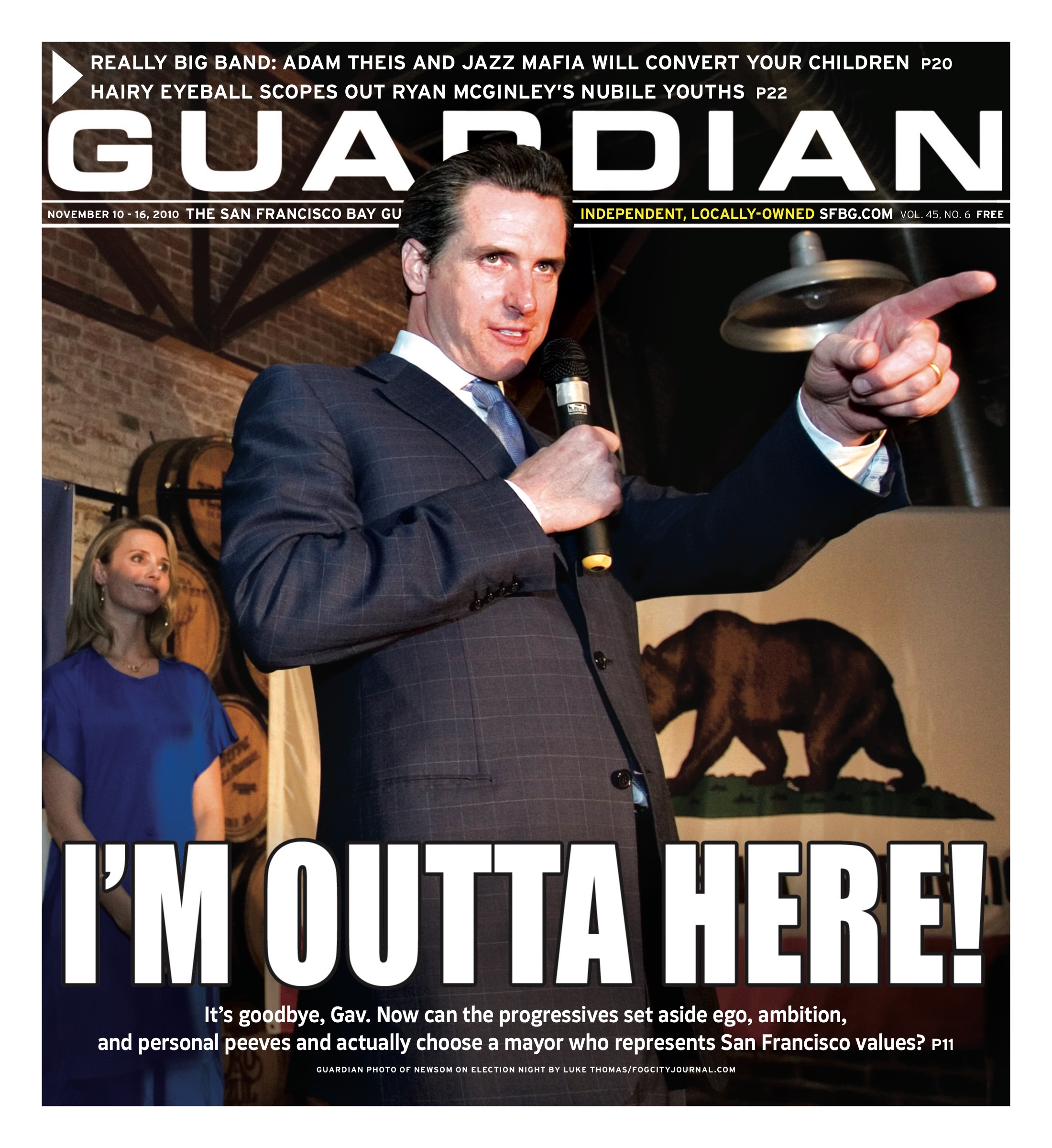
tredmond@sfbg.com
By the time a beaming Mayor Gavin Newsom took the stage at Tres Agaves, the chic SoMa restaurant, on election night, enough results were in to leave no doubt: the top two places on the California ballot would go to the Democrats. Jerry Brown would defeat Meg Whitman in the most expensive gubernatorial race in American history — and Newsom, who once challenged Brown in the primary and dismissed the office of lieutenant governor, would be Brown’s No. 2.
It might not be a powerful job, but Newsom wasn’t taking it lightly anymore. “We can’t afford to continue to play in the margins,” he proclaimed proudly, advancing a vague but ambitious agenda. “There is absolutely nothing wrong with California that can’t be fixed with what’s right with California.”
But around the city, as results trickled in for the local races, the talk wasn’t about Newsom’s role in the Brown administration, or the change the Democrats might bring to Sacramento. It was about the profound change that could take place in his hometown as he vacates the office of mayor a year early — and opens the door for the progressives who control the Board of Supervisors to appoint a chief executive who agrees with, and is willing to work with, the majority of the district-elected board.
At a time when the Republican takeover of Congress threatens to create gridlock in Washington, there’s a real chance that San Francisco’s government — often paralyzed by friction between Newsom and the board — could take on an entirely new direction. It’s possible that the progressives, long denied the top spot at City Hall, could put a mayor in office who shares their agenda.
This could be a turning point in San Francisco, a chance to put the interests of the neighborhoods, the working class, small businesses, the environmental movement, and economic justice ahead of the demands of downtown and the rich. All the pieces are in place — except one.
To make a progressive vision happen, the fractious (and in some cases, overly ambitious) elected leaders of the progressive movement will have to recognize, just for a little while, that it’s not about any individual. It’s not about David Chiu, or Ross Mirkarimi, or Chris Daly, or John Avalos, or Eric Mar, or David Campos, or Jane Kim, or Aaron Peskin. It’s not about any one person’s career or personal power.
It’s about a progressive movement and the issues and causes that movement represents. And if the folks with the egos and personal gripes and career designs can’t set them aside and do what’s best for the movement as a whole, then the opportunity of a generation will be wasted.
Folks: this is a hard thing for politicians to recognize. But right now it’s not about you. It’s about all of us.
It’s an odd time in San Francisco, fraught with political hazards. And it’s so confusing that no one — not the elected officials, not the pundits, not the lobbyists, not the insiders — has any clear idea who will occupy Room 200 in January.
Here’s the basic scenario, as described by past opinions of the city attorney’s office:
Under the state Constitution, Newsom will take office as lieutenant governor Jan. 3, 2011. The City Charter provides that a vacancy in the Mayor’s Office is filled by the president of the Board of Supervisors until the board can choose someone to fill the job until the end of the term — in this case, for 11 more months.
So if all goes according to the rules (and Newsom doesn’t try to play some legal game and delay his swearing-in), David Chiu will become acting mayor on Jan.3. He’ll also retain his job as board president.
On Jan. 4, the current members of the Board of Supervisors will hold a regularly scheduled Tuesday meeting — and the election of a new mayor will be on the agenda. If six of the current supervisors can agree on a name (and sitting supervisors can’t vote for themselves) then that person will immediately take office and finish Newsom’s term.
If nobody gets six votes — that is, if the board is gridlocked — Chiu remains in both offices until the next regular meeting of the board — a week later, when the newly elected supervisors are sworn in.
The new board will then elect a board president — who will also instantly become acting mayor — and then go about trying to find someone who can get six votes to take the top job. If that doesn’t work — that is, if the new board is also gridlocked — then the new board president remains acting mayor until January 2012.
There are at least three basic approaches being bandied about. Some people, including Newsom and some of the more conservative members of the board, want to see a “caretaker” mayor, someone with no personal ambition for the job, fill out Newsom’s term, allowing the voters to choose the next mayor in November, 2011. That has problems. As Campos told us, “The city has serious budget and policy issues and it’s unlikely a caretaker could handle them effectively.” In other words, a short-termer will have no real power and will just punt hard decisions for another year.
Then there’s the concept of putting in a sacrificial progressive — someone who will push through the tax increases and service cuts necessary to close a $400 million budget gap, approve a series of bills that stalled under Newsom, take the hits from the San Francisco Chronicle, and step out of the way to let someone else run in November.
The downside of that approach? It’s almost impossible for a true progressive to raise the money needed to beat a downtown candidate in a citywide mayor’s race. And it seems foolish to give up the opportunity to someone in the mayor’s office who can run for reelection as an incumbent.
Which is, of course, the third — and most intriguing — scenario.
The press, the pundits, and the mayor have for the past few months been pushing former Sup. Peskin as the foil, trying to spin the situation to suggest that the current chair of the local Democratic Party is angling for a job he wouldn’t win in a normal election. But right now, Peskin is no more a front-runner than anyone else. And although he’s made no secret in the past of wanting the job, he’s been talking of late more about the need for a progressive than about his own ambitions.
“If the board chose [state Assemblymember] Tom Ammiano, I would be thrilled to play a role, however small, in that administration,” Peskin told us.
In fact, Peskin said, the supervisors need to stop thinking about personalities and start looking at the larger picture. “If we as a movement can’t pull this off, then shame on us.”
Or as Sup. Campos put it: “We have to come together here and do what’s right for the progressive movement.”
Two years ago, the San Francisco left was — to the extent that it’s possible — a united electoral movement. In June, an undisputed left slate won a majority on the Democratic County Central Committee. In November 2008, Districts 1, 3, 5, and 11 saw consensus left candidates running against downtown-backed opponents — and won. In D9, three progressives ran a remarkably civil campaign with little or no intramural attacks.
The results were impressive. As labor activist Gabriel Haaland put it, “we ran the table.”
But that unity fell apart quickly, as a faction led by Daly sought to ensure that Sup. Ross Mirkarimi couldn’t get elected board president. Instead that job went to Chiu — the least experienced of the supervisors elected in that class, and a politician who is, by his own account, the most centrist member of the liberal majority.
This fall, the campaign to replace Daly in D6 turned nasty as both Debra Walker and Jane Kim openly attacked each other. Walker sent out anti-Kim mailers, and Kim’s supporters charged that Walker was part of a political machine — a damaging (if silly) allegation that created a completely unnecessary rift on the left.
And let’s face it: those fights were all about personality and ego, not issues or progressive strategy. Mirkarimi and Daly have never had any substantive policy disagreements, and neither did Walker and Kim.
In the wake of that, progressives need to come together if they want to take advantage of the opportunity to change the direction of the city. It’s not going to be easy.
“We’re good at losing,” Daly said. “I’m afraid we’re doing everything we can to blow it.”
The cold political calculus is that none of the current board members can count on six votes, and neither can Peskin or any of the other commonly mentioned candidates. The only person who would almost certainly get six votes today is Ammiano — and so far, he’s not interested.
“I know you never say never in politics, but I’m happy here in Sacramento. Eighty-six percent of the voters sent me back for another term, and I think that says something,” he told us.
It’s hardly surprising that someone like Ammiano, who has a secure job he likes and soaring approval ratings, would demur on taking on what by any account will be a short-term nightmare. The city is still effectively broke, and next year’s budget shortfall is projected at roughly $400 million. There’s no easy way to raise revenue, and after four years of brutal cuts, there’s not much left to pare. The next mayor will be delivering bad news to the voters, making unpleasant and unpopular decisions, infuriating powerful interest groups of one sort or another — and then, should he or she want the job any longer, asking for a vote of confidence in November.
Yet he power of incumbency in San Francisco is significant. The past two mayors, Newsom and Willie Brown, were reelected easily, despite some serious problems. And an incumbent has the ability to raise money that most progressives won’t have on their own.
Chiu thus far is being cautious. He told us his main concern right now is ensuring that the process for choosing the next mayor is open, honest, and legally sound. He won’t even say if he’s officially interested in the job (although board observers say he’s already making the rounds and counting potential votes).
And no matter what happens, he will be acting mayor for at least a day, which gives him an advantage over anyone else in the contest.
But some of the board progressives are unhappy about how Chiu negotiated the last two budget deals with Newsom and don’t see him as a strong leader on the left.
Ross Mirkarimi is the longest-serving progressive (other than Daly, who isn’t remotely a candidate), and he’s made no secret of his political ambitions. Then there’s Campos, an effective and even-tempered supervisor who has friendly relationships with the board’s left flank and with centrists like Bevan Dufty. But even if Dufty (who I suspect would love to be part of electing the first openly gay mayor of San Francisco) does support Campos, he’d still need every other progressive supervisor. Campos also would need Chiu’s vote to go over the top. Which means Chiu — who needs progressive support for whatever his political future holds — would have to set aside his own designs on the job to put a progressive in office.
In other words, some people who want to be mayor are going to have to give that up and support the strongest progressive. “If there’s someone other than me who can get six votes, then I’m going to support that person,” Campos noted.
Then there are the outsiders. City Attorney Dennis Herrera has already announced he plans to run in the fall. If the board’s looking for a respected candidate who can appeal to moderates as well as progressives, his name will come up. So will state Sen. Mark Leno, who has the political gravitas and experience and would be formidable in a re-election campaign in November. Leno doesn’t always side with the left on local races; he supported Supervisor-elect Scott Wiener, and losing D6 candidate Theresa Sparks. But he has always sought to remain on good terms with progressives.
All that assumes that the current board will make the choice — and even that is a matter of strategic and political dispute. If the lame duck supervisors choose a mayor — particularly a strong progressive — you can count on the San Francisco Chronicle, Newsom, and the downtown establishment to call it a “power grab” and cast doubt on the legitimacy of the winner.
“But choosing a mayor is the legal responsibility of this board and they ought to do their jobs,” Peskin said.
The exact makeup of the next board was still unclear at press time. Jane Kim is the likely winner in D6 and has always been a progressive on the School Board. She’s also close to Chiu, who strongly supported her. If Malia Cohen or Lynette Sweet wins D10, it’s unlikely either of them will vote for a progressive mayor.
Newsom also might try to screw things up with a last-minute power play. He could, for example, simply refuse to take the oath of office as lieutenant governor until after the new board is seated.
Chiu’s allies say it makes sense for the progressives to choose a mayor who’s not identified so closely with the left wing of the board, who can appeal to the more moderate voters. That’s a powerful argument, and Herrera and Leno can also make the case. The progressive agenda — and the city — would be far better off with a more moderate mayor who is willing to work with the board than it has been with the arrogant, recalcitrant, and distant Newsom. And if the progressives got 75 percent of what they wanted from the mayor (as opposed to about 10 percent under Newsom), that would be cause to celebrate.
But to accept that as a political approach requires a gigantic assumption. It requires San Franciscans to give up on the idea that this is still, at heart, a progressive city, that the majority of the people who live here still believe in economic and social justice. It means giving up the dream that San Francisco can be a very different place, a city that’s not afraid to defy national trends and conventional wisdom, a place where socioeconomic diversity is a primary goal and the residents are more important than the big companies that try to make money off them. It means accepting that even here, in San Francisco, politics have to be driven by an ever-more conservative “center.”
It may be that a progressive can’t line up six votes, that a more moderate candidate winds up in the Mayor’s Office. But a lot of us aren’t ready yet to give up hope.
Additional reporting by Noah Arroyo.
How not to choose a mayor
EDITORIAL There are plenty of good arguments among progressives about who would be the best person to replace Gavin Newsom as mayor and how the Board of Supervisors should make that decision. It’s a complicated situation: The next mayor will face a horrible budget deficit, all sorts of tough decisions — and then face the voters in 10 months. And if the board appoints a progressive, that person will face a hostile daily newspaper and several well-funded opponents in the fall.
But we know there are some very bad scenarios, some things the board and the potential mayor contenders shouldn’t do — because in the end, the process needs to be free of any sort of backroom taint.
Here are some basic ground rules for the next two months.
Newsom shouldn’t try to mess around with the selection of his successor. The mayor decided to run for state office with the full knowledge that he would leave behind a vacancy that the supervisors would fill. He has no business playing political and legal games to skew the results. For example, some say Newsom is considering delaying his swearing in, now set for Jan 3, 2011, for a week to prevent the current supervisors from voting on an interim mayor. That would be a bad faith, manipulative move. He made his choice; now he needs to get out of the way and let the City Charter process work.
The current board should have a fair shot at electing Newsom’s replacement. The day after Newsom takes office as lieutenant governor, the current board will meet for one last time — and by law, they should and will have a chance to find a candidate who can get six votes to serve out Newsom’s term. Any parliamentary moves that serve only to delay the vote and push the decision to the new board would be inappropriate.
The idea of a “caretaker” mayor is fraught with problems — and Willie Brown shouldn’t even be on the list. Newsom is pushing the idea of a true interim mayor, someone who won’t run for the job in November and will simply keep the lights on for 11 months. That means ignoring the city’s serious structural problems. A caretaker would have no authority and little ability change things. And the notion that’s being floated around of former mayor Willie Brown stepping in is disgraceful. Brown was a terrible mayor, and a rerun of that nightmare — even of only 11 months — is the last thing San Francisco needs.
Kamala Harris shouldn’t be a player in this game. If Harris, the current district attorney, is elected state attorney general, her job will be open too — and it’s easy to see how Newsom could use that as a plum to get his way. If Harris resigns before Newsom is sworn in, Newsom would get to appoint her replacement — and if that appointee is currently on the Board of Supervisors, Newsom would get to fill a seat on the board too. Harris needs to stay out of that unseemly sort of deal.
All the rules and procedures need to be made public, now. The legalities of this transition are tricky. Could the current board appoint an interim mayor now, knowing that a vacancy will occur, or must they wait until Newsom has actually resigns? Could Newsom delay his swearing in? The supervisors need to get legal advice on every possible scenario — and make it public. The last thing anyone needs in this confusion period is secrecy.
Plenty of people will be unhappy with whatever plays out. But if the process is bad, the result will be a mayor with no legitimacy.
Election over, what next?
Dick Meister is a San Francisco-based columnist who has covered political and labor issues for a half-century as a reporter, editor , author and commentator. Visit him at his website, www.dickmeister.com.
OK, the election is over and labor, Democrats and the other good guys came up a bit short. But what now? What next for the good guys?
Well, for starters, organized labor and its Democratic Party allies must be ready to block Republican plans to try to enact legislation that would cut taxes for the very wealthy, slash Medicare funding, and possibly even privatize Social Security. I know that may sound alarmist and far-fetched. But that’s what Republican leaders are actually talking about.
After all, the GOP’s anti-labor corporate allies spent nearly a billion dollars on the election and they damn well want their money’s worth. Larry Cohen, president of the communications workers union, thinks it’s getting like the way elections were 100 years ago when the big trusts and robber barons made sure their voices were the only ones heard during election campaigns.
Not yet, Larry. Not quite. Unions were able to make a lot of highly effective noise that helped elect some important pro-labor Democrats and defeat several Tea Party candidates and other anti-labor wackos who argued, as the AFL-CIO’s Mike Hall notes, “that government should do nothing to improve the economy or protect working families during the worst economic crisis since the Great Depression.”
Let’s me take a little closer look at how the election went for organized labor and its political friends in two of the country’s most important states politically, numbers one and two in population, California and Texas.
In California, as the AFL-CIO says, unions were a key factor propelling notably pro-labor Democrat Jerry Brown to the governorship and pro-labor Democrat Barbara Boxer to a third term in the Senate. Those victories were especially sweet, since the opponents of Governor-elect Brown and Senator Boxer were former business executives with tons of money, including their own, to spend on their campaigns.
Former eBay CEO Meg Whitman spent more than $141 million of her own money on her losing campaign against Jerry Brown for governor. And though Carly Fiorina, former Hewlett-Packard CEO, spent several million of her own money on her campaign, the total was nowhere near the obscene amount that Whitman pulled from her own pocket for her campaign.
Anyway, Meg Whitman lost, and good for Californians for making that happen. Labor couldn’t imagine a worse anti-labor governor than Meg Whitman, or more labor-friendly governor than Jerry Brown, a worse anti-labor senator than Carly Fiorini, or more labor-friendly senator than Barbara Boxer.
It was a bit different in most other states. As Executive Director Rose Ann DeMoro of the California Nurses Association notes, the election of Democratic, pro-labor candidates in California “provided a national alternative to the conservative, corporate-oriented economic program that won so many other races nationwide.”
DeMoro praised California’s voters “for seeing through the fool’s gold promises that the path to economic recovery and job creation is through corporate tax breaks and shifting more wealth and resources to those who need it the least.”
The news isn’t so good out of Texas, where, as Jim Lane of the People’s World says, “the second largest delegation to the U.S. House of Representatives, already heavily leaning to the right, tilted drastically further on November 2 – plus, many of the most popular Texas Democratic leaders were defeated.
The re-election of Gov. Rick Perry was more bad news for labor and its allies, given what the People’s World’s Lane notes as Perry’s “far-right, anti-worker vision.” Reporter Lane says “progressive Texans are not looking forward to extending the years of being shamed about their home state, as we have been since GW Bush took the national stage.”
But at least the Texas labor movement was able to run what Lane calls “a strong and largely independent political campaign.” Unions even dared to run “one of their own,” former national AFL-CIO official Linda Chavez-Thompson, for lieutenant governor. But, as Lane notes, “Like all other statewide Democratic candidates, Chavez-Thompson’s campaign was buried by big money.”
So, what next for Texas, California – the whole country?
What’s next should be in large part to carry out what AFL-CIO and Democratic Party leaders have been advocating for many years – rebuilding of our long crumbling infrastructure
President Obama has a plan that calls for rebuilding 150,000 miles of roads, laying and maintaining 4,000 miles of railway tracks, restoring 150 miles of airport runways and , in doing so, providing badly needed jobs for many of the country’s millions of unemployed workers.
That’s how labor and political leaders can – and must – begin to deliver on their election campaign promises to, above all, do what it takes to create “jobs, jobs, jobs.”
Dick Meister is a San Francisco-based columnist who has covered political and labor issues for a half-century as a reporter, editor , author and commentator. Visit him at his website, www.dickmeister.com.
Mayoral question perplexes the pundits

Today’s post-election analysis session at the San Francisco Planning and Urban Research Association featured the usual room full of smart political minds from across the ideological spectrum – including those of hosts Alex Clemens and David Latterman – but nobody had any real insights into the big question on everyone’s minds: who will be the next mayor?
Everyone agrees that Gavin Newsom is headed to Sacramento in January, and state law calls for him to become lieutenant governor (and resign as mayor) on Jan. 3. At that point, Board President David Chiu becomes acting mayor, and the current Board of Supervisors is scheduled to meet Jan. 4 and could vote for a new interim mayor. The newly elected board takes office a week later and as its first order of business it will elect a new president, who becomes the new acting mayor, and if the old board can’t elect an interim, then the new one could elect an interim mayor, who would serve until after the mayoral election in November.
It’s tough enough for anyone to get to six votes, particularly considering supervisors can’t vote for themselves, but the deal-making could also involve the district attorney’s job. If Kamala Harris holds her slim current lead for attorney general, the new mayor would get to appoint her replacement. And if Rep. Nancy Pelosi decides to resign, that plum job would mix things up further. So everything is revolving around the vote for mayor right now.
“Everything comes back to this,” Latterman said, as he and Clemens basically had to shrug off questions about who has the inside track to be mayor. There are just too many variables involved, too many possible deals that could be cut, too many ambitious politicians in the mix, not to mention innumerable outsiders who could be tapped (hmmm…Mayor Jones, it does have a ring to it).
Latterman, a downtown consultant who helps update the Progressive Voter Index (created by SF State Professor Rich DeLeon), noted that the citywide results in the election once again showed that the overall city electorate is more moderate than progressive, particularly because the districts that have the strongest voter turnout (Districts 2, 4, and 8) are also some of the city’s most conservative.
As a result, he said, “The city is not voting for a far left mayor come November, so [progressives] will do whatever they can to get a mayor now.” Progressives are indeed hoping to get one of their own into Room 200 in January, and they hope that would allow whoever is chosen to win over enough voters to remain after November.
As a result, conservatives and most moderates will dig in, with many pushing the idea of a “caretaker mayor” so the playing field between left and right is still fairly even this fall.
“This is a World Series for political junkies,” Clemens said, who had the funniest way of casting the question: Normally, about 11 people run for mayor and the whole city picks one, he said, “but this is the opposite.” These 11 supervisors have the whole city to pick a mayor from, and at this point, it’s anyone’s guess who that will be.
Newsom endorses Wilson, who endorses “the machine”

As Mayor Gavin Newsom prepares to leave San Francisco for the Lieutenant Governor’s Office in Sacramento, he has burned enough bridges here that he’s not going to have much of a role in picking his successor. But he made a play today during the Giants World Series celebration at City Hall that just may resonate with local voters and elected officials alike.
“This town is going to need another mayor soon, and I have just three words: fear the beard,” Newsom said as he wrapped up his speech to a crowd of several hundred thousand fans, giving his cheeky endorsement to the Giants’ star closing pitcher, Brian Wilson.
But during his own speech, Wilson respectfully declined the opportunity. “I don’t think I’m up to that job, but I know someone who is: Where’s the machine?” Wilson told the crowd, appearing to give the nod to the next speaker, Giants star pitcher Tim Lincecum, who didn’t take himself out of the running.
“All I can say is thank you and go San Francisco!” Lincecum said.
So, what do you say, San Francisco? Are we ready for Mayor Lincecum?
Is this a joke? Maybe not, after all, while being interviewed before the festivities began, a jubilant Newsom said, “The politicians need to step out of the way and that’s when you can restore a sense of pride to the city.” And in your case, Mister Mayor, we at the Guardian couldn’t agree more. Have a great trip to Sacramento!
UPDATE: A friend has now clued me in to the possibility that Wilson wasn’t actually endorsing Lincecum, but his BDSM neighbor. Huh? Yeah, I’m not sure either, but check this out: http://www.youtube.com/watch?v=6ckloLGOgVo
Election 2010: SF’s season of political madness
You can draw — or not draw — all sorts of conclusions about the meaning of last night’s national election, but I can tell you what the state and local results mean: A season of political madness. As of the first week in January, San Francisco will have a new mayor and (probably) a new district attorney, and neither will be elected by the voters. And if some pundits are correct and Nancy Pelosi decides to retire rather than taking a seat on the back bench, then a once-in-a-lifetime change to take a safe seat in Congress will open up. And man, will the mad scramble be on.
Gavin Newsom will be sworn in as lt. governor the same day that Kamala Harris (if her lead in the polls holds) will be sworn in as attorney general. In theory, that means Board President David Chiu will become acting mayor — with the authority to appoint a new district attorney. That’s if Harris doesn’t step down a day early, allowing Newsom to appoint her replacement. Deals are being offered and tossed around already (and one of the interesting elements is that Chiu has always been interested in the D.A.’s job — which would open up not only the board presidency but his D3 seat.)
Then the current board members will have five days before their terms end to choose a new mayor by majority vote (except that no supervisor can vote form him or herself), and in the meantime, Chiu will be both acting mayor and board president. If the supes can’t make a decision, the new board — and we still don’t know who will be on that board — will get a chance to elect both a new board president (and acting mayor) and a new mayor.
And to make it more complicated, a number of the people being looked at for the mayor’s job — and some of the people who plan to run for mayor next November — would also be very interested in Pelosi’s seat.
This election isn’t over yet — but already, I promise you, the talks are on and everyone’s thinking about the deal.
It’s going to be crazy — and it also offers progressives a rare change to reshape city politics. No matter what happens with the D6 and D10 races, progressives will hold the board majority. If they can work together — thinking about the larger agenda, not just their personal egos — this could turn out very well indeed.
Election 2010: More good news on the state front
You can put this one in the bank: Brown is the next governor, Boxer remains a senator and Gavin Newsom is going to Sacramento, quite possibly on the coat tails of the man he at one point tried to challenge for the top job. And there’s more good news for Dems: Tom Torlakson looks solid for state superintendent of public instruction and Dave Jones is going to be the next insurance commissioner.
The only top Dem who isn’t faring well is Kamala Harris, who is lagging in her race against Steve Cooley for attorney general. This is a big one: Cooley wants to defend prop. 8.
Election 2010: Well, there goes $160 million
CNN, using exit polls, just called the governor’s race for Jerry Brown. Meg Whitman spend $160 million and is getting trounced. Think of what else that money could have gone for.