Government

Wedding bells and Pride protests

0

rebecca@sfbg.com ; steve@sfbg.com

The city of San Francisco was a complete whirlwind from June 26 to June 30. First came the historic Supreme Court ruling that ended the ban on same-sex marriage in California and struck down the discriminatory Defense of Marriage Act. The historic decision, handed down just before the city’s Pride festivities got underway and as a rare heat wave gripped the city, unleashed widespread celebration June 26, culminating with a rally and dance party in the streets of the Castro.

The Supreme Court ruled that the Defense of Marriage Act, which denies federal recognition of same-sex marriage, “is unconstitutional as a deprivation of the equal liberty of persons that is protected by the Fifth Amendment.” According to the majority opinion, “DOMA’s principal effect is to identify a subset of state sanctioned marriages and make them unequal.”

Hollingsworth v. Perry, the Prop 8 case, was dismissed on standing due to the fact that the State of California refused to defend it in court. That meant the previous ruling invalidating Prop 8, by Judge Vaughan Walker and upheld by the Ninth Circuit Court, was upheld.

City Hall was totally packed at 7am when the Court convened, with hordes of journalists, gay and lesbian couples, and sign-wielding activists in the crowd. Cheers erupted when the decision was announced striking down DOMA. When the Prop 8 statement came down, the room went nuts.

“It feels good to have love triumph over ignorance,” said Mayor Ed Lee, who joined Lt. Gov. Gavin Newsom in escorting a fragile Phyllis Lyon down the stairway. When Lyon married the late Del Martin, they became the first same-sex couple to get legally married in California in 2004.

“San Francisco is not a city of dreamers, but a city of doers,” Newsom said. “Here we don’t just tolerate diversity, we celebrate our diversity.” He thanked City Attorney Dennis Herrera and others who’d contributed to the fight to for marriage equality. “It’s people with a true commitment to equality that brought us here.”

When Herrera took the podium, he turned to Newsom, and said, “Now you can say, ‘Whether you like it or not!'” — a joking reference to Newsom’s same-sex marriage rallying cry, which some blamed for boosting the anti-same-sex marriage cause. “We wouldn’t be here today if it wasn’t for Gavin Newsom’s leadership,” Herrera continued. “I remember in 2004 when people were saying it was too fast, too soon, too much.” Herrera also pledged to continue the fight that began here in City Hall more than nine years ago: “We will not rest until we have marriage equality throughout this country.”

Later that afternoon, clergy from a variety of faiths including Christianity, Judaism, Islam, Buddhism and the Church of Latter Day Saints gathered on the steps of Grace Cathedral on Nob Hill for a buoyant press conference to celebrate the court’s rulings.

“For 20 years I’ve been marrying gay and lesbian couples, because in the eyes of God, that love and commitment was real, even when it wasn’t in the eyes of the state,” said Rabbi Michael Lerner of the Beyt Tikkun Synagogue. “We as religious people have to apologize to the gay community,” he added, for religious texts that gave opponents of gay marriage ammunition to advance an agenda of discrimination.

He added that the take-home message of the long fight for marriage equality is, “don’t be ‘realistic.’ Thank God the gay community vigorously fought for the right to be married — because they were not ‘realistic,’ the reality changed. Do not limit your vision to what the politicians and the media tell you is possible.”

Mitch Mayne introduced himself as “an openly gay, active Mormon,” which is significant since the Mormon Church was a major funder of Prop 8. He called it “one of the most un-Christlike things we have ever done as a religion,” but noted that the sordid affair had brought on “a mighty change in heart from inside the Mormon community, with greater tolerance than ever before,” with many Mormons going out and marching in solidary with gay and lesbian couples, he said.

Then on June 28, earlier than expected, the County Clerk started issuing same-sex marriage licenses. Kris Perry and Sandy Stier, plaintiffs in the case against Prop. 8, became the first of dozens of happy couples to be married at City Hall that evening, and the marriages continued in the days that followed.

And as if that weren’t enough excitement, it all happened before the weekend, when Pride festivities got underway. This year featured not only the official Pride parade and myriad performances, but also an “Alternative to Pride Parade,” signifying that a radical Pride-questioning movement has been reawakened in San Francisco.

“Have you had enough with the poor political choices of some community leaders that claim to represent you? Are you over the over-corporatizing of SF Pride? Or just tired of the same old events that don’t reflect who you are, and how you want to celebrate your queer pride?” organizers wrote in a statement announcing the event.

The parade itself, meanwhile, also featured some dissenters. The third annual Bradley Manning Support Network contingent swelled in ranks this year, due to the political maelstrom touched off when the Pride Board rescinded Manning’s appointment as Grand Marshal.

The Bradley Manning Support Network contingent attracted more than 2,000 supporters who marched to show solidarity with the openly gay whistleblower, comprising the largest non-corporate contingent in the Parade. Former military strategist Daniel Ellsberg, who leaked secret government documents known as the Pentagon Papers to the press in 1971, donned a pink boa and rode alongside his wife, Patricia, in a pick-up truck labeled “Bradley Manning Grand Marshal.” Patricia told the Bay Guardian, “There is something about the energy and triumph of this beautiful event … Just as the gays have made a tremendous difference with marriage, we have to do the same with wars and aggression” in U.S. foreign policy.

Pride’s legal counsel, Brooke Oliver — who resigned over the Pride Board’s handling of the Manning debacle — marched along with the Bradley Manning contingent. Bevan Dufty, former SF Supervisor and now the mayor’s point person on homelessness, stepped down as a Grand Marshal, also because of the Pride Board’s actions, but didn’t march with the contingent.

Nor were the Bradley Manning supporters the only protest contingent to take part in the parade. A group seized the opportunity to make a political statement by marching with a faux Google bus, an action meant to call attention to gentrification and evictions in San Francisco. They rented a white coach and covered it with signs printed up in a similar font to Google’s corporate logo, proclaiming: “Gentrification & Eviction Technologies (GET) OUT: Integrated Displacement and Cultural Erasure.”

Some trailed the faux Google bus with an 8-foot banner depicting a blown-up version of an Ellis Act evictions map. Others donned red droplets stamped with “evicted” to signify Google map markers, while a few toted suitcases to represent tenants who’d been sent packing. However, their ranks were thin in comparison with the parade contingents surrounding them, which included crowds of workers representing eBay, DropBox, and, of course, Google — the largest corporate contingent in the parade.

“The organizers of this anti-gentrification and displacement contingent are not ‘proud’ that folks are being kicked out of this city that was once their refuge,” organizers of the faux Google bus contingent wrote in a press statement. “The 2013 SF Homeless Count and Survey shows that 29 percent of the city’s homeless population is ‘LGB and other.’ The Castro is experiencing the highest number of evictions in the city. Meanwhile, the SF Pride Parade is becoming as gentrified as SF. This group is calling on Pride to remember its roots.”

 

Hungry for reform

16

news@sfbg.com

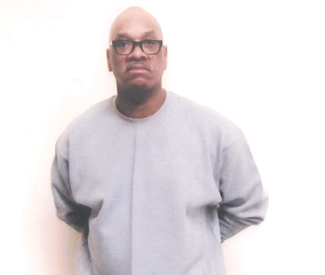
Sitawa Jamaa is among the thousands of California inmates who, two years ago this summer, took part in the largest prison hunger strike in US history to protest harsh conditions and their invisibility to those outside prison walls.

Now, Jamaa and other prisoners are about to launch another hunger strike to highlight the system’s unfulfilled promises and the persistence of inhumane conditions.

The California Department of Corrections and Rehabilitation (CDCR) counted 6,000 prisoners throughout the state who refused food over several weeks in July 2011. During a follow-up strike that September, the number of prisoners missing meals swelled to 12,000, according to the federal receiver who was appointed by the courts to oversee reforms in the system. At least one inmate starved to death.

As one of four inmates who call themselves the Short Corridor Collective, Jamaa was a key organizer of the hunger strike. The group of inmates drafted a list of core demands calling for the strike when they weren’t met.

That was no easy task for Jamaa, who has spent most of the last 28 years alone in a windowless, 8-by-10 foot concrete cell in Pelican Bay State Prison, a supermax facility not far from the Oregon border, where some 1,200 men are held in similar conditions.

Inmates held in solitary confinement (in government lingo: “Segregated Housing Units”, or “SHU” for short) aren’t supposed to communicate with each other, verbally or through the mail. But they were able to organize with the help of their lawyers, who they are allowed to communicate with, and prison reform advocates outside.

Jamaa and other inmates are planning to launch a second hunger strike on July 8. The Short Corridor Collective has drafted a list of 45 demands, reflecting concerns ranging from inadequate health care to extreme solitary confinement—conditions that prison advocates characterize as cruel and unusual punishment.

The list is an extension of the five initial demands that Pelican Bay inmates presented in 2011 before initiating a hunger strike. Most of those demands were never met, or they were met only with lip service, leading prisoners back to where they started.


CONFINEMENT AS TORTURE

High on the list are concerns about conditions in the SHU, the amount of time prisoners can be made to spend in isolation, and the public’s inability to monitor the situation.

“I feel dead. It’s been 13 years since I have shaken someone’s hand and I fear I’ll forget the feel of human contact,” Pelican Bay prisoner Luis Esquivel told attorneys with the Center for Constitutional Rights in an interview.

Along with Jamaa and others, Esquivel is a plaintiff in a lawsuit against the state of California that would effectively cap the time someone can spend in solitary confinement to 10 years.

“The hunger strike is an extreme act,” says Terry Kupers, a Piedmont-based psychology professor and clinical psychiatrist who has testified before the California State Assembly on long-term solitary confinement. “It’s very dangerous, and you can die. So when a group of prisoners go on hunger strike, it means they’ve exhausted all ways of expressing themselves and having their demands considered. And that’s very much the case here—some of these guys have been in SHU for 30 or 40 years.”

Kupers believes solitary confinement in California prisons violates the 8th Amendment’s prohibition on cruel and unusual punishment, a view echoed by activists who’ve launched a statewide effort called the Stop the Torture Campaign.

United Nations Special Rapporteur Juan Méndez, an expert on torture, has called for a ban on solitary confinement where inmates are kept in isolation for 22 hours a day or more, saying the practice should only be used in very exceptional circumstances and for short time periods.

The CDCR has made some concessions and reforms since the 2011 hunger strikes, but critical issues have gone unaddressed. In Pelican Bay’s SHU, the men are now allowed beanie caps for when it gets cold. They can now have wall calendars to track time and bring a human touch to their surroundings.

Some prisoners have received exercise equipment, such as a handball or pull-up bar. Each year, they now have permission to have one photograph of themselves taken to send to family members, and prison administrators have signaled that they are looking into extending Pelican Bay’s visitation hours.

But more pressing issues have yet to be resolved, so the prisoners who drafted the 45 demands are resorting to starvation once again, despite official statements that it will do little to improve their conditions.

“Negotiation is something the department does not do,” says Terry Thornton, a spokesperson for CDCR. But the department has met periodically with a mediation team, consisting of lawyers and prison activists, who have communicated the inmates’ concerns and gone over their demands with prison authorities.


RESISTING REFORM

In 2002, the state of California was sued, and lost, in an 8th Amendment class-action lawsuit: Plata v. Davis. The federal judge overseeing the case called the medical treatment in California prisons “horrifying,” sinking “below gross negligence to outright cruelty,” ordering improved treatment and reductions in severe prison overcrowding.

A court-appointed doctor found that out of 193 deaths over the course of one year, 34 were “probably preventable,” but medical staff gave “well below even minimal standards of care.” Eleven years later, the state is still under federal receivership, until it can show that conditions have actually improved.

Court-appointed consultant Dr. Raymond Patterson wrote his 14th annual assessment report last April, blaming high suicide rates behind bars on a lack of “adequate assessment, treatment or intervention.” After it was released, he quit the post in frustration, writing: “It has become apparent that continued repetition of these recommendations would be a further waste of time and effort.”

So inmates are taking in upon themselves to accomplish what the courts and consultants have failed to do: reform conditions in the prisons.

As happened in 2011, in spite of what is planned to be a peaceful protest, prisons housing strikers will be, according to Thornton, on “modified program” (or “lockdown,” as prisoners call it). Generally, that means inmates aren’t allowed to leave their cells, even to shower.

New regulations created after the 2011 strikes call for no visits for striking prisoners, and for their canteen food to be confiscated. In addition, “inmate(s) identified as strike leaders, instrumental in organizing, planning, and perpetuating a hunger strike, shall be isolated from non-participating inmates.”

Since March of this year, the Guantanamo Bay prisoner hunger strike has made news around the world for highlighting alleged violations of international law. There, when a striker goes below 85 percent Ideal Body Weight, regulations dictate that he or she be shackled to a chair, fitted with a mask, and have tubes inserted through their nostrils into their stomachs for up to two hours at a time.

That didn’t happen in California back during the 2011 strikes, but the Division of Correctional Health Care Services devotes five pages of its policy handbook to outlining specific instructions for dealing with hunger strikers, including transfers to prison medical facilities where they could potentially be force-fed, another practice the UN regards as torture.

Prisoners and activists believe the policy was instituted as preemptive attack on the upcoming hunger strike. “We are concerned that, under the pretext of ‘welfare’ checks, prisoners are being harassed, targeted, and deprived of sleep as the date of planned hunger strikes and work stoppages approaches,” said Isaac Ontiveros of the Prisoner Hunger Strike Solidarity group. “Whatever the case, new CDCR Secretary Jeffery Beard has an opportunity to avoid the strike and begin to undo the indescribable harm that the California prison system has caused.”


DANGEROUS ASSOCIATIONS

Problems associated with solitary confinement are closely connected to CDCR’s most commonly used tool for sending prisoners like Jamaa into the SHU: the controversial “gang validation” process.

Once an inmate is listed in prison records as a gang member, he or she loses multiple rights on the assumption that they’re a threat to the order of the prison. With no disciplinary write-ups since 1995, Jamaa would have been eligible for parole in 2004, except for the gang validation that led to his indefinite SHU sentence.

Getting pegged as a member of a gang can happen easily. Guards can write prisoners up for anything from the possession of artwork deemed to be gang-related, to information obtained from confidential informants whose claims prisoners often aren’t allowed to refute and whose identities remain unknown to the targeted prisoners.

Last year, in the wake of hunger strikes, CDCR announced a “complex retooling” of the gang validation practices. The so-called Step Down process, created in conjunction with the Department of Homeland Security, is meant to transition inmates out of gangs over the course of four years, with privileges gained over that time.

It might be the most significant of the reforms that followed the last hunger strike, but prisoners and their advocates criticize it as too lengthy of a process, subject to the arbitrary whims of the correctional officers overseeing a given prisoner. In fact, they say it may widen the definition of who counts as a gang member.

Manuel Sanchez, who is participating in the Step Down program at Corcoran State Prison, wrote in a letter that he is “seriously considering returning to SHU, where I’d be less harassed and I’d get more yard access more consistently.”

Compounding the problems in the prisons is a lack of transparency and public accountability.

“It’s like mentioning July 8 is anathema,” says San Francisco Bay View Editor Mary Ratcliff, whose African American-focused newspaper has been a CDCR censorship target.

From January to April of this year, Ratcliff said papers were being returned from Pelican Bay undelivered because they included articles about the hunger strikes, representing “material inciting participation in a mass disturbance,” and “a serious threat to the safety and security” of the prison, according to CDCR Administrator R.K. Swift.

“I think it’s remarkable that hunger strikes are considered a ‘disturbance,'” says Ratcliff. “A disturbance is supposed to mean a fight—something that threatens people. A hunger strike is a threat to no one except the people who are participating in it.”

Just as inmates can’t get news from the outside, they are also walled off from journalists who might cover them and the conditions they live in.

Since 1996, the CDCR has limited reporters to only interviewing prisoners they’ve selected. Last September, Governor Jerry Brown vetoed legislation that would have opened up media access to the prisons. “Giving criminals celebrity status through repeated appearances on television will glorify their crimes and hurt victims and their families,” he wrote, citing the media spectacle around Charles Manson.

But activists say the nearly $2 million Brown received from the California Correctional Peace Officers Association (CCPOA) during his successful bid for governor in 2010 had more to do with it than infamous serial killers.

Assembly member Tom Ammiano, who authored the most recent bill, stressed that “Press access isn’t just to sell newspapers. It’s a way for the public to know that the prisons it pays for are well-run. I invite the governor to visit the SHU to see for himself why media access is so important.”


DRASTIC MEASURES

Last time around, Jamaa lost 19 pounds. Deprived of sunlight, the Oakland-born man has developed melanin and vitamin D deficiencies that have lightened his normally dark brown skin. He suffers stomach problems and swollen thyroid glands that he didn’t have before prison. Starvation is a possibly lethal proposition. “Make no mistake, none of us wants to die. But we are prepared to, if that’s what it takes to force a real reform,” he and other strike leaders wrote in a statement last December. Jamaa’s sister, Marie Levin, who has organized monthly vigils for the strikers at Oakland’s monthly First Fridays/Art Murmur event, is worried about how her brother’s body will cope this time around. “It’s something that we as family members don’t want them to have to experience again,” she notes with anxiety. Yet both the prisoners and their advocates on the outside say they can’t simply let dehumanizing conditions in California’s prison system continue indefinitely. “I think things have changed, but not substantially in terms of actual conditions,” Kupers argues. “What is changed is the CDCR had to recognize the strikers, and conceded some of the things. And subsequently, the various prisoner groups have come together and made a commitment not to have violence between groups inside the prisons. This is huge advancement.” But unless all 45 demands are met, they say the strike will commence July 8. For now, Jamaa and others are readying their bodies for hunger, for a cause they believe goes far beyond prison walls. “Know this,” he wrote from SHU, words that needed to be smuggled out through unconventional means to get around an official wall of silence. “I am a … Prisoner of War, and I serve the interest of all people.”

New Zealand’s Cup

7

news@sfbg.com

A few weeks ago I was walking down the dock in the marina where I live, in Wellington, New Zealand, when I passed a woman and a young boy. I’d never seen them before, which is uncommon here in this municipal marina — about 100 boats — in a small suburb of the country’s capital.

The boy was walking from berth to berth pointing out certain rig and hull features and expounding on them as only a future aficionado can. “Lots of different boats, huh?” I asked as I passed.

“Different than America,” he confirmed in an accent the same as mine.

The kid is sharp, I thought, or maybe it’s just obvious, even to an eight-year-old from Chicago. The New Zealand sailing scene is vastly different than its American counterpart, which is not to say there’s no comparing — they’re not exactly navigating carved logs with gunnysack sails down here.

But the boats in my marina are, in fact, mostly homebuilt from steel, cement, aluminum, and wood. They appear a motley crew compared to the cookie-cutter production fiberglass Beneteaus, Catalinas, and Hunters, with their identical pacific blue sail covers lined up in San Francisco’s South Beach Marina.

In New Zealand, a boat is rarely a status symbol — it’s part of the middle-class way of life, the home base for holidays and weekend fishing trips and lots and lots of competitive racing. If I’ve noticed one thing since I arrived in this country (aboard a sailboat, after leaving San Francisco and my job as a Bay Guardian staff writer), it’s that every little harbor town has a yacht club and an awful lot of Kiwis own boats — and they sail the shit out of them.

Which is part of the reason why the New Zealand government is willing to invest NZ$36 million (US$27 million) to compete in the 34th America’s Cup against some of the richest men in the world in a race that has become so elite there’s barely any competition.

Small as the field is, Emirates Team New Zealand (ETNZ) is quickly shaping up to be the team to beat if you’re on a high-speed, air-catching AC72 catamaran. If they succeed, it will show that developing an America’s Cup team doesn’t have to come from having deep pockets in your Nantucket Red pants — it comes from having the sport ingrained in your culture, filtered through affordable local boat clubs, city-run facilities, volunteer programs, publicly accessible shorefronts, and an innovative marine industry.

In fact, without New Zealand’s maritime way of life, Larry Ellison wouldn’t have much of a team: of the 27 sailors and management crew aboard Oracle, a third are Kiwis. Another third are Australians. If you count Ellison, there are only three Americans aboard. Just one of them — tactician and grinder John Kostecki — grew up sailing on San Francisco Bay.

Ellison’s boat is mostly a Kiwi production, too — the fixed-wing sails and structural components for Oracle’s two AC72s were made in New Zealand, as were the boats, sails, and rigs for ETNZ and Luna Rossa. The only other syndicate competing, Sweden’s Artemis, in the wind since the death of crewmember Andrew Simpson, is the outlier, but they still have eight New Zealanders on board.

America’s Cup is looking more and more like it owes a lot to New Zealand. Is the Cup doing as much for San Francisco as it is for this little island nation, with a population just a tenth of California’s?

“If it wasn’t called Team New Zealand, we wouldn’t get a lot out of it,” says Sven Pannell, a competitive dinghy racer and employee of the economic development agency Grow Wellington. “The numbers of boat builders, carbon fabricators, sail makers, yacht designers coming out of New Zealand are the reason we’re still at the top of the global game. If we can bring the Cup home that means a lot for our country.”

It may also save America’s Cup from becoming even more out of touch with reality.


IT’S THE CULTURE, STUPID

It’s June 8, summer in San Francisco but winter in Wellington. The first race of the 2013 Winter Series at Evans Bay Boat Club hits hypothermic seas beneath steely overcast skies and 20-30 knots of wind — “perfect conditions,” one sailor enthuses. Tame, actually, for Wellington. A week ago, wind blew out the fifth story windows of a building downtown.

Sven Pannell has just finished racing a 12-foot skiff, a super lightweight, often homebuilt boat that probably originated in Australia and is almost exclusively raced in the Southern Hemisphere, though an 18-foot version will be showcased in San Francisco this September alongside the America’s Cup finals. Weighing about 100 pounds, with no class restrictions on sail area, they rooster-tail around Wellington harbor, bow high, barely in the water. They seem to require a similar caliber of nerve as the AC72s.

Which Pannell, who won today, evidently has. He grew up sailing as a kid, as did his crew, Craig Anderson. Neither of them can think of anyone who didn’t get into sailing as a child.

“A lot of people around the world think yachting is a well-heeled sport, but not in New Zealand,” he says. “There’s a reason that half those [America’s Cup] boats are full of Kiwis and Aussies. Go out and see the number of eight-year-olds in Optis in all kinds of weather here. A high number of people sailing at that age creates a deep pool of sailors in demand.”

“America’s Cup is about stretching the limits, but it starts here, when you’re eight years old,” he adds.

Eager to get out of the icy Antarctic wind, I enter the boat club where about 35 people are gathered at the bar, buzzing from adrenalin, barefoot and wet from spray or capsizes, gripping ginger beers and green bottles of Steinlager, the Budweiser of New Zealand. It’s a humble looking crowd — no flash gear or cashmere.

I’m introduced to Mike Rhodes, 26, wearing a blue sweatshirt and camo pants. He’d love to race an America’s Cup boat, but he also satisfies himself with a 12-foot skiff, which he stripped and rebuilt, fashioning the stainless steel fittings himself — he’s a sheet metal worker.

“New Zealand sailing is all about learning and moving forward,” he says. “The boats we’re sailing are always changing. We have set rules for weight, width, and length. After that it’s wide open. You can put up as much rig as you can handle. We went out in 50 knots last weekend. It was insane. We probably had boat speeds of 30 knots.”

The speed and innovations are what appeal to Rhodes and also connect to the America’s Cup, which has been an historic proving ground for leaps forward in boat design. “Who thought New Zealand could make the boat fly first?” he says of ETNZ’s proficiency at foiling the AC72 — going so fast the hull actually lifts off the water.

We’re soon joined by Laura Hutton, a 30-year-old from Cape Cod. She’s raced dinghies, coached and taught sailing for years. Now a speech therapist, she moved to New Zealand three months ago and immediately hooked into the local yachting scene. It’s palpably different than what she’s used to in the States. Here, she says, “It’s a lot more laid back. It’s more inclusive than exclusive. I used to go to events at New York Yacht Club in Newport and I felt so uncomfortable there. It’s the most elite, snobby place.”

“You can’t get coaching in the US unless you’re part of a yacht club or go to a school with a racing team,” she adds, and there’s often a huge cost to enter the sport. “Here, I can join the local yacht club for $35 a month,” she deadpans.

I spend more money riding the bus, I tell her, but I wouldn’t in San Francisco, where it’s cheap to catch a bus but where most people rarely board boats.

The American yacht club tradition has a certain “if you have to ask how much it costs, you can’t afford it” attitude. Ellison is one of 300 members of Golden Gate Yacht Club, official host for the Cup. Its neighbor, St. Francis Yacht Club, 2,300 strong, also has a role in the festivities. Both are exclusive, members-only clubs and neither would tell me what their members pay for the club’s privileges.

However, they’re officially nonprofit organizations and filings with the IRS show St. Francis made nearly $13 million in 2011. Golden Gate Yacht Club took home $660,000 the same year. Ironically, both clubs are on public lands, leased from San Francisco’s Recreation and Parks Department for $231,125 and $64,000 annually respectively.

Both clubs run learn-to-sail programs for kids — $350 for St. Francis and $200 for GGYC — which seem affordable, but what’s the next step? Joining the club, but apparently it’s too rude to query the price.

By contrast, Wellington’s Evans Bay Boat Club charges NZ$281 (US$210) to join and Royal Port Nicholson Yacht Club, which is a sister club to St. Francis, costs NZ$160 (US $120). The Bay Area is lucky — Berkeley and Treasure Island both have affordable clubs, however one could argue that if St. Francis and GGYC are on public lands, they should be paying more in dues to the city.

If there’s a posh club in Auckland, it’s ETNZ’s home — the Royal New Zealand Yacht Squadron. “But it’s a Kiwi version of posh, nothing like some of the yacht clubs I have been to in places like England, where women aren’t allowed to order drinks at the bar,” says Ben Gladwell, a journalist for Boating New Zealand who will be racing an 18 foot skiff in San Francisco in a regatta concurrent with the Cup finals. “At the Squaddy, there are obviously rules, like no cell phones, and dress codes and such like, but the fees are still only a few hundred dollars per year and it is much more inclusive than other yacht clubs around the world.”

Gladwell explored the health of New Zealand’s sailing culture in a story called “State of the Racing Nation” for Boating New Zealand. He found that although there is a drop-off in interest during university years, many yacht clubs have created partnerships to keep kids in the sport, there are mobile learn-to-sail units roaming the country, and lots of accessible city-run programs for kids. Couple that with low lifetime fees to stay in the sport and you see healthy clubs like Evans Bay, where people of all ages are out racing every weekend, all year round.

“Having so many people involved in sailing is a major reason we are successful,” he says. “Children are introduced to it at such a young age…by the time they come to competing at youth international regattas, they are hugely experienced and winning becomes a habit.”


“AMERICA’S CUP IS NOW NEW ZEALAND’S CUP”

In 1995, when Black Magic smoked Dennis Connor’s Stars and Stripes in a five-race shut-out, commentator Peter Montgomery famously quipped “America’s Cup is now New Zealand’s cup,” a line that’s gone down in Kiwi history like the “I have a dream” speech.

For the first time, the Auld Mug would be defended in New Zealand. Back then, Auckland’s Viaduct Harbor probably looked a lot like parts of San Francisco’s waterfront does today — dilapidated piers and old industrial buildings crumbling on their pilings. It would cost of NZ$58 million (US$29 million at the time) to dredge the harbor and spruce up the waterfront for the Cup.

The city made its money back. Hosting for two years, in 2000 and 2003, brought NZ$1 billion (US$500 million, at the time) in economic benefits to the country, about 85 percent of that going to Auckland’s local businesses, mostly from visiting megayachts and the services required for the nine syndicates that competed — twice as many as are in San Francisco today.

And Auckland made a lot less than the US$900 million predicted for San Francisco, already trimmed from the US$1.4 billion initially estimated. What the city actually gains from the $22.5 million investment they’ve been forced to make remains to be seen. Meanwhile, Auckland continues to benefit from the race.

It’s been estimated that the four Cup contenders have collectively spent half a billion on their campaigns and a decent chunk of that has been in Auckland, particularly during the AC72 design, build, and testing phases. Already, taxes paid by ETNZ employees amount to NZ$22.4 million (US$16.5 million). That doesn’t include the employee payroll taxes of all the businesses doing Cup-related activity, like the boat builders, riggers, and sailmakers.

ETNZ CEO Grant Dalton has netted sponsorships from more than 100 companies and argues that the Cup efforts have kept many marine businesses afloat that would have otherwise shuttered. Kiwis have not been immune to the world financial situation: the high New Zealand dollar hurting exports and the NZ$30 billion (US$22.5 billion) price tag for the February 2011 Christchurch earthquake have stressed the country’s coffers.

Because of that, funding ETNZ has been as contentious here as hosting Ellison’s party has been to San Franciscans. The agreement was signed in 2007 by a Labour Party-led government and when National Party’s John Key won the Prime Minister’s seat in 2008, he looked into breaking the contract, a move supported by other parties. “Funding the America’s Cup is surely a ‘nice to have’, rather than essential spending, in the current economic climate,” said Green Party co-leader Metiria Turei at the time.

The government was advised they’d still be legally on the hook for the money if they broke the contract, so ETNZ proceeded, but proof of economic return was a contingency and Dalton has taken pains to keep the public good in the conversation, a sharp contrast to Ellison’s attitude toward San Francisco. Dalton has said if New Zealand wins, the world should expect a sharp scaling back of costs. “We stand for nationality rule and we stand for real budget numbers that real people can raise,” he has said.

There’s definitely a sense that this could be New Zealand’s last chance to bring the Auld Mug home. If they don’t, the America’s Cup also loses. Who else will save it from American-style exclusiveness?

Solomon: David Brooks, Tom Friedman, Bill Keller wish Snowden had just followed orders

27

Norman Solomon is co-founder of RootsAction.org and founding director of the Institute for Public Accuracy. His books include “War Made Easy: How Presidents and Pundits Keep Spinning Us to Death.”

Edward Snowden’s disclosures, the New York Times reported on Sunday, “have renewed a longstanding concern: that young Internet aficionados whose skills the agencies need for counterterrorism and cyberdefense sometimes bring an anti-authority spirit that does not fit the security bureaucracy.

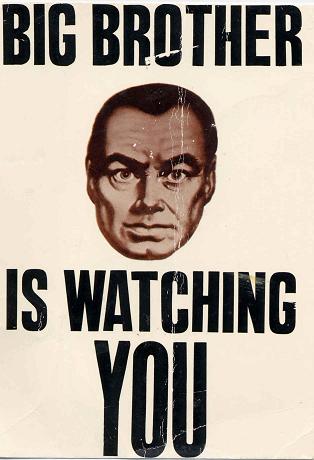
Agencies like the NSA and CIA — and private contractors like Booz Allen — can’t be sure that all employees will obey the rules without interference from their own idealism. This is a basic dilemma for the warfare/surveillance state, which must hire and retain a huge pool of young talent to service the digital innards of a growing Big Brother.

With private firms scrambling to recruit workers for top-secret government contracts, the current situation was foreshadowed by novelist John Hersey in his 1960 book The Child Buyer. When the vice president of a contractor named United Lymphomilloid, “in charge of materials procurement,” goes shopping for a very bright ten-year-old, he explains that “my duties have an extremely high national-defense rating.” And he adds: “When a commodity that you need falls in short supply, you have to get out and hustle. I buy brains.”

That’s what Booz Allen and similar outfits do. They buy brains. And obedience.

But despite the best efforts of those contractors and government agencies, the brains still belong to people. And, as the Times put it, an “anti-authority spirit” might not fit “the security bureaucracy.”

In the long run, Edward Snowden didn’t fit. Neither did Bradley Manning. They both had brains that seemed useful to authority. But they also had principles and decided to act on them.

Like the NSA and its contractors, the U.S. military is in constant need of personnel. “According to his superiors . . . Manning was not working out as a soldier, and they discussed keeping him back when his unit was deployed to Iraq,” biographer Chase Madar writes in The Passion of Bradley Manning. “However, in the fall of 2009, the occupation was desperate for intelligence analysts with computer skills, and Private Bradley Manning, his superiors hurriedly concluded, showed signs of improvement as a workable soldier. This is how, on October 10, 2009, Private First Class Bradley Manning was deployed . . . to Iraq as an intelligence analyst.”

In their own ways, with very different backgrounds and circumstances, Bradley Manning and Edward Snowden have confounded the best-laid plans of the warfare/surveillance state. They worked for “the security bureaucracy,” but as time went on they found a higher calling than just following orders. They leaked information that we all have a right to know.

This month, not only with words but also with actions, Edward Snowden is transcending the moral limits of authority and insisting that we can fully defend the Bill of Rights, emphatically including the Fourth Amendment.

What a contrast with New York Times columnists David Brooks, Thomas Friedman and Bill Keller, who have responded to Snowden’s revelations by siding with the violators of civil liberties at the top of the U.S. government.

Brooks denounced Snowden as “a traitor” during a June 14 appearance on the PBS NewsHour, saying indignantly: “He betrayed his oath, which was given to him and which he took implicitly and explicitly. He betrayed his company, the people who gave him a job, the people who trusted him. . . . He betrayed the democratic process. It’s not up to a lone 29-year-old to decide what’s private and public. We have — actually have procedures for that set down in the Constitution and established by tradition.”

Enthralled with lockstep compliance, Brooks preached the conformist gospel: “When you work for an institution, any institution, a company, a faculty, you don’t get to violate the rules of that institution and decide for your own self what you’re going to do in a unilateral way that no one else can reverse. And that’s exactly what he did. So he betrayed the trust of the institution. He betrayed what creates a government, which is being a civil servant, being a servant to a larger cause, and not going off on some unilateral thing because it makes you feel grandiose.”

In sync with such bombast, Tom Friedman and former Times executive editor Bill Keller have promoted a notably gutless argument for embracing the NSA’s newly revealed surveillance programs. Friedman wrote (on June 12) and Keller agreed (June 17) that our government is correct to curtail privacy rights against surveillance — because if we fully retained those rights and then a big terrorist attack happened, the damage to civil liberties would be worse.

What a contrast between big-name journalists craven enough to toss the Fourth Amendment overboard and whistleblowers courageous enough to risk their lives for civil liberties.

Norman Solomon is co-founder of RootsAction.org and founding director of the Institute for Public Accuracy. His books include “War Made Easy: How Presidents and Pundits Keep Spinning Us to Death.”

Disillusionment, “Everyman,” and Netroots Nation

For nearly the entire Caltrain ride to down San Jose last Thursday morning, my thoughts were fully consumed by the subject of liberal disillusionment and cynicism. I pondered the question, “How much progress have the things that liberals care about made since the start of the new millennium?”

The issue of gay rights was the only glimmer of hope I could conjure up. Since 2000, income inequality has increased astronomically, the military-industrial complex grows unabated, the drug war continues to destroy millions of lives, women are having to protest the same idiotic conservatives policies their mothers protested, we are realizing the tangible repercussions of climate change, the Citizens United ruling and Republicans have become the John Birch Party and Democrats, by and large, have become identical to the Republicans of 30 years ago.

And while it may be true that progressives were responsible for electing the first black president, the Obama Administration has, for the most part, ignored, shunned, and at times insulted progressives. If Obama governed like a progressive, he would have jailed Wall Street executives for their roles in the financial crisis and HSBC bankers for laundering terrorist and drug cartel money, he would have rejected the Keystone pipeline in resounding fashion, he would have fought harder for a public option, he would have ended or at least decreased the surveillance state, and he wouldn’t be prosecuting medical pot dispensaries with extreme vigor.

Like a lot of the other media there, I came in search of demoralized liberals and to see if the Democratic Party leaders and other notable figures in attendance would feel the brunt of this dismay.

Unsurprisingly, the boogeyman of John Boehner, the Koch Brothers, and other rightwing caricatures were paraded out in order to stomp out any reservations you may have had about the president. One of the most notable lines of the conference was Howard Dean’s unfunny salvo of how the president isn’t perfect, “but it sure beats having Bain Capital, oops, I mean Mitt Romney in the White House!”

When our Rep. Nancy Pelosi was booed for saying that Edward Snowden should be prosecuted for his leaks, she tried shouting over the jeers by repeatedly saying that Obama’s second term was not Bush’s fourth. Then she tried to calm the crowd down (in a twist of irony, a man named Marc Peckel was kicked out for voicing objection to a police state), saying she welcomed the booing and debate about privacy. But would we be having this debate now, if it weren’t for Snowden’s leaks?

I attempted to ask Rep. Pelosi some follow-up questions as she exited the building (flanked by numerous aides and security) but oddly enough, my shouts of “I’m with the San Francisco Bay Guardian!” didn’t faze her one bit.

From the dozens of interviews I conducted with a wide range of attendees, the overall consensus seemed to be that Obama, his administration and other Democratic Party leaders are still on their side – though a good number of my interviewees expressed profound disappointment that the president hasn’t been liberal enough. One healthcare organizer from Chicago said he was immensely dissatisfied by Obamacare, but believes that it’s right the step toward implementing universal healthcare.

Obama’s most visible critic for the three days was a man who goes by the name Stan Everyman, who came on behalf of the San Jose Peace & Justice Center and carried a sign everywhere he went that read “OBAMA=CHENEY”. Everyman, who fervently believes that “Netroots is firmly under control of the Democratic party,” saw the conference as an opportunity to connect with other progressives who have gripes with Obama. The majority of reactions to his sign were positive, he said, but he did wind up engaging in some mild confrontations with what he calls “Democrat loyalists.” He was aghast when he encountered someone who came to Netroots on behalf of a liberal dating service, saying, “she didn’t mind if her emails and calls were tapped and didn’t care if there were helicopters hovering over her house as long as it caught the terrorists.” and when it did elicit a reaction, did nothing more than get a thumbs up or an eye-roll.

Meanwhile, some Democratic figures urged progressives to pressure elected leaders as much as possible. Keith Ellison, a Minnesota representative and co-chair of the progressive caucus, stated: “If people who came before us got discouraged because things were hard, we’d still have slavery, have no right to collective bargaining, the air quality would be horrible. The problem isn’t that you’re not involved and you didn’t get what you wanted, the problem is that you got to stay involved.”

When I countered that a big reason behind liberal disillusionment was that our own guy didn’t come through for us, Ellison’s responded, “Let me say this, never ever organize around a personality – even if it’s an awesome personality like Obama’s. Organize around the principles that guide you. Somewhere along the way we stopped saying ‘yes we can’ and started saying ‘yes he can,’ and when he didn’t do certain things we want, we got discouraged. What personality does the Tea Party coalesce around? None! They coalesce around, ‘we hate government, we love guns’ and ‘if you’re not quite like us, you’re not all right.’ So the progressive movement should coalesce around generosity, inclusion, fairness, sustainability, and leaders need to live up to that, and if they do, they’re good, and if they don’t, they’re not. But it shouldn’t be a personality-driven thing.”

If you want change, you have to keep on keeping on, no matter. Sure, town halls, letter campaigns, and protests are great ways to engage your politicians and in democracy, but when you got to go to work or tend to your family, six-figure lobbyists walk through the halls of Congress retracting whatever impact the people’s efforts made. Politicians want us to give them the political will to do what’s right even though we elected them to do what’s right. I don’t naively believe politicians are perfect and that they’re our friends and that we can sit back and relax after we pull the voting lever. However I do have a problem with “I’ll fight for you!” during the campaign season and “Fight for me!” during the legislative sessions. The latter due to this being a non-election year, was the unofficial theme of Netroots Nation 2013, which also possessed a palpable feeling that the reason why many of the big names showed up was to throw the progressive wing a bone and quell whatever qualms they have.

I do admit that Netroots, in the past, has resulted in a concrete impact (namely, helping to get Obama elected and being instrumental in manufacturing a 21st century online campaign apparatus). However, the chances that it will be able to pull Hillary Clinton—who’s just as hawkish as Dianne Feinstein— to the left beyond the duration of the conference are lower than the probability of Obama appointing Angela Davis as his Chief of Staff. A piece on Salon.com a couple days ago reported that progressives are open to a Clinton run, which should come as no surprise to given how good the left is at reconciling their beliefs with that of their leaders.

So between now and NN14 (which is in Detroit), when the Democratic Leadership will come begging for the left’s help to return the Speakership crown back to Pelosi, pretty much everything the left holds dear will wallow in purgatory or regress to hell. But cheer up: At least Bain Capital isn’t president!

Flagging

0

cheryl@sfbg.com

FILM Ah, the mid-1990s: a time when two big-budget movies on the same subject were regularly released within months of each other (1997’s Volcano and Dante’s Peak; 1998’s Armageddon and Deep Impact). When a director named Roland Emmerich ascended into the blockbuster pantheon with Independence Day (1996), a film that’s best-remembered for transforming Will Smith into an action star — and for that iconic shot of the White House exploding under alien death rays.

The intervening years have seen Emmerich plunge ever-deeper into various flavors of disaster: giant lizard (1998’s Godzilla); Mel Gibson (2000’s The Patriot); global warming (2004’s The Day After Tomorrow); the apocalypse (2009’s 2012). White House Down — which reignites that ’90s copycat-rivalry thing by riding the fumes of March’s Olympus Has Fallen — finds its boogeyman in terrorism. Specifically, domestic terrorism, with another 1996 classic, Michael Bay’s The Rock, offering certain inspiration in the villain department. Ex-military goons with axes to grind storming a national landmark? Right this way, please.

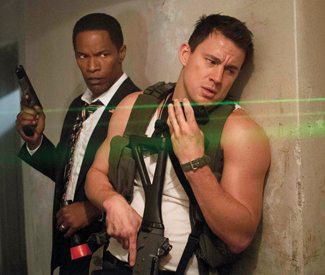
It’s a triumphant day for President James Sawyer (Jamie Foxx), who has just ordered all US troops removed from the Middle East. While ID4‘s President Bill Pullman was a Gulf War veteran, Sawyer is portrayed as more of an anti-violence, increase-the-peace type. But wait! Who are those shifty-eyed fellows skulking around the White House theater room, tinkering with the First Lady’s prized surround-sound system? They don’t look ready to make nice.

Into this mix must enter an Everyman. Beefy nugget Channing Tatum plays John Cale, wannabe Secret Service agent. Trouble is, his former college classmate (and fling? It’s never certain, but every woman Cale interacts with seems to have slept with him), high-ranking Agent Finnerty (Maggie Gyllenhaal), doesn’t think he has what it takes. According to the deep truths of his personnel file, Cale — a Capitol policeman tasked with guarding the Speaker of the House (Richard Jenkins) — “has a problem with authority,” despite his seemingly sincere desire to become an astronaut … er, wait, that was Will Smith’s cocky pilot in ID4.

At any rate, there is (as always) a family to impress; in Cale’s case, it’s a plucky daughter (Joey King), always on the lookout for new fodder for her YouTube channel. What better way to win over a kid who blurts out “Wikileaks” with as much excitement as other 11-year-olds say “One Direction” than to take her on a tour of the White House?

That’s the set-up. The remainder of the film encompasses Cale’s sweaty, sardonic one-man-army maneuverings (in John McClane’s undershirt, no less), to keep both Sawyer — a POTUS so cool he pauses mid-ambush to change into Air Jordans — and Li’l Miss Citizen Journalist safe. Meanwhile, rockets are launched; there’s a high-speed limo chase across the White House lawn; we learn the truth about Marilyn and JFK; The Wire‘s Lance Reddick shows up to turn his McNulty-honed glare onto Gyllenhaal; some high-ranking government dudes reveal their sinister true colors; and thanks to evil genius Skip Tyler (Jimmi Simpson), “the greatest hack the world has ever seen” is about to unleash World War III.

Yep, that’s right: 17 years after Independence Day‘s Jeff Goldblum broke into the alien mainframe, thereby saving the White House-less planet, Emmerich has decided that hackers are actually bad guys. It goes with White House Down‘s warning that the enemy is no longer an external threat, but something lurking right under your nose. Better start working out, America — and working on your one-liners.

WHITE HOUSE DOWN opens Fri/28 in Bay Area theaters.

Supreme Court same-sex marriage decisions: DOMA invalidated, Prop 8 case dismissed, SF reacts [UPDATED]

27

Watch this space throughout the day for breaking news on the decision and reactions. Tonight there will be a celebration of the Court’s decisions at Castro and Market Streets at 6:30pm. (Join  the Guardian beforehand, 6-9 at the Pilsner in the castro, at its annual pre-Pride event.) 

DOMA INVALIDATED

The Supreme Court released its ruling this morning that the Defense of Marriage Act, which denies federal recognition of same-sex marriage, “is unconstitutional as a deprivation of the equal liberty of persons that is protected by the Fifth Amendment.”

“DOMA singles out a class of persons deemed by a State entitled to recognition and protection to enhance their own liberty,” according to the majority opinion. “DOMA’s principal effect is to identify a subset of state sanctioned marriages and make them unequal.” The Court voted 5-4, with Justice Kennedy, who wrote the majority opinion, as the decisive vote along the usual liberal/conservative lines. You can read the full opinion here

This means that same-sex marriages performed in states that have legalized such marriages will be recognized by federal law.  

PROP 8 DISMISSED ON STANDING

As for Hollingsworth v. Perry, the Prop 8 case, it was dismissed on standing, due to the fact that the State of California refused to defend the case that would uphold Prop 8 (which denied same-sex marriage).That meant private citizens were left to defend a state statute, which was unprecedented, and the Court refused to rule on those grounds.

We have never before upheld the standing of a private party to defend the constitutionality of a state statute when state officials have chosen not to. We decline to do so for the first time here,” the majority Court statement (which broke along the typical 5-4 line) said. That means there is no specific decision from the Court regarding Prop 8, and the previous ruling, by Judge Vaughan Walker and upheld by the Ninth Circuit Court, that invalidated Prop 8 as discriminatory, stands.

This may mean that same-sex marriages in California can resume as early as July.

You can read the full Prop 8 ruling here.

Scene this morrning at SF City Hall, with Mayor Ed Lee and Lt. Gov. Newsom. Photo by Dan Bernal.

[UPDATE] REACTIONS AT CITY HALL

Steven T. Jones reports from SF City Hall:

City Hall was totally packed at 7am when the US Supreme Court convened — tons of journalists, lots of couples, many signs in the crowd. Two screens were set up, one with a live blog from court chamber, the other with the CNN live feed. Huge cheers erupted at 7:11 when the decision was announced striking down DOMA and forcing the federal government to recognize the rights of same-sex married couples.  Then at 7:38, when the Prop 8 statement came down, the room went nuts. 

A moment later, an array of current and former city officials appeared at the top of the City Hall main staircase. Mayor Ed Lee and Lt. Gov. Gavin Newsom escorted a fragile Phyllis Lyon down the stairs — she, along with the late Del Martin, were the first same-sex couple to get legally married in California in 2004 — flanked by the rest of the city family, all with big smiles.

“Welcome to the people’s house of San Francisco,” Mayor Lee said, thanking the crowd “for sharing in this historic moment.”

“It feels good to have love triumph over ignorance,” he said.

At 7:44, City Attorney Dennis Herrera and Chief Deputy City Attorney Terry Stewart, who had been on the City Hall steps addressed reporters’ question on the legal details of the ruling, joined the crew to sustained applause as Lee recognized them. He then introduced Newsom, who in 2004 as San Francisco mayor allowed same-sex marriages to be performed, as “one person who used the power of this office to make history and show his love for the city.”

“San Francisco is not a city of dreamers, but a city of doers,” Newsom said. “Here we don’t just tolerate diversity, we celebrate our diversity.” He thanked Herrera and everyone who contributed to this moment. “It’s people with a true commitment to equality that brought us here.”

Newsom introduced Kate Kendall with the National Center for Lesbian Rights, who has led the coalition of groups that have push for marriage equality. She looked around the crowd and said, “Fuck you, Prop 8!”

The crowd roared, and she said that she had scanned the room for children, and promised to “put a dollar in the swear jar” if necessary. But she said that, “We have lived for too many years under that stigmatizing piece of crap.”

Then Herrera took the podium, turned to Newsom, and said, Now you can say, ‘Whether you like it or not!'” — a joking reference to Newsom’s same-sex marriage rallying cry, which some blamed for boosting the anti-same-sex marriage cause.

“We wouldn’t be here today if it wasn’t for Gavin Newsom’s leadership,” Herrera continued. ““I remember in 2004 when people were saying it was too fast, too soon, too much.”

But today, that long effort has been vindicated, Now, he said, “It’s about changing the hearts and minds of people and educating them.” He also pledged to continue the fight that began here in City Hall more than nine years ago: “We will not rest until we have marriage equality throughout this country.”

Gavin Newsom being interviewed inside City Hall. Photo by Steve Jones

Finally Stewart, who has argued cases related to San Francisco’s stand before both the US and California Supreme Courts, praised both the Prop. 8 and DOMA rulings and the precedents they set. “In the DOMA case decision, the Supreme Court expressed a stong equal protection philosophy…that will help legalize same sex marriage in other states.”

Three members of the Board of Supervisors were also invited by Kendell to address the huge City Hall crowd: Board President David Chiu and Sups. David Campos and Scott Wiener, the only two current supervisors who are gay.

Chiu noted that the bust of slain Sup. Harvey Milk is prominently positioned outside the Board Chambers, a reminder of the long struggle for gay rights that San Franciscans have led. “That work lives on today,” he said.

He added the hope that the work done here will ripple out of across the country because, he said, “As goes San Francisco, so goes California, so goes the rest of the country.”

Campos, an attorney who has long been in a committed relationship, said, “It’s a very emotional moment for those of us who are part of the LGBT community.” He said this Supreme Court ruling is the first time it has really acknowledged “that we are people and we have dignity,” and that the rulings sends a clear message to Congress that legislation like DOMA is unconstitionally discriminatory.

Wiener praised the resilience of the LGBT community, from the early days of enduring the AIDS crisis and fighting for federal support through the current campaign for marriage equality. And he cheered the fact that, “Those marriages that we see under the rotunda [in City Hall] will get a little more diverse.”

11:30 AM UPDATE: Style and substance

While Newsom strutted around like a proud peacock in front of City Hall — clearly the leading man in this epic story with the happy ending, much in demand by the television crews — Herrera and Stewart briefed various reporters on the details of the case that they had just won.

Gavin Newsom outside City Hall. Photo by Steve Jones.

“I wanted a merits ruling, but a standing ruling is a victory too,” Herrera told us, making the distinction between the court ruling that banning same-sex marriage is unconstitutional on the grounds of equal protection under the law — which it did not do — and the 5-4 ruling it did issue: that those who appealed the Ninth Circuit Court ruling invalidating Prop. 8 lack proper legal standing to do so.

The standing ruling leaves same-sex marriage opponents more wiggle room to argue that the ruling might only apply to the couples named in the suit, or in just the counties that took part, which also included Alameda and Los Angeles, positions they were already signaling in press statements.

But Herrera said that he would vigorously contest that kind of challenge, which he considers to be without merit, telling us, “The injunction is not limited in its scope.”

UPDATE: SFPD isn’t worried

Police Chief Greg Suhr, who attended the City Hall event, said the timing on the ruling during Pride Week couldn’t be better. “It’s nice that it all lined up for us,” he told us. “This town is going to rock ‘til the wheels come off.”

Asked whether he has any heightened security concerns about the Pride Parade in the wake of a ruling that is controversial to some, Suhr said that he’s not worried. He said SFPD is now fully staffed and all available personnel working this weekend, although he will try allow many of his gay and lesbian officers to join the celebration if they want.

“We’re going to police what’s likely to be the biggest party this city has ever seen,” Suhr said, adding that his policing philosophy is, “We plan for the worst and hope for the best.”


What’s hot in Siberia

0

arts@sfbg.com

THEATER Emerald green rooftops and gold domes enliven the skyline of Omsk, a provincial city and former Soviet industrial hub of roughly one million people, located at the intersection of two Siberian rivers: the wide, island-populated Irtysh and the smaller, swifter Om. The latter gave its name to the town, which grew from a fort established at the meeting point of the rivers in 1716, back when this was the disputed frontier of the expanding Russian empire.

But now it’s the last week of May 2013. The fort is long gone. In its place stands the Lighthouse, a large white hotel-cum–shopping mall festively crowned with neon Cyrillic lettering. Rounded at one end and peaked with towers, it drolly resembles a cruise ship in port. The sun is still out at 10 p.m., and a gusty wind rolling off the plains churns the warm air pleasantly.

Sleepy though this town seems by comparison with St. Petersburg, Moscow, or even Yekaterinburg — the three other stops on a four-city tour I joined last month, in conjunction with a US-Russia theater dialogue developed by the Center for International Theatre Development — Omsk turns out to be not so remote in many ways. For one thing, it’s a hotbed of theatrical activity at the moment, with the biennial Young Theaters of Russia Festival in full swing. Nor is the Russian empire entirely a thing of the past, as tonight’s provocation by a troupe from the former Yugoslav republic of Slovenia makes plain enough.

Damned be the Traitor of His Homeland! — a production of Ljubljana’s internationally renowned experimental company, Mladinsko Theatre — is a no-holds-barred attack on jingoism, xenophobia, and the false allegiances they promote, as well as on complacency in the face of recent history, government corruption, and social decay. Taking its title from the last verse of the former Yugoslav national anthem, it gleefully lobs profanity, insult, accusation, nudity, a flurry of gunshots, and lots of local dirt (dug up for the occasion) at its unsuspecting audience — who frequently find themselves unnaturally exposed and singled out under merciless house lights.

It begins quietly enough: its ten cast members onstage, reclining on the floor and clutching musical instruments, looking like a freshly slaughtered marching band — until the sound of breathing through a tuba begins a general stirring that quickly escalates into an instrumental movement titled, “Won’t Go Against My Brother.” Next, the cast introduces itself with ribald, pointed, self-effacing humor through their own imagined obituaries — each of which makes explicit reference to an imaginary production of “Hey, Slavs!” (in fact, the title of the Yugoslav anthem) directed by acclaimed Bosnian Croatian bad-boy director Oliver Frljic (in fact, the production’s own director).

Cycling through various loosely related scenes, all built from improvisations, Damned delivers its pleas and gibes with a potent combination of muscular staging, lively wit, intrepid honesty, and moments of wrenching beauty. It produced some walkouts the night we saw it — many more the night before, reportedly — but its themes were undeniably urgent and its manner both raw and sure. This was all before Edward Snowden went public with details of the NSA’s PRISM program or had arrived in Moscow from Hong Kong en route to some hoped-for political asylum abroad. But there was no denying the implications for any Americans in the audience as well.

Omsk has nine large municipally funded or federally funded theaters, leaving far behind most American cities of a comparable or even much larger size. And in short it, and the Festival, had much more to offer beyond this one highlight, even if not as explicitly provocative or political in nature. (Those curious to learn more should know that Chris White, artistic director of Mugwumpin and the other San Franciscan on the tour, has written a series of reports on HowlRound with many further details).

Highlights in Moscow included an exquisite production from leading director Dimitry Kymov (whose collaboration with Mikhail Baryshnikov, In Paris, came to Berkeley Rep last year). Based (like In Paris) on the work of famed Russian short story writer Ivan Bunin, Katya, Sonya, Polya, Galya, Vera, Olya, Tanya … is an original production crafting a series of oddball, sometimes grim love stories into a kind of high art twist on Grand Guignol.

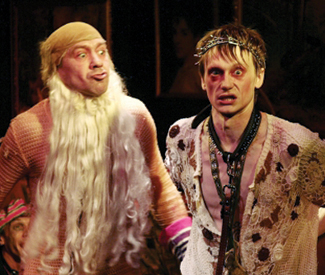
Also utterly memorable was the best production of Hamlet I’d ever seen —staged in a ramshackle venue whose lobby was stuffed with a vaguely foul-smelling array of garage sale toys, Soviet kitsch, and other odds and ends, and whose stage was a small, low-ceilinged black box packed into the aisles with what appeared to be mainly teens. The theater and the production belong to famed Russian director and playwright Nikolay Kolyada. Somewhat infamous after his endorsement of Putin in the last elections (which points to one way in which Russian theater, offstage, can be nothing if not political), Kolyada delivers a decisive reading of Shakespeare’s play as a bald, barbaric parable of power — in an incredibly meticulous, distinct, and forceful style whose macabre wit brought to mind some weird admixture of Richard Foreman, Tim Burton, and Terry Gilliam. Whatever else it demonstrated, it showed the Bard’s play as utterly, repulsively, and compellingly contemporary — something too rarely accomplished in any language. *

Our Weekly Picks

0

WEDNESDAY 26

Dita Von Teese

With a seductive and sexy nod to the past, modern pin-up and burlesque queen Dita Von Teese has been at the forefront of reviving a nearly lost art form for two decades now. Bringing back the sense of classic style and glamour of the golden days of Hollywood and meshing it with the tantalizing teasing of the old-time burlesque circuit, Von Teese returns to the city this week with her “Burlesque: Strip, Strip, Hooray!” show, a live revue featuring not only her own titillating talents, but a host of other performers as well, including Dirty Martini, Catherine D’Lish, and Lada Nikolska from the legendary “Crazy Horse Paris.”

(Sean McCourt)

Through Fri/28, 7:30pm, $40

Fillmore

1805 Geary, SF

(415) 346-6000

www.thefillmore.com


“Harvey Milk 2013”

The San Francisco Gay Men’s Chorus, the world’s first chorus comprised of openly gay men, had its first unofficial public performance at a candlelight vigil for Harvey Milk. The group has since become known for its dazzling holiday concerts, but its historical origins mean it’s fitting that — as part of its 35th anniversary celebration — SFGMC is presenting the world premiere of I Am Harvey Milk. Starring its composer Andrew Lippa as Milk, with guest soprano Laura Benanti, this blend of theater and choral works traces the courageous life of the slain politician, with accompaniment by the Bay Area Rainbow Symphony. (Cheryl Eddy)

Wed/26-Fri/28, 8pm, $25-60

Nourse Theatre

201-299 Hayes, SF

www.sfgmc.org


THURSDAY 27

Clay Shirky

“I’m trying to figure out what difference communications technologies makes to society,” Clay Shirky remarked in a 2011 interview. “What is it about the Internet, what is it about mobile phones, applications built on top of them, that changes how we behave.” The New York University professor has become one of the world’s foremost authorities on gauging how technology has shifted social action. His 2010 book Cognitive Surplus: Creativity and Generosity in a Connected Age outlined how web tools have provided new opportunities for creation in place of consumption, pointing out dynamics such as self-publication and charitable crowdfunding. Shirky has championed government transparency in recent editorials exploring the high-profile leaks of US surveillance programs. (Kevin Lee)

6:30 p.m., $20 (member, $12; students $7)

Commonwealth Club

595 Market, SF

(415) 597-6700

www.commonwealthclub.org


Tommy Davidson

Comedian Tommy Davidson might be offensive, but his keen observations about the absurdity of our daily lives and his animated delivery guarantee laughs. His ability to comment on situations that arise in all walks of life ensures everyone has something to chuckle about through his bits. Known for his roles in the ’90s hit sketch show In Living Color, films like Strictly Business (and OK, Juwanna Mann) and most recently in the spotlight for his character Cream Corn on Adult Swim’s cartoon Black Dynamite, Davidson tours pretty infrequently, so catch him while you can — likely offering fresh takes on old habits. (Hillary Smith)

8pm and 10pm, $24-26

Yoshi’s

1330 Fillmore, SF

(415) 655-5600

yoshis.com/sanfrancisco


FRIDAY 28

Y La Bamba

Indie-folk rocker group Y La Bamba has been steadily building a fan base over the past couple of years, earning high praise from NPR and loaning songs to television programs such as Bones. The Portland-based band’s hauntingly rich and ethereal sound is propelled by singer-songwriter Luzelena Mendoza, whose vocals float and weave tales above Latin-inspired rhythms and unique backing vocals. Its latest full-length album, last year’s Court The Stormwas produced by Los Lobos member Steve Berlin, and an excellent EP, Oh February was released this January. (McCourt)

9pm, $12–$15

Chapel

777 Valencia, SF

(415) 551-5157

www.thechapelsf.com


Japanther

Japanther lets everything go in its performances. Punk is its staple, and the group is known for fuzzy overtones and generally sloppy delivery. All this culminates into weird, disorienting live shows. But whether the band drops five Ramones covers on you or blasts into its own songs (likely off newest album, Eat Like Lisa Act Like Bart) with a raw, unpredictable energy, it will be fun. Keep an eye out for the duo’s signature telephone microphones and the more-often-than-not shirtless bat-shit drummer. (Smith)

With Defiance, Ohio, Psilovision

9pm, $12

Bottom of the Hill

1233 17th St., SF

(415) 626-4455

www.bottomofthehill.com


SATURDAY 29

San Francisco FrontRunners Pride Run

For folks who love to sweat, there’s no better way to celebrate Pride than with veteran LGBT running club the San Francisco FrontRunners, who’ve hosted this event for over three decades. Choose the 5K or the 10K by asking yourself “How many times do I want to haul ass up that hilly stretch of Golden Gate Park’s JFK Drive?” — but remember, the emphasis here is mos def on fun. Sure, some speed demons do turn out (last year’s 5K winner clocked in at just over 18 minutes), but casual joggers are also in effect, as are Pink Saturday-themed athletic ensembles. Upbeat DJs and tasty food at the finish line add to the festive atmosphere. (Eddy)

9am, $40

Golden Gate Park (near Metson and Middle Dr. West), SF

www.sffr.org


In A Daughter’s Eyes

Two women, two very different circumstances: the first, the daughter of a Black Panther sentenced to death for killing an Oakland cop; the second, the daughter of the slain man. Locked in a room together, how will the women negotiate their differences — and is there any chance of forgiveness and healing? Brava! For Women in the Arts and Black Artists Contemporary Cultural Experience present award-winning playwright A. Zell Williams’s In A Daughter’s Eyes in its West Coast debut; though it features just one location and only two characters, expect a powerful, intense story, guided by the sure hand of veteran director Edris Cooper-Anifowoshe. (Eddy)

Through July 14

Previews Thu/27-Fri/28, 8pm; opens Sat/29, 8pm; runs Thu-Sat, 8pm; Sun, 3pm, $15

Brava Theater Center

2781 24th St, SF

www.brava.org


The Juan MacLean (DJ Set)

After years of producing quality electro-disco-club music for DFA Records (home to legendary sometimes-retired LCD Soundsystem), DJ and producer the Juan MacLean (stage name for John Maclean) has leapt head first into a stripped-down, nu-house sound. With vocalist and longtime collaborator Nancy Whang, MacLean released the cool, classy “You Are My Destiny” this March, completing a shift that may have taken root as far back as 2011 with his Peach Melba side project. Transitions are standard practice for the former hardcore guitarist turned electronic music artist, who has collaborated with LCD Soundsystem, !!!, and Holy Ghost! and remixed Yoko Ono and Stevie Nicks. In the midst of a relentless international tour schedule, MacLean signaled his return to dance music prominence earlier this month with a set on BBC Radio 1’s prestigious Essential Mix program. (Lee)

With Kim Ann Foxman, Blacksheep

9pm, $10–$20

Monarch

101 Sixth St., SF

(415) 284-9774

monarchsf.com


SUNDAY 30

Deltron 3030

If you’ve lived in SF for at least a year, then you probably know about Stern Grove’s awesomely free and diverse ongoing music festival. But if not, this summer-long (June 16-Aug.18) series offers the community a chance to get outside and enjoy nature while picnicking with live musical accompaniment. The beautiful, towering eucalyptus trees, redwoods, and grassy meadows provide the best possible settings for a summer music festival. This Sunday’s lineup features dance hip-hip super group Deltron 3030. Rapping about evil corporate Goliaths and space battles, often alongside an orchestral band, Deltron 3030’s performance is anything but typical. The festival itself is always worth checking out, but the group makes this Sunday’s show one of the highlights of summer. (Smith)

2pm, free

Stern Grove

19th Avenue and Sloat, SF

www.sterngrove.org


“Science On Screen: The Science of Baseball”

Hey, batter! There are very few Bay Area residents who don’t have an opinion on which baseball team to root for (default consensus: “L.A. sucks”), but there’s more to the game than trash talk and World Series trophies. Indeed, there’s some pretty serious science behind all those curve balls and home runs, and who better to break it down than the Exploratorium’s David Barker and Linda Shore? (Check out the museum’s clever and educational “Science of Baseball” site at exploratorium.edu/baseball.) Using clips from documentaries and Hollywood films, the duo gets into the nitty-gritty of baseball’s complex biomechanics — so the next time you watch Hunter Pence step up to the plate, you’ll be able to spot the physics behind his hitting prowess. (Eddy)

7pm, $12

Christopher B. Smith Rafael Film Center

1118 Fourth St, San Rafael

www.cafilm.org


TUESDAY 2

Pure Bathing Culture

Listen to Portland, Oreg.-via-Brooklyn duo Pure Bathing Culture’s ethereal, synth-laced cover of Fleetwood Mac’s “Dreams,” and you’ll likely tumble into a web search hole, digging out other soundscape-y Fleetwood Mac covers to quench your newfound obsession (likely finding that PBC’s is still tops). Crawl out of the hole and face your new favorite, Pure Bathing Culture, head on by grabbing a hold of 2012’s self-titled EP, an ode to dreamy 1980s pop produced by Richard Swift. Then note influences like Talk Talk and Cocteau Twins expanding on recently released tracks off upcoming debut full-length, Moon Tides. Band members guitarist Daniel Hindman and keyboardist Sarah Versprille have contributed in the past to records by Foxygen and Damien Jurado, but together as Pure Bathing Culture, they form a loosely wound union of shimmering guitars, twinkling synths, and delicate vocals, twisting along a well-worn path. (Emily Savage)

With Cocktails, Cannons and Clouds, CoolGreg

9pm, free

Brick and Mortar Music Hall

1710 Mission, SF

(415) 800-8782

www.brickandmortarmusic.com


The Guardian listings deadline is two weeks prior to our Wednesday publication date. To submit an item for consideration, please include the title of the event, a brief description of the event, date and time, venue name, street address (listing cross streets only isn’t sufficient), city, telephone number readers can call for more information, telephone number for media, and admission costs. Send information to Listings, the Guardian, 225 Bush, 17th Flr., SF, CA 94105; or e-mail (paste press release into e-mail body — no attachments, please) to listings@sfbg.com. Digital photos may be submitted in jpeg format; the image must be at least 240 dpi and four inches by six inches in size. We regret we cannot accept listings over the phone.

Solomon: The pursuit of Edward Snowden: Washington in a rage, striving to run the world

18


By Norman Solomon


Norman Solomon is co-founder of RootsAction.org and founding director of the Institute for Public Accuracy. His books include “War Made Easy: How Presidents and Pundits Keep Spinning Us to Death.”

Rarely has any American provoked such fury in Washington’s high places. So far, Edward Snowden has outsmarted the smartest guys in the echo chamber — and he has proceeded with the kind of moral clarity that U.S. officials seem to find unfathomable.

Bipartisan condemnations of Snowden are escalating from Capitol Hill and the Obama administration. More of the NSA’s massive surveillance program is now visible in the light of day — which is exactly what it can’t stand.

The central issue is our dire shortage of democracy. How can we have real consent of the governed when the government is entrenched with extreme secrecy, surveillance and contempt for privacy?

The same government that continues to expand its invasive dragnet of surveillance, all over the United States and the rest of the world, is now asserting its prerogative to drag Snowden back to the USA from anywhere on the planet. It’s not only about punishing him and discouraging other potential whistleblowers. Top U.S. officials are also determined to — quite literally — silence Snowden’s voice, as Bradley Manning’s voice has been nearly silenced behind prison walls.

The sunshine of information, the beacon of principled risk-takers, the illumination of government actions that can’t stand the light of day — these correctives are anathema to U.S. authorities who insist that really informative whistleblowers belong in solitary confinement. A big problem for those authorities is that so many people crave the sunny beacons of illumination.

On Sunday night, more than 15,000 Americans took action to send a clear message to the White House. The subject line said “Mr. President, hands off Edward Snowden,” and the email message read: “I urge you in the strongest terms to do nothing to interfere with the travels or political asylum process of Edward Snowden. The U.S. government must not engage in abduction or any other form of foul play against Mr. Snowden.”

As the Obama White House weighs its options, the limits are practical and political. Surveillance and military capacities are inseparable, and they’re certainly huge, but constraints may cause major frustration. Sunday on CNN, anchor Don Lemon cited the fabled Navy Seals and said such commandos ought to be able to capture Snowden, pronto.

The state of surveillance and perpetual war are one and the same. The U.S. government’s rationale for pervasive snooping is the “war on terror,” the warfare state under whatever name.

Too rarely mentioned is the combination of nonviolence and idealism that has been integral to the courageous whistleblowing by Edward Snowden and Bradley Manning. Right now, one is on a perilous journey across the globe in search of political asylum, while the other is locked up in a prison and confined to a military trial excluding the human dimensions of the case. At a time of Big Brother and endless war, Snowden and Manning have bravely insisted that a truly better world is possible.

Meanwhile, top policymakers in Washington seem bent on running as much of the world as possible. Their pursuit of Edward Snowden has evolved into a frenzied rage.

Those at the top of the U.S. government insist that Edward Snowden and Bradley Manning have betrayed it. But that’s backward. Putting its money on vast secrecy and military violence instead of democracy, the government has betrayed Snowden and Manning and the rest of us.

Trying to put a stop to all that secrecy and violence, we have no assurance of success. But continuing to try is a prerequisite for realistic hope.

A few months before the invasion of Iraq, looking out at Baghdad from an upper story of a hotel, I thought of something Albert Camus once wrote. “And henceforth, the only honorable course will be to stake everything on a formidable gamble: that words are more powerful than munitions.”

Edward Snowden’s honorable course has led him to this historic moment. The U.S. government is eager to pay him back with retribution and solitary. But many people in the United States and around the world are responding with love and solidarity.
 
Norman Solomon is co-founder of RootsAction.org and founding director of the Institute for Public Accuracy. His books include “War Made Easy: How Presidents and Pundits Keep Spinning Us to Death.”

(Bruce B. Brugmann, who signs his blogs and emails b3, is the editor at large of the Bay Guardian.  He is the former editor and co-founder and co-publisher of the Bay Guardian, 1966-2012. He can be reached at bruce@sfbg.com)

Netroots Nation: How to make a comeback

At Netroots Nation the central focus on the how, and not so much the why. Everyone here knows why austerity is devastating, why women need ready access to birth control, and why blank-industrial complex is morally reprehensible. But not everyone necessarily knows how marriage equality made a comeback in 2012, or how one goes about convincing your Nebraska Republican farmer father to believe in climate change. At Netroots, your network is your net worth. 

A noteworthy panel of the day was “Moving the Needle: How We Won the Gay Marriage Fight,” spotlighting an issue where the left has made considerable progress. Remember the days when Feinstein was trying to stop Newsom from issuing gay marriage licenses? That was less than a decade ago; today, even Republican senators from Alaska endorse gay marriage.

In 2009, the pro-gay marriage team lost at the ballot by 33,000 votes, three years later the good guys won by 38,000. Ian Grady, communications director for Equality Maine, explained “that their main message of ‘equal rights for all’” lacked the emotional resonance to persuade swing voters and “left the LGBT community vulnerable to the civil unions argument.” In 2012 when Equality Maine pivoted to showcasing a marine talking about his two moms and a grandfather’s emotional speech about wanting to see his granddaughter get married, their research overwhelmingly showed that the impact of emotional persuasion. PR pro tip for liberals and progressives: evaluate and reevaluate ideas that look like no-brainers to you and know that style (communication) is just about as important as substance (ideas).

Closing out the first day was the pep rally! Liberal stalwarts Howard Dean and Barney Frank, activist Sandra Fluke, Speaker of the California House John Perez, Senator Jeff Merkeley, and a video appearance from Obama all reiterated the message, and provided a much-needed respite from the dysfunctional state of our government by reminding us of the progress our issues have made and inspired us to keep on keeping on.

Netroots Nation Stats:

# of Google Glass Sightings: 2

# of White people flubbing “Si Se Puede!”: 3

# of Ignored interview requests sent from me to Congresswoman Pelosi’s office: 4

# of Times I heard “The president is not perfect” or some variation there of: 6

# of Times some crazy guy called the American people slaves to Congressman Mike Honda’s staff: I lost count after 6.

# of points Chris Bosh and Mike Miller scored in game 7 of the NBA Finals: 0

# of New media/tech-oriented panels on day one: 12

A hackivist’s call for a culture of engagement

By Shava Nerad

[Editor’s note: Last week, the Guardian reached out to a number of experts and technologists to gauge reactions on revelations of the massive National Security Agency spying program that recently came to light. Shava Nerad, who started her career as a software engineer and was previously involved with the Tor Project, which offers online anonymity in web browsing, has also been engaged in various forms of political activism. Nerad submitted comments via email in response to the Bay Guardian’s request for an interview. We’ve published an edited version of her thoughts here.]

My dad worked with MLK and the SCLC [Southern Christian Leadership Conference] every summer of the early/mid 60s — and the FBI knew who he had lunch with every day of those summers — this stuff isn’t really that new, it’s just automated. I got to go from “We Shall Overcome” to making sure that the Tor Project could get US nonprofit status, a good foundation of funding, a great reputation internationally, and become infrastructural for free press, free speech, and free expression on the net.

I come from a family of old style liberals from a time before the 60s, when intellectual liberals were in the military, in finance, in civil service and all parts of civic life. We moderated all parts of American society. After the 60s, to a large extent, it became uncool for liberals and intellectuals (even non-hippie types) to go into these Establishment pastimes, especially the volunteer or low paying scutwork that keeps this country running. So after half a century, what are we seeing? Largely unmoderated by liberal intellectual thought, with two generations of kids who don’t even know how to go to a public meeting or why or how politics actually works at most levels in this country, we are a goddamn mess.

I have a son in the military, and I have friends in the [Department of Homeland Security], law enforcement, a friend who’s a retired CIA analyst. But many of my friends consider me an outspoken lefty liberal (I don’t) because I am a Democratic Party activist, a strong civil libertarian, a union member … and a sort of hippie chick.

I love this wonderful flawed country. I want to tell every one of my folks here, get out of your ergonomic chairs … and get involved. Congress’ approval rating is up two percent since March to fifteen percent — and they won’t fix the USA PATRIOT Act because they aren’t a bit afraid of your disapproval!  In fact, if you say you disapprove, they will make googly eyes at you, and say “Oooooo TERRORISTS!!!” and expect you to back down and shut up — and unfortunately they are probably right.

If we are the engineers and the scientists, the innovators and the entrepreneurs — can’t we find the best way to fix our culture of engagement?  Make our culture a culture where the makers learn applied civics and share their successes on social networking?

Many of us who are “hactivists” are post-conventional thinkers, if you are familiar with that concept. Most of us do not believe that the system is irrevocably broken — we are not revolutionaries or traitors or terrorists. This is why we are making moves that are aimed toward waking up the public, not blowing them up.  If that isn’t clear enough, I can’t see what would be — we certainly have ample examples of violence in the world. We are sending signals that say, “Please, see that everything is not exactly as you have been told. You are citizens of a Republic. Take the reins and bring it back to rights. Your rights.”

Civil disobedients, whistleblowers, leakers, facilitators like Bradley Manning, Edward Snowden, William Binney, Nicholas Merrill, Jake Appelbaum and more — these people should be honored rather than vilified as people who were willing to risk everything they had in order to send up a distress signal to the nation to say, “All is not right.”

But if every person of good character left all the military, law enforcement, DHS, government — then we would be a mess. Not everyone can leave. Someone has to break ranks, betray unit cohesion, take these risks, and risk being branded as a traitor even (and all of those men have been by some people).  

The American public has to wake up and understand that all is not right BECAUSE IT IS NOT.  DHS cannot fix the USA PATRIOT Act. Congress won’t fix it so long as the people moan about it on blogs and don’t insist that action be taken.

I have spoken to people in DHS since 9/11 who have been waiting to exhale for over a decade. Do you understand the situation that many in the career diplomatic services believed that they were in during [George W. Bush’s]’s administration? That they were hanging on by their fingernails, as professional diplomats and civil servants? 

Well, oddly, when Obama came in, State gave a great many of these people an opportunity to exhale. But … oddly, the new boss, and the Congress just piled on more of the same. No reprieve.

So we have the State Department declaring Internet Freedom and distributing Tor overseas, and Prism turned inward at our own people?  What sense does this make?  Praising the Arab Spring, and chasing American citizens with drones?  

The nation is sleeping or ostriching, and I’m sorry, but the press is sleeping or at the least, distracted by survivability issues. We need to turn this into a great and heroic national adventure story, or it’s going to turn into a national tragedy.

One ringy-dingy

0

marke@sfbg.com

STAGE “Oh, Ernestine has plenty to say about the current phone-surveillance thing,” the irrepressible Lily Tomlin told me, referencing her famous “one ringy-dingy” phone operator character and the recent NSA spying revelations. (Tomlin was driving down an LA freeway on her way to do some errands, popping in and out of coverage on her hands-free.)

In fact, another classic phrase from Ernestine, who’s been snooping on calls since Tomlin’s 1970s days on Martin and Rowan’s Laugh-In, rather appropriately sums up the civilian surveillance clusterbuck: “Have I reached the party to whom I am speaking?”

http://www.youtube.com/watch?v=k9e3dTOJi0o

“Back during the whole Bush wiretapping time, Ernestine became an emblem for political cartoonists,” Tomlin continues. “But her association with government shenanigans goes back through Iran-Contra, all the way to Nixon and Watergate. In fact, during Iran-Contra in the ’80s, I was performing at the Emmys — I was up for one that year — and I called up G. Gordon Liddy to do a skit with Ernestine. He was going to play Oliver North! And I would be eavesdropping on him. He agreed, but then I backed off because I thought I was making too much light of the whole thing.”

The rogue’s gallery in the above paragraph gives some indication of Tomlin’s longevity in the biz, as well as her necessity. “I’ve been performing since I could basically walk,” she says. “When I was growing up in Detroit, I used to hang a blanket as a curtain on my back porch and put on shows for my family and neighbors. And then, because it started to get dangerous on the streets, I immersed myself in afterschool arts programs. I started incorporating film in to my performances, as well as comedy, drama, a little of this and a whole lot of that. I think I was the original performance artist!”   

Along with Ernestine, Tomlin’s essential characters like Edith Ann, Mrs. Beaszley, Sister Boogie Woman — maybe even her characters from 9 to 5 and Big Business, please? — will be in tow for “An Evening of Classic Lily Tomlin” worth trekking up to Napa to catch. The show, a version of which Tomlin performs 30-50 times a year, is a a kind of constantly evolving greatest hits extravaganza. “These characters never leave me; I’m constantly playing with them in my head, like some weird kind of checkerboard,” Tomlin said with a laugh. “But they have to say something, something relevant. Somehow, of course, it always seems like there’s something for them to say, especially lately.”

Now 73, Tomlin’s coming off a season on TV as the pot-happy hillbilly grandma from Reba McEntire’s sitcom Malibu Country and the Tina Fey movie Admission. She’s also a regular as Lisa Kudrow’s mother on web series Web Therapy, an avid social media user, and a crusader for several causes. “Darn good genes,” she says when I gasp at her energy, roughly 1000 times any other human’s. “I had an aunt just pass away at 91. Marke, she would have lived to 120 if the smoker’s emphysema hadn’t slowed her down.”

And her maverick feminist spirit still shines bright. “There’s more opportunity for women in this business now than when I started out. Working with Tina and Lisa was inspirational, and now with new media, the possibilities are really opening up. I mean, people used to think women did comedy only because they were too ugly to do anything else. When I first started getting better known, I can’t tell you how many people came up to me saying, ‘Oh, Lily, you’re so much prettier than you are on television!’ Ha. Can you believe that?”

“AN EVENING OF CLASSIC LILY TOMLIN”

Doors 7pm, show 8pm, $70-$85

The Uptown

1350 Third St., Napa

(707) 259-0123

Alerts

0


Wednesday 19

Discussion: Latinos and the criminal justice system Eric Quezada Center, 518 Valencia, SF. www.sflatinodemclub.com. 7-8pm, free. Join SF Public Defender Jeff Adachi, Sheriff Ross Mirkarimi, Criminal Justice Network for youth program manager Roselyn Berry, and Haywood Burns of the Institute for Juvenile Justice, Fairness and Equity for a frank discussion on how the Latino community is affected by systemic aspects of the criminal justice system. The discussion will cover immigrant offenders, the city’s Sanctuary City policy, restorative justice, and juvenile crime. Moderated by Mike Alonso. Sponsored by the SF Latino Democratic Club.

Author Jonathan Alter on Obama — and his enemies St. John’s Presbyterian Church, 2727 College, Berk. $12 advance. www.brownpapertickets.com, (800) 838-3006 This event features the author of The Center Holds: Obama and His Enemies, a book that portrays the president at an historic moment. Alter offers “fresh details about the Koch brothers, Grover Norquist, and the online haters who suffer from ‘Obama Derangement Syndrome,'” according to the KPFA announcement. “He portrays the Obama analytics geeks working out of ‘The Cave’ and the man who secretly videotaped Mitt Romney’s infamous comments on the ’47 percent.'” This is a benefit for KPFA.


Thursday 20

Screening of ‘War on Whistleblowers: Free Press & the National Security State’ Berkeley Fellowship of Unitarian Universalists’ Hall, 1924 Cedar, Berk. http://www.bfuu.org. 7-9pm, $5–$10 suggested donation. A timely screening of a documentary featuring four stories of whistleblowers who took action because they wanted to expose government corruption, misconduct or wrongdoing. Sponsored by the BFUU Social Justice Ctee as part of our Conscientious Projector Series for the 99% For more, visit www.waronwhistleblowers.com


You can’t see me

0

caitlin@sfbg.com

SURVEILLANCE It’s all a mess: the government is suddenly (to those of us waking from our Twinkie nap) spying on us. Mulder and Scully were right, trust is for the foolish and undisturbed sleep is for the ignorant.

All the more reason to go out. Authoritarian regime is no excuse for poor style, says New York high tech fashion designer Adam Harvey. And armed with his projects, drone-defeating tactics can look damn good.

Even before Edward Snowden’s heroic leak of documents laid bare the NSA’s wide-ranging surveillance of American citizens, Harvey was busying himself merging privacy rights with fashion. Witness his LED-aided clutches that deflected the flash of cameras — the ultimate accessory for A-list independents (“Camoflash”, 2009).

But perhaps you are more of the sporty type? Harvey’s newest collection, “Stealth Wear” includes a half-hoodie that deflects thermal imaging surveillance. Heat-seeking systems won’t be able to see you, but that babe in the club sure will. His designs have an anti-colonial gaze: two “Stealth Wear” garments take the form of burqa and hijab. He’s also developed “CV Dazzle”, a series of makeup looks that foil facial recognition software and “OFF Pocket”, a sleek envelope that blocks one’s cell phone from sending or receiving signals.

We caught up with him through an insecure email account.

SFBG “CV Dazzle”‘s look seems very of-the-moment when it comes to the avant-garde fashion you see in clubs. What’s the inspiration? 

Adam Harvey The first look, with the black-and-white makeup, developed from my fascination with the Boombox scene in London. I studied party photographs as well as tribal face painting, especially from Pacific Islands. What I found was that only one of these styles worked, club fashion. Tribal body decoration does more to enhance key facial features which make a face easier to detect. The bold, ambiguous looks of the club scene were more algorithmically resistant. From there, I worked with Pia Vivas, a hair stylist to create the first look. And then collaborated with DIS Magazine to create the second and third looks.

SFBG How have the recent NSA revelations informed your work? 

AH The news struck while my collaborator and I were planning production for the “OFF Pocket.” It’s the first time I’m taking an art project and turning it into a marketable product. A lot of my work in privacy arts is speculative and provocative, but I think some concepts can be even more provocative when they’re accessible to more people. What happens when countersurveillance goes mainstream? That’s a discussion we need to have because if the government doesn’t respect privacy, then I think we should have the right to countersurveillance.

SFBG Where is “OFF Pocket” at in the production process? Have you sent one to Edward Snowden? 

AH It’s very close. I’ve gone through a lot of prototyping and testing to ensure that the product works well. Once a phone is inside and the case is properly closed, you really can’t access any part of it. If I knew where Edward Snowden was, I would send him a thankful dozen.


Panel sees Orwellian overtones in NSA spying scandal

1

It is now public knowledge that the NSA has been spying on us (unless you’ve been living under a rock and, lucky for you, exempt from digital surveillance) thanks to the information leaked by Edward Snowden last week.

In the wake of this scandal, people crowded into St. John’s Presbyterian Church in Berkeley on Tuesday, June 11, to participate in a panel discussion titled “Our Vanishing Civil Liberties,” centered around the intricacies of government intrusion and spying in the age of the War on Terror.

Among the panel members were Daniel Ellsberg, famed leaker of the Pentagon papers; Birgitta Jónsdóttir, member of the Icelandic Parliament; Normon Solomon, activist and author; and Nadia Kayyali, a legal fellow with the Bill of Rights Defense Committee.

As Kayyali noted, we now know about the NSA’s capability of obtaining the metadata for all domestic phone calls in the United States, which can include the call length, who you’re calling and in some cases the location of the phone calls.

So is Snowden a patriot or a traitor? For the panel members, the answer was obviously in support of the former. However, for California’s own US Sen. Dianne Feinstein, whose name the crowd constantly met with a crescendo of hissing, Snowden is a criminal, guilty of treason.

Solomon rallied against officials like Feinstein, who he believes should not be entrusted with the protection of our privacy. “What we discover is that the leaders in Congress, the leaders in the White House, the leaders in the courts unfortunately as well cannot be trusted with our lives and that includes our civil liberties,” he said.  

Ellsberg spoke of the comparisons between Snowden and Bradley Manning, an ex-U.S. soldier arrested in 2010 for leaking classified information to WikiLeaks, noting that Manning’s leaks dealt solely with issues “over there,” specifically in Iraq and Afghanistan, while Snowden’s case is inherently more domestic.

“The American people, like other humans, are unfortunately not that concerned about what is done to people over there,” said Ellsberg. “Especially when their leaders tell them that it is necessary to their safety. What strikes me about Snowden is that it affects us, you, everybody.”

However, the repercussions of Snowden’s leak are not solely rooted in America. Jónsdóttir informed the crowd that many European Union countries are concerned with the extended power of the NSA. 

“Our leaders in the many different countries in Europe are so worried about this probing into the privacy of citizens of the EU that they are thinking of building a fortress around Europe to protect us against the surveillance and the invasion of our privacy from the United States,” said Jónsdóttir.

Our challenge now, as Ellsberg stated, is escaping the abyss of unchecked government surveillance. But can we do it? For this question, Ellsberg didn’t have an answer.

The panel raised intertwining issues of government overreach and public apathy, painting the picture of a United States embodying the Orwellian dystopia of 1984 combined with Aldous Huxley’s portrait of apathetic hedonism in Brave New World.

However, Kayyali appeared optimistic for the future, calling upon education and public discussion as the only potential to escape from the intrusive acts of the NSA.

“Never stop educating yourself,” Kayyali told the crowd. “Take everything that you’ve learned here tonight and share it with those around you. The only way we are going to see any change is if we have an educated populace, something that we are severely lacking right now.”

Without action, Ellsberg warned of the potential for a country in which privacy is nonexistent, or what he colloquially refers to as, “The United Stasi of America.”

In her closing statement, Jónsdóttir offered this coda in the form of a poem: Now is the time to yield to the call of growth, to the call of action. You are the change makers. Sleepers of all ages, wake up now.”

Crapitalism

35

Happy Father’s Day! Be good to your dad (assuming he’s alive/you know who he is) and enjoy your kids (assuming you have any/know who they are).

A remarkable story crossed my monitor this week. From back in the sacred Motherland of Massachusetts. Apparently, a pair of tandem parking spaces were auctioned off behind a toney Commonwealth Ave (Boston) condo for a whopping 560K–they’re shown in the photo. That’s over a half a million dollars in prime real estate yer gazing at.

Bid up from a sort of reasonable 42K and sold to a party that allegedly owns three spaces there already, this is the kind of story that makes one’s eyes glaze over in amazement. As primo as the location is, that tiny and stained bit of asphalt you’re looking at is not worth that price under any circumstances.

As that part of Boston is tightly zoned, it isn’t like it was bought to expand a brownstone. Nope, this is conspicuous consumption run completely amok or as a friend of mine back there put it, ”this could only have happened to people for whom money has no meaning”. (I suspect that the purchase was made as a “business expense” for a corporation, more to be revealed).

For 560 grand, you can still buy a modest home in Boston’s most desirable suburbs (all of which have better public schools than Boston and are cleaner and not plagued with unbearable traffic). And the property is but ten minutes on foot from downtown and the business district, cabs and car services are plentiful, therefore, why bother? As a possible long term investment? (Not a great idea as you will see).

This neighborhood, the Back Bay, was the first place I had my own digs. Adjusted for inflation, that apartment should go for about 420.00. It is now a million dollar and up condo and what was it? One gigantic room, likely the dining room of a three story home back in the 1800’s. And I still have friends in that neighborhood. Tellingly, all of them have been there at least 25 years and they could never afford it now.

By pricing all but the top of the top out of what once was an artist friendly neighborhood, the same neighborhood has the ripple effect of driving real estate values in adjacent neighborhoods past reason. Boston and San Francisco–joined at the hip by being the satellite cities to America’s twin powerhouses–are now unaffordable. 

A piece in the same paper that ran this story last year said it all. People aged 35-54 –which used to be an enormous demographic in Boston–no longer live there in large numbers. After university they just up and go because first jobs don’t pay enough to raise the scratch for a down payment. When a slab of concrete not even big enough to be a bedroom in a rooming house goes for 560K, it says that “what the market will bear” is not applicable.

This isn’t “free market capitalism”, it’s “crapitalism”. The laws of supply and demand have been so perverted by so few having so much, they almost don’t apply anymore. And my beautiful hometown–once a funky seaport with the best local music scene outside CB’s/Max’s–is now an overly exclusive playpen for folks that have brought back the Brahmin Age, only on ‘roids. Same as in SF—two small peninsulas whose essential character is being clobbered by venal plutocrats. Crapitalism couldn’t exist without tacit aid from the government–in SF, it’s in the form of tax breaks, in Boston, tax free academia is swallowing their city whole, reducing the amount of living units and artificially raising land value. That isn’t “supply and demand”.

The utlimate irony of this ridiculous transaction is that the Back Bay, like the Marina, is atop a landfill. The Charles River already overflows its banks and floods the basements of these expensive edifices more than it used to–so the parking spaces in question may be useless a fair amount of the time (of course, crapitalism being what it is, MA taxpayers will surely be stuck for the bill of seawalls and the like).

Bailouts, cronyism, loopholes–instead of an economic boom, we have Marie Antoinette style madness in our major cities. Pretty pitiful.


‘Money is a tool’

0

Jack Abramoff says “legalized bribery” is corrupting our political system, and as a lobbyist who went to prison for taking the practice of buying favors from Congress to obscene new depths, he should know. But if we’re relying on him to help reform that system, a cause he’s now taken up, we could be in real trouble.

Watching Abramoff address “public ethics” at a University of San Francisco class of aspiring political professionals on June 6 was a little surreal. Part charming rogue, part penitent reformer, Abramoff told inside tales of how easily money corrupts even well-intended people who work in Congress.

“I didn’t create a new way of lobbying, I just did more of it,” Abramoff told the students, noting that while some lobbyists had a few good tickets to Washington Redskins or Wizards games to give away to members of Congress, he had 72 of them. And while some lobbyists would take members golfing, “I would put them on a Gulfstream and fly them to Scotland. What’s the difference? It’s still playing golf.”

It was particularly strange for someone of Abramoff’s obviously questionable moral fiber to be addressing political students at this Jesuit-run academic institution, whose local advertising slogans include “How to succeed in business and still go to heaven” and “Wicked smart without the wicked part.”

Yet forgiveness is supposed to be divine, and the instructor who lured Abramoff to speak with his class, local lobbyist and political consultant Alex Clemens, was certainly pleased to attract someone with Abramoff’s inside knowledge, avoiding Abramoff’s usual speaking fees of up to $20,000 by piggybacking on a Southern California speech he gave and paying only his airfare.

I was a bit more skeptical of a guy who equates political donations with bribery while hawking a book and narrow reform proposal — while at the same time soliciting corporate lobbying clients and telling the San Francisco Chronicle that Silicon Valley should be spending far more money to influence politicians.

“It needs a much bigger view of political involvement,” Abramoff told the Chron. “It should be spending much more. They’re not playing as smart as they should, and they could lose big.”

That’s part of the muddle of contradictions that defines Abramoff and his advocacy today, which is consistent with the anti-government, wealth-worshipping conservatism he has pushed with missionary zeal since his college days, along with pals Ralph Reed and Grover Norquist, who still play key roles in keeping religious fundamentalists and the rich in the Republican Party fold.

“I’m not against money in the system, I’m against money being used the wrong way in the system,” Abramoff told me after the talk, as I probed the contradictions in his statements and views. My efforts to pin him down caused him to scornfully brand me a “socialist,” the old bully replacing the affable face he showed the students.

“Money is a tool,” Abramoff told me.

Abramoff is also a tool, I decided as I listened to him, although it’s still tough to discern who is wielding him now and where this effort may be headed.

LESSON FOR STUDENTS

Abramoff told the students that even after he got busted in 2005, for a long time he indignantly wondered why he was being prosecuted for the same sorts of actions that were endemic to Washington DC. Eventually, he began to realize he had done something wrong.

“I thought maybe some of this [the charges against him] is right,” he said. “I decided to be honest with myself. Am I the saint I always thought I’d been, or the devil they said I was?”

Yet in the end, Abramoff never did really rethink his own worldview and history — from his early days of shilling for the South African government against efforts to end apartheid to later bribing members of Congress to oppose regulation of sweatshops and sex trafficking in US territories — he just blamed the political system.

“I thought this system is maybe not right,” he told students studying to be a part of that system. “I thought when I got out, I should probably try to help.”

So he wrote a book, Capitol Punishment: The Hard Truth About Corruption From America’s Most Notorious Lobbyist, and he says that he’s been developing political reform legislation that he intends to start pushing next year along with unnamed others.

Abramoff has consulted with Harvard Law School professor Lawrence Lessig, who founded Rootstrikers to push political reforms, but Abramoff doesn’t support many of the central tenets of that and other reform groups, including public financing of elections and overturning “corporate personhood” court rulings that deem political spending by the rich to be a free speech right.

In fact, Abramoff is still a right-winger who shows little interest in limiting the ability of wealthy corporations and individuals to freely spend their money on political candidates and issues, placing him at odds with pretty much the entire political reform movement.

Phillip Ung, a spokesperson for Common Cause — which has been working on these political reform efforts for decades — was a little skeptical about getting help from someone who once embodied the most corrupt and excessive aspects of the current system.

“As much as we enjoy his newfound support for political reform, we also understand that he has a debt to pay, and not just to society,” Ung said of the $44 million in restitution that Abramoff still owes to his victims.

Ung said that a stark example of political corruption like Abramoff represents does help the cause, but that has little to do with his current advocacy. “The reform flag at the federal level goes almost nowhere if there’s not a political scandal,” Ung said, although even that isn’t saying much because, “Congress and DC only have tolerance for political reform one every 10 years or so.”

With Democrats now overwhelmingly controlling California’s Legislature and executive offices, Ung sees opportunities for important reforms here. The most promising is Senate Bill 27, which would require political groups that raise more than $500,000 to disclose their donors.

By contrast, Abramoff’s proposal seems tepid at best, and his strategy for selling it relies on using political spending to elect sympathetic people to Congress, which would seem to undermine his reform message almost as much as pitches to corporate clients to hire him for lobbying consulting services (see www.abramoff.com).

“He seems to be going back to his old ways,” Ung said of Abramoff.

Abramoff said his legislation would broaden the definition of lobbyist, limit their campaign contributions to $500 per election cycle, and prevent public officials from working as lobbyists for 10 years after they leave government.

Then Abramoff said that he and his unspecified “we” will dump money into six contested Congressional races in 2014, trying to elect three Democrats and three Republicans who pledge to support his legislation, following that up in 2016 by targeting 25 to 50 races.

“Then and only then will Congress take it seriously,” Abramoff concluded, arguing that politicians respond to losing their jobs more than other means of persuasion. He’s going to use aggressive political spending to win the reforms he seeks, which don’t really do anything to limit political spending.

When I asked Abramoff how increased political spending can reform a political system corrupted by money, he replied, “You play with the tools and the battlefield you’re on.”

THE SYSTEM, OR ITS SPONSORS?

Abramoff blames Congress for corruption far more than the lobbyists or wealthy special interests who are doing the corrupting, noting how difficult it is to get political reforms approved by legislators who want to later cash in on their public service.

“The lobbyists are a response to the system set up by Congress,” he told the students, building on his earlier point that “99 percent of everything I did was legal, and that’s a bigger deal than the 1 percent that was illegal. That’s what has to change.”

But he acknowledges that reforming the system will be “impossibly difficult” because those who are invested in the current system will always find loopholes to any new regulation. “They’re extremely brilliant people and their goal is to get around things,” he said.

Omitted from Abramoff’s recitation of what’s wrong in Washington are the people doing the corrupting, that other 1 percent, the very rich. When I asked him about how he can really attack institutionalized political corruption without going after the cash that feeds that corruption, he told me, “I tend to be nervous about a political approach that says, ‘It’s the rich.”

Abramoff actually supports the Supreme Court’s controversial Citizens United ruling, which ended controls on the political spending of wealthy individuals and corporations, telling the students, “We all want certain corporations to have the rights that we individuals have.”

Abramoff also seems to dismiss the possibility of a grassroots political reform effort, saying that any change in the system would need support from both the left and the right, and the latter will kill any effort to actually removes private money from political campaigns.

“You’re not going to have federal financing of elections. The right will die before they let that happen,” Abramoff said.

That might have been the most insightful thing that Abramoff said to the students, although he certainly didn’t intend it the way that I heard it: maybe the right needs to die, in the political sense, before the system that Abramoff both decries and supports will change.

Projection

26

One of the more hilarious aspects of the back and forth in “Mr Redmond’s Cyber Playpen” is the inevitable scream from Redmond’s adversaries of “envy” every time Redmond posts anything critical of SF’s moneyed class. Imputing motive into why someone says something as a way of derailing a discussion is old hat as is. Who cares why something is written, it’s there, debate its merits. But the automatic assumption that Redmond’s bitterness over his failure in business leads him to muck-rake isn’t even asinine, it’s borderline demented.

As Redmond (and I) came from a relatively privileged background and yet voluntarily chose a profession where getting rich isn’t part of the reward at all, why would we envy those whose ranks we could easily have joined? Journalism, even when print media was thriving, isn’t lucrative. Neither is music/radio work. I can’t speak for him, but as someone that actually turned down a career in brokerage to play rock and roll, accumulating money didn’t seem anywhere near as gratifying. As Earl Butz pointed out many years ago, there are more important things in life.

An investigative reporter in any major city is gonna find lots and lots of sweetheart deals between City Hall and developers or landlords or any business interest. And would be remiss to not report them. It’s part of the gig they love. And lordy be, giving voice to people that don’t have one is satisfying if not fiscally rewarding. Claiming that Redmond must be envious of people he has nothing in common with is like claiming a gay man would envy the straight guy with the beautiful woman on his arm–she isn’t something he’d ever want, so it would never occur to him to be envious.

No, trollsky’s, the “envy of the rich” doesn’t come from Tim, Marke, Steve or I–but from you. All day every day planted on the lefty website hurling puerile broadsides like a cafeteria food fight–the idea that the rich and their government enablers are skeevy enrages you, because you wish so desperately to be part of a group of people that have no need for you (and recognizing that you’re a peon is too painful to accept). How dare anyone knock the people that are living YOUR dream? 

Hate to say it, but this is classic projection, or in layman’s terms “if you spot it, you got it”. Screaming “you’re jealous” at someone else when the big green globs of same are rolling off your brow like algae-laden sweat. It can be sort of funny in a pitiful manner at first but it’s gotten tedious–the hand that has the finger pointing outward has four pointing back at you. Next time you feel the urge to project, take four quarters off mama’s dresser and buy a lottery ticket. It’s healthier. 

Scorning smokers

news@sfbg.com

San Francisco officials are attempting to ban the public use of e-cigarettes under the same laws that restrict smoking cigarettes, which are banned in most public places purportedly because secondhand smoke endangers others. However, the alleged lack of toxic emissions from e-cigarette vapor raises questions about the basis for the crackdown.

Has the crusade against smoking in public really been about protecting the innocent, or is the moralistic motivation to try to save people from their own bad choices also driving the trend? And if so, does that undermine the legal basis for restricting an otherwise lawful product?

Since 2011, the San Francisco Department of Public Health has backed legislation to hold e-cigarettes under the same public smoking laws as traditional tobacco products. Currently, San Francisco’s continually expanding smoke-free ordinance bans cigarette consumption in nearly any public place. This consists of Muni stops, festivals, parks, farmers’ markets, non-smoking apartments and, unfortunately for all you nicotine-addicted bingo lovers, the obscure addition of “charity bingo games.”

San Francisco has yet to pass any regulatory laws regarding e-cigarette consumption, or “vaping.” But Nick Pagoulatos, a legislative aide to Sup. Eric Mar, a staunch sponsor of San Francisco’s many anti-smoking policies, says a plan is in the works.

“Currently there is nothing on the books,” Pagoulatos told the Bay Guardian. “But there has been discussion with the health department [which is] working something up and the Mayor’s Office has been talking with them as well. The timing is unclear, but at some point it will happen.”

California Senate Bill 648, approved in May and currently on its way to the California Assembly, would elevate similar e-cigarette regulations to a state level. So why are California and San Francisco pushing so hard to regulate these products?

“The suspicion is that allowing people to vape these things reinforces the culture of smoking,” Pagoulatos said. “It continues in the tradition of making smoking look cool, even if it’s not actual smoke.”

Traditionally, San Francisco’s smoking ordinances have derived from the hazards of secondhand smoke on innocent bystanders, but the regulation of e-cigarettes evokes an entirely new basis for public smoking laws.

California has an active history of anti-smoking legislation beginning in the 1990s when San Luis Obispo became the first city in the world to ban smoking in all public buildings. In 1998, the public smoking ban elevated to the state level, specifically because of the health risks posed to bar and restaurant employees by secondhand smoke. This year, the San Francisco Board of Supervisors voted to extend the already strict non-smoking laws to cover festivals and street fairs and require landlords to designate their building units as smoking or non-smoking. Now, vapers in California face a similar threat.


VAPING ISN’T SMOKING

E-cigarettes contain a battery operated heating device that vaporizes a combination of nicotine and a binding liquid such as propylene glycol, a substance “generally recognized as safe” by the FDA. Since nicotine is not what kills smokers, e-cigarettes have the potential to exist as a safe alternative for smokers who can feed both the physical and mental habit of smoking without the detrimental effects of tar and the plethora of other chemicals found in traditional cigarettes.

However, conflicting studies exist regarding the safety of e-cigarettes for both users and the public. While the FDA has yet to regulate e-cigarettes, a 2009 evaluation reported the finding of numerous chemicals in e-cigarette liquid, such as those found in antifreeze.

Gregory Conley, legislative director for The Consumer Advocates for Smoke-Free Alternatives Association, told us these reports are misleading.

“Essentially, there is absolutely no evidence that e-cigarette vapor poses any significant threat to public health,” said Conley. “The antifreeze chemical was found in one of the 18 cartridges and tested in an amount that was less than 1 percent. Additionally, the amount of the chemical diethylene glycol found by the FDA would take thousands of cartridges to reach a toxic level.”

Conley cites the publication Tobacco Control, a premier tobacco science journal in the US with no tobacco industry ties, as the leading evidence in the case for e-cigarettes. The study, funded by the National Institute of Health, tested 17 different brands of e-cigarettes for chemicals known to cause harm in secondhand smoke.

“These amounts were nearly identical to the amounts in the control product, or the FDA approved nicotine inhaler,” said Conley. “They are trace levels, and anyone who has been in a room with an e-cigarette knows that there is a vast difference in comparison to a normal cigarette.”

A study by the Fraunhofer Wilhelm-Klauditz-Institut in Braunschweig, Germany found similar results, reporting that the release of toxins from e-cigarettes were marginal to non-existent. In fact, researchers attributed many of the low level chemicals detected in the tests, such as formaldehyde and acetone, to the test subjects, since our lungs naturally exhale these chemicals in small amounts.

Conley says e-cigarettes not only provide a safe alternative, but also offer a public promotion of smoking cessation by illustrating the addicting effects of nicotine.

“It’s a walking advertisement to show how addictive cigarettes are,” Conley said. “The fact that you have to buy one of these things to quit smoking, with a battery and everything, it’s ridiculous.


TARGETTING TOBACCO

Equating e-cigarettes and traditional cigarettes does tend to disregard the potential benefits safer nicotine alternatives can have on addicts. The language of the FDA and the DPH appears to dismiss the advantages of e-cigarettes over smoking. While issues certainly arise with the lack of regulation and quality control of e-cigarettes, much of the discussion from these groups pertains to reversing social views on smoking.

“The major concern for us is about social norms,” Derek Smith, a health program coordinator at the Tobacco Free Project, told us. “People get confused about the use of these products in public where they might think tobacco use is allowed. That’s one of the major concerns because there are limits to where people can safely smoke indoors. It’s the idea of a copycat item.”

According to Smith, AT&T Park, San Francisco General Hospital, and the San Francisco Airport Commission have all already banned the use of e-cigarettes on their premises. Some Bay Area cities, such as Petaluma, have already classified vaping under their smoking ordinances. In Canada, the sale of e-cigarettes is entirely prohibited due to a lack of regulation and quality control, while cigarettes remain legal.

FDA regulation could certainly alleviate much of the pressure e-cigarette companies face from the public. However, if a safe e-cigarette is proven to exist via an official FDA evaluation, organizations like the DPH may still not allow public vaping for the sake of remaining strictly against the use of tobacco related products in public places.

Many of the arguments against the use of e-cigarettes are seemingly arbitrary to the discussion of public use since San Francisco’s public policy holds so much blunt hostility toward anything tobacco related (but, of course, anything marijuana related is okay with the city). Oddly, e-cigarettes continue to get flack from the FDA, while other nicotine delivery systems such as patches and gum are FDA approved.

Under what legal grounds could San Francisco’s government have the right to ban e-cigarette usage in public places if they are proved harmless? If the legislation passes, residents of non-smoking apartments would be unable to legally vape a scentless, allegedly toxin free e-cigarette in the privacy of their own home.


FEDS AND E-CIGS

In March the FDA appointed Mitch Zeller as the new director of the Center for Tobacco Products. According to his FDA profile, Zeller, a lifelong proponent of FDA tobacco regulation, has deep-rooted ties to the anti-smoking movement and is currently an executive of a pharmaceutical consulting firm working closely with sellers of FDA approved, nicotine-replacement pharmaceuticals.

But Zeller has openly advocated the idea of harm reduction through nicotine-replacement systems, much more than his predecessor, Dr. Lawrence Deyton. So hope may yet exist for the plight of vapers who don’t want to be lumped in with smokers. So much of the anti-smoking conversation is drenched in black-and-white thinking, promoting a system of total abolition over harm reduction. Unfortunately for smokers, this could impede their transition to a safe nicotine delivery system that they can use virtually anywhere, and one that may consequently help save lives. As of now, public discourse and education may act as the most important catalyst toward a widespread understanding of e-cigarettes.

For anyone who has seen an e-cigarette, the soft glow of the LED light at the end has little resemblance to a traditional cigarette, which is on fire and emitting a cloud of noxious smoke. If an FDA approved, emission-free e-cigarette eventually hits the market, users in San Francisco could still face a loss of freedom solely backed by the ideological social standards of the anti-smoking movement, which would bar them from vaping in public. But for now, San Francisco’s vapers should enjoy their freedom while it lasts.

CORRECTION: This article was corrected to change the chemical name in Conley’s quote from propylene glycol and to clarify that the FDA studied the liquid in e-cigarettes, not their emissions.