Google

Best of the Bay 2011: BEST HOLGA ROLLS

0

You know what’s tired? Using your iPhone to take a picture of yourself in the mirror for your Google+ profile. You know what’s not tired? Using a low-fi medium format 120 film Chinese toy camera from the 1980s to snap that same pic. Sure, you could just download Hipstamatic, but the hardcore among us prefer to use the delightful original mechanism — an actual Holga camera — which, thanks to a mini-craze in the past few years, has become readily available in the U.S. But you’ll need the right roll of film, and the awesome Photoworks is here to provide. Photoworks stocks hard-to-find film from all over the world, offers excellent print production services, and will even stretch your Holga hotness on a canvas to hang in your hallway.

2077-A Market, SF. (415) 626-6800, www.photoworkssf.com

Best of the Bay 2011 Editors Picks: Shopping

0

Best of the Bay 2011 Editors Picks

Shopping


BEST VINYL FLIPPERS

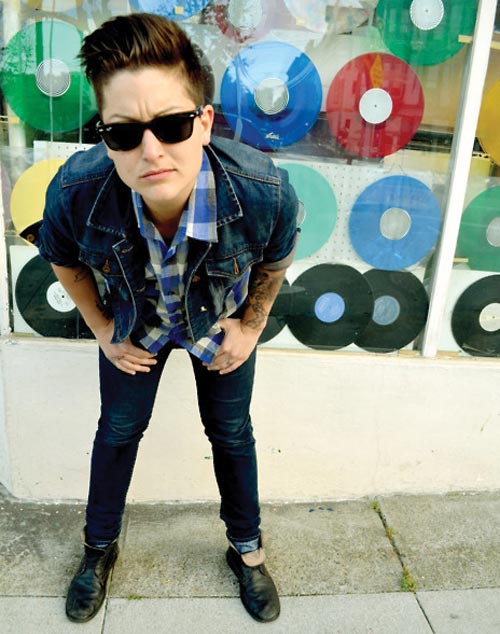
Tweekin Records in the Lower Haight was one of the centers of Bay Area dance music culture for the better part of two decades. But besides the basic insanity of operating a specialty record store in these e-times, the Tweekin brand had gotten a bit ragged over the years. So it was a charge for vinyl lovers when Manny Alferez and crew stepped up for a reinvigoration, unveiling Black Pancake Records. Pretty much the same concept reigns: great funk, soul, house, techno, jazz, and even (gasp!) rock records, plus a friendly staff with some primo recommendations. Perhaps best of all, there are a couple of those rarest of beasts — listening stations. Yep, you can put the actual circular whatsit on the doohickey that spins around and hear it make the music, little Johnny. All without clickety-clicking on the wee mouse-thingy.

593 Haight, SF. (415) 626-6995, www.blackpancakerecords.com


BEST EVERYDAY KAN DO

Peruse the labels of say, a kitty-shaped exfoliating washcloth or exquisitely lacquered bento box at Ichiban Kan, and you’re likely to see a Good Housekeeping seal of approval-style label trumpeting that the item won a design award in Japan. At times it seems like everything wins a design award in Japan, then the realization sets in that no other country seems to have dedicated itself so fervently to assuring that the everyday things of life — from paper clips to cooking utensils — be attractive, eminently functional, durable, and well-designed. When we want to load up on the best of the quotidian (we’re particular fans of the rolls of plastic wrap for $1), we come here.

Various locations, www.ichibankanusa.com


BEST GEEKDOM: THE GATHERING

It’s a constant nerd alert — not that that’s a bad thing — at Cards and Comics Central, a Richmond District shop where employees know the difference between vine whips and seed bombs and can explain why destroy effects don’t harm a cattank. Kids into Yu-Gi-Oh, Pokémon, or Magic will be overwhelmed by the shop’s vast selection. Parents will be overwhelmed at the price tag — you can spend more than $100 on a single card, though assorted decks (available for under $10) might keep the average young collector sated. Check out the back room for the real action — pale adults playing Magic with an intensity you won’t find at most Vegas poker tables.

5424 Geary, SF. (415) 668-3544, www.candccentral.com


BEST REFILL, NOT LANDFILL

What does it take to win a gazillion green business awards? It certainly starts with a great concept, a seriously vetted supply chain, and a commitment to spreading the eco-word. It also helps to have a pleasing storefront in Noe Valley, cute and eager staff, luscious products, and bulk-store prices without the forklifts and doublewide shopping carts. Green 11, launched by married couple Marco Pietschmann and Bettina Limaco and inspired by a Rachel Carson observation (“For the first time in history, every human being is being subjected to contact with dangerous chemicals, from the moment of conception to death.”), offers soaps, cleaning supplies, pet food, shampoo, conditioners, and lotions, all ready for your refillable, affordable use. Bring your own containers or put for up a starter container at the store.

3980 24th St., SF. (415) 425-5195. www.shopgreen11.com


BEST FAIR FEATHERS

You think your head hurts from the plumage parade that alit on Dolo Park this year? Think of the feather-farm roosters and other avian amigos that have lost their lives to appease the current mania for quill jewelry and hair extensions. Happily, two gentle crafters have taken the torture out of the trend: Erykah Prentice and Martha Hudson started their accessories label Divine Dandelions for peace, not plucking. The two create their cascading earrings and fanciful headdresses from foraged feathers, selling them from a sweet little gazebo at festivals up and down the West Coast. If you find yourself Bay-bound during next month’s Gaia Festival (up in the hills of Laytonville), you can always check out their Kahlil Gibran-quoting website for custom-made creations.

www.divinedandelions.com


BEST MEMORY TRANSFERENCE

Are your childhood camcorder memories gathering worrisome mildew by the minute? Entrust your VHS-ed precious moments to the Mission’s Video Transfer Center run by Jennifer Miko, a 2008 graduate of the L. Jeffrey Selznick School of Film Preservation and a collaborator with the Image Permanence Institute. Miko, along with husband Buck Bito, boasts some of the best equipment in the biz — including a fancy-pants transfer system for 8mm and Super-8 that the center says is California’s first and only. For a small fee, the team will inspect, repair, and transfer your film memories to a digital format that will last forever … or at least until we figure out brain-to-brain info-beaming.

395 South Van Ness, SF. (415) 558-8815, www.videotransfercenter.com


BEST BUGS BUNNY B-BOY FLASHBACKS

Mission vintage stores tend to cater to your typical high-waisted jean-clad, chain-smoking-in-front-of-Four-Barrel kind of girl. (We love her!) But New Jack City is a breath of fresh hype air. This “throwback goods” outpost at 15th and Guerrero streets specializes in sports gear and B-boy stylings straight from your favorite scene in Houseparty 2. Vintage Giants jackets, old school stripes, Bugs Bunny tees of various ages, priceless Afro-centric relics, and breezy caps repping teams or just plain reppin’ … . Actual 1980s and ’90s B-boys (and newer admirers) will feel they never left their Cold Crush Brothers and KRS-One cassettes in their cousin’s janky hoopty’s deck once they step inside.

299 Guerrero, SF. (415) 624-3751, newjackcitysf.blogspot.com


BEST REASON TO NOT GET OUT OF BED

You know those girls who flounce down 24th Street, vintage pastel print sundresses fluttering over their kicky cork wedge sandals, carrying a perfect sexy grandma purse? We know their style secret. Oakland’s Field Day Wearables’ bedding dresses are handmade by a crunchy-awesome label that wants to take the disposable out of fashion. They’ve got pockets and detachable straps that double as a matchy-match headband, and you can find them in patterns from striped to pansied to Batman (yes, they’re made from actual sheets). Score ’em at myriad brick-and-mortar distributing boutiques — or even better, by trying them on over your jeans at one of the craft fairs and street walks where FDW sets up a pretty post.

Available at various Bay Area locations. www.fielddaywearables.com


BEST SMALL WORLDS AFTER ALL

Apparently all the people who came of age in the late 1960s and early ’70s are either dead or too busy filling out Social Security forms to notice that at least one of their cherished craft projects is making a comeback. (No, not candle-splattered Mateus wine bottles or macramé hanging plant slings.) We’re talking about terrariums, the terrestrial equivalent of a ship in a bottle. So what if many G4-era terrarium enthusiasts call them “terraniums”? Their variation on vivarium nomenclature does nothing to diminish the charm of these glassed-in mini-worlds. And particularly high on the charm assessment scale are the creations of the good women of Studio Choo, part of Prairie Collective, whose arrangements of tiny ferns, succulents, and other floral inspire full minutes of unbroken, smart phone-free contemplation.

Available at Prairie Collective 262 Divisadero. (415) 701-8701, www.studiochoo.com, www.prairiecollective.com


BEST BET FOR BAROQUE BEAUTY

You’ve redecorated your living room, but still something is missing. Could it be? Yes it is — a fuchsia-toned chaise lounge. Do not despair, for we have your marching orders: SF Antiques and Design Mall. The 13-year-old Bayview behemoth is something akin to an indoor flea market, and is home to 200 experts in the art of antique, all of whom have booths filled to the brim with fanciful paperweights, glittering heaps of costume jewelry, and ever-so-whimsical seating options. Seriously, if your interior design is hankering for a touch of the over-embellished, a whiff of kitsch, or perhaps a splash of hanging basket chair, you will find it here.

701 Bayshore, SF. (415) 656-3530, www.sfantique.com


BEST FASHION SHRINE

Natural wooden tables, colorful blankets spread here and there, a goat’s head staring placidly down on wonder-covered shelves — Hayes Valley’s Reliquary could be a gaucho explorer’s treasure room. And — minus the gaucho part — that’s pretty much what boutique owner Leah Bershad has created it to be. Bershad stocks the year-old space with crafts and vintage finds from all around the country, plus Europe and — in the case of some elaborate bead-and-quilt satchels stacked near the counter — Afghanistan. The store’s racks of secondhand embroidered dresses and its smattering of designer wear like high-waisted Court denim mean that, as far as fashion church goes, Reliquary lives up to its name: a container for sacred relics.

537 Octavia, SF. (415) 431-4000, reliquarysf.tumblr.com


BEST PLACE TO BUY 300 PAIRS OF PANTS, 250 TELEPHONES, OR 7,651 RUBBER GASKETS

If you’ve ever spent an afternoon wistfully clicking your way through the Craigslist “free” section — pondering all you could do with an extra this or that — you’ve sampled a certain seductive sweet taste. Beware: the California Materials Exchange is crack to Craigslist’s cocaine. It’s eBay on steroids, Urban Ore for colossi. A state-sponsored recycling program, CalMAX facilitates the transfer of bulk, odd, and industrially useful products for wholesale and discount rates, and sometimes for free. So, looking for extra cubicles? How ’bout a free 1000-gallon asphalt-emulsion tank? Or 7,500 pounds of apparel, including 300 women’s black twill pants missing only the waist button? That’ll cost you a paltry 10 grand, but for someone with a plan — and a lot of storage — it could be just the thing.

www.calrecycle.ca.gov/CalMAX


BEST SHOP FOR THE SOCIALLY CONSCIOUS STITCH

A sobering fact: your clothes were probably made in a sweatshop (sorry). Most of our industrially produced togs — you are probably aware — are made by people making far from decent wages, working with toxic, health-shattering dyes. Small wonder then that local fiber movements are beginning to stitch. Visit Oakland yarn shop A Verb For Keeping Warm to be indoctrinated. Owner Kristine Vejar sells an in-house line of local fibers and natural dyes, and stocks other brands as well. Plus she gives classes on the skills you need to clothe yourself sustainably and hosts free sewing nights to develop community among people who purl — responsibly.

6328 San Pablo, Oakl. (510) 595-8372, www.averbforkeepingwarm.com


BEST WAY TO SIGN UP

Beautify the street and bolster your curb appeal in classic style with some legit hand-lettering from New Bohemia Signs. Using traditional enamels and gold leaf, New Bohemia practices its old-school art with pride — snazzing up placards with over-the-top fonts, providing elegant window signage for boutiques and restaurants, crafting appetizing menu boards, even revamping your Victorian with a gilded transom. Founder Damon Styer and crew have also branched out into the gallery scene: a recent art show at Guerrero Gallery featured work by present and past New Bohemia staff. The vintage feel, handmade aesthetic, and design-addict cache — New Bohemia’s products have even been salivated over in The New York Times — seem a perfect sign of our local, small-batch, skill-appreciative times.

281 Ninth St., SF. (415) 864-7057, www.newbohemiasigns.com


BEST PROTOTYPES (PRIMATE OR OTHERWISE)

The website of the Foam Monkeys concept modeling studio has an “awards” section that admits, “While we can’t honestly recall Foam Monkeys ever actually being mentioned for an award, the company has certainly been a part of many award-winning product development teams.” But we’re giving the company itself a real, bona fide Best of the Bay to boast about. Why? Because! Here you can not only construct a polyurethane primate, but also all sorts of useful stuff — like prototypes for everything from MacBooks to microchips. Sure, the company is geared toward creating serious conceptual models for industrial design and product development, but that doesn’t make the idea of an accessible foam-based 3-D modeling studio any less awesome.

32 Shotwell, SF. (415) 552-5577, www.foammonkeys.com


BEST SONIC SAFARI

Deep in the thick of the taquerias, bodegas, butcher shops , and joyerias of 24th Street dwells this exotic little shopping outpost for fearless cultural adventurers. Explorist International captain Chris Dixon (known on assorted music bills as Phengren Oswald) lets his collector come out to play here, sharing new and used recordings of global party riddims, heady jazz, weird old folk and country blues, and various unclassifiables — as well as art books, micro-run zines, and McSweeney’s volumes. The record bins are where the real action is, though: Moondog vinyl canoodles with Sperm Walls rarities, and Charlie Nothing crashes with the Indonesian prog and funk of Those Shocking, Shaking Days. Would we like to snag that vinyl copy of Luk Thung: Classic and Obscure 78s from the Thai Countryside? Yes, Dr. Livingstone, we would indeed.

3174 24th St., SF. (415) 400-5850, www.exploristinternational.com


BEST CHEAP PLACE TO SCORE A CUP AND A CONRAD

Literature and coffee: such sweet, sweet dependencies. Enable both on the cheap at Reader’s Café . Inconspicuous to those on a casual Fort Mason stroll, this used book treasure trove on the bay is infinite and grand once found. With $20, it’s possible to take home a few written works (some only $1!) and still have change for indulging in a custom-brewed cup of Blue Bottle. Reader’s is a production of the San Francisco Friends of the Library, so not only does each purchase soothe the DTs, it’s for a good cause.

Building C, Room 165, Fort Mason Center, SF. (415) 771-1076, www.readerscafe.org


BEST PARTNER IN PREUSED PURCHASE

In a perfect world, each visit to the Apartment would be a leisurely half-day treasure hunt. The Mission District store is packed with vintage furnishings, boxes of old family photos and 1960s magazines, even a $1 tray for affordable finds. No plywood or cheap IKEA stuff here — everything on offer is well maintained and crafted. Of course, that quality comes with some heft, but if you’ve fallen in love with a cedar armoire when you were supposed to be on the hunt for a throw rug, the Apartment will pay for its delivery: $65 plus $10 for every flight of stairs it must ascend to your door. So accommodating!

3469 18th St., SF. (415) 255-1100


BEST ANTI-GOLIATH GAME FACE

After a five-year effort by chain-wary neighborhood activists to keep it off the grand hippie boulevard, megachain Whole Foods opened at Haight and Stanyan streets early this year. It furthered the neighborhood’s fitful transmogrification into Fancy Town (or Ashbury Valley, the ‘hood’s new NoPa-like real estate agency-created moniker), but Haight Street Market is rising to this market-share challenge. With shifts starting before the crack of dawn, the 30-year-old family-owned shop has stepped it up, adding a high-quality butcher counter, a deli, the least pricey and most diverse beer selection in the Upper Haight, and a buffed-up coffee selection. If only all small businesses could up their game in the face of corporate claims.

1530 Haight, SF. (415) 255-0644, www.haightstreetmarket.com


BEST LEATHER-SCENTED TIME WARP

Stepping into cobbler Suzanne George’s shop is like entering a hide-covered time warp. George crafts her clodhoppers in much the same way that shoes were made several hundred years ago. She works the leather by hand, stitching the pieces with thread and hammering it all together with actual nails. Not only are the shoes custom-made to fit every tootsie they encase, they are also unique pieces of art, nearly too lovely to take tramping on the dirty pavement. George shares her high-quality, low-technology workshop with Peter, a shoemaker originally from Italy who used to make sandals for Mother Teresa. Together they make some damn fine throwback sling-backs.

1787 Church, SF. (415) 775-1775, www.suzannegeorgeshoes.com


BEST COUCH-BOUND — BUT COMMUNITY-MINDED — STONER’S DREAM COME TRUE

While a marijuana home delivery business may sound like nothing more than a couch-bound stoner’s dream come true, the Green Cross actually offers a valuable service to many of the city’s neediest residents who are less mobile as a result of illness, disability, or age. And this is no slapdash selection, either. Brick-and-mortar dispensaries can’t beat its impressive array of hard-to-find THC-infused specialty items like olive oil and agave nectar. Plus it boasts vegan, gluten-free, and nut-free goodies, all made in-house. So toke it all in — a portion of the proceeds are reinvested in the community, supporting social service agencies like the SF AIDS Foundation and the YMCA.

(415) 648-4420, www.thegreencross.org


BEST GOAL-GETTERS

Toby and Libby Rappolt hardly leave the balls behind when they exit their 20-year business, Sunset Soccer Supply, for the day. The Rappolts are players, coaches, and fans too. If they’re not holding up the counter at their shop, chatting with regulars about the most recent match or the best way to teach a kid to dribble or selling a team-sized box of scrimmage vests, there’s a good chance they’re out supporting the SF soccer community. The business is especially into rooting for women’s teams: it was present at the Civic Center showing of the World Cup final, it sponsors tournaments, and it has even invited players to in-store signings.

3401 Irving, SF. (415) 753-2666, www.sunsetsoccer.com


BEST PLACE TO PUT A CORD ON IT

Where to trundle if you want to wear that pretty pierced stone you found on your first anniversary hike up Mount Diablo? The Bead Store has a vast assortment of necklace-ready cords, and the Castro shop’s friendly staff can point you toward a nice clasp, or even tie a slip-knot for you if you’re not fancy. It’s the city’s smallest and oldest bead store — it has been in the same spot since 1964 — and stocks centuries-old beads and rare stones you won’t find anywhere else, as well as the standard tools you need to take your diamonds from the rough.

417 Castro, SF. (415) 861-7332, www.thebeadstoresf.com


BEST RING OF SUCCESS

Jewelry — it can be scary! We don’t mean the fun ornamental kind of jewelry, like Celtic nipple rings or jade idol earrings or purple pentagram pendants (although those can be scary too). No, we’re referring to real jewelry — like the fancy traditional kind you’d better get right or Bridezilla/o is gonna ‘splode and slap you silly with a rolled-up copy of Country Weddings magazine. How will you know how to score the perfect engagement ring, or wedding band, or anniversary bracelet, or birthday watch? Don’t fret. The enormously helpful and nice folks of Just Bands will help you with everything, from sizing and color to design and polish. Their showroom in the labyrinthine San Francisco Gift Center sparkles not just with diamonds and silver, but with the smiles of satisfied lovers whose romance wasn’t tarnished by stressful transactions.

888 Brannan, Suite 151, SF. (415) 626-2318


BEST THROUGH THE RABBIT HOLE

The N-Judah thunders by it dozens of times a day, but because it’s tucked well back in a garden courtyard, you’d never know this spirited, magickal little “multitraditional world mysticism” shop existed. Unless you capital-K Know. Look into your third eye: do you Know? Randy, the genial owner of the Sword and the Rose — a man who is part Keith Richards, part Baba Yaga — definitely Knows. And he’ll graciously tell you, spinning tales of about gods and goddesses from esoteric cultures past and present, or reading your tarot cards in a cozy nook warmed by an amber fire, or selling you his house-produced incense, or offering lessons in spellcraft, all while bestowing friendly (if a bit confusing to the uninitiated) guidance to more transcendent realms. First stop: Cole and Carl streets. Next stop: the Divine.

85 Carl, SF. (415) 681-5434


BEST BARREL FULL OF MONKEY SUITS

Let’s face it, if you’re a happenin’ gentleman or a trouser-trusting lady in this fancy-pants city, you’re going to need to bust out the occasional tuxedo. But who wants to spend a few hundred bucks on a new tux? Screw that noise, get over to Held Over, and check out the selection of $20 used tux shirts and wide variety of full monkey suits — from the 1970s-style mariachi look to something a bit more classic. Hell, why don’t you mix-and-match it up? They’ve already got you in a suit, so you might as well have some fun with it.

1542 Haight, SF. (415) 864-0818


BEST GRAND POOBAH OF THE PAST

A visit to the cavernous Potrero Hill digs of Big Daddy’s Antiques ushers you into a wondrous, uncannily postmodern version of the past. There’s definitely a little vintage-meets-steampunk aesthetic going on — Big Daddy grand poobah Shane Brown and his magic elves have collected enough old-school film lights, globes, wooden angel wings, horse-drawn buggies, large animal heads, giant pillars, and studio cameras with bellows to kit out the dreams of antique queens and cyber-fanboys alike. (Tech guys, please get your decor here.) And the large collection of Depression-era Americana like shoe shop signs and flag bunting adds to the pleasantly discombobulating Twilight Zone feel. Don’t worry though; the amiable Big Daddy’s staff will guide you though it all.

1550 17th St., SF. (415) 621-6800, www.bdantiques.com


BEST SHOT OF PANACHE

We just have one question for you, Revolver: can we move in? We would fit so well in your charming, roomy, homey, comfy store-and-gallery. On warm summer days, we could don one of your light summer frocks and Illesteva sunglasses, like contemporary post-ironic preppies but not that heavy; seal in our dewy look with one of your delicious moisturizers; and have coffee while pondering the art on display in your back room. Evenings, we could venture out in a pair of Tretorn rubber boots or suede Volta high tops and Creep khaki chinos, then settle in for the night on one of your durable cotton Japanese Workers pillow covers. In short, Revolver, we like everything about your small, beautifully curated store. Just one more thing: Is that a pistol in your pocket, or are you glad to see us?

136 Fillmore, SF. (415) 578-3363, www.revolversf.com


BEST HOLGA ROLLS

You know what’s tired? Using your iPhone to take a picture of yourself in the mirror for your Google+ profile. You know what’s not tired? Using a low-fi medium format 120 film Chinese toy camera from the 1980s to snap that same pic. Sure, you could just download Hipstamatic, but the hardcore among us prefer to use the delightful original mechanism — an actual Holga camera — which, thanks to a mini-craze in the past few years, has become readily available in the U.S. But you’ll need the right roll of film, and the awesome Photoworks is here to provide. Photoworks stocks hard-to-find film from all over the world, offers excellent print production services, and will even stretch your Holga hotness on a canvas to hang in your hallway.

2077-A Market, SF. (415) 626-6800, www.photoworkssf.com


BEST NATURE NOOKIE NAPSACKS

Backpacks, tents, and BPA-free utensils designed with an eye for classic retro outdoors-y accouterments (think 1980s L.L. Bean and 1970s RV campers), Mission District-based camping company Alite Designs‘ gear is innovative, body conscious, and oh-so-considerate of our decadent ways. Take for example its Sexy Hotness sleeping bag — at first glance, just a pretty sack for camp-crashing, but unzip the center fastener and it becomes a thermo-Snuggie with built-in feet, its center zipper freeing your nether regions for trips to the john or even a little nature nookie. Plus, the bags connect endlessly, so if you roll deep ‘n’ dirty, your camp orgies will be well served.

2505 Mariposa, SF. (415) 626-1526, www.alitedesigns.com

our Weekly Picks, July 13-19, 2011

0

THURSDAY 14

EVENT

Fire Monks: Zen Mind Meets Wildfire at the Gates of Tassajara

Here’s your spiritual riddle of the week, young grasshopper. Say you’re a Buddhist monk. Two thousand fires are sprinting across California’s tinderous golden landscape. The wind shifts. One blaze streams down a single unpaved road, the sole portal to your monastery. The conundrum expressed best by the Clash alights in your ever-mindful mind: should I stay or should I go now? In June 2008, five monks chose to stay when the Big Sur fires threatened Tassajara, the country’s oldest Zen monastery. Author Colleen Morton Busch shares their story in her new book Fire Monks: Zen Mind Meets Wildfire at the Gates of Tassajara. Hear her read selections, plus stories from the monks and wild land firefighters, on how they successfully fought the fire with the fire within. (Kat Renz)

7:30 p.m., free

San Francisco Zen Center

300 Page, SF

(415) 863-3136

www.sfzc.org


EVENT

“Cabaret Bastille”

LitQuake revives the ghosts of Left Bank bohemia for its cabaret and fundraiser Cabaret Bastille. Everyone’s favorite modernists will be in the house — Anais Nin, F. Scott Fitzgerald, James Joyce, Djuna Barnes, Henry Miller, H.D. and of course, the salon dom herself Gertrude Stein — as local writers impersonate these legends and read selections from their work. Other merriments include songs by accordion-accompanied chanteuse Gabrielle Ekedal, a make-your-own-Matisse station, exquisite corpses, and much genius-inducing imbibing. (Matt Sussman)

8 p.m.–midnight, $15

Cellspace

2050 Bryant, SF

www.brownpapertickets.com


EVENT

“Crimes Against Horticulture: When Bad Taste Meets Power Tools”

I earn most of my money on my knees, initiating a rampage of genocidal proportions upon the natural world. I pull weeds and I love the killing, though not without remorse, for who am I to judge? (As a nonbreeder, I’m biologically nil compared to the reproductive success of an invasive plant.) I wonder if funny-man gardener Billy Goodnick would diagnose this murderous spree a “crime against” or a “crime in the name of” horticulture? An award-winning landscape architect and host of the Santa Barbara television show Garden Wise Guys, Goodnick brings his humor-infused message of sustainability to horticultural criminals, crazies (any “compulsive rakers” out there?), and petal perfectionists alike. (Renz)

7 p.m., $15

Conservatory of Flowers

100 John F. Kennedy, Golden Gate Park, SF

(415) 831-2090

www.conservatoryofflowers.org


COMEDY

Jay Pharoah

Even though comedian Jay Pharoah is only 23, he is already a seasoned veteran of the stand-up circuit, hitting stages since his early teens and honing his hilarious impersonation skills. Eddie Murphy, Will Smith, and President Obama are among his stable of dead-on, side splitting impressions, some of which, along with his many other comedic talents, have been featured on national television since he joined the cast of Saturday Night Live last year. Pharoah’s star is only certain to rise with more national exposure, so do yourself a favor and catch him this weekend in the cozy confines of Cobb’s before it’s too late. (Sean McCourt)

Thurs/14–Sun/17, 8 p.m.

Also Fri/15–Sat/16, 10:15 p.m., $18.50–$20.50

Cobb’s Comedy Club

915 Columbus, SF

(415) 928-4320

www.cobbscomedy.com


FRIDAY 15

PERFORMANCE

Persepolis, Texas

Sometimes it takes a Texas-reared second-generation Iranian American cisgendered female in drag to point out what should be obvious: “That this huge stage presenteth nought but shows” (to quote an old Englishman who never set a pointy shoe in Texas). Is self-presentation of any kind just a drag act by another name? Isn’t the real question whose terms apply in the fashioning of one’s persona? Whose hijab is it anyway? San Francisco–based performance artist Maryam Farnaz Rostami explores the tenuous line between identity, persona, eroticism, and exoticism in her first evening-length solo show, embodying a handful of characters — including Rostami’s celebrated drag persona Mona G. Hawd — in movement, music, and an unexpected narrative encompassing contemporary Iran, Iranian Texas, and queer San Francisco. (Robert Avila)

Fri/15–Sun/17, 8 p.m., $20

CounterPULSE

1310 Mission, SF

1-800-838-3006

www.counterpulse.org


FILM

Skatetown, U.S.A.

Billed as “The Rock and Roller Disco Movie of the Year!” — the people behind Roller Boogie (which came out the same year) must have taken great offense — 1979 crapsterpiece Skatetown, U.S.A. has been very hard to find for years. What a cast: top-billed rodent Scott Baio, a slutted-up Marcia Brady (a.k.a. Maureen McCormick, who claimed she became a coke addict on this shoot), and 1979 Playboy Playmate-turned-1980-murder-victim Dorothy Stratten, to name just a few. Plus tons of actual roller-disco troupes — you can tell they thought this was their ticket to Broadway — and two genuinely talented dancers showcased as good and bad guy. The very Warriors-style villain is Patrick Swayze, making his film debut (his belt-whip skate solo smokes). With its mix of stupid skit comedy and stupider ensemble dramatics, Skatetown, U.S.A. is a fungal time capsule that played less-than-fresh even at its moment of birth. Yet it’s kind of great anyway. This one-night only revival features free tube socks, presumably not-free beer, and a post-screening roller disco party at Cellspace. (Dennis Harvey)

7 and 9 p.m., $15 (includes roller disco)

Roxie Theater

3117 16th St., SF

(415) 431-3611

www.roxie.com


PERFORMANCE

Hello, My Name is Joe

Bringing a global perspective to the push and pull of power structures, Meridian Dance presents 8213 Physical Dance Theater’s world premiere Hello, My Name is Joe, a site-specific work inspired by the concurrent visual art exhibition “In Extremis: Prints Monumental, Intimate.” Based in Taipei, Taiwan, under the direction of Chuo-Tai Sun with collaborator Casey Avaunt (a Maine native), 8213 Physical Dance Theater reveals the ways humans emotionally and physically battle controls. Launching from the old children’s song “Hello, My Name is Joe,” in which the protagonist is asked by his boss to push, pull, and turn buttons, the work challenges the performers to negotiate their freedom within the walls of the Meridian Gallery. (Julie Potter)

Fri/15–Sat/16, 7:30 p.m., $10–$20

Meridian Gallery

535 Powell, SF

(415) 398-7229

www.meridiangallery.org


SATURDAY 16


FILM

When Harry Met Sally

They’ve brought salsa and swing dancing, a circus festival, and classical music to Union Square. Now the Jewels in the Square Performance Series reopens age-old debates about the nature of friendships and sex, the rebound girlfriend, and orgasmic deli dishes. The latest event on the outdoor-entertainment calendar (in partnership with Film Night in the Park and the San Francisco Jewish Film Festival) is a screening of 1989 classic rom-com When Harry Met Sally. Prime your funny bone for the upcoming 2011 SFJFF (opening night is July 21) with the ultimate “Can a straight man and a straight woman ever be just friends?” flick, starring Meg “On the Side” Ryan and Billy “Made a Woman Meow” Crystal. Bring a friend, significant other, or both. (David Getman)

8 p.m., free

Union Square

Geary at Powell, SF

www.sfjff.org


MUSIC

Black Dynamic Sound Orchestra

“Blaxsploitation” cinema is as much prized for its music as for its leather-wearing, Afro-having, ass-kicking heroes and the vengeance that they wreak. What would Shaft (1971) be without its theme song? How could justice be adequately dispensed, or love properly made, without exceptionally funky grooves? It was with questions such as these in mind that the producers of Black Dynamite (2009) must have chosen Adrian Younge to score their filmic love song to black belts and pointy collars. Younge, who also edited Black Dynamite, created a perfect backdrop to a ridiculous movie, and wrote some great songs doing it. With Younge at the helm, Black Dynamite Sound Orchestra takes his vision on the road, performing selections from the Black Dynamite original soundtrack as well as unreleased tracks from a forthcoming album. (Cooper Berkmoyer)

With Lord Loves a Working Man and the Struts

10 p.m., $12

Bottom of the Hill

1233 17th St., SF

(415) 621-4455

www.bottomofthehill.com


EVENT

Phono Del Sol Music and Food Festival

Music festivals can totally suck. They cost an Xbox 360, take half a week of your life (that’s never coming back) to see four bands that were in town at small venues the month before, make you realize Kanye is better on YouTube, force you to fend off that bro who won’t stop asking for drugs, and camp in a in a parking lot next to Porta-Potties. It’s a little much. Thankfully the folks at the Bay Bridged blog and Tiny Telephone have you covered with this darling, commitment-free fest that combines two SF passions: music and food. They’ll bring musicians including Aesop Rock, Mirah, and Appetite, and you bring your appetite (plus cash for Off the Grid’s food trucks.) (Ryan Prendiville)

Noon-7 p.m., free

Potrero Del Sol Park

25th St. at San Bruno, SF

www.thebaybridged.com


SUNDAY 17


VISUAL ART/EVENT

“Google Family Day”

In its “Doodle 4 Google: What I’d Like To Do Someday … ” exhibit (through July 19), the San Francisco Museum of Modern Art linked up with Google to showcase the works of 40 student artists. The works (selected from more than 100,000 submissions) were inspired by a prompt for kids to envision what they would like to do in the future — and channel that energy into redesigning a logo for the website’s continually changing home page. The moon-themed winner (which earned its seven-year-old creator, South San Francisco’s Matteo Lopez, $15,000 in college money plus a technology grant for his school) hit Google in May. The 39 other contestants have the pretty nifty consolation prize of having had their artwork hung in a museum before they’ve even hit 18. Today’s “Google Family Day” event offers free entry for families with kids under 12, with special hands-on activities, performances, and more aimed at young artists. (Getman)

11 a.m.–4 p.m., free for families with children under 12

San Francisco Museum of Modern Art

151 Third St., SF

(415) 357-4000

www.sfmoma.org


TUESDAY 19


MUSIC

Parenthetical Girls

Pop music. To some these two words together bring to fore images of cloying sweetness, a toothy smile in high gloss shrink-wrap bearing down on contented mall shoppers. Parenthetical Girls is here to remind us that pop still has cards up its sleeve, if not revel in the antagonism. The willfully obscure recording project (usually) from the Pacific Northwest warps complex operatic composition à la Sparks and Eno, adds a dash of Morrissey’s infamous ego, and ends up with songs that are almost caustically intellectual. Experimental it is, but not so much that the essential framework is smothered. Instead, Parenthetical Girls emerges as something uncanny; it draws you in with familiar pop music tropes but leaves you pleasantly unsettled. (Berkmoyer)

With Extra Life and Sam Mickens

9 p.m., $7

Hemlock Tavern

1131 Polk, SF

(415) 923-0923

www.hemlocktavern.com 


The Guardian listings deadline is two weeks prior to our Wednesday publication date. To submit an item for consideration, please include the title of the event, a brief description of the event, date and time, venue name, street address (listing cross streets only isn’t sufficient), city, telephone number readers can call for more information, telephone number for media, and admission costs. Send information to Listings, the Guardian Building, 135 Mississippi St., SF, CA 94107; fax to (415) 487-2506; or e-mail (paste press release into e-mail body — no text attachments, please) to listings@sfbg.com. Digital photos may be submitted in jpeg format; the image must be at least 240 dpi and four inches by six inches in size. We regret we cannot accept listings over the phone.

Ghost Fleet wanderers

5

Scott Haefner, Stephen Freskos, and Jon Haeber aren’t the types to stand out in a crowd. Haefner is a web developer, Freskos supervises projects for an engineering firm, and Haeber has a desk job at a company that helps businesses hit high on Google — three straight-laced Bay Area professionals who blend readily into the corporate world.

But everyone’s got their thing — a way to break out of bounds, or scratch the itch of some incessant curiosity.

For these three friends in their late-20s to mid-30s, their thing entails prowling around in rundown deserted places by the light of the full moon, at times taking great pains to avert detection by security patrols. “We go into places that most people don’t go,” Haefner says. They’ve been traipsing into the unknown and documenting their discoveries together for years, motivated as much by art as adrenaline.

This past May, after weighing the consequences, they publicized one of their boldest excursions yet: Sneaking aboard the Mothball Fleet in Suisun Bay to spend entire weekends roaming the bowels of the mildewed vintage ships, while dodging the beams of patrol-boat searchlights.

Unlike many nocturnal wanderers magnetically drawn to abandoned spaces — squatters, taggers, or scrappers, for instance — they don’t break in, vandalize, or steal. Instead, they adopt the same sense of reverence in decaying, chemical-laden industrial places that conscientious hikers assume on backwoods trails. They shoot night photos with professional quality gear, occasionally using flashlights to achieve a technique called light painting.

Haefner, Freskos and Haeber consider themselves advanced practitioners in the art of urban exploration (a.k.a. urbex or UE), an underground activity that’s grown trendier as it draws in adventuresome novices. Now that they’ve publicized their caper aboard the Mothball Fleet, however, they’ve also come under the watchful eye of the feds.


EXPIRATION DATE

At first they thought it was a pipe dream. Doubting their ability to access the Mothball Fleet was saying a lot, considering they’d once snuck onto the Vandenberg Air Force Base and wandered amid abandoned missile silos, absorbing the gravity of the military history those Cold War artifacts represented. Another time they’d managed a nighttime excursion to Neverland Ranch, the famed private amusement park of the late Michael Jackson.

But the ghost ships moored at Suisun Bay seemed out of their league. The rows of hulking, government-owned vessels were locked up and berthed offshore, surrounded by a security headquarters and a shoreline barricade plastered with “No Trespassing” signs. Patrol boats equipped with searchlights circled the docks 24 hours a day, and the prospect of climbing aboard without being spotted seemed crazy.

But then they got word that the last of the aging ships would soon be towed away and destroyed. For Haeber, the history nut of the bunch, this changed everything. “It was about the urgency of making sure these ships were documented,” he explained. “Getting them in the current state that they’re in is so important.”

Alternatively known as the Mothball Fleet and the Ghost Fleet, the ships are part of the National Defense Reserve Fleet, a collection of cargo ships, tankers, and military auxiliaries overseen by the U.S. Maritime Administration (MARAD). Created in 1946 to be ready for deployment in case a national emergency arose, the fleet consisted of 2,277 ships at its height in 1950, strategically stationed at eight anchorages nationwide. For most of the vessels, the call to service never came, and they declined into obsolescence. By April, the entire fleet had dwindled to just 178 ships, at dock in Suisun Bay; Fort Eustis, Va.; and Beaumont, Texas.

The ships that have been moored at Suisun Bay for decades have long since deteriorated, and now they’re being hauled off to the scrap yard bit by bit, though the spot will continue to serve as an anchorage for newer additions to the National Defense Reserve Fleet.

Some were constructed in the World War II era, while others date back to the 1960s and 1970s. While many are tankers or merchant vessels, there are also warships, relics of history deployed in World War II, the Korean War, the Vietnam War, and Operation Desert Storm.

Many of the roughly 70 dilapidated ships have become ecological hazards, leaching toxins and heavy metals into the tidal estuary, which flows into San Francisco Bay. The monumental task of removing and dismantling them began late last year, providing badly needed blue-collar jobs on Mare Island, in the economically depressed city of Vallejo.

By 2017, the last of the ghost ships will have met with torch cutters. At least one will be salvaged: the USS Iowa (BB-61) — a 1938 lead battleship that shuttled President Franklin D. Roosevelt to and from the Tehran Conference during World War II — will be donated and turned into a museum.

Aside from being scrapped, outmoded ships meet with a variety of fates. Some are donated for educational use while others are deliberately sunk to create artificial reefs. Still others are used for target practice in the Navy’s sink-at-sea live-fire training exercises program (SINKEX).

“We saw that these things were going to be gone,” Haefner said. “So we planned it out.”

Haeber examined satellite imagery on Google Earth. Freskos, who’d spent time at sea, studied the tidal patterns. The three scoured the Internet for online photos of the Ghost Fleet. They conducted a scouting mission with binoculars in hand, and gained a sense of when they could take advantage of windows of opportunity between the 30-minute patrol boat rounds.

Long before they even discovered a navigable slough that snaked through a marsh into Suisun Bay or spotted the Craigslist post advertising an inflatable raft for sale, Freskos went up to shoreline gate where the “No Trespassing” signs were posted. He peered through at the tantalizing rows of mothballed ships, and hollered as loud as he could. Nobody responded.


DECAYED TIME CAPSULES

After the months of planning left them confident that it was indeed possible to access the Mothball Fleet, the trio of photographers set out for their first visit, with about 700 pounds of gear in tow. They split the cost of a 12-foot inflatable Fish Hunter raft with a Minn Kota trolling motor. They carried the raft and their gear through a muddy expanse to a marshy spot where the low-profile craft could be set into a narrow slough, safely out of view.

“We always went on or exited at nighttime,” Haefner said. “We would go on nights near the full moon so we could take pictures. It makes it look even more ghostly.”

Their first target was Row F, a line of ships docked in a straight shot from where the slough filtered into the bay. They maneuvered down the narrow channel in their raft, dodging submerged obstacles along the way. Keeping tabs on the whereabouts of the security boat, they started rowing once they reached the open water, and managed to bridge the 800-foot distance to the first ship.

“Our plans were kept secret to all except our loved ones,” Haeber wrote in an online account of that first excursion. “Nobody, other than my girlfriend, knew exactly where I was that weekend. For all intents and purposes, I was on a fishing trip with some friends.”

“Keep Off” signs announcing an invisible 500-foot barrier that was not to be breached were affixed to the hull of every ship. The intruders maneuvered their raft between two Coast Guard cutters, Planetree and Iris, and tied up.

“It can be kind of a challenge getting on,” Haefner explained. “We’re risking ourselves, obviously, but we also brought a bunch of expensive camera gear.” He was the first one to climb aboard the Iris, reaching high to grab onto a bumper that he could then pull himself up on to gain access to the ship. While Freskos kept watch, Haeber handed the gear up to Haefner bit by bit. Once all three were aboard with their backpacks and camera equipment, they hauled up the raft and deflated it.

The Iris was commissioned in 1944. In 1970, it responded to the scene of an oil-rig fire in Galveston, Texas. In 1987, it assisted with cleanup operations in Prince William Sound after the Exxon-Valdez spill. It was decommissioned in 1995, so their entrance likely marked the first time anyone other than MARAD employees had been aboard in 16 years.

A handy feature of ghost ship exploration is that once aboard a ship, it’s possible to access any ship along the entire row, thanks to gangplanks connecting the vessels. So while many of the mothballed vessels were completely secured, there was always the chance that the next one down would have an unlocked entranceway. Part of the ethos of urban exploration is to avoid breaking anything, so they only accessed the interiors of unsecured ships. “They are fairly vigilant about keeping doors locked up tight,” Haefner said. “But there are just so many doors.”

Haeber found a single open door on the SS Exxon Gettysburg, a mammoth oil tanker constructed in 1957, and entered the ship alone, enthralled. The interior, he later wrote, smelled like a mix of mold, benzene, and soggy newspaper. He turned on his flashlight and began tiptoeing through the corridors and peering into the cabins. “They were like time capsules, untouched since the 1970s,” Haeber said.

“Some of the ships were 15 stories deep, like a maze,” Freskos said. “We’d get lost inside.” The trio split from Row F before sunrise and managed to get back to the slough without any mishaps, but they returned on a handful of other occasions with sleeping bags and enough food and water to last a weekend. On those subsequent journeys, they’d seek out places to sleep, often crashing in the once-luxurious captain’s quarters. They slept by day, so that entire nights could be devoted to wandering in awe of the decayed, post-apocalyptic industrial environs, shooting hundreds of photographs.

They visited rooms where crews once hung out playing board games, still littered with cigarettes. They photographed molded interiors, dark cavernous stairwells, engine parts, navigational equipment, and abandoned cabins with peeling wallpaper. “We found personal letters, cards, things people left,” Haefner said. “We were always looking for signs of life.” They wandered through mess halls, engine rooms, bathrooms, galleys, even chilling places with operating chairs and overhead spotlights. They climbed around on the decks in the open night air, wandering through derricks and cranes.

The old ships would make eerie creaking noises when the tide rushed in, and there was always that mild sensation that one experiences on a boat, of things not staying still. “It was like a cacophony of sound when the current was coming in,” Freskos recalled. Hawks, osprey, and owls nested aboard some of them, so the creaking noises were sometimes accompanied by screeching birds of prey.

“The place is steeped in history,” Freskos said. “I’d always think of what this room was used for, or what went on here, when people were experiencing the suffering, craziness, and nervousness of war.”


HIGHLIGHTS AND HAIR-RAISERS

A highlight of their journeys aboard the Mothball Fleet was stumbling across the sleek black Sea Shadow, a stealth ship, which was ensconced within a barge on Row G. Shrouded in secrecy, the angular vessel was developed by Lockheed for the U.S. Navy to test how low of a radar profile could be achieved, and it served as inspiration for a stealth ship featured in a James Bond film. According to the MARAD website, “Sea Shadow was constructed and tested under a high degree of secrecy; until the Navy made its existence public in 1993, all tests were conducted at night.” The ship entered the Suisun Bay Reserve Fleet in September 2006.

They also found their way aboard the USS Iowa, which bears the distinction of being the only U.S. Navy warship ever outfitted with a bathtub, so FDR could have a soak while crossing the Atlantic. While they didn’t manage to go inside, an eerie photograph of three enormous guns on deck conveys the magnitude of the battleship.

One of Haeber’s most cherished discoveries was a three-story-tall mural he photographed inside the SS President Lincoln, an American President Lines ship constructed in San Francisco in 1961. An early version of a containerized cargo vessel, the Lincoln doubled as a cruise ship catering to a small number of elite passengers, and remnants of the elegant interior décor remained. The ship has since been hauled to the scrap yard.

It wasn’t always smooth sailing for the three urban explorers. Once they narrowly dodged a work crew aboard a ship — “but we saw or heard them before they saw us,” Haefner said. Another time, while paddling back to the slough, they discovered their raft was punctured and had to manually pump air into it as they traveled. Then, at the tail end of their final journey to the Ghost Fleet, they found themselves fully illuminated by the dreaded patrol-boat searchlight for a full 10 seconds. They froze, convinced they’d been caught. But nothing happened, so they powered up and rowed like hell to get back ashore, and never returned.

Of course, posting interior photographs of the Mothball Fleet all over the Internet and delivering a public slideshow about their sneak-aboard escapades has attracted the attention of the federal government. “The Department of Homeland Security has been looking into it,” said Haefner, who can tell by monitoring web traffic on his blog. “I know that they know.” He also noticed hits from the U.S. State Department and the U.S. Department of Justice, but so far, none have come knocking.

In response to a Guardian request for comment about the Mothball Fleet photographers, Kim Riddle, a spokesperson for MARAD, e-mailed an official statement. “We were aware of the intrusion,” she wrote. “We are concerned about the safety of individuals onboard our ships. This is a dangerous industrial site, and we take significant precautions for our own workers when they are onboard the fleet to make sure that areas are safe for them to enter. While trespassing on federal property, these photographers put themselves in a very dangerous position and could have been severely injured or killed from a fall or by entering an enclosed space that doesn’t have enough oxygen. Since learning of this incident, we took additional security steps, reviewed our procedures, and reinforced training with our employees to stop these kinds of intrusions.”

Freskos touched on the safety issue in an online discussion about the project. “There were many long discussions about oxygen-deprived spaces such as anchor chain lockers and ballast tanks,” he wrote. “There were contingency plans made for injuries. We carried a medical kit, we wore [life jackets], and took many other precautions.” He also responded to those who questioned the wisdom of publicizing their late-night excursions to the Mothball Fleet. “I think I speak for the three of us when I say that we are well aware of the consequences,” Freskos wrote. “But it’s a passion of ours, and it’s worth it.”

The photographers’ work can be viewed here, here, and here.


Girls just want to have fun

9

culture@sfbg.com

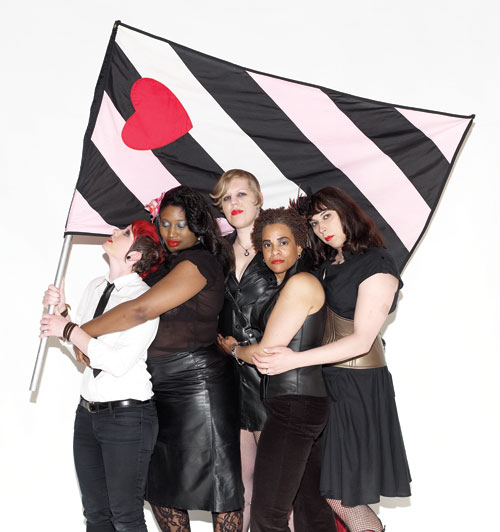
SEX It was their first official slumber party and a late-night run to the grocery store for pink hair dye was in order. Decked out in a combination of pink, pajamas, and leather, the San Francisco girls of Leather shrieked and giggled as they wandered the aisles searching for anything rosy-colored. The girls could easily have been mistaken for a freshman herd of coeds soaked in Malibu and cheap vodka, but as the group’s president, Leland, remembers, they were “just high on girls.”

Until they discovered the store’s collection of pink and white unicorns — on sale.

“We all oohed and ahhed and ended up purchasing six of them, surprising the other girls by returning to the party with an entire unicorn herd,” Leland says. From sleeping bags and hair braiding to dirty storytelling and play piercing, the night teetered between innocent and naughty, sweet and sexy. “So many unicorns, so many needles, and so much blood!” she said.

The SF girls of Leather (the girls prefer a lowercase “g” and uppercase “L” out of respect for the traditions of the leather community) are giddy and flirty: the epitome of seventh-grade girliness, complete with kinky sleepovers, hearts, and cuteness. As this year-old group sees it, maturity is overrated when it comes to BDSM — and a hint of silliness in a dark dungeon can only heighten the sex appeal. Who else is going to giggle or blush after a spank?

The group’s approach to leather is hardly in line with the masculine traditions that have come to be associated with the history of the kink community. But in the year since the girls formed their group, they’ve been working to secure their place in the continuum of leather lovers. And judging from the group’s growing membership — and accolades from the leather community at large — SFgoL is providing a much-needed refuge for marginalized fans of lighthearted play, splashing accents of pink across the traditional wash of black.


GIRL GOALS

Historically, a girl in the leather community has been defined as the female-identified version of a boy — a submissive expected to service a dominant individual in various kinds of BDSM play. But in SFgoL parlance, girl means something way more fun. Top, bottom, submissive, dominant, giver, receiver, experienced, or curious: all roles are welcome in the group, as long as you “girl” identify.

Which means what, exactly?

“Leather doesn’t have to be serious,” says Leland, who is of the mind that people of all ages, bodies, and sexual preferences can find bliss by tapping into their own personalized “girl-space.”

“You’re a leathergirl if you feel like it,” says SFgoL Vice President Kate McKinley. Even boys and bois are allowed in the group — as long as they have a “girl heart.” Coincidentally, McKinley wears one of these around her neck — a silver heart necklace.

“I play girly and therefore this group is where I belong,” she says.

An important tenet of the leather life, service (traditionally, the practice of obediently pleasing a dominant character) is still an integral part of the girl group’s goals — but its definition of the term goes beyond tending to masters and daddies.

In the year since the group’s inception, SFgoL has volunteered at multiple fundraisers and organized charity drives for nonprofits benefiting women in the leather community and beyond. Members are free to service individuals but are required to serve the community by means of philanthropy: grown-up Girl Scouts earning merit badges for kink.

Their efforts haven’t gone unnoticed — the San Francisco Bay Area Leather Alliance recognized SFgoL as its best new organization of 2010. “Contributing to the community makes it easier for us to enjoy what we’re doing,” says SFgoL member Anita, who asked that we not use her last name for professional reasons.

Anita moved to San Francisco from Norway on a work visa, but soon found herself lusting for a close encounter with leather. She discovered some BDSM groups for women interested in playing with women, but because she identified as straight when she arrived in the city, the SFgoL’s more inclusive membership requirements felt like a better fit.

She was also attracted to the group because it didn’t require members be in a dominant-submissive relationship. She was free to play with whomever, whenever, and however she pleased. “I’m a girl and I was interested in exploring the leather community in a group where I could just be myself and share my feelings,” she says.

Last month the SFgoL celebrated its one-year anniversary with 18 full members and more than 100 girls on its Listserv. The numbers are a strong indicator of its success, especially since the current version of the SFgoL isn’t the city’s first attempt at a girly collective. In 2004, a leathergirl group was formed, but failed to secure footing in the established leather community. The second time around seems to be the shiny charm — or maybe these girls are just extra-charming?

“We do have a smokin’ hot group of girls,” giggles Leland, looking around the table and raising her eyebrows at Anita and McKinley.

It’s lunch hour on a Tuesday and the three girls flirt like crazy, constantly laughing and finishing each other’s sentences between small bites of spicy Thai food. The three are a prime example of the group’s demeanor and exactly why Leland has enforced a “no cruising” rule during official meetings.

“The meetings are meant to be safe space and for taking care of business. But yes, we can play outside the meetings,” she says, batting her lashes as the other girls smirk, hiding a thousand secrets anyone with a pulse would die to hear.


RESIZING THE LEATHER FIT

Since its inception, the leather community has been predominately male. Icons like Marlon Brando, and the work of Tom of Finland and the Satyrs Motorcycle Club, defined modern masculinity in the 1950s, igniting a kinky obsession in the gay community. A badass jacket, muir cap, and related wardrobe of black hide became a symbol of sexual power and masculine independence, eradicating the stereotype that all gay men were effeminate.

Leather rules and traditions grew from military protocol and were diligently enforced by masters and their slaves, daddies and their boys. Women were intrigued, but struggled to find a place among the men; many leather bars turned away women at the door.

Over time, elements of BDSM became associated with leather and the community began to flex. During the ’80s, leatherwomen competitions popped up, and in the ’90s, groups like San Francisco’s Outcasts — now the Exiles —provided the community with strong female-identified role models. In 2006, the Exiles helped open Betty Paige’s Secret, which in subsquent years of the festival became Venus’ Playground. It was the first leatherwomen play space at the Folsom Street Fair.

It’s been six years since the Venus milestone, yet during this April’s International Ms. Leather competition in San Francisco, it was apparent that questions about the role of women in the leather community remain.

In a moment of call and response, “Where are the leatherwomen?” was shouted into the microphone. The answer was loud and proud: “Here we are! We’re here!” followed by a rumble of audience applause. Women may be standing their ground with paddles in hand, but the exchange was telling of their struggle for continued acknowledgment.

Deborah Isadorah, a veteran of kink and current leather momma, has been entranced by the leather community for more than 40 years, and is proud to have watched the roles of women expand. But in Isadorah’s eyes, the progression has been slow going.

“We live in a patriarchal society and that reflects on every part of our society, including leather,” she says, sipping a latte in Oakland and soaking in the spring sun.

“The men outnumber us physically in this community, [but that] doesn’t mean women’s voices are missing,” she continues. Isadorah is pleased with the progress of her generation of leatherwomen and is happy to sit back and nurture the younger crop. “I think we’ve done our job: to educate women about their bodies and the opportunities they have to explore sexuality beyond what society thinks is appropriate.”

Today, nearly half the current directors of the Leather Alliance, the community’s well-respected governing board, are female.

“We’re sitting at the table now,” says Daddy Vick Germany, a female-bodied leather daddy who has been a part of the Bay Area’s leather community for more than 15 years and serves as a director for the Alliance. Overall, Daddy Vick is content with the community’s moves toward inclusivity. “The men are leaving more space for us,” she says.

But traces of segregation can still be found. “Sometimes men just don’t see you — you’re not even in their line of vision,” she says, referring to a recent experience at the Up Your Alley street fair where a man blindly butted in front of her while she stood in a concession line. She recognizes that these incidents can be subconscious, but any female who roams the SoMa leather fairs is bound to encounter this feeling of invisibility. It makes her “mad as hell.”

Elected SF Dyke Daddy in 2002, Vick made substantial efforts to bridge gaps between the sexes. She’s currently running for SF Leather Daddy, a traditional competition built on fundraising for the AIDS crisis. In 2009 a transman won the competition, but if she wins, Daddy Vick would be the first female-bodied daddy to hold the title. Her candidacy alone is sure to shake things up with leathermen who believe in upholding traditional roles — but her motives are pure.

“I’m not doing this to make a statement as a female daddy. I’m running because I think I’m a good daddy for the community,” she says, meaning she cares about being a supportive, reliable father figure for those around her. The “working title” would help her foster change more effectively than her individual efforts.

Besides Folsom’s Venus’ Playground, there are no official social spaces intended for leatherwomen. This makes sharing communal bars and events incredibly important. Change is a slow process, but Daddy Vick says ample motivation is brewing in all corners, and — paired with the diffusion of kink — the space for growth can only flourish. Leather is opening into an umbrella term with the capacity to encompass multiple elements of fetish, and to further accept people of all genders, bodies, and preferences in any role.

In this respect, Daddy Vick thinks the SFgoL could play an important role. “It just takes people like Leland, coming in with a different energy. People who stand up in the crowd, see a need, and start organizing.”


FOLLOW THE PINK BRICK ROAD

While leatherwomen made slow but steady strides in the past decade, those straddling the space between butch and femme — the girl space — began breaking ground for themselves, too. In 2003 an international Leather Girl Network was born, led by the Bay Area’s Cheryl D. The group intended to mirror the already well-established leather boy community. Girls everywhere were giddy with possibilities.

“I had always identified with the title of ‘girl.’ I was a girl who liked to serve the community, but I was also a switch,” says Mistress Pilar, a longtime leather veteran and member of the original, and now revived, SF girls of Leather. Being a switch — someone who doesn’t commit to top or bottom exclusively — meant her definition of girl didn’t fit with that of the Leather Girl Network, which stated: girl equals submission. She wasn’t alone in her dilemma.

In 2004, San Francisco girls decided to put together their own troop, headed by girl Lori, the 2003 San Francisco Leather Dyke girl (a contest that no longer exists), and girl Hayden, the 2004 title-holder. They intentionally left the definition of girl open to allow for individual interpretation. The leather community shuddered at the loose restraints, confused by the men, boys, and transpeople that joined the girl ranks.

“People in the leather community were not comfortable with this idea at the time. No one even liked talking about it,” says Pilar, referring to the notion that a girl didn’t need to be a biological woman to be in their group. “The attitude that people should ‘get off the fence’ really hurt.”

The initial group grew to about 30 members and its short three years as a successful alliance was packed with fundraising, volunteer work, and super-girly fun. But eventually the negative attitudes, biased expectations, and confusion over the definition of “girls” wore down on moral.

“People would walk up to me and demand, ‘girl, clean my boots’ and I would say, ‘I don’t serve you, I serve the community,'” Pilar says shaking her head.

Even Daddy Vick remembers how the group of strong, independent individuals struggled to prove themselves to the wider leather community. The girls, she says, “took a lot of flak” for contesting tradition. “There was still a belief in place that girls and boys couldn’t be leaders. Some thought girls and boys should be seen and not heard.”

The girls managed to have good times regardless, but Pilar says by early 2007 the group was down to five members who reluctantly agreed the end had come. It wasn’t until the 2010 International Ms. Leather competition — when Pilar decided to donate the leftover SF girls memorabilia and a curious Leland started asking questions — that SFgoL sparked back into life, with a little PR and a lot of ambition.

“Leland is a wonderful leader. She creates a really positive image of a girl,” says Pilar, nostalgically looking over an old stack of meeting notes, scribbled calendars, and photos from the original group. The dissolution of her crew hit hard, and it’s bittersweet for Pilar to hear about the new group’s instant success. But more than anything, she’s proud. “I feel like a proud mom. Those are my girls.”

Coincidentally, just as the girls sprung out of the woodwork and formed an official group, the San Francisco boys of Leather, a longstanding and once very active organization, hung up their chaps and caps due to a decline in membership. The boys generously donated all their remaining funds to the girls.

Steve Gaynes, the 1994 SF Leather Daddy and Alliance director representing the 15 Association, a longstanding sexual fraternity for men interested in BDSM, has been a leatherman since 1978 and has watched all kinds of groups come and go. He says the ebb and flow is just a reflection of the community’s current needs.

“The energy ran of out the boys and ran into the girls. If there’s no driving force behind a group, it will die,” he says, noting the community’s excitement for the new girl group. “They’re enthusiastic, inclusive, and have clear ideas for their future. And they’re doing [it all] with a lot of respect for tradition.”

And the SFgoL’s continued dedication to volunteer work and partnerships with other groups have shown the community at large that it values the path paved by the forefathers — and foremothers — of leather.

Paying tribute to old protocol is simple. Isadorah boils it down to three simple rules: integrity, honesty, and service to the community. Judged by this metric, she says, anyone who thinks the SFgoL is out of line is just being stubborn. “Whenever something happens in the community that brings change, there will always be someone who is offended,” Gaynes says. “You won’t know you’ve created change until you’ve offended those people. Change is good and should be embraced.”


LOOKING OUT FOR THE GIRLS

Leland and McKinley agree that there seems to be a buzz of excitement surrounding the SfgoL lately. The group’s logo is everywhere, and partnerships are being fostered across the community. Leland has even been asked to serve as a director for the SF Leather Alliance.

But her primary concern is making sure the SFgoL remains a safe, welcoming landing pad for girls who are new to the leather community. And these days, the media is providing all sorts of inspiration for curiosity. Rihanna’s song “S&M” speaks directly to sexual play, but even a quick Google search for “girls in leather” retrieves images of celebrities in fetish gear, from Lindsay Lohan and Miley Cyrus in leather leggings to Emma Watson in a full latex suit with collar. In general, our society is opening up to alternative sex and women want in on the action.

But girls who jump in with little research and few friends may not leave with the most positive experiences. The inherent power dynamic associated with BDSM relationships and play can blur the lines between consent and abuse, and Leland says it’s important for newbies to have mentors within reach. “Sometimes the person you’re playing with may not have your best intentions at heart,” she says. “But as an alliance of girls, we can look out for each other.”

Will partisan agendas shape the redrawing of political lines? — UPDATED

14

UPDATED BELOW In the midst of a political realignment at City Hall that is still shaking out, the Board of Supervisors Rules Committee is today (Thurs/23) considering appointments to the Redistricting Task Force, the body that will redraw supervisorial districts using the latest census data. And its choices will say a great deal about the role of integrity and impartiality in the new “politics of civility.”

This commission will arguably have more influence on the city’s political dynamics over the next decade than any other, so overtly partisan appointees should be viewed with great suspicion. Larry Bush at CitiReport did a nice rundown of the applicants and their backgrounds, but the Rules Committee will be where the real action is.

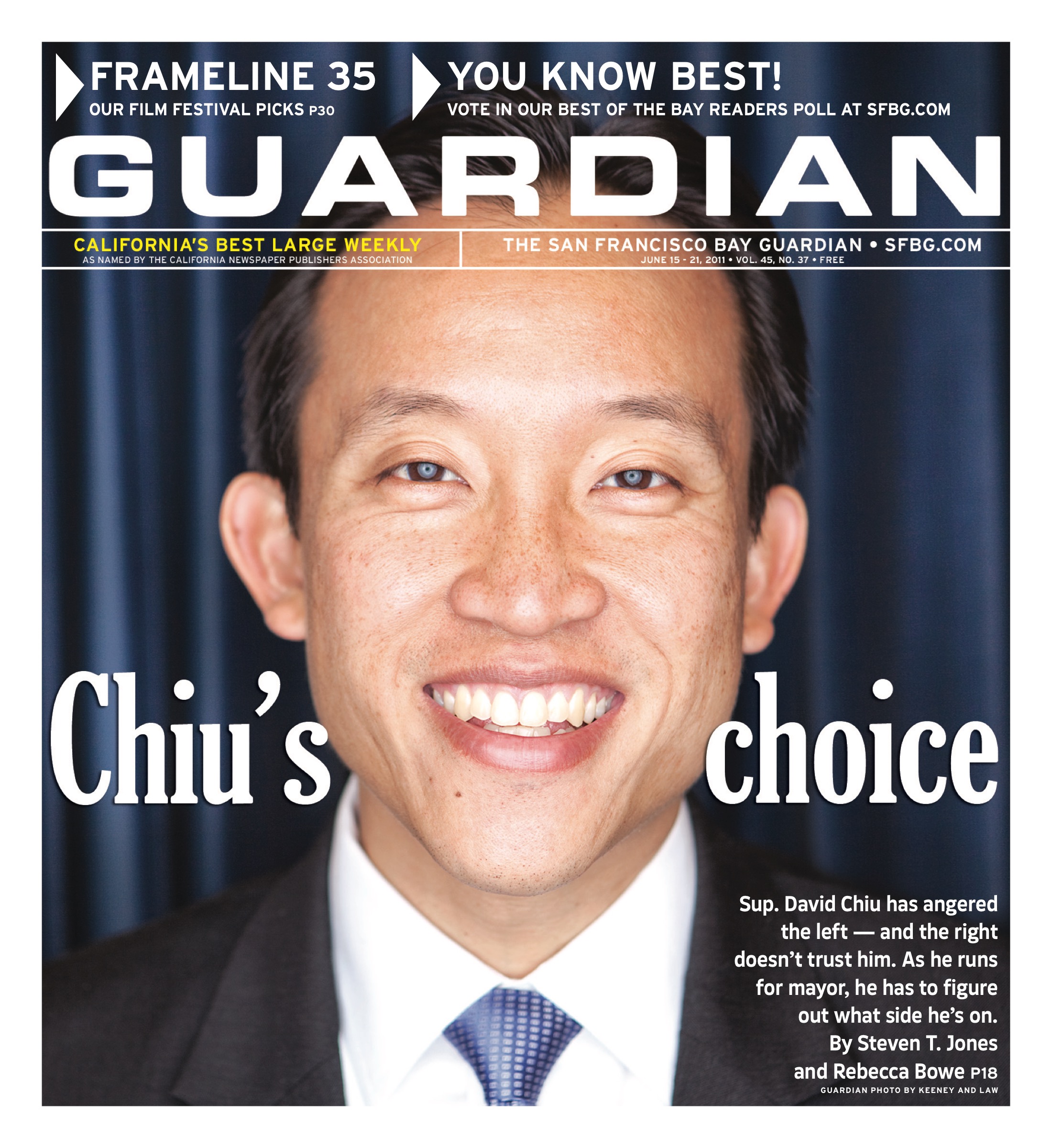
President David Chiu stacked the committee with a conservative majority (Sups. Mark Farrell and Sean Elsbernd) and named a chair (Sup. Jane Kim) whose political loyalties are tough to peg right now. Will she seek an appointee who doesn’t have a political agenda, or will she seek to reward a partisan ally like applicant Paul Hogarth, who worked on her campaign and writes for BeyondChron.org, a propaganda outlet for Kim-backers Randy Shaw and the Willie Brown/Rose Pak/David Ho cabal that elevated Ed Lee into Room 200 and is desperately trying to keep him there.

There are other problematic applicants as well, including Potrero View Publisher Steven Moss, who ran for supervisor in D10 last year and has shown a penchant for seeking payback against his perceived enemies (including the Guardian, which ran articles questioning his residency status). Applicant Ron Dudum has also shown a vindictive streak – following up his failed D2 supervisorial campaigns with an unsuccessful lawsuit challenging the ranked-choice voting system – that would make him a worrisome figure to have on this task force.

So far, three people have been named to the body by the Elections Commission: gadfly/policy wonk David Pilpel, Google attorney Melissa Tidwell, and Mark Schreiber, the managing general partner of Cooper White & Cooper. So already, this is tilting toward a business community bias that will probably get worse once Mayor Ed Lee makes his three appointments to the nine-member commission.

Given how the Rules Committee is stacked, its three recommendations are likely to raise questions that the full board will need to put to rest when it takes the matter up on Tuesday. Voters need to have faith that partisan agendas aren’t shaping the city’s most important political lines, and now is the moment to ensure they have that confidence.

UPDATE: The committee voted unanimously to recommend Eric McDonnell, the chief operating officer of United Way of the Bay Area; Jenny Lam, director of community initiatives for Chinese for Affirmative Action and a board member of Chinatown Community Children’s Center; and Mike Alonso, a “security professional” with Corporate Security Services who got his law degree from New College in 2007 but never worked as a lawyer.

She’s got the look

0

culture@sfbg.com

QUEER Apparently being a lesbian is the hottest new trend — so much so that middle-aged white dudes are posing as gay ladies, writing famous blogs and filling entire websites with lesbian content. (Yes, I’m talking to you, “Amina” and “Paula.”) Really?

Fortunately, there are plenty of actual queer women who can blog for themselves, thank you very much. Catherine “Cat” Perez, is one of those real-life queer women — verified by an in-person chat at the Wild Side West bar — posting real-life depictions of other actual lesbians on her blog Lesbians in San Francisco, a tribute to girls who like girls in America’s gay capital.

The layout is simple: each featured lez gets one photo and three fun facts of her choosing (“She won a s’mores eating contest as a Girl Scout.” “She doesn’t know how to whistle.” “She is related to Chuck Norris.”) Perez started LISF last summer with the intention of giving queer women of the Bay some flattering but honest representation.

“I just think in terms of the queer community, women can get bypassed and overlooked,” she told me, flicking her cigarette. “I want to educate people about what queer women look like, what they’re interested in, what they do. It may not always be what people assume.”

Perez began by photographing her friends, then opened it to anyone in the Bay Area, aiming for an accurate depiction of the city’s diversity. She swears there is no screening process. Although the aim is inclusion, the final product looks pretty tailored. Beauty may reside in the eye of the beholder — but it’s undeniable that these super-fashionable, adorably hipster girls are hot.

“Yes, there is definitely a ‘scene’ element to it. But that’s not the point,” Perez shakes her head and throws up her hands. “I’m only one person and I work a nine-to-five. People need to actively pursue a shoot with me.”

And it’s that simple — send Perez an e-mail, brainstorm your idea for the shoot, and show up. It’s an offer she often won’t refuse. So why are only a specific type of lezzies contacting LISF? Vanity? A need for self-promotion? Has LISF become a showcase of our local celesbians? Maybe it’s time for the rest of the community to get our faces up there, too.

“I wouldn’t consider myself a celesbian — I don’t know how I feel about that term,” Perez said with a laugh. “If I had to choose a label, I would identify as a queer woman,” embracing the broader, more inclusive mode of thinking. The title of the blog has discouraged some women from participating, but Perez says she has no plans to change it anytime soon.

“Growing up, I always wondered what queer communities looked like outside of my home in New Jersey,” she says. With its general-interest name, her blog comes up pretty high on Google searches. “I just want to shed some light on the people who live here. That’s it.”

Through the end of the month at the Lexington Club (www.lexingtonclub.com), Perez is exhibiting a collection of blog-inspired photos called “Stereo,” which simultaneously celebrates and debunks lesbian stereotypes. Perez selected 15 queer women and photographed them each twice: once in a stereotypical role (softball player, gym teacher, high femme) and once as themselves. As one might imagine, there’s a lot of overlap.

“Some girls were dressing up as other’s stereotypes,” she says. “Stereotypes don’t have to be negative. These photos embrace that, because, yeah, sometimes we are the stereotype.”

Booty, booty, booty– Big Freedia to slam Hard French

0

There has never been a better time to shake watcha momma gave ya— and if mother didn’t pack a heavy trunk, you’ll have to improvise with some extra nasty drops and shakes. No excuses—New Orleans’ bounce star Big Freedia is headlining the Pride edition of Hard French and cheeks across the peninsula will feel the aftershocks.

Unless you caught Freedia in Oakland last year or have witnessed another super booty-fied bounce musician live, you’re probably not ready for this jelly. Really. A quick Google search for Big Freedia and you’ll find yourself sufficiently slapped in the face by glorious asses, bouncing hard and fast to the vicious mash-up of heavy beats. Freedia says he was born with the moves.

“In New Orleans you grow up learning how to pop your ass. We teach ‘em from babies,” he says, taking a break in the studio where he’s putting the final touches on a debut full-length album. “For over two decades, it’s been in the culture here. You wake up with it and go to sleep with it. You breathe it in the air, each and every day.”

The Southern city by the sea is ass over heels for bounce and Freedia says he can catch apple bottoms gettin’ down to his genre ‘round the clock. “At a stop light, someone will jump out of their car and start shaking their ass. Happens all the time.” 


Big Freedia’s love and pride for bounce is beyond evident when you see his nightly performance schedules and over the past year he’s introduced the rest of the country to not only the genre, but the presence of a gay hip-hop performer. His summer Go Homo Tour hopes to crush some stereotypes and fight homophobia. He’s also just released a five-song EP on Scion A/V Presents and has his fingers crossed for a documentary and reality TV show. I suggested an aerobics video and he hinted that there may be some sort of yoga-bounce combo in the works.

And if that’s not enough– he still operates an interior decorating business; flowers, funerals, weddings. Hard to imagine his wild personality laying out table cloths and vases without a couple booty drops. 

His stop at Hard French will be an epic end to Pride weekend, but that doesn’t mean dancers shouldn’t stretch before the game. The usual soul crowd has got some moves, of course, but Freedia is on a whole new hype. Still, there is no need to be intimidated, as he says, “honey, don’t you worry” and gladly offers three suggestions to loosen up loins in preparation for the dance floor.

1. Check out Big Freedia on You Tube

2. Wear some loose clothing so you can be free to move around.

3. Use your muscles— especially in the back and legs. Work that spine!


HARD FRENCH PRIDE FEATURING BIG FREEDIA

Sun/26, 2 p.m. to 10 p.m., $20

Public Works

161 Erie Street, SF

www.PublicSF.com

Groupon’s secret

0

sarah@sfbg.com

A San Francisco-based bus tour operator who relies on the Internet to drum up business has filed a class action suit against Groupon, alleging that the deal-of-the-day website uses false advertising, or bait-and-switch tactics, to get customers to its site.

San Francisco Comprehensive Tours, LLC, which does business as San Francisco Shuttle Tours and Wine Country Tour Shuttle, originally filed suit March 17 in the U.S. District Court, Northern District of California “to stop false and misleading business and advertising acts and practices employed on Google.com by Groupon, Inc.”

In essence, the tour company claims that Groupon is dominating Google searches with offerings for discounted local tours — of, say, Alcatraz — that don’t actually exist.

On April 19, SFCT amended its complaint into a class action suit. The amended suit includes “all persons and entities in the United States who purchased Internet ads with Google for the purpose of advertising local tour company business information and whose tour businesses, including the cost of advertising on Google, have been affected by the false advertisements of Groupon which claim to provide discounted offers for tours but actually provide no such offers.”

Attorneys for Groupon have asked for an extension until June 13 to respond to SFCT’s complaint. Representatives for Groupon told the Guardian they can’t comment on the case.

SFCT’s attorneys claim that Groupon is arguing that this shouldn’t be a class action suit because everyone’s complaint is different.

“They’re spamming the Internet with false advertising that affects everyone’s ability to do business, so this is tailor-made for a class action suit,” said SFCT’s attorney Steve Williams of Cotchett, Pitre & McCarthy in Burlingame. “It’s not easy to take on Groupon now that it has gotten so big and can afford top-notch lawyers.” In other words, it could take a group to take on Groupon.

The suit comes as Groupon, which launched in Chicago in 2008 and now claims to have 70 million subscribers as well as annual revenues of $700 million and an estimated worth of $12.7 billion, prepares to go public. Investors are trying to figure out if Groupon has a sustainable business model.

Last December Groupon fueled speculation that it would offer an initial public offering (IPO) when it rejected Google’s jaw-dropping $5 billion-plus takeover bid. Spurned, Google responded by launching Google Deals, a Groupon clone, in Portland, Ore., this June and announcing plans to expand into San Francisco and other U.S. cities later this year.

But as Forbes magazine noted last August, Groupon founder Andrew Mason has “managed to build the fastest-growing company in Web history.” Groupon’s meteoric rise has been attributed to Mason’s decision to combine a familiar concept with a novel idea: customers only get Groupon’s deeply discounted deals if enough customers pay up in advance for the deal that day.


A BAIT AND SWITCH?

SFCT is accusing Groupon of manipulating ad space that it buys from Google to funnel visitors to its site and collect data about these visitors — while SFCT and other tour companies lose customers and have to spend more money on online advertising.

This isn’t the first time Groupon has been sued since it was launched. But the bulk of those cases revolved around claims that Groupon’s “Daily Deal” gift certificates have illegal expiration dates. By contrast, SFCT’s suit is about Groupon hurting other businesses through manipulating Google’s AdWords program, which is Google’s main advertising program and main source of revenue.

“It’s the means that Groupon uses that is harming legitimate businesses. But they argue that it’s the Internet, it’s all new, and therefore the rules don’t apply,” Williams claimed.

Even though Google has not been sued in this instance, Eric Goldman, an associate professor at Santa Clara University School of Law and director of the school’s High Tech Law Institute, said that much of SCTF’s complaint is as much an indictment of Google’s platform as it is of Groupon’s practices. “Even though Google hasn’t been sued, I wonder if Google has or will make changes to its ad platform in response to the allegations in this complaint,” Goldman said.

Google spokesperson Diana Adair told the Guardian: “Unfortunately, we’re not able to comment.”

Williams claims that Groupon is gaming the algorithm that underpins Google’s AdWords program, which uses a combination of the number of click-throughs to a website, the closeness of an ad’s wording to an Internet user’s search terms, and the amount of money businesses are willing to bid on specific keywords to rank search results on Google.

“Groupon can’t say it’s just an AdWords problem,” Williams said. “It’s a manipulation.”

In its suit, SCTF claims it successfully bid on keywords such as “San Francisco tours,” “Alcatraz tours” and “Napa wine tours” for years. Then, in September 2010, Groupon started bidding on these terms as well — and though it rarely offered any discounted Alcatraz tours, it began to rank high in search results, driving up SFCT’s ad costs.

The suit notes that one time, in response to the keyword “Alcatraz tickets,” Groupon’s ad copy read “Alcatraz tickets — one ridiculously huge coupon a day: Do Alcatraz CA at 50 to 90 percent off.” Groupon’s actual ad that day was for discounted acting lessons.

“But they don’t care because they are trying to direct as many people as they can to their website,” Williams claimed.

Williams said he believes he can show that from the moment Groupon started placing ads for tours it didn’t sell, SFCT has suffered financially. “For someone like the plaintiff who is not about to put out an IPO, the frustration is that Groupon is funneling people into their direct mail campaign to develop huge databases and monitor what people like to buy so Groupon can target those people in future,” he said.

Williams told us he thinks he knows how Groupon will try to defend its strategy. “They’ll probably say that there is nothing wrong with what they are doing because if a business want to attract people to its product, it can talk to them about other products,” he said.

But he doubted they would try to blame it on Google. “Google would say that Groupon is taking advantage of AdWords,” Williams explained.

He sees Groupon’s strategy as a “bait and switch” tactic that’s illegal under the federal Lanham Act and California’s unfair competition and false advertising laws. “If I did this in a newspaper’s classified advertising section, it would be wrong. But the way Groupon looks at it, the normal rules don’t apply because it’s doing this online,” Williams said.


TRUTH IN ADVERTISING

Williams also noted that Groupon hasn’t disclosed all the other lawsuits it’s facing. “They view this as a pesky little thing. But most companies, unless the suits are patently without merit, will err on the side of caution, believing it’s better to disclose than fail to disclose,” he said. “Or maybe they are thinking, ‘Soon we’re going to be making $30 billion, so who cares?'<0x2009>”

Goldman notes that SFCT’s class action adds extra complexity for its lawyers. “Groupon will likely try to prevent the class from forming in addition to attacking the substance of the arguments. This is not a quick-and-easy win for the plaintiffs. In many cases, companies like Groupon decide to settle rather than fight because it’s a costly defense, even if they ultimately win.”

“The starting point of this suit is simple enough, namely that businesses need to tell the truth in advertising,” he said. “The complaint alleges that Groupon wasn’t telling the truth because it says X in its ad but when you get there it says Y, which has nothing to do with X.”

Goldman also predicted that, to the extent that SFCT’s suit is truly about an algorithm problem, it won’t be helpful to Groupon. “But that doesn’t mean the plaintiff will win,” he added, noting that establishing false advertising is tricky.

The plaintiffs will have to establish that their parties are competitive and that their businesses were harmed, Goldman said. He also observed that this particular class action suit points to a broader range of questions about the legitimacy of Groupon’s business practices and problems with Google’s AdWords platform.

Goldman pointed to a lawsuit filed June 7 against Amazon suggesting that Amazon had an algorithmic tool for buying ads and that perhaps the tool had gone awry. In that case, Maxfield, a New York City company that markets and distributes the magnetic desk toys called Buckyballs, alleges that beginning May 5 when people searched online for “Buckyballs,” an ad popped up for Buckyballs at Amazon. But when customers clicked on this ad, they wound up on a website that purports to be a listing for Buckyballs but is actually an ad for Maxfield’s competitors’ products.

Goldman also said there is a growing trend of plaintiff law firms feasting on Internet companies, especially in Silicon Valley. “They are watching for these companies to make a mistake and are pouncing on them. It’s possible that suits are mushrooming into class action suits because someone is looking to get more money,” he said.

But in SFCT’s case, Goldman noted, “the plaintiff’s story makes sense.”

Sing out, sister

1

culture@sfbg.com

BAR CRAWLER Until last week, I’d never set foot in a karaoke lounge. It wasn’t exactly on purpose; it was just something — like using dryer sheets and eating those little lathed carrots prepackaged with swimming pools of ranch dressing — that never occurred to me.

This is not a story where, by the end, I uncover a newfound talent and become an instant rock star. Turns out, karaoke is hard — and commands a hardcore following of seriously legit singers. But after one whirlwind karaoke tour of the city, I found that it can be tons of fun for the rest of us too.


ENCORE KARAOKE LOUNGE

A friend enlisted for guidance and moral support assured me the first stop on our Friday night list would be mellow. So mellow, in fact, that when we entered from the still-light evening, about six people were watching a surprisingly spot-on rendition of “I Dreamed a Dream” from Les Miz. Next, a potbellied beer-in-hander stepped up for some Led Zeppelin. The patrons were singles and couples, none of the giggly groups of girls I expected. The lights, however, were just what I expected: over-the-top and outdated all at once. The tables were sticky and the drinks were predictably terrible (but cheap). The overall experience seemed like a cozily trashy movie-scene karaoke pastiche.

1150 California, SF. (415) 775-0442. www.encorekaraokesf.com


(Click here for larger Google map.)

THE MINT

Though this be-spangled Mid-Market spot reprised Encore’s small, watery drinks, there was nothing cozy about it. The Mint is on the tip of everyone’s karaoke tongue, so it was packed almost beyond maneuverability with fratty types and hipsters galore, who were too busy huddling in little beanie-topped clusters to pay attention to the stage: no fun for veteran singers of big booming anthems, but potentially good for first-timers.

I hadn’t yet worked up the courage to sing, but my friend joked that if nothing else, I could do “Bicycle Built for Two.” Well, no shit: 40,000 songs to pick from, and someone with mismatched thigh-highs and a fuzzy panda hat beat me to it. Galvanized, I submitted a slip for “American Pie,” which I figured might arouse the passion — or, at least, compassion — of even the most blasé in attendance. When I wasn’t called in 30 minutes, I took it as a signal to duck out with my dignity intact.

1942 Market, SF. (415) 626-4726. www.themint.net


FESTA WINE AND KARAOKE LOUNGE

Next, we headed to Japantown for a more authentic experience. Festa fit that bill, according to our one companion with bona fide Tokyo chops. It’s a surprise to walk into Festa — with its twinkling LED stars, cityscape wall motif, and lustrous dark décor — from the deserted second floor of Japantown’s mall-like Japan Center. With five bartenders for an intimate 30 seats, Festa definitely has an upscale vibe. Most of the women wore heels and cocktail dresses, and the cocktails were likewise elevated, both in price and quality. It took a Bellini, lychee martini, and sake-tini to precondition my vocal chords.

The song list was extensive but lacked my planned-on Don McLean classic — which seemed out-of-place anyway amid such a demure crowd. Billy Joel’s “Entertainer” popped into my head because it’s light and mercifully fast. With hardly a wait, I was twanging, left leg trembling, a good half-octave below where my voice stops sounding like a woman’s and starts sounding like the Marlboro Man’s. I got a rush of mercy applause and swept my friends out the door.

1825A Post, SF. (415) 567-5866. www.festalounge.com


500 CLUB

More than a week passed, and I was ready to go it alone. For a low-key bar with a neighborhood vibe, 500 Club is perfect. Karaoke Sundays start when the afternoon light is still streaming through large windows and a Tecate on the crowded benches feels just right. Audience participation — including some friendly heckling — is big here, and the singers heckle right back. Be warned: the front row, which is nearly every seat in the joint, is something akin to Sea World’s splash zone. You may be personally serenaded, implored to sing backup, or even humped a bit — all in good fun.

500 Guerrero, SF. (415) 861-2500. www.500clubsf.com


PANDORA

Pandora begs a reference to the overstuffed box, and it’s appropriate: this bar has it all — in a good way. Bins brim with cymbals, tambourines, silly hats, and other props. Candy Land and Jenga top a stack of board games. Flat-screen TVs flash the night’s basketball scores. A disco ball sprinkles light over sleek silver couches, low coffee tables, and a posh lit-up bar.

Make a splash

0

virginia@sfbg.com

BAR CRAWLER Overrun with partiers from the burbs on weekends, North Beach remains far more than its hordes of visitors would suggest. Italian history, comforting foods, historical churches, and Beat mystique keep tourists roaming the streets. But savvy locals know North Beach’s under-the-radar gems. In some ways, it’s our most European neighborhood, where you’re most likely to find elderly Continental gentlemen gesticulating over coffee and cigarettes at sidewalk tables outside Cafe Greco or Caffe Trieste. Beneath the tourist trappings and meat markets, beats a vibrant and cultured heart.

This is equally true of its nightlife. Look beyond seedy strip joints and bars packed with suburbanites to find a long list of spots rich with history and colorful characters. If you haven’t hung out in NB in awhile, it’s time to fall in love with this late-night neighborhood’s impressive diversity again via a nice north-to-south bar crawl.


BIMBO’S

There’s no cooler live music venue in San Francisco than Bimbo’s. A Rat Pack-style supperclub where Rita Hayworth danced as a chorus girl in the early 1930s and gin was served in coffee cups, the spacious club is rife with character. Wood-paneled walls, red curtains, and stools create a space Dean Martin’s Matt Helm character would have felt at home in. Start your night with a show of acts as divergent as Flaming Lips and Adele.

1025 Columbus, (415) 474-0365, www.bimbos365club.com


TONY NIK’S

Divey and lived-in, Tony Nik’s still shines under its original neon sign. A Prohibition-era bar opened in 1933 by namesake Tony Nicco, it’s a funky, worn respite from the bustle of North Beach. It’s like stepping back in time … with rock ‘n’ roll attitude. It’s just the place to pop in for conversation and a stiff martini.

1534 Stockton, (415) 693-0990, www.tonyniks.com


CHURCH KEY

This underrated beer haven keeps a rotating selection of craft beers from around the world on tap. Victoriana wallpaper melds with a mellow vibe, offering a welcome respite from weekend craziness. Sip an Allagash Witbier in the upstairs alcove with wild game sausages while a DJ plays classic soul records that won’t drown you out.

1402 Grant, (415) 963-1713


(Click here for larger Google map.)

THE SALOON

It’s time for more music at one of the country’s oldest bars. The Saloon hit the Barbary Coast in 1861 as Wagner’s Beer Hall. Beat-up and worn down (in look and regulars), this bar feels like New Orleans, where music sings out into the night from seasoned musicians who play as hard as they live. Offering live music seven nights and three afternoons a week, the Saloon’s key focus is blues, although rock ‘n’ roll and soul influences abound. Dancing erupts in tight confines — like one ongoing party where music legends relive glory days.

1232 Grant, (415) 989-7666


15 ROMOLO

No North Beach night would be complete without killer cocktails, and they don’t get better than at 15 Romolo. A turn-of-the-century bar vibe is balanced by killer jukebox. Karaoke Gong Show nights are legendary and, although frequently packed, it’s often a place to get an artisanal drink in a relaxed setting. Spawning some of our city’s best bartenders, the talent behind the bar remains impressive. You’ll be hard-pressed not to count their inventive (yet far from fussy) creations among the best in the city.

15 Romolo Place, (415) 398-1359, www.15romolo.com


BAMBOO HUT

It’s a grungy sort of tiki vibe at Bamboo Hut. Live surfer bands, kitschy tiki paraphernalia, and tropical drinks (warning: this ain’t no Smuggler’s Cove) make it a fun, distinctive stop on your crawl for a fruity island escape. And, yes, there are volcano bowls.

479 Broadway, (415) 989-8555, www.maximumproductions.com


MONROE

If you must do a club, this newest North Beach addition is unlike the rest. With decidedly Hollywood flair, mirrors and artwork of models draped in pearls (alas, no Marilyn) line brick walls over leather and velvet couches in this unexpected den of hip classiness.

473 Broadway, (415) 772-9002, www.monroesf.com


SPECS

Journeying south down Columbus Avenue, you’ll hit a few of the city’s great classics. Specs’ Twelve Adler Museum Cafe is the dive to trump all dives. Singing around the piano with a Guinness or a shot of whiskey is a favorite pastime, as is soaking in the glowing, musty atmosphere and listening to stories from crusty locals your mother would be nervous around. A maritime SF mainstay since 1968, Specs is more than a bar, it’s an institution.

12 William Saroyan Place, (415) 421-4112


TOSCA CAFÉ

In the realm of classic bars, Tosca stands alone. Surviving Prohibition with “house cappuccinos” (hot chocolate with brandy), still its No. 1 seller, Tosca has been a North Beach hotspot for decades, its famed back room a haven for rock and movie stars alike. With a lovingly faded yet romantic interior, red booths and chairs hark back to its early days. The famed jukebox spins out a line of tunes crucial to Italians, from legendary opera singer Enrico Caruso to Dino and Frank.

242 Columbus, (415) 986-9651, toscacafesf.com


VESUVIO

Vesuvio is not so much about drink. Libations are an afterthought in a legendary 1950s space like no other. This is the kind of bar where intellectual discussion and reading books are the norm, where inspiration seeps out of the walls. Eclectic, hodgepodge decor is quirky and artsy, just like the clientele. The spirit of the Beat poets who frequented its corners lives on … with beer.

255 Columbus, (415) 362-3370, www.vesuvio.com


COMSTOCK SALOON

End your long night with a mellow, classy stop recalling Barbary Coast days. Comstock Saloon captures that spirit in a restored turn-of-the-century space replete with antique mahogany bar, Victorian furniture, 1916 rotating ceiling fans, and wood-burning stove. Cocktails are impeccable, classic and expertly-made … and top-notch jazz musicians play from the upstairs balcony.

155 Columbus, (415) 617-0071, www.comstocksaloon.com

Alameda all at once

0

caitlin@sfbg.com

BAR CRAWLER Rumored to have given birth to the snow cone, the Popsicle, and the Kewpie doll back in its amusement park days, Alameda still gives off a summery island vibe. (With Playland at the Beach, Oakland’s Idora Park, and Alameda’s Neptune Beach, the primary mode of transportation in the Bay used to be a Big Dipper. Picture rush hour.) The golden sun, rad flea market, and laid-back neighborhoods — well, the place screams “stay a while.” So you may as well get drunk. FYI, the flatlands crawl works best on a bike, but if you soldier up and walk it, you don’t risk getting tipsy and bloody — to each her own. (Caitlin Donohue)


ALAMEDA FERRY

No, you’re not driving out there. Hop the ferry, ’cause guess what? It’s the first stop on the crawl. Take advantage of the bracing winds to order a beer, or better yet, a bay-ready cocktail. Affable bartenders will recommend a bloody or one of the Campari concoctions that sometimes make the specials board. Take your sweet-ass time and ascend to the top deck with your glass — you have 30 to 45 minutes to kill coming from San Francisco. Once you disembark, you’ll be flush with the possibility of a new island lifestyle. Steady on captain, much boozing lies ahead.

Departs from SF Ferry Building, Pier 41, and Jack London Square. www.eastbayferry.com


ST. GEORGE SPIRITS

Surprise! Not only is Alameda a great bar town, it’s also home to a burgeoning alcohol-making district. The island’s northwestern blocks — once the Naval Air Station and still fetchingly speckled at the edges with behemoth military boats — went through an era of tumbleweed rule but are now being reinvigorated by pioneer businesses that enjoy the commercial, wide-open spaces that only airplane hangers can provide. St. George Spirits moved here in 2004 and now produces pleasant, not-too-cloying Hangar One-flavored vodkas (mandarin blossom and chipotle versions are amazing), absinthe, superlative Firelit coffee liqueur, and more. Check out the $15 tasting menu in the jovial tasting room and toast to Alameda with every tiny, long-stemmed glass the good saint presents you with.

2601 Monarch, Alameda. (510) 769-1601, www.stgeorgespirits.com

(Click here for larger Google map.)

ROCK WALL WINES

Don’t worry if your St. George tasting ended with a disorienting absinthe-root beer closer — you don’t have far to bike to the next stop on the crawl. A few hangars over, step into the sleek tasting room of Rock Wall Wines, where you can order flights of swishes from Rock Wall’s father-daughter team plus nine other small wineries that share production space next door in the massive urban vintner hangar-hangout. Feel good about supporting the little guys along with another chance to sample an array of finely-crafted local booze.

2301 Monarch, Suite No. 300, Alameda. (510) 522-5700, www.rockwallwineco.com


BLADIUM BAR AND GRILL

So you’re a few drinks deep — time to check out the actual Alameda haunts. Bar! Well, a gym bar. Once you arrive at the Bladium (you’ll pedal past an impressive lineup of battleships on the way), smile sousedly at the front desk of the Bladium athletic center and weave your way through in-line hockey and indoor lacrosse arenas to the comfortable second-floor sports bar, where you can knock a pint back and take in some of the heated amateur action going on among the athletic types below. Don’t let all the secondhand endorphins make you feel lazy — the kind of drinking you’re doing takes endurance.

800 West Tower, Building 40, Alameda. (510) 814-4999, www.bladium.com


FORBIDDEN ISLAND TIKI LOUNGE

Enough crawling with the generalists — let’s get dark ‘n’ sugary the way only a quality tiki bar can encourage. Find the flavor at the low-lit Forbidden Island, where there will be a luau in progress, if you play your cards right, and sufficient vats of rum and juice even if you didn’t schedule your crawl around roast pig. Hoist a Neptune’s Garden (it’s blue and has fruit garnishes!) to discovering more about the Forbidden Island’s watering holes and continue on your way.

1304 Lincoln, Alameda. (510) 749-0332, www.forbiddenislandalameda.com


LOST WEEKEND LOUNGE

See how we planned this out? We started with sober sea legs on the ferry, pinky-up tastings while you can still bullshit about noses and mouthfeels, then the limber tiki limbo — enter now the dives. Lost Weekend is a good one, and it’s smack in the center of Alameda’s fun downtown, which is worth a saunter about if you’re feeling a little shaky after Forbidden Island. Otherwise, belly up the bar, gaze at the TVs and myriad ephemera on the walls from hazy sports meccas — Philly? Texas? — and discover that here in the Island City, the jock and black-clad hipster crowds can oftentimes merge into one.

2320 Santa Clara, Alameda. (510) 523-4700, www.lostweekendlounge.com


LUCKY 13

Turn the corner onto Park Street and you, my friend, have come to the end of your bar crawl — lucky for SF residents, it’s on familiar turf. The Lucky 13’s East Bay branch is just as good a rockabilly dive into a heavy, microbrew-tinged blackout as its Castro counterpart. Same wooden tables to back-slap and talk trash over without blazing TVs to distract your train of thought, same walled patio for fresh air and lighting of the cancer stick (yeah, alright, you’re wasted). Two big points for the Alameda Lucky: you can bring in take-out stromboli and french fries from Scolari’s next door — and the Fruitvale BART Station is only a happy downhill ride away when you’re ready for the mainland. Lean your bike against the wall and find a comfy seat for yourself, brave crawler — you’ve earned it.

1301 Park, Alameda. (510) 523-2118, www.lucky13alameda.com 

Protesters target Apple as a tax cheat

32

By Oona Robertson

Tomorrow (Sat/4), the economic justice organization US Uncut is protesting Apple Computers for trying to avoid paying $4 billion in federal taxes and for joining a corporate tax cheat lobbying group. Ironically, it is Apple’s good corporate reputation that has made it a target, as protesters hope the attention might shame the company into doing the right thing.

Apple has kept billions of dollars in profits in offshore tax havens and low-tax countries such as Ireland and the Netherlands. Through an organization called WIN America that Apple belongs to along with Google, Microsoft, and other large corporations, it is lobbying Congress for a tax holiday to bring $1.2 trillion in profits back to the U.S. to supposedly invest in the economy. Apple’s share of this tax break, $4 billion, would equal salaries for 90,000 teachers.

US Uncut is aware that the technology giant is an unlikely target for protest, due to its popularity and positive public image. Protesters are hoping that because Apple seems to care about its image in the eyes of consumers, it is more likely to respond to a protest.

“Most of the other companies aren’t really gonna give a damn if we go after them. They’re not concerned for their reputation. [With Apple] there’s a little more leverage,” US Uncut spokesperson Joanne Gifford told us. Apple did not return requests for comment.

Protesters hope to creatively drive their message home using flash mobs to get people’s attention. They are demanding Apple, “Leave the Tax Cheat Lobbying Group and Stop Lobbing Congress for More Tax Loopholes,” according to its website.

This Saturday’s action coincides with similar protests in 15 other U.S. cities, all organized by US Uncut as part of what it calls a national day of action. In San Francisco, protesters are meeting at Union Square to “discuss action ideas,” before heading over to the Apple flagship store on Market Street. Chanting, handing out leaflets and holding signs will be recommended, boasting slogans such as “Love the iPhone, hate the tax cheat,” and, “It only takes one bad apple.”

US Uncut’s website lists creative action ideas for protesters to employ, such as impersonating Apple employees by wearing turquoise blue shirts and nametags, or approaching the Genius Bar to ask questions such as, “Why can’t I sync my iPhone with my values?”

Teachers are being told to bring their pink slips and ask the “geniuses” how to save their jobs. The protesters’ last major flash mob, a music and dance number targeting Bank of America, made headlines and the hope is to replicate that level of publicity this Saturday.

Boxed out

5

rebeccab@sfbg.com

The Board of Supervisors is gearing up to revisit whether telecommunications giant AT&T should be permitted to install 726 new metal boxes on city sidewalks for a communications network upgrade, without completing an environmental impact review.

At an April 26 meeting, the board spent several tedious hours listening to concerns such as whether the boxes would attract graffiti or clutter the sidewalks, and debated the finer points of whether the project could legally be considered exempt, ultimately resolving to take up the issue again May 24.

Meanwhile, a small cadre of tech-savvy San Franciscans has seized on this debate as an opportunity to drum up enthusiasm for an alternate vision of a citywide communications future, one with faster connection speeds that wouldn’t necessarily be controlled by the AT&T and Comcast duopoly.

At the meeting, AT&T California President Ken McNeely, dressed in a sharp suit, trumpeted the company’s proposed upgrade, part of a new system called U-verse. “This is the largest single upgrade to the San Francisco local phone network in more than a century,” he said. “Our network will provide the next-generation IP technologies that San Francisco needs to provide if it wants to continue to attract the best and brightest in the region.”

Yet Rudy Rucker, bearded and clad in a camouflage T-shirt, sounded a different note. “The U.S. is No. 30 in the world in Internet speed,” he said. “The boxes are not the way to go. What we need to do is rework the entire infrastructure of how we do communications in the city. We’re relying on copper lines. We need to pull all those out, recycle the copper, and put in fiber-optic cable.” Rucker is a cofounder of MonkeyBrains, an independent Internet service provider (ISP) based in San Francisco.

AT&T’s U-verse upgrade would enable it to offer connection speeds three times faster than current service — but not nearly as fast as what fiber proponents envision. Several members of the tech industry interviewed by the Guardian cautioned that another AT&T upgrade might be necessary after less than a decade to keep pace with technological advancement. At that point, it’s anyone’s guess whether those boxes would continue to be useful. AT&T did not respond to a query from the Guardian.

SPEED FREAKS

When it comes to Internet speeds, the United States trails Asia and some European countries. “We’ve fallen from first place,” said Ashwin Navin, who founded several tech startups including a file-sharing company called BitTorrent. “It’s really put our software and technology industry at a disadvantage.”

According to a website that compares connection speeds using data compilation, California ranks 23rd in the nation, while San Francisco doesn’t even clear the top 30 cities nationwide, Navin noted.

Yet much faster connection speeds are possible — even commonplace — in countries such as Japan and Singapore. “Right now, the average download speed in San Francisco is something around eight megabits,” explained Dana Sniezko, who’s emerged as a tech activist since creating a website called SF Fiber, which calls for a neutral, open, affordable community fiber network. “What U-verse is going to offer is about three times that. Something like fiber can offer service that’s 1,000 megabits [called a gigabit], or even much larger than that. Fiber allows you to really have a huge capacity for the future.”

Put in practical terms, Sniezko said, the difference between a connection speed of eight megabits and a gigabit amounts to downloading a full-length feature film in 90 minutes, versus several seconds. And since fiber also can deliver faster upload speeds, it opens the door to new possibilities. “It lets individuals potentially come up with really innovative and creative ideas,” Sniezko said. “If you wanted to have your own streaming TV channel from your house, you could. Or anything, really.”

Fiber already exists under San Francisco city streets — but most places lack the direct connections to homes or businesses, so the capacity is not realized. The city’s Department of Technology and Information Services (DTIS) convened a study in 2007 for developing the infrastructure to create a full-fiber network, deeming fiber “the holy grail of communications networking: unlimited capacity, long life, and global reach.”

Since then, progress has been slow. AT&T’s new system would also be based on fiber, but information would still travel to homes or offices over copper phone lines, resulting in slower speeds than a direct connection could supply.

On a recent afternoon, MonkeyBrains cofounder Alex Menendez scrambled up a ladder leading from his small Potrero Hill office space to show off some rooftop antennas and laser devices. There was a clear view from the flat, sunny roof to the office building the laser was pointed at, many blocks away. Secured to a hand-built metal stand, the gadgets were part of the company’s high-speed Internet network, which counts KQED among its roughly 1,000 subscribers.

Menendez was explaining how his small company is able to use these microwave devices in combination with fiber-optic cables to provide high-speed Internet by leapfrogging from node to node throughout San Francisco.

Menendez said he didn’t feel strongly one way or another about AT&T’s metal boxes. “But it raises a more interesting issue: what’s the 50-year-down-the-line solution? There’s much better technology out there. It could be super-affordable, with a wide-open, massive amount of bandwidth.”

But, he added, it won’t happen without the support of local government.

MISSED CONNECTIONS

The City and County of San Francisco owns an underground fiber-optic network spanning more than 110 miles, used mostly for municipal and emergency purposes. AT&T has its own fiber — and with a history going back more than a century in San Francisco, it also has a lock on the market.

AT&T owns underground cables, copper phone lines, and rights-of-way, making it necessary for small market players to interface with the corporation and pay fees. This makes it difficult for local ISPs to compete on any meaningful scale. “They have the right to trench the street,” Menendez explained. “We don’t.”

Mendendez and others are looking at micro-trenching as a possible way around this. Last summer, Google hosted an event at its Mountain View headquarters called the Micro-trenching Olympics (“A very Google-y thing to do,” according to a company representative speaking in a YouTube video) to find out which contractor could best slice a one-inch wide, nine-inch deep trench in a parking lot and install fiber-optic cable inside. The idea behind micro-trenching is that it’s fast and minimally disruptive — and best of all, it doesn’t interfere with existing infrastructure, so there’s no need to pay a fee to AT&T, or any other company.

Some in the tech community are hoping it will signify a new and efficient way to link fiber-optic cable directly to homes and businesses, ultimately resulting in the kind of Internet speed that would let you download a movie in less than ten seconds. With micro-trenching, there would be no need for utility boxes.

Navin, Mendendez, and several others have talked up the idea of micro-trenching a small area in the Mission District to bring fiber-optic, high-speed Internet to an entire neighborhood. Yet their early conversations with the city’s Department of Public Works suggest that it may be a slow process. “They were like, ‘What is this?'” Menendez recounted. “There’s no established permitting process.”

Meanwhile, Board of Supervisors President David Chiu recently asked DTIS to examine the possibility of leasing excess capacity on city-owned dark-fiber infrastructure, which is currently in place but not being used. This could boost bandwidth for entities such as nonprofits, health care facilities, biotech companies, digital media companies, or universities, Chiu said, while bolstering city coffers. “There are many places in town that need a lot more bandwidth, and this is an easy way to provide it,” he said.

Sniezko noted that other cities have created open-access networks to deploy fiber. “This is really effective because it’s a lot like a public utility,” she explained. “The city or someone fills a pipe, and then anyone who wants to run information or service on that pipe can do so. They pay a leasing fee. This has worked in many places in Europe, and they actually do it in Utah. In many cases, it’s really cool — because it’s publicly owned and it’s neutral. There’s no prioritizing traffic for one thing over another, or limitation on who’s allowed to offer service on the network. It … creates some good public infrastructure, and also allows for competition, and it sort of revives the local ISP. Chiu’s proposal is a little bit in that vein, it sounds like. But he hasn’t released a lot of details on it yet, so we’re still looking.”

Visit www.sffiber.info for more info


The Treasure Island nightmare

83

There are times when people like me, who think development should be driven by public needs, not private profit, are in something of a bind. I don’t like the Lennar plan for Bayview Hunters Point — but I agree that doing nothing isn’t a very good alternative. Sometimes, the “no-project” alternative isn’t an alternative at all — which gives the developers a huge hand up in negotiations with the city. Gee, you want affordable housing? We can give you 15 percent — or we can walk away and you’ll get nothing.


But when it comes to Treasure Island, I think we’re in a different situation. The proposed development is so out of whack, so looney, that it makes no sense to me — and the alternative of doing nothing, at least for now, isn’t so bad at all.


The plan calls for 19,000 new residents on the 403-acre artificial island in the Bay. At most, 25 percent of the units would be below-market. Which means some 13,700 rich people, virtually all of them with jobs in San Francisco, the Peninsula or the East Bay, would be plunked into a place with no viable transportation alternatives.


I wonder if any of these planners have ever tried to leave TI by car; it’s a nightmare. And there’s no way to fix it: Even if they build a new acceleration ramp (the current stop-and-go into 60-mile-an-hour traffic is a death trap), the Bay Bridge is already at full capacity during a very long rush hour in the morning and evening. And does anybody really think those 13,700 people will all take the ferry to work every day?


Impossible: There’s no way to provide enough ferry service for that population at anything resemble the cost the developers are willing to pay. How about all the Google and Yahoo and Genentech employees (and that’s a big part of the population buying new high-end condos in San Francisco)? You think they’re all going to take a ferry to downtown SF then hop on a bus or train then take another bus to the office? Not these folks. A lot of them will want to drive.


And the bridge, which is already backed up, will back up further, driving more traffic onto the streets of SOMA and creating a slowdown all the way back to Berkeley.


Meanwhile, the island is sinking, and water levels are rising. Forget the fancy engineering plans to sink stone columns deep into the clay under the Bay; what happens when the water rises? Are we going to surround the entire place with seawalls?


And here’s the bottom line: The current situation isn’t all that awful. There’s a small amount of housing out there, some of it affordable. There’s lots of open space. A little effort and the playing fields and parkland could be upgraded and TI could, for the intermediate term, be a day-use area for the city. Not a terrible alternative.


At some point, either the island’s going to sink back into the Bay or it’s going to have to be completely redeveloped. But right now, with no public money available, we’re at the whims of private developers. And what they’re offering doesn’t even remotely meed the city’s needs — and will create a catastrophic transportation problem.


So the supervisors are in a great position to negotiate. We want 50 percent affordable housing, we want the developer to pay for substantially increased bus and ferry service (or maybe we want to add a rail line to the Bay Bridge). And if that’s not something the developers want to do, fine: we’ll wait. Nothing wrong with that.


5 Things: March 29, 2011

3

>>EYES OUT FOR LIL’ ONES What does a San Francisco look like where everyone is safe to ride their bikes? Well, a lot like next Thursday, April 7, we hope. That’s the day that 3,000 (at least) schoolkiddos will be hopping their two-wheelers to over 40 different schools. The San Francisco Safe Routes to School program is still looking for volunteer bike chaperones and mechanics to help families for the day, who wants to put on their teacher’s hat?


Betabrand’s Greed Pants: but one of many ways to support your local manufacturers

>>MADE YOU LOOK What do a Dogpatch bike bag factory, a fancy men’s shirt maker, SF’s biggest beer brand, and a socially-conscious print shop have in common? They’re all members of SFMade, a business association comprised of companies that manufacture their goodies inside city limits. Need to know more? The NYT gave them a sterling writeup in the op-ed section this past Sunday. 

>>SKOOL SOMEBODY East Bay Free Skool‘s starting a newsletter for adherents to its circus skill-sharing-Spanish learning-urban studying sessions for the shallow-pocketed, yet deserving-of-education masses. And the skool longs for your voice to be represented within its Xeroxed reams! Holler at eastbayfs@gmail.com if you’ve got a tale to tell from a class you’ve gone to/taught at, submissions due by Friday, April 1. 

>>LISTEN UP SLACKERS SF’s own Jenny Blake, a Career Development Program Manager at Google – something like an internal cheerleader and guidance counselor for the Google masses – launches her book today, Life After College: The Complete Guide to Getting What You Want. Check out her blog to glower at the hundreds of pics in which Blake looks consistently clean and well-fed (something many of us post-collegiate-types still strive for), or simply check out her promo video – it’s filmed in front of the Bay Bridge, and there are some nice birds in the background. 

>>GETTING STOKED FOR TOMORROW’S PET ISSUE After our slow loris scare yesterday we’re all on edge of the abuse of animals in adorable videos, but this one seems okay:

Dogboarding from DANIELS on Vimeo.

Is David Crane just another Kochhead?

24

This week the Chronicle majorly attacked State Sen. Leland Yee, claiming Yee tried “to distort the words” of billionaire investment banker and UC Regent David Crane on collective bargaining.

The Chron’s attack came on the heels of Yee’s attempt to block Crane’s UC Regents confirmation. And Yee’s attempt to block Crane came in response to an op-ed Crane wrote for the Chron titled “Should public employees have collective bargaining rights?”

In its counter-counter attack editorial this week, the Chronicle accused Yee of falsely claiming that Crane had “called for an end to collective bargaining rights for California teachers, nurses, firefighters, university employees and other public sector worker.”

“What the former adviser to Gov.Arnold Schwarzenegger did was present a history of collective bargaining in California and explain how a 1977 law had changed the balance of power by giving public employees power over their compensation and benefits,” the Chronicle stated. “Crane did assert that extending collective bargaining to employees who already have civil service protections ‘serves to reduce benefits for citizens and to raise costs for taxpayers. Anyone who would argue with that fact has not been paying attention to what is happening with state and local budgets lately.”

The Chronicle finished by praising Crane, who is currently a lecturer on Public Policy at Stanford University and is reportedly working with former Fed Chairman Paul Volcker to form a task force to examine current state budget practices. Crane, the Chron asserted, has “long been widely respected as a teller of inconvenient truths about the rising costs of public-employee pensions and benefits. He should not be silenced – or misquoted by opportunistic politicians. The Senate should vote to confirm him as regent.”

Now, when Schwarzenegger appointed Crane as a UC Regent in December 2010 as one of his last acts as Governor, the Sacramento Bee described Crane as Schwarzenegger’s “chief public employee pension critic.” But here in San Francisco, the Chron didn’t bother to flesh out Crane’s history of employment, campaign contributions, prior statements on collective bargaining, and financial investments.

Maybe it was because these public records reveal Crane to be less a dyed-in-the-wool Democrat and more of a Bushocrat, an ultra-rich investor who supported G.W. Bush through two elections, and repeatedly frames the collective bargaining rights of government employees as an obstacle standing in the way of pension reform and budget balancing.

Campaign finance records show that in March 1999, when Democrats were trying to hang onto the White House in the wake of Clinton’s sex scandals, Crane gave $1,000 to Bush. And in June 2003, just three months after Bush invaded Iraq on a false pretext, Crane saw fit to give Bush another $2,000.

The good news? Crane didn’t support Sarah Palin and John McCain in 2008. But he did donate $7,200 to Republican Tom Campbell’s unsuccessful 2010 bid for US Sen. Barbara Boxer’s seat. And here in San Francisco, Crane was one of several billionaires who wrote big fat checks last fall in support of Measure B, which sought to curb the pension and health benefits of city workers, most of whom will make a fraction in their lifetime of what Crane rakes in each year from his widely diversified financial portfolio.

Crane’s 2009 statement of economic interest shows he has over $1 million invested in Farallon Capital Partners, one of the world’s largest hedge funds, many of whose investors include top university endowments.

Crane also has over $1 million invested in Acacia Partners, over $1 million in Bislett Partners, over $1 million in Kensico Partners, over $1 million in Semper Vic Partners, over $1 million in Berkshire Hathaway, whose CEO is Warren Buffet, over $1 million in the HCP Absolute Return Fund, whose Board includes Warren Hellman, and up to $1 million in Hall Capital Management, whose Board includes Hellman and Gap heir John Fisher. Crane also owns several million dollars stake in real estate investments, and has sizeable stock in Wells Fargo, Chesapeake Energy, Microsoft, Google, Pangloss Oil, Whole Foods Market, M&T Bank Corp., IBM, American Express, WalMart and Exxon.

And he gets income from Acacia Partners and Babcock & Brown, where he was a former partner from 1979 to 2003. While at Babcock, Crane reportedly brokered a controversial jet-lease deal between Arnold Schwarzenegger and Singapore Airlines that allowed Schwarzenegger to defer taxes on millions of dollars. And in 2004, Crane went to work for then Republican Gov. Schwarzenegger as special advisor for Jobs and Economic Growth. The Terminator returned the favor by appointing Crane to the California Commission in Economic Development and the California High Speed Rail Authority. But Crane was rejected in Senate confirmation proceedings for a position on the board of California State Teachers Retirement System.

Now, clearly it’s not a crime to be a billionaire, even though the way some folks make their billions is criminal. But you have to wonder if UC really needs another ultra-rich Regent on its Board. You also have to wonder why the wealthy Crane sought reimbursements of $2,812 from UC in 2009, if he cares about saving the state money.

And Crane has made plenty of statements about collective bargaining rights and pension reform in recent months that seem to frame government employees as the bogey men, not just in California, but across the entire nation.

Take his April 2010 comments to the Los Angeles Times: “State legislators are afraid even to utter the words ‘pension reform’ for fear of alienating what has become — since passage of the Dills Act in 1978, which endowed state public employees with collective bargaining rights on top of their civil service protections — the single most politically influential constituency in our state: government employees,” Crane said.

Or what he said in August 2010 to the Fox Business Network: “Even if you took care of every one of these spiked above the iceberg level pensions in California, you would not take care of the pension problem in California, which is true of virtually every state in the country, at least those where, you know, government employees have collective bargaining rights,” Crane said

In December 2010, he told the L.A. Times that the year 1978, ”wasn’t notable just because of Proposition 13. That was also the year public employees gained a power Franklin D. Roosevelt had warned against: collective bargaining rights.”

“California hasn’t been the same since,” Crane continued. “Public workers have gained at the expense of private workers as government spending was redirected from infrastructure and education to higher salaries, pensions and other benefits.”

And in his Feb. 27 Chronicle op-ed, Crane claimed that, “The battle in Wisconsin is not over collective bargaining rights generally but rather the appropriateness of those rights in the public sector ”

“Collective bargaining is a good thing when it’s needed to equalize power, but when public employees already have that equality because of civil service protections, collective bargaining in the public sector serves to reduce benefits for citizens and to raise costs for taxpayers,” Crane continued. “Citizens and taxpayers should consider this as they watch events unfold in Madison.”

As of today, letters are circulating in Sacramento opposing Crane’s confirmation. And Sen. Ted W. Lieu (D-Torrance), Chair of the Labor and Industrial Relations Committee in Sacramento, has already signaled his opposition.

“I cannot support someone for the powerful post of UC Regent who continues to perpetuate the myth that collective bargaining caused our state economic crisis and has a fundamental misunderstanding of how our state budget operates,” Lieu said in a statement. He noted that in the Chron op-ed Crane claimed that because of collective bargaining, “general fund spending on higher education, parks and environmental protection was flat or lower.” 
“As a matter of historical fact, that is false,” Lieu countered. “ Our general fund spending generally declined because of a national economic recession.  The recession was not caused by collective bargaining or public sector unions, but by private sector, out of control Wall Street firms at the time.”

“The specific reason our general fund spending sharply declined was because the person Mr. Crane advised, former Gov. Arnold Schwarzenegger, reduced the Vehicle License Fee and replaced it with . . . nothing,” Lieu continued. “As a result, the state general fund lost over $5 to $6 billion in revenues per year for every year Mr. Schwarzenegger was in office.  The VLF reduction has resulted in a total loss of over $30 billion to the state, an amount in excess of the current California budgetary shortfall.  How conveniently Mr. Crane forgot to mention that critical fact when it doesn’t suit his ideological assault on public sector unions.”

“Now that Mr. Crane senses his confirmation may be in jeopardy, he attempts to marginalize his own Op-Ed by releasing a new statement saying he really didn’t mean to attack all public sector unions, just those who happen to have statutory civil service protections,” Lieu added. “For those in Ivory Towers that distinction may have some academic meaning, but for everyone else in the real world that is a distinction without a difference. Civil Service protections do not prevent employees from being terminated or laid off, they provide standards for government to follow when firing or disciplining employees. Such protections do not guarantee appropriate wages or benefits, nor address a plethora of other issues, such as workforce safety issues.”
 
“Mr. Crane’s Op-Ed also discusses political spending by public sector unions, “Lieu concluded. “In his world view, political spending by the California Teachers Association is inappropriate, but the massive political spending by the Koch Brothers would presumably be acceptable. I cannot, and will not, support someone for the post of UC Regent who blames public sector employees, such as teachers, for somehow being responsible for our economic crisis or the resulting decline in general fund spending.  We need UC Regents who are interested in solving problems, not those who twist historical facts to suit an ideological agenda.”

So, as I wait for Crane to return my call, I’ll leave you with something reporter Peter Byrne, who authored the award-winning investigative series ‘Investor’s Club” How the Regents of the University of California spin public funds into private profit,” said to me yesterday when I asked him about the wisdom of putting investment bankers on the UC Regents Board. “Putting investment bankers in front of a plate of $63 billion is like putting a pound of hamburger in front of a bunch of feral cats. They are going to eat it. It’s in their nature.”

So, would confirming Crane be like adding another feral cat to the mix? Is he just another Kochhead? Or is he just maligned and misunderstood, as the Chron vehemently implies?

Divergent views on Chiu’s challenge

86

The political season is definitely upon us, and despite all the sunny statements coming from mayoral hopefuls, I predict is going to get ugly. One gauge was the split reactions to my stories on David Chiu getting into the mayor race and how his belief that “there’s always common ground” to be attained on big issues will be tested this year.

Some in his camp were mad at how I characterized the problems progressives have with Chiu, believing it was unfair to blame two years worth of bad budget compromises and aborted progressive initiatives on him (indeed, some of his progressive colleagues did go along with some of those decisions). Then again, Green Party activist Eric Brooks was outraged that I went too easy on Chiu, writing in an online comment that Chiu has “totally betrayed and stabbed in the back the progressives who got him elected.”

As for Chiu, he was a little more circumspect about his role, and he basically agreed with the premise of my article that he’s uniquely positioned to prove or disprove his theory on governance as the board wrestles with some big issues this year.

“We have a lot of decisions coming up before us at the board on which I’ll be working with our colleagues to see if we can bridge differences and address everyone’s concerns,” Chiu told me, citing the upcoming debates over pension reform and the CPMC and ParkMerced projects as examples that will test his consensus-building approach.

An even earlier test will be the mid-Market tax breaks that he’s pushing with Sup. Jane Kim and the Mayor’s Office. All three entities have been trying to cast that vote as an unavoidable fait accompli, but many progressives and union activists are gearing up for a fight when that measure is heard by a board committee, probably on March 16.

In his campaign kickoff speech on Monday, Chiu alternatively sounded progressive themes and those of the fiscally conservative corporate Democrats. “We need to stop being a bedroom community for Silicon Valley and actually compete with Silicon Valley,” Chiu said.

Now, if competition means getting into a bidding war over which cities can offer tech companies the lowest taxes and most taxpayer-subsidized benefits, Chiu’s problems with progressives are only going to get worse. But if he’d like to address the “bedroom community” problem by building more affordable housing that working class San Franciscans can afford – rather than all the luxury condos favored by the Google set – that’s something progressives could get behind.

But Chiu’s actions this year will speak far louder than his words. And with lots of chatter still rippling through progressive circles about someone else jumping into the mayor’s race – a play that would probably come in mid-to-late summer – the clock is running for Chiu or someone else to win over the left.